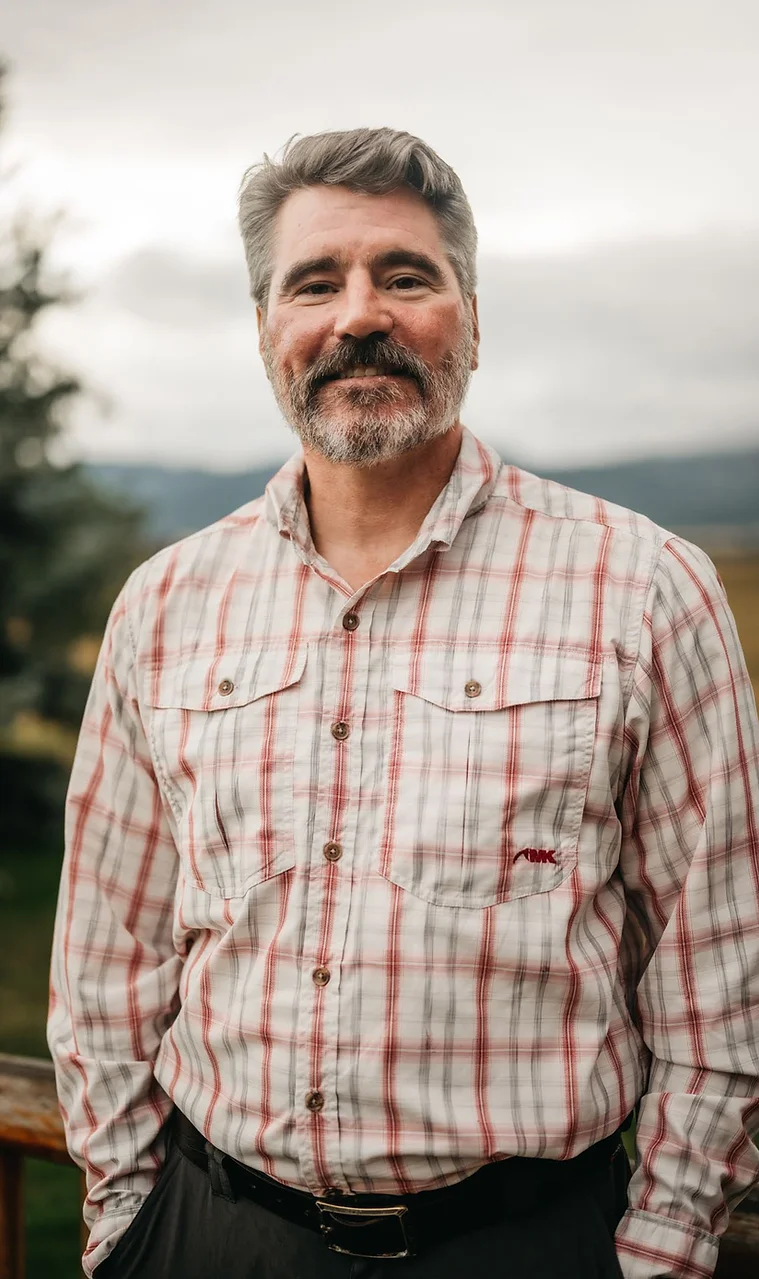
Bruce Staples, author of multiple books on fishing in the Yellowstone area, is back to
take us to the East Idaho Fly Tying Expo.
You’ll find out what you can expect for the next one in 2025. You’ll also get some of the best flies for fishing in Yellowstone Country and a little insight into Sheridan Lake and other lakes around the country.
You’ll also hear about some of Bruce’s favorite books and the people you should follow this season.
Planning a large fishing event is no easy task. I’ve planned smaller trips and schools that have required considerable effort, and it’s hard to imagine what planning a fly fishing tying expo would be like.
Bruce Staples did just that and has brought back and created one of the biggest fishing expos of its kind.
03:18 – Bruce says that the 2024 East Idaho Fly Tying Expo was a huge success with a massive crowd and fly tyers from all over, even Florida and Ohio.
They had around 40 commercial vendors and kept the same layout from 2023.
05:09 – For 2025, they plan to start prepping in September. They’ve signed a three-year contract with the Mountain America Center that will end in 2025.
Bruce said they will likely renew because the center is a great venue. It is used for many community events, including hockey games by the Spud Kings, concerts, and basketball tournaments.
08:39 – Bruce first started writing in the 1990s. His first three books were done for Frank Amato Publications:
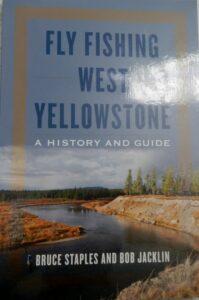
12:30 – Bruce shared how “Fly Fishing West Yellowstone: A History and Guide” came together. He teamed up with Bob Jacklyn, who provided valuable historical insights and photos. Craig Mathews also contributed his expertise.
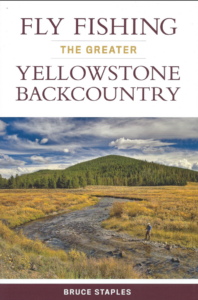
21:05 – Bruce shared some hidden fishing spots from his “Fly Fishing the Greater Yellowstone Backcountry” book.
34:15 Sheridan Lake is a moderate-sized lake offering good fishing. Fishing techniques include using midges, snails, leech patterns, and streamers, which are especially effective in the fall.
38:20 – There are also workshops and demos by expert flytyers like Steven Fernandez and iconic figures like Mike Lawson. There are tying workshops, commercial vendors, and an annual banquet with a live auction.
48:31 – Bruce talks about the exciting plans for the 2025 event. The website will soon have info on vendors and activities starting in February. Many participants from 2024 will return because it was a success.
Episode Transcript
Dave (2s):
Planning a large fishing event is no easy task. I’ve planned smaller size trips and schools that has taken a considerable amount of effort, and it’s hard to imagine what planning a fly fishing tying an expo would be like, and how to bring it all together to make it one of the greatest events of its kind. Today’s guest did just that and has brought back and created one of the biggest fishing expos of its kind. And today you’re gonna discover how this expo and resources we share will help you have more success on the water this season. This is the Web Fly Swing podcast where I show you the best places to travel to for fly fishing, how to find the best resources and tools to prepare for that big trip, and what you can do to give back to the fish species we all love. Hey, I’m Dave host, the Wet Fly Swing podcast.
Dave (44s):
I’ve been fly fishing since I was a little kid. I grew up around a little fly shop and have created one of the largest fly fishing podcasts in this country. I’ve also interviewed more of the greatest fly anglers than just about anyone out there. Bruce Staples, author of multiple books on fishing. The Yellowstone area is back to take us into Eastern Idaho and the fly fishing and Tide Expo, and you’re gonna find out what you can expect for the next one coming up this year. You’re also gonna get some of the best flies for fishing Yellowstone Country. A little insight into Sheridan Lake and some of the lakes around this part of the country. This is also one of the places we’ll be traveling to for the Stillwater School with Phil Roy this year. So we’re gonna talk about that and find out.
Dave (1m 25s):
We’re also gonna get into a little on Fishing Meadow streams. Plus you’ll hear about some of his favorite books and which ones and people you should be following the season. He’s back. Bruce Staples. Here we go. How you doing, Bruce?
Bruce (1m 41s):
Doing good. We’re sure out fishing right now. We stormy Weather.
Dave (1m 46s):
All right. Is it? Yeah, we’re getting hit pretty hard too, with some rain. Is it, is it still snowing there or are you guys back into the rain? Oh,
Bruce (1m 52s):
No, no. Going around different places, you know, heading towards Southwest Corner Yellowstone, there’s still a lot of snow in the trees. In fact, Sunday I was out fishing Sheridan Reservoir Private. Oh yeah. Private place. And I was surprised at Harlem Snow. This is the Island Park area, you know, Henry’s Lake, last chance, et cetera. All the snow sitting around, you know, in, in the trees and the sheltered areas. And of course the road to Sheridan. As soon as the pavement ends it, it was really muddy. You know, Christian was only fair. The wind was not much of a help and everything, but everybody caught fish. But I think Mike landed the biggest rain about 22 inches, you know, good fish.
Bruce (2m 36s):
But it’s gonna be an interesting season now because we had real good snowfall. But with the respect to the expo, as much as possible, as much as we think is correct, we try to give ideas of the, say predictions of what the upcoming season is. And usually at the time of the expo, the Henrys Fork, especially from Ashton Dam on down to Chester Dam, is always very fishable. This year, it turned out it was good fishing for people. It came up, you know, from the Californians and the Utahns and the Arizonas and the West Idaho folks.
Bruce (3m 18s):
It kind of jives with the expo that time of year. If we wait till April, you’re starting to get into the runoff season, you know, so it’s, yeah, we usually march is a good thing for that. And this year we had really nice weather, so it turned out to be pretty darn good. And of course, we had a huge crowd at the expo. There were, there were times, and if you were walking the wrong way, you’d get trampled in.
Dave (3m 40s):
Yeah, that’s awesome.
Bruce (3m 41s):
Yeah, it’s, it’s become a national event. We had tires from places like Florida, Tennessee, and Ohio. You know, places like that come, most of it’s local, you know, I think altogether with respect to tires, if we count the, you know, the veterans, they have a, they, they tie in a separate area just because some of the guys are PTSD. Yeah. Folks, you know, if you count them, we ended up with a hundred and thirty five, a hundred and forty tires, which is a pretty good size. Not quite as big as the Oregon show. Yep. But you know, hey, we have only, you know, in this immediate area, only 250,000 people and they’ve got an order of magnitude more over there.
Bruce (4m 23s):
So, you know, but anyways, big success as far as we’re concerned, we don’t have everything tied down with respect to how much we made yet. Yeah. But we think it was probably the best one yet, or at least the equivalent of 2023. Yeah.
Dave (4m 38s):
That’s awesome. No, I think that’s good. And I think that’s what we’re gonna be hoping to get a few more people out in 2024. And I think right now it’s scheduled for March 21st and the 22nd of 2025, right?
Bruce (4m 50s):
Yeah. It’s what, Friday and Saturday if they’re, yeah.
Dave (4m 52s):
Okay. So yeah, so that’s perfect. So we got the 2025 show coming up and it was a great success this year. What do you, you know, as you look at the show, did you guys do much different in 2024 versus 2023? Or was it just more the word is continuing to get out there?
Bruce (5m 9s):
You know, 2023 was a success. So you, we didn’t change anything at all to speak of, in a major sense. You know, same thing, we had the, you know, they call it the hero arena. Mm. Of the Mountain America Center. Yep. That was pretty much the same. Same as in 2023 with respect to the tires and with respect to the commercial vendors, I think commercial vendors, these are, yeah, we had around 40. And the way the layout is, is Right on the floor, the HU Arena, we have the fly tie demos and around, around the corners of the, around the edges, you know, are divided up into commercial vendor booths.
Bruce (5m 51s):
So anything from places like say, trout, hotter or sage on down to maybe some local, you know, local folks. Gotcha.
Dave (6m 1s):
Okay. Perfect. So good. So that’s, it’s great to hear that the, the show’s kind of building, and I’m sure 2025 will be even a bigger year. Do you plan on, as you look ahead at 2025, maybe talk about that a little bit. We, we will put a link in the show, episode 2 69. You talked about the show kinda getting up to it. But for this next one, you know, how does that look? It looks like you guys kinda take a break till September and then start cracking in.
Bruce (6m 24s):
Yeah, that’s, we usually start in September, you know, and get going, get more intense as time goes on. Now what we’ve done back in 2023, we signed a three year contract with the Mountain America Center. We call it mac, you know, everybody’s got acronyms. And so 2025 will be the last year of that contract, three year contract. And they’ve asked us already about renewal and everything. And the answer is kind of a very certain yes, if we’re gonna have the expo, this is the place we want it because new folks have the facility. You know, 2023 was the first year that they’re in full-time operation.
Bruce (7m 5s):
It’s an interesting place. You know, we’ve got a minor league hockey team here. Oh wow. Yeah, they play on that floor.
Dave (7m 11s):
Who’s that? Remind us again who that hockey team is.
Bruce (7m 13s):
It’s called the Spud Kings.
Dave (7m 14s):
Oh, that’s right. The Spud Kings. Yeah. Yeah.
Bruce (7m 16s):
And there are guys that maybe go on to college down at ISU or BYU Idaho, something like that. And local kids have gotten, you know, hockey mania, these kind of things. And then a few, there’s a few people from outside that come in play hockey. But not only that, but there’s concerts on that floor. There’s even Motorhead events, you know, these kind of things. And then, you know, community things like high school basketball tournaments and all. So it’s a full use facility. And for the community related events like our show or say a high school basketball tournament, something like that, the cost of using the facility is a lot lower than a concert or a Motorhead event.
Bruce (7m 59s):
You know, that kind of thing. The people that run it are community-minded folks, you know, they’re just, they were on our side, you know, and help us from,
Dave (8m 7s):
Yeah. Okay. So yeah, let’s go back to what I was hoping to dig into today was, you know, we mentioned we’ve had ya in 2 69, we talked about the expo, and then before that we, we talked about some of your books and fishing Yellowstone. So I wanted to hit on that today. Those two pieces. Get an update on the, the Expo for 2025 and then talk about, sure. You know, some more on fishing. So maybe let’s jump into the fishing a little bit. Maybe give us a, a reminder for those that didn’t catch the one before. A couple of the books you’ve written out in that area. Maybe, you can describe those real quick.
Bruce (8m 37s):
Well, first I’ll talk about, this goes back to the mid 1990s. I did three books for a lot of publications and working with Frank, he was a good guy. He’s gotta be, he’s a steel header, but I did three books for him. And essentially now, you know, you’re talking 30 years later, these are collector items. Yeah. But there’s a few things that are still in demand. You know, he did that River Journal series and I did the Yellowstone Park chapter in it. But beginning in, oh, it was be be about 10 years ago, maybe 12 years ago, I got thinking that, you know, I didn’t see anything updating a list of flies coming from our area.
Bruce (9m 24s):
And the reason why I thought that was important is most of these were flies that were tied by locals that knew when and where to go and what kind of patterns, the tie. And so I ran that by, what’s her name? I think it’s Juda Schnell over at Staco. And at the same time I was concerned that, you know, I see a lot of pieces that are partial on the history of West Yellowstone. You know, George Grant did some, and there’s a few others around, but they’re all disjointed. And so instead of the flies, what I did is I asked her about the, you know, how about a book on the fly fishing history of West Yellowstone Montana?
Bruce (10m 4s):
And at first like, well, we don’t think so. You know, put it on hold. We’re not really excited about that now, but let’s go on with the book about maybe about 500 patterns that were tied up by, you know, greater Yellowstone area, fly tires. And so I worked on that. And that came out in 2014. Oh, that’s hard to realize. 10 years ago. Right. But it’s one of the more complete books on fly patterns for the greater yellow. So areas there, there are other very good works around too. So that worked out pretty good. And then there was some kind of a philosophy change at Stack Pole.
Bruce (10m 49s):
You know, forget the name of the parent company. But I get thinking, you know, there’s books out all over the place and you know, articles all over the place about the famous rivers up here, the Madisons, the Henry Warks and the Fire holes. But over the years, I’m kind of an explorer kind of guy. I kind of got soured on some of these more crowded places, you know, beautiful places, good fishing. But as I could see, they’re getting more and more populated by positive and negative people. Yeah. You know, socially. And so I just, you know, intensified going into the back country and finding places off the back country a bit.
Bruce (11m 35s):
And so I got in touch with Stackpole again, and they didn’t let me finish my sentence. They knew right away that, hey, this is a book that should come out because it gets people more, you know, here’s how you can get more solitude and find a place where just fishing is just as good, scenery is grain, et cetera, et cetera like that. And so I started working with, I forget the fellow’s name there at Stack Bolt. But anyways, we put that book out. It came out in 2017. And it was fun doing that. I mean, it was really fun because you didn’t have the knowledge of most of these places, you know, fall River Basin, Southwest corner of the park, Centennial Valley, you know, of course widow school was famous, you know, but some of the other places to fish up there, you know, the Blackfoot River system in, in Idaho and some of the Palisade Reservoir tributaries.
Bruce (12m 28s):
That was fun doing that. You know, I had a depth of experience phishing all of these. And so we put it out in 20, it came out 2017, and right after it came out, I got the word from Stawell, said, Hey, we got good news. Well, what’s that? You know, I said, we do wanna do a book on West Yellowstone. And I’d already had a draft roughed out of what we wanna do it. So we worked on that. And that came out in 2022. And these last two books are still, you know, in demand, I’ll put it that way, way. The book in West Yellowstone wasn’t as much fun.
Bruce (13m 8s):
But the thing that really helped was I brought Bob Jacqueline in who was, he is passionate about the history of West Yellowstone, but he’s so darn busy. He doesn’t have a chance, you know, to sit down and write, you know, running his business during the summer, then he is out on the circuit, you know, most of the winter and all that. So he would send me information, a lot of the photos that he had gathered over the years, and we fashioned that into the, into a book. But there were, you know, he had helped tremendously in this function. There’s a lot of misinformation or misconceptions about the history of West Yellowstone. And he’d quash those and no, this is the way it is, because he’d collected the information like nobody else up there.
Bruce (13m 51s):
Of course, I had great help from the Craig Matthews and Oh yeah. You know, the other people, Craig is a great guy. You know, I don’t know if you know Craig or something. Oh yeah. But he’s, he’s a gentleman, you know, just like Bob, you know, these are honest guys that, well, they say something, you can rely on it. But we put that book out. And I still remember back at Stack, well, they wanted a picture, this is just an example of what I’m saying, you know, things that weren’t quite where they should be. They wanted a picture of the Lamar River. Oh yeah. Cover of the book. Boy did I jump on that one. I said, Hey, if this book were featuring, say Garden of Montana or Cook City, Montana, places like that, very appropriate to have the Lamar River.
Bruce (14m 36s):
But when you look at West Yellowstone, the river that you really want, you know, because it’s in the park and outside the park and extremely popular and that and very good stream. You want to Madison. So I had to fight a bit, and we got a picture of the, of Madison, I think is the Beaver Meadows picture that on the cover. But right away, you know, I just like with the backcountry book, I get a few people say, you’re giving away secrets, you know, because there is a fishing section on that. And I said, well, I’ve had 35 years fishing experience, maybe even close to 40 fishing in this area with great success and an accumulation of knowledge. And I have no problem sharing that.
Bruce (15m 16s):
And I mentioned this in, in the, the book on the fishing, the Greater Yellowstone Back Country. I have no problem sharing my experience and my knowledge with somebody that has the same environmental values or even better than mine. You know? So that kinda quas, you know, you’re out to make money or everything. I say, Hey, I don’t need to do that. I just wanna give people my experience that’ll help them. And that’s, like I say, I’ve got email and text messages back, can you help me with this? We’re, you know, we’re coming up here in August, where should we fish? What should we do? You know, those kind of things.
Dave (15m 50s):
Is this book, this is the one you cover, is this fly fishing West Yellowstone in History and Guide?
Bruce (15m 55s):
Yeah. fly fishing West Yellowstone History and Guide. That’s the last one that did, came out in 2022. Yeah. With
Dave (16m 1s):
You and Bob. Okay. Yeah. And I see that. So, and I just want to give a kind of a shout to the, we mentioned it before, just so we don’t forget on the expo, it’s src expo.org if people want it, just in case we don’t circle back to that. But this is good on the book. It looks like you guys cover quite a bit. I mean, you talked about the history, top fishing spots, things like that. What were some of the, you had a section in more on like iconic events. Is this mostly focused around West Yellowstone or are there other areas that the book covers?
Bruce (16m 29s):
No, it’s focused around, it’s strictly West Yellowstone. And essentially the book’s in two parts, the history section, I would’ve made it longer, but people I worked with it, stack Bowl Yellow says, we want it this way. Sure. And so what we did is we had a, the section on history goes back essentially to the late 19th century when Fish and Wildlife Service came in and planted things like brook trout and lake trout and ray bows and you know, all the exotics and everything. Which eventually crowded out the cutthroat grayling and while was still pretty good whitefish, you know, Whitefish has really, really survived quite well.
Bruce (17m 11s):
The native cutthroat, they need help and railing even more. So it released the history from that period right off to the present. You know, for example, right up, you know, when Craig Matthews sold his business, when was it? Was that long ago? Yeah. Yeah. Right up to that. And of course Bob’s looking at retirement too. And then the next section, or welded in with it is the where to go fishing section. Yeah.
Dave (17m 38s):
Top fishing spots.
Bruce (17m 39s):
Yeah. Top fishing. But the other section is fly patterns that, you know, have a fly tire. And so this had to be, part of it is a section of nearly 200 flies that are essentially native to the area. Mm. Not the atoms, not the juris hopper. But you know, say Bob Jacqueline’s Hopper and Stone flies and Craig Matthews’ lifecycle flies. And then of course lesser known people from the past, you know, like Vince Johnson and Don Martinez. You know, it was fun getting that information together. But in the process of gathering it, questions we got and after the book came out is, you know, I thought this was happening.
Bruce (18m 21s):
No, that didn’t happen. You know? Oh, this event happened at such and such a time during, you know, during World War ii, the number of people coming went down. Just the deep pocket guys were fishing up, you
Dave (18m 32s):
Know? Yeah. How’d you get all that lined out to be? The historical stuff, to get the dates and, because I mean, just you guys. Yeah. How’d you do that?
Bruce (18m 41s):
Well, I just study what was available and then we got help from people like Bud, you know, bud Lilly. Yeah. And interviewed him a number of times. Guy with a great guy, you know, and, you know, looked at the people that he promoted, you know, the Dave Whitlocks and people like that. But talking with those people and then having Bob verify these things, because he had jotted down notes on these, you know, specific things. And for a good example was Centennial Valley and the widow’s pool. He knew the family, he knew the widow’s family, the Hanson family, William Hackett Hanson, you know, she was a widow and everything. He knew the history of that because he knew the family.
Bruce (19m 22s):
He knew a couple people very well. And so here’s a guy like Bob with something like that was, you know, so important to him. And he could remember these things. So that was one way. And then I’d talked to people, like people that their family that passed, owned some of the resorts like Elk Lake Resort and, you know, know something like Wilderness Edge Resort. I talked to the family Mm. That owned those that, you know, their, their ancestors owned and started those reports. It was really just fascinating. But doing so welled, a lot of misconceptions about the area. And so there were times when people would kind of argue with Bob, especially not me, ’cause he was the one behind a lot of this knowledge, or put me out, talk to this guy, talk to that guy.
Bruce (20m 11s):
That was fun. But we had to deal with the misconceptions, you know, and everything. And we were with the back country, I’m dealing with, you know, an area that so few people go to simply because the Madison and the Yellowstone and the fire, the roadside. Right. And then a lot of the work you see in the literature, you know, of course in the past and magazines and a few books and everything, you know, the writers that did those were probably under times where they had deadlines and everything. And so they talked to the people in West Yellowstone, the Martinez’s, and you know, Vince Johnson. People like that, rather than visit them if they had time, you know, they may run up and fish the fire hole.
Bruce (20m 52s):
But, you know, there’s very few examples of the stuff. The easy stuff. Yeah.
Dave (20m 57s):
What are the, what are the ones that maybe people wouldn’t know as much about in the Yellowstone? Is that, did you cover that in your first book? Or Maybe? you give us a couple of those names
Bruce (21m 5s):
That was in the backcountry book. Yeah. And for instance, you know, many of these places require some effort, you know, physical and time, effort, you know, requirements to, to visit. For example, heart Lake Basin. I talk about in the book, this is in the park, of course, it’s on the other side of the highway from Lewis Lake, Shoal Lake, which I talked about. Not so much Lewis, but Shoal. But these places take some effort to get into. And a lot of people can’t afford this, either timewise or physically. But then there’s other places where you can essentially drive to like Centennial Valley, you know, in headwaters of the Missouri River, you know, the Elk Lakes and some of the creeks in there, hidden Lake and, and all these places that you can essentially drive to.
Bruce (21m 56s):
And it makes it easier. And some of ’em, of course have wonderful resorts. They’re like Elk Lake Resort, which dates back into the twenties and thirties and Wilderness Edge, which does the same thing. That’s Elk Lake, I say on, but Cliff Wilderness Edge Resort on Cliff Lake. And you know, those kind of places are roadside. They have facilities, you know, where you stay and you know, they accommodate you and everything. Wonderful facilities and all. So there’s a variety in there of places that require effort to get to. So, you know, the younger or real passionate guys can get into these places. But I’ve gotten a lot of requests for information on these places.
Bruce (22m 39s):
But they’re for people that are, you know, still working. They wanna spend some time, but when they get in there, they wanna have the best information available so they have a, you know, an unforgettable experience in a positive sense.
Dave (22m 53s):
Yeah. And is that book that you have, the back country, is that the best resource if somebody wanted to find some of these places that are, you’re not gonna see a lot of people?
Bruce (23m 1s):
Yeah, I think it is. There’s other books out that are smaller, less complete. You know, like I give a lot of information there, you know, about how to get there and the use of Google Earth. And you know, even topographic sheets, I identify places where they can sit down and get information about the character of these streams. You know, you could do that through, you know, the seven and a half minute USGS maps. And of course the Google Earth takes you around to look, you can look and see if the stream is forested, if it’s a meadow stream. I give all that kind of information.
Bruce (23m 42s):
And also the fishing gear that’s most appropriate.
Dave (23m 46s):
Out of all that. How do you choose which streams to cover? Did you actually name the
Bruce (23m 50s):
Streams? Oh, yeah. In, in the book there I cover, it’s divided into, there’s a section of Yellowstone Park, there’s a section of Eastern Idaho, another section of Western Wyoming. And another,
Dave (24m 3s):
Let’s take that, let’s take that one on Eastern Idaho section. ’cause I’m starting to look, you know, when you look at the map, you see, you know, Yellowstone’s divided, you know, it’s got Idaho, Montana, Wyoming. Yeah. But what is the Eastern Idaho, what’s included there? What are the streams there?
Bruce (24m 18s):
It’s the southwest corner of the Greater Yellowstone areas is mostly East Idaho. You could argue that some of the Northwest Wyomings in there too. That’s Yellowstone Park. Yeah. But if you’re talking about back country stuff, sure. Everything everybody knows about the South Fork reach of the Snake River.
Dave (24m 37s):
But
Bruce (24m 38s):
You’ve got the Blackfoot River, places like that, that’s still, you know, essentially not terribly well visited. Because the best times of year of the year for fishing, the Upper Blackfoot River is, you know, people are kind of gravitating towards the South fork reach of the Snake River or the Henry Spork. And all these places, and rightfully so, are so famous that the other places, like, you know, the Blackfoot River itself and Diamond Creek and SLT Creek, people don’t visit them in a big manner. But that’s one example. And then some of the creeks that dump into the South fork of the South fork reach of the Snake River.
Bruce (25m 22s):
And Palisade reservoirs are just wonderful places to fish. So, and these, these places like, you know, bear Creek and Big Elk Creek, they’re all in how to fishmen went. It’s all in all in the books, you know. Yeah.
Dave (25m 37s):
Well, what are you in those books? Let’s just take some of those. So you have a few of these. And are these mostly, if you say these Bear Creek and some of these places dumping into the South Fork, are these smaller, like really small streams? Or is there a mix of smaller?
Bruce (25m 49s):
No, they’re not really small streams. They’re, I would say they’re medium. Yeah. You know, they’re all pretty much all cutthroat trout streams with a, maybe a few brown truck. Yeah. But they all have trophy sized trout. Hmm. And mostly Yellowstone or refined Spotted. Okay. They’re all that size. The thing is, they’re just not as heavily fished as the, and you know, south Fork reach or going further up the fire hole or something like that.
Dave (26m 18s):
Yeah. And most of these are walking, you’re not floating. No. These, these stream mostly you’re waiting.
Bruce (26m 23s):
Yeah. You wait ’em, you know, you can’t, you can’t put boats or anything on ’em. Yeah. But Robinson Creek, in eastern Idaho, it’s a tributary to Warm River. But anyways, there’s a lot of people who come here, they crave, you know, the solitude and combined with quality and stuff. But I think there’s a certain amount of people that come here, they’ve experienced, you know, say the crowds and everything and the recreationists that can’t use these streams and all. So yeah. It’s important that people, they don’t want to come here with an experience that includes good fishing, then some privacy, and you can’t blame ’em.
Dave (27m 3s):
Yeah. So this is the way, so if you wanna get out and maybe get away from the crowds and get up into where it’s cutthroat only, and are these places, the areas that have never been stocked over the years,
Bruce (27m 14s):
The only places now that, and I’m talking Idaho Fish and Game, you know, this is all in the regulations. The only places that they stock, and of course the only thing they really stock is rainbows. So overwhelmingly there’d be places up in the resort areas like in Ireland park to stretch from Big Springs to max in, you know, on the Henry Sport, they stock there because there’s so many cabins and people come up and visit. They want to take the kids, or they wanna take grandpa fishing. They wanna, you know, make sure that the, that he’s gonna catch fish. And then the other thing is the reservoirs and the lakes, they always stalk them. Yeah. You know, but with respect to the streams, Idaho pretty much, or I should say the upper snake region, which covers you l say the, this part of the greater Yellowstone area, they don’t stock unless there’s like a population demand that wants some, like what place I just mentioned.
Bruce (28m 14s):
And, but the reservoirs on the something like Course Henry’s Lake, you know, they, that’s always been stocked, you know, with cuts where Oh yeah, yeah, yeah. There’s always spawning in there, but it’s minimal.
Dave (28m 25s):
Right. So on Henry’s, yeah. They’re stocking. And then you also mentioned Sheridan Lake. Were you fishing that with Mike at the Drift Lodge?
Bruce (28m 32s):
No, I was fishing at, it’s called Eagle Ridge Ranch. It’s owned by Frank Vandersloot, who’s, he’s the owner. He’s probably the most financially in the best position in the state of Idaho. Hmm. He owns a reservoir, which is historic. It goes back into the early 20th century. Originally it was called Stringer Lake, and it was put in the diverted Sheridan Creek into this reservoir. And it was originally put in just to have water for stock. And then, you know, for have, make sure that there’d be enough water for stock, you know, dry summers they could let water out into the creek and run down through shotguns out.
Bruce (29m 12s):
Oh.
Dave (29m 13s):
So they create, did they create it originally for irrigation or for the fish?
Bruce (29m 16s):
Mainly it was created for cattle. Mm. And, you know, to make sure the cattle had enough water. And this is in a part of Island Park where agriculture is so darn iffy. You know, you just don’t know the weather. Just like last Sunday, I couldn’t believe the amount of snow. And I think I’d mentioned to you that was sitting around in the trees. Yeah. In Island Park, you know, the Upper Henrys for last round, last chance, you know, back in the timber. And we didn’t get up as far as Henry’s lake, but, and then of course the unpaved roads were, you know, everybody had to run to the car wash after the trip, you know. Yeah. But it’s typical this time of year, it’s, it’s this time of year up in Idaho, it’s really called South Spring.
Bruce (29m 59s):
It’s not winter. We call it sprinter sprinter combination of the two. Yeah. And you never know, you know, you know, all of a sudden you may be going along, have nice weather and bang, here comes a snow storm.
Dave (30m 10s):
Yeah. Right. When does the weather get where it’s, you know, you see more of the nice, you could expect it’s gonna be good weather there. It
Bruce (30m 16s):
Really starts in June. Yeah.
Dave (30m 18s):
June through
Bruce (30m 19s):
The first part of June. You know, it kind of builds up and everything. You know, you get down a period when the har you can fish the river, the Henry Swar in Harriman Park. You know, usually by the time the Green Drakes come out, sometime middle of June, you know, you’re getting much better. You know, you might have Dayss of Wind and 50 degrees, but in general it’s getting much better. It’s getting, you know, you’re earning the muds of Jewel to
Dave (30m 42s):
Say, okay, yeah, that makes sense. And I think that, you know, that’s the cool thing about the area. We’ve talked about this quite a bit on other episodes, but there’s just so much going on. Right. All the famous places. But then, like you mentioned, you have all these places that nobody knows about. If you want to get up and get out from the crowds, you can do that pretty easy. And Sheridan as well. Like Sheridan’s a private lake.
Bruce (31m 0s):
Well, Sheridan, it’s a private lake. And you got, what you do is contact Eagle Ridge. Eagle Ridge Ranch. It’s got a website and they can give you the rates
Dave (31m 13s):
Step into the world where the river whispers and the fishing is nothing short of legendary. This year I ventured into the heart of Eastern Idaho’s Yellowstone Teton territory, where the fish were larger than life and the waters held the secrets of the best fly fishing out West Yellowstone Teton territory is not just a location, it’s a gateway to adventures that will etch themselves into your memory with crystal clear rivers like the Henry’s Fork and the South Fork of the Snake, and enough lakes to keep you going all year long. Make your way to Yellowstone Teton territory and embark on a journey to one of North America’s finest fly fishing destinations. Whether you’re planning your trip now or just dreaming it up, the YTT is where those dreams turn into reality.
Dave (31m 56s):
Remember Yellowstone Teton territory, that’s Teton, T-E-T-O-N. It’s time to experience eastern Idaho for yourself and support this podcast at the same time. What was the story with him? The, the person you mentioned the history of the guy. What does he do? How is, he sounds like one of the richest people out in that region.
Bruce (32m 16s):
Yeah, he is. Financially, I think he’s a top dog in the state. He is a guy that developed this Melaleuca company. It’s a wellness company.
Dave (32m 24s):
Melaleuca.
Bruce (32m 25s):
Yeah. Melaleuca. They’ve got a website too, but it’s, they distributed products around the world. And Frank has worked, you know, years building this company. But in the process, he’s outdoor oriented in many ways and positive socially. I mean, he’s a good guy, but he’s outdoor oriented. So he bought this reservoir from another family. I think they were a ranching family. And just for a place to escape, as you can imagine, the businessman of this magnitude. You know, he, he doesn’t have a heck of a lot of time to get out and enjoy things or get away and do some thinking. He owns some other places around eastern Idaho and maybe the state of Idaho itself, I don’t know.
Bruce (33m 9s):
Yeah. But has been able to purchase these and hold them, you know, for his family. But this particular reservoirs, if you’re a fishing person, you know, this is outstanding. This place is, he takes good care. He is got a manager that oversees it with a crew of guys, you know, that maintain the resort itself, Eagle Ridge. And, you know, besides fishing, they, they, they, they do hunting and just horseback riding and you know, these kind of things too. So it is just an outdoor company or concern you might say, that caters to people, you wanna take your family out for an outing, you know? Yeah. For a week or something, that kind of thing. But yeah, they’ve got rates and, and their ability and their website.
Dave (33m 53s):
And how is it different from, say, Henry’s Lake?
Bruce (33m 56s):
Well, it’s all Rainbow Trout, whereas Henry’s is all cutthroat with a few hybrids, you know, mixed in. But again, it’s private. Whereas Henry’s Lake, you know, there’s plenty of public access on Henry’s Lake. Not the case on, on Sheridan, but there’s other reservoirs around this. Yeah, me too. That are
Dave (34m 15s):
Right. You have lots of other reservoirs in the area. What would be a couple other big, you know, maybe in the Yellowstone, what, what would be one reservoirs you’d be fishing, kind of that might, are they covered in your book or do you cover mostly streams? Yeah.
Bruce (34m 26s):
Yeah. Hi Lake or Quake Lake, you know. Yeah. Places like, I don’t really cover them because they’re so popular. Yeah. But some of the other, other lakes and reservoirs, like the Grin Lakes in Montana, cliff, Wade, and Elk Lake, I cover them. But most extensively probably Elk Lake, because the others are much more easily approached and everything. But yeah, we, we do. And then I got a few Mountain Lakes in there, like Blair Lake and the Palisade Lakes over in Palisade Creek going into, you know, in going into Palisade Reservoir. But you gotta realize that, yeah, these creeks are small from the standpoint, you can’t put a boat on ’em. They’re big enough where they have good numbers of trophy sized fish.
Bruce (35m 11s):
And I’m, I’m talking, you know, fish up to 20 inches plus they range up to that. Not every fish is like that, but, you know, they range up to that high. So a person’s got a chance of getting, you know, a trophy sized fish in the moderately sized creek. Yeah.
Dave (35m 25s):
Gotcha.
Bruce (35m 26s):
And then certain times a year that your chances of having a good time are better than others too. I, I relate to that also.
Dave (35m 33s):
I see. And so, and I guess back to Sheraton. So is it a, how many people, is it a large lake, small lake? Is it comparable?
Bruce (35m 42s):
I’m trying to think of in size. I would say moderate in inside nowhere the size of is Park Reservoir. Okay.
Dave (35m 53s):
Co.
Bruce (35m 53s):
Yeah. But you’d have to be familiar with some lakes we have up in the woods.
Dave (35m 57s):
Yeah.
Bruce (35m 58s):
Boy, I’m trying to think of, of an example. It might be good. Probably grassy.
Dave (36m 3s):
Okay. And how are you guys fishing? Shere?
Bruce (36m 6s):
Oh, this, this time of year you don’t, the only hatches going on are like midges. So mid life cycle patterns, you know, hung off an indicator. And there’s two other things about this lake and some of the other lakes in our area. You walk down the shoreline and shoreline is covered with snail shells. So right away snail shells mean easy protein for fish. So you want, you can’t say lifecycle, but just say stale imitating patterns. The other thing is, is all of our lakes have a leach compliment. Oh, right. Especially our beam bones. Yeah. And so patterns like that now, now later in the year when the damsel flies and the speckle downs get going, you switch to those, you know, patterns of lifecycle for those things.
Dave (36m 56s):
What about the fall? If we were fishing late kind of September?
Bruce (36m 59s):
Well, streamers always work in all the lakes here when we start cooling off various streamer patterns. But the problem by then is a lot of our lakes, they moss up, you know, you’ve got aqua plants and so surface fishing or just somebody suspending patterns under an indicator, like speckled on lifecycle patterns and mid lifecycle patterns are always effective. But if you can find places where you don’t have that many weeds, the shallows and all the likes, that will loss up. You know, Henry’s is a real good example. Yep. But you can fish your streamers and your leach patterns. By the way, one thing that’s very effective, a lot of people don’t really, you know, look at a lot is early in the season, dragonfly nips.
Bruce (37m 45s):
They’re extremely effective in, in places where there’s good dragonfly population. And that’s always not the case in reservoirs. You get our slow moving rivers, like the Madison, of course it does all in the park. It doesn’t open up until the royal lay weekend. But a lot of the reservoirs very early in the season, you know, anything that imitates a dragon flying, you know, this could be something simple like a big willy bugger or, you know, even a rubber legs, you know, something like that. They can be very effective, you know. Then of course, other things take over later in the year.
Dave (38m 20s):
Gotcha. And are the, at the, at the expo, do you have a lot of people there that are talking about fishing, you know, the Sheridans and all of those waters up there? Is that what a, a majority of your guests are that are at the show?
Bruce (38m 32s):
Well, we do have a destination program section, and usually they don’t target just a single, you know, spot. They target an area, like they may talk about, say the South Walk or each of the Snake River, but that stream flows about 70 miles through this part of Idaho. And so they talk about that in a seasonal sense. You know, how you start fishing and early in the year, then in the mid-season, then later you know how to do that. And so these destination there, you know, they’re, they’re programs as you see people out on the circuit, you know, that give these programs. And for example, you know, Bob, a few years back, he, he did a program on fishing, you know, the Madison River drainage, not the river itself, the drainage, you know, especially up where he lives, you know, in West Yellowstone in the past we’ve had people like Mike Lawson do the, you know, do the Henry’s work in general sense.
Bruce (39m 30s):
You know, I just use those guys because of, you know, their icon names of it. But there’s usually, we usually have maybe, oh, I’d say six or eight of those programs. They usually an hour a piece and you know, and then of course we, in the expert, we have time workshops, for example. Give an example of Steven Fernandez. I think you’re aware of Steven. Yeah. You know, technically he’s, you know, essentially the best around. He does a workshop and it usually fills up. And of course we’ve had, we’ve had in the past, we’ve had people come in from like Lawson’s shop and trot out or you know, do workshops on their particular flies.
Bruce (40m 10s):
Just again, iconic people. So besides the tying demos and the commercial vendors and, and our annual banquet, it’s live auction. You know, the expo has, has workshops, tying workshops. Jay Buckner his entomology workshop for that. If you wanna get into knowledge of the insect life, you know, the affecting drought, you know, things like workshops like that, as well as the destination programs. It’s all on the website. Yeah,
Dave (40m 41s):
That’s the s rrc expo.org. Yeah.
Bruce (40m 45s):
There’s also a list of tires on that website. The people that tied, there’s a list of the commercial vendors, donators, et cetera, et cetera. It’s pretty darn complete.
Dave (40m 55s):
Yeah. This year in 2024, what was the biggest surprise to you at the event?
Bruce (41m 1s):
Well, it’s hard to say because even before the Mac existed, you know, the Mountain America Center existed, we, we held the event in one of the hotels in town, and it’s always been crowded, but that time of year, people are hungry, they want information, they want to get out fishing, you know, so people are, you know, I’m coming up here in August, I’m coming here in July. What can I learn about what to use and when and what flies? You know, all that stuff’s available in the show.
Dave (41m 30s):
Yeah, right. That’s what’s cool about it. So if you’re planning a trip to that area, then you should hit this show because you’re gonna have a lot more knowledge on, but there’ll probably be somebody specific to the river or fishing or the lake up there.
Bruce (41m 43s):
Yeah, yeah. You know, there’s, we’ve had people, Henry’s lake specialist, you know, in the past, bill, she, you know, he wrote the book on fishing Henry’s Lake, people like that, you know, the reason is these are very popular places with respect to the public. And I’ve done a program that relates what’s in the fly fishing with the radio, some backcountry. I’ve done it around the country in places, but I’m, I’m so darn busy dealing with the tires and helping with the banquet. You know, the Saturday night banquet. I, it’s been years since I’ve done a program at the Expo, but I’ve told the guys that necessary let me know because the program I’ve done, I’ve done around the country, various places from Washington State, Michigan, and Pennsylvania, you know, places like that.
Bruce (42m 31s):
But yeah, the expo, it’s got a little bit of everything for everybody with respect to where to go fishing, what to use, what fly patterns and the fly tires that we have. Are they, you know, they’re great guys. They give out information, they give out example flies and you know, if there’s somebody interested in a particular pattern, here’s how to tie it. You know, some of the guys even have, you know, instruction sheets, they’ll hand out for this pattern or that pattern.
Dave (42m 59s):
Yeah. How far do you get people coming into the show from, is it a mix of the, the, the Western states around there? Or, or Yeah. Do you know kind of the audience?
Bruce (43m 9s):
Yeah, mainly people that are regional mainly. But actually we’ve had some Europeans we’ve had, huh. Tires from Ireland and Holland had a guy that, a friend of Jay Buckner’s that came over in Tide at, he was Polish. We’ve had Charles Jardine several times.
Dave (43m 28s):
Oh yeah, Charles, right?
Bruce (43m 29s):
Yeah. Several times he’d tie flies and do a program on fishing and you know, in England and stuff. And, huh. Boy, you guys lucky living in the Rocky Mountains, you know, this kinda stuff. Yeah.
Dave (43m 41s):
It’s a different deal. Nice. So as you look ahead at 2025, I know you haven’t started thinking about it yet, but what’s the first step? Do you kinda look at people that were there last year and say, Hey, do you want to come back and then fill those spots that are empty or, yeah. Yeah,
Bruce (43m 55s):
Exactly. The first thing we do is, okay, you guys have survived 2024, do you want go on 2020?
Dave (44m 3s):
Right.
Bruce (44m 4s):
You only had a few people come to us and say, Hey, I wanna take part in this show. This is terrific.
Dave (44m 9s):
Yeah. What are the events, I know you have like the, you mentioned a few of the things. I was talking to the folks at the, the Oregon show, the Albany Show, and they were saying they were trying some new things, like I think one of ’em was like some sort of a 10 carra testing, you know, kind of a, you know, they had all these little events that they were testing out. Are you guys doing some of that too, where you’re trying new things to get people interested or engaged out there?
Bruce (44m 32s):
Some of the commercial vendors do some of that too, some of their new products. But as a matter of fact, we did have a presentation on tin car techniques. Hmm. And of course this is great country for that because we have, you know, so many smaller creeks and even, you know, the creeks are a little bit larger. I mentioned like the Palisade reservoir tributaries of the Salt River tributaries Kar can apply to those too. You know, these are walk-in streams and everything. But of course you gotta be careful, you know, about being visible and walking up and down bats on these streams. But yeah, there’s very, we have a number of streams that are very suitable for the 10 Kara technique, you know, since you mentioned
Dave (45m 15s):
Yeah, that’s right. What do you think would be, if you look kind of out or just at this last year, kind of three takeaways from the event, are there any big things that stick out when you say, Hey, that thing was a success, this is, you know, why it’s was a great show?
Bruce (45m 28s):
Well, I think it’s ’cause the variety of events and you know, variety of say different parts. We looked at the whole spectrum of fly fish and I think a lot of people looking for that kind of information. For example, we’ve had in the past we’ve had a, like a workshop on tying knots.
Dave (45m 49s):
Hmm. That’s
Bruce (45m 50s):
A good one. And of course, you know, Jay Buckner and his entomology workshop, it’s like in every other year or something that we offer, you know, those kind of things. We’ve had workshops that are centered around rod making, but usually they’re, usually those are given elsewhere. But that might be an information thing. You know, getting equipment looking, looking for the right kind of bamboo, you know, looking for this, looking for that. You know, rod making takes a quite a bit of time to do, you know, a reasonably good rod. But one thing that really stands out that really helped us was I had mentioned that the Mountain America Center also has hockey games.
Bruce (46m 33s):
Oh yeah. And of course we have the minor league hockey team here and hockey games can last various amounts of time, you know, penalties and overtimes and things like that. Right. The game they had just before our show didn’t finish up until late in the season or late in the evening. And so for them to get their crew in there and convert, you know, their facility over to the show or the fishing show from the hockey match Yep. Took a certain amount of time. And on the Friday we had to open an hour later than we usually did. Instead of eight o’clock, it was nine o’clock. Hmm. Well these guys are good enough.
Bruce (47m 13s):
They realize that run out, out there trying to make money when we do make money, it goes back in the conservation and education. Yeah. They gave us a break on the original costs that we had for the contract. Hmm. You know, the guys that run this place are community oriented and they will do the same thing if it’d been a basketball tournament that Yeah. You know, previous offended, but it into their time.
Dave (47m 36s):
It’s a good group.
Bruce (47m 37s):
Yeah. That makes that facility stand about not only our mind, but it’s good business because, you know, it gets out into the public and they see these guys are very reasonable.
Dave (47m 47s):
That’s right. And are people staying out at the, there’s not a hotel there. You kinda staying at some hotels around the area.
Bruce (47m 53s):
There’s hotels in the area. The nearest one’s about a half a mile away. But remember this place has been there for, this is only the third year of operation back. You go there at a routed, particularly to the south and a little bit towards the west. There’s a lot of open land that used to be potato farms. Well, I’m sure that there are, people are looking at now that that place, the Mac has established a reputation of, you know, bringing people into the, I’m sure there’s gonna be hotels early, near future within walking distance. Yeah,
Dave (48m 26s):
Yeah. Yeah. It’s, it’s early still really, right
Bruce (48m 28s):
Now we’re close. Yeah. The closest is about a half a mile away.
Dave (48m 31s):
Perfect. Good. Well, I guess before we get outta here, maybe just, you know, looking ahead at 2025, what would be something somebody can be, you know, get excited about that might want to take advantage of this, that that hasn’t been there before?
Bruce (48m 43s):
Well, as soon as we get the website going, you gotta realize that it takes time and effort to get people that are going to, you know, participate, you know, say commercial vendors and tires. As soon as that gets on the way to being tied down to a maybe 75%, that information will go on the website. That usually happens sometime maybe beginning and 1st of February At that time you’ll be able to see how the, the show was developing, who was there. And what’s also gonna, you have to realize is a lot of the people in 2024 got me back 2025 because the commercial venues did very well.
Bruce (49m 26s):
Most of the fly tires that I’m aware of, I had a, with Hal, Hal Gordon and I head up the fly tire. The only complaint we had was the lighting in there in the show was very good. You don’t have to bring your own lighting, you don’t, you really don’t need it. But you get the older fellows, you know, their vision is quite as good as it used to be. We gotta figure out a way for them to bring their lights in if they want to. There’s a few ways that this can be done. We’ve gotta decide how to do this and what we’ll do is we’ll bring talk to certain guys. But that’s kind of more of a, you know,
Dave (50m 2s):
Yeah. Not too big of a deal. That’s something they can get figured out no problem.
Bruce (50m 5s):
Yeah. But with the, the main show, the event in the main sense, we’re not gonna change much of anything because it’s, you know, you know, if it ain’t broke, don’t fix it. There’ll be no additions and things, you know, that happens. Like, you know, we’ve had all the drift boat dealers that want to, they can come in. I don’t think we’re gonna get to a point where the recreationists we’re gonna do anything with the, you know, recreational floaters. I don’t think we’re ready to go that far. This is strictly fly fishing.
Dave (50m 33s):
Yeah. Gotcha. Okay. Well I think what we’ll do is send everybody out. We’ll put a link s rrc expo org. That way when people connect to this, they can easily check it out and see what the lineup looks like. And then we’ll have a link to your email in the show notes and phone number if they want to connect on some of the resources. We talked about the two books on Yellowstone, one’s Greater Yellowstone and West Yellowstone. You’ve kind of covered it all. Which, do you have a next book that you’re gonna be looking at doing after this?
Bruce (50m 59s):
I don’t know. I’d consider it a book on Meadow streams. Hmm. But I look at the last two books and I see, I talk so much about Meadow Streams, you know, the Upper Blackfoot River, that section on the Heart River in Yellowstone Park, fall River Basin essentially is probably the best Meadow Stream stretch. I wouldn’t be surprised. I could say country. You’ve got two beautiful rivers and a couple of very, very good creeks. You know, some of those Centennial Valley streams, you know, I’ve talked so much about Meadows Streams, but I just don’t know if I wanted to develop it.
Dave (51m 33s):
Gotcha. Is Meadow a lot different than some of these backcountry? Is this more like you’re talking in the back country or more up in the mountains in the hills?
Bruce (51m 40s):
Well, it was back country meadow streams, like I say, in the upper Blackfoot River, fall River, river and the park. Of course, the one everybody’s popular with is the Madison Park. You all sexual along the West Entrance Road deal? It’s, but there’s as many fishermen on it. Is there trodden, you know, so yeah. What I’m getting is places where, you know, the meadows that I’m talking about, it’d be the same thing. You know, the smallest streams that the meadow streams, you know, we, we’ve got some of those around some streams, you know, outside the green, yellow, so area, but close by these kind of things.
Bruce (52m 21s):
So I don’t know, I’ll keep working on it, you know, keep thinking about it. But right now I, you know, I’m not really enthusiastic ’cause I’d be covering again, places that I’ve talked about before.
Dave (52m 33s):
Yeah. Gotcha. Okay. Well that all sounds good, Bruce. We’ll be in touch with you for sure as we start to look at 2025 and the show and just, yeah, thanks for all the information today and, and putting together the shows and the books on, you know, Yellowstone and that whole area. And we’ll definitely be in touch moving forward.
Bruce (52m 51s):
Okay, well, just one other thing. You can tell the world that the giant stove fly hatch hatches proceeding up to Henry’s fork and it’ll go on until we get going with all the Drake hatches. And in Harriment that quality start, you know, in the last chance, harriment area, that’ll start middle of June. Then when there’s whole sequence of aquatic insects and then terrestrial insects such as the Henry’s Fork and the Madison, all this stuff coming up. Yeah. It would be the same as in the bass. That’s
Dave (53m 25s):
A what, what would be a good book for all of those hatches you just mentioned, like the June, the, you know, the famous, you know, yeah.
Bruce (53m 32s):
Mike Lawson did a book called Fishing Spring Creeks. Hmm. And he also did another book recently on the Henry Sport. And then of course Renee HARs Learning From the Water Yeah. Is probably really detailed. You know, it’s really an interesting book, books like that. And then some of the in shop books that Craig Matthews filled out, you know, blue Ribbon. Yeah. Some of those books would be, I would, I would say would be excellent. That track. Yeah. Okay.
Dave (54m 5s):
Good. Well, we’ll, we’ll track those down and throw those in the show notes and yeah, thanks again Bruce. We’ll be in touch.
Bruce (54m 11s):
Thank you. I look forward to it.
Dave (54m 15s):
Yeah, it’s time to get to Eastern Idaho. Take a look on the website and head out to Yellowstone Teton territory. You can go to We Fly swing.com/teton right now and check in and see some of the outfitters and lodges and all the good stuff they have going out there. You can also get more information on this event, the fly fishing and Tying Expo in Eastern Idaho. Check it out. All right. Wanted to give a quick shout out to our Wetly Swing Pro membership community. This is the shop. This is the place you can go if you want to up your game and build that greatest trip of the season this year. We’ve got a bunch of resources in there, including the community.
Dave (54m 55s):
The community is one of the biggest parts where you can connect with other people who are traveling and fishing in the areas that you want to connect with, and we’re gonna be also bringing in some great resources to help you prepare for that trip. You can check it out right now, wetly swing.com/pro. If you sign up there, I will follow up with you or you can shoot me an email anytime and I’ll give you the details. We’re launching the beta. This is the beta version soon, and you can get it right now at 50% off for life. That’s the big bonus right now. You can get this thing 50% off for life. It doesn’t get any better than that, and there’s a bunch of tools and resources if you want to take this the next step. All right, the next episode, you wanna stay tuned for this Hank Shaw is here, and Hank Shaw is an award-winning chef.
Dave (55m 38s):
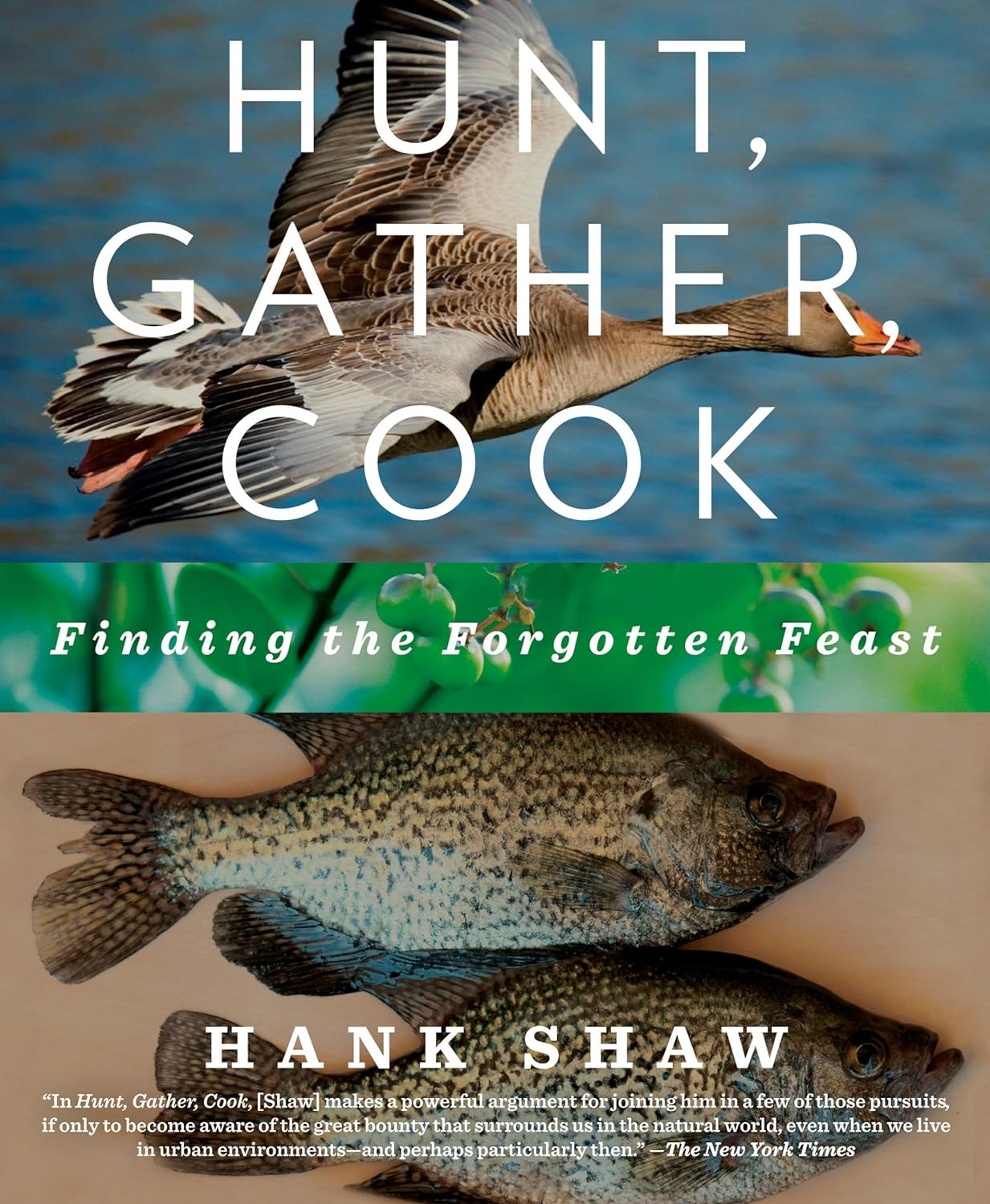
He is a hunter, a fisherman. He’s cooked everything and he breaks it down. It’s gonna be awesome. You’re gonna learn some tips from him and probably I’d say some of the greatest cooking books out there. The names are great. You gotta check it out. Hank, Shaw. Don’t miss this one. All right, I’m outta here. Hope you have a great evening. I hope you have a great morning or great afternoon wherever in the country you are, and I appreciate you for stopping in today and checking out the show. Talk to you soon.
It’s time to get to Eastern Idaho! Take a look at the website and head out to Yellowstone Teton Territory. You can go to wetflyswing.com/teton right now and check in and see some of the outfitters and lodges and all the good stuff they have going out there.
You can also get more information on the Fly Fishing and Tying Expo in Eastern Idaho. Check it out.