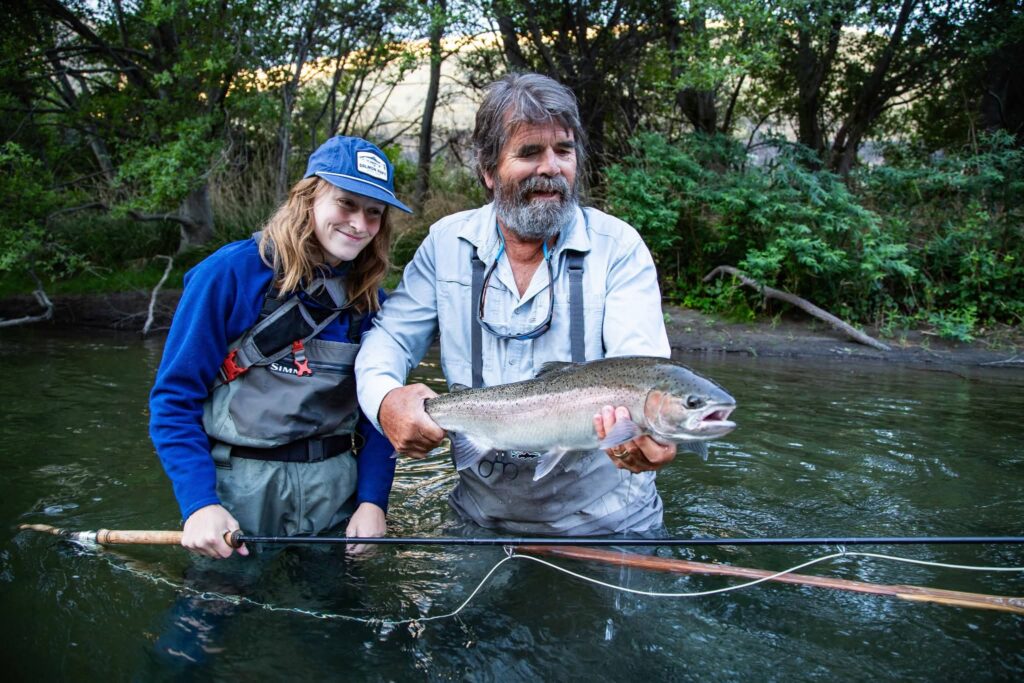
John Hazel, longtime owner of Deschutes Angler Fly Shop, joins the podcast to share the story behind the early days of Spey casting on the West Coast and the innovations that helped shape modern steelhead fishing. Drawing from decades of experience on the Deschutes River, John talks about the development of two-handed rods, the evolution of Skagit and Scandi systems, and his work with companies like Sage, Loomis, and Burkheimer during the formative years of modern Spey fishing.
We also dig into Deschutes steelhead tactics, skating flies, salmonfly hatch strategies, and the small details that separate successful anglers from the rest. Whether you’re interested in Spey casting history, steelhead fishing, or learning from one of the sport’s pioneers, this episode is packed with practical advice and stories from a lifetime on the water.
00:00 – 05:30 — John Hazel Shares the Origins of Modern Spey Casting on the West Coast
John explains how early anglers experimented with fiberglass rods and custom-cut fly lines before purpose-built Spey equipment existed.
05:30 – 10:30 — Building the First Graphite Two-Handed Rods with Sage, Loomis, and Burkheimer
John recalls working with Don Green and several rod companies to develop some of the earliest graphite Spey rods.
16:30 – 23:15 — Deschutes River Access, Wading Challenges, and Fishing from Boats
John discusses why the Deschutes remains unique among Western rivers and how special permits help older anglers stay on the water.
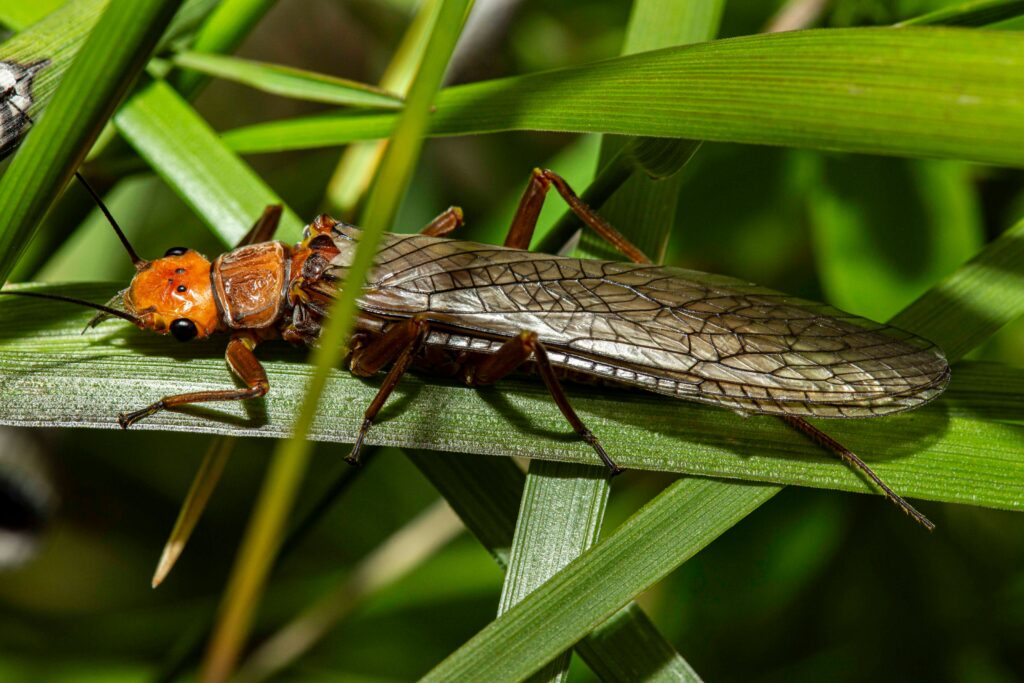
23:15 – 29:30 — Salmonfly Hatch Strategies and the Biggest Mistake Anglers Make After a Refusal
John shares his favorite patterns, discusses the Norm Wood Special, and explains why immediately recasting to a refusing fish is usually a mistake.
29:30 – 35:30 — The History of the Norm Wood Special, Stimulator, and Early Fly Shops
Stories about fly patterns, Randall Kaufmann, and the legendary Greased Line Fly Shop.
53:30 – End — Streamer Fishing for Giant Deschutes Trout and Modern Fly Fishing Gear
The episode wraps up with trout tactics, favorite rods, streamer fishing, and why today’s fly fishing equipment is better than ever.
Episode Transcript
00;00;02;00 – 00;00;33;29
Dave
Many times. The biggest mistake in steelhead fishing happens before the fly even starts swinging. Today on the podcast, we sit down with one of the true pioneers in modern Spey casting. John Hazel is here and he’s going to take us back into the early days of two handed rods, cutting up flight lines before Skagit systems existed. Guiding through decades of changes on the Deschutes and the small details that separate anglers who simply cover water from anglers who actually fish it well, this is the fly swing podcast ratio of the best places to travel to for fly fishing.
00;00;34;13 – 00;01;04;09
Dave
How to find the best resources and tools to prepare for that big trip and what you can do to give back to the fish species we all love. John Hazel is here, long time owner of the Deschutes Angler Fly Shop and has spent nearly five decades guiding, teaching and helping shape the Pacific Northwest steelhead and trout scene. In this episode, we’re going to go behind the scenes on the early days of West Coast Baby and find out how John worked with Sage and Don Green on some of the first graphite two handed rods.
00;01;05;01 – 00;01;22;11
Dave
We’re going to get into the art of fishing. Scared flies for steelhead. We’re also going to get a few stories about John McMillan, the early days of fly shops in the Northwest and the history of the Deschutes Club. Lots of good wine this one is jam packed, so let’s get into it. You find John at Deschutes Angler Fly Shop.
00;01;22;26 – 00;01;27;01
Dave
Here we go. John, Hazel. How you doing?
00;01;27;01 – 00;01;30;03
John
John Thank you, Dave. It’s great to be here. I’m looking forward to it.
00;01;30;10 – 00;01;49;29
Dave
Yeah. Yeah, me too. Me, too. It’s been a little while. We had Amy on a number of years ago. We’ll have a link in the show notes to that. And, you know, we. We chatted with her. It was a good episode. You know, over the years, we’ve heard your names popped up a lot, especially when it comes to spay, you know, the early days and and really just kind of everything around the Deschutes.
00;01;49;29 – 00;01;59;12
Dave
So this is a going to be a good one. Today. We’re going to talk a little trout, little steelhead, but maybe take us back to the shop. You know, when did when did this open up? When the doors open for the fly shop?
00;01;59;23 – 00;02;30;06
John
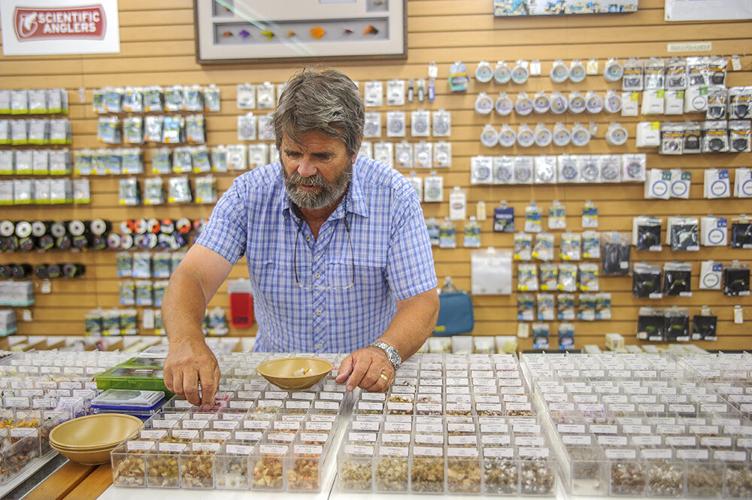
You know, we opened the shop, Dave, in 2003. And the impetus of that was, you know, I’ve been out here as an outfitter since 1978, and I knew that getting old you needed the possibility of another income in case anything should happen. So just out of a whim, there was another little fly shop out here at the time that sold Tippet and Flies, but we needed a place where we could outfit a lot of people because our outfitting business was starting to get big and fly shop was a natural choice.
00;02;30;06 – 00;02;34;12
John
So we opened it up in 2003 and never looked back. It’s been a great experience.
00;02;34;17 – 00;02;36;26
Dave
Yeah. And the Deschutes Angler, right. It’s been.
00;02;37;01 – 00;02;37;14
John
Issues.
00;02;37;14 – 00;02;56;11
Dave
Angler. You’ve been out there for quite a while, obviously 78 and we’ve heard a lot of those stories too. Just people you’ve influenced over the years that have guided with you for you, right? Over the years, it’s kind of hard. I’m sitting here kind of thinking, Where do we start? But I feel like I feel like the two handed game is something that you really were a lead on.
00;02;56;11 – 00;02;58;01
Dave
Maybe talk about that. Where do you.
00;02;58;06 – 00;03;27;27
John
You know, it’s funny, it’s great that you to talk about that because, you know, there’s been a lot of podcasts. I don’t I don’t listen to a lot of podcasts, but I get that I get the information back from people that do. And and, you know, there is a the spark has to start in such a weird way and unorganized way in the Pacific Coast that the information is often skewed a little bit because there was one faction up in the north of Seattle called, you know, they were the gadget boys, right?
00;03;28;17 – 00;03;51;26
John
And long before this gadget boys, before there was even anything called Gadget there was Mike Maxwell and Dennis up in Vancouver trying to figure out their to had a game with fiberglass rods. And I was down here Randy Stetler, a longtime friend of mine, a fellow guide employee of the Coffman’s, and he’s got quite a history in this industry.
00;03;52;11 – 00;04;15;10
John
He was donated a fiberglass rod in like 1985, made by Hardie. It was a heinous rod. It was like 14 feet for a ten or 11 weight. And we got this rod and we played around together back in the mid 1980s with this, trying to make it work. And it was so bad, it was beyond belief. Of course, there were no lines whatsoever.
00;04;15;10 – 00;04;40;15
John
So we’re used lines made by Hardie back then double tapered, tens 11 and 12 Custom cutting tips form and so on. But the whole impetus there was I needed a rod that was going to work and so I got a hold it down green sage and the first rods manufactured from Sage were the designs I worked with, Don with, and those were 15 foot ten weights out of carbon fiber.
00;04;40;15 – 00;04;41;20
John
The first carbon fiber.
00;04;41;20 – 00;04;43;15
Dave
Was what year was that when you were doing?
00;04;43;15 – 00;04;48;06
John
I don’t know. You know, I tried to look back on that, Dave, and I don’t know. It’s so far behind me.
00;04;48;10 – 00;04;50;09
Dave
Was it somewhere in the eighties? Right, Somewhere in.
00;04;50;09 – 00;05;11;04
John
The mid eighties. In the mid eighties. And I know that Orvis was working on a graphite rod at the time, but I got a hold of Don. Don and I worked closely on the first one. Lots and lots of prototypes, and I didn’t have faith in any one rod company, so I got a hold of Loomis and had them work on their first two handed rod, as well as C.F. Birkhimer.
00;05;11;14 – 00;05;30;13
John
They were all design rods based on this, this idea that I had and, and they all came out about the same time. It took him about a year to get the prototypes done and the first rods came out within about a year. And, you know, you don’t even see those rods anymore. I mean, those were such ginormous rods.
00;05;30;13 – 00;05;33;03
John
I think you could use them. You could use it for the spare AMA.
00;05;33;26 – 00;05;35;20
Dave
So these were all 14, 15 footers.
00;05;35;25 – 00;06;00;09
John
They’re all 15 foot in. 15 foot ten weighs ten, 11 weights, one big piece of rods. But we still didn’t have any lines, so we were working on the line situation. Of course, down here, Dave, most of our fishing is done on a floating line, so that was fine. We could take those big double taper 11 and 12 and put a, you know, 15 or 20 feet of a double tape or seven on for a tip and get great turnover, great taper.
00;06;01;07 – 00;06;22;16
John
And we used those for a while until the guys started cutting Skagit style lines. And on that that would probably be, you know, the guys, Mike Carney he’s probably been around Yeah Ed Ward was part of that deck. Hogan was part of that cut and Harry Lemaire cut and splicing lines just trying to be able to throw out those big flies and sink tips, which we didn’t use much of down here.
00;06;22;16 – 00;06;46;16
John
So we were pretty much a floating line specialty and that was out of our range. So we don’t get a lot of credit for what was going on in the Pacific Northwest. But we still we we were still the beginning founders, you know, and I had lots of clinics with John, our up in the Skagit Valley in the mid eighties, almost every weekend during the wintertime, we had clinics up there.
00;06;47;18 – 00;07;04;13
John
So a lot of people got exposed to those big heavy rides. And the technology to make a smaller rod came very quickly. Those were such big rides that the 14 foot nine weight was the next one in a graph. Slide three, they actually named it Graphite three, and everyone thinks that’s the first ride that came out. But Right.
00;07;04;26 – 00;07;08;03
John
But it wasn’t. But now there’s a little there’s a touch up history for.
00;07;08;03 – 00;07;19;07
Dave
Yeah, that’s awesome. So that’s history. So and like we said, we’ve heard lots of people who you influenced because you were early in there. What about your influence? How did, when did space first even are the two hand a game come to your head when.
00;07;19;11 – 00;07;48;20
John
You think you know just because because we’re guiding on the Deschutes and at that time to southwest Washington the winters the back cast has always been a problem. So I just figured this was just a no brainer, absolutely no brainer. The problem, Dave, is there wasn’t there was no way to learn how to cast these. So I’m reading books written in the 1800s, you know, like Charlie Charles Fair salmon fishing, and he drew really poor diagrams, line drives on how to cast a spare.
00;07;48;20 – 00;08;16;26
John
Right. You can imagine that in the late 1800s. And then you focus came out of the book you know and it was it was beyond heinous trying to figure out these cars. And and that’s actually how a lot of these oddball cars came about is we since we didn’t know the proper way to cast people were making instead a single span double spoke as they were You know they got this circle cast and the snap and the berry poke and all this crap because no one knew how to set up.
00;08;17;07 – 00;08;36;14
John
No one made a proper cast, right? Yeah. And that’s really how all these other cars came about. So I thought, you know, it’s kind of cool to see how that all matured. Yeah. You know, Now a really good cast here. You know, they do a single spare and left hand, right hand, maybe a snake roll. And those are the those are the cars they use.
00;08;36;23 – 00;08;43;27
John
You know, the other parts are kind of, you know, cast where you have to play around with if you haven’t, you know, finely tuned your craft. Right.
00;08;44;05 – 00;08;59;19
Dave
Right, right. It’s amazing. Yeah. Yeah. The Deschutes is amazing because it’s I mean, there’s a bunch of rivers that, you know, you’ve got all the winter steelhead stuff you talked about. But the summer game, summer steelhead game is interesting because you’ve got the clear water, you know, you’ve got the dean, the Deschutes, you got a few these big waters.
00;08;59;27 – 00;09;08;14
Dave
How does it fit in there with these other rivers? Were they also doing something? You know, were you on that, too? I mean, you’re on the issues this time, but were there guys around the Clearwater?
00;09;08;21 – 00;09;30;08
John
Well, you know, I had a I had a small cabin on the Washougal River, and Bill McMillan lived across the river from me, and Carrie Bruckheimer just lived upstream from that. We had kind of our own little private country club there for a while, and that’s when there were course fish in the river. But yeah, that worked. Even in small rivers, you know, we made it work because it was so fun.
00;09;30;08 – 00;09;35;21
John
We were dedicated, we wanted it to work and just forced it to happen, even on small water.
00;09;35;24 – 00;09;48;21
Dave
Right. And now today, what is the, you know, I guess the Deschutes, like you said, the casks or you mentioned them, you don’t see the real big long belly stuff out there. Is that just because there’s not a lot of room, why don’t you see that evolution back to the more.
00;09;48;21 – 00;10;08;07
John
I tell you the long Billy thing, it’s in some ways it’s more efficient because there’s not a lot of stripping going on, and in other ways it’s less efficient because I’ve caused so many thousands of people how to speak ass and give them a 30 foot shooting head is a whole lot easier. And one day they’re doing it.
00;10;08;07 – 00;10;29;24
John
Yeah, that’s giving them a 62 foot long belly or 70 foot long belly. We learned along belly lines. I mean, the first ten years of doing it, all we had is 110 foot lines. People go, Hazel, you’re not used to cast a long belly. I said, I wrote the book on Long Belly, and when the short belly lines came around, you know, it just made it so much easier, right?
00;10;29;24 – 00;10;55;25
John
So the Skagit was a short had the Scandi ultimately turned into a fairly short head, and every iteration of it from now on is really based on one’s technical skill level. So if you’ve got a lot of skill, you know, the thing is, is you’re making eight or 900 casts in a day for a steelhead, you know, So you’ve got to use a 70 foot long belly and raise your hands above your head level and just a hot just a hunk out of calves.
00;10;56;05 – 00;11;18;23
John
You got to be kidding me. Yeah. So, I mean, that beat the heck out of you. And I also like to watch the fly swing and a steelhead. Even on a river like size, it shoots. Most of the grabs are within guaranteed within 30 feet of the bank lock. So, you know, if you cast it out there 60 feet, you can see the whole if a dorsal comes up to follow your fly, you can see it now on the Clearwater.
00;11;18;23 – 00;11;34;18
John
I think it’s probably the same. But, you know, people still want to hook it way out there. And that’s where those long rides and long lines come in. And, you know, it’s fun. If you want to go out and hook mega distance, that’s fine by me. I just just make sure every cast is perfect or I can’t watch it.
00;11;34;21 – 00;11;43;02
Dave
Right? Right. Yeah. You don’t need to do that on the charts. What is the what’s the rod? What’s the go to Rod you like? Is there one weight length that you like on the Deschutes.
00;11;43;07 – 00;12;11;06
John
And I’d say, you know, there’s you can use almost anything anyone you know I think the rush there’s no such thing as lousy rods anymore. Every company out there today has built in a great stick. It’s easier to teach people on the long run. Anything over 13 plus feet 14 is even easier for a beginner because the longer the rod, the the longer it takes you to make the movements with that long lever.
00;12;11;17 – 00;12;33;13
John
And it naturally slows people down and that’s what they need to do. So the long rod is great to learn on. Once you develop your craft, I think you’ll ultimately you’re going to end up going back to the single handed rod again because it’s it’s real easy to cast the same fishing distances and it’s it’s more fun to is more fun to fish as short rod and more fun to play a fish on.
00;12;33;13 – 00;12;34;17
John
Short rod. Yeah.
00;12;34;24 – 00;12;37;04
Dave
Do you cast do you use a single hand rod for steelhead?
00;12;37;15 – 00;12;52;19
John
I do. Oftentimes I do. I still like to go back to old bamboo rods that I use all the time, you know, that’s just it’s just so much fun. And, you know, now there’s still a fish is a little more challenging than it used to be. You know, you know, we consider a good day, one or two hook ups, right?
00;12;53;20 – 00;13;08;08
John
You might as well enjoy it to the max. You know, just pick up a rod that you really like to fish and enjoy it because there’s a lot of downtime in between hookups. So it’s just whoever’s got the most fun, I tip my hat to that, whatever tickles them.
00;13;08;15 – 00;13;23;08
Dave
Yeah, definitely. Well, you also have, you know, you got the steelhead, and we’ll kind of follow up on this too, today. But you also have the trout, right? And I feel like for me, those are kind of equal. But what is that for you? Do you spend have you always spent as much time on the trout stuff as the steelhead, or do you have one favorite over the other?
00;13;23;20 – 00;13;43;11
John
Well, I mean, the course I mean, I was brought up and weaned still fish, and that’s what I did. But as a business, as a businessman and going into outfitting, I realized that trout is, you know, it’s 80, 80% of the game, right? Everybody from coast to coast fish is trout, world wide fish for trout that it’s used as a great trout stream.
00;13;43;26 – 00;14;00;09
John
You needed to be out here and really learn your craft trout fishing. And that was important to build a strong business is a value did is guys steelhead you’d be you’d be in a world of financial hurt. I think so. Right. So I love trout, you know it’s just a different game altogether. I mean, who doesn’t like trout fishing?
00;14;00;09 – 00;14;02;09
John
It’s one of the greatest sports on the planet.
00;14;02;18 – 00;14;09;12
Dave
Yep. And you guys. So you are you still you know, you do you have an outfitting? Are you still doing that through the shop there or is it.
00;14;09;17 – 00;14;32;01
John
Well, they still offer guys services through people that have gone through our army over the last 30 years. Right? So I retired and I don’t actively guide anybody anymore that I haven’t guided like the last 35 years. So and I love it. Don’t get me wrong, I still love guiding, but it’s getting old. It’s a toll on my body now.
00;14;32;01 – 00;14;51;24
John
So I’m just thinking that my guys, they needed to get out on their own. It was a good time after COVID to do that. You know, things slowed down for a while. Our guide business closed down, mandatory. Everyone was kind of shifted and jockey and what they’re going to do for the rest of their lives. I said, Well, you guys, it’s a perfect time to go out on your own.
00;14;51;24 – 00;15;21;17
John
Go out, Well, we’ll support you, you know, and all of you. The most important thing for us, Dave, is that, you know, all the outfitters on the river still come in to our shop and and get outfitted. They outfit their guests. And, you know, we’re we’re an information source for everybody. So business wise, it still works well for the shop to have the guys service kind of all individual contractors and it’s less work on us running that retail shop, but not having to deal with day to day guys strategies.
00;15;21;20 – 00;15;38;07
Dave
Right. Do you feel like you know the shops, you’ve seen a few these you mentioned there was another one. Well, when you start it sound like and then also there was one just a few years ago that was in MOP and that’s gone. The the Welch’s shop is gone. Do you feel like it’s getting harder with Fly Shop?
00;15;38;07 – 00;15;40;17
Dave
So what’s your take on as you’re in it? You know.
00;15;40;17 – 00;15;56;00
John
I’ve been I’ve been in the business for so long, you know, it’s hard to say what my take is. I don’t understand. I know. I know this. I’m happy to be a destination shop because no matter what, people are going to come out to the river. When they come to the river, they stop at the shop right?
00;15;56;00 – 00;16;01;04
Dave
They need bags. Like right now it’s they it’s salmon flight time and people need bags and information.
00;16;01;09 – 00;16;17;07
John
Oh, yeah. And it’s great to see everybody. You know, it’s it’s it’s actually a hub. It’s a destination hub. Yeah. And I see the same people year in and year out and the same weeks. It’s a great place that to keep in touch with people that coming in from all around the coast coast to coast and around the world in some cases.
00;16;17;07 – 00;16;38;28
John
But I don’t know. I think the fly shop business just funny, you know, you can buy equipment anywhere online. You don’t even need to walk into a shop anymore. And those relationships based that that are based on customers, you know, it’s it’s fun to have those relationships with customers and they still they still do business with you. We do our very best to keep them.
00;16;39;12 – 00;16;44;03
John
You know, it’s not an easy environment out there, but I keep the shop full. You’ve been I hope you.
00;16;44;11 – 00;16;49;17
Dave
Shop, right? Oh, yeah, many times. Many times. Now, you guys are. You guys are loaded. You got tons of flies. Yeah, you got look at everything.
00;16;49;26 – 00;17;09;15
John
And waiters inventory up the wazoo, materials up the wazoo. So you can’t sell from an empty card. So when people come into that shop, they they go, Holy crime. How do you how do you keep a shop open in a little town like mopping? Right. You just keep it full, keep the shops and people come in and buy the equipment, you know, So.
00;17;11;13 – 00;17;48;21
Dave
Located in Boulder, Colorado, intrepid camp gear is dedicated to designing and manufacturing the best and most highly engineered automotive camp gear on the market. Intrepid Camp Gear specializes in rooftop tents and aluminum cargo cases designed for skis, rods, hunting gear and any other gear you may be hauling. Elevate your adventure with intrepid camp gear right now. Head over to West Flight, swing, dot com slash Intrepid right now that’s intrepid i n t r e p i d intrepid camp gear experienced the waters of Bristol Bay at Togiak River Lodge, where fly fishing meets Alaska’s rugged beauty.
00;17;49;05 – 00;18;10;16
Dave
This is the place to complete the Alaska Grand Slam with all five salmon species, rainbow trout, arctic char and more. Where each day offers a new Alaskan adventure, you can visit Togiak, lodge ecom right now to start planning your Bristol Bay experience with Togiak River Lodge. Why do you think the fly shop we’ve, you know, heard this a lot.
00;18;10;16 – 00;18;17;28
Dave
We’ve said a lot. But why are the fly shops so important for just the fly fishing industry? Like if they were to be gone, you know, why is it such a critical piece?
00;18;18;10 – 00;18;40;22
John
Oh, I tell you. I mean, it’s it’s where the rubber meets the road, right? So what’s interesting in our fly shop is that everything we sell is the stuff that us and the staff love to fish with. I mean, if you love the fish or something, because, you know, you obviously developed a taste for it. That’s what we and it’s fun to sell that kind of equipment.
00;18;40;22 – 00;18;41;04
John
Right. Right.
00;18;41;04 – 00;18;46;02
Dave
Because you know it so well. Right. You’ve used it a thousand times and you know it. You can sell that easily.
00;18;46;09 – 00;18;54;23
John
And when you’re jacked about it, it’s real easy to get the customer jacked about it. Not only that, it’s in 5 minutes, he’s going to be on the river using this.
00;18;54;25 – 00;18;55;22
Dave
Exactly.
00;18;56;02 – 00;19;08;17
John
And it’s a it’s a great combination. I, I feel fortunate to be able to have a shop on a river such as a shoot. It’s open year round. You know, it’s just we’re very, very, very fortunate.
00;19;08;17 – 00;19;18;16
Dave
And it’s cool when there’s a lot of people listening now that maybe haven’t been on the Deschutes around the country. How do you explain the Deschutes for somebody who hasn’t been there or seen it, done it?
00;19;19;02 – 00;19;38;16
John
Well, I tell you, if it is, and the older I get, the more I appreciate this. It’s a tough river to fish. I mean, I’m in my mid seventies now, right? So it’s getting tougher for me. I used to run down the bank, you know, walk out there fish 300 feet of water, run back up and go the next 25 spots.
00;19;40;05 – 00;20;02;01
John
I just have so much appreciation for the old guys that are still out here doing it. I tip my hat off to those guys because they’re they’re the real McCoy, and the young guys that are doing it are developing skills that they can use anywhere, but it’s hard to get access to the Deschutes, you know, not in terms of private property, but in terms of just safely getting down to the water.
00;20;02;01 – 00;20;03;07
Dave
Yeah, yeah.
00;20;03;22 – 00;20;11;27
John
It’s a good boating river. You learn good boating skills if you’re floating it, you learn great wading skills if you’re fishing it because there’s no fishing from a boat.
00;20;12;01 – 00;20;12;19
Dave
Right.
00;20;12;21 – 00;20;15;01
John
Now, that’s one of the best management. Yeah.
00;20;15;15 – 00;20;19;16
Dave
Is that a big thing? Do you remember when that, when that has that always been in effect.
00;20;19;16 – 00;20;23;03
John
It’s been in there since. Yeah. It’s been issue. That’s right. I mean 28.
00;20;23;03 – 00;20;24;08
Dave
Wow. 28.
00;20;24;23 – 00;20;33;20
John
The Deschutes Club there there are they were the smart guys that made that they didn’t want anybody poaching their water That’s crazy. Even even back then they had a vision. Right.
00;20;33;23 – 00;20;36;25
Dave
And who was the Deschutes Corp? What was the Deschutes Club? Do you know that history at all?
00;20;37;04 – 00;20;50;20
John
Well, I do, but I bet you there’s somebody that could give you a podcast is second to none on that. But it was developed in the late twenties, really an interesting club. They’ve got a bunch of members. They’ve got just maybe under 30 houses on it.
00;20;50;20 – 00;20;53;14
Dave
But yeah, this is these are the houses that are up above the lucky.
00;20;53;21 – 00;20;54;11
John
You got it.
00;20;54;11 – 00;20;55;16
Dave
Yeah. Gotcha. Okay.
00;20;55;26 – 00;21;11;14
John
Yeah, It was a great history. You know, I tell you, the people to get a hold of that might talk about. That’d be an interesting show. It’d be. I’ll do that. The Oregon fly fishing Club. There’s a bunch of guys that have been Deschutes Club members and their fathers and grandfathers, so they’ll have some of the history on that.
00;21;11;22 – 00;21;27;06
Dave
Yeah, there you go. I’ll follow up with that. So that’s awesome. So basically, yeah, there’s no, you know, fishing out of a boat like there is and most of Western streams. So it’s a big, a big, I don’t know, vision. Right. And so what that allows is it makes it hard to get the those finish right. Salmon fly hatch, those fish are under the trees.
00;21;27;16 – 00;21;33;12
Dave
You got to find a way to get to them. And sometimes like you said, you got to scrape up or down a bank to get into a spot. Maybe you don’t get to those fish.
00;21;33;21 – 00;21;50;01
John
Yeah, Yeah. There’s a lot of sanctuary habitat if you look right at it. And I often think, you know, wouldn’t it be great just to fish the river from a boat for one day? And in my, in my deep fantasy dreams, I think that’d be a great way to raise money if we needed to do something right.
00;21;50;03 – 00;21;55;14
Dave
Well, can’t. Now, this might be just a question for somebody else, but isn’t there a handicap license? You can get the fish.
00;21;55;18 – 00;22;08;27
John
There is. There is. A lot of my clients have that. So a lot of people, they’ll see me holding the boat as I walk it down the river. Most of my clients, I think my youngest client today is 74. Wow. And the oldest one is 89.
00;22;09;04 – 00;22;09;18
Dave
Amazing.
00;22;09;22 – 00;22;34;07
John
And most of my clients have handicap privileges. You have to get a special, you know, a special license from your doctor. But, you know, basically it allows people that are really old and decrepit and and just with a flip fish and it shoots 20 years ago. But you can get a handicap permit and fish from a boat as long as you’re standing if the boat is I got a guy, the guy has to be out of the boat.
00;22;34;17 – 00;22;34;24
Dave
Okay.
00;22;35;00 – 00;22;40;26
John
And holding the boat, walking it down. You can’t be anchored in the river and you can’t be floating or floating.
00;22;40;26 – 00;22;41;10
Dave
Okay.
00;22;41;10 – 00;23;03;08
John
Yeah, but it’s great. I’ll tell you, Dave, we got these guys that are 75 and 80 years old. I’m walking down the the boat down, gnarly ass runs that they have not been able to fish in 30 years. Right. So it’s really fun to watch them jack fish out of water that they’ve always loved the fish and have lots of long memories about, but haven’t been all the way that in decades.
00;23;03;08 – 00;23;15;14
John
So it’s a cool deal. I hope more people get with it. I’ve told other guys how to do it and it allows your clientele to grow old with you right? Yeah. And. And get out on the river and still maintain safety.
00;23;15;23 – 00;23;33;14
Dave
Yeah. So cool. So right now we’re in Santa Fe hatch time, right? It’s it’s coming off. We’ve got maybe some lower water, maybe warmer things or it’s always changes on the date. Right. But when somebody if somebody walks in today and they’re like, Hey, I’m gone, I’m going fishing. Well, what are you telling them on the salmon fly hatch?
00;23;33;23 – 00;23;54;12
John
Well, I mean, it’s perfect timing and every year is different. Of course, you know, I’ve been out here for, I don’t know, 48 of 49 salmon fly hatches while every one of them is different, You know, all it’s always based on weather. Dave So, yeah, it is. If you happen to get out here in the weather is kind of, you know, 75 to 90, you know, not a lot of cold fronts coming in.
00;23;54;12 – 00;24;10;25
John
That house can last, you know, three weeks, maybe four weeks. If you think about from the mouth all the way up to Warm Springs is pretty spectacular. And we’ve been right in that groove this year. The weather has been spectacular. The river is ultra low. I’ve not ever seen that. It is ever in my history out here.
00;24;10;25 – 00;24;12;20
Dave
How low is it? It’s below 4000, right?
00;24;13;00 – 00;24;33;05
John
Oh, 4000. And it’s I think as I’ve seen it below, you know, it’s already been like 3600 once this year. Wow. So it could it could hover right around there, maybe even maybe even get lower by the time we get into the midseason. It’s going to be fantastic because for guys, all the guys, it gets so tired of seeing this river not change.
00;24;33;16 – 00;24;49;19
John
You know, we don’t get big winter fresh. It’s very often that change the river, so the the low water will change the game both for trout and steelhead. And I think it’s refreshing to see a new piece of water out there, you know, a new way to get into it. I mean, it’s it just makes your brain work better.
00;24;50;02 – 00;25;02;01
John
So I think everyone’s going to get a kick out of this season. We don’t know what it’s going to bring it. It’s going to bring low water for sure. Maybe warm water. It could bring warm water. But, you know, every season is different. You just deal with it as it comes.
00;25;02;05 – 00;25;07;05
Dave
Yeah. And there’s going to be bugs regardless, right? Whether even if that’s a golden stone, there’s going to be some big bugs.
00;25;07;05 – 00;25;27;25
John
Around there necks. And, you know, I was out there the other night with one of our employees and gosh, we had gold and stones flying everywhere. But the cool thing is I saw the largest canvas fly hatch that I’ve seen since the tower went up in 2009. These cameras were abundant and right out of the canvas, just before dark, pale, any duds pop off.
00;25;28;01 – 00;25;45;18
John
And it was there were blanket hatches. So with this lower water, there’s a lower nutrient load. And and for some reason, the insects have adapted to it and like it and are more plentiful this year than I’ve seen in the past. Which. Which is good.
00;25;45;24 – 00;25;57;22
Dave
That’s good. Yeah. Qantas is definitely a prolific Well you hear Qantas right around the around the country, the Mother’s Day, Qantas or whatever, but there’s a ton of cars on the chutes. How do you recommend people fish the cars or how do you do it?
00;25;58;01 – 00;26;22;01
John
Well, you know, it’s our number one hash throughout the summer anyway, so. Oh, Dark 30 as the weather continues to warm up, that early morning is going to be more popular right now. You want to get out there about ten. But as soon as it sounds like a hash is over, then you get them on and be out there at Zero Dark 30 in the morning because the dead cat is from the the egg layers the night before are floating down.
00;26;22;01 – 00;26;43;27
John
They’re tied to the bank. They’re in the phone lines. Fish and dead cat is a spectacular upstream drive fly. That’s the way to go then the is stunning that hatch will come off it usually get a pale morning done hatch around 9 to 1130 then it’s a dry dropper because the fish are too hot and then in the evening time is back to dry, callus and pale evening dance.
00;26;44;13 – 00;26;52;11
John
We’ll have a huge yellow Sally stone fly hash coming up. That usually happens around early to mid-June, and that’ll take you through July.
00;26;52;25 – 00;26;57;28
Dave
That’s the old Sally’s on the Qantas. What’s the dry air flight you like for KDC for fish in that early morning.
00;26;58;02 – 00;27;07;08
John
You know I think if you talk to 100 guys I bet you over 50 of them would say that just a standard ex Qantas might be the number one that.
00;27;07;14 – 00;27;08;25
Dave
Oh the ex Qantas. Yeah.
00;27;09;05 – 00;27;12;25
John
You know it’s just, it’s just hard to beat. It’s so simple. It’s got that low profile.
00;27;12;25 – 00;27;15;11
Dave
Yeah. The trailing shock Right. Makes it. Yeah. Yeah.
00;27;15;11 – 00;27;19;26
John
You got it. It’s just it’s just, you know, I forget who, I forget who made that.
00;27;19;26 – 00;27;22;16
Dave
It’s Craig MATTHEWS, I think. Craig MATTHEWS. Oh, well, his wife.
00;27;23;05 – 00;27;35;01
John
Yes, he did. Yeah. Well, he’s designed a lot of great flies through the decades. And then I’ll I’ll try after the health care cas. Right. And they all care is always a good fly, but we always end up cutting off the hackles on the bottom of the.
00;27;35;03 – 00;27;42;23
Dave
Yeah, I feel like the l care for some reason. I feel like it’s not my go to just because I don’t know if it sits up a little higher. You want it to kind of be down in the film.
00;27;42;26 – 00;27;53;19
John
Yeah, you should do You just want to. You want it in as low as you can get it. Same with the same applies to I mean you want, you want everything to be kind of low in a film for whatever reason. That’s what this should strut like.
00;27;53;19 – 00;27;57;03
Dave
Yeah. What’s the what’s the fly you like for the salmon, for the big bugs, for.
00;27;57;04 – 00;28;19;21
John
Squash, You know, you’ve got Yeah. You got to have a you got to have three of them. Of course when we say salmon fly Dave, we’re talking about both the tyrannosaurus, which is the big orange classic salmon fly. But we also throw the Hesperia Perla Pacific in there because that’s the golden stone. And then it shoots. It’s got maybe it’s might be a 6040 population of Goldens over the Tyrannosaurs.
00;28;19;21 – 00;28;38;12
John
Telefonica though there’s times really like the orange ones, but most of the time they like that little golden one. You got to have both. And you might just pick two if you get if you pick it up there one time. I tell people in the shop this every day, throw your fly out there. If a fish comes up and looks at it and doesn’t eat it, what is the average guy want to do?
00;28;38;12 – 00;28;52;08
John
He wants to throw it up there again. And now you just do that. You just screwed the pooch, right? So if you get a refusal, just bring that fly in, get it switched out, Put your next favorite fly on there. Tell you a stone out here is money.
00;28;52;22 – 00;28;53;11
Dave
Clark Stone.
00;28;53;11 – 00;29;12;04
John
Yeah, the Clark Stone is money. The Norm Wood special. God bless. Norm was for creating that, doesn’t it? Looks like a 12 year old tied it. But it is one of the greatest golden patterns we have out here. Yeah, I mean, just switch it up. You know, if you. If you get rejection, just switch it up and all of a sudden that guy is going to come up and eat it.
00;29;12;04 – 00;29;18;21
Dave
So that’s it. So switch it up. So, so make one cas. If you get a refusal, change something either smaller or bigger and just try something different.
00;29;18;21 – 00;29;26;14
John
Absolutely. Yeah. Yeah. To throw the same fly up there. Yes. And thinking you’re going to get a different result is usually it’s kind of rare.
00;29;26;14 – 00;29;36;07
Dave
Yeah. That’s not good. Right? Right. Okay. Yeah. I love this. I love you mentioned Norm Wood’s the Clark Stone, and now Norm Wood’s. We’ve heard that name quite a bit. Who it was he, Norm? A guy out there on the shoots?
00;29;36;15 – 00;29;58;07
John
Yeah. He was an old fishing guy out here back in. He was out here back in the seventies when I started. And I had the pleasure of guiding them probably in the maybe in the late 1990s. And he he’s just just a good old guy, you know, just one of those old time fisherman, right? No, particularly great Casper.
00;29;58;07 – 00;30;09;00
John
Not I mean, not a great fly tire. Just just a guy who spent a lot of time on the water and in he has his preferences and he came up with one of the best salmon flies of all time, at least for the Deschutes.
00;30;09;09 – 00;30;17;04
Dave
Yeah, the Norm Wood special. That’s awesome. We have to look that one up and get some links down because probably I’m sure a lot of these flies would work probably around the country, right? You know.
00;30;17;06 – 00;30;21;12
John
I bet they would. You know, I’ve never had the chance to fish to have a fly hatch anywhere else.
00;30;21;12 – 00;30;24;12
Dave
Yeah. Yeah. Why go anywhere else when you get here?
00;30;24;12 – 00;30;43;20
John
Because you’re nothing. Nobody. There’s the old guys don’t have days off. Right? Right. Some, like Typekit head to Montana and do a hash. So it’s. It’s kind of funny. We we all keyed into our own river and and oftentimes don’t try this stuff that works for us here somewhere. When I go to another river, I’m asking all my buddies that don’t fly shops.
00;30;43;20 – 00;30;46;28
John
Well, what should I be using? Right? I mean, they know. So.
00;30;47;01 – 00;30;47;19
Dave
Yeah, yeah.
00;30;47;28 – 00;30;50;00
John
All those aromas do let it go.
00;30;50;06 – 00;30;57;00
Dave
Yeah. The Norm Wood special is kind of like a basically like a stimulator, but it’s what’s the difference between that and the stimulators? Get some rubber legs.
00;30;57;14 – 00;31;27;03
John
You know, the stimulators. I mean, that has been there’s a couple of guys actually take credit for that. And we know who they are. But the norm was the norm was it’s got a way fatter body, right? It’s got it. It’s got a funky collared calf tail wing. Yeah. And the body’s fat and hands long and soft and the and the for we’re not looking for perfect dry fly Haskell we want that saddle hack all that stuff that moves around a lot when it’s in the water and it’s the best way to fish.
00;31;27;03 – 00;31;47;05
John
That is like, what, a quarter of an inch inside the surface film. You know, you don’t want to stand and ride up on top like a stimulator. It would sit right? It looks kind of like a stimulator in terms of colors. You know, it’s got a little golden body and a little bit more orangish, thoracic thorax. But it truly looks like a 12 year old.
00;31;47;05 – 00;31;50;15
John
Tie it if you want it to look really good. That’s what it has to look like.
00;31;50;16 – 00;31;53;13
Dave
Yeah, I love it. That’s my type of fly. That’s my type of cotton.
00;31;53;25 – 00;32;06;12
John
And also it’s a bug you look at fly. It’s everybody’s type of fly. Yeah. You know, I don’t want to take a picture of it in a how to fly that log, but boy, when the time on your when you turn on your leader you’re going oh man this thing.
00;32;06;17 – 00;32;11;27
Dave
Yeah and that’s the thing about the stimulator a similar is so perfect when you see it you’re like man that thing almost looks too perfect.
00;32;11;29 – 00;32;19;22
John
But it is sticks. You should put it in a frame and look at it. Right? Right. That’s where it goes. It is a perfectly good fly, no doubt about it.
00;32;19;24 – 00;32;24;28
Dave
Yeah. And I’m sure there’s some overlap. It was the norm Woods and Stimulator, they’re kind of at the same a similar time.
00;32;25;16 – 00;32;27;20
John
Norm Woods came long before the stimulator.
00;32;27;22 – 00;32;29;25
Dave
Oh, that’s the thing, right? Yeah. There’s.
00;32;29;26 – 00;32;48;24
John
There’s two guys in this world that fight over the ridge, the original stimulator fly and on who? And you know, the stimulator, Hec. Go to any control stream, throw out any size of stimulator, and they eat it. It’s a great it’s a great fly. It’s there’s no doubt about it. It’s a it’s maybe one of the most popular drive flies in western fly fish.
00;32;48;27 – 00;33;03;23
Dave
It is. Well, the interesting thing is we had this conversation a lot on this podcast about flies because it’s all been done before, right? For the most part, you go back how far you want to go, but the stimulator in the Northwoods fly looks very similar. I mean, what made the stimulator different enough to call it a different fly other than the norm?
00;33;03;23 – 00;33;07;19
John
Woods You know, yeah, and marketing, you know, just marketing.
00;33;08;04 – 00;33;08;12
Dave
It.
00;33;08;12 – 00;33;14;17
John
And the norm, which is like in two sizes where the stimulators, everything from a scientific thing to a size four. Right.
00;33;14;17 – 00;33;15;03
Dave
Gotcha.
00;33;15;08 – 00;33;16;25
John
It’s all over. Yeah, yeah, yeah.
00;33;16;25 – 00;33;17;23
Dave
It makes sense. Cool.
00;33;17;24 – 00;33;49;06
John
And I remember I remember once when I was working for Randall Hoffman for years, he said, You know, John, one of the reasons I created the stimulator is if you add up it, this is a beautiful thing about rail. He got all the materials. It would take the tie that fly. Dave Right. And this is like 1980. Wright throws them on the counter and he says, in order to tie this one fly, you need $90 in materials, you know, Yeah, I’m going, Well, course you do, you know, because you had to have Hoffman Saddle Hack.
00;33;49;10 – 00;33;50;12
Dave
For eight for.
00;33;50;12 – 00;34;00;14
John
That effect for the Palmer hack on the body and and then you needed a mesh number one for the thorax Haskell you know I mean it was, it was an expensive fly to tie.
00;34;00;18 – 00;34;20;14
Dave
Yeah, it was. It was. That’s, well, you mentioned Goffin and Kaufman. His name’s come up a few days. Another fly shop, another good example. I mean, coffins back in the day was probably the biggest thing, you know, out there. And it’s not around. Right. But tell us about that, because you have your your experience goes back before the shooting or is that how you kind of got started in this area?
00;34;20;17 – 00;34;28;26
John
Yeah, well, I went through I actually went to work for Mark Noble and Bill McMillen back in the late seventies, the grease line fly shop. That was my. Oh, well.
00;34;28;26 – 00;34;30;08
Dave
What was that? What was the grease line?
00;34;30;12 – 00;34;33;01
John
The grease line was in Vancouver, Washington.
00;34;33;14 – 00;34;33;29
Dave
Okay.
00;34;34;00 – 00;34;59;29
John
And Mark Noble Hills passed away now, but he was quite a Steelhead fisherman and his good buddy, you know, Bill McMillan, who’s one of the mentors of all time or should be for every steelhead fisherman out there, he was certainly my mentor, but I love Bill to have exposure to those two guys. They taught me a lot, but he had a great little fly shop out there and and one of the first mail order catalogs, you know, they didn’t take it very far, but it was very, very cool.
00;34;59;29 – 00;35;25;26
John
I still have copies of those catalogs. And it was such a breath of fresh air to have a shop that was so organic and to and hardcore to hardcore trout and steelhead fisherman both just selling what they believed in and selling great technique and great ethos and conservation. It was it was a fly shop that that hasn’t been like many, you know, they they kind of broke the mold when that fly shop went away.
00;35;26;07 – 00;35;35;04
Dave
Right. And in a great name, the grease line I there’s this book I always forget the name but there’s like I think it’s like grease line fishing but it was Atlantic salmon little tiny book back in the day.
00;35;35;12 – 00;35;36;14
John
Yeah. By Jock Scott.
00;35;36;14 – 00;35;37;18
Dave
Yeah, Jock Scott wrote that.
00;35;37;18 – 00;35;37;26
John
Yeah.
00;35;37;26 – 00;35;46;27
Dave
Jock Scott Well, I mean, that was a classic. That book I remember told me a lot about steelhead fishing is do you find that that was a lot of your overlap Early was thinking about Atlantic salmon and taking some of that?
00;35;46;27 – 00;35;54;28
John
Well, you know, Bill McMillan, who is, you know, just a mentor of mine and a dear friend, and he wrote the foreword to that book when I was re reissued.
00;35;55;01 – 00;35;56;00
Dave
Oh, he did. Okay.
00;35;56;07 – 00;36;14;06
John
And the foreword of that book kind of kind of places that book in this is in its importance to steal a fish and how they relate to one another. And yeah, it was a great book and there’s still a lot of a real strong and still anglers out there that have used that book as their Bible. It’s great.
00;36;14;06 – 00;36;20;23
John
It’s a great book. It’s a must read for anybody that likes the fish steelhead, particularly, particularly on a flow like.
00;36;22;24 – 00;36;41;26
Dave
The Gallatin River Lodge sits right in the middle of Montana’s fly fishing triangle. The Gallatin River, out the door, the Madison and Yellowstone. Close enough that you’re fishing when conditions line up. The lodge is perfectly remote, yet close to everything private access nearby saw guides and real food and a lodge that understands the rhythm of a full day on the water.
00;36;42;04 – 00;37;07;08
Dave
If Montana is on your list this year, don’t guess where to stay. You can call Gallatin River Lodge or head over to g r Lodge dot com right now and plan your next Montana adventure. That’s g r lodge dot com. Check them out now what’s your what’s your go to. I know these it doesn’t really matter flies and everything but what’s your go to steal you go out today or you know for steelhead this season what’s what are you putting on first.
00;37;07;13 – 00;37;26;18
John
You know I still fish top water flies mostly so cool I put on a I put on a like a you know any I’ve got a number of skaters that I tie and they’re all variations of other skaters. Right. But the variations of the old skaters, that’s what I like. I just like going old school. I don’t know much into foam.
00;37;26;27 – 00;37;29;07
John
I just like, you know, hair and feather.
00;37;31;03 – 00;37;32;07
Dave
Modeler is that the weather.
00;37;32;08 – 00;37;51;03
John
Is like the number one hard to beat fly of all time. I mean, you know and there’s a couple of ways to tie it. Everyone that ties it has their way there. And there’s a reason the way they tie it. But yeah, if I had to have one fly, I guess I’d use that. I’d use that. I’ve cut steelhead every month of the year on a mother.
00;37;51;08 – 00;37;51;29
Dave
No kidding.
00;37;52;01 – 00;37;54;00
John
Every single month of the year. Absolutely.
00;37;54;00 – 00;38;06;23
Dave
Oh, that’s amazing. Yeah, that’s amazing. Yeah. Because you have this time, you have the timing, right? Where you’ve got the the peak. Know it starts sometime in the summer. It goes through the fall, but the fish are in there because their summers are in there all year. Right. So what do you think is the time.
00;38;07;10 – 00;38;24;08
John
I remember I cut when I was I tell you, I was fished afloat in line for winter steelhead for the better part of, you know, eight or ten years without going to a sink tap. And the mother on just a heavier hook. Or I could get it down a little bit. Yeah, that was I still fish it a long leader in the flow line.
00;38;24;29 – 00;38;33;22
John
I mean, I remember catching winter fish on the Washington coast and unlike small rivers like the cow women and the other local men on a mother.
00;38;33;25 – 00;38;34;14
Dave
Yeah, that.
00;38;34;14 – 00;38;39;13
John
Works. Yeah. Yeah, it’s pretty full. And I know guys that fisherman in the wintertime on dips.
00;38;39;13 – 00;38;50;17
Dave
Yeah. En temps too. Yeah. What is the top water. You know, you think of the wet flies out there, you know, swinging flies Is fishing top water a lot different than swinging flies? What flies?
00;38;51;05 – 00;38;54;08
John
Well, I mean, in terms of skating. Flies. Yeah.
00;38;54;11 – 00;38;58;13
Dave
Like. Like. Yeah. If you wanted to get one on the surface. Do you are you is your technique a lot different.
00;38;58;14 – 00;39;16;28
John
You know, I used to go around and do a lot of shows from, you know, New York to L.A. and that was kind of our winter gig for 20 years. And I always tell people that they’re the easiest fish to catch on a skating fly. All you do is tie one on and don’t take it off. That’s right.
00;39;17;05 – 00;39;34;21
John
And so the problem is, is, you know, you can fish. You can fish a great run in the morning day with a skater on. Right. A beautiful run. And you’re just you’re thinking of all the fish. You’ve hooked out of that run and you’re jacked up it that big boil to happen behind your fly. And the truth is is you think go through it and maybe not get anything.
00;39;34;29 – 00;39;53;17
John
So now all of a sudden you’re confident weighing a little bit, right? Your confidence drops down a tear and you go to the second run. Well, how many steelhead runs have you fish know? Two runs in the morning. That’s not anything right? I’m all right now. But by the time you finish the second run, now you even lose the confidence.
00;39;53;21 – 00;40;15;14
John
That’s right. The problem is, is most people cut it off before they have a tendency to fish it throughout the day. And and my my introduction is still have fly fishing on I was with was Bill Macmillan writing about fishing skaters virtually ten months out a year. And I thought, well, boy, this is the only way to do it.
00;40;15;14 – 00;40;25;14
John
I, I had no idea that it wasn’t quite as effective in the wintertime. I just thought winter time is fishing is really tough. Yeah, you can imagine fish in a flowing line all winter, right?
00;40;25;14 – 00;40;26;11
Dave
Oh, man.
00;40;26;11 – 00;40;45;21
John
Yeah. And there’s people that do it today just out of just because they like to challenge. But I now I look at fishing today in the wintertime with, with the lines that we have and the tools that we have, it’s so simple. I think it’s probably more effective than as effective as any spinner fisherman. You know, we’re we’re fishing.
00;40;45;21 – 00;40;49;17
John
We’re fishing for the same fish in the same lives effectively, you know.
00;40;49;25 – 00;40;50;15
Dave
Get down to.
00;40;50;25 – 00;41;08;12
John
Yeah, it’s just it’s just funny how all that stuff has changed, but. But fish, get back to your fishing. A skater flies. I like it. It’s so intimate. Because if I want people to make a short cast, even though they might have a spray rod, they can vomit out their 80 or 100 feet. Everybody likes to jack line me up.
00;41;08;28 – 00;41;34;25
John
A perfect cast would be, you know, 30 to 60 feet away. The fly lands first, fly touches the water first, then leader, then line. Right. And so the man is only a it’s only a move that you do if if your cast is screwed up. So everything fly leader line heads and everything is coming across and it comes it needs to come.
00;41;34;25 – 00;41;38;19
John
My formula is my formula is that me? But it’s my.
00;41;38;21 – 00;41;39;21
Dave
Right. Yeah.
00;41;39;22 – 00;42;02;10
John
If the if the fly is coming across the current at the same speed that the currents flowing down, if you can match those two speeds, then you’ve got perfect fly speed. No need for a bend. So you know you might mend upstream to slow the speed down. You might mend downstream sometimes to speed it up a little bit.
00;42;02;28 – 00;42;26;02
John
But so that’s those are remedial moves. Mending is a remedial it’s a remedial move if your cast is screwed up. So you know how most people fish for steelhead. This drive me while they they hock it out there in that line. Lands flops. Yeah. Then the leader then the fly lands at some time fluttering down and then they throw a big wild ass man to it, right?
00;42;26;17 – 00;42;34;09
John
And then you go. And what, what did you do that for? I mean, what does that mean there. What I, you know, but, but they just do it. Every cache is the same no matter what.
00;42;34;15 – 00;42;34;27
Dave
Yeah.
00;42;35;07 – 00;42;56;25
John
And they hock it out there and you wonder, well they’re just casting hoping, you know, if every cast is perfect and perfect cast mean if you need to cast a little shorter to have that kind of control than speed, so be it. I remember all the people that we used to fish before to rods came around and we would teach people how to, you know, they got most people in the shoes have a waiting stick, right?
00;42;56;25 – 00;43;17;02
John
So they got a ways taken one hand and they’re nine and a half foot steel rod in the other, and they’ve got 30 feet of double tape or floating line out a nine foot leader and they just lift it up one back cast and hook it back out there again. Right. Two steps down and repeat. And the amount of steelhead that we’d catch should be insane, right?
00;43;17;08 – 00;43;18;04
Dave
Because you’re fishing more.
00;43;18;21 – 00;43;23;06
John
Well, you fly is in the water and it’s being controlled perfectly, right? Yeah.
00;43;23;17 – 00;43;23;25
Dave
Yeah.
00;43;23;29 – 00;43;38;27
John
So I used to I used to stand up on the banks, up on the high banks. You know, the both sides of the chute used to have a railroad built on it. Right. So the banks are high and most of the runs and I could watch the fly touched down and I could for the touch down all the way to the end of the swing, to the hang down.
00;43;38;27 – 00;43;52;15
John
I could watch the fly swaying and I would watch come up and follow the fly for 15 feet, drop back down again. Right. Not even a boil. Not even right now. The average guy would have taken two steps down.
00;43;52;19 – 00;43;53;00
Dave
Yeah.
00;43;53;08 – 00;44;18;01
John
Thrown the cast out there again. And that’s a missed opportunity. So we we started I just I started with all the other guys that went through the John Hazel program and Randy Stassen, guys that figured that out on these shoes where we can we only fished water where because it was fun where we could watch the fly swing and know we could tell the guy, Whoa, whoa, buddy, you just had a fish boil to the fly or come to the fly.
00;44;18;01 – 00;44;38;06
John
Just make that cash again. You know, he makes it again. No fish. Let’s change the fly up real quick. Boom. Throws it out there still at all. And it was a really a fun part of guiding because it allowed the guy, instead of looking for rocks on the bank, you know, it really allowed us to stay in contact with what’s going on and find out where all the sweet spots are on every run.
00;44;38;14 – 00;44;42;24
Dave
Right? So you would do that. So you get up there and watch it, you’d figure, Oh yeah, yeah.
00;44;43;07 – 00;45;04;07
John
As long as the wing had something that’s either if you had a skater skaters perfect, because you could see everything. But if a wet fly needed to have like a white wing on it, you know, when Flashable came out, I remember a couple of strands of flash blue didn’t hurt the visibility of that fly, but it was so fun to watch the fly swing that that was the game for the guys out here.
00;45;04;11 – 00;45;05;00
Dave
That was.
00;45;05;08 – 00;45;10;18
John
Yeah, I mean, I still do it today. I’d almost rather do that than fish.
00;45;10;22 – 00;45;13;20
Dave
Right, Because you get to see the action. Yeah, you’re just as much in it.
00;45;14;01 – 00;45;32;07
John
Absolutely. It’s just I mean, this is definitely a spectator sport. When you got a good passer that just works his way down quick through the run. As soon as you start getting to the sweet spot, then you show up and you watch. Every fly. Swing is a blast to watch that. Yeah, we used to fight on who has the fish and who gets to watch.
00;45;33;16 – 00;45;40;14
Dave
What’s the what’s the change of fly you would go to if you were fish and something you got a fish came up, refused it. What would you throw in.
00;45;40;25 – 00;45;43;14
John
Well, can I ask this So, you know, because.
00;45;43;15 – 00;45;44;17
Dave
It depends on what you’re using.
00;45;44;24 – 00;45;55;03
John
You know, we used to fish to flies a lot and, you know, meaning that I would put a let’s say I put a standard wet fly, just pick them like.
00;45;55;04 – 00;45;56;06
Dave
A green bird skunk.
00;45;56;07 – 00;46;22;02
John
Okay, let’s take a green buzzcut and so that’s on the point. You come up about four feet, you cut your leader back. You know, we’re using maximum tide leader. So we’re at something that’s like 0.017 in diameter that far up. And I would tie on a skater, a rusty bomber, or just pick a skate wall or wake or whatever skater you wanted and just tie a blood knot in the blood that stops the fly from coming down to the point fly, right.
00;46;22;03 – 00;46;22;25
Dave
Oh, right.
00;46;23;06 – 00;46;46;17
John
All right. With hockey it out there, figure skater. And you got a wet fly. The fish sees the wet fly first and they’re going to move that wet fly and eat it. But sometimes you’ll be under about 30% of time as well. Angler works down now that that fish comes up and eats the skating fly, right? So he already saw the wet fly probably one or two times, but he chooses to eat the skater.
00;46;46;17 – 00;46;49;11
John
That was it. So that’s a stimulus that he couldn’t let.
00;46;49;11 – 00;46;51;00
Dave
Right? Right, right. He needed to.
00;46;51;00 – 00;47;05;13
John
Come up and eat it. And now as soon as Sparrow’s came out, Dave, you needed to be a bloody good caster to have two flies on because. Oh, right. One one little tailing loop and you’re in your cars and you’ve got a half knitted pair of socks on your leader.
00;47;05;21 – 00;47;06;08
Dave
Right?
00;47;06;13 – 00;47;21;13
John
And it’s just nothing but downtime. So you set your guy up with two flies, which is a lot of fun to watch. It’s a lot of fun to watch from the base, but I don’t know many guys I mean, you know, everybody that you know, who’s a pro. Yeah, they could do it. They could. Yeah, they could do it.
00;47;21;23 – 00;47;45;11
John
Yeah, but. But the average guy that’s just coming out here to have a fun weekend. Yeah. He would get so frustrated with the heck with it. Yeah. Yeah. But it’s still a great technique, super effective. And as far as visual stimulus, it’s got a lot of visual stimulus because you always know where your fly is, because you got a skater to watch and four feet behind your skater is where you get come up and.
00;47;45;11 – 00;47;47;08
John
Yeah, yeah, that’s a beautiful combination.
00;47;47;08 – 00;47;57;13
Dave
That’s the way. And so what you’re saying is you would have your, your wet fly on the point fly and then you would go up above that a certain and above the blood. Not you just slip that through the eye of the dry.
00;47;57;23 – 00;47;58;10
John
You got it.
00;47;58;13 – 00;47;59;19
Dave
Wow. That’s cool. And then they.
00;47;59;29 – 00;48;22;18
John
And we call that a slider. So it’s just a slider now. The leader. Yeah, it would, it would never get pulled down because it not too big to go through the eye, right. Yeah. It’s a great way to fish and I’d like to see that come back in because if two things happen it make people better casters because they’d have to be right and they’d be fish in a little shorter line so they could really control the speed of the fly.
00;48;23;06 – 00;48;31;16
John
And you know, by the time somebody by by the time the average caster hooks out 100 foot cast, that that fly is not fishing right. Until it’s 30 feet off the bank.
00;48;31;23 – 00;48;32;05
Dave
Now.
00;48;32;17 – 00;48;38;15
John
You so what’s the benefit of that long cash other than 12 strips the line in before they make the next catch?
00;48;38;15 – 00;48;50;02
Dave
I now that’s probably the time. So if somebody is fishing it, let’s just say they can only get out effectively 30 or 40 feet. Do you think that person fishing all day is as effective as a person casts a 70 feet out all day cover in the water?
00;48;50;14 – 00;48;57;10
John
We’ve always. That’s a good question. We always said if you can’t cast it, you got to wait it. Yeah, right.
00;48;57;10 – 00;48;58;02
Dave
So right.
00;48;58;08 – 00;49;24;26
John
If he if he’s a strong waiter. Right. Okay. Yeah. Like we were all in our thirties. Yeah. Yeah. 35, 40 feet of line all day long. But you know now that guys are, you know, and I like it when a guy can stand in Shinbone deep water and make it eight foot cast because a lot of steelhead come out of those really shallow lines and it’s hard to cast a spare rod, short.
00;49;24;26 – 00;49;41;18
John
I mean, most people can’t do it. You know, they’ve got to have like at least 30 feet of line out. Right. Right. And they’ve got they’ve already got a 12 foot rod and or bigger and they got 30 feet a line out. The leader, the first two steelhead of the day are screwed up before they even get started.
00;49;42;17 – 00;49;52;17
John
So the two in Iran is fun. It’s a good tool for everybody. It works good on kind of the mid to long game but as a an as short game cast. Yeah right.
00;49;52;27 – 00;49;55;27
Dave
Yeah. So bring two rods maybe bring to a single and a double.
00;49;56;05 – 00;50;13;13
John
Well I mean I know how to cash short and I know how to tell people to cast short, but it’s a skill that you have to work on. You can’t just show up fishing and think you’re going to make a 25 foot cast. I mean, you just you just can’t watch it. A guy can’t watch. You just you’d find a dull brass and shove it through his temple.
00;50;13;20 – 00;50;14;02
John
Yeah.
00;50;14;10 – 00;50;27;00
Dave
Yeah. Well, I keep thinking because trout is on the mind, too, here. And we talk a little bit about. But you mentioned we talked a little bit on salmon flies. Are people fishing streamers off or the salmon fly hatch? Is that something or even throughout the year that you guys are doing?
00;50;27;06 – 00;50;35;10
John
You know, I that’s if the fact that you’re hitting all that you’re hitting key points here that I love fish streamers.
00;50;35;19 – 00;50;36;11
Dave
You do it nice.
00;50;36;22 – 00;50;46;09
John
Now bear in mind this river’s changed dramatically since 2009 when the tower went in. All right. Yeah. So our macro inverted way population has been effective heavily, right?
00;50;46;09 – 00;50;48;13
Dave
Yeah, Because temperatures are warmer now, right?
00;50;48;20 – 00;51;10;05
John
It’s warmer and the fish aren’t feeling close to the bank because of banks full of a diatom algae that that bugs can’t digest. So they’re not living close to the bank and that means that trout are not close to the banks. It’s a nightmare. It’s a bloody nightmare. That’s a different that’s a different podcast. But let’s go back to stream of fish and they are eating streamers big time.
00;51;10;05 – 00;51;21;28
John
And I tell you, it’s fun. It’s really fun to get a big gulp and something that’s in the eye like fish in a fly that looks like a mouthful. Trout. The big stuff, really.
00;51;22;05 – 00;51;24;04
Dave
Like a big mother with a mother, but that sort of thing.
00;51;25;00 – 00;51;31;07
John
Even heavier than a mother, like a, you know, some of those Oh, heck, you know, the guy need the big.
00;51;31;07 – 00;51;32;26
Dave
Streamers like the Kelly Gallagher.
00;51;32;26 – 00;51;45;25
John
Streamers. They’re Kelly’s Kelly streamers where there’s there’s there’s a lot of meat on the hook, right. Yeah. They were good here And you pick them up stream and you strip them downstream as fast as you can strip a fly.
00;51;45;25 – 00;51;46;20
Dave
Oh, no kidding.
00;51;46;24 – 00;51;53;15
John
Yeah. And it’s just the hook ups are strong. They’re heavy. You’re catching fish that you don’t normally catch on.
00;51;53;15 – 00;51;54;02
Dave
Raids.
00;51;54;03 – 00;51;55;03
John
On flies on.
00;51;55;07 – 00;52;01;28
Dave
And there’s some big fish that’s. Think about the Deschutes a lot of people might not know is I mean, there are some fat red sides in the Deschutes, right?
00;52;01;28 – 00;52;23;19
John
There are there are some there are some fatty guys that you just don’t see. If you don’t fish big stuff deep, it’s fine. It’s really fun and in your mind is in the game the whole time because every case needs to be focused on where it goes. You’ve got to get the line in tight. You got to strip it like it’s an honest to God living creature.
00;52;23;19 – 00;52;42;00
John
Think of that fly as a living animal. Did a in or cry that trying to go from rock to rock without getting eaten and they move quickly. And so it’s cool to play that game because it is super productive. I don’t swing flies per se. Dave Yeah, for trial because they don’t.
00;52;42;00 – 00;52;44;21
Dave
Yeah, not the trout fly stuff, the trout space stuff, right.
00;52;44;26 – 00;53;06;14
John
Yeah. Yeah. I just, I get them up there. I have a long sinking tip I don’t catch very far typically, you know, 30, 40 feet max and just strip it through the bull destroying pocket water because scorpions, crawdads, those fish, they like to live in areas where there’s there’s habitat that can cover them up. So the Boulder water’s better than a big open, open, flat.
00;53;07;04 – 00;53;26;15
John
And it’s fun. I love turning people on to that. And a single handed rod is just as good as a two handed rod, maybe even better. But you’ve got to be a great caster because oftentimes you’re still pretty close to the bank. Yeah, right. You know, so the two handed rod is a great tool for everyone because you can be close to the bank and still accomplish the same thing.
00;53;27;01 – 00;53;32;06
John
I think it’s it’s one of the fun things and growing consistently growing in popularity.
00;53;32;06 – 00;53;36;02
Dave
It is what’s the right what is the rod for that streamer game, do you think?
00;53;36;02 – 00;53;45;20
John
Oh yeah. You know, it might change. You’re asking me to be my favorite rod today and that is, you know, like 11 foot, four inch for weight.
00;53;46;11 – 00;53;47;04
Dave
Four way. Yeah.
00;53;47;10 – 00;54;12;14
John
And you know, you can, you can throw some pretty big stuff with that. It throws whatever seam tip you want to throw however long you want to throw it and it’s, you know, I think that’s the ideal And I’ve got spare eyes that go down to like two ways, right? But I don’t use them. And once in a while I’ll take like a two or three weight out in the wintertime if there’s a blooming all of that and you just want to hook one into a Big Eddie out in the middle of the river.
00;54;13;03 – 00;54;17;17
John
But a stream of fishing streamer fish has got my yes got my attention on a.
00;54;17;17 – 00;54;25;00
Dave
Saw way so that for weight obviously has more control. And then if you had a single hand rod, you know maybe about a seven weight six seven weight what would be.
00;54;25;07 – 00;54;28;02
John
A nine and a half for ten foot for a six waist ideal.
00;54;28;05 – 00;54;29;10
Dave
Yeah. You have six.
00;54;29;10 – 00;54;48;12
John
Way. Yeah. And they’ve got the lines, they’ve got of course, you know, and when we go and visit our buddies out in Montana where we usually stream or fishing out there, that’s what we like to do. And, and yeah, a9a half to ten foot rod for a six way the lines that all the company’s got the right lines that’s a real they’ve all got great streamer lines out there.
00;54;48;29 – 00;54;51;07
John
Yeah it’s fun it’s this next level fun.
00;54;51;17 – 00;54;59;08
Dave
That’s sweet. That’s sweet. Yeah. And is the the rod for you? I guess if somebody is coming in fish in the salmon if I catch probably a six way is probably a good all round rod.
00;54;59;09 – 00;55;25;01
John
A six way will do it, you know. I mean just I think a good cast. You could take a five weight and get it done, but you know, the rods are so perfect today. I just, I tell all the reps that they go, What’s your best selling rod? They go, they’re all they also, you know, they’re just they’re so even the inexpensive rice, the mid-priced rods cast, like if you put a blindfold on, they, they cast, I’d say every bit as good as it is the high high end rods.
00;55;25;01 – 00;55;25;13
John
Yeah.
00;55;25;27 – 00;55;26;28
Dave
You can tell difference.
00;55;27;12 – 00;55;33;08
John
Guys are just it’s amazing the gear that people are fishing today is is we’ve never had a better time and fly fishing.
00;55;33;14 – 00;55;52;14
Dave
Now now yeah that’s the amazing thing And you’ve like we said, going back to the spear, you’ve seen the evolution from the start to where it’s at today with the A scandi now on the Deschutes are you fish in more of the Scandi style because some of these places for summers up in the Babin and stuff they are the skeena you know they fish like Skagit style, you know, floating.
00;55;52;23 – 00;56;19;22
John
They, they you know, they do that because you know because that’s that’s kind of what their their inauguration to it is right I mean they go up to the Babin and skiing and the guy puts a type 315 foot head on and a big ass fly and go fishing and they catch fish. Yeah, but they would have the same result if they put I know guys that are up on the Dene and the skiing and the bass in the Bulkley that that only fish top water flies.
00;56;19;23 – 00;56;37;20
John
They’ll fish stop, water flies morning, noon and night and there’s no better fish that’s going to eat that stuff than a wild steelhead. I mean they come right up to the surface For a skater, you don’t have to deal with hatchery fish up there that are less likely to move right? I mean, this has the fish in general are less likely to move because they’re tired.
00;56;38;07 – 00;56;56;22
John
They’re always swimming upstream to get to the hatchery. Some of the stimulus does get to the hatchery as quick as you can, and the wild fish are just enjoying their journey, acting like wild fish do, which is they’re curious and they put everything that flows over them that looks like like a food in their mouth just to find out what it is.
00;56;57;04 – 00;57;01;02
Dave
Is that true on the edge? Do you find that the wild fish are the more aggressive? For the most.
00;57;01;03 – 00;57;18;15
John
Part? You know, I think we have about probably 7030 wild fish, over 30%, wild 7% hatchery that shoots. And I guarantee you, if you look at the data that over 90% of the catch at least landed fish are wild are wild.
00;57;18;20 – 00;57;19;11
Dave
Yeah right.
00;57;19;24 – 00;57;44;04
John
Yeah. And I and I think most if you ask most the guys in other rivers I think they’d tell you the same thing overwhelmingly and I mean there’s a nice hatchery fish that eat out there I mean for sure and I’ve always been a you know proponent of of if you get a hatchery fish that eat your skater, make sure you he goes back in the water just don’t bonk that mother because that’s the stock you want in the hatchery breeding, right.
00;57;44;04 – 00;57;57;05
John
You know so it’s kind of it’s kind of weird that a lot of guys say, let’s get those hatchery fish out of here. Well, fair enough. But the reason your fly, I’m telling you what right now, you want that you want that gene in the hatchery pool, right?
00;57;57;06 – 00;58;02;06
Dave
Yeah. And he’s made it all the way out, you know, all the way across the ocean and come back. He’s he’s pretty tough.
00;58;02;06 – 00;58;09;07
John
Absolutely. Yep. And that’s just that’s, that’s fishing in the year 2026, you know, I mean that’s just the way it is.
00;58;09;18 – 00;58;27;21
Dave
Yeah. Cool. Well, let’s let’s take it out of here. John. We got a quick little segment. Ah, this is our Toyota Flag Guide segment. Of course, we’ve got sponsors that are supporting this podcast. Toyota is a good one. We’re going to be heading out on a big trip here and taking the truck across, you know, the state here.
00;58;27;21 – 00;58;41;00
Dave
But for you, I want to I want to check in first. Big shout out to Toyota today for the podcast. I always love talking gear. I know boats have always been a big thing. Let’s just get into that real quick. Are you still kayaker? Right. Was your boat of choice over the years?
00;58;41;00 – 00;58;44;28
John
Yeah, I and I still I still love that boat. I love you. Yeah.
00;58;45;03 – 00;58;45;13
Dave
Yeah.
00;58;45;22 – 00;58;57;05
John
I mean for, for every reason they’re, they’re warm in the winter, they’re cool in the summer. They go down skinny water. They’re quiet. They look good. Wells don’t break. I mean, on and on and on and on.
00;58;57;10 – 00;59;10;03
Dave
Why do you think the aluminum boat it’s seen? Because when you go out west to Montana, everywhere you see fiberglass everywhere. What do you think it is about the aluminum that you see so many on, especially Deschutes is really known for aluminum boats, right? Or just.
00;59;10;03 – 00;59;32;20
John
Well, you know, for the guys that I know that still row aluminum and that still back them up, they’ve got a higher side on aluminum right. So yeah, this is this is my point. They say they’re drier, they get less water in the boat. I said, well just learn to row it right. I said, trust me, I got a great relationship with the guys on the river, but I’ll tell them that just to make them just a stick.
00;59;32;22 – 00;59;40;05
John
Sure. But I think that’s the reason, you know, that’s it. It just they just get a little bit less water in the boat. So when you’re.
00;59;40;08 – 00;59;42;04
Dave
Younger, you got a lot of gear. Yeah.
00;59;42;12 – 00;59;59;27
John
Yeah. When you’re running the 400 miles, you know, not just the day stretches, but the 400 miles. Yeah, I think that’s a as a fairly viable. But they’re hard to get in and out of and that’s all we do all day long is get in and out of boats. Right. Yeah I know. Yeah. I don’t know. I don’t know what I’m never had a problem with water.
00;59;59;27 – 01;00;02;03
John
I’ve got a good bilge pump and a strong right arm.
01;00;02;10 – 01;00;08;18
Dave
Right, right. And you guys and you guys used to float. Did you cover mostly you kind of day trips or would you do the multiday trips? Oh, we.
01;00;08;18 – 01;04;41;07
John
Bought. You know, I started doing the multiday trips, you know, from Warm Springs down and. Dunham And and then we did a lot of my company was based out of my office. So we did a lot of trips give or take the up an area that 40 miles.
John Hazel has witnessed nearly every major evolution in modern Spey fishing—from the first graphite two-handed rods to the development of Skagit and Scandi systems. In this episode, he shares practical steelhead tactics, lessons from decades on the Deschutes, and the small details that separate anglers who simply cover water from those who truly fish it effectively. Whether you’re interested in Spey history, steelhead, trout, or fly fishing culture, John’s perspective offers a rare look at where the sport came from and where it’s headed.