Nate Cathcart leads research focused on Pacific lamprey across Alaska, working with the Alaska Department of Fish and Game and partners to map habitat, understand migration patterns, and fill major knowledge gaps about this ancient fish. We also talk about how local communities, conservation groups, and anglers are helping collect data that could shape future management efforts.
Nate Cathcart is a fisheries biologist with the Alaska Department of Fish and Game whose work focuses on large river ecology, invasive northern pike, and Pacific lamprey conservation across Alaska.
His current research combines traditional fisheries sampling with environmental DNA, genetics, telemetry, and partnerships with Alaska Native communities to better understand one of North America’s least-studied native fish. Throughout the conversation, Nate shares how collaboration between agencies, conservation organizations, and local residents is helping build a much clearer picture of Alaska’s freshwater ecosystems.
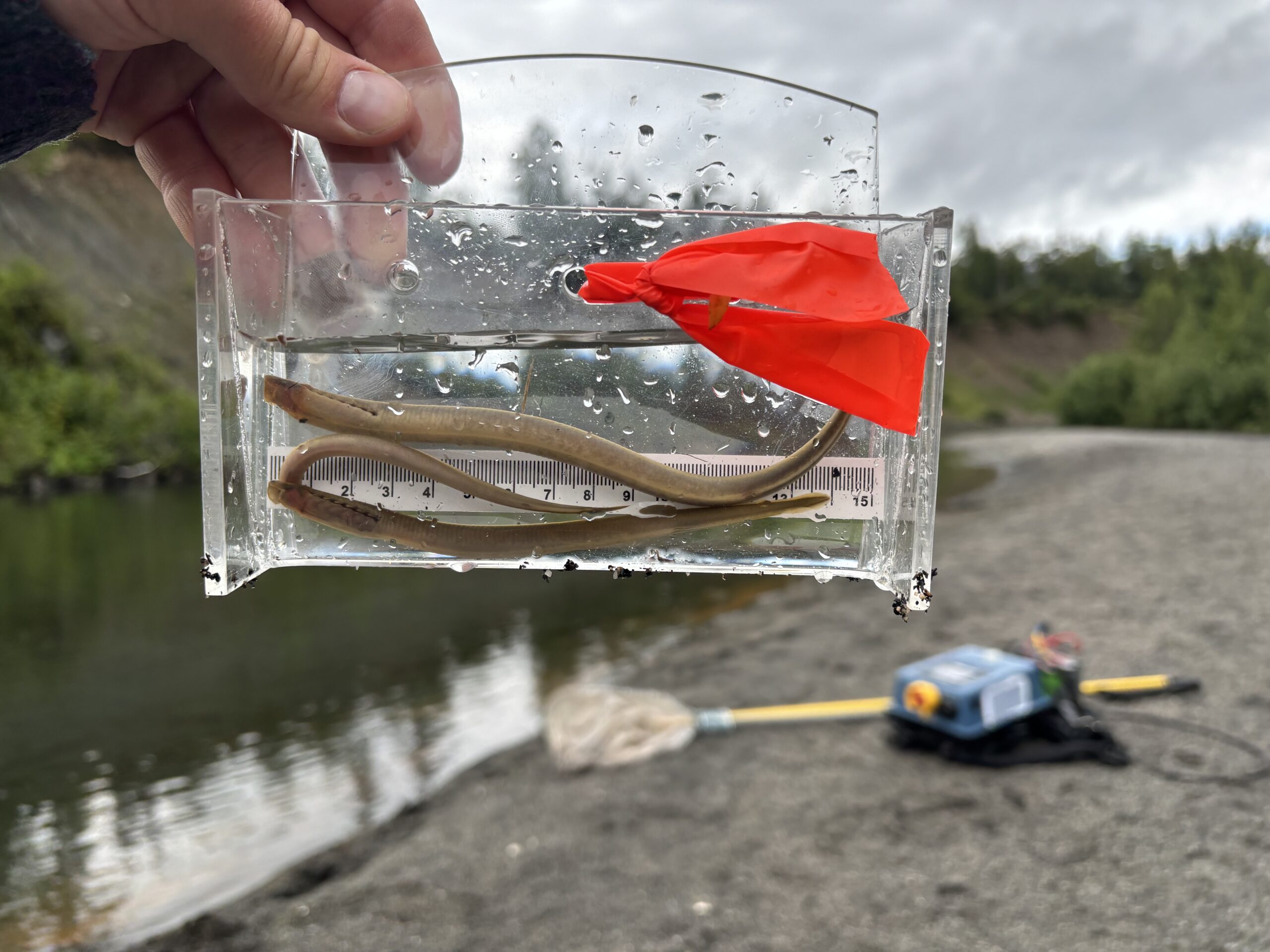
Lamprey rarely get the attention salmon receive, but they share many of the same rivers and habitats. Unlike salmon, though, they’re incredibly difficult to study because much of their life is spent hidden beneath stream bottoms or moving at night.
Nate explains that many anglers have probably encountered lamprey without realizing how important they are. They serve as food for trout, Dolly Varden, birds, whales, and many other species throughout Alaska’s food web.
One of the biggest goals of Nate’s research is surprisingly simple: figure out where lamprey actually live.
That sounds straightforward until you remember Alaska contains thousands of rivers, countless remote streams, and enormous watersheds that can only be reached by helicopter, raft, or bush plane. Instead of focusing on population estimates first, the team is building the foundation by mapping habitat distribution.
The project combines traditional field work with newer genetic tools that help researchers detect lamprey DNA in water samples, even when the fish themselves aren’t visible.
Residents can report spawning observations, collect water samples for environmental DNA testing, and even help researchers better understand where invasive northern pike may be affecting lamprey populations.
While much of Alaska remains remarkably intact, southcentral Alaska faces one growing challenge: invasive northern pike.
Nate explains that pike are native throughout much of northern Alaska but were introduced into waters where they historically never existed. Those new populations now prey on juvenile salmon, trout, and lamprey.
Researchers are beginning to examine pike stomach contents to understand just how heavily they rely on lamprey as prey. Some current questions include:
The answers could influence future management strategies for both invasive pike and native fish populations.
Few native fish have a life history as unusual as Pacific lamprey.
Adults enter freshwater much like salmon, but some spend an entire winter hiding beneath boulders before spawning the following spring. After spawning, they die, while the next generation begins life drifting downstream into quiet areas filled with sand and silt.
The young larvae then spend years buried beneath the river bottom, filter feeding without eyes or teeth. Later they undergo one of the most dramatic transformations in the fish world. During metamorphosis they:
Only after that transformation do they migrate downstream toward the ocean. This hidden freshwater phase may last anywhere from three to fifteen years before a lamprey ever reaches saltwater.
One of the most exciting projects happening this season involves tracking adult Pacific lamprey as they migrate upstream.
Working alongside local communities that operate traditional fish wheels, Nate’s team hopes to safely capture lamprey, implant small radio transmitters and PIT tags, then follow their movements through the Copper River watershed.
This kind of information has never been collected at this scale in Alaska and could dramatically improve future conservation planning.
One of the biggest challenges with studying Pacific lamprey is simply catching them. Instead of targeting the fish directly, Nate’s team is partnering with local communities that operate traditional fish wheels along the Copper River.
Fish wheels have been used for generations to harvest salmon, and they occasionally capture lamprey as bycatch. That creates a rare opportunity for researchers to tag healthy fish before releasing them back into the river. Once tagged, the team plans to monitor their movements using:
Fish wheels are an important part of life for many Alaska Native communities and local residents. Powered by the river’s current, these large rotating baskets continuously lift fish from the water, providing an efficient way to harvest salmon for families throughout the season.
For this project, they’re doing something even more valuable by helping scientists learn about an entirely different species.
Nate explains that working with local communities makes this research possible while building stronger partnerships between fisheries biologists and the people who know these rivers best.
One of the themes that came up throughout our conversation was how fortunate Alaska still is.
Unlike many rivers in the Lower 48, much of Alaska’s freshwater habitat remains connected. There are relatively few dams, diversions, and fragmented watersheds compared to many salmon rivers farther south.
That makes habitat mapping especially valuable. By documenting where lamprey, salmon, and other native fish live today, researchers can provide better information whenever future development projects are proposed. Some of that work includes identifying:
The goal isn’t simply documenting fish. It’s making sure future decisions are based on good science.
Toward the end of our conversation, Nate reminded us that Alaska offers incredible fishing opportunities beyond its famous salmon runs.
We talked about several lesser-known species that deserve more attention. Some favorites include:
Sheefish especially caught my attention. Often called the “Tarpon of the North,” these massive whitefish can exceed 50 inches and aggressively chase large streamers. Nate described days where nearly every cast produced another fish.
Episode Transcript
WFS 950b Transcript
00:00:00 Dave: Some of Alaska’s wildest fish don’t chase flies. They climb waterfalls and disappear into the mud. Today, we’re digging into one of the most overlooked species in Alaska, and why it may be more connected to salmon, trout and whales. An entire river systems than most people realize. We get into lamprey migrations, fish wheels, invasive northern pike, remote helicopter surveys, and the massive change of mapping fish habitat across one of the wildest places left on the planet. This is the Wet Fly Swing podcast, where I show you the best places to travel to for fly fishing. How to find the best resources and tools to prepare for that big trip, and what you can do to give back to the fish species we all love. Nate Cathcart is here to share how he’s leading research focused on Pacific lamprey across Alaska. Nate has worked on everything from northern pike invasions to large river ecology, and today he’s going to take us deep into all the stories and the life histories of an amazing fish species in Alaska. We’re going to find out how Pacific lamprey use suction, to climb waterfalls and move through massive systems. The surprising connection between lamprey, salmon, whales and the Alaska Food Web. We’re also going to find out how invasive northern pike may be impacting lamprey populations across south central Alaska. Plus, why Alaska biologists are using helicopters, rafts, and environmental DNA to map lamprey habitat. All right, let’s jump into this one. Here he is, Nate Cathcart. How you doing, Nate?
00:01:25 Nate: Oh, great. How are you today, Dave?
00:01:27 Dave: Good. We, uh, recently, we’re doing a, uh. I was checking in with Margaret, uh, at the Sydney River coalition, and we were talking about some projects that are going on. And she had mentioned that she was doing some stuff on lamprey, and she said you were the, the resident expert on all things lamprey, and you have a program going on up there. And so we’re going to get into that today. Talk a little bit about the Susitna. And then, you know, some of the other stuff you have going, but maybe start us off, take us back there a little bit on on lamprey. Have you been working with this species for a while. What’s your story with lamprey? How did you get into him?
00:02:01 Nate: I really kind of lucked into him. There was a void created a few years ago in, I guess, the lamprey research world in Alaska with a couple people taking new positions. And I was kind of the one who was, I don’t know, chosen somewhat arbitrarily, it seemed like. But people thought I was enthusiastic enough about fish that they kind of got me into this whole mess. And then it turned into something bigger, thankfully. But yeah, there were some great people at Fish and Game and University of Alaska Fairbanks that took different positions, and I kind of slid into their lamprey leadership roles. And then all of a sudden it was, uh, turned into a PhD program and wow, writing a proposal and getting, uh, millions of dollars to do lamprey research of all things in Alaska. And we’ve kind of been just running with that and trying to get a lot of, uh, other folks, I guess at least aware. But then folks like Margaret and Susitna River coalition have been pretty great to see, I guess, pick up the, um, I don’t know, get in with the momentum and also get their own programs going and, uh, kind of have different approaches to like, we’re really heavy on the on the ground research and remote places and really trying to put pieces together on how these fish work and swim. Uh, Margaret’s side of things will be a little bit more maybe citizen science approaches and getting more folks aware and kind of watershed grassroots level conservation. So yeah, it’s really exciting. Not a lot of people are doing it, but we got a lot of a lot of stuff to do, a lot of work. Um, and thankfully, thankfully, good funding.
00:03:40 Dave: That’s great. Yeah. I think, you know, when you hear and we’ve done some episodes, both fishing and conservation up in Alaska and you know, you think of the salmon, right? It’s kind of the first thing the salmon species and that, but lamprey is one you don’t hear as much about, you know, why are lamprey important up there? Maybe. How are they different than the salmon? All the salmon work and all that stuff going on.
00:04:00 Nate: Yeah. Lamprey fit in with salmon work fairly well. But the issue that we’ve seen is that they’re just so cryptic in terms of, um, when they’re using same habitats as salmon, like they’re anadromous fish, they spawn in fresh water and die, and the larvae will sit in fresh water for three to eight or more years. And they’re using really similar habitats to salmon when they’re in fresh water. But when they’re larvae, they’re burrowed into the sediment. So they’re burrowed into like fine silt and sand and under rocks and stuff. So it’s really difficult to see them for one. But they also then once they’re back, they’re generally nocturnal and they’re hiding and their colors are still very, I guess, good camouflage. They don’t turn bright red like a big king salmon or something. So they’re difficult to see as adults. They’re difficult to capture as larvae, but they are in the same habitats. And I guess I think it’s something where a lot of locals have seen them and they’re they’re aware of them. Sport fishermen know when and where to target the outmigrating juvenile lamprey, uh, timings just to, I guess, coincide that with some big Dolly Varden and rainbow trout fishing. But yeah, by and large, they’ve just kind of been this mysterious fish that people know about but don’t really explore or study too much. And then we do have a lot of transplants as well. I mean, I’m from the Midwest, I’m from Minnesota, and I know my first experience with lamprey was with the sea lamprey and thinking about how devastating they can be. So then you go to a place like Alaska, and once you learn about them and notice that they’re this really cool native fish that, you know, is part of a food web that includes a lot of cool sportfish but include whales. It includes birds. Um, people use them for, uh, food out on the Yukon River. And sled dogs used to, I guess, be supported by them. They’re, uh, kind of a cool, crucial part of food webs in Alaska that yeah, we are really still just scratching the surface and trying to get a better handle of their current populations since as, yeah, a lot of us have been aware of, there’s a lot of stuff going on with our salmon fisheries that, you know, we could maybe also relate it to the lamprey populations. And we don’t know if I don’t know, the lampreys are doing great or if they’re doing poorly or if they’re getting influenced by, I don’t know, declining salmon, which are hosts for them in the ocean, at least for some of the species, right?
00:06:40 Dave: So you’re just trying to get a little bit of a base like groundwork, right on the status or I guess is that kind of the bulk of your what you’re doing there on your bigger project and then maybe describe how that fits in with or what you’re doing with Margaret out there.
00:06:55 Nate: Yeah. So a lot of the on the ground work is literally just trying to find where lamprey live. We know their life cycles are similar to salmon in terms of they’re using fresh waters, but we have not mapped them, mapped them out as well as many other species in Alaska. So a lot of it is just showing up helicoptering around or boating or driving, hiking. And then we go electro fish to see if we can detect the the lamprey and we’ll use environmental DNA. The hot new technique right now to see if we can find lamprey DNA in the water. That could tell us if we’re successful or, um, I guess if we can corroborate our electrofishing data, um, or not, if we missed them somehow. But, um, yeah, a lot of on the ground work is just trying to map out their distributions And that’s something that Margaret has been able to kind of like take a protocol and then turn it into more of like a citizen science approach where they can go do some physical sampling and also environmental DNA, but they’re taking it one step further and going into another. I don’t know, part of the complex way the lamprey food web is right now is that, uh, we’re right in the middle of like south central Alaska is also the heart of the Northern Pike invasion. And so she’s hoping also get some anglers involved and get Northern Pike samples to look at what’s in their stomachs, because we have noticed that they’re eating a lot of lamprey, of both Arctic lamprey and Pacific lamprey, and they’re eating all life stages. And it’s just kind of some of this work is very instrumental just to see what’s, I guess, most at risk or threatened by some of these invasive pike populations, but also, uh, what the different lamprey species are using across the landscape is. Um, yeah, that’s what we’re trying to do is trying to figure out what species are where and I guess how they’re interacting with other fish or other things. We don’t really have dams and diversions, thankfully, in Alaska. So we don’t have the same issues as like Oregon or Washington.
00:09:08 Dave: You don’t you don’t. But you have you have some roads, right? I guess there’s not enough to make an effect on fish passage barriers at roads and stream crossings.
00:09:16 Nate: Correct. We we do have roads generally. They have been trying to do a good job with culverts and all that, but a lot of our fish passage issues. Yeah. Are either in really small streams and probably a little bit more related to salmon in south central Alaska. But yeah, that’s it.
00:09:35 Dave: And the pike is interesting. We’ve heard about the northern pike. It’s funny because kind of funny because we’re heading up to, uh, northern. Well, we’re heading up to the Northwest Territories kind of Saskatchewan to fish for Northern Pike, where it’s kind of, I guess, in their native range. Is that maybe what is, you know, the range of northern Pike and where it historically ended or that how all that I’m not sure if you’re a Pike expert as well, but what’s your your update there?
00:09:59 Nate: Yeah, actually, I think Pike were the first fish I got to work on in Alaska. When I moved up in twenty fifteen, I did a project looking at, uh, the trophic ecology of pike. So basically, yeah, what they’re eating and they’re native and non-native ranges and kind of doing a synthesis approach of how their diets might change across their native and invasive ranges. And yeah, they’re, uh, they’re native to north of the Alaska range, so they’re native to the Yukon River drainage, the Kuskokwim River and throughout much of. Yeah, throughout much of Alaska except for southcentral Alaska.
00:10:35 Dave: So no kidding. That’s interesting. So they’re up in the north of the Alaska. So kind of everywhere except the south central area. Why and why would that be? Is that just like the mountain range kept them out or what’s. That’s, you know, the evolutionarily. How does that work?
00:10:51 Nate: Yeah, pretty much just how things glaciated and how mountain ranges are across the landscape, uh, affected where they were able to distribute because yeah, they’re in Bristol Bay drainages, they’re in Yukon River, so they’re in places with salmon and other anadromous fish.
00:11:09 Dave: And their native fish in those areas.
00:11:11 Nate: Correct. Yeah. So it’s a very interesting way of how we think like, yeah, some species co-evolved and the landscape does probably affect their interactions to some degree. The Yukon, you know, it’s so large, it’s so complex compared to some of these shorter drainages in south central Alaska that maybe it’s just jamming, you know, one too many predators into a smaller system that’s it’s really productive, but they have an outsized effect on the populations of fish that they’re feeding on.
00:11:46 Dave: Gotcha. And you mentioned Pacific and Arctic. What is the are there a lot of similarities between the two species, like the Arctic? Is that a anadromous fish as well?
00:11:55 Nate: Yeah. So the Arctic is anadromous. However, it gets a little more complex too. Lampreys are just wonderfully complex. They. They’re anadromous just like salmon, except then there’s a whole host of issues that make them way different, uh, in terms of like what they eat, what they do, how they behave, all that stuff. But Arctic lamprey. Yeah, they’re one of the most widespread lamprey species in the world. They’re anadromous. However, um, similar to Dolly Varden or rainbow trout, they also have a freshwater resident form that can persist in some areas. And this is a form in Alaska, but we have not yet been able to determine like where exactly that life history, I guess is more dominant than the anadromous form. So we do know the Arctic lamprey. Yeah. It’s throughout Cook Inlet and south central Alaska. That’s the southern end of its range in Alaska. Otherwise they’re like all the way up to the Arctic Ocean and using freshwater systems up there. And they’re more of a they’re more of a predator instead of a parasite. A lot of people think of lampreys as just parasites, but with a lot of the work that’s been done by some cool scientists in Alaska and elsewhere, we’re noticing that, yeah, fish like Arctic lamprey, they’re really just predatory. They go out and they find herring or capelin or juvenile salmon, and they’re using their mouth to attach to them and then kind of just shred them. Oh, wow. And they’re consuming like body parts, too. Unlike sea lamprey, which the Pacific lamprey, once that’s a juvenile, that’s going out to the ocean and they’re attaching to a host fish and they’re going to just be sucking blood and body fluids for the most part.
00:13:42 Dave: Yeah, it’s not real. I don’t know if you call that a symbiotic, but it’s more they’re not killing their hosts. They’re just using it for a while.
00:13:48 Nate: Correct. Like they’re true parasites. They’re not trying to kill the other fish.
00:13:54 Dave: No. But does the salmon get any benefit from that? That lamprey when it’s sucking on it.
00:14:00 Nate: No, I like we don’t know of any benefits at least, uh, because some of these lamprey can be over two feet or something by the time they’re kind of the biggest that they’re going to get in the ocean, they can be at two and a half feet or, or more or something. It’s, uh, they’re big. That’s why they’re sucking on whales if they can get on them.
00:14:19 Dave: Oh, wow. They’re on whales too.
00:14:20 Nate: Yeah, but there’s some evidence out there that even the Pacific lamprey has a little bit of plasticity to their feeding, and they can also shift into a predatory mode and just also. Yeah, attack fish and kill them.
00:14:36 Dave: That’s crazy. What is the, uh, maybe you can describe. Take it back a little bit on the life history of the Pacific lamprey. And I’m not sure if the Susitna is different than any other areas up there, but yeah, how does that work? Start with the there coming in, you know. Well, I don’t know what part of the stage you want to start off, but tell us how that looks.
00:14:53 Nate: Yeah, I’ll try to start with spawning, I guess, and the spawning migration, because there’s two different life histories, of course, of Pacific lamprey where once they’re mature and they’re adults and they’re ready to go upstream and spawn, they can be either the ocean maturing fish, which are just like salmon in terms of once they enter that stream, they’re going to be migrating to their spawning grounds. They’re going to spawn and die within like one season. So these fish might show up in in June if they have to swim a long ways and they’re spawning in late July or August or something, then they die. There’s a different form, though, that we think we have more in Alaska, and that’s the freshwater maturing form. And these fish, they’re going to be swimming up in the summertime into Alaskan streams. They’re starting now. Like I think May is technically summer in Alaska, but basically, if there’s no ice on the river, we’re going to call it summer, but they’re going to swim up in the summertime or in the fall, and they find a place to overwinter. Then they just hunker down. They overwinter while they mature even more. Then they spawn the following spring and then they die. So these fish will be spawning basically like now. Um, so fish that came in last year are spawning now and into June. And we’ll start seeing them, uh, die off in late June and, and July. Uh, so they can spend. Yeah, up to a year.
00:16:17 Dave: What are those fish doing when they’re in fresh water for that, that overwinter. Where are they hanging?
00:16:22 Nate: Yeah, they’re just hanging out. So they have a really cool, I guess, way of finding the stream. They want to they’re going to streams. They’re attracted by the pheromones that larvae put out into like the water that then goes out kind of into the ocean so they can track these pheromone plumes. Then they swim upstream and try to find a good like spawning area, but they need to find a good overwintering area. So they find kind of deep dark holes full of boulders and large wood, and they just hunker down over winter, their non-feeding at this point. So just like salmon, once they enter fresh water, they are not going to try to feed anymore. They have to use all the energy that they got over the course of all their feeding the past maybe eighteen months or something in the ocean. And then once they are ready to spawn, they have like a secondary pheromone that attracts them to the other sex. So the males then try to find a female and they make nests, and they’re using their suckers to basically move a lot of rocks so they can move. They’ve done some math of some species where it’s like they’re moving over twenty times their weight and in stones just to make their nest. And it’s pretty fun to watch them do their thing right.
00:17:40 Dave: Similar to a salmon or steelhead red, right. Similar size or does that vary a little bit?
00:17:46 Speaker 3: Yeah. It’s really similar sized.
00:17:49 Nate: Um, especially to like steelhead reds. They look pretty similar to um, so they’re selecting pretty similar gravels and cobbles and I guess Pacific lamprey, um Arctic lamprey use a little bit finer substrates and everything. But yeah, they find these substrates, they spawn, then they die. The young are gonna or the eggs, the embryos are going to take a couple weeks to hatch. And then the larvae are going to take a couple more weeks before they emerge. And at this stage, they’re like really tiny. They’re like eight millimeters or something crazy before they enter the drift. Because once they enter the drift as larvae, they’re basically at the mercy of the water current and they’re going to find basically a place that’s going to be low velocity, and they’re going to Eddie out somewhere and go into some kind of silt and sand, and that’s where they’re going to start their filter feeding. Because once they’re larvae, they they don’t have eyes, they don’t have teeth. They’re literally just filter feeding from the water and from silt. And they’re eating detritus for the most part, maybe like a little touch of algae. And so they’re eating this. Yeah, organic material. And they’re going to be eating that for at least three years. But generally we think like the upper limits around eight on average. But there is evidence that some of these Pacific lamprey take fifteen or more years as larvae before they transform into juveniles. And so once they get enough energy as larvae, then they do this metamorphosis into the juvenile stage. And this is where they grow eyes and teeth and they get their physiology ready for the ocean. So it’s this really energetically taxing event in life, um, where the larvae might be, uh, like eight inches or so. So they, they’re pretty big. They still don’t have eyes. They don’t have teeth. They’re looking like these, I don’t know, swimming hot dogs. They, they look, they look healthy. Um, but they go through this metamorphosis and they’re going to lose up to like fifty percent of their length. And they’re, they turn. Yeah, really small and kind of pencil thin. Um, just because it takes so much energy to develop these new organs, they got to develop teeth and got to get ready for the ocean. So once they’re that stage, then they have about half a year or something before they’re, uh, going to the ocean and they gotta migrate through. Yeah. Kind of the gauntlet of some of these freshwater habitats, whether they’re lakes or rivers with bigger fish or birds.
00:20:34 Dave: Right. Wow. And when are they migrating out? Typically.
00:20:37 Nate: So we think it’s something that’s occurring in, uh, early spring. So like now.
00:20:42 Dave: Yeah, spring like the freshet.
00:20:44 Nate: Yeah. We, we think, uh, we’re still doing so much in Alaska that we don’t have good timing in terms of when the juveniles especially are, are moving out. But based on some of the Intel, especially from anglers, uh, they’ve been probably some of the best sources of info in terms of like, oh, so and so goes and fishes these lakes in this Kenai River drainage area, uh, in April and May for rainbows and just using like leech patterns because there’s lamprey moving out. Um, so we think it’s spring because generally we see the transformation starting in, uh, like by the end of the year, like August, September. And we think they’re completing their transformation and their metamorphosis sometime in early spring, and then they’re ready to get to the ocean. But we don’t know for sure.
00:21:36 Dave: Similar to there’s a little bit of an overlap with steelhead. They’re not overlap, but there’s similarities. Right. You mentioned like the life history of the fish that spends its fresh water phase, right. Spends that’s kind of like a a summer steelhead does that. Right. It comes in and kind of hangs out. I mean, you know, I don’t know if there’s an exact correlation, but there’s some similarities there. And, and the spawning too. It sounds like they spawn in similar areas. So, you know, it would make sense that they would go out in the spring like the other, the other fish do. But that’s cool. So that’s something you guys are always, I guess that’s part of your bigger program. You’re really just trying to get information on, on the life history. Is that kind of what you guys are looking at? Just capture as much data as you can? Or do you have like a specific focus on, you know, what you’re trying to kind of figure out out there?
00:22:21 Nate: Yeah. Our main focus is probably on like mapping distribution. That’s kind of the easiest thing of like, we can go electro fish and do environmental DNA studies, but we are trying to compile observations from people throughout the state. And then right now, the lowest hanging fruit is the spawning migrations. Um, just counting incoming Pacific lamprey, uh, with some of the technology that’s already counting the salmon runs, because we have sonar weirs that are stationed throughout Alaska that they’re used to count sockeye or Chinook, mainly those two species, since they’re kind of our most valuable fish. Um, but we’ve noticed over the years that they count lamprey just fine too. But nobody’s really counting the lamprey. So, so we do want to detect and count juveniles that go to sea. And we are trying to get that. It’s just most of our effort right now is actually trying to squeeze all the data that we’ve been taking and recording over the years for salmon escapement counts. So just counting how many fish are making it back into fresh water to spawn. And we’re trying to use that sonar footage to count all the Pacific lamprey that have been coming back to some of these important rivers. So this includes like the Kasilof River, the Kenai River on the. Those are both on the Kenai Peninsula and then the copper River, which is going to be going to into just outside of Prince William Sound and I guess to the east. But, uh, so we’re trying to use these data to then count how many Pacific lamprey come back each year. And hopefully we can relate that to some environmental variables and also the salmon. And we’re in the midst of, of just getting those data, I guess, organized at this point. But we have several years of data. We if everything goes right, we could have nearly twenty years of lamprey counts in some of these river systems. And hopefully that gets us a good, I don’t know, good idea of whether they’re impacted by, you know, salmon populations or other hosts like whales or halibut or pollock, or if the environment is a bigger factor for them, like the there’s different oceanographic things going on, like the El Ninos and Pacific decadal oscillations. So I’m, I’m also forced into learning things beyond climate change. Yeah. Like oceanography. Like I didn’t think about that stuff until we got into this mess.
00:24:54 Dave: Yeah. When those when they go out. So they, how do they, how does that work? They’re heading out as juveniles. They find a host. Describe that. Like you mentioned, a few of the hosts they find. But how do they do that. And then when do they. And then when they return back to freshwater, how are they getting back in.
00:25:10 Nate: I really don’t know exactly how they seek out their, their hosts in terms of like, I don’t know if it’s chemical or if it’s just visual or what. But, um, like they do some like searching with their swimming so they might swim through the water column. Um, they also might just follow the bottom until they can find something to latch on to. So there, they have been caught often in, uh, like Pollock fisheries, which I don’t know what that necessarily says other than, you know, it’s one of the fish that’s, I guess so populous and abundant that they’re probably just in there trying to. Right.
00:25:55 Dave: Yeah, yeah. We don’t know. We don’t have the data to say. And this is just like any, like a lot of fish in the ocean, you know, you can’t say there’s this species has this percent, you know, of the land prey, right? It’s just, I mean, we just don’t know enough about the their ocean phase, right?
00:26:09 Nate: Correct. So we don’t yeah. It’s just kind of challenging to figure out, uh, what they’re really targeting other than we have enough observations of them feasting on or like scarring salmon, Pollock, halibut. Uh, so we, we do know that they have like some certain habitats that they seek out like Pacific habitat, Pacific lamprey are going to go to kind of deeper waters, uh, more pelagic waters. They’re going to possibly encounter a wider range of fish species and hosts, whether that’s yeah, fish or whales, whereas species like Arctic lamprey and the other Alaskan species, the western river lamprey that lives more in southeast, uh, we think those two species are a lot more coastal. Um, and they are more predatory, but they’re maybe using these nearshore waters to target, uh, herring and juvenile salmon when they’re closer into shore. So they’re not swimming as far. But, uh, based on some of the tagging data too, we know Arctic lamprey can move wide distances in search of food and, and then once attached like Pacific lamprey, since they want to suck as much blood and I guess grow as much as they can from a healthy host, like a whale or something. I mean, they’re at the whim of of their hosts migrations as well. So we don’t necessarily know how, you know, their hosts may then feed or their host might impact their next feeding. Um, depending on where they go. Uh, so yeah, it’s still kind of mysterious.
00:27:45 Dave: So you’re not focused on that. You’re really focused on the part of in freshwater. And then do we know when they come into freshwater? Are they, are they hopping off their host and at some point swimming because there are I mean, are they compared to salmon as far as swimming capabilities? How would you compare that? Are they doing that? Are they good swimmers? Bad swimmers?
00:28:04 Nate: Uh, they’re kind of poor swimmers. And if we have to compare them to salmon.
00:28:09 Dave: Yeah. But yeah. Right, right. They don’t have as many fins, right. They’re kind of a I mean, it’s a totally different species for those that haven’t seen lamprey, right? Their, their body morphology is totally different. I mean, it’s a fish, but they look nothing like a salmon.
00:28:21 Nate: Correct. Like they definitely have different body forms. Uh, they’re they’re one, I guess, uh, different adaptation that helps them in some situations is their mouth. Uh, they can use their mouth as like suction. And this allows them to climb over structures like waterfalls. So the spawning run in the Willamette River over Willamette Falls is pretty well known in lamprey world, just because there’s thousands of these lamprey that are just kind of inch worming their way up over this waterfall because they’re sucking on it. Then they slide up, then they suck on it some more and slide up and right.
00:29:01 Dave: And you guys must have that. You must have plenty of falls up up there, right? That they’re doing the same thing up in Alaska, just maybe not as large scale. Or is this is sitting in society? Well let’s go. I mean, I know when Margaret was on here, she talked about that the Susitna is like the fifteenth largest river in the entire US. So it’s a big river, right? We’re not talking a small river up there.
00:29:21 Nate: Correct. It’s I mean, it’s large, but at the same time, we still don’t know to what extent these lamprey in Alaska have to do any climbing. Um, so we have not seen any, uh, observations of lamprey climbing waterfalls yet.
00:29:36 Dave: Um, maybe because they don’t have to, because they have so much habitat, there’s probably maybe no need to correct.
00:29:42 Nate: So they it’s pretty accessible. At the same time, they still go through some pretty heavy duty rapids and they’re still good enough to navigate. Yeah. Through canyons and I mean the copper rivers. Definitely no slouch of a river in terms of just how yeah, how fast it goes, how deep it is, how cold it is. So a lot of these fish, whether it’s the Susitna or the copper River or um a lot of rivers here, they’re glacial fed for the most part. And so lamprey have to do things just like salmon They got to swim through extremely cold water even in the summertime and get to their place. And yeah, they’re a little bit slower. But from what we’ve seen, it does appear that at least Pacific lamprey, that’s how we can count them with the sonar. They swim almost like salmon in terms of their picking out those habitats near shore that are, uh, slower just because there’s enough drag by the riverbank to slow down the water a little bit. And so they’re swimming kind of in shallower, uh, nearshore habitats when they’re going upstream just to avoid the main, uh, channel, high velocity water.
00:30:52 Dave: Do you think you need a bush plane to fish Alaska’s legendary waters? Think again. Fishing expeditions specializes in road accessible adventures that don’t skimp on excitement. Picture yourself fishing for massive rainbow trout, Arctic grayling, and plenty of salmon species, all within Alaska’s epic road system. It’s doable. I fished the road system on our first day with Adam and the crew, and it did not disappoint. The largest leopard rainbow I caught and landed was right off the road system, and we’ll be driving up again this year, heading up from the lower forty eight all the way up to Alaska to hit those streams again. You’ll experience the breathtaking beauty of Alaska’s wilderness, from mountain streams to hidden rivers, perfect for anglers of all levels. Fishing expeditions makes it easy to explore Alaska. Why wait? Your Alaska adventure is just a drive away. Book your spot now before spaces fill up. That’s fishing expeditions dot com. F I s h h o u n d expeditions dot com. Don’t miss out. And so, you know, back to you with the work of Margaret. So it sounds like it’s a little more citizen scientists. So. And is it how does I guess, did she get some funding or I guess that’s part of it, right? Because I’m, I’m with lamprey. There probably isn’t as much funding as there is for Chinook and other species up there. Is that how it looks for you or on the funding side, you kind of find people like Margaret who can find get some, you know, work and then you jump in there. How does describe how that works? A little bit.
00:32:18 Nate: I guess my whole project started with the Pacific Lamprey Conservation Initiative, and that’s a national fish habitat partnership. So we have a lot of those partnerships that are for brook trout out east or desert fish in the southwest or the Western Native Trout Initiative is a fish habitat partnership. And that’s kind of how we all got our foot in the door, is that they started really wanting more work in Alaska and all that. But yeah, they don’t have that much money to begin with. These fish habitat partnerships probably deal in like two hundred and fifty thousand dollars or three hundred thousand dollars a year. That’s split up among six or so projects. And what Margaret was able to do is kind of leverage some work that we had started at Alaska Department of Fish and Game and through Knik Tribe. So she’s on a big Environmental Protection Agency grant. Our main lamprey project is funded by the Bureau of Indian Affairs. We really don’t want to say we lucked into it, but we’re definitely right in the right thing at the right time and got a bunch of money to do some lamprey work because it’s it’s really related to, yeah, food web stuff in terms of.
00:33:31 Dave: Right. And that’s really important, right? For the Native American tribes. They that’s kind of what they’ve used for millennia, right? As far as for harvesting to eat, right? Is that is that kind of part of what, where that funding comes from?
00:33:43 Nate: Yeah. And especially the fact that lamprey could be this critical piece of like beluga whales diets. So that’s how we wrote our grant with the Bureau of Indian Affairs is we kind of framed it in this whole thing of like, oh, the Cook Inlet belugas are endangered and they’re critically endangered and their populations are declining. Could this be due to, I guess, a diminishing food supply in terms of a diversity of resources such as the salmon, the lamprey, the eulachon. It’s, uh, all this stuff that we’re trying to look at. And lamprey are the ones that have like the most, I guess, unknowns in terms of, yeah, where they live and how they operate. So we really.
00:34:25 Dave: And how big they are.
00:34:26 Nate: Yeah.
00:34:27 Dave: And how big the whether they’re going up or down. Right. That’s another question is, I guess, do you guys have a feel for that at all at this point, whether the numbers because you hear about we’ve talked about it here, the numbers of Chinook up there, how there’s some places where things aren’t looking good. You know, I guess the Kenai and things like that. But yeah. Do you have any idea on lamprey?
00:34:44 Nate: We do not. It’s a pretty, I don’t know, unsubstantiated at this point. We do have some insights from people that say that, oh, like I saw way more lamprey in the nineties compared to now.
00:34:57 Dave: Yeah. Right. And you always you always hear that, right? It’s always better back in the day, it feels like. But maybe that’s true for a lot of the situations.
00:35:04 Nate: Yeah. So we’re hoping some of that sonar data comes back in a way that we can kind of get a handle on a trajectory of sorts. But even where we have commercial fisheries and subsistence fisheries for like Arctic lamprey and Yukon River, um, we cannot see any sort of like good signal in all those catches over the years because they do track it in terms of the pounds harvested, but everything’s so variable in terms of like, well, did they have enough ice to actually go harvest them safely during the spawning migration? Did that impact it? Or they might have these boom bust cycles that we’re unaware of. Yeah, there’s a lot of things we’re trying to figure out, but hopefully in time.
00:35:45 Dave: Yeah, you’ll get it. You’ll get well. And the other challenge seems to be that Alaska partly it’s so big. You know, you look at compare it to the lower forty eight. I mean you guys have this vast, you know, way tens of millions of acres more. Right. Is that part of the challenge here? Is that are you focusing on certain areas, say, the Susitna and using that to extrapolate out to the bigger Alaska.
00:36:06 Nate: So we’re focused anywhere from the Susitna to. Yeah, the copper River to Bristol Bay. Um, there’s so much land to cover. And the project that I work on at the Department of Fish and Game, I mean, all of our stuff is helicopter based, so it gets expensive really quick to go just look for fish and try to fill in those blanks on the maps. And if we can use places like the road accessible parts on the Susitna or what’s on the Kenai Peninsula, then yes, that helps us kind of inform our strategies that we can use when we’re doing our more remote work to try to get a better handle right away on what to look for, where to look, when to look for certain species. But yeah, Alaska’s.
00:36:51 Dave: Vast is vast.
00:36:53 Nate: Yeah.
00:36:53 Dave: But how does it break it down? You know, again, back to what’s going on with this River coalition and that work. Describe maybe from what you know, how that’s going to roll out here on the work. Maybe it’s already rolling out, but what data? You mentioned a little bit of it, but what is that data that’s going to be coming into you that you’ll be able to kind of look at and analyze?
00:37:10 Nate: Yeah. So what we should get, uh, this summer, and I know Margaret’s starting pretty soon here, but from the data that they can collect with some of their outreach, and then just getting people’s, I guess, eyes and observations and then the environmental DNA, what we should be able to get is some sort of idea of like, okay, who has seen what, where? So just getting some of this kind of local ecological knowledge and some of the local Intel and put that on a map that’s really informative because generally what the people are going to share is, is like an observation of spawning just because that’s the most visual way to see lamprey when they’re at their largest body size and when they’re kind of out in the open spawning. Um, so we should get some of that to put on the map and kind of show us when and where to expect certain fish to show up, and then that can guide our sampling with electrofishing. But, uh, kind of similarly, the environmental DNA that should be a very useful approach for having Sitton River coalition and residents and interested people just kind of boat around this summer and take samples where they can, and then we’ll analyze them after this year. And then that should guide, I guess, sampling for next year. It should be like, okay, well, we didn’t detect any lamprey DNA here and we’ve already electrofishing in this area. So let’s kind of cross that off the map for now until we can revisit it. But when we get some of these positive detections and places that we haven’t electro fished or maybe didn’t electrofishing the right way at the right time, that’ll give us some indication that, hey, like lamprey might be there. Let’s go check this out again and do a much more thorough job because once again, Alaska is so big that a lot of our sampling, we just drop in at one spot.
00:39:05 Dave: Yeah, it’s a one time spot.
00:39:06 Nate: Yeah. It’s like we’re there for an hour doing some science. And that doesn’t necessarily mean the fish aren’t there. It just means we may may have picked the wrong time.
00:39:15 Dave: Yeah. At that time they might. So and that’s it. So you’re going to collect that data. And then over time will you be able to go back to these areas. This is and maybe get some sort of like you’re kind of saying extrapolate out to do a maybe sit in a river, you know, distribution or even maybe population estimate. Is that kind of the ultimate goal? You might be able to break down these lower subbasins.
00:39:36 Nate: Yeah, we definitely want to basically map lamprey habitat.
00:39:40 Dave: Yeah, that’s the main. So it literally just basically mapping it like where are they? Where are they not at this given time. And that helps. That’s a starting point. That’s like the big start first thing.
00:39:49 Nate: Correct. And then what we’re doing is we’re doing a lot of genetics. And so genetics can go kind of two different ways. First off, we’re mainly just trying to get a genetic baseline of how to identify Arctic and Pacific, where they overlap. So the Susitna is a really cool drainage because it has both these anadromous forms of lamprey or species, and we need to identify them at the larval stage. But they look the same when they’re larvae, so we can’t tell them apart. So we have to use genetics to differentiate them. So we’re going to get a cool, I guess, map of distributions of each species in the river drainage and elsewhere. But then hopefully in time, yes, we can do genetics where all these tissues not only can tell us what species they are, but especially for Pacific lamprey, we have enough data to inform us of if we set the study design I guess correctly, we should be able to tell some level of genetic diversity through time. And if it’s able to be tracked by a certain pedigree analysis, then we can get kind of an idea of just how many Uh, spawning individuals are contributing to the population at any given year. And so this is a way to track kind of an effective population size. It’s more of a population size. That’s yeah, predicated on how many fish are actually contributing to each generation.
00:41:14 Dave: Wow. And you mentioned, you know, taking it back a bit on you were in Chicago. Is that maybe describe that? What was the were you doing some fisheries work out there on the in the Midwest before heading to Alaska?
00:41:25 Nate: Well, yeah, so I lived in Minnesota for a while. Um, I mean, my background because right now I’m in Chicago for my partner’s sister’s graduation. Uh, so we’re, we’re having some fun with, with family now. Um, even though we did get to visit sea lamprey at the Shedd Aquarium. Oh, nice. They have a good exhibit. Uh, but yeah, I started in Minnesota, ended up at Colorado State University for a bachelor’s degree. And then I started working in the desert southwest and the San Juan River basin, part of the Colorado River basin during my time at Kansas State University as a grad student there. And so I was working with a bunch of big River fish like Colorado Pikeminnow and Razorback sucker, flannel mouth sucker, and doing a lot of tagging and, and movement and migration studies, which was super fun. And then, then, yeah, then I found myself up in Fairbanks, Alaska, and first project that landed on my lap was, yeah, looking at Northern Pike. And it wasn’t until I don’t think it was until like twenty. It was kind of like during Covid times when I started getting nudged into the lamprey world and, and, uh, didn’t understand how far it would take me. But, uh, it’s been fun to try some new or yeah, basically try to understand a new species to me and learn about something that is just so wild and complex, but also try to use some of the tools I’ve done in the past of, yeah, a lot of electrofishing, a lot of tagging. And, and we’re, we’re going to be. trying to track some of these Pacific lamprey migrations this summer.
00:42:58 Dave: Oh yeah. So you’re able to tag so you’re able to tag these lamprey too.
00:43:01 Nate: Yeah. We have small enough radio tags that we can do pretty fine scale telemetry on them. And then we will be able to tag them with like pit tags, the passive integrated transponder tags, and set out antennas to, to see if any of them go into these little tributaries to, to spawn. So we have a decent study design. It’s just, uh, uh, it’s yeah, once again, Alaska’s big and we have to like, somebody’s got to be out there to catch them. So.
00:43:27 Dave: Right. So how does that, how could that tagging look? So you, when would you tag them? And then where would you follow the how long would that journey you be able to follow it? Yeah.
00:43:36 Nate: So this is a good, uh, I guess way to circle back to like the different life histories of the Pacific lamprey. And so we’re kind of thinking that we have these freshwater maturing life histories of Pacific lamprey in the copper River drainage. And that’s the area that we have the best way to catch Pacific lamprey. And so this summer, we’ll be working with some of the local communities that operate fish wheels to harvest their salmon, because we know that these fish wheels also collect Pacific lamprey. So we’ll basically sit out there and it’s not like they catch lamprey all the time because their fish wheels are designed to catch salmon, but they get enough lamprey by catch that if we’re on the ground next to them and get to catch them while they’re alive, we’ll basically, yeah, tag them on the spot in the middle of the copper River. Let them go. And then we’ll be doing, uh, raft trips. So we’ll be rafting the upper Gulkana River, which is road accessible and aircraft accessible too, but, um, pretty easy access for Alaska. And we’ll be kind of floating the river to do fine scale telemetry and see where they’re selecting to migrate and overwinter because we’ll be doing some some of these floats through September. So before the ice gets on. But we’ll also be just setting up, I guess, a like antenna stations that we can just operate with batteries and solar power and, and that can detect when the fish are moving past certain areas.
00:45:11 Dave: Man. That’s cool. So yeah, you’re going to get a feel for. So you’ve got them tagged and you can just see them moving up the system. And then where they’re holding, they’re probably holding is that once you the winter hits, you know, through October, say through whatever, you know, April do they do you think they’re holding tight at one area just hanging out or do you think they’re still kind of migrating?
00:45:29 Nate: It seems like in previous studies from like Oregon, uh, that yeah, once they overwinter somewhere, they’re kind of hunkered down for a number of months. But it does remain to be seen. Like if they’re doing the same thing here or if they’re still moving a little bit. But I anticipate with it being so cold in Alaska that by November, they’re probably going to be hunkered down somewhere waiting for it to warm up. And then it just depends on, yeah, how far they go that first year. If, uh, they overwinter somewhere upstream of their spawning location and they go back downstream a little bit, or if they need to migrate a little bit more upstream the following, uh, spring before spawning. So hopefully these tags last long enough or. First things first, we’re just trying to incrementally learn about lamprey, but, uh, if we can find their overwintering locations, that’s going to be a, a big win this year. And then we can hopefully explore more next year when the ice is off again.
00:46:29 Dave: Right. What is that? You mentioned that the fish. We’ll describe that. And that sounds like something that we’ve heard of in the past. Are those still is that a similar thing to what you would hear about the, you know, and what is the fish feel and are they still used up there quite a bit?
00:46:43 Nate: Yeah. Fish wheels are basically something that has these big baskets that go into the river current, and there’s basically a way that they’re set up along the shorelines and the water turns them. And as they turn through the water, they’re scooping these salmon up. They’re generally used for salmon. Uh, and so they’ve been used anywhere from, yeah, the Columbia River basin to the copper River to the Yukon River. And this is the easiest way to just keep catching fish while not spending way too much effort, even though it’s pretty difficult to maintain these things all the time. So like, somebody has to be on site watching them, just because they might catch a log or high flows might dislodge one or something. Uh, so they are, they’re beasts. They’re big, but they are very efficient because they’re always able to be fishing and catching. And so especially in the copper River drainage, with it being so glacial and turbid, it’s just so easy to have those catch all the fish because otherwise, like you can’t see the fish in water that is thicker than chocolate milk. It’s, uh, it’s just really glacial silt and, and yeah, these things just keep turning. But, um, yeah, I don’t know how big they all are, but they’re fairly large. They’re, they’re always like, I don’t know, fifteen feet tall, something like that.
00:48:11 Dave: Decent size. Right. Wow. And so, and it is kind of like they’ve had these for like hundreds of years, right? This is not a new technology. Is it kind of the same, same sort of thing you would have seen maybe one hundred years ago?
00:48:23 Nate: Yeah. The material changes depending on who and where they’re operated because yeah, these things have been used for a long time. And you can still see some of the more like traditionally constructed ones in terms of, uh, like just the material they use. They can use just wood and like willows and lash everything together, but a lot of the newer versions are kind of metal and. Yeah. Constructed by metal, fabricating aluminum, um, stuff like that. But yeah, like you still see a wide range of things. And then you see some are some that are kind of just kept together by more contemporary things like plastic fencing and.
00:49:10 Dave: Oh, right.
00:49:11 Nate: And duct.
00:49:11 Dave: Tape. And who’s running these fish pools for the most part. Who are the is this. Can anybody. I guess it takes probably a certain permit to run a fish wheel.
00:49:18 Nate: Yeah. It’s mainly like the local tribes and, uh, communities like that, especially on like the Yukon River drainage. The copper River has kind of a mix. It depends on how the fishery is managed, because I know personal fish wheels can still be used, but I think you might still. You either need to qualify, um, because you’re a local resident or have like the tribal component. But yeah, these things are so effective and it’s not like one person’s operating them. It’s generally like multiple families are operating one wheel.
00:49:54 Dave: So yeah, they’re supporting, uh, supporting. Yeah. I mean, basically that’s the cool thing about it is that people are still able to live essentially off, right? The Sam is a huge part of their surviving throughout the year, right?
00:50:05 Nate: Oh, yeah. This is a huge way to get, I guess, your round of food that you want before moose hunting season. It’s the easiest way to get salmon.
00:50:15 Dave: Right, which is cool, which is cool because if you think about it, everybody else down here, you know, it’s like, okay, go up to the supermarket, right? Get your salmon. Sometimes you’re like, oh my God, I don’t even know where that thing came from. But I mean, that’s the cool thing is up there is like a lot of people, you know, probably the majority of people that live up there, not just the Native Americans and stuff like that, but kind of everybody’s utilizing, right? A little bit of salmon and hunting and all that stuff, probably much higher than the lower forty eight. Would you say that’s true because you’ve lived around kind of the lower forty eight. Is that kind of a fairly true statement?
00:50:46 Nate: Oh, yeah. Yeah. It’s, uh, it’s awesome to be in Alaska and be able to, I don’t know, time your harvests to the season in terms of, yeah, like summers are salmon time and halibut and late summers for picking berries and getting into the grouse.
00:51:02 Dave: Are you into all that is that is that stuff? Are you kind of into all the, you know, everything you just mentioned there?
00:51:07 Nate: Yeah, I’m into I’m into definitely harvesting fish whenever I can. And and yeah, berry seasons are always great to take advantage of, especially if you work outside. Um, and then bird hunting is, I don’t know, my favorite, I guess. So grouse hunting is a blast.
00:51:24 Dave: Oh, grouse and ptarmigan. Is that the other word? The bird species up there.
00:51:27 Nate: Yeah. We got a number of grouse like three different species of grouse or four. Um and then we got a couple, few ptarmigan species. I’m not, I don’t go ptarmigan. I only luck into ptarmigan. Um, if they go into grouse habitat and I’m lucky enough to shoot one, that’s cool, but I haven’t done too much ptarmigan hunting. I don’t I don’t have a bird dog. I got a seventeen pound dog that, uh, all right.
00:51:53 Dave: This is out there to hang out.
00:51:54 Nate: Yeah, he he can fletch a grouse pretty well, but he’s not cut out for, uh, roaming miles of tundra in search of ptarmigan.
00:52:02 Dave: Gosh. That’s cool. And you’re. So are you up in Fairbanks? Is that where you’re living most of the year?
00:52:08 Nate: I’m in Anchorage, uh, these days. So. Big city life.
00:52:11 Dave: Okay. Yeah, I was gonna say that’s that because Fairbanks is a little bit different, right? But so you’re basically leaving from Anchorage and then you’re heading out. It sounds like on helicopter to do your remote work. Is that kind of how it works?
00:52:22 Nate: Correct. Yeah. A lot of the work we do, it kind of has two different legs to it. It’s like, you got to leave Anchorage with a bunch of cargo and get that to some secondary launch site, whether that’s Fairbanks or some other remote community. And then you meet the helicopters, and then every day you’re flying a bunch of miles just to get to ten or twelve sites or something and just repeat that all summer. Um, and then sprinkle in some raft trips and.
00:52:52 Dave: Pretty sweet gig. That’s, that’s awesome. And exploring places where I’m sure you’re, you’re probably not seeing too many people out there, right? You’ve got probably walking on some of these areas that maybe haven’t seen anybody. And. Right. Do you see that a lot? Or are you guys going into some of these places that you feel like nobody’s probably even walked that stream?
00:53:08 Nate: Oh, yeah. That’s what it feels like. I mean, we’ve been working with local communities more to get an idea of, you know, what they maybe have known or heard from the past. Uh, but some of these places, yeah, they are so remote that and just so brushy and built up that, uh, yeah, I don’t know how many people may have seen it or have been there, but, uh, you can probably count them on your hand if you can count them at all.
00:53:35 Dave: Crazy. This is great. Well, I guess, you know, I think that’s a good chunk of what I wanted to talk about today. Do we miss anything? Anything you want to shed light on as far as what you guys have going, or where people can kind of get more information on the program?
00:53:48 Speaker 4: Probably covered it really well.
00:53:50 Nate: Um, maybe one of the best resources for I guess lamprey at large is just the Pacific Lamprey Conservation Initiative. The Fish Habitat Partnership has a really good website in terms of, uh, who’s doing what work where throughout their range from California to Alaska.
00:54:08 Dave: Yeah. And is that U.S. Fish and Wildlife Service?
00:54:10 Speaker 4: Yeah.
00:54:11 Nate: So Fish and Wildlife Service kind of administers that National Fish Habitat Partnership program. But there’s representatives from consultants and the states and different academics and all that stuff too.
00:54:26 Dave: They’re everybody’s involved. That’s awesome.
00:54:28 Speaker 4: But yeah, that’s.
00:54:29 Nate: Probably one of the best resources. And then, and I don’t know, there’s just so much cool stuff about lamprey that, you know, you could fill up a whole whole season’s worth of podcasts about all the complexities of, of these fish.
00:54:42 Dave: That’s really cool. Yeah. We’ll have to have a follow up on this and see where things are going, maybe down the line after you get more data. That’d be cool to kind of check in because we’re doing some stuff with fish and we’ve been up there fishing a little bit. Um, you know, been out in that area. It’s been pretty cool. You know, actually, I’ve done the road system a couple times just basically traveling up. And I think that’s what people don’t realize about Alaska. I think a lot of people think it’s you got to get a remote fly in plane. But I mean, we did I mean, caught some amazing fish, right, right off the road system. And I’m sure even Northern Pike you mentioned, like, even though that’s an invasive species, people are fishing. Do you find that some people out there still is that getting popular, like with the northern pike fishing?
00:55:19 Nate: So yeah, there’s some people that know how to target the invasive ones pretty well. And, and, uh, they do really well.
00:55:26 Dave: Yeah. Are there so there, northern pike up there, but they’re all invasive. Are there some other pike species up there that aren’t invasive?
00:55:33 Nate: Yeah. So we only have northern pike for pike species up here. But yeah, like out of the Fairbanks area. Those are all native populations and they’re easy to target. Um, and yeah, there’s some really good pike fishing that can be had. I mean, I’ve caught some. Yeah. My biggest pike just, uh, off a boat basically. But it’s almost like if you have a, if you know where to look on a map and can drive close enough and maybe have a boat or enough hiking time, then there’s awesome fishing to be had in Alaska. Like I have a lot of good roadside spots for getting into big lake trout and yeah, lake trout, whitefish.
00:56:13 Dave: But is that those are species. You hear a lot about the salmon species, but what are the other ones? Yeah. Lake trout, whitefish. What are some of the grayling? Right. You got up there. What are some of those other species that you guys have? Is that the bulk of them that people wouldn’t think about?
00:56:26 Nate: Yeah. I mean, everybody knows about salmon, but, uh, there’s a good hardcore group of lake trout fishermen that really love targeting them and some of the lakes in South Central, uh, whether it’s ice fishing or I mean, I prefer to portage a canoe and go, um, in the summertime and go trolling and stuff. But, uh, we do have some great lake whitefish fishing in some spots, uh, for fish that are getting maybe up to like up to eighteen inches, but, uh, they taste really good. I think smoking whitefish. It’s awesome. But, uh, the grayling fishing is fantastic in the interior outside of them. And like pike and then round whitefish are another decent fish to chase after in streams. Like we got some good Dolly Varden pockets that’s round.
00:57:16 Dave: So there’s a couple whitefish species.
00:57:18 Nate: Yeah, we really have a bunch of whitefish species. We got what? Bering, Cisco, Cisco, Arctic, Cisco, humpback whitefish, broad whitefish, round whitefish. Then we got the sheefish that geez, some people like to fish for. And if you ever. Yeah, if you ever get the chance. Go fish. She. Fish.
00:57:34 Dave: Describe a. She. How does the she fish fit in? How is it similar to these other species?
00:57:38 Nate: They’re often anadromous. They can also be freshwater residents. But they’re the biggest, biggest whitefish in the world. So they’re called tarpon of the North in some circles, the inconnu or sheefish. We usually just call them Sheefish, but they get big. I mean, on the Kobuk River they get like, we’ve caught a bunch of bonafide fish that are like fifty inch fish.
00:58:01 Dave: Oh wow. Huge. Bigger than steelhead.
00:58:02 Nate: Yeah, they’re massive and they jump and they bite anything. Like you can.
00:58:08 Dave: See that’s another one of those species that you’re, you’re thinking about. I’m not sure if that’s one that people are getting them on the fly. You know, obviously we’re talking a lot about fly fishing here, but it’s one that you would think would be on the list. Right. Is there a reason that, you know, more people aren’t chasing sheefish?
00:58:23 Nate: Yeah, I think it’s just because they’re pretty rare and remote. So there’s some decent fishing you can get if you have a boat out of Fairbanks and stuff, but like the best population is on the Kobuk River. And you got to fly in, you gotta float down and you got to time it. Right. And some of the best timing is going to be into September, when it’s going to be getting maybe a little cold for some people’s comfort too. But yeah, you can catch them on the fly just fine. I mean, I caught the best year of she fish fishing kind of the last year that maybe did me in for, uh, some of my old ways of fishing was twenty seventeen, did a really cool float. And I remember catching like twenty six Sheefish and twenty six casts on conventional gear. And I switched to my fly rod and I caught like two dozen sheefish on the fly. Just yeah, swinging big, big streamers as deep as possible. You just need, you need these flies and lures to just sink as fast as possible because they’re holding in like, I don’t know, fifteen foot deep runs and the Kobuk goes fast enough.
00:59:28 Dave: So they’re down deep. They’re down deep. More like a Chinook, kind of like a Chinook would be out even deeper maybe than Chinook.
00:59:34 Nate: Yeah. And they’re, but they’re just super aggressive. So they see anything they, they want to eat it. And I mean, I, I caught so many in a row just swinging a big, big streamer that then I don’t know, like I started just horsing them in. And then I snapped my fly rod and I just was like, I don’t care anymore. At this point. I’ve caught enough of them. This doesn’t matter because they taste really good too. So.
00:59:58 Dave: Oh they do. They taste good. Okay.
01:00:00 Nate: Oh, they taste amazing. It’s this awesome big fiber white meat, big white.
01:00:05 Dave: It’s like a big white fish kind of. Right. That’s kind of what it is.
01:00:08 Nate: Yeah. Like they have a similar texture to halibut or something. And, and so they get so big too, though that even like our group of friends when we were out there, it’s like we kind of had a rule. It’s like if you hook two fish, then everybody’s done for the day fishing. And so but then you’re eating she fish For free, right?
01:00:28 Dave: So one or two fish will hold you for. Oh, yeah. We’re gonna have to. We’re gonna have to hit up, uh, Adam at Fish hound and b c look up for some she fish because it feels like that would be a cool one to catch.
01:00:38 Nate: Yeah. And, uh, do the trip before the that new road goes in the. They’re planning a road so.
01:00:44 Dave: Well now is that that’s the one thing we’re talking to Margaret about that it feels like that. Well, here’s a good shout out. I think there is a chance for people if they want to help, uh, you know, basically stop that road. I think the challenge is right. The road goes in and it impacts all these streams we’re talking about as far as, uh, what do you think is big? I’m, I’m guessing you don’t get involved in that stuff, but what do you think is the is that something you talk about a little bit, you know, a little bit about up there?
01:01:08 Nate: Yeah, I I’ve worked a number of years on that road corridor just because my my group had fish and game is the one that basically like is documenting salmon habitat and fish habitat throughout the state. And we try to be selective in our approach to the point that we want to go to these like kind of more critical areas where if we think there’s some sort of impending development.
01:01:32 Dave: Like if somebody’s going to, somebody’s going to develop, whether that’s a dam, which they’re talking about doing on the Susitna or a road which would cross and maybe, you know, impact lots of salmon. So you’re going to be able to figure out how much habitat is going to be impacted if something happens here.
01:01:46 Nate: Correct. Yeah. So we’re out there trying to find out what species of salmon are using which rivers, because then I guess, you know, at the worst case scenario, you know, the hope is that if they know that some of these rivers are really important migratory corridors or something that, you know, they’re not going to put some half assed culvert in or something.
01:02:09 Dave: Like thousands of miles of habitat, which if you look at the history of I mean, that’s the scary thing about when you go to the lower forty eight, you know, go, go to the Columbia and look at how many dams and thousands of miles that are above Grand Coulee, right? I mean, that’s the crazy thing is that there’s, or, you know, a ton of habitat. And that’s kind of what I think we’re trying to avoid here because it’s pretty much there’s not a lot of human impacts like to this point right up there is that does it still feel that way?
01:02:34 Nate: Oh yeah. We still have a really I mean, it’s maybe short of pristine, but it’s very, very untouched freshwater habitat for all the fish that want to use it. Um, in terms of, yeah, we don’t have fragmentation by dams and roads and diversions. We got a lot of good usable habitat, good forested tracts of land.
01:02:57 Dave: It’s awesome. Well, I think, Nate, we could talk to you forever. I know you got to get going, so I’ll let you get out of here and we’ll send everybody out. We mentioned before, this is sit in the River coalition dot org and they can go to Alaska Department of Fish and Game and check out more of that. But yeah, thanks for your time, Nate. We’ll be in touch and hopefully follow up with you here next year maybe and see how things are going.
01:03:15 Nate: Yeah, thanks a bunch, Dave. And happy Cinco de Mayo.
01:03:18 Dave: All right. If you get a chance, please check in with Nate or Margaret at the River Coalition dot org. I let them know you heard this podcast and check in and support all the great work we’re doing. If you’re interested in checking in with us on a trip up to Alaska, check in with me a wet fly swing dot com slash pro, sign up, get your name on the list for our next launch, and you can also send me an email directly, Dave at web dot com. Uh, we got all sorts of stuff going on here. Hope you’re enjoying the year so far. Looking forward to a great summer and fall season. Please check in if you haven’t yet and let me know you’re listening. Would love to hear that anytime. And I’m out of here and hoping you’re having a great evening, morning, or afternoon, and we’ll look forward to talking to you on the next episode. We’ll see you then.
01:04:00 Speaker 5: Thanks for listening to the Wet Fly Swing Fly Fishing show. For notes and links from this episode, visit wet fly dot com.
Pacific lamprey may not get the same attention as salmon or trout, but they’re woven into Alaska’s rivers in remarkable ways. From their unusual life cycle to their role in the larger food web, they’re another reminder of just how connected these ecosystems really are.
A big thanks to Nate for sharing the latest research and giving us a behind-the-scenes look at what it takes to study fish across one of the wildest places left on Earth. It’ll be exciting to see what future surveys, genetics, and tagging studies reveal as this work continues.













terima kasih informasi nya berguna