In this episode, Connor shares the history of Thomas & Thomas, explains what gives a fly rod its “soul,” and offers practical tips for choosing the right rod for trout, stripers, Atlantic salmon, pike, and more.
From working in a local fly shop to designing premium fly rods, Connor Quigley has spent years immersed in the fly fishing industry. Today, he helps lead product development at Thomas & Thomas, blending tradition with modern rod technology.
[00:01:54] Connor grew up fly-fishing in Massachusetts, and when he got started with The Bears Den Fly Shop, it played such a big role in his life. He began fishing at a young age, learned to tie flies, and eventually worked at the shop during high school and college. The experience gave him hands-on exposure to gear, casting, fly tying, and customer service. Looking back, Connor says that the shop was a major reason he ended up working in the fly-fishing industry.
Today, he works closely with anglers and guides to develop new fly rods while continuing the company’s tradition of building rods in the USA.
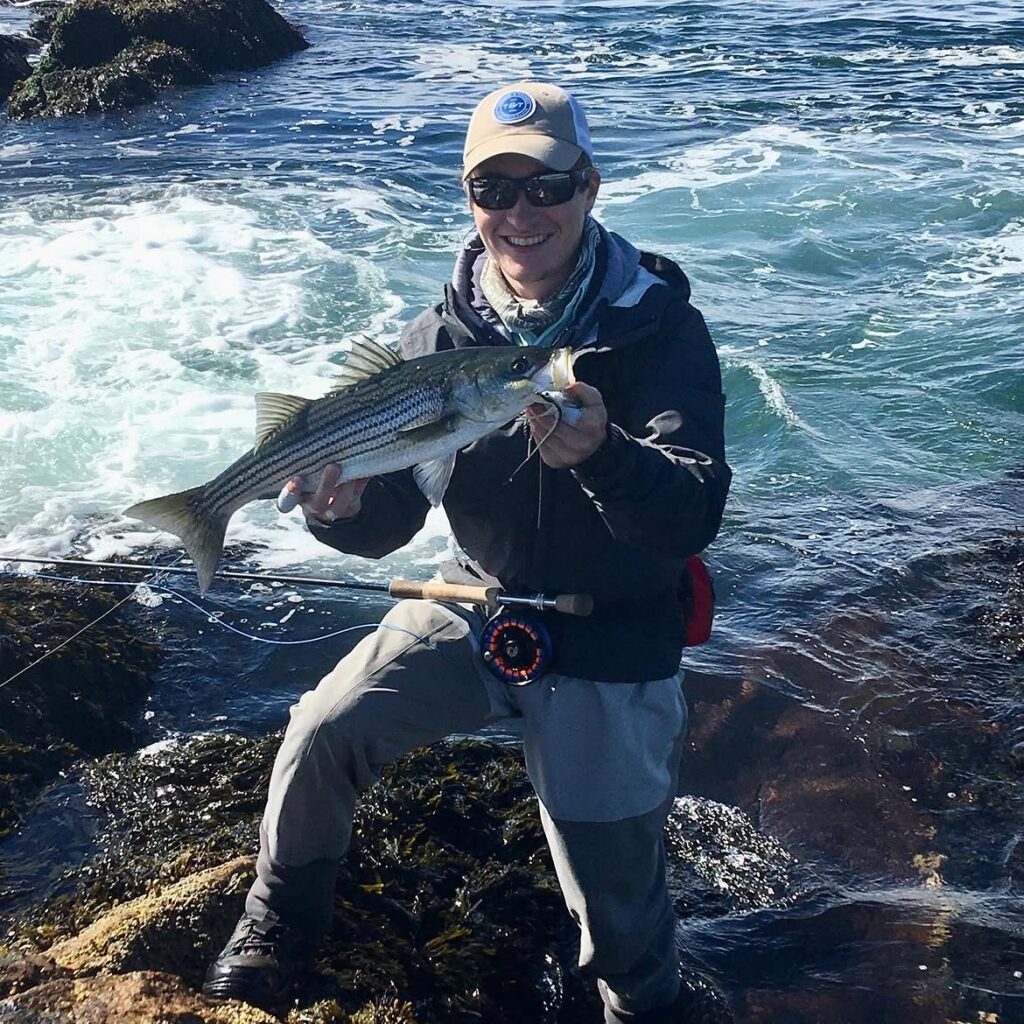
[00:05:58] Growing up in Massachusetts, Connor spent plenty of time chasing striped bass with family and friends, and those experiences helped shape his love for fly fishing. He now explains why striper fishing is such a big part of life in the Northeast, with many anglers looking forward to the spring and fall migrations every year. The spring run brings hungry fish and lots of bait, while the fall run offers another chance to target big bass, making it one of the region’s most anticipated fisheries.
[00:13:43] Connor takes us behind the scenes of fly rod design, explaining how every detail from the carbon fiber and resin system to the blank, guides, and grip plays a role in how a rod performs on the water. He also shares how prototypes are tested and refined before they ever reach anglers. Every Thomas & Thomas rod is still built by hand in Massachusetts, and Connor explains why that level of craftsmanship continues to set the company apart from others.
[00:20:15] Connor dives into what gives a fly rod its “soul” and why the way a rod feels can matter just as much as its performance. He explains how rod loading and timing create a better connection between the angler and the cast, rather than simply making the rod as fast as possible. It’s a look at why many experienced anglers still appreciate rods that offer feel, feedback, and a more enjoyable casting experience.
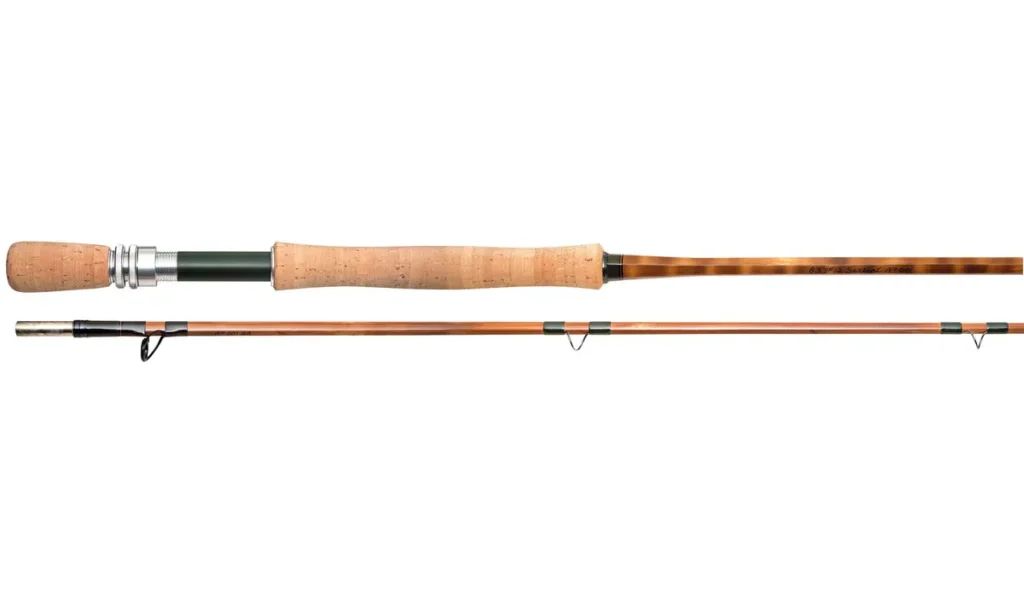
[00:23:40] Connor compares classic Thomas & Thomas rods with today’s lighter, more advanced designs, highlighting how rod technology has evolved over the years. While modern materials have made rods lighter and stronger, many anglers still appreciate the smooth, deep-loading feel of older rods with thicker walls. Connor explains that neither style is better; they offer different casting experiences, and finding the right rod comes down to preference, depending on whether you like to fish.
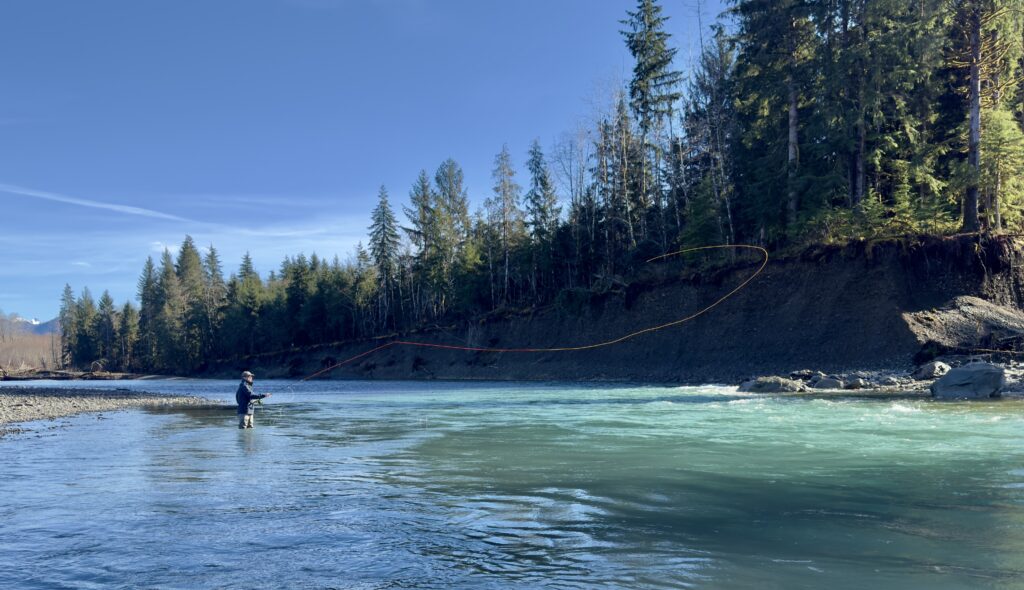
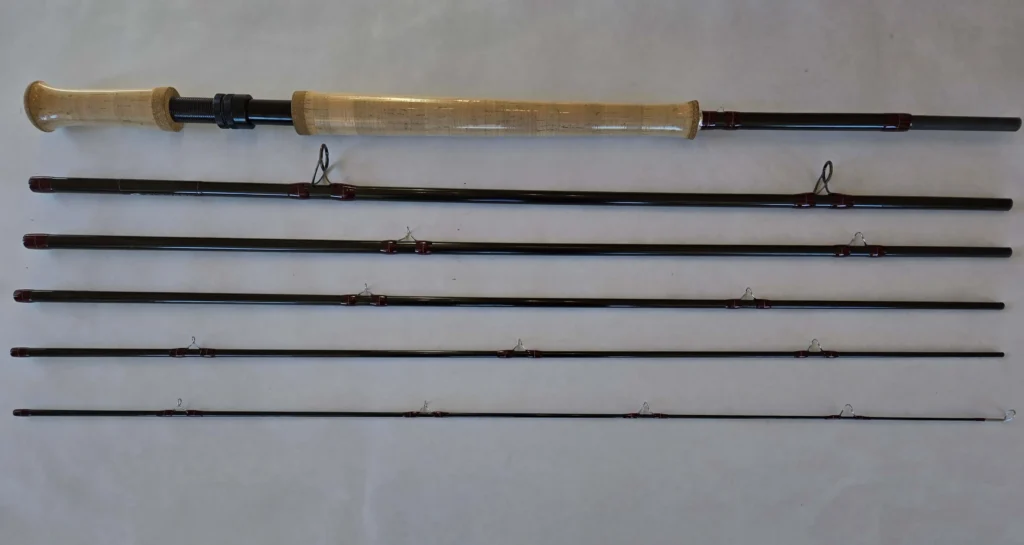
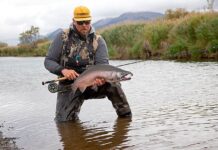
Connor now shares the story behind developing a six-piece spey rod and putting it to the test on Washington’s Olympic Peninsula. After experimenting with different types of rod actions and line setups, he found the combination that felt just right. The trip became even more memorable when he landed a steelhead on the prototype during its first real outing, a very rewarding milestone that showed the rod was ready for the water.
[00:42:40] Connor also shares some of his favorite rod setups for trout fishing, Atlantic salmon, and northern pike. He explains why a 9-foot 5-weight is such a versatile trout rod, when he prefers a longer single-hand rod for salmon, and why big pike flies often call for a heavier setup. His main advice is to think about fly size, line choice, and fishing conditions before choosing a rod. The right setup should make casting easier and help you enjoy the day on the water.
If you enjoyed this episode, definitely reach out to Connor Quigley of Thomas & Thomas and let them know.
Episode Transcript
00;00;02;00 – 00;00;27;05
Dave
Some of the most loved fly rides ever made would probably be called to slow if they launched today. On this episode, Connor Quigley from Thomas and Thomas joins us to talk about what modern fly rod design gained, what it lost, and why experienced anglers still chase rides that actually let you feel the cast. We’re going to get into bamboo history, soulful graphite rods, speed design, stripers, Atlantic salmon and everything in between.
00;00;27;19 – 00;00;46;13
Dave
And we’re going to find out why certain rods instantly click, while others never do. This is the fly swing podcast ratio of the best places to travel to for fly fishing. How to find the best resources and tools to prepare for that big trip and what you can do to give back the fish species we all love. Today we are going to dig into what makes a fly rod have soul.
00;00;46;24 – 00;01;04;16
Dave
We’re going to get into the history like we talked about bamboo and how that transition into the modern rods. And we can find out the difference between a rod that Caswell and he rather fish as well. And Conner’s favorite set ups for trout stripers, Atlantic salmon for bully’s pike. We’re even going to get into sort of spey. All right.
00;01;04;16 – 00;01;19;10
Dave
This is going to be a good one. We’re also going to get a six piece spray rod prototype and we’re going to get a bunch of little tips and tricks along the way. Here he is, Conner Quigley. You can find him at Thomas and Thomashawk.com. How are you doing, Connor?
00;01;19;21 – 00;01;20;21
Connor
Good, Dave. How are you?
00;01;21;01 – 00;01;38;08
Dave
I’m doing great. I’m doing great. Always good to jump on a podcast to talk about rods, especially when it’s a rod company that is a big name out there. You know, Thomas and Thomas, who you work for, has been doing great things for a long time. We’re going to get into the history. We’re going to get help. Somebody maybe choose a new rod, learn about what you do.
00;01;38;08 – 00;01;50;24
Dave
So. So we’re going to jump into it all today. But before we jump in, you know, Foley, maybe just talk about, you know, how you came in to Thomas and Thomas. Is this something that you had been thinking about your whole life or talk about that a little bit?
00;01;51;04 – 00;02;13;24
Connor
Yeah, for sure. So I’ve been fly fishing for quite a long time, as a lot of people on your podcast have. Can’t really remember a time where I didn’t have a fly rod in my hand then casting a lot, you know, that’s kind of what I really enjoyed practice casting in my yard as a kid and, you know, kind of got into it with starting out with a pretty cheap, you know, bass Pro combo and then going up from there.
00;02;14;09 – 00;02;30;04
Connor
But my real introduction to the sport was that the bears done fly, shopped and taught in Massachusetts. I went into that store, I think I was probably around 13 years old, and it’s pretty much why I’m here today. And that’s a really good fly shop.
00;02;30;09 – 00;02;31;03
Dave
Is it still there?
00;02;31;14 – 00;02;57;13
Connor
Certainly, yes. And there you can look there. Very. Scott at the Bears Den has kind of been like a mentor to me. And the industry is definitely part of the reason why I’m talking to you right now. But that Fly shop is a fantastic shop carrying a multitude of Rod’s fly tying materials, reels with also an indoor casting area and just a fantastic a fantastic space.
00;02;58;02 – 00;03;12;08
Connor
And so kind of with that opportunity, I got into Fly tying around that time when I was in my early teens and when I got my license, I think one of the first places I drove was the Bears Den for my first kind of like little high school job.
00;03;12;19 – 00;03;13;07
Dave
Oh, wow.
00;03;13;08 – 00;03;33;21
Connor
So I worked there for a few years, off and on through early college, but mainly in high school. And I did kind of a host of everything I did, you know, sales over the phone. I did real repairs, spooling rails for sure, and helping people select fly tying materials. I think I even tied at one of their early shows.
00;03;33;28 – 00;03;38;19
Dave
I’ll call some of the bears that fly shop had their own like fly fishing shows Scott did.
00;03;38;19 – 00;04;08;17
Connor
Yes. Our listeners, some listeners will probably remember going to them where he had some huge names like Lefty and Larry Doll Bird. So the Fly shop itself is is in an industrial park in Taunton, and it’s a pretty big warehouse style building. So before you kind of filled the back up with some other projects, it was a pretty open space and he was able to put up a bunch of booths, a bunch of literally vendors and suppliers would go, It was fabulous with tires.
00;04;08;17 – 00;04;28;25
Connor
It was a mini fly fishing show held in kind of around the main fly fishing show circuit. But usually around January, February, it was fabulous. So I went to that. I tie it at that. There was that was so cool and such big names there, and it was just such a good community for kind of southeast Massachusetts fly fishing.
00;04;29;07 – 00;04;45;12
Connor
Really cool. And with that, the location of the Bears Den is kind of equidistant from Boston to the Cape to Providence Airport. So it really did bring in a lot of international customers as well for people trying to, you know, go to the Cape to fish for bass.
00;04;45;13 – 00;05;00;29
Dave
Oh, so fish for bass, right? Yeah, That’s huge out there. Right. That’s huge. That’s the cool thing about the East Coast is that, well, you got a bunch of things going on, but the striper is like, That’s huge, right? You’ve got this amazing. I was talking to somebody in the in our community and he was like, All right, Steelhead is done.
00;05;01;08 – 00;05;05;26
Dave
I’m getting fired up for this. And it’s just like, how do you describe that? The striper fishing out there.
00;05;06;07 – 00;05;24;28
Connor
I think it’s really a part of the culture out here, specifically where I was born and raised. That’s kind of like what I grew up doing with my uncle, who got me into fishing and just taking out his boat on like the Taunton River and stuff like that and catching bass early season and like Mount Hope Bay and stuff was just fabulous.
00;05;24;28 – 00;05;46;05
Connor
Is just on, you know, it’s getting a little bit busier and busier every year. But back in like the early 2000s, it was just plenty of fish shows. Awesome. Plenty of bunker bogeys. And it was just such a great fishery. But now, you know, the striped bass have seen a little bit decline in the spawn, but there’s still a lot of fish to be had, A lot of big fish now.
00;05;46;05 – 00;05;48;22
Connor
And I will be striper fishing this weekend and.
00;05;48;22 – 00;05;52;23
Dave
Oh, you will. Yeah. So you’re actually is that where you are now physically, Where are you located?
00;05;53;00 – 00;05;57;14
Connor
I am physically in Greenfield, Massachusetts at Thomas and Thomas right now.
00;05;57;17 – 00;05;58;15
Dave
There you go. Awesome.
00;05;58;15 – 00;06;05;22
Connor
But about 2 hours away from my folks who are still down in southeast Mass so I can visit my parents, which is very nice.
00;06;06;02 – 00;06;17;04
Dave
That’s right. Yeah. It’s awesome. And we’re hoping to get a another striper episode in soon to talk about it because I know now is it was the time of year when it’s kind of because there’s this migratory thing, right? Is there a time when it’s like just the prime time to go there?
00;06;17;13 – 00;06;42;23
Connor
Yes. So I would definitely say late May, June is going to be your kind of that you get a lot of bait. You got a lot for Rhode Island and Massachusetts. That’s a really, really good time to fish for them. They’re active, they’re moving, and they’re hungry. Towards the end of June, July, it kind of starts to slow down a bit, the doldrums, as many say, but the fish kind of have their kind of deeper water holding areas.
00;06;43;00 – 00;06;53;08
Connor
And then in the fall, it really ramps up again when they want to go home. So that’s kind of the fall run, which is driven a lot of times by the peanut bunker and mullet in Rhode Island.
00;06;53;16 – 00;06;56;14
Dave
Oh, right. So they’re chasing these other species around.
00;06;56;16 – 00;07;01;14
Connor
Yes. So they come up for a certain date and then they go down kind of on the baby bait in general.
00;07;01;19 – 00;07;08;24
Dave
Well, does Thomas and Thomas cover kind of all lines or do you have special focuses on species as far as your rod line up?
00;07;09;04 – 00;07;34;01
Connor
Yeah, that’s a really good question. So what we tend to do is instead of other rod companies that say, have like one line up with maybe 20 models ranging from little three weights to ten weights, 12 weights. We kind of specialize in certain actions or certain kind of styles of fraud and families of Rod. So anything from like a saltwater rod, that’s fast action for flat fishing, like a sextant for floating line work.
00;07;34;01 – 00;08;00;16
Connor
And then we also have a Rod series called the Exocet 88, which is actually designed for more sinking line applications and larger flies. So we almost make 2 to 410 weights, but they’re completely different rods and they do serve different purposes. It’s kind of nice to be able to have the pro staff that we have all over the world to be able to kind of do flat fishing and then try the rod there and then try it up here for Alves or Bass.
00;08;00;28 – 00;08;19;13
Connor
But it kind of we try to make very well-rounded line ups that have the correct amount of models, the correct amount of rods in that range to kind of give you anything from especially like the 88 a trout streamer rod to a tarpon rod. So but they all have a similar familiar action in the family.
00;08;19;21 – 00;08;28;13
Dave
Right. Gotcha. And do you have as far as your I don’t know if you ambassadors are the people, what do you guys call your pro your pro staff or pro.
00;08;28;13 – 00;08;49;17
Connor
Staff, ambassadors, advisors. This kind of different levels. But they yeah, they all help us out and they’re all, you know, elbows out either on social with content or kind of advisory work in terms of rod development, which is very helpful for me. So I can send prototypes out to people who are unbelievable and just put, you know, fish in the boat.
00;08;49;17 – 00;08;51;04
Connor
So try them out. Yeah, that’s.
00;08;51;04 – 00;08;57;04
Dave
Great. And is there a place you can find? Do you have a list of some of those ambassadors out there on the site.
00;08;57;04 – 00;09;12;16
Connor
Or definitely you can go on our website and we have we have a list of ambassadors and people or feel free to reach out to those, those ambassadors and pros on social and see if you know, if they need advice or fishing in that area. They’re more than willing to help for sure.
00;09;12;24 – 00;09;23;17
Dave
Okay. Yeah, I’m looking right now. I’m like, what a pro program, I guess. Where would it be located? That’s always I’m trying to think it’s somewhere in here. We will have to track it. We’ll put a link in the show notes, we’ll track it down.
00;09;23;17 – 00;09;28;16
Connor
And yeah, if you go into our stories on the website and then meet the team, there’s a whole list.
00;09;28;22 – 00;09;34;17
Dave
Meet the team? Yeah, about it. Yeah. Got it. Cool. Awesome. Yeah, I see it now. Okay. Yeah. You got a bunch in here.
00;09;34;28 – 00;09;36;05
Connor
Bunch of happy faces.
00;09;36;21 – 00;09;58;22
Dave
Yeah. Great. Awesome. Yeah, of course. Yeah. We’ve talked about. That’s the great thing is that we’ve talked to a lot of these people on the podcast. Not all of them, but. And you guys do. Yeah. You cover, I mean, pretty much everything, but you cover saltwater pretty well. I feel like that’s something you guys, you feel like that’s an equal part salt versus fresh water, even though, you know, you always hear that trout is kind of the big the biggest thing out there.
00;09;59;02 – 00;10;06;16
Connor
Trout’s big. I mean, that’s definitely a trout makes money. Yeah. You know, in terms of freshwater fishing. So, yeah.
00;10;06;16 – 00;10;14;24
Dave
But you compare like, what do you think the percentages if you look at trout fisherman versus and just say I mean I’m sure there’s overlap at trout fisherman versus saltwater fisherman.
00;10;15;07 – 00;10;36;25
Connor
There’s a lot more trout. I would say it depends on where you are. You know, there’s some guys out here in mass that literally don’t even fish for trout. They just striped, they fly fish for bass. But I would say, you know, if you’re taking the whole world and especially Europe and, you know, continental United States and Steelhead and Alaska and stuff, there’s a lot of trout, salmonella species, you know.
00;10;37;02 – 00;10;44;15
Dave
Yeah, definitely, definitely cool. And I see I see Josh Miller is on here, too. Yes. Josh’s definitely a that guy is an all star.
00;10;44;25 – 00;10;46;15
Connor
Is is a rock star, for sure.
00;10;46;18 – 00;11;01;08
Dave
Yeah. Okay. So where do you start with somebody? You know, you talked a little bit about about kind of the models and things like that, but maybe take us to what you do at Thomas and Thomas. Maybe that’ll help clarify a little bit more of how people can maybe choose their next rod. Describe that a little bit.
00;11;01;08 – 00;11;42;05
Connor
Yeah. Awesome. So, yeah, what I do here is I in charge of product development. So that’s kind of anything from picking out a specific guide to designing a blank. So it’s kind of a breadth of work, but it allows me to for full design control of the products that we make. So anything from, you know, the carbon fiber that we use, the resin systems, we use the layups of said materials to the rolling of those materials, the casting of that blank, you know, once it comes out and then putting guides on it and making sure that we have, you know, very good quality guides, guides with purpose, you know, and making sure the layouts are
00;11;42;05 – 00;12;04;19
Connor
good. And then obviously grip choice, component choice and making the rods look gorgeous. So that’s kind of a little bit of everything I do. And I do talk to a lot of our suppliers. I do do a lot of, you know, I kind of have a pretty much full control over a lot of that aspect of the product development and overseeing the the manufacturing of these products as well.
00;12;04;26 – 00;12;08;15
Dave
Yeah. Which are all manufactured in the in the U.S., correct?
00;12;08;15 – 00;12;14;05
Connor
Yes. We roll every blank here and we make every rod in this building in Greenfield, Massachusetts.
00;12;14;05 – 00;12;21;20
Dave
Yes, That’s amazing. Yeah. And I think that out of the there’s probably not a lot of brands doing that right. That are all 100% in the U.S.. There’s a.
00;12;21;20 – 00;12;44;06
Connor
Few. Yeah, there’s a few. And I won’t discount that they’re doing it. Everyone’s doing a great job these days. I mean, it’s hard. What I will say and what the price of rods, you know, I could have a whole podcast on that. But with the price of raws these days, it is you are paying for an American made product, in our case, 20 to 25 American hands, you know, going into this.
00;12;44;20 – 00;12;45;05
Dave
No kidding.
00;12;45;15 – 00;12;47;19
Connor
Item. Yeah, yeah. No, it’s a small building, so.
00;12;47;19 – 00;12;53;14
Dave
That’s what it takes. So there’s 20 to 25, 20 people. Yeah. Going into the making of that rod, correct.
00;12;53;15 – 00;13;12;19
Connor
Yes. 20 to 25 hands depending there. It goes out to a home wrapper or is wrapped in house, you know, inspected all this stuff. You know, it really is from, from the person cutting that carbon fiber to the person shipping that your rod in the box. It’s you know, it’s 20 and you’re paying a wage to those people in the state of Massachusetts.
00;13;12;19 – 00;13;29;12
Connor
You know it’s that that’s a that’s what we do here. So we’re blessed. We’re blessed to be able to do that, you know, And we also are blessed to be able to take pride in that product. So when you call here, if you have any issues with it or questions, you’re going to talk to me, you’re going to talk to Mark or Kim, you know, that’s John.
00;13;29;12 – 00;13;30;26
Connor
You know, just some people, you know.
00;13;31;04 – 00;13;43;17
Dave
And what about the if you look back at maybe take us back on the history a little bit of Thomas because I think that you’ve definitely got maybe just start with I don’t know how far back this goes, but take us back to the start. Let’s hear it. Let’s hear how this thing got going.
00;13;43;24 – 00;14;06;09
Connor
Let’s go. So basically, back in the day, it was around the late the mid-sixties. There was a Tom Dorsey and Tom Maxwell kind of had this vision to start making bamboo rods. And they were kind of and they were actually Tom was in school at my alma mater, which was University of Maryland in College Park. He was a grad student there, which is kind of funny.
00;14;06;19 – 00;14;32;02
Connor
But then he wanted to he liked to fish in and want to make some rods. So he eventually kind of set up a little shop in Chambersburg, Pennsylvania, and made rods for the likes of Charlie Fox and some marinaro for fishing on Big Spring and Le Tort. And and that was kind of the the name, you know, that was where he started making some of those those rods.
00;14;32;02 – 00;14;57;26
Connor
So with that, he got an opportunity to be heard of the Sewell Dunton and Montague Rod shops which were up in Montague and Turners falls up here in Western Mass, and they were actually kind of offloading their equipment down here. They had plant, they had milling machines, planning forms, basically larger batch hardware store, bamboo rod making stuff. So they had everything.
00;14;57;26 – 00;15;05;11
Connor
They had really old cane. They had these beautiful milling machines that we still use today and tons of stuff.
00;15;05;20 – 00;15;11;08
Dave
And these were companies that were going out of business or what were they? Yes. Remind us again, what was the name of the company?
00;15;11;12 – 00;15;13;06
Connor
Yep, There was Montague Rods. Yeah.
00;15;13;06 – 00;15;22;24
Dave
Montague. Yeah, they were a definitely they been around for years. The Montague rods. And they made a lot of. Yeah. I mean, I think my dad still has the money, right? So you got those Now, what was the other name?
00;15;22;25 – 00;15;48;04
Connor
The brand Sewell Dunton, which was kind of like a sub brand or a kind of a similar factory. So. DUNTON Yeah, they were kind of a kind of rod shops up here in Montague, Mass. And they had this. Yeah, they had the tons of bamboo, tons of machinery. And Tom, the two toms made the decision, the business decision to buy all of this equipment.
00;15;48;15 – 00;16;16;04
Connor
And eventually Tom Maxwell parted ways and actually helped finish up some of the Leonard rods, which are very nice. And you kind of want to help out Leonard a little bit later in Leonard’s kind of life cycle. But Tom Dorsey stuck with the company, stuck with the vision, and started making bamboo rods up here in Turners Falls, which is just over the river, the Connecticut River, just a couple towns over.
00;16;16;22 – 00;16;36;10
Connor
So with that, Tom, you know, was making these bamboo rods and he started to have some help. And but around this time, which was now the eighties, carbon fiber came out and Tom being as innovative and crafty and excited for making new materials as he was, he jumped on it and which was probably the best decision he made.
00;16;38;10 – 00;16;59;21
Dave
Fishman Expeditions offers world class fly fishing right off Alaska’s incredible road system for monster rainbow trout to face the Arctic. GRAYLING You’ll chase big species in the stunning landscape, whether you’re a seasoned angler or just starting out there. Expert guides ensure an unforgettable adventure Book your trip today before spots fill up and experience Alaska’s diversity like never before.
00;17;00;06 – 00;17;23;19
Dave
Check them out right now that’s Fish Town expeditions dot com Golden Fly shop isn’t your average fly shop. They have a 12 foot shark painted like a cutthroat, hovering over a huge selection of the best rods in the business, a massive assortment of tying materials and their famous steakhouse streamer display. And it’s the hub for a community of anglers who never stop tinkering with new ways to catch fish.
00;17;23;19 – 00;17;47;29
Dave
Sometimes the conversation behind the counter includes what hatches are going off and what techniques are working best. Then tales of destination fishing adventure sought after species, or a good old congratulations. When a customer brings stories of finally connecting with that fish, they’ve searched for forever with a growing online store and a budding YouTube channel, you’ll be able to follow along with their fun antics, international adventures and helpful fly fishing tips.
00;17;48;04 – 00;18;05;10
Dave
Goldfish shop where the community is hanging out even if they’re supposed to be working. That’s Golden Fly shop dot com. Check them out right now. So you had the bamboo rods going, but then you had that fiberglass. What was Thompson Thompson making and was it Thomas and Thomas back then.
00;18;05;22 – 00;18;13;16
Connor
Yes, it was always Thomas and Thomas and it was 19. It’s still we still have it on our rods and tubes and stuff. It is established in 1969.
00;18;13;16 – 00;18;19;01
Dave
So 69. Okay. And who was Thomas? Is Thomas and Thomas, is that a name?
00;18;19;08 – 00;18;23;17
Connor
So the two Thomas’s. So yeah. Thomas Dorsey and Thomas Maxwell.
00;18;23;18 – 00;18;24;25
Dave
Oh, right. Yeah. Just the Thomas.
00;18;25;10 – 00;18;25;21
Connor
Who was they.
00;18;25;22 – 00;18;28;20
Dave
Just so Tom Dorsey. Is Tom Dorsey still around.
00;18;29;10 – 00;18;37;28
Connor
No, he passed a couple of years ago and that was Yeah. And he actually before his passing, he actually did come out with a book.
00;18;38;07 – 00;18;38;24
Dave
Oh he did.
00;18;39;04 – 00;18;41;02
Connor
Yes. Which is very nice. I have a copy here. Oh.
00;18;41;02 – 00;18;42;03
Dave
Well, what’s it called.
00;18;42;09 – 00;19;02;17
Connor
Searching for Telos. It’s a book that you can find on our website, and it’s basically an autobiography with a history of Thomas and Thomas. And it’s a very nice it’s a very nice small, little quick read. And it definitely has some of his, you know, his nuances and kind of his ramblings in there. And he was also very talented cellist.
00;19;02;27 – 00;19;14;17
Connor
He played music a lot. He loved jazz. And it kind of talks about his whole life. He was very, very interesting gentleman. So and I was I was lucky enough to meet him a couple of times, which was very nice before his passing.
00;19;14;17 – 00;19;32;17
Dave
Yeah. So what was Tom like when you when you met him later? It’s interesting because some of these older guys, you know, and I was just watching this video with Lefty Cray when he was, I think three years before he passed away. And it was really interesting to watch because it was this video of him and Ed basically teaching people how to cast.
00;19;33;01 – 00;19;48;06
Dave
And you could what you could see at the video was really clear and you could just see in Lefty’s eyes, he’s old, you know, he’s 80 years old. He’s three years from passing away. But he’s still teaching you know, like, I feel like that’s something cool about these great people and that they keep. This. Was Tom the same way?
00;19;48;06 – 00;19;50;23
Dave
Was he what was he like later in life as you talk to him?
00;19;51;05 – 00;20;15;01
Connor
Very, very much so. He was just very just very excited about the, you know, how where the company was going. You know, he made a lot of great rods here. And, you know, I think he really coming from the bamboo background, he really kind of made this certain type of feel, which is a very soulful feel in a Thomas and Thomas fly rod even what, even a carbon rod that has a lot of it has a lot of soul.
00;20;15;02 – 00;20;30;17
Dave
What is that soulful. How do you describe it? Because, I mean, soul is a good way maybe to describe because you hear a lot about these We’ve talked about this. We’ve had casting structures and instructors and people and you probably heard some of these, but how the the industry went to a really superfast raw. Right. And sometimes it’s not the greatest thing.
00;20;30;17 – 00;20;34;26
Dave
Right. What’s your take on how how do you describe what is soul? You know, what does that mean?
00;20;35;01 – 00;20;59;12
Connor
Soul is kind of the transmission, I would say from like the tip top, the tip of the rod to the butt of the rod. You know, you feel that rod, You’re actually sealing that rod load and unload in your hand, you know. So I think a lot of rods that are very, very stiff say, you know, with the kind of tip on the stick ceiling and there’s a bunch of little slow hands and lingo for it, but they may feel disconnected.
00;20;59;13 – 00;21;18;22
Connor
They can make casts like a cannon, but you may not feel that on load and unload and it might be a a timing thing. You know, you may not get that timing initially. And if you learn that, Rod, sure, it’s going to work great. But Thomas and Thomas Rods tend to be coming from the bamboo as well, a little bit stiffer tipped.
00;21;19;02 – 00;21;36;13
Connor
And what that kind of does is actually kind of drives a little bit more load down the blank and thus giving you that soulful kind of I feel the tip, I feel what’s going on. You know, I feel that what’s happening. And that’s kind of what I strive for, especially in the new Miles, especially like the avante, especially in the 88.
00;21;36;13 – 00;21;55;15
Connor
I always know where that tip top is, so it allows me to kind of, Oh, I know the rod is loaded, I know it’s unloaded. You know, it’s very and very stable. And I think it’s just a stable rod. It’s and I see it a lot at shows as well. So I’m doing the fly fishing shows and I’m watching people pick up one of the rods and go out to the pond and they pick it up quickly.
00;21;55;23 – 00;22;11;28
Connor
And that’s something good. Yeah, that’s a good thing. You know, where someone can, in this crowded environment can pick up a nine foot five way, go out and be like, Wow, that worked for me instead of like I see other. And they could be flailing around, but they could be struggling or maybe not shooting or trying to overpower it.
00;22;11;28 – 00;22;14;13
Connor
But a TNT is very easy. It almost cast itself.
00;22;14;29 – 00;22;24;06
Dave
All right, that’s awesome. And and where does the tip end? You’ve got the tip of the riser, a distance. You know, than a tip. What would you say is that where does the tip end in the rest of the rod begin?
00;22;24;18 – 00;22;41;15
Connor
Yeah, I mean, I think, you know, if you were to mathematically, mathematically say it’d be like nine foot probably 20 and a half inches, you would be like, exactly. Like that’s the length of a tip. But really, like a lot of our rods, because of that stiffer tip, they kind of load into like the top third of the rod.
00;22;41;15 – 00;22;47;01
Connor
And that’s kind of what I say is kind of, you know, that’s kind of your full tip is really the top third of the rod.
00;22;47;01 – 00;22;51;25
Dave
Tops that are. So it’s quite a big. Yeah. So we’re not talking it is necessarily six inches or two inches the tip.
00;22;51;25 – 00;22;59;21
Connor
Oh, gosh, no, no, not in a TNT. I actually other rods. Yes. I would say that there are some rods that are lightning fast that are very similar.
00;22;59;26 – 00;23;00;12
Dave
To the top.
00;23;00;12 – 00;23;28;15
Connor
Right. And they are they are a little bit softer tipped and that actually then, yes, you would actually have a rod that is, you know, maybe half of that tip, maybe 12 to 20 inches down just But, you know, it’s kind of yeah, it definitely is a variance that it’s something I’ve actually been playing around with with some recent designs is making some rods that are a little bit quicker in the tip still having that soulful feel but just something a little bit different.
00;23;28;15 – 00;23;39;28
Connor
You know maybe a not a it actually still feels like a Thomas and Thomas, but it might have a little bit more zip and a little bit more of that tip feel. So that’s just personally what I’ve been working on over the last few months. Yep.
00;23;40;03 – 00;23;54;03
Dave
Yeah, I think there’s something there. You know what? The baby was some of the old and there’s a bunch of well, there’s a number of the brands are still big out there in fly fishing that are doing, you know, graphite. But a lot of the big ones started with bamboo, right? I mean, you could look at all of all of this and any of them that came from.
00;23;54;03 – 00;23;59;24
Connor
L.L.Bean, even L.L.Bean, you know, Yeah. That are not here anymore but made great bamboo rods.
00;23;59;24 – 00;24;03;01
Dave
So elevate. Yeah. The lab made a bamboo rod back in the day.
00;24;03;01 – 00;24;10;07
Connor
Yes, many they made they were a pretty big broad maker back in the early 1900s. And look where they are now. Huge company.
00;24;10;08 – 00;24;12;27
Dave
Do they still well, do they make any are they still fishing?
00;24;13;03 – 00;24;15;19
Connor
Yes, they do. They actually do still make a bamboo rod.
00;24;15;24 – 00;24;16;19
Dave
Oh, no kidding.
00;24;16;19 – 00;24;17;13
Connor
Yeah, they do.
00;24;17;13 – 00;24;18;13
Dave
And that’s crazy.
00;24;18;13 – 00;24;34;12
Connor
I don’t know who their contractor who it’s contracted out by. It’s kind of pricey and it looks decent. You know, they still keep that heritage, but they they actually had, I think, some of their graphite rods back in the day. They had some really great rods, but they’re actually contracted out by Loomis and stuff. They’re pretty nice.
00;24;34;12 – 00;24;34;22
Dave
Planks.
00;24;34;22 – 00;24;58;09
Connor
Right? Yeah. Yes. And a lot of what I would say about TNT, which is neat, is a lot of the early rods that were carbon. So say your Winstons and say your your even your Loomis and sages. There was a lot of these contracted companies. So your Powell blanks and your Fisher blanks and there was a lot of almost blank makers that were doing OEM work for these other rod companies.
00;24;58;09 – 00;25;21;02
Connor
Scott as well. Tom still kept it in-house, which I kind of appreciated. So Tom, besides one model, which was actually a fiberglass rod, it was called the Kane Glass, Nobody really I don’t even think they’re out there anymore. But Tom kept all the blank making in, you know, with the machines that we still have, you know, and the materials and the patterns.
00;25;21;02 – 00;25;22;00
Connor
He did every.
00;25;22;00 – 00;25;22;09
Dave
He did.
00;25;22;09 – 00;25;35;05
Connor
Everything. So looking back on, you know, 25, 30 years of rod making is fabulous. It’s really nice to see where his kind of thought process was. And I still have all his old patterns. All his old.
00;25;35;12 – 00;25;36;01
Dave
You do?
00;25;36;02 – 00;25;38;14
Connor
Oh, yeah. Chicken scratch and stuff. It’s pretty cool.
00;25;38;20 – 00;25;40;20
Dave
It’s just notebooks and stuff. Just on paper.
00;25;41;06 – 00;26;07;01
Connor
Just binders and and just binders of of rod patterns and manuals and tapers and all this stuff. And what that gives us now, which is fabulous, is the ability to repair a broad that is 30 years old. So I’m able to roll you the customer, a brand new part tip. But whatever outfit it with the original guides, the original color thread, put your serial number on it.
00;26;07;01 – 00;26;08;27
Connor
It looks amazing. It looks so good.
00;26;09;05 – 00;26;24;26
Dave
That’s cool. So you can still get this exact. And you hear that a lot about the rods, too. We’ve heard that that those eighties rods in that range, some of those are still amazing rods. There’s still a lot of time. People like fishing, some of the older rods, even because the action was different. Right. How does that look with the action?
00;26;24;26 – 00;26;32;18
Dave
If you look at the action, Thomas and Thomas in the eighties, nineties versus today, you know, how does that is it changed? Do you still have some of those same models today?
00;26;33;00 – 00;27;03;06
Connor
Yeah, no, definitely. We do have kind of the families are actually kind of similar. So we back in the nineties we had a paradigm. We still make a paradigm is certainly not the same rod but the paradigm was a medium action rod and today it still is the horizon, which is a name that we don’t use anymore. But I would love to use is a faster action rod, you know, so he still had kind of families of rods back in the day, which I think is cool, along with the LPs, another very, very famous trout rod.
00;27;03;19 – 00;27;27;03
Connor
But the Horizon two pieces were very legendary and they were very good. Yes. And they’re they’re really good. And then when he transitioned from the horizon two piece to the Horizon four piece, those are very, very state of the art. Good tapers, very smooth, very stout, very strong rods, very impressive honestly, for the nineties and up people loved them.
00;27;27;18 – 00;27;50;14
Connor
We still get people I get people at shows every single year. They’re like, I love my horizon. I’m like, Oh, that’s cool. Cause if you break, you know, But they’re durable. And what I will say is that a lot of the older rods are thicker walled, lower modulus material. They’re heavier, they’re a little bit beefier. And some in terms of where modern rods have gone, everything’s so light, so strong, so nice.
00;27;50;25 – 00;28;16;08
Connor
But there’s something to be said about especially those old LPs. Is where they kind of have that really almost cane blank load. So if you just wiggle around a kind of lows off the blank, that’s really neat and that’s honestly something that is tough to sell these days to sell you. Hey, like we’re making a rod that’s actually heavier, but it’s going to suit you really well for this, this and this dry fly fishing or, you know, brook trout fishing.
00;28;16;15 – 00;28;35;03
Dave
If it’s a like eight and a half or nine foot rod trout rod, it seems like the weight isn’t as big of a deal, but it is. You get into these, you’re on, you know, ten foot like long or even space rods, stuff like that. Right? The the weight becomes very critical. Like, what’s your thought on that? How why is a lighter rod say better or maybe when is a heavier rod better.
00;28;35;16 – 00;28;50;21
Connor
Yeah. So grilling so kind of like what I was saying with the the medium action rods are like a dry fly rod. Having that little bit of weight in the blank kind of helps the blank load. And when I say that, it kind of you can have just the leader out no load just by you moving the rod.
00;28;50;28 – 00;29;18;14
Connor
That’s cool. You know, that’s huge. Very, very similar to a space rod. So what a space rod is. Space rods in general are a little bit stouter tip, depending if it’s Skagit or a Scandi rod, but a Skagit rod may have a little bit of a heavier tip, getting that rod to load deeper and actually have a little bit of meat and potatoes to kind of you feel that cast and feel that rod load up to throw because really a spare rods quite easy to cast.
00;29;18;14 – 00;29;29;27
Connor
It’s less energy than casting a ten weight, you know, in terms of you you know in terms of your actual bodily movement and your power, you know, all you have to do is just move your hands in the right ways. Yeah.
00;29;29;28 – 00;29;34;00
Dave
Because the lever I mean, it can kind of come down to the the fact that it’s a longer lever right. That’s a correct.
00;29;34;15 – 00;29;55;23
Connor
100%. And also just you’re using two hands using that bottom hand, which is pretty much on used besides a double haul. But, you know, you have a lot more power. So that’s really nice. But having a rod like especially our old days, like our or even a rod, some of them were designed back in the day by Simon Bosworth.
00;29;56;19 – 00;30;04;03
Connor
Oh yeah. So some of the all three pieces were designed with in conjunction with Simon when he was AT&T Pro.
00;30;04;14 – 00;30;06;22
Dave
Oh, okay. So Simon was AT&T back?
00;30;06;26 – 00;30;10;10
Connor
Way back, Yeah. Early 2000s yet like before.
00;30;10;10 – 00;30;13;07
Dave
So before he got into before with real. Yes.
00;30;13;07 – 00;30;18;19
Connor
Oh yeah. Definitely before. So he was helping Tom out on some of these legendary rods.
00;30;19;06 – 00;30;26;17
Dave
Wow. And that was in the time when early days really? I think that was 2000. Probably the earlier days of space. Right? It was getting going. Yeah.
00;30;26;18 – 00;30;47;07
Connor
Yes, Yes, exactly. So we came out with the D series in 2000 and that was a Yeah. Which is a fantastic series. And especially the 13 foot seven weight three piece is known as a absolute rocket ship I and it is I still cast this fabulous 500 grain suit you to the moon. Yeah it’s really good. Very easy.
00;30;47;07 – 00;31;09;08
Connor
Yeah. And it’s a heavy rod It’s a beefy rod. It’s so heavy by modern standards. But just the magic of that blank and the material in the tape is just fabulous. So stuff like that is like when I, I’ve been working on a little bit a six piece actually. 6000, no kidding. Designs. Yes. And the rod I’ve been kind of a good starting point is around a 13 foot seven weight.
00;31;09;08 – 00;31;13;09
Connor
That’s a very general stay rod That’s a do it all one in the quiver.
00;31;13;09 – 00;31;24;13
Dave
You can go bigger you can go it’s it’s a little bit light maybe for some stuff, but you can still do it and then you can go lighter, right? I mean that’s the thing of when you get to an eight weight or a six weight, you’re kind of either going one way or the other, right?
00;31;24;19 – 00;31;49;00
Connor
Correct. Exactly. And just said it’s kind of in, you know. Yeah. Like you say, it’s a jack of all trades rod. But what I did was when I was kind of thinking about it and putting it on the deflection board and going through kind of what I would do to design a six piece rod, which we haven’t done ever before, is build up the 13 foot three piece and then go out and cast that and see what is this, What was this all about?
00;31;49;06 – 00;32;08;05
Connor
You know, and actually having the ability to, hey like go up in the attic and Farrel one of these up and go cast It is pretty neat you know being able to you know actually have one in the building you know is is nice you know because sometimes you can’t those little odd and end rods are tough to find if it’s 30 years old you know right.
00;32;08;05 – 00;32;30;02
Dave
Yeah it is. That’s really cool. Yeah, forget about that too, because I think and I guess I love the TNT to Right, Thomas, the Thomas team just rings, you know? Well, but it’s good. It’s really good. What is the you know and you look and I didn’t realize the speed because I think when you think of Thomas and Thomas and I didn’t actually know about speed, but people think of I think right to the trout, you think of the guys so and so.
00;32;30;02 – 00;32;39;00
Dave
Yeah. But you have the space. I mean, you have the line up. Is that something that’s always been is that something looking ahead that you’re going to it sounds like you’re going continue kind of evolving the space.
00;32;39;00 – 00;32;55;21
Connor
Oh, for sure. I mean, even in recent years, Joe did a bunch of Joe Goodspeed did a bunch of work. Joe, Joe Oh, yeah. Joe did a bunch of work. Joe. Joe was here from I think he did a lot of the rod design from around 2017 to 2021.
00;32;56;00 – 00;32;56;18
Dave
Okay?
00;32;56;21 – 00;33;17;11
Connor
You know, so that was a lot of his his designs. And he has some amazing rods, but he did like a trout spey and then a short spey, which were really nice rods and those are really good. So those are, you know, some more modern double handers. But apart from that, we haven’t touched that travel size. And I think what are people like?
00;33;17;13 – 00;33;24;16
Connor
I’m from, you know, Massachusetts and I want to use a double hand rod. I’m probably going to travel somewhere, you know, to use it.
00;33;24;20 – 00;33;33;20
Dave
Yeah, right. It travels huge trout. I mean, I’m right now getting ready for an Atlantic salmon trip. Nice. Where are you going or you heading up to Mt. Waters.
00;33;33;20 – 00;33;34;11
Connor
Up in New Place.
00;33;34;23 – 00;33;50;01
Dave
And. Yeah, and we’re. And I’m coming across the country and I’m like, what? I’m thinking already? Like, do I want to take my space rod across? You know what I mean? Because I got to go all the way. Or do I, you know, use a guide rod Or maybe because they do single hand. That’s the cool thing about up there.
00;33;50;01 – 00;33;53;25
Dave
They don’t it’s not just space. So I could literally just take a single hand.
00;33;53;25 – 00;33;55;11
Connor
Rod Yes, definitely.
00;33;55;11 – 00;34;04;03
Dave
You know, but what you’re saying is like the 60 and I get it. You know, I think that the multi pieces, it’s just better because I mean, a four piece speed rod is a giant thing to carry around.
00;34;04;04 – 00;34;20;23
Connor
Still a big thing. Exactly. Especially in those 13, 14 foot lengths. So, yeah, I think just something I’m looking at, just something I’m always thinking about. But I was I did have a fantastic opportunity during show season to fish out in the Olympic Peninsula for Steelhead, which is fabulous.
00;34;20;27 – 00;34;22;14
Dave
How was that? Was that your first time out there?
00;34;22;20 – 00;34;26;16
Connor
That was my first time fishing for, yes. West Coast Steelhead.
00;34;26;22 – 00;34;29;00
Dave
Cool. What was it like when you got out on those rivers? What were.
00;34;29;00 – 00;34;52;22
Connor
You. Oh, just fab, big, fabulous, big. And yeah, what I kept saying, I went out with a colleague who’s who’s actually a customer service and sales here. His name’s John Carpenter. He’s been steelhead fishing for a lot of his life. And he’s he’s very, you know, he’s got his fair share of steelhead. And yeah, it was nice to spend that time with him out for a few days and do a bunch of steelhead fishing.
00;34;53;01 – 00;35;06;17
Connor
But even more cool was that I was able to use these six piece rods, so I was able to try out a couple different rods, a couple of different designs with brand new materials. And I actually did manage to get one a steelhead, which was.
00;35;06;17 – 00;35;08;15
Dave
You did I did. You landed one.
00;35;08;20 – 00;35;09;18
Connor
They landed one.
00;35;09;18 – 00;35;10;09
Dave
Nice work.
00;35;10;10 – 00;35;11;19
Connor
For. I was fabulous. Well, tell.
00;35;11;19 – 00;35;16;16
Dave
Me this is great because, I mean, not everybody lands a steelhead, especially their first time on a river, but.
00;35;16;16 – 00;35;17;25
Connor
Oh, it was unreal.
00;35;17;26 – 00;35;22;25
Dave
What was it? What was the fly set up for? Using the Skagit set up and what did you get it on?
00;35;22;27 – 00;35;56;22
Connor
Yeah, it was just a yeah, it was a Skagit. Yeah. It was like a 500 grain Rio Skagit with some like 12 and a half feet of T 11 and we already kind of ran through the pool a few times and you know, we actually jumped around a lot of all the way from the ocean to the national park boundaries and yeah, and then we just it was late in the evening and John, my colleague, was a few hundred yards upstream, so I don’t have the hero shot, but I do have the pictures and Yeah, yeah, just, you know, almost at the end.
00;35;56;27 – 00;35;59;07
Dave
What was the take. Was it at the hang down at the end.
00;35;59;07 – 00;36;01;09
Connor
No not at the hanging. It was mid Swang.
00;36;01;09 – 00;36;04;15
Dave
Mid swing. Was it in a tail out or was it mid run. Where, where was.
00;36;04;15 – 00;36;05;17
Connor
The tail out.
00;36;05;21 – 00;36;07;01
Dave
Yeah. Oh I love the tail out.
00;36;07;01 – 00;36;11;00
Connor
I was so good. I was fabulous. And just the, the are real. This came to life. It was cool.
00;36;11;17 – 00;36;14;06
Dave
There you go. So how did the six piece perform.
00;36;14;16 – 00;36;35;17
Connor
Amazing. It was great. I actually brought two out and there was one that was stiffer, which I would kind of call a more scandi rod. And then there was one that was a little softer like I was talking about earlier. I fished for it was actually on the first day, which was crazy. So we showed up and I started off with a stiffer rod and a bunch of lines, and I was just kind of cycling through a couple of lines.
00;36;35;17 – 00;36;52;07
Connor
You know, I had a couple of heads in my pocket and I try out so see what I felt was best. I scrapped the stiff rod, went to the soft rod, and I settled on this perfect setup and I fish there for the two and a half days. It was so good, you know, And that was a fabulous rod.
00;36;52;07 – 00;37;05;20
Connor
I eventually gave that rod to a buddy in IUL. He’s actually fishing it for not for grill or salmon in Ireland right now. So that’s pretty cool. So that specific rod, I will want that rod back, right.
00;37;05;24 – 00;37;07;18
Dave
So you don’t have a bunch right now. People can.
00;37;08;00 – 00;37;08;04
Connor
Just.
00;37;08;05 – 00;37;09;07
Dave
Like a piece on.
00;37;09;07 – 00;37;13;06
Connor
Sanded prototype, just like it’s one of one exists.
00;37;13;13 – 00;37;14;14
Dave
That’s really sweet.
00;37;14;17 – 00;37;33;20
Connor
Cool. But you know, just like that, that reward and actually, you know, being able to cast and cast and really practice the casting and you can only do that so much here like the Deerfield is big enough to cast on, but it just doesn’t sometimes have the speed of water and, you know, it was just so such a nice it’s so relaxing.
00;37;33;20 – 00;37;37;10
Connor
I would do it again in a heartbeat. You know, it’s so much fun, blessed to be able to do that.
00;37;39;07 – 00;37;59;29
Dave
Fly fish with me, Utah Discover year round blue ribbon trout fishing on the famed Provo River. Choose a guided walk and Wade or a scenic float and experience big trout, stunning canyons and unforgettable days on the water. You can book your adventure right now at Fly Fish With me Utah Ecom World class water. Incredible fishing that’s fly fish.
00;37;59;29 – 00;38;20;18
Dave
With me Utah dot com trout roots by Onyx is built for fly anglers who want better intel without spending hours digging for the information. You’ll get access to public land maps, stream access points, regulations and even road and trail maps all in one place. It’s become my go to app for scouting new trips. You can check them out right now.
00;38;20;18 – 00;38;42;07
Dave
Go to where by swinging dot com slash trout routes and download the app today. Well good. I’m glad you got out on some stone fishing. We’ve been kind of bounced around a little bit here, which has been amazing. What else would you tell us, you know people about Thomas and Thomas that we we don’t know. I don’t know if the if there’s more history we missed or just your lineup.
00;38;42;15 – 00;38;43;21
Dave
What have we missed today so far?
00;38;44;02 – 00;39;13;13
Connor
I think we did a pretty good job with the history. I think, you know, coming into the I will mention that coming into like that kind of coming up into like the COVID times was kind of like a really kind of an explosion of TNT where Joe had a lot of input on the rod design and he did a really good job on like the the Contact series, which is very, very well known now, which is and you know, and of Rod series that this past year we actually updated into the contact three.
00;39;13;13 – 00;39;35;05
Connor
So now there’s been the third generation of contacts and with the help of some amazing anglers, we were able to kind of get the newest contact series out, which has been a fantastic success. And but yeah, stuff like that, we’re pushing the envelope and I think that’s something that I would like to kind of see more and I try to do more, especially like in the Yvonne.
00;39;35;05 – 00;40;03;06
Connor
I think the Yvonne too is just such a fabulous fishing rod, just a awesome trout fishing rod and overall freshwater fishing rod, but kind of just keeping that keeping that going and pushing the envelope and maybe coming out with some new niche models, you know? But I also think too, that going back to the past and maybe kind of rereleasing some of the older series, you know, and maybe redoing some of those old specialty Heritage series rods.
00;40;03;06 – 00;40;24;19
Connor
So maybe. But what I think would be kind of cool is maybe even picking out a couple rods. It’d be like, oh, like people loved this two piece 12 weight, you know, or, you know, or this two piece, six weight and but, you know, then it’s larger tubes. It’s kind of a whole thing. So whether whether that comes into fruition, I can’t say for certain, but there’s always room for development.
00;40;24;24 – 00;40;30;05
Connor
You know even we get a lot of ask for one piece rods, especially from guides and the keys.
00;40;30;14 – 00;40;35;06
Dave
What is the benefit of a, you know, a two piece rod say versus a four piece.
00;40;35;14 – 00;40;48;00
Connor
Honestly, these days with the smoothness of four piece rods, it’s really I wouldn’t even say it’s a benefit. I would say it’s kind of less it might be less hassle and less things to maybe check.
00;40;48;10 – 00;40;51;08
Dave
Like why would guys want a two piece or a one piece rod.
00;40;51;20 – 00;40;56;11
Connor
A one piece for sure. The one piece is just a fabulous tool.
00;40;56;15 – 00;40;58;27
Dave
It is So one piece is a different deal that that is.
00;40;58;27 – 00;41;23;01
Connor
Something that’s a whole different ballgame is okay. And Loomis recently had a T to s, which is a kind of like a 8020 split rod, which is a really good idea, which is neat. And there’s a lot of innovation in terms of that, maybe even a kind of a faux one piece, but a true one piece fraud. It does like what Hardy’s done and what I would, you know, eventually, maybe like to come to market.
00;41;23;01 – 00;41;40;14
Connor
It’s just really desirable for like boat guides where they’re, you know, the broad is is strung up in the boat all the time. They put the four pieces together, they might as well superglue it. You know, it’s never coming apart, you know, And that’s where it is an advantage where the actual fishing advantages, it cuts better. It’s a thinner blanket.
00;41;40;14 – 00;42;03;11
Connor
It’s usually a thinner blanc. Overall, it just has a little bit more kind of, again, that feel, it really transmits a lot of feeling and it’s very, very smooth. And with Farrell, not really these days with the rods that we’ve been doing recently but with Farrell’s come possible issues so cracking or you know Farrell’s coming, they don’t come loose on our rods.
00;42;03;11 – 00;42;23;29
Connor
But you know, it is issues, you know, stress concentrations I would say in from engineering terms. So yes, by removing all of those, you really get a nice smooth I mean that’s why most spending rods are one piece, you know, surf rods. A lot of the good ones are one piece, you know, stuff like that. So one piece rods are neat and something I would love to try exploring.
00;42;24;03 – 00;42;40;15
Dave
Yeah, it makes sense. You know? It does make sense. It’s definitely. Yeah. If you’re never breaking down your rod, then yeah, you might as well just have a one piece. That’s. That’s good. Well, so let’s go down a road on a couple of species that we’ve got coming here, some trips and let’s start with, let’s just start with our Montana.
00;42;40;16 – 00;42;49;21
Dave
We’re going to be heading to Montana fish there this year. What do you think is the good all around? I guess, again, it depends on what you’re doing, but let’s just say dry fly your fish injuries. A lot.
00;42;49;21 – 00;43;06;19
Connor
Okay, Dries, I would probably go for a905. I just I don’t think you can beat that out there. Depending on the size of water you’re on. You know, four way could be good. You know, if you’re on like some tail waters and stuff and maybe some smaller bugs. But I think a nine foot five weight, especially if the wind kicks up, I think you’re going to want it.
00;43;06;19 – 00;43;24;12
Connor
You know, I think that’s just that’s why they sell so well out there. You know, as a nine foot five weight, if you are trying to get a little bit more versatility down the road, I would step it up to a nine foot six weight. You know, if you are trying to throw maybe a streamer, maybe a hop or or a larger bug depending on the time of year, right?
00;43;24;12 – 00;43;28;04
Dave
Yeah, I get up to a six. Is that in your rod like what would be is there a native on.
00;43;28;21 – 00;43;39;20
Connor
Avon to 906 would be that that’s kind of that’s my truck rod that’s kind of what I sell to everybody that would be my you know, apocalypse rod. You could catch the world on that thing, you know. Yeah, that’s it.
00;43;40;04 – 00;43;47;04
Dave
So we got that. So that’s the avante for the kind of a trout. Now what about we talked about the Atlantic salmon. What would be the single hand rod for Atlantic salmon.
00;43;47;09 – 00;44;12;17
Connor
Awesome. Awesome question. Yeah. I think you with all kind of a couple different ways but I think like a ten foot seven weight is a really strong contender because then you could also you just have that men’s ability of that double hander. So, you know, you get that line out there and you have a big long belly and you’re throwing either a little sink tip, a bomber, or even, you know, say you bring it to Iceland and you’re allowed to fish, maybe some sinking lines.
00;44;12;23 – 00;44;26;29
Connor
You do have that ability to throw a men’s in there with that ten foot rod. A lot easier than a nine footer. a908 or a ten foot seven would probably be my choice for kind of your, you know, Canada. A salmon fishing with a single hand rod. Yeah. Either one of those.
00;44;27;00 – 00;44;41;05
Dave
Nine foot eight way. Yeah. And I’ve got a bunch of, you know, just going back as a Steelhead angler before spey, you know, I’ve got a bunch of nine foot eight weights and there, you know, the great thing is, I’ll bet you if I fished one of your nine foot eight weights, it would probably feel a little different.
00;44;41;05 – 00;44;57;08
Dave
Cause I think the the ones I have are probably a little bit older, a little bit heavier. But the ten foot seven weight, you get a longer rod, a little less. So it’s not quite as heavy, but yeah, it seems like that would be the rod, especially because rods are lighter now, right? So why seems like the ten foot is probably the the more effective Rod.
00;44;57;18 – 00;45;19;20
Connor
I think it is a little bit more effective of a rod for that choice. It’s kind of borderline switch, you know, but I think you’re going to get a little bit more. You’re going to it’s just going to throw those men’s better. And a lot of times with these salmon, especially if you are, you know, regulated to say like a no sinking tip, you know, you have to fish a single hook, you have to fish, you know, fairly traditionally.
00;45;20;02 – 00;45;45;06
Connor
You are going to be doing some mending to slow down that line. So, you know, having a longer rod is going to aid that. You know, that’s why doubles are honestly really good for mending. You know, you can always throw a couple of men’s and what the double hander and kind of what a single hander you can’t throw that 60 foot man does easily all day and also adding that 1040 you can just throw a little stack in there and you’re you’re going to be you’re going to be off to the swing.
00;45;45;11 – 00;45;58;22
Dave
You’re good to go. Awesome. Okay, so we talked about steel, how we got that rod cover with the SPEY. Let’s go to another species we’re chasing this year. We’re heading up north to Saskatchewan to fish for Northern Pike. What would be the rod we’d be looking for there?
00;45;58;28 – 00;46;03;16
Connor
Yeah, depending on your fly size and if you’re throwing floaters or sinkers surface.
00;46;03;16 – 00;46;04;17
Dave
Yeah. So floaters, I think.
00;46;04;17 – 00;46;20;22
Connor
Awesome. Yeah. I would probably go for like a 300 grain Exocet at 810 weight. I think that that would be a fantastic choice. It’s going to throw any sort of popper or large surface fly you’re going to want to be throwing. It’s going to have plenty and you’re going to able to cast that all day.
00;46;20;22 – 00;46;22;16
Dave
So this is the Exocet 88.
00;46;22;16 – 00;46;24;17
Connor
And it is, Yep. So the streamer rod.
00;46;24;22 – 00;46;26;15
Dave
The Oh, the streamer. And then what was that again.
00;46;26;21 – 00;46;29;01
Connor
Going to be a ten weight. 350 Great.
00;46;29;03 – 00;46;33;02
Dave
So you want. Yeah. With Pike the big Pike you want it, you want nine weights not you want a big rod.
00;46;33;06 – 00;46;50;10
Connor
I would you know. And I think what a lot of people especially with fly choice kind of like what I was saying with that that Montana what you were bringing up was fly size line is really kind of what I would want people to think about is like if I’m throwing smaller bugs, I can go lighter on the line.
00;46;50;12 – 00;47;09;18
Connor
If you’re throwing a big popper, I need a big fly to push that popper. So, you know, having like, say your Titan, say Titan on a 350 grain 88, you could cast that all day and it’s going to get that popper and turn it over. So that would be my choice. And that’s a fantastic rod. And it fights fish really good.
00;47;09;18 – 00;47;34;27
Connor
And if it sticks, it keeps it. You a pike and like a muskie and stuff like that, they tend to, you know, have large head shakes and having a little bit of a softer rod. And overall that’s a little bit more moderate. Absorb those head shakes after the hook has been stuck on a strip set is going to be very, very nice close to the boat instead of, say a stiffer rod that might have a little bit more of a tendency to pull a hook.
00;47;35;06 – 00;47;36;21
Dave
Yeah, you want a little bit of that? Okay.
00;47;36;21 – 00;47;37;18
Connor
A little more bend.
00;47;37;18 – 00;47;57;06
Dave
Yeah, a little more bent. And another one we’ve heard a lot about. Seems maybe it’s the one that I hear the most about. Is the sextant, right? Yeah. And under the sun. And is that now Because we are. That’s another big trip we’ve got coming here is bully’s right. And I think that that’s going to be exciting because you know permits you know bone fish amazing And then tarpon potentially.
00;47;57;06 – 00;47;59;28
Dave
Right. Like what is this, the sexton mainly a saltwater.
00;48;00;09 – 00;48;28;00
Connor
Yes. So it definitely is little bit sore. People do use them for trout and small mouth and a host of other species. But I would say and pike and I use a sexton ten weight for Pike as well but and it’s a very versatile rod but I think it really excels with floating lines and smaller flies. So throwing that tighter loop into wind, throwing that presentation cast at 70 C where you are false, casting a fair distance.
00;48;28;07 – 00;48;32;08
Dave
Like you’re holding line, you’re casting maybe 70, 80 feet, holding that line in the air or.
00;48;32;10 – 00;48;54;09
Connor
Maybe has a forecast. But, you know, I think but hold in that line and say tracking a fish. So say a fish is moving across a flat or you know you’re not happy with that last or you’re not happy with that last that last false cast. Oh, it’s going to be this next one, you know, So having that kind of ability to carry that line in the air, throw it accurate tight loop with a small fly that sexton.
00;48;54;09 – 00;49;18;18
Connor
So for Belize like you were saying a fabulous fishery if you wanted all those three species if you want a grand slam rod it’d be a nine way. The sextant nine is fabulous and it would do all of those species very well for because especially Belize, you’re not getting giant, you’re not getting, you know, as large tarpon. So you know, if you were to going for that slam you might be fishing for juveniles.
00;49;18;18 – 00;49;30;18
Connor
So a nine way, it’s going to be just fine. And then it’s not too you know, with the right wine, it’s good for bones. And then it is a fantastic permit rod for, you know, throwing bigger crabs. So that’s that would be my choice.
00;49;30;27 – 00;49;57;04
Dave
Good. So we got the line up, and I know there’s a lot more we could talk about here, but I think that’s a good chunk to kind of touch base on. And we’ll be in touch. Definitely stay on this. I’m looking ahead. You know, again, we talked about Tom Dorsey and you knew him a little bit. What would be do you have any Tom Dorsey stories you want to add before he head out of here that come to your mind that I’m just trying to get a feel like, you know, this guy that created this company, You know, if he looks back, I’m sure he was proud of what he created.
00;49;57;13 – 00;50;08;27
Dave
But is he what was he like? Because I think a lefty, you know, has all these stories. He was obviously there’s only one lefty. But, you know, did Tom have a similar similar sort of, you know, what was he like? How would you describe that?
00;50;08;27 – 00;50;28;08
Connor
He was kind of thoughtful and, dare I say, maybe later in life. And I didn’t know him when he was younger, but he kind of had an eclectic feel, you know, kind of like your, you know, sitting sitting back and smoking a pipe and drinking a glass of whiskey kind of guy, you know, a guy that you could kind of listen to and tell stories with.
00;50;28;08 – 00;50;42;29
Connor
And just a fantastic soul, you know, and someone who, you know, really had a love for what he did and a passion, you know, and just, you know, excitement. So whenever he would kind of go out and cast a rod, it was kind of giddy, you know, And yeah.
00;50;42;29 – 00;50;47;07
Dave
He was what was he into? What were his species? Did he have one or a few that he really loved?
00;50;47;07 – 00;51;00;04
Connor
He kind of did at all. I think he really liked the I think he really liked where he lived out here, you know, being able to kind of go for his trout and his bass. But he also did a fair share of salmon fishing as well, just kind of like.
00;51;00;04 – 00;51;00;28
Dave
Atlantic salmon.
00;51;00;28 – 00;51;27;15
Connor
Atlantic City in Canada, kind of like your traditional kind of fisherman, you know, and and that’s how I appreciate. But one of my favorite quotes from Tom and and something that’s kind of stuck with me is about the rod design is he was also a really he loved cooking. You know he was a yeah he loved cooking. So one of his favorite things to say was that Rod designed itself as the way it is, is more akin to, say, a culinary art.
00;51;27;25 – 00;51;38;24
Connor
And you’re like, Huh, okay. But it is true. It’s kind of like you said, it’s like tasting a soup. Like when you make a recipe, when you make this blank or you make this rod, you have to taste it.
00;51;39;01 – 00;51;40;22
Dave
And then, you know, and then you adjust it, right?
00;51;40;23 – 00;52;02;11
Connor
And then you adjust it. Exactly. So then you’re like, Oh, it’s not that right. This needs this and that needs that. So that’s always stuck with me. And that’s something, you know, you’re still what I do here. And then, you know, what Tom definitely did is, you know, you strive for perfection. You strive for that premium feel. And I think Tom was very, you know, coming from that background, coming from that musical.
00;52;02;11 – 00;52;32;27
Connor
And music is very much perfection, you know, jazz, very technical, you know. So you’re you’re not missing that. No, you’re not missing that beat. You’re on time and you bring that into the bamboo. You know, it’s the absolute attention to detail that he always, you know, strived for. And a lot of the older the craftsmen here that we have that knew Tom, definitely, you know, more so than me would kind of continue that legacy of that attention to detail.
00;52;32;27 – 00;52;48;12
Connor
So like the epoxy work is incredibly thin, you know, and not thin. You know, it’s covering the wraps, but it’s very, very flat. Very flat on the it’s it’s not not more than you need. And that’s, again, keeping weight down. You know, there’s a reason.
00;52;48;20 – 00;52;53;05
Dave
So that’s big. So like literally the epoxy having too much fat. Yeah.
00;52;53;10 – 00;53;14;01
Connor
Mm hmm. And all that, all that kind of, you know, smaller in contract and stuff. But yeah, I think that Tom was just a very, you know, a very good soul and someone who, you know, really had a, I think honestly. Thomas And Thomas, you know, kind of grew bigger than he could handle. You know, it had a lot of different changes of ownership and it had, it had its times.
00;53;14;01 – 00;53;37;04
Connor
And I think what the new with Neville and and and leading the company and in a great direction for you know making records in the USA OR like I said it’s hard but having someone who has the mindset and someone who wants to succeed you know and is Pat and Tom passing that torch on to a novel has been very successful.
00;53;37;04 – 00;53;58;04
Connor
So I think that Tom’s willingness to kind of try that kind of maybe different ownership styles in the past, you know, may have led down some different roads. But yeah, I think what’s really funny is I’ll just mention this is back in the day in the nineties, there were some I look at the old catalogs and I wasn’t even there the mid-nineties.
00;53;58;04 – 00;54;09;26
Connor
I wasn’t even born yet. Right. But, but some of these old catalogs, it was literally like a fly shop. You could order anything you want. We had boots we had we sold Sage Rots.
00;54;09;27 – 00;54;12;28
Dave
Oh, so this is the old Thompson Thomas catalog in the nineties in.
00;54;12;28 – 00;54;14;10
Connor
The neighborhood was a mail.
00;54;14;10 – 00;54;19;05
Dave
Order. Yeah. Mail order. And they could buy like, not just Thomas the Thomas records but everything. It was like any shop.
00;54;19;12 – 00;54;44;07
Connor
It was literally a shop. So like having, like all of that happening was, you know, a lot, I think and it may have kind of just been a lot of different wheelhouse is to be in once, but I’m really happy now that it is solely a rod shop. Well, the only thing we make here is rods. You know, we’re not we have yes, we have apparel and accessories, but the only thing we produce here is amazing fishing rods.
00;54;44;22 – 00;55;12;25
Connor
But I think. Yeah. And Tom then passing that bamboo torch on to then Tom Moran from Hardee’s and then now on to Troy Jack’s who’s doing our bamboo currently that attention to detail is always going to be seen in in the TNT rods and the bamboo as well. So I just think it’s a holistic approach to that detail and that beautiful rods that I always would love to.
00;55;13;08 – 00;55;14;23
Connor
Well, love to see. Yeah.
00;55;15;06 – 00;55;23;15
Dave
Nice. Well, tell me, what do you have coming up for you as far as your any fishing trips in the next year that you’re thinking about maybe or any species you want to add to the list?
00;55;23;15 – 00;55;49;25
Connor
Yeah, definitely. I like doing the I would love a really big carp. I think that’s something that I would love to do, is sight fish a really big carp. But in terms of new species, I would love to do a Canada trip for salmon. I like you’re doing. I’m jealous. Yeah, I would love that. That that’s definitely something that that whole Gaspé and all those rivers up there is very I’ve done my I’ve done some research and it’s very exciting.
00;55;49;25 – 00;56;07;28
Connor
I think that that would be very cool especially, you know, doing more of that kind of double hand work and, and just getting up there and putting some eyes on it would be very nice for me. But in terms of, you know, honestly, with the way that the world is right now, I think kicking it close to home for something to be said about that as well.
00;56;07;28 – 00;56;26;28
Connor
So I do a lot of small mouth fishing, I do a lot of fishing out of canoes are my canoe. And yeah, it’s there’s just so much water in this area in western Mass that let alone trout, bass and pike and stuff like that. It’s just could you get a fish a whole lifetime out here and never be bored?
00;56;27;28 – 00;56;47;05
Connor
So I think, you know, with that, I think that’s also that’s also something to be said about any angler listening to this podcast is don’t discount the water in your backyard. You know, you can you can really find some great things if you put the time in. And that’s really what it is, is putting the time in. So as everyone would love to fish more, you know?
00;56;47;08 – 00;57;03;06
Dave
Cool. Yeah. Well, let’s wrap this up. I always love a couple random ones. And of course, the podcast is something I’m always thinking about. It sounds like you listen to the podcast out there. Are there any shows that you enjoy listening to genres or anything like that? Are you listening to more music or podcasts?
00;57;03;06 – 00;57;11;10
Connor
I’m more of a music guy, but the one podcast that I have or not even podcast is an NPR show, but it is on Spotify as car talk. That’s what.
00;57;11;10 – 00;57;12;28
Dave
I yeah, that’s.
00;57;12;28 – 00;57;17;03
Connor
My that is my favorite. So those two guys, the TAPPER brothers. Yeah.
00;57;17;03 – 00;57;19;23
Dave
Oh man, those guys talk about the one liners, right?
00;57;19;23 – 00;57;23;11
Connor
Those guys are those are my that’s one of my that’s my favorite.
00;57;23;11 – 00;57;25;07
Dave
They’re in that your area right, at Boston.
00;57;25;08 – 00;57;30;15
Connor
Yeah, exactly. So it’s kind of like it’s kind of the accent and all that stuff. That’s just what I grew up listening to.
00;57;30;15 – 00;57;33;00
Dave
Okay, well, you don’t have the accent, though, right?
00;57;33;01 – 00;57;43;17
Connor
I don’t. My dad does a little bit, but my mom’s from Ireland, so I don’t have like double I don’t have like double double accent, but that’s another trip I love to do is Ireland. My mom’s from there, so.
00;57;43;17 – 00;57;44;04
Dave
I have to be.
00;57;44;04 – 00;57;46;20
Connor
Great. I’ve got salmon over there and that’s just fabulous.
00;57;46;20 – 00;57;48;21
Dave
Oh, you have, you’ve got Atlantic salmon and I have.
00;57;48;21 – 00;57;49;11
Connor
That’s really neat.
00;57;49;11 – 00;57;50;07
Dave
Yeah, that’s great.
00;57;50;18 – 00;57;51;08
Connor
So that’s cool.
00;57;51;17 – 00;57;56;10
Dave
So you’ve done that. And then what about sports? I always. You can’t in Massachusetts. Are you a sports fan and all that.
00;57;56;11 – 00;58;14;23
Connor
Funny my I was a Bruins fan growing up I played hockey in high school I always I still like the Bruins but now I kind of in college I kind of went towards cycling actually so mountain biking cross and long distance was kind of what I enjoyed to do.
00;58;15;00 – 00;58;18;18
Dave
That’s cool. Like how long distance would you go on as a ride on the road?
00;58;18;23 – 00;58;25;05
Connor
I’ve done pretty big rides. The biggest one I ever did solo was 150.
00;58;25;08 – 00;58;26;18
Dave
150 miles.
00;58;26;18 – 00;58;29;20
Connor
Yeah, yeah, 10,000 feet. That was a big ride.
00;58;29;20 – 00;58;31;12
Dave
So that was. Would that take you. Was that.
00;58;31;13 – 00;58;59;11
Connor
That was about 13 hours. Yeah. 30. Yeah. Moving time. Yeah. That was, that was big. So but the I haven’t done, you know, I’ve done like some pretty big rides since then but it’s been doing a lot of fishing. But yeah, I really, I think like the long, the cycling was really, really good for me in college because in Maryland it was, the fishing was not, not the great it was warm, you know, being close to D.C. and you know, there were some ponds and stuff, but it’s urban.
00;58;59;25 – 00;59;04;18
Connor
You did have some stuff up north towards Pennsylvania, and I did fish Pennsylvania a little bit.
00;59;04;18 – 00;59;07;11
Dave
Sure. And you have you have some stuff down south, right? SHAD?
00;59;07;11 – 00;59;20;23
Connor
Yeah, the shad and I did the Shad a bunch and Fletchers and Anacostia. But yeah, I didn’t really again, I was in college, I didn’t really have a I’d actually didn’t have a car. So I just ride my bike a lot. I bike fish. Like fishing was awesome.
00;59;20;23 – 00;59;22;02
Dave
Oh, you did you bike striper.
00;59;22;02 – 00;59;29;00
Connor
Oh, of course. Striper bike ride to the bike and and go fishing. That was. Yeah. And fly right Is again perfect for that.
00;59;29;00 – 00;59;37;10
Dave
So I know we used to do this thing is this of biking up like gravel roads. I remember strapping the rods to the main bar right. You strap and then.
00;59;37;22 – 00;59;39;04
Connor
Right to the top tube. Yep.
00;59;39;04 – 00;59;51;11
Dave
Yep. Yeah. Right to the top. To where you got your hands on there. I know. Yeah. It’s, it’s the bikes were great. Yeah. When you’re that age it’s definitely. But it changed the game. Did it when you got your car sound like the first thing you did was get to the fly shop. So you’ve been. You’ve been doing this your whole life.
00;59;51;11 – 00;59;56;16
Dave
It’s pretty cool. Do you do you find yourself you’re potentially sticking with it, you think for the long term?
00;59;56;17 – 01;00;11;19
Connor
Yeah, I think for the long term, yes. I think, you know, I’m very, you know, very comfortable where I am. I live in a beautiful area, very happy here. So and I do love I take pride in what I do. And it is a great team here. So I do see myself sticking with it for a while.
01;00;11;19 – 01;00;28;21
Dave
Yeah, that’s pretty sweet. Awesome. Well, this has been great, Connor. I think we’ll definitely stay in touch with you because you’ve got a lot of good stuff going. I want to hear more about this six piece space ride because I think that that’s something people will be loving, you know, to hear more about. But we’ll send everybody out to Thomas and Thomas Seacom to connect or at Carbon.
01;00;29;01 – 01;00;34;18
Dave
Quigley on social and yeah, man, thanks for all your time. This has been great and looking forward to keeping in touch with you.
01;00;35;00 – 01;00;40;14
Connor
Appreciate it. Dave, you very much for the opportunity to be on the podcast.
01;00;40;14 – 01;00;59;00
Dave
All right. If get a chance, check in with Connor. You can do that right now at Carbon Quigley on Instagram or check in with him on the website. Thomas and Thomashawk.com if you’re interested in connecting more with us and the community, go to our Facebook income, slash pro sign up there and we’ll get you some information when we launch.
01;00;59;00 – 01;01;15;25
Dave
And that launch is coming up soon because we’ve got a boot camp that’s right around the corner. So if you’re interested in joining our next boot camp, our summer boot camp, this is your chance to get access to an amazing cast of expert speakers. And this year it’s going to be free. So make sure you sign up there.
01;01;15;25 – 01;01;34;07
Dave
What fly swinging dot com slash boot camp. All right. That’s what we got for you today. I hope you’re enjoying this one. I hope you enjoyed the podcast. If you have any questions, need anything, send me an email any time diva, workplace or income. And I want to wish you a happy evening. A happy morning or wonderful afternoon.
01;01;34;07 – 01;01;53;06
Dave
And I want to thank you again for stopping by. We’ll talk to you on the next one. Thanks for listening to the Wet fly, swing, fly fishing show for notes and links from this episode, visit Wet fly, swing, Ecom.
Connor Quigley shared what goes into designing a fly rod that not only performs well but also feels right in an angler’s hands. From the history of Thomas & Thomas to rod actions, craftsmanship, and choosing the right setup for different fisheries, this episode offers plenty of practical takeaways for fly anglers of every experience level. What qualities do you look for in a fly rod, and is there one that has earned a permanent spot in your lineup?