In this episode, we dig into the work happening behind the scenes at one of the most iconic stillwater fisheries in the West and learn how the Henry’s Lake Foundation is helping protect the future of this fishery.
Kevin Skenandore joins me to talk about the recent turnaround in fishing at Henry’s Lake, the Foundation’s new Feed the Fish initiative, habitat restoration work on key tributaries, and the challenges that come with managing a shallow trout lake. We also get into Kevin’s favorite stillwater tactics, leech patterns, chironomid setups, and what anglers can expect if they’re planning a trip to Henry’s Lake.
(02:00) After several challenging years, Henry’s Lake is having a surprisingly strong season. Kevin said the ice came off about four weeks earlier than normal, and fishing this spring has been “off the charts.” Many anglers told him they had their best Memorial Day weekend ever on the lake.
While several factors may be contributing to the improvement, Kevin pointed to the ongoing work of the Henrys Lake Foundation, a volunteer-run organization that has been helping protect and improve the fishery for more than 40 years.
Kevin Skenandore has been involved with the Henrys Lake Foundation since retiring and returning to Island Park.
The event mixes golf with a little fly fishing fun, including games, prizes, and an auction packed with donated items from local supporters. According to Kevin, the community has really gotten behind it.
What started as a simple idea has turned into a successful fundraiser, with all proceeds going directly back into the Feed the Fish program and the future of the lake.
(07:49) The Henrys Lake Foundation is also testing a new way to stock fish in Henry’s Lake.
Instead of releasing tiny fry, they’re raising some fish to a larger size before putting them in the lake. Last fall, about 18,000 fish were released, followed by another 20,000 this spring.
Volunteers clipped fins before the release so anglers can report catches and help track how the fish are doing. Kevin said it’s been great to see so many people willing to pitch in and help protect the future of Henry’s Lake.
(16:31) Kevin spends part of his time with the Henrys Lake Foundation and part of it guiding with Henrys Lake Guide Service. The outfitter is Eagle Ridge Ranch, and they also guide on nearby Sheridan Lake.
Heading into the season, guide trips were a little slower than normal because Henrys Lake had been tough the last few years. But that has changed quickly. Kevin said that over the last couple of weeks, bookings have doubled and even tripled as more anglers hear how well the lake is fishing.
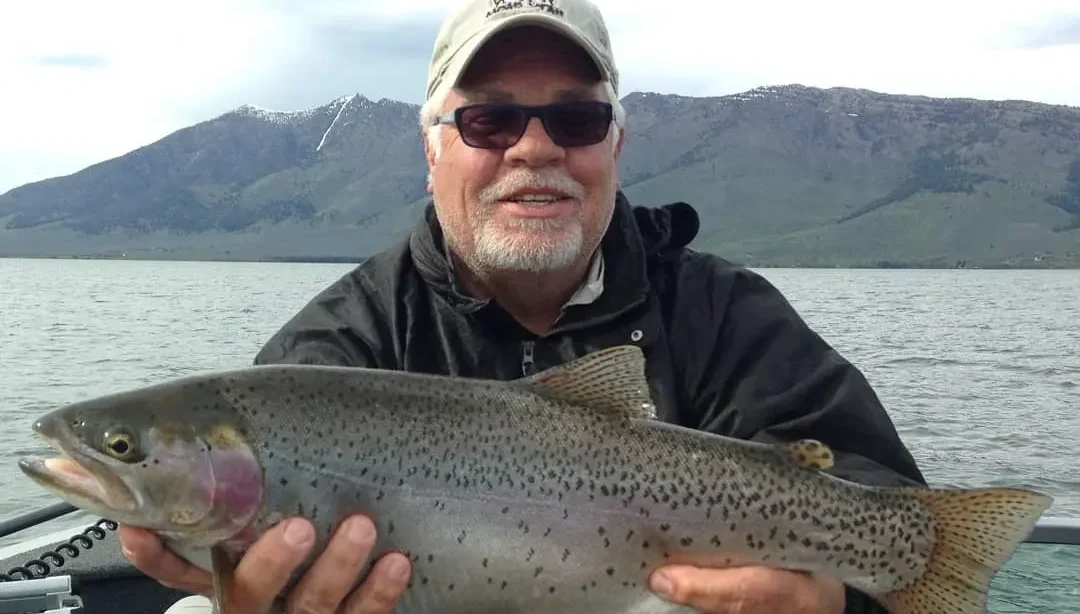
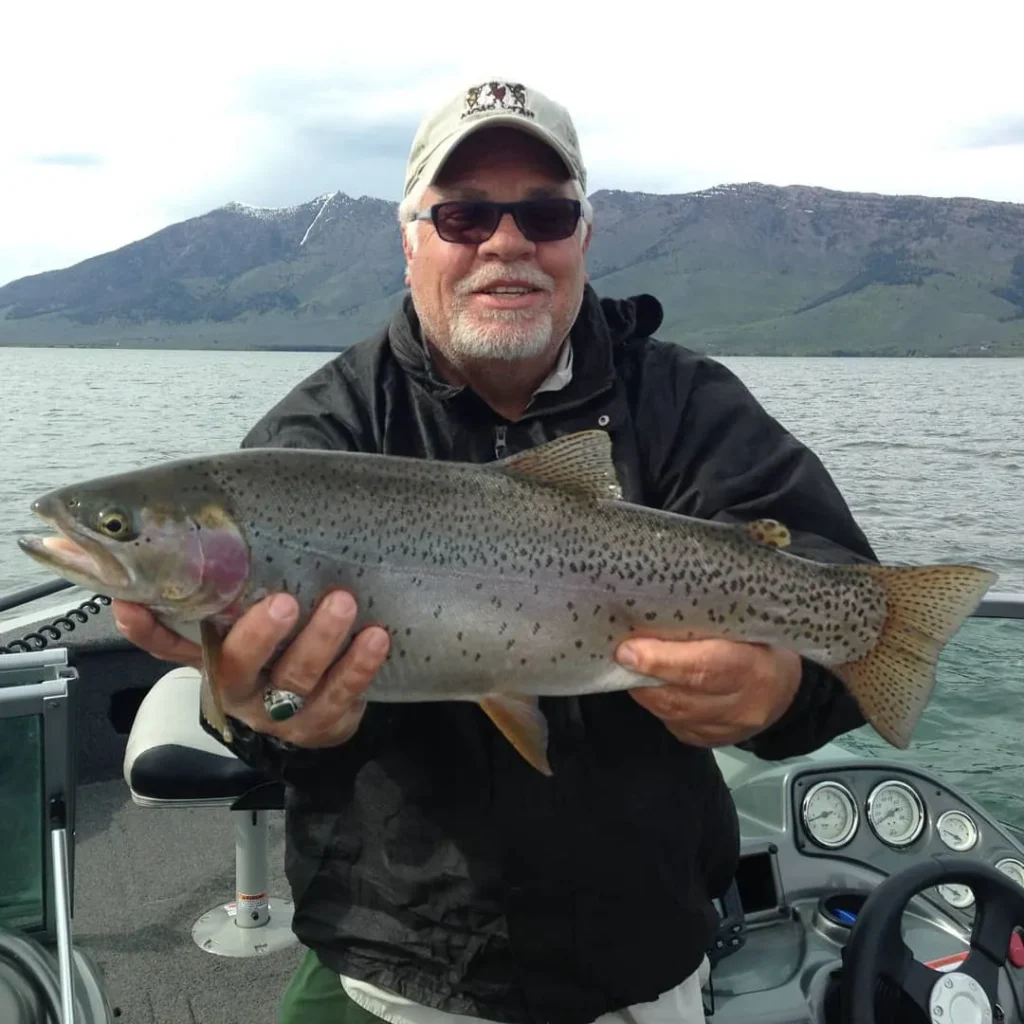
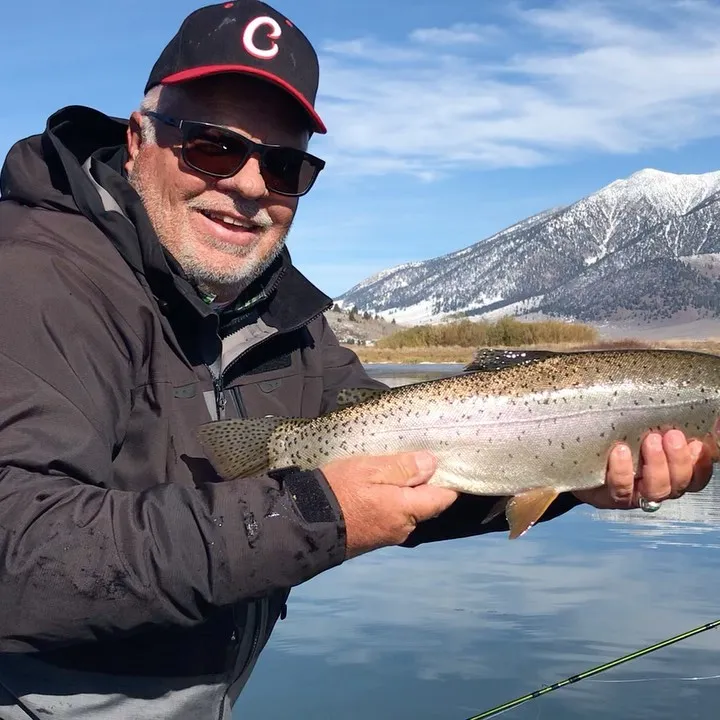
Lately, the action has been hard to beat. Small chironomids have been producing steady fish, while leeches have been effective on wind drifts along the north shore. Kevin said he recently landed two cutbows over nine pounds within twenty minutes, and another angler nearby landed one over eleven pounds.
According to Kevin, Henry’s Lake has really turned on this year.
(20:40) From June 20 through roughly July 20, Targhee Creek becomes one of the most productive locations on the lake. Large numbers of caddis emerge in the area, attracting both feeding trout and anglers. Fish often hold anywhere from 80 yards to several hundred yards away from the creek mouth.
Kevin’s favorite caddis-period fly is a sparse size 8 or 10 Renegade tied with peacock herl, red wire, and a single hackle. He refers to it as a “single-lash Renegade,” and it continues to produce year after year.
(41:46) When I asked about the biggest challenge facing Henry’s Lake, Kevin quickly pointed to water quality. Dissolved oxygen levels, heavy snowpack over ice, summer water temperatures, and maintaining healthy tributary flows all play major roles in the fishery’s future.
The Foundation continues improving fish screens, removing old culverts, protecting spawning habitat, and maintaining fish passage throughout the watershed. These projects may not receive much attention from anglers, but they have a direct impact on trout survival and long-term fishery health.
Kevin also emphasized the need for younger volunteers. At age 70, he sees tremendous knowledge within the Foundation’s leadership, but he hopes more anglers in their 30s, 40s, and 50s will step forward to help continue the stewardship work that has protected Henry’s Lake for decades. Click here if you want to be a member.
Episode Transcript
WFS 941 Transcript
00:00:00 Dave: A nine pound trout gets your attention. What it takes to keep producing them is the real story. Today we’re heading to one of the most iconic stillwaters in the West, where the fishing has taken a surprising turn this season, and where a group of dedicated volunteers is helping shape the future of the fishery. Our guest today is Kevin Schneider from the Henrys Lake Foundation. Kevin has spent decades fishing these waters and is now helping lead the conservation efforts that could impact the lake for years to come. This is the travel podcast series where we bring you the best places to fish in the West, and the stories of the people that made this region what it is today. In today’s episode, you’re going to hear about the Feed the Fish program that’s being introduced for larger juvenile trout to improve survival rates. What volunteers are doing behind the scenes to protect spawning habitat in incoming tributaries. You’re going to find out about the real impact of water temperature and oxygen levels and what they have on shallow trout lake waters. And also Kevin’s favorite leech Chironomid and Stillwater tactics for consistently finding fish. If you’re interested in Stillwater fishing, trout conversation, or planning your first trip to Henry’s Lake, this conversation is packed with practical insights and a few stories you won’t hear anywhere else. This episode is presented by Visit Idaho and Yellowstone Teton Territory, home to some of the diverse and wild trout waters of the West. All right, let’s get into it. Here he is, Kevin Skenandore. You can find him at Henry’s Lake Foundation dot org. How are you doing, Kevin?
00:01:27 Kevin: I’m doing great. Thank you. Thanks for having me.
00:01:29 Dave: Yeah, yeah. Thanks for coming on here today. We’re gonna do a good little background on a couple of things you got going big around the Henry’s Lake area is one is the foundation. You’re part of that group out there. We’re going to talk about that. You’re also you have a guiding operation. So we’re going to get an update on fishing because we’re going to be heading out there. We’re we’re planning a trip. We’re actually doing kind of a giveaway event this week. And then we’re going to be planning a trip to head out, but maybe just take us back first on. Yeah, maybe let’s just start with fishing. What’s been going on? How things been going this year so far?
00:02:00 Kevin: Well. Surprisingly great. Um, Henry’s lake, you know, as most stillwaters, they kind of are cyclic and they have it’s been tough the last three to four years. And this spring has been off the charts. I mean, it has really been good. Um, everybody I talked to, including the UPS man that just walked to my door a few minutes ago, told me probably had the best Memorial Day weekend he’d ever had. No kidding. Yeah. It’s gone from tough to I mean, this ice was off early. Ice was off in mid April. It was off, uh, four weeks earlier than normal. It’s now open year round the lake. So, um, you know, boats are out there in April and it’s kind of interesting because boat numbers are down, people numbers are down. Henry’s lake, but fishing is up and the word’s getting out because there were more boats and trailers. Um in the car lot there yesterday than there was probably any day of last year. It was, it was a tough year.
00:03:03 Dave: Wow. Well that’s great to hear that things are coming back. And maybe that will line up today with some of the chat we have on the Henry’s Lake Foundation. And maybe you could start us there on that, like maybe talk about your role there and how you connected with that group there.
00:03:17 Kevin: Yeah. For sure. Um, so when I retired in fifteen years ago and came back to Island Park, I’ve always had property here for forty years, forty five years came back and, um, I knew of the foundation I’d been to their dinners and their fundraisers and volunteered to be one of the directors for the foundation. And it’s really pretty incredible organization. I would say it’s one of the only truly volunteer organizations. Uh, we do have one person that we pay as a bookkeeper and record keeper, but all the work that’s done from that foundation, there are no salaried positions, and there are people that just put a ton of work into the lake and helping manage to the water quality, um, water sampling. And we’ve got some pretty neat initiatives going right now. I’ll talk a little bit about feed the fish. Um, I’m over a golf tournament this on June nineteenth and all the money that’s going to be raised from the Feed the Fish golf tournament is actually going into an initiative that we started a year ago, and we’ve actually got some, a couple of runs down in Ashton that were putting some fish in from the Henrys Lake that have been, uh, eggs have been stripped. They’ve been, um, pressurized. So they stay as a triploid. But, um, we’ve, instead of putting them in at such a small fry that like the state of Idaho does, we’ve partnered with the state of Idaho to basically manage these runs. And we put in about eighteen to nineteen thousand of these hybrid last year, and we put in twenty thousand on May fifth. So we’ve extended that period of time before entry into the water in hopes of really stabilizing the retention rate on these fish that are going into the lake. So it’s a great initiative. It’s, uh, been, uh, it hasn’t been an easy activity because you have to coordinate with folks. We had to hire a biologist. We had to meet all the standards that the state has, but they’ve been great to work with. And I think that’s another thing that’s kind of interesting, where you’re out and about. You fish different states, different areas, and there’s kind of an acrimonious relationship with the fish and game. But the Henry’s Lake Foundation has supported a whole host of different activities that the state of Idaho has got some funding on. We match some Maxam funding. Good example of that right now is going on at Howard Creek, um, where they’re putting up some jack fences to keep the cattle out of the, the creeks that come in a lot of riparian work over the last, I think the foundations actually existed about forty five years. They’ve done a lot of protection activities, uh, for all the waters that come in. There’s about twelve different creeks that, that are fairly substantial that feed Henry’s lake. And, uh, it’s pretty exciting to be a part of. Uh, I really enjoyed it.
00:06:25 Dave: Wow. Yeah. And the feed the fish is it looks like. So it’s a raffle fundraiser. Describe that how that works a little bit. And how would people get involved?
00:06:32 Kevin: Yeah. Well, um, we’ve still got room for one or two more teams. Um, on June nineteenth, the tournament, it’ll be a four man scramble. And basically what we’re going to do, we’ve got different activities that tie into fly fishing almost on every hole. We’ve got cornhole set up. If you put a fly through the cornhole, you win a prize. We’ve got different things that are related to fly fishing, and we’ve had really just a ton of interest. The local businesses have been very supportive of our activity. Uh, the foundation has a, um, an additional fundraiser happening the following week out to Meadowview on the night on the twenty sixth. But this is the first time we’ve hosted a golf tournament. And I’ve been in a men’s golf league on Wednesday mornings. And I said, let’s give it a try. So, uh, to this point, we’ve had a tremendous amount of interest. We’re having an auction. One of our friends from Montana that was a head trainer for the Mariners has donated a like a Ken Griffey signed bat. Oh, really? Martinez. Jay Buhner, we’ve got some really neat stuff to give away, and we’ve had a great interest in it. And so, yeah, this will be our first golf tournament and one hundred percent of the money that we raise goes directly to that initiative to feed the fish that we just completed this past about two or three weeks ago.
00:07:49 Dave: Right? And that initiative you just explained a little bit. Tell us again a little more detail. So basically the maybe talk about the current management of the lake and how this is a little bit different. Sounds like you’re adding some larger fish into the lake.
00:08:01 Kevin: Yeah, that’s that’s exactly it. Um, you know, it’s pretty amazing. But again, the Henry’s Lake Foundation was a part of, uh, about, I’m going to say twenty plus years ago where fish numbers were down, they had a couple of different issues. They’ve had some, um, water temperatures that got fairly high. Henry’s Lake, deepest part of that lake is only twenty two feet. Yeah. Most of that lake is ten feet. And so you’ve got some interesting situations to try and have a healthy fish population when if you get a couple of weeks during the summer, they get up over eighty. You can get water temperatures over seventy, um, and those types of things. But so when they really up the numbers of fish that they were putting in. Every year, up to one point two million, close to eight hundred thousand cuttings were put in two hundred thousand hybrid eighty thousand Brooks. That’s another thing that the foundation was really instrumental in is getting the brook trout into the lake. It’s a real special treat, you know, to catch a four to five pound brookie. And we’ve we’ve caught a number of them this spring. It’s been interesting. Last year I bet I didn’t get five to the boat all year. This year I’m averaging five to the boat per day. Not not the four or five pound class, but you know, a nice sixteen inch brookie. So when they’re putting all these fish in every year um they’re putting them in as fry. They’re very small and uh, just susceptible to a lot of things, you know. Um, so there’s several different studies out. There’s one on Strawberry Reservoir about, you know, uh, it just makes common sense the larger the fish that you put in. but there’s a lot of costs associated with getting those fish from fry to six to eight inches to have them juvenile fish. But we undertook that this past year. I really think that the state of Idaho is going to work with us. We may not have to operate that fish hatchery and Ashton this year, but hopefully we can get some runs by the fish hatchery to get an additional population that are going in as juveniles rather than fry. So, um, we’re kind of anxious to see what the results are. It’s interesting where they do these gill net surveys, and it’s fairly scientific. And the gill net numbers that they want per gill net is somewhere around eleven to twelve is their optimal amount. The last four years it’s been two two point nine three point five. This year I think it was three point nine this past spring. They haven’t officially announced the numbers on those. So when we saw the three point nine for this year, we were wondering if we were going to have another year like last year, that there were days that were incredible, but most days it was tough fishing. And here we are at three point nine on the gill net surveys. But yet we’re having some really good results. One of the things we did is we clipped the left front pectoral fish fin on the October release or late September release, and then I think we clipped the right pectoral fin on the right side so that when people catch these fish and they’re all hybrids, and when they catch these fish, we’re asking them to report back to us the weight, the size, the length, all that type of stuff, so that we can get some good data on that.
00:11:22 Dave: Mhm. Wow. So these fish that are going in as a little bit older, how many number, how many fish are going in the lake?
00:11:28 Kevin: Eighteen thousand went in last, uh, late September and twenty thousand went in on May five.
00:11:34 Dave: Oh, May five. Okay.
00:11:35 Kevin: And again, what’s really interesting and really for me, really exciting is, you know, we ask for people to come volunteer their time to clip the fins. And we get a lot of folks out there and it’s, uh, it really makes you feel good to see people invested in protecting those Henry’s lake waters and the fishery.
00:11:55 Dave: That’s cool. How do you guys do all the outreach? It seems like if it’s all volunteer based for the most part at the foundation, how are you guys getting all, you know, handling all the, uh, the tasks?
00:12:06 Kevin: Well, you know, we’ve got some really skilled and knowledgeable people in the foundation. Um, Damon Keen, who was the, uh, fish biologist for, I think, fourteen or fifteen years for the lake. Him and I are going to be co-presidents, uh, of the foundation starting this summer. Um, Richard Hodge is stepping down as president. I think he was there for twelve years. Incredible leader. Um, always looking to tap outside resources and for us to kind of supplement and support different activities from different foundations. Um, the one of the largest creeks that come into the lake is the Targhee Creek. And there’s just been a lot of work. And just recently, the fellow I’m going to say in the last five years has purchased that land. Um, in years past you’d have, uh, the creek that would flow into Henry’s lake. But sometimes if there were a period of time with no rain, um, runoff was low. Sometimes those creeks would get, uh, would be let water out for irrigation and you’d lose fish. But they’ve gone through and they’ve made those fish passages. They reinforced the areas where the fish can do their natural reproduction. And, uh, just a cooperative agreement between the landowner, the state of Idaho and us. Um, we’re really getting, we’re pretty excited about the number of fish we’re getting that are not coming from the hatchery, but are breeding themselves up on those spawning beds that are coming back into the lake.
00:13:44 Dave: MM. Wow. Gotcha. So Target Creek, that’s one of the big tributaries to the area. And and it sounds like. So over the years. So the the projects you described a few of them, but what are some of those projects that you guys have been working on? Has there been more raffle type stuff or more like on the ground restoration.
00:14:02 Kevin: On the ground restoration. You know, we, we have an annual, um, fundraiser that takes place the last Friday in June. And that’s one that we, uh, Meadowview does a big Dutch oven type thing and we have, um, several different auctions and raffles and things like that. So we raise money there, but we also have, um, lifetime memberships. We encourage people to become a lifetime member of the Henrys Lake Foundation. It’s a five hundred dollars fee. We give the folks that pay that we give them a fly rod and a Andrews Lake Foundation hat and shirt. And all those monies go towards these activities that we’re doing. And for example, I’ve mentioned real quickly the one on the Howard Creek of protecting that creek, the state of Idaho is getting, um, a pretty good little grant or cooperating with them will actually help in the management of the grant. At the same time, we’ll also, uh, provide some additional funding and resources to make sure that gets completed. So when we, uh, take a look at what we think are the, are the most bang for our buck, uh, where we can improve the fishery and maintain the quality of that lake. That’s what we’re looking at. We’ve had guys out there every day. For example, um, uh, Palmer was out there. One of the members, one of the foundation members was out there doing water sampling every day. And, you know, those things are cost prohibitive. If we were to pay somebody to do it. But he’s out there, rain or shine, getting water samples, get them sent down to Idaho, and then taking a look at what the oxygenation issues are for the lake and things like that. So I mean, it’s, that’s what’s exciting to, to be a part of that group that are so dedicated to the resource.
00:15:54 Dave: Today’s show is brought to you by Visit Idaho and Yellowstone Teton Territory, a place that should be on every angler’s list, from the Henrys Fork to the South Fork of the snake, and all the hidden creeks and alpine lakes in between. This region is built for fly fishers who like a little room to roam. You can head over to Wet Fly swing dot com right now for guides, lodges, and trip ideas to plan your next adventure. That’s Teton t e t o n. Wow. And so you spend a little bit of your time like, uh, with the foundation. And then the other chunk, it sounds like you’re doing some guiding. Uh, yeah. Talk about that program.
00:16:31 Kevin: Yeah. So we’re hinders like guide service. Uh, the outfitter is Eagle Ridge Ranch and we, uh, can put two boats on per day with Eagle Ridge Ranch. And we also work out to Sheridan Lake, which is a private lake, and we guide out there as well. But out to Henry’s, um, going into this particular year, um, I think because of the history of Henry’s being down a little bit, we didn’t have the numbers of guide trips that we normally have this time of year. But I’ll tell you, in the last two weeks, three weeks, the word’s out, you know, the fishing’s been good, been good publicity. And our numbers have just doubled, tripled in just the last fifteen days on the number of trips we’re going to have. Um, we’ve got some great folks I know that I think you’re, uh, visiting with Darren Huntsman. He’s he’s one of my top guys. Yep. Um, both Darren and I spent some time with Phil Rowley, who’s kind of the, the king of the hill as far as knowledge about Stillwater fishing. He’s been on my boat for a month and a month. A week? I got it. I would tell him it felt like a month, but.
00:17:38 Dave: Yeah, exactly.
00:17:39 Kevin: He was on it for a week. Him and Mark Melnick. And we had a we had a blast and we caught a lot of fish. That’s been five six years ago out to Henry’s.
00:17:45 Dave: Oh right. That was on the new fly. Fisher.
00:17:47 Kevin: Yeah. Yeah.
00:17:48 Dave: That’s right. That’s cool. Yeah. We’ll get a link to in the show notes so people can take a look at that video.
00:17:53 Kevin: Yeah. Very cool. Good people there. Um, so, uh, the, the lake, I, I had a couple of friends from Montana that I do some pheasant hunting with them and they’re not really fly fishermen. And I had them out two days ago and we were out for four hours. And I mean, it was bobber down the whole time. I mean, we were indicator fishing with just real small chironomids. And, uh, for whatever reason, that particular day, a purple head and, and a, and a purple thread. Chironomid those fish were just hammering it. And I was telling um, Kirby and, and I says, you’ll come back in a year. It’s not going to be this good. You’d come back any day of the year. It may not be this good. We just had an incredible day. Um, I was next to Conn Smith, uh, yesterday. You know, Conn no. Con, uh, was the head Utah State basketball coach years ago, and he’s got his own fishing. Uh, I think they they tie flies all over the world. I think his son’s taking over his business, but he was right next to us. And I’ll tell you, those two guys put their herd on the fish. We caught fish, but nothing like what they were doing. Uh, they’re just over a pot of fish. They’re doing really well, but, um, right now on the lake, uh, the the cliff lake, the cliffs have been just just been hot. It’s amazing. Three weeks ago in front of Bill from County, we’re throwing leeches and pounding fish and then also using a few chironomids. And then we went over by the, uh, the fish hatchery along that north shore and just doing a wind drift with leeches and, you know, having fish fishing that couldn’t get much better. And that day we were over by county, um, in twenty minutes. I mean, I caught almost, they looked identical. Um, one was nine and a quarter pound and then it was nine and three quarter pound.
00:19:48 Dave: No rainbow.
00:19:49 Kevin: No. Their cut bows.
00:19:51 Dave: Cut bows.
00:19:51 Kevin: No rainbows in.
00:19:53 Dave: Oh there’s no rainbows at all. They’re all cut or they’re cut bows or they’re uh what are the other species cut bowls.
00:19:59 Kevin: Uh, Yellowstone cutthroat and brook trout.
00:20:01 Dave: Yeah. Right. And brook trout.
00:20:02 Kevin: Yeah. And so those, uh, man, those couples, those hybrids, man. I tell you, you know, when you catch a nine pounder, they are there. And right now, with the water temperatures being so cold and. Oh, yeah, they’re they’re a hoot. And the guy next to me, uh, Pete Flynn, who’s one of the finest fly tyers and fishermen on the lake, he caught eleven and a quarter pounder in that same morning. Um, so they’re out there and, um, we’re really excited about this year. It’s just, uh, yeah, really turned on.
00:20:30 Dave: How does that look with the year right now as we’re talking, it’s, uh, you know, June, early June, July, you know, how does that look like? What will this be looking like in July come July?
00:20:40 Kevin: Well, we’re certainly hoping that we get some, you know, we’re supposed to get some more rain. We had a lot of rain last week. We’re supposed to get some more rain this coming Monday, Tuesday. So we want to keep those water temperatures down on that lake for sure. Um, but you know, those fish congregate near springs. It has to do with a lot of different things, water temperatures, the entomology, you know, if there’s some place they can feed, that’s where they’re going to be, right? Yeah. Or even like later in July, um, where water heats up a little bit. But you got these creeks that are coming in with fresh water, uh, they’ll congregate there. Um, Targhee is just some phenomenal caddis. You put anything that looks like a little caddis nymph on from about June twentieth to July twentieth. That’s a great place to fish. And you can. There’s a lot of boats that congregate around about eighty yards out from Targhee Creek, but all the way back for two hundred three hundred yards. Uh, fish will hold in that area. And, uh, normally that time of year, that June twentieth to July twentieth is when we catch some of our bigger fish because they’ll come in and lay and catch or eat the, uh, the caddis. And there’s just a number of really simple fly patterns. Like if you tie a really very sparse size, ten size eight renegade, we call them a single lash renegade where you got the hackle on the one end, a little red on it. And after you’ve put your peacock curl or some type of synthetic, you a red wire around it. Uh, I’m telling you, you know, that’s a that’s a fish catcher for that month, is it? Yeah. It’s a lot of fun.
00:22:28 Dave: Oh that’s cool. Yeah. And Henry’s Lake is not a small lake, right. This is a pretty decent sized lake.
00:22:33 Kevin: Yeah. It’s. Yeah, it’s, uh, it’s in the neighborhood of maybe three miles by a mile and a half somewhere in that area.
00:22:41 Dave: Okay. And are people able to, you know, there’s some lodges or there’s at least one lodge, there are people able to also camp around the lake or. Describe that a little bit.
00:22:51 Kevin: Yeah. I wish there wasn’t so much free camping around the lake.
00:22:55 Dave: Yeah there is. There’s quite a bit.
00:22:56 Kevin: Yeah. It’s like you just go across that mountain, uh, over into Hebgen and there’s not much camping. You come over here and there’s camping all around the lake, and there’s what they call a county. Uh, it’s Bill from. So you’ve got a restroom right there. You don’t have electrical, you don’t have sewage, but they have camp spots and it’s fifteen dollars a night. Where else can you do that?
00:23:19 Dave: That’s amazing.
00:23:20 Kevin: Um, and then there’s Red Rock, uh, campground with RVs and then the state park. We’re actually, uh, doing a lecture there tonight. Our guide service, Darren’s going to work with the people that are there and, uh, tell some things about, uh, fly fishing. And we do a lot of outreach not only with the lake guide service, but also with the foundation. I was tying flies once a week down at North Fremont High School with the kids down there. And, you know, we look to, uh, a couple times a year, I’ll do some fly tying demonstrations right here at my place. And we just open it to any kids that want to come, uh, learn how to tie some flies. We do a little casting with them. So we’re constantly trying to, you know, teach the next generation and share our knowledge and our love and our passion for fly fishing. I mean, I started, I’m seventy and I started fly fishing at Lake sixty years ago.
00:24:12 Dave: No kidding. Wow. Sixty years. What was it like sixty years ago? It was it was very good.
00:24:19 Kevin: Uh, you know, for a kid that didn’t know much about fly fishing. My dad hooked me up with a guy who, man, he loved as much as I do. I mean, he, uh, my whole high school, uh, days. I spent every Saturday morning with this guy for about an hour and a half tying flies, uh, Larry Green, and he was tied in with a bunch of guys, uh, the old school folks from Henry’s Lake. And. And I’d come up here with a buddy of mine, Rick Griffin, and we’d stay at Elk Creek in Island Park. We’d sneak over to Henry’s Lake, and we’d walk out off different points. And, I mean, it was really different. I mean, back then, uh, you know, a two inch woolly bugger as ugly and poorly tied as I used to tie him would catch fish.
00:24:59 Dave: Yeah. Does that not work anymore? The woolly bugger.
00:25:02 Kevin: No, it’s it’s so much more technical. You know, the small little bugs. And a lot of times, like over there in, uh, on target, like I was talking about that period of time with the caddis. If you’ll throw like an eighteen or a sixteen copper. John. Uh, red, black, um, copper colored copper. John. All of a sudden, they’re hitting those and, uh, so it’s, if I was throwing a two inch, you know, maybe a two triple x long hook that we used to tie with a bunch of grizzly hackle down it. Uh, no, they don’t work like they used to.
00:25:38 Dave: They don’t.
00:25:39 Kevin: Uh, and then all the different depths and the different lines that you can buy, you know, um, it’s really interesting because you can be out there with what you think is the right line and you keep changing your lines and you get different depths and you get a bigger belly to your line and you get a real slow retrieval. It’s just kind of showing that nymph coming off the bottom and boom, you’re on fish. So we, I would say at any one time, I probably got close to ten different types of lines that were casting.
00:26:09 Dave: Um, yep. Just to get down to the right level of the fish.
00:26:13 Kevin: Exactly. And and, you know, it’s really interesting. You’ll see guys, I’ve seen guys that have put their rod and their reel up underneath their chin, and they’re using both hands as fast as you can bring it in. Right.
00:26:25 Dave: Wow.
00:26:26 Kevin: And they might be catching fish. And then you’ll see the next guy. There’s probably about ten folks that are over there quite a bit every day. Most of those guys are on a real slow retrieve and they’re getting that fly right off the bottom.
00:26:39 Dave: Yeah. Imitating, uh, whatever, mostly chironomids or a little bit of everything.
00:26:44 Kevin: Yeah. And you know, another thing that’s really fun, like last year, even though like my personally, my August was and first part of September was tough over there. And then the late September, October. And then I got a picture of me on, I think it was November twenty first. I got a t shirt on November twenty first. It’s normally iced over. I’m out there. It’s uh, fifty seven, fifty eight degrees. And it didn’t matter what I threw out there. I was catching.
00:27:13 Dave: Fish. Yeah. Wow. And the caddis hatch. Now, is that a hatch or is that just throughout the summer you can find caddis.
00:27:20 Kevin: Pretty much through the summer. Yeah. And then, I mean, there are so many bugs there because of your, uh, all the lake weed. Um, there, you know, the leeches. Uh, they are. The other day yesterday when I was talking to Carl, he said they, they had some, uh, four inch leeches that they stomach pumped yesterday from a big trout, four inch. Wow. And get this, I was talking to Damon Keene this morning, and one of his buddies, uh, caught. I mean, this guy never keeps a fish, so something was abyss when he kept his fish. I guess he he he taken the fly deep. And in the fight, you know, it was bleeding and stuff like that. Yeah. So he, uh, I will not say his name because he probably would, you know, he just doesn’t keep his us fish and none of us do. But anyway, so this fish was bleeding. He kept the fish and he got it. It had nine small trout in it.
00:28:18 Dave: No way.
00:28:19 Kevin: And some huge leeches. And guess what it took? It took a size, uh, sixteen chironomid.
00:28:26 Dave: There you go. They’re generalists, right? They eat whatever they need to. Whatever.
00:28:30 Kevin: Yeah, exactly.
00:28:32 Dave: Man. Nine trout. Nine trout. Was it a was it a cut bow?
00:28:36 Kevin: Big hot? Yeah. Big hybrid. And, uh, and, uh, you know, he was just amazed. And, you know, we’ll pump stomachs occasionally. And normally you’re just, you know, getting the little chironomids and, uh, um, just try and match the color, basically. And, uh, sometimes it’s not as effective if you match the color as well.
00:28:55 Dave: Oh, right.
00:28:56 Kevin: I like green and purple. I like a and a and a wine colored chronimed that seems to be, you know, our three go tos.
00:29:03 Dave: Mhm. Green, purple and the wine. Yeah.
00:29:06 Kevin: I think it was Bill Schiess that initiated our first tide. The what he called it the purple showgirl and I call mine the Purple Showstopper. I. I tie a little more flash in it and I’ll tie a, a front and a back, um, marabou. And it’s just looking like a big leech coming through the water and, and flashy. So it gets some attention. But that’s a good bug almost any time of the year. Um, I’ll tell you one other thing that’s really kind of fun that we do in the fall. Um, I live about three miles from the lake, so if we’ve done something during the day, if we’ve gone chase some grouse or we’ve done something like that. Yeah. Uh, our guide trips are minimal normally in October and we do a lot of fishing in Yellowstone as well. But um, we’ll go out and the sun will go down, you know, somewhere around five thirty ish. And we’ll go into coves and we won’t cast until we see a fish. And those fish are chasing other small fish. And there are a lot of times big hybrid. And so you’re hoping you can kind of catch a directional when they come up and surface and they’re chasing something because they don’t, it’s just a one and done thing. And you throw it about six feet out in front where you think they might be. And just, uh, just big fishy looking, uh, pattern flies. And I mean, there’s like a two week area right before the water gets down to the high thirties where they’re just on the move, trying to eat up these little minnows that are in the lake.
00:30:38 Dave: But all right.
00:30:39 Kevin: Anyway, that’s a lot of fun. Now, we don’t guide that. We just fish it, you know, we just, we’re just out there in those pockets hoping that it happens. Yep. Uh, some nights it does, some nights it doesn’t. One other thing of interest to that, that Henry’s Lake is not a recognized dry fly lake. You know, there’s a couple guys that will tell you they’ve knocked them here and there. Yeah, and I have too, but it’s definitely, uh, it’s the exception to the rule. And over there, when they’re eating a cactus. I had some little, um, compare Dunn’s and, uh, I didn’t have the cactus with me because I didn’t have my dry fly stuff. I started throwing these little comparisons eight 10s and just pounded fish. It was on the twenty fourth of July, all on the surface, right. But there’s also a place over there. Uh, the old folks will know where stump hole is. Um, there’s a tree out there. There’s a stump that stood out about five feet. I’m saying fifteen years ago, it it’s gone, but there is a public access to it. And, um, if you catch a wind coming out of targhee the canyon out of Targhee, you’ll get those hoppers coming through there in first or second week of September. That’s another place that we normally don’t guide it because, you know, people get a little impatient. They want to be fishing the whole time. Mhm. And so we’re just sitting there with a hopper ready to, you know, toss that thing eighty feet and and have him come slam our hopper. That’s another good dry fly spot. But it’s again, very sporadic. You got to have the perfect conditions.
00:32:14 Dave: You do. Wow. This is cool. So it sounds pretty. I mean, throughout the year you guys fish it typically. When is the guiding program you do. When does it start and when does it typically end?
00:32:22 Kevin: We start well, you know, we could do ice fishing. We don’t because I get, uh, I get a call maybe once a week. If we could help set up a place for people to fish. But we don’t do that. So it’s off to, uh, I mean, we’re out there. We get very few. I don’t think we had one guide trip in November. And I’m telling you, it was lights out this past November. Big fish, um, all seemed to be just on the North shore. And it didn’t matter where you went on the North Shore. Uh, you got a two and a half mile stretch there that those fish they’re starting to stack and starting ready to run up the ladder over by the fish hatchery. But, um, we fished all along that north shore and just kind of in an exploratory mode, just think, okay, are they going to be two hundred yards further east or two hundred yards further west? And yeah, sure enough, we were still catching fish and we were in the shallows. We’re in two and a half, three feet of water.
00:33:22 Dave: Right? Is that typically where you’re fishing? Getting most of the action, uh, is in the shallower water, or you find some of those bigger fish deeper.
00:33:30 Kevin: For that time of year? Yes. But not like I, you know, uh, eight to ten feet. That’s another interesting thing. I, you know, I had never vertically fished until ten years ago. And, you know, now that might be the easiest way to guide folks that are new to fly fishing or, you know, beginners intermediates. Mhm. Um, because you get a little wind, all you got to do is put that indicator ten feet from your boat and it just kind of bounces away from you.
00:33:59 Dave: Right.
00:33:59 Kevin: Um, but yeah, I mean, in the fall, uh, you know, they’re kind of, they’re more in the shallows and also early spring, um, they’re in the shallows when the first ice off.
00:34:13 Dave: Stonefly nets makes nets with soul. Each one handcrafted to stand out and built to last. When you spend time on the water, your gear matters. And these are the kinds of nets you can pass down for generations. I know my stonefly net goes with me everywhere and has seen the abuse, but it seems to get better each day. I’m on the water. Every net is shaped from premium hardwoods, balanced by hand and finished to handle a lifetime of use. We all love a big fish story, but it’s the moments around it that Stick Stonefly helps turn every one of those into something you’ll remember. Head over to Stonefly nets dot com right now to see what stories you can create with this beautiful custom landing net. That’s Stonefly nets dot com. Okay, first ice off. Yeah, I think we’re I think we’re planning our trip a little ways out, but we’re thinking in the fall, I think September. Right. Yeah. Maybe later in September. What’s that going to look like in that period like September. How does that how does that does that depend on how warm it is and all that?
00:35:09 Kevin: Yeah, exactly. You know, if we get a warm September, September, it can be tough if we get a you know, if we can get one or two really cold, uh, high wind, what happens is when you get those winds, it knocks down that lake weed, and then you’ve got your Scuds and your leeches looking for a new home and the big fish are chasing them.
00:35:31 Dave: Oh, wow.
00:35:32 Kevin: So they’re on the bite. Uh, and so, um, you kind of need that to knock down some of that. At least that’s my opinion. That’s what we find is that if we can come in after a big windstorm, you got bugs moving and fish biting and, uh, so that’s, that can be really good, you know, certainly call Darren, call me, and I can tell you where we’re catching some fish. I normally September is good. I think I had Phil and Melnick, uh, like the third week of September.
00:36:01 Dave: Okay.
00:36:02 Kevin: And I don’t know, you could ask Phil when you talked to him, I, I would think we voted over two hundred fish.
00:36:07 Dave: No kidding.
00:36:08 Kevin: Yeah.
00:36:09 Dave: Wow. Two hundred fish. And you’re fishing. What were you. Do you remember what? You were fishing? Mostly chironomids or.
00:36:13 Kevin: No, we didn’t fish a single vertical fish. Uh, we we caught, uh, a vertical setup. Um, we caught them mostly on, uh, small, like a little black electric leech. I had what I call a bruised leech. And I think he calls it a bruised leech, you know, just black and blue and, and kind of tied, uh, um, not like it’s real bulky, you know, kind of thin. I would say we caught most of those on those flies. I’ll have to tell you one quick story.
00:36:42 Dave: Yeah.
00:36:42 Kevin: And by the way, I did write a book about my experience. Oh, you did fly fishing. Yeah.
00:36:46 Dave: Uh, about now, what was the book about?
00:36:48 Kevin: It’s it’s all about fly fishing adventures. It’s called adventures of a of a fly fisherman. And basically a lot of it has to do with Henry’s Lake. But I was going to tell you one story. Yeah. This fellow came in from, um, just outside of Seattle, and he fishes British Columbia. And he had this book, I call him the The Crab Man. And when I picked him up that morning to go guide us, I just didn’t picture this guy to be a fly fisherman. He had a he had this old, uh, Carhartt jacket and he had mostly was, uh, duct tape wherever it had a slice in the, in the old jacket. He just covered it with whatever duct tape he had gray, black, brown. He looked pretty tough. And, uh, he says, hey, are you skinning Dawn? I said, yeah. He goes, let’s get out on that lake. What are you doing? You’re you’re late. And I was like an hour early. I was just going over there to get some stuff, you know? Yeah. Anyway, we went and fished. He had a two rod, uh, permit, and he gets on the front of my boat. And the first day he fished with his with my rods, he fished with my rods and I had a couple of nice rods. I think Helios had just come in and maybe I don’t think the RA had come in. I think I had an ex sage and and, uh, so he, he’s got a strike indicator and he’s got a little what he called a, like a Seattle Mariners colors a little, uh, moose leach brown and the turquoise and the blues. And he throw both out there and we were in about if we’re in five feet of water, he’s throwing them at four feet. He’s got one single fly under each, uh, indicator. I’ve never had anybody catch as many flies on my boat as him. And we probably spent four years of a of about four to five days per week fishing. Um, and so it just makes me think, you know, your presentation, his leech was tied fairly scantily. It had a lot of blue flake in it, though, and, uh, we were out there in the middle, some of the finest fly fishermen there are, and he was just pounding fish off his own fly and off his own methods. So I think what works in different areas on Stillwaters works in different places. Stillwaters as long as there’s, you know, leeches and, and, uh, that’s all he threw. He did not throw anything else.
00:39:16 Dave: Leeches the whole time.
00:39:17 Kevin: Yeah. So you just never know, uh, out there. But, um, you know, we try and post information on our Facebook page, the Henry’s Lake guide. So we’re not keeping any secrets. I tell people what we catch them on, where we catch them on. You know, I’d love to see people out there catching fish. They don’t have to be guided by us, but we we’d love to have them. We get a lot of folks that, uh, you know, come back year after year and it’s keeping me guiding. I’m pretty much guiding those folks that I’ve already guided before.
00:39:45 Dave: Yep.
00:39:46 Kevin: But I’ve got a great team of guys that really, really know their stuff. And we’re just thrilled to get Darren to come aboard this past year.
00:39:53 Dave: Yeah, yeah. Darren’s awesome. That’s what I’m excited about fishing with, with Darren and Phil and getting a group of guys on the water out there.
00:40:01 Kevin: Yeah. Very cool. If you need an extra boat, let me know. I’d be glad to just take take you guys out. So, um. Yeah, my son’s my head guide. Oh, really? Oh, cool. Yeah, yeah, it’s really cool. He’s just so helpful. And matter of fact, we’re just getting. We just finished getting our boats ready for tomorrow’s trip.
00:40:18 Dave: Just. So you’re going tomorrow. So you’re hitting it tomorrow? Yeah. What was it like? Uh, so you were out there today or yesterday?
00:40:24 Kevin: I was out there yesterday and it wasn’t near as good. But I’ll tell you, uh, con con Smith and his buddy, man, they just put the hurt on him. We caught, you know, half a dozen fish. Uh, and mostly it was a reunion tour. It was two of my best high school college buddies that we got together. And the one least likely to catch fish had a fish on most the day. Oh, really?
00:40:45 Dave: So con was one of your high school buddies?
00:40:48 Kevin: No. He wasn’t. I played a little basketball against him. He was a great basketball player back in the day. He. He just was in a different boat. Um, and I had my two buddies in mine. We just saw him out there catching fish, and he motioned us over and he showed us, uh, his crown. And it wasn’t much different from ours, but we didn’t have near the action. They did.
00:41:07 Dave: But yeah. That’s awesome. Yeah. No, I know who you’re talking about now. Cotton Smith. Yeah. His son is, uh, Steve Smith at city. Steve has the Smitty’s Fly Box website and he’s got some other stuff that I think.
00:41:17 Kevin: Yeah.
00:41:17 Dave: There you go. Yeah. So that’s and I, we’ve heard those stories because I know he used to coach with Bobby Knight back in the day, right.
00:41:24 Kevin: He he’s traveled the world with Bobby Knight. He’s probably one of the only guys who would want to travel the world. Right?
00:41:31 Dave: Yeah. Bobby was he was a unique guy, that’s for sure.
00:41:34 Kevin: Uh, you know, the Sanders Lake has quite a history of some, you know, some folks that are fairly important that fish this lake, they’re not so much anymore because they’re in their seventies and 80s.
00:41:46 Dave: Yeah. Is there a good chunk of new. Is there a good chunk of new. Uh, guys, kids coming out through there?
00:41:51 Kevin: Yeah. There is, you know.
00:41:52 Dave: Um, yeah.
00:41:54 Kevin: That’s one of the things. And what I’ll tell you, if I had somebody who was in their thirties, 40s 50s even, um, that said, hey, I’d certainly like to be on that Henry’s Lake Foundation board. I’m looking for some younger blood. I mean, I’m seventy and I looked around and I not necessarily.
00:42:12 Dave: Mostly.
00:42:13 Kevin: Older. Yeah. Everybody’s silver. It’s a, it’s a gray haired bunch, but incredibly talented and knowledgeable and giving people, uh, just I would consider them some of the finest stewards of Henry’s Lake. And we need some more and we need some younger ones.
00:42:30 Dave: Yeah. No, that’s that’s awesome. And it’s such an important part of the whole thing, not only the lake, but. Right. Isn’t that the kind of the headwaters of the Henry’s Fork? Is that how it works in the system?
00:42:39 Kevin: Absolutely. And we, we do joint cooperative. activities with the Henry’s Fork. And I mean, you know, they’re a huge organization. They’ve got brilliant people working for them. Um, I don’t know how many they actually have on salary. I’m guessing fourteen somewhere around there.
00:42:56 Dave: Oh, wow. So there’s a lot of people. That’s amazing.
00:42:58 Kevin: Yeah.
00:42:59 Dave: So that’s quite a bit. That’s interesting because I would think that the Henry’s lake is just as critical as the Henry’s fork, but there’s a lot more paid staff on, on the other ones.
00:43:08 Kevin: I think it’s a you know, it’s a larger venue. I think they’re actually doing some work on the South Fork as well.
00:43:14 Dave: Oh, sure. They’re bigger.
00:43:15 Kevin: Yeah. And um, I mean, they’ve got a lot of challenges. That whole island park reservoir and the silt and.
00:43:23 Dave: Yeah, there’s a lot.
00:43:23 Kevin: You know, all and over there, but um.
00:43:25 Dave: Yeah. What is the biggest challenge for the Henry’s Lake? You mentioned water temperatures. Are there any other I’m guessing kind of the water. The water. Right. It really comes down to that. That’s the biggest thing.
00:43:35 Kevin: Water quality is huge. You know the dissolved oxygen issues for. If you get ice and you get a lot of snow on that ice and you don’t have the sun, uh, that’s an issue. Um, I think, you know, there’s certainly some opportunities here, uh, around the corner, some of the things that we’re doing with this feed the fish and the activities we’ve got going with all these, uh, creeks that are coming in trying to protect them. So we’ve got fresh, clean water coming down into our lake. That’s that’s huge. Um, the one of the things that the foundation’s worked on also are on those fish screens and fish pathways so that they can get up into those areas where they’re going to spawn. And, uh, we’ve had great cooperation from landowners to, uh, do those types of things, got rid of all the old culverts. Um, so that’s kind of cool.
00:44:30 Dave: Yeah, lots of good work there. Well, we were just talking to actually Will Godfrey recently, we did a podcast with him and he was telling about a little bit of the history of he kind of started out there as one of the original outfitters back in the mid sixties, and that probably overlaps. Do you remember if you connected to kind of Will or any of the old fly shops? Like what was the original fly shop back there? Do you remember that one? Have you been out there long enough?
00:44:50 Kevin: Well, yeah, I mean, I’ve been here in and out of Island Park for sixty years. But speaking of Will Godfrey, I reconnected with Will at the, um, Idaho. Uh.
00:45:02 Dave: Oh, yeah.
00:45:02 Kevin: Idaho.
00:45:03 Dave: Falls at the expo.
00:45:04 Kevin: Yeah. And, uh, I, I actually, I told him, I said, you know, Will, I said, right on right here. I tie all my flies. I’ve got your card and one of your original flies that you tied sixty, seventy years ago.
00:45:14 Dave: No kidding.
00:45:15 Kevin: And he is a legend and he is a nice a man as there is. And it’s people like him that have, uh, really protected the waters. And yeah, the reality of it is, I mean, if you know the history of Pyramid Lake and how in the seventies, luckily they found those cutthroats over in the pilot Utah pilot mountains.
00:45:35 Dave: Yeah.
00:45:36 Kevin: Because, uh, Henry’s Lake kind of had that same issue in the nineteen ten nineteen twenties. They would come over here and they would catch as many fish in the tributaries, and they’d haul them over to Virginia City in wagons. They’d salt them up and take them over there. Same thing might have happened over there if there hadn’t been people, uh, that were had a little preservation in mind. I think it was close to nineteen twenty when they dammed the lake. Yeah.
00:46:05 Dave: Okay. Nineteen twenty. Yep.
00:46:07 Kevin: But yeah, there’s been some really good folks. And Will Godfrey certain, certainly one of them. And I knew those guys over there in West Yellowstone that had their fly shops when I was a kid, we’d go over there.
00:46:18 Dave: Yeah, I guess that’s right.
00:46:19 Kevin: Yeah.
00:46:20 Dave: Yeah. It’s a little further down. Yeah. The shop closest to you is the one in, uh. What’s the closest fly shop to you out there now?
00:46:26 Kevin: Oh, um, there’s one that just went in at, um, at the Blue Buffalo. It’s Yellowstone fly shop.
00:46:34 Dave: Oh, Yellowstone. Okay. Yellowstone fly shop. Yeah. Because there’s the one in, um. There’s the. Oh, it was the name of the old guy that was out there for a long time. She was bought by the. Yeah. Well, it was the fly fish food guys came in and purchased the shop right out there somewhere. And was it. Yeah, that was in Idaho Falls. I think that was Idaho Falls.
00:46:50 Kevin: That was Idaho Falls. Yeah. Bill had a little fly shop just across the street from Valley View. Uh oh yeah. And he, I mean, you know, he is a legend.
00:46:59 Dave: Yeah. What was Bill she is he a legend on kind of that whole era that he’s more of a late guy.
00:47:04 Kevin: Absolutely. Yeah. And he I don’t yeah. I honestly I don’t know if he’s cast a line in fifteen years.
00:47:09 Dave: Oh no.
00:47:10 Kevin: Kidding. Um, I’ve been back up here full time for fifteen years. I mean, every.
00:47:15 Dave: You haven’t seen.
00:47:16 Kevin: Him. I’ve seen him and talked to him. I bought some flies from him. Um.
00:47:20 Dave: Yeah. He. So he’s still out. He’s still around. He’s just not fishing as much.
00:47:23 Kevin: Yeah. I don’t I think he’s got some shoulder issues. I, I think his uh, like we all do, we all have different priorities and interests as we age. I think he’s gotten into kind of rock hounding and that kind of stuff. Oh, sure. Yeah.
00:47:35 Dave: Yeah. Yeah. Awesome. Well, yeah, we talked about that. I think he wrote a book on Island or on Henry’s Lake, right?
00:47:41 Kevin: Yeah. Very exacting book, but I’ll tell you the the places have changed. Like I would say probably one of the top one like Staley’s has had some issues with silt. And they’re not getting the numbers of fish into the springs. And it used to be where they called the whole numbers like one through ten. The first one by the cable all the way back out, every one of them was taken. And now you can just about go into Staley’s any time of the year and fish it. And it’s, it’s tough fishing and for whatever. Oh, it is for whatever reason, there’s a lot of Utah chub over in that corner.
00:48:15 Dave: Oh, really? Utah chub. Okay. Yeah. Wow. Interesting. Yeah. Like everything right. Changes over time. And when did Bill write that book? When did that get published?
00:48:22 Kevin: I’m gonna say that book was written close to thirty five, forty years ago.
00:48:27 Dave: Oh, a long time ago.
00:48:28 Kevin: Yeah, yeah, yeah.
00:48:29 Dave: So like the eighties or something like that.
00:48:31 Kevin: Yeah. And really exacting on where to fish fly lines. Um, but the lake has, in my opinion, has changed significantly. I’ve never fished the cliffs this early and I’ve been there, you know, four out of the last five days. Uh, it just, it’s changes. Yeah.
00:48:52 Dave: How do you know when you’re. And maybe you could take it out here today with this. A couple of tips on fish in the lake, on that lake, or really any lake. How do you know where to start? You know, I mean, if you’re going in there and it sounds like things are changing a little bit. Yeah. What would you tell somebody new.
00:49:04 Kevin: So absolutely. I mean, uh, it’s kind of like going into Yellowstone and you want to find out where the grizzly bears are, where people are pulled over looking at them. Right. So you go out on the lake and there’s ten boats in one area. That’s where they’re fishing. And then just know a little bit about the entomology. Uh, you certainly can call Henry’s Lake Guide Service. You can call me any one of our guides. Yeah, we share our information. Um, so, you know, Henry’s Lake is not really a a good way to Bull Lake. There’s a few areas you can catch fish, but like you got a lot of lake weed close to the shore. So if you. And then if you wait out, it’s tough to catch fish. It’s, uh, you need a boat. I had a guy call me last night and a friend of a friend, and I said, just, I can’t tell you where to go out and catch him from the shore. But, you know, if you get into these pockets and these different springs, that’s one of the things, uh, is wherever there’s springs, you know, the entomology, the bugs are there, you got cooler water, you got highly oxygenated water. So you’re looking for those. And a lot of times when you’re seeing a bunch of people, they’re over either springs or they’re over the inlets, like Duck Creek on the west side. Uh, excuse. Yeah, on the west side. Um, that’s a great place to fish Duck Creek all along that area, a hundred yards out to two hundred yards out. Um, so everywhere there’s cold water coming in after mid July, you’re looking to fish those areas.
00:50:37 Dave: Yeah. Okay. So that’s it. The inlet, the cold water because it’s things are warming up and yeah, they’re huddling. Yep. Getting around. Okay. Awesome. And then, um, and then yeah, give us one and so on the water, it sounds like we’ve talked about, I mean, plenty of leeches. Chironomids. Um, and technique. What’s your, what’s the leech technique you’re typically doing? Are you using just a floating line with a, an indicator or are you kind of doing without?
00:50:57 Kevin: So, you know, up until just the last couple of years, I’ve never used a floating line with a leech. But I have the last couple of years a balanced leech and you’re putting them underneath an indicator. But I like stripping them. I like the strip bite. I prefer the strip bite. So if you can get out there, I’ll throw, uh, some type of a fathom line that has two or three different variations to the line, like it might be a floating line and then a, uh, a two and then a four on the tip. I really like those lines. Um, Rio, you used to have a big nasty. They quit making it, but that was probably. I bought every one I could buy. I just loved them because they had the floating line. So it doesn’t wear you out like your casting all day long. And then it had two different variations of whatever you wanted to, to get it down. So I, you know, doing that and stripping, uh, slow and slow. Yeah. Slow strip. And, uh, and then if you’re not catching them that way, put them, put a, get a balanced leech and put them below an indicator and, you know, maybe six to twelve inches off the off the floor of the water and ten feet deep, eight feet deep. Um, it kind of depends on the time of year, but, uh, definitely leeches. They’re always eating leeches and Scuds. They are Scuds are phenomenal in the fall too. We’ll put pink and orange scuds and, and a lot of times we’ll put it, you know, following a leech and we’ll get I think the leech might be the attractor. Then they bang the the scud. So yeah.
00:52:32 Dave: Then they bang the Scuds guys is great. Well, we’re excited about this. Well, give me one. We got one random for you. Uh, question before we get out of here. You mentioned basketball, and I think that was definitely my sport as well. It sounds like you played a little basketball. Was that um and you played did you say with con back in the day?
00:52:47 Kevin: So I there was this guy named Jay Matthews in Brigham City and you know, all these rec league type things. That’s the type I played. I, uh, but we, but Jay Matthews always had the best team. Of course, that’s why, you know, he goes over and buys Con Smith a steak dinner and cons playing basketball for him.
00:53:06 Dave: Was he the coach was Jay Matthews the coach.
00:53:09 Kevin: Jay was he was kind of a coach, but he just kind of was a fellow that put. He really liked having a good basketball team. I used to go goose hunting with him all the time. Jay. I played with his team a few times, but mostly against his team. And I was telling Colin, I said, you probably don’t remember, but, uh, I remember playing against him and I said, if there was a three point line, you guys would have beat us by forty. Because, man, that guy just steps over the half court line.
00:53:34 Dave: And who was that? Con oh, really? Was con. He was an outside shooter.
00:53:39 Kevin: He had a beautiful shot. Yeah, he really did. And it was fun following him over at Utah State. I went to school at Utah State for three years.
00:53:47 Dave: Oh, cool.
00:53:48 Kevin: Yeah. It’s a neat place.
00:53:50 Dave: That’s awesome. What was your the position you played mostly in basketball guard.
00:53:53 Kevin: Yeah, I I’m I’m five eleven and, uh, you know, we had a team called Griffin mobile Homes and we played everywhere. Every tournament there was. That’s part of the reason I had to transfer from University of Utah. I always told people I made the top ten percent possible, you know?
00:54:10 Dave: Right.
00:54:11 Kevin: I struggled over there because we were chasing basketball so much. Uh.
00:54:14 Dave: No kidding.
00:54:15 Kevin: Yeah. And then I ended up going to Utah State and I thoroughly enjoyed it over there. That was fun.
00:54:19 Dave: Yeah.
00:54:20 Kevin: Good fishing over there too.
00:54:22 Dave: Is it? Yeah. Utah State. So in which town is that in?
00:54:24 Kevin: That’s in Logan. I mean.
00:54:25 Dave: Yeah, that’s Logan.
00:54:26 Kevin: Blacksmith fork River, the Logan River. Um, just incredible places to fish. And that’s another thing. Neat thing about Island Park. When you come over here, there are so many places to fish.
00:54:38 Dave: Right? There’s more than just. Yeah, it’s not just Henry’s Lake. There’s a ton.
00:54:41 Kevin: Yeah. When Henry’s is slow, you know, I and me personally, there’s ten different lakes that are really.
00:54:47 Dave: No kidding. There’s ten ten right within an hour’s drive out there.
00:54:50 Kevin: Easily.
00:54:51 Dave: Yeah, yeah, yeah.
00:54:52 Kevin: And a few of them that you kind of gotta, you know, if you hike a mile and a half into them, just crazy good fishing.
00:54:59 Dave: That’s it. Wow. That’s really cool. Well, we’ll have to keep in touch. Obviously, we got this big trip coming up and we’ll be in touch with, uh, with Darren and Phil. We’ll definitely keep up with you. So we’ll send everybody out. You mentioned at the start Henry’s Lake Foundation dot org or give us a heads up again on your the best phone number to track you down. If people want to check on guide guide trips.
00:55:17 Kevin: Yeah, absolutely. Yeah. Give me a call at five oh five two five zero seven zero seven eight if you’re interested in a fishing trip. If you’re interested on what flies are working where we’re catching fish, I’d be glad to share that information.
00:55:31 Dave: Awesome.
00:55:32 Kevin: Yeah.
00:55:32 Dave: All right, Kevin, well, we’ll leave it there for today. And thanks again for all the insight and all the good work. The Henry’s Lake Foundation for sure. And excited to get up there on the water and fish out there with with you guys.
00:55:42 Kevin: Yeah. Sounds great. Looking forward to it.
00:55:46 Dave: Before we get out of here today, a few things you should remember. If there’s one takeaway from today, it might be this great fisheries don’t stay great by accident. You have to enjoy places like the Henry’s Lake and find ways to support the people doing the great work behind the scenes. So check in with Kevin, let him know. And the Henry’s Lake Foundation know you support them, and you’re checking in on things you can do to help. Also, we’re heading to Henry’s Lake. If you want to get a chance to join us. Phil Roy will be there. This is the Phil Roy Stillwater School with Darren Huntsman is going to be there as well. We talked about that today. Phil. Darren. We got the whole crew. Henrys Lake. If you want to get access to this, shoot me an email Dave at web dot com. And if you are a pro member, you definitely get a first shot at it. First crack at the trip. So join pro if you haven’t yet. Wet fly swing Pro, that’s where we’re bringing this conversation to the next level. Uh, before we hop out of here, just want to let you know we got a big episode next week. Davey Watson, if you’re interested in fishing wet flies, Davey Watson is back and he is going to take another deep dive into wet fly fishing. You don’t want to miss this one. He is packed with energy. One of the best out there. All right. I want to thank you for tuning in today and want to say, I hope you get out and explore a few new waters and stillwaters this year and experience that road less traveled. We’ll talk to you then.
Kevin shared a great look at what makes Henry’s Lake special, from giant trout and productive stillwater tactics to the volunteer efforts that keep the fishery healthy. The work being done through the Henry’s Lake Foundation shows how local stewardship, habitat restoration, and community involvement can have a lasting impact on a world-class trout fishery.
If Henry’s Lake is on your list, this episode offers a great roadmap for where to fish, what flies to use, and how you can support the future of the lake.