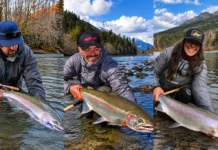
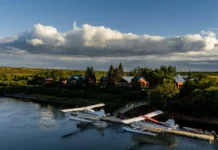
Jordan Larsen joins us to share the behind-the-scenes story of Togiak River Lodge, one of the most remote fishing destinations in Bristol Bay. We talk about Chinook fishing, spey programs, conservation, mentorship, filmmaking, and the unlikely road that led Jordan and his brother Zack to ownership during one of the most uncertain periods in modern history.
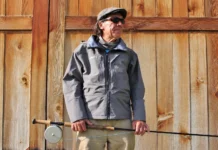
Jordan Larsen is co-owner of Togiak River Lodge in Bristol Bay, Alaska. Before entering lodge management, he built his skills as an outdoor filmmaker and videographer, producing hunting and fishing content throughout the Pacific Northwest and beyond.
Today, Jordan helps oversee operations at one of Alaska’s most remote fisheries while continuing to share the stories, conservation values, and experiences that make the Togiak system unique.
For years, Jordan and the team worked to build a strong Spey fishing program at Togiak. Floods, high water, and difficult conditions repeatedly challenged those efforts, but last season everything finally lined up.
The water stayed fishable, Chinook arrived early, and guests experienced some of the best fishing the lodge has seen in years. Several anglers who had never touched a Spey rod found themselves hooked up to adult king salmon on their first day.
One theme that comes up throughout the conversation is just how remote the Togiak system really is. While many Alaska lodges promote wilderness experiences, Jordan explains that Togiak remains one of the least pressured systems in Bristol Bay.
Guests often arrive after fishing many famous Alaska rivers and leave wondering how they overlooked Togiak for so long. The lack of fishing pressure and the sheer scale of the wilderness continue to separate the fishery from many better-known destinations.
One of the unique aspects of the fishery is the variety available throughout the summer. During our visit, bright Chinook, chum salmon, and sockeye were all in play.
Jordan explains that timing changes everything. Mid-July can offer kings, pinks, sockeye, chum salmon, rainbows, and more, all willing to grab many of the same swung flies.
Jordan’s journey started with a Christmas gift: a GoPro camera. When he visited Togiak before his senior year of high school, he filmed everything simply to capture memories.
The lodge’s previous owner, Larry, noticed something different. He saw a passion for storytelling and video production that Jordan hadn’t fully recognized yet. That observation led to an invitation to return the following summer as the lodge videographer.
That single conversation changed the trajectory of Jordan’s life.
Jordan credits much of his growth to filmmaker Tom Petry and the outdoor production community he discovered through specialized filmmaking courses.
What started as a training opportunity quickly turned into a mentorship. Jordan spent years refining his craft, attending advanced classes, and working alongside professionals in the outdoor media world.
One lesson stands out throughout this section: progress happens quickly when you’re surrounded by people who are willing to help.
The next chapter arrived unexpectedly. Jordan returned to Alaska expecting to continue filming, but instead found himself helping manage lodge operations. At first, it wasn’t what he wanted at all.
Managing staff, handling logistics, and learning business systems pushed him far outside his comfort zone. Looking back, though, those experiences became the foundation that prepared him for lodge ownership years later.
Perhaps the most remarkable part of the story came in 2020. Jordan and Zack never planned to buy Togiak River Lodge. Instead, longtime guests and investors approached them after recognizing how invested they had become in the future of the operation.
Ownership became reality in May 2020, right in the middle of the COVID uncertainty. Jordan describes the process as a series of doors opening at exactly the right moments. Despite the challenges, investors maintained confidence in the brothers and helped make the purchase possible.
One of the most emotional moments in the episode centers around a recent filming project featuring Jordan’s longtime mentors.
Years after beginning his journey with a camera, Jordan found himself standing on the Togiak with the very people who helped shape his career. Sharing the river, introducing them to his family, and documenting the experience created a full-circle moment that is difficult to describe without emotion.
Episode Transcript
WFS 947b Transcript 00:00:00 Dave: Sometimes the best stories in fly fishing aren’t about the fish. They’re about how someone ends up standing on a river they were never supposed to be on in the first place, because not that long ago. Today’s guest was just a kid with a GoPro. No plan, no business, no lodge. Just filming whatever he could. And somehow, through a few doors opening at the right time. That turned into owning one of the most remote lodges in Alaska. Jordan Larson from Togiak River Lodge is here to share how a random trip to Alaska turned into a full time path in the outdoor industry. The moment a simple camera changed everything and set the direction forward, we’re going to get into the behind the scenes reality of taking over a remote Alaska lodge during complete uncertainty. And we’re going to find out what makes the spaces and different up here at Togiak, and why more anglers are chasing it now. This is going to be a fun one if you want to check in with Jordan and the crew at Togiak. You can do that right now. Go to Togiak bay dot com. All right. Here he is, Jordan Larsen. How are you doing, Jordan? 00:01:01 Jordan: Doing good. Dave. It’s a busy time of the year, but it means we’re getting closer to Alaska. 00:01:06 Dave: Yeah, you’re getting closer. It’s as we’re talking, we’re getting close. April’s right around the corner. This will probably go live in later in April or somewhere in there. Actually, we’ve had a couple episodes. I’ve talked to Floyd again after the big trip. We’re going to talk about, um, a couple of your mentors who were on the podcast and they share a really cool story and the story of really, you guys, how you put this together. And I think that’s, I think your story is unique and we’re going to talk about that today, but you guys aren’t the, um, maybe the most likely people you think that would own this amazing lodge, right? You guys have this really cool story that’s pretty powerful. So we’re gonna get into that. But let’s start with the recap on the season. We were up there, you know, when we were up there, we had this amazing trip. I mean, I got my first Chinook on on the swing. It doesn’t get any better than that. But but give us a recap on the on the season this last year. How things go for you guys. 00:01:49 Jordan: Man. It’s hard to put into words how special this last season was, specifically the space season. Uh, and I say that for a couple of reasons. It feels like every year, you know, we’ve intentionally had two handed guests come up. And as we’ve tried building the program, we’ve always had some sort of hurdle in the way. You know, in the beginning for Epic Waters in their camp, it was like they got flooded out and they’re out of a tent camp and it’s just difficult. And then, you know, after that, it’s, you know, two years ago, we had crazy high water, like unbelievable high water most of the season. And it’s, you know, it’s hard to swing in those conditions. I mean, I’m talking you couldn’t even run gear trips. It was so high, you know, and so it was just like hurdle after hurdle. And so finally last season, I won’t say that we had the absolute best water conditions in the world, but for our guides and our repeat guests, it was like the waters below the bank, like, let’s celebrate, you know, and, uh, and with that, the king showed up early for whatever reason. You know, we, we probably had pretty decent numbers of fish in the river by June fifteenth. And so we just had a lot of things line up. And most importantly, the fish were there to start the season. And it was incredible. You know, our first group, we had a group of nine guys and probably seventy percent of them had never even picked up a fly rod before. And on the first day, several of them were into, you know, twenty plus pound adult Chinook on Spey rods. And they had just learned how to cast. Like it was incredible. And so that was kind of the gist of the whole season was there was a lot of folks that came up to try it out and had a great time. Caught fish. I had a guy, the second rotation that told me he had been on like twelve trips previous to coming to Togiak with no success on the Spey rod, which is hard to believe. I don’t know where he’s where he where he had been, but he was just he couldn’t believe the amount of action that, you know, he was getting, not just on Chinook, but everything. It just was bewildered. And for me, coming from the gear arena, it’s hard for me to wrap my mind around guys being stoked about, you know, a grab or two a day. I understand it now, but it’s such a breath of fresh air and I just was so, gosh, I just loved this last season, man. It was so it was awesome. I just felt I felt like I was at home. The guests were amazing. They just were great people. I feel like I feel like their values were much more aligned with where Zach and I are conservation wise and how important the fishery is to us. Like we had folks there that were there for the right reasons, and that’s what made it so special, I guess, if in a nutshell. 00:04:30 Dave: Yeah, no, I mean, I think that’s what’s cool about it. You know, the people that are into fly fishing and stuff for the most part are, um, you know, I was talking to a big brand today and we were talking about doing an event coming up and, and one of their requirements was, you know, who is your conservation partner? You know, they needed somebody that was connected. And I was like, yeah, that’s a, that’s a great, uh, kind of thing to have. And so I feel like, right, we’re all thinking about that. And Chinook is great. I mean, is a, is a good thing to look at because there are it’s not perfect. There’s some challenges out there, right? We’ve we’ve heard about it, you know, major, there’s challenges around Alaska and things like that and around the world. But but you guys are still in one of those places where, you know, there’s a good number. We actually had the biologist who, who kind of is in charge of your river Togiak and those other big major, you know, sockeye. And we heard him talk about it. It was really interesting telling the story of how many millions and tens of millions of fish are coming back there, you know, sockeye runs and everything. So you’re in this unique place. I mean, you must think about that all the time, right? When you look back and you’re like, man, I’m heading back to Togiak, right. Does that feel pretty good? 00:05:33 Jordan: Yeah, it’s I still have to ground myself in the fact that we’re on the most remote system in Bristol Bay. And it’s there’s a lot of advertisements for different lodges in Alaska and specifically for the the fly lodges in Bristol Bay. They’re all advertising something similar. It’s like Remote wilderness. Uh, you know, not that many people, but the reality is, is a lot of these systems, they, they actually do have a lot of people fishing on them throughout the summer with fly out lodges and, and then permanent lodges as well. Like you look at rivers like the Naknek and the Khojak, which are the most well-known rainbow rivers in Alaska, arguably even even the world and the user days or the angler days on the river, comparatively to the Togiak are so much more. I mean, the amount of, of people flying into both of those systems on a daily basis during the summertime is I don’t know how much higher it is than the togiak, but I’m willing to step out on a limb and say it’s upwards of fifty times more than what we’re experiencing. Maybe more than that, it’s incredible. 00:06:33 Dave: It’s a lot because we didn’t see Roy when we were there. I mean, I think we saw a couple of native boats out there, but I mean, we didn’t really see anybody else out there. I think when I was there that I could remember. 00:06:44 Jordan: Exactly. And so that’s my point is we are sitting on, you know, Bristol Bay’s hidden gem. It just it’s so remote. It’s hard to access. It’s hard. It can be hard to fish as well if you don’t know it. And so it just the barrier to entry is very high for other people. And that’s why it’s such a special river to us. And, and it’s again, you can tell, you can tell people that or they can look at it on your website. But until they see it in person, it doesn’t stick. And that’s the biggest takeaway is guests will get there that have fished all across Alaska. And they’re like, man, I can’t believe it took me this long to find this place. And so my point being is that it’s not people aren’t coming to the lodge to fish the river because of Zach and I. We’re not the selling point. Right. It’s the it’s the system, man. And it’s just, you know, it’s up to us to manage our guides and our logistics and make the experience, you know, a good one. But the river sells itself. 00:07:37 Dave: Yeah. It does. Yeah. I mean, for me, it was my like I said, my first time hooking into a Chinook, the fresh, you know, chrome bright fish just right out of the ocean. Right. And it’s something that, you know, in all my years of steelhead fishing that, you know, that was the first time I’ve ever felt that. Right. It’s a, it’s a different experience. But then also, like you said, you know, hooking into, you know, a bunch of chum, these chum are not these are not like spawned out chum. These are bright chum that are, they’re cool fish. And then I think I also hooked a sockeye, a bright sockeye. And then right we were there. And I guess if you go maybe a little bit later or how does that change? Do you tend to get some. Also some pinks and maybe even some coho if you go a little bit later. 00:08:14 Jordan: It depends on the season. Uh, so this year is an even year. And so we’ll have an epic run of pinks this year, which is a good and bad. It’s, they are a ton of fun for the sake of variety. They’re amazing. And so mid-July. Yeah. You’ll see, you know, still a good numbers of kings, pinks, sockeye chums, rainbows. A little early for dollies. Um, there’s typically not a ton of overlap in our, you know, the heart of our king season where you’re going to, uh, have the chance to catch Silva’s. You’re really not going to see any of those until August, you know. But yeah, this year it’s I mean, mid-July, you don’t know what you’re going to catch swinging because all of them are going to bite the same flies. 00:08:56 Dave: Yeah, exactly. Well, we have we’ll have a link in the show notes to the episode that I did with Floyd. I mentioned it. It was he’s such a passionate guy. You know what I mean? I loved what his take on it too. He told me we had this moment out there on the river where I was struggling one day, you know, my cast wasn’t great. It was kind of one of those days we all have where you’re almost like, oh my God, I want to throw the rod almost, you know what I mean? But he kind of puts it in perspective. You know what I mean? Like where you are. And, and, you know, I kind of came back and had a good day. But so I feel like, you know, we talked a little bit about that. But, you know, in your story, another episode we did recently was with a couple of your mentors. So I want to hear about a little bit of that so people don’t miss this video that’s out there. This is a movie. Maybe describe from your perspective. We went deep on it. I watched the video. It literally brought a tear to my eye. I think anybody that watches it watching you in the video, you know, talking how emotional becoming the owner of Togiak was. Describe what your take is on that, that movie, that video that’s out there. 00:09:50 Jordan: Man, it’s a lot to dive into. But the synopsis is, is it was never my intention. It was never mine. And Zack contention to own the Lodge. Like when we started working in Alaska, we didn’t set out saying, we’re going to own this place. Right? It just through a series of crazy doors opening. I mean, that’s where we’re at now. But where I started was I started with video production, and the way that I got there was, well, it was through Alaska. So in twenty fifteen, my brother had his first season guiding on the Togiak for the previous owners of the Lodge. And in early July, he called my dad and I and he asked us what we were doing in late July. And as you might imagine, there were like crickets as my dad and I were looking at each other like, you know, what’s he getting at? And, uh, more or less the previous owner of the lodge opened an invitation to any, any family of staff members to come up in between Kings and Silvers. Right. So we have a break period in between the two seasons where we’re kind of just getting ready for silvers, and we have some downtime and getting cleaned up after King season, etc. and so he lets them come up, you know, essentially just covering airfare costs. And so that invitation was extended to my dad and I to come up and visit Zach. And of course, we did it. It was a no brainer. And I was coming into the senior my senior year of high school, and I really had no idea what I wanted to do after I was going to graduate the following year. Um, and so I, you know, I brought up a GoPro with me that I had gotten for Christmas, and I didn’t have any aspirations to do any video production professionally. Uh, I just took the camera because why would you not take a camera on a trip of a lifetime to Alaska? Right? Anybody would do that. And so I filmed everything while I was up there. Everything. And, uh, for some reason, the previous owner, Larry, he saw and he didn’t know me and I didn’t know him, but he saw something in me like, I don’t know how to describe it. He saw a love for video production that maybe I didn’t know I had yet. And so on our last day there before we left, he asked if he could fish with us in the morning, to which of course we said yes. It was, you know, our honor to be able to fish with a guy who invited us up there and made this boy’s trip of a lifetime, a dream come true. And so I’m filming, and he asked me what my aspirations are after school. And I said, I really didn’t know. And he said, well, what would you think about coming up next summer and working for the Lodge as a videographer? And I in all seriousness, it was like the light bulb went on right at that moment. And, you know, after he had made that job offer to me, I was like, no way. Like, I, maybe I could film outfitters or, or put together branding videos or film hunts hunter? I don’t know. I really don’t know. 00:12:39 Dave: What. 00:12:39 Jordan: It is. 00:12:40 Dave: At this point. You had literally just in high school, you just grabbed a camera and you had no real formal experience doing this. 00:12:47 Jordan: Correct. Yeah. I mean, I had been I had been filming, you know, all of our fishing trips and stuff back home with the GoPro just for the sake of memories. And, you know, GoPros were really cool in twenty fourteen, right? Like twenty fourteen, twenty fifteen. And so man, I just couldn’t believe it. And he offered to, you know, pay for all my equipment and, and pay for schooling if needed. But and he told me he’s like, you need to get some, you know, classes or some sort of education under your belt before you come up next summer. Of course, it makes sense. And I just couldn’t, man. I just couldn’t believe it. And so it was like, from there on, I just had never thought about it. But I was like, man, I think I want to start a video production company that specializes in content for outdoor companies, whether it be hunting and fishing outfitters or lodges in Alaska, you know, Montana, whatever I want to be, I want to be in the outdoor industry and I want to be filming. That’s what I want to do. And so I went home and signed up for classes shortly after that. And I found a video class offered at the high school that I took from September to December. And man, it was, uh, the basics. Yeah. Right. I mean, I look back at it now and it was rough, right? I mean, I, but, but it was just like I had to start somewhere, you know, and that’s where I started. And so coming into October, my mom had actually been looking around at video education classes and back in the day for anyone who, you know, used to watch, you know, hunting shows or whatever a big company was, uh, Campbell cameras and they were out of, uh, Illinois. And so I had always seen their commercials as a little kid. And I remember getting on their website and looking around at their cameras and their film classes, etc.. Well, my mom had gotten on there to see if they still had film classes, and they referred us to a guy named Tom Petrie. Well, Tom used to work for Campbell cameras, and so he had broken off from them. And now he was starting his own thing called film The Hunt. And it was exactly what I was looking for. It’s like classes specifically for guys that want to get into outdoor production in the outdoor industry. I mean, it was like, dude, this is insane that there’s a thing that like, it is the niche, you know? 00:14:58 Dave: Right. You were his target. You were his perfect customer. 00:15:02 Jordan: Yes. But more importantly, you know, my mom called him and, uh, you know, we’re both really green in the sense of not knowing anything about how any of this works. And he was just incredibly nice and just walked us through the whole process and just. And that’s so important. Like just starting with someone who’s willing to help is it’s a big deal. And, uh, so as a, as a graduation present, they bought a four day editing class for me, which was March of twenty sixteen. So I was in my senior year of school, only had a few months left. And so leading up to that, I just made it my goal. I’m going to film everything. And I remember skipping a couple days of school to go fish for steelhead down on the Cowlitz with my brother, who was guiding full time. Like, I just want as much content as I can to, to show up and have something, have a cool story to edit together. And so I take off was the first trip I’d ever taken by myself at seventeen, you know, by myself, you know, a young man. And it, I got there and I’m just like immersed in there’s like everyone there is there for the same reason I’m there. Like they love filming. They love hunting. They love fishing. I was the only one there trying to edit, you know, fishing videos. But I had a very intentional goal. I’m like, I just, I want to be able to produce the absolute best video that I can for our guests this next summer. And I want them to walk away at the end of their five day trip and have something that they can take home to show family, because it’s not just a pride thing for me in that I want to produce a good. I want to produce a good video for our guests. But there’s a marketing factor as well. Like Larry’s paying me to be there. There has to be some sort of ROI on my production. And so I wanted it to be good so that ultimately it would book him more trips. So I go through the class and I’m like, I bliss. Like I, it’s hard to even describe. I just, I was with my people, man, and I, I immediately hit it off with Tom and, and we got along real well. And, you know, just the fact that I wasn’t trying to film whitetail or turkey hunts made me different and stand out a little bit, you know? And so I took what he had taught me, and I actually ended up booking an additional day or two, uh, after the class that was just like him and I, which was really cool. So at that point, I was like, man, I just, I want to, uh, I want to do at least one of these classes a year and just keep honing my skills. And because, you know, editing software and cameras, they change every year significantly. And so if you’re not staying on top of it, things can change really quick. And that’s what I find now, you know, being so being so overloaded with admin and lodge related work. When I do get around to my editing projects, it takes me a little bit to get back in the saddle and be proficient anyway. So I filmed that summer and you know, if you want to learn how to do anything really good, you do it every day for eight to ten hours. And that’s what I got to do. And it was amazing. And it’s funny because I’ll go back and watch my videos from the beginning of that summer in June, and then the end in September. And it’s like, it’s honestly amazing. Like it’s how quickly they progressed and got better. And I didn’t have, I didn’t have a lot of time to edit these videos. And Larry’s preference was I just, you know, slapped a bunch of footage together and burned it to a DVD and called it a day. But I just, I couldn’t, the artist in me wanted it to be as good as it possibly could, and I wanted to apply what I learned in editing classes to like, like if I ever, if I’m ever gonna film for a company that has shows that end up on, you know, cable TV, like I want them, I want it to be good. I want to practice as if I’m a professional now, you know, and, uh, and that’s what I did. And so I got done, I actually booked a handful of, uh, videos to edit for guests that I had met up there that go, you know, because all of our guests are going on lots of different trips throughout the year. And so I had, uh, I had a guy going to Canada on a big waterfowl hunt. And so I ended up editing all of his footage. And then I got hired. More importantly, I got hired to film an elk hunt in eastern Oregon, uh, by a guy that I met up there that I had filmed. And so just quickly progressing and just, I was so happy. So I went back the next spring to Ohio again. I took an advanced editing class with Tom, and then I spent an additional two days with him again at his house, uh, one on one. And, uh, I mean, that’s what I wanted to do. So fast forward to twenty nineteen. I decided at that point that I probably should start filming for whoever I can. And so in Olympia, I got involved with the, uh, Chamber of Commerce. And so I just, I started volunteering for all sorts of different people and companies to make videos and kind of get my name out there. And then I had a big elk hunt planned with Tom that September that I was going to be a cameraman for. And originally I had reached out to him in like January of nineteen and said, hey, I’d like to do another custom class with you at. I’m not going to say I don’t care what it costs, I do, but it’s worth it for me to have one on one time because it just goes so much farther. Right? And I got a long ways to fly. Like most all of his clientele is coming from somewhere close to Ohio in the Midwest somewhere, you know, within twelve to fifteen hours. But for me, it’s like it’s a whole day of travel both ways. Anyway, so he says, well, I got something better. I’m looking for a cameraman in September for an elk hunt. Are you in? And I was like, couldn’t get the words out of my mouth fast enough. And so I actually ended up going that spring to film a turkey hunt. And then I went back again right before Alaska for another production class. Uh, and that was a four day trip. I got home for a day, and then I left the next day after that to go to Alaska. And, uh, at this point, filming wasn’t my primary job at the lodge, unfortunately. Uh, and that that has its own story, but more or less, in twenty eighteen, I showed up to film again and Larry, the previous owner, said, hey, you’re going to help me with my job. You’re not going to film anymore. And of course, I just bought a new camera and a bunch of new lenses, and I was excited. And so that I was pretty upset about that because I didn’t find out until I got there. And, uh, but in hindsight, right, you can see where this is going. 00:21:17 Dave: Yeah. 00:21:17 Jordan: Now I’m learning how to manage the business, which I had no desire to do. And it was it was a tough summer, man. Like I’m twenty years old, nineteen, twenty years old, and I didn’t know any of his systems. And it just was. And now I’m dealing with employees. And for those listening that know what it’s like to manage, you know, you know, your first time managing people, it’s tough. Like it’s. 00:21:38 Dave: Not easy. It’s just, yeah, it’s a skill. It’s yeah. 00:21:41 Jordan: Yeah. It’s it’s own thing. And if you’re not planning on that, it’s, I don’t know, especially when you have sour a couple of sour chefs. In our case, it was like, I don’t want to do this, you know. So coming back in twenty nineteen, I told Larry, I said, look, I’ll come back because he really wanted me to come back and do the same thing. And I said, I’ll come back. However, like my goal in life is to run a production company. And so I want I don’t want to be gone for three months, not shooting any videos or photos like I want to. I have to hone my skills and I have to stay sharp. And so I’ll tell you what, I’ll help you do your job. But at lunch every day and one day, another day out of the week, I’m gonna go film. And it’s not to put videos together for guests, but like, I want to produce content for your social media and for the website. And like, I want to, I want to do what I can to also make your business better, but also at the same time, satisfying my need to go shoot video and photos. Right? So it’s a, it’s a win win for both of us. Um, and, uh, so twenty nineteen, I roll in and I’m helping him manage the business. I mean, to a point where he can really, he did step away from the business. Um, and, uh, he had a good friend of his up there and they would go and fish every day for over half the day. I mean, it was pretty rare actually at that point that Larry would be in the lodge working with me. He would touch base with me. Uh, especially before another group would come in. But for the most part, I was tackling all of it. And of course that’s guests saw that as well, right. And the lodge had been for sale for a number of years. And so people are now starting to connect the dots that Zach and I weren’t. But more or less, I, uh, I get through that season and our investors had proposed the idea of, you know, financing the lodge for us. And they had fished with Zach two times that summer. They’re guests of ours. They still are. And so just my I got this elk hunt in September. And now this idea of possibly buying the lodge is floating around. And it’s like, I mean, it was overwhelming. And I had been gone for, you know, four or five months and I wasn’t married yet at the time. But I at the time, girlfriend who’s now my wife was not super stoked about me being gone as much as I was. So anyway, we get to the elk hunt in September and it was just phenomenal. I mean, I got to spend thirty days in Montana with, with Tom and Jordan and, uh, you know, you get close real quick when you’re with someone every day and some of the hardest work I’ve ever done in my life. And it was just in a beautiful place. It was just amazing. I just, I’m like, I can’t believe I’m twenty one And I mean, I’ve already lived a lifetime. Even before we bought the lodge, I just I couldn’t believe it. And so we got done at the end of September, drove back to Ohio, did two weeks of whitetail hunts and and then I finally came home. And then at that point, I had a bunch of production work lined up and I was doing really well for myself. And so that’s why. And I got really emotional. Oh, man. And I might right now, like, I got really emotional and, and Tom’s two videos because like, that was a major crossroads in my life. Like, you know, I could have proceeded with my production company and who knows what would have happened through Covid or whatever else and where would I be now? But I knew for a fact that, you know, taking on the Lodge would change the trajectory of, of my family tree. And, uh, you know, it’s bittersweet because ultimately, I’d love to still be filming right now every day, all day, you know, but I made the right choice for what I thought was best for my family, my future family. But my point is, is to have Tom and Jordan come up to help us shoot content for our space season this last year, and then also, you know, shoot a graduates episode for himself. It just was I felt like I was back in the saddle, man. 00:25:28 Dave: That’s it. That’s the episode. Yeah. Right. The graduates that’s what this was on was his program. His graduates program. Yeah, yeah, yeah. 00:25:35 Jordan: And it’s like, I got two of my huge, you know, video mentors with me here that shaped my love for video production and photos. And, and they’re here with me right now. And now I get to share this crazy experience that is togiak with them. Like it just was like it was full circle, I guess is my point. And, uh, it just was so special. Like, I can’t, I cannot put into words how amazing that trip was. And it’s great because Tom doesn’t fish like. 00:26:04 Dave: Oh, he doesn’t. That’s right. Yeah. Jordan’s a fisherman. Yeah. Yeah. 00:26:07 Jordan: Jordan’s the fisherman. And so Tom is showing up with a completely unbiased perspective and, uh, which honestly was better for teaching him how to throw or swing a spey. Rod Jordan struggled. Right? Well, he just, you know, a single hand guys have, uh. 00:26:23 Dave: Yeah, the top hand, you have the top hand bias because you’re used to. Yeah. 00:26:27 Jordan: Yeah. Just it’s there’s really. No, there’s not a whole lot of, uh, there’s not a lot of single hand stuff that you use swinging Spey rods. And so. Old habits die hard and it’s hard to learn new. Right. Anyway, but so it was just so cool to share it with them. They got to meet my wife and my daughter, which was super special. They were there at the same time and that’s cool. We just had a great. We just had a great trip. And two, it’s incredibly rare that I take five days to go fish, right? 00:26:53 Dave: Yeah. Because you were fishing with you were out with them and, uh, and Aaron. Right. You guys were that week. 00:26:57 Jordan: Yeah, we fished with Aaron and, uh, I got my first adult Chinook, like proper adult, um, that we got on, on camera and, uh, there was just a lot of, you know, first times with them. There it was. It was just great. And that’s. 00:27:12 Dave: Great. 00:27:12 Jordan: Yeah. And I get really emotional in the videos because it is true. Like I, it just was so special. And I think it’s easy to see that in the videos. And it just was kind of a completion of a, a very wholesome story. 00:27:25 Dave: And the story that comes out is, you know, I think, and people can watch right now at Kab, go to Carbontv and just search for Togiak episode one and two. They can find it there. But I think the, the emotional, you see it because you realize you’re talking about how you didn’t think it was possible. And then because, you know, because like a lot of us, we don’t have, you know, thousands and, you know, bazillions of dollars to just buy lodges. But you realize at a certain point that, wow, okay, I was going to be able to get some help to actually make this a reality. Right. And that’s where you kind of, that must have been the moment where you’re like, wow, when you, what did that feel like when you first realized, okay, I can actually buy this lodge? 00:28:03 Jordan: Well, yeah. And I want to make sure that it’s clearly communicated that Zach and I, we’re not the ones who pursued our investors. They saw something in us because we were so involved in the lodge and management before we owned it, and they didn’t want to see it go to someone else that maybe would make it private or they didn’t want to see. Maybe, God forbid something happens to Larry, and now no one’s running the lodge like they wanted to keep going. Uh, but they also wanted to see someone who loved it be in charge. And so they’re the ones who came to us. And I want to make sure that that’s that that’s clear. It’s like they saw something in us, just like Tom saw something in me. A love for video production. They saw something, told them, hey, these guys might be able to manage this place. And so, number one, it flattered. Of course, who wouldn’t be? Um. But dude, I’m telling you right now, um, divine intervention was involved. Doors were open that I could never dream of. And it’s like every time something crazy would come up and a friendly reminder like we. We closed. We became owners of the Lodge May seventh of twenty twenty at the in the middle of madness in the world, right? 00:29:15 Dave: Yeah. The peak or the start of the Covid. Yeah. Right there. 00:29:18 Jordan: Yeah. The peak unknown. Um, and it was like every time something crazy would come up and Zach and I would ask ourselves, how are we going to get through this? It’s like, well, a solution would present itself. And we told our investors, you know, through the purchase agreement process, hey, you know, if you guys got to back out on this, we completely understand like it, like the world is in a weird place right now. And if you need to say, hey, this needs to wait or we’re just not going to do it, we totally understand. Like, who wouldn’t? I probably would. Um, but they said, nope, we’re confident that this is all going to fold over and that this is going to work out like they had just an unbelievable amount of faith in us. And, uh, so to answer your question, I don’t know, like it’s, it just was so overwhelming, but good overwhelming. It’s just. The thing is too is Larry, God bless him, he he kind of drug his feet on accepting an offer. So it was like January seventh, January sixth, January seventh, somewhere in there, twenty twenty. And I finally had to prompt him. I’m like, Larry, you know, here’s the, the deal’s on the table because we had they had been back and forth and I said, the deal’s on the table. You and I both know that we have to start loading containers really soon, and all of our non-perishables for the entirety of the season have to be purchased within the next sixty days. So we need a decision because someone has to start doing that. And if that someone is us, we have to start right now. Like there’s no time to spare. So what’s your answer? And I don’t remember verbatim what he said, but he was like, well, I’m just doing my usual procrastinating. So I think the answer is yes. And I’m like, geez, Louise, dude. Okay, well let’s proceed. And then the whole purchase agreement started. And that was lengthy and Complicated and lots of lawyers involved. But yeah, so from there, to answer your question, I still don’t know if I’ve had time to process everything because we just got thrown in the fray. It was like, we don’t have any time to waste. We just have to do it right now. And that’s Zach and I work really good under pressure like that because that’s how we started, right? 00:31:17 Dave: That’s how you started. And still to this day, as we look at this now, yeah, this episode, I think as we’re talking now, will probably go a little bit later towards the summer when it goes live. But as we’re talking, it’s it’s March going on April and you guys are getting ready. Does it, does it always feel like kind of a lot going on right now? Is this the time when it starts heating up on you guys? 00:31:36 Jordan: Yes, absolutely. So our containers leave next Thursday. And yeah, it’s just a lot of moving parts to line up. And as we continue to improve our infrastructure, you know, this is year six. And every year we’ve had some crazy building project or new boats or, you know, it’s always something. And uh, this year is no different. We’re coming up over the knoll, so to speak, and that we won’t have a ton of new giant infrastructure projects to work on after this season, thank God. So but it’s just, yeah, it’s just a lot to line up and then to unfortunately, and I don’t mean to make this political, but it seems like world world events always happen in March, right? 00:32:19 Dave: Oh, really? Is that right? World events always happen in March, right. 00:32:22 Jordan: Covid was twenty twenty. March of twenty twenty. And then twenty twenty two, we get the Ukraine deal, which directly increases our fuel prices by an unbelievable amount. Plus all sorts of, you know, supply chains and whatever else. And so I’m watching this whole thing go down with Iran and I’m like, man, I should have I should have went through with whatever fuel quotes I got like a month ago. You know what I mean? 00:32:45 Dave: Oh yeah. Right. 00:32:47 Jordan: Yeah. A month ago, I got quotes, you know, for fuel that I just usually I don’t take care of it until mid to late March. And now I’m, I’m really, I’m really disappointed. I did not take care of that a month ago, you know? So yeah, it’s always something, but it’s okay. It’s my point is, is, uh, something always comes up when we work through it and it seems hard to get through at the time, but. 00:33:10 Dave: So you guys are gonna be there. That’s the cool thing is that Togiak is on. And as people are listening to this, if this is coming out in, you know, early summer and they could check in with you guys, but as you come up here, you know, June, July, that’s that swing, that’s really that that Chinook who are the are the guides? Is it the same crew that was up when we were up there that are going to be back there? 00:33:28 Jordan: Yep, yep. And this year we are increasing our guests up to fourteen total for space. So we’ll have one additional guide who guided for us in twenty four. So yeah, it’s the same same set of guides that’s been there the last two years, which is really special. 00:33:43 Dave: That’s cool. And we’ve talked to well, I fished with a lot of them when we were there and I’ve had them on the podcast. A number of them will have some links out to that. We mentioned Floyd and Larry, of course, Larry was an epic day with Larry and um, yeah. Bailey. I mean, really, you guys have a good, really cool crew up there. 00:34:01 Jordan: Absolutely. 00:34:01 Dave: They’re all sp-a. They’re all like sp-a. They’re full on, right? 00:34:04 Jordan: Yeah, well, all of them are absolutely knee deep in sp-a and and, uh, very well versed. But the great thing is that a few of them switch over to guiding gear trips for us and single hand trips later in the season as well. And that’s, that’s big for us. You know, if we don’t have to completely replace a whole crew, it’s very advantageous for us from, you know, a finance standpoint to not have to replace a whole crew of guides mid-season. So I love the fact that we have some holdovers, so to speak. Uh, and, and honestly, a couple of them saw this season a couple years ago and said, hey, I want to, I want to get into this. And so they’ve learned like Aaron, I mean, first summer guiding Sp-a trips and was incredibly successful, did an awesome job. And, and now that’s something he’s doing down here in Washington, uh, to fill up some of his gaps in between gear trips that he’s running. It’s amazing. It’s awesome. 00:34:57 Dave: Yeah, that is cool. So. So right now, so yeah, you guys are going to have a little bit more availability. So if folks, and I think what we’re going to be building here too is, you know, looking ahead is either myself or maybe another super guru, somebody who’s even way higher than me coming out to maybe kind of a hosted sort of thing. So we’re going to leave that opportunity out there. And if people want to check in, they can check in with me or you either way and check in on this, but we’ll be working on this and then we’ll have another event this year to kind of a promotional kind of giveaway event. We’ll do some of that too. So I’m pretty excited because for me, I remember when I was there, it’s one of those trips where I’m like, okay, I would love to come up here every year, but you know, because of family and other stuff, you know, it makes it really hard to do that. But I feel like, you know what I mean? If I could get up there and just have a plan that sometime, you know, again, I’ll be getting up. Do you find that people I mean, I guess some of the people coming up there are probably traveling around hitting other places. Togiak is just one of their big bucket lists. You find you get some repeat people coming up. 00:35:53 Jordan: Absolutely. For both seasons, but especially Sp-a, you know, guys, number one, there’s not a lot of great options in Alaska to go swing for kings. Like your options are pretty limited. 00:36:06 Dave: Or really anywhere in the world if you think about it. I mean, for Bright Kings, I mean, there’s not I mean, we talked about that with some of the Larry and stuff, the Great Lakes, right? They have kings, but they’re not the same as what you’re getting at. Togiak right. 00:36:18 Jordan: That’s correct. And so here we are. We’re the new option. And so guys got to take a big risk if they have spots locked in at wherever they’ve been going for years, they have to now give them up and then take a chance that we’re going to be what they want to be and then follow through. Now, the good thing is that we are most of the time and that they have a new place to go. But yeah, it’s there’s a very high percentage of repeat guests for space specifically, and that makes our life easy. I want to be able to have guys come up to me on the last night and say, hey, put me in for next year. It makes my life incredibly easy. Plus two. You feel like if at a certain point you become family, like it’s just like, I really look forward to these different rotations because I know so many people in them and I’ve gotten close with them. And that’s dude, that’s what makes that’s what makes us so special. You know, we’ve been, we’ve been trying to figure out at what point this season are we going to take breaks and I’m going to go home. And then Zach goes home and takes a break just away from the lodge. And you know our our lowest pressure season from a from a management standpoint is space season. But I told Zach, I’m like, dude, I, I just love it too much to go home. Like I, I don’t want to miss out on it, you know? Um, so yeah, very, very high percentage of repeats and what I’m finding too, I’m getting, I’ve had several inquiries here in the last couple months in the last year, especially where guys will be on the Sandy and then they’ll have a day in Anchorage. And then they want to know if they want to come out, if they can come out and, you know, swing with us on the Togiak for Kings. And so a lot of guys are they’re getting it. You know, they’re getting several trips in and they want as many flavors as possible. 00:37:54 Dave: Sure. So they’re adding so they’re coming in, maybe getting a couple trips while up in Alaska. Yep. That’s cool. Yeah. That’s right. Yeah. Because the the trip essentially you get up to Anchorage and then you hop on the plane. Right. And which is a cool flight. That’s one of the first times I haven’t been on small planes like that in the past. And getting on that little plane was, was really a cool experience because you come in and you land on that gravel landing strip, you know, in Togiak in the village there. It’s it’s yeah, it’s pretty, it’s the whole thing is unique. You know what I mean? I think that’s and then you’re up there in the, in the nights and it’s the middle of summer and it’s light until twelve two in the morning. And that’s really cool too. 00:38:32 Jordan: We try to make the logistics as easy as possible for folks, because otherwise it can be a pain and it can be a thing that can ruin a trip. Really. I mean, if you get stuck in Dillingham, you’re delayed, or maybe you lose rods or whatever. That can taint a trip real quick. And it’s not the outfitters fault, but the logistics are everything. And so having our charter planes fly directly from Anchorage to Togiak, it just makes everyone’s life a lot easier. And then two, we can get them early enough. On day one, they get their rod set up their fishing that afternoon. That’s really important. 00:39:03 Dave: That’s right. Yeah. You’re fishing out there. And of course you always have the the dock right off of camp, right in that little run just upstream where if you boat, you know, there’s that little run just right up from the lodge to. Right. Great water. 00:39:13 Jordan: Amazing. Yeah. I mean water dependent, of course. But you know, for late June through when you were there, I can’t tell you how many times I’d make my way down to the lodge to turn off the big generator for the night at nine thirty or so, and there would be just a line of guys, you know, guides and then guests as well, fishing from the dock all the way up the bank and catching some pretty dang nice fish too. And having just a grand old time, a couple really, really nice adult Chinook in the evening. I’m like, that is that is that’s what it’s about, man. Like, just like I just love the camaraderie during spaces and like, everyone is on the same page and they’re looking at each other’s setups and helping cast better. And it’s just, it’s, it’s just so interactive, you know? 00:40:01 Dave: Yeah, it was, it was definitely a cool trip. And, uh, like I said, we’re hopefully going to put this together again, but, um, give us a heads up. So the season it’s on, you guys are coming back here. What else should we be highlighting here? Maybe the other species we talk about. We mentioned a few, but are you guys going to be changing anything up this year. Or is it going to be very similar to what you did last year? 00:40:20 Jordan: Yep, we are changing things up. Wouldn’t be a normal season without some change. Um, so we, uh, our demand for, for trips has been very good comparatively to last year. And so with the demand for trips, we’ve decided that we are now going to run through August fifth this year for our first season, which is the latest that we’ve ever ran, which is amazing. Another big change coming to next season. Uh, all of our trips June twenty first through August fifteenth, we’re going to reduce our capacity down to fourteen guests. Uh, and the reason for that is number one, less pressure on the system, uh, which equates to a better trip for our guests. It’s already a remote system, but removing three additional boats going down to seven boats from ten is a big deal. It gives our guests so much space to spread out at the lodge. It gives our staff a ton of space to spread out and not have to be around each other every waking moment of every day. Uh. And then once we get into the peak of our silver season, just due to demand, we’ll still run twenty guests. Um, but we want, we’re doing everything we can to start designing a five year model to where we can run fourteen people because that’s what we’ll fit on an ace plane and, uh, just figure out how to take pressure off the system more importantly, and its pressure off Zach and I as well. If if he needs to go take two weeks at home with his family and I’m only managing, you know, fourteen guests and ten staff, that’s that’s so much easier than twenty. So I mean, so much, so much easier. So we’re running through August fifth. Uh, hard to say if we’ll expand that next season. Um, but, uh, I’m really excited to go through early August and give ourselves a small break and then run into silver season. So that’s probably the biggest change. But for twenty seven, reducing our capacity down to fourteen, that is going to be a game changer. Like I’m, I’m really excited, really excited about that. 00:42:20 Dave: That’s cool. Right. So it’s, it’s going to be more just a better experience overall. It sounds like for everybody. Yeah. Everybody included. Yeah. 00:42:27 Jordan: Well, like I said, we’ve already been doing that during spaces in any way. But to apply it to our gear season is I’m really looking forward to it big time. 00:42:35 Dave: Nice. Awesome. Well, this is good. I think that like we said, it’s the swing season when we think of Chinook is like, you know, that early or that late June, right? People can start getting their July into August, you mentioned. And then you start getting into coho, right. And that’s where the peak of the coho, if people are listening, could they come up or people coming up and doing like in later in the coho season, are people fishing both as it kind of gear or fly or some people doing? Are you doing or is it separate? Is it one or the other? 00:43:03 Jordan: Sure. No, it’s a mixed bag. Um, so we’re not fly only or gear only. Um, but I’d say really, once we get into the peak of the season in late August, it’s it’s split fifty fifty and some rotations are heavier on the fly side of things than gear. Look, we’re well versed to do both. I mean, our, our guides, we have guides set up that can, you know, that are expert fly fisherman and then expert gear fishermen and some that can do both. Uh, and so we just, I get that, uh, preference of guests before they get there and make sure I know what it is that they want to experience. How do they want to fish? And then I set them up with the guide that’s going to be able to deliver on that experience. Um, and so yeah, it’s a mixed bag. In the last couple of years, I’ve definitely seen an increase in fly anglers during silver season because it’s, it’s simple. It’s just, there’s just not, again, many places where you can go and catch volumes of fish that are bigger than eight pounds on, on flies. And, and silvers are crazy, you know, in the right conditions, you can fish from top water. Of course, we’re always doing subsurface. But when people see you fishing, you know, top water bugs for them, they just freak out. And that’s what everyone wants to do. And it’s understandable. It’s like bass fishing. 00:44:15 Dave: Yeah, it’s pretty cool. Yeah. The top water stuff is awesome and coho are sometimes chasing all the way to your feet, right? It’s it’s pretty sweet. 00:44:22 Jordan: It’s amazing. I did, I did get the chance to fish the Queen Jack this last year for rainbows. 00:44:27 Dave: Oh yeah. Yeah yeah. That’s right. Yeah. Which this was up with Jack Mitchell’s program, right? 00:44:31 Jordan: Yep, yep. Awesome program. Would recommend it to anyone the whole time I was there. and we’re swinging for rainbows. I was just thinking to myself, we have got to set some time aside to go see if we can do this on the togiak we have, um, we don’t have the numbers of rainbows that the Jack and the Naknek do, but we have some big fish. I mean, it’s an underdog and like, it’s a, it has a good rainbow fishery. It’s just we’ve never focused on it. We’ve, we’ve never needed to. But the whole time I’m swinging, I’m like, I would do nothing more than to be on the Togiak doing this right now. Uh, it’s hard for Zach and I to obviously take the time and go and do that. But mid to late September, when we’re getting ready to winterize the Lodge, we have a specific guest who’s going to come up, and we’re going to go and see if we can find them. Similar to how you would, you know, on the kayak, similar to, to Jack’s, uh, program. And I don’t know, you know, maybe one day we’ll be able to throw some guys in there that want to come up and swing for them. But even if we just saved it for ourself, and it was something we had to look forward to at the end of the season, I would be totally fine with that as well. 00:45:34 Dave: Yeah, Just yeah, hold that one for yourself. And you actually talk about your first fish because I’m not sure if we talked about that on the last one. Oh sure. Yeah. What was that you. Because you got a nice Chinook right out there. What was that. Was that when you were out there with Tom and Jordan? 00:45:49 Jordan: Yes. Yeah. It was. And it’s, you know, a friendly reminder. Like I’m, I’m really new to the to the Spey Arena. Right. And so this is, this is a new thing for me. I mean, I picked up a rod and Stevie Morrow taught me how to roughly cast, you know, in twenty four. And so this last season, I really wanted to get into a big Chinook. And so I was with Tom and Jordan. And, uh, the first two days was mostly interviews and chum fest, lots of chums, a handful of small, super jacked Chinook in the, you know, ten pound area. Um, but, uh, I think it was day three. We came in for lunch, they dumped a bunch of footage and did some organizing and charged some batteries, etc., and got ready. And the first spot was right there in what we call the home stretch, right in front of the lodge, anchored up off the bank. And we had been there for, I don’t know, maybe five or ten minutes. Um, I think we had landed a chum or two and then, you know, finally, you know, they’re filming me and I get this just unbelievable grab on the downside part of the swing. I mean, the rod was almost, you know, parallel to the back of the boat straight back. And, uh, when it went down, dude, I was like, oh, man, I know this for a fact. This is not a chum. And it was just so thrilling. It was amazing. I took my time. I listened to Aaron, you know, I was like, I do not want to lose this fish. And, uh, so, you know, we, we played it out. It probably was a, you know, five to eight minute fight. It was amazing. And it was probably a, it was probably a sixteen or seventeen pound Chinook. Nice fish. Beautiful. 00:47:28 Dave: Did you lay the set the hook towards the. How did that. How did that feel? Was that a nice set? Lay the lumber, as they say. 00:47:35 Jordan: It was a good set. Floyd would get mad at me because I definitely, uh, I set it opposite of the way I was swinging and I. I know for a fact he would give me crap for that, but it didn’t matter. I got, I got the hooks into it. And, uh, so we land that fish, get some great photos, some epic footage, release it in slo mo. Like it was just, it was amazing. It was awesome. And so I get done. I take that fly and I put it on my jacket and I kept it and I kept it there until I went to the Kiwi Jack. And, uh, I ended up losing a giant rainbow on that same fly. And I lost the fly, unfortunately. But, uh, yeah, man, it was, it was awesome. And again, to wrap back around to, you know, my time with, uh, Tom and Jordan, it just to be able to have that experience with them and then have it on video was just, it was so insane. Yeah, it was so, it was so great. I told them after that I don’t need to catch another one. I don’t need to fish like you guys made my whole season, you know? 00:48:34 Dave: Yeah, that’s what it was in that same for me. I think really a lot of Spey anglers are similar. You know, you get that fish like that and you’re just you’re good. You can sit back, smoke a stogie, have a drink. Like, okay, who’s next? You know, hop in and then you can just sit back and that relaxing of kicking back, sitting down. I know watching your your bud or whoever hop in the run and then you get to maybe watch him catch a fish. Exactly. That’s what’s really cool. It’s it’s not in numbers. It’s not like you get done. You’re like, oh man, I mean, you definitely want to catch more, but you got to almost take a moment to like collect yourself, right? 00:49:06 Jordan: You have to. Yeah. It’s, I mean, it’s, I certainly, of course, I wanted to catch more at some point, but that’s not what I was thinking about in that moment. I was just thinking about how special is this man? It’s the whole experience. And again, that’s like, that’s what we want to deliver to our guests. Like we want to be able to provide that opportunity for them to sit back and smoke a stogie and take it all in, you know? 00:49:27 Dave: Yeah. And then get back to the get back to the lodge and have a nice, uh, nice, good dinner, warm dinner, kind of hang out around on the dock. 00:49:34 Jordan: Share some stories and. Yeah, man. 00:49:36 Dave: Cool. Jordan. Well, I think, um, I think this is a good spot to leave it. You know, like we said, we’re going to be doing some more good stuff here and we’re going to be following up on some of the other guests and some of the guides, you know, that we were out there with, but we’ll send everybody out today to Togiak Spey dot com. If folks have questions or if they want to check in on these trips. And, and yeah, man, I’m excited to get back up there. I can’t wait to step off the plane again, you know, eventually and get on the ground there and, and see you guys in person. So yeah, thanks for all your time today. 00:50:04 Jordan: Of course. Thank you Dave. Really appreciate it. 00:50:07 Dave: All right. You can check in with Jordan right now. Head over to Togiak spey dot com and let Jordan know you heard this podcast. Check in with him on availability on the trip. It’s going to be a good one. Stay tuned. Swinging for Chinook. It doesn’t get any better than that. Uh, if you have any other questions for me, you can check in any time. Wet fly swing pro that’s wet fly swing dot com slash pro. We’ll let you know when we open up the doors for our next cohort. We just wrapped up one here and and it is coming up soon I believe as we speak on this one. We’ve got an opportunity for a boot camp that isn’t that far away. And if you missed the first boot camp, the next one’s going to be even better. Excited to have you in there and and excited to talk to you soon. Hope you’re having a great morning, a good afternoon, or if it’s evening, wherever you are in the world, uh, really appreciate you for stopping in till the very end. And we’ll see you and talk to you on the next episode. 00:51:02 Speaker 3: Thanks for listening to the Wet Fly Swing Fly Fishing show. For notes and links from this episode, visit wet fly dot com.
Jordan’s story is a reminder that careers often grow from opportunities we never planned for. A simple fishing trip, a camera, and a few mentors willing to invest their time helped create a path that eventually led to ownership of one of Alaska’s most unique fly fishing destinations.
If you’re interested in Alaska fly fishing, Spey fishing for Chinook, or simply hearing a story about following unexpected opportunities, this is an episode you won’t want to miss.