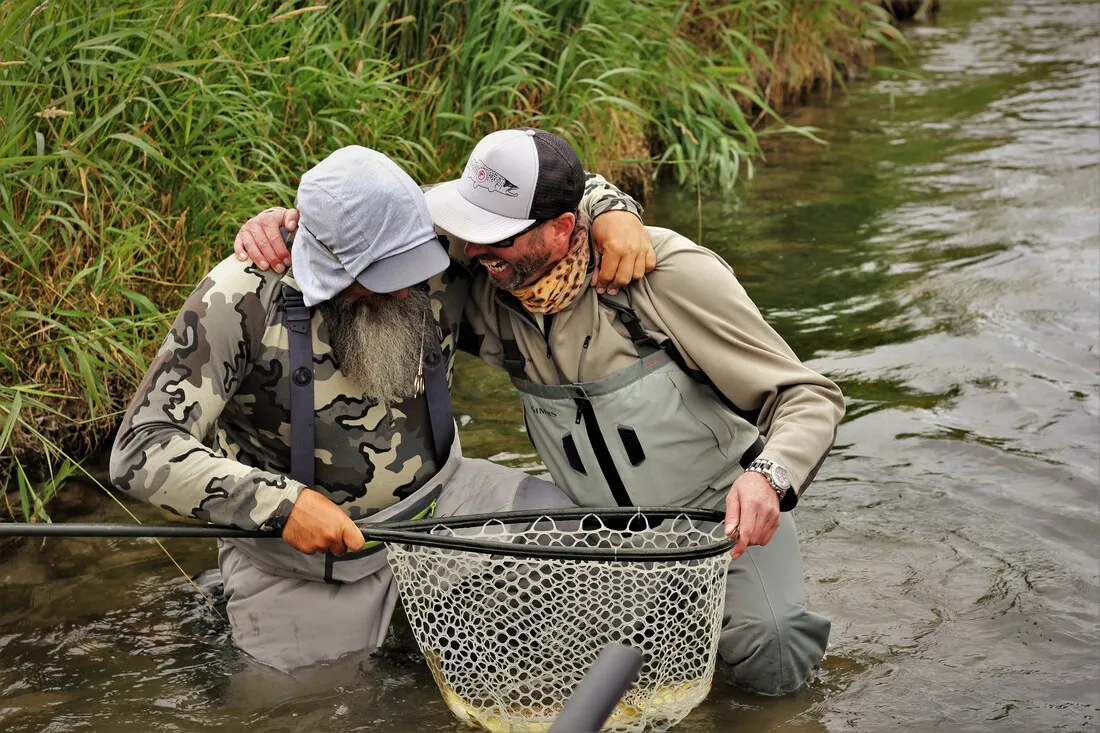
Some of the biggest changes in life don’t come with a plan. They happen after an injury, a setback, or a moment that forces you to look for a new purpose.
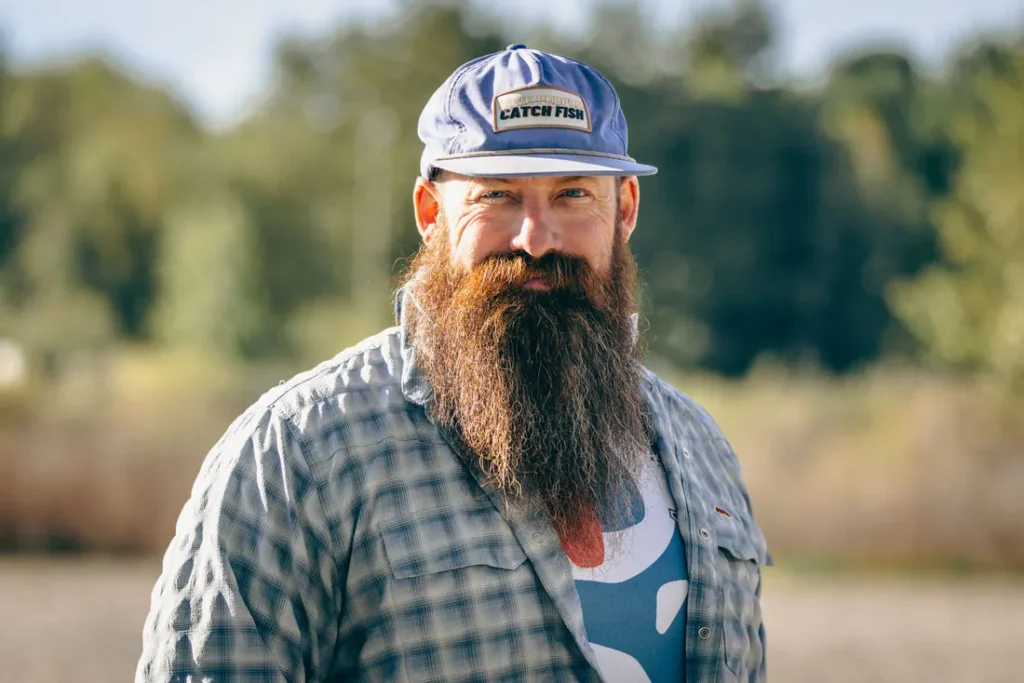
In this episode, we’re joined by Dana Lattery of Fly Fishing Bow River Outfitters, who shares how leaving professional hockey eventually led him to one of North America’s great trout rivers.
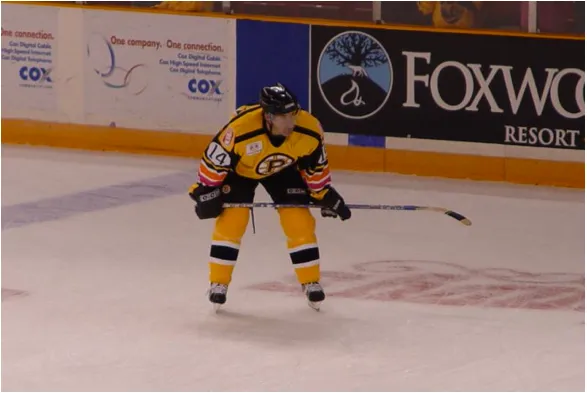
(01:21) Dana shares how a knee injury brought his professional hockey career to an end and unexpectedly led him to the Bow River. What started as time spent along the river eventually turned into a passion for fly fishing and guiding.
He also talks about another setback years later when a coaching accident left him blind in one eye. Looking back, Dana reflects on how those experiences changed the direction of his life.
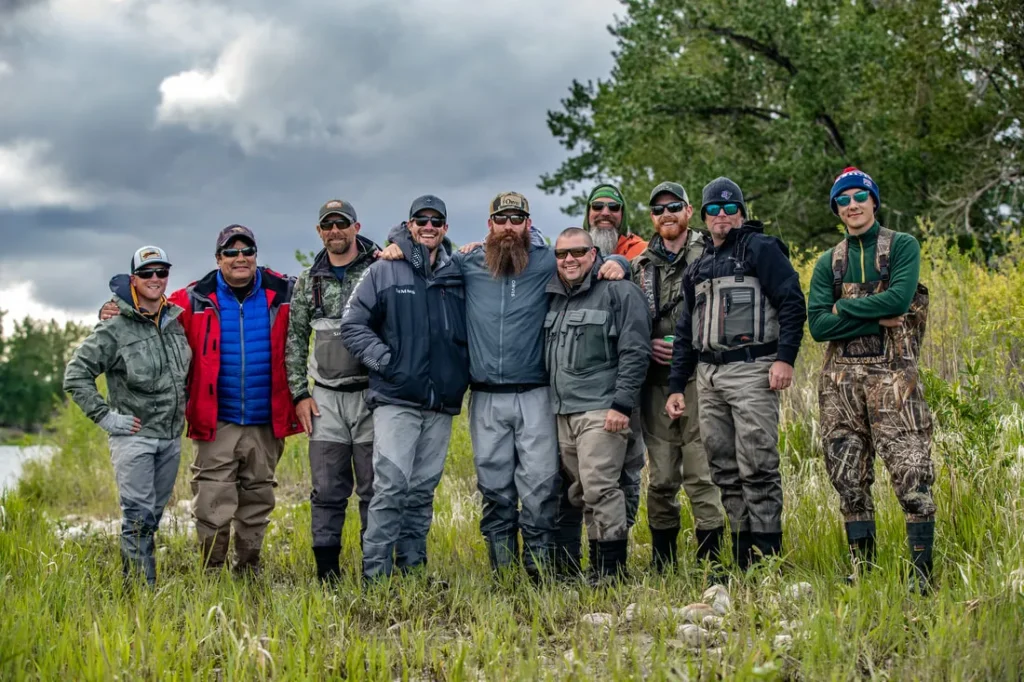
(06:28) Dana has built a guide team that works differently. Rather than creating a business where every guide worked independently, Dana wanted to build something that felt more like a hockey team. Today, eight guides share daily reports, compare notes, and constantly exchange information to improve everyone’s fishing.
One of the most valuable systems they use is a shared river journal. At the end of each day, every guide records water conditions, successful techniques, fly patterns, and observations from their trip. The result is a constantly evolving playbook that benefits both the guides and every client who steps into a drift boat.
Instead of competing against one another, the guides help each other become better anglers and better teachers. Dana believes this collaborative approach gives clients a better experience than any single guide could provide alone.
(13:30) Dana explains why the Bow River has earned its reputation as one of North America’s premier trout fisheries. A lot of people think the best fishing is up around Banff because that’s where the Bow River begins. Dana says that’s one of the biggest misconceptions about the fishery.
The upper river has the mountain views, but the famous trout fishing starts farther downstream near Calgary. That’s where extra nutrients help create the rich, productive fishery the Bow is known for. Dana describes it as “the most freestone tailwater you’ll ever fish.”
The Bow’s rainbow trout have a steelhead strain behind them, and he says they fight harder than almost anywhere else he’s fished. While the Bow may not have the fish numbers of rivers like the Missouri, it makes up for it with big, powerful trout that leave a lasting impression.
(24:30) One of the biggest mistakes Dana sees anglers make is constantly changing flies whenever fishing slows down. Thirty minutes without a fish often leads anglers to switch patterns, then switch again, and again, never really learning whether any of the flies actually worked.
Dana believes the Bow has an “on and off switch.” There are days when fish simply aren’t feeding consistently, regardless of the fly selection. Experienced guides recognize these periods and resist the temptation to make endless changes.
Instead, he emphasizes confidence. If you want to test a new fly, fish the exact same run again so you’re comparing presentations under identical conditions. Otherwise, every fly change is paired with new water, making it impossible to know what actually caused the difference.
For Dana, good data comes from repeating variables—not randomly changing flies while drifting downstream.
(26:12) Dana breaks down what the fishing season looks like on the Bow and how conditions change throughout the year. While many anglers think of summer first, he says the fishing can get started as early as March when conditions line up.
Dana also explains that snowpack is only part of the equation. Reservoir releases can change river flows overnight, making the Bow one of those rivers where conditions can shift faster than many anglers expect.
(31:42) While nymphing produces fish most of the year, Dana says the Bow has plenty of memorable hatch windows for dry fly anglers. Some of the highlights include:
Dana also shares why Tricos and hopper fishing are two of his favorite times of the year, offering everything from technical dry fly presentations to explosive eats on big foam bugs.
Dana keeps his nymph rig pretty simple. Most days, he fishes about 8 to 9 feet down to the first fly, then adds another fly below it.
He laughs that people love to overcomplicate worms. “They’re worms,” he says. Underwater, they all look pretty much the same. If Dana had to pick one time of year to fish the Bow, it’d be hopper season in mid-August.
He’ll start with big dry flies during stonefly season, then transition into Chernobyls and hopper patterns. On the best years, anglers can fish hoppers all the way into late October, sometimes without needing a dropper at all.
The Bow can get warm in the middle of summer, but Dana says it rarely becomes a major issue.
Alberta does have Hoot Owl restrictions, but he believes decisions should be based on water temperatures where anglers are actually fishing. Even so, he doesn’t take chances. Every guide boat carries a thermometer, and if the water reaches 67°F, they call it a day.
(44:48) What started as a simple livestream from a local fly tying night has turned into something much bigger.
Dana wanted fly tying to feel more welcoming, especially for beginners who often felt intimidated at traditional tying nights. He and Tim Hepworth started hosting free tying sessions, cutting and packing materials so people could just show up, tie flies, and have fun.
Those conversations have also influenced Thursday Night Live. At the end of every show, everyone shares their “What’s Your WIN?” moment, giving people a chance to talk about what’s happening in their lives. For many viewers, that’s become their favorite part of the night.
He believes the best guides understand that only a small part of the day revolves around actually catching fish. The real experience comes from listening, teaching, laughing, and giving each guest exactly the day they need.
Episode Transcript
WFS 949 Transcript
00:00:00 Dave: What happens when that thing you built your life around suddenly disappears, and you have to find something new that gives you that same fire. Today, Dana Latorre shares what this shift looked like for him, from pro hockey to the bow River, and how that same drive to compete, adapt and solve problems shows up every single day on the water. This is the Wet Fly Swing podcast, where I show you the best places to travel to for fly fishing, how to find the best resources and tools to prepare for that big trip, and what you can do to give back to the fish species we all love. Today we’re going to find out why the bow River fishes like a mix between a freestone and tail water, and how this changes Dana’s approach on a daily basis. We’re gonna hear about these small decisions that most anglers miss and how you can show up on tough days. And also, we’re going to get Dana’s team and how they share their daily Intel. We’re going to talk about this team atmosphere and mindset. Really interesting conversation today. And we’re going to get into a little bit of fishing, a little bit of higher level. We’re going to talk podcasting. Plus, Dana has Thursday Night Live, this amazing fly tying YouTube session and series. So if you want to check that out, definitely we’ll have links to the show notes for that. All right, let’s get into it. You can find Dana at fly fishing dot com or you can connect with him on social. Here he is. Dana Latorre. How you doing, Dana?
00:01:19 Dana: I’m great. Dave, how are you?
00:01:21 Dave: Good, good. Great to have you on the podcast. We are going to talk about the bow River, which is a water I still haven’t fished. I’m hoping that that’s going to change this year. We connected, uh, backcountry skins. Kelly um, we connected recently. We’ve, I’ve run into him at a few shows over the years and he put me in touch with you. And I’m excited to talk about the bow because it is a unique fishery. Um, I think, you know, definitely up in that you’re part of the, the world. It’s got a lot of stories, right? A lot of history. So we’re going to get into that, but, um, maybe just start us off the top. Have you been doing the bow River thing for a while. How did you come into, you know, being an outfitter up there.
00:01:59 Dana: Yeah. So surprised you haven’t fished the bow. I know you’ve had some pretty high profile names, uh, from up here on the boat and some legends. So that’s that’s cool to also see and hear. Um, yeah. So the bow for me was a place of kind of a happenstance. So I came off a professional hockey career. And in two thousand and six I got injured. And, uh, you kind of when you play hockey and that’s your sole purpose in life, you don’t really tinker in a lot of other things other than maybe golf. Um, and then when I got hurt and kind of was going through surgeries, trying to get back in, uh, back to playing pro again, it’s where I started going down to the river and sitting on the river and just, you know, more so the people who find peace in solstice and just sit in by a river, um, which I would see lots of people floating by in drift boats and started to understand kind of what the bow River was and what the bow River is. And a couple years after that, I was, you know, big into waterfowl hunting and had a dog and a gun. And I started guiding that. And through the connection I made from waterfowl guiding. Um, that guy was also a fly fishing outfitter and he was trying to encourage me to spend the last three months I had to myself into guiding more, um, but into, into fly fishing side of things. So I’d never actually floated on the river before. I’d fished a lot from the shore and found out quickly how difficult of a stream or a large body of water that the bow River was. And yeah, got to go on my first float trip and I was like, well, this is, this is how you do it. And, um, you know, I very, I don’t know if it’s an addictive personality, but I have an all in personality. And so when I find something I like, I quickly love it. And I was like, man, I just want to learn everything I can. And, and the parallel with hockey was, you know, I find and we can all attest to this, that fly fishing is. So it’s a puzzle. You know, every day you go out, it’s different. And I think that’s the allure for a lot of us is that that drug of trying to, I guess, win or solve a problem, um, you know, reminded me a lot of hockey and trying to perform and trying to be the best I could be. And it became this new challenge in my life, um, which quickly became, you know, me on the river every day and, and getting better at the craft and the boat and slowly working myself into guiding. Um, so yeah, I spent eight years, uh, working for a couple different outfitters and, you know, I think becoming an outfitter was never something that I set out to do. But, you know, there’s just a few things that kind of push you into taking that leap. Um, yeah. And so we started fly fishing outfitters and, uh, at the end of twenty eighteen, and I liken it to hockey because, you know, we have a team and there’s eight of us guides here. And you know, I just love that team mentality coming from a sports background. And it’s like, and I wanted that when I was guiding and I just felt like everyone was so out there for themselves. Right. Which is fine because that’s their, I mean, they don’t have to, but in like starting, you know, my own outfitter was like, I want a team and I want a brotherhood and I want a group of, you know, my new best friends to also be guides. And we can all spend our summers together, share information, make each other better people make each other better on the river. Right? And that’s what we got. And it’s really a special thing that I do not take for granted.
00:05:51 Dave: That’s sweet. Yeah, it’s really cool. There’s, uh, I think, you know, my background. I guided, um, you know, way back in the day, basically, it was me and my dad, you know, my dad had a shop and stuff and, and I feel like we were kind of, you know, we would have been better off if we would have had that team, more people, you know what I mean? Because I feel like we were kind of doing our thing and it was fine, but you know what I mean? Just I could imagine having a team of people all doing probably tweaking things and doing things a little different and then come back at the end just like a game like, all right, how’d you do? And everybody’s like, oh man, you know this, right? And so, God, I could see how you could be quickly become a much better angler with that, right?
00:06:28 Dana: Well, and it’s like intoxicating because, I mean, I mean, there is some cruxes to it where sometimes you might get into your own little you don’t get out of the box enough, you’re too much in your own group. Um, but you know, we challenge each other to, to think outside the box and don’t always, you know, if you get. So what we do at the end of every day is we have, uh, a shared, uh, journal app and everybody puts in their river report. So, you know, we’re on the river six, seven, eight guides. Um, but we’re getting that much information every single day. So if a guy wasn’t on the river today, he comes home and he looks over it all and he goes into tomorrow and it’s for our clients to make them have a better day. And all of this, these resources pulled together to make you a better angler, make you a better guide. And ultimately, just giving that experience back to our clients makes sense.
00:07:20 Dave: Yeah. And the hockey background too makes sense because I think any professional athlete has to have some of that, um, you know, obsession, right? Obsessive compulsive, right to get to. Totally. Yeah. What was your, uh, what was the hockey? Um, what were you doing there? What was your position? Who were you playing for? How long were you in the league?
00:07:38 Dana: Yeah. So, um, I played up in Canada for junior, um, when I was twenty, I got, uh, scholarship. So I went down, played NCAA Division one at Western Michigan. Uh, I was there for four years. And then out of there, uh, I signed with Calgary, which was a local team, uh, and the NHL. And then, uh, the infamous lockout hit.
00:08:00 Dave: Oh.
00:08:00 Dana: No kidding. Um, so, yeah, all of a sudden it’s your time. And but there is no NHL. Uh, so it was a, that was a weird, uh, I feel feel bad for myself, right? I also feel bad for all the other, you know, free agents and, and draft picks and stuff coming out into pro that year. So yeah, I went down and played in Vegas for a bit. And then I went up and played in Salt Lake City, um, which is the farm team for Phoenix. And then I went over to Providence and played for a bit, uh, with Boston’s farm team. And yeah. And then that summer, um, I destroyed my knee on a, on a wakeboarding accident. And yeah, I spent two years trying to go back surgery, go back to rehab. And it just never, you know? Yeah, I think you realize at that point, and I, and I, you know, it. You got to take accountability for yourself and say, okay, well, my complaint is that it’s a meat market. And once you’re not a high value product anymore, they don’t want to invest in you, which which is fair. It’s their money. It’s not my money. Um, but that was a hard reality, uh, to realize that you’re not probably getting back, um, because you’re kind of damaged goods.
00:09:11 Dave: Yeah. Wow. That’s pretty intense. You, uh. I mean, you got everything, right? The lockout, and then you come into an injury, uh, you know, and it’s it’s such a. And that’s all it takes, right? And you hear some of these stories, right, about kind of, uh, at that level, it’s these. And then also that the head game too, right? Oh, yeah. Yeah. How did you. So you get out. But the cool thing is, I mean, I guess I look at now you’re in this place where you’re doing good things and fly fishing, you know, you’ve got this great program. It almost do you look back on it and say, wow. I mean, it’s hard to say an injury is a good thing, but you kind of look back and say, oh, this is pretty cool what I have now.
00:09:47 Dana: Yeah. So, um, read probably twenty ten, twenty eleven. Um, and I was just getting into fishing guiding and I’d been waterfowl guiding my old junior hockey team, which is, uh, up here like sixteen to twenty year olds. It’s kind of the age group where the kids are waiting to get scholarships. They came and asked me if I wanted to come and coach, and I was like, oh, wow, here’s a chance to get back in. And, uh, but I was afraid because I knew, like I said before, that, uh, all in kind of personality, right? And I remember going up for a practice and I mean, I’d been off for like three years and I was like, I don’t remember, like the coaches bring sticks on the ice. Like I, I.
00:10:29 Dave: Just had.
00:10:30 Dana: This weird synapse gap of what took place in my previous life. So long story short, but I got back into coaching and, or I got into coaching and I felt like, oh yeah, here I am again. I’m back. This is my purpose. This is where it’s all going to be. And I’m going to, you know, progress and move on. And, uh, about four years into that, I, I in practice took a puck in the eye and I went blind in, in one of my eyes. And, uh, I was like, well, I’m not sure that this is really, uh, you know, to, to reference a biblical, uh, story. It’s Jonah and the whale. I feel like I kept, uh, you know, walking into the whale there. And so the two injuries, um, you know, pretty serious, um, you know, but then like you asked that question, do you look back and think is an injury a good thing? And I think it’s not a good thing, but it’s how you define it. And so, um, I can’t stop that. I can’t go back. And no matter what I do that I cannot reverse anything. But what I can do is, you know, make the future better. So I look at it now and I’m like, I am right where I’m supposed to be, and I’m one hundred percent extremely happy. I love the guys around me. I love what I get to do, the people you get to take in your boat. You know, the the parts of the industry that we get to impact. I just feel like, you know, you are right where you’re supposed to be, whether you like it or not. You are. And you know, how do you move forward with it?
00:11:56 Dave: Yeah. Do you still follow, uh, hockey? I know for me, basketball was my sport. And I, it was kind of my life and everything. And I’ve pretty much, you know, come out of it and I, you know, but I still enjoy watching it. You know what I mean? If I see a highlight, I still love because I know it so well. Yeah. Do you still follow hockey? Do you?
00:12:13 Dana: Oh, yeah. I, uh, I found the first few years I kind of I just took a break because all the guys you played with are, you know, the ones in the NHL and you’re like, well, that should have been me. Yeah. So it was just kind of a bitterness. Um, but yeah, I, I just yeah, become a fan. Yeah. I don’t want, I don’t want to admit it. Right. But, but there I am watching hockey till midnight right now because playoffs are on and it’s amazing.
00:12:40 Dave: Oh no kidding. I know I, I find it’s kind of crazy right. Sports is. It’s I don’t know what it is about sports. I think it’s the same thing you said. You kind of. It’s this. You never know what’s going to happen. That’s what’s great about sports. Every game is like, wow, you don’t know something amazing could happen. Right?
00:12:54 Dana: And well, think of the frozen four and, uh, who’s the team? And I think the or the final four. Sorry. Frozen hockey.
00:13:01 Dave: Right.
00:13:01 Dana: Uh, they shot the basket with like one second left and made their way to the final. And it’s like, that’s why we love sports because you. Yeah, you just never know. You’re almost never out of it. And, uh.
00:13:13 Dave: Yeah, that’s cool. Well, I mean, it’s funny because fly fishing, you know, it’s hard to compare. I mean, it is kind of a sport in some ways, but it’s, uh, it’s a little different. Right? But I mean, what you do now, I mean, talk about that. The bow River, you guys, are you exclusively focusing on the bow? Is that your kind of daily, weekly program?
00:13:32 Dana: It’s pretty, you know, uh, very heavy on the bow. I think, uh, we, you know, we do guide, uh, a lot of other streams around the area. I think the draw to the area is the bow. Um, you know, we have some very, uh, good cutthroat streams. Super fun walk and wade type stuff. I find that people become addicted to a drift boat because it’s easier for an angler. Yeah. And although the bow River is a very difficult fishery, um, you know, we can cut that in half with a drift boat. Um, because we can get off the shore. Um so we do spend a lot of our time on the bow. Uh, but we do also go to other areas around here, but primarily it’s the bow. Yeah.
00:14:17 Dave: Yeah. The bow and the it’s a big rig, right? It’s a tailwater. It’s pretty technical. It sounds like is, you know, I feel like, you know, the river that I kind of my home water. The Deschutes is a big river. It’s probably similar, maybe similar in size. I’m not totally sure. But you can’t fish out of a boat. They made that regulation. So fishing.
00:14:35 Dana: Yeah, you gotta stop. And yeah. Is that how it works?
00:14:37 Dave: Yeah. You gotta stop and get out and fish. And it is tough. There’s places where man, it’s just it’s tough. And but so it sounds like you started out kind of doing some of that, but the and, and you got into the bank or you got into the boat. But what are the other places other than the bow River? Are these kind of hidden secret little gems out there, or do you have to kind of go up in the mountains when you’re doing this walk and wade?
00:14:57 Dana: Yeah. So the first kind of like, uh, misnomer is that, uh, people. Well, so, you know, we call like Calgary is such a, you know, a byproduct of people going to Banff. So they go to land in Calgary and they got to go to Banff, Canmore, which is like the, uh, the mountain town and what everybody sees on Instagram and travel videos. Whereas if you were to go to like fish on the Missouri, you don’t accidentally land in Great Falls and, you know, accidentally go to Craig, Montana and fish, uh, on the Missouri. So they’re getting anglers who are intentionally going there. Um, we get a lot of people who are going to Banff and then they want to try it. So it’s, you know, kind of like a gondola rider. It’s like it’s an activity for their family to do. Yeah. For that trip to Banff. And it’s like, okay, so now the misnomer is that the headwaters of the bow comes from up at, you know, Bow Glacier, which is, um, just kind of northwest of Banff. It flows through Banff and it comes through Canmore. And then it works its way kind of through the foothills down into Calgary. And then as it kind of gets two thirds of the way through Calgary, that’s the bow River that everyone hears about. Now, the the misnomer, the upstream, the Upper Bow River is beautiful. It’s in the mountains. It’s what you want to be the river that you hear about, right? Because you’ve got, you know, it’s like in Jackson Hole, like you’ve got the Tetons, you’ve got the Rocky Mountains, you’ve got the beauty, you’ve got the scenery. We just don’t have the fish up there. There’s just, it’s almost in that glacial till the higher you go and the nutrient level is just not there. Now, you know, there is fish in it. It’s kind of a fun little place to go. Um, but the Calgary stretch and then people think, well, I don’t want to fish in the city. Well, it’s not in the city. It’s just on the edge of, you know, Calgary is a big landmass. And what we would consider the suburbs is kind of where it starts. And so why it’s great, which I’m sure other people have told on this podcast is because of the water treatment plant. And it pumps so much nutrients into the river and you can literally see the color change. It’s like above it. It’s kind of like more aqua teal. And then when you go past the water treatment plant, it’s more of this like, like green, fishy, nutrient loaded and you’re like, and then you start to see this profound fishery and the magic that it is. So the upstream, all this to say is not where we walk and wade further in southern Alberta, we have some freestone. You know, we got like the castle and we got the old man, the Livingston, the racehorse, the crow’s nest. And they’re kind of all around in that, you know, what we call like the crow’s nest area. Great cutthroat streams. Um, some good bull trout fishing down there. And yeah, so it’s got the mountains, it’s got the scenery. You cannot float it. It’s not big enough. But that’s where we spend our time. If we go on foot.
00:18:02 Dave: Trout routes by Onyx is built for fly anglers who want better Intel without spending hours digging for the information. You’ll get access to public land maps, stream access points, regulations, and even road and trail maps all in one place. It’s become my go to app for scouting new trips. You can check them out right now. Go to fly dot com slash routes and download the app today. Do you have and you must have a mix of people that you got the people coming for Banff, but then you got the people that are hardcore anglers coming in. Is that kind of a good even mix or is it?
00:18:36 Speaker 3: Yeah. Yeah.
00:18:37 Dana: It’s probably I would say it’s, you know, right around that fifty over fifty. Um, you know, honestly, I just love new people. Like there’s, there’s a love for both and, you know, to get someone in your boat that they, and they can fish and you’re like, okay, well, let’s go try, you know, these things. Um, but to also have somebody in your boat who’s never held a fly rod, uh, and you just get to relive your first moments through them because you’re watching them learn to cast and you get to teach them and you watch them, you know, hook up and land or lose a fish. And all that excitement that comes with that is also really cool. And it kind of keeps you grounded.
00:19:14 Dave: Yeah, definitely. What is the what’s your operation on the boat? Are you guys doing? Um, you got that section right through town, the popular section. Describe that maybe for again, you know what makes it special? It sounds like it’s the size of the fish, the number of the fish. How is it kind of different than maybe some of the other areas, you know, around the country?
00:19:32 Dana: So I probably say the first thing is the fight of the fish, the rainbow trout, when they were stocked, or kind of a strain of steelhead. And it’s actually fascinating. You. So we kind of forget, we get a little numb to it and we watch clients hook up and, you know, get spooled on a fish on a, on an eighteen inch rainbow trout. And it’s like, oh, why, why did that happen? And then, you know, you go out and fish and you hook into one of these and you’re just like, yeah, they’re, they’re, they’re all that like, you know, you kind of have a new respect for people losing fish and then you go fish in other places and it’s like, they just don’t have the fight that the bow River has. And, and it’s, yeah, it’s maybe a subtle brag, but it’s like we don’t have the numbers that the Missouri has. And that’s okay because it’s like that quality over quantity. And, and I, I love the Missouri. We go there lots and it’s, it’s got phenomenal quality. Uh, it just seems like every fish on the bow is just that it is, you know, so many people get their fish of a lifetime. They get their personal best brown trout, rainbow trout, and I mean it. So yeah, it is the fight of the fish. The quality of the fish. You know, some days you feel like there’s a five thousand fish per mile, and some days you feel like there’s one fish per five thousand miles. And so, you know.
00:20:59 Dave: It can be that way. So it can be, it can be pretty technical. Things can get. Is that what you consider it? Pretty? Yeah. Pretty technical tail water.
00:21:06 Dana: So it’s interesting because I will consider the bow River the most freestone tail water, um, that you probably ever will fish. And what that means is it’s technically a tail water because it comes from, you know, a dam and, uh, and the flows can be somewhat mitigated. But the other thing is, is the city of Calgary has, I don’t know, say five hundred storm drains. So when it rains in Calgary, all of that street concrete rain goes, you know, in the culverts down to the drains, and it goes right into the river. So there becomes your freestone, right? You get rain and it goes boof and it blows out.
00:21:47 Dave: Gotcha. So it does. So it hits. So this river doesn’t just stay stuck at four thousand, you know, some cubic feet level, it goes up and down.
00:21:54 Dana: Yeah. And it’s one of the things about the river that when it bumps like that, honestly, just stay home because you’re it just. And so that bump comes not just from the dam. Like it’s like, oh, the dam’s holding steady at whatever. And then you look in town and you’re like, oh, wow. It just, it just chugged like it rained last night. And it went from, you know, well, recently we just got a huge snowfall. And it was like, you know, it went up like thirty percent overnight and, and dirty, right? Usually those bumps come with a lot of dirt just because it’s at. So it is a unique spot because. But that’s also aids in your favor because it’s pumping a lot of worms. When it rains, the worms come up and they’re just getting thrown into the river. Um, so in the right conditions, those, you know, little higher dirty waters, then you got an overcast day can be your absolute, you know, your best fishing day, your biggest fish like that is when people see a fish that yeah, magical.
00:22:52 Dave: After the bump. So the bump is you don’t want to fish when it’s bumping big, but then once it drops back down.
00:22:57 Dana: Yeah, once it kind of like gives a, some sort of like steadiness. So on the bow, dirty water and high sun is like, not your friend. Dirty water, cloudy skies raining a bit. Just that grungy kind of feeling is like, please go fishing on those days because that is the magic. So the question was, is it technical? It’s not. And because of tail water, so are we using like eleven foot liters and are we using size twenty two midges? No, I think it is not technical in that aspect. Um, you know, we’re using three X leaders and for most of the season you’re using three x maybe four x tippet. Um big flies. You’re using size fourteen nymphs and you know, sixteen if you go to um well, you know, dead drift leeches, there’s just a lot of big bugs that we use. But the technical part is that the river will just die like the fish just stop eating and nobody can find the fish. And I think because of the tail water aspect that they get to eat all year, um, there’s not a real driver for, uh, whereas if you go to the mountain streams and they’re only open for a few months and there’s a hatch like that is food on the bow, it’s like, yeah, we’ve been eating for ten straight days and today we don’t need to eat. Right?
00:24:19 Dave: Right. Yeah.
00:24:20 Dana: So that’s where it becomes technical or it bites you and you’re just like, and it sucks guiding those days.
00:24:28 Dave: Yeah. So you have those days that are they’re tough fishing out there. Oh, yeah. How do you tweak it when you’re on one of those days? It’s a little challenging. And you know, how do you tweak your normal routine to maybe find that fish?
00:24:40 Dana: Yeah. So there’s, there’s, I mean, there’s a lot of ways to change tactics and probably not one answer. Um, you know, I guess you’re, I will say the, what I think my personal opinion is one of the biggest crimes that people do on the bow from a drift boat is constantly change flies. So, you know, thirty minutes, no fish, they change a fly and they move on and they change. And it’s like the bow has like an on and off switch. And when it’s on and you’ve gone twenty six degrees away from the proper flies because randomly today you thought this was going to be the fly that’s never worked before on the bow, but maybe you’re gonna figure it out. And now the flies that should work that you started with because you’ve been on this river enough, you know, in the last ten days to know. That’s it. You’re not. You know, you’ve missed the boat because you’ve been changing flies. So I see it a lot. And I think with experience and confidence it’s like, stay the course. If you do want to change flies, you have to go back and fish that same run every time you switch a fly. Otherwise your data is just useless, right? Like, you know, you want to row up this run twenty times and change a fly every three. Yeah. Then that’s good data. But to just keep going and pulling over and switching to fly and pulling over, it’s like it’s probably not going to be in your favor.
00:26:01 Dave: Yeah. What does it look like? Uh, throughout the year, I guess. Are you fishing this? When are you guys getting going strong on the fishing? Is this more of a like after spring or summer or is it year round?
00:26:12 Dana: Yeah. So we’ll um, you know, we’ve, we’ve already been out. Um, you know, March, if, if March is nice, it can be a really good time to fish the boat. Uh, April is, which is right now. It’s ish. Good. Um, a lot of things are going on in the river, so rainbows are kind of leaving to go spawn. And the brown trout are now taking over these, you know, rainbow list lies. And it’s like, so this activity level is a lot, a lot is happening. You’re getting ground melts. The water’s getting, you know, colder, dirty than clean again. And then it’s just, there’s just a lot happening. So may kind of starts busy for us. Um, we run a guide school, so we have, uh, two classes in May, so that’ll be first week and third week of May. Um, and then in between that we’re, you know, very busy with guiding and June’s busy, uh, June is typically our mountain runoff. So, uh, this year we have a record snowpack, so who knows how that comes down. Um, could it could, you know, hurt. June. It could be, uh, fine if it comes down in at the right pace. And then July, August, September are the busiest months. October is kind of. It’s a good time to fish. Just don’t get a lot of people. Um, and then yeah, like November, December, January, February. You’re.
00:27:35 Dave: Yep.
00:27:35 Dana: You’re hibernating.
00:27:36 Dave: Yeah. You’re hibernating. That’s right. And so that’s cool to hear you guys, especially with the West, you know, we hear a lot of stories about the low snowpack. You guys have a good snowpack.
00:27:45 Dana: Oh it’s like beyond records. It’s wild. Yeah. Like we we have snow. Yeah.
00:27:50 Dave: Yeah. So that’s a good I mean basically that might mean the, the flows or might be a little bit bump or higher throughout the year. But it’s a good thing. Right?
00:27:57 Dana: Yeah. And honestly, it’s funny because it’s a conversation that not a lot of people like to talk about, but there becomes a man problem versus a nature problem. And we’ve always had pretty good snow. You know, it, it cycles. I look back and it’s like, well, five years ago, we also had this snowpack and five years before that and five years before that, we flooded because we had an enormous snowpack.
00:28:19 Dave: Mhm.
00:28:20 Dana: But the, the main issue is that, you know, the dam that controls the water. Um, you know, is a power dam. And so that company, um, questionable about how they’re, you know, dumping water to make money and, you know, the, the fish are kind of, uh, because the fish aren’t native to the streams. They don’t get quite the protection that, you know, native species do. And so there’s that huge conversation that is constantly under the breath of many people. So yeah, the last couple years they have managed the dam perfectly and the water has come out, you know, as it should. And, you know, what do they do this year? I, you know, we just don’t know which, which is hard to kind of run a business around because you can’t predict anything. And, uh, and the other thing is like, we’ll be perfect conditions mid July and you wake up and you go, you know, go guide in and you check the flows. And they’ve doubled overnight for no reason. There’s no rain, there’s no snow. It’s just. Yeah, you know.
00:29:25 Dave: Yeah.
00:29:25 Dana: Maybe price of power was high and they decided to make some money last night. And now you just know you’re, you’re like, the clients are not going to catch like it’s going to be a tough day and it just sucks, right?
00:29:37 Dave: Yeah. It’s interesting because I haven’t, uh, you know, some of these. Yeah. It feels like the stability is a good thing. And for the most part, that’s been my experience. But there are some rivers like the white River in Arkansas.
00:29:47 Dana: Yeah.
00:29:48 Dave: Right. They jump way they and the fishing is amazing up there. It’s probably a totally different system right than what you got. Yeah. But that’s, that’s.
00:29:56 Dana: That is a rarity.
00:29:57 Dave: Yeah. Right. That is rarity. So you got that. But but it makes sense. And then the other interesting thing is, you know, how important the fishing and just the economy, the outdoor right is, you would think that the cities would understand that and be like, wow, fly fishing. This is a pretty big thing. I mean, do they realize how big the bow River is to the rest of the world?
00:30:17 Dana: To be honest, if you, um, you know, well, not half, but like ninety percent of people who come here, um and they at their hotel or at a restaurant and they’re telling people like, yeah, we flew in from wherever and we’re fishing on the boat and people have no idea. It’s actually alarmingly shocking that, you know, it’s, it’s a big industry. Um, I don’t recall the, the impact, but it was like, you know, probably in that five to ten million dollar industry, which, you know, it’s big, it’s not as big as some of the ones. But yeah, um, nobody knows. And oftentimes we’ll be on the river fishing and people will come by in a raft and they’re like, what is there even fish here?
00:30:59 Dave: Like, oh, right.
00:31:00 Dana: No. Yeah. So it’s, but it goes back to that, what I talked about before, it’s like when you go to the Missouri, you know, like that’s why you’re there. Yeah. So this is just such a, you know, like just so it’s a city and like, how many rivers in the world that flow through a million and a half people city are actually, you know, blue ribbon trout streams.
00:31:21 Dave: Yeah, that’s a good point. Yeah. No kidding.
00:31:23 Dana: Uh, they’re.
00:31:24 Dave: Not they’re not exactly. What is the well, let’s take it to, um, you know, let’s take it to the summer. You mentioned a couple. Let’s just start kind of in July there for a second. What does that look like as far as hatches? Are you guys focusing on a mix of, you know, dries nymphs? What’s your typical, um, you know, kind of program look like?
00:31:42 Dana: Yeah. So, um, June is kind of the PMD hatch, which we don’t, you’re, you know, you’re lucky if you get it because it’s usually runoff. So it’s, it’s hard to like, say, this is, you know, we’re going to come fishing for that, but it’s there and it happens, you know, back up to May, mid May is Mother’s Day caddis. And when that happens, like, you know, we had a few days last year, which was, you know, can go down and forever as one of the greatest dry fly fishing days ever. Um, July we start looking for golden stoneflies. Um, they’re nocturnal, so they hatch overnight. And so when we go after that hatch, you know, we’re trying to get on the river at like four, four thirty in the morning. So it’s not for everyone. It’s also a very been hit or miss. So I tell people, if you want to try it, you know, they’re out and it’s happening, but it could not happen tomorrow. And the other thing with that is those flow bumps. Um, so when you think about the stoneflies hatching on, on the rocks on the side of the river and the flows go up, it washes out that hatch. Right? Um, because they’re, you know, inches from the river. And so, yeah, you just didn’t happen last night and there’s no way to really know. Um, so yeah, that’s fun if that, if you get on that and you know, between like four thirty and nine o’clock in the morning, you’ve already had like twenty five thirty.
00:33:11 Dave: Yeah.
00:33:12 Dana: Fish hammer on your big stonefly. That’s, that’s pretty cool. Yeah. So it’s been harder to predict, um, over the years. But, you know, it’s funny because when you see the hatch, when it’s everywhere, it’s not fishing. Well, when we barely see the hatch and we go out and we just do it anyways, those are when I’ve seen some of the better fishing days. So I don’t really understand the correlation. Mhm. Um, yeah. Streamers. Nymphing Nymphing is your most productive way. Um, you know, worms and leeches are very common. You get caddis kind of sporadically throughout the summer and then you get your tricos should be like early mid-August.
00:33:54 Dave: Okay.
00:33:54 Dana: Um, you know, and that’s, uh. Yep.
00:33:56 Dave: How’s that hatch? Is that one? Are a lot of these hatches kind of hit or miss or is are there any that, you know, that are just definitely you can count on a big hatch up there.
00:34:06 Dana: I think the Tricos or Tricos, however people say, yeah, um, it is a very prolific hatch. It’s kind of like I’ve never I don’t remember seeing a year where I’m like, oh, wow, where are they? Well, last year it seemed like it came quite a bit later than normal. But I think it’s also the most technical hatch because big fish are eating right along weed beds. And why that’s a problem is because the weeds kind of they mess up the current like, so it’s like you’re getting a cast and yours and this is where you get technical on the river. Um, and it’s hard to get your mend in your presentation because you know that that weed is slowing the water down, but then they’re on kind of a bit of the faster side. So a hard hatch, uh, for most people to achieve. Um, but very fun and very big fish, uh, are seen on that. And then the blue wing olive hatch is kind of your late September. You’re looking for your days where it’s like thirty one, thirty two degrees outside and raining and crappy and nobody wants to go fishing. And that’s typically when the bluing olives are like all over the place.
00:35:19 Dave: That’s it, that’s it. So you have a lot of the yeah, basically similar hatches throughout the year. But obviously Nymphing is a good way to do it. Are you fishing? What’s your Nymphing setup look typically look like? Is this a like dry dropper or what are you doing there?
00:35:32 Dana: Yeah. So most people kind of go, you know, the eight to nine feet to your first fly. Um, and then add another fly off of that. Some people, you can fish three flies. So some people will go, uh, two flies kind of under that. Um, yeah, it’s funny because that changes all the time. Uh, it depends like if you’re fishing, say like, you know, pre stonefly hatch and you’re fishing like a big Jimmy legs and maybe you’re going down to a worm worms kind of always your, your, you should probably have one on just right.
00:36:06 Dave: Just like this, the San Juan worm or something like that.
00:36:08 Dana: San Juan worm. Uh, red wire worms. Very popular up here. Um, yeah. Then people get all fancy with worms that are. But they’re worms and, you.
00:36:18 Dave: Know, like the other worms.
00:36:19 Dana: Yeah. It’s like, look at this worm. And it’s like it’s just worm right under the water. They all look the same. And then you’re like, hare’s ear and your pheasant tail. Um, great staples. Some people love prints. I feel. I don’t, I, I just don’t go there much, but it’s not a bad or good thing. It’s just you just got your ones, you know.
00:36:39 Dave: And your confidence.
00:36:41 Dana: Yeah. And then we’ll, we do get October caddis hatch. Um you know, it’s there, it’s, it’s a, it’s a weird hatch because I don’t really know how it’s, it’s like, it’s just not, it’s just random. You just get a random October cat around.
00:36:56 Dave: Yeah, yeah. I’ve never figured that one out. I think I feel like the October caddis is it’s cool because these are giant huge caddis, right? Yeah. And that’s really awesome just looking at them. But yeah, I feel like, I don’t know, I’ve never figured that hatch out.
00:37:09 Dana: Yeah I agree.
00:37:10 Dave: It’s like yeah.
00:37:11 Dana: You know, I’ve fished some pink hoppers in October with a dropper underneath and I’ve got eats on the hopper and I’m like, is that because it’s yep. You know, is that why? Right. I mean, like, we didn’t talk about the hoppers here, but that’s probably my favorite time to fish is like that mid-August, you know, hopper season. Um, yeah. And you can be hoppers and you can be hopper droppers on a good year. Yep. You kind of go dry flies on stones and then you transition into, you know, like a Chernobyl or more of that in-between, uh, like a stonefly and hopper pattern. And then you fish that and it still works. And then, you know, you might need to put on a dropper a few days and then you switch into a hopper. And then the best years, it’s like you just see that hopper out right till the end of October and it’s working.
00:38:01 Dave: All right. Yeah, you just fish it out. Is it throughout the summer? Do you guys, um, right in the peak. Is it ever too hot there or is it pretty much perfect throughout the summer on the weather.
00:38:11 Dana: So I think it’s perfect. Um, I about five years ago they implemented, you know, the, our version of, of hoot owl.
00:38:20 Dave: Yeah. Oh they did. So yeah. So you had that. Yeah.
00:38:23 Dana: But it’s what now opinion here. But it’s like was it warranted I don’t know. It’s funny because they said here’s the the so the first year they implemented it, obviously they activated it because it’s like kind of a see, you know, here’s what we can do. Yeah. Um, and with that, it was like, it was funny because it’s like if we activate it, it goes in for fourteen days and it can only be implemented from July to end of August. And here is the, the rubric for what’s needed. It’s like it has to be sustained at sixty seven degrees for three straight days. And, and, but they’re measuring like ninety miles downstream of, you know, where most people fish. And so it’s like, I just think there needs to be I’m all two things. I don’t think I’m all for it, but I think they need to have more correct data.
00:39:16 Dave: Yeah.
00:39:17 Dana: Um, and I read a report someone in Idaho wrote about it. And I think this is really fun to note. It’s like when the water is too warm. Okay, so say you go out so inflated numbers, but on a guided day, say just for easy math, we catch one hundred fish on good water temperatures, sixty three degrees, one hundred fish. They say catch and release has like a five percent mortality. Five percent of those fish die. So we me and you have killed five fish today, and we’re going to go tomorrow and we’re going to kill five fish just the way it is. Now, if the water temperature goes higher and mortality raises to twenty five percent. Okay. But the other thing is, is when water goes higher, warmer fish are inactive. So you’re not catching them. Right?
00:40:02 Dave: Right.
00:40:02 Dana: I guess. And so we’re not going around flossing and snagging fish. We’re, we’re feeding fish, and if they’re not eating, it’s going to be the rarer that the fish is caught. So now hear me out. You can find colder runs because you’re like, oh, they’re in the riffles. It’s colder. And you hook them and you take them into the slow, warm stuff and you kill them, right? Fair. I hear that argument, but if you and I go out and we’re like, oh, wow, it’s a slow fishing day and we catch ten and our mortality rate is twenty five percent. We’re, you know, two and a half fish. Like we’re always going to be in that five fish range in, in theory, right? So, you know, that’s where Idaho stands on it is like they’re just not implementing it because it’s, doesn’t it self regulates itself, right?
00:40:48 Dave: The numbers of fish.
00:40:50 Dana: Yeah. And so I think sometimes, you know, in university, I took biomedical sciences. I spent a lot of time studying like how they do these, you know, testing and stuff. And I just think it doesn’t logically make sense. But yeah, we’ve only had it two or three years, two years in a row. Um, but other than that comparative to some of the, you know, Montana rivers, you know, it just it’s great.
00:41:17 Dave: It’s not even close.
00:41:18 Dana: Yeah. And we’re keeping temps like we have thermometers hanging off the side of our boat. Yeah. A for learning and B for, you know, and I tell clients I’m like, if it hits sixty seven and I’m measuring the top inch of the water, we’re done. And everyone’s game, they’re like, I agree. And that’s happened like twice that we’ve had to like call it. And usually it’s at the end of the day anyways, and everyone’s tired and we’re, we’re good to go.
00:41:44 Dave: Golden Fly Shop isn’t your average fly shop. They have a twelve foot shark painted like a cutthroat, hovering over a huge selection of the best rods in the business, a massive assortment of tying materials and their famous steakhouse streamer display. And it’s the hub for a community of anglers who never stop tinkering with new ways to catch fish. Sometimes the conversation behind the counter includes what hatches are going off and what techniques are working best. Then tales of destination fishing, adventures, sought after species, or a good old congratulations when a customer brings stories of finally connecting with that fish they’ve searched for forever. With a growing online store and a budding YouTube channel, you’ll be able to follow along with their fun antics, international adventures, and helpful fly fishing tips. Golden fly shop where the community is hanging out even if they’re supposed to be working. That’s Golden Fly shop dot com. Check them out right now. Yeah. It’s interesting because you have the obviously somebody concerned about the fish species, even though maybe they’re not all wild, but like you said, you’ve got this other you got the dam operators who aren’t as concerned, it sounds like. Right. So so there are some people that are, you know, it sounds like thinking about the river. Like this is still it’s some people know about it.
00:42:56 Dana: I know you had Jim MacLennan on.
00:42:57 Dave: Yeah, yeah. Jim.
00:42:58 Dana: His take was, you know, he’s an advocate for like because one of the biologists, um, probably in my, from what I hear them say, is if they could just end guiding, it would save the river. MM. And so I’ve heard Jim kind of push back on this where it’s like, but that’s the people, that’s the invested people. Like, because it’s my livelihood. It’s like, well, and then it’s like, well, you guys catch more fish. It’s like, fair enough. But for me to catch one hundred fish, every one of those fish has been taken time to go back. And I because I need this place, right? I want a, you know, the forever my kids to fish here and their kids to fish here. But it’s also a livelihood. Whereas you know, Johnny Shore angler catches a fish, he drags them up ten feet onto the grass and gets his fifty Instagram photos and then decides to throw the fish back in the river. Well, that’s one hundred percent kill.
00:43:52 Dave: Like that’s one hundred percent.
00:43:53 Dana: That’s a dead fish. So you got to care about the resource, but you also have to look at like, who is the, the guardians of the resource. And I think it’s the guides.
00:44:03 Dave: Yeah, I agree, I agree. Yeah, the guides are huge because without you guys out there, it’s going to be crazy. And you’re also promoting, you know, you’ve got this kind of interesting thing, right? You’re getting more people on the water, which has some impacts, but the more people on the water are being stewards also ultimately. Right?
00:44:19 Dana: So and they know how to handle the fish now brand new, we sit there, we, you know, oh, look barbless hook, we take it out, we hold the fish, we wait till he swims off and they’re like, wow. And they’re wanting to grab it by the gills because that’s what grandpa did on the lake. Right. And while you were keeping the fish at that time and it’s like. And now they’re like out there fishing and they’re stewards of the river, like you said.
00:44:39 Dave: Exactly. What’s the, um, the Thursday Night Live? I think it looks interesting. Um, what is that program? How did that start? How did that idea come up to and describe what it is?
00:44:48 Dana: Yeah. That’s fun. Now we’re talking fun things. Yeah. Um, so Thursday night live fly tying. Um, so back in like twenty seventeen ish, um, I’d work for another outfitter. He had had a Thursday night fly tie night, and he’d, you know, wanted to hire me to do some marketing. And, you know, how can we, you know, be more of a presence? And so I, you know, live streaming was kind of, um, sort of there and, you know, like Instagram had live and Facebook had live, but nobody was really doing it. And it was complicated and equipment was expensive and software was really expensive. Um, to make it work. And so I just kind of thought, you know, what, if we showcase the fly tie night just through a live stream, maybe the FOMO is real and people will, you know, watch us and be like, I want to go there and see the shop and I want to go there and, and meet those people. Um, so did that for, um, you know, five or six or seven Thursdays. And, and as I was doing it, I was like, man, this is fun. This could be more fun. And I personal experience with fly tying nights is when I started tying flies. Every time I went to fly tonight, I felt like I felt stupid, like I couldn’t tie flies. I, you know, was, was I didn’t want to go back because I was like, well, I’m not as good as them. And nobody really felt super welcoming. And it kind of felt pretty judgmental, which, you know, it’s kind of an old school thought of fly traps. People are nervous to go into them and, and whatnot. I know that’s changed a lot.
00:46:29 Dave: Right.
00:46:30 Dana: And so at the end, kind of that year was when, when I branched off into, you know, becoming my own outfitter. And I just wanted to take this idea and grow with it. And so, uh, Tim, who’s, you know, one of my guides and best friends and the guy who does the tying on the show, the, the, the true craftsman. Um, you know, I just kind of met him at the time and I was like, you know, you tie flies and I, I can’t do both. I can’t ty and do video. And so I was like, we’re going to go to a brewery and we’re going to invite everyone and we’re going to Ty. We’re going to cut up materials. So when people show up, you know, what’s the worst thing about fly tying? It’s like sourcing materials, cutting materials, finding the right material and having enough of that material. And eventually when those four things, you know, smudge lines, you stop tying because it’s like, oh, I’m watching a YouTube video and I don’t have exactly this. I don’t tie the fly right? Or I try to like compensate with some other thing in my. So I was like, okay, we’re going to cut the material, we’re going to package it. People are free and welcome to come here and we’re just going to have some beers and tie some flies and I’ll live stream it. And so that’s how it started. And we were at a brewery and we would get four people and six people and twenty people and fifty people. And, and then the next year we did it again. And it was like a lot of work to cut up and make all these bags and, and it was always free. And we just wanted people to be able to come and hang out and tie with us. And then Covid hit and it was like, oh, cool. We’ll just, I’m sure everyone has a story of pivoting. And I was like, what do we do? Well, we’ve been live streaming it, which, you know, we would get like four or five viewers. And I said, well, we’ll just, I’ll build a little studio in my basement and we’ll come here and we’ll do it and we’ll just keep going. Right. And who knows what Covid is and what it’s going to do. So we did that. And, uh, and the first home show, um, Tim sitting behind the vise and I’m behind the camera and he’s like, it’s like five minutes before seven o’clock before we go live. And he’s like, dude, I this feels so weird. Like, what are you doing there? And I’m like, well, you’re the tire. Like, you know, he’s like, come and sit beside me because it’s kind of weird, right? I don’t have an audience. And so I, I’m like, well, what do I do? And he’s like, I don’t know. Just sit here and hang out. So I jumped into the show and it was like me and him and we’re just like, hey guys, we don’t know what’s the future of this. Um, but here we are. We’re just going to show up. And, you know, that was back in season two and we showed up and we showed up and then it became like, we’re trying to end the show in somewhere in May. And people are like, no, like, it’s like the Truman Show, right? It’s like, yeah, we got nowhere to go. Like what? What are we going to do if you guys stop doing this? So we kept doing it. And, um, and then the next year people were like, you know, can you sell the kits? Like make the materials and sell them so we can tie along with you guys. So we did, you know, like thirty kits that year and, and sold them out and sent them out to people. And then we started having this online presence. And then we went season four, and then we built more kits and we sold more and went season five, six, seven. And we just finished with season eight. And, you know, we’ve built another studio and we’ve got way too much camera gear. And now the show is a lot of things and fly tying. You know, we do two flies every episode. You can buy the kits and tie long. You can buy the kits a hundred years from now and tie long because all of the videos are stored on YouTube. It’s. So we’ve taken all of the guesswork out of fly time, and it’s just fun. But the cool part about the show is the community of people, um, that has evolved from it. And, you know, like Kelly at backcountry skins and that’s kind of all of that. It’s, and we brought him on as a guest for one of the shows. And, and it’s like, we dress up, we have theme nights, we have, you know, it’s, it’s just so much more than fly tying. And it’s a really fun way to spend, you know, January, February, March. And like a lot of people say, it’s like, it’s such a depressing time, you know, especially when we’re all fly fishermen and we love the summer. It’s that we that just people look forward to it and we look forward to hanging out. And, you know, we have we play what we call Flamingo every show. So it’s like a bingo game that I made and we, you know, played for free and our sponsors and we give away tons of prizes and it’s just sweet. Yeah. It’s the, the show has grown legs. Yeah. And it’s like one guy said, if you try to explain it to someone who doesn’t understand, you know, it’s not gonna work.
00:51:17 Dave: They just have to watch it. Yeah. And the cool thing is it’s all there right now. And what’s it called if they go to YouTube to find it?
00:51:22 Dana: Yeah. So just on our fly fishing bow River YouTube page, and it’s pretty much all the content we have is, is Thursday night live fly time. Uh, it’s on our website too. It’s, uh, we call it the most immersive fly time show in the world.
00:51:39 Dave: Cool. So yeah, this thing sounds amazing. So basically, yeah, it’s on YouTube. And is this the same or is the podcast different? Or is this what part of what the podcast is?
00:51:47 Dana: So this a lot of people call this a podcast. Um, I don’t think it’s a live stream or whatever. It’s a show.
00:51:55 Dave: That’s the interesting thing. The podcasting, you know, is kind of become this gray thing. But, you know, technically, you know, a podcast has to have a feed, right? That’s what makes it a podcast because it’s this, which is cool because it makes it like a free public, right. It’s that nobody can own or, well, you can own your feed, I guess, but it’s anybody can have access to it. You know, that’s why a podcast is cool where some of these channels, they can take it away. Even YouTube, YouTube could shut you down if they wanted to. But yeah, so and so the podcast described that it was that where can you find the podcast? Or is that a similar thing?
00:52:26 Dana: So the podcast, um, different. So the fly fishing saves lives. Um, that’s on Spotify or whatever, wherever podcasts. It’s on YouTube too. Um, yeah. So that one is a very interesting thing that’s hard to kind of do because it’s a very sensitive subject. So people who have gone through addiction have gone through abuse. It’s just just something They’ve gone through something and fly fishing was the thing that got him out of it. I think there’s like eight or nine episodes. I’ve been doing it for like four or five years, and people want to do it. And then right before it happens, they pull out and I and I respect it because they’re, they’re completely becoming open and vulnerable. And I just wanted to, I wanted to share stories of everyday people, um, who have a story to share and, um, not try to chase the who’s who in the zoo, you know, in the fly fishing world and just let people talk. And, and it’s fun because they tend to be, you know, long conversations. And as we talk through it, it’s just like, I have a lot of people reach out and just be man. Just talking through it was was really fun. So yeah, it’s cool. And yeah, it’s a, it’s a lot, it’s a heavy, yeah, a heavy podcast heavy.
00:53:48 Dave: Yeah. definitely different than the kind of the Ops than the Thursday night.
00:53:51 Dana: Yeah, one hundred percent.
00:53:53 Dave: That’s it. Wow.
00:53:54 Dana: But having said that though, like it’s actually ties in pretty well because so many people that come to Thursday Night Live. Yes, it’s, it’s fun and it’s fanfare and it’s, and it’s goofy, but at the end of every single show, we do like we call it, what’s your win now? And this is kind of tying into this fly fishing saves lives is we just hold space for people to share about what’s going on in their life and what’s their win like. What’s important now is what we call it. And we can sit there for an hour and we just let everybody share. We share. And it’s a lot of people actually don’t get to tune in for most of the show because they’re dinner and kids. They tune in for this part because they say that is that is their favorite part of the show. And so yeah, I mean, it is opposite ends of the spectrum. But, you know, there is a lot of that in there that you know what’s really cool about about the Thursday Night Live flight time is that it? It means more than just being goofy guys all the time.
00:54:56 Dave: Yeah. Right, right. There’s something deeper there. And that just goes back to fly fishing. That’s what’s cool about fly fishing one hundred percent, right? It’s it kind of it does save. I mean, that’s the thing. It does save lives, in fact, you know, and we kind of joke, we’ve joked about that over the years. The fact that, you know, we’re not out here as a guide or whatever, saving, saving lives, saving babies, right? You’re not a doctor and sort of thing, but in some ways you are.
00:55:17 Dana: You are.
00:55:18 Dave: Right. You are. That’s the thing I feel like you are. And I’ve told people that.
00:55:22 Dana: My drift boat is like a seventeen foot couch. And, you know, you can go sit at your therapist’s office or you can jump in the boat. And I find that the greatest joy of what I get to do is, um, just like, it’s funny, I was doing a talk at a school yesterday and they asked me like, what are some of your favorite days? Or like, what’s a really cool moment? And I can think of these adult men on the boat. And about three hours in, we’ve pulled over and for three hours, they’re just, they’re going through the wringer in life and they open up and we sit there and they’re just like deeply emotional tears. Yep. And nothing to do with the fish. It’s to do with the fact that two grown people are listening to one another. And I’m like, those are the days for me that mean something because, you know, we’re not doctors saving babies. You know, we’re people. And something about the river and something about fly fishing. And when you just give in to the river, I know it could sound fluffy and whatever, but it’s like, man, you know, it just it just gets a hold of people. Like I had a guy once. He fished for like twenty minutes, caught a fish, never fly, fished before, sat up in the like bow of the drift boat. He’s like, do you mind if I just fifty five year old man, like, not not a young kid. It’s usually where kids try to sit. Then he goes, do you mind if I just sit here for a bit? And I was like, dude, it’s your day. Like, whatever you want. He’s like, I don’t remember the last time I just sat on a river and did nothing. Like, I’m so busy at work and I’m so and it’s, he’s like, it’s my fault. And for probably three hours he didn’t fish. He just sat there and didn’t say a word.
00:57:13 Dave: Oh, wow.
00:57:14 Dana: And I was like, it’s your day. And that’s what we get to do as guides is I think a lot of guides are kind of remiss because they, they force stuff on people like, oh, you gotta fish, you gotta do this.
00:57:24 Dave: It’s like, I know.
00:57:25 Dana: Dude, it’s not your day. It’s their day. And every day is about them. And you’d asked a question earlier about how do you, um, switch tactics or do something on those tough fishing day? And I’m like such a firm believer of the eighty over twenty rule where it’s like eighty percent of your day Has nothing to do with fish. And twenty percent of your day is fishing. And so as a good guide. Who are you in the eighty, you know? Yeah. Because we we all know tough fishing days don’t elude.
00:57:56 Dave: Right? Everybody. Yeah. Everybody.
00:57:58 Dana: They are what they are. And now it doesn’t mean you can negate knowing anything about fishing. But I can promise you that the people who come back year after year for my guides who are like even some of the newer guys, all their people are coming back and it’s like, man, you’ve already got like forty percent return clientele. And last year was your first season. Like that’s unbelievable. Because they care about the people in the boat and that’s literally the magic.
00:58:25 Dave: Yeah. That’s it. How do you with your your team, your seven or eight guys there? Are you guys all in a similar, I’m guessing you probably talk about this stuff that’s probably comes up, uh, a decent amount as far as like, I guess that ethos, right? Are you guys all on the same path here with what you’re describing here?
00:58:41 Dana: Yeah. So our ethos is love. People catch fish and in that order. And I think that’s, you know, back to the hockey background, it’s like you can have a culture, but if your team’s not in that culture, like you, the culture is and the players or the teammates or the worker, whatever you want, it’s like they gotta be a part of that culture. So if they’re not a part of the culture, they probably wouldn’t want to be around here, right? Like it’s just it would sound stupid and goofy and that’s fine one hundred percent because I know I’ve watched them and I can put you with any of our guys and you’re going to have that experience now. Everyone’s different, everyone has different fishiness and everyone has different tactics and everyone has different personalities completely. But at the end of the day, you’re going to walk off that boat feeling like the most important person in the river. And that’s why they come back because they’re like, oh, that guy took care of me, me, the me side of things, right?
00:59:40 Dave: Yeah. Yeah. It seems to be. That’s what makes the really good guides. You know, the good guides out there is that they know when to when to talk, you know, when to one hundred percent. Right. Let people sit on your boat on the bow of your boat for three hours, right? You just kind of know, instead of sitting there being that like, you know, you have to talk. And when I guided, I think that’s what I struggle with. That’s what made me not a good guide is, you know, I just never felt comfortable or, you know, whatever it was, but I feel like the good guys are just meant for it, you know?
01:00:06 Dana: And yeah, they just know how to well, they just, it’s just the people first, like you’re just, you know, and when you get fish focused, well guess what? They lose a fish guides get mad. I hear them out there and they’re like, what, what are you? It’s like, hear me out, dude. I know the Instagram photo would have been great for your ego, but it’s his first time or what? Whatever. Like even if it’s not his first time fishing, he lost a fish and you coached him through it and we. Yeah. And it’s like, man, we just sit and celebrate. Like, do you I always tell clients like, you know, get a fish if they’re new and it’s like, you don’t know what you just did. Now, if I were to tell you this, that, you know, jump in my side by side, we’re going to drive out to the trees. We’re going to go for a walk into the forest. Okay. And I’ve got a fly rod. And on the end of it, I have a green piece of yarn, not grass, but fake grass. Looks like grass, sort of. And there’s a deer eating and I have to present. I have to sneak up, present this green piece of yarn to the deer, and the deer has to come over convincingly and eat it. And then I, and I catch him. I’m like, do you think I’m crazy? But this is literally what we just did, right? But it’s like, oh, that sounds impossible. I’m like, well, what you just did seems impossible sometimes.
01:01:24 Dave: That’s pretty awesome. That’s it is the, the hockey culture is, um, what describe that for somebody that doesn’t know hockey very much. I always go back to Gretzky because I feel like he’s, you know, Gretzky. I always go back to the Michael Jordan analogies, right? Michael Jordan, the greatest player of all time. But then you have LeBron James and you got these other guys describe maybe first take it back just real quick on the hockey culture. What is that like? Is it similar at all? Is it more laid back or is it like hardcore? What is it like?
01:01:51 Dana: Well, we’ve just opened another podcast on the hockey culture. Um, yeah. Um, I personally, you know, before I say anything, I, I wouldn’t change it for the world. And I know if what existed back then existed today, there would be a lot of people in jail and, and fired and whatnot. Yeah. So, you know, having said that, we can agree things have changed.
01:02:16 Dave: Yeah. It’s changed.
01:02:16 Dana: Um, but it was hard. Like I remember, you know, at fifteen, I moved away from home to, to pursue my dream. And I moved out to the West coast to Victoria and I was just like, this is me and I’m and I’m scared and I’m young and I’m.
01:02:31 Dave: Like.
01:02:31 Dana: fifteen. Yeah. And like, I have, you know, a seventeen year old daughter and a nineteen year old son. And when they were fifteen, I was thinking like, yeah, this is you leaving and hey, you’re not ready. And B, I’m not ready to let you go. And so at the time, it’s just kind of what you did. And so it went out and it was, it was cutthroat. It was not you weren’t coddled. Um, and so probably built up a lot of resilience for me. And, you know, then I, I came back to Alberta and played four more years in, in junior. And it was like, I just remember the one coach saying, like, you’re not good enough to be here. You’ll never be good enough to play in this league and you should go somewhere else. And I was like, no, I, I am, you know, but at sixteen, I’m, I’m having this chat with a man who, you know, wasn’t kind and, but he stayed on it. And, but the thing you realize is like your teammates, your brotherhood, it was hard. Yeah. You, you know.
01:03:32 Dave: Was that guy doing that? Was that coach doing that to try to make you better. Or was he?
01:03:36 Dana: No, he’s just straight up an idiot. Like, honestly, he just had. I didn’t enjoy him. No. Um, yeah. He just didn’t know how to coach, I don’t think. But I think he genuinely thought it wasn’t good enough. And then the next couple years and I’m leading the league in scoring and he’s up in the stands like.
01:03:53 Speaker 4: Yeah, I brought that kid here.
01:03:54 Dana: Right. Like yeah, sure. Thanks.
01:03:56 Dave: Right.
01:03:57 Dana: But but yeah, you go through coaches and I think it’s important like to take out of that is like letting your kids, you know, on a tangent, but be coached by other people. And it’s not always perfect, but it’s good for them. Right. And, and, but the hockey culture was hard. It was intense. You know, if you were soft or weak minded, you did not make it anywhere. Like you’d said earlier in the podcast, something about mindset. And it’s like, yeah, mindset. You gotta constantly say, so what now? What? Like, how do I.
01:04:30 Dave: How do you get to the next level?
01:04:31 Dana: Yeah.
01:04:32 Dave: I go back to again you know the basketball. LeBron James right. He’s kind of you know the greatest one of the greatest ever. He’s got this podcast. It’s called Mind the Game. And I just saw it somewhere out there. JJ Redick Yeah him and at least the first few episodes. But they’re talking about the mind thing and how they had to how to get to the level. And this is obviously the extreme, but they had to give everything like including their family. Like they just like, hey, I’m if I’m going to be the best, I’m not even going to be, you know, I’m going to have to not even really, you know, forget about the family. It is. Right. And that’s kind of the way for you. It sounds like that’s just professional athletes, right? You have to, to get to that level.
01:05:09 Dana: Yeah. It’s a very, uh, it’s changed a lot. I see players now. Um, you know, they’re like, so, and so’s not playing tonight because he’s at the birth of his child. And I’m like, man, if you tried to tell your coach that back in the day, he’d, he’d just send you down.
01:05:22 Dave: Like that would be it.
01:05:23 Dana: You know what’s more important? It’s like, well, I guess the birth of your child is the single most important thing. But yeah, yeah. You know, there wasn’t that compassion, which I’m sure LeBron will talk about. And, and I’m sure like, you know, he was coming into the NBA just about the time that I that around when I got injured and stuff. So it’s like he’s probably seen the transition of all of that. Um but I do think that you have to have, you know, the resiliency and even in guiding, it’s like you can go out and have a horrible day and beat yourself up and you can’t find fish and people aren’t happy and you’re doing your best to do all the things. And it’s just, it just didn’t go well. And then, you know, and, and the guys will call and I’m that person too. So I need people to talk to.
01:06:08 Dave: Yeah, right. When it happens. Yeah. How do you deal with that? How do you deal with that day?
01:06:11 Dana: It’s funny because we all get off the river and it’s like, it’s like you call and one of the other guides and then you just want to vent, but then your phone’s ringing three or four other times because they’re all calling you. And then and it’s like, oh man, every so everyone’s trying to connect to just to just vent, right? And it’s not malicious. It’s just like, you know, I’m venting and then we listen and then we build each other up and it’s like, you know, and it’s, it’s fun because, you know, we’ll say to each other, like, just remember it’s love. People catch fish. Like just, yeah, focus on the people on the hard days. And it is what it is. And I mean, it gets you through a lot of those days and those guys will come back and be like, man, you were so right. Today was a love people day. You know, like fish were fish and, you know, and then their clients emailing me like, oh, we had the best day ever and want to get another day booked with so and so and so. Having your, like you, we talked about kind of in the beginning is your group, um, like you said with your dad, you didn’t have that team. And I’ve also felt that when I started guiding, I felt lonely out there. It’s lonely. And when you can’t figure it out, it’s really lonely.
01:07:18 Dave: Yeah. When you’re getting skunked on a trip and it’s like, wow, that is that’s a that was hard for me. That was a hard place to be.
01:07:24 Dana: And everyone else is catching fish around you. And you’re like.
01:07:27 Dave: Oh, well, then I remember when I talked to Mia Shepard, we were talking the first time we had them on the podcast, me and Marty and I said that and they laughed. You know, the fact that I put all this pressure of getting skunked and it just ruined my week or whatever.
01:07:39 Dana: Yeah, yeah. Well, it does it if you don’t have resiliency. And, um, you know, last summer was tough for us. We had, we had an insane amount of rain. We lost like three weeks in the mid-summer, like July, August, which is like prime season. And for all of us to like cancel trips, cancel trips, return money, return money, it’s like, oh, this is it. And it beat you up. And it was like, it, it got to a point last year where in end of September, you’re like, I just, I think the season needs to end because like, I’m, I’m done. But if that’s your feeling in July, because you don’t have a, a group of people to, to vent to and to talk you off the ledge or to at least just be like, I did all of this. And they’re like, I did too. And it didn’t work. And don’t feel stupid. And you know, we’re all on the same page and it just didn’t work right? Then you have that confidence like, oh, okay, well, it was just the river and it wasn’t me.
01:08:32 Dave: Yeah, exactly. Um, well, let’s take it out of here. Uh, we stick on the the hockey as we get. I love going back to the mentors. Who was your when you were growing up in hockey? Who was that person? You know, I say Gretzky because I don’t know hockey very much. But did you have that one person?
01:08:49 Dana: Yeah, I didn’t like who did I look up to? Um.
01:08:54 Dave: Or maybe it was. Yeah. I mean, for you because you’re like on your way to pro level, did you not have somebody that was, you know, I mean, who were the players that were in the league when you were a youngster, say Gretzky.
01:09:05 Dana: Mario Lemieux? Yeah. Um, yeah, probably. I mean, I loved goalies and I wasn’t a goalie. So I don’t know how that works. And yeah. Um, I, yeah, it’s it’s an interesting question. I’ve been asked a lot and you know, my parents were great. They drove me wherever I never played in, in any kind of elite streams or, you know, like nowadays kids are on the ice three hundred and sixty five days a year because we’ve created this culture that if you’re not, you can’t keep up.
01:09:35 Dave: Oh, right. So kids are playing all the time now.
01:09:37 Dana: Yeah. And I just think it’s supremely unhealthy. Right? And so, you know, I played until probably like March. February was the season ended and I did whatever in the in the summer.
01:09:48 Dave: And you did. You were a normal kid.
01:09:50 Dana: Yeah. Just normal. But as far as like mentors, like I. Yeah. That’s a.
01:09:55 Dave: Yeah. You don’t.
01:09:56 Dana: Really find.
01:09:56 Dave: That’s pretty interesting. I mean, it makes. I guess it makes sense, right? You’re I mean, to me, it doesn’t make sense because I think, you know, Michael Jordan was my person. I was like, all right, I’m going to be in the NBA and I want to be just like Mike. Yeah, right. I mean, that was the basic thing, you know? But but it is cool. So yeah, I love hearing talking to elite, you know, essentially pro athletes, right? Because you have that mindset, you had to have it. And I’m sure you’ve taken some of that into fly fishing.
01:10:23 Dana: Huge. Yeah. And, and turning it into a job and turning it into, you know what it is. And you and I see people like, you know, when we do our guide school, there’s some students who come in and you’re like, you know, this person has it like, right. You can spend enough time in, in hockey and then coaching and recruiting. And it’s like, and it’s, it’s the mindset. You know, there’s the tangibles where it’s like, you know, they can go catch fish. It’s like, that doesn’t mean anything. And the guiding, it’s like the intangibles, like, do they have the mindset? Are they, are they going to fall apart on a tough day? Right? Because you there’s a lot of pressure. Um, you want to turn around and say, here’s your money back. Let’s just roll out, right? Because I suck. Yeah. Um, you know, and there’s a lot of that internal conversation with yourself. So mindset is, I mean, it’s just huge in all aspects of life. And, um, it’s just a fun thing to explore.
01:11:18 Dave: It is perfect. Cool. Dana. Well, I think we could leave it there for today. Definitely. Uh, this has been a great conversation. We’ll be following up with you as we move forward. And I guess we’ve been, you know, mentioned backcountry skins, Kelly and all the good stuff he has going. We’ll be in touch on kind of doing some good stuff this summer. So hopefully I’ll be able to get up there and fish with you here in the not too distant future. But thanks again for all your time.
01:11:38 Dana: Yeah. Well, I appreciate you giving me a chance to talk and yeah, to the backcountry skins, boys. Um, we say Thursday Night Live fly tying oc P and that stands for only quality people. And, uh, yeah, definitely. Kelly and Mike.
01:11:54 Dave: Yeah, those guys are cool. All right, all right, Dana, we’ll talk to you later.
01:11:58 Dana: Okay. Thank you.
01:12:01 Dave: Hope you enjoyed that one. Uh, I hope you had a chance to connect. Definitely. That was a sweet episode to hear the deep dive on everything. Hope you enjoyed it. Uh, check in with Dana if you get a chance. Subscribe, follow them on YouTube and follow this. Uh, what? They’ve created this event more than an event on YouTube, their live fly tying sessions, and more. I want to give you a heads up. Uh, we’ve got, uh, events go on all year long as well. Uh, we’ve got our wet fly swing pro, uh, and we’ve got a boot camp that’s going on. So if you’re interested in digging into that, getting some more information, check in with me anytime. Uh, Dave at swing dot com. I’ll give you the details. Uh, this boot camp is going to be a big one. Um, we’re launching it very soon. So if you get a chance, you can go to swing dot com slash bootcamp and get all the details right there as we go. All right. That’s all I have for you. Excited for the big week this week and, and hope we’ll see you on that next episode. Hope you’re having a good morning. Good afternoon or evening and thanks again for checking in. We’ll talk to you soon.
01:12:57 Speaker 5: Thanks for listening to the Wet Fly Swing Fly Fishing show. For notes and links from this episode, visit Wet Fly swing dot com.