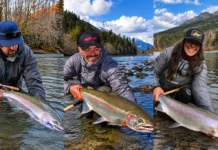
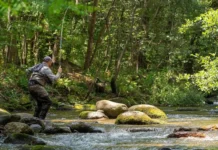
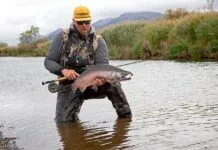
You can learn a lot about a person by looking in their cooler at the end of a fishing trip. In this episode, we’re digging into Cast and Iron Camp Cooking and British Columbia Fly Fishing with Teddy Cosco.
Teddy is a steelhead angler, university professor, camp cook, and someone who has spent years exploring rivers across British Columbia, the Yukon, and beyond.
We get into steelhead fishing, Spey casting, camp cooking, and why some of the best memories from a trip happen back at camp after the rods are put away. Teddy shares his system for preparing meals before a trip, cooking over the fire, and making life on the river a whole lot easier.
If you love steelhead, good food, and the stories that come from time spent outdoors, you’re going to enjoy this one.
(01:48) Teddy spends his days as a professor studying mental health and health policy. This time of year is a welcome transition, with classes finished and more time to focus on research, family, and fishing.
With a one-year-old and a three-year-old at home, life stays busy. But with summer arriving, Teddy is looking forward to chasing coho and spending more time on the water.
(04:12) Teddy is always looking for a chance to swing flies. Steelhead, salmon, bull trout, it doesn’t really matter as long as there’s a grab at the end of the swing.
One fishery he looks forward to every year is the summer coho run on the Capilano River near Vancouver. These smaller “blueback” coho are aggressive, fun to catch, and, as Teddy puts it, “extraordinarily good eating.”
(08:24) Teddy grew up around fly fishing, but steelhead was almost off limits.
He jokes that his dad did a great job convincing him and his brothers that steelhead were these mysterious, hard-to-find fish, while they headed off to places like the Dean River with his buddies.
After spending nearly a decade in the UK and dealing with the challenges of fishing private water, Teddy moved back to Canada in 2017 and jumped back into the Spey world. Along the way, his dad introduced him to some of the people who would become close friends and mentors, including Tim Arsenault and the crew at Michael & Young Fly Shop.
(18:27) Teddy spent his summers growing up in the Yukon, where fishing was always part of life. Species like Arctic char, lake trout, grayling, and Chinook salmon helped shape his love for the outdoors.
He also shares why he thinks British Columbia is one of the best places anywhere for anglers. Living in North Vancouver gives him access to salmon, steelhead, sea-run bull trout, kokanee, stillwaters, and saltwater fisheries, all within a relatively short drive. If you’re new to steelheading and want to improve your odds, he recommends the crew at Chromer Sport Fishing.
Most of the time, you only get two out of three.
When he moved back to Canada, those experiences came together. Cast and Iron launched in 2019 with Teddy, his wife, and his sister-in-law, each bringing different skills to the project.
Their goal is to show that great fishing and great camp meals don’t have to be complicated.
(33:41) Teddy’s camp cooking philosophy centers on preparation.
Rather than trying to create elaborate meals entirely at camp, he believes the smartest approach is to do most of the work at home before leaving.
The result is incredibly tender meat that maintains better texture than traditional braising methods. Teddy explains that sous vide cooking allows connective tissue and collagen to break down while preserving a firmer texture than standard low-and-slow cooking.
When Teddy brings home a fresh coho, he doesn’t do much to it.
His favorite approach is a hot cast-iron pan, a little high-smoke-point oil, and some sea salt. That’s it. For him, good fish doesn’t need much help.
(45:45) Teddy said one of his priorities after moving back to Canada was finding a vehicle that could handle both family life and outdoor adventures.
Teddy says you don’t need much to cook great meals outdoors.
For him, a cast-iron skillet is the foundation. It’s durable, holds heat well, and handles the hot spots that come with cooking over an open fire. In fact, the pan he uses today is the same one his parents used decades ago before he brought it back to life.
Add a pair of tongs, some cooking oil, and a fire, and he’s ready to cook. Sometimes he’ll use a grill grate, but often the pan goes right on a couple of rocks over the coals.
He calls it a great all-around rod with plenty of backbone. It’s powerful enough for Chinook but still comfortable for steelhead and coho. His reel of choice is a Hardy Wide Spool Perfect 3¾”, paired with a Bridge Torrent line in the 550-grain range
Want to see more of Teddy’s fishing adventures, camp cooking, and outdoor stories? Follow Cast and Iron on Instagram and check out what he’s cooking up next.
Episode Transcript
WFS 947 Transcript 00:00:00 Dave: You can learn a lot about a person by looking in their cooler at the end of a fishing trip. Today we’re talking to Teddy Costco, a university professor, steelhead angler, camp cook, and the creator behind Cast and Iron. From chasing coho and steelhead across British Columbia to cooking incredible meals over a campfire, Teddy shares a perspective on fishing that’s about a lot more than what’s happened at the end of your line. This is the Wet Fly Swing podcast, where I show you the best places to travel to for fly fishing, how to find the best resources and tools to prepare for that big trip, and what you can do to give back to the fish species we all love. Today, Teddy is going to take us into his world as a professor. We’re going to talk about his connection to the outdoors and some of the biggest lessons he’s learned. He’s also going to talk about camp cooking and the system he uses to make it easy to cook great meals on the fire, and how to prepare for the trip at home to make it super smooth when you’re out there at camp. Lots of good tips and tricks on this one, including some Spey chat. It’s going to be a fun one. Teddy has spent a life fishing from the Yukon to B.C. and everything up and around. And today you’re going to get the full story on what he’s got going this year. You can find Teddy on Instagram at Cast and Iron, and I hope you enjoy this one. Here he is. Teddy. Costco. How you doing, Teddy? 00:01:18 Teddy: Good. Thanks. Thanks for having me. 00:01:19 Dave: Yeah, yeah. This is going to be a good one today. We’re going to talk probably bounce around a little bit. You’ve got a good background at Cast and Iron on Instagram. You do a lot of kind of outdoor. You’re cooking master. We’re going to talk about that today. I see the the a lot of the Spey rod in your hands. We’re going to we’re going to talk about maybe your Spey journey, all that stuff, but maybe just take us back. It sounds like you got a lot going. What’s going on this time of year? What keeps you busy? You know, throughout the year with your kind of outdoor, you know, fly fishing and outdoor stuff? 00:01:48 Speaker 3: Yeah. Well, the first thing to like be able to do the outdoor and fly fishing stuff, I need to, you know, live and keep my family alive, which has been challenging. Um, I got a one year old and a three year old, so they’re keeping me on my toes and keeping me from sleeping pretty regularly. Yep. Uh, and then this time of year is actually a great transition because my real job is, uh, as a professor and the term has wrapped up grades are in and in summer is air quotes research term, which basically means you can, you know, do your own stuff, write papers, do research, whatever. But it also means your, uh, your schedule is much freer. You don’t have to be in the office. So this is sort of transitioning into, um, getting into, uh, proper summertime and, uh, looking forward to summer coho on the Capilano and, um, heading up to Campbell River next week to try and get some saltwater coho on the fly. So lots of stuff coming up, but it’s been just notice to the grindstone for the last little while trying to wait for summer break. 00:02:57 Dave: Right? Summer break. And what do you what? You’re as a professor. What are you teaching there? 00:03:02 Speaker 3: Uh, I’m in the School of Public policy, but my portfolio is more like mental health and health policy. Like, my background is a as a chartered psychologist and epidemiologist. So I look at mental health over the life course. You know, how people can be happier and healthier for longer. And I teach mainly like research methods and statistics and stuff on mental health, that sort of thing. 00:03:26 Dave: Wow, that sounds pretty, uh, pretty important. It sounds like that probably keeps you pretty busy throughout the year. 00:03:31 Speaker 3: Yeah, I think it’s really important. I would say that students aren’t necessarily convinced. It’s always. 00:03:37 Dave: Really. 00:03:38 Speaker 3: Oh, yeah. I’m always amazed at how the, uh, post-secondary education has switched to more like edutainment, where really they expect professors to be, you know, engaging. And yeah, particularly with like courses online when it’s on Zoom, People are like, oh yeah, my video is not working. I don’t think I’m just, I’m just going to go on mute. And then they’re just, you know, laying in bed, not paying attention, but. 00:04:01 Dave: Right. 00:04:02 Speaker 3: Yeah. But certainly I think it’s important. And, you know, I think, uh, you know, mental health is a huge area and, uh, a good link with, uh, fly fishing for sure. 00:04:12 Dave: Right? Yeah, yeah. You hear a lot about that, right? The lots of groups out there that are trying to, whether that’s like Project healing waters or these, you know, trying to help people recover from, you know, traumatic stress disorder and all that stuff. Right. Um, well, that’s interesting. Well, I think you mentioned, uh, let’s just get into the fishing because I think you mentioned something pretty cool, the Campbell coho. What is during your year during, you know, what’s keeping you busy for fly fishing? Do you have one species or a few that you’re really focusing on? 00:04:40 Speaker 3: Uh, you know, typically like the spring, I’m always trying to get into some winter steelhead, but, uh, with mixed levels of success. Um, yeah, my easily my favorite thing to do is swinging flies. I think like everybody loves a tight line grab. Um, so it’s typically trying to use that as a platform, like swinging flies as a platform for trying to catch different types of fish, but, um, and typically like salmon and steelhead. Um, but yeah, I’m not afraid of a little trout action as well. Um, actually one that I’m a huge fan of that’s coming up is, uh, sea run bull trout on the pit. That is a extremely cool fishery. I got a trip planned. It’s actually taking my mom for her birthday, her seventy fifth birthday in a couple of weeks. So she’s pretty fired up about that. And so am I. 00:05:35 Dave: Nice, nice. What is the coho look like? Are you swinging for coho down there? What does that fishery look like? 00:05:41 Speaker 3: So the there’s the summer on Capilano Coho and that’s there. The little blueback fish, they’re like Two to five pounds, real small coho. And it’s a hatchery run effectively where the hatchery put like pumps, a bunch of fish into the river. And, uh, then they come back between sort of May, June, maybe July. And, uh, that’s typically stripping small, sparse little bugger type flies on a sinking line, which is fun. And, but the best part of it is, uh, they’re extraordinarily good eating, um, like really, really deep red flesh. And you can bonk two a day because it’s, you know, it’s a, it’s a kill fishery. Yep. Yeah. That’s super awesome. And then the, uh, the coho one, I haven’t actually done it yet. It’s my buddy of mine, um, uh, Justin Miller up in, uh, Campbell River. He’s got this new gig cell chucking stream where he’s taking people out to, like, on a little eighteen foot Boston Whaler, and just finding those schools of coho that are milling up around Campbell River. 00:06:54 Speaker 4: Oh, wow. 00:06:56 Speaker 3: Yeah. So there’s, you know, like forty zero zero zero odd coho, just sort of moving around in that area. And then you, once you locate them, post the whaler up beside it, and then just strip flies into, um, pods of coho. So I haven’t done it with him, but I’m super fired up about it because it’s, uh, you know, they’re proper coho, not these like little cab coho blueback situation. Um, yeah, stripping the flies in like big pods of coho and, uh, they’re, you know, real hot because they’re still in the ocean and yeah, and again, that’s like a bonk fishery too. So you can now fill your boots and yeah, super fired up about that one. That’s, uh, next week. 00:07:42 Dave: Next week. There you go. Yeah, that sounds great. So that’s. Yeah, it’s always good to fill the cooler. You get your coho fix there. You kind of with the cap, I guess. What was the name of that area? The capsule coho. 00:07:53 Speaker 3: The Capilano. Yeah. Coho. Um, that’s like the river. It’s literally, um at the foot of Lions Gate Bridge, uh, in Vancouver. 00:08:01 Dave: Okay. 00:08:02 Speaker 3: And, uh, it’s, uh, the Cleveland Dam is the dam that, you know, produces energy for a lot of Vancouver. And the reservoir produces the fresh water and they have a big hatchery program, uh, on the Capilano. 00:08:15 Dave: Right, right, right. That’s cool. Have you been is the Spey, is that something you’ve gotten into more recently, or have you been doing that a while? What’s your journey look like there? 00:08:24 Speaker 3: It’s a funny one. I like to point out that, you know, like my grandfather was fly fishing and my dad’s fly fishing and I’m fly fishing. And so I come from a, a long, storied history of very medium casters. And, uh, yeah, my dad, you know, grew up swinging fly and I grew up swinging flies. But when I was a kid, he was swinging flies. And it was a very well orchestrated, uh, ruse where he fooled his three sons into thinking that no steelhead were this very elusive fish. And he really was an excellent gatekeeper for Steelheading, and he kept the kids away from it. You go to the dean, swing flies with his buddies, uh, and leave the kids at home. 00:09:08 Dave: Oh, really? 00:09:09 Speaker 3: Oh, yeah. No, it was a very clever maneuver. 00:09:13 Dave: Could he have taken you guys? Could he have taken you out there? I guess that’s the thing. You have kids, right? Well, you have kids. You’ve got some youngsters there. Is that what you’re saying? Because you could have fished the dean, but you didn’t when you were younger. 00:09:23 Speaker 3: Yeah, like I could have in that, you know, I had could cast a fly rod half decently, but it would have been a massive pain in the ass if I was my dad having to deal with his three sons. And I would if if I was in his position, I’m like, I can deal with like these three kids that are, you know, a little snotty, or I can, uh, you know, have a nice cold beer with my buddies. All right. In the evening, rather than having to put them to bed and blah, blah, blah. So theoretically, I could have. But, uh, yeah, but like the, like, I’ve cast a fly rod since I was a little kid. I have not been proficient at it since I was a little kid for sure. And it hasn’t been like a consistent, you know, figure piece in my life. And I’ve sort of come back to it and, uh, you know, gone away from it. And then I lived in the UK for, you know, the better part of a decade. And that was, uh, fishing in the UK is, is, is coming from a Canadian perspective. Fishing in the UK is a very strange scene because every square inch of, uh, riverfront is privately owned. So it’s a different game. You can’t be like, oh, I want to go, uh, you know, catch some, some dinner. It’s like, oh, I got to talk to the owner and negotiate. Can I fish on their land? And if it’s a salmon river, you know, you have to pay out the nose to be able to get on to the beat and then oh yeah, blah, blah, blah. So like the there’s a lot of gatekeeping, as with a lot of, you know, English culture. Um, and, uh, but yeah, then when I, I got, I moved back to Canada in twenty seventeen and then just sort of like segued smoothly back into that. And ironically, um, my dad was the one who introduced me to folks that are like now my friends like Tim Arsenault and Aaron Goodison, the guys at Michael and Young, um, because he knew, he knew all those guys from a friend of his at the shop. And then when I moved back to Canada, they’re like, oh yeah, this is my son. Um. 00:11:26 Speaker 4: Oh, cool. 00:11:27 Speaker 3: Yeah. Which is sort of, uh, it’s not often that your dad is introducing people to you, to which you then become friends. 00:11:35 Speaker 4: Yeah. 00:11:35 Dave: Right. Right, right. Yeah. And Tim is obviously just one. I think he’s like the greatest speed caster right now in the world. Right? 00:11:42 Speaker 3: In my in my opinion for sure. I think yeah, he’s won. He’s been was second in the last two years. And he was one in I think three years ago. Um, but uh, yeah, no, he is just a force to be reckoned with. 00:11:56 Dave: Yeah. Have you been, uh, increasing as your skills improved on the speed, knowing him since you’ve met him? 00:12:02 Speaker 4: Oh, yeah. 00:12:02 Speaker 3: Like in leaps and bounds. I would, I would put the, the bulk of my, uh, a marginal skill set as a result of, uh, Tim’s tutelage. Like I, my dad takes lessons from him for years and I started taking lessons from him, you know, years and years ago. And yeah, I think that he’s not only a phenomenal caster, he’s also an excellent, uh, teacher, um, which you don’t always find in the same person. So yeah, no, it’s, um, it’s, uh, a huge, been a huge positive impact for sure. 00:12:37 Dave: Trout Routes by Onex is built for fly anglers who want better Intel without spending hours digging for the information. You’ll get access to public land maps, stream access points, regulations and even road and trail maps all in one place. It’s become my go to app for scouting new trips. You can check them out right now. Go to webflow dot com slash routes and download the app today. The Gallatin River Lodge sits right in the middle of Montana’s fly fishing triangle, the Gallatin River out the door. The Madison in Yellowstone. Close enough that you’re fishing when conditions line up. The lodge is perfectly remote, yet close to everything. Private access nearby, solid guides, unreal food, and a lodge that understands the rhythm of a full day on the water. If Montana is on your list this year, don’t guess where to stay. You can call Gallatin River Lodge or head over to Lodge dot com right now and plan your next Montana adventure. That’s g lodge dot com. Check them out now. Well what is your on the the cast iron cast and iron. You’re on Instagram there. Talk about that. What do you your your it sounds like you do some outdoor cooking. I’m guessing the coho. You probably got a recipe or two for those. Describe that. What are you covering there from on that side of things? 00:13:51 Speaker 4: Yeah. 00:13:51 Speaker 3: Like the genesis of cast iron was fairly organic coming from a bunch of different sources. Like when we’re I’m from Whitehorse in the Yukon and, uh, we grew up with sort of like the catch and cook sort of mentality. We’re always going out and catching fish and cooking it up. And that was just sort of a fixture. I’ve got two younger brothers and we all sort of grew up cooking, um, very much like a utilitarian sort of cooking thing. And my mom, you know, did a ton of cooking in the house, more of the day to day meals. And then my dad would show up to dazzle the, uh, the guests whenever they had dinner parties, which was frequently. 00:14:28 Speaker 4: So everybody in. 00:14:29 Speaker 3: The house. 00:14:29 Speaker 4: Was cooking. 00:14:31 Speaker 3: Yeah. Which is funny. So he sort of. My mom was the real workhorse in the kitchen. My dad was the show pony and you just like bring it out for dinner parties and such. Um, but then, uh, so we were always cooking growing up and like, I was cooking meals for the family by the time I was like, you know, ten, eleven years old and then, uh, moved to, as I mentioned, I lived in the UK and went there. And then we were doing a lot of dinner parties and I was cooking like a reasonable amount, um, just like for friends. Uh, but then when we moved to the UK, then it was really lots of dinner parties. So we’re doing, I do a lot of shooting and stuff out there as well. So, you know, you know, shoot a brace of pheasants or whatever, and then you cook them up for dinner. And then there’s a lot of dinner party things where and my friends over there, really good cooks. So we were trying to like, you know, one up each other. And then when I moved back to Canada, it sort of, uh, brought those two worlds together, the sort of like finer dining, uh, UK stuff with the caption cook that I was doing as a kid. And then that was something we started doing a lot more of, and then it started taking over my wife’s and sister in law’s Instagram pages, and then we got together and said, hey, why don’t we just start an account? And they actually work in the space. So there’s three of us in cast iron. 00:15:49 Dave: Oh, okay. 00:15:50 Speaker 3: I’m very quick to point out that, uh, they’re the brains of the operation. I’m just sort of in front of the camera. And my wife has worked in content marketing for, you know, decades. Uh, and my sister in law works in influencer marketing. So they actually could pull together like a reasonable sort of, um, you know, brand pillars and like a North star and all this fancy marketing talk that I don’t know anything about. And, um, yeah. And then yeah, my sister in law working in influencer marketing and she actually knows like how these sort of contracts operate from the inside. Yeah. And that was, that was sort of the, the start of it. And that was in Me. Nineteen. And then the rest is history. 00:16:31 Dave: Wow. That’s it. So you’re going. And then what do you cover? What’s your focus on your channel now? What do you other. I mean, obviously you have fly fishing out there. Is there a cooking segment that you’re doing? Are you doing some videos? We’ll talk about that a little bit. 00:16:46 Speaker 4: Yeah. Like I think like. 00:16:47 Speaker 3: The biggest focus is, or the overarching theme is highlighting how accessible things can be. Um, you know, I think there’s a lot of misperception that fly fishing is this super elite thing and which is not entirely untrue at the sort of extreme ends of it, but, uh, and, you know, the camp cooking is so difficult to do and it’s all about, you know, marshmallows and hot dogs. And I think it’s trying to, which is also true and also great. But, um, I think that a lot of the cast iron sort of, uh, is about trying to highlight with a minimal set of equipment and skill, you can get into fly fishing and with a minimal set of skills and equipment, you can make really good camp meals and trying to highlight that, you know, this is something like, I’m not a, you know, professional angler or a, you know, Red seal chef. I’ve never worked in as a chef ever. But, you know, I make reasonable meals that my friends and family seem to appreciate. And, you know, I have a modest set of skills and just trying to highlight that you with a little bit of preparation, you can make some pretty phenomenal things happen when you’re in the outdoors and, and also just doing it in the backdrop of like BC, like BC being just like a ridiculously beautiful part of the world. And that’s sort of like the biggest thing trying to highlight, you know, fishing is being accessible and fun and cooking being and the outdoors being accessible and fun. 00:18:15 Dave: Right, right. Yeah, that makes sense. That’s cool. Yeah. And the Yukon, I mean, you’ve got two, uh, well, the Yukon is pretty extreme, right? It’s further up north. What? What was that like growing up? Uh, how long were you in the Yukon before you moved to BC? 00:18:27 Speaker 3: Yeah. So I was in the I was born in the Yukon and then my. We moved down south to Edmonton for like elementary and stuff like that. Like to go to school. So I was only living in the Yukon for a very brief period of time. Okay. Um, but then we were, we went up to the Yukon every summer and, uh, so we spent every summer holiday there basically. And, uh, it’s great. Like, I think that, uh, it’s a, and after my brothers and I all graduated high school, every, everybody but me moved back to, uh, to Whitehorse. Oh, wow. And so my brothers and my parents lived there, uh, to this day, um, it’s a great spot. Like I think that, uh, when it’s good, it is phenomenal. When it’s not so great like January, it’s really miserable. 00:19:14 Dave: Yeah. It’s Whitehorse, the biggest town in Utah. In the Yukon. 00:19:17 Speaker 3: Yeah. By a considerable margin. Yeah. And even the white horse is not. No, it’s, uh. Depending on who you ask, it’s like around, like thirty five thousand. 00:19:31 Dave: Okay. Yeah. 00:19:32 Speaker 3: And then the, uh. But the bearing in mind, like the Yukon population itself is, you know, like forty five, forty seven thousand. So the vast majority of people, um, are concentrated in the, uh, in one city. 00:19:48 Dave: Yeah. What is the up there? Is it, uh, Arctic? Like, what are the species for fishing? That is the focus in the Yukon. 00:19:56 Speaker 3: A lot of it is like char. So you’re getting like Arctic char and like lake trout. Um, a lot, a lot of grayling. And those would be the biggest ones. Uh, they technically get a, uh, a salmon run, but it is, it’s, I think, um. I can’t remember what it is. It’s, they call it like the longest, uh, freshwater salmon migration in the world. Like it’s around like two thousand miles. 00:20:26 Dave: Oh, wow. 00:20:27 Speaker 3: Yeah, it’s a long, long way. So it’s not like you’re trying to, uh, intercept traveling dime bright fish. 00:20:35 Dave: And what are the where are they flowing? Where are they flowing into the ocean? Like, where are they coming from? 00:20:40 Speaker 3: Oh, like Bering Sea, like in Alaska. Like they, um, they’re, uh. Yeah, it’s the Yukon River is like, not. 00:20:48 Dave: Oh, right. Yeah. This is the Yukon. They’re coming all the way up. They’re not coming from south. They’re coming all the way across the Yukon. 00:20:54 Speaker 3: Oh, yeah. It’s from Alaska. And so that’s like a really interesting scene as well, because a lot of these, the fish are in the, in the like the Bering Sea, like in Alaska. Um, for, uh, the bulk of their adult lives in the ocean. And, uh, but then they go into the rivers in Alaska and they, they’re in US waters and US rivers, and they have to navigate all of that to get into the Yukon. And so there are, you know, multiple opportunities to intercept them before they get to the Yukon. And also the, uh, even just like the regulations around fishing for them are completely different. And you obviously have like the commercial fisheries in the Bering Sea, blah, blah, blah. And then so by the time they get to Whitehorse, there’s a fish ladder where you can go look at them. Um, and, uh, they’re pretty beat up. 00:21:54 Dave: Right. And are these are these what species are these are these, uh, of salmon? All of them. 00:22:00 Speaker 3: Oh, primarily, uh, depends on where you go. Yeah. Uh, primarily, uh, Chinook. That’d be like the ones that are like, getting, like, properly making it. They have some chum that can go into Yukon River, but, uh, you know, chum, as anybody who’s fish or chum can attest, like they zombify. Yeah, they do pretty quickly and, uh, don’t necessarily make it all the way, but yeah, this is primarily Chinook or king sort of thing in the US. 00:22:29 Dave: That’s cool. Yeah. We’ve been, I’ve been up to like Bethel and Alaska and fished the Kuskokwim and some other areas. Right. Togiak is right down south, but I’ve never really been up on the Yukon, which flows in into the Bering Sea north of that area. Right. And then goes, like you said, two thousand miles or whatever it is across Alaska and then into Yukon. Um, wow. Yeah, that’s obviously an extreme. But where you’re at now down in BC, so you’re in kind of the Vancouver area. 00:22:57 Speaker 3: Yeah, I’m in, uh, North Vancouver. 00:22:59 Dave: Yeah. So you’re right there. So the cool thing about that is, is that, you know, obviously more of the population, right? There’s a lot more people there, but you’ve got tons of fishing opportunities, right, with Vancouver Island. And like, is that what’s it feel like there? Does it feel like there’s just tons to do, whether that’s steal water or the, all the stuff that you mentioned for salmon. 00:23:17 Speaker 3: Oh, yeah. Yeah. It’s, uh, it’s yeah, really spoiled for choice here. Um, and, uh, you know, the options are really limitless even within, you know, an hour’s drive of, uh, where I’m sat in North van. You know, you can fish for, you know, all five species of salmon and steelhead. Uh, and then, yeah, you got Stillwater. If you want to travel a little farther afield, you like North bend is a really good jumping off point for sure. Um, I always say like with, with any fishery, uh, you can look at, you know, productivity, accessibility and it being not busy. Those are the sort of the three aspects, but you can only have two of three of those. Yeah. So if it’s productive and accessible, it’s going to be busy. If it’s accessible and not very busy, it’s probably not very productive. So you sort of have to pick and choose when you want, like what you want to, uh, to do on a day, what your priorities are. Like if you’re dead set on bonking a limit, you know, you go stand in a line on the better and you can probably accomplish, you know, a golf ball sized row under a float and you’ll probably get your limits. But you know, you can do you can do lots of things. And like, if, you know, if you’re willing to walk or you can drift it, you can access a lot of spots that are pretty remote. You won’t see anybody or maybe a couple people during the day. So it’s a spot that like, I could never move. I’ve been totally spoiled. 00:24:59 Dave: Really? 00:25:00 Speaker 3: Yeah, for sure. Like in terms of, uh, what it has to offer. Like I, my commute is I ride a bike to a ferry and take a fifteen minute ferry across Vancouver Harbor. And so that’s pretty easy. Um, get access to my job is right downtown, but I don’t have to drive to it and I don’t have to take the bus. That’s great. And then if I want to go from Squamish or from my house to Squamish, uh, it’s like forty five, fifty minutes. 00:25:33 Dave: Yeah. 00:25:33 Speaker 3: And then if I want to go, you know, fish for kokanee, you know, it’s like go to Maple Ridge on Alouette and, uh, got a little boat can tow it out there in about an hour. So it’s a really spoiled for choice. And, uh, if you and then, then you get the island right there too. My in-laws live, um, on the island, so we can pop over there and I can nip out to go fish for steelhead in the morning and then come back and be there for. So yeah, it’s just a ridiculous place to live. 00:26:07 Dave: Yeah. That’s it. So the island is the steelhead has some good steelhead, like the smaller rivers down throughout the island, all over the island. 00:26:15 Speaker 3: Yeah. You know, like yeah, is the short answer. Like I think that it takes some more doing like Steelheading is searching a lot at the best of times. And that’s really you got to know, you got to know what’s going on. Like you need to know, have like boots on the ground that are sort of knowing what’s what’s happening on different systems, you know, what the water is like, you know, are fish pushing in, you know, and, you know, rivers change, obviously. And, uh, so it’s a lot more, it’s a lot wilder for sure on the island. Um, you know, the steelhead rivers around here are, you know, like there’s a big hatchery steelhead program on the Vedder. Um, so if you want to, if you want to catch a steelhead, you want to bonk a steelhead, the better it is. 00:27:03 Dave: And the veteran is the better. Come in. That’s on the mainland and that flows in there, uh, around Vancouver. 00:27:09 Speaker 3: Yeah, it’s a tributary of the Fraser. 00:27:11 Dave: Oh, the Fraser. That’s right. Yeah. 00:27:13 Speaker 3: Yeah. There’s like a massive system and it gets, uh, gets a lot of pressure. Not surprisingly, if you if you want to go down, you want to go down a YouTube rabbit hole. 00:27:23 Dave: Yeah. We’ve heard we’ve heard some stories about the Vedder. Definitely. You know, we talk a lot about you know, it’s a lot further up north. But the Skeena, just because we’ve been doing some stuff at the Skeena Spey with with Brian and his lodge, you know, so we’ve been up there and talking about that a lot, but I feel like there’s some opportunities down around Vancouver and not just the Vedder, right. Like if somebody. And then you got if you look across the board, you go south into the US, you got all that stuff like around Seattle, Skagit, which has been impacted. Right. There’s been a lot of impacts just because of the population so big. But if somebody was going to go up into across the border towards Vancouver, where would they be? Where do you think would be a good place to go? Is could you find a steelhead river out there? Could you get on Vancouver and go find some water? 00:28:04 Speaker 3: Yeah, yeah. You know, and there’s lots of lots of good guides, you know, like, uh, if you want to go, if you want to give your best college, try at catching steelhead like the Cromer guys, uh, run an operation that’s super tight. They know what they’re doing and like, they’re real friendly guys, um, like Josh and Johnny Mac and Pat and all those boys and Tom, they they’re, they know what they’re doing. Like if I was coming out of, uh, having never fished steelhead and I’m like, I want to go to Vancouver. I’m here for a conference. I’m here for work, book a day with them and do a drift. And they can show you everything from, you know, rigging to that. And you might not, you probably won’t catch a fish, but you know, it’s there. You go to greater than zero chance bro. 00:28:55 Dave: And who’s this and who is this again? The, the group here, the outfitter. 00:28:59 Speaker 3: Uh, it’s Cromer is a company. 00:29:02 Dave: Okay. 00:29:02 Speaker 3: Yeah. Those guys are rock solid and they’ve been doing it for a zillion years and they just know the fish. 00:29:10 Dave: Yeah. So the difference between let’s just take the Skeena, the Skeena Basin, which is obviously famous worldwide. You know, you’ve got the Skeena basins versus heading down south to your. What is the big difference? Do you maybe you don’t know about all the details, but I would think you would think there would be some pretty amazing steelhead rivers in that Vancouver region. You know, whether you’re up north and Vancouver Island, all that area. 00:29:31 Speaker 3: Yeah. Like, I think that in the same way that there’s like northern coho, this is my personal thought. I think like coho, there’s like, you need bigger, stronger fish to get up the rivers and they’re just a little bit tougher. Um, but I think the largest issue is just fishing pressure and development and human impact. Um, like the Capilano River used to be before it got dammed was a prolific steelhead river. Um, yeah. Huge runs of steelhead like in Vancouver proper. But I think it’s just shifting priorities. And, you know, folks are more inclined at the policy making level to make money and develop and do this, that and the other then, uh, you know, protect, um, these species. So I think like, that’s the major thing, but like, you can, uh, catch steelhead in three different rivers within an hour of Vancouver. Um, and the likelihood that you’re going to do that is, you know, TBD. And if you’re swinging flies, you’re definitely reducing the odds because they’re, you know, you have lots of people running pins and stuff like that that are quite successful. But I think the biggest issue in the Lower Mainland for fishing is just pressure. Just tons and tons of people. 00:30:53 Dave: Yeah. Have you ever done that center pinning, that style of fishing? 00:30:57 Speaker 3: No, I never have. 00:30:58 Dave: You’ve seen it though. 00:30:59 Speaker 3: Yeah. I’ve never I’ve done, I’ve fished with a float for, uh, you know, a handful of times and, uh, yeah, it just wasn’t my thing, you know, like, I think that casting is like the really enjoyable part for me. I really enjoy the casting piece. And that’s something that, uh, you’re going to be doing a lot of, uh, when you’re fishing for things that are difficult to catch. If my priorities were just to bonk fish, I would run a pin for sure. Yeah. But, uh, typically that’s not like my top priority. I like to catch fish, but I like to catch some fish in a way that I find enjoyable. And that’s where like the swing and flies things come in. And that being said, like I’m definitely not, uh, above like greasing one out later, you know, you know, I’ll definitely do that. And sometimes it’s nice to spice things up, you know, change it up. Like on the day when you’re just like, if you’re drifting, I’ll oftentimes, um, like have an indicator rig to just throw out there when we’re on the move. So I’m covering water just when we’re moving between swing spots, and then we’ll get to spot. And then just as a, a, uh, something to do. And, you know, you catch a lot more fish when you go to fly in the water. 00:32:18 Dave: Yeah, yeah. 00:32:19 Speaker 3: So yeah, you know, I think that it’s all for me, it’s all about priorities and, you know, is, is this the way you want to catch fish? Is catching fish the top priority? And if so, you know, no judgment for me. 00:32:32 Dave: Do you think you need a bush plane to fish Alaska’s legendary waters? Think again. Fishing expeditions specializes in road accessible adventures that don’t skimp on excitement. Picture yourself fishing for massive rainbow trout, Arctic grayling, and plenty of salmon species, all within Alaska’s epic road system. It’s doable. I fished the road system on our first day with Adam and the crew, and it did not disappoint. The largest leopard rainbow I caught and landed was right off the road system, and we’ll be driving up again this year, heading up from the lower forty eight all the way up to Alaska to hit those streams again. You’ll experience the breathtaking beauty of Alaska’s wilderness, from mountain streams to hidden rivers, perfect for anglers of all levels. Fishing expeditions makes it easy to explore Alaska. Why wait? Your Alaska adventure is just a drive away. Book your spot now before spaces fill up. That’s fishing expeditions dot com. F I s h h o u n d expeditions dot com. Don’t miss out. So let’s say you were. You’re going. It sounds like you’re going out to get some of those coho. Those two to five pounders. Once you get them back, how would you cook those? What would be your style to cook them up? Right. 00:33:41 Speaker 3: I am a big proponent of less is more. And, uh, if I had a fresh coho, um, I would probably, uh, get a high smoke point oil and some Maldon sea salt, and those would be the ingredients that would just sear it in a cast iron pan, like just fill it in and then cut it in like portion it out into, you know, like four, six ounce, uh, chunks and then sear it skin side down, uh, in a ripping hot pan and then flip it once and then serve. Yeah. Have it be like, yeah. Like, I don’t think you need to do anything to really, you know. 00:34:24 Dave: No, it’s already good. It’s already the best. 00:34:27 Speaker 3: Yeah. Like it it’s if you’ve got, uh, there are definitely times where I’ve got a chunk of salmon that’s been sitting in my freezer for a little while and I’m like, this is going to be freezer burnt and. 00:34:38 Dave: Right. 00:34:39 Speaker 3: So, and then also, I think that the thing that goes the most on salmon in the freezer is texture. Um, and if you’ve got it in there for like a year, the texture is probably going to be a little funky just because like the cell structure, blah, blah, blah. But with those, I’ll like typically I’ll even make burgers and. 00:34:57 Dave: Oh yeah, that’s a good idea. 00:34:59 Speaker 3: Grind it up and you’ll actually put some spices and stuff in there and, uh, different flavors and make burgers. And that’s always a great use of freezer burn salmon. 00:35:09 Dave: Right? There you go. What are some of the other meals you’re doing when you’re out there now? Are you guys doing a lot of a lot of camping, kind of outdoors, that sort of stuff. What’s that look like for you? 00:35:18 Speaker 3: Yeah. You know, like with kids, it obviously spices it up a bit, but that’s just sort of shifting it to different things. Um, when we’re camping, uh, I like doing things like doing things that are easy and like doing things where I can do a lot of, uh, prep. I think one of the best ways to have delicious meals is to do the bulk of the heavy lifting at home in a kitchen and then just be prepared. Um, so a classic one that I do virtually every time we go Um, camping is, uh, uh, sous vide ribs. So yeah, like pork ribs or like beef ribs a lot. And basically just sear them in a pan and then put them in a vacuum pack bag and then, um, sous vide them for like forty eight hours. And, uh, which is great because you can. Yeah, it cooks them through it. Um, when you braise things, they get that sort of stringy texture. When you cook something low and slow and liquid, you get that sort of stringy texture because the liquids at a really high temperature. But the thing with sous vide is you’re holding it at a lower temperature precisely for a long period of time. So you can get that same, you know, collagen gelatin breakdown, um, and all the connective tissues break down so it becomes really tender, but you can also have a bit of a meteor chew. So you can have like a medium rare sort of texture that you don’t get braising. So yeah, sous vide them for like two days and then freeze the ribs and then, uh, and make a barbecue sauce on the side or whatever, and then have those be like ice packs because they’re frozen in a cooler and then you bring them. And then all you have to do is just reheat them because they’re fully cooked and just do that over a campfire. And they are ridiculously good. 00:37:08 Dave: That’s good. Where can we find that recipe? Do you have is this something you’re doing on your channel where you have some of these recipes or how to do this? 00:37:15 Speaker 5: I’ve done not a full. 00:37:16 Speaker 3: Recipe, but I’ve definitely done a sneak peak on like how I, uh, like, uh, on the feed. I’ve got a post where I show how I prep ribs, um, like at my house or I like from getting him out of the pack to searing them up and then vacuum packing them. I’ve got that all there. Yeah, I’ve done it. I did it for ribs. I got another one for, um, venison ribs that were ridiculously good. Um, it’s just on the feed If you go to my Instagram page at cast iron, um, I have lots of good stuff in there. 00:37:53 Dave: Gotcha. Are you also doing some, uh, hunting, big game hunting or anything like that? 00:37:58 Speaker 3: Uh, I do, uh, I have again, it’s like a time sort of thing. The bulk of my time is typically spent, uh, helping people pack and cut meat. I rarely, rarely the person pulling the trigger, but, you know, you know, and it’s funny because I think about like, the experience you get when you’re hunting and you’re with a group of people, the person who pulls the trigger has the difference of your experience versus theirs is, you know, about 30s to a minute. 00:38:30 Dave: Yeah. But you’re out there on these. So, so you’re going hunting on like a hunting trip with the group? 00:38:34 Speaker 3: Yeah. Like typically go with my family, like when they’re out doing stuff. But, uh, yeah, it’s something I’ve done, uh, a reasonable amount of, but I wish I could do more, but it’s all time and priority. So if I like if my brothers are going out, I will definitely try and make it. But, um. 00:38:52 Dave: That’s rare. 00:38:52 Speaker 3: Yeah. 00:38:53 Dave: What’s the big game species up north of or in Vancouver, BC or actually just in BC up there in BC. 00:39:00 Speaker 3: Um, the ones that are, I think good target species are like spring bear. Spring bear is really, uh, spring bear can be delicious. Um, particularly like berry fed bears are great as opposed to like ones that have been eaten rotten fish, you know, they’re, they’re fine, but, you know, you’re not gonna have like a burger. You’re probably gonna make a lot of, of, uh, sausage with strong flavors. Uh, and then just like lots of, um, like blacktail deer. Those are like the biggest ones. Um, when you, when you get up in the Yukon, it gets a little bit spicier where you got moose, caribou and all that fun stuff. Um. And Dall sheep. Stone sheep. 00:39:47 Dave: Oh, wow. 00:39:47 Speaker 3: Yeah. Like that’s the. And bison. There’s a wood bison population up in, uh, in the Yukon as well. 00:39:54 Dave: Man. Yeah. It’s so vast. You know, when you look at the, the both BC and the Yukon. Right. There’s so much land and so few people up there. Have you explored. Have you just driven a lot of BC and the. Or can you even drive the Yukon? Is it easy? Is there a place where the roads kind of end up there? 00:40:11 Speaker 3: Yeah, it’s a real pain in the backside to get from Vancouver to Whitehorse. It takes about twenty seven hours. Mhm. Um, because you got to drive to the interior. There’s not like a coastal road or anything. Yeah. Um, yeah, the, uh, the lost explorer. And like, it’s to my mind, it’s, uh, you know, the sort of the Lower mainland, and then you’re flying to terrace is the next big one because it’s, you know, what, sixteen hour drive, something like that. Um, and, uh, the and then you’re flying to the Yukon. Like. Like I’m not a big, massive road trip guy. 00:40:46 Dave: Yeah. You don’t have a big camper. You’re driving around around the province. 00:40:52 Speaker 3: It’s don’t even that it’s just like really time consuming. And when I got it, I’ve got commitments back, you know, with the family or work or whatever, you know, being able to take a full day of driving, like knocking out a sixteen, twenty hour drive in one go is not ideal. And that’s you got one of those on either side. But if you can fly, that’s great. Like, like I’ve gone to Campbell River next weekend or next week. And I was looking at the math on, okay, well, I can take the ferry over. Uh, that’s fine. And then, but I got some faff on either side. You got to be there early. Take the ferry. It’s an hour and a half, and then you got to drive to Campbell River. It’s, you know, three some hours. Um, so it’s going to take me six. It’s gonna take me half a day. So that’s going to ruin fishing or, you know. Pacific Coastal Airlines, they’ve got a forty five minute flight. Wow. And when you factor in gas and ferry costs, it’s roughly the same for one person. It’s basically the same cost. Yeah. So yeah, I’ll just fly up. I can be back the next day and I get two full days of fishing. 00:42:01 Dave: There you go. 00:42:02 Speaker 3: Yeah. Yeah. Lots to explore. But it’s just, it’s very time consuming. It’s to take advantage. 00:42:07 Dave: There’s a Campbell have, uh, a steelhead. I mean, is that something you’re fishing in the river? Kind of like you would fish in these other big rivers. 00:42:14 Speaker 3: Uh, the Campbells did an interesting one because it’s dammed. It’s a very short, dammed system. Uh, which is great from the perspective that when there’s no water on the rest of the island, it will have water because it’s dam controlled. Um, but, uh, I don’t think I would ever target steelhead on the Campbell. Um, there’s probably a few kicking around, but the big thing is, you know, like chum and Chinook and. 00:42:39 Dave: Coho salmon. 00:42:40 Speaker 3: Coho and all that, like zillions and zillions of pinks. 00:42:45 Dave: The pinks? Yeah. Have you caught a few pinks on the fly? 00:42:48 Speaker 3: Oh, yeah. One or two. One or two. 00:42:52 Dave: Now, are those pinks? Is there any time you can get a pink. And you could, uh, it’d be good eating on the table. 00:42:56 Speaker 3: Yeah, well, it depends on what your definition of good eating is, but. Yeah. 00:43:00 Dave: Have you cooked them up? Have you cooked them up on the Disney stuff with them? 00:43:03 Speaker 3: Yeah. No, absolutely. Like I think that, uh, like you can buy a, a, B, C pink salmon in the grocery store here. Um, like when they’re in the ocean, they’re great. And when they’re just fresh in like, if you can catch them on an incoming tide, they’re dying bright and they’re great. Um, like I think they get a bad rap. Uh, but you know, if I think the bad rap is largely around like texture because they’re like a little, the flesh is a little softer, you know, put it in a burger, you know, and it’ll be fine. And, uh, you can do lots of great things with it. Um, it’s just a question of, uh, with most things, most game, if it tastes funky, it’s probably an issue in bringing it from wherever you harvested it to the table. Like, is it any fun? You know, did you bleed it? All these sorts of things. And then, uh, but I think you can make pretty much anything, um, a good, absolutely passable meal if you put some time and effort into it and have a little prep. Yeah, yeah. No, pinks are fine. I think they get a bad rap, but they’re totally, um, totally palatable. 00:44:14 Dave: They are. Are there any sockeye in your neck of the woods down there? 00:44:18 Speaker 3: There are. Um, there’s, uh, there’s no seasons really on sockeye around here. Um, the Pitt River, for example, gets a big run of sockeye. Uh, well, the thing with sockeye is they one, they’re hard to catch because they like feeding on zooplankton. 00:44:34 Dave: Oh, right. Yeah. 00:44:35 Speaker 3: They’re tricky to catch. And, uh, they are very good eating and they just got net to hell. Uh, particularly like on the pit, like they just got decimated. People were really overharvest sockeye. Sure. But so I can’t say I put in a lot of time and effort in trying to catch sockeye, but, you know, they’re great. Sportfish. Uh, for sure. 00:45:00 Dave: Yeah, yeah. Gotcha. Well, let’s wrap it up here. Um, this is with our, um, our kind of, uh, our gear segment where we love to check on gear. And I think we had an episode recently we did on, um, using the Dutch oven. Right? Mia came in here and she talked about this new book. She’s actually got this book on cooking with a Dutch oven, but so I’m going to talk about a little bit of gear. Maybe we’ll talk cooking a little bit, but this is presented by Toyota today. And I want to get a couple of Toyota questions out of you as well because we’re working with them. Um, I, you know, drive the crap out of my truck. It’s been great. Uh, you know, we do we do actually do a lot of travel. I’ve got a four wheel camper on the back of mine, and we try to drive as much as we can to some of these places. And so it’s been fun. But but talk about that. What’s your Toyota connection? I know you have a Toyota as well. Have you been a Toyota driver for a while? 00:45:45 Speaker 3: Yeah. You know, I would say I, uh, when I moved back to Canada, a big priority was getting a vehicle that could, uh, do all the things I wanted to do, which is, you know, transport gear, get me into spots that I want to be in. And also more recently, like transport my family around and in a safe way. 00:46:04 Dave: Safe, right. 00:46:05 Speaker 3: Haul all my family’s gear, you know, tow a boat. Um, yeah. And I’ve been on the, like a Toyota ambassador more recently. Um, delighted to be on a team with some great folks. Um, and, uh, yeah, like the Rav4 trail is just does everything we need to do and it’s got a towing capacity of like three thousand five hundred pounds. So I can tell anything you need. And, uh, yeah, it’s as good to take the kids to daycare, which I’ll be doing in about fifteen minutes. And right as it is to, uh, get the boat in the water. 00:46:37 Dave: That’s it, that’s it, that’s cool. And is the Rav4 now you got you see those all over the place and they look, they really I remember the old Rav4. As you go back in the day, they were this tiny smaller car. But are they four wheel drive? Is it kind of all wheel drive? Can they kind of go off road? 00:46:50 Speaker 3: Yeah. Like the trail particularly is built for off road. And they got a bunch of fun settings for like mud and snow and stuff like that. 00:46:57 Dave: Okay. 00:46:57 Speaker 3: Gravel, but yeah, it’s dynamite. I haven’t had any issues with it. Um, and it’s just been a real all rounder for like, and it’s not so big that you feel a little silly in downtown. Like if you had a, you know, a quad cab long box dually in, you’re driving in downtown Vancouver, it’s not like you’re never going to find a parking spot. And, uh, but the Rav is, does everything I need to get things done on the weekends as well as during the week. Like if I need to go and pop into the office and drive, you know, it’s no problem finding a parking spot. But equally, I can get enough gear in there to satisfy, you know, two kids and two adults. 00:47:41 Dave: You can do it with the youngsters. That’s cool. Well well, good. So we got a nice little shout out on Toyota there. Um give me on the gear. Let’s just talk about that a little bit. What is if somebody wanted to get into more of this kind of sounds like the cast iron might be your start. What are a few things that you’re using that are keys that you can’t live without with the cooking out there? 00:47:58 Speaker 3: Yeah, I’d say cast Iron skillet is just a the bread and butter. 00:48:03 Dave: Yeah. Is that all you need? Is that all you need really need is a cast iron. 00:48:06 Speaker 3: Pretty much like for the vast majority of things that you’re going to do, uh, cooking in the outdoors, you can just use a cast iron. Um, yeah. It’s great. It’s bomb proof. You can ruin it. You can, um, uh, burn all the seasoning off and it’ll come back. And I’ve done that multiple, multiple times where I, I actually. The cast iron pan that I use now was one that my parents used forty years ago and forgot about for fifteen. And I brought it back to life. 00:48:34 Dave: Oh no kidding. 00:48:35 Speaker 3: Yeah. And it’s just such a solid platform because it when you’re cooking on an open fire, one of the biggest issues is hot spots. Um, and you’ll get a pan where if it’s really thin, part of the pan will be burning the food and the other part will be ice cold. Oh, right. With cast iron, because it’s so dense. Uh, it will distribute the heat more evenly. So it gives you a lot more of a margin for error when you’re cooking over an open fire, because the open fire is not going to be consistent. Like the flames, not like putting it on a stove. So that’s, uh, I think that’s like the, the will do the vast majority of things and having like a, a high smoke point oil like avocado or canola or vegetable oil, whatever you want and that you can see your stuff with, and then like a good pair of tongs and that you can do like the bulk of the. That’s it. Pretty much what, uh, I use for the vast majority of cooking. 00:49:38 Dave: Right. And then do you put the, do you have like a grill or a grate to throw on the fire? Or do you just throw the pan on the fire? How do you do that? 00:49:44 Speaker 3: You can absolutely. You can for sure have a, uh, a great, um, uh, wolf and grizzly makes a really good one. It’s a little packable one. 00:49:53 Dave: Oh, cool. Wolf grizzly. Okay. 00:49:55 Speaker 3: Yeah. And, uh, they, but oftentimes they’ll just use two rocks. I’ll just like stack two rocks and then put the pan like level them out and then put the pan on top of that. Um, and, or if you can just put a strain on the coals, you know, it’s really, it depends on how much control you want to have. If you want to be able to like precisely move the, uh, the pan up and down, you can do that. But the, uh, with grates and such, but the Just you can just throw it straight on the coals and it’ll work just as well. 00:50:25 Dave: Good to go. Okay. No. That’s awesome. And you give us one. We’ll take it out here with fly fishing. So, um, you know, what’s the rod are you using? Do you have, like, one you’re really loving these days? Or what’s your length of rod you’re using with your Spey? What’s your setup look like? Like, let’s just say I’m not sure what would be the steelhead river you’re going to be swinging next. 00:50:43 Speaker 3: If I could choose one. 00:50:45 Dave: Yeah. 00:50:45 Speaker 3: Just choose to use, uh, for steelhead and salmon. And this isn’t the a specialist for a specific species or. No. Uh, it’d be like the generalist. I would say an easy answer would be I’d use a hardy ultralight NSX, thirteen foot six inch, um, eight nine weight eight nine. 00:51:07 Dave: Okay. 00:51:08 Speaker 3: It’s got a lot of backbone and it is an absolute cannon. Um, and like you can turn around a Chinook with that. No problem. 00:51:17 Dave: Yeah. That’s right. It’s big enough to do Chinook with that. 00:51:20 Speaker 3: I wouldn’t want to do it every day, but you certainly can. Um, it’ll take any steelhead, uh, um, comfortably and, you know, even with like coho and stuff like that, like smaller species is great. And I would put on that. I’d put a hearty perfect three and three quarter. There you go. Um, and because I just like a clicker. That’s great. 00:51:44 Dave: Yeah. Is that the part? Now the hardy is that the perfect the new. You could just buy a brand new one these days. They make that right? 00:51:49 Speaker 3: Yeah, absolutely. The the nineteen twenty one Hardy perfect is an absolute banger. It’s just beautiful. Very functional piece of art. You can get a vintage one, um, if you want to. And I’m definitely down that rabbit hole as well. Um, and then I would put a, uh, a bridge torrent line on that, uh, probably like in the five fifty grain range and yeah, I think, yeah, as you know, like Tim, uh, owns and operates bridge and it’s always a good sign when you can try out a product and you’re like, oh, I think this might be a little overtrained or under grained, and then you can talk to the person who designed the. 00:52:29 Dave: Line, right? 00:52:30 Speaker 3: And they’re like, oh yeah, I know, try this. And then, or you can do like a casting lesson with them and or go out on the water with them and with their, the line that they designed and like, nobody’s on your casting stroke and you know, this, that, and the other, you know, maybe you want to try a lighter line, like knock fifty grains off of it. So that’s always a bonus. That would be my, my go to rig that I cast. The bulk of the time is like a hearty thirteen, six, eight, nine weight, hearty, perfect three and three quarter inch and I’m bridge torrent. 00:53:03 Dave: That’s perfect. Wow. That’s a good combo. That’s all all great companies. And I know you’re working with some other companies. Are there you mentioned um Leatherman, are there a few other companies you want to give a shout out to some of the brands you’re working with? 00:53:15 Speaker 3: Absolutely. Yeah. like, uh, Hardy has been fantastic. I really enjoy working with them. Um. Extra tough. I’ve been on the team for a good while, and they’re always doing fun, innovative things. And, uh, the it’s funny, the extra tough, like movement in Vancouver is expanding. You just see them everywhere. I went to, I took took my kid to the doctor and the doctor. 00:53:40 Dave: Was wearing him. 00:53:41 Speaker 3: Comes in and scrubs in extra tufts. I’m like, yeah, that’s awesome. There you go. And, um, yeah, uh, Leatherman, even some of my primary supporters, uh, marble eyewear new on the scene. Great. 00:53:54 Dave: Right? Yeah, they’re on the are they on the east coast of Canada? 00:53:57 Speaker 3: Yep, yep. You know, Pat’s out, out, out of the east. Yeah. Those have been the main ones. Like I’ve had other folks that have been great. Um, but yeah, it’s, uh, you know, it’s, it’s always nice when you have people that believe in what you’re doing and, you know, um, can support that dream. 00:54:14 Dave: Yeah. It’s cool. No, it’s been great. Teddy catching up with you here. We definitely, um, you know, hopefully we’ll be able to get on the water eventually and talk more about it. And it sounds like you got some good stuff going. So we’ll send everybody out to at cast and and Iron on Instagram. They can follow up with you there. And yeah, thanks for all the insight and, uh, looking forward to staying in touch. 00:54:34 Speaker 3: Yeah, absolutely. Thanks so much for inviting me. And you know, whenever you want to chat again, just let me know. 00:54:40 Dave: Before we get out of here today, I want to remind you to check in with Teddy, uh, on Instagram cast and iron and also check in with Toyota. Uh, that’s what flying dot com slash Toyota today and check in with them and check out what they got going with vehicles is a fun one today to chat a little bit about Toyota. We’ve got a good, uh, adventure going this year, as always, some travel, some road trip. Uh, we got some great trips going to Montana. Uh, we’re going to be crossing the west and, uh, and hopefully we’re going to be getting down to the southeast. So we’ll be sharing more of that as we go. If you haven’t already checked out Wet Fly Swing Pro, you can go to wet fly swing dot com slash pro, sign up there and get your name in the hat, and we’ll let you know when we open up the doors. And we might be doing that very soon with our next boot camp. So if you’re interested, do that now and we will let you up. Turn back the doors and take a look inside. Lots of great episodes. As always. We’ve almost got episodes coming out every day now. If you have anything you need, please send me an email Dave at web dot com. I’ll get that together for you. That’s all I have. Uh, as always, thanks for checking in today and I hope you’re having a great afternoon, morning, or evening and we will see you and talk to you on the next episode. Have a good one. 00:55:49 Speaker 6: Thanks for listening to the Wet Fly Swing Fly Fishing show. For notes and links from this episode, visit Wet Fly swing dot com.
Teddy reminds us that some of the best moments in fly fishing happen long after the cast is over. Whether it’s preparing a meal around the fire, introducing family members to the outdoors, or simply slowing down enough to appreciate where you are, those experiences often become the most memorable part of the trip.