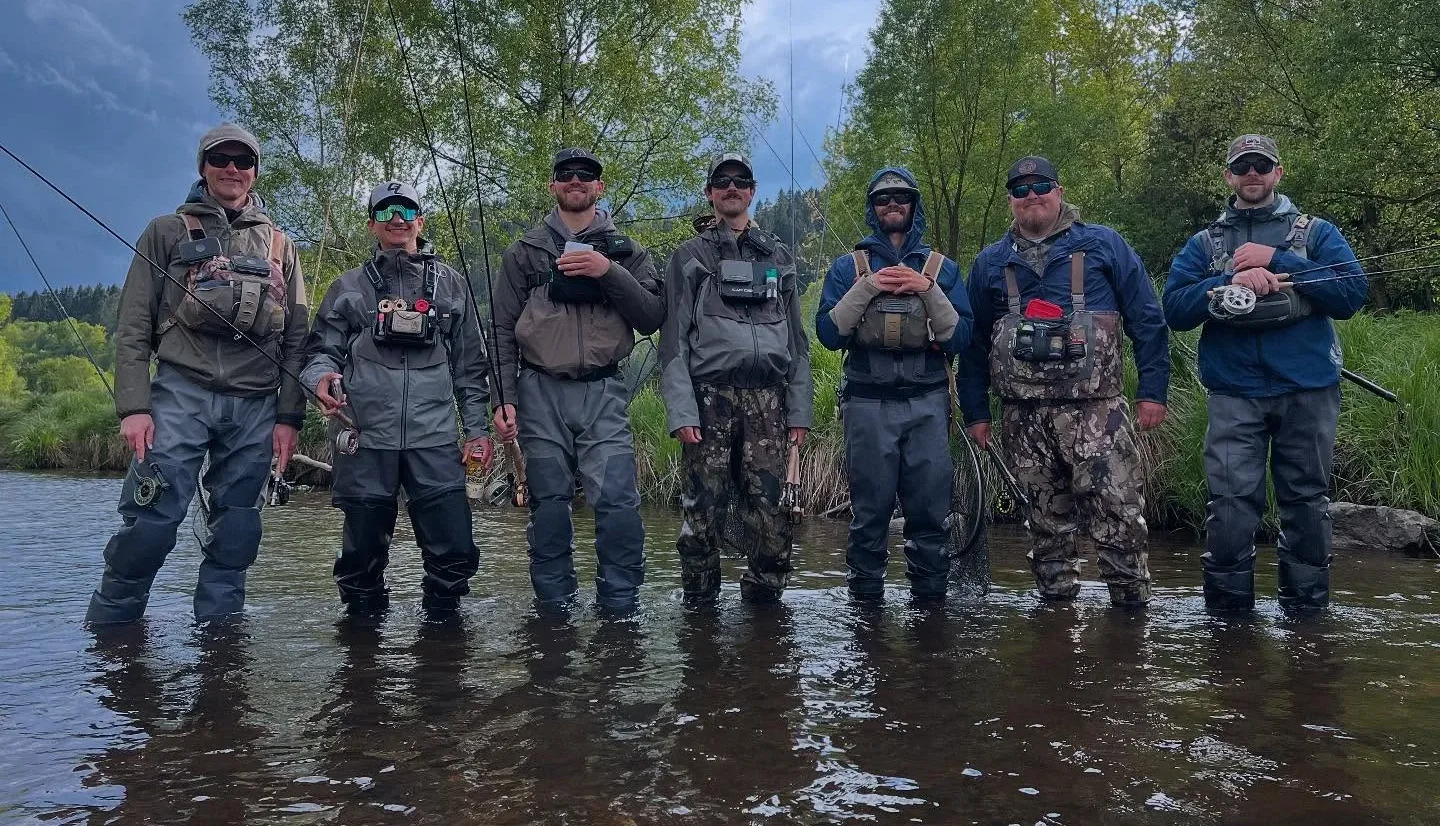
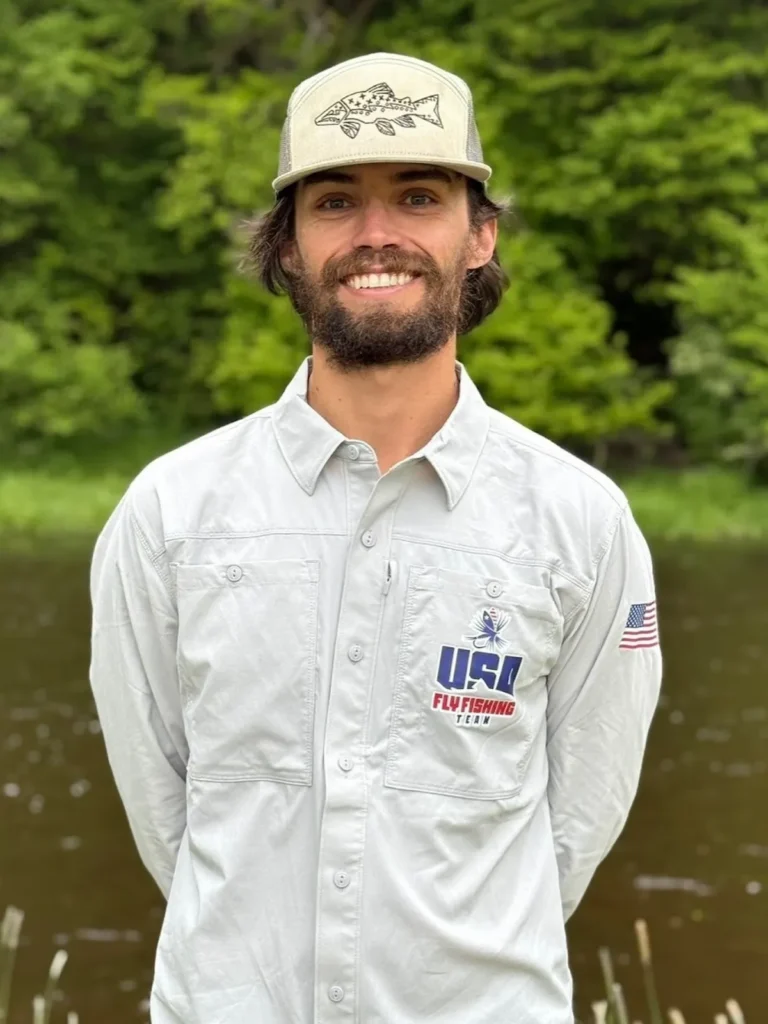
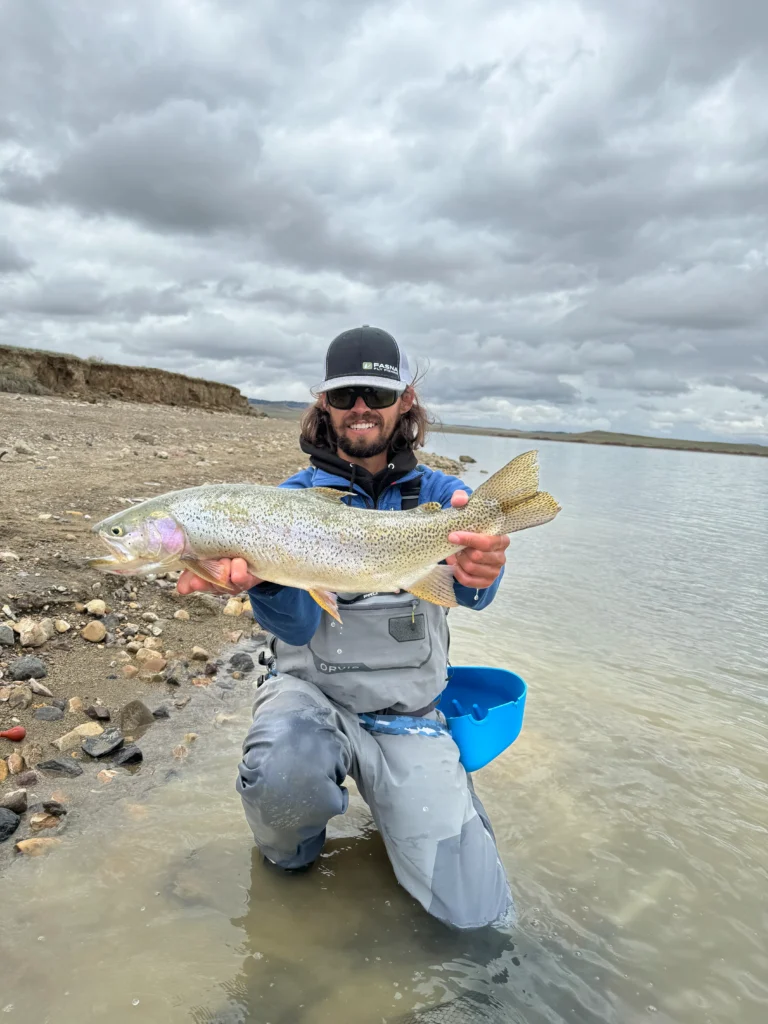
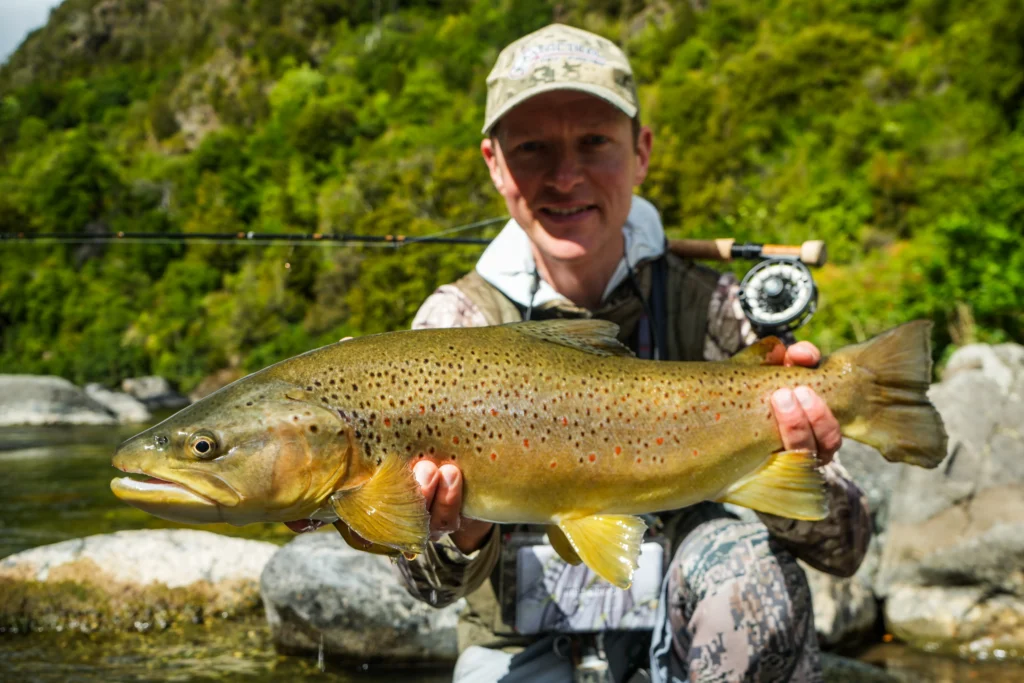
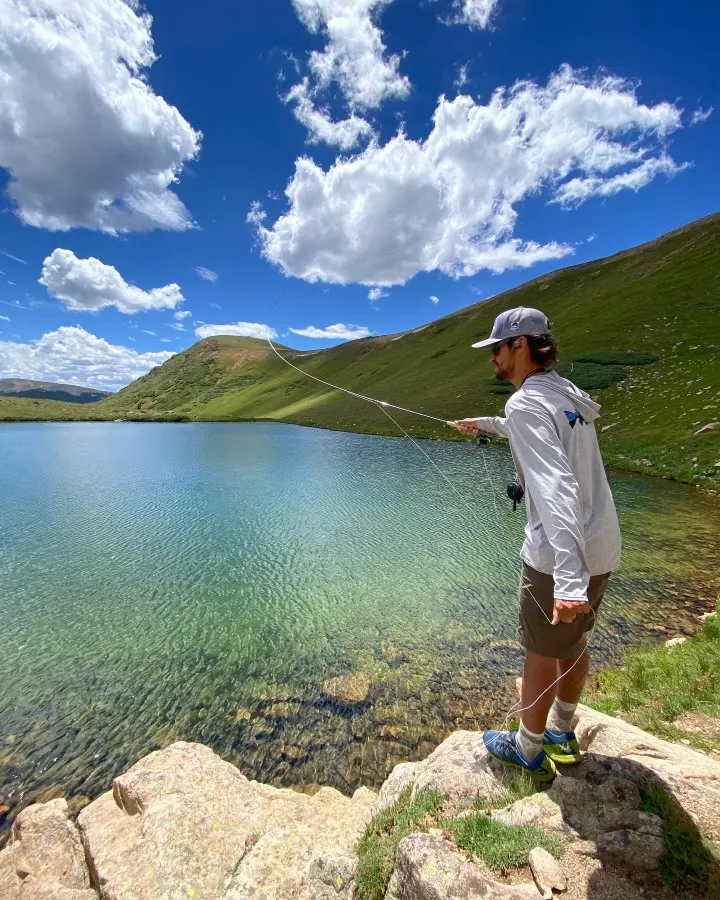
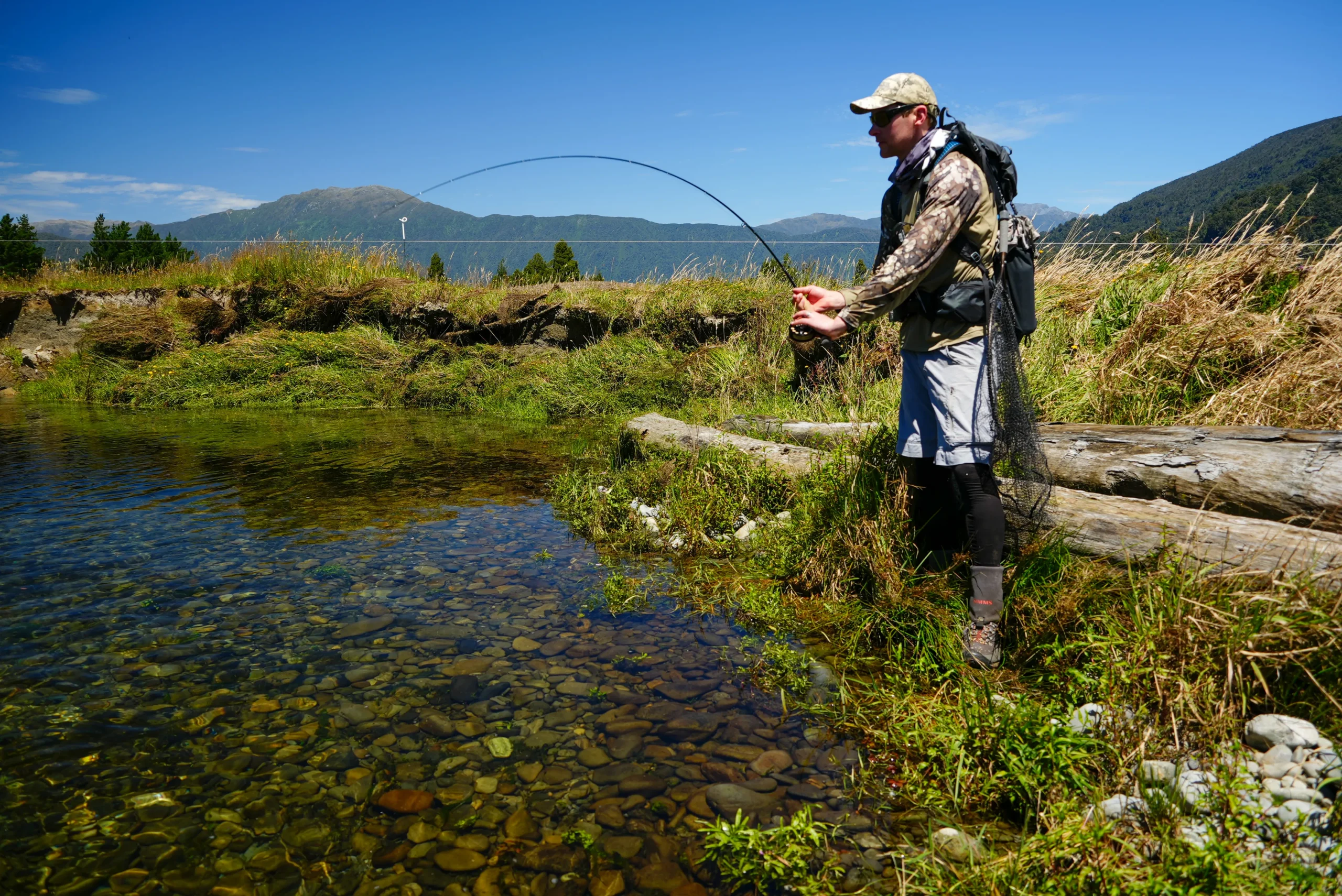
Cody Burgdorff and Devin Olsen of Team USA joined the show to talk about lake fly fishing, one of the most important and most misunderstood parts of competitive fly fishing.
They broke down how they approach a brand new lake, how they work through the water column from shallow to deep, and how they systematically find trout when they have zero information to start with. They also got into the gear, lines, and leader setups they lean on most when the competition is on the line.
Cody Burgdorff and Devin Olsen share how Team USA prepares for one of the biggest fly fishing competitions in the world. They explain why lake sessions often determine championship results, how they break down unfamiliar water, and the progression they use to locate trout throughout the water column.
(01:29) Cody shares how he got his start in competition fly fishing after being introduced to a Team USA member through his local fly shop. Like Jack Arnot and Mike Komara, he worked his way through the youth competition program before earning a spot on the men’s team in 2018. This year’s World Championship is especially meaningful because he’ll be competing on home water.
Devin also talks about the team’s recent practice trip to Idaho, where they spent several days fishing the championship venues and nearby rivers. Beyond the time on the water, the trip gave teammates a chance to swap ideas, compare techniques, and learn from one another before the competition.
(04:23) Devin says lake fly fishing is a core part of competitive fly fishing. At this year’s World Fly Fishing Championship, two of the five sessions will be held on lakes, and some past championships have featured even more.
In boat competitions, two anglers from different countries share the same boat. Each angler takes turns controlling the boat for half the session, and while they’re competing against each other, they often work together so the boat performs well overall.
Depending on the championship, lake sessions are held either from boats or from the bank. When it’s a bank competition, anglers rotate through different beats so everyone gets a chance to fish multiple sections of the lake.
This year’s venues are still being finalized because of low water conditions. The current plan includes Hebgen Lake along with either Sheridan Lake or Chesterfield Reservoir, depending on water levels before the championship.
Not according to Cody and Devin.
The key, he says, is understanding the conditions and choosing the right approach for the day.
Cody says the biggest advantage is being able to cover fresh water and constantly present flies to new fish. Instead of casting to the same spot over and over, you’re always fishing trout that haven’t seen your flies yet.
That doesn’t mean it’s always the best choice. If fish are concentrated around one area or feeding deep during a hatch, anchoring can be more effective. The real key, Cody says, is being comfortable with a wide range of techniques so you can adapt to whatever the lake gives you.
(23:34) Trout don’t always stay in the same part of the lake.
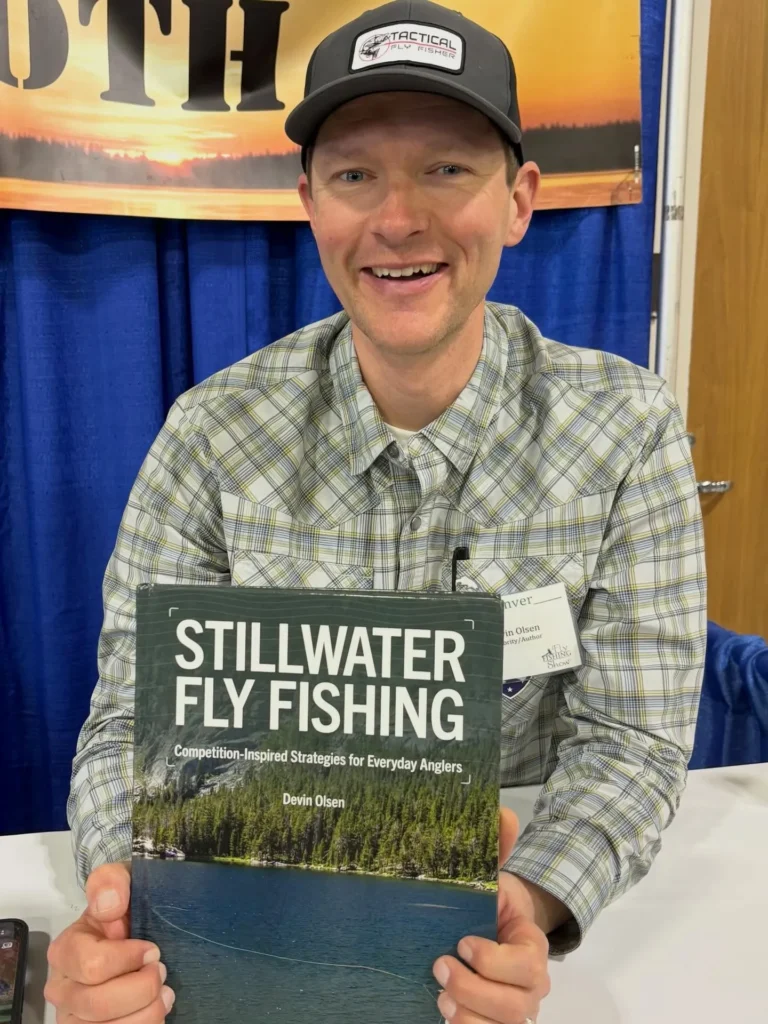
Devin says they might be feeding in three feet of water one hour, then suspend 20 to 25 feet deep later in the day. That’s why he carries around 27 fly lines in the boat. Different lines let him cover different depths, sink rates, and wind conditions. In his Stillwater Fly Fishing book, he even shares sink-rate testing that showed some fly lines don’t sink as fast as their packaging claims.
When Team USA arrives at a new lake, they don’t all fish the same way. Instead, they spread out their approach.
Cody says you don’t need that many fly lines to catch fish. A floating line, heavier flies, and longer countdowns can still help you work through the water column. The key is having a system and letting the fish tell you where they are.
(31:30) When Devin fishes a new lake, he doesn’t try to match a hatch right away.
Instead, he starts with attractor patterns like buggers and fishes multiple depths at once. Once he figures out where trout are holding, he adjusts his fly line, fly weight, and retrieve to keep his flies in that zone.
Cody says preparation starts before you even launch the boat. He recommends checking:
He says there are very few absolutes in lake fly fishing, but doing a little homework gives you a much better starting point.
He pays close attention to water temperature, wind, sunlight, and surface conditions because they all influence where trout hold and how willing they are to chase a fly. On calm days, slower presentations often work best. When the wind picks up, trout are usually more willing to chase faster-moving flies.
Conditions can change throughout the day, and Devin adjusts with them.
Rather than sticking to one technique, he lets the conditions tell him how the fish are likely to behave.
(47:56) Cody recommends keeping it simple with a 9- to 10-foot rod in a 5-, 6-, or 7-weight, with a 6-weight being his favorite all-around choice. Devin also fishes 9½- and 10-foot rods and says shorter rods have been easier on his arm while recovering from tendonitis.
They also suggest starting with just four fly lines (a floating line, an intermediate, a Type III or V, and a Type VII) before adding specialty lines. They finish by sharing a simple level-leader setup that allows quick line changes and helps improve sink rate and strike detection
Episode Transcript
WFS 950 Transcript
00:00:00 Dave: A world championship can be won or lost on a lake session. And finding trout in a river is a big challenge. But finding them in a thousand acres of open water is another. Today we’re joined by team USA competitors Cody Burgdorf and Devin Olson with the World Fly Fishing Championship coming to the western United States this fall. Both anglers are spending countless hours preparing for the biggest event of the year. And while the rivers often get more attention, lakes remain one of the most important and sometimes misunderstood parts of competitive fly fishing. In this episode, you’ll hear how Cody and Devin approach a brand new lake and how they systematically locate trout in different depths. This is the Traveled podcast series where we bring you the best places to fish in the West, and the stories and the people who made this region what it is today. Devin and Cody are here, and today you’re going to find out how team USA anglers break down a new lake in the first hour. We’re going to find out the simplest progression they use to locate trout from shallow to deep waters. You’re also going to find out the gear setup they use most when competition is on the line, and what everyday anglers can borrow directly from the world’s best competitors. Whether you’re fishing from a drift boat, a float tube or the bank, there are a lot of lessons here that can help you shorten the learning curve on local lakes, and this episode is presented by Visit Idaho and Yellowstone Teton Territory, home to some of the most diverse and wild trout waters in the west. Here we go, team USA competitors. These are the top of the game. Cody Burgdorf and Devin Olson, let’s jump into it. How you doing Cody?
00:01:29 Cody: Doing good Dave. Yeah. Thanks for having us. Really appreciate you having us on.
00:01:32 Dave: Yeah. Devin, good to have you back on the show.
00:01:35 Devin: Well, hopefully the audience feels the same way. They’ve probably heard me a little bit too often.
00:01:38 Dave: No, no, that’s a great thing about the podcast, man. I know people never get tired of having more, even if it’s more of the same good stuff. So today we’re going to get into a little update on the big event that’s coming this year. You guys are competing in eastern Idaho, Montana. We’re going to talk about that today, and we’re going to dig in and dive into lake fishing. I think that’s always a big hot topic. I know Devin, you’ve talked about that before. And Cody, we’re going to get your perspective on it as well. Just on, you know, what you have going with the team USA and everything here. So maybe we’ll start with you, Cody. Give us an update on where you’re coming from and in your connection, how you, when did you get started with team USA?
00:02:14 Cody: Yeah, yeah. So I grew up kind of in the Lafayette area. I still live in the area. I’m kind of in Broomfield, Colorado. Um, but kind of as I was growing up, um, was influenced by the local fly fishing shop, uh, which had a team USA member at the time, Rob Conda. And so I kind of got interested in competition fishing and that led to the youth program. So I think similar to maybe a couple other guests you’ve had, like Jack Arnott and Mike Kamara who are also on the team. Um, that’s kind of how I was exposed and brought up through the competition fly fishing scene. So I first made the men’s team starting in twenty eighteen. Um, was first part of the world team and competitor in twenty twenty one and stuck with it since then, so I’m really excited and focused recently on getting ready for this Competition World Fly Fishing championship here that we have in the US. Um, it’s going to be kind of a special event and something that, you know, not a lot of competitors get to do, which is compete on their home turf.
00:03:12 Dave: Yeah, it’s going to be good. And Devin, how about you? What have you been up to the last uh, I guess we’re getting going in the summer here. What’s been keeping you busy?
00:03:20 Devin: Yeah. Well, I just got back along with Cody. Um, we were at a team practice last week, so we. I spent a little bit longer out there with, uh, our teammate Mike Kamara. I went out a bit early and so I was in Idaho for eight days. Uh, just trying to fish as much with either the venues that we’re going to see or kind of applicable water. There was a couple of the rivers that were too high while we were there. So we were trying to find some practice topics that would work for them, uh, water types and species and stuff. But, uh, yeah, so I, we just had a long practice. It was really fun. Uh, it was kind of hard coming back to reality, just like coming back from any comp. It was. It was a good time because it was basically a fishing vacation, but with some really serious anglers. And whenever we get together, I have a great time because we all fish sort of in isolation. Uh, we’re spread out a lot. And so we don’t get to see each other very often. But then when you get together and you see what everybody’s been working on and the time since, and it’s always a lot of learning that goes on.
00:04:23 Dave: Yeah. Nice. Did you guys do any, uh, lake fishing out there?
00:04:27 Devin: Yeah, lots.
00:04:27 Dave: Oh you did? Yeah. Is that going to be a pretty big part of this event? Is that is that always, uh, like could be an X factor in any of these events?
00:04:35 Devin: Oh, it’s, I wouldn’t say it’s an X factor. It’s a core component.
00:04:39 Dave: It’s a core.
00:04:39 Devin: Yeah. That’s yeah. I mean, two out of the five sessions in this championship will be lake sessions. I’ve been at previous world championships where three or even four have been, uh, part of it. Like the first championship I did back in two thousand and nine. There were four lake sessions and one river session when we were in Scotland, and then when we were in Tasmania in twenty nineteen, there were three lake sessions and two river sessions, so there’s always at least one. Um, so some years it’s, you know, more important than others, but even in the years where it’s only one, if you, if, if you don’t know how to fish lakes, then you’re not going to succeed.
00:05:18 Dave: That’s it.
00:05:19 Devin: That’s the way it is.
00:05:20 Cody: Yeah. Just to kind of echo what Devin said, um, kind of my exposure and kind of coming onto the team. Um, I worked in the industry for a guy named Josh Graffam who’s a member of the team. And one thing that he said that really stuck to core was, uh, you really want to get good at lake fishing because lake fishing, you can kind of control your own destiny. And, and what he means by that is a lot of times we’re doing kind of boat fishing, um, which allows you to kind of pick and choose where you want to fish. Um, whereas, you know, on a river section or something like that, you may just be assigned a beat that may or may not be the best piece of water. So, um, it really allows you to, to kind of make your own decisions and create your own luck. Um, which is kind of the cool part about lake fishing.
00:06:01 Dave: Right? When you guys are lake fishing, aren’t you fishing? Describe a little bit, we’ve talked about this in the past, but how it works. Aren’t you fishing with your competition in the boat or describe that a little bit.
00:06:11 Devin: Go. Do you want to take it?
00:06:12 Cody: Yeah. So, um, essentially, uh, like in a world championship, um, you’re going to get a matched up. If it’s a boat lake competition, you’re going to be paired with someone from another country and essentially either a flip of the coin or it’s sometimes odds and evens pairings. But, um, for one half of the session, you’ll get control of the boat. And then the other half of the session, your competitor will get control of the boat. Um, generally speaking, it’s best to try and work together kind of as like a team. If you work together, your boat generally does better than say, if you’re kind of trying to edge out the other person for your hour and a half and vice versa. Um, so it’s kind of cool. It’s, it’s, we’re still competing against each other, but it still allows you to kind of work together with someone from another country. Um, where that switches up would be like bank fishing. Um, typically that’s done in beats. So it’s more similar to rivers. And so that’s much more of a solitary competition when you’re fishing from the bank in the lake.
00:07:10 Dave: Is that common? Do you have both bank and boat fishing typically at the events?
00:07:15 Devin: Uh, it’s usually one or the other.
00:07:17 Dave: Yeah. Okay.
00:07:18 Devin: It kind of just depends upon the country. So some countries, they, uh, especially some of the Central European countries or even some of the Western ones, especially the drier ones, they don’t tend to have a lot of large lake fisheries around. A lot of their larger reservoirs are mainly kind of warm water type fisheries. But in general, we don’t fish for anything but cold water fish. And so typically I would say, um, we see a lot of bank fisheries and some of those championships, but it’s probably half and half. I would say over the years that I’ve seen like half the time you’re in places where there’s bank fisheries, half the time it’s boat fisheries. But I personally enjoy the boat fishing the most just because, like Cody said, you can make your own decisions and choose where to go. And and that leaves more up to you. Instead of you just being destined to whatever beats you end up drawing. Though on bank sessions that we typically do what’s called a rotation. So you fish a each beat for an allotted amount of time, and then you rotate X number of beats to the left or right so that you kind of get at least a couple portions of the lake to fish.
00:08:29 Dave: Gotcha. And are you guys, did you do you know which lakes you’re fishing? Is there a few of them this year?
00:08:34 Speaker 4: Uh, yeah. Well, it’s still a little bit in flux.
00:08:38 Devin: Um, because of the, you know, record setting drought, frankly, and the winter that never was in, uh, the western United States this year. The water situation has forced us to come up with a couple of contingency venues that we can use if things get lower, um, to begin with. We’re hoping to have Hebgen Lake and either Sheridan Lake or Chesterfield Reservoir. Mhm. That’s still the plan for now. Hebgen is actually looking a little better at this point. From what I’ve seen, it’s basically topped out right now. So that’s nice to see. And Sheridan, we can use no matter what, but Chesterfield is one we might use as long as the water holds on because it’s a little bigger venue than Sheridan. Sheridan fitting eleven boats on it would be kind of crowded. So um, so that factors in. But you know, they’re all good lake fisheries and we’ll be happy with wherever we’re at.
00:09:33 Dave: Yeah. Yeah. You guys, you’ll make do on the on the trip. What maybe describe let’s talk about a little bit on technique. You know, I think that that’s something we always love hearing from, you know, you guys because you’re at the highest level. You know, if you were just talking to each other here and talking about what techniques you’re going to use, is that pretty straightforward? Are you guys going to be doing similar things, or do you think it can be all over the place on what that looks like?
00:09:55 Cody: Yeah. So, uh, I think, uh, kind of the cool thing is, and I’ll let Devin kind of chime in on this because, um, I think techniques, you can talk a lot about that and things that we’re doing. But generally, I think once you’re kind of at a, at a high level with this type of fishing, we’re kind of limited to drift boat fishing. So lock style fishing and competitions. Um, obviously when we go practice and do things, we can use other techniques, but generally speaking, we’re all fishing and do using lock style techniques. Um, so there’s a lot of crossover with the techniques. However, um, there’s a lot of different approaches and styles to fishing lakes, um, which I think is kind of the most interesting part and just kind of giving an example of, you know, years of competition, you know, there could be a lake where I catch, you know, ten fish in a session, and Devin comes and catches ten fish in a session. And we could be doing completely different things. So that’s kind of the cool thing with lakes is depending on how you target them and what you’re trying to do is you can use the same techniques, or you can use very different techniques and still be equally successful.
00:11:01 Devin: Yeah. So I think a lot of it ends up being conditions based. So if anybody’s read my Stillwater book, I try and focus on this a lot. But the conditions based on wind, based on temperatures, based on hatches, all the normal typical variables that good fly anglers should be paying attention to, they all become very important on lakes, too. So Cody mentioned that we’re doing something called lock style fishing. So we’re fishing from a boat, but it’s broadside to the wind. And then we have a drogue that’s sitting out the back of the boat. And then you’re typically casting downwind opposite of the drogue and then you’re retrieving back into that drift. So basically you’re taking up slack and then also retrieving. Additional to that slack to move your fly somehow. Um, if you’re fishing a, you know, flies that you’re retrieving or you could be fishing, you know, an indicator style rig. We can’t fish indicators in competition, but you could fish, you know, a dry fly to suspend something and just try and fish it static. And then you just retrieve your slack to keep up that slack as you drift into it. But that introduces some very different dynamics from, I think, what the standard sort of approach you see on a lot of North American lakes is, um, because, you know, most of the time the anglers that I see out there fishing lakes, they’re doing one of a couple things. They’re either trolling around in their belly boat or their pontoon boat and just like kicking around with sinking lines and not really casting much, except occasionally to, you know, maybe finish a retrieve and check flies, or they’re throwing an indicator rig with some chironomids or balanced leeches or whatever under an indicator or the third one, but probably I would say the least common at this point is they’re actually casting and retrieving their flies with, you know, various sinking lines. And so we’re doing all those things, but we’re doing it from a drifting boat. Uh, except for the trolling, we aren’t allowed to troll, so we can’t put our flies behind the boat. Uh, that constitutes trolling and that’s not allowed. So we have to keep our flies out front downwind. But other than that, the sky’s the limit. Like Cody said, you can fish a whole lot of different ways. You can fish super slow and suspend your flies. You can fish kind of in between with some nymphs or some buggers, leeches, lures, whatever on on midge tips or slower sinking lines and try and fish them slowly or fish heavy flies that you can jig. Or you can fish really fast sinking lines and rip the heck out of them. And depending upon the the wind, the temperature, and the mood of the fish and their depth, all of those things can be very good.
00:13:36 Dave: Right? Is the drogue that whole setup, do you think that’s a more effective way to fish just in general on lakes than the other method you talked about?
00:13:45 Cody: Um, you know, I think it can be a very effective method, but I think, um, kind of the biggest point to take away from, you know, what Devin went over and what we discussed with techniques in this is that just being able to be comfortable with many different approaches. So having a drug, being able to cover water slowly, that’s great if fish are spread out, um, especially if they’re feeding in, let’s say big large basins, weed beds, etc., you can cover a lot of fish. You can cover new fish. Generally speaking, you know, fish will tend to drift or at least go upwind, which would be with the current in the lake. And so you’re usually drifting and presenting your flies very effectively to those fish. Um, but at times, you know, there’s times where, let’s say a hatch or something like that that’s very deep. Um, you may do much better being anchored in an area that has a concentration of fish. So while drift fishing is a great technique, it’s just kind of one of many that we deploy. And I think that’s the biggest takeaway from us fishing is we can use a lot of different techniques and be comfortable with a lot of techniques. And as a recreational angler, I think the more techniques you can learn and be comfortable with, the more success you’re going to have.
00:14:57 Devin: I think for, you know, sort of the general Stillwater audience, what ends up setting block style fishing apart, which can be good or bad, like Cody said, is that you are covering ground. And so in situations where fish aren’t only sitting on one spring hole or around one piece of structure or whatever like that, then fishing is really effective because you can constantly cover new fish. You’re never just repeatedly casting the same fish over and over and over and over. And they’ve seen your flies already ten times. You know, you’re covering new fish constantly. And as a result, it’s kind of like drifting in a river, in a drift boat and like casting to the bank with streamers. As you’re going down, you’re hitting new bank all the time. For instance, you’re doing the same thing with lock, stock fishing. The problem is, if you’re in a situation where in a lake where there’s a hot spot zone, where the fish are all concentrated around some feature, then that’s when lock style fishing is a less effective way to fish because you can repeatedly drift into that, but then you’re going to drift on top of those fish too, and, you know, roll the drogue over them and everything else. So that’s when I would say lock style fishing is less effective. But for me, aside from just the reality of the rules aspect, where we have to fish that way for competition, I just enjoy it a lot more. Personally, I don’t like anchoring up and just repeatedly casting the same spot that, you know, that gets old for me because a lot of times you have a lot of success early, but then once you’ve cast to the the pod or the group of fish that’s in that area, you know, But it’s just like if you are in a river, your best presentation fishing streamers to fish on a bank or in a run is the first time they see your fly. Every time they see your fly after that, you have a diminished return on those casts. And so if you’re in those concentrated areas of fish, that’s when anchoring up and probably fishing a slower method, uh, either indicators or just retrieving some other flies really slowly that are less sort of attractor based, but actual more imitative based. That makes more sense. But when you’re locked cell fishing, you can still do that. But, you know, I think it’s a great way to fish when the fish are willing to respond to the sort of, uh, attractor based methods or just running gun style fishing where you’re getting a reaction based bite.
00:17:22 Cody: Yeah, yeah. And totally agree with Devin just to kind of keep building on that is, um, kind of the biggest difference I see, I think from us in competition and fishing is, um, using a lot of techniques that involve like attractors and getting a reactionary bite. Um, so if you look, I mean, just growing up, man, and I, I fished spoons and spinners and, um, those are all just kind of reactionary, you know, spin fishing baits that, that work really well for trout. And so that lock style combination allows you to cover water, see new fish and get reactionary bites and just opens up, I think, a whole new kind of fun dynamic to lakes. Like Devin said.
00:18:02 Dave: There’s a place where every bend in the river feels like it’s been waiting for you, where the air smells of sage and pine and trout rise beneath the shadows of the Tetons that places visit Idaho’s Yellowstone Teton Territory, the heartbeat of fly fishing in the west from the legendary Henrys Fork to the winding South Fork of the snake. This is where big fish and bigger stories live. You’ll find endless waters welcoming towns and locals who still wave as you drive by with drift boat in tow. This is your starting point for world class fly fishing, year round recreation, and wild country that stays with you long after you’ve packed up your gear. Check it out right now. That’s wet fly swing dot com slash Teton T e t o n. Visit Idaho for yourself and support this podcast while you go. I think it sounds like a great right. It could be mixed in if you’re not in comp, right? Just somebody just out there. You do the, the loch style to maybe find some of the fish and then you maybe transfer over to anchoring up something like that. What is I picture, you know, are you guys, can you are you, you know, covering different sections of the river on the loch? Can you cover the shallows and loch, you know, use the drogue through there or are you hitting more deeper water? Describe if somebody wanted to do this, how would they cover the water?
00:19:14 Devin: Well, for instance, one of the lakes that we were fishing during practice, I mean, uh, we were fishing for damsel feeders and like three feet of water in the shallows at one point, uh, that, that were eating damsels in Calabasas. And then, um, you know, an hour later we were out over like eight to fifteen feet of water. And in that same lake I’ve when the water’s a little bit warmer and the fish are, are kind of pulled up deeper, closer to the thermocline, etc. when it sets up and, you know, sort of midsummer, I’ve caught them twenty, twenty five feet deep rocks off fishing. So, um, loxdale fishing doesn’t really limit you to a certain depth or anything. You just have to be capable of deploying different gear to cover all those depths. And that could be different weights of flies that can be different fly lines. If you take a look at my, uh, Stillwater book and you look at the picture of my line bag, it’s kind of obscene how many lines I often carry in the boat.
00:20:12 Dave: Yeah. How many lines do you have in that bag?
00:20:16 Devin: Uh, right now, probably like twenty seven lines, I think. Last count.
00:20:22 Dave: twenty seven different lines. Different types of lines.
00:20:25 Devin: Um, no, you don’t need all those, right? Like, uh, I rarely use all those, but I like to test different lines to see how they behave in different conditions. Because, for instance, there are lines that I like to fish when it’s, um, not very windy because they have, uh, running lines that shoot really well, but those running lines, if it’s a windy day, they tend to tangle a lot worse. And so I tend to go to lines that actually have thicker running lines and are less of a shooting head configuration and more of like a traditional sinking line style for days that are really windy. So things like that, you know, that are the reason why I have so many lines. Plus I like to test different sink like there’s, I’m looking at a table in my book right now of a, some actual swimming pool testing I did of sink rates and, um, just like, uh, the video I did about tippet and diameters a couple weeks ago, there’s vastly different sink rates in a lot of lines than what’s labeled on the package. And so being able to test that out and see how fast various sinking lines actually sink and having them on the boat to do that is helpful when I need to build sort of my own like countdown table so that I know how, how long to count to, uh, get to certain depths and things like that. Yeah.
00:21:46 Dave: Exactly.
00:21:47 Cody: Yeah. And just going on top of that too, Dave, you made a good point. Like with the box out relating back to Devin’s point, um, just using it to, to help find fish and concentrations of fish. And you can have twenty seven lines or you can have, you know, eight lines or you can have one line. Um, you know, it’s just kind of like taking a knife, right? If you wanted to make a cut with a steak knife versus a scalpel. And in comps, you know, time is everything. And so we’re trying to be very precise and get flies to certain depths with certain retrieves, you know, with the least amount of time. But let’s say if you wanted to lock out, like Devin was saying, and you wanted to go from two to twenty foot just to find the fish and you had a floater, you could just use heavier flies and longer countdowns to increase your depth on flies, right? Yeah. And so you could work the water column and figure out where fish are. And you’re going to eventually, you know, get to fish and finding where those depths are, you’re just going to spend a lot more time doing it than if you have these, you know, multitude of lines and things that you could switch to that help get your flies down quicker and present them better. So sometimes, even though you can wait a fly really heavily, once it’s down there, it might not be a great presentation. And that’s why using some of these sinking lines might be a better option. So, um, you know, you it’s kind of like, you know, uh, you’re on nymphing and kind of the popularity and craze that that’s become, you know, you can start off doing that with a normal streamer that you had. And then once you figure out what you like doing and what you like fishing. So if you like fishing bugs, maybe you fish shallower and maybe you want just some shallower lines, or if you like fishing streamers and reactionary bites and in deeper places. Like maybe you want some heavier sinking lines, but you can kind of get into the weeds as far as you want. Um, you know, we have to go pretty far into the weeds if we want to be competitive.
00:23:34 Dave: Yeah. That’s cool. And the depth is a big part of this, right? Getting down to the right depth, do you guys do that pretty quick when you’re out there. I mean on the comp, I guess you probably have a little bit of an idea of what the fish are doing. Like if you’re day one out there, you didn’t really know, where do you guys start? How would somebody figure out that, that correct depth? Or is that the, is that the, is that the big question? Is that always the, the big. I know Phil talks about depth retrieve pattern, right. That’s kind of the thing. But you guys, is it the same thing you guys think about?
00:24:04 Speaker 5: Yeah. Well, so the interesting part here, just coming.
00:24:07 Devin: From the background that I come from and the all the different places that I’ve fished across the Western United States, the so many of the most famous Stillwater fisheries that we have out there are Productive, weedy, shallow lakes. And they’re the ones that get talked about all the time. And, you know, Phil’s podcast is called the Lateral Zone podcast, right? Um, and the lateral zone that, that photic zone where the sunlight is penetrating to and where actual weed growth and vegetative growth happens. There’s a lot of food that’s produced there, but the reality is there’s a lot of lakes out there that that’s not the base of the main food web for the trout, because there’s a lot of lakes that aren’t sort of eutrophic or mesotrophic and shallow and productive. There’s a lot of them that are deep, cold and steep sided, and they just don’t have lateral zones. And we get stuck on those in competitions all the time. And, you know, the food base in that lake a lot of times is zooplankton. And so you can’t go despite how many people have said they’ve tried. You can’t imitate a cluster of zooplankton because they don’t cluster. If you’ve actually ever done any zooplankton sampling like I spent a lot of time doing when I was doing my graduate degree. You have to filter them with a wide net. You’re not going out there and, and just getting clumps of zooplankton. You look over the side and you see little individual organisms. And so when fish are feeding on that type of stuff, they literally can be anywhere in the column. And those are the lakes that I think end up being harder, because there’s so much more of the column to search through. It’s pretty easy to go search through eight to ten feet of water in the littoral zone. You’ve got basically like, if you’re going to actually choose sinking lines, you got like two or three lines that you could fish in there before you’re on bottom. Um, if you’ve got any sort of slow sink rate or like any sort of countdown and a slow retrieve you. You know, basically up to a type three and um, maybe five if you rip it. So I don’t know, I think, um, the lakes that are easiest for us to as fly anglers to cover are those shallow, weedy lakes. And they, they, they also produce a ton of insects. And so those are the lakes that get all the match, the hatch type fishing going on. But there’s a lot of other lakes that are out there that aren’t like that. And those lakes are a challenge to fish. And so, you know, you’ve got to be able to search through the depths on those. I think in competition, you have to sort of come up with, um, I guess a, a system like a, a set amount of time or whatever that you’re going to donate or, you know, commit to a certain line, a certain count down certain flies if you have no information to begin with. And we get that a lot. We get on lakes that we aren’t allowed to fish beforehand. So, you know, we might go do some lake fishing and practice, but it’s often on some lake that might not even be at all close to the competition lakes. And so you’re basically guessing first session and you’re a guinea pig. And so, you know, you’re hoping that you pick up something from watching the local angler like the, the home team, um, if you can see them, but a lot of times it’s just guess and check and guess and check and guess and check and hopefully you, you know, see something. What you know is I try to do, if we have the time or the capability is we go scout the, the lakes beforehand. And, and these days, you know, as Cody and I both know, electronics can help you a lot. Yeah. With that on, on some of those lakes that are harder to, to decode and have a lot more depth and what not to search through because there’s a, that is one thing about lakes, there can be a lot of empty water where, uh, you can be casting fruitlessly all day to water that really doesn’t have very many fish in it. And, uh, even if you’re the most skilled Flagler in the world, if you’re casting empty water, you’re not going to get anything to eat your flies.
00:28:05 Cody: Yeah, yeah. I think Devin, uh, brought up some awesome points there that I would just like to echo and kind of give some experience and flavor to, but, uh, so going through kind of your first question on how we pick apart water and, and how we get to kind of the best solution. So kind of one thing that I do a lot, and I’m lucky Jack lives pretty close to me. And so we’ll fish lakes together in practice. And so obviously two, two brains are better than one. So if you have a good fishing partner, yeah, that always helps. But we’ll start on kind of completely opposite programs when we’re practicing. So he might start with something that’s going to cover high in the water column. I might start with something that’s going to cover deeper in the water column, and we’ll just try and cover from shallow to deep until we kind of dial in the fish and meat and to, you know, similar techniques. And then really, you know, go into the, the retrieves and then the patterns after that, once you find the depth in competitions, you know, like Devin said, we try and practice if we can, if we can’t, um, it’s really just trying to build upon your teammates knowledge. And, you know, that’s the cool thing with the team that we have is, um, everyone’s a really high level angler, but I also trust all the information that I get from these guys. Um, so anything that they tell me I’m, you know, willing to go do. And so I can kind of branch off from that if I’m struggling or if things change. So, um, an example would be like in the Czech Republic last year. Um, you know, first session, Mike Kamara was catching fish pretty high in the water column. Um but once they saw some pressure they started to spread out and started to go maybe a little bit deeper in some areas. So I kind of started with the same program. And as I went through, I kind of noticed the same things and just kind of progressed to a little bit deeper techniques. So using a very similar thing that he was doing, but just maybe getting a little bit deeper because I could see that progression. And a lot of that comes from, you know, prior experience with these competitions, but also just like Devin said, kind of having a game plan of systematically going through your progressions and getting to the best choice. The second kind of cool thing that I thought Devin brought up, that’s really not talked about as much was like he was you’re saying, there’s a ton of lakes that don’t fit that perfect mold of a littoral zone. Um, so living in Colorado, you know, a lot of our waters near me are used for Western storage, uh, you know, and water use. So you have a lot of Canadians that were dammed up by rivers. And so you get these really, really deep basins, um, where there’ll just be bits and pieces of that lake that’ll be a littoral zone. And at times that littoral zone will be used by those trout, but you know, not to, to hotspot anywhere. But, you know, um, you know, locally to me, there’s a lake that grows really big trout. Um, that’s a very deep lake and it’s got a bait fish population and I went up, you know, kind of may time frame, you know, expecting, you know, chironomid fishing, bug fishing, etc. that’s kind of something I experienced bank fishing. I’d never really fished from a boat and I kind of found the exact opposite. I found fish that were in forty to fifty feet of water, suspended in twenty to thirty feet, eating bait fish, something that you’d expect to see, like, you know, tuna in an ocean, for example. So, you know, at times of year, there’s, you know, those fish are living in very deep places and have plenty of food in those areas. Um, so not only do you have the, the daphnia and plankton and things like that, like, uh, Devin was talking about, but also these baitfish sources and other things in these lakes.
00:31:30 Dave: Gotcha. Wow. That’s yeah. So what you guys are saying, there’s, there’s quite a bit of diversity. It sounds like, and I, I know we’ve heard that before. I think sometimes I, I’m trying to think, I think we might have even had a guest or two that have said, you know, focus on the shallow water only, not the deep water. But yeah, I mean, if you’re given the deep water and that’s where the, you know, there’s the majority of water, you have to fish the deep water. What would be like when you’re starting out finding that right depth? What’s the fly you’re putting on? Or are you kind of matching the hatch sort of thing? Or do you have some attractors you guys are using?
00:32:00 Devin: Uh, I mean, I would say for typical deep water scenarios, if they’re daphnia or plankton focused, there’s no hatch to match. Mhm. You might get some deep water chironomids, but they’re typically very small over those depths. They’re not like the shallower weedier large species that you get in the littoral zone. Most of the deep water chironomids a lot of them tend to be smaller. So you could certainly fish some chironomids, especially early in the year. But that’s another thing. Like a lot of the hatches that are famous out west, they kind of taper by mid June, and then you get into other hatches and then by the fall there’s still some scattered hatches, but they’re not nearly as dense as they are in the spring. So, you know, it tends to be usually down to some sort of what the Brits would call a lure game. So you’re using sort of flashy or colorful or whatever type, you know, movement oriented, uh, attractor patterns that they colors, um, doesn’t have the same stigma of that word that it seems to, in our, our parlance here, like.
00:33:04 Dave: The blobs and boobies and stuff like that.
00:33:06 Devin: Yeah. Blobs would be an example, but there’s plenty of others. Yeah, lots of of typical marabou bugger type things that we would call buggers here. They would just call ours. Um, so when you’re, you could fish any number of those and everybody’s got their favorites versus, you know, with colors and, and flash and whatever else. But I think one thing that I tend to do if I have no electronics and I have no information, um, I try and actually spread my rig out to begin with so that I have flies in multiple parts of the column. So in those situations, I tend to probably fish shallower lines, but fish heavier flies. And then I’ll have, you know, some, uh, I’ll typically have a three fly rig and they might be six feet apart on the rig, each of them, uh, maybe six feet from my line to my first top dropper, six feet to the next middle dropper, and then six feet to the point fly. And if you have those all weighted and you have a shallower line, then you tend to get. And as long as you’re not retrieving quickly, then you’ll get a vertical spread in your leader throughout the column. And if you start to catch fish and they happen to mostly be top dropper or middle dropper, then maybe you pull off some weight at that point and you just fish lighter flies and keep that shallower line. But if they happen to almost all be on the point fly and you’re only getting them if you make slow retrieves and you’re counting down a long ways, then that suggests to you, well, most of these fish are probably deeper here. I should switch to a a faster line and either keep the same flies or go to lighter weighted flies again, but let the line actually do the probing of the depth for me. So there’s lots of ways you can get your flies in the same depth based on either the weight of the flies themselves or the line that you’re, you know, attaching them to, and you get to decide which way is best? But that sort of probing vertical presentation early on can help you at least get an idea of where the fish might be located, at least, uh, in better densities in the column. And then you can try and adjust your, your line and your flies and your depths and your retrieves, uh, once you’ve hopefully figured a little bit of that out to really start to get your flies there more permanently, or at least through longer parts of your retrieve.
00:35:33 Cody: Yeah. And I, uh, I don’t think I would really add anything to what Devin said in terms of if he had no information, that’s pretty much exactly the way I would do it. Um, the nice thing though, I’d say is if you’re able to put a boat on a lot of places these days, you can generally find something on the internet. And so I would one hundred percent try and do some sort of pre scouting of whatever lake you intend to fish. The biggest things I would look for. Ideally, if you could find a depth map, great. If not just a generality of maybe how deep the lake does get. So, you know, if it’s a shallow basin, if it has drop offs, um, you can kind of generally tell if it’s a big lake and it doesn’t have a very deep point, then a lot of it’s going to be shallow or vice versa. Other things that you can look at that I’ve just seen kind of as generalities. And so I’ll say a lot of things in fly fishing that I, at least I base my decisions and maybe some other competitors do, or just general trends that we’ve seen. So I’ve come to realize there’s not a whole lot of absolutes in fly fishing, but there’s, there’s some general trends you can follow. And so some of the other things I might look at is stocking reports of lakes. For example, if the state has any of those available, um, what type of fish they’re stocking. So not only species but maybe what size. So generally speaking, you know, if a state’s talking, you know, smaller fish versus larger fish, that might play a role in how you approach that lake based on your prior experiences. The other thing is just generally what other information you can find online about hatches or, or food that’s available to the fish or maybe other people’s experiences at time of year. So you can start kind of crossing off some things on that wide variety of list of things to try.
00:37:17 Dave: Yeah. That’s great. So yeah.
00:37:19 Devin: And if you, if you bring things back to basic biology and some observations you should make while you’re out there, I have a whole chapter in my Stillwater book that it’s, I think it’s the longest chapter in the book that’s all about sort of breaking down lakes from a biology and just a sort of science and limnology perspective and patterns that you see at different times of the year and things like that. But and so it’s hard for me to cover that in just a few minutes, obviously, because it’s pretty complicated topic. But one of the main things that rules the Trout’s world is temperature temp, right? They are basically their metabolic rate is determined by the temperature of the water they’re in. And so based on that, if it’s if you take a even just a surface temperature in the spring, the depths aren’t are likely to get sort of gradually lower as you go deeper. But a lot of times in the spring, the lake is closer to isothermal is what we would call it. So basically all the same temperature. And then as you get into summertime like this, you start to have stratification builds. So you’ll have a, a top layer that’s mostly mixed that some lakes have very deep thermoclines that are thirty, forty feet deep. Others have them, you know, quite shallow. They could only be ten, fifteen feet down. So, um, but if that surface temperature is uncomfortable for trout, you know, if it’s in the high sixties, low seventies, number one, I wouldn’t be fishing there personally, even if the fish are located where the water temperature is more comfortable, you got to fight fish up through those temperatures. So you’re doing them a disservice if you’re, you know, catching them and fishing through that super warm water. But if the water is at a good temperature for the fish. And the sun is, you know, relatively low and you have some chop. Then the trout have no real reason most of the time to be deep. If they’ve got food source up shallow. So that’s when you can look to those lateral zones. That’s when you can look to to zooplankton that are higher in the column. Um, for example, Daphnia, a lot of folks don’t know this, but they’re photophobic. And so they tend to move vertically in the column throughout the day based on sun angle. And so they can go deeper when the sun gets higher and they’ll come up shallower when it’s lower. So you’ll get that reaction. Uh, and then, you know, but if the, if the temperature is a little bit warm, like if it’s getting into those mid sixties, it’s still okay to fish, but the fish don’t really want to get up into the super shells unless they absolutely can only find food there. Then they’re gonna, you know, they’ll be down eight, ten to twenty feet, um, closer to wherever that thermocline is, as long as they can still find food there, right? And then you’re going to respond to things like wind and chop and sun throughout the day. A lot of times fish tend to be a little bit shallower in the mornings. And when the sun’s low and then as the sun comes high, they go down a little bit because it gets less comfortable. And they also respond to things like overhead predators, right? They, they live in a world where ospreys are reality. Um, and then as the sun gets lower later in the day, it’s the reverse. They start to come shallower again. Uh, so some basic thoughts through just the, the actual reality of a trout’s world and the biology that they are subject to. If you think about that throughout the day as the conditions change, that can help you. And also reacting just to the surface of the water. If you have a dead flat pan, calm lake, it’s not usually very good to go ripping streamers a million miles an hour. Fish typically don’t react very well to that. So in flat, calm conditions, you’re probably going to look for some slower methods either, you know, really slow retrieves with those lower patterns or just suspending stuff under indicator or dry fly. But then as things get windy, if you get a chop or a really heavy wind, then fish are usually a lot more willing to chase. Plus, there’s so much refraction going on from that surface and they don’t really see your flies as clearly as they do when it’s calm. And so they are chasing, looking, chasing, looking. And a lot of times they just grab more instinctively when fish, when flies are streaking by and those types of conditions. So paying attention to the, you know, the, the environmental conditions and then filtering that through the lens of, of a trout’s biology. If you just keep some of those basic things in mind, usually you can put at least enough of the puzzle pieces together to catch a fish.
00:41:46 Dave: Yeah, yeah. That’s great. And this is the and again, the chapter of the book is Stillwater Fly Fishing competition inspired strategies for everyday anglers. Yeah. And I guess twenty twenty four. So this just was published not too far long ago.
00:42:00 Devin: Yeah. Yeah. It’s it’s a, it was, I think in June of twenty twenty four too. So yeah, it’s a couple of years.
00:42:05 Cody: And I just say just to reiterate that, yeah, if, if this is all sounding like a lot and there’s a lot of variables if you want to get into Stillwater, I think Devin’s book is a great place to start. Um, one thing I, I really enjoy about Devin and the way he breaks it down is, is it’s very scientific. Um, and there’s a lot of, you know, thought based and evidence based through it. And so if you get that book, you know, it’s a great place to start. And I think the cool thing about lake fishing that’s kind of untapped or, you know, maybe not quite understood yet is, is once you get into it, there’s a lot of different ways you can have fun with it, right? So you could go down like kind of the midway and you could look at Fell rally or Brian Chan. Um, you know, there’s other guys that, um, you look at Jeff Perrin and what he does with like some of the insect stuff. Like there’s, there’s a lot of really cool ways to fish lakes. But not only that is, um, there’s, as you understand lakes more, as Devin said, um, you can kind of chase them through the season so you can start like I can start fishing lakes here, you know, February, March, sometimes when they, they ice off in the front range and I can fish them all the way, you know, until they ice back up in December. As long as I just keep moving my elevation and change and you can find, you know, pretty optimal conditions a lot of the time of the year.
00:43:21 Dave: Fly fish with me. Utah discover year round blue ribbon trout fishing on the famed Provo River, choose a guided walk and wade or a scenic float and experience big trout, stunning canyons and unforgettable days on the water. You can book your adventure right now at Fly Fish with Me, Utah dot com. World class water, incredible fishing. That’s Fly Fish with me, Utah dot com. And what is that on tap? Is there a temperature range that’s the optimal for most trout?
00:43:51 Devin: Well, I mean, your typical bell curve of highest metabolic activity. It really starts to ramp up around fifty three degrees, kind of tops out somewhere between fifty eight and sixty two for depending upon the trout species. And then, you know, they start to enter stress mode a lot of times past about sixty eight degrees, kind of sixty eight to seventy. Um, for some species like brook trout, it’ll be a little bit lower for rainbows and browns. It’s a little bit warmer. Um, for lake trout, it’s a lot lower. Like their metabolic prime is back down around fifty two degrees. So, uh, it’s species specific, but if you got water that’s in the fifties or, you know, low to mid sixties, then that’s pretty prime.
00:44:35 Dave: Yeah. That’s it.
00:44:36 Devin: But spring and fall, you’re obviously not going to have that no matter what, right?
00:44:39 Dave: Yeah. Yeah. That’s like you said the spring things come in. Yeah. They’re like you said like right now as we’re talking it’s June so and you guys were just out there. What were the lakes? Were you fishing mostly shallow lakes. Kind of on the shallow side that you’re fishing?
00:44:52 Devin: Mhm. I’d say it was a mix, wouldn’t you, Cody? Yeah.
00:44:56 Cody: You could do a little bit of everything, which is cool. Kind of this time of year, I’d say, um, generally speaking, where we were further north, it’s kind of a good time of year to fish lakes. Uh, I would say pretty optimal temperatures in most of the places we fished. Uh, given that, um, you know, there’s a lot of different ways you could fish. So, um, I know for instance, um, you know, one of the lakes we practiced, uh, that’s similar to maybe some of the complex we might do. Um, you know, you could have caught fish using a multitude of techniques in a variety of depths. So it’s, you know, like Devin said, I think you can kind of do what you wanted, um, and play the game however you wanted to this time of year.
00:45:37 Devin: Yeah. I mean, I think the coldest water we saw was fifty eight and the warmest was sixty three. So it’s sort of, uh, you know, it’s in that prime apex of that metabolic curve. So the fish were happy. It was just, uh, responding to those additional environmental variables. Again, like I was talking about, you know, a lot of times it was kind of calmer earlier in the day. So we played a slower game and, and maybe a, a static or spread through the column game. And then as it got and windy in the afternoons, we that’s when we’d start slinging high density lines and trying to find which line was best because like Cody said, we always had a boat partner. So a lot of times we were fishing separate lines and rigs to begin with, and then one person would get hot and you’d, you’d, uh, make an adjustment to try and match them and then see if you could get hot to.
00:46:30 Dave: Yeah. And what are the, uh, the boats you guys are using out there? Were you for the comps? Are they going to be just bring your own boats or do they have boats out there that you’ll use?
00:46:38 Devin: Yeah, it’ll, it’ll be a bit of, uh, I mean, there’s boats provided for the championship, but that we’re having to source, they’ll probably be one like that. It’s out of drift boat style, you know, like riverboat. Um, just because there’s, it’s Idaho and there’s a lot of those around and a lot, lot less motorboats, uh.
00:46:58 Dave: Like the low side, the skiff sort of drift boat style.
00:47:01 Devin: Yeah. Skiffs tend to be a lot better Lake boats for lock style fishing than actual dory shapes because the skiffs catch. I have a adipose skiff, for example, and it, it drifts pretty well. Um, for a drift boat, normally you want like a v hole with a, you know, motor on it if you can get it for lock style fishing, just because the v hole actually digs down into the water more. And it provides almost a natural drogue effect in comparison to, to a flat bottom, you know, skiff or dory. Um, but if you are limited to a drift boat, then a skiff is usually better because it has those flat gunnels that don’t tend to catch wind as unevenly as, as a banana shaped dory does.
00:47:43 Dave: Right. Exactly. Yeah, it seems like the skiff is all around better. Except for if you’re dealing with whitewater. Right. It feels like that’s the only time the skiff maybe isn’t quite as good. Bigger white.
00:47:54 Devin: That’s for sure.
00:47:56 Dave: Nice. Well, this is cool. And so, you know, again, we were talking about the lakes, the different. So we’ve got the style. We know the techniques. You know it’s really finding those fish. Um, what else should we know out here today to, to, you know, I mean we’re going to be following you guys and seeing how this goes. But for those people that aren’t able to watch you, I guess on the lake, it might be hard for people that are attending to, to watch this, but what are some other things we should be thinking about from a Stillwater perspective? I mean, we haven’t talked about gear, things like that, but any other kind of tips and tricks?
00:48:24 Devin: Cody. Anything come to mind?
00:48:26 Cody: Oh man, I think we we covered a good piece. Um, I don’t particularly have anything else that I think needs, you know, addressing, um, in terms of Stillwater, I think, um, you know, you can start out just with the gear you have and, and kind of go from there And maybe it’d be good to, to jump into kind of the gear we use and the gear that might be good for the person wanting to get out to like.
00:48:50 Dave: Yeah, let’s do that. Let’s talk about maybe both of you guys can give your background on what gear you use and whether it’s similar or different. And yeah, why don’t you start us off? Cody.
00:48:59 Cody: Yeah. So, um, I grew up kind of, uh, maybe using a little bit softer rods and then most competitors might use. So generally speaking, when I’m fishing out of a boat, I’m typically fishing a ten foot six weight. Um, I’d say preferred to always a ten foot type rod, uh, just for the added length in the boat. Um, just with line control and things like that. It’s just something I’ve gotten used to, you know, you could obviously do it with a nine foot rod or nine and a half. Sometimes when it’s really windy or, you know, something like that, the nine and a half foot is actually a little bit easier on the casting. And so, you know, you can use anything, let’s say nine through ten foot length, generally speaking, five through seven weights. Like I said, my kind of all around would be a six weight. Um, the seven weight is definitely better if you’re wanting to throw some of those higher, you know, density lines in terms of your sinking lines and it’s just a little bit easier on the arm when you’re casting and say ripping flies, whereas the five weight can have a play where if you’re doing some of the more, you know, technical presentation techniques, let’s say you’re crawling insects or fishing a dry dropper to more pressured fish where you might need to use a little bit lighter tippet setup. That’s maybe where the five weight would come into play. So talking about, you know, Tippets, I’d say generally speaking, we’re fishing anywhere from like three X to maybe the lightest I’d ever go on on some lakes. And obviously it’s scenario dependent would be six to seven x. So if you’re at really high alpine lakes that have a lot of pressure, let’s say like when we were in France, um, we were, you know, having to fish seven x and sometimes even smaller. But generally speaking, if you’re fishing a lake, let’s say here in the western US, A lot of us, you know, we’re stripping flies. We’re going to be fishing from three to four X. And so, you know, that pairs really well with like a six to seven weight rod. If you’re fishing bugs or some of those more technical presentations, like I said, you might be fishing anywhere from three if you can get away with it all the way up to maybe five x. And so that’s where using a little bit lighter rod in a five to six weight would be a better choice. So generally speaking, that’s kind of what I would use for my gear.
00:51:06 Devin: Yeah, I’d be quite similar, uh, just to give specific examples when we were out of practice like last week. So I would say currently I have ten foot five weights and six weights and nine and a half foot five weights and six weights. I have some Thomas and Thomas events that are in ten footers. I have sage R eights that are in the ten footers as well. And then this last trip, um, I was fishing nine and a half footers. I’ve been trying to get over a little bit of a bout of tendonitis in my arm lately, so the nine and a half foot rods are just easier on the the arm all day long than a ten foot rod. And so um, I was fishing a nine and a half foot six and five weight, uh r eight the, the last trip I had the five weight typically rigged up with either a, either a floater or a midge tip to do the bug work that Cody was talking about, or just kind of slower presentation work where I was often fishing finer tippet and wanted a little more cushion, both on the hookset and just maybe during the fight when you’re getting surges. Uh, and then I was using the six weight anytime I was throwing sinking lines, basically even intermediates or faster, I was throwing those with the six weight and, uh, doing the heavy duty work typically on, you know, three X tippet for that.
00:52:26 Cody: Yeah. Just to add a little bit more color to, to the gear I’m using. Um, I, the way I kind of started was, uh, mentor handed down an old g rod. Uh, it’s a softer rod, so I typically use that for the bug work. Ten foot six. Um, I have an old sage one that was kind of one of my favorite rods for a while, just kind of a great all around lake rod. So anything in this.
00:52:49 Devin: Rod.
00:52:49 Cody: Cody no, no. And that’s why it’s a good all around rod. So I can do some stripping. I can do some bug work on it. Um, and the ten foot six weight version. Um, but like, like Devin said, sage is a great company. The other um, one I want to mention that I use a decent amount of is, uh, the Stillwater from echo. And in terms of a price point rod, if you’re looking to get into to this and want to get a few rods, you know, that’s a, that’s a great rod, um, for the price point. And, um, they’ve really, you know, made that a nice range where you have five, six, seven weights, uh, and kind of the same size as a Devin was talking about. The other thing I wanted to point out, and Devin might be different than me, but I use, uh, kind of an old style Orvis cassette reel.
00:53:31 Dave: Yeah.
00:53:32 Devin: So to fill in with what Cody was saying, cassette reels are a really nice way to get into still water fishing. If you want to have a real dedicated to it, simply because obviously if you get a machine drill, you’re looking at a spool that’s half the price of the reel, right? So if you got a reel that’s three or four hundred bucks, you got to spend half of that every single time you want to add an extra line. So there are a few cassette reels out there. Uh, Orvis used to have one. They just called their large Harbor cassette or their Clearwater cassette. That’s what it was. Unfortunately, they discontinued it like last year or the year before. Yeah, but the cassettes are plastic and they kind of interchange off a separate side, part of the frame that you just slap them onto. And then that slots into your frame just like a spool. But the cassettes are obviously considerably cheaper than having a full extra machined aluminum spool or even cast aluminum spool. So it’s a nice way to to have a bunch of spools ready for a lot of different lines. So it sounds like you had the, the Orvis Clearwater version of it. Yeah.
00:54:34 Cody: Yeah. The Clearwater. Yeah. Yeah, exactly. And that was nice because I think for one hundred bucks, you got to reel in three extra spools, and then the spools are about fifteen to twenty bucks at the time.
00:54:45 Devin: Um, so please bring it back.
00:54:47 Cody: Yeah.
00:54:48 Dave: No kidding. That’s a good deal.
00:54:50 Devin: I have the new hardy version of it.
00:54:52 Dave: Oh, so Hardy has the same thing.
00:54:53 Devin: Yeah, well, it’s a now, Veronica, it’s kind of their it’s a higher dollar, you know, machined version. Um, yeah, it is a very, very nice reel, but it’s going to run you four hundred plus bucks, I think for the, the reel and three cassettes. And then the cassettes themselves are around thirty or thirty five bucks.
00:55:08 Dave: How many if somebody was wanting to upgrade, they got a dry line. And maybe they’re thinking about getting some steel water lines. How many lines do we need just to kind of have cover things?
00:55:19 Devin: Cody, why don’t you go first, then I’ll give my take.
00:55:21 Cody: Oh, man. Yeah. Um, I mean, if I was just starting out and wanted to cover the bases, uh, I would say you could get away with maybe three to four lines, And you could probably even simplify that down to three, uh, or two lines. But I would say essentially, if I had a floater, the other lines that I would want to have is some sort of slow to fast intermediate somewhere in that range. Um, could even be a midget with an intermediate tip, for example, but something that’s another anchor if you’re fishing in chop and things like that get under the surface a little bit. My kind of favorite line would be like a slow intermediate. So you can kind of do mid tip things with that. But if you weight your flies, you can also kind of do things that are more on the intermediate to fast class. Um, the next line I’d say is, uh, somewhere between like a three to a five. So could be a three, could be a five sweep, could be a type five. Um, something that’s going to allow you to kind of access the eight to fifteen foot range pretty quickly. Um, you can be pretty versatile if depending on if you’re fishing foam or, uh, weighted flies on that rig, um, and varying your depths and retrieves and pace. Um, and then the final one would be like probably a type seven. And, uh, that’s, uh, you know, more of a specialty line, but, uh, the more times that I’ve been out recently, the more it’s come into play. Um, and it’s maybe something that I’ve overlooked in the past, but, uh, it does allow you to get deep quickly, but also allows you to move flies quickly or fish very buoyant or bulky flies that might not sink. Uh, and so there’s a, a reactionary bite that you can get with the type seven that I think is, is maybe undervalued or maybe a misunderstood a little bit. So those would be my three to four choices, but it’s tough to break it down because like you said, if, if you could only get away with three or four, Devin probably wouldn’t have twenty seven lines.
00:57:19 Devin: Yeah, yeah. Okay. Keep in mind here, I do own a fly shop. So I would love you all to come and buy all the lines that you could ever need from me. With that being said, um, if you already have a floating line, I would probably go with the fast intermediate, a three and a five as my first three lines. To add on to that, just because, especially if you can, a mid step is nice to have, but if you’ve got a floater, it’s most of the way there and you can fish heavier flies and try and dig the the front of that floater in if you need to. I don’t get me wrong, I think you should have a Mitch tip, but if you’re gonna, like I said, if you’re gonna have three lines to begin with a fast intermediate, a three and a five, because that’ll at least allow you to cover as much of the the column as you can in three lines. If you got a five, you can always count it down a little bit longer. Then fish some heavy flies and hopefully get into the territory that that type seven Cody was talking about, Kingfish. And if you’ve got a floater, then you can cover the stuff that the slow intermediate is going to cover just with a little bit of extra weight. It is a little bit different presentation because sometimes having straight horizontal versus a little bit of vertical, it can be different. I wrote about a session in the, I think twenty eighteen nationals whenever the one we had in Oregon was, um, during Calabasas hatch, where the slow glass was magic. And the Mitch tip started out good, but really turned off. Um, and they were very similar depths I was in, but it was all literally just the way the flies were moving through the water. Um, and so, you know, but if you’re going to have three lines, an intermediate two, type three and type five, you can always count down longer or you can strip faster and you can hopefully cover pretty much most of the, the column that a fly angler has access to with those three lines and a floater. And then after that, after you have those three, you can come and get the.
00:59:22 Dave: Yeah. And then you got twenty four, you got twenty four other lines.
00:59:24 Devin: Come get the type seven and the tip from me and the slow intermediate and a mid intermediate and all the sweep lines, and then just have them all.
00:59:32 Dave: On the sweep.
00:59:33 Devin: Yeah.
00:59:34 Dave: Yeah. There you go. Yeah, yeah.
00:59:36 Cody: That’s awesome. Even though our line choices are a little bit different, you can see the thinking is pretty similar as well. You could use this line to cover this, you could use that. And so I think some of it’s, you know, just like Devin said, kind of comes down to what you’re most comfortable with. Um, like for me, example, like with the floater and weighting it, I’m not as comfortable stripping flies on that. So that’s why maybe I would go with the slow glass and then I have a different line. But so there’s, there’s, you know, no super right answer. But generally speaking, you can kind of see the thought process and just being able to cover a wide column of, of, you know, depth.
01:00:13 Dave: Cover it all when you guys are out there on the boat, uh, in competition, do you have a limited, do you have a certain number of rods and lines you could have there? Do they, uh, restrict that?
01:00:22 Devin: Yeah. You can only have one rig rod.
01:00:24 Dave: Oh, just one rigged rod.
01:00:26 Devin: Yeah. So, like, while we were practicing. I had two ready just so that I wouldn’t have to do a full scale rig swap over if I wanted to swap methods or. Um, but when we’re competing, we can only have one rigged rod. We can have another rod in the boat, but it’s got to be broken down and like in a tube and not ready to fish.
01:00:46 Dave: Do you guys does that happen occasionally? You’re out there and you got to switch over and like, switch it up while you’re you’re drifting out there.
01:00:52 Devin: Definitely happens.
01:00:54 Cody: And like Devin said, um, if you’re just out fishing, if you have multiple rods, I’d set them up with three different techniques just for a quick swap. But, um, the other thing I, we could talk about maybe is like kind of leader setups and, um, this could probably be pretty quick because mine’s very simple, but most of the time, uh, when we’re talking about, you know, lines and sinking lines, we’re, we’re fishing at least me a level kind of leader. Maybe I’ll have a small but section with like a tippet ring or something just to connect that, that level tip it to. But for the most part, if I can get away with it on lakes and, uh, you know, rules allow you can fish three flies, for example. Um, most of the time I’ll fish three, say six to seven feet apart. So you end up with about maybe eighteen foot total length. And so when you change something in a competition, you can maybe just clip your top dropper reel in that tippet. And then with those spools, for example, like a cassette, um, and you have that butt section with the tippet ring, you can just tie directly to there, pop your cassette in and you have a fairly quick swap. Um, that’s at least the way I do it. Uh, Devin might do it a different way, but generally speaking, uh, the way at least we fish leaders allow us to swap things fairly quickly most of the time.
01:02:07 Devin: Yeah. So if anybody wants to see a specific leader and, and actual how to do that swap that Cody was talking about, I did a video on this on my YouTube channel a few years back. I also describe it in the book pretty, um, specifically as well. It’s really easy to do. You just basically thread the line you’re changing to up the rod until you get to the point where the line you currently have on is connected to your leader and you cut it, you tie it to the new line and you pull that old line out and then you’re, you’re good to go. You know, and you got a different line on. So it’s really simple. And I would say my leaders are very similar. If it’s just like a generalist presentation leader. So probably five to six feet to the first one, sometimes seven or eight, if I really need to have a longer leader with deeper depth for something, and then typically five to six feet in between flies for standard stuff, uh, if I’m fishing midges and I want three flies, but I want them in a shallower area, then I’ll make those more compact. They might be three feet apart just to shrink that column, part of the column that they could be fishing in, but for a standard strip retrieve rig, you know, probably five to six feet apart. Three flies would be the most common sometimes either if regulations require it or if the fish are being a little bit, um, cagier. And it’s especially like flat water or something that I’ll go to two flies instead. And I’d go six or seven feet to that first fly and then maybe like eight feet in between the, that top dropper and the, the bottom fly. The one thing you do really need to pay attention to if you’re just making quick leaders like that. Um, I’ve seen a lot of people, I’ve done this myself too. Um, I’ve seen a lot of people, well, they, they either have way too little distance or way too much distance in between their flies, and they have very different problems. If that happens, if you have your flies too close together and they’re weighted, a lot of people think that that would actually help you cast better. It doesn’t because it turns your flies into one giant weight that kicks over really hard at the end of your leader, and it’s actually more tangle prone if you have, you know, really heavy weighted flies that are only like two feet apart or three feet apart. So if you’re fishing weighted flies, spacing them at least four and, and probably more like five or more feet apart actually spreads out that turnover of the weight better. And they don’t tend to end in a big pile. But if you go too long in between and yeah, especially if you have three flies, then you go to try and net the fish. And if the fish is on that point, fly, all of a sudden that top dropper, you’ve sucked it into your rod and it gets caught in your tip top up top. And then that fish goes on a run and it breaks you off because your fly gets caught. And so you’ve got to know, based on the rod that you’re fishing, how long you can go in between. I, it was interesting, um, this past practice because like I mentioned, like Cody mentioned, most of the time in the past, I’ve probably fished ten foot, six weight rods. And since I was fishing nine and a half foot rods, and especially with that five weight, that sage R eight five width and the nine and a half was actually a fairly soft rod for a what would normally be a faster action sage. It certainly softer than the z axis that I have in the same length and weight. Um, and when the rod folds over more like that, you’ve got to actually have your clothes or your flies closer together because you can’t actually lift the, the fish up as far because the rod is kind of collapsing on itself and you don’t have as long a leverage. Um, so if you make your, your leader, you know, to begin with, um, and you especially have a nine foot rod and especially if it’s a softer rod and you got three flies, you’re probably gonna have to space your flies more like five feet apart just so that you can actually, you know, retrieve your whole leader in without that top fly getting stuck in the tip top. If you hook a fish on the fly.
01:06:17 Cody: Yeah, just a couple of things I’d even add to that. Um, just again, going back to a generality and if conditions allow, but if I’m fishing, let’s say a three fly rig like that, kind of like your nymphing, for example, I try and put either the heaviest fly or um, if you’re fishing, let’s say a buoyant fly, like a boobie or something, something that’s going to hold water. Uh, I’ll try and fish that on the point of my leader system and then fish substantially, you know, less weight as I go up into my droppers and fish the the least heaviest fly that I’m gonna fish typically on my top dropper. Again, if conditions allow, just because that’s going to give you the best turnover. Generally speaking, um, with that type of spacing that Devin’s talking about. And then second point I just make, uh, just be careful when you’re, you’re changing lines to make sure that you get the line through all the guides. Because if you don’t do that, everything’s going to suffer in your whole system. And I’ve definitely done it. If you’re swapping lines quickly, you know, just take the extra time and make sure you get it through all the guides.
01:07:15 Dave: Yep. Yep. Yeah. That’s not good for your casting, is it? When you miss a guide or wrap it around it.
01:07:21 Cody: It deteriorates pretty quickly.
01:07:23 Dave: That’s it.
01:07:24 Devin: Yeah. Let me just add one more thing on the leaders though, from what Cody was saying. So one of the reasons I, I don’t know if we specified this or not. I think Cody did. He said he didn’t really have a butt section and that it’s all basically tip. And it’s pretty much the same for me. And you can go watch that YouTube video. I do sometimes put like a three foot butt section of just sort of like ten or twelve pound maxima chameleon and for a little bit of turnover. But as much because sometimes if you repeatedly pull and tip it through your guides, it can kind of curlicue like you’re taking scissors to a ribbon for a gift wrap or something. Um, and so I sometimes will have that little butt section for that. But the other reason why, so there’s multiple reasons why we tend to fish flat leaders. Number one, when you’re fishing lock style, you’re not really worried most of the time about being able to turn over your leader because the wind is assisting your turnover. When you make your cast, you got the wind at your back. And so you’re not having to actually kick flies over into a wind. If you were bank fishing and you were casting into a wind, you might want to have a little bit of taper to your leader to help with that. But for me personally, I still fish flat leaders even when I’m bank fishing. Because if you get a standard tapered leader off the wall from a fly shop and it has any memory at all, and it coils every time you, uh, make a strip and then you pause those coils coil back up underwater. And not only does that continue to move your flies, but then you have that slack from that memory in those coils that you have to then pull out both to feel the strike, but also to set the hook. And in addition, a lot of times those coils do funny things. When you go and you strip line, they twist your leader and you can actually basically turn your your flies into little propellers down there, which generally is not good from a getting fish to think their food standpoint. So I don’t like butt sections that are thick on my leaders. Unless you can one hundred percent remove all of that memory out of the butt section and get it completely straight.
01:09:31 Dave: Is there a way to do that? An easy way to remove memory from a line, or is there a better. I mean.
01:09:35 Devin: You can stretch the heck out of it. That’s about the best way. You know, you can try a leader straightener, but a lot of times they’ll kind of burn it if you’re not careful. Yeah. And the colder the water is, the, the harder it’s going to be to get it out. The other thing on top of that to just one last thing on that, that thicker butt section is going to slow down the sink rate of the tip of your fly line. If you’re fishing sinking line, there’s dramatically slower sink rate with every increase in diameter that you’ve got in that part of your rig. So if you can have a flat leader, then your leader is all going to have roughly the same sort of drag as it’s sinking through the water. And so you can ensure that you’ve got the best connection to your flies if you have that flat leader. But if you have a butt section that’s really thick, and then your fly out on the end is going to tend to sink faster than the tip of your fly line. And that can form a little bit of a hinge there as well.
01:10:31 Dave: Wow. That’s awesome. Cool guys. Well, this has been a really awesome episode here. Like we said, we got the, the, the big event is this year. We’ll be following up with you guys later. There’s going to be a few months before the event this September. So we’re excited about that. Uh, Devin, I got your website pulled up, uh, tactical flyfisher dot com. The first thing that comes up on Google in your below your website is tippet leaders internal gear. And then you got your YouTube channel. So we’ll follow up with you there. And then Cody, remind us again where we can track you down on, on Instagram.
01:11:03 Cody: Yeah. Best place would be, uh, my last name. So it’s Burgdorf angling and then be on Instagram or Facebook. Um, that’s kind of just the, the social media that I monitor and try and stay in touch with all the great people I meet through the fly fishing community.
01:11:18 Dave: Perfect. Well, I’m looking forward to seeing you guys. Hopefully we’ll see you there in, uh, in Idaho, in Montana this year. And, uh, good luck with the event. If I don’t talk to you before then. And thanks for all the, uh, the Intel today.
01:11:27 Devin: All right. Thanks, Dave.
01:11:29 Cody: Yeah. Thanks for having us, Dave. It was great.
01:11:32 Dave: Before we get out of here, please check in with Devin and Cody. You can do that. We mentioned that on Instagram. You can also check in with Devin at his site, tactical flyfisher dot com. And please, if you get a chance, head out west. If you’re going that way, heading through eastern Idaho, September is the time. September thirteenth through the nineteenth. Would love to check in with you there. I want to give you a shout out if you want to stay in touch with me and everybody inside. Wet fly swing, go to wet fly swing dot com slash pro. This is our community where we’re building trips together. We’re connecting on schools, we’re connecting on classes. We got meetups. The sky’s the limit. So please check in any time there. Want to let you know the Stillwater School, one of the big schools we have going with Phil Roy is on right now. If you’re interested in that, the best chance is to reach out to me by email and join with Fly Swing Pro. We got good stuff going all year long, all summer long. And if you want to check in next week, will Godfrey, eighty eight years old and still going strong, still fishing out there. He is one of the pioneers of the Henrys fork and Western fly fishing. He’s going to be bringing so many stories it’s going to blow you away. Next week on the history. Can’t wait to share this one with you. Will Godfrey is here next week. All right. Always nice to take a deep breath before we get out of here. I want to thank you for tuning in today, and I hope you get a chance to explore some new waters and experience that road less traveled. We’ll talk to you soon.