Some flies come and go, but a few patterns just keep catching fish no matter where you take them. In this episode, we dug into the top trout flies and materials that have stood the test of time, from the ever-reliable elk hair caddis to the rise of tungsten jigs. Timeless trout flies belong in every angler’s box, and Steve Smith walked us through exactly why.
Steve and his family run Smitty’s Fly Box and Round Rocks Flies in Utah, where they’ve been tying and supplying patterns for decades. This one is loaded with confidence flies, starter patterns, tying tips, and the stories behind why the classics still earn their keep on the river.
Whether you’re brand new to trout fishing or refreshing your fly box, you’ll walk away with a dialed-in selection to fish anywhere in the West and probably beyond.
He also previews the intermediate tying box revamp coming in 2026, where every month will feature signature patterns from Steve and Courtney Bailey.
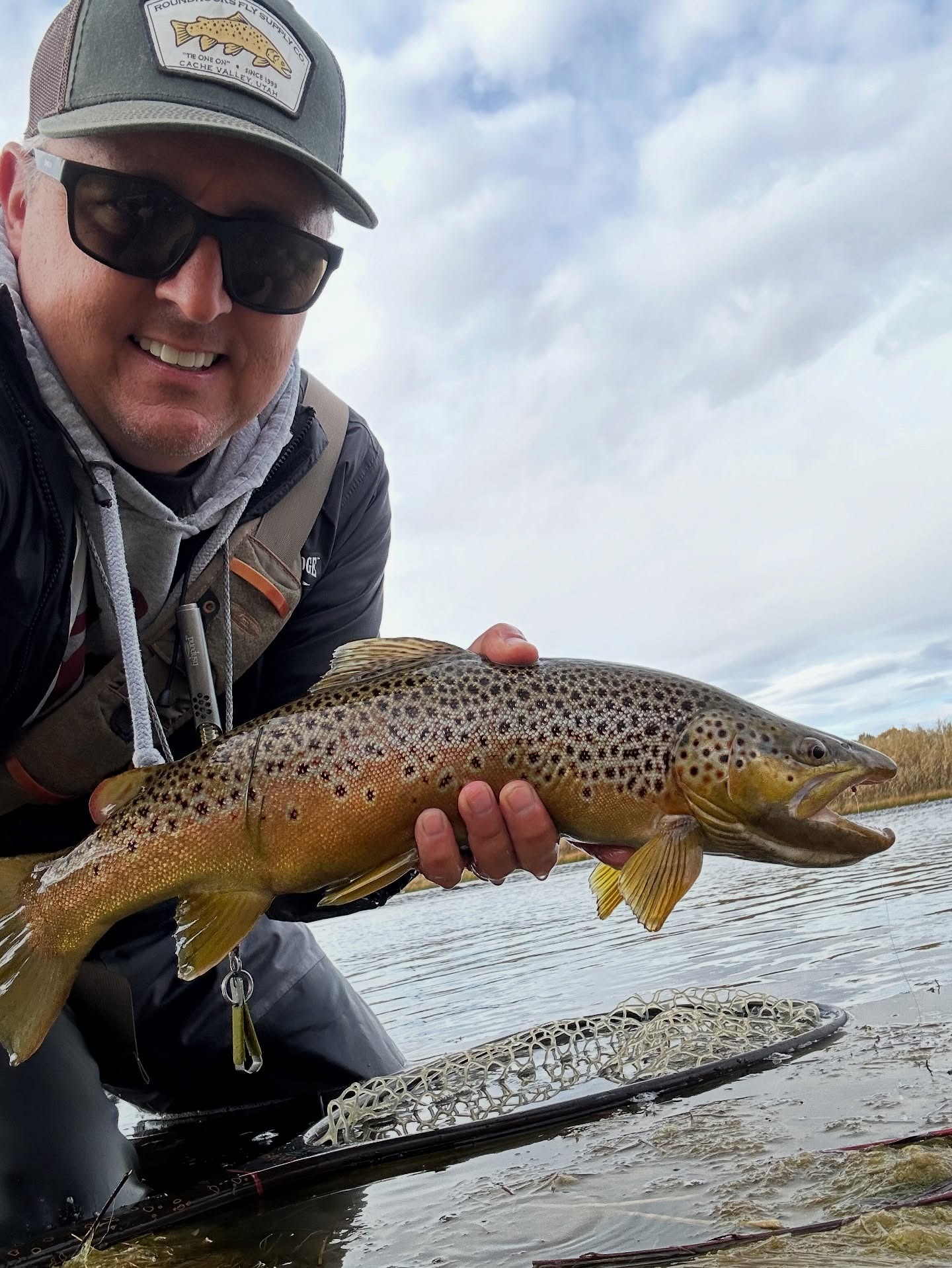
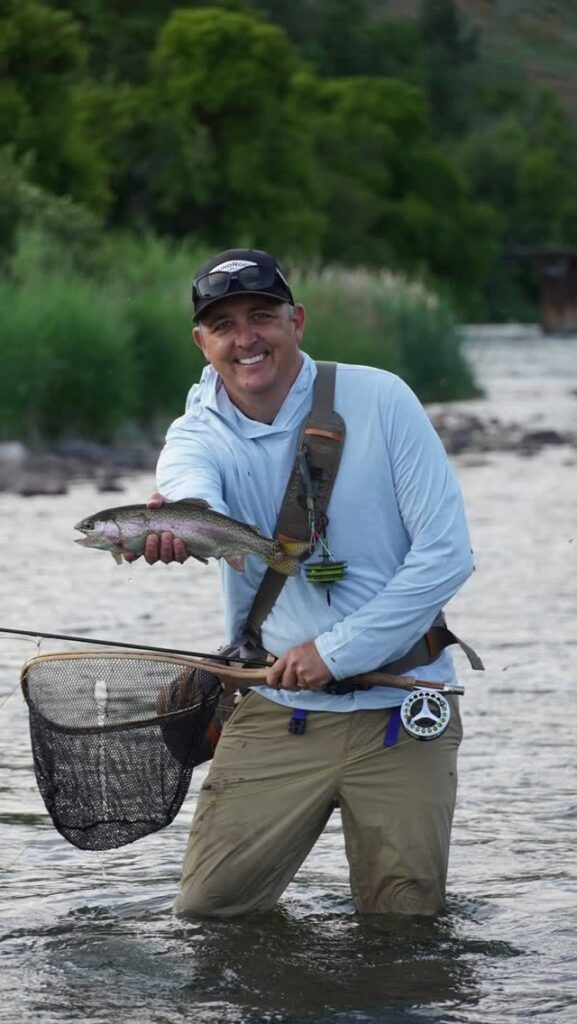
Steve shares a little about his home rivers, where browns, stocked rainbows, and native Bonneville cutthroat all mix throughout the Logan Canyon. Dry-fly evenings in summer often come down to a simple elk hair caddis drifting through pocket water.
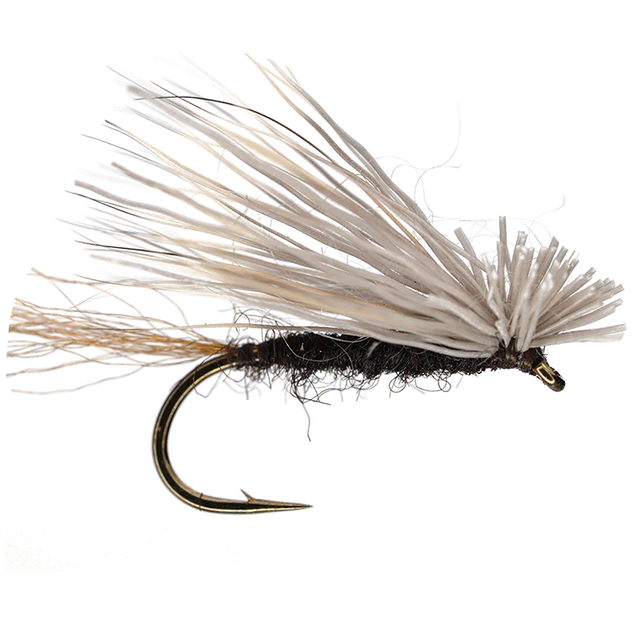
We talk about how trout behavior changes with pressure and why downsizing is usually Steve’s first move when fish get picky. He also notes a handful of alternative caddis patterns — X-caddis, tent-wing caddis, Missing Link — that can save the day in slower water.
For anyone starting out, Steve recommends anchoring your box with time-tested patterns: elk hair caddis, parachute Adams, stimulators, hoppers, and attractors like the Royal Wulff or a Humpy. These flies cover nearly every western river scenario.
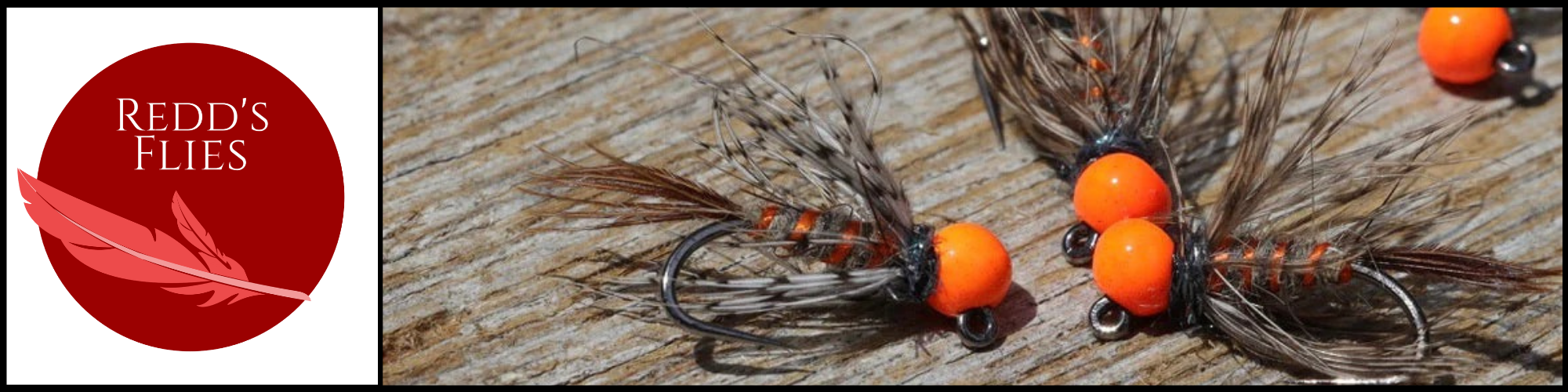
On the nymph side, Steve leans heavily toward tungsten jig droppers fished under a dry — a simple system that works in almost any knee- to waist-deep riffle.
We dig into when Steve switches between dry-droppers and full indicator rigs. On smaller trout streams, waist-deep riffles are perfect for a tungsten dropper 18–24 inches below a buoyant dry. Bigger rivers like the Snake or Green often require a dedicated nymph rig to reach six-foot runs.
Steve’s philosophy is simple: get the nymph into the strike zone fast. Tungsten and slim-bodied jigs sink quickly and vertically, making drifts more efficient in tight seams.
From the Griffith’s Gnat to the Royal Wulff, some patterns remain just as deadly as ever. Steve admits that even he forgets to fish the classics sometimes, but is always surprised by how effective they still are.
He tells a great story about stumbling into a green drake hatch in Wyoming with nothing but Royal Wulffs and the trout ate them without hesitation.
For new tiers overwhelmed by materials, Steve emphasizes picking a single pattern and buying only the materials for that fly. Woolly buggers and elk hair caddis were his childhood starting points, and the materials cross over into many other flies.
Thread tension, glue, and understanding proportions all contribute to durability. Steve teaches fly tying at Utah State and uses the same principles he learned decades ago: tail, abdomen, wing, thorax — break the fly into manageable parts.
Steve shares his current confidence lineup: the Copper Quill jig, the Gunslinger, and especially the balanced leech. Originally a lake staple, the balanced leech is now one of his go-to river flies, fished under an indicator with deadly results.
We talk about the unique design — jig hook + needle + bead — and why the suspended “balanced” posture creates lifelike movement without stripping.
Streamers still have their place, and Steve highlights zonkers as one of the simplest and most effective. He fishes them in size 4 or smaller, often with coneheads or dumbbell eyes for depth.
Articulated streamers remain popular, but the humble rabbit-strip zonker continues to catch fish everywhere.
Episode Transcript
WFS 853b Transcript
00:00:00 Dave: Today we’re talking about the flies, materials and patterns that have stood the test of time. From elk hair Caddis to balance Leach’s hearing. How one fly tire has built his family business around helping anglers tie better, fish smarter and keep the tradition alive. By the end of this episode, you’ll know the top flies every angler should carry in their satchel, how to match your patterns to local hatches, and why tying a few dozen wooly buggers might be the best education you ever get when you’re new to fly tying. This is the Wet Fly Swing podcast, where it’s the best resources and tools to prepare for that big trip and what you can do to give back to the fish species we all love. Steve Smith shares how Smitty’s Fly box grew from a small, family owned business into one of the most trusted sources for fly patterns and materials, and why the old favorites like the royal wolf, the hare’s ear, the zebra midge all these still belong in your fly box. We also get into a few of his home waters, including the Logan River and discuss how he’s fishing nymphs there with tungsten. And we also find out what’s next to come here and why. He believes that mastering the basics is really what you need to catch big trout. Okay, let’s get this one going. Here he is, Steve Smith. You can find him at SmittysFlyBox.com. How’s it going, Steve?
00:01:19 Steve: Great. Good to be back, Dave. Thanks for having me.
00:01:21 Dave: Yeah, I’m excited to, uh, to talk today with you about. I’m always excited about fly time because I think that flies and fly tying especially for trout fishing. Right. It kind of doesn’t get more important than that. Right? What you have on the end of your line. But then you hear people talk that, well, maybe flies aren’t that important, right? Maybe these nymphs that don’t really look anything but. So we’re going to talk about some tips for people to maybe have a selection of flies for trout in your area. But give us an update on Smitty’s Fly box. We’ve um, the last episode we did has been a little while. We talked about, you know, what you have going what’s been happening in the last year with you out there? Anything new?
00:01:53 Steve: Yeah, a lot of cool stuff going on with Smitty’s. We actually opened up our website for you can buy flies on there. It’s not we’re not just a subscription box and that’s going really well. It’s a great option to pick up a bunch of flies. Uh, we’ve got a pretty good selection on there. Great price. And then uh, we started doing a fly of the week. Every week we send out a, you know, a new fly that we announced that you can get it for a great deal if you buy a bunch of them. And then we also do a tying bundle associated with that fly. So if you see a fly that you like, one of the flies of our of the week, like this week we’re doing a royal stimulator. We put together a bundle for like twenty bucks and you can tie a bunch of them. So it’s like a really easy way to just like if you see a fly you want, you like you want to just tie it, just get a little bundle. We take out all that guesswork of having to, you know, hook what thread, you know, and it’s all put together in a nice little package. So we started doing that. That’s that’s been really popular. We post that every week on our Instagram page and um, a lot of cool stuff coming up for our tying boxes in twenty twenty six. We’re going to do in our intermediate tying box. It’s going to be all signature patterns with, uh, my patterns and and Courtney Bailey, who also works the two of us in the shop, we’re going to just focus and tie all of our flies that we’ve been working on over the years. So that’ll be a lot of fun. If you subscribe to the intermediate fly tying box, a lot of fun patterns that we’re doing. So yeah, a lot of cool stuff coming up. Tying a lot a lot of cool flies. So yeah.
00:03:17 Dave: In the intermediate box, is that a is that a fly just flies or is that include the materials.
00:03:22 Steve: We do a fly box where we actually just send you flies. It’s not tying materials at all. But we also do two fly tying box. We do a beginner fly tying box and an intermediate fly tying box. And these are just a different pattern every month. And we send a bunch of materials to tie that fly of the month. So the beginner box is geared a lot of classic flies just to help people get started, learn the techniques, kind of walk you through that. The intermediate box will do more. Like I said, signature patterns, uh, of more intricate patterns. So it’s a great way to just kind of keep the juices flowing. You know, if you’re through the winter months and you just want a new box of materials to come every month and try different flies, it’s really a good option. And it’s it’s only twenty five bucks.
00:04:07 Dave: So like you said, the royal stimulator. So if you saw that you want to tie a royal stimulator, you could get a box that just has all the materials to tell you what, like a dozen flies or something like that. Yeah.
00:04:15 Speaker 3: And that’s that’s our weekly fly.
00:04:17 Steve: For the month of, of our monthly boxes. They’re going to be loaded up even more. You’re going to be able to tie twenty five, and you get all the other goodies with it in the monthly box. As far as you know, we send tips, we send, you know, a newspaper and some of those things along with it. So the monthly box is kind of a more in depth approach. The weekly that we started doing the fly of the week is just a real quick, a quick, uh, material bundle, a little bit smaller, maybe tie ten or twelve, whereas the monthly boxes you could tie twenty five, thirty, thirty flies.
00:04:49 Dave: So right. And these are set for is it mostly focused on trout fishing, multiple species, that sort of thing?
00:04:55 Steve: Yeah. Mostly trout. Um, there is a lot of crossover there. Uh, if you’re, you know, a lot of warm water type stuff that’ll work for bass. We keep that in mind. We have a lot of subscribers in the Midwest and kind of down south. Not a lot of trout waters, but so we keep that in mind and try to mix it up a little bit. But most of it is trout focused.
00:05:11 Dave: Yeah. Mostly trout okay. And I think today we’re going to talk a little more about some of the flies. And I always think because we have some people that are beginners, you know listening. We got some people that have more experience. But at the end of the day, these flies that are even beginner flies probably will work for anybody, right? If you absolutely say top. Yeah. What would be like in your area. Let’s talk about that. You’re in kind of the Logan area. What are the species you’re fishing for down there. Is it are we talking browns, rainbows, a little mix?
00:05:35 Steve: We have a little bit of everything. So we’ve got a lot of browns in a lot of the streams here. We’ve got a lot of stocked rainbows here and there and a lot of the ponds and a lot of the rivers, actually. Then we have a lot of native cutthroat trout too, which is kind of our marquee thing here in Cache Valley Logan, Utah area. The bear River cutthroat. Bonneville cutthroat. That’s their home native waters here. So a lot of people target those, and they’re really, really beautiful fish and cool to catch.
00:06:02 Dave: So yeah. So that was that. The bear River cutthroat.
00:06:05 Steve: You know, it’s funny you asked that the Bonneville cutthroat I my whole life I’ve been they were the Bonneville cutthroat trout. But the last couple of years, a few people have said, well, the bear River cutthroat trout. So I’ll be honest. Oh, right. I don’t know how much of it. If there’s a difference, it’s kind of a name thing here and there. So.
00:06:22 Dave: Yeah. And the interesting thing about that is that names are, you know, can change too, right? You could have a new subspecies and they might lump a species you never quite know. Right.
00:06:30 Steve: Yeah. And someone’s going to correct me on this podcast. I’ll get an email or something somewhere. But I’ve.
00:06:34 Dave: Always.
00:06:35 Steve: I grew up with them here on the Logan River. Those are Bonneville cutthroat trout. Because, you know, we had the Lake Bonneville covered this, this area millions of years ago. And that’s kind of the story as far as I know.
00:06:48 Dave: Yeah. Lake Bonneville. That’s right. Okay. So, yeah, cutthroat trout and cutthroat are cool because they’re really surface oriented, right? Lots of dry fly on the surface.
00:06:55 Steve: Yes. And that’s kind of how I grew up fishing. I grew up fishing in the Logan River with an elk hair caddis. And honestly, you know, that’ll work today in the summertime. You go up there any evening. And those, those cutthroats, they love to sip little dry flies. They’ll hit humpies and attractors and all that kind of stuff, too. But but a good elk hair caddis or stimulator really is about all you need in the in the summer months up here.
00:07:18 Dave: No kidding. They’re not too protected. I was some of the flies. I think over the last year I’ve been using some of these like a, um, like the missing link, right? I think that was a fly. That was. It’s really you probably know know that. I mean, essentially it’s a similar thing. The elk hair is kind of your traditional, you know, little dry fly and you can tie it in different sizes. Right. But I mean, basically depends on pressure, right? If you have a certain amount of pressure, do you have to go smaller. Do you have to go different. Fly. What would you say if you’re fishing. Yeah.
00:07:44 Steve: Yeah. Occasionally you know they’ll get picky. They’ll get they’ll get pressured a little bit. A lot of people fishing it every night. So we’ll switch around. Usually if fish get picky I go smaller first and then from there yeah, try different patterns like maybe a little X caddis if we’re in a little bit slower water or like you say, those missing links I like these little tent winged caddis work quite well. Even little foam caddis. They’ll eat small chubbies as well. I have a fly called a chubby that’s just a small chubby. And that works well for a dry fly too.
00:08:13 Dave: So yeah. Cool. Well, I want to talk and just give folks listening, maybe a a selection of flies. So let’s go into we’ll probably mix this up a little bit. But if somebody was coming let’s take a newer angler to trout. Somebody was going to put together a general selection. Maybe they’re going to fish the Logan area where you’re at, or maybe they’re in some other area that have browns or rainbows. Don’t you guys have a box too? That’s kind of a trout selection box or are you guys still doing that?
00:08:35 Steve: Yeah, yeah. So with our fly box, actually, we, uh, you tell us where you’re fishing and we send you a selection of twelve flies.
00:08:43 Dave: There you go. Let’s do that. And again, you probably can’t do this on the spot because I’m sure there’s a lot of but just we’ll kind of work through it a little bit. So I know a stream that I went to recently was kind of in southeastern, probably not too far from where you are. It was kind of almost Nevada, Oregon, kind of right in the border there. Idaho, kind of in the desert. It was a small stream, you know, and it wasn’t far from, you know, I’m not sure how similar it was to the Logan area, but if I was going there, do you need a name of a stream or just a general type of stream? What would you need to get some information on what to use?
00:09:11 Steve: You know, we don’t get too in depth, but we just ask people when they sign up like, where are you fishing? What are you targeting? And a lot of people will be specific. They say, hey, I just fished this river all the time. So we’ll do a little bit of research on our end. And, you know, we supply flies all over the US. So we have a pretty good idea of what works well. And we’ll do a little research.
00:09:29 Dave: What about if we say just a name that’s really known? I’m not spot burning, but the Owyhee River is a river that’s kind of Oregon. Idaho border near Boise, very popular. Little stream, if that was where we were going, or maybe even some places in Boise, what would that selection look like if you had to say some top, top flies?
00:09:45 Steve: You know, again, and I have to do a little bit of research because I, I haven’t fished the Owyhee this year. But I would say this when we talk about, you know, western trout waters, you’re going to have a lot of the similar hatches. They’re going to vary here and there. But you’re going to, you know, you have your stoneflies, your mayflies, your caddisflies and your midges. So now within those three categories, what time of year and how are we matching it? You know, the summer months. You know, you have your stonefly hatches, usually early summer caddis hatches throughout the summer, bluing olives in the fall, in the spring and pmd’s throughout the summer. So what I’m trying to say is, a lot of these hatches are happening in a lot of the same, and a lot of those same bugs are happening right here in our backyard. So so I would say, you know, for a beginner that just needs a selection of bugs, you start with dry flies. Again, you can’t go wrong with the classics a nail care caddis, a parachute Adams, a stimulator, you’re probably going to want a little grasshopper. And then maybe an attractor fly like a wolf or a humpy. That’s a very good selection. Just there. Tried and true patterns. They work just about anywhere. There’s trout if you’re fishing fast water, slow water. And then you got to start talking nymphs underneath. So it’s hard to beat. Really a dry dropper really most times of the year. And I will tell you, this is kind of how fishing has changed a little bit over the last decade. I would say the introduction of a lot more tungsten style jig nymphs as droppers. And I fished, uh, I fish a copper quill as a dropper. Honestly, about anywhere I catch them on the green River, I catch them on the Madison. I mean, I catch him right here on the Logan River, and I would imagine they would work well on the Owyhee River as well. And where you’re working riffles that are waist deep, nothing much deeper than that. You’re just dropping that fly eighteen inches, two feet, Two and a half feet below a dry fly that floats good and just getting it in the seams. And that those tungsten jig style nymphs, they sink really fast. So when you start talking underwater type stuff, you know, I really simplify it. You have your classics, hare’s ears, pheasant tails, copper johns. But now I find myself fishing these tungsten jig under dry even more. I, I don’t, you know, use an indicator in a split shot as much.
00:12:03 Dave: Yeah. Because the dry, the dry dropper is cool because it’s still indicator fishing. Right. And the great thing is they could take the dry I guess there’s some situations I don’t know, where would you want to use. Just a regular indicator. Right. It seems like the dry dropper is nice.
00:12:16 Steve: Yeah. You know, I find myself if your float fishing in bigger water, like the snake River or the green River. Now you got to get down your, your fishing runs that are, you know, six feet deep, maybe seven feet. So that obviously the dry dropper is not going to work in there. Um, and you really it might be slower water and then you got to set up a more detailed nymph rig and really work on that drift and some of those situations, but like I said, most of the smaller streams, if you think about the riffles you’re fishing, they’re not going to be more than waist deep. Most of them are maybe knee deep, waist deep. So a dropper is just enough to just get down.
00:12:56 Dave: Yeah. You’re not trying to necessarily get down on the bottom with the dry dropper.
00:13:00 Steve: You’re in the strike zone. All you need to be is within that six inches to eighteen inches off the bottom. And so that dropper can kind of get in that strike zone. And you can hit all those runs and pockets and seams behind boulders and things very easily. And it’s kind of like your dry fly fishing. I mean you’re still casting. You can and that’s really the fun part of it. So so I tell people that, you know, if I dry dropper fishing, I know a lot of people fish. That’s no secret or anything, but very effective. And the tungsten bead with a slim bodied fly, it’ll get down and get vertical very quickly, whereas a brass beaded nymph, it might just not quite get down as quick so you can get a boom, a drift very quickly in those seams.
00:13:44 Dave: And you’re fishing.
00:13:45 Steve: Yep. And I always joke you would have sold me, showed me one of those pentagons, you know, twenty five years ago I would have laughed in your face. I would have been like.
00:13:51 Dave: Right.
00:13:52 Steve: Billy? Fly. It looks like nothing.
00:13:53 Dave: That’s right. I know we were talking on a recent episode. We’re talking about some old flies, and he was talking about his dad, how his dad used to use these awesome old flies. And he said, well, why don’t we use these great old flies like the Griffiths? Net is a good one, right? The Griffiths net. And his dad was like, oh, I don’t know. We just kind of the new stuff came. We started using the new stuff. Right. But that old stuff still works, right?
00:14:13 Steve: Oh, absolutely. I do the same thing. I open my box, I’m like, dang, I don’t fish those flies anymore. I’m like, why don’t I? I mean, they used to work, but you know, you you get hooked on something new and you get kind of stuck on what you caught fish on the last time you went out. So.
00:14:29 Dave: Yeah, definitely. Well, so there’s a few drives. We got some nymphs. What about one thing? You know, kind of a traditional style wet flies. Do you guys have? Is that something you ever get asked about? I know that’s kind of specific. Like fishing. People I know are doing the trout spey thing. So you’re hearing a little bit about that, but do you get me requests for wet flies at all?
00:14:45 Steve: Unlike the old traditional wet like the old coachmen’s and things like that.
00:14:49 Dave: Yeah. Like um, or even like, yeah, there could be the bigger or maybe even, like little like a soft tackle.
00:14:55 Steve: Yeah. We sell soft tackles and I don’t get a ton of requests for, like, traditional wet flies. It’s funny when people like, we post this fly of the week and I’ll mix it up, I’ll put in some old traditional and I’ll put in something that’s kind of new, but whatever’s all over social media and then that fly. Also like we did a tungsten jig nymph a couple weeks ago, kind of a newer bunny style tungsten jig. You know, in the last couple of years those have got more power. Man, those just flew off the shelf because it’s like this trend, you know.
00:15:24 Dave: Right.
00:15:24 Steve: So you know, it’s we don’t get as much request for the class. Everyone’s kind of looking for the new new thing I guess.
00:15:30 Dave: Yeah it’s a trend. You’re right. What it comes down to. We see the same thing with the podcast. If I do an episode on Euro nymphing, you know, it’s going to get a lot of traction because people are just interested and it’s just a hot topic.
00:15:40 Steve: Yeah. Yeah, exactly.
00:15:42 Dave: So you guys have all that. So you have plenty of Euro nymph style flies like the other ones. Yeah. Cool. So so that’s a few flies like we said dries nymphs. And if we’re going back to the Idaho or wherever, we’re saying summer, you got stoneflies, mayflies, cows. So out of all these flies you just mentioned, are you trying to get down to specifically matching those two that hatch? Let’s say it was a stonefly. So if there’s a stonefly hatch, you would be going with the stimulator, I guess. Right. Is that kind of how you’re breaking things out?
00:16:07 Steve: Yeah, yeah. Or, you know, an actual salmon fly pattern. The salmon fly hatch is a huge deal around here. It’s a huge deal on the South Fork of the snake River. It’s a huge deal on the Madison even here. And, you know, people want to fish the big bugs. So, yeah, we have a bunch of different fluttering salmon flies, stoneflies. And yeah, you got to match the hatch. You got to find a bug that’s really going to mimic that. So yeah. So within that core group of classic flies that kind of cover a lot of bases, then as you go from there, now you start talking about matching the hatch and paying attention to what’s on the water, and just being a student of the river and trying to create bugs that really match them. So, for example, the bluing olive hatch on the green River in Utah, it’s a huge hatch in April every year, and the fish can get really finicky, really finicky. They get really educated. So I gotta have ten or twelve different types of bluing olive patterns with me when I go to to really dial in the one that that they want, because they’ll refuse for sure.
00:17:06 Dave: Yeah. So you got different like sizes, colors. What would those different patterns look like?
00:17:10 Steve: Yeah. So you’d have a standard blooming olive. You have a thorax style that might sit right a little bit lower. We might have an a merger pattern that is on a scud hook, that might have the body down into the surface film a little bit, a small RS2 that might ride in the surface film, even a parachute where we can see it a little bit better. So we’re always changing up our tactics. Tandem flies two flies at the same time. Maybe I’ll put a hi-vis parachute on first and a really small, even a nymph like a floating nymph just under the surface. Play with all that kind of stuff until we can kind of dial it in and get them to bite.
00:17:49 Dave: Right? Get them to take something. Is that when you think of, you know, somebody newer to it, you know, they’re out there. They’ve got a I think that’s where getting the standard flies, right. Get us a few patterns that are pretty standard, like we’ve talked about here, maybe in certain specific sizes. Right. If it’s a atoms, maybe you’re getting, I don’t know, fourteen, sixteen, eighteen whatever that is. And then you kind of get those as you start out and then and then you kind of learn and then you start to expand. And maybe that’s why you’re getting into fly tying is so kind of cool, because you can actually tie your own patterns, and you don’t have to buy all these patterns because you’re talking if you have, like for example, the atoms, how many different sizes might you use for an atoms parachute?
00:18:25 Steve: We sell sizes tens to twenties.
00:18:27 Dave: Right. That’s a lot.
00:18:29 Steve: So a ten? That’s a big old Adams.
00:18:31 Dave: Dang. What is a ten? What’s a ten? Imitating. Is that just a big.
00:18:34 Steve: Like a green drake or a gray Drake or. Wow, just a big attractor too. I mean, that’s a big old dry fly, but that fly’s been around for a century, and it catches fish. So. Yeah. So to fish a big one of that, it would have to be some sort of drake. Or you’d be surprised, though in some of these fast tumbling waters were attractors work. They’ll eat a bug. Big bug like that. Drifting by, bobbing in the water.
00:18:58 Dave: Right. They will. Well, let’s go back to the elk here, because I think the elk hair I love because it’s caddis. I always love talking caddis. For some reason. I feel like sometimes it’s been a struggle for me. But on the elk hair, how small and how big might you have a selection of elk hairs?
00:19:10 Steve: We carry sizes twelve to eighteen, so I tell people most trout flies are fourteen sixteen. If you were to take really narrow down sizes and try to pick two sizes, fourteen sixteen is about right for just about any trout fly. When you start talking dries and nymphs, then you can go a little smaller as depending on where you’re at. If you’re if you’re not really catching fish, you could go a little bigger. So I use the example of the green River. Well, if you took the green River in Utah and the Madison River in Montana, I generally fish bigger nymphs on the Madison, and I fish tiny nymphs on the green, the greens, you know, deeper runs, super clear water, finicky fish. The madison’s more shallow. It’s got more stonefly. It’s got more rocks, tumbling water. So I’ll use weighted bigger nymphs up there. Down on the green. I’ll use unweighted tiny nymphs. And it’s just a matter of there are two different types of rivers. That’s that’s where. So I change up my tactics of flies completely between those two rivers. But for a good cross-section of trout flies, I would say fourteen and sixteen are the most common sizes.
00:20:20 Dave: That’s a good common. So that actually is nice to narrow it down so you can look at all these flies. Say if you’re going to pick two fourteen, sixteen, that kind of covers you. And then you can go bigger or smaller. What about on the grasshopper. That one definitely. There’s some unique ones right. Because the grasshopper is what would be the same thing on those or what would be your size range on those.
00:20:36 Steve: Um, you know, those are going to be obviously a little bit bigger bugs. So eight to tens. So for example, we, we sell, uh, Dave’s Hoppers, we sell a size six eighths tens and twelves. We have four sizes. So six is a pretty big hopper. You know, that’s getting close to your pinky.
00:20:53 Dave: Yeah. Six is good. You’re getting into steelhead fly size in the six range.
00:20:57 Steve: Yeah. But fishing hoppers is a lot of fun. That’s especially for beginners. You know, you’re fishing a big fly. You can see really well. You can plop it. The more you plop it, the better. And it’s just so fun watching a fish charge a hopper.
00:21:10 Dave: Is that hoppers is kind of summer. Like mid-summer.
00:21:13 Steve: Yep. August, September.
00:21:15 Dave: August, September. Okay. And then stoneflies. We mentioned the atoms. And then what about the wolf? The wolf is more of a just a tractor is not really imitating anything.
00:21:23 Steve: Yeah. You know, it’s it’s a beautiful fly. Royal wolf.
00:21:26 Dave: Yeah. Royal wolf. It’s got the big white post. It’s got a peacock. Is it peacock and red body.
00:21:31 Steve: Yep. And either a moose tail or elk hair for the tail. It’s a high floater. And I will tell you, you know, it’s that classic fly you see on the t shirts and everything like that. But it actually is effective, especially if you’re fishing tumbling water. Tumbling water, those two white wings, those are like little headlights going down the the river. So you can really pick up that fly on the water with those, those wolf wings. And I find myself I carry a few wolves, grey wolves, um, royal wolves in my box all the time. That brings to mind I was one time I was over in Montana or. Excuse me, Wyoming, upper northern Wyoming. I was in unfamiliar river, got up there and there was like a big green drake hatch or flowers on this small river. I didn’t have one in my box. I didn’t have a green Drake pattern. I was not expecting it. And I’m like, man, these big drakes are hatching. But all I had was royal wolves, and the royal wolf worked beautifully in that green drake hatch.
00:22:27 Dave: And was that a bigger.
00:22:28 Steve: Yeah. Like a ten, twelve something. It was in my box. I hadn’t fished it for years and it saved me that day.
00:22:34 Dave: Yeah, it did. And that was a royal wolf. Yeah. Yeah, I’ve had a similar I think I’ve mentioned this before, but when we were fishing in Virginia, same thing. Big giant fish that wouldn’t take anything. I put on a royal wolf and it took it took this royal wolf. And that was in a spring spring Creek. Yeah, it was pretty crazy. So there’s something about it. I don’t know if it’s the peacock or the white posts or or something different.
00:22:54 Steve: Maybe silhouette has a good silhouette. You know, my dad used to tell me stories, too, on the Madison River back in the seventies. He’s like, man, we used to come up here and just fish royal wolfs in the summer and just fishing all the current seams, and he goes, we tie on a big old royal wolf and just let it bob around and go on the curve. Yeah.
00:23:11 Dave: So yeah. So that’s a good one. Okay. Well again the traditional flies are amazing. I think having the old school powers are great, so that touches us a little bit on size. What about nymphs? You said fourteen sixteen. So same thing if you get a copper John or a hare’s ear in the fourteen, is that your average size range too?
00:23:26 Steve: Yeah, yeah, that’s the most popular fourteen sixteen that’ll cover a lot of bases. I tend to find myself probably going a little smaller on nymphs most of the time. I might fish more in the sixteen eighteen range.
00:23:39 Dave: Is it better to go smaller on nymph like if you have a hat? Let’s just say you see a bug on the water. I mean, I guess nymphs are kind of hard, right? Seeing a bug, but do you go smaller than the bug that you think they’re eating, or do you go larger to stand? You know what I mean?
00:23:51 Steve: I would tend to go smaller always. You know, just especially fish are shying away from stuff. I always will just downsize a little bit.
00:23:59 Dave: So that’s good there and then you know as far as so we got a few patterns. Again these are there’s your intro patterns that people are new to it. What about materials. So if somebody’s getting into fly tying talk about that. You know there’s definitely people that are listening now that are fly tying. But there’s some people that maybe aren’t into it yet. What should they get you? They have your boxes they can get. But as far as if they were just kind of getting into materials, you know, is there a good intro to it?
00:24:21 Steve: You know, the materials are endless. It’s so broad on what you can get for fly tying. And that’s the beauty of fly tying. You can use just about anything you can find at a craft store. So so it can be overwhelming to people when they start saying, well, I just don’t even know where to start. I would say this pick a pattern, a fly that you really like, that you really want to learn. You know, let’s say you took a class and you, they’re fishing wooly buggers. That’s the first fly I learned how to tie. Start there. Just get the materials for that fly and just really try to master that fly. And materials will go a long ways. A lot of those materials have a woolly bugger are going to cross over into other patterns as you move on. And that’s kind of how you start building maybe a collection of materials. Next thing you know, you’ve got a little stash. You can use that marabou for this fly. You can use that chenille for this other fly. And instead of trying to just go out and just buy a bunch of stuff. Just choose a pattern that you’re really interested in. You really like. There’s so many videos on YouTube and just master that. There’s a million hooks and hook lengths and gaps and all this kind of stuff. Just get some standard stuff and then you you’ll get familiar, and from there you’ll kind of know, oh, this one’s three x long. It’s a little bit longer. Hook shank. Um this one’s two x. Oh it’s a little thicker. I can see how it’s different than my other hook. So that’s what I would recommend is, is just start there I think I tied Woolly Buggers Nail care caddis. That was my childhood I yep.
00:25:46 Dave: Me too. That’s right. I know lots of woolly buggers. Lots of lots of, uh. Well, we we tied a tied down caddis that was a popular fly. Tied a lot of the time. Oh, really? Yeah, a little like a little, uh, it was my dad again. Back to the old flies. He. We used to fish just on the swing. So a little tied down cast, which, remember, like, the orange body tightened down. Caddis was the real popular pattern, but we used to tie it with a peacock body, you know? So basically, I don’t even think you see the tie down cast out there. Like, that’s old school.
00:26:12 Steve: I’ve never. When you said tied down, I was trying to rack my brain. If I’ve heard that, that must be a local thing.
00:26:17 Dave: Yeah, maybe not even heard of it. Yeah. So, so. And this is kind of again, I don’t even know. There’s probably a book that has it in there. But yeah. So it’s essentially instead of the elk hair, you know, which is the wing. The wing is tied down on top. So it looks like it’s got a case. So it’s like an emerging caddis essentially. Oh, cool. We’ll get a link in the show notes and get a video to it. But man we’ve caught a ton of flies again. Just fishing like a wet fly casting. Almost like steelhead casting out and swinging across, you know, riffles and runs and stuff. Yeah, yeah. But again, I think that, like we said, those traditional patterns still work.
00:26:45 Steve: Absolutely.
00:26:46 Dave: But let’s talk about on the materials again. So this is a great point. So if somebody wants to get more into fly tying pick a pattern. You guys do that with your boxes right. You yes have a pattern of the week or pattern of the month. And then you can get all the materials that go with it, which is a great way to do it. Yes. Yeah. Okay. What about like material wise go a little deeper into materials. Synthetic. Yeah. Lots of material. Synthetics. You got naturals. What’s your take on that? Is that something where they’re equal? You need both when people start selecting materials or I guess, do you tie with both equally?
00:27:13 Steve: Yeah, tie with both equally. And I don’t get hung up in. Oh, it has to be all natural or it has to be all synthetic or whatever. I’m just whatever I, I’m trying to create, whatever I’m working on, you know, you learn something every time you’re on the river. And I still say that when I come home, I’m, oh, man, I, I had to make that fly a little different or I had to change it a little bit. And so there’s a ton of great materials. Lots of synthetics have come on the market over the last few years. Lots of different flashes and chenilles and, and all kinds of stuff. So we’ll use a little bit of a bit of anything. And I like to experiment with all of that myself. Obviously the naturals, there’s not much more naturals you can create.
00:27:53 Dave: Right?
00:27:54 Steve: But if you can find a good deer hair or good patch elk hair, um, you know, CDC obviously whiting Farms have hackle. If you’re fishing dry flies, you need some good rooster saddle. Peacock is still peacock. We haven’t gotten away from, Peacock that catches fish. So a lot of flies need peacock. So a good mix of both. You can construct about anything, whatever your imagination.
00:28:18 Dave: Yeah. If somebody went to your site now and they wanted to get some, you know, a material box. Do you guys also do that where you have a selection of maybe flies and sizes, or do you think it’s better just to pick that one, get a box for that one and then then do that and then go to the next fly?
00:28:33 Steve: Yeah, I mean fly box was built on the idea of this idea. I teach the Utah State fly tying classes. So we have a beginner fly tying class and an intermediate fly tying class. And all the students after class was over there were like, hey, like, how do I get materials for that pattern? I want to do some caddis. So that’s where the idea was born. I was like, let’s just put it together for them instead of having them having to, you know, oh, here’s a list. Go buy it.
00:29:02 Dave: All right. And searching like, hey, I gotta get good deer hair and all that stuff. Right, exactly. Yeah.
00:29:08 Steve: It’s all picked out for you. We already. We already do that. And so that’s what our website. It starts there now. We we sell all kinds of synthetics and natural materials. You can if you key in on something you really like, a material, you’re going to need it all the time. Then get a big bag of it, you know, then get a full patch of elk hair. Then you can go from there. But so we do both. But Smitty’s Fly box was built on that notion of helping people just get up.
00:29:34 Dave: And get going. Yep. Just take the take that where especially for somebody new to it, take the guesswork out of it and just say, here you go, get started. And then you have videos. Is this on YouTube where people can see videos of, yeah, cool. This is great. So, so and I think that’s really important. I think that, um, another thing a struggle for fly tires is like durability and flies or. Right. That’s one big thing. What are you do you have a few tips on somebody? If they’re tying they’re getting into this. But maybe their flies are coming apart. How do you make a durable fly? What’s that look like?
00:30:01 Steve: Well obviously you need a little bit of glue a little bit of superglue or UV glue. Then understanding and learning thread tension. Thread wraps, attaching materials, little tips and tricks. You know, obviously foam flies are going to twist around your hook a little bit. So understanding that thread tension and putting applying glue in different spots, you know, are good things ahead. Cement that’s the key. Um, choosing the right thread. You know, if you use kind of flossy big thread flies might or materials might slip out here and there.
00:30:35 Dave: Exactly. There is a lot to it. Right. But again, I think like you’re saying, watch the video, watch a video. And that’s probably and find somebody who knows what they’re doing and just kind of copy that system.
00:30:46 Steve: Yeah. Yeah. Exactly. And and that’s the beauty of it. Now we used to have to sit there and try to look at a book back in the day. I know, you know.
00:30:53 Dave: I know exactly. And so are you doing the videos or who’s doing because you guys have these. Yeah. You’re doing them. So the videos that go, do they go out each week with a new video.
00:31:01 Steve: Um, yeah. So I post a new fly tying reel every week on our Instagram, and then we do our our monthly boxes every, every month. Those two videos will go on. Those are more like twenty minutes videos. And then we do a for the fly of the week. We just do a quick tie. It’s like a one minute quick video, a really quick sped up one.
00:31:20 Dave: So oh right. Yeah you do that. So if somebody wanted to follow and get the step by step, they could look at the quick video. But you also have some stuff on YouTube where they can kind of if I go back to the stimulator because I still I think part of that is because you got to have really good hackle, but that’s always been a struggle for me. Right? But if they wanted to learn, say, a stimulator, how to tie that fly, do you have a video that walks them through all those steps on that?
00:31:41 Steve: Yes. So if we chose a stimulator as one of our monthly box flies, I would do about a twenty minute video and I would really explain it. I’d be talking and explain it and show them the proportions and the size of the hackle and how much elk hair to use and how to avoid some of the pitfalls of that fly and really go in depth. This last week we we chose a stimulator as our fly of the week, and I just did a quick one. I didn’t talk on that one. I just showed it and kind of pointed what materials went where. It’s more geared to just a quick just a quick lesson.
00:32:19 Dave: Is that fly easy? Is that fly just easy for you?
00:32:22 Steve: Um, no, I wouldn’t say easy because.
00:32:24 Dave: It takes a lot of right, a lot of hackle. There’s a lot of it’s a lot.
00:32:26 Steve: Of lot going on on that. Yeah. I just think over the years just just doing it, you know, you kind of. It took me a long time. I’m trying to remember the first few times you used stimulator. Talk about tying a stimulator. Yeah. Like anything, it takes a lot of practice, and and there’s little nuances to that fly. If you use too much care, not enough healthcare, you know, you gotta learn proportions on your hook. If you take the abdomen too far to the front, well, then also you don’t have room to to do your thorax part of it. So you start marking parts of your hook to get the proportions right, and you might take a dozen flies till you get that right.
00:33:04 Dave: Yeah. That’s right, that’s right. Yeah, that is the, the challenge. So and that’s part of the proportions. Right. How do you get the proportions right I guess what is your recommendation. Is it kind of less is more on the proportions.
00:33:13 Steve: Yeah. And you know I break flies up into parts. So again the stimulator you have the abdomen and you have the thorax. Well there’s a two thirds spot right on the hook shank. When I start tying that fly I actually when I attach my thread I kind of mark that spot. And that helps me work on the back, the abdomen. And I try to make sure I keep that abdomen within that space. And then I reserve the front third of the hook for the thorax. And that helps me just kind of piece that fly together tail, abdomen, wing, thorax. And I’m thinking through that the whole way. And it’s really for all flies that way. If I’m going to tie a traditional dry fly like an Adams, well, you have your tail, body or abdomen, and then you have the hackle on the wing at the top. So as you start tying flies, they’re all kind of the same. The techniques are the same. We’re just changing up materials. So if I can tie an Adams well I can tie a pmdi I can tie a balloon. We’re just changing colors and sizes. You know, a stimulator is unique. It’s kind of like a souped up Elkhart Caddis because we have a couple more sections. But really a lot of the techniques we do in an LQR caddis are going to apply to a stimulator. And the same thing with nymphs. When you start tying hare’s ears and pheasant tails, well, those proportions are the same. The tail abdomen thorax, wing case. So I got a I got to mark those spots on my hook and keep those proportions right. And over time it just becomes second nature. You kind of understand where to, uh, stop and start certain things, right?
00:34:46 Dave: That’s right. What about a midge? That one’s a little bit different. Is that an easy one to tie?
00:34:50 Steve: Yeah. A zebra midge is the easiest flight attack.
00:34:53 Dave: Yeah, right. Easier than the woolly bugger.
00:34:55 Steve: That fly has more. The most bang for its buck. You can crank them out and you can catch a lot of fish on those things. So just a bead hook and wire and thread.
00:35:04 Dave: Are those your top? The flies you mentioned we we talked about the drys. The nymphs. Are those also your kind of confidence favorite patterns or do you have some other ones you’d add to that list?
00:35:13 Steve: I would say my confidence flies right now are a quill, a gunslinger. And I’ll tell you one other one that I’ve been fishing a lot around here is a balanced leech.
00:35:24 Dave: For lakes or for.
00:35:26 Steve: And rivers.
00:35:27 Dave: And rivers.
00:35:28 Steve: And rivers. Yes, I find myself. We fish it a lot, like on Henry’s Lake. It’s really big up there. And a lot of the reservoirs down here in southern Idaho, um, it works well, but we started fishing them as we drift in the drift boat, say, on the South Fork of the snake River. It just it’s a very simple rig. Strike indicator, straight leader to your balanced leech. That thing gets down Own and it just with that indicator. The indicator creates the movement and that thing just crawls up over rocks and.
00:36:00 Dave: And it’s imitating, uh, what, like a.
00:36:03 Steve: Like a little baitfish or a leech or a wounded minnow or something. So I’ll use different colors if I, if I’m fishing like a streamer in the river. I like grays and whites and silvers. A bruise balanced leech which is black with a little purple. And that’s very popular. That’s been a very effective fly over the last little while. And we sell a ton of those things. That’s one of our top selling flies.
00:36:25 Dave: It is. And the hook is the unique thing right in the balance. Well, the hook and the balance for somebody that hasn’t tied one of those or maybe even seen it, what is that balance leech?
00:36:32 Steve: We use a jig style hook. So the, the eye is, um.
00:36:36 Dave: Off the tip or whatever. The little, the tip, however. Yeah.
00:36:38 Steve: And we just use these sewing needles, we cut a sewing needle and we actually put the bead onto the sewing needle and tie that needle into the top. So the actual eye of the hook is sticking out kind of in the center center of the fly. So if this is your hook shank, the eye is going to be right in here. And so now you have your leader going straight up. And so that fly kind of rides balance like that. So we’re not really actively stripping it. I mean you could do that. But it’s more just a balance. Bob along like that. And it’s been pretty really effective, really effective. And we put a tungsten bead on it. So it’ll get down quick. And it’s that same concept I was talking about earlier with fishing a dry dropper. It gets down, it gets vertical. You’ve got a nice drift with your strike indicator. And if you’re fishing any sort of choppy water, any sort of movement on that indicator up top is creating the movement on the balance along the bottom. So I like that fly. That’s been a real confidence fly over the last few years as well.
00:37:43 Dave: Okay, cool. And that’s balanced. And I guess that’s kind of in towards a little bigger more like almost like a streamer right. Are there any. Are you guys selling some streamer patterns out there?
00:37:51 Steve: Yep. Yeah. You know, you have your typical streamers. You’ve got, you know, your articulated streamers that are still have a spot or, you know, very popular. Honestly a good zonker is about as good a streamer as there is still to this day. I’ll fish zonkers quite a bit. I like a white zonker. I like just a natural colored zonker.
00:38:14 Dave: Yeah, and a Zonker is just a big rabbit strip, right?
00:38:17 Steve: Yep. Rabbit strip and a mylar body looks like a little fish. And, um, they work very well.
00:38:22 Dave: What sizes are you fishing those in fours for? Yeah, big. So fours. And you might go a little smaller. Sixes. Eights or maybe bigger.
00:38:28 Steve: Yeah. We just make them in force. You know, there’s a lot of different streamer patterns that anything that looks cool, you know, streamers have, they’re going to have to have some sort of weight a little bit on the head, whether it’s a conehead or dumbbell eyes, things like that. That weight’s going to help it get get down and get some action. And then most streamers have some sort of combination of a marabou or rabbit. Rabbit hair to really make it swim.
00:38:54 Dave: Pretty standard. So anything else we’re missing here if we’re going to line this again, some of these flies, we have quite a few here. Some of your I guess it’s a mixture of confidence flies and some starter flies to get people going here. Any other patterns we throw on this list? If we’re going to give somebody our little top ten or so today.
00:39:09 Steve: Uh, top tens. Well, okay. Back to, uh, the classics. A good selection of zebra midges are great in the winter months. There’s lots of variations of zebra midges that also work. You have, you know, black beauties and miracle midges and all that. They’re all variations of of the old zebra midge that still works. It’s hard to beat a San Juan worm in the spring. I mean, say what you want. They catch fish and they’re very simple to tie if you want to. Just if you just got your first vise and you want to tie a fly and you don’t, and you just want to kind of learn the thread, just try to do a San Juan worm. That’s a great one to start and that’s going to catch fish. You’re gonna you’re going to need some San Juan worms in your box. Now, if you go to again back to dry flies. Some other ones I like for a dry dropper. My favorite dry fly for a dropper is a Chernobyl.
00:39:55 Dave: Yeah. Oh, Chernobyl.
00:39:56 Steve: I call it Chernobyl. It’s just a small, chubby Chernobyl. It just floats really good foam and it’s got little legs on it. It’s a great fly for a dry dropper. Cast. Very easy. I like it better than a regular chubby. Some of the chubbies are too big. I feel like I like to just a nice, softer one. Uh, let me think here. Chernobyl for nymphs. I like gunslingers. I like again any of the Pentagon’s. There’s a fly called a Slim Jim that I really like. It’s a Euro style tungsten. There’s one called a roughneck that I really like. It’s kind of a zebra style with the tungsten. That’s a very good fly for dry flies. I find myself fishing. Um, again, I’m pretty traditional. I fish a lot of elk hair, caddis stimulators. I fish a lot of, like, purple haze. Um, there’s a fly called a fatal attractor. When you started talking about royal wolves. That’s one of my patterns. Um, that was built as just a big, ugly attractor fly, and I. I’ll fish that in the summer when I want to just fish something big and fluffy.
00:40:58 Dave: Yep. And what does that do? And is that just a that’s just an attractor. You’re literally just just getting their attention. Yep. And they’ll eat it just because they’re fish and they want to check it out. Yep. That’s it.
00:41:09 Speaker 4: Who knows why they want to eat certain things.
00:41:11 Dave: That’s awesome. Well, we got a good list here. This is awesome. And the flies we talked about here. We’ll put a summary in the show notes so people can take a look at that. So with all these fish on say your Logan area your local are all these pretty good for you know throughout the year.
00:41:23 Speaker 4: Yeah.
00:41:23 Steve: Yeah those are great flies just depending on the time of year. Um but our main fishing season, those would work just about anywhere up here.
00:41:31 Dave: Maybe it might have to adjust the size or whatever, depending on what’s going on. Okay, perfect. Well, I think that gives us a good start there. Talk about these flies because we talked about this on the last podcast. You are not only tying for Smitty’s, but you’re still tying for a larger organization, right? Are you still tying all the flies at Sportsman’s?
00:41:48 Steve: Yeah. So our main family business is round Rocks flies. We’ve done that for thirty years. That’s still our main bread and butter. So we supply a lot of sporting goods stores, fly shops. Uh, you mentioned Sportsman’s Warehouse. Great relationship with them. We sell a lot of flies through those guys. They’re local here in Utah based or Utah based. So that’s worked well. We’ve been doing that for thirty years. So yeah, we’re still doing that cranking a lot of flies out.
00:42:13 Dave: Yeah. That’s awesome. Well, I got a little story to tell you. I didn’t mention this before, but this is a cool one. We were on our way to a family road trip. We were doing this thing, and I had my kids. They know how to fish the cast, but they haven’t been totally into it fully. But we got on this little creek and it was really cool because we got in late. It was like a late road trip, and the only thing that was open was sportsman’s, you know? So we swung by Sportsman’s on our way down halfway and went in there in their fly box, and we grabbed a bunch of flies. And I think, what did we get in there? We got, um, Craig Matthews has a pattern called the, um. It’s got a shock. It’s like a cat. The exodus.
00:42:45 Steve: Exodus?
00:42:45 Dave: Yeah. Exodus. Right. Yeah, I’m sure you have something like that. But we grabbed some of those and a little mixture. Anyways, we get down the stream and we get on this thing and we get a little hatch going on. And Mike, both my kids got these massive trout. It was pretty cool. And they.
00:42:57 Steve: Oh that’s awesome.
00:42:58 Dave: Right. And so they were on, you know, I mean obviously we had caught them on some other flies too. But they’re on your flies. And and it was just cool because like after that moment they were totally into it. Like one of my daughters was like, all right, I got to get the new vest and I got to get all this stuff. So she’s totally stoked. But but yeah, I mean, your patterns, they’re good solid patterns. This is like, like high quality talk about how have you gotten to that just because you’ve been doing it so long, right. These are not because sometimes you hear stories about flies that maybe fall apart that aren’t that great. Talk about your flies. You guys have been doing this a while, right?
00:43:27 Steve: Been doing it a long time. Pretty much my whole life. Quick. You know, long story short, but yeah, my dad and I started this business in ninety three, ninety four, and so yeah, the production we control all the production, all the materials come to our warehouse here in Logan. First we design all the patterns, we tie all the samples, we control the factories where they’re tied at. So we have a lot of control over that production side of things. And, uh, just keep a close eye on it. We’re still, like I said, small family business, tight knit. All the hooks are very well made hooks, uh, from Japan, Whiting farms, Hackel. So we’re not cutting corners on any of the materials that we’re using, and and, um, just do our best, really, to make a good fly. That. So that’s what it’s all about. So people like yourself can take your kids out.
00:44:16 Dave: Exactly.
00:44:16 Steve: To a river and catch a fish. I mean, that’s that’s the that’s our mission right there. If you if we had a mission statement, that’s it. That Dave takes his daughter and gets the caddisfly and and catches a bunch of nice fish. That’s all we want.
00:44:29 Dave: It was. Yeah, it was one of those amazing, amazing moments and stuff. So. So that’s cool. Yeah. And I think that and again, that’s what’s awesome about everything you have going, because the quality of flies that you’re selling, again, they’re high quality flies. This is going to be not just your boxes, but everything you guys have there.
00:44:44 Steve: Yeah, absolutely. Yeah.
00:44:45 Dave: Nice. Well, any other flies we’re missing here when we put together this little summary, does this sound like we’ve covered the bulk. You know, again, for somebody new to it, maybe they need that trout selection. They want to go pick any any other flies you want to throw on there. I think we’ve covered a decent amount.
00:44:58 Steve: That was a pretty good selection there. So that should get anyone started.
00:45:02 Dave: All right. Perfect. Cool, Steve. Well, let’s take it out of here. This is kind of our wet fly swing Pro segment we’ve been doing with our community trying to connect with people in there. And we’ve been, you know, building trips heading around the country. We’re just getting ready now for we’re heading to Newfoundland for the first time for Atlantic salmon. But we’re also going to be in Montana this year. We’re going to be probably near you. I think we’re going to probably fish maybe the Teton River. Some of that stuff, these flies we talked about here are great. But what do you have on your list? Are you ever thinking, I know you’re a busy guy? Are you thinking about getting out any places you want to get to on your bucket list?
00:45:33 Steve: Oh, I have a lot of places I would like to go. Um, right now, I don’t have anything on my radar. Like. Like I said, uh, where I live, it’s really nice because within a four hour drive, I can hit some of the best water in North America. So I find myself day trips, day trip, day trip in any direction. I still love to fish a lot of these waters, but I’ll get something on my radar. I need I do need to expand a four hour radius.
00:46:01 Dave: Yeah. Have you thought about the, uh, the one thing you always hear? The saltwater people start getting saltwater. Are you doing now? Saltwater? Do you cover some saltwater flies?
00:46:08 Steve: We do have saltwater flies. Yes. Um, I’ve done a little bit of bonefishing and red fishing myself, and I would like to do that again. Um, I did some redfish in Louisiana. It was a ton of fun. Um, I’ve done that. My last bonefish trip, I was actually in Hawaii.
00:46:22 Dave: Oh, there you go.
00:46:23 Steve: I think I mentioned the last time I was here. People don’t know there’s some actually good bonefishing in Honolulu.
00:46:28 Dave: Yeah, big, big bonefish. Right?
00:46:30 Steve: Big bonefish down there. And so you might want to research that if you’re down there on a family trip, you can do a half day trip very easy and catch some big bonefish.
00:46:38 Dave: So yeah, we’ve got a guest coming up from Hawaii. Actually, we already had an episode we did on on Oahu, and we’re going to be doing another one because there’s another island out there a lot of people don’t know about. It’s more of the the native island that’s really protected. A lot of people don’t fly to it. I’m drawing a blank on the name of it. But there is a Hawaiian island and our guest actually guides. He’s a Native Hawaiian, and he is going to take us on that trip.
00:47:00 Steve: Oh, cool.
00:47:01 Dave: Yeah, not physically yet, but we’re going to go through it with the podcast and hear about it. But it sounds like, yeah, there’s some good places. What is bonefish? If you like bonefish or even redfish, how does that compare to catching a big brown trout on one of your streams locally?
00:47:13 Steve: That’s a great question. You know, catching a trophy brown trout up here is still a thrill. And I think because they’re pretty elusive and they’re difficult, you know, it’s difficult to catch a twenty two, twenty three, twenty four inch brown. It really is. So when you do and there’s a lot of satisfaction to that. So it’s hard to compare. You know, they’re just uh, I think this is more of a hunting thing for me around here. And so I’m constantly working and trying. When I go on a trip somewhere, I’m kind of on vacation. I have a guide, takes me, he takes me to where they are. And I mean, it’s it’s a thrill and it’s awesome and everyone should do it. But I kind of like the challenge of working some of these waters and trying to catch a, you know, twenty three, twenty four inch brown.
00:47:57 Dave: That’s cool. Yeah, it’s totally different, right? It’s like the hunt, but it’s just like, that’s why the trout fishing is so cool, because there’s all this deep dive you can take, right? You can go in, like we said, into the mayfly and the life history of these mayflies. And you can get as nerdy as you want to get. I feel like that’s why trout fishing still is the main thing people do. Because, you know, it’s kind of what everybody knows. But it’s also super. And all these books have been written about trout flies and tying, and it seems pretty amazing, right? I’ve heard I’ve heard stories that there’s more books written about fly fishing than like, all other sports combined or something like that, right?
00:48:30 Steve: Wow. I believe it, I believe it. You know, and there’s just so much. And then I mentioned earlier, you learn something every time, and once you get down that rabbit hole, we’re always adjusting. We’re always learning. I’m always like, I know there’s a big fish in there. I know there is. I gotta figure out how to catch that thing, you know, whatever it’s going to take. And that’s how we grow as anglers and that’s how the sport grows. Is that constant pursuit of that twenty four inch brown?
00:48:57 Dave: Yep. And the way we’re going to get there is to have support. You know, even though doing it on your own is great because you do learn a lot. You got to have some support along the way. That’s that’s why we’re here and that’s why you’re doing what you do. I think everybody kind of in the industry, right, is, like you said, that moment of getting your daughter or your kid out for a trophy fish and being there to take that photo or just be there to witness it, right, is amazing.
00:49:19 Steve: You know, and I find myself though, to honestly, this day and age, we’re so connected with our phones and we’re in our computers and this and that. If I can just get up on that river, the Logan River, and I can catch a twelve inch cut. Bonneville cutthroat trout on an elk hair caddis in an evening. I can catch five or six of them. I don’t know what else I want. You know that to me, as the older I get, I appreciate that more and more. And just being able to be in the river and there’s fish still there, you know, and we can still catch them and and that, that still means a lot to me actually.
00:49:49 Dave: Definitely. Cool. All right. Steve. Well, I think that’s a good place to leave it today. We’ll send everybody out, like we said to Smitty’s Fly Box.com if they want to connect on anything we talked about here and you’re there, right? If we have questions or anything, they can send you emails, connect with you there anytime.
00:50:03 Steve: Yeah. Shoot me an email.
00:50:04 Dave: All right Steve. Well, until the next one. Thanks for all the time today and we’ll be in touch.
00:50:08 Steve: Okay. Thanks, Dave. Have a great one.
00:50:11 Dave: There you go. You can find Steve right now. Go to Smitty’s. Com. Check in with him if you want to get any access to any of these great flies. Everything Steve has going here, if you’re interested in connecting to us more wet Fly Swing Pro, this is our membership Community where you can take everything to the next level. Go to leasing.com and we’ll follow up with you on details there. And excited to see you on the inside. All right. We got some good stuff coming as always. Uh, next episode, make sure to subscribe. Follow the show so you get notified on the next episode. And, uh, it is definitely a late one tonight. Burning the midnight oil again. And I hope you, uh, are sticking with me here and hope you’re having a good evening. Hope you’re having a good morning. If it’s afternoon. Hope you have a great day, and we’ll get excited for you to have some lunch and, uh, dig in and catch some fish. We’ll see you soon.
00:51:02 Outro: Thanks for listening to the Wet Fly Swing Fly Fishing show. For notes and links from this episode, visit Wet Fly. Com.
This episode was a reminder that trout fishing doesn’t have to be complicated. A handful of timeless flies, smart sizes, and simple rigs will take you a long way. Steve’s passion for high-quality tying and teaching shines through — and his patterns continue to help anglers catch fish all over the map.















I am already a subscriber, thanks for the good content and interviews