Most anglers walk right past good water without even knowing it.
In this episode, we’re digging into how to find trout and turn refusals into eats with Mike O’Brien. He shares how guides break down a river in the first few minutes and what they look for before making a single cast.
We also get into why trout refuse flies that look perfect, and how small changes in your drift and position can turn those refusals into eats. Mike talks about reading trout behavior, spotting high percentage water, and making simple adjustments when things aren’t working.
Mike said they had a mild winter, and hatches are starting early. Blue wings have been showing since late January. Not huge numbers yet, but enough to get fish moving.
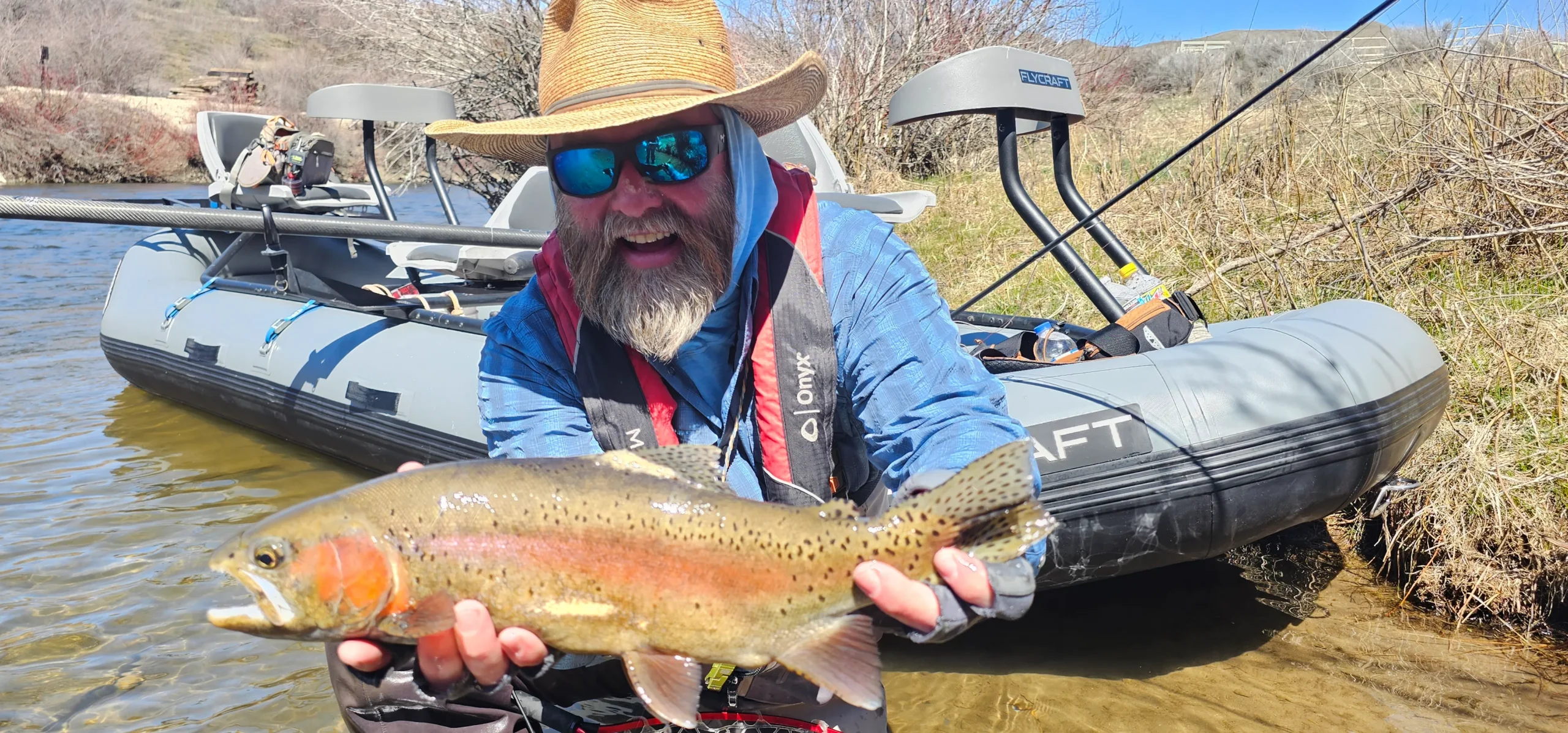
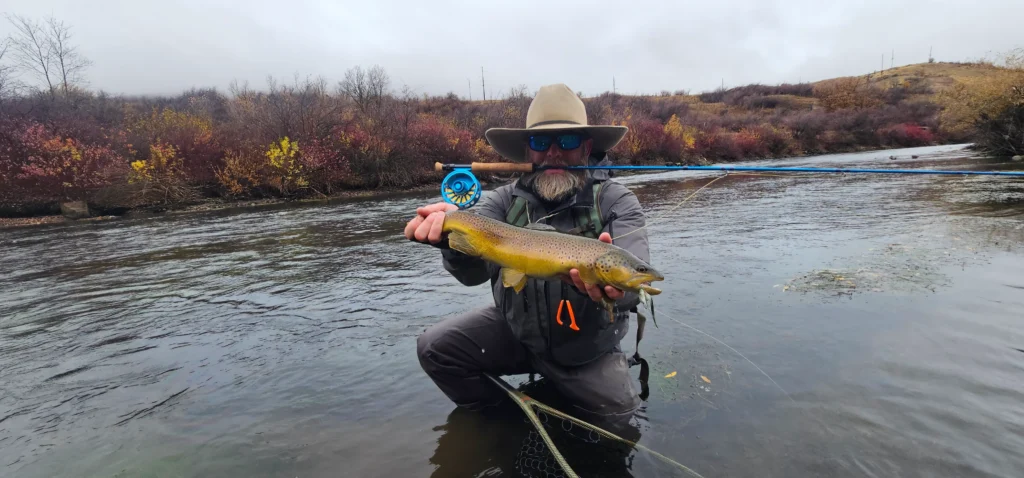
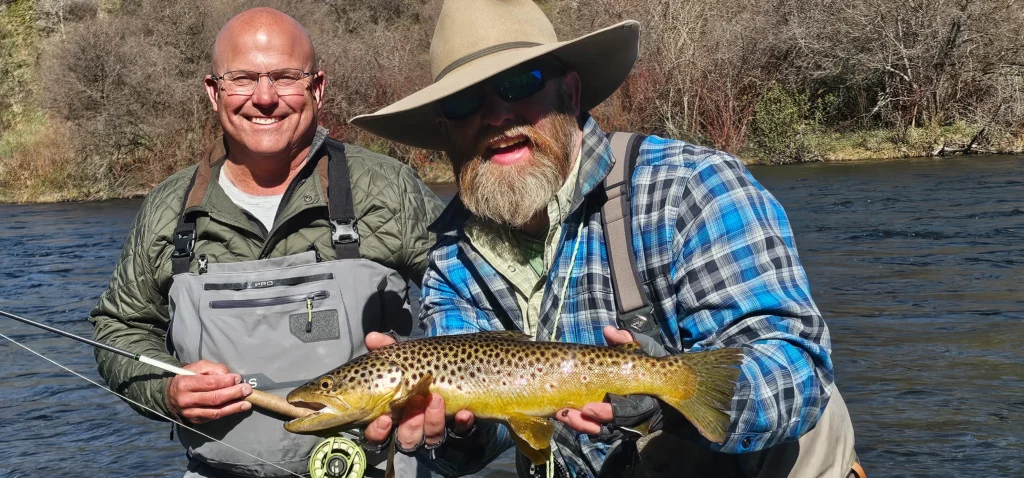
Right now, it’s mostly rainbows. They’re pre-spawn, aggressive, and strong. Good fish to have on the line.
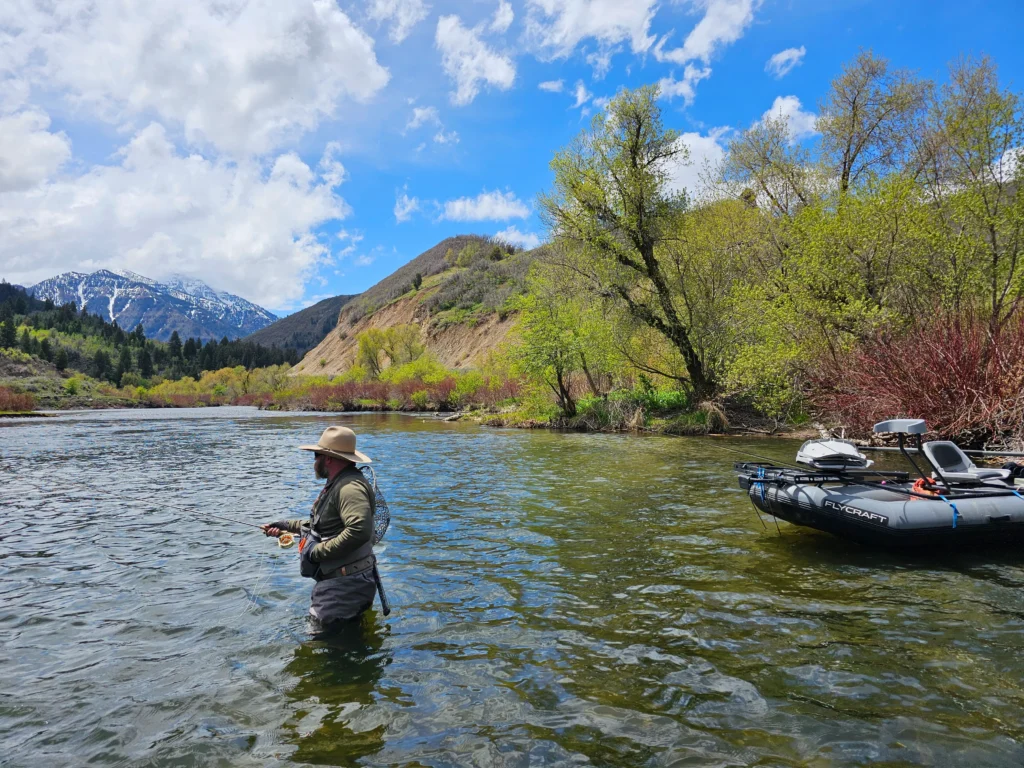
Float season usually starts once flows hit around 300 cfs, which is mid to late April. The Provo isn’t a big river, but it’s packed with fish. There’s always a shot at a 20-inch trout, which keeps things interesting.
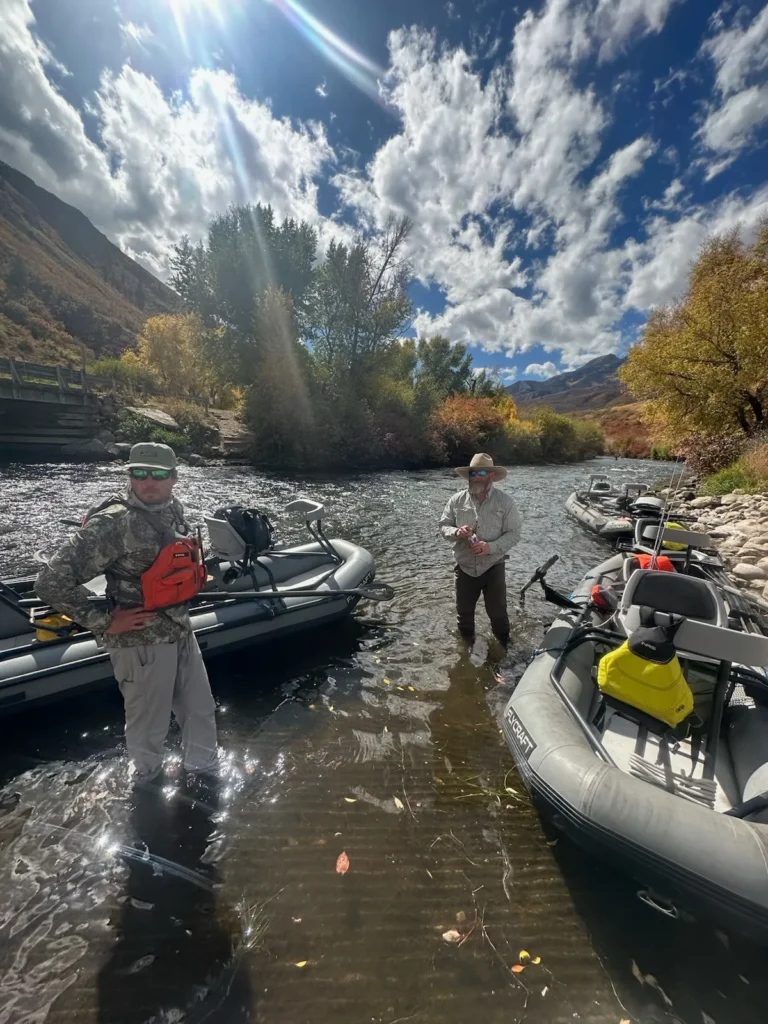
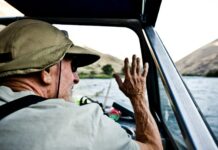
The stretch they float is only about three and a half miles, but they can slow it down and really work it. One thing that stood out is how they use the boat:
It’s not just sitting in the boat all day. They’re moving, adjusting, and working each spot to get the most out of it.
Mike O’Brien says the biggest mistake is trying to horse the fish in right away. When a big trout takes off, let it run first. It has the advantage at that moment. Once it slows down, that’s when you take control. Here are a few key tips he shares:
Mike says you want the fish to sprint into the net, not run a marathon. The faster you land it, the better it is for the fish.
Mike also walked through how he rigs his setup, especially when flows are up and fish are strong. Here’s what that looks like:
The goal is to get the flies down fast and stay in control, even in heavy current.
Mike says in higher flows, they’re usually fishing water that’s about 4 to 7 feet deep. But there are also deeper holes that can go 15 feet or more. The key is not just depth. It’s where the fish are sitting.
Mike says when you hit that zone, fish aren’t picky. If it looks close, they’re crushing it.
To get down to those fish, you have to adjust your setup. Mike moves his indicator higher on the leader when fishing deeper water, sometimes running 10 to 13 feet below it, depending on flows. He adds more weight as the river comes up, and in heavier water, he’ll even use two indicators for extra float.
As flows get stronger, you go bigger. As things slow down, you can size down and stay more subtle.
Mike O’Brien breaks down his bounce rig setup and how he fishes it.
He runs a longer leader with a micro swivel, then about 6 feet or more of fluorocarbon tippet. From there, he adds 2 flies using triple surgeon’s loops and puts a split shot below the last fly.
The goal is simple. The weights bounce along the bottom while your flies drift just above it. Here’s what to watch for:
If it’s moving right, you’re in the feeding zone, and fish will eat.
Mike uses a chain of smaller split shots instead of a few big ones, so the rig can roll along the bottom instead of getting stuck. He also runs heavier tippet so he can break off fast if needed.
For weight, he sticks with lead for better density. Smaller round shot for light setups, and ones with wings when going heavier, so they’re easier to reuse.
Mike says they’re using this both from the boat and when they get out to fish. Early in the season, they start with nymph rigs right away. As soon as they push off, they’re casting and working that bounce rig because it’s just so effective.
He usually keeps it simple with two nymph setups and two dry fly setups ready to go. Sometimes a streamer too if needed. Later in the summer, things shift. They’ll start with dry flies, working the banks with caddis, hoppers, or a hopper dropper.
But early season, it’s clear. The nymph rig is the go-to, and Mike says it’s a game-changer if you haven’t tried it yet.
A bounce rig is similar to a drop shot, but it works very differently. A drop shot is straight up and down. The bounce rig runs at an angle in the current, about 20 to 40 degrees. The water moves it, not your rod.
Mike says the indicator acts like a sail, and the weights act like an anchor. That balance is what gets the drift right.
Mike says you’ll know fish are on emergers by how they move. You might see dorsal fins or fish rising just off the bottom, not full rises yet. That means they’re feeding higher in the water. When that happens, he moves flies up in the column or adds an emerger to the rig.
You can also time it. Fish often start feeding on emergers before the hatch. Then once you see noses, it’s time to switch to dries.
Mike says he usually has 12 to 15 fly boxes in the boat! He likes to cover everything from midges and baetis to terrestrials and streamers. But most days, he keeps it simple and grabs a few key boxes.
This time of year, he’s mainly carrying a small bug box, a baetis box, and a midge box. Most of the flies are unweighted since the bounce rig adds the weight.
Mike ties it in different sizes and colors, often with a small orange hotspot, and keeps it simple. When fish aren’t moving much, they’re usually picking these bugs off rocks, which is a good sign to stay low and fish the bottom.
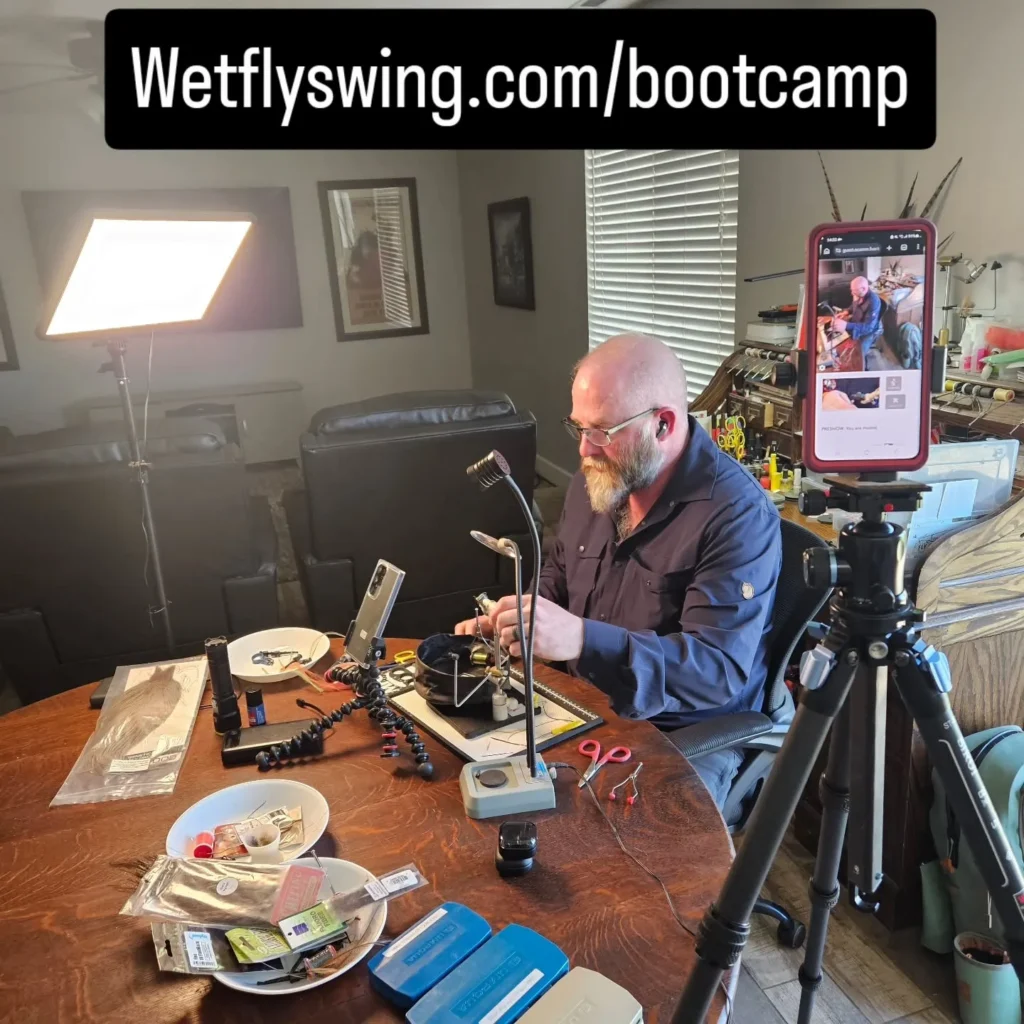
Mike also tied this sow bug pattern in the fly fishing bootcamp. If you want to check that out and see how it’s done, you can check it out here.
Mike uses a small stomach pump to see what fish are eating. He fills it with water, then gently pulls a sample from the top of the throat to check what was just eaten.
He’ll often show the bugs right in your hand so you can compare them to your flies. It’s a simple way to make quick adjustments and dial things in faster.
If you want to see exactly how this works step by step, check out this video with Phil Rowley:
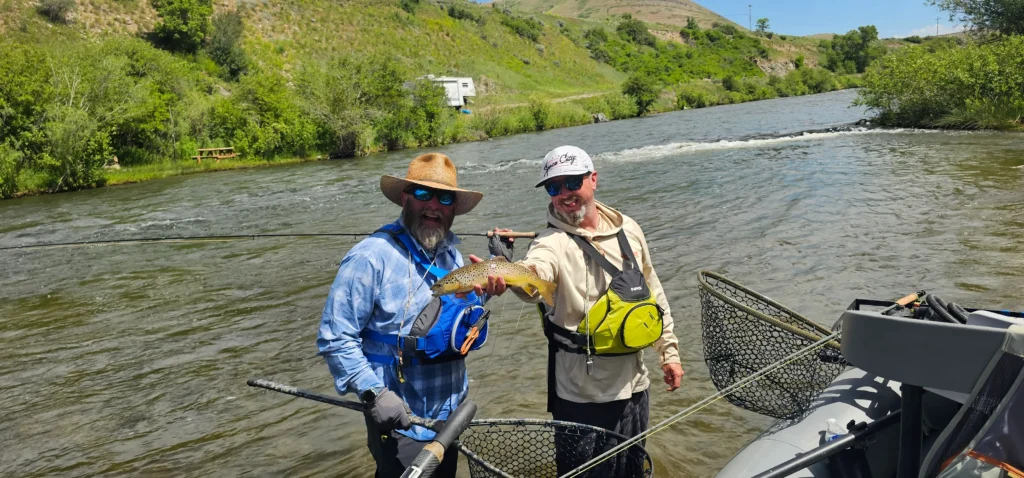
Mike says you don’t always need a long leader to catch fish on dries, especially on the Provo. He often uses a shorter setup and adds tippet to match the situation.
The key is how you present the fly.
Mike says coming from below makes a big difference. When you lift the rod, it helps pull the fly into the fish’s mouth instead of away from it.
Even if you miss the hookset, you’re close. The fish ate, so you’re doing something right.
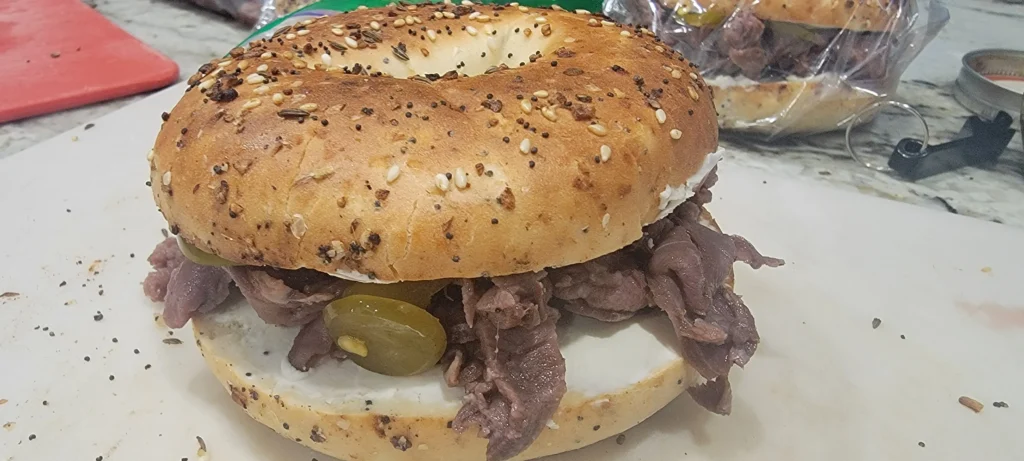
If you end up booking a trip, just know… the fishing’s solid, but the sandwich might steal the show 😄
Episode Transcript
WFS 910B Transcript
00:00:00 Dave: Today, you’re going to hear how guides consistently find trout when other anglers are walking past good water. Why dry fly refusals happen even when the fly looks perfect, and the small presentation adjustments that turn those refusals into eats? You’re also going to learn how experienced guides break down a river in the first ten minutes of arriving, what they look for before making a single cast, and why slowing down your approach often leads to more fish. This episode is jam packed with practical insight from someone who spends his season watching trout and helping anglers understand what’s really happening on the water. This is the Wet Fly Swing podcast, where I show you the best places to travel to for fly fishing, how to find the best resources and tools to prepare for that big trip, and what you can do to give back to the fish species we all love. Mike O’Brien is back on the podcast today, and he’s going to share how guides quickly identify high percentage water. We’re going to find out the mistakes anglers make when approaching rising trout. We’re also going to find out what trout behavior tells you before they even touch the fly, and how to adjust drift and positioning when fish start refusing. Mike always brings a good show. I’m excited for this one and let’s get it going. Here he is. Mike O’Brien. You can find him at Fly Fish with me. Utah dot com. How are you doing, Mike?
00:01:18 Mike: Doing great. Dave. How are you doing?
00:01:20 Dave: Great, great. Yeah, I’m excited to jump into this one today. We’re gonna. I always love when we talk floating rivers. I feel like I’ve talked a lot about boats. I’m kind of a self-proclaimed boat nerd, and I want to hear about what you do out there. You know, floating the rivers. I know the Provo, I think is known as a little it can be technical. So I want to talk a little bit about that, but we’re going to get an update from you on that. That’s going to be the deal today. We’re also want to give a heads up. We have a fly fishing boot camp coming where you’re going to be tying some flies. So we’ll probably touch base on that a little bit today. But maybe give us an update. What’s been happening. We’re we’re kind of right in the middle of March. It feels like spring is right around the corner. How have things been going for you man?
00:01:55 Mike: It’s they’ve been going really well. Um it’s surprising to us how mild of a winter we had and how much earlier our hatches are coming on because of the warmth. And, um, so from February through now, even end of January, we were getting, uh, some blue wings starting to move, not in the big numbers that we like to see in April and end of March, but starting to move and the fish are getting really, uh, fired up about it. Um, our rainbows are pre-spawn, so they are. The majority of the fish I’ve been catching have been rainbows over the browns and, and they’re outnumbered by the Browns probably eight or nine to one. So it’s been fun to get, you know those I in the Provo they’re more aggressive than the Browns when it comes to fighting. And uh it’s been fun to see a lot of them and how healthy they are. So, um, it’s been great. We’re really excited about the spring. We’re a little low on snowpack, but we’re continuing to get moisture, which helps. And, um, and we’re looking forward to a great start of our float season.
00:03:05 Dave: Nice. And when do you, uh, when do you kick off the float season?
00:03:08 Mike: So it typically when they turn the water on, uh, that’s usually the second or third week of April. And once the flows hit three hundred, uh, cfs cubic feet a second, uh, we can look real hard at dropping our boats in and getting moving on the, on the water. Um, the Provo is, as I mentioned before, it’s a world class trout tail water, but it’s not as big as, you know, some of our neighboring states, trout rivers, um, but it’s the fish count is crazy high. And, uh, and the opportunity for twenty inch plus fish is, is there every day, which makes it really fun.
00:03:52 Dave: Nice. Yeah. We had I’ll just highlight the episode we did. The first one was just last year, trout fishing, the Provo. Um, you know, and so we dug into more of a high level, I think, on your operation. And today we’re going to dive a little deeper into floating the rivers, how you guys do it. We’ll talk about some of your other guides and we’ll get into that today. So so yeah, maybe we could just start there. Let’s just let’s focus on that. So let’s say it’s three hundred cfs. You know, we’re in that window. It sounds like, you know, the April time. What does that look like for you? Are you guys is this like a long day? Float short floats. What is the what’s the day look like?
00:04:26 Mike: That’s a great question. So we do both half and full days. Um, the full days include a lunch and usually are about seven hours. The stretch of Provo that we float is about only three and a half miles long, and we can make that go for hours, or we can make it go the full day. Typically in early season, going the full day allows us to find fish and hatches and to really capitalize on catching not just quality fish, but good numbers of quality fish. Um, the half day works great too, and we just try and time it with the most activity, uh, from the trout. Right? Um, we’re, our days are still getting longer in April, so we typically will start, um, maybe at seven thirty. Um, so the first few minutes might be a little chilly, but, um, as the day moves on and the fishing heats up, it can be really exciting. Um, the thing that’s kind of unique about the Provo when we float it, unlike, you know, bigger rivers where you’re relegated to standing in the boat unless you have to go pee or have lunch, we’re hopping in and out of our fly crafts quite a bit because it is a shorter float and there’s so much wading access from the river and and from the bank. What we’re able to do, even in high runoff. Um, we can anchor up the boat, hop out, fish a really productive run. And that way we’re not having to worry about casting over, you know, the rear. Angler. The angler in the back isn’t casting over the guy in the front and vice versa. Um, and so we’re able to really, you know, I say it’s kind of the best of both worlds. So yeah. Um, hopping in and out of a, of a raft drift boat instead of a hard side allows us. Kind of that freedom to really capitalize on, on some great opportunity, especially when we start to. See noses, you know, some of these runs can be a little quick or a little difficult to reach, but if we can hop out and walk up ten feet and then, you know, put those flies right on there on noses. Um, it can get really fun. Now, conversely, if no one wants to hop out of the boat, you’re not required to if you have mobility issues or what have you. You’re like, no, I just want to sit in the boat. Great. That’s fine. Surprisingly, we have a lot of clients who say, you know, I really want my wife to get into this and I want her to come along. And the wife says, I don’t want to hold a rod. Just, uh, make sure he gets on fish and has a great time. So she sits in the back and enjoys the beautiful Provo Canyon because it really is spectacular. And, uh, and she might hold the rod for a few minutes or not, but it’s a great way to experience, uh, fly fishing for both the, you know, novice and experienced angler.
00:07:24 Dave: That’s awesome. Yeah, we’ve heard that before from some experts on here that, you know, getting out and really targeting, you know, getting out of the boat and really because it allows you to focus really, right? You can really and you can out of the boat. You can do that too, but it’s just not the same level, right? Being able to spend time and if you get on when you get on those runs, let’s say you see a couple of noses, can you sit there for, you know, an hour and just target different fish? Is that kind of. Or do you eventually put it down?
00:07:50 Speaker 3: Yeah, that’s a great question.
00:07:51 Mike: Yeah. Um, so the Provo in the summertime has a lot of, uh, recreationalists. You know, we have an incredible tube hatch. Um, and so these fish are impervious to, um, traffic, so. Oh, wow. So you could, you know, if you didn’t realize what you were doing or if, even if you did, if you had to cross, you could walk right through a run where forty fish are actively feeding subsurface and on the top, you wait two minutes and sometimes not even that long. And they are right back in that seam feeding and just going. So they reset faster than any river I’ve been on. Wow, it’s really crazy. So if you miss an opportunity, if you muck up a cast, you know, if you slap the water on a dry fly and they may sit down for 90s and then they’re right back up because they’re so used to being interrupted that it doesn’t faze them. So in that regard, the Provo can be very forgiving. And so yeah, to answer your question, we can sit in a run for an hour and if it’s hot and these fish are just going nuts, man.
00:09:05 Dave: Um, no reason to move.
00:09:06 Mike: Yeah. Yeah. There’s no real reason to, you know, leave fish to find fish. Um, when we know, you know, a run is really producing, um, it’s fun, you know, you’re just and then you’re able to work more on technique and fighting the fish, which, you know, if I had a critique of a lot of my anglers who even, you know, find themselves consider themselves intermediates, it’s their ability to effectively and, you know, kind of quickly fight a fish to bring them to the net.
00:09:39 Dave: I love that. I think that’s a always a good question. We could always, you know, regardless of species, get better at landing the fish quicker. So right less impact, especially in the summer. What does that look like? What would you say if you’ve got this fish on. How do you how would somebody fight a fish. Land it quicker. Let’s say we’ve got a nice big twenty inch, you know, Provo River rainbow on it. What are you telling that client?
00:10:00 Mike: So first, what I’m telling them is not try to horse that fish in. Right. I had a fish last week that, um, you know, when a client said, hey, will you hold my rod for a second? I got to go to the bathroom. Sure. No problem. My first cast, I hooked into a nice rainbow who was just hot and took sixty feet of drag on her first run. Wow. And you know, I’m not a novice, right? I she was bullying me just straight up bulldogging. So the first thing is let that fish take that initial run. Don’t try and fight it as it’s got all of the variables in its favor, right? And then once they turn or once they kind of settle for a second if they’re downriver from you getting that rod angle really like thirty degrees off the water up river, and then begin pulling them up as you reel and kind of pulling that rod into the bank above you really helps because then you’re able to draw it closer. Typically what’ll happen is, you know, those trout want to swim upstream. They’re facing upstream. It doesn’t engage that fight instinct as heavily as if you’re pulling it downstream and into the lake below you. So what I like to see is a client is bringing that fish past their midline right upriver from them. And then as they lift the rod up and bring the fish closer to the surface, then they turn it downriver and try and bring it back and into the bank below them, where we’re able to net them. Now, that may take three or four attempts before the fish is Sufficiently fatigued where we can net it, but I have found that instead of just. You know, a lot of people just hold the rod straight up and wait until the fish rolls over. And I tell my clients we want the fish to sprint into the net. We don’t want them to run a marathon. And then have to take five to ten minutes and, you know, warmer water, hotter weather to recover. Which, as you know, drives that mortality through the roof, right? Yeah. So if they can run a sprint and then land in the net and they’re still hot in your hand when you take that grip and grin photo, great. Because then as soon as you put them in the water, man, they are off. And you know, then it’s just a bad dream. Whereas, you know, keeping that rod tip up, you know, and most guys, they don’t know, right. It’s that fighting of the fish that and a lot of times they break off or the fish spits the hook because they’re not keeping enough pressure to move the fish. They’re just hoping. Oh, please let this one roll over or come to the top of the surface and then I can get it right. That’s, um, really being able to coax them. You know, it’s like you’ve got a bull by the nose ring, right? You can lead it around. But if he wants to kick you and not a thing you can do about it.
00:12:57 Dave: You let him go. That’s awesome. So that makes a lot of sense. And I think that, uh, we’ll make note of that. Basically let it run. That’s the first thing. Yes. Rod angle down at thirty degrees. Pointed up river. Let him work with the current. Yes. And then turn them down in below. You try to net him if you can, but it might take, you know, two or three times, depending. But what you’re saying is get him in quick. Now, when you do that, what are you like? What’s your typical lidar setup? Because that could make a difference, right? Where do you do you tend to do you have to go really light on this stuff?
00:13:26 Mike: So, um, in April and May, um, I probably run a heavier tippet and lighter than all of my guides and friends who are guides. I like to have a heavy tippet and that could mean right now I just moved up to five x from six because the rainbows are pre-spawn and they are. They’ll just smash a six x rig. Um, but in the season, like when it, when we’re in in runoff April and May, I’ll go as heavy as two or three X because the pressure of the river adds so much tension to that line that if you’re not careful and that fish runs out into current, doesn’t matter if you’re on four x, sometimes that current pressure will make it so that that fish breaks you off, or it creates enough of a hole in his palette that when he turns, he’s able to spit it. So generally from the boat I’m running up from the fly line. I have probably a foot and a half to two feet of twenty five pound liter. I do a nail knot. I don’t like loops because if we have to get it in close for me to net, I don’t want that hang up in the guides. And then from twenty five I do another probably two feet of fifteen pound liter. That’s where I put the indicator or the cork. You know, I’m not snobby. You can call it a cork. And then I put a micro swivel. And this reduces a lot of that twist and, you know, binding up of the tippet and the fly line up from the micro swivel. Then I will typically have in higher water, we’re probably looking at six feet of tippet before the first fly. Sometimes it’s eight feet, depending on the height of the river. And then we do that bounce rig we talked about before two, sometimes three flies with the weights on the bottom. And then the amount of weight is totally dictated by The flow of the river. Right now we’re going pretty light. But as that river picks up in flow, we’ve got to get heavier and heavier to get those flies down in front of the fish’s mouth. So that’s typically the way it’s set up. Um, and just as a little refresher, I do triple surgeon’s loops and then the tags hold the flies and then that bottom tag becomes where I tie in my weights.
00:16:02 Dave: Yeah. And when you’re out there, what is the depth of water? Are you fishing when you’re talking about this nymphing rig? Is there a big variation? Are you adjusting your indicator quite a bit?
00:16:12 Speaker 3: It’s a good question too.
00:16:13 Mike: So generally in higher flows we’re looking at four to seven feet of depth. And that’s pretty typical in these higher flows. Now um there are spots even now where we have fifteen eighteen feet, uh, holes. And so what I’ll do is I’ll remove, I’ll put that indicator sometimes up on the top section of leader, uh, just to get it down and not hitting the bottom of those deep holes, but really where the fish are, I have found where the fish are hanging out the most is on the downslope, right? So if you can hit where all that food is just rolling right down into the hole, that’s where we’re able to get those bigger fish.
00:17:03 Dave: Oh, you mean the downslope being like where the riffles dumping into the head of the pool?
00:17:07 Mike: Yeah, yeah. On that big grade dumping into it. Man, they’ve just got their noses up and they’re just waiting to feed. And anything that comes through that looks relatively close. It’s not even a question. They’re just crushing it.
00:17:24 Dave: Gotcha. So it’s coming off that shallower water. Then you just drop it down into a deep what it might be. It could be fifteen feet deep, but your leaders at least ten feet deep. So you’re getting down in that range?
00:17:34 Mike: Yeah. Ten. I mean the from the micro swivel or you know, where the indicator normally sits. It could be ten to thirteen feet long just depending again on the flows of the river, right?
00:17:47 Dave: Yeah. Flows of the river. Okay.
00:17:49 Mike: So that’s at three hundred cfs. That’s not typical, but when it’s six to twelve hundred. Yeah. That’s really common.
00:17:58 Dave: And what’s the, uh, the indicator you typically use?
00:18:01 Speaker 3: Oh.
00:18:01 Mike: So I’m a huge fan of the airflow. I find those to be the most durable, very sensitive. They come in different sizes. Those are my favorite because I like how, uh, hard they lock down. They don’t slide until I tell them to. And I’ve got a couple of the extra little, um, nuts. So if I lose one, it’s not a big deal. Um, I’m not as much a fan of the Oros. Some people. Um, I found that they slide a little bit and they don’t hold up as well, but I’m very particular with gear. And so, you know, we all have our preferences, right? Um, but that’s definitely mine. I.
00:18:44 Dave: Um, okay.
00:18:45 Mike: Yeah, when we’re over fifteen hundred cfs, I’ll even put on two airlocks because I have so much weight that I need the buoyancy. But yeah, that’s typical. Um, just I love those airlocks. That’s a fun question.
00:18:58 Dave: That’s perfect. No good. So I love it. And the airlock, that’s great because there’s lots of options. You know, you’ve got that. And of course the, the one you don’t hear as much about, although you used to hear a lot about was the thingamabob. Right?
00:19:09 Mike: I have dozens of those dang things.
00:19:11 Dave: Yeah.
00:19:12 Mike: And, uh, and I don’t use them as much anymore because they just don’t hold up.
00:19:16 Dave: They don’t hold up. Yeah, yeah. No, this is good. I’m glad we got airlock in here. And, uh, and then maybe just describe that again, because we’ll, we’ll put a link in the show notes to that episode we did last year. But what is the quick on the bounce rig? How is that different? What is that? Yeah.
00:19:29 Mike: So I described the leader right from the fly line to my leader. It’s two sections. And the reason I have those two sections there is really to help. Turn over if you need to mend. If you need to, um, lift the tip up and get that line off the water, that’s nice and easy to work with. Three to four and a half feet of leader before the micro swivel. And then from the micro swivel, I typically do a minimum six foot tippet length. Um, it’s all fluorocarbon and then so minimum six feet of fluorocarbon. And then I will splice another line, another section, typically eight to eighteen inches depending on the, you know, on how fish are feeding. If they’re looking at emergers, then that first, that top flight could be much higher than the bottom fly. Um, and I use a triple surgeon’s loop on one on the tag. I tie on the fly and then that main line coming down. I’ll do another triple surgeon’s loop. One tag to the the fly and then the main line. I’ll just put a little clinch on the bottom. Put on my split shot and then I’m good to go.
00:20:45 Dave: Yeah. And then the wait. So the split shot is that on the lower part of the or where does that go on.
00:20:50 Mike: It’s below the last fly. And um and then like I said I put a little clinch. You can just do an overhand knot. It doesn’t matter. Just something to stop those weights from sliding off. And what you want on your bounce rig ideally is as it’s moving down river, the indicator will tell you how it’s moving, right? So it’s ticking along kind of tick, tick, tick, tick, tick. And you can just watch that indicator. When you have it set up correctly, the indicator will start ticking as the weights are acting as kind of the drag the anchor on the bottom of the river, rolling over rocks and hitting structure, and then that whole rig ought to be going twenty to twenty five percent, sometimes thirty percent slower than the surface current. Because as we all know, the current on the bottom of the river is much slower than on the top. And so if you can get at the speed of everything else moving in in the feeding zone, they’re going to eat it.
00:21:54 Dave: Yep. That’s it. How do you when you’re doing this? I think split shot, the challenge is for me and lots of people is getting snagged. How do you avoid getting snagged or what do you do when you get snagged?
00:22:03 Speaker 3: So.
00:22:04 Mike: Uh, we will throw heaps of smaller weights that have much lower tendency to get hung up in the rocks. So if get in the technical weeds here for a second. So in higher flows, um, BB size split shot is Four grams. And, uh, someone might say, well, I’ll just go up to the B size, which is zero point eight. I’ll use two of those. Well, I’ll use four, six, eight in size BB. Sometimes even ten or more. Just have a real chain. So it’s kind of slinking along the bottom and not getting hung up in all of the structure, in the rocks, in beaver sticks, etc. that are, you know, decaying on the river bottom. Um, nice thing about having heavier tippet is that when you do get hung up, you can give.
00:23:00 Speaker 3: It a quick pop.
00:23:02 Mike: And you’re back in the game, right? If you run really light tippet and you’re in heavy flows, man, it’ll sink fast and it’ll look great in the water, but you’re having to retie every few minutes. Yeah. Because it’s too delicate for the conditions.
00:23:18 Dave: That’s right. And what type of split shot are you using. Does it matter on the split.
00:23:22 Mike: I used to use all non-toxic non-lead, and I’ve since moved back to the lead because I have found the density of it just can’t be beat, right? And tungsten is way too spendy. Um, right. Losing, you know, twenty, thirty dollars worth of tungsten a day. Um, so I’ve just gone back to the split shot I have when I go really small, like zero point two grams and smaller, I use just the round BB split shot with no wings. Uh, when I go higher, I like the ones with the wings because I can take them on and off and reuse them multiple times. But I have found that when we go really small and the water is really running low and slower, that having those wings to open them back up really becomes a detriment because it’s just one more thing to get snagged when we’re running a light rig.
00:24:20 Dave: Gotcha. So when you’re going heavier, you use the wings. You want to get down and then lighter. Just go with those non wings. Yeah. That’s less snagging.
00:24:28 Mike: Yeah. Just a little balls. Mhm.
00:24:30 Dave: Okay. Yeah. And then this is the sort of technique that are you guys typically when you’re floating back to the floating. Are you doing this while you’re floating or are you also doing this when you get out? Yeah, when you get out.
00:24:38 Mike: Yes. To both. On my flight craft, I’ll carry two bounce rigs and two dry rigs. And maybe a third streamer. Fishing’s been really good. Or, um, you know, if there are other, you know, I might carry a streamer rod with me as well, set up and ready to go to have someone play with that. But typically it’s two and two to dry two nymph. And as soon as we take off from the launch, we’re casting and working with the nymph rig. Um, later in the summer. However, we’re starting with dry flies and just painting the banks with, you know, maybe some caddis or small hoppers. Sometimes a hopper dropper. Just depends. But early season we default to the nymph rig because it is so effective. I mean, it’s so. Yeah, if people haven’t tried it, you’ve got to try it because it is so it’s such a game changer.
00:25:38 Dave: Yeah. And this is the drop. What do we call it now again I’m forgetting the name. Yeah. The bounce rate not the drop shot but because the drop shot is different, right. How is it because a drop shot is a similar idea, right?
00:25:48 Mike: It is a similar idea. So a drop shot rig like for bass fishing and things typically is still water, right? And you might have kind of a, a cylindrical a lot of well, I still have tungsten with a little like clip or, you know, um, tension holder for the bass rig and you’re kind of jigging with the drop shot rig to try and get their attention here you are allowing the water. And so it’s a very vertical setup. The drop shot rig is meant to be vertical. And anything coming off the main line, like, um, all of the various it’s been a while since I’ve bass fished. Yeah. My nomenclature for that is not on the tip of my tongue, but most of the paddle tails and lures and things that you’re using for that little jig setups are meant to like give a lot of motion as you’re jigging, not at your dragging. And so the one of the differences is the angle. So the drop shot rig is meant to be run from the indicator to the weights. That could be anywhere from twenty to forty degree angle in the river. Does that make sense?
00:27:01 Dave: Yeah it does. So. And then versus the bounce rig angle, which would be.
00:27:04 Mike: What I’m sorry. The bounce rig angle is twenty to forty. Whereas a drop shot is is dang near ninety degrees right. It’s straight up and down.
00:27:12 Dave: That’s I was saying yeah. So it’s straight up. So the bounce rig is yeah, you’ve got this little bit of an angle. So as the current’s pulling it. You’ve got, like you said, slower speed for your bugs down below.
00:27:22 Mike: Yes. And that’s one of the reasons why I like the airlocks is because that indicator becomes the sail to pull the whole rig through the system.
00:27:32 Dave: Right?
00:27:33 Mike: Right. And that relationship between the sail and the anchor of the weights is where the fine tuning happens.
00:27:41 Dave: Yeah, yeah. On the airlocks are there, um, size wise, how do you know what size? Are there a few different sizes of those?
00:27:48 Mike: Yeah, all the way from like a quarter inch, I think. Or maybe even an eighth of an inch. Really tiny to three quarters, maybe even a full inch. And they are. Man, I have aside from when my dog was a pup, I haven’t lost any to, you know, deterioration. You know, it’s just been when my pup ate one.
00:28:12 Dave: Oh, it ate one completely. They popped in.
00:28:14 Mike: Well, like sixty percent of it.
00:28:17 Dave: Oh, right. Right, right. Yeah.
00:28:19 Mike: So it’s still there in spirit, but man, it doesn’t function at all. Oh man. But yeah, I mean, really, they’re so tough, so durable. I really like him for that. And then the lighter the water and the, the current stream, the smaller you can go because you don’t have as many weights to pull.
00:28:37 Dave: Right. Yeah. It’s a lighter rig. So that’s cool. So that’s a little bit on the nymph. Now you mentioned Emergers and I’m always interested in that. How does you know? How do you know when to go emerger versus say dry fly when you’re out there, you see some fish.
00:28:51 Mike: So a lot of times now’s a great time of year to see it. In fact, we will see a lot of almost tailing fish, right? You’re not seeing noses but you’re seeing dorsal fins. Um, trout don’t tail like permit and bonefish and triggerfish where you see the tails coming up, but you’ll see the dorsal fins and kind of splashing in the water because trout have FOMO like no one you’ve ever met, and. Their fear of missing out is peak level. So if they see a bug starting to emerge and get. Near the surface, a lot of times that will trigger a very aggressive take. So if you’re seeing that or if you’re seeing fish hovering mid column or even, you know, above kind of that fifty percent line, they’re not looking for small bugs and annelids and, you know, stuff that’s just rolling off the bottom. They’re looking for these insects that are about to hatch. And so I will shorten up my leader or my tippet up from the micro swivel a lot of times, or I’ll just have that first fly much higher in the column with some CDC or some partridge or some hen hackle, maybe. That gives it a lot of movement. Maybe it’s got a set of like immature wings for the, you know, that we tie that look like, oh, this is about it’s it’s bubbling up that gas bubbles, you know, popping up on that end and it’s rising. And those takes are fun too, because it’s, there’s no ambiguity. Oh, is that a strike? You know, sometimes when you’re on the bottom on a bounce rig, they’re like, oh, I didn’t notice that that was a strike. I’m like, well, now do you because it’s moving across the river. These are hardcore, just crushing eats. And then they feel that tension. And a lot of times, um, they’re almost setting themselves right. We still need a little bit of resistance to make sure that hook is anchored. Um, because a lot of times they’ll just trap it in between their lips, for lack of a better word. Right? Um, yeah, we just got to make sure we’re hooked in and then it’s, then it’s off to the races. But that’s a lot of, a lot of times the way we’ll see it, you know, you might see a fish kind of come up off the bottom and rise just a little bit, not even close to the surface. But that tells us, oh man, they’re eating or, you know, hatches have been consistent forty five minutes before the hatch. They’re going to start looking for mergers.
00:31:14 Dave: Oh, right. So you start to get it. You start to time it. If you’re out there every day, you realize if at ten a m, you know, yesterday the hatch was coming off. You know, that probably nine thirty, you could probably get them on the mergers.
00:31:26 Mike: Nine o’clock nine fifteen yeah. Yeah. And the beauty of the bounce rig is that I may have an A merger on there. And when we start at eight and they won’t touch the merger, no problem. Because as soon as those bugs start moving up and going from nymph into that like a merger phase, man, that gets hit and you’re like, okay, let’s, uh, let’s put on a couple of mergers and let’s switch things up because now their focus is higher in the column. And then twenty minutes, half hour later, hey, put those rigs down. We’re going to look for noses. Park here for a second. This is a great little scene kind of tucked out of current. I’m going to see some noses here in a minute. Get ready and then it’s game on.
00:32:10 Dave: That’s it. And the cool thing is the bounce rig, you’re actually not even switching your rig. You can just add a merger onto the bounce rig just higher up in the column.
00:32:18 Mike: Exactly. Yeah. And in Utah, every state’s different. But in Utah, we can have up to three flies.
00:32:25 Dave: Yeah, you can do three flies.
00:32:27 Mike: So I’ll put, you know, and and some days, man, it doesn’t get touched. And other days that’s all that gets hit. And that’s what’s fun too is then I can kind of play around with some of my more experimental or like, oh, I wonder if this will work patterns down below and see if I get response there. And that just helps build my boxes to be more versatile and targeted.
00:32:50 Dave: That’s awesome. What is your box? If we pulled out your box right now and took a look at it, do you have like, what does it look like? Is it a diversity of different bugs or do you have like a standard pattern? Your confidence flies.
00:33:01 Mike: On any given day in my boat, I will probably have twelve to fifteen different boxes in there.
00:33:09 Dave: Wow. Yeah.
00:33:09 Mike: Um, so I have a beta box, a midge box, and a merger box of betas. I have, um, annelids. I have, um, yellow Sally’s and bluing olives and pmd’s and euro flies, you know, weighted flies too. If I really need something, sit down. Um, so I’ve got this box, right. I’ve just so many terrestrials and, and different drives. I have a lot of different ones and but I’ll have like this time of year since you were asking, I have probably three that I, I won’t even carry like my full kit. I’ll just stuff them in my waders, my three main boxes. So right now one is a little bug box, one is my Beatus box and the other is my midge box, which will cover, you know, anything that’s size twenty and smaller, eighteen and smaller. Both dry merger and uh and nymph flies. Most all of those are unweighted because the weights on the bounce rig.
00:34:10 Dave: Gotcha. And what is the Sao bug?
00:34:13 Mike: Sao bug. Roly poly potato bug. They are a crustacean, you know. You find them sometimes in your pantry. Growing up, you know, we always had them kind of in the driveway. In the garden, in the yard?
00:34:25 Dave: Yeah. The ones that curl up on you into a little ball.
00:34:28 Mike: Yes. So there are two types. One is aquatic and has gills. And the ones we see, you know, on the ground obviously have lungs. And so the ones that are aquatic never leave the water. But they are a staple for fish in the Rockies. SOS Sao bugs are found in most. I would hazard a guess that over eighty percent of trout streams and rivers, with Scuds being another one, right? Which are just tiny freshwater shrimp, right?
00:34:59 Dave: Scuds look similar to a sal bug when you look at the fly pattern. Right? A little bit.
00:35:03 Mike: They can. Yeah, yeah. So one of the bugs that I that I’m tying for our boot camp is a bug.
00:35:09 Dave: Nice.
00:35:10 Mike: Because it is on the Provo River. I mean, if you had to carry one fly with you and catch a fish any day of the year, the bug would be the fly. I mean, it’s just there everywhere. And so I tie them in different colors and different sizes and use a couple different techniques. But it is such a staple, um, that if, if guys listening don’t have, you know, a good range of style bugs, then you’re missing out on fish.
00:35:40 Dave: And what would be one pattern that would be something we could see on a cell bug. Is there a named pattern or is it just a cell bug?
00:35:46 Mike: Um, I think if you look at a tail water bug, if you type that in on Google and do an image search, uh, tail water bug fly, that’s typically what I’m doing. I use a couple different techniques that are a little different. I always like, uh, well, ninety nine percent of the time I use a hot spot and I tie under the thread I use is flush, fluorescent fire, orange and seventy dinner. So, um, when the dubbing gets wet, some of that orange starts to show through a little bit or just be a little bit of an attraction. Um, I think the worst thing you can do for that fly is overdress it. And then I use a tool, which I’ll show in the bootcamp to tease those fibers out laterally, right? When we look at Scuds, most of them usually use kind of a hard back across the top of the fly, and you draw those fibers straight down over the hook point, you know, but these we go laterally out because their feet are all spread out because they sit flat on rocks, whereas swim and use their feet to kind of propel themselves through the water. These stick to the bottom of rocks. So this is a fun little insight. When there are bugs moving and I go and pump a stomach like I’ve done in the last several days, like, oh, for some reason we’re not seeing hatches. No fish are really going hard on anything. It’s a slow day. We’ll land a fish, I’ll pump the stomach, and a lot of times I will find small bugs with some moss or algae in their stomach as well. And it’s because they’re picking them off of rocks.
00:37:35 Dave: Oh that’s awesome.
00:37:36 Mike: So, as I’m sure most of us know, trout are obligate carnivores. They don’t eat vegetable ever. Right?
00:37:44 Dave: But oh they don’t. They’re eating bugs. They’re not eating the weeds and stuff.
00:37:48 Mike: Yeah. If it’s not an animal, they’re not eating it. But you know, like a picky eater, I dang it, I got a little bit of that garnish in my in my steak.
00:37:57 Dave: Oh, well, I’ll well, eat it all. Eat it anyways.
00:37:59 Mike: Yeah, it’s going down the hatch because it got in the way. That’s the same thing. They’re picking bugs off of the rocks. And so that would be a great clue. Like, oh, we really need to focus on these insects that are clinging to the rocks because nothing’s getting kicked loose and nothing’s moving through the water. So they’re man, they’re hungry. They’re going to forage.
00:38:23 Dave: Yeah, they’re going to forage. That’s really cool. So do you what’s your stomach pumping? Is that a pretty easy like what’s the tool you use to do that?
00:38:31 Mike: It’s just it’s your basic little trout stomach pump.
00:38:35 Dave: Yeah. Just a little like a turkey baster looking thing. It’s small.
00:38:39 Mike: Mhm. Yeah. Really small. Um, I don’t do it on every fish, but especially with beginning anglers, it creates such a visual experience and an understanding of. Do you see what we’re throwing? Do you see these flies that we’re using? Do you see what’s in your hand? Look, these are still moving insects. These were just eaten seconds ago.
00:38:59 Dave: Crazy.
00:39:00 Mike: Now you have an understanding of like, this isn’t an accident, right?
00:39:05 Dave: Yeah, right. I mean, that’s about as good as it gets. You can turn rocks over, which is great. But if you can get your hands on a fish and, and actually see a living bug that just they just ate like there’s nothing better than that.
00:39:16 Mike: No, no. And it’s and so it really, I use it not as a crutch to say, oh, what are they eating, but really as a teaching tool to say, hey, look, do you see how this live insect that he just ate is similar or different from what we’re throwing? And then I’ll ask people, hey, how could I make this look more like the natural bug, let’s say, oh, maybe a touch darker. No problem. Let’s pop off what we have. Let’s get a darker one on there. Oh, it’s a little small. Great. Let’s drop in size or increase in size.
00:39:52 Dave: Right.
00:39:52 Mike: And then they become more invested and more like part of the process, right? So it’s not just here. Hand you a rod. Go and fish. Man, I don’t know what we did, but we caught.
00:40:05 Dave: Right?
00:40:06 Mike: Right.
00:40:07 Dave: Yeah.
00:40:08 Mike: Me and my guides really pride ourselves on providing great experiences. And that’s part of the experience, right? If I tell you to hold out your hand as I’m pumping a stomach and I don’t go all the way, you know, to the back of the stomach, really, it’s mostly just in the throat and in the very top of the stomach because they’re actively feeding. But you hold out your hand and I’m putting, you know, that water and those bugs in your hand and you’re like, Holy crap, that’s crazy. Right? Yeah. And then we’re cool. Yeah. And then I can use the little point of the, of the pump and be like, oh, do you see this? So bug nymph. Oh, look at that badass. Here’s an annelid, you know, and just start telling them, oh, look, these are starting to emerge. Do you see the wing case on the back is so much lighter. Those clues Really help the learning curve because if you can cast. That’s only part of it, right? Fly section is huge.
00:41:02 Dave: Right? Yeah. Fly selection. I think that’s one of those interesting things because you hear sometimes like, oh, fly doesn’t matter, you know, just throw on a Euro nymph, whatever. But but I’ve always loved, I mean, I think matching the hatch is like, I mean, man, talk about fly fishing. I feel like that’s a part an essence of fly fishing.
00:41:18 Mike: Yeah. It puts you so much more in tune with what’s going on. Yeah. And then when you see those bugs emerge off the top as winged adults, you’re like, aha, I knew it. Aw, man, I gotta change one hundred and eighty degrees. Like, I don’t know why, but all of a sudden they switched from blue wings to, you know, to small stone flies or whatever it is. You’re like, oh crap, I’ve got to make a huge correction and it can turn a good day into an unbelievable day, and it can turn a skunk into catching fish. And that’s what’s fun.
00:41:54 Dave: That’s it? Yeah. I feel like that’s the one thing when you’re on the water, if you’re not doing the work, you get out there and you’re like, oh, okay, there’s some stoneflies coming off, there’s mayflies and there’s caddis flies, and you’re sitting there going like, oh my God, what do I use? But what you’re saying is work back, you know, to kind of figure that out. So you’re not asking a bunch of questions and you’re not just sitting there confused.
00:42:12 Mike: Yeah. Especially as you’re learning, um, it’s such an invaluable tool to help kind of crack the code. I tell people all the time, and this sounds dumb, but you know, the trout never answer emails, right? They’re never going to tell you what they’re feeding on. So you’ve got to pick up clues where you can and you know, and it doesn’t hurt the fish because like I said, I’m not blowing up their stomachs. I’m putting a little bit of water in and then sucking just a little bit of material out, right?
00:42:41 Dave: So that’s how you’re doing it. If you had to describe because we did do a post, I remember I had Phil Roy who did a stomach sample on a trip. I remember again, you’re always going to get social media. I remember there were some serious hate mail comments that came through, like we were hurting the, you know, the fish and all this stuff. But Phil obviously is a pro. He was doing it right. But well, what is the if somebody wanted to do it right, could you describe that? Now, would that be something you can kind of describe?
00:43:03 Mike: Yeah, yeah. So first off, the bulb on the end and the tube have to be completely full of water, right? Number one, you don’t want to put air into the fish.
00:43:13 Dave: So you suck water. How do you suck water out without getting bugs that are in the. Did you just suck some water out of the creek?
00:43:19 Mike: Yeah, I mean, I put the whole thing in the water and I just, like, quickly hit that plunger, squeeze it, open it, squeeze it, open it, squeeze it, open it until no more air is coming out and it just takes a second, right? Just pop pop pop pop pop. It’s cool. Right? Then I hold the fish and I guide it down to the basically the top of the throat. And if they’re actively feeding, that’s all you need is to get right to the top of that throat opening. Push a little bit of water in. You can’t underdo it, but you can certainly overdo it. And if you’re holding the fish properly, you’ll feel a little bit of pressure in the stomach. So you just push in a little bit. And then as you release the bulb, you will see because the tube is translucent, right? Um, you’ll see bugs suck up, man. That’s enough. Right? You don’t need to know what they ate. Forty five minutes ago. Right. What they forty five seconds ago.
00:44:16 Dave: Yeah. You’re just getting the top of the stomach. So you’re not getting the stuff that are already processed at the, at the bottom of their stomach.
00:44:22 Mike: The esophagus and maybe the top of the stomach.
00:44:25 Dave: Yeah, yeah.
00:44:26 Mike: Because water, like water forces everything down. So if they’re actively feeding, you don’t need to go to the bottom. You just need the top of the esophagus and then push a little bit of pressure in. You release that bulb and you’ll see all the bugs coming into the bulb. You hold out your hand, you start squeezing it out and boom, you could have anywhere from three to eighty bugs in your hand. You know, with your first sampling.
00:44:55 Dave: Yeah. And do you put them in your hand or into like a puck or a tray or something like that?
00:44:59 Mike: So I do hand because it’s a little more visceral and I’m not, you know, I don’t care. It’s not like I’m getting goodies, right? Um, if there’s something really interesting, I do carry a couple small glass vials where I’m like, oh crap, here’s a variation that I want to mimic when I get home. And so I will suck that back up in the pool to put it in a little vial with water. Take it home so I can tie and, and mimic that exact look.
00:45:28 Dave: That’s sweet. When you take if you take two fish the same exact time, you catch one that’s, you know, ten inches and one that’s like seventeen inches is that stomach sample you pump going to be a lot different, or do you think it’ll be the same bugs.
00:45:41 Mike: Oh, you know, that’s one of the cool things is a lot of times it’s totally different. Fish have preferences just like we do. Right. If we went out to eat. Hey, what are you feeling like, man? I’m feeling like Mexican. Oh, dude. Right. I gotta have pasta tonight. They have the same preferences they may key in. Now, obviously, the bigger fish get preference. So they’re at the top of a seem, and they’re bullying every other little fish out of the way because they’re the top of the pecking order. So they get first preference on what they’re feeding on. So if a smaller fish has the same things, it’s because there’s so many of them that they’re also being like, oh, I get to have these too. I don’t have to go with the size twenty six stinking little micro middle, right? Right. I get to eat the size sixteen eighteen blue wings too, because there’s so many in the river, right? Yeah. And there are times when there’s so many insects in the system that when I take the hook out of the fish’s mouth, I have heaps of photos of these. The mouth is full of insects.
00:46:46 Dave: Just puking them.
00:46:47 Mike: Up. They’re so full and they’re such pigs. When the bugs are moving, they don’t stop. They just try and jam more and more and more into their guts. And that’s how they grow. Wow. Right. So yeah, it’s just so full. You’re like, Holy crap, look at this. And the client believe it. Like, how is he still eating when it’s so full? I’m like, dude, you know, they don’t stop.
00:47:10 Dave: No, they’re hardcore. They’re going, what is the is there a fish that’s too small to pump a sample?
00:47:16 Mike: Sure. I mean, yeah, if you’re getting I mean, the ones with par markings, right? Yeah. A juvenile. Uh.
00:47:24 Dave: I not what you want. So you want to have something that’s probably six inches or bigger probably, or something like that. Yeah.
00:47:31 Mike: I mean, we don’t catch a lot of six inch fish on the lower Provo.
00:47:35 Dave: You don’t.
00:47:36 Mike: Know? No. Um, because we’re we’re targeting fish is where the bigger fish are feeding. There are areas where we know, okay. You know what? This run is chock full of juveniles. And maybe the fish counts are a little high and so they’re a little stunted. That also happens a lot on the middle Provo. The numbers are really high. Um, anglers and others haven’t done a great job in maintaining a healthy size population. And so they’ve stunted a little bit. Um, there are still big fish there, don’t get me wrong, but an average fish there is eight to twelve inches where um, on the lower, you know, a fourteen. If you get something in the teens on the middle, you’re stoked.
00:48:23 Dave: You’re feeling good.
00:48:24 Mike: Yeah, yeah. Low to mid teens, man. That’s a great fish. And it’s all you know where you are on the lower. If you get something that’s you know thirteen fourteen you’re like okay, hey, toss them back. I wouldn’t call that a picture fish. Right. Let’s get them a little more photo worthy. Then again, you know, there have been times where the clients have caught little fry. And I’m like, all right, dude, you gotta hold that up. We’re gonna poster this fish like that little two inch fish. I don’t know how he ate a size fourteen bug, right? But, um.
00:48:55 Dave: That’s sweet. That’s sweet. He did, he did. Nice. Well, you mentioned before on the boot camp. So we are going to give a shout out. Wet fly swing dot com slash bootcamp. Yes. And people can check in right there and they can actually take a look at the presentation you’re going to be doing, which is tying in. Are you going to tie a few different patterns? What are your thoughts there on the boot camp?
00:49:13 Mike: So right now my thought is I’m tying I have in my head to tie two. Um, one is if you look up or if you know the pattern a noseeum um, that’s one that I’m going to be tying. I specifically had issues with, not me myself at fifty one, not seeing those dang flies when they got eaten this winter. And so I made them high viz and um, yeah, it’s really changed my drive for image game. Um, so midges and early season like small blue wings. It can work for any small dry fly pattern really. And it’s so simple. These are two of what we would call guide flies. They’re not difficult. They don’t take a lot of time, but they are wicked effective. So one is my high viz version of a no CM, and then the other is the Sao bug. And we’ll cover kind of how I tie it, why I tie it that way. And there’s a couple tools that really make a difference when you’re tying up a bug. So those are the two right now that are kind of forefront of my, in my mind. Because like I said, you can catch a bug. I mean, I’ve caught fish on bugs from Montana to Oregon. Um.
00:50:35 Dave: Yeah. That’s so awesome.
00:50:36 Mike: Yeah. And I mean, they’re, they’re so prevalent and a lot of times the fish will take it for a scud and vice versa. But typically if you put on a scud, um, and they mistake it as a bug, it’s typically because it’s much smaller. Um, the larger those get, the more deliberate you kind of have to be.
00:50:56 Dave: Okay, cool. Yeah. And the great thing about this is I think this episode, we’re talking in the future now, but this will probably go live that this episode of the podcast is probably going to be after the boot camp. But the great thing is, like you said, if we go to that boot camp, there will be a page there where they can watch the replay. Yes, anybody can. And there will be other replays from all the great guests because we have a spectacular lineup of speakers.
00:51:18 Mike: I’m excited to watch it myself.
00:51:19 Dave: Yeah, it’s pretty epic. You probably know some that we’ve got. Um, you know, just to name a few. We’ve got Norman who’s going to be on there talking Nymphing. We’ve got Phil Roy who’s going to be covering Stillwater. We got the great David McPhail talking about fly tying. David McPhail is going to be tying on a session. And so yeah, it’s pretty I’m pretty excited. I’ve been we’ve been working on this behind the scenes and I’m glad it’s finally here to, to get it going.
00:51:41 Mike: I have a dream of being able to fish with him in Scotland.
00:51:45 Dave: Oh, nice.
00:51:46 Mike: He is. Man, if you guys don’t know who David McPhail is and you think you’re a good fly tyer.
00:51:54 Dave: Yeah.
00:51:54 Mike: Watch some of his videos and just expect to be humbled like you’ve never been humbled before. At the vice. I mean, I know Justin, he’s a maestro, right?
00:52:05 Dave: Yeah. What is he? How do you explain that? Because when you watch him, you’re just transfixed on it. But what is he? Is it just like. Can you even explain how he does it or what he does differently?
00:52:14 Mike: So I in fact, there’s one one of his still like for him, it’s just silly, but he puts a little bit of wax on his left index finger, um, between his thumb and his index finger, um, to apply to his, uh, thread. I’ve been using that for years and it is a game changer, especially when you’re using Nano silk or GSP or something. That’s a little slick. But to answer your question, um, what is it? It is his effortless ability to make something so complex come out so perfectly and so clean. There’s very rarely like a stray tuft, right? Stubbing or, oh, you know, this deer hair didn’t sit just the way I wanted, right? It’s like he understands the material so perfectly that they obey his his unspoken command. It’s it’s magic. I mean, it is so mesmerizing to watch him tie and just. Man. That’s cool. I hope one day to be half as proficient as he is on the vice.
00:53:22 Dave: Well, like we said, this is going to be great and we’ll have everybody can take a look at that. Now that this is out there, we can actually go watch it right now, which will be cool. Um, but let’s take it out of here. We mentioned. So again, like always, you know, we’re going to not get to everything, but we will make sure to follow up on some of this stuff. But I did want to touch really quickly on dry fly. So we talked to mergers. So you got those heads. Say you see those heads coming. Now give us a couple of tips on how you can what you’re doing to get your, you or your client into that fish on the dry.
00:53:50 Mike: Yeah. So different rivers present different complexities or challenges. As I told you, most fish on the Provo will reset really quickly. I have learned that I don’t need a fifteen foot leader off my fly line. For a client to be able to catch fish on a dry on the Provo. And in fact, I’ve gone from having a nine foot tapered leader to a seven and a half foot tapered lead. And then I will blood knot whatever tippet I want on the end, so I don’t ever tie directly on to the tapered leader. I use that to be able to turn the fly over and to, you know, use that as part of the casting ability, right? And so ideally, what you’re doing is you’re putting that tapered leader length up maybe six inches behind where the fish is rising, and then two or three feet, sometimes a little bit more, but typically about three feet of tippet on the end of that tapered leader is what is going to be presented upriver from that fish. My favorite method is to approach the fish from below, because when you set, you’re setting up, you’re lifting and it’s pulling it into the fish’s mouth, which always helps with a much more consistent, uh, hookset rather than casting down to the fish where you can, when you lift up, pull it away, you can pull it right out of their beak. Right? Which is so frustrating. And, I’ll console clients and tell them, look, man, you still hit a stand up double like he came up and he ate it. That’s a win. I mean, you didn’t score a run, right? He’s not in the net.
00:55:40 Dave: Yeah. It’s not a homer. It’s not a homer. But it’s.
00:55:42 Mike: Pretty good. No RBIs here. But. But you were on the right path and now we just have to get the timing. We have to get, you know, maybe set too early.
00:55:51 Dave: That’s so cool. I love that take. I, I was out at steelhead fishing this week, uh, this last week, and we were up on the op and, you know, and steelhead fishing, right? Not, not always easy. And I was lucky enough to get a fish that hooked. I hooked up with this fish and it, you know, I played it, it was on, it was solid. And all of a sudden it turned as I was getting it closer, you know, in. And it just went up and shot out of the water about the length of its body and did one of those big wiggle shakes and, and gone. Yeah. And it was gone. And I sat there and I just said, you know what? I’m good with that. You know what I mean? I don’t have to like. And again, I feel like the pitcher for sure. I love photos are great, but I feel like that was like half of that was more than half of it. Just seeing the fish and feeling like, okay, that was quick release. That’s good to go.
00:56:35 Mike: One of the things I love about fly fishing, Dave, is that sometimes the fish win, and that’s cool too, man. You know, it was catching all the time. It would get boring, right? Right. If every fish fought the same way, man, it wouldn’t be half the sport that it is now, right? And so yeah, look, man, some are gonna win. Some are gonna break you off. Some will spit the hook. Awesome. Hey, is it better to have that fight and to still have the fire in your belly of wanting to do it again or to, you know, get skunked? Well, obviously.
00:57:07 Dave: Right?
00:57:07 Mike: Right. Like some of the biggest fish I’ve caught and lost are still, like, will keep me up at night, right? Like I came so close. Oh, right.
00:57:20 Dave: Right.
00:57:20 Mike: And that’s just it plugs into like, man versus nature, right? Like one of our primal instincts that you can’t help but just like that fire. So no, I, I love, I it’s so healthy to not win. Right?
00:57:40 Dave: Yeah.
00:57:41 Mike: Because then you’re learning like, hey, what did I do wrong? And a lot of times your adrenaline is through the roof. You need a minute. You replay it over and over and over in your head. Hey, what did I do wrong? And a lot of times, that’s why a guide is so great to have on trips because he can say, hey, dude, here’s where you mucked it up. Yeah, right.
00:58:00 Dave: This is where you mucked it up. Exactly. Well, and what happened on that one? I’m not going to call out any brands. It wasn’t one of our sponsors, but it. So when I got the fly back, it was a it was basically like a rabbit strip, you know, a leech kind of pattern. I pulled it out and it actually the fly literally came apart.
00:58:19 Mike: Oh, really? He just ripped to shreds.
00:58:23 Dave: Yeah. It wasn’t no, it didn’t rip it to shreds. It wasn’t a tube fly. It was a shank. And literally the whole back half of the fly with the hook slipped off. So there was a defective part of the. Yeah. And so another good reminder to tie your own flies. You know what I mean? Like, you know, tie your own flies and you don’t have to worry about that happening because it definitely happened. And again, I wasn’t too, you know, I felt like I, you know, all that, but yeah, it’s, uh, stuff can happen out there. You never know. And, um, I’ve had those moments too, where you get that fish in and you’re just like, oh, man. And then it slips away.
00:58:51 Mike: But for a hook bending out like, man, right? That fish was so big, he defeated our equipment. Hey, kudos. Right? Yeah.
00:59:01 Dave: And that happens. You guys have some, uh, so you’ve seen that happen before. Some hooks bend.
00:59:05 Mike: Oh, and that’s just part of the game. You go into it knowing you’re not going to bat a thousand. You’re not going to have every you’re not going to hit a grand slam every time you touch the water. You’re trying to be a little bit better than you were before, right?
00:59:20 Dave: Yeah. How are the odds when I always look at the odds of the sport? I love the sports analogies. You know, Michael Jordan, the greatest three pointers. You know Stephen Curry right. Forty percent or whatever, like is the great or, you know, somewhere in that range so far. So they’re missing six out of ten is fly fishing similar to that.
00:59:35 Mike: So what I will tell people is with the bounce rate, when we’re nymphing, if they’re a novice to this, for every two that eat, you will hook one. And for every two that you hook, you will land one. And so most people start batting. Two fifty and if we can get you up to one in three or one and two, man, that’s awesome. Because failure absolutely has to be part of the equation. Otherwise, like you’re not fishing, you’re catching and there’s no challenge. And clearly we’re doing like you might be cheating if you’re one hundred percent right. Um, and then just to tie it back in with the dry fly, I think one on a dry where you watch them come up and sip that fly or crash on it or kind of roll onto it. One dry eat and in the net is worth six or seven on the nymph because so much more of a visceral, like you see everything occurring experience. And a lot of times when we’re casting upriver to these fish, especially in this early season where the light is, you know, it’s cloudy, we don’t have great visibility in the water from our angles. You’re dry. It could be a ten inch fish. Or like with my client last week, dude, it was a twenty one inch rainbow on a dry and you just don’t know. And the fish was in five inches of water.
01:01:11 Dave: Wow.
01:01:12 Mike: It’s just it’s crazy nice.
01:01:14 Dave: What fly did that fish. What was the dry fly he took?
01:01:17 Mike: Dude, he took that high viz notion that I’m tying.
01:01:20 Dave: Yeah. The one you’re going to tie on the on the boot camp.
01:01:22 Mike: The one that I’m going to tie. That is, uh, let me think. It’s. Three materials, including the thread. I mean, it is.
01:01:29 Dave: Sweet.
01:01:29 Mike: It’s simple. Um, it’s just dead effective.
01:01:33 Dave: That’s it, that’s it. That’s what we love.
01:01:36 Mike: Yeah.
01:01:37 Dave: Awesome. Mike. Well, I think we can leave it there for this one. We’ll, uh, as always, send everybody out to fly fish with me. Utah.com. And yeah, I’m excited to all the stuff we have coming. I know, um, we’ll talk more probably about some of your guides on the next one and talk more about your program. And, um, yeah, thanks again for all your time. This is a good one. We’ll look forward to seeing you on the next one.
01:01:57 Mike: Appreciate it. Have a great day. Thank you.
01:02:01 Dave: Please check in with Mike. If you get a chance, let him know you heard this podcast. If you’re interested in going on a trip out to Utah, we’d love to hear from you. You can go to Wet Fly Dot Utah right now, and if you add your name and an email, we’ll follow up with you on some details. We’re setting up some big trips for the upcoming year, and we’re trying to get some availability here. So do that wet fly Utah, and I’ll follow up with you on details for this trip. You can learn more there as well at Wet Fly. If you want to check out our pro community that we got going. I want to thank you for stopping by today. I hope you enjoyed this episode. I know I did, and we’re excited to be doing some more stuff with Mike up in this coming year. So if you get a chance, check in with Mike, check in with me and we’ll see you soon. Hope you have a great evening. Uh, morning or afternoon and we’ll see you on the water. Talk to you then.
01:02:52 Speaker 4: Thanks for listening to the Wet Fly Swing Fly Fishing show. For notes and links from this episode, visit wet fly dot com.
This one covered a lot, from finding better water to making small changes that turn refusals into eats. If you want to fish with Mike O’Brien or join a trip out in Utah, send me an email or check in with Mike and his team.