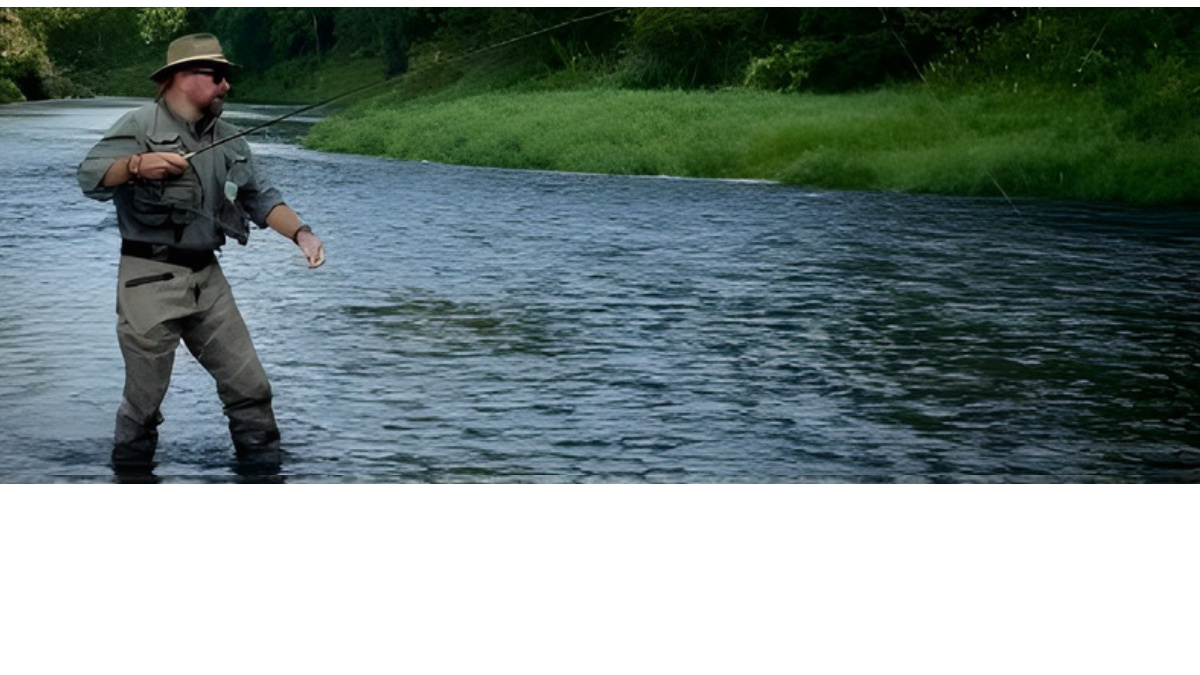
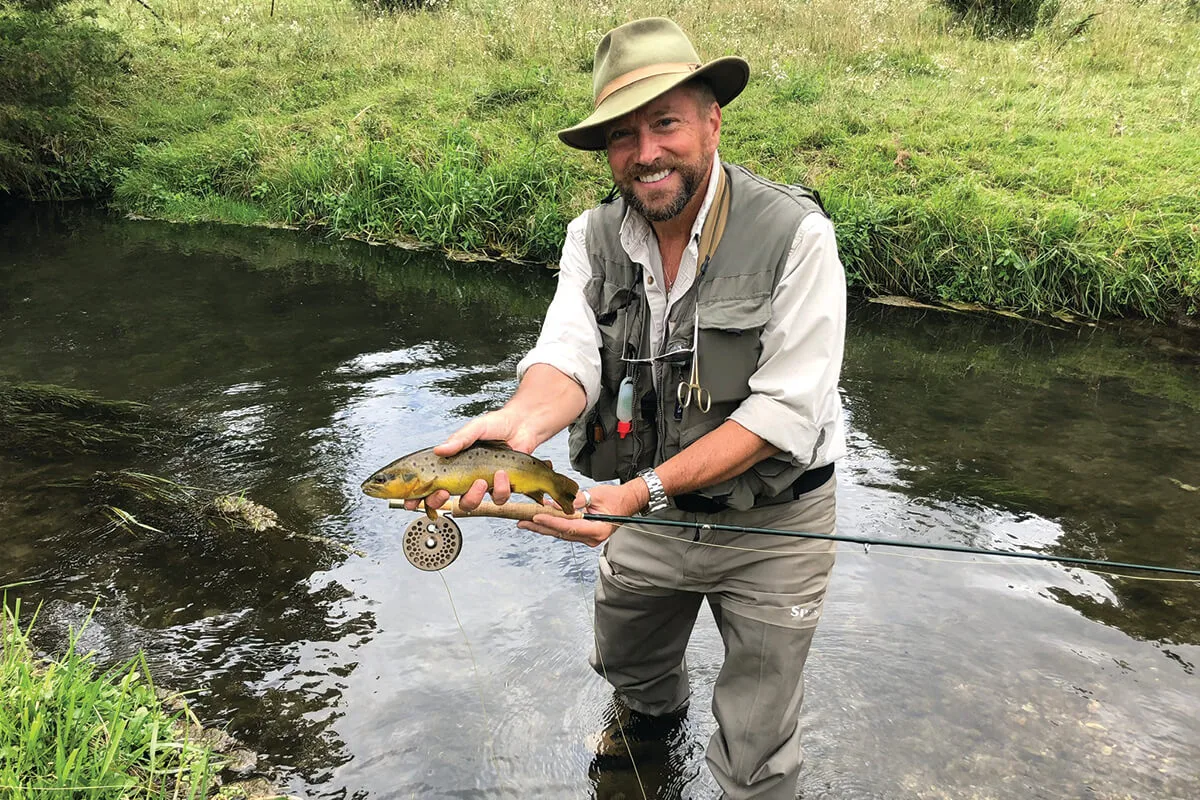
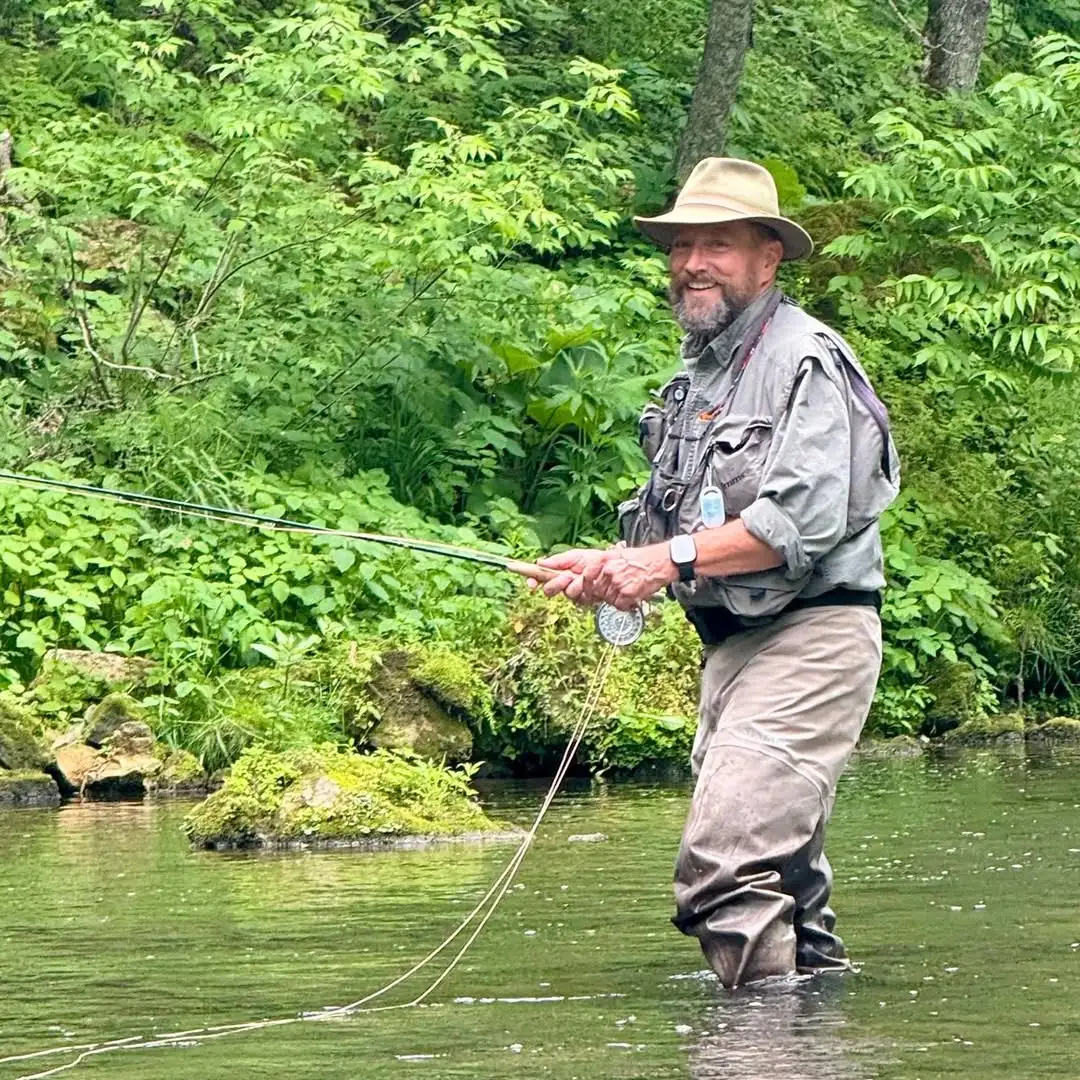
There’s a stretch of the Midwest that a lot of anglers pass right by without ever realizing what’s tucked into it. Beneath the farmland and rolling roads of the region sits one of the most underrated trout fisheries in the country. In this episode, John Van Vliet breaks down why the Driftless has become such a special place for anglers who love small streams, spring creeks, and big wild trout.
We get into the unique geology of the Driftless, why the region fishes so differently from freestone rivers, and how a creek that looks too small to hold fish can surprise you with a twenty-inch brown. John also shares practical tactics for approaching new water, finding fish faster, and fishing these clear creeks without blowing your chances.
This one is packed with useful takeaways whether you’re planning your first trip to the Driftless or just want to become a better small stream angler.
John describes the Driftless as a unique island in the middle of Midwestern farmland. Covering roughly 24,000 square miles across four states, it holds one of the highest concentrations of spring creeks in the world.
Because the glaciers went around this region instead of flattening it, the area was left with limestone bluffs, steep valleys, underground water movement, and cold clear trout streams. It feels nothing like the flat farmland many people imagine when they think about the Midwest.
One of the biggest advantages of fishing the Driftless is how quickly you can change course. If one creek is crowded, muddy, or just not producing, another stream may be only five or ten minutes away in the next valley.
That density of water makes it easy to explore. One stream may have no hatch at all, while another just over the ridge is alive with rising fish.
This newer book is designed as more of an angler’s tour through the region’s best trout water. It also goes deeper into the geology, history, and culture of the area, which John sees as an important part of understanding the places we fish.
John explains that the best streams are not just the ones with the highest fish counts. Some are included because they hold native brook trout or have a unique feel that makes them worth visiting, even if they are small and intimate.
Others are classic blue-ribbon destinations like Trout Run, Timber Coulee, the Rush, and the Kinnickinnic. He also talks about including a few hidden gems, not to hotspot them, but to help anglers appreciate the full range of what the Driftless offers.
This is where the episode really shifts into practical fishing advice. John shares some of his favorite tips for fishing small, clear spring creeks where stealth and observation matter as much as fly choice.
One of the biggest takeaways is to stay low and be deliberate. These trout live in technical water, and if you rush in carelessly, you can lose the whole pool before the first cast.
John notes that the Driftless fishes year-round because the spring-fed water stays cold and stable. Even in January, anglers can find midges and early black stoneflies, especially on warmer winter days.
By late March and into April and May, things really start building. Blue-winged olives, Hendricksons, caddis, and especially the black caddis hatch can create some fantastic windows of dry fly fishing.
He also shares a great reminder that when a hatch shuts off, the fishing may not be over. Big fish can still be feeding subsurface, as shown by his story of a twenty-inch rainbow that ate a Deep Sparkle Pupa after the black caddis hatch ended.
One of the coolest parts of this conversation is John’s reminder that the Driftless is full of surprises. Small streams do not automatically mean small fish.
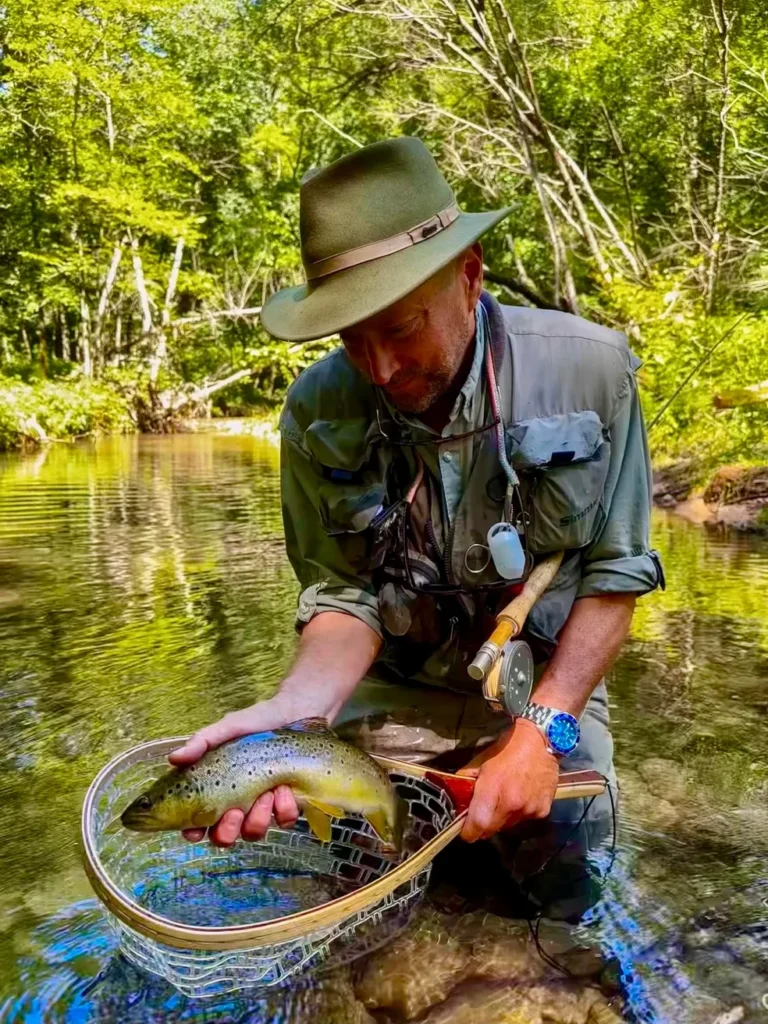
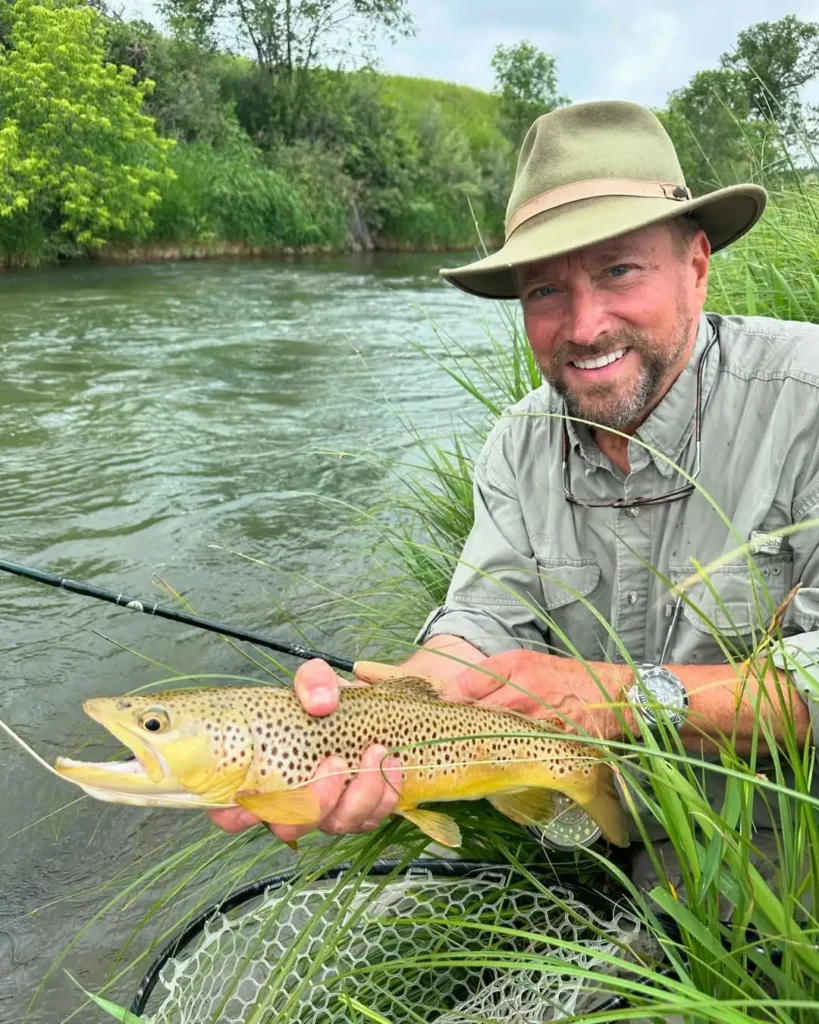
He shares the story of catching a twenty-inch brown in Iowa, then returning later the same day and watching Catherine land a twenty-four-inch hen. Those fish are in there, even in water that many anglers would dismiss at first glance.
John explains that the Driftless is not just about crawling around on tiny streams looking for brook trout. There are also places where you can float and target large browns with streamers from a drift boat or small craft.
He also points out that beyond trout, the region offers excellent smallmouth fishing. Guides like PJ Smith are proof that there is more than one way to enjoy the water in this part of the country.
John’s connection to TroutRoutes started with a simple idea. He wanted readers of his books to be able to scan a QR code beside a printed map and jump directly into real-time mapping data for that stream.
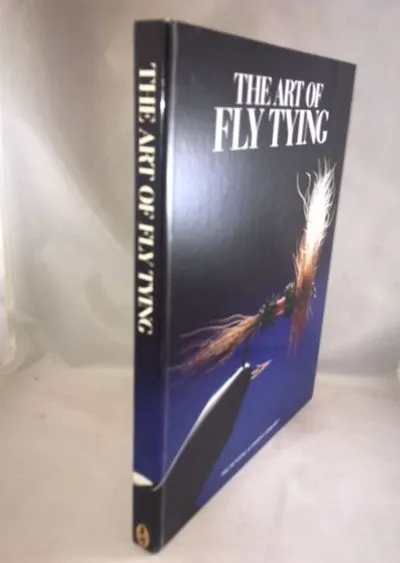
The book was also designed with a concealed wire binding so it would lay flat at the vise, which made it far more practical than many tying books at the time. Despite early doubts from others in the industry, it went on to sell 100,000 copies in about eleven months and was later translated into Japanese.
This section is one of the strongest tactical segments in the episode. John says anglers should get away from the bridge first, because the easy water right near the road is often “decoy water.”
From there, he likes to work upstream, watching the water, checking bird activity, and focusing first on obvious feeding lanes like riffle-to-pool transitions. He also likes to cover a lot of ground rather than overworking one spot.
John gives a really useful breakdown of access laws across the Driftless states. Minnesota and Wisconsin are “keep your feet wet” states, which means that if you legally access the stream and stay in the water, you can continue through private property.
Iowa works differently. In Iowa, private landowners control the banks and stream bottoms, so permission may be needed on private stretches. John points out that there is still plenty of public access and no reason to trespass.
He also touches on the Illinois corner of the Driftless and notes that while access is more limited there, anglers can still fish stocked trout at Apple River Canyon State Park.
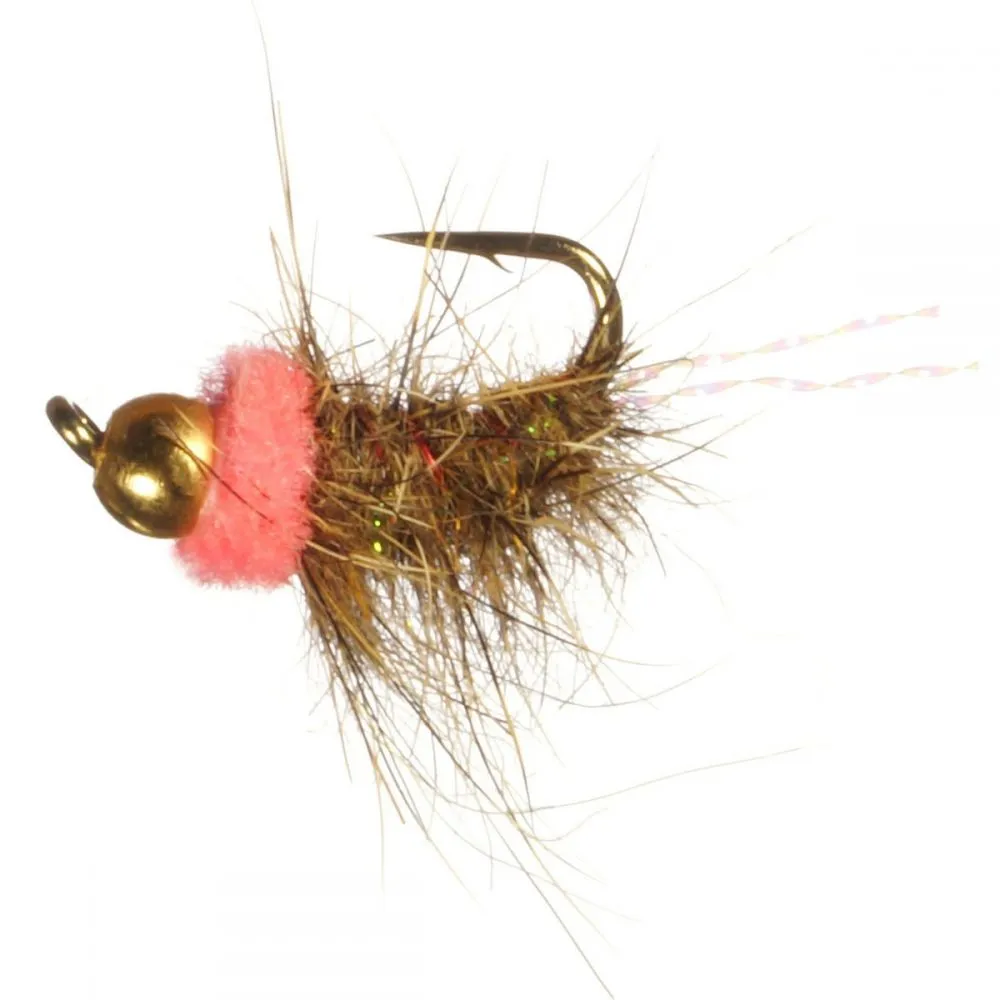
When Dave shifts into the tips, tools, and tech section, John gives a nice mix of local confidence flies and broader trout staples. The Driftless definitely has its own regional favorites, but the classic patterns still work.
John says tenkara is becoming more popular in the Driftless, especially on the tighter, more intimate streams where close-range presentation really matters. He sees it as another useful tool rather than a replacement for conventional fly rods.
It changes the way anglers approach the stream and can sharpen skills that carry over into other styles of fishing. It also packs down easily, which makes it especially useful for hiking into headwaters.
He also highlights species information as one of the more exciting features being expanded. For anglers looking to target brook trout or another specific species, that can be a huge help.
Near the end of the episode, John talks about getting into fly fishing through his dad. He started fishing in the Adirondacks around his grandparents’ camp and later got more deeply into fly tying while in college.
He also shares that he has more books in the works and plans to keep writing. Along with his books, he continues contributing to Fly Fisherman magazine and has also written for outlets like Atlantic Salmon Journal and The New York Times.
Episode Transcript
00:00:00 Dave: There’s a stretch of the country in the Midwest that most people drive right past. Flat farmland, long highways, nothing to see. But tucked inside that landscape is something completely different a maze of cold, clear limestone valleys and more trout streams than most people will ever fish in a lifetime. Today’s guest has done more than just fish it. He studied it, written about it, mapped it out, and helped tell the story of a place that’s quietly becoming one of the most interesting trout fisheries in the country. This is the Wet Fly Swing podcast, where I show you the best places to travel to for fly fishing, how to find the best resources and tools to prepare for that big trip, and what you can do to give back to the fish species we all love. John Van Vliet is here today, and we’re going to be breaking down how to approach small streams and spring creeks that sometimes might even look too small to hold fish. We’re going to talk about the species that they’re fish in there, and how you can find twenty plus inch browns and rainbows in some of these streams. We’re going to find out about the simple shift that will help you find fish faster in these small creeks. We’re going to get a handful of go to flies and tactics that work anywhere around the country, and how tools like trout routes are opening up water most people never find. We’re going to get into that today. Plus, you also find out which of his books hit one hundred thousand in sales and how this has been a go to for fly tyers for many years. This is a great one. Glad I could share it with you. You can find John at Trout run press dot com. Here he is. John Van Vliet. How are you doing, John?
00:01:30 John: I’m doing great. How are you doing today, Dave?
00:01:32 Dave: Not too bad. Not too bad. Yeah. We’re gonna we’re gonna talk about you’ve got a wide ranging background. I’m excited about this because we’re probably going to go back a little ways and hear about what you’ve written. You’ve got a ton of books out there. Uh, you know, the Driftless is a special place for us. We’ve, I’ve been there once and fished it. It’s amazing. And we’re going to connect with trout routes, you know, fly tying. You got a fly tying book out. We just had a had a boot camp we did, which we had some great fly tying sessions and all that stuff, but very cool.
00:02:00 John: Dave, once in the Driftless is not enough, so you have to come back.
00:02:05 Dave: Once isn’t enough. Yeah, yeah. How many times do you have to fish the driftless before you feel like you’ve got it? You got to feel for it.
00:02:12 John: Always one more.
00:02:14 Dave: Yeah. Yeah. There’s never enough. Yeah, it’s pretty huge, right? Maybe you can explain that about the driftless. Is it? How would you? For somebody who’s never been there, how do you explain the driftless?
00:02:24 John: Yeah, well, the driftless is really a unique place when you think about basically an island in the middle of Midwestern farmland, twenty four thousand square miles, covering portions of four states. And it is one of the highest concentrations of spring creeks in the world. And there are people who look at this as flyover country, and they have no idea the trout fishing resources. And some of these are small creeks, beautiful clear creeks that may flow out of caves. And some of them are big brawling rivers that you can put a boat on. And you know, and fish all day from a boat. So it’s, uh, it really is a treasure. And it is only just now, I think, being discovered by people outside of the driftless.
00:03:12 Dave: Yeah. Yeah. It feels like I can’t remember where we first came to it, but I remember a number of years ago, I kept hearing about the Driftless through the podcast and in other areas, and it was like, all right, we got to, we got to get out there and check this place out. And it’s kind of unique. We’ve talked about it on other podcasts. It’s got this unique geology, right where the, the glaciers and it scoured everything. Or is that maybe you probably talk about that in some of your books?
00:03:35 John: Yeah, exactly. It’s actually the opposite. You know, the glaciers, the last three glacial advances went around this area and, um, and so left this island. And so instead of the flat landscape, the farmland of Iowa and Nebraska and that sort of thing, This is an area of high limestone bluffs, six hundred foot limestone cliffs and outcroppings, and all these little valleys and some big valleys that have trout streams flowing through them. There’s a lot of water moving underground. It resembles areas of, say, the Ozarks and that sort of thing. There’s plants and animals found here that are found nowhere else in the world. There’s geologic features like ice caves that are found almost nowhere else. So it’s really remarkable.
00:04:32 Dave: And is it mostly is it a mix of spring creeks? And just describe the streams out there. What is the fishing that typically like?
00:04:38 John: Yeah. The streams, it’s all it’s all spring creeks. Um, these are all limestone spring creeks. You know, it’s not the, the freestone rivers that we’re more familiar with either in the Appalachians or the, or the front range of the Rockies. These are classic spring creeks, limestone and, um, you know, they’re the perfect environment for trout. So it’s, uh, you know, it’s just a great destination. The beauty of the driftless as well, in addition to the natural beauty and the, you know, just the scenery to a trout fisherman, if you’re fishing on one little creek and maybe it’s crowded or it’s, uh, it’s a little bit high and muddy and off color because of a rain, a recent rain, or there’s just nothing happening. There’s no hatches, there’s nothing going on. You can drive over the ridge five, six, ten minutes away and be in another valley, in another creek. That may be completely different because the headwaters might not have been part of that rainstorm, or it may have a a hatch coming off. A cat has hatch or a Hendrickson hatch or, you know, bluing olives are coming off That weren’t happening in the next valley over. So, you know, if you’re fishing the Front Range in Colorado and you want to go fish the powder, you know, you drive for a couple of hours up the canyon. Um, and you get to your favorite spot and maybe it’s crowded, maybe it’s off color, maybe there’s nothing happening. Well, now what you, you know, you’ve got an hour or two to drive to another spot. Maybe you’re going up to North Park, maybe you’re going to the North Platte. But it’s a long drive. Whereas in the Driftless, it’s such a concentration of spring creeks that you can literally just drive over the ridge and be on another trout stream.
00:06:31 Dave: Yeah. That’s right. Yeah. And that’s what we did when we were there. We cruised around. We, we hopped in one place and then came over the top. And then you’d pass a wagon on the, on the road, you know, driving by all the.
00:06:42 John: Exactly. It really is. It’s like stepping back in time to, you know, with the with the Amish population there, you know, there’s, there’s horse drawn carriages. They’re plowing their fields with, you know, with horse drawn plows. And it just gives you this feeling of stepping back in time. And it’s a lovely, lovely place.
00:07:02 Dave: Yeah, it’s really cool. I love it. So. So one of the books I think you have coming out, one of your new books that hasn’t been released yet, the Best of Fly Fishing, the Driftless, maybe talk about that first for people that, you know, it sounds like that might be a great book to well, first describe the book. And when is that going to be published?
00:07:18 John: Yeah, that should be out this fall. And, uh, it is really a sort of a distillation and a compilation of the, the books that I have done on the driftless. I have what I call the Driftless trilogy, which is, which is, uh, trout fishing in southwest Wisconsin, trout fishing in northeast Iowa and trout fishing in southeast Minnesota, which was my very first book that came out thirty four years ago. And it’s now in its fourth edition. And so the new book will be not as comprehensive as those three books go. You know, in the individual states, but really sort of an angler’s tour of the best of the trout streams in the driftless, the best Iowa streams, the best Wisconsin streams, and the best Minnesota streams. It goes a little more in depth into the geology and history only because I. I geek out on that completely. Anyone who’s read any of my writings, whether you read my pieces in in Fly Fisherman magazine or any of my books, you know that I’m, I’m kind of a history nerd, a cultural nerd. And I love digging into, into those things because as your listeners know, fly fishing is not all about fishing. It’s, you know, it’s about experiencing a place, whether, whether you’re going to Patagonia or you’re going to the Canadian Rockies or you’re going to southern England, you know, all of these places are so rich in history and culture and and scenery that I present that in my books as well.
00:08:54 Dave: That’s amazing. Just for our first random tangent on the Amish, do you get into some of that history and why that area is such a hot spot for all the Amish and kind of everything that’s going there?
00:09:05 John: I do I touch on that a little bit. I touch on, um, the Native American history.
00:09:10 Dave: Oh, right.
00:09:11 John: It’s, uh, which is pretty significant. And, and there’s some real heartbreaking history in the driftless with the Black Hawk War in the eighteen thirties. And, um, some of the reasons, you know, why even the, you know, the streams are there and the, the effigy mounds and the all of that. I think that’s really interesting. And I think it’s important to someone who is fishing in these places. I just did a piece on the Black Hills in Fly Fisherman magazine that that went into that as well. When you fish in these in these places. I think it’s important to understand, you know, what was there before and why these places were sacred to the Native Americans and why they’re important to the Amish and why they’re important to us. You know, there’s a lot of a lot of recent cultural history that, you know, the Norwegian populations that settled here, the Finns that came over to do the mining and that sort of thing. There’s a lot of history in the driftless, and I think it’s important for us to understand it. And I really enjoy digging into that and presenting that.
00:10:23 Dave: Nice. Well, there’s a ton of good resources. Obviously, your books will have links in the show notes to everything there. For the new book that’s coming out, you mentioned the best streams. What are you know, which streams make the list? What does it take to be the best stream out in the Driftless?
00:10:36 John: You know, that’s a great question. I think, you know, I think people assume that the criteria are is a great fishing. Well, of course, it’s important that it’s great fishing. But there are some streams in the new book that are very small and intimate, but they may have a native population of brook trout that may or may not have been there since the glaciers receded. And to me, that’s important, and it’s a place worth visiting. Other rivers are clearly, you know, blue ribbon streams where the the trout per mile count can be above two thousand five hundred. And they are, you know, well known as some really great destinations. Trout Run in Minnesota is a popular one. It’s a blue ribbon stream. And, you know, Timber Coulee over in Wisconsin, you know, there are quite a few. The rush, the Kinney, these have to be in this book, you know, for a lot of good reasons. But I also put some hidden gems, um, not to hotspot, not to not to ruin them, but to, to share them. You know, this information is out there, but to share these beautiful resources and encourage people to visit and, and try some of these streams, whether they’re, they’re big streams or small streams.
00:11:54 Dave: Yeah. Do you get into the, um, kind of the fishing, the, you know, the tips and tricks in the book?
00:12:00 John: Absolutely. I get into, I offer, um, as I have in some of my books for over thirty years, I have ten tips for small stream fishing because I think when someone comes to the driftless, it’s important for them to understand how to approach these streams where the fish are. You know, how how to keep a low profile, all the stuff that, you know, trout anglers are familiar with, but you know, these small, clear spring creeks, they offer a challenge and understanding that challenge and having some tips on how to approach those streams, I think really helps. And I’ve always said, and I think anyone who grows up fishing, learning to fish in the driftless and then going elsewhere. I think if you hone your skills, your fly fishing skills, your trout fishing skills on these challenging but rewarding spring creeks, you can catch fish anywhere. You know, the New Zealand’s not going to be a challenge to you Argentina. You know the Canadian Rockies. These are skills that you would carry even to saltwater fishing.
00:13:13 Dave: Yeah you would. I think that’s a great title. I think maybe that could be the title of this, you know, this podcast maybe, right. Ten tips on small stream fishing. Can you describe those tips? Can you break some of those out?
00:13:24 John: Yeah. You know, I joke, but it’s true that, uh, you know, someone who’s fishing the Driftless should be prepared to wear out the knees of their waders first. You know, I have a buddy who approaches the stream on all fours with the rod in his mouth like a dog carrying a bow. Wow. You know he wants to. He wants to get to those those super clear streams and the and the big fish that are in there in a stealthy way. It’s not necessary, but it’s something to keep in mind. It’s a reminder that you need to be stealthy. And there’s, there are tips. One of the tips that I have learned over the years is to observe the birds in the Driftless. When you have a hatch coming off frequently, the birds will be eating those bugs. And I’ve had days where I’ll be fishing one stretch of, say, Bear Creek in Iowa, another blue, a blue ribbon stream, and there’s nothing really happening where I am. And I’ll look downstream and the birds are going crazy. Well, those birds are betraying the hatch that’s coming off downstream. And if I move, you know, two hundred yards downstream, I’ll discover that there’s that there’s something happening there. So watch the birds. Do a little bird watching as I say.
00:14:46 Dave: Nice.
00:14:47 John: They will often betray the hatch.
00:14:50 Dave: Nice. Good. So bird watching, that’s always good to add to the list. What would be a few more of these small stream tips?
00:14:58 John: I think an awful lot of people are committed to following one trail. You know, they’ll park at a bridge and off they go and they follow that trail. And I always say, stay off the trails, you know, try and get to the other side, try and find a different way to approach that stream. Because I think that the trout get used to or wary of people following that trail. And so if you can find a different approach, get across the stream, come from a different angle, and you’ll be surprised how that will change. I always say, you know, fish with the longest, finest leader tippet that you can fish in the driftless. I get some blowback from people who say, well, that’s not sporting. You want to land a fish quickly and all that sort of thing. But there’s no question that fishing a six x tippet will result in more caught fish than a five x tippet. It’s just a fact.
00:16:02 Dave: Is that your go to? Is there times where you even go maybe lighter than that?
00:16:05 John: I have gone lighter than that. But I also know that you’ll lose fish or you’ll have to fight them longer. And sometimes that can be, you know, more of a challenge, especially if you’re targeting bigger fish. So, um, but definitely, and if I’m fishing a nymph, I’m always fishing fluorocarbon in the, uh, in the driftless. And that definitely results in more fish caught than fishing nylon.
00:16:33 Dave: Yeah. Is it a mix of techniques? There are people nymphing or dry fly kind of doing it all or what does that look like?
00:16:40 John: Oh, definitely. People are doing it all. You know, I am. I’m kind of a nymph guy, but I love fishing dry flies. And when there’s a big caddis hatch coming off, you know, I just love catching trout on a dry fly. But there’s more and more people that are starting to fish tenkara. Euro nymphing is super popular in the driftless. And then, you know, I have I have friends like, uh, Lance who owns the root River Rod Company out of Lanesboro, Minnesota. And he is a streamer guy. He catches big fish, he fishes the main stems of the, the root river a lot. And he’s a great guide if you’re looking for a guide in the Minnesota Driftless. But he um, man, he he is he’s just wicked with the streamers. So there’s, there’s all kinds of techniques for sure.
00:17:33 Dave: Yeah. There’s all kinds. So, so we talked about a few and I want to maybe get a couple more tips just so we can have our. I always love a little list. So we’ve got the bird watching. Stay off the trails long, fine leaders. What would be a couple more that you might throw onto that list?
00:17:47 John: One of the overlooked tips that I that I really adhere to is, you know, don’t come in out of the rain. There are so many fair weather anglers. They’re like, oh, it’s going to rain. You know, I’ll stay in the truck until until the rain clears. And, you know, seasoned anglers know that there will be more hatches and more prolific hatches on rainy days than on sunny days. And so get yourself a good raincoat and go out and fish these driftless streams in the rain, because you’ll be amazed at the hatches that come off on rainy days, especially those days where you’ll get intermittent showers, you know, and you may get a hatch, you’ll get, you’ll get a couple of seconds of of sunlight and then it’ll, it’ll go away and rain will come in and the hatches will come off. So it’s, uh, it’s definitely good advice to stay out there and fish in the rain. It’s, uh, it’s great fishing. Another tip is to mix it up. You know, I know so many of your listeners and my friends, you know, they work, they work jobs. And so it might be that they, they get off work at five o’clock and it’s a beautiful day and they drive down to their favorite stretch of stream and they fish and that’s their, that’s their window, right? But I always say mix it up and try a different time of the day. You know, get up early in the morning and fish just as the sun is coming up. It’ll be a completely different experience. You’ll get into different hatches. You’ll get into, you know, just a different fishing experience. I’ve had days when I’ll get up, you know, way before the sun and drive to, say, the rush over in Wisconsin and I’ll get there just as the sun is pouring down the river and the deer come down and, and drink from the stream and splash around. And even if the fishing isn’t different, the experience is different. And I see things that I never would have seen if I had just stuck to fishing it, you know, four o’clock in the afternoon. So, you know, I think it’s always wise if you’ve got a favorite stretch of stream, fish it at all different times of the day to experience what that stream can offer.
00:20:15 Dave: Nice. Well, what is the on the hatches? You mentioned a few. What does that look like throughout the year? Are there a number of different, you know, bug hatches coming off?
00:20:23 John: There are the Driftless has a lot of great hatches all through the year, and it starts really in January. When the season opens, you’ll get some midges, You’ll get the early black stoneflies there. A very small stonefly that’ll come off. Some people call those snow flies because you’ll see them on the snow. And so the hatch is really start. You know, if we get a January thaw where the air temperature is right around the freezing point, maybe even a little cooler than that, you’ll start to get hatches already in January. And of course, the aquatic insects are there all year round. So you can, you know, you can drift a bead head nymph along the bottom. And those fish, those fish are eating all year long. These these streams don’t freeze. They come out of the ground at at, you know, fifty.
00:21:12 Dave: They’re perfect.
00:21:13 John: Fifty such whatever degrees cooler than that. Those fish are always there. The water doesn’t freeze. And then, you know, beginning really in the middle to late March and accelerating into April and early May, you start to get multiple hatches on certain days. you know, the henricksons will start to come off. Bluing olives are coming off. You’ll get, uh, caddis hatches. Sometimes you’ll get two different caddis hatches on the same day. A lot of anglers from Chicago and the Twin Cities. And, you know, Madison, Wisconsin will head for the Driftless the last two weeks in April, hoping to catch that black caddis hatch, which is a really big one. It moves across the country, you know, almost, almost like an eclipse. You know, it moves.
00:22:03 Dave: Roy the black caddis.
00:22:05 John: Black caddis hatch. And, um, if you meet that hatch, it’s amazing. And I’ve been fortunate. Catherine and I have caught that hatch quite a few times, and it’s, you know, it’s just glorious. But even then, you know, I was I was fishing with some friends on a stream in Wisconsin, south of the Wisconsin River, and we timed it perfectly. The black cat just came off and for about two hours we had spectacular fishing. Spectacular fishing. But it was all in the ten to twelve inch, eight to twelve inch range. Uh, fish, mostly browns. And then like clockwork, you know, that hatch shuts off one o’clock. So in the afternoon, maybe a little early, it’s done. And I went around to the head of that pool and I put on a Gary Lafontaine Deep sparkle pupa and made one drift the other way through that pool and got a twenty inch rainbow. So those fish are there. The big fish are there. So even when you’re in a big hatch like that, don’t stop fishing just because the hatch turns off. You know, those fish are still there. And that big rainbow he was looking for the, uh. The pupils.
00:23:20 Dave: Yeah. The pupils. Right? Yeah. That’s so cool. I think that’s the awesome thing. We’ve been doing some podcasts with the Salmon Fly project. They’re kind of out in the Montana area doing a lot of bug entomology. And it’s been really cool because you hear about the life history. When you start to dig into this, you realize all these aquatic insects have this amazing life history. And if you understand it, then like you’re talking about, you’ll know like, well, maybe just seeing the bugs isn’t the best time to hit it. Maybe you want to be hitting a little bit earlier or later after that, right? All that stuff.
00:23:48 John: Exactly, exactly.
00:23:50 Dave: So I mean, twenty inch trout is huge. So, I mean, I think sometimes people think of spring creeks adrift as these tiny things. Like you’re saying, you’re walking in on all fours and stuff, but so where would you find some of these larger fish that you’re talking about, these twenty inchers or these? Are they also in the small, little tiny creeks?
00:24:04 John: I have to say, they’re everywhere. You just have to know how to target them. I, uh. Uh, Catherine and I were fishing in Iowa a number of years ago, and I think the picture of her fish was in Fly Fisherman magazine on my piece on Iowa. But so here we’re fishing in Iowa, and I got a twenty inch brown. It was fall. I got a twenty inch brown, beautiful male Kaip Jau all colored up and it was just a gorgeous fish. And of course it was high fives and it gives me a big kiss. And it was a great day. And I said, I said, man, we got to get a picture of this. And she said, neither of us had our cameras with us. And I said, oh, well, you know, we’ll remember this. So we went back and I tied up over lunch. I tied up a dozen more flies for us, and after lunch, she made a beeline back to that spot. And I was helping a friend of ours who’s an older, older gentleman. He’s passed now, and I was helping him get into a into the water. And and I hear her whistling and I said, Adam, I think, I think she’s got one. And I went around the bend and here she’s cradling a twenty four inch hen.
00:25:15 Dave: No way.
00:25:16 John: And I mean, and I said, gosh, it’s a shame we don’t have a camera. And she pulled a camera out of her vest.
00:25:22 Dave: Really?
00:25:22 John: So we documented that fish. So they’re in there.
00:25:26 Dave: Uh oh, wow. And where is that fish? Is that the fish in the magazine?
00:25:29 John: That’s the fish in the magazine.
00:25:31 Dave: It reminds again, just in case folks out there have which magazine.
00:25:34 John: That was in, um, Fly Fisherman magazine. It was an issue on, uh, fishing Iowa. It was a couple of years ago, I would say. So. Yeah.
00:25:44 Dave: Okay. We’ll try to, we’ll see if we can track it down. If not, we’ll follow up with, uh, fly fisherman and we’ll see if they got something there. But no, this is, this is cool. I think this is the, the great thing about this is we’re not talking. I mean, brook trout that are small and native are amazing, right? There’s definitely that’s super cool. But also, I mean, catching a twenty four inch brown is amazing too, right? So the driftless kind of it sounds like it’s got a little bit of everything out there.
00:26:09 John: It does have a little bit of everything. I have a, I have an old friend that he travels a lot as we do, and he always comes back to the driftless. He says, it’s all here. It’s all here. And it really is, you know, if you want if you want small, challenging technical creeks. They’re here. And if you want to target beautiful little native brook trout, it’s here. But if you want to float in a Mack boat, a drift boat, and you want to be targeting, you know, big browns with streamers, it’s here it is.
00:26:43 Dave: You can actually float. There’s places you can drift to.
00:26:46 John: Absolutely. And of course in the driftless we always talk about the trout. But there’s great smallmouth fishing here. You know our friend PJ Smith, who’s a guide.
00:26:56 Dave: Oh yeah. PJ we know PJ.
00:26:58 John: PJ he’s phenomenal. Um, in fact, I’m going to see him. I saw him last weekend. I’ll see him again this weekend. Uh, he’s doing a presentation and and, uh, you know, he floats the Wisconsin River for smallmouth. And, uh, you know, I Catherine and I love fishing for smallmouth. So, um, you know, you don’t just have, you can do, you can do a lot. There’s, there are a lot of fishing opportunities in the driftless for sure.
00:27:23 Dave: Amazing. What is your connection to trout routes. How did you first run? I mean, trout routes is obviously all over the place, but how did you first connect with with them out there? I mean, they’re kind of in your area, right?
00:27:33 John: Yeah, exactly. Yeah. It was started here in the Twin Cities by my very good friend Zach Pope.
00:27:39 Dave: Oh, Zach is okay. Yeah. And Zach’s been on the podcast, too. This is cool.
00:27:42 John: Yeah, he’s a great he’s a great guy. We have, uh, uh, he and I fished the, uh, we floated the middle fork of the salmon River in Idaho last year, uh, for a piece I did for Fly Fisherman magazine.
00:27:55 Dave: Oh. You did? Oh, wow. Through the one hundred mile section.
00:27:58 John: Yes, exactly.
00:27:59 Dave: The remote. Wow. How was that trip?
00:28:01 John: It’s spectacular. Absolutely. Uh, you know.
00:28:03 Dave: Hot springs on the cliffs and stuff like that.
00:28:05 John: Exactly. Zach is. Zach is still. He’s still talking about it. That was a great trip. But my my history with trout routes is pretty funny. You know, I’ve been doing these regional guides now for thirty four years. And the trick is keeping the maps current, right?
00:28:23 Dave: Oh, right. Yeah. Because you have a book. You have a book that goes out and then, you know, ten years later, it might not be the most accurate. Exactly.
00:28:30 John: Exactly. So over the years, I’ve tried various ways to keep these maps current because I think it’s important for someone to, you know, these books are standalone, but it’s also important for people to get, you know, real time information. And so much of that comes from the DNR websites and that sort of thing. But I got this crazy, harebrained idea that if I put a QR code next to the map in my book, that it could link directly to trout routes. And so, so the person who bought the book would not only have a standalone book with a map and all that, but that they could scan that QR code and it would take them to trout routes and they would get streamflows and access. And you know, what’s private, what’s public, all of that. So I knew of Zach. I knew he was a one man operation who’d started this little this little app. And I cold called him and I said, Zach, here’s who I am. And I got this crazy idea to put QR codes in my books. And he was quiet for a minute and he said, I love that idea. I don’t know how we’re going to do it, but let’s move forward as if we can do this. So we spent about four months writing the code, figuring out how to make a direct link from a QR code in a book to an exact location and stream on trout routes. And it’s been a it’s been a big success. And of course, Zach has. Zach has gone on. He’s. So he’s sold trout routes to Onyx.
00:30:08 Dave: Yeah he did. That’s right. Zach has moved on right.
00:30:10 John: Yeah. But I see Zach regularly. We get together for coffee and, you know, he’s, uh, he’s just a great guy and but you know, I still work really closely with all the folks at Trout Roots and Onex. Uh, they just keep making that app, uh, more and more powerful. I’m an absolute evangelist for trout routes. And I’ll tell you, it’s it’s changed so much. I mean, you know, four years ago, five years, whatever it is now, I can’t remember quite how long ago it was that, that I, that we first did this.
00:30:45 Dave: Yeah. And which book is this? Which book did this first come out in the QR codes?
00:30:49 John: It first came out in the Iowa book, I believe.
00:30:51 Dave: Right. So somebody could go into the Iowa book right now. They can get the book, and if they have it out there on the stream, they can click that QR code. And if wherever that is, whatever stream, it’ll actually pull up the map for that exact stream right there. Exactly. And details and information about it. And then they can read more about it in your book, which is cool.
00:31:08 John: Exactly.
00:31:08 Dave: So.
00:31:09 John: So it’s, it’s just a win win.
00:31:11 Dave: That makes total.
00:31:12 John: Sense. And I can, um, if they contact me, they can get three months free of the, at the pro level of trout routes and give it a try. And if they like it, they can continue. But there’s no obligation. They don’t have to put a credit card in. Um, but they can reach out to me at John at Trout Run Press.com or at trout trout run Press.com. They can contact me. Um, or even on Instagram and I can get them, I can get them the link to three months free.
00:31:41 Dave: Okay, good. So your books, maybe let’s talk a little more because you have another book that is out there. And I didn’t even realize this was your book, but it’s the art of fly tying. And it’s been out, I think nineteen ninety five, it was published. Talk about that. Was, was that one of your early books that you published?
00:31:56 John: That was only the. It’s a great story about that book too. It was, uh, that was only the second book I ever did. I had been in the publishing business for a number of years. I had sold my publishing company and, and I, I wanted to do a book called the Art of Fly tying. I had an idea of laying out a book in a different way than any other book had been done to lay it out in such a way that you learn the elements of the fly before you learn how to tie a whole fly. So you learn all the different bodies and wings and tails and that sort of thing. So I pitched it to a publishing company and they turned me down. And then they came back to me about a year later and they said, do you still think you can do that book? And I said, yes, I believe I can do that book. So they said, all right, let’s do it. And they said, uh, how many, how many copies do you think you can sell? And I said, well, you know, I mean, Swisher and Richard sold fifty thousand copies of their book in paperback, so I think we can do okay with it. And we flew out actually to, to, uh, Manchester, Vermont, to meet with a certain outdoor retailer that you might identify as a Vermont company.
00:33:09 Dave: Right.
00:33:09 John: Met with a certain, um, certain fellow that’s rather prominent, uh.
00:33:13 Dave: In the book writing starts with T, his name starts with T.
00:33:17 John: SAT down with him and showed him the book and he said, you know, if you sell five thousand of those books, you’ll be lucky.
00:33:27 Dave: No kidding.
00:33:28 John: Yeah, and I went, I went home, I flew home with my tail between my legs.
00:33:33 Dave: Which actually doesn’t sound too bad. I mean, Swisher and Richards, fifty thousand, EUR ten percent. That’s not too bad.
00:33:38 John: Right? So we got back, and, um, I got another crazy idea to do it with a concealed wire binding so the book would lay flat. Oh, and the publisher said, Holy cow, that’s a, that’ll cost us a dollar seventy extra to produce that book per book. Yeah. I said it’s worth it. It’ll lie flat on a fly tying.
00:34:00 Dave: Yeah. Because the books, any book. That’s the most annoying thing about books sometimes, right. Where you’re trying to set it there and it’s just it’s folding back on you and you got to wedge it open with it.
00:34:09 John: You got to put a brick on it to get it to lay flat. Right?
00:34:12 Dave: Yeah.
00:34:12 John: So I met with the sales team of this publishing company and we were deep into the production of the of the book, and I had five photographers working. It’s got two hundred and fifty photographs in it. And we were deep in production. And I met with the sales team and gave them a walkthrough on what this book would be like. Well, they went out and God bless them, they sold it. So by the time we went to press, they had pre-sold thirty five thousand copies.
00:34:43 Dave: No kidding.
00:34:44 John: We printed forty thousand copies in the first printing. We went into three printings in eleven months. We sold one hundred thousand copies in eleven months, and it went on to be translated into Japanese. I have found the book in little shops in Labrador in Argentina. It really had legs. So, uh, currently it is out of stock. Uh, the company that that owns the rights now it’s about, I think it’s probably the fifth company. You know how publishing companies acquire. Each other? I think it’s owned by a British company or a German company now. And I’ve, I’ve been trying to get the rights and trying to get it back into print because it really.
00:35:27 Dave: You can still buy it. You can still buy it right now it looks like on on Amazon for you got the u o I guess its use. Yeah, these are hard. These are used copies.
00:35:36 John: Yep. They’re still out there. I find them in antiquarian book stores, which I, I wear as a badge of honor that I’m, I guess I’m now an antiquarian, but, uh, it was a very satisfying project. I’m very grateful for, for that book. And, um, and all the wonderful things that it led to.
00:35:55 Dave: Are those flies. It seems like the challenge on those is like, you know, over two hundred fly patterns, you know, which, which ones do you put on? There are those were those focused on, you know, the driftless area or were they kind of for every, everywhere.
00:36:08 John: They were for everything. And I, I thought that it was important to put flies in that book. not necessarily just to be good fishing flies, but to be good flies for a beginning. Fly tyer to tie and learn to tie. There are some classic patterns in there. There’s streamers, there’s dry flies. Wet flies, nymphs, uh, attractor patterns. Because when you start tying flies, you want a repertoire of patterns. Now that you know how to do it, you want a repertoire of patterns that that you can tie using the skills you’ve learned, but that also will catch fish.
00:36:48 Dave: Yeah, exactly. Nice. So we’ve got another great book out there. And how many books have you published over the years? Remind us again on that. How many do you have out there?
00:36:55 John: I think somewhere around seventeen or eighteen books in my, uh, years of, of doing books, but I’m, I’m not one hundred percent sure. I have a, I have bookshelves filled with copies of my books and I’ll have to stop and stop and count them sometime.
00:37:14 Dave: Yeah, you got a lot. That’s pretty good when you get to that point. We on the podcast episode. You know, I think when I was at two hundred interviews, I could remember exactly every single name and episode, but now we’re almost at one thousand and I’m like, that’s crazy. So we’re almost going to break. And I’m pretty sure we’re leading the fly fishing space in interviews, in the podcasting space. And but yeah, it’s hard to remember everything. You know, after two hundred, I kind of just, I remember everybody, but I don’t remember all the facts and the names and the numbers, but it’s all good, right? It doesn’t really matter.
00:37:46 John: No, it doesn’t really matter. It’s like the old joke about the sailor who comes back to port and he says, yes, I’m back from sailing the eight oceans. And somebody says, says, no, no, there are only seven oceans. He said, I thought that last ocean looked familiar.
00:38:02 Dave: Oh man, that’s classic. Yeah. That’s great. Well, so this is awesome. So we got a little background in the books. Let’s hear about more back to the Spring Creek. You know, the small stream fishing when you’re out there. I think that’s one challenge. You come and I remember when I was there, I saw these streams and they were small and I was like, okay, where do I start fishing this thing? What’s your can you give us a few tips on how you approach new water, how you find fish? Are you starting at the bottom working up? Are you going down? What are you doing there?
00:38:28 John: Well, I tend to. My first advice is to get away from the bridges, right. I call the the water near the bridges. Even if there are trout rising there. I call that decoy water.
00:38:38 Dave: Okay. No.
00:38:38 John: No, it’s it’s so alluring that you it’s easy. You want it, right? You want to park at the bridge and you’re like, oh, I only have to walk fifty yards and I’m, I’m on great water. So I always say walk beyond the decoy water. So I tend to work my way upstream. I tend to to look at the water, observe the water, look at, like I said earlier, look at the birds, see what the bird activity is, see if you’re seeing rise forms. But I walk quietly upstream, um, because the fish are going to be facing away from me and I will try and target, I’ll start to target kind of the obvious spots. So if there’s a, a place where a riffle comes into a pool, I’ll start by throwing a fly right in there for a couple of reasons. One is chances are, you know, the trout are there because it provides oxygen and food source and cover. And the cover that the protective cover that that, that that broken water provides to the fish also is cover for me, right? So, uh, you know, the fish in the pool may have seen me as I approach, especially if I’m not crawling on all fours like my buddy, but those fish that are holding in that broken water, they might not see me and they feel safe there. So that’s where I’ll start. And if I have luck there, I might work my way into that pool or up into the next pool, because through that I’ll identify what they’re feeding on. If they’re rising in that run, then chances are that there’s something coming off. Something’s on the surface. If they’re not. You know, I’ll throw in a tractor pattern either on the surface or I’ll throw a weighted nymph, get it down quickly and see what I can find in there. But I, and I also I also like to cover water. I’m a, I’m a guy that I will walk miles because for a lot of reasons, one is, in my experience, if I don’t get something on the first two or three casts, either I’ve spooked them or there’s nothing going on, or I need to rest that pool or that run and come back to it. So, you know, maybe I’ll pluck one fish out of there and I’ll make a mental note and say, I need to come back to this because I know there’s more. And then I’ll walk. And I tend to walk long ways when I’m fishing. Um, just because you get to see interesting things, you get farther away from the bridges, you get farther away from other fishermen, and you might find new water that you had no idea it existed. So I love to explore. I love to hike. A couple of years ago, on a really hot July day, a friend and I hiked into a headwaters six miles, and we were confident that nobody had fished it for years. And it was it was a hot July day, and we went all the way to the headwaters where it was coming out of the side of a rock, and the water was forty seven degrees and it was ninety degree air temperature mist on the water. And there were there were beautiful fish up in there.
00:41:55 Dave: Really. Were they brook trout or a mix of species?
00:41:57 Speaker 3: Those were brookies.
00:41:58 John: Yeah, we got into the brookies up there for sure. But we did get browns lower down. But you know, I’m not afraid to cover.
00:42:05 Dave: Yeah. Cover ground. And there you can do that. Isn’t that the cool thing about the. Is the law the same in those three states where you can walk basically on private property, as long as you’re in the creek, you can walk right through the private property, right?
00:42:16 Speaker 3: That’s not true.
00:42:17 John: That’s not know Minnesota and Wisconsin are what we call keep your feet wet states. So as long as you’re in the water, not on, not in the high water mark, as it is in some Western states, but you’re actually in the stream and you.
00:42:32 Dave: Okay in the stream?
00:42:33 John: Yep. And you’ve accessed it legally. You can wade and fish all the way along that stream through private property.
00:42:40 Dave: Yeah. Which is easy to do, right? Because these are small streams. You can, you can stay in the wet.
00:42:44 Speaker 3: Yeah, exactly.
00:42:45 John: Exactly. And in Wisconsin in particular, the law also states that if you have to get out of the water to get around, an obstruction and an obstruction can be a down log, it can be a deep pool, and you need to get out of the water. In Wisconsin, you are within your legal right to get out of the water. As long as you go around the obstruction and get back in at your earliest opportunity.
00:43:09 Dave: You can’t fish. Yeah, you can’t fish off the bank, but you can get back in.
00:43:12 Speaker 3: Exactly.
00:43:13 John: But you can go around an obstruction. So. And in Minnesota, the law is very similar. Keep your feet wet and you’re within your legal rights. As long as you accessed that water through public access, whether it’s a bridge or state land, state park. That kind of thing. In Iowa, that’s not the case in Iowa currently. And I say currently, because we’re hoping that that law will change. But currently in Iowa, the riparian landowner owns the banks and the stream bottom. So you have to ask permission to go into a stream that is privately owned. Now, given that there is so much public access in all of these states, well, particularly, you know, Minnesota, Wisconsin and Iowa. There’s a ton of public access. You never need to trespass. There’s no need to trespass. And if you want to try a stretch of private water, my experience is that Iowa landowners tend to look at themselves as stewards of the land and of the streams, and they are generally very agreeable if you reach out to them. Um, they will give you permission. And as long as we respect their property and livestock and we don’t leave trash.
00:44:36 Dave: Don’t leave gates open, all that stuff.
00:44:38 Speaker 3: Yeah, exactly. Now.
00:44:40 John: You know, we talk about the Driftless as being four states, right? We never talk about Illinois.
00:44:45 Dave: No you don’t. Yeah. There is another state there.
00:44:48 John: And if you go to Galena, Illinois, which is a beautiful town, you are in the heart of the driftless. That’s driftless, but there’s no trout fishing. And part of that is that looking back, historically, even in the eighteen hundreds, they weren’t finding trout in those streams. Now, whether they whether they weren’t ever there, I don’t know. It seems logical that there were trout in the Illinois corner of the Driftless at some point in history. But the complicating factor is that in Illinois the landowner’s own the stream banks and the stream bottoms. And you can’t even float through. It’s. The laws are are very unwelcome, unwelcoming. And so there. But there is a place in Jo Daviess County in Illinois. Um, it’s called the Apple River Canyon State Park and a beautiful place. It’s absolutely a beautiful, beautiful place. It’s a perfect example of the driftless there. And they stocked with rainbow trout. So if you ever feel compelled to hit the Grand Slam and catch trout in all four of the Driftless State. You can. It’s possible there.
00:46:04 Dave: Canyon. Can I see it now? Apple river. Canyon. State Park. Canyon Ridge campground. There’s a campground there. And the other cool thing is, like we mentioned, the trout routes has all these publics. That’s a big thing they do is public access. So you can actually go on there and find all the access points.
00:46:17 John: Definitely trout routes will show you exactly where you can and can’t fish for sure.
00:46:22 Dave: Awesome. Well, this has been great. We’re going to take it out of here in a sec with our kind of tips, tools and tech segment. But anything else you want to recommend? I don’t want to miss any of your books. You want to highlight anything else before we get out of here? I guess the driftless you’ve got you mentioned the four or is it or were there the four original Driftless books or three?
00:46:39 John: It’s three. Yeah, three. It’s trout fishing in northeast Iowa, trout fishing in southwest Wisconsin and trout fishing in southeast Minnesota. And I get orders for those books and the shops that carry those books. They get orders from coast to coast. Uh, it’s fascinating to see where people are developing an interest in fishing the driftless.
00:47:00 Dave: Right. And it’s driftless fishing, but it’s probably, I’m guessing is there’s some tips in there, like we’re talking about some Spring Creek tips that might apply.
00:47:06 John: Oh, definitely. Yep. There’s tips for fishing. These small streams. There’s fly recommendations. There’s tackle recommendations. So you can, you can learn a lot more from those books for sure.
00:47:16 Dave: Okay, good. Well, let’s do our tips, tools and tech segment here. And, uh, and this is again, we already mentioned it presented by Trout Roots, who is doing some awesome work. We’re obviously going to be doing some more cool stuff. I think coming up trips, I think that’s the big thing. This is flagging us again. We got to get back out to the Driftless. Um, but tell me this. So we talked flies. I love the fly question is kind of always a fun one for the driftless. You know, on the book you’re tying book, you have that amazing royal wolf, which is a classic pattern. What are a few, what’s a handful of flies you would be making sure in your box for the driftless?
00:47:49 John: Well, there’s no question that one of the innovative flies from the Driftless is, is a fly called the Pink Squirrel. Um, and it was developed by John Bethke out of in the Viroqua area. So definitely a homegrown pattern. And the pink squirrel. Um, there’s now all kinds of variations you can get them from my friends, uh, Matt and Jerry at the Driftless Angler in Viroqua. And, um, but they’re, they’re available everywhere and people are innovating on that. But you know, those homegrown, uh, Matt Wagner at the Driftless angler developed a, a cranefly pattern called the Cooley Cranefly. Um, it’s such an overlooked hatch, but the Wisconsin Driftless has a really healthy hatch of crane flies. And, uh, so he developed a pattern to go for those, but the classic patterns work really well. Um, whether it’s bluing, olives, tiny bluing, olives, atoms, parachutes, that kind of thing. And also some really great attractor patterns, like the, um, like the hippie stomper, you know, it’s a western developed fly, but it’s really been tailored to this area. You know, I mean, I feel like I could list all kinds of flies.
00:49:03 Dave: Yeah, those are good. That’s a good mix.
00:49:06 John: But don’t be afraid to bring a little mix of your eastern flies and your western flies. You know, some of the classic the Michigan patterns, the Catskill patterns, they work here. Traditional dry flies, the traditional nymphs. But there are also some great innovations. So make sure that if you come to the driftless, you know, stop in the local fly shops, you know, stop at River Rod Company in Lanesboro and pick up the Metolius caddis, which was developed by our late friend Steve Sabrinac. Stop at the Driftless Angler in Viroqua or, you know, stop with our friends. You know, Dre, my friend Dre down in Decorah, Iowa, who’s got some just some wonderful he’s a tenkara guy. He’s got some great patterns that are absolutely tailored to the driftless. So, um, but yeah, and it’s, you know, these streams, some of these streams are fantastic, so perfectly suited for tenkara if you’re into that.
00:50:01 Dave: Yeah. Is that pretty popular? Are you seeing a lot of people or more people with tenkara down there?
00:50:06 John: Yeah, there’s definitely an uptick in it. And, um, it’s really fun to see because it’s just like having another club in your golf bag.
00:50:14 Dave: Yeah. How does, how is the tenkara describe that? How is the tenkara different than say, if you had a, I don’t know, like a seven and a half foot four weight rod with a reel, you know, does it do it different? Does it fish differently? All right. Yeah. I mean, it fishes differently.
00:50:27 Speaker 4: It does fish.
00:50:28 John: Differently. It’s a it’s generally a much longer rod. You’re doing more straight line fishing. And it, it is a technique that on these small streams, on some of these intimate little brooks, it gets you closer to the fish. It hones some of the skills that translate well to your standard for weight traditional fly fishing rig. Um, but it just makes you focus in a different way that I think is really valuable. You know, I watched a film that Yvon Chouinard from Patagonia made of an old fly fisherman up in the Italian mountains who fished with like, this twenty foot rod. And the way he worked that rod, you know, Chouinard was absolutely, you know, blown away and so was I. But it was it’s that intimacy with the with working the fly in a completely different way than just casting it out and letting it drift. So I think there’s a lot of value in, in trying tenkara. And, you know, like I said, like approaching a stream from a different direction or, you know, fishing different water at different times of the day. It’s just one more way to learn something about the stream and the fish that you might not have known.
00:51:48 Dave: Yeah. So it is a useful tool out there and, and it packs up to nice, right? You could throw it like you’re doing a long hike. Like you said. Throw it in the pack.
00:51:56 John: Exactly. Yeah.
00:51:57 Dave: Yeah. Good. Well, talk about this just on the on the text. So we’re talking trout routes. What do you when you’re out there using trout routes? Give me your do you have a feature that you really love out there? We mentioned the public access points, but how are you using trout routes?
00:52:11 John: I’ve used, like I said, I’ve used trout routes since since the beginning and watched it grown. But for me it has multiple great uses. One it absolutely identifies where I can fish and where I can’t fish. I can tell you know, exactly where I’m where I’m going off of, of public land, public access. Um, they do a really great job of that. But it also, I use it for navigation. So, you know, I’ll be sitting at home and saying, okay, you know, I’m going over to Wisconsin or I’m heading down to Iowa and I want to fish this particular stream. So I’ll find a, you know, the blue dot or, you know, or the orange, the orange dot on the, on the bridge, and I identify that it’s exactly where I want. To fish where I want to park, where I want to start. And I’ll click navigate me. Right. It takes you immediately over to either Apple Maps or to Google Maps, and I can. I can put that, you know, on CarPlay in my truck and it will. I don’t have to think about it. It’ll drive me right there. I park it and with the orange dot in trout routes, it actually shows you. Three hundred sixty what that bridge will look like. So you can identify is there parking there? You know? Does this look like a well, a well used access or is it a little gnarly? You know, do I have. A chance of maybe bushwhacking in and maybe it doesn’t get fished all that much, but it’s. Uh, you know, and then now they’re trout routes has introduced at least in the Western states. They’ve introduced even species. So one of the big questions I get, you know, we travel all over the country. Doing presentations on the Driftless. And it’s amazing how many people will say to me, I want to come and catch brook trout. Show me a stream where I can catch brook trout. Well, what Trout routes is doing now is you’re actually able to select by species. So if you’re going for some cutthroat species you have never caught before, you can select streams that just have that. And if you want to target just brookies, you can do that. So trout routes will tell you what species are in there. They’ll tell you where the springs are. It’s such a powerful app.
00:54:24 Dave: Yeah. That’s right. Yeah it is. It’s got a lot of a lot of tools, especially since they’ve, you know, when they connect with Onyx, you know, in the last couple of years, you know, one of the best out there, they’ve really they’re starting to incorporate some of the, you know I think the features from Onyx, right, make it even more powerful.
00:54:40 Speaker 4: Definitely.
00:54:41 John: We were just out at the fly fishing show in Pleasanton, California, uh, hanging with, uh, our friends with trout routes and onyx and we were talking about what’s coming down the line and there’s some really neat stuff. I can’t tell you yet, but there’s really neat stuff coming. And, uh, trout routes and onyx. It’s a marriage made in heaven. And there’s so much coming to trout routes and onyx for the angler. Uh, it’s just getting better and better and better. So, you know, use the app. Try it for free. If you want the link to try it for free for three months, reach out to us and we’ll get you that link and try it for three months. And I can tell you that in by the time that free trial period is over, it’s just going to be an even more rich app than it is now. It’s really powerful. And, and, uh, Onyx is doing great stuff.
00:55:36 Dave: Yeah. That’s it. Take us out of here with our flight time. We mentioned at the start, the flight time book. Are you a big fly tyer? Is that something? Where you on that book? Did you do a lot of the photos and all that stuff?
00:55:47 John: I did a lot of the tying. I had a, uh, a young kid named Chad who, who did a lot of the tying for me while I was, you know, photo working with the photographers on other things before I did that book. I tied flies nonstop. I was one of those, one of those guys that got into it and.
00:56:08 Dave: Did.
00:56:08 John: What I wanted to do with flies.
00:56:10 Dave: Is that how you got in? Maybe take us back quickly on on your your background. Is that how you first came into fly fishing? Was through kind of.
00:56:18 John: Came into fly fishing with my dad. My dad was a, was a fly fisherman. Um, I grew up with it.
00:56:24 Dave: In the driftless area.
00:56:25 John: Well, and back east, uh, my, my grandparents had a, what they call a camp in the Adirondacks. So I started fishing up there in the Adirondack Mountains, which is just about one of the prettiest places in the country as well. And, uh, so then I started tying flies when I was in college, and my dad and I would take fishing trips and it just, it just evolved from there.
00:56:48 Dave: Yeah. So you’ve been doing it your whole life. So this fly fishing has been with you most of your life?
00:56:52 John: Yeah. And I hope someday I’ll actually, you know, learn everything there is to know.
00:56:57 Dave: Yeah. What’s what’s next for you? What’s the you got this big book coming out, which is coming out this year. After this. Do you are you just you got your next book already? You’re thinking about or how does that look?
00:57:07 John: Yeah, I have another book or two that I have been outlining. I’m not going to give anything away. But you know, I really enjoy writing. I love being a contributing editor for Fly Fisherman magazine. It’s just the, you know, one of the most satisfying things I do. And, um, so, uh, yeah.
00:57:28 Dave: That’s it. So you’re gonna keep going, going strong in all the books and, and where else? So we can see, uh, fly fisherman magazine. That’s is that the magazine that you’re typically writing in?
00:57:37 John: Right. I’ve written for others. I’ve written for Atlantic Salmon Journal. I used to write for the New York Times. So I’ve, I’ve written for a number of other magazines, but, um, you know, I love what fly fisherman is doing. I love the direction they’re going as well. I’ve been involved with them either tangentially or directly for over thirty years.
00:57:58 Dave: Yeah. Well, I think, John, we could leave it there. We will send everybody out to, uh, Trout Run Press.com. They can follow up with you on all your books and and. Yeah, this will be great. I definitely want to follow up with you and maybe we’ll get a history lesson on the next one if we can get you back on and, and we’ll keep this going. So thanks again for all your time.
00:58:15 John: It’s a deal. Thank you Dave. Thanks for inviting me.
00:58:19 Dave: Hope you enjoyed that one. If you get a chance, go to Trout Run Press.com. Let John know you heard this podcast. Uh, if you’re interested in going to the area of the driftless or just learning more about Spring Creeks in general, check in with any of John’s books, everything there. Uh, excited to keep this one going. I want to let you know, uh, tomorrow. Stay tuned. Pablo from the Noob and the knower is here, the Noob and Knower podcast. We got a great conversation coming at you tomorrow If you’re not familiar with this podcast, you got to check it out. Uh, Pablo has some good stuff going here, so that’s going to be a big one tomorrow. And also the dry fly school if you’re interested. Check in with me and let you know what we have. Still going for availability. The dry fly school with on to Mark Lodge. You can also go to wet fly dot com slash mark that’s o n d e m a r k or send me an email anytime, Dave at fly dot com. I’ll let you know what we have. We are hitting the the Missouri this year. Uh, the big dry fly school. Don’t miss it. I’ll be there. Hope to see you on the water. All right, that’s it. I’m getting out of here. Uh, appreciate you for stopping in today. And, uh, we’ll hopefully see you on that episode tomorrow. Have a good day. Have a good, uh, morning, afternoon or evening. And, uh, we’ll talk to you on the next one.
00:59:27 Speaker 5: Thanks for listening to the Wet Fly Swing Fly Fishing show. For notes and links from this episode, visit wet fly dot com.
The Driftless keeps showing up as one of those places that has more going on than most people realize. Small streams, surprising trout, rich history, and endless options make it the kind of region you can keep returning to without ever feeling done with it.
John brought a great mix of practical advice and deeper perspective to this one, and if the Driftless has been on your list, this episode is a solid place to start.
All links, products, and host promises have been flagged inline throughout the post.