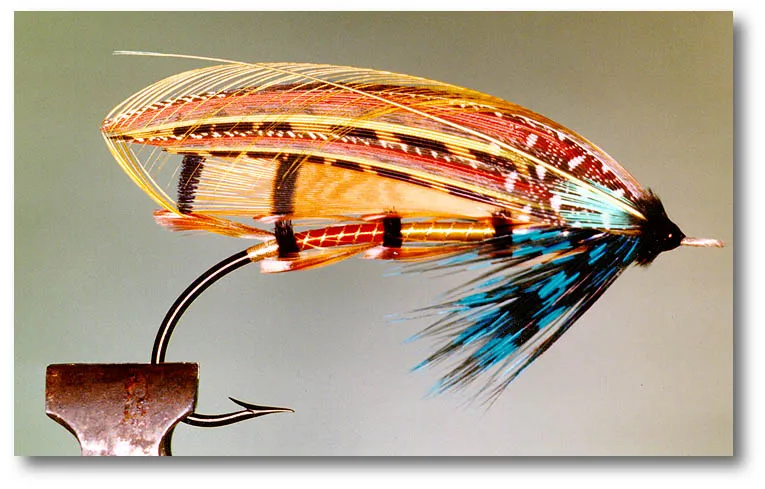
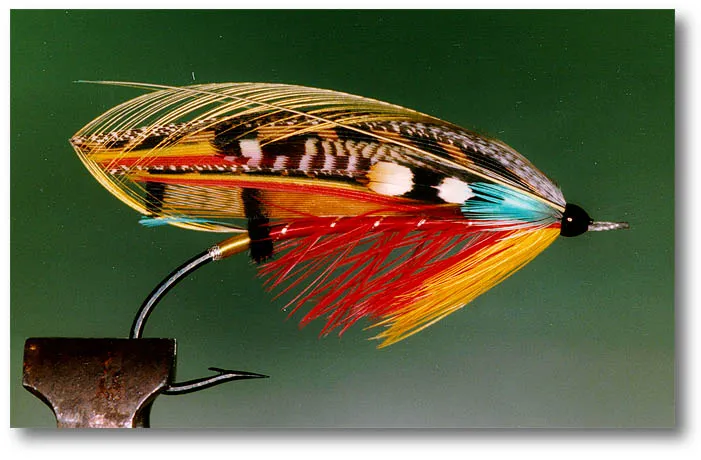
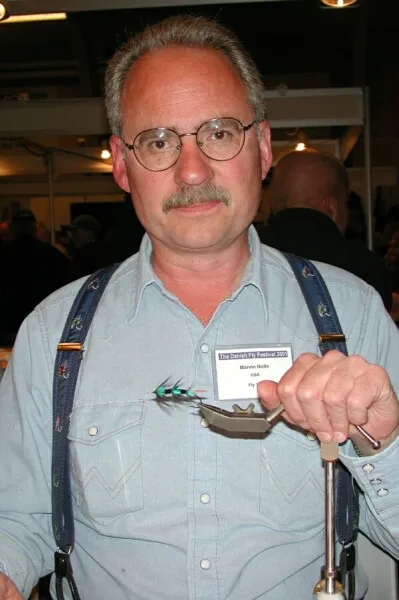
In this episode on classic salmon fly tying, I sat down with Marvin Nolte, a guy who’s been at the vise since the 1970s and has tied over 2,000 classic Atlantic salmon flies. We get into what it really takes to tie these patterns, why most people don’t stick with it, and how a random Christmas gift turned into a decades-long obsession.
We also dig into one of the wildest stories in fly tying, the massive Granger collection, and what it says about craftsmanship, patience, and going deep into the details.
Marvin didn’t start as a fly angler. He got a fly tying kit as a Christmas gift in 1974 and decided to give it a shot. That curiosity turned into something much bigger. He worked through every fly style he could find before landing on classic Atlantic salmon flies, the category that stuck.
These flies aren’t just complicated. They demand total control. You’re managing proportions, thread tension, and dozens of materials, all while keeping everything balanced and clean. And unlike trout flies, there’s no shortcut.
Marvin says it comes down to repetition. No tricks, no shortcuts, just time at the vise.
One of the biggest takeaways here is how few people actually stick with it. Marvin estimates only about 10% of people who try classic salmon flies continue long-term. Not because they lack skill, but because of the time commitment.
But if you stick with it, the skills carry over to everything else.
This is one of the craziest stories in the episode. A customer, Tom Grainger, asked Marvin to tie one of every salmon fly. That turned into a five-year project.
Each fly was framed identically, making the collection instantly recognizable.
This is where things get interesting and controversial. Many classic patterns call for rare or exotic feathers like:
But Marvin is clear: you don’t need the exact materials.
Marvin firmly lands on the side of substitution.
After thousands of flies, Marvin still has a handful he enjoys most. Some of his favorites:
Each one offers something different, either in materials, technique, or overall look.
Short answer: yes, but most people don’t. These flies are more about art than function today. But they can still catch fish.
If you want to try it, tie a simplified version and get it in the water.
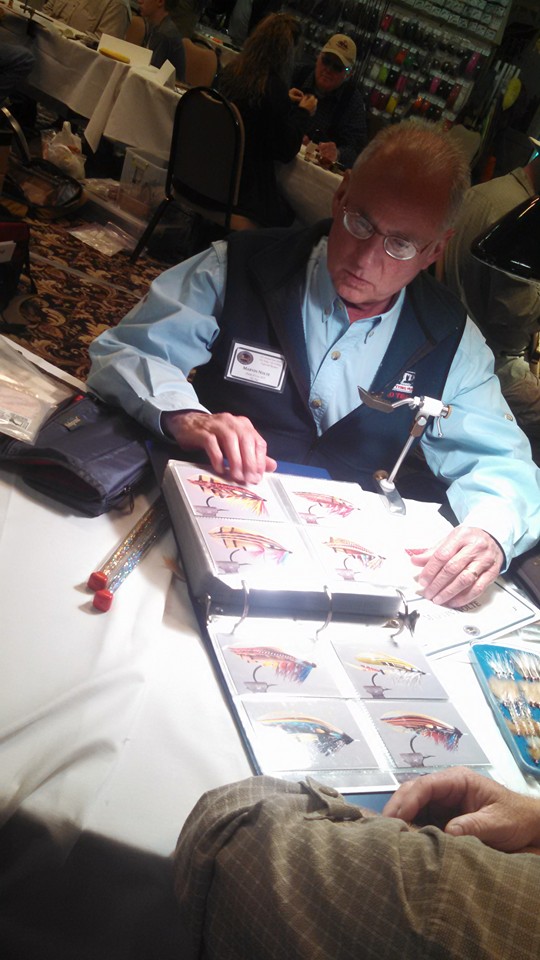
One of the best ways to learn is still face-to-face. Marvin regularly ties at the East Idaho Fly Tying Expo, where tiers gather, share techniques, and connect.
Episode Transcript
WFS 912 Transcript
00:00:00 Dave: When you sit down with someone who spent decades at the vice, one thing stands out fast. It’s all about control. Control of materials, proportions, control of every step. Today, we’re talking to someone who’s been tying flies since the nineteen seventies, who’s tied over two thousand classic Atlantic salmon flies, some of the best out there, and even built one of the largest frame collections of salmon flies than anywhere in the world. This is the travel podcast series where we bring you to the best places to fish in the West, the best anglers, the best fly tyers, and the stories of how this region became what it is today. Our guest is Marvin Nolte, and he’s here, and he’s going to take us into everything from how it all got started with this random Christmas present in the nineteen seventies, and how this turned into an obsession with classic salmon flies. What it really takes to tie these flies. Repetition. Why most fly tires don’t stick with it. We’re going to talk about the reality of rare materials substitution. And we’re going to get Marvins take on this and how this all connected to the story of the feather thief. We’re going to talk about that again today. And when we get a look inside the tight knit culture of classic fly tying shows, mentors decades of relationships behind the craft, this is a good one. We’re excited for it. This episode is presented by Visit Idaho’s Yellowstone Teton Territory, home to some of the most diverse and wild trout water in the West. Okay, here we go. Let’s get into it. Here he is. Marvin Nolte. How you doing, Marvin?
00:01:30 Marvin: I am extra fine. Thank you. Dave.
00:01:33 Dave: Great. It’s great to have you on here. I think, um, I really love whenever, uh, you know, classic salmon flies and tying comes up because it’s something that I’ve tried a little bit, but, you know, I know it’s, it takes a lot of skill to get those beautiful flies out there. And, and you’re kind of known for that. So we’re going to dig into a little bit of that today. You’re going to be tying up the are you already tied. But you will do tie now at the East Idaho. Is that something you do kind of annually?
00:01:57 Marvin: Yes it is. I’ve been doing that. Uh. Let’s see. This year was the thirtieth anniversary.
00:02:04 Dave: Oh, wow.
00:02:05 Marvin: Of that East Idaho fly tying exposition. And, uh, I was there in nineteen ninety five at the first one. Yeah, it was ninety five.
00:02:15 Dave: Yeah.
00:02:16 Marvin: And I haven’t gone to everyone, but, uh, yeah, it’s a, it’s a great show. And I live in Wyoming. It’s, uh, I don’t know, six and a half, seven hour drive, which when you live in the boondocks is not that much. And every year I get to tie. But that’s just an excuse to, uh, meet friends that I haven’t seen in a while and talk for two days.
00:02:38 Dave: Yeah, that’s kind of the cool thing is you get to meet old friends, and then. And then you have some people coming through, right? They’re able to watch you tie. I mean, it’s the interesting thing when you’re tying these classic patterns, you know, they don’t take a couple minutes, right? Are you tying one? How long are you sitting there? All day tying one pattern or how does that look?
00:02:54 Marvin: Well, the, uh, the shifts are two and a half hours, and if I’m well prepared, I can get a simple salmon fly done in two and a half hours. That’s a long time to sit in front of someone and watch them tie. And some people understand that. But whenever anybody sits down, I warn them, hey, this is not a simple fly. And I can go off on a tangent in a second. So we’re going to try and get this done. And they’re pretty understanding about that. Or I’ll just if the person is an experienced tired, they want to tie them or they’ve started tying classic salmon flies, they have a question. Then I can answer that question in ten or fifteen minutes and show them the technique and get on with it without having to tie the whole fly.
00:03:43 Dave: Oh, right. So you could stop and show them a little technique, right. What are some common questions? You get some common ones on, on tying these things that come up a lot.
00:03:51 Marvin: The predominant question, I get it every time is how do you. About the wings? The feather wings on a salmon fly.
00:03:59 Dave: Oh, how do you. How do you put them together? How do you marry them or whatever?
00:04:02 Marvin: Uh, well, most of them understand marrying wings, but once they get them on the hook. And it’s time to see if we can get them to sit straight, that’s when they run into a hitch. And it’s just, oh, there’s a few tricks to doing that. There’s ways that are easier than others, but mostly like anything else in fly tying, you just you just have to practice it. You just have to keep doing it until one day it clicks.
00:04:28 Dave: That’s right. Just practice. Practice. So that’s it. How did how did you get into first, you know, have you been doing this a while on the classic flies? What was your how did you get started on this?
00:04:38 Marvin: I started tying in nineteen seventy four. All right. And I guess we should tell your audience, I’m seventy nine years old. And at the time I was a fisherman, but not a fly fisherman, and I’m not the only one that has happened to. But my wife gave me a fly tying kit for Christmas because she didn’t know the difference between spinning and fly fishing.
00:05:01 Dave: Sure.
00:05:02 Marvin: So I said, what the heck? I’ll see what this is. And it turned out to be fascinating. And then I made the standard mistake that every beginning fly tyer does. I thought, well, well, I met some folks that that fly fished and so they could help me with the fishing aspect of it. But I thought, well, you know, I can tie my own flies and save money. Ha and na never happens. Never happens. I’ve never met anybody that saved money tying their own flies.
00:05:32 Dave: Especially with classic salmon patterns.
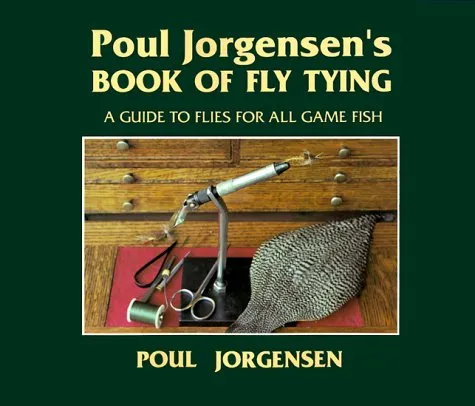
00:05:34 Marvin: Well, yeah, well, yeah, you can’t do that. Then as the years progressed, I started. I got fly tying books. Okay. And the one that did me in was tying, uh, ties for fresh and salt water by Paul Jorgensen. And I didn’t tie every fly in the book, but I tried to tie every style. So I went through nymphs and and this was wow, late seventies, early eighties and wet flies and dry flies and then moved on to streamers. And then bass flies. Saltwater flies. Even though I’d never fly. Fished in the saltwater. They’re fun. Big hooks, lots of materials. Yeah, those are fun to tie steelhead flies. I could I could get by then I could get a steelhead fly together. But then I got to the Atlantic Salmon Fly chapter and went, whoa, this this is.
00:06:37 Dave: This is it.
00:06:38 Marvin: I, you know, I, I, I can read English, I can see the pictures, but it’s not working.
00:06:44 Dave: No.
00:06:45 Marvin: So in Eighty four. I was am a member of the Federation of Fly Fishers. Whatever it is, Fly Fishers International today. And, uh, they have an annual conclave, I guess today. They call it an expo and you can take workshops. And there was a Atlantic salmon fly workshop. Boom. Jumped in. That was great. I, I had the great fortune to have the instructors in that in that course there were three instructors. We tied three flies. We started with thunder and lightning and it went to a silver doctor and then a green Highlander. And so that gives you a floss body at tinsel body and a fur body fly. And each instructor taught a separate fly. And the instructors were John Vanderhoof, Wayne Llewellyn and Dave Mcniece.
00:07:37 Dave: Oh, wow. Mcniece is in there. Nice.
00:07:39 Marvin: I didn’t know it at the time, but. But later on I figured out, wow, wow, I really got lucky. I mean, these guys were good. So I paid attention. Went home, worked at it, and it wasn’t long before I had one question, then another, and I wrote them all down. The points where I was struggling. And the next year they offered the same workshop and two out of the three instructors were the same, and I took it again. But this time I had the questions to ask. And so that really got me started. After go forward a couple of years, I guess. And when people see those flies, of course their, their eyes light up and they go, wow. I mean, that is something. Uh, thank you very much. Would you tie one and put it in a frame for me? And I’m thinking, well, you probably haven’t seen very many salmon flies, but sure I can. I can give that a shot. That doesn’t hurt your ego. When someone asks you, can they frame your fly, right? I mean, no, that’s. That’s all right. Well, that got me started on. Oh. Maybe six. That would be forty years of.
00:08:54 Dave: Yeah.
00:08:55 Marvin: Oh yeah. Of tying Atlantic salmon flies commercially. I don’t know any other way to put it.
00:09:03 Dave: Yeah. So you’ve been tying these frames commercially for.
00:09:05 Marvin: I was tying flies and putting them in frames. I never did develop a catalog or a website or anything like that. It’s all word of mouth. Somebody would hang the fly in their living room or bathroom or wherever they put it, and somebody would see it and go, yeah, I want one of those. And I got a couple of big orders over the years. The early years there. And to date, I’ve tied two thousand two hundred and twenty six. I think that’s really a classic Atlantic salmon flies. Now not all of them married wing flies, D’s and Space, and even some simple stripped wings and grubs in there. And not all of those were sold. Some of them were at demonstrations and some of them are. I just wanted to tie for my own pleasure, but that’s how I got where I am.
00:10:00 Dave: That’s it. Can you track those down? Those can people still buy the flies in the frames?
00:10:06 Marvin: No. I’ve gotten out of the salmon fly business because eventually age catches up to you. And between my optometrist and I, I can still see while I’m tying flies. But I’m not as steady as I was, and it’s a struggle to brace the scissors in my hand every time I want to tie a fly. So I can still do it. And they look all right, but they’re really not my standard, I. So I’ve stopped selling them commercially a couple of years ago.
00:10:38 Dave: Yeah that’s right. But they’re still out there. They’re still out there, right? Yeah. What is the. I’ve seen this a few times. The Granger collection. That comes up a lot when your name is out there, the Granger.
00:10:48 Marvin: So it’s nineteen ninety two, and a gentleman named Granger goes to. Oh, let me back up a second. I’ve tied some flies. Sandflies put them in frames and put them in art galleries or a fly shop. And he went to one of the fly shops, saw the fly, liked it, bought it, took it home. And this was in Saratoga, Wyoming. Two weeks later, he’s up in Livingston, Montana with his wife fishing in Spring Creeks up there. They take an afternoon off and just go walking through town, and they stop at an art gallery and they didn’t see anything they want. And they’re about to walk out when Mr. Granger, just out of the corner of his eye, sees something hanging on the wall that he recognizes. And Dave, once in a while, I do something right. And back then, what I did right was every flight that I framed was in the same frame, six by seven inches. The molding was the same. It’s a double oval mat. Those were the same. And so they were instantly recognized from across the room. You could say, well, I don’t know what that is, but I know it’s Marvin Slide.
00:12:06 Dave: Because.
00:12:07 Marvin: That’s what always looked like. So he went back and looked at it, turned it over, and there it was, my contact information. He didn’t buy it. He went home and called me, introduced himself, told me his story and said he would like to purchase some salmon flies. And I get that question a lot. Okay. Do you have one in mind that you want? Do you want a jock, Scott, but a silver doctor? Whatever. If you don’t have one in mind. I’ve got twelve or eighteen that are my favorites and I’ll be happy to tie one for you, he said. I want one of each. You mean you want a dozen salmon flies? He said, no, no, you don’t understand. I want one of every salmon fly.
00:12:53 Dave: Every salmon fly in the world.
00:12:55 Marvin: So yeah, my first thought was I’m being punked, right? I got friends who would do that, who would find a stranger to call me and set up this story. Right? Yeah. And they’re in the background just laughing their butts off. Right. And so. Okay, we’ll see where this goes. Oh, I can’t take that chance. Guy could be legit. So I said, sir, I thought a book eighteen ninety six or something like that by a man. Name of a l h a l e o n. Tying salmon flies. That has an index in the back with over three hundred and sixty five patterns in it. Right. Just a list of pattern recipes. So I said, sir, there’s over three hundred and sixty five salmon flies. And he said, okay, one of each. HMM. Alright. By then I could just tell I just had that, that feeling that this guy was serious. So I said, okay, I’ll be back in touch. So I started tying flies for him, tied six a month, sent him six a month. I there was probably I probably tied eight or ten a month. But anyway, six went to him and he let me choose the patterns, which was great. I sent him six a month for five years, so that was ninety three. So in ninety eight he calls me and he says, Marvin, that’s it. I had sent him three hundred and forty two framed files and ran out of wall space.
00:14:26 Dave: Ah he did.
00:14:27 Marvin: Yeah. I mean, it’s a big house. Okay. Wow. And they’re tastefully displayed. It’s not just a big wall of the same frame with a different fly in it. He did things like group flies. He’s an avid hunter and fisherman, and so he had a lot of things like, um, let’s say a flight of ducks, three or four taxidermy ducks on the wall. And so we would group the flies that had mallard feathers in the wings around that group of ducks. He had a whole peacock taxidermy peacock and there’s lots of peacock flies.
00:15:05 Dave: Sure.
00:15:06 Marvin: So okay, so you get the idea that we group them like that. So wound up to be three hundred and forty two, which I claimed and still claim is the largest collection of framed salmon flies in the world.
00:15:22 Dave: Oh, it is right.
00:15:23 Marvin: Well, I put that I said that in a couple of places and then sat back and waited for somebody to say, nope, I did four hundred. right?
00:15:33 Dave: Right.
00:15:33 Marvin: But come on. No. Nobody. Right. I mean.
00:15:36 Dave: Yeah.
00:15:37 Marvin: Most people that tie these flies tie, what, a dozen or two a year, right?
00:15:41 Dave: That’s it. A dozen or two a year. And you tied. You tied seventy two a year for five years.
00:15:47 Marvin: Yeah. And I have to tell you, the punch line of this whole story was I had in nineteen ninety two, my work, my salmon flies hanging in two places in the world. And he went to both of them in the same two week period. Yeah. The odds are astronomical. I should have bought a lottery ticket.
00:16:10 Dave: And who was Granger? Who was this guy? Did you ever, uh. All right. Yeah.
00:16:14 Marvin: If you Google Granger, G r a n g e r. Anyway, it’s the huge supply company.
00:16:23 Dave: Oh, yeah, it’s Granger. It’s. That’s what I was thinking. So it is Granger, the supply company?
00:16:27 Marvin: Yeah. That’s him. Well, he doesn’t own the company. But. But that’s his.
00:16:32 Dave: That’s his name.
00:16:33 Marvin: He was the founder’s grandson. So that explains a lot.
00:16:37 Dave: Yeah. What was his name? Do you remember his first name?
00:16:40 Marvin: Oh, Tom.
00:16:41 Dave: Tom. Tom Granger. Okay. And where are the where are the patterns now? Is it still in Tom’s place?
00:16:46 Marvin: No. He had them for years. And his home in Saratoga. But then he moved and built another house. And the flies are now with one of his daughters in Denver, and I’m very sure they’re boxed. I don’t think they’re on display. There may be a few on display, but very few people a have a home big enough to put three hundred and forty two flies in, and B have a spouse that wants to look right.
00:17:18 Dave: To look at the flies. Yeah, that’s pretty extreme. What is what is one of those fly plate I just bought, you know, was that cost? If you were to buy one of those.
00:17:27 Marvin: Over the years it’s been about two hundred to four hundred dollars, depending upon how complicated the flies.
00:17:34 Dave: Yeah. For one fly.
00:17:35 Marvin: Yeah. Frame. I had free shipping before Amazon. But anyway, that that was it. Two to four hundred dollars. And I told the customers that that was the, uh, complication factor. How complicated is the fly? How many hours is it going to take me? By then, I could get a good salmon fly out in four or five hours. But the thing was going to take me eight. Then I upped the price. But that was. That was only partially true. It was. Do I want to tie this flyer? Not if I don’t want to tie it. The price goes up.
00:18:13 Dave: Yeah, exactly. Because there are some flies when you look at all these three hundred and forty or just salmon flies in general, there are some that are much harder than others to tie.
00:18:21 Marvin: Oh yeah. Some of them that that, that technically don’t they aren’t more difficult. They just take more time. They just have more stuff on them. And by the time you get thirty or sometimes forty different materials on one hook. Even if it’s a big hook, that takes some skill level to get all that on the hook and not make it look like when you’re finished, that somebody stuck a raisin on the eye of the hook, right?
00:18:51 Dave: Yeah. That’s right. You gotta have the small, nice, neat head, right? That’s a key. Yeah.
00:18:55 Marvin: So there’s there’s a limit. And let me say this to the people who want to try these, give this a shot. And I promise them that they’ll learn some skills that are very transferable. Back to trout flies.
00:19:11 Dave: Yeah. Well proportions seems like proportions is a big one, right?
00:19:15 Marvin: Proportions is a big one. Thread control is a big one.
00:19:18 Dave: And thread control.
00:19:19 Marvin: Yeah. If you can use minimum number of turns to put a wing on a salmon fly, that same minimum number of turns is going to give you a nice looking trout fly. It just is transferable. But I would tell them, first of all, it’s not tricks. There’s no magic to this. It’s just fly time. It just takes longer. And over the years, I’ve presented a lot of workshops for people who want to tie these things because that just isn’t available.
00:19:49 Dave: No. So you’ve done workshops, so you learned from a workshop, but then you still have done workshops over the years?
00:19:55 Marvin: Yes, I’ve given quite a few, quite a few to me. I had a dozen over the years, maybe more. It is, after all, an esoteric part of your lifetime. There are a few techniques. I hate to call them tricks, but there’s a few techniques in there that if you learn them, make your life a whole lot easier. But really, all it is, is perseverance. I estimate, without any proof at all, that of the people that I’ve had in workshops, Maybe ten percent of them stick with it.
00:20:26 Dave: Oh, really? Yeah. Ten.
00:20:27 Marvin: Yeah, the other ninety percent just decide I got better things to do with my time. Oh, really? That is the separator. It’s not that they’re not skilled. It’s just that they.
00:20:40 Dave: Yeah, I remember that. I remember that because actually, what year was it? Probably when I first learned about Sam and Fly, you know, and these classic were was probably in two thousand ninety nine, two thousand somewhere in there. So that’s over twenty. Yeah. Twenty five years ago. And I had tied tons of flies before then, but I remember watching somebody who was doing it and I said, oh, wow, that’s beautiful. Cool. But the same thing. I was like, yeah, that two hours, man, I can do a lot of fishing in two hours, you know?
00:21:08 Marvin: Yeah, yeah, you could get, you could make a big indent in your fly box in two hours.
00:21:14 Dave: Yeah, yeah. But, but the cool thing about this is that’s again, this is why the fly fishing, fly tying, it’s so cool because all these different things, you can go as deep as you want and you’ve gone about as deep as you can go. You know, on tying these.
00:21:26 Marvin: And tying flies, I would agree with you. I will tell you one of the threats that I make over the years in in this business is John Betts. And it means a well known name.
00:21:38 Dave: Yeah. John Betts yeah.
00:21:39 Marvin: And at least if you’re over fifty. Okay. Uh, John could go so deep into not necessarily fly tying, but fishing that in my basement shop here where I tie flies, I have a fly reel that John made. It’s brass. It’s not CNC machined, anodized aluminum, whatever aircraft lumen, but it’s solid brass. But he made the whole thing except the perforated side plates. He had somebody draw all those holes, but he even made the screws That hold this thing together. I’ve got a fly rod that he made. That’s made of spruce.
00:22:26 Dave: Wow.
00:22:27 Marvin: Yeah, he he went. In fact, he punched a book back then about making fly rods from things from woods other than bamboo, huh? Yeah. A whole book on how to make your own fly rod out of c u spruce and hickory and Purple Heart and a bunch of other different woods. Yeah, he made a six strip wooden fly rod that wasn’t bamboo.
00:22:57 Dave: No kidding.
00:22:58 Marvin: Made the handle. It wasn’t a cork handle. It was a rattan handle that that fly rods had back in the mid eighteen hundreds. He made the eyes. He didn’t just buy snake guides to put on it, right. He made the thing. So all that to say that fly fishing is beautiful in that you can go just as deep as you want.
00:23:20 Dave: And John Betts, I’m looking at one of the books right here, making strip built fly rods from various woods on a lathe.
00:23:26 Marvin: That’s the one. That’s the one.
00:23:28 Dave: That’s the one. You can get it on Amazon. Still, you can buy it for twenty dollars right now.
00:23:32 Marvin: Yeah. And I can’t tell you that I know another soul who tried that. But I’ll bet there were some guys woodworkers that went. All right, let’s give this a shot.
00:23:44 Dave: There’s a place where every bend in the river feels like it’s been waiting for you. Where the air smells of sage and pine and trout. Rise beneath the shadows of the Tetons. That places visit Idaho’s Yellowstone Teton territory, the heartbeat of fly fishing in the West. From the legendary Henrys Fork to the winding south fork of the snake. This is where big fish and bigger stories live. You’ll find endless waters welcoming towns and locals who still wave as you drive by with drift boat in tow. This is your starting point for world class fly fishing, year round recreation and wild country that stays with you long after you’ve packed up your gear. Check it out right now. That’s wet. T e t o n. Visit Idaho for yourself and support this podcast while you go. We had a recent podcast episode with a guest who was who found this really unique strain of bamboo. You know, like most bamboo comes from the same area of China, you know, but he found this one that’s supposedly he was saying he’s done the research. He’s a scientist. He said, it’s, it’s stronger, you know, or it’s, I can’t remember if it’s yeah, it’s got certain different properties, but but no, you’re right. Yeah. So that’s a good story. So John Betts and I’m guessing John Betts is not with us anymore.
00:24:58 Marvin: No. John’s been dead, uh, a few years. He was a character.
00:25:04 Dave: So. Yeah. So John Benson, I mean, I’m guessing you’ve had a number of these people that you’ve connected with over the years. You mentioned forty years of tying these classic patterns. Have you ever talked to many people that have used these flies for actually fishing for Atlantic salmon or other species.
00:25:18 Marvin: Very few, very few. And those that do just do it because they can, not because it’s any more effective. If you want to catch an Atlantic salmon, there are flies out there that are good at it. Modern flies, but there’s a few guys that just think it’s a kick to go fishing with a reproduction of an eighteen fly.
00:25:43 Dave: That’s what I feel like. I feel like I’m at. We’re actually going. I’m fishing for Atlantic salmon for the first time this year, and we’re going over to Newfoundland and I. And I would love to. Yeah, I would love to take a pattern, a classic pattern and fish it just to be like, okay, let’s have a shot. That’s really cool. So. So you got these patterns out there. You know, you mentioned a few. What are your, what are your top you said twelve to eighteen. What do you think are your favorite patterns that are that you’ve done over the years?
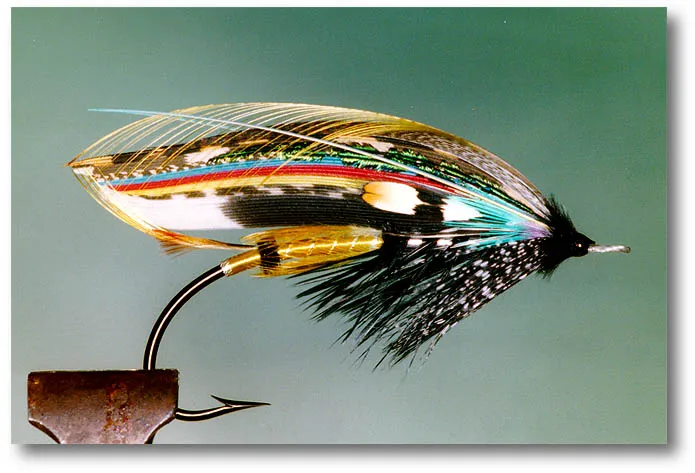
00:26:09 Marvin: Oh my, the ones that I enjoy the most. I enjoy tying the silver. Wilkinson. The Kate are the only one that I’ve kept track of. Jock Scott’s not my favorite salmon fly to tie.
00:26:28 Dave: It’s not. But. But it’s one of the famous fry. Maybe the most famous.
00:26:32 Marvin: It is the most famous one, and unfortunately, it’s also one of the more complicated ones. Two hundred and fourteen. Jock Scott’s. Over the years you’ve tied. Two fourteen two fourteen that’s a lot of Jock Scott’s. I’m going to make an unverifiable and arrogant statement that I don’t think. I don’t know anybody who’s tied. Two hundred and fourteen Jock Scott’s. Why would you.
00:26:58 Dave: Right. Yeah, because that’s a four hour. What is that powder take you to tie.
00:27:03 Marvin: Yeah, that’s a five hour fly. That’s a five hour fly to do. Right. It’s just got a lot of stuff on it. And to get that stuff on there so that it looks good when you’re finished, just take some time. But back in the nineties, the United States Postal Service issued a set of stamps.
00:27:21 Dave: Yeah, I remember that. I remember that.
00:27:23 Marvin: There was a muddler minnow, a royal wolf and an apt tarpon fly. Lefty’s deceiver and Jack Scott.
00:27:32 Dave: And a Jack Scott, right.
00:27:34 Marvin: And Jock Scott. So people could tie for out of the five and for themselves. Right. And put it in a frame. But they couldn’t do the jock Scott. So they’d contact me and have me just make a jock. Scott that they could put in the frame. No, they didn’t do it, but it completes the frame. Well, then I decided, well, I’m just going to do that myself. I’ll just build a larger frame and include all five flies and the five stamps in the frame. And I sold a bunch of those things. Let’s see, nineteen ninety one, I tied forty one in nineteen ninety two seventy three. So that goes far to explain why I tied all those Jock Scotts. It wasn’t that people still order them. The most recently I tied Jock Scott’s was just a couple of years ago. I put ten of them in a frame. There are a bunch of different versions of Jock Scott’s.
00:28:37 Dave: Oh there are. There’s different versions of it.
00:28:39 Marvin: Yeah, there’s a different. Authors had their own variations, just like any fly. I mean, if it’s not an Adams and there’s variations on Adams, right. The original Adams had different fibers are golden pheasant tippet for a tail. Right. I mean there’s you know, so there’s just variations on a theme.
00:28:57 Dave: Well, Jack, just to put that in perspective, two hundred and fourteen flies at five hours per fly is ten thousand seventy hours if you look at that by week. That’s twenty. If you tied for like a forty hour a day, that’s twenty six weeks. If you tied. Straight, if you tied forty hours a week for half a year, you would tie those all those two hundred and fourteen patterns.
00:29:19 Marvin: That’s an interesting statistic, right? I never did that math.
00:29:23 Dave: So straight through. It’d take you half a year if you tied straight through forty hours a week.
00:29:27 Marvin: You just said something that rang a bell. Isn’t there a common, uh, knowledge? Let’s see. Common wisdom that if you want to get good at something, it takes ten thousand hours.
00:29:38 Dave: Yeah, I’ve heard that.
00:29:39 Marvin: I’ve read that somewhere. If you want to be a world class violinist, you got to practice for ten thousand hours.
00:29:46 Dave: Ten thousand. Look at that. That’s a thousand. So. But you’ve obviously way over on. Just fly tying, right. You’re way over. Sure. But just on the jock Scott if that, if you apply that to the jock Scott then you’re probably not quite there. That seems like a large number ten thousand, but that makes sense. We’re talking the best if you want to be the best of the best ten thousand hours.
00:30:02 Marvin: Yeah, that’s what it takes.
00:30:04 Dave: What about finding like for the jock Scott? What are the materials that are hardest to find out?
00:30:09 Marvin: There are. And there you go. After the time it takes. The single factor that stymies most people is finding materials. Although I will say this, there are a lot easier to find today than they were when I started because when I started there was no eBay.
00:30:31 Dave: Oh, right.
00:30:33 Marvin: Right. And no way you could contact some guy in Poland that was sitting on a bunch of feathers. The most difficult. Let me get up a photo of a jock. Scott. That is a pretty full dress pattern, I think. Not counting the thread and hook, there’s like twenty four materials on that. Okay, so starting at the tail, there’s a little red feather called a tail veiling over the golden pheasant. topic forms the tale that is a feather off of a red ruffed fruitcrow. Huh? Not an American species.
00:31:13 Dave: They’re not easy to find.
00:31:14 Marvin: Venezuela and Colombia. Anyway, it’s a rainforest bird. The bird itself is not endangered. It’s just that nobody keeps red ruffed fruit crows for pets, right? So finding those feathers isn’t easy. When you go up the body, there’s veiling of toucan feathers.
00:31:34 Dave: Oh, wow.
00:31:35 Marvin: Those yellow wispy feathers.
00:31:36 Dave: The yellow one. That’s toucan, that’s toucan.
00:31:40 Marvin: And then there’s, uh, in the wing. Wing is pretty straightforward, except that there’s a thing called a speckled bustard or a kori bustard. That is not the easiest feather to find.
00:31:53 Dave: Is that the blue one?
00:31:54 Marvin: It looks like salt and pepper speckled.
00:31:56 Dave: Oh, yeah. Salt and pepper. Yeah, yeah, I see. Yeah.
00:31:58 Marvin: Okay. And then there’s, of course jungle cock on there. And then there’s a little blue feather up called a cheek up near the head that’s off of a. Spangled cotinga, a small tropical bird that is electric blue. All right. So those materials are difficult to find. So what seven flight hours, including myself, have done over the years, is substituted for those feathers.
00:32:27 Dave: So you have. So you’re in favor of. You can substitute even on these classic patterns and still be a. Indeed.
00:32:31 Marvin: Yeah, indeed. I wanted to to look like a jock. Scott. The fact that the feather isn’t really a red ruffed fruitcrow is beside the point to me. And ninety nine point nine seven percent of my customers.
00:32:46 Dave: Yeah, nobody’s ever gonna ever know, right? Nobody would ever know that.
00:32:49 Marvin: They’re never know. They just they got. So there’s any number of little red feathers. And if for the toucan, that’s the easiest one in the world. If you can find CDC that’s been dyed yellow. It looks just like toucan.
00:33:03 Dave: Oh, cool.
00:33:04 Marvin: Yeah. And on the little blue feathers you can still purchase overseas. Not in America. Kingfisher skins. Uh, I believe they’re called an Asian kingfisher. And they have a their saddle, a little blue patch on their back of brilliant blue feathers. They don’t look exactly like spangled cotinga, but they look pretty. And on they go. The tough one is jungle Cock. It’s hard to find a good jungle cock substitute.
00:33:34 Dave: Oh it is. The jungle cock is pretty. Pretty common, right?
00:33:38 Marvin: Yes. On the other hand, it’s not all that difficult to find jungle cock feathers.
00:33:42 Dave: No, but good ones, but good ones is a little harder.
00:33:45 Marvin: Yeah. So I mean, and the the horns, there’s two fibers that start at the head and go back over the. All right. Those are from a blue and gold macaw. Well thousands of people keep macaws as pets, right? They molt their feathers, and it’s not all that difficult to get a macaw tail feather, but to some people, the materials become a stumbling block to other people. I need that material becomes a challenge. I’m going to get that material, I don’t care. I’m going to find those. I’m going to search every pet store in town. I’m going to call everybody I know.
00:34:24 Dave: Well, the greatest I mean the craziest challenge. And we’ve had the author of the book The Feather Thief, right. You probably remember that guy that was really, uh, went, almost went to prison or went to jail actually didn’t, but. Right. You remember that when that when that all that thing went down and.
00:34:39 Marvin: Oh, yes, I remember it well.
00:34:42 Dave: Because I think it’s interesting because I think with that he was probably about as extreme as you can get, but you’re on the side of a lot of some people. I’ve talked to others, you know, like John Shuey and others who said, yeah, I mean, you just substitute. But but there are some people out there that don’t feel like you can do that. Like he was one of those. Like he felt like you had to have the exact. And I would actually steal birds to get to that point.
00:35:02 Marvin: Yeah, that’s an affectation at best. Yeah. That is not necessary. That what you want is a sense of accomplishment. You’ve done this with the feathers, with the materials that you have, and that feeling is great. You just don’t have to have a exact copy of a nineteenth century fly using feathers that are, that are hard to get. Let me go sideways on you again. Yeah, the Feather Thief. That book begins with the author fishing with a guide.
00:35:36 Dave: That’s right.
00:35:37 Marvin: And they get to talking about flies and salmon flies. I will say I know the author personally. Yeah, only because he contacted me when the Feather Thief was a magazine article, not a book.
00:35:50 Dave: Oh, right.
00:35:51 Marvin: And he was looking for some sources of people’s names and contact information. And the reason that he contacted me was the guide that he was talking to. Took one of my salmon Fly workshops.
00:36:06 Dave: Oh, that was yeah, that was Spencer. Spencer CM.
00:36:09 Marvin: Yep. At the beginning of the book.
00:36:11 Dave: Who I was going to say both the. I just looked at it on our catalog. We’ve had, um, we’ve had Spencer seem on the podcast. We had Kirk Johnson, who’s the author and John Shuey. Those are all good podcast episodes where we talked a little bit about this so that we have. Yeah, but tell me, tell me that. So you had Spencer actually took one of your classes and that’s how he got going on. And then. Right.
00:36:29 Marvin: That’s how he got going on it. And that’s how the author got the information to contact me. And it just so happens that I know personally and some are friends and some are just acquaintances. Most of the people in that book that have pseudonyms, the dentist and the Constable, or in any. In any case. That’s only because I’ve been doing this for so long, and I’ve. I’ve tried a lot overseas. And so I run into these people at events in Scandinavia or in England, Netherlands over the years. Yeah, I’m a fortunate man. I’ve been I’ve been pretty lucky. Just we’re talking about tying flies here. Yeah. We’re not talking about a neurosurgery conference. Right? Yeah. So. And I’m not the only one. There’s lots of people that have had that that experience. And, uh, it’s pretty neat.
00:37:31 Dave: It is pretty.
00:37:31 Marvin: Neat, I have to admit. Yeah.
00:37:33 Dave: Well, this is this is cool. I think we could start to take it out of here. I had a couple of questions. We got a couple. Sure. Yeah. Yeah. So. So, you know, I think we talked about. Well, we were on your patterns. So we got a few when we were talking about some of your favorite, you mentioned the jock Scott. So it sounds like that’s not one of your favorites, but you mentioned the silver Wilkinson and the. and Kate, are there a few more you would add to that mix your favorites?
00:37:54 Marvin: Yes. Amongst my favorites are the Mar Lodge, M a r l o d g e. It’s the only fly I’ve ever tied and the only one I know of that all the materials are natural. There is not a dyed feather in that fly. Wow. And that. That is quite unusual for a classic salmon fly. The Helmsdale doctor. It’s just one of the doctor’s series, right? Oh, okay. There might be a dozen different docs, but there’s got to be two dozen different doctors.
00:38:30 Dave: Doctors? Oh, the silver doctor and all the doctors. Okay.
00:38:33 Marvin: Yeah, there’s white doctor and a blue doctor. Silver doctor? I mean, red doctor. It just goes on and on. They all have a Red bull, but back and a red wool head or a red head. The Helmsdale doctor has an underwing of peacock herl. Bog standard. No big deal. Peacock girl, which sounds pedestrian until you try to put it in the wing of a salmon fly and make and try to tame it. Make it behave.
00:39:05 Dave: Yeah. Try to keep it from. Yeah. From falling out and. Yeah.
00:39:08 Marvin: Yeah. Just splaying out all over the place. And uh. So I enjoy the challenge.
00:39:14 Dave: Yeah. And that’s a pretty sparse the Helmsdale. I find that with if I’m going to fish a pattern for steelhead, I do a lot of steelhead, but I am guessing Atlantic salmon might be similar that the sparse fly. Those tend to work really well.
00:39:27 Marvin: Yes they.
00:39:28 Dave: Do. Yeah. Is it the Helmsdale doctor that you. Would you consider that a pretty sparse.
00:39:32 Marvin: Yeah, it is a sparse fly. Exactly. And I believe once again, with absolutely no proof that you can pack so many materials on one of these flights that you can’t get it to sync.
00:39:44 Dave: Yeah. That’s right.
00:39:46 Marvin: Yeah. You got a sparks fly is a great fly because it goes down where the salmon are. There’s I mean, a jock, Scott, that has to trap a lot of air. I you know, guys, I understand that, but they were using silk lines, right. That were almost impossible to get to float.
00:40:04 Dave: That’s right. So so the Mar Lodge, the Helmsdale doctor, are there a few more, a couple more you want to throw on this list?
00:40:10 Marvin: Let’s see. Uh, Sylvia Wilkinson, I mentioned Kate, I mentioned I just like the colors of the. Kate. I’ve tied a bunch of green Highlanders in mine.
00:40:21 Dave: Oh yeah, green Highlander. I’ve heard about that one a lot.
00:40:23 Marvin: That’s a, that’s a, a common. I mean, people, if they know salmon flies, they they may have heard of a green Highlander. It looks spectacular in a frame.
00:40:32 Dave: It does.
00:40:33 Marvin: And I like it because of all the styles of salmon flies. The three I mentioned earlier the body, stencil, body and fur body. A fur bodied salmon fly is more pleasurable for me anyway. TA ta.
00:40:50 Dave: Yeah, it looks more like, you know, in the water, it would breathe a little more. It seems like.
00:40:54 Marvin: Yeah, right. And it’s less fussy, less fastidious. And it just looks great. Uh, I like green Highlanders with my wife. Still worked. She had one of my flies hanging in her office, and it was a green Highlander. That’s when I decided that she ought to have on display.
00:41:15 Dave: We got five. This is good. And the green Highlander, I think is one I’ve heard. I know we’re going to where we’re fishing. I know the guides at Mountain Waters Resort. They said the Green Highlander is definitely on top on their list. Like that’s a great. Yeah. Yeah. So I’m gonna I’m gonna have to fish that and that one. That’s cool thing about these, right? You can tie them full Atlantic salmon, but you could also tie the green Highlander kind of more sparse and make up your own. Right, right. Make up your own pattern.
00:41:37 Marvin: The term for that is reduced.
00:41:39 Dave: Yeah. Reduced.
00:41:40 Marvin: Right. Just leave out all the bells and whistles and just get a fly with it. With golden pheasant tippet under wing. Some feathers or hair for that matter. In the wing, a green body and a yellow throat. And you got a green Highlander. And you can put that on a number six or eight hook. If you tie a hair wing, green Highlander or reduced green Highlander, you can still say you fished a classic, but you don’t have to.
00:42:07 Dave: Nice. Well, I’m going to throw in our list today. We’ve got for you. We’ve got the five plus we’ll throw in Jack Scott. Even though that’s one of your least favorites. We’re going to have six have our own fly pattern on on the website when we do the blog post and everything. So so this is awesome. And I guess, you know, where would you like somebody listening now and they want to learn more, you know, is there another you mentioned a few people out there. Are there any other people that are still going out there? We talked about the the expo, right? You’re going to be I mean, that’s one next step. I think people, if they want to go to next year, this is obviously the podcast will be out there for a while in March. I think it’s.
00:42:39 Marvin: It’s in March. And sure. If they happen to be in Idaho, which nobody happens to be, but if they are, that’s worth coming to. It is. Yeah. You know, you can stop by and I’d be happy to talk. Salmon flies with you, but there’s forty other tires in there that’d be happy to show you what they can do and what flies work for them.
00:43:00 Dave: Yeah. And I think the East Idaho show is unique. You know, I think you might I’m not sure if it’s the biggest, but there’s more fly tires there than most places around the country.
00:43:08 Marvin: So than most places. No, I think there’s bigger shows. Becky. Of course it’s huge. But but for a show that’s that’s not a commercial show. Okay. Put on by the local fishing club. Okay. Yeah, it’s a big one. It’s a nice one. They got a lot of vendors in there. They got a lot of tires in there. It’s, uh, Friday and Saturday, so you can head home on Sunday. It’s a great show. I am biased, I don’t care. It’s a great show.
00:43:39 Dave: No it is. No, we’ve heard lots about it. We’ll definitely be chatting with a few more people out there on that. And then so they can track you down there. Where else can people find your stuff out there? You have you have these plates. I guess that’s the one thing that people can probably track some of these plates down around the country.
00:43:55 Marvin: I don’t know, I think if you if you were to put my name in salmon flies into Google, you’d get a few photos. Yet at least you can see what I looked like some years ago.
00:44:05 Dave: Yeah, you’d probably find some stuff on eBay too, right?
00:44:08 Marvin: And science supplies on there. Yeah. Otherwise I really it’s a shame that I don’t have a social media presence because I have thousands and that’s no exaggeration. A photographs of flies that I’ve died. I haven’t photographed every one, but quite a few. And I just don’t post them.
00:44:28 Dave: No. It’s cool. You’re able to, you know, you’re, uh, a lot of people talk about how they don’t enjoy the social media. You know, it’s because it’s, it’s not for everybody.
00:44:36 Marvin: I don’t know how many seventy nine year olds, you know. But most of us are are not into social media. I’ll just say that again without any proof.
00:44:45 Dave: Yeah. That’s true. No. That’s good. Okay. Cool. Marvin. Well, like we said, we’ll send everybody out with the s c Expo is the best place they can track down. Um, the expo if they want to hit that up and see you next year and see the details there so people can have that going on. And, and I know Hal has been there doing some good stuff. We’re going to have some other tires on the podcast here as we go. But yeah, Marvin, this has been great. Really appreciate all your insight. And hopefully we’ll, we’ll follow up with you down the line and maybe get you back on and talk more salmon flies.
00:45:14 Marvin: I thank you very much, Dave. It’s been a pleasure. I’ve enjoyed myself.
00:45:19 Dave: Hope you enjoyed that episode. I hope this got you curious about fly tying. If you want to check in with me or you can check in with the East Idaho Fly ten Expo, that’s s r c Expo dot the snake River Cutthroat Expo. You can do that right now and you can connect with the next trip. You can connect at the next show. These every March you can connect here and you can see Marvin tying these beautiful classic Atlantic salmon flies. You don’t want to miss this. I want to give you a heads up next week. Littoral zone podcast is back. We got Phil coming in to bring his magic. Don’t miss that one. Littoral zone if you haven’t yet. If you’re new to the show, click that subscribe or follow button and you’ll get that one to your inbox. Uh, we just finished up a great month last month of, uh, of the boot camp, uh, wet fly swing pro. We got some members now inside pro that are loving it. I’m excited to be spending time in there. So hope you get a chance to connect with us. And I appreciate you for tuning in today. I hope you get a chance to explore new waters this year and experience that road less traveled. We’ll talk to you then.
This one really shows how deep fly tying can go if you let it. Marvin’s story is a reminder that mastery isn’t about shortcuts. It’s about time, repetition, and enjoying the process. Whether you tie one salmon fly or a hundred, there’s something in here that’ll make your next fly better.