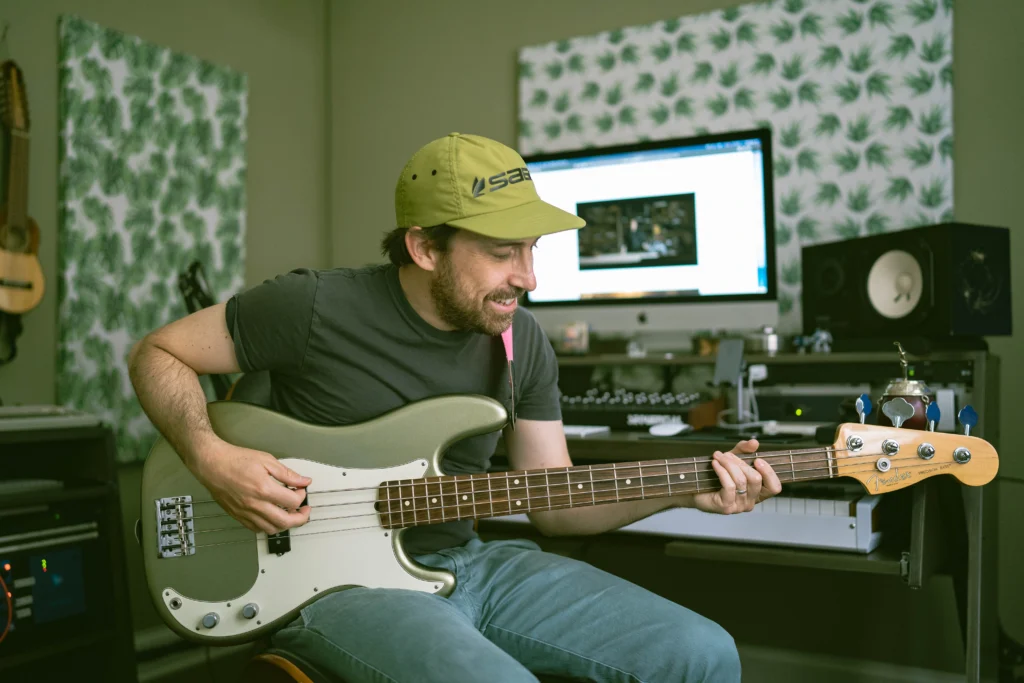
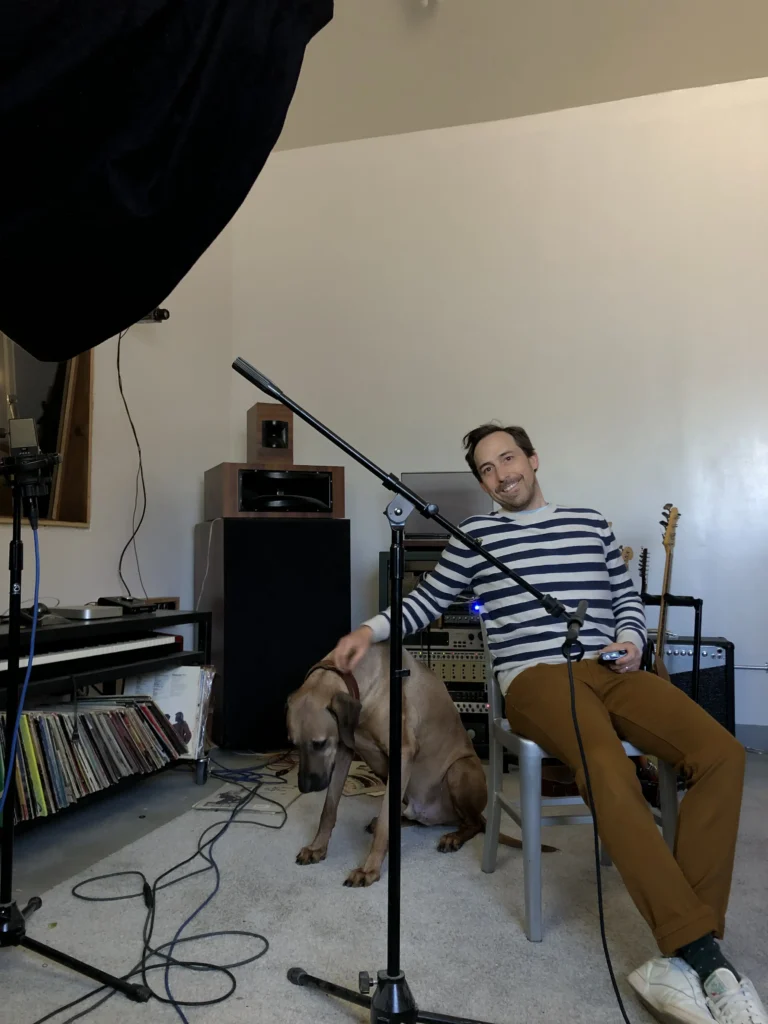
A music producer doesn’t usually end up building a fly fishing podcast—but that’s exactly how Pablo Signori got started. What began as a side project during the pandemic turned into The Newb and the Knower, a show built around learning fly fishing from the ground up.
Instead of positioning himself as an expert, Pablo leaned into being a beginner and documented the process in real time. That approach not only shaped the podcast, it opened the door to travel, deeper learning, and a completely new path in fly fishing.
he was used to thinking creatively, solving problems, and building things from scratch.
That same mindset carried over into fishing, where he quickly became obsessed with learning and improving. Instead of casually picking it up, he dove in fully and started fishing constantly, accelerating his progress early on.
When the pandemic hit and work slowed down, Pablo started experimenting with podcasting. That’s when he realized there was a gap in fly fishing media.
Most content was built for experienced anglers, but beginners were left trying to piece everything together on their own. His idea was simple—start at zero and build upward.
He approached it like a course, where each episode builds on the last. That structure gave new anglers a place to start without feeling lost.
That shift led to bringing in Lance Egan, and the dynamic between the two hosts clicked right away. That chemistry became a key part of what made the show work.
The show has grown to around 45 episodes, but it didn’t stay the same. In the beginning, Pablo put a huge amount of time into production—editing, scoring music, and building out detailed segments.
Over time, he realized that the level of effort wasn’t sustainable long-term. The podcast evolved into something more flexible, where consistency and enjoyment mattered more than perfection.
As Pablo started exploring trout fishing, he found it intimidating at first. That changed when he discovered Euro nymphing and had immediate success.
That early breakthrough flipped a switch and pushed him deeper into the technical side of the sport. It became a major focus for several years.
To take things further, Pablo traveled to Spain and trained with a top competition angler. The experience was intense and direct, but it accelerated his learning in a big way.
He was exposed to modern techniques that weren’t widely understood at the time, giving him a completely different perspective when he returned.
One of the biggest takeaways from Pablo’s journey is how important the mental side of fishing is. For him, fly fishing became a way to focus his mind and step away from the demands of his creative work.
It serves the same role as climbing—another activity he uses to stay grounded and present. That mental reset has been just as valuable as any technique.
Before all of this, Pablo built a serious career in music. He worked as a songwriter, performed in bands, and eventually transitioned into commercial composing.
That experience shaped how he approaches everything—whether it’s producing a podcast or learning a new fishing technique. It’s all about creativity, structure, and problem-solving.
The podcast eventually opened the door to something bigger. Pablo is now helping develop a fishery in a remote part of Mexico near the Belize border.
The area is small, quiet, and largely untouched, with quick access to both flats and reef systems. It’s the kind of place where you can switch species within minutes.
Species include permit, tarpon, bonefish, and more.
One of the standout features of this fishery is the chance to catch permit on floating crab patterns due to sargassum in the water.
It’s a rare scenario and not an easy one, but it adds another layer of challenge and opportunity to an already unique fishery.
Pablo isn’t trying to build a traditional outfitting business. His focus is on creating smaller, more intentional experiences where the group dynamic matters just as much as the fishing.
That shift reflects the same thinking behind his podcast—do things differently, and build something that actually helps people connect.
Episode Transcript
00:00:00 Dave: Before we hit record today, we started talking about microphones, recording tricks, and how to make a voice memo on your phone sound like a studio session. And that pretty much tells you everything you need to know about today’s guest, because Pablo Signori doesn’t really do anything the normal way. He started as a professional musician and commercial composer, writing songs that ended up on TV and in major campaigns. Then somewhere along the way, he fell deep in love with fly fishing. That same mindset led him to create one of the most unique fly fishing podcasts out there the noob and the knower, where the whole idea is simple start from zero and actually learn fly fishing step by step along the way. This is the Wet Fly Swing podcast where I show you the best places to travel to for fly fishing, how to find the best resources and tools to prepare for that big trip, and what you can do to give back to the fish species we all love. Pablo Signori is here today and we are going to get his story and how it all came to be. We’re going to find out about how this pandemic project turned into a fly fishing podcast with some of the best anglers in the world. We’re going to find out what he learned studying modern Euro nymphing in Spain from one of the best in the Spanish arena. We also find out about what this composer’s brain is like and how he approaches fly fishing differently, and why he’s now helping build a destination fishery in one of the wildest places in the world. And we are heading to Inchcailloch, a tiny town with just a few hundred people near the Belize border where permit, tarpon. Bonefish are all part of the game and the place is super unique. I’m excited for this one. You can find Pablo’s podcast at the noob and the knower dot com. Here he is Pablo Signori. How you doing, Pablo?
00:01:44 Pablo: I’m all right. Thank you for having me. I’m I’m kind of shocked I’m on this right now. As a fan of your show, it’s kind of a real weird, uh, meta thing, right?
00:01:55 Dave: Right. Well, this is cool because, I mean, you can tell right away just from your quality of your audio that you’ve got a microphone there. And the cool thing is you’ve got your own podcast, which is amazing. I remember the first time I heard it, the noob and the knower, I was like, okay, what’s this? This is a, this is a cool name. And the concept is awesome. And I think we’re going to talk about that today, like this podcast that you have going. Um, but then also you’ve got some travel programs. We’re going to talk Mexico today and really all this stuff you have going and you got a bunch. I mean, when you told me about it, yeah, it’s a lot. So maybe, maybe take us back real quick on. I always like to start with the podcast. We’re going to talk fishing. We’re going to get into that. But tell me this podcast idea. First off, where did this, did this just pop in your head one day?
00:02:39 Pablo: Well, no. So like many things that happen, this was a random pandemic sort of occurrence. So I was living in Los Angeles at the time, and I’m a commercial composer was like sort of my main gig for many, many years. And of course, during the pandemic, everything started to shut down. So I was like, what am I going to do? Like, this is nuts. Uh, there’s, uh, there’s no work. So in the downtime, aside from sneaking out to fish in the Sierras, I was like thinking about podcasting. And I had a neighbor who was in biotech who approached me about producing a podcast for him. And so that kind of got the wheels turning. And I was like, you know, I should do a fly fishing podcast. And, you know, sort of my, my mantra with everything I do is I don’t, I try and do things different and new and just not the traditional way. So I was thinking about myself as an angler and because I had only been, you know, at this point, right now in twenty twenty six, I’ve been fly fishing for eight or nine years. So, you know, I was a relatively new I still am obviously new fly fisher, you know, especially back then. So as someone who was like, probably, I would say like an advanced beginner or like an intermediate fisher. Uh, I was someone that was fishing like three, four times a day for, you know, two, three years straight. Like I was obsessed. I’d wake up, you know, four a m and go do it before the work day or whatever. So I put a lot of time in early, which I think advanced me quicker, but there’s still so many holes and stuff. And I was thinking about it from the perspective of a beginner. And I was like, if you’re a new fly fisher, like going on the internet is just this like, yeah, you know.
00:04:28 Dave: It’s a lot.
00:04:29 Pablo: Universe of information, just like it’s so inundating, you know what I mean? Yeah, yeah. So I was like, how do I start? Like, how does someone start fly fishing right now? And it’s just really hard. So my idea was we should do an educational podcast that’s entertaining, of course, because I like to have fun. That starts from zero and just goes from there. So our first episode is basically like, you know, it talks about fly fishing and what it is, but it also is like, what’s the difference between spin fishing and fly fishing? So it’s almost like it could almost be considered like a course or something, right? Especially season one. Uh, and it just builds from there and it keeps building and building and building.
00:05:13 Dave: Now, did you have Lance on that first one?
00:05:15 Pablo: No. So no, that was the second piece to this. I was like, well, no one gives a crap about me. So, um, I’m, I gotta find someone cool to have on the show. And coming from the music world, you know, with that sort of pedigree, it was kind of easy to get people’s attention and the fly fishing space when I would just randomly like cold DM them. Right? Yeah. Sliding into the DM’s on, on Instagram. And, uh, so I did that to George Daniel and he instantly replied. And then we hopped on a call and then, you know, we were like, oh, he’s like, yeah, I want to do this. It’s great. You seem like a really cool person and this seems like a good idea. So we recorded two podcasts actually, um, their pilots, just to test the waters and see how it would work. And also for me as a producer, I was like, I don’t know, I mean, I, I like George Daniel, I’ve read his books, he seems really knowledgeable, but like, how is he on a microphone? Because that’s, you know, everyone thinks they can have a podcast. And I was thinking the same for myself, to be honest, you know? So we got Georgie on and he was great. He was actually really good. Um, as you know, as you would expect, but you know, he had just, we had this thing going, we were about to start the thing and, uh, he calls me up one day and he’s like, I feel so bad, but I’m not going to be able to do the podcast. I just got hired by Penn State University to like, you know, to take over the fly fishing program. It’s like my dream job. Like I can’t, yeah, I’m not going to have time. So I was devastated, man. I was so like, sad. I mean, it’s happy for him, obviously, but, uh, it was just like.
00:06:51 Dave: Yeah, he got the job. He got the big job of his, of his life.
00:06:54 Pablo: Yeah. You know, I mean, I was stoked for him and you could tell he was, he was pretty giddy about it. So I couldn’t hate on that. But I was really sad about the project because I mean, you know, think about it. It’s like you’re a nobody. You try and do your first podcast and you land George Daniel as your co-host. It’s kind of.
00:07:11 Dave: That is that.
00:07:11 Pablo: Is mega mega.
00:07:12 Dave: Yeah. That’s huge. That’s huge.
00:07:15 Pablo: So but George being like just the kind, sweet, amazing person that he is, he was like, well, let’s try and find someone to replace me. You know, we can use my network. And I was like, oh.
00:07:25 Dave: That’s.
00:07:25 Pablo: Really nice. So sort of tangentially while this was happening because I was trying to get work, uh, I actually hit up fly fish food separately because I had weirdly created this internet relationship with Cheech, because Cheech did his Mormon mission in Cordoba, Argentina, which is where my parents are from.
00:07:45 Dave: Oh, wow.
00:07:46 Pablo: Yeah. So it was this really weird sort of cosmic connection there that we discovered just from me, like watching their, you know, they would have these live seminars and stuff and I would watch them and comment and whatever. So yeah, total Phish nerd, by the way. I was that guy. Yeah.
00:08:04 Dave: Yeah.
00:08:05 Pablo: But somehow it came about, you know, and he and we, he, we like sighed. We were like side dm’ing basically. And so when all this stuff happened with the pandemic and I was looking for work, I hit him up and I was like, hey, man, like I’m a composer. You guys do videos. Do you guys like need anything? So actually, if you watch the fly fish food videos, all the intro music in the video is is. Oh it is. That’s I made that thing. Yeah. So it’s like, you know, it’s, it’s actually the voice of brig when he catches this big brown and they sent me like this, like it’s from one of their videos.
00:08:37 Dave: Oh, cool.
00:08:38 Pablo: His reaction and I like turned it into a beat and a little intro.
00:08:41 Dave: Oh that’s sweet. So right now the fly fish food. Well, they may have updated it. Or is it that’s your.
00:08:46 Pablo: No, it’s been, it’s like I made like, I think ten for them and they kind of were they picked five and then they used three or four. And then they sort of just fell in love with this one. And it’s become like their signature intro.
00:08:59 Dave: Oh that’s awesome. Yeah. So we’ll listen to that right now. Yeah. I haven’t listened to it in a little while. So, so you made the intro and that’s part of we’ll get into that today. That’s part of what you do too. And the kind of this digital, what you do with your day job, I guess. Right?
00:09:11 Pablo: Yeah. Yeah, exactly. Yeah. But so anyway, so I had that connection with, with Cheech. Right. Um, and so when we were going through the list, George mentions Lance. He’s like, I think Lance would be really good for this. And I was like, oh, well, I kind of have a connection with Cheech actually. So it kind of we hit it from both sides, basically where George reached out to Lance. I reached out to Cheech, Cheech reached out to Lance, and then it was like, okay, let’s get these two guys together. And then upon first meeting, me and Lance just clicked instantly. Um, and, uh, you know, we’re we’re pretty tight now. It’s nice, you know, after doing this for many years, you just become close to people. We don’t ever hang out, which is crazy.
00:09:53 Dave: Right. Well, that’s that’s the online space, right? He’s in Utah and you’re in Chicago, right?
00:09:56 Pablo: Mhm, mhm.
00:09:58 Dave: How many episodes do you have now? Because I know you break it up in seasons. So you got episode like, you know, ten episodes every season or however you do it, but how many total do you.
00:10:05 Pablo: Have out there? Jeez.
00:10:07 Dave: Uh, or seasons? How many seasons do you.
00:10:09 Pablo: Let me look it up really quick, because I can’t even tell you off the top of my head.
00:10:11 Dave: Because you break it up. Cool. You’ve got different. It’s on the website, the newer and newer dot com. You’ve got different. Your artwork is a different color for each season. And then, you know. So it’s easy, but it’d be cool to.
00:10:22 Pablo: Nice job. I can’t believe that you actually went and looked.
00:10:25 Dave: Oh yeah. It looks good man, I love it. I’m always I’m the nerdy. I’m the nerdy one too. I always love to see.
00:10:30 Pablo: It needs a lot of work, you know, if I’m being honest. Uh, but, you know, we we were talking about this at the beginning. I, I’m involved in so many things. It’s very hard to like to keep track of everything, like the little things, you know, but sure. Uh, I get it to where it needs to be, and I keep running.
00:10:47 Dave: Exactly. I think it’s great. I think it looks great.
00:10:49 Pablo: Uh, we have forty five episodes, but not really. Not that much, you know?
00:10:52 Dave: Yeah. Forty five well, it’s you’re fifty. You’re basically if you did one a week, you know, for a year, that’d be a year. I always feel like, I feel like when I tell people about it because we do, you know, I’ve kind of helped people get into podcasting as hosts. We have our hosts on our show, you know, Phil Roy and some others that are doing series on in the show. But it’s, um, I tell them, let’s do, let’s do ten episodes. Kind of like your pilot. It’s like, I guess that’s kind of like a pilot season. Do one a month over a year. And at the end, let’s see if you like it and we’ll see how you’re feeling, because I feel like ten’s a good little chunk. And then if you’re loving it, you know, you might be hating it, but if you love it, then keep going. But if you hit fifty, you’re definitely in the you’re not giving this up, right? You’re not you’re not end of the you know. Right.
00:11:34 Pablo: Yeah, exactly. No, I mean, this has become, you know, as the, the first season we were released. Well, first three actually, I think we were releasing, we released every two weeks. And we would do, you know, kind of like eight months on, four months off type thing because Lance travels a lot and I do now too. But at the time I didn’t as much. But he’s just hard to pin down and he, you know, he works all day. So all this stuff is typically recorded. You know, for me, it’s usually between like eight and midnight, uh, when we record on like a Tuesday, you know, so it’s not a big deal. But then the editing, I mean, you know how it goes. It’s like I edit all my own stuff and, you know, season one and two, I was actually like fully scoring, like everything. And we had another guest on, uh, Jen Ripple, who’s well known in the industry. She would do all of our vocabulary segments, which was kind of a joke that I created within the show. But so it was just like, you know, it was a lot of production, like just. And so it was very time consuming. And so as time has gone on, we still want to do the podcast, but it’s like it was very hard to sustain at that level. So now we just kind of have been putting them out. We’ll start a new season and we’ll aim to put them out every two weeks. But if we don’t, we don’t. We’re just like, we’re like, that’s fine. We’re not.
00:12:53 Dave: Gonna like.
00:12:54 Pablo: Yeah. And I think at this point, you know, I don’t have real like physical evidence, but I think our listeners are, they’re cool with it. They’re like, okay, there’s another one that came out, this is sick, like, right. Well, and they listen to it and, and then they wait for the next one and they know that, you know, we’re doing the best that we can, you know? Right. Yeah. But it’s not going anywhere. It’s definitely become like an institution in our lives.
00:13:18 Dave: Yeah. That’s it.
00:13:19 Pablo: It’s important, you know.
00:13:20 Dave: Yeah, definitely. And Lance is a awesome guy. I mean, we’ve had him on the podcast a few times. He’s just, uh, super laid back and, you know, and one of the best, I mean, anglers wise, you talk about George Daniel. I mean, he’s Lance is right up there with, I mean, really anybody that I feel like the team USA thing, right? That’s the George actually go back to what was his book? Um, not modern nymphing, but um.
00:13:42 Pablo: The dynamic Nymphing.
00:13:44 Dave: Yeah. Dynamic nymphing, which is like almost at this point, kind of the, the Bible of, of the, you know.
00:13:49 Pablo: And it’s so old, you.
00:13:50 Dave: Know, and it’s so old, but he was a comp guy, right? And Lance is a comp guy. We have, we today, we’ve got our boot camp on norm Ecthyma is coming on. He’s a comp guy. I feel like all these guys, the team USA, even though it gets a little bit of or has gotten a little bit of flack like comp fishing is. But I think it’s amazing because all these guys are the top of the game. There’s nobody better than, you know, Lance or these guys. They’re the best anglers really. Right. Is that kind of how you is that kind of how you looked at it? Did you look at this team USA thing and say, okay, that’s what I want to go for with George and, and Lance.
00:14:19 Pablo: Yeah, because my fly fishing sort of trajectory was a weird one, like being in Chicago. My, you know, I have this massive lake a mile away from me. And so, you know, I started basically just fishing streamers at the lake, you know, didn’t catch a fish for four months because it’s really tough fishing, Especially for someone new. But. So I was very intimidated by trout. Trout fishing to me just seemed like this. Like, you know, the apex of all things because I didn’t know much about anything.
00:14:50 Dave: Yeah. And where do you go? Like in Chicago? Or were you thinking like, oh, man, where’s the closest place I can drive to?
00:14:55 Pablo: Well, yeah, actually, you’d be surprised because we’re right in between Michigan and the Driftless. They’re both equidistant. So within three hours you can get into some pretty good fishing. Yeah. But yeah, we don’t have like a home waters, if you will. You know, I’m on the board at the Trout Unlimited here in Chicago. And and they always say that, you know, like our home waters are the driftless. And I kind of wince when I when people say it, I’m like, dude, we got a lake right here.
00:15:20 Dave: It’s massive.
00:15:21 Pablo: Lake.
00:15:22 Dave: I know, I know. Well, the three hour thing is interesting because we, I mean, my home water, that’s always been my home water. I’ve moved a little bit, but it’s three hours away. Yeah. You know, I mean, I’m on the West and the West, but it’s, you know, I think three hours is a ways, but it’s like a lot of people do it.
00:15:37 Pablo: Yeah, it’s totally doable. I think so, but I don’t really have a choice. So but anyway, so I was trying to catch trout. I decided I was going to try and do this trout thing and then just kind of poking around and doing research. I’ve discovered, um, I discovered your nymphing and you know, this is a, you know, almost ten years ago. So this is a while ago. But, you know, I went, I was in upstate New York. I made some, you know, leader and I just tried it. And, you know, first cast I had a fish on in my mind was just like blown that this would work.
00:16:10 Dave: Caught a trout.
00:16:11 Pablo: Yeah. So from that moment on, I was like, this is the thing. This is what I’m obsessed with. I went to, you know, straight down the deep dive. And serendipitously, my brother in law, uh, he’s from Argentina, but he lives in Asturias, Spain, uh, which is northwestern Spain. And that’s where a lot of the most recent modern, Like the modern version of Euro Nymphing. This like Microlitre version was all developed there. The Pentagon comes from that region.
00:16:41 Dave: Oh, the Spanish, right?
00:16:43 Pablo: Yeah. And so I looked up, I started, you know, following people and all this stuff. And I speak Spanish, which is a huge, you know, breaks down a massive barrier. But I got in touch with one of the guys on the Spanish team, which at the time, you know, these dudes were the best, best, best in the world for many years actually. You know, everyone, not everyone, but many of the best anglers that we know took their class. Right. You know, Devin Olson included. Yeah. So I went there and I like studied with the guy when I was visiting my brother, just like family trip. Uh, I went and I got really dialed, you know, like he just, he kind of, you know, kind of schooled me right away. He was like, what are you doing? Oh, yeah. He was like.
00:17:24 Dave: By studying, did he? Were you out on the water every day or what was studying?
00:17:27 Pablo: Yeah, it was like I was just taking lessons with him. Yeah. And so, you know, he saw my rig and he was like, this is, you know, an abomination. Uh, so, and he was kind of like a, he was kind of mean, you know?
00:17:38 Dave: Right, right.
00:17:40 Pablo: But it, it helped because it really, you know, kept me focused. There was a certain point, actually in the lesson where he got frustrated and he was like, you’re not focused. We’re leaving. And he, he literally just picked up and we started walking.
00:17:51 Dave: There was no.
00:17:52 Pablo: Discussion. Yeah. It was crazy.
00:17:54 Dave: Hardcore.
00:17:54 Pablo: Yeah. So and we walked, you know, probably like an hour to get back to the car and we like turn it on like on this other thing. And he was like, okay, do you want to eat lunch or do you want to try one more time? And I was like, no, I want it. I’m here. Let’s, I don’t need to eat lunch. And he was like, all right, let’s try one more time. But he was.
00:18:11 Dave: Jeez.
00:18:12 Pablo: Yeah. I mean, he’s also a buddy of mine, but he’s like, uh, you know, he puts you to task. So he got me dialed really quickly, basically. And so when I came back, I had this perspective on your own nymphaeum that was cutting edge, you know, and I would see what people were putting on the internet. And I was like, oh my God, dude. Like, this is not how you do this, you know? Um, and I got really good at it and I focused on it for probably like two years. But now I, you know, I have, I do it when I need to, but it’s not really my passion. I’m more of a dry fly fisher now. But, um, yeah, I’ve spent, you know, like the last three years of my life just trying to get good at that.
00:18:52 Dave: Golden fly shop isn’t your average fly shop. They have a twelve foot shark painted like a cutthroat, hovering over a huge selection of the best rods in the business, a massive assortment of tying materials and their famous steakhouse streamer display. And it’s the hub for a community of anglers who never stop tinkering with new ways to catch fish. Sometimes the conversation behind the counter includes what hatches are going off and what techniques are working best. Then tales of destination fishing, adventures, sought after species, or a good old congratulations. When a customer brings stories of finally connecting with that fish they’ve searched for forever. With a growing online store and a budding YouTube channel, you’ll be able to follow along with their fun antics, international adventures, and helpful fly fishing tips. Golden fly shop where the community is hanging out even if they’re supposed to be working. That’s Golden Fly shop dot com. Check them out right now. Trout Routes by Onix is built for fly anglers who want better Intel without spending hours digging for the information. You’ll get access to public land maps, stream access points, regulations, and even road and trail maps all in one place. It’s become my go to app for scouting new trips. You can check them out right now. Go to fly dot com slash routes and download the app today. Makes sense how we Lance, right? That’s how Lance is now there.
00:20:12 Pablo: Yeah. So that’s how I knew about Lance. And that’s and then, you know, how we sort of when we started doing the thing, I think a big part of why Lance wanted to do it was because he’s known as this like gyro guy. And it really irks him because.
00:20:28 Dave: Oh it does.
00:20:29 Pablo: Yeah, yeah he does.
00:20:30 Dave: He doesn’t like that. Oh man.
00:20:32 Pablo: Because he is obviously a very well-rounded angler. But like, that’s not even really his passion, you know?
00:20:39 Dave: Right.
00:20:40 Pablo: He put out those videos and stuff and at the time he was into it. But like, you know, now he’s into fishing for lake trout. Like that’s the only thing he cares about.
00:20:46 Dave: Oh, he’s in the lakes. Yeah.
00:20:48 Pablo: Yeah. So like people still see him as like this Euro guy and like, he probably does Euro nymphing like a handful of times a year, you know, and he fishes literally three times a week, you know?
00:21:01 Dave: Yeah. Right, right.
00:21:03 Pablo: So it’s kind of funny, you know, I think I can’t speak for Devin Olson, but I think Devin is someone who who more lives in that world, who’s in the comp scene and like, that’s like his jam, you know.
00:21:13 Dave: And he’s still going, yeah, and Devin’s still on the I think he’s the oldest guy on the team. On the adult.
00:21:19 Pablo: Team. Yeah, exactly. He’s still. Oh yeah. Because Pat Weiss left too. Yeah. Yeah. Right. We had them on the podcast. Uh oh, you and Pat. Yeah, we did like a two part comp.
00:21:28 Dave: Oh, cool.
00:21:29 Pablo: Like two part comp series basically where we discussed, I try to do stuff that hadn’t been talked about already. You know, I know you’ve had them on and they’ve discussed, you know, like the how the thing works and the setup and all that sort of stuff. I try, I try to get more in their mental game and like sort of unlock the, the philosophical side of, of what it means to be a competition angler. Because I feel like the mind is like such a big part of fishing and doesn’t really get talked about that much, you know.
00:21:56 Dave: That’s right. That’s true. Yeah. It is. It’s like, uh, I always love the sports analogies, right? I feel like there’s, you know, fly fishing, I guess technically is kind of like a sport, but there’s a lot of similarity. You know, golf comes up a lot, right? The swing, the cast. But there’s a mental in sports, you hear it a lot. Like there’s the difference between Michael Jordan or whoever and the other. I mean, mental is a huge part of it because if you lose your, you know, if you’re at the free throw line, you know, if you lose your mental, you know, stuff isn’t working. And do you feel like fly fishing? Is that what you’ve learned from the. You new year, that the mental is actually an important part of this.
00:22:28 Pablo: one hundred percent, yes. I mean, I think I would say it’s like fifty fifty, you know, and maybe that’s just my own personal experience. You know, I think I, I suffer from anxiety and like, I’m in my head a lot. I’ve never been diagnosed with ADHD, but I’m sure I have some weird permutation of it.
00:22:44 Dave: We all have it. I feel like we all have some ADHD.
00:22:47 Pablo: Yeah, it’s kind of true. But so for me personally, you know, the two things that have like really helped me with that as I’ve gotten to be, you know, an adult is fly fishing and climbing. I got into climbing like, oh, wow. Climbing. Yeah.
00:23:04 Dave: So like, actually like rock climbing.
00:23:06 Pablo: Yes. Rock climbing. Yeah.
00:23:07 Dave: Oh, this is another see, this is the great thing about these podcasts is that there’s so many topics that I was thinking about for this. Another one again, just to take a little quick tangent, I’ve been on this, you know how we do it. The YouTube thing you get on and you’re like, oh my God, you take this random tangent. But I’ve been following Alex Honnold for a while.
00:23:24 Pablo: Oh.
00:23:25 Dave: And it’s like, oh my God. I remember when I asked Yvon Chouinard on the podcast, we were talking about it and I said, because he’s obviously the client. That’s how Patagonia started.
00:23:32 Pablo: Yeah, exactly.
00:23:32 Dave: And I was like, because that video just came out or I just had watched it late. I didn’t even know about the movie where he climbed El Capitan free solo. Yeah. And I was like, oh my God. And I asked Yvon, like, what do you feel? What was that like? He’s like, oh my God, my. I couldn’t even barely watch it. My hands. But like, isn’t that crazy? Like, isn’t that the craziest thing? Like what that guy does?
00:23:51 Pablo: I’m sweating just thinking about it, to be honest. Yeah.
00:23:54 Dave: It’s nuts. And he just climbed the building. The world’s eleventh tallest building for. Yeah. Without any ropes. I mean, literally, if you slip, you’re dead.
00:24:02 Pablo: Yeah, I know. I mean, honestly, I don’t I think El Cap is much more impressive than the building.
00:24:07 Dave: Yeah.
00:24:08 Pablo: You know, I mean, it’s slippery.
00:24:09 Dave: You know that move he makes in that movie where he has to karate kick? Yeah. And it’s almost like Boulder problem. That’s the the boulder problem. He does it. And the crazy thing about him is as soon as he does it. I mean, it’s so easy, right? You just think, oh, one slip and he’s dead. But as soon as he does, he looks at the camera that’s stationed there and he smiles. He’s like, I got it, I got it.
00:24:28 Pablo: It’s such good TV.
00:24:30 Dave: It is. That guy was awesome. The producer of that movie was did a great job.
00:24:33 Pablo: Incredible.
00:24:35 Dave: So anyways, tangent over. Yeah. Back. Well, maybe we’ll talk climbing on, you know, as we go here. But so yeah, you got climbing too.
00:24:42 Pablo: Um, yeah. Yeah. And it’s all just, all that is just for the mental, you know, especially the climbing. Climbing is obviously it’s good, you know, physical fitness and whatnot. But what it’s done to my brain has been, I think just much more important. And, and it’s helped me, you know, it’s really helped me. I mean, fly fishing too. When I discovered fly fishing, it was like I was able to use the same analytical brain I use as a composer producer, but in another place so that like, I don’t have to be thinking about work basically like, you know, eighteen hours of the day, which is, you know, that’s a recipe for burnout. And that’s where I was when I discovered fly fishing. And I was like, Holy, I can actually take this mindset and put it on something else and, you know, just gas out all that energy so that then when I come to do my actual real job, it’s like I feel refreshed and I’m not like tired, you know?
00:25:34 Dave: Right.
00:25:35 Pablo: Uh, so it’s, I mean, I do, I kind of think it’s saved my, my career and my, my professional life. I think in many ways, you know.
00:25:43 Dave: And maybe take us down that road a little bit. Your real job. I know we’ve got a couple things you do. Um, you know, the biotech startup, I think I wanted to touch on a few other things, but what is it that you’re doing? You mentioned you were in LA doing some stuff. Are you still producing, um, you know, content.
00:25:58 Pablo: Yeah. So I’ll give you the, the long short of it. But, uh, in my twenties, you know, I studied classical guitar. That was my, my major in college. And then, uh, I also got into songwriting while I was doing that. Um, and so I moved to LA basically to become a songwriter. Um, and I put a band together. We got signed and we did that whole thing. And then it was at a very weird time in the music industry where, um, what they call sync placements was starting to become popular.
00:26:29 Dave: What year was this when you were doing this?
00:26:31 Pablo: Uh, this would be two thousand and five ish.
00:26:34 Dave: Okay, two thousand and five.
00:26:35 Pablo: And a sync placement is just, you know, synchronized music. It’s music to picture. So Grey’s Anatomy was like one of the first big shows that like put people’s songs in it. And it wasn’t like you were selling out. It was like cool. People were like, oh, this song’s so good. And it’s like, in this show, you know, um, or Garden State was another one. The, the film. So anyways, you know, we got, we got signed, we did that. And, and we had a pretty big following in LA. We were one of the bigger bands there locally. Um, and we were friends with a lot of bands and you know, one of the guys in one Republic was like lived in our band house and we did that for seven years. And then my drummer, he had a side project and he was always working with this other dude. And well, the other dude was Mark foster. They started to foster the people, which is a, you know, a Grammy nominated band now a really big band. And so within six months, pumped up kicks, that hit song just blew up. And so Mark was like, I’m going to go do this. We were like, you should go do this. And so they took off. Uh, we had, you know, we’ve, we replaced him with another drummer who’s actually Miley Cyrus’s drummer now. Uh, and Arriaga.
00:27:46 Dave: And what was the name of your band?
00:27:48 Pablo: Uh, I’m embarrassed to say.
00:27:50 Dave: Yeah. Why is that? I mean, you’ve got, you’ve got, I mean, you’ve got this, uh, these famous people that are coming off in these other groups, right?
00:27:58 Pablo: So the band’s name was Malbec actually like the wine.
00:28:01 Dave: Oh, Malbec.
00:28:02 Pablo: Yeah. Because my family was from Argentina. And at this time, Malbec was not a ubiquitous wine. No one really knew the word at all, except for in Argentina. They hadn’t done all the marketing that they were about to do.
00:28:14 Dave: Right.
00:28:15 Pablo: So, you know, if you disassociate wine from the word, it’s actually a really cool word and it’s like a nondescript one. So it was our band name for a long time. Unfortunately, it, you know, became like the most popular wine of all time.
00:28:29 Dave: Oh, right. Oh, so this is before Malbec became the. Yeah. Yeah, yeah. And if you do the old Wikipedia, it says Malbec was an American indie rock band formed in two thousand and three, you know, and all the stuff, they’re hip hop beats, modern pop styling, southern hip hop influence, Brit pop. Yeah. Is that is that all? Pretty much classic. So was this a culmination of you and everybody in the bands listening taste?
00:28:52 Pablo: Yeah, exactly. And well, we were again, going back to the theme. We were trying to do something totally different that hadn’t been done yet. Um, we’re kind of like credited as the first band to play in LA with a laptop on stage, if you can believe that, you know? Um, because at the time it was like everyone sounded like the strokes. Uh, and we would come in. I remember we played the Viper Room and they used to have the sound guy there, the Scottish guy. He was so ornery and mean all the time. He hated everybody. And, uh, we because we were like running live beats, which was like such a strange thing to do back then. He, you know, we required like, you know, the computers weren’t powerful enough. Like they would just take a on you. We played House of Blues like one of our first shows. And they have like a, the foundation room upstairs on sunset and um, you know, the computer couldn’t handle it. It literally almost blew up and ruined our whole set. So and what we were doing was beats mixed with live drums. So Mark and, and Sydney, our programmer, they would create the beats so that like, it would all sound like one beat, but actually you were getting a blend of electronic and acoustic drums not on top of each other, but filling each gap.
00:30:05 Dave: So wow.
00:30:06 Pablo: It was very complicated and cool. But because of that, we were running live beats and, uh, you know, the, the the Scottish guy was we showed up with these two G4 Mac towers. The guy’s like, who do you think you are?
00:30:19 Speaker 3: Oh, right.
00:30:19 Pablo: Genesis. You know, he was like, so angry.
00:30:22 Dave: Oh, Genesis. Right. Oh, my.
00:30:24 Pablo: So it was like a that was my Irish accent, actually.
00:30:26 Dave: But that was good.
00:30:27 Pablo: That was good. Thanks.
00:30:28 Dave: Um.
00:30:29 Pablo: Sorry. Yeah.
00:30:30 Dave: Wow. So you’re you’re a rock and roll star, man. This is.
00:30:33 Pablo: Like. I don’t know about that, but crazy. I had a different life then. Um.
00:30:38 Dave: Dang. So you got this whole music? Yeah. I can’t remember what track we’re on, but. Yeah. No. Keep this.
00:30:42 Pablo: So, you know, the band did that and then we ended up breaking up and I did solo thing, uh, which did pretty well too. So I co-wrote, I was doing a lot of co-writing. I have like a number one on iTunes with, uh, with Alan Stone. Yeah, I wrote unaware.
00:30:57 Dave: What’s the song?
00:30:58 Pablo: It’s called Unaware by Allen Stone. Um, it’s like his biggest hit. And then I had a solo song on Grey’s Anatomy. Um, so, uh, that’s called Rock bottom, But so, you know, I was I was getting placements and I was co-writing with people and doing that whole thing. And then through that sort of transgression, I guess I started getting interested in commercial music. And the first gig I ever did was for fruit of the loom commercial, which won an Academy Award. So that was kind of like, oh, maybe I should be doing this.
00:31:30 Dave: I just look at something. Hang on one second. I’m looking at. So. Alan Stone yeah, unaware. I’m looking at the just the googled it and, and Conan O’Brien. He was live on Conan had played. Yeah. So so this guy is pretty huge.
00:31:41 Pablo: Yeah. He’s legit.
00:31:42 Dave: Yeah. So you wrote that song so unaware. And then so take us back in the fruit of the loom. So what was the so you had a connection. You started making commercials.
00:31:49 Pablo: Yeah. Well, I just, I was actually just in the band and we were kind of like in our friend circle was maroon five and they were recording at Ocean Way Studios and, uh, this producer calls Ocean Way and they’re like looking for a certain style of voice. And Noah Passovoy, who was, who’s like maroon five lead engineer. Still, he was like, oh, there’s this guy who has the voice you’re looking for. And so I get a call from my manager. He’s like, hey, uh, you have like an audition for a commercial in two minutes, they’re going to call you. I’m like, what? I’m just like, walk. I’m like, on the street. I’m like, what’s going on? So they call me and they’re like, hey, we, you know, we, you know, we’re on a time crunch. We’re trying to get this thing done. We can’t find the right singer. They said that you would be good. Can you do an audition? I’m like, like, sure. What time? They’re like, no, no, right now I’m like.
00:32:40 Dave: On the street.
00:32:41 Pablo: Yeah. So they play this little melody on the piano. You know, they play it like two or three times or like, you know, trying to get me to memorize it basically. And they’re like, all right, sing it back. So I sang it back to them and they’re like, all right, perfect. You got the job. Be here tomorrow at twelve thirty. And I was like, what is going on?
00:32:58 Dave: Okay, what was the melody?
00:32:59 Pablo: Oh my gosh. It’s uh, no, no no no no no no no no no. It’s like this little.
00:33:06 Dave: Like, oh yeah.
00:33:07 Pablo: Uh, that what they were doing was a parody of this Coldplay video, and they won an award for it because it’s like an underwear commercial.
00:33:15 Dave: And. Adi, is that a that’s a commercial words for what is the Adi.
00:33:18 Pablo: That’s like the Grammys for for ads.
00:33:21 Dave: Basically for ads. Gotcha. Yeah. Right.
00:33:23 Pablo: So that kind of broke me into that scene. Um, and then, you know, since then I’ve been doing commercial composing, uh, short films and stuff like that. Um, if you watch TV over the holidays and you hear like a Reese’s commercial with Will Arnett’s voice over, I scored a bunch of those, uh, you know, coke campaign AstraZeneca, like, you know, a bunch of stuff.
00:33:47 Dave: Um, yeah. So this is your. Yeah, this is what you do. You’ve got tons. I mean, obviously lots of, uh, some good stuff going here. You know, I did want to touch on, um, you know, some of the other things you’re doing here, but I didn’t want to miss the let’s transfer this in a little bit right now because I want to talk about the lodge before we get too far into this. Yeah. Because I think that, um, you know, one thing that we do a lot of is, you know, travel, like we said, trying to get around and find these new places. And it is a place that I think a lot of people would love to go to. Right? Yeah. Maybe take us there a little bit. We’ll swing back around on some of this other stuff that we have going with your, um, kind of your, the day job, but um.
00:34:25 Pablo: Well, it kind of fits in actually. Does it. Yeah. Because, you know, I read this book, um, it’s called Awaken Your Genius. It really kind of transformed the way I thought about things, which was, you know, I’ve kept seeing myself as this, like, musician composer guy, but never really felt fully fulfilled. I read this book and it was basically like, your life is, is so long and so vast, and you can be many things and you’re not beholden to like, just what you think your identity is. And it really unshackled me to where I was like, you know what? I want to do a short film and I’m gonna, you know, see if I can get something else and fly fishing, you know, and all these different things. And through that, I ended up meeting this guy through the short film that I was doing, which I filmed in a very remote place in Argentina. My guide ended up like offering me a gig to be like his, basically his co-partner, his co-founder for his, um, his travel agency, fly fishing travel agency. And he’s, it’s an outfitter. It’s called fly fishing. But he wanted me to be sort of my own thing in North America. He’s in South America. So from that, we started building. This was two years ago. It was kind of a harebrained idea at the time, but I was like, you know what? This sounds really fulfilling. I had such a good time when we shot the the movie. Like I, I wanted, I want people to be able to access these places, you know, because typically a lot of these trips are for like very wealthy people. And I was like, how do we get just like a mechanic down there, you know, like that would be so sick, which we did do, by the way. Uh, not to, but, uh, you did? Uh, yeah. To the mobile lodge to fish for Dorado, which we can talk about in a second. But so yeah, so we, you know, we’re trying to get a mechanic down there, which we did. And my whole thing was, you know, how can we get, how can we make these trips more affordable for people from all walks of life, all classes of life to be able to go. Now, of course you can’t. Not everyone’s going to be able to go, but like at least make them cheaper. You know what I’m saying? More accessible. And so that was kind of my mission for a while. And also sustainable tourism, like wherever we go, we should be like helping the community and like getting the community involved and, and making a difference and, and not just having it, not just pumping people in and out of places, you know, like really creating experiences. So that’s kind of where I started pointing and we started building this thing. And while this happened, we were offered to go vet this new place in Mexico, which is about five miles from the Belize border at the very, very end of the Yucatan. It’s like, you know, population four eighty, like there’s nothing there. I mean, there’s a little town, but it was decimated by a hurricane in nineteen fifty five and it never really got reestablished. So the a lot of the town is still kind of in ruin, which is so sad. And the people are just the sweetest, most amazing people. I mean, you know, it’s, it’s been a joy to be able to go there and, and sort of meet the community. But anyway, so we, we went and vetted it and we fell in love with the place. And we couldn’t believe how special it was. And it’s right. You know, there’s the Mesoamerican reef, which is the second largest barrier reef in the world, goes from Holbox, Mexico, which is actually like north western Yucatan and goes around the bend where Cancun is and goes all the way down to Roatan, Honduras. And it is in that. So you basically have like this crazy reef that is filled with fish that like blocks the deep ocean. And then on the other side of the peninsula, you have this gigantic huge flat Spey.
00:38:23 Dave: Flats bay, right?
00:38:25 Pablo: So you kind of have like, you know, pick of the litter there. I mean, it’s, you know, you can fish for permit, you can fish for juvenile tarpon, you know, up to five, six feet. And then in June, July, the big, big, big tarpon come in, uh, the migratory ones. And then you get, uh, but the bonefish, barracuda, triggerfish, what else? Uh, you know, all the classics of the flats, you know, and it’s one of the few places you can catch the permit on what they call dry flies, which is really just a foam floating crab pattern because of the Sargassum, as they say in English, the Sargassum in in Spanish um, which is a plant that due to global warming, has been basically floating up from the Amazon and blanketing all the beaches in Mexico. You know, anywhere you go in Mexico, on the Yucatan side is going to have sargassum. But the Mexican government has these like massive boats that come in and clean it in the resort towns, you know, so you might not see it in Cancun or Isla Mujeres or whatever.
00:39:30 Dave: Um, they’re ripping it out.
00:39:32 Pablo: Yeah. They, they collect it, but in a town of four hundred and eighty, they don’t give a rip about us. So it’s, it’s everywhere. So the locals pick it up and there’s like good seasons, bad seasons. You know, the last time I was there, about a month ago, there was hardly any, to be honest. Um, now it’s starting to come in. Actually, my, one of my good friends there just sent me a picture yesterday. He caught a permit off the pier on a dry fly Because they’re coming in. And there was a big patch of Sargasso that went right in front of him. He, you know, he did like two strips and he had a permit on kind of crazy. Uh, but that’s that’s so rare. I mean, people go all the time and they can’t catch permit. They see them all everywhere.
00:40:14 Dave: On to Mark Lodge offers a world class experience with one of the finest rainbow trout and brown trout fisheries in the world. They’re family owned and operated. Missouri River Lodge offers comfortable accommodations, delicious home cooked meals, and personalized service that make you feel like family. Days on the water are capped off by appetizers, beverages, dinner, and stories on the back deck and around the campfire. Book your stay for an unforgettable fly fishing adventure where memories are made and the fish stories are real. You can head over right now to wet fly dot com. That’s O n d e m a r k on demark right? Now to book your magical Missouri River trip, The right gear can turn a good day on the water into an unforgettable one. Jackson Hole Fly Company’s combo kits are built to match the rhythm of the river, giving you everything you need in one simple package. Each kit pairs a perfectly matched rod and reel with essential accessories, ready to fish right out of the box. From the beginner friendly Crystal Creek to the high performance flat Creek, there’s a setup for every angler. And don’t forget about their packs and slings. I’ve been loving my Jackson Hole Sling pack for a number of years now. The perfect size to fit all your gear, but not too heavy and not too big to drag you down. Check out their slings and rods and much more at Jackson Hole Fly company dot com, and you can support this podcast by checking in with Jackson Hole Fly Company today. Well, permits kind of the fish that’s known as one of the hardest fish to catch. So on drys, I’m guessing it’s even harder to catch a permit.
00:41:50 Pablo: Yeah, I guess I’ve only I’ve hooked one and I haven’t landed one. So. Yeah.
00:41:55 Dave: And this is Paradise Lodge. Is that the lodge you’re working with?
00:41:59 Pablo: Yeah. So the lodge also is just a cool story because the guy who owns it, his family comes from a very big coffee family in in Mexico. So actually, the coffee you have at the lodge is all like his family’s company, but they, they have the only coffee museum in Mexico, too, in Veracruz. And so this guy has been driving, you know, it’s like a twenty four hour drive from his hometown to. But he’s been driving there since he was like seventeen, eighteen and sleeping on the beach to fish. And he’s not a fly fisher. He’s a spin fisher. But he just fell in love with this place. And he’s been going there for years. And so he finally, like, you know, his his business built up because he does like nightclubs and hotels and all sorts of stuff all over Mexico. So he’s slowly like started building his, his business and now he’s, you know, very successful. And so he decided to build himself like a fishing Outpost. And so he did that. Um, it was like one freestanding building. And he’s like, well, now I want to have my family here. So then he built like a whole other freestanding building to match the one. And then he was like, well, maybe I’ll turn it into a hotel. So and then he quickly realized that like, no one’s staying in a hotel and everyone’s going to lodges basically. Right? So then he was like, maybe I should do this fly fishing thing everyone keeps talking about, right? And that’s where we come in. We went down there and we took some people that had been fishing. They fished quite a bit around the Caribbean and, and, uh, they should have a good handle on what was, you know, to be offered. And they were blown away. They were like, we’re never going back to Bahamas.
00:43:38 Dave: Like, really?
00:43:39 Pablo: Yeah. Because the thing is, it’s like from the boat launch to when you’re fishing is about ten minutes. It’s crazy. You know, it’s like you’re not in a boat for an hour to get to just to fish bonefish. Like you can kind of be like, all right, let’s go ten minutes. We’ll fish for tarpon. They’re like, all right, we feel like fishing for permit now. So you go fifteen minutes into the bay, it’s all there. And yeah. And it’s like, you can switch up on a dime and change your plan and it’s all there all the time, you know?
00:44:08 Dave: So amazing.
00:44:09 Pablo: It’s kind of insane. You know, we deal with things like everywhere else. There’s, you know, weather and all sorts of stuff, you know, that’s out of our control. But as far as, uh, the fishery goes, I mean, they are all there and willing to eat typically, you know, if you, if you’re a sound angler, you know, so it’s been, it’s been really cool. And we’ve been building it like this whole projects, you know, just coming up on a year old. So we’ve been building it, we’ve had some pretty cool people go through there. Phil Rowley actually who you’re having on, on your thing today or no Monday you said you’re. Yeah. Monday. Yep. On the boot camp. Yeah. And then um so he went down there in November with the group. He fell in love with it. He’s trying to put more trips together now and then. Housefly. I don’t know if you’ve had them on the show.
00:44:56 Dave: Oh, yeah. The housefly?
00:44:58 Pablo: No, there’s housefly, which is in San Francisco. And Housefly, they’re a fly shop in Pennsylvania. But, um, they are really cool. They, they did a collab with Filson and they do a lot of stuff on the Delaware, like cleanups and stuff like that. And they’re kind of part of, um, this like tattoo community. So when we were there, they had, you know, like, like Dan Santoro, one of the guys in housefly, he’s like a really, really famous tattooer. And then Danny Reed, he owns Crooked Creek Holler, which is also another really cool fly fishing company. He was there who’s he’s also a very famous tattooer. Uh, so it’s kind of cool to see that there’s like, and they were telling me this too, because I, I, you know, I have one tattoo of my dead dog, but yeah, but these guys are covered in tattoos and gals because there’s a woman there. But they were telling me that there’s a whole undercurrent in the tattoo scene of Fly fishers, which I did not know about.
00:45:56 Dave: Oh, really?
00:45:57 Pablo: Yeah, it’s a kind of a big thing. No kidding. Um, and so, you know, they got their buddy Michael Michael to come from Michigan and he’s another really, really prolific tattooer in Ypsilanti, like right by Schultz. So it was kind of a like really eye opening experience. And also so funny because, you know, I was like, oh, you know, all the tattooers are coming. It’s going to be a rowdy week, right? These guys were in bed by ten.
00:46:25 Dave: Like, oh, no kidding.
00:46:26 Pablo: Up and ready to go.
00:46:27 Dave: So you’re saying there’s a this under this tattoo segment of the fly fishing space? Is that is that. Yeah, exactly. And this is just people that are into like tattoo, uh, fly fishing tattoos or just kind of tattoos in general.
00:46:41 Pablo: Kind of both. So Danny Reed, as I understand, I’m not in the tattoo scene. So, you know, this is all just sort of, uh, my, my, my filter.
00:46:51 Dave: Who would be the guy you’re talking about that we could look up on Instagram that might have the tattoo connection or have some tattoos.
00:46:58 Pablo: There’s two guys that that are worth. I mean, they’re all worth mentioning. I think Michael does, uh, it’s Michael and his last name’s a u l owl, I think is how you pronounce it. I’m not sure. He’s in Michigan. He does fishing tattoos, but a bunch of other tattoos. Danny Reed, which is Crooked Creek Holler. Uh, he does a lot of trout tattoos and stuff. Uh, he lives in Asheville, North Carolina. Uh, and that company is really cool, too. Uh, and then housefly, they have, uh, Dan Santoro, who is, uh, a really famous Tattooer actually, Danny Reed and Dan Santoro were just here in Chicago for an art show that featured their work last week. So. And Dan Santoro is part of housefly, which is a really cool fly shop. And in the Catskills on in Pennsylvania.
00:47:52 Dave: Oh, okay. Okay.
00:47:53 Pablo: But that was just, you know, you meet so many cool people and I was blown away just by how sweet they were. And then the other person I haven’t mentioned, which I do mention on my show because I, I fell in love with what he’s doing and I, and I tried to help him out, but, um, it’s forests outdoors, f o r I s outdoors. Colin McElroy uh, he’s making like very stylish fly fishing clothes, but like, kind of in the old, it’s like stuff Hemingway would wear.
00:48:23 Dave: Oh, nice. Right? It’s like old traditional stuff that kind of has a new spin.
00:48:28 Pablo: On it looks vintage. It looks.
00:48:29 Dave: Vintage. Right.
00:48:30 Pablo: And when I saw him, you know, I actually saw him in the airport, didn’t realize that he was one of my clients. And I was like, dang, this dude’s style is like really sick. And I, I didn’t realize that he was like, fly fishing, right? Yeah. You know, So he’s trying to build that stuff. I went to his, uh, showroom in New York, uh, two weeks ago when I was there. And, um, it’s just so sick. You know, you’re in East Williamsburg, and it’s like a classic sort of what you would expect, like some, you know, all white inside and like, there’s like garments hanging. And then like one corner of it he’s turned into like this little like really cool fly fishing nook where it’s like all painted like sort of like.
00:49:10 Dave: Nice.
00:49:11 Pablo: Light green and there’s like stuffed stripers and like netting everywhere and like flies everywhere. It’s a fly fishing, like a fly tying station. And it doesn’t look like you’re in New York City. You know what I’m saying?
00:49:24 Dave: Right, right.
00:49:25 Pablo: It’s very authentic. I mean, he’s very authentic. He’s a really good angler. Ties, insane flies. Uh, so yeah.
00:49:33 Dave: And this is forest outdoors.
00:49:34 Pablo: Yeah. Forest f o r I s f r.
00:49:37 Dave: Yeah, this is cool. And as you’re talking here, I was scrolling on Google maps looking at just driving down the dirt roads. Taking a look because I haven’t been down there yet. But it’s pretty amazing, right? It’s pretty amazing because it’s just like you said, this is remote and this isn’t like a build up part. This is like the end of the road. Kind of pretty remote out here.
00:49:55 Pablo: Yeah. No, this is the last commercial cruise port that reaches southern Yucatan is in Mahahual, which is about an hour north. So you’re really just not. There’s just nothing there, you know.
00:50:08 Dave: Mhm. We did an episode recently with Will Blair. I met him at the Denver show. He’s. He’s the one. When I ran into him, he was doing a Kamchatka trip. Oh, wow. Yeah. And it was great. But because of the war, that ended for a while. But he was also he because of that, he he moved over and he was down in the Bahamas down at Ragged Island, which is this super remote island you got a boat out to. But the theme was, is his his stuff that he does is very remote, you know, like he’s finding these places that are totally not your normal place. And it feels like you’re kind of doing a similar thing. Like you’re making a trip that’s not your normal trip. That’s just like. Right. Everybody’s done.
00:50:44 Pablo: Exactly. So that’s kind of something I wanted to mention when we were talking about getting on on air and discussing this sort of stuff is. So the outfitter Camp Outfitters is my outfitter.
00:50:55 Dave: Oh, okay. Yeah. It’s a spell that for us.
00:50:58 Pablo: C r it’s C r I o l l o. So the word criollo. And I say it with an Argentine accent because I’m Argentine, but double L is a Y. So, Criollo, the word is the word to describe the, uh, native culture, the native culture mixed with European culture, typically Spanish. So you could think of it like Creole, like we have in in New Orleans. It’s kind of the Argentine version of Creole. In this case, it’s not the French, it’s the Spanish. So like a classic example of criollo cooking would be the empanada, which comes from Spain, but was sort of usurped and modified by a lot of countries in South America and Central America. Uh, so that’s like a style of cooking, but really it’s like that cultural mix of like native and European.
00:51:58 Dave: That’s what Creole show. That’s what that word means.
00:52:00 Pablo: Yes. And it’s a very sort of important word in Argentine culture because it describes a lot of the people. I myself am Creole. My you know, my dad did his he did his, uh, twenty three and me or whatever. And he’s like ninety eight percent northeastern Italian, like Piedmontese, like right on the border of Austria. He’s like the whitest dude you’ll ever meet in your life, you know?
00:52:23 Dave: Oh, wow. Do you know the whole history of how your family genes and the all that stuff, where they came from? And were they how they when they moved over?
00:52:31 Pablo: Sort of not fully, but my dad did that. And then my mom, you know, sometimes people think she’s Filipino because she has like jet black hair and she, she kind of has a slightly Spanish slash indigenous sort of, you know, native look to her, I guess. And then my grandfather was like, straight up, like he looked, he looked like he was a native from South America. Right. You know, so. Right. Much to my dismay, I am the whitest person alive. But, uh, uh, although growing up in Detroit, when I, when I grew up was kind of helped me, you know, survive, but, um, because I went to like an all Catholic Polish Irish school in my name was Pablo. So it helped to be white. Nice. But, but so I kind of have that mix within, within my blood, which is why it’s important to me. And that’s why I wanted to call the company that.
00:53:26 Dave: Sure.
00:53:27 Pablo: And what we’re trying to do when I first started, I was like, oh yeah, I’ll be an outfitter, because that’s kind of how the idea was presented to me from Santee, my business partner. But as as time’s gone on, I realize, you know, there’s so many great outfitters out there, you know, like the yellow dogs of the world. And, you know, Orvis has their trips and stuff. I’m like, I don’t want to be part of any of that. Right? I want to do something truly unique and create experiences that people will remember for the rest of their lives. It’s none of it’s cookie cutter. You know, all of this is like very bespoke and like made to order in many ways. You know, I think the lodge is like the furthest end of the spectrum of where it’s like, you know, we’re putting people in there, they’re fishing. It’s more traditional, I guess, but it still is in such a remote, special place that it is kind of unique. And every time we take people there, the the feel of it is like, this is your home. This isn’t a lodge. You know, like we have a chef and we have a barman and all that stuff. But like you, this place is yours. You take it over, you know, it’s really small.
00:54:30 Dave: This is so cool.
00:54:31 Pablo: There’s only room for eight people.
00:54:32 Dave: So yeah, eight people per week.
00:54:34 Pablo: Yeah, exactly. And there’s four rooms. So you’re either paying for your own room or you’re sharing it with your buddy, you know.
00:54:40 Dave: Yeah. I’m looking at it now on your website on Creole Joe Camp Outfitters. And it’s cool with the lack in the Price is right here. It’s pretty amazing. I mean, three thousand five hundred dollars for seven days.
00:54:52 Pablo: Well, that’s the old pricing. It’s not that.
00:54:54 Dave: So it’s a little higher. Okay, so that’s four thousand five hundred forty five. Okay. I was gonna say because thirty five was like, that’s, that was like, wow. Because we do, we do these trips kind of similar. I found that it’s not easy. I mean, what you’re doing is not easy where you’re building out these trips. We kind of build out some stuff from like Airbnbs and, and we’re still doing, we got one with Landon this summer. We’re doing that. We got nice. And the nice thing about that is you can keep the prices lower. You know, you can, you know what I mean? So you can do. But we were doing like three days, three days, four nights at Airbnb. And you know, we try to keep the price under three thousand dollars. You know, sometimes it’s lower, but it’s hard. That three thousand range is hard for anything. And and you’re doing seven days, right? I mean, that’s a so forty five sounds about right. That’s, you know, for a good. Yeah. Good deal. Yeah.
00:55:37 Pablo: Yeah. I mean, but when you look at the place I just sent you the link to, to the website for the lodge, when you look at the place, it’s kind of the nicest place in town. Uh, it’s very boutique modern, like beautiful architecture. So when you think about what you’re getting in the price point, I mean, we’ve tried to keep it as low as we can so that we can cover operationally and still cover our own lives. You know, it’s actually a pretty good deal. And, you know, people have told us a lot of times that we have to jack our prices up. And there’s people that move, a lot of people that bring people that host people and they’re like, why are you so cheap? When they go see the lodge? They’re like, this is worth more money. But we’ve we’ve made a point to keep our pricing as low as we possibly can to cover us operationally. And then, you know, so that we can make some money to continue doing the thing, but to make it as fair as possible, you know, and not not only that, we also try and do like sales and like there’s, there’s times where we don’t have the lodge full and there’ll be some spots left and we’ll offer that for very cheap, you know what I mean? Uh, because for us, it’s like, I don’t know, it’s like such a special place. We’re trying to share that with as many people as we can. I’ve also tried to, for better or for worse, I have a whole mindset around like how you build a business and I know who I am, and I want to work with people that align with who I am. You know, that’s one of the reasons I was like, you know, talking to you and, and, and interested in you because I feel like I just, for whatever reason, maybe it’s because I listen to your podcast or whatever, I feel like there’s a, there’s a connection there. It’s like we’re the same kind of people, I guess in a way.
00:57:16 Dave: Yeah.
00:57:17 Pablo: And so with what I’m building, I’m trying to not just have anybody go to these places. I’m trying to make it a little bit more curated where it’s like a lot of people that would get along and have the same mindset. I think everybody wins when it’s a situation like that, because, you know, you’re not stuck with some person that you don’t like, you know, and there’s a spectrum of personalities in the world.
00:57:40 Dave: Yeah, we find that too.
00:57:42 Pablo: I’m not judging anyone. I’m just saying like, you know, we need to be thoughtful about that stuff, you know?
00:57:47 Dave: Yeah. I think that there’s a we find that with our trips is that people come on these trips and I’ll go on them that are from all around the country that, you know, and they’re listening to the podcast. That’s the one thing they have in common. They listen to the podcast and it always the backgrounds are totally diverse, but the trips always work out great. That’s awesome. You know, I mean, people, the totally different backgrounds, but you know, we have a great time. So and I’m looking at some of these. So you’ve got like six here on the Creole Zoo, camp Outfitters, you got South America, you got Patagonia, northern Argentina fish or visit the moon, the land of Inca. You got some wine and trout wine plus trout, Amazon and then the Mexico we’ve been talking about. So are all those programs still? Is that your focus?
00:58:30 Pablo: So that’s what I was doing. So the website I’m actually updating right now and it will be much simpler. So what I’ve tried to do now is basically condense everything so that I’m only doing very specific, very boutique special things. Sort of the crown jewel in the whole thing is, uh, what we call the mobile base camp or.
00:58:53 Dave: Mobile, the mobile base camp. Yeah. Right.
00:58:56 Pablo: Uh, so that’s there. There used to be a race, uh, in Argentina, I think it’s now either in Australia or South Africa, but it’s called the Dakar Rally. It’s one of the most arduous sort of overlanding races in the world. And we have a leftover support truck for that race. It’s a Scania. Four twenty Dakar Rally support truck. It’s this massive sort of overlanding Mack truck almost, and the top of it’s been cut off and put on hydraulics. So the second floor actually raises. When we park it, we can raise it up and you can stand on the second floor. So what we’re doing now is we’re building up basically, they’re kind of like expeditions in a weird way. We have, uh, three offerings for the base camp. The first one is really hardcore high altitude fly fishing for trout at around fifteen thousand feet in the Argentine Altiplano. Uh, so it’s a place that the only person to ever have guided it is my business partner. No one really knows how to get there or where it is except for us. And we take you on this truck and you live off the truck. We have a chef that goes with you. And then, um, a support vehicle that goes along with the truck and you basically get into like some of the craziest, most remote places you could possibly go. I mean, Volcan Gallan is the largest volcano in the world next to the one that’s in Yosemite, which hasn’t exploded yet. So this it’s the largest crater, I should say, and it’s at fifteen thousand feet. So that’s up there. There’s also like the longest, not largest, but longest, um, salt flat in the world is up there. And there’s like petroglyphs from the Incas that haven’t been studied by archaeology. I mean, the place is just wild. And in the early nineteen hundreds, the British were mining and they planted trout there, of course. So there’s all these spring creeks literally in the middle of this, like vast, vast desert landscape. It’s one of the coolest places I’ve ever been to in my life, if not the coolest. Um, so we’re putting together trips now to do that. Uh, so we’re going to, we’re going to start now in, in November. And then, um, we’re also doing a version of that that’s way less hardcore, um, much more easygoing. Um, in Cordoba, where my family is from, there’s really good trout fishing in Cordoba. The thing is in Argentina, you hear about, you know, three things Buenos Aires, Patagonia and wine.
01:01:41 Dave: And wine, right?
01:01:42 Pablo: But it’s a really long country and there’s a ton of fishing. Like fishing, you know. You know, they talk about Golden Dorado too, I guess, which we also are. We do we do trips for Golden Dorado on the, the mobile lodge. And then we also do something very similar to Monte Lodge where you see it on Instagram all the time, small creek fishing. But we do it without having to take a helicopter or any of that stuff. Again, it’s like affordable and much, much easier to access.
01:02:08 Dave: Is there a place we can see the mobile base camp out there online anywhere?
01:02:11 Pablo: Yes. So, uh, on the website and again, I’m making a new one, so there’ll be a whole page dedicated to it.
01:02:19 Dave: Kyosho Camp Outfitters dot com.
01:02:21 Pablo: Yeah. If you go to Camp Outfitters, that’s C r I o l l o Camp Outfitters, and you go to destinations at the very end, you can click on Mobile Lodge.
01:02:31 Dave: O Mobile Lodge. I see it mobile lodge. All right, let’s take a look at this thing. Oh, wow. Okay. Yeah. This is not this is badass. This is actually the this is where you pull up and you’re driving on a road trip with your car, and you see that giant truck that looks like it just drove came from Europe. And it’s the baddest, it’s the baddest thing in the parking lot. And it looks like it costs about one hundred and fifty thousand dollars. And, uh, and this is so this is really. Yeah, I was expecting it’s funny when you were expecting, I was expecting like a, a broke down shanty camper, you know, with a little bit, this is the legit, this is a full.
01:03:05 Pablo: No, it’s, it’s the real deal we had. So we had, um, I just did a, the last podcast we put out was, uh, about Golden Dorado, a trip we did on this thing. And one of the guys that went was a mechanic actually. And he, he was very proud to be like, I’m just a blue collar mechanic, you know? And I was able to do the trip, which made me so happy because that’s been like the entire thing I’ve been trying to build for so long. And hearing him say it was just like everything clicked. But, but so he was obsessed with the vehicle. Like he just couldn’t believe this was a real thing.
01:03:38 Dave: And he’s like, what is the vehicle? What is it called? What’s the style? Because isn’t it isn’t the one that the Unimog, what do they call those? This is the one where you can live out of it for like two months without. It’s got water and everything, right?
01:03:47 Pablo: Yeah, exactly. I don’t know, his description was like a tractor trailer with like, a sleeper put on top, but I don’t actually know what you would call this because it’s, it doesn’t really exist in the US. Right.
01:04:01 Dave: And well, the Unimog is the name of the thing I’m thinking of. Right? The Unimog camper. It’s an extreme all terrain expedition vehicle based on the Mercedes Benz. So that’s the thing. You see these unimogs. And that’s I think that’s their one of the selling points is like, you can buy one of these things and just travel the world literally, right?
01:04:19 Pablo: I’m looking at the Unimog now. Yeah.
01:04:21 Dave: I mean, you might be an older style thing, but.
01:04:24 Pablo: That thing’s sick.
01:04:25 Dave: Yeah, but yours is actually a pop up, so the top pops up into, like, a camper.
01:04:29 Pablo: Yeah. So that when we’re driving the tops down and then when we arrive to our, our destination, we unlock the top and it’s on hydraulics and we raise the thing and it goes up, I think like three and a half feet or something.
01:04:43 Dave: Yeah. So it raises it. So now you have room. Is it like a sleeping area up top?
01:04:47 Pablo: Exactly. So that becomes like where you sleep. You can sleep. We’re sleeping on like real mattresses and everything.
01:04:52 Dave: Yeah. Yeah. This is cool. Well, it’s interesting because we have a, you know, a four wheel camper on our back of the pickup, which is a similar idea. You know, the four wheel camper pops up in ours and it’s obviously a lot smaller. But yeah, there’s a king size bed up top. So you can. That’s cool. You know what I mean? It’s a similar idea. The concept is awesome because. But then you pop it down so, you know, you don’t have this giant camper, you know, knocking around as you drive.
01:05:14 Pablo: Yeah, that makes sense. My cousin has one of those campers. Those things are sick.
01:05:18 Dave: Yeah, yeah, but this thing you’re looking at, so the mobile lodge is cool. So you basically drive this thing up to these amazing remote places and people have a comfortable place to hang out.
01:05:27 Pablo: Yeah. And the main thing about it that’s so special is that you’re not beholden to one place. So you basically, you know, we take this to the riverside, you know, we camp, we fish, and then we jump in a four by four and we, you know, we zip, you know, maybe three hours upriver in like a, you know, a pickup truck or whatever, which depends on how many people we have that goes along with this thing. So while you’re fishing all day, your camp is actually moving to your next location. And then we meet up further remote, you know, and so you can keep doing that. So you really get access to places that normally you just wouldn’t be able to get access to because you’d have to eventually come back, you know, so it’s pretty wild. And because it’s so large, you can go for a lot of days because it holds a lot of supplies like gas, water, um, amenities.
01:06:21 Dave: Etc., everything. So.
01:06:22 Pablo: Right. Um, so it allows you to really kind of be out in the wild for, for extended periods of time. So. So we’re doing, we do one here, which we call fly fish, the moon, which is the, the Inca one that I was telling you about. And then the other one we’re doing is in Cordoba, which is in the pampas. So it’s like, you know, Argentine beef country. It’s all, uh, meadow fishing basically with like kind of jutting rocks around. And it’s like nice brook trout fishing. Uh, nice rainbow trout fishing. The, you know, people go to Patagonia and they have a certain expectation. The trout actually in the Inca part in this, you know, large in the up in the fourteen zero zero zero feet area, they’re actually a lot of times the average size is larger than you would find in Patagonia, if you can even believe that. So there’s also that aspect to it. Uh, the one in Cordoba is more like mid-range sized trout. You’re not going to catch giants or anything, but the setting is like so bucolic and beautiful, and the experience is incredible. Two days horseback. It’s it’s wild. It’s it’s pretty cool. And then the last one we’re going to do, which we’ve been working on. And to be honest, I’m not sure if I’m going to do it. Is Chilean Patagonia with the mobile lodge. And the reason I’m hesitant is because there’s like helicopters involved and it’s very expensive and it’s sort of is pushing in that range where I’m like, this is so expensive for people to go on. It’s only going to be a certain type of clientele, and it kind of is bucking up against my ideology of like keeping it in this like cool range with people that, that align with who I am, you know what I mean? So that’s, that’s the mobile lodge.
01:08:03 Dave: That’s it. That’s the mobile lodge. Wow.
01:08:06 Pablo: Yeah. It’s, it’s, it’s nuts. And to my knowledge, I don’t think there’s another one in the world or anything quite like this in the world, you know?
01:08:12 Dave: Yeah. Yeah. This is unique. This is unique. So you have the mobile lodge and you have and, well, it sounds like you’ll be updating the website too. So we’ll have links to that. But yeah. Well, we’re going to take it out of here pretty quick. But um, any other items. I know we’ve been covered quite a bit today that we want to make sure to cover before we get out of here on your program and anything you have going.
01:08:31 Pablo: Not really. I mean, if anyone has questions about any of this stuff, they can feel free to obviously DM me. Yeah, I’m also Pablo song. I’m Pablo song. Ten on Instagram. If they want to go. That’s like my personal account though.
01:08:45 Dave: But Pablo Song ten.
01:08:46 Pablo: Yeah.
01:08:47 Dave: Okay.
01:08:48 Pablo: But if they want the outfitter, they can just go to camp or they can email me directly, which is Pablo at C r I o l l o Camp outfitters dot com. Perfect. Um, and we’re always putting trips together to Mexico. We’re putting trips together, obviously to the mobile base camp. We also do trips to, uh, Strobel.
01:09:10 Dave: Oh, yeah. Like trouble. Right?
01:09:12 Pablo: Jurassic late Jurassic.
01:09:13 Dave: Lake. Right.
01:09:14 Pablo: We’re putting together a pretty sick program. Uh, which is what I was telling you about. Phil Rowley is doing also, um, in Iceland in a very sort of unique place, which has a gigantic lake filled with big brookies and then rivers that go to the ocean. So you get sea run browns, you get salmon, you get resident brown trout. Um, they have like five hundred and fifty hectares. That’s all private. And it’s kind of a non-traditional lodge setup also because it’s kind of like an Airbnb where like you don’t get the chef, you don’t get those things. You kind of have to drive the town, cook your own meals or go to like a local bar or whatever, which I think is a cooler way to do things sometimes, you know, like the Lodge. Nothing against the lodge experience. I’m all about it. Obviously. I operate exclusively the one in Mexico, but there is something cool about this like mashup of like, do it yourself and the setup that’s already been done for you, you know what I mean?
01:10:14 Dave: Yeah.
01:10:15 Pablo: Yeah. So this one kind of ticks those two boxes, which I think is pretty rad.
01:10:19 Dave: Yeah. That’s sweet. That’s sweet. Yeah, I think it is kind of cool. We’ve done that too, where you go out and eat, go into town, get, you know, hit some restaurants, all that, you know, it’s kind of cool. Well, let’s take it out here. We always love to get a couple of tips and we go taking it back to Euro Nymphing because you’re you’re probably more on the Euro nymphing because you’ve been around Lance and you yourself did it for a while. What would be your somebody sitting here? Maybe they’ve, they’ve thought about your nymphing for a while. Maybe they’ve tried it, but it’s been a struggle. What are what are a couple of things you would tell them to. You know what I mean? Have more success out there.
01:10:50 Pablo: Uh, okay, a couple I got two pretty. I think they’re good ones. Really well known. The other one I don’t think gets talked about that much. So I’ll start with the well known one. Um, but when I went out to fish with Lance, you know, we fished for like an hour and I, it was winter time and I wasn’t really doing very well. And I was like, what am I doing wrong? He’s like, nothing really. You look fine, you look great, whatever. And he’s like, it’s just tough fishing. And that’s when he told me to switch to a jig streamer, which now you hear a lot about jig.
01:11:20 Dave: Jig streamer.
01:11:21 Pablo: But I didn’t fully understand because I had I had some, but I didn’t, and I tried it and I’m like, this doesn’t work. But obviously I was just doing it wrong. So when I went there and I did it with him, he taught me actually how to fish a jig streamer. And it was like someone turned a light switch on, on the river. I mean, within the next hour, I caught like thirty fish from catching to like two or three. Yeah. It was.
01:11:46 Dave: Wow.
01:11:47 Pablo: It was bananas. And the biggest takeaway. So, you know, watch all the videos on jig streamer fishing, tie all the freaking flies. But the key to jig streamer fishing is when you jig the fly as it’s coming down, you’re not letting it drop. That’s the thing that I think a lot of people miss and no one says properly. They’re like, yeah, jig the streamer. You just, you know, you.
01:12:12 Dave: Up and down, up and down, up and.
01:12:13 Pablo: Down. You flick it. You don’t actually, you just pull up and then you set it down. You don’t let it fall free. Fall in the water. You’re actually connected to it the whole time. So I prefer the word setting it down or phrase setting it down because you’re connected to it the whole time. And most of the time they’re going to, they’re going to eat on the drop, on.
01:12:32 Dave: The drop, right? So that’s why you want to be connected to it even more so when they touch it, you know?
01:12:37 Pablo: Exactly. Yeah. And then sort of an amendment addendum to that jig streamer concept is, um, don’t get lazy because I think jig streamer also allows you to do that because you don’t have to have a drag free drift and all that sort of stuff. Make sure you watch the cider because you’re going to feel a lot more takes on a jig streamer, which means you start just not watching the cider and waiting for the takes to feel. But if you watch the cider, there’s a good chance you’ll like, you know, double your fish count.
01:13:05 Dave: Yeah. Okay. Cider. Cider is huge. Those are good.
01:13:08 Pablo: So I have one more.
01:13:10 Dave: Okay.
01:13:11 Pablo: And this is the one that I was saying a lot of people don’t talk about. But I would experiment, especially with this whole micro liter.
01:13:17 Dave: Yeah. The micros right.
01:13:19 Pablo: Moving. So you know, I’ve been fishing a micro liter now since my lesson with Andres. So I would experiment with a lot of different cider materials because they’re not all equal and everyone’s tastes are different too. Some people like them stiffer, some people like them more supple. There’s a product that you can only get in Europe called Paisan and Michelle. Uh, it’s a French company that a lot of the comp anglers use, and no one can really get it here. And I have a stockpile of it that I love, but it’s like super supple. I mean, it’s like, you know, a cherub’s pube. Uh, yeah. But it’s like, you know, it bends so easily. So I like that. But some people fish it and they, they hate it. They’re like, I can’t cast with this thing. Um, so I would try a bunch of different ones and see which one works best for you instead of just being like, oh, just cider material in a certain diameter because it’s not really that simple, you know?
01:14:14 Dave: Right.
01:14:15 Pablo: That’s my advice.
01:14:16 Dave: That’s awesome. Cool. Well, we got some bonus, uh, Euro nymphing tips from you, which is always great. Good. Well, I think we could leave it there. We’ll send, uh, exciting today because we’ve got the noob and the knower dot com. We can already go out there and take a look and listen right now. Check in with some of those episodes. And then everything we talked about earlier, your travel program, we’ll have links to that as well. But um, yeah, Pablo, this has been amazing, man. I always, always good. Definitely. Hopefully we’ll have some surprises in the future to maybe some other stuff we might be working on. Well, if that comes up, we’ll be talking about that as well. But I appreciate all your time today.
01:14:50 Pablo: I appreciate you, man. Thank you so much for having me on. And thanks to the listeners for listening to.
01:14:56 Dave: There you go. Hope you enjoyed that one. If you want to check in with Pablo and check in on anything that he has going. Definitely. First off the new banner. You got to subscribe and follow that podcast on Apple or Spotify, wherever you listen to podcasts. And also his travel program, definitely check out. We mentioned a couple of those sites today. Check in there. That would be awesome. Let them know you heard this podcast. Uh, big shout out if you missed it. This week we had the Salmon Fly project on the podcast. If you’re interested in entomology, take it to the next step, the salmon fly project, uh, circle back earlier this week and relisten to that if you missed it. And also want to give a big heads up. We are heading the Missouri River this year. The dry fly school is back. We’re going to be there prime time fishing. Tricos. Uh, we’re gonna be fishing terrestrials. It’s going to be on. If you want to get access to this trip, find out if we still have availability, which I know we should have at least a spot or two available. Send me an email, Dave at web dot com if you want to experience Montana this year. Uh, the big mo, one of the big rivers. We’re also hitting bug Fest, which is going to be the day before we head out on our trip. So if you’re interested in Bug Fest in Montana, shoot out to me too. As well. We got a bunch going. Uh, it’s all coming this year. Montana Wet Fly Swing podcast. I hope to see you there. Check in with me anytime, Dave at web dot com. That’s the best place. Shoot me an email. Even if you’re not making it to Montana, I’d love to hear from you if we haven’t talked in a little while. All right, deep breath. Where are we going from here? Uh, right now, we’re heading out of here. Uh, we’ve got, uh, we’re finishing up the boot camp. If you haven’t checked that out. Um, the fly fishing, boot camp, fly fishing bootcamp dot com. Uh, you can check out the replays there and listen to all the guests we had, uh, this month. And that’s all I have for you. I hope you have a great evening, great morning or afternoon and appreciate you for stopping all the way till the end. We’ll talk to you soon.
01:16:42 Speaker 4: Thanks for listening to the Wet Fly Swing Fly Fishing show. For notes and links from this episode, visit wet fly dot com.
Pablo’s story is a reminder that starting without all the answers can actually be an advantage. By learning out loud and building something from scratch, he created a podcast that connects with anglers at every stage—and opened the door to a whole new path in fly fishing.
If you were starting your own fly fishing journey today, would you try to master everything first—or just hit record and figure it out along the way?