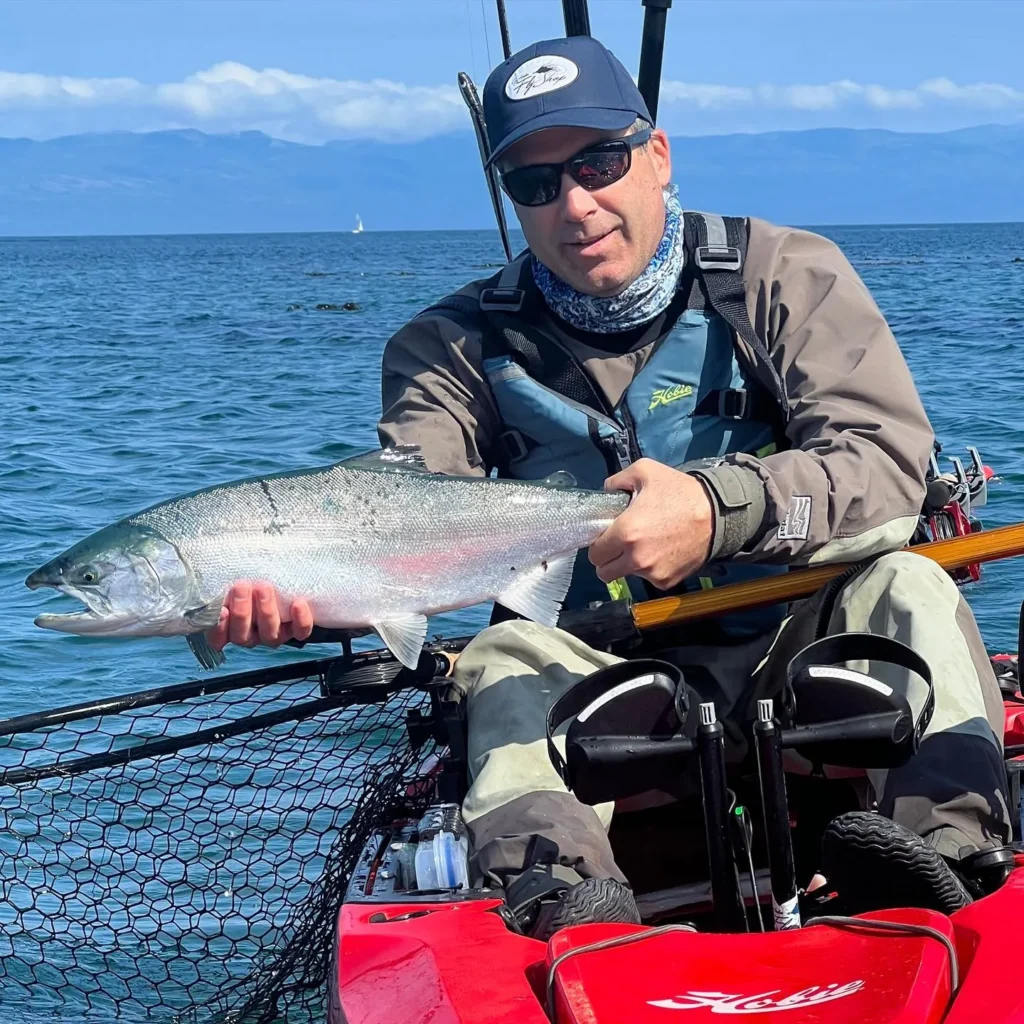
In this episode, I sat down with Blake Merwin from Gig Harbor Fly Shop to talk about Puget Sound cutthroat fishing, steelhead on the Olympic Peninsula, and the small details that separate productive days from frustrating ones. We dug into beach structure, tide movement, chum fry migrations, topwater opportunities, and why standing still is often the biggest mistake anglers make.
Blake has spent decades guiding and exploring these waters. Along the way, he’s developed a deep understanding of sea-run cutthroat behavior and how anglers can consistently find fish throughout the year.
Blake Merwin is the owner of Gig Harbor Fly Shop and has spent decades guiding, teaching, and exploring the waters of Puget Sound and the Olympic Peninsula.
His expertise spans sea-run cutthroat, salmon, steelhead, and saltwater kayak fishing. Through the shop, guide service, YouTube channel, hosted trips, and educational resources, Blake has helped introduce countless anglers to the unique fisheries of the Pacific Northwest.
Located just across the Tacoma Narrows Bridge, Gig Harbor sits at the doorstep of productive Puget Sound beaches and within reach of many Olympic Peninsula rivers. The location gives anglers quick access to both saltwater and freshwater opportunities.
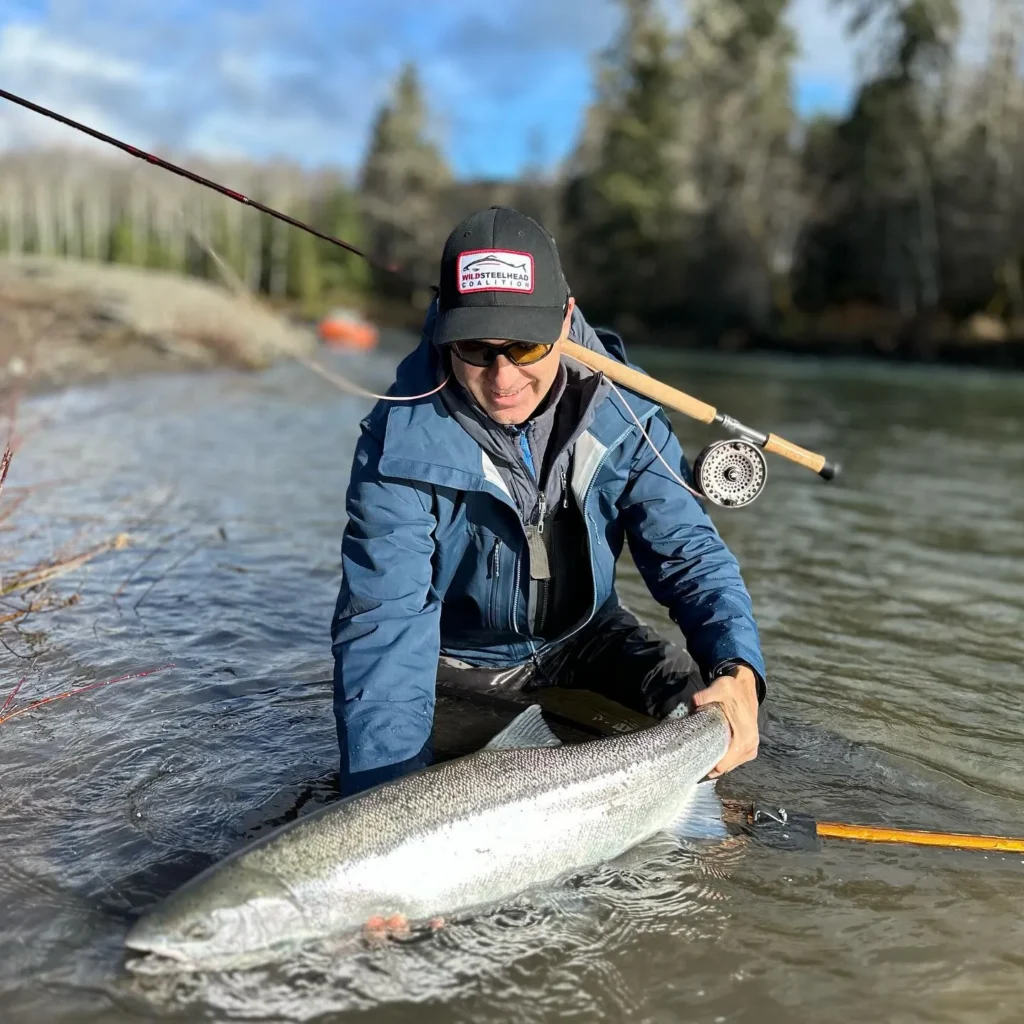
One of the takeaways from that discussion was the importance of fishing tailouts. These shallow sections often hold moving steelhead that many anglers walk right past.
One of the most interesting discussions centered around chum fry migrations. After spawning, sea-run cutthroat stay surprisingly close to their home streams. The reason is simple: massive clouds of juvenile chum salmon provide an easy food source during spring.
As chum fry move along the shoreline, cutthroat often follow them. Over time, those fish gradually spread farther down the beach as additional food sources become available.
Blake emphasized one key point: don’t become locked into a single fly pattern. Even when chum fry are present, cutthroat continue feeding on sculpins, shrimp, and other available forage.
Many anglers assume they need secret locations to find fish. Blake explained that there are numerous public access beaches throughout the Puget Sound region that consistently hold sea-run cutthroat. The challenge isn’t always finding access. It’s learning how fish use those beaches. Current plays a major role.
One of Blake’s favorite scouting methods is visiting beaches at low tide. Seeing the structure exposed gives anglers a completely different perspective on how fish move through an area.
If Blake could change one thing about how anglers fish for sea-run cutthroat, it would be this: Stop wading so far. Many fish are feeding in only a few feet of water. By pushing too deep, anglers often move directly into the zone where fish were holding.
His second recommendation is equally important. Keep moving. Rather than standing in one location and repeatedly casting, Blake prefers covering water and actively searching for fish.
One of the most practical tips from the episode involved retrieve speed. Many anglers fall into a robotic strip-strip-strip rhythm. Blake prefers a retrieve that mimics a baitfish trying to escape. He starts with slower, erratic strips to attract attention. As the fly gets closer, he accelerates the retrieve to trigger a predatory response.
That final burst often convinces following fish to commit.
Topwater fishing may be one of the most exciting ways to target sea-run cutthroat. Rather than aggressively popping the fly, Blake prefers creating a subtle V-wake across the surface. The presentation imitates an injured baitfish struggling near the top. His preferred pattern is a small gurgler tied on a size 6 hook.
The key is using a strip set when fish eat. Lifting the rod often pulls the fly away before the hook finds purchase.
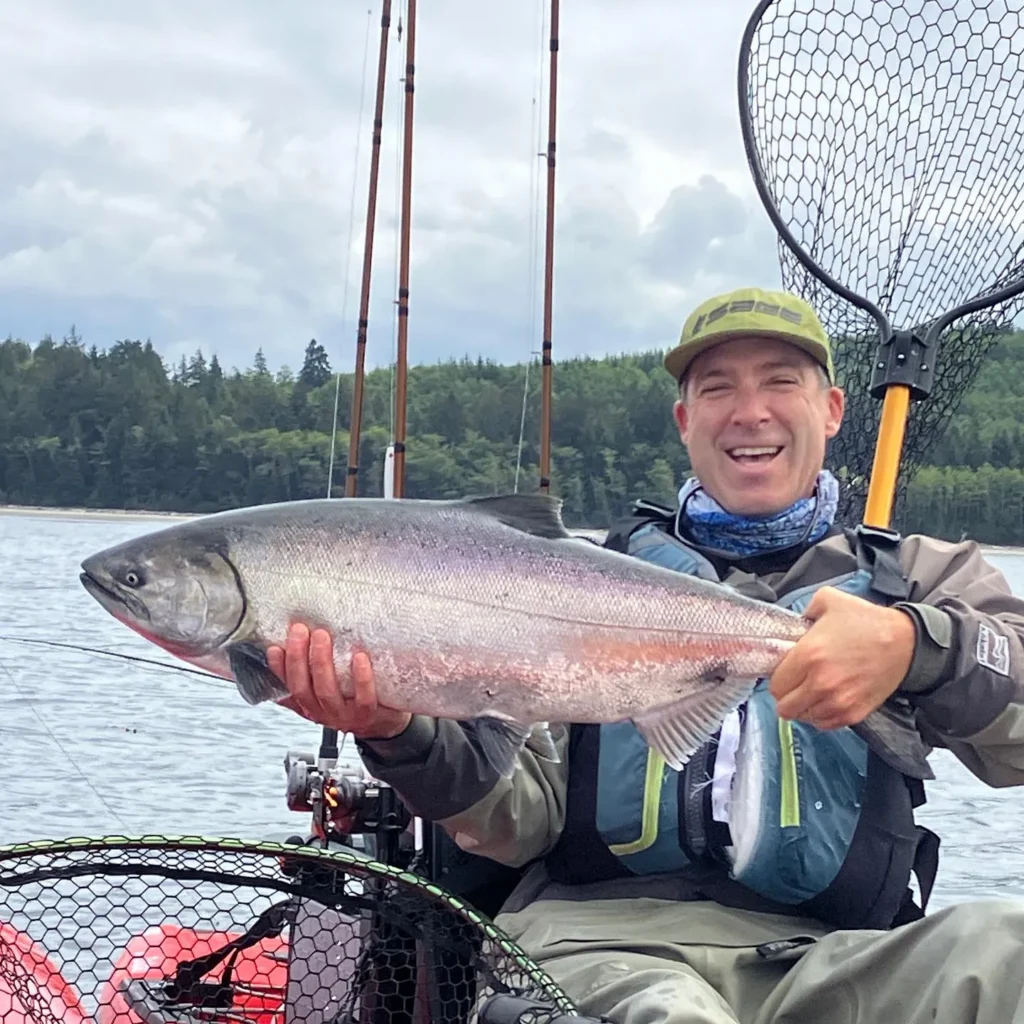
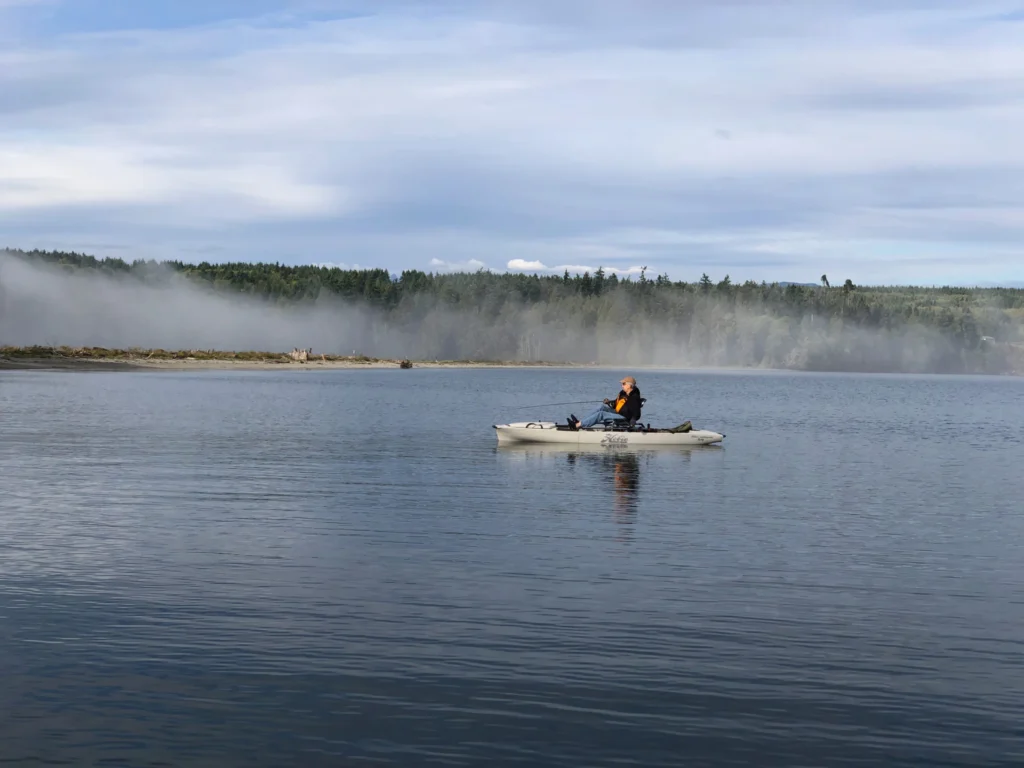
For cutthroat, the current naturally moves the kayak down the beach while anglers cast toward shore. It’s essentially a moving search pattern that covers water efficiently.
As summer turns into fall, another opportunity develops. Sea-run cutthroat move into larger rivers behind spawning salmon and take advantage of additional food sources. During this time, anglers can encounter both cutthroat and coho salmon in the same water.
Blake has also been experimenting with trout spey rods and soft hackles during fall caddis hatches on Olympic Peninsula rivers.
The combination of salmon, cutthroat, trout spey techniques, and fall conditions creates one of the most versatile fisheries in the Pacific Northwest.
Episode Transcript
WFS 937 Transcript
00:00:00 Dave: The fish you are looking for are likely closer and shallower than you think. Today we’re breaking down Puget Sound, cutthroat steelhead and the Olympic Peninsula, and the small adjustments where you stand, how you move and how you retrieve that quietly decide whether you find fish or not. Blake Merwin from the Gig Harbor Fly Shop is here, and we’re going to talk about his program and what he does throughout the year. And we’re going to dial in cutthroat fishing. I know this is a big one. We’re going to talk about all the details today, including how Chum fry timing keeps cutthroat, tight to specific waters. We’re going to find out about the mistake of staying put and why moving definitely will change the game out there. We’re going to find out what actually makes a beach productive. Tides, currents, structure everything that’s in there. And we’re going to get one retrieve that’s going to trigger aggressive eats. Plus we’re going to find out when top water might be worthwhile out there on the water as well. Top water streamers. It’s all here today. We’re going to take out the guesswork from cutthroat fishing. Blake Merwin. You can find him at Gig Harbor fly shop dot com. All right, here we go. Here’s Blake. How you doing, Blake?
00:01:12 Blake: Great, Dave. Thanks for having me.
00:01:14 Dave: Yeah, yeah. Thanks for putting this together today. I think we’re gonna have a great conversation. I’ve been hearing from definitely a lot of listeners that are interested in Cutthroat Trout update. We’ve done a few episodes over the years, but I think we got a lot of folks up in the the northwest. So we’re going to talk about that. We’re going to talk about steelhead fishing. I was out on a guided trip with you guys and it was a lot of fun. I hit the op. We did catch a touch base on that. But then the Fly shop, Gig Harbor Fly shop, we’ve been hearing about this for years. So I, you know, we’re kind of get an update there, but maybe start off on the fly shop. How long have you guys been doing this? When did this first idea come to be for you?
00:01:48 Blake: We kind of did things a little bit backwards from a lot of fly shops where it had started with, you know, an outfitting business or retail business and then had moved to e-commerce. We started as an e-commerce business in two thousand and four, and this was while I was in grad school, and we ended up five years later, opening a retail storefront. So it was, it was kind of a little bit of a, of a backward way that that usually happens with flagships at that time. But yeah, two thousand and nine is when we opened the Gig Harbor Fly shop, and we’re pleasantly surprised to have people actually show up and come through the door. We’re only in that location for almost two years. And then there was an opportunity to move to a larger location, kind of across the street. And so we jumped at that. And we we’ve now been in the same location there since twenty eleven.
00:02:41 Dave: Okay. And for those around the country who don’t know where Gig Harbor is, describe that kind of where you’re located and how it’s connected to that area.
00:02:48 Blake: We’re in the Puget Sound area. So, uh, if people are familiar with Seattle and Tacoma, if you go west from Tacoma over the large Tacoma Narrows Bridge, where the first community out on the Peninsula. So we’re kind of at the gateway to a lot of salt water, beach fishing for cutthroat. We’re not that far from the Olympic Peninsula rivers as well. So we’re in a great little town that’s got a got a fun little harbor and a lot of life to it.
00:03:18 Dave: Nice. And isn’t, uh, sage right? And then that isn’t too far from you guys. Where is that located?
00:03:24 Blake: Yeah, the sage headquarters is about forty five minutes north from us. Uh, Grunions is also about forty five minutes north from us as well. And so, um, so we got a great relationship with those with all those, uh, people. And, and it’s, uh, it’s fun to go see them or have them come down to the shop.
00:03:41 Dave: Well, we’re going to talk definitely, uh, cutthroat. We’ll probably bounce around a little bit, but, uh, let’s get into a little bit on the steelhead we connected. Ray. Big shout out to Ray, one of our pro members in here. He was he put this trip together and and we got out on the water. The crazy thing was Ray wasn’t feeling good that day, so he didn’t go out. But, um, so I wasn’t able to fish with him. But I got out on trip with you guys and maybe talk about that. You probably heard we talked a little bit about that, but, uh, remind us again who the guide was on that trip and, uh, you know, and maybe just what your steelhead program looks like.
00:04:11 Blake: That day you fished with Aaron O’Brien and Aaron’s been guiding for us. I think it’s I mean, it’s getting pretty close to ten years now. And he’s our, our head guide and just does an incredible job. People just love his demeanor. He’s got a great sense of humor, but he’s but he’s also very, uh, non-threatening, very laid back and just, just an all around excellent human. I just, um, I get the opportunity to partner with him on, on like a lot of different group trips throughout the year. And we just have way too much fun together. I actually remember, so I didn’t, you know, Aaron was guiding you that day. Yeah. And there was a fish that you guys had hooked and, I remember him telling me we were standing on a on the shore cooking lunch for our a group trip that we were doing. We had four, four clients and he’s like, he was telling me the whole story about, about the fish. And it was like right in that same spot, which was pretty cool.
00:05:06 Dave: Oh, so we caught the fish in a similar spot to where you were before.
00:05:09 Blake: Yeah, yeah.
00:05:11 Dave: Oh, gotcha. So you know that that tail out right there.
00:05:13 Blake: Right there.
00:05:13 Dave: Yeah, yeah. And it was interesting because we had a fly. It wasn’t any anything to you guys. It was somebody, another manufacturer that tied the fly. But did he talk about that because the fly kind of that’s how the fish got away. It uh, it jumped out. And I don’t know what happened to that intruder or, you know, a shank, but it kind of came apart, right?
00:05:32 Blake: Yeah. He showed it to me and yeah.
00:05:34 Dave: What happened? Can you describe that? Because it’s something, I guess this stuff kind of happens occasionally, right?
00:05:39 Blake: It was a I mean, this was a commercial fly. So, you know, you, you would expect it to be, you know, tied up to, you know, to the standard. But the fly just totally came apart. And yeah, I don’t know, I, I gave him, I gave him a hard time for it. I’m like, dude, that’s why you tie your own flies, right?
00:05:58 Dave: Yeah. He tired of flies. I, I, it’s funny because I get it. I mean, I, I don’t tie as much as I used to either. It’s kind of one of those things where you got a limited time and stuff like that. But yeah, it was, it was cool though, because you know, definitely it was hooked. Good. It was hooked solid and I saw it and it jumped. So it was, it was all good.
00:06:15 Blake: Well, it’s an opportunity to just, you know, say how big the fish is, right. I mean, it was I mean, it was the largest steelhead anyone had seen that season, right?
00:06:24 Dave: Yeah. Right. Exactly. Yeah. That was a giant. It was definitely giant fish. But um yeah, I think, you know, and the reminder to me too was the tail out. I think for me, sometimes I forget about the tail outs because tail outs can be pretty shallow. But that fish, I don’t know what depth it was in but that’s big. Right? Do you guys find do you fish? Make sure to not miss the tail outs when you’re out there on the OP.
00:06:45 Blake: I’ve been fishing them more and partly that’s just because Aaron definitely likes to fish them. And, you know, a lot of times that’s where you find those moving fish. So, you know, it has to be the right tail out, but you find movers coming through them and that’s, you know, that’s what you’re looking for.
00:07:01 Dave: Yeah. That’s we that day, I think there was a couple of boats around and you know, they had stopped down below. They passed the tail out this tail and they were fishing the, you know, kind of where it dropped down into the bucket below. And we hit that upper spot. And it was just, yeah, it was, it was sweet, but, um, but cool. So yeah, I mean, definitely. And you guys do the op so that’s closed now, but typically are you fishing that is that a pretty big part of what you guys are doing? You know, during that season.
00:07:26 Blake: Uh, during January, February, March, it’s kind of the only thing we’re doing, uh, other than like international hosted trips, the Puget Sound fishery is, you know, it’s pretty slow during that time. You can find some fish around, but I don’t know, I mean, a lot of times in the that late winter, early spring time in Puget Sound, it’s when a lot of those cutthroat are spawning and and I’ve talked about this with one of the biologists because I was, I was thinking, you know, once the fish have spawned like they’re kind of wanting to, you know, build back their strength from, you know, that whole activity. And, and so I just feel like the fish are really aggressive and they can be, you know, easily caught. But, but I’m like, man, I, I think I want to give them a little bit of time to, to kind of like build back. But the biology biologist is like, no way, man. They’re, they’re totally good. And I don’t know. I mean, he knows a whole lot more about science than, than I do. So, but I, I don’t know, I kind of like to leave those fish alone during, during that time just to like give them a little bit of a break because we’re, we’ll pound on them all all summer and fall.
00:08:27 Dave: Right. So you’re hitting. Yeah, summer and fall and then you’ve got the winter. And I guess, I mean, that’s the thing about it. It’s interesting. I mean, we’re, you know, where are they spawning. Right. They’re spawning up higher, but then you’re catching them down in the maybe talk about that. Where are you getting these fish off the beaches mostly. Are you guys hitting them throughout the whole freshwater system and everywhere.
00:08:45 Blake: Yeah, both. So when fish are in the salt water, it’s kind of like the tide, how the tide, the tide like moves in and moves out. The fish kind of have a similar pattern. Now they’re not like if people aren’t familiar with coastal cutthroat trout, they’re not like steelhead that spawn in fresh water and then make like a, you know, multi thousand mile journey all over the place. They kind of stick closer to home once they hit the salt water. Some fish will maybe move, you know, fifteen or twenty miles from their home stream. They’ve been doing a tracking program. The Coastal Cutthroat Coalition has been and there’s information on their website that’s like pretty incredible. I definitely recommend people checking that out. But some of these fish, they will spend their salt water life just a couple miles or even sometimes a couple hundred yards from their, their home stream. And as they come out of the creeks, they’ll, they’re right there. And, uh, And shortly after they’ve left those creeks, after the spawn, the chum fry, the juvenile chum salmon from the adults that spawned in, uh, sometimes October. But it’s more like November. December. Those chum fry hatch in the springtime, actually, right as we’re talking now here in April, it’s. This is when a lot of these chum fire coming out March, April, May. And so it doesn’t really give the cutthroat a reason to move very far from their stream because there’s a huge cloud of bait. They’re very vulnerable, easy to easy for the cutthroat to pick off. And it’s a great food source because there’s not a lot of other small bait fish available to them at that time of the year, as those chum fry make their their migration out to sea, they stay kind of near shore for about sixty days as they work their way out. Well, I have found guiding for cutthroat over the years there, you know, you fish a consistent spot and and those cutthroat one spot you found him down the beach. Now, all of a sudden, like the week later, they’re a quarter mile further down the beach. You know, they kind of will spread out as we get into summer. So I think partly is just because of the the food source availability. But once summer hits, we start to get a lot of other bait available to cutthroat. There’s other bait fish species that have spawned or are going to spawn. And then there’s a lot more diversity of food for them to eat instead of just the chum fry. And even even with the chum fry, like sometimes people see fish present or they’re at a good spot in a good tide. They’ve thrown every tiny little fry pattern, but they still can’t get them to bite. And I tell people that there’s other stuff you can throw because fish are still going to feed on sculpin year round. That’s a all year present food source. There’s shrimp that are out there year round. So there’s, you know, sometimes people just, they slog away at just throwing the same fly or the same type of fly. And, and it’s always a good reminder to mix it up, try something else that that might grab that fish’s attention or that they might be keyed in on. Even though you see chum fry all over the place.
00:11:52 Dave: Right?
00:11:52 Blake: So once those fish get spread out throughout the summer, once we get into that kind of fall and winter time, those fish start to move back towards their home stream to kind of stage up for their spawning run. And that’s kind of pretty late in the year. I the kind of staging up I see that more late November, December, but that’s kind of the season of, of how they, how they kind of move in and out.
00:12:16 Dave: Yeah, that’s really awesome to hear that. So basically those chum fry, what, what’s the pattern that you’re using to imitate the chum fry. What’s your typical pattern?
00:12:24 Blake: Yeah, there’s a handful of them. There’s a like a surf candy that we tie. It’s, it’s really small and, and sparse. There’s another fly called the Small Fry. I think, you know, I came up with a couple of these. I should remember the names.
00:12:39 Dave: Right?
00:12:40 Blake: Yeah. There’s one called a Keta Rose that was originated by Doug Rose, the author. And that’s a great I really like that fly, especially out on Hood Canal. And then there’s the chum baby Bob Trigg’s fly. That’s a popular one that’s been around for a long time as well. You know, the key is small and sparse. You know, we’re really looking at stuff that, you know, it’s it’s two inches at, you know, and they do start to grow. So you, you know, you do see chum fry that will be a little bit larger. They’ll be two and a half inches. But once they start getting those fries start growing and getting bigger, they also become better swimmers and more agile and, and stronger. And they’re a little bit harder for cutthroat to track down. So cutthroat will prefer that younger, smaller chum fry over the big one. And we do see kind of two age classes out on the water, especially on Hood Canal, because there’s a summer run chum and a winter run chum. And then in the winter run, chum, there’s kind of like an A and a B run. And so those summer run chums on Hood Canal, they come back in like August. We’ve hooked them in like early part of August. And we’re like, oh my gosh. It’s crazy to find them that early because they’re the last salmon to come into our salt water. So. So when you see one in the summer, it’s kind of a, it’s kind of a, it feels out of place. But when those guys spawn, they’re there. Juveniles are leaving the streams like more like February. And then the winter runs are are leaving the streams more like late March, April. And so you see these different kind of classes of, of chum fry on the water.
00:14:16 Dave: Wow. That’s cool. Where are you catching those chum. Is that in the salt or is that in the stream. And are they, are they bright when you’re getting those early ones in August.
00:14:23 Blake: It’s in, in the salt water. And I also want to point out that they’ve been more incidental catches. So it’s been while we’ve been fishing for coho. There’s some early returning coho to like the scene up in Dabar Bay, northern Hood Canal, uh, stuff like that. Those fish have had the summer run chums have had a really, really hard go. They. Their numbers had dwindled to almost nothing through some really hard work, uh, with like the salmon enhancement group and some others, they were able to kind of replant some of these streams that had lost their runs with like the strain of remaining, uh, fish. And so they’ve, they’ve been able to bring these things back from the brink. So it’s a pretty cool conservation recovery story. And because those fish are sensitive, I don’t recommend people trying to target a, you know, summer chum, but um, but you’ll see him out, out on the, along the bank rolling when they’re starting to stage up. And it’s, it’s cool to see just that, that part of that diversity that we have here in Puget Sound with all these different salmon species and run timing and all that stuff.
00:15:37 Dave: Yeah, it’s a cool area. I mean, when you look at just on a map, there’s water and canals and, you know, everywhere. And that’s, that’s kind of, you know, it seems like one of the challenges. Where do you find these fish? Like you’re talking about cutthroat, you know, they, I’m picturing them coming out of a bigger stream, but I’m guessing they’re also up in small streams, like you’re saying, and they’re popping into the salt and then they’re going up. But describe that. How are you finding how would somebody find where these the productive areas for cutthroat.
00:16:02 Blake: They actually thrive in the really small streams. There’s like little streams all around Gig Harbor that you can, you know, you can jump across and they hold self-sustaining populations of cutthroat trout, you know, and I think one of the things that I think should happen or needs to happen is that a lot of landowners need to need to be educated about, about what they actually have, like running through their property or alongside their property, you know, because you know, people build culverts and driveways and all this kind of stuff. And, and they don’t realize that there’s these wild trout that are, you know, living in these in these streams.
00:16:41 Dave: Trout routes by Onex is built for fly anglers who want better Intel without spending hours digging for the information. You’ll get access to public land maps, stream access points, regulations, and even road and trail maps all in one place. It’s become my go to app for scouting new trips. You can check them out right now. Go to fly dot com slash routes and download the app today. Let on to Mark Lodge. Give you the Montana fly fishing experience you deserve. The gin clear waters of the Missouri River offer a world class experience with one of the finest rainbow trout and brown trout fisheries in the world. Whether you’re a seasoned angler or new to the sport, their family of guides will tailor a trip just for you. You can head over to Onda Mark Lodge dot com to fish one of the great trout streams in the country. And you’re getting some of these cuts throughout the sea. I mean, essentially they’re sea run, but like you’re saying, some just go out maybe to the salt pop in down to the estuary and back. Are you finding in the small streams there’s a decent big cutthroat. I’m not sure the size range of sea runs, but how do you describe that? Like they’re what you call them, their life history.
00:17:47 Blake: So size wise. Serum cutthroat trout run on average like ten to sixteen inches. And then we’d say that like a really nice quality fish would be in that sixteen to nineteen range. And what I would consider a trophy sea run cutthroat trout would be, you know, in the twenty to twenty four inch range, you know, I mean, you get into the twenty two, twenty three inch cutthroat range and.
00:18:10 Dave: It’s like a steelhead. You can get steelhead, small steelhead like that size, right?
00:18:13 Blake: Yeah. And they, I remember being on the water with, uh, Russ Miller. He was, he was at Rio before. Now he’s at.
00:18:20 Dave: Oh yeah.
00:18:21 Blake: Right. I took him out. Yeah. So we were out fishing, uh, northern Hood Canal and we were we’re in the the Hobie kayaks. And he had changed up to this. Um, it was more of like a steelhead fly. It was like a, like a blackened, uh, purple kind of muddler pattern. Not anything I had ever thrown for cutthroat before. And I mean, honestly, I haven’t thrown anything like that since, but I throw a lot of more like Olive and like kind of more baitfish pattern colors. But he hooked this cutthroat that we did not realize as a cutthroat until it was in the net. We thought it was a coho salmon. Oh, wow. Because it was jumping. It was I mean, it, he had it on the seven way and it was just like a beast of a fish. And yeah, I mean, they get over twenty inches and they just become a different creature for sure. Uh, and, but that’s not a fish that you find on a regular basis. You know, it’s not like the Missouri River or something like that, like a twenty inch plus sea run. Cutthroat trout is, you know, maybe if you’re an avid angler. You might get one a season or maybe two a season with a lot of hard fishing, but there’s enough in that like seventeen to nineteen inch range that, you know, kind of keep you coming back.
00:19:36 Dave: Yeah. For sure. No. That’s awesome. You know, I guess that is kind of one of those questions. So you’re, you know, maybe the water, you mentioned it a little bit. They they’re coming out, they’re chasing these chums. So it sounds like they’re following the chum run a little bit, at least in the early season. You know, finding those places of the beaches. Can you just go down to any beach probably and find some. Or do you look at where the chum are spawning? Mostly like, where would somebody find out where to go, where to start?
00:20:01 Blake: Yeah, we’re fortunate to have quite a bit of public access with different parks around our area, and a lot of those different parks are productive, cutthroat beaches. If you’re on the east side of Puget Sound, there’s so much development with, you know, the Seattle waterfront and Tacoma. And, you know, that kind of whole stretch that there’s not a lot of, you know, beaches that are intact with habitat and, you know, spawning grounds and all that kind of stuff. There’s a couple little hidden jewels in there with some cutthroat, but not a lot. So most of those anglers in the more populated areas will either jump on a ferry or drive down to the Narrows Bridge, and they’ll come over to the peninsula side that even though it’s been growing, it’s more by and large, a rural or suburban area. But but we have a lot of intact beaches and, and some of the parks that we have are, are pretty good size where you can walk a beach for half a mile. Like it’s, it’s pretty cool.
00:21:08 Dave: That’s a good tip. So pretty much you can find some public crossover, whether that’s kind of to your area or maybe Bainbridge Island, you know, anywhere in there and find a place that, yeah, a park would be a good start.
00:21:19 Blake: Yeah, that whole whole stretch. I mean, it is a little bit difficult to find spots. And, you know, some people want to try to guard those those spots.
00:21:27 Dave: Right. And that’s part of the great thing that’s part of the great thing is people can do a little bit of work here now to find some of those. But I think, you know, I think there’s that. But then there’s also the just the technique of catching the fish, right? So it feels like the spots aren’t maybe as hard. You could do a little bit of work and probably find some spots to do it.
00:21:44 Blake: We also put a bunch of spots on our website just to help people out.
00:21:47 Dave: Oh, cool. Okay.
00:21:48 Blake: Yeah. So there’s, there’s under our learn tab, there’s like where to fish. And, you know, we probably have like, I don’t know, fifteen or twenty spots listed on there with maps. And, you know, so just a, you know, I mean, we don’t want people trying to get into something new to be frustrated. Like we want to try to help them. I mean, if you have, if you’re working and you’re like, I can get out and fish like once or twice a month. And I know, you know, there’s a lot of anglers that don’t even get to do that. You know, you don’t want to go out there for that one time and be frustrated on the water. and we want to enjoy the enjoy the the environment. We want to enjoy the. These beautiful places and enjoy the fish and frustration is like, you know, I know it’s part of the game with with fly fishing, right? But yeah, but if we can minimize that, then, you know, then people have a great time on the water and that’s, you know, that’s what we want to do is try to help people as they’re out there.
00:22:38 Dave: Perfect. So good. Well, that’s a good resource. We’ll have a link out to that so people can check it out. So let’s take it now. So let’s say we’re on a beach and describe that a little bit. We’ve got you know maybe it’s during that earlier time right now, basically April May somewhere in there. What’s the technique you guys are typically doing when you’re fishing, presenting the fly or finding the fish out there? How are you doing it?
00:22:59 Blake: A couple things that that I see people do that I would recommend against, and one is waiting too far out. I think people should start. I mean, the water is big. It’s, you know, you stand on the beach, it’s intimidating. You look across and it’s, you know, no one can even swim that distance. The next landmass across. Right? It’s big water, but the fish aren’t way out there. They’re in that intertidal zone. They. They’re in that area between the very low tide and the high tide and that slope of beach. And so if those fish are sometimes in two to four feet of water, if you wade two feet out, those fish are now no longer in front of you and are sliding down the beach one way or the other. So I try to fish as shallow, wading wise, as shallow as I can. You got to get a little bit in the water because the lap of the the little waves, we don’t have surf, but little wind waves and stuff like that. If if your line spills out of your stripping basket and hits, that hits those little waves like it just makes a big mess. But so you want to be have a, you know, a foot in the water or less. And then the other part is moving. And I see a lot of anglers that just stand in one spot and cast over and over and over and over again. And that can be effective in certain areas. Like if you’re on a point of land, the beach is always changing because that water is always dropping or coming up with the tide. And, and so it’ll move fish around and on a point, you can find some productivity with that. It’s definitely effective salmon fishing doing that. But for cutthroat, I like to wade shallow in the move. And so usually, you know, we work our way down wind or down current and, you know, make a couple casts, two or three casts, strip the fly and then take a couple steps down and kind of just keep working. Sometimes I’ll do a lap where I’ll just, I’ll fish pretty aggressively down the beach and I’ll walk back up the beach to where I had started, and then I’ll fish back through it. And I kind of prefer to kind of hunt that way instead of just like standing in one spot and just slugging it out.
00:25:12 Dave: Right, right, right. That’s it. Yeah. We always go back, like they said at the start of the steelhead, you’ve got this definitely system systematic approach, right step and cast and all that thing. But and this is a little bit different because you’re out there, you’ve got you’re on the beach, you know, the tides are going up and down. So you’re trying to find the fish. Once you find those fish, let’s say you, you hook into a fish or you land a fish is that spot, you know, good for a little while or is it because of the tide? Are you still moving even after you catch a fish?
00:25:38 Blake: Yeah. Once you find one, you know, you could be into a handful of them, right, right in that one spot. And I don’t know if it’s necessarily that fish like school up together. I don’t really I don’t think that that’s really the case. I think it’s more the case that the conditions, the location, you know, all of those parts that attract that fish to that beach attracts other fish, right? Like it’s, it’s the, because the, the conditions that, um, you know, are favorable for cutthroat. So therefore there’s several.
00:26:12 Dave: And what is that in those conditions might be like? Is it kind of your typical cover, you know, food, I guess, what are the conditions that make that spot, say, within the beach, you know, the productive area for them?
00:26:23 Blake: Yeah. It might not be cover as much as it is current from the tide. And sometimes we get current moving where like it rips like, well, I mean, it’s like, you know, we’ll fish top water flies and we’ll cast them out and we’ll, we’ll swing them like a skater. And you know, we’ll have cutthroat come up and attack him on, on the surface. So we get, we get some really good, good current, but current with structure. Yeah. I think that that can be really important. And that’s that can be structure. Could be, uh, downed trees on the beach. It could be large boulders or different, uh, variable size rocks, points of land where it creates eddies or current seams. You know, those are a lot what I’m looking for a lot of stuff like that. One recommendation I would give people, if they’re going to go explore and look for cutthroat beaches, do it at a low tide, you know, how many opportunities do you get to see? You know, like the place you’re going to fish without the water and see everything underneath it? You know.
00:27:28 Dave: That’s pretty cool. That’s pretty cool.
00:27:30 Blake: I remember growing up, um, by, uh, Folsom Lake in Sacramento, and we had a couple years where the lake was so far down where it was literally a mile out to the water from its previous height, you had to hike way out there. I remember my brother and I as kids, like running to the water and yeah, it’s ridiculous, but you got to see everything. You’re like, oh man, look at all of these depressions and rocks and all this stuff. And it’s kind of like visiting a steelhead river in the summertime and, you know, getting to see like where the trenches are and the boulders and, you know, the stuff that you don’t get to see in the winter that has, you know, you know, eight more feet of water on top of it or something like that. Right. But you mean Puget Sound does it? Every day the water drops. You get to see the beach. You get to see it. Like just with all of its, uh, you know, rocks and everything. And so that’s a great way to learn beaches, to explore them, to be able to come back and be able to pick them apart where fish are going to be hanging out.
00:28:31 Dave: That’s sweet. Yeah. So it’s similar to a stream. You’ve got current structure and it sounds like you want some of the faster those places that have the faster currents are typically better, would you say, than the slower slack water?
00:28:42 Blake: Yeah. That movie, they really do like that moving water. Generally the best tide is an outgoing tide in the morning. And when you look at a tide chart, it’ll, you know, you can see what the drop is. If it’s, you know, if it’s like a, a twelve foot high tide and it’s going to like a one foot tide. So you’re gonna have like eleven feet of exchange. That’s a pretty good tide that’s going to move a lot of water. There’s going to be a lot of current. We get tides that are bigger than that. It might even be, you know, like a fourteen foot tide going to a minus two. Like that’s, that’s a massive amount of water that’s moving. But when it moves that water, it moves the bait around, it moves their food around, makes that stuff vulnerable. And then, you know, they’re on the hunt for it. What we’ve also found, though, is that the incoming tide, if it’s a really big, strong incoming tide, it doesn’t quite fish as well as the strong outgoing tide. And so for the incoming tides, we like an incoming tide that’s a little bit more gentle, a little bit less tide exchange. And the other part of it is mornings just definitely fish better than afternoons and outgoing in the morning. That’s excellent. A slow incoming in the morning with an outgoing into the afternoon. That’s a great tide to fish. You can fish that all day and that’s you’re gonna find fish on either the incoming or the outgoing. It’s going to be a good, good day of fishing for sure.
00:30:10 Dave: And what about you mentioned the, uh, the top water. Can you describe that a little bit, what that looks like and top water? And is this depending on the tides, or would it be similar fishing top water as fish in a stream? Or does it depend on like, when would you hit the top?
00:30:22 Blake: You know, so with cutthroat fishing, it’s blind casting, it’s streamer fishing, and it’s a lot of repetition of, you know, cast retrieve.
00:30:31 Dave: Yeah. Is it different? We always talk about steelhead. So, you know, they talk about blind casting. A lot of times you’re, you’re just you’re not quite sure is cutthroat like that or is it not? Are you more positive you’re going to get something.
00:30:43 Blake: Well, yeah. I mean I think that there’s just more players around. Like I think cutthroat fishing, you’re just there’s better chances of hooking fish than, you know, swinging flies for steelhead. You know, personally I’ve done a lot of saltwater cutthroat fishing. I don’t do a ton of it anymore. You know, I mean, I don’t know if that’s just because I’ve, I’ve guided it for a really long time, and I don’t know if it just kind of feels like, you know, on your day off, you’re still going to work, right? I don’t know, like that, you know, it’s, it’s a warning to all of us, right?
00:31:15 Dave: Yeah, yeah. I feel like we all evolve to, you know, there’s times where we’re into this and then you evolve into something else and then maybe you come back to it.
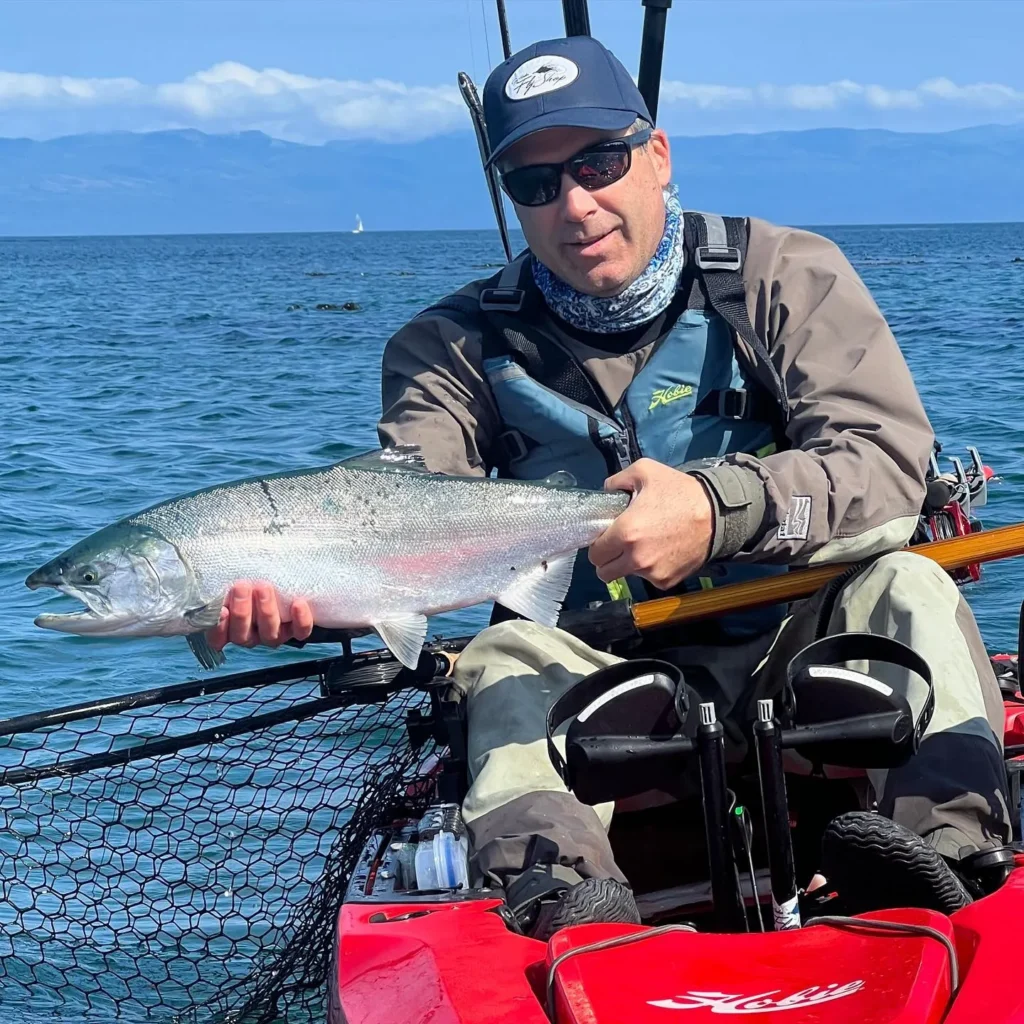
00:31:22 Blake: Yeah, yeah. And, you know, be careful about making your, your hobby or your passion, your job, because it kind of will take a little bit of the shine off of it. But, but with steelhead fishing, I still really enjoy fishing for steelhead. And, you know, and even though I, I guide for steelhead, if I have a little bit of time off, you know, if I’m, uh, have a day off or something like that, and then I don’t go fanatic and fish all day from, you know, you know, sunrise to sunset. But, but I love to just get out and go fish just for even just a couple hours. And swinging flies for steelhead isn’t something that has really worn off for me as like, you know, Puget Sound stuff. But the thing I’m really passionate about is fishing for salmon. I really love to fish for especially coho. I mean, I think coho is just like is an incredible fly rod. Gamefish they’re a lot more accessible than kings. You can get into good numbers of them. They fight like crazy. If you want to keep a fish, you know there’s hatchery fish and you know, an ocean bright coho is God. Oh my gosh, it’s that is a good eating fish for sure. So, you know, that’s kind of more a little bit more. My jam these days is and we love to do a lot of kayak fishing. We fish from like these pedal drive Hobie kayaks that are really stable. You can stand up in them. And with those, it opens up all sorts of salmon opportunity.
00:32:47 Dave: Mhm. It does. Now, why is the kayak so much better than say um, yeah. I mean, I guess that’s the thing. It’s small. It’s maneuverable, like versus say just having like a boat with a motor out there. Is it just being able to get the smaller places and channels and stuff.
00:32:59 Blake: A lot of times when these fish are in shallow, when they’re coming, coming through, especially these coho will will run along the beach. When you have that tide moving around, it can be a little bit difficult positioning a boat to be able to cast to them. And you know, but some of these guys with, with their, you know, the new boats have have trolling motors on them with spot lock and GPS and like, right. It’s, it’s not like, uh, like it was even just a few years ago. And that’s pretty incredible. But I love being in the kayak because it’s quiet. It’s kind of like a drift boat. And for guys that float rivers, anglers that float rivers, they when all you hear is the river and the sound of those oars, it’s peaceful. And you hear different things than when you just have like a motor running. So when you’re out on Puget Sound in a kayak, you hear the spray of bait as they’re jumping out of the water, you know, running from a seal or, you know, you hear birds crashing in the water or, you know, or you hear a cutthroat slashing bait on the surface. And like, and it’s just a totally different experience being able to, to have, you know, all of those senses. And then when you, you know, if you are fishing for salmon and stuff like that, when you hook into a nice salmon and you’re in a, you know, a twelve foot, you know, plastic boat that is one hundred pounds, you get dragged all over the place in that thing. You know, it’s, it’s just a very different experience. And it’s a lot of fun. It’s it’s a blast.
00:34:33 Dave: Fishing expeditions offers world class fly fishing right off Alaska’s incredible road system. From monster rainbow trout to feisty Arctic grayling, you’ll chase big species in the stunning landscape. Whether you’re a seasoned angler or just starting out there, expert guides ensure an unforgettable adventure. Book your trip today before spots fill up and experience Alaska’s diversity like never before. Check them out right now. That’s fishing expeditions dot com. Check out Montana Fly Fishing Lodge, a twenty twenty four Orvis endorsed Lodge of the year finalist, where luxury meets adventure on one point five miles of private, wild and scenic East Rosebud River frontage. Experience world class fly fishing on numerous Yellowstone Basin streams. Gourmet cuisine made from locally sourced ingredients and rustic luxury accommodations surrounded by breathtaking wilderness. You can book your all inclusive Montana fly fishing adventure today and discover why they are the premier destination for unforgettable fishing experiences. Head over to Montana Fly Fishing lodge dot com right now. What’s it like landing a salmon a coho in a kayak? Is that pretty challenging for coho?
00:35:41 Blake: You know, we have a long, long handled net. And so it’s not it’s not that hard with the coho. If you get a king on the fly by yourself trying to land a king in the kayak, that is a different experience altogether. Because, you know, if they could be, you know, fifteen, twenty pounds or more and, you know, you got the line, the leader is like, you know, reeled in almost to the tip of the rod. You’re trying to reach back. You might even be standing up like trying to, you know, reach out with the net to try to get a. Luckily, I haven’t fallen in doing it right.
00:36:16 Dave: I was gonna say, are these kayaks, these hobbies, are they pretty state. They must be pretty stable.
00:36:20 Blake: Oh yeah. Yeah. Like the Hobie Pro Angler, it’s thirty eight inches wide. Like it’s massive. Like it has a six hundred pound capacity. I mean, you could have dance parties on this thing.
00:36:30 Dave: No kidding. They’re that big. Wow.
00:36:32 Blake: Oh. They’re huge. Yeah. Yeah. No, you’re standing and casting like you can shift your feet, you know, sometimes, like, you know, watercraft, like says. Oh, yeah, it’s stable. But once you stand up like.
00:36:42 Dave: Yeah, it’s like, you got to be careful. Yeah. I’m thinking that that’s what I’m. Yeah. So this one’s stable. You can literally just stand out there all day on it.
00:36:48 Blake: Oh yeah. Totally. Totally. And the seat, like the seat sits up really high. It sits up like maybe twelve or eighteen inches. It’s got armrests.
00:36:55 Dave: Oh, man, this is awesome.
00:36:57 Blake: Yeah. So I don’t even stand up that much. You know, now I just kind of sit and cast and, and strip flies just, you know, sitting down. So. Yeah, I’m getting old, I guess.
00:37:07 Dave: Yeah. Is it kayak? Is it also good for cutthroat? Is that would it be are you fishing more? Would you be fishing more with a kayak or is it better off the beaches?
00:37:14 Blake: It’s better from the kayak. We prefer the kayak. Our guides, they prefer fishing on the kayaks. We have a few trailers that are all set up with with a fleet of hobie’s. You know you can. I mean, one of the great things is you set up with that current moving down the beach and you throw your cast in towards, you know, where you would normally be standing on the beach, you know, wade fishing, you’re casting in. And by the time that fly is retrieved back, that current has, has slowly moved your kayak, you know, in the current down just a couple feet. So it’s almost like you’re, walking in casting, but you’re just floating and casting. And the amount of, of beach you can cover is enormous. And then you don’t also have to worry about the issue with like high banks, private property houses, you know, structure that you can’t really get around or anything like that. It opens up every single inch of the shoreline to be able to fish.
00:38:11 Dave: That’s awesome. Yeah. It sounds like, yeah, kayak is definitely a good investment if you’re going to get into this fully.
00:38:16 Blake: Yeah, we sell, we sell quite a few kayaks to anglers. Yeah.
00:38:19 Dave: Nice. What is on the retreat? Just sticking on the cutthroat for a little bit. You know, if you’re out in that boat casting, what are you doing different retrieves or is it pretty much a standard type?
00:38:28 Blake: Sometimes when we’re fishing, we kind of lose our our mental focus on the retrieve and become much more like robotic, you know, almost like a metronome of just like kind of strip, strip, strip, strip, you know, and if you can stay locked in to what that bait fish should be doing. Uh, that’s on the end of your line. You know, it doesn’t want to be lunch. And so, you know, as you cast it out there, I try to make the retrieve more erratic. You know, with strip strip, strip, strip strip, you know, so I’m putting like different syncopated pauses in it. And then I’m anticipating a fish seeing my fly and coming over to the fly and possibly chasing after it. So as I my first, the first, maybe third of the retrieve, I’m kind of doing like that, that kind of syncopated, slower strip to kind of get the fish’s attention. And then in anticipation of a fish, I start accelerating my retrieve. And a lot of times that incites that predatory response where they attack that thing as it’s trying to get away from them. And so, you know, I just got back two nights ago, three nights ago from Mexico, and I was down in Lobos fishing for tarpon. And the water is, you know, crystal clear there. And, you know, so you have to do a similar retrieve where you throw to the tarpon. You’re it’s a really slow strip. And then the tarpon starts coming to the fly because it sees it from a distance. And then as soon as it starts to get closer to the fly, the retrieve gets faster and faster. The fish just can’t refuse it. Like they just have to go after it because it’s doing what the baitfish would do, you know, when it’s trying to not be launched. And so we’re doing the same thing with cutthroat fishing, but it’s all blind fishing. Like we’re not seeing the fish’s behavior and then adjusting to it. We’re having to assume that we’ve got grabbed a fish’s attention, and we’re going to try to get that fly to move it away a little bit faster. And that really ups the percentage of, of hookups for, for cutthroat. Now with the, the top water fly, it’s very different. We’re not chugging it like a bass popper though. I’ve, you know, seen seen them hit it doing that. It’s more of a long, steady pull and I just pull it so it gets like a little V wake going on the top. And it just kind of looks like, you know, I’ve, I had been taught that years ago and I didn’t really. I’m like, why that’s just such a weird retrieve. Why would fish do that? And then I remember the very first year I got into kayak fishing, this is probably like a dozen years ago. I remember seeing like a, I think it was like a herring or, or an anchovy or something like that. There was just one and it was just on the surface. And so it must have been like injured or something like that, because they’re usually all schooled up. And the thing was just kind of motoring aimlessly on the surface of the water, just creating this little V wake. And it looked just like the top water fly. I’m like, oh, that’s, that’s why we do that with the top water fly because that’s what a wounded baitfish does. So you can get that V wake in a swing or you can just just a long, steady pull. But the key is to not lift up and set the hook when they eat it. It’s a strip set when when they’re there, if you lift up, the fly just comes flying, you know, out of the water and drapes all over you. And you know, trout setting is bad.
00:42:07 Dave: What are the what’s the fly that you like for the top water? Do you have a few different types or what have you got there?
00:42:11 Blake: I tie a gurgler on a size six hook and I keep it pretty small. I actually came up this winter with a like a euphausiid gurgler. So it’s like, you know, the size of your thumbnail in the winter time we get these euphausiids that’s like krill and the fish will feed on, on those. And sometimes like right in the film. And we found actually quite a bit of success this winter. And I think it was, I can’t remember if it was December or January, but I had been working on this pattern for a while, like years and years ago, but then I kind of it was just kind of sitting in the box. And so I kind of went back to it and was working on, on it. I tied up a bunch of them. And then when customers were coming to the shop, I started just handing them out and I’m like, hey, try this fly out. Like, let me know if this thing works. Then it was, yeah, it was dynamite. Like just it worked, worked great. So, um, so we’ll have that in the bin next year. It’s, um, we’ve sent it off for commercial tying and stuff like that. But, but yeah, the growlers are great. There is a fly that is really popular from Leland Milwaukee. And you know, when people think of cutthroat fishing with Topwater, they think of his fly. We have it in the shop too. He also has a new squid pattern out as well. They’re both great patterns, but I still just kind of fish this little gurgler because I prefer the smaller, the smaller fly, it’s easier to cast. I feel like fish hit it just fine and I always fish the top water first Whenever I go to a beach, it’s the first thing I throw because if the fish is really aggressive, they’re gonna eat the baitfish pattern that’s on the intermediate line for sure. But I mean, why not give them the chance to hit it on top? And it’s just, uh, it’s just such a more exciting, you know, way to encounter these fish.
00:43:58 Dave: Yeah. It’s awesome. There’s definitely a bunch of opportunities. We touched on a few today. I mean, and the salmon I think is awesome. I think, you know, maybe on another one, we could talk more depth on that, but let’s take it and start taking it out of here with our, our wet fly swing pro kind of shout out here today. Uh, we love doing this kind of highlighting members in the group. And I want to shout out to Nick today. He, he just posted in there. He’s got a new fly tying desk. It was pretty awesome. And I’m like, man, it just reminds you, you know, fly tying. And it sounds like that’s something. Are you still out there tying a few or what’s that look like for you? First big shout out to Nick for wet fly swing pro in the community there. But but take it to that. Where are you guys. You know picking up your flies. Are you still doing a little bit of tying.
00:44:38 Blake: Yeah, I know, I, I tie a bunch.
00:44:39 Dave: Are you guys doing some stuff on, on YouTube too? Right. You’re still doing, uh, some, I guess, and you have a podcast. Maybe you can speak about that as well.
00:44:47 Blake: We post a whole lot more on YouTube than we do on like our podcast. The podcast is, uh, I mean, I, I got ADHD pretty bad. And yeah, so the podcast suffers because of that. Like, so sometimes, like we’ll have like a bunch of episodes and then it won’t be anything for six months.
00:45:03 Dave: So that’s it. But, but yeah, you’re doing some tying still and all that. Um, yeah, no, I mean, I think that the, um, you know, for me, I’m always thinking, you know, I think tying is a big part of it because like you said, there’s little tweaks that you might not be able to buy from a store. Right. Do you find like the stuff you guys have at the shop or you got a lot of stuff that’s tweaked and for your specific area, or you can you just buy stuff straight up from, you know, whoever the big manufacturer is and be good to go?
00:45:28 Blake: Yeah. The cutthroat fishery is, you know, it’s so small that it’s not really on the radar for a lot of commercial, you know, fly companies. So just out of necessity, back in the day, like we had to kind of supply the bins with our own stuff. And so we had local tires do it. And then we started working with the commercial manufacturers that would just take on custom patterns. So right now we have over, I mean, there’s over one hundred bins that are, you know, just our exclusive flies. So a lot of stuff that you can’t find anywhere else and developed in the shop for fishing the waters around the shop. And you know, it’s pretty cool. It’s, um, it’s, uh, it’s kind of exciting to have some stuff that is exclusive.
00:46:12 Dave: Exactly. Yeah. This is unique stuff that you can only get at your, at your location. What is the you’re talking salt water here. And I just want to take it out of here just with a couple more tips as we kind of focus on, you know, maybe cut throat here, but we talked to the salt water. Are you guys also fishing in freshwater? Is that something that people can hit maybe a different part a time of the year where they’re actually in freshwater?
00:46:32 Blake: Yeah. Especially in the fall. The cutthroat will a lot of times follow salmon into those larger river streams and feed behind them. And then that gives you a freshwater opportunity. The small streams, those fish, the small stream fish, just stay out in the salt water until it’s time to spawn, because there’s not really a lot of food opportunity for them in those small streams. Out on the Olympic Peninsula, there’s cutthroat out there as well. There’s there’s some cutthroat that are resident cutthroat as well as cutthroat that are run and fishing in September out there. You can you can find some really big quality sea run cutthroat. October can be great too. But then there’s salmon around. And so like it’s, you see like a twelve pound coho. Do you want to catch that? Or do you want to catch like a, you know, seventeen inch cutthroat, like.
00:47:22 Dave: Right.
00:47:22 Blake: I don’t know. So we’ve been actually doing both like, we’ll, um, and that’s something that we’ve been kind of experimenting with a little bit more is with the trout Spey rods, and there’s some really great caddis hatches out on the op in in the fall. And so we’ve been starting to swing soft tackles and stuff like that. And just to kind of do something new and explore kind of a new, you know, a new way to catch fish out there.
00:47:48 Dave: So like a two weight or something like that. What’s your Spey?
00:47:50 Blake: Yeah, I got I have a couple, three weights. I actually have one of those trout Spey HD sage one weights, but I haven’t, I haven’t really messed with it out there that much. Um, that’s, I kind of saved that one for just swinging soft tackles on the Missouri.
00:48:03 Dave: Right on the Missouri. Yeah. Nice.
00:48:05 Blake: Because coho will eat the trout flies. That’s the hard part about it.
00:48:09 Dave: Oh they will. God what is that coho like you know. Is that so you’re getting those in mostly salt water too. Or are you hitting coho throughout the system?
00:48:19 Blake: We get a lot of coho August, September into October in the salt. And then once we start to get a little bit of rain in those rivers, swell a little bit to let those fish kind of pulse in October in the rivers is is really good. November is maybe even it might be as good or better. But the later we get into the sea and those those fish too, will be around in the early December. The problem is on. The op for fly anglers is once you get into like mid November, there’s been so much rain that that the rivers are now kind of more at their like kind of winter kind of look and winter levels. And so there’s just a lot of water and you’re throwing heavily weighted flies, you know, heavy sink tip lines, you know, whereas in October, the water is still pretty low. It’s kind of got a different look to it. It’s more so when it rains. It kind of has just like a kind of a tannin stain. He stain to it, you know, and you can catch fish on, you know, really light tips. You don’t have to have like a heavy sinking tip. The flies don’t have to be really, you know, you’re not dredging with, like, a ultra heavy fly. So for the fly angler, October, especially end of October, it can be pretty incredible. And then there’s still a lot of cutthroat around as well.
00:49:41 Dave: Yeah. In October and then. And what is that? What’s the when you’re in freshwater, how are you fishing for those coho. What’s that look like?
00:49:48 Blake: I actually had a day with my son where we were just waiting the the Sol Duc and throwing like these really small little leech patterns called the soccer moms from Rio. It’s it’s one of my favorite freshwater flies.
00:50:01 Dave: Oh, cool. Soccer mom. That’s a good that’s a good name.
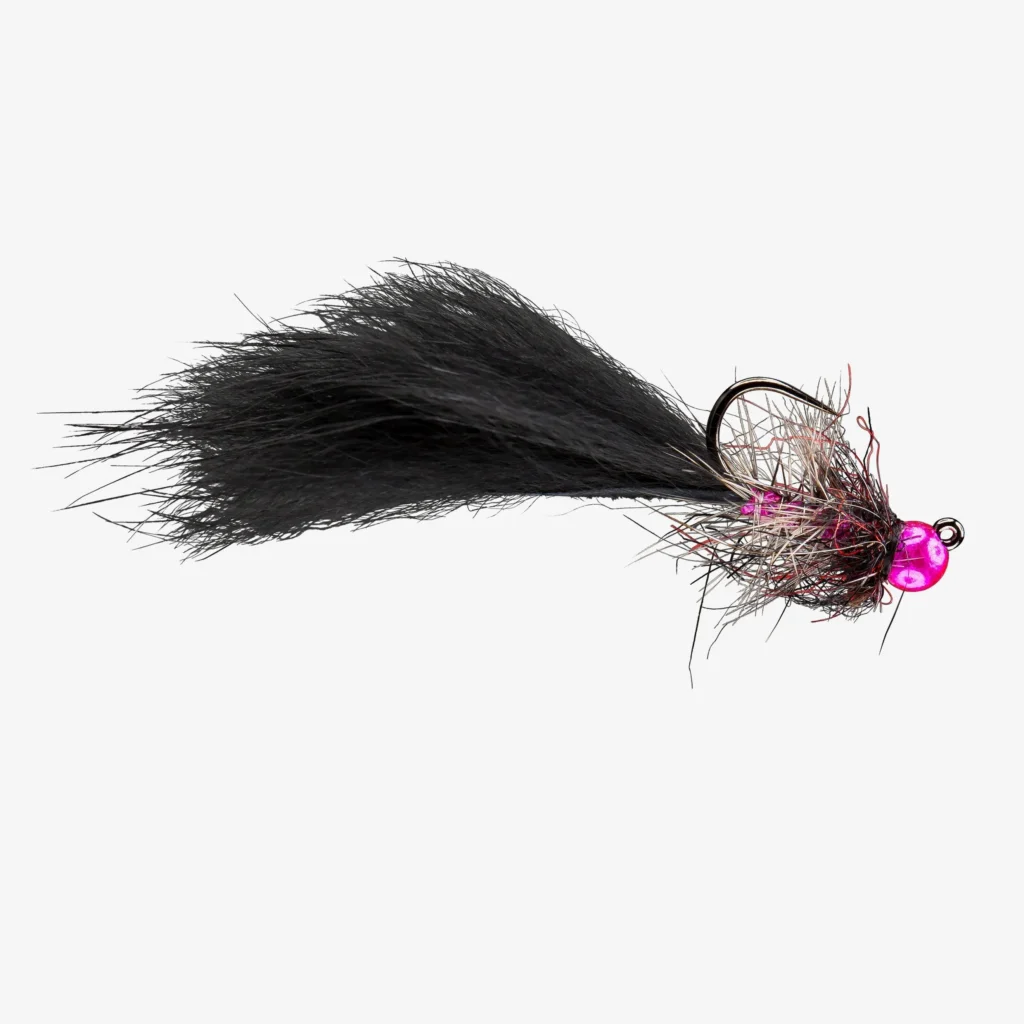
00:50:04 Blake: And it’s an even better fly. Like the fly is ridiculously good. And we were catching a bunch of cutthroat on, on that little fly as we were fishing the black one with the pink head and, uh, but we, I ended up getting two hatchery coho on that same little trout fly. It’s tiny. And so we’ll scale the fly for the water conditions. And so if it’s, uh, you know, if the water’s a a little bit higher, a little bit more off color, then, you know, I’ll go to a slightly larger soccer mom with a tungsten bead on it. This is one I tie. So the one from Rio, they only make one one size, but sometimes the fly will have more flash in it. Um, I don’t actually fish a ton of flash though. Um, I fish more flash in flies in the saltwater than I do in in the freshwater, but I, I love fishing black, you know, people will fish, you know, hot pink and chartreuse and stuff like that. And those definitely work. But, you know, if the water’s really clear, black just seems pretty stealthy in the water. But if the water is off color, you know, black really stands out in the, in the water. I mean, I’m just I’m a big believer in just fishing just all black and yeah, no, it works really well.
00:51:19 Dave: That’s cool. So all black within what color would your bead be? All black. Black bead.
00:51:23 Blake: You know, I usually go with a little color pop on the bead, you know, like a like a hot pink or a hot orange.
00:51:29 Dave: That’s right. Okay. And so and then for coho. So you’re, you’re pretty much are you stripping for coho in those freshwater or swinging for them or both.
00:51:37 Blake: They like that fly to drop. And so, I mean, this is something where like fishing, conventional tackle you, you learn a lot about fish behavior and fishing with like a, a twitching jig. It teaches you really how those fish like that, that hook move. And so if you can fish a fly that’s got good weight and drops, you know, sometimes it can be a little bit hard when it’s a, you know, really heavy tungsten bead. Or if you got like lead eye, uh, dumbbells on there or something like that, but that strip and pause with that fly getting to drop they that drives salmon crazy. They, they love to hit it on the drop.
00:52:15 Dave: Well that’s awesome. I think like you said, we’ll have to save maybe some of the more of the salmon talk for a later point, but let’s just take it out here. A couple of random ones here. You mentioned the podcast. We didn’t get the name. What is the name? If we want to look this up on Spotify or Apple Podcasts, how can we find it?
00:52:29 Blake: Yeah, it’s the Gig Harbor Fly cast.
00:52:32 Dave: Perfect. So we’ll have some. And did you guys cover a little bit of all these species we talked about today? Or what’s the focus and when do you think you’re going to get that next episode out there?
00:52:40 Blake: Yeah, the most popular episodes have been on Cutthroat Fishing. I did a couple cutthroat fishing overviews, and those have definitely had the most clicks.
00:52:50 Dave: Yeah. Good. Okay, so we got that resource and then your YouTube channel that, what are you guys doing over there? Describe that quickly here.
00:52:57 Blake: Yeah, the YouTube channel is really where we put a lot of our energy and we have podcasts on there as well. But we do, we highlight, you know, local fishing stuff or just trips that we’re doing. We’re working on a video right now from a trip to Honduras that I just did. We just experimented around with this new material for or this new product for welding loops on lines called restore line. And so we’re doing a video on on that. I’ll do a video for my on my Mexico trip. I just got back from, uh, we did some steelhead videos, uh, this year. Yeah, we’re trying to get creative with it and, and, um, have some fun out on the water. And we hope people, people find them helpful.
00:53:38 Dave: That’s sweet. And we mentioned obviously talked a lot of cutthroat today. Let’s just say, you know, this episode is probably going to be going out around the May June ish period. What is that? If somebody is listening now, what’s one tip you’d be telling them for that period of time? If they’re going to be on the water to find some cutthroat.
00:53:55 Blake: one tip is get on the water early and throw some top water.
00:53:58 Dave: Like what’s early. Are we saying daylight or depending on the tides?
00:54:02 Blake: It’s amazing the fish activity that happens before the sun really gets up. I mean, I’ve been on the water at like four thirty five in the morning watching fish just go just out of their mind. And then five fifteen, it’s like done. So and maybe that happens in the evening too. I’m not sure. I’m, I’m always at home for dinner with the family, so. But yeah, that early morning is. It’s pretty special.
00:54:24 Dave: Sweet. Awesome. Blake. Well, I think we can leave it there today. We’ve got a ton of resources everybody can follow up with at your website, Gig Harbor dot com. And, uh, yeah, man. Definitely. Thanks again for the trip. Uh, Aaron was like you said at the start was awesome. That guy was made the trip amazing. And, uh, yeah, we’ll definitely look forward to staying in touch with you and appreciate your time.
00:54:45 Speaker 3: Great. Thanks, Dave.
00:54:47 Dave: All right. If you get a chance, if you’re interested in finding out more information, head over to Gig Harbor Fly Shop, let Blake know you heard this podcast. Uh, definitely excited to get up there and hopefully fish out of a kayak in Puget Sound. Uh, definitely sounds like throughout the year, there’s a good opportunity there. I want to give a shout out to Phil Roy. The Stillwater School is back. Stillwater School is back. We’re going to be heading out there this year. And if you get a chance, check in with me, you can send me an email, Dave at web dot com, and we’ll let you know on details of that event. There’s a chance to win next week. The giveaway kicks off and then we’ll be talking more about the trip after that and want to leave you with one memorable quote from Blake in this podcast today. And Blake said, if you wade too far, the fish you’re trying to reach are already behind you. If you wade too far, the fish you’re trying to reach are already behind you. There we go. Uh, hope you’re having a good day. And I hope you have a great morning, afternoon, or evening and glad you had a chance to check in today. We’ll see you and talk to you on the next episode. See you then.
00:55:54 Speaker 4: Thanks for listening to the Wet Fly Swing Fly Fishing show. For notes and links from this episode, visit wet fly dot com.
Puget Sound cutthroat fishing combines everything that makes fly fishing addictive. There is exploration, changing tides, aggressive fish, and endless shoreline to discover.
Blake shared a simple reminder that applies well beyond cutthroat fishing: stay mobile, pay attention to the details, and don’t overlook the water closest to you. Sometimes the fish you’re looking for are already right there.