Stephen Brunt shares how a magazine assignment turned into a lifelong connection with Newfoundland. Along the way, we cover Atlantic salmon tactics, the legacy of Lee Wulff, the unique culture surrounding these rivers, and why this part of Canada has become one of his favorite places on earth.
Stephen Brunt is one of Canada’s most respected sports journalists, authors, and broadcasters. During a career spanning several decades, he covered the world’s biggest sporting events while writing bestselling books on Muhammad Ali, Wayne Gretzky, and other iconic athletes.
Away from the newsroom, Stephen is an accomplished fly angler whose passion for Newfoundland Atlantic salmon has shaped much of his life. He now spends each summer exploring the rivers of western Newfoundland, sharing his appreciation for the people, landscapes, and traditions that make the province unique.
Stephen grew up fishing for native brook trout in southern Ontario before spending decades working as one of Canada’s most respected sports journalists. His introduction to Atlantic salmon happened almost by accident after Outdoor Canada Magazine offered to send him anywhere in Canada for a story.
That first trip took him to the Upper Humber River. It took four days before he hooked his first Atlantic salmon, but the experience changed far more than his fishing. Eventually, Stephen bought a seasonal home in Newfoundland and has returned every summer since.
Today, Portland Creek has become one of Stephen’s favorite rivers on Newfoundland’s west coast. Located about an hour and a half from his home, it offers consistent fishing throughout much of the season, something that’s uncommon on many Atlantic salmon rivers.
Unlike rivers where fish quickly push upstream, Portland Creek often holds salmon from mid-June through early September, giving anglers plenty of opportunities throughout the season.
Few anglers have influenced Atlantic salmon fishing like Lee Wulff, and Portland Creek remains one of the places where his legacy lives on. Stephen shares stories of Wulff’s lodge, his floatplane, and the remains that can still be found near the river today.
Wulff wasn’t just promoting fishing. He was decades ahead of his time on conservation, advocating for catch-and-release long before it became common practice. His ideas weren’t always popular, but many of today’s Atlantic salmon anglers still benefit from his vision.
Although two-handed rods have become common in many Atlantic salmon fisheries, Stephen still prefers a traditional single-hand setup. Most of Newfoundland’s rivers are well suited to six- and seven-weight rods, especially during the grilse run.
Portland Creek can become windy, so he occasionally steps up to an eight or even a nine-weight to better punch through the breeze. Otherwise, simple gear works just fine. One of the biggest surprises is how little emphasis local anglers place on expensive equipment. Many successful fishermen still use straightforward floating lines and simple monofilament leaders.
One of the biggest adjustments for trout anglers is realizing Atlantic salmon aren’t feeding in freshwater. Instead of matching insects, anglers are provoking a reaction strike.Stephen fishes classic flies like the Blue Charm, Thunder and Lightning, Green Machine, Undertaker, and Bombers. Confidence matters as much as color.
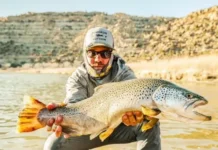
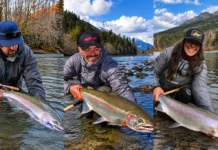
Many visiting anglers dream about landing a multi-sea-winter salmon, but Stephen says he’d happily take a day of catching grilse. These smaller salmon fight aggressively, jump repeatedly, and provide nonstop action. For anglers experiencing Atlantic salmon for the first time, they’re every bit as memorable. Larger salmon tend to stay deep after the take before exploding into powerful runs, creating an entirely different experience.
One of the biggest advantages of fishing with a local guide isn’t casting instruction. It’s learning to see water the way someone who grew up on the river sees it.
While Portland Creek has become Stephen’s favorite destination, it’s far from the only great Atlantic salmon river on Newfoundland’s west coast. The Humber River offers some of the province’s biggest water and biggest fish, including salmon pushing well over 30 pounds. Big Falls becomes a gathering place each season as salmon stack below the falls before continuing upstream.
Smaller rivers inside Gros Morne National Park offer an entirely different experience. They’re intimate streams that feel almost like trout water, yet they still hold healthy salmon runs depending on conditions. North of Portland Creek, rivers continue nearly all the way toward Labrador, giving anglers countless options throughout the season.
Atlantic salmon may be the main attraction, but they’re far from the only fish available. Stephen points out that sea-run brook trout often share the same water as salmon during parts of the season. These fish can grow to impressive sizes and provide another memorable opportunity while swinging flies.
Farther upstream above Portland Creek’s lake, anglers can also find large resident brook trout. Some still reach the kind of sizes that made Lee Wulff’s Newfoundland films famous.
The conversation also turned toward Mike Tyson and Muhammad Ali, comparing two legendary fighters whose careers took dramatically different paths. Stephen observed that Ali’s remarkable resilience helped define his legacy, while Tyson often struggled once opponents pushed back.
Although sports consumed much of his professional life, Stephen says fly fishing eventually became the place where he could completely disconnect.
Stephen briefly experimented with writing about fly fishing, but quickly realized it changed the experience. Instead of simply enjoying a day on the water, he found himself analyzing every detail. That was enough to convince him that fishing should remain something personal rather than another assignment.
Today, many of his favorite outings involve hiking alone into small salmon rivers, listening for rises, watching wildlife, and spending hours immersed in nature whether he catches fish or not. “There’s no such thing as a bad day fishing.” That perspective perfectly sums up the way Stephen approaches both salmon fishing and life outdoors.
Few moments in fly fishing compare to watching an Atlantic salmon rise to a Bomber. Stephen explains that unlike trout, salmon often inspect the fly several times before finally committing. When the take comes, patience matters. Rather than setting immediately, anglers should pause just long enough for the fish to turn before lifting into the fish. He also shared a common local strategy of making several short drifts over a likely holding lie before changing flies if a fish refuses.
Outside of Atlantic salmon season, Stephen has become equally passionate about saltwater fly fishing. Belize has become his favorite destination, particularly around Placencia, where he spends time chasing permit, tarpon, bonefish, and snook. After years of practice and guidance from experienced local guides, he’s now landed permit in the double digits.
Even after covering world championship sporting events, he admits few things create more excitement than watching a permit finally commit to a fly.
Episode Transcript
WFS 956 Transcript 00:00:00 Dave: When you spend a career around some of the biggest names in sports, it takes a special place to leave a lasting impression. Over the years, Stephen Brunt has interviewed and written books about legends like Muhammad Ali, Wayne Gretzky, and many more. As one of Canada’s most respected sports journalists, he spent decades telling stories from the biggest stages in sports. But today, we’re heading somewhere far away from the arena lights. In this episode, we’re talking about Newfoundland Atlantic salmon, the people who call this place home, and why certain rivers stay with us long after we’ve left. Stephen Brunt is a Hall of Famer and award winning journalist, author, broadcaster and dedicated Atlantic salmon angler who spent years exploring rivers and culture of Newfoundland. Today, we’re going to find out why Newfoundland occupies such a unique place in the Canadian culture. We’re going to find out about the people, traditions, music, and the communities that surround this amazing part of the world. We’re also going to find out what keeps anglers returning here when success is never guaranteed, and why some places become part of the story, whether you planned it or not. All right. If you’re interested in connecting more, you can check in with Mountain Waters Resort and find out more. We’re going to talk about that today. And the big trip we got coming here. All right. Let’s get this one going. Here he is Stephen Brunt. How you doing, Stephen? 00:01:19 Stephen: Hey Dave. I’m good. 00:01:20 Dave: Good. Good to have you on here. We are going to talk about a big trip that I know you’ve been on and that we’re going on here this year to Mountain Waters Resort. We’re going to be fishing for Atlantic salmon, and we’re going to hear some stories and maybe the experience from you. And we’re also going to check in on your background. You’ve got a really unique background in Canada as a sports writer. You’ve written some really great books. You got a whole history here. So it’s going to be a challenge to, to keep this, this episode rolling and not stray too far. But, um, but yeah, maybe take us back first to Atlantic salmon. How did you first find out about this place out in Newfoundland? 00:01:54 Stephen: I, you know, I grew up, I’m from southern Ontario. I was kind of split my year between southern Ontario, Newfoundland, and, uh, near Toronto. And I grew up, you know, fishing with my dad for brook trout, eastern brook trout, native brook trout in the little tiny streams around where we lived. We taught ourselves to fly fish at a certain point. And, uh, that was really, you know, that was really my fishing background in a lot of ways. I am a trout fisherman. And about, uh, nineteen ninety nine, two thousand, somewhere in there, I was at a, at a magazine awards dinner in Toronto, where I was nominated for something. And the editor from Outdoor Canada magazine, which is kind of the leading outdoor magazine in this country, came up to me and said, hey, look, I, I hear you fish. Would you like to write something for us? I said, I can send you on a trip. I’ll send you pretty much anywhere you want to go in Canada, which was pretty hell of an offer. So I, you know, I kind of thought about it for a minute and I said, you know, I’ve never fished for Atlantic salmon. It’s kind of, you know, one of the kind of holy grail things for a fly fisherman, obviously. And, and at that point in my life, I’d never been to Newfoundland. So, you know, some months later, I got a call saying, hey, we got a trip for you there. You’re going to fish on the upper upper Humber River. Uh, it was kind of late in the season, so it wasn’t super prime time. And we’re going to send you out there and you meet a photographer out there and you guys are going to you can fish for salmon and write a story about it. So yeah, that was that was the beginning. It took me four days to hook my first fish. And, uh, it was a, you know, if you’re writing a story about it, there’s a hell of a lot of pressure on you to think of the boy, I better I better have something to write about. You know, you don’t want to come away empty handed. But yeah, it’s. Yeah, I was, uh, you know, I loved it, obviously. And it, you know, not only kind of changed my fishing life, it changed my life. Life. Like, you know, we, I bought a house out here almost, you know, oh, it’s super impulsively. And we’ve been living here seasonally ever since. 00:03:34 Dave: That’s cool. And you started out on the, the Upper Humber. Did you fish some other waters over the years out there. 00:03:39 Stephen: Since then I’ve fished all over the place. Yeah. So we’re on the I’m on the west coast of Newfoundland. Um, if you look at our map, you know, it’s a great big island. It’s I’m a from here to the capital city, Saint John’s is an eight or nine hour drive. So, you know, it’s a big hunk of rock out here. But the West Coast around, you know, from the southern, very southern part of it all the way to the very northern part of it is loaded with salmon rivers, pristine salmon rivers. So, you know, within a couple of hours of where I live here in, in, in Winterhouse Brook, which is in the national park in Gros Morne National Park, there’s probably seven or eight rivers I could hit within a two hour drive. 00:04:14 Dave: And is one of those Portland Creek. 00:04:16 Stephen: Yeah it is. It absolutely is. It’s about Portland Creek is about an hour and a half from here. And I started fishing Portland Creek seriously, about three or four years ago. I guess it’s become one of my go to spots out here. 00:04:28 Dave: Nice. We’re going to talk a little more about that. You know, we’re heading out there and we’re going to be fishing starting out at Portland Creek. And I think everybody on the trip is new. I’d never been out there. So we’re going to get a little a little insight from you today to talk about it. So how far is it from where you are now up to Portland Creek? 00:04:45 Stephen: Uh, probably, you know, I can make it in about an hour and a half. So cup of coffee in the morning and be up there to and be swinging the fly by, you know, seven thirty, eight o’clock in the morning. I’ve got a guide. You know, as a non-resident, you’re required to hire a guide to Newfoundland. So I am a non-resident for licensed purposes. So I have a regular guide, Rod Brophy, who I fish with. You’ll meet him when you’re out. Oh, yeah. I’m sure he’s a fantastic guy and a good dude. And we’ll, uh, it’s a quite an accessible stretch of water. You know, you can, you can essentially drive right up to the bank. The waiting can be a bit challenging depending on the river levels. So bring a staff and, you know, bring your felt’s probably. And, uh, one of the great things about that stretch of river is that a lot of the rivers here, you know, very much, uh, run determined. So my local river here, the Lohman, you know, has about a month, you know, where it’s really good. And then the fish push on through, you know, in Portland Creek, you know, again, depending on water levels, you can fish there from, you know, the middle of June, right through to the end of the season, which is the first week of September here. Like there are fish hold there pretty much all the time. 00:05:47 Dave: Yeah. First week, this is great. Well, and like I said, we’re going to kind of bounce around a little bit on all this. But one thing I think it’s interesting, because you have this experience as a great sports writer in Canada. You know, you’ve probably heard some of the stories about Lee Wolfe. I think that’s interesting. And I’m just reading a book about his biography, about his life. It’s really interesting because, I mean, he was all about doing similar things as you, right? Kind of talking about areas, promoting areas. And that was an area at Portland Creek. And then the lodge is specifically is where he stayed for a while. Do you know a little bit of that history? 00:06:20 Stephen: Oh yeah. For sure. Um, so the book, I don’t know which one you’re reading, but Bush, there’s a book called Bush Pilot Angler, which is worth looking up, which is about his experience in Newfoundland specifically, and about mostly about Portland Creek, but also about some other things he did in this area and up in Labrador. So if you’re planning on coming out here, it’s a really interesting read. He came here in the fifties, I guess, originally, certainly, you know, after the war. And um, you know, it was not developed as a certainly not developed as a fishing destination at all. There was, you know, there’s a fishing history here going back to the eighteenth century with English captains coming in and fishing fly fishing for salmon with. You know, the kind of the original fly patterns, which then were all, you know. Have been transformed here using all the local materials. So you see a lot of bear and moose hair in the, in the fly fly patterns here. So there’s a long history of fishing here. But Wolf came up here. He ended up working for the Newfoundland provincial government to promote the fishery. So he had a lodge. The original lodge he had was just three miles down the road from where I am on, on what’s on bond Bay saltwater. And he had a little Piper cub that he would fly in there a floatplane, and the guys would come in on the. They would catch the Newfoundland Railway road, which doesn’t exist anymore, but. And take it up to Deer Lake. And then they would bring them up to this lodge, and then he would fly them in to the rivers north of here, so especially. And Portland Creek, he built a lodge there where you’ll, you’ll see the, the remnants of it are there. And actually the you can see where the dock was, where he used to tie up the float. 00:07:47 Dave: Oh, cool. So there’s going to be remnants of the old lodge in the dock a little bit there. 00:07:51 Stephen: Yeah. And this in the town where I live, they had a Lee Wulff museum when I first moved here, which was, you know, it had, but it was like they had like a pair of his running shoes, you know, it was very homespun. And look, I’ll tell you, he was a bit of a polarizing figure here. You know, some of the locals didn’t, you know, because he was bringing in sports and, uh, they were advised to step aside. He did hire a lot of guys to guide, and then he left in a huff eventually, because he wanted the government of Newfoundland to essentially turn over the sport fishery to him and let him run it. And he was, you know, he was a great advocate for catch and release before anybody was doing it. And this is very much the culture here is very much a retention culture. So he kind of went against the grain that way. He clashed with the guy who was the premier long, you know, decades long premier, a guy named Joey Smallwood. And eventually he packed up his plane and went back to Pennsylvania. But, uh, yeah, there’s a lot of Lee Wolfe stories around you. If you find anybody of a certain age, just ask them. You’ll get a story. 00:08:43 Dave: Okay? Yeah, we’ll have to do that. That’ll be fun. Yeah, I think it is pretty cool. I think one of the great things, like you said, is the conservation. We’ve had many guests on the podcast that have talked about the influence of Lee on them and to this day, right, that he influenced people. And I think that goes back to Joe Brooks. Right? I think another another writer that influenced Lee. So it’s a cool history, but we’re going to talk a little bit of your background a little more on your sports writing, because I know you’re pretty famous really around around the, the country, the world on what you’ve done and some books. So but tell us about the fishing. I want to, I want to hear a little bit more details because, you know, I know it’s a single handed game where we’re at, you know, and around the really around the world, the Spey has become big. Talk about that. What is the gear you’re using there at Portland Creek? 00:09:23 Stephen: I’m single handed. I’ve messed around with Spey rods, especially fishing in Quebec. And the, you know, the Gaspé where there’s a lot of spey rod action. There’s some guys here who do it, you know, especially on the Humber. There’s some big water in the Lower Humber. But again, it’s it’s my own limitation probably that, you know, I’ve never gotten comfortable with with with a Spey rod. I’m a single handed guy and out here because it’s primarily a grilse run here. Right. So which are the salmon. You know, one year, one year at sea and back. So smaller, a lot of smaller fish, but sometimes in enormous numbers and a lot of its small water, you know, it’s almost like fish in a trout stream back home. Some of it, like the Portland Creek is big, but you’re not throwing you don’t have to throw huge line like you’re there’s wind issues there more than anything else. So if I’m up there and it’s windy, I’ll, you know, I might go up as high as, you know, even a nine, eight sometimes. But generally my go to rod here is a seven or a six. 00:10:14 Dave: Is a seven or six weight. That’s cool. 00:10:16 Stephen: Yeah. Because if you’re, you know, five or six pounds on a seven or six weight, it’s lots of fun. 00:10:20 Dave: Yeah. That’s awesome. And now Portland Creek’s a little bit bigger. So there’s a chance there’s going to be some bigger fish. So are you using a seven weight there if it’s not windy or what does that look like. 00:10:29 Stephen: I might if I’m, you know, willing to kind of risk it. I have hooked bigger fish up there though. So you’re and you’re yeah, you’re more likely now again, a bigger fish. You’re not talking about a twenty five or thirty pound fish. The only place you’d ever see those here is in the Lower Humber. And there’s some forty pound fish in the Lower Humber. But you know, you’re like a good a salmon salmon, not a grilse, you know, ten, twelve pound fish. Yeah. You you definitely. You know, I’ve I’ve I’ve hooked and landed those fish in in in Portland Creek. But I’d say the main reason I gear up a bit more there is just to cut through the wind because it it’s infamous for wind. The local guys will tell you that the wind’s not blowing. The fishing isn’t any good, which doesn’t make any sense, but in my experience it’s one hundred percent true. 00:11:06 Dave: So okay, so you want a little wind? 00:11:09 Stephen: Yeah. It’s a good thing actually. Yeah. 00:11:10 Dave: Yeah. But I think it’s interesting with the, the Spey versus single hand game, we’ve had lots of conversations on it. But the cool thing is, is that the single hand rod is still a great tool out there, you know, for, you know, steelhead, Atlantic salmon, really any species. It just depends. But so it sounds like at Portland Creek, you’re not having to make huge like long casts or maybe describe that. What’s your typical cast out there? 00:11:30 Stephen: Yeah, you can like, you can throw, you know, more line if you like. It’s obviously the more water you can cover at times, the better. You know, certainly in most, you know, this kind of fishing. Um, but I have, there are guys there who, who use two handed rods. It’s not in Newfoundland. It’s not common in Newfoundland with Newfoundlanders the way it would be in Quebec, where a lot of guys switched over. Right. So yeah, you’d be able to cover a bit more a bit more water. But but it’s not like you know, the other way. Reason this bay has been, you know, would be useful sometimes. Obviously, if you have if you’re up against a bank and you’re just trying to, you know, roll casting with the trees behind you, but you’re wide open up there like there’s nothing behind you. So. So yeah, if you’re a, you know, a semi competent single handed fisherman, you’ll, you’ll be, you’ll be fine out there. It’s not a distance game. 00:12:17 Dave: So you have a, basically a nine foot nine weight. That’s if it’s windy that’s your go to. And is it just a line like weight forward line? Do you have a specific line you like or are you a big gear guy or what’s the what’s your take there? 00:12:29 Stephen: I’m not a super gear guy. And again, you’ll find if you talk to locals out here, man, know they’re like, they’re not gear guys. 00:12:34 Dave: It’s like, just grab whatever line. Just go grab a dry floating line. You’re good to go. 00:12:38 Stephen: Yeah, exactly. Like some of the guys are the best fisherman I’ve met out here, though, who, you know, Newfoundland fishermen are very bare bones gear and, uh, you know, a piece of straight eight monofilament on the end of a floating line. You know, that’s cool. 00:12:50 Dave: That’s good to hear. In a lot of ways. I feel like that’s kind of cool to know all the, all the local guys are just like pretty straight, pretty standard, like just grab whatever and just go. 00:12:57 Stephen: Yeah, well, and there’s guys, you know who I’ve had guys certainly who’ve guided me on some of this little river down the road here from me who, you know, looked at me, thrown and said, why are you throwing all that line? Like just, you know, they’re guys hooking fish on, you know, with the barely beyond the barely more than the leader out at the end of the tip of the rod. But they know they know where the fish are. They’re, you know, tight swing. And the tricky thing, you know, I found with salmon fishing in general is not so much the technical part. Like, it’s not like I do saltwater fishing too, right? Which can be super technical at times. It’s being able to read the water and reading the lies and kind of understanding. And there, you know, a lot of them are, you know, the fish are still sitting in the same place as they were when Lee Wolf was here. So, you know, they’re, they take you to so and so’s walk and say, throw it there. Generally listen to them. 00:13:39 Dave: God, that’s right. We’re fishing. We’re gonna be fishing runs that have probably not changed in fifty years or more. 00:13:45 Stephen: No, like barring a big flood or something where it pushes the rocks around or pushes like I’ve had that happen more where I am here where rivers change over the winter because the big ice flow or something. But yeah, that’s one of the beauties of Portland Creek, though, is you go up there and you feel like I’m sitting, I’m standing in the footsteps of, you know, decades of guys. And, uh, there was a guy who used to fish. He just passed away a couple of years ago, and he had been coming there every summer for forty years, and he could barely, you know, I tell you, he could barely walk, but he could still wade out. 00:14:15 Dave: He could still do it. 00:14:16 Stephen: Oh, yeah. He was out in water. I wouldn’t have gone out in and and the pouring rain, throwing those casts one after another. God love him. I hope I’m doing that when I’m eighty five. 00:14:24 Dave: I know he was eighty five. Yeah. Yeah. We occasionally we get some of those guests on. Yeah, eighty five nineties and they’re still out there fishing and swinging flies. It’s, it’s pretty inspiring. Cool. Well, and so it sounds like, yeah, I mean, you mentioned kind of some of the gear. That’s pretty straightforward. So grab a, you know, I’m bringing a nine weight and seven weight, right? And I’m going to go grab a probably a weight forward line. I’m gonna probably find something that maybe has a little bit, maybe a little kind of bulkier that can punch through the wind. But again, there’s like every line company has like a dozen lines that would work, you know, different types. So I think that’s not going to be the limitation. But flies maybe talk about that. And I’m guessing flies isn’t the big factor either. But what do you like to throw on if you’re going to go out there tomorrow? What’s going to be your first fly? You’re swinging? 00:15:04 Stephen: Well, you know, one of the first things that, you know, if you haven’t fished for Atlantic salmon that you have to learn is, of course, they’re not feeding. They don’t feed in the fresh water. That’s they stop feeding and they come into the river. So you’re not trying to mimic anything, you know, so you’re not matching hatches like you would as a trout fisherman. It’s they’re reacting to movement, you know, kind of like a defensive action almost as much as anything. And they’ll kind of slash out at a fly based on the movement and, you know, maybe the shape or maybe how it moves water, but it’s not food. So flies can be almost anything, you know, like the classic fly patterns. Look here, everybody throws a blue charm and then the blue charm doesn’t work. You tie on another blue charm. So, you know, I like to fish small flies and, you know, obviously in big water you might throw a bigger fly, but blue charm, thunder and lightning, you know, and then things like green machines are really effective here sometimes like fishing, a little like a bug as a wet fly swinging it. And then when the dry fly fishing is on and which is can be amazing here, bombers. So deer hair bombers and bugs, orange hackle, green hackle, you know, there’s all kinds of multicolored ones that guys experiment dirty bombers the guys use here with the long hackle. That’s a lot of guys use those. Now. I don’t know if that makes any difference to the fish. You know, it’s sometimes, you know, if you as you know, if you hook a fish on a fly, you cast that fly with more confidence. So that can be it. You know, you throw it with a little more conviction. But I’ve caught fish on swinging a bright pink fly here that some guy made. Yeah, Undertaker’s. 00:16:32 Dave: Pretty much everything. 00:16:33 Stephen: Yeah, pretty much everything. Dark day. Throw a lighter fly like bright day. Throw a darker fly. But again, I’m not sure. I’m not sure any of those things matter. The pace of the swing matters. I think more than anything. 00:16:43 Dave: How do you get the pace of the swing right? Describe that a little bit. 00:16:45 Stephen: You know, mending the slow to slow the fly down if you need to or throw on more forty five than, you know, throwing more kind of square to, uh, or rather than throwing a little bit downstream, you know, you can kind of adjust the speed that way. It’s kind of hard. But again, I believe me, it’s a work in progress for me. But you want the fly coming across at kind of a walking pace. And in Newfoundland, you know, the other thing that’s unique here is that almost everybody uses the hitch, the Portland Creek hitch. So rather than like if you’re fish in Quebec or New Brunswick, you know, the Restigouche or the Miramichi or, you know, the Cascapedia, they’re they almost always fish wet flies below the surface. So here they want to cut that V right on the surface. So right in the film. And they want to see that wet fly coming across the film. That’s the way guys fish wet here. 00:17:32 Dave: That’s cool. What is that about? Because that is really unique. I think we’re all excited about that because getting an Atlantic salmon is one thing, getting Atlantic salmon, where it’s kind of on the surface like that is seems like the next level. Why do you think that is that the Portland hitch? You know, it’s such a key. It’s used there so much. And then other areas of Canada, it’s not. 00:17:50 Speaker 3: I don’t know. 00:17:51 Stephen: You know, I have no idea. Like it’s I, it’s funny. Like I, again, I fished a fair bit in Gaspé in the last ten years and, and. 00:17:57 Dave: And you’re not doing the hitch, you’re not doing the hitch there. 00:17:59 Speaker 3: You know, the guides. 00:18:00 Stephen: Will say, what are you doing that for? And they, they want to fish, you know, and I’ve got fish there and they fish different patterns for sure. But they want to fish generally fish the wet fly four or six inches below the surface. And you know, here there are, I know some guys that experiment with, you know, we’ll, we’ll do that certainly down in the lower Humber. You know, there’s guys who will use, you know, maybe even a sink tip when the water is way up at certain points in the year to kind of get a fly down to bait fish that are kind of stuck to the glue to the bottom, but I don’t know, the fish here are aggressive, right? Like it’s the water is cold and grilse are aggressive by nature. So they do like to swing it on the surface. And they and it is look, in terms of the take from a point of view, you know, either that or one of them sucking down one of those big bombers. It’s it’s pretty cool. 00:18:41 Dave: Pretty cool. Yeah. It is. And the grills. Now, what is the size range that is there a size when it becomes when it’s not a grills, is there like a cutoff? 00:18:49 Stephen: Yeah, I think the, the official limit in terms of because you can’t retain a salmon here, there, there is retention here still. And so it has to be below sixty three centimeters. So that technically is, you know, and there are tags issued here. So there’s two tags per angler. And as I say, there are a lot of retention fishermen. So there are guys who go out and fill their tags and then they don’t fish again the rest of the year. So anything below that would be is a grills. But you know, in general, you’re talking about a, you know, four or five, six pound fish for a grill. And then, you know, when you start getting up to eight, nine, ten, you’re probably into salmon. And, you know, obviously beyond that. 00:19:24 Dave: That makes sense. Yeah. And so sixty three centimeters is about twenty four, twenty five inches somewhere in there. So yeah, that’s a good size fish. I mean, anything over twenty inches I think is a, is a nice fish. So, so those are good. But basically yeah, anything above that twenty five inch range is going to be a kind of an adult. And so yeah, and like you said, ten to twelve pounds is pretty. You can get fish like that on Portland Creek. 00:19:46 Stephen: Yeah. So those are what they what MSW multi sea winter fish. So that means they’ve gone to sea more than once. And uh yeah. And those are, it’s, you know, it’s a different experience. Like if you hook a grill, you know, it’s a very aggressive take and they, they, they will fly instantly. They’ll be in the air right away. And, you know, bigger fish, like a lot of other species, bigger fish, the flies are just going to stop dead. And it’s going to sit for a minute. And then it’s then you’re waiting for that explosion. 00:20:13 Dave: Yeah. You’re waiting. It’s kind of, you know, so, you know, if the fish isn’t jumping out of the water right away, it might be a bigger fish. 00:20:19 Stephen: Correct. Yeah. 00:20:20 Dave: Yeah. That’s good. Yeah. We did a, um on the other side of the country up in Alaska. We fished for Chinook salmon and it’s a little bit different but similar where they have these, they have these fish that are, um, you know, they call them like jacks basically, but they’re nice size fish. They’re similar deal. They’re there like I was. I caught the first one. I said, man, that’s a great fish. But they’re not the fifteen to thirty pound fish. So it’s kind of the same thing. Mini jacks is what they call them, right? They call them mini jacks when they’re below a certain range. So it’d be similar to the grills. 00:20:47 Stephen: Well, I don’t know, like I like big fish are great. You know, I’ve been lucky enough to catch a, you know, some decent fish, you know, more bigger fish in Quebec than here, but some nice fish. But I’ll tell you. Just getting tight. Yeah. As an angler, you know, if somebody said you’re gonna catch a half dozen grills today, you’re not going to catch anything big. I’ll take the half dozen grills. 00:21:04 Dave: Yeah, one hundred percent agree. I think everybody like we’re saying going on this trip is the same way. I’m totally good. You know, having never caught Atlantic salmon, if I catch one or even if I don’t even catch a fish, you know, just the experience of being there, I’m sure is going to be amazing. 00:21:17 Stephen: And I’ll tell you one other thing about salmon. Just one other thing is, but again, if for guys who are steelhead fishermen, because some of the techniques are pretty darn similar and a lot of ways the fish are similar, but, you know, as you know, you’re swinging for steelhead, you don’t necessarily see any, you know, the, the first thing, you know, time, you know, there’s a fish there. If you get a tug, these fish show themselves. So even if they’re not taken, you will see fish jumping and rolling. So yeah, you’ll know they’re there. 00:21:39 Dave: God that’s great. Yeah. There’s a lot of similarities. I was just, I mean, as far as steelhead, right? Because if you go back in the day before people were steelhead fishing, they were learning from Atlantic salmon fishermen and books and stuff that was written. So, and especially out here where I’m at, we have summer steelhead, right? So these are very similar to Atlantic salmon, at least in a lot of ways different from winter steelhead. So you kind of have the two life histories. So I’m excited to see the difference right between the steelhead and the similarities between the two. But that is one you will never see steelhead too often showing themselves. Right. That’s cool about Atlantic salmon. 00:22:10 Stephen: I’ll give you a warning that the salmon guides, when they have steelhead fishermen come out here for the first time, they find that they have to kind of it’s like re-education camp. So I say listen to the guides because they always say the steelhead guys are super stubborn about how they do stuff. And they say, well, this is a different fish, man. So, um, yeah. 00:22:28 Dave: I know, that’s it. Well, talk about that with your guide. You’ve fished with rod. We’re excited. I know Rod’s an awesome guy. What is it like when he’s describing when your guide’s describing where to fish, are you kind of reading the water, seeing the spot, or is he saying you need to get it within that little pie plate area? Right. Describe that how you’re working with your guide and finding the fish. 00:22:46 Stephen: He’s been really good at kind of, you know, showing me, helping me to see stuff. It’s not a kind of an intensive teaching session or anything. It’s it’s, it’s lower key than that. But, um, and it’s not like, you know, it’s not like being in Key West having somebody yell at you while you’re paying them. Yeah. You know, it’s, it’s, it’s far more cool than that. Um, but he’ll say, look, you know, we’re looking for seems a lot of the time, you know, say, or a rock where the, where, you know, even a submerged rock where you can see the, you know, that where the current moves around the rock and he’ll say, you know, the far side, try and bring her down the far side or work out to the far side of that rock. Because a lot of times it’s a progression. And, uh, yeah, he’s, you know, and, and change in flies is kind of a mutual decision. You know, you kind of, yeah, you want to try something different and, you know, what do you think of that? And, uh, you know, there have been times when he’s been, you know, standing on the shore having a yack with the other guys while I’ve been standing out in the middle of the river, and I’ll hook a fish, and then I’ll yell back at them and say, you know, it’s all about the guiding rod. You know that? Nice. Yeah. So but the beauty of guys like him, he grew up on that river, so he knows every rock and he knows the kind of the changing patterns, the water levels, all of the things that go with that river. So, you know, that kind of knowledge is, you know, if you had it, you could bring a great, technically great guide in there and drop in and you wouldn’t get that right. You wouldn’t get somebody who said, you know, if you stand by this rock and, you know, in this kind of water level and, you know, bring it past there, there should be a fish. 00:24:09 Dave: Yeah. So we mentioned a little on, uh, Portland Creek. There’s some other rivers out there. Maybe describe that a little bit. It sounds like there’s a number of different. Are these a mix of really small, big or medium sized rivers or, you know, is Portland Creek kind of the biggest one out there? 00:24:23 Stephen: No, the Humber is the biggest one. So it flows its south a little bit south. It flows. The mouth of it is in corner Brook. If you look on a map and it’s it’s big water, big fish. There’s also a place a little bit, you know, kind of upstream from that lower section down by corner Brook, where there’s a thing called Big Falls, which is a famous spot here. And it’ll probably be on the go when you guys are here where, you know, a like is what it sounds like. It is a big falls. You see the fish jumping up the falls, and when it’s on, which you would usually be kind of third week in June, again, through depending on water levels into the kind of beginning of July, you know, there can be a lot of fish stacked up there. And now there’s also a lot of anglers. So it’s a place where you’ll see the local guys out in, you know, in numbers, you know, not sometimes shoulder to shoulder, but that river. Those are the fish that go into the upper section of that river and the lower section of that river. They’re fish that come later and never leave and spawn down there. And that’s where we’ve had thirty five and forty pound fish hooked and landed. So that’s, that’s kind of cool. There’s two rivers in the park where I am. So that’s just north, a little bit north. That’s very small rivers like almost trout streams, which have, you know, reasonably healthy runs of, of fish depending on the year. And then you had Portland Creek river of ponds and the torrents, the big East, you know, north of there of all good rivers all the way up to the tip of the northern peninsula across from Labrador where, you know, there’s, there’s all kinds of great rivers all the way up there. And generally the fish arrive south to north. So like right now, we’re in the first week of the season. There are some fish way down in the below, uh, corner brook on the southwest coast. And then the run kind of moves north and, um, you know, to the point where like in Labrador, you don’t see fish till July generally. So plus, you know, again, there’s, if you need a diversion, there’s a nice run of sea run brook trout in this area. So which get up to the size of those grills we were talking about so that they can be fun to hit. And, uh, you know, around this time of, you know, into June, um, there’s, you can run into those, you actually, you’ll run into them a lot of the times in the same place as you’re catching salmon. 00:26:25 Dave: All right. So you’ll be swinging for Atlantic salmon. You’ll, you’ll hook a brook trout. 00:26:29 Stephen: Yeah, a big sea run brook trout. And then up upstream from in Portland Creek on the other side of the you’re you’re fishing the outflow of the pond, which is a lake, you know, in Newfoundland, it’s a pond until you know, you’re told otherwise. Oh, they’re all ponds, right. It’s a lake. But on the, on the inflow to that lake, there can be some really big resident brook trout. If you’ve ever seen the Lee Wolfe films of brook trout fishing here, where he’s. Yeah. You know, five and six pound brookies. Like they still exist there. It kind of comes your year. It depends on the year. But there is still some really good resident brook trout fishing here as well. 00:27:02 Dave: There are. That’s cool. So there is a chance when we’re there, if somebody wants to go maybe try, they might head up to the upper part and go for brook trout. 00:27:10 Stephen: Yeah, I’m guessing you will. If you’re there for a few days, they’ll probably run you up there in a boat. And, uh, there’s some, there’s some salmon water up there as well. And, uh, it’s also beautiful. You’re up into the, into the mountains there kind of into cuts in the mountains. And it’s, uh, it’s pretty spectacular. 00:27:23 Dave: Wow. This is cool. Well, this is all good. I’m excited. I I think we can, uh, we’re gonna chat a little more here today, but I’m interested in your background. You know, we’re sitting here doing an interview. I’m interviewing you, but you’ve done a lot in your experience. Maybe take us back on that. You’ve got some pretty, uh, some big high accolades with the stuff you’ve done. But describe that. Have you maybe start us with some of those interviews? Do you have any that resonate with you, interviews you did in your career that were really kind of maybe famous people or that sort of stuff? 00:27:51 Stephen: Well, in the sports world, like I was, I was the sports columnist, the lead sports columnist at the Globe and Mail in which is the kind of the New York Times of Canada for about twenty five years. And, uh, and then I moved over and worked in broadcasting for another twelve or thirteen years after that. Um, with Sportsnet here, which is sort of the, you know, the ESPN equivalent in Canada and worked on kind of documentary projects. And that kind of storytelling did a lot of radio. And I’ve written a lot of books, uh, sports books of kind of all sorts. And, uh, yeah, I covered, you know, back in the day when, you know, newspapers were more vital than they are now and where they sent people to things. You know, I covered anything you could cover at all multiple times. You know, uh, a lot of Super Bowls and, you know, big time prize fights and World Cups and World Series and, you know, the whole, the whole range of stuff. Yeah, it was great. It was a, you know, it was it was a dream job. 00:28:44 Dave: What was it about that job that you loved most? I mean, I’m sure everything was great, but is there one part of it you really enjoyed? 00:28:51 Stephen: You know, there are a lot of those moments where you kind of, you know, you’re like, it was writing on deadline. It was hard. And it’s a, you know, a very kind of particular, you know, skill. And, uh, it wasn’t like it was a, it was a vacation, but there were a lot of moments when you would, you know, step back and just say, Holy smokes, I’m, you know, I’m sitting here in ringside and you know, Ray Leonard’s about to fight Marvin Hagler two rows in front of me or wow. You know, or or Mike Tyson and oh really? Yeah. And I, you know, I went to Ali’s house and interviewed him and, uh, you know, I was courtside for NBA Finals and Final Fours. And, you know, I did twenty five or thirty Super Bowls and saw France win the World Cup in ninety eight and did seven or eight World Cups. So this, you know, this time of year. So I’m sort of you know, retired is the wrong word. But because I’m I’m still working, but I’m kind of on my own clock these days, which again, from a fishing point of view is good, is awesome. Yeah. 00:29:41 Dave: That’s good. Wow. That’s that’s so cool. Yeah. I mean, I think that, you know, Ali really, I mean, doesn’t get any bigger than that. You know, you think about in sports, right? I mean, he was I don’t even know how you explain. I mean, you wrote a book about him, right? Maybe describe that a little bit on Ali because he’s such a bigger than life person that it wasn’t just sports. Roy. Right. He kind of, uh, you know, brought the world together. 00:30:02 Stephen: Cultural, political, religious. 00:30:04 Dave: Yeah. 00:30:05 Stephen: Yeah, he was the whole the whole nine yards. I wrote a book called Facing Ali, which yeah, I interviewed, I did the stories of fifteen of the guys who fought him and went to all of them, you know, like from famous guys like Frazier and Foreman and, and then also some of the more obscure guys that he fought over the years and kind of told their stories from their perspectives and what it was like to step into the ring with him and how it impacted their lives. There’s a documentary adaptation of it that you could probably find out there as well. 00:30:31 Dave: What’s that one called? Just look up. If you want to see the documentary. 00:30:34 Stephen: They’re both called Facing Ali. And that was that was a very cool project. And because I never saw like, I came along too late to see Ali in the ring. Um, I never saw him fight. I always saw him fight. Like I saw him. He was, you know, my whole life was a culture and a sports figure. And I certainly saw him fight on TV and closed circuit and all that stuff. But yeah, it was, you know, kind of an attempt to look at, you know, those are the guys who get overshadowed a lot of the time. And you know that it’s a pretty unique viewpoint, right? There’s only a limited number of people who ever were in the other corner when, you know, and they said, you know, they rang the bell and it was time to go and Ali was on the other side. So yeah, it was a, it was a, it was a great, I really enjoyed it. And they’re, they’re all pretty interesting people. 00:31:12 Dave: Right. Yeah, yeah, yeah. No, it’s I, I, my dad, you know, I know when I was a kid, he loved boxing. And so I watched a lot of the old fights back in the, you know, when I was a kid, you know, the eighties and all that time. And yeah, I don’t know what it is about boxing. You know, it’s that sport thing, man. I mean, talk about brutality, right? And Ali is a great example. I mean, the guy because of boxing, right. We didn’t see him live till I’m not sure when he died, but he wasn’t living till his old age. Right. He had some issues because of boxing. 00:31:38 Stephen: No, he, he took a you know, they kind of tried to frame it in a different way, but you know, and said he had Parkinson’s disease, but Parkinson’s symptoms that were caused by being hit in the head, especially in the last years of his career when he took a lot of punishment. It was awful. You know, I the only time I got to interview him, right, you know, two or three times. But they, you know, he was not he’s not the guy you you would remember. No, I did go. I went to his house and took my kids to see him when they were little. Wow. 00:32:03 Dave: What was that like? What was that like sitting down? I mean, I know it was wasn’t the same Ali, but what was that like sitting there with him? 00:32:08 Stephen: It was pretty awesome. It was, you know, it was funny. It wasn’t really I wasn’t going as a reporter. A friend of mine named Davis Miller wrote a really excellent book called The Tao of Muhammad Ali. And I got to know him kind of on this in the sports writing world. And he told me that Ali lived and, you know, had this place in Berrien Springs, which is kind of towards Chicago. And he said, people show up at his door all the time. And he just he likes people. So he lets him in and they visit with him. So my wife and I and our we had two kids then. They were both really young and, uh, we were driving past her. I was actually at a, at a wedding in Chicago where I was in the wedding party where actually Lennox Lewis was in the wedding party too. So very boxing related story. Wow. And we were driving back and I said to my wife, you know, I told her the story and she said, well, you know, so we drove into the little town and, you know, like went to a gas station or something and said, do you know where he lives? And he said, oh yeah, up the road, told us where it was and big gate and, you know, a little buzzer that’s with a thing on it that said, Emily and I pushed the buzzer and somebody on the other side said, who’s there? And I said, hey, I’m from Canada. And you know, I just wanted to say hello. I’m a, I’m a fan. And you know, um, and the gate opened. Wow. And we drove in and, uh, Ali’s wife, Lonnie, was there with her mom working in the kitchen, and they said, hey, come on through. He’s in the he’s in the den. And my little, my son, who’s a young kid. And I walked in and there he was. We, we hung out with him for a bit. And, you know, he came out and played with my kids and, uh, yeah, it was ridiculous. Like, it sounds, you know, crazy, but, uh, yeah, it was, it was, it was amazing to be in. Yeah. And he was, yeah, he was a diminished guy, but he could still, at that point, he could communicate and he could do his some of his magic tricks. And, you know, my kids were pretty excited. They were pretty delighted. They had no idea. Yeah. Right. The rest of their like, my oldest son is almost forty now. He’s been hearing his whole life about who you know, you remember that, right? You remember who that you better remember. Yeah. 00:33:55 Dave: You don’t forget that. Well, another person that you’ve had connection with, at least written about is Gretzky. And I feel like, you know, especially for Canada, it doesn’t get any bigger than Gretzky. Describe that. What was your experience working on the piece with Gretzky? 00:34:11 Stephen: Yeah, I wrote a I wrote a book called Gretzky’s Tears, which is about really about the when he was sold to the Los Angeles Kings, you know, from he was playing in Edmonton, and they had the dynasty in Edmonton when they won the Stanley Cups. And then the owner in Edmonton ran into some financial troubles. And, you know, Gretzky was, quote, traded, unquote, to the Kings, which set the National Hockey League on the course. It’s on now. You know, in all of the kind of warm, you know, the warm weather locations where hockey is thriving. But it wasn’t in those days. And, you know, he was Bruce McNall was the owner of the Los Angeles Kings. He ended up going to jail. It was a great story. But, you know, it was it was about that trade in Canada was like, there’s no American equivalent to it because it was like, you know, we were selling off one of our natural resources, right? 00:34:54 Dave: Oh yeah. And you were winning and he was winning up there. It’s not like he wasn’t winning. 00:34:58 Stephen: Yeah. The most northerly professional sports franchise in North America is Edmonton. And you know, perfect hockey story. And and you know, and you know, and the truth was that Gretzky was kind of happy to go to LA and he had a had a life there. And that’s, you know, some of the stuff that I found out when I was writing the book. But but yeah, it was a, it was a huge kind of watershed moment for Canadians. And, uh, we have an interesting relationship with the United States. More interesting right now than it’s been in quite a while. 00:35:23 Dave: That’s right. 00:35:23 Stephen: But yeah, so it was, yeah, it was, it was, you know, kind of a way to kind of step back and, you know, decode it as well. It was. So it’s not really just a hockey book, but yeah, I’m proud of that one. 00:35:32 Dave: Yeah. So, well, here’s the question. If Gretzky wouldn’t have if that wouldn’t have happened, you know, take it back. And he’s still up there. Does that change the dynamic of the southern you know, or do you think that happens anyways, even without Gretzky doing it? 00:35:45 Stephen: No. Well, maybe, you know, but boy, like it wasn’t happening at that point. And, you know, McNall bought the team from Jack Kent Cooke, who had had no luck, you know, making hockey work in LA. And, you know, McNall, even though he did it with money he stole from people, as it turned out, you know, sold the kind of star power of Gretzky in LA for people who knew nothing about hockey. But he was the greatest hockey player who’s ever lived and sold him like a, you know, a Hollywood star. And, you know, people were sitting along the rail, all the movie stars and, uh, turned it into a really sexy thing. And then they barnstormed during the exhibition season. They, you know, they played in Las Vegas at Caesars Palace way before anybody thought there’d ever be a team in Las Vegas. And people bought franchises based on that. The Anaheim team was bought by Disney, and the Miami team was bought by Wayne Huizenga, who owned the Dolphins in those days. And all these big shooters came in and paid you know what was then? Outrageous money for NHL teams, right? 00:36:41 Dave: So it made hockey bigger. 00:36:42 Stephen: Yeah. And there were a lot of bumps along the road. But, you know, like you look at the the series the Stanley Cup finals right now there’s Las Vegas and Carolina. Like neither of those teams would have existed without Gretzky. 00:36:52 Dave: That’s it. Do you still follow all the sports as much as you have always in your career? 00:36:57 Stephen: I it’s it’s different. You know, I watch a lot of baseball and I still, you know, I’ll be I’m going back flying back to Toronto Friday for the first game of the World Cup as a as a fan. And you know, I still like going to events live. It’s weird not you know, you have to adjust to not being in the press box. You don’t have to sit there quietly like you do in a press box, you can actually have you can take a side. But yeah, I don’t, I don’t watch stuff I don’t want to watch anymore. Let’s put it that way. 00:37:21 Dave: Yeah. And you mentioned also, um, the Tyson. So you’ve watched, did you see Mike Tyson in person? 00:37:27 Stephen: Yeah, I saw him. I added it up the other I think I saw him twenty five times. I interviewed him the first time when he was just turned eighteen. And I saw him right through to the last fights well through the Lennox Lewis fight. But all that stuff, I was there for the ear bite fight and I also covered the trial in Indianapolis. So yeah, I spent a lot of time around Tyson. 00:37:47 Dave: You did? Yeah. Tyson’s such a unique. I mean, there’s so many right in the sports. It’s interesting about sports and you probably know this. You’ve probably seen it is that, you know, whatever percentage like mental, right? Sports is so mental. And if you don’t have your head on straight, a lot of great players didn’t make it because of that, right? Tyson was was one of the greatest. You know what I mean? Like you got him. I mean who else do you put up there right. You’ve got all the time Tyson was there. He was this. Do you even can you compare that like an Ali to a Tyson? 00:38:14 Stephen: Well, the thing with Tyson was that once he was broken, you know, he never could put it back together again. And, you know, he was kind of and if you, you know, read the books that were written about him early on and kind of the that the kind of fear that was in him, you know, like Buster Douglas kind of broke something there. And it never really was the same after that. And he didn’t, you know, he didn’t want to be like the night of the year bite, which was yeah. 00:38:35 Dave: That was crazy. He didn’t want to be there. 00:38:37 Stephen: He didn’t want to be there. He wanted out. He was getting beat. And, you know, he never came back to win a fight. If you look at his career, he never came from behind to win a fight. And Ali did. 00:38:46 Dave: Yeah. Well, and that’s the ironic thing about it is that Ali, because he was so great and can come back, that actually shortened his life where Tyson maybe didn’t get pounded as much. Right. No, it’s probably a different time too, right? 00:39:00 Stephen: Yeah. He Tyson’s kind of surrendered. You know, like you look at the Lennox Lewis fight, he, you know, he kind of went out and was a bit of a, you know, kind of pretended to be Mike Tyson for a round. But then he basically surrendered and took it. And, you know, he knew what was coming. But yeah, Ali’s bravery and those that second half of his career really, you know, ever, you know, the Thrilla in Manila or the, you know, the foreman fight or, you know, even like guys like Earnie Shavers, you know, teed off on him. Yeah, his kind of guts. 00:39:26 Dave: And yeah, he could take a hit. Right. That’s what he’s known for. He could take a hit and keep going. 00:39:31 Stephen: Yeah. No no one hit him the first half of his career. But that second half he got hit a lot. Whereas yeah Tyson you know yeah he never that’s the that’s the biggest difference. Like when he could intimidate guys and they were you know they almost lost before the opening bell. He would dominate. But as soon as somebody punched back and was willing to stand up to him. Yeah, he never really couldn’t really handle it. 00:39:50 Dave: That was it. Wow. It’s interesting with sports, you know, sometimes we talk about this. The fly fishing is interesting because technically I guess it’s a sport, but it’s really kind of more of a hobby or whatever. But do you I mean, now that you’re kind of the fly fishing has been a big part. I mean, it’s been a big part of your life. Do you make any comparisons there? Have you written much about fly fishing? Have you thought about it? 00:40:08 Stephen: When I was at the newspaper, I, I kind of volunteered. I said, look, I’d like to write about fishing a little bit. And I think I wrote three or four pieces for them. And, you know, maybe they weren’t that interested, maybe I wasn’t. But you know, what I found was that it, it got in the way. It sort of like being a restaurant critic, you know, like my wife was a restaurant critic for a little while, and it just sucked all the fun out of eating in a restaurant. Like because you were you’re kind of trying to analyze it, right? Yeah. And, you know, the beauty of for me of fishing and I think about what I do here like, like tomorrow, I’ll, I’m not sure if there’ll be any fish there, but I’ll go out on my own and I hike in, you know, way up in the river and there’ll be nobody there but me. And you know there’ll be. But there’ll be birds and there might be moose here. And occasionally I run into a bear up there and. But you know, you’re listening like with salmon especially, you know, you might hear like a little splash or something or see a little swirl and, you know, you kind of you got to, you got to be tuned in to the universe. And it’s pure. And, you know, whether I catch a fish or not, right? Like that, there’s a kind of a, I’m not a religious guy, but there is a kind of spiritual element to that that I think other anglers would understand, you know, and I don’t want to mess with that. You know, it’s too good. It’s good. I think it’s good for me, you know, and a lot of levels and and you just, you know, a lot of nothing else really matters when you’re doing that. And I would, you know, turn it turn it into to work is yeah, I don’t want to do it. 00:41:24 Dave: No, no, definitely don’t want to. Yeah. You want to experience the moment out there and, and be part of which is what it’s all about. Well, this is cool. I think that, you know, we’re getting a good feel for not only the the fly fishing, but your background with work. So as you’re out there, maybe talk about that, what is your season look like? So we’re the salmon are just starting to come in here. Are you out there the whole season. Describe that a little bit. 00:41:44 Stephen: Yeah. So I got I got here about two weeks ago and I’ll be here till the middle of September. It is. I’ll tell you, there was a frost here last night. Like it’s been really cold. So um it’s been unusually cold. There’s um there’s still snow on the side of the road just up the way from me, and there’s lots of snow in the hills here, which may, they’re probably still will be when you guys get here. So that’s a bit unusual. So the season here opens June first. And uh, but as I say, it kind of it takes a while before the fish start working and we’ll you know, the other thing with salmon like these, the species is in some distress right now. So you don’t really know what you’re in for until the season starts and kind of what the numbers are going to be like. And then, you know, there’s other co-factors, like whether the water gets low or the water gets warm. We don’t we haven’t had to worry about warm water here until the last two years. Like Newfoundland is, you know, again, you can see where we are geographically. Um, and the water is, you know, again, it’s pristine, but we have had a little bit of low water, warm water issues. But, you know, every seasons, every season’s a little bit different. But because I can fish with, you know, on my own here, uh, as well as going up to Portland Creek and fishing with rod and doing the other stuff, you know, I can casually just go out for a couple of hours and I’m twenty, you know, it’s probably a ten minute drive to the trailhead and then a twenty minute hike and I’m on the water. So I do that pretty much every day. Yeah, that’s pretty great. 00:43:04 Dave: That is cool. Yeah. Are you going to be fishing with rod, uh, a couple times or when’s your next? When’s your trip with him? 00:43:09 Stephen: I’m waiting for him to send the message saying the fish are there. So that’s what I’m waiting for right now. I just sent him a note. We just had a big dump of rain here the last couple of days and the rivers came up, which is good. And he is my you know, because I can get up there quick. The minute he says something, I’ll be in the car. 00:43:24 Dave: That’s smart. Yeah. You’re there. So that’s the cool thing is that that, you know, you’re kind of you’re able to do it. Are you going to be up there through the whole year through September, or would you head back? 00:43:32 Stephen: The one thing about that spot up there is that like mostly here, you know, normally the fishing slows down as you get into deep summer as it does just about everywhere, right. For, for this kind of this kind of fishing. But that that stretch of river up there holds fish right through. So I’ve hooked fish up there in August, you know, way into August. Um, if the water levels are okay, but the fish are there, like they don’t go anywhere. Some of them move up through the pond and into the little tribs. But I think some of those fish probably spawn right where they are. So yeah, it’s one of those. There aren’t many places here where, you know, you could fish it in June successfully and then fish it at the end of August successfully, but Portland Creek would be one of them. 00:44:07 Dave: When you’re on when you have that dry fly, the bomber. Describe that. Are you fishing that any differently than you’d be fishing a blue charm when you’re swinging it? 00:44:14 Stephen: Yeah. Dead drift or well, that’s the one. Again, this is the thing. Like normally you would fish it like you would fish a dry fly for trout, like a dead drift, you know, uh, with a big mend and, and, you know, try and, you know, uh, local guys though will pick up and drop, pick up and drop, pick up and drop. They won’t fish a long stretch with it. They’ll do, you know, kind of. And, and sometimes that provokes the fish. 00:44:34 Dave: Oh, you mean like cast out, let it swing and then pick it up and cast out again, like repeated. 00:44:38 Stephen: Yeah. Like really short, like really short drifts and to a spot like maybe to a rock and just like a two or three foot drift, two or three foot drift and pick it up. The other thing is you can also swing a bomber and the fish will sometimes take one on the swing, even with a bit of a strip to it. You know, you give it a little bit, a couple of tugs, um, because it’s more about provoking a take than the bombers don’t look like anything in nature. Right. So it’s not like they’re, they think they’re eating something. 00:45:02 Dave: Yeah. What’s the take when you see describe that situation where you you’ve got a bomber and the fish, what does it do? What do you see? And then how do you know how to set the hook? 00:45:10 Stephen: You usually you see the nose come right out of the water. Usually. Sometimes you see the mouth open. Sometimes they’ll suck it like a trout, but more often it’s they come up and kind of come down on it. And then it’s kind of a half a beat before you set. So you’ve got to yeah, don’t want to pull the fly out of its mouth. It’s a tricky one for trout fishermen. 00:45:26 Dave: Yeah. Because it’s not a quick trout set. You give it a second. 00:45:29 Stephen: Well yeah. You know how it’s tricky if you go fly saltwater fishing and the guy yells at you, your trout set, it’s not quite like that. But there is a pause that is different than if you were, you know, if you saw trout come and suck a little dry fly down where you you know, you got a it’s a pretty instantaneous reaction here. You kind of kind of almost wait for the fish to take it and go back down and then lift and then, you know, go tight and then, uh, yeah, then off you go. 00:45:53 Dave: But so you got, you got to wait a second. 00:45:55 Stephen: Yeah. But it’s pretty again, like to see one of the, you know, a big fish, like especially a big fish and see the head come out and you know, and salmon will often they might, you know, sometimes it’ll be the first movement. You see, that’s the take. But a lot of times there’ll be a lot of false passes. So you’ll see a fish, it’ll move on the fly and not take it, move on the fly and not take it. Same with a wet fly. And then you sometimes you pause, you know, like the some of the guides would, the deal would be they would, uh, smoke a cigarette and then in that amount of time, let it pause. And then because the fish always go back to their lie. And then so you might move a fish, move a fish, move a fish, and then, you know, if it doesn’t take, then change, fly and change fly. But, you know, every once in a while that you don’t know the fish is, you know, you haven’t seen any sign of it and then bang, off you go. 00:46:35 Dave: That’s cool. So it sounds like you’ve done some, uh, saltwater fishing. Have you chased other species around? Around the country? The world? 00:46:42 Stephen: Yeah. I, um, I’ve done quite a bit of saltwater fishing. I got into it about fifteen years ago, and, uh, I make an annual trip to Belize, which is my kind of go to spot. And, uh, it’s been a couple of weeks fishing down there every year, but I fished Mexico and, uh, and the Bahamas and, uh, little Cayman and, um, so yeah, Jason permit in Belize and, you know, getting a grand Slam and Belize is pretty doable. And, uh, it’s a great fishery. I highly, highly recommend that fishery. 00:47:11 Dave: Have you been able to hook a few permits? 00:47:13 Stephen: Oh, yeah. Yeah, I’ve, uh, I hadn’t hooked any until I started fishing in Belize. I’d, you know, I’d seen a few. And, you know, I had the kind of fire drill you usually have when you’re a bonefish and you see a permit. But yeah, that’s I’ve had, uh, I think I’m up to double digits in permit now and, uh, yeah, we had a great a great trip down there in March. So that’s great. If you want to catch a permit, that’s the place to go. 00:47:32 Dave: Yeah. Where do you go to? I know there’s a bunch of places down there. Do you have one place you go to? 00:47:36 Stephen: Yeah. Placencia is the home. My home base now. So that’s kind of in the middle of the country. And I fished as far south as Punta Gorda, and I fished as far north as Ambergris Key. But yeah, the best approach there would be. Placentia is also a very cool town and a good place to base, but if you can stay out, you can stay out on the reef too. So a place called Tobacco Key, which is a little speck of an island right out on the reef. And if you could find somebody to fish with you there, you’re right there. You know, you could be fishing in five minutes and say a lot of water to fish. Not a lot of boats. Triple crown or Grand Slam opportunity. Pretty much every day. Like not a lot of big migratory tarpon, but there’s lots of tarpon and great snook fishing too. That’s the other thing. Crazy good snook fishing. Yeah. 00:48:17 Dave: What’s the secret on the permit? Did you kind of figure out the code or. I know it’s it’s one of the hardest ones to catch. What was that like for you? Kind of getting. 00:48:24 Speaker 4: That. 00:48:24 Stephen: It’s a really good guide there. Um, who has been, you know, teaching me patiently for the last several years? But yeah, I think learning like they’ll still drive you crazy because they’ll still, you get a lot of turn away still, you know, even if you know what you’re doing. But, um, be learning how to see them. They present differently, you know, than bonefish do. And, uh, and then the strip, the speed of the strip, the pattern of the strip. And, you know, it’s a learning process. Uh, but that is one place, the one place where I’ve been, where you, you know, I guarantee you you’ll see you’ll have shots like you’ll have permit shots. 00:48:55 Dave: That’s sweet. Yeah. We’re going to be going there this, this next year, uh, hopefully if all works out. So we’ve been excited about that. Well, this is good. And then you mentioned, you know, obviously we’ve made this comparison a little bit sports. You have such a background in the sports. Is there any comparison there. You look at what you have going with say hooking a permit or this a big Atlantic salmon versus some of the maybe some of the sports events that are highlights for you is, is it just totally a different not even a comparison. 00:49:21 Stephen: I think it’s fun seeing my all my physical limitations, you know, like all the ways I can, you know, mess up the basic mechanism of throwing a, throwing a line. I think, you know, it reminds me of my very brief life as a golfer when I was a kid where I, you know, and I, you know, I learned to I came to hate golf and I quit when I was like fifteen. 00:49:38 Dave: You didn’t follow golf. You didn’t follow golf with your with your sports. 00:49:41 Stephen: I covered it. I covered it a little bit, but I didn’t play the game. 00:49:45 Dave: It wasn’t your sport. 00:49:46 Stephen: Yeah. But it’s I just, you know that some, you know, sometimes. Yeah. That especially when you’re saltwater fishing up on the bow and, you know, suddenly you got to make a shot and everything kind of comes apart, you know, all of the, all of your coordination and everything comes apart and you look sitting there looking at a pile of bird’s nest and saying, how did I do that? 00:50:03 Dave: Well, that’s what’s great. I think that’s what’s great about the comparison. Yeah. Sports is like that, right? That’s where fly fishing is similar. And in that, you know, you can have that shot at a permit or you can mess it up and you’re just sitting there thinking or you lose the fish, right. Or something like that. Right. You’ve probably had a few of those in your life. That’s similar to sports, right? You’re at the free throw line. You got to make the foul shot and you miss it. 00:50:23 Stephen: Yeah. Except the difference is there’s no bad days fishing like there’s no such thing, right? Like I’ve never had a bad day fishing. I’ve had lots of days where I didn’t catch fish, and I’ve had days when I screwed up. But I’ve never had a bad day. Not one. 00:50:34 Dave: Yeah, I always wonder about that. It’s, uh, it’s kind of cool. I always love making because basketball is my sport. You know, baseball and basketball were my sports. But I love kind of everything, you know? And I feel like it’s always fun. I know there’s the comparisons aren’t really there because sports professional sports is different than, than than fly. There’s there’s professional fly fishing, right. I mean, obviously, you know, this year we’ve got team USA and there’s Team Canada right. That compete. Have you seen any of that stuff or any of the competition? Fly fishing. What’s your take on that? 00:51:01 Stephen: Yeah, and I know some guys who do it. It’s a different man. A different mindset though. Like it really is. Now I’ve fished with some of those guys. Like some of them are amazing too, right? Like they, you know, but yeah, those are the guys who are trying to convince me to start Euro Nymphing back home. 00:51:14 Dave: That’s right. You haven’t tried the Euro yet. 00:51:16 Stephen: I’ve tried it and I hook fish and it just. But it just is not. It doesn’t seem like fly fishing to me. I don’t know it. Chuck and duck, you know, kind of stuff. But it works. It works, man. But yeah, it’s just, you know, I’m intrigued. Like, again, some of those guys are great fishermen and they’re super passionate fishermen and they can do stuff I can’t do, but I can’t imagine it doing as a competition. You know, like it’s, you know, if you’re out on a boat, you want to, you know, like, but the best fish, the best trips where everybody gets something, right? Like you don’t want to be the guy in the boat that has success and the other guy gets nothing. Like that’s a horrible feeling. 00:51:46 Dave: Yeah. You want everybody to have some action, have a good time. And that’s kind of our trip as we’re getting ready for this, we’ve got, you know, a bunch of people from around the country that are going to come together and we’re going to be kind of having this part hanging out, but also trying to hook into a couple fish. Experience what you’ve already experienced. What would be your message for us? We’re getting ready to go out there. What would be your kind of words of advice as we’re getting ready for this, this big trip? 00:52:09 Speaker 5: You know what? This is a unique. 00:52:10 Stephen: Place you’re coming to because this is, you know, it was its own country up until nineteen forty nine. They joined Confederation in nineteen forty nine. And, you know, some of the first Europeans to set foot in North America set foot. Here it is. So it’s you know, like Saint John’s is one of the oldest cities in North America. And culturally it is distinct. You will find that it has a you will hear the accents, the language, you know, it’s it’s we’re isolated here. You know, like if you come here by boat, the closest crossing from Canada to Newfoundland is a seven hour boat ride. And it’s. I say it’s a big, big, huge island and most of the pews are only half a million people live on the whole island. And four hundred thousand of those live in the in Saint John’s. So like the biggest city on this coast where I live is corner Brook, and there’s twenty zero zero zero people there. There isn’t a stoplight north of corner Brook. You won’t see us like you literally won’t see a stoplight while you’re here. So it’s wild. I say untamed and culturally really, really fascinating. And the people are awesome. Like that’s a cliche, but they’re good people. And, um, the fishing is going to be great, but it’s also you’re going to go to one of the most scenic parts of this island and one of the most scenic places in North America. So it’ll, it’ll blow your mind what it looks like. But yeah, spend a little time talk to the guys, you know, get a sense of, you know, what, what people here are like. And I think it’ll be really rewarding. I think you’ll get a kick out of it. It’s more than a fishing trip. 00:53:32 Dave: Yeah. No, it’s I, I’m really loving that. I think that’s, that’s part of what I think about the travel. I think I love about it is that just the experience, even the traveling part of it, right? Getting out there, it’s this whole thing, you know, you’re getting ready for the trip right now. I’m like, okay, what flies do I need to kind of make sure to tie up and, you know, it’s this whole thing and then you got the fishing. Eventually you get to get out on the water and you never know what you’re going to get. I think that’s part of it too, right? The excitement of you never know. It’s kind of this unique thing. So cool. Well, that’s where I think we can leave that there for today. We’re going to be talking more about this, uh, you know, kind of the trip as we go, but maybe let’s get one random, a couple random ones from you. I love the podcast. Obviously, we’re talking on a podcast here, I think. Don’t you have a connection? You’ve been on some podcasts or did was there a writer’s podcast that you were affiliated with? 00:54:17 Stephen: Yeah, I’ve done a bunch of different things. Like I’ve done a bit of hosting and kind of interview ones. Um, I’m involved with, I’m involved with a festival out here that I started, uh, literary and music festival. So we did a couple of podcasts about that. So there’s, you know, that’s very off the beaten track for me. 00:54:32 Dave: Is that the writers at Woody Point? 00:54:33 Stephen: Yeah, that’s our baby here in in Our Town. Yeah. And which is, is a very cool. We’re in our twenty fourth year, twenty third year. Wow. 00:54:42 Dave: And so the podcast has been going for a while. 00:54:45 Stephen: The podcast was kind of about the history of the, of the festival and then some of the writers who are here. But, you know, we have like, you know, for, you know, people like Richard Ford’s coming this year, you know, that’s pretty good. You know, we’ve had some great big time international writers here. And there’s a lot of music involved actually when you get to Newfoundland. The other thing, Music Man is a great it is part of the world. Uh, yeah. There’s a traditional music scene here that’s very unique. And, uh, you’ll, you will encounter that and yeah, I’ve done, I’ve done a few other, you know, kind of some other pods and then I’ve, you know, and I say a lot of, I’m still doing a bit of documentary work now. So I’m working on a big seven parter for the, which is the history of the history of the Toronto Blue Jays. It’s their fiftieth year. So I’m working with the team and with Sportsnet on that right now from from here. 00:55:27 Dave: Oh, cool. So you still have plenty of projects you’re working on. It sounds like you’re going to have more books coming out. Do you expect to write more? 00:55:33 Stephen: I think so, yeah. I think I owe them some, I owe the publisher a couple, so I think I’m contractually obligated. But yeah, I’m trying to figure out what busy is. I want to be is I want to yeah, I want to keep my hand in. I want to keep doing stuff. But when I’m done here, I’m going to go take my dog and go for a hike. I want to be able to do that too. So and I want to be here, you know, away, far away from from the big city and the you know, I want to be here as as long as the weather permits, basically. So interesting stretch of, you know, stage in life, but I’m really, I’m really liking it. 00:56:01 Dave: I love this is totally random, but it’s funny because as we’ve been talking, your voice sounds and I probably sound like other people too, but you sound a little bit like Will Arnett. 00:56:11 Stephen: Well, a fellow Canadian, right? 00:56:12 Dave: Yeah. Fellow Canadian, yeah, I think I don’t know if he’s from the area, but I mean, and a podcaster, he’s got one of the biggest podcasts out there. Smartless. 00:56:19 Stephen: Fantastic. 00:56:20 Dave: Yeah. But but yeah, you’ve got I’m not sure where Will’s from, but I love he’s and actually will. The funny thing is, is Will Arnett, if people haven’t checked this out, there’s a new TV show that came out, it’s called The Madison. And I wasn’t really watching it, but I had a few guests, Mike Lawson, some big names. They said, man, Madison’s great. You gotta watch this. It’s like the, you know, kind of the next river runs through it. And I watched it. I watched the whole thing. And it’s funny thing is, is Will Arnett is on there as the, you know, the shrink. And he has such a funny part. It is hilarious. 00:56:48 Speaker 6: Will Arnett I gotta check. 00:56:49 Dave: Yeah, you gotta check out Will. I think it’s like an episode three or four somewhere. Will comes in and he’s the he’s the doctor and he is just amazing. It’s like, so I think just to get will. But but again, I think it’s kind of cool, right? I think these connections because it’s this small world and, you know, um, obviously I haven’t fished much of eastern Canada. This will be my first time fishing kind of that eastern part of Canada. But I mean, there’s all sorts of places right out there, the fish in Ontario. Is that something that you still have on your list? Lots more of Canada to chase on your fly fishing? 00:57:18 Stephen: Yeah. I haven’t fished in Western Canada much at all, not since I was a kid. But yeah, Eastern Canada, there’s, there’s all kinds of depending on what you, you know, what you want to do, like in terms of salmon fishing, you know, the Gaspé Peninsula in Quebec, you know, the Grand Cascapedia and the Bonaventure and all those famous rivers there. Like that’s that’s a stunning part of the world of fish and the Restigouche and Miramichi in New Brunswick. Huge, crazy striped bass fishing and striper fishing out there now is a big deal there. Like, you know, to the point where you’ll you’d get tired of hooking them. It’s not great for the salmon, unfortunately, but the striper population has boomed. So I did that last year for the first time on a. They had a on a skiff, like a flats boat, and I site cast into stripers. You can do that in Quebec. You can do that in New Brunswick. That’s really that’s way fun on northern Ontario. You’ve got pike and muskie and walleye and all of that kind of stuff. You know, southern Ontario has great trout, you know, resident brook trout, but mostly mostly rainbows and browns and, you know, steelhead in the spring and fall. Um, all within easy driving distance of Toronto, you know, and then there’s the whole western, you know, Alberta BC thing. There’s a whole other world, but you got plenty of options, you know, and then the far north is Labrador has great fishing, you know, the salmon fishing, North Shore and Quebec way up in the Arctic and then the Northwest Territories for, you know, Monster Pike and stuff like that. 00:58:37 Dave: Yeah. Pike I know. Yeah. Well, that’s another one we’re going to be chasing this year out of Saskatchewan. 00:58:42 Stephen: Yeah, that’d be great. Well, you’ll have a blast. And, uh, you know, that’s a like a getting a big pike to take a, you know, a pauper. Pretty cool. 00:58:50 Dave: Yeah. I feel like I feel like the species, you know, I think all fishing is great, all everything’s good. But I feel like when you’re seeing the fish on the surface, those species and those places, you can do that. It feels like that’s like the next level, you know, kind of like we’re talking here. 00:59:02 Stephen: Yeah. I got my first muskie on a fly a couple years ago. And that, which is a challenge, but just for the sheer kind of size and the take, it’s yeah, that’s, that’s a fun one. It’s like, yeah, you know, you got a forty, forty five inch muskie on a, on a fly is quite something. 00:59:17 Dave: Awesome. Well, I think Steve and I want to keep talking about sports with you, but I’ll respect your time here and let you get out of here today. I think we can send everybody maybe remind us where is the best place people can track you down to see some of your books and, and follow up with you on and track you down here because you have a bunch of books, right? You have more books than we talked about a couple, but you’ve got a bunch of books. 00:59:35 Speaker 6: Yeah, I got I got loads of books. 00:59:36 Stephen: They’re all on Amazon, you know, and some of my video work is will be on Sportsnet, their website when this Blu ray stuff kicks in. And, um, and a variety of other, you know, some of the podcast stuff’s all out there in the podcast world. So yeah, it’s all out there somewhere. 00:59:50 Dave: Yeah. We’ll just search your name and we’ll throw in whatever, uh, you know, topic we want and then we’ll, we’ll track you down. So appreciate all the time. Stephen, this has been awesome. And, uh, yeah, let’s, let’s keep in touch. We’ll maybe trade notes later this year after we do the trips and we’ll see how things go. 01:00:03 Stephen: I may see you guys in Portland Creek. So okay. You know. 01:00:05 Dave: That’d be amazing. Oh, there you go. Okay, we’ll catch you then. And thanks again for all your time and we’ll be in touch. 01:00:10 Stephen: Hey. My pleasure. 01:00:12 Dave: All right. Uh, really hope you enjoyed that one with Stephen. If you’re interested in checking in on trips, uh, we’re going to be heading back to Mountain Waters Resort, and we are going during a prime spot. And if you want to get access to that, just check in with me, Dave at web dot com. We’re putting together a trip right now. Rick. We’re going to be mixing up a little spay and a little single handed. So if you’re interested, we’d love to get on the water with you at Mountain Waters Resort. Uh, the best way to do that too, if you want to join Wet Fly Swing Pro, we’ve got another, uh, boot camp coming up, so that’s the best way to join. When that boot camp opens, we open the doors to Wet Fly Swing pro and this is your chance to get access to the community and get first access to all the big trips we got going this year. So support this podcast and join Wet Fly Swing Pro. All right. Uh, we’re off and we’re off to the races. Uh, I really had a fun one there, man. The stories and I can’t we didn’t even touch the surface on what Steven’s covered in his career. Uh, so definitely follow up with him. Pick up some of his books. I’m going to be checking out a number of them that we talked about today. Uh, so I want to thank you again for stopping in today and hope you get a chance to get out on the water and hope you’re having a great, great day. We’ll see you there and we’ll catch you on the next episode. Talk to you then. 01:01:23 Speaker 7: Thanks for listening to the Wet Fly Swing Fly Fishing show. For notes and links from this episode, visit Wet Fly swing dot com.
Newfoundland has a way of getting under your skin, and Stephen Brunt explains exactly why. It’s the combination of wild salmon rivers, generous people, rich history, and days spent on the water that keeps bringing anglers back year after year.
Whether you’re planning your first Atlantic salmon trip or simply enjoy hearing great stories from someone who has lived them, this conversation offers a thoughtful look at one of fly fishing’s most special destinations.