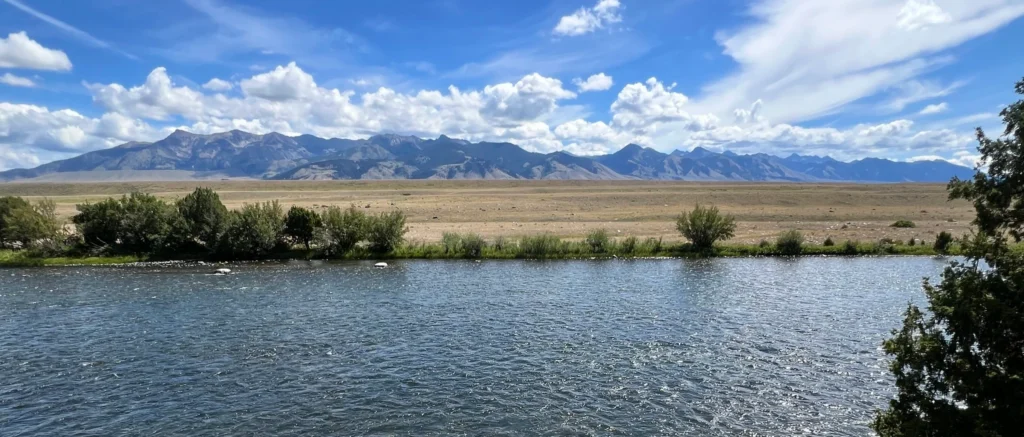
In this episode, we head to Montana with Mike Pogoda from Rising Trout Fly Fishing to break down how to properly plan a fly-fishing trip in one of the best trout destinations in the West.
We dive into choosing between the Madison River, Yellowstone River, and Gallatin River, adapting during low water seasons, and making smarter on-the-go decisions so you’re not second guessing once you step into the river.
Mike also shares insights from guiding these rivers every day and how local guides stay connected on river flows, hatches, and fish activity across Montana.
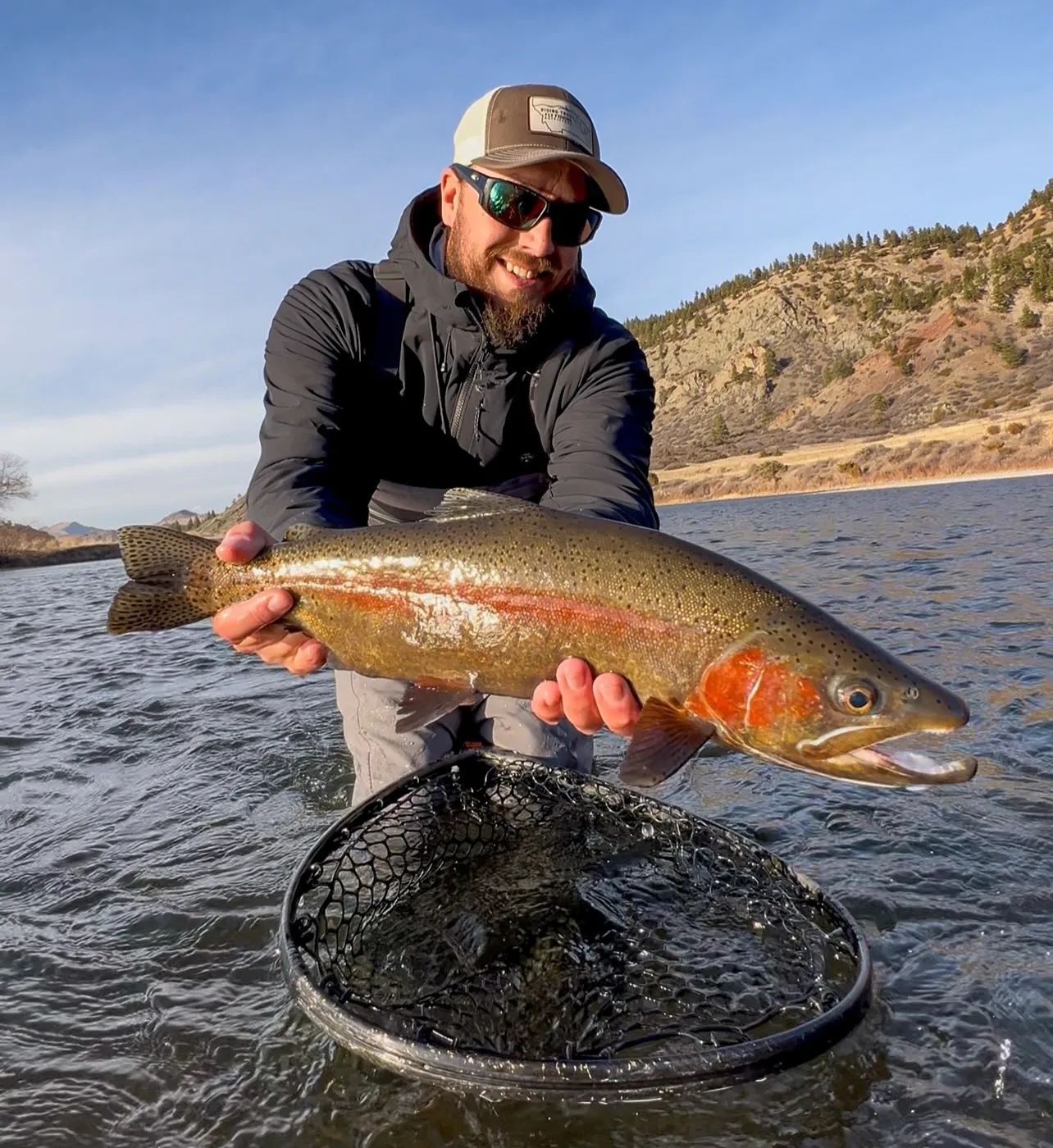
[00:01:57] Mike Pogoda is a fly-fishing outfitter and guide based out of Bozeman, Montana. His passion for fishing started at a young age, like most kids, fishing with his dad and grandfather. Gradually this hobby grew into an obsession and then into a career. Mike has fished and lived all over the country before settling in Montana over a decade ago. He has worn many hats in the fly-fishing industry from working in fly fishing retail and managing a fly shop to working as a guide and now outfitter with Rising Trout Fly Fishing.
Mike enjoys helping people fall in love with the sport of fly fishing and sharing his knowledge of Montana and fishing with others.
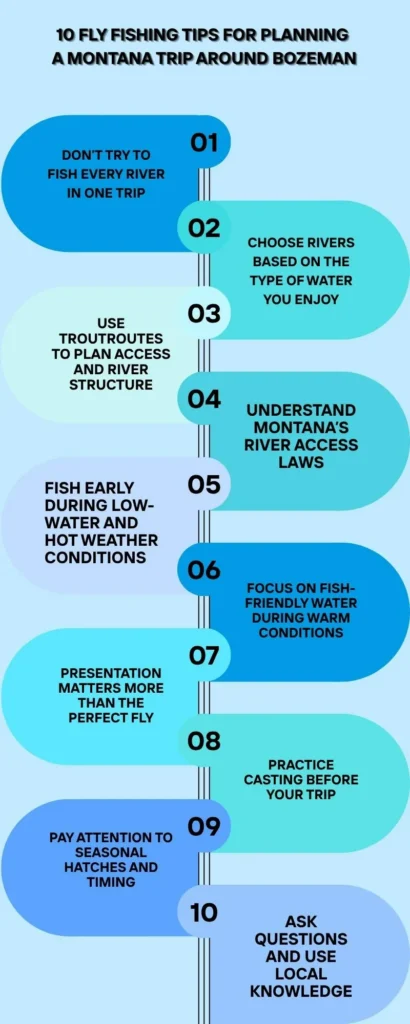
There’s many reasons why anglers go to Bozeman as basecamp for fly fishing in the West. Within an hour of town, you can fish the Madison, Yellowstone, and Gallatin Rivers, along with other creeks, lakes, and smaller fisheries spread across southwest Montana. But according to Mike Pogoda from Rising Trout Fly Fishing, one of the biggest mistakes visiting anglers make is trying to fish too much water in one trip.
[00:04:05] Montana has more fishing options than most people can cover in a few summers, let alone a week-long vacation. Instead of rushing from one river to another, Mike recommends figuring out the type of fishing experience you want. If you enjoy smaller walk-and-wade water, the Gallatin is a great fit.
If you’re looking for long scenic floats and classic dry fly fishing, the Yellowstone offers endless opportunities. The Madison gives anglers a mix of everything from braided channels, riffles, pocket water, and classic Montana trout water from top to bottom.
[00:07:25] One of the biggest takeaways from Mike is that the best decisions often happen before you even step into the river. Conditions in Montana can change quickly due to snowpack, water flows, temperatures, and seasonal hatches, so anglers need to stay flexible instead of sticking to the same plan every day.
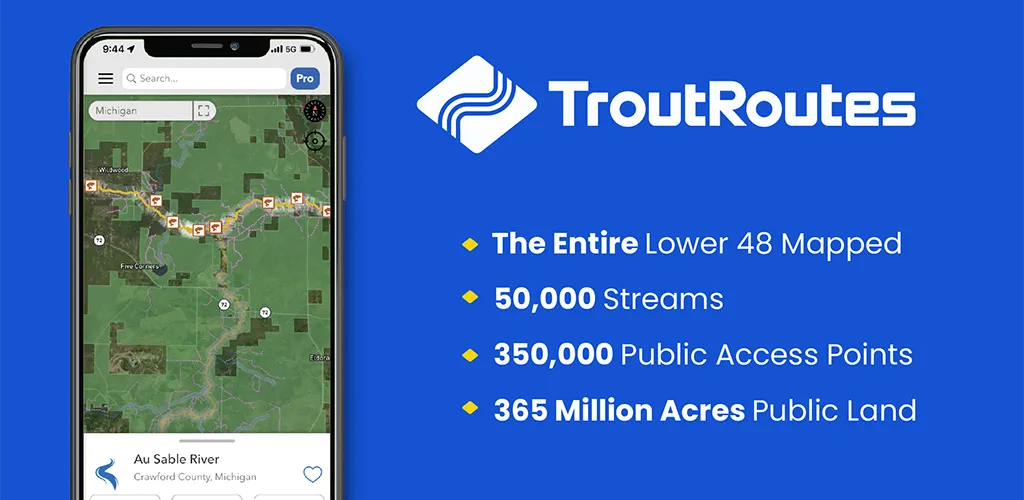
Mike also talked about the importance of understanding river access in Montana, where bridges, county roads, and public access sites often provide legal entry to rivers. Still, knowing property boundaries matters, especially around islands or private land, making tools like TroutRoutes and onX Maps helpful for finding legal access points and avoiding confusion.
Offline downloads are especially valuable in Montana, where cell service can disappear quickly in river valleys and canyon stretches. Mike recommends downloading river sections ahead of time so anglers can still navigate access points and river structure without service.
Still, knowing where you enter and can’t is important. Mike shared stories of anglers seeing open fences near islands or side channels on the upper Madison and assuming the area was public, only to discover they had accidentally wandered onto private land. Having a map tool like TroutRoutes helps eliminate a lot of that confusion and keeps anglers within legal access boundaries.
[00:09:57] Not every Montana river fishes the same, and choosing water that matches your style can make your trip far more enjoyable.
The Gallatin is ideal for anglers who enjoy walk-and-wade fishing. The river stays relatively close to the road in many stretches, making it easy to explore different sections throughout the day.
The Yellowstone is better suited for anglers looking for bigger water, long floats, and aggressive dry fly eats. During the summer, many anglers spend the entire day floating and hunting rising fish along banks.
The Madison offers a little bit of everything. Some anglers prefer floating braided lower sections, while others focus on wading classic riffles and structure heavy water upstream. Salmon fly season on the Madison is one of the busiest and most exciting times of the year, especially through June and early July.
[00:34:19] Summer is the most popular fishing season around Bozeman for a good reason. July is often considered the most fishing-friendly and weather-friendly month of the year, while June brings strong flows and famous hatches like salmon flies. By August, hopper fishing becomes a major focus across most rivers.
But low flows and warmer water temperatures can create challenges later in the summer.
When water temperatures approach 68 degrees, trout become increasingly stressed. During such conditions, many Montana rivers may enter “hoot owl” restrictions, which prohibit fishing from 2 PM until midnight. To avoid stressing fish during the hottest part of the day, guides and anglers often begin trips as early as 5 or 6 in the morning.
Mike emphasized the importance of handling trout carefully during warm conditions:
One common mistake Mike sees is anglers fishing too quickly. Many people rush through water without slowing down and properly reading structure, current seams, and holding water.
Presentation also matters far more than many anglers realize.
Mike recommends spending time practicing casts and dialing in accuracy so you feel comfortable once you’re standing in moving water. Accurate casting, natural drifts, and controlled presentations consistently out fish anglers who constantly change flies but ignore presentation. Before hitting the river,
[01:02:30] Beyond fishing itself, Bozeman gives traveling anglers plenty to do off the water. The town has become known for its vibrant downtown, restaurants, breweries, and family-friendly atmosphere. The tradeoff is that summer can get busy, especially during peak fishing season.
For anglers wanting quieter lodging closer to the rivers, there are plenty of lodges and smaller towns outside Bozeman worth considering, including areas near the Madison and Gallatin corridors. Towns like Ennis also provide quick access to the Madison River and a more laid-back fishing-town atmosphere.
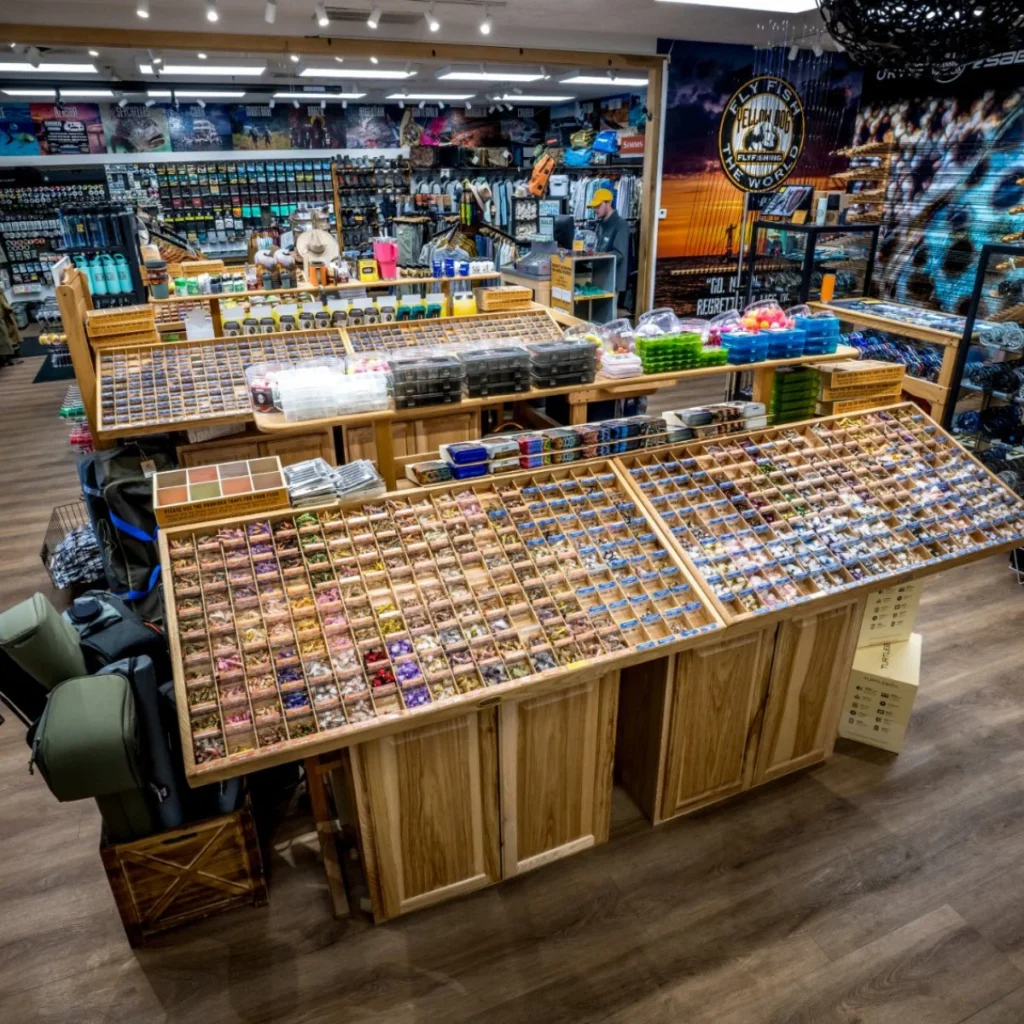
Local fly shops remain one of the best resources before heading onto the water. Shops around Bozeman provide up-to-date reports, fly recommendations, and local insight that can completely change your day on the river.
Episode Transcript
WFS 936 Transcript
00:00:00 Dave: Sometimes the best decisions you make all day happen before the first cast. In this episode, we’re heading into Bozeman, Montana and breaking down how to actually plan a trip from picking the right water to adjusting when conditions change so you’re not guessing once you step in. Today I’ve got Mike pagoda on from Rising Trout fly Fishing, and Mike’s on these rivers every day and has a real pulse on what’s happening across the Madison, Yellowstone and Gallatin rivers. This is the Wet Fly Swing podcast, where I show you the best places to travel to for fly fishing, how to find the best resources and tools to prepare for that big trip, and what you can do to give back to the fish species we all love. Mike Pagoda is here, and he’s going to talk about why Bozeman is one of the best base camps in the West for fly fishing. We talk about one of the biggest mistakes anglers make when trying to fish too much water. How to choose between the Madison, Yellowstone, and Gallatin Rivers. If you’re out in this area and what a low water year actually changes. We’re also going to get into what happens during a low water season, how you can have more success out there during these years with less water. Plus, we’re going to discover how to use tools like trout routes to make faster calls when planning your next adventure. You can find Mike at Rising Trout Fly Fishing dot com or on Instagram. Here he is, Mike pagoda. How you doing, Mike?
00:01:20 Mike: I’m doing great. How about yourself?
00:01:21 Dave: I’m doing good. I’m doing good. Yeah. We’re, uh, we’re gonna chat today about some important topics I think we’re going to get into, uh, you know, Montana, which is always exciting. Uh, maybe talk about planning a trip around the Bozeman area to all those famous, uh, you know, kind of world famous rivers. And then we’re going to get into a little bit on, you know, maybe, uh, conditions and how to plan a trip. But, you know, I know this year there might be some lower water potentially. So we’re going to talk about that a little bit and just kind of get into it all, but maybe take us back first before we jump into that on, uh, you know, rising trout fly fishing. How did you get into guiding? Can you break out that story?
00:01:57 Speaker 3: Yeah. So I, um, moved to Bozeman about thirteen years ago. Um, I started working in a fly shop, ended up managing that fly shop, started guiding for them, and then a few years ago got into, um, just got my own outfitter license and started rising trout. And now I’m guiding for myself and I’ve got a list of guides that I use, and we kind of, uh, fish all around the Bozeman area and the Madison, the Gallatin and the Yellowstone. And, uh, yeah, that’s what I’m doing right now.
00:02:28 Dave: Nice. That’s it. Yeah. And we were talking off air a little bit about, uh, James Garretson and you got, you got a shout out to James. You guys know each other good, good friends. So it’s cool because I know when I talk to James, he talked about a similar thing. He had his guides and it was a, you know, a cool program. He talked about it kind of as like a family thing. And I’m assuming it’s kind of the same with you. You’ve got these guys going around and you kind of have your finger on the pulse. You kind of know what’s going on around that area.
00:02:51 Speaker 3: Exactly. Yeah. So we’re, we’re very, um, it’s a, the guide community here is really tight knit. Most guides in Montana still have to work for an outfitter if they’re not an outfitter themselves, but they’re all independent contractors, and so I use a lot of different guides in different areas. And so it’s, it’s a really cool community. I have a lot of outfitter friends and we all kind of work for each other as well. And so it’s a really tight knit community and it’s, it’s a fun community to be a part of and really good in, in terms of knowing what’s going on on the river. Because you’re only one person, you can only be on one river at a time. Um, each day, but it’s nice to talk to those people and, you know, hey, you’re on the Madison today. I was on the Yellowstone and kind of what was going on over there. And you really have a good idea of the large amount of fisheries that we have within Bozeman.
00:03:38 Dave: Exactly. Yeah. Because Bozeman is, uh, a famous area, but also lots of lots of people coming through, right. It’s, uh, and there’s lots of big rivers around there. So we’re going to get into that on, on kind of the planning. So yeah, maybe just take us there on that. So if we’re, if somebody’s listening now and we’re talking, this is probably going to go live and probably may or kind of that time frame. If somebody wants to get out there this summer. What are you telling them to get prepared? Give us a few of those. Like that planning guide, that Bozeman planning guide.
00:04:05 Speaker 3: Definitely. Um, the main thing that I tell people is, you know, Montana’s a big state. Bozeman is a big area. Gallatin counties, you know, rivals some parts of people’s whole states. So we have a lot of river options. Probably one of the best base camps for fly fishing in the west, because you have so many large rivers and small rivers within an hour. So you have the Gallatin, the Madison, the Yellowstone. Those are just the main big three, all within an hour. The Gallatin is the closest you have the Yellowstone and the Madison about similar distances that thirty to forty five minutes away, and then on to an hour and a half. You have Yellowstone National Park, you have all these tiny creeks and rivers running through all our areas out here, you have a ton of lake options. And so I kind of tell people, take your time on each river. Don’t try to feel like you have to do everything in one trip. Right. That’s where people get very overwhelmed. Um, we have such a vast area of rivers, and then you even throw out two hours away from Bozeman, you have the Missouri, you have the big hole, the Beaverhead. It’s just within two hours. It’s just madness. There’s more water. And especially with our lenient water access laws, which we’ll kind of talk about in a little bit too. But we have we just have so much fishing options that you can’t fit it in in a few summers, never mind in a week trip. So kind of pick out your, pick out your options on what you really want to dial in. If you want to go walkway, you know the Gallatin is a great option for that. If you want to do some floating options, the Yellowstone, the Madison, and both of those rivers have. You know, we flow. Just in my outfitting we fifty miles of the Madison River. We float a little bit over that on the Yellowstone. The Yellowstone is the longest free floating or free flowing river in the lower forty eight. And so we have a ton of options. And the Yellowstone is pretty similar geographically. You know, the upper river is definitely more canyon y. Once you get lower, once it kind of dips east, it gets a little bit more flatland. Um, you know, than the middles Paradise Valley, big, beautiful mountain views. You’re floating up against that. And kind of same thing with the Madison. The upper river is very pocket boulder water. Then it gets more riffle and then the bottom braids out. So you’re kind of, you have a lot of different options on different varieties of water on even just one river. So kind of dial in on what you want to get done and how you want to fish it. And I think that’s my, my biggest kind of pro tip to people looking at fishing out here because there is so much variety in the water.
00:06:46 Dave: Yeah. That’s cool. Wow. So and you mentioned the water access laws. I definitely want to get into that. I was just recently I was getting we were getting out for a steelhead trip and you know, trout routes is something we’re using all the time. We I pulled it out and something which is cool is the river flows. You know, that’s a big thing with steelhead fishing. I pulled it out. I was like, all right, is it good to float today? You know, should we get the raft out of the drift boat? And it was like, boom. Because I remember back in the day when it was you had to go to the, you know, different the USGS, different places, but it’s kind of all in trout. So that’s one feature. But talk about that. I know another big one is with, you know, kind of land ownership, right? Talk about the trout routes, how that works into your somebody’s planning guide or your planning guide on this.
00:07:25 Speaker 3: Definitely. I think it’s a great. So in Montana, I, we have very lenient river access laws and hopefully they stay that way. I think Montanans here will fight tooth and nail to keep that. So, um, we’re very lucky that people are passionate about that in Montana, we have any bridge or kind of county road is an access to to the river. So if you’re crossing over a bridge, you can jump in. And as long as you stay behind the historic high water mark, which as a safe rule of thumb, as long as you’re in the water, you’re safe. There’s no no one owns the river bottom, which opens up so much river that whether you’re floating or whether you’re just going for a walkway, um, anywhere, we’ve got tons of small little creeks that kind of run through even Gallatin Valley and through the Madison Valley and just kind of everywhere that you can access that anyone can access. So we’re very fortunate in that regard with trout routes I’ve kind of done. I’ve been working with them a little bit. Um, I’ve done some river reports for them and I’ve been doing some video reports for our local rivers. I love the app. Like for me, like you said, having all the, the gauges in one place are great. Um, it’s a great option for the traveling angler, especially when you’re going to places you don’t know. Um, I catch myself looking at, you know, I’m going somewhere and I’m going to look at it and go, oh, that’s, you know, that’s a cool public area. It’s they’re owned by Onyx. So if on the hunting side, if you’ve used Onyx, it’s an amazing it’s an amazing tool for, um, public and private land, you know, searches and finding where I was actually, I was talking to Eric, a mutual friend of ours that works for trout routes. And he was, uh, I was telling him about one time I was on the upper Madison and there’s like an island that I was crossing. And I was like, I wonder if there’s a fence on it. I’m like, I wonder if this is private or public. And I just literally popped open my trailer and I was like, oh, this is public on half the island. So I was like, okay, great to cross here.
00:09:16 Dave: That’s a big part of it, right? Because I think you’re out there and you sometimes, and I’ve had this happen, you know, out in other places, you know, before kind of using the trout routes. I did this hunting, right? We were out in this place and there was this fence that, well, there wasn’t a fence. That was the thing. And so we were on and we ended up on private property. And it turned into this weird situation, right, that we didn’t realize. But, you know, again, if you kind of know it. So that’s a big part of it. I feel like, you know, that’s definitely, uh, one piece of this whole thing. And then, yeah, like you could talk about a little bit more of the, just the planning. But, but what does the river report describe that? What are you doing with the river? Because that sounds pretty awesome.
00:09:53 Speaker 3: So with.
00:09:54 Speaker 4: The River reports.
00:09:55 Speaker 3: That I’m doing with them, they’re all video.
00:09:57 Speaker 4: River.
00:09:57 Speaker 3: Reports, um, for the Gallatin and Madison and a little bit on the Yellowstone. I’m primarily on the Madison and the Gallatin. So, um, I’m just doing these short little river reports for them. They’re in the app and they put them on each specific river and it’s kind of I’ve been doing them as conditions change, which spring has been very weird this year. We’ve had really warm spring with some snow and it’s been all over the place, but kind of gives a general idea of what’s going on, what bugs to use, um, what to kind of look forward to on each river and kind of what, what to expect for the coming fishing, uh, time, time frame.
00:10:33 Dave: So in the video, how does that work like? And first off, where can we find those? Could we go out there and take a look at them?
00:10:39 Speaker 3: So they’re in the Trout Route app. Eric and I have been talking about putting more of them as we progress into the season, putting them on social media, putting them on YouTube. So people that don’t have the the full app or can also still access them through, through my social, through, um, trout routes. I’m working on doing kind of like we’ll probably talk about a little today on the planning side of what to expect for this summer with kind of lower water in the west and, um, lower snowpack.
00:11:07 Dave: Gotcha. That’s awesome. Okay. So right now you have to have trout routes. So there’s a good incentive to get trout routes. You can get your Montana Bozeman updates. And, and then it’s just basically you kind of doing an update on what’s going on. You do it like weekly, monthly or how does that look?
00:11:20 Speaker 5: It kind of depends on over the. We kind of it’s kind of a trial run. We kind of did it.
00:11:24 Speaker 3: Over the winter with, um, it was kind of, I was doing them almost like every few weeks because not much changes in the winter. And now that we’re getting into, um.
00:11:31 Dave: Changes a little more.
00:11:32 Speaker 3: Changes a little bit more, I’m trying to do them a little bit more frequently. And I think in the end, we’ll kind of do them almost like every couple of weeks just to kind of, once everything mellows out, kind of run off updates with which rivers are going to be more fishable, which rivers are affected by snow melt more and kind of what to fish on on certain rivers. If you do run into variable conditions and which rivers are kind of the better options during our spring season.
00:11:59 Dave: Exactly. That’s why the river report would be so huge because you’re you’re sitting here now thinking, okay, I want to get out there, but maybe you’re even closer, right? Maybe you’re in Montana or nearby where you can zip over there. If you follow the report, you can say, okay, this river definitely is not good. Maybe it’s a little too low so you can hit this other one. What do you think? You know, just in general overall, regardless of flows, you know, the hatches, you know, that’s obviously a big part. What is the big. Is there one big a few big hatches out there that people are coming to that area for the Bozeman.
00:12:28 Speaker 3: Yeah, definitely. The, um, uh, the salmon flies kind of rule the roost.
00:12:34 Dave: Which is, which is not too far away. No, actually it’s a little. Is that June or July.
00:12:38 Speaker 3: Where you get it? Like kind of depending on rivers, on river conditions, we’ll get them kind of that second half of June, um, on the upper Madison and then kind of that first part of July on the Gallatin and the Yellowstone, depending on river and weather conditions too. But typically that third week of June is kind of the, the sweet spot on, on the Madison. Um, that’s kind of when all hell breaks loose a little bit. Yeah. For, for about two weeks where, um, the anglers go nuts, the fish go nuts, the people go nuts, kind of everything. It’s kind of pandemonium for a couple of weeks and everyone’s chasing them. And that’s the real time, like we mentioned with my buddies and everyone’s on the phone texting each other. Where were you today? What did you see? It’s kind of that’s kind of the and then you could do everything right. And you still, you know.
00:13:27 Dave: And you still don’t get it. I know, yeah, I know, I find that it’s it’s one of those things because you can also catch them Nymphing. depending on how right. It doesn’t have to be on the surface. I know years, some years I’ll go and I’ll just be like, all right, I’m just going all dries no matter what. I’m just gonna. And you and you get fish. You know, I feel like there’s a lot of overlap because then you got the goldens too out there and stuff and you got. So it is an amazing hatch. So you got that one that’s going. And I know there’s a bunch of other ones, but let’s talk about that planning guide. So what else we got trout routes. That’s a big thing that’s going to help us. What else are you helping somebody if they’re coming to Bozeman to plan a trip out there.
00:13:59 Speaker 3: I would say kind of the very fortunate thing that we have in Bozeman and our surrounding areas like Bozeman, we have six fly shops, which is wild for a town. Livingston, you have four fly shops. No kidding. Yeah. And you have three. So those are great resources to use for any angler coming into the area. Go in there. Those guys kind of same thing. Guys and gals at the shop, me personally living that world, I know that all day you’re talking to people that have fished, that guides, that have come into outfitters, that have come in to just buy stuff and just even to kind of, you know, catch up with people. And so they’re great local hub for getting that local information, what’s going on. And then most of them have online options too. Like I update a, my fishing reports on my personal outfitting website once or twice a week just because it’s, it’s super easy to do for me. I just do a voice record and have it translate to text in there. And that kind of cleans it up. And you have a, a report like I was on the lower Madison two days ago, and it was the caddis were going off very early this year, kind of probably three weeks early. But yeah, we had kind of a little bloom of, of massive caddis hatch. And so it was nice. I can just go home, jump online. Hey, this is what’s going on today. So checking current fishing reports, I say online for people, like if you’re planning a trip, um, in the short term to have an idea, great resource. Um, and then there’s, you know, the old time method looking at books, reading books about the area. There’s a ton of online resources too, with, uh, people’s blogs. Um, I do kind of like a monthly update. I have one up for April that kind of gives an idea of what’s happening, what’s happened, what we’re looking for kind of for the next few weeks. So there’s a lot of people doing that online and.
00:15:47 Dave: Are you doing that? So on your site you have.
00:15:49 Speaker 3: On my site. Yep. So I do blog posts. I’m on there. I’ve got some detailed ones that are more kind of hatch specific, like I’ve got ones on like where to fish the Mother’s Day hatch, where to fish the salmon, fly hatch, how to fish it, our favorite bugs. So a lot of a lot of stuff like that. And then monthly, I just do kind of a little update on, hey, this is what’s going on in April. This is what we’re probably going to see. So even if you’re planning a short term trip, I’ve got some long term stuff on there to like kind of best places to stay where, you know, kind of ideas of what breakdowns of each river, each river section on there. So there’s a lot of stuff like that that you can look through and kind of gives you an idea, especially if you’re on the long term planning side, which is very, um, a little bit, it’s getting tougher and tougher just with the weather swings. Like even this week we’ve had two days of seventies and then today it’s forty and it’s supposed to snow tomorrow. So yeah, it’s kind of tough to it’s wild on the planning side, you definitely have to research a lot more. But typically, you know, springtime is like that in Montana. And this year with lower snowpack, we’re still doing a lot better than a lot of places in the West, which were very fortunate for right now.
00:17:03 Dave: Right. That’s one of the things. Yeah, it’s going to be a low water year for sure. Um, you know, for the most part, but, um, cool. And it looks like I’m looking at your reports now. So yeah, if folks at rising trout fly fishing dot com, you’ve got all, all the rivers there. It looks like you’re in Alaska. Is that, is that the you’re running a craft.
00:17:20 Speaker 3: Yep. I’m running a calico. So I’m on um, I work with a couple brands here locally. Um, I’m a Sims Pro, a pro. I work with airflow River Smith, um, and uh, clang, which is kind of a smaller accessory brand. And, um, in Bozeman here, that’s kind of.
00:17:35 Dave: A cool.
00:17:36 Speaker 3: A buddy of mine that started who’s doing really well with it.
00:17:38 Dave: So what are the clang, what’s clang doing.
00:17:40 Speaker 3: Their little magnetic fly patches? So, um, it’s a buddy of mine, Jared. I met him here locally and he kind of hit me up through social media and he’s like, hey, do you mind looking at this product, knowing my, my background in retail? And I was like, man, this thing is amazing. So he makes these different size fly patches that are all magnetic. They’ve got a boat size, they’ve got a, um, a, like a pocket sized one where you can kind of put it on your waders. It’s not a, it’s kind of like a little square, all different size options. They have one that goes really well in packs and you just throw your flies on them and they don’t fly off. And you don’t have to like organize them as much into like the little foam slits. And, um, as a guy, that’s great because I just, you know, you run through dozens of flies a day swapping out. So I just throw them on my boat bag and they’re all good to go and they stay out pretty well. Yeah.
00:18:26 Dave: Nice, nice. Yeah, I love it. So something you hear about, especially the Madison comes up a lot. But you know, as the rivers get busy you hear about these boat ramps that are, you know, backed up for hours and stuff like this or whatever. How do you what would be your tip there on dealing with some of the busier times of the year out there? What do you guys do and what could somebody do if they’re out there putting together a trip?
00:18:46 Speaker 3: Definitely. Um, so as far as guide traffic goes, a lot of it runs kind of like it’s similar to like banker’s hours, right? If you go to the bank, right when they open, it’s going to be busy. That’s right. You have, you have the people or end of the day or end of the day. Right? Yeah, exactly.
00:19:00 Dave: End of the day or. Yeah. Right.
00:19:02 Speaker 3: You go to the DMV, there’s usually a line of people that are excited to just get in before. And so, um, you know, adjusting your times, getting out a little earlier after that guide rush, like I’d say Montana, a lot of that is like eight or nine in the morning is when guides are putting in. And then that three to four is when they’re mostly taken out. So if you kind of avoid those two times. Okay, that’s a great tip there. Um, outside of that, like the, after we had the big, I’m sure everyone in the West and everyone in any outdoor recreation had a huge Covid boom. It’s definitely tapering off. Um, in the last few years, especially last year, I’ve noticed where some campsites, you’d have to have six month out reservations, right? Um, it’s definitely toned down. I’ve pulled into boat ramps on the upper Madison and there’s on a Saturday and there’s still campsites available.
00:19:50 Dave: Oh no kidding.
00:19:51 Speaker 3: It’s definitely, it’s definitely mellowed out. I think, um, people got that big rush. And now you have people, you know, kids sports are back and people are traveling to other places and doing other things. There’s that big push of doing outdoor recreation. And I think it’s definitely flattened out a little bit, which is good. It’s, you know, it’s good for the resource to kind of give it a little break of, of the crazy boom. And, and then the other thing, like we were talking about with salmon flies, if you’re going to go fish, salmon flies on the upper Madison, it’s going to be busy. Um, I just watched a there’s like a House congressional meeting here in Montana, and we had a couple of the local representatives talking to that effect of just population boom and river usage. And there are some interesting facts that they said on that, that outfitting in Montana really only accounts for about twenty to thirty percent of actual river use through their data from the foam, which is the, um, Fishing Outfitters Association of Montana. They’ve got all the data, but if you’re going to go during a busy time, you’re going to probably see some boats. But working around those, those morning and afternoon times, if you can kind of adjust, go a little earlier, go a little later, you know, have a late breakfast and put on at ten. You’ll probably will have a little bit more of a pleasant experience at the boat ramp. And then my philosophy is, you know, with, with guiding and outfitting, I think the one thing that Montana guides and outfitters pride themselves on, especially on, are not regulated rivers. And I’ve had conversations with friends about this is a lot of us do self-regulate very well. Like I personally, if I pull up to a boat ramp and there’s six boats putting in, I’m gonna adjust. I’m gonna go, hey guys, we’re gonna go up to the next boat ramp on the Madison. There’s a boat ramp every three to eight miles. So.
00:21:34 Dave: Oh, no kidding.
00:21:34 Speaker 3: I just yeah, there’s so many access points, um, on the upper that you can kind of adjust your day and go, oh, you know, let’s go. I’ve done that. I’ve pulled into Lion’s Bridge once and there’s twenty boats putting in. I’m like, all right, let’s go drive down. We put in at windy and there’s four. Oh, nice. So I think adjusting that kind of having that mentality be flexible and kind of adjust your day. And you know, that’s all it is, is texting my shuttle gal and be like, hey, we just switched, you know, and she’s like, great, awesome. You know, and so like being flexible in that regard. Um, I think on our walkway drivers too, like there’s, there’s kind of a, an old rule of thumb in Montana, like out of sight, out of mind with as far as other anglers and we all come out there for solitude. And so making your own day, you know, more quiet and seeing less anglers always helps in the experience, right? And so I don’t want to be out there on my, on the day off with my family in a, in a pool of twenty boats and, and all that. So. So finding those, you know, bouncing around a little always helps. And then on the walkway side, if I pull up to one fishing access and there’s a bunch of cars there, I just, you know, keep driving and that’s back to the trout routes thing. It’s all, it’s another great thing, great resource where it has all the fishing accesses on there. So you kind of plan, plan a few backups. And in Montana, we’re so lucky that, you know, all the bridges are that cross rivers or access points. So it’s kind of you drive to one drive sometimes I’ll drive past a couple of them and I’m like, oh, you know, like, I really wanted to fish here, but there’s three cars here already. That’s probably enough for that spot. So, um, I think more people having that mentality helps a little bit too is like that, hey, there’s three boats, three cars here. I’m going to go to the next one and then sometimes the next one might have two. So you go to the next one, and that next one might have nobody. So it’s just kind of adjusting your day and making it a better experience for yourself and for everyone else. And I noticed that that changed my mentality when I do that is I see less people and I’m, I’m more happy. I’m like, oh, you don’t get around to being like, oh man, there’s a guy there. There’s a guy upstream. So it just makes your day a lot better on your own too.
00:23:32 Dave: That’s awesome. So and you guys do a little walk and wade and boat is that. Talk about that a little bit. Are you you mixing that up throughout the week.
00:23:40 Speaker 3: A little bit. Yeah. So we do um, we do full day floats full day half days, half day floats and half day, uh, walk. Wade. So just kind of depending on what people want to do. The boat is definitely better for beginners. I think a lot of people have that, that idea of they want to do the river runs through it and they want to stand on the river. For most beginner anglers, it’s a hard way to. Right. It’s. Anyone that’s walked in a river knows it’s it’s it looks a lot cooler than it actually is. Yeah. There’s always stuff in your back cast. You’re snagging trees out of the boat for beginners, you cover more water, but we do a lot of both. I’d say primarily we float, but I have people that want to do walkways. We’ve got private water options in Montana, too. There’s a lot of private spring creeks in Paradise Valley that kind of it’s a pay to play type deal where you can get on and fish, but even you’ve got a ton of public walkway stuff, which is very easy to do, mostly on the Gallatin. The Upper Madison has a lot of good walkway areas to the. The upper section from Reynolds down to uh, Lyons is walkway only. And then from, uh, Ennis, the town of Ennis down to Ennis Lake is all walkway only. Both of those areas do have a little exception clause where it’s kind of nice. I do quite a bit of this sometimes too, is use the boat as a taxi so you can float through those sections. You’re just not allowed to fish out of the boat. And so you kind of use the boat to hop around to spots, which is a great way to kind of see the river to where you can just pull off on little buckets. Get out of the boat, fish them, go on to the next one that I think alleviates a little bit. Um, it opens up a lot of water too and alleviates the pressure of, in a lot of those areas you can only walk so far. And so with the boat, you can kind of get away from those access points and not see anyone. So that’s another nice option.
00:25:27 Dave: Okay. So there’s places where you can’t fish out of the boat on the Madison.
00:25:31 Speaker 3: Yes. So there’s two sections up the way upper section and the way lower section. You can use a boat as transportation. You just can’t physically fish out of the boat. Yep.
00:25:39 Dave: Oh wow. Is that a unique thing? Or are there other places in Montana that have that no fishing out of a boat.
00:25:44 Speaker 3: It’s, um, that’s unique to that river. The Gallatin is very similar to that. Not that you’d ever run a you know, I know guys that run rafts and do some of the lower stuff like that, the lower Matt, the lower Gallatin, uh, from what is it? Uh, Nixon Bridge down to the headwaters. You can fish out of the boat. That’s the only section on the Gallatin that you can fish out of a boat. About everything else. You can use a boat kind of the same way, where you can use it as a as a transportation tool and get out. There are sections where it’s not reasonable to do like there’s a big whitewater section in, in the middle of the canyon that you’d probably not do that. Uh, but most of the river to its. Most people that fish the Gallatin way to. And so that’s kind of our main walkway.
00:26:27 Dave: Oh, okay.
00:26:28 Speaker 3: Option. When we do that close to town, it’s really close. You know, it’s twenty five minutes from town. Um, to the nearest point. There’s tons of access on it. So that’s where we’re mostly doing our walkways.
00:26:37 Dave: Okay. So if we were, let’s just say we were calling you up, we were saying, hey, we’re going to we want to get out there sometime, you know, this summer through there. And, you know, I’ve got a little bit of experience. Maybe we got a couple other people coming. What would be the what would you be coaching us on on a trip? What would be the one you’d be saying for somebody that’s got some experience? Trout fishing?
00:26:56 Speaker 3: Sure. Um, I’d kind of see what type of water you want to fish. Um, that’s my experience level for sure is one of them. And then I kind of cater to Two. What type of water people want to fish? Do you want to fish? Kind of smaller water, you know, like floating through some braided channels and being more technical fishing, maybe pulling off and doing some hopper fishing in the summer. You know, they’d probably stick to the Madison. If you want to primarily just do a big long float. We do the Yellowstone, where you’re just staying in the boat the whole time or just hunting fish all day, you know, looking for structure and looking for, uh, different types of water and dry fly fishing mostly I love, I love dry fly fishing. And I think for getting people excited about it, I think the, the bobber thing has gotten a little high. And I didn’t name my, my outfitting company, you know, bobber down for a reason. I love people getting excited about dry fly fishing. We have such great opportunities for dry fly fishing on all of our rivers here. We have prolific caddis hatches and stoneflies and mayflies. And then you get into the terrestrials towards, you know, mid late summer and hopper fishing on a good hopper year just lights out. And not to say I don’t fish droppers. I fish droppers a lot. Yeah, dry flies, but it’s still just the excitement of people seeing a dry fly eat and getting excited about that. It’s kind of a I’m not a dry fly purist by any means.
00:28:17 Dave: You’re not you’re not necessarily out there.
00:28:19 Speaker 3: I mean, I’m not a snob, but.
00:28:20 Dave: There is a little bit of matching the hatch though, too, right? Where you.
00:28:23 Speaker 3: Get.
00:28:23 Dave: A mayfly hatch coming off, you’ve got some PMS coming off. There is part of that you can match. You could I mean, that’s some technical stuff that you could get in. You guys get into.
00:28:31 Speaker 3: Oh, totally. Yeah. And I think the PMD hatch out here is one of the most underrated hatches out of all of them. Everyone just kind of talks hoppers and salmon flies. But we get on the Upper Madison last year, had the last couple of years, had just incredible PMD hatches and which.
00:28:46 Dave: Is what’s that time of year? When’s the pmd’s? When does that start?
00:28:49 Speaker 3: Oh, kind of, uh, early July. Yeah. Um, yeah, we had some stuff where it was, if you were right place, right time and the right seam. It was just electric for about an hour. And I was lucky enough to kind of hone in on some of those spots on, you know, and just kind of is that early?
00:29:04 Dave: Is that early in the day? When does the PMD is.
00:29:06 Speaker 3: Usually on like kind of like ten, eleven sometimes into noon, depending on the temperature.
00:29:11 Dave: And. Right.
00:29:12 Speaker 3: But kind of planning, like you said, like getting back to the planning stuff. It’s kind of like I ask people what time of year, what they’re looking for. There are certain rivers, like with runoff coming up, we’re kind of right. That’s the biggest question for us right now is when should I come? Right. And so with lower snowpack, we’ll probably have a lower runoff, probably a quicker runoff too. That being said, it’s the most unpredictable thing. Like, I wish people looked at fishing guides like weather, you know, meteorologists because they can be wrong. We get yelled at when we’re wrong, right? People get mad when we’re wrong.
00:29:50 Dave: When you look at that, I always it’s funny because I love that, you know, the the weather guy, you know, and I just look at my app and I’m like, okay, actually the app that I have seems to be pretty good, although it’s not always right. But I remember the day you’d watch the news. The guy would be like, all right, here it is. It’s fifty fifty whether he’s going to be right or not. But is it the same with you guys on your guiding predictions?
00:30:09 Speaker 3: For the most part? Yeah. Like we, you know, especially with gauging, uh, runoff, that’s the toughest one. Everyone’s got their own opinion on it. And I try to be a little more optimistic on it because you never know. Like this week, we had a ton of, we had six to seven inches of snowfall. It melted in a couple days, but we had a big snowpack that packed all of our high country snowpack as well. We got a ton of snow in the mountains. They’re still looking out my window. I can see the Bridgers, and there’s still a good amount of snow up there. Like we’re still sixty to seventy percent snowpack on most of our drainages right now. So it’s not we’re not the sky is not falling yet. And it can a lot can change. Like I’ve in my time here, I’ve seen big water years where it’s gotten hot and we’ve had river restrictions on those years. And then last year was a good example. We had an average to lower snowpack year and we had a really cool summer. We had a very mild summer and very few local restrictions for us. So you never really know until it’s going to happen. And I think there’s no way to forecast it. So just enjoying that moment now and just kind of be like, hey, I want to come. And you know, obviously there’s safe, safer times July no matter what is going to be a safe time. You’re going to have great fishing, you have great hatches, you’re going to have great weather no matter what. For the most part.
00:31:27 Dave: Trout Routes by Onyx is built for fly anglers who want better Intel without spending hours digging for the information, you’ll get access to public land maps, stream access points, regulations, and even road and trail maps all in one place. It’s become my go to app for scouting new trips. You can check them out right now. Go to fly dot com slash routes and download the app today. If you’re picking one month, July is a pretty good safe month to pick.
00:31:56 Speaker 3: July’s, especially for fair weather anglers. If you’re a beginner, if you’re on your family, you’re planning a family trip and you’re like, I want the best shot at conditions. July is the best. It’s also the busiest. So that’s kind of the trade off is it’s not a secret that July’s our most fishing friendly and weather friendly month of the year. June can be really great too. Um, June, you run into runoff on our Freestone. So like the Gallatin and the Yellowstone for a large part of June will probably be running high and muddy. Um, so kind of same thing with being flexible and adjusting. Um, we’re mostly on the Madison in June, so it makes planning a little easier if you’re, if you can plan ahead and go, hey, the Gallatin is probably not going to be fishable on June fifteenth. We’re probably going to be on the Madison. So, um, just kind of plan towards that and adjust your, your schedule and stuff for that. And then outside of the summer months, August can be pretty decent too, especially when you get into hopper fishing. We do run into some river restrictions, sometimes on lower stretches of river. We have one here in Montana. That’s our main one is called a hoot owl closure. So you can’t fish from. So you can’t fish from two p m to midnight. And so that’s another one. Adjusting your day on those days for guide trips, we start really early. Um, I’ll meet Clyde’s at five or six if they’re up for it on to get a full day out of the day. And then a lot of people, if they don’t, if they’re not morning people, I could never drag my wife out that early. So we just go for a half day. If I have a day off and we’re going for a family trip, you just adjust that full day to a half day and you know, it’s, it’s all still doable. So just this summer, especially, I kind of I’ve been telling people, we never know what’s going to happen. Be prepared as a backup to be flexible. We might be doing a little bit of an earlier start in a longer drive to go fish higher up on certain rivers where the water is a little colder. The medicines are kind of saving grace out here. It’s a tail water. So have in Lake right now is pretty full, so we shouldn’t have many issues on the Madison hopefully knock on wood, but um, lower Yellowstone, lower Gallatin, lower Madison typically get huddled and you just work around it, right?
00:34:06 Dave: Right. Gotcha. Okay. So and those are some low flow, I guess that’s the thing. If other tips for low flow, if it is, if somebody is in a place where there’s going to be lower flows, anything else you would tell them to kind of prepare for, you know, the year?
00:34:19 Speaker 3: Yeah, definitely. Um, fishing heavier tippet and leader get the fish in quicker too for like the, just the health of the fish. Um, don’t play them as long. We’re lucky in Montana. We’re not fishing like in James’s area. Him and I talk, he’s like, oh, we fished twenty fours today. I’m like, that’s ridiculous. All right. I’m going down to eighteen. That’s as small as I’m going. Yeah. But you know, uh, bigger flies, bigger leader and tippet. They’re not to leader and tippet shy here in our area. They see a lot of flies still, but they’re not like you’re not using, you don’t have to use five or six X in the summer. The three four x four x five x four is kind of. Our universal is perfect, but using heavier Typekit getting those fish in. You know, I try to steer away from the the grip and grin stuff unless it’s like, you know, you have to like, keep the fish in the water, let the, you know, myself or the client hold the fish in the water, lift it up for a second, put it back down, revive them and let them go. Being, you know, being real conscious on, on those hotter days, um, even in the mornings, some of the stuff that’s huddled, we kind of tell people there’s certain rivers that you probably shouldn’t fish even if it’s on huddle, um, still check temperatures because those gauges can where they measure them, they can be a little off to with during certain parts of the day and certain temperature swings where I’m always carrying a thermometer with me and checking temperature throughout the day on, on areas where it’s a little bit more vulnerable.
00:35:44 Dave: That’s the key. What is the temp that you’re looking at where you’re you’re calling it, you’re saying that’s too much?
00:35:49 Speaker 6: You know, sixty eight.
00:35:50 Speaker 3: Is kind of that like it’s that kind of spot where you’re like, yeah, maybe we should like, you know, take it easy now. Yeah.
00:35:57 Dave: Sixty eight degrees, right.
00:35:58 Speaker 3: Yeah. And then like you said, with, with planning two of those, the, um, hotel days, a lot of the time, what we’ll do is we’ll just fish through lunch and hit the boat ramp right at two where when it closes, and then you just have lunch at the boat ramp or, you know, there’s ways to adjust around that to, uh, bring some snacks in the boat so people don’t get hungry with those early morning starts. But that’s kind of a pretty simple, simple adjustment to make. And I tell people on their own personal fishing to like, get out there super early fish the morning part, go have an early lunch and then, you know, go hang out and or go in the high country fish, you know, high country creeks and lakes. There’s where it’s a lot cooler, where they’re not as affected by that warm water as much.
00:36:40 Dave: That’s that’s good. Nice. Yeah. I think it just and like you said, I think you mentioned the, the fly shops and the reports. All that stuff is probably the best thing. Before you go. Stay. Totally stay up to date on that. Yeah.
00:36:51 Speaker 3: Yeah. And looking at recently, like you said, all those everyone that has a fly shop around here does River reports. There’s a lot of outfitters that do their own personal reports on their sites too. So finding those and checking those out in the short term is great. You have that live look at what’s really going on. And most people are it’s our industry. It’s we need to protect it. It’s our resource. And so a lot of people are very conscious of giving real information about what’s going on where you probably shouldn’t fish, especially in those scenarios where there might be some, some good ol stuff for river closures. We’re kind of like a lot of people are very straightforward. I’m like, yeah, it’s huddled. You probably shouldn’t. It’s kind of that like there’s a bunch of states where it’s legal to marry your cousin. Doesn’t mean you really should kind of deal.
00:37:37 Dave: Is that true? Are there actually states that that’s legal?
00:37:40 Speaker 3: I think in the South there’s a.
00:37:41 Dave: Couple.
00:37:42 Speaker 3: Like first cousins are still fair game.
00:37:44 Dave: Gotcha.
00:37:44 Speaker 3: It’s kind of one of those like it’s it’s legal. It doesn’t mean it’s it’s probably the best idea. There’s giving people a lot of different options of other places to go is kind of the, the best way to, to approach that.
00:37:56 Dave: Yeah. Yeah, that makes sense. Wow. Yeah. So this is good. And, and Bozeman just, uh, you know, I think we’ve shed light on the area. It’s cool. I mean, it’s a busy, right? It’s one of the biggest, you hear a lot about Beaux Angeles and it’s growing and stuff. But I mean, that’s because of what we’re talking about, right? I mean, this is you’ve got what you explained. I mean, these three big river, you got rivers everywhere. It sounds like these amazing trout rivers. Yeah. If somebody coming into Bozeman, what are you telling them? Where are they? You know, where are they staying? Are they staying in Bozeman or are they staying? Where do you direct people? If they’re like picking up a day or two with you guys?
00:38:27 Speaker 3: That’s an amazing question because I get that a lot. I literally I was talking to you before we got on here, like I for trip bookings this morning. And a lot of them were like, hey, where would you recommend to stay? That’s a big question we get. Um, Bozeman is definitely the more things to do option. So if you’re looking to be in a vibrant downtown, there’s a ton of stuff. There’s great restaurants, there’s for the people that are doing multi activities, it’s a great place to stay, especially for families. If you’re, you know, maybe dad and one of the kids or mom and one of the kids wants to go fishing and the other kids are parents or, you know, couples even we get a lot where the husband’s like, I’m gonna go fish or the wife’s like, I’m gonna go fish. And the other person wants to do something else. There’s a ton of different options to do. We’ve got a museum in town. We’ve got tons of different other outdoor activities. There’s hiking, there’s mountain biking, there’s all sorts. There’s river rafting, there’s tubing. There’s so many options. Golf. Yeah, totally. Yeah. There’s a bunch of golf courses. Yeah. So tons of options. And they’re all within really close to Bozeman. The downfall of that is, is summer. It’s busy until you go to a city. Like every time when I travel to a city, I’m like, I come home and I’m like, I can’t complain about Bozeman traffic anymore. No, the city’s a real big deal with traffic.
00:39:44 Dave: Yeah. This is not. Yeah. You hear about the Beaux Angeles, but this is not LA. Yeah.
00:39:49 Speaker 3: This is not. Yeah. You’re not, like, gridlocked sitting in traffic for four minutes. Doesn’t equate to me sitting in traffic for an hour somewhere. But so it’s you kind of just have to know there’s going to be people in town. It’s a little bit busier if you’re looking for that type of experience. That’s the place where I would kind of push people to. There’s a ton of hotels downtown that are really great. They’re walkable to downtown. If you want to be in that vibe of just, hey, I’m going to go to the hotel, get changed up, go walk down the street and go have a great steak dinner. You know, there’s sushi restaurants, there’s pizza places, there’s kind of a little bit for everyone. And then outside of that, if you’re looking for more of a kind of smaller town feel, there are places just I mean, you drive eight to ten miles outside of Bozeman and there’s a ton of lodging options out there. Kind of four corners area, Belgrade area that are a little bit more calm. There’s a lodge that I work with, the Gallatin River Lodge a little bit. They, um, I send people there for, for lodging. It’s just kind of right on the river. They’ve got a little pond out there. It’s a little smaller lodge.
00:40:56 Dave: Oh yeah. This is the Gallatin River. Um, I’m trying to think.
00:40:58 Speaker 3: Of River.
00:40:59 Dave: Lodge. Yeah. And who’s your person you’re working with there? Do you have a, are you.
00:41:02 Speaker 3: Um, I just work with. I just work with them there. Um, so, uh, I kind of have some lodging options with them.
00:41:07 Dave: That’s awesome. Yeah. No, and we’ve actually, we’ve got a podcast coming up where we talk about. Yeah, yeah. So the Gallatin is definitely, and I was wondering about that because I didn’t know the connection. But yeah, so that’s awesome. So we’ve actually, we’re going to have, you’re the perfect person to have on for this because the Gallatin is another one. I feel like all these, the Yellowstone, the Madison, the Missouri, the Gallatin is one that, you know, I think it’s that name you hear about, right. I think it’s one of those ones, but I haven’t fished it. And it’s one I want to get to. How is the Gallatin different. It sounds like maybe it’s a little smaller walking way, but say, versus the Madison and Yellowstone. Different experience, different like views and stuff like that.
00:41:44 Speaker 3: Totally. It’s a very diverse river too. Like as far as geography and kind of what options you have out there. Uh, personal fishing. I’ll talk more about that because the Gallatin is permitted in different ways. Like there’s, if you’re going to fish the canyon, you have to have a Forest Service permit. If you’re going to fish the upper part, you have to have a, um, a yellow sun, a commercial permit, which I don’t have either of those. I just kind of do the lower parts of the Gallatin for my walk in wades. But for personal fishing, the upper Gallatin that starts in Yellowstone National Park is kind of meandering through like a high country of prairie, basically big, windy, kind of almost Spring Creek like feel. Then it flows kind of through big sky and through the canyon, which is the whitewater section. Big pocket water. Really cool, really fun. Dry fly fishing in there. Um, fun nymphing water. And then it kind of flows down through the Gallatin Valley. So you have a lot of riffles, big drop offs, a lot of boulders. And then you get down to the lower Gallatin, kind of the lower part of the valley, where it kind of turns into kind of just a pretty eddy riffle kind of river where, you know, there’s, it’s in the summer, it gets heavily de-watered. So it’s, it’s almost like if you thought of like a smaller Alaska stream where you have just big open gravel bars everywhere and you just have like the smaller creek running through it. So it’s really nice for beginners down there too, because there’s not much in your backyard. So you’re kind of walking on gravel bars and just kind of walking around and finding the big buckets that fish are in. So really, really visual fun fishing down there. If it looks like a fish is there, there should be a few of them in there.
00:43:25 Dave: Sounds amazing. Yeah, this is cool. Yeah. I feel like the Gallatin is definitely one that we’d want to put on our list there. totally. This is good. Well, I think we’ve touched high level on this. I want to take it out of here today. Start to take it out here with a little bit of our our wet fly swing pro shout out. And this is for our our wet fly swing pro members. And it’s pretty cool with these river reports because we have a similar thing in our community in wet fly swing pro. And I just want to give a shout out to Colin. He recently posted on a trip to Christmas Island. Right. And the cool thing about this is we’ve got these trips all around the country, the world that people are going on. But but first off, I want to give a shout out to Colin today for Wet Fly Swing Pro. He was talking about his trip there. But as we kick this off this is presented by trout routes today. We mentioned them at the start. Trout routes obviously has a ton of good features. We mentioned a few of them as we kick this off, what is your what’s a feature on trout routes that we haven’t talked about? That’s another one that you’re, you’re using, you’re thinking about.
00:44:19 Speaker 3: I really like the fact that they have offline maps too. That’s one thing, especially in Montana, it’s really convenient. We still live in an area where there’s not much cell service in on a lot of our rivers.
00:44:33 Dave: Which is a good thing, right? Which is a great thing.
00:44:36 Speaker 3: Yeah. Yeah. And so them having the offline option of having maps and things like that is super useful, especially for traveling anglers. You get into the canyon or you get up on the lower Madison where there’s zero service and you’re not trying to, you know, fumble around and try to figure stuff out. You have it all saved there in the app. So that’s one of the features I really like.
00:44:57 Dave: That’s cool. How do you do that with the offline maps? Do you download it, you know, from your computer, from your phone beforehand? How much do you download? How do you do it? Like let’s just say you’re going on a, let’s say this again, we’re taking the Gallatin, we’re going to the Forest Service or the section of Gallatin. We need to download it. Do you how do you know how much to download? Is that pretty easy?
00:45:16 Speaker 3: Yeah, it shows you like you can select like river sections and things and by the river. And so you can just download the map and it stays in your app, which is really nice. So you’re kind of just walking around. You can go, oh, cool. Like this is I’m going to be. And that’s where a little bit of planning. So when you go in like, hey, I’m going to go fish the Gallatin Canyon, I’m just going to download that river and be all set to go.
00:45:37 Dave: Yeah. And it’s pretty simple. Just literally.
00:45:39 Speaker 3: Oh yeah, pretty straightforward.
00:45:40 Dave: And I’m sure that Trout Routes probably has a tutorial or a video. Yeah. How to.
00:45:45 Speaker 3: Do that. Yeah, I’m sure they do. Yeah. It’s if I can figure it out, it’s pretty easy.
00:45:49 Dave: Right, right. Good stuff. Okay. Yeah. So that’s our, that’s our shout out. And this is kind of starting off our, a little bit of our random section here today on everything. But, um, but I guess first off, yeah, I wanted to talk, you know, we talked about Bozeman, but where would be a place, let’s say we’re coming through Bozeman. We mentioned the Gallatin River Lodge as far as food or dinner, I know the Gallatin River Lodge has great food, so that definitely is a place you want to hit where it would be another place people might hit for dinner. Do you have a place that you love stopping by?
00:46:15 Speaker 3: I do, I think, you know, I’ve got a couple. I think in Bozeman there’s a couple really nice steakhouses, so that’s an option. I’m like a, uh, I’m a bar food kind of guy. And I’m a, I’m a, I’m a microbrew guy. Yeah. Um, Montana, Montana ale works is like the, the Bozeman staple. They’ve been around forever. They’re one of the, they’re one of the like downtown Bozeman staples, great beer selection. They do a ton of like, I’d say like farm to table bar food where it’s, it’s a lot of like fresh food, a lot of like seasonally catered menus, um, with local ingredients. And it’s really just a great kind of local hangout too. It’s kind of the watering hole for people on vacation. It’s the mix of people on vacation and fishing guides and locals. And it’s, it’s a good mix of people and it’s just a good standard. That’s kind of my go to after trips if I’m, you know, gonna grab a bite or my wife and I are going to go grab a quick bite to eat for dinner.
00:47:12 Dave: That’s perfect.
00:47:13 Speaker 3: Yeah, we’re really lucky. There’s the microbrew scene’s growing in Bozeman, too. There’s a ton of great places, you know, for that. If you’re if you’re a beer person, if you’re, you know, there’s some wine bars. So there’s kind of a little bit for everyone. That’s the nice thing about Bozeman proper is there’s so many options.
00:47:28 Dave: What’s the what’s your microbrew choice? Do you have a style?
00:47:32 Speaker 3: Oh, I’m a hazy guy. So yeah.
00:47:34 Dave: Hazy, hazy IPA, hazy IPAs. Yeah yeah yeah. The hazy ears are good. Yeah, they’re a little bit. I always get it because I’m not. I love them all. But I’m like, okay, what now? How is the hazy different than, say, the what do we get? We get the West coast West coast stuff, but Montana is pretty, I mean, as big on the brews. Maybe this is probably the whole country I’m sure has kind of taken effect, right? It’s not just Budweiser anymore, but um, but yeah, but Montana is a is a hot spot for microbrews, isn’t it?
00:47:59 Speaker 3: It is. Yeah. They’ve had even some of our local places have won some pretty prestigious like nationwide beer awards. So it’s, it’s pretty, it’s growing very well. And for those guys too. Yeah.
00:48:13 Dave: Exactly. So good. So we got a little bit of the food, a little bit of the drinks. We got the trip plan. What else are we missing on this trip? So again, somebody sitting here planning a trip to Bozeman, uh, what have we not talked about today that you definitely want to leave people with.
00:48:25 Speaker 3: Kind of the, the two other options of staying near Bozeman, I’d say is that’s kind of the one thing we didn’t really talk about. Um, we got to like kind of the near the Gallatin, kind of a little bit outside of Bozeman. The other two options that I guide a lot on Madison and Yellowstone. And so two other really great little towns to stay in are Ennis. It’s about forty five minutes from Bozeman. You’re right on the banks of the Madison. Right. Um, small little quaint town.
00:48:51 Dave: Ennis. Where is that? Where Gallup’s is one of his places.
00:48:53 Speaker 3: He has he has one of his places there. Yep. So you have four fly shops in Ennis and um Gallup’s has one. Um Joe Schneider has two. And then the tackle shop.
00:49:03 Dave: Yeah. How does Ennis compare to if it’s hard to compare these things. But you know we’re going to be in Craig you know this year it’s got four flights. How does Ennis compare to Craig. Just as far as the town and the size and the fly shops.
00:49:14 Speaker 3: It’s probably I’d say like, uh, downtown wise it’s probably about two to three times bigger. It’s still pretty small. It gets. I think they only have one stop sign in NS and NS proper still. Like in like on Main Street there’s a flashing red stop sign when you get in to go left or right. But um, there’s, you know, four or five restaurants and bars. They have a small microbrewery, which is great. There’s a small distillery. It’s definitely a quintessential like small Montana town still. I kind of tell, I, I push a lot of people towards that that are looking for that really. I want to be close to the to the Madison, close to the river. They don’t need the amenities of like, no, actually, Ennis has a really great grocery store, Madison Foods, um, where a lot of guys get, get our catered guide lunches there. Um, but there’s enough stuff to do, but it’s not like you’re, you’re not in a downtown. You’re, there’s the walkable part of Ennis downtown is maybe two or three blocks of city blocks. It’s, it’s a really kind of locals, kind of small town feel. And then, um, on the other side of the hill. Livingston kind of right in the middle. A little bit more to do than Ennis, a little bit more restaurants, a little bit more busier, especially in the summer. But also it kind of has a little bit more of a feel. Like Ennis doesn’t have any high rises. It doesn’t uh, no, it’s it’s all, you know, just little shops and bars and restaurants and then NSC or, uh, Livingston, you’ll have like not high rises, but you have like three, four, five story buildings, but it’s not as busy as Bozeman. So it’s kind of depending on what I was talking to someone this morning about booking a trip and kind of giving them those options to, of where to stay. Paradise Valley on the, on the, um, Yellowstone. Very kind of quiet too. You have, um, the town of emigrant that has like cabins, you have Chico, a hot spring that has little cabins and rooms. There’s a ton of different options. You have stuff really close to the park. So that’s kind of when people are asking for staying recommendations. It’s kind of on what they’re looking for. If you want to where you want to be, do you want to be in a busier place? Do you want to be in a quieter, small Montana town? And the nice thing too, with technology now is you can look at a picture of Venice, be like, okay, that looks appealing to me. You could, you could look at a picture of Livingston or, you know, there’s enough stuff on the internet now where before it was like, oh, I wonder what’s going to be here? And you can look at restaurants and, and businesses and you could see like, oh, this is enough for what I’m trying to do. Or I’d really like to go and stay in Bozeman because it’s, you know, that’s what I want. It’s busy. I want to be in the bar scene. I want to, you know, travel around and do stuff.
00:51:48 Dave: Yeah, everybody’s got a different take. You might want to have more stuff to do. Or maybe you want the super quiet town. Totally. So on fly shops, there’s a bunch of fly shops. Do you have one that you kind of find yourself going to more often? Sure, yeah.
00:52:02 Speaker 3: I spread the love out a lot. I really, I know a lot of these guys I’ve, I’ve worked in the fly shop world for a long time. So I have a lot of close relationships. Everyone’s really good. Um, in Bozeman, I worked for the River’s Edge for nine years and then a guided forum for a long time, so. And they’re owned by Cimb. So I’m a Sims Pro, so I tend to gravitate towards them. Um, I, you know, I’ve, I’ve grown up with in this industry with those guys there. Steve and Dan the yeah, one of the original owners were big mentors to me.
00:52:31 Dave: For Sims.
00:52:32 Speaker 3: For, um, for the river’s edge.
00:52:33 Dave: Oh. River’s edge.
00:52:34 Speaker 3: Yeah. Yeah. So when I worked for them, they were a huge part of me really thriving in this industry and growing in it. And, um, Bozeman’s got a lot of great shops. I, uh, the yellow dog shop that just opened.
00:52:46 Dave: Oh, yeah.
00:52:47 Speaker 3: Um, yeah, yeah. So Yellow Dog opened up a fly shop. Um, they bought an existing fly shop and rebranded it to Yellow Dog.
00:52:53 Dave: Oh they did. Which fly shop. Do you remember the name of the one they bought?
00:52:56 Speaker 3: It was Fins and Feathers.
00:52:57 Dave: Oh, yeah, I remember that name. Fins and.
00:52:59 Speaker 3: Feathers. Yep. And then, um, they just took that store over and they’re, they’ve been a great part. Like, um, Ian’s awesome and so is Jim. And so I see those guys at shows and stuff and they do a lot of, um, community events and.
00:53:12 Dave: Yeah. Do you see Jim as Jim in the fly shop? Is he in there?
00:53:15 Speaker 3: Oh, probably not that early. Um they’ve got, they’ve got great. They’ve got a, their shop manager Casey is great. Um I know a lot of the, uh, Doug Best who used to be the Orvis rep. Um, he’s in that shop too. So there’s a lot of good guys that they brought in and, um, there’s a lot of great shops. There’s, um, Bozeman fly supply is a good one. Um, they’re kind of around downtown. They’re kind of a little on the edge. They’re good local kind of tie shop. They do a lot of tying events. So everyone kind of has their niche in Bozeman. Um, if I’m in Ennis, I go over to, um, one of Joe Schneider’s places, either Madison or a fishing company or trout Stalkers. I’ve known Joe forever, and so I have a good relationship with him. Um, he’s also on the Simms pro thing, so. Oh, cool. I kind of, you know, I have a lot of friends over the years in this industry, so I don’t think there’s one fly shop that I would say don’t go to. Yeah, it’s all kind of it’s, it’s like, it’s like grocery stores, right? You find the one you like.
00:54:08 Dave: Yeah, they’re all good. No, I mean, I’ve never met a fly I didn’t love going into. I mean, you do hear those stories again, I think these are kind of becoming much fewer. But the stories of, you know, especially the women going into them where they don’t, you know, or, or just the, you know, it’s just not a good feel, right? I feel like those shops are not around as much anymore. Right. I feel like they’re, yeah.
00:54:28 Speaker 3: They’ve realized that they don’t make it if you scare your clients, I think. Yeah.
00:54:32 Dave: It’s not a good. And the other thing that’s interesting is the Sims thing. I think we’ve heard a little bit about that too. I think Sims sold I you know, which is great. I mean it’s a big obviously they’ve been a great company for many years. And then you heard some stuff out there of people maybe leaving Sims and you know, some of these things you’ve probably heard. What’s your take on that? I feel like Sims has always been one of the great brands. What’s your take? Did you see any changes when they went through the sale and stuff like that?
00:54:56 Speaker 3: So a little bit, I think I my time working with them was in the retail side. So it was before they sold, I left the fly shop before they sold and I had an incredible relationship with them. I have lifelong friends that I still with regularly from that first regime of Sims. It was, you know, everyone bled orange and it was the fishy brand. And then they got bought. And I think they went through some growing pains. And then I jumped on their pro staff pro team. Um, just this year. Um, I’ve always, I’ve always used Sims products for the last probably twenty years. They, I think they make the best fishing gear in the, in the industry. Um, I have personal relationships with people that are still there and I work with the marketing team quite a bit now. And I think their, their new kind of what sold me on jumping on their team is personally, I’ve fished in Sims waters for ever and there’s no other brand I’d wear no matter what was going on. I just believe in the product. They’re the Bozeman home team, right?
00:55:59 Dave: Yeah. And their Bozeman and that’s the thing. That’s their home. Yeah, it’s Bozeman.
00:56:01 Speaker 3: Yeah. They’re the Bozeman home team and you gotta cheer for them. And so, um, lately talking to a lot of their marketing guys and some of the people that are there now, there’s definitely a big push to kind of get back to the the roots of Sims. And I’m not speaking for anyone. This is just kind of what I’ve my, my.
00:56:18 Dave: Personal, your opinion, my.
00:56:20 Speaker 3: Take on it on, on what I’m seeing with the brand is there’s this push to go back to being, there’s some projects that I know of that I can’t talk about just yet because they’re a little under wraps, but I think people will be really surprised and excited about that. The next push and kind of being feeling, giving them more local feel than it was before. Um, you know, the big companies buying them out. But the thing about Sims is it’s still you go into that building and it’s still people that fish. It’s your friends that work there. I say about all our local Montana brands, Winston’s another brand I work with. I know those guys really well. You’re basically they’re employing people that are your friends, that are other anglers in the industry that are passionate about our rivers, about our fishing. And so that’s the sweet spot, right?
00:57:06 Dave: It’s not like all moved. It’s not like the whole thing moved to New York to a hedge fund. No. Yeah.
00:57:12 Speaker 3: Exactly. And you walk in there and there’s still people that fish every day making your waiters. It’s so there’s still a big plus to that, where it’s not just like they’re in a big city and they’re like, oh, yeah, this is Todd who’s never touched a fly rod. Who’s making your waiters. They have a lot of people that are passionate about fishing. And not that Todd’s not a bad name. It’s like, get hate on for like throwing a name out there. Like, why do you call me up again? Good person. Yeah, super random name. But you have, you know, you have someone that’s like, I just catch myself on some random person who’s never fished and they might be working in customer service, or they might be doing something like there’s still a pride and passion to working for these local fishing brands, no matter who owns them, because people want to be in the fishing industry, they they have passion for it. So it’s a cool thing to see that there’s still a lot of people in there that most of the people are still fishing.
00:58:01 Dave: That’s great to hear. I feel like that’s the cool thing about, you know, brands and really the podcast is that I feel like, you know, getting a chance that everybody has a different experience. And I feel like, you know, just because, and if you think of products, any product, iPhone, you know, cars, your best, whatever the great product, there’s always going to be stuff that could happen. You know, companies aren’t perfect and there’s defects and stuff happens. So I feel like that’s just part of having a brand. So no, it’s good to hear your take on it. Um, so tell me this. I want to take it out of here with some tips because we haven’t gone deep in a ton of tips on fishing, but let’s focus on the Gallatin just for a second. And let’s just say you had two or three tips to tell somebody we’re going to be fishing the Gallatin. What are you telling us to get ready for that day? To maybe have more success?
00:58:44 Speaker 3: Sure. Reading water for sure. Um, the Gallatin is extremely great public access to it. So you drive by people watching them fish. The biggest mistake. And even my wife, who’s been fishing for about, you know, ten, twelve years even she’ll call it out. She’ll be like, that guy’s probably not going to catch anything, right? No. Probably not. Like people finding the water, kind of learning to read water, I think on any river is a huge tip.
00:59:07 Dave: Yeah, yeah. How do you do that when you say reading water, I think of like, okay, finding the seams and structures and stuff, but what does that mean to you? What would be a good tip that somebody okay, reading how do I read water?
00:59:18 Speaker 3: I think exactly that, like in the summer, kind of thinking about where fish would live. Like obviously in the morning, they’re going to be on edges where it’s still kind of cooler, closer to banks or in the deeper stuff. And then once bugs start hatching, kind of finding that, that structure where they can comfortably sit, especially once oxygen levels drop and lower water and stuff, but finding like riffles that have a big pool under like right below them, that’s kind of the, the easiest visual spot, a big undercut bank where you have deep water and some oxygenated water flowing. I see a big mistake. I see a lot of time in anglers is they’re throwing in water that’s way too fast Where it’s a big riffle and there might be some fish in it, but you’re not gonna, as a beginner or even as an experienced angler, getting a good drift into super fast water is really hard. Unless it’s the middle of summer and it’s the afternoon and it’s hot when the fish are in that kind of water in the morning. Finding those riffles with the oxygenated water, big drop off below em, big undercut banks where fish can kind of hold comfortably but still have enough cold water and current to sit in. Um, like you said, finding seams of fast and slow water where they can go in and out of that fast water, kind of cool down, get back in that slow to feed watching places where there’s some turbidity in the water, where it’s kicking up bugs into the system. That’s kind of like what I kind of mean about reading water. Presentation, I think, is another tip that I think people overlook. I think in my theory, official eat of the wrong fly presented well over the right fly presented poorly. I think a lot of people are like, oh, I have the right bug or whatever the fly shop person told me or whatever the fishing report said, oh, that didn’t work. And it’s like, well, did you fish it? Right? Right. You know, it’s kind of I think that’s a big tip. And I think I had a friend of mine tell me that this has been passed down, I’m sure through a lot of guides. This little tale of like, if you’re going to go play golf, right, you’re going to go to the range and hit a few balls before you play a game or before you. And so I think a lot of people kind of take that for granted in the fishing side. They’re like, oh yeah, I’m just going to go out there and figure it out. But if you have some time, go practice casting, go get your, you know, get your men’s right, get your, your distance gauging right where you can dialed in dialed.
01:01:43 Dave: Yeah, make it, make it so you can make it into a, make that right hoop or a pie plate within thirty feet. Right. So you can be accurate.
01:01:50 Speaker 3: Exactly. And most of the stuff we’re doing here is pretty close distance. We’re not bombing huge casts on on any of our rivers. Most of the time when you have that much line out, you’re not going to be able to hook on a fish anyway. And so, but kind of practicing getting into, um, getting into that zone of, I’m going to go fish this river. The other thing, like not to like, you know, bring it so much back to trout routes, but a lot of those rivers, you can see kind of river structure on those on the satellite maps. So kind of looking at those and being like, yeah, they’ve got different views. They’ve got like a map view and then they have like a satellite view.
01:02:26 Dave: Oh really? So you can actually get a satellite. You can see there’s satellite images on trout rods.
01:02:30 Speaker 3: Exactly. Yeah. And you can see like what the structure looks like. Does the river look super wide? Does it look, you know, narrow? In this section, you can kind of get a feel for what type of water you’re going to be and seeing in a certain section. Are there I mean on satellite it’s pretty easy to see to. I’m granted things change throughout the season high water and low water. But you can kind of see, oh, there’s some riffles. there’s some big huge bends here. I’m going to focus on fishing those because that’s great structure for a fish to sit in. So planning around that asking, you know, most of the fly shops, when you go into they’ve got little maps that they have and they can show you some spots to go to, to if you don’t have the app or if you’re just kind of new, you pull into town, you’re like, hey, where should I go fish? Most of them have little pull off maps or they’ll kind of give you some good ideas. And the one thing that we did to kind of as like a, you know, it kind of eases people’s minds when I tell them this because there’s this, you know, I feel like with fly shops, like you talked about, there’s this little bit of like intimidation factor to going into. Yeah, we noticed that when I worked on the fly shop, like there’s just like, you want to make people feel comfortable. And sometimes it’s.
01:03:35 Dave: Like if somebody comes in there and they feel like especially a beginner, or maybe they just don’t know as much, they don’t want to ask a stupid question, right? Like, like, what is, what’s the difference between a, a stonefly and a mayfly? Like somebody probably lots of people don’t know the difference.
01:03:50 Speaker 3: A lot of there’s probably a lot of good anglers that don’t know the difference. Right.
01:03:55 Dave: Exactly.
01:03:55 Speaker 3: So it’s just one of those things where all like, it’s the I’m scared to ask a stupid question.
01:04:01 Dave: What’s your advice for somebody on that? Is it just just ask the question.
01:04:05 Speaker 3: Ask away. Yeah. I think that we all started somewhere. And I think if you go to a place where they make you feel uncomfortable about that, you’re in the wrong place. I think that most people like my personal fly shop thing is, it’s you have so much downtime and it gets boring. Like a lot of the time, those guys go gals are just there waiting for someone to talk to. Right. People come in and they’re like, let me show you everything, you know. Um, as long as you’re, you know, people are, you know, you don’t come in there and, and you’re too arrogant to them. But most, you know, everyone’s, we’re just all people. And I think people want to interact with people and share stories about fishing. And I think in the fly shop, people want to help people, you know, like that’s why you’re there. You like helping people fish and get on fish. And there’s no dumb questions. Like there’s stuff I don’t know. And I, I ask my friends are like, you know, you learn a new knot or you there’s, this is.
01:04:58 Dave: You know, this is great. You’re gonna love this. Like, because we had a, we had Floyd. Floyd was on the podcast. We were talking about steelhead fishing, the episodes out there. We talked about salmon fishing. And he was just saying like, he’s a, I think he’s been guiding now about three years, but he’s like, he’s like, so into it. Like, I think most of the great guys, he’s just fully all in. But he was saying like, you know, guides don’t know everything either, you know, like they don’t feel like, like there’s times when you guys don’t know everything. And I feel like it’s like, you know, I think people think that guides are the, you know, they kind of, you know, the omnipotent ones, right? You know, everything. But it’s not true, right? There’s going to be times where you guys get skunked, you know, stuff happens out there, right? Not as often as the normal person, but there’s some truth to that, right?
01:05:40 Speaker 3: Totally. Yeah. I mean, a lot of this is this is a funny example too. Like I had some clients two days ago where I open up my boat bag and there’s thousands of flies in there. They’re like, how do you pick the one to use? And I’m like, I start with my twelve comfort patterns. Like I have my twelve that are, you know, that might I cherish. I know they’ll mostly work. And then my friend John might have his twelve comfort patterns and maybe two overlap. So there’s no like one hundred percent fly in this world. It’s all trial and error. There’s I mean, for anyone that’s fished, people know that there’s no one hundred percent guarantee that one fly will work. Sometimes it’s situational. And that’s where that like another tip of like, what should I bring to fish out here? Have some mayflies, have some caddis, have some stoneflies. You can’t ever go wrong with a rubber leg and a prince nymph out here. So like, there’s all those standards work and then try your comfort patterns. You know, like the jigged Pentagon boom has been like a, you know, like one of my comfort patterns is literally a a rainbow. A rainbow warrior.
01:06:48 Dave: Rainbow warrior. Yeah.
01:06:50 Speaker 3: And it’s just like I’d fish that in, in eighteen all summer and catch fish on it. Like it’s, it’s not anything special or super like technical or like mystical. It’s just a, it’s a rainbow warrior. And, and it’s my comfort fly. And I, I start the day on most days with that thing. Right. And everyone kind of has those. And so for me, a lot of it too is, um, its size. Um, yeah, its size, I think a lot of its size and uh, sometimes switching up tippet.
01:07:17 Dave: Is size before color. Is that more important for me?
01:07:20 Speaker 3: I think so, yeah. I think and there’s certain rivers where I think once you look at fishing reports, you’ll see kind of, um, some patterns to a lot of it, like the Gallatin and the Upper Madison. For some reason they eat red flies a lot. So I use a lot of like red copper johns or a lot of purple patterns. Like, um, uh, what’s the purple haze? Purple haze is and, um, I was thinking on the nymph side, I can’t the name. Um. Oh. Uh. Duracell’s. Right.
01:07:45 Dave: Oh, the purple. Yeah.
01:07:46 Speaker 3: Purple duracell’s work really well on the on the Gallatin. And so wise were like, even in my fishing report. I’ll leave them in year round because I know they’re like, they’re just a good attractor pattern. Um, on the nymph side or the dry side. And I think size wise too, especially when you get into hopper season, I think that’s where like size over pattern matters a little more. Like if it’s, if the hoppers are a little smaller, you know, kind of sizing down or kind of going up if they’re, if you see a lot of big hoppers, I think. And the same thing with the salmon flies, like on certain years when it gets colder, those salmon flies don’t get super big. We had a year like that where normally we’re fishing huge salmon flies like size, you know, sixes. In that year I was fishing like size eights or like even, you know, a little bit smaller than that. Um, I was fishing, uh, what’s the, what’s the Midwest hatch that they have out there? The, um, the, I can’t think of it. The big.
01:08:37 Dave: Oh yeah. Yeah, the cicada.
01:08:38 Speaker 3: The cicada hatch. I was, I was fishing like a black cicada on a smaller size.
01:08:43 Dave: Yeah, because we have cicadas, too, right? Out west. They’re out here. It’s just a different deal.
01:08:46 Speaker 3: Yeah. And so there’s like, kind of like little things of like looking at the bugs and, you know, picking up some rocks and going, oh, cool. Like they’re all the mayfly nymphs are about this size. I’m going to kind of size down a little bit to make it more natural presentation, especially in the summer when things get a little more pressured. Definitely less pressure than a lot of Western fisheries where people are like sizing real small and super light tippet. But there’s a little bit of adjustments that we can make out here to make it a little more fish catching, friendly and effective.
01:09:17 Dave: Like this is good. Mike, I think, I think we can leave it there. On this episode today. This has been great. I love that we did a full planning guide to Bozeman, you know, and so it gives people a chance. I feel like Montana is one of those places. So we’ll we’ll send everybody out to a rising trout fly fishing dot com to follow up with you. And yeah, man, thanks for all your time and we’ll look forward to staying in touch.
01:09:35 Speaker 3: Yeah, definitely. It’s great talking to you. Thanks so much for having me on.
01:09:40 Dave: There you go. Hope you enjoyed that one. If you want to check in with Mike, you can go to Rising Trout Fly Fishing. Check in with him on Instagram. And also, if you haven’t yet, uh, check in with trout routes. You can download the app right now and get started today. I want to let you know, uh, we have the Phil Rollie Stillwater school coming up. Uh, this is going to be big here in a couple weeks. So if you’re interested in finding out more about that, check in with me, Dave at fly dot com. We’d love to hear from you. And if you’re new to the podcast, definitely check in and let me know you’re listening. All right. Uh, hope you’re having a good one. I got to get out of here. So hope you have a good evening, a good morning or afternoon. And we look forward to hopefully seeing you on the river this year. And we’ll talk to you on the next one.
01:10:20 Speaker 7: Thanks for listening to the Wet Fly Swing Fly Fishing show. For notes and links from this episode, visit wet fly dot com.
At the end of the day, planning a Montana fly fishing trip is less about trying to fish every famous river and more about slowing down and fishing smarter. Choose the type of water you enjoy, pay attention to conditions, and stay flexible throughout your trip.
And if you’re unsure about something, ask questions.
As Mike puts it, there are no dumb questions in fly fishing. Most guides, shop staff, and local anglers genuinely want to help people have a better experience on the water especially in a place as special as southwest Montana.