Fly fishing Eastern Idaho is all about timing. Hit the river during the right hatch, find the right feeding lane, and a good day can turn into one you’ll remember for years.
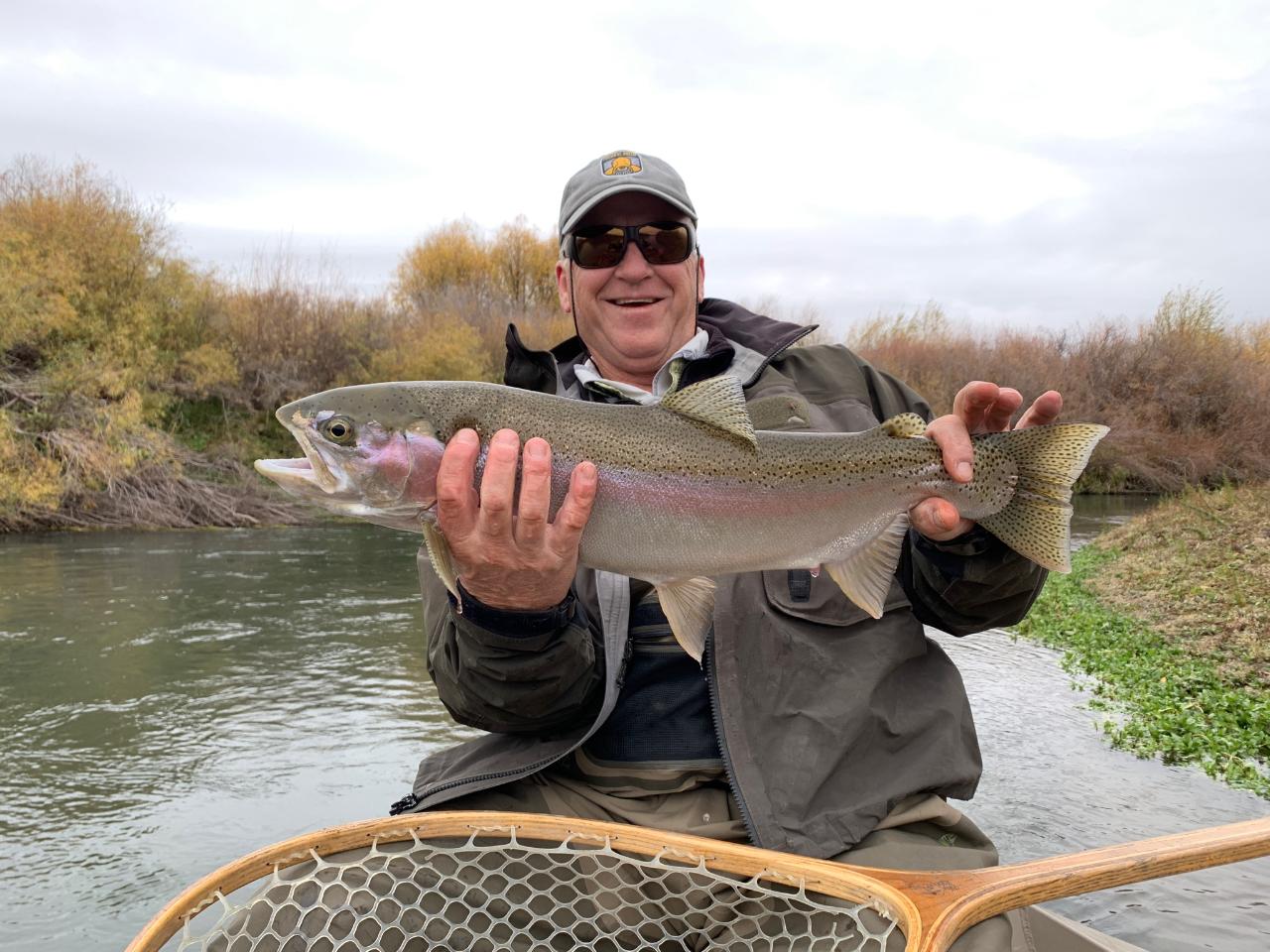
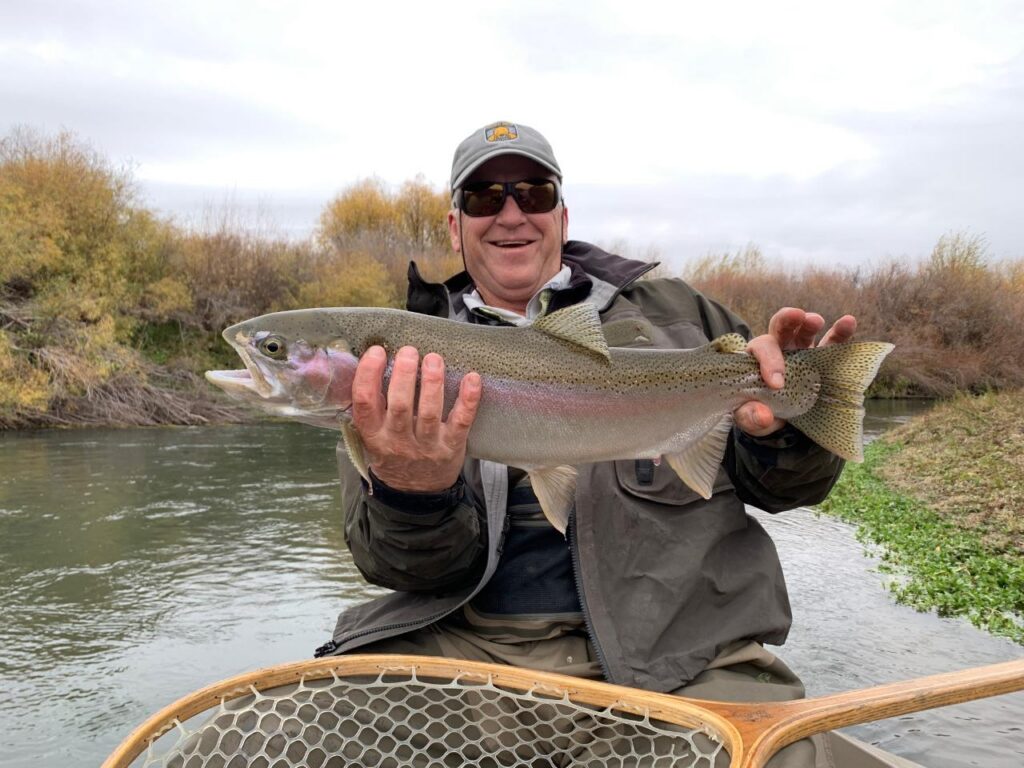
I sat down with Elden Berrett, a longtime eastern Idaho guide, fly designer, and tier who spent more than 25 years guiding on the South Fork Snake, Henry’s Fork, Yellowstone waters, Hebgen Lake, and the Teton.
We talked about the East Idaho Fly Tying Expo, some of his most productive fly patterns, the famous salmon fly hatch, and what he’s learned from decades on some of the best trout water in the West.
Elden Berrett shares stories and lessons from a lifetime spent fishing eastern Idaho’s legendary rivers. We cover the South Fork Snake River, Henry’s Fork, famous insect hatches, fly design, trout behavior, guiding history, and conservation efforts to protect one of the world’s most important wild cutthroat fisheries.
(02:00) Elden recently tied at the East Idaho Fly Tying Expo, spending both Friday and Saturday mornings demonstrating patterns. He also taught a workshop focused specifically on flies he likes to fish with on the South Fork of the Snake River.
The workshop ended up being a small group with only three participants, which allowed him to spend more time one-on-one helping each person improve their tying techniques.
The hatch usually starts on the lower river in late June and slowly works its way upstream, eventually reaching the dam around mid-July. Elden said it’s one of the busiest times of the year on the river, where everyone is hoping to hit that perfect window when giant salmon flies start showing up in numbers.
One interesting thing about the hatch is that the best fishing often occurs just before or after the peak. When the hatch is in full swing, there can be so many bugs on the water that the fish simply fill up and stop feeding aggressively.
But as the hatch begins to fade, the feeding can pick right back up.
One thing Elden sees anglers miss is focusing too much on the banks. Sure, salmon flies collect along shore, but he says trout also key in on feeding lanes created by seams and current breaks.
These food highways can form well away from the bank and often hold some of the river’s best fish.
His advice? Watch the water before you cast. Find where the bugs are gathering, and you’ll often find the trout too.
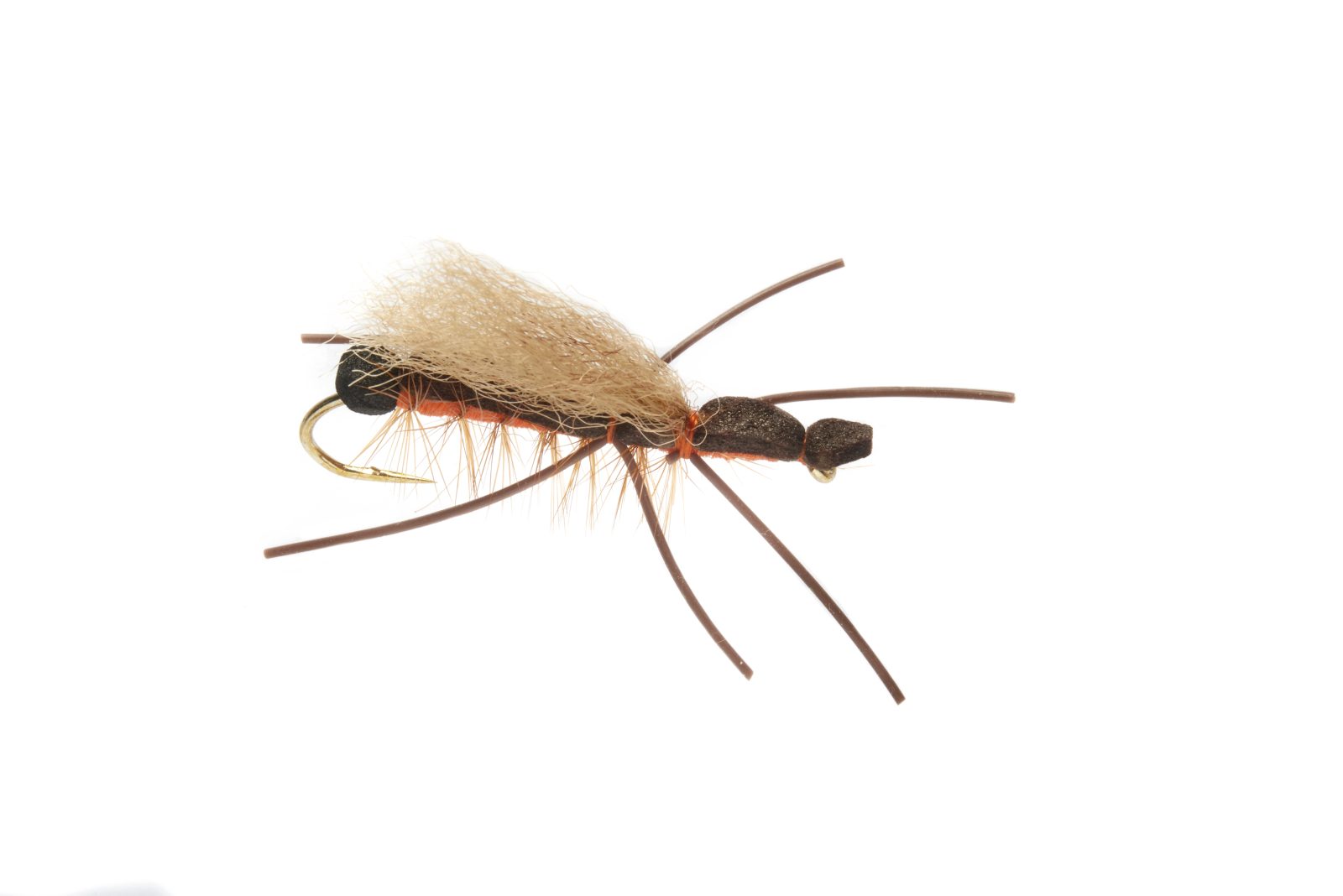
(14:16) Elden’s Pteronarcys Orange pattern imitates a fluttering female salmon fly returning to the river to lay eggs. After mating, females carry visible egg clusters and often struggle to regain flight after touching the water. They flutter helplessly downstream, becoming easy targets for trout.
One of Elden’s favorite flies is his Mother’s Day Caddis pattern, which features a trailing shuck that imitates an insect struggling to hatch. He believes that’s often the trigger that gets trout to eat.
And when the caddis aren’t the main event, blue-winged olives and March Browns are usually in the mix too. For those larger mayflies, Elden says a simple Parachute Adams often gets the job done.
Once the salmon flies wrap up, Eastern Idaho still has plenty of bugs on the menu.
Elden walked through a few of the hatches he watches closely every year, along with the flies he trusts when trout start keying in on them.
The South Fork’s PMD hatch used to be one of the biggest events of the summer. Elden says a Pink Cahill is still one of the best ways to match these bugs.
He remembers when anglers would spend entire days fishing riffles during the hatch. Trout would move into surprisingly shallow water to feed, including some very large fish.
As the salmon fly hatch begins to fade, Green Drakes start showing up on the lower sections of the South Fork.
According to Elden, this can be one of the most productive dry fly periods of the season.
The Henry’s Fork has its own famous hatch.
Brown Drakes usually start coming off in the evening around 5 p.m. and continue until dark. For many anglers, it’s one of the best times of the year to be on the river.
After seeing fish feeding heavily on these bugs, Elden created a rusty spinner pattern that’s become one of his most productive flies.
Want to see more of Elden’s fly patterns, tying work, and updates from Eastern Idaho?
Episode Transcript
WFS 937B Transcript
00:00:00 Dave: There are a few small adjustments in fly fishing that don’t seem like much until they completely change what happens next. Today we get into those shifts from dialing in big dry fly eats during the salmon fly hatch to the subtle tweaks that can turn a slow day into something you won’t forget. I’ve got Eldon Baird on the podcast. We’re going to talk eastern Idaho fly tying, and a guy who spent decades on some of the most famous waters of the West. This is the travel podcast series where we bring you the best places to fish out west, and the stories of how those regions became what they are today. Eldon Barrett is going to walk us through what he has done in over twenty five years of guiding on the South Fork and other rivers in eastern Idaho. We’re gonna find out about how people overlook feeding lanes and how to focus on them, especially during the salmon fly hatch. If you’re interested in that, this year, we’re gonna talk about the Mother’s Day hatch and how to fish that with a trailing shuck and how that’s a trigger. We’re going to get into the power of observing water and bugs, and how you take it to the water with some of the patterns that he’s going to tie. He’s a fulling mill fly tire. And we talk about some of those patterns as well. Today, we’re also going to get a few fly tying tips that you can take straight to the vise this week. This is going to be a fun one. This episode is presented by Visit Idaho and Yellowstone Teton Territory, home to some of the most diverse waters in the country. All right, let’s get into it. You can find Eldon Barrett at Eldon Barrett on Instagram. Here he is, Eldon Barrett. How you doing, Eldon?
00:01:30 Elden: I’m doing great. How are you, Dave?
00:01:32 Dave: Oh pretty good, pretty good. Yeah. We’re gonna chat today. A little bit about fly tying and some of the patterns you tie. And we’re going to talk about the East Idaho Fly tying Expo today and just get a little background. I think you do. It sounds like maybe a little Stillwater fishing, which I’m interested in. And, and we’re going to kind of hop around a little bit today, but maybe take us back real quick on the, the expo, it just wrapped up. Um, you obviously do it every year in March. How did, how did the the event. Were you there this year? What did it feel like there?
00:02:00 Elden: Yeah, it was a great event. A lot of people attended. I don’t know what the comparison of the numbers were to last year, but it was, uh, a lot of familiar faces. I tied both Friday morning and Saturday morning. And Friday afternoon I did a workshop. There was only three participants, but that makes it easier because I can spend a little more one on one time with the people on how to tie the patterns that we worked on. We did, uh, three different patterns run out of time. I wanted to do a couple more, but, but we had a great time and I felt like it was a great success.
00:02:43 Dave: Nice. What was your workshop focused on? Was it like a beginner or.
00:02:48 Elden: It was, uh, flies that I like to use on the South Fork.
00:02:53 Dave: Oh, it was nice. and is the South Fork a river you spend a lot of time on?
00:02:59 Elden: Yeah, I’ve been a licensed guide since nineteen ninety. I started on the South Fork and I’ve worked for a variety of different outfitters. I was with Henry’s Fork Anglers from two thousand through last year, so I had a long run with them. But I’ve guided on the Henry’s Fork, the Madison, Yellowstone Park, Hebgen Lake, the South Fork, and also the Teton.
00:03:30 Dave: Amazing. Yeah, that’s really cool. And yeah, I mean, that’s a good chunk of time, twenty five, twenty six years. And we just actually had Mike Lawson on the podcast. They just had their fifty year anniversary, which I’m sure you’re aware of. Yeah. Um, they’ve been around a while. What was that like? What was it like working there? Was that correct? You worked there for over twenty five years?
00:03:49 Elden: Yes. It was a privilege to work there and worked with several of the guys that have been in the industry forever. Bob Lamb started with Mike Lawson. He’s been there since day one. The guy’s an animal. He goes out. He would go literally go out every day if they would let him. There’s been years that he’s done over one hundred and fifty guide trips through the season. So I mean, it’s I did it twice, two years full time. I did one hundred and twenty one one year and one hundred and eleven the other year. And by the end of the summer I was done, I was beat. Yeah. So he’s the guy’s an animal. He just he’s the Energizer bunny when it comes to guiding.
00:04:33 Dave: Yes. That is so cool. Yeah. Nice. So basically yeah. Henry’s fork. And we’ve definitely chatted with them quite a bit. And then and then the show. So you’re out there and you were tying, uh, take us back to that workshop. So you were tying some flies for the snake. What does that look like when you’re tying showing people snake flies.
00:04:51 Elden: So the one I’m focused on mostly was the salmon fly, the Tyrannosaurus.
00:04:57 Dave: Okay.
00:04:58 Elden: It’s probably the most popular hatch, you know, on any of the rivers around.
00:05:03 Dave: Yeah. Is it is that the one? Is that bringing in the most people when that giant salmon fly comes off.
00:05:09 Elden: Yeah, that’s the shuttle drivers. They say that’s when they get their peak time of the year.
00:05:14 Dave: Yeah. Wow.
00:05:15 Elden: There’s lots of boats on the river. But the last five years, the hatch has been an incredible hatch on that river. There’s so many bugs at times. The fish, the fish are full. They won’t. I mean, you can’t buy a fish, but you get that time prior to that and just after that, you can have some phenomenal days on that river. Not only lots of fish, but quality fish. Good fish.
00:05:43 Dave: Yeah. Wow. So just prior or just after. So you basically prior, you’ve got describe that a little again before they go, or they’re not really feeding, because I’m not sure you can explain that, but what’s going on before and then what’s going on after.
00:05:56 Speaker 3: So the hatch.
00:05:57 Elden: Is triggered usually by water temperature and time of the year. So the lower part of the river is obviously warmer downstream from the dam. And so that’s where the hatch starts. And then it moves up the river. And it usually starts the end of June at last week of June. And it will reach the dam, usually by the fifteenth of July. So it’s a, it’s, there’s quite a time frame in there where the hatch is out. But when the flies just first start to hatch, the fish are looking for them. They’re hungry. But then when the hatch gets in full swing, there’s so many flies on the water, the fish will fill up on them. And then, you know, obviously they they hunker down till they get hungry again. So during that middle part of that hatch, when the flies are most abundant, that’s when you know the fish, they’re not looking for them. They’ve already ate. You will find a few fish in those places like that feeding. But once the hatch starts to taper off, they’re looking for them more again. MM. So the fish will pick up pick up better then too.
00:07:16 Dave: Gotcha. So it might start like you said, end of June. It’s kind of getting going getting there on it. And then they’re full. Then after that they’re maybe once they’re not full again, they’re starting to eat. And then you also have golden stones mixed in there, right as you go a little bit.
00:07:30 Elden: Yeah. There’s a couple different kinds of golden stones that hatch on the South Fork. There’s the one that hatches just about simultaneously with the Tyrannosaurus, and it overlaps a little bit. And then that golden hatch will continue After the salmon flies, the pteronarcys is done. So that can be a very productive time too. And then in August, there’s another golden stone hatch starts to hatch, usually about the middle August, and it goes into September. And that one is the one that everybody refers to as the mutant stonefly. And where that came from is the little males. They crawl out on the cobblestones and hatch. It’s a nocturnal hatch, and then they will go to the banks on dry ground and live under those cobblestones. And then you roll one of those rocks over and those things, they scatter, they go everywhere, but they have a little short, stubby wing, so they can’t fly. And somebody one day says, well, that flies a mutant of some kind, but So that’s how it got its name. Yeah. And that can be an exceptional time of the year also. Most of the guys that are really dedicated to that, they’ll get up and start fishing just prior to daylight because like I say, that’s a nocturnal hatch. So those fish are looking for them at that time of the day.
00:09:06 Dave: Yeah.
00:09:07 Elden: And that’s when you’re going to get your big fish usually to, you know, them big weary browns.
00:09:14 Dave: Yeah, exactly. Okay. Perfect. And do you now do you guys can you fish out there in the dark out there at night. Is that something is legal?
00:09:23 Speaker 3: Yes.
00:09:24 Elden: There’s no limit on restrictions on the hours, fishing hours. So.
00:09:29 Dave: Oh you could so if you had like a full moon or something like that, that might be good.
00:09:35 Speaker 3: Yes.
00:09:36 Elden: That’s the time when to catch a big fish. You’re more your chances are better after dark, especially those giant browns. I’ve got a couple of friends that one of them runs one of the fly shops and guides a little bit, and he goes out after he gets off work, and he’ll fish all night long and then go back to work the next day. I don’t know. I don’t know how he does it, but he showed me pictures of of browns that are, you know, close to thirty inches that they’ve caught in the dark.
00:10:10 Dave: This is great. Yeah. This shows you you know, I mean, well doubles your time right. You got you got the now the night time to fish which is pretty. That’d be pretty spectacular. What’s the um so you mentioned the giant salmon fly. So what is that pattern that you’re tying at the workshop and the one that you’d be using during, you know, late June, July.
00:10:27 Speaker 3: It just imitates the female.
00:10:30 Elden: When they hatch, they crawl out on the bank and they’ll attach themselves to a rock or a stick or something like that. And then they’ll molt. They shed that skin And then they’ll hang around and dry their wings and stuff, and then they’ll mate. And then the females will develop an egg cluster on their abdomen, and then they fly back to the water to deposit the eggs. And they land on the water, usually to lay the eggs, but they’re so big and bulky they can’t achieve flight again. So they lay there and flutter on the water and float down the river. And and they’ll, you know, they’ll collect along places along the banks where you get those collection spots. And that seems like where that’s where the fish likely will hang. But it doesn’t necessarily have to be on the banks. It’s anywhere where those fish, when they land or those flies when they land on the surface, when they float downstream, you’ll find places where they’ll collect into a like a lane, and that’s where the fish will stack up and eat. You figure out where the food is and that’s where the fish are going to be.
00:11:41 Dave: Yeah. So they’re collecting, so they’re floating down and the water’s taking them downriver and going into like a little seam or a back pool or something like that, where they’re right on the they’re collecting.
00:11:51 Elden: Exactly.
00:11:52 Dave: Yeah. And that’s what you hear a lot about on the South Fork, that people are kind of hitting the banks and stuff, but that’s not really necessarily what you’re talking about here. Are you talking about finding more a describe that where if you were floating down, you’re new to the snake, the South Fork, and you were trying to find a spot where these were collecting, where would that be?
00:12:09 Elden: You know, just observe the water, look and see where the bugs are at.
00:12:13 Dave: They could be anywhere.
00:12:14 Elden: You know, the banks are a great place to start. But like I say, you’ll find those places where the they’re not necessarily on the bank. They can be off the bank aways where it’s just one of those seams or it’s, it’s, uh, an obstruction back upstream to where those flies will come out and they’ll follow that line off of that obstruction downstream. and it might be thirty, forty, fifty yards downstream where those fish will lay in that feeding lane. Yeah, that’s one of the most overlooked spots. You know where there’s fish on that river. And that’s true on the Henry’s Fork also.
00:12:51 Dave: And does the Henry’s fork have a similar, uh, giant salmonfly hatch?
00:12:57 Elden: It does. It also has a golden hatch, too. Just pretty much the same one as the South Fork. It starts earlier. And that hatch on the Henry’s fork is triggered mostly by water temperature. So a year like this year, that hatch will come off early. It’ll be, I’m guessing, somewhere around the tenth of May. Whereas some years when you get the high water and the cooler air temperature and the cooler water temperature, I’ve seen it as late as the twenty fifth of May. So there’s quite a window in there to where that hatch can come off on the Henry’s Fork. But it’s a prolific hatch on that river as well.
00:13:41 Dave: Yeah. That’s cool. Yeah. Those ranges are closer to I fish the, uh, the Deschutes with the giant sand fly hatch. Uh, I try to as much as I can, and that one usually is somewhere in that, you know, that frame, you know, may eighteenth, somewhere kind of mid to late May and then but it’s different. The South Fork is later and that’s mainly again, water temperatures. The water, I guess is how does that work? Is it warmer than the Henry’s fork or colder? I guess it’s colder. Is that what it is?
00:14:07 Elden: Colder. Yeah. It comes out of a lot larger reservoir. And and so that reservoir, the water’s deeper. So it takes longer for it to warm up.
00:14:16 Dave: Yeah. Longer. Okay. And, uh, I’m looking at a pattern on fulling mill. Uh, it looks like it’s one of your patterns. Eldon’s. Pteronarcys orange. Is that the pattern we’re talking about?
00:14:26 Elden: Yes. It imitates a fluttering female salmon stonefly. Yeah.
00:14:32 Dave: Yeah, it’s got lots of rubber legs. It’s got what is the the back. The tail is that there’s a very on the very end. Is that it looks like a peacock.
00:14:41 Elden: So it’s what that is is that’s that UV black dubbing that imitates the egg sac.
00:14:48 Dave: Okay.
00:14:49 Elden: And there’s, you know, variety of different types of ways to imitate that egg sac foam, uh, dubbing. I’ve seen guys use peacock herl to imitate it. It’s just, just something that’s black and, and how much that works as far as, you know, getting the fish to eat it, I don’t know, I think a lot of it’s more cosmetic for the fishermen.
00:15:16 Dave: It looks cool.
00:15:17 Elden: It looks than the fish. Yeah.
00:15:19 Dave: Yeah. It looks different. And is it um so you got that on the back there. Does this fly. It looks like it’s mostly foam so it floats pretty. This one floats pretty well.
00:15:29 Elden: Yeah. That floats real well. the body on it is z lon, which floats real well. And then there’s, uh, to create the segmentation appearance. I Palmer a brown hackle on it.
00:15:42 Dave: Oh, cool. Gotcha. Brown hackle. And then it’s got the rubber legs a bunch of rubber legs and it’s got the and then what is the wing. What’s that material.
00:15:51 Elden: The wing is the epi fibers.
00:15:54 Dave: Yeah.
00:15:55 Elden: The one I tie for myself is the wing. I use Alaska brown bear hair, which is it’s not an easy item to come by, but I have a pretty good supply of it. But it can’t be used commercially. You can’t sell the bear hair commercially. So the epi fiber’s a great substitute for it, though.
00:16:16 Dave: Okay. And when you’re out there on the water, let’s say you find one of those feeding lies. How are you presenting that fly? How do you cast? Are you kind of usually downstream and up or out of a boat? Describe that.
00:16:28 Elden: Well, the South Fork, you might have to fish it out of a boat because it’s such a big river, very limited waiting places on it when the water is up through the summer. And so, like I say, most of your fishing is going to be along the banks. And a lot of the time, the closer to the bank, the better. One of my good friends, he had a he had he’s has the best description I found yet. He says, you want to fish between the water and the bank. That’s how close in tight you want to fish because you watch the naturals. A lot of the times they’re like two three inches from the bank floating along, trying to grab a stick or something so they can crawl back up on the bank. And so, well, like I say, wherever the bugs collect, that’s where the fish are going to be.
00:17:18 Dave: Yeah, perfect. This is great. And no, it looks like killer pattern. And then you have, um, a few other patterns right out there that you’re tying. I know on fulling mill. You have some and you do. You do some Stillwater stuff. Is that something you’re into still?
00:17:32 Elden: I don’t do a whole lot of Stillwater stuff. I. Yeah, I like to fish Henry’s lake. I got to go with, uh, Kevin Skenandore last summer for half a day. He owns Henry’s Lake guide service. The guys on that lake over a hundred days of the year through the summer. So he he knows it real well and the different patterns. But most of my Stillwater fishing is just what I fish on my own.
00:17:59 Dave: Yeah. On your own. Okay, so, so good. So I’m, you know, the sandfly hatches and I’m trying to think now we’re talking early. We’re kind of April. Sandfly hatch is right around the corner a month or two away. So this episode will probably be prime time for that. You know, that hatch, when it comes out. Anything else you would tell? Let’s take it to the Henry’s Fork. If you’re fishing off the bank, do you do more fishing off the bank or more out of a boat on the Henry’s Fork?
00:18:21 Elden: I usually do a boat. I mean, I, I can’t get around as good as I used to. I got two artificial knees, so. Okay, kind of limited there, but there’s. Right now the Henry’s fork has some good hatch going on the bluing olives. The baddest there hatch and you get an overcast day and you can have an exceptional day dry fly fishing. There’s also the Mother’s Day caddis. I’d be surprised if they don’t come off in a within a couple of weeks. It’s usually right around Mother’s Day. That’s where it got its name. And also the March Browns will be hatching on the Henry’s Fork. So the Henry’s fork has got some really good hatches this time of the year. I have a Mother’s Day caddis pattern with fulling mill that’s been very effective for me on the Henry’s Fork.
00:19:15 Dave: What’s that one called?
00:19:17 Elden: Uh, it’s just, uh, just the Mother’s Day caddis.
00:19:21 Dave: Mother’s day. Okay.
00:19:22 Elden: It’s got a tray. I put a trailing shuck on it. It’s Z or Antron is what? The trailing shuck is kind of an amber colored Antron. And then the body is peacock herl, and then it has a Z on a light colored zylon underwing. And then I use caribou hair for the wing on that one. And then about two, maybe three wraps of a medium done hackle for the legs. And it works. It’s worked exceptionally well for me on the Henry’s fork.
00:19:57 Dave: Yeah. And that’s. Is that a good Henry’s fork fly.
00:20:00 Elden: Yes.
00:20:01 Dave: What is the. No. That looks. I see it now. I see it on on fully milled as well. It’s got the the orange tail the shock. And then. And is that more like how would you fish that describe that. That looks like a, a dry fly is that kind of down in the film a little bit?
00:20:16 Elden: Uh, yeah, it’ll sit right there in the film and just watch for rising fish and fish to the rising fish.
00:20:23 Dave: That’s it. And when the Mother’s Day caddis is going off, which typically around Mother’s Day, is that the the big hatch during that time, or are you getting some other stuff still coming out?
00:20:33 Elden: There’s still, uh, still blue wings. And they’re also can be some of the March brown. The March brown is a big fly. It’s like a size fourteen. And the easiest way to match that is just a parachute. Adams works as good as anything in my opinion.
00:20:52 Dave: Oh, right. Okay.
00:20:53 Elden: You get a lot of the larger fish feeding on those because it’s a little bit bigger meal than a size eighteen bluing olive or a size sixteen caddis.
00:21:03 Dave: Yeah. How big is that cat that that so it’s a size sixteen or eighteen, the Mother’s Day caddis.
00:21:09 Elden: It’s a size sixteen. You can drop down to an eighteen. Also sometimes that little smaller fly will work a little better. But I typically tie that in a size sixteen.
00:21:19 Dave: Yeah. Size sixteen. And so you have that Mother’s Day cast, which you hear a lot about. And then you also have just caddies throughout the whole summer that I think people just say caddies. Are there other caddies hatches that it seems like the Mother’s Day. Why is that the one that is kind of named, even though there’s lots of caddies throughout the whole year, right. Or summer?
00:21:37 Elden: Yeah, that’s a prolific hash. It’s, it’s, uh, there’s times when that literally almost covers the water. It’s an amazing hatch. And that’s, it’s that way on several of the rivers around the. I know the Yellowstone has a very prolific Mother’s Day hatch. Most of the rivers around this part of the country has that Mother’s Day caddis hatch, but the South Fork actually has that. And there’s times when it can be very productive on the South Fork also. And it’s usually right around that same time about the middle of May.
00:22:14 Dave: Do you do any, uh, twitching, you know, when you make that cast, you do anything to the fly when it sits there to get. Because how do you make it stand out, say, from the other, other thousands of patterns? Naturals.
00:22:26 Elden: My belief on that is that trailing shuck imitates one that’s struggling to get away from that to, you know, to complete the molting cycle. And so he’s easy prey, whereas those others, you know, that’s already hatched out, they’re a little more active. So I think that causes the fish to key on those a little bit more.
00:22:49 Dave: Okay. And what does the how does the moose hair for somebody who hasn’t tied with that compare to, say, elk or deer hair as far as it’s.
00:22:57 Elden: Caribou.
00:22:58 Dave: Or sorry, caribou. Yeah, yeah. Caribou. Yeah.
00:23:01 Elden: You know, caribou hair is a little softer has if you find the right kind, it has that kind of that gray pale gray look to it and it imitates the natural wing more so. And it’s easy to tie with, easier than deer or elk hair, in my opinion.
00:23:19 Dave: Oh, it is so it’s softer. And does it sit softer? Means it kind of maybe sits down in the water a little more or doesn’t because elk care kind of, I guess, and deer kind of are, I don’t know, they float pretty well. Does this float as well?
00:23:32 Elden: Yes. This floats really well. The hair is hollow. So it’s you know, it’s doesn’t sink as easy.
00:23:41 Dave: Okay. Nice. All right. So we got this Mother’s Day cats and then well, maybe take us back. Let’s step back a little bit from this. So you’ve got all this going. You’ve got all these fulling mill flies tying at the expo. You’ve guided for, you know, all these years. Take us back to how that you got into the guiding. Was that something that sounded like you did some other guiding as well? Have you been doing this a lot of your life?
00:24:01 Elden: Oh, I, you know, I grew up fishing. I can still remember the first fish I caught. I was four years old. That’s how much of an impact it had on me.
00:24:11 Dave: Where were you at? Where did you grow up?
00:24:13 Elden: I grew up in eastern Idaho, just north of Idaho Falls.
00:24:16 Dave: Oh, nice.
00:24:17 Elden: And we lived about five miles from the river. And I can remember, you know, when I’m seven or eight years old, hooking up with my buddies and walking that five miles to get to the river to fish.
00:24:30 Dave: And that’s great.
00:24:31 Elden: And, uh, my uncle used to take me a lot. My dad took me. My grandpa took me quite a bit. So I had a great experience growing up as far as fishing. And I just, you know, it’s one of those things you can never get enough of it.
00:24:48 Dave: Yeah.
00:24:49 Elden: And I eventually ended up working at the Idaho National Laboratory as a security officer. And our work schedule was four days on and four days off. So my four days off through the summer, I was on the river.
00:25:04 Dave: Mhm.
00:25:05 Elden: And then after I was there for a few years, I was getting almost to five days or five hours a week vacation accrual. So I would take about a month of the summer off to guide. So it kept me busy.
00:25:20 Dave: Yeah.
00:25:21 Elden: Not real good for the home life, you know, the domestic life. But it was the summers went by fast that way. And then I retired from out there and for two years I guided full time. And that was a great experience.
00:25:36 Dave: Yeah.
00:25:37 Elden: And I wish I could keep doing it again, but just for a variety of reasons, I decided, you know, I’ve had enough of it. I need to focus on a few other things in life at this time. So.
00:25:48 Dave: Sure. Yeah, definitely. That’s a good I mean, that’s a full career right there. Twenty five years, right? Just about just with your guiding there.
00:25:55 Elden: Yeah.
00:25:56 Dave: That’s it. And, uh, and so, and yeah. And so now you’ve got that, but you’re still doing the expo. Are you going to be this upcoming year? Are you planning on doing the expo again?
00:26:05 Elden: Oh, probably. Yeah. I don’t know if I’ll participate in any workshops Or anything like that, but, uh, I’ll be doing the demo tying y’all.
00:26:14 Speaker 4: Yeah, yeah.
00:26:15 Dave: Take us there on the floor this year with what that was like. You get there. Are you guys still on the you’re on the ice rink, right? You got you got ice under you. Is that was that still the case?
00:26:24 Elden: Well, they I don’t know if there’s ice under it or not. They have a floor in there and everything, but uh it, I did notice it was a little cool in there this year. So yeah, there may have been ice underneath, but, but yeah, they set up, uh, several different things. You know, all the vendors have their booths lining the outside of it. And then in the center, they set up tables to where I think they accommodate about forty tires at one time. And so you can just walk around amongst the flyers and sit down and, and observe somebody. And I’ve learned a lot from just watching that. I would sit down and watch somebody tie a particular pattern And they would use a technique that I like. Wow, I can use that on this fly. And so I would implement that, you know, on some of my patterns. And it’s, I learned a lot over the years watching those guys.
00:27:21 Speaker 4: Yeah.
00:27:22 Elden: They have some extremely talented tires out there too.
00:27:27 Dave: Yeah, that’s kind of the idea, right? That’s the cool thing about it is you got all these tires so you can go there and just kind of, if you can maybe work your way, talk to everybody, see the techniques and come away with, you know, some new. That’s pretty cool. I mean, probably to this day, even for you, do you, if you sit around and watch somebody or are you still picking up new little tips and tricks?
00:27:44 Speaker 4: Yeah.
00:27:45 Elden: I mean, it’s a continual learning.
00:27:48 Dave: Yeah it is.
00:27:49 Elden: And like I say, there’s some extremely talented tires out there nowadays and the materials and everything. How much that’s evolved since I started tying flies. It’s just to me it’s mind boggling. It’s like the computer industry, you know, how much it’s evolved over the last twenty years.
00:28:05 Speaker 4: Yeah, exactly. Yeah. The fact that.
00:28:07 Dave: You’re using we’re using a phone now doing this podcast through a, you know, a, the Riverside program, right. The fact that it all comes together into, you know what I mean? It’s, it’s pretty amazing.
00:28:18 Elden: Yes it is.
00:28:19 Dave: Um, okay. And then looking at and then on that day. So you there, so you said you tied Friday morning and Saturday morning. Um, on Friday morning, did you tie, did you tie just a couple of patterns or do you, do you, do you ask people what they want to see or do you, what are you tying there on that first day? Other than the Terra Narcisse.
00:28:35 Elden: I usually focus on two or three different patterns. And, uh, and then if you know, somebody asked me about a different pattern, if I have the materials with me, I’ll tie it for them.
00:28:48 Dave: And pretty much, could you tie if somebody gave you a pattern, just pull it out of their fly box and just gave it to you, could you pretty much tie that at this point? Come close?
00:28:58 Speaker 5: Uh.
00:28:59 Elden: Most of them I could. Yeah, there’s some of them. I, I, There’s the streamers, the articulated streamers. I’ve just started tying those the last couple of years, and I had to go to YouTube to learn how to tie some of them.
00:29:13 Dave: But yeah, good, good. What do you think? What do you enjoy tying most? Sounds like these big flies. Do you do you also tie some of the small dries, some of the. Are you ever fishing any of those smaller. Um, I guess um, you know, other than the caddis, like your typical, like what would be if there was a mayfly hatch? What’s your go to for your typical, I guess you mentioned the parachute. Are there other ones?
00:29:35 Elden: So the South Fork has a great pale morning dun hatch pmd’s. They have kind of a pink color to them. And the best imitation of it is a pink Cahill. And that used to be a very prolific hatch. The last four or five years, it hasn’t lasted as long or not near as prolific as it has been in the past. It’s just one of those mysteries of the river that they’re trying to figure out. The South Fork initiative, they have a couple of biologists that are doing the studies on the on the flies, on the river, and trying to figure out what’s going on with them. But it takes, you know, a few years to collect the data to where they can kind of get an idea of what’s going on. And the Henrys Fork Foundation has been doing that on the Henrys Fork for quite a long time. And so they’ve established that baseline and their ideas to do what they can to mitigate, you know, what’s causing the decline in the fly hatches.
00:30:42 Dave: And so these pink cahills. So the cahills have been declining. That’s something that’s been changing.
00:30:47 Elden: Yeah. But there’s still, you know, it used to be that was the popular way to fish on the river on the South Fork. And the summer was go to the riffles because that’s where the hatches would start. And then those fish would stack up, you know, at the bottom of the riffles and even in riffles while a hatch was going on. So you could just get out and wade, you know, wade fish the riffles and you didn’t, you never wanted to get in, you know, up to your knees because chances are, if you’re wading in water up to your knees, you’re wading in the middle of the fish. That’s where the hatch is coming off.
00:31:25 Dave: Mhm.
00:31:26 Elden: It’s pretty amazing how shallow a water, especially those cutthroats, will move up into to feed on those mayflies when that hatch is going on. And even the big browns. And in another hatch that comes off on the South Fork, right about the end of the salmon fly hatch or a little bit before is, uh, they have a green Drake hatch on the lower three sections of the South Fork. And that can be a prolific hatch.
00:31:56 Dave: Yeah. Wow. Green drakes versus say, the other the brown drake. Right. That’s another hatch that’s always get those confused. But is there also the brown drake out there?
00:32:06 Elden: Not on the South Fork. The Henrys Fork has a prolific brown Drake hatch, mostly up in the ranch section of the river. And it’s an evening hatch. It’s about five o’clock in the evening when that starts, and that can be one of the more productive times of the year for the Henrys fork.
00:32:25 Dave: MM. Yeah, yeah. And so Henrys fork South fork. And then what are the you also have the Teton River which is quite a bit different, right. Are those kind of the three big. I mean those are the three big ones. Are there other smaller rivers that people are fishing out there other than these big ones?
00:32:40 Elden: Oh, the there’s fall River. It’s kind of limited to what you can do on it. There’s a couple of floats on it that’s possible. It has a a prolific pteronarcys hatch. The fish don’t get big. I mean, a twenty inch rainbow on that river is a pretty good sized fish, but they are some of the hottest, most acrobatic fish that I’ve ever caught. Them fish go berserk when you hook them.
00:33:13 Dave: Wow. And the fall River that. Where does that flow into?
00:33:17 Elden: It comes out of the southwest part of Yellowstone Park and flows down through, uh, east of Ashton. And then it meets up with the Henrys Fork, just about the Chester area, upstream from Saint Anthony aways.
00:33:33 Dave: There’s a place where every bend in the river feels like it’s been waiting for you. Where the air smells of sage and pine. And trout rise beneath the shadows of the Tetons. That places visit Idaho’s Yellowstone Teton Territory, the heartbeat of fly fishing in the west, from the legendary Henrys Fork to the winding south Fork of the snake. This is where big fish and bigger stories live. You’ll find endless waters welcoming towns and locals who still wave as you drive by with drift boat in tow. This is your starting point for world class fly fishing, year round recreation, and wild country that stays with you long after you’ve packed up your gear. Check it out right now that’s wet. Fly swing dot com slash Teton T e t o n. Visit Idaho for yourself and support this podcast while you go. Nice. Gosh, this is great. Yeah, I mean, that’s, I think the thing you realize there’s so many of these hatches are what make I mean, I guess that’s one of the things, right? People are coming from all around to check out these hatches is, are there other hatches during the year if you just keep that going? You mentioned the green Drake and then you got obviously caddis throughout the summer. Any other big hatches that are happening out there?
00:34:40 Elden: Yeah, there’s, uh, the Flavilinea. It looks real similar to the green Drake. It’s just about a size fourteen, and it can be a prolific hatch on the Henry’s Fork. It’s an evening hatch. It’s one of those that starts about five in the evening and goes till about dark and the fish key on them. That’s one of the best times of the day to fish during that hatch. But also in the morning, there’s a great spinner fall of those flaps. And those fish will get out in the tail outs of the holes or the the slick water and feed on those spinners. And I can remember the first time I got into that, it was right there at last chance, and I was out fishing on my own. And I was like, what are these fish eating? And I finally got my screen out and caught some of the spinners. And it’s a it’s a big spinner. It’s about a size fourteen, but it had a rusty abdomen and an olive thorax. And I thought, well, I can tie some of those. So I went back and tied some of them. And it, it’s, uh, been a very productive fly. In fact, one of the fly shops up there in Last Chance told me it was their top selling fly three years ago. And Fulling Mill also carries that one too.
00:36:06 Dave: Yeah, yeah, I see it, I see it, it’s got the, uh, how does that one, when you tie the, when you’re tying a spinner, you’ve obviously got the big wings, bent wings. How else do you tie that fly to make it effective? What do you think are the keys to that one? Because it’s pretty small, right? It’s a pretty like there’s not much to. Well, it looks hard to tie, but there’s not much to it. Not too many materials.
00:36:25 Elden: It’s not difficult to tie. It just has the the, the micro tail. The abdomen is a dyed turkey quill, the rusty spinner color and the thorax is just an olive dubbing. And then, uh, poly wings. Very simple.
00:36:45 Dave: Yeah. And those wings are pretty simple. If you haven’t tied the spent wings, you just take a thing of whatever you’re seeing. And what do you use on the wing material here for these?
00:36:53 Elden: It’s just the polishing material. Anything looks like it. I mean, there’s several different things you can use on them, but that seems to work because those wings get real clear translucent. They have quite a bit of shine to them.
00:37:06 Dave: So yeah, that’s it. And do you want to tie those wings in kind of right. Yeah. Go ahead.
00:37:12 Elden: So they lay flat out. Yeah. One of the things that I use when I tie flies I think of what are the fish looking at? You know, look at it from the fish’s point of view. One of the common mistakes people make is we’re in a light environment looking into a dark environment, looking into the water. The fish is just reversed on that.
00:37:35 Dave: Yeah.
00:37:36 Elden: You know, take that into account. But then just think, you know, well, here’s where the fish is laying and this is where the bugs are coming from, floating down the river and watch their feeding patterns and what the flies are doing and their fish’s relationship to them. That’s something that, you know, that has worked well for me over the years.
00:37:59 Dave: Yeah, that makes sense. So you talked about the spinner and then fishing the duns on the water. Is that um I guess in the rusty spinner? Are you fishing that differently than you’d be fishing or are you just looking for still heads or what are you looking for?
00:38:11 Elden: Basically look for rising fish, the Henry’s fork. That’s the most productive way to fish that river. If you’re not nymph fishing, is to look for rising fish. And I know on that lower stretch below Ashton Dam all the way down to Saint Anthony area, it has some very nice brown trout in there. And I’ve seen pictures of a couple of them that were pushing thirty inches. But those browns will get in like a foot of water right along the bank. And if you watch, you know, when you’re floating or even walk waiting, you’ll spot one of those fish feeding. And if you’re careful about your approach and your presentation, you usually can, you know, hook them. I’ve, I’ve had some very productive days on, you know, whether it’s the golden stones, the green drakes, the spinners, those fish will tuck right in a little place, you know, that sometimes is almost impossible to cast to.
00:39:13 Dave: Mhm.
00:39:14 Elden: You know, you get a couple of those fish like that in a day and that makes your day pretty special.
00:39:19 Dave: Yeah. Yeah. You’re probably good on that. Yeah. That’s perfect.
00:39:22 Elden: The drawback about the Henry’s fork, it’s become such a popular river during that green Drake hatch and also the Pteronarcys hatch. You you’re competing with a lot of other fishermen. Yeah, there’s people from all over fishing it. And I mean, it’s it’s developing into a problem, just like on the Madison. And I don’t know how you fix it.
00:39:48 Dave: Yeah. What’s going on in the Madison? Just where you hear about there’s so many drift boats lined up and just. I mean, it seems like the South Fork is such a big river that you can. It’s not much of a as much of an issue there. But is that the thing? It’s just too many boats.
00:40:03 Elden: Yes. Some of my friends last year, guide friends told me they waited in line for over an hour just to get their boat in the water, and that river is too small to handle that kind of traffic. But it’s been a big, hot topic for quite a few years, and I don’t know how to fix that either. It’s.
00:40:26 Dave: Yeah, I’d imagine what you see in other areas around the country, and I’m not sure if this is the fix here, but, you know, you have limited entry. You know, these places, the Grand Canyon, right, is a good example, but a lot of even the I mentioned the Deschutes. The Deschutes River is limited entry during the. There’s certain river passes, they only have a certain amount. I remember when they first were talking about implementing that back in the day, this was probably twenty or thirty years ago, and it was like, oh man, this is going to be terrible. This is going to be a really bad thing because, you know, you’re going to restrict you when you can fish. But as it turned out, it’s actually better because now there’s a limit. So you know that there’s only this many. And to be honest with you, you can usually get a pass if you plan your, you know, you plan a little bit. So it’s not obviously you might, you know, you can’t go anytime, but it’s pretty close, right? And you can still walk and wade. And so that’s the thing. You could still you don’t need a permit. It’s just the boats. So I don’t know if that would apply. If they need to start thinking, I’m sure they’ve probably talked about that, but it’s worked. I feel like it’s worked pretty well in the Deschutes.
00:41:23 Elden: What lower Henrys fork that time of the year during the green Drake hatch. The irrigation demand is such that they haven’t started drawing water out of the reservoirs. So the flows are such that you can walk wade most of that part of the river down there And so there’s tons of people walk waiting and then you add the boats to it and it’s an issue. It’s one of the big reasons why I quit guiding on the Henry’s fork.
00:41:51 Dave: Yeah. Yeah. That’s right. No it isn’t. We you know, again, it’s just more people, right. There’s, there’s a, you know, that’s part of the people love it. You know, we love to have more anglers because it probably protects it. But at the same time, yeah, it makes fishing kind of more challenging, I guess. But cool. Well tell us. Yeah. Go ahead.
00:42:09 Elden: Fly fishing. Fly fishing has become so popular the last few years, has it?
00:42:14 Dave: Yeah. Have you noticed that. Have you noticed the last few years you’ve really compared to say. Yeah.
00:42:19 Elden: What really started it was when the movie A River Runs Through it came out that that they seen a huge boom in the in the guide industry just because of that movie. And now you see it promoted, you know, look at the Yellowstone series, this Madison series, it’s all, you know, they’re focusing on fly fishing. A lot of it.
00:42:40 Dave: Are they is that Madison thing? Is that really about fly fishing or is it what is the. Yeah, I haven’t seen that yet.
00:42:47 Elden: It’s a great series. You need to watch it. He’s you know, this guy’s a New York attorney and his brother’s got a place on the Madison. And so he comes out and spends time on the Madison. You know, that’s his passion. His time flies and fly fishing. So it’s a great series.
00:43:04 Dave: So it’s about.
00:43:05 Elden: Attorney. Yeah. So I don’t want to spoil it for you.
00:43:09 Dave: Oh, yeah. We don’t want to ruin it.
00:43:10 Elden: Yeah, it’s well worth watching.
00:43:12 Dave: It’s worth watching. Okay. And who are the. I have to look at who the actors are in it. But it’s Russell.
00:43:17 Elden: Kurt Russell’s in it. Michelle Pfeiffer.
00:43:19 Dave: Oh, Kurt Russell’s in it. Yeah. Oh, yeah. God. That’s great. Okay, so now we got another series to add to the list here. So, Madison, but you’re saying that movie is or that series is about. It’s kind of focused, obviously fly fishing and everything else, like any movie or any show will be, but it’s got a lot of fly fishing in it.
00:43:36 Elden: There’s much more to it than that, but it’s based around. On his passion for fly fishing and, you know, on the relationship he has with his wife and.
00:43:46 Dave: Yeah. Do you think that Madison, I guess it’d be hard to compare to River run because that’s like the biggest thing ever. But do you think this Madison series has had an impact gotten more people out there?
00:43:56 Elden: It will. I mean, every one of those movies like that, you know, some for somebody that hasn’t fly fished, I mean, that piques your interest. And the great thing about fly fishing, it doesn’t matter what skill level you’re at, you still have fun doing it.
00:44:13 Dave: Yeah.
00:44:14 Elden: It’s a great stress reliever. It’s time for you to get out, to recharge, to re-energize, to organize your thoughts. I mean, there’s been so many times in my past when it’s like, you know, I need to go to the river and I go to the river and spend a day, half a day or whatever. And it, it does wonders for the, for mental state of mind.
00:44:37 Dave: Yeah, it does, it does. It’s good for all of us. What is the um, so ninety three or when the River Runs through it came out in that range. Ninety two. Ninety three. Where were you at. What were you doing then? Were you just had you started the Henry’s Fork guiding yet?
00:44:49 Elden: I hadn’t started on the Henry’s Fork, but I was guiding on the South Fork at the time.
00:44:54 Dave: Okay. And who was the guide shop you were with?
00:44:57 Elden: So I was with, uh, I started with John Hill. He had he was one of the original outfitters on the river. And I worked for him for one year. And then he sold the business to a guy by the name of Lon Woodard. Lon was, uh, he was played football for the New Orleans Saints.
00:45:15 Dave: Oh, wow.
00:45:15 Elden: I worked for him for a couple of years, and then I went to work for another outfitter. They offered me a better deal, so I hated to leave there. But Lon was was a great guy. Yeah, but that was one that was when I come up with my golden stone fly pattern. Originally it was called Barrett’s Golden Stonefly, and that was that was funny how I came up with that pattern. I noticed those, what they call the mutant Stonefly and see all these empty. They call the shucks. That’s the shell that they. They mold out of. They’d be all over. And it’s like, where are these bugs at? Because I kept looking for them to fly like the the Tyrannosaurus does. And. But they weren’t flying. Well, one day I was stopped on a gravel bar and I was taking a leak and I looked down and here’s these little bugs going over there and it’s like, what are them? And so I started rolling the rocks over and it’s like, wow. And I they’re quick. They’re very agile. Well, I caught a couple of them, threw them out on the water. And they, I mean, they just about skitter across the water and they didn’t go very far. And the fish grab them. And so I thought I got to come up with something like that And I could tie an invitation to it, but I couldn’t tie something that would float very good. And well, the Chernobyl ant came out about that time, and it originated down on the green River. A guy by the name of Alan Woolley was the one that came up with it, and it was to imitate a cicada pattern. And it was this black foam with black rubber legs. And somebody brought it up here to the South Fork. And the fish, they went crazy over it. Well, somebody found started tying him out of the tan foam with legs. And that that was the original pattern. So I found one hung on a bush one day, and they had wrapped the shank of the hook with a bright colored thread. And I thought, I can tie a big, fat, bulky body with that foam on it. Just add that foam to one of my existing patterns and I think it’ll work. And I did, and it was incredible how well it worked.
00:47:30 Dave: Wow.
00:47:31 Elden: And I was going home at night and tying them and come back and sell them to the other guys for at one time there I was getting five bucks a piece out of them. When you could buy a tie in the shop for a dollar and a half. So that’s how effective it was.
00:47:44 Dave: God that’s great. And this is the I see one in fully milled that just eldon’s golden. Is that the pattern?
00:47:51 Elden: And then there’s another one called Eldon’s aren’t that instead of having the the tan body, it has the red body. It’s the same pattern, just the red red body. And that was the top fly in the Jackson Hole. One fly one year.
00:48:08 Dave: Oh it was.
00:48:09 Elden: Yeah. It caught the big fish that year and it held the record for the big fish until last year. Somebody caught one last year that was bigger than that one. So.
00:48:18 Dave: Huh. So it’s a one fly. We’ve got a one fly champion fly winner here. Uh wow. And what is that. So that pattern is the it’s it’s really you see this style? You know, a lot. It’s like the, um. I mean, the double foam. Where does that come from? That double, you know, foam. Do you know the history there of when that first started coming out? Well, I got the double phone then you got. Yeah.
00:48:42 Elden: Yeah. That’s where I say the Alan Wooley come up with the Chernobyl original. That was foam body fly like that one. Yeah.
00:48:50 Dave: Yeah. That’s it. So the Chernobyl, I guess that name is interesting, right. The Chernobyl name that it’s kind of do you know the where that came from or I don’t know about Alan Wooley other than. Yeah.
00:49:01 Elden: I, you know, I know Alan, I’ve never really spoke with him about that. I’ve, I’ve wanted to, but I just time has never been, you know, right to do it.
00:49:10 Dave: But yeah, yeah. The Chernobyl.
00:49:13 Elden: It was to imitate the cicada. You know, the green River has a prolific cicada hatch. You know, every so often they’re cyclical, right.
00:49:23 Dave: The bright orange.
00:49:24 Elden: And they, they, well, they, they have different years when the hatch is bigger than others. That cicada is an incredible bug. There’s some of them that hatch every five years, some of them seven years, some of them seventeen years. So it’s some years you’ll have cicadas everywhere. And in other years, you know, you don’t see hardly ever see them.
00:49:50 Dave: Huh. Do you see them on the South Fork?
00:49:53 Elden: Yeah, I’ve seen them on South Fork. Never in great numbers. But there’s times when when they’re when they are out, you know, the fish know what they are. It doesn’t take very many of them to, to get on the water to where they start looking for them because it’s I mean, it’s a huge meal for fish fly that size.
00:50:11 Dave: Yeah, definitely. Yeah. It’s a cool obviously, I think it’s probably the Chernobyl that style chubby Chernobyl maybe is the most thing we hear most about like dry, you know, talking about the dry dry dropper, right? All that stuff. Um, yeah. So it sounds pretty good. Do you use any of the old traditional go back to the oh, what are some of the, the old style um flies. I see one of them on here of yours. It’s, it’s a little grasshopper and or big. It looks like a big grasshopper, but it’s kind of all tied in the front of the fly. Right. And it’s got like almost a bare hook. Describe what’s that style called?
00:50:44 Elden: I, you know, that was just one of those days when I was goofing around on the tying bench and I, I just took a single flat piece of foam and trimmed it to the shape of a hopper body and then tied it in at the thorax with rubber legs. I would not three of them together and and clip two of them off on the back. So it looked like, you know, the fat hopper legs with the skinny part, you know, on the lower. And then just did a parachute pattern and I took it out and fished it. And I was surprised at how well it worked And it works well on the South Fork, especially in the bigger sizes down on the the lower part of the South Fork, because there’s there’s a hopper, the hatch is down there. Some of those hoppers, they get great big. They’re big and long and tan colored. And I know that’s what they’re eating at for. And it’s. I’ve had guys tell me they use that pattern on spring creeks where the fish are real picky and selective. And there’s a couple of guys, he says. That’s all I use on spring creeks anymore. He says, catches more fish on it than anything.
00:52:00 Dave: Yeah, I could see that because it’s really it’s really kind of looks sparse, right? You don’t have a lot of it. It is.
00:52:06 Elden: It’s just foam and a thorax and legs, basically.
00:52:10 Dave: Yeah. It’s cool. It definitely sticks out. What’s the um, well now looking ahead. So you so you’re tie in. What do you have going now? I guess you got, you got you finished up the expo, you’re not guiding right anymore. Are you just kind of kicking back and enjoying retired life? Or what is your what’s your year look like now?
00:52:27 Elden: Yeah, pretty much I do that. I live in Blackfoot now, and so I fished the river down here a lot around the Blackfoot area. I’ve got a a sixteen foot powerboat and I’ve had some great times down there. There’s two or three stretches of the river down here that can be very productive at certain times of the year. There’s it’s not known for its dry fly fishing, but late in the year, I’ve got a couple of spots where the dry fly fishing down there can be phenomenal.
00:53:02 Dave: Oh, wow. And this is this is, uh, where is the Blackfoot area? Where is this part?
00:53:06 Elden: It’s between Idaho Falls and Pocatello.
00:53:09 Dave: Oh, yeah. Yeah, I got you. Yeah, you’re right there. Yeah. Blackfoot. Nice. So the river’s a little bit different down there. You don’t get quite the the prolific hatches, but there’s still some action.
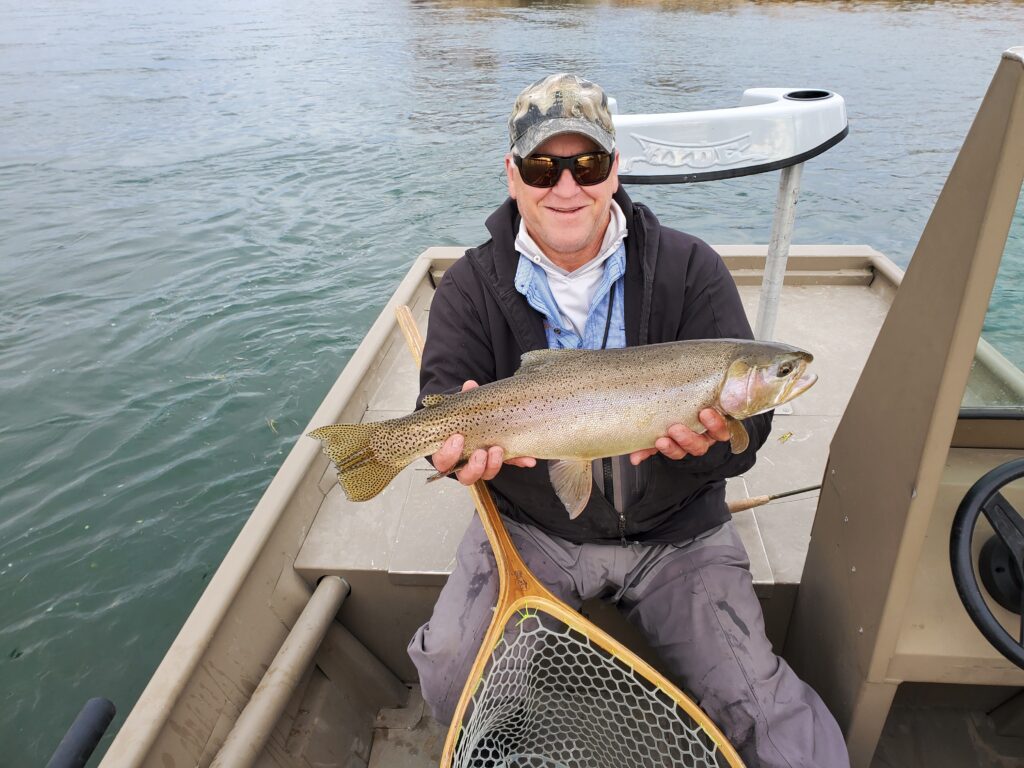
00:53:19 Elden: Yeah. And like I say, at the right time of the year and the right places, the the streamer fishing and the nymph fishing on the river, the I mean, all the way from Idaho Falls down. There’s places where you’ll find there’s at the right time of the day and right time of the year. There’s some great dry fly fishing. Uh, there’s a lot of big browns in this stretch of the river. There’s still some of the original native fish to find. Spotted snake River cutthroat. And I’ve caught six of them down here in probably the last fifteen years. That’s one of them was was probably almost twenty nine inches. But they’ve all been over twenty six inches. Yeah.
00:54:03 Dave: Wow. And fine. Spotted snake River cutthroat.
00:54:07 Elden: Yep. That was the original native fish in the river. They say it in the Yellowstone. Cutthroat. Genetically are identical. Their parents are. They. They have. They look different. The Yellowstone cutthroat has bigger spots on it, but they say it’s like the Alaska brown bear and the grizzly bear. They’re the same bear. It’s just the environment they’re in that their appearances look different.
00:54:34 Dave: Oh, wow. How does the snake River, the spot. It just has a lot more spots than the Yellowstone cutthroat.
00:54:39 Elden: Yeah, they’re smaller spots. And then I think there are more. More, uh, they they fight better and they get bigger than the Yellowstone cuts. That’s been my experience with them.
00:54:52 Dave: And are there cutthroat? Those cutthroats are in the Henrys fork because you have kind of you’ve got definitely, um, rainbows and browns too, right out there. But are there still cutthroats in the Henrys Fork and the South Fork?
00:55:03 Elden: There’s a few cutthroats in the Henrys Fork. Not very many. It’s mostly rainbows from Mesa Falls upstream. It’s a rainbow fishery with a few cutthroat, maybe occasional brook eastern brookie. But there’s not brown trout in that stretch of the river below Mesa Falls, all the way down to the confluence. You have, uh, a lot of brown trout and the last few years below Ashton Dam, the brown trout fishery in there has, has, uh, gotten a lot better, a lot more of them and bigger ones. The South Fork is known for the cutthroat fishery. In fact, it’s the largest remaining wild cutthroat fishery in the world. And I think it was in the late nineties, the rainbows started to show up in alarming numbers in the South Fork. And wherever rainbows are introduced into a cutthroat fishery. They hybridize with them and they’re much more prolific. And over a period of time, the cutthroats will disappear. Originally, the Henrys fork was a cutthroat fishery, but the rainbows most likely were introduced into it. And so that’s why you don’t see very many cutthroats on the Henrys fork anymore. So there’s a big concern that that’s going to happen on the South Fork. So since the late nineties, the it’s gone from a. Well, at one time it was a you go back far enough and there was a ten fish limit. And it was, you know, it was just ten trout, any size that went to a six fish limit. And then it went to a two fish limit and only two could be over sixteen inches, I believe. And the last change they made is they made it cutthroat. On the South Fork is catch and release only. You can’t reduce any of them to possession. And they took all limits off of rainbows and rainbow hybrids, trying to reduce the number of rainbows in the river. And it’s gone from that to where they’re doing electroshocking on it. They were and was removing, I don’t know, ten to twelve thousand fish a year out of the river. The rainbows and rainbow hybrids trying to keep those numbers down. They’ve tried several things, some of them controversial, but they’ve even gone to now to where when they do the electroshocking, they’ll take a certain number of fish, they’ll implant them with a microchip and release them back into the river. And if you catch one of those fish, they have a bounty on it worth anywhere from fifty to one thousand dollars. Well, the only way you can tell if it’s Beanie has a microchip in it, as you have to reduce it to possession and then turn the head in and they’ll, they’ll, you know, if you have one of the chipped fish, you get a reward for it.
00:58:20 Dave: Yeah.
00:58:21 Elden: And the latest one is one, a couple of the outfitters have bought into it. In fact, one of them proposed that to the Fish and Game. It says, hey, we will remove the rainbows that we catch on the guide trips. And if we don’t reach that target number, we will pay the Idaho Fish and Game to go in and make up the difference on the number of fish that’s, you know, that they take out of the river so they can meet, meet that objective. And and that’s been the last two years. They quit removing them with the electroshocking.
00:58:56 Dave: Mhm.
00:58:57 Elden: Supposedly they’ve met the numbers on it. But but it’s been an issue for several years, you know, and, and.
00:59:04 Dave: Yeah, the issue has been the fact that you’re noticing reduced cut throat over the years. That’s you’ve been seeing have you been noticing that.
00:59:14 Elden: There was a few years that it was that way, but it’s the the last, I don’t know, maybe ten years. The number of cut throats have increased in the river scene, a lot more of them. And seeing some bigger ones, I’ve seen through four of them that were, you know, over twenty five inches come out of the river.
00:59:32 Dave: That’s the amazing thing. I feel like you’re saying a lot of cool, like real unique stuff, right? The largest cutthroat, the cutthroat thing is unique because rainbows are found all over the world. And, you know, you can you’ve seen giant fish pictures, but to get a any cutthroat, but, you know, especially one bigger over twenty inches would be pretty much like there’s not a lot of places you can do that in the world, right? This is, this is one of those places.
00:59:56 Elden: And like I say, the South Fork is the largest remaining wild cutthroat fishery in the world. And so they they want to preserve it.
01:00:04 Dave: Yeah.
01:00:05 Elden: A lot of the fishermen hate to catch cutthroat because they say, well, they don’t fight well. They don’t fight like a rainbow or brown trout. But there’s just something unique about going out and catching a wild cutthroat on a dry fly, right?
01:00:18 Dave: Well, on a dry fly, that’s the other cool thing. Yeah. But cutthroat are known. That’s the really cool thing is they’re known to really come up on the surface, right? For dries even more maybe than rainbows.
01:00:27 Elden: And that’s what made the South Fork popular, you know, was the cutthroat fishery.
01:00:31 Dave: Yeah. Yeah. That’s great. Awesome. Well, this is this has been a great conversation, Eldon. Like we said, we’re going to hopefully see you out at the the next expo this coming year. And obviously you guys just wrapped up this one, but, um, we could send people out to s r c expo dot org if they want to check in on that. And then and you’ll be back there, right? You’ll be tying some more flies and maybe tie in if somebody came up and they wanted to see this pteronarcys pattern, you’d be able to tie it up next year.
01:00:57 Elden: Yep, absolutely. It’s a continual process. I’m continually changing materials on it, trying to make it better all the time. I think I’ve come up with a new body material. I haven’t had a chance to go out and test it, but as far as the appearance of it at the expo, everybody loved it. I mean, some of the guys that are, you know, very reputable tires, they look one of them said, can I have that?
01:01:23 Dave: Yeah. Right. Yeah. It looks like I’m definitely going to get one of them up for the Sam fly hatch there this year. This is exciting. And anybody else can check them out. And is that how that process works. Maybe just take us out on that that process with Fulling Mill you’ve got this pattern. If you tweak it, do you do you check back with them and say, oh, wow, this is even a little bit better and then let them yeah, update it. Or how does that look?
01:01:44 Elden: I do that, yeah. Anytime I make an improvement on one of my patterns, I’ll update them on it and send them samples of the new ones so they can modify it.
01:01:52 Dave: Yeah.
01:01:52 Elden: Those guys have been great to work for.
01:01:55 Dave: Yeah. Awesome. Yeah, we’ve definitely been chatting with them.
01:01:59 Elden: They have some great quality of flies.
01:02:02 Dave: Yeah. When you get that pattern back from fulling mill, you update it. What’s that like? Is it when you see it, is it like, man, that’s exactly, you know, that’s pretty close to how I would tie it. Or is that how it looks for you?
01:02:13 Elden: Well, the first year they produced that, they messed it up bad. I mean, it didn’t even look right. And I told them, well, the, the very first one it was, it was okay. But I says, you need to make the head bigger on this thing. It’s not you didn’t do it quite right. Well, when it come back, instead of making the head bigger, they made it longer. I mean, it looked horrible. And of course nobody was buying them in the shops. But some of the guys, the guides, it’s like, well, that’s eldon’s fly. It must work. And so they got to using it and they were saying, boy, that thing catches fish. And I’m just like, what? It doesn’t even look.
01:02:49 Dave: Wow.
01:02:50 Elden: And I went into one of the shops and they had a bunch of the old ones in there. And I says, hey, if, if you’ll pull these out of here and get Ahold of your rep. They’ll replace them for the latest version of it, and they’ll, you know, they’ll give you credit for these old ones. So the, the shop owner, he says, yeah, okay. And so he took him out of the bins and he said, the next or a couple days later, I went back in there and he says, man, he says, all them guys come in here and says, where did all them go?
01:03:19 Speaker 6: They’re gone.
01:03:20 Elden: Things were catching fish, so he had to put them back out.
01:03:24 Speaker 6: That’s pretty. So you never know.
01:03:26 Dave: Exactly know I love it. I think it’s a cool. We’ve heard the stories from the very beginning. I think when that started, the that program for the different companies, it’s pretty awesome the way it works. You know, the fact that he’s got a few of these big companies, right? Fulling mill, MFC, Umpqua, right, that are doing this stuff and they’re given royalties. Yeah, right. People are actually tires are getting, if you have a good pattern, you’re getting some good royalties, right? If you’ve got a lot of good seller.
01:03:49 Speaker 6: Yeah, yeah.
01:03:50 Elden: And it’s, you know, my original golden stone fly over the years, I’ve got probably close to twenty five thousand dollars in royalties off that fly.
01:04:00 Dave: No kidding. That’s pretty amazing, actually.
01:04:04 Elden: There’s other guys out there with different patterns. That’s done far better than that, but still, you know.
01:04:10 Dave: Oh, yeah. No. That’s amazing. I mean, I go to the YouTube thing because I think the YouTube thing is, uh, kind of sometimes a joke. People joke about it, right? You’ve got these videos out there, which you get a commission from, from YouTube, but you know, it’s a small chunk unless you’re a big channel, right? It’s a small chunk, but if you get your channel big enough, it’s substantial. People are making a living off of this, living off of this stuff. Yeah. And I mean, I guess again, same thing with this. If you were tying enough flies, I’m sure there are people living off just the royalties, right? If they’re doing it right, maybe, I don’t know.
01:04:39 Elden: Well, the the copper John, you know, John Barr.
01:04:43 Speaker 6: Yeah.
01:04:43 Dave: The copper. John.
01:04:44 Elden: Uh, he was a dentist in Colorado and come up with that fly. There was one year he got over forty thousand dollars off of that fly royalty.
01:04:52 Speaker 6: Yeah.
01:04:52 Dave: The copper. John. Yeah, yeah. That’s right. Wow.
01:04:56 Elden: And then patched rubber legs. Pat. Bandits.
01:04:58 Speaker 6: Yep.
01:04:59 Elden: I fished with Pat when he came up with that pattern. He says, I got this new fly and I’m looking at it says, well, it’s just a rubber legs with super floss instead of round rubber legs. And he goes, yeah, but he says it catches fish. And after about half the day I says, you got something there, Pat? I couldn’t believe how well it worked.
01:05:17 Speaker 6: Pat. Pat.
01:05:19 Dave: Yeah. Wow. This is classic Pat Bennett. Yeah. We’ve heard about him for sure. Awesome. Well, this has been great. Definitely. We’ll hopefully get you back on later. This has been awesome to catch up with you and hear all the history and the tips. So I well, like I said, if anybody wants to check it out, s r c dot org and give us a heads up on Instagram, where can we follow you out there? Do you have Instagram?
01:05:39 Elden: I just it’s just. Eldon Barrett.
01:05:42 Dave: Yeah. Eldon Barrett perfect. All right. Well, we’ll follow you there. And, uh, yeah, we’re excited for the next show. And, uh, thanks again for your time.
01:05:49 Elden: Thank you for having me on. I appreciate it.
01:05:53 Dave: If you enjoyed that one, please check in with Ellen. You can find him on Instagram and check in with Fulling Mill if you want to check out some of his patterns. If you’re interested in checking in with us on a trip this year, we’re going to be heading out west as well. You can send me an email, Dave at flying dot com or you can join Wet Fly Swing Pro. You can go to webflow dot com slash pro, enter your name there. We’ll follow you there. When we open up the doors for wet fly swing Pro and and we have that next cohort coming in here. Excited to hopefully see you on the water. And, uh, and hopefully we can get out and you can hit that salmon fly hatch this year. I’d love to hear how it goes. And we’re out of here. Hope you’re having a good day and hope you can experience that road less traveled. We’ll talk to you then.
This was a fun one with Elden. We dug into some of the biggest hatches in Eastern Idaho, the fly patterns he trusts most, and a few stories from more than 30 years of guiding these rivers.
If you’ve ever wanted to fish the South Fork, Henry’s Fork, or some of the other legendary waters in the region, there are plenty of tips here you can take straight to the river.