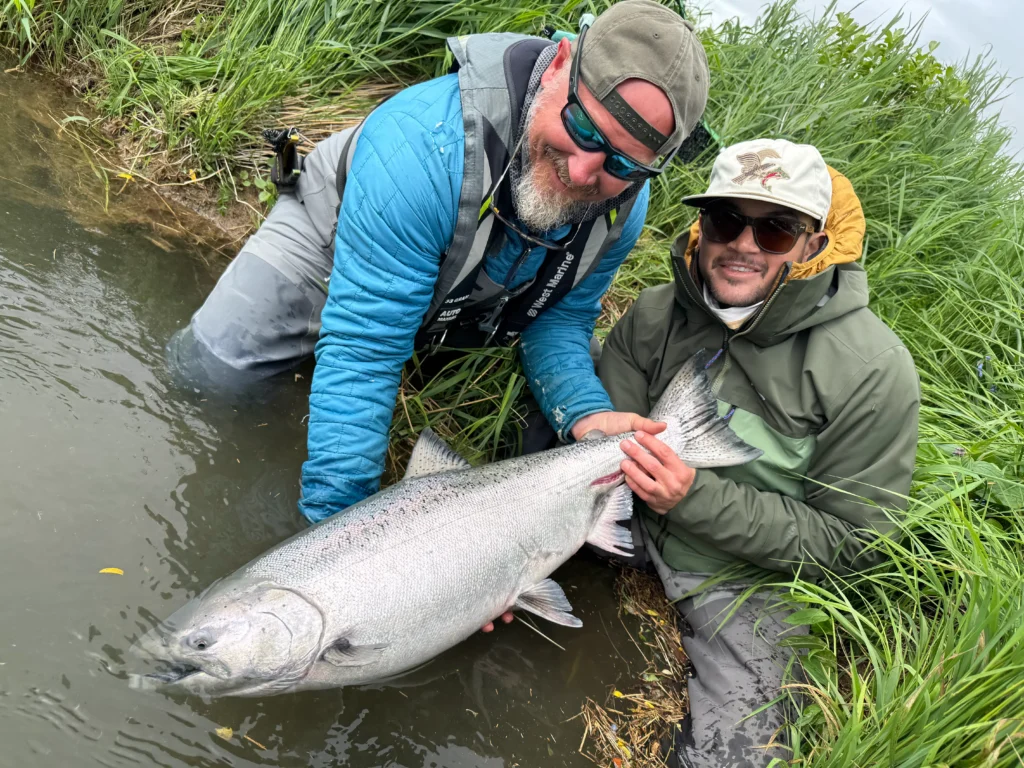
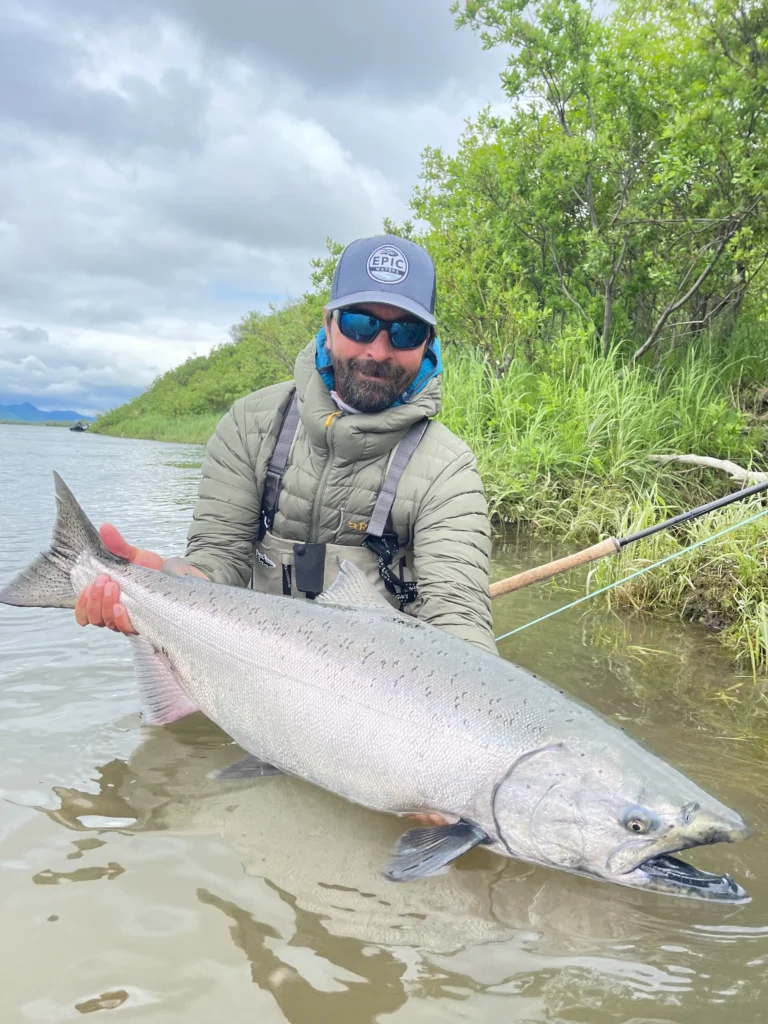
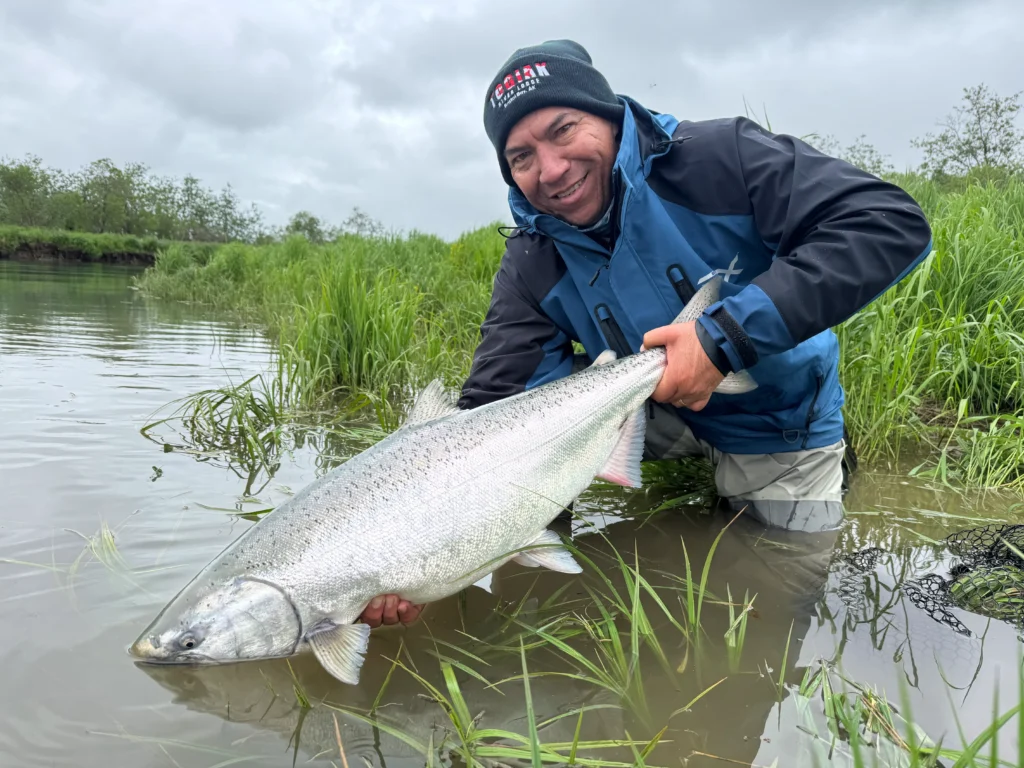
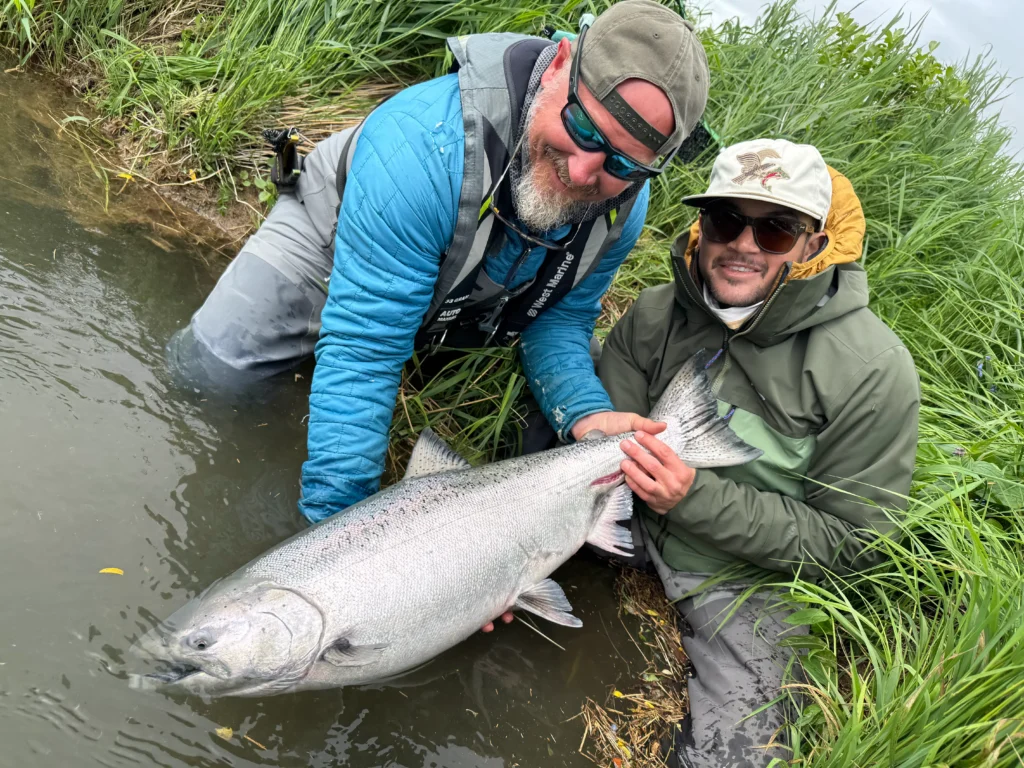
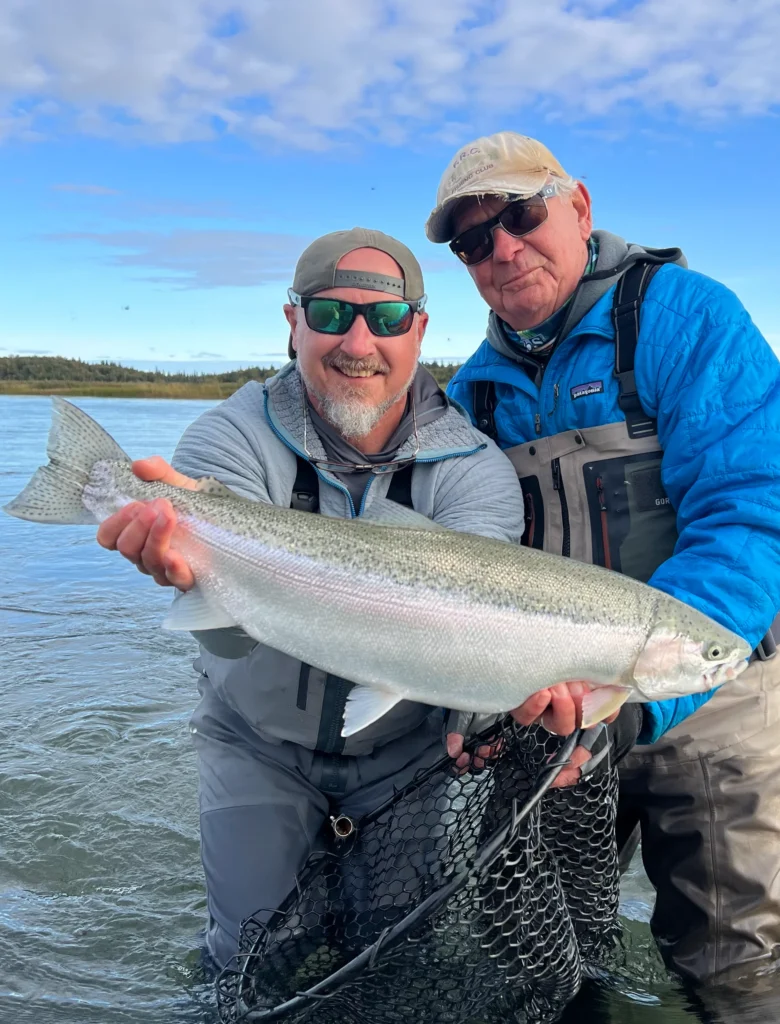
Losing fish after a solid grab happens more than people talk about. You feel the eat, the rod loads up, maybe even a head shake, and then it’s just gone.
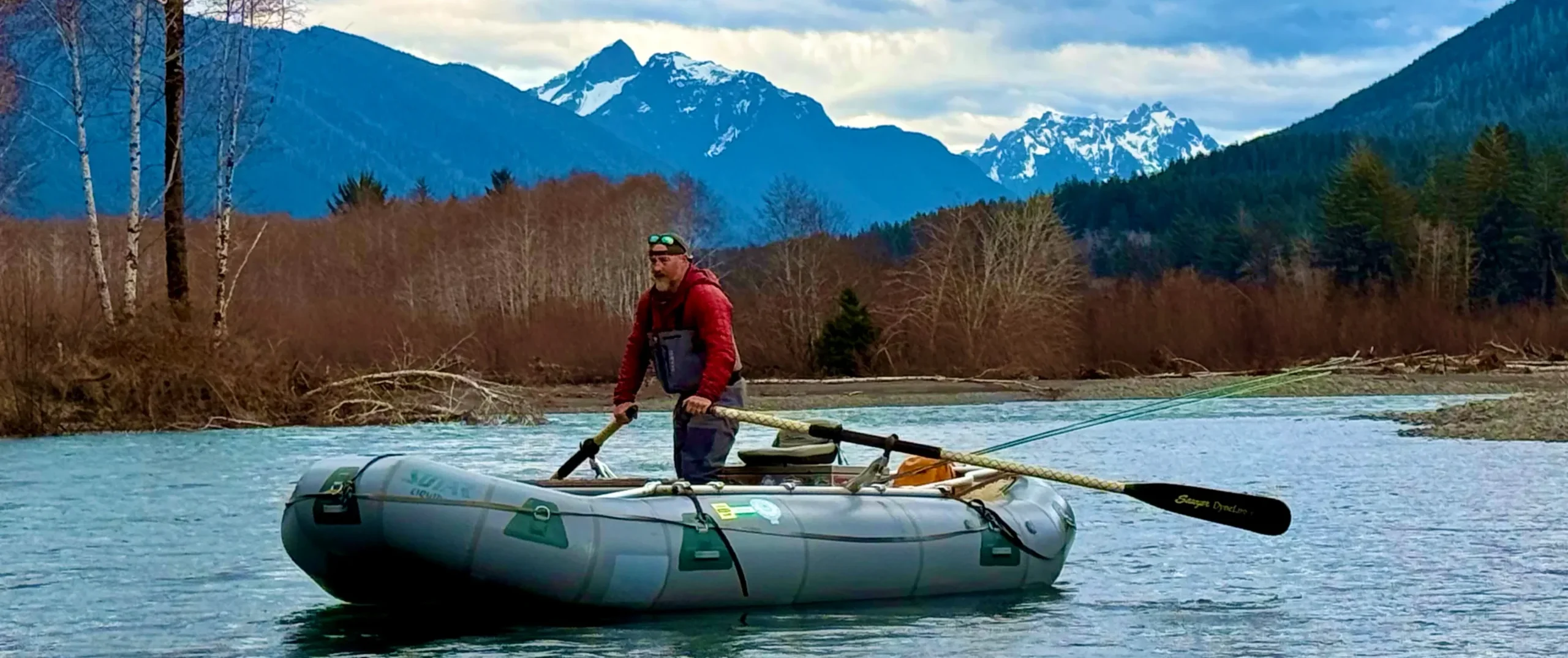
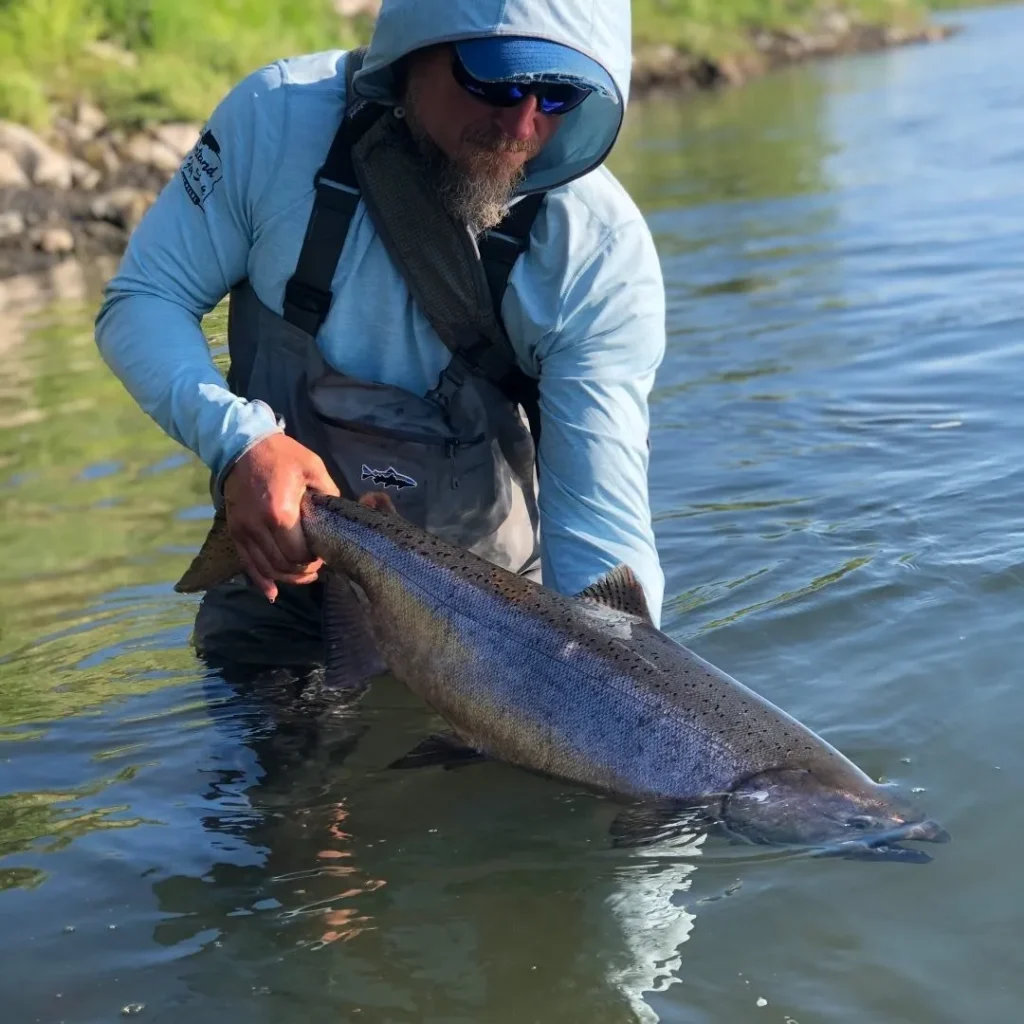
Floyd Carter is back to break down what he’s been seeing all season, from the Olympic Peninsula to Togiak. They get into what an actual take feels like, when to stay patient, and when it’s time to hit it. They also dig into the loop vs drag debate, how small changes might keep fish pinned, and why even experienced anglers are still figuring this out in real time.
If you’ve been losing fish and can’t quite figure out why, this one will hit close to home.
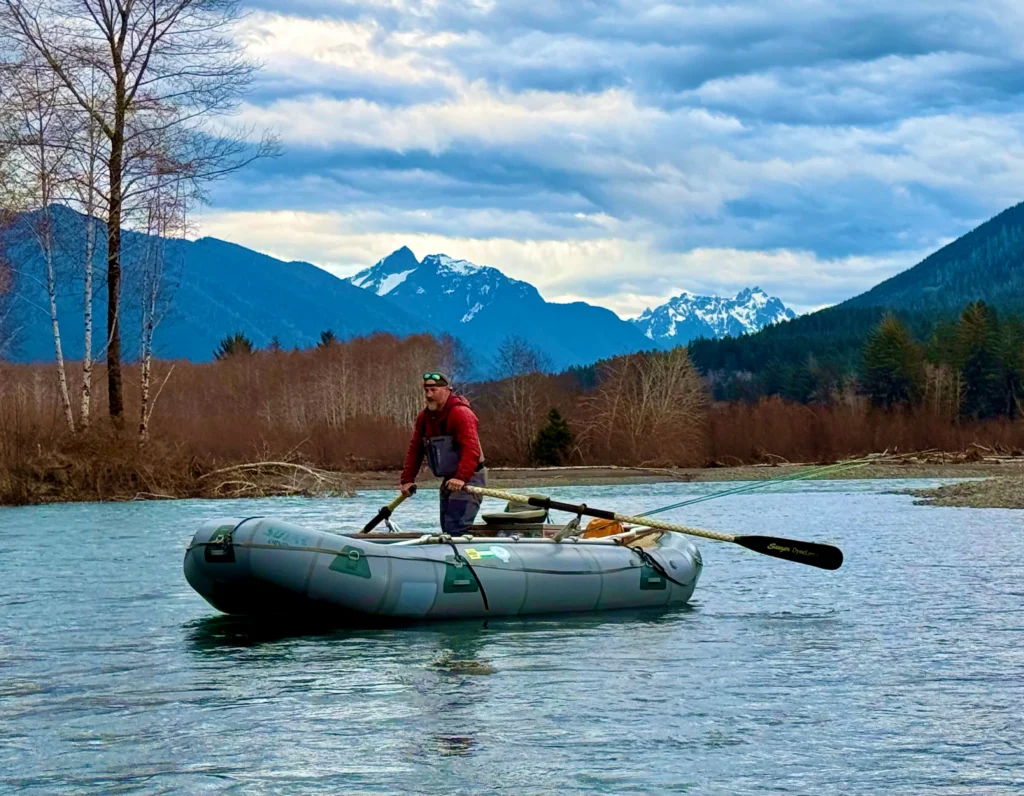
Floyd shares what his season looked like after Togiak. He stayed busy guiding, then rolled into fall fishing on the Klickitat and some coastal rivers. After that, he spent a lot of time on the Olympic Peninsula from late January up to now.
He says the OP is one of his favorite places. The main rivers he fishes are:
After losing a bunch of fish, Floyd starts digging into what might be going wrong. He describes feeling the whole eat, the turn, even the head shake, and then the fish just comes off.
He’s always fished with his drag set and applies pressure once he feels the fish is on. But now he’s starting to think that early tension might be the problem, so he’s considering switching things up and carrying a loop instead.
He admits it’s still guesswork, but he plans to fish a full stretch using a loop and see if it changes anything.
Floyd says it’s pretty different depending on the fish.
Steelhead aren’t always like that.
Sometimes they just sit there and chew on the fly. He shares one where a fish held the fly for a full four-count. The angler did nothing, waited, then the fish turned and a little side pressure got it buttoned up.
They’re watching for pushes of fish and working upriver to downriver, trying to intercept fish that came in earlier and then the next wave behind them. They also rotate water as a team, giving priority to anglers who need a fish.
It’s a low-pressure, mostly catch-and-release fishery, which helps keep things in good shape.
Floyd says you get out what you put in.
That means finishing the run, making those last few swings, and not cutting corners. He also leans on instinct. If something feels off, like you need to go deeper or change flies, just do it instead of second-guessing later.
He says the hard part is staying in it when things aren’t going your way. Cold, tired, no fish. That’s where the mental side shows up. But he says it won’t happen back at the lodge. You’ve got to stay out there and keep fishing.
At the end of it, there’s no finish line. You’re always learning. The tough days, the blown casts, all of it adds up. That’s what makes it so rewarding when it finally comes together.
He also shares that Togiak was part of his own start. It was one of his first guiding experiences, building camp and learning the ropes.
For him, it’s one of those places.
As long as he’s able to go back, he will.
When I asked if Chinook fishing carries over, Floyd said it’s not something he thinks about directly. But over time, things start to click. Slowing the fly down, where to mend, when not to mend. It all builds into your fishing without you really noticing.
He keeps coming back to one thing. The fish will tell you. That’s the real feedback. So if something feels off, change it. Try it. He’d rather do that than end the day wondering what he should have done.
As we get closer to the season, Floyd says the work starts before the fishing.
He usually heads up early to help get the lodge ready. Repairs, setup, and a lot of hard work to get everything running. The goal is simple. Get it done so they can go fish.
He shared that last year, some of their best fish came early, right after they wrapped up prep work. It’s that push to finish everything that opens the door to those first shots at fresh fish.
And with Alaska, you never really know what you’re going to get.
Floyd says don’t overthink it. Just get out there and fish.
Even if the water looks a little dirty, like a foot or two of visibility, that’s still fishable. Don’t let that stop you.
He also keeps it simple with how he approaches a run.
A lot of anglers miss fish by starting too low or ignoring shallow water.
If you want to follow along, book a trip, or see what they’ve got going throughout the season, here’s where to go:
Episode Transcript
WFS 917B Transcript
00:00:00 Dave: Today we’re getting into something that doesn’t get talked about enough. Why? You’re losing fish even when you’re doing everything right. I’ve got Floyd Carter back on the podcast, and today we go deep on a pattern that he’s been seeing all year from the Olympic Peninsula, all the way up to Togiak River in Alaska. Fish eating the fly, feeling solid for a second and then coming unbuttoned. We break down what that actually feels like when a fish just loads up. When it rolls, when it chews on the fly, and when it’s time to do nothing at all versus time to hit it with the lumber. This is the Fly Swing podcast where I show you the best places to travel to for fly fishing, how to find the best resources and tools to prepare for that big trip, and what you can do to give back to the fish species we all love. Floyd is back today, and we’re going to get into what might be happening and why you might be losing fish this year. We’re going to talk about the debate on holding a loop in your hand versus not. And when it makes sense what a real take feels like from a steelhead to a Chinook. Chewing the gum and how to adjust your mindset mid-run so you don’t miss your best shot of the day. Plus, we get into why even experienced guides are still figuring this out real time, and how to think through the swing instead of just going through the motions. All right, we’re back on it. Here he is. Floyd Carter. How you doing, Floyd?
00:01:17 Floyd: Good to be here, Dave. Good to hear your voice, man.
00:01:19 Dave: Yeah yeah yeah. It’s been. I mean, I think it’s been since we left. Uh, togiak. I believe we’ve been chatting on email, but since we’ve really seen each other and talked and all that stuff. So. Yeah. How you been, man? How’s things been going since the big Togiak trip?
00:01:32 Floyd: Uh, it’s going well. Um, you know, just got back from Togiak, did some trips here and, um, then went into the season and then rolled over into the final, uh, kind of push in the fall. And the Klickitat Klickitat, Klickitat steelhead ranch. Um, you know, Klickitat is pretty hard to beat in the fall and then, you know, did some coastal stuff early on here on the North coast. Uh, and then headed up to the Olympic Peninsula to do some recon. Uh, and basically, you know, fished Opis from January twenty second to two days ago.
00:02:17 Dave: Oh, wow.
00:02:18 Floyd: And then plan on rolling back up and, uh, just finishing the season out, uh, you know, and get some different floats under my belt. I really would like to stick a fish in the Sol Duc, to be honest with you.
00:02:30 Dave: Oh, the Sol Duc.
00:02:31 Floyd: Yeah. It’s a gorgeous little. It’s like a big spring fed creek, uh, totally different landscape than, you know, something like the HOH. Um, but, uh, yeah, it’s kind of landed on the radar of I need to just go swing the Sol Duc and find one. Um, so that’s basically a wrap on the year.
00:02:52 Dave: Yeah, that’s the year, man. That’s pretty, that’s a swing. That’s a swing year for sure. We. I was actually up. I fished the Boca Shield for the first time and fished it with. We had a shout out to Ray and Alex, two listeners of the podcast. They set up this trip and I went up there and we fished and yeah, man, what a cool river it was. We floated it and I was lucky enough to hook into a fish, which was pretty sweet fish in the tail out one of the tail outs there. But yeah, the OP is cool, man, because it’s pretty diverse, right? There’s like what, how many rivers are there up there that you’re fishing regularly?
00:03:22 Floyd: Well, usually it’s the main three, the duck and the bogey and the ho. Um, but then you also have the Clearwater, the humptulips was up until the end of January. Uh, the upper Quinault, uh, is going, um, you know, the quits was going to be open. And then I think, uh, the parks and another organization petitioned to have that, um, removed. Um, so, you know, mostly it’s the big three, but it is like you said, it’s super diverse and you know, a any day for me personally, any day on the HOH River is just a magical day. It’s one of my favorite places on this marble. Um, yeah, it really there’s just something about it. You know, there’s certain places that just get you for some reason. Uh, and the HOH is that place for me.
00:04:20 Dave: Um, it’s a big river, right? I mean is it the biggest out of those three, the big up there.
00:04:25 Floyd: I would say uh yes. Yeah it is. But then, you know, you have a pretty cool little section of, uh, the Quillayute, which is basically the koolau, the bogie and the Sol Duc, the confluence. And it’s just a short section, you know, to the salt and it’s, you know, it’s pretty big. Um, and I, I spent some more time down there on my days off, just kind of trying to read it because, you know, it can be overwhelming. I remember being a little puzzled by the system once I hit the confluence and went down. I think I took out at Dickey. At Dickey Creek or the Dickey River. I don’t know which one is designated. Um, so, uh, you know, just learning that and trying to see the lanes and kind of those fish traps and travel corridors. Um, so I feel like I learned a thing or two. Got a lot more to learn. Obviously, you know, I’ve only been up there for three years, so. Right. Uh, you know, as Jack Mitchell would say, I know nothing. Yeah. I literally know nothing. Right. Uh, this season, um, you know, talking to, uh, the rest of the guys that were around and, um, not just my crew, but reaching out to other people who are out guiding regularly. It was a strange season and it didn’t just seem focused on the OP. We had a lot of fish come unbuttoned this year.
00:06:02 Dave: Oh really? Like unbuttoned. What does unbuttoned mean?
00:06:05 Floyd: Unbuttoned means you make contact and you know. And then you think, game on. Right. You think you’ve punched it through and, uh. And to no avail, man. I mean, it’s just it was just crazy.
00:06:20 Dave: Well, check this out. You’re gonna love this because this was never happened to me that I don’t think has ever happened. I’ve been talking about it a little bit because it was kind of crazy. That fish I hooked on the bogachiel was it was cool. I was sitting there in this tail out and just casually just, you know, just hanging out really. And it swung in and it was, there was a boat below us and we just they didn’t fish the tail out. So we stopped in and I swung it and it hooked. And I was like, all right, okay, nice and fish on, you know, and it didn’t do much. And at the start, but then it kind of came up and I and it flashed at me. I was like, okay, definitely a steelhead. You know, it’s a nice bright steelhead. And then it just got a little bit closer and then ran up away from me and just jumped out of the water about the length of its body and just spit the hook. And I was like, there you go. It’s gone. And I was like, okay, that’s happened before. And then the crazy thing was we pulled in the fly and looked at it. And the intruder, I don’t know if it was intruder, but the Spey fly I was using literally came apart. So the only thing left was the shank tied to the leader and the rest of it pulled off.
00:07:15 Floyd: So, you know, it was in its mouth. I mean.
00:07:18 Dave: Yeah, it was in his.
00:07:19 Floyd: Mouth. Maybe you don’t know that, but.
00:07:20 Dave: No, it was definitely in his mouth. I mean.
00:07:22 Floyd: I mean, like.
00:07:23 Dave: But have you ever heard of that? Where the scene that where this was tied by a major manufacturer. Right. Um, have you seen those come apart like that.
00:07:30 Floyd: Oh yeah.
00:07:31 Dave: You have.
00:07:31 Floyd: Yeah. Oh yeah.
00:07:32 Dave: No kidding.
00:07:34 Floyd: Yeah. I have seen and it’s uh, mine are typically with the Coneheads. Um, you know, that don’t like to stay put, but, you know, uh, yeah, I mean, it does happen. It’s a good, I mean, if, you know, if a fly’s falling apart because it’s getting chewed on. Hey, cool.
00:07:51 Dave: Yeah, I was.
00:07:52 Floyd: Happy, but but not just from casting. No, it should stand up. I mean, if you’re going to pump these things out, you know, at least use good material and techniques, um, because they’re pretty proud of their product these days. And I get it. I mean, but anyway, um, it, you know, we, we sat around and it’s all, it’s all guesswork as far as I’m concerned. Um, you know, we everybody, all guides are so smart, you know, we’re, we’re just, we have.
00:08:23 Dave: All the.
00:08:24 Floyd: Answers. That’s not true. Guys are just flying by the seat of their pants mostly. I’m sure guys don’t like to hear that, but I don’t really care. Um, you know, we’re just doing the best with what we got, but, I mean, we sat around and talked about it and talked about it. I just had a conversation with my buddy who was down here, uh, sticking, you know, on Oregon waters. And he’s literally telling me the same thing that I’ve been talking about for months with my friends in the business. Like what is happening? I mean, are they just head butting this thing? Uh, and, you know, it stays pinned for a second and then doesn’t really, you know, punch through. Um, I just saw over and over, um, and, you know, I’m a decent angler and, you know, I went out, I had a couple days off right before this last little stretch and a client was heading out of town and I said, well, what the hell? Let’s fish on your way out of town. Like, I don’t want to put the raft in, but let’s go do a walk in. It was on the bogey. Um, I found a fish in a cool little spot. And, you know, there he was. And this is what I describe. I, I could literally feel like we all know what a tank feels like. Yeah. Um, I could feel what that hook did when that fish Turned. I could feel it roll. I could feel the head shake. It was very strange. I just felt it all go down. And I kind of, you know, you sit there and you always. You’re playing that reel through your head. What could I have done? Should I have, you know. And you know, honestly, the only thing I could come up with and this is what I said. Um, and, you know, this is a major, I don’t know.
00:10:11 Dave: It’s not true.
00:10:13 Floyd: But people talk about carrying a loop and I’m a drag guy. I’m a drag guy. I’m a keep your drag, right. You know, use the mechanism that you have.
00:10:23 Dave: You don’t do a loop.
00:10:24 Floyd: I know, but you know what, Dave? I mean, it’s just guesswork at this.
00:10:29 Dave: Point, right?
00:10:30 Floyd: Uh, but I think, uh, my chances would have been better if I was carrying a loop. Really? And that fish, you know, had, um, more room to travel because I like to, um, when I know a fish has got that fly in its mouth and in a good position, I like to give it the lumber.
00:10:49 Dave: Oh you do? It’s for steelhead. You give steelhead the lumber to.
00:10:52 Floyd: Oh hell yeah. And and I, and I don’t care. Everybody can say what they want to say. I don’t really care. Um. I have touched enough fish in my life of fishing to know when a fish is committed. And that flies in the right place. Now, this fish that I lost that I was speaking of, I didn’t give it the wood, you know, I was being patient. I just felt everything that happened with that fly in its mouth. And I just, you know, the only thing, the only solution I could come up with in my brain was, man, Luke really might have helped in that situation. You know.
00:11:29 Dave: Give him a little more time to hook himself. Right? That’s the idea.
00:11:32 Floyd: And so, you know, on this trip back where we’re going to go play for this last week, um, that’s what I’m going to commit to. It’s like, you know, you want to catch a fly or you want to catch a steelhead on a skated fly? Well guess what? Just rig up skaters and go skate right up. You want to test a theory? Like I’m gonna go up there and I’m gonna fish for five straight days hard, and I’m going to carry a damn loop. Doesn’t mean I’ll make contact with anything, but I’m going to carry a loop every day just to do some data, right?
00:12:04 Dave: Like, yeah.
00:12:05 Floyd: Um, yeah.
00:12:07 Dave: That’s it, that’s it. And the loop you’re going to carry. And for those that, if there are some new anglers on here, the loop is where you have it pinched your swing and your fly, you got this loop of line. Sometimes it’s, I don’t know, a foot maybe of line or something like that. It’s hanging down. And then when the fish takes, it takes up that loop and it gives it a chance to like help set the hook. I think that’s the thinking, right?
00:12:26 Floyd: Yeah, it just gives it. So as soon as you feel contact, right, as soon as you feel that bump or that stop, you release that line. And usually, you know, when it’s all said and done, I would see it say it’s probably about a three foot loop, you know?
00:12:40 Dave: Yeah. Three foot.
00:12:41 Floyd: That’s an estimation from a guy who doesn’t carry a loop. You know, I’ll make that. I’ll make that comment.
00:12:47 Dave: I think you’re right. I think there’s probably everybody like has a different take on it. I don’t even know if right. Some people probably go three, some two. Who knows. Right. It’s a mix.
00:12:53 Floyd: But I mean it makes it’s starting to make sense in my brain. Uh, but that doesn’t confirm anything. My brain is a dangerous place. Uh, but, um, I definitely see, uh, I, I’m starting to see that side. Right? I’m starting to see, okay, perhaps some of these fish that we’ve lost through the season or that my clients lost. Um, yeah, maybe that’s a tactic. Maybe I need to grow and change and, you know, give it some real. And here’s the other thing, and who knows what the comments will be. I don’t like I said, people have their opinion, whatever, but what do I have to lose with carrying a loop?
00:13:36 Dave: Yeah. Right. What’s the worst thing.
00:13:38 Floyd: Versus what do I have to lose with them feeling my fly sooner and spitting it out because I have my drag on and they feel that pressure sooner. And you know, the head shakes start sooner or whatever. Variables all begin sooner. As soon as they feel that tension and the point of that hook or who knows what, it’s almost. And I’ll be devil’s advocate here for the loop carrying dudes out there, which, hey, they’re legit. There’s no downside to carrying a loop. Yeah, because your drag still set.
00:14:10 Dave: Yeah, your drag still there.
00:14:11 Floyd: And that three feet doesn’t mean a thing when you’ve got a twelve to fourteen foot rod of lever, right?
00:14:19 Dave: Yeah.
00:14:19 Floyd: So definitely maybe it’s time to evolve. Dave.
00:14:22 Dave: I, I, well, I can tell you I’m no pro, but I mean, I’ve always carried a loop mainly because that’s what my dad taught me. You know, when I first got going, I’ve always been a loop and I feel like and I do another little thing right. I have the line kind of almost not wrapped around my finger, but it’s on my index finger so I can feel any subtle little thing. So I got the loop. And then when a fish takes, I’m not even thinking about the loop. It’s not even on my mind. But somehow that thing sets and you know, it does its magic. But I’ve always done it. And I, you know, again, I don’t know if it’s again, there’s probably other steps, part of this process that can help you hook into fish. But you know, the loop is just one part.
00:14:56 Floyd: Well, I mean, just making contact is hard enough now, you know, having them stay buttoned up, uh, that’s a whole nother game. Like there’s so many things that can and will go wrong. Um, I think, you know, I think I’m starting to change teams, uh, because it is, it’s just a trigger release. That’s all it is. You’re in direct contact. You’re always in direct contact with the fly, right? Swinging them and with that finger there, my argument used to be, you know, well, that’s just one more thing to go wrong, right? That’s true. People that people are thinking about, well, you know, keep the rod pressure here and don’t flinch and let go of the line.
00:15:39 Dave: Um, yeah. For somebody who’s new, probably the loop might not be the best thing to be holding.
00:15:43 Floyd: Or maybe it’s just a good foundation. You know, I’m just being devil’s advocate. Like I said, maybe it’s a good foundation and maybe they need to, you know, learn to lose a couple.
00:15:52 Dave: What do you think about so the loop for steelhead now take it to Chinook or even Atlantic salmon. So you’ve got this togiak thing right. Which the trip we did now is loop. Is anybody carrying a loop out there?
00:16:03 Floyd: Oh my God. I should know the answer to that. Um, I’ll tell you. Um I know, I think, you know, I can safely say we’re half and half.
00:16:14 Dave: Yeah.
00:16:15 Floyd: On the guide crew of what we choose to do and what we recommend our clients do. Um, and for some reason I’m less convinced of carrying a loop with these aggressive, uh, you know, salt fresh kings that, that we run into. Um, it’s pretty, uh.
00:16:41 Dave: It’s a little different.
00:16:42 Floyd: It’s pretty committed.
00:16:43 Dave: How is that different to talk about that? Because that is the first part of it. You get the take, you know? Yeah. The Chinook take and setting the lumber versus the steelhead take.
00:16:53 Floyd: Yeah. In that scenario specific to swinging for Togiak kings, I typically have my drag set, uh, enough to let it run. And I’ll probably get flack for this. I adjust after I’ve punched it through.
00:17:13 Dave: Yeah. After it’s on.
00:17:15 Floyd: After it’s on. Because this is big water, big fish. It’s time to crank down a little bit. And when I say crank down, I don’t mean like freak out and turn.
00:17:26 Dave: For clicks.
00:17:28 Floyd: Right? Yeah. I mean a slow, gradual with a good disc drag or what have you. Um, you know, that’s kind of my method and it seems to be working, you know, but maybe, maybe I’ll go back up and switch up my, the numbers will be changed for, you know, this little experiment I’m going to do in the coming week. And maybe I’ll just be a loop guy for evermore. Who knows. But right now, you know, with the Togiak take, you know, it’s kind of like a freight train or a dump truck. You know, it just it’s just, it’s just big and heavy and there’s no doubt, right? There’s no doubt in my mind when it’s time to punch that dude in the mouth.
00:18:14 Dave: Exactly.
00:18:15 Floyd: You know, and because, uh, they that’s a, uh, that’s some thick bone and cartilage that you’re having to penetrate. And I, um, I’m not gonna do it too early, but when I do it, I’m gonna do it with bad intentions.
00:18:30 Dave: Yeah yeah, yeah.
00:18:32 Floyd: You know, the thing I tell clients and it’s so, um, probably a little ambiguous, um, is do nothing until it’s time to do something and then do the right thing. Uh, and yeah, so.
00:18:47 Dave: Yeah, let him, let him, we go back to the George cook the chewing the gum because I, I think that that makes you think about it, right? Chewing the gum, let him chew on it a little bit and tell you, and what is the right moment to set? How do you know when to set the lumber on that fish, that giant fish that’s there?
00:19:03 Floyd: Um, you know, or if you’re asking me, it is a, it’s a feel, right? It is a, it is that steady sustained pressure. Um, it isn’t herky jerky. It’s not, uh, incremental.
00:19:18 Dave: No. And what are they doing when they’re doing that? When they’re chewing the gum. What do you think that fly. Have you guys, you probably talked about that like what does that fly actually doing? Right. Because a steelhead, you get these little some stuff, but it’s not like the chewing the gum.
00:19:30 Floyd: Yeah, I have no idea. You’re gonna have to ask the fish, Dave. I don’t know what they’re thinking. I just know that this is what it feels like, and it’s not time. And then this is what it feels like, and it’s time. And that’s usually line peeling off, you know, in a general sense. Now just a hard, steady stop that one. Man. I usually give them the wood. I mean, you know, the chewing thing. Uh, it’s interesting you said that I had a client, um, got one of his best steelhead to hand this year. And this is no exaggeration. I watched it all go down. He he came to the hang down right at the end of the swing of the. Sure. And this buck chewed on his fly for a four Mississippi count.
00:20:22 Dave: No way. Oh, my. And he just had he he he just sat there and he just. Well, I guess there’s not much you could do.
00:20:27 Floyd: And he had nerves of steel. I was so proud of the guy for Mississippi Count. He literally turned around to me and was like, what do I do?
00:20:38 Dave: Oh, man.
00:20:39 Floyd: I just said, let him eat, right? Just let him eat. Just. And at that for Mississippi, then that steelhead committed and turned away. And he just gave a nice little side pressure to it. And it buttoned itself, you know, up and he was not carrying a loop.
00:21:04 Dave: So he hooked it.
00:21:05 Floyd: Uh, he hooked it. He landed it and it was, it was, it was magical.
00:21:10 Dave: So there you go. Steelhead. Chewing the gum for I mean, four seconds is a good chunk of time.
00:21:14 Floyd: Oh, that’s an eternity.
00:21:15 Dave: Yeah. I mean, think of that. Wow. One one thousand two one thousand, three one thousand four. I mean, that’s sitting there like, wow.
00:21:23 Floyd: I mean, you know, the man is standing there. It’s perfectly still. Other than rotating his head around to tell me what’s happening and looking at me, I’m looking at the whites of his eyes and he’s telling me that this is happening. And you know, what do you do? There’s nothing to do in that situation except wait for it to make the decision.
00:21:44 Dave: Exactly. Wow. So that takes us back to the Togiak trip, which was, you know, I was there. I want to hear about the season too, because we were there for, you know, early in the season. I think there might have been a group before us coming in there, but um, but yeah, we had a day on the water, right. I mean, I had actually my struggle day was when I was out with you just because my casting collapsed on me. Right. And all that stuff. But give me the summary of the trip. Overall, how did things turn out? The rest of the season after we left?
00:22:11 Floyd: The season was fantastic. It was hands down the best shape the river has ever been in for me.
00:22:19 Dave: Nice.
00:22:20 Floyd: And it was still according to the buoys. Uh, you know, Zach and Jordan. It was still a high water year, and I just kind of laughed because the two seasons prior, we really had high water. I mean, it was, you know, but now the bars were in the channels and the slots and all of these things started to reveal themselves, which, you know, helps our cause. They concentrate the fish, right? Yeah. Um, and we can get to them without having to make some, you know, hero eighteen pulls off of our real cast. Um, which is, you know, when you’re standing in chest deep water, um, is, is a, is a hard thing to do for.
00:23:04 Dave: A.
00:23:04 Floyd: Lot of, you know, your average anglers. Um, and it’s hard for me. Yeah. You know, I mean, um, but all in all, we found good fish throughout. We had a little weather spell that, um, kind of locked them up for a couple days. And Ryan Pritchett has been up there. He’s one of our guides. He’s been up there, I think, close to seventeen years. I picked that brain every chance I get. And, you know, he was familiar with that little pattern. And sure enough, he’s you know, he said it’ll pass because it did. It kind of went crickets. You know, we were we were struggling to get like, just make contact or get one to commit. Um, some boats did better than others, obviously, and that’s just fishing. But it did pass. And then even on the heels of us leaving, you know, and wrapping up the Spey program, um, Zach is texting me and the guys who stayed to finish out the season, um, with, you know, other types of angling. Um, they were sending me videos of this dropping system and, uh, I really appreciated, uh, you got to fish with Big Aaron? Yeah, I did. Uh, yeah. He’s just he’s a great human. Uh, and a hell of an angler and a natural spey caster. Uh, he’s just one big monster lever. He kind of makes me upset how easy he picked this stuff up. Um, I struggled for years, and I’m still struggling, but he sent me some videos of some places that I really liked to frequent. Um, and that I found some beautiful fish at. Well, those sections were dry, right? That’s how much the river had dropped. So I got to see these videos of the water, which is just, you know, stuff like that’s invaluable. Like you start to understand that’s why they sit there and that’s why they gravitate here. Um, it’s just very revealing. Um.
00:25:06 Dave: Yeah. Could you see the runs? Was it clear? Did it clear up a lot and all that? Yeah.
00:25:09 Floyd: Oh yeah. Yeah. It was you know, it’s just a totally different.
00:25:13 Dave: Yeah. That’s the difference. When we were there, the conditions. It was my first time at Togiak. So I mean it was great. I don’t even it’s the only thing I’ve ever seen. Right? So but compared to when we were there, that water was a little bit higher than what you guys fished as the season went on.
00:25:26 Floyd: Absolutely. Yeah.
00:25:27 Dave: Yeah. So you dropped down. That makes sense. So it drops down even more. And now you’ve got these slots that are now instead of the whole river, these fish are caged up in more of these slots. So they’re probably easier to find.
00:25:37 Floyd: And yeah, right off, you know, right off these deep bars and, um, you know, and your perspective comes from your experience. That was your first year. My perspective comes from three years. So to me, I was overjoyed with the shape of the river. You know, I was just like, this is awesome. Uh, this is great. I mean, because we were casting, I remember my first year, we had a couple spots and we were, we were really, you know, handcuffed, um, and casting from almost from the bank in certain spots.
00:26:14 Dave: And this was the year that we talked about on the podcast because your first year, you were up there with Stevie Morrow, right? You guys had the camp that flooded.
00:26:21 Floyd: Yeah.
00:26:22 Dave: Yeah, that was so so if anyone wants to listen to that story, that’s amazing because you guys had this camping story on the Togiak, which is unbelievable. And you got flooded out. So we’ll put a link to the show notes to that podcast episode. But yeah, so that’s what you first saw was this crazy weather. And now you had some experiences of lower, more conditions. Yeah.
00:26:39 Floyd: And I was just thankful that we had the conditions that we had. We had the returns that we had every rotation, every group that came in had proper fish to hand. And it was just, you know, who knows what it’ll be this year.
00:26:56 Dave: Yep. Yeah. It’s fishing.
00:26:58 Floyd: Yeah. Who knows.
00:26:59 Dave: You never know. It is one of those places that likely will be there will likely be fish because you know, we talked about we actually had somebody on that talked about that whole Bristol Bay area. And I mean, it’s unbelievable. You know, the amount of it’s the largest sockeye run in the world. It’s got, you know, still healthy Chinook fishing. And we talked. We heard some stories about it. But you know, there’s places that aren’t, you know, that are kind of closed down towards Kenai for Chinook and stuff like that. So I feel like Togiak is still one of those places that’s kind of still in a healthy state.
00:27:28 Floyd: Yeah, man. Um, and hopefully, uh, the powers that be are doing everything to keep it that way. I know that the boys are intimately involved with advocating for those protections and management strategies that are long term, not thinking about five year plans, but thinking about, you know, fifty and one hundred year plans. Um, that’s a resource like most of them that should be managed strategically, right? Uh, I’m not going to go down that rabbit hole.
00:28:00 Dave: No, no, I think the best thing is supporting the, I think the conservation groups is a good start. You know, Trout Unlimited, you know, we’ve talked about that the Bristol Bay, the mines up there and stuff. I mean I think supporting Trout Unlimited and groups like that is a good place for people to go to because they’re kind of doing some of the good work there. But, um, but yeah, tell me about the run. So we got this run up there. You’re fishing for Chinook. What do you think makes a good let’s just talk Chinook run. Is it pretty much the same as steelhead run when you’re trying to find fish?
00:28:27 Floyd: Um yeah. It’s definitely you know, you pay attention to the tides. Um and, you know, this is where my boys up there really kind of educate me, you know, Chris, uh, Childs, he has been doing this much longer than I have. Ryan. Uh, you know, you can’t get any better as far as information. So, you know, you’re just looking for waves and pushes of fish. And so just depending on how the tide is, you, you either for the most part, what I saw us doing was going up and intercepting those that had come in, possibly overnight, just according to the tide schedule. And, uh, the Togiak is a very unique, um, type. Like there’s, I think there’s one tide a day because of, uh, the nature of the bay, how far it stretches out and how shallow it is before it drops off that shelf. I believe. Um, I’m probably butchering that explanation, but, um, so we just kind of worked our way down according to the next tide to intercept the next bush. So you try and intercept the first, you know, that came in before and then you time it working your way down to hopefully intercept the next bush that’s coming through.
00:29:47 Dave: Yeah. You’re intercepting fish that are coming in with the tide and then there, then the tide comes back down and then they’re waiting. So and they’re coming in at different times, probably that tide, right. Depending on what time of day. Yeah. But you’re fishing in the morning. I mean we’re getting going in the morning right.
00:30:01 Floyd: Yeah. Oh yeah. Yeah. We get going. Um, you know, uh, I think we fish from like eight to five is our day And you know, we all pick our beats and we rotate and all of those that order, which I love about what we do as a team up there is it’s prioritized by client. Like, um, as you know, you get into the next day or the day after and so forth, you know, the people, the beats that are chosen are based on who, who needs to find one. So let’s give, you know, and say, Ryan’s got those guys or gals, then, hey, uh, Ryan’s up first, you know, and, um, and it just may so happen that Ryan has the next day on the next rotation, the crew that needs to have some success and well, you know, then Ryan gets first pick again. And, and, and we all understand that that is our priority to make it happen for everyone.
00:31:02 Dave: Yeah. That’s right.
00:31:04 Floyd: And I like that. It’s not that, you know, that kind of Peacocking. Uh. Yosemite. Sam.
00:31:11 Dave: Like, who can get to the run first? Get up early. Yeah. No. Well, that’s the other cool thing about Togiak. It’s like it’s a, you know, there’s not a lot of people on the river. There’s basically Togiak Lodge and there was a couple other. But there’s some native folks that were fishing out there, but it’s pretty much togiak operation on that river, right? For the most part.
00:31:28 Floyd: It’s pretty unique setup. It’s, um, you know, a world class fishery, um, with not a tremendous amount of pressure. And, um, since they, you know, turned it into a no kill watershed, uh, at least on the Chinook front. Um. Yep. You know, that’s helped thin out the traffic as well.
00:31:50 Dave: Oh, right. Right. That’s even helped more. That’s the cool thing is that the catch and release now is actually even better because those people that wanted to kill, they’re not there anymore. Yeah. That’s amazing.
00:31:59 Floyd: And I get look, you know, you want to harvest some fish, I get it. Uh, yeah. Me too. But we don’t want to go the way of the buffalo and sockeye are super tasty and they’re, um, they’re in a pretty. Yeah, there’s a pretty healthy population as long as we, you know, aren’t harvesting, you know, a hundred a day per boat, like whatever ridiculous thing we used to do way back when that put us, you know, in a corner in the first place. But yeah, you want to harvest the sockeye or something. Cool, man. You want to take a couple filets back? Cool. But, um, that’s not what we focus on, right? Like during that five to six week period where we’re catch and release swung fly only. And, um, and we attract those that are interested in that. And there’s a lot, you know, I think we were booked, uh, for next year, two weeks.
00:32:50 Dave: After.
00:32:51 Floyd: The program.
00:32:51 Dave: It’s pretty cool because you’re especially like just, you just described at the start how you go around the space, you got the steelhead, you got these seasons. I mean, I’m sure you’re running into people that probably haven’t done the Chinook yet and are like, wow, what is this? Like, you know, what is this? What is a king? That’s how I was. I mean, I’ve caught Chinook, but never really at the Togiak, you know, with those bright, really kings. And it’s different, you know, it’s a different you’re fishing, the runs are a little bit deeper. You’re fishing heavier, bigger rods, fourteen foot heavier lines. You know, it’s a little bit different. It’s like steelhead, you’re swinging, but it’s just a touch different. And, and I like how you guys do it. You said because I had a struggle, I think the first day I had got into a, a super jack or something like that, but I hadn’t got an adult and I think I went up with, um, the sweet spot, one of the sweet spots, right? That easy casting off the bank and, and had a great, a great morning, you know, it was just like epic. I mean, I couldn’t believe it was like one of the great mornings ever. I’ll never forget that, you know?
00:33:43 Floyd: Yeah. You got to spread the love, man. Yeah. Everybody needs a shot. Yeah. And, um, you know, and it’s our job to not just put you in the right position, but teach you what to do when you’re in the right position. And, you know, you mentioned the day you had with me where you were struggling, right, with your cast. Well, welcome to space man.
00:34:06 Dave: I know. Well, let me just reiterate how that worked because I just, you know, I was tired. Whatever it was, I mean, I was sick at a certain point, I was sick, I had that thing that was going around. But I mean, it was just I was struggling. And guess what happened? I hooked this fish and it broke me off. And I was just like, ready to almost ready to throw the rod sort of thing. And I just like, give up, just give up. And I remember you looked at me and you said, dude, you know, this is how it goes. This is not, you know, you got to stay in the game. Was that kind of do you remember that? Is that kind of what you were thinking?
00:34:33 Floyd: Yeah. Um, I remember, in fact, uh, we were at, uh, the spot we were at was we call it three Rivers.
00:34:41 Dave: Mhm.
00:34:42 Floyd: And, um, you know, in the time that we’re all going through this, right, it seems so daunting. And so like, it’s just extremely frustrating. And those things, those moments come few and far between, right? As you progress. Uh, but they’re absolutely one hundred percent, in my opinion, necessary. We have to go through that. We have to go through that and see that it doesn’t last forever. That there is right. There is a way like in, like I said, if you’re good at guiding, in my opinion, then you learn to learn the way your client learns. So whether that’s me walking away or me giving you a little word of encouragement, or me telling you to come have a cup of coffee, whatever that is, to just reset the brain. Um, that’s for me to prompt. But ultimately, you’re the one standing in the river, and you’re the one who’s going through the paces, and you’re the one who’s frustrated.
00:35:45 Dave: And I’m the one that has to make the cast right. Ultimately.
00:35:48 Floyd: Yeah. And when you see when the light bulb comes back on and you slow down or you stop, you’re pushing with the top hand or whatever, or setting your anchor, right? Whatever, whatever is, is got you in flummoxed right when you see that the solution does exist. You found it. And now that piece is over. We all have to make those deposits. I’m convinced. You know, there are some Jedis out there who, you know, rarely screw up a cast. Most of us are going to run into the shanks, you know, the yips or whatever. Um, and you just you just buckle up and look around and, um, realize you’re in this radically cool place doing such a cool thing and, you know, okay. And the, the world of big deals, it does not qualify.
00:36:43 Dave: That’s true.
00:36:43 Floyd: You’re casting poorly. Wow. Okay.
00:36:46 Dave: Exactly. You’re in the middle of Alaska on this amazing place. Yeah. You got to put it in perspective.
00:36:51 Floyd: Yeah. So, you know, as an observer, I enjoyed watching you, your evolution through that because you got through it, right? It wasn’t forever. No. Right. And, you know, and then we were back to Roland.
00:37:07 Dave: Yeah, we’re back to going. And they were more fish out there and more spots and more runs. And I feel like the fly fishing is it’s definitely this mental. You know, there’s a mental component, I think for you, you’re a guide, right? You’re at the, you know, you’re at this highest level and you’re around all these guys. I’m interested because I just found this. I’m a, you know, obviously a big podcast listener. And I found this new podcast. It’s great. It’s called Mind the Game. And I don’t do a lot of sports anymore, but I used to play basketball. And this podcast is actually JJ Redick, who is a professional basketball player with LeBron James. And it’s LeBron sitting down and they’re talking about what it takes to be like the high level athlete and mental, you know, and they call it basketball IQ. But it’s a huge thing. The mental and sports. Do you find that fly fishing like we’re talking about a little bit here. But for you as a guide, do you have to keep that mental thing always be thinking about is that a big part of success there?
00:37:57 Floyd: Um, I don’t know if I would elevate it to the professional athlete status and the concentration and commitment that that requires. But it comes down to this for me and I simplify everything. You get out what you put in. Right, right. You don’t finish the run. You know, you could have been backing a fish down the whole time and but you’re just tired, you know? Or do you keep going that extra ten fifteen rotations.
00:38:27 Dave: Yeah.
00:38:27 Floyd: So you know that you’ve covered it into the tongue of the tail out.
00:38:30 Dave: And there’s also the angle and the type and the how are you fishing it and maybe switching up a tip, right? There’s all these little nuances, right?
00:38:38 Floyd: And if and I am a firm believer in instincts and intuition, and I think those things exist in that you should always be aware of them. So if your internal dialogue is telling you you’re not deep enough, or to change an angle or to change fly color or whatever. Do it.
00:38:59 Dave: Yeah.
00:39:00 Floyd: Do it. Guides don’t know everything. Now, for the most part, you know, you’re paying us to lead the way, right? And make a recommendation. But I, I am a firm believer in telling the clientele, look, if you think something especially seasoned anglers look, if you feel like you need to change something up, let’s try it. Yeah. Because what’s worse is you not doing that or you you getting back to the house or to the lodge and thinking, man, should I have I don’t like should I have? Hey, let’s take the guesswork out of it. Let’s just go ahead and do it right. What have we got to lose? We’re not going to find a fish. Well, we’re doing that right now. Yeah, right. We’re already not finding one. Let’s see if a change up helps. Let’s see if a little deeper in the water column helps. Let’s you know, that’s amazing. That’s the mental side.
00:39:52 Dave: That’s the mental side.
00:39:53 Floyd: That is the mental side. Like, let’s not just be robotic. Let’s angle with intention and be methodical and be complete, right? Complete it. Don’t give up on it.
00:40:06 Dave: Yeah, right. Don’t give up on the don’t give up on the yeah. The very I think John Shuey said that on the last podcast he did here, he, he said, you know, you’ve got to have the same confidence in the first cast as you do the last cast of the day when you’re fishing for swung fly, right.
00:40:20 Floyd: That’s which is hard to sustain. Yeah. I mean, that’s easy to say.
00:40:23 Dave: It is easy to say.
00:40:25 Floyd: But dude, when it’s howling wind and, you know.
00:40:28 Dave: And you’re skunked, think of that. You’re skunked and you’re cold and you’re wet. Yeah. And you’re at the end of the day and you’re like, and you’re. And you haven’t touched the fish yet.
00:40:35 Floyd: Yeah. That’s the mental side, right? Like it’s going to happen. No. Okay, maybe not, but it can happen. I’ll tell you where it won’t happen.
00:40:46 Dave: Yeah.
00:40:47 Floyd: It won’t happen back at the Lodge. No, it won’t happen while you’re sitting in the boat. It won’t You know what I mean? That’s the only place that’s going to happen, so.
00:40:56 Dave: Well, you know what? You know what LeBron said on that podcast. He said they’re talking about making elite angry and obviously obviously or elite athlete. Obviously he’s the one of the greatest ever. But he was like discipline was one thing he said. Like he that JJ asked him like, what does discipline mean? And he said, you’ve got to be able to, um, you know, forget about your family or like leave your right. He said basically like, man, you’ve got to give basically to get to that level. I mean, this is obviously an extreme level, but you know, you got to give things to get there. You know, and I feel like for some of us, you know, I don’t know, there’s probably some similarities there. But do you find I mean, you told your story on that first podcast where what it took you to get here. Do you feel like you still got a long ways to get to where you want to be?
00:41:40 Floyd: I have so far to go. It’s amazing that people even pay me to do this. Dave, to be honest.
00:41:46 Dave: Pretty amazing though, isn’t it? Isn’t it amazing?
00:41:48 Floyd: I have a lifetime of work ahead of me. But that is an attitude thing. Um, and hopefully I carry that more than I let the gremlins creep into my head, but it’s actually a relief if you kind of want to pivot on that, that I will never know at all. I will always have something to learn. There is no finish line here. Guys and gals like, hey, like we are just evolving. It’s just on to the next evolution. There’s no finish line, man. There’s no ribbon, there’s no like. And that takes all the pressure off, right? And that also puts those moments like you had in perspective. Like this is necessary. This is part the growth for me, unfortunately with my history is a little pain and suffering, you know, is when the heat is turned on, that’s when I want to avoid and get out of it as quickly as possible, but that’s when the real seeds are planted and whatever it is. And not just angling in life and relationships and sobriety for me.
00:42:58 Dave: Right. Yeah. Sobriety.
00:43:00 Floyd: You know, that’s just kind of the way I think a lot of us are wired that, um, you know, the some hippy dippy thing, some dude crusty dude told me is like, every time I get out of my comfort zone, my comfort zone grows. And I just thought that that was so profound, you know, and that challenges me. If I’m going to challenge you as a client, then I need to put my money where my mouth is and start making casts with, you know, my left hand.
00:43:30 Dave: I’m just going to say left hand on top, which I haven’t. That’s, that’s the comfort zone.
00:43:34 Floyd: Like whatever, like, you know, just don’t be a hypocrite and continue to grow and we’re going to grow in the sport together. And the reward is there. The difficulty is the reward, right? All of that compounds. I mean, all winter steelheaders. No, all all swingers? No. Um, that all the lead up, all the practice, all the blown casts, all the, the crappy weather, all of that is what makes for those who don’t understand the numbers, right? Yeah. That’s what makes the numbers so special.
00:44:09 Dave: That’s it. Right. You’re putting in the pain, the pain and suffering to get to that one fish or whatever it is.
00:44:15 Floyd: That’s why you see people, you know, brought to tears. I, I.
00:44:18 Dave: I see.
00:44:18 Floyd: Multiple people brought to tears.
00:44:21 Dave: Have you you’ve seen you’ve seen tears on the water.
00:44:23 Floyd: Oh my Lord. I’m telling you, it’s beautiful. Wow. It’s magic.
00:44:27 Dave: No kidding.
00:44:27 Floyd: Um, and, you know, I just get to sit back and be a part of it, but I know, um, the input.
00:44:36 Dave: Let me just say this because this is a great segue to the Jordan. Um, you know, Jordan and Zach, I, I didn’t know the whole story, but I heard there’s a video out there Actually, it’s on, um, carbon TV. If they, if folks want to search Togiak. And basically the, the filmmaker, uh, just documented a couple of days with Jordan and at Togiak Lodge. And I’ll tell you what, Jordan was in tears a number of times talking about how he was given this opportunity. You know, he doesn’t have, you know, bazillions of dollars to buy a lodge, but because he was in the right place, you know, it all came together. Um, you know, and he talks about the experience and Jordan, you know, anybody that knows Jordan and the Togiak, that’s this family thing is what’s so special. One of the things that’s so special is that they’re not your normal, just, um, you know, hedge fund manager owning something, right? This is like a cool deal. So anyways, I feel like the tears, you know, and I had a tear on that watching the video, you know, watching the story.
00:45:26 Floyd: It’s such a magical story.
00:45:27 Dave: Do you know, you know the have you seen that or you know what I’m talking about.
00:45:30 Floyd: I just know the story.
00:45:31 Dave: Yeah. You know the story.
00:45:32 Floyd: Yeah. I mean, I’ll probably watch the video now, but, um, you know, Zach and Jordan, from my experience from day one are salt of the earth real deal. And they put their money where their mouth is. That place is special to them. That place is a home away from home. It’s a family thing, and their actions are reflected in those values that they have for the fishery, for the program, um, for their staff and clientele. It is unique. It is special. And I am, um, I’m just glad that, you know, it was part of my origin story that that place was my first gig.
00:46:15 Dave: Oh, that was right.
00:46:17 Floyd: Yeah. That little, um, that skate camp.
00:46:20 Dave: That was it. That was your first time. Yeah.
00:46:22 Floyd: And Stevie and our our whack a doodle. Uh, you know, Bush Carpenter and I building that camp and, you know, staying the night at the lodge. Um, it just, it’s all of the things. It checks all of the boxes for me. And, you know, as long as there’s gas in my tank and I’m invited back, I’m going back to the Togiak. Every year. It’s just. It’s one of those places.
00:46:46 Dave: That’s awesome. No, I love it. Talk about this on the, um, Chinook. We’re going. I love the Chinook steelhead because again, it’s this a lot of people I think have probably fished for steelhead or probably more steelhead and less of the Chinook, the kings. But when you’re out there fishing for kings on the togiak, are you taking away lessons from that, that you’re applying for steelhead fishing later in the season?
00:47:05 Floyd: If I am, I’m not doing it consciously. It would be probably on a subconscious level, right? Uh, you know, maybe slowing my fly down and, uh, and, you know, where to mend, when not to mend, you know, all of those things kind of evolve into the angling IQ, right? Yep. Um, and there are major differences that much more, you know, seasoned people and educated people can probably identify quickly. Um, I am always just trying to read water and to do what I think the fish want. And so ultimately, the only opinion I really care about is what the fish are telling me.
00:47:51 Dave: Yeah, right. You get the feedback directly, don’t you?
00:47:55 Floyd: The feedback from the fish is the real data for me. Right. Um, because a lot of, a lot of what we do is a lot of conjecture. So, um, and, and, and you don’t know, back to getting back to the dock or getting back to the lodge. I don’t like finishing a float or finishing a day thinking should a woulda, coulda.
00:48:19 Dave: Yeah. Leave it on the water. Leave it all on the water.
00:48:22 Floyd: Yeah. Try it. Like just try it, you know, and, and you, and there’s no guaranteed feedback at the time. Who’s to say that that method or that change up wouldn’t have worked two hours later or two days later or whatever under different water temperatures, different flows, blah, blah, blah. You can just try and just keep trying. You know? Um, and yeah, that’s awesome.
00:48:47 Dave: Well, tell me this. So we’re talking here. It’s almost April is right around the corner, you know, and this is probably going to go live later in April. Um, what, what do you get? When does Togiak start? When are you starting to get ready to think about heading up there?
00:48:59 Floyd: Well, as I’m sure you know, there’s a lot to do at the lodge. Uh, to prepare.
00:49:05 Dave: Yeah, because it’s locked down right now, right? There’s nobody there.
00:49:08 Floyd: There’s always things to repair, to upgrade. Um, and to prep. So what I’ll probably do is head out a week or so early at the end of March, early June, um, and help everyone, uh, kind of all hands on deck. Let’s get this thing operational. The sooner we get it operational, the sooner we get to go play. And, you know, maybe hit some of those early fish, which happened for us last year. Two of my best fish came on back to back days.
00:49:42 Dave: In June, early June.
00:49:44 Floyd: Early June. Um, just on a guide day. Like we had busted our butts, uh, on this massive project, uh, to resupport the lodge, you know, that needed it. And, you know, digging out underneath in the tundra and, you know, it was gross, backbreaking work, but, um, but everybody did their part. And, you know, the sooner that that’s done, the sooner, you know, that’s all the motivation you should really need, right? Especially for somebody who loves to fish is or, you know, everything on the whiteboard to have a slash through it. And now it’s like, hey, next three days. Yeah, let’s go fish. That’s pretty awesome. And it was, you know, and it was in shape, you know, once again, we’ll see what this season has in store for us. But, um, given just the limited experience I have with the high water, you know, and knowing our crew, we’re going to get it done. We’re gonna find a way to get it done.
00:50:43 Dave: You’ve seen it. You’ve seen everything. You’ve seen the high, the highest, you know, the high water and everything in between.
00:50:48 Floyd: Yeah. Over the banks, man. I mean, you know the property now.
00:50:51 Dave: Yeah. It was over the bank.
00:50:53 Floyd: I mean, you know that boardwalk that you walked down from the dining room in the main lodge that was, uh, an inch and a half underwater.
00:51:02 Dave: Oh, that was water, right. So it went over the bank there.
00:51:04 Floyd: Yeah. So, um, yeah, if we can get it done in those circumstances, um, I have full confidence that whatever we have, it’s, it’s going to throw, it’s, you know, it’s Alaska, it’s going to throw something. It just, yeah, just wait for it. Whatever it is, it’s coming, it’s coming. You don’t know what it is, but it’s gonna come.
00:51:25 Dave: It’s gonna be good. It’s gonna be good. Nice. Well, let’s take it out here with our kind of tips and takeaways segment here on. And I want to talk steelhead and Chinook. So first off, like if somebody is getting ready, let’s just say steal. We’re what are we at now? I guess Steelheads kind of wrapping up on is the OP does it close March thirty first? Is that kind of all close up up there? Yeah.
00:51:42 Floyd: It’ll be it’ll be closed in March.
00:51:44 Dave: So it’ll be closed. But there’s still some other stuff open around, right. That you could fish. But if somebody was fishing maybe late in the steelhead season, give us a tip that you would be telling your client if you’re out on a coastal stream fishing for steelhead, just kind of high level.
00:51:57 Floyd: Uh, let’s see, uh, man, just get out there, pay attention to your graphs, you know, um, and, um, when you think you don’t have enough visibility, you actually do, you know, don’t let a foot and a half of visibility, two feet of visibility discourage you.
00:52:15 Dave: Yeah. What is too much? When do you call it? When is it too, you know, it’s too turbid that you can’t even fish. Do you have.
00:52:21 Floyd: Yeah. When you walk in and you know, I’m standing above my boots and I can’t even see my boots, you know, that’s it. I mean, it’s pretty disheartening, but, you know, that’s when you just, you know, you shorten up your gas, then do a light tip and you just fish the hang down. Uh, but that’s not the sexy part of Sp-a, right? We all want to make hero casts and, you know, get some in, you know? Mid-swing. But, um, no, there’s ways to go find them, man. Um, we’re getting a big push of water, but things are shaping up, um, up there, and, uh, they will be down here too, so, you know, don’t just because it’s been a long, hard season and it has been, uh, from coast to coast really. Um, you know, if you want to find one, you got to get out there. And that goes back to our, you know, our mental toughness, whatever you want to label it. Um, you can still find them. They’re still around. And I would say, you know, I’m a real heads and tails kind of guy. Like if you think you’re starting high enough in a run, you’re not for the most part.
00:53:29 Dave: Um, heads and tails.
00:53:30 Floyd: Uh, heads and tails, man.
00:53:32 Dave: Yeah. So don’t worry about. Yeah. The bulk. And that’s what I learned this year is like, man, yeah, the tail outs do do not skip those things.
00:53:39 Floyd: It took me about two years to really, really, um, solidify the tail out. I don’t know why I was so averse to it. It was probably the depth, right?
00:53:52 Dave: Because it’s so because it can be so shallow when you look at it. Oh damn. That’s dropping into this riffle. And there’s there’s fish holding there.
00:53:59 Floyd: Oh they’re one hundred percent is um there’s a particular run on the bogus shield that I fish with a five and five T eight mo tip and an unweighted bug. And that found us three fish.
00:54:11 Dave: Wow.
00:54:12 Floyd: I mean, just just. And we’re talking about two and a half feet of water.
00:54:16 Dave: Yeah.
00:54:17 Floyd: If that if that right in the depth of the tongue. So, you know, do not neglect your tails.
00:54:24 Dave: How do you fish? The upper part of the tail out seem to be a little straightforward when you talk about the upper part, are you starting in the you’re standing in the riffle swinging in that. Right where it’s dumping in.
00:54:34 Floyd: You’re well above. You’re well above. So, you know, at the tip or the arrow of the piece of water where you start to see the seam. Right. Yeah. Um, the fish above that.
00:54:47 Dave: Fish above that, right.
00:54:48 Floyd: Fish above that leave no stone unturned because, um, personally, uh, I had a day off two weeks ago. I walked in to a place on the hoe just casually. I started at much higher, um, than most would. I made an overhead cast. I pulled some line off, made a second overhead cast, and then I made a single spey. And embarrassingly, the rod was ripped out of my hand and the rod is now going into the middle of the fast water.
00:55:20 Dave: Oh, really? You lost your rod?
00:55:22 Floyd: Oh, the rod was ripped out of my hand. Not not. It was a great grab. I lost the rod. Dave.
00:55:28 Dave: Wow. That’s awesome.
00:55:29 Floyd: I went charging after my rod. I tripped, I fell on my face as I was grabbing the rod. This is no lie. Sure. So now my face is coming out of the water and six feet from my nose in the river. Another fish rolled in that riffle that I was fishing. My fish is buttoned up and has gone down into the meat of the run now. And I laughed out loud. I picked myself up. I started reeling, right. I’ve got him on. I’m just chuckling to myself. And then my, uh, my real stopped. It would not reel anymore. The running line had jumped the cage of the reel.
00:56:09 Speaker 3: Oh.
00:56:10 Floyd: Uh. And so I spent the next 40s trying to play that, you know, get tension off enough to pass it, blah, blah, blah. And it was just ridiculous. I had no reason. But, um.
00:56:22 Dave: So this was not a full case. This was not a full cage reel.
00:56:25 Floyd: Right. Exactly. And, um. So, uh.
00:56:29 Dave: Yeah, there you go.
00:56:30 Floyd: You know, if if you’d have started with what you think like the run is, though, I would have, I would have, I would have been behind both of those fish and I found one of them. But I mean, it was fast water. It was fast water. It was shallow water. You know, it’s where the gradient changes and the speed picks up right before it starts, you know, and creates the seam from the turn of the river direction. Man, I started way high.
00:56:57 Dave: Yeah.
00:56:58 Floyd: Started way high.
00:56:59 Dave: That is a classic story. I mean, I think if you fish steelhead or probably any fish long enough, you’re going to have one of those moments where it’s just like, it’s this visceral moment where you, you know, something like that happens, right? And you’re in the water, you’re wet, you’re coming out. And then, you know, it’s, it’s amazing. Well, tell me this as we take it out of here, Floyd. So you’ve been guiding now, um, this last year since we saw each other, what do you think is and this might be a tough one, but what’s the biggest lesson you’ve learned as a guide over since we saw you at Togiak, has there been any revelations or any other things that you haven’t talked about today that have, you know, kind of helped your guiding or something you think about.
00:57:33 Floyd: You know, my thing? I think it’s not a revelation. It’s just a reinforcement that as a guide, um, my job, really my job, the one of the critical pieces of my job, there’s things that you should take serious, right? Like, um, you know, the safety of your clients. We want to start and finish the day all in one piece. Um, education and advocacy and awareness of the resource that’s, you know, that’s pretty serious. Um, but ultimately, how do I make you a better angler? Um, how do I increase your stoke? That’s my job, right? How do I teach you to make that cast that you’ve been struggling with? How do I teach you to start a little higher or go a little deeper into the tail out. Um, and then hopefully you’ll get the feedback that reinforces. That, okay, now this is how I am going to approach things and, uh, you know, and then you start to hopefully get more success, which just makes you want to be on the water even more. Those things that education and angling piece, I think, um, gets pushed to the side and measured in success of hookups when somebody feels confident that they’re covering water well and that their acumen in the game is evolving, there’s a, there’s an intrinsic value there that, um, I just think, you know, I don’t have control over the weather. I don’t have control over these wild fish. Um, I do have control over, uh, if we’re going to have a good time. And I think you have a better time when you feel confident. Uh, and that’s what I think our job as a guide is, is to, uh, elevate that competency.
00:59:23 Dave: Love it.
00:59:24 Floyd: Yeah.
00:59:25 Dave: Love it. That’s huge. Yeah. I think, uh, well said. And I will take one more because I, when we were at the lodge, it was, I think the last day or one of them, we were in there and we were getting food. Again, amazing. The whole experience at Togiak were in their food and I think I can’t remember what happened, but you said something to me. Do you remember that moment where you said something about being on the podcast or something, and I can’t remember, and you kind of had me going a little bit. Um.
00:59:47 Floyd: Do you I mean, I, who knows? I talk so much crap. Yeah. So I really do. And all I can say is that if I’m not giving you a ration of. Yeah. Um, then usually I have beef with you. If I’m giving you a hard time, then then then we’re cool.
01:00:04 Dave: That’s it. So there we go. So we’re.
01:00:06 Floyd: Cool. Who knows? Who knows.
01:00:08 Dave: What? No, I loved it, I loved it.
01:00:09 Floyd: Dumb stuff.
01:00:10 Dave: No, you said something funny. You kind of had me going. I almost thought I screwed up, like, oh, did I do something wrong on the last podcast? We did. And then I said something, whatever that, you know, but it was classic. That’s just Floyd, right? That’s just you. That’s what makes you unique. So if you’re screwing with us, we’re good. We’re good to go.
01:00:24 Floyd: Yeah, yeah. If we’re if we’re talking smack, we’re. Everything’s good.
01:00:29 Dave: Okay.
01:00:29 Floyd: That’s just that’s my, my toxic communication trait.
01:00:32 Dave: There we go. There we go. Cool. Floyd. Well, we’ll leave it there for today. We’ll send everybody out to Carter Outfitters on Instagram. And, and people can check out Togiak bay dot com if they want to check in with Zach and Jordan and the crew.
01:00:45 Floyd: Yeah, I hope they do, man. I hope they do.
01:00:47 Dave: Yeah, yeah. Me too. Me too. I think I’m and I’m hopefully going to be back there too. I don’t, uh, it probably won’t be this year. Maybe maybe it will. You never know on some of this stuff, but it’ll probably be the next year. But I’m hoping to get back out because I want to have a another chance to test my skill out there. But yeah, thanks again, Floyd, for all the time and we’ll definitely stay in touch with you.
01:01:04 Floyd: Always enjoyed it. Dave. Thank you. Man.
01:01:08 Dave: That was a great show with Floyd. Hope you enjoyed that one. If you get a chance, check in with Floyd on Instagram, let him know you heard this podcast. And if you get a chance, if you’re interested in checking in with us. We’ve got a big trip going. Mountain waters resort. Uh, send an email to me, Dave at Netflix dot com. I’ll let you know what we have for availability. Atlantic salmon. Uh, we’re heading there to Mountain Waters Resort in Newfoundland this year. Check it out. Also, that same email if you want to check in with me. If you’re new to the show or haven’t emailed me in a little while, I would love to hear how you’re going and how you’re doing. Uh, get a chance. Send me an email anytime. And that’s what I got for you. I hope you enjoy this one. And we are getting out of here. Hope you have a great evening, uh, morning or afternoon, wherever you are in the world. And we’ll talk to you on the next one. See you then.
01:01:52 Speaker 4: Thanks for listening to the Wet Fly Swing Fly Fishing show. For notes and links from this episode, visit Wet Fly swing dot com.
That’s it for this one with Floyd.
If anything stood out, take it with you next time you’re on the water. Try it, adjust, and see what happens.