Some rivers don’t reward bigger boats. They reward smarter access.
Water Master Rafts have built a reputation for helping anglers reach water that bigger boats often can’t. In this episode, Rich Stuber joins me to share the story behind the company, how he went from employee to owner, and why portability has become such a big part of the way many anglers fish today.
We get into what makes Water Master boats different, from their unique design and welded construction to rowing, fins, stability, and fishing rivers solo. Rich also shares some insights from his home waters in Montana, including the Bitterroot River, Salmonfly season, and a few surprises showing up in the fishery these days.
Rich Stuber joins me to talk about the evolution of Watermaster, the unique design behind their boats, and how anglers are using them to access skinny water, remote tributaries, mountain lakes, and technical river sections.
We get into rowing, fins, stability, whitewater performance, and why Watermaster has built its reputation around durability and safety.
We also cover Montana fishing, the Bitterroot River, Salmonfly season, and why northern pike are now showing up farther upstream than ever before.
(00:01:17) Rich didn’t plan on owning a raft company when he graduated from the University of Montana with a business degree. A friend told him about an opening at Water Master that combined business and fly fishing.
What started as a job quickly turned into a long-term opportunity. Rich spent the next five years learning every part of the business before purchasing the company in 2006 and launching Big Sky Inflatables, the home of Water Raster Rafts.
Today, the company operates out of the Bitterroot Valley, where customers can stop by, tour the facility, and see how the boats are assembled.
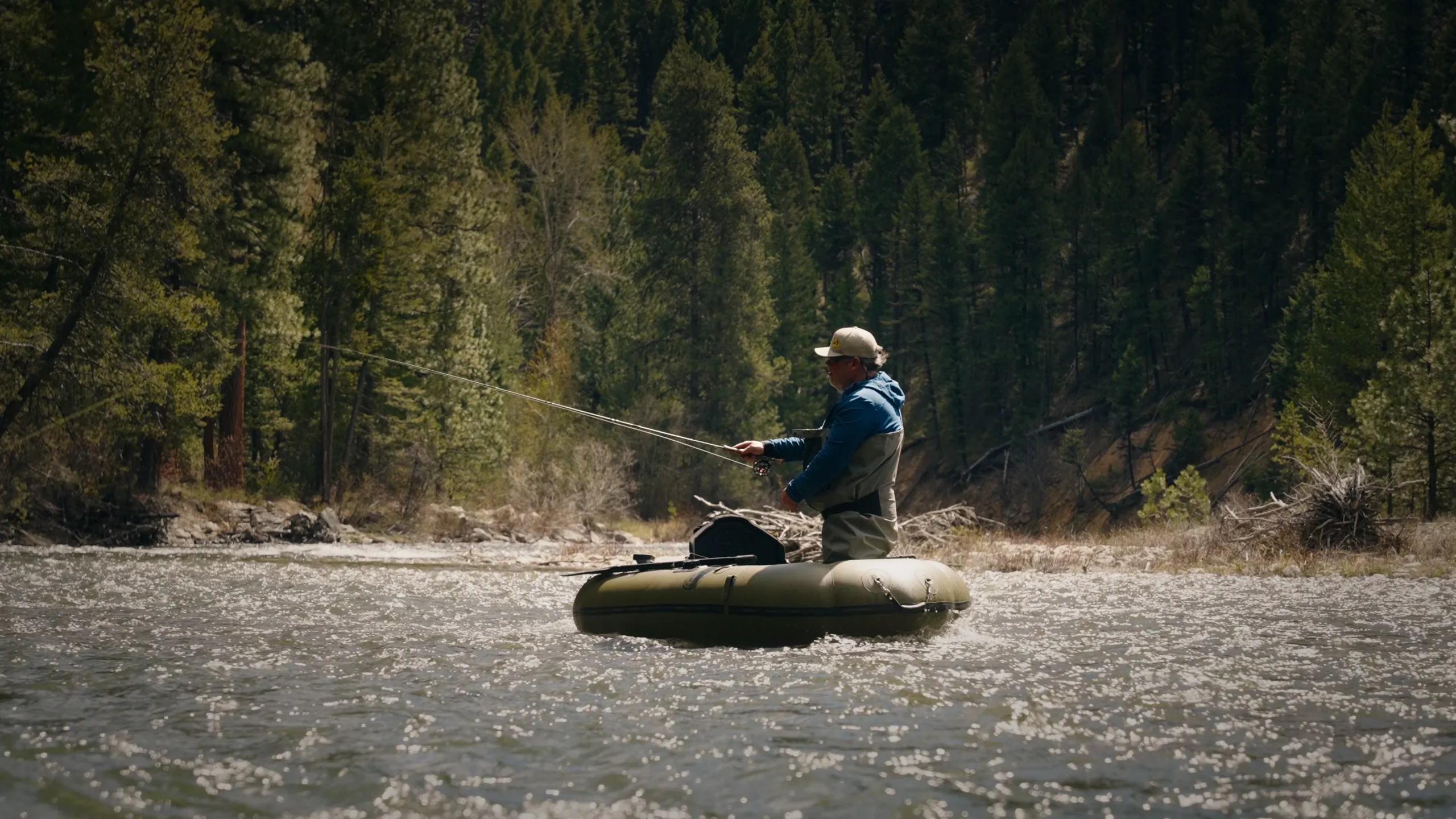
(02:46) Rich explained that their boats are designed to be lightweight, durable, and easy to transport. Their boats give anglers access to water that can be difficult to reach with a traditional drift boat or raft.
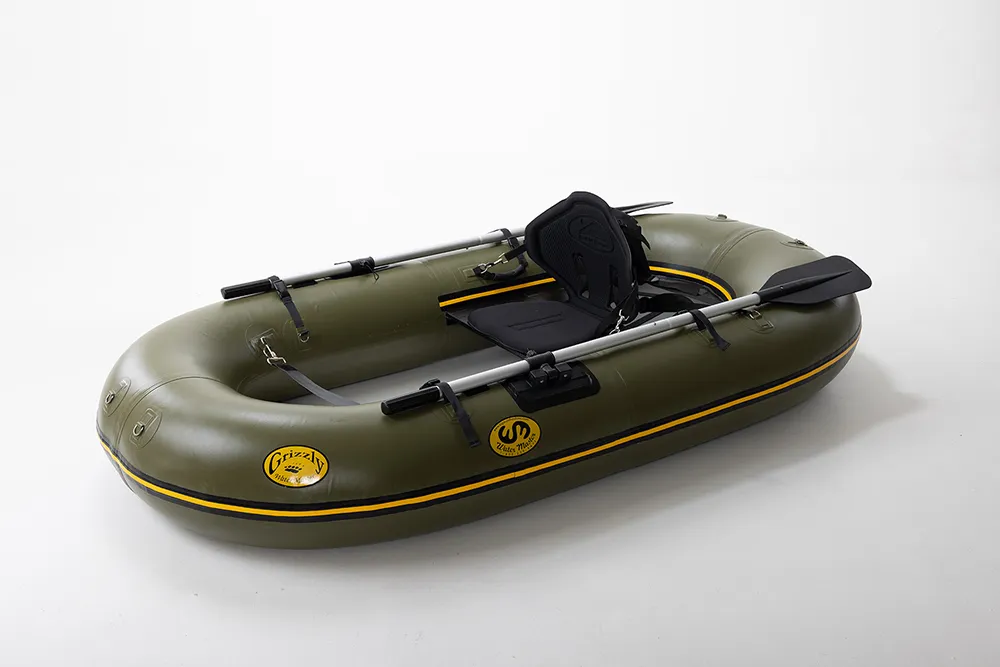
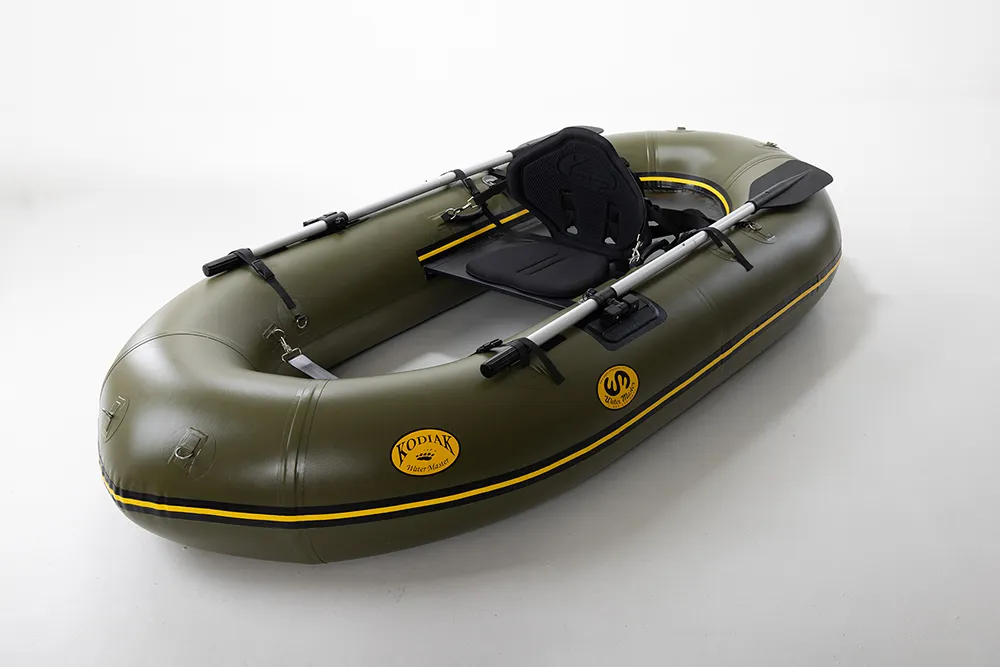
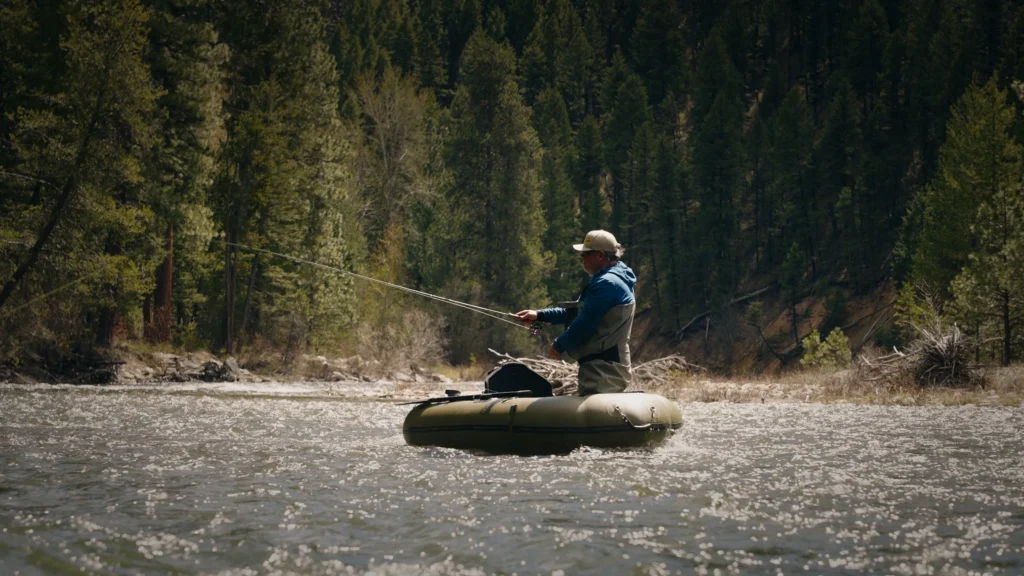
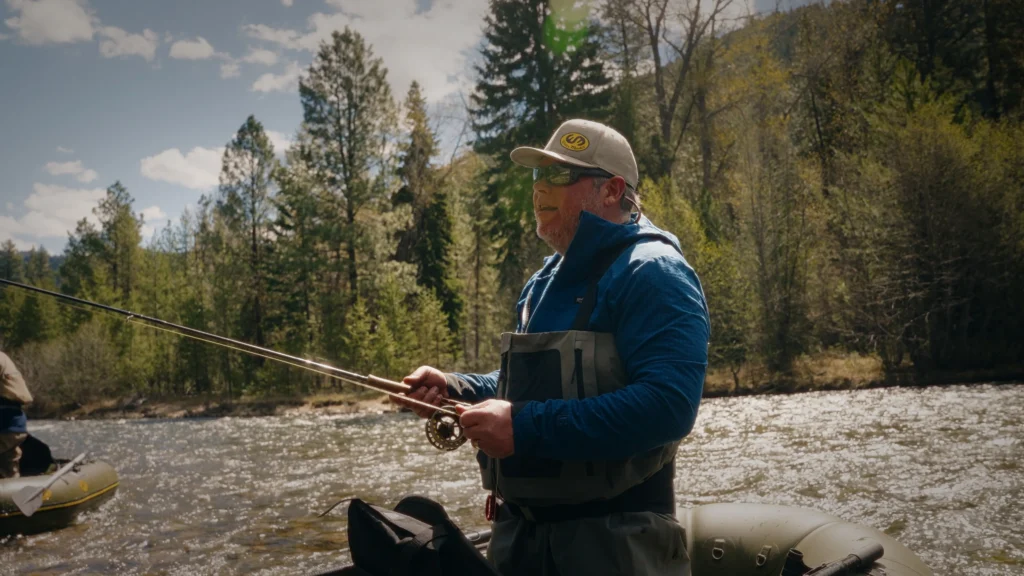
Both boats feature Water Master’s signature open-bow design, which allows anglers to use fins for better control and easily step out to wade fish when they reach a productive gravel bar.
For anglers who want more space, Water Master offers the Bruin, a larger raft designed for one to three people. Rich says it gives you the feel of a bigger boat without the weight and hassle that usually comes with it.
One feature Rich highlighted is the independent drop-stitch floor. Unlike many rafts that simply place a floor on top of drain holes, the Bruin’s design moves water out quickly while keeping the standing area dry. The floor also sits level with the tubes, helping the boat stay efficient and responsive on the water.
Rich compares it to a sports car: lightweight, quick, and built to handle a wide range of conditions.
All Water Master boats are rated for Class IV whitewater, including the Kodiak. Rich says the biggest factor isn’t the boat, it’s the person rowing it.
(00:19:12) Rich says one of the biggest differences with Water Master boats is how they’re built.
Instead of glued seams, Water Master uses thermal-welded seams. The materials are fused using heat and pressure, creating a bond that’s designed to last for years of use.
To back up his point, Rich still fishes from one of the first boats he built more than 20 years ago.
Watermaster still builds and assembles every boat in Stevensville, Montana. If you’re passing through the Bitterroot Valley, you can stop by the shop, check out the showroom, and see where it all comes together.
Rich says Water Master boats are used all over the world, from Canada and Japan to New Zealand, Europe, and Australia.
The Kodiak and Grizzly can be packed into a backpack along with the oars, seat, pump, and other essentials. Once inflated, the built-in handles make them easy to carry to the water.
Rich said the Kodiak and Grizzly are often the easiest boats for new users to feel comfortable in.
For Rich, that all adds up to one thing: confidence on the water.
Rich says Water Master designs its boats around fishing first.
Instead of using aggressive rocker like many whitewater-focused boats, Water Master keeps more tube in contact with the water. According to Rich, that means:
As he put it, more contact with the water generally means more stability and more control.
If you’re new to rowing, Rich recommends starting on stillwater or a slow-moving river before tackling bigger water. His biggest piece of advice is to learn how to back row.
When an obstacle shows up downstream, most people instinctively row toward it and try to outrun it. Rich says that’s exactly what you don’t want to do. Instead, point the boat slightly away from the obstacle and start back rowing to slow yourself down and give yourself more time to react.
He suggests practicing around imaginary obstacles until it becomes second nature. As Rich puts it, there’s no need to panic and start rowing as hard as you can. Just take smooth, solid strokes and stay in control.
According to Rich, most misconceptions come from the fact that Water Master boats don’t look like other rafts. The design can seem unusual at first, but it’s built around stability, portability, and fishing performance.
Price is another question he hears often. While Water Master boats sit at the higher end of the market, Rich says the welded construction, lifetime warranty, and long-term durability set them apart.
Have questions about Water Master boats or want to see them in action? Connect with Rich and the Water Master team on social media and follow along for the latest updates.
Episode Transcript
WFS 944 Transcript
00:00:00 Dave: Some rivers don’t reward bigger boats, they reward quieter access. Today we’re talking about lighter rafts, skinny water, technical floats, and the kind of access that changes the way you fish a river. Rich Stuber from Watermaster Rafts joins us today to break down why more anglers are moving to smaller, more portable setups that let them reach water most people never touch. Rich is going to share the story behind Watermaster, how he bought the company back in two thousand and six, and why their boats are built completely differently than most inflatables on the market. This is the Wet Fly Swing podcast, where I show you the best places to travel to for fly fishing, how to find the best resources and tools to prepare for that big trip, and what you can do to give back to the fish species we all love. In this episode, Rich is going to talk about the rocker and why the rocker design can actually hurt a fishing raft. We’re going to find out how anglers are fishing rivers hands free with fins. This isn’t just Stillwater. We talk about that today. We’re gonna find out why stability matters more than speed on moving water and the advantages of low profile rafts in heavy wind. Plus, we’re going to get into Salmonfly season floating Montana tributaries and how Pike are showing up on the Bitterroot River. You can find Rich at water Masterrafting dot com. Here he is rich Stuber. How you doing, Rich?
00:01:17 Rich: I’m doing well.
00:01:18 Dave: Great to have you on here today. We are going to get the story, a little bit of the story, the products and everything you have going. We’ve seen you out there for quite a while. You’ve got a product that works really well and we’re going to get the details on it. I know steelhead anglers, but really I think you kind of cover it all. So we’re going to touch on that and see what else we can do to get people geared in here. So start us off a little bit with your connection to Water Master. How did you first come into working with this brand?
00:01:45 Rich: I goes back to two thousand and one, and I just got out of college, University of Montana, and had a business degree and got, you know, your typical first job out of out of college. And it wasn’t super fun. Um, and a friend of mine just said, hey, I’ve got this opening at a place I work at Watermaster. We make rafts. Um, I know you’re a fly fisherman. Might be kind of cool. I was like, I’ll, I’ll do it. Yeah, sounds like fun. So I ended up working there for five years. Um, and then in two thousand and six, I ended up buying out the company, buying out all the inventory and all that and starting big Sky inflatables, home of the Watermaster. Um, and I’ve been doing it ever since. Uh, I’ve since moved from Missoula down the Bitterroot Valley to Stevensville. Um, have a nice big shop and showroom and everything right on my property. Uh, so that makes it really nice and close to home, but far enough away. Um, you know, so in a beautiful spot. So not too bad.
00:02:46 Dave: Yeah, not too bad. That’s cool. And what is it on? Maybe for those that are new to this that haven’t seen your boats out there, describe how maybe they’re different than some of the other rafts and things floating, you know, vessels that are out there.
00:02:59 Rich: Yeah. So I mean, we’ve got two featured like designs. We’ve got the smaller, uh, Kodiak and grizzly, the packable go in the backpack breakdown. Um, you can travel with them, fly with them, throw them the trunk of your car, um, just hassle free. And if you’re fishing by yourself, it really does just allow you to, to get into places that you wouldn’t otherwise with a big boat, with a trailer draft. So and then we have the Bruin, which is the bigger two to three person raft, the frame, um, again, lightweight one hundred and thirty five pounds all in, um super durable. So what we offer and what we always focus on is a combination of, you know, whitewater rugged durability, um, longevity, um, combined with, um, like adventure type rafts in a way that, you know, the raft isn’t what’s holding you back. So everything’s portable, everything’s, um, lighter weight, Everything’s easy to set up. So we try to make everything very convenient because again, more and more people on the water these days, it’s harder and harder to find a place to to fish, to get a spot, to get a float without thirty boats, putting it in front of you. And so with our boats, all of our models, it really opens up the access. And a lot of folks, you know, a lot of products out there claim access. But when you’re dealing with, let’s say the Kodiak, that’s twenty seven pounds and, you know, thirty two with a set of oars and a seat on it, you know, it just takes nothing to carry that in wherever you want to go. Uh, and even the brewing at one hundred and thirty five pounds, you know, it can be out of the back of your truck or off top of your car and, and down a hill. And, you know, it just opens up a lot of, lot of areas, a lot of spots that, you know, reduce people.
00:04:42 Dave: That’s cool. Is the Kodiak, and that’s the one I’m looking at now is the Kodiak the same basically model that was out there, you know, even before you took over the company.
00:04:52 Rich: Uh, so no, the grizzly is the original grizzly is the smallest of the boats we make. It’s the lightest. That’s the original design actually, going back to the late eighties, um, before my time. Um, but when I started there, that was when the Kodiak was really, um, conceived and then became really the, the forerunner in a way, because it only weighs four pounds more and it offers a lot more room for gear, a lot more, uh, weight capacity to take advantage of that space. Um, bigger tubes and more tube on the water just means it draws less water. So it actually sits up higher in the water and draws less than the grizzly. The grizzlies is great if you’re weight conscious. If you’re packing this in, want to do some mountain lakes, you know, want to just throw it in your RV and travel across the country and have something with you? The Grizzlies is awesome. All of our boats are really focused on stability and durability, because safety, I think, is should be the number one concern when you’re creating a boat. Um, you know, water isn’t anything to mess with rivers, lakes, current wind, you know.
00:05:59 Dave: Right. Yeah. Whitewater.
00:06:02 Rich: Whitewater, even just a downed tree in a in a mild river, um, can be a problem and can get people hurt if you have, you know, a boat that isn’t, say, stable enough or runs into it and a little branch pokes a big hole in it. Sure. Um, you know, all those things have to be taken into consideration. You know, and then there are small ones with the open bow there. They allow you to wade fish, which I think is something that, uh, is invaluable that you can float. And when you get to a gravel bar, you just stand up.
00:06:31 Dave: Oh, yeah. Describe that. Is that on the grizzly end? Both.
00:06:34 Rich: And the Kodiak and the.
00:06:36 Dave: So so basically has described that a little bit because I think most a lot of people think of rafts as just. Yeah, there’s a solid bottom. Maybe it’s. Self-inflating. Yeah.
00:06:42 Rich: So the Kodiak and grizzly is your, you know, your oval shaped. Oh, there’s no u shape or Pontoons. It’s a complete, uh, oval, and it keeps contact with the water the entire time. We don’t use rockers. We don’t lift the tubes up out of the water. We actually make them bigger at the bow and the stern. So the most buoyancy on the Kodiak is the very point, you know, fore and aft. So what that does is the front. You have the buoyancy when say you’re breaking waves, that kind of thing. You have that buoyancy to lift you out of the water. And then of course, on the back, you want that extra buoyancy because that’s where you’re throwing your gear, you’re hanging an anchor system, um, all that kind of stuff. And then again, having the open bow. So basically you sit on a board, um, and behind you is a deck space. You know, it’s all solid in the boat. Um, there’s no holes for things to fall through. So you can throw your gear behind you and it’s safe. Um, there’s a nice soft seat you sit in, but the front is open. Um, from where you’re sitting forward to the inside of the tube is open, uh, allows you to use fins so that you can float and fish, uh, whether you’re in a lake controlling, you know, battling the wind and keeping your direction, or if you’re in a river and you’re using it to manipulate currents so that you can, you know, keep your angle, your distance and speed to the bank.
00:07:58 Dave: So some people use fins in a river to as you’re floating down.
00:08:01 Rich: I don’t leave home without them. No, it’s one of the. Yeah. One of the things that’s probably the least known, I guess we make a big point of letting people know. But, you know, I guess there is some concern when you think about I’m going to put my legs down in the river, but of course, you have to know your river and you have to look downstream. You have to be aware. Um, but believe it or not, your fins, usually if it touches something, your feet are up pretty quick. Yeah. Regardless. And you’re not, you’re not wearing them through like whitewater. You’re not wearing through obstacles.
00:08:30 Dave: No. So you could literally, I think if I go back to like the dry dropper, right? Montana is known for dry dropper, right? And usually it’s one person rowing and one person with the rod in this situation, are people doing this where they got their fins and their dry dropper floating down the river with solo.
00:08:44 Rich: Exactly. And so the whole idea is hands free fishing, which has actually been like one of the taglines for water masters since the very beginning, was this idea that you could control the boat while it’s floating. Um, and what’s, what people don’t understand is you’re not actually kicking to propel the boat back upstream and slow it down. No, you’re actually changing the current by just manipulating. So basically what I do is I put my foot kind of under the seat and I scoop up water. So envision yourself riding a bike backwards. Yep. Um, and just that movement turns that current. It flips the current and basically creates what’s like an eddy under your boat. And that’s what makes you slow down. Um, so it’s a lot less effort. You’re not kicking and, you know, trying to slow down and just pointing your toes and kicking like you’re swimming, you’re actually just scooping up water. And that change in the current actually slows the boat down. And then of course, you can keep your angle by little right and left kicks to make sure you got your forty five degree and a couple big kicks. If I’m getting too close to the bank. Um, and the beauty is, is once you get it down, all your real goal is, is to match the speed of the current. So I’ll throw a dry dropper out there, I’ll throw a good mend in it, and then I’ll float with that thing for fifty one hundred yards. Sometimes if I don’t run into some weird current. Um, and I don’t think you should pull the fly off the water if you’ve got a good drift, it’s where you want it to be. And, uh, you’re, you’re just floating with it. So let it go. Let it hunt.
00:10:09 Dave: Right. Wow.
00:10:11 Rich: Yeah.
00:10:11 Dave: That’s huge. That’s huge. Yeah. So if you’re solo and I can imagine being able to, like you said, get in some of these areas maybe that are above where bigger boats can’t get to, you know, is that something where people are able to do that to get these things in like upper rivers or, and do the same?
00:10:24 Rich: Absolutely. Yep. Tributaries, upper rivers, you can get to places that, you know, have a diversion dam that’s nasty, but, you know, pick up your little lightweight raft and walk right around it, drop it in on the other side and continue your float. Um, a lot of people like it just for the, for floating somewhere they’re not familiar with, because then now they can go in there and know, gosh, worst case scenario, you know, all the backpack rolled up on the back of the boat, I can just fold it up and hike out, you know, I mean, literally worst case scenario, if the river gets too bad, maybe I didn’t know something was there. Um, at least you know you’re not locked in. I mean, a big raft, a drift boat. Boy, you got to know where you’re going. You’re not just dropping in and portaging and Portaging.
00:11:06 Dave: Is the real deal. Yeah. When you’re when you’ve got a big boat, that’s not good if you run into a log or something like that.
00:11:12 Rich: Exactly. Yeah. So and then just little things like even here on the Bitterroot, there’s a couple put ins that are only two miles probably from the actual put in, but you got to hike in, you gotta hike through trees, you know, probably eighth of a mile, quarter of a mile and set up on the bank. Um, but I’m two or three miles of river down from the massive put in. So if I get in there in the morning, I don’t see anyone the rest of the day because they’re all behind me. Um, wow. You know, I’m just in front of them, So as long as I don’t dally, I pretty much have the river to myself.
00:11:43 Dave: You’re going. And so you’re. You said so you’re south of Missoula now, or where are you?
00:11:49 Rich: South of Missoula and Stevensville. Um, we’re rural, so we’re, you know, zip code of Stevensville. If you come visit, make sure to use your smartphone.
00:11:58 Dave: Yep. Right. Yeah. You’re you’re out there.
00:12:00 Rich: But yeah, up on the bench. Beautiful spot.
00:12:03 Dave: Yeah. But you’re right in the mix of it still. Yeah. All the big rivers.
00:12:06 Rich: Yeah. And we still have the the factory of all the welders. And you know we’re still assembling product right here.
00:12:13 Dave: Right. That’s the Bitterroot that runs kind of south. Or where is it running north.
00:12:17 Rich: To south from Missoula down, you know, to where you got the West Fork and the East Fork of the Bitterroot past Darby and all that?
00:12:25 Dave: Yeah, right, right. Right on. Okay. So the.
00:12:28 Rich: River. Yeah.
00:12:29 Dave: Yeah. No, the Bitterroot is one I haven’t been on. We’ve heard a lot about it. And is it similar to a lot of the other rivers, the Clarks Fork and kind of some of those other rivers out there?
00:12:37 Rich: Know it’s different and that’s why people are unfamiliar with it. I say, go float the Clark fork. You know, if you’re not a strong, um, rower or if you don’t have the proper boat. I mean, sections close to Missoula are fine, but the farther you go south, the trickier it gets. Just because there’s an awful lot of downfall. Sweepers, logjams root balls. Um, and it’s really windy and come around the corner and be like, oh my gosh, you know. So definitely not a river. You just jump in an inner tube and. Right. Yeah. You gotta, you gotta. Yeah. Yeah. People try it, but it usually doesn’t end well. But yeah, it’s, it’s different. The Clark fork is definitely bigger and, and, uh, you know, more wide open, not the, but the bitterroots. It’s different every year. Um, if we actually get a good runoff, it can be completely different year to year.
00:13:26 Dave: If Belize is on your bucket list for a trip, take a look at Blue Bonefish Lodge. You’ll be fishing more than four hundred square miles of flats right along the Belize Barrier Reef, clear water and endless opportunity. They offer all inclusive packages, whether you’re focused on fishing every day or planning a trip with the family. You can learn more right now and start planning your trip at Blue Bonefish, Belize dot com. That’s Blue Bonefish, Belize dot com. Check them out right now. When it comes to high quality flies that truly elevate your fly fishing game, Drift hook dot com is the trusted source you need. I’ve been using drift hooks expertly selected flies for a while now, and they never disappoint. Plus, they stand behind their products with a money back guarantee. Are you ready to upgrade your fly box? Head over to Drift Hook dot com today and use the code swing at checkout to get fifteen percent off your first order. That’s drift hook d r I f t h o o k dot com. Don’t miss out. So yeah, so those are basically you mentioned the, you know, the open bottom, which is pretty unique. You know, I think there’s a lot more rafts that don’t have that. But but you guys also have the the other the Bruin, right. Is that one that came in more recently or talk about.
00:14:41 Rich: Yeah. So the Bruin came out full online in seven or seven years ago. Um and yeah, we wanted something bigger. We wanted to offer something that, you know, not everyone wants to be in a boat by themselves or they want to take someone, um, that doesn’t necessarily want to just be in a single person. They want to get up higher, maybe stand up and cast and, and that kind of thing. You can bring the cooler you got, you know, it’s that bigger boat feel and the advantages of heaven, uh, a bigger boat. But what it really offers is the space of a bigger boat. You know, it’s got, of course, the signature stability and all that stuff. Um, but it’s only, like I said, one hundred and thirty five pounds. That’s frame raft and oars. Um, and I mean, the raft itself only weighs sixty pounds. It’s self-bailing full class four whitewater, uh, Certification. You know, it’s it’s been tested numerous times. Some pretty wicked stuff. And we have a drop stitch floor. So it’s a like a stand up paddle board, essentially. Um, but what’s really unique about ours compared to a lot of our competitors is that ours is an independent floor that’s laced in to a flange that’s on the boat. And what that does allow for a very high volume of water to go out very quickly. But at the same time, it keeps the water. There’s no water up on the floor. So you stay dry. It stays in the channel. Um, but if you take a ten foot wall of water, it’ll leave the boat as quickly as it comes in. Um, there’s a lot of boats out there that have a drop stitch, but they’re kind of just laying on top of a standard floor with some drain holes. Um, and those are very slow. It takes a long time to get water out of those. You wouldn’t want to, you know, take on too much water. Um, because it wouldn’t be able to keep up. So ours is nice. Plus with that drop stitch, like I said, it’s super easy to walk around on. Um, we’ve got a suspension system that actually senses the floor up in its highest position. So it actually matches exactly the tubes. So it allows for all that buoyancy without any drag. Um, so the floor isn’t any farther down than the main tubes. Um, and it’s not sitting up high enough to where you’re not taking advantage of the buoyancy. So it makes it very, very efficiently, very quick, like a sports car.
00:16:52 Dave: Mhm. Gotcha. Yeah. That’s awesome. So you mentioned Whitewater a few times. The, the one, the smaller ones, the Kodiak. So those go through, you know, some pretty decent sized. Is there a level because I think we’re getting ready to kind of drop into some class four stuff this next week. Is there like, what does that look like?
00:17:10 Rich: And the they’re they’re the raft itself is rated for class for all our boats are rated for class four. Um, the caveat of course is who’s rowing the boat, right.
00:17:20 Dave: Yeah. That’s a good caveat.
00:17:22 Rich: Just be knowledgeable. If you’re a good strong rower, you wrote a lot of boats, you’re going to be able to take this thing any through any of that stuff. Um, like I said, the stability because we make, you know, for a wider boat, the Kodiaks four feet, four inches wide with sixteen inch tubes. I mean, it’s huge tubes for a little boat like that. Um, and then you have that lower center of gravity that the seat board is just above the mid seam, um, about an inch and a half. So you’re down a little bit lower. And so it makes just for a super stable raft. And again, there’s so much buoyancy. Um, I always joke with people that it’s kind of like when you’re a kid, try to hold that beach ball under the water in the pool. It’s really hard. Yeah. Um, and so again, we go back to the biggest tube on the Kodiak is at that point, um, when you hit whitewater and you hit a rapid, that buoyancy of that tube is what’s actually going to push the boat out of the water, because that’s not going to stay under water, you know? Um, that’s coming up first. And so that’s the front of the boat. That’s what you want to come up first. So we’ve got some cool videos on our website. Oh, you do show that.
00:18:29 Dave: Yeah, yeah. We’ll take a look at the videos. We’ll get some links out to those videos. That’ll be awesome to follow up on that. Um, so yeah, it’s pretty much, I mean, like you said, I mean, these boats have been around a long time. They’ve, uh, produced, you know, for you guys, what’s the and you mentioned the Bitterroot, have you, you’ve been a fly, uh, angler for a while.
00:18:45 Rich: Yes. Yeah. I mean, I grew up in Montana. I’m a native Montanan. You know.
00:18:50 Dave: Everybody fly fishes, right? Montana kind of everybody’s.
00:18:53 Rich: Yeah, yeah. And of course, you grow up throwing worms and bobbers and lures and, you know, you graduate and you find out that it’s funner than staring at a bobber to, to fly fish. And you’re like, this is cool. Yeah. Yep. Uh, I went to college in Missoula, so yeah, I’ve been here and fly fishing is a big part of it.
00:19:12 Dave: That’s sweet. Well, what you know, as far as what we’re looking at here on the boats, we mentioned a few of the models. What else should we know about the, you know, kind of the water master that we haven’t covered here today.
00:19:24 Rich: Um, you know, the design we’ve talked about and stuff like that. The biggest thing, you know, that is really is the construction. Um, there’s no one that really quite does anything like we do. All of our seams are thermal welded, which means we put them between two steel wheels under pressure at a thousand degree air, and they melt together and they come out welded on the other side. Um, the rest of the industry is gone to gluing. And gluing is fine for a short amount of years. Um, and then they start depending on how hard you use it and how much exposure it gets, um, that can start breaking down and, you know, that’s evident in the warranty we offer a lifetime warranty we have for since two thousand and six. Um, we back our product because we overbuild it, we know that it can hold up, we know the fabric can hold up. Um, even speaking of fabric, ours is unique from the rest of the industry because we use a polyester as opposed to a nylon fabric that’s in the PVC. Uh, polyester. Not only is more puncture resistant and tear, um, you know, the tear strength is unbelievable. Um, but really importantly, it doesn’t stretch at all. So when our raft gets two and a half to three psi, it’s hard as a rock. Oh, you’re not putting any pressure on the seams because you’re only at three psi. But the boat itself is very hard. And that’s um where many, many years ago we had to have this made and we still have it custom made because of a frameless design. You have to have a, you ever have to have rigidity somewhere. Um, and so you can’t just rely on the oarlock base on a soft tube. It’s got to be rigid. So a two and a half, three sires are literally rock hard. Um, and that’s what makes it just roll more efficiently and stuff like that. Uh, our fabric has a UV blocker in it, which is unique to PVC as well, which really allows them to hold up and not fade and not dry out. Um, my boat, the first one I ever built on the welder back in two thousand, probably three. Um, they finally let me build one and I got to keep it. It’s definitely not as nice looking as they are now. Oh my gosh. Um, look like someone was drinking on some of those right. Those seams. But yeah, I’m still using it and it’s twenty six years old, you know, so that’s awesome.
00:21:39 Dave: Yeah. You’re still using that same boat that you made your first boat you made.
00:21:42 Rich: Absolutely.
00:21:43 Dave: And you guys make all your boats there in Montana.
00:21:46 Rich: Yeah. Right here in Stevensville. Yeah. And people can come in, they can see our shop set up and we’ve got a showroom.
00:21:52 Dave: Oh you do? Oh, sweet. Okay. Yeah. There you go. So that’s a nice trip we can make down there. If we’re heading through Missoula. Just take a head south out of Missoula, right?
00:22:00 Rich: Yeah. The Bitterroot Valley is beautiful. It’s worth the drive.
00:22:03 Dave: What is that on the Bitterroot? So it feels like you hear about that, but there’s a bunch of other rivers out there, too. Does the Bitterroot maybe not get as much pressure as some of these other rivers, or describe that what your take is on? And is that the river you’re fishing?
00:22:15 Rich: Oh, it gets as much pressure. Yeah, it’s just not as big. So that, you know, um, the Clark Fork and the Blackfoot are nearby. Of course, we’ve got Rock Creek, which is more of a wade fishing river most of the year.
00:22:28 Dave: Um, but you could take your boat down rock, could you, in the spring? Could you do people.
00:22:32 Rich: In the spring? Mhm. Absolutely. Uh, which is awesome because you can just row it. And then as soon as you get to like one of those little mellow spots where you want to fish, you just stand up. And if you slip or something, you’re back in the boat. You know, you’re not, you’re not going in. So yeah, it can be a pretty cool boat for that again, requires just being a good rower. But um, it’s tricky. It’s fast. Um, but definitely doable. Um, and then yeah, then you’ve got the Missouri is a couple hours away and if the river’s here blown out or it’s not fishing, great. Then everyone heads over there. Um, but lots of options. I mean, I can get to the, the big hole in the Beaverhead in three hours. So.
00:23:13 Dave: Right. You’re right there. Yeah, you’re right in the middle of it. What is the since you started with water master, say the last twenty years or so, has the Bitterroot changed much over the years? As far as you know, fishing or.
00:23:24 Rich: Well, I think like I said, it changes every year.
00:23:27 Dave: Yeah it does.
00:23:28 Rich: So absolutely, it’s it’s in a totally different river than I first fished.
00:23:33 Dave: You mean just because of like changes in water flows and things like that.
00:23:37 Rich: Water, the channels, how it just changes different. You know, like I said, every you can’t say go left all the way. You know, it changes after a runoff. Now it’s left, right, left, right. Um, so yeah, you have that first float. If you haven’t gotten too low down from someone else, you gotta have heads up and be careful in a section. And, um, fishing’s harder, but there’s a really big fish in there. Um, not quite the numbers, but there are some big fish and it’s just like I said, it’s fun to fish that technical, um, type stuff.
00:24:08 Dave: Browns and rainbows.
00:24:10 Rich: Browns and rainbows. Yeah, yeah. You’ll get, you’ll get cutthroat. You’ll get whitefish and Um. Pike. Now, unfortunately.
00:24:18 Dave: Pike.
00:24:19 Rich: Yeah. Pike. Have moved all the way up into the into the Bitterroot. Up past, uh, Florence, even probably close to Stevensville. Yeah, as far as I know.
00:24:28 Dave: Have you ever caught a pike?
00:24:30 Rich: Oh, yeah. Oh, I have my pike rod.
00:24:33 Dave: Oh. You do? Oh, wow. So it’s that good?
00:24:34 Rich: Yeah, yeah. And you’ll see those slews and. Oh yeah, you get them to forty plus inches. Insanely.
00:24:40 Dave: Oh, yeah.
00:24:41 Rich: Yeah. Wow. And, you know, it’s just one of those things. Unfortunately, because of, uh, game waste, you have to let them go. But, uh, they eat a lot of trout. So it’s kind of one of those things. Um, so, but it is what it is. It’s the, the ecosystem as it stands. So I’m going to just go out and fish for him and have fun. Just go for it.
00:25:01 Dave: Yeah. No, it’s it’s pretty. I mean, we’re heading up north to like northern Saskatchewan to fish for some big northern pikes. Right? That’s the crazy thing right there, right here in the backyard. You know, they’re right here in Montana.
00:25:12 Rich: They are. Absolutely. Yeah.
00:25:15 Dave: What’s the, um, what is the salmonfly? Does the Bitterroot get a good sand fly? Hatch.
00:25:20 Rich: It does. Yeah. Yeah. There was, you know, farther south. Um, even more so, I think. But yeah, the bitter gets a good salmon fly hatch. You just have to catch it. Right.
00:25:30 Dave: When is that. Is that typically in June or when does that start.
00:25:32 Rich: Yeah. But with the weather we’ve been having and the.
00:25:35 Dave: The yeah.
00:25:36 Rich: It’s warm lack of a real winter and it’ll I want to keep tabs because you never know. It just may not be on schedule.
00:25:42 Dave: It might be a little earlier. Yeah. I know we’re we’re ahead and it’s definitely going to be earlier this year than, than normal. Um, yeah.
00:25:49 Rich: So and I know there’s already salmon flies down someone fishing on the big hole. I believe they already saw them down there. Um, so I wouldn’t be surprised if it’s happened or already happened. I just haven’t heard about it.
00:26:02 Dave: Right. Yep. Exactly. Is that what, uh, are you kind of fishing a lot throughout the year? Are you working more? What’s your are you still getting out a lot?
00:26:09 Rich: Oh, no, I do my best. But it is the the downfall of, you know, running a business and all that. I live vicariously through my awesome customers and.
00:26:19 Dave: Right.
00:26:20 Rich: And I do get out, but, um, try to get out at least on one good trip a year and do something fun and then, uh, try to hit the Bitterroot any chance I get. Um, we do deserve a water master day here real soon. I know Andrew works here. Has been chomping at the bit for one of those days.
00:26:38 Dave: That’s awesome.
00:26:39 Rich: Where boss says, let’s go.
00:26:41 Dave: Right. Are you guys selling these boats? I mean, I know when the first time I saw them, I think it was a steelhead angler that was floating on them. But do you guys sell these all over the country? Is there like kind of cover it all? What’s your. You mentioned Stillwater. Do you just kind of cover all the categories we do?
00:26:55 Rich: Yeah. I mean, I think the water masters are so versatile that, um, and we do, we sell them nationally, we sell them internationally. Um, I’ve got a massive market up in Canada. They do, I do really well, some really good dealers up there. Um, and in the provinces. And then, you know, we, I’ve shipped them to Japan this year already. New Zealand, um, over to Europe and Australia and stuff like that. So yeah, they’re out there more than you know, but they’re so spread out. Maybe you just don’t see them as often. But yeah, we’ve, we’ve sold these things everywhere. Um, they’re great for smaller ponds because they’re just lightweight. You don’t have to have a big boat for something that small, but it gets you off the shore, allows you to, to use fins and, and not you sit there and mess with an oar or paddle on a kayak or something like that. It really allows you to control the boat and deal with the part that you’re there for, which is fishing. You’re not there to paddle and, you know, deal with with a boat, you’re there to fish. So, um, and then you can go to the big lakes, you can even put a little electric motor on or even a gas on our bigger one.
00:28:02 Speaker 3: Oh, wow.
00:28:02 Rich: And zip around on lakes. Um, the Kodiak and the grizzly even have a bottom. That’s an accessory you can slot, you can slip on allows you to do some sight casting and lakes and stuff like that. Allows me to take my kiddos that are, you know, nine years old. I can throw them in the front with me in the Kodiak and putter around on a lake, you know? So yeah, we’ve got lots of versatility with our accessories and our setups. Um, so yeah, I think they kind of fit a lot of things. I mean, I have duck hunters. Duck hunting is.
00:28:31 Speaker 3: A duck hunting.
00:28:34 Rich: People like to use them for their decoys. So their dog on it.
00:28:37 Speaker 3: Right?
00:28:37 Dave: Yeah. Duck hunting would be awesome. Definitely. Yeah. Because it just gets you those places that, you know, putting in a boat, whether that’s a hard boat or a raft, it just takes some work. You know, you got a trailer, but this thing can literally fold up and it sounds like these smaller ones, the Kodiak people just roll them up and throw them in their packs pretty tight. Is that how they do it?
00:28:53 Rich: Oh yeah. It comes with a backpack that everything fits in there. The oars, seat pump, patch kit, the boat, um, your fins, if you get an anchor system, I mean, it fits about every. It wouldn’t fit the boat bottom. It’s about the only accessory that won’t fit in that bag with the boat.
00:29:08 Dave: Boat does it? And does it have a when you’re when it’s inflated, is there like a backpack straps out there or do you have. Do you carry it? How does that work?
00:29:16 Rich: No, once it’s inflated, if you look at. If you get a chance to look at it right inside the tubes, right next to the where you’re sitting.
00:29:23 Dave: Mhm.
00:29:23 Rich: There are two handles. And so what you do is you stand up, you face the back of the boat, you grab those handles, just pick up the boat and start walking.
00:29:31 Dave: Oh yeah. Right. That’s right. So it’s easy. You got the handles.
00:29:34 Rich: Yeah. So that’s the easiest way. Some people, if they don’t have a lot of gear, will just kind of pick it up and kind of put it on their back. But, um, I like to just pick it up by those handles. It’s really well balanced. So it doesn’t feel like the front wants to come up too high or the back, you know, it’s pretty well balanced there. Um, allows you to put a little gear there while you’re carrying it. So, but they’re durable if you just need to drag it down to the shore, you know, as long as it’s not going over nails and broken glass, you’ll be fine.
00:30:01 Dave: Right? Quick shout out to today’s sponsor AV C Rigg. They are the team in Loveland, Colorado. Turning regular vans into full blown adventure machines. Looking for a full build from the ground up, or just their killer aluminum cabinetry and storage systems? AV C Rigg helps you create a setup that’s lightweight, rock solid, and built for life on the road. Perfect for anyone chasing fish and wild places. And here’s the best part. They’ll be at the Denver Fly Fishing Show so you can step inside their rigs, meet the crew, and see what makes their work so dialed in. Stop by, say hi, and let them know you heard about them on the Fly Fishing podcast. And if you want to learn more right now and start planning your dream rig, go to av rig dot com. That’s AV C rig dot com. Albert Victor Conrad rig dot com. AV rig. Check em out. Now what if you have somebody that’s coming in and maybe they don’t have a ton of experience, or maybe they’re brand new, they’ve never really floated. Is this something where what would you tell them? They’re interested and they can see the benefit of this, you know, is there like, oh yeah.
00:31:06 Rich: Yeah, this is the perfect boat for someone because it’s, it’s going to give them a few things. For one, it’s going to make them feel comfortable and confident. Um, as soon as you sit in a Kodiak or grizzly, you just, you feel the stability. You’re like, okay, you put your hands on the tubes. You’re like.
00:31:20 Dave: It’s not like a, I always go to the kayak or canoe. It’s not like that at all. Right. Where you got to be careful. You can tip the thing.
00:31:25 Rich: Not at all. I can lean over. I can actually sit on the side tube and it’s not going to flip the boat. Uh, it’s just too stable for that. So, you know, it gives you that confidence that, okay, I feel good, I feel confident, um, you know, the knowledge that the boat is tough enough if you hit a rock or a boulder or a stick, you’re fine. You’re just going to bounce off of it. Um, you know, our, our material is insanely durable. Uh, it’s going to take a lot more than that. So just getting comfortable in that regard and then having the fixed pin system takes a lot of the thinking out of rowing. So, um, with the Kodiak and the grizzly, we don’t have an open or lock All-ACC system. We have what’s called a fixed pin system, which is where you have basically a bolt on your lock and then the cap, and then there’s a hole in the Or, and you put the the bolt through the or and put the cap on. And then, um, so when you grab the oars, it rotates out and allows you to use them. And then when you don’t want to use them, it allows you to lay the oars flat on the tube and get out of your way. So they’re not hanging in the water, you know, which is always going to be dangerous. Um, and they’re out of your way here. When you’re casting, we want to keep it clean and clear and try and keep you from having that headache of untangling or undoing that hookup. Every cast. Um, but it’s just really nice because again, for a beginner, if you think about a bigger raft, you have to learn to feather, you have to open or lock. Um, you know, there’s a lot of different things that you have to, to deal with because that or moves so freely in the oar lock. Um, you know, I’m rowing, I might forget I don’t have that pin system sometimes even in the brewing, because it has the open or lock style. And, uh, all of a sudden the Or is sideways, you know, and it’ll hit the water. It just cuts through it a million miles an hour. I’m like, whoa, you know, um, where’s that going to happen in the Kodiak or grizzly? The oars go in in ninety degrees and they, you know, you just push or pull. That’s really all you have to learn. Um, they draw very little water because of our design, because of all that buoyancy, the big tubes and all that contact, it sits up really high. I mean, I think the Kodiak with me sitting in it, I’m a big guy, um, at like two hundred and thirty five pounds. Uh, and then my gear on the back and I’m drawing three to four inches max of water, um, which allows it to row faster, allows it to be more efficient. Um, tracks really well and current. You can kind of just let it go pontoon boats and open end boats. They really like to spin anything with a rocker or no contact. Basically at the front is going to want to spin. And so our tracks way more naturally.
00:34:00 Dave: So this thing kind of stays it tracks absolutely.
00:34:03 Rich: Because it has that contact. It’s very similar in a way to a drift boat. Drift boats use a big flat, buoyant surface area, and they use all that contact to create that buoyancy to keep the boat up higher so they draw less water. So again, um, a lot of the competitors out there have that design and fortunately the rafts are too short. That leaves too much too little tube on the water. Um and so they draw just a lot more, uh, like I said, even the Bruin at one hundred and thirty five pounds, two people in gear, you’re pushing more closer to five, uh, up to six maybe. And that’s still for boat. That big is nothing.
00:34:41 Dave: No. What are some what a bigger boat. What’s a boat that draws a lot of water? What would it draw?
00:34:46 Rich: Uh, I mean, I have a thirteen foot, like, you know, fishing raft, nice little just, you know, a guides raft in here and that’s probably pushing twelve, you know.
00:34:57 Dave: Yeah. Twelve. Like double over double.
00:34:59 Rich: Yeah. Oh, yeah.
00:35:00 Dave: Wow. Yeah. That is a lot.
00:35:01 Rich: Yeah. Just because of the it’s the weight buoyancy combo. So, um, it’s a fishing style, you know, big or big raft. So they have the rockers on each end. So once you pull that tube off. Um, and again, same with, with all rockers, as soon as you bring that tube off the water, you don’t have buoyancy anymore. It’s just, it’s basically there in case you hit a big wave and it’s a kicker to kick you out of a big wave. Um, you know, our boats are all really keyed into the fishing aspect of the design. Um, and I’d rather have a boat that tracks better. I’d rather have a boat that draws less water and is more stable and that kind of thing. Yeah. Um, because I’m fishing out of it.
00:35:39 Dave: Yeah. And your boat isn’t, it’s not like, you know, you’re taking this down the Colorado River. It’s like constant whitewater. You’re kind of using it. People are mostly getting these boats because they want to fish, right? That’s usually exactly yeah.
00:35:49 Rich: Fish and recreate and, you know, go places, you know, and again, it’s ready to class for. But yeah, you’re not going to see this in as a bunch of them going down, you know, the gorge, you know, all the time just because they’re gonna, they’re gonna pick a more whitewater design boat, which is much bigger. Um, and then when you have that much weight on the water, you do have to lift the ends out a little bit. Um, but if you look at even the big boats and the Grand Canyon, even the big twenty four foot, whatever, they don’t have hardly any rocker.
00:36:18 Dave: Oh they don’t. Oh yeah. Those big gear. And even the ones like the middle fork of the salmon, what do they call those boats, the pack boats. Right. Those, I think the same thing.
00:36:26 Rich: On the water because they need that buoyancy. They need that weight capacity and they need that that lower drop.
00:36:32 Dave: Same thing. So that’s the whole idea. It’s literally getting more surface area on the water gives you more stability for more everything.
00:36:37 Rich: More stability, more control. Yeah.
00:36:40 Dave: And the only thing it doesn’t give you is, I guess they put that rocker because it blocks some waves. Is that the main reason you get a rocker on the raft?
00:36:47 Rich: Because what do you mean?
00:36:48 Dave: Yeah. Like some of these rafts. You see a big the bow comes way up and the, and the stern. spring, right? That’s that’s mainly because they want to keep water out of the boat. Is that why they’re doing that?
00:36:57 Rich: Um, you know, I do think that a lot of things when it comes to design, especially in the watercraft industry, is things, I mean, the rafting end of it, I guess, is I think everyone’s just trying to scale down bigger boats. Um, and so scaling down a raft and making it just shorter, um, but keeping the same steep rockers that you would in a longer raft. You’ve messed up the equation because the distance between the two rockers now is too short. You’ve taken off too much two. So if you’ve got a thirteen, fourteen foot, um, you know, big raft, um, it still has a lot of tube on the water because it’s fourteen plus feet long. Um, and so you’re, and again, it’s drawing more anyway, but it, you know, they do have more tube. So yeah, a lot of the competition. Um, and then keep in mind too, a lot of the competition are the rafts aren’t really a new idea. They’re. An inflatable canoe has been around for a very long time, which is kind of what a lot of the designs have been based around. Um, you know, the, the skinny, you know, smaller tubes, steep rockers. Um, those are an inflatable canoe. They’ve been around for a very long time.
00:38:14 Dave: Oh yeah. Yeah. It’s inflatable canoe like the, uh, I can’t remember the brand, but there’s a brand out there that has. It’s basically. Yeah, it looks like a canoe. It’s a kayak. But those things do well in the whitewater. Right. But they’re, but they’re not as stable.
00:38:24 Rich: Yeah. The problem is, is, is the competition is putting frames on it. And so now they’ve.
00:38:29 Dave: Oh, wow. They’re putting frames.
00:38:30 Rich: The center of gravity. And so you’ve, you know, um, so it’s just some of the competitors. So yeah, just I don’t like the idea of rockers on a smaller boat because especially a fishing raft, because you’re just, you’re taking away all that buoyancy and that contact for no real return because you’re not out there breaking giant waves. No. You know.
00:38:49 Dave: Sense. Yeah.
00:38:50 Rich: So and even if you look at a boat that’s rockered, if you stand in front of it and look dead center at it, you can see basically it creates a wall. So the tubes come up and you’ve got that floor and you’ve got almost a flat surface you’re pushing into, as opposed to if you look at the front of a Kodiak or a Bruin, you’ve got this bullet shape with the extra buoyancy at the bullet. And so it’s always going to be cutting through the water anyway.
00:39:15 Dave: Does that help? I know one thing with RA when you compare rafts to a drift boat, um, is that the wind. Right. The wind comes up. Does your boat. How does it do on the wind?
00:39:24 Rich: Well, again more contact. Yeah. Bigger footprint. You’re not going to get blown around. And like the Kodiak and the grizzly are awesome because the, the they’re so low profile. I mean, you’re literally because you sit down a little ways. Um, you’re just really low profile. I remember a long time ago when pontoon boats were all the rage. Um, yeah, they were horrible in the wind win because you didn’t have very much contact, because you had these rockered pontoons on one on each side, and then you were so high that you were like a sail. So if the wind came, you were you were gone. You’re toast. You were trying to get back to the right shore, right? Whereas we have this big footprint that holds you on the water, and you have this low profile so you don’t get blown around as much.
00:40:07 Dave: So yeah. Wow. That makes sense. Um, you mentioned kind of what we mentioned somebody getting started. If somebody was going to be learning to do this right, learning to row, where would you direct those people? Like they’re new to it to get up to that level, to feel like they’re good enough to take it out down the river.
00:40:24 Rich: Yeah. So I mean, ideally, you’re always going to try and start on like Stillwater. Yeah. Or like, if you’re next to a big old, really mundane light river that you’d hop in in a float tube, you know, um, starting Stillwater just to get the pushing and pulling, you know, not getting the oars to go at the same time feeling really comfortable cruising around a lake. Back rowing is what I would recommend doing the most of, because once you get to a river or back, rowing is going to be the most important thing that you learn because anytime there’s an obstacle downstream, you want to aim the boat at it with a slight angle away, and you want to start back rowing to give yourself more time to get away from the object. You don’t want to speed the process up by rowing forward towards the object. So you slow the boat down and you slowly angle it away from whatever object it is. And so starting, like I said, in a lake or a really easy river and like pretend, you know, hop in a like, I know that, um, I’ve got people in the Yakima, um, some friends that actually, I think Joe at Red fly shop did a video on, on just like pretending, hey, there’s a boulder right there. What are you gonna do? You know? And you’re in a river that’s barely moving, but it’s moving enough that you can practice that idea of get the boat, get the back end a little way, you know the direction you want it to go slightly angled and then just start doing back row.
00:41:49 Dave: Yeah.
00:41:50 Rich: You’ll see yourself just slowly move to the side of it and you’ll have more time, you know, to get away from it. So I take people out a lot of time and I’ll give them that whole lesson. And then the first obstacle they come to, they point the boat away from it, and they just start rowing forward like they’re going to try and outrun it, you know? That’s right. They get to it so much quicker, you know, that you didn’t give yourself any time to avoid it. So yeah, so that would be my suggestion. Just start slow. Um, but if you’re going to do rivers, just really practice that back row, set yourself up on even an imaginary object and just, you know, have control, take good solid strokes, no reason to freak out and just start paddling as hard as you can just one after another. Solid strokes. What’s nice about our design too is is with a rocker every time you um, or a pontoon boat with the open ends. Any of those designs. Every time you row, the back of the boat dips down. Or if you’re rolling forward, I guess the front and the front of the boat comes up and where ours doesn’t, I’ll go back again to the fact that we maintain that contact in the biggest tubes on the water. So when I’m back rowing, it takes an awful lot of talk to push that tube down. And so now I get a lot more efficient rowing, because when I heave and ho on those good solid strokes, the boat is not dipping down. It’s not changing position on the water. Um, it maintains that position on the water because I’m not, I can’t row hard enough to push the back of the boat down. Whereas if there’s a rock or you have a natural leverage point, obviously where it can lift up in the front, down in the back.
00:43:29 Dave: That makes sense. Yeah. And I, well, I’m looking there’s a video here. You mentioned Reds fly shop, Joe. He’s got a, I think probably a couple videos on the water master here. One he’s fishing out of. Yeah.
00:43:39 Rich: They’re amazing. Yeah. They’re on the Yakima River in Ellensburg. If you’re anywhere near them, check them out. Knowledgeable? They know the Watermaster, that’s for sure.
00:43:48 Dave: There you go. Cool. This is great. Okay, so and what about on the other end? Maybe some, you know, do you get some misconceptions from people out there when it comes to rafts or your wraps out there? Or they think one way and maybe they’re not quite right.
00:44:00 Rich: Uh, usually after like actually discussing like why we do what we do and why the design is what you.
00:44:08 Dave: Mean, like with the, with the open, with the flat and the open, like you’ve been describing the open bottom and stuff.
00:44:12 Rich: The open front, the no rockers, that kind of thing. Yeah, yeah. I think the biggest misconception is just that everything else doesn’t look like this.
00:44:21 Dave: Yeah.
00:44:21 Rich: You look at every one of our competitors, which is the small boats and the larger two person boats. Um, not a one of them looks anything like our boat. And so I think that’s the misconception is that it looks so different. Um, but we’ve been around this time. It’s not a new design. We came up with it, you know, and I won’t take the credit. I wasn’t around the grizzly came about. So the initial concept, um, but we really, we’ve gone a long ways with that same, all the advantages of that concept. And we’ve expanded on that with the, with the other models. Um, but again, for the fishing world, for fishing, whether it is small ponds, lakes, bigger lakes, because again, you have a motor yacht. Um, and then rivers, you know, rivers, just the access, the, you know, not having to have your traditional boat launch or trailer, um, you know, for the fishing side of it. Um, the only I guess people, the price would be. So we are the higher end price. Um, but again, lifetime warranty assembled here in the US welded seams and, and to me, I’d rather spend more on a boat that is going to take care of me when I’m in the river and I hit something or I get turned sideways on a boulder or whatever happens. Um, water is water power. Water is going to be crazy sometimes, and I don’t want to worry about the boat being what gets me hurt, you know? So I want this quality. I’ll use a Cabela’s fly rod before I’d be in a cheap boat.
00:45:48 Dave: Right?
00:45:48 Rich: Right. You know what I mean? Yeah. Um, so you know price actually it they aren’t for what we do. I believe they’re cheap for the amount of work. If they could come in here and watch us. Yeah, they’d be like man, you should charge more.
00:46:01 Dave: But that’s right.
00:46:02 Rich: But we want to stay relevant. We want to make sure that, you know, everyone that can. I don’t want to be so overpriced that, you know, we’re catering to a very small, you know, sure. Wealthy people. I’d like to have everyone have a chance in the water, master. So we try to stay relatively low as best we can.
00:46:19 Dave: Nice, nice, good. Well, let’s take it out of here just with our tips and tricks segment here. We, uh, you mentioned a little bit at the bitter. I’m always interested. It sounds like, you know, that’s a river we haven’t been on. I’d love to get out there. If somebody’s fishing here, it sounds like maybe you’re not guiding and doing all that stuff, but what are you telling somebody? If they’re new to the Bitterroot and they’re thinking they want to get out there and have more success.
00:46:38 Rich: If they’re new to the Bitterroot, I absolutely say they should be contacting a fly shop for advice. Now, I’m not saying you have to book a guided trip by any means, especially if you’re a efficient rower. Yeah, whatever.
00:46:51 Dave: Yeah. Let’s say, let’s say they let’s say they have one of your boats. They’re pretty good at rowing and they’ve done it, but they’re new to the Montana is there’s quite a there’s a few fly shops right there in Missoula. Right. Is that those the closest area?
00:47:01 Rich: Yeah. And I would just contact them. You know, they’re all great. I mean, I really have not there’s not a bad shop.
00:47:07 Dave: Yeah. How many shops are there in Missoula?
00:47:09 Rich: Oh, geez, I don’t know. Probably four or five. Five. Yeah. You know, I would recommend grizzly hackle. Yeah. Grizzly hackle shop. Uh, Brazilian angler is a great shop. Kingfisher is a great shop. Um, yeah, some really good ones. Uh, there. So, um, I would just call, just say, hey, I want to float the Bitterroot for one. Is there a section? Here’s my kind of level. Um, what do you think there? Especially like grizzly hackle. They’ve worked with us a lot in the past. They’re not going to, you know, they’re going to be happy to to help us. Or if there’s a section you really have in mind, say, hey, is there anything deadly in there? Because they’ve had guides on all those sections and they’re going to tell you, hey, don’t do that. Float or stay, River left the whole way. Don’t break. Right?
00:47:51 Dave: Because that happens all the time. I mean, all around the country, right? A log gets knocked down on a Sunday. You come around the corner, you’re like, oh.
00:47:56 Rich: Yeah.
00:47:57 Dave: Yeah.
00:47:57 Rich: And that’s the tricky part about the Bitterroot. Now the Clark fork again, that’s different.
00:48:01 Dave: Yeah, it’s.
00:48:02 Rich: Bigger as long as you if you’re, if you’re a decent rower and you know what you’re doing, the Clark works great. Most I mean, of course, there’s a couple sections way down that are whitewater sections, but you wouldn’t be fishing those anyway. Um, but yeah, yeah, I would definitely, uh, just contact fly shops if they’re new for sure.
00:48:19 Dave: Yeah. The Grizzlies. Great. And I know when we first went to Montana many years ago, we always stopped the grizzly hackle back. And this is way my high school days.
00:48:27 Rich: Yeah, been around a while.
00:48:28 Dave: They’ve been around a while. Yeah.
00:48:29 Rich: Actually all three of those shops I’ve named, I mean I started moved to Missoula in nineteen ninety three, and I’m pretty sure they were all.
00:48:35 Dave: Oh, that’s.
00:48:36 Rich: Cool.
00:48:37 Dave: Yeah. That’s when we were we were coming through there in ninety three. That’s awesome.
00:48:39 Rich: There you go.
00:48:40 Dave: So, so ninety three. So and a couple random ones before we get out of here. I always love this. You know, Montana, again, it comes down to for those people who haven’t been to Montana, how do you describe it? There’s there’s a bunch there’s always there’s a new movie, right? There’s these shows out there. What is it about Montana that, uh, you know, how would you describe it?
00:48:57 Rich: It’s nothing like Yellowstone, except for the mountains.
00:49:01 Dave: Oh, right. Yellowstone. Yeah. That’s right. Yeah. And I haven’t seen that yet. Yellowstone is one of the.
00:49:06 Rich: Just to everyone. Yeah. Everyone likes that. Show that we are not like that.
00:49:09 Dave: What about the what about the Madison? Have you seen that show?
00:49:13 Rich: I have not yet. No, but, um. Yeah, I’ll check it out.
00:49:17 Dave: I heard actually, you know who I heard, you know, um, is Mike Lawson was on the podcast and he mentioned that Madison was, is a great show. He’s like, you gotta, you gotta watch it.
00:49:26 Rich: I’ll check it out. Yeah.
00:49:28 Dave: I was the same way because I was kind of like, yeah, I’m not quite sure. And then I actually watched kind of, I guess just started watching the first episode and yeah, it’s pretty good. It’s pretty.
00:49:36 Rich: Good. Okay, I’ll check it out. I can’t remember the name, but somewhere at the trade shows that I hang out with said that they did a little bit of the fly casting lessons and stuff for that.
00:49:46 Dave: Yeah, yeah. Gotcha. That’s it. So so what is your what is your you haven’t seen that. What’s your, uh, when you’re not working, what’s your media? Are you watching movies? Music? What are you, uh.
00:49:57 Rich: Music. Uh, me and my wife, we’re lucky with three kids. Get a episode of a TV series on. Yeah. Um, yeah, that’s the extent of it. And then, uh, catch a little bit of news as much as I can stand. And then.
00:50:10 Dave: Right.
00:50:12 Rich: Yeah. Busy. Super busy. I got kids that are in baseball and rock climbing, and I got a senior in high school graduates three weeks. He’s going to college at Boise State. And so lots going on. Yeah. Cool.
00:50:27 Dave: Awesome. Well, Rich, this has been great. I think we could probably leave it there today. And definitely if anybody wants to connect with you, we’ll send them out to Water Master dot com and they can pick your brain on any other questions. But yeah, man, thanks for your time today. We’ll talk to you soon.
00:50:39 Rich: Yeah. Thanks for having me.
00:50:42 Dave: All right. If you get a chance, check in with Rich, find out what they have to offer there. Anything we missed? Water master rafts. You can check in with them right now. Let them know you heard this podcast as well. All right. I want to let you know if you’re interested in Belize, if that’s on your bucket list or if you’ve been there, you want to go out with the wet fly swing crew, check in with me, Dave at swing dot com. We’re putting together some good stuff here. Excited for Belize this year? Please check in with me and I’ll get you some details on that. Dave swing dot com. If you are a pro member, you get access early access. So please, if you’re in pro or you want to access pro, check in with me as well. You can go to swing dot com slash pro to join. And we’ll let you know how to get in on our next cohort, which is going to be happening with the boot camp. The boot camp is right around the corner as we speak. If you’re interested in that boot camp, this is a bunch of great master classes free online, and it’s our chance to share a little bit inside. Look at wet Fly Swing Pro. All right, time to get out of here. Hope you’re enjoying this one. Hope you have a great afternoon, a great evening. If it’s morning, maybe you’re on the river. Maybe you’ve downloaded this podcast potentially, if that’s you and you’re listening right now and maybe you’re in a water master would love to hear from you. Check in with me, Dave at web dot com. And if you are someone else that’s never checked in, please do that. Always love to hear. If you’re listening to the podcast and what we can do to make it better for you. All right. Thanks again. We’ll talk to you soon.
00:52:04 Speaker 4: Thanks for listening to the Wet Fly Swing Fly Fishing Show. For notes and links from this episode, visit wet fly dot com.
I always enjoy a good boat conversation, and Rich brought plenty of insights in this one. If you’ve spent time fishing from a Water Master, or you’re thinking about adding one to your lineup, let me know what you think.