Fly fishing travel isn’t what it used to be. The easy trips are getting crowded, and the places that still feel untouched take a little more effort to reach.
In this episode, we get a real look at what that next level of travel looks like. Will Blair walks through two very different fisheries—the remote flats of the Bahamas and the wild rivers of Kamchatka—and explains how both are evolving right now.
This is a full-on fly fishing travel guide, from logistics to species to what actually matters once you get there.
Will starts with Kamchatka and what’s changed since the travel shutdown in 2022. The biggest challenge hasn’t been the fishing—it’s been getting there.
The program coming back is the smaller helicopter setup, where anglers fish multiple rivers within a short flight from base.
Instead of committing to one system, you’re moving daily depending on conditions. That flexibility is a big part of what makes this trip unique and more efficient.
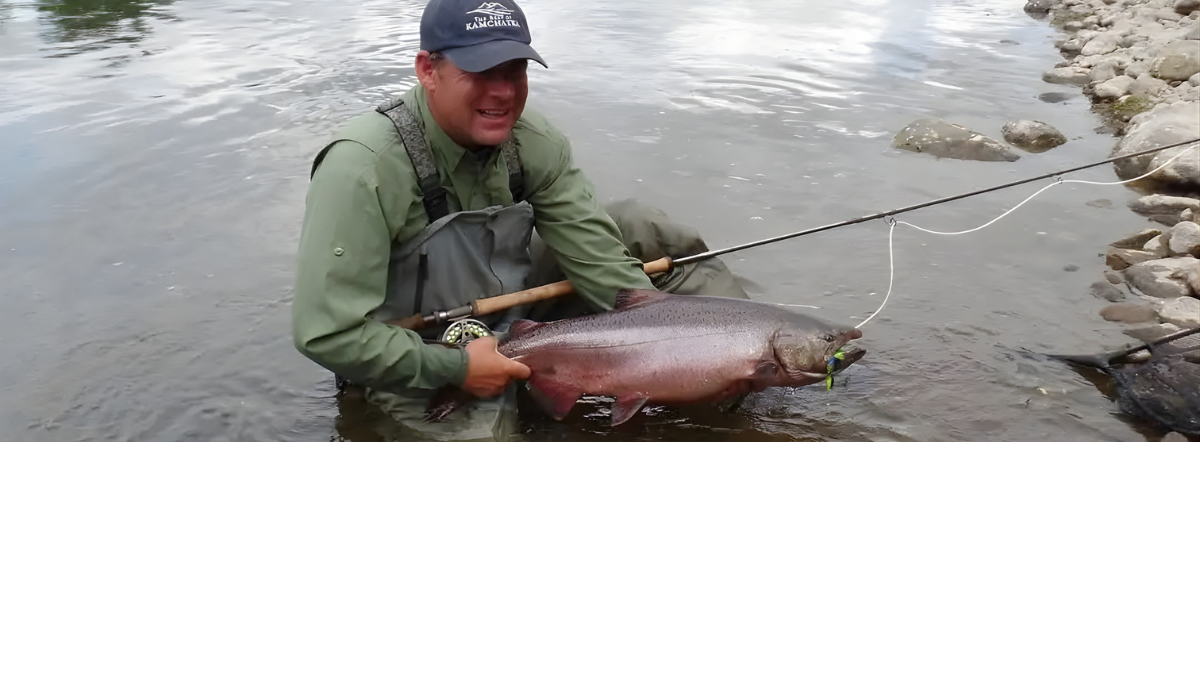
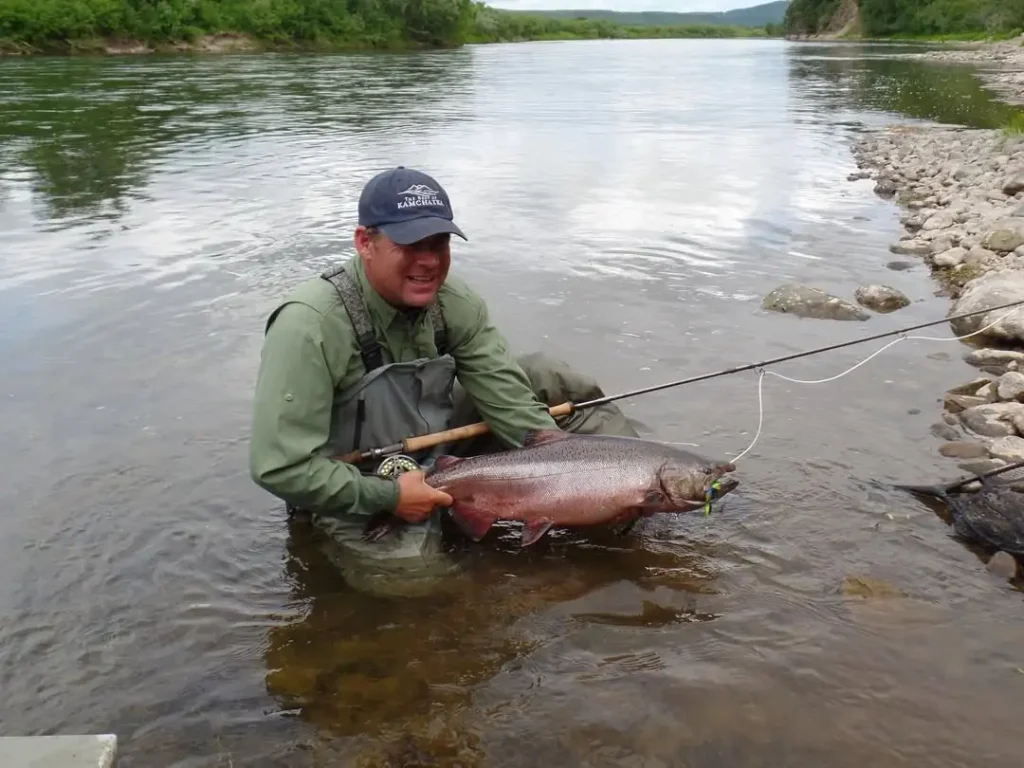
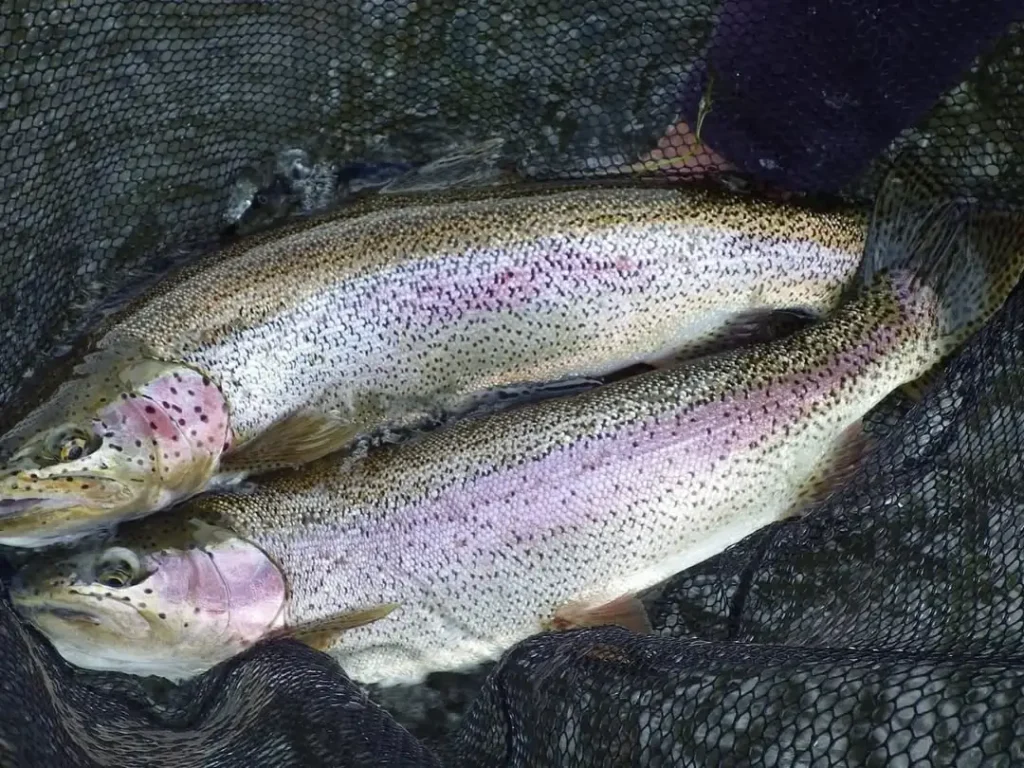
This isn’t a salmon trip. Kamchatka is all about wild rainbow trout that feed on the surface.
You’re fishing dries, mice, and streamers to aggressive fish in rivers that haven’t seen much pressure. Most fish fall into that strong 24–25 inch range, with the chance at something bigger.
Will shifts to the Bahamas and how Ragged Island came together. After passing on it years earlier, he finally made the trip down—and the fishery immediately stood out.
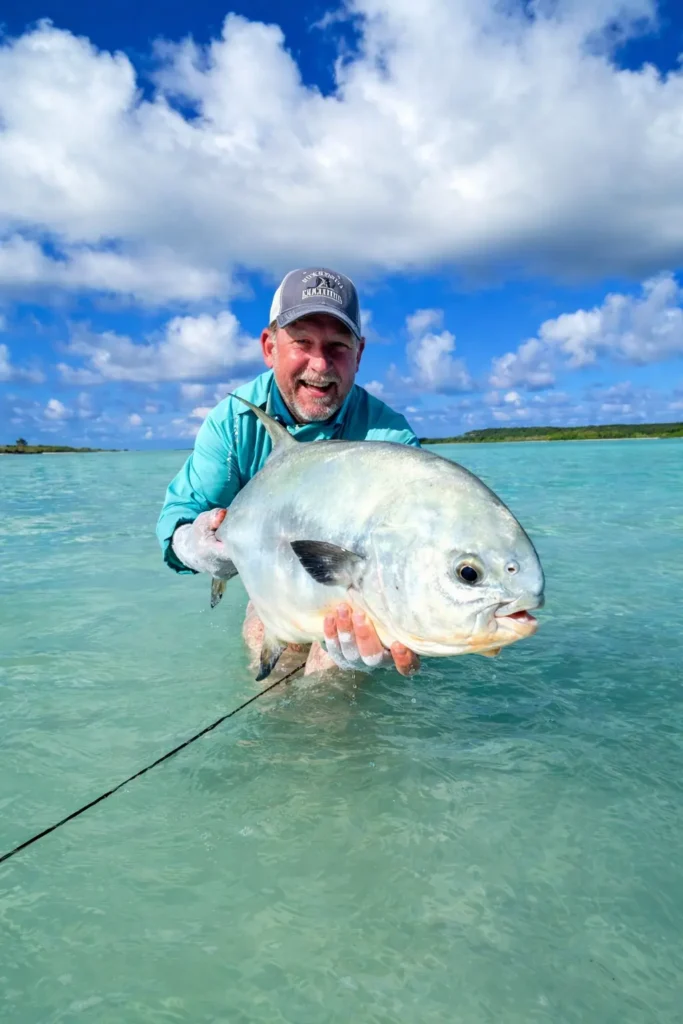
Within minutes of arriving, he saw bonefish over ten pounds. That first look was enough to show the potential.
Ragged Island is remote even by Bahamas standards. There are only about 28 people living there, and no other fishing lodges work the area.
The program stays intentionally small with just four anglers per week. That keeps pressure low and gives anglers a completely different experience compared to more developed destinations.
The main season runs from late February through mid-May, with a short fall season after hurricane season.
Fishing is mixed depending on conditions. You might target big bonefish early, then shift to permit as tides and weather line up. Tarpon and other species show up as well, adding a multi-species feel to the trip.
Getting there starts with a flight into Georgetown, Exuma, followed by a charter to the island. Most anglers come in a day early to keep things smooth.
What really stands out is the family-run operation. The lodge is built around local partnerships, and everything from guiding to meals is handled by people who live on the island.
One of the standout moments in the episode is the story of a local kid who dreamed of becoming a pilot—and ended up flying guests after getting support from visiting anglers.
When the conversation turns to permit, Will gets into the details that matter.
The biggest mistake is waiting to feel the take. If a permit moves to your fly and pauses, it’s likely already eaten it. Waiting usually means you miss your chance.
Other common issues include casting too far, crossing the fish with your line, and not getting the fly down quickly enough.
Wind is part of the deal in the Bahamas, and success comes down to efficiency.
You don’t need long casts—you need fast, accurate ones. A clean 40-foot cast with minimal false casting is far more effective than trying to stretch distance while the fish moves off.
Keeping the rod tip low and driving the cast helps cut through the wind and keep control.
To wrap things up, Will shares a simple travel tip—slow down.
Ask questions before booking, give yourself extra time, and avoid tight travel windows. The more thought you put into the trip ahead of time, the better the experience will be once you arrive.
Episode Transcript
00:00:00 Dave: Destination. Fly fishing is changing. The easy trips get crowded, the hidden places get harder to reach, and the best experiences often come from people willing to build something far away from the usual path. In today’s episode, you’re going to hear how Will Blair is building and rebuilding access to some of the most unique fisheries on the planet, from giant bonefish and permit in the Bahamas to the remote rainbow trout programs in Kamchatka. It’s all here today. This is the Wet Fly Swing podcast, where I show you the best places to travel to for fly fishing, how to find the best resources and tools to prepare for that big trip, and what you can do to give back to the fish species we all love. Will Blair is back and we’re going to get an update on his travel program. We’re going to find out what makes Ragged Island in the Bahamas such a unique fishery for giant bonefish. And we’re going to talk about permit as well. Tarpon some other species in that area. We’re going to also get an update on Kamchatka travel and how this is opening back up, and what this means for anglers looking for a true wilderness experience. We had will on, uh, about four years ago to talk about this program before things kind of got a little crazy there with the war. We’re going to get an update on that. And we’re also going to find out about travel logistics, access and timing and how this matters and fits in with all the fishing and planning we’re all doing. And, and what will is learned from spending decades helping anglers reach places most people will never see? All right, this is going to be a good one. Always great to get an update with Will. You can find him at best of the wild comm. Here he is. Will Blair. How’s it going today Will?
00:01:30 Will: Oh it’s good down in the Bahamas, so I’m always in a good mood when I’m in the Bahamas.
00:01:35 Dave: Yeah, that seems like a good place to spend time in the Bahamas. Is that. Are you there for a few months out of the year?
00:01:41 Will: Yeah, a couple months. I don’t spend the entire season here, but I show myself for quite a bit of presence. Spring and fall. I really like the fall, but I like spring’s grade, too. The water’s just not as warm for snorkeling, So I like to come down a couple months, a year, go out fishing a lot with the gas. You know, work with the guys. It’s a work in progress.
00:02:09 Dave: Yeah. This is awesome. Well, we’re probably today. I think we’re going to talk about the program down there at the Lost Key and tell us straight up from the top, because we’re going to talk. We’re going to bounce around a little bit. But where is the best place if people want to follow up on this Bahamas operation? Because it’s pretty unique, it sounds like. But give us the website.
00:02:27 Will: So loski lodge dot com. I keep it really up to date with current pricing, current availability, new photos. That’s probably my most active website. So I I’m on there all the time. I think it’s up to date right now. I know it is for availability and pricing and all that. And, and it’s a low key deal. We only take four people a week. So it’s, it fills up fast and it’s a unique kind of offering because no one’s here. There’s no other fishing lodges, there’s no fishermen. There’s cruisers in the springtime, they the sailboat people, the cruisers, they’re they’re out, but they never flats, fish. And um, so anyway, we have two boats, two guides for anglers and they’re out right now fishing.
00:03:23 Dave: That’s perfect. Yeah. It seems like your operation. We’ll talk more about this. I know you’re not just in the Bahamas and but it seems like it’s this remote experience because Kamchatka is the other place. You know, that we had you on the podcast back in two eighty three. It was almost I think it was about four years ago. Um, and it was one of the best episodes I think we’ve ever done because you really covered that program, you know? Well, I don’t know if we should say it’s because of the area, because everyone wants to go to Kamchatka or you know what I mean? Or just, you know, I don’t know what is it about? Maybe. Maybe. Start there. What is the update on Kamchatka? Are people still. Because I think the word got out that, you know, because of Russia, there was no. Don’t go there. Don’t go to Kamchatka. Are people still fishing there?
00:04:06 Will: Well, so the deal is, when the war started, February of twenty twenty two, we had four programs completely full, one hundred and sixty three people booked. And, uh, that was probably the toughest six months of my life, getting everyone squared away, getting things taken care of so that no one, you know, people feel like we’re taking care of them. And, you know, it really looked pretty dire, mostly because people always ask about the Anchorage Petropavlovsk flight. And for many years that was something we used. What people don’t understand is it wasn’t really an airline. It was a charter. And so that charter was actually run by it for many years with different Russian airlines. By a company out of Japan. And they pretty much have, hey, they’ve they just don’t show much interest in it. It was always sort of tenuous. It had high sides in that people could get there pretty quick. The low side was it was once a week and if you missed the helicopter on the way home, you went home the long way anyway, which didn’t happen very often, but it did happen. Weather related delays getting out of camp. So anyway, a couple of years ago, I started seeing all these posts of bear sheep and moose hunters on Instagram, Kamchatka. So I called the guy who was running those, and he let me talk to a couple of his customers that went and they’ve been going now, this will be the third year that pretty good numbers of groups of hunters are going to Kamchatka. And, um, right now it looks like they might be rerouting this spring because they the original flight into Kamchatka was pretty long. So he had a New York, Dubai, Dubai or Istanbul to Moscow, Moscow to Petra. And that’s a long haul. And I just wasn’t really into it. It was not that I don’t think it’s a value. It’s just man it’s.
00:06:28 Dave: Yeah. What is that haul. How many hours was that one. You just it was.
00:06:31 Will: Like thirty one hours of flying.
00:06:33 Dave: Thirty one hours.
00:06:33 Will: Yeah. Right, right. And so last summer, last spring, the flight schedule between Beijing, Vladivostok opened up, and now China and Russia have visa free travel. So there are lots of Chinese flying to Vladivostok, Khabarovsk, and there’s daily flights from both those cities to Petro. So it’s one long flight to Beijing and then two short little hops. Now, what people don’t realize is in two thousand and seven, we did one hundred and sixty people through Seoul, Korea, Vladivostok, Petropavlovsk. And it worked pretty good. And one of the most fascinating parts about it. You never have to worry about missing your helicopter, your plane once a week, playing home. Which two thousand and seven was a really bad summer for weather. And we we missed the you know, we missed that summer, but it didn’t matter because you just went on a flight the next day that was already scheduled and away you go. So that’s significantly less flying. It’s about half it’s a little more than half of the flight through Dubai, Moscow, Pedro. And so I, I’ve got a few groups, a couple groups that are going to do my helicopter Rainbows from Above program this fall. And um, our jet boat lodge on Osbornia is really just untenable because you need to fly in about three or four mi eight helicopter loads just to open the doors. So it really takes about a sixty, seventy, eighty person season to make it financially viable to do it. Whereas the helicopter program, it’s four people a week. It’s out of my Russian partner’s spring bear hunting lodge, summer bear viewing lodge, and it’s still up in operation all the time with people. So there’s no startup cost. We just rent the helicopter, lease the helicopter, and boom, we’re off back and running just like we ran that for six seasons. It’s really, you know, spectacular because there’s all kinds of there’s. I just counted it the other day. There’s fifteen rivers all within twenty five minutes that are all significant rainbow trout rivers.
00:09:05 Dave: Yeah. When we talked a few years ago, that program. Is that kind of what you’re talking about or is it a similar program depending on, are there different places you can go to out there?
00:09:14 Will: It’s no, this is this was our. So I had three standalone programs that operated for many years Jet Boat Lodge on Azure and a float trip on two years and then rainbows from above from two year lodge at two year lake, the other end of the lake from where we started the float trip. And that’s got a big lodge. Got hot springs on site and it’s super beautiful. But we ran that for six seasons. And you know, it’s not like a new thing.
00:09:46 Dave: Yeah. That’s right. Because we talked about the float trip. I think that’s what we focused on was that float trip, which we stopped at. I think on along the way there’s some cabins you stop at and stuff. Yeah, that was so we didn’t get deep into the jetboat or the other, the rainbows from above. Right. But what you’re saying is you have some of those programs you’ve already done are back. And so people can actually, it sounds like can go this coming year.
00:10:07 Will: Yeah, I have a few spots left. Nice. And you know, I could take lots of we could do as many as eight groups of four, thirty two anglers for the season. But I think we’re probably going to end up with three or four groups. And I’m going, no matter what. I told my wife, she’s like, I know.
00:10:29 Dave: Yeah, you’re going, is this when is the time? When would the trip be?
00:10:33 Will: Mid August to mid September is really the prime weeks. Uh, the first week of September two through nine is sold out. And then I have a couple spaces in the week before and a couple spaces in the week after that, nine through sixteen. And so I just am really trying to hit it on the head. And those are prime dates for weather is generally dry, cool, beautiful fall weather and the mosquitoes are all gone.
00:11:04 Dave: So that’s this summer. So we’ll put a link. And if people listen to that episode we did back in, you know, two eighty three, will they get a feel? Will that still be a feel for what it’s going to be like?
00:11:14 Will: Sure. I mean, the interesting part about it is Viktor Rybakov is my partner since nineteen ninety nine. He’s still my partner, so he’s going to be doing all the stuff he always has done logistics, transportation, you know, everything. The nice part about it is it’s such a small number of guys. So for. So Svetlana Halavi will be our chef. She’s also an English teacher and been our manager since nineteen ninety nine. Her son, who is basically my right hand man over there, um, will be guiding with me. So it’ll be me and him guiding. And then we’ll either have Balaji, who is one of the pilots, or Dima, the other pilot, and it’s just like we did it for years. It’s will be, you know, it’s it’s not a reinvention. It’s a reintroduction.
00:12:10 Dave: Right. Yeah. So this is going to be you. So you’re going to be people are going to be able to fish with you out there in Russia. Yep. Cool. Okay.
00:12:17 Will: Yeah, I’m excited about.
00:12:19 Dave: It. Yeah. This is exciting. I think when we talked last time we did this in twenty two. I think we probably talked late in twenty one. Right. You know I was getting excited because I was thinking like, oh man, Kamchatka, this would be the ultimate trip. I mean, I could see why obviously you get sold out because it’s one of those places, you know, you can’t think of a more remote or and. Right. Big rainbows. Is it still known for that? Is that what Kamchatka is the fishing is known for.
00:12:43 Will: Yeah. It’s really, you know. And I’ve told people for years, if you want to go salmon fishing, go to Alaska. There’s lots of fabulous salmon places. Kamchatka is all about rainbows on the surface. Mouse streamer and mayfly hatches. Stonefly hatches. Cat attaches. So. So it is a rainbow fishery. We do catch dollies. We do catch grayling and some other weird endemic species like Kunja. Eastern Siberian Whitespotted char are in most of the rivers, but not much salmon. We might see a few silvers on their way up that time of the year. Chums, Kings, Humpies they’ll all be dead. There’s actually a second run of fall chums that we’ll probably see a few of spawning, though not really fishable salmon. So we’re focused on rainbows and. And you know, there’s lots of great places to go catch rainbows, but, uh, these are the native rivers. Like, uh, we go over to the west Coast. It’s about a fifteen minute helicopter ride right up the valley in front of the lodge and over the hill, and you drop into the T Guilhe River drainage. That’s where the Russian biologists think that rainbow steelhead salmon, one of their natal habitats. And, um, we fish a bunch of spring creeks over there that are just loaded with great big rainbows. And, you know, potential thirty inch trout. But, you know, like I was talking to someone here at the lodge yesterday about it. If guys want that thirty inch rainbow, I still think the NAC, NAC, Kenai or Keishak are better. Thirty inch rainbow because they have those lake associated fish where all the fish in Kamchatka are river fish. You’ll just catch a lot of twenty four twenty five inch trout, right?
00:14:38 Dave: Which is pretty solid. So. Okay. And and then is the loss or let’s see with best of the com. Or would it be the best place to track you down if somebody wants to find out more information.
00:14:48 Will: Well, so I have my Kamchatka stuff on the best of the wild website. And, and I’ve also had a website, the Best of Kamchatka. Com for twenty something years and I just updated it with new information. And the thing that I really pride myself on is if someone contacts me, I get right back to them as fast as I can and they can call me and we could talk about it. And it’s really, you know, I’m open door policy asks the hard questions now, so we don’t have to worry about it later.
00:15:23 Dave: Right. Good good, good. So, so basically, and so it sounds like this program, there’s no worries. You don’t have to worry about, uh, Vladimir Putin or anybody coming over and messing with you. This is going to be a solid trip.
00:15:34 Will: No, it’s the only real change is you can no longer get a ninety day single entry visa. They’re only issuing three year Multi-entry visas. And so I’m using Red Star Travel, who I’ve used for twenty something years, to do all the visa work. They’re up in Seattle. Roman and Albina did thousands of visas for us over the years. And they’re just dynamite. And that’s no problem. And you know it’s it’s really going to be pretty straightforward. All the hunters have had great trips. And it’s interesting because the Safari Club show a few weeks ago in Nashville, there were two Russian outfitters there from Kamchatka, and there were at least three or four booking agents that were selling Kamchatka hunting trips, but not a fishing trip. So one of the things that also pushed my button was last year, guy who contacts me pretty regularly from South Africa. Went and fished Kamchatka with some South Africans and two Americans. And I talked to the one, one of the Americans. And it went smooth as could be. And they had a great time. And one of the really cool things is even though we’ve been shut down a while, and it’s something that I follow. So I follow every Kamchatka person on Instagram. And the thing that I’ve noticed is they let the rainbow trout go that they do catch now.
00:17:09 Dave: So they’re fishing too, right?
00:17:10 Will: Yeah. So there’s, there’s some, a couple new things. I have my eyeball on over there where, you know, would be totally different kind of programs for people. There’s one really good King salmon program up on the northwest coast that is easy to sort of easy to get to. And they’re catching chrome bright kings in a Spring creek.
00:17:33 Dave: Wow.
00:17:34 Will: Yeah. Right above the ocean. It’s crazy. I can’t. I haven’t been there, but I know a lot about it. And and that’s something I would like to, to venture into a little bit because I like catching kings on a fly.
00:17:47 Dave: Is this in the Spring Creek? Are they swinging flies? Do you know, like, would you be. Yeah.
00:17:50 Will: There’s they’re swinging them and they’re also plugged phishing and spear phishing and all that, as you would expect. But they’re also spey fishing and swinging in a spring creek. That’s crystal clear. Just maybe a couple miles above tidewater. So they’re dying bright sea lice on them, you know, and big ones. Thirty forty pounders, not little jack sized fish.
00:18:17 Dave: Today’s show is brought to you by Visit Idaho and Yellowstone Teton Territory, a place that should be on every angler’s list, from the Henrys Fork to the south fork of the snake and all the hidden creeks and alpine lakes in between. This region is built for fly fishers who like a little room to roam. You can head over to wet fly swing dot com slash right now for guides, lodges, and trip ideas to plan your next adventure. That’s t t e t o n. Check out Jackson Hole Fly Company today. Premium fly gear straight to your door without the premium price. Jackson Hole Fly Company designs and builds their own fly rods, reels, flies and gear, delivering quality you can trust at prices that let you fish more and spend less. Whether you’re picking up a fly rod for the first time or guiding every day, they’ve got what you need. Check them out right now. That’s Jackson Hole fly company.com, Jackson Hole fly company dot com. And also the steelhead are there some, you know, that’s another one species, right? Is that something that you’ve connected with over there?
00:19:21 Will: Well, so steelhead has always been a sticky wicket because they are a red book species in Russia, which is a similar version to our Endangered Species Act. Oh so the legality of fishing for them is sort of somewhat tenuous. You have to be sponsored by Moscow State University.
00:19:43 Dave: Yeah, that’s the science. We’ve heard about that a little bit. Right. There’s the in the past, the projects where you go over there and do research or connect with that program.
00:19:50 Will: Right. And I guided for on the topic in nineteen ninety eight for steelhead with Katmai Lodge had a program for a couple of years with Moscow State University in the Wild Salmon Center. And so I, I have a pretty good feel for that. You know, it’s one of the things that I always dreamt about doing it. There’s some rivers on the West Coast that, um, so those steelhead rivers that are fished in Kamchatka basically have only steelhead in them, like up north. They’re on the west Coast from a little knob called Cape all the way down to, uh, Ust-bolsheretsky. The Bolshaya River system apparently has some. And twenty five years ago, I signed a contract with the Wild Salmon Center to put a camp on a river called the Cordova, which is one of the three rivers that are very similar to each other, Oblakov and Kolpakova and I had a tent camp on the Kopacova nineteen ninety nine through two thousand and one. But then you know that that all that whole business changed and we didn’t end up running it. But I thought it. And I still to this day think that the added benefit of those three rivers is it does they do have steelhead in them, but they also have good populations of rainbows. So if the the steelhead aren’t coming in, you’d go trout fishing. At least.
00:21:17 Dave: I see. Are those programs still going on out there? The science programs?
00:21:21 Will: Um, I don’t.
00:21:23 Dave: Know.
00:21:23 Will: Maybe. Yeah. The other sticky wicket with the steelhead program is they come in mid September through October. And man, you can you can get some weather.
00:21:37 Dave: Yeah. That’s same thing with Alaska and Canada. You got to be if you’re getting close to October. The snow comes quick right. It can really come on you.
00:21:45 Will: For the fourth week of that season was, I don’t know, second week of October. And we got twelve inches of snow and a tent camp. And that’s pretty rough.
00:21:54 Dave: Yeah. Well, this is cool. Like we said, we’re going to put links in the show notes here so people can go check out, come check you’ve got the operation going. Um, I wanted to talk about today, the other operation, which probably, I’m guessing is probably as remote, as cool as the one we’re talking about here with Kamchatka, and that’s the Bahamas. And we’ve done some episodes over there. I think there’s definitely it’s a I mean, it’s fairly close, right? If you’re on the East Coast, I mean, the Bahamas is a doable trip. Maybe talk about that. What operation are you going. Maybe talk about how this is a little bit different than maybe some of the other programs out there.
00:22:28 Speaker 3: Wow.
00:22:28 Will: So many, many years ago, back in two oh eight and two oh nine, there’s a booking agency out of, uh, Wyoming, and they actually asked me to be manager of this thing. They were starting up on an island called Ragged Island, and I was like, nah, I got Kamchatka. I’m too busy. And, and so a guy who’s actually a neighbor of mine up in Colorado did come do it. They did it for one year. The fishing was good. But the one of the American partners, really the guy who was the impetus for the whole thing, he decided he didn’t want to be in the fishing business anymore. And he split and kind of left the Bahamian guy high and dry. And so it sat here. Mike Wallace is the Bahamian guy’s name. And so he had four young children at the time he run ran Bahama Power and Light and still does for Ragged Island. And he just decided it wasn’t something he was interested in. Then the guy from Colorado, who’s my neighbor, called me up in twenty seventeen and said, hey, you know, the guy down on Ragged Island is interested in getting his little lodge going again. Would you be interested? I’m like, yeah, yeah. And we talked a long time. And then finally in the fall of two eighteen, as is typical of me, I get tired of talking and like to start doing. So I bought us tickets to Nassau and we rode the Captain Sea Mail boat for three and a half days down to Ragged Island, and that was an adventure in itself.
00:24:11 Dave: Wow. You took a boat for three days down to the island?
00:24:14 Will: Yeah, three days down to the island. Because there’s no. There were no scheduled flights. No way to get here except to pay for an, you know, a charter that I didn’t want to pay for. So we found this alternate route. And it was for me, it was super groovy. We had eighteen Bahamians on the boat and they fed us, and I ended up really having good conversations and struck up a really, you know, a nice warm deal with the owner, uh, of the Mailboat who’s actually from Ragged Island. So the boat, the captaincy is based here and it does. We stopped at eight different stops along the way and, uh, some were really cool. You could get out and snorkel and fish and mess around some islands. Like the guy, uh, Tyler Perry, the famous movie star. His island. You weren’t allowed to get off the boat on, um, and they had guys watching it. It’s somewhere along the Exuma chain. He owns a whole island. And, uh, we stopped and dropped off a dishwasher or something, I forget. And, um, so we came down, we go out with Fico Wallace. He drives us around the corner, out to the waterway and around the corner. And as we come off, step in the boat on Davey Bay, there’s three bonefish that are all over ten pounds swimming right at us. And he says, when Michael says, there’s your bonefish, I’m like, oh my goodness, those are not your normal bonefish. Half an hour later, we’ve got a ten pounder to hand. And that is really blew my hair back. So then we fish for a few days. We got to know Faycal and his wife, Erica, and I had discussions about finances and how we could do this, and he we decided to do it, jump in full steam ahead. And then we had a movie in f three t. I came down the next year, still really trying to get my head wrapped around it. And we made a movie in F30 where we caught a permit and we saw a lot of permit and, and, uh, we didn’t in the fall of two eighteen because we only had this giant boat to go around in and didn’t really know what we were doing. And then two nineteen I brought some young guys down and made the movie who were really good fishermen, had done a lot of saltwater. And we, we saw what the potential was. And then, um, we were supposed to start with Covid, but that didn’t happen. Twenty twenty and then twenty twenty one, we started operating. So this is our sixth year operating, uh, four people a week. It’s really low key. You know, it’s not without its challenges.
00:27:09 Dave: Yeah. Well, it’s cool when you look at it on a map. I mean, you’ve got all the, you know, Florida, the Bahamas, but you’re right down kind of halfway to Cuba. You’re not far then it’s a tiny little island, right? It doesn’t look like there’s anything around you. Is that, part of the. The beauty of this is that you got this place almost to yourself.
00:27:26 Will: Well, we do have it pretty much to ourselves. And there’s no fishermen around other than the commercial guys who live on the island. I think there’s twenty eight people on the island right now. And yeah, it’s super like in the middle of nowhere. There’s now a southern airline is doing a semi official flight down here, but it’s, it’s, uh, it’s Tuesday, it’s Thursday, it’s Saturday. You can’t really use them, but it’s, it’s bringing a little bit more life back to the island. So the island was hit by Hurricane Irma dead on in twenty seventeen. And it really smashed this place up.
00:28:04 Dave: No kidding.
00:28:05 Will: Yeah, it was really incredible. The Bahamian government wanted to condemn the island and make everyone leave permanently. Wow. Well, the the the ragged islanders pushed back hard and they had some horse horsepower inside the government, so instead they’ve made it into a green island. Oh, and there’s they put in a huge solar farm. So the power that I’m using right now to for my air conditioner coming from solar power. Um.
00:28:37 Dave: Yeah, you’re there right now. You’re on Ragged Island right now.
00:28:39 Will: I’m on Ragged Island right now. Yeah. I’ve been out fishing and every day for about a week now. And, uh, they put a new water system. I mean, they did a lot of work to the island to bring it up to speed as a green island. It still hasn’t grown. I mean, there’s no one here still, because there’s just not much to do here.
00:29:02 Dave: I was going to say so other than the fly anglers, like you have some people coming in, what are other people visiting that island or is it just not really?
00:29:09 Will: Well, there’s cruisers in the springtime. Yeah.
00:29:12 Dave: So like the cruise, the cruise ships come by and stop.
00:29:15 Will: No, no, no, not cruise ship, but small Personal sailboats.
00:29:20 Dave: Gotcha.
00:29:21 Will: With, like, a family in it. Yeah. Husband and wife. So there’s a few of those around in the spring. This year, I think there’s less than there was last year because they put all kinds of new fees on it. In the Bahamas, there’s been kind of an uproar about that. But that’s the only people that are here and the people that live here, the men that live here, they’re all involved in commercial fishing for lobster or grouper or snapper. It’s it is a outpost for commercial fishing.
00:29:54 Dave: Right? Right. Gotcha. Okay. And the species down there. So bonefish and permit. Right. Is that also like talk about maybe the time where if somebody was interested in going down there. When are you guys. You’re there now, but what’s the seasons?
00:30:07 Will: So we, we start in mid-February, mid to late February and we go to middle of May this year. Really what we’re hunting for this time of year, February or March, and this year is a little a little different because they’ve had so much cold weather all the way down here. It’s it was fifty degrees here for almost a week, which is unusually cold, but so we’re not seeing as many permit this spring as we generally do, although they’re still out there. Um, we fish permit on rays. One of the things that’s interesting about ragged is everything’s big here. All the fish are big. I saw a barracuda yesterday. I don’t know how it couldn’t be the world record. It ate the three foot long barracuda and two bites we had on it was. Oh, it had to. I don’t know how big.
00:31:01 Dave: How big do you think if you had to guess?
00:31:03 Will: Feet long, eighty, ninety pounds, maybe more, maybe more. I mean, the thing was terrifying. It looked like a big shark.
00:31:11 Dave: Wow.
00:31:12 Will: Maybe more than six feet long.
00:31:14 Dave: What is it? Why are the fish so big? It sounds like there’s big bonefish down there. You also hear about big bonefish in Hawaii as well. But why do you think that is that these fish are bigger there?
00:31:23 Will: No people.
00:31:24 Dave: Just no people, right.
00:31:25 Will: Not not been beat up on for generations, you know? And maybe, maybe there is an effect of so much deep water around us that they go out and feed on the reefs, because the one thing that does happen is once the water gets hot in mid-May, we’re pretty much fishing for permit most of the time. Were those really huge bonefish that we look for? We had a guy yesterday hook one and broke his hook, but it was a double digit fish out of a group of four that were all double digit fish. And um, so his wife in the morning missed what he thought was the biggest bonefish he’s ever seen. Well into the double digit fish. So the ones in Hawaii are Pacific Bonefish. So they’re a little bit different than the Atlantic bonefish, but these are big ones. Um, we had a guy get one that was right around fourteen pounds a couple years ago. And then he got one almost identical the next day. And you know, that’s a monster. Anything over a legit over ten pound bonefish is really hard. Yeah. That’s huge. Yeah. Hard to find. So. So and there’s some tarpon that come through right now this time of year. We’ll see. Tarpon um coming over the flats. I think they’re migrating. We aren’t getting we don’t generally catch the big ones although we see some big ones, but most of them are fifty, sixty pounds and nice sized to catch. And, and they’re really, if you see tarpon and they don’t like run away, but if you see them here, you throw a fly in front of them. They’re going to bite it every single time. And uh, so they’re, they’re not messed with at all at least. And maybe they’re from Florida, who knows? But they’re messed with it all for a long time. Um, so we do everything, but really the focus is big bonefish. But like this week, we’ve had really tough weather this spring too. This week we had some, some weather. So yesterday was blowing like crazy. So the guys did did some other kind of fishing. And two days in a row the guy caught Blue Trevally which is a super, super cool fish. He got a couple of them yesterday and lost another couple. Apparently there’s a lot of them here. According to Charlie, one of our guides. And, uh, so, you know, we, we try and mix it up and make it a little bit multi-species.
00:34:00 Dave: I feel like that’s something, you know, of course, a big bonefish and permit all this would be great. But I feel like the, the place and the experience is, is just as much. Right. Well, I say that sometimes then people say, well, it is the fishing, of course. But you know, and the unique thing about this is that it’s so remote, and this definitely might be a once a one chance deal to do something like this for a lot of people. But what does it look like? Are you guys doing a full week program or talk about that? When are people people typically coming in?
00:34:28 Will: Yeah, so it’s always Friday to Friday. We charter out of Georgetown. One of the nice ways things about the travel is American goes twice a day to Georgetown, Exuma, Delta goes five or six times a week. So you could fly commercial to Georgetown from anywhere in the States. Pretty easy. Direct from North Carolina and from Miami and from Atlanta. And for Canadians, they we get a fair chunk of Canadian fishermen here because there’s Air Canada flights to Georgetown, I think almost every day. And then we charter on Friday morning down to the lodge. And then the people that were here go home and they can make it all the way home by the afternoon and of the same day. So that makes outgoing.
00:35:15 Dave: Of the same day. So they leave on Friday. After they’re done, they leave Friday and they’re home Friday, Friday night.
00:35:20 Will: Yeah, yeah. Well, I’ll be home at seven o’clock Friday night when I leave here. And so that makes that nice and fast. We do when they we have people come in Thursday because of the early church charter Friday morning and spend the night. There’s a bunch of different things in Georgetown and around. Most people stay at peace and plenty or the hideaways, which I like because there’s a restaurant right on site. And then the very Friday morning. Eight thirty eight forty five the charter. So one of the things that really that leads me to, I think it’s super cool that’s turned out to be really, really great experience for me personally and is that this is a true family run operation. Fico Wallace, my partner. Not only does he run Bahama Power and Light on the island, but he’s. He’s a trained diesel mechanic, auto mechanic, outboard mechanic. So they’re he’s a super talented guy. His wife Erica and daughter DeVante and Demetria, two daughters cook and take care of the guests around the lodge and make sure everything’s up to speed. And we have Molly and he is also around the lodge, helping and getting the boats ready and gassing the boats. And then this will be Lester’s fourth year guiding, and Lester was born and raised on Ragged Island. Eighth generation Ragged Islander. Super quiet guy, super quiet. But he knows where the fish are. I mean, he’s commercial fisherman his whole life. He’s in his early thirties. Super good. Charlie Curling is our other guy. This is his second year he’s also. He was born in Nassau, but he lives on ragged and, um, he’s a mechanic. He’s super talented guy, young guy. And he’s big and burly, and he can pull the boat around. Good. He’s like, all, you know, he’s learning the craft, but he’s enthusiastic as all get out and fun to be on the water with. And and so he’s going to turn into, I think, a real superstar guide. Guides are challenged. I mean, the Bahamas is not overrun by young guys who want to be fishing guides.
00:37:43 Dave: Right. And is the Bahamas. Do you have to have a, a native guide or can you have other guides that come in from other areas?
00:37:50 Will: They have to be Bahamian native.
00:37:52 Dave: Yeah.
00:37:53 Will: And, um, they, uh, the Marshall on the island who’s in charge of watching over that is my partner, Michael Wallace.
00:38:02 Dave: Oh, really? Oh, wow. Your partner’s with the Marshall.
00:38:05 Will: He’s also the marshal on the island. Oh.
00:38:07 Dave: That’s cool. If I could wait. So FICA is the marshal and he runs the power.
00:38:11 Will: Yeah, he p h I c o l like Cole. And. Yeah, he. So he runs Bahama Pirate, like, for thirty years, probably on the island now. And he’s also a captain and he’s done a lot of stuff.
00:38:25 Dave: I guess if you’re a small island with twenty eight people, you pretty much do everything right. Everybody kind of lends.
00:38:30 Will: Everyone knows everything and everything is yeah, you know, it’s all done together.
00:38:36 Dave: What is the, um, location? Is it I see Duncan Town. I see like Gun Point Beach.
00:38:41 Will: We’re right in town. We’re right right next door to Fico’s house in town. But it’s not much of a town. There’s there’s one one bar. And if I want jolly to open the bar, I just WhatsApp her and she’ll go over and open the bar for us. If we want to sit there and have. There’s a bar at the lodge, so we don’t do it very often. And, um, it’s just a small family run deal that, uh, probably the most feel good story of my entire career. Michael’s son, who’s a oldest child, he’s twenty six in two thousand and twenty twenty one, our first season. And I didn’t know about all this till later. We had two guys from Dallas fly their own plane down. There’s a four thousand foot strip on the island, paved strip, nice strip. And they flew down and they were out fishing with Damasio. Michael’s son, his oldest child. And a plane flies over and we don’t see that many planes, but they do fly by. Once in a while, there’ll be something will fly by and and Marcio says, well, that’s a, um Cessna four hundred and two with this props and and those two gentlemen who had Would. Gerard and Tom, who had flown their own plane down, looked at him and says, how do you know that? We’re both instructors. We don’t know that much about that plane. And Maceo said, well, it’s my dream. I’m a young Bahamian guy. I want to be a pilot. I’ve always wanted to be a pilot. And they said, nice. What are you doing about it? He said, well, right before Covid, I sent ten thousand dollars to a flight school in Miami, and they went out of business and kept my money.
00:40:31 Speaker 3: Oh.
00:40:32 Dave: God.
00:40:33 Will: And that’s what those guys said. So they went to Fecal and Erica Maceo’s parents and said, we’d like to sponsor Maceo. And they brought him to Dallas, got him an apartment and put him through flight training. And now he’s been commercially flying all over the Bahamas for the same charter company, his own. The charter company we were using is owned by as their cousin. And And so he just went to work for him. He flew me down here Friday.
00:41:06 Dave: Did he really? So. Yeah. So he flew you down. Wow. That’s a goosebump story for sure.
00:41:10 Will: Yeah. It was. It’s super cool. It’s really, really changed that young man’s life. And they didn’t have any reason to do it. That one of the coolest parts is that they’re coming for their sixth time this spring, flying their own plane down. He takes a week off and guides them. And, uh, yeah, it’s really, really turned out to be a super cool experience for for everybody.
00:41:38 Dave: Discover the Montana fly fishing Lodge nestled along the federally designated wild and scenic East Rosebud River with one point five miles of exclusive private frontage. Their all inclusive luxury experiences combine world class fly fishing on legendary waters like the Yellowstone, the Bighorn and Stillwater rivers with rustic elegance and their spacious lodge and luxurious canvas cabins. Beyond fishing, explore the stunning Absaroka-beartooth wilderness through guided adventures, or simply relax on their outdoor firepits, surrounded by quaking aspen and cottonwoods with capacity for up to eighteen guests, private Spring Creek stocked trout ponds and a fully equipped fly shop. Every detail is designed for the perfect Montana escape. You can book now and experience the ultimate combination of responsible fishing practices, breathtaking scenery, and unmatched hospitality at Montana’s premier fly fishing destination. You can head over to Montana Fly Fishing dot com right now and check in with them and see what they have available. That’s Montana fly fishing lodge dot com. And right now as we’re talking, it’s, um, you know, it’s mid March, it’s going to be April right around the corner. So and your season ends in May. I mean, if you look out, if people are listening to this when this this will probably go live and you know, April somewhere in there if um, the next season would be the next year, twenty twenty seven, or do you have something else going on?
00:43:01 Will: So we run three or four week fall season. Oh you do? Yeah. From after hurricane season, which is usually done by mid-October. But last year it wasn’t the case. But we run three or four weeks in the fall. It’s really my favorite time. I hate to say that, but it’s just because there’s no one here. I mean, all the cruisers are gone. I don’t know that the fishing’s any better, right?
00:43:30 Dave: What about the weather? The weather similar?
00:43:32 Will: Yeah, it’s very similar. Spring. You know, it’s. We’re stuck out in the middle of the ocean, so the wind blows here. Yeah, you get right. Yeah, we definitely get wind. And today’s really nice out. It’s not hardly windy at all, but fall can be a little calmer once we get any cool weather in the fall. Then those big bonefish show up again. But the permit have been left alone all summer to their druthers right in there. We really do pretty well with permit in the fall. And, um, you know, it’s a great time to get away, too.
00:44:09 Dave: Right. So permit might be even better. Maybe in the fall might be even a better shot at a permit, because that’s the one thing about permit, right? You know, it’s the hardest fish, one of the hardest fish to catch, right? So you got to put your time in. Do you when people go there, they’re there for the week. Do you find that they’re kind of like full day on permit, full day on bonefish. Are you guys mixing species throughout the day?
00:44:28 Will: We’ll mix for sure. For sure. And if people are up at like double breasted, um, you can go, uh, Maycock and double breasted a big giant flat that the permit come in off of that, uh, the big cut at the top end of double breasted and the big cut at the bottom of Maycock. And we’ll cycle through that big flat system all the time, all day, every day. They’re up there and there’s lots of res up there. So we see lots of permit on the res there. The biggest bonefish tend to be caught down on Ragged Island. The big flat that’s around here and uh, Davy Bay around the corner seems to be the place where we find the big, big bonefish. There’s some schools up by Maycock, and you can go on the incoming tide and pick off some nice bonefish. Five, six, seven pounders up at the top end of double breasted but right. And then jump in the boat and pull down that flat looking for permit. And that’s kind of a thing we do with regular every day pretty much. And because guys come here and they’re looking for permit and we have pretty good numbers of them, you do.
00:45:45 Dave: It’s really cool. I love when you go to the the map, you know, the satellite image. Yeah. Because you can get a picture of when you look at Ragged Island, how it sits with the. Because it shows the terrain of the mountains in the ocean, and you can see what’s going right. You can see what’s going on. You’ve got this big to the west of you. This the shallow. It looks like it’s shallower. And then to the, you know, the east side or whatever, it’s like the deep, but it’s around this little rim that goes around that hits to Clarence Town, which is and then up to Zuma. Right. So although you’re pretty far away, what’s the flight like? Is it just like a thirty minute hop from Zuma down to ragged?
00:46:20 Will: Exactly thirty minute hop?
00:46:22 Dave: Yeah. Thirty minute boat ride. But what was that boat ride you took back in the day? How long did it took you? Three days.
00:46:27 Will: But that was because we stopped. You stopped? And it’s a big boat. I mean, it has a crane on it. And they have trucks and cars and it’s they load it in Nassau. I mean, I don’t think they could have put another toothpick on the thing when we left Nassau. By the time we got to ragged it was almost empty. And they have big freezers on it and they, you know.
00:46:49 Dave: Yeah. It’s the boat bringing the stuff to the island.
00:46:52 Will: Bringing the stuff to the island and it leaves. It’s full of lobster and fish and stuff.
00:46:58 Dave: Oh, right. Lobster. Right. Selling stuff. Right.
00:47:00 Will: Yeah, yeah. Every every building in Ragged Island has freezers in it. Where people, you know, the bar, they’re all empty right now, she said. But even the bar has freezers. Inside the bar. Bar building. And so yeah, when when the mail boat comes, which is about three times a month. It’s a big day. I think they’re coming on Sunday. So yeah, it’s, it’s, it’s a the whole island just moves to the boat and stuff goes everywhere.
00:47:31 Dave: You know, and, and as you look at that, as you look, that’s looking north. When you look south, you can see the mountains under the ocean and you’re literally like a hop skip over to Cuba.
00:47:40 Will: sixty three miles to Cuba.
00:47:42 Dave: Yeah. So and you hear a lot about Cuba, you know, people the the same thing with Cuba. It’s hard to get there. You got the governmental stuff, but people are fishing it. And, you know, it seems like Cuba’s definitely one of those places. But essentially you’re kind of. Would you say you’re more like in Cuba than you are the Bahamas where you’re at?
00:47:58 Will: Oh, I don’t know.
00:47:59 Dave: Maybe I mean, fishing wise, or is there a big difference between the fishing? It sounds like you have bigger fish there. But you know, what is Cuba known for? Is it just because of its this, you know, the, the town you know, the kind of the history.
00:48:10 Will: Well, the it’s known for that. And I have a fish. Cuba. But I have a lot of people that have fished Cuba and describe it to me. It’s a bigger fishery. You know, uh, one of the reasons we stayed at four and will never go to six anglers is because our flats are smaller. It’s not the west side of Andros, where you have unlimited miles and miles and miles of flats. Ours are smaller, more compact, more than two boats would be too many. And so, you know, that kind of forces us to keep the number down, which is perfect. Everyone gets their own room. their own bathroom. It’s super nice. And, um, people like to have their own room. I know I do.
00:48:59 Dave: Yeah. Yeah, definitely. Definitely.
00:49:01 Will: And so I don’t know if the fishing is better or worse than Cuba. You know, saltwater is such a, it’s such a hard as spending a lifetime of guiding in Alaska and Russia for trout. You know, it’s really it’s easy. The fish, there’s a seam there. There’s going to be fish on the seam. Right. Right. And we got the ocean to deal with. It’s a lot different. So you have to crank your expectation handles around a little bit.
00:49:34 Dave: So that’s harder. So when you compare, if you compare the Bahamas with what you’re doing here versus the Kamchatka, this is definitely harder fishing even for bones. This is not easy.
00:49:42 Will: It’s harder. Yeah. And when you start talking about big bonefish, I mean, you don’t see a school of thirty big bonefish, you see. Two one three five would be an abnormal number I. Drone video five really big ones last fall.
00:49:59 Dave: Are you also seeing smaller bonefish two out there? Do you see some of the smaller ones? Absolutely.
00:50:04 Will: Do we. I mean we have it’s like all. A good friend of mine who’s been a couple times here is a hardcore saltwater guy. He came the first year and he gave me some sage advice. He said, it’s going to take you four or five years to get it figured out. And I totally agree with that. And because to date, we’re still we’ve find new populations or new schools of bonefish. Last spring we found one on Buena Vista, which isn’t always easy to get to because you have a big cut to get up to raccoon to Buena Vista. And so you you have to have a perfect weather day. But there’s a big school of bonefish up there. And Terry, one of the local guys, said he saw one that was eighteen or twenty pounds in that school. I don’t know if I believe him, but the fact of the matter is there’s big ones and I fished it last spring. I went up there about two springs ago. We had a gentleman who, a British guy, and he’s been twice. He was just here a couple weeks ago and he doesn’t fish at all. He brings his metal detector and there’s this apparently a, a Spanish galleon went down somewhere along the documentos full of silver. And he’s been twice with us to look for the treasure. And a couple of years ago, when he came, I took. He wanted to go to Buena Vista. So myself and Terry, the guy who saw the big bonefish. We went up and did a, you know, an excursion up there. He jumped off the boat and took off with his metal detector. We went and looked for the bonefish. Didn’t see him while I was flats fishing, but we were snorkeling and saw him then. Didn’t see an eighteen pounder. Went back to pick up the gentleman at noon as we agreed. Nowhere to be found and which is a little nerve wracking, but he’s a pretty tough independent guy. So I put my drone up in the air and I’m flying it around the island looking for him. And just as we’re anchored right off the beach at Buena Vista and a ray, a stingray swims within five feet of the boat with about a thirty pound permit on it, and I’m standing in a boat. Terry said. Look at that. I mean, right next to the boat. I left my threw my controller down, the drone’s up in the air, grabbed my, uh, shrimp rod for bonefish, flip the shrimp in front of right off the side. I didn’t have five feet of line off the end of the rod. And that that that permit ate that shrimp like a jack.
00:52:40 Dave: Wow.
00:52:41 Will: Would eat it, and I lost it.
00:52:43 Dave: Oh, and you lost him?
00:52:44 Will: Yeah, I Yeah. Lost him. I didn’t land him. But, you know, that’s the kind of stuff we’re still learning and seeing. And.
00:52:52 Dave: And what was going on with the rea. What was the permit and the rea.
00:52:55 Will: Well, that’s the relationship. So the you can look on my Instagram site and I have all kinds of drone video of ways and permits. So the Rea digs on the bottom and the permit, you know, dive bomb in to try and get any food that it might have kicked loose.
00:53:14 Dave: Oh, right.
00:53:15 Will: Yeah. So if you see rea a stingray, we keep our eyeballs on them because if there’s like, I have a drone video last year for Big Permit Honoré and no one was fishing. I was here alone. And, um, I watched him for a long time, ran out two drone batteries, I think looking at them and, and those, those, those permit every time that raid dig would dig. Boom! They would face down in the mud all around them. And that’s just you. If you can find three or four permit on array, you have a the highest probability of one of them biting it.
00:53:58 Dave: Uh.
00:53:59 Will: first cast.
00:54:00 Dave: So the rays are in there. So they’re, they’re good at digging and getting the, the critters out and then the permit Noah to like save some energy. They just hang back and get. And then do they just squeeze in there and grab some stuff or just hold off like off to the side?
00:54:13 Will: No, they dive bomb right in under the edge of the res. I don’t think the res can do anything to the permit. And, uh, so it’s only stingrays and we have eagle rays here. They, they don’t go by the eagle rays at all, but, uh, stingrays, a big giant gray monsters, they do you see them?
00:54:32 Dave: Do you guys, can you catch a ray? Have you guys ever caught a ray?
00:54:35 Will: I think guys have hooked them, but they just snagged them because you want to cast on the ray and drag your fly off the ring.
00:54:43 Dave: Right. Oh, right. Right, right. Yeah. The rays aren’t really going to eat a fly necessarily.
00:54:47 Will: Yeah. They’re face down. I imagine someone’s caught one sometime, but our guys have snagged them accidentally. Sure. And then you just best to break it off. Yeah.
00:54:56 Dave: Because you’re not going to grab a ray, right?
00:54:58 Will: No. The thing will get you. And, you know, it’s one of the things about the rays right now. There’s a big hammerhead shark up there that the guys warned me. Oh, there’s this spot we call the blue hole that a lot of guys will have lunch. It’s not a true blue hole, but it’s just a big, deep hole against a cliff. And there’s about a school of a couple thousand bonefish in there and spinner sharks, which are like blacktips, but a little bit different. And those are the guys. When I first thing Lester said to me, don’t go snorkeling in the blue hole. There’s a big hammerhead in there. And, and those hammerheads love to eat those rays.
00:55:41 Dave: Oh, and the hammerheads are what was it? Big like a like a ten six foot, ten foot shark.
00:55:46 Will: Oh ten twelve fourteen foot shark. Yeah. Big huge big big big big big one time. Years ago, I saw a monster one. It was almost as long as the sixteen foot boat, and it was on the double breasted flat. And it was there for like a day. All the rays disappeared. Yeah, for a couple days. So.
00:56:08 Dave: And when the rays disappeared, do the permit also disappeared? Do they hang out?
00:56:11 Will: Yeah, they still come in, but they don’t hang out quite as much. And you can catch them free swimming. You know, they we don’t always have to catch them off the ray. I I’ve caught a couple myself here that were free swimming and feeding without race. Now it’s just a matter of. It’s interesting because you’ll see guys say, I saw a permit and it was going a million miles an hour across the flat. Well that’s sad. It truly is. Just seeing a permit. Hey, you’re never going to catch those guys. You have to. They have to be slowed down, tail up. I caught my biggest one a couple falls ago and, um, had jumped out of the boat and the guide was taking the guys around fishing some bonefish, and I was just walking down the bank and in the spot where I know the permit come by. And I had been fooling with the Barracuda. So I had a big wire leader on with the big barracuda fly. And I see right off the bat fifteen feet off the bank, big permit tailing, big tail coming out in the air right there in front of me. But I have a I had to throw my backpack down, switch. The leader put a different fly on. I figured it’d be gone. I look up and there’s three of them tailing right there in front of me and I end up. One of them can’t. Kind of came at me and I crossed him just a little bit. Not really, but pretty close. One of the most interesting things. Having now done this a fair amount. Chase sees these permit, I think, permit fishermen make some mistakes with trying to catch him. Because that thing I’m watching it. I had sun over my shoulder. It’s in two feet of crystal clear water. I have a tight line to the fly. I can see the fly go in the permits mouth and I set the hook. But if I would have waited to feel something, I would have never felt anything. And I think a lot of time the permit rates up to the fly, it’s in their mouth and the you know, the anglers are waiting to feel a hit. Well, you’re not going to. I think what happens is you feel it when when the permit blows it back out.
00:58:26 Dave: It blows it out, right?
00:58:27 Will: Yeah. And then the guy wants then he’ll feel it hit the outside of the mouth. He’ll set the hook and there won’t be a permit there. And I always tell the guys if the permit races up to your flight and stops, set the hook. It’s in its mouth.
00:58:41 Dave: It’s in its mouth. What do you think are a few? So there’s one maybe permit, tip or mistake? What are a few other things you see guys making mistakes on on permit out there or anywhere?
00:58:50 Will: Well, they cross the fish and drag the line across the front of the fish. And I think that oftentimes they the permit are looking down right most of the time. And uh, so guys cast it too far away from the fish thinking that the fish is going to somehow see it way out there. They’re not there. You want to cast a little bit closer and off to the side because their eyes are off to the side and oh yeah, I forget his name, but he works in the Berry Islands. Uh, God, what is his name, a young guy. Uh, Justin can’t remember his last name, but he works on the Berry Islands for, uh, Soulfly Lodge, and he has a really great Instagram reel and he’s super hardcore crazy permit guy up there in the Berry Islands in the Bahamas. And, and I would tell everyone to watch find Justin. His flat’s phantom is his Instagram okay? Phantom flats Phantom. Yeah. And check out he does instructional stuff and he’s spot on the money for how to catch permit and what to do and what not to do. Um, he can, he, he really has produced some very, very nice and he’s got a good drone because he’s, he’s out competing me as far as droning permit because he’s out every single day and uh anyway, so you know, I think crossing the fish not striking when the fish stops is a big mistake. And with Bahamian permit, a lot of times they’ll give you multiple shots at them. If they’re on a ray, they’ll be a little bit stubborn to get off the ray and run and go. Go away. So we we switch flies. I don’t my what I feel is oftentimes guys are not using heavy enough fly. And so that fly doesn’t get down to the fish in time for the fish to see it. Maybe they see it, but it looks like it. They don’t to me. So I, I tie some bigger ones. I also think that shrimp, like the one I had eat the, uh, the shrimp fly right next to the boat is as good as any, um, as it’s just as likely to catch a permit as a crab fly. You know, we all get so fixated on crab flies, but I’ve had as many, many permit here. The big mantis shrimp fly as a crab fly.
01:01:22 Dave: Oh yeah. So it’s not the fly again. It’s not super crisp. What would be a. Is there a pattern or that you like or does it matter? Like is there one that we could look at?
01:01:30 Will: Well, like the mantis mantis shrimp. I tie them a little bit oversized on a pretty heavy hook. For specifically for permit. And my best luck has come with the strong arm. Just a white colored strong arm, what they call a strong arm crab that has the big pinchers sticking out the back thing. They seem to like the that the best. But I think guys just, they, they don’t get a good cast at them. Uh, I think when, when I was out with a guy a couple of years ago and um, here’s my other tip. And Justin does a good job with this, but they’re used to throwing a fly, you know, a dry fly. And we had a guy who was a guy in Pennsylvania, very good fisherman, but he was throwing a dry fly kind of cast where you stop your fly, your rod tip up high, and then you let the line float down. Well, that doesn’t work in the wind. You got to fire it in there.
01:02:30 Dave: So you gotta punch it in.
01:02:32 Will: You punch it into the water, and I, we worked a permit on a ray for probably an hour with him, and he just couldn’t keep himself from stopping that rod up high in the wind, blow his fly and feet away from the fish. And his buddy stood up, who was a hardcore Florida angler. And he fired it in there. And the fish bit right away.
01:02:56 Dave: So yeah, how do you punch it in when you when you punch it into the wind? How do you do that without spooking the fish when it hits the water? Or is that an issue?
01:03:03 Will: Oh, it certainly can be an issue. I mean, you just gotta stop it. So the line is stops just above the water, not four feet above the water. So you gotta kind of I bend my knees and I use my body as I come forward on my forward casting stroke and make that rod tip end up pretty low as compared to dry fly caster or even a streamer cast?
01:03:32 Dave: Yeah. Is that your biggest tip for the win is just keep your rod low as possible. Or is that when it’s blowing? Yeah.
01:03:39 Will: Guys, I don’t know when this started, but I see it more and more. They do their cast with their elbow up at like ear level. You know, get that elbow down on your side. Keep everything compact and and you can just use your arm as a lever and don’t get that elbow way up in the air because your hand’s way up in the air. The rod’s way up in there. The line’s way up in the air. Everything up in the air gets caught by the wind. So I want to keep it low.
01:04:10 Dave: Keep it low. Okay. This is awesome. So. So that’s some casting. And the wind, like you said, that definitely is is likely going to be there on the trip, right? So you just got to figure out how far should people, if they’re getting ready for this trip, should they be able to cast effectively if they’re practicing to make sure they’re ready? What do you think?
01:04:27 Will: Now that’s a great question because I think the guys who say they can cast a eighty or one hundred feet, they’re they’re full of baloney.
01:04:38 Dave: Yeah, that’s a long ways eighty feet. Yeah. Long, long cast.
01:04:42 Will: I really would like anglers to be able to stand on the front of the boat, cast one hundred and eighty degrees, forty feet and hit a trash can sized lid in forty feet. But the key and it’s really interesting is I want them to do that with one back cast, right?
01:05:03 Dave: Just one like come back and shoot it out and you’re on it.
01:05:06 Will: Yep, yep. And at the very most you do one false cast. But the problem with a lot of guys is they want to do four or five false casts. And by then the fish has already moved twenty feet.
01:05:19 Dave: Yeah. They’re gone. Yeah.
01:05:21 Will: So you gotta get it in front of them fast because they’re always moving. This is something that really for first time salt water guys they have a hard time with because they’ll see something. They think it’s a fish. It’s not moving, only fish. It’s going to be as a barracuda.
01:05:36 Dave: Oh, so they’re all moving. So basically permit and bonefish are moving.
01:05:40 Will: They’re not they never stop moving.
01:05:42 Dave: Gotcha.
01:05:43 Will: And so you gotta, you know, the other thing that people do that is very much a beginner kind of thing. And Dave Mangum taught me this down when I was in Louisiana, fishing with him a few times. And it’s don’t look so far away. Everyone looks too far. You can’t see anything way the hell out there unless you’re up in the tower, right? But, you know, scan closer, you know, fifty yards, thirty yards, twenty yards.
01:06:12 Dave: What’s the closest you’re getting a shot at a permit to the boat?
01:06:15 Will: Oh, gosh.
01:06:17 Dave: I mean, you mentioned a couple. Yeah, yeah.
01:06:20 Will: As long as they’re not spooked. I went out with a gentleman last fall and his hardcore permit guy. Very first stop, we see a permit on a ray and he’s got a couple good casts that it didn’t didn’t eat his fly, but then he did kind of a backhand short cast because it had kind of the boat was spinning and wasn’t a good position. Permit came from under the boat practically and grabbed his fly. And so, you know, they’re moody. You know, I, I think they’re just kind of moody. And if they’re in the mood to act like a jack, then they’ll bite really good. But thinking they can cast eighty feet at a permit. Nah, man, that’s not not necessary. It’s not likely you’re going to get them. It’s just a Hail Mary shot.
01:07:10 Dave: But wow.
01:07:11 Will: forty feet.
01:07:12 Dave: forty feet is good. And then and then are the permit. Are those larger bonefish? Are those also moody moodier than the smaller bonefish or or is it.
01:07:20 Speaker 4: Oh, no. I think.
01:07:22 Dave: They’re easier.
01:07:22 Will: They’re just so Flighty that you can spook the big bonefish easily. They’re old. They’re smart. So a errantly placed heavy LED I fly can really spook them and then they’re gone. So I think that it’s the same deal. If you can get that fly to land without them spooking it. They’re not that picky. I just am not convinced they’re very picky. Although I had one, I tied some really crazy oversized shrimp and we were backed by the airport. There’s a big mangrove area that we fish occasionally. And on cold winters, cold weather winters, there’s more bonefish back there. And I fished it twice or three times this week and we saw and caught bonefish. But I had a big bonefish right in front of me, fifteen feet in front of me, and he rejected my big giant gaudy shrimp. And I put on a skinny one and and I caught some fish on a thin, skinnier one. So I don’t think they’re very, you know, they’re very picky, but they also will reject something if they don’t like the looks of it.
01:08:34 Dave: That’s it. Awesome. Well Will this has been great. I think we could probably leave it there. And hopefully we’re going to follow up with you and get some more information on, you know, and dig into more of these trips you got going. I know you’ve got some other programs. We’ll send everybody out to the best of the wild comm. Would that be the best place to track down both of these programs and follow up with you?
01:08:52 Will: Yeah, that has everything on it. And and it also has a place in Alaska. A friend of mine owns that I really like, and he’s actually here and out fishing right now.
01:09:04 Dave: Oh, there you go.
01:09:05 Will: You know, a couple little tent camps.
01:09:07 Dave: Nice up in Alaska. What part of Alaska is he in?
01:09:10 Will: Oh, he’s south of King Salmon. He has a little trout tent camp on a secret little river south of King Salmon. And he. He puts in a coastal camp. It’s epic angling and adventures. Don Moidart. His uncle used to own King Salmon guides back in the nineties, and his uncle I’ve known for thirty years, guided for me a couple of years in Kamchatka. Couple seasons. Nice young guy. Super cool program that’s on my best of the wild website. Plus a little thing in Brazil we’re doing. And, uh, I spent, I’ve done eleven trips to Brazil in the last three years, so I kind of got something very similar.
01:09:53 Dave: Is that your when do you. So after you get done in May with the Bahamas stuff, what are you doing like June, July in that period?
01:10:00 Speaker 4: Oh.
01:10:00 Will: Usually camping with my daughter. Oh, cool. Stuff like that. Not crazy. The Brazil program is actually going to be the same time, uh, that I plan on being in Kamchatka late August. September. Um, is the dry season in the area of Brazil that we’re in? And, uh, my partner down in Bolivia is running that. I don’t even need to be there. He’s. He’s more hard charging than he’s. He’s younger, and he’s more hard charging than I am even. And so he does a great job. That’s a cool program. Multi-Species peacocks. Everything.
01:10:40 Dave: Peacocks.
01:10:41 Will: Yeah.
01:10:41 Dave: We’ve talked about a few. Yeah. That that would be cool to add to the list too. What’s as we take it out here. Give us one. Travel I think is part of what you do. I’m sure you probably love a lot of the travel part, but you know, we’ve been hearing some tips on travel. Like one of them is, you know, get there the day before just in case they lose your bags or something. Do you have another travel tip? What would you tell somebody if they’re doing this trip? Maybe it’s either Kamchatka with you eventually, or maybe they’re flying somewhere in the world. What do you tell somebody to have better success on their travel plans?
01:11:09 Will: Ask a lot of questions before you make your first year. Before you buy a ticket, before.
01:11:16 Dave: You buy the ticket, right?
01:11:17 Will: Yeah. Ask a lot of questions, think about it. Make it. Make it something that is easy on you. You know, traveling and take your time. Way too many guys. I like to rush home like everybody, but on the way there, I sometimes will come a couple days early into into Georgetown, Exuma and go fishing around Georgetown or, you know, hang out like on the way into Kamchatka this year, I’m probably going to spend a couple days with my friend in Habarovsk and, uh, he’s an outfitter there, and we’ll probably go out and look for some sea run time and, or, you know, I try and make a the journey in more than just jamming through the airports.
01:12:03 Dave: Jamming. Yeah. You don’t want to jam jam. I mean, sometimes you’re forced to, but I feel like adding that extra time on makes the whole experience better. Right? And it gives you time in case something happens.
01:12:13 Will: Right, exactly. Right.
01:12:16 Dave: So when you’re buying your plane tickets, how soon or late can you buy these to get the best deal?
01:12:22 Will: You know, it’s so all over the board. And tickets to Georgetown this year have been up and down like crazy. And so I’m on a couple Facebook groups and I see a lot of people complaining about it, about tickets into Georgetown being expensive. But then I go, look, you know, I go on Expedia or one of these sites and just start shopping and set an alert for when the price goes down. And then, you know, I’ll shop, shop, shop. And then I’m not averse to doing it a roundabout way, like tickets. I didn’t do it this year because I got a good price on my ticket. But you can go Miami to Nassau, and then there’s daily flights from Nassau to Exuma that are super cheap. And so you can add a little time, but you also, if you want to save money, that’s. You find alternate local route that oftentimes can be less expensive than the big carriers.
01:13:26 Dave: Yeah, I love that. Yeah. The price alert. That’s a good reminder too. You could just track and figure out when they when they, because I think, yeah, I think that’s what’s happening. You might buy a ticket four months out or five months out or it’s like, okay, but then like two months out, it might be half the price that you paid for out. Right.
01:13:42 Will: It’s hard to really put a finger on what’s going on with the airline tickets right now. I just start shopping way in advance. And then I know once I have kind of the price I want, if it gets close to that price, I buy the ticket and then you’re done. Right? And it may go down more, but I don’t know. I buy them a couple months out generally.
01:14:03 Dave: Yeah. Yeah, the planning is fun. I think that’s part of the experience. Right? You got this big trip and planning for it is great. And having somebody like yourself, that’s why what you do is so important because you’ve you’ve done all this. I mean, Kamchatka is the extreme version because there’s not many people that can even go there. But even these other places that are more, they’re easier to get to. You know, it’s that experience and making sure you don’t forget anything, whether it’s the company you mentioned that does the visas. Right. You’ve got this great company.
01:14:28 Will: Red Star Travel out of Seattle.
01:14:30 Dave: They’re dynamite out of Seattle.
01:14:32 Will: Yeah, yeah. And the other key that’s really been I feel so blessed because Viktor Rybakov, my partner since nineteen ninety nine in Russia, is really a straight shooter. And he’s always been great. Michael Wallace here on Ragged Island. Straight shooter. You know, we we have very upfront discussions about everything. There’s no holding back. But they’re also they’re, you know, they’re these guys are they’re gentlemen and they’re educated and they care because it’s their business. I mean, psycho really cares. He’s doing stuff all the time for the boats, and he rebuilt our one boat completely this winter. Fiberglass. Everything.
01:15:19 Dave: No kidding.
01:15:19 Will: Yeah, yeah, he’s super talented. All right.
01:15:22 Dave: Yeah.
01:15:23 Will: I think that’s good, Dave.
01:15:24 Dave: All right. Well, well, thanks for all your time. Well, like we said, we’ll talk to you on that next one. Hopefully we’ll see you on the water.
01:15:28 Will: You’re welcome. It sounds great. Be nice. Have a good day.
01:15:34 Dave: Hope you enjoyed that episode. Uh, if you want to check in with Will, you can do that. We mentioned a couple of opportunities. Best of the com. I think when this goes out, there’s, uh, the trip in the fall might be the better shot to get involved with, although it sounds like there was still a couple of availability for the Bahamas. Kamchatka definitely. If you want to check in on that, do that as well. Um, if you have any questions on any of this, you can always check in with me. Send me an email Dave at webplace dot com. I want to give you a shout out before we get out of here. We are doing the on demand dry fly school right now. If you’re interested and you want a spot, send me email there. You can also go to Wet Fly On Denmark. That’s O n d e m a r k. Check in with Onda mark. Check in with Craig and let him know you’re interested. We’re doing the dry fly school again this year. I’ll be there. The big mo. Um, the Missouri River. It’s going to be a fun one. Uh, and also hunting with the fly. Uh, Rick Custis is back for episode number two that’s coming up here. So stay tuned this week. Uh, as we get hunting with the fly that should be coming out here very shortly on his next episode. Thanks again. I appreciate you for stopping in till the, uh, the very end here and hanging with us. I hope you have a great morning, afternoon or evening, uh, wherever in the world you are. Uh, even if it’s on Ragged Island, like Will was today, it was great to talk to him while he was out on the island. No matter where you are, we’re always here. Thanks again. We’ll talk to you soon.
01:16:54 Speaker 5: Thanks for listening to the Wet Fly Swing Fly Fishing show. For notes and links from this episode, visit Wet Fly dot com.
This episode really brings together what fly fishing travel looks like right now. From the reopening of Kamchatka to the quiet, low-pressure flats of Ragged Island, Will shows how the best trips are often the ones that take a little more effort to reach.
It’s not just about the fish either. It’s the people, the logistics, and the experience of getting somewhere that still feels untouched that makes these trips stand out.
So if you’re thinking about your next adventure, are you going to stick with the easy option—or start planning something a little more off the map?