What makes an angler who’s fished around the world still pick the ankle-deep Bahamas flats fishing?
For Bruce Chard, the answer is bonefish. In this episode, Bruce shares why they’re his favorite species, what makes South Andros so special, and how to handle quick-fire shots in windy conditions.
Bruce has been packing his schedule with guiding and hosted trips. In one season alone, he spent about 190 days on the water in the Keys, chasing bonefish, permit, and tarpon.
On top of that, he filled nearly all the gaps with 13+ hosted trips to six different countries, fishing with over 120 anglers!
He’s also been running special single-angler hosted trips, where it’s just him and one guest for four to six days—covering everything from knots to leaders to long days on the flats.
Half of Bruce’s hosted trips are for bonefish in The Bahamas, and it’s easy to see why. He calls it the best bonefishing destination in the world, with miles of shallow, white sand flats and endless habitat. The water is clear, the scenery is beautiful, and the fishing is off the charts.
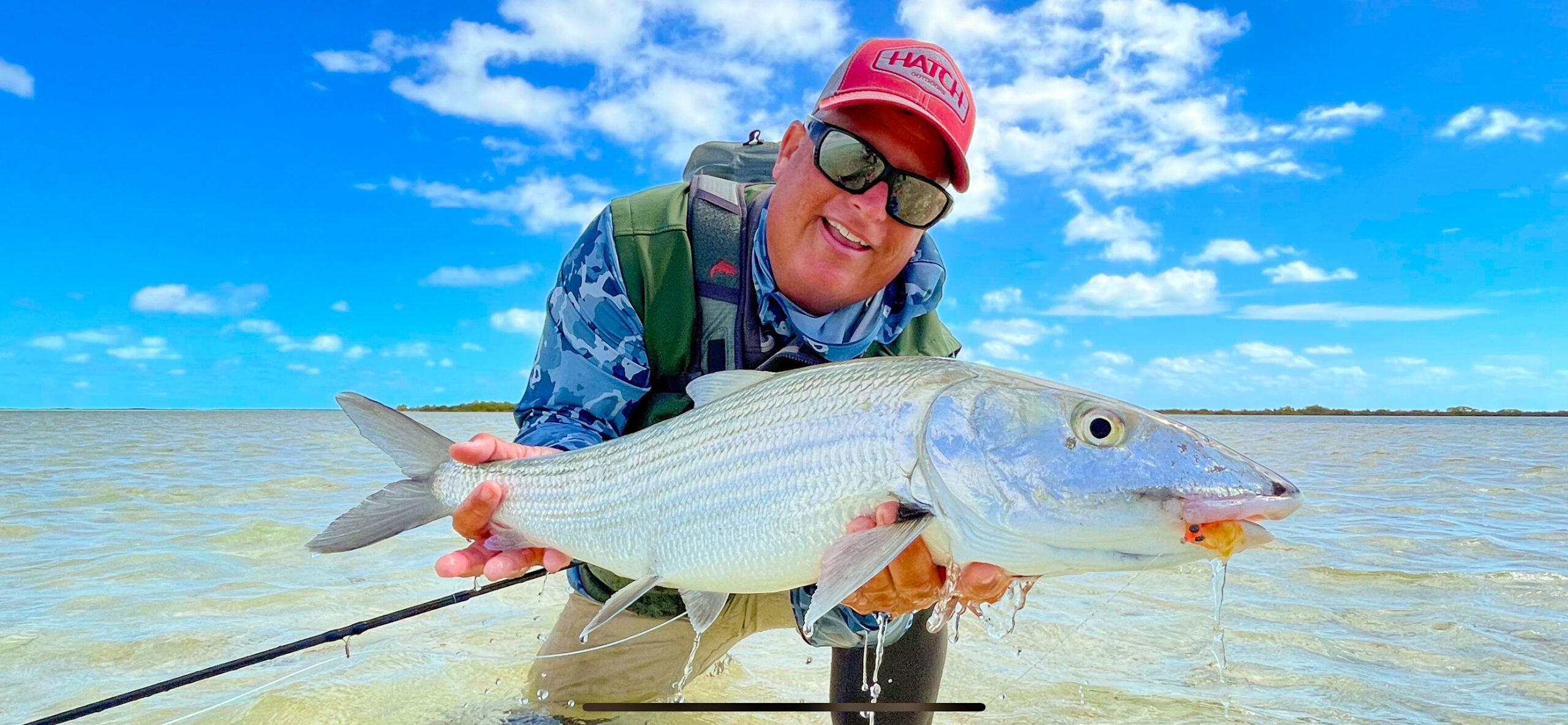
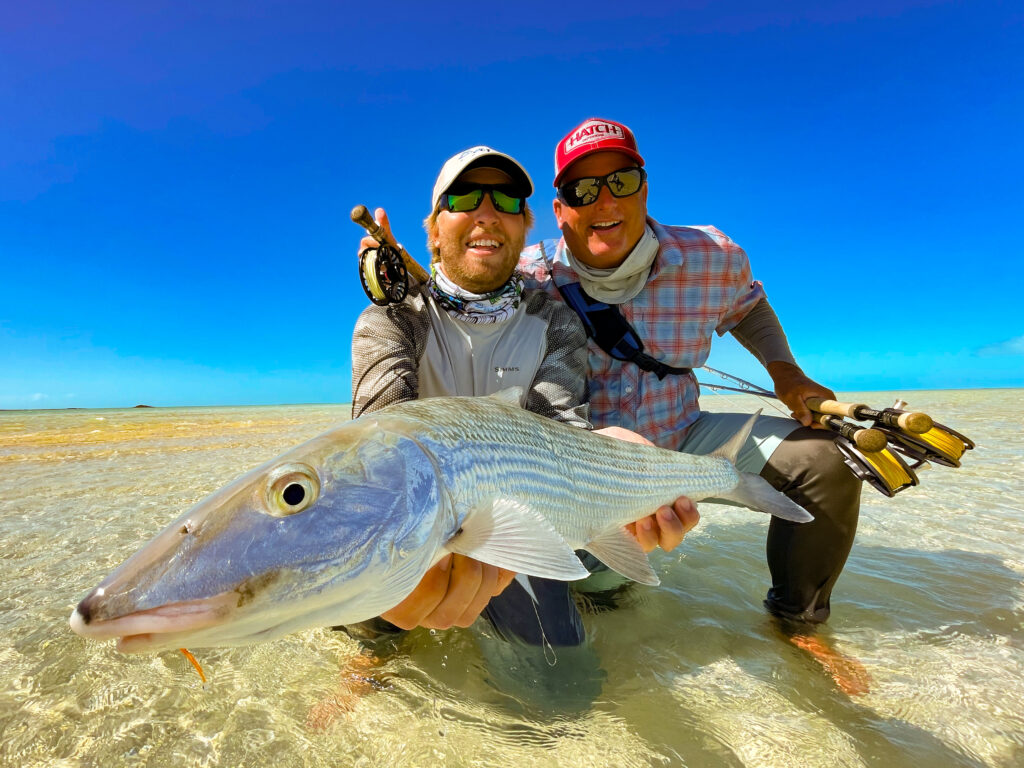
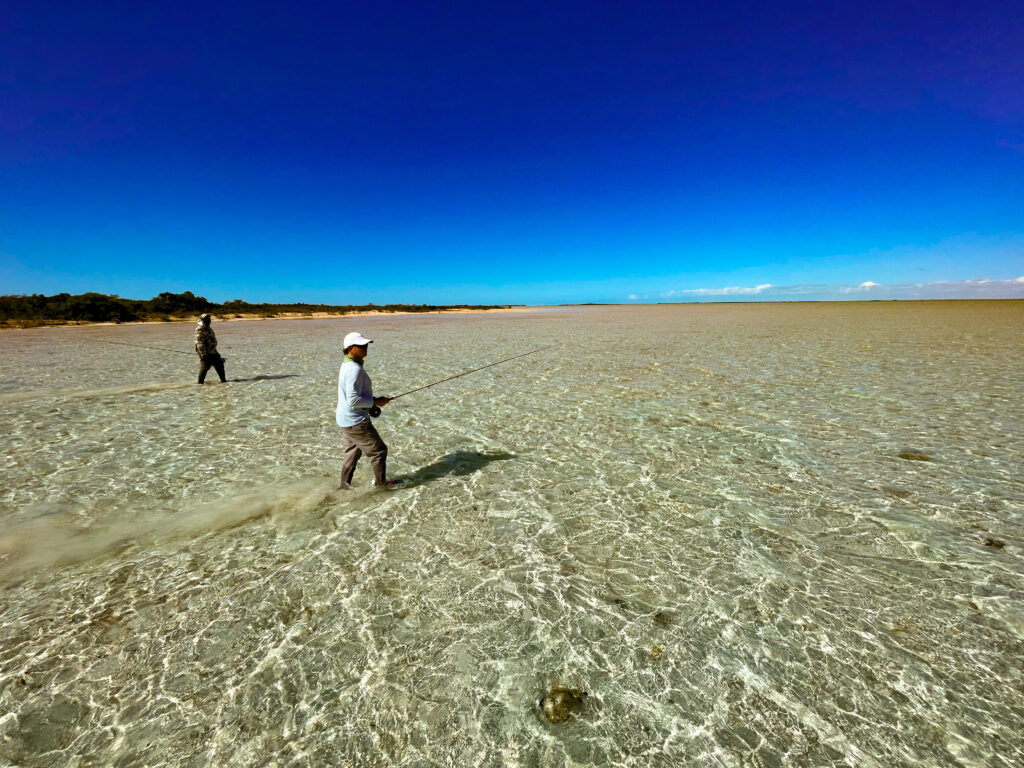
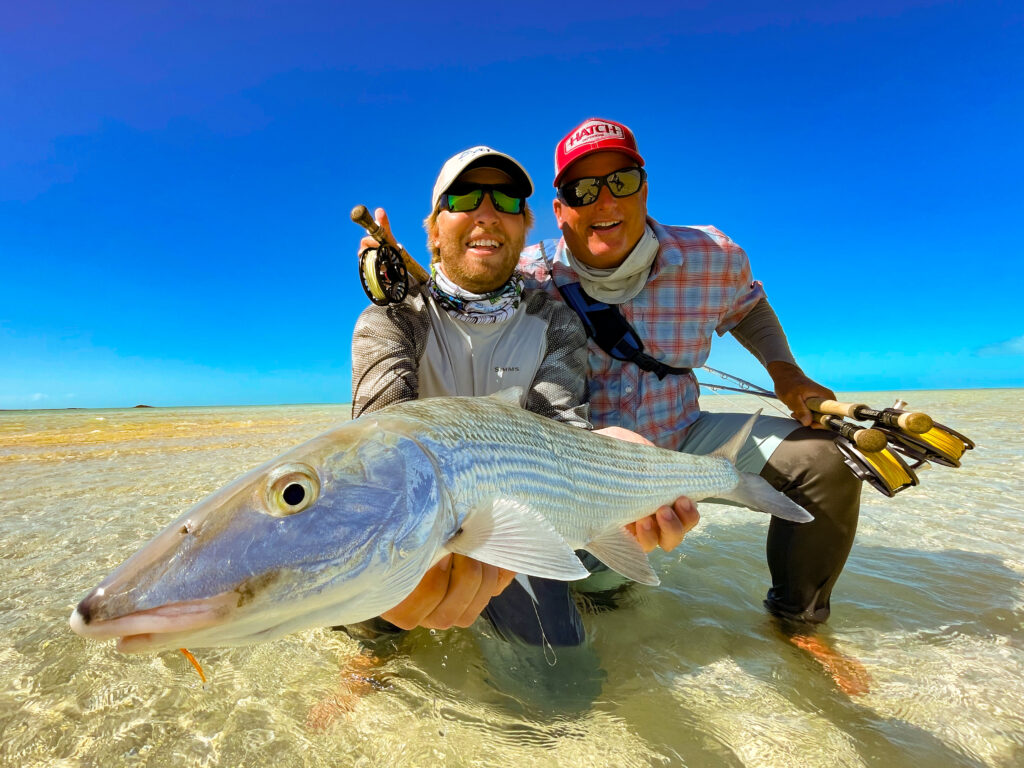
For Bruce, bonefish are his number one species. If he had one day left to fish, he’d choose to wade barefoot on Bahamian flats, chasing tailing bones in ankle-deep water.
When people ask if they should fish in Florida or the Bahamas for bonefish, Bruce says the Bahamas every time. The Keys can be good, but the sheer amount of opportunities in the Bahamas makes it a whole different game.
He says the bonefish flats there are endless: bright white sandbars, gin-clear water, and miles of barefoot wading that’s just “as good as it gets.” Florida has some spots like that, but it’s nothing compared to the Bahamas, where you can walk for miles. And so that’s why most of his hosted trips are out there.
One of the best things about bonefish is that they live in The Bahamas all year. They don’t migrate long distances like other fish. Instead, they move around with factors such as weather, tides, water temperature, and spawning. That means there are always fish to find.
But even though bonefish are there all year, timing still matters depending on what you’re after. Winter is a popular season because anglers want to escape the cold, but the weather can surprise you. Here’s a quick rundown if you’re planning on a trip there:
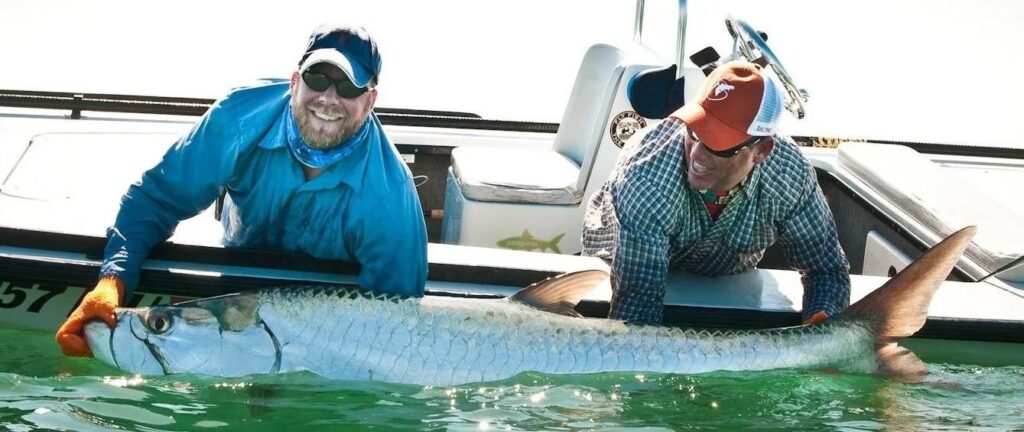
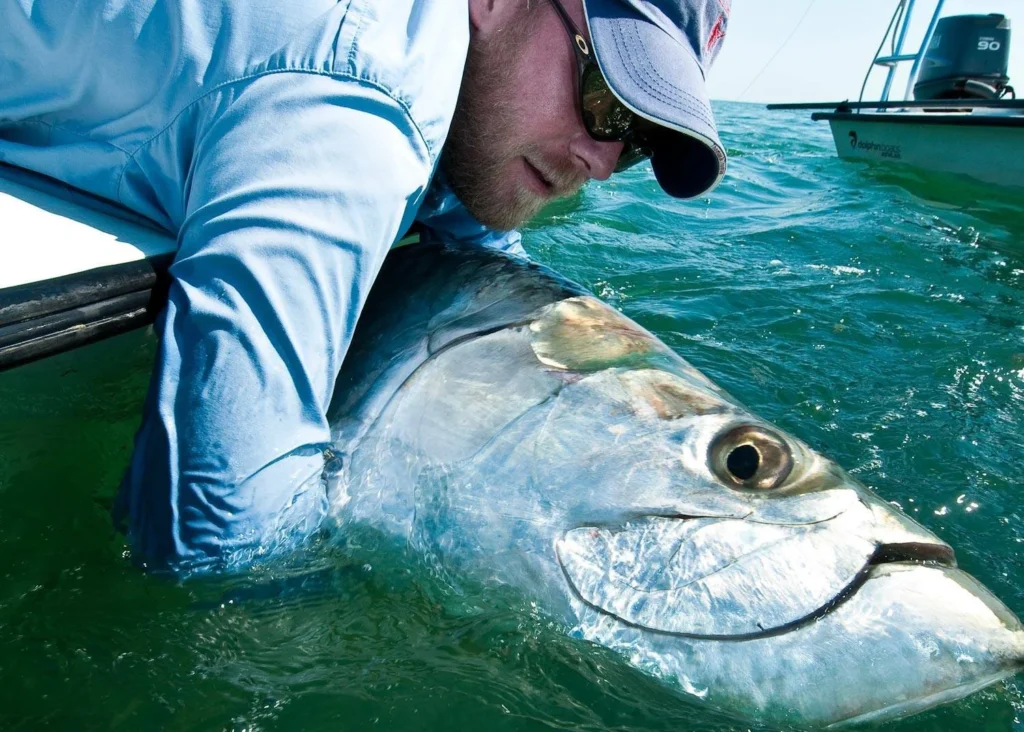
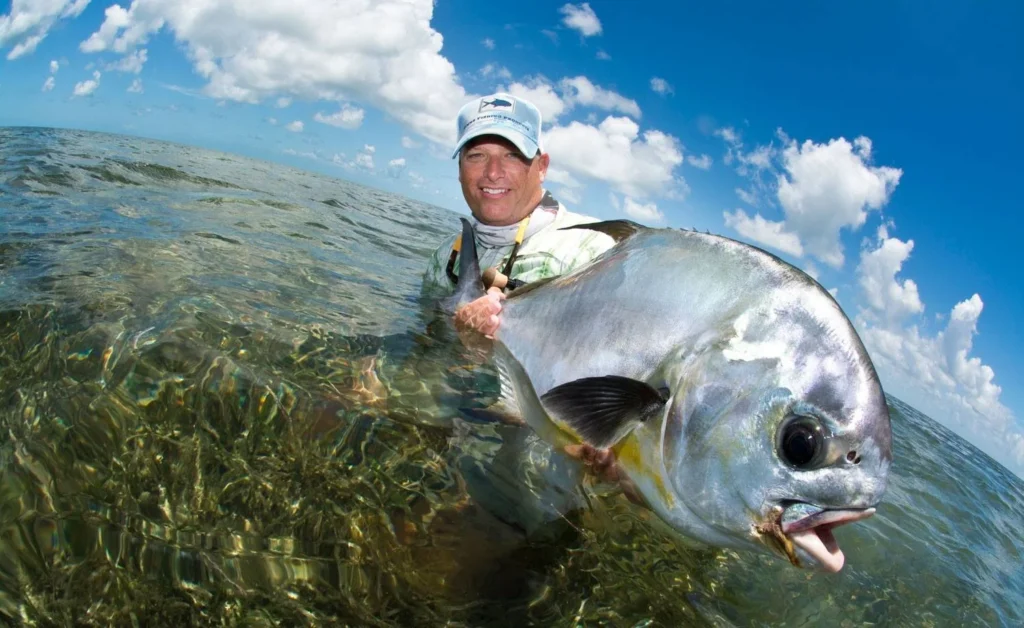
The Bahamas has a mix of other species that keep things exciting. You can run into permit and even some tarpon. But Bruce says one of the coolest surprises is the mutton snapper.
Bruce says if you hook a big 20-pound mutton up on a flat, that’s something to remember. He’s seen a lot in his career, but a fish like that might even give him a case of knee-knocking excitement.
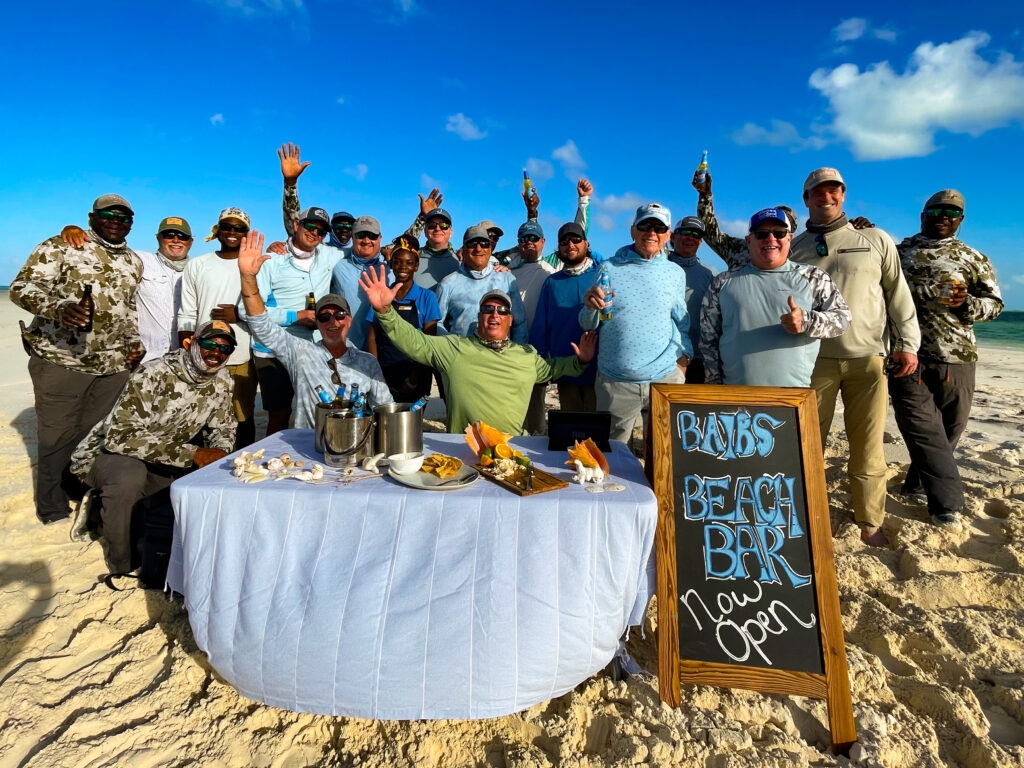
Bruce runs many of his hosted trips out of Bair’s Lodge on South Andros. Guests fly into Congo Town, take a short drive, and step right onto the beach where the boats are waiting.
South Andros is massive and almost untouched, with only about 1,500 people living there. That means endless creeks, bays, and flats with hardly any pressure. Some days you can wade all day on foot, exploring backcountry bays where the fish act like they’ve never seen an angler before. It’s as wild and remote as bonefishing gets. The island offers four main fisheries:
Once you’re on the water, every day starts with the guide checking tides and recent fish activity. From there, the plan shifts depending on conditions and what you want to do.
Episode Transcript
Dave (2s):
What makes an angler whose fish the world still choose ankle deep Bahamian flats over anything else. By the end of this episode, you’re gonna see why bonefish are Bruce char’s number one species, how to prepare for the wind and quick fire shots of salt water, sight fishing, and what it’s like to wait for miles without seeing another soul. This is the Web Fly Swing podcast where I show you the best places to travel to for fly fishing, how to find the best resources and tools to prepare for that big trip And what you can do to give back to the fish species we all love. Bruce Chard is here to talk about pushing a skiff in the Florida Keys and exploring the endless habitat of South Andros. Bruce has guided, he’s taught, he’s traveled his way through the saltwater game from Florida and around the world and beyond.
Dave (47s):
This is a good one. Bruce has been here before. We’re gonna dig into it. Bonefish style, Here we go. Bruce Chard. You can find him@chardfly.com. How are you doing, Bruce?
Bruce (58s):
Great, Dave. Thanks for having me again, buddy. Yeah,
Dave (60s):
Yeah. Thanks for putting this together. It’s been a little while since our last one, a couple years or so, and we’ve had a couple good ones. Now today we’re gonna dig a little bit more into bonefish and some of the stuff you cover and probably explore the world because I know you’re traveling a little bit around, so, but before we jump into it on Bonefish and kind of Florida and everything, let’s give us an update, like what’s going on the last couple years?
Bruce (1m 19s):
Ha. Well, it’s been pretty busy, you know, after COVID, nobody traveled very much after that. Then when things calmed down, everybody and their grandmother wanted to go travel everywhere and make up for lost time. So it’s been pretty busy. I think last year alone, I ended up pushing the boat about 190 days in the keys and guiding down there for bonefish, permanent tarpon. And then I filled in all, almost every second in between practically with over 13 hosted trips. Wow. To six different countries. And geez, it was probably, I think over 120 anglers I took on hosted trips around the world. So I’ve really been ramping up my hosted trip programs. There’s a lot of extra added value with my 35 years of experience in the saltwater fly world.
Bruce (2m 3s):
And I’ve also been doing a lot of very popular single angler hosted trips where I literally go with one guy. Wow. And we’ll fish for four or five, six days somewhere together and they get the full experience of learning everything. We cover all kinds of knots and leaders and I mean, we just hang out for the whole trip. It’s really fun. It’s like having a fishing buddy that can help you along the way all the way along, you know, it’s really great. That’s a
Dave (2m 28s):
Super expert.
Bruce (2m 29s):
Yeah. It’s getting to the point now where I’m running out of time to book more, so. Right. That’s a good problem to have. Right? Yeah,
Dave (2m 35s):
You can’t really scale, that’s the thing. You can’t scale yourself. Right. You’re kind of there, you’ve got a limited number. There’s 365 days in the year, right?
Bruce (2m 42s):
Yeah. Well, I’m pretty lucky. I have a son who’s, his name is Bruce Junior and bj, we call him bj, and he’s been guiding with me in the Keys now for eight years now. Hmm. He is taking over, man. He is doing great. Everybody loves fishing with him. Tons of experience. I mean, heck, by the time he was 24 years old, he had fished all around the world. Wow. So it’s really cool to have him working with me as well. And he’s been advancing in all the hosted trips and everything that I’m doing as well. We also do a lot of instruction, a lot of teaching we schools. So we incorporate that into a lot of our hosted trips and we bring a lot of extra added value with our experience level as well. So it’s a fun trip, man. We love it. On top of guiding, it breaks things up, diversifies our workload a little bit, and it creates probably a little more logistical work or a lot more logistical work, but in the long run it’s really satisfying.
Bruce (3m 31s):
That’s awesome.
Dave (3m 32s):
Where, where now in the areas are these hosted drips? Mostly salt water, all salt water. What does that look like?
Bruce (3m 38s):
I would say half of my hosted trips a year are for bonefish in The Bahamas. I think personally, in my opinion, there’s great places to fish for bones all around the world. But as far as a collective, one destination area with square miles of incredible bonefish habitat, white sand flats, you can barefoot wade for miles. It’s arguably the best bone fishing destination in the world. I mean, you can go to the sey shells and have some unbelievable bone fishing and go to other places for sure and have great bonefish. But as far as square miles go, endless habitat, different lodges and different places and different islands to go check out. I mean, you actually have almost a lifetime of bone fishing destination water there in The Bahamas.
Bruce (4m 19s):
And it’s close.
Dave (4m 20s):
It’s close. How, how, what’s it take to get from where you’re at in Florida?
Bruce (4m 23s):
So if you fly outta Miami or Lauderdale, it almost either one of, or West Palm even, you can go almost anywhere in The Bahamas within an hour and a half. Wow. Depending on, on where you’re going. You could get there in 40 minutes. Geez. You know, Bimini’s only 50 miles from Miami, so it’s like, whoop, whoop, and you’re there. Yeah. Well, it’s really close and, and the fishing’s off the chart, I think probably some of the best fishing in the world and bone fishing is my personal favorite. I, you know, I, the one question you get all the time is, Hey Bruce, wow, you do all this fishing and all this stuff. What’s your favorite? Right. Yeah.
Dave (4m 55s):
Favorite right. Number one,
Bruce (4m 56s):
Everybody expects to be like permit like the most challenging fish in the world because the, no, no, no. It’s bones.
Dave (5m 4s):
It’s bones. So over target weight. Now what are you talking about? The number one you, you’re number one fish you’re saying is bones over tarpon.
Bruce (5m 11s):
For me personally, if I had had one day left to live on the face of the earth, personally, I would choose to go barefoot weighting in ankle deep water for giant tailing bones and white sandbar flats in The Bahamas. I love this. Well, you think about it right in the sight fishing world for fishing, right? Yeah.
Dave (5m 29s):
Right.
Bruce (5m 30s):
The sight fishing is what makes that connection, right. That interaction between you and the fish even stronger than ever before. Right. And then you have clear water, like gin, clear water, like unbelievable. Bahama water is unbelievably beautiful and turquoise colored blood, you know, deep blue water that floods in on the, on the incoming tides all the time on the flats. They’re absolutely gorgeous. White, white white, bright white sand as far as you can see in flats for endless miles. It’s off the chart. A lot of the places that I like to specialize, a lot of my hosted trips are in like South Andros in The Bahamas and they, they have areas where we just get in the boat and we could run the boat for four hours and never see another boat. Oh wow.
Bruce (6m 10s):
And it’s just every second you go in the boat, it’s another, you know, 10 feet of unbelievable bonefish water. Right. I mean, there’s cuts and ditches and creeks and mangrove violence just far as you can see everywhere you go. It’s, it’s, it’s unbelievable. Wow.
Dave (6m 24s):
That is cool
Bruce (6m 24s):
That, that area for over 34, 35 years now. And I have, every time I go, I still see spots that, and go fishing in spots in areas that I haven’t been to. And I’m like, yo, I can’t believe I haven’t been here before. This is unbelievable. You know, it’s just really exciting. So you have super shallow water, right? Yeah. You have gin, clear water, and you’re visually connected to the fish and no water at all. Really clear all the factors of sight fishing that you wanna have. And then when you hook one, heck they rip a football field a line off your wheel in 10 seconds as they rip across the flat like a torpedo. I mean, and if you do it right, there’s a high chance you might get, you know, a fish to play. If you don’t do it right, you won’t catch one.
Bruce (7m 6s):
So like you have to do it right. I mean, sometimes there’s, you know, if it’s really windy and you plunk one on the head, right. That might turn around and come over and eat it and give you a little love, which is great, right? Because like, oh, I got away with that one. That was cool. You ain’t gonna get away with that tarping or permit ever. Oh right. Very rare. So bonefish are forgiving, they’re very opportunistic. They wanna come and play with you and if you do it right, you can have success and you know, that’s kind of fun, man.
Dave (7m 32s):
Yeah. That is. Why is that? I mean, a tarpon is a totally different thing. I mean, I, I’m thinking, I mean, but the permit, like how is that? Is it just the species are different and that’s just one’s more aggressive? Like bonefish are just more aggressive so they’re that you can get more takes. Well
Bruce (7m 46s):
Sure they’re all different but you know what, you know, permit or part of the jack family and they’re about the most aggressive fish on the face of the earth. So sometimes you throw a fly on front of a permit and you know, well, so I explain to permit fishing a little bit like this. So you can make 35 perfect presentations in front of permit different fish all the time. And they give you the finger every time you got the perfect leader on it. You got the perfect fly, you have confidence in everything. You have a great cast, great setup, the weather’s just right and everything. And more times than not, they just give you the finger and then all of a sudden, you know, a wind gust comes up on your last delivery cast on your 35th shot and you hit yourself in the back of the head with the fly and the wind blows it right out and box the permit in the back of the tail.
Bruce (8m 31s):
And you’re like, oh gosh, there he goes. And what does he do? He turns right around and eats, it takes off. Oh wow. Wow. I got one. Yay. And I’m like, oh my gosh. So the point is, is that you can be absolutely perfect all the time with permit and they might not give you your, give you the love, your fair share. Right. Right. They’re not gonna work with you. Right. If you tarpon fish, you make that tarpon eat your fly. If you’re off to the left, they won’t eat it. It’s off to the right. They won’t eat it if it’s over here, they won’t eat it, won’t they? And they won’t. If it’s perfect, if you are perfect, it’s in front of their face and you’re not in the background where they see where they come up onto the fly and they see you standing there in a boat, they’re gonna eat the fly or you’re gonna entice them in behind your fly and you make them eat it like you’re angling skills, your ability to do a cast, put the fly in the right spot, know exactly where your fly is, strip it just right and tease that fish into eating your fly.
Bruce (9m 28s):
You make that fish eat the fly. And a lot of times they’ll commit when you’re perfect. Right. So a lot of times I’ll tell my guys like, listen George, the fish are, are being tarpon today. You need to be more perfect.
Dave (9m 41s):
Right. More perfect.
Bruce (9m 43s):
Yeah. And if you could be a perfect all you want with permit, and that doesn’t matter, they could a finger, but sometimes you screw up and you make your cash, you strip the fly real fast when you’re supposed to drop it in front of the permit or whatever and they just charge right over a jack gravel and you eat the snot outta the flight. It’s like, wow. Well that was easy. How come they’re all not like that? Well, you know, you never know, right? Yep. You gotta keep throwing. But bonefish are really opportunistic. They give you confidence. You don’t have to be quite so perfect every time. But if you are almost always, if your fly’s riding right and it’s a good fly, they’ll come over and play and they’ll eat the fly all the time. So yeah. I don’t know how you can beat bones. They’re pretty much the most epic sport
Dave (10m 19s):
Fish. They’re most, well this is, this is a good start because I love that, you know, we wanted to talk about bones and you’ve already made it clear that bonefish are kinda your favorite. Although we will give a shout out to, we love Jim Tini and I know when I asked him that question, he was like, Tarpon till the day I die. You know? And he, but he’s got some crazy stories a lot with you, some of the stories. But tell me this. So if I was gonna ask you, you know, Bruce, we want to come up there, I wanna come up there, maybe we got a few people coming to you and they, and we wanna go bonefish, we like, we got some people that are kind of newer, they wanna do the salt water thing. Would we be going to Florida or would we be going up to The Bahamas?
Bruce (10m 52s):
No, that’s why I do almost all my fishing in The Bahamas. ’cause it’s close, it’s easy to get to and you get a lots of opportunities because you’re in one of the best blowing fishing fisheries there is in the world. And it’s right there and it’s close. Our fishing, the keys can be good, right? But there’s nowhere near as many opportunities. Well, sometimes you can have a great day of bone fishing and the keys don’t get me wrong. And back in the day, they used to be really big and big piggies 10 13 pounders wall aren’t in the mud with half their back out of the water. And it was really good back in the day. But right now our fisheries change a little bit. It’s still pretty good. It’s getting better and our bone fishing can be good. But another part of, in my opinion, of how bone fishing is so awesome to me is, remember I was mentioning how the endless white sandbar flats for miles go and you can walk out and bare feet.
Bruce (11m 39s):
I mean there’s some areas in the Keys that you can do that, but it is prolific in The Bahamas. I mean, the entire Bahamas is barefoot, beautiful barefoot white sand waiting for bones. It’s, wow, it’s as good as it gets. Yeah, it’s really, really awesome. Of course there’s some coral flats in areas you might wanna wear booties, but a lot of the times the flats there are off the chart. You get lots of opportunities. And a lot of the trips that I run with a lot of my regular guys that I fish with for tarpon all year, they like to come on my trips in February before Tarpon season starts rolling hard. And they love to go with me to The Bahamas and fish with me in The Bahamas before tar season gets, because they can get tuned up, right?
Dave (12m 16s):
Yeah. Tuned up, right.
Bruce (12m 17s):
They’ve been in the, you know, in the cold for a couple months, you know, December, January wintertime. And then they get out in February, come to The Bahamas, get all kinds of fish and get all the site fishing practice in, you know, locking, loading up with their visual connection to the, to the fish, making their presentations, feeding the fish, making them meat. And it really gets ’em tuned up good for when they come down for tarpon in March, April, may,
Dave (12m 37s):
March, April May. Okay. So I guess the question, and I know you’ve got a lot of people already booked and stuff, but if we were just looking at a time, we wanna plan a trip, maybe it’s a couple years out, you know, so it sounds like Bahamas is the place to go. When would you be directing us if we had some people that wanted to come down and you know, go for for sure bonefish and whatever else we catch?
Bruce (12m 56s):
Well, Dave, to be honest with you, there’s another whole reason why Bonefishing is awesome. They live there all year.
Dave (13m 2s):
Oh wow. Yeah.
Bruce (13m 2s):
They’re not my greeting in and out or back and forth, up and down the coast for miles and miles and they live there. They do move around a lot within that area, but they’re not like swimming to Africa. Yep. Or, and far they live in The Bahamas. They’re there every day. They live there. They love it. And I think what makes them move more than not are weather. Like when the weather systems come in and the, and the winds change and the pressure changes that, that seems to move the fish. But also water temperatures, you know, along with that. But also spawning. Right. When it’s time to start to gather up to spawn, they’ll move as well.
Dave (13m 36s):
Okay. And when is that? When is the spawning season?
Bruce (13m 39s):
Well, I’m gonna be honest with you. I don’t really know exactly for sure, but I know that they do it multiple times a year. Oh wow. A lot of times on the full moon. So there’s a lot of documentation on different areas as to, you know, bonefish, spawning areas and times of the year. And I think they’re still learning a lot about all that stuff. Yeah. But the really cool thing is, is that every bonefish in the world doesn’t go spawn at the same time. So like, even though it might be quote unquote spawning time in The Bahamas, heck there’s so many bonefish there, man. There’s still bums around. Yeah. Almost all the time
Dave (14m 9s):
They’re around.
Bruce (14m 10s):
Yeah. It’s really, really cool. And I would recommend, I mean I just, I just ran a single angr hosted trip a couple weeks ago in the middle of the summer when a lot of the bone fishing lodges are closed because it’s quote unquote too hot. But the bonefish love that man. They live in the tropics for a reason. They like it hot, right? Yep. So that’s why they’re there. And they get into consistent patterns, just like the weather is very consistent in the summertime, we don’t have cold fronts coming through with clocking winds and velocity changing of the winds every day. Which, you know, when the north winds makes the fish move around a little bit more. So they get into a little, a steady little happiness and they do the same thing every day and they can be a little more predictable when the weather’s predictable.
Bruce (14m 51s):
And the bone fishing’s great. I mean we only went for four days and I don’t know, we caught about 50 fish. It was great. Wow. Not that we’re fish counters or anything like that. Sure. It gives you an idea of Yep.
Dave (15m 0s):
Yeah, they’re not, you’re not catching one or two. You’ve got, you’ve got 50.
Bruce (15m 3s):
Yeah. Yeah. Lots of opportunities and great. So I mean, a lot of the trips I run almost all year.
Dave (15m 9s):
So you’re doing this all year. So pretty much we could call and say, Hey, we got, you know, a lot of people I’m sure. Yeah. The wintertime, when it’s cold down where we’re at, it’d be nice to go to The Bahamas and get a warm, right. So the wintertime is probably of popular period. But you’re saying summertime, like right now, it could be just as good.
Bruce (15m 23s):
It is. It could possibly be better. Now in the wintertime, in The Bahamas, I’ve noticed over the years, and a lot of people can contest this to out, a lot of times we’ll get bigger fish in the shallows in the, the summertime or, oh sorry, wintertime. Okay. So that’ll push ’em up in the shallows for some reason, a lot of people think it has to do with the water temperature and I think it might have something to do with that water temperature as well. But there’s something very key and important that goes along with the water temperature and that is the oxygen level. Hmm. So the cooler the water gets, the more oxygen is in the water. So they’re more tempted to come up out of the cooler depths into cooler shallow water where there’s maybe applicable oxygen content in the shallows for them to feel really happy and comfortable.
Bruce (16m 10s):
And I think that might have a lot to do with it, although I’m not Yeah, for sure. But I have a pretty strong feeling with, with oxygen levels, with all fish is what it’s about. Yeah.
Dave (16m 19s):
Oxygen is, yeah.
Bruce (16m 20s):
And life, life in general, everybody. Yeah.
Dave (16m 22s):
Oxygen, we gotta have oxygen. So, so that’s every
Bruce (16m 24s):
Got oxygen. It’s the number one thing. And most people don’t think or talk about that much I think. Right.
Dave (16m 28s):
We think of water temperatures, which is a direct correlation to oxygen. Right. Like you said. And so we do have bonefish down there pretty much all the time. And then what other species are in The Bahamas that you could catch?
Bruce (16m 38s):
Well, there’s good permit fishing. Okay. Also some tarpon fishing, but they have their own kind of permit type fish there that’s really hard to catch and hard to find and see ’em. And that’s a mutton snapper. Hmm. Most people don’t even really know what they are, what they do. But sometimes you’ll get these big pink mutton snappers that come out of the channels. They’ll come up on the edges of the flats and they’ll tail just like a bone or a permit and a little deeper water. And they can be spooky, but they also can be very aggressive. But they’re very rare. Right. So it’s not like you can go see a whole bunch of ’em. Right. So if you find one and catch one, consider yourself pretty lucky. ’cause that’s pretty rare and that’s really, really cool to see the, the pink. Yeah. I’ve seen so much in my life. I’m very fortunate so I don’t get rattled too much.
Bruce (17m 20s):
Right. Like on the buck fever, but I don’t know man, if I saw big point pound button up there, I might, I might have a little knee knocking going on. ’cause there it’s pretty cool man.
Dave (17m 31s):
When it comes to high quality flies that truly elevate your fly fishing game, drift hook.com is a trusted source you need. I’ve been using drift hook’s expertly selected flies for a while now and they never disappoint. Plus they stand behind their products with a money back guarantee. Are you ready to upgrade your fly box? Head over to drift hook.com today and use the code swing at checkout to get 15% off your first order. That’s drift hook D-R-I-F-T-H-O-O k.com. Don’t miss out. Check out Jackson Hole Fly company today. Premium fly gear straight to your door without the premium price. Jackson Hole fly company designs and builds their own fly rods, reels, flies, and gear delivering quality you can trust at prices that let you fish more and spend less.
Dave (18m 16s):
Whether you’re picking up a fly rod for the first time or guiding every day they’ve got what you need, check ’em out right now. That’s Jackson hole fly company.com. And then I guess going back to that timing, so if you wanted to definitely get some bones, The Bahamas would maybe have a chance at, you know, a permit or mutton or you know, snap or something like that. What would be the, the time, same thing go like winter time. Yep, yep.
Bruce (18m 40s):
Yeah, the bo the Bahama bone fishing is good all year. Yeah.
Dave (18m 43s):
Okay. So I think we would be probably looking at that winter, I think at some point we’d say, okay, let’s shoot for that sometime between November and, you know, March. Right. Maybe February that period.
Bruce (18m 52s):
That’s a popular time when it’s cold up north to take a break, get into the tropics. But let me tell you, I’ll be honest with you, just ’cause you might be from Canada or somewhere else, don’t think that it doesn’t get cold. Like you might look at the temperature and before you head down you go, oh look, the low is gonna be in the low sixties, you know, while we’re there, boy that’s just gonna be so nice T-shirt. Yeah. And then you get there and you wake up and it’s 62 degrees and it’s blowing 25 out of the north, which is blowing down the cold, you know, air from the north and you’re on the water. That’s cold dude. Yeah. It can be cold. Yes. So always prepare. Yeah. Yeah. Bring yourself a little lightweight puff jacket, right. That you can, you know, squeeze up and shove it in your back and it’s lightweight and then you’ll be really glad you did because wintertime, but on the other hand, you hear the saying it’s calm before the storm.
Bruce (19m 42s):
Well it’s same thing happens before cold fronts roll through is you get a day or two of really calm and usually hot, warm, stagnant air that will heat the flats up in the shallows quite a bit before the next front comes in. And man the fish love that. They know that there’s a front coming in with changing wind directions and temperatures that are gonna be cooling the, the flats down. And on top of that, they love nice weather. At least we think they do because they’re, they’re out there frolicking being happy and playing with our flies when the weather’s nice. So we kind of correlate that like, well they like this so we do too. ’cause it’s nice out. So they’re very much like we are right. If it’s a weather’s doing this, you know, it’s cold out, then they’re cold and we’re cold, they’re cold.
Bruce (20m 26s):
If we’re hot, they’re hot. So it’s kind of our temperature range, you know, they, the water gets above 90, they get a little, you know, if they’re not, they’re kind of too warm, maybe not show up as much. Same thing with us. When it gets above 90, we’re like, man, it’s hot. Yep.
Dave (20m 39s):
It’s too much. Yeah. We’re gonna hunker down a little bit. Well what would be the, in The Bahamas, like, I’m not sure where you’re going to, but is there a certain island area or lodges that you can, that you highlight the spot where we might be heading or people are heading with you or there’s some secret spots out there?
Bruce (20m 54s):
No, no, no. A lot of the trips I run, we go to Bears Lodge Nervous Waters Lodge in South Andro. We fly into Congo Town and we take a quick 15 minute drive down to the lodge and all the boats are anchored right out in front of the lodge every day. You literally have breakfast and walk right out onto the beach where we do tons of casting instruction all the time and have a lot of our not tying clinics and leader clinics outside. It’s really nice. And we’ll hop right on the boats and off we go. And then when we come back to the end of the day, they pull right up on the beach, you hop out and you’re right there. It’s, it’s, it’s, it couldn’t be, that’s that it couldn’t be any more easier. And it’s all full on interaction with the connection to the best bone fishing areas there is in the world.
Bruce (21m 39s):
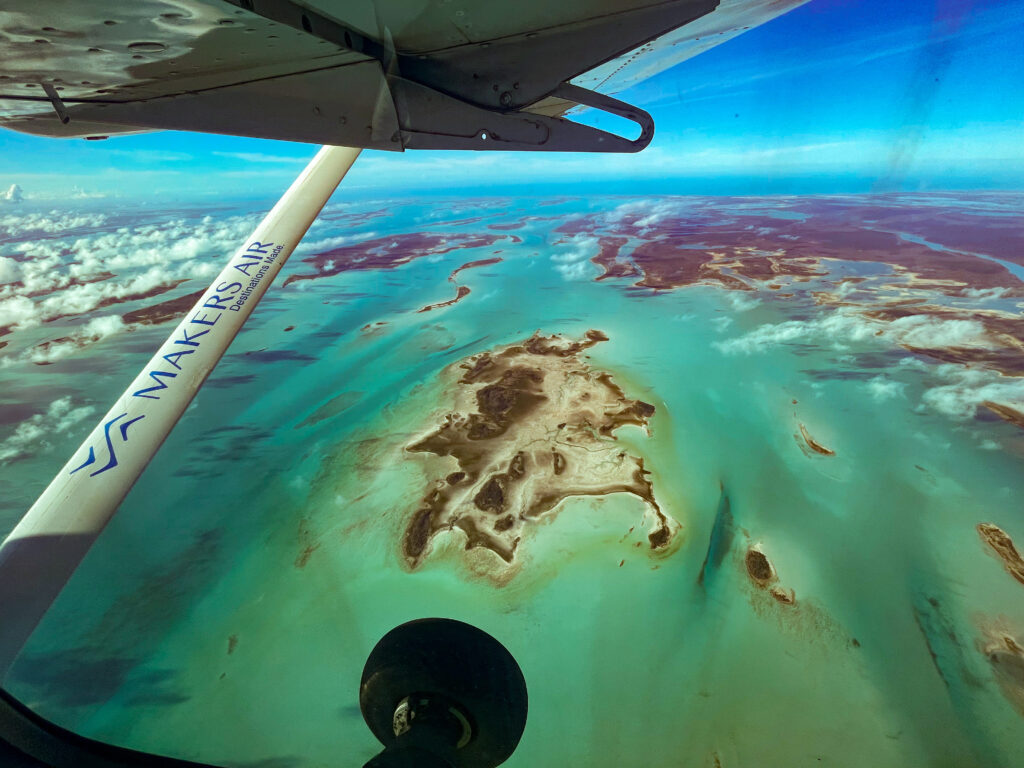
If you look at the, the chart on South Andros, it’s just endless miles of creeks and bays and they even have a lot of like little lakes and ponds that flood over the mangrove edges. Small like kneehigh mangrove edges where the water comes up high on the new and the full moons and the fish push through there and get inside there and then they get trapped in there for a week.
Dave (22m 2s):
Oh
Bruce (22m 2s):
Wow. And they get trapped in like knee deep water for miles in these beautiful back country bays. And, and then when the tide floods up, you know, on the next big moon they swim out. So it’s, it, it’s an unbelievable habitat. And the key thing I think that makes it so good is that there are no humans.
Dave (22m 21s):
And how is that It is just because it’s so big that they’re just, even though there’s other lodges, nobody
Bruce (22m 26s):
Lives there. It’s uninhabitable for humans almost everywhere except for the east side. And the east side only goes, I don’t know, maybe not even 15 miles. So they have 15, 1800 people that live in South and that’s it. Wow. There’s nobody there. God, they don’t even have access to all the bonefish water. It’s unbelievable.
Dave (22m 44s):
Right. And this is bigger than Miami like the town, right? It is like, it’s, it’s a huge area.
Bruce (22m 49s):
Kidding me, you should look. It’s unbelievable forever. It’s a lifetime of mazes, of bonefish water for as far as you could see everywhere. There’s four different fisheries there. There’s a, an east side Oceanside fishery that I call then if you go all the way down to the south, south south end, which is about a 25 mile run, you’re gonna get into the south section of South Andros where you have big, large white, white sand sweeping sandbar. I was telling you about that. I love the wave endless down there. And then you go on the west side of South Andros where you have bigger fish that come up and eat crabs and shrimp that live in the softer mud. So the outside west southwest side of South Andros has a, a softer mud type of flat and it’s not very easy to wait on.
Bruce (23m 38s):
So we stay in the boat quite a bit on that edge outside. But that’s where the big fish come in to eat the big crabs. So you have a big, big fish fishery almost all the time. There’s good permit and tarpon fishing on the west side as well. And then in the middle for our fourth fishery, you have endless creeks and bays and like little creeks that might be as wide as the boat, like five or six feet wide. That’s it. And then you push through and go out through the mangroves and opens up into a giant bay. You know, football field’s, lung as far as you could see, and it’s just tailing bones and fish swimming everywhere in there. It’s unbelievable. So, God, that’s cool. It’s really cool. And you can do something that we used to call the death march. We don’t call it that anymore because it’s probably not a good thing to call.
Bruce (24m 18s):
Right. Heck, you throw your fanny pack or your swing pack on your back, throw a bottle of water in your, in your pack, your peanut buttering jelly or whatever you got for lunch and you leave at eight 30 in the morning when you get there and you don’t come back until three 30 in the afternoon to the boat. You’re on foot the whole day.
Dave (24m 34s):
Oh, no kidding. On foot.
Bruce (24m 35s):
Yeah. And that’s when you hit those inland bays that, you know, get flooded during the high full and new moon pushes right. Of water and then the fish are in there, they’re dumber in a box of rocks. I don’t even know if they’ve ever seen humans half the time. It’s amazing. Wow. Yes. You slip your booties on and you’re walking over land and over a little island and then you’ll pop out on the other side and have a totally different creek and and pond that you could fish for. Totally different fish than a hundred yards right over there. It’s amazing. Yeah.
Dave (25m 4s):
And Bears Lodge, the nervous waters at that lodge is, is that typically, are these like week long trips or five days fishing? What, how does that look?
Bruce (25m 12s):
You can do whatever you want. Yeah, we usually, one of my hosted trips, we usually go for the week, but I do have a couple of trips where I do like four day fishing trips. So
Dave (25m 19s):
Yeah, I was gonna say, what if you did something, would it be too low if you went for say three days? No four nights, something like that. No.
Bruce (25m 25s):
You know, everything is your own perspectives. Right. So like quick little story to understand that like a lot of guys, I don’t mind the travel, but like when we go to the seashells guys, the first thing they’ll ask me is, well how long is it on the plane? I go, well it takes about 30 hours to get there. And they immediately go, oh, I don’t wanna do that. I’m like, well dude, he just sitting there watching movies like what’s the big deal? Right? Yeah. To go halfway around the world and experience something unbelievable.
Dave (25m 49s):
Oh yeah. It’d be amazing.
Bruce (25m 50s):
The one time I worked a sportsman show in, in Washington State. Yeah. And, and I was from the Keys, right? This is when I was young, I was like 19 and I was, I had a big bonefish mount in the booth that I was there. I was talking to some guy and he goes, well I was at a bonefish, I always wanted to go bonefish and where do you do that? Da da da. I go, well I’m from the Florida Keys. And I tell him, give him the whole spiel, talk about bone fishing, then the Florida Keys and all that jazz. And he goes, wow, that’s just greedy. He goes about how long does it take to get there? And I go, well it’s about a six hour flight to get down there and then you drive a couple hours. Oh my gosh, I’m not traveling that far to go home. Right. Well gosh, you just talked to me for 15 minutes about how excited you were to to tricone fishing sometime. No kidding. And that he, and he goes, no, that’s way too much travel.
Bruce (26m 31s):
I go, well here’s some perspective for you. And he goes, what’s that? I go, I flew all the way up here from the Keys, I did all that and I don’t even get to go fishing. I have to stand here and talk to you. Yeah. Like come on man, let’s go.
Dave (26m 44s):
It’s not that bad are bonefish. Yeah. So, but if you’re on the west coast, I mean The Bahamas obviously is like epic and like especially for East Coasters, but if you’re on the West coast, where would be the closest bonefish that’s like high quality.
Bruce (26m 57s):
Okay, I’m gonna get a little touchy on that. So it’s really easy for West Coast, you know, people to fly direct right into Mexico, right Into Cosmal or to Belize City or to Tulum and they can experience SPO fishing. Right. And also permit and Tarpon and some snuck. And they have great fishing in Belize and they have great fishing in Mexico. All right. But it is not The Bahamas, I’m just telling you it’s not right now it’s, no, the fish are on average, the fish are smaller. Now I’ve fished in Belize, Mexico and caught some bigger bones, don’t get me wrong. And it is beautiful there, but The Bahamas is a totally different fishery. But unfortunately, and I will tell you the truth, flying from the west side with the time difference, it does make it a little challenging to make it all the way to the lodge in The Bahamas in one day you can do it, but sometimes it’s hard.
Dave (27m 45s):
Yeah. So if we were doing something like, you know, let’s just say we were, you know, first day in the water is Monday and so we would, we would be, what would we be doing? We’d and somebody was leaving just say from Seattle, would they have to leave? Like when would they typically leave?
Bruce (27m 59s):
Well basically what I’ve started to do for the last 15 years and it’s worked out great guys love this. So it doesn’t matter where you’re coming from, but I’ll have everybody fly into Fort Lauderdale the night before. Yeah,
Dave (28m 11s):
Perfect.
Bruce (28m 11s):
Get a little hotel room right next to where we’re gonna fly out the next morning and we’ll all get together, have a great meal somewhere, wherever you wanna go. We go, I have a handful of great restaurants that everybody loves to go to and we’ll go have dinner that night together and then we get up early the next day and we fly in early like by eight o’clock we’re landing clearing customs on the beach by eight 20 at Bears. And we’re in the boats by a quarter of nine going fishing for the day. So we actually get an extra day of fishing, we call it a fish upon arrival. So we will make up for that extra day that you have to come a day early from the west side and you’ll be able to fish the very first day, which normally you guys would fly in.
Bruce (28m 54s):
So just say like, let’s just say you were able to get there from Seattle and get there in one day, then the next day you would start fishing. Well you’re gonna still be fishing on that next day, right? Yeah. When you do the fish upon arrival. So it works out great guys love it. So they get to come, they do a seven seven, right? Instead of a seven, six. Right. Seven nights, six day of fishing they get to go seven days of fishing for seven nights. Right. So yeah, you could just squeeze in an extra day of fishing and guys love it. So seven
Dave (29m 19s):
To seven, that’s perfect. Okay, so that’s kinda a little bit on the logistics. So that sounds awesome. Stopping in in Fort Lauderdale, hanging out, kinda doing that and then getting there once you get there. And it sounds like there’s also different options, but at the Bears Lodge that first day, what does that look like? If we were going down the boats, is there, it sounds like there’s a mix you can get dropped off and hike or what? What would be like the first couple days there?
Bruce (29m 41s):
I mean as far as fishing goes?
Dave (29m 42s):
Yeah, just the fishing once you’re on the water. Yeah. Describe that a little bit.
Bruce (29m 45s):
Well obviously if you’ve been there before and or you’ve talked to me a lot about it and IG give you some ideas. You, when you get on the boat you can ask the guide what are the tides and what’s the best options to choose. And since they go out every day, they know where the fishing have been recently and where the good fishing’s been. And depending on what the angler wants to do, some anglers don’t like to wade, some anglers do like to wade. So that might make a difference on where they’re gonna run. But you can go anywhere down there and go waiting and or stay in the boat or hit different tides and maybe the guy wants to go for permit, he would choose a spot with higher tide, right. Where the permit have easier access up onto the flat. So everything depends on the situation and maybe it’s really windy. Right.
Bruce (30m 25s):
And if that’s the case, then a lot of times the guys like to go into what they call the land. They go into the land inside ah. Where they can find a lot of protection. Right. Lots of Lee Lee sides of islands and and mangrove caves that allow them to cover some ground while keeping you out of the wind a little bit. You know what I mean?
Dave (30m 44s):
Yeah, no I gotcha. Yeah, so there’s some options. So even if it’s really windy and what would be a a a windy, is there any time where it’s blowing so hard you don’t even fish? Well
Bruce (30m 51s):
That’s another great thing with The Bahamas is that yes, there is a limit. Okay. Right. Like, but on the other hand, and it does blow a lot ’cause it’s the tropics, right? So you gotta learn how to cast guys.
Dave (31m 4s):
Yeah. You gotta learn how to cast in the wind.
Bruce (31m 6s):
Yeah. I think we’re gonna dip into some casting here before we’re done. Yeah. We’ll, but the key thing here is, is this will allow you to get out of the boat and when you get out of the boat when it’s really windy, you negate a large percentage of all the things that can go wrong. Because a lot of times the things that go wrong and work against you are within the boat. The boat’s moving around, it’s hard to get the line to lay in where you want it in the boat. It’s blowing around outside, getting trapped onto the trim tap in the, in the motor behind the boat and the guy’s trying to hold the boat and hold the boat. And remember guys don’t know this too, and the guys get back there a lot of times they’d go, gosh, I I had to cast it with the wind on my right shoulder all the time. I go, well you know, the only way the guide can control the boat when it’s blowing is to point it into the wind.
Bruce (31m 48s):
Yeah. Because turns it down, wind, he has a hard time controlling the boat and keeping it quiet and angling it and putting in a position for you to make a shot. So with all that being said, if you get out of the boat right, and you wade the line doesn’t blow anywhere, it’s in the water. Right. Right at your knees. And then on top of that, the boat’s not swinging around at creating slack in your system, making it difficult for you to stay tight to the fly and you’re able to fish a lot more effectively and you don’t have to worry about so much stuff. So getting out of the boat when it’s really windy, huh? There’s a good time. Well you can’t do that everywhere, Dave, because oh you know what, everywhere is not a great habitat to wade, but in The Bahamas it is,
Dave (32m 29s):
It is pretty much everywhere you can wait because it’s perfect.
Bruce (32m 32s):
Yeah. Yep, yep, yep. Oh man. But there’s a lot of places you can’t wait, right? Yeah. So yeah. Yeah. Okay. Like LEAs and Mexico, there’s some waiting, but really most of the fishing that I’ve ever done in Blazo Mexico is, is all out of the boat.
Dave (32m 44s):
It is. Okay. So that’s a nice option to have the be because yeah, I mean, waiting sounds like fun. That sounds like an awesome day. Just waiting around, checking stuff out, maybe jumping in, swimming. It’s
Bruce (32m 54s):
Incredibly interactive. You got your feet connected to the ground and you’re, you’re walking right with the fish right there. It’s, it’s hard to beat.
Dave (33m 2s):
Hmm. Okay. And let’s talk about on that, on the casting. So preparing for this obviously, I mean if, how do you prepare for a windy conditions if you don’t live in a place that’s super windy or what, what, what do you tell people?
Bruce (33m 14s):
Well, so if you’ve never done it before, this is what I would tell you. The key factor here is that we don’t have time, like the luxury of time when we’re saltwater site fishing, we don’t have that. Like you would maybe if you’re going steelheading or trout fishing, you know the fish are behind that rock or they’re in that run and they’re not going anywhere most of the time. And you can make numerous casts which flies move around, do whatever you gotta do to try to get the right shot. And usually there’s not too much pressure to do that. Well in the saltwater flats, since you’re sight fishing, usually you don’t cast until you see ’em. So if you haven’t done it much, you can’t see very good. You’re not, you haven’t gotten your eyes attuned yet.
Bruce (33m 56s):
Right? So it takes a little bit of practice to do that a little bit experience, right? So as you gain that experience, you get better to understand what the fish look like from different directions. Glare and sun angle clouds, low light highlight choppy surface is the water, little murky, what current flow’s going, all these things start to come together for you and you’ll be able to anticipate a little better and help you find the fish a little quicker. Then we call ’em the, the bonefish, the gray ghost of the flat. They’re hard to see. Yeah. So even for experienced anglers, they can be very hard at times, right? So they sneak up on you, especially if you’re waiting, right? ’cause you, you’re not high up in a boat so you have a lower level.
Bruce (34m 37s):
So those fish will come really close to you before they see you or you see them. So your read and react skills have to be pretty attuned as well. So once you fish your ability to move quickly, like you can walk around the block, you can jog around the block you can run or sprint, right? So if you see something that’s really close and you need to make a cast really cl before he sees you or he runs into you and spooks away, it might be a good idea to run or sprint to get that fly in the water as quickly as you can. The faster you get the fly in the water, the more time you give yourself to get the slack outta your system, come tight to the fly and hopefully entice the fish to see your fly. Have ’em come on over and eat it and away you go.
Bruce (35m 17s):
So all that needs to happen pretty quickly. So if you cast slowly like your walking around the block, it’s gonna be easy for you to make a cast with a little effort, right? ’cause you’re walking, you don’t put much effort into that. Well you’re gonna get out of it what you put into it. So if you need to get on the freeway and you’re in your car, you gotta hammer on that gas to get some power to get the car to go fast. Well you gotta do the same thing when you’re casting in salt. You gotta move that fly line quickly in the air. The slower that it moves in the air, the more the wind will affect your ability to be accurate and to lay the line out straight, which is really important. No slack on your presentation is huge. So your ability to regulate any slack in the system, both while you’re casting and after you’ve presented the line leader and fly into the water, you’re gonna stay tight to your fly and both of those and help you get the slack out of the system and come tight to the fly right away.
Bruce (36m 11s):
Because if you’re not tight to the fly while you’re fishing it and stripping it, you have no idea where the fly is in conjunction to where the fish is. You, you have no idea. So a lot of times I’ve noticed guys that are getting started, they’ll make a cast and the line will lay up high with a wide loop and kind of flutter back down with a, the leader and the fly didn’t lay up streak and they immediately kind of start stripping like as if they’re connected and they’re stripping really slow. And I’m like, dude, you have 25 feet of slack in your system, so see how the line’s laying out there. So your ability to kind of understand how the line laid out, feel it, whether it’s tight or not, maybe it’s through into some current or the wind is blowing the bow towards you, both of which create slack in the system constantly and sometimes it’s happening at the same time.
Bruce (36m 53s):
Both of those. So your situational awareness is really key as well. Just having a really good idea where everything is and how much slack you have in the system will allow you to know where your fly is in conjunction to where the fish is. And then you put it all together when the fish comes in to the zone and you’re like, okay, my fly should be in that area. I should be seeing a reaction any minute now or any second, any strip here. And if I don’t, then I’m not in the zone where I think it is. Right? Right. So a lot of times I’ll have my guys, when I see something like that happen, I go, Hey man, pay attention to where your fly comes out of the water when you pick it up to take another shot. Is it where you thought it was or even close to where you thought it was?
Bruce (37m 34s):
Right? And then that kind of gives them a little bit of an idea. I’m like, most of the time the guy’s like, wow man, I thought my fly was way over there. I go, yeah, yep. It was pretty close. Remember the three times I told you to pick up and take another shot and waited till the third time to do it? I go, well if you would’ve picked it up on the first time, you would’ve, you know, been able to kind of get the fly back in the zone real quick. Now you gotta make more false gas after you’ve stripped the flying closer, right. And make the shot. And that takes away valuable time and space for you to be able to get the fly back in the zone before the fish gets away. Right? So it’s all good. Oh yeah. But part of the learning curves all that. So the faster that you can move the line in the air, the better. Okay.
Bruce (38m 14s):
And then you can add a loop, tight loop to that and you’ll get distance and accuracy automatically with the loop. You start putting some high line speed into that. So you, you’re putting some power into that. Remember this is an athletic sport, right? Right.
Dave (38m 28s):
This is taking power. So you’re putting a lot of energy in. How are you getting a tight loop? Like as opposed to a, a big open loop?
Bruce (38m 35s):
Well, I’m not sure if we have too much time. Basically it has everything to do with the path of your rod tip. Okay? So the fly line always follows the path your rod tip takes. So imagine if you have 30 feet of fly line laying on the grass out in your backyard and you take your rod tip and you spin it in a circle three times to the right. The fly line will follow exactly in the path three times to the right in that same loop. You go up and down in a squiggly line, the fly line goes up and down in a squiggly line. So if your fly rod tip travels in a straight line path between your forward and your back cast, then the fly lane’s gonna follow in a straight line plane helping to form a tight loop. There you go. And when you move that rod tip off a street line plane like an arc, okay?
Bruce (39m 16s):
Like you’re painting the inside of an igloo, right? Then you have a big wide arc, then the, the line is gonna have a big wide arc as well. Now remember if you can picture this, you have an upper leg of the loop and a lower leg of the loop. When the upper leg of the loop, the leader in the fly connected to that upper leg, lays out straight in the air while you’re false casting and or when you present it into the water. And once that lays out straight, your cast is over, it doesn’t lay out straight in the air and then keep traveling. The loop must continue to travel and continue to form while traveling. Okay? In order to give you distance because as long as the loop can continue to form, it will continue to travel.
Bruce (39m 57s):
So you have to carry 60 to 70% of the amount of line of the distance that you wanna cast out of the end of the rod tip before you let her go. So like in round numbers, if you have a hundred, you wanna make a hundred foot cast, you have to carry 60, 70 feet of line on the end of the rod tip before you let her go. Otherwise that upper leg of the loop is gonna lay out straight before the loop as
Dave (40m 20s):
Oh. So as opposed to like a hundred feet line, you’ve got 50 you’re shooting out and you’ve got 50 hanging down that you’re gonna shoot or yeah. Or you got 50, you’re casting and 50 you’re gonna shoot out. That wouldn’t work as well.
Bruce (40m 29s):
Well I mean it could, the upper leg of the, you don’t have enough line outta the end of the route tip to form a loop to travel that far, right? Yeah. So that’s why distance tapered fly lines. Now we’re getting a little crazy here, but that’s why there’s different tapers of different fly lines. They all do different things, right? So when you go by a distance tapered fly line, which means you can cast farther, the heads on ’em are 65 feet long. Oh right. So it allows you to stay connected to the head while carrying 65 feet of line in the air. Now why would you wanna do that? Well, you gotta have that much line at the end of the rod tip in order for the loop to continue to form to travel a far distance of cast super impractical when you’re saltwater fishing though, okay? It’s more important to be really accurate and quick since you don’t have much time to work with time and space, right?
Bruce (41m 14s):
And you don’t have that and you gotta get everything done quickly. So you, that’s why you move quickly and have fast line speed. A lot of the shots are within 50 feet, like 80% of your shots are gonna be within 50, 55 feet. So you only need to carry 35 feet plus your liter outta the on the rod tip to be able to effectively present at any level like that. So that’s why most saltwater tapers and most of the popular, like the most popular saltwater fly line on the market is the scientific ganga grand slam taper. It’s been really popular for almost 20 years now. And the way that taper works is that it’s at a really long extended rear taper allows you to stay connected to the, to the head and the hall zone with your rod tip and carry the perfect amount of line to effectively cast 80% of the time within that range.
Bruce (42m 3s):
You know, 50 to 60 feet with a long leader and lay out straight and aggressive. And that’s what you need. And you gotta have that line leader in fly to lay out straight with no slack or is as little as possible, especially while you’re false casting. A lot of people don’t even think about that. Like a lot of people think, well we gotta have it lay out straight when you present. Well that’s for sure, right? That would really help you. But a lot of times slack creeps into your system as you’re false casting. If you’re creeping or you’re not drifting enough. If you need to, if you shoot too much line and your timing’s off your stroke length’s too short or long for how much line you have on the, on the rod tip, all those factors that come into casting a nice tight loop, you know, you gotta be able to do all that really quickly and get it to layout quick. So within 50 feet, if you can be effective within 50 feet, you’re gonna be able to take advantage of a large percentage of the opportunity you
Dave (42m 49s):
Are. Is that if you’re waiting too, if you’re not in a boat still about 50
Bruce (42m 53s):
Even more so it’s even closer when you’re waiting.
Dave (42m 55s):
Oh, even closer. Yeah.
Bruce (42m 56s):
Because everything can be closer. So even better, right? For someone that’s maybe not experienced enough in salt or casting yet, right? And they can’t cast very far, waiting is even more of a reason to get out of the boat and increase your odds, right? So you can get closer to the fish, you can get 25, 30 feet away sometimes and depending on the light level, maybe even closer. So it really helps anglers of all levels to be able to catch fish and experience, gain a lot of valuable experience in Bahamas versus a lot of the other areas for tropical flats fishing.
Dave (43m 28s):
Patagonia just launched the next evolution in waiters and they’re built for anglers just like you. The Swift current line includes ultralight, packable options for the hiking crew and expedition ready waiters. If you’re hard on your gear like me. They’re designed for comfort, built from recycled materials and backed by Patagonia’s ironclad warranty. You can check them out right now at wetly swing.com/swift current. That’s wetly swing.com/s W-I-F-T-C-U-R-R-E-N-T Swift current waiters. Check ’em out now. Yeah. Okay. So we touched on a little bit of that and you mentioned the like slower is not good.
Dave (44m 9s):
You want to kinda, and by speed you want to like be putting a lot of power and doing a forceful hard cast, especially if it’s windy and it’s, is it kind of always windy? I mean, or it’s occasionally calm out there is it? Pretty much, there’s always some little breeze
Bruce (44m 21s):
More times than not. Yeah. It’s
Dave (44m 23s):
Windy. Yeah, it’s windy. So the practice is you just get out in your yard or on the water and you just practice doing that powerful cast in 50 feet. And if you can cast into the wind or with wind out there, that’s even better.
Bruce (44m 33s):
Yeah. Cowboy up. And remember we mentioned this a minute ago, that this is an athletic sport. Okay? You don’t play athletic sports unless you’re in an athletic position. If you’re playing tennis and you’re receiving a serve, you got your knees back, you’re on your balls or your feet, you have your hands, you’re ready, you’re shifting your way a little bit back and forth. You’re getting ready for the hit, right? Yeah. You’re not standing there flatfooted with your belly sticking out, leaning back a little bit flat and with no, you know, core connection at all. Like, I’m not saying you have to be crazy, but when you start casting, if you bend your knees just a little bit and spread your legs a little bit, get good balance, engage your core man, what a difference. It’s really efficient way to apply power and transfer energy from your core right into your arm and then right into your rod and then hopefully, obviously into your loop and in your line and get a good high line speed cast.
Bruce (45m 23s):
It’s really hard to get a high line speed cast if you’re standing up straight and you’re not able to engage your core very easily. And there’s another thing to remember guys, when you’re getting older, I mean, Michael Jordan Yep. Was one of the best basketball players ever. Right? He’s not even playing in the NBA anymore. No. Right. So like when you get to a certain age, it just understand your limits and be okay with that. Yeah.
Dave (45m 44s):
Although fly fishing, the great thing is, is you can fish your entire life, right? There’s Joe Humphreys and guys, but is saltwater, are there many old guys out there doing the saltwater thing?
Bruce (45m 54s):
Yeah, totally. Man. E, everybody can do it, right? As long as you don’t count. How many fish do I get for my five bucks? You’re gonna enjoy every trip that you go on, right? Yeah. It’s more, it’s gonna be great’s more, you know, the more you fish, the more you learn that the fish themselves is not the reason why we’re really fishing. It’s almost everything else combined, you know?
Dave (46m 11s):
Yeah. It’s, it is. No, that’s why this is cool with the, with the lodge and you know, the whole experience and, and so the fishing obviously is why we’re coming there. But The Bahamas, what is that like? Where are you landing? Are you landing in The Bahamas? Is that, and then you drive down to Bears Lodge?
Bruce (46m 27s):
Yeah, we fly right into Congo Town Airport. Super easy. We fly over on Makers, but you can also fly in, if you have a, you know, private jet or Netflix or you can rent a, rent a plane to fly over there. What, however you wanna get there. But there’s no commercial flights like Delta or anything like that. Oh, there
Dave (46m 42s):
Isn’t. There’s no commercial
Bruce (46m 44s):
Riot. No. Well now hold on. Now only to that area, right? Yeah. There’s other areas in The Bahamas you can fly like Abaco and Marsh Harbor and Freeport and all those. They have, you know, American and Delta and those guys fly into there. But here’s the deal, when you fly into those places, not that they don’t have good fishing, ’cause they do, but there’s also a lot of people there. Mm.
Dave (47m 1s):
There’s more people
Bruce (47m 2s):
Populated. There’s a, there’s big towns and cities and restaurants.
Dave (47m 6s):
Oh, now where is that? Where’s the Bahama? Where’s the high populations?
Bruce (47m 9s):
Well, Nassau is loaded with people. Freeport is loaded right on Grand Bama and Abaco is huge. They have a lot of people as well, but compared to South Andros, there’s nobody there. Nobody. So if you think about it in a lot of areas where there’s, in most areas where there’s an actual fishing lodge, quote unquote lodge, there has to be a lodge there because there’s no Holiday inns or R or Airbnbs around the corner to go stand. Yeah. Right. Gotcha. Like you have to go there and you have to state at the lodge in order to access the fishery without too much travel. Right. Right.
Dave (47m 48s):
You’re not DIY in this trip, Roy. That’s hard to do.
Bruce (47m 51s):
No, no, no. Yep. No. Yeah. I mean I guess you could if you wanted to. I don’t know how you would, but you wouldn’t be able to access anything unless you had a boat. Yeah. You’re not gonna be able to get a boat ’cause there’s nobody down there. Right,
Dave (48m 1s):
Right.
Bruce (48m 2s):
So, no, it’s good. I mean, you go to Alaska, right? There’s lodges out in the middle of nowhere ’cause there’s no restaurants, there’s nobody, there’s nobody but the lodge there. Yep. You have to have a lodge. Right. So that’s what’s really great.
Dave (48m 13s):
Yeah, no, this, it makes total sense. And we just got back from up at Togiak River Lodge in Alaska and that’s exactly the same thing. I mean there was, that’s all there was for, you know, miles other than bears. And we had boats. I mean actually it’s very similar. We left the lodge with the jet sled just like we’re doing here and you head out up river and you find your spot for, you know, the day or whatever. What about when you’re on the water? So let’s take it there a little bit because I think what you’re doing here probably applies to bonefish all over the place, all over the world. But so you got that shot, let’s just say you’re standing there, you see some bones. Take us to that moment of getting ready to make the shot and where you’re putting that to be accurate.
Bruce (48m 48s):
Well of course you need to be visually connected to the fish and a lot of times they’re hard to see, right? Yeah.
Dave (48m 53s):
Maybe start there Bruce, maybe start there. What is your, your tip on spotting these, the gray ghosts, how do you get better at that?
Bruce (49m 0s):
Yeah, yeah. With any of the sight fishing, you gotta have polar ice sunglasses. That helps a lot. Helps cut the glare down on the surface of the water. But you also gotta learn to look for the fish, learn how to look for the fish. And they look different on bright sandy colored bottoms versus dark grass bottoms and with lots of water flow choppy surface frothiness from the wind wave, white caps, sun angle is huge. When the clouds come in, they reflect light from different directions or take the light out completely if the cloud goes between you and the sun. So there’s all kinds of ways to try to learn how to look for the fish. So you’re hunting with your eyes all the time, which is really fun, but you’re looking for three things. You’re looking for movement, shape, and color.
Bruce (49m 40s):
Hmm. So a lot of times we’ll use the boat as a clock system. Right? So the bow of the boat pointing straight ahead is always 12 o’clock. Yeah. For everyone on the boat. That way everybody’s on the same clock system. So if you’re looking off to the left side of the boat and the guide says, Hey man, 12 o’clock I see a fish. Everybody swings to 12, they’re all on the same 12 o’clock. Yep. Believe it or not, it seems pretty simple. But that’s,
Dave (50m 2s):
That’s confusing for some,
Bruce (50m 4s):
A lot of times it, it can be challenging. Right. Especially in the, you know, in the moment. So you point your rod, you know, 10 o’clock, 50 feet the guide says, and he has you point your rod and what the guide is doing is he’s looking at where you’re pointing your rod in conjunction to where the fish is. Right? So you might stay a little left or a little Right? Now here’s a very important thing that happens a lot. A lot of times the guide will say a little bit to the right. Well the angler will kick the rod over to the right and a lot of times when they kick it over to the right, they’ll blow right past the fish. Right. And they’ll go too far. Right. So then the a, the guide will have to say, Nope, back to your left. What do you mean by kick it over? He goes from like 10 to 11 right away instead of moving slowly and steadily the rod tip, right.
Bruce (50m 45s):
You know what I mean? Oh, moving slow and steady allows the guide to track the rod tip with the fish and then say right there, stop. And then he’ll be able to lock you right in on the fish. If you kick right over to the right real quick, a lot of times you blow right past the fish, right? And you swing Hmm. So move it slow and steady. So the guide can say perfect right there, stop. And then he’ll say a little lower for closer and maybe a little higher for a little farther out. Then at that point he says right there, then at that point where your rod tip is pointing, pretend you’re pointing at a bullseye and a dart board and pretend that the rest of the dart board is all around where your rod tip is pointing since you’re is pointing at the bullseye. Right? So you want to scan the rest of the dartboard all the way around looking for movement, color or shape.
Bruce (51m 34s):
Right? There you go. And then once you do that a couple times and you get comfortable with that in different lights and different colored bottoms and stuff and even the, even the bonefish will have a little bit of a color contrast on different flats. Right? So sometimes on a really bright flat and they’re just like a chameleon, right? They’ll change colors. Hmm. Man, sometimes the only thing you see is a shadow of them swimming across the bottom. Right? It’s like, wow, the, the wow cloud covers up the sun. Right now you’re gonna see that fish at all like really bright on a white sand. And then sometimes they’re really dark on a dark color bottom. So they’re hardly blend right in man. Hmm. So it’s hard to see ’em. So you’re looking for movement, color and shape and you try to pick out one of those three things and put it together and try to get a, a visual connection to the fish.
Bruce (52m 18s):
And then once that happens, hopefully you are, you are sparked right away to immediately start casting and then present the fly usually out in front and pass the fish. You wanna create a lead and a cross this way you give yourself a little bit to work with. You don’t wanna hit the fish in the head ’cause then they’ll be and swim way. So if you lead and cross ’em, the one good thing about bonefish is most of the time they move quite a bit and sometimes they’ll move kind of quick. So if you lead and cross ’em pretty good, give yourself plenty of time to put your rod tip down in the water, strip all your slack outta your system, come tight to the fly and move it in the zone. So when the fish come up to it, about four or five feet away can start moving it. And a lot of times they’ll see it that far away easily.
Bruce (52m 59s):
And then if there’s more than one fish, you create a little bit of a, a contest. Mm. Have the two fish or maybe there’s a school ’em and they all come charge right over and eat the fly. It’s great. I love it. Wow. That’s it. But if you throw too close all the time, a lot of guys will use them as a, as a a target. And if you throw too close, you better be perfect man. You better lay that thing right out perfect No slack and script it right away. Otherwise you’re gonna miss the fish. Okay. You lead and cross ’em more. Give yourself plenty of time to get your, your slack outta the system and move the fly and get ’em to come right on it. You’re gonna have really high percentage rate. So
Dave (53m 30s):
There are some options. You don’t have to be always, I take it to like the spay casting, you know that I’m not a great spay caster And I, I feel like sometimes if you do make a crappy cast you can do that big mend and as long as you give yourself time by the time it’s in the zone your flys fishing. It sounds like this is kind of a similar thing where if you give yourself a little more room, you can maybe have a little bit of slack, pick up the slack by the time it gets in, crossing in front of the fish and then you might still have a chance.
Bruce (53m 53s):
Yep. Perfect. The only problem is, is that if you swing on that steelhead with a not so perfect swing, you get another shot. If you don’t give a good lead cross on the bones, guess what? They’re gone. Oh
Dave (54m 3s):
They’re gone. So you got one shot. So these fish aren’t sitting there for like a, a long time. They’re not,
Bruce (54m 8s):
They never sit always moving. They’re covering ground and they’re, they’re using the current to allow them to smell up current and smell anything. Any, any crabs or shrimp or snails or clams or whatever they’re munching on up current and it allows them to feed but they’re always moving. They can’t sit too long ’cause there’s always predators looking for ’em. Cudas. Oh yeah. Sharks, rays, all kinds of stuff. So they’re always kind of in the first place. They’re
Dave (54m 32s):
Ready to roll.
Bruce (54m 33s):
Yeah. Can’t throw too close. Can’t spook ’em. Yeah. What
Dave (54m 36s):
About on the permit? The difference there, because they’re kind of tailing so it’s a little bit of a different thing. The permit don’t really tail right or the same
Bruce (54m 43s):
No permit will tail. Absolutely they will. Yeah. And they’ll get really shallow water too and then sometimes they’re so shallow that they gotta like lay on their side and kind of sidekick like a mermaid to get off the flight. It’s pretty awesome. Oh yeah. Sometimes when conditions are right, permit will go super shallow so that’s really cool as well. Love that kind of stuff. But they’re up there looking for food, they’re digging for grub and, and when you get a permit that’s tailing, they’re feeding, they’re in a feeding zone, they’re in a feeding mode. Your odds are pretty good. If you can get a good presentation on those type of fish, I would say it’s the highest odds of getting a, A permit on a fly. Yeah.
Dave (55m 18s):
Yeah. That’s the best. Okay. So, and the bonefish is just, I mean it sounds like you’re gonna have some shots likely unless there’s some sort of crazy weather thing going on down there.
Bruce (55m 28s):
That’s why we go to The Bahamas man. ’cause it’s the best, it gives us the best bang for our buck. The most opportunity to gain experience in a short amount of time because you’re getting lots of shots and lots of opportunities and catching fish and con building confidence and everything about it is, is really great. You can go bo fishing on three trips in a row and never catch one. Right. And yep. You know, if you’ve never done anything before and you start out permit fishing, that might be a little mentally challenging for you. But the bone fishing’s great. Yeah.
Dave (55m 55s):
What is the, you know, as far as we’ve talked a little bit about but mistakes, do you see something common that you know people are making out there on bonefish or is it similar for all those on the flats? Well what do you think is the biggest thing that you see as far as mistakes out there?
Bruce (56m 8s):
Well usually they throw too close to the fish. Always they use the fish as a target and when they cast too close they end up spooking the fish and then off they go. So getting used to being able to know where to put the fly and create an intercept, you know, out in front of the fish. Once that starts to come then the anglers take advantage of their opportunities a lot more. So definitely that’s the number one for sure. But the other one too is most anglers have a hard time casting and especially casting in the wind right. It’s a very intimidating And so the more time that you can put into practicing, especially practice casting at night in the dark, cut your fly off so you don’t have to worry about whacking yourself in the head while you’re doing it.
Bruce (56m 53s):
Go out in your, in the road, in front of your house or if you have a lawn inside or backyard or whatever and go cast at night and casting at night is really, really cool. You can see a little bit but not much. And you really learn how to feel the line in the air as you cast. And you’ll get to the point where you’ll be very comfortable smoothing out your cast, applying the right amount of power throughout the casting stroke. All that comes in real quick when you can’t see what’s going on ’cause it forces you to feel it. And that’s when you really, really get a good knack of casting and confidence is building. It’s when you can tell how much fly line you have out of the end of the route tip every time you make a false cast.
Bruce (57m 38s):
And that cast becomes automatic. And that’s what needs to happen to be successful in salt water fishing is because, or site fishing on the flats at least. ’cause once you see the fish, you can’t take your eyes off the fish, you gotta keep an eye on ’em and the cast has to be automatic and as quickly as possible get it, get it, get it in the water as quickly as you can and it increases your odds big time.
Dave (57m 59s):
Yeah. So you’re kind of there again that back to the, you’re standing, maybe you’re standing in the flats, you see a fish coming at 30 feet out at two o’clock, you’ve got your fly in the water. Do you just kind of, is it one false cast and then you’re trying to shoot to that spot or a couple false cast?
Bruce (58m 14s):
Well it depends what fly line you have and what taper design you have. But yes, that’s of course you don’t wanna make false casts because that takes more time and space to do that. Yeah. So the quicker you can get the fly in the water, the better. So the least amount of false casts and you can move quickly, like I said earlier, you can walk around the block jog, run or sprint. Yep. Where you’re gonna walk around the block a lot faster if you sprint. So when you haul double hauling, increase your line speed, it makes it easier to form tighter loops along with that line speed you get get to fly in the water real quick and that helps you a lot. Perfect.
Dave (58m 44s):
Yeah, I’m glad you mentioned double haul. I wanted to ask you about that. So that’s another hard one you know, to to describe. But what do you tell people on double haul if they’re not as good as they should be? Or maybe describe what are you always double hauling out there?
Bruce (58m 57s):
So once you become comfortable with double hauling, it doesn’t matter what kind of fly fishing you’re doing, you’re probably gonna double haul on every cast the rest of your life. So pop up some YouTube videos, dedicate some time and effort to learning how to double haul and you’ll be very glad you did ’cause it’s a very efficient way to add lots of line speed. Now here’s another key factor. When you have a lot of line speed, not only do you get to fly in the water quicker, but it allows you to make your cast with a lower trajectory like a side cast low to the water. And this allows you to be really accurate as well in the wind because if your line lays out high and lays out straight on your presentation as it falls, the wind blows it off course.
Bruce (59m 38s):
Right? It might blow it back at you if you’re throwing into the wind or blowing to the left or right depending on what way the wind is blowing. So if the loop lays out straight in your line leader and fly lay out into the water and it lays out just a foot or two off the water, boom it lays out right there and then plop right in the water and less slack enters the system upon presentation and you’re also more accurate. So right away it, it allows you to carry more line in the air, lower to the water. And remember we’re sight fishing too so the fish can see us as well, especially permit fishing and stuff like that. The more the line is up in the air and you’re flailing your arm up in the air, they’re gonna see you so can bend over a little bit, stay low if you’re on the boat, stay low or even when you’re waiting stay get a little bit of a low crouch and allows you to carry that line really high line speed off to the low to the water with a side cast.
Bruce (1h 0m 29s):
Perfect. ’cause if you don’t cast quickly on a side cast the line’s gonna hit the water while you’re false casting and it’s gonna make it difficult for you to have a good cast and your line’s gonna hit the water and mess you up. So being able to have quick line speed, I will allow you to have the line travel closer to the water, have a slack list presentation and stay low profile
Dave (1h 0m 48s):
And low profile. And those are all awesome tips. Yep. So let’s say I’m doing all that. I’m out there on the boat, I’m keeping it low double hauling and the fish is out at, you know, like I said, two o’clock at 40 feet and I make the cast and it’s like 12 feet too far. You know, I guess I just went too far past it. Is that something where, what do you do there? Do you kind of slowly pull it back or what’s your next cast?
Bruce (1h 1m 10s):
Well it depends on where the fly land did the fish spook? Yeah. Again, your ability to understand what actually happened, which believe it or not, I don’t mean that in a mean way, but a lot of anglers, that’s a learning curve. A lot of times they’ll make the cast but they’re not really sure what to do next. Right. They’re not really sure what happened. Like where did the fly land? I don’t really see the fish. Right. Oh right. So all that comes in together. So if you can see that your fly is not right there and, and or you have slack, you gotta strip in, you know, show the guide that you realized what happened. Like you noticed that your fly didn’t lay out straight. So strip that slack in quick, get ready. Alright. Right. Leave it there. Right. So then the guide will help coach you through there or he might tell you to pick up and take another shot. So depending on where the fish is according to where your fly landed, if you’re not in the right spot and you gotta pick, take another shot, you gotta do it quietly and carefully and slowly.
Bruce (1h 1m 58s):
You don’t wanna rip it out of the water real quick and take another shot ’cause you might spook ’em. So if you can pick it up slowly and pick it up nice. And once you break the line leader and fly from the surface of the water, you can then start your back cast and make one false cast and drop it right back in the zone. You’re gonna be able to give yourself IODs of getting that fish.
Dave (1h 2m 14s):
Yep. That’s it. Okay. And what about on the rod? What, what’s your rod of choice and you, I think you mentioned the line, but what do you go with weight and length there?
Bruce (1h 2m 22s):
I personally love a nine foot four piece G Loomis nrx plus seven weight. And I throw an eight weight grand slam on there with a 12 foot liter. And I have my own liter that I design and that I use a lot stiff monofilament liter. And I have a seven section leader broken down taper acts as a continuation of the front taper of the fly line. So it allows as much energy as possible to get all the way to the fly and lay out straight, especially in the wind. That’s my my favorite setup and love it. A lot of my guys have the same setup. Yeah.
Dave (1h 2m 55s):
Nine foot seven weight. Perfect. Nice Bruce. Well let’s take it outta here with our, we mentioned earlier our flight casting challenge segment. This today is presented by Togiak River Lodge. We mentioned ’em, they’re giving away a custom fly rod for this giveaway, this challenge. And basically we’re just getting people entered to win, but then they have to take a couple of actions to improve to, to be in the challenge, which means doing some exercises. So first off, shout out to Togiak River Lodge. If you were gonna tell somebody, you mentioned, I think the exercise, if somebody was wanting to work on their casting, that casting in the dark maybe. Is that, that’s one I haven’t heard. That’s a great tip. Do you think anything else you would shed light on to help that person get ready for this trip?
Bruce (1h 3m 34s):
Yeah, the most underrated cast in all fishing I think is being able to present on your back cast.
Dave (1h 3m 39s):
Oh yeah, yeah. The back
Bruce (1h 3m 41s):
Cast. ’cause you’re standing on the boat and you’re right-handed caster the guide is gonna try to do everything he can to turn the boat around to give you a shot from the left side of the boat, like 8, 9, 10, 11, 12 o’clock of the boat. Right. Well in order to do that, if the wind direction is coming from one direction, you might have to hold the boat into the wind in order to give you that shot. Which means you are now faced with the most challenging cast there is. Oh. And making a right handed cast in 25 mile hour winds, the wind blowing that fly line right on your shoulder. And meantime the guy is trying to hold the boat in the shot, hurry up, we can’t hold the boat there because it was blowing the power.
Bruce (1h 4m 21s):
Right. And then, oh, nothing worked and everybody’s all frustrated. Right? Well I mean if the guide never had to turn the boat in the first place and it was originally the shot was at two o’clock and all the guy in the bow had to do is just turn around, make a forward cast at eight o’clock and drop his back cast right in the zone right there. Good turn around strip now strip now you got nice right, right away you’re hooked up to that fish before the guide even has time to turn the boat for you. So remember how much time and space we need to create. Well if you can effectively make a backhand presentation and lay it out straight, come tight to the fly and make it all work, you’re gonna be able to take advantage of everything on the right side of the boat without the guy having to turn it like, hello, how much time and energy and effort does it take to turn the boat all the way around and do that?
Bruce (1h 5m 7s):
Man, you’re in the game big time. It will double your odds of getting fish immediately. So practice that one as well. That one’s huge.
Dave (1h 5m 13s):
Yeah. Practice that one and that one seems like, I know when I’ve, when I do it, you know, know the forecast, you’re ready, you’re doing, everything’s good. And then, then I switch over and do the back cast. And it always seems to be, it doesn’t go out as straight as I want. Like there’s a little bit of a thing going on there. What it, what is that? Well, yeah, what do you see there?
Bruce (1h 5m 30s):
Well what’s very common is that anglers are not comfortable with making a backhand presentation even though they make a backhand cast every time when they false cast. Right. The problem is, is that they don’t actually make a backhand cast. They’re still facing the fish at two o’clock to the right with a right hand cast around the bow. And then they start to cast across their chest with a totally different casting stroke, totally different. Everything that they’re not used to and that they’re not comfortable with and that they’re not very good at. And then they try to make the cast, usually their rat tip opens up, creates a wide loop and then everything falls apart. That’s what happens. A back cast is a back cast. So if you have to make a cast at two o’clock, remember I just made that analogy a minute ago.
Bruce (1h 6m 14s):
You gotta turn around and make a forward cast at eight o’clock. So your back is facing the two o’clock zone where you need to make your back cast presentation. So that way you’re casting with your natural strongest stroke length that you’re really comfortable with, that you do all the time and you’re just simply dropping your backhand backcast and you’re presenting that cast instead of a forecast. That’s it. Yeah. So practice that. Don’t change anything other than just presenting the line on your backcast. That’s it.
Dave (1h 6m 44s):
Yeah. Okay, good. No, I think that is good. Keep it simple and that’s the best advice on this one. Okay. So on this challenge, let’s do a couple more tips and then we’ll take it outta here. We might have a random question for you here, but so high level. So we’re doing this trip again going down to Bears Lodge. It’s our first time down there, we’re on the water, we’re getting ready that first day. What are a couple things you’re telling us to get ready for this thing?
Bruce (1h 7m 9s):
Are you referring to just casting?
Dave (1h 7m 11s):
Yeah, well let’s do two, let’s do one. Well you’ve done a few big casting, so if you do have a casting, but it’d be just more like, hey, we’re going out the boat, we’re going on another boat with one of the guides. You know, what are they telling us? What are you telling us to have success for these bones or really any species out there?
Bruce (1h 7m 26s):
Well the ready position is also really important. Oh right. And the ready consists of how you hold the fly, the leader and the rest of your leash, which is the amount of line and leader that of the rod tip while you’re in the ready position. Believe it or not, this is super simple. But I probably spent, I spent a lot of time with my anglers explaining how this works.
Dave (1h 7m 48s):
Yeah. Let’s hear this. This is good. This is the position where you’re ready to to, to make that first cast.
Bruce (1h 7m 53s):
Yeah. You wanna hold the fly in a position that when you start your cast, it doesn’t go right into your pant leg or right into your finger. A lot of anglers will like to drop the fly at their feet and start the cast or throw the fly in the water to their left and start the cast. Well when you start your cast of your right hand caster and you throw the fly into the water to the left, you could throw it into a pack of floating sargasso grass. When you pull back really aggressively, it pulls against the rod tip and might break the rod tip. You could pull the fly out of the water. It goes right into your pant leger to the bumper of the boat. Yeah. And a lot of guys will take the fly and they’ll start a cast by rolling their rod forward and letting the fly go at the same time.
Bruce (1h 8m 33s):
And they roll the fly right into their rod and it gets tangled around the guide or on the around the line. We don’t want the fly to touch anything except for air. Hmm. Yeah. Until it’s presented in the water. Okay. So keep it realized. Start your back cast and as you start your back cast, just let go of the fly in the air and keep it aerial lies the whole time. Try not to drop it on the deck where it’s getting caught another fly line or use shoelaces or whatever and then keep it aerial lies the whole time. And you’re gonna dramatically reduce the odds of you getting a tangle before you even get started. Yeah.
Dave (1h 9m 6s):
And do you also have some coils of line sitting? Pretty much everything just sitting there in the boat as you’re getting ready?
Bruce (1h 9m 13s):
Well, we try not to have any coils. We want as much line off the reel as you can cast comfortably. So if you can cast 60 feet, I like to recommend having an additional 20 feet of fly line off the reel. Okay. I get yelled at all the time when I go trout fishing with trout guides out west in the boats. ’cause I strip off too much line, they’re like reel some of that line back in. Well, I’m sorry, it’s what I do all the time. So if you don’t have enough line off the reel and you gotta take a shot at a great 10 pounder, here he comes, George, get ready, take that shot. Yeah. And the guy only has 40 feet of line off the reel and he needs 50 and he comes tight and he goes, blink. That’s unacceptable dude. How much money did you just spend to come here and do all this effort?
Bruce (1h 9m 54s):
Just strip some line off the reel. Be cautious. You wanna have enough line off the reel to be able to take the shot you need to make at all times. Okay. On top of that, you need an additional 20 feet of fly line. Let’s just say you’re six foot tall. Okay? Remember, your job as an angler always is, once you make that presentation, is to get your rod tip down and strip all the slack out of the system and come tight to the fly right away so you know where it is. Okay. If you’re not tight, you’re not gonna be able to control where it is and not and know where it’s, so you have to make a long strip or two right away to get the slack outta your system. Almost every presentation has some sort of slack in it right away. So get your slack outta the system right away. You gotta strip really quick to do that and long and hard if you don’t have enough line off the reel to allow you to make a full body strip.
Bruce (1h 10m 42s):
So if you’re six feet long, when you open your, both your arms straight, you should be at six feet, right? Yeah. Yep. Well, if you only have four feet of line left and you gotta make a long six foot strip, you’re gonna come tight to the reel. You’re not gonna be able to strip that far. So have more line off the reel so you can have plenty of room and plenty of line to be able to make a full length strip right away. So if you’re six foot tall, you’re gonna need at least another 12 or 13 feet of line off the reel. Right? Yeah. So you wanna make sure you have more line off the reel than not. So now I said 20 feet. Remember that? Yep. Even if you’re six feet and you, you need to strip another, you know there’s another seven feet there floating around. Well, why do I need that?
Bruce (1h 11m 23s):
Well that’s when your buddy Dave, your fishing buddy sitting in the cockpit behind you is holding onto your fly line. So when you take the shot, he can start bringing it back in the cockpit and helping to control it for you. Oh wow. Okay. If he has to let go of that fly line to allow you to take the shot you need to make and it’s blowing 20 from the back of the boat, as you start to strip that line gets blown off the front of the bow. Mm. And under the boat, not good. Okay. Well then Dave’s trying to crawl in between George’s legs while he is stripping the fly and he’s, he’s hitting Dave in the head while he is stripping the fly aggressively. Take up all the slack and then Dave’s there in the middle stomping his, oh geez. His knees on the deck kicking his coke can over and making noise.
Bruce (1h 12m 6s):
It’s, it’s a mess. We don’t want your line buddy to move at all. You want him to stay connected to the line, but not interfere with your ability to take the shot. So if he can stay there, stay connected to that last bit of 7 10, 8 feet of, of fly line, then when you make the presentation, he can, he doesn’t have to move at all. He’s there, there’s no shifting weight around, there’s no kicking your bag over, no nothing. You just keep stripping the line right back in the deck and you’re controlling that line as the angler strips the foil line back in. And then when you need to take another strip, just make a circle with your index finger and your thumb to allow the line to be able to shoot nice and easy. And again, you don’t interfere with any of his line, strip that line right back in.
Bruce (1h 12m 46s):
So those are really key factors. Wow. Those are great. Nobody likes plumber crack buddy. But if you have someone that, that didn’t strip enough line off the reel, you’re gonna see your, your buddy’s fly line buddy plumber crack bent over trying to grab the fly line all the time. I’ve watched it for years. I’m going, Hey guys, can you just strip some more line off the reel? Well, I don’t wanna strip more line off, it’s gonna tangle. I go, you got a guy here to take care of your line for you. Like strip the line off the reel. There’s a reason why the lines are a hundred feet long. We use the line. So strip that line off the reel and get ready. So you also wanna strip your line, right? Or stretch it rather Oh,
Dave (1h 13m 20s):
Stretch it right.
Bruce (1h 13m 20s):
All the time. Right. Like maybe even every morning, maybe multiple times a day. Oh,
Dave (1h 13m 24s):
No kidding. So every morning, so pull your line, stretch it to get it, straightened it out.
Bruce (1h 13m 27s):
Yeah. Well you don’t have to. If it’s fine, then don’t worry about it. Right. Yeah. But a lot of times every morning just outta habit, I’ll give a good stretch and listen, we’re talking, wrap it around your index finger on both your hands and rip that stuff man. Like don’t, let’s pull it through your fingers and let it slide like a dainty. No rip it, hold it tight and stretch, stretch it. And then you’re gonna fill that line. Really, really give and stretch into it and you’re gonna be like, oh nice. And then it’ll lay out really nice and straight for you. That’s really key. And then if you cast a bunch a lot of times too that what what will happen is that your, your line or your casting stroke will naturally twist the fly line a little bit. So sometimes you’ll stretch the line, but when you drop it on the deck, it’ll still kind of coil or twist up a little bit.
Bruce (1h 14m 14s):
Well that’s when you wanna cut the fly off the liter and drag it behind the boat, strip all the line off and then like 25 feet of backing on top of it and have the rod pointed directly down the line. So the line is directly tau to the reel and drag it for, I don’t know, a minute or two behind the boat and allow all the twists to unravel and unwind. If remember you gotta cut the fly off. Yeah. And then when you unreel that back in and, and you’ll be really glad you did. That will, that will take a lot of the twisting out and then you stretch it on top of that you’re gonna have fly line that’ll lay really nice for you. Remember you wanna spread it out in big coils like big loops rather, you know coils, you don’t want ’em tight.
Bruce (1h 14m 55s):
Yeah.
Dave (1h 14m 55s):
What’s the difference between a coil and a loop? This
Bruce (1h 14m 57s):
Might be just me personally, but a coil I’m envisioning like a coil of a spring. Yeah.
Dave (1h 15m 1s):
Oh right. They’re tight, tight
Bruce (1h 15m 2s):
Close. So when you go to shoot really fast, the line comes up real quick and if the line is coiled at all, it will come, the loops will come tight around each other. And that’s usually how the angle starts. So if you spread the line out in big wide loops, that allows time as you shoot line really quickly, it allows time for the line to come up and not grab and make a loop around the other lines. It, it just helps. I mean, come on, it’s in inevitable. It doesn’t matter what fly lane you have when you have line or a whole bunch of line flopping around and blowing around in the wind and you’re casting it all around. I mean, come on guys, it’s gonna get tangled at at some point. So do the best you can to maintain it and keep an eye on it.
Dave (1h 15m 40s):
Sweet. Awesome. Well this is definitely some good stuff, Bruce. Just a couple more quick ones. First on fish bonefish, what is the largest bonefish you’ve seen out there? It sounds like there’s some bigger, what is a giant, what’s a big bone?
Bruce (1h 15m 54s):
Man, I’ll tell you what, if you catch an eight or nine 10 pounder, that’s big fish. That’s very nice fish. Yeah. But it’s not uncommon to catch one over 10. I mean, I shouldn’t say that happens all the time, but yeah, quite a bit. There’s 11, 12, 13 pounders out there and every now and then you get some that are bigger than that. But you know, the world record I think is 15 and a half, 16 pounds. And in The Bahamas that probably, I think a 12 pound fish in The Bahamas is just, that’s awesome. Huge. Yeah. But North Andros has some of the biggest bones in the world there. It does. Hawaii has unfathomably, huge bonefish, really big bones. They get pretty big. And man, there’s a big difference too, Dave, from Yeah, like an eight pounder to a 10 pounder.
Dave (1h 16m 34s):
Oh there is, there’s a big difference as
Bruce (1h 16m 36s):
Far as them smoking your reel. Yeah.
Dave (1h 16m 39s):
Oh. Because they all have, even the small ones all pretty much are smoking hot, right? They’re pretty much going
Bruce (1h 16m 45s):
Yes, but I’m telling you, so you’re gonna get one big strong surge maybe in 50 to a hundred yard run out of a five to six pounder. And it’s great. A seven pounder will take you 150 yards and maybe do it twice and you’re like, wow, that’s awesome. We’ll have 8, 9, 10 pounder. We’ll do it three times. I mean just like, oh my God, unbelievable. So big. There’s a big difference right in size. Yeah. And it’s the best. Yeah. I love it.
Dave (1h 17m 9s):
Okay. And what about the sun? So the sun is something that’s out there. What’s your tip on the sun? I mean, is it just put on the, the hoodies and stuff? Or how do people stay protected? What do you do out there?
Bruce (1h 17m 19s):
Yeah, a lot of guys, they don’t like sunan lotion, so they’ll wear a buff or a hat or covers ’em up. But you know, I think the sun, a bit of sun is good for you. You like a lot of vitamin D’s good. So just be cautious about out in the sun a lot. The, the sun and the tropics can get to you quick. Just be mindful of that. And we go, I got a great one with Jim Tini. He was fishing with me long time ago and he takes his shirt off and he’s like, I’ll get some sun. And he goes, let me know in four hours is up. And I go, what did you just say? And he goes, let me know in four hours. I go, dude, I mean I can’t let you be out here with your strap before you’re gonna turn into a lobster streak. He’s like, I tan real easy, don’t worry about it. And I go, okay.
Bruce (1h 17m 60s):
So like an hour went by and I kind of like did the, I squished his skin on his shoulder, right? Yeah. It was already, you put your shirt back on, man, this is, you’re gonna get roast. So the next thing you know, that afternoon he was taking a nap and he looked like a lobster on the, the couch.
Dave (1h 18m 16s):
There you go. Another classic Jim example. Yeah. He, I love the last one, one. What’s
Bruce (1h 18m 22s):
That? When you hand lotion, obviously you can do whatever you like, but I see it firsthand every day with everybody. The spray. Yeah. It gets on everything. It coats everything. It eats the leather off my seats. Oh. When the guys spray their legs and they get into my car and they lean their leg up against the side of my door. Yeah. Like the enamel on the side of my, my door gets, see,
Dave (1h 18m 46s):
See I feel like, I feel like the sprays and my family loves the sprays too, and I feel like it just, it’s too easy. You need the regular stuff to rub it in. It feels like the spray is a little weird.
Bruce (1h 18m 55s):
Yeah. Well then on top of that, I’ve seen guys spray on the, the deck of my boat where the foam is and it eats my foam away and leaves a footprint on the, oh my
Dave (1h 19m 5s):
God. Where
Bruce (1h 19m 5s):
The, so the stuff is lethal, man. I don’t know how we’re spraying that on our skin. Right. Soaking that right in. I, yeah, maybe the other lotion stuff might be a good idea. But if you do have the spray, just be mindful of it. If you’re gonna have to put some on the boat, go to the back of the boat. Downwind. Right. Don’t stand upwind on the bow in front of the guide and everybody and hose your leg down and spray everybody’s sunglasses and face.
Dave (1h 19m 28s):
Well and can’t you just put on, you know, all the light clothing with your hoodie and just have Yeah, totally. And not use any sunscreen at all. Yeah.
Bruce (1h 19m 35s):
That’s the way to do it. Yeah,
Dave (1h 19m 36s):
That’s the way to do it. You know,
Bruce (1h 19m 37s):
They came out like three or four years ago, so it’s funny, they came out three or four years ago and said, oh, the, the sunan lotion’s killing the reef and all this stuff. That’s right. I’m like, oh, well what does it do into our face?
Dave (1h 19m 46s):
I know.
Bruce (1h 19m 47s):
Let’s just rub it right on our face. Then if it’s killing Coral,
Dave (1h 19m 51s):
The analogy to the Alaska is so similar because you have the de right, you got the, the bugs and the deed is so nasty. It’s like, I mean, the same thing, it’s eating the stuff, the plastic, your glass is like Yeah. Like what is it doing to your body?
Bruce (1h 20m 2s):
Yeah, well I it is what it is. Right. So,
Dave (1h 20m 4s):
But it works. It works. Okay. Yeah. And the one random one for you here, Bruce, so you’re, you’re going to a gas station, right? You’re, you’re on your trip, your road trip somewhere. What’s your gas station snack? You’re, you’re grabbing there if you have to pick one thing.
Bruce (1h 20m 17s):
Oh man. A monster. Oh,
Dave (1h 20m 19s):
Monster Energy drink. Yeah, there you go. Yeah. And what’s a monster? So Monster has a lot of, what do they have? They have like, probably like Gin sing and stuff like that, but lots of sugar, lots of caffeine, all that.
Bruce (1h 20m 28s):
Spray my face with deep. So I mean, but with all the chemicals in there, I don’t even know what’s in it. Right? Yeah. But it gets me going, so yeah, it works. Keeps me in the game. So that’s my gas station plug. Sweet.
Dave (1h 20m 40s):
All right. All right Bruce. Well this has been fun. Definitely excited for this. Hopefully we’ll be able to put this together here, you know, as we go down the line and we’ll send everybody out to remind us again, what’s your, the best place on your, your website, track you down.
Bruce (1h 20m 53s):
Check out www.charly.com or you can just google Bruce chard or you can gimme a call or text me. It’s great. 2 3 0 5 2 4 0 1 3 3 5. So looking forward to hearing from you guys. There
Dave (1h 21m 6s):
You go. Awesome, Bruce. All right, thanks again and looking forward to being in touch. We definitely wanna just tease something that is coming later this year with you, so we’re gonna be doing some more cool stuff around the podcast. So thanks again for all the time. We’ll be in touch.
Bruce (1h 21m 21s):
Right on Dave. Thanks buddy.
Dave (1h 21m 24s):
Hope today’s conversation with Bruce gave you something useful to take into your next trip, whether that’s The Bahamas, the Keys, or any other flat around the world. You can connect with Bruce right now. If you go to chard fly.com, you can also find him on Instagram at bruce chard fly fishing. Let him know you heard this podcast. And, and like I said at the start, we have a big cool thing coming up if you stay tuned this year as we continue to talk with Bruce on all the good stuff he has going. If you wanna connect with more anglers who live fly fishing and travel, you can go to wetly swing.com/pro right now and you can sign up there. We’ll let you know when we open up. We Fly Swing Pro again, we’ve got a big one coming up here.
Dave (1h 22m 6s):
We mentioned it as we speak. The challenge is upon us. So if you wanna find out more, check it out right now. All right. That’s all I have for you today. Hope you have a great one. Hope you have a great afternoon, great evening, and if it’s morning, hope you’re enjoying your day. Hope it’s gonna be a good one for you, and we’ll look forward to talk to you on that next episode. We’ll see you then.
That’s a wrap on today’s chat with Bruce Chard. I hope you picked up something you can take with you the next time you’re standing on the flats, whether that’s The Bahamas, the Keys, or somewhere brand new.
And stick around because we’ve got more coming with Bruce later this year, plus some really exciting things ahead that you won’t want to miss.