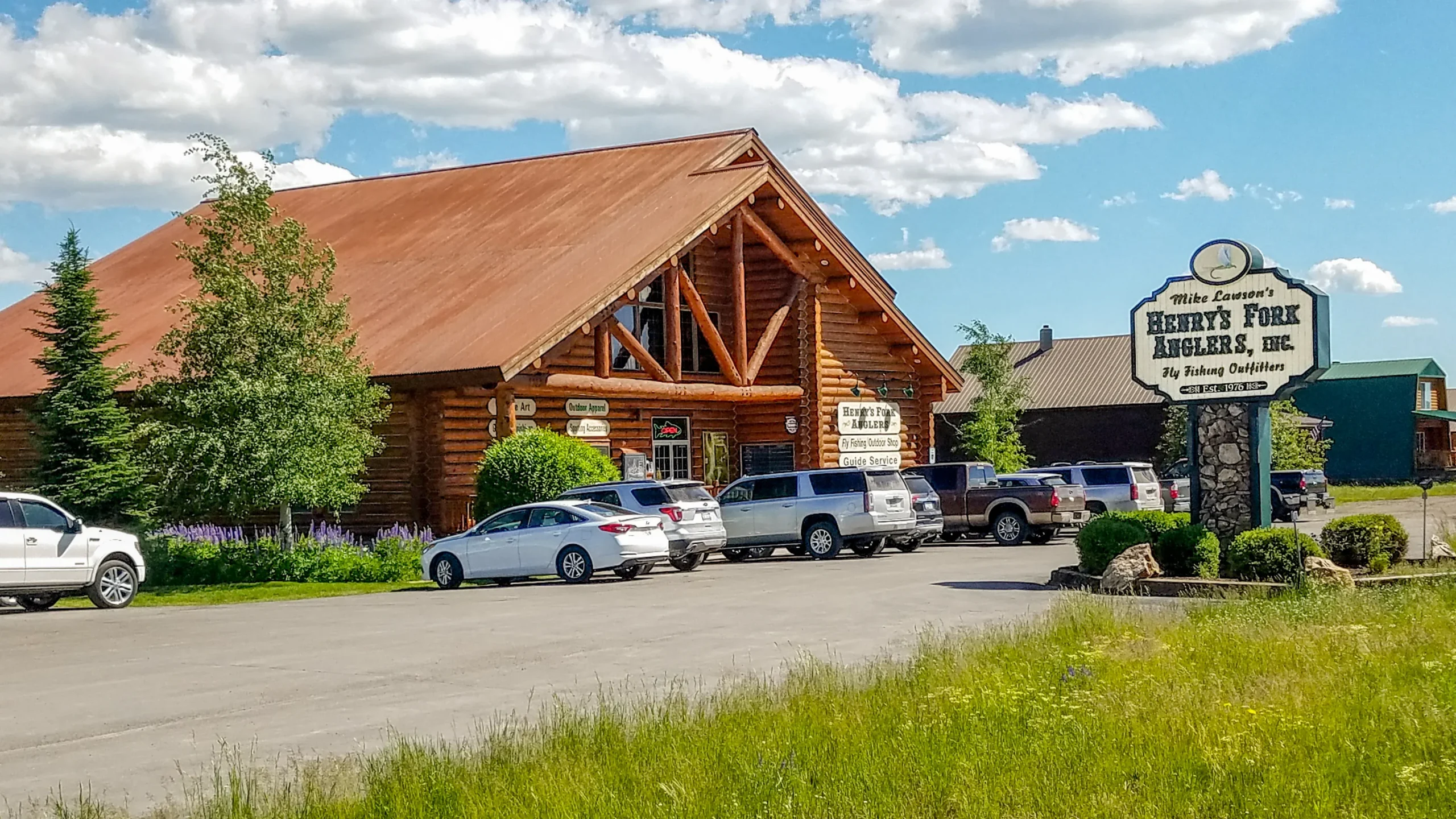
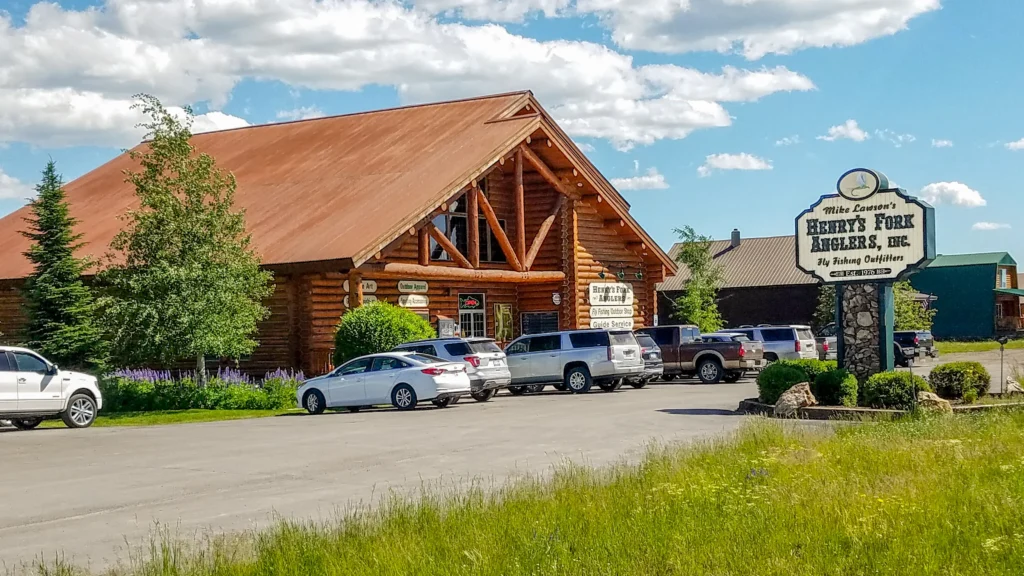
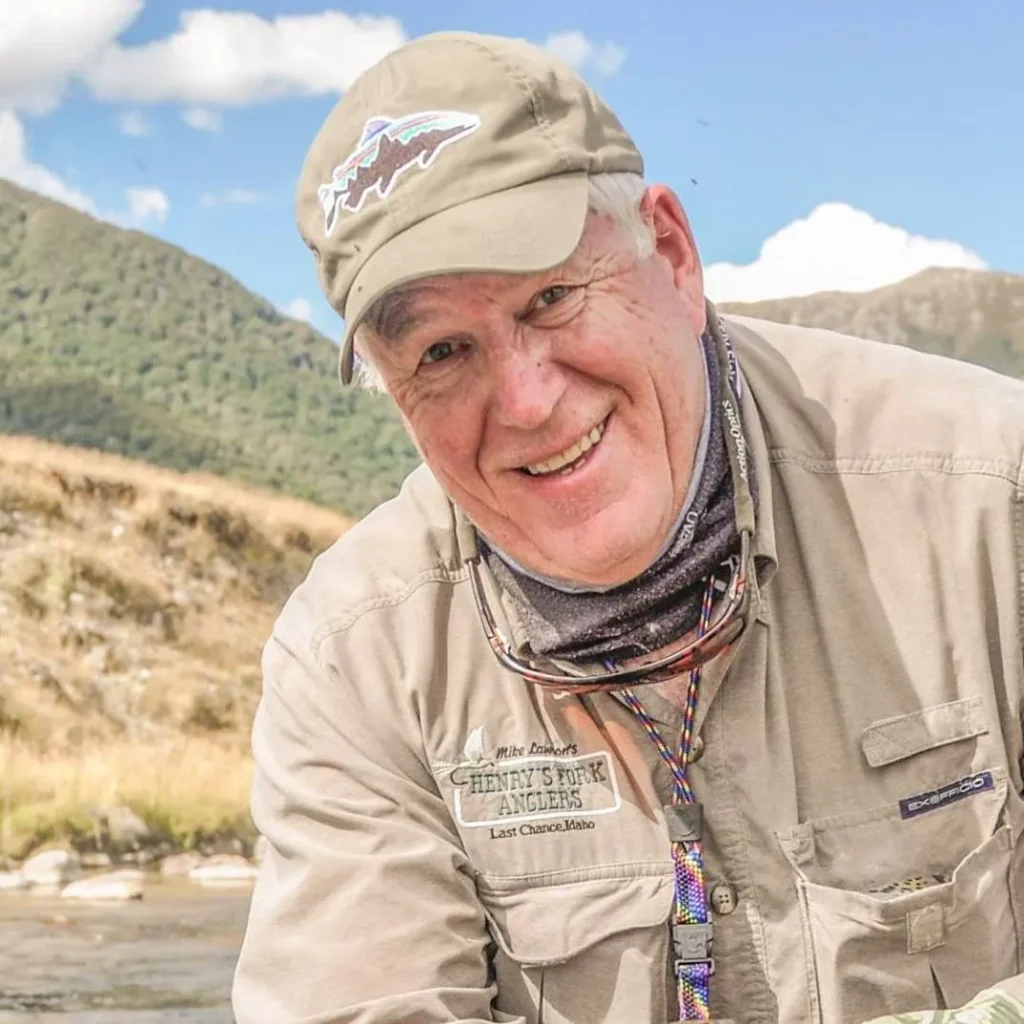
Today, we take a look back at 50 years of Henry’s Fork Anglers with Mike Lawson and hear about some great stories from the early days of fly fishing on the Henry’s Fork.
We talk about the rise of fly shops, graphite rods, matching the hatch, famous fly fishing writers, and how Henry’s Fork helped shape modern fly fishing as we know it today.
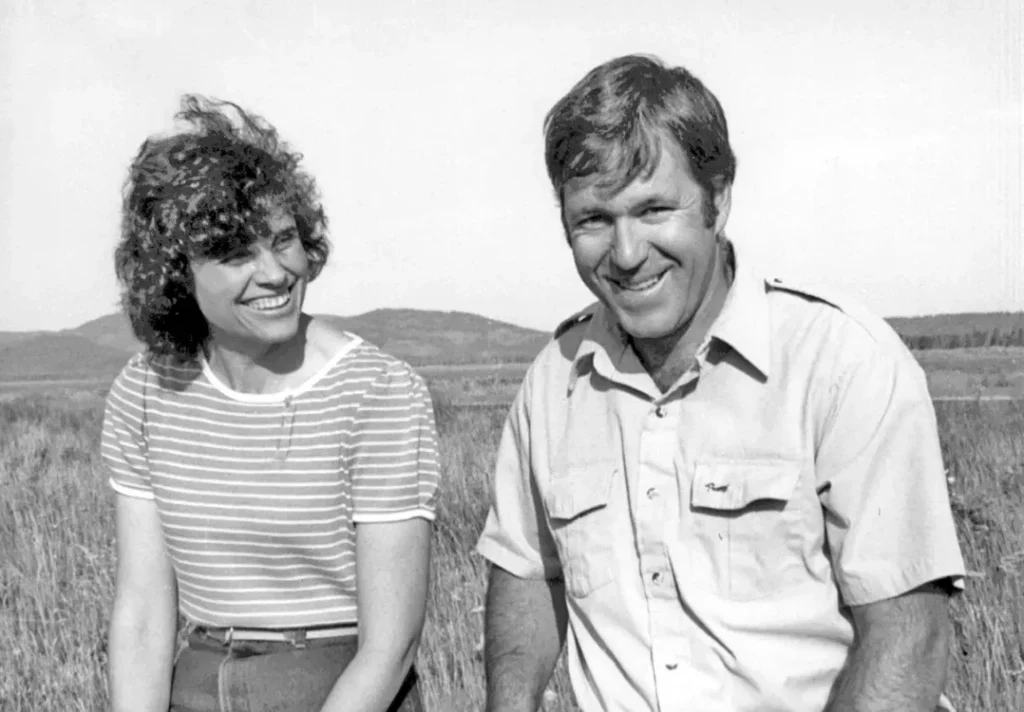
He says he and his wife started tying flies back in 1972 while he was still teaching school. Things changed after his wife got pregnant and decided not to go back to work, so they needed another source of income.
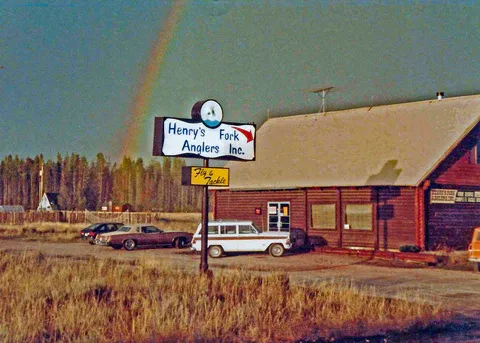
Mike started helping Rene and Bonnie Harrop with their fly tying business, then got into guiding in West Yellowstone. A couple years later, they opened the fly shop in 1976. Mike says at the beginning, the whole idea was just to tie and sell flies, but over time it grew into a much bigger business.
(5:37) Mike says there really weren’t many fly shops back in the early 1970s. He says West Yellowstone was kind of the center of everything at the time.
He talks about tying flies for Sid Barnes and hanging around Will Godfrey’s shop on the Henry’s Fork, where a lot of local anglers gathered.
This was also right when graphite rods started coming onto the scene. Mike says when they opened Henry’s Fork Anglers, fiberglass and bamboo rods were still the big sellers, especially the Fenwick glass rods.
(17:28) Mike talks about some of the early fly shops out West and how fly fishing really started growing in the 1960s and 70s.
He mentions early shops started by Don Martinez in West Yellowstone, Bob Carmichael in Jackson, and Dan Bailey in Livingston. By the 1970s, more shops started opening around Yellowstone Country and Henry’s Fork.
Mike says a big reason fly fishing grew was because writers like Joe Brooks and Ernest Schwiebert kept writing about rivers like the Henry’s Fork, Madison, and Yellowstone. Fly fishing magazines and groups like Trout Unlimited also helped bring more people into the sport before another big jump later on with A River Runs Through It.
(23:09) Mike says anglers really didn’t know much about bugs and hatches back in the day. He remembers seeing his first green drake hatch on the Henry’s Fork and swatting the bugs away because he didn’t know what they were.
He says writers like Ernest Schwiebert helped change that by teaching anglers about mayflies, caddis, and matching the hatch through books like Matching the Hatch.
Mike also says the hatches today are not nearly as strong as they were in the 70s and 80s because of climate and drought changes. But the fish are bigger now because more anglers release them rather than keep them.
(32:13) Mike says most anglers used pretty simple flies at first, and a lot of fishing was done with wet flies swung across the current. Later on, writers and fly tyers started helping anglers better understand specific bugs and hatches.
Mike says Gary LaFontaine really changed the way people looked at caddisflies. Before that, he says most people didn’t pay much attention to the different types of caddis.
They also talk about the Sparkle Pupa, which became a huge fly pattern on the Henry’s Fork. Mike says he still likes fishing caddis pupa today, especially swinging them across the current, which is how he learned to fish growing up.
(39:53) Mike shares some of the writers and anglers who had a big influence on fly fishing during the 70s and 80s.
(47:29) Mike talks about how fly fishing has changed over the years. Early on, a lot of anglers were focused on dry flies and matching mayfly hatches on rivers like the Henry’s Fork.
Writers like Doug Swisher and Carl Richards helped push that dry fly focus even more during the 70s and 80s.
Later on, more anglers started fishing nymphs, especially once strike indicators became popular because they made it easier for beginners to catch fish.
Dennis Black from Umpqua offered to produce Mike’s fly patterns and sell them to other shops too. Mike says those early royalty checks helped a lot during the early years of the business.
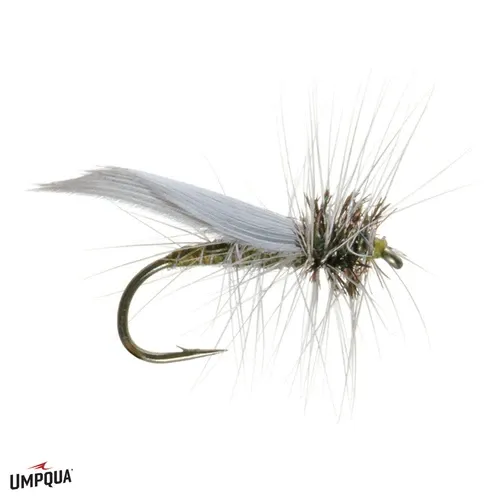
Some of Mike’s best-known patterns still sold today include the no hackles, Hemingway Caddis, and the Henry’s Fork Foam Stone.
(1:00:05) Mike says the biggest key to a better fly presentation is accuracy.
Before worrying about reach casts, pile casts, or other fancy casts, he says anglers first need to learn how to consistently put the fly where they want it.
Mike recommends practicing on the lawn with a hula hoop, plate, or small target about 20 to 30 feet away. He says once you can cast accurately, it becomes much easier to add slack and get a drag-free drift on the water.
You can also check out their blog and learn more about the 50th anniversary celebration over at Henry’s Fork Anglers.
Episode Transcript
WFS 925 Transcript
00:00:00 Dave: If you could take a few decades of fly fishing, the early days of graphite rods, the first real fly shops, and the moment people finally started understanding bugs and roll all that up into one conversation. That’s what we’re getting into today. Mike Lawson is back on the podcast, and today we’re going to talk about the fifty year anniversary of the Henry’s Fork Angler’s fly shop. We’re going to get into that and some great stories around that and the history, what it was like then. And now Mike’s also going to share how Fenwick led the Graphite Revolution back in the early days, and how that evolved into sage and some of the other brands out there in fly fishing. The moment that matching the hatch actually started to matter. We’re going to talk about how bugs and entomology and understanding them came to be. We’re going to find out about some great writers, Ernie Schwiebert, uh, Swisher and Richards and others who paved the way for this period and use the Henry’s fork as their background and their lab for experimenting and why fish are bigger now, but a whole lot harder to find in some of these areas. We’re also going to get into some evolution there. This is a fun one. Lots of history. Some good tips Mike shares along the way. We’re going to help your cast. We’re going to get you some bugs to fish this year. So here we go. You can find Mike at Henry’s Fork anglers dot com. Here he is Mike Lawson. How you doing, Mike?
00:01:15 Mike: I’m doing well.
00:01:16 Dave: Nice, nice. We’re excited to jump in here. Uh, it’s been a little while since we had you on the podcast. We’re going to do a little, uh, check in on. You’ve got a big anniversary. It’s the fiftieth for the Henry’s Fork Anglers, and we’re going to take us back and see how fast that went for you, you know, and talk a little about the history there of Henry’s Fork, but maybe give us a heads up what’s going on this time of the year? We’re just getting ready. It’s April is right upon us here. Um, what’s happening with you?
00:01:43 Mike: Well, we’re getting into some pretty good fishing right now. Our bluing olives are coming on pretty good, and we haven’t had very good blue wing olive weather because they like it cool and kind of damp and cloudy. And we’ve had a lot of like all over the west, above normal temperatures and sunny and a lot of wind. But today is a beautiful day to fish. In fact, I expect to try to get out a little later today. We’ve got clouds and cooled off and it’s supposed to be breezy, but at least not windy, so that’s good. Should have a good day today.
00:02:25 Dave: There you go. And how long are those blue wings going to hang on to? Typically out there during the year.
00:02:30 Mike: Well they hang on throughout the rest of the spring. They really do. They generally kind of get put in the background when some other bugs start coming out, but they’re still around. You know, another couple of weeks we’ll get our Mother’s Day caddis and and March browns mayflies coming out and they kind of over shadow the bluing olives at that time. But then. And then we start getting into the big stoneflies right after that. So we got a lot going on here. Coming right up.
00:03:06 Dave: Nice. Well, before we jump in, we’re gonna get into some tips and some stuff we didn’t cover on the last one on fishing out there, but maybe take us back to this fifty year, um, you know, event. Talk about that. How does that feel that you’re sitting here with, uh, maybe describe what fifty years ago, what was going on with you?
00:03:24 Mike: Well, you know, this it’s, it’s amazing how much how that crept up. You wouldn’t think fifty years had had no creep up very fast and fly by. But it. But it did. You know, I, I my wife and I both been reflecting back a lot because we, uh, started tying flies back in nineteen seventy two. We were working with, uh, Renee and Bonnie Harrop. And, uh, in fact, I was over visiting with Renee Harrop a couple days ago and we were doing a lot of reflecting back on back in those old days and what things were like. And I was teaching school and, uh, probably the one thing that probably got me into this whole thing was my wife had a real good job, and then she got pregnant with our first child, Sean, and she told me she wasn’t going back to work. I just about hit the ceiling because I was a school teacher and not making much money, and we really depended on that income. So that kind of put the wheels in motion. And Renee and Bonnie had just got a big time fly tying business going. He’d quit his job. And so we started helping him. And, and it just kind of evolved in from one thing to another. And I ended up doing some guiding up in West Yellowstone for Jim Danskin. I think I started doing that in nineteen seventy four, and then we decided to get into a fly fishing shop in nineteen seventy six, and the whole idea there still was focused on mainly on flies, on tying flies and selling our flies. And, you know, it evolved into a pretty good sized business over the years with, uh, an outfitting business on, you know, so and the shops, uh, you know, we’ve tripled it in size about twenty years ago. So anyway, it’s been a pretty good ride. Really has.
00:05:37 Dave: Yeah. Real good ride. Nineteen seventy six. What was, what happened in the seventies? Because, you know, if you go back to the sixties or somewhere in there, there wasn’t a ton of fly shops. Do you know what happened that.
00:05:47 Mike: No, there was and that’s a good question. Uh, back in those days, West Yellowstone was probably Mecca. You know, there weren’t a lot of fly shops in the metropolitan areas either. In fact, Cheryl and I tied some flies for Pam and Sid Barnes. And then I guided for Jim Danskin in West Yellowstone. And then Will Godfrey, uh, he started out guiding for Bud Lilly, and then he came down to Island Park on the Henry’s Fork and opened his shop. And I imagine he was roughly around nineteen seventy two, seventy three, somewhere in there when he started his shop, because I at that time I was working in the summers for the Forest Service until I started dieting. And I used to, like everybody, uh, will shop was where we all went and hung out. So that’s kind of how things started.
00:06:50 Dave: That’s how it started. So it was kind of a. Yeah. Because you had I mean, things were changing there also that wasn’t too far from when like graphite rods first came into the scene. Right. Is that kind of in that range?
00:07:02 Mike: Oh, yeah. I mean, you’re absolutely right. When the, the year we opened the hot rod, the rod we sold the most were the Fenwick Fairlight glass rods. Yeah. And we sold a lot of bamboo. We used to carry, uh, let’s see, we had Orvis and Leonard and, uh, no kidding. Winstons.
00:07:22 Dave: Uh, so when you opened Fenwick, glass and bamboo rods were your main. Were your big sellers.
00:07:29 Mike: That was how things were started out right at about when we opened the shop. And that’s the same year almost that Fenwick introduced their HMG graphite rod. And yeah, they were terrific. And in fact, I think those old original HMG graphite Fenwick rods probably cast about as well as the as the modern ones today.
00:07:52 Dave: Yeah they do. That’s pretty cool. So yeah, I wanted to hear on the Fenwick. So they were kind of back in that time, you know, the Big Rod Company and what happened to them after that? You know, after they were kind of leading the way because they eventually sold and some things changed, right?
00:08:06 Mike: Yeah. Fenwick was definitely the the leader. And the reason they were is they were the first company to really perfect graphite. And that was the result of two men, uh, Don green, who was the engineer with Fenwick, and Jim Green, who was the rod designer. And I’m pretty familiar because I was on an advisory team that consisted of a few fly fishing personalities, I guess, and Fenwick was having a rough time because they were trying to walk the fence on top of the fence with both the specialty fly fishing shops and also the mass marketing. and discounters. And they, you know, back in those days, for example, Cortland, uh, did that Cortland Line company, but they had one part of their company that sold to the big, uh, mass marketers. And then they had their pro shop line, which, and, uh, Fenwick just couldn’t seem to make that work. And so Don Green and Jim left and went to Seattle and opened, they started the Sage Rod Company. And the first year it actually was called Winslow. RM and then they changed it to sage and then to go back to Fenwick. Uh, they finally had to make a choice, I think, and they decided to drop off on the mass marketing side of the fence instead of on the pro shop side. And from there They started, you know, originally they made those rods in Westminster, uh, Southern California. And then they started importing them in and they, they kind of went.
00:10:00 Dave: Oh.
00:10:00 Mike: The way of the.
00:10:01 Dave: They started.
00:10:02 Mike: They, they left the fly shops is what happened.
00:10:05 Dave: Okay. And, and we’re back then when they were, were, was importing, uh, were a lot of companies importing rods. It was Cortland importing rods back then.
00:10:13 Mike: Well, you know, yeah. They were, but the, uh, the shops, the pro fly shops, especially fly shops really weren’t buying rods that were imported. You know, a lot of rods, even the lower end ones were still made in the US. There was a company called J. Kennedy Fisher that made rod, uh, graphite rod blanks, really good ones. And they sold to a lot of the companies. And then, you know, you had, uh, Winston and Sage and Thomas and Thomas Orvis. They were all making their own rods. Yeah, in house. And today I think they all import a few rods. Maybe sage doesn’t, but they still keep their premium rods are still made in the US.
00:11:04 Dave: Still here. What were the rods? So do you have those rods in seventy after Fenwick? What were the rods you had in the shop there? Your big ones. Did you have all those?
00:11:11 Mike: Oh gosh. We used to try to carry everybody’s. And, uh, we had Winston Scott, uh, you know, Fenwick, Orvis. Um, I don’t know. I can’t think of all of them.
00:11:24 Dave: Yeah. Yeah. Right. That was a while ago.
00:11:26 Mike: And what used to happen where you’d get in trouble is you only had so much money that you could tie up in your rods. And so you try to order a full line of rods from all these companies. And then you’d get into September and you’d have a whole rack full of rods still, and somebody come in and want a five weight rod, and you wouldn’t have a five weight in the whole place.
00:11:51 Dave: Yeah.
00:11:52 Mike: Because so so eventually you had to make the decision and think, okay, you know, I just can’t, uh, have all these different companies. So you had to, and we started, we eventually dropped ours down to stage and Winston and then we had, uh, you know, a lower end when I think originally it might have been lamb of glass might have been it. I, you know, we carried a bunch of different ones, but that’s what you tried to do is you tried to have a, a premium rod line and then a more of an entry level price point.
00:12:28 Dave: So in seventy six you opened before that, maybe take us back real quick on the fly fishing. So I’m not sure how old you were in seventy six, but how long had you been fly fishing before you opened up the shop?
00:12:38 Mike: Well, in nineteen seventy six I was thirty.
00:12:41 Dave: Yeah, thirty.
00:12:42 Mike: thirty years old. So I had and I fly fished my whole life. My, uh, I was lucky, my grandfather on my mother’s side. He loved to fly fish. And that’s about all he did. And then my grandfather on my dad’s side, along with my dad, they used fly rods. Nobody owned a spinning rod. But we fished whatever it took to catch a fish. You know, with the fly rod, we’d put a little spinner on there sometimes, maybe some bait. Or I even remember dad using little tiny flat fish that he could cast with the fly.
00:13:20 Dave: Oh, wow.
00:13:22 Mike: And then the flies we used pretty much were all wet flies. I never get into dry fly fishing until, oh, maybe. I was a teenager in high school. I started fishing some dry flies and kind of went from there.
00:13:37 Dave: So when you’re a teenager, you’re kind of. It was in the sixties, right? The early sixties. What was what was the fishing? Were you in that area and what was the. Where did you get your tackle then? Because the fly shops weren’t around. Right.
00:13:49 Mike: Yeah, I lived here. And the, the, all the gear I had starting out was all hand-me-down stuff. I had an old, real heavy, long bamboo fly rod and an automatic reel and a silk fly line that had never, ever been dressed, I’m sure because it was, I just used it for wet flies. And then we fished. Uh, wet flies almost always. Usually hair wing flies that were from companies in Montana. There was a company called Pots that made these sandy mites and Lady mites and stuff, and another company called bar X, and they made a big wet kind of salmon fly and, and all the little towns, uh, back then all had a sport shop. Oh, even like even Saint Anthony here is Saint Anthony hasn’t grown since I was a kid. To be honest. It’s about three thousand five hundred people now, and I think it was about three thousand people when I was in high school. But there was a nice sporting goods store. In fact, I remember buying one of the very first float tubes that I’d ever seen. Yeah, I had him order me one in, but that’s kind of how it went. And that and when it gets into the fly tying, uh, Bonnie and Renee Harris, they tied flies and put them in their car, and they just make a stop at every one of those little shops all the way between here and West Yellowstone.
00:15:18 Dave: So wow.
00:15:19 Mike: You could buy your way. All, all these little stores carried pretty good stuff, too. Back in those days, you know, you could buy a, a Fenwick rod and a either, you know, like I said, I started with a using these heavy automatic reels, but all of us probably eventually started out with a Pflueger medalist.
00:15:40 Dave: Yeah, the Pflueger.
00:15:41 Mike: And, uh, you know, you could buy a Cortland or a scientific anglers fly line and, and, you know, it was you didn’t have a lot of trouble finding stuff, but you didn’t have a lot of choices either, like you do now.
00:15:57 Speaker 3: When it comes to high quality flies that truly elevate your fly fishing game, drift hook dot com is the trusted source you need. I’ve been using drift hooks expertly selected flies for a while now, and they never disappoint. Plus, they stand behind their products with a money back guarantee. Are you ready to upgrade your fly box? Head over to Drift Hook dot com today and use the code swing at checkout to get fifteen percent off your first order. That’s drift hook. D r I f t h o o k dot com. Don’t miss out. Golden Fly Shop isn’t your average fly shop. They have a twelve foot shark painted like a cutthroat, hovering over a huge selection of the.
00:16:34 Dave: Best rods in the business. A massive assortment of tying materials and their famous steakhouse streamer display. And it’s the hub for a community of anglers who never stopped tinkering with new ways to catch fish. Sometimes the conversation behind the counter includes what hatches are going off and what techniques are working best. Then tales of destination fishing, adventures, sought after species, or a good old congratulations when a customer brings stories of finally connecting with that fish they’ve searched for forever. With a growing online store and a budding YouTube channel, you’ll be able to follow along with their fun antics, international adventures, and helpful fly fishing tips. Golden fly Shop where the community is hanging out even if they’re supposed to be working. That’s Golden Fly shop dot com. Check them out right now. Do you have any idea? I’m wondering, I think, well, who was the first fly shop out in that area? And then who do you know, the first shop in the country or maybe in the West that was out there?
00:17:28 Mike: I don’t know the first I know a little bit, I think, and I’m pretty sure I’m right. There was a a guy that started a shop in West Yellowstone named Don Martinez. And then over in Jackson, there was a guy named Bob Carmichael. And then in Livingston it was Dan Bailey. I think those were the three main shops that were reasonably close to where I’m at.
00:17:57 Dave: Yeah. And those started up in the in the seventies or the sixties.
00:18:01 Mike: No, no, they would have been in the early sixties, probably late fifties, early sixties.
00:18:07 Dave: Yeah.
00:18:07 Mike: And then by the time you got into the seventies, by then you started getting other shops, you know, over in Jackson. By then Jack Dennis got his shot going.
00:18:18 Dave: Right.
00:18:19 Mike: In West Yellowstone. It wasn’t, you know, about the time we opened and shortly there or a little bit before us was Bob, Jacqueline, along with, uh, Pat Barnes and Bud Lilly and, uh, Jim Danskin. And then, uh, you know, Will Godfrey moved down and opened up his shop in Island Park here and. Yeah. And you know, it just. And then right after. Then a few years later, Craig Matthews came to West Yellowstone. He started out as a police officer.
00:18:51 Dave: That’s right.
00:18:52 Mike: And then. And then he opened his shop. And then you from there you had Madison River Outfitters. They got started real early. It just kind of snowballed, gradually snowballed. Yeah it did, but the fly fishing right in about that time there in the late seventies, early 80s, it really kind of went.
00:19:13 Dave: Yeah, what what made it because I know in the nineties, you had the River Runs Through it came out. What happened in that seventies period that really made it well, yeah.
00:19:20 Mike: What the the at least with us, what happened was, uh, some of the riders, Joe Brooks was the fishing editor for Outdoor Life. And he was really a good rider and very popular. And he loved coming out West here. And so he started writing more about all these rivers. And then some of the books came out, you know, uh, Switzer and Richards came out with selective trout and some other things. So there was kind of a big boom there all of a sudden, and the magazines became very popular. Fly fisherman magazine. Uh, it’d be interesting to me to see what happened with their subscription rate. That would be right there in the seventies, because I bet it really went up quick.
00:20:06 Dave: That would be awesome. Yeah.
00:20:07 Mike: And, you know, some of the organizations really kicked in Trout Unlimited and, and the Federation of Fly Fishers. And so there was a big bump right in there. And that’s about when we opened our shop. And then as you just mentioned, then the next big jump was when the River runs through it. Yeah. Came out and I don’t know, was it around ninety two or so somewhere.
00:20:30 Dave: Yeah, ninety two somewhere in there.
00:20:32 Mike: Yeah.
00:20:33 Dave: Yeah, that was it. That was so that was almost. Now it’s crazy to think, but that was right there over thirty years ago. Just on that one.
00:20:39 Mike: Yeah, yeah. And you know, my wife and I just finished watching this, uh, series called The Madison. And it’ll probably resolve in another little bump. Every people look at those beautiful rivers and they think, boy, I’d like to be there. So yeah, but, uh, we’ll see what happens.
00:20:58 Dave: Is that what, you know, when you take it back again to that Henry’s Fork area, why was Joe Brooks coming out there? Did he just, you know, what made it a place that everybody wanted to go to?
00:21:09 Mike: Well, he loved it out West. He even though he was from the East and he he really central centered probably in Livingston. That’s where he’s buried. And he loved those spring creeks and there around Livingston, Armstrong, Spring Creek and Nelson Spring Creek. And then he loved the Henry’s Fork, and he wrote about it a lot. And, you know, being where he was getting outdoor life to let him pretty much go, I imagine where he wanted, he he ended up out here a lot writing.
00:21:45 Dave: He.
00:21:46 Mike: Did about the rivers.
00:21:47 Dave: Yeah. Did you, uh, talk to him, run into him occasionally?
00:21:51 Mike: Oh, yeah. In fact, uh, when I was over to Rene’s, we got some old pictures out the other day, and we had a big, uh, flight. Renee and I helped start a fly fishing club here in Rexburg, and, uh. Oh, we started that, I think in nineteen seventy two. And Will Godfrey got Joe Brooks to come and do a fundraising banquet for us when we were just getting that club started. So that was really a big boon for us.
00:22:21 Dave: Yeah. Wow. So that kind of takes us back and you know, over the years. And did the shop kind of evolve from, you know, the seventy six.
00:22:29 Mike: Yeah, yeah. And, and I should mention too, I in my opinion. And of course this is just my opinion, but I think the top fly fishing writer in those days was Ernest Schwiebert.
00:22:42 Dave: Mhm.
00:22:43 Mike: And he also loved coming out here, and he wrote about it a lot. So he wrote it in, in most of his books, referenced the Henrys fork and Madison and, and Yellowstone and, and then he was writing a lot of articles for the magazines. And, you know, it just, uh, it was just kind of a real heyday. Time for fly fishing here.
00:23:09 Dave: It’s interesting because it’s really, it’s kind of a media thing. It sounds like, like Joe Brooks, all these famous guys were writing about it. So that was the media of the time. And, and it was, yeah, it all came together. And that probably helped to stir the fly shops. And then they started popping up all around, really, I’m guessing all around the country, you know, some of these shops.
00:23:27 Mike: Oh yeah, I think so. You know, the that period early in the seventies was pretty big with fly fishing, especially later in the seventies and and into the early nineteen eighties, too. And that’s also that brings you to, you know, what you and I talked about in the past is some of the insects and all that before these people started writing. Nobody knew what a green Drake was or.
00:23:53 Dave: Oh, right.
00:23:54 Mike: We really didn’t. I remember the first time I really encountered a big green Drake hatch on the Henry’s Fork. The, the, the, you know, they’re big, bulky, active mayflies and they’re very bright colored with kind of olive body. And then their legs are, are yellow looking. And they remind me a lot of. And from a distance coloration similar to like to a, a yellow jacket or. Oh, really? Or something. And I remember the first time I encountered a green Drake hatch, I was swatting them, trying to keep them on. Right. Because I, I didn’t know what they were, but I knew the fish were eating them. Then you got Swisher and Richards and some other guys from back East and Ernest Schwiebert. They all identified them and named their scientific names and.
00:24:46 Dave: Oh, that was.
00:24:46 Mike: Schwiebert. Common names. And all of a sudden we knew all about all these different hatches. And eventually that kind of, I think, tipped over the wrong way because then everybody was trying to speak Latin names, and a lot of people were getting pretty overwhelmed with all that. But it was pretty interesting. Time really was.
00:25:08 Dave: Yeah. And Ernest Schwiebert, so he was, he was probably a big part of the figuring out the aquatic insects and talking about them.
00:25:14 Mike: He was, you know, he wrote the very first book that I know that a, that a fishing writer wrote about the bugs was called Matching the Hatch and Ernie Schwiebert wrote that I think he wasn’t even out of his teen years. I have to look. I’ve got a copy of it here, but it was written in the late fifties, which is totally amazing, I think.
00:25:41 Dave: Yeah. Well, before all this, right. This was twenty years before matching the hatch, I think.
00:25:47 Mike: Yeah. And you know, today it’s evolved to where most anglers that are that fish very much, they’re pretty good at being able to look at a mayfly and say, that’s a pale morning dun, or that’s a green drake or a salmon fly or something. You know, it wasn’t like that back in the.
00:26:05 Dave: It wasn’t.
00:26:06 Mike: In that time. People still didn’t really understand the bugs very well.
00:26:10 Dave: Right. But it was still you could go to the Henry’s Fork. What was the Henry’s fork then when you didn’t understand the bugs versus say, you know, has it changed much on the hatches and stuff like that?
00:26:20 Mike: Yeah. Oh it has. And unfortunately, uh, due to a lot of reasons, I think, you know, uh, mostly probably from the climate.
00:26:30 Dave: Yeah.
00:26:31 Mike: Issues and the drought issues and stuff. The hatches aren’t nearly as intense as they used to be back in those days of pretty much all the aquatic insects. There’s some of them that are maybe hatch a little better. The ones, for example, we have a big mayfly called a brown drake, which is very different than the green drake. The nymphs, like, uh, silty bottom, they like sediment. And so that’s what’s one of the sediment is bad for most aquatic insects, but brown drakes thrive. They love it. So that, you know, it’s things just evolve. And yeah, but most of us, uh, they’ve been here all these years. We do, uh, you know, it’s a little bit discouraging that to see the decline in the hatches that we’ve seen compared to what they were back in, those days in the seventies and 80s.
00:27:28 Dave: Yeah. It’s changed. We’ve talked a little bit about that. We’ve had the there’s a great group, the Salmon Fly Project, who’s a non-profit who’s starting to monitor more of the aquatic insects. Oh yeah. Yeah.
00:27:37 Mike: So I’m very yeah.
00:27:38 Dave: You know all about them. Yeah.
00:27:40 Mike: Mhm. I sure do. Yeah.
00:27:42 Dave: So I think that’s a start. Right. And I think TI is doing some good stuff really document. Okay. Where are we at. And you know, what do we need to do to, to help protect these. Right. Because it’s kind of similar to the fish, right? I mean, you’ve got changes because of climate too, you know.
00:27:54 Mike: Yeah. The fishing is definitely different to just, just the fish in general, because, uh, most of the rivers, we didn’t have regulations that would really protect the fishery much. I think in it runs in my mind that when we opened our store back there in the seventies, I think the limit of fish that you could keep was like fifteen or something.
00:28:23 Dave: Oh, Right. Right.
00:28:24 Mike: And the problem was a lot of people were out to get take fish home for dinner. And so consequently, uh, we didn’t have as many of the larger fish that you have now because they got killed. And, uh, gradually, you know, the regulations improved and they stopped stocking hatchery fish. And so then you started having more wild fish. And the fish, uh, you know, they, I, I’m sure without a doubt that the average fish now is larger than it was.
00:29:06 Dave: Oh, it’s larger.
00:29:07 Mike: I think so, but they’re harder to catch than they were back then, because back then, if a fifteen sixteen inch fish got caught, he went home. And now a sixteen inch fish gets caught. It gets released, and if he lives another year, he’ll be eighteen nineteen inches. And he’s not going to be as easy to catch as he was when he was sixteen inches.
00:29:32 Dave: Yeah, exactly. I’m looking at I opened up that book. You mentioned, the Ernie Schwiebert book, nineteen fifty five and matching the hatch. And there’s some quotes from people. I’m curious if you remember these names. This is a quote by Mark Sosin from Sports Afield. He said, an indispensable guide to the imitation of insects found on trout waters of the United States and Canada. Is that.
00:29:54 Mike: Yeah, marks. Mark Olsen was one of the one of the editors of I don’t remember which magazine, and he came out. I met him a few times, but he was a lot more of a saltwater guy. Eventually. He was kind of all around early on, and then he kind of settled more into the salt water. And of course, then you had Lefty Cray too, and. But Schwiebert was, uh. He’s the guy that was, in my mind, the first guy to really focus on the bugs for the average angler to be able to try to at least understand what a difference between a mayfly and a caddisfly or something, you know?
00:30:43 Dave: Yeah, yeah. That’s it. That was it. Okay, so we got and then and then on, uh, one more thing on the shop. I was just thinking about it. What was the opening day like? Did you have a big event or was it kind of a small, quiet opening?
00:30:54 Mike: Yeah, it was really small, quiet, you know, and, uh, we used to have, uh, an opening day that fishing didn’t open it. We didn’t have year round fishing and it always opened on Memorial Day weekend. So it was, uh, kind of a little bit of a chaotic weekend even. You know, we just kind of fit into the crowd. But most people were buying fishing licenses and going. Most of them were bait fishing, going on the lakes and stuff, you know. But so we had a lot of traffic in the store, but it wasn’t a big event, grand opening or anything. And I do remember, see, the railroad ranch was what we call it in those days. It’s the Harriman State Park now on Henry’s Fork. But that opened on June the fifteenth and.
00:31:49 Dave: Oh, wow.
00:31:50 Mike: Uh, I remember how surprised we were because prior to June fifteenth, there were hardly anybody. You had that big Memorial Day weekend, and then there was virtually nothing going on as far as people. And then all of a sudden, like on June fourteenth, all these people just came showing up. So yeah, I do remember that.
00:32:13 Dave: What is the, you know, I think part of this, obviously you have the insects and matching the hatch with, you know, the flies. What is the difference between when you look at people flies their fish in there that say modern versus the classics, like what were back in the day when you opened the shop? What were you using to match the hatch? And then how did that evolve to today? What are you using?
00:32:32 Mike: Well, you know, originally the eastern, uh, fly tie, and that’s kind of where the dry fly stuff all really started back in the Catskills and the Adirondack Mountains. And, you know, all those famous eastern rivers, plus the Pennsylvania Spring Creeks. You had this guy, uh, Vince Marinaro that wrote, uh, pretty good book that back there and out west here, we, most of us were fishing either wet flies or big gaudy looking dry hair, hair wing, dry flies and all that. And, and then when, uh, some of these riders started Getting attached here to the Henry’s Fork Schwiebert. But then you had these, uh, guys like Doug Swisher and Carl Richards. They wrote a book called Selective Trout. They used the Henry’s Fork as, as one of their examples and studied all the bugs. And then they had all these different flies that were back in those days. They were really innovative to come out with no hackles and spinners and emergers and all that kind of stuff. And, and then, you know, a little later, uh, Gary Lafontaine, he, he focused on the caddis flies and, and, and you started getting specific patterns that imitated a specific insect rather than just a general fly, like an Adams or a Royal Wolfe or something.
00:34:12 Dave: When was Lafontaine, when was he there doing there in the Henry’s Fork?
00:34:16 Mike: Uh. he was in the eighties.
00:34:18 Dave: Yeah.
00:34:19 Mike: And Gary became one of my best friends, and he. He is the back of our shop because it was shady. All these caddisflies would gravitate over that to our store from the river. And so he could just go come to the shop. He’d come once a week with his little net and he’d catch all these different caddisflies. But until Gary, uh, all of us, I shouldn’t say everybody. I, I guess I should just mention me how I felt as a caddisfly. I, I didn’t know there were different species of them or different colors or anything else. They all, they all just look like little more to me. And, and honestly, I didn’t like them too much because, uh, when you really get a lot of caddisflies on the river. I couldn’t catch fish anymore. I couldn’t get the fish to eat my flies.
00:35:13 Dave: Huh.
00:35:13 Mike: Right. And then Gary came up with Courtesy mergers, you know. And they were wild and crazy. He came up with these sparkle caddis pupa. And they you looked at those and they were so pretty outlandish compared to anything we’d used up to that point.
00:35:33 Dave: The caddis. How did you fish. Did you fish much of the the caddis eventually. Did you get into kind of everything doing all that?
00:35:39 Mike: Oh yeah. Yeah. Now I love the caddis hatches. They’re some of my very favorites. But now we understand them. Thanks to Gary and some of these other writers, we we, because they’re not like mayflies. They’re very different. And you have to approach things very differently with caddis flies.
00:36:00 Dave: How do you fish that sparkle? Emerger. How would you fish that today?
00:36:04 Mike: Well, I, you know, I generally fish it as a dropper because you can’t see it, you know, if you’re fishing it right in the surface film and I’ll either drop it off of a dry fly caddis pattern, like a Elkhart Caddis or a, or a Hemingway caddis, which is one of my patterns. And, uh, or I’ll just use little, uh, piece of yarn indicator and fish a a caddis pupa.
00:36:33 Dave: Yeah. Pupa. And that’s what’s imitating the, the sparkle is imitating the pupa. Yeah, yeah. And so you’ll drop it off of a, a dry fly and it’s just sitting there trailing back behind.
00:36:43 Mike: Yeah. You can do that. And then the other thing it works is to swing it to, you know, the, the caddis flies are one that, uh, they’re pretty active and, and you can use a soft hackle or caddis pupa and then just do the old wet fly swing and.
00:37:01 Dave: There you go.
00:37:02 Mike: And they work, they work really well when the caddis are coming off.
00:37:05 Dave: Yeah. So that still is effective. If you had some caddis, some emergers, you could still swing flies on the Henry’s fork.
00:37:11 Mike: Oh yeah. You know, and that like I said, I, I really that fit really well with me because that’s how I grew up with swinging flies.
00:37:20 Dave: Oh, what? Right. That was your original. Yes. That was the. Oh yeah. So you, when you got into fly fishing, the swinging, the the the caddis, whatever, that was how you did it.
00:37:29 Mike: That’s all we did. I never I started out, I never fished dry flies. It was all wet flies. And we’d put uh, at least two flies together, sometimes three or four and just cast them across and swing. And I remember the first time I went steelhead fishing up in northern Idaho on the Clearwater River. I had somebody was trying to get real detailed trying to tell me how to fish for steelhead. And finally the light came on. I said, oh, I’ve been doing that my whole life. I can do that.
00:38:01 Dave: Yeah, you can do.
00:38:01 Mike: And it worked pretty good too.
00:38:03 Dave: Yeah. Same thing. That’s the cool thing is, yeah, the swinging soft tackles, it’s the same technique down and across. Right?
00:38:08 Mike: Yeah.
00:38:09 Dave: Pretty easy straight now that’s that’s awesome. So and I’m looking at now the in the ring in the ring of the rise was Vince Marinaro. Right. That was.
00:38:18 Mike: That’s.
00:38:18 Dave: Right. Yeah. Nineteen seventy seven. That was still you can pick it up on Amazon right now for for thirty bucks.
00:38:24 Mike: Yeah. No. And those, uh, personally, those riders, uh, especially Marinaro had quite a bit of a influence on me because they were writing about spring creeks that, you know, back there in the east, they called them limestone streams, but they were just spring creeks. And essentially the Henry’s Fork is a spring creek too. And, and, uh, the kind of flies they used and the techniques they use and all that, they applied perfectly here. So those riders, especially Marinaro, had a lot of influence with me.
00:38:58 Dave: Yeah. The spring creeks. Yeah. Because that’s the Henry’s fork, essentially because it’s controlled by the dam and all that. It’s more like a Spring creek than a freestone.
00:39:06 Mike: Yeah. Oh, yeah.
00:39:10 Speaker 4: On to. Mark Lodge offers a world class experience with one of the finest rainbow trout and brown trout fisheries in the world. They’re family owned and operated. Missouri River Lodge offers comfortable accommodations, delicious home cooked meals, and personalized service that make you feel like family. Days on the water are capped off by appetizers, beverages, dinner, and stories on the back deck and around the campfire. Book your stay for an unforgettable fly fishing adventure where memories are made and the fish stories are real. You can head over right now to wet fly dot com. That’s O n d e m a r k on d mark right now to book your magical Missouri River trip.
00:39:53 Dave: Well, what about and we mentioned a few books. Any other books? We’ve talked about some pretty big names back in the day. What are some of your did we miss? Did we get all your influences there or any other ones you want to talk about?
00:40:04 Mike: Yeah. You know, back you had, uh, another one that was, I think, had a pretty big influence. I can think of two people. Uh, one of them was, uh, uh, Charles Brooks. Oh. And he used to come out here and he lived in West Yellowstone all summer, and I got to be pretty good friends with him, but he wrote some books on them. He wrote a book on the Madison, and he wrote one on the Henry’s Fork and one he co-authored with Dan Callahan in Yellowstone Park. And his flies were he was more of a nymph guy. He started getting more into the big stoneflies and all that kind of stuff. But he was definitely a big player out here. And then another guy who really became pretty influential, at least for me, and became a good friend was Dave Whitlock.
00:41:03 Dave: Oh, Whitlock. Right.
00:41:05 Mike: And Dave wrote a really good book about just all I don’t. I’ve got it here. I’m trying to look at it. I can’t see it. I can’t read it on my bookshelf very well. But it’s trout food, you know, it’s a guide to a quiet I think it’s called guide to.
00:41:23 Dave: Oh yeah, I know. Yeah, I have that one in here.
00:41:26 Mike: It’s a wonderful book for, for the average guy that doesn’t care about learning every little different species and all that, he’s just, it’s a very good book about, uh, how to understand mayflies and caddisflies and stoneflies and all that. So he was both of those guys, Charles Brooks and Dave Whitlock. They also had a big influence.
00:41:54 Dave: They were big. Yeah. So I see, yeah. Dave Whitlock’s Guide to Aquatic Trout Foods nineteen ninety two. So just before write River runs through it, right. You got that book coming out at the same time.
00:42:03 Mike: Yeah. And then, you know, the other thing is, people started eating more rather than about how to fly fish or what to use or all that. They started just writing about fishing in general. And, and one of those that was right in that time period start got started was John Geroch.
00:42:27 Dave: Oh.
00:42:27 Mike: Geroch John Guare. And then, uh, let’s see, I’m trying to.
00:42:32 Dave: Yeah. So Geroch was in. So he got started his writings in that same like the eighties.
00:42:37 Mike: Yeah. About the same time. And he used to come out here, him and there was, uh, you know, you you probably know AK bastard.
00:42:46 Dave: Yeah. Oh, yeah. AK yeah, we’ve had him on.
00:42:48 Mike: When I first opened the shop. AK we always call. I didn’t call him. AK his name was Archie to me and he was from the Midwest, I think Michigan. And he was a music teacher. And he’d come out here to the Henry’s Fork and meet up with John Gierok and another guy named, uh, Coke. Winner Coke wasn’t a writer or anything. He was a taxi cab driver from Denver. But they’d all get together here and fish the Henrys fork. And I enjoyed fishing with them because they loved the brown Drake hatch, and I couldn’t, you know, it was a mom and pop store then, and I couldn’t get out to fish except in the evenings. And the brown Drake hatch came off in the evening. So I used to go down in the ranch and meet up with those guys and really have some great times. And, and John became a wonderful writer, as you know.
00:43:48 Dave: Yeah. He did.
00:43:49 Mike: And then another guy that was, uh, kind of wrote more about experiences was Tom McGuane.
00:43:55 Dave: He, oh.
00:43:57 Mike: He was out here and he, uh, he became a good friend and loved the river here. So, you know, he had all kinds of stuff going on.
00:44:05 Dave: Yeah. You did. This is great. Yeah. I’m just looking back at a few books that we’ve talked about already. Kind of if you had to pick a few of these classics, I mean, Selective Trout, Swisher and Richards, you have caddisflies with Gary Nymphs. Ernest Schwiebert came out with nymphs in nineteen seventy three.
00:44:19 Mike: Oh yeah. Schwiebert. And then his big two volume book was called, uh, trout.
00:44:27 Dave: Oh, trout.
00:44:28 Mike: And it’s I mean, it’s got to be there’s two volumes and I think each volume is four hundred, five hundred pages. I mean, yeah.
00:44:38 Dave: It’s a great, there’s a ton. And then you had Trout Bum, which was in somewhere in the seventies. John Gierach came out with that.
00:44:43 Mike: Yeah, that was the very first. That was John Jaracz original book.
00:44:48 Dave: It was.
00:44:49 Mike: And who influenced him a lot to write that book was Gary Lafontaine.
00:44:54 Dave: Oh no.
00:44:54 Mike: Kidding, because I the way I understood it, I’ve talked to both John and Gary about it, uh, how he got started and Gary was really encouraging him to write. And John just said, I’m not a writer, I’m just a trout bum and get there. Gary said, right, that’s what you need to write about.
00:45:15 Dave: God that’s great. I’m gonna have to put. We’ll put a link in the show notes to the episode. The last one we did with John Gierach, you know, of course. R.I.P. yeah, he was definitely his writing was, I think he explained it on that podcast. He kind of wrote like the, the everyday fisherman angler, right? He was just, he, he did.
00:45:30 Mike: And every, he had the ability that every buddy that read his book could put themselves in his spot. That’s what he was such a master at.
00:45:42 Dave: Yeah, I talked to him. I remember I brought up, I can’t remember what book it was from. Maybe it was Trout Bum, but he had this story in it where he was talking about his girlfriend. I think at the time, how there was this leak in the roof and, uh, and he didn’t have enough time to fix the leak because it was he was out fishing. So one day he came back and he moved the fish tank underneath the leak, the leak, and it caught the it caught the drip. And he’s like, all right, all good to go. I’m going fishing. You know, I think he.
00:46:05 Mike: He wrote one book. The title of it was A view from Rat Lake. And it has an article and well, it wouldn’t be an article. It would be an essay or whatever you call him in his books. But he wrote one about the Henry’s Fork. And I read that article, and I was so moved by it. Wow. And I had to, uh, testify before a committee in our Idaho legislature about some issue we had with the Henry’s Fork. And I was trying to think of what could I say to try to influence these legislators. And I remember I took that book and I quoted quite a bit.
00:46:49 Dave: Oh, wow.
00:46:50 Mike: From what he wrote. No kidding about the Henry’s Fork. It’s some of the best descriptions of the Henry’s Fork that I’ve ever seen. It’s the books. The. The book is a view from Rat Lake, and I think that title of the essay might be called A Big Empty River or something to that effect.
00:47:12 Dave: Oh, this is great. This is great. Yeah. We’re definitely going to be reading that book for sure. Yeah. The view from Rat Lake. So he talks. Yeah. Henry’s fork. That’s pretty. And you’re sitting there in front of the the state and basically reading these and you’re probably capturing a lot of these people are.
00:47:25 Mike: Like.
00:47:26 Dave: Blown away.
00:47:27 Mike: Yeah, it was really impressive.
00:47:29 Dave: Wow. When you had, you know, in that period, again, we’re taking it back to this fifty years ago. You know, you had these, you had the wet flies. That was really when did the dry flies or the nymphs start to take a hold first?
00:47:41 Mike: Well, I think the dry. I think dry flies fishing. Yeah. The the real focus started, you know, you had, uh, you had several writers that were really focusing on mayfly Swisher and Richards, uh, Bob Casey and see what I never. I knew them, but not very well. They were more into harrowing flies. And then, uh, then things gravitated more into, you know, into nymph fishing more and more, I think as more people got started into fly fishing, they started, uh, fishing nymphs more because like when I, I never used an indicator, for example, until maybe thirty years ago. And then, you know, now you can put an indicator on and get somebody who, if they can make a reasonable attempt to get the fly out, they’re twenty feet, uh, fishing indicator, they can catch fish. And I think it’s really helped a lot of people get into fly fishing. And then, uh, you know, the biggest thing with nymphs was the advent of the beadhead. I’ve got a little story there. Yeah. I had to tie flies at the Federation of Fly Fishers Conclave in West Yellowstone, which I often did. And they they had these tables all set up, you know, and you had a name plate for each of us that were going to tie. And I went up there and sat down and started tying. And the guy to my left wasn’t there yet. He had his name plate. And when he came walking in, I looked at him and he had shaved his head bald and spray painted his head gold and wow. So so so that certainly woke me up and I introduced myself. It was a Theo. Somebody was his last name. And anyway, he said he was tying bead head nymphs. And he gave me a couple of them. And I looked at those and I said, those, there’s no respectable trout would ever eat that, right? No. And that was my attitude. And look at where things are at today. Things are crazy.
00:50:02 Dave: Yeah, things are crazy. Now take us back to that. Now describe that again on the the goal of the person there. Where was this at and what was the.
00:50:10 Mike: It was in it was in the the National Conclave of the Federation of Fly Fishers in West Yellowstone. And he was from Europe. I don’t remember which country.
00:50:22 Dave: Okay.
00:50:23 Mike: And I think he was, uh, kind of connected was, you know, I’ve been connected with Umpqua, uh, for almost forever since Umpqua started almost as a signature fly tire. You know, I think that they were I didn’t know what when I really started with them, but I was told here that I was either the first or the second one of their signature fly tires.
00:50:53 Dave: Oh, right.
00:50:54 Mike: And this guy was a signature fly tire for Umpqua at the time, too, but he he just, you know, to make an impression. He, uh, that’s that’s what he looked like.
00:51:05 Dave: He was all about the gold. The gold.
00:51:07 Mike: He, he was all about the gold beads and, and, and the thing and and you know what happened? He gave me those flies that I said no fish would ever eat. And and I started fishing them. And man, I was catching all kinds of fish. And so then I decided, where can I get some of those beads and start. And that’s what I mean. That just took off like crazy. The bead head thing.
00:51:31 Dave: It did, and we didn’t know. So that guy you had no idea on his name. He was just some random.
00:51:36 Mike: Uh, Theo, uh, Bachelor, I think might be his name. Yeah. Bachelor or close to that anyway.
00:51:43 Dave: Okay. Theo. That’s that’s interesting.
00:51:45 Mike: I, I should have I never stayed in touch with him. I should have, I remember he gave me his card and stuff, but he had some flies with Umpqua, so maybe he still does. There’s so many contract fly tyers with them now that I.
00:52:02 Dave: Can’t keep track of.
00:52:03 Mike: Them. Whole page of them, you know.
00:52:04 Dave: Yeah, yeah. Umpqua is huge. And and Umpqua that is the story I think. Who are the founders of that? Because they kind of they were the ones that came out from Oregon. Right. And were selling flies doing the road trip. Was that Umpqua?
00:52:15 Mike: Yes, that was Dennis Black. That’s how how I got started as a signature fly tyers. I didn’t have any idea about that sort of thing. I just, uh, Shirley and I were trying to tie all the flies for our shop, and we couldn’t keep up. And, uh, we used to buy flies from Dennis Black, which was Umpqua. And I asked him one day, I said, hey, could you tie some of these flies that we these specialty flies, you know, no hackles. And and, you know, partridge, Gaddis, and all these different. And he said, yeah, we could do it. And then he came back by the house and he said, hey. He said, if you’re okay with us selling your flies to all of our, uh, accounts, then we’ll pay you a royalty. And I said, I don’t. Oh, that’s fine, I didn’t care. I didn’t even think about the royalty. I just was so excited that they could tie these flies for us and wow. And honestly, uh, we were about starving back in those days. It was pretty tough to make a living without having something else to do during the off season. And, and those early Umpqua royalty checks were very helpful for us.
00:53:37 Dave: There you.
00:53:37 Mike: Go. So they became pretty significant. And honestly, it still is. Now, I’m a pretty much retired and I still have quite a few flies with Umpqua. And they, they do pretty well. Yeah.
00:53:49 Dave: So yeah. That’s right. Yeah. And you just get a percentage of every fly that’s sold. Is that how it works?
00:53:55 Mike: Yeah. Mhm. That’s how it works.
00:53:57 Dave: Yeah. And what are some of those flies out there that are still that you could find maybe some of your top ones on, on Umpqua?
00:54:02 Mike: Well, you know, originally the ones I had Umpqua doing and they still have them, uh, you know, fifty years later, roughly is no hackles and, uh, and, uh, spent Partridge caddis, uh, Hemingway, caddis, the, the one probably my hottest fly right now with Umpqua is called the Henry’s fork foam stone. And we tie it in a salmon fly and also in a golden stone. And then we’re getting into some expanding it a little bit. Umpqua, as we’re going to do a sequel in the same style and a and a yellow Sally and then, and then, uh, you know, the, the other thing we’ve changed because these fires change as you go is, uh, now so many people fish, uh, a dropper off of these flies, you know that. Oh, and, and the Henry’s fork home stone, like the salmon fly and the golden stone. They were never tied with the intention of having white tied under him. So they’re not tied very full. They’re designed to sit kind of low on the water and everything. So anyway, the Umpqua wanted me to beef them up. And so we have another variety that’s called the Magnum foam stone. So we doubled the foam on it and then put about twice as much material in the wing.
00:55:29 Dave: Yep. Yeah. And the wing. And what’s the wing made out of?
00:55:32 Mike: It’s made out of these. Uh, actually it’s a saltwater stuff, uh, from Enrico Puglisi. Are you familiar with them?
00:55:41 Dave: Oh, yeah. Yeah, yeah, definitely.
00:55:43 Mike: They have these epi fibers, and I love them for wings on dry flies, I really do. It’s just the greatest material. So a lot of the flies that I used to use hair, now I use these, uh, EPP fibers.
00:55:59 Dave: Yeah. EPP fiber because the hair, what would be the hair substitute you’d use the natural fiber that you could use.
00:56:04 Mike: Oh, I used to use a, uh, salmon fly with elk hair. And I still use elk hair for the Henry’s fork hopper. That’s another fly that’s been around forever, but, uh, extended body drakes. I used to use hair for both the body and the wing, and now I’ve kind of trimmed them down, and, uh, this EPP stuff is, uh, it looks better. You don’t have to use as much of it. It’s not as bulky and it’s a lot more durable because, you know, the, the hair works great, but when you start fishing it a while, it starts getting wet or slime in it, then you can’t. And it breaks down to hair. Isn’t that strong?
00:56:53 Dave: Right, right, right. Yeah. So the synthetics are definitely. And do you do you tend to do you have some flies where you mix synthetics with the naturals?
00:57:00 Mike: Oh, mostly. Yeah. Most of the time. Yeah. Yeah yeah I do.
00:57:04 Dave: Yeah. Okay. And the no hackles those are pretty much imitating. Is that imitating kind of the what stage of the I’m guessing those are more mayflies.
00:57:12 Mike: Well, it could be either an a merger or the, the done. You know the you fish them a while they sit so low on the water, I, I think most of the time the fish take them as an, a merger. And that’s really not my fly as far as I didn’t invent the no hackle to my knowledge. Uh, that Swisher and Richards, with their collecting. However, if you start reading some of the old English books two hundred years ago, I think there’s some, uh, no hackle flies with duckbill wings clear back two hundred years ago. So you know, you know how that gets if you start trying to figure who invented what. But like with Umpqua, this is just the way I tie them. And yeah, it’s my version of the no.
00:58:04 Dave: Yeah, it’s your version and it’s okay. We always we’ve had that conversation before, right? It’s your version. At what point does it become? Does it get its own name, you know, versus.
00:58:11 Mike: Oh yeah, because I get that all the time. People say, well, who invented this or who invented that? You know, we recently, in fact, I was with some guys and we were having a big conversation on who invented the Chernobyl lamp.
00:58:26 Dave: Oh, yeah. The Chernobyl.
00:58:26 Mike: And what we could come up with is, is it was created to fish the green River in Utah. I think we settled on that. But there’s several different people that could probably lay claim to it. But what a fly that’s had you look at the influence that patterns had on today? Yeah. You know, with the chubby chernobyl’s and all this other stuff.
00:58:52 Dave: Yeah. And I guess those things work so well because they, I mean, one of them, they’re, they’re high floaters, right? They, they don’t sink.
00:58:57 Mike: Oh, yeah.
00:58:57 Dave: Yeah. Super buoyant. But yeah, I guess it’s just a fly that looks um. I don’t know what it is. What do you think it is about that one that made it so why is it such a good pattern or is it just people fish it or what’s the biggest feature on it?
00:59:09 Mike: Well, I think I, I think it’s so versatile and, and uh, it floats great, but it still floats pretty low. And, and you, you can put the rubber legs on it, you can drop a nymph on it and it’s still gonna float.
00:59:26 Dave: Because you want it low, right? You want that you’re imitating if you’re imitating a stonefly, it’s they’re not sitting on like a mayfly, right? They’re down on the water flapping.
00:59:33 Mike: No. And it could, it could look like a lot of things. I think it can look like a stonefly or a hopper or whatever. Some kind of big Bug floating on the water. And and that’s the thing. Sometimes we, uh, we give the trout too much credit because they don’t know what something on the surface is. They look at it and think, that looks pretty good. I’m going to eat that.
00:59:58 Dave: Yeah. They have no idea.
01:00:00 Mike: And for some reason that Chernobyl seems to be something they like.
01:00:05 Dave: Yeah. That’s you know, this is good. Well let’s I did one, uh, take it out of here, Mike. I’ve got, uh, we’ve got some new members in our wet fly swing pro community. And I want to give a shout out to Pete. He had some questions on, you know, we had some intro questions. And one of his on what, you know, is kind of goals this year. And he was saying he wants to become a more proficient at picking flies and the method of fishing them in a particular situation. Right. And improving presentation. What when you think of that on presentation, let’s say you’re on the Henry’s fork. What’s the biggest thing you could work on to get better at understanding presenting these flies?
01:00:36 Mike: Well, the most important thing is to be accurate, you know, as a. And I’m not sure I understand the question totally. Is it like with the presenting, the fly, the casting and all that? Because, uh, you know, you get into, yeah, trying to get a well, if you look at, let’s say, if you go out on a guide trip and you pick the two or three phrases that you’re going to hear from that guide on a trout stream, probably the number one thing is going to you’re going to hear him saying is mand mand, you know, mandolin. And, and what you’re trying to do is, uh, create a drag free day. And the thing that when you’re getting started, you, it can be a little confusing because you, you have people talk about, uh, the term is, uh, slack line cast, for example, put some slack on.
01:01:39 Dave: The right.
01:01:40 Mike: And then they have names for them, you know, reach, cast, bounce, cast, uh, pile casts and all this. But everything you do, the number one thing is accuracy. You’ve got to put the fly where you’re trying to put it. And so for somebody that’s, uh, you know, maybe not as experienced, the most important thing you can do is spend some time I recommend out on the lawn.
01:02:06 Dave: Mhm.
01:02:07 Mike: Maybe about twenty or thirty feet. Don’t get out trying to cast too far, but just focus on accuracy and put a plate or a Frisbee or something out there and see, out of ten cats how close you can get and how many you can put into that at thirty feet.
01:02:24 Dave: How many at a good do you think you should get? And then how big is that circle where you’re putting out there?
01:02:29 Mike: Well, I wouldn’t start out big. Put a hula hoop and end up down with a saucer maybe or something, but just use yarn. Don’t use a fly. Tie some yarn on there and don’t use and clip the yarn down to where it’s pretty small, so it’s not too wind resistant. And then practice doing that. And then when you can do that, then practice making that same cast only only, uh, then you can start and you know, I can’t explain it without some sort of visual explanation as far as putting slack on, but, you know, basically, let’s say if we’re going to make a reach cast, you have to make that cast accurately. And once the flies are going out there, that’s where it’s going to go. So then you can reach the upstream and, uh, practice that. But it’s pretty easy to learn to do the slack line cast to keep the drag off. If you first learn to be accurate with your casting.
01:03:36 Dave: Yeah, accurate. That’s the key. So, so start in the. So practice and get out and do the hula hoop or maybe down eventually to the pie plate. And when you. For the Henry’s fork, how let’s say you’re trying to get it in that pie plate or in that range, how many you know out of ten, how many should you be putting in the in the circle? Well.
01:03:55 Mike: If let’s say if you had a, a plate, you know, a dinner plate out there and you’re twenty five, thirty feet away, you know, you ought to be able to put it, hit that plate four or five times at least half the time. The other times you ought to be able to be pretty close. You know, one one example, though, on how important it is to be accurate, I could mention is when Steve Rajeff, who the first year he won the world championship, he was eighteen years old. And I took him fishing down on the Henry’s Fork on the ranch. And I didn’t know even who he was. And so I wasn’t expecting him to be able to cast as. When I saw him cast, I couldn’t even believe it. But he cast a beautiful straight line. But the instant the fly hit the water, the fly started to drag and I gave him maybe two minutes of instruction on how to reach some slack line upstream. And he had it down instantly. He did, because he knew how to cast. So that’s why you need to focus on becoming a very good, accurate caster first. And then you can focus on all this other stuff.
01:05:16 Dave: Yeah, casting is number one. That’s always the the big thing that we can all work on, right? We can all always get. Do you feel like where you’re at, you could still improve your cast or have you got it pretty much after?
01:05:26 Mike: Oh yeah. You know, I, I, uh, I always, when I haven’t been fishing for a month or so, which usually I, I don’t too much in the winter time. I’m usually a little bit rusty and I fish salt water. Not as much as I’d like, but I get about a week, a year somewhere. And that is completely different than what we do. And you’ve got to be able to cast a bigger rod and cast it very accurately, usually in the wind. And so I do what I recommend everybody should do, and that’s practice a little bit, and I’ll get my saltwater rods out and out here on the lawn, and I’ll do just what I just explained. I’ll put a target out there. And, and, and if I like to get out there, if the wind’s blowing, because then it gives me a chance to deal with the wind and practice a little bit.
01:06:28 Dave: Yeah. That’s awesome. What is your, you know, you mentioned, you know, uh, your eighty looking back at, say, when you were fifty or in that range. What’s what’s the advice you’d have given yourself or what would you give somebody now looking at how fast it goes, you know, what would you tell somebody who’s listening now in their early fifties?
01:06:45 Mike: Well.
01:06:47 Dave: And where were you at? Well, first off, when you were fifty, what were you doing when you were fifty?
01:06:51 Mike: Well, I was more it’s more philosophically probably than physically or anything. I just, uh, you know, when I look back, I took life pretty serious and, and as I did my fishing and so I, I was a little hard on myself and I didn’t have as much patience as I have now. And the fish was more important than it is now. The pursuit of the fish has become more important now than it was then, huh?
01:07:27 Dave: Yeah. The pursuit. What does that mean? The pursuit of the fish more.
01:07:30 Mike: Well, just being able to go, you know, and I mean, I’m almost I’m almost eighty years old now. I, I, uh, I wobble around.
01:07:39 Dave: And you’re still able to go. You’re still going, right? We’re all. Yeah, you’re hobbled, but you’re still able to go.
01:07:43 Mike: Yeah, well I’m trying. I don’t wait, I don’t have the balance. I used to have and, and, uh, and, but I just treasure the, the time that I can spend out on the water just enjoying the, the whole experience of it. And maybe thirty years ago, I was a lot more focused on getting it done. And, and now I, you know, uh, getting it done is a different definition than it was. Yeah.
01:08:12 Dave: Right. I know, it’s amazing. It’s, uh, it’s, I guess, you know, enjoy the time. Right? That’s kind of maybe the thing because it goes fast, doesn’t it? The thirty years like.
01:08:21 Mike: Well, you know, one of the things that if I look back on, on what I treasure, uh, in fifty years of the business is I, like all of us, I. I get discouraged with how people’s. How divided we are. Sometimes we get. People get tied up with all this political stuff and everything else and. But what I treasure is the fact that in that shop, when somebody walks through the door, it doesn’t matter whether it’s a movie star or some, uh, CEO of a giant corporation or some guy that’s spent the last year trying to save up enough money to take his daughter on a little fishing trip. When everybody walks through that door, they all look exactly the same. They dress the same. The trout doesn’t give a who they are.
01:09:21 Dave: Nope.
01:09:22 Mike: And we’re all the same. It puts us on a level playing and we all. You go down and you know the social part of fly fishing. I know people, the rivers are crowded and sometimes people get pretty, you know? Yeah, grumpy with other people and stuff. But but the reality of it all, when we’re in the parking lots and we’re, we’re out there, it’s a social it’s a wonderful thing. And it brings us all together. And, and that’s what I think is so wonderful about fly fishing is we can leave all the rest of this garbage behind and just go out there and we’re all the same. We all have the same commonalities. And it’s a special thing. And I don’t think I appreciated that thirty years ago like I do today.
01:10:16 Dave: Right. That’s a great point. I think, uh, you know, it’s, uh, fly fishing brings right brings us together. And I, and I think sometimes we get caught up in that. I’m like you. I remember those times where maybe you were trying to get this run and you’re almost getting mad, right? Because you want to get this spot. But really, I think that’s a good reminder for everybody. Hey, we’re out on the water enjoying this thing. There’s no reason to, you know, get in a fight or, you know, get in that zone, right? You should be like letting that person come and fish with you or like you did with Tim Rajeff. I think that story is amazing. You had Tim Dredge up probably one of the greatest casters of all time. You gave him a little tip on the water and you didn’t really know him at the time, right?
01:10:51 Mike: No, I didn’t. Huh? Yeah. No.
01:10:53 Dave: Gave him a nice little tip. And Tim, I’m sure remembers that. I’ll bet you if I talked to him, you know, tomorrow he would probably say, yeah, I remember that. You know, that day when Mike came out and gave me.
01:11:01 Mike: Oh, yeah, hey, hey. And I over the years became really good friends as I also with his brother. Yeah. With Steve. Tim.
01:11:09 Dave: Steve. Yeah, yeah, yeah.
01:11:11 Mike: Great guys. Both of them.
01:11:12 Dave: Yeah. We just did a podcast with three of the, the best fly casters probably in the world right now, Whitney Gould, um, Rick Hartman and Caitlin Hauger, who just was like number three in casting. And we talked about a lot of the history of the fly casting world Championships.
01:11:26 Mike: And oh yeah, I know all of those. Yeah.
01:11:28 Dave: You know, all those. Yeah. They’re right. They’re amazing in their own right. So so good. Mike, I think that, you know, these are always tough to get out of here because I want to, you know, respect your time, but maybe we’ll we’ll follow up with you after you get your next anniversary. Um, you know, on that, but I think we can leave it there today and send everybody out to Henry’s Fork anglers dot com. And yeah, I’m excited this year because we’re going to be there. I think team USA, the World Championships are actually in Idaho Falls this year. They’re going to be fishing that area.
01:11:52 Mike: That’s right. Yeah, yeah.
01:11:53 Dave: And it’s still as hot of an area as it ever was. So I’m excited to get out there. And hopefully when I do, I’ll meet you in person. We can talk and we’ll kind of see you on that next one.
01:12:01 Mike: Good. Okay. Well enjoyed visiting with you.
01:12:06 Dave: Hope you enjoyed that one with Mike. If you get a chance, check in with him. Go to Henry’s Fork anglers dot com. Check in with me as well. Dave at fly dot com. Would love to hear if you enjoyed this episode. If you’re new to the show or new to the podcast, you can check in with me anytime. If you go to fly dot com slash pro, you can get on the list and we’ll let you know when we open pro back up. And we’re doing some great things in there. We gave a shout out today to Pete. He had a great question, and Mike answered that today about presenting the cast and your fly and how you need to actually work on the cast. Get out there in the lawn with the hula hoops or the pie plate and get accurate fifty percent. That’s all we need. Five out of ten. I think you can do that. I think we can all do that. Five out of ten at least, is good enough to be ready for the Henry’s Fork this year. That’s all I have for you. I hope you enjoyed this one. We’ll be doing more obviously as we go. If you’re interested in any trips or anything, check in with me anytime and we will see you on the next one. Hope you’re having a good morning, afternoon, or evening and thanks for stopping in and supporting this podcast this week. We’ll talk to you soon.
01:13:06 Speaker 5: Thanks for listening to the Wet Fly Swing Fly Fishing Show. For notes and links from this episode, visit Wet Fly swing dot com.
This was a fun one with Mike Lawson. We got into the early days of the Henry’s Fork, how fly fishing changed over the years, and a bunch of great stories about the people, flies, and rivers that helped shape it all.