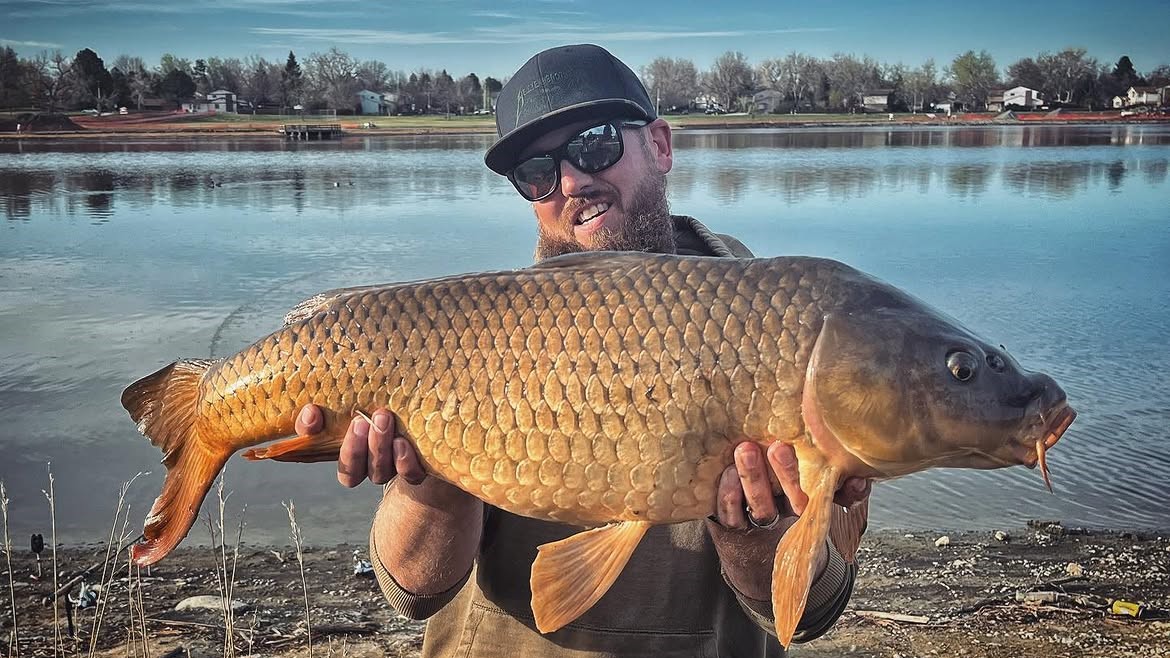
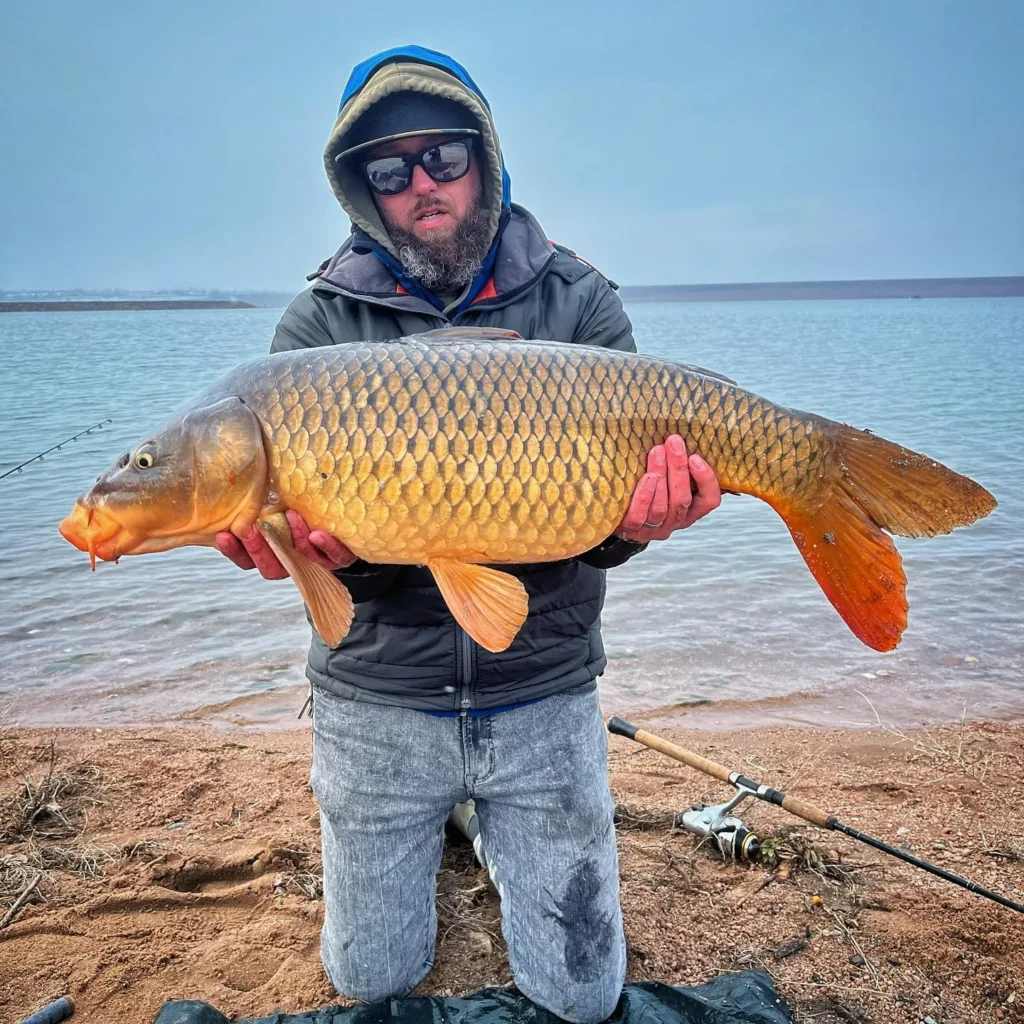
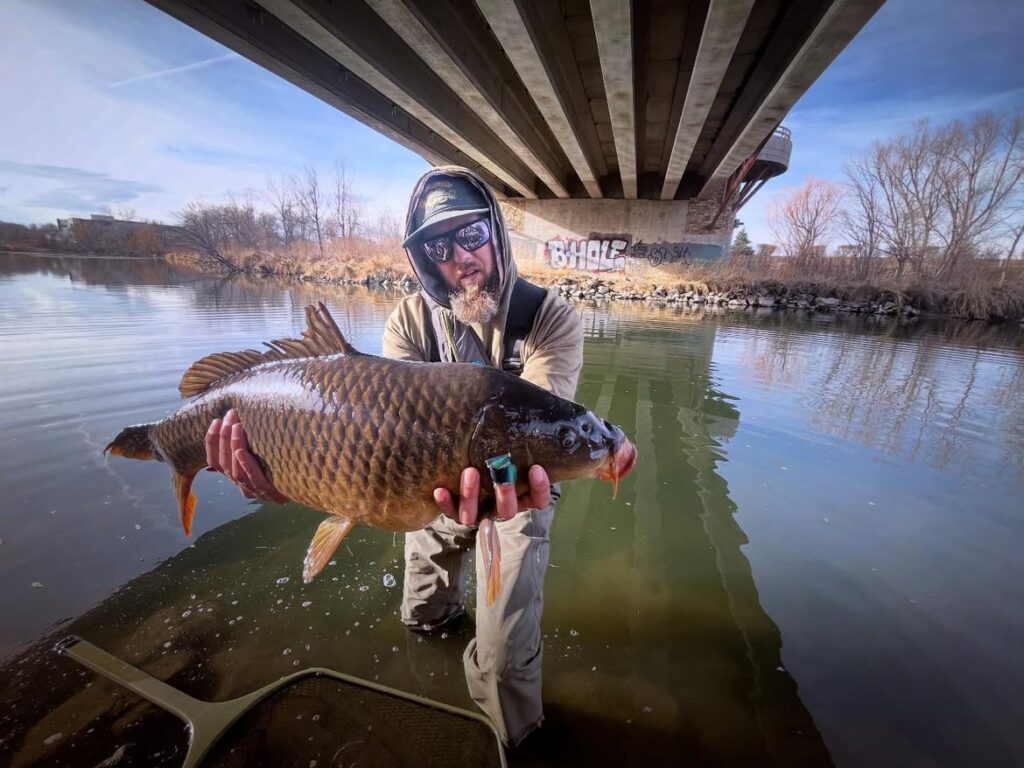
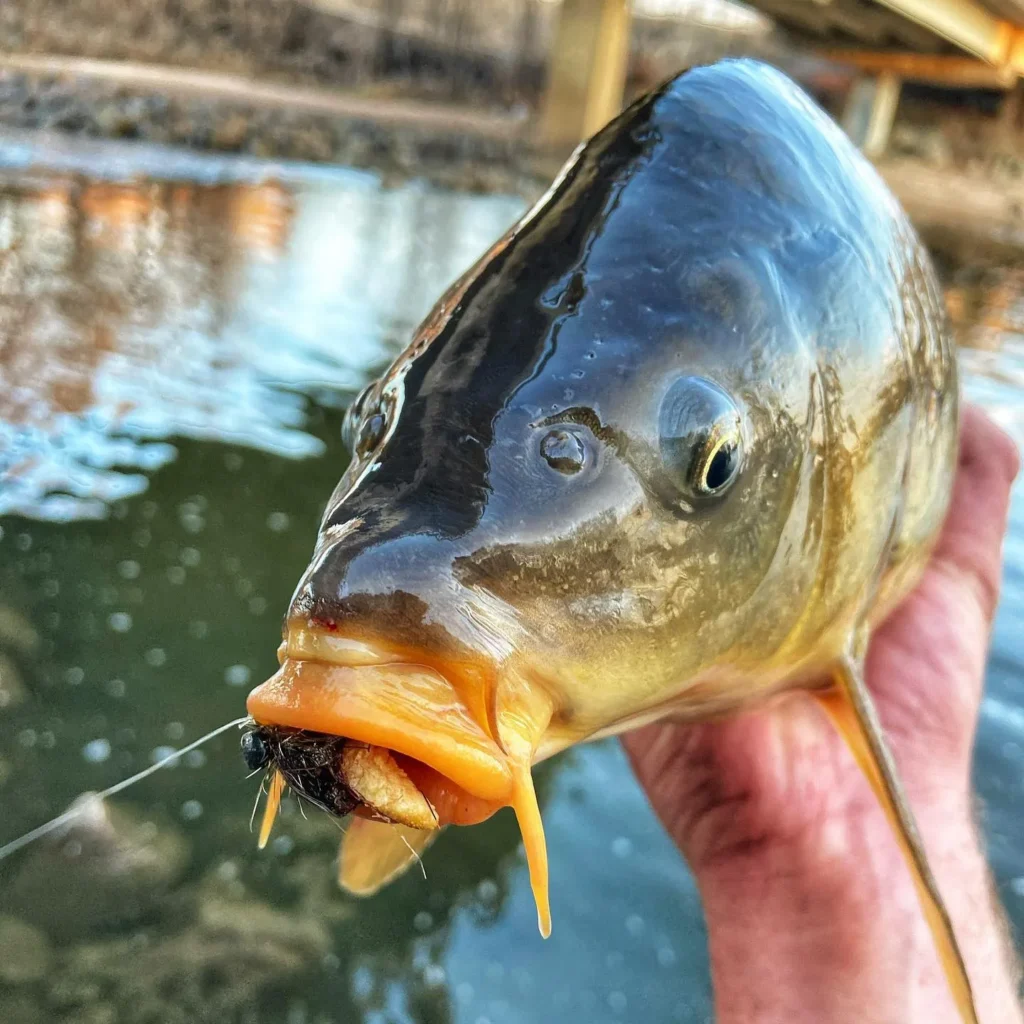
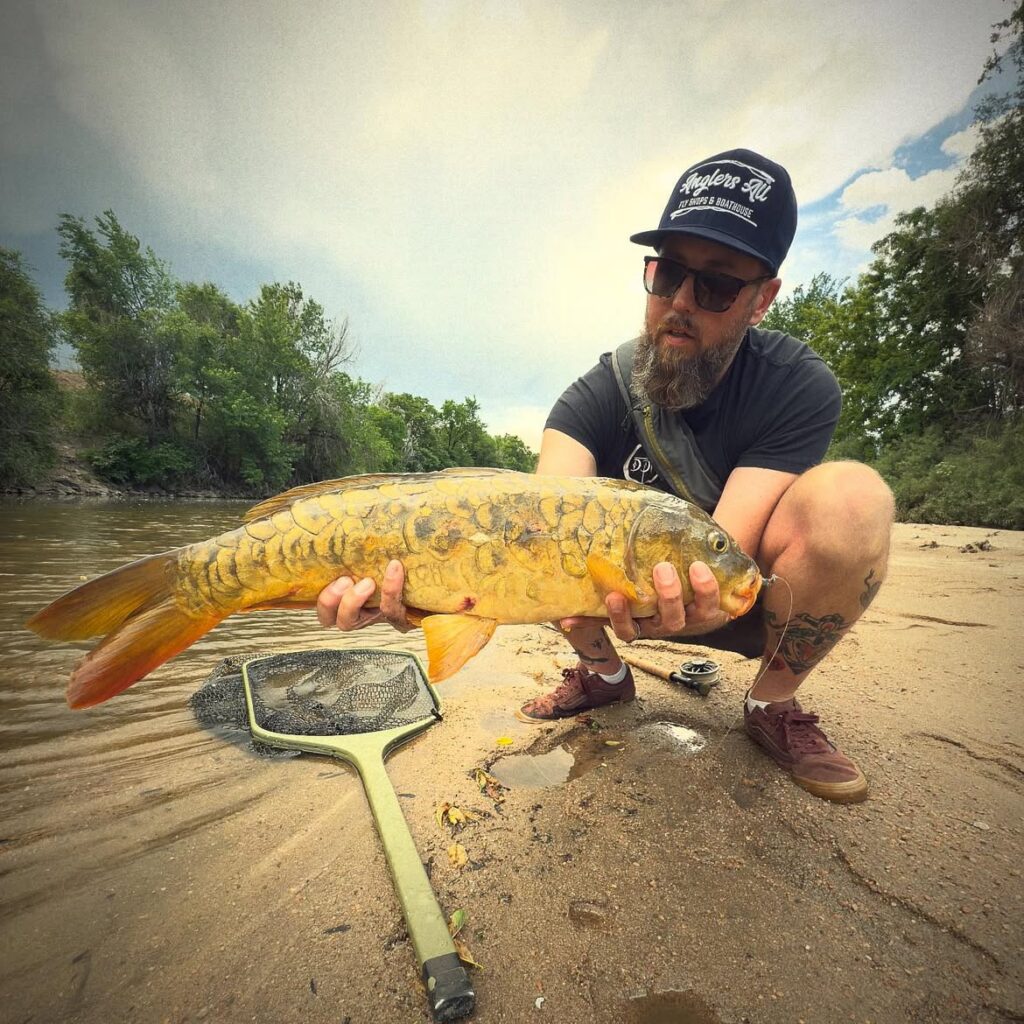
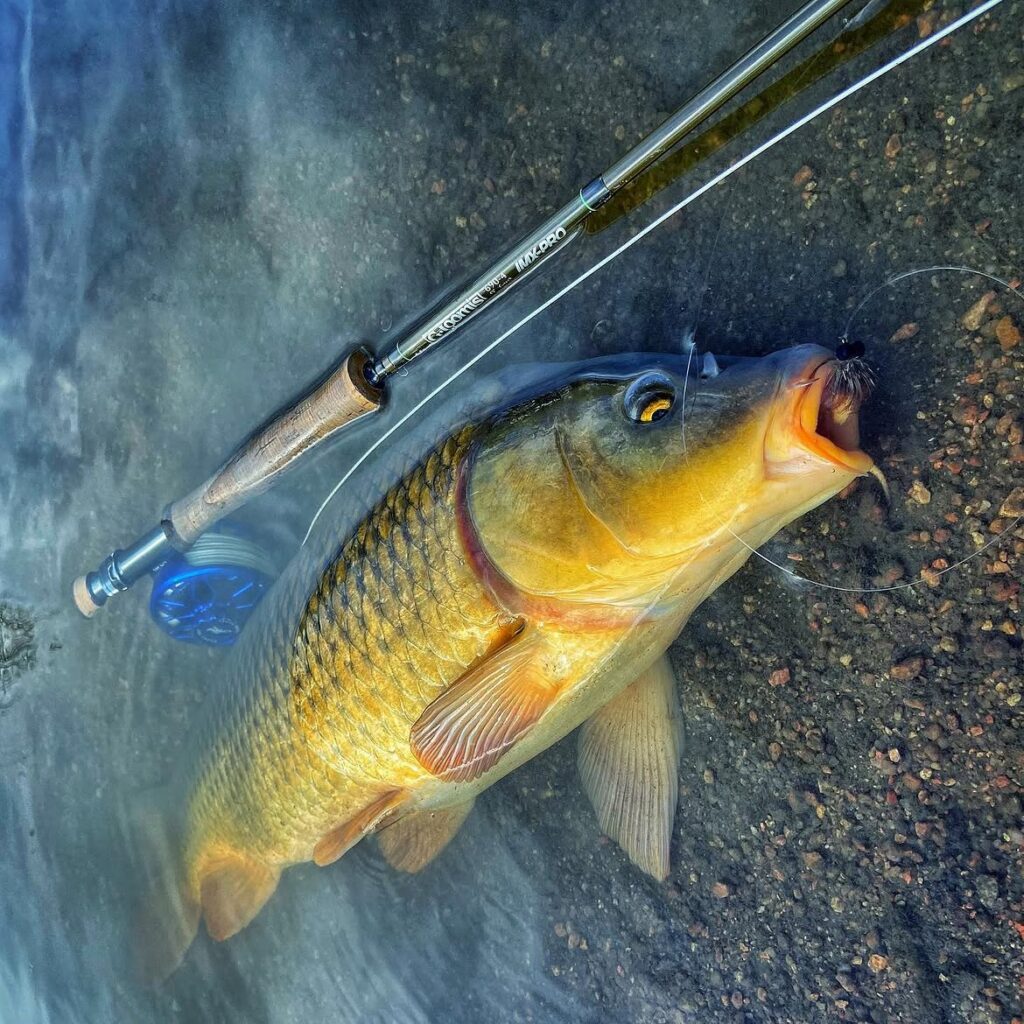
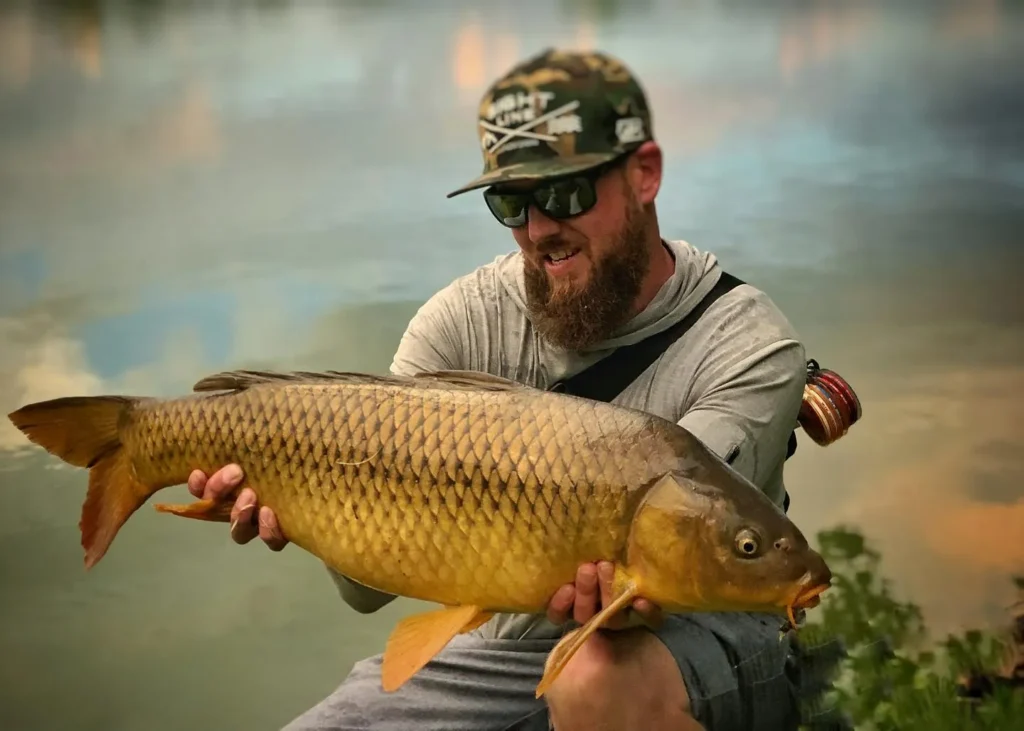
In this episode of the Wet Fly Swing Podcast, Rick Mikesell shares why Denver’s South Platte has become a destination for fly anglers looking to challenge themselves with one of the smartest fish in freshwater. He explains how carp fishing improves your casting and presentation, how it closely resembles saltwater flats fishing, and what it takes to fool these powerful fish consistently.
While many anglers know the South Platte River for its world-famous trout fishing, the urban stretch running through Denver tells a different story. Here, crystal clear water, public access, and thriving populations of common carp create one of the best places to experience carp on the fly.
Rick Mikesell discovered carp while attending college in downtown Denver. In between classes, he began exploring the South Platte River and taught himself how to target carp on the fly long before YouTube tutorials and online courses existed.
His goal is simple: shorten the learning curve so more anglers can experience just how rewarding carp on the fly can be.
[00:05:11] The South Platte begins high in Colorado’s mountains, flowing through famous trout fisheries like Cheesman Canyon, Deckers, and the Dream Stream. But once the river reaches Denver, it transforms.
The result is an urban fishery unlike almost anywhere else in the country.
With Denver’s skyline in the background, anglers can sight fish for large carp only minutes from downtown.
[00:16:14] Rick says carp reward precision more than almost any freshwater species. Unlike trout, carp rarely chase a fly. Instead, they feed close to the bottom and typically move only a few inches to eat. That means presentation matters far more than fly selection.
Carp also have excellent eyesight and sensitive hearing, making stealth one of the most important skills on the water. As Rick explains, success comes from slowing down and making the very first cast count.
[00:21:20] Rick often recommends learning carp on the fly before booking a saltwater trip. Many of the same skills used for bonefish, redfish, and permit apply directly to carp. Learning these techniques close to home can build confidence before heading to the flats.
[00:37:25] According to Rick, anglers can catch carp throughout the year on the South Platte.
Pre-spawn females feed aggressively, making March and April the best months for trophy fish.
During May, carp spawn throughout the river. Between spawning activity, many fish move onto shallow flats and feed heavily.
Summer offers the classic sight-fishing experience. Fish spread across shallow flats, become more active, and fight harder than at any other time of year. This is also when anglers are most likely to see backing disappear from their reels.
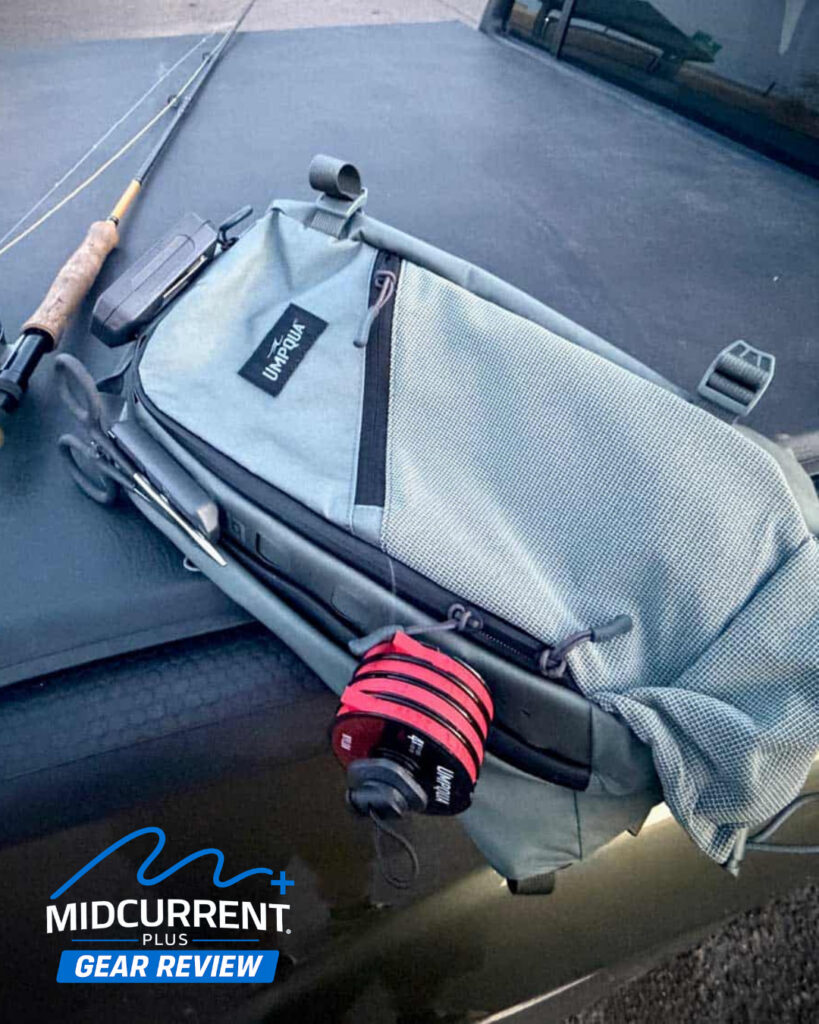
[00:43:28] Rick likes to keep his equipment simple.
Fast-action 6- or 7-weight fly rod.
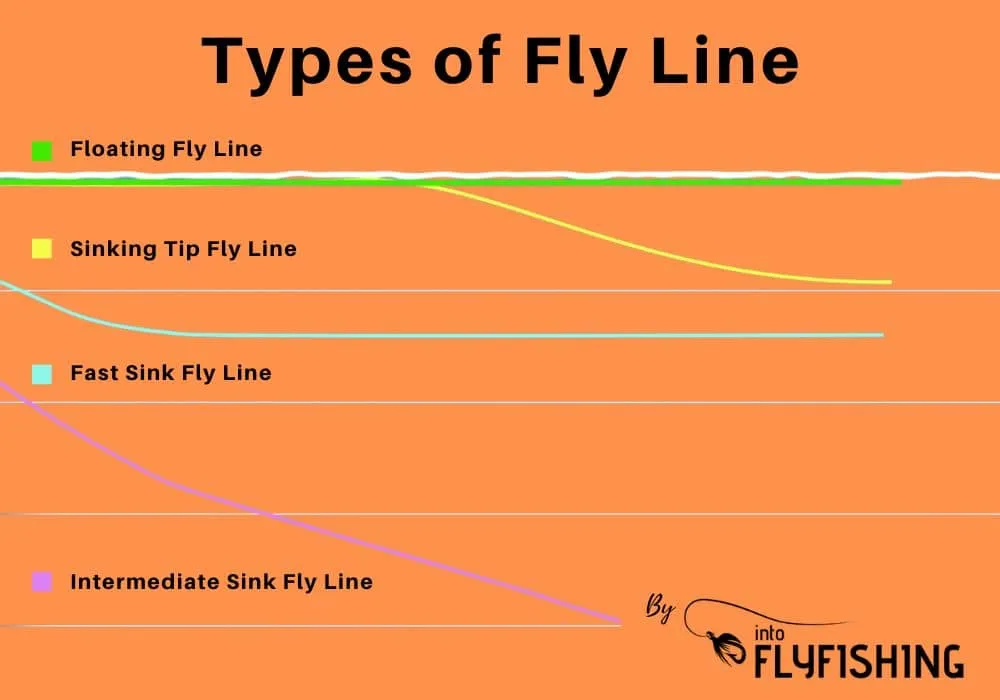
Floating fly line.
The heavier tippet helps anglers pull fish away from concrete walls, bridge pilings, and other urban structure.
[00:49:37] Rick also believes presentation is more important than matching an exact food source. Rather than changing patterns constantly, he adjusts fly weight to match current speed and water depth.
[00:52:27] Rick also shares the story behind the annual Denver Carp Slam, one of the country’s longest-running carp tournaments.
Each team fishes with an assigned controller who verifies every catch, ensuring the tournament remains fair while building a strong community around the South Platte.
Rick’s guide service includes guided trips, instructional articles, and educational videos.
A longtime Denver fly shop offering gear, local knowledge, and guided trips.
Learn more about conservation efforts supporting the South Platte River.
Episode Transcript
00:00:00 Dave Stewart:
If you’ve ever driven through Denver, there’s a good chance you’ve crossed one of the most interesting urban fisheries in the country without even knowing it. Today, we’re heading into Denver’s South Platte, where carp thrive in an overlooked stretch of river outside of the famous trout water. Rick Mitchell joins us to explain why this fishery is so unique, why carp deserve a second look, and what it takes to consistently fool one of these fish on the fly. This is the Wet Fly Swing podcast, where I show you the best places to travel to for fly fishing, how to find the best resources and tools to prepare for that big trip, and what you can do to give back to the fish species we all love. In this episode, you’re going to find out how to approach moving water carp without making the mistakes most anglers tend to make. Out there, we’re also going to find out how carp behavior changes from spring through summer, and what this means for your hookup ratio, and also why sight fishing for carp can make you a better angler for redfish, bonefish, and saltwater. We’ve heard this before. It’s a great place to start if you’ve never gone for salt and prepare for your next trip. Plus, the story behind Colorado’s Carp Slam and how it’s helping improve Denver’s South Platte. All right. If you’ve ever been curious about carp or planning a trip through Denver, this is the episode and a great place to start. You can learn more about Rick from Colorado carp dot com. Here he is. Rick. Michael, how you doing, Rick?
00:01:20
Rick Mikesell:
I’m doing great, Dave. Thanks for having me.
00:01:22 Dave Stewart: Yeah. Thanks for putting some time together today to put together a great episode on carp. You’re well known, especially in the Denver South Platte Carp, you know, urban carp fishing. And we’re going to talk about that today. What makes it a little bit different and, you know, flowing waters and kind of that part of the Colorado. We’re actually heading there this early next year. And I think it’s a cool opportunity for people, you know, coming through, you know, and we’re going to talk about that, how people can get access to something, you know, maybe they’re flying through stopping or whatever. But, but maybe before we jump into that, give us a little heads up on how you came into carp and to be known as the carp guru out there.
00:02:00 Rick Mikesell: Yeah. So, um, I went to school right downtown in Denver, um, at Metro State College. And the river was, uh, I don’t know, maybe two hundred yards out off of campus. And I had big gaps in between my class schedule and I like to fish. And I decided I was going to figure out how to fish that river. And back then, really the only thing around for carp fishing specifically, and the Denver South Platte was Barry Reynolds and Barry’s book carp on the fly. And it was kind of in the early days of the internet forums and things like that. Um, but there wasn’t YouTube videos, there wasn’t in-depth resources. So I kind of had to go figure it out on my own. And if I ran into Barry Reynolds on the river, I’d ask him questions and kind of annoy him a little bit. But outside of that, it was a lot of self learning. And so as I kind of kept doing it and kept doing it. I started working for a fly shop here in the Denver area, and when I was at the fly shop, I get lots of folks coming in and asking questions as they started to learn more and more about warm water opportunities here in Colorado. And that kind of morphed over a decade in the fly shop and more accidentally than intentionally. I started building resources for folks that wanted to learn how to catch carp on the fly, particularly in moving water, just because it was something that I never had, and I had to learn so much on my own by trial and error. So I started guiding in the Denver, South Platte probably about ten years ago, more as a instructor than a true guide. I would do carp on the fly schools and take groups of folks out and just get the the learning curve cut down because it’s, it’s so very different than trout fishing. And you really have to learn the idiosyncrasies and how to do it and kind of break some of those bad habits. And now I work for River Smith up in Boulder, Colorado. So on the other side of the industry as the wholesale director, so I sell to fly shops all over the country and do all of their support for our fishing brand. But I also still guide this summer with the low water we’ve had here in Colorado and the the interest in warm water fishing exploding has been the busiest guiding summer I’ve ever had. And then I also write a bunch of articles on gear for mid current dot com. So, um, I kind of live and breathe fly fishing all the time. And I really don’t know what else I could do with my life. Now I’m kind of kind of buried in it.
00:04:38 Dave Stewart: You’re in it. That’s really cool. Yeah, I think we’ve talked about that a little bit. The fact that it’s going to be a low water year summer here, and that the fact that, yeah, the carp, it sounds like carp are going to be they’re going to be okay. Sounds like the summer fishing is going to be fine for carp.
00:04:52 Rick Mikesell: Yeah. It’s going to be excellent for carp, for bass, for all of those warm water species that don’t really mind temperature. Um, they’re going to be happy. They’re going to be eating. Um, really the only negative we have for this year is some algae bloom type stuff. But they’re such hearty fish. They’re so good at being fish that even that’s not really going to impact them.
00:05:11 Dave Stewart: Not a big deal. That’s really cool. And, and can you describe maybe the South by because I know, you know, we’ve talked about the South Platte. It’s this amazing river. Describe maybe where you’re fishing there. And in comparison to some of the other maybe trout areas of the South Platte.
00:05:26 Rick Mikesell: Yeah. So the South Platte starts way up high in South Park, Colorado. It’s a it’s a little meadow stream full of, uh, awesome trout that live in undercut banks and eat dry flies. And then it goes into a couple systems of tail waters and their world famous tail waters, eleven Mile Canyon. The Dream Stream, Cheesman Canyon, deckers, um, all of those those major tail waters full of bugs and full of fish. And in a summer like this, some of the. The very few places you can find cold water consistently for trout fishing. Um, those are all fairly close to Denver within two hours. So they’re beautiful fisheries. I mean, Cheesman Canyon is one of the most gorgeous places on the planet to go fishing. They have consistent cold temperatures, but because of that, they kind of get pounded. They’re busy all the time and it can be very technical fishing. So great places to go fishing. Uh, I think Pat Dorsey once said, if you can catch a trout in the South Platte, you can catch trout anywhere. Uh, so good places to up your game. And then once you get into Denver, you hit Chatfield Reservoir. And that’s kind of the last major reservoir in the system. And Chatfield is unique in that it was originally created as flood control back in the the sixties, we had a one hundred year flood in the Denver area that wiped out what was the suburb of Littleton at that time and caused a bunch of infrastructure damage throughout the metro area. So Army Corps of Engineers came in, they built this dam and this reservoir to hold those flood waters back, and then they channelized the South Platte through town all the way out to the eastern suburbs. And what that means is essentially it’s a big flat bottom and forty five degree super high bank angular side. So if there was ever another flood event, it would just push all that water out to the eastern Plains and not impact the metro. And what that created over time was a playground for, for carp and smallmouth bass. It’s not the greatest water from a speed and oxygenation standpoint to support trout. And quite frankly, our ambient temperatures here in the city in the summertime aren’t great to support trout, although there are a bunch of trout in the river that do great. What it created is lots of big sand flats. And as they started adding, uh, weirs and structures and pullouts for irrigation and things like that, lots of concrete and troughs and holding water. And as folks did a lot of work to the river, as a lot of urban rivers have seen in the last three or four decades to improve water quality, the warm water species like smallmouth bass and carp have just taken off. And we have unbelievably clean water, unbelievably clear water for most of the year. It’s it’s gin clear. So it’s a sight fishing Paradise and lots of really unique structure and setup. So in that thirty miles of public access that you have through the metro area, um, there’s a bike path on at least one side, so infinite places to fish, um, throughout the river and you have clear water, you have lots of fish, and you have setups and structures that just make for all kinds of fun and challenging presentations to find carp and smallmouth bass and catfish and walleye and all kinds of crazy species. Yeah. There’s, uh, a really robust walleye population in Chatfield Reservoir, and they’ve got out over the years through the bottom of the dam and kind of set themselves up in the river and they’re walleye. So it’s, it’s definitely a late fall, early spring or low light days during the summer game. Um, but when you can find them, they’re big and they like to eat streamers. So it’s a ton of fun.
00:09:30 Dave Stewart: Wow. So you’re fishing. So the area is the flowing water in there. Denver is pretty much that flows right through kind of near through downtown and through that area.
00:09:39 Rick Mikesell: It does. Yeah. So it starts in the southern suburbs at Chatfield Reservoir Follows the kind of Santa Fe Drive corridor goes right to the west of downtown Denver, uh, right past Mile High Stadium, right past Northfield. Um, you can see the skyscrapers in the background. You can see the sports stadiums in the background, you can see the theme park in the background, and then it goes through a very industrial area, uh, Commerce City, and it flows past a wastewater treatment plant and a coal fired power plant. And we call it the stink kind of as a term of endearment. It’s kind of smelly out there, but the water quality is still great. And then once you get past the industrial area, it kind of rolls out into the northeastern suburbs and it gets back to its more traditional structure, um, which is, is very wide and very shallow. So once you get to the northeast, um, you’re looking more for sloughs and concrete structures and things like that. So it’s within a thirty mile stretch. You can find any number of different scenarios to catch fish. You can find different concentrations of species. You can find clear water in one place where there’s murky water in another, because so much water is either getting pulled out for irrigation or coming back in from industry. It’s a pretty special fishery, and I’ve traveled all over the country to fish for for carp and all kinds of other things. And I’ve definitely never seen a fishery that’s as diverse in both species and structure and access and opportunity. Um, so I feel pretty lucky to call it my home river.
00:11:24 Dave Stewart: That’s really cool. I’m guessing a lot of people are coming through. Do you get a, a mix of people that are just kind of coming into Denver, you know, kind of flying through and fishing that? Or is it more kind of local folks from around?
00:11:36 Rick Mikesell: It is exactly that mix. Yeah. So most of my clients guiding, I have folks that are Denver locals that have embraced the warm water side, and they want to learn how to do it on their own and be efficient at it. So they’ll book me and we’ll do more educational trips so they can develop the skills to figure out how to go out and do it on their own. And it’s pretty cool. I’ll have clients from four or five years ago that’ll still text me like, hey, I was out on the river today. Look at this awesome fish I caught.
00:12:05 Dave Stewart: Nice.
00:12:06 Rick Mikesell: So kind of setting them up to be successful on their own. And then the other side is a lot of folks want to come to Colorado and throw a day of fishing on after a business conference or a meeting or something like that. And the trout fishing is great and it’s not overwhelming, but it’s, it’s still a two hour drive into the mountains with traffic and a lot. Whereas if they’re staying at a hotel downtown, I can swing by and pick them up and we can drive ten blocks and be fishing in in less than five minutes.
00:12:35 Dave Stewart: That’s.
00:12:36 Rick Mikesell: Cool. And they can sneak in a day on the river. So it’s a lot of fun. And it’s, it’s very easy to access. The river is essentially depending on traffic. Twenty minutes from anywhere in the metro area.
00:12:47 Dave Stewart: Right on. Nice, nice. That’s cool. And and do the carp. You mentioned some of these species. I mean, where did the carp come from originally? Do you know that little history.
00:12:55 Rick Mikesell: I do, yeah, it’s a pretty cool story actually. And I kind of lean into it a lot. So there was a federal program in the eighteen seventies where a German strain of carp were transported on rail car all over the country and deposited in these bodies of water that folks had essentially depleted of native fish stocks. So in Colorado, in the Denver, South Platte Carp were introduced by the federal government in eighteen seventy nine. So that’s prior to brown trout. That’s prior to rainbow trout. Um, so so you get a lot of like the carp or invasive rhetoric online, right? And, uh, the, the short answer here in Colorado is they’re slightly less invasive than the non-native trout species right there.
00:13:41 Dave Stewart: More wild than the brown trout.
00:13:42 Rick Mikesell: Yep. So it’s pretty cool. And there are a few like lakes and ponds where they’ve overpopulated. But most of that kind of rhetoric is is a little bit flawed. In the seventies, when things were getting bad with water quality, the the more game fish species were struggling because of pollutants, because of temperature. And the carp were doing just fine. And it was easy for folks to assert that the carp were outcompeting them, or taking habitat or taking food, when in reality, they were just way better at being fish than the other species. And in the Denver, South Platte, I mean, there’s definitely an unbelievable balance. There’s so much food in that system that everything that swims in it, whether it be a carp or smallmouth bass or walleye or rainbow trout or brown trout, they’re all big and healthy and fat and aggressive. So it’s a very well balanced fishery.
00:14:36 Dave Stewart: Fishing expeditions offers world class fly fishing right off Alaska’s incredible road system. From monster rainbow trout to feisty Arctic grayling, you’ll chase big species in the stunning landscape. Whether you’re a seasoned angler or just starting out there, expert guides ensure an unforgettable adventure. Book your trip today before spots fill up and experience Alaska’s diversity like never before. Check them out right now that’s Fishing expeditions dot com. Golden Fly Shop isn’t your average fly shop. They have a twelve foot shark painted like a cutthroat, hovering over a huge selection of the best rods in the business, a massive assortment of tying materials and their famous steakhouse streamer display. And it’s the hub for a community of anglers who never stop tinkering with new ways to catch fish. Sometimes the conversation behind the counter includes what hatches are going off and what techniques are working best. Then tales of destination fishing, adventures, sought after species, or a good old congratulations when a customer brings stories of finally connecting with that fish they’ve searched for forever. With a growing online store and a budding YouTube channel, you’ll be able to follow along with their fun antics, international adventures, and helpful fly fishing tips. Golden fly shop where the community is hanging out even if they’re supposed to be working. That’s Golden Fly shop dot com. Check them out right now. You mentioned the Carp School. I’m kind of interested in that. It sounds like something that you’ve done in the past. Maybe talk about that. What was that like? What do you cover in your carp schools? How do you take somebody who maybe either hasn’t done much? Carp, hasn’t done it in the like flowing waters, which just sounds like you’re doing here, you know, what are the first steps to getting them going?
00:16:14 Rick Mikesell: So carp fishing is an entirely visual game. The thing that makes carp so big is they don’t expend more energy to consume food than they can gain from taking in that food. So they’ve they’ve gotten really good at math and that’s how they get so big. So they’re not going to waste a bunch of energy chasing a fly down when they can just root around and have stuff pop up very close to them. And kind of the rule of thumb is they’re most willing to move about three inches max to eat. So your presentations have to be super, super tight to the fish because they’re not going to waste a bunch of energy to chase it down. The other challenge in that is twofold. One, they have unbelievable hearing. So they actually have what’s called a weberian apparatus. It functions like an eardrum so they can physically hear a lot of fish species just pick up vibration through lateral line. They have a really intense lateral line so they can pick up that vibration. They have great eyesight. They can see in color, so they can be very, very spooky. So if you need to get a fly within three inches of their face and just smack it in there to get it down, they’re going to spook immediately. So we use some presentation techniques. The most popular, which is the drag and drop where you’re casting way past the fish. You’re getting the fly way up high in the water column, and you’re controlling it with a drag and letting it go and fall right in their little feeding window. To further complicate it, their mouth is a giant olfactory organ. So like a nose and a tongue combined, and it’s lined with those olfactory sensors. And when they pick up a fly, that is chicken feathers and steel, not real food, they know immediately it’s not real food and they eject it. So sight fishing, you have to be able to see where your fly is. You have to see that it’s in the zone and you have to see the fish eat it and set the hook, or else it’s going to eject it almost immediately. So the biggest hurdle is being able to get that fly close to the fish without them seeing you and being able to watch everything go down and set the hook at the appropriate time. And in moving water, you have the current that’s going to push the fly to the fish as well, which is even more complicated because prey never swims towards a predator. A two inch crayfish is never going to swim at a ten pound carp. And in trout fishing, folks are trained to get the drift and get a drag free drift and have it drift into the zone. And that’s that’s counterproductive. In carp fishing, the fly always needs to be either not moving at all or moving away from the fish. So the very first thing we do in carp school is I have a, a balsa wood carp dummy that’s weighted with a brick in the front, and we call them Carl the carp. And we go out and we set them up and we practice taking shots. So casting past the fish, dragging, dropping it in the zone, keeping our line tight the entire time. So when the fish eats, we can transfer that energy via set immediately. How to approach from behind. They have a nice little blind spot where their tail is because they’re generally really fat fish, and the girth kind of blocks their. Their monocular eyes and really practicing being sneaky. The closer you can get to these fish, the more effective your presentation is because you can control the fly and you can see everything go down. So rather than casting forty feet, I would rather hide behind bushes and trees and I generally wear full camo and ask that my clients do when they come out and we get really close and we can just swing the fly out, set it in the zone, give it some, maybe some micro movements if it needs it, watch the fish eat and set the hook. Sometimes it just a litas length. So getting good at being sneaky and not tromping around the bank or stepping on sticks and leaves, things like that. That’s a that’s a huge advantage. So we practice, practice, practice the presentation. And in this game and what I’ve kind of found in carp all over the the country is fly doesn’t really matter that much. Carp are voracious omnivores. They’ll eat plants. They’ll eat animals. They’ll eat bait fish. They’ll eat bugs. Uh, if you present something that kind of looks like food they’ve eaten in the past and present it well, they’re probably going to eat it. They’re not going to get hatch specific and only size twenty two tacos. Uh, they’ll they’ll eat leeches. They’ll eat worms. They’ll eat eggs. They’ll eat crayfish if you present it well. So having the ability to get really good at the presentation and not worry so much about the fly choice details, that’s a huge advantage that I’m trying to teach folks in this carp school. Um, the one important thing about the fly though is, is weight is imperative. It’s, it’s super important. So I don’t really care so much about what I’m imitating. I care a lot about what weight I’m throwing. And in deep, fast water, I’m throwing really heavy flies, five and a half millimeter beads on, uh, very thinly tied profile. So it cuts through the water and gets down quick. And if I’m in really skinny water, I’m throwing very lightly weighted flies. So I’m not adding any splash that I need. So. So my fly selection is always way more about weight than it is about pattern. It’s all kind of in that, that leech crayfish, um, sometimes baitfish, sometimes worm profile. So getting folks to do that. And then we talked a lot about how hard carp are. But the really awesome thing about them is they have super gummy mouths. And if you get a good hookset and bury a barbed hook in that super gummy mouth, we’re using really heavy tackle. They’re not leader shy. So mostly sixteen pound saltwater fluorocarbon. There’s really no way for them to fall off. And that’s kind of the cool thing is once you hook them in the mouth, they’re going to stay hooked unless they wrap you around a bridge piling or a shopping cart or something like that. So the fighting part is more about keeping low rod angles and keeping them out of structure. But the hook up to landed ratio is is in the high ninety percent unless something really bad happens. So teaching folks how to, how to use low rod angles and keep keep fish out of junk is the kind of the, the culmination of the class. And the cool thing is, is these techniques translate really well to saltwater, particularly sight fishing and fighting big fish. So folks that are getting ready for redfish trips or bonefish trips, they’ll kind of book this as a, as a practice primer to go get ready for saltwater. So there’s that advantage as well.
00:23:09 Dave Stewart: That’s awesome. And is the carp school something you still do?
00:23:12 Rick Mikesell: Yeah, absolutely. So, um, I can do one on ones at any time. And then I partner with a number of fly shops here in the front range, uh, to do group classes that are a little bit less expensive. Uh, there’ll be one coming up this August with Arbor Wranglers in Lafayette, Colorado. Um, so, uh, a bunch of different ways to get around and do it and learn about carp and guided trips, just one on one guided trips. There’s a big learning component to that as well. So I like teaching. I like, as you can probably guess from me rambling on for the last twenty minutes talking about these fish. So always available as a resource to kind of help folks get over the hump and be effective at catching them.
00:23:51 Dave Stewart: That’s awesome. Nice. And so we have that resource for sure. Talk about again, you know, back on the flowing waters, you mentioned kind of some heavier stuff in the faster water. Describe that again how you would position yourself to get that fly if you’re in some. And I’m just picturing a kind of concrete line channel, is that what a lot of this is in that urban area?
00:24:11 Rick Mikesell: Uh, there’s some of that. And then there’s a lot of, uh, big flats with troughs, big sandy flats with official kind of retreat in the trough. That’s kind of their safe area. And then they’ll come up on the big sand flat and feed. And there are fisheries similar to this all over the country. Um, I think the LA River in California is one that immediately comes to mind. But a lot of the moving water fisheries in other places in the country tend to be turbid and muddy and off color. And kind of what’s unique about our fishery, and maybe the LA River is just the crystal clear nature of it. So there’s advantage there that you can see the fish really well and find them quickly, but there’s also disadvantage that they can see you really well and they find you quickly. So the best case scenario in a moving water presentation is fishing downstream to the fish. That’s ideally what you want because you can use the current to essentially swing the fly and get it into the zone. And if you’re up on the surface with that drag and drop, the current can push it. It can push it right to left. It can push it down and up. And you can have a great vantage point of where the fish is feeding and get it down in the pocket really effectively. But that’s just the best case scenario. There’s lots of other scenarios where they’re facing downstream or you’re downstream and behind them. And rather than have to lead them and take multiple shots to, to get the fly down in the pocket, because most of the time they’re going to be feeding off the substrate, they’re going to be tailing the really heavy flies. Just take out that variable so you can, as soon as you release the tension on that heavy fly, it’s just going to drop cut through the water column, get in the pocket right in front of the fish. Uh, so you can really control that and get it down quickly. The downside of the heavy flies is they’re, they’re really splashy. So you have to utilize that drag and drop and put the fly way past the fish and get it up nice and high so you can control it until it’s in that zone and release the tension and get good at kind of doing some angular math. Whereas if you’re in a really fast current, you may have to release the tension three feet in front of the fish. So the fly will follow that current angle down. If you’re in softer current, you can release the fly six inches in front of the fish so it gets down in the zone. It’s a fly blasts past them or bumps them. They’re done immediately and you’re not going to get another shot. So, um, getting good at judging those angles is something that you got to practice when you’re doing this game. And all carp across the country, regardless of where they live. Uh, maximizing first shots is really important. Uh, if you can get the fly in their zone on the very first shot before they see you or feel you, they’re quite a bit more likely to eat. Whereas if you take three or four shots, they’re probably going to, if they don’t hard spook, They may still pick up your shadow or pick up your cast and start to spook and get off the feed. So getting good at making that first shot count is a big advantage for folks trying to do the carp anywhere in the country.
00:27:30 Dave Stewart: Yep, that makes sense. So back to that. So one option is, you know, maybe in a perfect situation the fish is downstream, you’re above it and you’re kind of swinging your fly and maybe a flowing water swinging and kind of drag and drop in it and then swinging it in where it kind of it sees it and then you drag it away. Is that kind of what one scenario could be?
00:27:49 Rick Mikesell: Yeah. And I think the dragging it away part is something that’s important to clarify. They’re not going to chase the fly. So when we’re making movements they’re micro movements. So some of that comes down to fly choice. Uh, using flies that have marabou or chenille or little pieces of foam in the tail so that when it hits the bottom, the fly itself with the current is just making movements on its own without imparting any action into it. That’s a huge advantage. And then if for some reason the fish doesn’t react immediately when it’s in the zone, our movements are. They’re not strips. They’re at bare minimum, just micro rod twitches. So just bumping that fly half an inch, an inch forward, just enough to imitate maybe a leech that’s burrowing in or a crayfish that’s in the defense mode. If you give it a strip and strip it six inches away from the fish’s face, they are. They’re not going to waste that energy to go eat it unless they’re really, really happy. So that’s one of the things in carp schools that I think is a little bit difficult for people to grasp in the beginning, is they’re so used to stripping streamers fast or drifting, um, really slowing down and getting movement without imparting a lot of distance is a huge advantage in this game.
00:29:11 Dave Stewart: Yep. That’s it. That makes sense. Okay, so it’s micro tweaks or twitches with the rod tip, not giant strips. It’s not they’re not going to chase. Okay. And then and there’s lots of different it sounds like depending on where you are, you know, if the fish is above you, it’s going to be a little bit different. So. And what do you think is a good. So we’re kind of discussing this. You mentioned a book at the start. Um, it sounds like an older book. What other resources are out there where people can take this. Obviously if they can’t make the Carp score is there are a lot of stuff on YouTube out there, or do you have some resources on your website?
00:29:40 Rick Mikesell: Yeah, there’s there’s infinite resources now, and it’s kind of kind of awesome that folks can learn this on their own without having to invest a bunch of failure time into it. So lots of great books have come out. Um, Barry’s Carp on the fly book. Barry and Brad still holds true. It’s still a great book and has lots of awesome information from a fly standpoint. Jay Zimmerman, who’s a Colorado local and a really amazing fisherman, he has an awesome carp flies book that goes through patterns and tying Kirk Dieter from Trout Unlimited and Angling trade. He has a. I think it’s the Orvis Guide to Carp Fishing, uh, which has a ton of awesome information. And then in the video sphere, personally, I’ve done a bunch of videos for my former fly shop and for a handful of other folks that go through drag and drop technique that go through how to read water in the river. And those are all on my website. If anyone wants to check them out. There is a lot of misinformation out there on carp. Um, there’s a lot of YouTube videos that I come across that are just not good information.
00:30:49 Dave Stewart: What’s some of the biggest misinformation you hear out there on on carp?
00:30:53 Rick Mikesell: So a lot of folks try to trout fish for them. And it’s not, it’s not always wrong. I mean, there’s no hard and fast rules in this game. There have been times where I’ve indicator fished in the wintertime and cut carp in the mouth. There are fisheries that indicator fishing does really well. I know the LA River is one where Lino Ubaldo. He does really awesome with indicator fishing out there. But what I found in our river is that particularly in the winter, when you have twenty five, eight to seventeen pound carp stacked up in a pool with very low flows, fifty cfs, and you drag a heavily weighted nymph rig through the middle of them, you’re going to hook something, and it’s not a carp in the mouth. It’s usually a carp in the tail or in the butt or in the fin. And I definitely see folks out there on the internet that will post pictures, and I think it may just be more they don’t understand. Um, but carp don’t eat with the outside of their mouth. They don’t eat with their cheeks. They don’t eat with their fin. Um, they only eat with the inside of their mouth. And if we’re going to do something as unimportant to the progress of humanity is catch carp on the fly. Then we should probably do it right?
00:32:13 Dave Stewart: Right. Have them eat it. You want them to eat it, not us to set the hook into their mouth sort of thing.
00:32:18 Rick Mikesell: Yeah, exactly. I mean, that’s the fun of it. I mean, my fishing sight fishing specifically. You hear people talk about sight fishing for tarpon, where the way that they present their fly is their language to the fish, and they’re talking to the fish through their presentation and telling this fish to eat me. And when you have that connection with the fish and you present it well, and the fish decides this is real food, I’m going to eat it. That’s the ultimate connection with that fish. So if you’re doing it blind and just hooking stuff to hook stuff, you kind of take away that. The beauty of the sport, I guess.
00:32:57 Dave Stewart: Exactly. No, that’s well said, I agree. It’s it’s all the effort. That’s the amazing thing about carp is that they’re tough to catch. Right? And now when you go out, there is somebody going to go out there and get skunked. Uh, you know, regular on a regular basis is something that’s pretty. I mean, it’s challenging, right? Is that, uh, is that something that happens? And how do you avoid, uh, that sort of situation?
00:33:18 Rick Mikesell: I mean, I’ve been doing it for twenty five years, and I’ll still get skunked. There definitely is. When you lock into doing things a specific way is the the likelihood of getting skunked goes up. If I want to catch a fish in a specific stretch on a specific fly in a way that I want to do it, there’s a good chance maybe I can get skunked when I’m adaptable and go out. And if it’s not happening in a spot and jump in the car and drive a mile upstream or drive a mile downstream. And that’s the beauty of the the Denver, South Platte is there’s so much access that you can move all day and find different water temperatures, different water clarities, different food sources, and probably find a positive fish that’ll eat. Then you have all those advantages and doing it on your own. I think the first year that I did it myself, I think I fished for two or three months before I finally caught a fish. So I kind of want to remove that learning curve for folks that are trying it on their own. When I go out with clients, my goal is to get them a fish. What I classify as a good day for myself or for clients is if we catch three fish. That’s an awesome day. That’s what I want to see for the best case scenario. And then every once in a while you have those those magic days. I’ve had a couple twelve, thirteen, fourteen fish days on the river. And those are the days that just your arms so tired by four o’clock, you’re just ready to call it because it’s so unbelievable. But for folks that are trout fishing, when they you hear those those guys on those big western tail waters, forty, fifty fish days, that’s never going to happen in carp. And you never want it to happen in carp. If you pulled pulled that hard on that many fish, your arm would be incapacitated for a month.
00:35:06 Dave Stewart: Yeah. I feel like, you know, it’s one of the numbers thing is kind of a fun, you know, interesting thing, right? Because of course we want to catch fish, but how many fish do you need to catch? You know, I feel like with carp, you know, you get into it. I’m sure that first fish is amazing. And then but at some point. Right. I mean, one or two or three fish, it’s almost like steelhead fishing or Atlantic salmon. You know, you’re feeling pretty good if you’re getting into a couple few fish. Is carp kind of the same thing?
00:35:29 Rick Mikesell: Absolutely. Yeah. Three is my number when I go out and fish on my own. If I catch three, that’s that’s the good day. And sometimes that’s kind of like a little self challenge. Whereas if I get off work and I have an hour to fish and I put one in the net right away, it’s like, oh, I got to get my three. So I’ll do some things to push myself to get two more. But really, in my personal fishing, the thing that drives me is a really cool eat. If I have a fish that’s, that’s opposite bank and I make the perfect cast opposite bank, throw a big men and go upstream and the fish chases a foot and eats it all the way on the other side of the river. And it’s just like, that was worth it. That’s what I wanted. Was that cool? Eat. Or if a fish rises up in the water column as the fly is falling and and eats it just below the surface, rather than waiting for it to drop to the bottom. Those cool eats are kind of what I live for.
00:36:20 Speaker 3: Fly fish with me. Utah discover year round blue ribbon trout fishing on the famed Provo River. Choose a guided walk and wade or a scenic float and experience big trout, stunning canyons and unforgettable days on the water. You can book your adventure right now at Fly Fish with Me, Utah dot com. World class water. Incredible fishing. That’s fly fishing with me. Utah dot com. Today’s show is brought to you by Visit Idaho and Yellowstone Teton Territory, a place that should be on every angler’s list, from the Henrys Fork to the South Fork of the snake, and all the hidden creeks and alpine lakes in between.
00:36:56 Dave Stewart: This region is built for fly fishers who like a little room to roam. You can head over to Netflix dot com slash right now for guides, lodges, and trip ideas to plan your next adventure. That’s Teton T e t o n. Well, tell me this on some of the more, maybe more of the basics, you know, timing, stuff like that. Gear. What is the you know, I guess again, somebody’s thinking maybe they’re coming through Denver. Is there a time or is this kind of throughout the year you could you can hit this.
00:37:25 Rick Mikesell: We’re really spoiled in Colorado. We have I think three hundred days of sun is what they say in the marketing materials. So the DSP, the Denver, South Platte rarely freezes. And we generally get in December, January, February, at least a couple days in the fifties, sixty degree range. So if the water’s clear and there’s an ambient temp swing, it is very reasonable to go out and catch carp in the middle of winter on the river. So I think I’ve consecutively caught a fish on the fly. Since every month of the year. Since like two thousand and four, two thousand and five. Oh. Like that. So it is a year round thing. But the winter game is it’s very different. It’s on the right day with the right conditions. And those fish are cold. When you hook one, it’s it’s pulling in nine pounds of wet sock. Still fun, but it’s not as cool as it is in the summertime.
00:38:23 Dave Stewart: Yeah. What’s the summertime is so is the so the fights a little bit different on the summer versus winter.
00:38:28 Rick Mikesell: Oh yeah. Very different worlds, worlds of difference. We kind of have once we get into March and April, we have that pre-spawn period where all of the big females are just gorging and putting on pounds to try to get ready for their big spawn. That usually happens in about May and the March, April, early May time period is when you have your opportunity to catch the biggest fish of the year in late April early May, a fish that’s Sixteen seventeen pounds for the rest of the year could be twenty four twenty five pounds with the egg load, so I’ll have clients book me in March and April. And those are my my trophy giant carp trips and those big females, they don’t love to chase flies. They need flies presented to them pretty close. And once they’re hooked, they still pull really hard. But you’re not going to see backing because they’re, they’re full of eggs and they’re, they’re really uncomfortable. And you get a big fish, but it’s not the the crazy, crazy fight. And then in May, you go into the spawn and carp spawn in a unique way. They’re broadcast spawners. So a female will spew thousands of eggs as she’s moving. And two, three, four, five males will kind of jockey behind her and try to fertilize those eggs. And once they’re fertilized, they stick to any piece of vegetation that’s that’s around. So when you see the carp spawning, it just looks like Cannonballs going off, up and down the river, smashing and crashing and thrashing all over and in the spawning act. Those fish, they don’t care about eating. They’re they’re more focused on procreation, but they’re they’re burning a ton of calories doing that spawning act. So in the morning, in the evening, and sometimes in between bouts of spawning, those fish will go to the flats and they’ll just gorge. So the spawn can actually be one of the best times of the year for numbers, because you find those fish recuperating in between spawning bouts, and they’re just hyper focused on eating and probably a lot less spooky than they are the rest of the year. So the spawn depending on water temps goes through late May, sometimes into June, and then we get like the peak of summer, kind of the classic carp fishing. That’s what we’re in right now, where the fish have spawned. They’re kind of putting some calories back on, but water temps are ideal. Water conditions are ideal. And this is where you have that classic scenario where you’re seeing, uh, fish spread out a little bit more, maybe packs of ones and twos or singles versus big groups of thirty or forty. And you’re finding classic tailing fish up on flats, you’re finding fish recycling, and this is the time of year we’ll fish, we’ll move the furthest to fly their metabolisms the highest, and they’ll move maybe six inches to a foot to chase a fly. And if they miss it, sometimes they’ll chase again. So it’s really exciting visual fishing. And because their metabolism is peaked, this is when the fight is at its best. So I fished on my lunch break yesterday, and I was in a very small little creek, and I had a fish take me into backing. Um, I have fish take me into backing all the time this time of year. And that’s just because they’re, they’re jacked and they’re, they’re hot and they have their max metabolism. And this is where your gear really gets tested and you have to make sure that you, you’re good at your knots and you’re good at your backing knots. True saltwater gear this time of year.
00:41:57 Dave Stewart: God. That’s great. What is the, um. I mean, you talk about twenty five pound fish. Is that kind of the upper. What’s the biggest fish you’ve ever heard of out there?
00:42:05 Rick Mikesell: So my personal best in the river is thirty three pounds. Wow. It was a big pre-spawn female with clients. This year I’ve caught, I don’t know, seven or eight fish in that twenty to twenty four pound range. And those are the the fish of the year. The average fish in the river is about ten twelve pounds. A good fish is a high teens and then the twenties are really special. And then every once in a while a mondo thirty pounder pops up.
00:42:32 Dave Stewart: Crazy, crazy. Again, I, I tend to go back to steelhead sometimes, but that’s kind of similar to steelhead, right? Wild steelhead where you got the upper teens as a trophy. And if you’re in the twenties, the thirties, that’s just crazy, right? That’s crazy size.
00:42:46 Rick Mikesell: Yeah. The, the reality of how big a thirty pound fish is. Um, if you’ve never touched one, is. It’s insane. They’re difficult to lift up. They’re difficult to get your hands around. Uh, the tail on a thirty pound carp, like you can’t put your hand around it to support it for a picture. People see these fish in the river and they’re. They just think because they look so much bigger than other fish, they’ve seen that they’re all twenty pounders. And in reality, they’re all nine or ten pounders. But when you actually hold a twenty pounder or hold a thirty pounder, they are just unbelievably big.
00:43:20 Dave Stewart: That’s big. You mentioned the the gear. Talk about that just a little bit here on the rod. So what’s your typical rod and weight and stuff like that?
00:43:28 Rick Mikesell: Yeah. So I fish, uh, sixes and sevens faster sixes or just any seven. That’s kind of the perfect place to be. And you don’t need that for the casting, albeit the flies are pretty heavy, so it helps. The six or seven is more about fighting the fish. It’s just having the backbone to fight efficient current. Our river isn’t super huge, but there is current and concrete and structures that you have to keep them out of. So having a rod that has some backbone, or the converse of that, having a really soft rod that you can fight the entire fight the fish with the entire rod, like a glass rod. Those are both different ends of the spectrum that are effective. Um, I do tend to prefer faster action rods for beginners, and I like the faster action rod because it’s easier to load it. And the first shot is so critical in these fish that if you can get the fly moving and get it loaded quickly and minimize false casts, then you’re going to have a higher chance of catching the fish. So a fast action rod is just quicker to get loaded, um, floating lines across the board. Um, I haven’t found a scenario where you ever need a sinking line. And the floating line is important because you need to be able to keep that fly high for the drag and drop presentation. And the way that I tie my leaders is with most of the butt section being nylon. So that also floats so I can keep my fly nice and high in the drag and drop. And then my last two sections of leader, I usually go thirty pound fluoro to sixteen pound fluoro our um fluorocarbon. So they sink quick. So when I release that tension, the tippet section of the leader sinks fast, cuts through the water and gets down in the pocket. Sixteen pound fluorocarbon is saltwater tippet. It’s what most if classes are for tarpon, you can pull unbelievably hard on it and not break it. But if you snag in a tree or snag on a log, you still can pull hard enough to break it without breaking your rod. So that’s kind of the sweet spot. And then reel does matter in this game. Having a decent drag is a plus because if you have a janky reel with a poor drag, it may work on fish one and fish two, but eventually it’s just going to blow out. So you don’t need to spend a ton of money on gear, but have something at least with a decent drag. And we’re spoiled in fly fishing right now. Our our mid price point and entry level gear today is better than a lot of premium gear fifteen years ago, so you can get really nice. I’m a I’m a rod and reel snob. I fish nice stuff. I love my ables. And people kind of give me a lot of guff because I’m beating the the holy crap out of ables by throwing them off bridges and setting them down on concrete. But the cool thing about the ables is because they’re that cold rolled sixty sixty one T seven. I think that’s the the aluminum, they’re indestructible. And I’ve had lots of reels, spools, bend frames, break, break, feed off. Um, and I can throw those ables off bridges and let them land on concrete and they just keep going. They’re indestructible. And when you see these reels, they’re beautiful hand anodized fancy colors, which just gashes and gouges and scratches all over them. You think I’m a madman, but gears should work. No trailer queens.
00:46:59 Dave Stewart: Exactly. Nice. And and on the back to the the leader. So you have the sixteen pound tippet and then how long are typically is your leader.
00:47:07 Rick Mikesell: So I generally build slightly less than nine foot leaders. So eight and a half. Um eight ten and the idea behind that is, is um, when you get these short shots where you’re sneaking up on a fish and you’re just reaching out and swinging it and setting it gently on their face. If you have leader in the tip of the fly rod, um, and the fish eats immediately, that knot or that loop can get caught on the tip top and just blow off your tip. And you’re fighting the fish with just the butt section. And if something breaks off, you’re losing two to three sections of rod. So I tie my leaders shorter than the rod. So there’s always fly line out of the tip when I’m making the presentation and I do on my personal rods, cut the loop off and Snell the leader just so it can’t slide in and out of the guides. Um, I do know that that reduces the lifespan of my fly lines, and that loops are better for longevity, but I just don’t want that loop to get caught in a guide and blow my tip off.
00:48:09 Dave Stewart: And why are loops better for longevity?
00:48:11 Rick Mikesell: So when you cut that loop off, you’re essentially exposing the core of the line, and water can wick up the core and essentially break down the adhesion to the core. And I know it’s really cool for folks based on kind of the flip palate, mad River videos to cut off their loops to get that, that energy transfer. And for me, that’s kind of here nor there. I think that casts just fine with a loop. I just don’t want to blow off my tip. And that’s the only reason I cut them off.
00:48:40 Dave Stewart: Gotcha. And then you use a Snell. Not not like a nail not or anything like that.
00:48:45 Rick Mikesell: Snell or nail is fine. Yeah. They’re they’re very similar. Yeah. Yeah. And you can throw a little bit of super glue on there to try and seal up that core. Um, but eventually it’s gonna, it’s gonna peel off.
00:48:55 Dave Stewart: That makes sense. Yeah. The loop is, the loop is nice because it’s easy, right? You could switch things out. It’s kind of, you’re not cutting your line out, but I guess is that a big deal? Let’s say you use a nail knot and you’re switching your line up. You’re just cutting off chunks. That doesn’t seem like that’s a big deal at all. It’s more the fact that you’re opening it up to impacts.
00:49:12 Rick Mikesell: Yeah. And once you put on a good piece of butt section, I mean, even cutting and changing, that’ll last you six or eight months before you need to put on a new piece of butt section.
00:49:22 Dave Stewart: Yeah. Because you’re using the, the, the nylon butt section to retie if you need to. Yeah. Okay. Cool. So that’s the leader and then give us a couple of flies. So somebody now is thinking they’re going to be going out. What’s the it sounds like it does. It’s not critical, but what’s your go to one fly and does it change throughout the year?
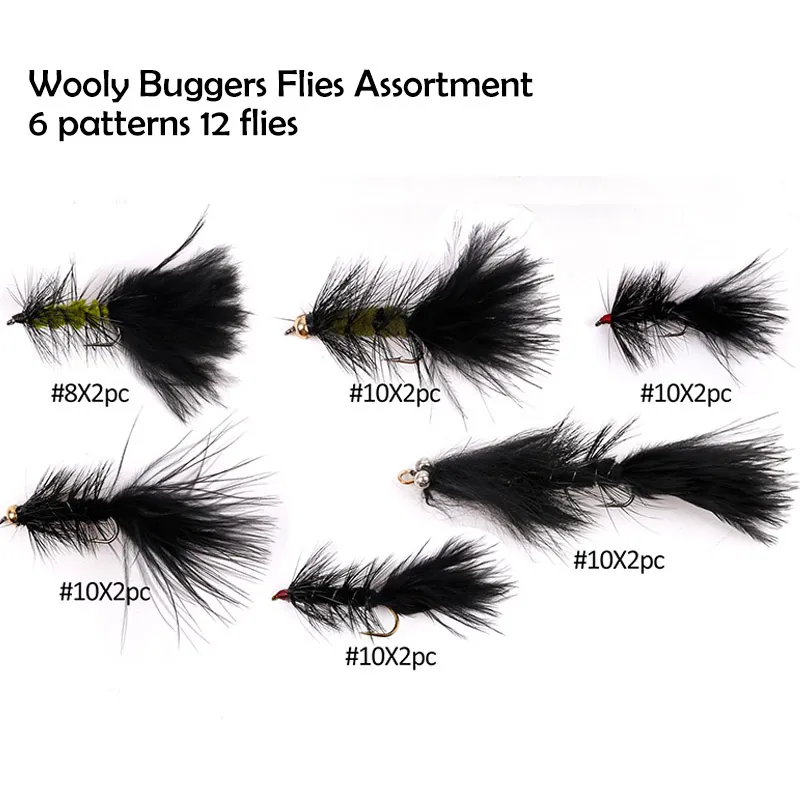
00:49:37 Rick Mikesell: Uh, colors will change a little bit. And then specific scenarios will bring in some kind of adjacent off the bench flies. But in the DSP and a lot of other places that I fished the most all around do everything. Fly is a tungsten beaded jig woolly bugger. I mean, that’ll catch everything in the carp world, but in the river itself, that’ll also catch walleye. It’ll catch smallmouth bass, it’ll catch the trout. It catches everything. And I like peacock bodies on mine. Um, I think that iridescence of the peacock just looks so buggy. It could be a bunch of different stuff. And I’ll switch between rust and grizzly or black. And when I tie my guide flies for my clients, I generally tie it with a orange bead that I use as a hot spot, just so the client and I can track the fly and see where it is at all times. And then a couple different sizes. Twos and fours. Uh, I’ll fish the twos Prespawn into the spawn those bigger fish, just to have a little bit more meat to not lose them. And they tend to not care so much about size. And then in the summertime right now, I’ll, I’ll maybe size down to fours if they’re, they’re not super keen on the big flies. A couple commercially produced carp patterns out there that are really good. Uh, Darryl Eakins, um, who works at Anglers Hall here in Denver and is an Umpqua signature tire. He has some awesome carp flies. His Detroit Mob City is a mob that fishes really well in the river or in Stillwater. And then for instances where I don’t need a ton of weight, where I’m staying high in the water column or in skinny water, uh, his hipster doofus is one of my best producers. And then kind of classic flies, uh, Barry’s carp fly from Umpqua. Uh, my my old friend Barry Reynolds, he kind of started the whole thing and he does an awesome job with it. And then Dave Whitlock’s near enough. Crayfish is one of the best crayfish patterns out there for all species.
00:51:38 Dave Stewart: So yeah. No, those are great. I love always, it’s good to get some good names in there. And the. Was it the hipster doofus? Was that the hipster doofus?
00:51:45 Rick Mikesell: Yeah.
00:51:46 Dave Stewart: Darryl. That’s classic.
00:51:47 Rick Mikesell: Darryl’s a Seinfeld fan like me. So he’s got a Seinfeld Seinfeld theme flies.
00:51:52 Dave Stewart: Oh, that’s classic Seinfeld. Yeah. So I love that. This is good. Okay. Um. Well, good. Let’s take it out here real quick with our kind of, uh, this is our winner shout out. You mentioned at the start, um, Blake Strauss was the winner of one of our giveaway events. So we want to give a big shout out to Blake, um, for the big win there and for kind of connecting this topic today. So this is awesome. And I just wanted to do a little kind of tips, tricks and tools random segment here. But start with the one thing we haven’t talked about was the Karp Slam. Maybe talk about that. I know there’s a, there’s a couple of these, maybe a few of these around the country, but is this something that is a regular thing out there?
00:52:27 Rick Mikesell: Yeah. So this is going to be the twentieth year of Karp Slam. Um, so Karp Slam is the primary fundraiser for Denver. Trout unlimited, which is the group that Blake and I and a bunch of other awesome people are a part of. And our mission is really unique in the Trout unlimited sphere is. We only are concerned with the improvement of the Denver South Platte below the water line from Chatfield to one hundred and sixty fourth. So the entire urban corridor. So all other trout unlimited chapters have trout streams in their charter. And we have a warm water fishery in our charter. So it’s a little strange, but it works really well and trying to limit it’s been great to us and we have some interesting challenges in our river where we can’t just go do a stream restoration and put some boulders in or plant willows. Everything is a floodplain that’s controlled by Army Corps of Engineers and the Bureau of Reclamation, and any in-stream work is hundreds of millions of dollars, and we definitely play in those worlds as a stakeholder. But the two things that we can do in our unique urban river is, uh, bad decisions by urban polluters. And we’ve had some pretty big victories in court against some industry that’s tried to do some less than good things to the river. And the other thing that we can do is pick up trash. And being in an urban area, stuff flying in off the highway, wind blowing it in unhoused populations that live on the river. Although the water quality is unbelievable and the fishery health is unbelievable, there’s trash everywhere, and it kind of gives the river a little bit of a black eye because people see it and they see how trashy it is. So we’re funding cleanups. Um, we do ten a year with in partnership with Protect Our Rivers, which is another awesome cleanup organization. Uh, we do one off cleanups throughout the year and we’re piloting some kind of point source trash collection solutions to try to solve the problem where it’s coming from. So we’re doing a study with the Colorado School of Mines that is putting game cams in key places along the river and trying to find out where all this trash come from. And they have built this giant database that amalgamates all the data and can tell us where the trash is coming from, so we can try to go to the source. And then we’ve also got a couple pilots. We’re putting these big booms in tributaries that come into the river. So when we have a big rain event, all of the trash that flushes in from the bank gets stuck in these booms, and we can clean them out and we can keep them out of getting into the main stem. So all that work costs a lot of money, and the carp slam is our way to build the money to do all these things for the river. And the way that tournament works is essentially you have fifteen teams of two. Um, there is a slam bassador class and a slam tour class And the Slam ambassadors are folks that either have a lot of previous carbon Denver, South Platte experience or industry celebrities or folks from manufacturer partners, people that can take the slam, assure the person that’s maybe newer to the river and wants to learn and in this tournament, showcase chunks of the river for the day and kind of teach them how to to get after carp and how special the river is and things like that. So the fifteen slam bass and the fifteen slam matures have a fundraise off. And that’s going on right now where they reach out to their networks and their businesses and their friends, and they try to fundraise as much money as humanly possible. And the top fifteen fundraisers from each class, uh, on September first, get invited to fish in the tournament. And we’ve raised just year after year record breaking money through this platform. People get really excited about it. It’s a huge sense of community and a lot of fun. So people get way into it. And based on all the stuff we’re doing, we need all that money really bad so we can keep doing those things. So on the night prior to the tournament, the fifteen Slammers and the fifteen Slam ambassadors, uh, we all meet up at a, at a local brewery that supports us and it’s a random draw, so you don’t know who you’re going to fish with until the night before, and you don’t know where you’re going to fish until the night before. So you get a partner and you get two random sections of river, and you go out that following Saturday and you try to catch as many inches of carp as humanly possible. That’s for first, second, and third place. And then we have all kinds of side challenges and side prizes for biggest trout, biggest walleye, uh, smallest carp, all kinds of fun stuff like that. And it is two days of fishing, of community, of partying. Um, we do the, the first night as a party for the beach and then a huge after party after the tournament with awards ceremony and prizes from all the major manufacturers and, uh, lots of great food and drink. And, um, the really cool thing about the Denver carb community is it’s, it’s so open and sharing and everyone’s friends, um, I’ve fished carp a lot of other places in the country and there’s, there’s scenes and those scenes can be some online bickering or maybe some, some kind of trash talking. And then sometimes scenes have that here in the Denver scene, everybody’s friends, everybody shares information. Everybody has a great time. Everybody loves the river. And, um, it’s kind of it’s a pretty special, special community all around, around this funky little river. So that’s going to be September nineteenth. We are looking for donations to competitors to raise money. We’re looking for prize donations to reward the competitors for all of their hard work. Um, we’re looking for volunteers to be controllers. And that is one of the unique things about this tournament is it’s maybe the most above board rule wise tournament out there. Um, we kind of talked about how carp maybe aren’t super hard to snag in the butt and in some other carp tournaments around the country. It’s honor system. So there may be a little bit of gray area there. Uh, for the carp slam, you actually get randomly assigned a controller who is your beat judge who verifies that the fish is caught in boundaries, that verifies the fish is caught in the mouth and does all the measuring. So there’s no padding of numbers on on total inches.
00:59:24 Dave Stewart: Wow. This is kind of like the. Yeah, we’ve been covering the team USA event that’s in Idaho this year. And yeah, same thing, right? They got controllers. They got it’s all it sounds like it’s at the same level as that. You guys have put some time into it.
00:59:36 Rick Mikesell: Yeah. I mean, other than the schmutz. Cooper uh, up in Oregon, I think we’re the we’re the second oldest carp tournament in the country.
00:59:44 Dave Stewart: So that’s it. Really cool. Well, this has been awesome. Rick. I think that, um, we could probably leave it there and I for sure will have to follow up with you as you move forward here. And definitely as we get to Denver, I’m sure some people are going to be connecting. We’d love to get out on the water. And, uh, yeah, I just want to thank you for all the information today and all the resources. It’s been great and I hope to keep in touch with you.
01:00:04 Rick Mikesell: Yeah, super glad to do it. I appreciate you having me. And when you make it out here to Denver, um, give me a ring. The river is, like I said, twenty minutes from anywhere so we can go out and spend some time and see all the cool stuff that swims in it.
01:00:15 Dave Stewart: Sounds good. We’ll talk to you then.
01:00:17 Rick Mikesell: All right. Thanks, Dave, I appreciate it.
01:00:20 Dave Stewart: There you go. If you want to remember one thing in this episode today, it might be this great car. Fishing is all about presentation. Slow down, make your first shot count, and don’t be afraid to look at familiar water a little bit differently. If you enjoyed this episode, please share it out with a friend who might love checking in with carp. If you’re interested in connecting with us more, you can join Wet Fly Swing Pro. You can go to wet fly dot com slash pro and your name right there. And we’ll follow up with you when we open our next cohort and we open the next crew that’s coming up real soon this year. And, and also want to give you a heads up, we’ve got a couple of great episodes coming up here tomorrow. We’re staying in Colorado this week, and tomorrow we got Michael Torrington from Golden Fly Shop. Stay tuned for that. We’re going to be taking a deeper dive into Colorado here this week. And if you’re interested in any events, including the London mayor trip we got going, this is the London Mayor school. You don’t want to miss this. We do have one opening that just popped up for the London Mayor School. Send me an email, Swing dot com and just put Landon Mayer in the subject line and let me know. This one is definitely going to go quick. We’re kind of announcing it here for the first time. So if you’re interested in fishing with one of the best out there in Colorado this year on the South Platte in the trout water, uh, and including some private trout water, that’s a good one to check out. And I want to thank you again for stopping in here all the way till the end. I want to thank you for checking the show out and hope you can stay with us for the next one. Like I said, Colorado tomorrow and we’ll be moving around the country. If you want to get an episode in your area, please send me an email. I mentioned that before, Dave at web dot com, and we’ll put that together for you as soon as we can. All right, I’m out of here. Hope you’re having a great afternoon, evening, or morning, and we’ll look forward to talking with you on the next episode. We’ll see you then.
01:02:04 Speaker 4: Thanks for listening to the Wet Fly Swing Fly Fishing Show. For notes and links from this episode, visit wet fly dot com.
Carp on the fly is about much more than catching an underrated fish. Rick Mikesell explains that it teaches patience, precision, and the importance of making every cast count. From mastering the drag-and-drop presentation to reading fish behavior and supporting conservation through the Denver Carp Slam, this episode shows why Denver’s South Platte has become one of the country’s top destinations for fly anglers looking for a new challenge.
Whether you’re planning your first carp trip or sharpening your skills for future saltwater adventures, Rick’s insights offer practical lessons that can make you a better angler. Have you ever fished for carp on the fly, and what lesson has the species taught you on the water?