Colorado fly fishing offers an incredible variety of experiences, and that’s exactly what we’re diving into in this episode with Michael Tolerton from Golden Fly Shop. Whether you’re planning your first trip to the Front Range or looking to branch out beyond the famous rivers, Michael shares why this might be the perfect year to explore something new.
We cover everything from technical tailwaters and small mountain creeks to alpine lakes, carp, pike, and even warmwater species that many visiting anglers overlook. Along the way, Michael explains how Golden Fly Shop has become a hub for both local anglers and traveling fly fishers.
Located in Golden, just west of Denver, the shop sits at the gateway to an impressive variety of fisheries. Within about an hour you can fish:
The team also helps anglers prepare for destinations around the world.
Rather than focusing on what anglers lose during a dry year, Michael encourages people to look for new experiences. Lower flows may push anglers toward alpine lakes, smaller streams, or warmwater fisheries they might normally overlook. One point really stood out during our conversation: “None of us are going to stop fishing. We’re just going to do different stuff.”
Instead of returning to the same familiar water, this can be the perfect season to:
Clear Creek runs directly through Golden and provides excellent public access. Within minutes of leaving the shop, anglers can reach miles of fishable water inside Clear Creek Canyon. Michael says the creek fishes especially well through the summer, including productive dry fly fishing during hopper season. Species include:
As you move farther upstream near Georgetown, the fishery shifts toward brook trout and cutthroat, making it a fun destination for lightweight rods and dry flies.
Colorado’s alpine lakes and small mountain streams offer anglers plenty of room to spread out. Michael recommends spending time exploring maps instead of relying only on well-known destinations. One of the biggest rewards in fly fishing is discovering your own water.
For families and beginners, many small alpine creeks offer excellent dry fly fishing with eager trout.
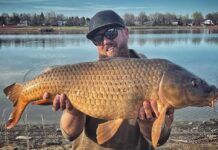
Many anglers immediately think trout when they picture Colorado, but Michael believes warmwater fishing deserves much more attention. Carp fishing has become a favorite among the Golden Fly Shop staff because it combines sight fishing with powerful fish that often run anglers into their backing. Popular species include:
The Denver South Platte offers excellent carp opportunities, while reservoirs like Spinney and Eleven Mile provide chances to catch pike. For pike, Michael recommends streamer patterns roughly six inches long rather than oversized flies.
Michael recommends several outstanding resources for anglers planning Colorado trips. Recommended books include:
These books cover everything from access points and hatch timing to alpine lakes and technical tailwaters.
Golden Fly Shop has become much more than a retail store. Michael focuses on creating a place where anglers can learn, travel together, attend educational events, and build relationships. The shop hosts presentations throughout the year featuring well-known anglers and educators. Recent and upcoming guests include Ron Belak, Andy Mill, and Blane Chocklett.
Michael also shared that the shop now has a second location in Castle Rock, helping expand that same community farther south along Colorado’s Front Range.
Episode Transcript
WFS 959 Transcript 00:00:00 Dave: A fly shop is more than a place to buy gear. It’s where seasons, rivers, road trips and local knowledge all come together under one roof. Today we’re heading to Colorado to talk with Michael Tolerton from Golden Fly Shop about the fisheries that make this part of the country so amazing. From Clear Creek and the technical tail waters to alpine lakes, carp, pike and everything in between, if you’re planning a trip, looking for new water, or just want a better feel for what Colorado has to offer, this episode is packed with practical ideas. This is the Wet Fly Swing podcast, where I show you the best places to travel to for fly fishing, how to find the best resources and tools to prepare for that big trip, and what you can do to give back to the fish species we all love. Michael Tolerton from Golden Fly Shop is going to take us into Colorado, and we’re going to find out what low water years can actually open up for new fishing opportunities. We’re going to talk about this year being a lower water year, what that is going to look like. We’re gonna find out about alpine lakes, small mountain streams and why these are definitely worth adding to your list. We’re gonna find out about pike trout, warm water species, and some of the technical tailwaters across the Front Range. Plus the books every Colorado angler should be exploring before they jump in to fishing this area. All right, let’s get into it. Here he is, Michael Tolerton You can find him at goldenflyshop.com How’s it going, Michael? 00:01:19 Michael: Good. How are you doing, Dave? 00:01:20 Dave: Pretty good man. This is, uh, this is going to be a fun one. Today. We’re going to get some background on Golden Fly shop, the fly shop that you run out there in Colorado. We’ve done a number of episodes on Colorado over the years. It’s always fun to, you know, talk to shops. It’s kind of my bread and butter. I know it’s the backbone of fly fishing, right? And so we’re going to get a little bit of that and how you came into the shop. But maybe start us off off there. Have you been doing this a while? When did the I know Golden was around before you. Right. Maybe talk about how you came into the shop. 00:01:49 Speaker 3: Yeah. So I bought the shop. 00:01:51 Michael: In. 00:01:52 Speaker 3: August of twenty two. I was guiding and working in shops for a few years before that. So I’ve been in the industry for a little over ten years now. Um, before that, Golden was owned by, uh, Justin nine, who owns Montana Fly Company now. And I had known Justin for a little while and, uh, kind of figured that he wasn’t going to be able to own a B2B and a B2C for too long, at least out here being in the front range. So I talked to him, you know, just got a feel for, you know, if it was something he was interested in and he was, and it was just kind of right place, right time and knowing the right people. 00:02:33 Dave: Knowing the right people. Yeah. How’s it feel now that you’ve been in there a few years in the shop? Is it I always love because, you know, it’s I know it’s not easy. And sometimes you hear these stories about you get owning a shop, you maybe don’t get out and fish as much. How has it been for you? Describe that. 00:02:48 Speaker 3: I still love it. I mean, I love coming in to work every day, and I still try to fish as much as possible because I think it’s important if you’re in the industry to get out and fish. I think you do see a lot of that in the industry. People not fishing as much as they’d like to and maybe getting burnt out on it. But, you know, I think, uh, you know, try to get out for myself a lot, but I’ve also got, you know, a wife that likes to fish and two kids that like to get out. So that, that keeps me out too. 00:03:15 Dave: Well, talk about Golden talk about that part of Colorado because Colorado, you know, like I said, we’ve done episodes around. You’ve got, you know, it’s, you know, one of the biggest destinations, right? But describe maybe a little bit about your area, the fishing, the opportunities there. 00:03:29 Speaker 3: Yeah. So Golden is, uh, just west of Denver sits right at the base of the foothills. A lot of creek fishing around us. Clear Creek runs right through Golden. Uh, we’ve got Bear Creek to the south south Boulder, Boulder Creek to the north. But there’s a there’s a lot of fishing within forty five minutes, hour drive of us. You can get into alpine lakes, tail waters, warm water fishing. Everybody in the shop does a lot of warm water fishing, too. So lots of options. 00:03:59 Dave: Yeah. What are the species on the warm water out there? 00:04:02 Speaker 3: It’s a lot of carp fishing for us. Everybody in the shop really likes carp fishing. You know, I think it’s a mixture of, you know, that fish being able to pull you into your backing and, you know, cutting down on windshield time is always fun too. 00:04:14 Dave: Yeah. Right. So the creek fishing maybe take us into a little bit on let’s just say, you know, summertime, you know, I know, you know, it depends on flows and things like that. But if you’re in kind of say the August time period, you know, middle of summer, are there opportunities out there for trout? 00:04:30 Speaker 3: Yeah. I mean, Clear Creek is a great option. I was just on it Saturday for three or four hours and fished nothing but dry flies, caught a ton of fish. The hopper bite out there can be really good second half of the summer, and I’m not too worried about it getting. You know, we’ve got a little interesting water year this year, but Clear Creek still temping out. Great. I took a water temp on Saturday and it was high fifties. 00:04:56 Dave: Yep. So you think that is the one thing? Obviously the the flow is a big part of it. This year is a little bit on the low side on flows. But like if somebody was, let’s just say somebody was coming in right now calling you up on the shop and they’re saying and they’re thinking, you know, I’m going to be in Colorado, you know, this summer. Is that the place to start the Clear Creek, or do you think some of those alpine lakes or maybe even a better opportunity? 00:05:19 Speaker 3: Uh, you know, it just depends on how far you want to drive Clear Creek. You can get on, you know, what type of fishing you’re looking for if you want. Moving water in Clear Creek is a great option. Um, it’s just, it’s so gradient that I don’t think it’s going to get too hot to the point where we’re telling people not to fish it this year and there’s tons of public access. The first you drive seven minutes from the shop, you get to the mouth of Clear Creek Canyon, and then that entire canyon for fifteen miles is all public water. And then it gets a little a little choppy above that. But that and the alpine lakes are going to be great too. I mean, you know, it’s a great year to do that. I think with the the lower water year, it just gives people an opportunity to maybe try stuff they haven’t done before. I mean, like I’ve been telling the guys in the shop when people come in and, you know, maybe they’re down on the water year or whatever, but, you know, I tell them to say, you know, none of us are going to stop fishing. We’re just going to do different stuff. 00:06:14 Dave: Yeah, exactly. That’s the thing. There will be some fishing opportunities even in the low water year. And carp is one of those, right? The warm water fish are going to still be there and probably do even better. Is that do you think that’s the case in Colorado this year that maybe the the carp fishing will, you know, might even be better than it typically is? 00:06:30 Speaker 3: I think the cod fish is going to be great and there’s been more and more people getting into it. I think for all, you know, all the reasons that that I mentioned, it’s it’s a fish that pulls on your on your line. It’s close to home, but there’s going to be tons of options to get into, get into new and, and different stuff. You know, it’s a great year that, you know, to learn something new or you’re not. I think a lot of people go back and do the same thing over and over and over again. They found success somewhere. And I get it, you know, especially, you know, if you’re working all week and you only have one day to go fishing, you want to set yourself up for success. But this might be a year where you’re kind of forced to look outside your comfort zone a little bit and try different stuff. And, you know, I think there’s always a silver lining to be found even in a, you know, a historically low water water season for us. 00:07:19 Dave: Yeah. And we’ve, like I said, we’ve done episodes. I know, you know, uh, John Gierach when he was on, you know, rip, you know, John, he was and he was just talking, he was out there in Colorado. I’m not sure how close he was to your area, but I think he was near the national parks. And, you know, he obviously talked a lot about trout fishing and, you know, things like that. So there’s the opportunities are there. But I feel like, yeah, the carp fishing is something that maybe people don’t hear as much about out in that, you know, in your neck of the woods. But maybe describe that on the carp a little bit. whereas the opportunities describe the where you’re fishing there for carp. 00:07:49 Speaker 3: You know, pretty much any pond or body of water around the Denver metro for the the majority of them will have carp in it. The DSP, the Denver, South Platte, right through Denver is pretty well known. There’s a couple carp tournaments that are that are based on that that body of water. Um, so that’s a river. You know, I think it’s the, I think the reason that a lot of the guys in the shop have gravitated towards it is because pretty much everybody in the shop really likes to go saltwater fishing. And carp fishing is about the closest you can get in Colorado to, to a saltwater kind of situation where you’re sight fishing to an individual fish. They, you know, they mud, they eat stuff off the bottom. You’re kind of fishing to them, you know, kind of similarly to you would bonefish or a or a permit. I’m not saying it’s a bonefish or a permit, but. Right. But you know, you’re, you’re putting a fly out in front of them. We do a lot of what’s called a drag and drop, which is not the sexiest way to to fish to a fish. Um, but what you’re basically doing is you’ll have fish, you know, working their way down, down a bank. And what you’ll do is cast beyond them and kind of cut them off at like an intersection. You’ll try to intercept them. You’re pulling your fly back across the surface of the water and then letting it drop right in front of their face. They see it drop right in front of their face. You’ll see them tip up and follow it down. And what you’re kind of waiting, you know the sign. You won’t feel any eat most of the time, but what you’ll see is you’ll see like a tail kick into the mud and set. And that’s when the fun starts. 00:09:28 Dave: Wow. That’s sweet. And so that’s the other cool thing is that there’s lots of opportunities right around your area. You don’t have to go far to get into carp. 00:09:35 Speaker 3: No, that’s, I like being, uh, I think geographically just being right up against the foothills. You can go west and trout fish and do a lot of different types of trout fishing. You know, we’re also like an hour from like the Decker’s section of the South Platte. So you can get on tailwaters and technical tailwaters. You could get up on creeks and throw hopper droppers. You get up in the alpine, you know, you go east and fish for warm water species. There’s just a lot of options. 00:10:04 Dave: That’s awesome. Well, I want to talk about some of those options a little bit here. And I want to dig into some more opportunities there. But let’s take it back to the shop because I want to hear more details on the shop. I always love getting a little background for, you know, what it’s about, but maybe talk about the shop. You know, when people walk in there, what can they expect? You know, what do you guys focus on? Is there, do you guys cover a lot of fly tying, you know, flies. Describe that a little bit for some of the give us that picture. 00:10:28 Speaker 3: I think being in the Denver Metro as a shop you kind of have to do everything. I think the fishing out here is great. Um, but it’s the Denver metro. The southern Rockies is the, you know, at least in my mind, the fly fishing retail, you know, Mecca of the world, you know, it’s the largest metro area with all this trout fishing, you know, Denver and Colorado Springs kind of, you know, basically the whole front range is full of people at this point. But it’s a great jumping off point for people with the Denver International Airport being here, we’ve got a lot of customers that come in and are going all around the world. So we have to be prepared for that. Lots of fly tyers, you know, we have to have all the gear for all these people doing all this stuff. So yeah, we’ve gotten pretty good at really trying to, you know, do everything. 00:11:16 Dave: If somebody was coming in to, let’s say they were going on a Pike trip, you know, and kind of getting geared up. Do you guys have lines to cover kind of everything? 00:11:25 Speaker 3: Yeah, we’ve got a huge selection of fly lines. That’s that’s only growing. I think next spring we will have every single scientific angler’s fly line that they make in the shop. 00:11:36 Dave: Oh no kidding. 00:11:37 Speaker 3: Yeah. So we’ll have the the entire assortment. 00:11:40 Dave: Oh, wow. That’s awesome. Yeah. We’ve been we’ve been using scientific anglers here recently. What would be, you know, if somebody had that question, let’s just say we were on the phone and I was asking you, you know, what is the line for for Pike if you’re going for a big pike in northern, you know, northern Canada, do you have a few that you’d recommend. 00:11:56 Speaker 3: Let’s say like Titan taper stuff? Uh, it just depends on, you know, the situation that you’re getting into. I know they have some new Stillwater lines coming out in the fall that, you know, if it’s after that, I’ve been fishing a couple of these Stillwater lines and they’re pretty good. 00:12:13 Dave: That’s the thing, I guess. Yeah. You think about the Stillwater, there’s a bunch of different lines out there. But, you know, I think the cool thing about where we’re going, it’s going to be a lot of the surface. So I think dry lines is going to be a big part of the game, right? So I think it’s more getting something that can cast the flies, which are going to be a little bit bigger, maybe deal with some wind. Yeah, it seems like the fly lines. There’s a lot of options. And so it’s kind of like hard, you know, dialing it in to know exactly what you want. I guess that’s where maybe you ask your ask your guide or whoever you’re going with, right. What’s best. 00:12:41 Speaker 3: Yeah. Fly lines. There’s just there’s endless options based on, you know, the situation you’re getting into. I think, I think fly lines are one of the most overlooked pieces of equipment in fly fishing, though we do some events where people bring their rods in and, you know, with the same rod, you cast different lines on it. And we’re pretty shocked when they find out how, how much a line can, you know, help or hurt each individual rod? 00:13:06 Dave: Yeah. It’s interesting. It’s a whole it’s confusing for a lot, especially new people coming into it, right? Like knowing what line I think the, you know, eight weight rod, eight weight line, you know, I think that’s, I think the idea was to simplify it, right? Make it simple for, for people getting into it. But there’s a lot of, you know, you can cast a, on a six weight rod, you can cast a eight weight line, right? You can cast different lines depending on what you’re doing. 00:13:29 Speaker 3: I think they simplified it to a certain degree. But then there’s all, you know, and then where it gets complicated is when you want to get into to nichey stuff, you know, because then there’s a fly line that does this specific thing really, really well. But you know, you’re losing something else that it does. A lot of people come in if you’re buying a nine foot five weight, we’re almost always going to recommend a like an infinity taper or a, you know, for real, like a gold, just kind of a good all around taper that does everything pretty well. Nine foot five weight isn’t exactly a specialty tool. It’s everyone wants it to do everything. And that’s kind of the fly line that does everything also. 00:14:08 Dave: Right? Yeah. The nine foot five way. Exactly. So like we said, there’s plenty of opportunities around your area when people come into the shop, let’s just say you got somebody coming in new, what are they? You know, if they’re asking you, what are your biggest questions or where are you directing them for fishing? Are you kind of telling them the same thing you’re saying here? You know, carp, Clear Creek or what’s the biggest question you guys get asked there? 00:14:29 Speaker 3: Most people are coming in to fish Clear Creek. I’d say Clear Creek or, you know, different sections of the South plots. You know, obviously pretty famous section of water. It does you know, it gets busy out there for sure. But you can get away from people. You just have to go go further. You know, that’s what I tell people they like I said, there’s a lot of people in the Front Range and I think Colorado has really, really great fishing. I think a lot of people get frustrated with the some of the crowds they can see, especially on weekends, but you just have to go further than other people. And there’s, you know, look, look on maps and find like just blue line it, you know, you might not have a bunch of information, but I think sometimes you just got to risk it and you got to try to, to find something for yourself and we’ll help you. We’ll, we’ll direct you to places we’re not gonna, we might not give you our super secret spots, right? 00:15:22 Dave: Yeah, exactly. We don’t want to spot. Yeah. We don’t. People can do a little bit of their own research, right? That’s what’s cool about it. That’s what’s fun about fly fishing. 00:15:30 Speaker 3: But I think, I think finding stuff on your own is one of the most rewarding things in fishing. 00:15:35 Dave: Yeah, that’s what’s cool about fishing because it surprises you, right? I mean, that’s the amazing thing. You get out there and you do something different, or you go somewhere further and all of a sudden you have this moment with a fish or something and you’re like, oh my God. Right. The only way to experience that is to get out there and just go. 00:15:52 Speaker 3: I just think it’s so rewarding to, you know, it’s fun to know you’re going to a place that you’re going to catch fish for sure. But you know, if you’re willing to explore, I think it’s, I think it’s pretty fun to, to figure stuff out. 00:16:03 Dave: That is cool. Yeah, we were, we were on a trip just, just recently Atlantic salmon and Alex shout out to Alex who was on, we had some people, you know, from the podcast there and you know, he really wanted to get a brook trout, a big brookie, you know, and we were a little bit early, so there weren’t a ton in there. And we were catching lots of smaller brook trout and stuff. And the last almost the last day, you know, he was out there and he just, you know, he kind of put it out there and he. And sure enough, you know, he got the big rookie, you know, and it was like, wow. You know and everybody we were just all sitting there like kind of, you know, couldn’t believe it. 00:16:36 Speaker 3: Shout out to Alex. Good job Alex. 00:16:38 Dave: I know yeah shout out to Alex. So so I feel like that was one of those moments you know and I think that’s what makes fly fishing amazing. It’s just you have these times and you know, experiences. But um, but cool. So well tell us this on, you know, we talked about a couple of things. Clear Creek, you mentioned, you know, the South Platte, where are some of those Stillwater or lakes and things like that? What are the places that people can go? Because I know that’s a pretty big thing out there, right? The Stillwater fishing. 00:17:02 Speaker 3: Yeah. So I mean, if you want to look for Stillwater fishing like bigger lakes, uh, usually you’re talking about the South Park area, you know, at least for people that live around here, Spinney and eleven mile now in tarot, they drained this year, uh, just to conserve water. It’s, you know, and tarot was, was an awesome, awesome trout fishery. It’s just it was really shallow. Like at its deepest point, it was To twenty feet, so it lost a lot of water to evaporation. And, you know, in order to conserve water, they decided to move water down the system out of Ontario, which, you know, is tough. It’s not the first time this has happened. It’ll come back. It sucks to lose it, but it’ll got spinny. Spinny is a great, great trout fishery, and I’ve been doing a lot more stuff on eleven mile lately. It’s not a fishery that, you know, driving, driving out there. I usually go to the other two, but spinny, I haven’t been able to put a boat on most of the year this year and eleven miles been been sitting at capacity. So there’s been some days on eleven mile this year that’s there’s some really good fishing to be had in there. Trout and pike and pike. 00:18:10 Dave: Right. That’s that’s the thing. So you have pike out there as well? 00:18:13 Speaker 3: Yeah. Pike. Uh, so, you know, if you want to go pike fishing out in South Park Spinney, you’ll catch a pike trout fishing. You’ll catch it under under an indicator on a leak. There’s too many. They’re actually doing a tournament this summer to call out some of the pike. It’s just it’s getting a little nuts and spinny. You won’t find a lot of big pike in there, but a lot of little hammer handles. 00:18:36 Dave: But what’s a hammer handle? 00:18:37 Speaker 3: Maybe like a foot, foot and a half long pike. 00:18:39 Dave: Oh, yeah. A little foot and a half long pike. 00:18:41 Speaker 3: That’s those little guys. 00:18:43 Dave: That’s amazing. I mean, for somebody like me, I haven’t caught a pike yet. Like, I would love to catch, you know, anything? A hammer handle would be pretty cool, right? 00:18:50 Speaker 3: Oh, well, it sounds like you’re about to get into something. Something a little better than that pretty soon, huh? 00:18:55 Dave: Yeah, there’s gonna be a little bit bigger, I think, where we’re going. Yeah. 00:18:57 Speaker 3: Yeah. Eleven miles kind of managed a little better for the pike. It’s. There’s less pike. But we were out. We. You could see them there in clear water. They’ll be. And they’ll be shallow back in bays until water temps get above sixty five degrees where you can wade to them. And there’s, there’s fish, you know, forty inches in in eleven mile. 00:19:20 Dave: Yep. Is that so that’s doable. So if somebody was out there coming that way Pike, they could definitely get in some pike. 00:19:25 Speaker 3: If you want to make sure you’re going to catch Pike. I go to Spinney if you want to put in the time and effort to catch a big pike, you know you have to go. There’s there’s just no there’s no shortcut. It’s time on the water. 00:19:38 Dave: What are the flies? I know you guys have a good assortment of flies there. What are the pike flies? Is that a pretty. Would you have a couple or is that a pretty easy call on what you’d use? 00:19:47 Speaker 4: It’s a lot of specific patterns. 00:19:51 Speaker 3: You know, it’s a lot of it’s a lot of trout stuff out here. You’re not throwing like the massive, huge pike flies for the most part. It’s smaller, you know, even like dungeons and stuff about that size, you know, maybe like six inches, which is, which is great because, you know, I had a buddy that was out this spring pike fishing and he caught some nice trout, uh, like, you know, twenty two inch brown trout on its, you know, which isn’t a bad bycatch. And, uh, it’s great those fish ate, you know, that fly was on forty pound. A forty pound leader. So you know, go go out there and throw for Pike and maybe you’ll catch your biggest trout of your life. 00:20:30 Dave: Right. Wow. Nice. So Pike and what are they. Maybe just take us on some of the other species. So what haven’t we talked about that are around your neck of the woods? 00:20:39 Speaker 3: Okay, so starting with trout, within an hour of the shop, you could catch, I mean, in in Clear Creek itself, you can catch a brown trout, rainbow trout, brook trout, and cutthroat as you work your way up to the headwaters and then down around us, warm water wise, you know, you’ve got carp, smallmouth, largemouth, you know, all the all the sunfish you want. And then, uh, you know, I’ve been doing a lot more like wiper fishing the last couple years. There are some opportunities east of us. Jackson Reservoir, Union reservoir can be pretty good. 00:21:12 Dave: What’s the cutthroat species you guys have there? 00:21:15 Speaker 3: So in Clear Creek, there’s just it’s it’s funny as far as I know and can tell by looking at them. It’s just kind of a hodgepodge of, you know, if you did genetic testing on all of them, I think you’d get different, different results on each fish. I think they dumped a bunch of different types of cutthroat in there. And now it’s, it’s a clear creek, uh, clear creek cutthroat, right? 00:21:37 Dave: Clear creek cutthroat. Yeah. And yeah. Brook trout. True. Which aren’t native, right. I mean, it’s pretty be pretty cool to catch. Ah, the brookies pretty small. 00:21:43 Speaker 4: Uh, yeah. 00:21:44 Speaker 3: In Clear Creek for sure. 00:21:45 Speaker 4: There’s places. 00:21:47 Speaker 3: Lakes that you can get, you know, decent ones, twelve fourteen inches. But yeah, in Clear Creek, they’re good. They’re gonna be small. But you know, you get up in the cutthroat brook trout, that’ll all be above. If you’re looking at a map, Georgetown, Georgetown Lake is kind of the cutoff where below that you’re catching rainbows and browns. And then above that is cutthroat and brook trout. But you know, you get up there, it’s a great place to take. Like, I take my seven year old up there and we just throw dry flies the whole time. 00:22:18 Dave: Yeah. That’s sweet. Using like a for weight or something a light rod. 00:22:22 Speaker 4: Yeah. 00:22:23 Speaker 3: Super easy. I mean, it’s a great place to, to take a kid or take someone who, you know, it’s all visual. You know, the dry fly, dry fly eats. It’s a great place to take somebody, you know. It’s a great place to take a beginner. It’s a great place to go for yourself. I like going up there too. 00:22:36 Dave: So yeah, I remember John Garrick talking about that. He used to love fishing. They have this small lightweight outfit and go up and he used to have this Jeep. He’d four by and get out into the air away from people and and just find that little the dry fly fishing. Right. I think that’s maybe one of the killer opportunities there is that, you know, getting into those creeks and just, you know, right. Having it to yourself, finding a trout, right? 00:22:57 Speaker 4: Yeah. 00:22:58 Speaker 3: The alpine lakes, but the alpine creeks, you know, if you really don’t want to see anybody go to the creeks and there’s plenty of little, you will be surprised how small some of these creeks can be and hold fish for anyone listening. If you look on a map and you see, you know, any creek in the alpine, it’s. It’s more than likely going to hold some fish in it. And like you said, like just go up there with a three weight. And you know, that’s why they make different, different rod sizes. It’s, you’re not catching a huge fish, but on a two weight or a three weight, it’s pretty fun. It’s gonna be fun. Yeah. 00:23:32 Dave: Nice. Well, you mentioned so we talked Clear Creek, South Platte, you know, what are the couple other opportunities around there? We’ve kind of covered, I think, high level on everything. Are there any other big opportunities or species that we haven’t talked about? 00:23:44 Speaker 3: You know, close to us, South Boulder Creek is is a pretty awesome fishery. It’s a there’s a tailwater section below gross reservoir. It’s been interesting. They’ve been doing a dam expansion project on it for the last few years. I want to say that’s supposed to wrap up in twenty eight. But their rate. So they’re raising it’s it’s a crazy project. It’s they’re raising the dam by one hundred feet. 00:24:08 Dave: Wow. 00:24:09 Speaker 3: So there is an existing dam. They’re kind of building on to the backside of it and raising it by one hundred feet. It’s going to hold three times as much water as it did before. 00:24:19 Dave: Oh my gosh. Wow. 00:24:20 Speaker 3: And I’ve got really high hopes for that tail water once that projects done because they’ve kind of been, you know, they mess with the flows based on, you know, for whatever reason, they feel like the construction project is more important than the fishery, I guess. So flows have been down to four cfs in the middle of winter and stuff, you know. So but once that’s done, there is a pool, you know, an amount of water set aside for conservation, for the for the fishery. So I think there is going to be a minimum flow on that. I, I couldn’t tell you what it is, but there’s a decent minimum flow. There’s going to be that place is a bug factory. There’s gonna be a ton of fish in there. 00:24:59 Dave: That’s cool. So so that’s one in the future that’s going to be good. Give it once they finish that project. 00:25:04 Speaker 3: Yeah. And it’s it, it’s good. Now I just think it’s if they have if they can keep flows at a minimum, there’s going to be some real quality fish in there. 00:25:11 Dave: What is and you guys have some travel maybe describe that a little bit where people are going. Do you kind of have a program there at the shop or your guys are heading out to? 00:25:19 Speaker 5: Yeah, so a lot of guys. 00:25:21 Speaker 3: A couple of the guys at the shop are taking trips around the, uh, Alaska this fall. You know, we do Mexico, Colombia, Patagonia in February. Uh, the guys from set fly fishing are actually just at the shop last night. So yeah, I mean, it’s, it’s super cool. We, uh, that’s been something that really. I gave the guys at the shop. I said, listen, if you guys can fill a trip, you can go. I just think it’s a great, a great perk for the guys you guys work in the shop are are awesome. We, uh, we were talking about this the other day. Our combined fishing experience for the guys at the shop is, is pretty vast at this point. We’ve been all over and fish for a lot of different species, which, you know, super helpful people come in, we’ve either gone where you’re going or we’ve at least fished for the fish that you’re targeting, which I think is, is super helpful for people. 00:26:14 Dave: Yeah, it sounds like it. It sounds like from the conversation today, you know, we’ve heard a little bit of everything, right? Sounds like you guys, you know, pike carp, trout, you know, lakes, streams, right. You guys, it sounds like kind of cover it all, which you have to because you’re in a place that’s centrally located and people are going everywhere. 00:26:31 Speaker 3: Yeah. And we’ve all kind of gone through our phases. So it’s, you know, it’s funny watching and we’ve, we’ve kept a good, good, solid core of staff for, you know, like a few years now. So it’s been funny to kind of watch everybody go through there with all the opportunities. It seems like every season everybody kind of latches on to something different and which I think is awesome. Sometimes I think, you know, I listen to people like on your podcast or whatever that are just kind of experts on one thing. And I think sometimes I, I think like, oh, that’s, you know, that’s really, really cool to be like, you’re the guy on this thing. And then I’ll try to do that and then I’ll be like, oh, well, I’m missing out on all this other stuff. 00:27:11 Dave: So that’s how I am too. I’m more of a generalist. I feel like, you know, it’s more enjoyable to get around and do it all if you can, although we know we never will get around to do everything right. 00:27:22 Speaker 5: And I think it’s cool. 00:27:23 Speaker 3: Uh, I’ve gotten to the point where with all these different things to do, there’s just like a kind of a good flow to my season anymore, you know, in the spring, that’s a great time to, to throw streamers for trout. You coming out of the coming out of winter, do a lot of wiper fishing in the spring just because that’s, you know, once the water gets warm, you’ll never see those fish again. They go deep. They’re only shallow for a certain amount of time, you know. And then as we get into summer, my kids get out of school and we’re fishing creeks and throwing dry flies, and then fall rolls back around. We’re targeting brown trout. And, you know, I think there’s just a lot of different opportunities, but you have to hit them, right? If you want to do smallies, you know, you have to do that kind of a certain time of year or a certain time of day. At least you don’t have to miss anything. You just have to figure out your calendar, right? 00:28:13 Dave: There’s a time for you, depending on when you get there and is the winner. Is that a time? Can you still or guys still out there in the winter fishing? 00:28:20 Speaker 5: Yeah, this is another. 00:28:21 Speaker 3: We were talking about other opportunities in, uh, you know, with the low water year, we’re lucky in Colorado to have as many tail water fisheries as we do like that. Deckers. Cheesman. Cheesman Canyon area of the South Platte is a just an excellent, excellent winter fishery. The Arkansas River down below in Pueblo is another great winter fishery in Pueblo is awesome because it. It stays warmer than the rest of the state. You know you’re down near the border with New Mexico, and even in the middle of winter we’ll see bluing, olive hatches and tricos really early in the year. So yeah, lots of winter fishing in most years. This this last winter, not so much. But a couple of the guys in the shop really like to get out and do some some ice fishing. 00:29:07 Dave: Oh, there you go. There you go. Yeah, a little ice fishing. Cool. And you mentioned some events at the shop. What does that look like throughout the year? Do you guys do you know what are your events? Is this like people are meeting up at the shop or other things? What do you have going? 00:29:20 Speaker 3: Yeah. So for the shop, we only do, I guess working through the year. We do a big spring barbecue, big party with a band and all the vendors. Super fun. This year we did two bands and we cook up. Actually, one of the guys at the shop now is like a trained chef. Right on. So he smoked up some barbecue that we’ve always done barbecue, but he’s amazing. Part free food, free beer, just kind of a customer appreciation day. 00:29:49 Dave: Cool. When is that? Typically in the spring. 00:29:52 Speaker 3: Uh, the first Saturday in May is what we’ve done the last two years, and that’s worked out well. So I think that’s, that’s what we’re going to stick with. And then throughout the summer, you know, different things. Little. We just did, uh, an event with Ron Bellak, who writes a book called eight hundred High Lakes of Colorado. 00:30:10 Dave: Oh, wow. 00:30:10 Speaker 3: That’s a that’s a great book for anyone living in Colorado that wants to get into alpine fishing, that that book is nice. 00:30:16 Dave: That sounds. 00:30:16 Speaker 3: Awesome. Awesome. 00:30:18 Dave: How do you spell his last name? 00:30:19 Speaker 3: Uh, b e l a k. 00:30:21 Dave: Okay. 00:30:22 Speaker 3: Yeah, he just gave a a presentation of the shop. Like I said, we just had the guys from set in. Um, August first this. We’ll have a I talked to him. We’re gonna set up another date because we’re full already. But August first, we’re gonna have, uh, Andy Mill come in and give a talk about tarpon fishing and administration and all that. And then, uh, end of September, we have, uh, an event with Blaine Chocolate. Um, there’s still some spots open on Sunday for the tying class for that. Yeah. He’s gonna do like a five hour tying class. I think we’re, we limited it to twenty people. 00:31:00 Dave: That’s cool. When is that? 00:31:03 Speaker 3: Twenty seventh, I think is the tying class. Twenty sixth he’s going to come in and give a talk that’s, you know, come in. That’s free. Come hang out. And he’s going to give a talk about streamer fishing. I believe. 00:31:15 Dave: That’s sweet. These are some some big events you guys have going. 00:31:18 Speaker 3: Yeah, we like to to give the customers that experience I think is is pretty awesome. 00:31:23 Dave: Yeah. I mean, Blaine and Andy Mill, you know, you know, two guys are pretty hard to top that, right? As far as their, you know, their kind of experiences out there and what they do. 00:31:32 Speaker 3: Yeah, this might be the peak. We might be all downhill from here. 00:31:35 Dave: Yeah. Right. Right. Exactly. No, that’s the cool thing about fly fishing. You know, it’s, it’s the there’s so many great anglers out there, you know, that are just at that level. 00:31:44 Speaker 3: Yeah. There’s just, there’s so many different, there’s just so many different ways to do it. You know, there’s, there’s so many different perspectives to, I mean, even just in trout fishing and catch a trout a million different ways, however you want to do it. 00:31:57 Dave: Do you guys do, um, like, uh, guide, do you have guides out of the shop there or that sort of thing. 00:32:02 Speaker 3: Yeah, yeah. We do a lot of outfitting out of the shop. We we have everything from Clear Creek, like I said, seven minutes down the road all the way out to the Eagle, you know, two hours, a two hour drive away, uh, and some good, good private water options on the North Fork of the South Platte. That’s about forty five minutes from the shop and really, really awesome properties over there. 00:32:24 Dave: Nice. So basically, you guys, if somebody wanted to get a guide, they can come through your shop and get that covered as well. 00:32:29 Speaker 3: You come to the shop, you can book over the phone, you can book directly online. We switched over to a new booking agency this year and booking online. Super smooth. But you know, if you have any questions, give the shop a call. We’ll be more than happy to answer any questions you guys have. 00:32:46 Dave: That’s perfect. The Ron Black, the eight hundred lakes, high lakes. That sounds like a pretty great book. So that’s the alpine lakes. Is this something maybe describe what that event was like, what he covered there in the book? And can they pick that book up at your shop? 00:32:59 Speaker 3: Uh, we do have the book at the shop. He kind of gave, like, uh, he verbalized the book really well. So the book is broken down into different kind of sections of the state. He kind of went through, you know, a few different lakes in each of the sections. It’s a great book for for access. He does a great job of explaining how all the little service roads to get here and there and the hike and. 00:33:24 Dave: All right. Wow. So he covers the whole thing. Like you could literally pick this up and know, pick a lake in certain maybe in your area or nearby and just and he’ll walk you through the whole thing. 00:33:33 Speaker 3: Yeah. And he, he, you know, he holds back little information, but he tells you like there’s cutthroat in here. You know, when I went up there, they were ten inches long. If you can extrapolate out from that, you can do pretty well. 00:33:47 Dave: That’s amazing. Yeah. I feel like that’s a that would be a killer resource. Are there any other like, you know, as far as, you know, resources for Colorado, you know, other books, you know, guides, things like that that people would check out. 00:33:59 Speaker 3: Land and mayors. I think it’s called Best of Colorado. It’s Land and Mayors book. That’s an excellent, excellent book. Also, it kind of breaks down the state the same way that Ron does in a different geographical areas. And then, uh, he kind of goes through every, every river and gives you like a hatch chart and times of year. And that’s the book that when people just move to the area and they come in and I’m new to the area, or like, you have to buy this book because it’s gonna. 00:34:29 Dave: Oh, that’s it. Yeah. Is it the, um, Colorado’s best fly fishing? 00:34:33 Speaker 3: Yes. Yeah. That’s that’s it. 00:34:35 Dave: Yep. There it is. Okay, awesome. And I didn’t even realize that. I know we’ve been talking with Landon about some of his other books, but I didn’t realize that one, which is obviously, yeah, you gotta if you’re going to Colorado, that looks like that’s the one. 00:34:46 Speaker 3: It’s just a great book to get you started. I mean, if you move to this area specifically, Pat Dorsey has a great book that breaks down the entirety of the South Platte, which is just invaluable. I mean, that fishery can. It can be tough to figure out just being a tailwater. And then you add on top the amount of pressure that it receives. Those. I’m never gonna pretend like it. Trout is smart, but those fish have seen it all. You gotta you have to do everything right. You know, someone’s gonna comment on here and say that they they catch fish on the South Platte all the time, swinging size twelve, whatever. 00:35:24 Dave: But that’s not happening too often. You got to be pretty technical. 00:35:27 Speaker 3: It’s a technical fishery for sure, which you know, and that’s another rabbit hole that I think all everybody in the shop has gone down before. Like I used to go to Cheesman Canyon all the time and fish size twenty four midges. And you figure out, you know, it’s like we were talking about figuring stuff out. Figuring out places to fish is awesome, and figuring out a fishery is awesome and figuring out the puzzle of the day. You know what? What are these fish? Those fish get keyed in on something specific. You know, a lot of the time where you you need to adapt what you’re doing if you want to catch fish. 00:36:02 Dave: Yeah, that’s the fun part of it. And yeah, we are actually, we’ve been talking to land and we’re putting together a trip for, I think next for the spring. And we’re going to be heading down to that area. And we got some people coming in. So I think we’ll be stopping by the shop. Then we’ll definitely have some, you know, because it’s, uh, it’ll be on the way. Right? You’re right in that area. So that’ll be fun. 00:36:22 Speaker 3: Yeah. For sure. 00:36:22 Dave: Yeah. So it’ll be a cool time to check in. Check in then. Um, maybe just give us that picture on, you know, you walk in the shop right now. Let’s just say today we walk in, what are we going to see first when we look in the shop. 00:36:35 Speaker 3: Today, as of two days ago, you’re going to walk into the shop and there’s going to be a seventy two inch tarpon that’s going to be hanging right in front of your face. 00:36:44 Dave: Really. 00:36:45 Speaker 3: Well, we’ve got a twelve foot shark hanging from the ceiling that’s painted like a cutthroat kind of on a rod rack. The fly displays. We’ve got a huge streamer selection called the Steakhouse that has like a neon sign above it, steakhouse. And it’s old like grocery store. All the flies are in old grocery store displays. 00:37:07 Dave: Oh, right. 00:37:07 Speaker 3: The lights above them. It’s actually, uh, it’s funny. Every now and then you’ll hear a sound kick on, and it’s the old, uh, sprayers trying to turn on. 00:37:16 Dave: No way. 00:37:17 Speaker 3: You know, like for the water for dry freezes. Obviously there’s, you know, that’s all disconnected, but it tries to kick on every now and then. 00:37:25 Dave: That’s funny. Wow. Where did that idea come from? Has this been there for a while? 00:37:30 Speaker 3: The shark and all that stuff is Justin. Justin’s a madman. So that was all that was all before me. And shout out to Justin on all that and all the time. All the time he put in on Craigslist and Facebook Marketplace for that. 00:37:42 Dave: Right. Well, it’s a little different. So basically, yeah, you’ve got and then you guys obviously have everything else rods, gear. Are there any you guys kind of covered all. How does that work on the shop? You know, you got all these great brands. How do you how do you choose who you’re going with, which rods, which, you know, waiters you got like all that stuff. Is that a challenging thing throughout the year? 00:38:00 Speaker 3: I think the great part about having all of the brands is that, especially with rods specifically, is that we get to just put all the rods in someone’s hand. We go on the in the parking lot and cast them. And then, you know, you get to just choose, you know, we’re, we’re not whatever, you know, all these rods are great, but they’re all different. So what rod fits your casting style may not fit mine. You get to pick the one that just kind of fits you the best. I think at the shop we all have become good at changing our casting style to fit the rod, you know, because we want to give every rod a chance, but come in and cast the way that you cast, and we’ve definitely got something that’s going to fit you, fit you well. 00:38:44 Dave: Yeah. That’s the beauty of the fly shop, right? And we’ve heard that a lot that, you know, get in the shop, cast the rods. That’s why a big, awesome thing about having shops is you can test stuff out, right? Throw on some different lines. Like we said at the start, the pike fishing. I’m going up pike fishing and I’m, you know, I’m thinking, okay, nine weight probably is going to be good. And you guys probably have some ideas of a line that would fit with that, right? 00:39:05 Speaker 3: Yeah. For sure. I mean, you know, we’ve got, uh, five or six different, you know, flagship rod brands. A lot of those transfer down to kind of the mid price and entry level also. So we’ve got, we’ve got options at every price tier for everybody, which you know is nice. You’re not, no one’s ever pigeonholed, you know, no matter what your budget is, you come in, you’ll have options. The mid price rods anymore are so good that it’s insane. Well the new what the new mid price is right seven hundred dollars mid price for us. 00:39:39 Dave: Right. Things have gone up a little bit on some of that stuff. And do you do kind of like you have a river report on the, on your website where people can kind of get an idea of what’s going on. Do you guys keep that up to date? 00:39:49 Speaker 3: We do a river report that we try to update every week. We also have live flow chart. It updates automatically, hourly. It pulls information from USGS and you’ll be able to see live, you know, CFS for the rivers around here. And you know, those are great tools to figure out where you want to go. 00:40:08 Dave: Yeah. And then and then of course, just calling you, right? That’s if somebody’s coming through or need anything, just giving you a call would be a good way to get started. 00:40:15 Speaker 3: Yeah. Give us a call. We’re always going to at least try to steer you in the right direction. We wouldn’t be in business long if we were giving people bad information. Yeah, I think a lot of people sometimes get a they think that they’re not getting the real information from the dudes in the shop, but I can guarantee you that we’re never we’re always trying to steer you in the right direction. We want you to come back. So. 00:40:33 Dave: Exactly. Yeah. It seems like with the shop that, you know, it would it wouldn’t make sense to not give the best Intel, right? 00:40:40 Speaker 3: Yeah. But you’re, you know, you hear that some people come in and are you giving me the good, the good information. Or I can guarantee you we’re always giving you good information, at least to our knowledge. 00:40:50 Dave: Yeah. I mean, yeah, you’re not necessarily saying, you know, here’s a map and here’s the exact spot where you need to go. You know, that that probably wouldn’t be the best, but just kind of generally, you know, go to these areas. And I think we’ve talked about them today. I mean, I feel like, you know, we’ve obviously talked, you know, with Landon and others about some of the famous, but like Clear Creek seems like definitely a spot. And then all the, the alpine stuff, I think seems like another opportunity out there. 00:41:13 Speaker 3: There’s, there’s just endless opportunities. 00:41:15 Dave: Yeah. Is that what it is about Colorado? What is it that makes it. Because it is Colorado, right? I mean, it’s kind of the it feels like it’s the middle the Mecca, you know, like, what is it? Do you think about Colorado that makes it so special? 00:41:27 Speaker 3: I really do. I think it’s all the all the opportunities, all there’s, you know, we talked about a bunch of different ways today that you can catch a trout, you know, there’s, you know, for everything from creeks to alpine lakes, technical tailwaters, you know, and then you add in all these warm water species and, you know, if you’re in the front Range, your willingness to drive will open up a lot of opportunities for you. If you’re willing to extend that drive to two hours, two and a half hours. You know, now we’re now we’re talking about really famous, you know, freestone fisheries that we haven’t even touched on today. You know, the Arkansas River, the Colorado, the Roaring Fork. 00:42:06 Dave: Oh, man. Yeah. There’s tons. 00:42:07 Speaker 3: You know, it just depends on how far you’re willing to drive. There’s tons of options within an hour. And then each time you make a bigger concentric circle of how far you’re willing to go. You’re encompassing more and more opportunities. And the further you’re willing to go, the the more solitude you may find. 00:42:25 Dave: Nice. Well, and I’m looking at your website now, I just typed in just the search. So this is a good way. I just put in pike and loving it. The things that popped up, you’ve got like fly rod, you got flies, Saint Croix, you’ve got this book Mastering Pike on the fly, Barry Reynolds that looks like a pretty good book. Is that one that would be worth. 00:42:43 Speaker 3: I own that book. I referenced that book all the time before a Pike trip. I reread like a couple of the chapters, and I’m nowhere near an expert on on pike fishing. It’s something the last couple seasons I’ve been trying to get more and more into that book has has definitely helped me out a lot. 00:43:01 Dave: That’s great. No, that’s awesome book. I’m I have to pick that up. And then yeah, and then some other stuff. Fly lines. The real elite predator. Again, this is a search on your website and then you got a bunch of flies. You got CJ’s Chad Johnson Sluggo, the Lynches triple D. It seems like the website is that search a good way to if somebody had a question to use that search function on your website, does that work pretty well? 00:43:20 Speaker 3: Yeah, we spent a lot of time on the website. There was really not much of a website when I bought the shop, and I saw that as a huge opportunity, and we’ve put a lot of time into it that and you know, we’re trying to get the, the YouTube page off the ground, you know, just trying to be, uh, a one stop shop as much as possible, I guess is the best way to put it where you know, whatever you want, whether it’s products or information that we, you know, we have that for you. 00:43:49 Dave: Nice. What do you guys have planned for the YouTube page? Looking ahead, what sort of stuff are you going to be doing? 00:43:55 Speaker 3: Are we putting out, you know, more and more videos trying to do a lot of stuff on the water. You know, I’m sure Winter will be cranking out tying videos. But, you know, I just think it’s another way to stay engaged with, you know, customers and meet new people throughout the country or throughout the world. That’s a great way to engage with, with people even outside of our, our territory. And, you know, we’re all, we’re all just a bunch of dudes that girls that like fishing. So it’s fun to kind of grow that that group of people, people that are like minded. 00:44:28 Dave: Yeah, it’s a pretty cool community. I feel like, you know, the fly fishing is, is unique. It’s, it’s a cool group of, of just, yeah, people out there for the same, you know, it’s like, like I said, when we do these trips, these Atlantic salmon trip, right? You know, you guys, I’m sure are the same way you go out to these destinations. You have these people that come together for this trip, and some people don’t even know each other. And it always, it always works out great. Like everybody on the trips. I mean, we rarely have any issues. 00:44:53 Speaker 3: You know, I saw you at the fly fishing show in Denver. Yeah. 00:44:56 Dave: Oh, yeah. 00:44:56 Speaker 3: It’s just such a cool community. You know, every night we’re down, you know, at that at the fly fishing show, you’re down in the the sports bar and you’re catching up with different people. And, you know, there’s just a lot of a lot of cool people in the fly fishing industry. And then just people, you know, people that like fly fishing. I just think it, it’s fun. It’s what makes it fun to me at least, is the people. 00:45:18 Dave: Exactly. Yeah. We spent some time at the MFC, actually, MFC Phil Roy was there, you know, obviously with he does our Littoral Zone podcast and, and I was hanging out with Phil and then I hung out with some of the MFC folks there and we were chatting about stuff. And yeah, it’s just there’s all sorts of great stuff going and definitely the community. I think that’s what you’re about, right? The shop right community. Is that a big part? As we kind of take it out of here, is that are you always thinking about that? How do you build your community? 00:45:43 Speaker 3: It’s all I mean, it’s all about the community. I think we’ve done we’ve done a great job throughout the years. All the people that have come through, you know, worked at the shop. Justin, when he owned the shop, did a great job with this. And it’s all about the community. This is such a small industry. I don’t think I think a lot of people don’t realize how small it is. We’re just a bunch of weirdos that like fly fishing, and we all gotta, you know, try to stick together as much as possible. And that, you know, we’ve done a great job of building that community at Golden. We’re doing a great we, you know, we didn’t even touch on this. We have a second location down in Castle Rock. 00:46:17 Dave: Oh, wow. 00:46:17 Speaker 3: That we opened in the summer of twenty four. My business partner Kevin runs that and he’s done. He was in Golden from the beginning, and he’s gone down there and has done a great job of, you know, building a community down there. And, you know, that’s what I think the online portion is, is trying to build a community. You know, people that are outside of our driving range. I think it’s all about building community. So I think it all comes back to building community. I think every aspect of it is, is building a community and keeping it. 00:46:49 Dave: Exactly kind of over delivering and doing all that good stuff. Well, I feel like, yeah, The Fly Shop is a great place for that. Right? And you guys, it sounds like with your events. Yeah. I mean, you can’t beat some of the speakers you have going and you know, it sounds like you got the kind of the travel program, everything going here. So. Cool man. Well, we’re definitely going to have more here, Michael, to follow up with you on with everything because I want to hear, I want to dig more into this, you know, kind of some of the other stuff you have going. But I think we can leave it there today. And like we said, we’ll send everybody out. Head over to Goldenfleece shop dot com. They can check in with you guys, any of your program, ask you questions. But yeah, I appreciate all your time today. Give us a little high level on this and and we’ll be in touch here. Moving ahead. Sound like a plan? 00:47:28 Speaker 3: Yeah, absolutely. Thanks for having me, Dave. 00:47:31 Dave: If you’re interested in checking more into Colorado opportunities? Check in with Golden Fleece shop dot com, and if you want to check in with us, you can go to Wet Fly Swing Pro and find out more wet fly swing dot com slash pro, and you can find out how to access trips. Connect with the community here in Wet Fly Swing Pro, we’ve got a bunch of great events, great trips going on this year. If you want access to anything here, you can send me an email anytime, Dave at web dot com. I’ll let you know what we have going. And, and we’re going to be heading to Montana very shortly. So if you’re interested in checking in with that, let me know and I’m going to get out of here. Hope you’re having a great morning. Good afternoon or evening, wherever you are. And I appreciate you for stopping in all the way till the end. We’ll talk to you on that next one. 00:48:09 Speaker 6: Thanks for listening to the Wet Fly Swing Fly Fishing show. For notes and links from this episode, visit Wet Fly swing dot com.
Colorado truly offers something for every fly angler. From technical tailwaters and high-country creeks to carp flats and pike reservoirs, Michael shows why keeping an open mind can lead to some of the most memorable days on the water.
If you’re planning a Colorado trip, stop by Golden Fly Shop, ask plenty of questions, and don’t be afraid to explore beyond the most famous rivers.