4:25 – He explains current tribal permit rules and that next year a specific guided trip permit will be required. You can read more here.
7:44 – Randy describes learning to fish as a kid, catching grasshoppers for bait, then moving toward fly fishing.
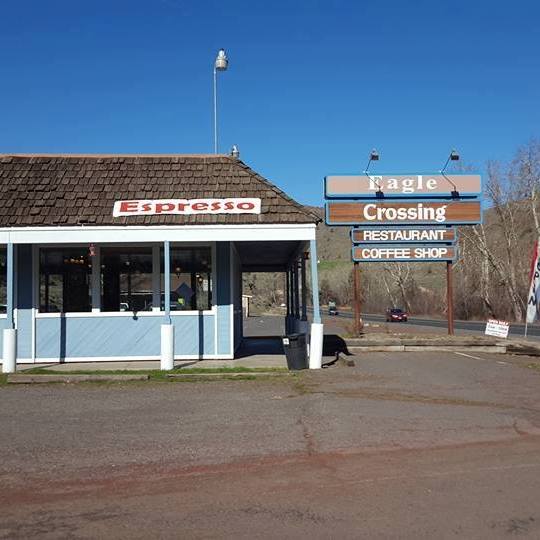
9:51 – He shares the Eagle Crossing Restaurant story and how he took it over about 17 years ago.
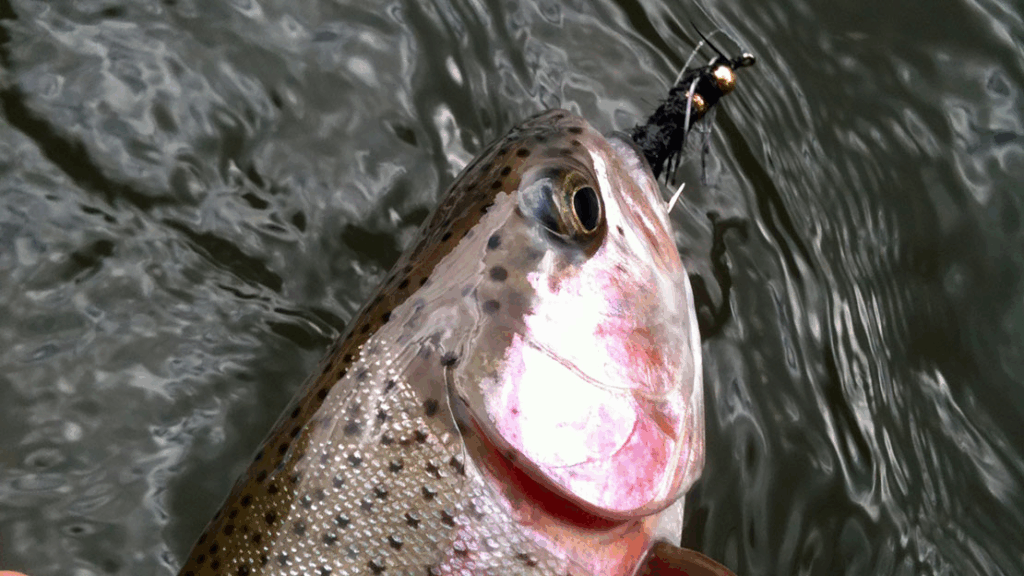
12:06 – He notes steelhead season timing (starts around September and can run to February, weather depending). You can get more details here.
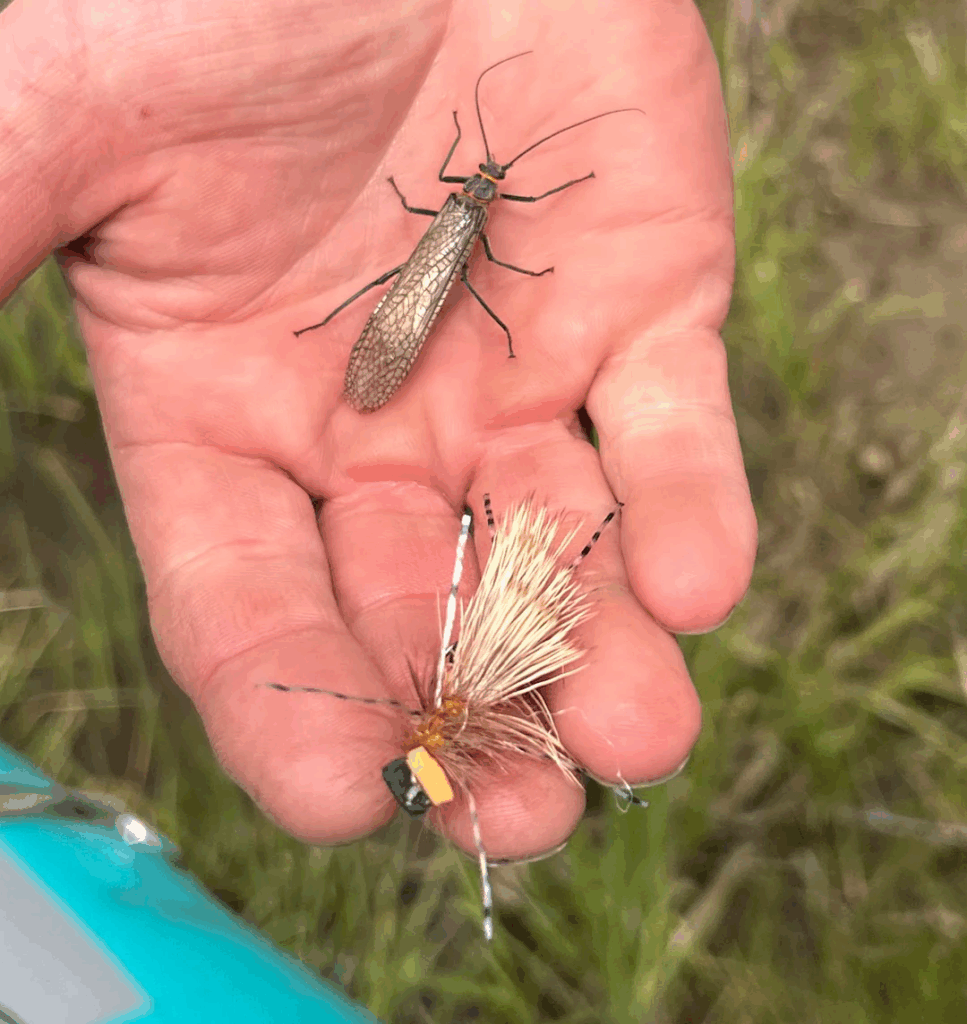
15:03 – Randy says trout trips begin in May, leading into the salmonfly hatch.
17:26 – He outlines his full-day approach (often 7 am till dark) and his love of teaching.
19:36 – Randy shares details on trout sizes in areas like Whitehorse (about 11–19 inches, with chances at 20+).
24:25 – Randy says he may sell the restaurant to focus on guiding, and that tribes are considering expanding guide areas to the John Day and Columbia.
26:31 – He talks about challenges improving the Warm Springs economy within tight government structures.
28:57 – Randy explains river changes from the Pelton Dam mixing, noting fewer bugs and warmer water than before.
Read more about water conditions on the Deschutes River for the salmon fly hatch here.
33:53 – Randy recalls a winter day so cold and windy he called it; prefers earlier season into November.
36:32 – Randy shares a lists go-to trout nymphs: Duracell and stonefly nymphs (stones live in-river for ~3 years).
39:45 – He mentions taking part in Salmon Feast and Huckleberry Feast ceremonies in the past.
Episode Transcript
00:00:00 Dave: Today, we’re diving into one of Oregon’s most iconic rivers and hearing the story from a side that few anglers ever get to fish. Our guest is Warm Springs tribal member, guide and owner of Eagle Crossing Restaurant, a local landmark that sits just above the Deschutes River crossing. From his days collecting grasshoppers for bait as a kid to guiding fly anglers across tribal waters that see almost no pressure, Randy’s story is all about connection to the river, to the fish, and the community that’s been there for generations. By the end of this episode, you’re going to understand what it takes to fish the reservation side from tribal permits to timing your trip around the big hatches. Plus, we’re going to get his favorite trout flies for the summer and the story of rebounding steelhead runs on the river. This is the Wet Fly Swing podcast, where I show you the best places to travel to for fly fishing, how to find the best resources and tools to prepare for that big trip, and what you can do to give back to the fish species we all love. Randy Nathan is here to share his story about learning from one of the first Warm Springs fly fishing guides, Al Bagley. You’re going to hear how he built this program called Native Adventures. That’s NH TV, and how he built this program called Native Adventures, and why he believes the chutes is one of the best classrooms in the world to learn fly fishing. You’re also going to get Randi’s vision in the future. How guiding beyond the Deschutes into the John Day and Columbia rivers is potentially next up on the docket, and how he’s teaching next generations of Warm Springs kids how to do it the right way. All right, let’s get into it. Here he is. Randi. Nathan. You can find him at NH adventures dot com. How’s it going, Randi?
00:01:37 Randy: Going pretty good.
00:01:38 Dave: Good. This is this is exciting to have you on here. We, um, ran into you. It was kind of interesting because I’ve driven by your restaurant there at the Deschutes River crossing. Probably. I’m guessing maybe thousands of times. It’s been, you know, because it’s such a ride along highway twenty six. And I know I’ve been in there in the past, but it’s been a little while, and we were on a road trip heading down to southeastern Oregon weren’t really we didn’t have it all planned out, but we were, you know, we were hungry. So we stopped by and we met you at the crossing there and had some great food and everything. And then we actually realized, like, wow, we’re actually right here on the Deschutes. We might as well go fishing. So we ended up kind of camping nearby. But but we’re going to talk about your program. You do some guiding on the Deschutes, but maybe just give us an update this time of year. It’s it’s kind of going to be mid-November when this goes out. What are you up to? Are you still fishing in October? November?
00:02:24 Randy: Oh, yeah. November’s we’re right in the well, October is the start and really the highlight of the steelhead season right now. And it goes all the way November, December, January. And it gets really bad on February. But it’s still possible to get out there. But yeah that’s right the steelhead season.
00:02:41 Dave: Yeah. So you do you cover steelhead equally as you cover trout.
00:02:44 Randy: I try to um no. But you know, how steelhead fishing is, is a fish of a thousand casts constantly out there hunting for them, hunting for them. They’re out there. You gotta get them to bite.
00:02:55 Dave: Right. And we fish a lot in the lower river, you know, like the lower twenty five miles. But maybe talk about the area that you’re at, what you cover and how you’re different maybe than some of the other guides up, you know, out on the Deschutes.
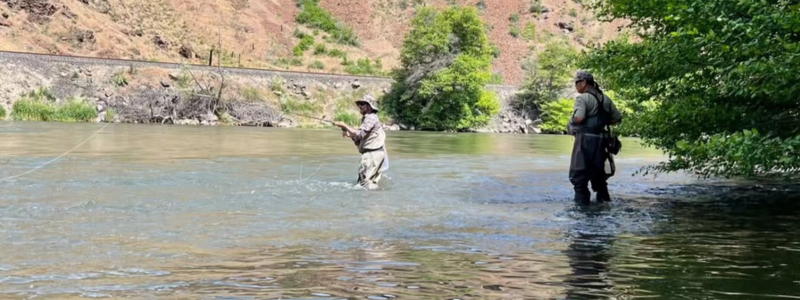
00:03:07 Randy: Well, I’m from the Warm Springs Reservation here, and that’s the reason why you guys saw I got the restaurant here called Eagle Crossing and Warm Springs River. Our Warm Springs reservation has a limited amount of guides on it, and very. It’s not really open access to a lot of people. The areas that we fish, the only two tribal members and tribal guides. So in turn, we have a lot more water that is undisturbed by, um, fly fishermen. And so it makes it a lot, lot better for as far as, um, trying to get into fish because you’re not sitting there and going to other holes and stuff that you don’t know whether somebody’s been in there, you know, five minutes or so, but here it’s a lot better because you don’t have that constant pressure.
00:03:49 Dave: Exactly. And that’s what’s cool about it. Basically, the way it’s split is all the Warm Springs Reservation kind of covers that whole West side for quite a distance, all the way down into the canyon. And there’s only a few. I know you’re there, and there’s only. Are there only a couple of other guides on the warm springs that are able to guiding out there?
00:04:06 Randy: That’s correct. That is correct.
00:04:08 Dave: Yeah. Okay. And the amazing thing and I haven’t actually ever dived, I’ve been thinking about it for years and never, you know, kind of, uh, taken any of the guides up on that. So you basically to to get going there, you have to have all your normal state, you know, steelhead tag, all your fishing licenses, whatever. But then you’d also have to just buy a tribal permit or talk about that.
00:04:25 Randy: That’s correct. Um, currently you just have to buy a tribal permit and you’re able to go, but this coming year is going to be different. Uh, they’ve changed it. They’re actually requiring a specific, uh, guided trip permit. It’s not going to be your regular, uh, fishing permit. So, I mean, for people who like to fish the warm springs or Trout Creek to Dry Creek area, it’s going to be different. You know, if you just fish by yourself, you can just get a tribal permit. But again, they’re going to make it a little bit different this year for the guides here.
00:04:55 Dave: Okay, for the guides, but everything else will stay the same. It’ll still be you have to have some sort of a tribal permit and get a guide right to fish that side, to fish the Warm Springs side.
00:05:04 Randy: That’s correct.
00:05:04 Dave: Yeah. Okay. And, and so and that’s something you could help out with right. You do some guide. Now do you cover steelhead and trout throughout the year.
00:05:11 Randy: Yes I do I cover trout as well. And majority of my best time is of course during June and July, May and June. And that’s during the salmon fly hatch. And it is just so busy on this river at that time. But, um, again, we don’t get as much pressure on the reservation side because we really don’t have a lot of tribal members who go out there fly fishing. A lot of them are gear fishing or bait fishing, and they’re usually going for subsistence. And so at that time, it’s just a lot of fun during that time, a great time to if you’re willing to learn how to fly fish, that’s a great time. I teach people how to fly fish as well. I usually take a person out during the first time they’re going out and get them into fish during that time period.
00:05:52 Dave: Yeah, that’s what’s pretty amazing because that, you know, like you said, with the lack of pressure, you know, it gets a lot of pressure on the other side because there’s, you know, hundreds of boats going down, but you can go fish water that really hasn’t been touched for trout, you know, probably maybe all day. Right.
00:06:05 Randy: Exactly.
00:06:06 Dave: Yeah. Which which is pretty awesome. Yeah. Okay. So that’s a little bit there. And then I want to get into some, you know, some tips on fishing and stuff like that. But maybe take us back a little bit on your background. How have you been fly fishing for quite a while. Did you get into this later? What’s your connection there?
00:06:20 Randy: That’s funny. Um. My father, the fly fish, um. And I basically, he got me into fly fishing, but first he utilized, uh, like, live bait. When I was a little kid, he’d give me a jar with holes in the top of it, a little mason jar. Go put some grass in it. Here’s a fly swatter. Go get your. Go get your bait. And so I’d go out and get grasshoppers and, you know, stun them, put them in my jar, stun them, put them in my jar. So the next day I’d be ready to go out fishing with him and put these grasshoppers on. Throw them in the creek. Creek fishing is totally different than from the big River, the Deschutes River. They’re very, very aware of what’s around them. They see you. They are not going to bite on your fly.
00:07:00 Dave: And this is creeks, the tributaries to the Deschutes out there.
00:07:03 Randy: That’s correct. Yeah. My dad used to take me to different creeks up there fishing. Oh, it was so much fun. We get a little grasshopper on there, toss it over this bush and just peeking over, and then boom, get them all to the little trout. So that’s how I got introduced to it. And I slowly started to get working more and more and more artificial stuff. And I have been fishing all my life around here on the reservoir. And so that’s basically how I got started. But guiding us, it wasn’t until one of my, uh, old friends that I used to do taxes for was looking for additional help. And, um, I don’t know if you guys know him. Al Bagley. Al Bagley is the very first one to get, uh, fly fishing on the reservation started.
00:07:44 Dave: Oh, he was so Al Bagley. Yeah, he was the original. Um, the original. I know a friend. I’ve never fished with him, but I had a good friend that used to go steelhead fishing with him, I think up there.
00:07:53 Randy: Yeah, so I used to do his books for him for, uh, you know, for his payroll as well as taxes and stuff. And, um, he needed help. So I started helping him guide as well as I used to drive for him as well. And, um, it’s just something I did just to help him out, and, uh, we but he he’s got a major attitude. That guy. I mean, he’s just like.
00:08:13 Speaker 3: Rah rah rah rah rah.
00:08:14 Randy: It’s like old type of guy. Like a grumpy old man.
00:08:18 Dave: Oh, wow.
00:08:20 Speaker 3: Rah rah rah rah.
00:08:21 Randy: And sometimes it’s, you know, he does it out of love.
00:08:25 Dave: Yeah.
00:08:26 Randy: Because that’s the way the old guys used to be. It was really funny. And so I kind of mock him and stuff, but, um, after that it was like, okay, um, afterwards we started butting heads and it’s like he goes, I don’t want to use you no more. It’s like, okay, I’m going to tell him that, you know, his customers want half days because a lot of them are older. They can’t handle a full day of Fishing. And he goes, well, I’ve been doing this for this and I’m not going to change my ways. All right. And so I started offering half days and started. That’s how I got into it.
00:08:59 Dave: Yeah. And as as al still around.
00:09:01 Randy: Well Al’s still around, but he’s just not. He passed his torch off to, uh, his nephew or his grandson.
00:09:08 Dave: Oh, yeah. Oh, that’s his grandson, right? Yeah. Gotcha. So that’s one of the other guides. So, so so Al’s program is still going with Matt.
00:09:14 Randy: Right? Yeah, exactly. I mean, Matt used to guide for me, too, as far as my rafting business, and he used to cook for me too, here at the restaurant. So, yeah, it was it was a lot of fun. I mean, that’s what we used to do. And he’s a good guy, really good guy. He knows what he’s doing.
00:09:27 Dave: Cool. So. So that’s how you got into it and you’ve been going strong. And then the restaurant is the other cool thing, right? The Eagle crossing. So if anybody’s ever driving down from Portland over, you know, and crosses the Deschutes there, your restaurant’s right there on the right. And we stopped there on the way over and the way back and, uh, definitely connected. It’s pretty cool because you got some, like, old historic photos in there and stuff. Talk about that. Have you been running that? How’d the restaurant come to be? Have you been doing that for a while?
00:09:51 Randy: Well, my mother used to wait tables here when she was a young girl. And, um. Well, it’s basically started way back when I came back to the Warm Springs reservation. I used to go to Portland State, and I came back here, and, um, I was helping my folks doing taxes and stuff. And, of course, that’s how I met al, and, um, my folks wanted to just stop doing taxes, so I took over on that. After I took over on that, I was like, okay, I don’t have nothing to do during the summertime. And my mom, my mother was always wanting to get this restaurant because, you know, she just didn’t have she thought it’d be really cool to be able to do that, you know, have that, you know, stuff that you do and during, during the summertime and when she’s not doing taxes and, uh, try to get it, then somebody else got it, he got it. And then he ran into the ground and it closed for a couple of years after that, um, the tribes were looking for people to take over on it. And so I submitted, submitted my business plan, and I got the place.
00:10:46 Dave: There you go.
00:10:46 Randy: Yeah. This is like seventeen years ago.
00:10:48 Dave: That was seventeen years ago.
00:10:49 Randy: Yep. I’ve been at it ever since.
00:10:51 Dave: Seventeen years. No kidding. Wow. That’s amazing. Yeah. So you’ve been going strong there, and it’s right there. Yeah, I said Deschutes Crossing, but yeah, it’s it’s called Eagle Eagle Crossing. Right?
00:11:00 Randy: Yes, yes, it’s right crossing though.
00:11:02 Dave: Yeah. It’s right at the Deschutes Crossing. Right. There’s a boat ramp just upstream.
00:11:06 Randy: Yeah. And then my, my wife had the idea, you know, because we have old traditional pictures in here, but she, we actually went to the newspaper here and got old articles to make placemats out of it so that people can get the feel of what it’s like to have to, um, what it’s like around here gives us kind of like that community flavor.
00:11:25 Dave: Yeah, it does, it does, I like it. Yeah. I was reading some of them and there was some old ones of, um, I was watching. One of them was the old Boston Red Sox that I think he was a was he a member? I can’t remember his name. He was a a great baseball player. I saw that.
00:11:38 Randy: Right. What is his name?
00:11:40 Dave: Um, yeah, it’s on the I can’t remember, but he must have been part of the. Was he part of the Warm Springs tribe, or maybe one of the other tribes in the area.
00:11:46 Speaker 4: Yeah, he is.
00:11:47 Randy: Actually he is. His name is Jacob Ellsbury.
00:11:52 Dave: Yeah. Ellsbury. Yeah, he was awesome. So basically you have that going, so you’ve got the restaurant you’re doing the talk about let’s let’s say so this time of year you’re stealing. So when does steelhead fishing start for you or do you do are you doing trout guiding and steelhead during the, you know, this time of year.
00:12:06 Randy: So yeah, basically it’s steelhead season. It starts around September goes all the way till till February.
00:12:13 Dave: And is it what are you guys doing. What’s your what’s the you know the game look like up there. What. Talk about the gear. Maybe the the rods and kind of what you’re doing there.
00:12:22 Randy: Uh, yeah. Actually doing a lot of Spey casting. Usually, like really long rods. I also use a, um, been lately. Been using, um, something new is, uh, using, like, a nine foot with a shooting head and running line, which makes it nicer because you don’t need a lot of space to be able to cast that. So, yeah, basically, um, doing a lot of Spey casting while Plastic fishing, and we’ve been getting into that, as well as utilizing the nine foot and with a shooting head.
00:12:49 Dave: So you guys are basically swinging like traditional flies out there for steelhead like your typical typically would.
00:12:55 Randy: Yep. But again, um, it’s on the Deschutes. You do a lot of both. Um, there’s artificial lures as well as, um, flies. Once in a while, I’ll get people who do not know how to fly fish. I take them out with, with lures and stuff like that. But I also at that time, I bring them over to try to get them to try fly fish and next thing you know, they’re they’re into fly fishing, right.
00:13:20 Dave: How do you find, uh, most of your new clients that are out there?
00:13:24 Randy: Well, right now is, um, go to different things, do different things. That involves fly fishing, joining clubs and stuff. I’m part of the just joined the Central Oregon Fly Fishing Club over here in bend. Yeah. Also being on the on the on the restaurant I have my truck outside as a portable, portable, uh, billboard?
00:13:45 Dave: Yeah. When you look at that, you said g g TV or. Sorry. Sorry. Yeah. Not g. Yeah. Native. It’s n eight. The number eight TV. Native. Native adventures. Which is. Yeah. Right out front and then. Yeah. Yeah. Go ahead.
00:13:59 Randy: That also covers like what I was doing before that. Kayaking, rafting and riverboarding.
00:14:04 Dave: Oh, right. Are you still doing that?
00:14:06 Randy: I am not I haven’t been able to do that since I stopped doing that when Covid came. And, um, it’s really difficult to try to get, you know, because rafting and riverboarding kayaking, it’s not a consistent, you know, trips all the time. So you’re trying to get people to be employees of a, of a business that you don’t. It’s not consistent. It’s really difficult. And then, you know, the majority of the people who want to go rafting and riverboarding as well as kayaking is used during the weekends. And like kids, are the ones that I’m trying to get to get out there, you know, young kids that are just out for summertime or, you know, maybe they’re in college and stuff, and it’s really difficult to try to get them to dedicate their weekends to work and their summertime. They want to have fun. They want to be out during the weekends doing their own thing.
00:14:51 Dave: Yeah, definitely. Definitely. Okay. So but but through the when do you get when does the season for trout fishing does that start after the winter kind of settles down and you know or do you kind of kick it. When does that kick off for you? The big trout trips.
00:15:03 Randy: Are being it rarely begins on May right before the salmon fly hatch, because people are waiting and anxious to get out to the salmon fly hatch. So I’ll bring them out and do a little bit of nymphing and stuff. Get those, uh, stoneflies, because the stoneflies start moving around more. Then they’re out wanting to wait, wait and look and see if there’s any hatching and stuff. They’ll try. They’ll dry flies and see if they go after it.
00:15:24 Dave: And so if somebody was here and they called you and they were thinking they were going to be out, you know, wanting to fish the Deschutes in May or June, what would that trip look like? Like a day on the water. Do you guys are you using a boat or describe that a little bit?
00:15:35 Randy: Um, so the Deschutes is a bank you have to get out of bank on, fish on the bank you can’t get from the boat. So, um, I do have boat trips, but majority of the time I try to convince him not to do a boat trip. Because once you’re in a boat, you’re going down river. If you pass a hole, you know you can’t really go back up to it. Whereas the truck trip, I can go back up to it. And on the on the side, we got roads all the way up and down the river. So it’s not really, you know, feasible.
00:16:02 Dave: Yeah. You got access, one hundred percent access to all that land one.
00:16:05 Randy: Right. It’s a lot easier just getting a truck and going going around and starting low and fishing up, whereas other people are going high and fishing down. So it’s like it’s a lot better that way. That way I’m hitting a lot, a lot more holes and stuff that, you know, that may not have even been touched.
00:16:21 Dave: Today’s show is brought to you by Visit Idaho and Yellowstone, Teton Territory, a place that should be on every angler’s list, from the Henry’s Fork to the South Fork of the snake, and all the hidden creeks and alpine lakes in between. This region is built for fly fishers who like a little room to roam. You can head over to Wet Fly. Swing right now for guides, lodges and trip ideas to plan your next adventure. That’s Teton tea. Located in Boulder, Colorado, Intrepid Camp Gear is dedicated to designing and manufacturing the best and most highly engineered automotive camp gear on the market. Intrepid Camp Gear specializes in rooftop tents and aluminum cargo cases designed for skis, rods, hunting gear, and any other gear you may be hauling. Elevate your adventure with Intrepid Camp gear right now. Head over to Wet Fly Intrepid. Right now that’s intrepid I p I intrepid camp gear. So that’s a typical day. So a lot of times you’ll get somebody out there just for like a day trip. Is that typically what you’re doing? I’ll meet you in the morning.
00:17:26 Randy: Yeah, majority of the time I do. And then our day trips start around seven, and then I go until dark because my dad always said, the best fishing is right before dark, though, so that’s a long day. That is a lot of other a lot of other, um, groups out there. You know, people who are guiding their days aren’t like that. They because they’re paying people to go out and take people out. And they just went, okay, half days, four days, four hours, full days, eight hours, and that’s it. But I’m not I’m not like that.
00:17:54 Dave: You’re not like that. So you can get a full day. So you can get go past eight hours on your day out there.
00:17:58 Randy: Exactly. I mean, I love being out there teaching people, you know, I love watching people catch fish. It’s just to me, it’s a lot of fun.
00:18:05 Dave: That sounds like a big bonus. So basically go out there, start in the morning and and so the truck. So you hop in. Where do they meet you? Meet you at the, uh, the crossing there or where would that be?
00:18:14 Randy: Where you been meeting is here at the restaurant.
00:18:16 Dave: Yeah, me at the restaurant. Maybe gets well, probably be too early. Are you gonna get breakfast first before you go out, or. How’s that look?
00:18:23 Randy: Yep.
00:18:23 Dave: Yeah, that’d be pretty awesome.
00:18:25 Randy: I mean, we gotta offer offer a lot of different things here. Our menu is really big, and we try to make it look like, feel like an old fashioned and, you know, make sure that you get full.
00:18:36 Dave: I can. I can attest to that. We definitely had some some big meals with the kids and everything. It was it was great. So. So yeah, we could start out there in the morning and then head out in the truck, and then you typically go out to a certain spot that you know is fishing pretty well. And then, you know, once you’re on the water, what’s your typical setup rod for trout look like that you’re using?
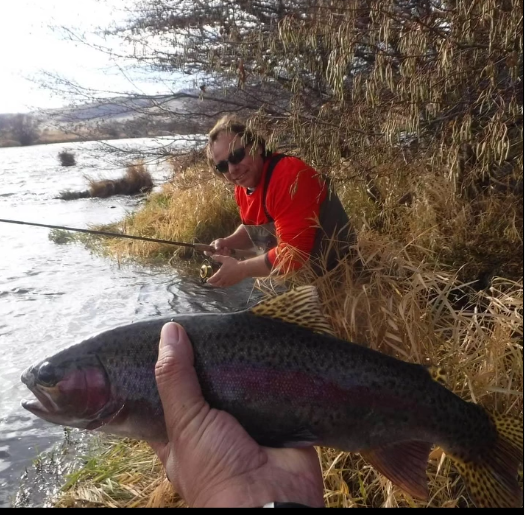
00:18:54 Randy: Well, usually right before the salmon hatch I’ll have a dry dropper so that we can test and see whether or not they’re taking the dries. That’s what I usually kind of do. But as as it gets further into the salmon fly hatch and stuff, it’s like, no need for more, no need for droppers at all. Just hit the hit those dries and they’ll be among them left and right. And you’ll I mean, I’ve got some people out there that fished the Whitehorse area and stuff and that area alone in one day they got like fifty fish in a day. And there’s a man. I’m tired of catching fish.
00:19:31 Dave: Well, are you guys finding in there a good mix of like, what would be an average size and what would be a big fish. You might find.
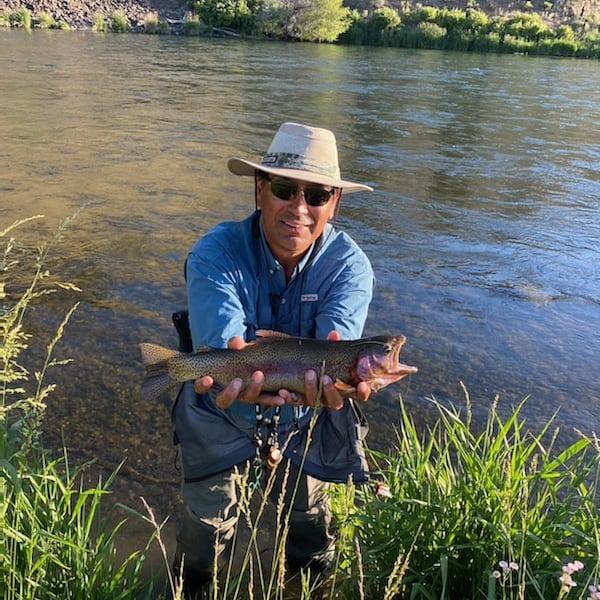
00:19:36 Randy: A Whitehorse area they around between say eleven twelve up to um, I would say probably about nineteen. Thing is, well, there’s other areas that are a lot, you know, there’s different areas that you’ll find some really like twenty, twenty inchers. Um, I know a couple of spots. It’s just amazing. When they hit, you’re like, oh my God. I had a guy pot fly fishing. He hooked into one of those and he fought it and fought it. It took his line all the way out to the back. And I slowly trying to tell him, don’t, don’t try to bring it in very fast because, you know, they’ll break off if you’re not careful. You just got to weigh them out, tire them out and try to get them back in. And then, oh man, he was fighting so much he fell in the water, jumped back up. He probably had fifteen minutes. Then he finally got tired out. He was able to get it in and the fish of his life time, he was like really happy with that.
00:20:29 Dave: Yeah, definitely. Wow. That’s cool. So so definitely there’s some chances for some big fish in there and then. And what is it like for do a day trip? What’s that cost to hire? I guess you got to get the permit. But then what would the whole thing cost to do that on a day?
00:20:42 Randy: Um, permits, but usually fifteen dollars for a day trip.
00:20:45 Dave: Oh, wow. That’s it. That’s not much.
00:20:47 Randy: Yeah, that’s that’s right now. But next, this next year it’s going to be seventy five dollars.
00:20:53 Dave: Oh, it’s going from fifteen to seventy five.
00:20:54 Speaker 4: Yeah.
00:20:55 Randy: That’s for the guided trips.
00:20:56 Dave: Yeah. That’s still not bad though.
00:20:58 Randy: Yeah. And then um, of course my fee um, currently at my half day is like two hundred two seventy five. For a full day, I provide lunch. It’s really, really cheap, and I gotta I’m actually because of all the expenses, I may have to raise it just a little bit.
00:21:11 Dave: Raise a little bit? Yeah, that’s still a really good deal. Yeah. So basically yeah, for that price with your permit and you’re good to go and you can fish water that literally isn’t, you know, the other side’s getting hundreds of whatever people fishing. And you’re only going to have a few out there maybe.
00:21:25 Speaker 4: Yes.
00:21:26 Randy: Exactly.
00:21:26 Dave: Yeah. That seems that seems like a sweet deal. So okay. So and then if people are listening and they’re thinking this would be good. Is it? Um, they just call you up, and that’s the best way to check on availability and timing and stuff like that.
00:21:37 Speaker 4: That is.
00:21:38 Randy: The best way to get a hold of.
00:21:39 Dave: Me. And what would be. So if they’re looking out, do you think, like if we’re saying we want to go with you next year, are you thinking wait till that May, June? What would be the time if we had a couple days to pick? What would you say.
00:21:48 Randy: Right before Memorial Day or after Memorial Memorial Day? Because Memorial Day, usually I got people that that book a year in advance. And that’s usually they prefer because they always know that that’s right in the middle of it usually.
00:22:02 Dave: Yeah. The salmon fly hatch. Right. Sandfly is kind of in that some somewhere in May that late May. Right. That’s when it gets hot and then it can’t go into June. And do you also as you get into sandfly as those die off do you get do you still fish like the big bug stoneflies or the goldens and stuff?
00:22:17 Randy: The Goldens and um, also um, caddis usually good to at that time. And usually they’ll go a lot of people go for the evening trips, the half day evening trip and then hit the at the evening because they’re just everywhere flying and at the salmon fly hatch. And they’re just bubbling. You’ll see fish just bubbling up in those back eddies.
00:22:37 Dave: Oh, in the back. Is that how you’re with the caddis? Is that like, what fly are you using for that typically. And are you looking for the pools the back eddies.
00:22:44 Randy: Usually at Elk Hair Caddis. Um, that’s what I usually try to use because it’s got a great buoyancy and stuff. But yeah, it’s basically what I’m using sometimes the during the day I’ll follow up with what’s called a, um, Duracell. That’s one of my favorites. Favorite, um, trailer to use. It’s really like a lighter fly. It doesn’t really sink your fly as much as some other weighted, bigger weighted flies.
00:23:08 Dave: So that would be a little dry dropper you would be using with the Duracell.
00:23:10 Speaker 4: Yep.
00:23:11 Randy: Little tiny purple one right.
00:23:13 Dave: And then just casting when you have that on are you kind of casting upstream into a pool or letting it swing? What type of water would you be fishing?
00:23:20 Randy: Well, yeah, those would be right at the top. Top of the, um, eddies dropping back through Eddy. And a lot of times you’ll hit the bottom on the tail. It’s it’s pretty good right?
00:23:30 Dave: As it’s swinging up, that’s awesome. And, uh, and then so that. Yeah. El-kheir. What else what else is going on throughout the year? If you say you’re fishing through the summer, is there a time when maybe you wouldn’t be good? It gets too hot out there. Are you fishing through the whole summer?
00:23:41 Randy: Yeah, it does get pretty hot. And fish usually not really as as active as far as the shallow waters. Well, they usually start dropping down in the cooler, deeper waters. And that’s um, also that’s when I usually try to do more nymphing like the Euro nymphing and stuff hit those deeper waters feeling, uh, feeling and bumping along the bottom. They’re usually pretty good, but they’re not as not as strong and active as tougher on the fish as a result of the hot, hotter waters. So usually try to keep them in the water, make sure you don’t get them out of the water and stress them too much so that they recover a lot quicker.
00:24:17 Dave: Man, it sounds like, yeah, you’ve been doing this a while and as you look ahead, um, you’re going to keep on track with everything. The restaurant, the guiding kind of keep everything going.
00:24:25 Randy: Well, I’m almost thinking about dropping out of the restaurant. I’ve been in for a long time, and I’m thinking about selling it and focusing more on on the fishing. And the reason being is I’m getting out there and also the tribes there. They’re contemplating on extending our areas for fishing or guided tribal fishermen.
00:24:45 Dave: O extend. Now you mean extending past the just the area you fish on the Deschutes?
00:24:49 Randy: Yes. They’re contemplating on improving fishing on the John Day for our travel guides.
00:24:55 Dave: Oh, wow, that’d be amazing.
00:24:56 Randy: As well as on the big river on the Columbia. So if they do that, I. Maybe that’s why I may be starting to expand into.
00:25:04 Dave: Yeah, I would think that, um, given it’s such a unique opportunity you have and again, I the fact that I haven’t taken it up yet, I mean, I’ve been thinking about it for years, but I mean, you have this area which is, you know, almost exclusive, right, to to what you have. And it seems like the value there. Yeah.
00:25:18 Randy: Well, this is a great, great base I think because on the John day there, it’s not it’s not like that. Neither is it on the Columbia. Um except for the different pools. The different the above. Well, actually, no it isn’t. I’ve seen fishermen out there, but it’s a great base for it, though, you know, being able to hit this area on the reservation, whereas nowhere nobody else can fish except for the other tribal members and tribal guides. Not not a nice thing, but being able to have other opportunities I think is great for me as well. That way, you know, keeps me busy, keeps me busy during that for that specific activity. So I went to Portland State when I basically got an education in finance and psychology and accounting. And that’s my background. So basically an entrepreneur getting into different businesses and stuff and trying to stimulate the economy here in the reservation, which is really difficult.
00:26:11 Dave: Yeah. Is that is that a challenge? It seems like that’s one of the challenges. Right. You’ve got some people like yourself and I’ve talked to a number of people, Warm Springs, you know, people that live there and they’ve gotten out and maybe got an education done really well like you’re doing. But then you have some struggles right out there. Is that something that you kind of, I guess you’ve seen firsthand?
00:26:31 Randy: I have, I have. It’s really difficult times. I try to talk with some of the leaders and then have them give them ideas of how to better our economy here, but it’s a really tight government. And as far as, um, being able to do things, they aren’t seen at the same way. They rather try to develop businesses for the government so they can fund the government.
00:26:53 Dave: Oh, right. Like like the, um, like the the casino. Right. Is one.
00:26:56 Randy: Casino. Um, they also have Canada. Yes, Canada. They also have, um, the daddy project where they’re doing, uh, fireproof doors and stuff. Uh, just they’re trying to trying to expand more on that because they, they feel like they have more control. They’ve recently in the past, they’ve also approved for cannabis and marijuana type of growing. But it’s been difficult to try to get that off the ground. And I think because of that, they’re way behind on the curve curb as far as getting in on the best part when I first started getting moving.
00:27:29 Dave: So you so what are you when you look at that? How do you attribute your, you know, you the fact that you went to college, was that something that was, you know, what gave you that opportunity or knowing you could do that.
00:27:39 Randy: The opportunity to go to school?
00:27:40 Dave: Yeah. Was that something that you know what I mean? You always had thought about as a kid?
00:27:44 Randy: Um, my mother, she told me, well, it’s either you have the choice one go to school, continue your school education, or two, go to work. If you don’t do any of those, you got to get out.
00:27:55 Dave: You got to do something right. I’m the same way with my kids. It’s kind of like they’re, you know, they’re getting this range where, you know, one of them was in, you know, in like, running. And she’s kind of getting out of it a little bit. I’m like, hey, you got to do something. You’re not going, just going to sit around and like, you know what I mean? Play on the computer.
00:28:11 Randy: Yeah, exactly. My mother got me into wrestling and my brother did when I was in high school. And we’ve been doing I’ve been doing it since I was like all the way through high school and maybe just very disciplined because I used to do it in the summertime, too. I was always doing something which, you know, it’s really nice because it’s like I’m sitting around not doing anything. Then I get used to that. It’s just not right now. I don’t have nothing to do. I was like, I can’t do this. I can’t just sit still.
00:28:37 Dave: Yeah. You’re like, you’re kind of like me, I think. Yeah. You gotta always have something. You’re kind of. It seems like you’re. You got so much going on. Like, how do you keep up with it all? But that’s what. That’s what keeps you going, right? Staying busy.
00:28:47 Randy: Exactly.
00:28:48 Dave: What is it about the Deschutes for somebody? Maybe we got listeners all around the country who have never been out to eastern Oregon. Deschutes, how would you explain what it is like, why it’s so special out there?
00:28:57 Randy: Well, I think it’s a lot of the regulations and stuff that they put on here. A lot of the what the size as far as Warm Springs, they’re really they’re strong when it comes to their traditions and stuff and trying to make sure that they continue getting our tribal tribal rights and stuff. As far as stuff like that in the water, water quality, you know, that’s trying to fight and trying to figure out ways of Agreeing and working with other people on those types of things. It’s really sometimes it’s very difficult because you got city, county, state, all those different people that they have to work with. And then plus you got people who are interested in rafters, boaters, fishermen, and they all come together and agree. So this is what’s best for the for this river. And so they’re they’ve been a big problem with uh, like above the regulating dam here, the water being warm up there, a lot of algae growths and stuff. And so they try to try to mitigate that and to figure out, well, how can we do this. We need to try to release the hot, hot upper water from that during the summertime. But yes, but yet we don’t want to damage the river down below. So what do they do? Decide to mix it? Mix the cold water and hot water. And then once they it’s called the mixing station up there. And the Pelton dam? I believe it is.
00:30:15 Dave: Yeah. Pelton. Yeah. Pelton. Exactly.
00:30:17 Randy: And, um, it’s just really it’s changed the river down below here as a result of that.
00:30:22 Dave: Yeah. You’ve seen the effects. You’ve seen changes in the river.
00:30:24 Randy: And yes, I mean, we used to have really they used to take the water from the bottom of the lake before there was cold water. It was great for the fish, great for the bug life and everything in the the salmon fly hatch was huge during that time. Really huge. And we used to have a problem driving across the Deschutes River here without having all these bugs splatter all over your window. But then after that, after they started mixing, there’s a lot less, a lot less bug activity as it was in the past. But fish aren’t quite as robust when it comes to because it’s warmer water. You know, that’s that’s the sad thing is. But we do have a lot of regulations as far as catching anything. So I think that’s we got a lot of people just going out making sure that they feed the fish. Right, you know, and not stressing out too much.
00:31:18 Dave: Yeah. They’re trying to get back to. They’re trying to get back to more of a natural. Right. Natural system. But I think the cool thing is there is opportunity to change, probably adjust things right to maybe maybe get back to cooler water if they need to.
00:31:30 Randy: Yeah. And um, recently the steelhead population has been up down here this year.
00:31:36 Dave: Oh, it has been up.
00:31:37 Randy: Yes. The last five, six years. It has not been very well. I really that’s the reason why I really haven’t been pushing steelhead fishing as much.
00:31:47 Dave: So you’re, you’re seeing a rebound this year already. It’s, it’s mid-October or so. You’re seeing more fish.
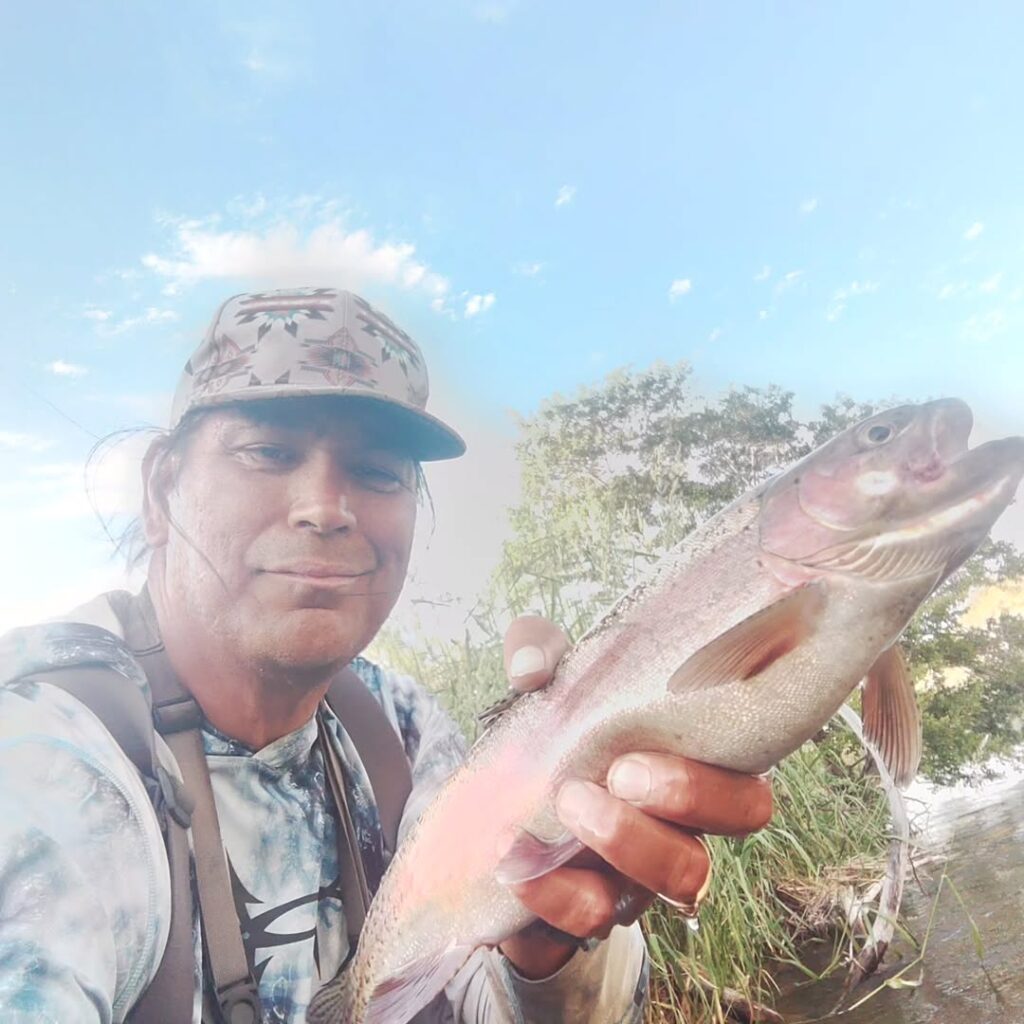
00:31:52 Randy: I have I mean actually I had some guys go out and got four fish in a day and they were like, damn, this is really fun. This is great. You know, usually they’re happy with getting one of them getting one fish per day, but it’s been seeing a lot more fish.
00:32:06 Dave: No kidding. Well, those fish you catch up there, do they have, um, a little bit of color on them or do you find some that are chrome.
00:32:13 Randy: Are still bright?
00:32:14 Dave: They are.
00:32:14 Randy: Yep.
00:32:15 Dave: Wow. Because these are fish that are going up into the what? Warm springs to spawn.
00:32:18 Randy: Well, some of them are going to warm springs, some are going up, some are going up, up the upper river. And we’ll see a lot of people getting up from the dam up here. So there’s a lot that are coming from other areas too, which is like uh, up as well. And the reason being for that is because, you know, when I come up the river, it’s cold, cold water. It’s the first cold water or cold water they come into. And so a lot of them will jump in here, rest up and go back out, head back up. There are also some that just come in here and head all the way up.
00:32:51 Dave: Some places are just different. You feel it the second you step into the water. Mountain Waters Resort sits on the legendary Portland Creek, a place where Atlantic salmon runs strong and where fly fishing history was written. Lee Wolfe himself fished these waters, and now you get to experience the same world class fishing in a setting that feels untouched by time. Whether you’re swinging flies for fresh chrome or kicking back in a cozy riverside cabin, this is the kind of trip you’ll be talking about for years and years to come. And guess what? I’ll be there this year as well. But here’s the deal Prime time season fills up fast, so don’t wait. Check in now and join me on this historic river this year. You can head over to Wet Fly Waters right now. That’s Mountain Waters Resort. You can go to Wet Fly swing dot com waters right now and save your spot for this epic adventure. Wow. So this is a yeah, this is a good time. October. November. Does it ever get a little bit too cold out there or can you fish throughout the whole winter for steelhead.
00:33:53 Randy: It gets cold. I mean, I was out there with my son one time and it was like so cold and the wind was blowing, there was snow falling and my hand was frozen cold. I told him, this is when this wind is just cutting through me. You know, this is just this is just not fun anymore.
00:34:10 Dave: So yeah, it gets to a point.
00:34:12 Randy: That was around December and I was like, I wanted to fish with him, but not at that point.
00:34:18 Dave: No, not at that point. So probably earlier would be better. Do you think? Like maybe now up and through November with good weather it might be the best time?
00:34:25 Randy: Yes it is, but that’s steelhead fishing though. You know, sometimes you’re out there when it’s cold. That’s just the way it is up until November. Then it starts December. It starts getting a lot colder.
00:34:35 Dave: Yeah, exactly. Well, and that’s the cool thing. So you’re going to have some opportunities if people wanted to check in. And it’s the same thing. You’re still fishing the same water. You would be trout fishing just in the same area, same reach.
00:34:45 Randy: Well there are different areas for for the steelhead as well as trout. Um, they, they’re basically holding areas or for steelhead, was that basically areas that are walking speed. If you hit the chest just deep, that’s basically what I’ve heard. And um, but I have seen different during like early times like this. You’ll see them right behind a riffle or drops into a deep hole. Yeah. Just drop drop, fly down through that heavy sink tip. I’ve gotten some really nice fish doing that.
00:35:15 Dave: What’s your what’s your go to? Do you have a fly? Steelhead fly. You really love if you had to pick one.
00:35:20 Randy: I, I love the hobo.
00:35:22 Dave: The hobo spey.
00:35:22 Randy: I love that one. I’ve tried a lot of them here. I wonder sometimes in the wintertime, I’m sitting here. Nothing to do. So I got my pie flying station, right?
00:35:30 Dave: Yeah, you got it right there. Yeah. That’s right. Right in the restaurant. I noticed that you got your fly tying stuff right there. So what about trout? What about going back? Trout? What are your. You mentioned a few of them, but if you had to say fishing, you know that that early summer period, what are your top maybe five flies you love for trout? You may have mentioned a few of them.
00:35:46 Randy: I a specific chubby.
00:35:48 Dave: Oh, you got chubby.
00:35:49 Randy: I tie a specific chubby. I have not seen out. I call it a tiger. Tiger. Chubby. It’s. It’s a killer.
00:35:55 Dave: Okay. How is it different than the regular? Uh, I’m trying to think what the regular. Chubby. It’s just a lot of foam, right?
00:35:59 Randy: Yeah, they’re basically foam body wings, but it’s just a different coloring. That’s all it is.
00:36:04 Dave: Yeah. Okay. Different coloring. Yep.
00:36:06 Randy: Yeah. On the river here, red and black is a big thing. I used to before red and black chubby came out. I used to tie those and it was they were killer for that, that time period. White wings. That’s usually one of my second backup, um, regular healthcare cat care. Yeah, there’s a couple other couple other ones that I’ve tried, but that’s basically the ones I usually go to.
00:36:27 Dave: Those are the big ones. And then you mentioned the nymphs. The Duracell would be one of your go to’s.
00:36:32 Randy: Yeah, Duracell is more my go tos. Of course. Stoneflies. They’re always in the river like a light.
00:36:37 Dave: Oh, like a big do you fish the big nymph? The big giant stone.
00:36:39 Randy: Yep. They’re in the river all for. They got, they got, um, in the river for like three years before they hatched. So they are always in the river. Always.
00:36:47 Dave: So you’re talking flies? Yeah. So we talked the tiger chubby, the elk hair, the Duracell, the big stone. I was going to ask you, what is on the big stone? What’s the pattern you’re using there? What’s that look like?
00:36:55 Randy: The big stone fly is usually just a big old black one. A lot of rubber legs. That’s I mean, that’s usually more effective than the ones that do not have it.
00:37:03 Dave: Cool. So. Okay. Well, no, that sounds good. And I wanted to just, um, you know, make this connection, uh, again, because I think it’s a great opportunity you have here going? Anything else we should know about the, you know, your trips or the Deschutes? You know, or kind of warm Springs? Anything else you have going there?
00:37:18 Randy: Um, basically, I think I’ve covered most of it. But again, for beginners, I love to teach people I really enjoy. I enjoy watching their progress from not knowing how to do it, to learning how to cast and teach them different casting techniques. I also try to for people who are into it, they already know how to fly fish but need they come out? They don’t think they’re proficient. I’m always up to trying to help them out, to increase their techniques, or suggest other ways of, uh, attacking the waters and stuff and presenting their what flies to a point where they’re catching a lot more fish.
00:37:52 Dave: Nice. And do you think for somebody who has fish for trout before, could you, you know, if they’ve never fished for steelhead, could you get them dialed in on that.
00:37:59 Randy: Yes I can, I have my I just have to get out there teaching. Just the other day, um, a guy who’s just learning how to spey cast. So. Yeah, it’s it’s I love I love doing it. I love being able to watch people’s progress and watch how they feel the rod load up and how they throws it out. And just basically, you know, it’s a feeling of it’s hard to describe. You know, once you fly fishing, it’s like you’re connecting to Mother Earth. It’s just harmonious with with the river and the fish and growing nature.
00:38:32 Dave: Yeah. That’s what’s amazing about it. I think that for me, I think for everybody, you know, the connecting the outdoors and stuff. And that’s where it’s really amazing with you because you even have more history, right? With your connection to all your relatives and ancestors, to the to the land. Do you do you think about that? I’m sure you think about that a lot when you’re out there and you’re bringing somebody in and connecting them.
00:38:51 Randy: Yeah, I always try to check out my, you know, be more in tune with my traditions as far as, you know, being respecting the earth and respecting what we have here, because there’s a lot of things that people don’t realize with today’s world. It’s so commercial and so disconnected and being able to come out here during certain times like that springtime during the summer fly hatch. But at the same time we got fruit trees going on, roots are popping up and people going out and digging up and being able to know these different plants and different things, and it’ll connect you even more to the, to the earth and realize that, you know, there are other ways of getting your food from the grocery store.
00:39:27 Dave: And knowing where your stuff comes from. Right. Like.
00:39:30 Randy: Yeah, exactly. Exactly.
00:39:32 Dave: Do you connect much with the history of like, I know when we’re on the Deschutes, I always think about, you know, back in the day, however many years ago, people using that as a migratory area down to The Dalles, right to the great meeting place. Do you do you know much of that history? Do you have you connected with that?
00:39:45 Randy: Well, I have actually. I mean, before I started getting back here, I used to go dance and sing and go to all the different ceremonies that we have. Here is where the the salmon feast. Huckleberry feast, all those. I used to participate in that a lot, but yeah, that’s I’ve done that and I love it. Realizing that those rich cultural things is is important.
00:40:04 Dave: Yeah. No, I think I think that’s what a lot of people have. Yeah. They just don’t have that connection. You know, I think that it’s it’s pretty cool. And I think that’d be a pretty amazing thing about going out with you on a trip is to be able to, you know, connect to that not only the river, but just kind of all that history.
00:40:18 Randy: Learn about it.
00:40:19 Dave: Yeah, exactly. We’ve been I haven’t talked to him in a while, but Superman, I’m not sure if you’ve heard of him. He’s a he’s a hip hop artist out. He’s like on the Crow Reservation kind of out towards Montana. And, um, I haven’t. Yeah. Superman. He’s super cool. And he talks a lot about just, you know, just everything. Like, you know, he doesn’t drink alcohol and, you know, and all that stuff. And it’s like, I find that that’s one of those things for me too. I’m on like a no no beer, you know, challenge sort of thing. I find that, you know, it’s like you got to find the good things, right, that get you fired up to keep you going. Right?
00:40:51 Randy: Exactly. I mean, you bring what you bring into reality is your reality. I mean, it starts right in your brain. And I myself, I haven’t been I haven’t touched alcohol for a good thirty, almost forty years now.
00:41:02 Dave: I agree, I think the more you realize you’re like, yeah, it takes it fogs. You know what I mean? Like fogs. You’re not as clear.
00:41:09 Speaker 5: It’s a waste of money.
00:41:10 Dave: It’s a waste of money. And it’s a waste of money. I know, it’s it’s kind of crazy. My dad, you know, was. Well, it’s interesting because I’ve had all sorts of stories. My dad is the reason I got into fly fishing. But he was really. Alcohol really took him down and, like. And now that he’s eighty six, you know, he’s going through dementia and stuff. And I just wonder like, man, if he wasn’t hitting the bottle so hard, you know, like maybe he’d have ten more good years, you know what I mean? And I feel like that makes me think a lot. I’m thinking, okay, for my kids because I want to be here as long as I can, you know? So, um.
00:41:38 Speaker 6: Yeah. Don’t we all?
00:41:40 Dave: Yeah. Yeah. That’s it. Good. Well, this has been awesome, Randy. I’m really excited to keep in touch with you. We’ll send everybody out to, uh, Native Adventures, I guess. Native adventures. Com but also mostly on Facebook. And give us the what’s the best number? If somebody wanted to connect on a trip?
00:41:53 Randy: My trip. My cell phone number is five four one four six zero zero zero four six. You’ll connect me to my cell phone. That’s the best way to get Ahold of me and to schedule a trip.
00:42:03 Dave: Perfect. Yeah, we’ll get that out there. And, um, and like I said, yeah, hopefully we’ll be in touch with you. I think it’s a great opportunity, no matter your skill level, just being able to fish an area that doesn’t get super hammered and you have a chance at some nice fish and connecting to the Deschutes.
00:42:17 Speaker 6: You’re gonna have to come.
00:42:18 Randy: You’re gonna have to come yourself. Check it out.
00:42:20 Dave: Definitely. No. I’m gonna. I’ll keep in touch with you here. I for sure want to want to get out there. And it’ll be really crazy, because being on that side, which I’ve never been there fishing, it’ll be kind of cool to look at the other side and be like, oh, okay, this this is what it’s like.
00:42:32 Randy: We have so many people on the other side, I wish I can fish that side.
00:42:35 Dave: I’ve been saying that for my whole life because it’s really unique. That area is right. White horse. It’s just amazing. There’s wild horses running around. It’s pretty epic. All right. Randy, well, until the next one. Thanks again for all your time.
00:42:45 Randy: Yeah. No problem. Good to talk to you.
00:42:49 Dave: There you go. You can find Randy at Native Adventures. That’s ATV adventures dot com or on Facebook and ATV adventures. Check in with him if you want access to very undisturbed water. Randy’s got you covered there Also, if you want to connect on any upcoming trips, check out Fly Swing Pro. That’s Dave. That’s you can go to Fly Swing Pro right now. Also, I want to give a big shout out. We’ve got a big episode coming up next week. Kelly Gallop is back. He’s going to be on CJ’s Real Southern podcast. Don’t miss it. Uh, if you haven’t yet subscribed. So you get that delivered to your inbox next week. Kelly Gallop is back on the podcast to, uh, you know, it’s always going to be a good one. Uh, and just want to give one shout out to you if you’re thinking, Montana this year, we’ll be heading out there this summer. And if you want to get in on any of these trips, just check in with me and, uh, and I’ll get you the details. All right. That’s all I have for you. Thanks for stopping in today. Hope you enjoyed this one and hope you’re having a great morning. Good afternoon or good evening wherever in the country or the world you are. And we’ll see you on the next episode. Talk to you then.
00:43:49 Speaker 7: Thanks for listening to the wet fly swing fly fishing show. For notes and links from this episode, visit Wet Fly. Com.
From quiet reservation banks to walking-speed steelhead runs, Randy’s approach blends tradition, stewardship, and savvy tactics that flat-out work on the Deschutes. If you’re looking for fewer crowds, better water, and a mentor who will teach you the why behind every cast, give Randy a call at (541) 460-0046 and plan around the hatch or the swing.
What’s the one Deschutes question you still want answered before booking your trip








This interview is like a hearty trout dinner – satisfying and full of great info! Randys story is a classic: dad gets him started young with the old-school grasshopper method, he evolves into a skilled guide, throws in a restaurant run, and now he’s mastering Spey casting like a pro. Its impressive how hes navigating the Deschutes scene, dealing with regulations and changing river conditions while still making it fun for clients. Plus, the fly fishing wisdom, like the secret to catching big fish being willing to let them take your Duracell nymph – pure gold! Its clear Randy loves teaching and watching people catch fish, which is the real draw here. And dont forget the Eagle Crossing restaurant – talk about a place with history and good eats! A truly inspiring story of dedication and passion for fly fishing in Eastern Oregon.