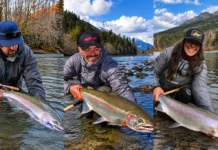
When people think about Newfoundland fly fishing, Atlantic salmon usually steal the spotlight. But tucked into the same rivers and lakes are some of the hardest-fighting brook trout you’ll ever see, including sea-run fish pushing three to five pounds.
In this episode, I sat down with Les Wentzell to walk through brook trout fishing. We dug into timing, locations, flies, wind tactics, and why a simple dead-drift can outfish flashy presentations.
If you’re heading to Newfoundland for salmon, this episode opens the door to a second fishery that’s right under your feet.
Brook trout start showing up early, even before the main salmon season opens. Sea-run brook trout enter the river from the ocean in spring and move into the same waters salmon use as the season progresses.
These fish commonly run three to five pounds, with occasional larger trout mixed in. Les shared that his grandson landed a four-pound brook trout right in the lower river while fishing for salmon.
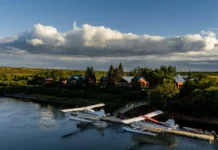
Portland Creek flows from the ocean into a large lake about a mile upstream, then continues through a chain of lakes and tributaries. Brook trout move freely through this system, depending on water levels and time of year.
Some of the best fishing happens between the two main lakes, especially in the narrow river section connecting them. Trout also stack up near tributary mouths right after ice-out in spring.
If your salmon fishing is dialed and you want to dedicate time to brook trout, Les recommends fishing between the lakes rather than the lower river. That zone holds deeper water and is less affected by fluctuating flows.
In this area, the fish ratio often flips. Instead of mostly salmon, anglers can expect far more brook trout, especially later in the season.
One of the biggest takeaways is how little changes when switching from salmon to brook trout. The same swing techniques apply, especially in moving water.
In still water, Les likes to slowly drag the fly to create surface movement. That subtle ripple often triggers strikes when nothing else works.
When fishing dry flies, Les prefers a true dead drift with all the fly line upstream of the fly. That way, the fish see the fly before seeing the line.
This approach works for both salmon and brook trout and consistently outperforms more aggressive presentations in clear or pressured water.
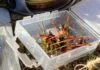
Newfoundland anglers stick closely to classic patterns, and for good reason. These flies continue to fool trout year after year.
Most are fished as dry flies, usually in size 10 or similar.
Wind is common on Portland Creek, and Les actually prefers fishing on windy days. Surface disturbance makes fish more comfortable and improves action.
He recommends heavier rods to manage wind and keep casts low.
Les uses what he calls the “Wi-Fi” approach to covering water. Start short, then gradually work farther out, just like expanding Wi-Fi signal bars.
This method prevents anglers from casting over fish holding close and improves hookup rates, especially in windy conditions.
Episode Transcript
WFS 878B Transcript 00:00:00 Dave: For decades, today’s guest has been one of the keepers of Portland Creek, a system with more layers than first timers ever realize. Les grew up on this water, the way some people grow up in a library, every run, every lake, every tributary and story. And you can tell you exactly how salmon and brook trout use each piece throughout the entire season. Today we’re going to walk through the real mechanics of fishing the Portland Creek area, why the wind can be your friend, and how a low sidearm cast can outperform a hero cast when the river blows upstream. How to Wi-Fi your way through a run so you don’t cast past fish sitting right in front of you? And why? Dead drifting a floating fly with all your line upstream out fishes. Any fancy presentation? This is the Wet Fly Swing podcast, where I show you the best places to travel to for fly fishing, how to find the best resources and tools to prepare for that big trip, and what you can do to give back to the fish species we all love. Les Wentzel is here to show us brook trout fishing in Newfoundland. We’re gonna find out about the sea run brook trout, how big they can get, and how you can actually get a shot at some of these. We’re going to find out why. Um, they fish the lakes and the rivers and three simple trout flies that always fool the brookies. We’re also going to get into a bunch of flies on Atlantic salmon, some of the favorite classic patterns and and some of those flies that the famous Lee wolf fished in the same waters that we’re going to be talking about today. So that’s all I have for you. Let’s jump into this one and find out how to fish brook trout in Newfoundland. Here we go. Les Wentzell, you can find him at mountainwatersresort.ca How’s it going, les? 00:01:39 Les: Going good. Dave. How are you? 00:01:41 Dave: Oh, pretty good, pretty good. I’m excited today to, uh, check in on brook trout. We’ve been talking and thinking a lot about Atlantic salmon because we’re heading out there, you know, this next year. So we’re going to be hitting it. And we’ve got, uh, a good crew that’s going to be there. It’s going to be fun to finally fish with you guys. But today I think we’re going to talk a little bit of update on what’s been going on for you this summer. And then we’ll get into brook trout, but maybe take us back there. Our last episode, I guess it was, I think earlier in the year, we talked when a deep dive on Atlantic salmon. How’d the summer how’d the season go? 00:02:13 Les: Uh, the season was, uh, it went pretty well, Dave. Uh, we actually, the season this year was better than the last two seasons. We had more fish. The larger fish was the numbers. Wasn’t as many as other years, but we had way more smaller fish. When I say smaller, I mean between four and six, seven, eight pound. And uh, for some reason last year, the bigger ones, uh, what we did see, what did show up for the most part, was really, really late in the season with low water and warm temperatures and, uh, very, very hard to get those fish with those conditions. 00:02:50 Dave: Yeah. So this year and I think, um, Calvin was there this year. Right. He was out and had had a good, good season. Good week. 00:02:56 Les: Uh, Calvin was not here this last summer. 00:02:58 Dave: Oh. He wasn’t. It was the year before. That’s right. 00:03:01 Les: Year before Calvin was the era. He was here two years in a row. I guess it was in the year before. Calvin was here the last week of June, I think it was. And, uh, he had some good fishing. Yes. 00:03:13 Dave: Yeah, he had good fish. That’s right. Yeah. He didn’t make this year, but he’s going to be back on this trip that, uh, that I’m going to be on here. So that’ll be fun. So good. So that’s. Yeah. And obviously this is kind of Atlantic salmon similar to steelhead and some of these anonymous fishes that they’re you know any given year it’s not going to be the same. Right. There’s going to be some changes and all that. But I think for most of us, as long as we have an opportunity, at least you know what I mean. To get a shot, you know, at one, I feel like that’s always the biggest thing, but it sounds like that’s pretty. You got a pretty good shot at least getting, you know, uh, a fish or a few fish. That sounds like any given year. 00:03:47 Les: Yes, Dave, I don’t think that’s a problem. And and what we are finding over the last few years is almost seems like the salmon run is the is a little earlier than it was in years gone by, and that’s probably a lot to do with ocean temperatures. Not quite sure exactly how to hang it down, but that’s what we’re kind of knocking it down to anyway. And uh, last year there was quite a few fish that came earlier than usual. And one of the reasons I’m saying that is we ended up catching fish further up the waters, up the headwaters than you normally would in other years. They were there earlier and they came here, passed through on the high water and was up there quite a bit earlier, actually, than a lot of other years. 00:04:32 Dave: Yeah, they’re up there earlier. Well, we might touch on that today. We actually had an episode we did with a couple on, I think spawn was the local group in your area. Then we had one with the Atlantic Salmon Conservation Group, and I know they’re doing some good stuff out there, so we’ll we’ll probably follow up with them, you know, as we get closer to the trip and approach that to talk about, you know, what’s going on, maybe what people can do. But are you familiar with, um, have you heard of the, um, some of the local, uh, salmon conservation groups out there. 00:05:01 Les: I’m familiar with, uh, the two you just mentioned with the spawn and the the Atlantic Salmon Federation. Yes. 00:05:06 Dave: Yeah, yeah. Okay, well, let’s swing it over to brook trout, because I know I’ve been hearing from people that are, you know, going on the trip are interested in going and they’re talking about Atlantic salmon is the big thing. But they’re also saying, hey, it’d be fun to catch a brook trout, especially a big one, you know, while we’re there. What does that look like for brook trout. Maybe talk about first kind of timing when they’re there, when you can catch those and then talk about what size of fish you’re looking at for these. 00:05:32 Les: Yeah. Well Dave, what we find is, uh, early in the spring before salmon fishing, actually hopes are just starts to happen. Uh, you can go to the mouth of the river, and people catch the trout as they’re coming in from the ocean. It’s, uh, kind of a sea run. Brook trout that comes in. Then later on in the season. Well, actually, not too much later. They end up in the river of course, as well as the salmon, and go to pretty much the same waters that the salmon go to. That’s where the brook trout falls. And my grandson, uh, last year, it was pretty early in the season when he, uh, he got one about four pounds here. Were you starting out fishing and then up the lake? Uh, we’ve had some great success up there as well. And we took a few guys up there. Uh, two years ago, I guess it was. We went up and it was a little early in the morning, and they had some great brook trout fishing, and it was anywhere from three to five pounds. 00:06:29 Dave: three to five pound brook trout. And that’s and they’re mainly this big because of these are the fish that are migrating out to the out to the ocean, similar to what a salmon is doing, just not staying out as long. 00:06:39 Les: Yeah. They migrate to the ocean. And because they got access of course. And also what we got here is on, on the inland waters, that’s, uh, that’s not accessible. They cannot get to the inland waters, but we still have what we call brook trout in here as well. And there is places in there where you can catch some pretty big trout. Not like years ago, of course, because as you know, things get caught and over the years. But there’s still places back in there with some pretty big trout. 00:07:07 Dave: So maybe describe that a little bit on Portland Creek. You know, it flows in there. Describe where it’s flowing into and then talk about as fish move up where you might find brook trout because they go through a lake. Right. And then eventually back into the river. 00:07:18 Les: Yeah. Well the lake is about a mile from the ocean. And of course, that’s a mile river that the fish come in from the ocean up that river. Then they travel up the lake to the first lake is eight miles long. And on that lake there’s two tributaries that comes in. The one tributary got the salmon and the trout that go up that tributary. And the other tributary, the salmon stop at the base of the tributary. Basically because of the falls they kind of get up over, nor can the trout. And then you proceed on up the first lake and there’s a narrows between that and the second lake, which that’s where we had some really good trout fishing. And then you go on up the inner lake, which is six miles long, and that’s like a wow in a fjord, you might say, like you’d see summers in Norway, whatever. And, uh, we had some great trout fishing up there. Not huge trout, but the amount of trout was there was unreal. And that water, of course, runs off the mountains into the inner lake and from the inner lake to the outer lake, and along with those tributaries and then out to the ocean. 00:08:24 Dave: So when you get above, you mentioned you got the first lake that’s eight miles, and then the kind of the inner connection, the narrows. And then the next lake upstream of that is six miles. Are you fishing more in the lake or kind of in those tributaries for the brook trout? 00:08:37 Les: Some of the best fishermen we have, Dave, for the Brookies is in the river between the two lakes. The run that goes through it’s probably, uh, one hundred yards. I guess through there you can get through with a small boat right in that area. There’s some great fishing and very early in the spring we do get some pretty good fishing at the mouth of one of the tributaries that dumps into the outer lake. And that’s basically as soon as the host leaves the lake. That would be like April May. 00:09:06 Dave: Yeah, they’re timing it to the ice. So the lakes are frozen. So there’s nothing in the lakes, really. And then but as soon as it thaws out now those brook trout are probably going in there to feed and migrate out. 00:09:16 Les: Yeah, there’s a bit funny because in the winter time, here we go, ice fishing on the lake. And, uh, you know, we catch smelts and stuff like that. But that’s one thing we do not get a lot of in the lake is trout in the winter time through the ice. But the funny part about it, as soon as the heist is over the lake, you put the boat in the lake and go up to some of those tributaries, and you can get some real nice fishing that’s in Lake. 00:09:38 Dave: Yeah. So you’re fishing out like just lake fishing out with in a boat fishing. Um, what technique are you using out there to catch them. 00:09:44 Les: We’re just using lures, spin casts in the springtime. 00:09:47 Dave: So what is the technique look like when you’re up there trying to fish for brook trout with a fly? How would we be doing it up there? 00:09:54 Les: You would be doing the same thing pretty well as you’re doing for Atlantic salmon, Dave. You just cast fly casting, and anywhere you got the fast water, of course, you let the fly ripple as we talked about or float if you’re using a dry fly and if you’re in still water, then what we normally do is we drag the fly across the water to keep the ripple or make some activity on the water that the fish like. 00:10:19 Dave: I see. So you’re doing for these brook trout, you’re doing the same basically swinging just like you would for Atlantic salmon. Same kind of exact method. 00:10:27 Les: That’s right. 00:10:27 Dave: Just different areas. Or are you able to catch them in that lower that lower section where we’re going to be fishing for Atlantic salmon, the lower mile. Are you also occasionally catching brook trout in there? 00:10:36 Les: Yes we are. That’s what I told you earlier. You’re my grandson. He caught one four pounds there. And it was a pretty amazing. I mean, you’d be fishing for salmon and you might get a small PA, and you’re pulling that thing in and let it go. And all of a sudden this trout will come up and grab that and gone with it. 00:10:54 Dave: Oh, cool. So the trout are there eating other fish while they’re in there? 00:10:58 Les: Yeah. Well they’re there, they’re there. Right. Sometimes you might be fishing and you, you probably say, well, there’s no trout here, but all of a sudden you get that little one on as you’re pulling it in, you’re, you’re just lifting to get the fly out of it there in the water. And all of a sudden, whammo! Yeah. Just. Yeah. 00:11:12 Dave: So that’s crazy. Yeah. I guess I don’t think of brook trout as that much of a predator, because I think of the small brook trout. We’ve caught the smaller ones, you know, we’ve caught. But but yeah, when they get bigger, when they’re three, four, five pounds, these fish are eating their predators. They’re eating out when they’re in the ocean and probably in freshwater. They’re eating other fish. 00:11:29 Les: Oh for sure. You can catch some of the big ones here, Dave, with the pretty big kind of lure and some half decent sized bait. 00:11:35 Dave: Right. And it probably it sounds like since you guys are. Yeah. You’re using lures. I’m sure you could go up there and fish big streamers for them like they do down, you know, in some places for brown trout, right. Like fish big like seven inch streamer flies, things like that, strip them through the water. I’m guessing that would probably work too. 00:11:51 Les: Oh, it probably would. I don’t know if too many people I’ve ever tried that. I mean, people around here, they pretty well stick to the basics of what was passed down through the generations, you might say. 00:12:01 Dave: Which is flies, which is flies on the surface. 00:12:03 Les: Yeah. And you never know. Right? I mean, up to two years ago, a tube fly was something that was never, ever tried very much here in the river. And it was a, a taboo thing, you might say it was never going to work. 00:12:14 Dave: Oh, really? 00:12:15 Les: And, uh, of course, a couple people came to two flies and, uh, Calvin being one and, uh, they do work. 00:12:22 Dave: Yeah. Have you, have you switched over to. Have you tried them yet. Are you sticking. You tried any tube flies. 00:12:28 Les: No, I don’t try them, Dave. I just stick with the, with the traditional stuff. And I mean, if the client comes, got two flies, wants to fish them, no problem. But, uh, for myself, I can. We can catch our fish with the traditional stuff. 00:12:41 Dave: Yeah. Traditional. The eight. Wait. Is it? Do you like the eight wait or the nine wait? Rod. 00:12:46 Les: I usually use a nine wait. And this past year I actually bought a ten wait. Oh, wow. And the reason for the ten way, of course, is the wind. You know, you you don’t really have to use that ten way at all on nice days when there’s no wind. But we fish in quite a bit of wind sometimes, and we actually find the windy days quite a bit better for fishing than the old days. 00:13:07 Dave: Oh, you do. So little wind is is actually better out there. 00:13:11 Les: Well, it does something to the water to the fish because there’s the water up in the activity on top of the water with the waves and stuff like that. And for some reason it just, uh, the fish, they. Yeah. 00:13:21 Dave: Yeah, they like that. That’s interesting because it’s the same thing with Stillwater fishing. You know, we’ve heard a lot about that, that you definitely don’t want to steal day calm day on Stillwater. You want a little bit of a little bit of wind action. You know, I think that’s partly the cover, like you’re saying, but also it moves food around and things like that. 00:13:37 Les: Yeah. And I think it’s probably the least disturbed when it’s windy because the whole surface is disturbed, you might say, as a calm day as yeah. 00:13:45 Dave: Yeah, we had the two flies. Interesting. We just actually did a webinar with Jesper Foreman. He’s up in. It’s pretty cool to connect the dots. We’re kind of connecting people around the really around the world and jesper’s out in Denmark, Norway. And he’s really been going strong. That’s all they do is kind of two fly stuff. And that’s what Calvin first I learned about, you know, Jesper. And yeah, it’s interesting because the way they do it, they stick with the tube. You know I didn’t I’m just learning about this. But they cut a little hole or they use a little hot needle, put a hole in the front of the tube, and then they stick their leader up through there. And then that’s what helps them make that little hitch. Have you seen that? Is that I mean, that’s you guys use the Portland hitch, right? Which is essentially doing the same thing. It kind of gives the fly a little, you know, maybe describe that again. We’ve talked about that before. But how does your hitch differ from the tube fly hitch. 00:14:34 Les: Uh, really the final presentation, you might say when you tie on the two fly. Dave is pretty well the same idea as the ripple. The ripple lets you you do the the half inch over the head, the fly, the shank, and we like to keep it directly below the high of the shank and no left or right. People talks about right side river, left side river, stuff like that. And we don’t find any difference with that at all. The thing with the two flies, you put that all you’re talking about in the side of the tube, and by doing that sideways, that just makes that fly ripple on its side. It just when it’s coming through the water and it looks the same when it’s on the water. If you look at the ripple, I mean, it’s there, it’s the presentation is there. And and just getting back to your windy water style water, Dave, again, a lot got to do with how much fishing is actually going on around where the fish are, because I went to places where there have been no activity, nobody been fishing for a few days or a week or whatever, and no wind. and I’ve had nothing but success and in very still water, just pulling the fly across the water. And I took my grandson last summer, and we went one day for two and a half hours to the inner lake, and we hooked twelve twelve. 00:15:51 Dave: Brook trout or salmon? 00:15:53 Les: Salmon. 00:15:53 Dave: Oh, wow. In the inner lake. So you’re not just fishing that lower section, you’re going up to the narrows or the inner lake. 00:15:59 Les: Well, we go up there. It’s it was earlier this year, as I said, but normally at the end of the lake is the middle of July by the time the fish get up there. But this year it was earlier. 00:16:11 Dave: And I think I’m going to be there with, uh, with a crew. I think we’re going to be there the last towards the end of June, which is, I think, thought of as usually kind of, you know, start of the season. But it sounds like maybe you guys might as you go, if it keeps getting earlier there might, you know, maybe earlier in June. I mean, have you ever caught it. Do you guys go out there in early June and start fishing for him? 00:16:32 Les: Uh, we fished early in early June. Like you catch them at the river at the mouth of the river. We talked about the salt truck coming in the river and, uh, but, uh, we don’t really serve fish in the river till around anywhere from the middle onwards. Having said that, there’s some of the tributaries coming into the lake. It’s pretty well known that you can catch salmon on the tributary, which passes right through this section before you will get the salmon here. And that got a lot to do with the water. The high water. 00:17:02 Dave: Oh, the high water. Right. So they’ll blow through. You’ll get a high water, they’ll come up, they’ll blow through and go up into the upper tribs. 00:17:09 Les: Yeah. But last year, the last few years, we’re finding the last week of June is, is, uh, turned out to be a pretty good time for here. 00:17:16 Dave: Yeah, that seems like it’s kind of good. Yeah, it sounds like when we’re up there, we’ll be able to just basically have our, whatever, nine, eight, whatever we’re using for salmon, do the same techniques we’ve talked about already on other podcasts and just have a chance to hook, you know, a brook trout. I mean, what percentage do you think out of if you were out there to in a day or, you know, a week? You know, let’s just say you hook ten fish. What percentage of those do you think are brook trout on average? 00:17:41 Les: Well, right there where the source of the river where it runs out of lake, I would say if you hook ten fish in a week, maybe two decent sized brookies. 00:17:49 Dave: Yeah, two. So twenty percent. The eighty twenty. 00:17:51 Les: Yeah. Eighty twenty. Yeah. If you’re in the right zone, the right time, the right zone up between the two lakes, it would be probably reversed, at least for brook trout and salmon. 00:18:02 Dave: Oh okay. So you start lower. It’s eighty twenty eighty salmon twenty brook. And then as you go up into if especially if you’re fishing the lake, then it’s going to be eighty brook trout twenty salmon. 00:18:12 Les: That’s right. That’s the ratio would flip flop on you. 00:18:15 Dave: Yeah. Would it be worthwhile coming up there and having, you know, some Stillwater gear to go for it, you know, and try to get some of those brook trout? Or do you think that, you know, if somebody really was thinking, hey, I want to spend maybe two of my days just going for brook trout, what would be your advice to them if they had they already got their salmon. They’re happy. Maybe on day one or two, and they want to just go for brook trout for a couple days. Where would you send them? Do you think in that time. 00:18:39 Les: We would send them up between the lakes, as I talked about and depending on water levels? I mean, usually between the lakes, the high water, low water is not as big a factor is in some of the tributaries coming into the lakes, because the water is pretty deep there anyway. As for gear, I would say you pretty much use the same gear as you do for salmon. You can. You can use some trout flies that normally you wouldn’t use for salmon. But having said that, you can catch salmon and trout flies too. 00:19:08 Dave: Yeah. What would be a couple of trout. Because we know we’ve talked about, uh, some of the really popular famous flies that probably, you know, you guys use Lee Wolf, I’m sure used, um, but what would be a traditional brook trout fly? Are we talking little wet flies? 00:19:21 Les: Yeah, wet flies are a little dry flies. Like a moth, you might say. Or a bumblebee. 00:19:27 Dave: Oh, a bumblebee, right. Or what about a what about a royal or a lee leave wolf. 00:19:30 Les: A wolf is yes because lots of trouble on the on the the white wolf. The royal coachman. The gray wolf. 00:19:37 Dave: Okay, so all those good traditional past. So we can come here with a traditional lineup of dry flies, like a tractor, dry flies, and probably have a shot at brook trout. 00:19:45 Les: Yeah. No problem. 00:19:47 Dave: And do you fish those traditional dry flies? You’re not hitching those? Or are you hitching those for brook trout? 00:19:52 Les: No we don’t. Extra dry flies. Dave, what we do is we just shoot them out. And what we like in faster water is what we call the dead float. What I mean by dead float is, I mean all your line is above your fly coming down the river. 00:20:06 Dave: Right. So you’re dead drifting. If the flies come. And they’re seeing the fly before they see your line. 00:20:11 Les: That’s right. That’s what we have the most success. That’s the same with salmon as well. 00:20:15 Dave: Oh it is. Yeah. So you could take a royal wolf pattern. Like what would be the size for a trout. Like a size ten or something like that. 00:20:23 Les: Ten is fine. Yeah. No problem there. And the thing with us nowadays, what we’ve gone to, of course, that have been good is, uh, a lot of those bombers. The bombers, they’re they’re they’re not. Some of those aren’t small flies. They’re pretty big. And, uh, we went to those things for the salmon and had lots of success with those. Actually, the the white wolf. Gray wolf and those flies, they’re still used, but not as much as they were years ago, of course, because back then there was no bombers. And yeah, that was the tradition. Right. 00:20:54 Dave: How do you think a bomber works more effectively than than a wolf? Is it that it floats better or that it’s bigger? What do you think is the big difference? 00:21:02 Les: I think there’s no difference in the float as such. Of course it can be depending on what they’re tied to. But it’s just the it’s the look. It’s the look of the fly. It’s the way they’re made and, uh. 00:21:13 Dave: Looks totally different. 00:21:14 Les: Yeah. Totally different. 00:21:15 Dave: It’s one of those flies that just, um, there’s some flies out there that like when you look at a royal wolf, it looks like a pretty normal, cool, dry fly. But when you look at a bomber, it just looks like something that’s out of a, like a freak show, right? It looks like a I don’t even know what it is. What do you think it’s imitating? Is it imitating a bug? Do you think at all or not? 00:21:34 Les: Well, if it is, it’s some type of a maybe a caterpillar or something like that. I don’t really know. But when you look at the bomber, it looks like a royal wolf on steroids, right? 00:21:44 Dave: What is that little when you have the is it calf tail or is it, um, is that what’s sticking out of the front? The white. 00:21:50 Les: It’s caribou here. 00:21:51 Dave: Yeah. Right. Caribou. So what is that doing to the fly? Is that what provides the wake or the disturbance? 00:21:56 Les: That’s just the fly just drifts up with that and and with the body, the way the bombers tied and a little bit on the back. Use the dry fly drifting on it and they float really well. 00:22:06 Dave: Okay. And what’s your best, uh, what’s your favorite color for a bomber to use for this? 00:22:11 Les: Well, there’s one we call the orange bomber. There’s one with the orange and the green body green tip. And, uh. Yeah. Listen, we’ve had success with all of them. 00:22:20 Dave: You have. Right? So it doesn’t really matter too much. You could put could you put a, could you put a purple bomber out there and catch one. You think? 00:22:26 Les: Of course you could. We got one. We called a Paddy. Francis is the name on the fly. And that thing, you can almost use it wet or dry. So there’s times we tie that on. We put the rippling edge on it and catch salmon. Catch trout. You know, it’s kind of weird because the stuff that sometimes you catch your fish on might be sitting in your box for years and years, and you just don’t use it because there’s no good. Well, the salmon don’t know that, right? 00:22:55 Dave: I’ve got a pile. I’ve got a box of. I got tubs of old flies, probably from when I was a little kid. They’re just in a, you know, just a giant flies that I, you know, whatever, you know, haven’t used. I’m sure I could probably pick through that and find something that looks like one of these. Paddy Francis flies. Right. It’s basically just a yarn body, you know, yarn body and then some. Is it also, um, caribou? Is that what you use for the wing and stuff? 00:23:18 Les: No, it’s there, but sometimes a little bit of caribou on them, but most of the air I don’t know. I don’t explain the salmon. 00:23:24 Dave: Yeah. You can’t you can’t explain them. Right. That’s the cool thing about it. You can’t. We don’t understand exactly why they’re eating these flies. 00:23:30 Les: That’s right. And the same thing with trout. It just leaves you to wonder. Sometimes you might fish that zone for an hour or whatever and nothing. And you might just walk ashore. Another guy might just walk out, or you might just change the fly in the first or second cast. Whammo! So it makes you wonder, was that fish there or did it just show up there? You don’t know? 00:23:53 Dave: I know, was it there the whole time, or did it come out of. 00:23:55 Les: So many scenarios that just drive you wacky thinking about it? 00:23:59 Dave: But the good thing is, it sounds like that we’re going to have a pretty good shot at not only Atlantic salmon, but probably brook trout. Like we’re probably going to have a shot at catching it. Sounds like a brook trout while we’re there. 00:24:09 Les: Hopefully. Yes, they should have a shot at it. Yes. 00:24:11 Dave: Yeah okay. And do people we’re talking about some really nice big brook trout you know, three, five pounds you know in that range. But are there also smaller brook trout. You could go up and fish maybe if you’re fishing up in those tributaries. Fish that are a resident fish. Have you ever seen any of those? 00:24:26 Les: The smaller brook trout. Yes, of course you catch lots of those. I said earlier that we took myself and rod. We took, uh, four clients up the Interlake some years ago. It was a little later than when you were coming. They limited out in absolutely no time. And the four of them to have a trout on the same time. And it was it was totally amazing. And as for myself and rod, I think we had hardly ever seen as many fish at that particular time at that spot. Now, last year I went back up there and there was trout there, but not like they were that time. And at that time they were there for about a week. They stayed there and they moved around the right place and right time. You will latch on to them and otherwise you might miss them. 00:25:08 Dave: Yeah, you might miss them. When you look at Newfoundland, you see Portland Creek. It sticks out and some of these bigger water bodies with the big lakes. But you also see a ton, a ton of what look like other lakes in Stillwaters all over the, the mountains. Right. Because those are you guys have a massive national park right south of you. Is that the case? 00:25:26 Les: Yes, it’s Gros Morne National Park, and it’s just as it is to the south of us. And yes, there is lots of we actually call them ponds, not lakes. And actually Portland Creek Lake is called Portland Creek Pond. 00:25:39 Dave: Oh, it is Portland Creek Pond. 00:25:41 Les: Yeah, that’s what it’s called. And, uh, well, that’s just you’re in Newfoundland now, right? So it’s big enough to be a lake. It’s fourteen miles total. There is some bigger water bodies on the back and all around. And some of those places, they do have trout and they’re, they’re landlocked. 00:25:57 Dave: So you have brook trout in a lot of those lakes. They’re just scattered all around Newfoundland. You can probably find some brook trout in there like native brook trout. 00:26:06 Les: That’s right. Some of those got some years ago. They had some bigger trout of course, but it’s still decent trout there. And some of those waters, as I told you, the one in particular, they can come to the lake and back to the ocean, but they can’t get back to the lake if they decide to come over to falls. 00:26:22 Dave: Yeah, because these fish are probably I’m guessing, you know, they have this life history of the bigger ones migrating out to the ocean, similar to like a steelhead. Well, I guess it’s different because you have brook trout are a different species than Atlantic salmon, right? That’s right. Yeah. But there’s some that migrate out to the ocean and probably some that don’t. And it depends on whether they can get out or get back. Right. But it sounds like there’s also a bunch of ponds and tributaries that have these probably smaller brook trout all throughout Newfoundland. 00:26:50 Les: Yes, they do. And some of those places we’re talking about, they do not migrate back to the ocean because they don’t have access to get out. But in some cases they can go to the ocean, but they cannot get back to where they came from. 00:27:04 Dave: Right. And then those fish probably just become, you know, find another place to spawn right down below somewhere. 00:27:09 Les: Yeah. And having said that, I mean, I don’t know who knows. Some may come out and maybe they don’t even come out just the way it is. 00:27:18 Dave: Yeah. part of this, you know, we’ve been talking a lot about is, is Lee Wolf, you know, because we’re the cabins that you guys have there where we’re going to be staying was the same place that Lee stayed and fished. Did he also fish for brook trout or was he really focused on, you know, I’m sure he caught a few of them. Did he talk about that much or did you see many photos of that? 00:27:37 Les: There is actually one episode in particular of Lee Wolf. Uh, I guess YouTube, you would find it and it’s basically, yes, he was he was right into the brook trout as well as the salmon. And I think in one episode there he shows where he actually put on, I don’t know if it was two or three flies spaced apart, and he ended up with beautiful fish on all flies at the same time. 00:27:59 Dave: So he did a little bit of both. And the runs. Did he have a bunch? Did he have one run that he really loved? Fishing. Or do you guys know much of that or did he? He probably fished everything, I’m guessing. 00:28:09 Les: Well, back in the day he pretty well fished wherever his little floatplane would take him. And, uh, he set up not just this place. He had probably three or four more places on the island set up as well as this place. And it was he was all he got involved with the Newfoundland government. Right. And they want to promote tourism. So he was kind of funded through all this stuff, through them. And uh, of course he was well known and, and he had a lot of help in that aspect of it. And he hired all the locals when he came in this area. So he hired them for guides. And that way he kept them out of river. 00:28:43 Dave: Oh, really? Oh, so he hired up all the guides. So he so he kind of had more water to fish for his crew. 00:28:49 Les: That’s right. Well, they were all fishing the same waters, so he just hired the local people that was fishing those waters and paid them the guide and paid them a decent wage, I guess, back then. So they guided the the Americans, whatever, wherever they came from. And, uh, they had the they had the rivers to themselves. So it made sense, right? 00:29:08 Dave: Yeah, it did when Lee Wolfe was there. I’m trying to get again my years. It was when was the last year he was out there? 00:29:15 Les: I’m not quite sure what the year was. Dave was before my time. 00:29:18 Dave: Oh, it was before your time? Yeah. You weren’t. You weren’t even a young buck then. Yeah. 00:29:22 Les: He was there in the forties and probably early fifties. I think he was there in early fifties because in nineteen fifty six the road came down this way. Before that it was remote. And once the road, I guess he heard the road was coming. And he said, well, the remoteness would be gone. So he sold out to another company. 00:29:42 Dave: Oh that’s it. Right. So as soon as the road came in there, he was like, all right, I’m out of here no more. I don’t need my plane isn’t an advantage to me. 00:29:49 Les: Yeah, exactly. 00:29:51 Dave: Yeah, yeah. Gotcha. Okay. Well, good. So I think we’ve kind of got the lay of the land a little bit on the brook trout. It sounds like it’s pretty straightforward. Are you also fishing still? You’d be fishing your eight weight. Or do you think it’d be good to bring a a six weight if you’re going to be focusing just on those brook trout or something like that? 00:30:05 Les: Well, there’s no problem to bring it of course. And a lot of it, they’ve got to depend on the weather. If it’s a windy day then you’re lighter weights is not going to work like the heavier weights, right? For the casting. That’s the thing is, uh, that’s why most everybody here uses eight weight, nine weight, ten weights. And it’s all to do with the wind. And of course, a lot of it got to do with the person on the rod. 00:30:29 Dave: Exactly. Yeah. We’re not all created equal as far as fly casting or casting into the wind. What’s the you know, if we’re out there and it is a little windy, how do we have success out there? What’s your tip on casting when the wind is around? Is it going to be casting kind of against us, all around us both. All directions? 00:30:44 Les: Well, no. Normally here you would be casting. I mean, there’s days you got the wind in your favor. But a lot of days here, the southwest wind comes up the river and you’re going to be casting pretty well into the wind, a little bit sideways, but not much. And it’s all to do with the guy behind the rod. And of course, the heavier line helps. And having said that, you can get somebody that have done lots of it. They can go with a lighter line and do pretty good as well. 00:31:10 Dave: Yeah. If you’re out there, I’m sitting out there with you, and the wind’s blowing really hard and I’m struggling. What are you telling me? To have a better chance to get it out? Because I’m guessing you got to cast it out there a decent thirty feet or something like that. Or do you? If it’s windy, do you just cast ten feet and just start playing just fish shorter? 00:31:28 Les: No, you just start out short, but you fish out longer. And the thing with casting in the wind is you basically got to get as a little technique. You, of course. And it’s all to do with the back cast as part of it. The delivery on the front is equally as important, if not more important, into the wind. It’s making that rod work for you and the power got to be in the rod. You got to load it up. 00:31:52 Dave: And are you doing every time? Are you like, doing the double haul? Is that a critical part that you should know how to do? 00:31:57 Les: No. Normally with us we just we strip in so much line in the wind and then when we’re ready to cast, we just cast and let it fly out. 00:32:05 Dave: Right, right. So you’re not, uh. So you’re not doing a bunch of false casts. It’s kind of come back, make one false cast, and then you’re shooting it out. 00:32:12 Les: For the most part, yes. And another thing that I do and and what I find works quite well into the wind is rather than casting over your shoulder, is if I cast kind of take the rod and come a little bit sideways and shoot it that way. That way, the, the line itself is not up in so much wind. And your delivery, I find, is more successful than way in the air. Right. 00:32:35 Dave: Keep it low. 00:32:36 Les: Yeah. Keep it low. 00:32:37 Dave: And then like we said, we start start out short. Just your line your your head, your line out there. And then slowly work. What a foot. Work your way out through the run a foot each time. Something like that. 00:32:47 Les: That’s right. That’s the way we like to fish here, Dave. Yes. That way. Uh, well, I think we talked about it earlier. We call it the Wi-Fi. If you look at a Wi-Fi on your phone there, see how that thing spreads out, you start short and go and work your way longer. You’re you’re not fishing past any fish that might be just in front of you. For some reason, a lot of people, they just love casting. They love it more than they do fishing, right? So we try to tell everybody, you know. Yes. That’s nice. You got a great line you’re casting. You got it out there in no time. But how many fish did you pass between the tip of your rod and where you’re at right now? 00:33:24 Dave: That’s right. You know, I feel like that’s always my thought is that I think the plan is that we’re all going to be casting and practicing a lot before the trip. That way when we get up there, we won’t have to practice. We’ll just be ready to go and fish it. 00:33:35 Les: Yeah. Well, just. I think it’s pretty well the same as if you come to a river and somebody says, well, there’s fish in that river, or maybe a river that you’ve never fished and haven’t talked to anybody. You take a little lay out of the water, you might say, and I think the first thing anybody would think about would ease your way into it. And he’s out there and see what’s happening. Right? Rather than just stand there and cast the other side of the river or in the middle. And yeah. 00:34:01 Dave: And as far as the, um, you know, we’ve talked to rod before, so you’re going to be there. Rod, who are the other guides throughout the season that are out there working with you guys. You have a couple of other people. 00:34:11 Les: Oh we do. We got some, uh, some friends of ours, that guy with us, Dave, and they’re good, good guys. And we actually got one young lad, Kobe. He grew up on the river. He’s an excellent guide as well. And his dad guide sometimes. And his uncle, we got some good guides. 00:34:27 Dave: Yeah. So we’re gonna have a good mix of people out there and and the timing. Like you said, you guys typically start June, right? Like kind of when we’re going to be there, we’re going to be like the start of the season. But you go through July, August. When does your season for just fishing out there kind of end with your guide season? 00:34:43 Les: It’s over the seventh of September. That’s when it closes. 00:34:46 Dave: Oh, it closes. So it actually closes down in the for fishing there. 00:34:49 Les: That’s right. Shuts down the seven. But having said that like late late July and August of course sometimes July depending on the rain, how much rain we get and stuff like that. And if the water goes low and really warm and the fish is there, but they just don’t want to bite. 00:35:08 Dave: But could you also fish if you wanted to come up and just do brook trout only? Would that be open throughout the year into September or October? 00:35:16 Les: Yeah, basically the schedule waters for brook trout is the timing is the same as salmon. 00:35:22 Dave: Oh it’s the same. So it’s going to close down to. 00:35:24 Les: It closes down. Yeah. At the same time the salmon fishery shuts down and then it opens up for a winter fishery like ice fishing. 00:35:31 Dave: Oh okay. 00:35:32 Les: For, uh, a couple months or whatever. And, and then it shuts down again for about a month and then opens up again in the spring for trout. And that would open through the middle of May, but that would be an unscheduled waters. 00:35:44 Dave: Yeah. So middle of May. So you could come if Atlantic salmon won’t be there. But if you wanted to just do a brook trout trip, you can come there in May, middle of May and have a shot at them. 00:35:52 Les: Yeah. Well, if you come in May, uh, Dave, you could fish the the trout in the lake early in the middle of May, but the salmon season don’t open until the first of June. That’s scheduled waters. If you’re in unscheduled waters and you catch a fish, a salmon, and on schedule waters. Even if you got tags to keep that fish, you got to let it go because it’s not caught in scheduled waters. 00:36:13 Dave: Yeah I see yeah. Because pretty much once the winter time, like right now as we talk, we’re, we’re kind of mid November going into December. What’s the weather like there right now. Is it pretty cold. 00:36:22 Les: No, it’s not cold. It’s a little bit getting back to the the last few years with the fish and the ocean temperatures. And years ago when I was a kid, right now, they’d be crossing that lake in the wintertime on the ice. And last year, I crossed the lake on the sled the last week of January. That’s the difference. That’s how long it took for the lakes. 00:36:39 Dave: Freeze up. So you guys are getting milder winters up there throughout the winter. 00:36:43 Les: Big time, big time. Yeah, we’re getting probably at the most six weeks of winter now. 00:36:49 Dave: Six weeks. And what would you get in the past? 00:36:51 Les: It would be from November until last March, mid April. 00:36:54 Dave: No kidding. So you would have November. You’d have six months of winter or something like that. And now you’re down to six weeks. 00:37:02 Les: Well, six weeks like sledding and stuff like that. Dave. That pretty much does it here. Moreover, in the lowlands, on the mountains, a little longer because you’re higher altitude. But today it’s five degrees Celsius here right now. And it’s pissing rain. 00:37:15 Dave: Right. Five degrees, which is. Yeah. Here. That’s like the weather we’re having here right now. Forty two degrees, something like that. So you’re you’re, uh. And raining, not snowing. 00:37:23 Les: And lots of water in the river right now. 00:37:25 Dave: Oh, is the river up? 00:37:26 Les: Yeah. It is. Yep. 00:37:27 Dave: So that’s kind of like we said, kind of a run through and brook trout. And are there any other species out there that you, uh, or people are catching or what do you guys, you know, is there I guess there’s some ocean fish, right? 00:37:38 Les: No. Pretty well brookies salmon. And of course, in the wintertime we do catch some smelts. And the last couple of years, those things, the numbers have been way down for smelts, but it’s pretty well brookies and salmon. And years ago they had a little farm set up in the lake for char, Arctic char. 00:37:55 Dave: Oh, really? 00:37:55 Les: And the big windstorm came and all the char got over to the cages that they were in. And we figured, well, because they were raised in the lake, we’re going to be starting to get char on those waters. And I think up to this point in time, there have been less than a handful recorded of being caught. 00:38:15 Dave: So Arctic char. But those are more of a northern species or historically, were they out there? 00:38:21 Les: Well, there’s more and more of them to the north way more. But they’re a little, little place about twenty kilometers from here to take us char there. Right. There’s a few select rivers there where they do catch them. And some places they’ve been known to get a rainbow trout. 00:38:34 Dave: And rainbow trout, too. Right. Because they’ve been planted everywhere around the world. Right. Rainbows. 00:38:38 Les: Yeah. So you never know. 00:38:40 Dave: Yeah, well, let’s kind of take it out here. I want to hear you flies, because we’re going to be getting ready for this. And probably I’m going to probably try to tie a few flies. But I know you guys also have some local patterns out there. Give us a handful of flies, maybe four or five flies. If we were going to tie up some patterns for this trip for Atlantic salmon, let’s just start with Atlantic salmon again. What are your favorites out there? 00:39:00 Les: If you’ve got four or five of those flies in your can, that’s pretty well all you need. You could have doubles of them or whatever, and depending on the tide, of course, but we’ll go with one of the big ones at the blue term, the undertaker. Uh, Green Islander, Meyer Lodge. 00:39:16 Dave: How do you spell that one? 00:39:17 Les: M a r Lodge. Lodge. And for the dry flies, most everybody now uses the bombers. But if you got some of the other ones, the white wolf, gray wolf, whatever. Of course. 00:39:29 Dave: Yeah, we’re definitely going to fish Wolf. I want to catch one on Lee. Wolf’s on the pattern. His pattern. That would be kind of cool. 00:39:34 Les: No. And and you probably will. 00:39:36 Dave: So we’ll throw the wolf in as our bonus. Yeah. And then those would all probably, like we said, work for brook trout. But if you had just brook trout patterns, what would be a few of those that you’d be using? 00:39:45 Les: You get the Bumblebee and, uh, there is a little Royal Coachman to like for trout flies, just the smaller hook, but it’s pretty much the same. And something that looks like a moth, you might say like a gray moth. And there’s one called a The Black Hand, and that looks like it’s on a small oak. Real small look. It looks like a hand. 00:40:04 Dave: Yeah, just a black on the surface. And these are all dry fly patterns. Pretty much. 00:40:08 Les: Pretty much. 00:40:09 Dave: Yep. Okay. So we can tie and then you have right some folks there that are tying. Are you tying flies or what if we wanted to buy some from the local community out there. How would we do that? 00:40:18 Les: Yeah, I don’t tie on myself, Dave, but the rod ties flies. But if you want them, you you got to order them, like, now. And his buddy Jason and Colby ties flies. 00:40:30 Dave: So we can call up rod and say, hey, we want to get a selection of patterns. 00:40:34 Les: Yeah. If you call rod, he’ll put you on the path for flies, for sure. 00:40:38 Dave: Gotcha. All right. And I think rod, did rod have, um, like, is he doing a surgery or something like that or. I can’t remember. Was he fishing this this summer? 00:40:45 Les: He had a surgery later in the summer. He got in the in the guiding. He we covered all that off and then he went for a carpal tunnel surgery, and, uh, it’s coming around. It takes. It’s a slow process, right? 00:40:56 Dave: Yeah. 00:40:56 Les: Right. So it’s coming around for him right now. And, uh, I see him a couple of times a week, usually. And, uh. Yeah, we keep in touch. Slots? 00:41:05 Dave: Yeah. What keeps you busy? Ah, this is kind of our random segment throughout the year. You’ve got all the fly fishing, you got a bunch of months to the rest of the year. What are you doing out there when it’s not socked in with snow? 00:41:15 Les: I cut firewood, Dave. I skidoo in the wintertime, I ice fish in the wintertime, I moose. 00:41:21 Dave: Oh, and you mustn’t. Is moose hunting is pretty much. Are you getting one every year or is it pretty tough. 00:41:25 Les: No it’s it’s it’s not that tough to get a moose if you’re living in this area and, you know, we know the area pretty good. And, uh, my grandson this year, he was sixteen, had his first youth license, and I went over to him and he got a eleven point bull. 00:41:42 Dave: Wow. This is your grandson? 00:41:43 Les: My grandson. He’s sixteen years old. He was pretty excited. 00:41:46 Dave: No kidding. Sixteen gets his first, uh, moose. 00:41:49 Les: Yeah. And if you come when you come, you will see him on the river as well. He’s right into the salmon as well. 00:41:54 Dave: We’re not going to see moose, though. That is that. 00:41:55 Les: Oh you might yeah you could. Oh, you probably will see. We’ve had them cross the river right where we’re fishing. 00:42:00 Dave: Oh, cool. Can people that are coming out for, like, a guided. Can you do a moose hunt there with people? 00:42:06 Les: No. You got to do that in the fall of the year. September onward. I guess it is. And you got to come through, I hope. Fisher. 00:42:13 Dave: That’s right. Yeah. You guys aren’t doing you do a lot, but you’re not doing outfitting for for moose hunting? 00:42:17 Les: No, not for moose hunting. No. 00:42:19 Dave: Yeah. Okay. But if somebody was interested, we could probably check in with, uh, with you guys and find somebody. That would be good to put that together. I know we got a good chunk of, I think about half of our listeners, you know, are into hunting. So I think that would be something that would be cool to do. 00:42:32 Les: Oh yeah. There’s a it’s a big deal around this area. There’s, uh, lots of outfitters with lots of cabins on the mountains and flying floatplane helicopters. So it’s all there. 00:42:44 Dave: It’s pretty much kind of a natural wonderland, right where you guys are at, you’ve got National Park just south of you. Is that what people are coming there? If they’re not coming there to fly, fish or hunt, you know, what are people coming to Newfoundland to do from, you know, when they’re visiting? 00:42:58 Les: Well, the park, the national park mostly is tourism and it’s a Unesco heritage sites and stuff like that, that they come and see and, and, uh, the scenery, I might say we got some of the oldest geology in the world. And those mountains. 00:43:11 Dave: Oh that’s right. Yeah. You guys have the, um, kind of almost active, not active volcanoes, but you can see the Earth’s crust right in some places out there. 00:43:17 Les: Yeah, we got some of the geology and lots of places with fossils that you can see in the rock and stuff like that. So tourism is a big thing in the summertime. 00:43:27 Dave: Yeah. I love I love the history of something that partly when I first heard about your guys operation, that was what caught me, you know, the just the history of everything, the fact that fishing these traditional, really traditional fly fishing techniques, I mean, you guys are doing, you know, the single hand rods, these awesome traditional flies, like, you know, it’s pretty much the same thing when you were a kid, right? You’re doing exactly the same methods as you did back then. 00:43:51 Les: One hundred percent. 00:43:52 Dave: Yeah. And it still works just as good, right? 00:43:55 Les: Yeah, it still works just as good. And I mean, yes, we’ve bought some newer rods. You know, you’re always looking for a different rod and stuff like that. And but I mean, I got a rod I paid a few hundred bucks for and I got a rod I paid probably a hundred bucks for. I mean, once you’re into the casting, you’ve done a lot of it. The guy behind the rod got a lot to do with it. 00:44:17 Dave: Yeah. What type of reel do you use? 00:44:19 Les: Oh, I just got a I don’t know what I bought. You know, I bought a new one last fall that I already reel. I just can’t remember the name of it right now. 00:44:26 Dave: Right. Right. Yeah. Because you guys wouldn’t be using. Are you hearing anybody bringing up the click, click and pull type reels? 00:44:31 Les: Oh yeah. Some people. Yes of course. 00:44:33 Dave: Oh really? Yeah. So there’s a lot you’re hearing a lot of clicks out there. 00:44:36 Les: Oh well you don’t hear a lot. But there is some people that do bring them. 00:44:39 Dave: Yeah. It would seem to me that that would be because the Atlantic salmon could be so like kind of crazy running that that would be it. You kind of want a drag. Would be helpful. 00:44:48 Les: Yeah. Well you can yeah. Some guys they got reels. They paid you know two thousand, Two thousand five hundred bucks for them. And there’s some people out there with, uh, sixty dollars reels, local people, and, uh, the fish don’t know the difference, right? 00:45:00 Dave: Do you think the drag. Do you use your drag on your reel quite a bit when you’re playing a fish? 00:45:05 Les: I just hit the drag. I appreciate the drag before I go fishing. And, uh, for the most part, I just. That’s where it’s at. I mean, just to tell you a little story, some years back, I had this friend from Germany who used to come every year, of course, love fishing. We were on the river one day and he was fishing. And all of a sudden this local guy walked out just below us with a pair of hit rubbers on. We call it hip waders and two or three casts in the fish. And, uh, my German buddy, he said, les, he said, I don’t understand. He said, I paid all the money for those waders and the boots and the rod and the reel. And he said, this guy, look at him. He said, he’s wearing nothing and he caught the fish and I just looked at him. I said, Godfrey, I said, you can’t afford a fish. You know, you spend all the money you want. 00:45:58 Dave: Yeah. It’s not going to buy you. You can’t buy yourself a fish out there. 00:46:00 Les: No, no. That’s right. 00:46:02 Dave: Which is great to hear. I mean, that’s the. That’s pretty awesome. You know, you can go out there and your your your pants. 00:46:07 Les: But anyway, he came for twenty something years. He don’t come anymore. He had some great fishing. 00:46:12 Dave: Right. Yeah. Yeah. This is going to be good. Well we’re excited to get going. You know definitely on this. And I think the brook trout like we said today was that was the goal was to let people know a little bit about what that looks like. And I’m guessing that there’s probably places all around the island. Right. You could if somebody had a couple of extra days and they were going to maybe be fishing at, you know, Portland Creek, but then go travel around Newfoundland is that they could probably go and find a bunch of other areas to explore. Is that pretty easy to do out there? 00:46:37 Les: You can for sure. Dave, the thing with the trout is, of course, Newfoundland. You gotta have a guide. I think there might be some cases, if you’re in a certain distance of a public highway and you can’t be seen, You’re okay. 00:46:51 Dave: Oh. So okay. So you could you can go to a place. As long as you’re off the highway. You don’t necessarily have to have a guide at every place. 00:46:57 Les: No, no. But for salmon and scheduled waters and stuff like that, you got to have a guide. 00:47:01 Dave: Right. But if you’re going for, you know, throwing your trout rod. 00:47:04 Les: Doing your trout stuff, then yeah. 00:47:06 Dave: Because I think that’s something that would be interesting to some people. Right. Just to, you know, do you see people much out there that are coming in and they’re, you know, they’re DIY in it, they got their van. Maybe they’re living in their van on the side. You probably don’t see much of that, I’m guessing. 00:47:19 Les: Oh, we see some of that. Of course. 00:47:21 Dave: The trout bum lifestyle sort of thing. 00:47:23 Les: Yeah, people do move around and we do see some of that. But in this area, particular area right here, not too much. 00:47:29 Dave: So yeah, to have the best chance obviously getting a guide at least for you know, I mean you have to for Atlantic salmon right. That’s a must. You can’t fish without a guide. 00:47:38 Les: No that’s right I mean last year we had people here from England and uh, western Canada down to the States and stuff like that and, uh, yeah, scheduled waters. You got to have a guide. 00:47:49 Dave: Yeah. Do you know much of the history? We’re going to take it out here pretty quick, but I was curious. I’ve been on a little bit of a history kick. Um, we’ve got actually Ken Burns, who’s a documentary filmmaker. He’s done a ton of great films. He’s just came out with the American Revolutionary War like a, you know, a week long series. It’s interesting because there’s a lot of connections between obviously, we’re right there next to each other. So from the, you know, the Seven years War of of British, I mean, back in that time when they were basically ruled the world, you know, the British Empire, right? I mean, they ruled everything and but do you know much about the history of Newfoundland? Are you a big history buff? 00:48:24 Les: I’m not a big history buff, but, I mean, I’ve done some of the schooling over the years and yes, the shore all along this coastline, it was British and French. They were at war, of course. And there was the there was a treaty that came up and back in the day, way back about the fishing, fishing rights. And it was all to do with the Atlantic cod fishery. Right. So, you know, the British was up a little further north and then a little further south. There was a mixture of the French, more French, and then there was some indigenous people that came in from Nova Scotia. The French brought them in. And now. Yeah. So there’s a bit of a mixture all over on the island. The other thing we got is when the potato famine happened in Ireland, and there was a lot of Irish people came over. 00:49:09 Dave: Oh, right. So you have a good mix. So you’re not too much different than probably a lot of, you know, everything down lower in the States. Right. You got a good mixture of diverse people. 00:49:17 Les: Well diversified. Well diversified. We are. Yes. 00:49:21 Dave: That’s cool. Well like I said, I’m excited to get out there. I know that, um, you know, just landing. We’re going to land in Deer Lake is at the airport. 00:49:28 Les: That’s correct. Yeah, that’s about a hour and a half drive from here. 00:49:31 Dave: Yeah. So we’re going to land in Deer Lake. We’re going to come over probably from Quebec or Toronto. We’re going to drop into Deer Lake. And then and then I think Ryan or somebody’s going to be there to pick us up, and then we’re going to take a drive up north through Rocky Harbor and in through the national park. Right. We’re going to drive right through mountains as we get up to Portland Creek. 00:49:48 Les: Yeah, you’re going to drive right through Gros Morne National Park, and we’re about, uh, thirty kilometers, I’ll say, north of the northern boundary of the park. So you’re going to you’re going to leave Deer Lake, you’re going to start driving, you’re going to come into the park on the south end, you’re going to drive through the park and come out of the park. And then thirty more kilometers and all the way up, you’re going to see you’re going to drive through mountains, and then you’re going to be coming up with mountains on, on your right as you’re coming up in the ocean on your left. 00:50:17 Dave: Yeah, I see him. Yeah. You’re going to be right. We’re going to be driving right along the ocean. And as we get into Portland Creek, and then we’re going to settle down into the cabins, right, for, uh, for the evening and then get ready to go the next day. 00:50:28 Les: Yes, you are, Dave. And I don’t know if you I’m sure you’ve you got Google Maps. Yep. And you’ve probably googled this this spot. Right. 00:50:34 Dave: Oh yeah. Many times. 00:50:36 Les: So when you look and see the trailer park on Google and the cabins there, that’s right where the airstrip used to be back in the day. 00:50:43 Dave: Oh, the airstrip. Right. Did he land in the water and just a regular plane, or was it mostly float planes? 00:50:49 Les: He had his own little float plane, but he used to charter a DC three planes. They used to fly in from gander, Newfoundland and bring in the Americans to fish the rivers and stay in the cabins there back in the day. 00:51:02 Dave: Yeah. So he chartered the DC ten to bring people in, but he would fly in with his float plane and then he’d be there already. 00:51:07 Les: That’s right. 00:51:08 Dave: Have you been on the float planes? Have you done much of the float planes? 00:51:10 Les: Oh, I’ve done lots of float plane stuff over the years. I’ve done a lot of flying, Dave, in my time, but, uh, yeah, you know, he’d bring in the Americans and he’d have somebody in all winter a caretaker to look after the place. And they had a couple of huts they built for hoists. They’d get the ice in the springtime out of lakes and putting those ice huts, and then they would have ice all summer when his operation was on the go. Those huts were made. They were like the walls were three feet thick and roofed the same, and they were filled with sawdust for insulation. That’s how you keep the ice. 00:51:41 Dave: Yeah. That’s great. Well, this is going to be fun to talk and hear some more stories when we’re out there. I think we can leave the episode here today and we’ll send everybody out to Mountain Waters Resort dot com if they want to check in and check on availability and check in with you guys. But yeah, les has been great. Again, appreciate all the the knowledge and we’re excited to get up and see you and finally put together on the water this year. 00:52:03 Les: Sounds good. Dave, uh, you take care and we’ll see you on last week of June or so and we’ll have some good fishing, I’m sure. 00:52:10 Dave: All right. If you want to check in with, uh, les and the crew at Mount Waters, go to Mountain Waters Resort dot com. We are going to be doing this annually. So if you’re interested in saving a spot, check in with me, Dave at com. You can also go to Wet Fly Swing Waters and you can get more information on upcoming trips. As always, Wet Fly Swing Pro is where you get first access to trips. So if you’re interested in, uh, getting your foot in the door for this trip, go to Swing Pro at Wet Fly Swing. community. And that’s your best chance to save a spot. We are going to be launching a new cohort every, uh. We’re not quite sure on the frequency, but we will have, uh, a new launch coming soon, so stay tuned for that. And I just want to thank you for stopping in today and checking out all the, uh, the content here all the way till the end. If you’re interested in any new episodes, send me an email Dave at com. I’d love to hear what you’re most interested in other than brook trout. And so we can put that together for you. All right. I’m out of here. Hope you’re having a good day. Hope you have a good evening and we’ll talk to you and see you on the next episode. Have a good one. 00:53:18 Speaker 3: Thanks for listening to the wet Fly swing Fly fishing show. For notes and links from this episode, visit Wet Fly com.
Brook trout might not be the main reason anglers travel to Newfoundland, but they’re a huge bonus fishery hiding in plain sight. With the same gear, flies, and swing techniques, you can tangle with some of the biggest brook trout of your life.
If you’re heading to Portland Creek, keep your eyes open and your casts short. Those brookies might already be right in front of you.