In this episode, Davy Wotton discusses why many anglers are missing fish before their flies even land. While most anglers focus on casting farther, Davy argues that shorter, more controlled casts in traditional wet fly fishing often result in better presentations and more fish caught.
Davy details his “clockface” method for fishing wet flies and explains how to effectively fish upstream, across, and downstream on the swing. He also compares traditional winged wet flies with North Country soft hackles—both of which are commonly used in traditional wet fly fishing systems. Additionally, he shares specific fly patterns that anglers can start using right away.
Davy Wotton is a respected fly fishing guide, author, and instructor known for his expertise in traditional wet fly fishing and wet fly presentation techniques. Originally from Wales, United Kingdom, he has spent decades teaching anglers and refining traditional wet fly fishing methods for both rivers and still waters.
Davy is widely recognized for helping preserve and modernize classic wet fly approaches, making traditional wet fly fishing practical and highly effective for today’s anglers.
[00:02:03] Davy explains why presentation matters more than simply covering water. In traditional wet fly fishing, success often comes from matching the natural drift of insects rather than forcing long casts or rushing the presentation.
[00:12:59] He also breaks down his clockface method, focusing on fishing between 12:30 and 2:30 for the most effective upstream presentation. Davy shares why anglers often miss fish by fishing too fast, reacting too quickly to strikes, or repeatedly casting over the same water instead of moving downstream and covering new water.
You can watch the video of Fishing Wet Flies in the “Traditional Style” with Davy Wotton here.
Davy explains that traditional wet fly fishing is built around presenting flies in a way that closely matches how natural insects move in the water. Rather than relying on long casts or fast retrieves, he focuses on controlled presentations, proper drift, and understanding how fish react to different fly movements.
Davy explains how to systematically cover water when practicing traditional wet fly fishing with wet flies upstream. Instead of making long casts right away, he starts with short presentations close to the bank and gradually increases distance while maintaining a natural drift.
This method is especially effective in traditional wet fly fishing because it ensures every section of water is covered without spooking fish.
Davy breaks down the difference between traditional winged wet flies and North Country soft hackles within traditional wet fly fishing systems.
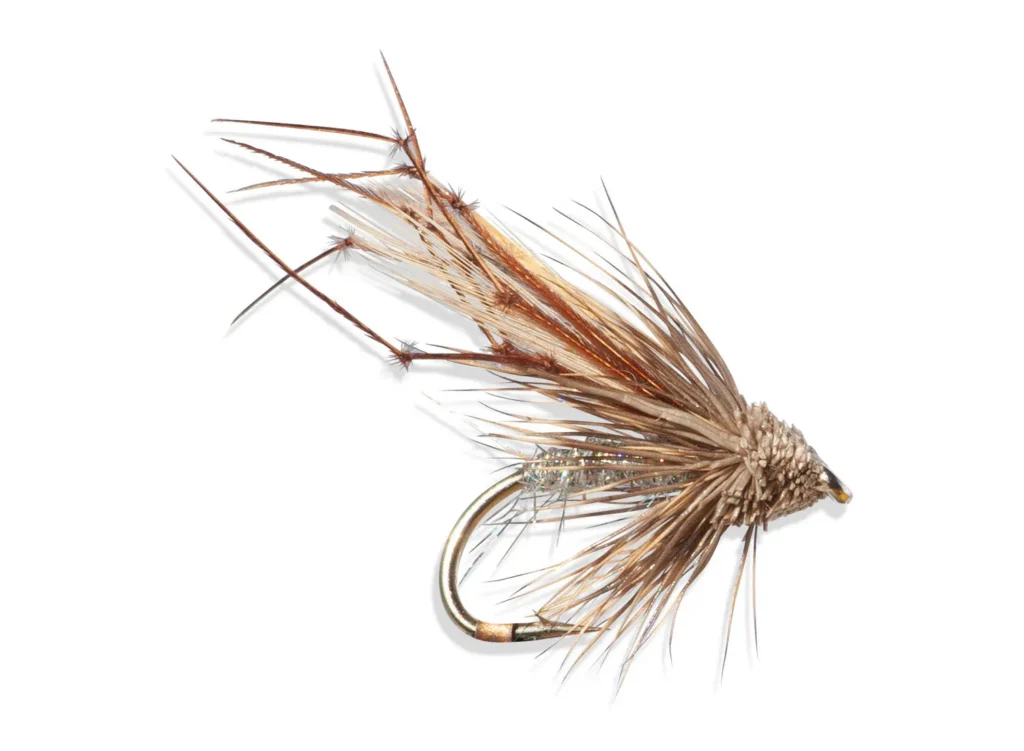
Traditional winged wet flies use more structured patterns that can imitate insects or act as attractors, while North Country soft hackles are sparsely dressed flies designed to move naturally in the current.
[39:03] He explains that soft hackles often perform best in traditional wet fly fishing when fished upstream, where the current activates the fibers naturally. Traditional winged wet flies can also be fished upstream effectively, offering more versatility depending on conditions and fish behavior.
I also wanted to ask Davy on gear, especially the rods he likes for fishing wet flies. Davy’s answer was pretty simple:
One of the biggest takeaways here is that wet fly fishing isn’t about casting as far as possible. It’s about line control, natural presentations, and using a rod that helps you slow everything down.
[00:58:13- 01:11]When I asked Davy about rods, he emphasized that rod action and line control matter more than casting distance. He would prefer longer, medium-action rods with soft tips, including Euro nymphing rods, 10- to 11-foot rods, and the APGA Prestige X series he helped design. He also mentioned rods from Hardy, Orvis, and Sage. If you’re wondering how the right rod can improve your wet fly presentation, Davy now shares plenty of practical insights in this episode.
[01:11] One of the most interesting parts of this conversation was hearing Davy explain how often anglers spook fish without realizing it. From fly line splash and rod shadows to poor presentations, small mistakes can make fish aware of your presence long before they see your fly.
[01:30] We also get into leader design, why Davy avoids loop-to-loop connections, and how a simple, streamlined setup can improve presentations. If you’ve ever watched fish refuse your flies and wondered why, this section of the episode offers some eye-opening insights that could change the way you approach the water.
One thing that really stood out to me with Davy was how many fish we lose simply because we react too fast to the take. In this episode, he shares a few simple adjustments from slowing the swing to adding a little slack that can help you hook and land more fish, and honestly, it might change the way you fish wet flies.
Episode Transcript
00;00;01;29 – 00;00;28;11
Dave
The biggest wet, fly mistake has nothing to do with the flies. It happens after the cast, and according to Davie Walton, is the reason many anglers missed fish. Lose fish or never get the take in the first place. Today debut Walton returns on the podcast. He’s going to break down the finer points of traditional wet fly fishing. We get into presentation land control, fly selection, leader design, casting and why the way your fly moves to the water often matters more than the pattern you tie in your leader.
00;00;28;18 – 00;00;44;28
Dave
This is the Wet by Swing podcast, where I show you the best places to travel to for fly fishing. How to find the best resources and tools to prepare for that big trip and what you can do to give back to the fish species. We all love. In this episode, Dave is going to break down the Clockface method and how he uses this to fish upstream.
00;00;45;02 – 00;01;04;14
Dave
To fish whet flies effectively. We’re going to talk about fishing upstream, fishing across, fishing down on the swing. We can find out about the difference between traditional winged wet flies and the North country soft tackles. We’re going to talk about flies in the flies. You need to get started today. And also how to control, drag and maintain proper fly separation.
00;01;04;14 – 00;01;21;23
Dave
That’s a big one we use in a team of flies. We’re going to describe that two, three, four and maybe even five flies or more. And the casting mistakes that lead to constant tangles and what you can do to change that. We’ve got some good stuff going. We’re also going to be talking about a potential trip with TV and a boot camp.
00;01;21;23 – 00;01;30;20
Dave
So if you want to check in with him, you can go to https://www.davywottonflyfishing.com/ right now. Here he is, Davy Watton. How you do, Davy?
00;01;31;03 – 00;01;34;02
Davy
I’m doing fine. It’s great to be back with you again.
00;01;34;12 – 00;01;49;05
Dave
Yeah, this is exciting. We’ve we’ve recently, you know, we always have people asking about fly fishing and, you know, I’ve had some people in our group asking about that again. And you’ve been on the podcast. We have some links in the show notes. We did some great episodes in the past. We’ll have links so people can check that out.
00;01;49;05 – 00;02;02;19
Dave
But today I think we’re going to take it back and maybe take it up a level, you know, start with the basics, but get into some higher level stuff here. On what fly fishing. But maybe first off, before we get there, give us an update. What’s been going on with you the last three years? Anything new out there in your neck of the woods?
00;02;03;01 – 00;02;39;14
Davy
Well, as you well know, you know, I go to and have the fly fishing schools here on the way. We were primarily here in Arkansas. But of course, I get booked to go around the country and do programs. And a lot of the requests are related to the understanding of fly fishing. And as you know, and most others probably do, that originates from the United Kingdom pretty much, you know, And so there’s a lot of product discussions here, you know, with the different groups that are on Facebook related to fly fishing or fishing type of spiders and this, that and the other.
00;02;39;14 – 00;03;04;24
Davy
And I can only just say that, you know, there’s a significant greater interest today than there certainly was a few years ago. One reason for one reason or the other. And I think that’s more obviously too, related to the social media that’s in our boat. People are aware of it and have an interest in it and whatever it is related to the timing of the specific flight patterns or the techniques information.
00;03;05;16 – 00;03;19;25
Davy
But I still think that in respect of everything else, you know, that is still somewhat a little not quite understood here. You know, in America what that’s all about in that sense of the word, as far as the way I can explain it.
00;03;20;07 – 00;03;39;09
Dave
Yeah. So people don’t quite get the wet fly. I mean, I think that some people, you know, there’s probably confusion on, you know, swinging wet flies or, you know, different styles of life. Maybe you can. How would you explain that to somebody who’s listening now, who’s new to it? What would be your how would you describe you know, what you do with wet fly fishing versus, say, other types of what?
00;03;39;09 – 00;03;39;27
Dave
Fly fishing?
00;03;40;08 – 00;04;12;25
Davy
Okay, so let me put it in this respect. So what fly fishing by definition of how it is understood from the countries of my origin, Obviously being United Kingdom is the definitive style of fishing which generally relates to the fishing of usually motorboat flies, two, three, four and sometimes even more than that which refused historically, in the past, I wouldn’t suggest you go much more for incidentally, but that relates to the different kind of water.
00;04;12;25 – 00;04;28;25
Davy
So you have to look at our fishing, which is a specific technique used on Stillwater’s more than anything else, where you would fish flies in front of a drifting boat downwind and draw those flies back to you relative depth and speed depending on the prevailing conditions.
00;04;29;02 – 00;04;33;01
Dave
That’s right. That’s what’s like the drogue using the drogue anchor system. Right? You’re drifting.
00;04;33;15 – 00;05;08;23
Davy
Okay, So you mentioned that. So a drug is really a means that can slow your boat down on that downstream drift. But you only use that in in situations where your boat is moving so fast that you can’t really cover the line back toward you and push those flows in an appropriate manner. Let’s put it like that. And so what I’m trying to say is that just for example, you can still 30, 35 feet of line in front of you in a boat you scripted down so fast you can scrape those flies back fast enough to contain or maintain, shall we say, control of those flows.
00;05;09;00 – 00;05;29;28
Davy
So the drogue would slow you down and you don’t necessarily need that if you go to a fairly low window or a light bridge, you don’t need that. So in that respect, as far as looks efficient, objectively what you are doing, you are showing the team of flies downwind to fish that are generally moving up towards you. Okay?
00;05;30;08 – 00;05;54;10
Davy
Now if you are fishing rivers, streams or creeks, call it what you will. There would be a difference to fishing saying, you know, it’s fairly small creek with shallow river water where upstream techniques are the most appropriate way to fish where it flies. Let me just say this to you also. You know, when I was first teaching my great friend Dave Whitlock went fly fishing.
00;05;54;24 – 00;06;24;13
Davy
He could never understand why I would tell him there’s a difference between. But we considered to be a fly to his way to think. And it was a stunt fly regardless of what it was. Okay. And I told him, I said, Hey, Dave, you know, for us guys in the UK where fly fishing relates to specific type of fly, I typically, whatever it may be, a wing work fly or whatever it is, you know, as opposed to just a fly by definition.
00;06;24;25 – 00;06;53;17
Davy
Oh yeah. He says, what I don’t quite understand now. I said, No, because you weren’t. You know, obviously brought up an environment where for hundreds of years that’s the terminology of it, you know, this traditional bat fly fishing. So that said, typically, let me put this in this perspective. The nature of the particular water that you are fishing as a relationship to the technique that is most appropriate for that particular type of water.
00;06;54;03 – 00;07;20;28
Davy
So if you are fishing a far shallow, rocky stream refugee water system, which is kind of typically in the North Country area, the best approach is to present those flows upstream. It’s fish, those kind of flies downstream. Well, guess what? That generally is small boys. That’s right. Yes. The flies moves so fast, whereas fish in those water environments are typically looking for whatever’s coming toward them above them.
00;07;21;01 – 00;07;45;27
Davy
And so if you flies are presented above that fish and they come down toward the fish, that’s more natural trout. The fish would say, I’m not afraid or your artificial. Now, if you take a big river like where I work here. So the prevailing conditions are very much again related to the best approach so far as fishing by definition, what flies.
00;07;46;09 – 00;08;16;06
Davy
So when we are very shallow water generations, which is what we define here as minimum flow, upstream presentations can be the most efficient, an effective way to catch those fish in the prevailing water that you’re fishing, i.e. fairly shallow, fast Rocky River process. On the other hand, when we have high water situations, you don’t have that kind of water, obviously, because the higher levels of water just eliminate that kind of water.
00;08;16;24 – 00;08;41;18
Davy
So your approach then would be different. And depending when you are drift fishing in a boat or your weight fishing, which may I have some limitations based on the levels of water upstream fishing, the point that drift mode still can be very, very productive. On the other hand, you may well find that occurs more across stream and downstream is more effective.
00;08;42;06 – 00;08;50;01
Davy
And so depth and speed of water as a relationship to the best approach, regardless of whatever water, fishing, fishing.
00;08;50;01 – 00;09;09;24
Dave
Right. So what you’re saying is the wet fly fishing is more about the flies are a really important part of this. Like if you’re using a certain type of fly, whether that’s a soft tackle or a wing, the wet fly that determines whether you’re wet fly fishing, is that more important to the flies or fishing versus say, I don’t know any other parts of the process?
00;09;09;24 – 00;09;36;00
Davy
Okay. That is very big question. The first thing that I personally take into consideration, obviously, is there any activity in other words, other folks about on or near the surface of the water? And if there are I know some of interest from fish, then it is more appropriate to use flies that have in some cases, but not always some representation to that species.
00;09;36;26 – 00;09;59;04
Davy
And if you have fish that are fisheries seeing on or near the surface, it doesn’t matter really, you know what that fish in on emerges, dries or spent or whatever the case may be. It is more appropriate, in my opinion, to fisheries flows more upstream and in a dead mode, because that’s the way the fish expect to see those flies.
00;09;59;26 – 00;10;21;19
Davy
Naturally, if you catch the cross stream, a new fish flies across and back towards you. You’re moving flies at a speed that is totally unrelated to the natural insects that those fish are feeding on. Now, I’m not saying it won’t catch fish because as we all know, I don’t matter what you chuck that river or whatever at some point of time to catch fish.
00;10;22;06 – 00;10;46;09
Davy
But there’s a there’s a logical basic approach that would generally catch you more fish and get more interest from those fish. So if you fish more than upstream, that drift mode, so to speak, know what I’m talking about? It says if you assume if you look directly upstream that to be 12:00. Okay. And we take what we call relative degrees of angle like paging Fantail.
00;10;46;16 – 00;11;17;29
Davy
So like 12:00, 1:00, 2:00, 3:00 directly across stream, I would want to fish my flies in that region of between, say, 1232 to 30. That gives me the best presentation so far as they drift in. Those flies are concerned. If, of course, you control the drift and those flies appropriate to what is likely to be seen by fish with the natural insect, if you fish more across stream, you’re inducing fish to chase or flies.
00;11;18;08 – 00;11;43;20
Davy
And that’s very different. No, I’m not saying that you won’t catch fish by doing that because you will bite. You will also lessen the chances of catching more fish. And the reason being is because and this is a very common mistake that I see often with the students, the reaction to failing to take is a very different one to visually seeing it.
00;11;43;21 – 00;12;07;08
Davy
And that’s so important in right fly fishing. If you react to, shall we say, feel in a tight beard. So you would lose a lot of fish because your tight lining those flies to those fish. Whereas if you can fish across and down with the more slack in approach, the fish can take that fly and not feel instant resistance.
00;12;07;08 – 00;12;27;16
Davy
And that gives you a better option to simply just raise the road and set the hook and that fish and it don’t get off. Not only that, if you have a habit of stripping the place too fast, you get a lot of chases. In other words, facial trace. And it don’t take long before a couple of facial whatever in that area.
00;12;27;22 – 00;12;52;03
Davy
They ignore you because they’ve seen you do that two or three times, whichever the case may be. So in order to improve your odds, you’ve got to move. So you make three or four cars, so to speak. You walk downstream another three or four yards and you do the same thing again. In other words, you don’t continuously keep fishing and pounding over the same section of water because ultimately, why is fish up?
00;12;52;21 – 00;12;59;15
Davy
And it’s what I call Dave, the heron stance. In other words, I’ve watched people do that for an hour.
00;12;59;26 – 00;13;01;10
Dave
All right. In the same spot.
00;13;01;18 – 00;13;02;16
Davy
Yeah. Yeah.
00;13;02;26 – 00;13;19;12
Dave
You want to move? You want to cover the water, like, systematically. How would you break that out? Let’s just take it to that. That riffle, that kind of faster water. How do you how do you break that down? Do you break that down into little you know, meter sections and try to cover everything there? How do you know where not to cast when you’re fishing?
00;13;19;12 – 00;13;49;14
Davy
RIFFLE okay. The answer to that one, it saves both the pole observation. That’s the most important thing when you’re fishing more. And then upstream mode that may or may not be a hatch doesn’t make a lot of difference for fishing in fairly shallow water like that. My main water up to possibly about two feet in depth. You know very well that those fish are going to be facing upstream and they’re going to be looking for whatever boats or whatever is going to be moved down toward them.
00;13;50;02 – 00;14;14;03
Davy
You then have to develop the the knowledge and the skill just to read water. You know, how water structure moves around structure, which gives you the indication of the best possible where those fish are likely to be. It’s not really just a question of checking the flies upstream and downstream and open efficient areas sees them. There’s a lot more to that.
00;14;14;03 – 00;14;41;05
Davy
You know, and it’s based on experience for anything. So the easiest answer to give you is this Under those circumstances, you’re going to be progressing upstream, you know, walking downstream. And the thing that you must always consider is this, as you well know, many, many cases, fish are a lot closer to that bank. They think they are they’re not out there ten, 20, 30, 43 or more.
00;14;41;05 – 00;15;02;02
Davy
A lot of fish are very, very close to the banks. So therefore, your most logical approach is to fish water close to yourself, which of course is going to be upstream anyway if you’re fly presentation as opposed to casting whatever line four line you think you need to think there’s what you’re going to do is line fish.
00;15;02;15 – 00;15;13;01
Dave
So how far when you’re when you’re let’s just say you’re on that roof all you’re casting upstream, what’s your typical distance of your cast as you’re working your way? And and are you then working your way upstream as you go?
00;15;13;13 – 00;15;36;09
Davy
Absolutely. Let me tell you, first and foremost, I use fairly long lead systems, you know, way more than ten for because I want the flies on the surface of the water, a no fly line. That’s interesting. So I try to explain this to people in this respect. So if you were fishing dry flies, you visually see a fish come to the surface to take the flies.
00;15;36;09 – 00;16;03;08
Davy
But when you’re efficient, subsurface flies, you don’t. So your reactions are related to something visual, i.e. you see some disturbance in the surface of the water. You see your line momentarily stop. There’s various things that you should have focused an observation to tell you that a fish is take your flies. But going back to the approach which is generally done upstream, showed you fish close water first.
00;16;03;08 – 00;16;23;00
Davy
So assuming we’re looking directly upstream and also we have to consider, are you fishing off the bank or you in the water? See what I’m saying? Yeah. So you can actually be a certain distance in the water where you can fish both left side and right side of your position because you’re that far out in the stream. But you might not be able to do that.
00;16;23;00 – 00;16;52;08
Davy
You may be restricted to fishing off the bank. Therefore, what I said a little earlier on, if you assume 12 is the more direct upstream position from where you are, you do not want to cast your flies directly straight upstream, regardless of whether you’re on the bank or in the river. And the reason for it is this If you do that, then if you’re fishing a team of flies, they cannot all be visually seen by those fish.
00;16;52;20 – 00;17;31;12
Davy
So therefore your cost angle should be and assuming where looking upstream left side, you make a presentation at least 1230 if not 1:00 So when the flies track downstream, they’re at relative distances from each other. In other words, if we use in a system where I flies, just faced about 25 inches to 30 inches, which ideally they should be, they for a fish, a relative position can be maybe looking at the top, drop a fly, come in or make drop of fly or the tail fly coming within that margin of six feet if all of me.
00;17;31;18 – 00;17;32;23
Dave
Yeah I get makes sense.
00;17;33;03 – 00;18;02;15
Davy
Okay. And that’s that’s very important because you’ve got to cover the water in such a way as that you’re positioning your flies in a manner whereby fish at different positions, easily able to see them in a few course more directly upstream. That’s not the case because the flies track back down to one through three. So if you were to rig up a system with three dry flies, that’s the easiest way to explain it.
00;18;02;29 – 00;18;22;28
Davy
And you catch those three dry air flies directly upstream where they’re all going to come. But downstream in a line, Right. Whereas if you relatively change the angle more to 1:00 or thereabouts, then those flies are spaced apart, but they efficient at different ranges from each other as they track downstream.
00;18;24;26 – 00;18;42;01
Dave
Pescatore on the Fly offers a full range of fly fishing gear for any angler at any budget with premium rise delivered directly to you, The RG six is the most packable high performance fly right on the market, performing like a four piece ride, but with unmatched portability in six pieces. And you can get 10% off your next order.
00;18;42;01 – 00;19;18;22
Dave
Right now if you use the code wet fly swinging at pesky door on the fly ecom never fly without your G six Discover the El Rey series and more at Pescatore on the fly dotcom experience the waters of Bristol Bay at Togiak River Lodge, where fly fishing meets Alaska’s rugged beauty. This is the place to complete the Alaska Grand Slam with all five salmon species, rainbow trout, arctic char and more, Where each day offers a new Alaskan adventure, you can visit Togiak Lodge scheme right now to start planning your Bristol Bay experience with Togiak River Lodge.
00;19;18;22 – 00;19;37;06
Dave
Well, this is really good to clarify that because I think like I was out fishing this weekend and I was fishing the the salmon fly hatch, you know, and I had a I had a big giant, giant chubby Chernobyl on. And then on the drop or off that about three feet, I had like a Euro nymph. So I was kind of a and what I was doing was catching I was finding these seams and I was casting directly upstream.
00;19;37;13 – 00;19;52;02
Dave
I had these spots where I was kind of thinking, okay, that’s where the nice fish would be. And I was casting right up into that seam and it was kind of coming straight back to me almost. So I was stripping it in like towards me as it came. So in it worked. I definitely got some nice fish. But what you’re saying is you don’t want to do that.
00;19;52;02 – 00;19;58;00
Dave
That’s not something you don’t want to like have it straight up above you and stripping it as you come. You want to have it more at an angle at your 1:00.
00;19;58;09 – 00;20;27;23
Davy
Okay. So right, what you were doing is a very different thing as opposed to, say, fish in three soft tackles, which everyplace maybe those flies, you typically don’t straight back towards you. I’m not saying that sometimes they won’t catch a fish because I know it does, but typically, oh, manner of presentation is to fish. Those flies do not upstream they drift mode, which is pretty much related to the natural stream drift as a fish would see a natural insect coming down towards it.
00;20;27;29 – 00;20;55;16
Davy
Okay. And that requires a lot of road control as well as your left hand. And that’s so important to as far as the tightening sufficient is concerned. So my general approach would be to work my way upstream in what we call Paging Fantail and other words, I make my first presentation fairly close in that say with the the tail fry, probably not much more than about 815 feet away from it.
00;20;55;29 – 00;20;59;01
Dave
Okay. And your leaders, 10 to 15 feet long, typically.
00;20;59;21 – 00;21;01;25
Davy
More like 12 to 15 feet. 12 to.
00;21;01;26 – 00;21;02;14
Dave
15. Okay.
00;21;03;02 – 00;21;25;18
Davy
Now, if we’ve made our initial presentation, shall we say the degree of angle of at, say, 1:00 and we tracked those flies back to a position more or less just to the right side of us. We pick that up, we make that presentation again. So we’ve covered that section of water. Then what we do without moving upstream, we increase the distance.
00;21;25;18 – 00;21;56;14
Davy
So we take off two or three yards alone and we make that presentation initially again at say, a 1:00 position. We’re now tracking those flies at a greater distance than what we did in the first place. That then requires control of your line. Guess what? You get drag and you fly as gate drag downstream. So objectively you’re going to have to make some control of your line five folks, You have managed to maintain those flies tracking without drag.
00;21;57;20 – 00;22;16;25
Davy
Okay, so we don’t get no response. Then what we do, we increase the distance again, so we make the initial presentation and gain the degree of angle of 1:00, but we now exceed in the distance. So what you are in effect doing is, is progressively covering water in different segments.
00;22;17;08 – 00;22;27;02
Dave
Yeah. So you’re starting out at 15 feet if you don’t get anything and then you cast out another five feet, now you’re at 20 feet and then you’re at 25, that sort of thing, until you get out to a certain length.
00;22;27;17 – 00;22;28;16
Davy
That’s correct.
00;22;28;28 – 00;22;29;21
Dave
Yeah. Okay.
00;22;30;03 – 00;22;54;08
Davy
So if you wish to draw on a piece of paper, figuratively speaking, shall we say, I’m I’m standing on the bank and I’m looking at and if you draw a clock face like 12:00, 1:00, 2:00, 3:00, then if you’re in the same position and you directly cast a line at 1:00 position, you’re gradually increase distance as you cause upstream.
00;22;55;00 – 00;23;23;29
Davy
And so you bring your flies back down stream more and that they drift mode to about 3:00 and then you proceed again doing the same thing. In other words, you start short line increase, increase, increase. If you and I see people do this all the time, the first thing they got to do is rip off line and start checking out 2530 feet line well before you line fish renew and your flies.
00;23;24;19 – 00;23;53;02
Davy
And the other thing that’s really, really important is that those flies track downstream, separated. In other words, when you make that presentation, the tail fly is the furthest fly away. And the mate dropper is between it and course and the top drop or flight. So what I’m trying to impress upon people is there has to be a visual separation of those flies as you track those.
00;23;53;02 – 00;24;11;14
Davy
Right. That drift from upstream to an across stream presentation. If you do not control your fly fly and you let drag on the line to interfere with that, it will directly pull those flies back downstream in a direct line facing upstream. And that’s not what you need to do.
00;24;11;24 – 00;24;13;13
Dave
No. You want a dead drift?
00;24;13;26 – 00;24;50;00
Davy
Yes. And I think one of the more difficult things for for persons to get is that is to maintain the drift that those flies separated. So if we have having our flights separate by 25 to 30 inch margins, then they’ve got 50 to 60 inches of separate. And that’s the important thing. And tell you an interesting thing about that is that you will often find at times if you have three different flight patterns, that is one particular flight that those fish hit.
00;24;50;23 – 00;25;10;09
Davy
Whether or not they see the other two flies, I can argue whether they do or they don’t. I think that a lot of that is related to the level of that that those fish are up. So, you know, if that close to the bottom feeder water or that just a little subsurface, which is the case by the, you know, more shallow zone.
00;25;10;24 – 00;25;39;15
Davy
My view about that is this if you’re fishing for shallow drift water upstream, it’s one fly that they’re likely to say a note or three, let’s put it like that because of the manner of those flows come down to the fish. So that’s always fascinated me about that. You know, why do fish do that? But they do. There’s one particular fly they can do, and it may well be the fly that’s on your top drop or the fly that’s close to you.
00;25;39;15 – 00;26;03;21
Davy
It may well be the metro, but it may be the tail fly. But you’ll often find in many cases that is the case, that they choose to take one of those flies. And whether it is because they’re line that there’s fish or lying there, it’s the fly they see first, or they just ignore the others. That’s it’s very hard to know because you can’t get them to give you an answer why they did that.
00;26;03;27 – 00;26;22;02
Dave
No, no. Yeah, that’s right. Okay. And you mentioned so let’s just take it to the hatch versus no hatch. So if you come to a river to say we’re on the white or any river around the country and you’re fish whet wet flies and there’s nothing going on, you know, you’re out there, maybe it’s, I don’t know, midday or something, but there’s no bugs.
00;26;22;09 – 00;26;29;06
Dave
Describe that. How are you fishing that differently than if you like? What would you be putting on? Do you have a set of flies? Like if there’s nothing going on?
00;26;29;19 – 00;26;55;02
Davy
That’s a good question. So there are a lot of things that have a relationship to that. If that’s why I couldn’t explain it. So water temperature is a big related factor to that, because as we know, water temperature is very much related to hatches, both the first sink. So if we take the early and our river is a little different because, you know, being a tail, water is more of a concern.
00;26;55;02 – 00;27;29;00
Davy
The first water pipe was concerned. So if you had fish, you’d say some of the kind of award boaters that you fish out there in use during the early months of the year that water is cold, right? Whereas I don’t have that. So therefore, you know that fish are not really look at maybe you get some blue we don’t have planters or midges or something like that, you know, but if you have no obvious knowledge or something is telling you, you know, this is what the fish are interested in, you can use flies that would promote interest, in other words.
00;27;29;17 – 00;27;56;18
Davy
And that’s also a kind of a question where you would go with that. So is your choice going to be, for example, North Country So self cycle flies, which are consistently good fish catching flies or under pretty much any city station? Or are you going to choose to use when wet flies? I can only tell you that, you know, from my own point of view, it’s 60 years or more of experience doing that.
00;27;57;02 – 00;28;24;17
Davy
If somebody was to generally ask me a question, well, what three fries or four flies should, I could give them an answer to that. That I would suspect those flies under the prevailing conditions based on. I had the knowledge of the kind of water they were fishing, what might work. So, for example, you’d have flies, which would have not necessarily insect related, but would have more say, attractiveness to them.
00;28;24;17 – 00;28;30;19
Davy
So a typical example would be when we assume we were still fishing upstream, right? Yeah.
00;28;30;25 – 00;28;31;04
Dave
Yeah.
00;28;31;10 – 00;28;54;04
Davy
Okay. So classic traditional, soft. I flies. I know a lot of people like a partridge in orange and I guess it’s ironically enough, it’s not a fly that’s on my top ten list, I can tell you that. So I would use flies that have more bulkiness to them. So for example, like a partridge in has zero to me.
00;28;54;04 – 00;29;17;28
Davy
I think that’s absolutely one of the best flies that’s out there. I might use a fly that is, they may leave of, say, a beetle pattern like a black and peacock spider or something like that, you know. But I might also incorporate on that team of flies a fly like, for example, a Silver Impact or Awakenings. Fancy because they’re attractive flies, you know, because for one reason or the other.
00;29;18;15 – 00;29;34;00
Dave
You just reminded me because the episode we did and we’ll have a link in the show notes this December 20. It’s amazing it was been that long, but we did an episode in 2020 December, episode 174, and in that episode we have a list. We put actually put top 20 flies from Davey.
00;29;34;00 – 00;29;34;29
Davy
Oh, yeah, that’s right.
00;29;34;29 – 00;29;50;10
Dave
Yeah, yeah. So we have 20. So I’m going to we’ll have a link to that. But you know, I think we put in, I’m not sure if this is exactly the top, but you had the march brown winged or soft tackle. The hairs are wing, the black gnat, the blue done da Cahill led coachman, coachman like Cahill paddy.
00;29;50;16 – 00;30;00;27
Dave
So I’m not sure. And we talked about a whole list of those. The Alexander in there. Now, is that list still do you think that’s a good solid all around list or there some other ones we should be thrown to That.
00;30;01;12 – 00;30;20;20
Davy
Is again with reference. Yes, I if you wish to ask me this question by choice for what I use. So if you’re relating that more to what we call the soft called spider fly patterns, I could give you ten flies. That would be pretty much, I guarantee you, in any river, one or more of those flies will catch you fish.
00;30;21;08 – 00;30;49;29
Davy
On the other hand, if you wanted to relate that more to the traditional way it flies. And incidentally, that’s another factor which is little and just not so understood here is that and we already just discussed, say, a while back the tradition or traditional that flies insofar as we understand it in UK essentially winged where it flies and they could be attractive flies or deceive or flies or whatever.
00;30;49;29 – 00;31;09;05
Davy
So if we look at, for example, the butcher, I mean that’s definitely an attractive fly. There is nothing in a river that looks like a butcher. It’s a silver bodied fly with a Black Hawk, and it uses the blue colored feathers of the top of an allowed wing and a red tail.
00;31;09;14 – 00;31;17;17
Dave
Okay. And red tell it’s got the blue wing, it’s got the silver body and the red tail. So that’s that’s an attractive pattern with a wing.
00;31;18;02 – 00;31;20;27
Davy
And we would define that as a traditional white fly.
00;31;21;10 – 00;31;31;23
Dave
Right. And that’s a traditional UFO because it has mainly because it has a wing. Like I always think of it, I’m pretty basic, but I always go back to the winged you know, we mentioned the coachmen, you know, the style. It’s like a duck. We Oh.
00;31;31;23 – 00;31;32;09
Davy
Yeah, yeah.
00;31;32;09 – 00;31;41;01
Dave
And so you’re saying traditional wet flies have they have the wings and now is North Country style. How is that different than the traditional winged wet flies?
00;31;41;06 – 00;32;12;05
Davy
Okay, that’s an interesting question. So right now there’s a significant amount of interest on the groups on Facebook related to the North Country style. I that are flies that have their so-called, you know, origination in that particular geographical part of the United Kingdom. And there’s a lot of history related to that. There’s no question of a doubt that there is and there are many, many variations of those flies and that some of which also sport wings.
00;32;12;05 – 00;32;33;25
Davy
But I don’t I try to confuse you other listeners, but, you know, as far as, you know, ringway flies are concerned, many of those would be termed as flies that are used more so in lots of fashion or lakes or stillwater’s, I suppose. But let me just say this from a personal point of view. They’re as good as effective.
00;32;33;25 – 00;32;57;06
Davy
Fishing flies on rivers of creeks and streams. Let’s put it like that. So let me give you a really good classic, typical example of that. The standard in Victor, the Silver Victor is a version of it is a hell of a damn good fly to use in a situation, particularly, for example, when kites are hatching that is ahead of a good flight.
00;32;57;22 – 00;33;24;07
Davy
Then of course you’ve got flies that are more, shall we say, caricatures of naturals. In other words, you take, say, for example, a much brown, a right wing great front or wing has air, for example. There all flies that have certain intrinsic values to promote fish, to take them, let’s put it like that. Whereas in the North Country style flies, there are so many variations.
00;33;24;15 – 00;33;32;04
Davy
I imagine a lot of people obviously are familiar with The Partridge in Orange, and they are familiar with, say, like the snipe from purple. Okay.
00;33;32;14 – 00;33;36;29
Dave
So that’s a North country. So the partridge in Orange is a North Country style fry.
00;33;37;00 – 00;33;37;13
Davy
Yes.
00;33;37;20 – 00;33;38;13
Dave
Yeah. Okay.
00;33;38;26 – 00;33;43;20
Davy
And like I said, you know, a snipe from purple is another classic snipe.
00;33;43;29 – 00;34;00;25
Dave
Okay, So that makes sense. So it’s basically and I know there’s probably some variation in overlap, but for the most part, the winged whet flies, you know, traditional wet flies are they have the wing, the North country style are more the parts of Georgia where it’s just like the I call tackles you know just the soft tackle flies.
00;34;01;12 – 00;34;28;12
Davy
Let me tell you this. You know soft serve type or so some people referred to, they’re more spider flies. Okay, So let me just say this. If you have an interest or understand the historical aspects of it and you look at how flies were tied back there in the 17, 1800s, they’re pretty heavily shackled flies, whereas most people look, oh, a spider fly is very sparsely wound, tackled.
00;34;28;12 – 00;34;47;29
Davy
Right. And both have their place. So my view about that is this based on thousands of years of experiences that the more sparsely heckled flies. I by definition, because the more spiders are, the more suitable for us to use more So in upstream, they drift.
00;34;48;11 – 00;34;49;15
Dave
Oh, okay.
00;34;49;22 – 00;35;14;25
Davy
As opposed to across and down because you have a fly that may be have one turn or tackle. I mean, there’s graves small amount of echo fiber on that fly. If you fish that fly like that downstream and across and I ain’t Tony won’t catch fishes sometimes but it’s a different presentation of that fly and same boat of fish, and that’s really what matters.
00;35;15;03 – 00;35;39;24
Davy
Whereas if you fish fry upstream, then the natural movement of water will animate those hackles where we presume across and downstream we pull them back or against current. Well, guess what? Those echo fibers are pretty much going to shut down close to the fryer, the body, and it’s kind of like pulling upstream a nip, if that’s the way to explain.
00;35;39;24 – 00;35;40;20
Davy
That would, too.
00;35;40;20 – 00;35;41;02
Dave
Okay.
00;35;41;14 – 00;36;10;03
Davy
All right. So Wing where it flies almost certainly can be extreme. Many effective fish that drift upstream. And some of those I just mentioned to you that, you know, typically emerge brown or wing bent heads there and or an Invicta flies like that in relatively small sizes and that’s another thing the size of the fly I use it based on the prevailing conditions at that time.
00;36;11;00 – 00;36;32;14
Davy
In other words, if you fish flies that are too large or too big, you may have very negative results from it for one reason or other. So as we know, you know, the natural insects that fish feed on in our river systems are relatively small by comparison. And that’s obviously you’re dealing with something like a stone flies or whatever.
00;36;32;14 – 00;36;58;12
Davy
But for the most part of it, most natural fry is fish, see? And that could include crustaceans too. You know, big Scuds or so bugs are somewhere in a ballpark or in a regular hook size, I bet a size 14, if not smaller. You know, I’ll give you a typical example. This last week or so here, there was some really good surface activity of the trail here feeding.
00;36;58;27 – 00;37;30;05
Davy
And mostly they were feeding on midges and small species of carriers and ants. There was a good fall of ants and the way that I was able to get the customers to catch those fish were size 18 flies. So if circle flies to six X incidentally, and that’s another thing of consideration, Dave, is that the diameter of the line that you’re using by definition X factor, whatever, can make a big, big difference.
00;37;30;06 – 00;37;30;20
Dave
You can.
00;37;31;13 – 00;37;36;17
Davy
Well, yeah, no, I knew that so far. We used our name fishing is concerned too.
00;37;36;22 – 00;37;39;12
Dave
Yeah. Yeah. We were using five X on that day.
00;37;39;27 – 00;37;49;15
Davy
Yeah. There you go. I mean, and as you well know, in this river system, you can often encounter some pretty bloody big fish because the whale is known for.
00;37;50;16 – 00;37;55;04
Dave
Where it is. Could you, if you got into a big fish, can you land a big fish on that.
00;37;55;04 – 00;38;32;08
Davy
Six X Depends on the anglers ability. Absolutely, yes. Assuming that the rods in an integral part of what five feet to, you know, and then if you have a very stiff action rod and you’re used in six X, Well yeah, I don’t take too much for your bus to mouth, but if you use that a much softer action rod where you’ve got the flexibility to absorb the shock of the fish moving around or whatever, and you play the the out so that you have seen around here up to 86 seven £8 co on six day flowing.
00;38;32;18 – 00;38;51;03
Dave
Yeah that’s it. Okay this is great. So I think going back to what you said, so I think we’re getting the picture here a little bit. So the you got the different soft tackles but you also have how you tie them, whether they’re tied sparsely or heavy. And there’s certain situations where, you know, you might want to fish like you’re talking about upstream and a cross sort of thing.
00;38;51;03 – 00;39;03;28
Dave
Now talk about this. When are you ever fishing downstream in a across, you know, like casting out or letting this kind of go down if there’s no if it’s swinging, but down across and then down below, you are is there any water types where you’re fishing like that.
00;39;03;28 – 00;39;27;27
Davy
Oh, yeah, absolutely. Of course. I mean, the initial question was obviously approached with an upstream method, which I had a choice is my way to go, assuming the water conditions allow me to fish that way. And of course, on the downstream presentation. Well of course your what you’re basically doing as as we well know is you’re swimming or fly if that’s the term you want to use.
00;39;28;07 – 00;39;54;06
Davy
But essentially what you’re doing, you’re presenting your flies across a wide stretch of water from the initial point of time where you made that presentation and you’re bringing them back to it downstream on the hanging angle and there’s no doubt that fish will trace flies. They knew all end up probably hook and some doing that. But unless you really do that in a more controlled manner, you will lose a lot of fish.
00;39;54;10 – 00;40;15;15
Davy
And that’s a common thing that questions. I get, you know, an email response. You know, I’m fishing downstream and I and I had about seven or eight fish and I lost everyone. And I know the reason why they are is because first and foremost, they’re reacting to visual relief. I’m sorry, they’re acting to fill in the take of the fish.
00;40;15;15 – 00;40;19;25
Davy
And guess what your natural instinct is when you do that, you’re going to raise that rod, right?
00;40;19;25 – 00;40;20;21
Dave
Yeah. Set the hook.
00;40;20;26 – 00;40;30;04
Davy
Yeah. And so basically pulling the fly straight out of that fish’s mouth. So you’ve got a limited amount of penetration of the hook and whatever, you lose the.
00;40;30;08 – 00;40;44;22
Dave
Right. That’s a good point. You know, and again, I’m not you’re the master on the wet fly today, which is over time. But I’ve done a lot of steelhead fishing, which is a lot of the wet fly swinging right swing flies. And the thing you know about steelhead is you don’t set the hook for the most part. You let this thing swing.
00;40;44;22 – 00;40;50;21
Dave
And if the fish take, they take it. Is that kind of the same thing with what you’re talking about, how you would do it with wet flies, with how you do it.
00;40;50;27 – 00;41;13;04
Davy
All right. Yeah, yeah, absolutely. You know, it’s the same as for, you know, I’ve got a lot of landings, seven in my life as well. I’m fortunate. No, here in Arkansas, but in the rivers back home. And the last thing you ever do is react to the fact that you failed that take or that fish. You have to give that fish some time to turn on that fly, Right.
00;41;13;05 – 00;41;20;05
Davy
And then you just raise the road and tighten up the boat. And that’s the same as wet fly fishing. No different.
00;41;20;17 – 00;41;31;23
Dave
Cool. Okay, so we got that. So in is that across the board where fly, whether you’re fishing upstream or across or down, is it always the same there. You always want to do that type of you’re not trout setting ever.
00;41;32;05 – 00;41;43;09
Davy
So when you’re fishing upstream, remember this as soon as the fish takes to fly, it’s going to feel resistance. But the fly is being pulled back toward the fish’s mouth, right?
00;41;43;18 – 00;41;44;14
Dave
Yeah, it’s setting it.
00;41;44;23 – 00;42;06;14
Davy
And so in that situation, as soon as you say an indication of the fact that the fish just taking the fly and it could be just a surface disturbance and a lot of people know that. Oh yeah, But oftentimes the fish is your fly bait. You don’t necessarily see any indication by the line stop in a way to the case.
00;42;06;14 – 00;42;27;21
Davy
May be that’s real quick they’ve been known faded the water so the faster the speed of the water is the more if you like to put it take indication is seen because as soon as the fish take the fly, boom, there’s resistance and you see your line stop or whatever the case may be. And as simply all you do is you just raise that rod.
00;42;28;11 – 00;42;54;01
Davy
And if the water is much, much slower, then again, it has to be a visual indication that the fish has taken the fly. And that’s where intense focus is so important. And it’s very much the same kind of scenario is when you’re, you know, fishing. You have to focus on a point where you can visually know a fish is taking your fly and then you raise the rod and it’s more or less the same thing.
00;42;54;22 – 00;43;19;04
Davy
And I think that based on the thousands of hours I’ve watched people do it, no, teach them to do it. They don’t see it because that is and I try to explain to them, if you had a dry fly on the surface, you would instantly see the fact that they had fish rows and took your dry fly. Well, you’re not fishing to dry fly your fish in a the subsurface.
00;43;19;04 – 00;43;42;05
Davy
So your indication is based on what should the furthest visible point you can of your line or leaders. Just a more than anything else. And that’s that’s the only indication you’re going to get that I will admit they are sometimes you know particularly with larger brown trout, they will take that fly. I never move away with it really, really fast.
00;43;42;05 – 00;44;18;26
Davy
It doesn’t matter what they you know, they move out to the right or left or actually move upstream and you can not really not know that a fish took that fly. That’s right. Explain it to you. Now, regarding across and downstream, once again, we’re dealing with the situation looking at the clock face. So if we make an initial presentation, say, about 230 thereabouts, we can by means of line control, did drift those flies for quite a considerable amount of time at a distance away from us which is more across stream.
00;44;18;28 – 00;44;41;20
Davy
And the day we did data on weight for efficient techniques, it will show how that’s done and it requires an upstream end of the line to create what is by definition, L-shape, if that’s the way to explain to you. So we’re kind of constant across stream. We presented our flies, but what’s going to happen if we don’t do anything?
00;44;41;20 – 00;45;02;24
Davy
Because what can’t interface with the drag on your flow line and all of a sudden your fly is they speed up and you start getting pulled downstream in a straight line as opposed to fish in a cross stream one, two, three separate, and they drift it down. So we have to make an upstream presentation to create what we call the L-shape.
00;45;02;24 – 00;45;34;07
Davy
So the further part of your L-shape is your your class, the flow is incidentally, that’s the term we used and you can surprise. That’s a team of flies. There’s not the physical aspect of the flight cast in that sense. So you’ve made the initial presentation upstream. Instead of you have done that, you throw an upstream mend. If that’s explained one to I knew then track that with your rod downstream and allowing those flies to drift.
00;45;34;08 – 00;46;03;11
Davy
No that comes obviously a certain point based on the length of line that you’ve got out that your flies will start to swing. In other words, the flies start to swing and move downstream. Now what you must do then is to control those flies across stream. And you do that by bringing the rod. Assuming we’re on this side of the river, you’re bringing the rod to the right, and that allows your flows to track across the stream once again separated.
00;46;03;29 – 00;46;26;06
Davy
Now we can slow that down so we can make another across stream bend that slows the drift of those flows down and you can keep doing that and actually fish very, very slowly as opposed to them just getting dragged away. Dams in their cross stream really, really fast. And that also is another aspect of efficiencies. First hook sameness, concern.
00;46;26;23 – 00;46;46;12
Davy
I never fish or tight line, if that’s the way to explain it. In other words, I don’t have a direct link. So for example, you were fish in a worry about that, right? And you strip, in fact your fish in a tight line and then work five fish and that’s the last thing you want to do. You always want to have kind of slack line.
00;46;47;18 – 00;47;07;04
Davy
It’s what we call the angle of hang of the red tape to the surface roll with your line and kind of like what you would discussed in there regarding fishing for steelhead. You know, you’re generally not fishing the direct high tide line, so to speak. So the advantage of it is, of course, that a fish can take the fly.
00;47;07;18 – 00;47;37;09
Davy
You should be able to see the movement of the line as the fish has taken the fly and then all you’ve got to do is just raise the rod and you should have your fish firmly hooked. Whereas no, no, you never point your roadtrip at the like never. Because if you do that, you’re tight lining, okay? Because you don’t have any slack line or what we call triangle of hanging from the road tip to the surface of the water.
00;47;37;22 – 00;48;06;11
Davy
That’s important. The only thing I can tell you further about that is that a lot of it is inexperience, you know, knew exactly how to fish the pace of the flies to induce a fish to take them. If you fish them too first. Yeah, you may. I’m not saying you might not catch swordfish or so, but you will also reduce the chances of catching more because you get fish chase that follow you across stream and then back off.
00;48;06;26 – 00;48;33;20
Davy
Okay, So the more you can fish those flies in a controlled manner. I know what I define more as an animated manner. The more likely you are to induce fish to take your flies. And obviously what may or cross in downstream mode progression is generally downstream. And so what you should be doing, Dave, is this you should never really fish over same water three or four times.
00;48;34;05 – 00;48;56;27
Davy
So if we assume, for example, just assume this just sticks to the extent of a tail fly is 20 feet below us. You’ve already fished the water from where you’re standing across and back towards you in that first 20 feet. Well, there’s no point in continuing fish in net again, because you already did it. So what you do is you progress downstream.
00;48;57;14 – 00;49;17;14
Davy
So you’re presenting your flows to those fish in a section of water. They have not previously seen them. That’s the trick to it. So a couple of yards probably is not going to make any significant difference. It’s more than that. You just have to keep working your way down. And it is the same when you fishing for steelhead and salmon.
00;49;17;22 – 00;49;19;27
Davy
You tell your flies to new fish.
00;49;20;08 – 00;49;30;18
Dave
Yeah, you’re covered in the water. How do you describe your the setting up the leader with the flies? And when do you when do you choose to do two versus three versus four flies?
00;49;30;18 – 00;49;38;16
Davy
Well, okay. When I was obviously in my homeland. So then why was there no you know, would be typical. We would fish for flies.
00;49;38;28 – 00;49;54;06
Dave
And that makes sense because for flies it just seems like, well, you just cover in more of the hatch or the bugs. Right. You got a bunch that maybe describe that of those four flies back when you’re fishing the traditional you know, what were those flies? Were they all different types or describe that a little bit.
00;49;54;13 – 00;50;15;18
Davy
Yeah, yeah, yeah. Okay. Let me explain this before you go any further. First and foremost, in Water river systems back in the United Kingdom, we’re only fishing for brown trout. The rainbow trout are not stocked in the rivers there. There’s one exception up there in a particular area where there are some rainbow trout that actually spawn in that particular river.
00;50;15;18 – 00;50;42;19
Davy
But that’s just one exceptional case. So for the most part you are fishing waters that are containing indigenous brown trout, sea run browns. I see trout and salmon and grayling. They’re the four major species you catch in waterways over there. But so far as the trout fishing is concerned, yes, pretty much your fishing for brown trout and you’re not fishing for rainbows.
00;50;43;00 – 00;51;09;03
Davy
So the number of fish per month is generally significantly less than, say, for example, my river here or for that matter, anywhere else for rainbow trout intensively stock. And the reason why I generally don’t fish for flies here, I can tell you is this is because you can believe this or play this note, but there are be times you hook free of damn rainbow trout at the same time.
00;51;09;10 – 00;51;10;01
Dave
Oh wow.
00;51;10;16 – 00;51;22;01
Davy
And sometimes for That’s crazy. I know. And so, in fact, at times I will actually even go back down to two flights instead of three. Right. Be honest about it.
00;51;22;08 – 00;51;22;22
Dave
Yeah.
00;51;23;02 – 00;51;44;10
Davy
The thing about it is this is why use fruit flies and there’s different discussions and arguments about that. You know, is it beneficial or it’s not? Well, there are times, to be honest about it. Even in upstream fish now, only fish one fly. And there are reasons why I would do that. First and foremost, I can be extremely accurate in my place.
00;51;44;11 – 00;52;04;04
Davy
My my flies. It needs to go in the evening. If I’ve got three flies, I can position those fly as where I want them. So if I want my meat drop a fly to be at a certain place, I can present it. So it’s set by eighth place. But there are times when a single fly is actually a little more preferred to be honest about it.
00;52;04;24 – 00;52;06;11
Davy
For one reason or the other.
00;52;06;28 – 00;52;12;28
Dave
It seems to me like one thing would be to the single fly would be not getting tangled up. Right? And not having then.
00;52;13;12 – 00;52;34;02
Davy
Where I go to rid of a very different thing here, I would tell you, no, I know. That’s another thing. I get a lot of email correspondence or people call me, Oh, you know, I tried this wet fly fishing stuff and I keep getting tangled. Well, the main reason for it, period. End of story, is casting.
00;52;34;11 – 00;52;41;11
Dave
Yeah, it’s casting. You’re not good enough at your casting because if if you’re doing a decent cast, you shouldn’t be getting tangled with two flies or three flies.
00;52;41;28 – 00;53;10;04
Davy
Correct. And so if you are consistently getting tangled, which of course is obviously extremely frustrating because you’re spending half your day untangling in retirement or whatever, you are not fishing, okay, because you’ve got that issue going on with you. So you’ve got two choices, but the one is you go back to square one and learn to try to perfect your position skills a bit better.
00;53;10;25 – 00;53;38;25
Davy
What I do know is that, you know, when you have a customer or whatever fish for a lot of years and they develop these inherent bad votes, it’s almost impossible to eradicate them as much as you try to tell them what they’re doing wrong and what they need to correct it. Yeah, they may try to attempt to get it right there and then but I guarantee you they will revert back to the bad habits that they previously thought.
00;53;38;25 – 00;54;06;16
Davy
It’s very, very difficult to eliminate that. So you have a couple of choices. One is you well, let’s go back some first and foremost the rod. All right. So for this style of fishing, you certainly do not want a fast action rod. That’s the first thing. The ideal rod is what we consider to be a good mate. Flex action with a soft tip to it, in other words.
00;54;06;27 – 00;54;26;06
Davy
And there’s lots of reasons for that. David. And the primary one is that it facilitates generally a better, slower casting stroke that’s so important. You know, fishing three or four flies, you need a much wider open loop on the casts, either on your back to your forward curve.
00;54;26;16 – 00;54;31;29
Dave
So you’re not casting like that tight loop the super tight fast. No. Oh, all right. Yeah. Gotcha.
00;54;32;11 – 00;54;43;26
Davy
Any flies should land on that surface of the water. Like fizzle down. There should be no just surface to surface disturbance when those flows land.
00;54;43;26 – 00;55;05;12
Dave
Check out Jackson Hole Fly company today. Premium fly gear straight to your door without the premium price Jackson Hole fly company designs and builds their own fly rods, reels, flies and gear delivering quality you can trust at prices that let you fish more and spend less. Whether you’re picking up a fly rod for the first time or guiding every day, they’ve got what you need.
00;55;05;24 – 00;55;29;10
Dave
Check them out. Right now. That’s Jackson Hole Flight Company Dotcom. Jackson Hole. Flight Company. Dotcom. Let onto Mark Lodge, give you the Montana fly fishing experience. You deserve the gin clear waters of the Missouri River, offer a world class experience with one of the finest rainbow trout and brown trout fisheries in the world. Whether you’re a seasoned angler or new to the sport, their family of guides will tailor a trip just for you.
00;55;29;11 – 00;55;42;25
Dave
You can head over to onto Mark Lodge, XCOM to Fish, one of the great trout streams in the country. Are you fishing it like you’d be fishing like a dry, almost like a dry fly. Right? You want to land it soft so it doesn’t even.
00;55;42;29 – 00;56;08;28
Davy
Yeah. Ironically, you just said that, which is just what I was going to say. So as a good exercise for any of the listeners here is this tie on three dry flies as you would make up a white flag cast or system. And I want you to present those dry flies in a manner as you would or should be cast in three right place.
00;56;09;19 – 00;56;34;27
Davy
So if you are ending up pangolin, then you sure as hell will tangle up fishing. We whiteflies that’s it. And that’s is incidentally is also a really good lesson or instruction to learn insofar as upstream fishing is concerned. Fish three dry flies not necessarily big flows, you know, maybe a size 14 or something like that. And then they can be simple.
00;56;34;27 – 00;57;01;15
Davy
Just tackle flies wherever and present those flies in an upstream mode of presentation without a obviously tangling them. But you can watch how those flies track a drip and that is more or less the same principle of how you control your fly as if you were fishing subset of fish flies you cannot see. And that’s another scenario that would also relate more so to fishing across stream.
00;57;02;02 – 00;57;25;06
Davy
And I really put a dead drift mode to start with an impatient watch. Those flies are your flies skated really, really fast on the surface. When you control the flies coming back toward you or are you controlling your flow aligned in such a way that obviously the flies are moving across, but they’re not really dragging in other ways.
00;57;25;19 – 00;57;29;28
Davy
Great. And that big skating surface disturbance, right?
00;57;29;29 – 00;57;37;05
Dave
Yeah. Yeah. You don’t want it to skate. You don’t want to you’re not skating fly or you want it to dead drift and just dead drift down.
00;57;37;18 – 00;58;00;28
Davy
Yes. Without adverse drag. And oftentimes, like we’ve already discussed, you know, you get interested in the fish, but if you have the swinging way too fast, you’ll get a lot of takes, But you won’t get hooked fish. You’ll get that pluck. Oh, yeah, Yeah. Well, you know, the fish trap apply. How the hell did I not? It hooked well, because instantly the fish cried.
00;58;00;28 – 00;58;13;10
Davy
They filled out resistance, man. Spit it out. So going back to the issues of the casting process. Yes. The rod you use is important, in my opinion. Yeah.
00;58;13;10 – 00;58;21;26
Dave
And what rods do you like? I’m just curious on your rods. Do you have a certain type of rod that’s that medium soft tip action, like a brand or type?
00;58;22;03 – 00;58;27;02
Davy
Oh, yeah. You know, there’s a lot of damn good product out there to it.
00;58;27;04 – 00;58;42;06
Dave
Yeah, we just set up so with a guest this week and he was saying, you know, there’s not a bad rod out there, right. They’re all pretty good these days, right. But there are differences in action, right? There’s really super fast action. There’s slow action. So there is a big difference in the action and how soft the tip is, though.
00;58;42;21 – 00;59;05;06
Davy
100%. Yes. There’s no question without the action of the road you use has to be related to the technique of fishing that you’re using at time of provisions. No, I know you know, as you well know, a used stone in fishing. Now, today, it’s pretty much obviously longer rods and like action rods, whatever they be, you know, 3 to 3 weeks reach each other, the occasional bait.
00;59;05;15 – 00;59;14;10
Dave
Right. And soft tips. Right. And soft tips. And I don’t know how you the. Yeah, I’m not sure you know how a euro sniffing rod would be different from the rods that you like to use for wet flies.
00;59;14;19 – 00;59;24;09
Davy
Yeah, cause I’ve got €8 rods as well myself. And actually, they they work pretty damn good for fishing. More rupturing most with fed websites, no doubt.
00;59;24;10 – 00;59;29;15
Dave
Better with those euro rods that you have be considered a medium action with a soft tip.
00;59;29;28 – 00;59;52;26
Davy
Oh yeah, that of course. But the slower action of the rod generally will force you to make a slower casting stroke. That’s the thing. Where’s the fast action road? That’s not the case. So that’s once again is an important thing. The road action itself has to allow you to make slow open loop casting. Sharp.
00;59;53;04 – 00;59;54;20
Dave
Yeah, which is what you want.
00;59;55;00 – 01;00;11;16
Davy
100%. The next thing, aside from an ability to to to catch well which is causing you tangles is how you make your systems up in other words, but section the system to these sections of your flies.
01;00;11;24 – 01;00;15;09
Dave
Oh right. Yeah. The transfer of energy that’s a big part of this on your leader.
01;00;15;19 – 01;00;39;16
Davy
Absolutely is the transmission. So let me just say about flow lines the first thing before we get to that. So hundred percent, my preference is to use double take of flow line profiles and a lot of reasons for that. First and foremost, you know, in my early days after the use of Silk Lines, you know, double type of lines were really popular, you know.
01;00;39;28 – 01;00;47;02
Dave
Yeah, they were, Yeah. In the eighties, right. The eighties then at some point wait for just took over But double tapers were very common back in the day.
01;00;47;15 – 01;01;24;08
Davy
Yeah. Now I see that call in they’re just reintroducing a new date line Now let me tell you the advantages or against the advantages for the use of a double tape, a line generally speaking, or a long belly, if that’s the way train, what is that overall turnover, A better presentation values. The disadvantages of a way forward line is essentially that you’ve got a heavy section of line forward and it’s more difficult to control your trips with that adverse drive with a way forward line than it is to double taper line, right?
01;01;24;08 – 01;01;34;04
Davy
Not only than a d t line. You you can pick up a hell of a length, longer length of line without having to recover line back towards you.
01;01;34;11 – 01;01;40;19
Dave
Yeah. It’s easier, guys. The more you think about it, the more you realize the double taper line has a lot of advantages for trout fishing.
01;01;40;27 – 01;02;04;09
Davy
Absolutely. Yeah. I mean, certainly for dry fly fishing and what we’re talking about here, weight flights and techniques and even for that matter, nutrition techniques, you know what I’m saying? And I think that, you know, for a lot of people, whether they like to admit it or not, the fact that they’ve got a heavier weight section of weight forward line enables them to cast a little easier.
01;02;04;19 – 01;02;21;25
Dave
Right. Going back to the steelhead analogy in the spey, it’s the same thing. It’s like, you know, back in the day, everybody had long Bowie lines. That’s all there were. You had to be a great caster as soon as they started their on these things down to super short. Skagit cast for you know these spare rods for now anybody can pick up speed casting in a day.
01;02;22;04 – 01;02;23;15
Davy
Oh my. Yeah. Yeah I know.
01;02;23;21 – 01;02;33;27
Dave
Right. It’s almost the same with with the weight for like the weight for line. If you’re a brand new caster, it’s probably going to make it easier for you to to pick it up. Well, I don’t know if it’s better, but that’s probably true, right?
01;02;34;15 – 01;02;43;25
Davy
Insofar as the general definition of casting, it’s easier for a person because whether the weight forward line relative ranges is a double taper.
01;02;43;25 – 01;02;45;07
Dave
Right? That’s it.
01;02;45;24 – 01;03;08;23
Davy
You know, and when you think about it, you know, generally when you’re wet, broke, fishing techniques, whatever, unless you’re on a like where you can, you may be casting a considerable distance on a river system. You generally don’t need great distance, but what you need is the best controller line that you can have that’s so important, how you control the flies and animate them.
01;03;08;23 – 01;03;13;02
Davy
So 100% double four lines, in my opinion.
01;03;13;10 – 01;03;29;11
Dave
But no, it makes sense. That’s more because you’re you’re talking about controlling the fly line, right? That’s like and the fly and everything. And some of these things, like if you’re just swing flies, you don’t have to have a lot of control. You’re just letting it swing down, but you’re with wet flies. You really need to make sure you’re getting a dead drift.
01;03;29;11 – 01;03;33;15
Dave
You’re not getting drag, and a double taper just gives you more control over that system.
01;03;33;24 – 01;03;52;10
Davy
Absolutely. It yes, It’s easier to mend the line with the thicker diameter line closer to you than it is a thin piece of running line. I can tell you what you’re trying control the forward weight section of that line and drift below slides in a better and appropriate manner, no doubt about it.
01;03;52;22 – 01;04;05;19
Dave
Right. Okay. So this is good. We got some big so the double taper, we’re going to have to buy a new flat line now. That’s okay, though. We let we like, get new lines and then talk about the rod. What is do you have a rod Like a like what is the rod? Do you have. Some older rods, newer rods.
01;04;05;19 – 01;04;15;05
Dave
What’s the brand like you might want to go get. Yeah. So maybe want to go get a rod right now. That’s a good rod for wet fly fishing that has that soft mid-section. What would that be? What would be one?
01;04;15;22 – 01;04;40;27
Davy
Okay, well, I actually designed a rod with this. No big company in the United Kingdom and the rod I work with them to do the day we want and wait lightning rod, so to speak. That’s a good general purpose rod for poor wet fly fishing. But the upper class of their rods, which is known as the prestige of excess, there is that ten foot and 11 foot rod.
01;04;41;10 – 01;05;02;24
Davy
In my opinion, the superb rod. But then I have to, you know, I kind of argue that, you know, I have some beautiful Hardi rods, I’ve got some nice oil based rods and I’ve got some nice sage rods. But I think with all due respect, you know, the broad is an integral part of, of you, you know, particularly with that style of fishing.
01;05;03;04 – 01;05;27;04
Davy
It has to be, you know, it’s hard to explain that one. But you know what that road enables you to do. And I think it’s not so much confidence in that respect to the word is simply that that it’s like everything else. Dave, You know, we used our new fishing. What you find a rod that really suits, shows your style and technique of fishing and you stick with it.
01;05;27;08 – 01;05;50;13
Davy
And I think that’s the same with the wet fly rod too, because once again, you know, I get the customers that commonly know what. I’ve only got this rod. Well, yeah, they say we’ve got a five foot ten, ten foot rod, but it’s a very fast action rod, and they very soon learn that by using a rod that I would get them to use as opposed to the one that they use.
01;05;50;13 – 01;06;10;10
Davy
And those are very they difference in support what they can or they can do with their own. But and that’s not to say, you know, you can’t use that road to catch fish. I’m not this arguing about that. What I’m saying is that you have the right rod that’s appropriate for the style and technique fishing that you wish to do.
01;06;10;19 – 01;06;11;26
Davy
It makes a difference.
01;06;12;07 – 01;06;21;26
Dave
Yeah, it does now. And I’m looking at some of these A.P. rods. There’s a bunch of them on here. The And then what would be the length? What’s your length? The rod you like and wait for fish and maybe your home water or just in general.
01;06;22;14 – 01;06;25;00
Davy
What minimum time? Four or ten for six.
01;06;25;02 – 01;06;27;25
Dave
Yeah. So you like the ten foot, Ten foot six weights. A good rod.
01;06;28;02 – 01;06;28;24
Davy
All right. Length.
01;06;29;03 – 01;06;33;03
Dave
Yes. Okay. Or ten, six. Right. So you use a long. Yeah. Or ten foot. Six inch.
01;06;33;15 – 01;06;35;14
Davy
Yeah. And 11 further times.
01;06;35;21 – 01;06;36;28
Dave
Oh good. Okay. Yeah.
01;06;37;14 – 01;07;00;29
Davy
And the thing about it is this the techniques of fishing, this style require a length of rod. I’m not saying you can’t catch your fish using a eight foot six or a nine foot rod, but the longer the rod, the more line control you have and the more control you have over those flies. So you can eliminate last line on the water types.
01;07;01;14 – 01;07;31;27
Davy
And more importantly, is that the combination of the effectively fishing flies, be they upstream slightly across or downstream, is relative to a length of rod, weight of line and control of your left hand of that line. So there are certainly covers or retrieves that we defined as them on how you control that line with both your right in your left hand.
01;07;32;07 – 01;07;58;16
Davy
So for example, let me give you the scenario. So if we cast upstream, say, somewhere between the one, 2 to 3 position and we have a long, long rod, we can keep a lesser amount of flow alone off the surface of the water. But not only that, it’s easier to control those flows in that data tape mode. If you try to do that with a short road, it’s not as easy.
01;07;58;16 – 01;08;13;01
Davy
Like as you got more far along on the water in front of you, okay, or slightly across from you. So the lengths the rod will make, you know, historically ago they use rods up to 15, 16 feet.
01;08;13;05 – 01;08;20;25
Dave
Oh, wow. So they did so back in the in the UK in the old days they would have long rods for trout fishing for this style of wet flies.
01;08;21;08 – 01;08;22;14
Davy
Yes, absolutely.
01;08;22;21 – 01;08;25;26
Dave
Oh, that’s cool. I two handed rods. Were these like double handed rods?
01;08;26;07 – 01;08;29;11
Davy
No. Single handed.
01;08;29;11 – 01;08;32;29
Dave
That would be hard to hold a 15 foot or 14 foot single hand rod out there.
01;08;33;12 – 01;08;42;23
Davy
But you’ve got to remember that I will tell you from experience that there is a lot of weight toward Rod like that because they they were made from different combinations of different woods.
01;08;43;02 – 01;08;48;20
Dave
Right? Yeah, I was back before we had like graphite and graphene and all this other light stuff, right? Super light stuff.
01;08;49;03 – 01;09;06;17
Davy
That’s made a hell of a difference, I can assure you. And you know yourself, if you a year old new fish, I mean, you’ve got a long arm holding out a rod. You know, if you had a lot of weight, you wouldn’t be doing that for very long because they you know, it’s an it’s the same, you know, really with the fly fishing.
01;09;06;29 – 01;09;28;06
Dave
And I’m starting to hear, you know, what it sounds to me like and this might be off a little bit, but it sounds like the wet fly fishing is is almost a combination of of dry fly fishing in your own right, because the dry flight, you’re trying to do the same thing. You’re trying to dead drift like you would a dry fly but you’re using a long rod and techniques kind of like your own huffing right where you’re trying light leaders and all that stuff is that makes sense.
01;09;28;06 – 01;09;31;26
Dave
Is that kind of a combination of the two? The dry is in some extent.
01;09;32;07 – 01;09;56;22
Davy
You’re kind of more or less fly about that when you know, when you think about it in this respect. So for example, dry fly fishing demands essentially that the flies track downstream in a mode which as close as possible to a natural fly. Then when you use stone in fishing, as is called today, which is for my case, is not the new because we were doing that years before it ever go across there.
01;09;56;22 – 01;10;36;13
Davy
But essentially what you’re doing, you’re tracking your flies in a manner where you can as close as possible, represent your artificial in the same of fishes, the natural. Okay. And so what you said, those kind of about close way of thinking of it if that in that respect to the word insofar as a flies concern is certainly more than upstream that drift or cross stream that drift mode, whichever the case may be, that you were doing the same thing, you want those flows to be present, need to the face of that fish in a manner which they seemed to be of a more natural approach of a natural in, say, coming down toward them.
01;10;36;13 – 01;11;03;21
Davy
And that’s that’s very true insofar as the cross so downstream. Well you know there are very few insects if at all that swim across stream pace like that. Maybe there are few bugs that do it. You know, for example, dams or fly nymphs, you know, they swim across stream pretty bloody quick, you know, And, you know, you get situations, for example, where you get boats wind down the water, you know, a big upstream window, something.
01;11;04;05 – 01;11;17;21
Davy
And this is hatching, well, guess what? You know, they get subjected to how the wind moves them in that respect. Word and I’ve seen fish really can come out and slash their side of whack. You know it hit them like that.
01;11;17;25 – 01;11;31;07
Dave
Right. What if you’re in a situation where you’re we’ve been talking a lot about riffles and maybe glides and stuff. What if you’re in a pool like, almost like a slow moving pool? How would you you know, is that fish a lot different than what we talked about today?
01;11;31;19 – 01;12;08;27
Davy
Oh, yeah. You know, I always look at it in. This respect, regardless, is that I need to put myself in a position first and foremost, the fish don’t know I’m there. So if you are a fish in a fairly slow section of shallow water, they are taught that the fish are in the left side directly of, you know, you, that you create issues in that water, whether it’s by standing in the water, you know, you you create pressure waves that go downstream and a cross stream and fish senses become aware of it.
01;12;09;10 – 01;12;45;14
Davy
You know, your fly line hit the surface of the water verge so many different that can spook space. And whatever the case may be, though, my objective is always to be in a position where whatever I am doing, I’m less likely to make fish aware of the fact that I am there. And so in extreme circumstances, such as what you’ve just suggested, I may use an exceptionally long meter system, 15 feet or more, maybe 18 feet wide, because I want the furthest, most visible distance of flies from that fly light or any other thing they may say.
01;12;45;14 – 01;13;06;14
Davy
Even your rod movement can create a shadow in that water based on certain atmospheric things like that. And, you know, it goes. I wonder. I notice fish. Sure, I can see them, but I can’t catch them. Well, yeah, it’s not always the fly. That’s the reason why you’re not catching the fish in most cases. A lot of the reasons I see what you’re doing.
01;13;06;23 – 01;13;13;28
Davy
In other words, the fish have become aware of the fact that you are. That they knew when the only person has been there to catch it’s.
01;13;14;17 – 01;13;21;28
Dave
Yeah. How long is that take? What if surveys fish of that water before you? How long does it take before that nice big fish out there is settle down and ready to go.
01;13;21;28 – 01;13;31;07
Davy
Oh I can’t really answer that question because I’ve gone to sections of water that somebody beat up before I go fire. Right.
01;13;31;16 – 01;13;33;24
Dave
Yeah. And you’ve got fish right behind them.
01;13;34;04 – 01;13;54;12
Davy
Yes. Because my approach is different to what they would do doing, you know, they slash and crash the water and rip the flow off the surface of the water. The cask goes down in a jumbo bloody mess that the end of it, which are the case may be, Well you know what you going to make fish wise up to the fact that you are there very, very quickly you know.
01;13;54;12 – 01;14;20;08
Davy
And so those fish, even though they’ve wised up to what the person prior to you is, weighs them up to, there’s no look into fade, you know, unless they really, really spoke to a friend’s boat. If you thereafter present flies in such a manner that you’re not going to make them aware of the fact of your presence, there’s a very good chance you will catch those fish.
01;14;20;08 – 01;14;28;05
Davy
So I discussed, you know, choice approach. We show the case may be choice, supply lines and later systems.
01;14;28;10 – 01;14;33;08
Dave
Yeah. And leaders that’s the last that’s the big expert right. The leaders are pretty important to this this system.
01;14;33;20 – 01;14;56;01
Davy
For many, many reasons. First and foremost, we’re aware of it. I know in some states you can’t use free flies. For example, in Montana, you and I find that’s an on ridiculous, stupid rule. But I think the reason they have that is so people can’t use treble hooks all by one hook, you know, in three separated flies on single hooks.
01;14;56;14 – 01;15;27;17
Davy
Well, whatever, you know. Okay. So you have two choices. I always learn to build my latest systems historically, you know, going back there in the in the 1960s, the way I did it, and we use maximum a line at that time to do that. And now my choice is use amnesia, because I really like that. So the important thing is that you have a really good transition from the flow line to the section that said I absolutely dislike loop connections.
01;15;27;21 – 01;15;29;08
Dave
Okay, so no loops.
01;15;29;08 – 01;15;48;13
Davy
No, I don’t like the hinge point. And not only that, you know, a lot of techniques, the junction of those two loops creates wake on the surface, the water. And that’s the last thing you really want because once again you’re likely to wise fish up of your presence what you’re doing. So we don’t want that.
01;15;48;23 – 01;15;52;28
Dave
Okay, So just use a nail. Not what do you use to tie your leader on to your five line?
01;15;53;10 – 01;16;13;17
Davy
No, I don’t use a now note. I use that they call it by different names of like a snood. Now, essentially all you do is you hold your S.O., your data against your fly line. You take three or four turns over the fly line. And in between loop and you pull those loop turnovers closer together, tighten them up and that’s it.
01;16;13;17 – 01;16;16;23
Davy
Done. I’m doing my hand in like a minute real fast.
01;16;16;27 – 01;16;20;03
Dave
Oh, really? What is that one called? What? What’s the. It’s got a few different names.
01;16;20;09 – 01;16;23;09
Davy
It’s name Node by different names. You know, like.
01;16;23;22 – 01;16;26;14
Dave
This isn’t the Davenport, right. This isn’t the Davenport though.
01;16;26;14 – 01;16;36;29
Davy
No, no, no. That’s a connection from the from the your ticket database. Are you familiar with what they call Spader and hoax? In other words, the hook that has no eyes?
01;16;37;04 – 01;16;39;15
Dave
Oh, yeah, yeah, yeah. There’s no. I write exactly.
01;16;39;29 – 01;16;57;02
Davy
The same note you use for it. In other words, you hold the line in going to shrink the hook to form a turn round loop and. Then you take your line over the hook. And in between that piece of line that you’ve got laid along the side of the hook, three or 4.0.
01;16;57;02 – 01;16;58;10
Dave
Is it called a snell knot.
01;16;58;16 – 01;17;00;18
Davy
Yeah. That’s another name for it. Yeah.
01;17;00;19 – 01;17;03;22
Dave
Yeah. And he’ll tell the Snell not. Yeah. Okay.
01;17;03;27 – 01;17;13;13
Davy
That it’s a very, very small. No connection. It takes a little practice for people to get to know how to do it. But I can do that my hands and really fast.
01;17;13;20 – 01;17;26;19
Dave
Well, throw a video in the show notes so people can take a look at the Snell. Not so that’s good. So basically you minimize the knots in on your leader. Talk about that. What is the diameter of the butt you’re using for your amnesia? What size or diameter.
01;17;26;19 – 01;17;56;01
Davy
Okay, so I work on this basic principle three to the three foot, two foot, one foot or 1 to 2 foot. So on a typical, say, four weight line oh five, wait for that better. I’m going to use approximately about a £20 of three foot. Then I’m going to use about a two foot section of 15, and then I’m going to add to that about another one or two feet of ten or £12 break and strain amnesia.
01;17;56;01 – 01;18;18;01
Davy
To that I get my leader. And the thing in in most situations where what fly fishing is concerned is that you use the same diameter of line throughout the entire system. So if I’m going to fish, for example, five eggs, I’m going to run off the end of the section I about two foot, maybe a little more than that.
01;18;18;20 – 01;18;47;14
Davy
And that would be a position generally of my first drop. I may go to three on that, but I’m just going to give him the general assumption of that. From there on, you want a minimum of 25 to 30 inches based part of the knot connection. So in other words, top dropper, minimum 25 inches from eight to the next connection line, a middle dropper.
01;18;48;03 – 01;19;02;09
Davy
And believe me, Dave, I’ve I’ve used every damned connection you can think of so far as droppers. And I will still go back to this that a three or four turn so does not grow cannot be beaten.
01;19;02;16 – 01;19;07;27
Dave
Yeah. Surgeons. That’s pretty, boss. It’s easy right? It’s easier than everything and it works and it’s strong and it’s. Yeah.
01;19;08;13 – 01;19;10;16
Davy
If you tie it correctly. Yeah.
01;19;11;00 – 01;19;18;03
Dave
And then you tie the tag in. When you tie you use the tag in for your flight, for your job to use the one going up or down. Which one are you using.
01;19;18;13 – 01;19;19;12
Davy
Never above.
01;19;19;21 – 01;19;21;18
Dave
Never about. So it’s the one going down. Okay.
01;19;22;00 – 01;19;47;11
Davy
So let me explain this one so the listeners can understand this. So if, for example, when we came off the boat section, just say we came up, there was £6 line and we added to that £5 line and our dropper would be the £6 line because it is the lower drop. I’m sorry the lower tag after a stroke just now is tied for of me.
01;19;47;19 – 01;19;56;04
Dave
Oh I see. Yeah. Is that maybe a lower one. Right. So it’s partly because of the angle of it, but it’s also the size of the damage you get the smaller diameter for your fly.
01;19;56;20 – 01;20;11;22
Davy
Well, let me just put it this way. If you tie a surgeon’s knot and you got two tags, if you pull on the upper tag, you are pulling really seriously against that. Not if you put it on the lower tag. You’re pulling it away from the knot.
01;20;11;22 – 01;20;18;25
Dave
Okay. So it’s so it’s actually stronger to to use the lower 100%. Okay. So there you go. So that’s a big part of it.
01;20;19;07 – 01;20;26;20
Davy
Let me ask you this and our viewers tying the connection, say, for a drop from when you were you knew fishing. What would you know what you used to do that.
01;20;27;00 – 01;20;41;13
Dave
For the dropper? Well, I’m a totally different style. I’m like a blood knot guy, so I know the surgeon. But I need to revamp my whole system to do this. And I’m not sure. And I don’t I don’t do much zero anything either. I usually yeah, I’m kind of a blood knot. Yeah. I don’t even know what I would use for.
01;20;41;13 – 01;20;54;19
Dave
I’ve done traditional like in the past I used to do, I don’t know what even they call it, but my dropper would be I would do a dropper not off the knot but off create a dropper loop. Right. Do I can’t hear what you call that, but I would create a drop her off of the leader itself.
01;20;54;28 – 01;21;03;16
Davy
Okay, let me just say this. The last thing you want to do when you’re fishing droppers like that is overcomplicated system, right?
01;21;03;16 – 01;21;07;14
Dave
And the knots, Right. The less knots you have, the better it is. The fish aren’t disturbed. It’s better all.
01;21;07;14 – 01;21;19;28
Davy
Around. And. Yeah, well, that I. You’re less likely to break off too, you know so blood now it’s in my opinion and I don’t get me wrong you know I used to tie those things, but I to me they’re a pain in the ass.
01;21;19;29 – 01;21;25;09
Dave
Yeah, they’re harder. Harder to tie. They are. They are they as strong as the surgeon’s not or similar?
01;21;25;22 – 01;21;33;18
Davy
You know, I’ve been asked that question lots of times before, and I can honestly say whether or the other is I, to be honest about it.
01;21;33;25 – 01;21;50;08
Dave
I know I’ve caught £20 steelhead before or not even not quite 25, but big fish on you know, with blood knots, you know, same thing I use maxima blood knots, you know, £8, £12. Right. So I feel like they’re strong. But again, it’s depending on how you tie it. Right. If you don’t tie it right.
01;21;50;20 – 01;21;56;29
Davy
The thing about this, Dave, is that if you’re fishing for fish like steelhead, you’re not using five eggs line.
01;21;57;09 – 01;21;58;23
Dave
No, you’re not going.
01;21;58;24 – 01;22;07;17
Davy
That’s the thing. Know so blood not so easy to tie in heavier diameter line than they are in, you know, five or six. Six.
01;22;07;18 – 01;22;22;16
Dave
Yeah. Okay. Well well, tell me this before you take it out of here in a little bit. The the LiDAR system I got from the star. So you got the line, you tie the knot, you got the three for the £20, two for the 15, you know, one foot of 10 to £12. Then from that, what are you taking from there.
01;22;22;16 – 01;22;26;27
Dave
What’s the first thing down to your first dropper. Is that What would that be. How long would that be.
01;22;27;08 – 01;22;29;08
Davy
About 18 inches to two faith.
01;22;29;17 – 01;22;36;27
Dave
Okay. 18 to 2. Yep. And then And then after that, then you’re going 25 inches between each year flies until you get to your minimum.
01;22;36;27 – 01;22;38;14
Davy
Don’t get closer than that.
01;22;38;14 – 01;22;40;19
Dave
Oh, minimum. Right. So what would be the maximum.
01;22;41;01 – 01;22;44;21
Davy
Oh, I’ve used separations in the past up to about four feet.
01;22;45;00 – 01;22;46;24
Dave
Oh, wow. Okay. I see. A lot bigger.
01;22;47;05 – 01;23;14;29
Davy
Yes, but tell me that is only the case if I’m fishing more upstream techniques as opposed to across in downstream techniques. In other words, upstream to accommodate more, they drift techniques. So the next thing, assuming you’ve did that, what I’ve just suggested is that are you going to animate your fries? What I mean by that is are you going to create some movement to the flies other than a jet mode?
01;23;14;29 – 01;23;40;28
Davy
Well, let me tell you, in order for you to effectively do that, your upper drop has to be for significant length. And the longer that dropper is, the more efficient you can work or top drop a fly. So what you have to remember or take into consideration is as you raise that rod, you draw those flies up to or near the surface of the water.
01;23;41;23 – 01;24;07;10
Davy
And if you have a very short dropper, you have no choice but to track the line that’s above that dropper on the surface of the on or below the drop. Incidentally, on the surface of the water, if your dropper tag is too short. In other words, if you’ve only got like, say, three or four inches, it’s not long enough if that tag is No.
01;24;07;18 – 01;24;31;20
Davy
6 to 8 inches, you can keep that fly visual to the surface with that no on above or below it on the surface. So the length of the dropper tag is very important insofar as how you can animate that top drop the fly and by virtue of the animation, what you are doing is creating an inducement to those fish.
01;24;32;01 – 01;24;52;08
Davy
So for example, if we wanted to kind of imitate sight, for example, I used a cat as fly as an example they movement or that carries fly and it could be a nova positive female. You know, I think as they typically they move upstream and they do that instantly. But nevertheless they’re on and off the surface of the water.
01;24;52;09 – 01;25;26;24
Davy
Right. And as we know, oftentimes that to promote a fish to come out of whack and here you’ve got that big splash. And sometimes I’ve seen them actually grab those flies when they’re actually in the air above the surface of the water to come out to get them. And what you’re aiming to do is is to imitate that in the manner in which you do It is, of course, to have that fly in a position where on a longer drop or length you can animate that fly and that requires control of your right hand in your left hand, and you pretty much get that fly to dance on the surface.
01;25;26;24 – 01;25;38;20
Davy
Some people call it dabbling. There’s lots of analogies you can use for it, but essentially what you are doing, you are imitating as close as you can. How the fish see that natural swell?
01;25;38;28 – 01;25;44;16
Dave
How are you doing with your rod? Or are you just kind of jigging your rod like up and down a little bit? How would you describe that.
01;25;44;16 – 01;26;10;00
Davy
Yes or no? It’s hard to explain this one, too. So let me just explain it this way. So, for example, a line is in front of us on the surface of the water, and our road is that our parts, many say about a ten foot. And the big mistake people make, incidentally, is that they bring that rod too far back then if you bring the rod too far back, you’ve got nothing left with the right to work with it because you’re too far back.
01;26;10;13 – 01;26;31;17
Davy
So just assume that we’ve got that rod at about a 1010 foot six. A scoop may attempt have passed in position and everything, So no, no straight line. No. If we take our left and and we print them out as close to our butt ring and we pull that left hand down without moving our right hand with a rod, what are we doing?
01;26;32;10 – 01;26;35;11
Davy
We’ve drawn the line and it flies back towards us. Right?
01;26;35;19 – 01;26;39;01
Dave
Right. Yeah. You’re kind of stripping. So you’re saying you’re stripping a little bit or.
01;26;39;09 – 01;27;04;02
Davy
No, no, no, no, no, no, no, no, no. Stripping it. No. Well, how narrow that. About a 10:30 position. Okay. We get the flow line with our left hand roughly where the third section is and we draw that line slowly. What you then do is what you draw the flies back towards you. But if you do it at the right place, you will cause that top drop of fly to come to the surface.
01;27;04;02 – 01;27;29;14
Davy
They move on that surface as you’re coming back towards your base. What I’m trying to explain to you, if you incorporate that with your right hand movement, in other words, there’s just say we start the rod and say 9:00 and we do the same thing. We greatly moving the rod up and drawing down with the left hand, accelerate the movement of the line and the flies coming back towards us.
01;27;29;17 – 01;27;52;23
Davy
Right? And so the the skill of the is is to maintain and it takes a lot of practice to do it to maintain that fly. The top drop applies working in the meniscus in the surface, oil on and off without any line above it or below it, visual to the fish because it’s not on the surface. The water.
01;27;53;11 – 01;28;21;25
Davy
If you drag that fly back and you don’t have animated of that drop, guess what? You create a lot of surface disturbance from the line that’s above it and below it. If you do it skillfully, you can animate the second or the mid drop a fly by the same means. So we’ve reached the point where our top drop from fly is no whatever, a foot or two feet above the surface of the water.
01;28;21;25 – 01;28;26;04
Davy
But we now animating by the same means our mid drop of fly.
01;28;26;11 – 01;28;29;04
Dave
So you’re animating both those flies at the same time.
01;28;29;14 – 01;28;31;01
Davy
No one out the other.
01;28;31;01 – 01;28;33;17
Dave
Okay, so you do the top one, then you go to the other one.
01;28;34;00 – 01;28;56;03
Davy
Yes. Because the separation of distance from the top drops to the middle drop of fly is very, very difficult to get Both of those two flies doing the same thing. You can only do one at a time. And once again, the length of the drop on your middle dropper standard fly is the same. You don’t want short dropper lengths.
01;28;56;19 – 01;29;00;22
Davy
The longer the drop, the length that you can handle, the better.
01;29;00;22 – 01;29;10;03
Dave
I think what dropper is one thing I wonder about is if they get too long, does it ever start getting wrapped around your leader? Or how long would be too long for a dropper tag?
01;29;10;03 – 01;29;38;17
Davy
Okay, so the definition of the term, the catch the flies is the section of line from your section, so to speak, of the three flies. That’s code terminology, as we call it, a class, two flies, so to speak. Or you can call it your team of flies, whichever you want. All right. So the question you just asked, once again, we go back to your casting skills where.
01;29;39;02 – 01;29;40;00
Dave
It’s back to the cast.
01;29;40;00 – 01;30;05;28
Davy
Yeah, right. The long tail, the drop is you have the more like me, you get tangles. Now there’s a difference in as far as the tangles is concerned, just because that fly is somewhat twisted around the line. In other words, it’s not noted. Don’t worry about that too much because for the most, when those flies land on the water, the physical weight of the flies will actually drop down.
01;30;06;06 – 01;30;17;27
Davy
And that doesn’t happen. However If you are one of those that throw your flies out and they land in the jumbled mess. Well, because the first thing you do right. Yeah.
01;30;18;00 – 01;30;19;08
Dave
Is fix your nest.
01;30;19;08 – 01;30;21;22
Davy
You probably. Yeah, you’re probably screwed up.
01;30;22;01 – 01;30;32;09
Dave
That’s what John was saying. The Hazel, he we were talking about steelhead fishing, but it’s the same thing. He said, You know what? If you have two men just to fix your line, you know, you’re probably not doing a good cast, you know?
01;30;32;11 – 01;30;32;25
Davy
Yeah, Yeah.
01;30;33;06 – 01;30;43;04
Dave
Right. You need to make the good cast, and then you, man, you men, depending on what you need to do, right, You want the cast to lay out there perfectly so. So I think we could all work on our cast, Right? That’s something we could all practice.
01;30;43;20 – 01;30;44;24
Davy
Who said that to you?
01;30;45;00 – 01;30;49;21
Dave
John Hazel at the Deschutes River. Fly Shop a Deschutes. He’s The Deschutes Angler.
01;30;49;28 – 01;30;58;12
Davy
I would agree 100% with that. If you don’t make the first course the right one, you’ve got a problem because you’ve got to you’ve got to correct what you the mistake you’re made.
01;30;58;17 – 01;31;11;29
Dave
Yeah. You don’t want to start with having to correct your cast before you even start fishing the fire. Right. You want to be able to make the cast as you want to make it. So. So it’s the same thing here. You what you’re saying is you if you make a good cast, those team of flies are going to drop down perfectly into the water.
01;31;12;07 – 01;31;42;08
Davy
If you do it perfectly, 100%, perfectly. Everything should lay out in it and you should see those flies. Clap the water, pop top up. One, two, three. If you don’t see that happening, I’m not saying it’s screwed up, but the chances are it is. And so obviously you’ve got to bring everything back and check it. So I do know that one of the questions I get out of frequent is, Oh yeah, well, my flies tangled around the leader.
01;31;42;17 – 01;32;08;21
Davy
Well, by what definition are they tangled? Are they not made up or whatever? Yeah, of course that’s a problem. But just because the line is slightly twisted around, don’t worry about that, You know, because under normal circumstances, your flies will swim. And even when you are retrieving the flies back, you’re animated in that top dropper. I can tell you now that generally speaking, it’s not so much an issue.
01;32;09;08 – 01;32;19;29
Davy
You can jiggle your rod tape to some extent and shake it and come off. But don’t worry about that too much. If they know it up or whatever. Yeah, okay. That’s the point.
01;32;20;09 – 01;32;26;00
Dave
And what’s your longest length of leader of your tag? Do you put on the dropper do you think. What’s your typical.
01;32;26;13 – 01;32;29;29
Davy
Are you are saying the length of the types I use for my droppers.
01;32;29;29 – 01;32;30;27
Dave
Yeah. Yeah.
01;32;31;05 – 01;32;35;04
Davy
Okay. So minimum usually for the top dropper is going to be six inches.
01;32;35;16 – 01;32;36;14
Dave
Okay. And then what’s.
01;32;37;13 – 01;32;40;09
Davy
Oh, I’ve gone up to a 12 foot before now.
01;32;40;16 – 01;32;42;10
Dave
A foot. So 6 to 12 inches. Okay.
01;32;42;26 – 01;33;16;01
Davy
There’s certain techniques that I would deploy based on how I see those fish reacting. You know, sometimes fish I give you an example. The first time I ever showed dive weight, low weight fried fish, and because it fascinated them, you know, how you could fish with three or four flies like that and the way we were on the river, I knew that where I was, that there was some chances of some pretty decent brown trout in that area.
01;33;16;01 – 01;33;37;29
Davy
And I told Dave, I said, you know, I do not want anything other than that, Floyd, to be seen by those fish because I didn’t want to disturb the surface for my the other. So it was a short line cast and we’ve just the neatest system. In other words, the flies no no fly alone and I a fly which is one of my patterns coated mostly daddy on the top dropper.
01;33;38;17 – 01;34;12;15
Davy
And it’s a fly that makes a lot of good disturbance the surface movement you know, which is often the main to get Fish’s attention. They see that surface movement and I’m not joking. I was about six foot away when I was about to draw that fly off the water, but I tracked it across the surface and this brown trout, it was over £6 come out, hit that, fly, and he couldn’t believe that a fish like that would come up and take a fly like that back close to the shore.
01;34;13;15 – 01;34;27;19
Davy
And Davis said, You know better than that because you know that you know where those brown trout are concerned. They’re very different to Rainbow trout in the way they react is not really going about that, in my opinion.
01;34;27;29 – 01;34;32;06
Dave
Right. They’re more aggressive. Are they more aggressive in general? More predatory.
01;34;32;25 – 01;34;51;29
Davy
They’ve got that instinct, too. But I think that they’re more I had to explain that one to. I think that they’re more tuned in to seeing how natural insects move in water. And, you know, when you track a fly like that across the stream is something of a brown job. Mo, you get his attention, You know what I’m saying?
01;34;52;02 – 01;35;19;23
Davy
Yeah. And so that fish just came out that close. What black fly And what he couldn’t believe was that a fish of that size would come out and take a small fly like that that close to the shoreline, even though we were stood there. And the reason being was like what it saw. But you know what? That fish was so damn focused on that fly, it pretty much ignored us got.
01;35;20;05 – 01;35;22;26
Dave
And the mother daddy is like a what is it?
01;35;23;02 – 01;35;27;03
Davy
It’s like it’s a fly that really kind of imitates a crane. Fly?
01;35;27;10 – 01;35;37;07
Dave
Yeah, it can fly. It’s got long. It’s got like deer. It’s muddled right? It’s got a cut hair head and then it’s got some deer hair and it’s got long, long legs kind of come back.
01;35;37;17 – 01;35;43;29
Davy
Yeah, it’s absolutely one of my top flies to. Attract fish and get them to table.
01;35;44;11 – 01;35;49;25
Dave
I mean, it looks like an amazing fly. So that’s a fly that you use as more of an attractor. How would you typically fish that fly?
01;35;50;16 – 01;36;16;22
Davy
You can use the word attractor if you like, but I do know for thousands of fish I’ve caught with that fly that the animation of that fly just has an intrinsic value to get a fish’s attention. Obviously, I don’t know if a fish seems oh yeah, that’s a crazy frightened fly or whatever, but termination thing also, you could do exactly the same thing if you use the now.
01;36;16;22 – 01;36;38;23
Davy
Okay is in other words, we are not used in introduced a wing went fly or soft tack or use in an elk carries and you can animate that fly through and on through the surface boom like you would that a day because once again you’re used to the fly that’s got some intrinsic value to the fish is perception of being a natural insect.
01;36;39;11 – 01;36;59;01
Davy
And by virtue of the marriage that you present in fish, it, there’s just something about the way that you do that that gets a fish’s attention to me. Brown trout. So now I was going to mention this too, that so far as upstream fish and kind of right to make that top drop of fry coming back towards you.
01;36;59;01 – 01;37;31;15
Davy
Absolutely. You can. If you’ve got really good control of rod line and arm movement. So by raising the rod and once again using your left hand to draw the line, you can actually bring that fly to the surface and track it back. And don’t forget, we’re not fishing directly upstream of us with fish, you know, are relatively we can track that flow back and that can be an exceptionally good way to induce fish to take your fly, even though that fly is upstream of you or not, across or down, so to speak.
01;37;32;01 – 01;37;55;04
Davy
And so there are a lot of techniques, more so than people really realize that I’m fishing. That flies across as a downstream swing, but they require more scale and technique to get them to work for you. And that and that’s you got to put the time in. And I think for the most part you’ve got to be taught and shown how to do it well.
01;37;55;04 – 01;38;10;22
Dave
And that’s why I’m glad you went to that, because I feel like, you know, these podcasts are always amazing, you know, And I think we took a really good dive into today. But the next step really is, you know, the next step is to get out with you on the water. You know, I feel like doing and you do have some schools and stuff maybe as we take it out of here.
01;38;10;22 – 01;38;17;24
Dave
Talk about that. Where can people where do you have gone? Can people track you down? Can they actually get on the water with you? Describe your program a little bit.
01;38;18;09 – 01;38;47;04
Davy
Yes. So if any person wants to come in, learn more about the skills of website vision. Yeah. So, I mean, they’re most welcome to get in touch with me. But what I will say is that one day is not good enough because most people have got other, you know, issues. Suppose they’ve been one of them. And, and to be honest about it, Dave, I would say that is the number one issue that’s problematical more than anything else.
01;38;47;04 – 01;38;48;23
Davy
Totally. Yeah, absolutely.
01;38;49;06 – 01;39;02;08
Dave
Yeah. How many days is the would you recommend is like would three days be enough to come down there and do it. Yeah. Let’s say we were putting together a school with you, you know, and we were going to bring some listeners down. Do you think three days on the water would be good?
01;39;02;27 – 01;39;20;07
Davy
Yes. And so my customers, they come for longer periods and that the one thing, as you well know here I have to deal with a tale water and so that at times can preclude great fishing accessibility because of the high water situation.
01;39;20;20 – 01;39;24;12
Dave
How do you do that when you can’t wade fish? Do you have a boat or do you do this off the bank?
01;39;24;12 – 01;39;44;00
Davy
Oh, yeah, yeah, yeah. Yes, of course so what I did when I first came here, you know, other than a few people I knew to swim some stuff I was or whatever I thought how, you know, I have to kind of adapt techniques here where it’s wet fly fishing, so to speak. Fishing. Whenever a team of flies can be practiced from a drifting boat.
01;39;44;23 – 01;40;09;06
Davy
And it didn’t take me long to figure out how to do it, to be perfectly honest about it. So really what you’re doing is, is, is that you obviously downstream drift fishing and the speed and pace of the water is somewhat relative to it. But nevertheless, what you’re doing essentially is you’re still fishing a team of flies. But obviously when you’re drift fishing, you you’re not fishing upstream.
01;40;09;06 – 01;40;38;05
Davy
So you’re fishing techniques which are more across and back towards you more than anything else. So typically, Dave, what we’re doing is we’re casting to the bank and working out flows back across stream towards us. And so in that respect, based on depth and speed of water, I know I will be honest about it. You know, if we’ve got exceptionally high water and it’s really ripping down through there, God knows what you know, it does make life difficult for fishing, but it’s going to take place.
01;40;38;05 – 01;40;50;01
Davy
I’m not saying you can’t catch fish doing it, but it’s if it’s a day where you want to, you know, probably catch more fish, then the odds of that technique working that remote, so to speak.
01;40;50;01 – 01;40;53;26
Dave
So what type of boat are we using here? What’s the boat that you’re out in?
01;40;54;12 – 01;40;59;19
Davy
Oh, it typical White River boats we use, they’re they’re on or on 21 foot six months.
01;40;59;24 – 01;41;12;07
Dave
Yeah. So you use in the typical White River. So. So that’s the boat that we’ve heard about those before. This is the white riverboat, the long boat. You’re so you basically are you doing a mix of like half your time on the boat, half walk and wait.
01;41;12;21 – 01;41;42;23
Davy
Yes. If I’ve got the right white border conditions, I use that boat, obviously, to access places where you can’t obviously won’t get access to it. So you get to places where pretty much you might be by yourself all day because it’s strange enough, the access, you know, so far as walking Wade here is even though you’ve got 100 miles of river on this river of few and far between, and most of those generally relate to where the public up this boat ramps are or somewhere within that region.
01;41;42;23 – 01;42;06;09
Davy
You can walk maybe upstream or downstream to some extent, but there’s a hell of a lot of areas in that river, you know, around islands or whatever the case may be, that in order to access those, you would need a boat to do that, so to speak. So in the case of the drift fishing, I use primarily three lines and let me just say this to that.
01;42;07;06 – 01;42;16;05
Davy
The second most important line, anybody that enters into the world of, you know, fishing web is that you must own is an intermediate.
01;42;17;01 – 01;42;17;19
Dave
Intermediate.
01;42;18;01 – 01;42;38;12
Davy
That that’s a line that sinks that roughly one or two inches per. Okay. There are some occasional times I might use a stroke section sink tip that can be very effective. And there is another line that’s actually in between the dry line and the intermediate, which called a hollow line hover.
01;42;38;12 – 01;42;38;26
Dave
Right.
01;42;39;05 – 01;42;43;18
Davy
And that’s a line which has to be more developed for Stillwater fishing.
01;42;43;28 – 01;42;56;02
Dave
Yeah. And that’s what comes back. I know Phil Roy, he’s done a recent podcast where he, he talks a lot about these same lines, the hover, the intermediate, the dry line. Those are really good still. But so what you’re saying is these are also good river lines to use.
01;42;56;11 – 01;43;24;19
Davy
Oh, yeah. Let me tell you the two most important lines that you should have a a double type of floater, an intermediate and the intermediate line. Of course, it generally is more for a cross and downstream technique where you want to be deeper in the water. There may be some situations I know you might find this strange to believe it, but I’ve actually used intermediate lines for upstream fishing as well, particularly.
01;43;24;19 – 01;43;45;09
Davy
Wait, I got really adverse wind conditions, you know, the physical way, a boat line in itself, you know, it can hold my fly is better in the drift and I have little more control in that sense word but they’re the two most important lines and you want ideally a intermediate we kind of go on flow means they’re the two most important lines.
01;43;45;25 – 01;44;22;18
Davy
The only thing is for the intermediate. To the best of my knowledge, you cannot get that line in a date profile, but you’re most likely across and down. That’s not so much the issue, but they’re the two most important that you need. And so but going back to what we were talking about a little earlier and, you know choices apply some is the other so the way I would kind of put it is this is that if you’re fishing more in an upstream dead drift mode where you’re not so much an animate in the flow is because something typically do more across to slightly downstream.
01;44;23;11 – 01;44;52;13
Davy
You want fairly sparse flows that no heavy flows. Let’s put it like that because you’re trying to really imitate, you know, natural food sources in the river, which are relatively small. So flies like we’ve already talked about. They, you know, whether you use a snow table, which is a great thing to use in blowing dolly pouches. Incidentally, I know a lot of people like the partridge, you know, and strange enough note, one of my favorite phrase, but, you know, it’s called flies, you know.
01;44;52;21 – 01;44;53;15
Dave
Yeah. Sparse.
01;44;53;25 – 01;44;54;09
Davy
Yeah.
01;44;54;17 – 01;45;02;22
Dave
That’s cool. Yeah, I think the sparse I love we covered that section earlier about that because I think that’s a big part of it, right? The how heavily are you dressing the flies is a big part.
01;45;03;02 – 01;45;21;14
Davy
Yes. Because I think they they animate better in the water. I mean, I think that’s so important, you know, and bugs don’t come downstream in a direct straight line. I mean, that’s a fact. You know, the underwater movements in the in the current seems to jet over structure. They move those around you know so.
01;45;21;14 – 01;45;26;29
Dave
And they’re swimming, too. Right. And they’re getting tumbled down and swimming and they’re always moving. They’re never like in a straight line.
01;45;27;10 – 01;45;53;24
Davy
Yeah. You particularly when you’ve got, you know, insects out there emerging regardless of whether cats or mayflies or betas, whatever the case, they’re moving in such a way. Is that a the current is moving downstream, but they’re also ascending near to the surface as they do that, you know, so and so fish naturally see those bugs, you know, And, you know, a lot of times we well know, you know, they’re more inclined to take the emergence approach to the surface flights, particularly in really big hatches.
01;45;53;24 – 01;46;24;06
Davy
You know, what do you want to keep coming up and wasting their time grabbing something off the surface? They can stay somewhere in that water column and grab them as they’re coming down towards them, natural insects. And really you’re trying to imitate similarly the same thing when. You’re fishing your wet flies upstream, particularly as far suppose subtitles. Now insofar as downstream fishing is concerned you can use off tackles, don’t get me wrong, but you sure as hell are native fishermen, no matter where they’re not being dragged.
01;46;24;08 – 01;46;47;29
Davy
You know, they’re. They’re more, you know, subject, even though you obviously get a progression where you you can’t fish further down than your line extension is allowing you to do it. Believe it or not, if you really do it correctly, you can actually animate those flies, even though this may be slightly moving across toward you by maintain your line in different ways to slow that drag on, that drift down.
01;46;48;00 – 01;47;15;11
Davy
That’s that’s very, very important. And eventually you get to a position where your flies are obviously directly downstream on what we call the tangle. And oftentimes when they reaches that point, all of a sudden whack the fish hits you. So inevitably, what they have done they followed those flies and tracked them across stream. And all of a sudden there they see those flies just hanging downstream, wiggling around.
01;47;15;11 – 01;47;33;20
Davy
In that time, and they come out and work it, you know, And you always want to be prepared for that because sometimes that can be a pretty bloody good fish that does that, you know? And so that’s what we call the dangle once again. Once again, you have to control yourself. Not right.
01;47;33;26 – 01;47;36;26
Dave
WAKEHAM Yeah, that’s the dangle that’s the dangle.
01;47;37;08 – 01;47;46;22
Davy
So I always keep I always keep a flat select section of line below my index finger, which is holding the line against my guard. Oh you.
01;47;46;22 – 01;47;49;00
Dave
Do. So you keep, you have a little loop in there.
01;47;49;13 – 01;47;49;26
Davy
Yes.
01;47;50;12 – 01;48;09;01
Dave
This is really interesting because this goes back to again, there’s a lot of similarities with steelhead, Atlantic salmon. There’s a big debate in steelhead fishing especially. Do you hold a loop or do you not hold a loop? Right. You just keep it tight. And I’ve always been a loop. My dad taught me to hold a loop for steelhead, always have a loop, and I feel like it gives you a little like a shock loop right before they hook up.
01;48;09;01 – 01;48;12;18
Dave
Describe. Describe why you hold a loop there under percent.
01;48;13;06 – 01;48;15;05
Davy
That’s exactly the reason why.
01;48;15;05 – 01;48;15;26
Dave
Same reason.
01;48;16;04 – 01;48;40;26
Davy
Yes. So when the fish types that fly, I see that draw that line and I can just let that line just generally release onto my index finger. And then I just experience of course, I just know what point of time just to clamp that line to the board and just literally Hogan Rod and because that fish is turning away from you, inevitably hook yourself.
01;48;41;14 – 01;49;02;02
Davy
That’s what it amounts to as opposed to just setting a record. But yeah, I see people do that drive, fly fishing, you know, things like I know a fish on a dry fly downstream, absolutely nothing wrong with it can be the most deadly way to catch a fish on a draw. There’s no argument about that. But guess what?
01;49;02;22 – 01;49;11;28
Davy
You can’t have a direct pipeline. You’ve got to allow that fish to take that fly in its mouth before you turn. Yeah.
01;49;12;08 – 01;49;31;00
Dave
Yeah. This is great. Well, David, this has been awesome. I feel like we got to definitely follow up with you here. And I think that I think the next step might be a maybe either a boot camp or on water, you know, in person. So I think today we all leave it here and we’ll definitely send everybody out to Davey What and fly fishing dot com if they want to connect in and yeah let’s keep in touch here.
01;49;31;00 – 01;49;35;25
Dave
Maybe we could talk about putting together a trip and get some people down way, you know, in the coming years. Does that sound like a plan?
01;49;36;09 – 01;49;46;15
Davy
Fantastic. Yes. And if any of the listeners want to get in contact with me, I spent probably half my day back. Right. And responses back to the great book.
01;49;46;25 – 01;49;50;22
Dave
So they can track you down on Facebook, right? They can track you down there on Facebook as well.
01;49;51;03 – 01;50;08;14
Davy
Yeah. Just go to my website and email me or something, you know, because, you know, really what we’re kind of covering here in our discussion today is just a really good overall picture of what fly fishing. I don’t have to tell you, there’s a lot more to it than that, you know?
01;50;08;25 – 01;50;23;15
Dave
Well, that’s what’s great. I feel like any great podcast that we do it actually a lot of new questions or more questions that we need to answer, right? That’s the great thing about this is that there’s plenty we need to follow up with. So so until the next one. Davie, thanks for your time and be in touch.
01;50;23;28 – 01;50;28;00
Davy
Thank you, Dave. I enjoyed it very much.
01;50;28;00 – 01;50;49;14
Dave
A big thank you to Davy for doing another episode on this podcast. I hope you enjoyed that one. If you get a chance, please follow Davey, check in with him on Facebook. Let him know you heard this podcast and go to Dave. What and fly fishing icon as always, we got some good stuff going this week, the Stillwater School with Phil Roy in the in Henry’s Lake is open right now.
01;50;49;14 – 01;51;08;15
Dave
If you want to get support you can go to RFI swing dot com slash Stillwater School sign up there and we’ll follow up with you on details like, you know, on availability. This is a big one. We’re going with one of the best out there, the Stillwater School. Henry’s Lake doesn’t get any better than that. We’re also going to have Darren Huntsman on this year and at the Lodge and the crew, it’s going to be a great trip if you’re interested.
01;51;08;15 – 01;51;25;02
Dave
If you ever thought about Up and you’re Stillwater game, now’s the time to get on it. All right. This week we’ve got water master. If you’re interested, Watercraft, we’ve got a boat that’s been doing great things for years. We’ll talk about the water master this week with Rick, and I’m going to leave it there because we got to get on to the next one.
01;51;25;02 – 01;51;42;12
Dave
Got a big episode with Will. I’m going to be working on here coming up next. So I appreciate you for stopping in today. And I just want to say, I hope you have a great a great morning. Afternoon. If it’s evening late in the night, early in the morning, mid afternoon. I appreciate you for stopping in and I hope to see you on the next episode.
01;51;42;12 – 01;52;00;05
Dave
We’ll talk to you then. Thanks for listening to the wet fly Swing fly fishing show for notes and links from this episode, visit Wet Fly, Swing, Dotcom you.
Davy highlighted that successful wet fly fishing is less about the fly pattern and more about presentation, line control, and covering water effectively. By making a few adjustments to your technique, you can increase your chances of getting more takes and landing more fish.