The greatest fly patterns don’t just catch fish, they stand the test of time and become part of fly fishing history.
We explore Al’s long history in fly tying, the East Idaho Fly Tying Expo, his own fly patterns, and his approach to teaching beginners and learning the techniques behind fly tying.
Some fly patterns stand the test of time because they simply keep catching fish. Al Ritt has spent decades studying what makes these flies so effective across species, waters, and fishing situations. In this episode, we explore the history behind the 25 Best Most Versatile Flies, uncover the techniques and ideas that make them so effective, and hear Al’s advice for becoming a better fly tyer through practice, precision, and a deeper understanding of the craft.
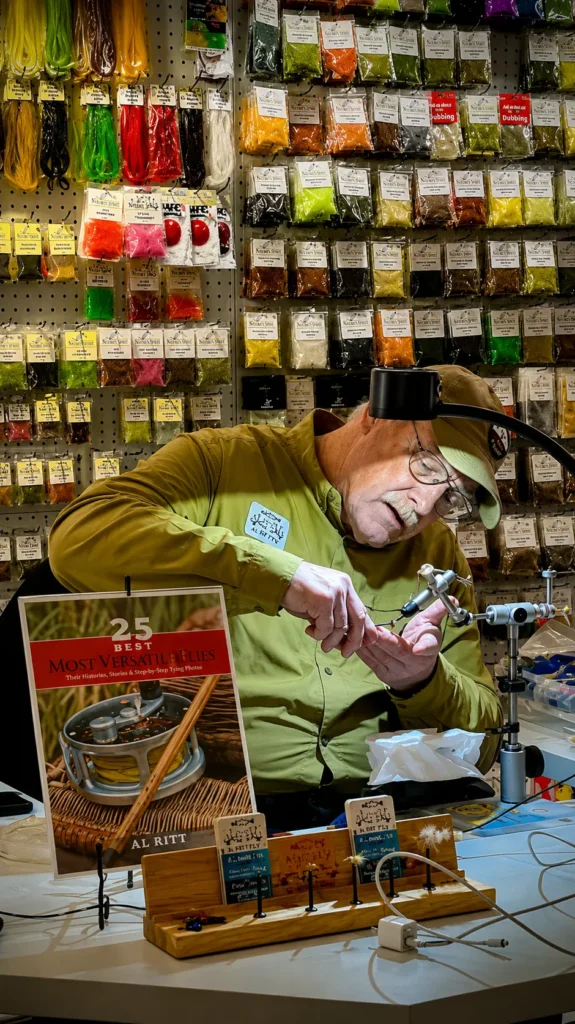
(01:21) Al has been traveling to fly tying shows for years, including Denver, Pleasanton, Idaho Falls, and the Bug Roundup in Arkansas, while still finding time to fish when he can. We also talk about the East Idaho Fly Tying Expo, a consistently well-organized show that brings in some of the best tyers.
The book goes beyond tying recipes, exploring the history and development of each fly, where it came from, how it can be used, and ways to modify it. The patterns cover a wide range of fishing, from panfish and trout to larger freshwater and saltwater species.
Dave mentions a Royal Coachman Bucktail he had tied for steelhead with a traditional white calf-tail wing. Al has also seen Royal Coachman patterns fished as steelhead streamers and believes the fly could work for Atlantic salmon. The discussion highlights how classic patterns can evolve beyond their original purpose as tiers experiment.
The first year Al attended, there were 144 tyers. This year there were still well over 100. We also compare East Idaho with other shows like the former Fly Fishing Show in Newark, Sowbug Roundup, and the Denver Fly Fishing Show, where Al estimates there were around 60 to 75 tyers.
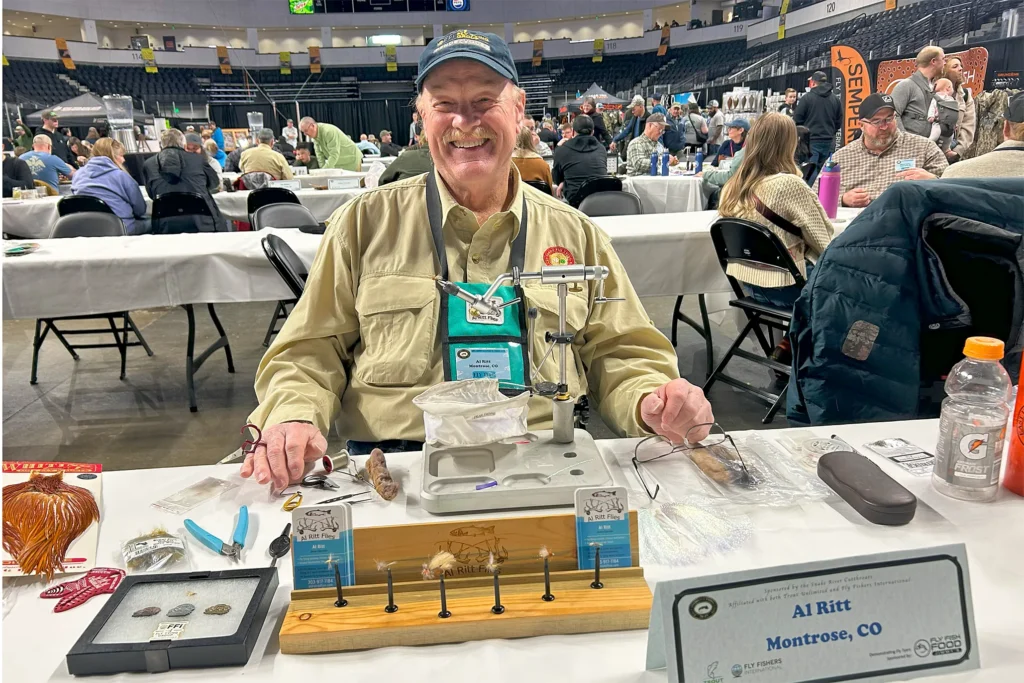
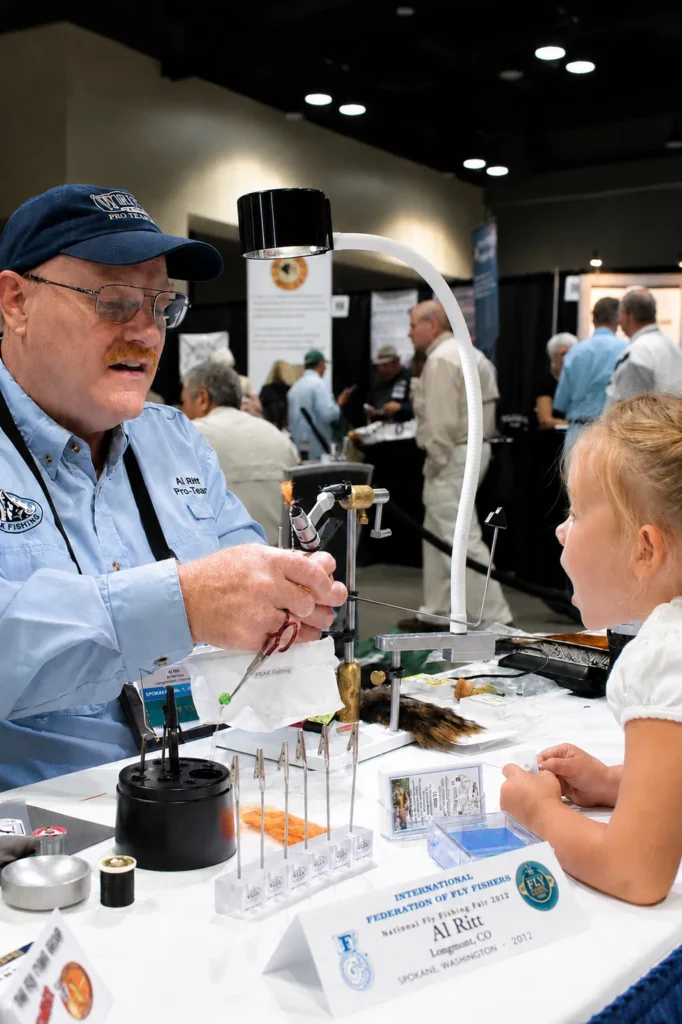
What makes East Idaho different is that fly tying really is the main event. Al spent all three days tying on the demonstration floor this year. At other shows, he likes to switch up the patterns he’s tying so he’s not sitting there making the same flies for the same people year after year.
(20:54) Al’s book came later in his fly tying career. Around 2010, he began writing for several magazines and eventually decided it would be interesting to put a book together. A publisher eventually approached him, making the publishing process much easier. From there, the book took about a year to complete.
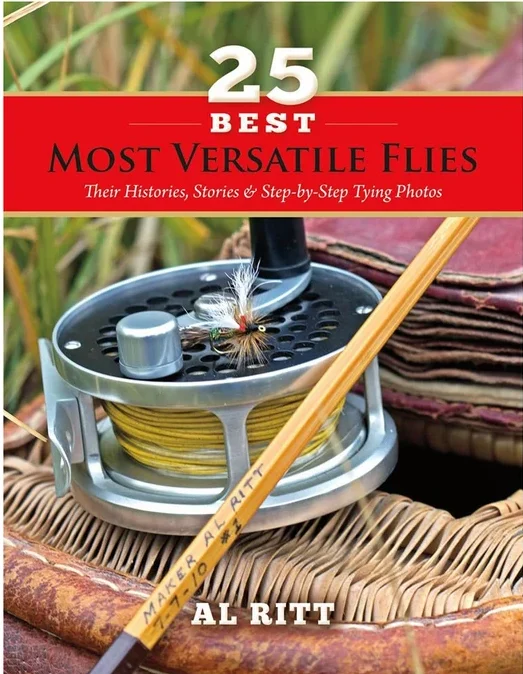
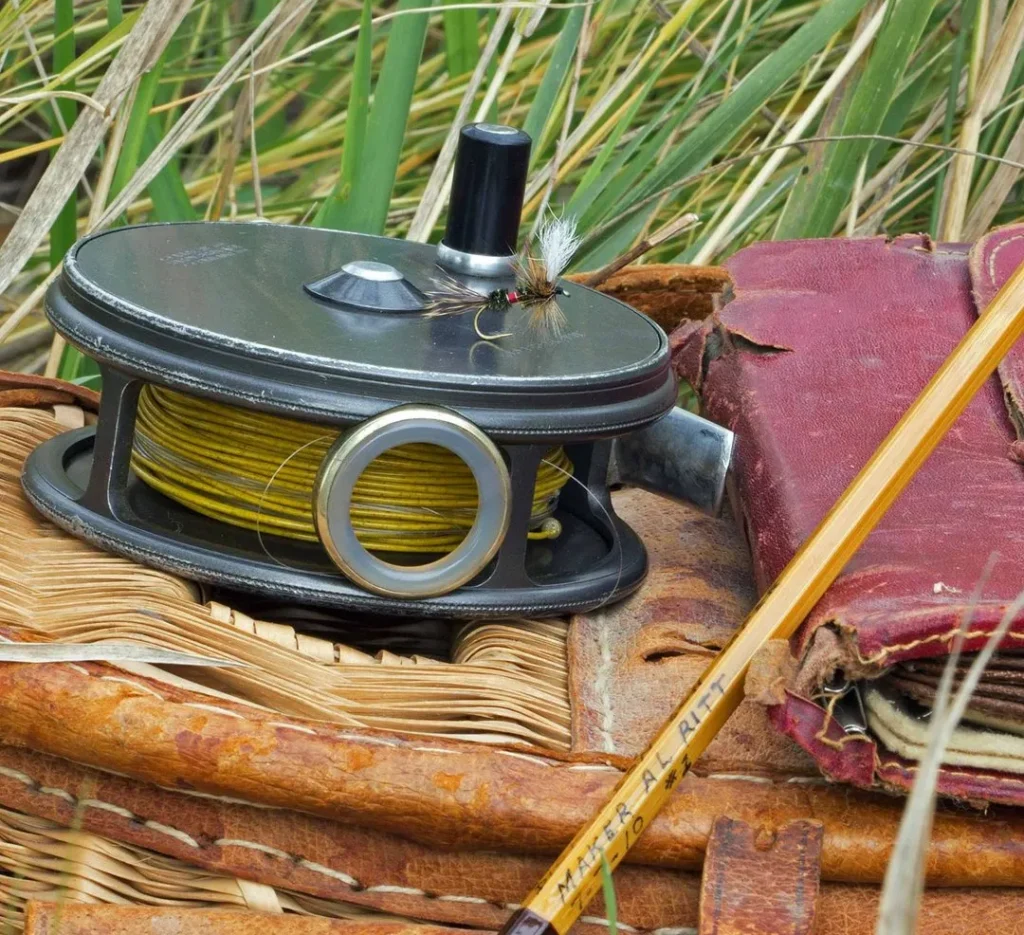
The photography required careful planning. Al needed the lighting, camera, and vise to remain in the same position for every step-by-step photo, so he set everything up at his dining room table and left it there until the book was finished. The cover features a Royal Wulff, a bamboo rod, and a classic Peerless reel.
The publisher has since gone out of business, making the book harder to find. Al still has a number of copies himself, and interested readers can email him to see if they can arrange a purchase directly. Al also became interested in collecting classic fly fishing gear. He started collecting pieces over the years, but after moving to Montrose, Colorado, he found that he no longer had much room for it.
(34:43) Al’s fly choices depend on the region, crowd, theme, or simply what he’s in the mood to tie. This year’s theme was elegant dry flies, featuring the Gordon Quill, Cross Special, and a pair-loop Adams.
Al also compares natural and synthetic materials, from Quigley’s monofilament post to his preference for softer high-vis materials.
(48:56) Al learned from fly-tying legends like Sylvester Nemes, George Anderson, Dave Whitlock, Gary LaFontaine, and Jack Dennis. Nemes, whom Al considers the father of U.S. soft-hackle tying, remains a major influence. Al still fishes soft hackles as droppers or on a two-handed rod.
His biggest advice for learning to tie is simple: keep tying. Consistency builds muscle memory, while long breaks make the process harder. As Al puts it,
He also believes beginners should focus on techniques rather than memorizing patterns, starting with basic tools, materials, thread control, and simple flies like the Zebra Midge, Fitzsimmons Midge Adult, Woolly Bugger before gradually adding new techniques.
(58:23) Al started tying on a Thompson Model A, a vise many tiers were using at the time. A few years later, a shop owner convinced him to try a rotary vise, so he picked up a Renzetti Presentation, which he still owns and uses today.
When preparing for a show or shop demonstration, Al starts at least a day and a half ahead. He chooses patterns, prepares recipe sheets, ties samples, and organizes materials, keeping each fly’s materials together in a labeled Ziploc bag.
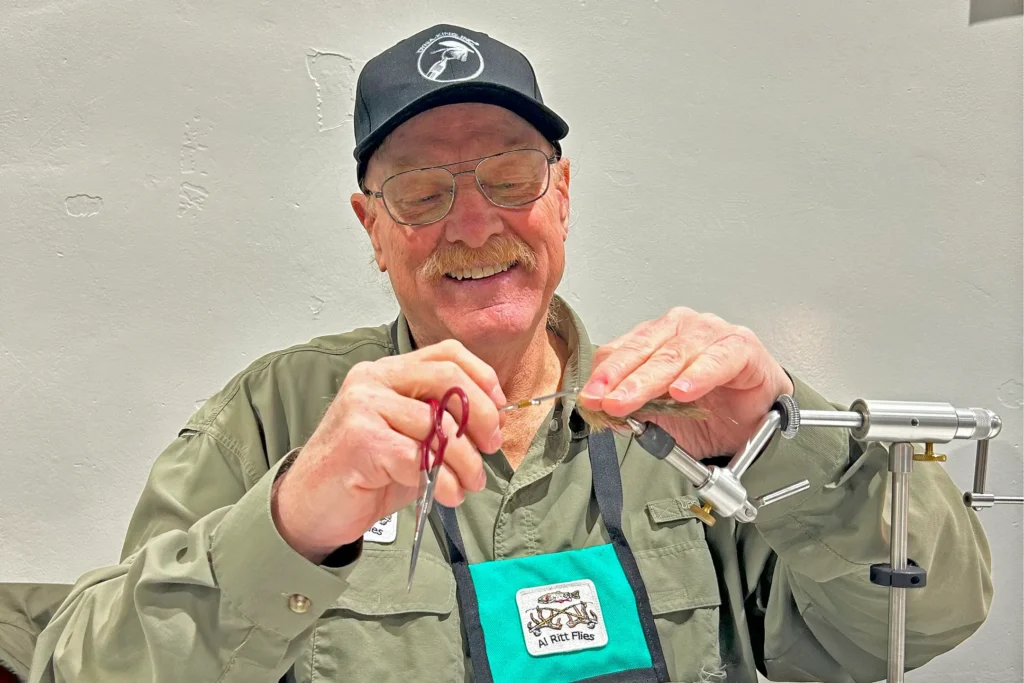
Al Ritt is a longtime fly tyer, instructor, writer, and author based in Montrose, Colorado. His work has included fly-tying editor roles with Fly Fusion and Fly Fishing & Tying Journal, along with regular contributions to Fly Tyer magazine.
Al has tied and taught across a wide range of fly-fishing styles, including trout, bass and warmwater fishing, Pacific salmon, steelhead, and saltwater. His book, 25 Best Most Versatile Flies, features 87 fly patterns with step-by-step photographs and written instructions.
25 Best Most Versatile Flies: Their Histories, Stories & Step-by-Step Tying Photos by Al Ritt
Episode Transcript
WFS 967 Transcript
00:00:00 Dave: If you’ve ever wondered why certain flies show up everywhere, today’s podcast answers that question. We’re getting into the patterns that have stood the test of time, how they evolved, and why a small group of flies can cover way more water and species than most people think. Alfred is here, Fly tyer and author of the twenty five Most Versatile Flies and someone who spent decades studying not just Houseflies are tied, but how they work. This is the Traveled podcast series where we bring you to the best places to fish in the West, and the stories of the people that made this region what it is today. Today with al, we’re going to talk about how one fly can turn into a dozen variations and still keep its core purpose. We’re going to get the story behind the classics like the Adams, the Pheasant Tail, the Clouser Minnow. We’re going to get the big stories behind them and the people that created them. We’re going to find out about how small material tweaks can completely change how a fly fishes. And then we’re going to talk about how to start simplifying your fly box without losing effectiveness. Plus we’re going to talk about the East Idaho fly tying Expo ALS background and fly tying, and how you can connect with him at the next fly tying event. This episode is presented by Visit Idaho and Yellowstone Teton Territory, home to some of the most diverse and wild trout waters in the west. All right. You can find out at. Allright flies dot com. Here he is, Al Ritt. How you doing, al?
00:01:20 Al Ritt: Good. How are you?
00:01:21 Dave: Great, great. Yeah. I think this is going to be another, uh, good fly tying episode. I think we’re going to focus a little bit on that, although we’re going to get into your background and talk a little fly fishing as well. Um, you talk about the East Idaho Expo, which just happened and is going to happen again next year. So we’re going to talk about that a little bit. But yeah, maybe start us there just on your, um, you know, let’s go to the fishing first because I think we’re going to talk a lot about fly tying, but are you doing as much fishing these days as tying or more tying?
00:01:48 Al Ritt: Well, right now it’s a little tough because there are so many shows. I’m doing so much travel, but I, I slip a little in. I was fishing Sunday and I fished, uh, Friday, I guess.
00:02:00 Dave: Yep. Right. Yeah. So you’re not only doing, uh, the, uh, fly tank show in Idaho, but you’re doing some other stuff around the country.
00:02:07 Al Ritt: Yeah, I did, uh, the fly fishing show in Denver. The fly fishing show in Pleasanton, California. Um, I did the Idaho Falls show. I do some shop demos. Uh, and I did scuba ground up in Arkansas.
00:02:22 Dave: Oh, wow. Okay. And that’s one I haven’t heard a lot about. So maybe we’ll touch on that today as well. But, um, but yeah, what was your, um, maybe take us to the East Idaho show that was just happened here, right? It’s every march. I think it’s, I’m not sure if it’s the third week somewhere in March. Right. Typically when that goes on.
00:02:40 Al Ritt: Uh, yeah, my, I’m a little time warped right now, but I believe that was about three, maybe four weeks ago. Uh, it was a good show. It’s always a good show. Uh, they’ve always done a fantastic job of getting things organized and putting it on and getting really good tires to show up there.
00:02:56 Dave: Mhm. What do you typically, I know we can definitely highlight your book. Um, maybe give us the title of that so we can kind of look that up as we’re going here.
00:03:05 Al Ritt: Uh, sure. It’s twenty five best, most versatile flies.
00:03:09 Dave: Nice, nice. Love that. And I think that’s something that’s interesting because the I think we all love digging into patterns and diverse patterns. And there’s hundreds and thousands of patterns out there. But really, you know, you hear from a lot of people that know and they say, you know, get your top, whatever the number is, right? And kind of have that. Is that how did you choose those twenty five flies? Is that just from years of, uh, you know, getting things narrowed down?
00:03:32 Al Ritt: Well, um, the book title, uh, could be somewhat misleading. There’s actually eighty seven flies in there. Uh, but the title fit with a series of books that the publisher did twenty five best this, fifty best that. Um, but what I picked were twenty five of what I thought were very influential and versatile flies. And then there are twenty five chapters based on each of those flies. But then in each chapter, there are related flies that were developed from it or that were developed independently and were very similar, or in one case, actually identical.
00:04:12 Dave: Okay. Perfect. Yeah. So basically you’ve you. So yeah, it’s not just twenty five flies, but I love that. So twenty five chapters. And what makes, you know, let’s just take it to the versatile. What makes it a versatile fly? How does it make that list?
00:04:24 Al Ritt: Well, um, it’s uh, different. Usually in each chapter, it’s a fly that can be tied in different ways. Uh, a fly that can be used in a lot of different situations can be modified, can be used for different species, uh, or with just a significantly successful fly where a lot of other flies were developed from it, or maybe it developed from another fly. And the Each chapter takes you through a little bit of the history of the development, or where the fly came from, and different ways you can use it, different ways you can modify it for different species or water conditions.
00:05:03 Dave: Yeah. That’s great. So you dig into a little bit on the history of the patterns and who the originated it and all that.
00:05:10 Al Ritt: Yeah. I wanted to do a little bit more than just a book of fly recipes. So there’s a verbiage at the front of each chapter talking about the fly, what you can do with it and where it came from.
00:05:23 Dave: Oh, that’s cool, that’s cool. And are your flies. I’m not sure of your kind of where you spend most of your time fishing, but is it this kind of trout focused? Mostly?
00:05:32 Al Ritt: No, that’s one of the things about this. Uh, it’s most versatile is in part of the subtitle. Um, so a lot of these, I’ve got flies in there that can be used from everything from panfish to salt water.
00:05:45 Dave: Oh, perfect. Yeah. So, so I, and I obviously don’t have the book in front of me, but I think it’s kind of cool to pick it away a little bit here as we go, because I think it’s kind of an interesting topic, right? The all the species because you’ve got, and I’ve heard this before, we’ve had some people on, you know, I can think of like Jim Tinney, for example, he’s got his, uh, his nymph. The nymph, of course. Right. And he talked about how he’s caught, I don’t know how many different species on that fly, but there’s a lot of those examples. You know, the Yvon Chouinard, the pheasant tail nymph, right? He’s he’s in actually. No coincidence. That’s kind of a coincidence. But the pheasant tail nip both of those guys, right? The pheasant tail. But what’s your take on it? What would be when you look at that. Maybe give us a top, maybe a top five of those flies or that you think we could pick out and talk about them a little bit.
00:06:29 Al Ritt: That are in the book? Um, yeah, I would say, uh, I’ll just kind of select some of my favorites, I guess. Yeah. Um, Hare’s ear is in there. The pheasant tail is in there. Um, the Adams is in there. Uh, the real wolf is in there. Um, and, uh, just grab a streamer. The clouds are minnows in there.
00:06:52 Dave: Oh, and the clouds are. Yeah. Good. So so let’s do that because I, and I, and I actually don’t know all of the, the history on these, the of course the royal Wolf. I know that one. We’ve talked about that a little one right a little bit in the clouds. We know who was behind that. What about the hare’s ear. How far back does that one go.
00:07:08 Al Ritt: Uh I’m not sure anybody knows. I did a fair amount of research on that, and I believe it came from the UK. Um, and it appears some of the information that I found, it appears as though it may have started actually even as a dry fly.
00:07:27 Dave: Huh. Wow. A dry fly, which kind of is interesting because when you look at it, you would not think that right as of the current pattern.
00:07:34 Al Ritt: Typical, right. But, uh, go ahead and look up a parachute hare’s ear. Uh, it’s an excellent pattern of simple, straightforward, um, some of the best flies, uh, kind of have to have those descriptors in them, right?
00:07:49 Dave: And then the pheasant tail is, um, what was the name of that guy that came up with that one?
00:07:55 Al Ritt: Originally it was Sawyer, um, Frank Sawyer. He was a Riverkeeper in the UK. Uh, what we see mostly today, um, and, uh, it seems like it’s a little bit has been dropped off the title. Uh, what we see mostly today is the trough pheasant tail. Sawyer tied his with just pheasant tail and copper wire. He didn’t even use thread. Um, trough in the United States. He added the tied it with the thread, uh, and added a thorax of peacock with a wing case over it.
00:08:30 Dave: Oh, there you go. Okay, so Frank’s original one was just literally pheasant tail for the whole thing.
00:08:35 Al Ritt: Well, the copper wire, he used the copper wire to actually attach the pheasant tail to the hook to rib, the abdomen and the thorax is copper wire with pheasant tail pulled over the top for a wing case.
00:08:49 Dave: Okay, perfect. And then what about the Adams parachute?
00:08:53 Al Ritt: Uh, the. Well, the parachute. Adams. Yeah. Yeah. I mean, that was just a relatively recent adaptation of the original Adams. Uh, the original Adams was developed in northern Michigan. Um, it was developed by a guy named Halliday, uh, who was a fly tyer and guide. He had a customer that came in and tried to describe a hatch to him that was going on on a local pond. Uh, and he, uh, Halliday came up with a pattern for it, and the guy came back in the next day and told him how awesome the pattern worked. And so he named the pattern the Adams. The customer’s name was Bud Adams. It went through some adaptations. Um, it wasn’t originally quite the way we see it right now. The wing shape was a little bit different. The tail was a little bit different, but there was some Catskill influence to it, and it just became such a successful fly that people kept tweaking with it. And, you know, we got the parachute Adams now and a lot of different variations.
00:09:57 Dave: Yeah. The parachute and the, the royal Wolf. We’ve like I mentioned, we’ve talked about that Lee Wolf, we’re going to be heading to one of the Lee Wolf’s lodges in Newfoundland this year to fish for Atlantic salmon, where he fished back in the day. So it’s pretty.
00:10:10 Al Ritt: That won’t suck.
00:10:10 Dave: Yeah, yeah, it’s pretty exciting. I’ve been we’ve been talking a lot about this. I’ve never fished for Atlantic salmon. And so it’ll be my first time really getting out there and. But yeah, it’s cool because the Royal wolf, I think he invented that fly up in Newfoundland for some of those fish. I’m not sure if it was the brook trout or Atlantic salmon, but do you know a little bit of history there with the wolf?
00:10:29 Al Ritt: Well, he originally did it. And then um, I’m not sure where he did it. I got the impression it was actually in the northeast, but, um, Dan Bailey, uh, caught on to it and, uh, really was responsible, I think, for most of its popularization. Uh, it was developed from, you know, as an adaptation of a royal Coachman, which is a much, much older pattern. Um, and then Bailey made it super, super popular out here in the West.
00:11:03 Dave: Yeah. The coachman was invented. Yeah. That’s an old pattern that kind of had more of. Was that a, a coachman that was more of like a streamer pattern?
00:11:10 Al Ritt: Uh, well it was again.
00:11:12 Dave: Yeah.
00:11:13 Al Ritt: That’s what’s great with these really good flies is they become all kinds of different stuff over time. Um, it was originally, I think there was a fly called a lead wing coachman.
00:11:23 Dave: Oh yeah. I remember the lead wing. Yeah.
00:11:25 Al Ritt: Right, right, right. And uh, eventually there was the Royal coachman, um which probably was, you know, influenced by the lead wing coachman, Mary Orvis. Marbury, I think probably made that very popular. Um, and it was actually a wet fly first.
00:11:43 Dave: Oh it was. Yeah. Wet fly. That’s right. Yeah. The lead wing coaching was a wet fly wet fly wing. And then the, the Royal Coachman. Well yeah. You had a couple of things. Yeah. You mentioned the Royal Coachman had kind of it was a wet fly too, but it had the peacock and red, a little bit different coloration than the lead wing. Right.
00:11:59 Al Ritt: Yeah. It started as a wet fly and uh, it was developed into a streamer and into a dry fly. Um, I mean, that’s the fun thing about these flies. You, you just. Yeah, you just need to think out of the box, you know, when you start talking about flies and, uh, where did they come from? What are they used for? Um, and what I mean, think about how you can modify them yourself.
00:12:24 Dave: I know exactly. Yeah. I’m looking at one. This is so, you know, this is what I love about kind of the online stuff. I just search Royal coachman and one of the videos that I did, I totally forgot I did it online, I tied a royal coachman Bucktail and it’s basically I’m not the greatest fly tyer, but I like tying steelhead flies. And it’s like a traditional with a calf tail, a white calf tail wing. It’s just a, you know, wet fly. You fish for steelhead, right, right. Which I’m sure I’m not sure how many people fish a royal coachman, but I’ll bet that would work for Atlantic salmon too. Now that I think of it.
00:12:52 Al Ritt: It probably would. And I have seen it tied and fished as a steelhead streamer.
00:12:57 Dave: Oh, okay. Cool. And then, um, and then the fifth just around this out what we have at Clouser. So right. Of course, one of the out of all these people, Bob still with us, probably maybe the only founder that’s still of those five. Right.
00:13:10 Al Ritt: Well, um, yeah, I believe so. Yeah. The, the other ones are actually quite, quite old.
00:13:16 Dave: Yeah. Those are old. Right. And do you know of Bob a little bit, his story.
00:13:21 Al Ritt: I’ve met him a few times at a few different shows. Um, you know, the history of the fly is a little bit interesting. Um, he originally tied that fly with a split shot sinker crimped onto the hook because lead eyes as that time did not even exist. Um, and Wapsi came out with the first lead eyes. And it’s my understanding they came out with that product, specifically with that fly pattern in mind.
00:13:50 Dave: Oh, wow. Okay. Wapsi. Right. That’s right. Nice. Well, that’s a good start. I always love starting with a little history lesson. I feel like that’s kind of a really cool thing to dig into, but, um, but tell me this. So where are you? Where is your hometown when you’re not traveling around all these fly tying shows where you spend your time?
00:14:06 Al Ritt: Uh, currently, uh, I live in Montrose, Colorado, which is southwest Colorado.
00:14:11 Dave: Oh, okay. Gotcha. And, and have you been doing, uh, these for a while? Or what was your first, uh, going to the East Idaho? What was the first year you did that?
00:14:19 Al Ritt: Oh, boy. Uh, there’s absolutely no way I could tell you that. It’s probably been close to twenty years.
00:14:24 Dave: Yeah. So a long time, twenty years. And that show, has that evolved over the years or has that been pretty similar from since the first year you did it.
00:14:33 Al Ritt: Well, it’s you know, it’s changed a little bit. Um, a lot of the people that appeared at the first show, um, have gotten a little older and are no longer traveling and doing as many appearances. Same thing with the people on the committee that organize it. Um, there’s new people in charge of that. Uh, they’ve had to change venues along the way. Uh, so we are in a different venue, but overall, uh, I would say the outline of how the show works has stayed the same.
00:15:02 Dave: Yeah, it’s the same. Pretty much. People got a bunch of great tires. And I think at the Idaho show, there’s actually probably one of the biggest shows. Is it? Are there other shows that are comparable to the number of fly tires that you attend?
00:15:14 Al Ritt: Um, well, Idaho does not have quite as many tires as it used to. The first year I went there, they had one hundred and forty four tires. Wow. Um, I believe they were, you know, significantly over one hundred this year, but I don’t think they got that high. Um, other shows, the fly fishing show, uh, in Newark, new Jersey, which they’ve had to change venues. Uh, and that show is no longer there, but that show had an amazing number of tires at it. Um, so bug roundup does have, uh, a lot of tires at it. Um, but those are probably the ones that I’ve seen not, not necessarily the whole show bigger, but the greatest number of tires.
00:16:01 Dave: The greatest tires. And of course, and then the Denver show is the other. Well, I think the Denver show is kind of one of the biggest fly fishing shows in general. But yeah, it has a similar amount of fly tires as maybe some of the other shows around the country.
00:16:13 Al Ritt: Yeah, I think the Denver show, and I’m just guessing, I’m kind of trying to envision the number of tables, but I’d say there was around sixty to seventy five tires at Denver. Um, but there’s a lot more going on at that show. Yeah. you know, the the East Idaho show, they focus primarily on the tires. Um, they have some really good workshops. Uh, and they have some vendors around the outside of the facility, but really it’s primarily focused on the tires.
00:16:45 Dave: Yeah. It is. That’s cool. And are you doing some of the workshops? Have you done those over the years?
00:16:50 Al Ritt: Uh, yeah, I just did an Adams workshop, uh, actually at Sorba ground up and, uh, that sold out so fast, they asked me to do it twice. Oh, really? Yeah.
00:17:00 Dave: Nice. Tell us about the sour bug. I’m not familiar with that one. What’s the story there?
00:17:05 Al Ritt: It’s probably more in the vein of the East Idaho show, where they focus mostly on the tires. Um, they do have a few vendors in attendance, and they do some workshops, uh, as we just talked about. Um, but it’s a lot in the same vein as the East Idaho show, a lot of really good tires from all across the country.
00:17:25 Dave: Mhm. Okay. And on the, um, the workshops, if somebody was, let’s just say we’re kind of focused on the East Idaho here a little bit, but if somebody was going to be attending that show, you know, this coming year, um, would there be potentially a workshop you would be doing or what do you think? Or I guess you’ll be there tying likely for sure. But how often do you do workshops at that one?
00:17:46 Al Ritt: Um, I’ve done several, uh, it just, it depends every year on, uh, you know, what they’ve got lined up and, uh, what they think their interests as far as workshops might be this year, I just tied out on the demonstration floor straight through all three days.
00:18:04 Dave: He did. He did. Cool. Well, maybe talk about, I think the history. You know, like I said, I love what about your tying history? Do you remember the first, uh, first vice you picked up the first time you tried to tie a fly?
00:18:18 Al Ritt: Um, well, there’s a difference between the first time I tried and the first.
00:18:23 Dave: Real.
00:18:24 Al Ritt: Fly that I. Yeah, right. As a kid, I grew up in southeast Michigan, and, uh, I don’t really know why I didn’t fly fish much. Just just like some foam spiders for bluegills and stuff. But for some reason, I just had it in my mind that I wanted to tie flies. Uh, I was in fourth, fifth grade trying to get my parents to buy me fly tying kit. Um, which I think they were hesitant to do because there was no way that I was going to learn how to tie a fly. I didn’t have any resources. Yeah. But I, I would take pipe cleaners and, uh, bread tie wrappers and things like that and bend them into hook shapes and attach little wings, uh, to those and try and fake flies out. They finally did get me a kit. Um, and, uh, I don’t, it was from Cabela’s. I have no idea what was in it. Um, because I didn’t know anything about it and nothing in it registered as as anything significant. Um, I found out that my grandmother had tied flies commercially. Uh, she, they were neighbors. My grandparents were neighbors of a, a real high end, uh, bamboo rod builder in Bellaire, Michigan. And, uh, he got her, uh, connected with some fly shops during the World War. Uh, she was not a fly tyer so much as, uh, more like what you’d expect to see overseas in the fly factories today, where they learn a pattern and they just repeat the steps over and over and over. Yeah. Um, so it wasn’t really until I got to California in the early eighties, uh, and I was just looking for fishing supplies, uh, and walked into a shop and it just happened to be a fly shop, which I didn’t even know at the time there was such a thing. And on the wall they had a piece of paper that said fly tying lessons. So I signed up and took off with that, and later on bought a fly rod and kept going.
00:20:32 Dave: Kept going. And so that initial, uh, part when you first started tying with, uh, you know, when you didn’t even have a kit, where did that first fly tying the idea come from? Where did you, where did you first see it?
00:20:44 Al Ritt: I have no idea. Yeah, I.
00:20:45 Dave: Just popped.
00:20:46 Al Ritt: In. It was it was so long ago, and it just felt like I’d always, you know, I was fourth or fifth grade, eight or nine years old. I’m a little older than that now.
00:20:54 Dave: Right. That’s amazing. So so basically you’ve been doing this your whole life. When did the the book idea was that something that came later? Much later when that idea start?
00:21:04 Al Ritt: Yeah. You know, I was writing for a lot of magazines, um, starting, I don’t know, around two thousand ten or somewhere in there. Uh, I was doing a lot of writing for magazines, and I thought it would be interesting to do a book. And a publisher actually approached me. And one of the biggest mysteries with writing a book is how do you get it published? And, and the publisher approached me, which kind of solved that problem. And it was maybe a year until the book was out.
00:21:37 Dave: Oh, wow. So it didn’t take too long, really about a year to put the whole thing together.
00:21:41 Al Ritt: Well, um, all the photography so that the lighting stayed consistent and my camera and vice placement could stay consistent, I had to set everything up and leave it until the book was complete, so I could take all the step by step photos. Uh, and that happened to be at the dining room table, so I didn’t dawdle a lot. Yeah, with most of the book.
00:22:05 Dave: Gotcha. Right. This is great. And in it, I guess I’m looking at the cover now. It’s, uh, you’ve actually got a nice, uh, classic, it looks like. Yeah. Royal Wolfe and a bamboo rod and a reel on the cover there. What is the, um. Is that real? What is that real? Is that a is that a hearty or what is that?
00:22:23 Al Ritt: That’s a that’s a peerless.
00:22:25 Dave: Oh, a peerless. Okay. Yeah. Peerless. Cool. It’s got a classic. And you got a sitting on a old, um uh, Creole. Right. Is that something? Do you know, are you into like collecting some of the old historic stuff other than fly, you know, kind of all that stuff.
00:22:40 Al Ritt: I would like to be. Yeah. And I kind of informally started doing that, but, uh, since we’ve moved to, uh, Montrose a few years ago, we have a lot less physical space. Okay. So collecting is kind of, uh, not in the cards anymore.
00:22:57 Dave: Not doable, not doable. Yeah. Gotcha. Okay. Um, and where could somebody is the best place? Just, I guess it’s on Amazon. It looks like. Is that the best place to go if they want to pick up a copy of that?
00:23:07 Al Ritt: Um, I’ve heard some people tell me that the prices on Amazon are pretty inflated. If you find a reasonable price, That’s fine. Okay. The publisher, unfortunately, has gone out of business. Um, I do have a lot of the books myself, and so if somebody wanted one, they could email me and we could try to arrange to get him one.
00:23:29 Dave: Perfect. Yeah, we’ll do that. We’ll have a link to your, uh, your email in the, in the show notes. That’ll be great. And, uh. Good. Okay, so and let’s keep that going on the track. I love the, um, you’re getting a little list here. So do you. I’m not sure if you have the book in front of you, but what would be a. I’m sure you probably know that, but what would be another maybe five flies you’d throw to this list? We talked about five first there at the start.
00:23:51 Al Ritt: Well, um, I guess I’ve got two different answers for that. Yeah. Uh, one would be, uh, if I was recommending them for somebody else. Uh, the other would be, uh, for my own fishing. Um, and I did slip a few of my own flies in there just because I fish them more than anything else. And they really are effective for me.
00:24:13 Dave: Yeah. Let’s talk about those. Let’s talk about some of your own flies.
00:24:16 Al Ritt: Um, well, the first one I guess would be Ritz fighting crayfish. Um, which is an Mfcc pattern. You can buy that commercially. Okay. Uh, and it’s a pattern I developed, um, while I was working in a fly shop. So it’s probably maybe two thousand and two, two thousand and three. Uh, and it just in thinking about it, I was, I was thinking there weren’t a lot of crayfish patterns that I thought really mimicked the actual organism in the water. But crayfish are such an important food item for so many different species. Uh, if you look through the chapter on that book, I’ve caught, uh, four or five different species of trout. I’ve caught, uh, salmon, um, I’ve caught bass bluegills, catfish, carp, uh, and I Just just as an experiment. I took it down and caught bonefish on it. Wow. So it’s really a versatile fly. Yeah it is. Yeah. And you can use it a lot of different places. And I kind of I used something I thought was a little bit different to give the fly the correct posture in the water so it doesn’t lay flat on the bottom. Um, it’s got a foam for the claws, which kind of raises the head of the bug up.
00:25:38 Dave: Oh, right.
00:25:39 Al Ritt: Uh, when it’s sitting on the bottom and those are mounted on rubber legs. Uh, so they can kind of move, uh, even when the fly settles to the bottom, there’s a little bit of vibration in there. Um, and it’s been a super, super good pattern for me.
00:25:55 Dave: Nice, nice. Yeah. So I see that you’re getting rubber legs and then and how do you fish that is that something? Is that pretty easy to fish. How would you, you know, for trout, let’s say.
00:26:05 Al Ritt: I fish it primarily, uh, in Stillwater and I don’t fish it different for different species really. Um, the only thing I really very much is the retrieve speed. Uh, and that just depends on the fish’s mood. I usually as a first clue of what I want to do, uh, think about water temperature. Uh, fish are cold blooded. Crayfish are cold blooded as water colder, they move slower. Um, so if the water is cold, uh, you know, I may just crawl that hand strip across the bottom as the water feels warmer or the fish seem more active. You know, I’ll start to retrieve it faster. Um, the Montana fly has told me that that fly is super, super popular up in that area in moving water. And I, you know, I don’t fish it a whole lot in moving water, but, um, uh, that’s what they’ve told me.
00:26:59 Dave: Yeah. Versatile.
00:27:00 Dave: All right. So that’s, uh, another one. Let’s talk about some of your other flies that are these versatile flies. They’re yours.
00:27:06 Al Ritt: Um, Yeah. So, uh, probably the fly I fished the most. And the fly I actually catch the most fish on is called a a tungsten PT, and it’s kind of a variation of a pheasant tail. That’s what the PT is. Uh, it has a tungsten bead and it’s completely synthetic. Um, so it’s a fly. Uh, if you look at natural insects, lighting on those is different than most of the imitations that we fish. All our flies are very opaque. You know, you put dubbing fur on a hook and you know, you can’t see through that. But if you look at photographs of an actual insect, you can kind of see through the bug. It’s pretty translucent. Uh, obviously with a hook in the middle of it, you can’t make a translucent fly very well, but I thought maybe I could play the game of, and I call it lighting the fly from the inside. Uh, and what I do is I put a crystal flash underbody on this fly and over the top I wrap translucent material derib for an over body. And so you’ve kind of got this reflective surface underneath the body of the fly. And it, you know, if you held it up next to a photograph of an insect, it’s obviously not that translucent, but you can kind of catch the sparkle from the inside. So it’s got some three dimension to it.
00:28:40 Dave: There you go. And that’s and then other than that then it’s mostly a pheasant tail. Does it have a thorax wing case and all that.
00:28:47 Al Ritt: Yep. It does. Yeah. It’s a pheasant tail or a peacock. Uh, kind of imitation dubbing, uh, with the flash thorax or wing case over.
00:28:58 Dave: It on the wing case. Sometimes you see those tied thinner, sometimes they’re bulkier in the front, the thorax or the in the thorax. How do you tie yours? Do you think you know? Do you tie it just like a mayfly would look in the water? I’m not sure. Does it? Because mayflies are pretty thin. They don’t really have a real fat thorax, do they?
00:29:15 Al Ritt: Well, some. There’s different kinds of mayflies. There are what some people call swimmers and some people. And there’s another that some people call clingers. Uh, clingers tend to be wide and very flat, so they can hold on to rocks in the current and not get washed off as easily. Um, an example of a swimmer would be maybe a beta nymph. And if you see those in the water, they almost look like minnows or tadpoles. They swim so freely. Uh, and that’s usually, uh, more of a bullet shaped fly, uh, a lot of times pretty slender, um, built for cruising through the water, uh, where all three dimensions are exposed.
00:30:02 Dave: There’s a place where every bend in the river feels like it’s been waiting for you. Where the air smells of sage and pine. And trout. Rise beneath the shadows of the Tetons. That place is visit Idaho’s Yellowstone Teton Territory, the heartbeat of fly fishing in the West. From the legendary Henrys Fork to the winding South Fork of the snake. This is where big fish and bigger stories live. You’ll find endless waters welcoming towns and locals who still wave as you drive by with drift boat in tow. This is your starting point for world class fly fishing, year round recreation, and wild country that stays with you long after you’ve packed up your gear. Check it out right now that’s wet. Fly swing dot com slash Teton T e t o n. Visit Idaho for yourself and support this podcast while you go. Yeah. Okay. Well, how many do you have? Some more. Keep this list going on your flies. I’d love to hear a few more of these.
00:30:55 Al Ritt: Yeah. So, um, I think the last of my own patterns that I put in. There was a fly called, uh, an arf midge pupa. And that again, you know, as a fly, I came up with playing with different light conditions. Uh, and it’s, and actually an idea stolen from Michael Tucker, who you may remember when lava came out. Um, Mike was very innovative in the use of that. He used to put all kinds of materials inside the lava lace tubing, uh, different flash materials. And he, he even injected vegetable oil in there and sealed off the ends of the tube and then wrapped that for a body.
00:31:38 Dave: Wow.
00:31:39 Al Ritt: Um, what I do is I have a thread under body on this midge, and I feed wire into a hollow tube and then tie that in, cover it with thread. So I have a thread under body and then wrap the tubing forward so that the wire inside becomes a rib and the tubing goes over the whole fly. So I’ve got this kind of clear over body with a suspended rib. And then the the main body underneath. So I’ve got all these different dimensions to the fly body that I think to me it seems like a good idea. And the fish seem to like it.
00:32:22 Dave: Yeah.
00:32:22 Dave: And are you fishing that still waters or rivers or both?
00:32:25 Al Ritt: Both. Yeah.
00:32:26 Dave: Yeah. Both. That’s it. Okay.
00:32:28 Al Ritt: And I tie it different stages. You know, I tie it is just a worm. I tie it as a larva. And those are mainly just nothing but the body. I do tie it also as a pupa. Um, where I’ll add some breathing filaments to the front and a diamond glass bead. And then a little bit of a thorax with a wing bud.
00:32:50 Dave: Okay.
00:32:51 Al Ritt: And you can tie it with any or all of those features. just to different to imitate different stages of the bug.
00:32:59 Dave: Yeah. It reminds again you just mentioned them, but on life stages of the midge, what does it go through? Because it’s got a little bit different than some of the other aquatic insects.
00:33:08 Al Ritt: Yeah. So there’s a larva, which is essentially just a worm. Um, and then it, uh, starts to develop, uh, wing buds and, uh, legs and, and it doesn’t really have an abdomen and a thorax like a mayfly, but you’ll see, um, inside the case of that midge, you’ll start to see those elements, um, developing. And that’s kind of what we just casually refer to as the thorax and midges. They will go through a period where, uh, as they’re maturing, they will kind of bounce up and down in the water column. They’ll go up, you know, a few inches or a foot or two feet, and then they’ll kind of sink back down and eventually they’ll continue up, Get to the surface and emerge, you know, like a mayfly or. Caddisfly.
00:33:58 Dave: Yeah. That’s right. Okay. Yeah. They do the the undulating. Right. And is that how how you’re how are you fishing those. Oh. How do you imitate that undulating. You know, or do you try to.
00:34:08 Al Ritt: Well, if you really thought that was the key to catching fish, what I would do is, uh, get a slip bobber and fish it under a slip bobber. Or if you want to call it an indicator, you can, um, but you know, with the slip bobber, your leader, as you pull gently up, it’s still going to pull towards you a little bit. It won’t be an exact vertical rise, but um, as the leader pulls, the fly can move up in the column. And then as you give it some slack back, it can then fall back down to.
00:34:43 Dave: Yeah, yeah. That’s it. Okay. And um, so at the show, uh, or at the shows, what are you typically tying? Are you tying a little bit of how do you decide on what you’re going to tie at each show?
00:34:53 Al Ritt: Um, that varies from show to show. Uh, I do a lot of shows. I do a lot of shows year after year, so I really try not to tie the same patterns for the same people. Year after year, I try to come up with something different and sometimes it’ll be, um, based on the region. Uh, sometimes it’ll be based on my mood. For instance, this year the theme of the show was the elegant dry fly. So the patterns that I tied there were, um, uh, Gordon Quill a cross special, which are both very, very old. In fact, the Gordon Quill is the probably the what’s mainly acknowledged as the first US dry fly. Um, and, uh, the cross special is a very early Catskill fly. And then the last fly I tied was, uh, I think is very elegant, but it it has very old roots, but some fairly new techniques to it. And that was a pair of loop atoms per loop.
00:36:01 Dave: And what is the loop?
00:36:02 Al Ritt: Well, there was a guy in Northern California, his name was Bob Quigley. Uh, and, uh, he developed some flies, uh, that used this pair loop technique. Um.
00:36:15 Dave: And Quigley cripple is that Quigley cripple?
00:36:18 Al Ritt: Uh, no, the Quigley cripple was a little bit different. So the pair loop. You will tie in a post at the back of the thorax, and you will wrap hackle up and back down that post, and then you put in your thorax and then pull the post the hackle post forward over the top of the thorax. By doing that, you’ve got all your hackle up on top of the thorax. There’s no hackle below the fly, so it allows it to sit flush in the film more like a parachute, but it’s got a three dimensional hackle that makes it a lot easier to see, and I also am convinced that it floats better in rougher water.
00:37:06 Dave: All right. So it’s actually so some of the hackles are actually fibers are sticking kind of in the water.
00:37:11 Al Ritt: Well, they kind of lay again there along the top of the fly. So yeah. Um, the other nice thing about that flies is I tie it primarily with a high vis material for the post. Bob’s original fly, he used monofilament. Uh, monofilament can be a little tricky because it’s so slippery, it’s hard to wrap the hackle on it. Uh, I use a softer material and I also use a high vis material. That’s something Bob started to do later, and he called that fly a film critic.
00:37:44 Dave: Oh, right. The film critic. Yep.
00:37:46 Al Ritt: Right. And what he did was at the front where he tied that post off. He then instead of clipping it flush, he stood it up. And I do the whip finish, not in front of that post. Then, uh, and then cut it off about the length of the hackle. So I’ve got that little cedar post sticking up.
00:38:03 Dave: Mhm. Right, right. And what is the, the, the film critic, uh, that Quigley style, what is that kind of imitating? What bug or what, uh, you know, life history stage?
00:38:13 Al Ritt: Well, you know, people always want to assign that it I fish it as a merger. He fished it as a merger and a spinner, I believe. And, and probably also as an adult, I tie a lot of them on a klinkhammer hook, which puts the back end of the fly in the water. And that would kind of be indicative of a merger. Um, if you tie it on a straight shank hook, you may have a freshly emerged bug, you may have a done, You may have a spinner.
00:38:46 Dave: Yeah, right. It’s unique. You know, when you think of the patterns, it feels it feels like. Well, I mean, there’s so many patterns out there, right? But this style is this pretty unique. The this Quigley cripple style or are there other patterns that are similar?
00:38:59 Al Ritt: Well, I tie it in a lot of different sizes and colors. And then it’s, is it really a different pattern? I would say not really. Does it imitate a different food source? Absolutely.
00:39:11 Dave: Yeah it does. What about synthetics versus naturals. Do you seems like you use both materials or when do you is there times when one’s better than the other? Do you try to mix them together?
00:39:22 Al Ritt: Well, a lot of them come mixed if you buy dubbing, um, it a lot of times it comes mixed. Um, I like I’m at the age of my period of my life where I’m getting fond of older stuff. It helps make me like me better. Yeah. Right. So I like using naturals. They’re just, they’re comfortable for me to use. It’s all almost all we had when I started tying. And they look good. Yeah they do. Um, but there are also some synthetics out there that, uh, are very, um, very effective, very useful and create really, really good effects on your fly too. So I mix the two. I use all natural, I use all synthetic. Um, and sometimes they’re blended.
00:40:08 Dave: Yeah. Is there anything that you’re doing? We’ve talked dry flies and kind of different mergers. Do you kind of tie all flies, different types of flies equally? Or do you have some that, you know, do you tie dry flies better or worse than, say, streamers or other stuff?
00:40:21 Al Ritt: Well, I like to think that I’m a an instructor. Uh, I do teach a lot of classes and, you know, if you’re doing a demo, really, you’re doing one form of instruction. Uh, and as such, I try to stay pretty versatile. I also like to fish for a lot of different kinds of fish. So, um, you know, I do Pacific salmon and steelhead and I do a lot of saltwater and then of course trout, a little bit of bass, warm water stuff. If you boil it right down, the actual tying of a fly is really attaching stuff to a hook with thread wraps for the most part. And it doesn’t matter, you know, whether you’re trying to tie a saltwater fly or, uh, Stillwater Midge for, you know, some picky lake, you’re kind of using the same techniques, um, for both, but you can kind of interest your audience by, um, using those to create a fly that, uh, you know, might be a more useful for them.
00:41:23 Dave: Yeah, I go back, I tend to go back to the dry fly and it’s partly, it’s just practice, you know, if you don’t practice enough at something, you don’t get good at it. And I’ve always struggled with the really nice, especially like the Catskill style, you know, and just dry flies in general. You know, I’ve, I’ve probably tied a lot more of the nymphs and stuff and over the years, wet flies. But, you know, do you find that your dry fly. Could you tie a Catskill as clean as you could tie a. You know, you name the other pattern?
00:41:48 Al Ritt: Uh, well, I, you know, I try to be, um, adept at at all of them. If I’m going to show somebody a fly in a demo, I don’t want to tie a crappy one. Right. Um, but, uh, you know, I don’t tie Catskill flies, uh, for instance, uh, exclusively. So there are absolutely a lot of people that can tie a better Catskill fly than I can, but I think my Catskill flies are representative. And I do know some of the tricks, uh, you know, some of the things that people look for on Catskill flies. Uh, the hackle is super important. Um, so having that, uh, the right density, right, is a, you know, kind of a hard word to say, but, um, but the density that people expect to see with a Catskill fly and having the hackle stand straight up, you know, like those old Catskill flies that you think of. Um, they didn’t have hackle fibers pointing forward and back. And, you know, so, so I know some of the tricks to make that happen better. I don’t tie that fly as well as some of the guys that tie it all the time. And there’s some guys that just tie them way better than I do. But, um, I think mine look pretty good.
00:43:06 Dave: Yeah. That’s good. And we’ll, we’ll try to find some other links out to some of your flies. I know you’ve got, you’ve done some videos and things like that online. Or what’s most of your content been focused on?
00:43:17 Al Ritt: Well, most of it was writing. I wrote, uh, actually, I was a fly tying editor for Fly Fusion magazine for several years. Uh, at the same time, I was also fly tying editor for fly fishing and tying journal. Oh, wow. Which was an amateur publication. Uh, and I don’t even know if that one’s still in publication or not.
00:43:38 Dave: I’m not sure. Yeah.
00:43:39 Al Ritt: And I was a regular contributor for, uh, Fly Tire magazine.
00:43:44 Dave: Yeah. And fly tire.
00:43:45 Al Ritt: Yeah. I was doing all three of those concurrently. Um, and I’ve forgotten the question.
00:43:50 Dave: Yeah. No, that was that was pretty much it. I was just kind of curious on your content and I think that, oh, that’s a big I mean, that’s a huge part of it, right? Obviously things have changed a lot with magazines, but I feel like the magazines are cool. You know, like you see these step by step, you know? And did you do that in your book that you that your twenty five patterns? Did you kind of show how to tie it step by step?
00:44:09 Al Ritt: Yes. Uh, there is a photograph and a written description of each step of all eighty seven flies.
00:44:16 Dave: Oh eighty seven flies. Yeah. Which is a substantial amount at the at the Idaho Expo. Um, do you remember what you tied? I know it wasn’t that long ago, but, uh, you know, the flies that you tied this year?
00:44:27 Al Ritt: Uh, I believe in Idaho, I tied a midge adult called a Fitzsimmons Midge adult. I tied, oh, boy. That was a couple shows ago. Yeah, I was having a hard time remembering.
00:44:46 Dave: No, we got we got the Fitzsimmons. I haven’t heard of that one. So we’ll add that one to our list, too.
00:44:50 Al Ritt: Uh, it’s an Umpqua pattern. Uh, I don’t know exactly the whole story behind what happened, but, uh, he was a guide in Colorado. I believe he guided up on the frying pan, but Umpqua no longer calls it the Fitzsimmons Midge adult. Uh, you’ll find it just called Midge adult on the Umpqua site.
00:45:10 Dave: Just. Midge. Okay, well, we’ll round us out here on what we talked about. We’ve got eight patterns from you in your book. Give us another few to add to this, because I do love the history. I think that, you know, it’s it’s pretty fun. Give us a couple of the ones that aren’t your own that have some good history or something.
00:45:25 Al Ritt: Um, I would say definitely, uh, definitely get a little familiar with, uh, Lefty’s deceiver.
00:45:31 Dave: Oh. The deceiver. Yeah.
00:45:33 Al Ritt: Yeah, that’s a super good fly. Um, the other one, I guess, would be, uh, I believe the chapter is titled The Usual.
00:45:42 Dave: Oh.
00:45:42 Al Ritt: The usual. Yeah, but the usual. Uh, and these are all in the book. The usual is kind of tied to, um, the haystack, which was also the same tire back in the Adirondacks. Uh, but then, uh, Swisher and Richards kind of turned that into a compare done. Uh, which Matthews then, uh, kind of evolved into the sparkle done.
00:46:08 Dave: Right.
00:46:09 Al Ritt: And I’ve recently started a new started tying a new fly. Uh, a friend of mine showed it to me this fall, and I believe it’s supposed to be an adult and it’s actually not tied with a tail or, and it just has a thread body. I kind of messed around a little bit. I put a tail on it and I put a thorax on it, but it’s a pattern called a noseeum.
00:46:35 Dave: Oh yeah.
00:46:36 Al Ritt: Which, which pulls all the hackle up to the top. And if you look at it, essentially what you’ve got is a compare done wing, but it’s out of hackle instead of hair.
00:46:45 Dave: Gotcha. Okay. Yeah. And that’s a good one too. That’s definitely a unique pattern, which is, uh, only a few materials right on that, at least on the, the, the first one you mentioned there, the one that went to, uh, well, I’m trying to think now. Craig Matthews sparkle done what that one looks like. I don’t really have that in front of me, but it’s similar. It’s Hare’s ear. Is that what the the body material is?
00:47:05 Al Ritt: Well, it’s usually, um superfine dubbing, but the difference between the, the sparkle done and the compare done really is the tail um switching. And Richards had a fiber tail microfiber tail, whereas the sparkle done has an Anton tail, which is um, intended to mimic a shuck of an emerging. Yeah.
00:47:28 Dave: The shock. That’s it. We’ve talked about a few different tires here in the patterns we’ve covered. But what anybody I mean if you had to say you’re kind of maybe your biggest influences are some of the biggest fly tying influences. If you look back over the last, whatever, fifteen hundred years.
00:47:42 Al Ritt: Yeah, yeah, that’s pretty tough. I mean, because there’s.
00:47:46 Dave: There’s a lot.
00:47:47 Al Ritt: Right? Yeah. I mean, and there’s fly tires right now that I haven’t known as long. And so I haven’t had, uh, I gotta do math now.
00:47:57 Dave: Um, enough time, but right. What about your, you know, who’s influenced you most? I’m not sure how you got, you know, sounds like you’ve done a lot of your own kind of work getting to where you are, but is there anybody that sticks out there?
00:48:10 Al Ritt: Yeah, that’s I mean, that’s such a when I was, uh, in my tying class, um, the owner of the fly shop did a wonderful job of having people come in and do little mini classes. And I was kind of just, you know, getting started, but he allowed me to sign up and attend to those. And so I tied with Sylvester Nemes. Uh, I tied with George Anderson. I tied a few times with Dave Whitlock. Uh, I’ve tied with Gary Lafontaine with Jack Dennis. Um, you know, and that’s just some of the earlier on ones. And there’s so many people now out there, um, that, uh, that I, I still learn a lot of stuff from, even though I haven’t known them nearly as long.
00:48:56 Dave: Yeah. Right, right, right. That’s me and George Anderson. What was his background?
00:49:01 Al Ritt: Uh, he, I believe had one of the very first shops, uh, in West Yellowstone. Oh, okay. Um, and he was a very, very influential person in the industry at that time.
00:49:13 Dave: Which was at that time. When was the.
00:49:16 Al Ritt: Early early eighties.
00:49:17 Dave: Eighties. Yeah. And then what about Sylvester Nemes? What was his story?
00:49:21 Al Ritt: Uh, he is probably the father of the soft tackle, at least as the US is concerned. Um, I don’t know that he did much other than soft tackles. He’s written a couple books on soft tackles. Um, you know, he’s one of those guys that was kind of in his prime when I was learning in the early eighties. So that’s, you know, what, forty five, forty five years ago or whatever. Um, and fly tying, um, tastes have changed over the course of the years. Uh, you will find people who still tell you they love fishing soft tackles and, and they do.
00:50:00 Dave: Yeah, like swinging soft tackles or doing whatever.
00:50:02 Al Ritt: Yeah. And they’re still super effective, but they’re not the things you see on YouTube.
00:50:08 Dave: No. Yeah. You don’t see a lot of soft tackle patterns. Is that because they’re too basic too easy.
00:50:13 Al Ritt: You know I think it’s just tastes change right. I mean things change.
00:50:18 Dave: Yeah. They’ll come back. That’s the thing right. They’ll You see the old stuff coming back, it seems like.
00:50:24 Al Ritt: Yeah. I don’t think they ever went away. No.
00:50:26 Dave: Right, right. Yeah. Did you fish have you done much? Like how would you fish a soft tackle or, you know, if you had one, if you’re out there.
00:50:32 Al Ritt: Well, a lot of them I just fish as a dropper underneath the dry. Um, but you know, I also swing them occasionally too. Uh, I really enjoy swinging flies, casting two handed. So, um, you know, that’s a fun way to fish.
00:50:47 Dave: Yeah. It is. You mentioned the, the mini class you took early on. How was that mini class you took different than, say, just a regular fly tying class? It was just just shorter or was there something different there?
00:50:57 Al Ritt: Yeah. So it was, you know, it was usually a celebrity from out of town. Um, you know, say Dave Whitlock, for instance. Uh, and he would come in for one night and, uh, you would sign up for that class. And I think we tied four or five or six patterns that night with Dave. And, um, you know, then then it’s done.
00:51:16 Dave: And it’s done. What do you remember about Dave? Did he think it sticks out? I know that was a long time ago, but do you remember anything from that time? That moment?
00:51:22 Al Ritt: Uh, yes. And I knew him casually for a number of years. But, uh, what impressed me most about Dave was just. He was such a nice gentleman. Um, very soft spoken. Did not, uh, give off any inkling of an ego. Very polite man. Just shared everything with you. Um, just a good quality human being.
00:51:47 Dave: Yeah, yeah, it seems it’s pretty cool. I think there’s. And I’m sure, and I know there’s lots of those people that are out here today. It seems like, you know, Whitlock, lefty Kray, you know, some of these guys that aren’t with us anymore that stick out, you know, Lee Wolfe you know, I think I don’t know what is common about all these guys, but it feels like that’s one of the things that’s personable. Like they their, their everyday guy. You know, it seems like even though they were kind of now bigger than life, right? It feels like they didn’t really have the ego back then, although I’m sure they did. Right. They were top of their game.
00:52:16 Al Ritt: Well, some obviously. Probably did. I mean, they’re like every other part of the population. You got you got a cross section of people and everybody’s got their own personality.
00:52:27 Dave: Yeah, exactly. This is cool. Awesome. Well, let’s take it away here just with our tips and tricks segment. We obviously have been talking flies a lot today. If somebody was listening now they’re maybe they’ve started fly tying or they’re just getting going. What are a few things you tell somebody who’s new? Or maybe they’re in one of your classes and they’re just getting started.
00:52:45 Al Ritt: Uh, sure.
00:52:45 Dave: Yeah. What are a couple of tips you tell them?
00:52:48 Al Ritt: Uh, well, the first thing is, uh, be prepared to consistently tie flies if you do it and then drop it and then try to pick it up. You never develop the muscle memory. Um, other than the other things you may forget to, but try to be consistent. My instructor told me, told us everybody in the class, he said, even if you go home every night and tie one fly, I mean, you’re not not a big investment in time. Not only do you build that muscle memory and reinforce what you’ve learned at the end of the year, you’ve got three hundred and sixty five flies. Yeah. Even if you never tie two in a day. Um, so that’s the biggest thing. Uh, the other thing that I would encourage people to do is learn the techniques more than the patterns. Uh, classes today seem to focus on the pattern and people get more wrapped up in the end result than they do in how they got there. If you focus on the how you got there and learn those basics, you can create any pattern, whether it’s one you come up with yourself or one you’re trying to imitate. Maybe you’ve just got to finish fly and you want to recreate it. If you learn the techniques, you can break that down and probably come up with how they put it together.
00:54:11 Dave: Yeah, yeah, that’s great advice. Yeah. The technique. So. And that just comes with tying probably a diversity of flies or you know, I guess you’re tying a fly. Is that how how do you make sure to get the basic, the main techniques that you want to get good at?
00:54:26 Al Ritt: Well, if I teach the class that I prefer to teach, um, and sometimes, you know, people don’t want. They’re just adamant that that’s not the way they want to do it. But, uh, the first night of the class is spent reviewing tools. Mhm. Reviewing materials and different properties of materials. And the only actual tying we will do is learning how to start thread and learning how to do a whip finish. Yeah. And you go home and practice that for a week. Uh, and then when you come back, you’re not tying a fly and then stumbling over your whip finish and having your fly explode at the end of it, you’re good enough at your whip. Finish where you can tie that fly and then finish it off rather than get frustrated because you just went through all that and then your fly blows up.
00:55:16 Dave: Right, right. That’s good. So start with the basics. So get them get them dialed. And then the next night on your class, what would you be doing? Would you jump into a pattern or how would you do it?
00:55:26 Al Ritt: Yeah. So you know, you want to and you, we do the patterns, um, to learn the techniques. We could do a class where, okay, this week we’re going to do tails. Next week we’re going to do bodies. Or maybe we just do dubbing. And then you could put all those together at the end. That is harder class to sell to people. Um, so the first class that I typically, uh, tie a fly, it’s going to be a zebra midge and a woolly bugger. And you’re basically learning how to wrap stuff around a hook. If you think about both those flies, you’re wrapping stuff around a hook.
00:56:04 Dave: Yeah. That’s it. And then you, and then you kind of get into, I mean, what is the, I guess, dry fly. What do you think it would be? The the most technical fly you would tie in a beginner class that you would do?
00:56:16 Al Ritt: Um, well, I don’t know if I would call it technical, but what I try to do is lay out patterns that add a little bit each week. So week two, you know, we might add a pattern that takes some dubbing, and then we’ll start adding different kinds of wings, like a hackle point wing. Uh, and then you throw in maybe a deer hair wing where you start to learn a little bit about working with deer hair. So it’s more of an add a technique or two each week than, you know, how complex or how technical the pattern itself is.
00:56:51 Dave: Yeah. That’s it. Yeah. But that’s good advice. The consistency, I like that, you know, one every day, even if it’s just one, I feel like you can take that to really anything, you know, even like fly casting, right? Like it’s like, hey, just do it every day. If you do something, you know, for three hundred and sixty five days in a year, you’re likely going to have a good start to get a grasp of that thing.
00:57:12 Al Ritt: Absolutely.
00:57:13 Dave: Yeah. Good. Okay, perfect. Well, a couple of kind of semi-random ones here. Um, I guess on your advice, what do you use? And have you been tying with the same type of ice over the years?
00:57:23 Al Ritt: Um, well, I started, I started with Thompson model A because in that day and age, everybody started with Thompson model A. Um, after a few years, uh, the shop owner talked me into a rotary vise. Uh, and it happened to be a renzetti presentation. Um, which is an awesome vise. I still have that vise. I still tie on it. I did, um, maybe close to twenty years ago, uh, started working with a company called peak fishing who made a fly tying equipment and vises. Uh, and so of course, while I was working for them, I was using the peak vise and I still have that too. Um, super functional device, uh, probably twenty five years or more. I’ve been tying on the same one. They, you know, if you buy a good quality vise, not only do they work well and they don’t frustrate you, they also last forever.
00:58:20 Dave: Forever. I know that’s the cool thing.
00:58:23 Al Ritt: Yeah. Currently, um, I went to work part time for a company called Mayfly Outdoors in Montrose. Uh, they happen to own, uh, now at the time they did not. Now they own Renzetti, but they also own Dana King. Yeah. And Abriel reels and Ross reels and airflow lines and air light rods. And I believe they’re coming out with a line of, of fly tying materials to, uh, but when I started working for them, they added me to their pro team. And I’m currently tying on a, on a Dana King, uh, Barracuda.
00:58:57 Dave: Oh, okay. Yeah. Barracuda. Nice. Yeah. I remember hearing about the Dana King coming into the mayfly. What’s the what do you do with the mayfly outdoors?
00:59:04 Al Ritt: Well, um, I was just working part time in the machine shop at that time, but, uh, since then, I have, uh, left gone down the street, and I’m working for a fly shop called Montrose Anglers part time.
00:59:17 Dave: Oh, okay. Yeah, yeah, yeah. Cool. Montrose. Yeah. I mean, obviously Colorado is kind of the, uh. I don’t know if it’s the epicenter, but it’s kind of in the middle of the country some, you know, for the most part, and it seems like it’s, you know, it’s got a lot going, obviously fly fishing, right? It’s. Yeah, yeah. Is that where you’ve been there for quite a while now or are you moved or where are you at currently?
00:59:37 Al Ritt: Um, well I’m still in Colorado. Montrose, Colorado. Before Colorado, I was in Longmont, which is on the eastern side of Colorado, which actually is where I’m sitting right now. Um, before that, uh, I grew up in Michigan. I moved to California in nineteen eighty three, uh, in nineteen eighty nine, I came to California or to Colorado. Um, and, you know, that’s pretty much where Longmont and now Montrose.
01:00:06 Dave: What got you to California? To Colorado?
01:00:09 Al Ritt: Uh, my wife’s job and wanting to get out of California.
01:00:14 Dave: Yeah, yeah. Nice. Cool. All right. Uh, al, this is, uh, I think it’s a good place to leave it here today. Like we said, we can send everybody out to the fly fishing shows. Really? A bunch of them. If they want to check out the East Idaho Expo, they can do that, uh, in, I guess it’s, uh, snake River cutthroat, right? SR c oh, yes. I’m trying to think now. Oh, Expo s r c Expo dot o r g if they want to check that out. And I’m sure you don’t know what you’re going to be tying to you on each show, do you just kind of wait till the last day and say like, I’m going to be tying these, or do you have it planned out a little bit?
01:00:46 Al Ritt: Yeah. And there’s no, absolutely no way I could do that and feel comfortable. Um, yeah, I spend probably two days at least a day and a half preparing for a show or a shop demonstration Because I will determine the patterns I’m going to do. Type up recipe sheets that can be handed out and then tie each fly. So I have a sample to show. Um, and at the same time as I tie each fly, I will, uh, put each material in a plastic bag, a Ziploc bag. And that way when I get to the show, I know I haven’t forgotten anything.
01:01:24 Dave: That’s good. That’s a good tip. There you go. Okay. Good stuff. Al. Well, thanks again for all the information and the history. A little bit of a history lesson today. We’ll have to keep in touch with you and we’ll be.
01:01:33 Al Ritt: That’d be.
01:01:34 Dave: Awesome. Yeah. We’ll pick up your book there wherever we can. And thanks for all your time today.
01:01:38 Al Ritt: No thank you. I appreciate the invitation. It was good talking to you.
01:01:42 Dave: All right. If you enjoyed that one, hope you can check in with al. You can go to alright, flies dot com or connect with him at the show East Idaho Expo, you mentioned it in March. Um, you can get, uh, in person and you can see I’ll tie some of these flies he talked about today. I want to let you know if you’re interested in our community. Wet fly swing pro and taking this to the next level. You can go to fly swing dot com slash pro, and we’ll follow up with you on details when we open up the next cohort. Uh, and, and we’re having a lot of fun in there. If you want to up your game, have a community to keep you accountable and a place to hang out, uh, wet fly, swing pro, all sorts of good stuff going this year. We’ll also let you know we’ve got a boot camp coming up this summer. If you’re interested in fly fishing boot camp. We have more details on that this year as well. Um, and so that’s about all I have for you today. Hope you enjoyed this one. I hope you have a chance to get out there and explore that road less traveled. We’ll talk to you then.
The best fly patterns are built on solid techniques, thoughtful design, and a willingness to keep learning. Al Ritt’s experience reminds us to stay curious, experiment at the vise, and understand why proven patterns continue to work.
Whether tying classics or creating your own variations, keep refining your techniques and building on the fundamentals. The more you tie, the more you learn about what makes a fly effective, versatile, and worth having in your box.