After announcing our Scott Lake Lodge giveaway months ago, I finally had the chance to meet our winner, Paul Plum, in person. What followed was five incredible days chasing trophy northern pike, giant lake trout, and Arctic grayling across one of the most remote fisheries in North America.
From floatplane flights into the Saskatchewan wilderness to unforgettable shore lunches cooked over an open fire, this trip reminded me why fly fishing adventures are about so much more than the catch.
Paul Plum is a lifelong angler and passionate steelhead fisherman based in Northern California. After retiring, he dedicated much of his fishing time to Spey casting and chasing steelhead throughout California, Oregon, Washington, and the Olympic Peninsula.
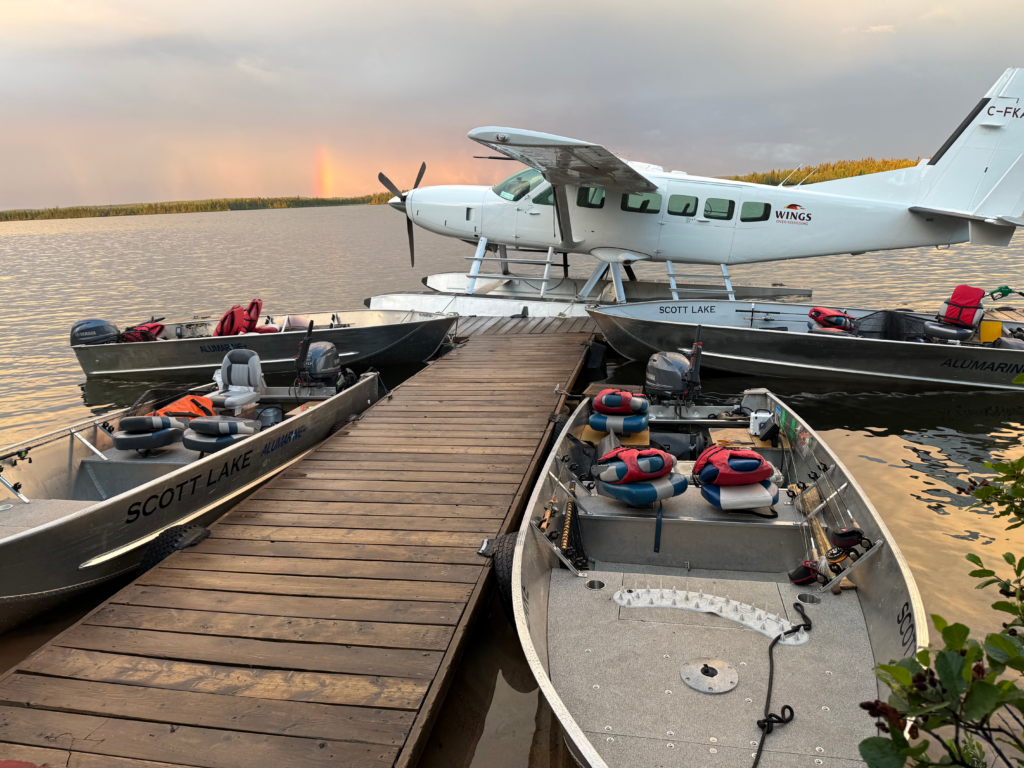
The adventure really began the moment we stepped off the floatplane. Everyone at the dock greeted us with a handshake and a smile, setting the tone for the rest of the week.
Scott Lake Lodge sits on a small island surrounded by enormous wilderness. The cabins, dining lodge, and grounds were immaculate, but what stood out most was the people who made every guest feel welcome.
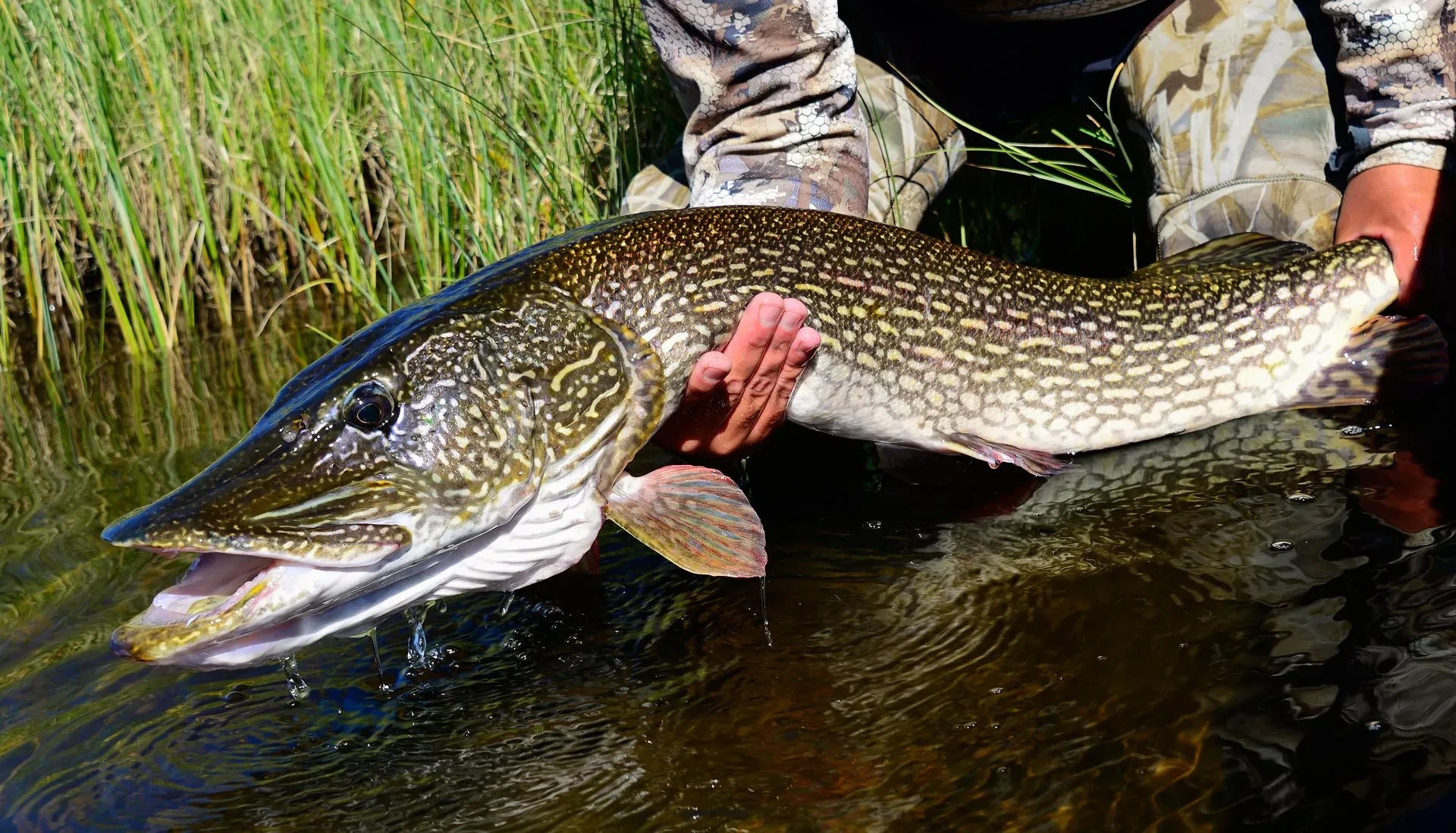
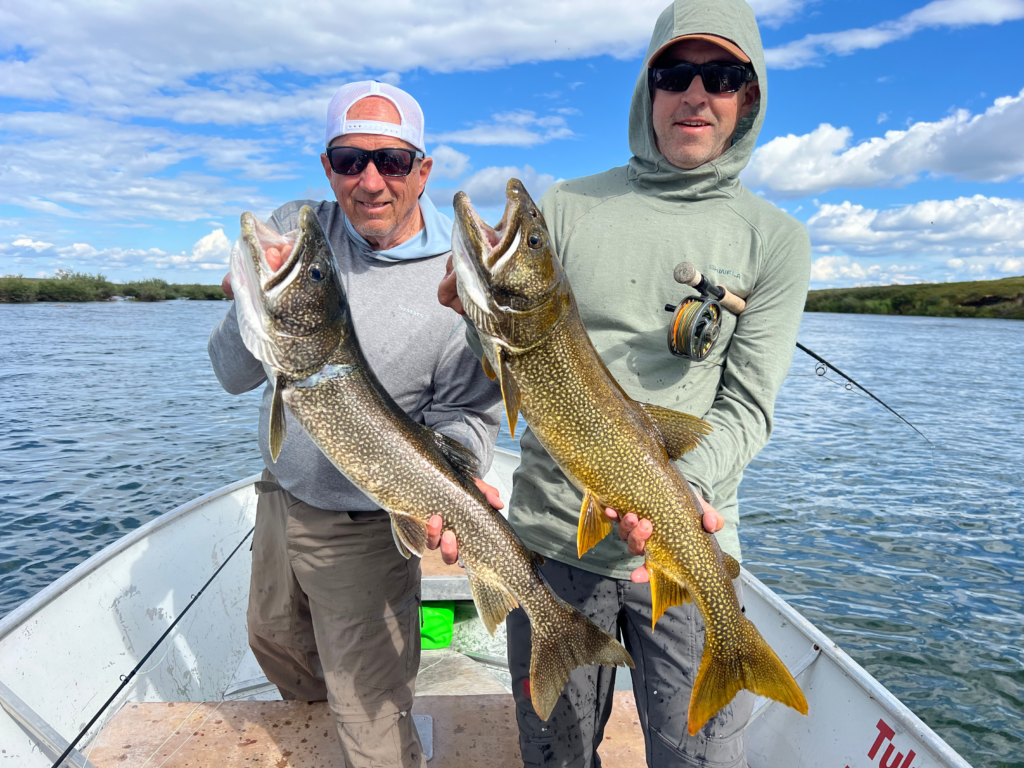
None of us expected to catch so many trophy fish in one week. Between Scott Lake and our fly-out adventures, we landed giant northern pike, heavy lake trout, and surprisingly large Arctic grayling.
Paul’s biggest pike measured 42 inches, while our lake trout regularly stretched into the mid-30-inch range. Up in the tundra, we experienced nearly nonstop grayling action with fish approaching 20 inches.
Our guide Josh wasn’t just there to put us on fish. He constantly shared knowledge about casting, fish behavior, wildlife, and the unique waters surrounding Scott Lake.
Whether we were sight-fishing to giant pike or learning better single-hand casting techniques, Josh made each day both productive and educational.
One of my favorite moments came when Josh finally crossed something off his own bucket list by landing a giant lake trout on a dry fly.
One thing that impressed both of us was the scale of the fishery. Scott Lake Lodge has access to more than three million acres of water, allowing guides to rotate locations and avoid putting pressure on individual fisheries.
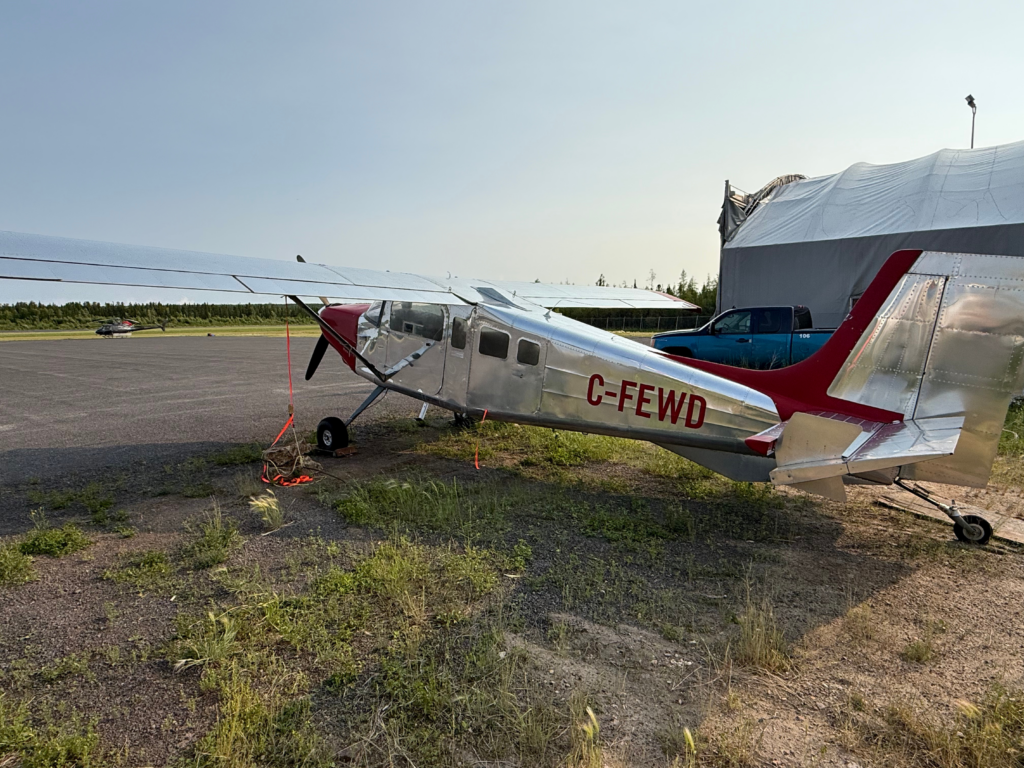
Some days we fished Scott Lake itself. Other days we climbed aboard floatplanes and flew more than an hour into remote tundra lakes where hardly anyone else fishes.
The conservation-first approach helps preserve trophy fish while keeping every day feeling fresh.
Fishing may have brought us north, but the shore lunch became one of the biggest highlights of the week.
After keeping a legal-sized pike, Josh cleaned the fish, built a fire from local wood, fried homemade potato chips, prepared fresh vegetables, and served everything inside warm wraps. It was one of the best meals either of us had ever eaten outdoors.
The dinners back at the lodge were equally impressive, with everything from filet mignon and lobster to rack of lamb arriving despite the lodge being accessible only by air.
Paul has spent years chasing steelhead with two-handed rods across California, Oregon, Washington, and the Grand Ronde. Surprisingly, he believes this trip actually made him a better steelhead angler.
Casting heavy flies all day with single-hand rods sharpened timing, casting rhythm, and fish-fighting skills that transfer directly back to steelhead fishing.
One phrase Paul shared quickly became one of my favorites.
The fish were incredible, but the friendships may be what we remember most. Throughout the week we shared meals and stories with anglers who had been returning to Scott Lake for decades. Some had visited for over 30 consecutive years, while others made it their one annual fishing trip with lifelong friends or family.
Those conversations, along with Jason and the entire lodge staff checking in every day, made the experience feel personal from beginning to end.
Episode Transcript
WFS 964 Transcript
00:00:00 Dave: Some fishing trips fade into memories over time. Others keep getting better every time you tell the story. Today, we’re reliving one of those great weeks from trophy pike and giant lake trout to floatplanes, shore lunches and the people who made every day memorable. Joining us today is Paul Plum, winner of our Scott Lake Saskatchewan trip giveaway and a lifelong steelhead angler who has never experienced anything quite like Canadians far north. In today’s episode, you’re going to find out what it’s like catching trophy northern Pike Lake trout and Arctic grayling in the same week. Why this shore lunch that was cooked over a fire became one of the highlights of the entire trip. We’re gonna find out how Scott Lake manages millions of acres of water while protecting the fishery for future anglers. This is pretty interesting. The vast area that they cover is amazing. We were flying it in the floatplanes on this trip. Plus, you’re going to get the one word that Paul used to describe the entire experience and why he would head back to this place tomorrow. No question about it. All right. You can learn more. You can check in with scottlakelodge.com and check in with Jason and the crew. They’re all right. Here he is, Paul Plumb. How you doing, Paul?
00:01:15 Paul: I’m doing great today.
00:01:16 Dave: Awesome. Well, I’m excited about this episode today because we’re going to be we just got off the lake, you know, we were up at Scott Lake Lodge. And I think we could easily say this is one of the best trips we’ve probably both of us have ever been on. We’re going to talk about the lodge trip. You know, we’re talking about fishing. You’re a big steelheaders. So we didn’t know about that. We’ve got that in common. And and then just the whole thing, right? We just got off the trip. We’re going to break down a little bit on that, but maybe start us off just on, you know, I know we’re going to talk steelhead a little bit today too, but how did you first come to hear about the giveaway event that you won and talk about that? Because I know some people probably think these things are fake. Maybe people aren’t winning, but talk about that a little bit.
00:01:57 Paul: Well, I listened to the podcast, to the Wet Fly Swing podcast. And I was online one night and I saw this giveaway for the trip up to Scott Lake Lodge. And I thought, well, what the hell, I’ll enter it. So I did, and it was a month or six weeks later, I got a phone call and won the trip. I was announced that I won the trip and I think you called me. And then a couple days later, the general manager or the the lodge called me and welcomed me to the lodge. So it was fascinating. I never think especially like this.
00:02:34 Dave: Right, right. And this trip was we were kind of doing the numbers, but this was no small trip. I mean, we went out to a lodge, which is, you know, I’m sure one of the one of the great lodges in the world, you know, just with everything. But talk about that when you when we got up there, the lodge, you know, how would you describe the experience at Scott Lake?
00:02:51 Paul: I tell you, it was fascinating. From the time we got off the floatplane, we walk up the ramp. The dock going into the. The lodge grounds itself. Everybody met us with a handshake and a smile on their face. And that was the start of it right there. You and I got off onto land and we were just fascinated about how nice it was, how beautiful it was. The lodge buildings themselves are beautiful, but the surroundings, it’s just beautiful. The lodge itself is on a twelve acre parcel surrounded by a two hundred zero zero zero acre lake. You couldn’t ask for anything more beautiful. I mean, no matter which way you look, North, south, east, west. It was beautiful. And in the lodge, buildings themselves were very nice. It was very well kept and the people were just. You couldn’t find a nicer group of people. And everywhere from from the guides to the hostess and their staff. Yeah.
00:03:51 Dave: And our guide and we’ll talk about Josh. We had the same guide all week for five days and he was just. He couldn’t get any better than Josh, right. He had the handlebar mustache and he had it all going. What was your what was your memory of now thinking back? It’s only been a few days, but Josh was a pretty good guy, wasn’t he?
00:04:09 Paul: Oh, Josh was a fantastic guy. And he was a book of knowledge. I mean, you could ask him about the fish. You could ask him about the surroundings, the tundra, or anywhere in Saskatchewan, or you could ask him about fishing. I had questions on the fishing. I had questions on casting because I usually mainly a double hand rod, and I was having some problems with the single hand rod. He helped me out. So you couldn’t ask for a better person?
00:04:36 Dave: Yeah. Yeah, definitely. And the cool thing was, is both of us were going up there. I mean, you’re a big steelhead fisherman. I fished for a lot of species, but, you know, I had never caught a northern pike, a lake trout, and then grayling I had caught, but I had never caught in either of those other two. And, and we had not only catching fish, but trophy fish. Which one out of those three species do you have one memory that really sticks out? I know we caught some nice fish.
00:04:58 Paul: And you know what? They were all memories. I don’t care if they were a twenty four inch pike or twenty six inch pike. I mean, I caught I probably caught a hundred pike that were anywhere from twenty six to thirty six, thirty eight inches. And in my largest one was forty two inches. I mean, they fight good in the beginning, and then they can kind of go to a lull. But then after that, man, I tell you, the fight is on and getting them in. Sometimes it just burnt the fingers lying running through my fingers, burnt the edge of my finger. I had a little bird.
00:05:33 Dave: Oh yeah, on it.
00:05:34 Paul: So but the lake trout, uh, we do a spot of lake trout and those are beautiful. And they fight from the beginning to the end. They just fight the grayling that we got into. I mean, when we were up in the tundra, that’s where we really got into grayling. And we got forty five minutes of nothing but every cast catching grayling. and they are a beautiful fish. I wanted to hold one and get a picture with it, but I couldn’t hold it. That there seems they get so slippery once they get in the net they get real slippery and I didn’t want to hold one and try and damage it. So you know, because they bruise easily. So I didn’t get a picture of the guide. I got a picture with the guide holding it and they’re just a phenomenal little fish. I, my largest one was nineteen and a half inches and it was great.
00:06:23 Dave: Yeah, nineteen and a half inches. That is the amazing thing. You know, that’s a big grayling. And, um, and yeah, we had that spot where it was on fire and that was in Mosquito Lake, the same area where we went up above the same day and got into those lake trout, which was amazing because we were not fishing deep lake trout. We’ve heard this on the podcast. A lot of times you have to fish really deep, but this time of year, the lake trout were in shallower water and we were fishing in the tail out, you know, I mean, it was still big water. It was, you know, deep, but we were swinging flies and stripping.
00:06:50 Paul: Yeah, it was it was big water. It was. And we were only down about maybe eighteen inches at the at the most. And I got tired because we were catching so many and I finally I got tired and I said, I got to sit down for a minute. I said, Josh, would you like my rod? And he took it and we had a. Oh, what was the fly? We had a.
00:07:12 Dave: It was a stimulator.
00:07:13 Paul: Yeah. We had a stimulator on. And Josh, one of his goals in life on his bucket list was to catch a lake trout on a top, water fly like a simulator. And he did. He caught a thirty eight incher on a stimulator on top of the water. And it was fascinating to watch that come in. And it took him probably. I bet it took him close to ten minutes to get him to the boat. It was just beautiful.
00:07:39 Dave: So yeah. And the cool thing about the lake trout, he caught this lake trout on a stimulator. And we were catching them on big flies like big six inch pike flies. We were using the same stuff, right. And so we were and we were stripping in and swinging, like we said. But these lake trout were, you know, Thirty six inches. Thirty five right. They were all in their mid teens, you know, big fish. And we’ll have we’ll have some photos.
00:07:58 Paul: They were all about the same size all in the thirty to thirty six inch range.
00:08:02 Dave: Yeah. So these are big lake trout. And uh, and then like we said, just the experience we flew out that day from the lodge, from Scott Lake Lodge over to mosquito, which was an old historic lodge that had been there. I mean, it just seemed like the whole trip kept getting better. And then all of a sudden it’s like, we’re leaving. What do you take away? I mean, I know it’s a lot right on this whole thing, but do you have, you know, the food was amazing. The trout, you know, the lodge. How do you explain it? We’re trying to explain it obviously here to people, but, um, is this something I guess I’m guessing you would go back to it if you could.
00:08:35 Paul: Well, the best way to describe it, in my opinion, is it’s a Four seasons quality lodge with a chance of catching not just fish every day, but trophy fish every day. I mean, the two experiences together is that’s on anybody’s bucket list. There are guys that have been going there for thirty years. Uh, I’m the average at our table at dinner. The guys have been going there for twenty years.
00:09:01 Dave: Wow. Yeah.
00:09:01 Paul: And all they could talk about was the big fish. From the time we met him in the hotel the night before we flew out to the lodge. They were talking about these fish, these being anywhere from thirty six to forty two, forty four, seven, forty seven inches long. And I was thinking, yeah, right. Somebody photoshopped those pictures. Well, no, when you get there, you’re catching them. And it’s just amazing.
00:09:26 Dave: Yeah. And the thing I loved about it was we caught them in a lot of different ways. You know, we were in some areas you were blind casting. But then remember that day we got into that little backwater, we were hitting the backwaters and we were seeing the fish, and then we were casting to them. And then Josh was on the platform kind of coaching us. He was like, uh, it’s almost like we’re saltwater fishing, right? He was right. And a lot of those fish you were seeing come up and take it. Or if you didn’t, Josh was coaching us. That was pretty unique, wasn’t it?
00:09:50 Paul: Yes it was. I mean, the pike, they could be right by the boat. I mean, they could be off the side of the boat, just a foot and then maybe two feet down. And you could take that fly in front of them, and you could speed it up or slow it down to agitate them, and they would take it.
00:10:08 Dave: That’s crazy.
00:10:09 Paul: It was amazing. It was crazy. You can’t get up with any other species that I know of.
00:10:13 Dave: No, that was the thing. You can’t. I mean, it was like cat and mouse. That’s how they described it, right? Cat and mouse. And if you if you went too slow, it’d move away. And a lot of times they wouldn’t take. But if you had it just right and you kept it going, I mean the fish and then these are like we said, big giant fish. They would eat it and then you’d have this fish on. I mean, you gotta, I kind of now sit here. It’s amazing because we’re, we’re just a couple days after, you know, kind of getting back. It still seems almost like a dream, doesn’t it, as you look back back to it.
00:10:39 Paul: Yes it does. I can remember we were I think it was probably about the same spot. We could see him down there and they were like, you know, honkers, they were four foot long fish, and we kind of dropped the fly down and it had enough weight that we could kind of ding him on the head a little bit and wake him up. And they would, you could get them to chase it sometimes. Most of the time you could, but sometimes they would. They’re sitting down there, they’ve had a big meal and the water’s warm and they’re sitting there digesting and sleeping. It was amazing when we were up at, uh, you know, these fish are so big. Some of these big ones, you know, the thirty eight to forty eight inch long fish, they T-Bone a fish that’s like twenty four inches or twenty six inches long. They’ll T-Bone it, take a bite out of it, and then they go back and eat it up.
00:11:28 Dave: Crazy.
00:11:29 Paul: We were fishing. It was up at Mosquito Lake and we had a one of those lake trouts on. And if you can remember, it, puked up a fish about half its size. It was you know, I looked at that. Whoa. You know. Yeah. Yeah. It’s amazing.
00:11:46 Dave: Yeah, that was cool.
00:11:47 Paul: Pike. Do that all the time. So what I like about about it too, is the Conservation act that they have. They they don’t overfish in area. I think the guides, the way I understand, they know where they’re going each day. So nobody retraces the track the next day or the day after, you know, there, there’s enough water there that they can spread out and then the fish aren’t getting overfished. And it’s just amazing.
00:12:16 Dave: Yeah. That’s right. Yeah. The conservation is good. And we, they handle the fish, right. So you don’t end up, you know, well cutting yourself because the pike have like five hundred razor sharp teeth. Right. That’s one of the things. And Josh got nicked by one on the trip. I saw that happen. But yeah, so, so you kind of have, I think, a little bit of everything I wanted to give a shout out to also everybody that was there. You mentioned a few, but we had kind of our crew, right? We were at the hotel when we first met before we got there, and we ran into, uh, Julian and Carl and Mike and Dave. Right. And then and then also John and, and John’s dad. Right. So we kind of had this little crew at our table the week. That was a pretty awesome crew, wasn’t it?
00:12:55 Paul: Yes. That was an awesome crew. And then Dave and Mike’s guide set with us and ate a couple times. Uh, Brian, there was another guy, Paul, that sat and ate with us one night. That’s part of it is how those guys sit with us and we get to enjoy them. And hopefully they enjoyed us too. So I think one of the other things I want to mention too, is Scott Lake might be two hundred zero zero zero acres, but they have the rights to fish over three. Three million acres of water. So, you know, just think of that. I mean, that’s a lot of water.
00:13:29 Dave: It’s a lot. Yeah. And the way they cover that, that was interesting too, because, you know, with these float planes, you have the little beavers. But we were using the otters and the bigger ones. And the reason they picked those up is that it allows you to cover more ground, right? So when we flew into mosquito, which was about an hour plus, you know, flight, it wasn’t that bad, right? We flew all the way. I’m not sure how many miles we flew, but we went all the way across that three million acres and hit mosquito.
00:13:51 Paul: Yes, it was an hour and twenty minutes. So that’s what I clocked with the twins. It was, uh. I’m not sure how many miles it was. They were averaging one hundred and twenty miles an hour, so probably forty miles. It was in the tundra. I mean, Scott Lake, it’s the lodge is only about ninety yards away from Northwest Territories border or the sixtieth parallel. And we flew all the way up to the fifty ninth parallel.
00:14:20 Dave: So yeah, we flew from the lodge was in the trees, but the forest there, the trees are such a rough environment. These small trees were like three hundred years old, but they’re only, you know, thirty feet tall. Right?
00:14:31 Paul: At the most. Yeah.
00:14:32 Dave: At the most. Yeah. So we had this forested area at Scott Lake, and then we flew up into the tundra where there was basically no trees. And we saw I didn’t see a muskox, but I think Josh saw one. And then, you know, there’s um caribou up there and tundra bears, right? Like lots of cool wildlife. And we saw those, uh, remember the osprey nest we saw in that giant rock?
00:14:52 Paul: You know, we saw osprey.
00:14:53 Paul: And then we have pictures of the babies that were in the nest. The mother and father were flying above us and squawking, like, get the devil out of there.
00:15:03 Paul: Leave them alone.
00:15:04 Paul: That’s the day, too, that we saw. We saw a pair of, um, swans, and then we saw a single swan later. Then we saw a pair of bald eagles. And then we saw a single bald eagle. And then we saw the moose. I think we’re all. We saw three moose. We saw two that day and then one another day.
00:15:23 Dave: Yeah. Those moose were great.
00:15:24 Paul: Oh they’re.
00:15:25 Paul: Fascinating you.
00:15:26 Paul: Know.
00:15:26 Dave: Yeah. It’s a rough you know, it’s a rough climate up there because, you know, winter comes and things are, you know, locked down, but so you don’t have as many as much wildlife maybe as you would have probably south, you know, just because of the climate. But there’s, there’s plenty of going on, including the, um, the loons, right. With that great song.
00:15:42 Paul: Oh yeah.
00:15:43 Paul: The loons. We saw loons just about every lake we went on, I believe. I don’t remember seeing them in the tundra, but I. We saw them everywhere else and they are. They’re fascinating little birds. I can’t imitate their their sound.
00:15:58 Paul: Yeah.
00:15:58 Dave: No, we’ll put a. Maybe we’ll get a little link in the show notes to some loons. The sound they make, which is, is amazing. So so that’s, you know, we’ve got lots. I mean, it almost seems like there’s so much I’m trying to describe it that it’s hard to really put it into words, you know, but, um, but I did want to get a little bit of your background on, you know, just your experience because I think it was unique. You won this trip, right? And it was totally random, which is which all of us are, right? We randomly pick a winner and it just turns out that you are this steelhead angler who has, you know, tons of rods and this is your thing. So talk about that. When did you get into steelhead? Have you been doing this a while?
00:16:33 Paul: No, I.
00:16:34 Paul: I fished when I was younger, back in the seventies, and then I gave it up because of work and travel. I didn’t start again until two thousand and six two thousand and seven. It was single hand rods, but then I really didn’t start fish. That was only once or twice a year, and I didn’t start fishing again until I retired in twenty twelve. And I picked up the Spey rod. It was about two thousand and fifteen sixteen and yeah, that’s my passion. Two handed rod and steelhead. I just I travel anywhere, I fish locally here in California, in Northern California, the eel, the van Duzen, the smith. And I’ll go up to Klamath and then, but I’d love to go up to the different rivers in Oregon along the coast or inland Oregon. And then I’ll go all the way up to the op the Olympic Peninsula and fish around forks and I. I have guides and all those different areas that most of those guys I really love and, and fish with them as much as I can.
00:17:38 Dave: So check out Montana Fly Fishing Lodge, a twenty twenty four Orvis endorsed Lodge of the year finalist, where luxury meets adventure on one point five miles of private, wild and scenic East Rosebud River frontage. Experience world class fly fishing on numerous Yellowstone Basin streams, gourmet cuisine made from locally sourced ingredients and rustic luxury accommodations surrounded by breathtaking wilderness. You can book your all inclusive Montana fly fishing adventure today and discover why they are the premier destination for unforgettable fishing experiences. Head over to Montana Fly Fishing lodge dot com right now. You’ve also fished with some pretty big names. You know, people we’ve had on the podcast, Dick Hogan, you kind of know everybody, right? It sounds like you fished with a number of those people. Did you? Was that on the Grand when you first met Dick? Was that on the Grand Ronde?
00:18:29 Paul: Yes. The first time I met Beck was on the Grand Ronde, and Dick was in Alaska when the Spey rod first really came to this country, and he helped develop the the spay lines with Edward and Scott O’Donnell. And then. But I fished with on that group up there, it was, uh, Corey Dettman and that’s who I fished with on the Grand Ronde. And then Dick was a guest of his on the trip to help people learn how to spay and explain it. And then, uh, I have fish with Scott Howell, who was up there with him too. There were nine guys that are really pretty famous with it, Ed Ward, who has, uh, opus and yeah, it just a really nice tight knit group of guys. All of them are. But Dick is a, he’s a great individual, along with Scott Howell and Corey Dettman. He’s a character to be around. So yeah, it’s really great people.
00:19:29 Dave: That’s great. What is the you know, for those. I mean, there are some steelheaders in the audience here, but talk about the difference between steelhead fishing, you know, with the spey rod versus what we were doing up at Scott Lake. Is there any comparison?
00:19:41 Paul: I think if you go up there and you fish those fish up there, Scott Lake, it’s going to make you a better steelhead fisherman. The casting is all single hand rods and you’re stripping in all the time. So it’s really like a fish and a streamer. These bugs that you’re fishing are, you know, some of them were four inches long. I was throwing some that were six and weighted down. And man, it’s just I’m still tired. I’ve been home for a couple of days, but I haven’t recovered yet.
00:20:10 Dave: Yeah, exactly. Yeah. It’s different. I mean, I think the whole the whole thing, the fishing when you think about it. Yeah. We were stripping flies. They were big flies. Single hand casting steelhead is spey for the most part. Right. It’s um you’re not getting a lot of fish. Right. That’s probably the biggest thing. The fact that steelhead, you’re sitting there sometimes for a day without touching a fish. Right. And up there at Scott Lake, it’s fish all day long pretty much.
00:20:33 Paul: With you know, the thing is, is you’re fishing with a starvation stick or it’s a fish of a thousand casts. And a lot of times I can remember you’ll be two, three, four days without catching the steelhead. You know, it depends on the river. It depends on the water. Depends on the fly. There’s so many variables. But up there. Scott Lake, here you are. You’re fishing and you’re not catching a fish. Every cast, but one out of five casts, you’re catching one. And I tell you, it’s work to get them in. It’s not simple. I mean, you got a fish on the line that, you know, it’s anywhere from twenty eight to thirty six inches long on the average. And that fish, I don’t know how much they weigh. They’re probably, you know, fifteen, sixteen pounds. Look at the size of them. And I mean, it’s hard getting them in the lakes might not have a big current, but there is that water factor there. And it’s just tough. It’s hard. But when we were up at the tundra and we caught them out of the river there, I mean, it was a real struggle to get them in, right?
00:21:37 Dave: Yeah. Because you had the current, you had a little bit of the current.
00:21:40 Paul: Yeah. It was every bit as I think it was probably harder to get them in up there than it was a steelhead, just because the length of the rod and, and the current, you don’t have a way to hold it. You’re holding it with one hand. You don’t have that, that leverage that you have with a two handed rod, right?
00:21:57 Dave: Yeah. That’s it. You’re basically catching steelhead and bigger big steelhead size weight fish, right. But with a single hand rod. Yeah.
00:22:05 Paul: Yeah. And it’s it’s tough. It worked out. You know, that first fish that I caught that pike when I caught that forty two incher. I mean, I had to sit down for a second. I was shaking so bad, so excited, I know.
00:22:19 Dave: God, I was just looking at some of those photos and we’ve got some good ones. Like we said, we’ll share. I mentioned or you mentioned the starvation stick. That is something I haven’t heard of. We have to have that quote in the in the show notes too. That’s I’ve never heard that before. That’s the steelhead spey rod, the starvation stick. Is that right?
00:22:34 Paul: Yep. A lot of gear guys would say, what are you doing with that starvation stick?
00:22:40 Dave: Oh that’s good. Yeah, no, I’m loving that. So okay. Well, this is a good start to what we’re talking about here. We’ve got we’ve got a little bit of a perspective on it. You know, obviously we’re not going to hit on everything today, but one of the things that I, you know, wanted to touch on, which I hadn’t had you been on a floatplane before, like that landing in the water?
00:22:57 Paul: No, I have not. And that was awesome. I mean, the, the first time when we got it to Stony Rapids, we flew from Edmonton to Stony Rapids on a jet. And then when we get off the jet and we get shuttled to where we catch the floatplane and getting on that, and you think I’ve been on the small planes a lot or quite a bit, but to go off the water was fascinating. You know, I’ve got pictures of it. The spiking of the spoons coming.
00:23:25 Dave: Off the pontoons.
00:23:26 Paul: Yeah.
00:23:27 Dave: Remember how he did that? Because it’s cool. We both sat up front, co-pilot right at a time and. Yeah. And you could see, I mean, it’s he’s, he does that thing with the wheel to get him up on plane, where he shakes the wheel back and forth, and it helps to get the pontoons on plane so they can take off. But yeah, you’re taking off on this lake and then you’re always, you know, anytime you’re in planes, you know, you’re always at least I am. Occasionally you think like, oh man, you know what happens if you go down this thing, right? You’re like, this is kind of crazy. And but the cool thing about those planes is they can pretty much land anywhere, right? Water or that’s an amazing thing.
00:23:58 Paul: Yes, they could. And then my hat’s off to the pilots. I think we had two different pilots and, uh, they had three on staff up there. But all the pilots are top notch. They really great guys. And when we get to different places, they help everybody get ready. They help people get off the plane. They help get the gear off the plane. They help get the gear on the plane. They make sure to get in the boat. Good. Everybody was so helpful. It’s amazing. I just been around people like that for a long time. It seems like. Yeah, they were great.
00:24:32 Dave: Yeah, that was good. That was really good. Yeah, I think Derek was one of our pilots he had there. I think he took us into mosquito.
00:24:39 Paul: Yes. He took us into.
00:24:40 Paul: Mosquito and he took us into the other lake. And I can’t remember the name of it, but he took us into that. And then he flew us out on the day we left.
00:24:48 Dave: Yeah. On the day we left. And the other cool one, like you mentioned, we flew from Seattle up to Edmonton. And then we got on that plane, the charter in Edmonton. We had the two gals that were they were quite a hoot, weren’t they? The ones that basically helped out with everything. And they were on the flights.
00:25:05 Paul: Yes, they.
00:25:05 Paul: Were their sisters. So they they check you in when you get over to where you catch the jet in Edmonton to go to Stony Rapids, they check in, they weigh your luggage to make sure that the plane isn’t overweight, because they’ve got a lot of gear that goes back and forth on the plane, too. It’s not just the passengers and their gear going to the lake. It’s all the provisions that the lake needs to operate the food, you know, because those girls get a lot of. They’ll get an email from the lodge telling their shopping list. So then not only are getting food, but they’re taking in their beer picked up, they’re getting their other hard liquor picked up. So it’s a smooth working clock no matter how you look at it. They all work together. But those girls were a hoot. They made the trip, they got you relaxed, and then they flew back with you because the day that we left, other people were coming in. The next the next group of people were coming in that day. So they flew them over to Stony Rapids. So then they flew us back from Stony Rapids, back to Edmonton. They talked to us and got together with as much leaving as they did when we first got there.
00:26:20 Dave: Right. And that’s the the really crazy thing. We talked about that a little bit. The logistics to put a build a lodge out on this remote lake, right? Think of the it’s all got to come in by plane, you know, and they have everything. A four star lodge, five star lodge on this island. So right it came. It came by plane. I think originally the big stuff came by ice, right? They dropped in when the lake was frozen.
00:26:40 Paul: Right, right.
00:26:41 Paul: When the when the lodge first started. They have pictures there. They had a DC three with skis on it. So they would take it in on the wintertime and they used it until they couldn’t anymore. You know, it just finally wore out on them. But everything goes in on skis in the wintertime. I had conversations with, uh, Jason, the CEO, GM last winter in March, and he told me they were taking stuff in and they take fifty five thousand pounds on the average.
00:27:12 Paul: Wow.
00:27:12 Paul: Back and forth in the wintertime, you know, they take building materials in because when the lodge closes up in September, the last of September, it takes them three days to board up all the windows and get it.
00:27:24 Paul: Oh, yeah.
00:27:25 Paul: Ready for the wintertime unhook and water lines and draining out toilets and all that type of stuff. But then after most of the staff leaves, then the maintenance people and all of the key people, they stay and make a shopping list of what they want to do for the next next spring when they open it up like building materials, what are we going to replace? What are we going to try to improve on? And they make improvements each year. They start in April sometime and work through April to May till it opens up. And then like this was week seven. So they open up, you know, right around the end of May, first of June.
00:28:06 Dave: Yeah. That’s right. And then they’re going right. And then then we, we came in in July, but they start probably having folks come in later in June. Right. The first crew.
00:28:14 Paul: Yeah, about.
00:28:15 Paul: the first of June is when they start somewhere in that neighborhood. So they’re from a month and a half. They’re getting everything prepped, they’re getting the walk path all rigged up and straightened up. They’re doing new building projects, you can see that they replaced some siding or they do upgrades on the building. One of the buildings we were in, they did an upgrade on it this year and you could you could tell it, but I mean, the buildings are in really great shape and they take a lot of pride on them. I mean, little small things. At one time they had dirt paths walking around building the building. Then they put gravel down. Well, the gravel was noisy for people sleeping. If a guy was walking by at five o’clock in the morning or something like that. So then they took a chipper to the island and they chipped up their wood, and they got wood chips on all the cart paths now, and that’s quiet and it’s cleaner. It’s cleaner than gravel, it’s cleaner than dirt. So and.
00:29:12 Paul: You know, it’s.
00:29:13 Paul: It’s threefold the best way to go. And then they got enough dead trees around fallen trees, and they can go get them off of different islands or different land somewhere, and they haul them back and ship them up. They’ll get a tree that’s, you know, up to five inches in diameter somewhere in that neighborhood and go back and chip it up, and then they can haul it around with their four Wheeler and a cart and put it on the path and keep everything looking beautiful.
00:29:40 Dave: Yeah. But yeah, those. Yeah. And the cabins were great. We had the, the cabin on the very end. There was a view of the, the lake out the deck. Right. All that stuff. And then one thing I was remembered, I definitely will never forget. This is the shore lunch. We had one shore lunch that, that and I, after I talked to a few other people, it sounded like others got had a shore lunch every day, but I think I was loving fishing. Right? I think we were just going. We were into it. But that shore lunch was unbelievable, right? We caught a pike. I mean, do you remember what Josh went through to put that together? I wish I could get a video of him doing that whole thing, but it was pretty cool.
00:30:12 Paul: Yeah, I have quite a few pictures of it, but, I mean, we caught a pike and it was. It was damaged. What? I can’t remember what happened to it.
00:30:20 Dave: And it was small, right. There’s only a certain you can keep one or two a day and they’re a small, small range.
00:30:25 Paul: Yeah. And so we kept this. He filled it out and he showed us how you debone it. Get the the bone out. And because they’re kind of shaped like a tuna, in a way, they got bone out their sides. You know, typical fish has a backbone thin around the belly. These are a little bit different than that. And so he got he was very careful getting all the bones out of it. And so he had the filet strips. There were like four in this fish, one on the belly section, one on the back and on both sides. So then he takes those and he cut them into about four inch pieces. And then, uh, when we got to shore, he got them out and he, he put them in some spice in a bag and shook it around. And then he put added flour to it. And while he was doing that, he had prepped all the different vegetables. So we, we had onions. We had red cabbage. I think there was some lettuce, some cilantro and cheese. Then he took potatoes and he had a little banjo that he cut the potatoes in his oil that he had cooking. And then we had potato chips, French fried potato chips. And in that fish, when he he took the potato chips out. And then he did the fish. And then he put everything together in a wrap. And it was fantastic. It was probably the best shore lunch I’ve ever had.
00:31:48 Dave: If one hundred percent. Yeah, it was the best shore lunch. It was.
00:31:51 Paul: I think our hats off to the kitchen staff because our go lunches, our sack lunches phenomenal. We had some of the best sandwiches I think I’ve ever had.
00:32:01 Dave: It was all good. And I’m a. That’s one thing about me. I’m. Food is my. Even though I don’t eat amazing food every day. I mean, I love food, you know, and I feel like that shore lunch was off the charts. But then the dinners, you know, I mean, filet mignon, we had we had lobster, snow crab. I mean, right, every meal at dinner was, was nuts.
00:32:20 Paul: Yeah. We had that, uh, duck or rack of lamb. Um, yeah, we had some fantastic meals, you know, and you gotta remember all this stuff has flown in. So I mean, the variety that we had, but the salad bars every night, the salad bars were just fantastic. The homemade dressings were off the chart. But then in the morning, the cereal bars, the breakfast bar, you know, seven different cereals. I mean, they had three basic cereals, but then they had all of the, the different little boxes of cereals. They weren’t boxes. They were big, bold type containers with cereals, you know, but there was like a selection of seven. But the fresh fruit, strawberries, pineapple, cantaloupe, uh, watermelon.
00:33:10 Dave: Plenty of food. I mean, I know you don’t eat a ton, right? For your, but you, you probably ate more than you normally do. Right on that trip.
00:33:16 Paul: Yeah. We won’t say how many pounds I gain. Well.
00:33:20 Dave: But. Right.
00:33:21 Paul: Food was the food was off the chart. That’s all there was.
00:33:24 Dave: Yeah. And that short lunch was. Now I go back to Mary because he he went up there. We literally got out on this little bedrock kind of landmass. And he, he cut down this little. Well, there’s this dead tree that was dead up there. He cut that down, he chopped it up, and he stacked it across the fire. And it just made a fire of wood. And then he started up with moss, got it going. And then, yeah, he deep fried. He had this big pan with oil in it. And he was basically deep frying the chips. Just the experience, the experience there like that is pretty cool.
00:33:52 Paul: Yeah. And watching it, watching it all come together was cool. He knew exactly what he was doing, you know, and it was timely. The oil was heating up while he was cutting up all the vegetables. And then while the he had basically the vegetables cut up by the time the fire got going in and the oil was hot, then as soon as he knew the oil was hot, he just, uh, basically filleted those potato chips into the oil. You know, he can put them on that angel thing that he had and just zing zing zing zing and.
00:34:25 Dave: Just went for.
00:34:25 Paul: It. I mean, went for three potatoes like quick. Yeah, they were in there and they cooked for, I don’t know, a better part of ten minutes. I would say took them out, strained them, took them out, and uh, then they put them in a big bowl and he added some spice to them, a little bit of salt, but I’m not sure what the other spice was, but they were very tasty. Then he cooked up the the fish and everything came together. It was terrific. Matter of fact, you ate a whole one and so did I. And it was a wrap. And those were twelve inch, uh, shells that he was using. And then we both ate another half of one a piece.
00:35:07 Dave: So yeah, we can. Yeah. We couldn’t have just, uh, just one that was, that was too good.
00:35:12 Paul: And there were a couple pieces of fish left over and he brought them over. And I think we grabbed those and ate them up off on the side. So.
00:35:23 Dave: This episode is brought to you by AVC Rig Adventure Vehicle Concepts out of Colorado. These guys build next level adventure vans designed to help you explore farther and stay out longer. Are you dreaming of a full van build? Or maybe you just need the best aluminum cabinets and storage for your DIY rig? AVC rig makes it easy to turn your vehicle into the ultimate mobile base camp. You can check them out right now at avc dot com, that’s a v c rig dot com. Fishing expeditions offers world class fly fishing right off Alaska’s incredible road system. From monster rainbow trout to feisty Arctic grayling, you’ll chase big species in the stunning landscape. Whether you’re a seasoned angler or just starting out, their expert guides ensure an unforgettable adventure. Book your trip today before spots fill up and experience Alaska’s diversity like never before. Check them out right now. That’s Fishing expeditions dot com. I want to give a shout out to because we had we can’t do these events without our partners. You know, I feel like that’s one thing that we had a bunch of amazing partners on this thing. And one of them, I’ll just talk about a few. You mentioned, of course, Jason at Scott Lake Lodge and the team up there, but also Darrell with Visit Saskatchewan. Big shout out to Darrell. He was a big reason this came together. I’ve been talking to him behind the scenes and as well as some other partners Toyota was you know, I’m a big Toyota fan with my truck, but they were a big partner on this one. And then really cool happened. We’re going to talk about this probably more, but we were using I had I brought this old lamp and glass rod and you know, it was it was okay, but the line wasn’t right for it that I got. But, um, you brought a pescador on the fly and a San Juan rod works that I actually used the whole time, right?
00:37:12 Paul: Yes. I won both of these rods in the giveaway. They were part of the giveaway package. They were eight weights, nine foot eight weights. They were great, great rods. They worked perfect. I mean, I mean, we actually kind of fought over who was going to use this rod that day or different waters. So yeah, we’re great rocks. We loved them.
00:37:33 Dave: Yeah, they were definitely an eight weight. The setup that you had was there were nine foot eight weights. Both of them pescador on the fly and San Juan rod works. And then you had what were the lines we were using? Because those lines set perfectly.
00:37:45 Paul: The lines I was using, I had reeled up on those was an S, a Titan sonar.
00:37:50 Dave: That was it. Just like your Titan sonar, just your nine foot eight weight standard Titan sonar line.
00:37:55 Paul: I had three, three different line setups, and they were all the Titan sonar. And one was a float, one was a mid sink and the other was supposedly a full sink. But I didn’t get the feeling it was a full sink. It seemed to be more of a floater too, but they were great lines.
00:38:14 Dave: Yeah. So that’s a big shout out to all the partners which made this this happen here. And, and I think what we’re also going to be doing is doing a little bit of follow up on, you know, we had a couple other of the clients that were at the lodge were actually two guys that I met from Saskatchewan, and they were it was a great story. They were actually pilots themselves. They flew up from south in Saskatchewan up to Stony Rapids and parked their planes there. Cessnas. Right. Yeah. And so I think I’m going to have them on because it was their first time ever fly fishing in their life on that trip. And they both caught trophy trophy fish. So we’re gonna, we’re gonna bring them back on at a later episode to kind of have that experience. And then also, Josh, I know. Josh, once the season gets done, we’re going to have him come on and talk about his perspective from the guides, you know, being a guide. And so we’re gonna have more on this, Paul and as we go, but let’s, let’s take it out of here real quick with our rapid fire round. We love doing this. We, we used to do the rapid fire back in the day, and we’ve taken a little hiatus, but we’re back to it. And, uh, and today, like we mentioned, we already gave a shout out to visit Saskatchewan and all of our great partners. So that’s the big shout out today. But tell me this, we’re going to zip through a few of these. First off, your favorite meal for the trip. Which one was it?
00:39:21 Paul: Oh man, they were all good.
00:39:23 Dave: Yeah. Is that too hard?
00:39:25 Paul: Yeah, that’s too hard.
00:39:26 Dave: Well let me. I’m going to say mine. Yeah, it is. Because if I put myself on the spot. Yeah. Because I would go back to the duck, which I haven’t had a lot of duck. The. Yeah. It was all. It’s pretty hard to just pick one isn’t it?
00:39:36 Paul: Yes. You know, I mean they were all so good. And um. Yeah, I can’t pick one.
00:39:42 Dave: That’s just hard. All right. These are good. These are rapid fire. These are good. Good. So what about your fly? Your favorite fly you use. Did you use one flyer. Was there one that you kind of, you know, got more fish? I know you’re using the white the white one quite a bit.
00:39:54 Paul: I used the white one with a red head on it. But fly that I really liked was that, uh, black bunny leach, that bunny leach, that black one seemed to catch a lot. It was a great flight.
00:40:06 Dave: That’s right. The bunny. And that worked really well for me, too. I feel like that bunny Leach. That’s the great thing about the black Bunny leach, is that you could use that for almost any species and do well.
00:40:15 Paul: Yeah, we use that. We use that consistently everywhere we went. We used it up at mosquito. The trout loved it. We used it at the on the other fly out and the three different places we fished with it on Scott Lake. They loved it. Remember we over at Premier Lake and Premier joined Scott Lake by a little channel. Yeah, it was great.
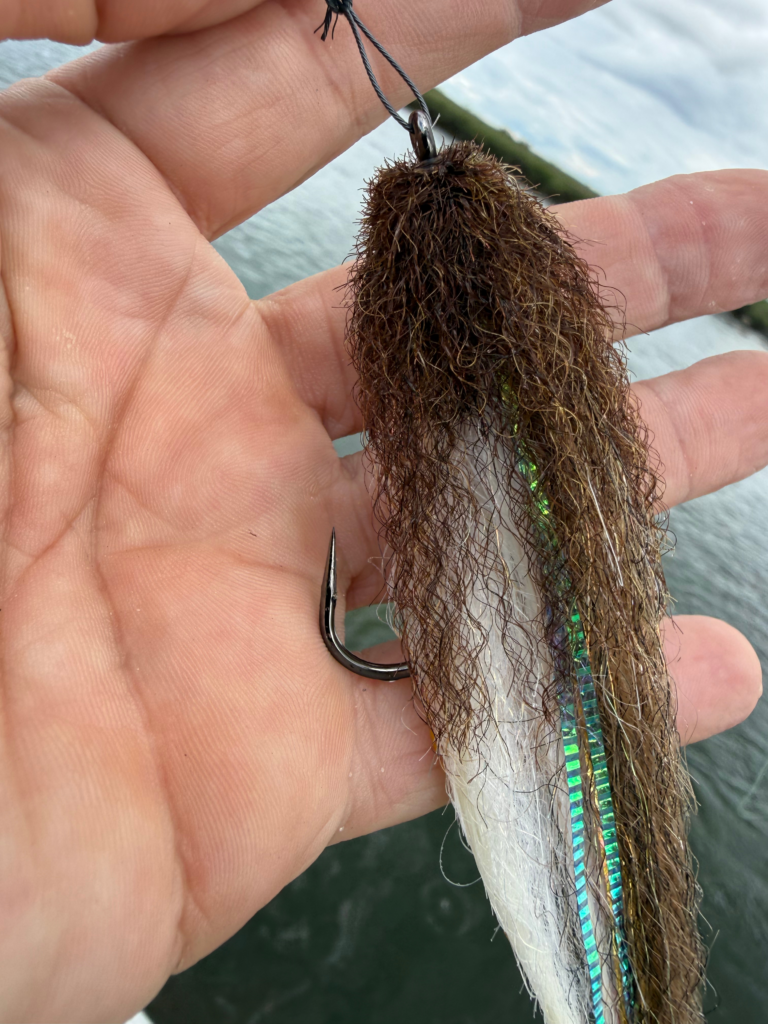
00:40:39 Dave: So yeah, yeah that’s great. And and one that Josh gave me that I used and I’ll have to find the name, but it was one of Gunnar Bremer’s flies. It was a big pike fly. It was, uh, it had some brown on it, you know, some brown. And it was.
00:40:52 Paul: I was a killer.
00:40:54 Dave: Wasn’t that great?
00:40:54 Paul: That was a killer. You know, I started to say, well, why don’t you give me one of them? Yeah, I was, I was right, I was jealous you were catching so many fish on that fly. So something we need to talk about. Uh, we were probably out of twenty four guys that were fishing. I would say that eight of us were fly fishermen. The rest of the guys were gear fishing, but we caught some fish every bit as big as the guys with the gear. And I would say we caught as many fish as the guys with fishing gear. So the lake could go either way. So I, I think that we did every bit as good as those guys did.
00:41:33 Dave: Yeah. Yeah, I agree, I think Mike or let’s see Mike and Dave. I think Dave got one that was up. Well he’s caught a forty eight incher. There was definitely people there because it was cool. That was one of the unique things about Scott Lake Lodge is that we’re sitting there at dinner and they come in and they do the photo shoot, right? They give a shout out to people, give away some pins. We got a bunch of pins, and they just basically do a highlight reel of what everybody caught. And it was it’s just a highlight reel of forty eight inch trophies all the way down to, like we said, forty twos, right?
00:42:01 Paul: Right. Correct. And you know, so I mean, we got we got trophies for because we caught a, a trophy fish on a fly. They might not have been as big as the ones on the gear guys because the gear guys consistently were up in the forty seven forty eight inch. But when we were catching forty two and forty four inch on a fly, we were every bit as good as those guys, if not better.
00:42:25 Dave: Oh yeah. Well, and it’s cool. I’m going to give a shout out to Shirley, who I don’t remember if we met at the Lodge, but she sent us an email afterwards. I’m not sure if you saw this, but they had a listing of all the fish we caught. And I’m just looking at it now. I mean, these fish are fish on Pike Range, like we said, forty. And these are just the trophies we caught, you know, three, four, five. Yeah. We caught like five fish over forty inches in that range. And then lake trout, we caught another five fish that were all in the thirty five inch range. And then we caught a whole slew of fifteen to twenty inch grayling.
00:42:57 Paul: Yeah. And that’s, that’s a trophy fish for grayling. Anywhere from fifteen to sixteen inches is considered trophy for Arctic grayling.
00:43:06 Dave: Right. And I’m just looking at the numbers. Yeah. Twenty point five, seventeen point five eighteen point five. So it was again it’s obviously a unique place all together. But yeah, I think like we said, the gunner Bremer, that was the pattern that worked well for me. Plus the leach. Well, let’s just take it out here, Paul. We’re going to get out here in a couple of minutes. But this is going to be probably a hard one as well. But when you think of one word to summarize, to sum up the experience at Scott Lake, could you think of one word or is that is that a little bit too hard?
00:43:31 Paul: Fantastic. Great life experience, but just just fantastic.
00:43:36 Dave: Yeah, fantastic. I would say mine would be remote. You know, I feel like the more, the harder it is to get to places. It seems to me that it’s always going to be almost always going to be a better trip. Right? Yeah. The fact that we had to take, you know, fly in from Edmonton to Stony Stony Rapids is barely an airport. It’s a landing strip, right? It’s just this little tiny kind of native village sort of thing. And then and then hop from there on to a, a van to just zoom over to the, you know, the lake hop on a float plane, float plane takes us off lands at Scott Lake. You know, we’re there. And then we fly out from Scott Lake out to even more remote tundra up north. I feel like that was a big part of the experience.
00:44:16 Paul: Yes. That flying out to both of the lakes we went to was a big part of the experience. It was a trip of a lifetime.
00:44:23 Dave: Yeah, well, take it away. We always love to get a few tips, you know, little tips. Like when you think about what Josh gave us and I can think of a few he gave me, well, one I’m going to say because we’ll talk about this with Josh, but you know, even down to like how to wrap the line over the rod to make sure it’s secure. Right. Little tips like that, but do you remember a tip or two that Josh gave you that helped you out that week?
00:44:43 Paul: Slow down, I guess. I was so excited, I was just whipping the fly line and I knew better, but I just, uh, as soon as I slowed down, I was, you know, and watch my back cast those two things. Slow down, watch your back cast. And I know that watch my back cast from using a Spey rod, but every good fly fisherman needs to watch their back cast. And then as long as you know where your back cast is going, your forward actions are going to go there. But yeah, um, Josh was a great, great guy.
00:45:16 Dave: Yeah. Likewise. And like we said, we’re going to have Josh on the podcast here. So everybody will get to hear directly from him. And, and you know what it is. And the cool thing is, is by the time he’s on, it’ll be towards the end of the season. So we’ll be able to hear some more stories on this. But yeah, Paul, I think we could probably leave it there. We will, uh, like we said, send everybody out to Scott Lake lodge dot com. And the cool thing too with us before we get out of here, you know, we made this connection. You know, you could have been anybody. But since you’re a steel header, we’re definitely going to be hooking up and putting together a trip. And I think even Jason might come down and maybe we’re going to find a great trip. So all three of us can come together for a steelhead trip. Are you excited for that? Do you think this is going to be doable?
00:45:52 Paul: I am, I think it’s doable and I’m looking forward to it. I mean, I don’t think you could find a nicer individual than Jason. He’s a very sincere, great person. Yeah. And I mean, he talked to us every day. He if he didn’t see us at breakfast, he would see us before we went out fishing, and he always saw us at night and would talk to us. Well, how was it today? And different things. And it’s not just because you and I were part of a giveaway. It’s part his sincerity. He wants people taken care of.
00:46:26 Dave: Yeah, he does.
00:46:26 Paul: And he’s he’s interested in people interested in their story. And everybody at the lodge was that way, though, you know, that’s true. The girls waiting on you, everybody, you know, uh, how was your day and what what happened and stuff, you know, from the girls that waited on us to the bartender, all of them. Everybody was fantastic.
00:46:46 Dave: It’s true. It’s true. Including the the people. I feel like the also, you get these places that, you know, when it’s that sort of person like Jason and the crew, they attract a certain type of person. Right? When you look at again, Julie and Carl, Mike, Dave, John, Arnie are kind of our little crew at our table there. You know what I mean? Like all those guys in Arnie. I mean, talk about a guy that is like, you know, we all sat down and talked with him. He. What a cool guy, right?
00:47:11 Paul: Yeah, eighty three years old and out there doing that and enjoying it.
00:47:14 Dave: Yeah. He had a good time. And they and they do one trip. That’s the great thing about Arnie and John. They do one trip a year and one fishing trip and this is it. And they. And John said, he’s like, man, I just love doing what my dad loves. So they, they meet together at this place once a year and they do it. You know what I mean? Like that’s pretty, that’s spectacular.
00:47:32 Paul: No that is yeah. And Dave and Mike take a look at them. This is one trip that they really love to do. And they’ve been fishing together since childhood. And I would say they’re in their sixties somewhere. I’m not sure. I never did.
00:47:47 Dave: I’m not even sure either.
00:47:48 Paul: But they’ve been this is a lifelong thing, and Dave can go anywhere he wants to fish. As long as Mike is there, that’s what. Right. That’s what it’s like.
00:47:58 Dave: That’s what the. That’s what the wives say. Yeah, that’s a pretty good. That’s pretty good. And then and then shout out again Julie and Carl. I mean, they, they are a little bit younger, but they’re they met in Mongolia, right? This last year, they met on a trip in Mongolia. Yeah. And Carl was like, I think Carl said to Julian. He was like, hey, you got to come out to Scott Lake. And they just put it together.
00:48:17 Paul: Yeah. And we were standing in the airport waiting for the plane in Seattle, and I had a rod case with me, fish pond rod case with me. And, uh, anyhow, Julian came to. Are you guys going fishing? Yes. And he said, where are you going? We said, Scott Lake. And he said, I am too. So I mean, our relationship started in the airport and then it went to the Renaissance, to the bar that night drinking. And we met Dave and Mike and Carl the next morning. And so it was just that started all our relationship. It was great. Then I met John. I started talking to him and then he I mean, this guy’s a wealth of knowledge on cars. If you want to know anything about a Lamborghini, a Porsche, a Ferrari, he goes back forty years on those cars.
00:49:09 Dave: Oh, he is an encyclopedia.
00:49:11 Paul: Yes. Yeah. Fascinating guy.
00:49:13 Dave: Yeah, yeah. Fascinating. No, this is going to be a I think, again, these trips are what they they bring together as the people right out of. You got the fishing. The fishing is one hundred percent a huge, obviously huge. But the people that it brings together is kind of like the. You know what I mean? The icing I feel like on on the cake.
00:49:30 Paul: Take a look. We had those those two football players that.
00:49:33 Speaker 5: Were oh yeah.
00:49:34 Paul: NFL football players and their dads and their brother and an uncle that came over from England to fish with them. But it’s a yearly trip that they pretty much do.
00:49:45 Dave: Yeah, we had the football and they were to like, I think one of them had played like five or seven years in the NFL and they were giants, right? These guys were like six, nine. They were just huge human beings.
00:49:54 Paul: Yeah. I mean, I looked at them, I thought, you think I want to meet them on the line somewhere crazy. Yeah. One played for four years and the other played for I think eight. But yeah. Anyhow they were in. Nice, very nice individual. Their their dads were great. I enjoyed teasing with Mark. I mean, I’m kind of a big tease anyhow. And I enjoyed joking with some of the people and yeah, it was, it was great.
00:50:19 Dave: That’s right. This is awesome. Well, cool. Paul, I think we’ll leave it there for today. And like we said, we’ll send everybody out to Scott Lake Lodge dot com. They can also go to the show notes of this episode. Just click the link in the show notes, and you can look at some photos of I’ll have photos of you, Paul, and everybody on the trip. And um, yeah, man, until we reach out again on the steelhead trip. I’m excited to, uh, put that together and thanks for all your time today.
00:50:38 Paul: Thank you, I appreciate it.
00:50:41 Dave: Sometimes the best fishing memories aren’t just about the biggest fish. They’re about the people, the place, and the stories you bring home. Hope you enjoyed that one. You can tell we were both pretty excited. This is hot on our mind. Just getting off the plane this week. Uh, definitely never thought, uh, northern Pike as we had talked about it for years, finally getting up there and having this action. It was definitely another experience. The lake trout and grayling was really just like a big bonus on top of. It was just as amazing to be there and shout out to everyone, anybody we missed to. Definitely big shout out to you for putting this together. If you want to get access to some of our trips and giveaways and events, just send an email to Dave at web dot com. You can also go to webflow dot com slash pro. If you want to get access to Wet Fly Swing Pro, this is our membership community where we’re building trips, telling stories, connecting with the community, and it’s our liars den. If you want to get access to Wet Fly Spring Pro, check that out. Now, we do have a big event coming up here in a couple of weeks. Our Alaska Space school giveaway is coming up soon. If you want to get access in a shot to win a trip to the Alaska Space School at Togiak River Lodge, you can do that. If you want to get access to any trips, you can check in with me and let me know if you’re new to the podcast and have never said hi in person, please do that. Dave at web dot com. Uh, always love to hear new listeners. Or if you haven’t connected in a while, let me know what you’re enjoying about the show, what we can do better, and to make this thing great for you. All right. Appreciate it. One final thought. One final quote before we get out of here. This comes from Paul. He said it’s a four season quality lodge with the chance of catching trophy fish every single day. Paul Plum, shout out to you man. This is a great one. Shout out to all the crew that we talked to on this podcast. And thanks again for you. I hope you are having a great day. I hope you’re having a great evening. Or if it’s morning. Hope you’re getting ready for a big day on the water or planning for that big day on the water. And we will be excited to talk to you and see you on that next episode. Talk to you then.
00:52:41 Outro: Thanks for listening to the Wet Fly Swing Fly Fishing show. For notes and links from this episode, visit wet fly dot com.
This trip reminded me that the best fishing adventures aren’t measured only by trophy fish. They’re measured by shared meals, unforgettable places, great guides, and the people sitting around the dinner table each night swapping stories.
Scott Lake Lodge delivered all of that and more, and it’s a place I’ll be thinking about for a long time.














A fly-in fishing trip sounds like a dream! I always get overwhelmed with gear lists for trips like this, so I use Taskai on my Android to capture all my prep tasks from brain dumps so I don’t forget anything.