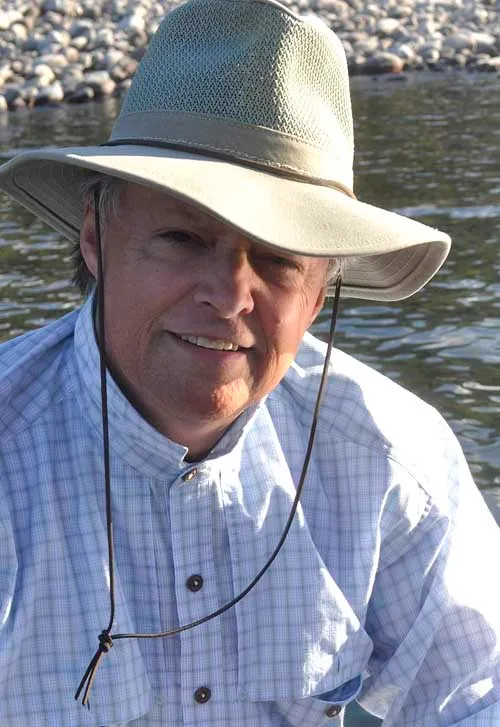
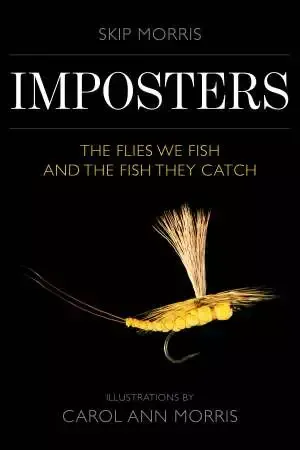
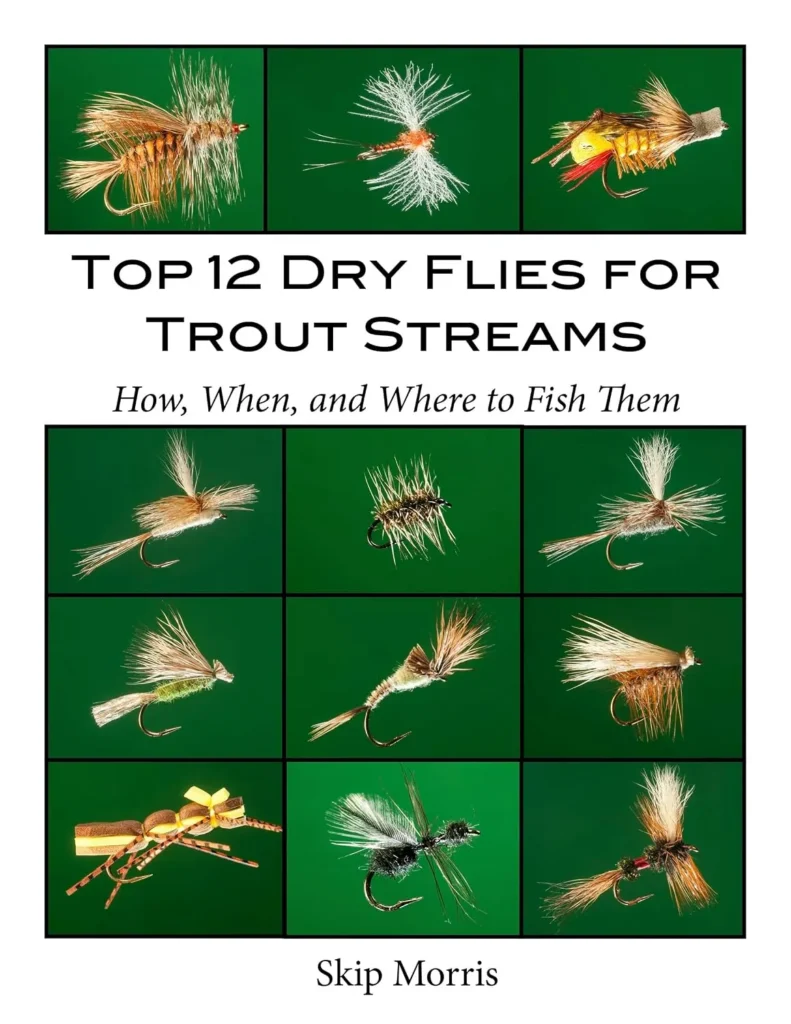
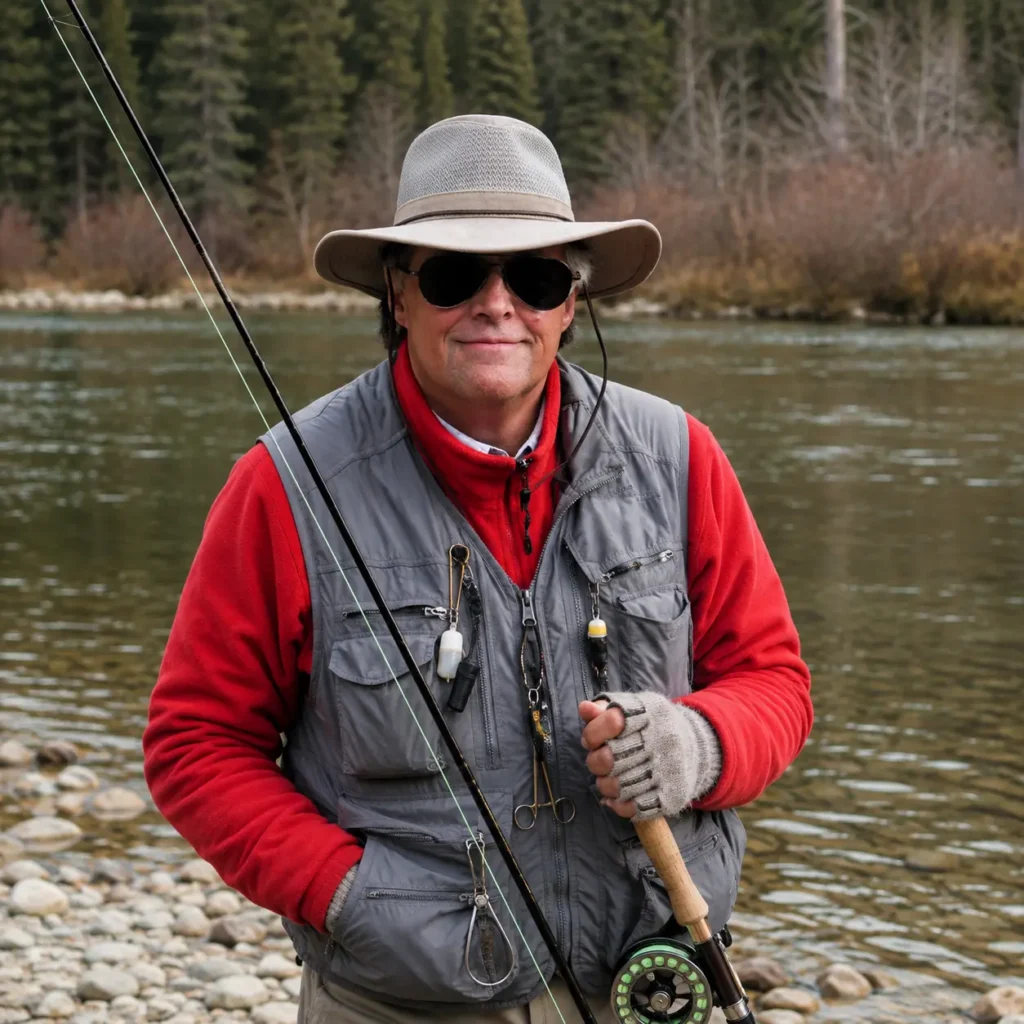
In this episode, we speak with longtime fly-fishing author Skip Morris about his latest published book, Imposters, and a collection of essays that brings together fly patterns, fishing history, personal stories, and artwork by his wife, Carol Ann Morris. Skip also shares practical lessons from decades on the water, including his “turn-down trick” for presenting a fly to rising trout, why action and size can matter more than constantly changing patterns, and how classic dry flies and wet flies still have a place in today’s fly box.
[00:02:25] Skip Morris takes us into the world of selective trout fishing and all the small details that can make a difference between refusal and a take. Experience he gained since he was 11 years old, decades of experience in the water, and explains why the way you fish a fly is as important as the pattern. He shares his turn-down trick for presenting dry flies to rising trout and explains why action and size are key when matching natural insects, and how older patterns outperform the latest flies.
We also explore Catskill dries, wet flies, and the stories behind his latest book, Imposters, which combines fly-fishing histpry, personal experiences, practical lessons, and illustrations by his wife Carol Ann Morris.
Skip explains how he stepped away from writing instructional material to focus more on serious literary writing. After years of developing his craft, it eventually led to his book Imposters. The book Imposters uses artificial flies as the foundation for stories about fishing, history, people, and Skip’s experiences on the water.
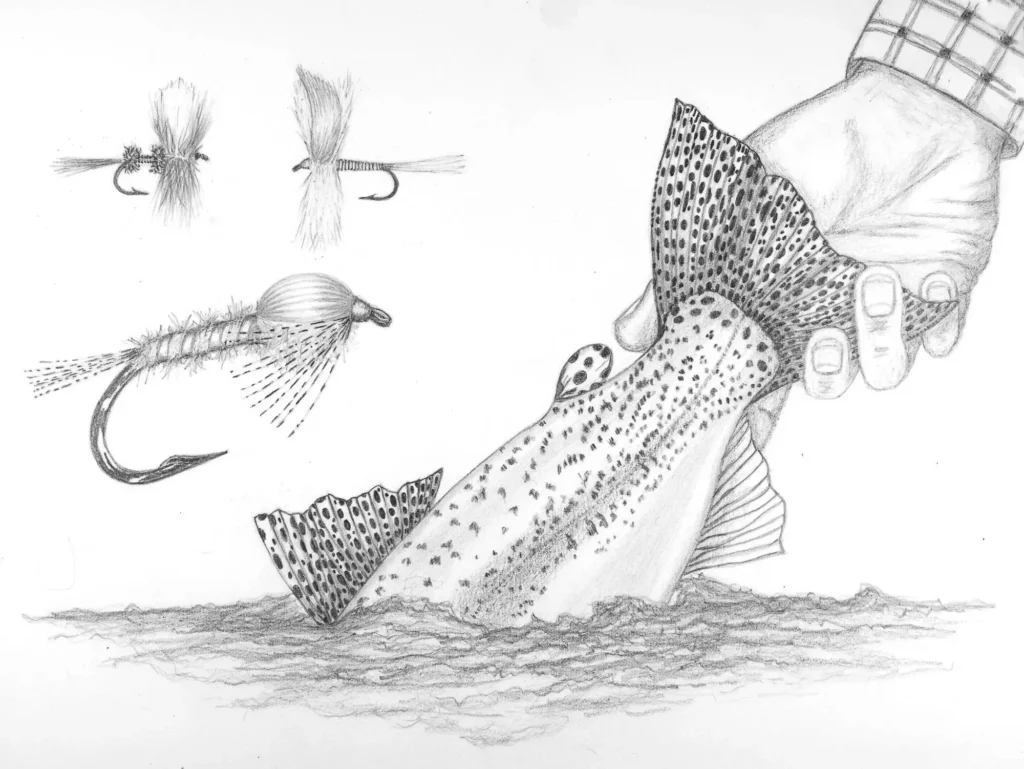
Carol Ann Morris, wife of Skip Morris, also created the artwork for the book, making Imposters a collaboration between Skip’s writing and Carol’s illustrations.
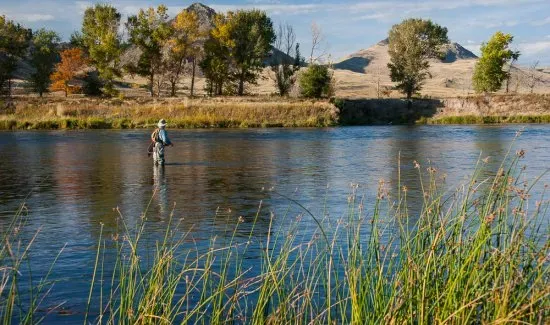
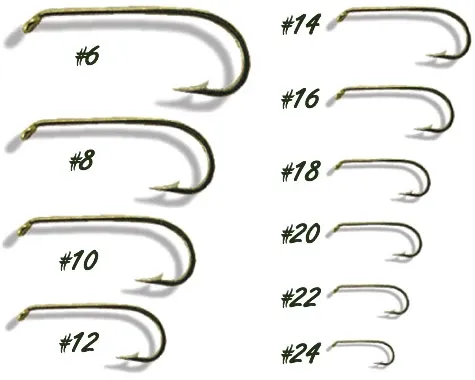
[00:11:44] Skip shares his experience fishing the Missouri River around Craig, Montana, where the clear water and heavily pressured fish created difficult situations. They were fishing size 22 and 24 flies to extremely selective fish. He explains that productive waters can give trout the luxury of becoming picky. When fish have plenty of food available and are exposed to fishing pressure, they can become much more difficult to fool.
Skip takes us through his career and explains how his love for teaching and writing eventually became a profession. Skip’s first book came out in 1989 and it focused on building fly rods. Before he was known for fly tying and fishing books, he spent about years as a professional in designing and building fly rods.
[00:25:26] Skip mentioned one of the most practical tips in this episode called the turn-down trick.
Skip noticed that when casting a rising trout, the line’s movement can spook the fish. The trout immediately rises and turns back down; there’s a short span when the fish appears less aware of what’s going on above it. He recommends watching its feeding rhythm and make the cast after it turns down.
Instead of repeatedly casting over the selective trout, wait for the moment and make the presentation. It might be a small change in timing that can help prevent the cast itself from putting the fish down.
Skip also notes that some insects, including stoneflies and dragonflies, crawl out of the water before shedding their shuck, so that anglers may find those along the shoreline. Reading the clues can help narrow down what the fish are actually eating.
This also influences how Skip thinks about fly tying. The materials and construction of the fly should allow it to move or sit in the water the way a natural food source does. For selective trout, getting the behavior of the fly right can be more important than finding a pattern that looks perfect in our hand.
They then switched sizes, and the fishing changed. The lesson is very important when dealing with selective trout: the pickier the fish become, the more precise your imitation may need to be.
[00:35:28] Skip reminds us not to overlook the old ones, because fly fishing is always producing new patterns. When a trout sees a popular pattern over and over, it may eventually think it is danger. The Renegade is one example that Skip tells us about. It’s an old attractor pattern with hackle at both ends and peacock herl through the middle. As per Skip sometimes old patterns work simply because the trout haven’t been seeing them every day.
[00:40:22] Skip has devoted his time to tying traditional Catskill dry flies and appreciates their beauty, but he encourages anglers not to get too caught up in fishing them. Catskill, a traditional pattern, doesn’t sit on the water exactly like a natural mayfly. Emergers and cripple patterns become useful at that time; patterns like Quigley-style cripples can imitate insects transitioning from below the surface, with parts of the fly both sitting above and below water.
[00:43:13] Skip discusses some of the writers who influenced him early in his fly fishing journey.
[00:51:39] Wet flies were an important part of fly fishing before gradually becoming viewed by some anglers as old-fashioned. Skip did admit that he once questioned himself. His thinking changed as he learned more about the insects and spent time fishing with Dave Hughes. Many Western mayflies shed their shucks underwater before reaching the surface, making a winged wet fly an imitation of that stage.
Skip also points out that fly fishing techniques often move in cycles. These methods are considered old and eventually became popular again; some are under new names or with updated equipment.
Carol Ann Morris, Skip’s wife, joins the conversation to talk about her art and the illustrations she created for the book Imposters. Carol has been drawing since early childhood and also spent 30 years working as a veterinarian. Her artwork is increasingly connected with Skip’s writing over the years.
Episode Transcript
00:00:00 Dave: Imagine this a trout rises, your fly passes just six inches from its nose and nothing happens. Today we’re talking dry flies, selective trout. And why the way you fish a fly can matter as much as the pattern itself. Plus a few simple adjustments that can completely change what happens next time you’re on the water. Skip Morris is back on the show today, and Skip has written more than twenty books, hundreds of articles on fly fishing and fly tying. And today we’re going to get into his latest book, imposters, a collection of essays built around flies. We’re going to get into history and lots of good tips and tricks today. You’re going to hear about the downturn trick in presenting a fly, and why this has been a game changer for Skip. We also find out why action may be the first thing you should be thinking about when trying to imitate what the fish is eating. Plus, we’re going to get into Catskills. Dries and mergers, cripples and everything in between. Lots of good stuff, including Carol Morris is going to be on to talk about the artwork at the end of the show. We’re gonna get into that today and the rapid fire round is back. So if you’re interested, you can check in with Skip at Skip Morris fly tying right now. But here he is Skip Morris. How you doing Skip?
00:01:15 Skip: I’m doing fine. How are you doing Dave?
00:01:17 Dave: Great, great. Yeah. It’s awesome to have you back on the show here. We we had you way back when we first started the first year twenty eighteen. We did a podcast, a little bit of your history talk, some tips and tricks. It was really awesome to get you on back then because you know, you’re a prolific author in the fly fishing space. You’ve got lots of books. I’ve got them on my shelf right now. You’ve got a new book out, imposters we’re going to talk about today. So yeah, from that first episode, it was amazing because you were kind of a big person in the fly fishing space. And to have you back on now, we’re going to get caught up on your new book and, and maybe just start there. What’s been going on with you here recently? Have you been just pounding away at writing, getting this new book ready to go?
00:01:56 Skip: Well, yeah, I mean, we’ve been fishing, of course, until until we got fire smoked out this.
00:02:02 Dave: Oh I.
00:02:03 Skip: Know. Yeah. Tragic. I mean, easy for us. Terrible for the people who are around the fires. But anyway, that’s probably getting way off the subject already. Well, you know, I didn’t quit, but I cut way back on, uh, this probably more answer than you’re expecting, but.
00:02:19 Dave: Let let’s hear it. This is the great thing about the podcast is that we’ve got all the time in the world. So feel free to let’s go deep.
00:02:25 Skip: But it was twelve or thirteen years ago, I decided, you know, if I’m ever going to try to write lit literature, I’m going to have to get good at it. So I pushed the how to the stuff way in the background. I quit music altogether. I’d been a professional musician for a million years and just concentrated on trying to figure out why Hemingway’s Hemingway and I’m not that kind of thing. And, uh, after a number of years, well, I wrote, I wrote a few books and tossed them in the trash and then wrote this one and got a contract with Stackpole. And Carol is a is an artist. She’s a painter and drawer and photographer too, but, um, she did a ton of illustrations for this book. So it’s kind of two thirds or three quarters essays and the rest is art. So there’s a lot of art in it. And, uh, it’s just a book of essays and they’re, they’re anchored by flies, but some of them are quite a bit about flies. You know, the trick there when you write an essay is to call out the most interesting stuff, the most colorful stuff, and toss the rest no matter how much it hurts. But a lot of it actually has very little to do with flies. There are three essays that connect up that that are called, uh, Fear the Nymph, part one, part two, and part three. The only thing they have in common is they’re about my fear and everybody’s fear back then of fishing a nymph in a river. That’s all they have to do with flies. And then others are more about flies. So there’s a huge range in here. There’s an essay that was so much fun to write. It was difficult, like they all are, but about Henry Hoffman and how he came up with those amazing hackles. He just about got himself killed. He just about won debtor’s prison. He went through three wives. I mean, that’s wow. Yeah. So that’s what I’ve been up to.
00:04:19 Dave: That’s it. Wow. No, this is cool. I think that in the the artwork is beautiful. Yeah. These flies that Carol basically drew. I mean, it’s all very cool. So we’re going to talk about that today. And I love the you’ve got some old patterns and probably some new ones in there we’re going to talk about. And but the writing is interesting, I think, right. Because it’s not easy. And we recently had Tom McGuane on the podcast, and he was a person who I think influenced a lot of people out there. And he, you know, Hemingway, who was bigger than Hemingway, right? But it’s this thing that like, what is it about you when you get writing? How do you know when you’ve nailed nailed the book or the piece or the essay.
00:04:55 Skip: Oh, that’s actually a great question. It’s harder to answer. Not that hard, you know. First, I got to say, Tom McGuane is is just an amazing writer. So, you know, you got to talk to him. Good for you.
00:05:07 Dave: Yeah, it was the way he explained. I remember John Gierach when we had him on the podcast, he was explaining about how Tom McGuane wrote, and he used to say, he would say he wouldn’t just tell you about the thing. He would describe it in words. Right. So and I use this analogy, this is what John Gierach said. He said in one of his essays. Tom talked about a person acting like he had a gun in his hand. He was describing how the the old man’s finger was so bent that his index finger was so bad that if he put his hand out and pointed at you and pulled the trigger, the bullet would shoot you in the foot because his finger was so bent. You know what I mean? So it’s just these little things that you just like, man, you get this picture right away. And so that’s kind of how I guess they do it. Is that like you mix a little bit of that with education, right? Fly fishing. Education.
00:05:55 Skip: Yeah. I can’t help it. You know, I, I wrote I figured about three hundred and fifty, uh, how to articles for the magazines. And until this new book, all my books were how to do this, how to do that most. A lot more about fly tying, which is why this book is based on flies. I mean, I’ve, I’ve been tying since I was maybe eleven or something, but and I’ve been extremely avid about it for long periods of my life. But, um, yeah, writing is just such a different world and it, it, uh, you know, you’ve got all these principles, you’re working with all these, like the last thing in a sentence tends to be the one that, that is the most powerful, the last, the last thing in a paragraph is the one that tends to have the most impact, although you can reverse that by not putting the subject first in a sentence. And then there’s rhythm and that will create, you know, will emphasize things and de-emphasize others. And they’re just all these all these mechanical things going on, and you’re trying to use them without becoming without your prose becoming mechanical. And, uh, it’s just, uh.
00:07:02 Dave: Not easy.
00:07:03 Skip: It’s a monster. Yeah. I mean, that’s the arts in general is, is to develop your technique and, and keep learning and, and push it up to this, to this point where you can, where you can just forget about it and trust in your instincts. But what you were saying about how do I know when something’s done? I mean, I do, I do many, many rewrites, maybe at least fifteen, I would say on most pieces, sometimes a lot more. And you just keep doing that and going back to it, and then you get away from it for a while, like maybe especially at the end, maybe two weeks or a month. Then you go back to it and you go again because you’ve become so, uh, you’ve become too used to your prose. You’ve, you’ve filled in the gaps and fixed the problems at a subconscious level so that when you go away from it and come back and you’ve tried everything you could to forget about it entirely. You see all those things. And it’s it’s a wonderful thing. And it’s a horrifying thing at the same time, but you just keep going at it until your gut and your ear and everything say, this is the best I can do, and maybe somebody else can do it better. Probably somebody else can do it better. But this is the best I can do. And then you let it lie.
00:08:15 Dave: That’s it. Yeah. There’s never it’s not perfect, right? You’re never going to get anything exactly to perfection.
00:08:21 Skip: I might get a perfect sentence or two in my lifetime, but yeah, not a book. No way.
00:08:26 Dave: Yeah, not a book. That’s it. Wow. This is good. And in the book, this Imposter’s book, I think the title is, you know, sticks out, right? Imposters were all trying to kind of do that. What is, you know, maybe describe that a little bit in the book as far as the flies, like you chose a certain number of flies, what is it about the flies you chose? Or maybe just what makes a good fly flight pattern because I know you’ve got some really classic, classic flies in there.
00:08:50 Skip: Yeah. Well, you know, as far as the flies I chose for the book, they were just the ones that either formed, formed the essay and anchored it, or else just suited the essay. Because some of the essays the flies are, they’re definitely part of it. They’re integral, but probably in some cases, some others could have been substituted. I mean, when you get into those traditional Catskill patterns, I mean, you’re probably well familiar with those, but, you know, like the red quill and the what are the other ones? The quill Gordon and all these quills, you know, and it goes on and the light and dark, the light. Cahill the dark. Cahill they’re all kind of the same fly in a way. I mean you sometimes you, a lot of them have the same wings, same hackles, but they have a different body, which, you know, the body’s a skinny little thing that practically doesn’t matter. Yeah. So, you know, things like that, the flies are interchangeable. There’s a whole essay in there on the Kerry special, which is a really interesting old, old fly. And it’s got a great backstory. And then I told my story of meeting the Kerry special and how bizarre that was for me, which sounds strange, but that was the fly in Washington when I was a kid. If you wish to carry special y fish, you know, and, uh, it goes back a century and it’s got a great backstory about it. It’s got murder in it and wow, bird murder, mind you, bird murder.
00:10:13 Dave: Okay.
00:10:13 Skip: Pretty brutal bird murder. Very brutal. And, uh, yes, I mean, it’s kind of getting back to what I was saying before is I, I just kind of let my consciousness play with these things until it said something started to form up. And then that was what I did. And then sometimes, as I say, the flies could be something different than what I used, but very, very similar kind of flies. And sometimes like the Kerry special piece, it was the Kerry and no, nothing else. So I don’t know if that had anything to do with your question.
00:10:41 Dave: But yeah, no, it’s I think your book is really diverse, you know, so you cover a lot of different topics. So I think that we could probably talk about anything in fly fishing today. And I think, well, maybe, I don’t know. Do you cover you don’t cover salt water fishing right in the book very much.
00:10:55 Skip: A little barely. And it’s northwest saltwater fishing. Not the typical tropical stuff.
00:11:00 Dave: Yeah, yeah, I gotcha. Okay. Yeah. But I think it’s interesting because, you know, obviously fly fishing is diverse. There’s a lot of different things we could talk about today. I was kind of thinking, talking about dry flies a little bit, mainly because we just got off a trip, you know, we were fishing the Missouri and there was supposed to be, you know, some more dry flies than there were. But the hatch came a little bit early and it did come up and we were trying to fish. And I’m not like a dry fly expert, you know, I’m just a normal person. And so we were out there and we were getting fish, refusing the fly, and we were trying to get on him and dead drifting down. But it was we had some struggles. So what is it, you know, with you when you think about, you know, rising trout, is that something that you really you first off, do you touch on that in the book? And then also, is that something that you’re kind of a specialist in?
00:11:44 Skip: Oh, good. I mean, when trout rise, my my heart starts flipping around. I, I just, I love rising trout and, and I’m, I have actually fished the Missouri. We spent was it three weeks on it and fished it almost every day.
00:12:00 Dave: Oh, nice. Yeah. What’d you guys cover? What area were you in?
00:12:04 Skip: We were up around Craig.
00:12:05 Dave: Oh, yeah. And just got were floating the river and all that.
00:12:08 Skip: We floated it one day only the rest of the time we, um. It was, uh, September and I think into October a little bit, wasn’t it? Yeah. And because this was like two fourteen or something like that, it was ten years ago anyway. And, uh, I don’t know, a big rivers, big, powerful rivers like that in our little, in our little tiny boat that’s supposed to be sort of a drift boat, but sort of a lake boat. A little creepy for me. So.
00:12:32 Dave: Right.
00:12:33 Skip: I voted no and Caroline. Yeah, you’re that’s fine with me. Yeah. But, uh, yeah, we did drift it one day and we mostly fished on foot. But, you know, you spend three weeks on a river. The river was not fishing well at all. I had a guy tell me, that guy I didn’t know. Rather an obnoxious guy, to be honest. But since I don’t know his name, that’s fine. But he said, uh, he said, you know, I’ve been fishing this river for years, and the fishing’s about twenty percent as good as I’m used to. But we’ve figured a lot of things out. And we found all these little tricky places where the trout would rise all day. And, uh, but we had three weeks to do that, and we explored all over the place. We had a few great times and we had other times that were extremely challenging where, you know, we were fishing twenty twos and twenty fours to in that clear water to really persnickety fish, maybe not quite like, uh, the Henry’s fork, but that was challenging. That was definitely challenging fishing.
00:13:25 Dave: Yeah. We were fishing, you know, uh, the tricos right? That was the hatch and there were some tricos coming off, especially as you got closer to the dam at Holter and, uh, you know, but it’d come a little bit earlier, but there were a few places where, you know, we were, we would anchor up and then you’d see some heads like, you know, down below, and we’d try and get in position and then, and then cast the tiny little whatever it was a twenty eighteen or something. Right. And then get it right. And sometimes it would go within. I wasn’t on my game fully, but within, I mean, six inches probably. And they wouldn’t take it at times. Right. And you sit there and you’re thinking scratching your head, okay, is it the pattern? Is it the am I not on it enough? Like, right. Those are the questions. Everybody’s sitting here pulling their hair out, trying to figure out the tricos.
00:14:09 Skip: You know, it’s funny. All the all the river hatches in the West, the Tricos are among the ones that I know least. Last fall, I fished Trico hatches on the Bitterroot, and I hooked a bunch of fish. But it was. I was really lucky. Both Carol and I both were. Uh. We got a hatch that was just heavy enough to bring the fish up. Even some really nice ones, but not so heavy that you had to compete with just scads of clumped together tricos. And you probably had to deal with the latter, didn’t you?
00:14:39 Dave: Well, it wasn’t actually that that was the thing. It wasn’t super crazy because the hat because the weather was warmer. So the hatch came early. So it wasn’t as many tricos out. It was more. But there were feeding fish. Yeah. Sometimes we had to find them. We had to, we were nymphing a lot. And then if we saw some heads, we would stop. Right. And try to fish.
00:14:56 Skip: Oh, okay. So yeah, because so many people, I’ve only fished the Trico hatch a few times in my whole life. And this last time was most of those times. This last fall, it actually wasn’t even fall yet. It was early September. But yeah, we lucked out. We had fish in easy places that were they weren’t getting, they were getting just enough tricos that if mine came by, I had a good shot at getting them.
00:15:19 Dave: Right. You had a shot. Well, that’s always a question just in general about dry flies. You know, you see some fish rising. It could be for anything, you know, like how do you break that down? You’re on a river. Maybe it’s a stream, you know, or maybe it’s newer, you know, you see something rising. What’s your process to figure out what they’re eating.
00:15:34 Skip: To figure out what fly to fish or how to fish it?
00:15:37 Dave: Yeah. Like both. Like what? Fly to fish and then how to fish it. Then how to know whether you know it’s your fly or. Right. There’s a lot of these variables. And maybe I don’t know if we can break that down a little bit for, you know, somebody just in general. And maybe you could also, as you get into that talk about kind of some of the, the waters you fish mostly.
00:15:56 Skip: Yeah. I guess the first thing I should say is I do feel sorry for a beginner who ends up on someplace like the Upper Missouri, because, you know, especially without a guide, because the waters have gotten really for a long time now, really technical. And part of that is if you fish water, like the upper Missouri, where the fish have so much food that they can be as picky as they want to be, and they instinctively they identify the food. Let’s say it’s trichos. They see them up there, they finally take one and they go, oh, tasty. And then why fool around with anything else? They just. This is the way I see it. And I’ve heard others say this Now they lock into that one thing. Well, then you take that trout, hook him on a fly that looks like that. Land him. All of which is very unpleasant for the trout, I respect that. But, uh, then he’s next time he looks at those tricos, he’s going to be going, okay, one of those could be trouble. And then they start using their brains to, to a degree that most people who aren’t fly fishers or are beginning fly fishers wouldn’t believe their trout aren’t stupid. And a lot of fish are not stupid. They just, um, if nobody’s fishing for them, you know, survival is food and they go after food when they see it. But if if you train them a little or you and you, especially if you give them an abundance of food, they get really tough. Now, that didn’t really answer your question whatsoever, but I think it’s I had to say that out of sympathy for the beginners, because those poor people, they should never be put on a river like that.
00:17:29 Dave: Trout routes by Onix is built for fly anglers who want better Intel without spending hours digging for the information. You’ll get access to public land maps, stream access points, regulations, and even road and trail maps all in one place. It’s become my go to app for scouting new trips. You can check them out right now. Go to webflow dot com slash routes and download the app today. Fishing expeditions offers world class fly fishing right off Alaska’s incredible road system. From monster rainbow trout to feisty Arctic grayling, you’ll chase big species in the stunning landscape. Whether you’re a seasoned angler or just starting out, their expert guides ensure an unforgettable adventure. Book your trip today before spots fill up and experience Alaska’s diversity like never before. Check them out right now. That’s Fishing expeditions dot com. Where would be the easy spot? Like if somebody is wanting to get learn a little bit more about drys, maybe have some action, you know, is there a hatch or a place type of river that would be better to go to than say the big Mo, the Missouri?
00:18:32 Skip: Yeah. Uh, a lot of places compared with the Missouri. Well, you know, the one that I learned on growing up and and the fish are almost not always, but almost in most creeks, the fish are very agreeable. In fact, they’re pretty much fighting over your fly creeks have another a different challenge. And that is that you’re often have a lot of trouble behind you for your back cast. So it’s a challenge for casting for sure. Most creeks, unless there are some flat meadow Creek and. But the fish are usually. Usually. In most cases, they’re. They’re really agreeable. So I would say creeks are a great place. But if you can get back in some river that’s in the way off in the woods, which might take some doing that isn’t heavily fished, I’d say that’s another place to go.
00:19:15 Dave: Yeah, yeah, we’ve heard that before. Some of the spring or not spring creeks, but just creeks, whatever. Maybe high mountain alpine streams find some cutthroat or, you know, whatever the the species is that is more readily taken than a big giant brown trout. Right, right, Right. Yeah. And we had on our trip, we had guides, you know what I mean? And so I definitely appreciate the guides out there because guiding is one of the hardest jobs I think out there. You know, just because of how challenging it is and, and all that. But so it was, it was helpful. And we did find some nice fish on the trip that we were on. But, um, but no, so this is good. This is a good start. I think that, you know, just kind of laying out a plan for, you know, how people can use kind of your books and really, you got a bunch maybe let’s take it back real quick because on the first time we chatted was a while ago. Where did you go? You mentioned Washington. Maybe take us back there a little bit and kind of how you got into it. And then how when did the books you said in thirteen years ago, you kind of started getting into that, maybe talk about where you started and how you got into that.
00:20:14 Skip: Yeah. Well, you know, I’ve always loved to teach and I’ve always loved to write kind of since I was a kid, uh, guiding. You mentioned guiding. No way.
00:20:23 Dave: No. Never guided.
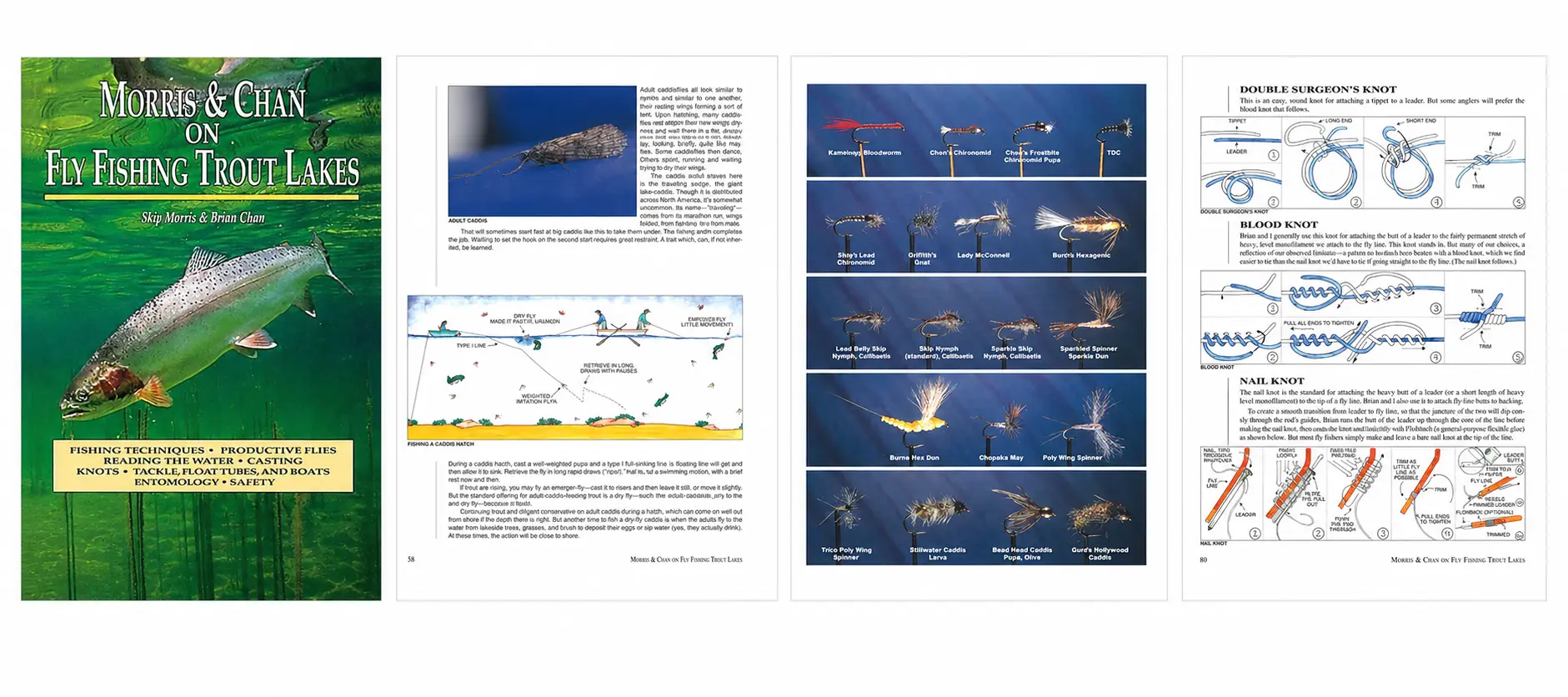
00:20:25 Skip: No, I’ve never guided. I mean, I guide friends and family and all that in a way, in a loose way. But no guides work so hard for a living. I mean, and they they have some very difficult clients at times, even though they love most of their clients. But I mean, it’s just such it’s exactly what you said. It’s extremely hard work. And what people see is the fun part that guides get to do. Not the hard part really. Well, I loved writing when I was a kid, and it’s one of the few subjects I stood out in. And so that was kind of a natural. And I loved teaching. So it was made sense that I ended up doing all these books. It’s been what, twenty twenty one? Carol. Yeah, something like that. And my first book came out in eighty nine. That was a book on building fly rods. I was I spent ten years designing and building fly rods for a living, and I was making the ferrules and I was brushing out finish over the shafts and all that. And I did that for ten years. And then I got an overwhelming urge to go back to tying flies again. And that’s about all I did when I wasn’t building rods. And then I started writing articles, and then the articles led to books. And then I started branching out and I wrote some other books like I wrote Morrison Chan with Brian Chan, who’s.
00:21:36 Dave: Oh yeah.
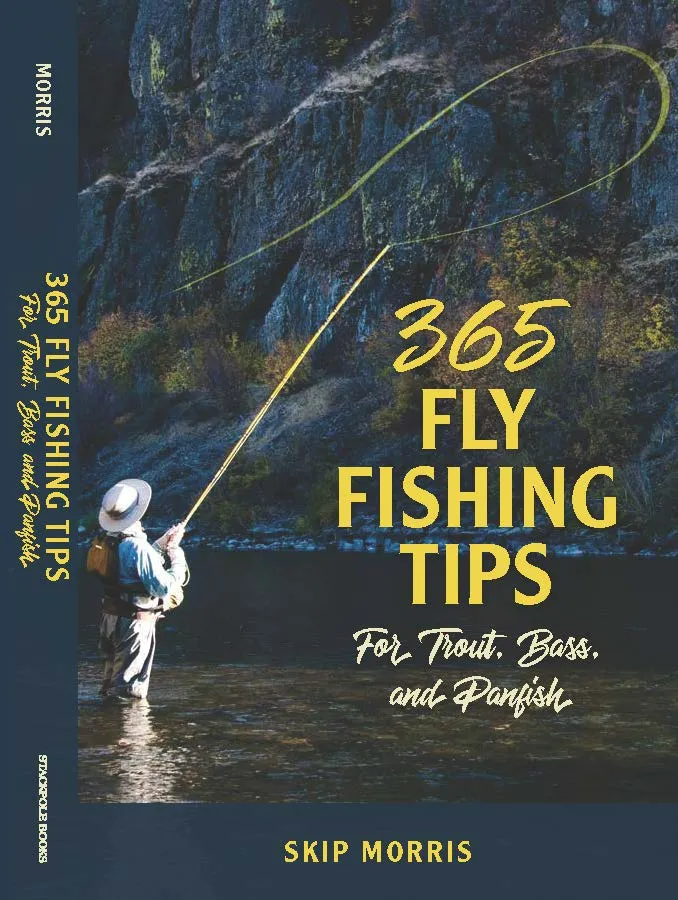
00:21:36 Skip: one of the great Lake fishers today. And oh yeah, so he was, he was the main source of information in that book. But, uh, yeah, I’ve written a lot of books. My last book previous to this one was actually in two eighteen, and that was, uh, three hundred and sixty five fly fishing tips. And then I got a BA in English in college, which, uh, I barely up till my last year, I barely got through college because there were too many things to do that had nothing to do.
00:22:03 Dave: Right. Fishing. Yeah.
00:22:04 Skip: Well, and I made the mistake of going to a college, a university, actually, that was next to the Yakima River.
00:22:10 Dave: Oh.
00:22:11 Skip: Spring and fall were difficult times to make classes.
00:22:14 Dave: Well, which which one is that?
00:22:16 Skip: Uh, central Washington University.
00:22:18 Dave: Okay. Central. Yeah. Good.
00:22:19 Skip: Yeah. I mean, the Yakima River literally runs through the town. Ellensburg. Well, and that’s a good trout stream that that.
00:22:26 Dave: Yep. Yeah. That’s got some big fish.
00:22:28 Skip: And there were some ponds around there that had panfish. I think they might have been pumpkin seeds, but they had panfish. And they also had some pretty nice largemouth bass. So you know, all these these are all great reasons to not go to class.
00:22:42 Dave: Right. Nice. So yeah, so you’ve done a ton and the three sixty five tips, I guess it’s three sixty five fly fishing tips for trout bass and panfish. Yes. So cover a lot there on those tips that you covered in that book. How did you break that out? Did you kind of do a daily tips and then summarize it or describe that?
00:23:00 Skip: Well, that book took me about four years to collect up the tips and then cull through them and throw a lot out. It’s actually got three hundred and ninety nine, if you count the bonus tips, which are little super short tips that are sometimes just as good as the main tips. I organized it. Let’s see, I’m going to grab a copy. Yeah, because that was two eighteen and I, I barely remember anything from then.
00:23:21 Dave: Okay. That’s right.
00:23:23 Skip: But I did, I did break it down into different categories. And they weren’t by fish. They were, uh, let’s see strategies and tactics. The first one is meet your fishes. So I give kind of an outline of the, of the fishes in the book, the bass, the trout and the, and the panfish. And then it’s techniques that catch fish casting, delivering fly to fish. And so it just goes on like that.
00:23:47 Dave: And I’m looking at your website, on your website, if you type in, uh, there’s a first Tuesday tip segment and you got your book there and it looks like it looks like you have a few of the tips, maybe the top ten or some ten, you know, go go to first no or first Tuesday tips. Is that part of or what’s in the book?
00:24:03 Skip: It’s not.
00:24:04 Dave: No.
00:24:04 Skip: Yeah, I think actually I got permission in there from the book.
00:24:07 Dave: Okay. Yeah, I see it, I see it.
00:24:09 Skip: And I quit doing that quite a while ago, but there are a number of them in there.
00:24:12 Dave: Yeah, I see one say fish where the fish were. The guides don’t take their clients.
00:24:16 Skip: Right.
00:24:17 Dave: And um, number two, uh, sculpt a fly. You’ve got embraced the loop, not. Don’t forget the oldies hatches can be easy. So. But that’s basically what it is. People get a quick little snippet on a tip, you know, in each for each day of the year sort of thing.
00:24:34 Skip: Uh, yeah, yeah. In on my website. Right. Well, you know, there are tips, books for fly fishing that are very basic. And this I would not say is, you know, high level or anything any a beginner certainly is going to get a ton out of this book. But this is not that basic. It’s not like a whole tip fish behind a rock, you know, in a river, which I’m not a I think that’s fine. Those kind of books are a good way to start, but this one’s a little beyond that. It will have that, but then it will have other places in that tip to look for a trout, not just behind a rock.
00:25:09 Dave: When you come out to, you know, whether it’s the recent book impostors or three sixty five fly fishing tips, you know, do you have a specific kind of person, audience avatar you’re thinking of that you’re writing for? you know, you mentioned beginners versus say, experience or, you know, what are you thinking there.
00:25:26 Skip: With my instructional books, this one included. This is the only tips book I’ve ever written. But the tips book, I kind of tried to aim it at complete beginners up to. Well, actually, I think even up to really experienced fly fishers because there’s, for example, a tip in there that something like try the turn down trick. And that’s something that I have never seen in print. I’m sure I’m not the first to notice this, but a lot of times when you’re trying to present a fly to a rising trout, no matter what you do, unless you can get upstream and feed the fly downstream, your cast scares the trout, the the long going overhead. And you know, no matter how far you lead them upstream, it’s too close. And it’s like a bird trying to come down and get him or something. So what I have found is right after a trout turns down, after a rise, just for a moment he seems to be oblivious. I’m not sure why I won’t go into what my theories. But if you can pop your fly out there at that moment, he almost certainly won’t get spooked. And that’s the turn down trick. And that’s a high level tip.
00:26:29 Dave: Gotcha.
00:26:30 Skip: But then there are other tips in here that are really basic basic rigs, the whole thing. So I mean, you know, three hundred and ninety nine tips covers a big range.
00:26:39 Dave: This is great. No, I love this. I think we should probably try to get a I mean, because that’s a good one to turn down. So basically you see a fish rising. If you could time it, you know, it’s on its rhythm. Maybe as soon as it eats, you cast right away to basically get it before it sees anything and then comes up and hits. Is that kind of what that is?
00:26:56 Skip: That’s exactly what that is.
00:26:57 Dave: Yeah, that makes a lot of sense. Can you pull a couple other some other ones out of that for you? Maybe some things that we wouldn’t see in other because that’s one I haven’t heard about. Definitely. That’s a good one.
00:27:07 Skip: I know.
00:27:08 Dave: What other tips would you throw out there if we could put a list of maybe five or six from your, your book there?
00:27:14 Skip: Okay. I’ll, uh, I’ll take a shot at that. There are, as I say, there are hundreds here.
00:27:19 Dave: Yeah. This is not going to be. Well, just grab. Yeah, whatever. It doesn’t have to be perfect, but whatever you got there.
00:27:23 Skip: Well, here’s a high level one. No. Your. Shucks. Okay, I’m not looking at it. But when an when an insect. This is for you. You you know this, Dave. But for those of you who don’t, when an insect comes out of its shuck at the surface of the water, which means it’s hatches, goes from an underwater insect to a insect of the air, the shuck that it leaves behind is a way to ID the insect. And it’s difficult to do this on streams. For the most part. You can do it sometimes, but especially on lakes, you’ll see those shucks floating. And if you dip one out of the water, it’s chironomids that are hatching. You can now, uh, now you know the size of the corona. You know that it is a corona because you can identify a chuck. And so the only thing you don’t have is the color. But most chironomid pupae in my experience are dark colors like dark brown or black. So if you just fish a dark brown corona Pupae in that size, you probably got it. And that’s because you could ID the shuck, which is exactly what the know your checks is about.
00:28:26 Dave: That’s great. Same with other. Right. Anything like stoneflies, right. You see. Typically you’ll see the shucks. Right. But there there’s some bugs that maybe are small. Maybe they’re not as easy to see right on the shucks, but the ones you can identify. That’s a great tip.
00:28:39 Skip: Yeah. And you make a great point, which is that some insects crawl out of water to escape their shucks and so their shucks are on shore. Dragonflies do that, stoneflies do that. There’s even at least one mayfly that does that. And a caddisfly too. That does that. So yeah, yeah, they can tell you a lot. I mean, it’s basically the insect, the insects, old skin at the actual original shape and size.
00:29:02 Dave: Right. Is that the biggest thing is size. The first and biggest thing you really need to match.
00:29:07 Skip: It is the second in my opinion. There’s a tip in here and I’d have to go dig it up. But it’s, uh, something about the, uh. What is it, Carol? The The point of impro, not improvisation.
00:29:20 Dave: Imitation O imitation.
00:29:22 Skip: Imitation. Yeah. And the number one point. And I have a feeling you’ll agree with this when I say it. But to me and to most fly fishers, I know experienced ones. If you’re imitating something that a fish is eating with a fly, the number one thing in my mind is the action. So if you’re imitating a minnow, you got to have your fly move like a minnow. It can’t be just sitting, lying on the bottom or hanging there. But on the other hand, if a mayfly is drifting and it’s very sedate and it’s not being pulled across the current, which of course it wouldn’t because it’s not attached to a tippet, your fly has to move exactly like that mayfly. Otherwise it isn’t a mayfly to the trout.
00:30:02 Dave: And of course in the action, a big part of that is, you know, the fly tying, right? Which is what you also specialize in, right? Getting the right action of the fly. Is that something that you’re thinking about too, as you’re tying and always thinking about there.
00:30:15 Skip: Oh, yeah. Yeah. I mean, you’ve got to be really conscious even if you’re tying. I mean, if even if you’re tying an established pattern, I think you really do have to be very conscious of what the fly is supposed to do. If, for example, it’s supposed to be a soft hackle, well, the soft hackle has long, very supple hackle fibers. And that’s for the way that it used to be fished in England and now isn’t fished here very often. But anyway. And so those fibers do have to be supple. You can’t substitute something stiffer and expect to get the same results. And if you’re tying a dry fly, for example, and you’re depending again on hackles to keep the fly afloat, let’s say you’re tying a stimulator, for example. Um, you can’t substitute hen hackle, which absorbs water and you can’t use crummey hackles like the ones I had when I was a kid. And if you are tying again the stimulator, you have to have the short hackles over the rear of the of the. Actually, it would be the abdomen. You can’t use a neck hackle because it’s not going to be long enough. You have to use a saddle hackle. It’s things like that that really are. I’m not a big believer in in making rules based on theories. I mean, those are interesting. And those can those can be valuable. But I really believe in rules based on practicality. And that goes for the arts as well as for tying flies. But these are, you know, who cares if somebody says no? The right tackle to use for a stimulator is only the saddle hackle. That’s the right one, because the books say that, and you must follow the books, and you must be a good little fly tyer and be noble and all. Yeah. Get out of here. You know, to me, if, for example, if you had a super long dry fly hackle, which sometimes you find neck hackle and you could use it on a really small stimulator. I don’t care. Fine. If it works, it works. So I’m, I’m for the practical side.
00:32:07 Dave: Yeah, definitely. So yeah, on the imitation, the action is the first thing. What would be the next? Then after action, what’s the next size? Color? What? I can’t remember what the typical. What would be your next one?
00:32:18 Skip: Oh, you’re doing really well.
00:32:20 Dave: Yeah. Is that is it size?
00:32:21 Skip: Then next it’s size in my mind. It’s next. And you’ve probably found this as I have. I’ll be interested to see what you say. But I found that the pickier the trout, the more precise the size has to be. I mean, I’ll give you a good example. This is one of those black white things where it was so obvious that there was no doubt about it. We were on a big lake in Montana, three of us in this big boat this guy had loaned us, insisted on loaning us, and there was a hatch, and I got a sample and it looked like a size fourteen, uh, kind of light olive. I had some size fourteen light olive chironomids tied up, and we all fished them deep under a strike indicator, just as you should. And over a period of about a half hour, even though these kids kept coming off, I think one of us had a fish on half hour, three rods. So then I did. The thing I should have done right off the bat was I scooped up another sample. I compared it with the hook. It was one size smaller. It was a size sixteen. I put a size sixteen on, made a cast, and within a minute I had a fish on. We all went to size sixteen and we had doubles, and I think we might have even had some triples. In other words, the fishing just went from nearly dead to absolutely, you know, furious.
00:33:35 Dave: Right. And so it was the same pattern. You’re using the same. Nothing changed except the size.
00:33:41 Skip: That’s right. One size difference.
00:33:42 Dave: And you’re still doing the same. Everything else was the same like the. And I go back to Phil Roy, you mentioned Brian Chan, but Phil Roy, he does our Littoral Zone podcast and he always talks about DRP. That’s how he remembers it. You know, depth is number one in lakes, at least depth, you get that dialed and then you get your retrieve and then patterns. The last thing for Phil, right? He feels like depth retrieve. So what you’re saying is the depth retrieve. We’re all identical. The pattern was the same. Just you change one little thing.
00:34:09 Skip: Yeah. Yeah. Just exactly. Everything was the same, except for the size. Yeah. And Phil’s going beyond the fly pattern there because he’s absolutely right. I have another tip in there that I can’t remember the name of. It’s my. The only rule I’ve probably ever come up with that’s worth remembering. How you fish a fly is at least as important as which fly you fish. So that goes back to what Phil was saying. If you fish the perfect fly at the wrong depth in a river or a lake, you might as well go home. You know you’re not going to catch anything. But if you fish an okay fly the right way, you know, whatever that happens to be at the right depth, right? Retrieve, whatever, then you’ll probably catch a whole lot more fish than the perfect fly fished the wrong.
00:34:56 Dave: Exactly.
00:34:56 Skip: Yeah. So, I mean, he’s carried out the imitation thing beyond the borders of where I had it. But yes, he’s I agree with Phil one hundred percent.
00:35:04 Dave: That’s it. Perfect. Well, this is good. I mean, I think that we could go on and I’m just looking at a couple here. Um, like you said on your website, these are just on the on the page that pops up, you know, you’ve got um, don’t forget the oldies. I always love the, the classic. What were you meaning there when you say the oldies because there’s a lot of old patterns right out there. What’s your tip there on that? Just that just make sure that that you’re not just using the newest thing every, every trip.
00:35:28 Skip: Yeah. Well, I mean, oldies probably dates me. That’s a phrase that they used to use advertising that was really quite annoying, you know, sweatin to the oldies and some of these.
00:35:37 Dave: Oh, right.
00:35:38 Skip: Stupid videos. And I don’t know if it was a stupid video, but it was a stupid title. Anyway, um, might be a wonderful video. I have no idea. But anyway, um, yeah. Well, the thing is, everybody’s, you know, some new fly comes along, everybody’s fishing it. What happens with the fish? They start to identify it as trouble. And so maybe the hot new flies, I don’t know. I can’t think of anything off hand, but.
00:36:01 Dave: Yeah. Or even the stimulator. Right. The stimulator is one that well the hot new fly, I would say probably one of the most popular flies that we hear a lot about is the chubby Chernobyl. Oh yeah. Right. The foam. The foam has become in the recent years. Foam is is just great. And the chubby works, I mean, everywhere it seems like. Right. But that’s that’s the hot new fly. It seems like that’s the one. But there’s a lot of them out there versus say, the stimulator or, or I go to the salmon fly, right? You’ve got the salmon fly hatch, you’ve got the, the stimulator, you’ve got the chubbies then, but you also have the what is the old style ones, right? The, the fluttering stone or the I’m trying to think of the names. Right. There’s some old ones that actually still work.
00:36:39 Skip: Oh yeah. I mean in every category of flies you’ve got the new hot thing. And if it gets overfished and the fish are, you know, have some good sense, have some experience with fishermen and, and can afford to be a little picky. I think I really do believe they’ll start ignoring it. So you can go to oldies or you can go to lesser known patterns, but if they’re a little bit different, I’m trying to think, well, there’s what are some of the old ones bird, stonefly, adult, you know, look back at some of those or or look at alternate patterns that haven’t gotten a lot of attention. You know, I’ve, the one I fish a lot is one I call the skips promise, the big stoneflies and the big caddis and so forth. And, uh, yeah, so that’s it. Or even for attractors, you know, because a lot of the Chernobyl based flies of which there are so many now, like the chubby are basically attractors. I mean, they look like I always laugh, I always kind of get a laugh out of them because they look to me like miniature pool toys or dog toys, you know? Right on. And, uh, but they work, you know, attractors can be very effective, but they can also learn an attractor. And then so try a try a renegade. I got a friend, the old renegade. I don’t know where that goes back to fifties, forties. It’s a goofy fly that has a hackle at both ends and then peacock curl in the middle. And I got a friend who fishes that a lot and he keeps catching fish, right? It’s an attractor the fish have not seen.
00:38:03 Dave: Is that a stream? Is that a lake or a stream or both?
00:38:06 Skip: Uh, he fishes them on streams.
00:38:07 Dave: Yeah, he does.
00:38:09 Skip: But, you know, we we started calling him Renegade Brian because he just, you know, when in doubt.
00:38:13 Dave: When would you fish a renegade? You know, it seems like, uh, is there a certain hatch or is that one you’re just fishing? Like, when would you fish a renegade?
00:38:20 Skip: Oh, I don’t think there’s anything on the water that looks anything like a renegade. No, I mean, it might look a, you know, depending on how picky the fish are. And this is a really important point, how broken the water is because that depends, you know, that limits their ability to, to see the fly a dry fly. But I think the renegade, I really think it’s a true attractor fly. And so my rule of thumb with attractors, and there’s a tip in the book also about that. But my rule of thumb is I start with imitations. And if I feel like I’ve tried a few and they’re not doing what they should do, then I’ll try an attractor. And about one out of four, one out of three times in my experience, especially in trout streams where I fished attractors most. I do find that the attractors will out fish. The imitative flies.
00:39:08 Dave: They will.
00:39:09 Skip: Yeah, that’s been my experience. Maybe yours is different, I don’t know.
00:39:12 Dave: No, I mean, I don’t do a ton of dry fly. I mean, that’s always been kind of my nemesis is the dry fly fishing, right? Because it’s challenging. You know, you got and the flies and the tying. And I feel like that’s why the chubby works is so great for so many people, beginners and, you know, pros alike because it just works. It seems to work everywhere. Then you can go a dry dropper, right? Throw something off that throw a little a nymph. And you know, when you’re out there in Montana, you know, or really probably anywhere, it just kind of works. Right? But it’s not really the exact it’s not matching. You know, I get to the, like you said at the start, the, the Catskills dries, right? This, you’re on this stream and you’re trying to get this one fish, big fish, maybe to eat this fly. I feel like that’s, that’s the refining down to the essence of dry fly fishing. Right. What’s your take on that overall? In dry fly fishing, is there lots of ways to do it?
00:40:02 Skip: Well, first of all, I find it interesting that the dry fly is your nemesis.
00:40:05 Dave: Yeah it is.
00:40:07 Skip: I mean, it almost sounds like your super villain. You know.
00:40:09 Dave: You’re a little bit maybe it’s fly time. Maybe it’s more dry flies because I’ve. I see these Catskill flies and I just never have put the time in to become an expert at it. So I always. Right. Maybe that’s more what I’m thinking.
00:40:22 Skip: Well, you know, I wouldn’t. And I would advise your listeners not to fret too much about the traditional Catskills. I think they’re beautiful. And I spent a ton of too many hours to count, trying to tie as close as I could to a perfect light. Cahill at one point. In fact, I even have a short essay in the book about that. But because they’re just gorgeous and I still fish them, but I ruin them. First of all, a lot of times by snipping out a little V in the bottom and the hackles so that the hook point has an easier time getting into the fish’s mouths. But I don’t. I usually fish a traditional like a Catskill pattern now only at the fissure. Being pretty agreeable, because, uh. In fact, I’ve got a super short little mini essay in here about exactly this. But if you look at a mayfly, which is what they generally imitate. Some argue that they imitate caddis in certain cases. But if you look at a mayfly, when it hatches the done, the tiny ones stand completely up on their toes. They don’t lean back on their tails the way a Catskill does. So it doesn’t make sense to imitate them with the Catskill. The bigger ones put a little bit of the front of their abdomens on the water, if I remember correctly. And that still doesn’t sound like the Catskills, because they don’t put anything on the water except hackles and tail. And then the great big ones, the drakes, like green drakes, um, hexagenia, they just plop their whole bodies pretty much down on the water. And the Catskills don’t do that either. I mean, the Catskills don’t really imitate mayflies that well. So what we do a lot of times is we we go to flies that, uh, imitate the emerging insects. So you’ve got your Quigley cripples and all the variations of that, you know, the list goes on. But these are imitations of the, of the insects struggling from its shock or just fresh out of its shock. And so it’s kind of a lot of times it’s half in the water, half out of the water. We imitate that a lot because we can imitate that so much better than trying to have a fly that’s standing on six feet.
00:42:21 Dave: Right? Yeah. Which is not yeah. Not natural. I think you more flies now are designed for that dry fly to sit down in the water a little bit more than stand up on top, right. That’s kind of what you see more out there, right.
00:42:33 Skip: And, and that’s because they’re imitating that particular stage of the insect. In fact, that’s, that’s what a soft hackle or a wet fly does is it imitates another stage just before the insect reaches the surface, or in the case of a wet fly, the caddisfly swimming down to lay its eggs. But we’re talking about dry flies.
00:42:54 Dave: Well, no. And I want to tee up wet flies here before we get too far into this one here. But but tell me, I’m interested in kind of your, you know, influence. You mentioned Brian Chan. We talked about Phil Roy when you first got going in fly fishing. I’m not for sure when you got first started, but who were the people that were influencing you back in the day?
00:43:13 Skip: Well, well, I think Brian Chan and Phil Raleigh were probably in grade school.
00:43:17 Dave: Right? You were before. Yeah, you were before those guys.
00:43:20 Skip: Well, yeah, actually, yeah. I’m a little older than Brian and Phil, but they they weren’t writing any books or anything. No, they were just not too long out of diapers and I wasn’t either. I was I started tying flies probably about age ten or so, but, uh, and then finally got, got around to fishing about about age twelve. But back then, um, well, I loved reading Roderick Haig-brown partly because I learned things, but partly because I just loved reading Roderick Haig-brown I even met him once, which was cool when I was a, when I was quite young, but.
00:43:50 Dave: Oh, wow.
00:43:51 Skip: Um, and then as there was, Uh, let’s see, I’m trying to think back, you know, because later there was Swisher and Richards. Uh, there was Marinaro. I read I read Marinaro a lot.
00:44:01 Dave: Yeah. Vince Marinaro. Right.
00:44:02 Skip: And he had one book out then only one, which was, uh, what was it called? The something that, uh, it was the dry fly, but it was something about the dry fly. I should know this. I wrote it’s in the books.
00:44:13 Dave: Yeah. We’ll put a, we’ll get a link in the show notes to it. Yeah.
00:44:16 Skip: Yeah. Put in a little pop in there later and.
00:44:19 Dave: Yeah, we will. We’ll add it, add it there. I think it’s called, uh, in the ring of the rise.
00:44:23 Skip: That’s his second book.
00:44:25 Dave: That’s the second one. Okay.
00:44:26 Skip: I think that came out in seventy four. So I can remember some details, not others, but I can’t remember.
00:44:30 Dave: Yeah. There you go.
00:44:31 Skip: Oh, a modern dry fly code. Carroll.
00:44:33 Dave: Oh, there it is. Code.
00:44:34 Skip: Yeah, I’m pretty sure that’s right. Yeah. So I studied that one to death. You know, I pretty much ruined the library edition of it.
00:44:41 Dave: But there you go. And a dry fly book, right as we’re talking a little bit on dry. So the modern. And what was the premise? Do you remember that book at all?
00:44:48 Skip: Oh yeah. That book is about some of the toughest trout in the country. He was in Pennsylvania, in that area where the big spring and the Letort was his, I think, his favorite. He talked a lot about the Letort, but I fished there a little. And those streams are amazing. They’re just they’re not big. They’re spring creeks. They’re. I don’t know how wide, but they’re not they’re not big. And, uh, I got to fish. The letort caught a couple fish, which was a miracle, but I got away with it. And there’s big spring yellow breeches. I mean, the list goes on. But, um, he fished those streams for those extremely tough brown trout, and, uh, he really refined American dry fly fishing a lot.
00:45:31 Dave: Oh, right.
00:45:32 Skip: I talked to somebody who met him once on one of those streams, and he was walking along. They heard gunshots and he was shooting snakes.
00:45:41 Dave: Wow.
00:45:41 Skip: Kind of freaked out. Like, what do we do? Do we run, you know, snakes?
00:45:44 Dave: Like, yeah, that says something about yeah. Like, I guess they, they have, they have rattlesnakes over there.
00:45:49 Skip: I guess that’s a good question. I’m sure they have, uh, what’s that one that we’ve seen in the East? No, I don’t think they have coral snakes. Um, I don’t think they have cottonmouths either. There’s that one copperhead. Yeah. That probably.
00:46:01 Dave: Okay. Oh, Copperhead. Right, right. Yeah. They got some. Yeah. It’s interesting. Yeah. My dad had wrote a little book on snakes, like more Western rattlesnakes and. Oh, really? Like, he was the same way he used to shoot and kill whatever snakes. If they got, you know, if they run through camp, that’s what that was his thing back in the day, you know? So I think it’s the old I think it’s more of an old, old school thing, right?
00:46:21 Skip: I think yeah, if you can kill it, kill it.
00:46:24 Dave: Right. That’s what it was. Yeah. We’re now it’s like we practice catch and release. We let snakes go because they don’t want to hurt us. Right? All that stuff.
00:46:31 Skip: Yeah. Most of them don’t. I don’t know about copperheads. They they’ve got.
00:46:34 Dave: Yeah, maybe some do or.
00:46:35 Skip: No I said copperheads, I meant cottonmouths, they’ve got so much attitude. Yeah. You’re in my space. Behave yourself. Or you know, they’re completely different than rattlesnakes. I haven’t been bitten, but I, I met a guy who had. He just. He met he. That’s a good story. He. He came on a. This has nothing to do with fly fishing. He he was waiting. John. And, uh, and, uh, he came on a, a cottonmouth and it came out and it stopped and it looked at him and he just stood still, which is what you do, you know, you sort of honor the snake. And the snake went, okay, you can pass. And it turned around and started swimming away. And he flipped a fly out at it. And it kind of bonked the water next to its head or bonked on its head, turned around, went straight at him, got him in the leg.
00:47:18 Dave: No kidding.
00:47:19 Skip: Yeah. Nothing like rattlesnakes. I mean, a rattlesnake goes, hey, hey, keep your distance. Keep your distance, you know?
00:47:23 Dave: All right, so he casted so it didn’t go for the fly. It actually went for him.
00:47:28 Skip: Yeah. Oh yeah. It wasn’t interesting the fly at all, but it connected him with the fly, which is pretty smart for a snake.
00:47:33 Dave: Oh wow.
00:47:34 Skip: But yeah, it got him.
00:47:38 Dave: Today’s show is brought to you by Visit Idaho and Yellowstone Teton Territory, a place that should be on every angler’s list, from the Henrys Fork to the South Fork of the snake and all the hidden creeks and alpine lakes in between. This region is built for fly fishers who like a little room to roam. You can head over to wet fly dot com slash right now for guides, lodges, and trip ideas to plan your next adventure. That’s Teton T e t o n. Check out Jackson Hole Fly Company today. Premium fly gear straight to your door without the premium price. Jackson Hole Fly Company designs and builds their own fly rods, reels, flies and gear, delivering quality you can trust at prices that let you fish more and spend less. Whether you’re picking up a fly rod for the first time or guiding every day, they’ve got what you need. Check them out right now. That’s Jackson Hole Fly company dot com. Jackson Hole fly company dot com. So yeah, so you mentioned Vince and are there others out there? Vince. I mean this is great. These are some classics, right? The modern I think we’ve heard more about the other book than a modern. I haven’t really heard of the modern dry fly code, so that’s a great bonus book.
00:48:47 Skip: Oh yeah. Look into that.
00:48:49 Dave: Yeah. In the ring of the rise is one we’ve heard a lot about in the ring of the rise.
00:48:53 Skip: Yeah. Well, and I’ve, I’ve got both of them and I’ve read them both to death, but, uh, there’s some nutso flies. I think it’s in in the ring of the rise has his, uh, hackle is, uh, hanging a merger. Thank you. Carol.
00:49:07 Dave: Okay.
00:49:07 Skip: See, more and more becoming my memory, along with everything else she does for me. But yeah. Thank you. Thank you, dear. Yeah, it’s a nutty thing. It’s got a it’s a nymph, and it’s got a giant hackle. This great big thing, dry fly hackle. And then it’s got some bear shank. And you tie a riffle hitch on the bare shank. So the fly drops straight up and down. And it’s a nymph trying to pop through the water. But the trout is supposed to ignore this giant disc of, of hackle fibers around its head, this big rough. And it must have worked because Vince Marinaro, you know, he’s probably, I don’t know, he’s way more sophisticated Spring Creek fly fishing than I am, but I always thought that was funny. The concept is great, but then the fish have to ignore this, uh, you know, this spoke tackle thing completely. But, uh, yeah, he has some crazy flies he’s got. And that fly is in the book in in imposters and another fly that’s with the whole dressing and everything. And also in imposters is another fly that he somebody else came up with, but it’s called the pontoon hopper, and it’s actually made by cutting off the base of, of a quill, like for a turkey feather, for example. And then you plug that with a little plug you make, and then you take two much smaller quills and you cut them at an angle and you bind them on. So they look like the, the thick part of a hopper leg sticking off the thing looks great. And then you bind it to a hook. And so everything, the whole fly, almost everything on it is hackle quills, that horny hard quill that not hackle quills, but feather quills. That’s the base of a feather, right? Wow, that’s a crazy fly. And somebody was smart enough, and I think it was in the second edition. Or maybe it was the the second book, or maybe it was the first book. I don’t know, but to suggest taking a, a treble hook, a conventional treble hook, and cutting off two of the hooks at the bend. And then that creates a cradle to hold the the quill so that it really stays in place. So really clever.
00:51:07 Dave: All right. Yeah, there’s lots of little tips like that, right? People doing some different things. I guess that’s why fly fishing is pretty amazing is there’s always different ways to do it right. To catch fish.
00:51:17 Skip: Yeah. And that book came out in fifty or fifty one. So I mean, you know, wow. Yeah, yeah, a long time.
00:51:23 Dave: That’s it. Well, we mentioned wet flies. Let’s touch on that just briefly here. You know, we’ve done some wet fly stuff. You know, Davey Wharton has definitely talked about that on the podcast. Do you cover that? Do you have a story, an essay in the book on wet flies, or just talk about your take on wet flies and how you fish them?
00:51:39 Skip: I actually have an essay about wet flies in the book that goes, you know, with a lot of these things to make them interesting to me. And that’s in the arts. That’s what you do first is you, somebody said, you, you create for an audience of one, and then that’s you. And then you find your audience who appreciates what you appreciate. But there is a piece in here on, uh, on wet flies, and it goes a lot of it goes through my own experience, but also others as wet fly experience. And that is that they were incredibly popular before I was born. And, and when I was very young and then wet flies more and more were looked at as unsophisticated, that they were illogical. And I can see why everybody thought they were illogical because I thought they were illogical. I was a kid and I had to fish them because there was so much, so many books that talked so much about them back then. But I fished them some, and then I said, okay, I’m off the hook now. I don’t have to fish those stupid things again. And then later, not that long ago, maybe. Well, Dave Hughes and I have fished together for years and years, and for some reason I didn’t. I never quite caught on because Dave has written so much about wet flies and why they’re valid. And he’s absolutely right. There are so many Western. I haven’t studied the eastern, but there’s so many Western mayflies that come out of their shucks that throw off their shucks underwater. And so what imitates that? A wet fly because it’s an underwater fly with wings. And so the wet flies made perfect sense all along. And I just couldn’t see it because I didn’t know.
00:53:11 Dave: Right. You needed that new thing, right? Like we all do, right? You’re thinking, what is that next new thing that we got to go to? And nymphs were back then, right? That was the was that the new thing after wet flies. Was it the nymphs?
00:53:22 Skip: Well, they’d.
00:53:22 Skip: Been around for a long time. If you go back to excuse, I just reread one of his books. I mean, they he wrote back in the twenties or even before that. And he was Mr. Nymph, you know, but but really the popularity of nymphs, nymph fishing. I don’t think it took off until the eighties, and that’s touch on that a bit. In these three essays I mentioned Fear the Nymph, one, two and three. It seemed like in the early eighties the strike indicator came along and two men. Well, really, actually, there are more when you dig into the literature. But two men really popularized it. One was Dave Whitlock and the other was Gary Borger. And when the strike indicator came along, so that we weren’t out there drifting a nymph and going, is there a fish on there? Is there not a fish on there? I have no idea. I, I feel like an idiot with the indicator it indicated. And we knew we could read when a fish took our fly. And so the way I remember it, just all of a sudden everybody wanted to be a nymph fisherman and strike indicators were everywhere. And it just took off because because we were saved by the indicator.
00:54:24 Dave: By the indicator. Right. And now, of course, it’s all like it always does. It evolves. And now you’ve got tight line nymphing. And a lot of people say, well, that’s what they were doing before. You know, back in the day they were tight line nymphing before it was zero nymphing. Right now it’s the craze and it’s kind of all that stuff. It’s pretty cool because I feel like it’s almost like, um, just life in general, right? How things go in circles. You know, something that was popular in the seventies for clothing is popular now, right? That sort of stuff. Is fly fishing the same? Does this all just come back? Are we going to be getting back into old stuff that we forgot about?
00:54:58 Skip: Well, I think yes, for starters overall, yes. I mean, it seems like when I see a new idea with as much reading as I’ve done and as many years as I’ve fly fished and written and studied it, uh, I usually go and, uh, I remember that. And here they’re going. This is a great new thing, you know?
00:55:16 Dave: Right? Yeah. You’ve seen it all. You’ve seen everything.
00:55:19 Skip: Yeah, yeah. And I’ll take.
00:55:20 Skip: A just a couple sentences to say that if any of your readers go back and read, uh, excuse, he had concepts that people are coming out with now and going, isn’t this great? I discovered this, I mean, he had he was amazing. Really. He He was way ahead of his time and Harford was too, to a degree. But skews really. I’m going. What? When did you write this? You know. But, um. Anyway, yeah, I think most things have been discovered before and even written about and popularized and maybe even were popular and then were forgotten. And Wet flies is a perfect example because it’s thanks to Davy and, and Dave Hughes, wet flies have made something of a comeback and they should. I fished them a lot on this last trip to Montana, which was just last month, but. And they worked when dry flies wouldn’t. But uh, anyway, yes, but on the other hand, there are new things. Uh, if you look at Czech nymphing, some of the things that are new are the Czech nymph hooks and the slotted beads that go on them and ciders. You know, I don’t remember anybody using ciders back in the old days, but yeah, a lot of us were when we would fish nymphs, we would just right under the tips of our rods, we would bring them through a riffle, and then we would feel the take or see the leader make a movement or something like that. So yeah, it’s not most of what they call Czech nymphing is not all that new. And Joe, uh, I can’t think of his name, but sweet guy, I really had fun with him at one of the big shows in the East a few years ago. Joe what? Joe Humphries that’s.
00:56:49 Dave: Oh, yeah, of course. Yeah. Joe Humphries yeah, he’s definitely he’s still going strong out there. I think in his mid nineties somewhere in there.
00:56:55 Skip: Yeah. He was in his late eighties when I met him. And we were we were standing there and they gave him. I was standing next to him and they gave him an award, you know, like a lifetime achievement award or something. And he said, and the, the guy who was speaking, who’s also a friend of mine was trying to make it sound official and important. And he said something like, for meritorious something or other. And Joe’s kind of smiling. And he goes, what’s that mean?
00:57:18 Dave: Uh.
00:57:19 Skip: Just under his breath. And I just, I had to turn away because that was.
00:57:23 Dave: That’s good.
00:57:24 Skip: Yeah. You’re achieving an award and you’re going, well, what’s he talking about?
00:57:27 Dave: Right? That’s pretty awesome. Yeah.
00:57:30 Skip: So I forgot what we were talking about.
00:57:32 Dave: Yeah. No, that’s all right. We’re just we’re just chatting, you know, that’s the great thing. We’re talking wet flies. We’re talking, you know, Montana, um, you know, a little bit of everything. And that’s what I think at the start when I was thinking about getting this podcast together, I was thinking it would be cool to cover a little bit of everything because you’re really your book does cover a little bit of everything, right? It’s got stories, it’s got some flies, tips and tricks, stuff like that. And then you’re in Montana recently. Where were you at there? Where did you guys fish?
00:57:55 Skip: We fished out of Anaconda and out of, uh, Hamilton. So not very far apart, but far enough.
00:58:04 Dave: Is that Western? What what what are the is it big streams, small stuff or what?
00:58:07 Skip: Everything. We fished in creeks that I shouldn’t mention.
00:58:11 Dave: Yeah, yeah, yeah.
00:58:12 Skip: We also fished, uh, the Bitterroot.
00:58:15 Dave: Oh, okay.
00:58:16 Skip: And and the Bitterroot was in good shape. Everything else that fed it was in bad shape. They’ve had maybe you know, this, but, um, they’ve had, it’s one of those years when they’ve had just tons of rain all through the spring. And then in the summer and the rivers were really high. They should have been in good shape, but they stunk. But I guess the Bitterroot was in good shape. And I suspect that’s because the Bitterroot mainly is the West Fork, and the West Fork is dam controlled. So yeah, we had some, you know, one evening just well, we also went through along with the high water, we went through two um, heat waves in two weeks. And that was fun. It was more than two weeks, more like two and a half.
00:58:56 Dave: I was over one hundred. Right. Got hot there.
00:58:58 Skip: Where we were. It got up to the high nineties. But you know, that’s enough.
00:59:03 Dave: Yeah. That’s hot.
00:59:04 Skip: Yeah. And so basically on, on the rivers, you know, you could nymph. But then mostly we were often just waiting for, uh, sunset and then we’d fish hard on that evening rise and the evening rise. You know, you get a day like that where it’s sunny and hot, hot as sin and has been the evening rise can just be spectacular. And it was we were trout rising all over. But again you get back to wet flies. My friend hooked one on a dry. And then he said, try it with a wet and boom, boom, boom, boom. A soft hackle or or a wet fly won’t, in my experience, won’t always by any means out fish a dry. There are lots of times when it dry is the way to go when there’s spinners on the water, when they’re, you know, a lot, a lot of situations, but sometimes really will. And so anyway, we, we did that and then we did nymph fish during the day. I remember one stream, we did very well, got some really, really nice cutthroats. And then we fished, went up in the creeks to escape the heat and to just have a lot of fun and catch small fish easily. And then we fished a big lake there called Georgetown, uh, very clear Lake. It must be spring spring fed. But we, we found some shoals where the trout just cruised around and, uh, it was really cool. I’ll tell you the, the most exciting one that I’ve got to write about this. I’ve got to write about it. But, um, we were anchored and we were over this shoal. It was only about, what do you think, six feet deep. And there was, there was green, various greens in the bottom of of low weeds. And we see a rise about thirty feet off to our right. And I go, Carol, stay real quiet. You know, I should have said please, but I didn’t have time. And so we just stand there waiting to see another rise so that we can figure out where the fish is. And he swings by the rear of the boat, playing as if he was swimming through air about five feet off the back of the boat. Seventeen inch rainbow. I know that he was that because he gets past the boat Carol really quietly. She’s a good caster and good fly fisher. Real good. She makes a real quiet cast where the fish was headed, drops her little as a imitation of the spinner. She drops that on the water real quietly. We see the fish again because he just gotten out of sight. We see him come up and sip it down right before our eyes. Every part of the take. She sets the hook. She plays him, doesn’t lose him in the weeds, which was real common. And she lands him and it’s a seventeen inch beautiful rainbow. Wow. I mean, it just was such a perfect little episode, you know? Yeah. Little event. That’s great. So we’ll never forget that.
01:01:33 Dave: I was in Georgetown.
01:01:34 Skip: Yes, Georgetown.
01:01:35 Dave: Wow. You got him on the surface. And that’s something in Stillwater you don’t hear a lot about, right? Getting fish to take on the surface.
01:01:42 Skip: Oh, yeah, but it’s there. I mean, even here in Washington, we’re about ninety eight percent of our real trout fishing is lakes. We have very few real trout streams. Just a few. You still hear people that go, oh, yeah, I always go to Montana to fish because I don’t want to drag around a woolly bugger all day behind a boat. Well, yeah, that’s one way to fish. And there are equally, you know.
01:02:05 Dave: Lots of ways to fish. Yeah.
01:02:06 Skip: Primitive ways to fish a stream. But there’s a lot of dry fly lake fishing. I mean, fish rising. I mean, it’s just it’s as exciting and challenging in my opinion, as fishing. The rise on any stream it is.
01:02:19 Dave: Yeah. And lake fishing for me. I’ve always loved lake fishing. It feels like just the Stillwater. I don’t know what it is about it, but it seems like in just in general, in fly fishing, it’s still not as big of a thing. What’s your take on that, do you think? You know, it’s growing in fly fishing. Are more people hitting lakes? Is that book you mentioned that I have on my shelf with Chan that you did? That was quite a while ago, right when you did that.
01:02:41 Skip: That was that was nineteen ninety nine, I think it came out and ninety nine. It’s been through, I think, four printings. And then Brian and I took over rights because our the publisher kind of quit publishing books, but it’s available now as an ebook actually. And we expanded and updated. We completely redid the flies chapter. It’s bigger and it’s got a bunch of new flies, but.
01:03:04 Dave: Okay, where can they get the e-book? Where can they find the e-book?
01:03:07 Skip: Oh, a Kindle. Amazon.
01:03:09 Dave: Okay. Yeah, it’s out there. Okay. And then what is your take on lakes? Do you feel like, do you have a feel on that? Is it growing or is it, you know, decreasing? Are people doing more of it now?
01:03:18 Skip: I’m not sure, honestly, whether it’s becoming more popular. It’s an area. I think it is. I think it is because I actually, when I go to places that aren’t known for lakes, I actually have been brought out to Montana. Well, Montana anyway, twice to teach people how to fish lakes and they’ve got some Great Lakes, but you know, they’ve got so many great streams. But I mean, I think that’s, that tells you something that they, they want somebody to talk about their lakes for a flight club. So I, I’ve been brought out to two different events for that. And I think it’s slowly and steadily becoming more accepted and more desirable among fly fishers. The thing that’s so funny is I grew up in, as I say, in Lake Country here in Washington, before I was born, lakes were the place you went for trout, really. And if you go north into British Columbia, especially around the Kamloops region, that’s it. You know, it’s all about lakes. Lakes are amazing. The fish get bigger on average. I mean, if you’re going to catch a ten pound rainbow, it’s probably going to be in a lake, probably not a river because, you know, rivers blow themselves out. You know, they get they get flooded and then they dry up lakes. All that happens is if they if they flood, they go up some and the fish move in a little shallower. And if they go down, then the fish and the feed moves out. And so the lake just sits there getting richer and richer, and the stream is constantly pretty much flushing itself out. Now, I’m not saying there aren’t some tremendously fertile trout streams. There are lots of them. And there definitely are huge trout in trout streams. I’ve caught some in that range, I guess. But, um, if you’re going to catch a really big trout, it’s more likely in a lake. And don’t think for a moment that there isn’t fascinating really technical fishing in lakes.
01:05:03 Dave: Right. And where are you guys at located or where did you grow up and where are you at now?
01:05:08 Skip: I grew up on Mercer Island, which was not a good place for a fly fisher because it’s I don’t know if most people haven’t heard of Mercer Island.
01:05:14 Dave: It’s an. Oh yeah.
01:05:16 Skip: Okay. It’s a seven mile long, I think island in Lake Washington.
01:05:20 Dave: Seattle?
01:05:21 Skip: Yeah, it’s right next to Seattle.
01:05:22 Dave: Oh you’re right. Yeah, you’re right in the middle. And then you moved more east. Now.
01:05:27 Skip: Uh, you could say that, but actually it’s west. So we moved out to the Olympic Peninsula. We’re on the east side of the peninsula.
01:05:33 Dave: Oh, cool.
01:05:34 Skip: Very few people.
01:05:35 Dave: You’re in steelhead country.
01:05:36 Skip: It is steelhead country. And I don’t steelhead fish a lot, but I have and, uh, yeah, there’s a lot of fishing around home. There are a lot of lakes. There’s the salt water for salmon and sea run cutthroat and.
01:05:47 Dave: Uh, and coho and salmon, right. All that stuff.
01:05:49 Skip: Yeah. Flounder even and black rockfish, if you want to go around the point, you know, there’s a lot of opportunity here. There’s there largemouth bass or even some smallmouth bass. There are a bunch of different panfish. We have a pretty good crappie lake and some good bluegill lakes. And we’ve got the salt water thing. And then we’ve, as you say, the anadromous fish thing, uh, sea run cutthroat salmon.
01:06:10 Dave: Have you written a book about that sort of West Western stuff? Kind of the sea run cutthroat or any of that sort of stuff in that area?
01:06:18 Skip: I have not. But there is an. Actually, this is definitely related in imposters. I wrote an essay I’ve been wanting to write for years called The Guest Box, and it’s about a box of flies I used to keep around for people who would come here to fish because they didn’t know what to bring. It’s, you know, and so I’d hand that to them. And it was all very ceremonious and all that. But then I kept having to change the flies all the time. So I get through all that and then talk about that. And then I talk about what flies I would put in it now and why for our local fishing. And so it kind of the flies again are the theme, but it’s kind of fun because I talk about my local fishing here in the peninsula and in western Washington and what flies I would fish here.
01:06:58 Dave: Oh, good.
01:06:59 Skip: And then the patterns, that’s the one that has the most flies in it. But the dressings then and the drawings of the flies are all at the end of the chapter.
01:07:06 Dave: Okay, now let’s kind of take it out of there with that. I like that guest box. This is kind of our we’ll start our rapid fire round as we take it out of here. Okay.
01:07:16 Skip: I’m ready.
01:07:16 Dave: But tell me that on the guest box. That’s kind of interesting. So you basically put together a box of patterns for people that were coming up to visit that would just give them the things they need, and it’s evolved. Well, if you had to say, what are some of the flies in that box?
01:07:29 Skip: That’s the kind of question it should be easy to answer. It actually said guest box on it. It did keep it. Yeah. I bet it made a label for it and stuck it on there with that clear heavy tape. Yeah. Packing tape, but let’s see. Um, well, I have leeches in there because around here we fish leeches a lot, you know, with the trout aren’t rising. And fairly often they are, especially in the evening. In the summer it’s pretty reliable. But if they’re not rising or they’re not doing something else, we will often cast or troll leech flies. And for some reason around here, bright red seems to be very effective color. So you talk about your talk about your impact, um, not impostors, but your, your, uh, you know, what they used to call fancy flies? Attractors, bright red, no matter what it is, is almost always going to be in a tractor. And I mean, maybe we just maybe we’re wrong about that. Maybe if we fished, uh, chartreuse or pink or something more, we’d find out that bright red has no edge, but everybody seems to evolve into bright red. And so that’s one of the flies. I would also have termite imitations because on our lakes. Yeah, on our lakes in the evening, starting in just a couple of weeks, we start late afternoon on a calm hot day. We start to are the termites start to fly. And it’s a termite called the dampwood termite. And it flies out over the lakes. And then what I what I figure is it flies until it runs out of steam and then drops, and then Plunkett’s on the lake and the trout will come up and just sip away at these late afternoon into evening and. And of course, they love the cover of the shade. So what they’ll do is if the termites are out, they will start feeding in the first shadows on the shaded side of the lake. And then as the shadows move out, they’ll move out and feed out farther so that you’re actually chasing the shadows around. And it’s really intriguing fishing because you have to be super quiet in your boat. You watch the fish. Sometimes they will rise in a chain of rises, and you’re trying to get in position without making any waves because that water is absolutely flat. If you send out a little wave, they’ll quit rising. So it’s really challenging fishing. Then when you cast, you actually have to wave your body slightly back and forth to counteract the momentum of the of your casting arm again, so the boat doesn’t rock. It’s tricky stuff and it’s absolutely fascinating. And I could go on with that, but am I getting too long winded?
01:09:48 Dave: No, no. I mean, there’s, you know, just touching on the fly. I mean, you got a bunch of different flies you could put in here obviously. But but so and then I see another one in there. The fly. Right. Another attractor pattern.
01:09:59 Skip: Yeah. Well I fished the boobies mostly. And I never thought it would be okay to say that in public, but I write boobies most often. Uh, the booby fly should let your readers. Listeners. I’m sorry. No is a fly that’s been around for actually quite a long time. And the original people would cut up foam like Styrofoam into two little balls, and then they would put them in patches of, of what would you call them, hosiery or something, nylons, nylon stockings, and then bind them to the front of the fly and then put some body and some feathers on that, usually a marabou. And so from the front, it kind of looks like what it sounds like. And that’s why they called it the boobie fly. It came over from Europe, actually, I’m pretty sure. And now we just, we, we have these pre-made eyes and we, and so, um, the idea is that this fly that looks goofy as can be looks like absolutely nothing found in nature because it’s buoyant with those foam eyes. It rises above the bottom of the lake, above the snags, but it’s still in the in the zone that the trout hang out in. And so you cast it or troll it very slowly, and you keep it moving. Because if you don’t, they’ll swallow the dang thing and then you have to hurt the fish or leave it in there. And so you got to keep it moving. But the thing is, it keeps the fly right down in the strike zone, in the in the zone, the trout stay in. And so when I use booby flies most is in the spring and in the fall when the water gets too cold for the trout, when they’re uncomfortable, but they’re still feeding because you can work that fly so slowly and it will stay right down near the bottom and rarely snag.
01:11:38 Dave: Mhm.
01:11:39 Skip: And it works. Yeah. In red again, of course.
01:11:42 Dave: Yeah. That’s awesome. Well, I think people will have to pick up your book to see more of these. I see the, the predator, you know, you’ve got a bunch of different patterns here. Uh, the mad Morris minnow. Talk about that on your fly. So do you have a lot of your own patterns? Do you use more of your own patterns than some of the other ones out there?
01:12:00 Skip: I probably do, which is pretty typical of people who design flies. You know, if I spend a year or two testing and developing a fly, I’ll let it out I’ll let it out. If I feel it’s at least as good as anything else. Ideally, it’s got some advantage over everything else, but if it’s not as good as something else, I’m not going to put it out there. So that means that I trust my pattern now. Maybe I’m wrong. Maybe there’s a better fly. But. But if I believe it, then I’ll put it out there. And if I’m willing to put it out there, then it’s probably the one I’m going to fish. So yes, I would say more than half of the flies in here are, are my design. But you know, the fly on the cover is Mike Lawson’s, uh.
01:12:41 Dave: Dr. Lawson.
01:12:42 Skip: Yeah. Which was developed from Swisher and Richard’s parrot. Done. And so, you know, it’s not like I was trying to put just my own flies. But again, when you’re writing essays about flies, what flies do you know best? They’re the ones you knew from their birth since really before that, since their conception in the womb. So they’re the ones I understand best and are most likely to end up in there.
01:13:04 Dave: Right? And I’m seeing you got some nips in there too. The gummy worm. Is that another one of yours? Yep. So people can take that a little bit further if they want to dig into the book. And we’ve kind of Carol’s been in there. It sounds like in the background there. Maybe. Carol, I don’t know if you want to hop in and share a little bit on the the art. I feel like there’s always behind any great man is a greater woman, right? That somebody who’s. Oh, that’s who’s I confess.
01:13:30 Skip: I confess you’re right.
01:13:32 Dave: Yeah. But I, I know a couple of things. I know art is not easy. You know, drawing and all that stuff. But but Carol, maybe you could talk a little bit about the book, you know, imposters and maybe just your artwork. Is this something that, you know, I’m looking at each fly you’ve drawn? Is that something that is quick for you or it takes you a long time?
01:13:48 Carol: Well, it takes a while, but I’m more of, um, I had read an article somewhere in an art magazine years ago that actually gave me a little bit of more confidence because I always wanted to be a painter. But what the article said is that people either have a tendency to be a draw They can draw with pencil better than paint, or they paint better than they draw. And I’m more of a. It has been a lot easier for me because I’ve been drawing since I was a kid, and so I always would take a pencil and a sketch and and do that. And I just kind of did it on the side. I never thought it would really become a profession for me. I was intrigued and completely enamored with animals. So I became a veterinarian and I did that for thirty years. So but the thing that kind of melds in with that is that as a veterinarian, I was a surgeon, and the artistic side of me came to that. So when I started drawing and Skip and it was kind of out of the blue, the publisher asked if I could do some drawings for, uh, Morris and Chan for the first one back in ninety five. And so I submitted those and they, they liked them. So that’s kind of where it started. And I think as a kid reading a lot of these storybooks. The thing that would always grab my attention because I am very visual, was reading a story something like The Wind in the Willows, and then then seeing the the painting that went with it, that illustrated the words. And to get to be able to do that, especially the head pieces for each of the essays, like at the beginning of the essay, you have an art piece. I’d have to read the story and then get an image in my head and then put that down. And I love doing that. And that really with imposters, I took from December to the next August to get these done. There’s eighty two of them in the book, eighty two different drawings. It took that time and I had to really time it because it initially when I started, I started with the Kerry special and I thought, I just need to draw it from beginning to end. But it took me three days and I thought, I cannot do this like that because I’ll never finish, so I, um, instead I broke it up, so I. Skip wanted me to get each of the flies so that when people are looking at a pattern and deciding what it looks like, he wanted it to be very accurate. So he would draw an initial drawing with the dimensions. You know how big the Hulk was, the length of the shank, the gape, the length of the wing, the hackle, the body. And then I’d have a sample to work off of. But he wanted it very, very detailed. So that that did take a lot of time. So in order to get it done in time over an eight month period, I had to do, uh, I had to map out how each of the proportions first and then get at least the main drawing down. And then I just kept going. And then I’d work on the, the essay heads or the chapter heads after reading it in some image would come to mind that would describe what what the story was about, what the essay was about, and then I’d go back to the flies. After I had them all done, I’d go back to each one of those and put in the detail and the shading, and that’s the only way it kept me at least motivated to go forward without going. I’m never going to make deadline.
01:17:18 Dave: Right? Yeah, it’s really cool. Well, this is awesome. I feel like art is, you know, there’s all types of artists, but just the drawing, what you’re doing here is pretty amazing. We, you know, and we were just recently at the, um, Heritage Museum in Helena, Montana. It’s pretty amazing. They just opened this up and they have this really cool display. They’re highlighting Charlie Russell, who is.
01:17:39 Skip: Oh yeah.
01:17:40 Dave: Right. Charlie Russell, this whole thing. All of his paintings are in Helena right now. We looked at him and.
01:17:44 Skip: Oh my.
01:17:44 Dave: God. Unbelievable. Right. They’re oil and watercolors. Yeah. And to see the detail, like you can look at these cowboy because he was, I think he was known as the cowboy artist or whatever.
01:17:54 Skip: But yes.
01:17:55 Dave: The guy was. You’ve heard of him?
01:17:57 Carol: I have I have a book, I believe there’s a there’s an illustration book I absolutely love that has Norman Rockwell and a bunch of guys in it. And Charles Russell is in there, Charlie Russell’s in there. And yeah, a lot of Western art bucking horses and ducks and.
01:18:13 Dave: Exactly.
01:18:13 Carol: Incredible. I mean, yeah, and I absolutely love that book. It’s huge too. It’s like this, this big twenty by twelve book that’s real heavy hardcover with Norman Rockwell paintings in it and other people and, and he’s in there and yeah, I mean, he’s incredible. That would be fun to go see.
01:18:32 Dave: Oh, it’s worth it. Yeah, it’s definitely worth it. And they also have a really cool Native American historic. It’s just an awesome. It’s pretty cool. So but yeah, this is great. And we will have so. Carol Ann Morris fly fishing. People can check that out and connect on that. Yes. With you. And so good. Well, this is thanks Carol, for coming in and maybe thank you. It sounds like you’re you two are, uh, fishing. Is it both of you? Are you both fishing together? Pretty much when you’re out fishing.
01:18:59 Carol: Yes. I mean, typically we’re in the boat together once in a while, when a friend comes with us, I’ll take their boat and they go on the boat with Skip because he’s like, when he was mentioning Georgetown, that was that was tough technical fishing. And the fish actually got on the travelers sedge during the day. But that was a hard one to figure out because we saw him slashing at something. But there were so few of them that when I went off in the boat, I was checking out the shallows. I was actually looking for damselflies there and found some just two like traveler sedge. And that that actually was the kicker, was to put a traveler out there because there weren’t many of them out there, but the fish had known them.
01:19:43 Dave: Right. Which is a caddis, right. Sedge is that that’s caddis.
01:19:46 Skip: Not the size of a mouse, I would say. Yeah, it’s big, it’s big.
01:19:50 Carol: And they that was one of the keys that and we saw a lot of, uh, callibaetis spinners on the water, but they were tricky because they. Every day on that lake they switched from one. You know, one would work one day and the next day they’d be on something different. And I love fishing like that because it’s a puzzle. And so, you know, that just that just gets my blood going.
01:20:14 Dave: That’s so cool.
01:20:14 Skip: Yeah.
01:20:15 Dave: Yeah. This is great. Well, maybe let’s do this rapid fire round. Maybe you both stick around. We can do this. Uh, I’ll. We’ll take turns on some of these questions. These are these are going to be fun, pretty quick and easy. But let’s start with you. Maybe Carol on we talked about some of Skip’s books. What do you have a favorite book that you have out there? Maybe fly fishing or art?
01:20:33 Skip: Oh.
01:20:33 Carol: There’s an art book that I got and I, I wish I could tell you the name of it. Skip. We’re actually going through it right now.
01:20:40 Dave: Um, okay.
01:20:41 Carol: It’s all fly fishing art and it’s.
01:20:42 Dave: Oh, really?
01:20:43 Carol: Yeah, it’s all fly fishing art. And I could get you the name. I can send you an email with the name.
01:20:47 Dave: Yeah, give me the name. We’ll put it in the show notes after. After this, we’ll have it so people can check out.
01:20:51 Carol: Yeah, I think they highlighted like ten artists in it. And, there’s one woman. The rest are all guys, but they have. But a lot of people would know the guys that are in this. It’s pretty amazing. So I’ll send you the name of that.
01:21:05 Dave: Okay. Yeah. Do that. We’ll put that in. Awesome. Yeah. And and Skip, maybe we’ll go to you for the next one. What’s your we talked dry flies. You can only pick one dry fly for the rest of time. Which what are you going with?
01:21:16 Skip: Whoa.
01:21:17 Dave: That’s a hard one. Yeah. These are hard questions. These are hard, hard, rapid fire questions.
01:21:21 Skip: One dry.
01:21:21 Skip: Fly. Let’s see. Uh, well, you know, the obvious choice, and I have seen it work in a lot of places is the parachute. Adams.
01:21:29 Dave: Yeah.
01:21:29 Skip: The parachute with the one that I fished probably the most is one that I call the skips promise. It’s in the book and, but it’s, it’s, uh, it never goes down small. I mean, you can’t tie it too small. I tied down to sixteen, but normally it’s more like ten and eight and twelve, but.
01:21:44 Dave: Okay.
01:21:44 Skip: It’s, it’s a, it’s a bigger fly. In fact, those two would be a good combination.
01:21:49 Dave: Yeah. Those two. Okay. Okay.
01:21:50 Skip: That’s perfect. My answer.
01:21:52 Dave: Okay, good. And and then Carol, back to you. Are you. Do you tie flies as well?
01:21:56 Carol: I do, you do?
01:21:57 Dave: Okay. What’s your what would you say is your hardest fly or type of fly to tie? Maybe the thing you struggle like me. I struggle with tying dry flies. That’s my struggle. Do you have a struggle?
01:22:08 Carol: Yeah, I think, well, I haven’t tied many of those Catskill patterns. And I was kind of getting, um, goosebumps when Skip was talking about them because they are gorgeous. And I think getting that wing correct is really tough. But um, yeah, so the Catskill patterns, I think that’s it.
01:22:25 Dave: So you and me both were on that. Okay. And Skip, you mentioned music at the beginning. I can’t remember on your history, but what type of music, what were you doing in your other career before this? What were you doing there?
01:22:35 Skip: Well, if you work backwards, the last for about fifteen years or twenty years, all I played was jazz of some form or another, which is what I always wanted to do, but I could afford to do it because I was making my living as a fly fisher, because it’s a tough way to make a living playing jazz.
01:22:51 Dave: Is it harder to make a living in jazz or fly fishing?
01:22:55 Skip: It varies. Yeah.
01:22:57 Skip: I mean, because, you know, I made a good living for a long time in fly fishing. And then it’s been tougher now because the instructional stuff, you know, you can find it on YouTube easily and on, on the internet. But, um, yeah, I played jazz. And then before that, I for a few years, yeah, quite a few years when I was young, in my twenties, early thirties, I played full time and that was with bands that played popular music. Earth, Wind and Fire, that kind of thing back in that day. And, and I came to love it, even though jazz was always my first love, but, uh, very competitive actually. But there’s a lot more audience for that kind of for popular music.
01:23:35 Dave: Yeah. And what instrument were you playing?
01:23:37 Skip: I was.
01:23:37 Skip: A guitarist. I just I haven’t touched the guitar in years now, but I was a guitar player and a singer.
01:23:43 Dave: No kidding. So you’re pretty much a professional guitar player and singer?
01:23:47 Skip: Yeah.
01:23:47 Dave: That’s amazing. And you don’t pick it up anymore?
01:23:50 Skip: No, no, I, I felt I really had to make a choice if I was going to be serious about writing lit, I was just going to have to put all those hours and more into.
01:23:58 Skip: Write, trying.
01:23:58 Skip: To figure out what ticks inside.
01:24:00 Skip: It.
01:24:00 Dave: Yeah, there’s something to that. I, I’ve, I have a podcast, I’m obviously a big podcast listener and there’s this podcast called Mind the Game, right? I also love sports. And LeBron James is the host of the podcast.
01:24:14 Skip: Oh, wow.
01:24:14 Dave: Oh gosh. And, and it’s really cool because they go into basketball, right? Not just the high level stuff, but the deep stuff. And, you know, and obviously he’s one of the greatest athletes of all time, you know.
01:24:25 Skip: Yeah.
01:24:26 Dave: But he talks about how to get to the level. All the elite, all the elite basketball players and probably any sport they have to give up a lot, right? Like he had to give up his family, you know, like not show up because he’s practicing all the time. Right. And all this stuff. And so it feels like that’s kind of where you’re at. You kind of you thought if you had to get to this fly fishing level, you kind of had to give it up all, give up the music and go all in. Is that kind of how you felt?
01:24:49 Skip: Yeah, I really did. I, you know, it’s one thing to write solid prose. It’s another to make the prose do, do all kinds of things that it was never meant to do. And, uh, I mean, you mentioned Hemingway earlier. Hemingway kind of taught everybody that you could write a simple declarative sentence. And, and it could say a lot of things and have a lot of effects that you felt and didn’t couldn’t, you know, really put your finger on. So yeah, yeah. But a simple answer, it was going to be one or the other.
01:25:18 Dave: one or the other. Yeah. You had to had to go. Yeah, that’s Hemingway. We’ve heard obviously he’s influenced so many. Right. Just the way he wrote the same thing. That’s where it comes down. Where you. Yeah. How do you was he sounds like he was a big influence for you as well.
01:25:31 Skip: I don’t know that he was a big influence, but he was an influence. He is and was an influence. Um, a lot of writers were Haig Brown for sure. Even though I don’t think I write anything like Haig Brown. But that’s pretty typical. You can you can worship somebody else in the arts and use them as your as your model and end up creating something that doesn’t you’d never guess came from there. It’s really typical and I don’t know why.
01:25:57 Dave: That’s so cool. Yeah, I just wanted to give a shout out. We did an episode on Hemingway. This was a little bit a while ago. Mark Serrano and he has a podcast about Hemingway. Right. But he told the story. It is an amazing story, right? About his life.
01:26:11 Skip: Yeah.
01:26:11 Dave: What he did. Right. I mean, he was this truly right, bigger than life war, I mean.
01:26:17 Skip: Oh, yeah.
01:26:17 Dave: All these crazy stories. But but good. Well, we’ll save that one for the next one and and just take it out. We talk music. So, uh, Carol, we’re back. Back to you on the final one here. We talked music. What about the other? I always love getting into kind of some of the podcasts or other, you know, uh, are you a podcast listener or more music? What’s your, what’s your when you’re on a road trip, I guess you’re with skip. So you kind of probably have a mix.
01:26:39 Skip: Yes.
01:26:40 Carol: I would say it’s, yeah, we’re, we’re into audiobooks.
01:26:44 Dave: Oh, nice. Yeah. Me too.
01:26:46 Carol: Yeah. So we love listening to those and we find some unusual ones at the library and listen.
01:26:51 Skip: Oh you do?
01:26:52 Carol: Yeah.
01:26:53 Dave: Yeah. How do you listen to your audiobooks? Do you have an app or how do you listen to them?
01:26:57 Carol: Oh, it’s just they’re on CD. So it’s just the CD player and.
01:27:02 Dave: Gotcha. Yeah. You still have a CD player. You can do it in the car.
01:27:04 Skip: We do. Yeah. Yeah. Yeah.
01:27:07 Dave: That’s amazing.
01:27:08 Skip: Yeah.
01:27:08 Carol: We still have that. So we use that.
01:27:11 Dave: That’s amazing. Well, one you might want to check out. You might not know this, but, uh, you know, I mentioned Thomas McGuane. Tom McGuane. He’s got the longest silence. Are you familiar with that book one he wrote on kind of some of his fishing?
01:27:22 Skip: Yeah, I’ve read.
01:27:22 Skip: It a couple times.
01:27:23 Dave: Yeah. So you got.
01:27:24 Skip: It.
01:27:24 Carol: We have the book. Yeah.
01:27:26 Dave: Yeah. So you know what I mean? That one is also on audiobook as a lot of books. It feels like most books are you are you doing that? Are you, uh, skip, are you putting these your books on audiobooks?
01:27:37 Skip: I’ve thought about it. I mean, I’d have to approach, you know, the instructional books. It really didn’t make sense because you’ve got to have so many photos and illustrations.
01:27:45 Dave: But yeah, but the last book seems like with the essay seems like this last book would be perfect, right?
01:27:51 Skip: Right. And I’ve been thinking about that. If if I did it myself, you know, you’ve got to set up a pretty clean studio. And then on top of that, it’s an incredible amount of work. I’ve read about it because you, you can’t read a whole thing without making mistakes. So it’s a whole lot of editing. And, but and then I don’t know if they’d hire somebody else to do it, I don’t know. I haven’t even talked to my publisher about it, but I’m interested in the idea.
01:28:14 Dave: Yeah, we should look into it. I know, obviously you both listen to audiobooks, so, you know, it works.
01:28:18 Skip: And I feel like, oh yeah.
01:28:19 Dave: I feel like there’s some people out there that are just I mean, they’re just not into reading that much, you know? And there’s nothing wrong with that, right? And audiobooks are easy because you’re on the road just like a podcast, like people right now are probably driving in their car to go fishing or whatever they’re doing, right. You know, they’re catching up on this. So it makes it easy in our crazy, you know, over busy life that we all have.
01:28:38 Skip: Yeah, exactly. Or they’re.
01:28:39 Skip: Making their cooking dinner or something that yeah, doesn’t take a lot, or they’re tying a fly.
01:28:45 Dave: Or they’re tying flies, which we hear a lot about.
01:28:46 Skip: To fly.
01:28:47 Dave: Nice, good. Okay. Well, this has been great. Uh, you know, both you. I’m glad you were able to hop on here, Carol, and be here with us.
01:28:54 Skip: Um, yeah.
01:28:55 Dave: I think we can leave it there until the next one, skip. And if you have something else coming out, we can circle back around with you. But we’ll send everybody out to Skip Morris fly tying. They can check in with you there. And and check out your new book. Is that the best place? If people want to pick up your new book, where should they go?
01:29:09 Skip: I don’t sell it directly, but they can go to Amazon. They can go to their local bookshop or and get it maybe and maybe in their local fly shop. Maybe not. You never know.
01:29:19 Carol: But we have, um, I did put links up on the Etsy store to have, if people want to find an inscribed copy, they can buy it through that, through through my Etsy store, through your.
01:29:32 Dave: We could find that through your website.
01:29:34 Carol: Yeah, it’s on both. It’s on the website and it’s Carol Morris fly fish is the Etsy store. Okay, so, but the website does have a link to it too.
01:29:44 Dave: Yeah it does. Yeah. Awesome. Well, we’ll get links out to all that and people can check in and yeah, thanks again both of you for all your time today. I really appreciate this. And it’s been fun to catch up on things. And until the next one, we’ll look forward to talking to you then.
01:29:58 Carol: Yeah. Thank you Dave.
01:29:59 Skip: It’s been a pleasure.
01:30:00 Carol: It’s been fun.
01:30:02 Dave: So next time a trout refuses your dry fly, don’t immediately reach for another pattern. Look at how the fly is moving. Check the size. Think about what you’re presenting and use some of the tips today. Or check in with Skip’s books for further information. If you’re interested in following up more with us, wet Fly Swim Pro is the place we have a boot camp coming up very soon. Sign up for that fly Fishing bootcamp dot com. You can find out more information and get access to our next boot camp. Uh, tomorrow we’ve got Al Ritt on the podcast. We’re going to talk more fly fishing and tying. Al has been doing some good stuff. This is part of our travel podcast series. If you want to get some more knowledge, stay tuned for that episode tomorrow where al goes deep in all the, uh, sessions he’s doing and education he’s doing around fly tying for trips. Next week, we’re kicking off the Togiak River Lodge giveaway event. If you’re interested in learning more about that or access to a trip, you can check in with me and we’ll get you some information there. And I’m going to get out of here. We got to get on to the next one. Really appreciate you for stopping in here all the way till the end and, and hope you can connect with me, Dave at webplace dot com if you haven’t in a while or new to the podcast, send me an email. I would love to hear from you. And I want to thank you again for stopping in and hope you have a great morning, afternoon, or evening and have a look forward to talking to you on the next podcast. See you then.
01:31:22 Dave: Thanks for listening to the Wet Fly Swing Fly Fishing Show. For notes and links from this episode, visit wet fly dot com.
Skip Morris’s advice gives us a better place to start: watch the fish before changing the fly.
Pay attention to how the natural food moves. Check the sizes. Watch the trout’s feeding rhythm. Think about your depth, drift, and presentation. And don’t overlook an older pattern simply because something newer has become popular.
From the turn-down trick and matching action to Catskill dries, emergers, wet flies, and forgotten attractors, Skip reminds us that becoming a better angler isn’t always about adding more flies to the box. Sometimes it’s about understanding how and when to fish the ones we already have.