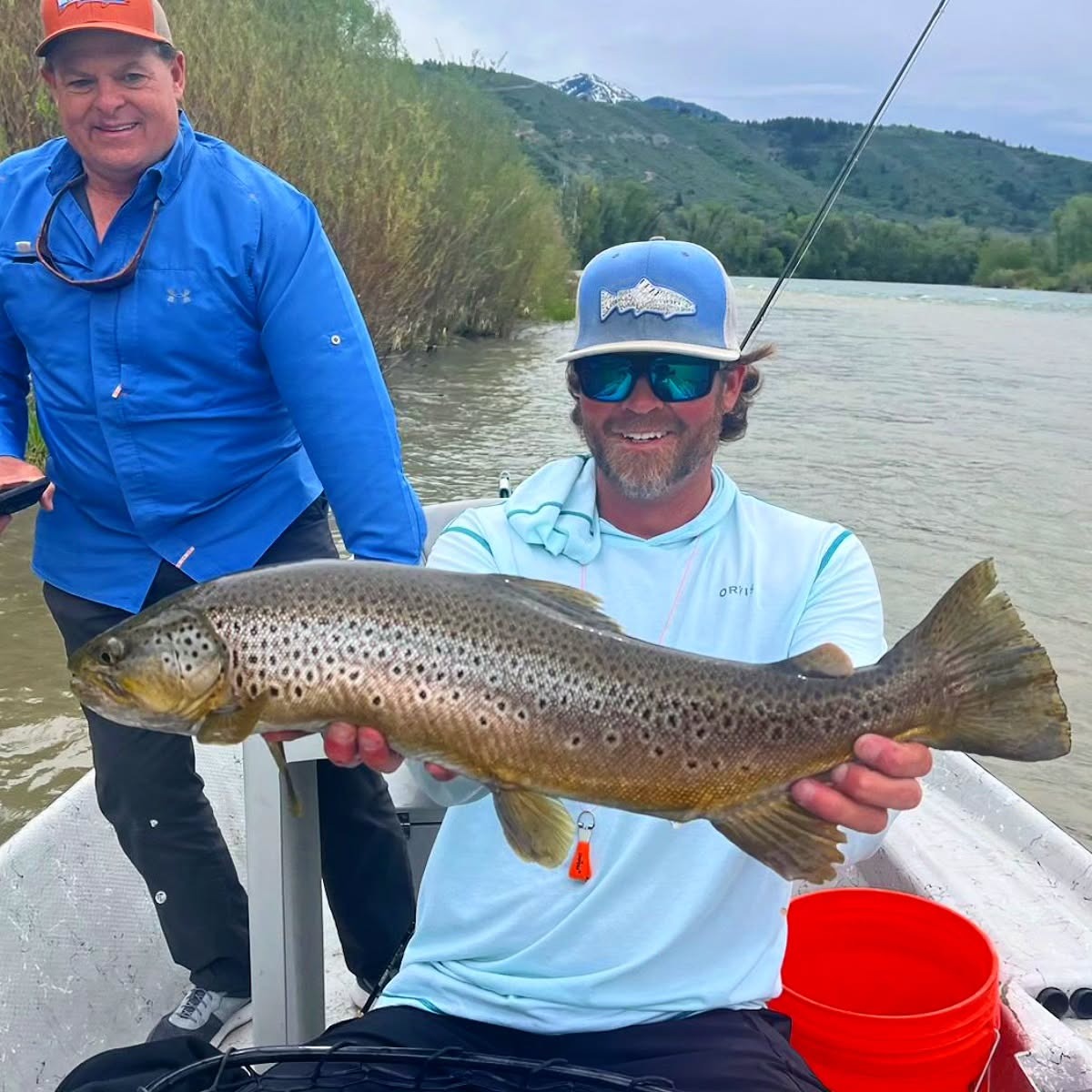
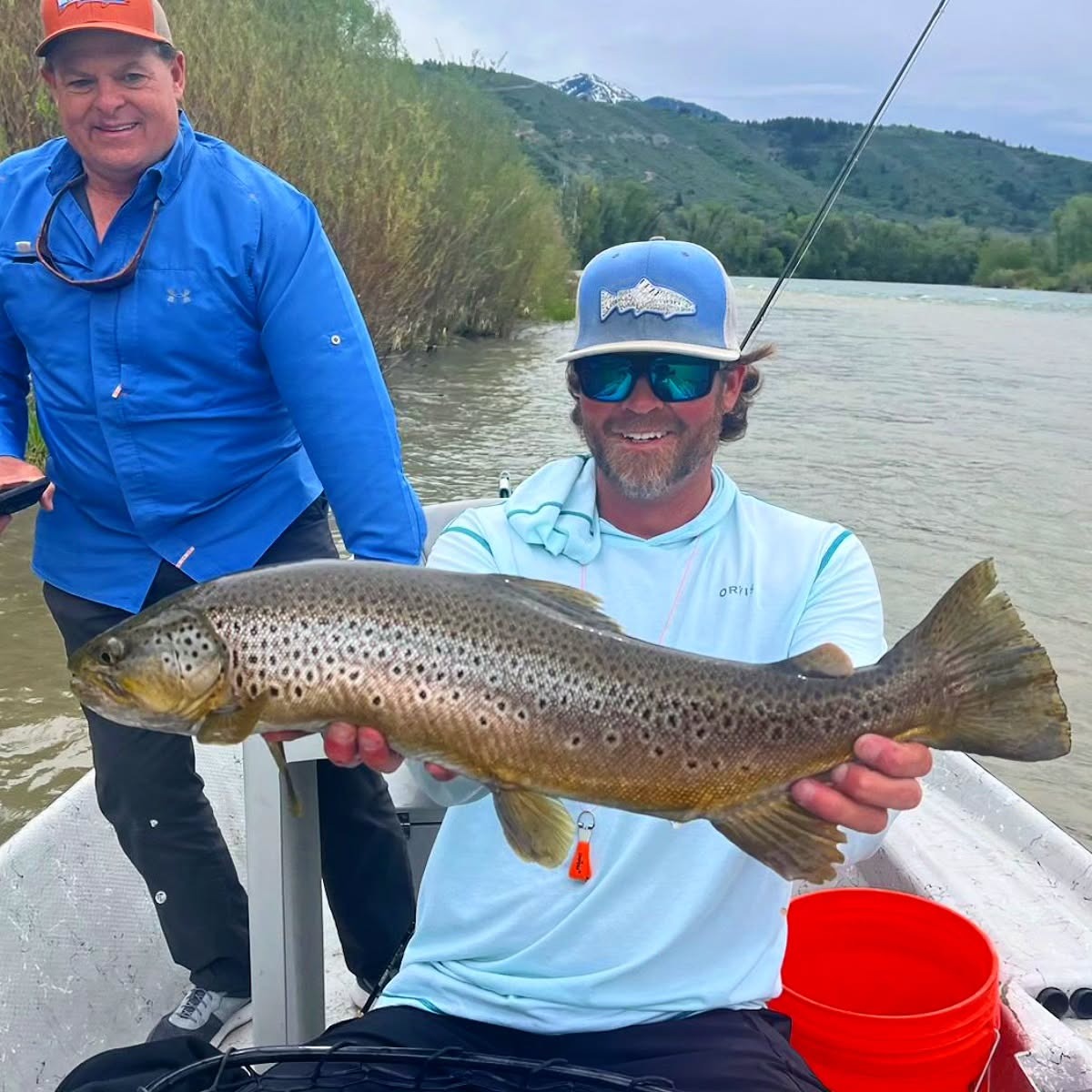
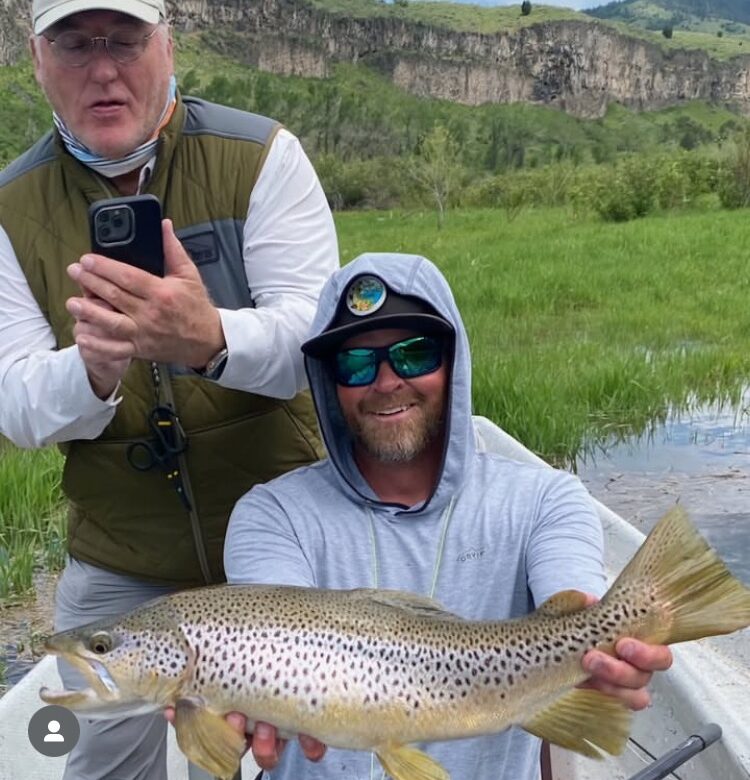
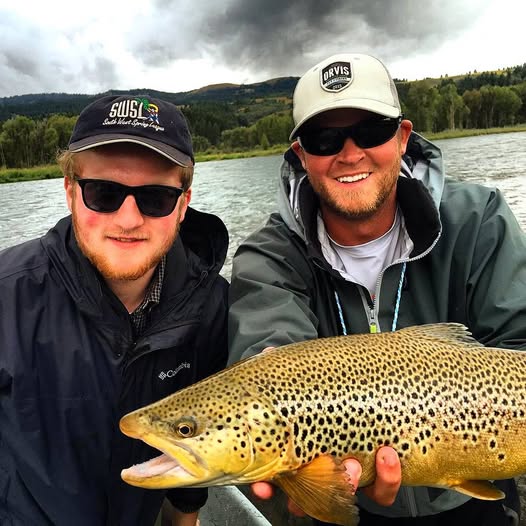
Scott Reimer, head guide at The Lodge at Palisades Creek, shares invaluable insights into the unique mutant Stonefly hatch, one of the most fascinating hatches in the Western fly fishing scene.
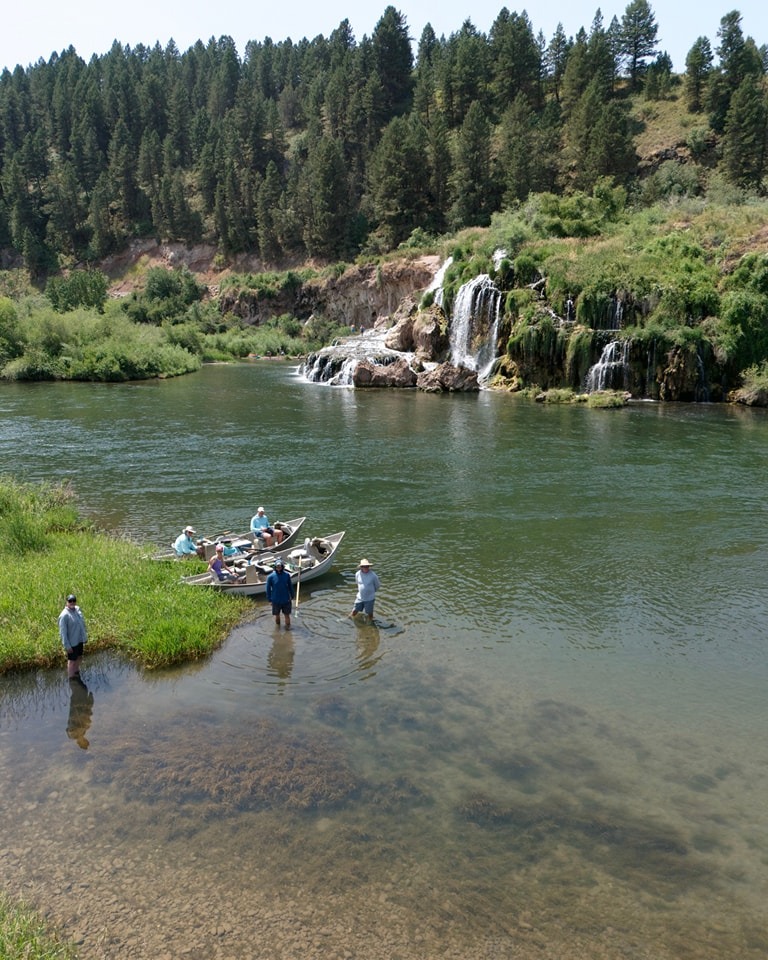
Throughout the episode, you will be guided through the South Fork of the Snake, learning not only where and when to fish a double dry fly setup but also mastering the art of reading water and setting the hook. Whether you’re an avid fly fishing enthusiast or a curious beginner, Scott’s tips on drift boat fishing and exploring small creeks will equip you with the tools to enhance your fly fishing adventures.
2:07 – Scott recalls his first encounter with fly fishing in the Black Hills of South Dakota, where he received his first fly rod at the age of four or five. Encouraged by his father, who was an avid fly fisherman, Scott honed his skills in the backyard with a makeshift target practice involving a piece of pipe cleaner and a trash can lid.
4:23 – Scott discusses the guiding season, which typically begins in April when he starts assisting at the fly shop and occasionally running trips, depending on the weather and interest from clients. The main focus of their guiding is on the South Fork of the Snake River, as they hold a permit that allows them to operate there exclusively due to Idaho’s strict regulations.
6:34 – We discuss the geography of the area, noting the confluence of the South Fork and Henry’s Fork, which marks the beginning of the main Snake River. Scott clarifies that American Falls is approximately 60 to 70 river miles from this confluence.
9:19 – Our chat delves into the impact of hatches on fishing success. Scott explains that fish behavior is closely tied to these natural events, influencing when and where they bite. While some hatches are predictable, others have become less prolific, affecting fishing strategies.
10:02 – Scott shares his journey and experiences as a guide at the lodge, where he has been working for 12 years. He recounts his early days on the river, starting with his first drift boat, an older Clackacraft he acquired at the age of 18. Despite its imperfect condition, with visible repairs and missing parts, it served its purpose and floated well.
12:06 – He discusses the various hatches that anglers eagerly anticipate throughout the fishing season. He mentions the early spring betas, noting that while trout don’t often feed on them from the surface, streamer fishing can be effective during this period. As the season progresses into mid-June, anglers can expect a short but excellent green Drake hatch, primarily on the lower river.
13:11 – Scott explains his approach to determining fishing techniques, often starting with a dry dropper setup and adjusting based on fish activity. He shares a memorable experience from the previous season, where he successfully used double dry fly setups for several weeks following the salmon fly hatch, with fish heavily focused on caddis patterns. This technique involved using different sizes and patterns of caddis flies for effective fishing.
14:07 – We get into his double dry fly set up. Scott explains the strategy behind using a larger, more visible dry fly alongside a smaller, less visible one to keep track of potential bites while fishing from a boat. This setup helps maintain visibility and improve the chances of a catch.
18:09 – Scott talks about the logistics and characteristics of the sections near Palisades Dam. He explains that the fishing area is divided into four sections, covering approximately 66 river miles down to Menan. The colder waters from the dam influence the timing of hatches, with the upper section starting later than the lower sections.
19:40 – He shares some essential tips for fishing from a drift boat, especially focusing on the South Fork. As a rower, his primary role is to maintain the drift and guide anglers on when to recast. He advises keeping a 45-degree forward casting angle to maximize success, as casting behind the boat is less effective. Scott notes that on the South Fork, long casts are unnecessary because shorter casts near the boat can be just as fruitful.
21:11 – We discuss how the salmon fly hatch typically occurs in July, followed by the appearance of golden stones, which progress from the lower river upwards. Scott reminisces about a particularly good salmon fly hatch, recalling fishing well into August with these flies. As the season progresses, anglers can expect a variety of mayflies such as PMDs, sulfur duns, and mahogany duns, especially on overcast days.
Towards the end of August, the unique mutant stonefly emerges which are best fished in the early morning. Scott shares the excitement of early morning fishing programs, where anglers start at dawn to target these skittering insects using patterns like Dornan’s Water Walker.
23:16 – Scott shares insights into the best fishing practices, emphasizing the importance of water temperature and timing. He recommends fishing with stonefly nymphs, such as patched rubber legs, when water temperatures approach 50 degrees, just before the hatch. This period, often in June, is prime for targeting stonefly nymphs before the larger hatch in July.
28:20 – The conversation highlights the differences between the rivers, with the Henry’s Fork experiencing hatches earlier due to its status as a tailwater.
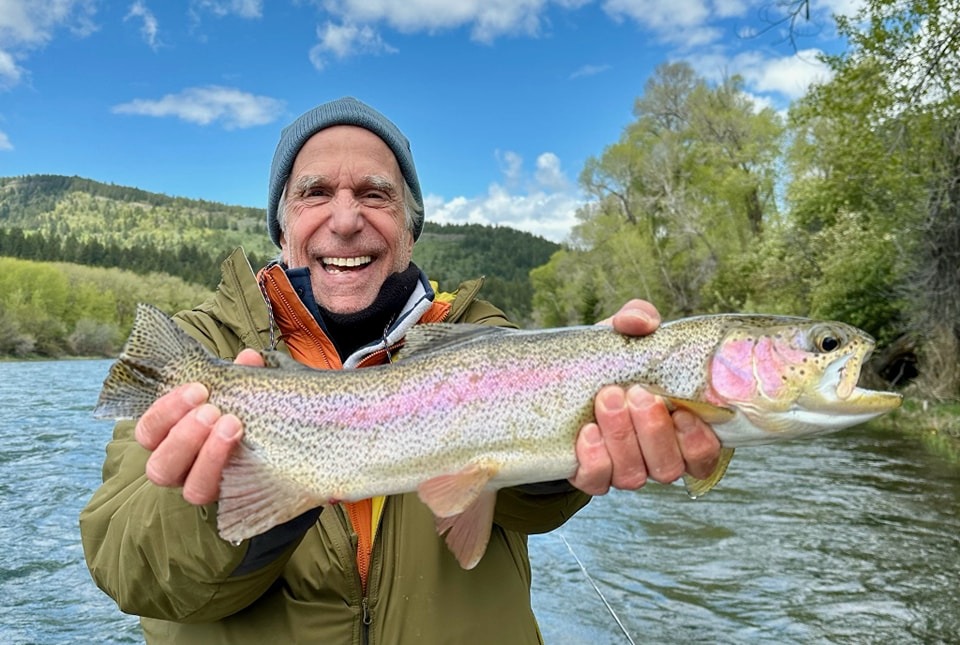
32:30 – Scott shares that Henry Winkler and his wife Stacy are frequent visitors to the area, with Stacy often being guided by Scott himself. They fish separately to enjoy the prime position at the front of the boat, which is typically the best spot because guides naturally focus on the forward drift. This strategy gives the angler in the front the first opportunity at the catch, especially effective when using a double dry fly setup.
37:32 – Scott shares insights into techniques, particularly when navigating new water or changing conditions. He emphasizes the importance of adapting techniques based on the fish’s behavior and water conditions. He advises getting the fly close to the bank, especially when fishing with a single dry fly, as fish might be hiding in submerged grass. However, after certain hatches, fish tend to move to seam lines, making a dry dropper setup more effective.
Scott suggests adjusting your approach if fish are not biting, such as changing the depth or the type of flies used. He describes using a double dropper setup, with a big dry fly and a couple of feet to the first dropper, and even adding an unweighted pheasant tail nymph if necessary. He notes that fish behavior can change rapidly, sometimes overnight, requiring anglers to frequently modify their strategies to find success.
41:15 – We ask how anglers can avoid missing strikes when fishing with a nymph. Scott emphasizes the importance of setting the hook frequently, noting that “sets are free.” He advises that if something seems suspicious with the dry fly, anglers should set the hook without hesitation. Treating the set like a recast means they won’t lose much time, and although it might not always be a fish, there’s always the possibility that it is.
44:40 – Scott shares his bucket list trips, highlighting New Zealand and Patagonia as top destinations for their exotic fishing opportunities, including the elusive peacock bass.
45:00 – The conversation shifts to Scott’s personal experiences with steelhead fishing. He frequently spends time at the Clearwater and Salmon Rivers, with both offering unique challenges and rewards.
47:46 – We talk about the logistics and planning required if you’re planning to fish during the prime salmon fly hatch season on the South Fork of the Snake River. Below are some key things to remember:
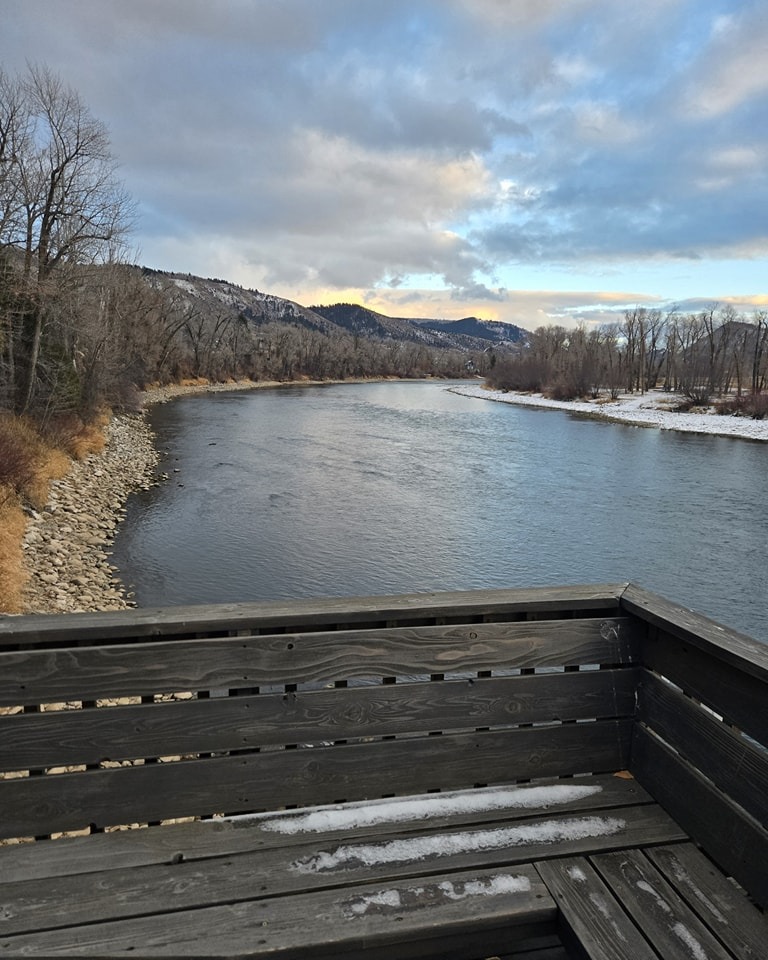
49:18 – Scott walks us through their lodge. The lodge is set on a 26-acre property featuring a private pond stocked with large trout, fed by a spring creek that runs through the grounds. Guests can stay in various cabins, including a unique cabin with a porch extending over the river, providing an exceptional view. They offer dining with breakfast and dinner, and guests have access to a dedicated staff ensuring a great experience with cocktails and excellent food.
53:08 – We ask some random questions such as his music preference, restaurant recommendations, among others. Scott shares his favorite local restaurants like the SnakeBite and Sandpiper for good meals after a day of fishing. He also highlights the Mountain America Center, which hosts events like hockey games and concerts. Scott mentions enjoying hard rock and metal music, specifically naming Kingdom of Giants as a favorite band.
Episode Transcript
Dave (2s):
There are a number of great hatches out west, but none more interesting than the mutant Stonefly hatch today. Not only are we gonna talk about this unique skittering hatch, but we’re also going to walk you through some of the greatest Western hatches of the year so you have more tools in the toolbox to hook a few more fish on the fly this year. Hey, I’m Dave host of the Traveled podcast. I’ve been fly fishing since I was a little kid. I grew up around a little fly shop and have created one of the largest fly fishing podcasts in this country. I’ve also interviewed more of the greatest fly anglers and guides than just about anyone out there. Scott Reimer head guide at the lodge at Palisades Creek and a double dryly master is going to walk us through the South Fork of the Snake.
Dave (45s):
You’re gonna find out where and when to fish a double dry fly set up and what that looks like. We’re also gonna find out some tips on fishing out of a drift boat and and how to get to some fish on reading water. We’re also gonna talk about setting the hook and a bunch of other things along the way. You’re also going to get a little bit of information on some other small creeks you might wanna check out this year if you’re looking in that part of the world. We’re gonna talk about that today. This episode of Trout is presented by Yellowstone Teton territory, where you can explore great fishing, hunting, hot springs, winter sports, and much, much more. Check out Yellowstone Teton territory now. All right, let’s go. Let’s get into this one. Here we go. Scott Reimer from the lodge at Palisades Creek.
Dave (1m 29s):
How you doing Scott? Doing
Scott (1m 30s):
Great. How are you Dave? Good,
Dave (1m 32s):
Good. Great to have you on here. This is gonna be a fun conversation. You know, we’re gonna talk, I think, not only, you know, the Snake River, south Fork, the Snake, and maybe some other streams in that area. You’re with the lodge at Palisades Creek. We’ve had Justin on the podcast, which was great. He told some funny stories. I think he talked about some of the presidents maybe that were down there fishing. So maybe we’ll get some of those stories outta you here today. We’ll see. But yeah, let, let’s take it back before we jump into a lot on the fishing and the lodge and everything you guys have going on, you know, with trout fishing. Take us back real quick. What’s your first memory of fly fishing? You know, how’d you get into it?
Scott (2m 7s):
I was at the time in the Black Hills, the South Dakota. You know, I got my first fly rod when I was four or five years old. There was the creek that ran right through town right there. And I just remember riding my bike to kindergarten and bringing my fly rod with me and fishing on my way home. Wow.
Dave (2m 24s):
Who was there to get you a fly rod at five? Because that’s definitely about as early as you can get started.
Scott (2m 29s):
Yeah, my dad set me up in the backyard with a piece of pipe cleaner on the end of the line and said, when you can cast it in that trash can lid, I’ll take you fishing. And I sat up there till I could do it.
Dave (2m 40s):
And is your dad a, was he a hardcore, it sounds like a pretty hardcore fly fisherman. Yeah, he
Scott (2m 45s):
Always fished, you know, I was born in Billings, Montana and he always kind of fished around there and then we moved to the Black Hills when I was pretty young and picked it up there.
Dave (2m 55s):
Yeah. And, and what was your, what did your dad do? Why’d you guys move to the Black Hills?
Scott (2m 59s):
Honestly, I think just a career change. Change in whatever scenery and, and whatever they needed to do, you know?
Dave (3m 5s):
Yeah. The Black Hills is, we just drove through there. We drove across the country from Oregon to, you know, to Wisconsin and we drove through and we stopped out in that area and yeah, it’s amazing. I mean, the country, how would you describe that? The Black Hills, that area to somebody who, you know, hasn’t seen, you know, that part of the country?
Scott (3m 24s):
Just kind of big rolling hills, a lot of granite stuff and plenty of trout streams, you know, pretty cool area. I remember even winters being pretty mild, really. You know, we usually play baseball on Christmas day, you know, it was not real cold all the time. It would snow and then it would melt, you know?
Dave (3m 41s):
Right, right. That is surprising. Yeah, I always think, you always think of Montana, Dakota is all that is kind of freezing. And you’re in a spot now where it is pretty cold, right? You’re, I think off air. You were saying it’s 10 degrees. What’s it look like there on, and maybe describe where you are now and what’s the temperature like today as we’re in kind of January?
Scott (3m 58s):
So I live in Idle Falls. It’s been pretty mild winter so far. Not a ton of snow yet. Just started kind of, today’s probably one of the coldest mornings we’ve had probably, you know, 10, 15 degrees outside, but looking at plenty of snow out there still, you know, had to spend plenty of time plowing the driveway and doing all that fun stuff.
Dave (4m 15s):
Yep. Is this kinda your off season or when do you start the, you know, the guiding you’re, you’re the head guide at Lodge of Palisades Creek. When does that all start up?
Scott (4m 23s):
You know, usually I’ll start helping shade out in the fly shop, try to start helping ’em out in April, maybe run a few trips in April. You know, if people are filling a little froggy and they want to get out there and battle what could be some iffy weather, you know, but fishing usually picks up about, then it’s, it can be pretty good out there, you know, kind of pre-run off.
Dave (4m 42s):
Are you guys on, is your program, are you fishing the, the South Fork of the Snake? Is that kind of the, like most of the time or do you guys hit some other waters?
Scott (4m 50s):
So we are only permitted, ’cause in Idaho we’re, we’re very heavily regulated. So we only have the permit to guide the South Fork of the Snake River. Gotcha.
Dave (4m 59s):
And that makes sense. I mean, obviously you’ve got the lodge, right? You’re, you’re on, you’re on the snake. How many, how many lodges are on of similar, you know, so, well just in total, how many lodges are on that, on that river?
Scott (5m 10s):
So there’s eight 12 boat permits. So our lodge holds one 12 boat permit, so we can put 12 boats out a day. And there’s eight of those permits for the South Ford. Some of those permit holders do not have lodging is kind of the big difference there. They just, they just run the fishing trips, but we’ve got the lodge and those accommodations, which is nice. But there are a couple other lodges.
Dave (5m 32s):
Yeah, there is it, is it two more? I, I know we’ve talked to Oliver, Oliver White, I think that’s another one. Yep. What, what’s the, what’s the other, is there just one more? Other than that,
Scott (5m 41s):
Let’s see. Got our South Fork Lodge just down the road from us and they’ve got, you know, their big lodge.
Dave (5m 47s):
There you go. So you guys got, got a unique obviously situation. So are people typically, are you guys getting everything in from the, I mean I’m, I’m assuming, is it mostly boat? Is it all boat fishing when you guys are doing your guiding?
Scott (6m 0s):
It is. Yep. Yep. Out of a direct boat. We also have a cast and blast permit, which allows us to run motors down on the lower snake a little bit. We don’t do that a ton. There’s a couple guys with jet boats and, and you know, if they get the right people they’ll go down there and maybe huck some streamers and, and do that program. But we can guide, we can guide down at American Falls, which is, you know, about a, from the lodge, it’s about a two hour drive down to Oh wow. American Falls area. But pretty cool fishing, not always good. A little different type of fishing down there. Yeah.
Dave (6m 34s):
So you have the south and talk about that. And when I know you’ve got the south for of the snake, you’ve got the Henry’s Fork. So basically when those two come together, is that where you make, that’s the main snake below that?
Scott (6m 44s):
Yep. You’ve got the confluence of the main snake starts there.
Dave (6m 47s):
Okay. And then where is, where is that falls that you mentioned with the cast and blast? How far down from there?
Scott (6m 52s):
So American Falls from the Confluence is probably just a rough guess. 70 river miles, 60 river miles maybe.
Dave (6m 60s):
Gotcha. Okay. So you guys cover, yeah, it’s not just the South Fork. You’ve got some other stuff going on there. Talk about your program a little bit. Are you working kind of five days a week covering the same area? Are you getting all over the place? You know, during the season we
Scott (7m 12s):
Try to cram it in, man, I’m, I’m seven days a week and I might go on big runners and you know, every once in a while you gotta have a day off to maintenance your truck or your boat trailer or something like that. Me personally, I don’t like taking days off. I don’t mind the grind. What is
Dave (7m 26s):
The longest string you’ve, I’ve heard some of the guides out around the country, you know, or I talked to somebody who said, yeah, you got 53 days in a row. And he was like, man, that was getting, that was a lot. What about for you?
Scott (7m 38s):
I definitely have done some runners in the, you know, 60, 65 days. Nice. You know, you get been doing this a while, so you get a lot of requests, trips and there’s not a lot of opportunities if you wanted to take a day off, you know, which is fine. I don’t mind it. Yeah.
Dave (7m 54s):
What’s the best and worst about 60 days in a row of as a doing that,
Scott (7m 59s):
You know, time goes by pretty quick when you’re working every day. Yeah. There’s not a lot of time to, not a lot of time to do much else. You know, you’re up early, you’re off the water pretty late in the evening and you know, by that time you’re getting some dinner and going to bed.
Dave (8m 14s):
Yeah. That’s it. That’s the cool thing is right. You are, I mean that’s the life that’s the cool thing about that season. I mean, you guys are one of the destination spots in that part of the country, really the whole country. I think, you know, I think, I’m sure people are coming from around the country to, to your lodge, but, but it’s like you’re in it, right? You’re, this is your time to not only make some money, but just do you feel like kind of a like kind of a rockstar kind of a, I don’t know what the best word for it is, you know what I mean? Like you must have things dialed. Is that kind of how it feels like every day is, or is it challenging every day to kind of get into fish?
Scott (8m 45s):
You know, you, you definitely get into a program when you’re out there every day, you pretty much, and not always, but you know where the fish are, you know what they’re gonna be doing at certain times. You know, the south’s kind of of funny, it’s a lot of times it’s, it’s either a morning or an afternoon game. There’s not a lot of days you get out there where it’s good boat ramp to boat ramp. It does happen, but it’s not all the time, you know, so managing expectations and hey, we might have a tough morning but it’ll get better in the afternoon. Or hey it’s, it’s gonna be a great morning and it’s gonna slow down. Setting those expectations is kind of a, you know, the truck ride to the boat ramp’s great for that.
Dave (9m 19s):
Yeah. Letting people know what is that the, you know, the fact obviously it can’t be great all day, is that just because of, depending on the season, the hatches things going on? Or what, why is it, you know, why is it typically not good all day long?
Scott (9m 30s):
It’s typically the hatches. I mean, you know, you might be fishing salmon flies and you know, by the afternoon those fish might be full or kind of depending on what section of the river you’re on. And typically you’re waiting for may flies to start around noon. You know, you, we get a pretty good PMD hatch on the south board and it’s a little different these days for some reason. But it used to be just go park up on a riffle your favorite riffle and wait till 11 o’clock. 11 o’clock it’ll start happening, you know, we still see that pretty often, but it’s not as prolific for some reason these days, but it’s still great.
Dave (10m 2s):
Right, right. Things are changing a little bit with the hatches. Are you seeing, and then now maybe take us back there a little bit on, on your time. How long have you been at the lodge guiding there?
Scott (10m 11s):
So I’ve been there 12 years. You know, I got my first drift boat when I was 18, so I guess I’ve been rolling that river for about 20 years.
Dave (10m 20s):
Wow. What was your first drift boat?
Scott (10m 22s):
You know, I picked up this older clack of craft that had been san and it was missing the back leg lock and Oh wow. Yeah, it was not the pretty boat you’ve ever seen.
Dave (10m 33s):
So the boat sank yet It was in, could you tell that it had been sank?
Scott (10m 36s):
There had been some repairs done to it for sure, you know, but it was the right price and it floated.
Dave (10m 42s):
Yeah, it floated. So do you know the story on, on the, ’cause I actually, the funny thing is my first drift boat that, well, let’s see, it wasn’t my first drift boat. I’m trying to think now. One of the first boats I had, same thing, it, it basically had sunk and I got it back and had to do some work. But do you know the full story? I
Scott (10m 58s):
Don’t know the whole story. I mean you could just definitely tell the original like rowers bench wasn’t in there anymore and the guy had rigged some metal sheet metal up to span across and we had a seed on there. So
Dave (11m 10s):
Yeah. Cool. So that was your first boat of clack and then eventually did you get a new boat along the way?
Scott (11m 16s):
I did when I was getting ready to start guiding, I did pick up a new boat and you know, had that one for a handful of years and then again got a new one a couple years ago. And
Dave (11m 25s):
Is that kind of on the boat? Is it pretty much, are you seeing most of the guides, you know, every few years getting a new boat? Or are you sticking with, you know, are guys sticking with the boats for a long time?
Scott (11m 36s):
Yeah, pretty, pretty much every few years. You know, I had my last one for I think eight, eight seasons probably do about the same with this one and once it starts getting kinda scratched up and beat up, which doesn’t take long, get a new
Dave (11m 48s):
One. Yeah, that’s awesome. Cool. Well let’s jump into a little bit on just the fishing, you know, because obviously you guys are in a, a pretty amazing spot here as the season. You mentioned, you know, April, things start slowly getting going. Let’s talk hatches a little bit. What’s that first hatch that you know, people are really Jones into to get out to?
Scott (12m 6s):
You know, we get some spring betas, it’s funny, the trout don’t eat the spring betas on top real great. You usually n in that time of year, maybe some streamer stuff, not a lot of dry dropper or dry fly stuff early in the spring. And then about mid-June we start getting, we have a pretty short window on a pretty great green Drake hatch. You know, it’s usually a week, week and a half long, mostly on the lower river. You don’t see ’em on the upper river a whole lot. And then you start getting in into the PMDs into your yellow, Sallys, some cadis, all that kind of stuff starts popping all about the same time. And then, you know, everyone’s always looking for the, for the salmon flies obviously. And then usually that’s kind of first part of July, you know, the first few days of July it’s, it’s going,
Dave (12m 51s):
It is, well what’s that salmon fly hatch look like? Is this the, the giant, this is the, the big bugs out there flying around.
Scott (12m 58s):
Yep. That big, you know, two and a half inch bug flying around that trt love to eat. You know, you kind of judge a day, I mean always start dry dropper and then first couple banks you might cut that dropper off and fish a single dry most of the day, you know?
Dave (13m 11s):
Yeah. How do you determine that? Because that’s always the, the interesting thing. I think there’s a lot of ways, right? You can go all dry and just like say, hey, I’m going to get one on dry. Or you can kind of go all nymphs, right? You could, there’s a mix. Do you guys find the dry dropper is a good in between that you’ve, you’re doing the majority of time?
Scott (13m 26s):
Yeah, once I start seeing fish look up, I’m a, you know, dry dropper pretty much the rest of this season. There was a really good spell last year where I threw double dries for a few weeks. Oh cool. After the salmon flies they were keyed on at cat it’s pretty hard. And bow ramp to bow ramp, I was throwing double dries and it was, it was awesome.
Dave (13m 45s):
Yeah. And double dries with like couple different maybe sizes of patterns.
Scott (13m 49s):
Yeah. Just a couple different cadi, you know.
Dave (13m 51s):
Yeah. What, what’s your cadi, what, what’s the cas you guys are typically using if on say that? If it’s on that dry dry or that just that double dry,
Scott (13m 58s):
Honestly my best was just a, just a tan X cas size 16, you know, maybe behind a little golden stone or something like that. Or a cider fly.
Dave (14m 7s):
What’s the cider fly? What’s that look like?
Scott (14m 9s):
So you know, if you’re, if you’re throwing a little dry fly, it’s kind of hard from the boat to keep that thing floating all the time. Perfect. You know, those long drifts, it might sink on you, you know, you get something bigger up top you can keep an eye on good. Kinda keep an eye around that big dry fly to watch that, watch out for that smaller fly bite. Just something to keep an eye on from the boat. Something that’ll float a little better most of the time.
Dave (14m 31s):
Oh right, right, right. That’s the, that’s kind of the double dry. You’ll have one maybe that floats better in there and, and then another one that’s maybe smaller, something like that. Correct, yeah. The xca is interesting because you know, I’m sure there’s different colors. Do you have a color or do you have a very, a number of different colors that work on that bug? You
Scott (14m 48s):
Know, I kind of just stuck with the tan. It kept working so I kept throwing it.
Dave (14m 51s):
Yeah. The tan and it’s pretty much, I always go back, I guess I do because I’ve used the, you know, the old school elk care ca a lot. But the Xca is actually very similar to an eCare. Yeah. Yeah.
Scott (15m 2s):
I mean
Dave (15m 2s):
It’s like the only difference, at least what I’m looking at here is that it’s got kind of a, a, a different like maybe a tail, but what do you know the difference between the elk care and the xca?
Scott (15m 11s):
Like the tail you mentioned and then the, just the original elk hair Cadis had that a hackle body, the tanner, the Xca did not have a hackle on it.
Dave (15m 21s):
No Hackle. Which is key because now you’re talking about, and we’ve heard this a lot with dry flies, is that you’re not necessarily trying to get that fly sitting up on top like this perfect, you know, dry. You want to end the surface a little bit for the most part. ’cause these fish aren’t necessarily just, yeah.
Scott (15m 36s):
And even, you know, you get a lot of eats under the water on that thing too. Those cat swim around, they swim around so it’s, if it’s under, it’s not always bad.
Dave (15m 44s):
Oh right. So you might actually not even see the fly and get a, get a fish on it. Right. Oh there you go. Okay. Yeah, the, the dry fly world. When you have somebody on the boat, how do you do that with expectations? Is that the morning drive where you’re going up and you’re starting to get a feel like of their level? Do you find that most people aren’t at the high level of dry fly fishing? Or do you find there are a lot of people that are pretty knowledgeable?
Scott (16m 6s):
You kind of get a mixed bag. I mean, you know, obviously castings, you know, a heavy nim rig is a lot different than casting little dry flies. You know, I feel like the, like the drift on a little dry fly rig is, has gotta be a lot more presented a lot better than some like a NPH rig. You know, NPHs an art on its own. But to get that fish, especially if you’re stocking a certain fish, a lot of these times these cutthroat, they don’t leave their lane to feed. You gotta have it right over ’em. So getting that drift perfect right when it’s crossing that fish is pretty key.
Dave (16m 39s):
It is like within, if you see a fish rise within, how far of that rise are you trying to get it?
Scott (16m 44s):
If their food source is plentiful, there’s a lot of times they won’t move six inches a foot. You know, you gotta have it pretty much on the button.
Dave (16m 51s):
Yeah. And you hear, you mentioned before the looking up when do you know, you know, describe that a little bit. You know, we’ve heard that quite a bit on the, the looking up. How do you know when it’s at that stage where it’s time to really go hard on the dries?
Scott (17m 3s):
You know, if I put the boat in and I’ve got a dry dropper rig on and I start seeing some, some rises kind of out the corner of my eyes, I’m not afraid to switch that up and give it a shot. I mean if you see in random fish rise, what’s to say? They won’t eat your, you know, going down a bank or going down a flat. You’ll see fish too, you know, you’ll see fish flash near the surface even if they’re coming all the way up. Just kind of keeping an eye out, watching, watching what the fish are doing, you know, you pay attention, they tell you what to do.
Dave (17m 30s):
So. Okay. So yeah, you got these cues and then if you’re seeing enough of that fish rising flashes, then you might switch over to Yeah, maybe to all dry setup. And what about the nipping? When are you, are you mixing up a little bit with, if you have a couple clients on the boat, are you kind of having one person with the nymphs, one person with the dries eyes or you know, how does that look?
Scott (17m 48s):
Usually if I’m gonna throw a double dry rig person in the front of the boat gets that set up and then the guy in the back or lady in the back will get the dry dropper cover all levels. You know, if they’re not eating that double dry, they might just be looking two feet under the water, throw that dry dropper through there and then kind of base your day, you know, make your changes off of that.
Dave (18m 9s):
Okay. Maybe describe a little bit on the areas you mentioned before, the lower versus the upper different hatches. You guys cover a few different sections. Maybe give us a summary of that. First off, where is the lodge and then where are these sections you’re floating?
Scott (18m 21s):
The first section starts at Palisades Dam down river, down to Kona Valley boat ramp. You know, obviously that little bit colder water coming out of the dam takes a little bit longer for those hatches to start on that upper section than it does the lower section. You know, the Southport, our sections, our four sections I think down to Manan, the confluence is like 66 river miles. You know, we’re broke up into four sections. The way that we’re regulated is we can only have four boats per section per day. So the mornings are kind of a, you know, everyone texts me at six o’clock in the morning and for their preferred section and you know, not everybody gets what they want every day and, but luckily we got a great team and everyone’s willing to bend and plain ice and you know, we figure sections out in the morning and sometimes there’s a lot of changes in sections.
Scott (19m 7s):
’cause you know, guests might have an airport run and they need to be on the lower river for whatever reason to catch a plane or something like that, you know.
Dave (19m 14s):
Oh right. So you have the different section and it’s four boats. So outta your 12 you have the permit for 12 you can basically you you four or you mix well you have four sections. So you might have boats on each of the sections. Right. Maybe two or three boats on each section. Something like that.
Scott (19m 28s):
Yep. So you know if, if the lower river’s fishing grade, obviously everyone wants to go fish the lower, so your sections two, three and four might be full and there might zero boats on the upper section that day.
Dave (19m 40s):
Yeah. What are looking at the drift boat and you know, it sounds like you’re in the cockpit rowing a lot. Do you maybe give us a, a few tips as a rower, how are you getting people lined up to fish or if people are listening now they’re gonna be out there in a drift boat, what sort of advice would you give them?
Scott (19m 55s):
You know, if you’ve never fished out of a drift boat before, it’s a cool experience. My job rowing the boat is to follow those drifts and keep those drifts going as long as we can and telling people when to recast, you know, just that slight angle, 45 degree angle out front. You don’t wanna be casted behind the boat, which is a big, a big thing, especially if you’re in the back of the boat. If you’re casting backwards really tough to catch fish.
Dave (20m 18s):
Oh right.
Scott (20m 19s):
You know, your cast always wanna be pushed forward a little bit. The nice thing about the south fork is you don’t have to cast all that far. The further of a cast you get the more currency your line might be in and harder to get a better drift. So, you know, I’ve had plenty of days where you’re catching fish almost under the ore.
Dave (20m 35s):
Wow. So you’re just, and and are you guys typically on the boats drifting down? Are there times where you might see some fish and you’re anchored up casting the fish?
Scott (20m 44s):
A lot of both. Yep. I mean if you come across a a pot of fish, you know the number one rule, never leave feeding fish to find feeding fish. You know, if you got a spot where you got feeding fish work, ’em, you know the south works big water, a lot of times you might just have to flow past them ’cause drop an anchor might not be ideal. So you get your one shot at ’em and you’re on your way. But just getting that drift over those fish maybe one time if you could stop and work ’em. Great.
Dave (21m 11s):
Yep. Okay. And we started out talking a little bit about the, we kinda were getting into some of the Cass you mentioned a few through, so we, the salmon flies are July, so that’s kind of roughly in that area after the salmon fly is over. What is that? Are you getting some golden stones? Talk about the, the rest of the summer, how does that look?
Scott (21m 28s):
We do get some golden stones again kind of starts on the lower river progresses its way up. Couple years ago, what was it? We had really good salmon fly hatch and I was fishing I think the first day of August I was still fishing a salmon fly solo. Oh wow. Then kind of you start relying on your, on your PMDs, your pale morning duns little mayfly, you know, we’ll get some sulfur duns mixed in there. We’ll get some mahogany duns on overcast days, especially kind of a mixed bag of mayflies. And then kind of towards the end of August we start getting our mutant stone, which is a short wing golden stone. The males don’t fly, you know, they don’t have a developed wing so they skidder on the water, but they are also nocturnal.
Scott (22m 13s):
So early morning programs can be really good, which is cool. You know, a lot of the guys like to do the really early morning program. You know, you put the boat in at dark and start twitching bugs, you know, and shallow gra off shallow gravel bars. Pretty cool.
Dave (22m 26s):
And this is specifically for the mutant stonefly? Yes. Yeah. So you have a pat on that just is a, some sort of a golden stone type fly. How is it different than, does it not have a wing?
Scott (22m 37s):
No, I mean probably the best, the best one has been last couple years, obviously the water walker, Thornton’s Water Walker Creek batter.
Dave (22m 45s):
Gotcha. Water walker. Cool. And you guys have, yeah, you have a fly shop too that, so is this a typical normal fly shop within the lodge or is this a different area building? We
Scott (22m 54s):
Do have a fly shop at the lodge and then few miles down the road we do have another, another fly shop, more for the general public, a little more traffic into that store, kind of at a junction coming over from Victor and Jackson area. So it’s right at that junction and get a little bit more walk-in traffic there.
Dave (23m 11s):
Right, right, right. So you guys have just your typical, you got everything there, all, all the flies, everything. Yep.
Scott (23m 16s):
Yep.
Dave (23m 16s):
Nice. And what are, so we’re kind of going through the seasons here. We’re we’re talking I love the mutant stone ’cause that’s an interesting one. Do you know much, do you get into the, the nerdy bug stuff? Do you know about like the etymology and why that bug is the way it is? Any of the any of that stuff?
Scott (23m 29s):
Yeah, a little bit. I mean quite a bit. Yeah.
Dave (23m 31s):
Why is that? Because you have your typical and is this, is the mutant typically a golden stone or is it like a, another type of stone?
Scott (23m 38s):
Yeah, it’s just a, a short wing golden stone as far as I know.
Dave (23m 41s):
Yeah. What is the evolution or what is the, you know, why would they be a mutant? What’s the advantage for that bug to be and do you see massive amounts of these bugs with no wings.
Scott (23m 50s):
You don’t see a lot of ’em until you get out on the shallow gravel bars and start kicking rocks over. ’cause they’re an nocturnal and they’ll, they’ll walk around the rocks and hatch at night and then they’ll bury themselves into those gravel bars during the day. So you don’t see a ton of them during the day, but you start kicking rocks over and, and looking for those, those mutants. Or you’ll see their shucks on the rocks and you’re looking for, you know, then, you know, they’re out there and the travel still eat them, you know, a lot during the day. But, you know, that early morning program is pretty cool.
Dave (24m 19s):
Okay. And the site, the life cycle of the salmon and golden stone salmon fly and all that I think is, don’t they crawl like they hatch and they kind of swim to shore Right. And get, is that, is that the case for all those stone flies? Yeah,
Scott (24m 32s):
Yeah. Typically the stone fly, like the salmon fly is a, is a three year lifecycle. You know, their egg is laid in the river and then three years later when the water temp hits 56 degrees, they’ll work their way to the bank and crawl out and shed their shuck and dry their wings. So there’s always, you gotta think, there’s always an abundant mo of stonefly nms in the river, which is a good way to go. If you’re n an early season, you know, you know, there’s, you know, there’s stone flies in there, there’s always, always a plentiful amount of stoneflies.
Dave (24m 59s):
Yeah. When is the best time? Yeah, I always look at, ’cause some of these salmon flies are giant, right? The, the, I guess the terra narcissist California, right? That’s the scientific name I think of those. But those are the big ones. They’re like an inch or two or whatever they are. Are you guys fishing those, are you fishing the nymph down at the bottom at all ever? We
Scott (25m 15s):
Are. Yep. You know, right before they hatch, when that water gets to about 50 degrees, it’s pretty much time to start fishing that like just a patch rubber leg, you know, or some kind of stonefly variation. A lot of days you’re throwing, you know, two rubber legs on each rod. ’cause they get really keyed. They get really keyed on that Nim Falls soap.
Dave (25m 32s):
And so you wanna hit that like, so you got water temperature and you’ve got just before the hatch really happened. So if the hatches happen in July, you might be looking, if you’re planning a trip, I mean I guess June, right? Sometime a couple weeks before July would be might be a good time.
Scott (25m 46s):
Yep. And then you might get into the mix of those green Drakes, you know, the, the, the early PMBs. Oh
Dave (25m 51s):
Right. That’s why it’s so cool ’cause there’s a lot going on. And the Pat’s rubber leg is essentially, I always go back to the girl bug, right. The old school, the, you know, whatever it is black with white. But the Pat’s rubber leg is essentially the same thing. It’s got the rubber, but it’s more of a brownish color. Kinda like, almost like Montana stone style color.
Scott (26m 8s):
Yeah. Yeah. And, and we fish a lot of black rubber legs
Dave (26m 12s):
Step into the world where the river whispers and the fishing is nothing short of legendary. This year I ventured into the heart of Eastern Idaho’s Yellowstone Teton territory where the fish were larger than life and the waters held the secrets of the best fly fishing out West Yellowstone Teton territory is not just a location, it’s a gateway to adventures that will etch themselves into your memory with crystal clear rivers like the Henry’s Fork and the South Fork of the Snake and enough lakes to keep you going all year long. Make your way to Yellowstone Teton territory and embark on a journey to one of North America’s finest fly fishing destinations. Whether you’re planning your trip now or just dreaming it up, the YTT is where those dreams turn into reality.
Dave (26m 55s):
Remember Yellowstone Teton territory, that’s Teton. T-E-T-O-N. It’s time to experience eastern Idaho for yourself and support this podcast at the same time. When would you fish a black versus the brown and the other that the other color?
Scott (27m 13s):
You know, if you, for some reason, if you, if you got a black one and a brown one on one rod and they keep eating the brown one and keep eating the brown one and keep eating the brown one, you know, get rid of the black and go double brown or different little shade, different of brown. You know.
Dave (27m 26s):
Yeah. That’s probably a good tip for anybody. Right. If you’re out there fishing, it’s you and somebody else in the boat. You probably shouldn’t, you should be experimenting. Right. And you don’t know exactly. You might know they’re on the bug, but you don’t know the exact color. How important is that? What do you think is the most important thing when you are fishing? Let’s just stay on the nymphs. You’re fishing these nymphs is size, color, you know, what’s the most important thing to try to get right with these guys?
Scott (27m 48s):
I would say profile. So size, a lot of the times seems like color doesn’t always make as big of a difference as profile in my mind.
Dave (27m 57s):
Exactly. And are these flies, and I guess this is a good example ’cause the Pat’s rubber leg is a, I’d say a suggestive pattern, right? I mean it doesn’t, it sounds like the exact imitation or the stuff that’s really close isn’t that critical. Is, is that what you guys see? Most of the stuff you’re fishing is like this. Right.
Scott (28m 12s):
And I feel like a lot of these fish are more just opportunistic. You know, if they see something in their wheelhouse that looks close, they’re probably gonna try it.
Dave (28m 20s):
Yep, exactly. Cool. This is awesome. So, so we’re working through it. It sounds like, you know, again, I’m always thinking western rivers versus the east, eastern rivers, but it feels like there’s a lot of action going on out here. What hatches don’t you have, I’m not sure if you fished around other areas, but does it kind of, do you guys have everything out there?
Scott (28m 36s):
We don’t get like a hex hatch on the South fork.
Dave (28m 39s):
The hex is the, is that the Hexa Gina?
Scott (28m 41s):
The hexa Gina Hatch? You know, we, those eastern rivers, they get a lot of that. We do not. There’s, you know, I’m sure there’s a handful of different variations of may flies,
Dave (28m 49s):
But you guys, as far as the Western stuff, it sounds like you pretty much getting all the most of the big hatches out there, right?
Scott (28m 55s):
Yep. You know, and it’s funny, the Henry’s fork is when we’re still nipping rubber legs. Everyone’s kind of focused on the Henry’s fork and the, you know, south Fork’s not that busy ’cause Henry Fork’s going through their, their adult salmon fly hatch, which is the big thing there.
Dave (29m 8s):
Oh, so it’s earlier. Yep.
Scott (29m 10s):
They’re about a month ahead of us on the South Fork.
Dave (29m 13s):
Gotcha. Okay. And is that because it’s a, the Henry’s fork is, is that a tailwater or how is the, what’s the difference? It’s smaller, right?
Scott (29m 21s):
It is, yeah. So usually I think the Henry’s fork is running about 1500 cubic feet. South Fork might be running that time of year, might be running 20,000 cubic feet. Oh
Dave (29m 31s):
Wow.
Scott (29m 32s):
So big difference in water there.
Dave (29m 34s):
And what is the average throughout the, I guess it depends on the season. So you have, well let’s take it back. So you got April, you mentioned there’s some guys, some hardcore guys that might be wanting to get a trip. When does the, the higher water like, or is it pretty maintained because of the dams and all that stuff? As far as the spring flows?
Scott (29m 51s):
It, it is pretty maintained. They try to give us a, you know, at least a day heads up when they’re gonna change water flow. But it, you know, it varies year to year depending on snow pack and what the reservoir’s doing and how full it is. If the reservoir starts filling up and they need to make room, they’re gonna crank the south fork up. You know, I think this last year we saw 22,000 cubic feet of water, which is getting to that point where it’s, it’s a little sketchy out there. You gotta be on your toes, you know. But right now our winter flow is 900 cubic feet.
Dave (30m 22s):
Oh wow. Yeah, it’s totally different. Right. When does that start dropping later in the season? When does that start dropping down?
Scott (30m 29s):
So usually they try to have the reservoir at a hundred percent full by July 1st. So usually once that reservoir hits a hundred percent full, you know, inflow into the reservoirs coming down. And they’ll typically start dropping the river a little bit for that first part of July. And then our normal summer flow, I would say is anywhere in between 10,000 and 13,000 cubic feet.
Dave (30m 52s):
Okay. Yeah. So 10,000, which is, which sounds like depending on your river, I mean that sounds it, it is a big road. It just shows you, again, this is the, it’s called the South Fork of Snake, but essentially this is like the main stem Snake River. Right, right. Yeah. Which is a massive, which flows, I’m not sure how many hundreds or maybe, yeah. I don’t even know if you know until it hits the Columbia, right? Yeah. It’s
Scott (31m 11s):
A Columbia and then it ends up in the ocean.
Dave (31m 13s):
Yeah. Yeah. It’s, we’ve talked about this a little bit, but we’ve done a number of episodes around the entire Columbia basin all the way up to the, into Canada. And it’s interesting ’cause it is such a big river and, but the snake has gotta be, I’m not sure if it’s gotta be the biggest trip I’m, I’m guessing. Yeah. You
Scott (31m 28s):
Know, I’m, I’m a little unsure, but it’s, yeah, it’s a lot of water.
Dave (31m 31s):
Yeah. Yeah. Cool. Let’s take it back. I mentioned this a little bit at the start. I’m kind of just curious in this, the, I think when Justin was on, he talked about, was it Obama or he took a president out? Do you know that story? Were you involved in any of that?
Scott (31m 43s):
I really wasn’t involved in much of that. Dick Cheney just, he was a,
Dave (31m 47s):
Oh, Dick Cheney, that’s what it was. Yeah,
Scott (31m 49s):
He was an avid angler. And when he was vp, that was, that was just about, I think just before when I started guiding. But I have been, I have been, you know, he’s, even after he was vp he still fished quite a bit and been on those group trips and him and Dave guys.
Dave (32m 5s):
So you’ve been out there on some of Cheney’s trips? Yep,
Scott (32m 8s):
Yep. Never with the, never with the Secret Service or anything like that.
Dave (32m 12s):
Gotcha. Yeah, that was interesting. I think we’ll put a link in the show notes that episode, because he talked about, I think there was some guys with just the way it all went down the Secret service. Yeah. You got guys with whatever, you know.
Scott (32m 22s):
Yeah, yeah, yeah, yeah. Justin dealt with that quite a bit. That was, he’s got some funny stairway for sure.
Dave (32m 27s):
Yeah. Automatic weapons and road.
Scott (32m 29s):
Yeah. Yeah.
Dave (32m 30s):
Good. Okay. What about, have you guys had any other, you know, any other famous people out in that area over the years that you’ve been at the shop or something?
Scott (32m 38s):
You know, Henry Winkler and his wife come out and Oh yeah. You know, I’ve guided Yeah, his wife Stacy since I started guiding and
Dave (32m 46s):
Oh, you have, so you’ve, you’ve guided Stacy and Henry a number of times?
Scott (32m 50s):
Well, Henry and Stacy fish in different boats, so they, you know, they, they both like the front of the boat and that’s great. Oh,
Dave (32m 57s):
There you go. Yeah,
Scott (32m 59s):
I’ve taken her out tons of days and Henry usually fishes with a different guy and
Dave (33m 3s):
That right there, you know, and I don’t, the cool thing about that. Well, and we had Henry on the podcast, you know, and Oh cool. Yeah, we have an episode with him. It was really awesome. I, I love talking about this one because we talked a lot about fly fishing and you could hear his passion, but then we also talked about some of his, you know, his stories as the fawns and everything and Yeah, yeah. That guy was, I mean, he told this thing he had at one point, he was during the fawns, the heydays, I think he said he got 500,000 fan letters a week.
Scott (33m 30s):
Holy cow. I don’t doubt it. Right.
Dave (33m 32s):
To show you what, what level he was at, but so, but it makes sense to me like they’re so into it that they would literally wanna take a couple boats because they wanna both have, you know, the best opportunity. Is that kind of how you see it is the front of the boat always the better place to be.
Scott (33m 45s):
Typically, you know, as guide your eyes are forward naturally, so you’re, you’re kind of watching that drift more than what’s going on in the back of the boat most of the time. First opportunity at the fish, you know, if you’re back to the double dry, if you’re fishing that double dry and you gotta fish that wants to commit on that double dry guy in the back of the boat doesn’t have as good of odds on that fish that might be willing to come up and eat.
Dave (34m 10s):
Yeah. Because he is getting the second, it’s almost like the, you know, I go back to the steelhead, like swinging flies, you know, okay, you gotta, you gotta run, you got the guy in the front and then the guy in the back and you know, typically not always, but you know, the guy in the front has the first shot at the fish. Although, you know, depending on skill level and stuff, that guy in the back, you know, might actually catch more fish. Right, right. Do you find, is that how you do it when you’re on the boat? Do you typically put the, the best angler in the back of the boat?
Scott (34m 35s):
Typically and I usually let the people decide, you know, what they want to do. A lot of times, if you have, I’ve found out these last couple years, I’ve kind of toyed with it. If you put your better angler upfront, even for an hour or two, the person in the back might not be as experienced, but then they can learn what I’m saying. And you know, they might not know what a mend is, you know, and if I’m telling that person in the front, the mend men, their line person in the back is watching and picking up on that. And then when they’re in the hot seat up front, they know a little bit more of the lingo and what to do, whatnot to do. And it kind of, it can kind of be advantageous for the person in the back to watch for a little bit the better angler in the front maybe.
Dave (35m 14s):
Yeah, that makes sense. I used to do a lot more hiking back, you know, but I always used think of that when we were doing these summits, you know, going, climbing the top of the mountains. I had a friend Derek used to say, Hey, let’s put, let’s put the worst hiker in the front and then everybody, right. And then what it does is that first hiker in the front, he actually, it paces everybody so you’re not leaving somebody in the dust. But then it also, that person in the front actually does a better job. Right. He becomes, you know what I mean, he becomes more of this thing. So I don’t know if there’s any feel
Scott (35m 42s):
That, feel that pressure a little bit.
Dave (35m 43s):
Yeah. You feel the pressure and you gotta, you gotta stand up, you know, you know, step up to it. But Cool. So we’re talking a little more about the program and it sounds like maybe throughout the year, let’s talk about that as we’ve, as we go into the summer and you’re looking into the fall, like September, october. Are you guys wrapping things up? Does it vary or typically are you wrapping things up? You know, come October, November,
Scott (36m 3s):
You know, usually, you know, we work pretty hard through October, few straggler trips in November. Guys want to throw streamers and, and do that. But you know, October stays pretty busy. Still get some bug hatches, but you know, the fall beta typically more in October, the fish will eat those pretty good on top.
Dave (36m 21s):
Describe the beta. Is that a just a mayfly.
Scott (36m 23s):
Yeah. So your beta is like a bluing olive mayfly.
Dave (36m 26s):
That’s right. So you got the bluing olives, which typically are going a little bit earlier or later in the season. And how late is the, are you seeing the bluing olives?
Scott (36m 34s):
You’ll see ’em all the way through October. I mean, overcast obviously is a little better, but for some reason they hatch better, better when darker skies fish will typically look up a little better in darker skies feel more protected, they’ll expose themselves a little bit more.
Dave (36m 48s):
Yep. So the betas, you want a kind of an overcast or partly cloudy day is probably better than sunny skies.
Scott (36m 54s):
Definitely helps. Definitely helps.
Dave (36m 56s):
Yeah. Okay. And what’s your, what’s your typical pattern? Is this like a size 16? Like what would be a, a typical pattern for the betas?
Scott (37m 4s):
You know, those, a cripple like boots. Allen has a pattern, I think it’s just called the boots is cripple. And like in like in 18 cripples seemed to work a little bit better than a full adult dry a lot of the times for some reason, again, kind of going back to sitting down on the surface film a little bit, you know, little bugs, hard to see, but you kind of looking for rises, kind of knowing about where your flies out a lot of times, but a little bit of guesswork involved with those. But if they’re going hard, they’re usually not too picky.
Dave (37m 32s):
Yeah, they’re not. Once you get into it, as you’re floating down and you’re kinda reading the water and say you’re in a new section of water, what are you looking for? Like are you, how are you finding the fish if you’re not seeing ’em, you know, eating, let’s just say maybe you’re nipping or dry dropper, you know, are you typically, is it usually closer to the bank is better? Or how are you finding the fish?
Scott (37m 51s):
Kind of depends. You know, that salmon fly who you’re fishing, those is single dry, it’s pretty, it can help a lot to not have that dropper on there. So you’re getting that bug as close to that bank as, as you can, you know, they might be shoved up into the, you know, submerged grass or something. But if you’re going a couple weeks later after the salmon flies, those fish will push back out into the seam lines. So having that dry dropper and pulling it off the bank a little bit definitely helps. So if you’re scouting new water or if something’s changing, you know, they change flows, those fish will move. My kind of rule is if you’re, if you’re watching a couple good drifts in good water and nothing’s happening, change your depth, change something, there’s something they’re not liking, they’re doing something different.
Scott (38m 35s):
You know, if you’re, a lot of times we’ll go double dropper, really, you’ll have your big dry, you’ll go maybe two and a half feet to your first dropper. If they’re not doing that, maybe tagging unweighted pheasant tail off that nymph, you know, just kind of scouting the water and, and seeing what’s going on. You know, if nothing’s happening on that, you might have to go back to the nfr. They might be sitting deeper, further out off the banks. And there’s a lot of days where it, it seems like it changes overnight. You might do something for a week straight that’s working really well, all of a sudden it’s not working anymore. So mixing it up and, and just changing tactics and seeing what’s happening.
Dave (39m 9s):
Right. And that’s where the, obviously the guides come in there. Is there, what would be the other resource do you guys have, if somebody isn’t gonna be picking up a guy, but they’re gonna be heading out there, is there, do you guys have like on your website or where would you send people to kind of get those daily, what’s going on out there?
Scott (39m 24s):
That fly shop and Swan Valley proper is, is a great resource. Typically there’s a couple guys in there that are obviously very knowledgeable and we’re talking to them. They know what’s going on out there. They all fish a lot, you know, you know the south board’s right there out the, out the front door. So
Dave (39m 42s):
That’s it. That’s pretty much, yeah, call the fly shop. I mean, that’s always the, that’s always the best advice. That’s what’s cool about it. Right? The fly shops are the, you know, the backbone of, you know, the fly fishing. But they’re also, it’s, they’re the people doing it. I mean, you guys are on the South fork, the snake, so that’s awesome. Well talk about that little dry fly, the dry dropper. Maybe your setup. What is your typical dry dropper? Is this pretty straightforward on how you’ve kind of build your leader?
Scott (40m 3s):
Pretty much. So dry dropper, you know, I like to go like a seven and a half foot, two x or seven and a half foot, three x liter to your big bug. And then right off the bend of that hook, probably two, two and a half, sometimes even three feet deep off to that drop or you know, those tigons have gotten pretty popular over the last couple years. Yep.
Dave (40m 24s):
A
Scott (40m 24s):
Lot of the tigons, you know, the bullets, they go, they go down quick, you know, they sink fast and not hard for that dry fly to hold that up. And then, you know, obviously you’re using your, your big dry fly as that indicator when they do eat that nymph. So.
Dave (40m 36s):
Yep. So that’s it. So pretty standard. Yeah. You get your, and things have changed a little bit, right, with the, it seems like now the euro nipping kind of some of the bugs that are lots of crossover, right? Like you said you used the paragon on the dry dropper. Do you remember that transition or have you been doing any of that or do you remember the old I I kinda go back to the old days of nipping before you saw a lot of the paragons and stuff. Has that changed your method a little bit?
Scott (40m 60s):
Yeah, a little bit. I would say, you know, we don’t get, it’s really hard to fish a euro rod from the boat, but we do get guys that bring a Euro rod and they wanna pull over and work a riff or run, which is kind of cool to see. Personally, I’ve done it, I don’t do a lot of it, but it’s a different game.
Dave (41m 15s):
Yeah. It’s all about getting down exactly right to the, to the level of the fish and then also feeling every little bit of, yeah. Yep. What is the, how do you do that when you’re dry dropper? Do you find, as you’re going down, you got this nip on there, how are, do you think people are missing a lot of the, maybe some of the strikes out there? How are you making sure, you know, giving somebody a tip so they don’t miss that fish?
Scott (41m 36s):
Everyone says it, but sets are free. You know, it’s not gonna hurt anything. If you, if you think that dryly did something suspicious, set it, you know, treat that set just like a, just like a recast, you know, then you’re not out of it for long. Right. You know, you sat, nothing’s there, plop it right back in, you know, it’s not gonna hurt anything, but it could have been a fish. You never know.
Dave (41m 56s):
Yep. Sets are free. I love that. Cool. Let’s kind of take it outta here pretty quick with our, this is kind of our wet fly swing pro shout out. We’ve got a group of people that are in Wet Fly Swing Pro where we’re actually building out. It’s basically people putting trips together, which is really awesome. And I wanna give a shout out to Mel, who’s one of the newest members in there. And he’s talking a lot about casting. We’ve been sharing some resources in there on casting and it’s been really cool because I feel like the casting, obviously for fly fishing is a huge part of it. So first of all, shout out to Mel in, in the group, but what’s your take on casting? How do you, you get some people in the boat, you’re doing it, you’re maybe driving to the first put in, you know, somebody who’s new versus somebody who has skills.
Dave (42m 37s):
How has your day looked differently? How are you working with those people?
Scott (42m 40s):
A lot of times you get guys out here that have been fishing the river for 30 years and they remember those days that are really, really good days and their expectations might be a little higher. ’cause they’ve seen those days. You get a new angler, they land a handful of fish, they are sight.
Dave (42m 56s):
Right. Or maybe their first, maybe they’re only fish. Right. Maybe they, they don’t, they don’t need only need one. Yeah.
Scott (43m 2s):
And back to the expectations thing, you know, it’s always great to have really good anglers. It makes my day a little bit easier, but I don’t, I don’t mind, you know, taking somebody new,
Dave (43m 13s):
You don’t, you don’t get stressed out ever on the boat where you’re thinking you’re halfway through the day and the fishing hasn’t been great. How is that, how do you, in your own mind kind of, because that’s something I know I struggled with back when I used to guide the getting skunked Right. Worrying about that stuff.
Scott (43m 28s):
Right. And you know, that’s a, that’s a thing. Yeah, it is. You know, knock on wood, 12 years, I haven’t, haven’t had a bagel.
Dave (43m 35s):
Really? No kidding. So there you go. So not, not a bagel, knock on wood, but yeah, knock
Scott (43m 39s):
On wood, because
Dave (43m 39s):
That is the thing. I mean, and I know the snake, I’ve been on it a few times, and I mean, there’s boats around, you know, the cool thing, it’s the big river, it feels like you, you can find your spots, you know, it’s not like you’re necessarily, you might be around people or leapfrogging, but Right. You know, you’re not fishing Right next to people all, all day.
Scott (43m 55s):
Right, right. Yeah. It’s, it is such a diverse river too. I mean, you know, there might be dry flies going on and the dry fly fishing might be great, but if you got an angler that can’t quite handle that, there’s no shame in throwing an infr, you know, to find those fish for a certain angler, do what it takes, you know?
Dave (44m 12s):
Yep. Do what it takes to catch the fish. So, no, this is awesome. Well, I wanna take it out here. I get a few more, I wanna get a few more tips outta here, but we wanna go back to, to Mel and mention the trip. So we’re kind of in that group building trips, and that’s a cool thing about this, and we’re talking about where we’re going and, and there’s all these places. But for you, what is the, we’ve talked, you know, south Fork, the snake today. I’m not sure if you’ve done a lot of fishing around the country or the state or whatever, but do you have a spot that you’re thinking, looking out like, Hey, that would be a, a bucket list trip. I’d love to do, looking ahead,
Scott (44m 40s):
Obviously any angler, the New Zealand thing would be really cool. Patagonia would be really cool. Yeah. You know, even, even targeting some different species, you know, like I think the peacock bass thing would be really cool. Yep. You know, stuff like that. Some exotic stuff.
Dave (44m 55s):
I know it would. Have you tested the water? Have you thought about the, just the salt getting into any of that yet?
Scott (45m 0s):
I’ve never, you know, I still head fish a lot and do some stuff like that. Oh, you do? Yeah.
Dave (45m 4s):
Oh, nice. Where are you still head fishing?
Scott (45m 6s):
We try to hit the clear Clearwater for, you know, five, six days in the spring. The Clearwater system, we’re pretty fortunate. We have the Salmon River within a couple hours of my house, so I can be, you know, fishing the Salmon River over there and it can be fairly productive, so, yeah. Wow. It’s not too far away. It’s not a big commitment, you know, like going to the Clearwater 10 hour drive, you know, is
Dave (45m 29s):
It, is, is it Clearwater? 10 hours?
Scott (45m 31s):
It’s probably about a 10 hour drive.
Dave (45m 33s):
Yeah. That’s amazing. See, that shows you how big the, the areas we’re talking about. So the Salmon River versus the Clearwater, are those, is there a big difference in your steelhead fishing, everything there? Yeah.
Scott (45m 44s):
I mean, you know, it’s, it’s still head fishing. You gotta be there the right time, the right place seems like on average your fish are bigger at, but the clear water system, you know, you don’t catch a, a ton of those really small fish up there. Salmon River, you might catch a, you know, 20, 24 inch steelhead, which is still awesome. Right. Yeah. But you can also get the big ones over there. They do get a beer on fish over there, so it’s some bigger fish
Dave (46m 7s):
That’s the bigger, right. Where does the, I’m trying to get my bearings now. I always forget about this, but you’ve got, obviously you’ve got Hell’s Canyon, which is the barrier no fish are getting above hell. So is it, is the Salmon River flowing directly into the snake and then, and then where’s the clear water? Where does that come in there?
Scott (46m 23s):
So the Clearwater, I’m not exactly sure where that ends up. So it’s, I think it all meets up kinda right around there somewhere.
Dave (46m 30s):
Yeah. I’m, I’m starting to look at a map and I, you’ve got a lot of cooler. So the middle fork of the salmon, which is the, the, you know, I think one of the largest wilderness areas in the country. Yeah. You have that mixed in there and then, but you’ve got the salmon which flows it. So what’s the closest town when you’re fishing the Salmon River for Steelhead.
Scott (46m 46s):
So typically we’ll drive like to chalice and fish around there.
Dave (46m 50s):
Oh, okay. Yeah. Chalice. And are you guys just, is it typical swinging flies, just like dry lines, all that stuff?
Scott (46m 55s):
Yeah. Yeah. I mean, usually I just, I still had fish in the spring. I’m usually hunting in the fall, but springtime, you know, a lot of my better days on the salmon have been on a, just a sparkle min up swinging a sparkle
Dave (47m 7s):
Mint up. Yeah. A sparkle. And that’s just a typical little wet fly.
Scott (47m 10s):
Yeah. Just a streamer, small streamer.
Dave (47m 12s):
All right. Yeah. Gotcha. Yeah, I’m looking at now. So the clear water, yeah, it kind of flows down towards, you know, west towards, I guess towards Lewiston or whatever. We’ll, we’ll get a, we’ll get a map in the, in the show notes so we can take a look. I’m interested, don’t wanna waste anybody’s time here. Look at that. But, so what does it feel like up there? I mean, I guess guess today, you know, we’re in the winter time, but as you look out the season, anything else we want to get people prepared for you, you’d give maybe a, a tip or two on getting ready for the season time to be thinking about if somebody’s like now thinking like, man, they really want to hit the snake, you know, looking ahead this year, what would you be telling ’em?
Scott (47m 46s):
Obviously during prime salmon flies, it’s hard to get trips. I mean, the river’s busy guides are booked out.
Dave (47m 52s):
How early do you have to get in to get a trip? Like right now, if we wanted to fish, are things already, is it tough right now? Is it January, February? Tough to get a spot if you want to hit that salmon fly hatch? So
Scott (48m 3s):
Here’s where lodging guests get the advantage because lodging guests can book a year out, you know, when they leave, they can book their next trip if they’re lodging typically. And then after that we’ll start taking day trips kind of April. But we’re just kind of filling gaps with day trips where the lodging guests have preference.
Dave (48m 21s):
Okay. So you can’t get a day trip.
Scott (48m 23s):
Right. You know, lodging guests get their preference on guide where day trips, if, if your favorite guide’s available, great. If he’s not, you might have to go with somebody else that day.
Dave (48m 33s):
Right, okay. So if somebody’s now it’s say February 1st or February, you know, and we’re looking ahead, if, if you wanted to really do the Sam Fly Hatch, could you call the shop now and say, Hey, I really want, even if it’s a day trip or a half a day, you think there’s a chance you could get a spot on there?
Scott (48m 49s):
Not until, usually Shade doesn’t do all those bookings until, until April. So we just try to fill the lodge up first. Yeah.
Dave (48m 56s):
Gotcha. Fill the lodge. So fill the lodge up and that’s your multi, or typically people coming to the lodge are, or people typically doing a day, multiple days, weeks, something like that. What does that look like?
Scott (49m 5s):
You know, typically if they’re gonna make the trip to the lodge, they’re there for at least a couple days. Henry and his wife, they come for sometimes six, seven days at a time. Nice. A couple times a year, but usually 2, 3, 4 days.
Dave (49m 18s):
Yeah. That’s it. And then, and talk about the lodge a little bit. We haven’t talked about that at all. What is that? What is the lodge experience like? You walk in there, is this your typical lodge, but paint the picture a little bit to what people can expect?
Scott (49m 29s):
So it’s, I think it’s like a 26 acre property. You know, we, we do have a private pond down there stocked with some pretty large trout Oh
Dave (49m 37s):
Wow. That you can fish for.
Scott (49m 39s):
Yeah. If you’re lodging. Oh,
Dave (49m 40s):
Nice. Okay. Yeah,
Scott (49m 41s):
It’s pretty cool. It’s a little Spring creek that runs in and we got the pond and then it flows back out. But there’s, you know, there’s that spring that runs through the property. We got a handful of different cabins. There’s a really cool aframe cabin that’s got the only porch, actually the porch footings are in the river, so you’re Oh,
Dave (50m 1s):
No
Scott (50m 1s):
Kidding. Hanging over the river, which is really cool. It’s the only one on the south board.
Dave (50m 5s):
Oh my gosh.
Scott (50m 6s):
The A-frame cabin, you know, you got your dining, dining room for breakfast and dinner and Justin and the land-based staff, those guys are awesome. They do a good job and cocktails and great food. You know, if you want, if you want your own cabin, you get the little kind of one room cabins with all the amenities you need in there. I think we can sleep like 32 people or something like that. Wow. 30 people, you know, we can only fish 24, but you know, there might be a, a big group that comes in and somebody might not wanna fish, they just wanna want the lodge experience and hang out and that’s cool too.
Dave (50m 40s):
Yeah. Wow. This is so good. I mean, that’s the cool thing about it is that yeah, you might have people, a percentage of people that don’t, aren’t even fishing. Is that like how many, what percentage of people? Or is it more like a 80 20, you know, 20% of people maybe are, are not fishing that are staying at the lodge throughout the year?
Scott (50m 56s):
I, I would say 90, 95% of the people are fishing. You know, they’re there to fish, you know, and that’s, that’s what’s cool about the lodges. We’re a fishing lodge.
Dave (51m 4s):
That’s right. Cool. Well I’m looking at the, the cabin that’s on the river. It’s pretty awesome. I mean, yeah, you could literally, from Google Maps, see it, you got the little footbridge that crosses Palisades Creek Yep. From the main area. And then you go in and, and it’s right there on the upper part of, of the deal. That is so cool. And there
Scott (51m 21s):
Is a live feed camera on the corner of that porch that looks straight up the river too. You can get on the web. I’m not exactly sure what the website is, but you can hop on there and you know, you can see if there’s boat traffic and Oh, nice. All that stuff. Yeah. You gotta keep an eye on flows, you know.
Dave (51m 36s):
Okay. Yeah, we’ll get a link out to that, that feed. We’ll find that and put that on there and have that is Palisades Creek, is that obviously that’s where the name comes from. Are you fishing? Are people able to fish? Is it pretty much the South Fork Snake? Are there other tributaries that you could fish in that area flowing in? Are people or is it mostly the, the snake?
Scott (51m 53s):
Yeah. Yeah, so we can’t guide the tributaries, but the tributaries of the South Fork do fish. Great.
Dave (51m 59s):
Oh they do? Yeah.
Scott (52m 0s):
Yeah. They’re, they’re very cool, you know, smaller water if you want a little walk and wade trip or something like that, you know, like Palisades Creek has a trailhead that goes up to two lakes. There’s two separate lakes up there and
Dave (52m 10s):
Oh, cool. So you can fish, you can fish Palisades.
Scott (52m 13s):
Yeah, you can fish all the way up there. It’s, they don’t open till July 1st, but, ’cause they cutthroat use those to spawn, so they try to keep those cutthroat on, picked on. Sure. But they do fish. Well
Dave (52m 24s):
That is really good to know. I didn’t realize that. So yeah, you can go up there and fish and get some of these. It’s the, is it Yellowstone Cuties, is that what most of these are? Yeah, yeah. They’re all Yellowstone Cutthroat. Very cool. Nice. Well this is good. I think. Anything else before we get outta here that we missed? I know we can’t cover everything obviously, but any last words of tips on advice? It sounds like maybe just make a call. Is that what the best thing to do is to call the lodge and just the shop check in with, you know, get more information on? Yeah. Yep.
Scott (52m 51s):
You know, shade does all the bookings for the lodge. He’s kind of the guy to talk to on that, you know. Other than that, I think that’s about it.
Dave (52m 59s):
Okay. Well, well gimme a couple, I got a couple random ones before we get outta here. First on, you have your lodge, you’re in, you said you’re in Idaho Falls, is that where you live?
Scott (53m 7s):
I live in Idaho Falls. Yep. Yeah,
Dave (53m 8s):
Idaho Falls. What’s the, if somebody’s coming through, maybe they’re not stopping at the lodge this trip, but they want to get some food after a day on the water, where, where would you send them? Somewhere around that area.
Scott (53m 18s):
Ooh, man, idle Falls, got some, some pretty good low restaurants. I would say probably one of my favorite is called the Snake Bite.
Dave (53m 25s):
Oh, the Snake Bite. I’ve heard about one. Okay.
Scott (53m 27s):
Yep. There’s some pretty good ones. Sandpiper’s always good.
Dave (53m 32s):
Yeah, Sandpiper nice. And what about, what are people doing in Idaho Falls? What are you doing like when you’re not fishing? So
Scott (53m 39s):
This last couple years we got an event center and we now have a Farm league hockey team, which is really cool.
Dave (53m 44s):
Oh yeah, I heard about that. Right. So,
Scott (53m 46s):
You know, we get, you can go check out a hockey game. Sure. Do, you know, start to get some pretty good concerts and stuff like that at the event center, so.
Dave (53m 53s):
Okay. And what’s the name of this event? What’s the name of that center?
Scott (53m 56s):
What is it? The Mountain. Mountain America Center.
Dave (53m 59s):
Mountain America. That’s awesome. Yeah. So you got the event center and then on those shows, what does that look like for you? Are you like, let’s just go kind of music? Are you, are you watching shows out there? What’s your type of music you’re listening
Scott (54m 10s):
To? You know, I’m a metal guy. Hard rock and metal.
Dave (54m 13s):
Hard rock and metal.
Scott (54m 14s):
Yeah. You could’ve gone go to Salt Lake or Boise for some of those shows, but,
Dave (54m 17s):
Okay. What would be a hard rock or metal? What would be a a, a band or whatever name?
Scott (54m 22s):
Let’s see, probably one of my favorites lately is, is a band called Kingdom of Giants.
Dave (54m 27s):
Okay. Kingdom of Giants. Great.
Scott (54m 29s):
Yep. Yep. A lot of listeners aren’t gonna like that, but you know, it’s my, no, that’s good. That’s all I’ll listen to now.
Dave (54m 34s):
I’ll throw some of that in the show notes. I’ll find some Kingdom of Giants and Spotify and we’ll, we’ll get, we get that in there. Awesome. So getting, what about you can’t leave you out outta here without the podcast. Are you, do you listen to any podcasts out there? Or you listen to more music along the way?
Scott (54m 49s):
More music along the way? I have started listening to a couple podcasts, not like real regularly, but if somebody, you know says, Hey, you should listen to this. Yeah, I’ll, I’ll give it a listen.
Dave (54m 58s):
Good. Okay, well I guess we’ll we’ll leave that one there, Scott. But yeah, I wanna just say thanks again today for all the information. We’ll send everybody out to the lodge, Palisades Creek, tl a pc.com if they have questions. And yeah, just wanna thank you for all your time and hopefully we’ll we’ll be seeing you on the river here this next year or maybe next couple years and we’ll go from there first
Scott (55m 19s):
Year. Perfect.
Dave (55m 21s):
Alright, quick reminder for you, if you are interested in learning more here, check in with Shane. Check in with Scott, Justin, the crew out at the lodge at Palisades Creek. If you wanna fish some of the same waters that Henry Winkler, as we talked about, love the fact that Henry and his wife get separate boats. They’re so passionate about fishing that they, they’re going for it. So that’s amazing. And, and so we got some good story, a good follow up there. But yeah, if you’re interested, check in with the guys. Let ’em know you heard this podcast and, and then check out what they have going. Wanna remind you, we have the shop right now, we fly Swing Pro. This is your best chance to get involved in these trips and we’re gonna be doing one of these trips out here. Check in with me, Dave, at we fly swing.com.
Dave (56m 2s):
I’ll give you all the details on getting more information and getting one of these trips lined up. I’d also love to hear, if you’re interested in going on one of these trips, this is how we kinda do the pressure check to find out where we’re heading next. So do that for me right now and that would be great. All right, I’m gonna get outta here. Thanks for checking out Travel today. I hope you can live that dream trip this year and you can get out off the beaten path into a new area and I hope you experience that road less traveled.
In this episode of Traveled, we had the pleasure of diving deep into fishing the South Fork Snake River with Scott Reimer. From mastering the double dry fly setup to understanding the intricacies of fishing from a drift boat, Scott shared his expertise to help you make the most of your time on the water.
Don’t miss out on future episodes of Traveled where we continue to bring you insights from top guides and anglers. Subscribe to the podcast now and be sure to leave a review to let us know how we’re doing. Until next time, tight lines and happy fishing!