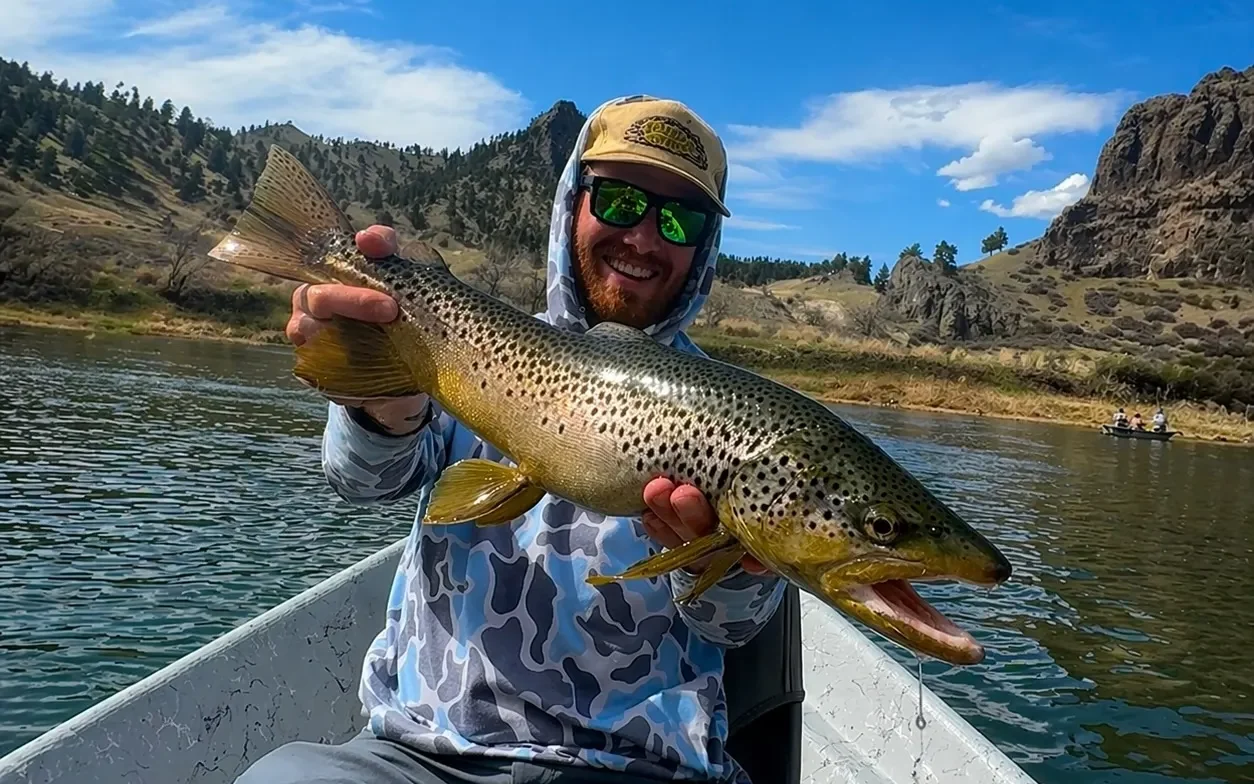
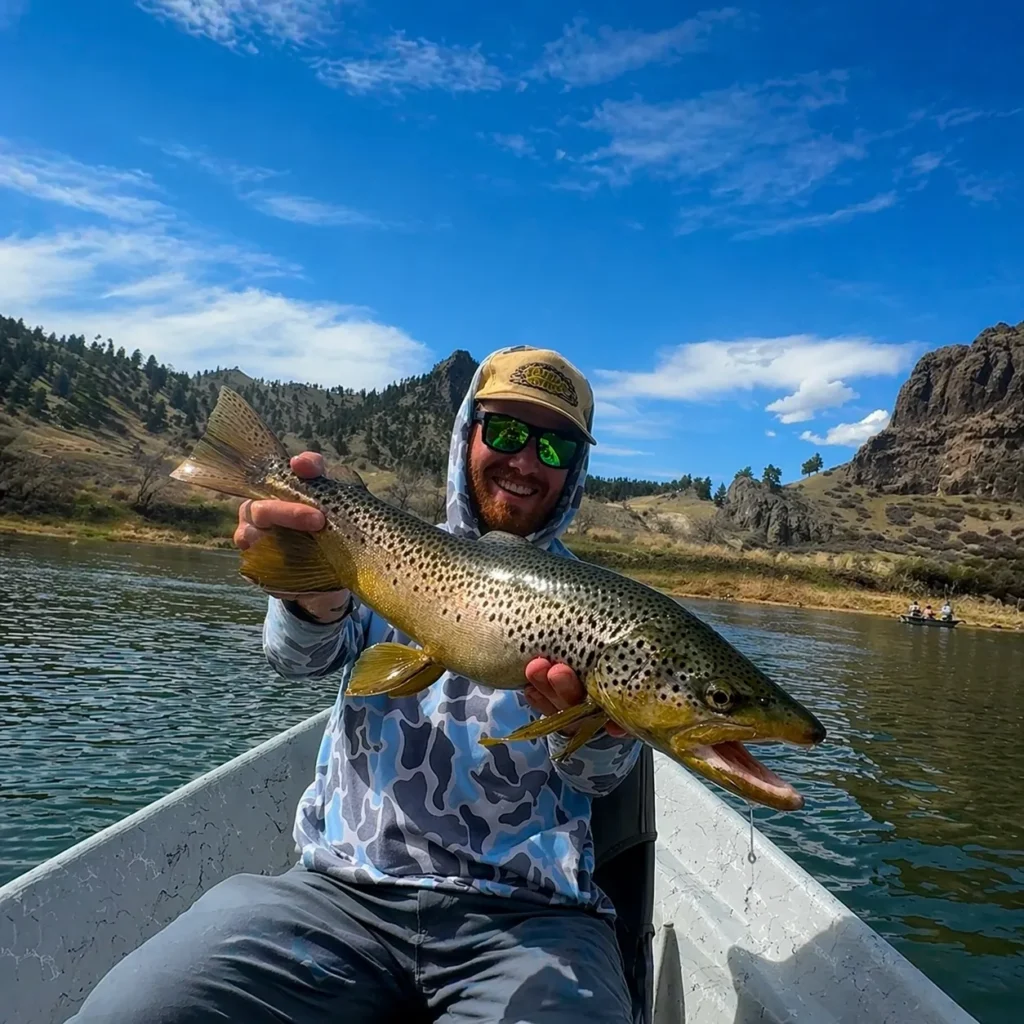
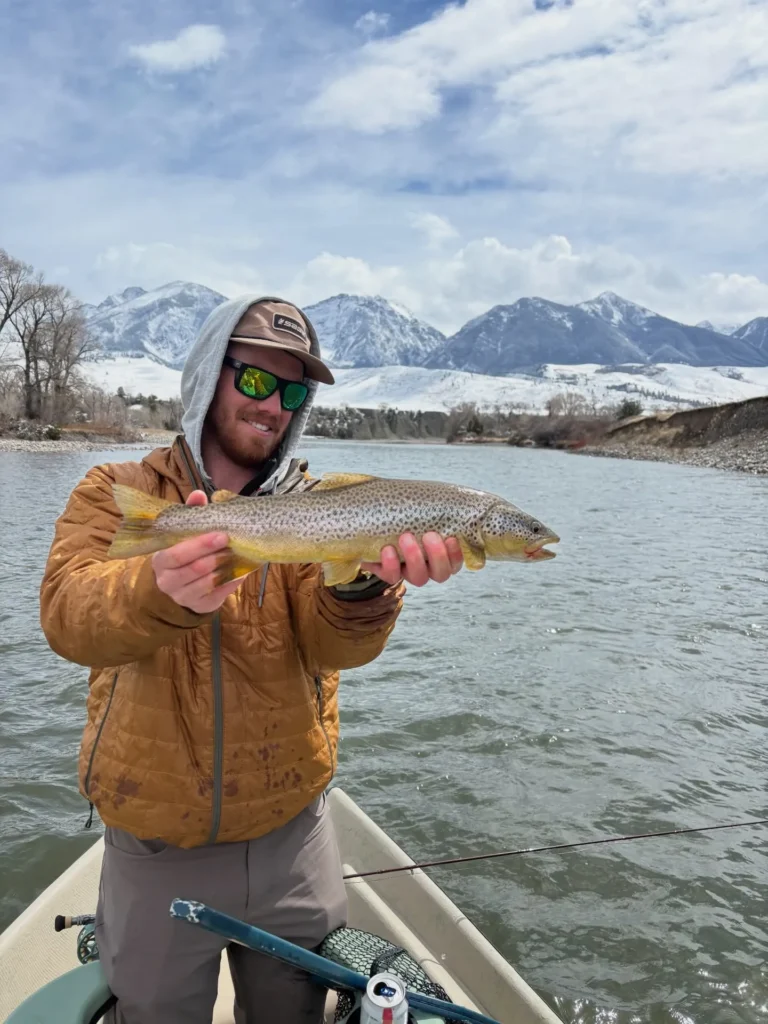
Sean McLendon guides out of Montana Fly Fishing near Absarokee, Montana, where anglers can fish everything from technical spring creeks to big freestone rivers like the Yellowstone and Stillwater. His specialty is small water fishing, especially the kind of creeks where stealth and presentation matter more than distance casting.
Throughout this conversation, Sean shared practical strategies for approaching selective trout, fishing dry flies on small streams, and covering water efficiently without spooking fish.
Sean explained that small streams and spring creeks force anglers to slow down and pay attention to details. Unlike larger rivers where you can cover lots of water quickly, these creeks reward patience and careful observation.
The fish are often holding in shallow water with clear visibility, so every movement matters. Sean described how he sometimes spends several minutes crawling into position before making a single cast.
Sean emphasized that the first cast is usually your best opportunity on a rising fish. On spring creeks, trout can become wary quickly if they see movement, hear footsteps, or detect drag in the drift.
Before making a cast, Sean likes to spend time watching the fish, studying how it feeds, and identifying what insects are present. He often flips rocks to inspect bugs before tying on a fly.
He also recommends learning the reach cast to prevent drag before the fly lands.
Dry fly fishing is a major focus on these Montana spring creeks, especially during mayfly and caddis hatches. Sean talked about how fish behavior often reveals what insects they’re eating. Aggressive rises may suggest caddis activity, while slower, more deliberate rises often point toward mayflies.
Sean also likes using double dry rigs to improve visibility and match multiple insect types at once.
One of the best tactical breakdowns in this episode was Sean’s “five-by-five-by-five” approach for covering runs systematically. Instead of only fishing the obvious deep holes, he works every section carefully, including shallow riffles and pocket water where overlooked trout often hold.
He also starts at the tailout and works upstream through the run to avoid spooking fish higher in the pool. This approach helps anglers thoroughly cover water without skipping productive holding spots.
Sean believes many anglers miss fish because they focus only on obvious deep pools. Smaller trout streams often hold fish in surprisingly shallow riffles, pocket water, and seams behind individual rocks. Every rock creates current breaks and feeding lanes. Sean explained that shallow structure often produces “bonus fish” that many anglers walk right past.
The key is slowing down enough to fish all of it carefully.
When fishing freestone streams like the East Rosebud or Stillwater, Sean often fishes a dry-dropper setup. His favorite setup starts with a Chubby Chernobyl paired with smaller nymphs underneath. He prefers streamlined patterns that sink quickly and imitate common bugs naturally.
Sean also talked about adjusting fly size down on smaller streams where fish inspect flies more carefully.
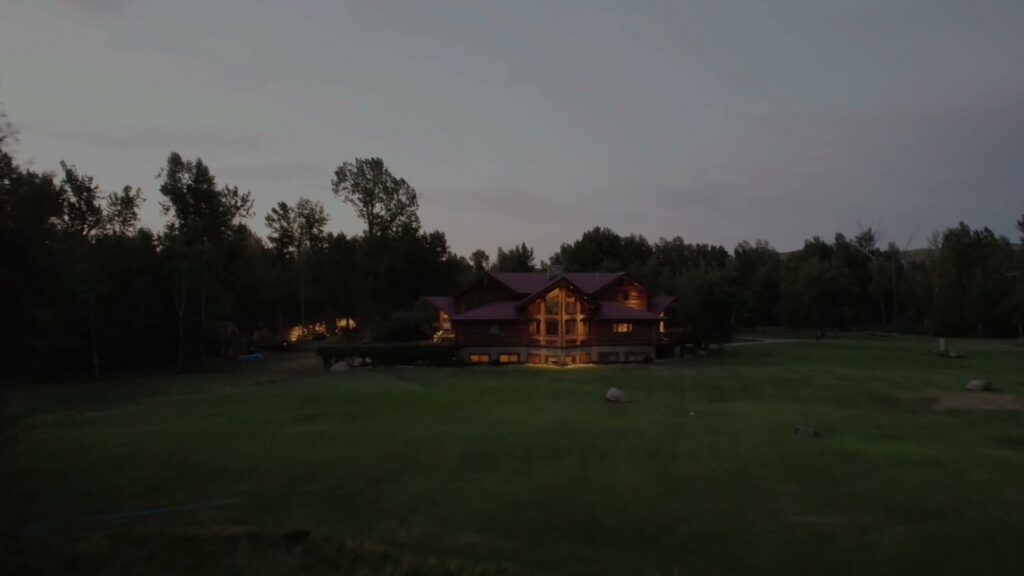
We shifted gears and talked about what anglers can expect at Montana Fly Fishing Lodge. Sean described the lodge atmosphere as relaxed, welcoming, and family-oriented. Guests fish a wide variety of waters during their stay, including:
The lodge also includes casting instruction, guided walk-and-wade trips, float fishing, and access to private water.
Sean started guiding after working in fly shops and fishing around Colorado’s Rocky Mountain National Park. He later guided in Wyoming around Yellowstone before eventually joining Montana Fly Fishing Lodge. He also spent time leading backcountry trips for kids in Wyoming, helping introduce young anglers to fly fishing and wilderness travel.
For small streams and spring creeks, Sean prefers lighter rods and smaller flies.
He also mentioned how fun fiberglass rods can be on small streams.
During the off-season, Sean heads back to Texas where he fishes for redfish and speckled trout along the coast. He described sight fishing for redfish on shallow flats as a completely different experience from Montana trout fishing, but one that still scratches the same fly fishing itch.
Sean also spends time bird hunting in southeastern Idaho during the winter.
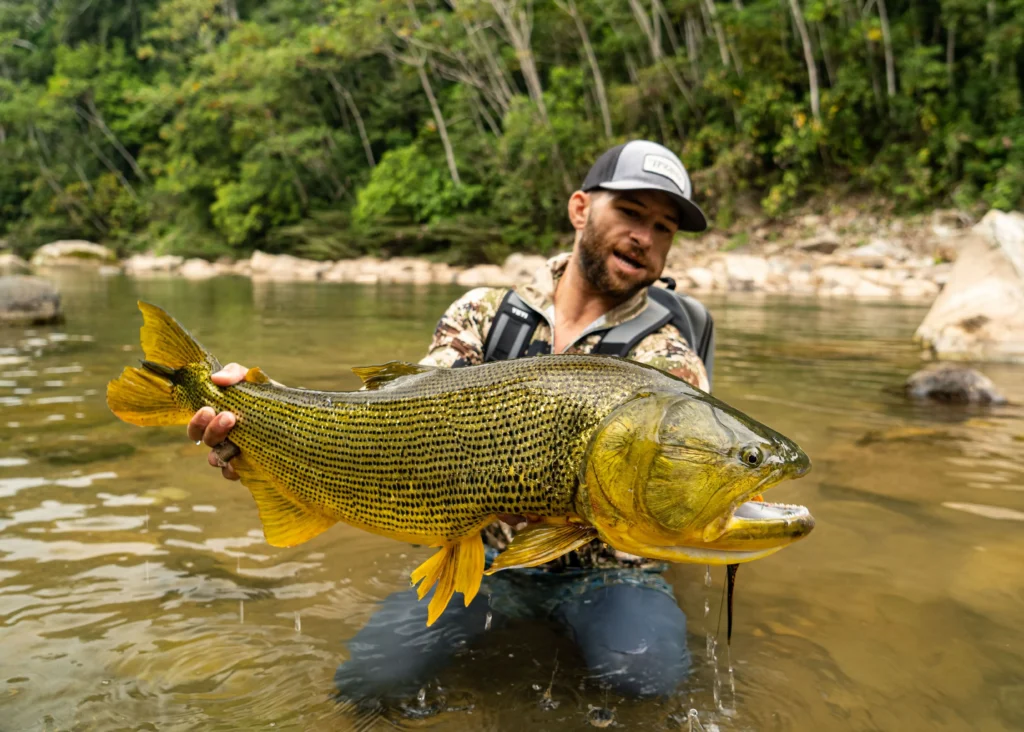
When asked about his bucket-list destination, Sean immediately brought up Bolivia and the pursuit of golden dorado. The idea of throwing big streamers at aggressive fish in remote jungle water has become one of his biggest goals.
Episode Transcript
WFS 926b Transcript
00:00:00 Dave: If you are dropped on to a small spring creek with gin, clear water and fish rising in plain sight, would you be confident enough to have success that day? What if that first slides by without taking your fly? And the second and the third? Because on small waters nothing is hidden, including your mistakes. Today’s episode isn’t about bombing cast or changing flies every five minutes. It’s about control, foot placement, drift, angle, leader design, and knowing when to not cast at all. Sean McClendon is here from the Montana Fly Fishing Lodge, and today you’re going to discover how to approach a narrow spring creek without announcing your presence. While your first presentation is usually your first real shot. How to read shallow structure that most anglers might mistake in. How to implement his five by five by five method when breaking down a run. We’re going to get systematic about this today. You’re going to find out how to effectively catch fish throughout the run. We’re going to find out about the adjustments that matter more than fly pattern. When fish get selective. We are going to dig deep. This is going to be great when we talk about small creeks, spring creeks, brushy creeks, we’re going to get into even some of the bigger waters, the overall experience in Montana this year. So just want to let you know before we get into it. We do have a couple of spots still available for the big trip to Montana. This is the Montana Fly fishing Lodge. You can go to wet fly swing dot com slash Montana Lodge right now. And if you add your name there, we’ll follow up with you on details and let you know this is going to be a big one. Excited to share this with you. Sean. Roy knocks it out of the park. Hope you enjoy it. You can go to Montana Fly Fishing lodge dot com if you want to get more information. Here he is. Sean McClendon. How are you doing, Sean?
00:01:43 Sean: Hey, Dave, how’s it going? Thanks for having me on.
00:01:45 Dave: Yeah, yeah. Thanks for putting some time aside today to talk Montana. We’re going to dig into a little bit of your background, what you do out there with the Montana Fly fishing Lodge. We’ve got we’ve got a big trip, we’re coming up. We’re going to be fishing with you guys this fall, and we’re excited about that. And I think one of the cool things is the diversity of the area. You know, we talked about spring creeks. You know, there’s some big water, there’s everything in between. But maybe tell us that. What is it? Do you find that, you know, fishing out there and guiding at the Montana, you know, fly fishing lodge with Lincoln and Judy there? Is it pretty diverse? Is that really what sets it apart?
00:02:20 Sean: Absolutely. And that was kind of the draw to come out to Montana. You know, I’ve worked down in Colorado and I’ve worked in Wyoming. And then last year came up to Montana and just getting to see all of the water that we’re able to explore and guide on. And it is truly something else out there.
00:02:37 Dave: It is, it is nice. And I think today what we’re going to talk about is one of your specialties is fishing kind of smaller creeks, back country, maybe talk dry flies because I know in spring creeks I know is a big one that people are interested in checking out, but you do a little bit of both or you’re out there like drifting the river and walk and wade sort of thing.
00:02:57 Sean: I do, so yeah, we do. I would say last year I ran maybe sixty five to seventy percent of the trips out of the boat. Um, on the Stillwater River, Yellowstone, we had the Shoshone, the boulder, um, and then the Bighorn, if you want to drive a little bit, but my real nitty gritty where I get down and have a lot of fun is on those small, uh, spring creeks and smaller streams. That is my bread and butter. I love that stuff.
00:03:21 Dave: Perfect. So that tees it up perfectly for today because I think that’s what we wanted to cover. I know the spring creeks. I don’t know what it is about it. It’s I think maybe it’s because you can’t find them everywhere.
00:03:30 Sean: Yeah.
00:03:31 Dave: Yeah. Right. Because they’re not they’re not everywhere. There are certain places. There’s a lot more free stones and tail waters, it seems like, than. Is that the case out there in Montana?
00:03:39 Sean: We do have a good abundance of spring creeks and, um, you know, even one that we have private access to up over near big timber. And they fish a little bit different and they can be so much fun and honestly hold some really, really big fish.
00:03:53 Dave: And what is the biggest thing you think comparing, say, uh, the Spring Creek versus the freestones or and do you have, are there going to be some tail waters out there that we’re going to be fishing?
00:04:03 Sean: So we have the Shoshoni down in, uh, down near Cody, which is a tail water. And then we have the bighorn as well, which, uh, we can go to the spring creeks that we’ll go to. Uh, we have Armstrong diffuse out near Livingston, and then we have our private access one, um, over near big timber and just kind of, you know, a spring Creek versus a different stream is Spring Creek is just going to be cold water. It’s going to be crystal clear. It’s going to have a ton of vegetation, and there’s going to be an abundance of food for these trout for the most part. So trout tend to be, um, I find them to be a little bit more picky. And so it can, it can kind of be fun, uh, presentation wise and it makes it more challenging, which for me makes it a lot more fun.
00:04:48 Dave: Yeah. The challenge is part of what we all love, right? Getting. Yeah. It’s not, it’s not easy. You know, This won’t always be easy, although we’re hoping to get some good action here. But what is the if you take it to dry flies, is that something on the spring creeks or maybe these smaller streams that we’re going to have some pretty good action, you know, in the throughout the year. What does that look like for dries?
00:05:07 Sean: Yeah. So dries kind of year round from spring, summer, fall, winter. It dies down a little bit, but there’s still a couple of good hatches. But yeah, dry fly fishing. I mean, you’re, you’re sitting there, you’re walking up on this, you know, real, real slow moving water and you’re seeing those heads pop up. And to be able to target those fish with dry flies and see that eat, I mean, that’s, that’s something else that is truly amazing.
00:05:31 Dave: How do you, when you get up, let’s say you’re coming into that stream, you’re seeing those heads popping and are these going to be pretty tight waters? Is there a lot of brush around or is there a, you know, is it pretty open? What does that look like.
00:05:43 Sean: Just in general? I mean, Spring Creek can be I call it big but relatively small, but to where you’re having to walk and walk through this stream. And then I fished streams that are no bigger than the computer that I’m on right now. You know, maybe a foot or two wide. Actually, I’ve caught my biggest fish back country out of a little foot and a half two foot stream. It was a twenty five inch cutthroat trout and, uh, took me for a whirl and had to ended up walking him down quite a ways. But all, all sorts of water and the water that we focus on in Montana, I would say if you take your, your dining table at home, uh, the length of that, that’s kind of going to be about what we’re fishing there.
00:06:22 Dave: Yeah. So that is pretty small stuff. I mean, definitely compared to the bigger streams. So there’s going to be some areas. And is the vegetation going to be a mix of trees, shrubs or is it going to be pretty open. You know is there going to be a diversity there too?
00:06:35 Sean: I think you’re going to love and you’re going to hate the vegetation. It definitely makes it challenging. You know, in some spots it kind of opens up and you’ve got your fishing right off the face of a mountain. And then on other spots, you’re getting real tight with bushes and trees and being able to make kind of that perfect cast is really vital out there.
00:06:53 Dave: So the perfect cast is key. And what does that look like? So let’s just take it to your general, you know, stream that we’re coming up to the Spring Creek. What is that that you see ahead popping you know, what is the first thing you’re doing? Are you casting above it a little bit like right on top of it? Does it depend on the size of the creek and kind of all that?
00:07:10 Sean: I think it does. Yeah. And it depends kind of where that fish is sitting. And a lot of people, when they get up to a spring creek or when they get up to a fish that’s rising just in general on any body of water, I think a lot of people tend to go a little too fast. And for me, it’s taking things slow. I mean, sometimes I walk down to the water and I don’t even have a fly tied on. I’m walking down there and the first thing that I do is I’m looking around. And so I see, you know, what’s flying around. I’ll get in the stream, get down and dirty in the water, pick up some rocks, find what they’re really eating. And this is great for when you’re exploring new water too. And so when I do see that fish rising, I’m looking around kind of observing. And then what I think. Okay, you know, I’ve got it. I think I know what that fish is eating. The biggest thing for me is being stealthy. And when you think about it, you know, when we’re outside and we’re looking up at the air, we just see this, uh, the big sky that Montana is known for. And so I like to think that the fish, when they’re looking up out of the water, they’re seeing that big sky too. So as a human, if I’m looking up in that big sky and I see a huge dark figure come over, I’m going to be a little concerned. And I think for me, I think that’s how the fish think as well. When they’ve got something walking up or they’ve got something making a bunch of noise and causing a bunch of ruckus, um, it’s going to spook them. It’s either going to spook them or it’s going to turn them off. So being really stealthy, you know, I’ve, I’ve had times where we’ve got really tall grass and I have to get down and be on all fours and kind of army crawl up to these fish and I’ll take five, six, seven minutes to, to even get into the spot where I want to cast. And then after that, you know, just I’m laying the fly. I’m trying to I’m looking at the fish and how it’s feeding. You know what kind of bite it is? If it’s a little faster. Something that’s really aggressive. I’m maybe looking at more of a caddis pattern. If I can’t figure that out, if I can’t see them. And then if it’s a little bit of a slower eat, I’m looking more for the mayflies. And when I’m presenting that fly, and really it all depends on on the water of where that fish is. But I’m trying to drop that fly two, three feet right up in front of its head and really have a drag less drift through that fish.
00:09:14 Dave: So you’re trying to get it. So you give it a little lead it a little bit. So it kind of drops and then floats down right on top of that thing, and then it eats it. So two or three.
00:09:22 Sean: Exactly. Yeah. And a big thing of that too is I recommend to a lot of people, you know, before you come out, learn, watch videos on the Reach men or the reach cast, because that’s going to help you so much as being able to position that fly line on the fish so that you don’t, you’re not having to cast mend and then possibly move that fly when you’re mending.
00:09:42 Dave: Yeah. The reach man, because you’re going to have some different micro Microcurrents in there that are going to turn it. So instead of you don’t want to mend on the water, you want to do the reach, mend or the reach. Yeah. Whatever the cast that. So it drops the mend for you when it hits the water.
00:09:55 Sean: Yes. Yes, exactly.
00:09:56 Dave: Cool. Yeah. We’ll throw some. We’ll try to find a video or two of that in the show notes. So this is good. So we got a good stealth is it sounds like stealth is the key. You know you don’t want to spook the fish.
00:10:06 Sean: Stealth is definitely the key.
00:10:07 Dave: All right. And and are you coming up when you roll up. Are you in like camo darker stuff or are you matching the. Do you how important is that the stuff we’re wearing as far as the clothing.
00:10:17 Sean: Actually, I started using camo this summer, you know, using a sun hoodie that has a little bit more camo. And really, I started talking to people about spring creeks and diving into it. And it’s just every little advantage that you can get is a more, more of a one up on the fish. So I like wearing a camo sun hoodie, but a lot of times, you know, if you’re being stealthy and getting up there, I mean, you can wear pretty much don’t come out wearing fluorescent pink, but, uh, but you can wear pretty much any shirt that you want.
00:10:47 Dave: Yeah. Gotcha. Okay. And maybe talk about the, the streams that smaller streams that we’re going to be fishing. Are there some mostly, you know, named ones? Are these tributaries to the bigger streams? Is there a mix of, of those.
00:10:58 Sean: Yeah. So we have Upper Deer Creek, which is the one that we have, uh, private access to. And then we have Armstrong and Depew’s over in Livingston too. But Deer Creek is, is really where we’ll be focusing. And then we have parts of the Stillwater to over in Absarokee where we can climb up the Stillwater a little bit and, um, really get into some good pocket water. But the cool thing about Upper Deer Creek. It’s a freestone, but it’s got spring creeks feeding into it. So it’s got so much different topography on the creek. You know, you’ll come up on spots where it’s waterfalls and you’ll be in this big wooded thing, and it looks like you’re the middle of nowhere, and you’ve got waterfalls that are shooting down into big pools, and you’ve got big trout hanging out below there. And then other times you’ll walk four or five hundred yards and you’ll just have shallow, shallow, rippling Water. And so I think the the contrast of what we’ll be fishing is really what makes it exciting too. That’s why I love Upper Deer Creek.
00:11:49 Dave: Okay, cool. And, and on that, in that area, upper deer as far as the hatches, you know, I guess right now as we’re talking, we’re into March. So, you know, you’re right around the corner, right? The fishing is going to be open. And when do you guys start at the the lodge? When do people start coming in there for fishing?
00:12:03 Sean: We’ll start up late April early May, and we’ll kind of see how it is. We’ll play around the snow. You know, we’ve had, um, actually the area that we’re in Montana fly fishing lodge, we’ve had one hundred percent capacity right now for snow.
00:12:16 Dave: Oh, so it snowed quite a bit there.
00:12:18 Sean: It sure did. Yeah, it picked up a little bit later a lot, but I know a lot of other places. Um, Western Montana, Idaho, Washington, Oregon. They’re kind of struggling with snow this year.
00:12:28 Dave: Yeah. We’ve heard that. We’ve heard that he had around the West. It sounds like the snowpack has been pretty low and people are worried. But wow. That’s so you’re in this place that actually got you’re fine. So water is going to be good there this year.
00:12:38 Sean: It’s going to be great. Yeah. I’m super, super excited and it makes it kind of a special place. You know, being able to have the right amount of snowpack. And so we’ll play around, run off. You know, we’ll go to some of the tail waters Bighorns have shown during run off, but really we’re focusing mainly on the Stillwater. And for me and you, you know, going to the Upper Stillwater is one of my favorite things. And then obviously Deer Creek, a lot of fun. Yeah.
00:13:02 Dave: Perfect. So so you guys get started in early May and that early time, what are the the hatches on the dries? What’s going to be popping early out there on these smaller streams.
00:13:12 Sean: We’re starting to see yeah. Mayflies smaller mayflies a lot of midges flying around. So the Stillwater had a flood three years ago or four years ago now. And it kind of altered the bug life a little bit. You know, there’s videos of this water coming down and just wiping out everything. So we are four years post flood and we’re starting to see or we’re not starting. We are seeing all the bugs are coming back and it looks amazing. So a lot of mayflies. And then, you know, after that we start rolling into caddis. and then we’ll get some big stoneflies. Uh, get a lot of stoneflies.
00:13:43 Dave: You will. So the small creeks and all the spring creeks, those will get stones, too.
00:13:47 Sean: Oh, yeah. Yeah, yeah. Upper Deer Creek will get some stoneflies. And then on the Stillwater and Yellowstone, obviously later around, uh, you’ll get the salmon fly hatch that everybody comes out for, which is pretty fun.
00:13:57 Dave: Yeah. Right. So it’s a little mix of everything. Then in the fall, I think we’re going to be getting there sometime in the middle end of September. Is that still there’s going to be some hatches going on during that time?
00:14:07 Sean: Absolutely. Yeah. And I think that’s one of, you know, the Stillwater is getting a little bit lower at that point. And that’s when we love to go walking with the Stillwater versus float it. And then we’ve got the East Rosebud as well. I totally forgot to mention that that is prime fishing. I mean, if you want a great day. Um, the cool thing about the East Rosebud is eat breakfast at the lodge, you’ll meet your guide right at the door and and you’re ready to walk. You know, your, your guide has the backpack on with your lunches, your waters, everything that you’ll need. And you’ll walk 30s right to get to our bridge and we’ll start fishing up from there. And that’s another piece of water that’s that’s not pressured a lot. And fish is incredibly well, cool.
00:14:46 Dave: And is this a spring creek or is this a freestone freestone?
00:14:49 Sean: The East rosebud is a freestone.
00:14:51 Dave: And it’s kind of a it would be considered more of a small or moderate sized stream. I guess I always get that, you know, be large versus small versus medium, you know?
00:14:59 Sean: Yeah, the lines are all blurred on that. Um, I would call the East Rosebud a small stream and it just fishes a little bit differently than a Spring Creek, you know, Spring Creek, I’m going to be more tactical, more stealthy. And then the east Rosebud is your smaller freestone. And I’m going to be hammering everything with a dry dropper rig. Um, that’s my, that’s my favorite to throw from summer. I mean, all the way into late fall.
00:15:22 Dave: What is your dry dropper rig look like? Is it pretty standard throughout through the years? It is a dry dropper. Pretty. Can you change that a lot between the, you know, the guides or that you guys use in a similar deal?
00:15:32 Sean: For the most part, we all use a similar deal, but I would say, you know, every guide has their specific flyer or their thing that works for me. I’ve got a nine foot leader right from my fly line and bring it down. And I really love Montana fly company makes great hoppers, chubbies, all sorts of stuff. So I love, I love their chubby. They make my favorite one. They have a tan or brown and then they have a brown on red. And I love that brown on red for some reason that just it slays for me. So I have that. And then really depending on the water, sometimes, you know, we’ll be fishing two and a half, three feet down to our nymph. And then when we get up on a deeper pool, you know, I’m sometimes I’m dropping that down to five or five and a half feet, try to really get down and touch bottom there.
00:16:18 Dave: Now this is this is dry dropper. So you’re going to have like your chubby basically on there without an indicator, right? This is just you have just the dry. Yeah. Chubby basically chubby is kind of your can be your indicator a little bit, but then you’re dropping off of that, um, like what would be the nymph that’d be coming off of the chubby.
00:16:34 Sean: You know, I’ve become a real nerd. I love my pentagons. I’ve got thousands of them. You know, like a quilted gone. Like a olive Pentagon. I mean, really, I’ve got any color. And the biggest thing to a lot of people try to overcomplicate it. And the biggest thing, especially when you’re, you know, struggling or you’re having a hard time, just get down and flip some rocks, get down, flip some rocks and find what they’re eating. Find a fly in your box that’s going to match that. And then and then go after it. I think a lot of people overcomplicate it, and simple sometimes is the best way to go. So I’ll do a chubby down to a Pentagon or I mean pheasant tail to pheasant tails work extremely well. And then I have some different caddis nymphs pattern. I’ve got one that I call the the disco head caddis. I don’t know the exact name of it, but it’s got a disco ball as the bead on it. And those all work really great. Yeah.
00:17:27 Dave: The Pentagon, the reason that one works so well is because it’s what it sinks quicker. How does that one different than, say, a say, a lot of the other nymphs out there. It’s pretty streamlined. Right?
00:17:35 Sean: It is. It gets down fast and it’s got a really slim profile. And I think sometimes, you know the fish, you can throw something that looks a little wacky or maybe a little bit off the Pentagon is really, really simple. And I think, you know, a lot of times that’s what the fish like is they just see something that looks very, very similar. And it’s a Pentagon and boom, they take that.
00:17:55 Dave: When you flip the rocks over, you turn it over. And what happens when you see like a bunch, you know, there’s like maybe twelve different bugs of different sizes and colors and stuff. How do you or do you find like, how do you choose which one? Do you know what I mean? Because that’s a, and then when you pick the bugs out, do you put them in a, a white tray so you can see them really easy, or you just kind of grab them in your hand?
00:18:14 Sean: I use a fly puck, one of those clear fly pucks, and I’ll put them in there. When I’m showing clients, you know, I’ll kind of talk through what the bugs are and, and their life cycles and stuff. And, and really, it’s if I’m seeing hatches on top, I’m going to try to focus on that. I love throwing, you know, caddis emergers or there’s a pattern. It’s like a Pentagon, but it’s got a little bubble sac on the back, um, imitating a caddis kind of coming up really fast. And I’ve had a lot of luck on that one to just simplify it. I like to start off small. And so I’ll pick, you know, the mayfly or the caddis on there. And if I’ve got a big juicy stonefly, sometimes I’ll upgrade to a, to a girdle bug and throw that in tan, green, black, brown. It just really depends on what we’re seeing.
00:18:59 Dave: Yeah. So you’ll toss a girl bug under like a chubby Chernobyl.
00:19:03 Sean: Yeah. I’ll go chubby straight down to a girdle bug if I’m seeing a bunch of stoneflies out.
00:19:07 Dave: Yeah, yeah you will. And size girl bugs. Do you have a good mix of sizes from small to large or what does that look like I do?
00:19:14 Sean: Yeah, I’ve got anything from size, like sixteen. I think I’ve got size eighteen girdle bugs and then all the way up to size fourteen or twelve. But if we’re really focusing on these smaller streams, I’m going to be throwing those smaller sizes like that Or sixteen.
00:19:29 Dave: Yeah, right. And that’s just because smaller streams, I mean. Yeah. Why is that? Why why are you typically you said earlier finicky right? They’re more picky. So you kind of want to use smaller stuff on those smaller creeks.
00:19:40 Sean: Yeah. I always love to size down. Um, and sometimes when you’re hucking big flies at, at big fish, they don’t want to touch it. Um, and sometimes that smaller meal that’s coming by is just an easier grab for them. So I love doing that. Yeah.
00:19:54 Dave: When you’re coming up into those, you know, smaller creeks and you know, when you and I guess this could be in general, but how do you know, you know, you’re looking at pocket water. How do you know where that fish if it’s not, if you’re not seeing heads, you know, you’re fishing this, do you just kind of cover all the water? Or how do you kind of read that water to find the places where the fish might hold?
00:20:10 Sean: You know, I’ll walk onto a stream and I’ll, I’ll look at the topography and what I’m seeing. And a big thing that I wanted to bring up is a lot of people just kind of hole hop, what I call hole hopping, and they’ll go and they’ll find a big hole fish it, boom, go up to the next one and find a big hole. And they don’t want to really get nitty gritty into the boulders and the pocket water and you see a little, little seam. And they just pass up on it. And a lot of times that’s where a lot of the fish are holding, you know, those shallow waters. A lot of people think that there’s not enough structure for the fish, but every rock that’s underwater is creating a pocket and an opportunity for a fish there. So I love, I love covering all the water. Maybe if it’s quick throwing a fly through there, I still love to cover it because you’ll catch a lot of fish through there and then fishing the pocket water, you know, fishing the seams, big thing. And when I walk up on a hole, I’m looking at it and I could see fish rising. I could see fish jumping, and I’ll get real excited. But a big thing for me is, is always go back, you know, revert back, take it slow. We’re not in a rush. And I’m always going to fish that hole from the back to the front. So if I immediately go in at the front and I catch a big brown trout up in the mid up in the front of the hole, and he’s running around, thrashing around, he’s spooking a bunch of those fish. So I like to fish it from the back first. You know, a lot of times you’ll end up pulling two or three more fish out of that hole than if you were to just run straight up to the top and drop one in.
00:21:34 Dave: Describe the back of the run. You mean like the bottom, the lower end, or what is the back?
00:21:38 Sean: Yeah, kind of like the tail out of the run. So where that seam starts to fade a little bit and maybe the water gets a little shallow again. It’s like a bottleneck, you know, that deep water. And then it comes up to being shallow and everything is coming from this big water into this tight little chute. And a lot of times fish will sit right there because it’s easy, you know, food will be coming right at them. Not to say that there isn’t, you know, the fish in the deeper water, but I love to start at the back and slowly, slowly work my way up. Take your time.
00:22:07 Dave: That’s so cool. Yeah, we just got off a hot off a steelhead trip. I was up on the op and, you know, I know it’s different, but you know those tail outs. I always think sometimes I don’t fish them as much. But this one we were out there and and the guide was like, hey, this tail out, let’s hit it. And yeah, man, there’s a nice steelhead. A big steelhead you know, in the tail out. And you know, it wasn’t even that deep. Right. And it’s like one of those steelhead they’re migrating. So you got these fish are coming up through the rapids and then they’re kind of chilling in the tail out. But these fish are the trout here that we’re talking about are these fish that are you know, why are they in the tail out? Is that a place where they’re also kind of resting? Or, you know, why wouldn’t they be in the deeper water? Because it seems like there’s more cover right in the deeper water.
00:22:47 Sean: I think it’s a big thing of food. They get a lot of food there. And then just different positioning. You know, sometimes you’ve got a bigger fish that’s sitting in there. I call them bully fish. Sometimes you’re fishing a hole and you’re not catching anything. And sometimes you’ll just have a fish that’s swimming in there that is taking everything and doesn’t want other fish around it. So I like to think that it’s food that’s that’s holding them back there, maybe a little bit softer water, not as much churning. Again, it just really depends on the stream that you’re fishing. But yeah, big, big food spot back there.
00:23:19 Dave: So you start in the tail out and then you cover that water, maybe pick up a few fish, you know, bonus fish maybe there and then you start working your way up.
00:23:27 Sean: Yeah, I’ll work my way up all the way up into the top of the run. So just real slow, you know, casting, working all that water, whether it’s inside of the seam, middle of the water, outside of the seam. I like to go five casts inside the seam. And then I’ll go five casts right in the middle of that faster water. And then I’ll go five casts on the other side and I’ll be high sticking, you know, so my, my fly line or my leader is not getting caught on the water. And then I work my way all up to the top. And so that’s kind of how I like to run it. I do the five, five and five. If you’re fishing small water, I do five casts close five casts in the middle, five casts far away.
00:24:00 Dave: That’s awesome. Yeah. You totally are basically systematically breaking up this run of stream, right? And you’re making sure to cover all and you don’t know exactly where all the fish, but you’re where they’re holding, but you’re just covering all the places where they could be, and then you’re increasing your odds. Essentially. You’re not missing anything.
00:24:16 Sean: Yeah, exactly.
00:24:17 Dave: That’s perfect. And then if you get a fish down there, maybe it works. It, you know. But you still got that upper part of the run where you haven’t touched yet. And then, you know, then you turn around and instead of just hitting one hot hole, you know, and it’s interesting because we’ve had a couple of competitive fishermen who have said a similar thing and they call it, um, the A, B, and C water, right? So you get there that a water is prime time, maybe early in the day when nobody, you know, nobody’s touched it, but it changes throughout the day and maybe right, the B water maybe becomes the water you need to fish later in the day or, you know, depending on sun angles and conditions, right. So, so that would be one way that we could effectively cover the water. What are a couple other tips you say, you know, if somebody is out there, let’s say they’re going to be fishing, you know, kind of these smaller spring creeks, what else would you tell them to have more success is there. You know, um, we were talking dry flies a little bit and kind of dry droppers, but what do you think is the biggest thing between success and no success on the water?
00:25:11 Sean: Biggest thing on smaller streams is going to be stealth, like we talked about earlier, you know, sneaking up on those fish and really getting down, getting slow, watching that fish, seeing exactly what they’re doing. And so you have the best chance possible of catching that fish. Yeah. Take it slow.
00:25:27 Dave: When you’re seeing that fish come up and you’re seeing its head, you can tell what like what direction it’s sitting or describe that a little bit. What are you looking for when you’re seeing the head?
00:25:34 Sean: Yeah. I mean one of my favorite stories is going out western Montana and kind of climbing up in the mountains and found this valley real, real slow moving water. And I’d fished at the year before, and I came back by myself and I really, really wanted to hit it. I knew there were some big fish in there, and the water was super weird. It was it was really, really clear. And some spots it would be four feet deep. Some spots it would be like we talked about earlier, six inches deep. And so going up. But there was this fish that was sitting in this really, really weird back eddy. And it was kind of hard to cast to him. I was casting maybe twenty, twenty five feet, and that’s the one that I had to crawl up for seven or eight minutes in this tall grass and, and really just watch him. And he was sitting in this really weird spot and I was throwing a double dry fly rig. You know, for me, the double drive helps me a lot because I’ve got. Usually if I can’t tell what they’re eating, either I’m going to tie on some sort of mayfly and some sort of caddis. So I’ll go, you know, my favorite caddis pattern is the missing link and then a mayfly pattern. I love just the purple haze, but for me, I like the shoot on the top, the pink cider, and it makes it a little bit easier, especially when you’re throwing small flies to be able to see that. Um, so I’ll go the missing link over to the pink cider. So if that pink cider goes away and I didn’t see the eat, especially when it gets in some turbulent water, um, then I know that that fish is taking it almost like the, the chubby, you know, it’s an indicator.
00:26:56 Dave: So you got a little cider on your dry fly setup just in case you can’t see the fly.
00:27:00 Sean: I do, I do, yeah, but really high sticking is big, especially on smaller streams. If you want to present that fly perfectly, get that rod way, way up in the air and get it, you know, as close to that fly as you can so you have no drag on the water. And yeah, find where that fish is sitting and just drop it right in front of him. I mean, don’t drop it on his head, but but drop it far enough to where he can see it, visualize it, get up, eat it, and then boom, you got it.
00:27:26 Dave: There you go. Yeah. And it sounds like, you know, the missing link, the purple haze. You’ve got a few flies that are like your confidence flies, right? These flies that, you know, regardless if you have to put something on, you’re not quite sure. These are probably the ones. Is there a size, you know, same confidence size that you’re putting on there on, on those flies?
00:27:42 Sean: Same thing. I’m going a little bit smaller. You know, I’ll go it really depends anywhere from size sixteen eighteen. And then I’ll go down to size like twenty two or twenty four if I’m really, really sizing down. Yeah. I mean, I started out in Colorado and everybody jokes around about like the size thirty flies never go that small. But I do get down to twenty two and twenty four, especially on some of these smaller dry flies on, on smaller spring creeks.
00:28:08 Dave: How do you know when you if you put on a let’s just say you’re there, you kind of have an idea. Six do you start big, you know, bigger and then size down depending on conditions. Or how do you adjust the size?
00:28:20 Sean: I’ll start big. Yeah, I’ll start out. A lot of times, you know, I’m a big fan of the chubby. I love seeing, uh, chubby eats and then down to a Pentagon. And so that’s what I’ll start out with to start covering water. And then if I’m starting to see fish rise, that’s when I’ll definitely throw on dry flies. But yeah, when I walk up to a stream, I’ll start out with one of those Mfcc chubbies I was talking about, you know, I like to start out with Pan just personally, or that brown and red that I talked to you about. And then I’ll toss a Pentagon on, on there and a cool little tip actually. So you take from your chubby to get down to your Pentagon just makes it real fast and easy. I’ll go from my right, you know, middle finger tip all the way down to my right nipple or to my left nipple. And I think that that’s, it’s a little bit longer if you’re fishing pocket water, but just kind of using parts of your body to measure your, your line. It just makes it really quick, really easy.
00:29:10 Dave: Oh, now tell us again how the middle finger thing, what are you doing? What are you measuring there again?
00:29:14 Sean: Yeah. And especially when I’m setting up the nymph for Bobby Riggs, too. I’ll take the my middle finger on my right hand, and I’ll go down to my right nipple, and then I’ll tie on a swivel there. And then I’ll go maybe from my right nipple to my left nipple, maybe about a foot, and I’ll tie on a split shot there. And then I’ll go right nipple, left nipple again from the split shot to my first fly, and then right nipple, left nipple again. And I’ll go down to my second fly when I’m fishing, a little bit bigger water and, and just kind of, you know, squeezing that all up when you’re fishing a little bit smaller water. But that’s something that that’s, that’s how I build my rigs is just using stuff on my body to measure.
00:29:50 Dave: Yeah, that’s a good idea. Okay. And it sounds like on the spring creeks and smaller stuff, you’re sizing down kind of everything. You’re not really. Is that typically generally the case?
00:29:59 Sean: Yeah, I loved it. And especially, you know, what we talked about earlier, that crystal clear water ton of vegetation, these fish are seeing food all day. And so I love to size down, give them something a little bit smaller that maybe holds more of the profile of what they’re eating. And I find always in most cases, sizing down is where you’re going to find most of your success.
00:30:20 Dave: Well, this is a good start. We got to, we got a good summary of kind of what we’re going to be talking about here. And, you know, I want to talk because we’re heading out to the lodge and we’ve already had a couple podcasts where we’ve talked about, you know, the Lodge, what Judy and Lincoln have there. It’s pretty amazing. Even even some live music, you know, potentially out there. But so what is it for you out at the lodge? What do you think sticks out? What do you think is the biggest thing that stick out to people when they go there and they’re like, wow, this place is pretty off the hook.
00:30:45 Sean: The first thing people fly into Billings for Bozeman, and we have a company that goes and picks them up or, you know, sometimes we’ll go and pick them up. And then immediately as they get there, they’re greeted by the lodge staff. Lincoln and Judy will come out personally, greet them. And Lincoln and Judy are the nicest people on planet earth. You know, I love them so much. And, um, and the staff that works there too, they are absolutely fantastic. You know, they’ll take their bat from you, put them up in your room. You’ll get cool little lanyards, bag tags to put on your bags, and then you’re immediately taken around and and we’ll show you the property of the lodge. We have several ponds on the lodge and then obviously the east Rosebud. If somebody gets off of a day and they want to continue fishing, they can go out on the east Rosebud. And it could be from our canvas cabins, it could be a couple of feet walk. And then from the lodge, you know, it’s just a couple of yards walk down to the east Rosebud. It’s fantastic. But touring the property and then you’ll come out, you’ll meet your guide. Your guide will either meet you at dinner the night before or at breakfast, you know, the morning of. But after you do a tour of the property, we’ll do a casting lesson. So we’ll make sure everybody’s dialed in no matter what skill level. We always encourage people to do the casting lesson because you always learn something new. Everybody’s got a different technique, a different way that they do things. And even for me, you know, this summer, I learned a lot on just different ways that people do things. So I always encourage people to go to that casting lesson. Then after that you’re going to dinner and you just I mean, Judy makes absolutely amazing food. There’s it’s hard to put it into words. Um, but you go down and, and you’ll eat outside and you’re eating right on the east Rosebud. It’s it’s fantastic. That lodge is something else. Super cool.
00:32:26 Dave: Yeah. That’s exciting. Yeah. That’s, it’s going to be cool to get there. I think that’s what we’ve heard. I think the, the little things are what, you know, make the trip. Of course there’s the fishing, you know, and you guys with the great guides, you know, that’s the, a big part of it. But there’s all the other little things that, you know, you’re mentioning.
00:32:41 Sean: Yeah, the camaraderie that people build at the lodge too, you know, you’re, you’re coming in as complete strangers. And we like to say you’re leaving as family. Everybody just gets so close and getting around the dinner table at night and being able to laugh, tell stories, you know, maybe you missed the fish here. You caught this big one over here. It’s just everything about the lodge is so amazing.
00:33:01 Dave: That’s cool. And do you guys throughout the day? I guess it depends on what the clients want to do for the next day. And you guys kind of decide where everybody’s going. And it sounds like you guys mix it up throughout the season.
00:33:13 Sean: We do. We try to not, you know, we don’t like, uh, even though it’s fun going to the same piece of water. We love to show everybody what Montana has to offer. So we’ll go, you know, maybe we’re, maybe we’re going to the Stillwater one day and then we’re going to the Yellowstone, down to the Shoshone, maybe Deer Creek, and then maybe we’ll do a different section of Stillwater or a different section of the Yellowstone. Depends on what’s fishing good at the time, too. But we love to talk to our clients and just, just feel out, you know, what do you want to do? What do you really want to focus on? And, um, if you’re just here for a good time, then then we’re going to show you the most beautiful spots in Montana.
00:33:47 Dave: Yeah. And if somebody wanted to fish, you know, multiple days on spring creeks, they could do that. It’s, it’s kind of up to that’s a possibility.
00:33:55 Sean: Yeah, absolutely. I had a gentleman earlier this year that that wanted to do that. And, you know, we just spent a lot of time at Deer Creek. And, you know, there’s, there’s a lot of water and to cover. So we’ll cover I love, you know, two, two and a half miles a day is really what I like to cover because that, that gives you time to really dive into to the water and really focus on it. And so we could do two and a half miles, you know, start down low, walk out in the morning, and then we end up at the middle of it, and then we come back the next day and we’re fishing from the middle up to the top. And the cool thing about Deer Creek is you can walk that thing up all the way into Custer, Gallatin National Forest. That thing is just it goes on and on and on.
00:34:37 Dave: Yeah. So and that’s the other cool thing about the area is that you’re right there, right? All the national forests, the national park, it seems like it’s all it’s pretty close, right? You’re kind of right in the middle of everything. It feels like.
00:34:47 Sean: Yeah. I mean, and being so close to the national park, the national forests, the wildlife is insane too.
00:34:53 Dave: And the mountains too, right? Wildlife and mountains.
00:34:55 Sean: Yeah. I mean, you’re you’re floating down the Stillwater and you’ve got mountains behind you, and then you’ve got this valley in front of you. It’s a whole nother world. And the wildlife, you’ve got deer or elk that are right on the side of the river, or we have them a lot of times run right in front of the boat or right, right across us. And you’ll see, uh, you know, there’s a chance of seeing bears as well. That’s always fun.
00:35:14 Dave: Black bears.
00:35:15 Sean: Black bears. Yep. And then we, we have the occasional grizzly that comes through. Definitely nothing to be worried about on your trip.
00:35:21 Dave: And moose too, right. Is there some are there some moose out there?
00:35:24 Sean: We do have moose. Yeah. We occasionally see moose. I, I haven’t seen one. I didn’t see one in the water last year. Um, that would be something that I would really, really love to see. But we do get them at the lodge, you know, they’ll walk right through the property and along with along with deer, you know, you’ll wake up in the morning, be eating breakfast and you’re watching all the whitetail out on the lawn just sitting there eating. It’s it’s pretty cool.
00:35:44 Dave: Nice, good. And what was your, uh, your story as far as the Montana fly fishing lodge? I mean, we just talked about how amazing this is. How do you find yourself working there at the Lodge?
00:35:52 Sean: It was kind of crazy. I, I went on, um, I was working over in Colorado. That’s kind of where I started out guiding. Um, so I, I graduated high school and I was just really, really gung ho to get into guiding. So I went up to Colorado up in Estes Park, uh, mostly fishing on the big Thompson and then fishing smaller streams in Rocky Mountain National Park. And, um, I loved it out there. And so I started off as a shop guy, as a lot of people do. And we had a guy drop. And so the, the owner of the shop called me up and he said, hey, I know you’re really passionate about this. Why don’t you go out with this guide and, you know, just really study him and, and, um, you take one person and he’ll take one person. So I went out that day and, um, we just had a killer day and, you know, kind of studying under that guide and, uh, got pretty lucky, I guess I did pretty well. And, and the guide went to the shop owner and said, hey, this guy needs to be running trips right now. So yeah, yeah, it was pretty cool. So I kind of surpassed my shop phase a little bit, um, and got straight on the water. And after that, I went up to Wyoming and I was doing all of the backcountry waters in Yellowstone in and around Yellowstone. So there’s Teton Wilderness, you know, Teton National Park. There’s a lot of water down there too. That’s that’s really good. And I got on, I think it was, uh, fly fishing jobs dot com. And I was looking up and I saw a post for it and, uh, I said, you know what? I’m going to throw, throw this out there. Hail Mary working at a fly fishing lodge. It’s, it’s an absolute dream of mine and connected up with Lincoln and Judy and, and we just clicked immediately. Everything from the conversations to talking about fishing and then, you know, getting I, I live now, I live in Texas in the off season. So driving up there and, and I’m looking around when I’m driving into Absarokee. Absolutely beautiful. You know, you’ve got the Beartooth Mountains right there and then get to the lodge and and it just greeted with the nicest people. And Lincoln and Judy were amazing. Um, all the other guides there too, at Montana Fly Fishing Lodge. The guides are super knowledgeable. It feels like everybody’s been there the whole life. It’s amazing.
00:37:53 Dave: That’s so cool. Yeah. We’re excited. That’s the the feel. It’s the, the family feel, right. That’s always a big family.
00:37:59 Sean: Yeah.
00:38:00 Dave: Yeah. Cool. And what was the fly shop that you mentioned that you worked for? And was it in Colorado?
00:38:04 Sean: Yeah, I was working for a fly shop called Scott’s Sporting Goods down in Estes Park. And, um, they do trips out in Rocky Mountain National Park and then on the big Thompson outside of the park too. Um, a lot of cool water out there. And then working for a company called Wilderness Adventures out in Wyoming. And, um, it was really, really neat. Got to take kids out into the backcountry. We do, you know, two, two week trips. And so getting to hike in, you know, five miles into the Teton Wilderness and then hike in like ten miles into Yellowstone backcountry and really getting to teach these kids and, and spend time with them and just get them outdoors. That’s, that’s really, really powerful. And, and I’m really passionate about that. Um, getting kids outdoors and, and getting them fishing.
00:38:47 Dave: Amazing. Yeah. It sounds like a cool, a cool thing to have a, a real impact, right? These kids that are these, some of the kids come in and they’re maybe their first time out there doing this.
00:38:56 Sean: Yeah, one hundred percent. Uh, we had, I think two kids that had fly fished before, but they were just, you know, so amazed by it and then getting able to come out with us. And, um, you know, everything from camping on the side of the river, cooking up meals and then getting to fish all day. You know, we’d take little small groups. Um, I would have three or four kids with me and get them set up on different spots of the stream. Really, really, really cool.
00:39:19 Dave: Wow, that sounds awesome. Nice. So, so yeah, so you, you kind of, we got a little bit of your journey there and now you’re at the, you know, at Montana Fly fishing Lodge. What is the, you know, once you finish up, I guess the off season, are you out skiing or what are you doing on the off season?
00:39:32 Sean: You know, I, I wish I actually just got, uh, I just had spinal surgery this, so I had to kind of cut my season, uh, a little bit short last fall. Uh, but for the past two years, I’ve been going out to a company called Blixen co out in, um, Idaho, southeastern Idaho. And it is driven shooting with traditionally an English sport brought to America. So we’re doing pheasant, partridge and all driven birds.
00:39:57 Dave: And what is driven.
00:39:59 Sean: It’s a little bit hard to explain, but it’s, you know, you’re down in a valley and you’ve got birds that are perched up on a hill or a mountain up there, and you’ve got what are called beaters and beaters create this huge semicircle around the birds, and they’re all slowly coming in, they’re clapping, they’re whistling, all sorts of stuff. And these birds are slowly huddling in until they fly off that, that cliff or that mountain right in front of you and you’re standing at the bottom. So you’ve got some really, really cool opportunities to take shots at birds flying straight over your head. Oh, wow. And it’s a different world out there. Yeah. Super cool. So definitely recommend anybody that hasn’t done driven shooting to, to go and do that as well.
00:40:37 Dave: So basically bird hunting, it’s kind of a unique style of English, it sounds like, or European bird hunting, but essentially you’re out bird hunting throughout the winter as it sounds like. Is that the case?
00:40:47 Sean: Yeah, yeah. So we’ve got, you know, it’s kind of cool being one of the few Americans that work there. We’ve got guys from the UK, we’ve got guys from Scotland, Sweden that all come out and they all come and do this and that’s their life. They’re super passionate about it. So yeah, that’s that’s what I do in the off season. And then I like to get, you know, in, in the early spring or late winter, you know, I went and got my wilderness EMT certification, um, went and did a semester of college, just kind of trying to fill that time and, and hopefully was going to get out and ski in this year, but, uh, got the spinal surgery, so I’ll have to wait another year on that.
00:41:23 Dave: Yeah. Right. And the spinal surgery went well. Everything is good there.
00:41:27 Sean: Yeah. Yeah. I’ve been doing PT and getting back in. And you know, that was my biggest fear when when I got told about surgery, I called my parents and my mom and my dad. And then my call right after that was to Lincoln. And I said, hey, Lincoln, I just want to make sure, you know, I’m just letting you know now, but I want to make sure I have a job. And that lodge is, is such a special place to me. And now fully, you know, I’m four and a half months out fully back to where I was. You know, those those screws are still kind of getting in and mending with the bone, but I’ll be able to row a boat and I’ll be able to walk and take backcountry trips and.
00:42:01 Dave: Amazing.
00:42:01 Sean: You know, that’s all I can ask for. That’s I’m blessed.
00:42:04 Dave: I think this is this is awesome. And the bird hunting, I think is really cool. I always wonder about that. Like, what percentage of people are kind of fly fishermen, but also hunters, bird hunters, right?
00:42:14 Sean: I think they go hand in hand.
00:42:15 Dave: Yeah they do. I feel like especially the bird hunting, I feel like it just like fly fishing. Bird hunting. It sounds like, you know, do you find that I mean, you probably see a lot of people out there that are coming out to the hunting with the blixt in there, and they’re also fly anglers.
00:42:27 Sean: Absolutely. Yeah. And so the cool thing about Southeast Idaho, they come out and they bird shoot, and they’ve got the Teton River right below them. So they can go down to the Teton and, you know, go fish dry flies right outside the lodge there. Or they can go on the south fork of the snake. You know, that’s one of my favorite rivers. That’s, that’s such a cool river. But yeah, mostly everybody that comes out bird shooting, they definitely want to get a taste of southeastern Idaho fly fishing as well.
00:42:51 Dave: Yeah, exactly. Yeah. We just we just had an episode with John Shuey, you know, the editor of American Fly Fishing magazine. And he it was cool because he’s a big bird hunter too, you know, he loves his dogs are you know, it seems like that’s the other thing, right? The dogs are what it’s all about. People love hunting because they got those dogs.
00:43:07 Sean: Getting to watch those dogs work. You know, that’s fifty percent of it for me. Shooting birds all day is cool. But really getting to see that dog get up in there, man, that’s that’s cool.
00:43:17 Dave: Well, let’s, let’s take it out here real quick, which are kind of our tips, tricks and tools segment here. And we’ve talked about a ton. You’ve been awesome on, I mean, the, we’ve been talking spring creeks, dry fly fishing, but let’s take it back to that somebody again, they’re coming out. Maybe they’re going to be fishing a, a Spring Creek or some of these smaller creeks in Montana. What are a couple things you’re telling them before they get on? You mentioned a lot about, you know, getting prepared, but are there any other tips we haven’t talked about today that might just get them have a better shot at it?
00:43:42 Sean: Yeah, I think the three biggest takeaways are, number one, always be stealthy and take it a little bit slower than you think you need to and really, really creep up on that fish. Number two would be observation. Look around at what’s around, flip some rocks, find out what they’re eating, and that’ll exponentially change your chances of success. And then three again, just not surpassing water that you think might be walked by. Fish. Those shallow riffles. Fish that water that maybe doesn’t look fishy. Give it a couple casts because you never know. And you’ll you’ll pull out a couple of bonus fish. Yeah. Like we like to call it.
00:44:18 Dave: The bonus fish. Yeah. And and the five, five and five. I love that too. The fact that it forces you to think like, hey, I’m not just making one cast. I’m going to cover the water thoroughly and hit all those seams.
00:44:28 Sean: Yeah. Yep.
00:44:28 Dave: So that’s love that I love that we reinforce. And those are some, definitely some tips that we’ve heard a lot about from some of the best observation, right. And, and that’s the key. What about your gear? What do we use? We haven’t talked gear at all. What’s the if we’re coming here we’re going to be fishing with you. What’s that. Spring Creek water. Smaller stream water. Rod we want to be using.
00:44:47 Sean: You know, I love a four Wait, and I’m a big fan of the Orvis Helios myself, so I fish a nine foot or an eight foot six Orvis Helios and scientific anglers, their amplitude textured. I’m a big textured line guy. I love that line, you know, putting that on there, but four and five weight. And if you really want to get crazy, you know, go down to a three or two weight, but really, really your majority of it is going to be four weight, five weight, really nine foot, nine foot six, eight foot six. Right in that range is going to be what you’re fishing.
00:45:18 Dave: And our mini guys bringing, do you see many bamboo rods or fiberglass there?
00:45:22 Sean: We do. I, I had a couple of, uh, a couple of guys come out this year with bamboo rods and those are always cool to see. For me, I, I kind of geek out over that, you know, a little, little piece of history. Um, those rods are so old, some of them and they, they just fish and they cast so differently. It’s pretty cool. And glass rods as well. You know, a really fun thing to do is take a glass rod out there and kind of challenge yourself.
00:45:45 Dave: Yeah. Take the glass. Yeah. I’ve heard that on the glass. We’ve had a couple of fly rod, you know, experts and they’ve said that, you know, the glass works really great, especially at the shorter lengths, right? Because as you get longer and longer fiberglass, it gets really heavy. Same with bamboo, right? So probably, I’m guessing that eight and a half foot or lower might be a cool rod.
00:46:03 Sean: I would go lower on the glass rod, but yeah, the glass rod, I mean, it can make a four to a six inch fish feel like a two foot fish when you’re fighting it. It’s, it’s pretty fun.
00:46:12 Dave: Awesome. So so we got that. And what is the texture? Describe that. How is that textured line? What is that? How is that different than just your normal fly line?
00:46:19 Sean: Yeah, that’s just the personal thing for me. I know a lot of guys, you know, swear by smooth line. But for me, when I’m casting and really being able to feel the texture in my fingers, I find it just easier to make make that perfect cast. I think, you know, the textured line helps me measure a little bit. It helps that line stay up. You know, it’s got those dimples in the fly line, um, super, super small, but it gives you just that little bit of texture. And for some reason, I just kind of I got hooked onto that, you know, three years ago. And, and I haven’t stopped using it. I only use textured lawn.
00:46:52 Dave: There you go. Awesome. We’ll have to check that out this year as well. There’s so many, so many scientific anglers. Obviously one of the great brands out there, they’re they’re huge. So good. So we got, we got that, we got the texture line, uh, a couple random ones. And then we’ll kind of let you hop out of here today. You mentioned we talked a little bit about your home, kind of what you’re doing before. Where did you grow up originally? Where was your hometown?
00:47:12 Sean: I grew up in New Braunfels, Texas.
00:47:14 Dave: Oh, in Texas. Nice.
00:47:15 Sean: Yeah. Born in San Antonio and then out here in New Braunfels. So my first experience fly fishing was going up to the Madison River and going getting to go walking with the Madison and the Gallatin up there and came back. And we have a, a trout stream here. We have the, the Guadalupe here in New Braunfels. And that is fun. They stock that really from Thanksgiving to Easter time is really when you can fish that, you know, Texas gets so hot during the summer, those fish, it’s hard for them to survive, but you do get a couple of holdover fish that’ll sit down in those deep cool pools. We’ve got the dam up on Canyon Lake, and it’s a army engineered dam, so it’s pumping out real cold water, and you’ll find a lot of fish that’ll that’ll sit and kind of hold up right by that dam or a couple miles below that. And then as you get down, you know, the Guadalupe flows all the way down into the ocean or connects up and flows into the ocean. And so you’ll find stripers, you know, sitting in the Lower Guadalupe. But really that trout section is going to be right up there by the dam, by, by Canyon Lake. And that’s what I grew up fishing. I remember we were looking back the other day with my dad and thirteen years old. We, we hired a guide on the Guadalupe and went out catching some big stocked rainbow trout. I think that was a great way to get into it.
00:48:32 Dave: Was that fly fishing for those Guadalupe fish?
00:48:34 Sean: Yes, sir. Yep. And then actually down in Galveston, I have a house as well. And, um, I just got back yesterday from doing a redfish trip down in Galveston. Um, so caught a couple of redfish down there. That was really, really cool. So Texas is, is really, really cool for fly fishing. You’ve got the Guadalupe and then you’ve got all of the coast down there and you’ve got redfish, speckled trout drum, sheepshead. I mean, all you can think of and, and getting to fly fish for those saltwater species is a little bit of change of pace when you’re out of season up in Montana.
00:49:04 Dave: That’s right. Yeah. When you’re out of season, when it’s cold and snowy in Montana, the Texas is looking pretty good, isn’t it?
00:49:11 Sean: I get to come down and it’s eighty ninety degrees right now and, and, uh, get to go out and walk and wade flats, you know, down South Padre and just this crystal clear blue water and you get to see redfish coming up on the sand. Or maybe you’re fishing mud. They’re digging around, you know, getting their belly in. It’s pretty neat.
00:49:30 Dave: That’s so cool. Yeah. You got the best of both worlds. So it sounds like you get a little bit of yeah, you get a little bit of the sunshine in the winter. You get to take that break and then head back to Montana.
00:49:38 Sean: And then head back on. Yeah, it’s a pretty good life.
00:49:41 Dave: That is good. Yeah. We, uh, we recently did an episode with, uh, John Le Cook, the founder of fishpond. He does the same thing. He got his place in Colorado. He’s there during the summer, and then he’s down in, uh, actually in Mexico during the off season.
00:49:55 Sean: That that is the life. The fly angler life there. Um, and hopefully when I get older, I can have, you know, a place down in Argentina, Bolivia, Mexico, Africa, Montana and just get to be able to go all over and fly fish.
00:50:07 Dave: There you go. What’s your is as far as the travel, if you were going to put together one of those big trips, you know, in the next few years, what would be the one you’d want to do first?
00:50:14 Sean: Man, I’ve got this obsession with, uh, Golden Dorado down in Bolivia, and I’ve got a couple of connections, um, guys that work down in Argentina that, that go over to Bolivia and hoping to connect up here in the next couple of years and go chase after those Golden Dorado because throwing big streamers and seeing that attack and then getting to fight just that pure muscle fish, that is a dream of mine.
00:50:38 Dave: That’s it. Nice. Well, tell me this. I want to know on the boat. So, what is your boat? I’m kind of in the market right now for a new boat. What do you use? And when you’re boat in the streams out there in Montana.
00:50:48 Sean: I have a real craft, um, thirteen foot six inch. And I got the, the frame and the actual raft from a company called Montana Raft Frames out in Missoula. And that thing, you know, it’s so versatile. The main river that we’re working on is the Stillwater. So we’ve got fast bouldery water, a couple of named rapids, and then you go out on the Yellowstone and you’re able to just float the Yellowstone. And sometimes we’re going from the Stillwater hitting rapids and we dump out into the Yellowstone. Um, we’re floating that. And then we hit the boulder. So having a raft in the area that we’re at, uh, specifically is just you can’t beat it.
00:51:24 Dave: Yeah, raft is better than drift boat because you’re covering the diversity of the water types.
00:51:28 Sean: Yeah. And sometimes, you know, a lot of guys will swear by drift boats and they say, you know, I don’t hit rocks or I barely bump them. Everybody’s going to hit a rock, you know, no matter what, what river you’re floating, you’re going to hit a rock. And so a raft, you’re going to bounce off and a drift boat, you’re going to have a big old scratch or you’re going to have a bigger problem.
00:51:47 Dave: Yeah, exactly. Yeah. You don’t see as much. I mean, definitely you could dump any boat, but I feel like when you hear the stories of boats dumping a it’s a drift boat. A lot of the time it’s rafts, right? Just because they’re so rafts are so forgiving. You can bounce off stuff.
00:52:00 Sean: Hard to hard to dump a raft and down on the Shoshone. I’m sure we’ll go down there too. Um, you know, we have a big rapid that we kind of come up on and the boat almost goes vertical and then it dives down a little bit into the water. And so that’s one spot that we say, okay, you know, I care about you more than I do about the fly rod. So hold on to those, those braces in front of you. But that raft that that gets through anything, then it’s, it’s great.
00:52:23 Dave: And so on the day, so we mentioned a few of these. What would be the perfect if we were going out there? We’re just picking the three. We had three days that we’re going to fish. What do you think? So we got spring creeks one day. What would be the other two you’d throw in there in perfect conditions?
00:52:34 Sean: I’m a big fan of the Stillwater River. I think it is a great river. So much fun and so diverse. And then the third day we go to the Yellowstone or down to the Shoshone. The Shoshone is a lot of fun too. Big browns and big rainbows and the Shoshone cool.
00:52:50 Dave: All good and and leave us with some music. I always love to get a little bit of music as we go out of here. It’s fun. We’ve had all sorts of diversity of types. Are you a first off on a road trip? Are you listening to more music or podcasts or both?
00:53:02 Sean: Oh, I’m I’m a big music guy. I love soul music. I love like psychedelic soul. And then I love the oldies, you know? So anything sixties 70s a little bit of the eighties. Um, that’s my jam. And my favorite band for two years now has been Saint Paul and The Broken Bones. Go check them out. They are something else. I mean, their voice is, is just it’s got something on me. It’s awesome.
00:53:28 Dave: This is perfect. Well, I’m glad we got another new band to listen to. We’ll put that in the show notes. Listen to Saint Paul and the Broken bones. This is perfect. Awesome. Sean. Well, I think we’ll leave it there for the day and just say, yeah, I’m excited to get down there with you and everybody on this trip. This is going to be amazing. Um, we’ll be sending out some people. We do have a couple of spots available. So if people want to check in with me, um, I’ll have a link down there. They can check in on that. And, uh, this is exciting. So thanks again for all your time today. Appreciate all the, uh, the tips and tricks and we’ll be in touch with you soon.
00:54:00 Sean: Absolutely. Super excited to have you up in Montana, Dave. Look forward to it.
00:54:04 Dave: If today’s conversation did anything, I hope that it reminded you that small water makes you sharper. Montana isn’t just about big rivers and postcard views, although they’ve got lots of that. It’s about technical dry fly water, selective trout, and situations where the first shot matters. So today we did talk about, um, what it’s going to take to put this together. We’re excited because we’re going to be there this year. And I hope you can join us. If you go to wet fly dot com slash Montana Lodge right now, you can add your name and we’ll follow up with you on details, let you know about this trip, what we have going there. I’m going to be there this year. I’m excited to dig into everything we talked about here with Sean today. We’ve also got this the bigger waters, including the Yellowstone mainstem, lots of lots of drifting, lots of fishing out of the boat as well. But if you’re into technical fishing, this is the one for you. Please check in with me anytime, and I appreciate you for stopping in all the way to the very end. Please support Montana Fly Fishing Lodge. This is how we do the good work here, and I’m excited to see you on the next episode. I hope you have a great morning, great afternoon or evening, wherever you are in the world, and appreciate you for stopping in today. We’ll talk to you then.
00:55:09 Speaker 3: Thanks for listening to the Wet Fly Swing Fly Fishing Show. For notes and links from this episode, visit wet fly dot com.
This episode was a great reminder that small streams reward anglers who slow down and pay attention. Whether you’re fishing a narrow spring creek or a freestone pocket water stream, stealth, observation, and presentation usually matter more than changing flies every few minutes.
Sean shared a ton of practical tips here for approaching technical trout water, and it definitely got me fired up to fish Montana this season.