Ryan Burch spent nearly a year traveling across the United States with one goal: catch a fish on the fly in every one of the lower 48 states. After 362 days and more than 32,000 miles, he returned home to Vermont with the mission complete and plenty of stories to tell.
Ryan joins us to share the fishing that stood out, from dry fly action in the Driftless Area to giant Lahontan cutthroat at Pyramid Lake. We also get into redfish in Louisiana, a broken-off tarpon in Florida, and the unexpected fisheries he discovered in places like Kansas and Arizona.
Ryan Burch is a Vermont-based schoolteacher, fly angler, and creator of Tales of the 48, a project documenting his attempt to catch a fish on the fly in every contiguous U.S. state.
His journey took him across the country in a truck camper, exploring trout streams, urban fisheries, saltwater flats, and remote lakes while meeting anglers from different fishing communities.
Ryan is now developing a documentary about the experience and sharing stories and footage through Tales of the 48.
Ryan first came up with the idea of fly fishing all 48 contiguous states in 2020. As a schoolteacher in Vermont, he began checking states off during summer vacations while planning for a longer trip.
After being laid off in 2025, he decided to make the journey happen. He left Vermont on August 7, 2025, and returned in early August 2026, having completed the goal.
Ryan had specific fishing plans for roughly 15 to 20 states. The rest of the trip developed as he traveled, met local anglers, and received invitations from guides and fly shops.
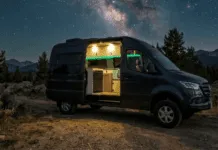
Ryan traveled in a 2002 Toyota Tundra carrying a Four Wheel Camper Fleet. The camper became his home, kitchen, editing space, and base camp for nearly the entire trip.
He drove more than 32,000 miles and spent approximately $10,000 on fuel. To keep expenses down, he cooked most of his meals, bought about $60 in groceries each week, and avoided hotels whenever possible.
The camper performed well, even when the conditions didn’t. Ryan encountered black ice that sent his truck spinning on the highway, spent 20 consecutive days fishing in temperatures with highs in the teens, and dealt with extreme summer heat while traveling with his dog.
One of Ryan’s favorite trout experiences came in the Driftless Area of Wisconsin and Minnesota. He describes small spring-fed streams winding through pastures, with clear water, wildflowers, and trout eager to eat dry flies.
He caught mostly brown trout, along with one brook trout. Many of the streams were only a few feet wide, but the fishing was some of the most enjoyable trout fishing he’d experienced.
Pyramid Lake in Nevada nearly stopped Ryan’s progress. On his first day, the weather was calm and sunny, and he broke off a fish without landing one. Rather than leaving, he stayed another day, even though he was hoping to get home to Vermont for Christmas.
A storm arrived, the fishing improved, and Ryan and his companions landed approximately eight to ten fish. He finally caught the Lahontan cutthroat he needed to complete Nevada.
Ryan also discusses fishing Pyramid Lake without a ladder. He used a two-handed rod and positioned himself on large rocks to gain casting height. The long indicator rigs used on the lake made the extra casting capability particularly useful. His experience shows how quickly conditions can change and why an extra day can sometimes make a trip.
Saltwater fishing accounted for some of Ryan’s biggest memories. He targeted redfish in the Biloxi Marsh, chased migratory tarpon in Florida, and explored the canals around Miami for peacock bass and cichlids.
In Florida, Ryan hooked a large tarpon but broke it off on the hookset. Although he’d caught juvenile tarpon before, landing a large migratory fish remains one of his unfinished goals.
Redfish made an especially strong impression. Ryan enjoyed their versatility, from shallow marshes and grass flats to deeper water, and the challenge of presenting a fly to fish that can be both aggressive and selective.
He also targeted cobia in Chesapeake Bay, although his fishing companion landed the fish that day. If he could choose only one species to pursue for the rest of his life, Ryan says it would probably be striped bass. Redfish, however, are high on his list of species he wants to spend more time chasing.
Some of Ryan’s favorite discoveries happened far from traditional fly fishing destinations. In Phoenix, Arizona, he fished for carp with a young angler named Niko, who used a flats boat and sight-fishing techniques to target fish in urban waters.
In Kansas, Ryan explored abandoned strip mines that had been converted into stocked fisheries. In Alabama, he estimates that he caught 16 different species.
North Dakota presented a different challenge. After breaking off pike and dealing with wind gusts reaching approximately 70 miles per hour, Ryan eventually visited a youth fishing area and caught bluegill and crappie to complete the state.
These experiences changed how he thinks about fishing destinations. Famous trout rivers and saltwater flats are worth visiting, but Ryan found dedicated anglers and interesting fisheries in places that receive far less attention.
Ryan’s coho salmon story began with an unsuccessful day of swinging flies for salmon in southern Washington. After several hours without a fish, he switched plans and headed into a smaller stream with a three-weight rod to look for rainbow trout.
About a mile into the woods, he spotted a large salmon in a stream roughly 10 to 15 feet wide. He shortened his leader, tied on his heaviest streamer, and hooked the fish on the first swing.
Landing a coho on such light equipment became one of the memorable catches of the entire journey. Ryan says he wasn’t certain of the species at the time but verified the identification afterward.
Ryan recommends finding a balance between planning and leaving room for unexpected opportunities. He had specific destinations and fishing partners arranged for some states, but many of his best experiences developed through conversations at fly shops, boat ramps, and gas stations.
For anglers preparing for a month or more on the road, he suggests having a general itinerary without scheduling every day. His practical packing advice includes:
Ryan also emphasizes using good judgment while remaining open to meeting people. Many of the friendships he developed began with simple conversations.
After fishing more than 250 days during the year, Ryan noticed significant improvements in his casting, mending, and streamer fishing.
One of the biggest lessons was learning to slow down.
He explains that anglers often rush their casts, mends, and presentations because they’re excited to be on the water. Fishing almost every day gave him time to become more deliberate with each movement.
Although Ryan spent much of the trip alone, he says the people he met were the biggest highlight.
Guides offered their boats, local anglers shared fishing spots, and strangers invited him into their homes. He estimates that he added approximately 500 contacts to his phone during the year.
His sister, a professional photographer, joined him for several stretches, including parts of the Midwest, Rockies, and Southeast. His mother also joined him during the trip and caught her first fish on a fly.
Ryan estimates that he traveled alone for about two-thirds of the journey. The friendships and connections became as important to the experience as the fish themselves. They also helped him discover fisheries he might never have found on his own.
Ryan returned home with more than 1,000 hours of footage and approximately 35 terabytes of video. The next challenge is turning that material into a documentary about his journey.
He and his longtime friend, a professional videographer and editor, plan to sort the footage, develop the story, and produce a trailer before completing the film. Ryan hopes for a release in early 2028, although that timeline depends partly on potential film festival and streaming opportunities.
The film will include fishing footage, interviews with people he met, and reflections on the experience. Ryan says the goal is to tell an authentic story rather than create a highly polished fishing highlight reel. He’s also interested in writing a book about the trip and eventually finding a way to combine travel, fishing, and storytelling as part of his career.
Ryan is back teaching and plans to continue exploring new fisheries. He hopes to spend approximately two months traveling during the summer of 2027, with an emphasis on unusual species and places he hasn’t fished before.
A dedicated muskie trip on Virginia’s James River is high on his list, along with another opportunity to land a large migratory tarpon.
He also wants to spend more time chasing redfish and exploring lesser-known fisheries. With all 48 states completed, the next chapter may be less about reaching every destination and more about returning to places where he still has unfinished business.
Episode Transcript
WFS 1018 Transcript 00:00:00 Dave: A broken off tarpon in Florida. A second chance at Pyramid Lake and some amazing redfish are some of today’s biggest memories. Those are just a few of the stories Ryan Bertsch brought home after spending nearly a year traveling across the United States. And today we’re hearing what it actually took to catch a fish in all forty eight states. Ryan is back on the podcast after joining us in episode seven forty nine. And today, he’s completed the trip across the US. He spent nearly three hundred and sixty two days on the road, covering more than thirty two thousand miles, and caught a fish in every state. Along the way. He found some incredible fishing, unexpected stories, and we’re going to get into those today. This is the Wet Fly Swing podcast, where I show you the best places to travel to for fly fishing, how to find the best resources and tools to prepare for that big trip, and what you can do to give back to the fish species we all love. Ryan Bertsch, the creator of tales of the forty eight, is here, and he’s got a project where he’s documenting his journey across the country, and he’s working on a film about the experience with more than a thousand hours of footage. We’re going to hear a number of these stories, including these thirty two thousand miles, and how living in a four wheel camper, spending ten thousand dollars in gas, surviving freezing temperatures, how it all came together. And he made an amazing trip. We’re gonna hear about the people along the way, how strangers at boat ramps and fly shop, friends, fish, partners it all came to be. Ryan’s got a lot of great memories here. We’re gonna hear about that and some tips on traveling. Plus, we’re gonna get the inside on this film he’s producing. And when you can expect it out. All right, let’s get into it. Ryan Burch. You can find him at tales of the forty eight on Instagram. How’s it going, Ryan? 00:01:40 Ryan: I’m doing well. I’m glad to be back. Dave. Thanks for having me. 00:01:42 Dave: Yeah, definitely. It’s been a little while since our last episode. I think episode seven forty nine was in twenty twenty five. We’ve actually done over two hundred and fifty episodes since that, that time since we’re doing a lot of content here and a lot of two hundred and fifty new anglers. But you have an exciting story because you’ve been traveling around the country, you’ve hit all forty eight states now, I think caught a fish. We’re going to talk about that in each state. And a lot of listeners are traveling, right? You know, and they’re thinking about where to go next. So hopefully today we’ll shine some light on that, maybe some cool new places, species and everything there. But before we get into it, take us back. What’s been, you know, you did that. You were I think you were getting ready to do your trip in twenty twenty five. Like you’re a teacher. Your summer was going to be off for travel. How did all that go and give us an update on where you’re at? 00:02:26 Ryan: Yeah, so it’s kind of, it’s a cool full circle moment to come back and chat again. But essentially in twenty twenty, I kind of came up with this idea to go on a year long bucket list trip and fly fish. All of the lower forty eight states. I, you know, was telling friends about this and quickly was told like, dude, you had to make a movie about this. You got to write a book, you got to do something. So this project was born and I had been kind of ticking off states during summer vacations, being a school teacher. And the plan was to either take a sabbatical or do something along those lines and really go for it in a full year. And it was just it’s a big leap of faith to take, to step away from a career and all of that. So shortly after recording our first episode, I was laid off and this year off was kind of forced upon me. And I hit the road August seventh of twenty twenty five and was on the road pretty much straight through for three hundred and sixty two days, just under a year. And I got home to Vermont August, I think it was August fourth of twenty twenty six. And long story short, I did a lot of fishing, a ton of driving, a ton of filming. And yeah, it was an amazing trip. 00:03:39 Dave: Wow. So you were laid off, which is pretty crazy, right? Laid off. And you have this time and you go on, you turn that summer vacation into a full a full year of travel. What was, you know, as that evolved? Was it easy to kind of plan things out or were you just kind of going with it as you went? 00:03:55 Ryan: Yeah, it’s a good question. I mean, for anyone that’s been been through that process before, you know, never fun to to get laid off and lose that part of your life, especially when it’s sudden. But pretty quickly after that, I kind of wrap my head around the fact like I’m, you know, I’m capable jobs are jobs and I’ll figure out that part of my life. But this is just a golden opportunity to move out of my house and into my truck and pack up the pup and hit the road. And in terms of the planning of the actual trip, I would say about a third of the states, maybe in the fifteen to twenty range. I had a pretty specific idea of either where I wanted to fish or who I wanted to fish with. And as we gain momentum throughout the fall and winter and kind of got more eyes on the project, I had a lot of folks reaching out and that really helped with the, the planning portion of things. I had, you know, people that wanted to get me out on their boat and kind of show me their home waters. And for those folks that are listening that have done substantial travel, you know, the difference between showing up to a body of water with zero Intel versus even just the amount of Intel, like, hey, I live nearby, I catch fish there often. These couple things works. It’s it’s night and day. 00:05:15 Dave: Exactly. And you’re, and I think we first got started, we talked a little about the four wheel camper because that was, uh, are you still traveling in the four wheel camper out there? 00:05:23 Ryan: I am, yeah, I have a four wheel camper fleet, my trusty steed. And that was home for the past year. 00:05:29 Dave: Yeah. That’s right. So you’ve been going full on in the in the camper. This is great. So we’ll hear some of that today. What has it been like just being fully on for a year in the camper? Like, uh, is that any different than being doing your summer having or it was just a summer period? 00:05:44 Ryan: Yeah. I mean, it’s a little, a little difficult to kind of separate the film production side and the trip and travel side. I love life on the road, you know, way out in the woods. I fished a bunch of like inner city fish downtown Chicago. I fished in Central Park. So I really had like the full, full range of fisheries in this country. And I, I love the simplification of life. You know, it’s work like camping is work even when you’re in a nice rig. But the part that led to burnout was all of the driving. 00:06:19 Dave: Oh, really? The driving? 00:06:20 Ryan: Yeah, I did over thirty two thousand miles and I love to drive, but it was a lot of, you know, get to camp in the middle of the night, wake up early fish and film, which, you know, filming yourself, fish is a whole thing. Do that for kind of half of a day, pack up camp, shoot B, roll around town and then keep driving. There were only really a handful of instances that I stayed in the same place back to back nights. So it was just a lot of a lot of logistics, a lot of maneuvering around and with essentially no days off, and for that long of a time that leads to burnout. But I love the fishing. I love the travel itself. And I mean, the people that I met were the the highlight, without a doubt. So yeah, the rig was incredible. I had no issues. 00:07:06 Dave: What do you drive? I think you had a Toyota last time. Are you still driving the Toyota? 00:07:09 Ryan: Yeah, I have a two thousand and two tundra, which I actually crashed halfway through the trip. And. 00:07:15 Dave: Oh, wow. What? Crashed it just for, like a fender bender or. 00:07:18 Ryan: Actually, no, I got super lucky. I was I was actually driving to the mechanics of all places just to get things looked over before the second, second set of twenty four states. And I hit black ice at sixty to sixty five miles an hour and dang. Yeah. Turned me sideways, full three hundred sixty on the highway and luckily was able to save it for the most part. But yeah, I replaced one O2 sensor and other than that, no flat tires, no anything. Wow. Pretty incredible. 00:07:48 Dave: And is the the cool thing is the oh two Toyota Tundra. I’m sure it had some features, but it doesn’t have all the features. Like if you were driving a, uh, you know, like a Tesla truck or something where it’s driving yourself, you know, sort of thing. Do you, do you like the kind of the driving, just the actual driving on the road? Is that something you enjoy or would you like something where it’s more automated autopilot? 00:08:09 Ryan: I mean, I think the kind of double edged sword with that is I love nuts and bolts and, you know, things that when they break, you can see how they’re broken once you get computer chips and all those things involved in error codes. And so there are definitely stretches. You know, I drove straight from Davenport, Iowa, back to my home in Vermont, twenty six hours straight. And that stretch would have been amazing to, to not have to be alert and on. But overall, I think just like the simplicity of having a big bag of tools and knowing that I could fix most things on the truck, just that peace of mind was, was huge. 00:08:49 Dave: Yeah, that’s really cool. No, that is a big thing that we’ve, we’ve kind of lost now with newer cars, right? There’s you’re not really doing that anymore, I don’t think. Maybe some masters out there are doing it still. But yeah. Cool. So that’s it. So you put a bunch of miles, you traveled around the country, and where did you talk about where you started? And then just give us the little road map of what you did in that. I guess you did too, because you’ve had two summers since we talked, but since the last. Well, no, this would be you had the full year. So break down that full year. 00:09:17 Ryan: Yes, I left, uh, I live in southern Vermont, so I started my trip, did some warm water fishing up in Lake Champlain for my Vermont section. And then I kind of went south to tick off some of the northeast. I fished New York City and then Pennsylvania, West Virginia and Kentucky. And then from there, I kind of went back north, up around and through the Great Lakes, Michigan. I fished the driftless in both Wisconsin and Minnesota fish downtown Chicago, Iowa and Nebraska. And then I got into the Rockies. That was like late, late fall. So there was lots of really, really cold days. You know, those guys that fish out there a bunch know how that can be. I fish November and December through the Rockies and the Pacific Northwest. 00:10:08 Dave: Was it challenging staying warm in the camper. 00:10:11 Ryan: When I was in the camper, it was great. You know, the heater in there, the days on the river and with camera gear and charging batteries or just batteries dying quickly. That element was was really tough. I fished, I think this was early December. I was out in kind of Idaho, Wyoming. I fished twenty consecutive days where the the highs were in the teens. 00:10:37 Dave: Oh wow. Yeah, it’s a pretty cool. 00:10:38 Ryan: So a lot of just, you know, aching hands and frozen rod guides and, and all of that, all of that stuff. Um, from there, I fished California, and my final stop on the first kind of set of twenty four was Pyramid Lake in Nevada. 00:10:57 Dave: Did you bring your ladder out there? 00:10:59 Ryan: I didn’t have a ladder. I had a couple, a couple folks that I fished with offered to, to borrow their ladder. But I had such a dialed system with gear and everything like that. Just, you know, sometimes you introduce like a new, a new travel mug or something and it messes up your whole flow. Let alone a huge, a huge ladder. So I, I had a two hander and I just finished off some of those big, kind of like popcorn rocks so you could get up above the water and cast a little bit better. 00:11:27 Dave: That’s cool. That’s really cool. And then where did that take you after that? 00:11:31 Ryan: Yeah. So from there, I took some time off. I actually drove home for a little while. I just needed a real bed and to catch up on showers. And after that, in order to. So that was kind of I was running from winter. essentially there. And then for the second half, I was kind of running from summer heat. I had my dog with me. And you know, just living in a car is tough. Always when it’s excruciatingly hot. 00:11:56 Dave: Is the heat worse than the the cold? 00:11:59 Ryan: I mean, I think so, yeah. 00:12:01 Dave: Like the camper, the camping, like the four wheel camper stuff or just being in a camper, the heat is harder. 00:12:06 Ryan: I would say so because you have the heater. 00:12:08 Dave: Yeah, you can turn that on, right? You don’t have an AC because you’re not plugged in. Right. Or can you use an AC? 00:12:14 Ryan: They have add on AC’s, but it adds some weight. And I was just, you know, I’m trying to go as lightweight and stealthy, just with the amount of driving I was doing, I think I already spent like, I don’t know, so much money on gas and immense amount of money on gas. 00:12:30 Dave: Oh, gas. Right. Yeah, yeah. Thirty two thousand. 00:12:33 Ryan: I was really trying to yeah, trying to keep weight down and yeah, I mean, it’s just it’s oppressive, right? You just can’t get out of it when it’s triple digits and you’re essentially living outside. You can get into the shade, but mainly with my dog. That’s kind of why I was trying to beat the heat. So I drove back out to I had a couple states. I hit Missouri, Oklahoma and Kansas on my way back out west, but then I drove straight to Arizona and over the next five months meandered my way back from about March through, I guess, August, early August. 00:13:08 Dave: Yeah. And the gas, it’s interesting because it all adds up when you’re doing thirty two thousand miles, but you’re spending like quite a bit like over ten thousand dollars, right? Or something like that on gas. 00:13:17 Ryan: Yeah. I think I was right around that ten thousand dollars mark. And I lived most of my twenties in a tiny house. Um, so it was born and raised by a couple very frugal artists in southern Vermont. So I just, you know, saved my money as much as I could. And when I got laid off, I, I was fortunate enough to, uh, I had a ton of ramen. Don’t get me wrong. I was being a true fish bum, but enough to have a little bit of a cushion to like, hit the road and have enough money to buy flies and fill up my gas tank. Buy fishing licenses. But that’s, that’s essentially like all I’ve, all I spent money on, I would buy about sixty dollars worth of groceries a week and like, get one good coffee a week. Amazing. Other than that. Other than that, I was, I was really on a budget gas by, by about a scale of ten was my biggest expense. 00:14:07 Dave: Yeah, gas was the big one. I’m looking at a, uh, on Instagram tales of the forty eight. You’ve got this picture you posted of of the old camper, the old camper with the high, I don’t know what kind of camper that was versus what you have now. What is the biggest difference between. I always wondered about that because I have a four wheel camper too. It pops down nicely and stuff. Is there a big difference between the two? What are the advantages of maybe the old one and what are the big advantages of the four wheel? 00:14:31 Ryan: So yeah, I think that was a it was a nineteen eighty two. I think it’s a sunlight, you know, the classic like sunburst colorway. 00:14:38 Dave: Right? Orange, I love it. It’s got the retro seventies color. 00:14:41 Ryan: Yeah, that thing says cool looking as it gets. I mean, my rig now is pretty sweet, but there’s nothing like that, that vintage style. I think obviously the biggest advantage of that is that you’re popped up when you arrive to camp, and it’s less so like, like with the camper now the pop down camper, it’s less so the popping up and down. You know, I can be popped up and in bed in like two and a half minutes in my current rig. The tricky part is, you know, kind of moving stuff off of countertops so that it doesn’t slide around. And especially with nice camera gear and all that stuff, you’ve really got to make sure that stuff’s not flying around in the back. So that’s, that’s one of the toughest parts. But then the pros are, you know, gas mileage is massively improved. 00:15:26 Dave: Is it a lot better with the, with the. Yeah. Pop up? 00:15:29 Ryan: Yeah. It’s still not great in my current truck, but there are definitely people out there that have a fully loaded four wheel camper in the back of their truck that are getting twenty plus, you know, eighteen to twenty plus miles to the gallon and more more has to do with the track. But I think the fact that you can be more aerodynamic is huge. And I, I really like pushed the limits of my vehicle. I got off road and just being less top heavy, having that center of gravity be lower with a pop up style is huge. And yeah, you’re just a little bit more nimble. Like I, this probably isn’t a big selling point to, to many folks, but I can, I can grab a Diet Coke from a McDonald’s drive through. 00:16:10 Dave: That’s actually a big one. That’s actually. I noticed that with mine because you’re, you’re high. Well, you have a, I don’t know if you still have the rod vault on top, but without the rod vault, I’m not sure if you can go into parking garages, but I mean, you can go pretty much under any of those drive through or any of that stuff. It’s within the window. 00:16:27 Ryan: Exactly, exactly. And yeah, if you’re kind of a weekender and you know, you put the camper on on a Friday and take it out on a Sunday, it’s, it’s not a huge deal to be whatever that would be. Ten, eleven, twelve feet tall, right? 00:16:39 Dave: Right. Or you do like I, and I kind of, you know, the project in which I know are doing people are loving the project EMS, you know, the basically stripped down, there’s nothing in it. And I just keep mine stripped down. I mean, we have I load up wood in it and use it for hauling stuff, but it’s nice because I never take mine off. Its on their twenty four over seven. 00:16:57 Speaker 3: It’s such a perfect middle ground. Those project downs. 00:17:01 Dave: Check out Jackson Hole Fly Company today. Premium fly gear straight to your door without the premium price. Jackson Hole Fly Company designs and builds their own fly rods, reels, flies and gear, delivering quality you can trust at prices that let you fish more and spend less. Whether you’re picking up a fly rod for the first time or guiding every day, they’ve got what you need. Check them out right now. That’s Jackson Hole Fly company dot com. Jackson Hole fly company dot com. Reds flies is built for anglers who don’t want the same fly box as everyone else. Premium patterns, upgraded hooks and flies selected to show pressured fish something different. And every order also helps support conservation. With ten percent of profits going back to protecting the waters we fish. You can check in with reds flies right now at reds flies dot com. That’s reds R e d d s dot com. Check them out today. So that’s cool. So that’s what you have. You have this, uh, this amazing camper that pops down and you know, when you’re driving too. That’s one of the things I noticed because we just drove to, um, oh, drove to Montana. I did a couple trips to Montana, you know, with the family and stuff and cruising like up the hills around the corners. It’s nice to not have the feel in the car really going back. You feel a little bit on the wind, but it’s nothing like I’m sure like those. I’ve never driven one of those big ones, but I’m guessing you’re swaying a little bit. You’re feeling all times, right? 00:18:25 Ryan: Yeah, yeah. And it’s tough to compare. I have the, you know, V8 kind of it’s still a small truck but much more powerful truck with the fleet on the back. Back in the day, this was really my first rig. The one you’re talking about, the nineteen eighties camper that was on a first gen Tacoma. It was a four cylinder. 00:18:44 Dave: Oh, wow. And a four. Dang. Yeah. 00:18:47 Ryan: Yeah, that was a disclaimer. I would not advise that setup. 00:18:51 Dave: Did you blow the engine up on that one or were you good? 00:18:54 Ryan: Uh, the frame cracked eventually. Who knows if it was from the camper. I mean, it probably was, but yeah, you’re just so much more nimble with the pop up and pop down style. You can also the. I didn’t do a ton of it, but I did some inner city camping and you can be so, so stealthy with the top down. You just sleep on the rollover couch or whatnot. It’s tight in there, but it’s not, it’s not terrible. So that’s an added benefit. 00:19:20 Dave: Yeah. That’s right. You could do whatever. What is the on the fishing side of it? Describe that a little bit. You traveled, you hit everything. You hit all the states. Are there any highlights fish that you really kind of stand out that you’re like, man, I can’t believe I caught this thing or describe that. What were you catching out there? Mostly trout or a mix. 00:19:36 Ryan: It was a mix. I would say probably two thirds was a non trout fishing. In terms of trout fishing specifically, the driftless was incredible. I had never, never really. I didn’t know all that much about it prior to arriving, but I was there. I guess it would have been either early September. So tons of caddis around. And it’s amazing for those folks that haven’t been up there. It’s all these meandering little trout streams, a lot of which run through pastures, so they’re basically clear cut by these cattle. So you can you kind of feel like Brad Pitt in a River Runs Through it. You can back cast as far as you can check that thing. 00:20:18 Dave: And and they’re all spring creeks too, right? 00:20:20 Ryan: Mostly they’re all spring creeks. Exactly. So they stay cool. It’s tiny water, but the fish are beautiful. They are just eager to eat a dry fly from dawn till dusk. 00:20:30 Dave: Are these. What are the species? Mostly you’re catching there. 00:20:33 Ryan: I caught all brown trout in one brookie. 00:20:36 Dave: And no rainbow. That’s saying there’s no rainbow there, at least in the spring creeks. 00:20:39 Ryan: At least where I was or I was. I was doing something wrong if I wanted to catch the rainbows. But yeah, I mean, it’s it’s so epic. A lot of these, these streams are, you know, three, four feet wide and little plunge pools and wild flowers growing. I, I, it was amazing. It was some of the most fun I’ve ever had trout fishing. The Rockies were tough, mainly just because of the time of year that I was there. Um, you know, no bugs coming off really. So whatsoever. Montana was incredible. And then Pyramid Lake was just so epic. Pacific northwest was also really, really special. I fished the Yakima River with a couple guys from Reds fly shop. I had a funny. I kind of walked in there and was given my spiel about what I was doing and ended up on a podcast episode with him, and Joe was kind enough to put me on a boat the next day with a couple of his guides on on their day off. So it was amazing. Got to experience that that fishery. 00:21:37 Dave: Other than that, were you doing a lot of this kind of DIY? For the most part a non-guided. 00:21:42 Ryan: I was yeah, I was so, so blessed by people reaching out. You know, full time guides reaching out and saying that they had an opening or a cancellation or just wanted to take me out after their, their morning session. And it was more people than I can count. I’m blessed with an awesome group of friends and an incredible support system in my life, and I’ve really never been supported and kind of like upheld the way that I was on this trip. I found myself on the bow of more boats than I can count doing all types of fishing. 00:22:13 Dave: Where did all the connections come from? Like, how did these people find you just through the some of the podcasts you’ve been doing, or where has that been? 00:22:20 Ryan: Yeah, some through the podcast a lot through Instagram. And then so many guides are connected. You know, the guys that got on the East Coast know people out West who know people down south. And it was kind of just that domino effect of I added probably five hundred contacts to my phone over the course of the year. And yeah, just so many people, I think so many people like it is such a bucket list trip. I am so fortunate to have been able to do it that a lot of people just kind of wanted to live vicariously through it and support the mission of catching a fish in all of the lower forty eight. So. 00:22:53 Dave: Oh, right. Yeah. That was vicious. Do you know, I wonder how many people can check this off their box, that they’ve caught a fish in every state? Do you have any idea? Did you look into that? 00:23:02 Ryan: I don’t I’m definitely not the first. There’s a fair amount of people who have done it both fly and conventional, or a mix of the two. It’s definitely less on just the fly side, but I’m sure there’s many folks out there that have done it. 00:23:16 Dave: I’m looking I’m just kind of going through your Instagram looking at another photo you have here. It’s Liberty Arms, a big machine gun, whatever it is, and it says a lot of you are celebrating Labor Day and not and don’t have a job and you’re standing in front of the side. 00:23:29 Ryan: Yeah, that was good old Indiana. 00:23:31 Dave: Oh, that was Indiana. 00:23:32 Ryan: Yeah. 00:23:33 Dave: Love it. 00:23:33 Ryan: Guilty as charged on that one. 00:23:35 Dave: There you go. There you go. Yeah. No job, no job. Just, uh, loving it. Cool. And on the fishing. So you mentioned mostly trout. What year did you get any salt in or because you kind of cruised across the country? Did eventually you get some West Coast salt stuff in? 00:23:50 Ryan: I did, yeah, so I fished for Sea Run Cutthroat in the Pacific Northwest. And then most of the salt that I did was actually down south. I fished in Gulf Shores and Gulf Port, I forget which is which one is in Alabama. One is in Mississippi. I fished the Biloxi Marsh for redfish. I got to fish for migratory tarpon in Florida. I fished Key West. 00:24:15 Dave: And you caught a tarpon. 00:24:16 Ryan: I broke off a huge, huge fish on the set. Um, it was all the I f g a, you know, liter, which was a whole, a whole new world for me. So I won, ate the fly and I just gave it to this fish on the set and it was was gone before I knew it, but no kidding. 00:24:33 Dave: Oh, wow. 00:24:34 Ryan: Yeah. I mean, just incredible to like, see these fish. And, uh, I had some shots at them and came tight on one there. Oh man, they’re so cool. That’s a spot I want to get back down to. I fish the canals outside of Miami for all of those invasive kind of Amazon fish, different cichlids and peacock bass. And then most of the East Coast was like mid to late summer. So lots of striper fishing. Yeah. I got so many incredible fish. That last leg of the fish up in Maine, down in Massachusetts. But a lot, I mean, a lot of my favorites were the kind of more, more unique species. Like I, I fished the canals and ponds for carp, um, out in Phoenix and I get to fish. Uh, I fished in Kansas in these old abandoned strip mines that are now stocked by the state. Just, you know, just really kind of freaky. Sure. Unique, unique fisheries. I think I caught sixteen species of fish in Alabama. It was, you know, just the sheer variety of what is out there. And, you know, of course, now I’m back to I’ve got a nine to five and I’m recuperating from a year of not working. But it’s, it’s so wild when you have limited time to travel specifically for fishing, you really have to pick and choose, right? So you end up in the Montanas, you end up in the Colorado’s, you end up in the Florida Keys, but the places that are less sought out with these kind of like very quirky, unique communities of incredible anglers, but that are fishing for fish that you wouldn’t seek out or fishing in ways that are not less desirable, but, you know, less, less romanticized. 00:26:18 Dave: And you wouldn’t hear about them, right? You wouldn’t hear about I mean, we always go back to the, you know, down the middle North Dakota, Nebraska, Kansas. You mentioned that Oklahoma. There’s that section, right. And part of Iowa. Some of those places that are the that you don’t hear a lot about fly fishing. And you hit all those too. But then there’s the other places you’re talking about, you know, wherever that is Mississippi, Tennessee, that have probably fisheries where people are have some cool fisheries, right? That nobody hears about. 00:26:42 Ryan: one hundred percent, one hundred percent. One of the most talented anglers that I get to fish with was this, I think it’s probably twenty years old. This kid Nico out in Phoenix, Arizona, who like literally on a flat boat site, fishes poles for carp. It’s like you kind of you’re starting to hear about that kind of stuff. But it’s so it’s so not the romanticized like big money destination Montana location. It’s and I love that stuff in terms of accessibility and just keeping it fresh. I loved those those types of places. 00:27:16 Dave: That’s what makes it great, right? That’s what makes this amazing is that it’s this the United States and probably anywhere in the world, you could probably do this too, but the US is because you can drive it so easy and even into Canada. I’m sure you could probably you’re maybe you’re thinking about that, right? You’ve got the northern country up there that you could probably do a similar thing. But yeah, I mean, all these places you could probably go to, um, you know, go to Nevada or Arizona and spend your whole time there. 00:27:42 Ryan: one hundred percent, one hundred percent. I would say about half the states. I wasn’t ready to leave. There was still places I wanted to hit, you know, like the tarpon, for example, like I, I wanted one, I really wanted one. 00:27:55 Dave: Right? You left without actually holding one or. 00:27:58 Ryan: Yeah, yeah, I’ve caught juvenile tarpon before, but like I, you know, I wanted, I wanted that one. I wanted to get leader on that fish. And when you’re making a movie, there’s a production schedule. You got to keep moving. So a lot of a lot of the states, like I had that bucket list species or that bucket list fish, and it didn’t pan out. And I had to audible. And in order to, you know, technically complete the goal, go find a little panfish or, Or a largemouth bass or something like that. To check the state off. 00:28:27 Dave: Oh, right. You had to pivot to stay because your goal was to get a fish no matter what. In every state, right? It didn’t have to be a certain species. You’re just going for it. 00:28:35 Ryan: Yeah. The premise was kind of that I couldn’t I couldn’t leave this state until I had caught one. There were a few close calls. Uh, Pyramid Lake almost, almost got me. I had to stay for a second day. 00:28:47 Dave: Did you get a cutthroat? 00:28:48 Ryan: I did, yeah, we. 00:28:49 Dave: Yeah. This is the Lahontan, right? This is the amazing thing about pyramid is you see all the pyramids kind of blown up because it’s got these giant fish. But the really cool thing about it is, is there again, back to that unique species is that they’re a unique Lahontan cutthroat species, or the species you could only find in a few places in the world, right? 00:29:06 Ryan: Yeah, yeah. And the salinity of the water, it’s, you know, it’s like just the perfect storm for those fish to grow that big. And long story short, day one was high sun, no wind, which is kind of the worst conditions you want. And I, I was fishing with, you know, a friend of a friend of a friend of a friend, whatever. And, uh, he brought a two hander rod for me and everything, and I, I broke a fish off. 00:29:31 Dave: Oh, wow. 00:29:32 Ryan: And not that I didn’t tie. 00:29:33 Dave: Oh that’s cool. Oh, that’s not cool. But that’s cool. Thing is you’re using a two handed rod. So you guys. So that’s one way you can get away from the ladders. You use the Spey rod so you can actually cast out far enough. 00:29:43 Ryan: Yeah. And most most of those guys on the ladders two are fishing two handers as well. 00:29:48 Dave: Oh they are. Oh okay. So they’re two handers too. So everybody’s just trying to huck it like mega Huck out there as far as they can. 00:29:54 Ryan: Yeah. And a big reason is because with those bobber rigs, you have so much distance between the, you know, it’s like nine feet from your bobber down to your your midge, your pattern. So it just, if you’re double hauling that, you know, it’s, it’s tough. But yeah, day one didn’t pan out. And I, I like against my gut. I really, I hadn’t been home for Christmas in like six years and I kind of promised my parents I would be. 00:30:19 Dave: Yeah. And home was home was back east. 00:30:21 Ryan: Home was back east. Yeah. This was like December twenty second or something. So I stayed another day and day two met these couple new friends on the river or on the on the lake. And this insane storm rolls in and it just like started firing off. We probably caught eight to ten fish. And so that, you know, that was one like that. I really had to audible and stay the second day. North Dakota was the same way I like broke off a couple Pike was fishing through this wild windstorm gusts up to seventy miles an hour. It was horrible. And then the last day in town, I went to this, uh, youth fishing area and caught a couple sunfish. 00:31:00 Dave: And what’d you catch? Some bluegill or something like that? 00:31:03 Ryan: Yeah, bluegill, a couple crappie, and then hit the road that was I was very much ready to leave there. 00:31:09 Dave: So did you ever on this journey at all ever think like, man, maybe I don’t have to go back to teaching. I could just do this thing as, uh, just make it a thing. Is that something that ever crossed your mind? 00:31:20 Ryan: Yeah, it definitely did. And I’m still kind of, uh, you know, I got home and very much needed to get back to work and make some money, but it’s still something that’s definitely, definitely in my brain. 00:31:32 Dave: Well, I think and this is, again, I’m not a YouTube specialist, but I think that, I mean, you see it all the time. We’ve got, you know, there’s people out there that are making a living doing, uh, thrifting thrift shopping and they’re traveling the world, basically going to thrift shops and they’re just posting, they’re building a YouTube channel, right? Building an audience. It feels like that’s something that you would be perfect for because people could see the travels, right? Watch it and then grow that thing over time. And I’m not even sure if money from YouTube is where it’s at. There’s probably sponsors and stuff there. You could do, but that would be one way to do it right. Keep growing. Like build the YouTube channel out. 00:32:07 Ryan: Yeah, definitely. I think monetization for social media stuff, what I really would love to do my dream. I mean, I love cameras, I love telling stories through video, but I really, really love to write, so I’m going to that’s the other side of this. I’m going to make this film and release it. But the next chapter, I want to write a book about the the year on the road. And then I would love to figure out how to, how to travel part time and fish and essentially like kind of what Anthony Bourdain and those kind of gonzo journalists did where they’re, you know, traveling really on like the, the kind of raw and uncut side of things, telling stories. I would love to figure out how to do that in the fishing space. There’s something about short form and even lots of long form media that just misses the mark for me in terms of authenticity. I think it’s so easy to polish something and to to glamorize it. And I don’t know, written word is so timeless. And don’t get me wrong, I love films, I love short films, I love, I love long form film. But yeah, I’m still scheming to say that this was the appetizer. 00:33:12 Dave: I think you’re still thinking now are you going to, after this school year, are you going to be back out on the road for another summer? 00:33:18 Ryan: Yeah, that’s the plan. I will probably do maybe two months on the road next summer. So if anyone listening wants to connect next summer, summer of twenty seven and and Phish, the weirder the better. In terms of fishing opportunities. I would love to fish for something I haven’t fished before. 00:33:36 Dave: Yeah, because now you have the species. Right now you have you’ve done everything. You’ve done the forty eight. Now that’s done. But now you’ve got all these other species you could go back through and catch different species in all. Forty eight right. 00:33:46 Ryan: Exactly, exactly. Yeah. I’m kind of already scheming to like five or ten year reunion tour, but we’ll see. Gotta make a couple bucks before then. 00:33:54 Dave: Oh, yeah. No, you’ll get there. I think this is this is pretty sweet because you’ve got some good momentum behind you. You know, you’ve got you’ve got this epic year long adventure, right. And all this. So I’m sure it’s going to come together. What about, you know, some of the let’s just kind of think of kind of some of the high levels. Again, we talked about some of the states. What are, you know, species wise, what would be those ones, you know, or states that you go back to for that other species, what would you if you had a short list, what would you put on there? 00:34:20 Ryan: I was fortunate enough to fish with Blaine Chocolate down in Virginia, and the time of year that I was there just wasn’t ideal for Muskie. We saw a couple, but we were fishing smallies. I think I would love to get down there and do a muskie specific float that the James River is just so, so, so epic. And that would be one I. I mean, I’d love if the stars aligned to catch a true migratory mega tarpon at some point in my life, the boat traffic in Florida and just kind of the culture around that was really rough for me. 00:34:55 Dave: What was it like? How was it different doing the Florida thing with you mean just the the camping camper stuff or the fishing? 00:35:01 Ryan: I mean, the camper was tough. Like Key West was probably the hardest place. 00:35:05 Dave: Why is that? Because they don’t want people like a riff raff coming in and camping wherever. 00:35:09 Ryan: Yeah, they they hate people like me, right? They don’t want anyone. 00:35:13 Dave: They don’t want any dirtbags. They don’t want any dirtbags in, uh. 00:35:15 Ryan: Yeah, yeah. 00:35:17 Dave: That’s funny. Right? 00:35:18 Ryan: It’s a pay to play. 00:35:19 Dave: So it is. So did you have to? Is that what you had to do? Was pay to stay places? 00:35:23 Ryan: No, I slept, I camped under a bridge. Yep. 00:35:27 Dave: There you go. You did it. You. You were able to do it. So you you always go back to the Walmart parking lot, right? Because I feel like even that Walmart has, I think, cracked down on that. I don’t think they let people do that anymore. But there’s places you could still do it right along the the bridges. 00:35:40 Ryan: Yeah. Cracker barrel under bridges. Yeah. I mean, I, I utilized a lot of like boat ramps slash just kind of like dead end roads where people go to fish and, you know, I got some knocks or people called the cops or whatever and just kind of kill em with kindness. Go to the next lot type of deal. But yeah, I just and again, I don’t want to generalize Florida, but man, it’s just so many people on the water screaming at one another and people fishing on top of each other. And it was, I don’t know if I just got unlucky, but it was a very like. 00:36:13 Dave: Uh, like hardcore. 00:36:14 Ryan: Yeah. Kind of like unkind. 00:36:16 Dave: And were these fly? Were these every all fishing or like fly people crazy? 00:36:21 Ryan: I think the fly people like we, we saw some people on smaller boats fly fishing for them, but it was mainly like the, the commercial boats or, you know, the charters that are dropping down crabs and, you know, just trying to jump these huge fish. Um, they’re just big boats. And I don’t know, it’s like a, it’s just kind of a weird. Florida’s a unique place. 00:36:40 Dave: Yeah, it. 00:36:41 Ryan: Is in many, many ways. So yeah, I do tarpon again. What else? Oh, I cobia fished. 00:36:48 Dave: Oh yeah. 00:36:49 Ryan: Which was so cool. I think that’s the most unique fish that I targeted. And the guy that I was with caught one. Uh, we were kind of swapping off. He got one and I, it was just one of those days, you know, sometimes one guy gets all the shots just because of the timing. 00:37:05 Dave: And, and where was that? Where was cobia? 00:37:07 Ryan: Uh, that was out of Virginia in the Chesapeake Bay. 00:37:10 Dave: Oh yeah. Cobia not not corbina. 00:37:12 Ryan: Yeah. Yeah, exactly. Cobia. Yeah. Redfish stole my heart. I mean, I caught a ton of them, but I would I would like to catch more. 00:37:20 Dave: Yeah. What is it. Why does redfish stick out to you out of every of those saltwater just in general. 00:37:26 Ryan: Yeah. I mean I think striped bass, like if I had to choose one, one species for the rest of my life, I’d probably fish for striper. But redfish are kind of similar in their, their versatility. You know, you can find them in deeper water. You can find them on the flats, you can find them in grass. And yeah, just the fact that they can be so finicky and come into such shallow water, but are such predatory, just epic fish. I think that really excites me. And as a New England guy, I’ve romanticized that kind of like marsh redfish fishing for, you know, all of my teenage years and. 00:38:04 Dave: The flood tide, right? Hitting the flood tide. 00:38:06 Ryan: Exactly. 00:38:07 Dave: Did you chase down any steelhead or the timing worker Atlantic salmon. 00:38:12 Ryan: I caught a coho salmon. 00:38:16 Dave: Sullivan fly rods are handcrafted in the USA using American made components. They’re. Graphite and fiberglass blanks were developed from years of conversations with top guides and everyday anglers to create actions that match the way you fish every day. Are you planning on throwing dry flies, streamers, chasing bass, or heading into saltwater? They’ve got a rod built specifically for every style. And here’s the part I really appreciate. You can make your own. Choose custom wrap colors and beautiful stripping guides and have your name added to your own custom rod. You can check out Sullivan Fly Rods right now and build a rod that’s made to last for generations. That’s Sullivan fly rods S u l l I v a n Sullivan fly rods. Check them out today and support this podcast at the same time. Do you think you need a bush plane to fish Alaska’s legendary waters? Think again. Fishtown expeditions specializes in road accessible adventures that don’t skimp on excitement. Picture yourself fishing for massive rainbow trout, Arctic grayling and plenty of salmon species, all within Alaska’s epic road system. It’s doable. I fished the road system on our first day with Adam and the crew, and it did not disappoint. The largest leopard rainbow I caught and landed was right off the road system, and we’ll be driving up again this year, heading up from the lower forty eight all the way up to Alaska to hit those streams again. You’ll experience the breathtaking beauty of Alaska’s wilderness, from mountain streams to hidden rivers perfect for anglers of all levels, fishing expeditions makes it easy to explore Alaska. Why wait? Your Alaska adventure is just a drive away. Book your spot now before spaces fill up. That’s fishing expeditions dot com. F I s h h o u n d expeditions dot com. Don’t miss out. Where was the coho? Where was the coho at? 00:40:04 Ryan: Uh, the coho was in southern Washington. 00:40:07 Dave: Yeah, because that’s pretty unique. Coho salmon, you know, because the Pacific salmon are totally different than Atlantic salmon. You know, they’re just a different species. And steelhead is totally different than Pacific salmon as well. Right. It’s just a different deal. But yeah, getting a Co that’s pretty unique. 00:40:21 Ryan: Yeah, it was incredible. I had been swinging for salmon most of the day. But again I’m fully alone like way, way, way out in the woods. I’ve I know the premise, but you have someone there that’s knowledgeable with you and you, you know, your likelihood of success is, is tenfold. And so I gave a full day of swinging and didn’t have any luck, and then got out my little three weight and went to look for some little rainbow trout in this much smaller stream, hiked about a mile up into the woods. And then all of a sudden in front of me, there’s a just a huge salmon in this, probably like ten, fifteen foot wide little stream. And I only have my three weight with me. So I bit off like probably six feet of my nine foot leader and put on my heaviest streamer and on the first swing this this fish eats it and had, you know, chased it down river. But that was another epic one. That was a highlight for sure. 00:41:15 Dave: And was it clear? How’d you know it was a coho versus, say, a Chinook or other species? 00:41:20 Ryan: I actually didn’t in the moment, but I did a little verification afterwards and it definitely wasn’t like the the freshest fish by any means. 00:41:27 Dave: Yeah. It wasn’t, it wasn’t a chrome bright salmon. 00:41:29 Ryan: No. But but you know, for me, just a boy from Vermont, like that’s such an epic fish to, to add to the list. 00:41:36 Dave: Yeah, I think co-host probably one. If you go up to the upper, you know, to Alaska, you’re going to have a lot of coho, but those are harder to find down the lower forty eight. So let’s take it to kind of the travel, like think of somebody right now. They’re going to be traveling, getting ready for a big trip. Maybe it’s a month, maybe it’s a few months off, you know, traveling in their vehicle. What are a couple tips you’re telling them to get ready? Give us a little list here. What would you throw there? 00:42:00 Ryan: I would say overall kind of that, that finding that middle ground of planning things out, but then also leaving days to let the road take you where it will. 00:42:10 Dave: What would that be like if you were, let’s say you had a month and you, you know, you’re going week by week. Would you plan like half the week doing something and then the other half open? 00:42:19 Ryan: Yeah, I think something like that would be great. And then also like beyond that, once you’re actually on the road, just entertain, you know, again, do whatever people are comfortable with. But I, I am all for like, entertain the people that come up and talk to you at the gas station, right? 00:42:36 Dave: Yeah. Don’t be like a hermit and not talk to anybody. 00:42:38 Ryan: Yeah. And, and definitely, you know, trust your gut, use good judgment. But also I met so many incredible friends, like, you know, people that I will invite to my wedding when I get married, like lifelong friends that were just people that I chatted up at the boat ramp or at the fly shop. And before I knew it, I was sleeping on their couch or eating dinner with them or, or whatnot. And it’s it’s so easy to, you know, when you’re frustrated about the fishing or you’re frustrated when someone else pulls up one hundred feet or one hundred yards down from you, it’s like, it’s so easy to be cursing them in your head, but we’re just all doing the thing that we love, and it’s all pretty harmless. And I think that expands beyond fishing, you know? Just lead with trust and assume good intention. The road is a is like a magical, magical place always. But like, especially if you lean into it and really allow it to be. I, I was traveling with like a ton, a ton of camera gear and my dog and I just, it was kind of like my job for the year to make this film. So I was relatively cautious. If I were to do this trip again, I think I would want to lean a little bit more into that, just kind of that happy go lucky go with the flow type of mentality. 00:43:51 Dave: Definitely lean into it and just kind of, I mean, you’ve probably had I mean, how many people did you have out there in that year ask you about your four wheel camper at a gas station or wherever? 00:43:59 Ryan: So many. Yeah, probably average like one every time I got gas, which was a lot. You know, every other day, pretty much. And then yeah, I think beyond that organization is huge. Bring less stuff than you think you’ll need. Bring a really good tool kit. Extra headlamp. Always have enough water. But beyond that, like, I don’t know, you’re camping. You know, it’s not supposed to be not supposed to be lavish, right? 00:44:25 Dave: What was the worst that happened? What was the during the camping in the. Oh, then you almost got an accident. Any kind of crazy worst moments out there camping? Or was it all smooth sailing? No issues. 00:44:36 Speaker 4: All pretty smooth. 00:44:37 Ryan: Sailing. The last like two days before I wrapped it all up. I was way, way down the. Five miles down a class four road up in near Rangeley, Maine. And, uh, I cracked a leaf spring pretty, pretty severely. And you know, it always happens when there’s no service and heavy tree cover. So the Starlink wasn’t working, and I kind of, uh, had some really heavy duty zip ties and really heavy duty, uh, gorilla, you know, duct tape. And I kind of piece it all together and crawled my way out. 00:45:08 Dave: Wow. So you walked out of there with duct tape and gorilla tape and zip ties. I mean, that’s those are my two favorite things. Actually, if I had to pick between what to have in there, it would definitely be. I’m torn between duct tape and gorilla tape right now, but they both have their uses. But the zip ties are amazing. So you pulled out of there in that and then rolled up to a gas station? 00:45:29 Ryan: Yeah, exactly. T-Rex tape. Also, I’ll throw that one in the ring. 00:45:33 Dave: Oh, T-Rex. Okay. Are they a sponsor or potential sponsor? 00:45:37 Ryan: They’re not. Not yet. But maybe if they hear this, maybe someday. And yeah, I mean, zip ties, they’re making some really cool, like two foot long, super, super heavy duty that can hold three hundred or five hundred pounds. 00:45:49 Dave: Oh, man. Right. Yeah. I could see the zip tie thing being something like because the plastic is pretty strong, but I’m sure they could make something even more whatever, you know, carbon fiber or metal or something that you could really just fully use like for that. 00:46:01 Ryan: Yeah, I think there’s some that have their like metal mesh within the plastic. 00:46:07 Dave: Right. Exactly. Yeah. That’s what I’m adding to the toolkit. So that’s a good tip. Like have, have some of that stuff. Your zip ties, you just be ready for like, what else would you have in that, that kit? You know, just like you have a full, how big is your toolbox? Is this like a giant toolbox? 00:46:22 Ryan: Yeah, it’s pretty big. I’d say like good sockets. Again, I own it to like twenty five year old truck. So like I’m dealing with bolts and so like long breaker bar ish, long ish breaker bar and then good socket set back up socket. So the, you know, the, the sizes that you’re going to need for your vehicle. A couple sets of pliers. 00:46:42 Dave: Did the camper, did the four wheel camper have any, any need for any tools? Or was that pretty much just all self-contained? 00:46:49 Ryan: Yeah, all self-contained for the most part. Most of the stuff I was doing, you know, I changed my own oil to save a save a couple bucks. I needed, you know, some tools for that, but most of it was just kind of like routine maintenance and. Yeah, the camper was, and I’m not just saying this because they’re a sponsor of the camper is so, so reliable. It kept me warm when I needed it to be warm and kept me fed. 00:47:11 Dave: And it’s built out right. The fleet you have, you have like everything stove, fridge. Is it fully everything? 00:47:17 Ryan: Yeah it is. I mean, there’s, there’s a couple other options, but yeah, it’s got solar up top and a couple fans in the roof. And yeah, so that’s a big reason I was able to keep the cost down is because, you know, you kind of invest in the rig and then you’re not staying in hotels, you’re not eating out. I cooked almost all of my own food. 00:47:36 Dave: What was your favorite meal? Cooking out there on the in the camper. 00:47:40 Speaker 4: I didn’t get. 00:47:41 Ryan: That adventurous, to be honest. 00:47:43 Dave: Yeah. This isn’t like gourmet five star meals. This is basic stuff. 00:47:47 Speaker 4: Yeah, yeah. 00:47:48 Ryan: Especially when it was cold. You know, I would kind of like fish all day and not eat breakfast, not eat lunch, and then just climb in there and like, turn the heat to eighty and just eat like some deluxe craft mac and cheese. Exactly. I could like, you know, you, like, feel the calories, like going back to your muscles and your. So I did a lot of stuff like that. I mean, I ate some incredible barbecue in Texas. I met a friend in Maine who they had just caught a huge tuna on spin gear, and he gave me some pieces of tuna. So I made poke with the tuna and a lot of cool, you know, like unique meals like that. But in terms of the cooking that I was doing myself, it wasn’t all that adventurous. I would make burritos once a week, kind of like assembly line style burritos and eat those for lunch ramen. And yeah, I had a lot of great meals, but it was mostly out or with friends that like once a month when I would, uh, collect all my change and put it towards. 00:48:47 Dave: Yeah, you were, you were pretty much camping you and your dog. Right. And on the last trip, did you have your meet up? I can’t remember if you met up with your sister or something like that. Or are you pretty much travel on your own? 00:48:56 Ryan: I had a handful of friends that were able to fly out and do some filming, and just nice to have a second person around. So my sister was with me for about a quarter of the trip. She’s a photographer by trade, but pretty handy. 00:49:11 Dave: Also, she was out so like a quarter of the trip. You had your sister on this? The year long trip? 00:49:16 Speaker 4: Uh, maybe a. 00:49:16 Ryan: Little less than a quarter, maybe two months or so. Yeah. So she was with me for Ohio, Indiana, and then out in the Rockies. And then it was I know it sounds crazy, but she she works remote. So she was actually kind of spontaneously able to join me for Arkansas, Tennessee, Alabama and Florida. So like three weeks straight. And that that whole stretch of the trip was one of the most kind of magical, magical times. So she, she got to meet all these crazy characters with me on the, on the white River and the North River and. 00:49:52 Dave: Oh yeah. Was that in the winter? What time of year? Those four states. Were you there? 00:49:56 Ryan: That would have been May. 00:49:59 Dave: Yeah. May. So you’re there in the. So that’s a good time. Probably. Things are not quite super hot yet. 00:50:03 Ryan: Yeah, exactly. Water was totally fishable. And man that what a unique what a unique place. The locals there call them the redneck Rockies. There’s some wild, wild characters. And yeah, I got to, you know, hang out at people’s old kind of like fishing trailer, double wide trailer turned fishing lodge. And I met some amazing, amazing friends down there. And then a couple other friends were able to join me for the Carolinas. And then out in Arizona, my mom flew out and caught her first fish on fly out in Nebraska. So yeah, it wasn’t I wasn’t fully solo. About two thirds of it, I was alone. 00:50:39 Dave: Yeah. What would be your if we asked your sister what would be, um, the most annoying thing about traveling with you? What do you think she would say? 00:50:47 Ryan: Oh, man, there’s a lot of them. I mean, we do, we do really well together brother or sister duo. We do really well. 00:50:55 Dave: So you’re just you’re perfect. Nothing out there on the road. There’s no issues. You’re not a snorer. 00:51:00 Ryan: No, I’m pretty perfect, I would say. I mean, I one thing with the rollover couch style four wheel camper, you kind of have to step on the couch to get up. And that was her bed down there. So, you know, she would hit me with like, your feet are on my bed. And I’m like, it’s, it’s my step, you know, so we, we ended up. 00:51:18 Dave: Oh, right. Because you have the, if people don’t know what the four wheel camper. It’s got the pop up. So when you pop it up, it’s got like basically a king size bed up top, right? So that’s this huge area. So that’s the area that was your bed right up top. 00:51:30 Ryan: It was. Yeah. 00:51:31 Dave: And then you have this other couch which turns into a bed, which is, is that now is that kind of lengthwise on the side or is where is that bed? 00:51:39 Ryan: Yeah, it’s and it’s either a twin or a full. It’s definitely big enough for one person pretty comfortably. And I have snuck two people in there in a pinch. But yeah, so that was like, I would say the biggest source of friction was the fact that her bed was kind of like it wasn’t always her bed. Um, you know, it was like the place where we would sit and eat dinner, so. But we get along really well. I would say like ninety ninth percentile sibling, you know, in terms of us getting along and spending three weeks in, in what is relatively a very, very small, small room, essentially. 00:52:15 Dave: Right, right. What is it? What is the room in there? It’s like a square feet. Do you know in that square footage? 00:52:20 Ryan: I don’t know. I know the roof is I think it’s like six two in terms of height, but it’s in terms of what’s possible with the bed of a pickup truck. They use the space about as well as you can, but it’s tight. You’ve got you’ve got to think wisely about what you’re bringing. 00:52:36 Dave: And when you have all the little stuff to the. I always think about that with the storage because I always come with too much stuff. But in that you’ve got this thing all. There’s not a lot of room for storage in there, right? Because you’ve got stuff built out stoves and fridges. Where do you, where do you store your stuff? Do you just go really light on all the gear? 00:52:52 Ryan: Yeah, pretty. Pretty light. Um, I mean, the rod vault up top is huge for whatever active rods I’m going to be fishing. So generally because there were days, you know, fish a three way and then be driving somewhere and unexpectedly see water that I needed an eight weight for just on the side of the road. And I could pull over and fish that right away. So that was huge for fishing gear. And then under the couch, under the rollover couch, there’s quite a bit of space. I think last time we did the first episode, I was talking about my, my love for storage totes. 00:53:25 Dave: Oh that’s right. 00:53:26 Ryan: And so I, once I got the camper, I bought a bunch of totes that, you know, like to the half inch fit within these different compartments in the camper, stay pretty organized there. And then I actually have an access cab tundra. So I pulled the back seats out of my truck and built out a platform right there. So it’s, you know, put nice carpet on it. Half of that was where my dog would hang out and lay when we were driving, and then the other half I was able to stack more totes, keep my my valuable camera gear in the cab of the truck with me. And then underneath, I also had, uh, had some workspace in there. So it was, I mean, it was crammed, I probably was technically speaking over, over payload capacity, but not by much. And I mean, the truck handled it perfectly. And I was prepared for what I needed to be prepared for. There were definitely times where I wished that I had other silly comfort stuff, but you know, it’s good for the soul to go without that stuff. 00:54:25 Dave: Yeah, exactly. When you saw that place, you got the three way, and then you see this bigger river with a bigger rock. How did you find a fish there? How did you decide what you’re going to use? What fish are there? What would be your tips there on you see something on the road and you’re like, oh, I’m going to go for that. 00:54:39 Ryan: Just kind of, you know, feel the water temp, look for different types of vegetation to figure out, you know, if you’re talking kind of still trout water. 00:54:48 Dave: Well, take it to that situation, that one where you had a three way and then you’re traveling and you need the bigger rod. Was there a situation where what was the species that you caught in that example? 00:54:57 Ryan: Yeah. I mean, that was just a that was a made up situation. But I have lots of instances like that around here a while ago, you know, brook trout fish. And then, I don’t know, I’ll be driving past a lake and like out in the pads, I see a bass or a pike blow up on something and I’ll grab the eight weight or out. So more so just when the opportunity arises, you know, you’re driving along the coast of Maine and hanging out with a friend and you see fish busting like thirty, forty feet off shore. I’m the kind of person that’s never not going to cast at those fish. 00:55:29 Dave: Yeah. You gotta you can’t pass that up. 00:55:31 Ryan: Yeah. So just that versatility being kind of ready to, uh, alter your plans or switch it up at a moment’s notice, both with the fishing and just with travel plans in general. 00:55:41 Dave: Yeah, I think that’s the biggest tip is be, don’t be stuck to some plan that you have to be somewhere every day, right? Like you said at the start, just keep it open. What was the biggest thing you think as far as fly fishing? You know, you fished with, I mean, Blaine and some people like that and a few things that you learned. I’m guessing you’re a better fly angler than you were before. What’s some of the stuff you learn? Anything that sticks out. 00:56:03 Ryan: Oh, one hundred percent, one hundred percent. I always try to underestimate myself instead of overestimate myself. I think I became a much better caster. I think it’s it’s so common. I the school that I teach at now and was teaching it before I lead the the fly fishing team up there, just eight high school kids and every single one of them, some of them have been fishing their whole life. Some of them just pick up a rod, but pretty much universally they just rush things, right? And I think when you don’t fish every day, you’re so excited and you’re so engaged that it’s so easy to just rush everything, you know, be mending more often than you should be brushing your back ass, whatever it is. And I you know, I was so spoiled to get to fish two hundred and fifty days plus in a year that I think I mean, I think I take elements of it for granted, but I really I learned to like, slow down. Force yourself to take a deep breaths and, and just really focus on every element. And I think just that mindfulness, giving that actively to the fishing that you’re doing can lead to so many improvements. Um, I became a better mentor, got some great, great tips on the Yakima about mending. And yeah, I think I became a better, better streamer fisherman. We did a bunch of frogging when I was with Blaine. He had some great, great frogging tips, top water tips. 00:57:26 Dave: On the mending. What was the tip? There is a type of mend or. 00:57:30 Ryan: Yeah. So it was actually more so like I was mending. I was kind of holding the rod in general with my thumb, like fully wrapped around it. And this guy Skylar, who was one of one of the guides out at Reds. He just had me move that thumb to the back of the rod, like opposite where the guides are. And just that added kind of leverage. When I would flick my wrist, I was able to kind of like double the distance of my mens, which, uh, just extended my drifts. So, so, so, so much a little bit more like actively engaging the entire arm. Like I think it’s really easy to like, keep your, keep your elbow tucked when you mend, just kind of like throw like four or five little flicks. It’s like he was just, you know, he’s like, dude, pick up your arm. Like, get that whole arm moving, throw a bunch of line up above that indicator or that fly and made a world of difference. 00:58:24 Dave: Right? So you’re mending, uh, this is like downstream drift. You’re mending a dry fly. 00:58:28 Ryan: Uh, we were mostly indicator fishing just because of the time of year, but I’m sure that would apply to, uh, to dry fly fishing as well. Just a little bit more like kind of effort and intentionality around the mound for, for me, mending can become so mindless that I just like, I’m not really thinking about like the long term effect of the men that I’m about to make. I’m just removing that tension for the next whatever, three seconds. And it just, I learned a lot about how like, you know, you give it a little bit more effort and you can extend that drift three, four or five times as long. 00:59:02 Dave: Nice. Maybe tell us about this movie when let’s keep do some accountability here for you. When do you think this thing’s going to be going live? When can we expect to see this movie? Because right now, I think the main place is Instagram to track some of your your stuff. But the movie would be a big epic thing, right? 00:59:18 Ryan: Yes. Yeah. It’s a, it’s a huge, huge endeavor. We have over a thousand hours of footage for those in the, in the kind of like content and film world, we have thirty five terabytes of footage that we shot. So even just sorting it all and going through is a huge undertaking. Um, but our plan is to begin that editing process and piece together a trailer, and then eventually the final film we’re aiming for probably like early twenty twenty eight release date. And a lot of that has to do with. If we have any, any success with finding a home for this on a streaming platform or at film festivals, you know that that dictates release date quite a bit, but it’s at least a year to a year and a half of just editing. I would say, but with that said, there’s, there will be. And they’re kind of already is tons of places to see glimpses of the story kind of get, get a little taste of what this is all about between now and then on, on social media and eventually YouTube shorts as well. 01:00:21 Dave: Yeah. Is that that’s something that you I guess you have some experience with the, the film. I can’t remember if we talked about that last time, but do you have a, a background in the film production arena? 01:00:32 Ryan: I do not, not a substantial one, but I, I went to art school and I took a bunch of film classes. But my lifelong best friend is a full time videographer and editor, and he’s going to do a big a big portion of that haul. Yeah, making the short, short form stuff. And then we will kind of in tandem tackle the final. 01:00:52 Dave: Yeah. That seems like we’ve, we have a we just did some footage we had out with drew, who was awesome, had a photographer videographer and, and I’m just getting ready to go through some of the footage and stuff like that. What do you look for? You know, when you must do that a lot. I mean, you got a lot of free time out there, you know, on the road. Do you go through that footage and what are you looking for? How do you know when you have something that’s that you’re going to use? 01:01:14 Ryan: I generally start with looking for like the best of the best in terms of the visual element of the video. A lot of the time commitment comes from sorting and finding audio so that, you know, that really is tough to look at a glance and figure out if there’s usable stuff. Because with, with audio, you really need to go through the whole thing. But once you saw the audio, that’s really where at least the way that we’ve been doing, that’s where the story emerges. And then the video components are kind of just the supplemental visuals that go along with that story. We’ll be doing lots of kind of post-trip interviews with folks that I fished with. I’ll sit myself down for a couple days in front of the camera and narrate quite a bit of it. 01:02:00 Dave: Did you do some of those on the road in that year? Did you actually interview people? 01:02:04 Speaker 5: I did, yeah. 01:02:05 Ryan: I interviewed a person from every other state on average, so probably twenty five to thirty. 01:02:12 Dave: You’ve also got a podcast right there. You could produce. You got that. You could start that too. 01:02:16 Ryan: Yeah, I know, I’ve been, I’ve been thinking about it and I, and I honestly, when I was on the road, it was just between the logistics and coordinating and the driving and then, you know, trying to fish four to six hours every day. I didn’t do a ton of footage review in real time. That’s mostly been happening since I’ve been back. 01:02:36 Dave: Yeah. So you’ve got a lot of you’ve got a pile of stuff to go through. That is one of the challenges I know from us, you know, with the podcast. I mean, I have, I have six people that are doing everything behind the scenes and we’re putting together a fly fishing boot camp right now, which is twenty three speakers over four days. And it’s a, it’s a whole thing, you know, and we’re, we’ve got some of the best out there. And it’s, you know, it’s not easy to do these sorts of things. So I understand and I’m doing audio. Well, this is video. The boot camp is video, but it’s not easy. You know what I mean? And you want to be as good as you can be. But I feel like, you know, don’t let perfection get in the way of progress. Is, is probably is that a mantra you think you’re going to use on this, this film? 01:03:15 Ryan: Definitely. It’s not my not my strong suit by any means. I’m kind of a craftsman and a perfectionist by trade. But yeah, I think at the end of the day, there are cinematic masterpieces that are, you know, shot on twenty, thirty, fifty thousand dollars cameras. And that’s not what this trip or this project is about. It’s really about the the story that unfolded, the people that I met and just showing off the fly fishing world in a super authentic, super thorough and diverse way. And yeah, that’s what we’ve always been about and continue to be about. And there are moments where I get in my head about the exposure on drone shots being a little bit off and all of this stuff, but it’s, you know, that’s not what it’s about. It’s tough to fly a drone when you’re also the one fishing in front of the drone, right? So, so all those elements of, uh, put together, I think what we have is the authenticity and just the, the variety all within one trip. And just this underlying story of, you know, I’m just a middle class high school teacher that took a huge leap of faith and really went for this thing. And yeah, reaped the benefits in so many ways. And I’m so, so fortunate and grateful to have done it. And I just want to share that experience with with the rest of the world. 01:04:35 Dave: Awesome. Ryan. Well, we’ll send everybody out to tales of the forty eight. They can check you out on Instagram for following up with you. Or if they want to check in on you, introduce you to their their areas out there. But thanks again for the great episode here and we will keep in touch on your journey. 01:04:48 Ryan: You bet. Thank you so much, Dave. 01:04:50 Dave: Today’s takeaway. Ryan’s trip is a good reminder that great fishing can happen in any place in many places across the country. Doesn’t have to be that perfect spot. Fish are found, as you hear today in all forty eight states, and some of the best experiences were in some of those places you wouldn’t have expected. Want to let you know? Our fly fishing boot camp just ended recently, so you missed out on the action there. But we have wet fly swing Pro, the doors are open right now and all that content is moving into wet Fly Swing Pro. So if you missed out on the boot camp, you can get it all still in Pro and join our community for the next year. Wet fly swing Pro this is where we are bringing people together. We’re taking episodes to the next level and we are traveling around the country together. Check in on wet fly swing dot com slash pro right now and you can get all the boot camp episodes. Inside wet fly swing pro, all sorts of good stuff coming here. I’m gonna get out of here because we got some big stuff. If you missed the Huey Lewis podcast, you should check that out right now. Go search for Huey Lewis and the news in the Wet Fly Swing podcast feed, and you will hear the story about Huey Lewis, a great episode that’s going on right now. I want to thank you again for stopping in all the way till the very end here. Hope you’re having a great evening, a great morning or afternoon wherever in this country you are, and we’ll look forward to talking to you on the next episode. See you then. 01:06:11 Outro: Thanks for listening to the Wet Fly Swing Fly Fishing show. For notes and links from this episode, visit Wet Fly swing dot com.
Ryan’s journey shows how much fly fishing exists beyond the destinations most anglers already know. From spring creeks in the Driftless Area to carp in Arizona and redfish along the Gulf Coast, he found memorable fishing in nearly every kind of water imaginable.
But after 362 days on the road, the biggest part of the story wasn’t simply catching a fish in all 48 states. It was the people who helped him get there, the friendships he made, and the opportunities that came from being willing to change plans.