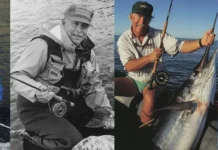
Chris Smith takes us inside the world of Team USA Fly Fishing, breaking down the systems, strategies, and Euro nymphing methods that have elevated American competitive angling over the last decade. From his first accidental competition in 2009 to mentoring youth anglers and preparing for the Idaho World Championships, Chris shares how confidence flies, rod-angle depth control, beat management, and communication across teams fuel the “medal mentality.”
He explains the difference between French and Spanish presentations, how Team USA refined its intel-sharing model, and why volunteers at Worlds get front-row seats to world-class fishing. Whether you’re learning Euro nymphing for trout or want to understand how top anglers think under pressure, this is a rare look behind the curtain of elite competition.
Episode Transcript
00;00;01;28 – 00;00;22;21
Dave
From discovering competitive fly fishing in a North Carolina shot bulletin to helping lead Team USA to the world stage. Chris Smith has spent the past 15 years shaping a new era of American competition. Fly fishing. We traced Chris’s journey from his first tournament in 2009 to coaching youth anglers, mentoring future world champions and representing the U.S. Masters in Spain.
00;00;22;22 – 00;00;44;28
Dave
He breaks down the systems and mindset that have helped Team USA rise to the podium. From Reading Water to perfecting presentation to building a true team metal mentality. Hey, I’m Dave, host of the travel podcast series Exploring Waters of the West, the people and places that define the spirit of fly fishing. Chris Smith is here to share his best and Olympic tips today.
00;00;45;09 – 00;01;09;16
Dave
We get advice on adjusting rod angle and leader length to control your depth. We find out about reading Abby in seawater. We jump into what French style upstream presentation is like and how that differs from more of a up and across versus the straight up presentation. We talk about mixing drifts, swings and subtle jigging for triggering takes on the fly.
00;01;10;00 – 00;01;26;20
Dave
This episode is presented by Visit Idaho and Yellowstone Teton Territory, home to some of the most storied and scenic waters of the American West. All right, let’s jump into this one. Here we go, Chris Smith. You can find him at U.S. Angling dot org. How’s it going, Chris?
00;01;27;00 – 00;01;28;26
Chris
Oh, it’s going well, Dave. Thanks for the invitation.
00;01;29;04 – 00;01;48;08
Dave
Yeah. Yeah, it’s going to be a fun one. You are intertwined in all things Team USA, which is exciting. You know you’re involved. Well, it’s cool because your wife Melissa, was on the podcast already and I think she was on before the event this year and she just won a silver medal. The team took home a gold. You’ve been a youth coach.
00;01;48;23 – 00;02;00;03
Dave
You are on the senior team and you’re on the Masters team, so you’ve got a lot going to you. I say, tell me, take you back there real quick. Did you like what did it take? Is it’s been a slow growth to get to where you’re all things Team USA.
00;02;00;13 – 00;02;21;15
Chris
It has. It has. You know, I didn’t begin fly fishing until I was in my thirties and I competed in my first fly fishing tournament in 2009 in Lakeland, North Carolina. It was called the Olympiad Fly Masters. And so since 2009, it has been my goal, my endeavor, right, to make the national team and have an opportunity to fish at the world level.
00;02;21;15 – 00;02;24;20
Chris
So that’s a good 15 years or so, 16 years or so.
00;02;24;26 – 00;02;32;18
Dave
That’s amazing. So 2009, you kind of get into it and and how did you hear about fly fishing? What was your first you know, how did you even realize that was something you could do?
00;02;32;28 – 00;02;51;09
Chris
Yeah, I was I was certainly an avid fly fisherman and was spending a lot of time on the water, but I saw an announcement in a local fly shop. There was a two day tournament in Lake Lure, North Carolina. The format was the first day was a casting competition. And then those folks who finished in the top ten in the casting competition got to move on to the actual fishing portion.
00;02;52;10 – 00;03;02;24
Chris
I showed up in Davie. There was an all star lineup there. There was Josh Stevens from Team USA, there was Walker Parrott. He was the ESPN fly fishing Masters champion.
00;03;02;24 – 00;03;03;11
Dave
Oh, wow.
00;03;03;13 – 00;03;21;04
Chris
Paul Thompson, who was the field and stream total outdoorsman, was there. And so, you know, I was a little bit in shock, I think, whatever I walked into. But there were also a bunch of young anglers there, Paul Borg, who eventually was the coach of Team USA Youth and was on the Team USA senior Team Chris Lee as well.
00;03;21;04 – 00;03;37;06
Chris
All these folks were there. And so long story short, I took fourth, but I feel my tribe right. I found a group of people who have a similar passion and with whom I could grow and learn more about the sport. And that really propelled me into, you know, the next 15 years of competitive fly fishing.
00;03;37;15 – 00;03;55;23
Dave
Amazing. Yeah. So and what has happened over the last 15 years because I feel like it’s real. You guys have leveled up everything. I mean, youth, the youth now, it’s pretty much a dynasty. I think three in a row the women have won the gold and I’m not sure. Maybe give us an update on what’s going on at the seniors in Masters, but what’s been going on the last 15 years.
00;03;55;23 – 00;03;59;19
Dave
You guys got survive. It’s like you get juiced up out there, but how are you guys doing this?
00;03;59;23 – 00;04;20;22
Chris
Yeah, Yeah. We’ve certainly landed on the medal stand far more than we did in the past. And, you know, I attribute a lot of that to a concept that Paul Borg, who was one of the coaches with me on the youth team, coined the team medal mentality. The idea that much like in the Olympics, this is a team sport and our goal is to win first and foremost is to win the team medal.
00;04;21;02 – 00;04;39;05
Chris
And if we share everything with one another, if we overcommunicate, if we share our flies, if we share our techniques, etc., then the likelihood that one of us is going to end up on the individual medal stand is also higher as well. And so I think back to 2014 in Poland when we took first and second on the individual medal stand.
00;04;39;05 – 00;04;52;27
Chris
But we also, more importantly, Right, won the team medal. And so team medal mentality is something that we’ve seen the senior team embrace, We’ve seen the women’s team embrace and we’ve seen the master’s team embrace in the youth team embrace. And so I really think it is the key to our success.
00;04;53;10 – 00;05;11;19
Dave
Nice. And in this year you guys have the seniors, which is the younger of the adults, 18 to 50 range are going to be back to Idaho, right? Because you had this year, you had the youth and the women were in Idaho, Idaho Falls, fish in Henry’s Fork and all that area. Now, the seniors are going to be back there.
00;05;11;19 – 00;05;18;06
Dave
What does that look like for you? What is you going to be your role with that team? Because you don’t you won’t necessarily be competing right at that event, correct?
00;05;18;06 – 00;05;38;27
Chris
Correct. Yeah. So the only the top six anglers on the senior team compete in the in the world championships and but there is a team of 15 right. That they can rely upon and so most of us will be out there well in advance of the event scouting right attempting to get a handle on the waters, what techniques, what flys, etc. and then during the actual tournament itself, it’s a huge endeavor.
00;05;38;27 – 00;05;58;21
Chris
And so Glade Gunther is the international organizer. He’s also the the captain of the senior team. Many hands make light work. And so we’ll all be out there as much as we can, helping coordinate logistics, working beats, actually being controllers during the event if we need to be controllers, those types of things.
00;05;59;01 – 00;05;59;11
Dave
Okay.
00;05;59;21 – 00;06;16;09
Chris
And I would encourage anybody who’s listening, who’s interested to reach out either to myself or to Glade if they want to be a volunteer. I mean, it is a fantastic opportunity to see some of the world’s best fishermen. Right. Dissect our waters. You get to see their flies, you get to talk to them, you get to learn their techniques.
00;06;16;09 – 00;06;18;19
Chris
And so we’re certainly going to be looking for volunteers.
00;06;18;28 – 00;06;21;26
Dave
Oh, cool. Yeah. And the and what is it? Controller?
00;06;21;26 – 00;06;46;00
Chris
A controller is essentially the judge that you’re assigned during your fishing session. And so over the course of the World championships, you’ll fish five different venues and you will have a controller assigned to you when you catch a fish. It is your job to bring the fish back to the controller. They’ll verify that the fish was legally hooked and then they’ll measure the fish and they’ll record the time so that the controller will be with you throughout the entire three or four hour session.
00;06;46;17 – 00;06;50;20
Chris
But once again, a great opportunity, right, to firsthand observe some of these world class anglers.
00;06;50;27 – 00;06;57;13
Dave
Right? Right. Okay. That’s and you’re seeing volunteers and what can volunteers do if they are interested in going there? What can they do to help?
00;06;57;23 – 00;07;19;03
Chris
Well, first and foremost, they can’t be controllers. So they would go through a semi rigorous training program so that they learned right. How to identify the fish, was correctly hooked, how to measure the fish, how to release the fish safely in the water, how to record the scores, those types of things. And so the need for volunteers excuse me controllers is the greatest, but there are all kinds of logistics that need to be handled as well.
00;07;19;03 – 00;07;37;17
Chris
And so transportation right to and from the venues. If you have a CD or you can drive a bus, that’s one thing that you can contribute to. Some of the venues like the the Henrys for, for example, require an extensive hike. And so just being there, right, to help direct people correctly to their beat is a real value add.
00;07;37;17 – 00;07;48;29
Chris
And then of course, there’s a ton of logistics related to like getting lunches to people, getting letters to the volunteer controllers, getting lunches to the anglers, etc. just a ton of a myriad of responsibilities where folks can jump in and lend a hand.
00;07;49;07 – 00;07;59;14
Dave
That’s awesome. Yeah, this is exciting. So you guys are in are they going to be back fishing, the seniors? Will they fish the same areas or will it be changed or will it be mixed up? And do you guys know when the event is?
00;07;59;26 – 00;08;21;06
Chris
Yes. So the event is in September of next year. I don’t have the exact dates, but I can certainly get those to you. And then the venues are essentially the same depending upon right. Snowpack this year, runoff water levels, all of those different types of things. And so I anticipate that you’ll see at least one session, possibly two session on the Grays River, which is in Wyoming.
00;08;21;18 – 00;08;34;06
Chris
There’ll be a session on the Henry Fork. There will be a session likely on Sheridan Lake, which is in the Highland Park area. And then more than likely at least one session on can lake possibly to depending of on water levels in the rivers.
00;08;34;11 – 00;08;43;08
Dave
So yeah right in Are you with your experience do you kind of do you cover at all or the lakes just as easy for you as streams or are you more of an expert on one or the other?
00;08;43;21 – 00;09;02;02
Chris
You know, I feel coming from the East Coast originally we had very few lakes for me to compete upon right early in my competitive career. A few years ago, my wife and I made the move to Colorado, and so I’ve spent more time on lakes in the last four years than I did in the previous 11 or 12.
00;09;02;13 – 00;09;05;29
Chris
But yeah, I still feel like my forte is is the rivers for sure.
00;09;06;07 – 00;09;21;20
Dave
Is the rivers, Yeah. And I think this year maybe I can’t remember was it low? I think it was a little bit lower water. How does that affect, you know, not knowing as you’re looking out next year? Do you even think about that now or is that more you wait till the month before to see what flows look like for you, start changing your game.
00;09;21;29 – 00;09;33;15
Chris
Yeah. Typically we try to fish all the venues a year in advance of the competition itself so that, you know, we have some sense as to what the water levels are going to look like. And actually they weren’t too low this year. They were all they were pretty decent.
00;09;33;15 – 00;09;34;22
Dave
They were good. Okay. Yeah.
00;09;34;24 – 00;09;51;24
Chris
GRACE Well, yeah, the grace was essentially, I think, coming down at that point in time. Yeah. And the other river levels where we’re really, really approachable and accessible, I guess is what I would say. You know, the Henry’s for it can be a pretty big river, especially right after runoff. And so in September I think is going to be super, super manageable.
00;09;52;01 – 00;09;57;24
Dave
That is okay. And are you familiar with have you fish to Henry’s Fork or any of those waters before?
00;09;57;24 – 00;10;03;09
Chris
I have I have mostly in preparation for the women’s World Fishing championships, where I was where I was helping my wife.
00;10;03;14 – 00;10;04;06
Dave
Yeah, that’s right.
00;10;04;06 – 00;10;22;03
Chris
So, yeah, the Henry’s Fork is a fantastic river, really wide river, lots of large fish, a variety of species of fish that we’re going to see some whitefish as well as Right. Rainbow’s And then the two lakes are just fantastic venues as well. I had not fish to graze, but everything that my wife tells me tells me it was a fantastic venue.
00;10;22;08 – 00;10;35;28
Dave
It was good. How did you prep? What was that like? I know when we had Melissa on, there was something she couldn’t talk about because it was, you know, they were just getting ready for the event though. What was that like in preparation? How did you prepare? You know her? How did you guys work together to get ready for that?
00;10;36;09 – 00;10;59;17
Chris
Yeah, we went out several times throughout the course of the year. Once again, we certainly timed it so that we were there one year in advance so that we would see similar water conditions, temperature conditions, those types of things. But then we visited the area multiple times throughout the year. There even a couple of what we would call mini camps, regional competitions on the water leading up to the event that, you know, really helped the angler sort of dial in.
00;10;59;27 – 00;11;22;28
Chris
What does the venue look like? What are those logistics like? Right, in terms of getting to the river, getting back from the river and those types of things, The more familiar you can become with all of that, right, the more the higher level of comfort you feel as you as you enter the competition. And then yeah, I mean, really it’s about getting as many people on the water and just beginning to dissect like, you know, what techniques, what water types, what flies what, what species of fish.
00;11;22;28 – 00;11;35;28
Chris
Right. Are in the river and, and what’s the best way to approach each of these different species. And so, you know, we’re going to see trout. We’re also going to see whitefish as well. And it’s a just a very different technique that’s required to catch whitefish versus versus catching trout.
00;11;36;12 – 00;11;52;23
Dave
Do you catch, you know, a whitefish versus a trout, you know, catching those for you both competition and just on your personal, do you have a favorite one or the other? You know, because it seems like trout, you know, most people just because Trout’s the fish. But what are your what’s your take on whitefish? Because they’re native fish, too, right?
00;11;53;02 – 00;12;05;09
Chris
They are. They are. You know, the exciting thing about whitefish is just the density and the amount of fish that you will find in a a particular area of the stream. And they do require a very different technique in terms of how you catch those fish.
00;12;05;09 – 00;12;21;09
Dave
So they do, Yeah. So if you guys are on on the on the Henry’s fork in the trout, we’re really picky. Could you go in a competition and just catch, you know, whitefish the whole time and, and be you know, win essentially if you caught enough sort of thing.
00;12;21;18 – 00;12;32;22
Chris
Yeah. 100%. 100%. And you know the beauty of whitefish is they, they tend to be a little bit larger as well. And so in terms of the number of fish points that you’re going to get per fish, it’s generally going to be higher than what you’re going to get with trout.
00;12;32;28 – 00;12;40;05
Dave
Yeah. And then what about on your on your personal why do whitefish It seems like they don’t get the respect out there is that that’s probably a true statement, right?
00;12;40;11 – 00;12;47;03
Chris
I think so. I think so. Yeah. But they can be a ton of fun to fish too. And so but yeah, there are certainly trout snobs out there. There’s no doubt about that.
00;12;47;19 – 00;13;03;06
Dave
That’s right. And then what about so we’re into, you know, thinking Henry’s fork. If you’re preparing for that, you know, just thinking about the way again you said September. So probably the conditions September will be fairly low right. Could be be on the dropped during that time.
00;13;03;06 – 00;13;16;22
Chris
Yeah it’s certainly low when you think about you know the water flows for the Henry’s fork across the year and certainly much lower than runoff. But once again it’s a large river and and it is to my knowledge it is a dam controlled river.
00;13;16;22 – 00;13;17;02
Dave
Yeah.
00;13;17;02 – 00;13;23;09
Chris
Right. And so they have the ability to control the flows and and I you know, I don’t think that low water is going to be an issue, that’s for sure.
00;13;23;15 – 00;13;39;03
Dave
Yeah, that’s right. Okay. And then where you guys are at in Colorado or the streams, you know, I haven’t really fish to Colorado heavily. Are there are similar a lot of similarities between where you’re fishing or are you fish and just because Team USA all around the country the world more than you are at home.
00;13;39;14 – 00;13;57;25
Chris
Well, we try to get out every weekend if we possibly can. Neither my wife nor I are guides, so we’re not, you know, a member of the industry per se. And so we don’t have the luxury, the advantage of being on the water every single day. So we take advantage of that on the weekends. And yeah, we have a number of streams in the area, many of which are similar to the Henry’s for, you know, not exact matches.
00;13;58;07 – 00;14;12;04
Chris
Just this last weekend we had friends in town and we spent most of the weekend on the Blue River, which is in the Silverthorne area, just absolutely fantastic river. And yeah, so we’re blessed to have both large streams and small streams within a short drive of our house.
00;14;12;13 – 00;14;30;17
Dave
That’s awesome. You said the, you know, getting ready flies, techniques, things like that. So is it, you know, talking about you again, you’re getting ready for this event. You’re getting the team ready because it’s going to be the seniors there. What are the techniques when you’re out there preparing, you know, when you kind of get to the water, are do you know what you’re going to use?
00;14;30;19 – 00;14;34;04
Dave
You know, the day before? Or are you kind of doing that all you know, on the day of.
00;14;34;15 – 00;14;53;11
Chris
Yeah, certainly folks are doing research in advance, you know, and your local fly shops can be advantageous, not not all fly shops have anglers who historically take a competitive approach right to their fishing. And so, you know, they may not be well versed in your own thing, but all of that being said, the bugs are the bugs, right?
00;14;53;11 – 00;15;08;28
Chris
And so certainly doing some research in advance, scouring some of the online forums and whatnot, give you an idea of, you know, what are the most productive fly types, but, you know, as far as me as a competitive angler, like I have five or six patterns that I would consider, my confidence flies and I’m always going to go with those flies first, right?
00;15;08;28 – 00;15;29;17
Chris
Because I can catch fish with those flies anywhere in the world. It’s very rare that I find a situation where I have to, quote unquote, match the hatch. Many of the flies that we have are also very imitative of multiple of mayflies, of cats, flies, etc.. And so, yeah, I’m always going to go back to my confidence flies and and typically that’s what we’re initially going to do, right in preparation for a competition.
00;15;29;17 – 00;15;54;03
Chris
But then, you know, you have your teammates on the water and so everybody’s trying a little bit something different. Everybody else who has their own system, you know, I had my system in terms of how I approach the water, both in preparation for a competition and during a competition itself. And so I just work through my system. You know, I’m trying to determine the proper depth and, you know, experimenting with my rod angles as it relates to the depth and then also experimenting with the size of my flies.
00;15;54;03 – 00;16;10;19
Chris
I don’t necessarily want to put on larger flies if I don’t have to. And so how can I leverage my rod angle either a low rod angle or high rod angle to experiment with depth and find out if the fish are eating a suspended manner. Right. Or if, you know, I need to be dragging my flies across the across the bottom and on top of them underneath the rocks.
00;16;10;25 – 00;16;29;26
Chris
So in there, you know, I’m also looking to see our fish hitting on the swing. Right. Are they hitting early in my drift? Are they hitting later in my drift? And so just having a system, I think every angler has a system and working through your system really helps you quickly identify, okay, here’s the depth. The water right here is the presentation that’s required and that really helps to start with you.
00;16;30;03 – 00;16;46;11
Dave
Amazing. Yeah, that’s awesome. Really, That’s what it comes down to is do you think that you guys, Team USA, you it sounds like, you know, probably a lot of guides I’m sure to have a system. You know, they get out there they know says and I think a lot of the normal people like me and others out there don’t really have a system.
00;16;46;20 – 00;17;02;10
Dave
We’re just out there fishing. We maybe have a spot that, you know, we’ve done well on before we go back there and maybe try the same thing and then, you know, you don’t get anything and then you’re like, Oh, okay, what do I do now? So the system is interesting. How could somebody who well, maybe before we get to the system, I want to talk about the confidence wise.
00;17;02;10 – 00;17;09;02
Dave
Is that something like you’re kind of the top flies? Are those pretty standard flies that you would know or do you have your specific pattern as you tie out there?
00;17;09;11 – 00;17;26;20
Chris
Yeah, Yeah. I mean, I think everybody’s confidence flies are going to vary slightly. And you know what’s really interesting, you’ll hear the saying fly still matter. And, you know, I would I would say for the most part they don’t because at the end of a competition, when the top three or four wranglers sit down and they put their flies on the table, they’re never the same flies, right?
00;17;26;20 – 00;17;32;15
Chris
I mean, they may have similar or similarities between the flies, but they’re rarely, if ever, the exactly the same flies.
00;17;32;19 – 00;17;39;27
Dave
Right. And what’s different? Just like a little maybe a little color or a hot spot, a size, just a little bit of whatever it could be is a little different.
00;17;40;03 – 00;18;00;16
Chris
Yeah. Change in beat color, whether you have a hot spot or not, you know, whether you’ve tied the pattern with wings or not. I mean, they’re just tons of different ways, right, to vary your flies. But yeah, for the most part, I’m a firm believer that flies don’t matter. You have to be in the right range of what the fish are eating at any one given time.
00;18;00;25 – 00;18;03;15
Chris
But I’m always gonna go back to my confidence. Flies first for sure.
00;18;03;24 – 00;18;09;04
Dave
Yeah. And those are like a mostly you’re on nymphs. Is that what we’re looking at here?
00;18;09;11 – 00;18;26;18
Chris
Yeah, for the most part. For the most part, yeah. There are certainly times, right, when dry flies are going to be the ticket. That was the case in Spain this last year. In the world. In the world. Fly fishing championships for the Masters. But yes, in terms of my system, I’m typically going to start with your anything unless I see a lot of activity on the top.
00;18;26;18 – 00;18;29;08
Chris
And then and then I’ll begin to experiment from there.
00;18;29;19 – 00;18;35;18
Dave
Right on. Yeah. And so that was one European, right? The Masters. You were in Spain this year with. With the crew. With the Masters.
00;18;35;25 – 00;18;53;01
Chris
Yeah, with the Masters team. We competed back in September and as a, as a team, we finished fourth, which was one spot higher than we had finished the previous year in the Czech Republic. So we’re making some progress. And then. Pat Weiss Oh yeah, actually laid it on the medal stand. He was the bronze medalist this year.
00;18;53;02 – 00;18;53;23
Dave
Amazing. At the.
00;18;53;23 – 00;18;54;15
Chris
World Championships.
00;18;54;15 – 00;19;05;16
Dave
Yeah, there you go. So you guys are you guys are slowly creeping up I don’t think have now has the have the senior or the have the masters have you guys won a gold yet and that out there.
00;19;05;20 – 00;19;18;04
Chris
We have we have Oh yes yeah. So Pete Erickson and Brett Bishop and Mike Sexton and Lauren Williams in that group won the gold in DC and I want to say that was 2023.
00;19;18;04 – 00;19;34;02
Dave
Yeah, that’s right. I remember that. Okay. Yeah. So you guys have taken so, so really you, you stepped up the game too. It’s not just the women and youth who are doing well. You guys are doing and then also and then the seniors. Now give me an update on on the seniors. You guys are going to be there in Idaho.
00;19;34;02 – 00;19;36;04
Dave
Have the how have they been doing?
00;19;36;04 – 00;19;43;23
Chris
Yeah, yeah. They’re doing really, really well. This last year they took the bronze medal and I’m trying to say because that was the second year in a row they took the bronze medal or not. I had to.
00;19;43;23 – 00;19;45;16
Dave
Confirm. Okay. Yeah. So they’re doing well too.
00;19;45;16 – 00;20;02;11
Chris
But yeah, they’re becoming regulars on the medal stand as well. And you know, their say, I think that they’re probably going to be the favorites for the world championships in Idaho. When I was at the the Masters World Championships in Spain, you know, lots of folks were asking me about venues and, you know, tried to get some intel, trying to get some information.
00;20;02;11 – 00;20;13;22
Chris
But it was clear that, you know, those countries were worried about the home field advantage. And you should be right. I mean, you know, the anglers on the team have an opportunity to fish these water these waters on multiple occasions. And so there certainly is a home field advantage.
00;20;14;00 – 00;20;29;21
Dave
There as well. It sounds like you’re you know, since 2009, you’ve really been involved in the whole process, the coaching, and you really enjoy that. What is that like for you? How have you, you know, kind of embraced that position of coach even when you’re maybe not in the events. What do you love most about the mentoring? Coaching?
00;20;30;01 – 00;20;56;09
Chris
Yeah, I’ve just always gravitated towards being a coach. You know, I was a at one point in time in my life, I was a middle school English language arts teacher and I was a football coach and a track coach. And I’ve I’ve just always enjoyed teaching others. And in 2013 or so, Paul Borg came to me. He was then the head coach of the US youth fly fishing team, and he said, Chris, I would love if you would be my assistant coach in my manager.
00;20;56;09 – 00;21;20;08
Chris
And so I was fortunate enough to join Paul and we had some just world class anglers on the team at that point in time. Gabriel We’re talking Hunter Hoffler and Kam Cioffi and Hunter and and Andrew Brown, and these are guys that grew up together on the water that these together. And, you know, almost every single day, if not every single weekend and really, you know, helped us coin this concept of team medal mentality.
00;21;20;08 – 00;21;33;29
Chris
Like they were so unselfish, they shared everything with one another. And, you know, they knew the same three of them probably weren’t going to be on the medal stand every single year. But that was fine. Right. And so they just kind of rotated through it all at some point in time. I think every single one of them ended up on the individual medal stand.
00;21;33;29 – 00;21;48;21
Chris
But more importantly. Right. We took home team gold throughout those years, gold in Ireland, gold in Poland, gold in Vail, and then silver in Spain, which was my last year when I was actually the head coach that year. So in.
00;21;48;21 – 00;21;49;20
Dave
2016.
00;21;49;21 – 00;22;08;29
Chris
2016. Yes. Yeah, yeah, yeah. So yeah, really just enjoyed working with those, those youth anglers. And honestly, it helped me up my game as well, right? Because we were experimenting and trying new things on the water and you know, that impacted me personally as an angler. And certainly it was exciting, right, to help coach those guys success.
00;22;09;08 – 00;22;14;03
Dave
And you must. Do you still keep up with some of those the kids that you coached during that time?
00;22;14;07 – 00;22;33;12
Chris
Yeah you know I not ironically but many members of today’s senior team so Cody Bergdorf’s. Oh he was an angler during that time Jack Arno was an angler during that time. And and Mike Kamara, he had just started his competitive fly fishing career. He came to many of the clinics that we held around the country, in North Carolina, in Montana, etc..
00;22;33;12 – 00;22;37;06
Chris
And so, yeah, many of the senior team anglers were youth team anglers as well.
00;22;37;13 – 00;22;52;28
Dave
And that makes sense because I feel like when you look at, you know, I mean, the example is for a baseball, you know, a major League Baseball, you have these whatever percentage of people that make it to the major leagues, but you’ve got the minor leagues, which is huge and probably a lot more people. It’s kind of a similar thing with what you have going there.
00;22;52;28 – 00;23;05;19
Dave
And then with youth, even before youth, you have kids that are competing. You know, again, it sounds like that’s kind of what’s going on, right? You’ve got these different levels of people making up through the ranks. Is that kind of how you guys see it? Is it similar to a minor league sort of thing process?
00;23;05;19 – 00;23;22;08
Chris
Absolutely. Absolutely. You know, we didn’t have that system in the past and so you asked, you know, what’s contributed to our success in the more recent years, and that is that we’ve built this system, right? We have a series of regional competitions throughout the year. We have a series of interregional competitions throughout the course of a two year cycle.
00;23;22;08 – 00;23;40;18
Chris
And then ultimately we have a national championships. And in all of those events you’re going to see youth anglers, you’re going to see women anglers, right? You’re going to see senior anglers, you’re going to see masters anglers. And so we’re all out there learning from one another, challenging one another, and, you know, I think it’s led to a far more robust system.
00;23;40;18 – 00;23;45;22
Chris
And that’s why I think we’re seeing success. It’s a system that has been in place in Europe for quite some time. And so if.
00;23;45;22 – 00;23;46;19
Dave
You go it has been.
00;23;46;23 – 00;24;01;08
Chris
Yeah, if you go to the Czech Republic or you go to Spain or you go to France, I mean, there are literally hundreds, if not thousands of competitions every single year in some countries. I would consider it a national sport like the Czech Republic, for example, right?
00;24;01;16 – 00;24;16;00
Dave
Yeah. So that makes sense. So that’s why they’ve been so good all these years and they’re getting basically applying. I mean, same thing with Euro and anything writer I guess, Czech or Polish shipping, all that, right. We’ve, we applied some of those techniques and tweaked them to our own, you know, methods. That’s kind of what we’ve done right.
00;24;16;06 – 00;24;33;12
Chris
Yeah. 100%. I mean it started with Polish and thing I guess you could say, and Vlad Tribunes who won the world championship way back in the day and then the Czechs took that and improved upon it. And then, you know, I think the French and the Spanish also have their variations and all of them are super, super effective.
00;24;33;12 – 00;24;40;11
Chris
And so we’ve benefited right, from a lot of those teachings and a lot of those learnings and and begin to adapted into some of our own style.
00;24;40;18 – 00;25;02;09
Dave
Nice. Well, you mentioned before on the system, maybe we can walk through that a little bit just on what you know what you’re a high level and maybe what people can take on there. You mentioned a few things depth, right angle, you know, kind of all that even swinging right hitting on the swing maybe talk about that. So if your it sounds like typically the confidence stuff is some you know euro nymph style you get to the stream.
00;25;02;09 – 00;25;16;11
Dave
You don’t know what’s going on. Maybe you think you do, but what is your first step in the system when you get there? You just take the Henrys for work, you’re there, you probably have a lot of experience. You kind of know what to expect. What is your first thing you’re doing there as you’re preparing in your system?
00;25;16;11 – 00;25;33;07
Chris
Yeah, as I as I think about any competition, really, there are like three foundational skills that I feel like any angler needs to master. And these are the things that I consider right as I’m preparing. You know, first and foremost, just knowing how to read the water, how do I identify my water might be water in my seawater, a water being my most productive water.
00;25;33;16 – 00;25;56;03
Chris
See, being, you know, that marginal water that I might not normally fish. But a key component here also, Dave, is knowing like, how do you know when the water the water in the seawater change and they change due to a variety of things, right? Environmental changes, but also fishing pressure. And so at fish, we’ll move around right to different water types based upon the environmental conditions, based upon the fishing pressure that they’re seeing.
00;25;56;07 – 00;26;20;06
Chris
So that’s the first thing I’m trying to do, is just determine like what is the ideal water type on this. You know, during this this given time of the day. Typically we try to practice during the session times that we’re going to be fishing. So if the session times are going to be 9 to 12, then I’m going to be out there right from 9 to 12 practicing because that’s going to be the most indicative of what I’ll probably going to see during the competition and then past how to read the water, then I’m all right.
00;26;20;06 – 00;26;37;26
Chris
How am I going to present my fly appropriately? So first and foremost, like determining proper depth. And I talked a lot about Rod Angle there. And so as you think about your cast, right, a shallow rod angle, a longer cast is going to give me a more shallow entry point, which means I’m likely going to be suspending my nymphs in my flies a little bit higher in the water column.
00;26;38;07 – 00;27;06;01
Chris
Then if I stop my rod high and I have a a sharper rod angle between, you know, from my fly line right to my rod, essentially, if I want to achieve depth, I’m trying to essentially pendulum my flys underneath of my rod tip, and then I’m probably going to employ something like a cut, a tug cast, right. Stopping my rod higher during my casting stroke so that my flies plummet down into the water and achieve depth a little quicker than they would with that longer, more shallow angled cast that I talked about earlier.
00;27;06;15 – 00;27;21;03
Chris
So I’m playing around with those different run angles and applying around the depths is to try to find out where the fish actually sitting, where the fish are actually eating, that type of thing. And then, you know, we talked a little bit then about the proper movement of the flies, and so do I want to drift my flies?
00;27;21;13 – 00;27;42;00
Chris
Do I want to activate my flies and reduce them. Right. The jigging motion into them or actually pull the flies in some situations because that’s more effective. Everybody thinks you need to drift away in a place that’s not always the case. Yeah, yeah, yeah. Do I get to swing my flies? And many times, you know, I’m always going to incorporate that into my system because, you know, there may be emerging bugs on the way and.
00;27;42;00 – 00;27;45;26
Chris
Right. And that swing begins to imitate. Right. That emerging pattern that we see.
00;27;46;15 – 00;27;54;05
Dave
And you could do that with a whatever your own nymph. You know you can swing a your own F and make it imitate a emerging wet fly. Yeah.
00;27;54;05 – 00;27;59;27
Chris
100%. 100%. And so that is always going to be a part of my system in probably in my first 5 to 10. Gasp.
00;27;59;29 – 00;28;00;13
Dave
Oh it is.
00;28;00;25 – 00;28;15;10
Chris
Yeah. I’m going to dead drift, I’m going to activate my flies, I’m going to swing my flies. And then of course I’m always just being cognizant of top water. Do we see any actual fish hitting right dries on the top etc. or hitting in mergers or mergers.
00;28;15;10 – 00;28;28;05
Dave
So that’s and you’re you’re analyzing that. So and when you get into competition, let’s just say it’s you’re on that Henry’s fork the guys are there what do you have there Is it you have a couple of hours to fish. Is that what is the time length on each venue?
00;28;28;13 – 00;28;30;12
Chris
You mean in preparation for the actual competition?
00;28;30;12 – 00;28;32;11
Dave
No, no. When they’re actually there, When they’re fishing.
00;28;32;18 – 00;28;54;20
Chris
Okay. Yeah. Fantastic. So typically the bus will arrive an hour, hopefully an hour to 30 minutes before your session actually begins. The idea is that you should have 30 minutes to scout your beat, ideally, and just to really, like determine how much time do I want to spend in each section to my beat? And you know, in terms of what does a beat mean?
00;28;54;20 – 00;29;15;20
Chris
Well, by random draw, right. Every venue is divided up into essentially beats that an angler has to fish during their three hour session and they could only fish within that. That beat beach range from 150 yards to you know, we saw some beach as long as a kilometer in Spain. Really, really, really long.
00;29;15;26 – 00;29;17;13
Dave
1000 meters, right? A kilometer.
00;29;17;17 – 00;29;20;22
Chris
Yeah. Almost like point six, you know, almost over half.
00;29;20;22 – 00;29;22;12
Dave
I’m almost a half a mile. Yeah.
00;29;22;12 – 00;29;42;06
Chris
Wow. Yeah, exactly. That’s huge. Which, which makes it really challenging. And that’s the third component that I always think about, You know, when I’m preparing for a competition, making sure first and foremost, right, that I know the water type. Second, you know, what type of drift or how do I present my flies appropriately. But then third, and this is really, really important, like how do you manage your beat during a competition?
00;29;42;06 – 00;30;02;13
Chris
Where am I going to spend my time during those 3 hours? That was probably candidly where I struggled the most in Spain, because the beats were, you know, over a half a mile long and it was difficult to walk the beach because many times they were on private land. And so you couldn’t get out of the water. And you certainly don’t want to tromp through all of your water in advancing a fish in your beat.
00;30;02;22 – 00;30;21;12
Chris
And then there were a lot of thorns and briers and things like that that made it really difficult to get down. And so, you know, we talk about hung sort of an edge. Let me let me be clear. The Spanish were clearly the best fishermen there. And they did they did really, really well. But they had fished those beach so many times before that they had a mental map of, hey, I need to spend 30 minutes a year, I need to spend an hour there.
00;30;22;03 – 00;30;34;05
Chris
And it was I suspect it was easier for them to determine pace. And I really struggled, like in my last session, I you know, I got to my best water, which was probably, you know, almost a half mile into my beat with like 5 minutes left.
00;30;34;05 – 00;30;34;17
Dave
Oh, wow.
00;30;34;19 – 00;30;51;12
Chris
So, yeah. So if you can do that work in advance, if you can scalp those beats in advance and in before the competition, it’s really, really advantageous to do so. But perfect rule is you’re supposed to arrive at your beat with at least 30 minutes to scout it. And so that’s what I’m going to do, right? I’m going to walk my beat.
00;30;51;12 – 00;31;02;04
Chris
I’m going to say to myself, I think I can catch three fish there. I think I can catch five fish there. I’m going to spend as much time in each of those sections, and then I’ll go back and, you know, get my rods and and then just get ready.
00;31;02;07 – 00;31;20;00
Dave
Get ready. That’s so cool. And and so you yeah, you scout it, you look at it and you say, Yeah, I’m going to probably catch this me fish there. And then when you go in there and you’re fishing and you catch a few fish, do you keep fishing it if it’s good or do you, you know, or do you are you stick on your system, you’re like, well I know that a water is going to have fish too, and I’m moving.
00;31;20;08 – 00;31;37;29
Chris
Yeah, yeah. Well, it really depends on which station we’re talking about. I mean, is this the first session in the competition or is this the fifth session in the competition? Or because in the fish session, five for the anglers have gone through there before me, you know, I tend to have something that I call the five minute rule, which is if I don’t catch a fish in 5 minutes, I’m moving on.
00;31;38;29 – 00;31;46;23
Chris
But that’s just my fishing style. I like to cover water and you know, I’m looking for fresh fish as much as I possibly can.
00;31;46;29 – 00;32;01;23
Dave
So that’s cool. So this is really interesting. I think the system again, we’re talking a little about this system, which is probably for you guys in a lot of everybody. It’s pretty basic, but I think for the rest of us, it’s gives you something to, you know what I mean, too? It’s almost like you’re checking, you know, you’re systematic, right?
00;32;01;24 – 00;32;16;08
Dave
It’s a system. So reading the water is one that always comes up. You know, you come to a piece of water. How do you read the water and you’re breaking it down from A, B and C, water. What is that? When you look at, you know, you come there, you look at the water, what is what is the difference between A, B and C, water in general?
00;32;16;19 – 00;32;34;12
Chris
Yeah, well, easily. Once again, it depends on environmental conditions. And so, you know, I’ll tell you a little story. I was fishing the America’s Cup. I want to say it was sometime around 2012 or 2013 that I had this beat on the Blue River. It was it was an absolutely beautiful beat. And it had a lot of what most people would traditionally consider water.
00;32;34;12 – 00;32;54;12
Chris
In other words, just off of the side of the of the heavier current, these little slower seems right where larger fish are going to tend to sit. And it allows those fish to move into the current right it drifting them off and then move back into the slower current and conserve their energy. And so there was quite a bit of that water in my beat and I fished it early.
00;32;54;12 – 00;33;10;29
Chris
It was cold in the morning and then I fished it in and I caught a few fish. But then right around 11:00 or so, like a hatch came off. And what I discovered was that those fish were no longer sitting in that great slower current just off to the or just off to the side of the current water.
00;33;11;10 – 00;33;19;15
Chris
They had actually moved into the fast water because at that point in time it was so advantageous for them to be in that fast water and just essentially sit there. Right.
00;33;19;15 – 00;33;20;06
Dave
Suck them in.
00;33;20;13 – 00;33;37;23
Chris
Suck him in like a buffet line. Right. Right. And, you know, I listen to a podcast one time by Gary Borger, and he said the the IQ of a fish is six. But one thing that fish know really well how to do is determine what is the caloric value, right. Of something versus the amount of energy I need to expend to get it.
00;33;37;23 – 00;33;43;01
Chris
And so in this case, it was advantageous for those fish to be in the fast water. And so they were just sitting in that fast water.
00;33;43;02 – 00;33;46;21
Dave
Use some energy. Right. Use some energy in the faster, but collect a lot more bugs.
00;33;46;29 – 00;33;54;27
Chris
Yeah. Yeah, exactly right. So that’s just a great example of how the water changed right At that point in time, the water was the faster water. Yeah. On that heavier current.
00;33;54;27 – 00;34;10;06
Dave
I see. Yeah. And so but that is typical. Yeah. You’re looking for the seams, you’re looking for structure and the be water just might be, you know, whatever that is, the faster water maybe the, maybe the slower water is be water. Could that be that really purely just slow stagnant water, the sea, what could that be in sea water.
00;34;10;06 – 00;34;11;10
Dave
That could be a water too.
00;34;11;17 – 00;34;26;08
Chris
Yeah. Yeah. That’s going to be your B and C water. But once again, it depends on the conditions. And so, you know, a lot of fish in the wintertime, for example. Right. Will move into less slower, more stagnant water. Yeah, right. Because at that point in time there isn’t a lot of bulk activity and they are essentially trying to conserve as much energy as they possibly can.
00;34;26;08 – 00;34;46;27
Chris
So but historically, I think people look at water as a there’s it’s water where there’s protection from predators, that there is the right amount of what I call comfort for the fish. It’s the right temperature, it’s the right oxygen content. It’s a place where they can hold in the current, doesn’t exhaust them. And then last but not least, certainly there’s there’s ample food there.
00;34;46;27 – 00;34;53;14
Chris
Right. And so that’s what most people would typically consider a water. Just once again, though, it changes based upon the environmental conditions.
00;34;53;14 – 00;35;10;06
Dave
Yep. Perfect. And then and then when you’re looking at the flight presentation, which is huge, too, because you have all these different, you know, depth and, you know, different casts and, you know, talk about that. So if you’re let’s just say you’re in that water, you feel it’s good there’s some fish there. Where do you start with depth?
00;35;10;06 – 00;35;18;24
Dave
You know, do you start kind of high and work your way down low? Because I think a lot of people get into you know, they think, oh, get down on the bottom, you got to get on the bottom. Right? But that’s not the case.
00;35;19;04 – 00;35;38;05
Chris
No, no, it’s not really a factor. Consider there two is how many flies Are you fishing? Right. Are you fishing a single fly? Because there are many instances where you want to do so Pocket water, for example, are you fishing two flies? And there are some anglers who fish. Three I do not. But you know, the advantage of fishing multiple flies is that you’re fishing different layers of the water column.
00;35;38;09 – 00;35;56;18
Chris
And and so you want to be really mindful, right? Am I always catching fish my drop or am I catching fish when I fly, etc. But I do. I tend to start with a shallow entry point, you know, as far as you’re an for a considered or considered, I probably cast a little longer than most, which results right in that shallow entry point.
00;35;57;08 – 00;36;08;23
Chris
And I tend to fish right from top to bottom for the most part until I download it in. Right? And then once I know where the fish are, then you know, I’m not going to experiment right with my entry point at my angles unless I stop catching fish.
00;36;09;03 – 00;36;16;15
Dave
Yeah, that’s right. And by far, what would be a work in farther out, what would be a distance on. And when you’re you’re an effing you, you be casting out there.
00;36;16;26 – 00;36;25;12
Chris
You know, a lot of times I’m casting around 30 feet or so. Yeah. Especially know when I have spooky fish or clear water or those types of things. Yeah. Yeah.
00;36;25;19 – 00;36;43;01
Dave
Okay. So 30 feet and then on that, what you’re saying is if you’re hitting that for the same, I think the youth did it this year and I think I heard about that, that they were the water was up. It was pretty the conditions were pretty crazy right, because it was high. But some of those kids were able to wait out a little deeper and hit the fast scene where people were getting pressure.
00;36;43;01 – 00;36;44;20
Dave
Did you hear about that a little bit with the youth?
00;36;45;02 – 00;37;05;07
Chris
A little bit? A little bit, yeah. I mean, you know, we always encourage them, right, to be safe and into approach the water with the proper amount of caution. Right. But that being said, athleticism is certainly a factor in all of this. Right. And so, you know, they had been there before and those anglers are really seasoned in fishing some of the heavier waters.
00;37;05;07 – 00;37;15;28
Chris
And so they were really comfortable, I think, in doing so. And in your third, fourth and fifth sessions like that can make a real difference, right? Because you’re actually fishing to fresh fish places where the other anglers didn’t get to.
00;37;16;05 – 00;37;35;11
Dave
So yeah, Okay, perfect. So, so that’s yeah, So you’re covering the depth, you’re covering it. And when you make that see that first cast out there a bit talking about that, are you dropping it down? Maybe talk about your rig setup and how you would move that into a nipping into swinging on the tail and or are you separating it where you’re swinging and then you’re changing your rig to nymph?
00;37;35;17 – 00;37;36;21
Dave
Are you doing both in the same?
00;37;37;09 – 00;37;54;17
Chris
No, no, it’s all on the same rig for the most part, at least in those first 5 to 10 gas right where I’m sort of working through my system and just trying to determine is there something that the fish are really dialed in on? I fish in microliter. And so I fish typically £4 directly from a you’re a nothing line.
00;37;55;11 – 00;38;20;20
Chris
My leader is as long as I can possibly get it which historically is required it to be within two lengths of your rod. And so I typically fish either a diamondback ten foot seven or a Thomas and Thomas ten foot nine that I’m back to to weight. Thomas And Thomas is a three weight. So a leader is going to be somewhere around 20 to 21 feet long, built in there is is a three foot right sider.
00;38;20;21 – 00;38;35;01
Chris
And so my running line is is typically a yellow color. It helps me really see it in spot where it is, right, in terms of my drift. And then I have a small pink section and I’ll use a sakura marker or something like that, Right. Just to color it up so that I can see it a little bit better.
00;38;35;16 – 00;39;02;01
Chris
And then to my first fly, I’m usually going around 3 to 4 feet and then usually the minimum distance which is required, which is 50 centimeters to my point, fly o count. And so yeah, I’ll make that first gas right. Typically a little bit longer because once again, I’m doing my best not to spook fish. I’m a big proponent of I think most folks would call it the the French method, which is I like to fish upstream versus across stream.
00;39;02;12 – 00;39;08;00
Chris
And so it just ensures that the fish don’t see me. Right, because They’re facing upstream and I’m below them.
00;39;08;00 – 00;39;09;05
Dave
All right. They’re facing up.
00;39;09;09 – 00;39;28;17
Chris
Yeah. And so that’s, that’s my favorite way of fishing. And I’m making that gas, like I said, around 30 to 35 feet up, sometimes shorter. Right? Sometimes longer, depending upon the success that I have. And then just slowly fishing down in the water column over a period of time. You know, the challenge with longer gas, though, and you have to be mindful of that.
00;39;28;17 – 00;39;47;18
Chris
Right, is typically at the midpoint of your drift, like you’re going to achieve some depth there, Right, Because you’ve cast it so far. So not only can you use your rod angle to adjust the depth of your flies, but you can also adjust it via the length of your cast. And then the last way of adjusting the depth of your flies and my least favorite is by changing flies themselves, right?
00;39;47;19 – 00;39;50;21
Chris
By putting on a heavier fly with a bigger B, that type of thing. Yeah.
00;39;51;00 – 00;39;56;21
Dave
Yeah. And then the problem with that is that it’s just your. Why is that? Because it’s harder to cast sort of thing is that you.
00;39;57;00 – 00;40;12;10
Chris
Know just because you know typically you’re wanting to match the right imitate the flies that are or the bugs that are in the water. And so as you get right larger and larger flies, the likelihood that you may be imitating right the size of the bugs in the water is less and less. Yeah. Unless they’re hitting something really large.
00;40;12;10 – 00;40;17;01
Chris
Right. Like a stone fire or something like that. Or unless you’re fishing a confidence fly. Like a mop.
00;40;17;15 – 00;40;29;29
Dave
Or a mop, right? Yeah. Yeah. We’ve talked about the mop before. That thing is just how it works, partly because it kind of floats, right? It stays above in the column a little bit or it doesn’t float, but it’s not like it’s not sinking to the bottom necessarily.
00;40;30;24 – 00;40;49;09
Chris
It will, depending upon the size of the bead. Right. And how saturated it gets with water. You know, a lot of people question like the like what is a mop imitating? And the fact of the matter is that it’s imitating a green fly larva. If you fish the proper color and I only fish to color mops, I fish often one attain a brown one because that imitates green fly larva.
00;40;49;28 – 00;41;17;05
Chris
And sometimes I’ll fish Greenland because it imitates right caterpillars and oh yeah, it’s worms and things like that. Right. That might fall in the water. Folks will fish other colors because then becomes almost like an attractor fly. It agitates the trout. Right. And and sometimes they’ll and especially stalkers. Right. They love those. Oh they accomplished. Yeah. But anyway rambling here a bit but I, you know, I like to fish them out, but I only fish those two colors because I feel it’s an imitative of, of things that we see in the water.
00;41;17;15 – 00;41;19;14
Chris
But it’s a highly effective fly. There’s no.
00;41;19;25 – 00;41;35;04
Dave
That’s right. No I love that you went down the mike so we talked about that. But I don’t think anybody’s really said exactly that. You know what it imitates, I think. But that’s yeah, it kind of again, doesn’t get a lot of respect for some out there. Maybe it’s just a fly that’s kind of it looks different. But yeah, I mean, I think it sounds like a green fly.
00;41;35;04 – 00;41;37;24
Dave
I’ve never actually fished it, but it sounds like it. It’s effective.
00;41;38;06 – 00;41;46;20
Chris
I’ve got fish in every country that I fished in the world on the map. So it’s certainly is something to have. It’s a confidence fly for me. This just put it that way.
00;41;46;20 – 00;41;49;29
Dave
It is. Yeah. There you go. So everybody should probably have a up in their box.
00;41;50;26 – 00;41;52;01
Chris
Probably so. Yeah.
00;41;52;02 – 00;42;00;02
Dave
Got it. Okay, this is great. So and what you’re saying with the casting, so you’re casting upstream is that the Spanish is one of their kind of techniques.
00;42;00;02 – 00;42;21;04
Chris
Yeah. Yeah. So the Spanish are more up and across and then, you know, doing a drift past yourself and then swinging it. The French are more straight upstream. And so as you think about like standing in the stream, right, you know, if I position my body facing entirely upstream, then I’m going to fish that French method and I’m going to stay in contact with my flies, primarily through my right angle.
00;42;21;09 – 00;42;45;18
Chris
So as the flies are drifting back towards me, I’m slowly figure creating the line through the pinch that I have on my cork, and I’m raising my right tip to stay in that contact if I’m fishing that the Spanish style and yeah, I’m fishing up in a crossed I would say, you know like at the 1:00 mark and then I’m drifting down it around and then that’s where I’m going to swing for sure at the bottom of my drift to see if perhaps the fish are taking it on this way.
00;42;45;24 – 00;42;55;13
Dave
Right. And that’s where the it sounds like the Spanish would be more beneficial in some places because you would be able to fish your nymphet still, but then you can swing on the on the tail end of it.
00;42;55;21 – 00;42;59;12
Chris
Absolutely. Yeah. Which you can’t do right. Correctly with the with the French method.
00;42;59;12 – 00;43;10;18
Dave
No. Yeah. Right, right. Gotcha. But you’re mixing in it sounds like you’re mixing the all the methods you might be casting up depending on where you’re at. Or do you, are you ever casting fishing your way down downstream?
00;43;10;18 – 00;43;31;17
Chris
You know, every once in a while. But even with streamers nowadays, right, I’m primarily just using those streamers in a traditional Spanish style drift or, you know, what we may call high sticking here and then swinging them at the bottom. But there are places and there are times when I’m 100% like you want to do that in the Czech Republic in 2024, you know, we were fishing the rivers.
00;43;31;17 – 00;43;55;01
Chris
We knew that there were rainbow stockers in the rivers. And so we did fish downstream. And essentially we were casting standing on the side, casting to the middle. And then, you know, there’s a technique called the seesaw that we were utilizing to to sort of induced the fish to to take our flies. And so there are times when I will fish downstream, but it’s far less common for me than it may be for some other time.
00;43;55;06 – 00;44;02;00
Dave
Yeah. And the seesaw. I haven’t heard that one before. What is that? That’s a that’s like. And I’m picturing what it might be. How do you do the seesaw.
00;44;02;09 – 00;44;19;23
Chris
Yeah. Yeah. So essentially, I’m going to. I’m on the side of the stream and when the cast to the middle, I’m going to initially let my flies begin to swing and then I’m going to just pull the line back to my waist from the pinch and then I’m going to release it and let it go back downstream to go, Oh, yeah.
00;44;19;26 – 00;44;25;17
Chris
So you can imagine the flies. They’re moving up, right? They’re floating back, They’re moving up, they’re floating back, that type of thing.
00;44;25;17 – 00;44;45;23
Dave
Yeah, I’ve done that before. I’m not sure. On the river, but something similar. Yeah, that. That’s good. And again, there’s all sorts of techniques, right? And there’s tons of stuff we haven’t talked about. And everybody’s got their own system, like you said. Do you feel like everybody on the team has their own? You know, I could talk to them and they would have a similar but completely different system as what we talked about today.
00;44;45;23 – 00;44;47;19
Dave
Or is there more similarities and differences?
00;44;47;28 – 00;45;05;06
Chris
No, no. I mean, that’s a great point. You know, as we talk about team mentality and how we share information with one another, it’s important that you understand the system of your colleagues. And so, you know, I mentioned Pat Weiss earlier. This year’s bronze medalist Pan Park system is entirely different from mine.
00;45;05;06 – 00;45;05;21
Dave
Oh, it is.
00;45;06;02 – 00;45;25;10
Chris
Yeah. Yeah, entirely different. And so, you know, I need him to walk me through his system. I need to watch him fish. I need to understand how he fishes. Right. In order for me to translate what he’s doing into how I. You know, I might to do something similar. So that’s why I think the teams that are most successful have been together for multiple years.
00;45;25;13 – 00;45;47;09
Chris
So you think about that current team, the senior team that’s really beginning to experience some success, like those five or six anglers have been together for multiple world championships. They fish together on numerous occasions. They know each other systems. And so that when Michael Bradley tells Cody, you know, this is what I did, Cody can instantly translate that and understand what Michael was doing on the water.
00;45;47;09 – 00;45;58;15
Dave
Gotcha. Gotcha. And what about on the he just a little bit on the drift versus on the movement. When are you dead drifting versus kind of activating or that just is up.
00;45;58;18 – 00;45;59;13
Chris
All the system?
00;45;59;13 – 00;46;00;08
Dave
Partizans to me, yeah.
00;46;00;13 – 00;46;15;02
Chris
Is all part of the system. And so, you know, typically I’m going to try to do a drive by flies first. That’s, that’s where I go first. But if I’m not having success right, then that’s where I’m going to activate them. I’m going to introduce a little bit of a jigging motion. Maybe I’m going to pull my flies faster than the current sometimes.
00;46;15;09 – 00;46;31;09
Chris
You know. Devin Olson has a great term for this. It’s called downshifting. Like, sometimes I want my flies to try to drift slower than the current, or I want to make sure that this flies right here on the bottom. Where the current is is less extreme and less fast. And so I may want to downshift them. And then and then, of course.
00;46;31;09 – 00;46;39;23
Chris
Right. I’m going to try to swing as well. So and I’m just quickly going through those in my like I said, my first five, ten, 15, 20 gas just to see if there’s anything that really stands out.
00;46;40;01 – 00;46;57;11
Dave
Yeah, exactly. Perfect. Well, this has been this has been great. We’re going to take it out of here in a little bit. Chris, I just wanted to do a little segment. We’ve got this new segment, A River runs through it. We’ve had it’s been interesting. My kids are had never seen the movie before. So we we watched it recently.
00;46;57;11 – 00;47;08;19
Dave
And it was it was interesting. I’m not sure I always love to go back to this because I think you said 29. You got into, you know, Team USA, but were you fishing well before that? Were you around in the early nineties when that the movie kind of came out?
00;47;09;00 – 00;47;16;00
Chris
Yeah, I was not a fly fisherman at that point in time. I was, I was a fisherman. But yeah, I’m a I’m aware of the movie for sure.
00;47;16;01 – 00;47;36;02
Dave
Yeah, you’re right of the movie. Yeah. Well it’s interesting because, you know, there’s some things in there I hadn’t watched in a long time, but that we watched it. And one of them was on and this is kind of a random segment. So I got a few just random questions, then we’ll take it out of here. But they had a metronome right in the movie where he it’s like a two count rhythm rider with a fly casting.
00;47;36;11 – 00;47;51;19
Dave
What is your you probably, I’m sure, top people or maybe I’m not sure on your history with your fly casting what is it? You know first off, is that metronome is have you ever heard of that before? Was this an old thing that was just a movie thing? Or and then talk about your casting instruction. Have you done a little bit of that?
00;47;52;01 – 00;48;03;21
Chris
Yeah. Yeah. I mean, it’s a great question. I mean, historically, right, you hear folks talk about ten to and I think that was the intent of the Metrodome. Okay. You know, I think a lot of our more innovative fly casters, I think a mack Brown out of rice.
00;48;03;21 – 00;48;04;09
Dave
Mack North.
00;48;04;09 – 00;48;23;17
Chris
Carolina. Yeah. You know, he’s he’s really redefined right how we think about fly casting and and sort of dispel the myth of ten into and you know I wouldn’t consider myself a great flight casting instructor I am a decent caster. But you know I think it’s it is about like just keeping your elbow tight to your body right.
00;48;23;17 – 00;48;44;02
Chris
But knowing that you’re going to have to adjust that the attention to based upon the distance that you’re wanting to cast. Right. The weight of your fly line, the weight of your flies. Right. All of those different types of things. And so it certainly is a good foundational skill to master. But, you know, once you’ve mastered those foundational skills and you begin to exercise autonomy and experiment with things based upon, you know, a variety of conditions that you might encounter.
00;48;44;09 – 00;49;00;21
Dave
Right in class and all that and that you mentioned the Tuck cast. There’s all sorts of different casts and right angles and yeah, how you’re going to be doing it out there. Well, so on, on the couple of questions here, so we make sure it runs through it. I want to get into a little bit on, you know, your, you know, movies, things you’re watching and kind of maybe some podcast.
00;49;00;21 – 00;49;15;00
Dave
You mentioned some podcasts and music and things like that. But let me get one more fishing question out here first, then we’ll jump into a couple of those random ones. So we mentioned there’s going to be probably on the Henry Faulk, probably some pressure water. I mean, the Henry’s work is known heard people talk about how technical it is.
00;49;15;14 – 00;49;26;27
Dave
You know, if you guys are getting ready for that, how do you how do the anglers there or how are they going to adjust or how do you adjust to pressured water? How do you fish that differently than if it was if you’re on the first beat, you know, first time on that section?
00;49;27;06 – 00;49;43;28
Chris
Yeah, Yeah. Going back to our conversation about a water be water and the water, you know, I’m going to begin testing what I would have traditionally considered the sea water. Right. The marginal water places where maybe fish are moved in to. You know, as you think about. Right, we no longer fish multiple sessions in one day. There was a point in time when we did.
00;49;43;28 – 00;50;02;01
Chris
And so the way that the competition is structured now is that you fish a different venue from a certain period of time of the day, on a different day, and so on Monday I might be on the Henry’s Fork, on Tuesday I might be on happen on Wednesday, I might be on shared and so forth. But back in the day we used to have two fish beads consecutively back to back.
00;50;02;01 – 00;50;20;07
Chris
And so I would fish the Henry’s for from 9 to 12 and then another angler would come in and fish it behind me, the same beat right from 1:00 until 4:00, etc.. You know, those were the types of situations where you begin to think about, well, where did the angler release his fish? Right when he caught them? And, you know, what’s the reset time for these fish and might they eat again.
00;50;20;09 – 00;50;30;19
Chris
Right. Later on in the day. And so, you know, those are the things that begin to circulate through your mind as you think about, you know, where’s the fish? Where are the fish? Where’s the fish density? You know, those different.
00;50;30;19 – 00;50;43;08
Dave
Types of things. That’s right. Yeah. That’s an important thing to think about. Right. You fish it in the morning. Yeah. There’s a certain amount of time where those fish are going to forget kind of their memory, right? They don’t remember everything. So they’re going to be back there. Maybe the end of the day, and it’ll be like clean slate almost, right?
00;50;43;16 – 00;50;48;03
Chris
Yeah, but maybe not in the water type that they originally got in. Right. Okay. And so. Yeah, yeah, yeah, yeah.
00;50;48;29 – 00;51;03;13
Dave
Okay, good. Well, I want to just ask you a few of these kind of random, but one of the things we get a lot of people love when they’re listening to these podcasts is kind of some resources. And I think that books always come out, but they could be anything videos And you’ve worked with a lot of people over the years.
00;51;03;13 – 00;51;11;06
Dave
Do you have a few? Are you more a book guy or video? What do you think is a good resource we could send people out to to learn more about, say, your own living.
00;51;11;18 – 00;51;29;11
Chris
Yeah. Yeah. I’m 100% well, I wouldn’t say I’m 100%. I’m a little bit of a mix of a big guy and a video guy. You know, if you if you haven’t watched Devin Olson and Lance Higgins series on an infinite right, I think there’s at least two, maybe three different videos in that series dynamic thing, right? Yeah. Yeah.
00;51;29;11 – 00;51;49;20
Chris
I think those are must haves for folks who are just getting started. You know, my neighbor across the street, he’d never fly fish and I turned him on to those videos. And, you know, it’s amazing how quickly. Right. It reduced his learning curve as well as just, you know, time on the water, he and I working together. So I think that’s a fantastic video series from a Lakes perspective.
00;51;49;20 – 00;52;10;15
Chris
I would also say Devin has a new book out that I think is really. Yeah, yeah. Focused on Stillwater fishing I think it’s a fantastic option as well for somebody who’s new to the of lake fishing. Right. And taking those three principles that we talked about earlier which is what, watertight like where in the lake are you going to catch fish like presentation type lake, you know, are you pulling lures, Are you static them thing.
00;52;10;15 – 00;52;26;07
Chris
Right. All those types of things. And then, you know, beat management, right. How do you handle having a competitor in the boat? Right. You know, he sort of dives into and addresses all of those things. So I think those are really, really valuable from a casting perspective. You’re me missing Matt Brown earlier, so he has an older book called Casting Angles.
00;52;26;07 – 00;52;35;16
Chris
I think he wrote it while he is professor Western North Carolina. If you really want to get into the science of forecasting, then in that book is is a fantastic job.
00;52;35;17 – 00;52;37;26
Dave
Yeah, that’s right right angles.
00;52;37;26 – 00;52;39;11
Chris
I think casting angles is the name.
00;52;39;11 – 00;52;48;17
Dave
Of the work. Casting. Yeah. Yeah. Casting the perfect the great. Yeah. Those are awesome. I hadn’t heard the one from Mac. Of course Devin is in. Devin is still on. Is he still on the senior team?
00;52;48;26 – 00;52;53;00
Chris
He is. He is. And he is one of the anglers that one of the six that fishes at the World Championship.
00;52;53;00 – 00;53;01;26
Dave
Oh yes. Yeah. Yeah. So he’ll be out there. He’s one of the I think he’s one of the older at least on of the people fishing. Right. With a lot of the other ones are a little bit younger.
00;53;01;29 – 00;53;12;26
Chris
He is he may be the the senior angler on on that world’s senior team. I’m pretty sure Michael is younger Cody and Jack and Michael all younger fish.
00;53;13;03 – 00;53;25;10
Dave
Yeah. Yeah. Okay cool And on the random segment so you know first off are you you mentioned the podcast. So what are some of the podcast genres you listen to? Do you listen to a lot of are you big podcasts or big music listener?
00;53;25;22 – 00;53;45;10
Chris
You know, I’m a bit of a podcaster. I’m not a great music listener. You know, I work in the in the industry and that’s my day job and I’m in a leadership role. So I like to spend a lot of time like listening to leadership related podcasts. There’s a podcast by a gentleman named Patrick Lindsay, and he it’s called, you know, Knowing Your Working Genius.
00;53;45;20 – 00;53;47;26
Chris
And I like to spend a lot of time listening to the podcasts.
00;53;47;26 – 00;53;56;19
Dave
Perfect. Knowing you’re working genius. That’s great. Yeah, I’m a big podcast listener as well, obviously, So I love to get I have a ton of business podcast stuff like that. So now what was the title again?
00;53;57;06 – 00;53;58;21
Chris
It’s the Working Genius podcast.
00;53;58;21 – 00;54;00;07
Dave
Yeah, the working genius. Okay.
00;54;00;16 – 00;54;13;03
Chris
Yeah. And the idea behind the working genius is that we all have activities that drive us. They give us energy in our work. They’re called our working geniuses. And so how do you identify what your working genius is and then how do you engage right in that type of work as much as possible.
00;54;13;11 – 00;54;20;24
Dave
That’s perfect. Perfect. And and on the movie, what about that are you do you watch any movies? You have a favorite, you know, genre or movie out there?
00;54;21;06 – 00;54;37;21
Chris
Yeah. You know, I’m a big science fiction fan. I am or and or fantasy. And so when there’s a a good show out and then, you know, once again, I also, having been a coach throughout most of my career, you know, I like to watch sports, movies and sports. So I’m sort of right now that Chad Powers series.
00;54;37;21 – 00;54;38;18
Chris
I don’t know if you’ve heard about that.
00;54;38;18 – 00;54;39;11
Dave
No, What is that one?
00;54;40;02 – 00;55;05;28
Chris
It’s the story of a college football player who, you know, has some real challenges and to essentially reinvent himself. And so he he essentially is is ostracized from the league. And so he puts on some makeup. And in the end in comes back as a as another another athlete. Right. And so and he makes a team and he leads them to success and all of those types of things.
00;55;05;29 – 00;55;06;09
Chris
But oh.
00;55;06;09 – 00;55;07;13
Dave
Man, that’s amazing.
00;55;07;16 – 00;55;19;18
Chris
Yeah. It’s about the juxtaposition, though, I think, between, you know, his behavior beforehand, where he wasn’t really a very liked guy and he’s reinvented himself now as a is a player that everybody loves. Crazy, you know. Yeah, it’s pretty cool.
00;55;19;27 – 00;55;25;23
Dave
That is really not it sounds like an interesting movie then and then say fiction, science fiction versus fantasy. What’s the difference between those two?
00;55;26;03 – 00;55;41;24
Chris
Well, you know, science fiction is going to be more like Star Wars, right. And and whatnot. And then fantasy is going to be like The Hobbit and The Lord of the Rings. Oh, okay. And a lot of those. So yeah, yeah, yeah. But creatively, not much of a TV watcher anymore. Not much of a music listener, No.
00;55;42;00 – 00;55;46;04
Dave
Yeah. You know, I’m an enough time with all the team USA stuff, right? Keeps you busy throughout the year.
00;55;46;13 – 00;55;47;04
Chris
100%.
00;55;47;05 – 00;56;02;22
Dave
Yeah. Yeah. Perfect. Good. Well, I guess we could leave that there. I want to ask on your, you know, just on your fishing. Do you have anything you’re working on personally? Like maybe a weakness that you’ve been focusing on that you’re going to try to level up this year? Or do you kind of have everything dialed in for the most part?
00;56;03;00 – 00;56;22;05
Chris
Well, certainly don’t write. I mean, there’s tons of opportunity to learn. One of the things that’s been revealed is that, you know, I certainly have an opportunity to refine my drive fly game. Oh, yeah. Know, it was it was crazy there, Dave. I mean, you were having to make 40, 50, sometimes 60 foot gas up underneath of like overhanging trees.
00;56;22;17 – 00;56;40;00
Chris
And if you did not present your fly in the right way, and essentially that was you wanted your, you wanted the fish to take the hook in to right the tail end of your fly first. Oh yeah. Because if you were doing a traditional drift here, those fish would come up and they would nose and they would, they would feel that tidbit, right.
00;56;40;00 – 00;56;59;01
Chris
That’s attached to your fly and they would away immediately. And so you had this initially present to fly in such a way that it was drifting tail in first in order for you then to take it and for you to hook up. And so to, you know, to make that quote unquote jackass, right. At 40 or 50 feet up underneath of a bunch of overhanging trees, like it was challenging, but it was exciting.
00;56;59;02 – 00;57;06;22
Chris
So since I’ve came back, I’ve been spending a lot of time on, the South flat, just like practicing that technique and refining the formula, that makes it really easy to do that.
00;57;06;27 – 00;57;29;04
Dave
It’s amazing. That’s so good. Awesome. Chris So I think we could leave it there today. This has been a great episode. Definitely appreciate all the time. I will send everybody out to us angling dawg if they want to connect with you and and Team USA. And like you said, there’s opportunities to volunteer. I think that’s awesome that people can actually connect and get out there and help out and see, you know, you guys out there and everybody, you know, doing their magic.
00;57;29;04 – 00;57;30;11
Dave
So appreciate all your time today.
00;57;30;19 – 00;57;34;08
Chris
It was my pleasure. Thanks for the invitation. Again.
00;57;34;08 – 00;57;57;00
Dave
There you go. You can connect with Chris if you head over to USA angling dot org. Check in with everything they have going including a big world championship in eastern Idaho this year, 2026. They’re going to be like we talked about. They’re going to be heading there. And if you can please support, please support them. You can check in with me at Dave at Wi-Fi swing Ecom and I’ll let you know what to do to get involved here.
00;57;57;21 – 00;58;15;14
Dave
And if you are, connect with us, get more involved. You can always go to Wi-Fi. Swing Pro is our community Wi-Fi swing dot com slash pro if you want to get more advice insider masterclasses everything we have going this is your chance we are opening up the cohort soon get your name on the list and we’ll check back with you soon.
00;58;15;27 – 00;58;39;26
Dave
A big announcement for next week. Monday we’ve got a huge episode. John McClane, the son of Norman McClane, who wrote the greatest fly fishing book, A River runs through It and movie is Back or is on the podcast Monday, and he’s going to break down all of the details, the stuff that you didn’t know about, including what the book was written about, which was Paul, his dad’s brother, his death.
00;58;39;26 – 00;59;10;12
Dave
So we get into that and it’s really amazing episode. So stay tuned on Monday for that. And that’s all I have for you. I hope you’re having a great day. I hope you have a great tomorrow. And I want to thank you for tuning in. I hope you can get out to some new waters this year. An experience that road less traveled for for.
Chris Smith gives us a rare look inside the systems that power Team USA’s rise in competitive fly fishing. His breakdown of Euro nymphing mechanics, depth control, and beat strategy shows how intentional every cast becomes at world level events. More than techniques, Chris emphasizes teamwork, communication, and the shared “medal mentality” that defines the program. For anglers looking to improve, this episode offers a repeatable blueprint built on clarity, practice, and confidence — no secrets, just great systems.