In this episode, Brandon Friis and Heath Gunns discuss Missouri River fly fishing, dry-fly techniques, drift boats, and the value of spending time outdoors. Brandon shares what he learned at the Missouri River Dry Fly School, including fishing the Trico hatch and switching to nymphs as conditions changed.
The conversation also explores drift boat design, Heath’s work with Spoken Outdoors, and how fly fishing brings first responders together away from the pressures of their jobs. Whether you are planning a Missouri River trip or interested in supporting outdoor programs, this episode offers practical information and useful perspectives.
Brandon Friis is a North Idaho police officer who has been fly-fishing for about 30 years. After winning the Wet Fly Swing Missouri River Dry Fly School giveaway, he joined his sister on the trip and learned from their guide, Craig, at On DeMark Lodge. Heath Gunns is a fly angler and professional guide who fishes in Idaho and Montana. He also helped establish Spoken Outdoors, a nonprofit that provides outdoor experiences for first responders. Together, Brandon and Heath discuss their fishing backgrounds, boat preferences, conversation-minded outdoor experiences, and the importance of making time for the river.
[00:04:11] Brandon Friis entered the Wet Fly Swing giveaway after seeing it on Facebook. He watched the live winner announcement on YouTube and was surprised when Dave called his name. The prize included an all-expenses-paid trip to On DeMark Lodge for the Missouri River Dry Fly Fishing School in mid-July. The prize’s centerpiece was Missouri River fly fishing, giving Brandon a chance to learn from an experienced guide at a dedicated dry-fly school.
Brandon and his sister went on a Missouri River trip with their guide, Craig. It also introduced Brandon to a new fishing experience and sparked a broader conversation about his work with Spoken Outdoors. For anglers considering a Missouri River fishing trip, the school showed how guided instruction can combine fishing opportunities with time spent learning on the water. For anglers new to Missouri River fly fishing, guided instruction can make the first day on unfamiliar water more approachable.
[00:02:43] Brandon’s introduction to fishing began during his childhood in Wyoming, where his mother taught him a simple version of fly fishing using a fly with a worm attached. After moving to North Idaho in the late 1980s, he began spending summers fly-fishing with friends from his high school football circle. He has now been fly-fishing for approximately 30 years.
Heath began fly-fishing in northwestern Washington about 25 years ago. He moved to Idaho in 2017 and began guiding professionally about 5 years before the conversation. His guiding work focuses mainly on Idaho and Montana, particularly the Idaho Panhandle and western Montana. Their different backgrounds provide useful context for the Missouri River discussion, from fishing techniques to boat preferences and the experience gained by spending years on the water. Together, their experience offers a useful perspective on Missouri River fly fishing and the skills that develop over years on different rivers.
[00:05:03] The Trico hatch was one of the main reasons for the Missouri River Dry Fly School trip. Dave explains that the hatch appeared earlier than expected, so the timing wasn’t ideal for the group. Brandon recalls seeing roughly an hour of Trico activity on many mornings. Missouri River fly fishing during the Trico hatch requires anglers to pay attention to the brief periods when trout are actively feeding near the surface.
Their guide, Craig, helped Brandon and his sister find fish during those morning opportunities. The experience highlights an important consideration for Missouri River dry fly fishing: hatching timing can shape the day’s plan, and anglers should make the most of the activity they encounter rather than expect conditions to follow a fixed schedule. Successful Missouri River fly fishing depends on recognizing what the trout are eating and adjusting the presentation to match the conditions.
[00:05:55] Heath spends most of his professional guiding time in Idaho and Montana; outside of guiding, he and his wife travel and fish whenever their schedules allow. His experience across different western rivers provides context for the Missouri River discussion. Each river has its own conditions, but anglers can apply the same habits: observing the water, watching feeding activity, and adjusting their methods. The Missouri River is one destination in a wider western fishing landscape that Heath knows through guiding and personal trips.
That regional knowledge provides a helpful foundation for understanding Missouri River fly fishing alongside other western trout fisheries.
The nonprofit received its status in 2023 and had served an estimated 350 to 400 individuals over its first three years, according to Heath. The people served include firefighters, emergency medical services personnel, emergency-room doctors, and police officers. Although this part of the episode moves beyond Missouri River fishing, it explains the community connections that brought Brandon and Heath together. Although the nonprofit’s mission extends beyond Missouri River fly fishing, the episode shows how fishing can bring people together through a shared outdoor experience.
[00:09:12] Heath shares an experience involving a long-serving police officer who was dealing with significant physical signs of stress. During a river outing, Heath observed that the officer’s visible shaking and twitching stopped after approximately 45 minutes. The guide who worked with the officer later contacted Heath to describe the impact of the experience.
Heath presents the story as an example of why Spoken Outdoors provides time away from everyday pressures. It is an individual experience, not a guarantee of a particular health outcome. The organization aims to give first responders time outdoors, opportunities to connect with peers, and a break from work demands. That same opportunity to step away from routine responsibilities can be part of what makes a fishing trip meaningful, whether on the Missouri River or another destination. The episode’s Missouri River fly fishing story offers a practical example of how time outdoors can become part of a meaningful break from work.
[00:10:27] Brandon has worked as a police officer for a city department in North Idaho for 23 years, beginning as a volunteer in 2001. He describes his career as rewarding, but also acknowledges that years of handling difficult calls affected his mental and physical well-being.
Brandon became involved with Spoken Outdoors after participating in one of its early trips. The experience encouraged him to volunteer and give back to the first-responder community. He expects to retire at 52 under the Idaho retirement system he describes and hopes to keep supporting the organization while exploring the possibility of guiding.
His interest in guiding also connects to the practical fishing experience he continues to build on rivers like the Missouri River. His continued interest in Missouri River fly fishing also connects his personal enjoyment of the sport with the relationships he built during the trip.
[00:12:24] Brandon purchased his drift boat the previous summer on Heath’s advice. He chose a used Fish Rite aluminum boat from Koffler Boats in Oregon. The boat was originally configured for steelhead fishing, so changes were made to adapt it to fly fishing in North Idaho. Missouri River fly fishing may require a different boat setup than the one Brandon uses on North Idaho waters, so intended use is an important part of boat selection.
The purchase reflects Brandon’s growing interest in spending more time on the water ad potentially guiding in the future. For anglers considering a used drift boat, the original setup and any necessary modifications are worth evaluating against the rivers and fishing methods they plan to use. A boat suitable for North Idaho may be used for different purposes from one selected for a Missouri River float, so intended use should guide the decision.
[00:13:50] Dave and Heath discuss how boat materials and designs vary throughout the western United States. Aluminum boats are common in parts of Idaho, Oregon, and Washington, while fiberglass designs are also familiar on Montana rivers. For Missouri River fly fishing, the right boat should suit the river’s conditions and the way the angler plans to fish.
The conversation raises the importance of considering whitewater and the conditions a boat will encounter. A boat’s material is only one part of the decision. When choosing a boat for fly fishing, anglers need to consider its design, intended use, river conditions, and their own experience. Thinking through these factors before a trip can help anglers prepare for Missouri River fly fishing without choosing a boat based on material alone.
[00:15:35] Brandon describes working with Ethan from Stonefly Nets to create a custom landing net. After reviewing different wood options and discussing how Brandon fishes, they settle on Buckeye burl. They made the net in a medium size that could be carried while wading and still work from a boat.
Brandon describes the finished net as beautiful enough that he was initially reluctant to use it. He had kept it hanging in his office like a piece of art, although its size and design were chosen for practical fishing use. The conversation highlights the value of working with a maker who considers how an angler intends to use a piece of equipment. A practical net is useful for Missouri River fly fishing because it helps anglers handle trout efficiently when a fish is ready to land.
[00:17:52] Heath’s interest in drift boats extends beyond a single boat. His experience includes several designs suited to different river conditions, including conventional drift boats and boats adapted for more demanding water or easier access to fishing. Missouri River fly fishing is one example of why anglers should consider the layout and purpose of a drift boat before heading out.
The discussion shows why boat design needs to match its intended use. Hull dimensions, interior layout, and the type of water it runs in can affect performance and practicality. Anglers planning a Missouri River trip should consider how their boat setup supports the kind of fishing they intend to do, while those running whitewater need to account for the different demands of the environment. A boat that fits the angler’s needs can make Missouri River fly fishing more comfortable and practical throughout the day.
[00:19:15] Heath describes the development of an accessible drift boat intended to make fishing more practical for wheelchair users. An early skiff design proved too nose-heavy, so they revised the configuration.
The final boat measures 18 feet by 60 inches and includes a 28-inch transom door. You can remove its interior using over-center latches to create space for wheelchair access. These design choices show how a boat can adapt to specific accessibility needs rather than relying on a standard interior layout. Accessible design helps make more outdoor experiences available to anglers, including those who want to experience the Missouri River fly fishing from a drift boat. Accessible boat design can also open up Missouri River fly fishing to anglers who need additional room or a modified interior.
[00:20:38] Dave shares a humorous story about meeting Tracy, Joe Koffler’s wife, at the Koffler facility. The conversation then returns to boat designs and how anglers use them.
The exchange adds a personal dimension to the boat discussion. For anglers researching boats, visiting a manufacturer can offer a better understanding of construction, layout, and the intended use of different designs. Those considerations help when comparing boats for a Missouri River float with boats built for more technical water. Understanding a boat’s construction and intended use is especially helpful when preparing for Missouri River fly fishing.
[00:22:14] Heath discusses his 17-foot, 54-inch whitewater boat and describes it as a strong performer based on his experience. He has used it on the Rogue River and the Maine salmon rivers.
Boat dimensions and handling characteristics matter when navigating more demanding water. A boat that works well on one river may not be the right choice for another. Consider the intended water, the operator’s experience, and the boat’s design together. The conversation offers a useful contrast with the Missouri River fishing experience, where boat selection still matters but the discussion centers on different water conditions. The comparison reinforces why Missouri River fly fishing and technical whitewater boating require different equipment considerations.
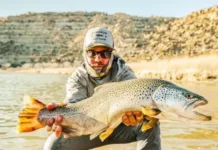
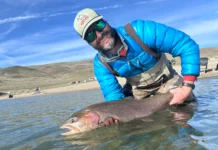
[00:23:24] Brandon’s sister was new to fly fishing, but the Missouri River Dry Fly School allowed her to learn with a guide. Brandon recalls landing a 20-inch rainbow trout within her first three casts. Her catch is a memorable example of what Missouri River fly fishing can offer when a beginner has guidance and an opportunity to practice.
Craig helped Brandon and his sister fish the morning Trico hatch and find opportunities on the water. The experience illustrates how guided instruction can help beginners understand where to fish and how to approach a hatch. It also became one of the most memorable moments of Brandon’s Missouri River trip, showing how a well-guided day can make a new fishing experience rewarding. For families and newer anglers, Missouri River fly fishing can combine learning, shared time outdoors, and the excitement of catching a memorable trout.
[00:25:52] Brandon describes learning from Craig, Craig’s son Warren, and the other anglers during the trip. The school gave him opportunities to observe the guide’s decisions and learn while fishing rather than relying on theory alone. Missouri River fly fishing can teach anglers to pay attention to presentation, feeding activity, and the decisions a guide makes throughout the day.
For anglers interested in dry fly fishing on the Missouri River, guided instruction can help them understand hatch timing, presentations, and when to adjust their fishing plan. Brandon’s experience also highlights the value of learning alongside other anglers and spending time on the water together. A Missouri River school can therefore offer more than a chance to catch trout; it can help anglers observe how experienced guides approach changing conditions.
Learning dry-fly techniques on the Missouri River gave Brandon a better understanding of how to recognize feeding trout and respond to changing conditions on the water.
[00:26:56] Heath explains how Spoken Outdoors organizes river outings for first responders. Some trips run for 15 to 17 days on the Kootenai River, with approximately eight anglers and additional boats to support lunch on the river. The organization also arranges multi-day trips on rivers such as the Grand Ronde and Deschutes.
These outings provide participants with time away from their regular responsibilities and opportunities to connect with others who understand their work. Heath also explains that mental health referrals may be appropriate when participants need additional support. The organization’s mission is separate from the fishing techniques discussed on the Missouri River, but both share a focus on providing meaningful outdoor experiences. The episode contrasts Missouri River fly fishing with these group outings while showing how different river trips can create lasting connections.
[00:32:12] Dave mentions On DeMark Lodge while discussing the Missouri River and the dry-fly school. The lodge hosted Brandon’s giveaway trip and set the stage for the guided fishing experience that started this conversation. The lodge’s role in Missouri River fly fishing gave Brandon and his sister a base to learn from their guide and explore the river.
For anglers planning a Missouri River trip, the episode connects the fishing itself with the value of local guiding and trip preparation. A guide familiar with the river can help anglers adapt to current conditions and decide how to fish throughout the day. The experience also gave Brandon and his sister time to learn and fish together. Planning a Missouri River fly fishing with a guide can help anglers prepare for changing conditions and make better use of their time on the water.
[00:33:10] Brandon explains that news of the Columbine High School shooting influenced his decision to pursue law enforcement while he was working at a lumber yard. He wanted to protect his daughter and help keep his community safe.
His background provides context for his involvement with Spoken Outdoors. After decades in public service, Brandon understands the job’s demands and values opportunities that help first responders connect with others and spend time away from work. His involvement adds another dimension to the conversation that began with his Missouri River giveaway trip. His story also explains why Missouri River fly fishing became the starting point for conversation about service, outdoor recreation, and community.
[00:34:10] Heath grew up in a family connected to policing, served in the Marine Corps, and later entered law enforcement in his early thirties. His experiences shaped his perspective on service, outdoor recreation, and first responders’ needs.
His earlier work managing outdoor opportunities for disabled veterans also influenced the creation of Spoken Outdoors. The nonprofit builds on that experience by using fishing trips and time outside to support first responders in North Idaho. The background explains why the episode moves from Missouri River fishing to the role outdoor programs can play in a community. The connection between their backgrounds and Missouri River fly fishing helps explain how this episode brings together fishing and first-responder experiences.
[00:35:28] Brandon and Heath discuss the public image of law enforcement and how community attitude can vary. Brandon describes North Idaho as generally supportive of local officers.
The conversation also returns to the challenges of a long public service career. For both guests, fishing offers a way to spend time away from work and stay connected with people who share similar interests and experiences. Their experiences show that fishing’s benefits extend beyond the catch, whether they’re on the Missouri River or elsewhere. The Missouri River fly-fishing trip is one example of how shared outdoor experiences can bring people together outside their professional roles.
[00:38:34] Heath discusses the value of working with familiar rivers and outfitters when organizing trips. Reliability becomes particularly important when an outing involves multiple participants, boats, meals, and other logistics.
For Spoken Outdoors, a successful trip depends on more than catching fish. Planning depends on more than catching fish. Planning and reliable river support help the organization focus on participants and deliver the outdoor experience it wants to provide. The same general lesson applies when anglers plan a Missouri River trip: knowing the arrangements and working with people familiar with the water can help the day run smoothly. For Missouri River fly fishing, dependable guides and clear trip arrangements can help anglers focus on learning and fishing rather than logistics.
[00:46:15] Heath says Spoken Outdoors increased its participants and days on the water between 2025 and 2026. He mentions 66 days on the water and a goal of reaching about 140.
That growth also brings financial demands. Heath describes exceeding $100,000 and identifies donations as a major constraint on the organization’s ability to expand. Financial support affects how many outings the organization can provide and how many first responders it can serve. These operational details offer context for the nonprofit’s work beyond the Missouri River fishing trip that brought Brandon and Dave together. The story began with Missouri River fly fishing, but the episode also highlights the resources needed to make more outdoor trips possible for first responders.
[00:43:44] Brandon thanks the DeMark family, Craig, and Becky for their part in the fishing experience. He also names Adipose, NRS, Hardy, Cortland, and Montana Fly Company as gear-prize contributors.
Brandon mentions using an Adipose gift card to purchase a spare oar. The discussion connects the giveaway to the practical equipment needed for fishing and boat ownership. Confirm the official sponsor list with Wet Fly Swing before labeling every business as a sponsor of the Missouri River Dry Fly School or the podcast. The equipment contributions supported the Missouri River fly-fishing experience and made the giveaway more valuable for participants.
[00:46:15] Heath discusses using Orvis equipment and owning the remaining stock of Gary LaFontaine rods he has, which were made in Japan and included an extra tip. He says he purchased them about 15 years earlier.
The conversation also considers gear’s role in fishing. Equipment matters when it suits the angler and the conditions, but the experience on the water remains central. For Missouri River anglers, the equipment should support the intended fishing method rather than distract from reading the water and adapting to the day. For Missouri River fly fishing, choosing equipment that suits the presentation and conditions matters more than collecting gear for its own sake.
[00:50:38] Dave mentions the Upper Missouri Watershed Alliance and its conservation work connected to the Missouri River. He also mentions Visit Helena and the “Fly Anglers in Action” concept. Missouri River fly fishing depends on healthy river environment, making conservation an important part of the wider discussion.
Conservation helps protect the river environments on which anglers depend. The Missouri River is valuable not only as a trout fishery but also as a natural resource connected to the surrounding landscape and communities. Before publication, confirm the organizations’ current programs and official links rather than assuming details that were not specified in the conversation. Conservation and responsible use of the river help preserve the setting that makes Missouri River fly fishing appealing to anglers.
According to Heath, the organization’s biggest need is financial support. He describes a program in which potential sponsors can spend a day fishing in an additional boat with Heath or Brandon. This gives them a firsthand look at the work and the experiences the organization provides. It is a practical way for interested supporters to understand the program before deciding how they might help. The Missouri River fly fishing giveaway also demonstrates how outdoor experiences can create connections that extend beyond a single trip.
[00:55:30] Before leaving the conversation, Heath invites Dave to join a Spoken Outdoors outing on the Kootenai River in Idaho. He highlights the river’s native redband rainbow trout and says the Idaho section receives less attention than the river’s Montana waters.
For anglers exploring fishing destinations beyond the Missouri River, the Kootenai offers another river to explore with local guides and anglers. Heath’s invitation also shows how fishing connections can lead to new waters and to learning from people who spend time on them. Exploring other waters can complement Missouri River fly fishing by giving anglers opportunities to learn about different rivers and trout populations.
[00:57:08] Heath says he would like to complete a full Grand Canyon trip rather than only part of the journey. For a first descent, he would probably choose a rubber boat instead of a drift boat.
The experience illustrates the importance of reading the water and making careful decisions in whitewater. Even experienced boaters can encounter situations where a line or eddy entry happens sooner than planned. Staying alert to river features and boat position is essential. The story reinforces the importance of safe boat handling for Missouri River fly fishing and for river trips with more demanding water.
[01:00:03] Brandon explains that volunteering with Spoken Outdoors adds to an already busy schedule. He continues to work full-time for his police department and also serves a first responder mentor in North Idaho.
His involvement reflects the organization’s connection with people who understand the demands of first-response work. Brandon benefited from one of the early trips himself and now contributes his time to help others have similar outdoor experiences. His story began with a Missouri River giveaway, but the conversation shows how a fishing trip can also lead to longer-term connections and service. Missouri River fly fishing sparked Brandon’s conversation with Dave, but his involvement with Spoken Outdoors continues well beyond the trip.
[01:01:41] The Missouri River trip included both dry-fly fishing and nymphing. When the Trico hatch ended, Craig recommended switching to a nymph rig. Brandon followed the change and continued catching fish rather than sticking with dry flies after the hatch had passed. Missouri River fly fishing doesn’t always mean sticking with dry flies, even when the original plan centers on a hatch.
Brandon describes using a short nymph rig with a sow bug and a crawfish imitation. This offers a practical lesson for Missouri River anglers: a dry-fly plan doesn’t need to dictate the whole day. Watching conditions and adjusting the presentation can help keep the fishing productive. When planning Missouri River dry-fly fishing, be prepared to change methods when surface activity slows.
Brandon also recalls wanting to catch a brown trout, a fish he rarely encounters in his home waters in Idaho. His first brown trout was only about six inches long, but it was still a memorable catch. The story reminds us that the fishing experience isn’t measured only by a fish’s size. For Missouri River fly fishing, being prepared to switch between dry flies and nymphs gives anglers another option when surface activity changes.
[01:03:23] Brandon was surprised by how busy the Missouri River was and how consistently the boats he watched were catching fish. He recalls seeing about ten drift boats or skiffs launch ahead of his group, with anglers in each boat catching trout. His observations provide a firsthand view of Missouri River fly fishing during a busy day when multiple boats were finding trout.
He was also impressed by the size and fighting ability of the rainbow trout, as well as the wildlife along the banks. He remembers seeing mule deer, white-tailed deer, and pelicans chasing fish. Despite the number of anglers on the river, the Missouri River left a strong impression on him as a distinctive fishing destination. His experience shows why anglers keep returning to the Missouri River for both the fishing and the scenery.
Brandon’s experience on the Missouri River also showed him how busy a fishery can be, offering memorable opportunities to observe trout and wildlife and to see other anglers. The combination of trout, wildlife, and scenery made Missouri River fly fishing stand out from Brandon’s previous fishing experiences.
[01:04:48] Brandon would like to fish in Alaska and explore more of the eastern United States, where his son lives in Tennessee. He also appreciates having several well-known trout waters close to home in North Idaho.
Episode Transcript
00:00:00 Dave: Today’s guest entered one of our giveaways, heard his name called as the winner, and joined us on the Missouri River Drive High School. That trip eventually led us to a much bigger conversation about fishing, first responders, and the work he’s doing with Spoken Outdoors. Today, we’re going from the Missouri River Dry Fly School and a first fish on a tricot to custom drift boats. Decades in law enforcement. And what could happen when first responders get a few days away from pressures on the job? This is the Wet Fly Swing podcast, where I show you the best places to travel to for fly fishing, how to find the best resources and tools to prepare for that big trip, and what you can do to give back to the fish species we all love. Brandon Friss and Heath Guns are here today, and they’re going to take us inside. Spoken outdoors, a North Idaho non-profit using fly fishing and time outside to support first responders. Today you’re going to hear how Brandon entered the wet Fly Swing Missouri River Dry Fly School giveaway and was announced as the winner. He joined us with Andy Mark Lodge and had a great time. Here we’re going to talk about how Brandon brought his sister along. Craig, their guide, helped her land a 20-inch rainbow within her first three fly-fishing casts. She was new to fly fishing. We’re also going to talk about some powerful stories around the river and some of the work the spoken outdoors has done, as well as we’re going to talk drift boats. Heath is a big drift boat guy. Brandon’s got a drift boat. We’re going to talk about this and go back into some of that history. I’m excited to dig into this one with you. Brandon. Forest Heath guns. You can check in with them at spokenoutdoor.org and check in with On DeMark Lodge. If you’re interested in the dry fly school for this next trip, we’re going to be heading out there again on the river. Let’s get into it. Let’s hear how we do it. Here’s Brandon Freeze and Heath Guns. How are you guys doing? 00:01:51 Brandon: We’re doing well. Doing great. Thanks, Dave. 00:01:54 Dave: Awesome, awesome. Yeah. This is exciting. I’ve been, uh. Well, Brandon, I guess since the trip, I’ve been thinking a lot about this. Um, we kind of made a connection, obviously, on the dry fly school. You’re the winner of the big trip. Uh, and these are always fun to do because people get to be part of the actual, you know, event and all that. But we had a great trip. It was fun hanging out with you, you know, and the whole group out there. It’s on to Mark Lodge. And then we got to talk, and we were talking about spoken outdoors and really your whole background; you’re a police officer, and I think it’s pretty awesome. So we’re going to tell a story. We’ve got Heath on here. So, we’re going to hear a little bit about spoken outdoors. But um, maybe before we get into it, we get a little intro from both of you guys or, you know, maybe, uh, maybe Brandon, we’ll start with you. Can you, uh, give us a little background on your fishing? You’ve been doing this a while. What’s your background there? 00:02:43 Brandon: Yeah, I, uh, my mom taught me, uh, what I’m going to use air quotes on is fly fishing. When I was a kid in Wyoming, uh, what it was was a fly with a, a worm attached to it. And you just kind of shrug it out there. And then in the late eighties, we moved to North Idaho, and in high school I actually hooked up with a group of guys, football players. And we started fly fishing all summer long. And so I’ve been fly fishing since high school. And, and, uh, yeah, so thirty years. 00:03:15 Dave: There you go. And, and how about you, Heath? Are you a fly angler, or what’s your connection out there? 00:03:20 Heath: I am. I started fly fishing probably about twenty-five years ago. Dave and, uh, Northwest Washington. And we moved to Idaho in twenty seventeen and obviously much more opportunity for spectacular water. About five years ago, I started guiding professionally. So I guide here in Montana as well as as or here in Idaho as well as Montana. 00:03:42 Dave: Oh, cool. Awesome. Well, we’ll probably talk a little bit about that today. You know, we were in, uh, the trip was on the Missouri, the big Mo, you know, in Montana. But there is a lot of similarities, obviously, between a lot of the Western streams. So we’ll jump into that. But let’s before we get to, uh, you know, spoken outdoors, Brandon, maybe give us a high level on, you know, what it was like for you because you, uh, you won this trip. Take us back to that moment when you, when you realized that you had won this, uh, this trip and all the gear and stuff. 00:04:11 Brandon: Well, yeah, sure. And I’m just gonna attest that this is legitimate. Um, ultimately, the, uh, you know, trying to put in for the trip came up on my Facebook feed. And so I kept clicking and entered. And ultimately, uh, when you did the live winner announcement on YouTube, I, I was tuned in and when you said my name, it was shocking and I couldn’t believe it. And, uh, so I ran upstairs and told my wife, I think I’ve just won this trip and all this gear out of from wet fly swing and yeah, legitimate. 00:04:45 Dave: There you go. 00:04:46 Brandon: But I’m going to call it the grand prize was, uh, all expenses paid trip to on to Mark Lodge for the Missouri Dry Fly Fishing School event that you put on. And and we did that in in what was it? mid-July. And it was a great time. 00:05:03 Dave: Yeah. Yeah, definitely. Yeah. We were we were out there. It was I mean, my first time on the Missouri, obviously, I talked to a lot of people and all that and, you know, but I never really fished it like we did. And it was cool because the experience was I mean, I’m still talking about thinking about it, right? Because we were trying to we were trying to hit the tricos. But just like fishing is, you know, fishing isn’t always perfect. And, you know, the tricos, I think had come a little bit earlier. They were just a little bit off. But, but we still had opportunities to go from. Do you remember the Tricos at all? Did you guys get a chance to fish any, you know, any of the hatch. 00:05:35 Brandon: Oh yeah. Um every morning there seemed to be about an hour worth of Trico Hatch and, uh, Craig from on demark, uh, who was our guide, my sister and I’s guide for the whole trip, uh, got us into, uh, fish every morning and, uh, The using on Tricho. And yeah, it was a great experience. 00:05:55 Dave: That’s awesome. No, this is going to be fun. I think that, um, you know, again, I love all these trips for me are amazing. You know, I could you put me anywhere in the country, no matter the species and all have fun. Are you guys both maybe kind of the same way? Maybe Heath will bring this to you. It sounds like you do your higher level on definitely guiding and all that stuff. Um, tell us about that. Are you mostly fishing? Uh, Idaho, Montana, or are you getting out away from there? 00:06:20 Heath: Yeah, I mean, professionally it’s mostly Idaho, Montana. My wife and I do a bunch of traveling and fish pretty much anywhere we can can wet a line in just the, the normal course of our our busy lives. But most of my time is spent here in, in the Panhandle and in Western Montana. 00:06:39 Dave: Yeah, yeah. You’re in the Panhandle. That’s good. Well, tell us about, before we jump too far on this, I want to hear about spoken outdoors because that was something, Brandon, that you had mentioned about this program, this organization Maybe describe what it is and how people can, you know, maybe help out, get involved or just learn about your org. 00:06:58 Heath: Cool. Well spoken out. Doors is the product of a very long career for me, managing outdoor opportunities for disabled veterans. So over the eighteen years that I did that, I, I was able to see the impact that the outdoors have on, on folks and, you know, combat related stress and just an opportunity for folks to find some peace and some quiet and solitude and build relationships. And so when we moved over to, to Idaho, we decided that we wanted to take that model and everything that I had learned over that eighteen years and apply it to the first responder community here in North Idaho specific to fly fishing. And so twenty twenty three, we got our nonprofit award and we’ve done, I don’t know, probably I’m going to say three hundred and fifty, maybe four hundred individuals over the last three years, all first responders being fire EMS, emergency room docs, you know, police officers, the whole gamut. You know, recently we had the the shooting here on Canfield Mountain. And so we were real instrumental in the, the therapy side of working with agencies involved in that. And, you know, we got all their Swat guys out on the river and just gave them some time to get away from the stress of the job, kind of decompress, take a breath, which is exactly what they need. And then, you know, the science side of it and the geek side of it is, is the idea that there’s all kinds of documented impact on from the outdoors on people’s physiological response to trauma. And so that all plays a part in what we’re doing. But essentially, it’s like seventy two hours in the, in the outdoors, disconnected from your normal life has a significant reduction in PTSD symptomology. And so we’re just kind of trying to use that model. And, and, you know, we’re blessed that we get to do it over fly fishing, which Brandon and I are both really excited about. And, you know, earlier you said something about fishing all over and, and, and it’s always fun. And there are good days and the fishing’s not always what you want. And I’ve kind of of the belief that the fishing is always what I want and regardless of what I’m doing. 00:09:12 Dave: Right. That’s true. I think the more you get into it, maybe the older you get to, the more you realize it’s not about the catching, you know, at all. Right? You could have a trip where you get skunked. You still have an amazing trip. Right. And that’s that outdoor piece, right? That we all almost you don’t take it for granted, but you don’t realize like you’re saying the impact. And when you get when you get somebody who maybe has PTSD, you maybe even see more of the benefit. Is that kind of what how that all works? 00:09:38 Heath: Sure. I mean, just a really quick story. We had a trip recently and had a very long tenured police officer with an extreme amount of trauma. And, uh, this particular individual has the stress is so bad in their body that they essentially look like they have Parkinson’s. Process of their day. I mean, they’re constantly twitching and shaking and whatever. So we got this individual out on the river and within about forty five minutes, all of that was gone. There wasn’t a twitch, there wasn’t anything. The gentleman that I had hiring as guide that day actually called me at the end of the day and said, Heath, you know, for the first time we made a difference in somebody’s life. And the river just took away some of the craziness. And that’s really what we’re looking for. Dave. 00:10:27 Dave: That’s great. Yeah. And Brandon, you’re, um, I mean, you’re right in the middle of it being a police officer. That’s pretty amazing. I feel like that’s something that, um, was a line of work that not everybody could do, you know? Definitely. But tell us about that. I know you’ve got a pretty cool story about how you got into that line of work, but describe that a little bit. 00:10:46 Brandon: Yeah. So I’ve been a police officer for a city police department here in North Idaho for twenty three years. Um, started as a volunteer, uh, back in two thousand and one and have kind of worked my way through the department. And now I’m looking towards the end of my career and, uh, just realized that after those twenty or so years of, of handling calls and the stuff that first responders interact with that I was, uh, you know, probably struggling and not in the right headspace. And, and so I kind of went on this, this journey to get better both mentally and physically. And, and that’s where spoken outdoors came into play for me. I was actually got put on one of their trips when they first stood up and, and I just wanted to give back to the first responder community because spoken meant so much to me. So I volunteered for the organization and we’re here now. But yeah, no, being a police officer certainly is rewarding. And ultimately I decided to be a police officer just to be a protector and serve the people. And I found great joy in that and satisfaction. And, uh, I’ll look back on my career and feel very rewarded. 00:12:03 Dave: No, that’s amazing. And it is, uh, because of the, the challenges of the job, right? A twenty five year career is a full right? You’re pretty much able to get out at twenty five, if not sooner, right? 00:12:14 Brandon: Yeah. Uh, here in Idaho, it’s, it’s a convoluted system of years of service in your age. But yeah, I get to retire at fifty two. So certainly excited about that. Yeah. 00:12:24 Dave: Right. What’s your plan when you retire? That seems pretty amazing to think. Fifty two because, uh, do you have a plan of, uh, you know, riding off into the sunset or what’s your plan after retirement? 00:12:35 Heath: Well, he better ride himself up to the river in his drift boat. 00:12:38 Dave: Right. There you go. 00:12:41 Brandon: Uh, well, my, wife has made it very clear because she cannot retire at fifty two, that I find gainful employment doing something because I’m not going to be allowed to just sit at home. So, uh, yeah, no, the goal is to continue to give back to these professions and, and, you know, work with spoken outdoors and, and, you know, uh, guide, I love fishing and, and went out and bought my first drift boat last summer and. 00:13:07 Dave: Oh, wow. 00:13:08 Brandon: Uh, so yeah, hopefully I can work into guiding. 00:13:10 Dave: That’s amazing. What boat did you, uh, pick up? 00:13:13 Brandon: I, uh, listened to Heath here. He’s a, he’s a aluminum boat guy, so I ended up getting a, a old fish right from, uh, Koffler’s in Oregon. 00:13:24 Dave: Oh, wow. 00:13:25 Brandon: And loving it. Yeah. It’s, uh, treated me well. 00:13:28 Dave: That’s cool. So you picked up a fish right from Koffler? 00:13:31 Brandon: Yeah. It was their one of their used boats. 00:13:34 Dave: Oh, right. They’ve used boats. 00:13:36 Brandon: Yeah. One of their a great deal. And and, uh, yeah, I said it, it was set up for steelheading, but I cough or do some changes to it and set it up for, uh, for fly fishing up here in North Idaho. And yeah, I’ve loved every minute of it. 00:13:50 Dave: That’s cool. Yeah. I love the drift boat. They, I mean, we have a whole series on drift boats, but it’s cool because it’s, um, depending on where you are, right? You’re, it guides your boat and, and really especially the far west, you know, Western US, Idaho, Oregon, especially Washington, the aluminum boat is a big thing. But as you go out towards Montana, that slowly disappear or that just disappears and you get into all the fiberglass. Right? But, um, and I have a copper myself and I’ve had it since I was a kid and my dad had koffler’s. Right. And so I feel like, but I also see the benefit of the fiberglass, like the, the skiffs. Right. But the one issue with that is that whitewater is probably the biggest concern. Do you guys have that in your area? Are you guys running some whitewater? 00:14:31 Heath: No, not not major whitewater. I mean, I do a bunch, you know, in Montana and Oregon and that kind of stuff. But as a day to day, there’s not a lot of white water up here in the Panhandle. 00:14:43 Brandon: Yeah. 00:14:43 Dave: Well, I, we got a new sponsor that’s going to be coming on here next year actually, but, um, P and W boats and I’m excited because I’m going to be running a new boat and testing. I’m a big gear tester, right. That’s kind of one of my things I love. But you know, maybe we can go around on the gear a little bit. I think Brandon, you you won this trip to on the mark. Yeah. You know, I mean Craig and, and the whole family, right? The whole thing there was just amazing, you know, and, um, but we also had a bunch of products and one of them I know stonefly nets. I just want to start there because I remember when, because I didn’t know you. We had never met. And I reached out to Ethan. And Ethan is just a super guy. And I said, Ethan, tell me about Brandon. Are we? Or we got that all squared away. And he was just like, he was raving about you. You know, he said, like, Brandon is this amazing guy, and I really want to. So talk about that. How was your how did that work with Stonefly Nets? You have a new net right now there. 00:15:35 Brandon: I do, and I got a right back at Ethan. He was an amazing individual human being to work with. Not only was the the net beautiful, it’s a piece of art that I’m actually afraid to use. To be honest with you. 00:15:48 Dave: Right. 00:15:49 Brandon: But Ethan, just as a person, was phenomenal to work with. But it started with him contacting me and picking, uh, what kind of wood I wanted to make a net out of. And so he would send me pictures of everything he had kind of in his stock and worked through with me what would work the best and ultimately ended with a Buckeye burl net. That should work for around here, size wise. And, and it was it’s absolutely beautiful. 00:16:18 Dave: That’s awesome. And this is this a, um, like a net that you just kind of throw with you on your back sort of thing. Small net, big net. 00:16:26 Brandon: Well, so he and I talked and because I, you know, have a boat, uh, he kind of picked a middle size. So it’s certainly packable if I’m going to go wade fishing, but it does the job and can handle working out of a boat. Uh. So yeah, he asked a bunch of questions and found out what my needs were and what I liked to do and built it to what, you know, he thought would work for me. It was awesome. 00:16:50 Dave: Yeah. He did. That’s really cool. Yeah. So you have the custom net and mine’s the same. You know, I’ve had my Stonefly net for a long time. It’s funny because, you know, it gets beat up and bounced around and thrown around. The great thing is about those nets is I mean it almost gets better as it gets beat up because it really, you know, again, it still looks great. But, you know, I mean, you could always go in and refinish it at some later point. But yeah. Have you, have you been able to get efficient yet in the net. 00:17:16 Brandon: I have not um only because I, it is so beautiful that I am truly afraid of, of ruining it. And I want, you know, the first fish I put in it to be kind of perfect. And so I haven’t had that situation yet. I did not take it away this time. Uh, it’ll get used at some point in time, but right now it’s just kind of hanging on my wall above, below, in my office space. So I can just kind of look at it like a painting. 00:17:42 Dave: That’s pretty good, man. That says a lot. That says a lot right there. And we’ll get a photo of it. Maybe we can get a shot of that, throw it in the show notes so people can take a look. Oh, yeah. 00:17:51 Brandon: Absolutely. 00:17:52 Dave: How about you, Heath? Are you, um. You know, I know myself. When I got going and fishing, I didn’t use a net for many years and then finally realized, wow, this is actually nice to have. Are you a you’re a guy. Are you using a net a lot out there? 00:18:05 Heath: Oh, yeah. And it seems like every season there’s a new one in one of the boats. 00:18:12 Dave: Yeah, right. Are you kind of a gear guy, too? Always testing out new stuff. 00:18:16 Heath: Yes, except I’m not so much a small gear guy. I’m a boat dork. And so that’s kind of my curse, is I always want a new boat. And I always want to try something different with the boat. 00:18:26 Dave: So yeah. That’s cool. Well, you and me are the same. What do you when you say boat dork? What does that mean? 00:18:32 Heath: Well, so I’ve got a a seventeen foot Chapman wood boat. I’ve got a seventeen fifty four Koffler aluminum boat. I’ve got an eighteen sixty aluminum that costs are built for me. That’s kind of special in that it is the only handicap accessible drift boat in the in the northwest. 00:18:50 Dave: Oh really? Oh you have that. You have that boat. 00:18:53 Heath: Yeah. Yeah. 00:18:54 Dave: I think I’ve seen it. I, I think I’ve seen it. So Koffler goes way back. My dad had a fly shop a long time ago, and he used to actually have Koffler boats in the shop. And so I remember. So Bruce uh, let’s see. Yeah. Bruce is his dad. Bruce. I remember back when I was a little kid and Bruce was in, you know what I mean? Like before Joe took over, but, uh, but yeah, that’s amazing. So you’re a Koffler guy? 00:19:14 Heath: Yeah. I mean. 00:19:15 Heath: There’s such a spectacular family and, you know, they, they understand what spoken outdoors is doing and they’re, they’re super easy to work with in terms of, you know, I call Joe up and I’m like, Joe, I want a drift boat that I can get a wheelchair in without having to take the guy out of the chair. He’s like, what are you talking about? Heath and so, you know, we bounced around. The first one we built was a skiff, and the front dropped kind of like a landing craft, and it was just too tough to balance that boat in, in any kind of rough water. It just ended up being way too nose heavy. And so we went back to the drawing board and we built this eighteen sixty, and I’ve got a twenty eight inch door in the transom that drops down. And yeah, it’s a absolutely cool boat. You should come fish with us. 00:19:59 Dave: Wow. So where is the, the wheelchair accessible? Where do they get into the boat? 00:20:05 Heath: So the transom has got a twenty eight inch door in it. 00:20:07 Dave: And the transom is the back or the front. 00:20:09 Heath: The back. 00:20:10 Dave: Oh the back. Right. 00:20:11 Heath: Yeah. And so we can drop the essentially the ramp and all of the, the interior, the boats on over center latches. So it literally takes me 30s to get, you know, the rower seat and all of that stuff out of the boat. We can roll the wheelchair in, bow the boat, and we got a great big deck up there for them and and we put our stuff back in it and off we go. 00:20:34 Dave: Wow. Yeah. So, you know, Joe, a little bit. 00:20:37 Heath: I know Joe really well, actually. 00:20:38 Dave: Oh you do? Well, you’re gonna love this story. I gotta share this story because this is a funny one. I was, uh, so like I said, I’ve known, you know, kind of the family the whole. But I never really been to Koffler, you know, down there in Eugene, I never really stopped by and I was going down there. I can’t remember what I was doing, I think, oh, I think he might have been fixing up an old boat. I had a well, here’s another whole nother story, which I won’t get into, but I had this old boat that actually I brought in to Joe because I picked it up. It was one of the first boats I had actually gotten, and it was the whole boat had been flipped. It actually was upside down in the river and, and the whole boat was tweaked. And it was, it was obvious. So I took it to Joe and he, he was going to fix it. Right. And but so I walk in there and, and sitting there at the, uh, in the office was a lady that I was like, I knew. And it was. Tracy. Yep. And I was like, whoa. And it turns out. Tracy. I had dated a long time ago and I was like, Tracy, of course, is Joe’s wife. And it was funny because I was looking, I was like, I was like, wow, how are you doing? You know, like, it’s been so long, all this stuff. And all of a sudden I look over Joe and he’s just, he’s got that smirk on his face. Yeah, it was just so classic because I was like, I had no idea. And so anyways, it was kind of one of those funny moments that. Joe. 00:21:48 Heath: Well, what that really tells me, Dave, is it confirms that Tracy’s got a really poor choice and. 00:21:54 Brandon: And. 00:21:55 Dave: Exactly. 00:21:55 Heath: Strikes out with. 00:21:57 Dave: Exactly. No, I know it’s it’s pretty, it’s pretty funny how like, you know what I mean? But it’s such a small world, right? I mean, you hear that? That’s the funny thing. But it is it’s like all this world of fly fishing and you know, and really, Joe, I don’t even think is really a full like into fly fishing as much as he’s into kind of everything, right? He kind of does a little bit of everything. 00:22:14 Heath: Yeah. I think he’s, he’s more of a steelhead or, you know, I get the impression that they, they throw spinning gear, which is a character flaw. 00:22:22 Dave: Yeah, yeah. So anyways, regardless, he makes a great boat and you have a seventeen by fifty four, which is the exact boat I have. I know when I got that Joe really talks about that boat as being able to carry a lot of gear, and that’s one thing we do when we’re doing our multi-day trips, right? Sure. Is that why you love the seventeen? What’s the biggest thing you like about that one? 00:22:40 Heath: No, the seventeen fifty four is probably I mean, it’s it’s one of those weird things where, you know, there’s an optimum. Right. And so for whatever reason, seventeen fifty four is, at least in my experience, and, and the folks I run with, it is the best performing size whitewater boat running. And so that’s primarily what I use that boat for is, you know, the rogue and, and the Maine salmon and, and that kind of stuff. Oh, cool. It’s just a, it just handles really well. It carries plenty of gear. It’s super responsive. It’s small enough that we can go anywhere with it, but big enough that it handles whatever we can throw at it. 00:23:24 Dave: So yeah, that’s it. Awesome. Well, this is great. We made a good connection on the drift boats. But take us back into this. Maybe. Maybe, Brandon, you can bring us back. And, you know, again, we’re not going to cover everything today, but give us a heads up on, you know, again, back to the trip. So we so we get there, we meet, we’ve got we’re at on demark, which is right there, you know, on the Missouri. We’re getting ready to talk about what your first day was when you guys got out with Craig. What was that like when you got on the water and all that? 00:23:53 Brandon: I think I’d like to tell your listeners that ultimately, I convinced my sister, who is a military wife, and, and I hadn’t hung out with her for more than, you know, a few days in the last twenty years, I and she does not fish. And I convinced me up and come out there with me. And so my sister and I got in and Craig’s boat and I watched Craig, and she was in the front of the boat because I wanted her to, to be able to, you know, have the best shot at catching the fish. And so yeah, that first morning, Craig kind of gave her some pointers on how to cast, uh, was the Trico hatch during the morning. And I watched Craig get my sister’s fly because she couldn’t cast that far from the boat. I watched him row that boat and guide that fly into a pod of feeding rainbow. And my sister in the first three casts landed a twenty inch rainbow for her first fish. And I got all to Craig, um, for, you know, his teaching ability as well as his rowing ability and his knowledge of the river. It was phenomenal to watch. And ultimately after, uh, you know, a great day of fishing with Craig, uh, which included a riverside lunch, um, with some of the other participants in your school, you know, making it back to the lodge and sharing stories that night. And, and ultimately, my sister walked away from there, probably cursing me because she’s now, uh, you know, addicted to fly fishing and wants to to start doing it more so. 00:25:26 Dave: Oh she is. 00:25:26 Brandon: That’s good. Yeah. I told her welcome to the money pit. 00:25:29 Dave: Of. 00:25:30 Brandon: Life. 00:25:31 Dave: So she so that then that was her first trip out there doing it. Doing the fly. Yeah. Yeah. She was super cool. That was that was a great thing about the, the group there. You know, everybody, it was this, uh, you know, just an amazing group, right? Everybody that was there, I don’t think I think we all kind of came together. And that’s why these, these trips are amazing. It gives us a chance to connect, you know, right. With people you didn’t really know. 00:25:52 Brandon: Yeah. And and again, I’ve fished for a long time, but every day, uh, I learned something new, um, from Craig and, and the group, you know, uh, his son Warren was phenomenal. Yeah. We, I would recommend going, uh, on your trips to anybody that’s looking to learn, you know, you, you definitely set it up to where you’re helping people out. And it’s, it’s awesome. Yeah, it was a fantastic week for sure. 00:26:21 Dave: Yeah, we’ve we’ve done a lot of these. And it’s always, it always comes, it’s always the same thing, you know, and I guess I was I’m not surprised anymore because there’s something about it. But the group is always great, right. It’s always a diverse group and, and, and a fun one. So we’re and actually, we’re just right now getting ready, preparing for the next giveaway event. We’re doing the dry fly school again. So, so it’s going to be, it’s going to be happening again, uh, you know, next year. So, uh. 00:26:49 Brandon: Well, I’ll tell your listeners, it’s legitimate. Like I said, when you see it come up on your Facebook feed, keep hitting the enter because you ultimately could win. 00:26:56 Dave: So good. No, this is fun. Well, maybe Heath, you know, back to you on spoken. It sounds I’m guessing this experience is different, but similar in bringing together people that don’t know each other. Talk about that. How does it work on the trips or these trips where you’re doing a, you know, maybe a, a day, a week or what’s that look like for you guys? 00:27:15 Heath: Well, so it depends. We do probably, I don’t know, fifteen, seventeen day trips up here on the Kootenai. Uh, and that day normally consists of eight anglers and one or two additional boats that haul lunch and food and, and all of that crazy stuff. And then we all also do a multi-day on the Grand Ronde or the Deschutes every year, where we take eight guys down for the better part of a week. And typically they’re folks who they all obviously work in the same environment, but they, they’re not necessarily all from the same agency. And so kind of the model back to your, your idea about relationships and, and people getting together, kind of the model is we’re all carrying stuff, right? And anybody who’s spent any time pushing a patrol car around or, or, you know, dragging hoses and fighting fires, everybody’s got demons. And so oftentimes we feel like we’re kind of the only one carrying that baggage. Well, what we found out is you put two guys or two gals or, or whatever in a drift boat, and by the end of the day, they have all but been forced to develop a relationship. And that relationship always results in conversations about what their demons are. And so folks get to kind of organically process that with, with other folks who have similar experiences. And, you know, the dialogue is very often about, well, wow, I didn’t realize there were other people dealing with the same thing. What’d you do to get through it? How’d you know? Did you have to go see a therapist? Did you, you know, was it your buddies or what got you through it? And so it’s this organic relationship that just is forced almost by being in the outdoors. And that’s really the the model. You know, it’s if you take the the best moments in your life, Dave, I think the thing that you’ll find is they’re exceptional because the people you’re with. And if you take the most horrific, horrible, you know, emotionally shattering moments of your life. You got through them because of the people you were with. So it really is. It’s about relationships, right? And so it’s kind of the first step. You know, there’s if you look at trauma for first responders, there’s the actual traumatic event and then the cumulative stress that that creates over time. And then the world right now seems to think that we get that cumulative stress and we need therapy. Well spoken outdoors is trying to fit in that middle ground. Right. Which is the you’re not alone in this thing and it is survivable. And you can get through this. And it just takes being with people to do that. And then on the on the flip side of that, should somebody dig up something really, really, really bad that they really legitimately need help to deal with, then we’re, we’re very well connected up here in the Panhandle with mental health resources that are available for those folks. And, you know, Brandon and I know all of these therapists personally. And so now when we make those referrals, if we need to, the folks are being referred to somebody that’s known, right. It’s not well here, you know, grab the yellow pages and go see this person. It’s, hey, I know this person and this is what they do for a living. And I really respect them and trust them. And they might be able to help you process what you’re dealing with. And so again, it’s back to that relationship thing, which is, is us in a nutshell. And you know, we’re blessed that we get to use fly fishing to create those relationships and opportunities. 00:30:51 Dave: Yeah, that’s, that’s pretty powerful. So it’s, it’s the fact that you guys are just the trip itself and the people and being around them is, is the sometimes that’s all it takes to help some of these people. They don’t have to go into a whole taking medication and like the whole thing. I mean, sometimes, right? If that’s needed, but it sounds like you’re able to do some of that without, you know, even going deep into all the other end of it. 00:31:11 Heath: Right. Well, and we can normalize, you know, the whole idea of, of needing help to deal with whatever those demons are because, you know, Brandon, obviously after, you know, twenty some years on the job has got got plenty of traumatic stuff in his past. I spent a bunch of years pushing patrol car around and, and so, you know, shared experiences. And so we’re able to I talk about having bromances. Right. And so, you know, when Brandon and I met, I had no idea where Brandon was coming from. I just knew he was a guy on a trip. And, you know, months later, I find out that that trip was life changing for him and, and created a, a need, if you will, to get healthy and some understanding that it’s okay to need help to deal with some of that stuff. And so that ultimately is what we want is for folks to just grab a moment of hope, recognize that it’s possible, and then act on it. Yeah. 00:32:12 Dave: Let on to Mark Lodge give you the Montana fly fishing experience you deserve. The gin clear waters of the Missouri River offer a world class experience with one of the finest rainbow trout and brown trout fisheries in the world. Whether you’re a seasoned angler or new to the sport, there are. Family of guides will tailor a trip just for you. You can head over to Onda Mark lodge dot com to fish one of the great trout streams in the country. So yeah, this is, uh, this is good. And I think that, you know, I’m always thinking again, trying to put myself in the, you know, somebody else’s shoes, right. It’s hard for me because I know I’ve always thought like, I’m kind of I’ve always been kind of wimpy, right? I never wanted to be in that line of work or go to war. And I think, right, the most important stuff and people that have the courage to do that. But maybe, you know, you guys, what is it like? I mean, take us back to that, you know, getting into that line of work, was that something that you both had thought about since you were kids and it just or was it something that came later in life? 00:33:10 Brandon: Well, I guess I’ll start. So ultimately, I was working in a lumber yard in Coeur d’Alene. Uh, my wife and I had just had our, our first child, my, my daughter and, and, you know, we had a radio going, listening to music at the lumber yard. And, and all of a sudden breaking news comes on. And what it was was Columbine. And, uh, you know, they were giving updates on, on what was happening in Colorado. Uh, and I thought to myself, you know, I’ve got to get into a job where I can protect my daughter and make the world a safer place. And so that’s when I made the decision to get into law enforcement was that event. And, and it took me a year, but ultimately I ended up in, in this career and was a school resource officer for several years in, in the early days, uh, and truly felt like I was helping protect my, my daughter and other people’s kids. But that’s kind of how I got into the confession. 00:34:10 Heath: Yeah. So I grew up in a in a long lineage of police officers. And so I can tell you, Dave, that as a kindergartener and a first grader. And so this would have been early seventies. Law enforcement was a different job back then. And, and very, very, very different. So, you know, with a dad that was police officer and knew everybody in the community, every day when I’d get out of out of grade school in kindergarten and first grade, one of the local cops, a guy named Ron, would be sitting out front in his patrol car to give him a ride home from from school every day. And so, you know, I’d, I’d jump up in his patrol car and and he’d drive me home. And I just thought it was the coolest thing in the world. 00:34:56 Dave: That is cool. Like, you’re you’re getting picked up every day. That’s pretty amazing. 00:35:00 Heath: Yeah. And, and I actually got to ride in the front seat of the car, which, you know, that that’s kind of the anomaly for most people. And so it was just kind of a natural progression for me. And and so after I got out of the Marine Corps, I did a whole bunch of other stuff and then went into law enforcement and my early thirties and yeah, it’s been about, I don’t know, ten, eleven years on the job and decided that there were just things that I really needed to be doing in life. And, and pushing patrol car around was not one of them. 00:35:28 Dave: No. Wow. Yeah. I feel like, you know, politics out the door. You know, forget about that. I was, you know, it’s just I’ve been watching this Rolling Stones documentary and, um, and they showed the scene and I had forgotten about this, but in the sixties, the stones did this concert for like three hundred free concert for three hundred thousand people in the US. It was, I think somewhere maybe in California, but they had the, the Hell’s Angels, I guess, were the ones that were there instead of the police, you know, law enforcement. I don’t know exactly how, but but essentially like four people died, you know, it was like just a terrible event. And I think what people realized that were kind of because you had that whole counterculture thing, right? Like people were anti. And we’ve actually seen that even recently. Right. This this thing. And and but I think what people realize back then and now is that man and I’ve always thought this like more, the more police, the better, right? Because it’s like, why would you not want more? That’s like, that’s more safety. And I feel like, I feel like I’ve seen that. But yeah, you guys probably have been through that, right? With that, that some of that, whatever’s going on out there, do you feel like, um, what’s your take on that? Do you. First off, do you remember the Rolling Stones, that whole event? 00:36:35 Heath: I do. 00:36:35 Brandon: Well, of course we learned about it. Yeah. Back in, you know, the academy days of of why we don’t hire the Hells Angels to be security for a concert. But, uh, yeah, you know, I, I can say my, my entire law enforcement career has been here in North Idaho and Idaho and North Idaho in general is, is been always law enforcement friendly. So I feel blessed that my career has been spent in this state, in this area, you know, and of course, I’m cognizant of, of what’s happened in the world and, and, and us specifically law enforcement. And, and, you know, my heart breaks for the fact that there have been some officers or, or men and women in my profession that have sullied the badge, that have made decisions that make the majority of us look like we’re out there doing wrong, when in fact, the majority of us are truly servants at heart and are trying to make a difference in the world. Uh, but again, uh, here in North Idaho, unlike your home state where, you know, maybe it’s more in your face that that folks don’t want law enforcement around. I’ve been blessed. 00:37:45 Dave: Right? Right. Yeah. 00:37:47 Brandon: I would hate to walk in any shoes of an officer and say other states that have. 00:37:53 Dave: Have dealt with some stuff. Yeah, yeah, yeah. I think it’s always just like really any line of work, right? You’re going to have a few people that are some bad apples out there. And you know, that’s obviously not, uh, not everybody. And so I feel like, yeah, it’s been down this road, but, um, but no, I think that, like you said that today, you know, the chat is efficient, which is amazing, right? We have this and the, you know, and spoken outdoors. You mentioned, uh, Heath, the Kootenai, the Deschutes, the Grande Ronde, uh, all rivers we’ve talked about on this podcast. How do you guys go about that? When you look ahead? Do you do you just say like, where’s the next trip? Are you going back to these same trips pretty much year after year? And kind of because they are some of the greatest rivers in the country, right? 00:38:34 Heath: Yeah. And so I try and do the same rivers every year because they are, they’re, you know, part of the appeal to folks. Many of our guests are not fly fishermen. And so, you know, part of the experience is that that world class river kind of thing. And the model that we’ve taken, Dave, is I work really hard to find outfitters that are, are kind of the best at what they do. And so back to relationships. Some of the the folks that we work with at Outfitters, you know, the the Helfrich River Outfitters folks, bloggers, Whitewater, I mean, these are folks that have been icons in their industry for, you know, in the case of the Helfrich is well over one hundred years. And so I worked real hard to build relationships with those folks and let them understand and see what Spoken outdoors mission is about, and let them see the impact of it, and then work with those organizations year over year so that there’s a known entity, right? I mean, you know, if you do any guiding, you know, every day you get in your boat, you got new clients and there’s the, the whole posturing and figuring out who’s who and, and what makes people tick. And so by working with the same outfitters, I’ve got a known entity going in, right? So I’ve taken away fifty percent of, of our potential issue in that. Brandon. And I know who we’re working with. We’ve got a long relationship with him. We know what to expect. We know how they operate, they know what we expect. And so that allows us then to really just focus on our guest experience. 00:40:11 Dave: Right. Yeah. So you’ve you do it. Yeah. You know, this trip, just like the any of our home waters, right? You’ve done it. You kind of know what to expect. And then you bring in maybe new people in that are coming in, or maybe some people that have been there that want to do it again. Is there a limit on your program where you know you’ve got too many people, not enough trips sort of thing? How do you balance that? And do you have a plan to, you know, keep growing it? Or how do you, you know, how do you do that? Deal with that? 00:40:36 Heath: We do have a plan to keep growing it. And so it’s funny, last night we had a staff meeting and we doubled in the number of participants and days on the water over twenty five to to twenty six, which was crazy. And Brian and I didn’t have any plan for that. It just kind of happened. And yeah, we want to continue that. Right? And so we want to continue to grow. The need to get first responders out and give them a break is obviously big. But like most nonprofits, our biggest limiting factor, Dave, unfortunately, is the financial requirement to put the boats on the water. I mean, that’s the the big nut, if you will, you know, over a hundred grand this year in and, you know, both fees and fees. And so, yeah, what I love this year, we had sixty six days on the water. I’d love to double that and you know, get well over one hundred, one hundred and forty days on the water. But, you know, with that comes, you know, twice the cost. And so as a nonprofit, it’s the same battle every nonprofit faces, which is we got to get donors that believe in our cause and understand what we’re doing. And it’s an interesting perspective as a nonprofit, because what we’re asking you to support Dave, is is not really tangible. It’s not like I’m selling you a fly rod and can explain to you that, you know, the action of it and the, the sensitivity and all of the, the characteristics that make that a sellable item. It’s very difficult to sell. The fact that, you know, we had a long tenured police officer who looked like bad Parkinson’s and eight hours on the water, and they found peace for the first time. How do you sell that? 00:42:23 Dave: Yeah, that is a challenge, right? Unless you’re out there. I mean, we’re doing a little bit of explaining it. But again, even this doesn’t go deep on, you know, if you were there with that person on the trip and experiencing. 00:42:34 Heath: Right, right. Yeah, absolutely. And so that’s probably for Brandon and I, that’s probably one of the biggest battles is we have to garner support in order to continue to grow. And that’s a long, slow process. And, you know, we’re blessed that we were able to spend, you know, over one hundred thousand dollars this year. And we have the resources in the bank to get through the next two years if we didn’t raise another dollar. But that doesn’t mean that we can give up on on pushing that fundraising component that is so vital to what we do. 00:43:10 Dave: Right? So that’s it. So the bulk of your support funding comes from just private donors. People that are out there. Is that most of it? 00:43:18 Heath: Correct. We’ve been real blessed that we’ve got a couple of families that absolutely believe in what we do. And so they, they take care of us in a pretty significant fashion. And, you know, we’re starting now to have enough of a presence in the Panhandle that we’re seeing, you know, corporate interest and, and business interest. And, and so the process is just long and, and, and challenging. 00:43:44 Dave: You know, we talked a little bit about the trip, the gear, you know, spoken outdoors, what have we missed today? Anything you guys want to make sure you know, Brandon, maybe we’ll start with you that we don’t miss as we head out of here. 00:43:54 Brandon: Well, I want to go back to the DeMarchi family. Right. Um, that I can’t stress enough from Craig. Uh, you know, and the the time spent on the boat working with my sister and I to put fish in the boat like it was world class. And, and I, I hope I never forget the memories that were made, but then you move on to Becky and the time at the lodge, the food that was cooked, the atmosphere. Um, I mean, my goodness, that that woman works her butt off to provide an experience that again, I hope I never forget. And, uh, so tip of the hat to the d-marks and I would just tell anybody that is contemplating, you know, fishing the Missouri over there to look in and check out the d-marks and, and spend some time with them because it’s well worth it. And then, you know, everybody I worked with, you know, from the, the guys at adipose that, you know, because I was one of the prizes was two hundred dollars gift certificate for adipose. And you know, I, I, I used it to buy a spare or for my drift boat. I mean, those guys were great. And, and they’re running a nonprofit for veterans over there, you know, to drift hook, uh, and, and doing all the, the flies, you know, I’ve been using those all summer, uh, nests, you know, which is an Idaho company right out of Moscow. They, they provided a longboard. 00:45:22 Dave: Um oh, who was that o n or s yeah. 00:45:24 Brandon: n r s a stand up paddle board for for the I mean, again, phenomenal product, you know, Hardy and Cortland and, you know, Montana Fly company all provided gifts or prizes for the the thing and everybody I’ve talked to has been phenomenal. And but yeah, no, going back to the Daymarks, uh, you want to hear and learn about, uh, fly fishing. I, I haven’t met a guy in my thirty years that knows as much about dry fly fishing as Craig. It was just amazing to hear him speak about, you know, sixty yard cast to rising pods of rainbow trout or browns and how to present the fly. And yeah, it was it was amazing. Uh, Dave, I can’t stress enough how awesome this last. 00:46:11 Dave: Year. 00:46:12 Brandon: Because of, you know, clicking enter and you calling my name. 00:46:15 Dave: So that’s so good. Yeah. This is, uh, and I always feel like the family atmosphere, you know, whenever you hear a, an outfitter talk about that, it seems like it’s always going to be good because they’re, you know what I mean? Because they kind of bring that in. And we mentioned, you know, your sister, but also the other crew on, on the trip. Um, you know, Paul and Paul’s wife. Yeah. Uh, we had Greg, Pauline and, and, you know, and Pauline, I mean, it was and Pauline’s friend, you know, we had a whole crew there, right? Of, of, yeah, people from all around the country. And we had a good time and, and all that. So. Well, good. I’m glad you gave a shout out to some of the brands because I think that’s important. We can’t do like you said, you guys are funded by, you know, great donors. Well, same for us. We can’t do these events without the partners we’re working with. And, and fly fishing is, is kind of like you said, is blessed that we have these amazing brands out there. Yeah. So good. Well, that’s a good shot there. Give us a takeaway. Let’s just talk a little gear. I always love to chat on that. Heath. We talked about boats. Maybe you’re guiding out there. What’s your give us a rundown on some of your gear. Do you have any brands that you really love when you’re out there on the water guiding? 00:47:23 Heath: You know, I use a lot of Orvis stuff guiding. Um, it’s just good solid equipment that does awesome. You know, I don’t go broke with the eleven or twelve rods that guests break every year. So yeah, I use a lot of Orvis stuff. I personally, and you may have been around the business long enough to remember I have some of the last remaining stock of the Gary Lafontaine rods. 00:47:45 Dave: Oh no, I didn’t even know about that. Gary Lafontaine had this line. 00:47:50 Heath: No, he had his own line of rods. 00:47:52 Dave: Oh, wow. No, I didn’t know this. This is amazing. 00:47:55 Heath: I’ve been fishing these Gary Lafontaine rods for fifteen years, and I just absolutely love them. So. 00:48:01 Dave: Who made that rod? Now, what is that rod is. I don’t even know. This is the first time on the podcast, which is amazing. We’ve ever heard of these rods. 00:48:08 Heath: Oh, yeah. No, we’ll have to fish them. So the guy that got me into fly fishing many, many years ago had a little shop in southwest Washington, and they bought the last remaining stock of these Lafontaine rods. And so they were all made in Japan. They all came with an extra tip section. I mean, they’re spectacular rods. And at the time they were super high priced. I mean, they were five six hundred dollar rods way back then. And so they’re just I’m just hooked on them. I don’t know why, but so I when he was saying the, the buddy of mine that bought the last of the stock, he was saying, look, I got like three, six weights and two, five weights left and I just I’ll buy them all. And so yeah, they’re, they’re just fun rods. And unfortunately, nobody really knows about them anymore. So yeah. 00:48:55 Dave: That’s amazing. 00:48:56 Heath: Come fish with us and we’ll let’s throw one. 00:48:57 Dave: Yeah. No, I’m going to this is one hundred percent. We’re going to do this. And, uh, you know, I feel like the one thing we’ve had a lot of episodes on casting and just gear. And I feel like that’s something that keeps coming out is that, you know, you don’t have to buy a thousand dollar brand new rod. I mean, it’s fine if you want to, you know, definitely go for it. You know, new rods are great. But what we’re learning is that some of these older rods are great. You know, there’s nothing wrong. And sometimes they’re even better than, you know, depending on what you want to accomplish. So. 00:49:24 Heath: Well, you know, unfortunately, society has decided that we always got to have the newest, latest, greatest and, and the fact of the matter is, is the gear is the smallest part of the experience, right? And that I think we lose sight of that in a digital world. We lose sight of the analog experience, right? Which is it’s a fly rod, whether it’s a bamboo fly rod or, you know, the newest Helios, or if the objective is to catch fish, let’s catch fish. 00:49:51 Dave: Yeah. Let’s catch. 00:49:52 Heath: Right. And if I do that with a, you know, twenty nine point nine five outfit from Walmart and I still get on fish, who cares about the gear? I mean, you know, particularly for me as a primarily a boat fisher people don’t need to cast. And I’m happy if guys can get their line passed the end of my oars most days. So they don’t need a, you know, two thousand dollars fly rod to do that. What we want is that rod to bend, right? I want to see that taco rod with fish on the other end. And whether it’s a Orvis Clearwater or, you know, whatever, let’s just go fish and let’s share the river experience with people and let’s build relationships because at the end of the day, that’s what matters. 00:50:38 Dave: That’s well said. I think that the, you know, again, the outdoors is a big part of it. Obviously getting outdoors. And the piece right there is that too, you know, just the I mean, that’s a big but the, the relationship stuff is, you know, I think of myself, I mean, I fished probably by myself, I don’t know, I, it’s funny, probably more a lot in my life, but usually it’s with a friend or, or, you know, or now even more, you know, with as my kids are getting into it, more family trying to get them on the water. So there’s always something there. So that’s good. And I want to give a shout to we mentioned Brandon, you mentioned the sponsors, a couple other ones that were kind of their part of the event but really didn’t have gear were, um, we had, uh, basically the Upper Missouri Watershed Alliance and they’re the nonprofit that is working for helping conserve and protect the Missouri. And they’re doing some great stuff. We’ve talked about some of the changes in bugs and stuff like that. So definitely we’re going to be working with them again and visit Helena also, um, for those that don’t know, um, this is pretty amazing. Visit Helena. We went to, they have this new, uh, in Helena, Montana, a new event center, which really, it’s more than an event, but it covers the whole history of Helena and Roy of Montana. And and it was really awesome. There’s a really cool cultural Native American display there and all that. So, so there’s a couple other partners and we’re going to be working with them again as we head forward. And one thing we have going is just first time this has ever given a shout out we’re doing first today is fly anglers in action. This is our kind of our new what we’re calling. It’s not even a nonprofit yet, but it’s just kind of a way for me to think about kind of getting our everybody listening kind of, you know, activating right and, and getting them doing something, you know, Heath, to you, if people are listening here now, we’re getting ready to wrap this up. But they’re thinking, man, I would really love to help what you guys have going with your organization, what would you tell them? What could they do? 00:52:24 Heath: You know, obviously going to Spokane outdoors dot org is a quick, simple way to get more information. It also you can make direct donations there should you choose to. In terms of helping out. It’s a word of mouth thing. You know, the the hard part about our world, Dave, is very few folks are going to drive up to north north Idaho and put first responders in a drift boat on water that they don’t know haven’t experienced. So it’s tough from a volunteer standpoint to bring people into the fold. We’d love to, and we’re doing more of that. You know, like we get volunteers to row our lunch boat because we do a fully catered lunch out on the river every day. And so we plug folks in that way. But, you know, our biggest need is, and I hate saying this because it just feels wrong. But our biggest need is financial support serving these folks. And I wish, Dave, that I had an opportunity to bring in dozens of volunteers so that they could experience this firsthand, because it really is life changing, even as a volunteer to watch people’s attitude, personality, presence shift over the course of a day. It’s just a spectacular like give you goosebumps experience to see, but it’s just hard to plug folks in that, you know, they don’t know the river. They they’re not guides, they’re not licensed there. And that’s difficult for us. But having said that, Brandon and I have instituted a, a program last year where we put an additional boat out with potential sponsors. So it would be either Brandon or I guiding. And, you know, I’ll use use the exemplar. If you’re like, hey, I’m interested in your program, then you’d end up in the boat with us and, and we’d just go fish for the day. We don’t tell the, uh, the participants that, you know, we’re trying to get in Dave’s wallet when, you know, we’re just Dave is a guy who’s interested in, in what we do and wanted to see it. And so he’s out here with us today and we leave it at that. And, you know, sometimes that bears fruit and other times we just take folks fly fishing. So. 00:54:35 Dave: Well, that’s a good way to do it. I feel like if you were to, like you we said, get the donut. And this has been done before, I think with other groups in other areas where they’ve had successes, you know, you’re able to get maybe the donors, uh, you know, sponsors, whatever in the water with the, you know, with the people you’re serving, you know, so they can actually meet them, connect with them, have an experience. I know there’s a really successful event that was out in Mossy Creek on the other side of the country that we fished. We didn’t fish the event, but it was a Project Healing Waters event on Mossy Creek. I think it was called the Mossy Creek Invitational. But they would do that. They’d have well, they had a whole event, but then they had on the water. Part of it was some of those connections, I think. Right. But um, but no, this is great. I think that that’s, um, a good way to leave this today. Um, you know, Heath, I appreciate your time. I know you got to get going here. So, uh, thanks again for stopping in and, and yeah, we’ll, we’ll talk to you soon. 00:55:30 Heath: Yeah, let’s do this. And, and, and in all seriousness, Dave, you are welcome in, in our boats on a spoken outdoors trip anytime you want. We’d. We’d love to have you out there and let you see what we do and share the the Kootenai with you. It’s it’s kind of a cool river in that everybody talks about the Kootenai in Montana, but nobody talks about the Kootenai in Idaho. 00:55:50 Dave: And oh. 00:55:51 Heath: It’s, uh, it’s pretty spectacular. The the all native redband rainbows are are something, something special. 00:55:58 Dave: That’s it. Yeah. Well, and I’ll give one shout out to, uh, episode four sixteen we did with Dave Blackburn. He’s, I think up in Montana, but he’s Kootenai and he’s a bluegrass musician. He actually on that episode, if people want to check it out now, you can listen to Dave. I think at the end he played a little a little riff there on the on the banjo. 00:56:15 Heath: Yeah. No, Dave is a good guy. We’ve I’ve spent a lot of time in in his guides, boats and, uh, he’s very close to the Helfrich family. And so I’ve had the opportunity to listen to Dave and his band play at the Helfrich’s one hundredth anniversary. 00:56:29 Dave: Oh. 00:56:30 Heath: You did? 00:56:31 Dave: Oh, wow. Yeah. When was that? When was that? Was that one hundred year? Was that for. 00:56:34 Heath: Uh, I want to say it was July two years ago, but it might have been three. 00:56:40 Dave: So yeah. But that’s amazing. Yeah, we had, uh, we had, uh, I’m trying to think of the episode I don’t have. Jeff. We had Jeff Helfferich on. Nine twenty seven and we talked about. That’s the amazing thing about that, right? Because his family was there literally at the start of drift boats. They were part of that whole, you know, creating what we know as the modern drift boat in today. Right? It’s pretty. 00:56:59 Heath: Cool. Yeah. I mean, that was that was Prince Helfferich and, and all of those first drift boat descents on the great rivers of the northwest. 00:57:08 Dave: Well, tell me this, Heath, before you get out of here. One thing I went on when I was doing this drift boat series, you know, we interviewed a bunch of great historians and people, but I got into this Grand Canyon stuff with those boats. I didn’t know much about it. And then I got into it, and I was learning about these boats that are and the whole Martin Linton, there’s a whole conversation, the whole thing. I mean, it’s a really cool story about protecting the Grand Canyon. But man, I’ll tell you what, going through that whitewater, is that something you would have you thought about that? Have you done that going through in a in a big drift boat down the Grand Canyon. 00:57:37 Heath: I’ve not done done the Grand Canyon just because I can’t seem to figure out where I’m going to find the. Whatever the thirty days to go do the trip and and I’m just not willing to do part of it right. I want to do it all. 00:57:47 Dave: So yeah. Would you do it if you did it? Would you be would the drift boat going through one of those boats be the way to do it? 00:57:53 Heath: No. I gotta tell you, if I was going to make my first descent down the grand, I would probably want to do it in rubber. 00:58:00 Dave: No kidding. 00:58:01 Heath: Yeah. 00:58:02 Dave: And that’s what if you were, uh. And you’re saying if you’re rowing the boat. Yeah, yeah, yeah, yeah. Me too. Probably because of the. Yeah. I mean, that’s the thing those boats are made for because you can go see right now, we’ll throw a link in the video of in the show notes of a boat flipping over literally. Right. I mean, a drift boat flips over most places. That thing sinks to the bottom is gone. But out there they throw us some straps on, and while it’s floating down the river, they flip it back over and jump back in and go. 00:58:26 Heath: Yeah, it’s the Grand is a is a whole different beast. When you’re talking about drift boats, you know, they’re mostly decked dories and, and, you know, so they’ve got trapped air space in them and that kind of stuff. Unlike those of us who spend time on the Middle Fork of the salmon and the Deschutes, where, you know, you’re in a conventional drift boat and it takes water, and that’s pretty much it. 00:58:46 Dave: Yeah. That’s right. Have you ever been to a place where you’ve been close to sinking a drift boat? 00:58:52 Heath: I don’t know that I would have truly been close, Dave, but I will tell you, my wife and I were on the rogue. Oh, it was last year. And. 00:59:01 Dave: Oh, wow, the wild and scenic. 00:59:03 Heath: Yep. On the wild and scenic. And we were in a in my seventeen fifty four whitewater boat, and I somehow slipped into a big eddy way sooner than I had wanted to at the, you know, the, the downstream side of a rock. And as I look back at the water getting ready to come over the transom of the boat, that was probably as close to sinking as I’ve ever been. And it, uh, the transom. 00:59:25 Dave: So it was coming over, almost coming over the back of the boat. 00:59:28 Heath: Yeah. So it was this huge pour over rock and I’d gone left around the rock and, you know, was going to tuck in down behind it. 00:59:34 Dave: And. Right. 00:59:35 Heath: And apparently I tucked way too soon. And we could just say that it’s a good thing out of straps because otherwise I’d have been plugged up. 00:59:43 Dave: Right. Yeah. You were there. I feel like there’s always. That’s what makes Whitewater amazing. You know, I think that it’s that chance of, you know, there’s a chance, you know what I mean? Like you got to be on your game. You got to be on your A game. But, um, awesome. Well, I think Heath will leave that for the next one that we have here. But appreciate your time and we’ll talk to you soon. 01:00:01 Heath: Have a great day. Thanks, Dave. Appreciate you. 01:00:03 Dave: So yeah. Brandon. So Heath, it was cool to have him on here. He had to take off. But it was it was fun to hear that side of it. It sounds like I mean with your time. I mean, you know in kind of with spoken outdoors. Do you guys is that something you’re spending a lot of your, you know, whatever free time you have on that? Or how much time does that take for you? Or are you always planning building trips and all that stuff? 01:00:24 Brandon: Yeah, it’s, uh, it’s been actually shocking how busy, you know, I am with that, especially during the fishing season. There’s a little bit of a break once that’s over. But yeah, I’m still working full time for my police department. I’m also a first responder mentor as part of a team within North Idaho that offers, you know, mentorship to other first responders. Um, so I actually have that hat to wear at times as well. And then, uh, yeah, spoken. So I’m a pretty busy guy. And so getting that, that win in that trip certainly was a nice break for me. 01:01:03 Dave: Yeah. Yeah. I feel like that that was really the cool thing about the trip is that, you know, just like we said, no, you know, I’m picking these things randomly, you know, and I don’t know. And the cool thing is, is like when you came out there right away, it’s like, man, it’s just cool to see that, that, you know, it works out like that. The fact that you are the person you are with all. And I, you know, again, I don’t know any of your background. Then we get into it and you realize you’ve got all these connections. And like today, I mean, just look at Heath. I mean, we’re talking about drift boats. I mean, the love that I’ve always had. Right? He’s he’s a big drift boat guy. We’ve got the same exact boat, the seventeen by fifty four. 01:01:36 Brandon: And I have that boat too. 01:01:37 Dave: Oh you do? 01:01:38 Brandon: Oh yeah. That’s what my fish right. Is, is a seventeen fifty four. So. 01:01:41 Dave: Wow. So fish. Right. And that’s oh well, you know, obviously I love the, the random conversations. It’s been fun today. But tell us, we mentioned on the mark. I think when I was going down, we had talked a lot about the tricos and I was thinking, okay, what is this going to be like? And then we ended up fishing, definitely hitting the tricos. But we did a lot of this nymphing, which was like light nymphing where we’d have a nymph on because there was a lot of vegetation. So we were fishing above, and some of the biggest fish I got were on that nymph. A couple of those big browns that I got were fishing. That nymph did you guys did you with Craig? Were you focused mostly? I mean, obviously your sisters knew. So that was a big part of it, just getting her where she’s good to go. Right. But did you yourself do a mix of dry fly, a little bit of everything, or did you try to, you know, what did that look like for you? 01:02:25 Brandon: Oh, no. Just like everybody. I want to put fish in the boat. Right? So when Craig was like, yeah, the Trico hatch is over. We should probably fish the nymph rig he had set up. I went to the nymph rig and certainly put a lot of fish in the boat as well. Um, yeah, running that short nymph rig with, uh, you know, uh, Sal bug and crawfish imitation. Uh, certainly put fish in the boat. I do have a funny story. So I’ve never caught a brown. Uh, they’re really not around over here in Idaho. And so first day in the boat. I kind of throw that out to Craig that I want him to get me on a brown. That’s what I expect from him because of, you know, the pictures he posts and all that. And so second day we’re we’re fishing and, and I, I catch this fish and as I’m reeling it in, he’s like, well, there’s your brown. Well, my first brown was a six inch brown and. 01:03:14 Dave: Oh, that’s right. 01:03:16 Brandon: Pointed. But uh, but yeah, it’s. 01:03:18 Dave: Uh, that’s right. 01:03:19 Brandon: It was uh, yeah, the, the fishing was phenomenal. 01:03:23 Dave: Yeah. It was, it was, yeah, I think it was everything, like you said, even even though, you know, the hatch, we didn’t hit it totally perfect. And I think this year we might do another. I think that’s the cool thing about the dry fly school is that we’re kind of hitting these different hatches, right? Different because the Missouri is famous for the dry fly. And that’s what I, you know, was it when you got there and you looked at the Missouri on the river, was it kind of what you were expecting or what, what surprised you about the Big Mo? 01:03:46 Brandon: I was surprised, to be honest with you, how fished it is, how busy that river is. And yet every boat on that river is putting fishing after fish in the boat that one day we. We launched just below a dam, and I watched ten drift boats or skiffs go down in front of us in every single single boat had, you know, fish. And it was just shocking. And the size of fish too is, is amazing. And, you know, being mainly rainbow them coming out of the water and, you know, putting up a fight. And yeah, the fishery was, was amazing. The The wildlife along the banks, you know, from mule deer to whitetail to pelicans chasing after your fish that you’re trying to reel in in the boat. And yeah, it was, it was amazing. And again, the fishing was, was it’s nothing like I’ve never been anywhere like that. And I’ve the Yellowstone I’ve, I’ve fished up here in North Idaho and Oregon and, and the Missouri is something special for sure. 01:04:48 Dave: Yeah. It’s a unique river. And definitely we’re excited to hopefully get back out there again. Uh, you know, this year, I think that’s always the challenge for us is that we, we’ve got all these places that, you know, potentially could go to in a limited time, right? We all have the same thing. We all have a limited time and, you know, and to go. And so what are the places you’re going to go to? And I feel like, you know what I mean? I don’t know how everybody’s got a different process. How do you how do you kind of process, I guess you’ve got spoken outdoor. So that’s part of it. Do you have a little list of places you’re thinking like, oh man, okay, this is the next one I’d like to get to. 01:05:20 Brandon: Or uh, yeah, there’s, you know, that full bucket list? I think most people have. Right. And so it’s just all about money and time, right? And so I love to see Alaska. I’d love to go back east. My son lives back in, in the Tennessee area. I’d love to go back and, and, you know, spend I’m poking around on, on the eastern side of the states fly fishing. But, uh, but yeah, no, I just, I just feel blessed that I live in an area with five blue ribbon trout streams within sixty miles. 01:05:50 Dave: That’s right. Are you in what town are you in? 01:05:52 Brandon: Coeur d’Alene? 01:05:52 Dave: Yeah. You’re in Coeur d’Alene, right? Yeah. So you guys, what are the what are the blue ribbon streams that are right around you? 01:05:57 Brandon: Oh, we got the, the Saint Joe Kelly Creek, uh, you know, the Kootenai. Kootenai. Um, yeah. And then you can get into like the Coeur d’Alene is putting nice sized westslope cutthroat every time you go up there and it’s got several tributaries. You got the Spokane River that flows from from Lake Coeur d’Alene into Spokane. It’s got red belt, red band ring. 01:06:21 Dave: Oh, yeah. 01:06:22 Brandon: Um, yeah. Like you just within two hours you can be on on, you know, beautiful rivers. 01:06:29 Dave: You’re in a cool place. Yeah. I always think about that because Idaho, the reason you’re in the middle of the West kind of. Right. I mean, you’re you can get to the Oregon Washington coast. You can get up to BC not too far, right? You’re close to Canada. You know, if you wanted to go do the, you know, that thing. But then also Montana is right there. Oh yeah. You could zip down over to Wyoming. I mean, yeah, you guys are in a pretty, uh, pretty amazing spot, right? 01:06:52 Brandon: No, we I got to fish the Bitterroot last year for the first time. Again, that’s just a two and a half hour drive to get down to Hamilton. And yeah, so I feel very blessed to be where I live and, and enjoy the sport that I do for sure. 01:07:06 Dave: Well, good. Brandon, I think we could leave it there for this one. Definitely. I’m going to be excited to keep in touch with you on all this stuff spoken outdoors and you know, just everything. I think that, uh, you know, it’s been fun for me. This is where, you know, I take it everybody listening now, you know, I mean, I’ve connected with a lot of people, but I can’t connect to everybody. So it’s nice when we can get on the river and, you know, make a connection with you and everybody else. And but I appreciate you, uh, you know, definitely helping to put together and all your service, you know, and Spokane outdoors and everything. Appreciate that. And we’ll be in touch with you soon. 01:07:36 Brandon: Okay. Thanks, Dave. Have a good one, man. 01:07:40 Dave: All right. Hope you enjoyed that one. This is our Beyond the Giveaway series. Uh, and you heard one of the winners, Brandon. Brandon. Freeze. Congrats, man. Great to hang out with you. Uh, such a cool guy. Such a great trip. And, uh, and also want to give you a heads up that right now, wet fly swing, uh, we have the boot camp going on if you’re interested. Wet fly swing dot com slash boot camp. If you go there right now, you could sign up for free and get your pass to watch some of the best presenters in the country. They’re going to be presenting during a four day event. And this is going to be awesome. We’re focused on trout this year. So if you’re interested in upping your trout game and want to hear from some of the best, including Craig Denmark. He will be presenting, of course, on dry flies. Craig will be there along with some other great speakers. So. So please check in with us there and and join the boot camp right now. It’s going to be the biggest event of the year and I’m gonna get out of here. We are getting ready for the week. We’ve got some. We’ve actually got hunting around the corner here. We’re doing our, uh, float trip and we’re getting into that this year. So I’m excited to, uh, get some time on the water and, and hopefully see some animals, get some fish in action and, and get some time on the water as well, uh, floating in the drift boat. All right. That’s all I have for you. Thanks again for stopping in today. Hope you’re having a great evening, morning or afternoon. And I want to thank you again for stopping in all the way to the end. We’ll talk to you on the next episode. 01:09:01 Speaker 5: Thanks for listening to the Wet Fly Swing Fly Fishing Show. For notes and links from this episode, visit wet fly dot com.
The Missouri River Dry Fly School gave Brandon Friis a chance to fish Trico’s, learn when to switch nymphs, and share a memorable fishing experience with his sister. His conversation with Heath Gunns also highlights the importance of boat design, river knowledge, and making time for the outdoors.
Through Spoken Outdoors, guests help first responders spend time outside their work. Whether you are planning your first Missouri River trip or looking to improve your fishing, the episode offers ideas for learning from guides, adapting to changing conditions, and making the most of your time on the water. What would you most like to learn on your next Missouri River fishing trip: reading the Trico hatch, improving your nymphing, or exploring the river from a drift boat?