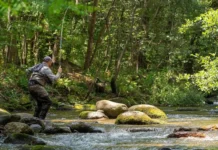
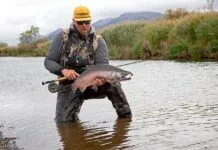
There are steelhead rivers, and then there is the Dean. From Kimsquit Bay Lodge in British Columbia, mountains drop straight into the salt, with fresh steelhead only minutes from the ocean.
Jeff Hickman, Adrienne Comeau, and Pat Beahen join Jeff Liskay to break down what makes Dean River steelhead fishing so different. They get into the famous canyon, how tides shape the fishing, dry-line and Chinook tactics, and the gear and techniques that make this river unique.
They also talk about something bigger than catching fish: why these wild steelhead deserve respect and what anglers can do to give something back.
Jeff Hickman takes us through the history of Kimsquit Bay Lodge and BC West, while Adrienne Comeau and Pat Beahen share what brought them to the Dean. We break down the river from the saltwater to the canyon, how Dean River steelhead move through the system, and what makes fishing and landing these wild fish such a unique experience.
(01:08) Jeff Hickman was hooked on steelhead by the time he was 11. That obsession eventually took him from guiding in Alaska and working at Alaska West to Andros South and, eventually, the Dean River with BC West.
After hosting the same week on the Dean for six years, Jeff and his wife Catherine got the chance to buy Blackwell’s Lodge with help from a client. They took the leap in 2014, even though Catherine had never seen the lodge, and it became Kimsquit Bay Lodge.
Adrienne met Jeff nearly 20 years ago at the Sandy River Spey Clave and joined the lodge full-time after two shorter guiding stints. Pat met Jeff at Andros South in 2007 and later heard through Karen Knight that Jeff needed guides, eventually coming aboard as lead guide.
Jeff sold his Deschutes permit to former employee Barrett Ames, giving him more time on the Dean and at Kimsquit Bay. He now spends about six months a year at the lodge on construction and improvements while bringing the programs together into one lodge experience.
The geography makes the experience even more unique. About 500 feet away from the lodge, the water is roughly 500 feet deep, yet steelhead can move from that deep saltwater into just 18 inches of river water.
The Dean flows west from an interior plateau through the Coast Range before reaching the Dean Channel, surrounded by granite mountains, waterfalls, and glaciers.
(26:16) Fishing depth depends on river height and speed, but Adrienne says even heavy sink tips may not fish as deep as anglers expect. At Bone Zone, the guides can sometimes watch the fly swing and see T-11 or T-14 fishing only about a foot deep.
For early-season Chinook, heavier setups help get the fly into the zone quickly and keep it there:
Adrienne says Chinook can be almost scary to hook because they can break leaders, lines, reels, rods, and hooks.
(32:20) Jeff Hickman says the challenge has become more important than catching numbers. For him, steelheading is about connecting with the wild, and making it harder can make each encounter more meaningful.
Pat shares a story that brings this idea to life. Jeff Liskay landed a steelhead at Cutbank on a sink tip and large pink fly. The fish had a distinctive X-shaped seal wound on its flank.
(37:51) After hooking a fish, the goal is to land it quickly, limit handling, and send it on its way. Adrienne and Pat help anglers apply pressure, making gear choice important for powerful Dean River steelhead.
Cloudy weather limited glacial color and brought excellent dry-fly conditions. Temperatures topped 60 degrees only two or three times, recently hit 51 degrees, with 55 to 58 degrees the sweet spot.
Jeff Hickman discovered fly fishing after moving with his mom from the East Bay to Mount Hood, Oregon, around age 11. A fly shop in Welches helped introduce him to the sport, while the surrounding rivers, steelhead, and wilderness became a source of healing and shaped his connection to fishing.
(56:04) Jeff believes giving back is part of being a steelheader, whether through donations, volunteer work, labor, or other skills.
Adrienne describes the challenges facing wild fish as “death by a million cuts” and says fly anglers, gear anglers, and other sport fishermen need to work together on the bigger issues.
The message is simple: put the fish first, help each other, and handle every fish with respect.
Jeff Hickman has been chasing steelhead since he was about 11 years old. His career has included Alaska West, Andros South, the Deschutes, BC West, and Kimsquit Bay Lodge, where he is now bringing the Dean River programs together.
Adrienne Comeau guides at Kimsquit Bay and also works in the Terrace and Skeena country. Steelhead were part of her fly-fishing story from the beginning, and the Dean was a legendary name to her before she had even cast a fly rod.
Pat Peahen knew by grade nine that he wanted to become a professional fisherman. His path eventually brought him to the Bulkley and Kimsquit Bay, where he serves as a lead guide and works closely with Adrienne and the rest of the Dean River team.
Episode Transcript
WFS 996 Transcript 00:00:00 Jeff Liskay: Hey, this is your Great Lakes Dude. Jeff Liskay coming to you on the Wet Fly Swing Podcast, where we’re going to be going rage angler on all things Great Lakes from gear fly big water and swinging flies. Of course, if it concerns the Great Lakes, we’ve got you covered. So stay tuned to this next episode. Welcome to the Wet Fly Swing Great Lakes Podcast. This is Jeff Liskay Great Lakes Dude. Well, it seems like it’s a year has passed already and I am in one of my favorite places across the border in British Columbia. This is going to be probably one of the best podcasts I’ve ever had the honor to do. I am up in Kips Bay on the Dean River with three great people. I am with Jeff Hickman, owner of the Lodge. He also has BC West, and I’m with Adrienne Comeau and Pat Beahen. And so they are going to be with me today and we are going to talk all about the Lodge. But first, Jeff, welcome to the show. Adrienne. Pat, welcome to the show. 00:01:06 Jeff Hickman : Thank you. 00:01:07 Adrienne: Thanks, Jeff. 00:01:08 Pat: Hi, Jeff. 00:01:08 Jeff Liskay: Hello, Pat. Everybody. Has everybody got an adult drink. 00:01:12 Adrienne: Or at least one? 00:01:13 Jeff Liskay: At least one. We’re going to need it, but we’re going to be talking a little bit. But I’d like to dig in first. Let’s chit chat. Jeff. First, you’ve got your two great guides here, but let’s talk a little bit about how this whole transpiring from the West Coast steelhead to this British Columbia Lodge, you know, started. 00:01:29 Jeff Hickman : That’s, uh, yeah, for those that don’t know, I’ve kind of been immersed in steelhead. Uh, uh, just obsession, I’d say since I was like eleven years old and kind of feel fortunate. I knew my path early on and knew that I wanted to be a steelhead guide, and was lucky to be able to start guiding in Alaska and kind of be in Alaska West on the connect Hawk and, and surrounded and working with some pretty awesome peers and and customers and that parlayed into guiding for the fly shop in Portland. And, uh, and working with the company Nike, which was like a destination fly fishing experience company. The after they acquired Alaska West, they acquired Andros South in the Bahamas, which I got a chance to manage for a year. And they also acquired Nakia Lodge here on the Dean River. And as soon as that happened, I was basically begging my bosses to to let me in somehow, you know, trying to figure out a way. And after begging for several years, I was finally given the opportunity to jump on a couple of last minute spots and booked a guy who had fished with a number of years and came up here and experienced it. And as soon as I saw this place, I just I knew I had to be here every year. So I just committed right away. I said, this, this, I’m doing this trip every year. This is my week. I’m holding it down. And, um, was a host of that week and got to fish it. And it was like the week I looked forward to most out of the year. And, uh, after six years, I had the opportunity to actually, um, a client offered to lend us the money to, to buy the place. And so we bought the Blackwells Lodge. Here’s where we’re at, which is now Kimsquit Bay Lodge in twenty fourteen. And, uh, my wife is an angel. She was had never seen it and kind of sight unseen, just went for it and agreed to give it a go. And here we are. Yeah. Thirteen years later. 00:03:23 Jeff Liskay: It’s crazy. I am literally sitting out here, all the listeners looking at probably one of the best views I’ve ever seen in my life. Pretty special fish that run there. Adrian, how did you acquire to be a guide up here? You were not only noted for here you’re down in Skeena country, but how did you become a guide up here for Jeff? 00:03:42 Adrienne: Well, the Jeff and I met a long time ago, probably close to twenty years ago. Um, down in the Sandy River Spey cliff. And we’ve, you know, tons of mutual friends and had met several times, and one year I was dating a fellow who was working for Jeff and came up and hung out and helped do the preseason start up and really got to know Jeff and Catherine and had a great time. And the following year, Jeff asked me to come in and fill in for one of the guys. He wanted to go home for a couple weeks, so I came in and did two weeks, jumped right in, um, had a really, really amazing time. And then, um, just developed such a good relationship with, with both Jeff and Catherine. And Jeff kept asking me to come and do the full season. And after Covid, I did one more two week stint and then that was it. The next year I came back and started doing the full season here. So really fortunate that Brian, who I work for in terrace, was understanding enough to let me miss out on a bit of the season up there to start with. And, and so now I get to do both. It’s pretty amazing. 00:04:51 Jeff Liskay: Yeah, that’s pretty cool. Pat, we meet again. 00:04:54 Pat: Hey, Jeff. How are you doing? 00:04:55 Jeff Liskay: It’s the usual. Can’t wait to fish with you again. 00:04:58 Pat: Yeah, we’ve had some good fishing together. 00:05:00 Jeff Liskay: Yeah. 00:05:03 Pat: Uh, so my story with the Dean River, uh, and, um, here at Kimsquit Bay. Um, Jeff and I first met back in, just like Adrian a long time ago, back in two thousand and seven at, uh, Andros South Lodge in Bahamas. And I was there on a family and friends trip, which was pretty fun. And, uh, we got to know each other down there. And then a bunch of years passed where we kind of, you know, tracked each other, I’m sure, through our steelhead journey, but we weren’t really together. And then, um, I was again on another saltwater trip down in Mexico and I was on the Boca Road, uh, in by getting down to Ascension Bay. And I came across Karen Knight on the road, and I knew she was down there working at one of the lodges, and we saw each other and she was doing some, uh, you know, um, expediting of goods and whatnot. And I was going fishing at the bridge and, uh, so then we chatted real quick and she’s like, hey, uh, you know, Jeff’s looking for two guides, I think at, you know, for BC West and Kimsquit Bay. And so, um, eventually I got in contact with Jeff and we had a quick phone conversation and, uh, he offered me the lead guide position here at Kimsquit Bay. And that was five years ago now. And yeah, it’s like been like to have two families, like late, not late in my guiding career, but kind of down the road, you know, um, the Bulkley and now Kimsquit family is pretty amazing. 00:06:37 Jeff Liskay: Yeah, it’s pretty cool. But so before we dig into what makes the Dean probably the most special steelhead river there ever was, is Jeff. What’s the calendar year like? What’s the season? What can people expect? You know, when do you start? When do you close? What do you got going on? 00:06:51 Jeff Hickman : Well, we run here on the Dean mid June through mid September now. And so we’ve actually reduced the number of rods that the lodge has had. And in an attempt to kind of stretch out our rod days and run a little bit later, originally we bought the place. It was a nine week season. And this year we’re running a thirteen week season. And, uh, last year I sold my Deschutes permit to my former employee, Barrett Ames. So he’s taken that over and killing it, and it’s freed me up to be here, stay a little bit longer in the fall and kind of merging the programs together here at the Kimsquit Bay Lodge, the oceanfront property here. Yeah. 00:07:28 Jeff Liskay: Pretty cool. Um, when I entered last year was my first year and it was, you know, beautiful lodge, but with great cabins. But Jeff, you really did a knocking it out of the park with, I would say, updating everything here. These these are not cabins. These are chalets. It’s unbelievable accommodations for the guests now, and you’re going to be doing some updates again here in the next year or so, right? 00:07:51 Jeff Hickman : Yeah, I think, um, one of the, the coolest parts about this lifestyle and everything is, is just, uh, have just an unbelievable network of, uh, you know, talented people and, and friends that, that believe in the vision and they want to help out. And so I’ve had a lot of amazing help here, uh, to build and, and hone my skills and, and just take on a pretty ambitious lift here to merge the programs together into one just unbelievable lodge experience. 00:08:21 Jeff Liskay: Yeah. I mean, within one year, I can’t believe what you get done in April to the season starts in early June. It’s unbelievable how much work you get done. It’s a lot of hard back breaking work for sure. 00:08:32 Jeff Hickman : Yeah. Our guests are here mid-June to mid-September, but I’ve been here like six months each year and the rest of the year. I live on the northern Oregon coast in the winter, and I’ve taken on two pretty major house remodels than the other half of the year, so I haven’t been doing a whole lot of guiding personally in the last few years, but I still plan to come back to it someday. 00:08:52 Adrienne: You’re more of a construction guy now. 00:08:54 Jeff Liskay: You are. And you and you’re working with the with a bad leg and a broken foot and everything else. 00:09:00 Jeff Hickman : Yeah. Well, we have a ten year old. He got into skateboarding, so I got a little carried away with my lessons last year. 00:09:07 Adrienne: The text was great. He just sent me a text of his X-ray and I was like, oh no, oh no. 00:09:14 Jeff Liskay: Yeah. So let’s, let’s I mean, for you guys, you know, everybody, this is one of the like, I guess check the box. You said Pat like a check the box for some guests that come here, some come on a repeated basis. But the dean is noted to be like, this is where you want to be. This is like what makes it special. I’m going to go right down the line. Jeff, what makes it special to you when you first was experiencing it way back in donkey’s days? Like what makes it special for you. 00:09:42 Jeff Hickman : Man, I think, um, it’s hard to hard to put it into words. You know, for me, it was like a feeling when I got here, it just completely blew me away. And I remember my first trip here standing like knee deep in the river and just looking around at the scenery and feeling the power of the place. And like, for the first time in my life, I felt like I had made it. You know what I mean? Like, everything in my life was for a purpose to get me there, to just stand there and feel that. So I felt like without any sort of ownership or anything, but just experiencing it, like I felt self-actualized, like the pieces in my life had fallen into place for a reason to get me there. And then, yeah, it’s like you’re still heading for the highest quality steelhead in the world. They’re like minutes out of the saltwater. That first trip I was fishing the ocean Run and a pod of orcas swam by. It was just like these experiences you can never imagine in in the most wild imagination, you know, and it’s happening in real life. So like just feeling that I knew that I wanted to be here every year and I made a commitment to it. And then, and I’ve just every, at every opportunity I’ve, you know, dove in deeper and just fully committed to it. 00:10:59 Jeff Liskay: You did a great job. I mean, you told me when I first got here, it’s like the bay right here is over four hundred feet deep. Plus. Correct? 00:11:06 Jeff Hickman : Yeah. Five hundred feet deep. You know, five hundred feet away from us. It’s five hundred feet deep water. 00:11:11 Jeff Liskay: And they’re going to go right into eighteen inches of water. 00:11:13 Jeff Hickman : The kraken’s out there swimming around. 00:11:15 Jeff Liskay: Yeah. It’s it’s it’s it’s it’s really crazy. 00:11:19 Jeff Hickman : Who knows who’s going to show up. 00:11:21 Jeff Liskay: Right every day. Right on the tide. We’ll talk about the tide pushes and that. Adrian, how about you? 00:11:27 Adrienne: Uh, well. 00:11:28 Adrienne: So when before I started fly fishing, um, I met a guy, and he’s the one who introduced me to it. But before I actually even cast a fly rod. He told me about the Dean River, so I knew about the Dean as this legendary steelhead place, even before I knew what a steelhead was. And so the first time that I got to come up here, at that point, it had been ten or eleven years that I had been fishing and learned more and more and more about the Dean. And. And when I started fishing, I started steelhead fishing. So that’s all always been top of my list. And I got the opportunity to come up in twenty thirteen. So the year before Jeff bought it, um, when April and Stevie were working for Blackwells and I came up to do Shut Down. And I just remember stepping into the river for the first time and it was just like, oh my God, I’m standing in the Dean, right? And at that moment, it had nothing to do with catching a bunch of fish or anything else, but just this legendary place that I’d heard about since before I knew what these fish were. Um, and obviously since then there’s been so many other aspects that, that continue to make it special. But just knowing how much this place means to other people really made my first time here that much more incredible. So it just, it continues to amaze me to this day. 00:12:56 Jeff Hickman : You grew up in the Salish Sea, your coastal girl. 00:12:59 Adrienne: I am a coastal girl. This is yeah, this feels like home, right? 00:13:02 Jeff Liskay: Yeah. I think every steelhead or female or male, both. Once they start going down the rabbit hole, right, they’re like, I want to go here and there. But eventually the word Dene River comes into the conversation. Yeah, really, really fast, Pat. But you know what you think, man, I can’t wait to hear you because you’re like the you’re like squirrel on a Red bull. 00:13:24 Pat: Oh yeah. I’m trying to be calm here. 00:13:26 Pat: You know he’s doing well. He’s doing well. You’re doing super good. I’m looking over my. 00:13:31 Pat: Right shoulder. 00:13:32 Pat: At the sun going. 00:13:33 Pat: Down over the the, you know, snow capped peaks right now. with some mixed clouds and a beautiful bay with some shimmering light. So things are good. But, um, I’m going to go back to, uh, first of all, it was always you always just heard the dean. It was just like in story. It’s just just the dean. And it just had this like kind of presence about it. Right. But I can remember being back in the, uh, fly shop back in Whistler fly fishing. And we had DVDs back then. And it was a, it was, it might have been a Skagit master. I can’t exactly remember, but, uh, it was Dek Hogan, like on the Dean. 00:14:10 Jeff Hickman : Martin. 00:14:10 Jeff Hickman : Spey casting. 00:14:11 Pat: Yeah, yeah. 00:14:13 Jeff Hickman : I had that on repeat. 00:14:14 Pat: Like. 00:14:15 Jeff Hickman : Fly Shop two every day. 00:14:16 Pat: If anybody can get your hands on this video, like it’s just so awesome. And it’s just, you know, it’s just deck, you know, being like a true steelhead and just like a master steelhead. And it’s just like you’re watching this going, what is going on here? Like it’s intense, right? And, um, so, you know, fast forward to, you know, post Covid and now I’m here stepping into it. And I mean, had Adrian as my like, you know, Adrian taught me the ropes, like first, you know, week I’m here guiding blind, right? And she’s here with me and we do it and we just, you know, like. 00:14:57 Pat: You. 00:14:57 Adrienne: Know, it’s a funny week because Jeff and Catherine. 00:14:59 Pat: Oh my. 00:14:59 Adrienne: God, Covid and poor Pat and I were just like, okay. 00:15:03 Pat: You’re on your own. Figure it out. 00:15:06 Pat: And, uh, it was a mega high water year. Like we had like two runs if the tide wasn’t right and three runs if the tide was right and we figured it out. And ever since then, we’ve had lots of other experiences. But yeah, um, just this place is just unbelievable, right? Like the setting, the fish, the presence is huge, right? And it’s amazing. You’re continually, continually like going, what the heck is going on here? Right? There’s so many different layers and moments to it. It’s unbelievable. And this is like we’ve talked about deep down the rabbit hole of our steelhead journeys, right? Like, and it’s just like you’re starting all over again. 00:15:50 Speaker 8: Check out Sullivan fly rods. If you’re looking for a rod made in the USA, every rod is handcrafted using American made components with blanks. They design. After years of working with top guides and they offer different actions built for different styles of fishing, from dry flies to streamers and saltwater and beyond. Check out Sullivan Fly Rods dot com right now and build a rod you’ll be proud for years to fish. That’s S u l l I v a n Sullivan fly rods dot com. Check them out today. Let on to Mark Lodge. Give you the Montana fly fishing experience you deserve. The gin. Clear waters of the Missouri River offer a world class experience with one of the finest rainbow trout and brown trout fisheries in the world. Whether you’re a seasoned angler or new to the sport, their family of guides will tailor a trip just for you. You can head over to Onda Lodge dot com to fish one of the great trout streams in the country. 00:16:46 Jeff Liskay: Jeff, why don’t you. You know, I’ll let the guides talk a little bit about the runs and, you know, some of the dynamics of fishing and that how they go about it. But talk a little bit about this canyon people hear about and how much water there is to fish and what your programs are. Why don’t you, you know, tell the listeners how that all worked, you know, skating on that. 00:17:03 Jeff Hickman : Yeah. So, um, when we first bought the Blackwells Lodge, basically it’s a small camp for six anglers and all the fishing was done below the canyon. The canyon is kind of famous on the Dean River. And it’s just this crazy box, you know, very steep, uh, rapid. I mean, it’s not quite a waterfall, but it’s pretty close. It’s really powerful. It’s like a half a mile long. Um, that demarcates the lower river from the upper river. So Blackwell’s only fish below that canyon. It’s about two miles of river and it’s very tidally influenced. Typically the fish are, you know, very migratory. You know, they’re they definitely hold in this lower stretch of the river, but it’s a lot of traveling fish coming just fresh off of the tides. Like all the fish are chrome glowing chrome with sea lice. Um, so we were fortunate to acquire this camp in twenty fourteen. And then in twenty nineteen, we had the opportunity to acquire B.C. West, which was formerly Nokia, which is where Dick Hogan was filming Modern Spey casting DVD. And that was where my first introduction was, was as a guest of BC West. And that program, that program is unique in that it’s the camp is just a half a mile away from here, but the camp catered to eight guests at a time, and you would alternate fishing below the canyon and then up fishing above the canyon the next day and flip flop days. Basically eight guests at the camp for upriver for downriver. And so we were able to acquire the that camp in twenty nineteen. Of course, then Covid happened. We were closed down with the border closures for two years. And it was a really stressful time for us. We we almost lost everything at that time and still had to still had to pay the lease on the BC West property, which was really steep and just kind of dove in on this, doubled down on our debt, basically. And, uh, and it was stressful, but I just knew that like having both of them made each one more valuable and not having that, that competition element. I mean, I was scared of who might buy it if we didn’t kind of thing. And so that lease is sunsetting at BC West. Um, and we have until June first, twenty twenty eight to be moved off of that property. And so that’s what I’ve been doing is just fixing up everything here, um, revamping everything and just getting ready to have twelve up to twelve guests at a time here because we reduced the BC West camp down to six guests at a time. So it used to be eight maximum. We reduced it down to six, and that allowed us to then lengthen out our season a bit. Get through August and and access our September raw days because September here can be quite good and really cool. Yeah. Experience completely different than, say, the crowds of June and July. 00:19:48 Jeff Liskay: Absolutely. Because you’re on the ride days above and below the canyon. So that’s really very important. 00:19:54 Jeff Hickman : Yeah. And then in August, there’s a jetboat ban above the canyon. So we fish in that stretch of water with no other jet boats. And we have the only guiding lights in that section, which is pretty exclusive in the month of August. And then, and then all year we have exclusive access to below the canyon. We have all the rod days. So there’s no other competition here as far as guided anglers go. 00:20:14 Jeff Liskay: That’s awesome. So last year, um, we had some scientists on the river we have this year again. And I noticed they were doing these, you know, radio transmitters. But did we ever get the Intel how long it takes to get through the canyon? Because this is not a little a little thing that you’re going to see on the Great Lakes. This is something serious. Maybe this is what makes the Dean River fish so strong. But how long do they I mean, did they figure that out? 00:20:37 Pat: I mean, I think a big part of it has to do with the conditions and the flow rate that we have in the river. Um, case in point this year, uh, we’ve had quite a bit of snowpack in the Central Coast mountains. And as a result, we’ve had quite elevated flows in the river. And it seemed to us, Adrian and I, that the fish were, generally speaking, holding up and moving through that canyon fairly slow at times. 00:21:04 Jeff Hickman : Or even bouncing back. 00:21:05 Pat: And definitely, yeah, bouncing back through the holding runs, which would be, you know, the runs somewhat downstream of the canyon are okay. 00:21:14 Jeff Hickman : Um, the science. 00:21:15 Pat: The problem with the science is that they probably, you know, there’s extra stress put on the fish and possibly those fish are giving you a little bit of a false read as to what is going on is going on. That’s just my thought. I’m not sure if that’s actually true, but that’s all we know from those fish are. Those are the ones that have been tampered or not tampered, but, um, meddled with a little bit more than just angling caught fish. 00:21:43 Jeff Liskay: Yeah. When do they expect or when do these fish hit the boom boom room and go gravel. 00:21:49 Pat: Oh that’s going to be the spring of next year right. 00:21:52 Jeff Hickman : Yeah. They overwinter I think. But what the science has shown us is like two weeks I think is the average trip through the canyon. 00:21:58 Jeff Liskay: It’s crazy. 00:21:59 Pat: Yeah, yeah. 00:22:00 Pat: But I think this year with elevated flows much more than that. 00:22:04 Jeff Hickman : Yeah. I think they were holding in the lower river a lot more than usual. 00:22:08 Jeff Liskay: Okay. 00:22:08 Jeff Hickman : And water temps I think also play into that. 00:22:10 Pat: Yeah. There was a delayed upstream migration this year. 00:22:13 Jeff Liskay: Yeah lucky me. 00:22:15 Pat: First time in five years that we’ve experienced that. 00:22:17 Jeff Liskay: Okay. So that’s right. Lucky me right. It is a timing thing, right? Yeah, it’s a timing thing. You know, people say, I want this week. Well, Mother Nature interacts with that with temperatures and, you know, water temperature, air temperatures, rain. And you can say, oh, that’s the best week. Well, guess what? You could be here at the end of the season. It’d be the best week too. 00:22:37 Jeff Hickman : Yeah, the best week. I’ve always told people I get that question a lot. Is the week that you can make it here. 00:22:41 Pat: Right. Exactly. 00:22:42 Adrienne: Yeah, definitely. 00:22:43 Jeff Hickman : That’s without a doubt will be the best week of your year. 00:22:46 Pat: Yeah. You’re not. 00:22:47 Pat: Yeah. Nobody’s even here with their head down. 00:22:51 Jeff Liskay: I get the same question. Well, why do I want to go? I says, well, I have friends that go in August and they did great. I have friends that go early. They go, they did great. I don’t think they ever don’t do great, or at least for Steelheading, right? When you’re checking the box for, you know, is that the canyon? Is that what makes them so strong, that breed, or is that the whole genetics or what? 00:23:10 Jeff Hickman : That’s part of certainly part of it. 00:23:12 Pat: Yeah, yeah, yeah. 00:23:13 Pat: I think on any steelhead river that everybody that’s going to listen to this podcast has experienced that the river forms the. The fish and. And to an extent, the anglers that go and fish for them as well. Right. And um so certainly the dean just and especially the lower dean, but the dean even into the upper isn’t it’s not a really long system that gets fished. It’s pretty compact. And so I think the proximity to ocean for sure. Uh, and the gradient and the geography of this place is sort of what forms the whole experience. Right? 00:23:51 Jeff Liskay: Right. I mean, these fish and then we’re going to go down this next is like the names of these runs. But you know, just the obvious, the instant backing, right. It’s like, so where did all these names come from? Is this old school or what. 00:24:03 Jeff Hickman : A lot of them are? Yeah, I think, I think the one thing I like to point out to people is that the Dean headwaters are some of the best rainbow trout habitat in the entire world. I mean, this is the epicenter of rainbow trout. Oh, and pure genetics. And the dean, in effect, is a little bit of a backwards system in that it starts up in the interior, on the high plateau, and as it drains westward to the coast, it cuts through the coast range. And right here where we are at the mouth of the river, we’re right in the heart of the Coast Range, because we have a large fjord that delivers salt water very far inland. And so as you, you know, typically you think of a river being coming from the mountains. So the headwaters being in the mountains and the and the mouth being more out in the plains. And the dean’s kind of reverse of that, where it kind of comes from the plains and it flows towards the mountains and where it hits the salt water ocean. In this Dean Channel fjord, it’s right in the heart of the Coast Range. And this is a rugged granite mountain range here with waterfalls and glaciers. And just it just goes from eight zero zero zero foot peaks straight down into the ocean. 00:25:11 Jeff Liskay: Yeah. I mean, that was the first thing when I was blessed to come last year. You’re fishing and you’re looking straight up at what? Six thousand feet right behind you, seventy six hundred feet. 00:25:22 Adrienne: Yeah. The mountain right here that the waterfall comes off of, I think is seventy four. 00:25:26 Pat: Yeah. 00:25:26 Jeff Liskay: It’s crazy. It’s like no, no other place like it. Straight up, straight up. 00:25:31 Adrienne: Well, and you look at the mouth of the river too, and the way it just drops there isn’t like an estuary in zone in terms of what most people would think of an estuary like, right? You’re literally going from steep gradient and big structure into the deep ocean. 00:25:47 Jeff Liskay: Right? 00:25:48 Adrienne: Right. 00:25:48 Jeff Liskay: When you’re looking downstream, the gradient is like, I didn’t realize it until yesterday. I’m like, that is really dropping fast, you know, going through sliding. That was like, wow, that’s really fast. What? So these names, right? They’re pretty fabled names of all these runs and stuff like that instant backing ocean because evidently. Right. Adrian, what happens when you’re fishing the ocean and you get your ass handed to you? Where do the fish go? 00:26:13 Adrienne: The fish go back to the ocean. 00:26:15 Pat: Bella Coola. Sleigh ride. 00:26:16 Jeff Liskay: Is there any other place like you would wish to catch a steelhead? I don’t think so. 00:26:21 Pat: Man. 00:26:21 Jeff Hickman : I try to. We’re pretty spoiled here, right? 00:26:26 Pat: So. 00:26:27 Jeff Hickman : Yeah. I mean, I love steelhead and I love all parts of steelheading and and steelhead culture. But this is it’s we get spoiled here. 00:26:36 Pat: Yeah. 00:26:36 Jeff Hickman : It’s all I’m going to say. 00:26:37 Jeff Liskay: Yeah. The tide changes quite a bit here that brings these you know bring them in. Right. I mean it’s like you told me last year was huge tide swings sometimes depending on the month, which is twenty feet, fifteen, twelve eighteen. That’s crazy. 00:26:52 Pat: Yeah. 00:26:53 Jeff Liskay: Yeah. So let’s talk a little bit. You know, you know, everybody’s going like, oh boy, you’re a big steelhead, this and that. The names of the run stuff. Let’s talk a little bit about like, Jeff, I know you, you’re going to fish a dry line no matter what, but in a general situation, guides Pat and Adrian, what’s your program like? What, you know. What do you start out with? Like on a normal day when the river’s not blown out and it’s not super low and clear. 00:27:19 Adrienne: I mean, it does depend on on the height of the river, right? Yeah. So because of the gradient, because of the speed of it that you can run, you know, what a lot of people would consider relatively heavy sink tips and still like, like Pat and I get the opportunity in some places to watch your fly come through the water. So there’s a spot we call bone zone, and we get to get up on this logjam. And, and when the water is clear and we got some sun, we can see your fly coming across. And even with like t eleven if the water’s low or T fourteen if the water’s high, your fly is down, maybe a foot. 00:27:58 Pat: Or a muddler that’s down an inch. Like these are all within a foot of each other. All of these different sink tips and even an integrated sinking head in the real heavy stuff is it’s maybe it’s thirteen inches. You know, until things start to separate in terms of, uh, seams and whatnot. So it’s not that deep. 00:28:22 Pat: No. In any case. 00:28:24 Adrienne: At any point, most of the time we’re not actually. You know, our flies aren’t down that deep. Um, but we also base it to on what, you know, what people want to do, right. And some people want to fish light and, or fish a dry. And some people just want to feel like they’re getting a little closer to where the fish might be. And so we fish a little heavier, but it’s really dependent on water conditions. 00:28:52 Pat: Sure. 00:28:53 Adrienne: Right. 00:28:54 Pat: And the other point too, on that front is that we also it’s not always a steelhead game here. It’s also early season. We’re fishing Chinook salmon. 00:29:03 Jeff Liskay: Wow. 00:29:04 Pat: Yeah. 00:29:04 Pat: And that’s a different it’s a bit of a different play. Like they tend to be a little bit less likely to kind of charge up to the very top part of the water column and take a fly. So you have to get down and dig down in there with some heavy gear right up to, you know, with multi density heads with like fifteen feet of T seventeen. And possibly if they, if an angler can do it fifteen feet of T twenty to get down into these locations. And it’s an earlier season game. So you know of course there’s going to be a little bit more flow during that. And those fish want it, you know, a little bit closer to them to go for the fly. Yeah. And aid, to be honest, has taught me that game big time. Right? Like, um, I’ve dabbled in it a little bit in on the Skeena and stuff, but my Chinook game wasn’t that big, you know? And over the years, she’s taught me how to do that. So how about you speak to it a little bit that the Chinook side of things. 00:30:01 Adrienne: I mean, yeah, with the Chinook game. And I feel like I’m still learning with that too, because I had relatively, you know, limited experience in the grand scheme of things. But from the time that I spent doing guiding for Chinook on the Skeena, um, and you know what Chinook fishing I’ve done personally, you know, they want it, you got to get that fly in the zone right away and you want to hold it there as long as possible. So using a heavy setup and multi density head with a heavy sink tip, it’s going to get down very quickly and you can really manipulate it to hold it there as long as possible. In a place like the Dene that is, you know, we’ve been talking about how fast it is when the water is high and those fish are sitting out in the middle of the river, you got to be able to wade deep, and you got to be able to cast some heavy, heavy. And you got to be able to also make sure that you can manage it on the inside portion of your swing. So it’s challenging. It’s hard work. And I love Chinook. They’re so cool and they’re almost scary to hook. Like fully scary to hook. And they break a lot of leaders lines. Reels, rods, hooks. Everything. Um, but they are certainly like, you know, they’re worth the effort, but I’m glad it’s a very short window. 00:31:30 Pat: One of my favorite things on the dean, whether it be Chinook or steelhead, uh, is seeing a client getting worked by a fish. And I walk up behind him and I always say, who’d you pick a fight with? 00:31:40 Pat: Now you got. 00:31:42 Pat: To be careful who you pick a fight with. 00:31:45 Pat: And it’s a verb here. 00:31:47 Jeff Hickman : It’s called getting Dean. 00:31:48 Adrienne: Getting. 00:31:48 Pat: Dean getting deemed. 00:31:50 Pat: More often than not, we see people getting Dean than landing a fish. And it’s it’s usually in an instant. 00:31:57 Adrienne: Yeah, yeah. And by that, we mean that the fish grab hard and then they literally turn around and leave like most of them are trying to get back to the ocean and you have so little time to react. And, you know, if we have the opportunity to get in the boat and chase them, sometimes we do that, but sometimes we don’t even have time for that. And you just hang on and enjoy the ride for as long as it lasts. 00:32:20 Jeff Liskay: We were in the boat together this year. 00:32:22 Adrienne: We were in the boat together this year. Yeah, that was a long ride. 00:32:27 Pat: It was. And it was like. 00:32:29 Jeff Liskay: It was fifty fifty that I was going to make that happen with you. But Jeff, you’re the dry line king. Chinook. Like you’re at that level that you just want to do it your way. Right. And I think every steelhead or you think every steelhead will ever get there. I don’t think so. I think there’s a certain mindset. It takes like, I’ve caught enough of these. This is the way I’m fishing no matter what. Right? 00:32:50 Jeff Hickman : Yeah. I mean, I’ll start with the fact that I feel like I’ve been very lucky to experience what I have in my life and feel like I’ve been able to experience these places and these things that just like a really special time and got to guide Chinook on the dock and like what I consider to be like the heyday. And, you know, I sure hope it comes like that again. But I really feel like there was a sweet spot in time to, to just really get to experience and have a target rich environment and catch a lot of fish and, and see some unbelievable days of, you know, steelhead fishing also. And now it’s like, I think to me, like the thing I, the thought I keep coming back to is challenging ourselves, right? Like I encourage people to challenge themselves because the harder a fish is to catch, the more valuable each one becomes, right? For sure, this is very much a quality fishery, you know, and at times it can be a quantity fishery. And I just hate seeing that because it makes me feel like the fish are cheap, you know what I mean? I feel like it’s disrespectful to the fish, which are like the most sacred wild animals there are. And this is like steelheading at its core to me is like connecting with the wild. And steelhead are among the most wild animals there are in the world. There’s something that if you weren’t an angler, you wouldn’t ever know they existed, right? Like they’re invisible. They’re somewhat supernatural. That just can appear right before your eyes. They didn’t come from anywhere. Just all of a sudden, they’re right there. You see them, you know? And, uh, I think we’re lucky to get to experience that. And I just have, like, a real reverence for that. So for me, the dry line is like, it’s not even about hooking or catching or, you know, heaven forbid, put a tape measure on a fish or something like that. It’s about seeing it and experiencing it and challenging ourselves to wade the hard wade line, or cast a little farther or, or try to get the fish to come break the surface and come out of the water to try to eat the fly, you know? And I get more enjoyment out of watching the fish slash at it or boil on it than I even do hooking a fish. And so that’s my personal thing. And I encourage you listeners out there to challenge yourself because it just makes the experience like heightened and so much more intimate. 00:35:14 Jeff Liskay: Right. Yeah. I mean, you even said like, and I don’t know if I’m at that point, but even just the mechanics of reeling them in, it’s the puzzle of like, oh, I’m going to catch one today on a wet or dry, like figuring out the game, like, okay, this is the water they’re in and, and they’re not all going to come to the top. They’re just not going to. So we’re just looking, searching, right? You’re just searching for the one fish for the day. 00:35:34 Jeff Hickman : But I think, uh, you know, like you’re coming off a really good week of fishing and like, are you going to remember the, you know, like the seventh fish you caught? Or are you going to remember the one that came completely out of the water to eat your dry fly? 00:35:45 Pat: Can I interject for a second? Sure. 00:35:48 Jeff Liskay: Both of you. 00:35:49 Pat: I’m going to tell a story about something that Jeff went through this week. Uh, it was sort of like a mid week of the trip And we were making last, you know, minute move to a spot. You know, it’s a big place called Cutbank. And I put Jeff in the spot and promptly he hooked a fish. And it was a good battle. It was great. It was on a sink tip and a nice big pink fly. And, um, we landed that fish and it had this most amazing, like crazy seal wound on its mid flank. And it basically was like an X like, and literally X marks the spot, right. And, uh, it’s like no other seal wound that I’ve ever seen. And Jeff and I were taking pictures of it. And maybe we can put that on the, on the notes or the, you know, part of the podcast for sure. And, uh, so that was really cool. And we just thought that was awesome. And we ended the day basically with that fish. And two days later, um, I was with Jeff again and we were fishing a spot and Jeff was like committed to the dry fly basically all day this day. And it was really awesome. And I was like, okay, I’m going to put you in a spot that like, I know that, you know, they like it here on the top. It’s like kind of a glassy little pool. And, and he hooks one and we see it and it was like a teacup, just like a little bit of a sip, you know, it was like so subtle. I was like, oh my God, here he goes. And that fish got off on a midstream jump. And he dropped right back into the run about like two or three casts later hooks another fish. And, uh, he just hoot and holler. And I didn’t see that take, but I was like, right in there for it. And we landed that fish and lo and behold, you know what fish he caught again, just probably maybe three runs upstream. It was the fish again. So Jeff caught the same fish twice this week. Uh, and it was such a notable fish. And this one this time ate the dry fly. And it just goes to show that they’re all like, they’re willing to do so many different things. And, uh, and it fought like even harder the second time around, which was crazy to me. I wouldn’t have predicted that, but it was so neat. Hey, Jeff. 00:37:51 Jeff Liskay: Yeah. I’ve never, I’ve never seen that. Is there a. Is there a time and point when you think that people overplay steelhead? Like, do you have to say, hey, let’s put the pressure to them? Like, we don’t want to overplay these fish at all. Right? 00:38:05 Adrienne: Absolutely. Absolutely. There’s, you know, our goal is to get, I mean, as much as we want to enjoy the fight and see the jumps and the big runs and everything, our goal is to get them in as quickly as we possibly can and handle them for as little time as we can and get them back on their journey. Um, and part of that, it comes down to, um, you know what Pat and I can do to help you guys, you know, work the fish in a, in a way that’s gonna bring them in quicker. Um, and part of it is also the gear that we’re using and, you know, if we see that’s it. All right. 00:38:45 Pat: So we’re not, we’re both. 00:38:47 Pat: Not big fans of. 00:38:49 Adrienne: Click and Paul reels on the lower dean. Um, unless you have a tremendous amount of experience. And so this goes to you, Jeff, watching you fight a fish on a click. And Paul reel is quite impressive. But that fish that we had the other day down at the ocean, you were working your ass off and you. 00:39:11 Pat: Kept. 00:39:12 Adrienne: Telling. 00:39:12 Pat: Me, yep. 00:39:13 Adrienne: I can’t control it. I can’t do anything with it. And we were super lucky to land that fish. 00:39:21 Pat: Can’t control them on disc drag reels. 00:39:23 Adrienne: Exactly. And so it’s, you know, sure. It’s super fun to fight a fish on a reel. The noise is great. And you know, the, you know, the history of it, all of that stuff. But we want to be good to these fish. 00:39:38 Pat: And it’s. 00:39:39 Jeff Hickman : Fun to watch the handles fall. 00:39:41 Pat: Off. Yeah. We saw a handle. Yeah. Hardy Markey. 00:39:44 Pat: We saw one just get spun right off. 00:39:46 Pat: And just plunk. 00:39:47 Pat: In the. 00:39:47 Pat: Drink. 00:39:47 Adrienne: They’ll burn out the clickers. They’ll. 00:39:50 Pat: And regulators. 00:39:51 Pat: Have blown up many times. 00:39:53 Pat: And. 00:39:53 Adrienne: And really but really it comes down to to the fish. 00:39:56 Pat: Right. 00:39:57 Jeff Liskay: Exactly. 00:39:57 Adrienne: And and, you know, if even when you’re very well experienced with the ball like you are, it’s still like you were just like, what is going on? Right? Like. 00:40:10 Jeff Liskay: I confess it’s gonna be a, it’s gonna be a knick knack next to my wife’s knick knack shelf. 00:40:16 Pat: Paperweight. Paperweight. Right. 00:40:19 Jeff Hickman : And leaders too. 00:40:21 Jeff Liskay: Yes. 00:40:22 Adrienne: Yeah. 00:40:22 Jeff Hickman : What kind of leaders we use around here? 00:40:24 Pat: I mean, we. Issue is twenty twenty pound. 00:40:30 Adrienne: Maximum. 00:40:31 Pat: Twenty five maximum. 00:40:32 Pat: Yeah. 00:40:32 Pat: Uh, if the fish goes up in the air and lands on twenty, it snaps in a heartbeat. 00:40:38 Pat: So maybe. 00:40:39 Jeff Hickman : No. Seven X. 00:40:41 Pat: Uh. 00:40:45 Adrienne: I mean, I guess that would be more sporting. 00:40:49 Jeff Liskay: It would definitely get to the ocean. Jeff, what are you running with your dryers? Are you still running twenty? 00:40:54 Pat: Yeah yeah yeah. Oh, yeah. Oh, yeah yeah yeah. 00:40:58 Jeff Hickman : I mean, I don’t want to leave a fly in a fish’s mouth. 00:41:01 Jeff Liskay: Right? 00:41:02 Jeff Hickman : You know, typically a dry fly is a lighter. Wire hooks off. You got to really pull on them. But the hook’s going to be the weakest link. 00:41:09 Jeff Liskay: Okay. 00:41:10 Jeff Hickman : Yeah. And honestly, the like, you know, the diameter of twenty pound helps it float better. 00:41:15 Jeff Liskay: Yeah. 00:41:15 Jeff Hickman : Okay. Up near the top. 00:41:16 Jeff Liskay: Yeah. Are you doing, are you hitching them or are you just, you know. 00:41:21 Jeff Hickman : I don’t typically hitch it. 00:41:22 Jeff Liskay: Okay. 00:41:23 Jeff Hickman : Yeah, it depends on the pattern, you know, but I, I do I’m not like partial to a pattern. I’ll fish a lot of muddlers and buck bugs and, you know, spun deer hair. I really like the classic flies and, and my son’s just way into fly tying. So it’s, it’s a kind of extra fun to be fishing his flies that he’s tying and, and I’m really enjoying that. It’s like a whole nother element to it. 00:41:44 Pat: Okay, give me this tape. 00:41:47 Pat: Um, I don’t love when I’m like, skating a fly or waking a fly. I don’t love when it’s dipping and diving up and down. That’s just me, though. It’s like my weakness, right? Like it’s not. What’s your take on that? Does it. 00:41:57 Pat: Matter? 00:41:58 Jeff Hickman : I think, um, I ride with it, I ride with it going up and down, you know? And it helped. It kind of is an extra element trying to track it, trying to find it. Is it up? Is it down? Where is it? Oh, there it is. It popped up, you know, and sometimes a certain pattern might be riding just, just under the surface until you get lower in the tail on the current picks up a bit and then then it’s back up on top, you know, so I’m not like, that’s not going to wreck my day if it’s popping, you know, dropping under the surface a little bit. But but sometimes. 00:42:28 Pat: The. 00:42:28 Pat: Presentation in terms of the. 00:42:30 Pat: You. 00:42:30 Jeff Hickman : Know, I don’t like, I love it, I’ll still fish it and I still watch it. And even when it’s, you know, just barely under the surface, you’re still going to have a blow up or a boil on it. And, um, I just roll with it. Yeah. And it, and if I, if I want it to be like if it’s a glass slick tail out or something, then yes, I want to have a flight completely above and I might, you know, switch flight patterns. So it’s super visual to track that, you know, but when I’m just kind of fishing through general water and general chop, I’m not obsessed with it being completely above the surface. And you just got to let it go. You just fish it. I love fishing a grease line, you know, floating line with a wet fly just as much. Really. 00:43:10 Pat: So how do you like it? 00:43:13 Adrienne: Well, I don’t get the opportunity to do it very often. 00:43:17 Pat: So when. 00:43:18 Pat: We’re. 00:43:18 Pat: Watching it. 00:43:19 Adrienne: So okay, for for you and I, for our personal enjoyment in terms of, you know, watching a dry fly, of course I want it on the surface because it’s so fun to watch that thing come across. Right? But, um, you know, like we’ve talked about, sometimes they come up and they might slash at it or push it or, you know, show on the fly, boil on the fly, but not necessarily take it. And maybe when it’s dipping and slightly subsurface, they’re more willing to fully commit to it. So, I mean, we’ve been learning a lot this season because we’ve had, you know, a lot more opportunity this year. 00:43:56 Pat: Um, they’ve been on top a bit more because. 00:43:59 Adrienne: They’ve, they’ve definitely been looking. 00:44:01 Pat: A. 00:44:01 Jeff Hickman : Lot of cloudy weather, keeping the sun from melting the glaciers and keeping the glacial color out. It’s just we have really nice. 00:44:07 Pat: And we’ve had amazing water temperatures. 00:44:09 Jeff Hickman : This year, right? This, I mean, right now to have this kind of visibility in the river consistently for this long and. 00:44:16 Pat: And, and it’s been over sixty just two or three times this year. Yeah. Which is insane. Yeah. For midsummer fishing. Yeah. Right. So we’ve had an amazing water temperatures, right. We were, we got down to fifty one the other day. 00:44:29 Jeff Liskay: That seems to be the sweet spot, like fifty five. 00:44:32 Pat: It was like. 00:44:32 Jeff Liskay: fifty five to fifty eight. Sweet spot. 00:44:35 Jeff Hickman : How cool. How cool are summer steelhead? You know, like we have these these are freaking sea monsters. Yeah. You know, you have a they could be over twenty pounds here and they’re coming out of the water. They’ll eat a dry fly. Like how insane is that? I mean, like. 00:44:50 Adrienne: Jeff, that one that you had up at the island the other day, that literally came into nothing in terms of water. And that fish is less than, you know, three kilometers from the salt. 00:45:05 Speaker 8: Reds flies is built for anglers who don’t want the same fly box as everyone else. Premium patterns, upgraded hooks and flies selected to show pressured fish something different. And every order also helps support conservation. With ten percent of profits going back to protecting the waters we fish. You can check in with reds flies right now at reds flies dot com. That’s reds R e d d s flies dot com. Check them out today. Would you like to level up your fly fishing game this year? Head over to Smitty’s fly box dot com, your one stop shop for top quality flies, tying materials, gear and accessories online. Whether you’re hunting trout in riffles, stock and steelhead in a slick or tie in in your garage late at night, Smitty’s has the hooks, beads, dubbing and everything you need to get the job done. Check out Smitty’s Right Now at Wet Fly swing dot com slash Smitty’s. That’s s m I t t y s. Smitty’s. Get what you need at Smitty’s fly box dot com. 00:46:04 Jeff Liskay: So, you know, I had a great trip, landed a bunch of beautiful fish, had great everybody had a great time. But that one eat that I never even caught made my trip because I never thought in a million years that that would happen. Right. You just don’t see it maybe on the balcony. But here I’m thinking, oh yeah, you know, in the green bar, but yep, comes out of the green water two feet right into the shallows and tried to attack it. I was like, okay, that’s my week’s made. So let’s, let’s just move on a little bit. We’ll dig into it. I’m going to go right back to you because I think Jeff’s he’s like rebooting the tequila and I’m a back up. Oh, he’s icing his up. Okay, that’s even better. 00:46:43 Pat: He’s getting some. 00:46:43 Jeff Liskay: Ice. Nice. 00:46:45 Speaker 9: Thank you, sir. 00:46:46 Jeff Liskay: So, Ade, you know, female angler, female guide in a pretty dominant male thing. Like what makes you fish? Like, why do you fish? Like, what drove you to like, because you went out fishing today. You had a finally had a day off. You working, killing yourself, washing off the ATVs. Like why do you fish? Like what drives you to fish? 00:47:09 Adrienne: Well, there’s a number of different things. And one of them is that it’s, it’s one of the only times that my brain shuts down. Um, I have a tendency to just run my, you know, random thoughts all the time. And regardless of what I’m doing, there’s just all sorts of stuff going on in my head. And, and when I was introduced to fly fishing and Steelheading in particular, the. It’s rhythmic, it’s almost a meditation, and it’s the one time where I can truly focus on exactly what I’m doing. And all the rest of the noise is it might still be there to an extent, but it’s so muted that I don’t pay attention to it. And I was very, very fortunate in how I was introduced to the sport. And throughout my entire career, I have met the most amazing people who have been nothing but supportive and fantastic and sharing moments like this. And, you know, all the magic moments out on the river. And it always was like, it doesn’t matter that I’m a woman and the rest of you guys are dudes. It doesn’t matter that I’m younger or you’re older or you’re younger and I’m older. Uh, it doesn’t matter what we do for a living. And it’s just this shared thing as a guide that I get to experience. But then like today, the opportunity to go and fish by myself for a couple hours in this magical place. So you get both of it. You get the solitude, you get the meditation, you get the connection with nature, the wild. And you might get to have a little interaction with this incredible creature. And at the same time, tomorrow, I get to go out and welcome a new group and we get to go hang out on the river. And I get to help them have that moment for themselves. Um, and it’s just the one thing in my entire life that’s completely stuck. It never gets old. 00:49:17 Jeff Liskay: It seems like there’s, we, there’s steelhead junkies, there’s just fishing junkies. But it seems like fishing never goes away, right? You start it maybe when you’re younger, sometimes you introduce later, but it’s not like rugby and football and baseball when you get older. Fishing. We’ve got a lot of clients that are in their seventies and 80s. It just doesn’t go away. 00:49:34 Pat: But just till death. 00:49:35 Jeff Liskay: There you go. We we almost had that this week, but we. 00:49:42 Jeff Hickman : But Adrian. Adrian is a. 00:49:46 Jeff Liskay: Oh, yeah. 00:49:47 Jeff Hickman : You know, and I just every day I feel so lucky to have her on our team and in our family here. And, uh, you know, sometimes the guests get hot or guests could get some bug bites or whatever, any little complaint. One of my go to one of my go to sayings is I’m like, oh, do you need some triacting? And they say, what’s that? I said, triacting like Adrian. Tough as hell, man. 00:50:13 Jeff Liskay: Oh yeah. Everybody is obviously it’s a great staff. Jeff. What? So what, why do you fish or like, why like, like what keeps you driving after all these years? Now, obviously, you know, you’re not fishing as much and you’ve got other managerial skills, but like, what about fishing? Why do you fish, man? 00:50:33 Jeff Hickman : You know, my dad didn’t fish or anything. So, I mean, for me, I, uh, my dad didn’t fish. Um, I found fly fishing randomly through the fly fishing shop in Welches. Um, so I kind of had a rough childhood and, um, in the, in the kind of inner city, east Bay Oakland is where I was from. And my, my mom had an opportunity for a job and kind of kind of took me up north to Mount Hood, Oregon. And, uh, where we’re surrounded by lakes and ponds and creeks and rivers and, and steelhead and, uh, there was a fly fishing shop in Welches, Oregon, and, uh, it was next door to the grocery store. And so that was kind of how I found fly fishing. I would go in there and just hang out and ask questions. And they were really kind to me and helped me. And I worked, um, starting cleaning hotel rooms when I was like eleven, you know, I managed a small lodge on Mount Hood with my mom. It’s where I grew up after the early part in the Bay area, at least. And I think the what I figured out was just that exposure into the wild and wilderness was like really healing for me. And I, you know, it’s just like the wild and, and connecting with wild things and ecosystems is like, to me, like the whole meaning of life. You know, it’s like what? It’s just really significant to me. And it saved me in effect. Like had my mom not taken me away when I was eleven years old from the Bay area, I don’t think I would have survived that period of life. And, uh, and so for me, fishing is like a connection to the wild and connecting with like the most wild animals and just digging deeper and learning, you know, about everything, all the interconnectedness that’s happening on the river. And I think it’s like, it’s got to be that energy that keeps drawing me back to it. 00:52:29 Jeff Liskay: Yeah, I agree. You know, I think Ed hit a good point is that, uh, mentors, Rite Aid, we all think we’re going to solve it ourselves, but mentors everybody. I’ve got tons and tons of mentors and I wouldn’t be where I’m at or learn what I’m at. But that’s really cool when you have somebody that’s willing to say, hey, this is how you do it. This is what you do. And it just we keep passing the torch, which is pretty cool, which is the way it should be, you know. 00:52:55 Jeff Hickman : And, and really, when you think about it, like we’re not very far removed from our hunter gatherer roots, you know, and right. Fishing is like a primordial kind of like it. It’s got to like spark some sort of, um, successful thing deep in our core, you know, providing for the family or whatever. Right. 00:53:16 Jeff Liskay: Right. 00:53:17 Adrienne: Well, that connection with nature. 00:53:19 Jeff Hickman : Yes. 00:53:20 Adrienne: Right. Like that’s, that’s. 00:53:21 Jeff Hickman : What it means to be human. 00:53:22 Adrienne: Absolutely. 00:53:23 Jeff Liskay: Right. Pat. 00:53:26 Pat: Okay, so just what we just talked about, like having the mentors. Um, I just turned fifty three just a few days ago and a, uh, my geography teacher from grade nine, geography and grade eleven geography reached out to me and he said, Pat, I just want to wish you a happy birthday. And I just have to let you know that in my thirty two years of teaching, I’ve never seen a student so committed to their path in grade nine in knowing that what they wanted to do and actually saw it through, and that was to be a professional fisherman in grade nine, I didn’t know which way it was going to go. Right. Of course. And, uh, and it really took me back, right? Like, because I remember being young like that and just so focused on what I wanted. And, you know, and that was the only thing I wanted was fishing. And here we are today, right? And there’s been a lot, a lot of steps in between that. Um, and we’ve talked about this on the, on a previous podcast, you know, with the, with the working fishing buddies and having like all the bass fishing moments throughout the, uh, the journey. Um, but much like Jeff talked about, like, I can remember literally being at the end of what I called the oil dock on my, on the Saint Lawrence River. And, uh, I don’t know, it’s probably like ten years old or something. And just like dropping a worm down into like a bunch of riprap and like having this connection with a rock bass, right? And going like, what? What is this all about? Right? And then it starts creating that connection with something and a technique. And, and, and just then sitting back and looking at a surrounding. And it was, it’s amazing, right? Like what we’ve gone through and we. And now we’ve just expanded upon it, like to where we are today working with steelhead and, um, you know, rivers and different techniques of like angling, right. And it’s really incredible, incredible to me. Like, just like that. What we all do is angling. And I think it’s important to like, not get too caught up in diminishing other anglers with their techniques because we’re all at different places in our journey. Right? But at the end of the day, we’re all still experiencing these beautiful places and looking after these or chasing these special things and hopefully looking after them as well. Right. So. 00:56:04 Jeff Liskay: You know, Pat, that’s a great way. You know, we’re going to we’re going to start wrapping it up. But I always like to end with like, Jeff, you’re, you’re, you didn’t even know. I never even met just a couple years ago. You’re probably one of the best biggest fish huggers I know. And what you’ve done with the steelhead in your beliefs. And the conservation of things inspired me to like. I mean, I’ve learned a lot from everybody, but I think just protecting the resource and stuff. Is there anything that as a steelhead angler you feel they could do from Great Lakes to whatever to like really help the resources or what’s like your bullet point to like, what are your top tiers? Like, you know, help these fish or if they’re wild or whatever, but is there something on your mind that you’d like to just give all the steelheaders because you’re, you know, top tier fish huggers, like any advice you could give anybody? 00:56:53 Jeff Hickman : Thank you, Jeff, for the compliments and the opportunity. Um, and I just like for me, it’s, uh, I just feel like it’s my duty, you know, like the fish have given me so much and it’s my identity, right? Like it’s, it’s who I am deep to the core and it’s provided, you know, like a roof over my head and, and food on my table and my entire lifestyle, you know? But I think if you are like me, where this is part of your identity, you need to give back. Like, how much money do you spend on, how much money do you spend on whatever it might be? Take a look and, and whether it’s donating your money to a org you believe in, or donating your time to volunteer, or just giving like a fraction of the time that you invest in yourself by going to the river for your own enjoyment and your own recreation and your own mental health, like give a fraction of that back to the fish and back to the community. It’s like, it’s very rewarding. You know, it’s just a whole nother layer that you could dig deeper in. So I think depending on where you’re at and where you’re listening and where what your means are, there’s a lot of opportunities, you just have to dig and do a little research and reach out and, and offer up your services, whether that be financial or time or labor or whatever your skill is like. It’s all about tapping our network and we are a huge and powerful network as Steelheaders. 00:58:26 Jeff Liskay: Yeah. 00:58:26 Jeff Hickman : For sure. We all have something that we can give back to the resource, to the fish, to, to just making the world a better place. 00:58:34 Jeff Liskay: Yeah. Hey, you know, you’re in two of the British Columbia’s fabled rivers guiding. And pat, you too. But Skeena, right? You get to see some of the fish that aren’t even born in the Skeena. They’re up in some of the tributaries. Like, is there anything you could tell the steelheaders like conservation wise, like, hey, we need help doing this, or is there anything you’d like to tell the listeners about? 00:58:57 Adrienne: I mean, there’s, there’s probably a million things that I, that I could put out there, but I think one of the, the biggest things facing a system like this is that it is death by a million cuts. And it’s not just one specific thing. Um, there’s, you know, there’s a multitude of obstacles that are, you know, in the way of these fish continuing to thrive. And I think that being, you know, we’re very segregated in our little fly fishing community. And one of the biggest problems I feel like, and Pat, you can weigh in on this too. Um, within BC as, as people who love to fish for steelhead is there’s always been a big separation between even the, the different angling types that fish for these fish. So gear versus fly. Um, and, you know, these are small issues versus the big issues and working against each other as sport fishermen is not going to get us anywhere. And when it comes to the bigger picture. Us fighting amongst ourselves actually works for the groups that maybe have a different view on the big picture. So in fighting amongst fly fishermen and fighting amongst sport anglers is not going to get us anywhere. And you know, we all do our best to limit our impact and to look out for these fish and to respect these fish as much as we possibly can. Um, but we do need to work together as a community and to try and tackle the bigger issues facing these fish, which I’m not going to get into on this podcast, but, but there are big issues. And if we continue to be against each other, we are literally not going to get anywhere. 01:01:09 Jeff Liskay: I agree totally. More is better, right? Yes. All on the same side. 01:01:13 Adrienne: Bigger voice. 01:01:14 Pat: Yeah. Let’s just. Yeah, let’s try to just be fish first and, and, and, you know, making sure that we don’t put ourselves in a position where angling, no matter what technique is taken away from us because of some reason, right? So we have to align ourselves together to make sure that doesn’t happen. Um, on the conservation side of things, what I would like to talk about, Jeff would be one of the most, uh, easily done things in terms of conservation. And that’s, uh, you know, um, doing best practices when, uh, fighting a fish certainly like using appropriate gear, uh, with, you know, good, good pound test and good equipment and, uh, trying to fight them as quick as possible and possibly helping having somebody else assist the landing of the fish. And then, uh, I think it’s really important for listeners here to know that the fish just need to be kept wet, right? We need to keep them in the water. It’s okay to have a pitcher or two, and it’s okay to, er, expose them for a second or two, but nothing more than that. After 10s, things go really bad for a fish that’s been caught. Right. And this is scientifically proven, so we need to not do that. 01:02:36 Jeff Liskay: Jeff just smashed a bug on Adrian’s head. 01:02:38 Pat: But didn’t. 01:02:38 Speaker 10: Smash her head. Didn’t smash her head. 01:02:40 Speaker 11: It was the most gentle mosquito. 01:02:43 Speaker 10: So I’m just. 01:02:44 Pat: Asking the listeners to be conscious of that and, uh, just try to, you know, respect your catch, right? That’s really, really, really important to do because that’s something we can all do in the moment, right? And, you know. 01:02:59 Jeff Liskay: one foot rule, two foot rule. 01:03:00 Speaker 10: Yeah. 01:03:01 Speaker 12: And be happy with less too, you know? 01:03:03 Speaker 10: Sure. 01:03:03 Speaker 12: We don’t need to catch every fish. 01:03:05 Pat: Yeah. Have a good time. Catch a few. 01:03:08 Adrienne: Um. 01:03:09 Pat: Before we before we sign off here, I want to, uh, I want to give a nod to just a little bit of the guiding community here on the dean. And there’s a whole bunch between what I’m about to say and, uh, maybe Adrian and I and our BC West compadres, Nick and Steve. Um, but, um, let’s give a nod to Al Ezeli. He was the first guide on the dean in the mid fifties. Um, this is from a Jim Soros book called The Chronicles of the Dean and, uh, the Kimsquit Chronicles. So he started it all off as with the, I guess, the first official guide on the dean. I’m looking at a great picture of him on a tiller Merc with some dry flies in his cap. It’s pretty cool. 01:03:56 Speaker 12: LLC. 01:03:57 Pat: LLC. 01:03:58 Speaker 12: He was filming a lot of stuff on super eight, and there’s stuff on YouTube. 01:04:02 Jeff Hickman : You can find Old School LLC footage. 01:04:05 Pat: That’s pretty cool, but I also. 01:04:07 Adrienne: So cool. 01:04:08 Pat: Just in talking about like, uh, our first journeys on, on coming to the dean and stuff. I’d also like to give a shout out to some of our friends. Go for it. April. 01:04:18 Speaker 11: Yeah. 01:04:19 Pat: Stevie. 01:04:20 Adrienne: Yeah. Stevie. 01:04:21 Pat: Mauro, Justin Berry. 01:04:22 Adrienne: Justin Berry. 01:04:23 Pat: Shaner. 01:04:25 Adrienne: Shane McKay. 01:04:25 Pat: Come on, bud. Hey. And then Scott Baker. McGarvey. Hey, old flapper gums. Thanks for getting me here. Remember that talk we had? Oh. 01:04:36 Speaker 11: Man. 01:04:37 Jeff Hickman : Alfie King. Paulie. 01:04:39 Pat: Yeah. 01:04:40 Jeff Hickman : Well, we got so many guides over the years. 01:04:44 Pat: So yeah, those are some of our favorites. And they taught me a lot before I ever got here. Well, so. 01:04:50 Jeff Liskay: They’re the guardians of the river, right? If they didn’t handle the fish, right, these fish still wouldn’t be coming back. Right. So the dean has been guarded. It should be. Right. And it’s just because of their guiding skills, their thought process. The same thing like you said, Jeff. These are wonderful creatures. Treat them with respect. Keep them in one to two feet of water. No rock shampoos under that crazy stuff. I’m going to catch my first thing and drag it up on the beach or nothing. No, I’m not going to do that. 01:05:18 Jeff Hickman : Help your fellow angler, you know. 01:05:19 Pat: Help each other team up. 01:05:21 Jeff Hickman : Somebody. 01:05:21 Jeff Liskay: Yeah. 01:05:22 Jeff Hickman : Help people! 01:05:23 Adrienne: Help, help. These fish deserve it. 01:05:25 Jeff Liskay: Yeah, well, let’s we’re going to wrap it up, but let’s, um, obviously you can find, you know, Pat or Adrian on Instagram or whatever. You can ask them questions. We’re going to put out some pictures of the lodge and that, but you know, it’s going to be pretty hard to get in this lodge because there’s a very short window. Jeff. But if somebody wanted to get Ahold of you and with the Kemps Bay, what’s the best way to get Ahold of you? 01:05:50 Jeff Hickman : Info at fishing dot com. We’re on social media to fish the Dean fish the dean’s our handle. My personal handles, fish, the swing, uh, our main websites fish, the swing dot com. 01:06:02 Jeff Liskay: Yeah. Pretty cool. And you guys have got a, I recommend maybe myself. There’s a pretty cool film with, uh, basically, uh, Jeff’s son. Go ahead. Why don’t you plug Ollie’s Dean? 01:06:15 Jeff Hickman : Ollie’s Dean on YouTube? You should watch it. It’s, uh, Patagonia. Uh, and Native Fish Society sponsors a pretty cool film about, uh, nine year old Ollie growing up here in the wilderness on the Dean River. 01:06:29 Jeff Liskay: He’s an amazing. I’ve been here and he hasn’t. He got in about midweek and he’s been tying machine. Amazing tire. At ten years old. He’s going to be a force to be reckoned with, man. Yeah that’s true. That is so true. Hey, do you want to say anything before we check out? 01:06:45 Adrienne: No, just. I mean, thank you, everyone. And thank you Jeff. Both. Jeff’s. Yeah. 01:06:53 Jeff Liskay: Pat. Squirrel. Man. 01:06:55 Adrienne: Thank you Pat as well. 01:06:56 Jeff Liskay: Yeah. 01:06:57 Pat: Hey, I just want to talk about this fish off that aid and I had the other day. 01:07:00 Adrienne: Oh man. 01:07:01 Pat: We did a fifteen minute fish off together, just Adrian and I, while the clients were having lunch and neither of us caught fish. We both we both had bites. I blew mine, but it was really fun. And, uh, I love fishing with you up here and working with you. Thank you for everything. 01:07:19 Adrienne: We work well together, bud. 01:07:20 Pat: Yeah. 01:07:21 Adrienne: It’s amazing. 01:07:22 Pat: And, uh, Great Lakes, dude. And the wet fly swing. Thanks for having us. 01:07:28 Adrienne: Yeah, it’s super cool. 01:07:29 Jeff Hickman : To your yang. 01:07:30 Jeff Liskay: Yang. Yang. Yeah, it’s all good. Well, super team on the dean. It’s a pleasure. I’m glad everybody’s, uh, pulled together. And we’re going to sign up for this episode. And, uh, hope you listen, man. Thanks. Thanks, man. 01:07:44 Adrienne: Thank you.
The Dean brings together saltwater, mountains, wild steelhead, heavy water, and dry-fly fishing. It’s a place where even the fish that get away can leave you with a story worth remembering.
More than anything, Jeff, Adrienne, and Pat remind us that the experience goes beyond catching fish. Challenge yourself, help the angler beside you, and take care of the wild steelhead that make all of this possible.