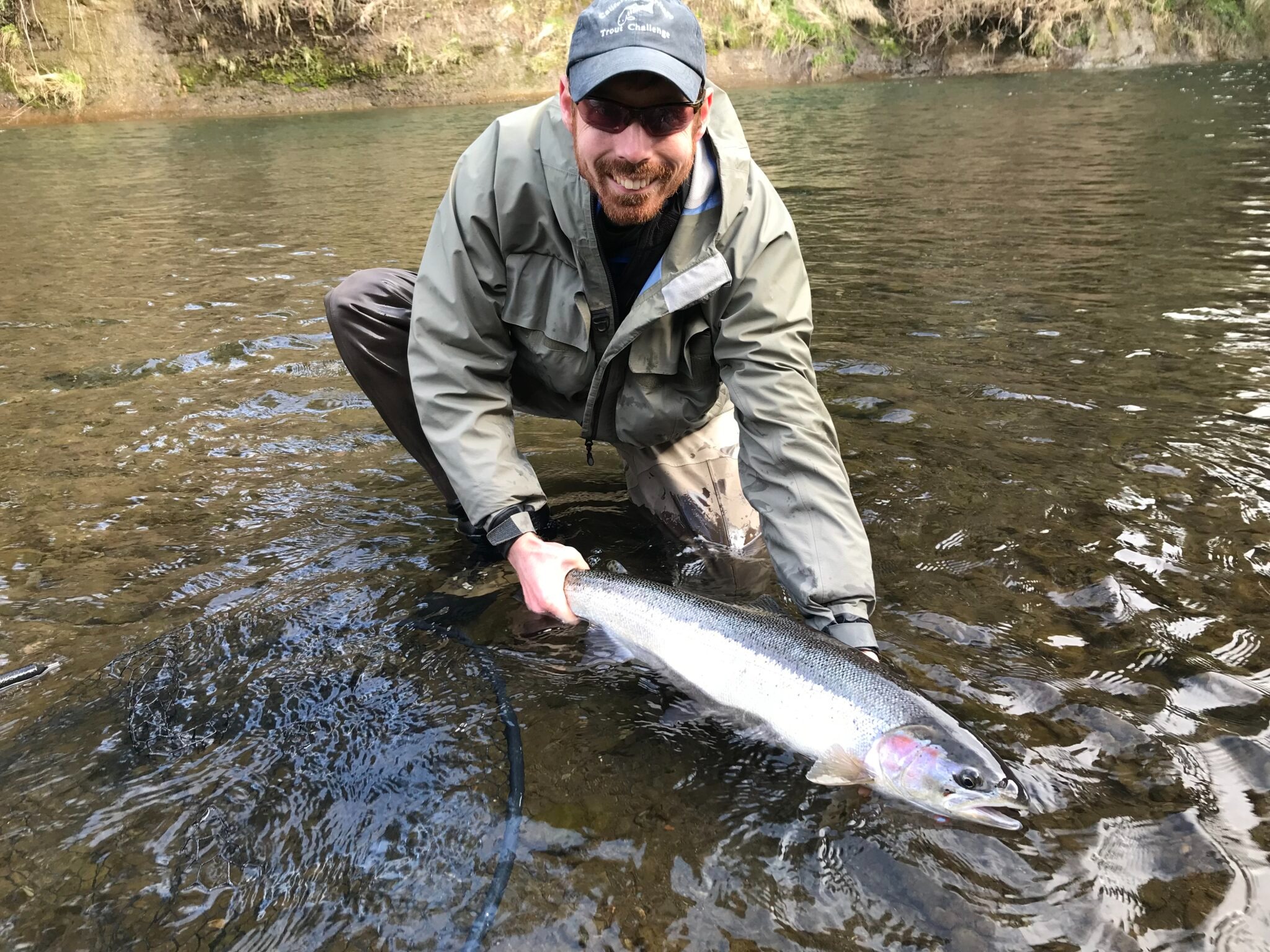
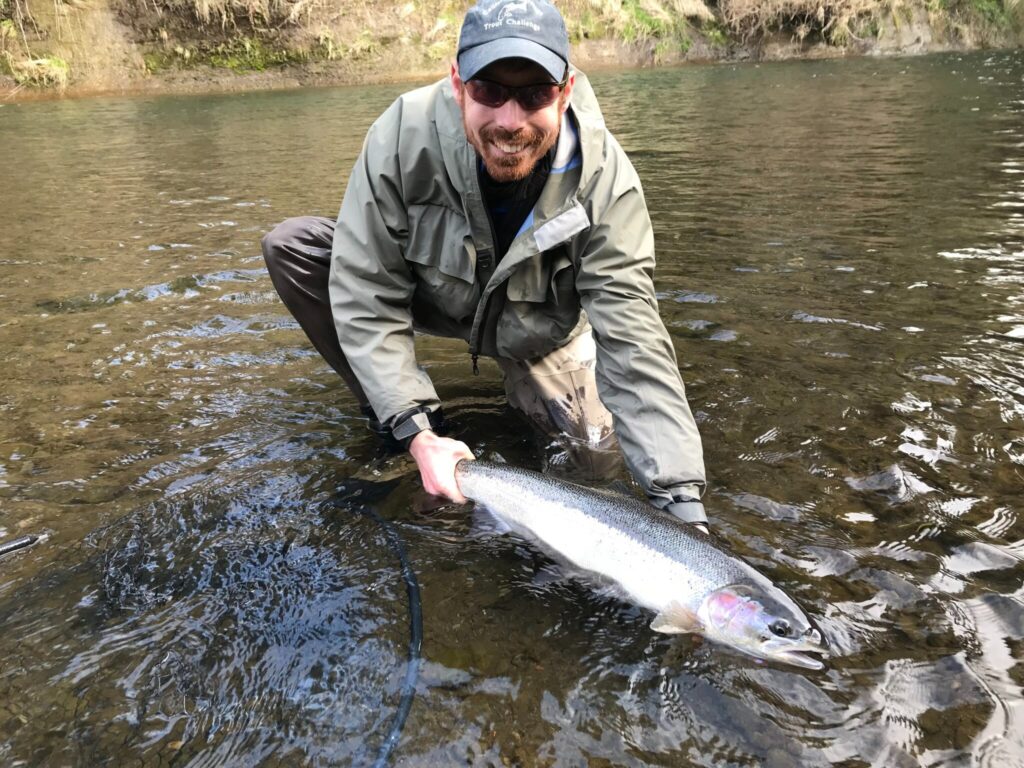
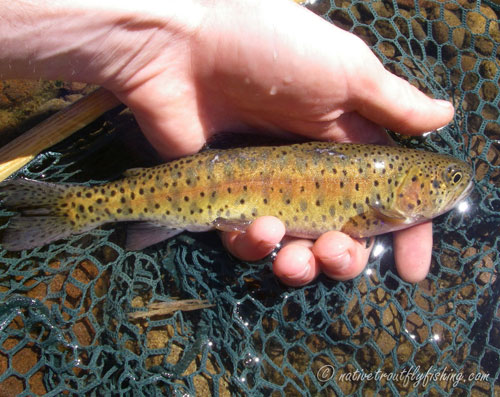
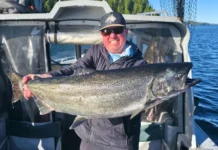
If you’ve ever wondered about the rare trout swimming in North America’s wildest waters, this episode is for you. Today, we chat with Gary Marston of Native Trout Fly Fishing, a lifelong angler on a mission to find and photograph every native trout species across the country. From high alpine lakes to remote desert creeks, Gary shares what it takes to chase these fish, why protecting their habitat matters, and how photography and storytelling can help us all care a little more.
Gary Marston’s quest to find and document every native trout in North America began right after high school over 20 years ago. Two books inspired him: one by Robert Behnke and another by James Prosek. But back then, there weren’t many clear photos of the fish online. So Gary decided to do it himself.
He started with a list from Behnke’s book. But as scientists learned more about trout genetics, the list grew. For example, cutthroat trout used to have 14 known lineages—now it’s 25.
Gary focuses only on native species, not fish like brown trout, which came from Europe and now cause problems for native trout. Here’s how he explains the difference:
Some hatchery fish turn wild after a few generations, but they often don’t survive as well as true native fish.
Gary has now documented over 50 types of native trout. That includes around 25 cutthroat lineages and a full set of redband rainbow trout. Some of the species were once thought to be extinct but might still exist.
Gary’s main focus has been the western U.S., where most of the diversity is. But he’s also traveled to Maine for rare fish like the Blueback trout and Landlocked Atlantic salmon. There are also official trout challenges across the country, like:
These challenges encourage anglers to explore, learn, and connect with other native trout fans. Gary suggests starting with the Western Native Trout Challenge and using their resources. He also recommends joining the online groups, doing your research, and asking for help. Biologists and other anglers are usually happy to share tips.
More people are starting to care about native trout even the tiny ones. Gary noticed a big change over time. Years ago, people only got excited about huge hatchery fish. Now, rare native trout get just as much attention, even if they’re only a few inches long.
The cool part? Some native trout can still grow big. Bull trout can hit 25 inches. Lahontan cutthroat once reached over 40 pounds, and some are making a comeback in Pyramid Lake today.
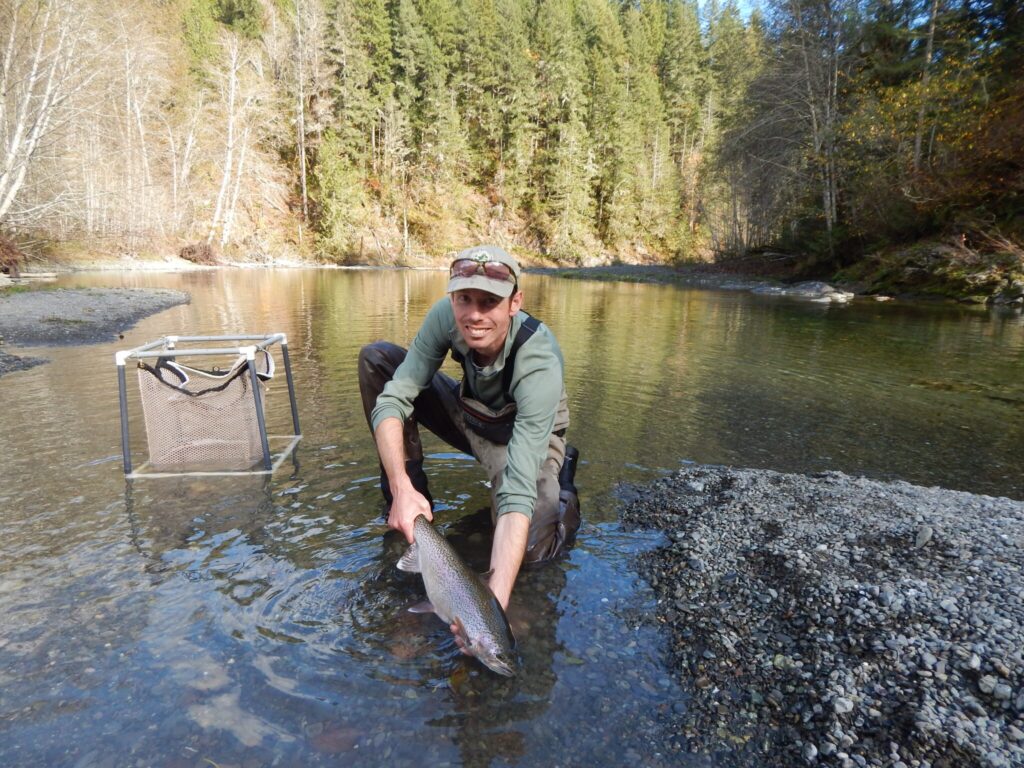
Coastal cutthroat are Gary’s favorite cutthroat to chase. Why? They’re the only subspecies that go to the ocean (anadromous), which means you can find them in both saltwater and freshwater. Fishing for them from the beach is like a treasure hunt—there’s lots of water to cover, and you’ve got to work to find the fish.
The best part? You can target them all year. But October is Gary’s favorite month because the fish are feeding hard before they spawn.
In freshwater, Gary looks for coastal cutthroat behind spawning salmon. They’ll eat salmon eggs in fall and salmon fry in spring. Sometimes, they even eat sea lice and lamprey. That means you can catch them using:
This variety is what makes coastal cutthroat so fun to fish for.
October is a great time to chase coastal cutthroat in both saltwater and freshwater. In freshwater, they’re feeding behind spawning salmon like chinook and pinks. But October is also the last month to fish many rivers in Washington, so the window is short.
Gary’s favorite? The beach. Saltwater cutthroat put up an incredible fight pound for pound, some of the strongest fish around. He uses a 6-weight rod for distance and control. Even a 14-inch fish feels like a monster.
It might take a few trips to figure it out, but once you do, it’s worth it.
So you’ve found the perfect cobble beach. The tides are moving. Now it’s time to get rigged up. Gary says: don’t rush into the water—these fish feed in close. Make a few casts before you even step in.
These fish migrate short distances, often just a few miles from their home stream, and use saltwater as a feeding zone. Here’s what their movement looks like through the seasons:
Gary calls Puget Sound “a river that changes directions twice a day.” The tides move the fish, but they’re always looking for food especially near salmon runs. These cutthroat follow juvenile salmon into saltwater, creating a rich, connected life cycle that overlaps with steelhead and salmon, but stays closer to shore.
When cutthroat follow salmon into freshwater, it’s game on. Gary says fall is prime time to fish behind spawning salmon. He recommends starting with egg patterns, a super effective and often overlooked way to hook cutthroat in western Washington.
One bonus of cutthroat fishing in Puget Sound? You might hook into salmon. Some resident coho live almost their entire life in the Sound. Gary finds them from November through July. Chinook, though, are shy in daylight—he targets them at night when they move into shallow water.
And if you’re stripping fast for cutthroat? Keep going. Coho love the same action, sometimes even more.
Cutthroat trout haven’t always had it easy. Habitat loss, invasive species, and early western settlement pushed many populations to the brink. But Gary says things are looking up, thanks to conservation work, reintroductions, and habitat restoration—much of it done by groups like Trout Unlimited.
Every fish counts. Every effort helps. And with more people stepping in, native trout like the cutthroat have a real shot at thriving.
Getting started in saltwater fly fishing for coastal cutthroat? Gary shared a few extra tips to help boost your chances:
If you’re serious about getting into this fishery, investing in the right gear and getting help from the right people can make all the difference.
Episode Transcript
Dave (2s):
Today’s guest has built one of the best resources for anyone curious about the rare and overlooked trout of North America. His passion has taken him deep into the back country, onto remote desert streams and across Alpine lakes in search of native trout species. Most anglers don’t even know exist. By the end of this episode, you’ll discover how to document and photograph each of these unique trout species around the country. Why protecting their home waters is as important as finding them and what he’s learned. Chasing fish that demand equal parts, patience, research, and respect. This is the Wet Fly Swing podcast where I show you the best places to travel to for fly fishing, how to find the best resources and tools to prepare for that big trip And what you can do to give back to the fish species we all love.
Dave (44s):
Gary Marston is here to take us into the native trout fly fishing world. We’re gonna find out about his quest to catch every native trout species in the country. What makes these fish so fragile and so rewarding to find and what the role of photography and storytelling plays in conservation. Here he is, Gary Marston. You can find him at nativetroutflyfishing.com. How are you doing, Gary?
Gary (1m 9s):
Doing great today. Thanks for having me, Dave. Yeah,
Dave (1m 11s):
Yeah, I appreciate you coming on and setting some time aside to talk about Native trout. I think the focus today is gonna be a lot on the, the species You’ve done what sounds like that’s the challenge we’ve heard a lot about in our community, but maybe you started a while ago, so we’re gonna talk about that. And then you do a lot of work just with conservation and you know, fishing and maybe we will focus also on one species cutthroat sea run cutthroat specifically today. But, but yeah, maybe take us back, you know, kind of a little bit, what’s going on with you this time of year. It’s kind of mid-August. Are you out fishing hard or are you taking a break for the summer?
Gary (1m 44s):
Yeah, I’ve had a little bit of a break this summer, but we’re getting into the season. I really love for fishing around here. As the salmon are coming in the rivers, that’s when the, the trout really get interested in eggs and all the things salmon bring to the system. So probably be getting out on the rivers pretty hard in the next few weeks here.
Dave (2m 4s):
Good. Okay. And you’re up in the Puget Sound or where exactly are you?
Gary (2m 9s):
Yeah, so I’m located in Olympia, Washington, so kind of the southeast corner of the Olympic Peninsula at bottom end of the Puget Sound.
Dave (2m 17s):
So you have a, a little bit, I mean obviously the ops up there, but is cutthroat when you think of the sea run cutthroat fishing, there are lots of opportunities all throughout from where you are, you know, Whether you go north, south, or west.
Gary (2m 29s):
Yeah, the Puget Sound, I mean any beach that you can find public access that has a good current and good cobble is excellent. I’ve got a beach five minutes from my house where I can go, you know, sneak out at lunch and go for a half hour and see if I get something. There’s plenty of other beaches further field as well.
Dave (2m 48s):
Nice. Well this is gonna be good because I think we definitely get a lot of people interested. I hear that a lot like, hey, another C run cutthroat episode would be good. And we’ve done a few but, so we’re gonna jump into that today. But before we get there, there, I wanna take it back, like we said, broad scale on more just native salmons and talk about what you’ve been doing. It sounds like maybe you’ve taken a little bit of break, but what does that look like for you? Talk about that challenge. When did that idea start and how’d that come to be? Yeah,
Gary (3m 13s):
It actually goes back over 20 years for me now. So just outta high school is when I really got rolling and what really kicked it off was a couple books came out that talked about native trout, native salmon. There was one by Robert Benke, native Trout and Salmon of North America, and then one of by James Prosec that, you know, had a lot of illustrations of what the native trout around North America looked like. But the thing that I, I found challenging was to track down like actual photos of what these fish looked like. And this is, you know, internet was kind of in its infancy. So I, I decided well I’m gonna go document them all on my own and that was the impetus for it.
Dave (4m 0s):
Nice, nice. That’s a pretty, pretty good challenge. I mean, you obviously have a background in it, but I mean for a lot of people they would be like thinking, well where do you start? How many species are there, you know, subspecies, all life histories. What does that look like as you got into it? Did you, did you kind of know, did you have the list and were checking things off or were you learning as you went?
Gary (4m 20s):
So I’d say I had the list, Robert Bey’s book in particular provided a really good kinda rundown of what’s out there. The real challenge though has been as genetic techniques have advanced the, the list has gotten longer. So they’ve discovered new lineages. Things we assumed were just one subspecies have been split into two. So it’s, you know, been a growing, growing thing. As I go, for example, cutthroat trout I had completed, or at least I thought were completed about 10 years ago. And then they did some genetics work with the book that came out in 2018 and what was originally 14 lineages of cutthroat expanded out to 25.
Gary (5m 6s):
So, Hmm. That’s kind of the, the growth in it, which is a lot of fun too ’cause it adds a lot more challenge and always adding little variants to go after.
Dave (5m 16s):
Right. Can you describe that how the author broke down? Was it, was it Benke? What was the author? Yeah,
Gary (5m 22s):
So Robert Benke was the author of Native Trout or Trout and Salmon of North America was the book. And it came out in like 2002, 2003. So he broke down the cutthroat trout lineages with, there were 14 recognized at the time and he was the one who classified those different groupings of cutthroat. Then there were also the red band or rainbow trout lineages and there’s a whole slew of them as well. Kind of depends on how you wanna split it up, if you wanna group ’em or, or split ’em. And then you’ve got the five species of Pacific salmon as well down in Arizona and New Mexico. You have the Gila and Apache trout, which are really unique fish to that region.
Gary (6m 5s):
And then you have the char, which have a really impressive array of diversity, but you’ve got like brook trout, bull trout, oli, varden, arctic char lake trout for example.
Dave (6m 17s):
Yeah, right, right. Have all that. So that kind of covers the, and the species that you didn’t really, it sounds like dig into, are some of like the brown trout and other species or, or what are some of those ones that maybe aren’t, weren’t native historically or maybe describe that a little bit, the native versus wild and kinda what you, you covered there.
Gary (6m 35s):
Yeah, so I’m brown trout or native to Europe, so I’ve certainly caught plenty of brown trout while doing this quest. But they haven’t been a focus just ’cause they’re native and you know, in a lot of cases invasive in North America where they’re causing some real serious problems for our native cutthroat populations in particular. We also have, you know, rainbow trout For instance, have been stocked widely outside of their range as have brook trout. So you get a lot of issues ranging from competition and predation with the brook trout and brown trout on cutthroat or potentially the red band lineages. And then rainbow trout are particularly problematic when it comes to cutthroat ’cause they can interbreed with them.
Gary (7m 20s):
So I mean you’ll get hybrids between them. And so when we’re talking about native trout, those are, you know, fish that belong in that place originally adapted to that specific environment. A wild trout is a naturally reproducing trout found in that environment. So it may or may not be native.
Dave (7m 40s):
Yeah, right. So it could be. And how many, how many generations does it take to become, is it just the first, if you’ve hatchery fish that spawn in the wild together, is that their progeny or wild fish then?
Gary (7m 51s):
Yeah, I mean it, it really depends on, you know, how the individual is classifying it. But at that point you can’t sort ’em out from true wild fish there. So you know, we, we see that a lot with salmon and steelhead out here in the Pacific Northwest where we have a lot of hatcheries and you know, within a generation or two out of the hatchery, you know, they’re in the river often have a little lower survival than what we see with our true native populations. But that are, you know, have adapted to those specific watersheds. But given time the hatchery fish that have spawned in the wild will adapt to those watersheds as well.
Dave (8m 30s):
So how many total species of trout have you identified and and how many have you caught it to this point?
Gary (8m 37s):
It’s over 50 at this point that I’ve documented. So yeah, I, this last year I completed all the red band rainbow trout lineages. In the previous year I’d completed all the cutthroat lineages. So you know, it’s roughly 25 cutthroat. There’s two that are believed to be extinct, but evidence that they may not be as extinct as we thought in both cases. And then the red bands have a really interesting diversity but get overshadowed by the cutthroat a lot.
Dave (9m 10s):
Oh, okay. They do. Yeah, so, so cutthroat red bands, Pacific salmon, some of the outliers you mentioned with the trout and then char, so that, that kind of covers everything. And then is this you covering like east coast, west coast, all over the country? All over North America?
Gary (9m 25s):
I would say I’ve focused mostly on the west coast ’cause that’s where I am and that’s where the greatest amount of diversity is. But last September actually had the opportunity to go with several friends out to Maine and we did a trip where we went after the Blueback trout, which is a type of arctic char and that’s found only in the northeast over there as well as we did some Landlock Atlantic salmon and had a shot at a native lake trout, which I had on and lost, which really hurt because that would’ve been my first lake trout, so.
Dave (10m 3s):
Oh wow. Yeah. And are you trying to catch, because you could catch lake Trout, I mean probably near your home, right? Are there, are there lake trout out there where you live?
Gary (10m 10s):
Yeah, we have some introduced populations in Washington, but I’m hoping to catch them in their native range and they’re, I’ve been trying to do this all on a fly rod if possible. Lake trout are one of those that are particularly challenging ’cause they tend to be a deep water fish. So you’re, your opportunities are pretty limited.
Dave (10m 29s):
Yeah. Okay. So this is a amazing challenge. You know, I think, and you started this, it sounds like before where I first kinda heard about this was the, the Native trout initiative, right? There’s the group, the conservation group that’s doing some stuff and then they have this challenge where I think you, you can win some badges or something like that. But did you start yours before or maybe talk, are you aware of the, the initiative out there or that group?
Gary (10m 51s):
Yeah, yeah I am. So yeah, I started mine well before that the, it’s called the Western Native Trout Challenge. So I believe that started, I’d like to say around 20 18, 20 20, somewhere in that range. And I have done the first tier just ’cause I’ve caught those fish during my outings. So they have three different levels that you can do where it requires that you catch a certain number of native trout, but also catch them in a certain number of states across their native range. And so, you know, as I work through, you know, some of the fish I’ll probably go and redocument to get better photos and stuff.
Gary (11m 34s):
I’m sure I’ll do the, the full challenge, but it hasn’t been a priority. There are other challenges too. There’s, oh there are, yeah, there’s the Wyoming cut slam challenge where you have to catch four native cutthroat in Wyoming and Utah has its own cutthroat challenge as well. And then California has the California Heritage Trout Challenge where you have to catch six native trout in California.
Dave (11m 60s):
Yeah, right. And, and are there other states working on, on a similar thing, have you heard of that before or is it just, why, why do you think it’s just the Wyoming and the those three states? You
Gary (12m 9s):
Know, I’m not clear why it’s just been those three that have made it kind of official thing for their agency. There seems to be, you know, Utah in particular has a really high priority on their native trout populations and has done amazing work recovering their Bonneville cutthroat and Colorado River cutthroat populations for example. You know, I think some of the other states, especially with the rise of the Native Trout challenge, they’re all tied into that. So I think that is their now form of a challenge. But we have seen an Oregon private group put together challenge called basalt to breakers that you have to catch native trout across different regions of the state.
Gary (12m 52s):
So, you know, I do expect over time we’re gonna see more of these pop up and you know, they add a little extra incentive for anglers to go do this, which is always great. Yeah,
Dave (13m 3s):
They do. No, I think it’s pretty awesome. It’s, yeah, it just gives you, I don’t know what it is about the challenge. It kinda gives you something to I guess, kind of a goal. Right. Why, why do you think people kinda love, love that challenge of trying to do as as opposed to just going out and catching fish?
Gary (13m 16s):
Yeah, I mean it gives you a goal and a, there’s a, you know, pretty cool award at the end where you get a, a little kind of poster that you can get framed if you want, that has the fish you caught and some information about them. You get a hat and some other goods. So there’s, there’s a bunch of things that I think add to it. The other piece I think with this whole thing is just the adventure of going and finding these fish across their native water. So it takes a lot of research and then takes you to some just, you know, amazing places that I have to say otherwise I never would’ve known existed or visited. So that’s a huge part of it I think.
Dave (13m 56s):
Yeah. What it would be your advice to somebody who is listening and they’re thinking, you know, wow, I haven’t heard about this, this would be cool. Like where would they get started? What do you think is the best way to kind of, if they had the challenge, they wanna try to catch, you know, I don’t know, one of these states or maybe 50 or or more of these species,
Gary (14m 13s):
You know, a couple words of advice. I think the best place to start really is that Western native trap challenge. They have a ton of resources that help anglers get going with catching these native fish. A lot of info on where you can find them. The other, I mean just big pieces, just do your research and don’t be afraid to reach out to folks that you know are, you know, doing the challenge. So like the Western Native Trout Challenge has a Facebook group where folks help each other on there to figure out where to go. I get all the time folks emailing me through my website asking for advice on you know, where Fisher found or where they can find information on them.
Gary (14m 54s):
And you know, that’s something I think we have a really great community around these native fish anymore, which has been really awesome to see really come out of that challenge. I think that’s one of the greater, you know, side effects of that challenge starting was this community that built up around this activity, which is just been great to see. So reach out to other folks and agencies as well. The staff at the biologists and staff at these agencies are usually more than happy to share advice on where you can find these fish.
Dave (15m 25s):
Yeah, that makes sense. Okay, so, so yeah, the challenge basically builds this community around it and the cool thing is, is that it probably adds more protection, right? For these species that some people don’t think about all the time. Maybe they’re smaller, you know, three four inch fish, right? That, but I, I, I feel like that’s kind of, you’ve been there doing this a while, but I feel like that’s changing a little bit to where people are like, oh, you know, trying to get the biggest fish where now it’s, there’s a lot of people interested in the diversity. Have you found that, do you see that in the communities that there’s just as many people out there that are into the smaller fish than diverse versus just going for the big giant lunker?
Gary (15m 58s):
Yeah, I, I do see that shift over time. I remember, you know, when I was kind of first getting going on the native trout thing, we had a forum in Washington, I was fishing forum I was a part of, and I’d post these native trout photos and you get like two or three folks comment on a native trout photo and someone posts a big hatchery fish and you’d see 20 comments on there. Right now it, it seems like that’s kind of flip flopped a bit where there’s a lot more attention on the native fish and you know, I do think there’s also the piece, you know, a lot of the native fish are small just because what we’ve lost, you know, we’ve lost the populations in the larger rivers because of, you know, invasive species predominantly or habitat issues.
Gary (16m 42s):
But historically a lot of these fish did get rather large and some of them still do get really large. So that, you know, that’s another aspect to it where, you know, just ’cause you’re doing the challenge doesn’t mean you’re just gonna be going after little fish, you know, bull trout in particular for the challenge, you know, some of those I’ve caught bull trout, you know, 25 plus inches so Right. They they get large.
Dave (17m 4s):
Yeah, definitely. And and the hot and cutthroat right are the one species that definitely is always out there.
Gary (17m 9s):
Yeah, totally. They’re the largest cutthroat subspecies, you know, and they were documented to for sure get 40 pounds but unofficial records of up to 60 pounds and that genetic lineage that got that large, they actually found that population, they thought they were extinct and they found them in a small stream in western Utah off the pilot peak range and have reintroduced them to Pyramid Lake. And so those giants are starting to reappear, you know, there’s been a few in the 20 pound range that have come outta there now. Wow.
Dave (17m 46s):
Yeah, that’s really cool. Yeah, it is interesting ’cause a lot of the cutthroat people see are, yeah, these smaller fish or even sea run cutthroat don’t get as big as typically like a steelhead, but they’re out there. What, let’s take it on that a little bit on the cutthroat, maybe first start, ’cause I wanna talk about the sea run and some of the fishing you do there, but how many, you know, I guess maybe just start in Washington, how many species of cutthroat are there? Are there a bunch or what do you guys have there?
Gary (18m 9s):
Yeah, so I mean we have two groups of cutthroat here, like major. So we have two species. We have the coastal cutthroat lineage, which is the ones that go sea run. And then we have the West Slope Cutthroat and you know, west Slope Cutthroat under, there’s a book that came out in 2018 and under that classification scheme there’s, you know, a number of lineages of those. So depending on how you look at it, Washington has potentially three lineages of those west slope cutthroat. Then we also have the coastal rainbow trout lineage. So that’s steelhead on the west side of the state, west of the Cascade crest as well as resident rainbow trout. And then east of the Cascade crest, those are Columbia Basin and Redband.
Gary (18m 53s):
And so they both have the steelhead form and a resident form.
Dave (18m 56s):
Gotcha. Yeah. And they’re separated by, mainly by the, the mountain range. Is that, is that kind of what east from west sort of thing?
Gary (19m 3s):
Exactly, yeah. There’s a kind of zone of transition between the two, kind of around the cascade crests and the Columbia Gorge where you see a little intermedia and then once you’re on the dry side of the the state, it’s fully into that red band lineage.
Dave (19m 20s):
Stonefly nets builds handcrafted landing nets that are as tough as they are beautiful. They’re shaped, sanded, and finished by hand from premium hardwoods. You’ll feel the difference the moment you land your first fish light in the hands strong at the hoop and made by someone who knows what it means to earn your trust. You can head over to stonefly nets.com right now and see what they’ve got in the shop today. That’s stonefly nets.com. If you’re looking for a world class fly fishing experience, it’s time to check out Mountain Waters Resort nestled along the Newfoundland’s legendary Portland Creek. This spot has a history that runs as deep as the Atlantic salmon that caught home once a fly fishing retreat for the Great Lee Wolf.
Dave (19m 60s):
Today it’s your turn to step into these historic waters and swing up your salmon this year. You can head over to wet fly swing.com/mountain waters right now and make it happen. That’s wet fly swing.com/mountain waters. Let’s get out there today. And are there more just coastal cutthroat versus red bands or rainbows? Are there more species of cutthroat out there or rainbows?
Gary (20m 27s):
It’s actually pretty close if you break down all the red band lineages. So you know, I don’t have the number off top of my head, but
Dave (20m 36s):
Yeah, describe the, so the lineage versus say species. What is the lineage definition?
Gary (20m 41s):
A lineage would be like a genetically unique group of these fish. So you know, for example in the the Great Basin of Oregon, there’s, there’s these different internal basins where these fish have been isolated from each other for a long time. So for me, when I went after these fish, I caught them in each of these individual basins. If you genetically look at these fish, there’s a couple different groupings of you know, that you’d probably list as subspecies within those where, you know, these fish have only been isolated since say the last ice age. So you find that three of those basins within the Great Basin actually group under one kinda subspecies and then one falls under its own.
Gary (21m 27s):
And then you have another that groups with the Columbia basin, a couple of that group with that Columbia Basin red band lineage.
Dave (21m 33s):
Yeah, so there’s some, and then like you said, things are just like science, right? Things are always changing as we learn more new information. So 10 years from now and this podcast right, well we probably have some new lineages or changes.
Gary (21m 44s):
Yeah, that’s, I mean totally and that’s one one of the things I’ve tried to do for the community. So my website actually I break down, I have a page where I document all the fish I’ve caught and within that I break down all the factors you know, about what makes the individual is unique. So I talk about the genetics, the biology, life history of the fish and the status of them. So it’s really part of the quest for me has been just bringing attention to these fish and educating others about them as well, sharing and giving back to the community.
Dave (22m 17s):
Nice. Yeah, I see it now. So yeah, native trout fly fishing.com and you have a bunch of resources here. I see native trout links, so this is a good place to Yeah and you’ve got all the Wyoming, all the cut slams and stuff, so your website is as good of a resource, it looks as anything out there, right?
Gary (22m 33s):
Yeah, that was really, you know, as I mentioned earlier when I started this, when I looked at the, the book, you just had an illustration. So part of this website was me documenting, you know, these phish photographically so folks could actually see what they all looked like. You know, now we’re at the point with the internet where you can find photos of these phish everywhere. So you know, things have kind of evolved just with technology beyond kinda where it was initially. But that was the original goal for me was just to, you know, be able to document all these fish and share what, you know, what the diversity of these native trout looked like across the range.
Dave (23m 12s):
Yeah, amazing. Cool. Well you mentioned, we’ve talked about one of ’em, coastal cutthroat trout. So that is one I, I would love to hear more about your fishing. Maybe we can kind of transition to that a little bit and it seems like we’re perfect. This episode is mid August, we’re gonna be going live probably October in that range somewhere. So maybe talk about that, like talk about right now what you’re thinking about and then when is a good time to start thinking about trying to chase these, these cuds?
Gary (23m 36s):
Yeah, so coastal cutthroat are one of my favorite ’cause they, you know, of all the cutthroat subspecies, they’re the one that goes adamis and so you can fish them from the shore. It’s kind of a, a bit of a cat and mouse game where you know, you got fishing from a beach, there’s a lot of water to cover and you have to really hunt for them. The cool thing about it is it’s truly a year-round fishery. You know, they’re, you know, maybe a few days where inclement the weather prevents you from doing it. But you know, I find fishing nearly as good in the winter time as I do during the summer and there’s really not a downtime for it.
Gary (24m 17s):
There are a couple months that tend to be better. I’d say October is probably my absolute favorite time to fish for coastal cutthroat. They’re really interested in packing away as much weight in the fall as they can to prepare for spawning. So that’s one of the times of the year I really try to get out on the water for them. You can also do, you know, coastal cutthroat fishing in the, in the fresh water too. So I fish them salt water and fresh water and one of my favorite things for them in fresh water is to look for them behind spawning salmon. ’cause you get a lot of these streams while they’re, where they’re gonna follow the salmon in and really focus in on eggs in the spring they switch over and focus in on fry.
Gary (25m 3s):
But I’ve seen, I’ve done diet studies on these fish and you know, when the pink salmon are coming in in huge numbers, they’ll eat the sea lice falling off the salmon, they eat lamb prey. It’s, you know, wow. All sorts of things. So you can fish ’em, streamers, nymphs, you know, beads, all sorts of stuff. And it’s that diversity of opportunities that makes it, I think so much fun.
Dave (25m 25s):
Wow, that sounds awesome. And so you have the fresh, the salt. So in October, let’s just take it to October. If we’re going out there, is it easier to fish? Do you think the salt is a little easier or if you hit it right with the spawning fish, that could be just as good.
Gary (25m 38s):
I would say it’s kind of flip of a coin on that one. Yeah, with the spawning fish it could be just as good potentially better. September is when I’d say it’s best in the, in my experience, in the fresh water for them. Just that’s when you get a lot of the chinook spawning, you know, some early chums start spawning and this year we got pinks coming in so they’ll be in there October’s the last month. You can fish freshwater in most places in Washington for them. So, you know, that’s where there’s a lot of opportunity, particularly like the North Puget sound, rivers salt water though I, I just really love that fishery ’cause it’s such a unique thing and the fight that these fish, the coastal cutthroat put up in salt water I think is, you know, for their size I think they’re the hardest fighting fish you are gonna find.
Gary (26m 32s):
They’re gonna find there.
Dave (26m 33s):
Wow. Even versus say a steelhead or, or a salmon. Yeah,
Gary (26m 37s):
I, I would say so they don’t get as big as steelhead or salmon but they, for their size, you know, pull really hard. I, I usually go with a six weight rod in the salt water predominantly because of the, you know, wind or other things that crop up casting distance. But you know, you’ll get a 14 inch fish out there that, you know, bends your rod where you’re thinking it’s, you know, 18 inches. Right,
Dave (27m 0s):
Right.
Gary (27m 1s):
Pretty amazing.
Dave (27m 2s):
That is, that is amazing. So, okay, so the beach would be good in October, but year around it’s good. But let’s just stick on that October piece. So they’re, so what, what would that look like? So you’re going out there, find a beach, First of all, where do you, it sounds like they’re spread out everywhere, but what would you be telling somebody if they wanted to try to find these cutthroat? Is it find any beach, find a beach or just do some research? What, what would you tell ’em? Yeah,
Gary (27m 25s):
So there’s a few aspects. The type of beach I would say really matters in October. I’d say kind of a couple different options pop up to mind for me. One would be looking for estuaries. So these are, you know, areas where you have kind of tidal channels and things like that. Cutthroat are gonna be moving in and out of there during that time of the year and you know, so that’s, that’s one spot. The other would be points of land or cobble beaches in particular. And cobble beaches are really, I think an important indicator that you’re in a good spot. If there’s lots of barnacles, lots of cobble that tells you you have a good current that flows past there.
Gary (28m 6s):
And that’s one of the things cutthroat look for. The other major aspect with coastal cutthroat, and this is probably the most important piece, is the tide. You know, I find I rarely catch cutthroat on a slack tide. It’s generally a moving tide and for me it’s been when you have a kind of faster flowing outgoing tide or a slower flowing incoming of just when I crank the numbers of fish, I catch the numbers seem to be a little higher on those two tide flows. And again, those tides though are kinda unique to the specific beaches. And I’ve found some beaches where, you know, I have like a one hour window where a certain part of the beach fishes really good and then it shuts off.
Gary (28m 50s):
So you know, going exploring a beach and just being kind of persistent, you know, you might get skunked a few times but being willing to kind of put in the time and learn ’em really pays off in the long term.
Dave (29m 2s):
Amazing. Yeah, those are awesome tips. So look for estuaries, cobble on beaches and then focus on the tides you mentioned there, the different tides. That’s great. Let, let’s you know again any of these topics, we could dig in for another 30 minutes, but let’s keep it focused on just the fishing for high level. So let’s say we’re on one of those cobble beaches, we’ve got a place we think we have the tides, right. What do you kind of the, you know, flies getting ready, where are you casting? Talk about that a little bit.
Gary (29m 29s):
I think the first thing is these fish can be in pretty shallow water. So before you even step in the water, you know, you probably should make a couple nearshore casts to just make sure they’re not in there flies, you know, there’s a diversity of things you can use. And these range from, there are dry flies that I use out there, you know, one of the more popular flies that’s been developed, Milwaukee Popper developed by Leland Milwaukee. I may have gotten his last name Yeah, wrong. So if he’s listening I apologize for that. But it’s a really cool surface fly that imitates a crippled bait fish and so you just pull it kinda making a vwa and the takes on it are truly explosive.
Gary (30m 12s):
So that’s a really fun way to fish them. The other thing is just using streamer patterns. So I use a suite of different bait fish patterns for them that imitate, you know, sculpin, we have several cul species that are in the salt water sand lance are a common fish out there as well that they really like preying on or small herring perch, things like that. Then we get into the invertebrates as well. And so we have marine worms that can get rather large. And I tend to find actually the larger cutthroat really like those marine worms, they’re called poly keet worms. So for those you can use almost like a wooly bugger or kind of longer kind of string thing type pattern.
Gary (30m 59s):
Just using bunny strips and then little things like anthrop pods and eus, which are basically kind of krill sort of creatures or shrimp patterns as well work really well. So basically little scud patterns work great and I tend to do really well with those over oyster beds or you know, areas, especially South Sound. We have a lot of shellfish farms and so when I’m fishing beaches where there’s netting for shellfish farms, I go with those smaller invertebrate patterns a lot.
Dave (31m 34s):
Okay. And what are you, are you typically using a lot of sinking lines or what, what does your fly line look like?
Gary (31m 39s):
I go with either a floating or a full intermediate sink tip has been my choice and so I, I really like the kind of short shooting head intermediate lines like the, you know, Rio outbound short or the airflow 40 plus would be another alternative one. I tend to find those intermediate lines of your fishing streamers work a lot better, just you get a lot of wave activity on the sound and they give you a really nice level retrieve when you’re fishing those. One trick I really always tell folks is keep your rod tip in the water. You’re gonna feel that strike a lot quicker and gonna just catch a lot more fish if you do that.
Gary (32m 19s):
And then if you’re fishing for cutthroat, one thing I tell people too is you can’t move your fly too fast, especially those bait fish patterns. These fish are predators and they love chasing flies. They’ll chase it right up to the rod tip. And so, you know, when I in retrieving a fly, I’ll twitch the rod back behind me and I’ve had fish literally grab the fly, you know, two feet in front of me.
Dave (32m 45s):
Wow, so you’re twitching and stripping, you’re kinda and doing it fast.
Gary (32m 49s):
Yeah, fast for the bait fish when fishing the invertebrate patterns it tends to be a little slower, you know, shorter strips, the worm patterns a little, you kind of gotta think about what you’re imitating too, so you know, a little krill or shrimp moving short bursts where like a worm’s gonna be a longer even move. So I’m doing longer strips that are a little slower with those. But the bait fish I find are pretty explosive takes and those cutthroat really like chasing them.
Dave (33m 19s):
Okay. And is it, it looks like on your website you have a place if somebody wanted to see some of these flies that you’ve tied up and they they could use or are they all on your site?
Gary (33m 27s):
I have a few of ’em on there, yeah, but there’s a, you know, a bunch of great local fly shops as well that have the patterns. I used to work at the Gig Harbor fly shop and guide there and so I know they still have several of my patterns there and have been developing new patterns over the years. There’s spawn fly fish down in Oaco, the owner of that shop grew up fishing the Olympia area and has developed a lot of really cool patterns for the area. But you know, I’d say most fly shops around the Puget Sound are gonna these days have a selection of fly patterns for the area. When I started it, that really wasn’t the case.
Gary (34m 8s):
And so that’s really what got me into fly tying too was I had to develop the patterns to fish for these fish for the most part. There were a handful you could get in the shops, but it wasn’t as tailored to it as I would’ve liked at the time.
Dave (34m 24s):
Okay. And are you fishing, you know, just the areas again, you talk about the beaches. Is this more a, a thing where you’re fishing protected beaches in estuaries or are you actually fishing areas where you have kind of ocean waves coming in, that sort of thing? For
Gary (34m 38s):
Coastal cutthroat and salt water, it’s, I’d say the bulk of the fishing is occurring in, you know, Puget Sound is a large estuary and so it’s relatively protected water. We get waves, but you know, they’re not very large. Mostly a big waves coming from a boat passing by.
Dave (34m 55s):
Right, yeah, you’re not getting, you’re not seeing people surfing out in front of you or anything like that. Totally,
Gary (34m 60s):
Yeah. Whereas in the outer ocean, just these fish aren’t close enough to shore or accessible typically. Yeah.
Dave (35m 7s):
So they’re kind of migrate is is the fish, is that kinda what’s going on? You, you’ve got this migratory fish that are, well they’re searching for food but then they’re moving along the shallows as opposed to the deeper water.
Gary (35m 17s):
Exactly, yeah. So generally, you know, when I was fishing from a boat, my rule always was you go out where you can just see bottom and then you cast in towards shore and that’s, you know, where I tend to find them, you know, when they’re feeding is in that probably 15 to, you know, four foot deep water, maybe even less. I’ve seen them in, you know, a foot and a half before, so they’re, they’re in fairly shallow water. You know, I typically, when I’m waiting from shore weight out, knee deep, maybe waist deep and then cast from there and I do kind of a, you know, cast straight out but work my way to casting along the shore sometimes just parallel to the shore, I’ll catch ’em.
Gary (35m 58s):
But the interesting thing with these fish too is they are, and this I think is the reason why we don’t see them get as large as say steelhead or the salmon species. They’re kind of homebodies where they tend to stay for the most part within, you know, a few miles of their stream they spawn in and so they travel the beaches, they’re really looking for water that kinda reminds them of a river in some regards. And you know, my saying with the Puget Sound is, I tend to think of it when fishing for these fish as a river that just changes directions twice a day. And so you’re looking for large rocks out there, you know, if there’s trees hanging over in the water, you know, structure, these fish are still gonna be just like in a river looking for structure where they can dart away from predators, where they can look for prey, ambush things.
Gary (36m 49s):
That’s
Dave (36m 49s):
Cool. And, and there you mentioned 14 inches, is it, you know, what’s the biggest is 14 to 19 inches, is that kind of your typical range?
Gary (36m 57s):
I’d say the typical range is probably a 12 to 16 inches, maybe a little smaller certain times of the year. But they do get much larger too. You know, biggest I’ve caught in the salt water is 24 inches in estuary. I’ve caught several in the 20 inch range. Those fish are few and far between, you know, I, you know, maybe pick up one over 18 inches, you know, a season, maybe a couple. I tend to get more of those big ones in fresh water is the one draw with the, the fresh water part of it. Yeah. But but the, the pole, when you do get one of those big ones in salt water, it’s something else,
Dave (37m 36s):
Right? Yeah. Just pretty much like a steelhead right, is it’s pretty similar.
Gary (37m 40s):
Exactly. Yeah. And they, they jump, they take line of, you know, they’re, they’re powerful fish.
Dave (37m 46s):
Nice. Okay, so that, and that’s a little on the salt if if we take it swing it back into freshwater, let’s kind of jump on that for a little bit. It sounds like it, you know, they’re, again, these fish are going back and forth, they’re, they’re kind of, you know, the, the life history, right? They’re going out similar to steelhead to go out to grow to get bigger. It’s interesting, right? Why not just stay up in the freshwater? I guess that’s the main reason why, but why not go out to the ocean, right? Like steelhead do,
Gary (38m 10s):
You know, we see some populations where they do just stay in freshwater, but you know, I think it’s foraging opportunity is salt water. We do see, you know, we haven’t talked about like the spring season and I think this is a big part of it is these cutthroat really do key in on the juvenile salmon in salt water. So I do think there’s, you know, that aspect where they’re totally intertwined with the, the salmon life history where fresh water, a lot of, when they come in in the fall in particular, it’s just following Pacific salmon in to prey on, you know, eat the eggs and then bait the juveniles in fresh water as they’re hatching. And then, you know, I think they are following those juveniles out to salt water again.
Gary (38m 54s):
I noticed, you know, a lot of the streams around the area where I grew up, you’d get kind of a dead spot where the fish would go up to spawn around February, but then as soon as the juvenile chum salmon came out of the fresh water, those cutthroat would come out right with them to kind of have a ready food source to put on the pounds after, you know, spawning season. So I think that’s a part of it, you know, they’re just kind of unique wanders. It gives them, you know, the other aspect with salt waters, it opens up access to other food sources and you know, one example, this is in the Hood canal, the streams of fished there, we did some research and when we were looking at the cutthroat there we’re looking at micro chemistry of the fin ray.
Gary (39m 41s):
So we’re taking like non-lethal samples where it’s collecting a bone from the fin and the micro chemistry signal for the cutthroat from that we caught in these hood canal rivers was different from that of what we’d see in the rainbow trout that were from that river. So it was telling us that these cutthroat are coming in from other streams and then just moving into these systems to feed on the salmon eggs. So they’re kind of using that salt water areas, a migratory corridor and then getting access to other streams where there’s more food as well.
Dave (40m 13s):
Right. And are they pretty similar to the, the steelhead where you, or or salmon too where they’re going back to their, their home water, the where they spawn? For the most part
Gary (40m 22s):
They are, yeah, they’re gonna home back to, for the most part, you know, there’s always strays but for the most part they’re gonna go back to where they spawn and they have a pretty variable spawning time. You know, we see most of them are spawning in, you know, kind of our winter months, you know, February, March, April and April. But we do see some populations that have all spawning and some that spawn into summer. So pretty, pretty unique fish
Dave (40m 50s):
Like into may. Like even into like June or in that period. Yep. Yeah. So yeah, that makes sense. They following the food, you know, there’s not a ton of food, especially on the western, we’re talking western Washington, right? So if you go to the east side, totally different, but the west, they’ve gotta follow the food. So other than some aquatic invertebrates, the food is out in the estuary. So, but they’re following these salmon first as they’re coming in, they’re spawning the eggs, all that. Now they’re watching these fish grow up and now they’re eating the fry and they’re getting bigger and as they head out eventually in the spring they’re following them out into the spring and June July and now they’re in the summer and probably hanging out. Do you find that most of those sea run cutthroat are hanging out in the estuaries in the summertime?
Gary (41m 31s):
So they’re either in the estuaries or along these cobble beaches? It kind of varies Puget sound, you know, north Puget sound and south versus the south are pretty drastically different in their kind of beach layout. There’s similarities, but a lot of differences. South sound, I do tend to find the fish will come back into the estuaries a bit more during the summer and forage there, but you still have plenty of fish that are kind of on the outer beaches forging along those more cobble beach areas or off of points of land that might be a little sandier. So, you know, it’s, it’s varied that summertime is when they’re probably the most spread out where you have your greatest opportunity to find them kind of throughout the sound.
Dave (42m 16s):
Nice. No, this is great. And then when you’re, well it’s just on that freshwater, so if you were fishing for these fish in freshwater, when are you thinking, you know, just behind salmon, how are you fishing for ’em? Like you, you’re using egg patterns or How are you doing that?
Gary (42m 29s):
You know, the two things I’m gonna try are either streamers or egg patterns for the most part. You know, if salmon or spawning in earnest, I’m probably gonna fish egg patterns. That’s a pretty darn deadly technique in western Washington. I think it doesn’t get nearly as much attention as it probably should buy anglers. The other thing is, like I said, streamers and sculping patterns in particular tend to work really well in freshwater for these fish, you know, juvenile salmon patterns, of course if the season’s right, you know, and you know, while the chum and pink salmon migrate out immediately Chinook and co-host stay in for, you know, often for a full year.
Gary (43m 11s):
So there’s always juvenile salmon in these streams. The other one, and this tends to take some of the bigger fish, is we have variety of lamb prey that inhabit our streams. And so if you wanna fish a really big fly that you’re not gonna catch much on, but what you, you catch is usually really big is a lamb prey pattern can be really fun.
Dave (43m 32s):
Okay. And what would be a lamb prey example pattern?
Gary (43m 35s):
You know, like a big mole leach kind of think of gray mole leach. I, I tend to do one, I add like a, a little wiggle tail on the end of it and some rubber legs, but it’s yeah, kind of a thinner rabbit strip mole leach is what I’m thinking. And then the final thing that’s been really fun I’ve found in a few places, and this goes for kind of the inner estuaries as well, is mouse patterns. I discovered this actually fishing an estuary. I brought my, I had a shepherd husky mix dog growing up, so he was kind of big dog and took him to this estuary and let him loose and he started doing the, you know, fox pounce into the grass and I started seeing all these mice and shrews swimming across the estuary and got to thinking, huh, I bet that works next time I came out there, brought a mouse pattern and what do you know, it has been history since then and found that as you know, know pretty darn effective, especially around like grassy banks and log jams on some of these streams.
Gary (44m 38s):
And particularly in the lower reaches where you’ve got a, you know, those estuaries or grassy areas.
Dave (44m 46s):
We wrapped up a 5,000 mile road trip to Wisconsin last year and our project M from four wheel campers made the entire journey better than we imagined from remote camp size to spontaneous detours. We had the freedom go where we wanted in total comfort for over 50 years. Four wheel campers has been building ultra durable, lightweight pop-up campers that fi almost any truck bed. The popup design sets up in under a minute and with the Project M like we have, I can set up and still use my tailgate and truck bed whenever I need it. Whether you want a minimalist setup like mine or something fully built out like the premium orvis edition for real campers as a camper to match your adventure goals.
Dave (45m 26s):
Do you have a truck head over to four wheel campers.com right now. Customize your camper, find a local dealer, see upcoming events and more. Trust me, you’re gonna love checking out four wheel campers. So you’re fishing the, the mice patterns in more of the estuary habitat, not the freshwater.
Gary (45m 44s):
I do it in freshwater too, especially around log jams. So I’ve got, you know, one of my local rivers, I’ve got one spot where every year I, I at least rise a few fish on it and typically pull one or two out.
Dave (45m 57s):
Right. And is it daytime, nighttime doesn’t really matter. Doesn’t
Gary (46m 1s):
Really matter. You know, I typically only fish daytime on our freshwater streams. I do night fish on in the freshwater and that can be a really unique and interesting fishery as well. So
Dave (46m 14s):
Yeah, this is great. Yeah, it sounds like it’s a pretty diverse, you know, lots of different techniques and things, ways you can catch these fish is it sounds like that’s kind of the fun part of it, exploring different techniques.
Gary (46m 24s):
Totally, yeah. And you know one of the aspects I didn’t talk about with salt water is the factory. You never quite know what you’re gonna catch in Puget Sound. We have some of our co-host salmon stay in the Puget Sound for almost their entire life cycle. Hmm. As well as some of the chinook salmon. The coho tend to be kind of similar to the cutthroat where they travel along the shore a lot. So you know, I might have a slow day of fishing for cutthroat but the coho come in and so you know, that is something that makes it really fun. The Chinook, that’s was what kind of triggered me to start night fishing and that’s where I catch them is you know, they’re really sensitive to daylight but I found they come up in the shallows Oh wow.
Gary (47m 8s):
After hours and I’ll catch Chinook coho and cutthroat all, you know, after hours at night
Dave (47m 15s):
Juice. And how are you, do you use the same patterns, just streamer patterns or what do you use ’em for? The salmon,
Gary (47m 20s):
I actually use glow in the dark streamers for the night fishing, which is again, if you’re a fly tire, a really fun way to just kind of explore with patterns For the resident coho though it’s almost the exact same patterns as I use for the cutthroat. So yeah. Wow,
Dave (47m 36s):
This is good. And same thing, right? ’cause coho loved the stripping of the fly, so it’s a similar deal.
Gary (47m 41s):
Yeah, I mean even more than the cutthroat I would say with coho where they, yeah they can be aggressive and I’ll at times put my rod under my arm and do two hand retrieves where I’m using both hands to move it fast and
Dave (47m 54s):
That’s awesome. Yeah. Yeah. So, and are these, they’re in the, I mean, when would be the time, the best time do you think to get some of these salmon coho chinook? For
Gary (48m 3s):
The resident coho, I tend to find them available kind of November through about July is when I tend to do best for them. It is interesting ’cause they seem to do kind of a mini migration up to kind of the stray to Wanda Fuca and kind North sound and disappear from the south sound for a little bit. They’re still there but just not as abundant. But at that point you start getting the next age class so you’re just getting smaller fish but they’re, they’re there. The Chinook I’ve always done best doing night fishing in the winter months. That’s when you have your nighttime low tides and that’s done really well for me.
Gary (48m 44s):
But I know folks have caught some really nice chinook from the beaches in the mornings, you know, during the summertime and you know, those low light hours tend to be the key With Chinook coho not so much, but I do notice I do a little better on cloudy days than I do sunny days for coho.
Dave (49m 1s):
Nice. Well this is awesome Gary. I think there’s a, a ton we could talk about here. We might have to follow up with you later, but let’s start to take it outta here. We’ve got a segment, this is kind of more our conservation corner segment. This today it’s presented by Patagonia, their swift current waiters. We’re giving a big shout out to Patagonia because we love, you know, all the great work they’re doing in conservation and trying to protect our home planet and all that. So first off, shout out to Patagonia. Been wearing the waiters, those waiters are awesome. So that’s been good. As we start this off for you, maybe let’s just start with a gear. I like to talk a little gear talk. What is, if you’re going for these coastal cutthroat, is there any piece of gear that really is something that’s unique to that fishery that you would recommend people look at
Gary (49m 43s):
As Rods go? I would really say a fast action rod and a shooting headline is like really key. Well you don’t have to cast far to catch these fish. The more time your line spends in the water, the more time you’re fishing and more likely you are to catch them. And so distance casting’s huge. So I really like a good fast action rod. The, the one thing that I’d say is a little unique is maybe a good stripping basket, especially if you’re using that full sink, you know, intermediate line is can get really frustrating if your line’s getting caught in, you know, the rocks. Even with a floating line, we have a lot of current and so your line gets drugged down and seaweed gets caught in it.
Gary (50m 25s):
So strip being basket is a, is a good one.
Dave (50m 28s):
Perfect. Yeah, and there’s a few, you can, I think Orvis has one. I’m sure there’s a few different versions out there or you can make your own.
Gary (50m 34s):
Yeah, yeah, no, I’ve found several. I really like, I’ve used the Orvis one in the past and it, it’s a good quality stripping basket.
Dave (50m 41s):
Yeah, perfect. So yeah, on this conservation, I mean obviously there’s a ton of different topics we’ve talked about. You know, we started off with the native trout challenge, so there’s lots of species and lots of concerns. You know, we hear about it on here with climate change and the steelhead, right? And Chinook now, you know, up in Alaska and all these changes. Do you find cutthroat, do you have a good finger on the pulse of how cutthroat are doing? They feel like they’re one of those species that doesn’t get as much play out there, but what, what are your thoughts on that?
Gary (51m 7s):
You know, I would say overall, so cutthroat really went through a, a rough period kind of through the settlement of the west. But right now in general, cutthroat are on the, the upswing and that’s really due to a ton of conservation efforts, whether that’s, you know, habitat restoration, I work for Trout Unlimited and we do a ton of habitat work across the range of cutthroat trout. There’s also just been a lot of work by the agencies doing reintroductions or rescues for these fish, you know, so that’s a, a huge aspect. You know, it is, like I mentioned earlier, there are two subspecies of cutthroat that are still considered to be extinct.
Gary (51m 52s):
One of the conservation projects I’m involved in is actually trying to determine if one of those actually, you know, if we think it might still exist out there. And so we’ve been doing work to try and figure that out. So, you know, that’s been a, a big piece of this.
Dave (52m 10s):
Is that one near your hometown?
Gary (52m 12s):
That one’s not particularly close to me. It’s Southern Oregon and northern Nevada. It’s called the VOR Cutthroat. So it’s a subspecies of lahan and cutthroat. And they were, they were only known to be found in two streams, trout Creek and Virgin Creek in the kind of Oregon Nevada desert. And you know, these are jump across streams, but these fish were known to get like over, you know, up to 20 inches in those streams. Some really large fish for small water. So really special fish. And they went extinct in the 1930s, but were rediscovered in Virgin Creek in the eighties. And were, it was kind of unfortunately a too little too late.
Gary (52m 56s):
They rediscovered ’em, but rainbow Trout had already gotten in there and they did transplant some into another stream in Nevada, which is, you know, cutthroat has since been discovered in that stream. And so there is a possibility while they originally thought that transplant failed, that it didn’t, our work is really focused around the genetics with these fish. ’cause unless if you can prove that it is an, a vor cutthroat probably aren’t gonna be successful on convincing managers that that’s what it is. So we have been able to actually use the museum specimens collected in the 1930s to Wow.
Gary (53m 36s):
Develop a genetic baseline for the Aalv VOR cutthroat.
Dave (53m 39s):
Amazing. That sounds, yeah, that sounds awesome. I mean, so there you go. The, the, the diversity, right? I mean that’s kind of the key to this thing, right? The more diverse these populations are out there, the healthier everything is right.
Gary (53m 52s):
That’s totally it. And you know, the other piece of it just is if we lose any component of that diversity, it’s a part of our natural history that’s gone and you know, once it’s gone forever it’s gone. And so, you know, ones that we’ve lost, it seems like as we’re searching, we may be fortunate enough to find them, but it’s still kind of to be seen.
Dave (54m 15s):
Yeah, it seems like, you know, technology obviously is kind of the X factor. We’re learning things and, but once what you’re saying is yeah, you have a species that’s totally gone, you don’t have any of the genetic DNA or any of that, you can’t reintroduce that fish. It’s gone. Right. You can’t take a, you can’t take a dinosaur at least to yet. Right. You can’t go and grab a dinosaur or some DNA from that and create a dinosaur or I don’t think, right. We’re not that level yet.
Gary (54m 38s):
Yeah. Yeah. I mean there’s, I’m sure genetic things you could do to recreate something that looks like it, but the, you know, adaptations, these things evolved. It took thousands or even some cases, millions of years of isolation for these fish to develop the unique traits that they did. So they’re pretty, pretty special fish.
Dave (55m 1s):
Yeah, they’re well on on that conservation kind of corner segment here. So what is your, you know, what is your advice, somebody’s listening now and they want to, you know, kind of have a part of this and help out, you know, whether that’s cutthroat or steelhead or any of these species. Is it just connecting with your local, find out who that local group is or where do you think it’s a good place to start for somebody who’s kind of new to it?
Gary (55m 22s):
Yeah, I think, I mean there’s a couple things I would suggest for one, you know, that is one awesome thing about these Native Trout challenges is that money is going to support conservation efforts. And so doing these challenges has that added benefit where you’re actually, you know, doing some real good for these fish. The other thing you know is get connected with a Trout Unlimited chapter. You know, they do a lot of great volunteer work helping out, you know, trout Unlimited. We have staff that works, but we also have our volunteer wing, which, you know, does a ton of awesome work, helps out with habitat work and it’s a great way to get involved.
Gary (56m 3s):
There’s also the, you know, whole advocacy side of things where, you know, particularly on the steelhead and salmon side, you know, attend Fish and Wildlife Commission meetings, you know, attend fisheries meetings when they’re deciding the rules and regulations and make your, your thoughts and values known ’cause everyone’s voice really matters in this. And so get connected. That’s, I think a huge factor in it. Yeah,
Dave (56m 29s):
That’s great advice. Perfect. Well let’s get a couple more tips here before we get outta here on, on the fishing and then we’ll kind of take it out what we talked about. Let’s focus on that salt water again. So somebody’s getting ready, they’ve got an area they’re looking at, they’ve learned a lot from you today. What are a couple things you’re telling ’em as they’re heading out on the water here, you know, today, this week to maybe have more success, something we haven’t talked about yet?
Gary (56m 51s):
I would say first off, gear, get yourself a five or six weight rod, like I said, floating or intermediate line. Summertime, you don’t need waiters, but when you’re in the the cold season, get yourself some waiters. You’re not gonna be waiting out necessarily super far beaches. You’re gonna really just wanna look where are those public beaches that kind of match the area you’re thinking. You know, have some good cobble beaches or point of land estuary and then talk to your local fly shops. I mean, that is a huge service the fly shops provide. And a lot of the shops also provide classes that, you know, that would be a suggestion I’d say is take a class tailored to fishing the salt water, the Gig Harbor Fly Shop, For instance, has a two-part series they do where they talk about the fishery and then they take you out on the water and you get to experience it.
Gary (57m 47s):
So don’t be afraid to get a guide either, ’cause that local knowledge is super helpful.
Dave (57m 52s):
Yeah, that’s the other, that’s the other great advice is yeah, if you have the funding, that will save you some time. Obviously we learned a ton from you today because this has been great, but to take it that next step and yeah, you’re gonna get a bunch of benefits from the guide, so, so good. Well we, we have that. And as far as you know, one kind of on the gear, what is your, we mentioned Patagonia, you know, some of the companies out there. Do you have any brands you really love, you wanna give a shout out to that you use?
Gary (58m 17s):
I really like Rio Fly Lines. I use the Rio Outbound a lot. I have a Scott Rod that I’ve absolutely loved, I think in the Pacific Northwest, they don’t get a ton of attention, but they make some great fast actions, salt water rods, and really love their gear.
Dave (58m 36s):
That’s it. Yeah, those are good ones. Yep. So Scott, I I hear a dog in the background. Is that, is that
Gary (58m 40s):
Yeah, I worry about that. Yeah, he, I think decided he wants in to say hi, so
Dave (58m 45s):
No worries. What, what kind of dog do you have there? A
Gary (58m 47s):
Little shitzu here, so Oh,
Dave (58m 49s):
Really? That’s a, quite the
Gary (58m 51s):
Character.
Dave (58m 52s):
Is he, is it a he or is she
Gary (58m 54s):
It’s a, yeah, he’s, he’s quite the troublemaker though.
Dave (58m 57s):
There you go. Good. Well this is perfect timing. I think he knows we’ve kind of hit our limit on the time here, so, so yeah, Gary, I think that’s a perfect end. We’ll, we’ll send everybody out to native trout fly fishing.com and we’ll put some other links to your stuff and kind of the things we talked about today. But yeah, I appreciate all the time. This has been great and, and thanks for all the good work you’re doing out there.
Gary (59m 16s):
Yeah, thank you very much for the opportunity.
Dave (59m 20s):
All right. Like we said, you can find Gary’s work trip reports and full native trout species list at native trout fly fishing.com and reach out to him, let him know you heard this podcast. If you get a chance today, if you could check in with us@wetlyswing.com slash pro and get a chance to, we’re opening this thing up and this is your chance to get a shot at connecting with everybody in the community and and building some great trips this year. We got a big episode coming up next. Norman Tima is here to break down his comp magic, the gold medals that they won this year. It was a big year for Team USA. This is one of the biggest episodes we had Norman on back in the day, and this is gonna be a big one. So stay tuned. Norman Tima just clicked that subscribe button, follow button, and you get this updated when this next episode goes live.
Dave (1h 0m 2s):
All right. That’s all I have for you today. Hope you’re having a good morning. Hope you have a great afternoon, and if it’s evening, maybe you’re out there on the water getting ready to go just before dark. I’m gonna be there very soon as well, swinging some flies. So hope you’re doing it we’ll talk to you soon. See you on that next episode.
Outro (1h 0m 17s):
Thanks for listening to the Wet Fly, swing Fly fishing show. For notes and links from this episode, visit wet fly swing.com
Gary’s journey reminds us that fly fishing isn’t just about the catch—it’s about connection. Connection to the land, the water, and the wild fish that call it home. Whether you’re a diehard native trout hunter or just getting curious, this episode will leave you with a deeper appreciation for what makes these fish and their home waters so special. Be sure to visit Gary’s website to see the full list of native species he’s found and photographed.