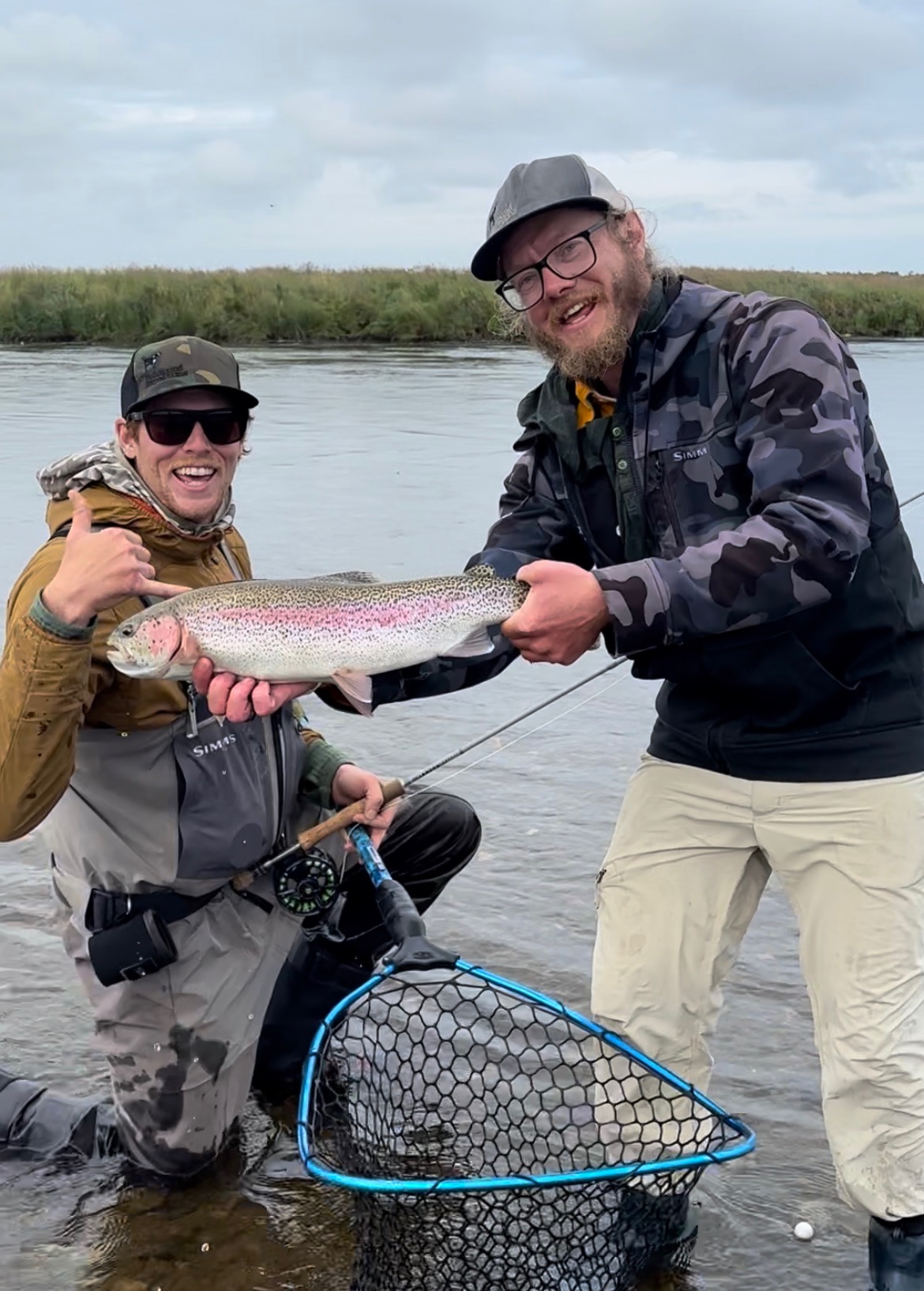
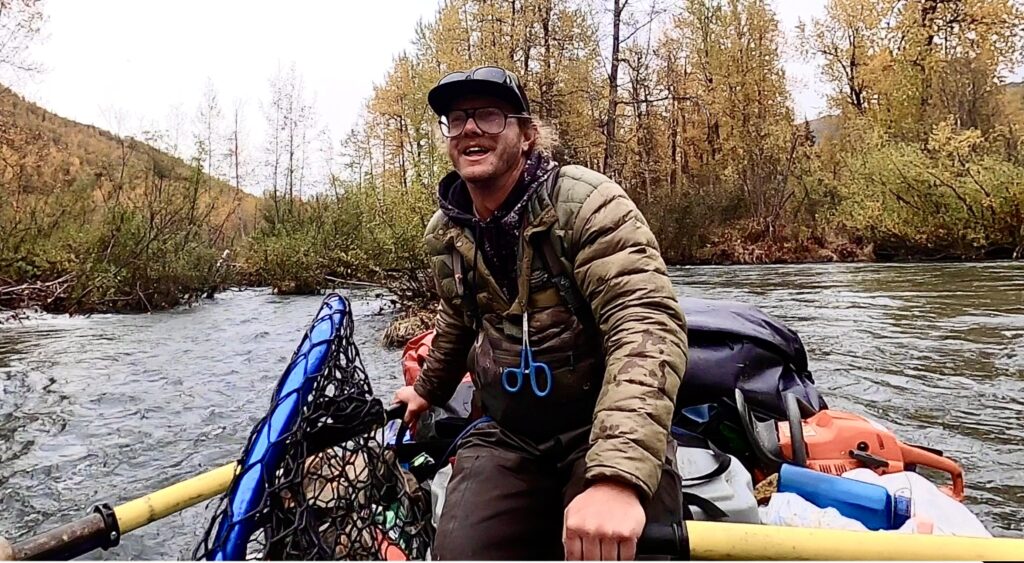
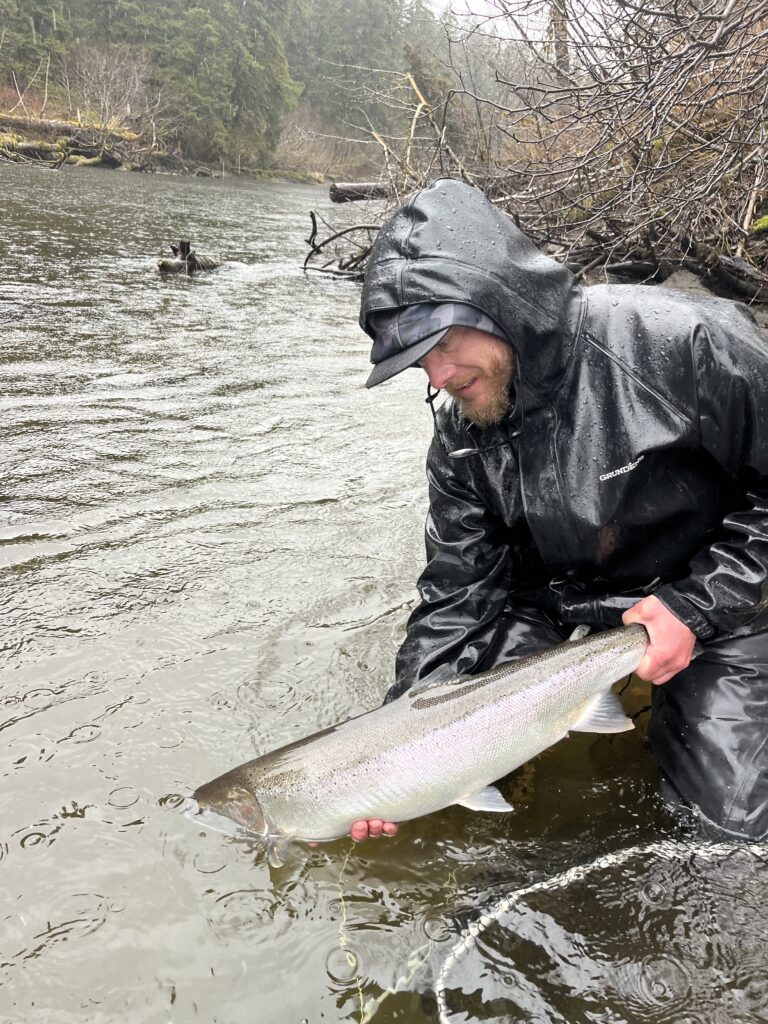
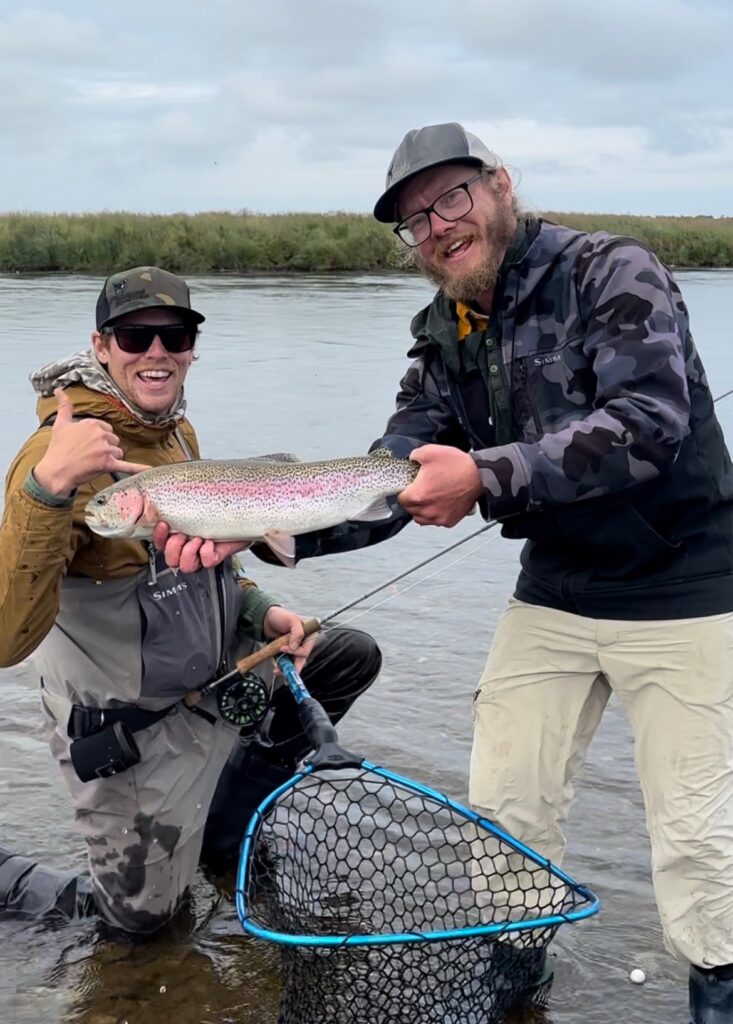
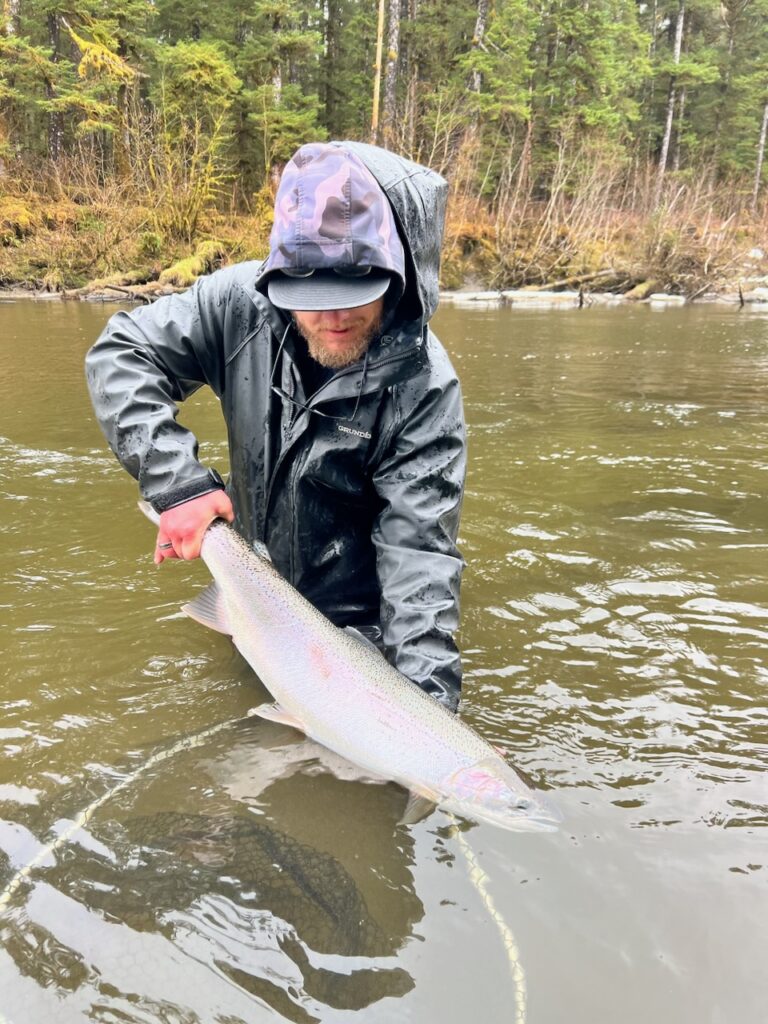
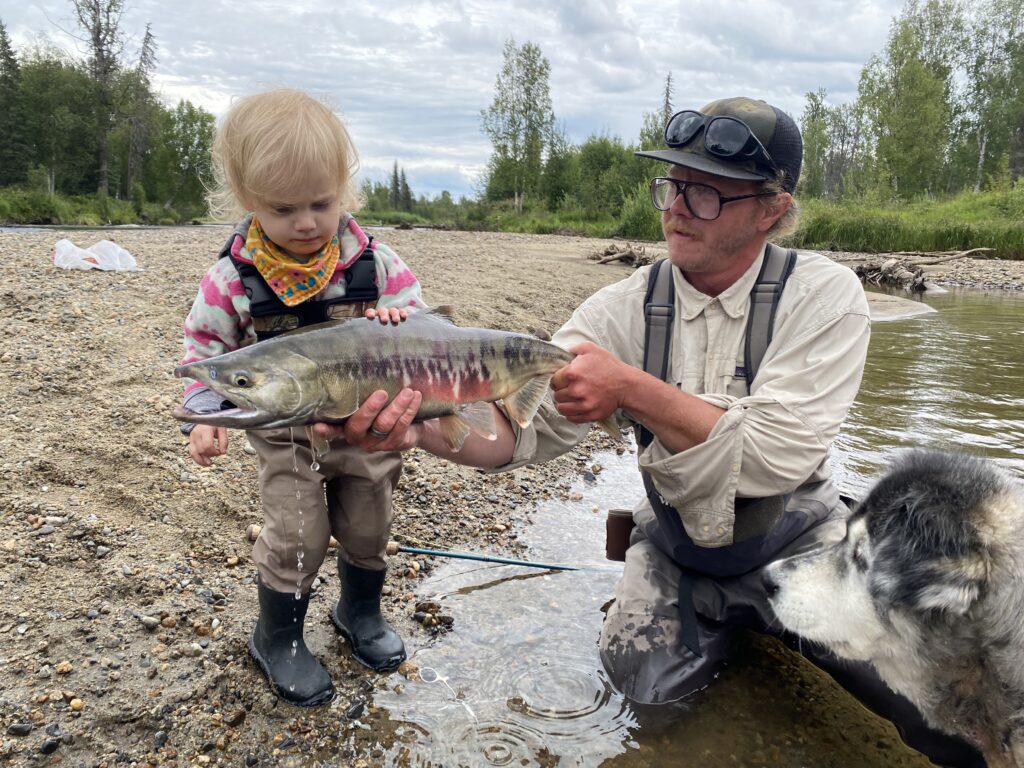
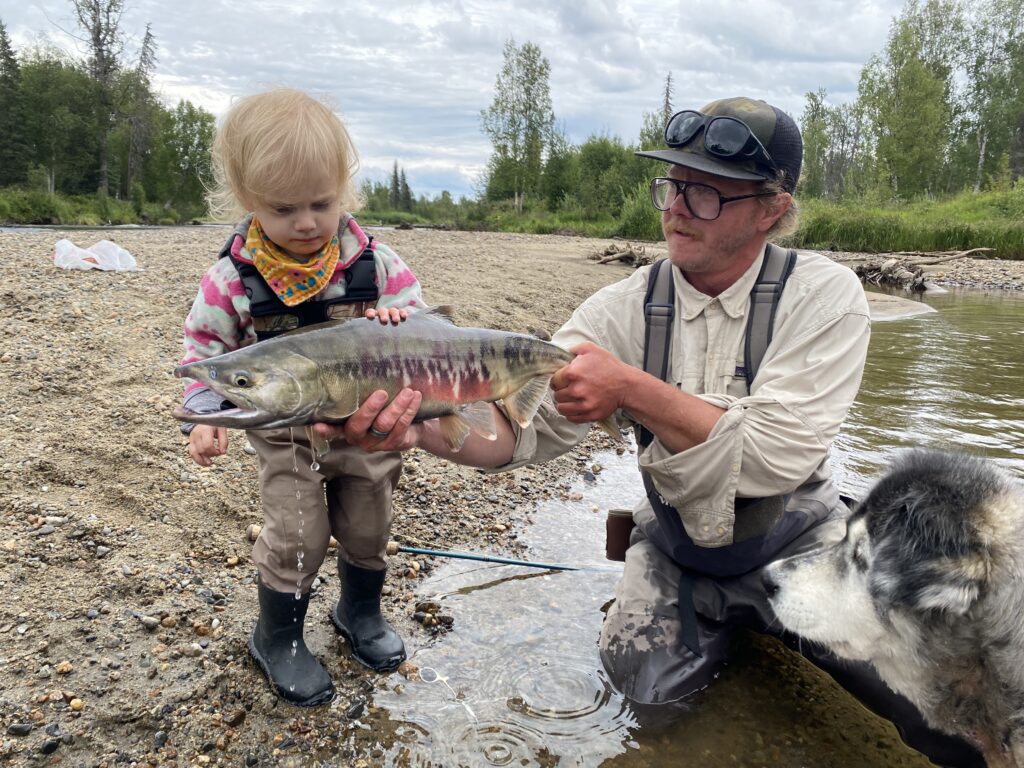
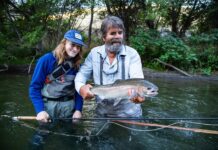
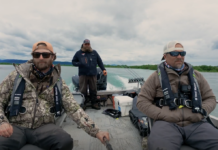
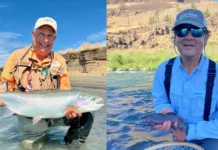
For the last ten years, today’s guest has been fly fishing the Alaska road system and guiding the south central rivers Lower Willow, Upper Willow, the Canyon water, and Montana Creek. He’s one of the guides behind our recent Alaskan hosted trip and has a head full of stories that only come from rowing in a place where anything can happen.
In this episode, you’ll hear what it was like from Will’s seat on the sticks during our trip, why the bite shifted every day, how he chooses between bugs, beads, and buggers, and plenty of stories from the river.
Will breaks down how to actively jig, swing, and animate the Duracell and other flies while nymphing, and how they get trout, grayling, and even salmon to eat.
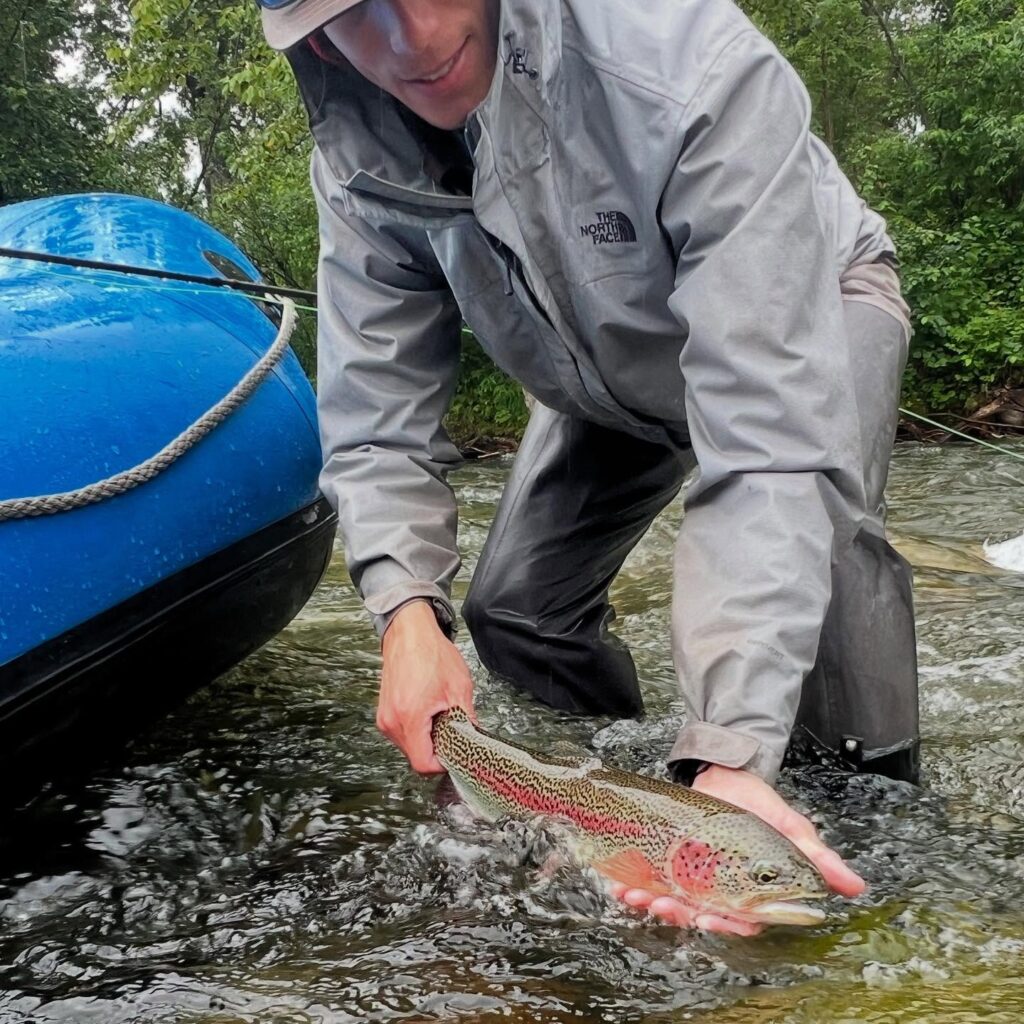
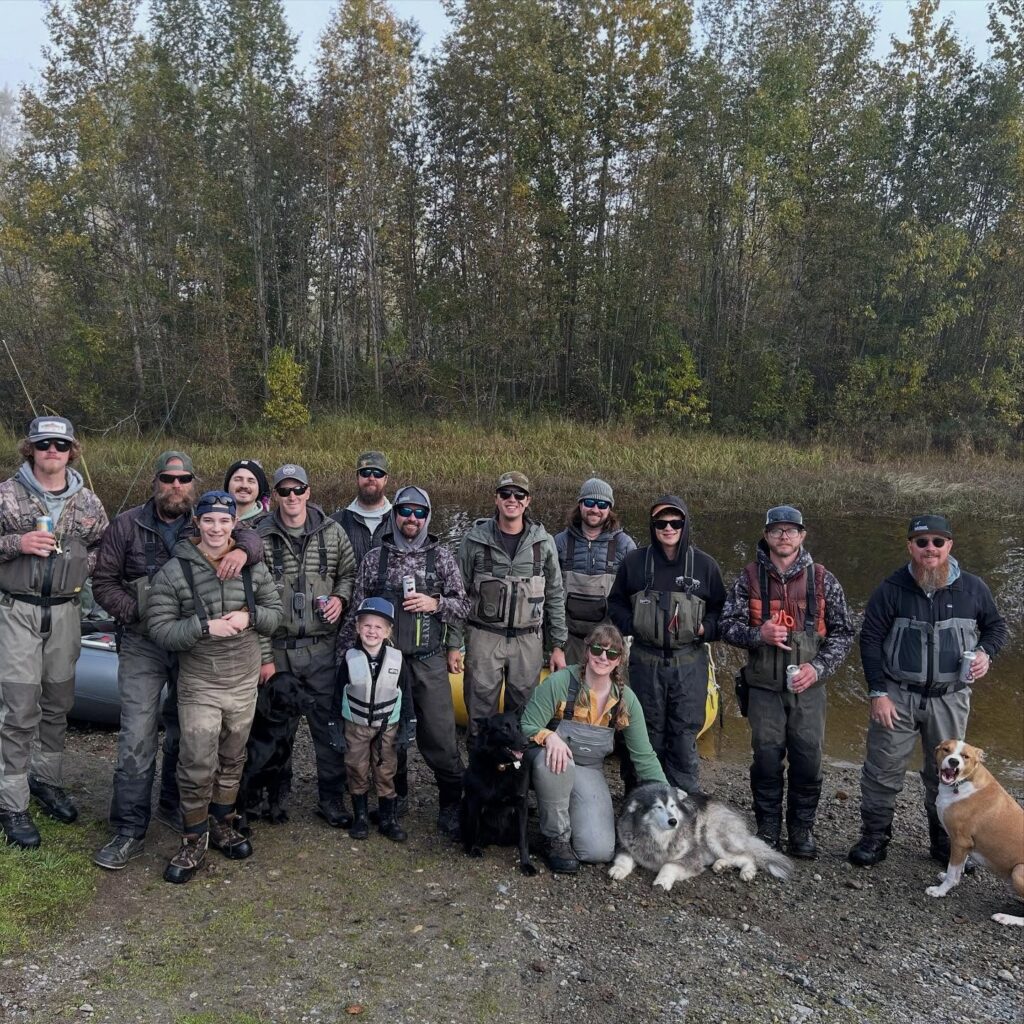
Will helped guide our hosted Alaska trip this past summer, and he brought a head full of stories with him — everything from cold mornings on the Upper Willow to those early-season bead bites that fire up the leopard rainbows. He also breaks down the Duracell, beads, buggers, and the exact ways he jigs, swings, and manipulates flies for trout, grayling, and even salmon along the Susitna system.
Will looks back on the hosted trip and remembers the group, the cold mornings, and the early bead bite starting to show up. Kings were just beginning to spawn, and the rainbows weren’t fully keyed in on eggs yet, which meant mixing beads with buggy patterns.
One day was all about salmon (pinks and chums stacked heavy in the lower river), and the 8 wt rods got bent early and often.
He notes that the upper sections needed more creativity: eggs, buggers, Duracells, and combinations to match what the trout would actually eat as the bite changed each day.
(00:11:14) Will gets into how he chooses between bugs, beads, and buggers on the Alaska road system, and he keeps it honest. He’s not an entomologist. He just knows what the fish tell him.
Will talks about how mousing can be amazing on the Alaska road system, but timing and weather matter a lot. When conditions line up, warm nights, warm water, and a late float, trout will crush a mouse. But during the trip, things cooled off fast, and the fish just weren’t as fired up.
He still wishes the crew had landed one, but sometimes the season makes the call.
Will talked about a bunch of moments that show how much the river can change and how the fish react to it. Up in the canyon at Red Gate, he described those deep pools, the whitewater pouring in, and how a Dolly Lama slapped into that fast water can trigger a rainbow out of nowhere. It’s a wild setup and one of the coolest zones on Willow.
He also broke down what happens when the river blows out. In dirty water with almost no visibility, those fish slide tight to shore, right into the slowest water they can find. They aren’t chasing.
They’re sitting still, inches under the surface. That’s when high sticking a bead right along the edge becomes the only way to get a grab. You feel almost nothing. It’s like a leaf bump. But that tiny tick can be a fish just opening its mouth.
Will hit ten years of guiding, and he says it all feels like a blur. One minute he’s looking at old photos on his phone, the next he’s realizing how far things have come. The team started small, and now they’ve grown into what Adam calls the largest guide operation in the state.
He talked about what makes their crew stand out. It’s the mix of skill, trust, and the variety of trips they run. Clear Creek demands whitewater skills, fly fishing skills, and the ability to run a full camp.
Not every guide can do that. But guides from all over the country come up because they’re looking for something different, and this place delivers.
Episode Transcript
00:00:00 Dave: For the last ten years, today’s guest has guided the road system fisheries of south central Alaska, Lower Willow, Upper Willow, the Canyon Water, and Montana Creek. And he’s one of the guides behind our recent Alaskan hosted fly fishing journey, and has a head full of stories that only come from guiding in a place where anything can happen. In this episode, you’re going to hear what it was like from Will’s seat on the sticks during our trip. Why the bite changed each day, how he chooses between bugs, beads, and buggers, and plenty of stories. Today. Will’s going to get into it all. This is the Wet Fly Swing podcast, where I show you the best places to travel to for fly fishing, how to find the best resources and tools to prepare for that big trip, and what you can do to give back to the fish species we all love. Will Donnelly shows us how to actively jig, swing and manipulate the Duracell and other flies while nymphing. Some of his favorite patterns in Alaska. We’re going to find out how to tight line, throw it into the wood, jig it in place, or swim it. We’re going to talk about how they get salmon to eat, how they get trout to eat grayling. We’re going to get into all the species with Will today and how to animate it all. Want to give a quick note before we jump in and make sure you listen all the way to the very end, we’ve added something very special from the Alaska trip. A few of the Wet Fly Swing Pro members who were on the trip shared what the week meant to them, and it’s a perfect way to close things out. So stay tuned. After Will, on this podcast, you’re going to hear from some wet Fly Swing Pro members that were up with me on the Alaska trip, so I’m excited to share that at the very end. All right, here we go. This is going to be a good one. Will Donnelly. You can find him at Fishing Expeditions. Com how’s it going?
00:01:43 Will: Well, good. What’s up Dave?
00:01:45 Dave: Not much man, I’m excited about this call because, uh, we did a trip last year. Uh, or actually. Now. Now, remind me again. I’m drawing my my blanks on the trip. Was it this year or last year? This is how old I’m getting.
00:01:56 Will: I just say last summer.
00:01:58 Dave: Yeah, it was last summer.
00:01:59 Will: Like last summer. The most recent summer?
00:02:01 Dave: Yeah, it was the most recent summer. Exactly. Yeah. So we did a trip this last summer, and it was amazing. We had a great crew of some listeners of the podcast that came out. It was awesome. What’s amazing about these things? We talked about a little bit, but you bring together these people that don’t know each other, and you spend a week on the river. I guess we were on the river three full days and then we had some extra time. And it turns out this epic adventure and you guys were our guides. You know, you were our guides on this trip. So I want to talk about that today.
00:02:28 Will: Yeah. Was it me, Wyatt and Dan as the guides on that trip? And we had six of you guys, right? Yep. Yeah, it was a good mix. It was a good mix of different characters on that trip. It was. And it was in the very beginning of the bead bite, the very beginning of it with those kings that were starting to spawn. Yeah. I’m picking up on the vibe of that day. Those three days.
00:02:50 Dave: Yeah.
00:02:50 Will: You remember those days too? Yeah, it was cold.
00:02:55 Dave: one of.
00:02:55 Will: Those days.
00:02:56 Dave: Yeah that’s right. So we had the yeah we had I forgot about that. Yeah. We had the Chinook that were coming in and we were focusing on obviously rainbows. Those, the leopard rainbows kind of famous for Alaska. Yeah. So there’s a lot to cover here. I want to get into a little bit on the fishing, a little bit on that. But tell me let’s just take back first. Let’s rewind a little bit. We had you on the podcast. It’s been almost three years, twenty twenty two. What’s been going on with you the last three years? Have you just been kind of doing the same old good stuff out there in Alaska, or give us an update?
00:03:26 Will: Uh, as far as this, how the seasons go, like the actual fishing seasons overall, pretty much the exact same. Um, yeah. We’re still the same old program when it comes to the winter work. I finished out driving Snowcats at one winter. The next winter I took, uh, quite a bit of time off, and I just traveled Asia for the first time. That was pretty neat. Um, this winter I got some new gig here in town, and not much has changed. Just like going from season to season, figuring out what I’m going to do in the winter. Hopefully this winter, uh, I got a chance to go down to Christmas to catch a GT, and that’s like the number one on my list. You know, seeing that video and Blue Planet of the GT coming out and eating those birds.
00:04:10 Dave: Oh, yeah, that.
00:04:11 Will: Was etched in my brain forever. And hopefully I get my chance coming up in the April. We’ll see. You know, I don’t do a lot in the winter. Just try to find a gig. Keep it easy. Stay below the radar, you know.
00:04:25 Dave: Right? Yeah. You’re not fishing. That’s one thing you’re not doing in Alaska. At least fly fishing, right? When does fly fishing stop for you? In the fall. Winter. And then when does it start again?
00:04:34 Will: You know, this year was a little unique. So up in the, uh, the Sioux Valley here where we’re fishing until about a couple weeks ago, there is great fishing because even though the temp has been going down, we had enough flow in the creeks to hold some of the fish because, you know, all these rivers in our area are connected to the Sioux and in the winter time the water drops and it freezes up too much. So all those fish have to migrate to the soo to overwinter in the big, big river underneath that ice. But since this fall was relatively warm with a lot of water all the way until two weeks into November, not October, there was still great fishing in these rivers, so that was cool. That went a little later up here, but if you want to drive down to the Kenai right now, it’s still great fishing. And there’s some monster beauts this year gorging themselves out a little bit later on in the season, more than normal because they had such an epic, uh, fishery run, uh, sockeye run.
00:05:34 Dave: Oh, right.
00:05:35 Will: Like when you go there, you’re still seeing eggs rolling around in the creek. Um, you know, like, uh, three weeks ago, there was still a bunch of spawning fish.
00:05:43 Dave: Yeah.
00:05:44 Will: And, uh. Oh, I gotta tell a good story. Yeah. So me and cam went last weekend down there, and we were doing our thing. It’s just me and him, you know, we’re playing music and. Burn this good little meat tunnel in some braids on the upper there in Cooper Land. And if you know, you know, um, and they’re in a nice little meat tunnel where all they’re all funneled up, and I hooked into one of the biggest rainbows of the season. It was massive. It felt like a steelhead. Wow. My buddy cam, he’s hooked up on a similar fish. We’re talking about twenty eight somewhere around that in inches. And they are as fat as they could possibly get at this moment. They are the biggest of you could possibly imagine. A rainbow could.
00:06:26 Dave: Wow.
00:06:26 Will: Fatten up right?
00:06:27 Dave: Yeah, it’s like footballs. They look like a football.
00:06:30 Will: Yeah. But these ones, they’re they look almost more like Chinooks. How fat they are. You know how you get, like a short thirty inch Chinook and they’re.
00:06:37 Dave: Big shoulders.
00:06:38 Will: You know, it’s nothing but no neck. You know, just shoulders.
00:06:42 Dave: Right.
00:06:43 Will: And, uh, so me and long story short, me and him are doubled up on massive fish and he’s like, he’s having to go under me. I’m going above them. And this is the first forty five seconds. This guy in a little packraft is coming down the river. He’s watching us have a good old time hooting and hollering, doing our thing. He’s watching us. He doesn’t see the sweeper coming at him.
00:07:06 Dave: Oh, man.
00:07:06 Will: And he barely touches it. He freaking rolls over in the creek. He has his hunting rifle fall out. He’s by himself. He’s with big duck hunting camo waders. And he’s like, he instantly goes for all his gear and he’s bobbing underwater and he’s going to grab for his boat, and he’s pushing it away when he grabs his boat. And I’m like, I gotta point this fish off. And we’re like, oh, because we’re no one else.
00:07:33 Dave: He’s going to drown.
00:07:34 Will: And he has nothing but sweepers and a steep bank on that side. And I’m like, so. And cam is sitting there playing his.
00:07:42 Dave: Steps, okay. He’s like, I’m gonna let my fish.
00:07:47 Will: Like as soon as I pop my fish off to really help that guy. And it’s like this five second interval, he finally grabs his boat and I could tell he’s barely making it to the other side. I’m like, wish I held that fish on just for because me and cam would have had that that like so.
00:08:02 Dave: You lost your.
00:08:03 Will: Fish? Oh yeah. I pointed it off and it’s like, you know, I like, looked up and I’m like, I, you know, it’s good karma.
00:08:11 Dave: That’s the ultimate challenge for a fly fisherman is do you land the trophy fish in your life or do you let somebody drown? You know, it’s like.
00:08:19 Will: Well, cam made that decision easy.
00:08:21 Dave: Cam did. That’s so amazing. Yeah. Cam. Of course we’ve had all the podcasts, too. Uh, we’ll get a link to that episode as well. We’re talking about the same cam, right?
00:08:29 Will: Cameron. Gordon.
00:08:30 Dave: Yes, sir. Yeah, yeah.
00:08:30 Will: Cam with, uh, Bay Island Expeditions. Right?
00:08:34 Dave: Yeah, yeah. Bay line and we haven’t chatted with cam for a little while, but he’s still got that operation going.
00:08:39 Will: Uh, yes, sir. As far as I know, him and Howard are still doing it. He had some ladies group, I think, recently go out. Um, so things are still going.
00:08:49 Dave: Yeah. Cool. Well, that’s a little update, I guess, on what you’ve been up to. You’re, you know, right now it’s mid November, so the winter is upon kind of all of us, but especially on you guys. I want to look back on that trip just to, you know, get a feel for again what it was like kind of how it went down. So talk about, you know, do you remember I’m trying to think I think we had three days on the water. What were we doing each of the days? I know we were floating the river. Talk about that a little bit. What was that trip like? What was our focus? It was kind of rainbows, but there was some salmon around, right?
00:09:18 Will: Yeah. So I know, I know at least. Okay. One of the days since the salmon fishing was so good, meaning, um, the chances to catch pinks, chums and maybe silvers were really good chums or no, pinks and chums were in the creek really heavy at that time. So I think it was possibly the first day we ran the lower Willow Creek, and we just took out the eight weights and used Use streamers and gripped and ripped on a lot of salmon. That was fun. It got people just to get bent up on a lot of nice big fish.
00:09:53 Dave: Yeah, they got some salmon.
00:09:54 Will: And then we went to the upper and we were doing a combination of bug and bead fishing. We ran into the problem when we went up there that some of those rainbows weren’t keyed in on eggs yet, and so we had to use a combination of eggs and bugs and different variations of that stuff. A buggy looking egg worked better that day. Yeah. You know something I forget? Oh, in a Duracell that.
00:10:22 Dave: Oh the Duracell.
00:10:23 Will: Better sold to like whatever. You know, I shouldn’t be saying that out loud.
00:10:29 Dave: No, no, we’ve already talked about it. Actually, Adam, I know Adam has a has a visceral reaction to this. And we talked to, I think, with him on the podcast that like there’s some changes, right? Adam loves the, you know, the the the meat. We all do right up there. But it’s changed a little bit, especially in those years when you don’t have as many salmon or they’re returning a little bit later. It changes it, right? They’re not on the eggs and the meat as much.
00:10:51 Will: Well, I wouldn’t you know, about the time they return is typically the same. Okay. That has to do with water flow and water temp mostly. And you know, like and just how healthy the run is, if it’s a real healthy run, you’re going to see fish coming earlier because you got more numbers. Um. Mhm. But like there then there is an average you know, and when they push in and stuff.
00:11:14 Dave: Yeah. So they are on those bugs though. So the Duracell which is a Euro nymph and you know it’s like you’re kind of getting down. Talk about that a little bit. Let’s go into that. You know if you are fishing bugs what were we fishing or what do you guys typically fish during the summer. And talk about how you choose. How do you know what bug to use, whether you’re going to throw some eggs on. Talk about that a little bit.
00:11:33 Will: So that’s funny. Like, uh, you know, like a lot of the people listening to your podcast, uh, you fish down in the States or like, bug experts, I’m an Alaskan fishing guide. I moved to Alaska when I was young. When it comes to bugs like I am definitely, you know, I know more than the average fisherman. But I am not an entomologist in, like, learning. Like, why are they buying a Duracell? I can’t tell you. Yeah, I can’t tell you exactly. But I could tell you the way my vibe on it is. Just because it’s a heavy fly. It connects well to your indicator or your high sticking so you could feel it. Yeah, it gets down deep fast.
00:12:15 Dave: Right.
00:12:16 Will: And the color combination of it or whatever. Just that little sparkly thing just crushes fish. They love it like something lights them up in that it like in the way you’re fishing it, like some of the guides that we were with, like Orion, he’s down hanging that thing and jigging it sometimes, and he’s able to get salmon to bite it. And it’s like, you know, you’re fishing in a lot of different ways to don’t just throw it on a bobber and forget about it, like throw it in the wood, jig it to put it in the wood, in the in the current, and drop it in this way and pull it up and then drop it again, you know, and you’re getting a lot of different bites on that. You know, I don’t can’t tell you exactly why even the salmon are in it. One of the things like, you know, when it’s swim in a certain way, it might look like a teeny little smolt, you know, swimming.
00:13:04 Dave: Yeah.
00:13:05 Will: The fish are going to try to or fry. I mean, trying to attack it.
00:13:08 Dave: Yep.
00:13:09 Will: Um, and when it comes to, like, why we use certain flies when we do, uh, like, with the grayling, they’re pretty forgiving. They’re going to bite almost anything at a certain size a few times, and you just run it through like you’re going to you got some go to. They’re being picky. And depending on the time of year, if it’s early season like a white woolly bugger. Mm. And off the drop off off like that gravel drop off you know like the shallow gravel drop off just a little bit more depth. And you can barely see the color change on the rocks down there, and that’s that edge. You’re trying to just drop that bugger or whatever nymph right off that edge and wants to hang up and put it right there. And a lot of the times you want to high stick that because your bobber ain’t going to work. Yep. So flip it upstream high, stick it down, wait for the thump like and snap that wrist up if you feel anything. Um. Mhm. Like your hair’s ear. That’s a good go to. Like we just have some go tos. We do notice like, you know like everything until last year. You’re going to see the most gnarliest mayfly hatch at some point during like the, the pink like in the beginning of August at some point on some good years and you all you got is a bohemian waxwings eating the mayflies. They’re landing all over you and the birds are crushing them, and the only thing eating them in the water is the size of your pinky. Like maybe a grayling like this, because they’re all keyed in on the the eggs happening at that time. but this year was a little different. So we started our season, you know, during breakup. And we noticed the trout were looking not as healthy a lot of the times, like two years ago when the ice broke up. You catch a trout, it’s super fat, healthy still. Like, what the hell are you eating under the ice this winter? Yeah. You know, they had a healthy winter this last winter. Not so healthy. They were very skinny. They had some of them. A lot of parasites. Those little odd looking things. Oh, I actually got my book here.
00:15:11 Dave: Oh, yes.
00:15:12 Will: My buddy’s mom actually wrote the book. So I’ll shout out Tamara Burton for Alaska Fish and Game. It’s the same thing here. That’s what’s getting them. But you’ll get the infections like that. It’s really bad.
00:15:27 Dave: Oh right. And what’s the name of that book?
00:15:30 Will: Oh it is common diseases in wild cultured fishes in Alaska.
00:15:38 Dave: Oh, wow. While cultured fishes. Okay, cool.
00:15:42 Speaker 3: Yeah. Right there.
00:15:43 Dave: There you go. Okay. Awesome. So basically, like any areas and we’ve heard this, I’m trying to think of the last one. I mean there’s just changes, right? Environmental changes, climate change. You’re seeing some effects. Who knows exactly what’s going on. But you might have a rougher winter on the fish so they don’t come out quite as fat. But you know, but.
00:16:00 Will: And healthy.
00:16:01 Dave: And.
00:16:01 Will: Healthy.
00:16:02 Dave: Yeah.
00:16:02 Will: It isn’t a little bit of a bigger double whammy for those fish too, because the previous year, uh, previous two seasons ago, our salmon run was extremely low. Everything from Chinook to silver and all the salmon’s in between. The salmon we don’t get in these rivers are the sockeye.
00:16:18 Dave: Okay.
00:16:19 Will: And then we had multiple bumps in water and flooding. And so all the eggs that did happen got washed up. A big portion of them got washed out. And so when it comes to next year’s breakup. So this seasons breakup spring, You’re supposed to have millions of baby salmon on their way out to the ocean. And that wasn’t the case in some of our our river mouths. And like, you know, I get really excited in the beginning of the summer or spring when you walk down to the mouth of a river on the Susitna, it doesn’t matter which one, and you’re seeing the turns in the air. The Arctic or Aleutian turns in the air and they’re dive bombing, dive bombing, dive bombing, chattering, chattering. They’re just big school of them. And then you’re looking out exactly where they’re dive bombing, and you’re looking for maybe a shallow ripple or a logjam, and then you’re looking for the other other like a splash, but no bird. And you’re like, okay, that’s a big old rainbow or a big old grayling right under the surface, because all these little baby fish they ride just on the film of the surface on the way.
00:17:27 Dave: Out, they’re.
00:17:27 Will: Going and, uh, that’s like on all the log jams, you’ll see the turns and pipers, Bonaparte gulls standing on the log jams, just pecking at the water, and then you’ll see a splash right next to the bird. And you know, that’s a fish, and you’re just down hanging a woolly bugger right in there creating that silhouette. And they come up and smack it.
00:17:44 Dave: How are you down hanging that? Are you kind of in that situation? Are you kind of dropping it just below the surface? What are you doing there?
00:17:50 Will: I go above the current. Let’s say it’s a corner. There’s a logjam in that corner. If I’m on the sticks, I’m back rolling. And I’m saying just. It could be as simple as leader. Bugger. Split shot. Drop it in the water. Let it pull tight to fill the bite. That’s it. Yeah. And then there’s other ways. If you’re on the bank, cast to the outside. Throw a mend. Let it pull tight. You’re swinging. You’re just swinging a bugger.
00:18:15 Dave: That’s all it is. You’re swinging a bugger. This is amazing. Yeah, we’ve heard this before. I’ve heard this from some of the best anglers. We just did an episode with team USA. You know, team USA has been dominating. They’ve won the youth, have won three world championships in a row. Best in the world.
00:18:28 Speaker 3: Let’s go.
00:18:29 Dave: I know the women won the world championships this year and then it’s this amazing thing. But I hear some of the best talk and they say the same thing you’re saying is that you don’t want to necessarily get your fly down on the bottom right away. You want to like, work it so it’s in the column and you might be nymphing it for a little bit, and then maybe it swings at the end. They talk about. Right.
00:18:45 Speaker 3: Yeah. It’s all relative. Yeah. It’s so relative.
00:18:48 Will: Like, you know, one of the I didn’t even finish it the first thing. So this last year with all those small I was supposed to come out, they didn’t really come out in those crazy numbers. So the fish were already skinny and hungry, and then they didn’t get that extra boost of fish that they want. And so one of the other big things that they might eat that time of year is, of course, a couple sculpins here and there, but as your Dalai Lamas or your lampreys. So when you’re using a Dalai Lama, most likely, in my mind, a little lamprey, a juvenile lamprey coming out of the mud and going on its way up to the ocean to. And for some reason the dollies did work okay, but it wasn’t like other times of the year. And I was honestly okay not using so many big dollies because like, even if we’re using a small hook, like a size six hook on these bigger streamers, it still will mess up some of the smaller fish every once in a while. And like one thing, when it comes to the bugs, I didn’t mind using these smaller hooks and whatnot, you know, and because it’s just, you know, if I’m going to see the same fish every other day.
00:19:51 Dave: It’s easier on the fish.
00:19:52 Speaker 3: I’d like to easier.
00:19:53 Will: On the fish, you know, and.
00:19:54 Speaker 3: Uh.
00:19:55 Dave: Right.
00:19:55 Speaker 3: Um.
00:19:56 Dave: I think it’s pretty cool to hear. I mean, obviously there’s changes every year can be different. But, you know, I’m not a dry fly purist, but I think it’s cool to have some mix and have some hatches and bugs, and maybe because we even fish mouses, right? I think one of the days with Adam, I told him, I said, hey, Adam, I really want to try mountain. So I think the full day I was using the mouse for the most part. Did you guys do a little mousing? What’s that like?
00:20:16 Will: Who’s the father and son?
00:20:18 Dave: Yeah, that was Melle Mel and his son.
00:20:20 Speaker 3: Yeah.
00:20:21 Will: So I think I had Mel for two days, and I had Melanie’s son for one day, and I really tried hard the conditions on one of those days. So when it comes to like the mousing will drop on the road system here a little bit faster than, let’s say, somewhere that they never see people, you know, because they’re just going to be a little more curious and ready to attack. Yeah. But when you guys showed up that first day, we went salmon fishing. Great, nice hot weather. But when we ran the upper I know we were trying to get, I think we had a couple mouse bites, but we couldn’t get it in all the way, and the weather wasn’t conducive to really elicit those reaction bites. It started to cool off and rainy and, you know, like in July up here, when it starts to get really warm at night, like, uh, the tents are in the fifties, the water temps are in the fifties, and it’s really nice, hot, warm day. You do a late night float and you want a mouse. It’s really fun. But during that time of year we were getting into August and the weather was turning down. It’s just a lot less likely. But yeah, I would have loved to get one on a mouse. I think we were trying pretty hard, but it just didn’t happen.
00:21:34 Dave: Yeah, yeah. That’s right. That’s why you got to have all these in your repertoire, right? You got to have all these things. You got to have the mice. So what are you. Let’s go back to that. You mentioned the flies. So in this last summer what were your top if you had to say five fly patterns you used during the season for trout, I guess for anything really. I mean, yeah, you have a top five or what do you use? And maybe not just trout just in general doing that trip we did. What are your most common patterns?
00:21:57 Will: Well, this would probably upset some people later on in the year. You know, we the salmon showed up like you guys are catching and they started dropping eggs. So the number one fly was a bead a bead.
00:22:08 Dave: Yeah.
00:22:09 Will: That yeah. That caught most of the fish okay.
00:22:12 Dave: Bead is one.
00:22:13 Will: The second fly woolly bugger.
00:22:14 Dave: A woolly bugger.
00:22:15 Will: Third fly San Juan.
00:22:17 Dave: Oh there you go.
00:22:18 Will: Those three any year, no matter what.
00:22:21 Dave: Those are always good.
00:22:22 Will: You got it. Those are going to use those. You’re to start out. You start out with a pink San Juan. Yep. Then you transition into white or black? Bugger. Maybe green and all, like olive and stuff. All those other root beer. Whatever. Depending on where you’re at. Water clarity, all that junk, but simple bead hash in both the white and the black. They represent a little smoke when looking up. Okay then. Oh man. You know, you gotta mention the Duracell that was king. It probably got more fish throughout the summer than anything else. Like before the beads.
00:22:57 Dave: Yep.
00:22:58 Will: And then like I want to say what? Dry fly like, you know.
00:23:02 Dave: Yeah. One dry fly for Grayling.
00:23:04 Will: Did a Stemi work great this year the you know yeah. All of the little classic dry flies you could think of just.
00:23:12 Dave: I think that’s what I use too. I believe Adam pointed me to a section up above the upper float. And I went on my own one day and I just went to this really classic spot. It was like huge boulders. I know you probably know the place. What was it?
00:23:24 Will: Did you use the key to get there?
00:23:26 Dave: Uh, yes, I did.
00:23:27 Will: We call it Red gate.
00:23:28 Dave: Yeah. Red gate. Yeah. So I went up there and it was super awesome. And I threw on the backpack and I went hiking. I was slipping around and stuff and it was. But I had a fun time. I was in this canyon. But, I mean, I tell you what, watching those fish rise, those grayling, I caught grayling. It was just.
00:23:42 Will: Like in that pool there. Way down there too. Way down there. Yeah, yeah, it’s super cool up in there. It’s a unique spot. Yeah. You know how you got like that deep pool? That’s kind of long. Yeah. And you got that big waterfall ish that comes in that whitewater. I love slapping that Dalai Lama right in that whitewater. And you got to get it tight, quick to fill that bite. And you skate it through in different speeds just a couple times and you’ll see a rainbow just come out of nowhere right through there. And it’s just on. It’s super fun.
00:24:14 Dave: That’s what happened. I was catching the the grayling in the deep pool, and then I was working my way up and I found this little, almost a tail outside against the wall, pretty shallow. And I was cast and I got a couple of little ones. And then I cast that and a nice big rainbow came up and just hammered it right out of nowhere. Same thing.
00:24:30 Will: The canyon is so cool. Like, that’s the one cool thing about Willow. A lot of people who fish this, they fish the lower and it’s low and flat and, you know, Woody. And then you go up a little bit and then it’s more freestone, you know, like ripple pull, ripple. Yeah. And then you go up a little farther. Now you’re in a canyon and it’s like rapid to pull to deep corner pull rapid to deep corner pool. And if you know the ways in between all these little pools or you’re good enough on the sticks to throw a boat down the cliff and and run it. Um, especially a couple years ago when you’re running it like, well, sometimes get a day somewhere around Fourth of July. I haven’t had a Fourth of July off in forever, but somewhere around that time, maybe a couple of us will try to do a fun float and rip the upper the upper upper the canyon section. Yeah, and that fishing. So fun. You’re just holding on to a rope in the bow of the boat, and you have your rod in the other hand, and you’re slapping that Dalai Lama behind all the big rocks as you’re going through the rapids, and you’re catching big grayling and big rainbows behind these big chunky rocks and all this energy. But you plug it in these certain spots. Oh, and that goes to say, like how we were talking about earlier, you’re saying USA team. Yeah. And how you fish it during certain parts of the column. Um, I got a good story like, uh, we’re me and a group of guides were floating the river, and I was going to go snorkeling to, uh, recover an anchor later on. We’re calling it operation, uh, Anchor Freedom. And, uh, and, uh, but I had the wetsuit on, and I’m snorkeling, and I’m watching the guys fish, but I’m underwater. There’s this one guide. He’s good, and he’s casting the Dalai Lama, throwing it on the outside bank, you know, in Atlanta to get deep. But I’m noticing this, like sixteen, eight inch, eighteen inch rainbows coming up and smacking it almost instantly when it hits that surface and we’re throwing a mend at that time, we don’t feel it. We’re locked in our ways. Try to get it deep and then tight to fill that bite for them. We’re not too used to them. Maybe at that water temperature they’re super froggy and ready to bite, you know. And that was different. And they’re coming up and biting. And I’m like, dude, they’re biting it. You’re not knowing it because we’re letting it sink too much and they’re calling on me. They’re like, they’re not coming up on the surface. I’m like, okay, if I raise my hand, just set the hook, even in a mend or whatever, just set that hook. Next cast. He throws it out there. This fish comes up on the bottom. Like, seriously. Like just hits it. And I raised my hand and he’s like, no way. I was like, dude, I told you I would have never done it unless I saw it, you know? Yeah. And it was just like that day in particular. They were super, you know, Froggy actor. They’re ready to go far and fast to fill that bite. And I’m a big believer like, you know like you know, like, remember when we went out to Clear Creek and it’s flooded and you had no visibility?
00:27:27 Dave: Oh. Oh, you mean the first the year we came down, did the helicopter heli trip? Yep. Yeah I do I will never, by the way will I will never forget that trip that that will always be at the very top of my list of trips, even though. Right, we get there in the river’s kind of blown out and we’re like worried.
00:27:42 Speaker 4: This much visibility.
00:27:43 Dave: Right. But I yeah.
00:27:46 Speaker 4: Literally I can’t even see my laces when I, I know him in so.
00:27:51 Will: But since I know that creek and I know there’s some fish that should have been spawning right there, even though we can’t see anything anymore, the vibe says there should have been salmon there. So where do the rainbows go at during no visibility. High water.
00:28:07 Dave: Right?
00:28:07 Speaker 4: They get sucked.
00:28:08 Will: Up on the shore in the the slowest curtain. Right. And since they can’t see, they feel comfortable being a foot underwater, six inches underwater right there, you know, Six inches close to the shore. So you creep up to the edge of the water, and you drop your bead down there until you feel a rock. Or maybe you feel a leaf, but you’re still snapping that wrist up, because that time of year, you got a lot of leads in the water too, right?
00:28:35 Dave: A lot of September. So you’re feeling right? Yeah.
00:28:37 Will: And when you’re high sticking in a slow seam, it sometimes feels like a leaf because a fish is not attacking it. He’s just opening his mouth and letting it, you know, close. And you’re just feeling a little, you know, and you’re just. And then that’s how, like, we got that one fish in the very beginning of the trip before we even got the boat set.
00:28:57 Dave: Right.
00:28:58 Will: Just high sticking right in there. And then boom, I’m like, okay, there’s still fish here. I’ve made me feel a lot better. We caught a fish there. Like, because I was stressing for you guys, I wanted, you know, I know like any other trip you want to. Yeah, you’re in good conditions.
00:29:13 Dave: But that trip, I could tell you. We got some nice fish that trip, for sure, but you know it. Just again, back to the fly fishing trip. That trip is so much more than just the fish and the fishing.
00:29:23 Will: Yeah, it was pretty epic.
00:29:25 Dave: We, I mean, just I remember that helicopter ride in. You fly in and you drop down and swirl around and drop right on that gravel bar. I mean, the thing was probably seemed like it was barely big enough to hold the helicopter.
00:29:35 Will: Yeah.
00:29:36 Dave: And we throw our stuff out, and then the helicopter takes off and we’re in the middle of nowhere for the next four days, and it’s just like, it was an amazing trip, man. And we had the Northern Lights and we had like, what do you remember most about that trip? Because it was I feel like the company. Yeah.
00:29:50 Will: The company was top notch. You had Nick, you and of course, Adam and, uh, cam and just their campfires and the shenanigans around the campfires, you know, that was. And our night walk. That was pretty fun.
00:30:05 Dave: Yeah, we had that one night where we camped. Right on. I mean, it was crazy, right? Because we camped right on the river.
00:30:10 Will: My phone is still on that island. Yeah, I lost my phone that trip.
00:30:13 Dave: Oh. You did?
00:30:15 Will: Yeah, that. So, everybody three years ago trying to call me, that’s my switch number.
00:30:22 Dave: That’s what happened. So, yeah. You lost your phone. Well, I’m glad you brought up the clear versus muddy, because that is something that comes up not only in Alaska but everywhere. You know, the water gets muddier. And you mentioned it. So those fish are when it gets really like that, they’re moving in towards the shore where they can kind of feel like they’re, I don’t know, feel more secure. Maybe out of the.
00:30:40 Will: one hundred percent, they’re not going to be hanging out in the fast water. They’re trying to eddy out wherever they can. And, you know, during certain floods, what makes it tough to catch a fish is that you got such a big frog water, eddy water. And, you know, like sometimes in the early season, if they’re really keyed in on, like, the outgoing Smolt and fry, you could use a, a bobber and a level bugger with only this much like a foot in between when you have super bad clarity in the water, if you’re noticing fish is rising and hitting, um, something on the surface, like at a river, like where it hits the sewer or something in the beginning of the season, and they’re eating, but the water is chocolate milk, which is a lot of the case along the Susitna. Um, there’s still they’re looking for that silhouette and maybe movement. So they’re going to and that’s one of the only times that you’re going to be able to get fish in the slack water like that. Now when it’s an actively in a flood and you’re getting these temperature changes and stuff, they’re in a little bit more of a like a shock. They might not be biting it on the way up well after near its peak as much. It’s when it starts coming back down just a little bit starts to settle, just barely. Yeah. The fish are gonna barely start to come back out from the shore or wherever, like a deep pocket of eddy. And you can’t really fly fish that like the other day, right? I’m at a river mouth and it changed, and I was really disappointed. It just threw a big old huge recirculating eddy and it didn’t have enough current. So when I throw my bobber out there, a fish could just come up and look at it, sniff it or something. And I’m he’s never gonna really bite it unless there was a competition factor, unless he really wanted to get it before the next bitch. Yeah. Um, so like that, I. I’m screwing this up. I don’t know.
00:32:31 Dave: This is great. This is great. I love all this knowledge. I mean, I’m starting to think, too again about the trip we were talking. Now we got multiple trips. We got the trip where we did the heli. But then also looking back at this trip from this last summer, I remember on day one we went out before we even went out with you guys on the water with the float. We went out to a place because we were we were fishing willow, but we were staying at a cabin upstream and we went to some one of the mouths of the creeks. One of the I think it might have been Montana Creek, Montana. And we went out there and I remember Will’s or Mel’s son was out there just having the time of his life catching chum. And I think pink. Do you know that that Montana, do you guys ever fish that? Is that something that can be good?
00:33:11 Will: Oh, yeah, one hundred percent. Like, you know, a lot of the people, you know, growing up in Anchorage, uh, you know, ninety five percent of the time all the anglers are going down to the peninsula. But every once in a while, when you’re going north and, you know, if I knew how good the fishery was up here, I probably would have. I would have been up here a lot more instead of fighting the crowds on the Kenai.
00:33:32 Dave: Yeah.
00:33:32 Will: You know, Montana is a really popular fishery. So like a lot of the people from Anchorage, they passed all the other good streams, which I like, you know, like just keep going to Montana because you got on Montana. I don’t know if I should be saying everything. It’s not a secret. But you got Yoder Road up there in the upper section that gets you to the three forks up there, the north, middle and the south. And you could hike all those and they get into like more smaller creeks, and you can do everything from mousing and stuff in there depending on the time of year. Really epic fishery, you know, and some really nice big fish. And then there is sections of that that you could float, um, down to the highway or just above the highway there, and then below the highway going west towards the Soo. You could hike down to the mouth. So extremely. Yeah, a lot of people fish it, we fish it. You know, typically if the fishing is good enough closer here because what that’s like almost a thirty minute drive.
00:34:28 Dave: Yeah.
00:34:29 Will: Yeah. So, you know, if I have clients and I have a good enough opportunity in our backyard, I don’t want to waste that thirty minutes, you know?
00:34:38 Dave: Yeah, yeah.
00:34:39 Will: And, uh. So. Yeah, man, they’re all good. They’re all.
00:34:43 Dave: They’re all good. I think the road system is. And I talked to Adam about this, too. It’s like, this is a pretty amazing resource that people, even if they don’t get a guide, they can DIY their way up through Alaska and the road system, and they can. You know, another thing I heard about and you probably know about this too, but we had a, um, a guest from Fish Alaska magazine who was talking about the Stillwater opportunities. Out off the system, out in your area. Do you guys ever think about that much? Have you ever touched on that?
00:35:09 Will: I should send you a picture of my biggest pike I just caught.
00:35:12 Dave: Oh, really?
00:35:13 Will: Yeah. One of our repeat buddies and clients. Um, we were going to do Clear Creek, and then we’re going to turn around and do the witness. And the witness on the. It’s a western tributary. Mhm. Um, but during that time, of course, we got flooded out like gnarly, flooded out and then got the helicopter couldn’t take off because like Danielle, she’s a badass. She is going to get us out there. But the windows were fogging up too much because the gear was so wet. And I was like, thank God we didn’t make it out there, right? But we called an audible and said, hey, Dave or not, Dave? Uh, Boyd, we could do this. Uh, Trapper Lake. I never done it yet. It’s going to be like the same flight cost as Clear Creek. So, you know, we could try that. You know, I don’t know. I hear there’s a lot of Pike’s. I’ve never done it, blah, blah, blah. I’m just letting him know. He’s like, hey, let’s do it. We go out there. His second cast wrote the Pike. Oh, like no way. Sweet. And we’re catching them. We’re pretty consistently figuring it out together. Yeah. Then we go to where the creek outlet comes in. He’s doing good, catching fish, have lunch, and he’s like, alright, I want to see you fish. And I put on the big like, so, you know, I went down to Nicaragua this last winter on one of the trips to go for a big tarpon. Never got him, not the big ones. Some of the buddies like can’t. Well, cam got his first permit. That was cool. Yeah. So but some of the other boys, the biggest tarpon we caught was seventy pounds. But long story short, all those fancy tarpon flies that I bought for Nicaragua. I brought them for the pike fishing. So I put on a giant, like, mullet fly.
00:36:56 Dave: Nice. Like how big? Like eight inches.
00:36:58 Will: Yeah, like nipple to nipple.
00:37:01 Dave: Right?
00:37:02 Will: Like like. And I let it sink in this one little, um, well, outlet. And I’m on the bow of this little rubber, you know, raft. And and I wasn’t like, you know, double hauling it away far stripping it in. I was just like, alright, I’ll be right there, I’ll let it sink and I’m just going down. I’m trying to look at it. I’m like, was that a flash? And I just dropped it more. I’m like, did my flight just disappear? And I set it in my rod, just go.
00:37:32 Dave: Oh, nice.
00:37:32 Will: And this thing just and just and it is like, I’ll send the pic.
00:37:38 Dave: Oh, so you landed it now, was this a small fish, a medium fish? What big fish?
00:37:43 Will: No, it was a big fish. It didn’t, it didn’t huh.
00:37:48 Dave: Yeah, it was a pike.
00:37:48 Will: It was a pike. Yeah it was. I didn’t tape it, but it was one of those where you’re like holding it like this. And it’s getting out of your.
00:37:57 Dave: Wow.
00:37:58 Will: Over your hand. You know, it was pretty I was.
00:38:01 Dave: So that’s a species that we haven’t talked a lot about. We’ve talked about the salmon, everything. But pike. Alaska, right, is a place for pike all over Alaska if you can find them.
00:38:10 Will: Yeah, so that’s a slippery slope when it depending on the area you’re talking about. So here when we talk about pike it’s not a good thing they’re introduced.
00:38:22 Dave: Oh right. So they’re not native to that area.
00:38:25 Will: So like back in I’m going to get these dates slightly wrong. But here’s the general gist. Back in the eighties somebody brought a pike into one of their lakes in the western Sioux to so they could have pike in their little lake. And there’s cabins on every single lake out there on the western Sioux that, like people with their float planes, fly from Anchorage or whatever, go there for the weekend or some of them live there, you know, and they get back in Snowmachine in the winter because it’s relatively short drive in the winter, you know, to the Deshka landing or something, and you’re on the road system. It’s pretty easy to get in the boonies in the winter just on a snowmachine you’re really close, you know, or a jet boat. Um, so it’s not infeasible for the average Joe to have a cabin on some lake. You know, but. Okay. I’m sidetracking. Yeah. So pike were produced in the eighties or seventies? Eighties. A flood happened, and it spread some of the pike, and they kept spreading, and they ended up in Alexander Creek. And that’s a tributary to the Susitna. So that’s when they first got introduced. And now we’re finding there’s even a lake in Willow. That little you know, when you go down to the lower, there’s a tiny little stream you cross over. Well, that’s connected to a lake that has pike in it. Now we’re finding pike in willow. One of the guides out here named Kyle Wilkerson. Really good dude, really great dude. Works for Bearpaw. One of the other guide service out here. He is like the Pike whisperer. He’s always killing him. Like, if he can’t get him to bite, he’s snagging him out of there and come home, you know, and, uh. Um, so yeah, so when we go to these lakes, the law is that you’re supposed to kill every single fish.
00:40:04 Dave: Oh, you are right. Because they’re eating. They’re killing native fish.
00:40:07 Will: And you have, like, an eagle. When we went to Trapper Lake, an eagle just follows you and waits for the certain size. He doesn’t want him too big or too small. He’s waiting for you to.
00:40:16 Dave: So you thump him and just throw him up on the bank.
00:40:18 Will: You could do that. Or you keep them.
00:40:20 Dave: Or you keep them to, like, eat them.
00:40:22 Will: Yeah. They make. Well, a couple years ago, our guides, uh, we had a Alabama and a Arkansas guide and they’re like, hey, we got Pike. And it was in this early enough in the season, we went and do the hike and pike to Red Shirt Lake out here. So you hike about a mile. Pike and you you rent a canoe out there and you go out to the grass beds and start hooking, you know, whatever. Hopefully, you know, you’re using topwater like if it it could be a piece of foam. They’re hitting it, you know. Uh.
00:40:52 Dave: Yeah.
00:40:53 Will: And you’re just feeling the bottom of your canoe with Pike and you hike them out, fly them up, and then, you know, fry them up in, like, your southern style fry, and they taste great.
00:41:01 Dave: No kidding. There you go.
00:41:02 Will: I don’t like flying them. You know, I grew up playing all the sockeye that you could imagine, right? But, uh, you know those southern boys, they loved it. They did all the work and tasted great.
00:41:14 Dave: He reminds again, you just got me thinking on this. I know we talked about this in the first episode, but you connected. When did the fly? Did you connect with Adam or were you? When did that fly fishing transition get into? When you kind of got full on? Because now you’re just you’ve been guiding for a number. I mean, how many years have you been guiding now?
00:41:32 Will: Oh, the last year was my tenth.
00:41:34 Dave: Yeah. Ten years. So you’re ten years guiding now? I mean, what first off on that, what does it feel like ten years? Like, how fast did that go?
00:41:41 Will: I feel like my brain is mush lately. It’s like trying to recall even I don’t. I’m not saying it’s from work. It’s just whatever stage of life I’m in.
00:41:52 Dave: Yeah.
00:41:52 Will: Me too.
00:41:52 Dave: Um, yeah.
00:41:54 Will: It definitely just feels like a blur, you know? Like, when I look back at my phone, I’m like, that’s ten years ago.
00:41:59 Speaker 5: I know.
00:42:00 Will: And, like, you know, and it’s like I. And then that picture brings back all these memories that you’re trying to forget, you know? And.
00:42:07 Speaker 5: Right.
00:42:08 Will: I don’t know, it feels like a blur. Yeah.
00:42:10 Speaker 5: It feels like a blur. Yeah.
00:42:12 Will: So, like, we started off small and now we’re, like, Adam says, the largest in the state. So it’s like.
00:42:19 Speaker 5: Yeah, yeah.
00:42:19 Dave: You guys are going. That’s the thing. You’re going. I mean, I remember this is what I remember. I won’t forget this either. We were on the float trip because we had six guys, and then I was there as well, right, with the crew. And by the way, I want to give a shout out. We have, um, on that trip the last night, we took the microphone at our cabin and we passed it around everybody in the group, and we asked the question like, hey, what did this Alaska trip mean to you? And everybody picked up the microphone and talked about the experience. And so we’re going to put that at the end of this episode. Will when we’re done at the end, I’m going to have that little conversation with our group just so you can everybody can hear that. But yeah, I mean, it’s just this kind of experience. It’s hard to explain, right? It’s hard to put words into what we’re talking about here. But I was on the thing with Adam, and we’re floating down the river. You guys are guiding. And I’m with Adam. He’s guiding me. He’s getting me down. He’s literally getting phone calls, talking like, hey, this is Adam from Fishtown. He’s like.
00:43:08 Will: And telling you cast, right?
00:43:10 Dave: Totally. Now, is Adam a multitask like that was like, wow, Adam, you are literally doing this. He was able to guide me, rode the boat and talk on the phone at the same time.
00:43:19 Will: Oh, man. It doesn’t matter what time of year you hang out with Adam, it’s always fish on expeditions. Is Adam like, non stop?
00:43:28 Dave: It’s just. It is.
00:43:30 Will: You know, like, you just forget about Adam for a minute. He’ll come back in a.
00:43:34 Dave: Yeah. He’s got he’s got for a minute. Yeah. Totally.
00:43:38 Will: He could be on top of a mountain about to do a run and his phone will.
00:43:41 Dave: Ring and he’s going, what is Adam doing. Because you’ve been there for quite a while now. What is it about the fishing expeditions thing that Adam’s built that, you know, you guys are. I mean, you’re as much a part of this as anybody, you know? What’s that thing that you try to explain? Like, what is it that you get here that you don’t get in any places, any other places around the country.
00:44:01 Will: Um, I think with our style, like what brings some of the, you know, random new guides up here and stuff from around this country, is that like, you know, as you work up and you, you’re trusted and, you know, you could skilled enough to do whatever version of trip we’re doing, but like, Clear Creek, you need to be good enough. Yeah, you need to be Whitewater certified. You need to know how to fly fish. You need to know how to set up camp and cater to clients. So, like Clear Creek is one of the more stringent ones.
00:44:37 Dave: Extreme.
00:44:38 Will: But like, you got a lot of very talented oarsmen in multi-day guides down in the states that are looking for something a little bit different. And, you know, one of the things that we do offer up here is that, like you have Western Alaska, you got Clear Creek, you got the Western Susitna, and you got our day use area and or day use area is one the one section of river that you float every day. You got the lower willow, the upper willow, the upper upper willow. You got little willow. Then you got the cash. Then you got goose sheep, Montana. And that’s everything between Willow and Talkeetna.
00:45:12 Dave: And you have stillwaters out there somewhere, right? You can get to.
00:45:15 Will: Yeah, you. Well, I’ll be honest with you, Dave. Like going before going to that Pike Lake. Yeah. Adams. Like, I don’t know if this is going to piss you off, but that pike trip is going to go. You’re going to go fish a lake. I’m like, it’s alright because lakes to me.
00:45:29 Dave: Yeah.
00:45:30 Will: I, I’m not like.
00:45:31 Dave: You’re not as much a lake guy.
00:45:33 Will: I’m not a lake guy. I’m not sitting there and making a twenty foot leader and bobbers or whatever.
00:45:39 Dave: That’s not your style.
00:45:41 Will: When I go in a lake, like when I hike the last lake, I really fished, you know, like, remember me and my dog when we were living in Yakutat, hike up to SeaTac Lake and I get a canoe and I’m just trolling a woolly bugger. Yeah. And I’m doing great.
00:45:55 Dave: Oh, yeah.
00:45:57 Will: Like like like if I. If we get flooded out on some rivers and we have some wind. You know what I’m gonna do? First I’m gonna row up to the upwind side of the lake, along the shore, and we’re gonna troll buggers to start the day.
00:46:10 Dave: Yeah.
00:46:11 Will: Like you can’t beat a tight line. Bugger. You know, you tight. Bit like it’s gonna work or it’s not. Yeah.
00:46:18 Dave: You know, a bugger is. I just heard Kelly Gallop. He was just on our, uh, on our, uh, CJ’s Real Southern podcast series. And Kelly, who’s the master streamer guy, he basically was saying how much the woolly bugger. Right? That pattern still is still a killer. You know, it imitates so many things, right? Whether that’s a, you know, some sort of a crab, it can imitate a ton of different things.
00:46:40 Will: And you could fish it a hundred different ways. Yeah. You know, you could literally fish it so many different ways. If I had to pick one fly that I had, like I could get in different colors and sizes. It would be the if I had to pick one fly that I could fish the rest of my life, it would be the booger.
00:46:57 Dave: I’m going back to it now. Your top five will for this one. I’m going back. Bead woolly bugger was number two. So on your list, you had woolly bugger and I always go to for me too. I mean, if you had to pick one. It’s just that all around fly. It just works everywhere. Everywhere for weather.
00:47:11 Will: In all time of year. Typically. Now, like up here in Alaska. Like when I say they won’t go up after those mayflies, it’s because they are keyed on eggs and not just an egg, a certain size, a certain color. And it better be freaking titties if they’re near the glut. And the glut is something. When the fishery is really healthy, the fish are so freaking fat and healthy you can’t force feed them anymore.
00:47:35 Dave: Oh they’re done. They can’t even eat anymore.
00:47:37 Will: That’s when they’re puking up half their belly. And it’s just like, it looks like you dumped a bag of pink Skittles in the water.
00:47:45 Dave: Crazy.
00:47:46 Will: An entire bag.
00:47:47 Dave: Wow.
00:47:48 Will: They’re. They’re that thick. And, you know, like, that’s what you’re hoping for in the early season two, when they’re eating all the baby fish. You hook one, their bellies are as gorge, and they all of a sudden you just see a bunch of little silver things in the water, like that big. Yeah, little baby like pink smolt and stuff coming out and just puking em, you know? And like, that will make the fishing slow. Like, you know, the two weeks in August on really good years. Like when I first started fishing up here, that was the case almost every year. Yeah. You go, you can’t buy a fish. You know, you’re really sometimes you’re like trying to switch it up. You’re like, okay, I’m going to use the eight mil apricot pearl. Yeah, but I’m going to put a San Juan on it. Yeah. Or maybe a nymph, you know, really throw it different. Throw it like a prince nymph for something like that on there. You got to make it different sometimes.
00:48:37 Dave: Yeah. It’s still fishing, right? It is Alaska, but you’re still fishing. You can’t just.
00:48:41 Will: Fish are curious. And if they’re full and happy and they’re seeing the same egg, but then they see like a little pink worm, they’re like, oh, maybe that’s a little bit of flesh or something. Just it might let something in their brain, even though they’re, like, so full they don’t even want to move.
00:48:55 Dave: Yeah, this is amazing. Well, well, I want to start to take it out of here with our segment. And again, this is what’s great because I can sit here and talk to you for hours and we will get it. We’ll follow up because we’re going to definitely be.
00:49:06 Speaker 6: I feel like I left a lot of.
00:49:08 Will: Tangents hanging out.
00:49:09 Dave: That’s what the podcast, the podcast is all about. Tangents. Like, you are the perfect guest because we love those tangents, but I want to take it out. We mentioned, um, the su, the big Su, right? Susitna. And we actually I talked to Margaret with the Susitna River coalition. I recently we were chatting I love we had an episode with her. So this is our kind of our conservation corner segment where we’re going to give a shout out to some of the great groups out there. Uh, Margaret is doing some good stuff. She’s out there fighting a good battle. I think there’s a lot of challenges, both politically and all sorts of stuff. But so first off, in this, we’re going to give a shout out to that for you. I want to get a couple of tips. And I got a little random segment to give you. But what are your thoughts there? Are you, uh, we’re talking about you know, I know there’s some river cleanup, stuff like that. Do you get involved? Do you know much about any of the conservation groups? Is that the big Sue? Is Margaret’s group one of the big ones out there?
00:49:58 Will: You know, Adam is the expert at that.
00:50:01 Dave: Yeah, he’s the man.
00:50:02 Will: He is the man. And like, you know, he’s so proactive, I know. Makes me feel bad. Like, I learn about things. I’m not proactive as much as he is at all.
00:50:14 Dave: Like he went to Washington, D.C., right? He literally went flew to Washington.
00:50:17 Will: D.C. now basically, like he’s got represented by some of our other, you know, leaders in our conservation groups to represent a lot of us, which I thought is really cool. He’s a good speaker in that.
00:50:29 Dave: Yeah, he is. That’s what I think. One of the things I really love about Adam and his focus is that conservation is a huge part, you know.
00:50:37 Speaker 6: You.
00:50:37 Will: Know, like my version of conservation that I do like, I like we do the river cleanup as a company every year.
00:50:44 Dave: So you do. So you do that. And that’s what I want to ask you because I’m trying to I was talking to Margaret about that. I said, Margaret, we want to help promote this river cleanup. We’ve got a lot of listeners around the country, but also up in your neck of the woods. And I’m going to try to we want to promote this next year. So tell me about that river cleanup. This will be a great little segment. What is that like?
00:51:01 Will: So for years it was like I believe Three Rivers, the fly shop in um, Anchorage or not Anchorage, Wasilla, oh, fly shop in Anchorage that I recommend is Massey. Yeah. The one in Wasilla is Three Rivers, and AJ has been sponsoring it for most of the years. And it’s like a little plaque or a surprise for most trash or most unique and stuff like that. Last year, I don’t think there was a sponsor for it. If I had correct, I could be wrong. Yeah, but we just do like just like we get together, um, and just do a float, you know, spread out and come back together and see how much trash we collected. Um, but, you know, throughout the summer, every single day, every single hike. My net is a trash bag.
00:51:44 Dave: It is. So you’re doing.
00:51:45 Will: Like, no matter what. And I think the other version of conservation that I do that’s a slippery slope is I’m not a river police. Yeah, but it’s really I am if I see you doing something wrong, I you know me. Yeah. I can’t hold it in. And I want to say sorry to the one buddy that wanted that. I rented that one day while I was cooking the hamburgers.
00:52:08 Dave: All right. Right. Who was it? I can’t remember.
00:52:10 Will: It wasn’t directed necessarily towards you. I was just letting this bad energy out because we had that one boat that come in the tree and cut off mail. I set up mail in that. Not the perfect spot, but the best spot in that area to get it done for Mel, because we’re not. Everybody was hooking fish right away before lunch there, and I got Mel in the spot.
00:52:31 Dave: Yep.
00:52:31 Will: In this boat comes crashing in while fishing over everybody. And then they bring that big old rainbow into the boat, and I. And they got the nice catch, release net, all this stuff. And then I just dry docked that rainbow into the boat, and I just, I that already got me going. Right. And and then I let all the energy out on everybody.
00:52:51 Dave: You did. No. Well that’s I think that again that’s what we love about you. Will, is that you? You have the energy. You get fired up about these things. Whether it’s some guy trying to, you know, maybe fishing illegal for kings right out there, which happens.
00:53:03 Will: The fishing, poaching the kings, and then, you know, mishandling the rainbows. I’m going to, you know, like, okay, the one of the good examples of this story is like, there’s a day fishing, there’s a father and son. They’re like back bouncing clubs on the lower. And they are absolutely hammering fish. Wow. And they’re new to fishing, brand new. And they’re like, they’re having a great day. And but they’re pulling the fish up on the sand.
00:53:27 Dave: Oh, man.
00:53:28 Will: Doing that whole thing, wrestling it and then taking pictures of a sandy fish and you’re like, hey guys, you having a good day? And they’re like, hell yeah, you know, blah blah. I’m like, cool, you know, can you guys do me a favor and just keep the fish wet? Yeah, just keep them a little wetter. Right. You know, I’m not going to tell you to pinch your barb or anything, because that’s not the law. I’m going to ask you to. But yeah, you know, that one ended up good. I say it to another guy.
00:53:51 Dave: It’s right.
00:53:54 Will: Like, you know.
00:53:54 Dave: No.
00:53:55 Will: Kidding. People snagging the pinks, you know, like that’s a slippery slope when you tell them, like, hey, can we not treat these fish like that? I know it’s a pink salmon. It’s not that big a deal, but show some respect, right?
00:54:07 Dave: Well, they’re still trying to spawn two. Right. Pinks are still trying to spawn out there.
00:54:11 Will: They’re important too.
00:54:12 Dave: Yeah.
00:54:13 Will: When you go to the bar here, you know at the Pio. Yes. Those locals in there. Oh, God. I hope some of them don’t hear this right. But like, you know, you go in there and they’re like, oh, you’re a fishing guy, blah, blah, blah, you know. Yeah. You know, the reason there’s no kings here anymore is because all the rainbows eat the eggs.
00:54:30 Dave: Oh, wow.
00:54:31 Will: Just like, yeah, you know, you’re just it hurts your soul. Yeah. It just I wish a little bit more education because, like, you know, I grew up fishing with an ugly stick. I was that family that went down to the Kenai. You snag a sockeye. If it wasn’t legal, you’re booting it back in the room. Yeah.
00:54:46 Dave: Literally booting. Right.
00:54:47 Will: And that’s how you grow up. But as I when I got into fly fishing, I’m like, whoa, okay, keep them wet. There’s a movement. And you like, I didn’t know. And I just wish there was a little bit more of an education like that somehow on like the river etiquette and how to keep fish even in the spinning fish world, you know. And.
00:55:08 Dave: Well, I think that’s part of your I think you hit the nail on the head, the education. That’s part of what the river cleanup is about. You know, the river cleanup is about cleaning up the river, for sure, but educating people, too, like, people see it, they’re like, oh, river cleanup, you know, and then maybe they join and maybe they learn that it gets them. It’s like getting them in the door. And then eventually they hear you talking about this like, oh, wow, I should keep the fish wet. I didn’t know that. I didn’t know it was hurting the fish to pull them out of the water. Right. It’s these little baby steps.
00:55:33 Will: Well, you know, like a lot of people bass fish. Right? You know, we don’t got bass up here. But how do you treat a bass or a catfish? They’re pretty tough. Freaking fish. Rainbows aren’t that great. Aren’t that tough, you know? No. And like, it’s just, you know, people don’t know, like, even, you know, and people think of it like a lot of the locals in the more rural areas, it’s like a resource to always be there. It’s, you know, they don’t need to worry about it until, you know.
00:56:00 Dave: Until you don’t. Which Chinook salmon we’ve talked a lot about in the last couple years? I mean, everybody thought Alaska Chinook, right? You know, no issues. And all of a sudden closures happen, right. And it changed the game. Well, Will this has been a lot of fun. I just want to make sure I got one random one to get you. And this is kind of random but not really. Tell me about you mentioned at the start this trip to Asia. This is a place that I haven’t been to. What? Give us a little short snippet on your travels. Did you travel to one country? Multiple. What did that look like?
00:56:28 Will: You know, that was the only trip I could remember in my lifetime that I didn’t bring a fly rod with me.
00:56:35 Dave: Yeah, sure. And you could have probably. There’s probably some places you could have fished, right.
00:56:38 Will: You know, and and I regretted it in, like places in Vietnam and stuff when I was watching some locals fish some ditches. Yeah, I was like, I don’t care what I catch, I just catch something somewhere else. But yeah, me and Cam’s buddy, uh, Shane Mogan, we’ve been going on trips together for a while, like the first year. Was Honduras going to see Cam’s place and getting dive cert and catch bones and stuff? And then the year after that we went to Asia. So we started off in Korea, then Thailand, then Vietnam. And you know, I always wish I traveled when I was younger. Yeah. And I all I got is a dog. I don’t have an old lady, you know, or kids or anything. So, um.
00:57:19 Dave: You have the flexibility.
00:57:20 Will: Yeah. And it was just. We’re just checking stuff out. It was anybody’s curious about Bangkok. It is what you think it is. It is wild.
00:57:28 Dave: They’re good. I mean, there must be. There’s some good stuff about it. It’s a good. I feel like the, um. The travel again. I’m with you. I think it’s cool that you’re able to do that. Because I feel like that, you know, getting outside of this country, traveling the world, seeing places that aren’t the US can help you. Right. You probably learned some things. You probably come back here, you think about things a little differently.
00:57:48 Will: Oh, yeah. Like, you know, the first time I went to Mexico, I’m watching the Mexicans, like, in this one. Um, it was near. I was north of La Paz on the Baja. So I forget the exact name of this Marina. I was hanging, I was in a sailboat for a little bit, and they’re handlining a spoon, like they’re across the bay. It felt like. And they’re catching these Spanish mackerel like nothing. And I can’t even with my paddleboard going out there with the fly rod, I freaking no idea what I’m doing trying to catch these fish. And I thought that was really cool. Um, yeah. You know, and.
00:58:22 Dave: It is.
00:58:22 Will: Cool. Yeah. Going to well, Hawaii is part of America, but going to South Point. Seeing those guys fishing off the rocks, you know, I don’t like their trash bags as bobbers, but, you know, like. Yeah. Um, you know, it’s unique seeing that, uh, the Nicaragua was a trip. Yeah, like we go down there and it’s me, cam. A lot of the fish down guys that we all worked with. The one guy Cody Ma. Shout out his fly shop in Gardiner. Oh, yeah.
00:58:51 Dave: Um, right.
00:58:52 Will: We all went down there and, uh, you go into these, like. So we’re going north of Bluefields, into the Mosquito Coast, one of the more remote parts we picked, like the cheapest, most remote tarpon fishing trip we could get. And it did. It was you. You what? We took a sixty to eighty mile panga ride through the jungle north from Bluefields. And then you get to this jungle hut, this like looking jungle hut in the jungle. The family gets kicked out. No way. Put up their little Coleman tent, dude.
00:59:28 Dave: Sure. This is like an Airbnb. This is perfect.
00:59:31 Will: And then they put us up in there, and you got these pigs and cows and running around. Everything’s mud and poop, right? Joking everything around. And like just the heat and the jungle and the bugs all around you. That was an experience. And then, you know, that was for half of our seven or eight day trip. And then the other half would go to Sandy Bay. It’s the bigger village along the Mosquito Coast there. Okay. And it’s a village with, like, you know, like concrete, some concrete buildings, you know, like one concrete building that holds, like the old hotel or something like that. And they put us up in there, and the village comes out on the last day of the fishing trip and do a traditional dance, and, oh.
01:00:10 Dave: Wow.
01:00:11 Will: The middle school girls are all dancing for us. And it felt like we were in National Geographic magazine.
01:00:15 Dave: Totally.
01:00:16 Will: And then you go around the corner, there’s an endangered sea turtle flipped on its back. And that’s what we’re eating for dinner.
01:00:22 Dave: Oh my God, no way.
01:00:23 Will: Wild. Yeah. I’m not sure if we should say that.
01:00:26 Dave: Out.
01:00:26 Will: Loud too, to some of the buds, but yeah, like, that’s the kind of place where we traded six beers for six lobsters, spiny Caribbean lobster or whatever they were, you know. Amazing. Because lobster is nothing for them. They just dive down and get them and we just give them a few beers and it’s a fair trade for them.
01:00:43 Dave: That’s crazy. Well, I think what you’re shedding light on is just the travel. And I think for a lot of people that haven’t been to Alaska yet, it’s the same, you know, a different experience, but the similar sort of thing.
01:00:53 Will: You’re catching the same fish in a different way, in a different spot.
01:00:56 Dave: Yeah, in a different environment.
01:00:58 Will: If you came up here this last summer, it would have been a little more familiar at certain times of the years, using dry droppers or whatever, you know, like, um, yeah. But, you know, you got the chance to get them on a mouse too, which is pretty cool.
01:01:11 Dave: You do? Well, well, this has been awesome. I think we’ll leave it there for today. We’ll send everybody out to Fishing Expeditions dot com if they want to connect with you and Adam and everybody. And you’re going to be, I’m guessing next year, another full summer of good stuff. Is that the plan?
01:01:25 Will: Unless something, you know, epic happens or can I give it up? You know. Yes.
01:01:31 Dave: Awesome. Well, well, thanks for all the time today. Like we said, always great to catch up with you and for that trip to man, I really want to thank you for putting that together and making the experience amazing for everybody.
01:01:41 Will: Yeah, I hope that could be a, I don’t know, an, you know, a more common thing. Yeah. It’s always good seeing you. And that was a great trip. You know, I was a little curious on how it was going to go, but you’re those guys that you brought up. I know they’re top notch.
01:01:55 Dave: Well, and you know how it went when you knew. When I knew it was going to be amazing. I mean, first night we get there, but after the first, I think it was the first day on the water, we were talking like I was thinking it was going to be Mel and his son Greg and his friend, you know, Brandon kind of fishing together because they kind of knew each other. But after the first night, yeah, they said, hey, I want to I don’t want to fish. I want to split up. So people that didn’t and they all fish and we mix it up and it was great.
01:02:18 Will: Well, you know, you could always fish with your dad back home. You could always fish with your buddy back home, you know.
01:02:23 Dave: Exactly.
01:02:24 Will: Get a different vibe out there.
01:02:25 Dave: Different vibe. That’s it. Cool.
01:02:27 Will: Yeah. The overall that trip was cool. That worked out pretty unique. And I had hoped trips in the future have similar outcomes for sure.
01:02:36 Dave: Cool. Will. Well, thanks again and we’ll be in touch.
01:02:39 Will: Cool. Dave, I’ll see you.
01:02:42 Dave: Before we head out of here. Today, I want to share something pretty special that we did on the trip. After we wrapped up the Alaska trip on the last night, uh, we all sat around our little cabin where we were at, and, uh, and we had a little moment where everybody shared what the experience meant for them. The river, the fish, the people, kind of all of it up in Alaska. And so here’s a quick look out of it before we get out of here. Uh, have a good listen. And, uh, and everyone who is on the trip, uh, definitely. Thanks again for the experience. And we will, uh, we’ll see you on that next episode. This is the Alaska twenty twenty five Fish Hound trip. And so what I’m going to do is pass this around and we can mix it up too. But I’m going to pass around to each person and then just give me a, you know, anything you think is memorable from the trip. Something like that. Like maybe like if it was me, I would say this trip has been like we’ve said, it’s been amazing bringing everybody together here. And the mousing today, even though I didn’t actually touch a fish, was cool to finally do, to see those fish come up and eat it and all that stuff. And so it’s as simple as that. So let’s just do that and just pass it around.
01:03:55 Speaker 7: And is it recording recording right now? Oh, um, am I supposed to say who I am? Yeah. Say who you are. Oh, uh. Hello, everybody. Listeners, I’ve been waiting forever to talk to you. Um, I finally got my chance. The stage is mine. No, um. Brandon Farley. Pretty fortunate. Third trip with Dave. Yeah. Um, Alaska has been on my bucket list for a while. But the thing I will say, and there were a lot of greats, but, uh, I’d made this comment a few times this past couple of days, I couldn’t have scripted a better, you know, first trip to Alaska. I came here with this pretty lofty goal of catching six separate species, and I knocked that out in the first two days. So I thought that was pretty cool. But to be honest, I still think the coolest thing I saw today and I did all week was landing a three inch rainbow leopard trout on a two and a half inch mouse. So pretty epic. All right, I’m passing it to my friend here, Tim.
01:05:04 Speaker 8: Okay. I’m Tim Bennett, and, uh, I’d just like to say, um, you know, I’ve enjoyed this trip. It’s my third trip to Alaska, but first trip to, uh, fish with, um, fish hounds and first trip with Dave. So, um, it’s been a great trip. Lots of fish caught, lots of good stories, lots of good entertainment on the on the river. And, you know, we just, uh, caught lots of fish. And, um, it’s been a great trip.
01:05:39 Speaker 9: All right, this is Alex. Javier. And I think the biggest impression I got was hanging out with everyone who. We all come from very different places, and it’s just like it’s very unassuming. Some of the people that you see who have these incredible backgrounds and have lived these lives that you wouldn’t expect. And yet we are all here together, and we’ve prioritized this kind of fishing expedition. And it really shows that, like even people who have very different experiences and walks in life, when you have one thing in common, you are able to connect and really enjoy each other’s company. I’m really lucky we got to fish some incredible rainbow trout, and personally, I’ve been wanting to catch a grayling since I was single digits years old. Like maybe nine, ten years old. And being able to hold a grayling in my hand is one of the biggest dreams that I’ve had in fly fishing. So it was a wonderful trip.
01:06:36 Speaker 10: That was good. That was good.
01:06:38 Speaker 11: My name is Henry Kuwahara. This is my first time in Alaska. First time fishing in Alaska. Came into the trip with no real expectations. Just came to fish with my dad and couldn’t ask for a better trip. I also wanted to touch, um, point that came together with all these guys who are a lot older than me. Um, but I haven’t. I haven’t found ever really talked to or found a group of guys older than me that I like to hang out with as much as the group of guys I’m hanging out with right now. Um, yeah. Also got to catch a lot of big fish. First time catching salmon. Accidentally hooked a very large king salmon, but great experience nonetheless.
01:07:28 Speaker 10: Edit that out to Alaska. Yeah.
01:07:32 Speaker 12: Oh, this is Mel Kuwahara, Henry’s dad. And, uh, I’m glad we were able to make the trip together. It’s good to just have to spend time with family when you’re able to. And that was one of the the main reasons that I wanted to come on this trip. I’ve been to Alaska before, a couple of times that, you know, it’s just a great place. I mean, there’s just so much to see. And, uh, and you get away from civilization, and I like the group because, uh, we have something in common. You. If you go around and meet, try and meet people, you’ll find something in common. And you don’t have to get into all that. Leave politics at home and just fish. And, uh, one disappointment is. I said, after falling in the river once, I said, I’m not going to fall in again. But, uh, it didn’t quite work out well, but I think everyone got a good laugh out of it at my expense.
01:08:33 Speaker 13: Uh, my name is Greg Mills. Um, I’ve never been to Alaska before, but I’m lucky enough to win a trip from Dave from the wet fly swing. People really do win. Yep. Um, had no expectations. Fishing is fishing. Um, catching a fish is a bonus. Uh, getting to meet this group of people. These guys that have a common theme and, you know, of fishing, fly fishing for a fish. Doesn’t matter if it’s two inches or, you know, twenty five pounds. This is the common theme of let’s be together on the water, learn something, have fun, and experience something that only God gave us. We’re out here in the in nature, and Alaska’s a awesome place. I’ll be back. It’s just check off the bucket list. Time to move on to the next place and meet new friends. This group of people get together and have a great time. Yeah.
01:09:29 Speaker 10: Well said.
01:09:30 Dave: All right. And I’ll finish it up and just, uh, say, just want to thank you guys all for coming out here and doing this. This has been, um, you know, it’s it’s like we’ve all talked. It’s pretty crazy, right? You bring everybody together from these diverse backgrounds, and we sit around and we have the common fly fishing between us. But, um, it’s just I. It never ceases to amaze me of how I do these things. And almost every time you like you said, Alex, you bring together this diverse group of people, and we’re just hanging out, having the best week. Um, so yeah, I think that, you know, there were some challenges, you know, I think, um, you know, the water was low, it was clear, you know, seventy degrees, you know, it wasn’t the perfect, uh, you know, uh, conditions. But we all managed to work hard and fish hard and had some success. And, um. Yeah, it’s hard to put it all into a nutshell, but I just want to say thanks, you guys, for doing this. And I’m excited because I think we these always build into something else, whether that’s like talking more. But I always go back to Nick at Lampson. When we did one of our first trips, he was like, after we did and actually full circle, this was the Fishtown trip that we did when we did the heli trip, Nick said. At the end of that, he was like friends forever, friends forever. And I was like, just. I remember that because it’s true. Yeah. We’ve all I mean, that’s the thing, all of us will be friends forever. And it’s kind of a cool thing to, you know, to appreciate that. So thanks guys. It’s been good.
01:11:00 Speaker 10: It’s been awesome. Thank you, thank you. All right.
01:11:05 Dave: All right. If you want to check in with Will and book a trip with him on the water, if you’re heading up to Alaska, either for another experience you want to check in with Will or Adam for a day, or want to get a full week. You can do that right now. Fishing expeditions dot com. If you want to find out more about what we have going up in Alaska, you can go to Wet Fly. Com. Sign up there. We’ll get some information out to you on details of the trip. I would love to hear from you. You can also go directly to Wet Fly Swing Community. Go to Swing Community, and you can see all the details on what it takes to jump into our community. You can do that right now. Thanks again for checking in today. I really enjoy, uh, checking in with Will. It’s always a fun one. And just want to let you know we’re heading out for Pike to Canada, so if you want to get in on that one. Learn more. Check back with me soon. All right. Uh, hope you’re having a good morning. It’s, uh, super early in the morning right now. I’m just getting ready to get the car going, get on the road. And maybe you’re also getting ready to, uh, get on the road here. Uh, it’s always fun. I think that’s the great thing about fly fishing and travel is that, uh, it’s more than just the fishing. Like we talk. It’s. It’s just kind of getting out, throwing that podcast, which I’m going to do right now. I’m going to download the next podcast. In fact, I’m going to look at it right now. I get the pleasure of kind of listening a little bit ahead of the game. And, and right now I’m going to tell you right now where I’m at. I’m looking at eight forty four. I’m going to be listening to that ahead of time to make sure it’s sounding good. And actually I’ve already listened to most of eight forty four. Uh, that is Nick with the Conservation Angler. So I am going to be going to the next one, which is eight forty five and it looks like Lance gray. Awesome. Uh, so there you go. I’ll be checking in on that one today. Hope you get a chance to listen up and follow us. Uh, right now, if you get a chance, if you want to get that next episode into your inbox and you’re new to the show, follow us. Or you can subscribe as we’re getting some stuff going here. Thanks again. Hope you have a great day. We’ll talk to you soon.