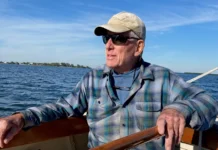
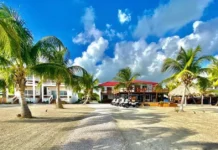
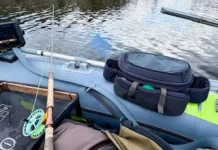
In this episode, I sat down with Nicolas Rivero to dig into Patagonia fly fishing. We covered the two-basin setup in Patagonia, the famous Limay River, giant brook trout in mountain lakes, and what a full April trip with Moccasin Fly Club looks like on the water.
If you’re curious about swinging flies for migratory trout, fishing both lakes and rivers in one week, or planning your first Patagonia trip, this one’s packed.
Patagonia is split by the Continental Divide, creating two completely different fisheries less than 40 miles apart. The Pacific Basin is green, wet, and full of lakes and forests, while the Atlantic Basin is dry, open, and built for big river migrations.
This split lets anglers fish stillwaters, freestone rivers, tailwaters, and reservoirs in the same week without long travel days.
The Limay River flows out of Nahuel Huapi Lake and supports one of the most impressive freshwater migrations in the world. Browns and rainbows move miles through the system, growing big and powerful before heading upriver.
April is prime time, with brown trout migration in full swing and migratory rainbows just starting to show.
Swinging flies is the go-to method on the Limay in April. Fish are holding mid-river, traveling in lanes, and responding best to flies that move across them like fleeing baitfish.
Angle matters here. Nicolas explains how changing from a head-on presentation to a lateral or escaping angle can trigger aggressive takes.
Patagonia’s mountain lakes are home to some of the biggest brook trout you’ll ever see. In April, these fish are fully colored up and feeding aggressively on native minnows.
Fishing from skiffs allows precise boat positioning and long parallel casts along the shoreline.
From mid-December to mid-January, dragonfly hatches dominate the western basin. Trout key on both nymphs and adults, creating some of the most visual fishing Patagonia has to offer.
Big foam flies popped tight to structure trigger violent eats that feel more like bass fishing than trout fishing.
Nicolas offers everything from luxury lodge stays to fully supported multi-day river camping trips. Camps are pre-set with helpers, hot meals, and real beds, letting anglers focus entirely on fishing.
For the Moccasin Fly Club trip, the group stays at a lodge near the river, combining comfort with long fishing days.
The April Moccasin Fly Club trip focuses on trophy hunting. The plan includes Limay River floats, mountain lake brook trout, and optional reservoir fishing depending on conditions.
This is a streamer-focused trip designed for anglers who want big fish and diverse water.
Episode Transcript
WFS 872 Transcript 00:00:00 Dave: Somewhere between the Andean rainforest and the high desert steppe. There is a stretch of water in Patagonia that feels frozen in time, a place where browns still migrate like ghosts out of the water, where brook trout paint themselves in colors that shouldn’t exist, and where a single seam on the limit can turn a quiet morning into the kind of story that follows you home. Last month on one of those seams, Nico Rivera watched a client throw the perfect cast into the wrong angle. The fly swung fine, but the big fish didn’t move. Nico didn’t blame the cast. He blamed the presentation. Change the angle. Make it escape, he said. Next cast. Same seam. But now the streamer came across the fish like a fleeing minnow. A chrome back rainbow erupted, cartwheeling through the wind scuffed surface. This is the Wet Fly Swing podcast, where we show you the best places to travel to for fly fishing, how to find the best resources and tools to prepare for that big trip, and what you can do to give back to the fish species we all love. Nico Rivero spends his year guiding both sides of Patagonia’s Continental Divide the Pacific basin, thick with green forests and dragonfly hatches, and over to the Atlantic Basin, a high desert corridor of migratory browns and rainbows. Mountain lakes. Trophy brookies. Uh, it’s all going, including the Lemhi River, the famous Lamia River. That’s got a lot of similarities to Montana in the west of, uh, the United States. Over the next hour or so, we’re going to dig into Patagonia’s two basins and how to fish these in this forty mile radius. We’re going to find out how brookies explode on streamer patterns, and how April turns the Lemhi into a migration highway for ten to fifteen pound trout. We’re gonna get swinging flies. Plus, uh, how they do a little bit differently there. And also what moccasin fly cub’s adventure in April. The Moccasin Fly Club adventure in April is going to look like we’re gonna get into the full day trip. Uh, the full day and week trip there. All right, you ready for this one? This one’s gonna be a big one. You can find Nico Rivero at GuidesPatagonia.com. here he is Nico Rivero. How’s it going Nico? 00:02:05 Nico: Hi, Dave. Great. Thanks for having me here and happy to be talking to you. 00:02:09 Dave: Yeah, yeah. This is, uh, this is exciting. I think we always, whenever we head down south, uh, you know, to Patagonia, anywhere, really down in that world. It’s exciting for me because I think a lot of people probably, you know, haven’t been down there yet. And it’s a place that we’re going to shed some light. The other cool thing is, is that there’s a lot of similarities, from what I’ve heard over the years between the fishing, you know, I think you guys have brown trout and rainbows and, and, you know, all the trout species. And there’s probably going to be a lot of overlap for people that might fish here, you know, maybe in the lower forty eight, but are one ahead down there and get a different experience. But how are things going? Just take us back right now we’re kind of in the almost the holiday season December. What’s keeping you guys busy this time of year? 00:02:47 Nico: Well, nowadays we are in a very, very busy time of the season. Uh, in this moment we have what what is called the dragonfly hatch. Really good dry fly fishing. We can find it on lakes and rivers on the western side, close to Bariloche. I’m based in Bariloche, which is a city inside of Nahuel Huapi National Park. It’s northwest of Patagonia, and there’s a lot of fishing around around this area. 00:03:14 Dave: Yeah. What’s the name of the. How do you spell that? The name of the town you’re in. 00:03:17 Nico: It’s b a r I o c h e Bariloche. 00:03:23 Dave: Okay, perfect. And so that gets us into the location and and so. Yeah. So the dragonfly hatch maybe let’s just start on that. You know describe that. Since it’s kind of going on right now is how long does that hatch last. And what does that look like. 00:03:34 Nico: Yeah. This is going on right now. It’s a little early in the normal timing. This usually happens between mid-December to middle January. That would be the regular period of time. But in this season we have a little lower water than normal because in the winter didn’t know too much. So everything is kind of happening early, you know, earlier than normal. So but usually you will find between mid-December to mid-January. And it’s very interesting. It happens in well in this area. Let me give you a little introduction. We got around two different basins to fish. One is Pacific and the other one is Atlantic. So we’re very close to a continental divide. This dragonfly hatch happens everywhere. But trout are they tend to eat more dragonflies on the Pacific basin. And because they lack of crab and crayfish. So the main protein source is the dragonfly. When there are nymphs and also when they are, when they are adults. And now the adults are, you know, are around. And in this time of the year, they feed a lot on those. So we can fish the dragonfly in the western basin and in lakes and in rivers in both of them, mostly in lakes. We fish from flat boats and we go along the shores casting big foam flies, that may be exact dragonfly imitations or all kind of, you know, Chernobyl and, uh, chernobyl’s Plan B’s, uh, cyclones. And it’s super, super dynamic. It’s almost fishing like with poppers, you know, so you fish like five, six weight rods, floating lines, not very long, leaders, maybe two x three x, and you will cast to the shore, to the pockets, to the structure and pop it, strip it, move it, give it a lot of action and you get very violent takes. So it’s super interesting. And also in those in those areas we have, we have the three kinds of trout that we have in this area, which are browns, rainbows and brooks and brookies. The brookies that we have in terms of size are very interesting. They are very big. If you compare what maybe you will find in some other places in the world. 00:05:48 Dave: Yeah. Like what’s the average size, Brookie? And what’s the big one you guys might have there. 00:05:51 Nico: Well you can catch sixteen inch Brookies and up to twenty, which is a really big in terms of Brookies is really big, right? 00:05:59 Dave: It’s interesting because it’s down there, you know, um, and I’m not sure what the, um, historically the native species are. And what is the, the river, there’s a big river, right. Or I guess a big water body. What is the biggest water body just in that area. 00:06:13 Nico: That is in the Atlantic basin. 00:06:15 Dave: That’s the national park. 00:06:16 Nico: Yeah. National Park is huge. Holds lots of rivers and lakes. But the biggest one is Nahuel Huapi Lake, uh, which is seventy thousand hectares. To convert it in acres is is the twice of it probably. I’m not sure. So it’s really big. And that’s on the Atlantic basin. And the, the outlet of, of that lake is Limay River, which is a very famous river in Argentina. And this is the superior, the upper part, that part here is is inside of the national park. And it’s one of the places that I guide most to with Mansoa River and Manso Lakes, and we have around forty miles of Freestone River, which is. That’s the main difference with the middle section, which is also famous, but the middle section is Tailwater. So the upper section, the one that we guide here is freestone is still running wild. It burns out from Nahuel Huapi Lake. Uh, it starts on the eastern stream of the lake and you have the the Lima River. Boca, the mouth, which is super famous. Um, from there we we can float in for different day trip sections. Those four miles we divided roughly in ten miles. Float those forty miles. Sorry, ten miles float per day. 00:07:34 Dave: Oh, cool. So you guys are doing float trips out here? These, uh, on the river? 00:07:38 Nico: Yes, we do float trips. Only my river. And we do float trips in Manso River. 00:07:42 Dave: This is great. I think today is one of those episodes where there’s so much information, it’s going to be hard to focus because you guys have a lot going on. But let’s go back to more to the start. And I want to talk about Mocks and Flight Club, because we’ve been working with Moccasin this year and John’s been awesome. We’ve been talking about these different locations that he’s been fishing around, the really around the world, and it’s been awesome because we’re putting some trips together and we got some listeners that are fired up. So how did you connect to Moccasin and kind of John’s operation, maybe take us back there for a second? 00:08:12 Nico: Me and my wife been in the US promoting our operation. That’s how we met John. And so I met him in Denver. We had a meeting and we started working together. And he been here and we’ve been fishing last October, and he got his personal best, brook trout on Nahuel Huapi Lake. Oh, he did so, yeah. And we’ve been fishing around here in this area and we, you know, having barbecue and stuff. Asados and started working together. 00:08:41 Dave: Yeah. Oh that’s cool. And when was John there? Uh, on this last trip here last October. 00:08:46 Nico: Pretty short time ago. 00:08:47 Dave: Yeah. So October right now. And like you said, December. So just a couple months ago, he was there. 00:08:51 Nico: Couple months ago. Yeah. Yeah, it was couple months ago. And it was amazing. 00:08:55 Dave: Yeah. That’s awesome. Well, and we’ll probably be picking John’s brain more as we go about that. But what’s your connection? Have you been fly fishing for a while? Like what’s your experience? How’d you how’d you come to this area, this amazing area and talk about how the operation came to be? 00:09:09 Nico: I was born in a city called Del Plata, which is by the Atlantic Ocean, and I grew up fishing in the sea. 00:09:15 Dave: How do you spell that city where you grew up? 00:09:17 Nico: It’s Mar del Plata. 00:09:21 Dave: Okay. Oh, yeah. Yeah. Gotcha. 00:09:23 Nico: It’s not in Patagonia. It’s by the Atlantic Ocean. So I grew up fishing in the sea, you know, back in time. Fly fishing here in Argentina wasn’t so easy to get information, so I started it was maybe on a magazine, you know, reading a little bit, maybe see a video. And I got totally hooked with it. So I started fly fishing at seventeen years old and started coming to to this same area to fish for, for the summers. And then, you know, I have another profession. I have a civil engineering degree. Oh, wow. And I used to work in construction business around the area. And then I decided to change the business, and I decided to change my profession and become a fly fishing guide, which was my my childhood dream, I would say. 00:10:09 Dave: Yeah. You did. You fulfilled your dream. 00:10:11 Nico: Yes. So I did it for some years. I, I still work like in the summer fly fishing guide. In the winter. I had a small consultancy firm. But then I finally quitted everything related with engineering. And I’m a full, full time guide. And I guided my first off season that I wasn’t doing engineering. I went guiding to Norway for Atlantic salmon. And so nowadays I’m, I’m fully, you know, dedicated to to fly fishing. 00:10:42 Dave: Yeah. And talk about the, the operation. If somebody was going to be coming in on a trip. You know, talk about the lodging kind of the whole the whole operation there. What does that look like? And is that the same place you’ve been you’ve been at for a while? 00:10:54 Nico: We partnered with two different lodges in this area, which are amazing. And we also can offer like day trips or we can offer lodging. There’s many options depending what what the client would like to do. And we also offer camping trips. 00:11:09 Dave: Yeah. So you do camping. So you do like in that probably mixes into that river trip. We talked about river camping trip. 00:11:14 Nico: Exactly. We offer packages to stay in a very beautiful lodge in the now in the river mouth. And we we offer packages if you want to stay more in downtown. It’s also possible. And also camping trips. 00:11:29 Dave: Which is right on that big, uh, water body, I guess. Is that a lake? Uh, what is the big? Just the north. That big water body. What’s that called? 00:11:35 Nico: It’s Noel Lake, that’s the same name of the national park, which is called Nahuel Huapi National Park is our first and biggest national park of Argentina. The guy that started this national park was inspired by Roosevelt after Yellowstone. 00:11:52 Dave: Oh, wow. There you go. 00:11:54 Nico: So it’s very interesting. 00:11:55 Dave: Yeah, that is interesting. Okay, so you’ve got this amazing national park. You guys are in this location. And the cool thing is, like, you talk, you got these multiple options. You know, you could take from somebody if they want to stay in the city or maybe stay in a lodge or maybe even do the camping river trip. Well, let’s go to the river trip, because I feel like that’s something I always love is a good river trip and camping. Talk about what does that look like? Is there a certain amount of time? Is that like a week long trip, or how would that look if we were like, right now planning a river trip with you? 00:12:21 Nico: Yeah. Usually we we offer from two days, one night that would be the shorter one and up to four days. Three nights. That’s also possible to be done. 00:12:32 Dave: Okay. And do people do a little mix where they might come in, do a stay at the lodge and then maybe do a night or two or three? Yeah. 00:12:38 Nico: Yes. We can mix it up. Yeah, absolutely. It depends. Um, we have very flexible programs that can be can be tailored for each kind of client. 00:12:47 Dave: Okay. Well, let’s say we’re doing a maybe three days, you know, on the water, maybe four nights, something like that. Now, this is on the Lima River. 00:12:55 Nico: Yes. Three days. Two nights is very possible. Only my river. We we end up doing all the section. We start on section one we put in next to La Boca Bridge, and we float the first day until we arrived to the camp. It’s going to be fishing boats, you know, drift boats. We will fish on drift boats as a regular day trip, and then we have rafts with with all the camping gear and helpers that are ahead of us setting up camps. We fish all day like a regular day trip. And when we get to the camp, everything is going to be ready. We got the the barbecue ready, a bar and an appetizer. We use a two or single person tent with God’s mattresses, good sleeping bags, and so it’s a really comfortable time. Everything is going to be ready, and it’s just the client will arrive to the camp and joy. And it will be like day after day doing that. The helpers there on the next day will lift all the all the camp site and move it ahead of us again. So we just worry about fishing and enjoying. 00:13:58 Dave: That’s really cool. So yeah, this is a full a full river experience. Yeah. You guys are doing the full thing. 00:14:03 Nico: Yeah, that’s a full river experience. We’re going to do that on on Levi and we can do that on Manso. We have some other rivers that are farther away that we can be done to. Another camping trip that I recommend a lot is, for example, during the dragonfly hatch to make a base camp on one of the lakes that are a little bit remoter. Uh, so we fish the lakes and come back to the camp because we use motor skiff. So on one day we fish one lake, we come back to the camp, and the next day we fish the other lake and we come back to the camp. So it’s the same dynamic. But the camp is base camp, uh, but the same kind of service, you know. 00:14:40 Dave: So you have Stillwater fishing too. So you’ve got both River and Stillwater. 00:14:43 Nico: In that case, it would be Stillwater. Yeah, I highly recommend that during the Dragonfly Hatchery because it’s amazing. 00:14:49 Dave: And how are you? Are you getting around to these different locations by car or how are you doing that? 00:14:54 Nico: Yes. We get to the locations by car, let’s say from downtown Bariloche. We have forty minutes drive to Limay to the east, and to get to the farther lakes that we fish, that would be Funk Lake. Um, we have like an hour and a half from Bariloche. That’s why sometimes we like to do a camping trip in that area, because you don’t have to drive back to Bariloche. And then in the multi-day programs, we recommend to get a good idea of all the fishing here. We usually recommend to fish, Limay, to fish, Manso, to fish the lakes, to fish the reservoir. So in different days we can do different things and you never get bored. And every of our environments has its own beauty. If you go west, you have very dense green forest. A higher amount of rain during the year and on the east is high desert. That difference? You find it only in less than forty miles drive. So it’s very, very close. The landscape changes a lot in very short distance. 00:16:00 Dave: Yeah, it’s very much like where I’m at located. I’m in the Pacific Northwest and we have, you know, you’ve got these, you know, the west side is just a rainforest. And, uh, you hop over the Cascade Range and you’re into the desert and it’s like, you know, it’s one hundred inches of rain to ten. You know, it’s a huge difference. 00:16:17 Nico: It’s exactly the same. Yeah, exactly the same, but in the same. Let’s say if you fish a week, we can see all of that. And you can fish like more number of fish in some areas and the other. But good sizes but little smaller. And then we can fish like looking for the trophy fish. In other areas you have less bites, but with the chance of catching a trout of your lifetime. So all that combined in the same area and the same week is amazing. 00:16:47 Dave: Yeah. That’s great. And again, like we said at the start, there’s so many options. I think we’ll probably have to follow up with you on more details as we move ahead. But let’s take it to that. You know, talking about Mox and Fly Club because John I’m not sure. Talk about the program he’s setting up is he’s setting up a, a certain time of year when he’s going down there or how are you guys doing that? 00:17:06 Nico: That’s going to happen in April. It’s a great time for streamer fishing. The program that we offer with John at Moccasin is staying at the Lodge very close to the river. And the idea is to fish for a couple of days, leave my river looking for trophies, and then we go to one of the mountain lakes on the west looking for big brookies. It’s a four day program, so it will be probably two days of my one day of the month. One of the mountain lakes and maybe one day on the reservoir on the east. On the east side, there’s a reservoir below which is full of big rainbows. So that’s one of the ideas. We can also switch the reservoir depending on weather or client preferences. We can switch it for an hour or another day. 00:17:53 Dave: And you could probably if somebody came in and they were, you know, booking with with Moccasin and John there, they could probably maybe extend or add days on if they wanted to stick around longer potentially if it worked out. 00:18:04 Nico: Absolutely. Yeah. Yeah. It’s totally possible. No problem at all. Well, the problem that we’re doing, the way we’re offering with Moccasin is staying in a very nice lodge that I say, and fishing mostly. April is a good time for streamer fishing, swimming flies or hitting banks in some occasions and looking for trophy fish. So because the migration is on during April and we have this big fresh water run from Nahuel Huapi Lake to Limay. So it’s meant for people who want to chase big fish. And it’s I think it’s going to be amazing. 00:18:36 Dave: Yeah. So the April what’s going on there in April. And again that’s the switching of the season. So that’s kind of the the fall. So describe that. What’s going on in that time. Describe the species that you’re hitting on the migration and kind of what’s going on that time of year. 00:18:50 Nico: As I said before we got two basins. So I will describe the things that are going on in the two different basins, because we will fish both with, with moccasin. 00:18:57 Dave: Oh we will right. Because we’ll fish the limit which is on the east side, and then we’ll fish the mountains. And which is more on the west. 00:19:03 Nico: Yes. So we probably start fishing the west. Uh, we’ll go to the mountain lakes, we will fish from skiffs and it’s going to be streamer fishing. We use full sink lines or we use sink tips. Sometimes you will look for the fish a little deeper, and sometimes in some areas, or in some moments you will fish the banks. In that time of the year we got a lot of baitfish, very little baitfish that are called pushing that are native. And the the trout will feed a lot on them. So we are fishing, push and imitation and it’s super fun looking mostly in those legs. As I said before, we got browns, rainbows and brookies. Um, we are targeting like for big brookies and they are totally colored up. 00:19:49 Dave: Oh they are. Oh. So these are just like bright. These kind of look like a you always look at those pictures of, um, I think of like an Arctic char up in Alaska. It’s the same thing where they get those really bright. 00:19:58 Nico: Yeah, they get really bright red color and orange and the white stripes on the O and and all the halos and the spots. They are beautiful. So. And we will catch lots of rainbows and browns too. And there’s big browns on those lakes also. Then that will be probably the first day and then we will start fishing. Lima Lima is on the east side and in that time we are in the middle of the brown trout migration. And it’s the start of the rainbow trout migration. In this area we have two breeds of rainbow, one breed that will migrate in the in the spring as usual. And the other breed is not a steelhead because it’s fresh water, but will migrate in the fall. So in April we have in that time of the year, we have when John’s coming, is going to be the middle of the brown trout migration and the start of the at the fall rainbow migration. 00:20:53 Dave: O fall, which is kind of like a summer steelhead, kind of similar sort of thing. 00:20:57 Nico: Something like that. So in those trips we will go on drift boats, fishing. It’s a lot of a lot of casting, you know, looking for a few bites. It’s swinging. 00:21:08 Dave: And swinging. And is this where you’re swinging flies? 00:21:10 Nico: Swinging flies. If people like them, we recommend shooting heads. We do that a lot here. They can be single handed shooting heads. They can be regular shooting heads. They can be with mono running lines or integrated running lines. 00:21:23 Dave: Okay. So if somebody was a big two handed angler, they could do their spey, take their they fish for steelhead, do the exact same thing down their side. 00:21:30 Nico: Same thing. Yeah. We swing flies. Yeah. So we can go fish from the boat, or we can wait. We can do both. So from the boat, we can swing from the boat. Usually recommend single hand rods. It can be single hand spey which is super interesting. And then from waiting we fish two hundred rods. 00:21:48 Dave: Yeah. And what are the flies you’re swinging out there for the. And is the steelhead. Could you have a chance to hook into a brown or steelhead or brook trout if you’re swinging flies at that time of year? 00:21:57 Nico: Yes. On this side is very difficult to find brook trout, but rainbows and browns totally swinging. This is the best thing to do in that time of the year, because the river is usually lower and the fish are starting to move in schools and they they lie in the center of the river, not always in the center, but you know, they are not so many in the edges. In the beginning of the season, we like November. We find a lot of fish stick to the bank. In that time of the year, they are more confident to stay in the center of the river. So swinging flies is is the go to. And we fish like these migratory rainbows and these migratory browns with that technique. As I said, it can be from the boat or it can be wading, but swinging flies is is the technique to go. So we use a lot of local flies. But whatever you would use like intruders and or all kind of they all work okay. 00:22:52 Dave: So you could pick your favorite pattern and is it more like I always compare it the difference between, you know, their steelhead fishing for like winter steelhead versus summer, you know, and or maybe the comparison would be Atlantic salmon versus winter steelhead where you have this winter steelhead is down and dirty and sometimes you’re getting it deep Atlantic salmon. You’re fishing on the surface a lot. Is this more in April there or is it more like surface or more down? Down in deep? 00:23:16 Nico: We do both. 00:23:16 Dave: You do both. So both work. 00:23:18 Nico: They both work. Yeah. 00:23:19 Dave: If you’re out there, when would you choose between the. Because it feels like the the lighter stuff maybe is easier you know, easier to cast. When would the lighter versus the heavier stuff work there. 00:23:29 Nico: Depending on the pool that we fish, and also depends on the water level that we have that season. If the water level is low, it will look more like fishing Atlantic salmon because we use lighter gear. We like Scandi style lines when it’s very low because they are, you know, they’re more silent, but you can only throw smaller stuff when you have a one year that the water level is high. We use like heavier stuff that will make what the trout is taking. I’ve been fishing those migratory browns on low water condition years, and we fished a very small river lake nymphs on the stream. 00:24:06 Dave: Okay. And the heading east. Right. It’s going to the Atlantic. 00:24:09 Nico: Yeah, it’s going to Atlantic. Yeah. 00:24:11 Dave: Wow. So you’re way up. You’re way up towards the top of the river. It’s a pretty big river, right? 00:24:16 Nico: Yes, we are on the top. We are on the top of the river. And the migration comes from the top to below. 00:24:22 Dave: And these fish are migrating basically in that lake that’s upstream, which is, um, El Mongol. Is that the lake Nahuel Huapi? Okay. Yeah. Okay. Yeah, but they’re migrating from that lake down to to Lima. Yeah, I see. And not out to the could fish actually get because it goes to the ocean. Right. The fish coming up from the ocean. 00:24:42 Nico: No, it’s not connected because there’s a system of dams below it. The system is huge, but below where we fish, we have a sequence of dams that don’t let the fish get to the ocean. But the system is is enormous. And we got a huge freshwater migration here. It’s very famous. It’s, uh, it’s it’s kind of pretty unique, right? 00:25:07 Dave: It’s probably similar in some ways to the, um, you know, the Great Lakes, right? Same thing. Those steelhead out there that are. Yeah. In the lakes. And then they’re coming and they’re migrating up into the river, and and they’re doing the same thing migrating down to the rivers to spawn. Right. And then go back up. 00:25:20 Nico: Exactly. Yeah. And it’s also connected with other lakes without, sorry, without other river and other lake, which is Traful River and Traful Lake. And also all of that happens before the first dam. So the system is enormous and the fish can move freely for many, many, many miles. That makes them get really big. And so it’s super interesting to to go after them. 00:25:43 Dave: Yeah. This is great. So basically yeah you got the limit. You’re swinging. So that’s a huge thing. So if you want to get your swing action and when you’re swinging there how likely are you to catch a brown versus a steelhead. Is it kind of equal or what does that look like. 00:25:57 Nico: Um, depending on the time of the season, I would say April is, is, uh, more possible to catch Browns and during May you will catch more more rainbows. I don’t know if I would call them steelheads, but it’s not to get dark. 00:26:12 Dave: Yeah. Migratory. They’re migratory rainbows. 00:26:14 Nico: Yeah, they’re migratory rainbows, but they’re they look like steelhead. You know, they’re big. 00:26:18 Dave: Like what would be an average size of a rainbow? 00:26:21 Nico: They’re a trophy maybe more than twenty six, twenty seven inches. And we got we got even more. You can catch a thirty inch trout here. Doesn’t happen all the time, but you know. 00:26:32 Dave: But there’s some big. 00:26:32 Nico: Yeah, yeah. An even bigger. 00:26:34 Dave: Yeah. Exactly. Okay. And then the Browns are similarly are they getting pretty decent size. 00:26:39 Nico: They get enormous. My record trout that I caught my that I landed fishing myself not guiding on that river was almost fifteen pounds. 00:26:49 Dave: Oh wow. Fifteen pound brown. 00:26:51 Nico: Yeah. 00:26:51 Dave: Wow. That’s yeah that’s a massive fish. So you’ve got these big fish and this is the li-mei. So you know, again we’re coming in there with John on this trip and we’re thinking April which is actually a good time because April here I mean April is you’re just getting the spring. But what’s April look like down there for the weather? Can it be all over the place? Can you get some cold weather? Warm weather. What’s that look like? 00:27:12 Nico: It’s fall weather. You know, the landscape is starting to change colors. You got red trees, yellow trees, green. You got foggy mornings. It can be cold. It can be rainy. Uh, not all the time. You know, there’s really, really nice weather, too. But frequently cold. So it’s good. 00:27:32 Dave: Good fishing weather, right? That’s good fishing weather. 00:27:35 Nico: Good fishing weather. Exactly. When it gets nasty, it’s better. So you got to bring all the all your gear, you know, rain gear, fleece, you know, down jacket, gloves. 00:27:46 Dave: Yeah. Bring your gear like you’re going winter steelhead fishing. Bring the gear just in case. Even though you could be a the sun could break or whatever, you know, depending. But be ready for some cold rain if needed. 00:27:56 Speaker 3: Yeah, yeah, maybe. 00:27:57 Nico: We don’t use it, but in this program, four day program, probably some of the days people will use it. 00:28:03 Dave: Yeah. What does that look like? I’m just curious on the river trips because I think the river trips, I think of one in our home, you know, area is like the Deschutes and, you know, and when we’re doing summer steelhead there, it’s it’s ninety degrees. It’s hot. You know, you’re out there, you’re not worried about it. But, you know, if you factor in the rain, how do you do that on a river trip if you were doing, you know, one of those trips, is that a different time or are you doing the river trips in April, or in the period where it could be wet and cold? 00:28:26 Nico: We do it all all season long. 00:28:27 Dave: Like the camping? 00:28:28 Nico: Yeah, the camping trip. Yeah, yeah, yeah, we can do it all season long. Most of the time people prefer them during the summer, but I’ve done a lot of camping trips during the the autumn, the fall in April. Um, it’s not so bad because you have, uh, we always take dining tents. So even if it’s raining, you will be warm and hanging out in there. We got campfires. 00:28:53 Dave: Yeah. We did. Um, you know, some of, I think the past trips that have been some of the best trips I’ve ever done were, you know, like fishing the Skeena system and some of the tribs and some of those best trips were those campsite camping on the river. You got your fire sometimes. I mean, we were out there. I remember one morning we woke up and we were down on the Babine in the middle of nowhere, and it snowed on us and we had like inches of snow on the ground. We were like, all right, this is. You know what I mean? Basically, I put on my waders before I even got out of the tent, and I was ready to go, and it turned out, you know what I mean? It was because we had the right gear. It was an amazing trip. And so I feel like nowadays, especially with the gear, Patagonia is one of our our sponsors this year, and there’s all sorts of great companies that have all this gear. I mean, it’s not like you’re struggling for the good gear these days, right? 00:29:35 Speaker 3: No, no. 00:29:36 Nico: There’s no bad weather. It’s bad gear, you know? So if you have the right gear, you will be perfectly okay. The camping trips are very are very comfortable. And we got we got all kinds of, you know, things to do, people to have a good time. But in April we are promoting this this trip with John about it’s going to be in a lodge so. 00:29:56 Dave: Oh right. Yeah. So we don’t have to worry about that. 00:29:58 Nico: It’s an amazing lodge you have. Great. You come back and you take a hot shower and you’ll be super big dining room with, with the grill inside and all the amenities to to have a great time with the bar and all that stuff. 00:30:13 Dave: Okay. Yeah. So that’s right. So this is going to be the lodge. So basically let’s take that. So the Lima we’re going to have two days out there. And is that kind of where you go fishing the drift boats for a day floating, and then and then come back and do that again a second day. 00:30:26 Speaker 3: Exactly. 00:30:26 Nico: Probably the problem will be first day mountain Lake. That’s the day that we drive a little bit more. Uh, but it’s perfectly possible. You know, it’s normal for an operation. The next two days will be limited. The river is next to the lodge, so super close and drift boats are going to be ready. First day we fish on skiffs. Something like a Carolina skiff or flat boat, you know. 00:30:47 Dave: Oh, yeah? Yeah, totally like a skiff. Like a saltwater skiff? 00:30:50 Speaker 3: Yeah. 00:30:50 Nico: Stillwater skiff. We move them with with motors, but when we fish, we fish rowing, uh, with oars. So it gives a lot of great precision to the guides to place the boat for the client to be very comfortable casting. 00:31:05 Dave: Right. Are you casting when you’re on the lakes? Are you casting in, like, the shallow shoal area or are you hitting deeper water? 00:31:11 Speaker 3: Both. 00:31:12 Nico: In April, both thing happens, and we also fish the mouth of the creeks that come in the lake. It’s very interesting because they’re going to see a lot of brookies packed in the in the mouth of the creeks, because brookies are starting to run. So it’s amazing to see them. 00:31:27 Dave: Yeah, they’re starting to run. 00:31:29 Nico: Yeah. We’re going to catch them in the creeks too. And so we fish shallow banks, we fish deeper water and we fish a creek mouths on the mountain lakes. Then, okay, we go with drift boats and we we will be floating and swinging and hitting banks both. We like to use, as I say, shooting heads for swinging can be spayed or regular. And we use sink deep lines, regular sink lines to hit banks. So we set up two rods per angler. We got rod holders. And so we switched to depending on the situation. And we can fish really big streamers like they would say let’s like a sex dungeon style sometimes. Yeah. And we can fish. Yes. Big stuff. We can fish big stuff sometimes, depending on the conditions we can fish very small stuff to targeting to the same big fish. Sometimes they are taking. As I said, this eastern basin is full of crab and crayfish, freshwater crab and freshwater crayfish. They can be small and they can be really big. They can be like four inches long. The crayfish. So all of that is possible to imitate with different kind of flies. And sometimes they are feeding on the small ones and using small rubberlegs like some kind of bats rabbit legs. But not exactly that. We use something that is local, but it’s very they would say similar has some differences and it works amazingly good. 00:32:51 Dave: So you’re swinging a rubber legs? 00:32:53 Nico: Yes, yes. When they get picky you know. 00:32:56 Dave: So yeah. So just to summarize now on the trip, let’s just take us in, you know, again, we’re coming in in that April period with John and Moccasin. Talk about the first day. Are people arriving? Where are they flying into and where are we meeting up? 00:33:09 Nico: People are going flying to Buenos Aires first, and they’re going to do it with with John or one of the hosts. Uh, I know a first trip is coming. But then it’s going to be hosts club hosts coming too. They will guide them through all airports and stuff. They will come through Buenos Aires first, and from Buenos Aires they will have a two hours flight to Bariloche. When they arrive to the airport here, we will pick them up. We will be waiting for them. Me and the and the crew. On the first night we will have a barbecue all together at the lodge. So they will get to know the guys that we they will share. The next days. We will tell some stories and hang out, you know. The next day, fishing starts. If the flight is a little earlier, it depends. They can do just if and if they want it. They can fish a little bit waiting on La Boca, you know, on the mouth of Limay, which is next to the lodge. They can fish waiting by their own there if they like to do it. And then we have the barbecue all together at night. And on the next day that would be day one of fishing. We start floating. You know, we start fishing like regular full days. We start early in the morning and after breakfast, and we go first to Mountain Lake. Then my second day, third day limhi. And the fourth day is adjustable. We can do depending on people preferences or depending on weather conditions or fishing conditions. We can do reservoir, we can do limhi again probably or other lake. So that would be the the total program. Then they will sleep one more night in the lodge and the next day they fly out to Buenos Aires. 00:34:54 Dave: Yeah. Which is pretty easy I’m guessing. Pretty easy to get down to Buenos Aires from around the if we’re taking it to people coming from the US or Canada, that’s not not too big of a I mean, I’m, I’m guessing, you know, as far as flights, there’s probably lots of direct flights down there, right? 00:35:07 Nico: Yeah. From the US you can fly to Buenos Aires from many areas. Uh, it can be through Houston, through Denver. Through Seattle. There’s different options. 00:35:18 Dave: Yeah, you guys make it easy because you’ve got people that are set up. So once you get, you know, there and then like you said, you have that bonus day. If people wanted to get in there and they could, could they get out there and swing some flies. Is that sort of the technique and maybe talk about that? Are there other techniques you’re doing other somebody wanted to say go for other, you know, nymphing or other or is it mainly swing is the best thing out there during that time? 00:35:39 Nico: Swinging is the best thing. But it’s very possible to nymph too during the migration. Mostly they’re big rainbows would take nymphs, so it’s possible to nymph, um, like regular nymphing, like an indicator and a floating line. Or you can do your thing too, but it has to be heavyweight nymphing. It’s not the regular one. You got to go like thicker stuff, because if you hook one of those, you won’t. You won’t land it with the regular nymphing stuff. So here the the euro nymphing guys that fish the Boka or the river, they adapted the technique with heavier line, bigger, bigger names. That’s the idea. 00:36:17 Dave: I think the brook trout thing is really interesting too, because brook trout are spread around the world, you know. But a lot of times, you know, some of these areas are pretty small, you know, fishing, native rookies and stuff. What would that look like? What day would we be having a chance at a brook trout if we, you know, let’s say we got into some some of the rainbows and browns. We wanted to also find Brookies. 00:36:34 Nico: Yeah, that would be the first day during the mountain lake fishing. So the first fishing day after the day they arrived, the first full day of fishing, we will head to the mountain lakes. So we’ll be targeting to the three of them. But there’s a lot of brookies and really good ones. So that would be the first day, the time to catch the the good brookies. 00:36:54 Dave: And how are you catching those? Take us back to that again on the mountain lake. How are you catching Brookies? 00:36:58 Nico: It’s all streamers. By that time they get a little picky in terms of the imitation of the baitfish that are around. So we got a variety of options, but they are all like small minnows, small minnow imitation. So we will be fishing a full sinking lines and we will be fishing. Sinking tips to both. With small streamers looking like minnows, it can be like one fly that works pretty good. That is well known in the US is the slump buster. 00:37:28 Dave: Oh yeah? 00:37:28 Nico: Yeah. Slump buster with pine squirrel strips. Those imitate our minnows pretty good and they take them frequently. So we we use, let’s say, number six hooks. Long Buster is a good idea. 00:37:40 Dave: How do you spell that pattern? 00:37:41 Nico: Slump buster. SL ump Buster. 00:37:45 Dave: Yeah. Slump buster. Okay, I’m not totally familiar with that. That pattern. I will take a look at it here. 00:37:49 Nico: It’s American. It’s American flag. 00:37:51 Dave: Yeah, okay. 00:37:51 Nico: It’s a squirrel strip streamer. 00:37:55 Dave: Oh, yeah. It’s one of. Yeah, I see that Charlie’s Cravens. 00:37:58 Nico: Yeah, that works really good here. And let’s say number six hook streamer. That’s more or less the size of the minnows that we have. But but sometimes we use a big variety of imitations until we get the one that they like that day. You know, it’s a sinking. Sometimes you let it sink a lot and sometimes you don’t. Depending on the on the area you’re fishing and you get a strip quick and short and fast. 00:38:21 Dave: Oh, short and fast. So you cast it out. And are you in the creek or are you in the the lake? 00:38:26 Nico: Both options. 00:38:28 Dave: Okay. So if you’re let’s take it up. If you’re in the in the lake, you’re casting the sinking line out, letting it. Are you doing kind of a count, letting it sink, get down and then doing your strip. 00:38:37 Nico: Yeah. When you are, when you’re fishing, they say the lake areas you will cast parallel to the shoreline. You will cast as far as you can and you will count. We’ll do a counting and then you strip it up. Because it’s interesting. People think that the trouts are taking dry flies, but they are not. They are not taking bugs. You see them, you know, popping up the surface like if they were rising to something and in fact, what they’re doing, they’re chasing the minnows from below, from the deep. 00:39:05 Dave: Oh, wow. 00:39:05 Nico: And they mean some of the minnows are running up, you know, swimming up. 00:39:09 Dave: Do the minnows ever jump? 00:39:10 Nico: Yeah, but you almost never see them because they are kind of translucent. 00:39:14 Dave: Oh they are. And what’s the minnow? What’s the name? How do you spell the minnow? That is, they’re a bunch of different native minnows. 00:39:20 Nico: Uh, no. In that area, you have one kind of native minnow that is called pushing. And you will spell it p u y e. You will pronounce it pouillon. 00:39:30 Dave: Okay, okay. 00:39:32 Nico: But here it’s in Argentinian. Spanish is pushing. 00:39:36 Dave: Gotcha. 00:39:36 Nico: Yeah, but the the Y’s sound like a sh in Argentina. 00:39:40 Dave: Oh, right. Right. Yeah. Okay. Okay. This is great. So. So that’s what you’re talking about. These fish, these big, uh, rainbows and all the species are chasing these minnows, and you’re just trying to imitate them, and they’re making what looks like rises on the surface. But it’s just the bodies of the fish moving near the surface. 00:39:56 Nico: Yeah, it’s it’s the the trouts are chasing the minnows from the bottom. And some how they get trapped against the surface of the water. So in that moment, they, they hit it and they break the surface a little bit. It looks like if they were hitting dry flies or some kind of bug, but it’s not. So what you imitate you. You throw your lines and you let them sink and you strip them. You strip them vertically, imitating that minnow swimming up, coming up. Right, coming up. And you have the bite when it’s coming up. 00:40:27 Dave: Do you get the bite when you stop the strip or when does the take the take? 00:40:31 Nico: Usually when you stop it, they don’t take it. You need to keep going. 00:40:35 Dave: Okay. That’s interesting because a lot of the streamer fishing up here, you hear people talking about how, you know, stopping it is when the fish, you know, hit it. But here it’s actually on the strip. 00:40:45 Nico: On the strip. They like it fast. And many times you see a fish chasing your minnow. If you, for example, you’re hitting a bank, you will see a fish chasing your minnow. And if you stop the strip, they stop and go. They stop and turn around. They don’t like them to stop. 00:41:00 Dave: Right. So you need to go. So describe the strip a little bit. Is it how fast is it and how do you do it. 00:41:05 Nico: The strip is is not very long in the lakes when you’re fishing with these minnows. It’s kind of short and bumpy. It’s like like tuck, tuck tuck tuck tuck tuck tuck, tuck. Something like that. Okay. If I can describe it that way. 00:41:20 Dave: That’s good, that’s good. 00:41:21 Nico: Yeah. Um. Short and bumpy. Not very long. And that works really good. But you can go, like, fishing the lake. You can throw it parallel to the bank, let it sink and bring it. Bring it up. But also you can throw to the bank. In many situations, we will fish. There are some places in the lakes that you have springs coming under the surface. It’s not a creek, it’s a spring coming under under the bank, you know. And the fish behave there as if it were spring, as if it were a creek. They stay all packed there. So in those situations, you don’t use a very fast sinking line. You use just a sink dip. You go in that area, you let it sink just a little bit and strip it fast, and you will see the pack of brookies there. And some of them turns around and starts chasing your Mino. You see everything. It’s really interesting because it’s site fishing many times. 00:42:13 Dave: That’s in the lake. So you have all that going on and then when you’re in the rivers, is it a similar thing if you follow those brook trout up into the rivers, are you also using sinking lines and all that. 00:42:23 Nico: When you fish the rivers in April? We don’t find a lot of brook trout in the rivers. The only river that has brookies is the Manso. But in April we don’t fish it because it’s closed. So we fish limit where we have the rainbows and the browns and they behave different. They like swinging, but when you strip streamers only you go fast and long. So it’s different way of stripping. 00:42:46 Dave: Yeah. Fast line. When would you on the limit. When would you switch and say instead of swinging go for more of that where you’re doing the streamer stripping? 00:42:54 Nico: Well, we combine it because when we swing it, we also strip something that we do a lot that is very effective is you will cast across. 00:43:02 Dave: When you cast across, are you casting like at a ninety or more like a forty five. 00:43:06 Nico: Between ninety and forty five, depending the depth. So if it’s deeper and you want to sink more, you would go ninety. But if it’s not, you will go forty five. There’s times that you need to vary the angle not only depending on the depth. You got a variety angle depending on how you want to present the streamer to the fish, which is very important here. So they tend to be selective on the angle the streamer is heading to the fish. So you wonder if the fish are lying in the in some seam or in some pool. You want the streamer to come laterally or escaping from them, and you don’t want it to go head down to the fish. So that’s how you work with the angles on your cast. To do that, and also with mending and doing rich casts to adjust the angle on the streamer. 00:43:57 Dave: Right. Yeah. You want the fly always like, because you’re imitating these minnows out there when you’re swinging too. 00:44:01 Nico: Exactly. And so you combine swinging with stripping. How? So you would go like forty five or ninety to forty five whatever you would man. Or you will also do like a rich cast on men. And then you hold it on the swing and it will start swinging normally. But at some point, sometimes we recommend to start stripping. If you think that your fly is passing on the seam where the fish would be and you start stripping, many times you make them bite. So we combine swinging and stripping all the time. 00:44:36 Dave: So basically you’re. Yeah, you do your cast, you’re swinging it down. And as soon as you see that spot where you think that seam is or where the fish might be or. Yeah, how do you decide when you’re going to decide when to choose, when you might strip, whether you are there, times when you might just let it swing all the way in without stripping? 00:44:52 Nico: Yes, there’s times that you would do that, but there’s times that you need to move it. Just strip it. That’s, you know, very you got to know the river. You got to know each pool. 00:45:01 Dave: Yeah. You got to know where the fish are at because you’re saying basically if you have, I think of, you know, again, you’re on a steelhead or salmon run or something. If you don’t know the water, you know, it’s good to cover the water system. That’s why swinging works so good, because you systematically cover the entire run. So if there’s a fish there, you’re likely going to swing over it. And then you find where the fish are, and then you come back next time and you, you dial in those spots. It’s the same thing here, right. You’ve got the spots dialed in. You know that when that bucket, your flies coming up, you want to be stripping above that bucket. 00:45:28 Nico: Yeah. Yeah. Because there’s no fast stripping in this river. There’s no stripping. That would be too fast. Oh, fish are super fast. They will out speed you every time. No problem. There’s no. You will never be fast enough. All right. To make them not bite. Yeah. When they decide to attack a streamer that is escaping from them. It’s amazing how fast they are. 00:45:51 Dave: Wow. 00:45:51 Nico: So sometimes you will just swing it, and sometimes you will strip really fast and long, really fast at your full speed. And that will trigger bites many times. 00:46:01 Dave: This is awesome. No. This. This sounds amazing. Maybe just big picture. Patagonia for the people that haven’t been down there. Argentina. How is it different from, say. I mean, because I know there are a lot of similarities, right? How does this experience maybe differ from, you know, you name the spot and the, you know, the US or Canada, you know, how is it different down there? 00:46:19 Nico: Well, I’ve been fishing in the US a little bit. I can say that in terms of landscape, uh, Limay River, the east side will look a little bit like Wyoming, like some parts of Wyoming. I would say I know the Miracle Mile, for example. It’s a high desert, and it’s, uh, some parts of Colorado look like talking about the our high desert is very similar. And our, our forest would be very similar to some rivers in Montana, you know, North Montana or something like that. And the fishing, I found it different. I really enjoyed fishing in the US. It was it was good, I liked it. Average size of fish is smaller than here, but fish are in many places. You have higher fishing pressure than us. 00:47:04 Dave: Oh that’s right. So that’s another thing. So more people. Right. So there’s less pressure. Where you’re at. 00:47:08 Nico: Here is less way less pressure. 00:47:10 Dave: Yeah. How does that look with the I wonder if it’s similar to just the the people that are in Argentina, kind of the native people, you know, or the local people. Is fly fishing at just as popular as it is here? I mean, I guess it’s a pretty tiny niche here in the US too, right? It’s a small chunk of people who are fly fishermen. 00:47:27 Nico: Yeah. Here is even smaller. There’s a lot of anglers in Argentina and a lot of anglers. Local anglers in Bariloche is a well known place for fly fishing, but it’s a total different scale than what happens in the US, right? 00:47:41 Dave: Yeah. You don’t have fly shops down there like the same sort of thing or the industry. 00:47:45 Nico: Yeah, we have fly shops. They are smaller. They don’t have such amount of stuff. We got way less fly shops too. And in terms of of people in the fishing areas, the difference is enormous. There’s one of these beautiful mountain lakes that you can fish, and it’s really good fishing. Uh, maybe one day during April, you will find four boats in the whole lake. 00:48:09 Dave: Four or five boats? 00:48:10 Nico: Yes. And in a lake. Similar conditions in the US. Maybe you have a hundred. So that’s a very big difference. That’s something that everybody noticed. And everybody, every American angler will, will appreciate. Every time they come, they say, hey, this lake here, it’s only an hour from Bariloche. It should be full of boats, but it’s not. You still feel the the wilderness here, right? 00:48:34 Dave: You feel the wilderness. What is the, um. You know, you mentioned the national park. If people were coming up there and maybe for other things, what other things are people coming to that area for? As far as if they weren’t fly fishing, what else would they be doing? 00:48:46 Nico: There’s a lot of outdoors activities here. Uh, you have mountain biking, hiking. You have scenic trips. Well, in the winter there’s ski, big ski center. Then you have horseback riding during the summer and every year long. All the outdoor. You got rafting and everything you will have. 00:49:07 Dave: Like you’re hunting. You have hunting too, right? 00:49:09 Nico: Hunting? Of course. 00:49:10 Dave: Well, what’s the hunting? Take us down there for a little bit, because I think that’s on your website. Right? You guys do a little. Yeah. What is the hunting you’re hunting for there? 00:49:17 Nico: In this area? We do. Big game hunting is all red stag and wild boar. 00:49:21 Dave: Oh, wow. So red stag like deer, right? 00:49:23 Nico: Red deer. It would be like the European elk. 00:49:26 Dave: Wow. Now, here’s the question for you. Is, is hunting or fly fishing more popular down in that area? 00:49:32 Speaker 4: Fly fishing. 00:49:32 Dave: Oh, it is okay because that is a difference. Yeah. So fly fishing still is more popular. Yeah. 00:49:37 Nico: Fly fishing is still more popular. Fishing is more popular. Uh, hunting is popular, but, um, it’s not as as much developed. Like fly fishing. Not as popular as fly fishing here. But hunting is really good. We got amazing red stag hunting. We hunt them in the mountains and we have a really good rat. Also many wild boar to hunt. So yeah, it will be like let’s say red stag hunting is very similar to elk hunting. So you call them, you hear them. They are fighting. They have a group of cows, you know, and it’s very similar. They sound very different. They don’t bugle, they roar. And they are a bit smaller than the elk. So you can hand them from like from a three hundred eight to three hundred six, three hundred win mag. You know, all those calibers are popular regular hunting rifles. 00:50:34 Dave: Yeah. Big game. Yeah. 00:50:35 Nico: Big game. Yeah, it’s very interesting. And also wild boar is also very interesting in the mountains. Sometimes you hunt them stalking. Uh, you can also hand them like in blinds waiting for them. So there’s two options. Red stag hunting many times is using horse. You know, use horseback riding because it’s a very big country and a lot of mountains, and you have to go far. Sometimes the kind of hunting that we offer is all free range. So it’s like an authentic adventure. It’s amazing. 00:51:11 Dave: Right? You probably need a few more days down there if you’re going to. 00:51:14 Nico: It’s perfectly combined with the April trip because during April we still have rat. The rat goes for the Red stag goes from March to April. So depending the year, sometimes it starts, you know, earlier or later. But that’s the rut. So it’s combinable hunting is Combinable with with the fishing trips is amazing. 00:51:34 Dave: Do you get into some of the hunting? Have you done some of that? 00:51:37 Speaker 4: Yeah, yeah, yeah, I’ve. 00:51:38 Nico: Been hunting for many, many. 00:51:39 Speaker 4: Years. 00:51:39 Dave: Yeah. This is awesome. Well, let’s go through just as we take it out of here. I’m just on your website looking at some FAQs. Right. Some questions. And one of them is like we mentioned, you know, the best time. We’ve already talked about the timing. You know, some of these are general things. You know I don’t speak Spanish. I guess you guys get some questions here that are probably I mean, new people. Do you find that people coming down there are mostly a lot of time. It’s their first time down there. Or do you get kind of who is your clientele? Who is that person look like in general? 00:52:06 Nico: So all kinds we guide beginners many times and it’s totally possible and it’s super enjoyable. And we guide very experienced people too. 00:52:15 Dave: Okay, so if you’re not new, let’s just say you’re you’ve never swung a fly. You’re just you’ve done some fly fishing. You really want to get into the two handed game. You really would love to learn about it. Could somebody just come down there and one of your guides could get them dialed in to the two handed casting and all that? 00:52:30 Speaker 4: Absolutely. 00:52:30 Nico: We all like giving instructions and instruction to the people for new people. Maybe the only trip that I that is a little tougher for beginners is chasing migratory fishing limit. But it’s also possible to do and all the rest of the trips and all the rest of the times of the year are great for beginners. Summertime is amazing for beginners because nymphing is good. Dry fly fishing is good and it’s it’s easier to help them catch their first trouts, you know. But also if, for example, somebody is has experience in fly fishing but never swung, a fly is perfectly possible to come to fish in April. 00:53:08 Dave: Good. Well, let’s give a I want to give a shout out in our Wet Fly Swing Pro segment. This is our members community. And I was chatting with Percy, uh, here recently and we were talking about trips and stuff like that. And he’s talking about a number of different things. Again, we’re all kind of thinking, okay, where’s that next trip? So first I want to give a shout out to Fly Swing Pro and Percy here today. Uh, this is presented by we mentioned it before Moxon Fly Club as we’re kind of setting up this trip. Talk about that a little bit on maybe a couple of tips. Let’s take it to that. That swinging. So what are you telling somebody if they’re kind of getting ready to go that first morning before they get out on the river. What are a couple things you’re telling them to maybe have better success out there on on the swing? 00:53:45 Speaker 4: Okay. 00:53:46 Nico: If we are starting to the day trip on the drift boat, for example, what I always start saying, is that my way of guiding this is, I will say, if I say hit banks, is that you cast to the bank, to the bank and strip. And if I say swing, you will cast across. It can be from ninety to forty five. Mend and hold. 00:54:08 Dave: Is the mend always that? Could it be a downstream or upstream men, or does that change to. 00:54:13 Nico: We usually go upstream here downstream mend. It can be useful in some situations, but not most. 00:54:20 Dave: But upstream because you like you said, you’re trying to get that the tail kind of going. You want them to be able to chase the flies you want to make. 00:54:27 Speaker 4: Yeah. 00:54:27 Nico: So that’s the the, the instructions that I will give is sometimes we will be moving and say and I will say, okay, now you hit banks on the left so you know that you will have, you will have to cast to the left and strip. And then I would say, now we swing to the right, so I will stop the boat or slow it down a lot, and you will cast to the right men hold and swing. That’s one of the first advices that I give. There are instructions for guiding so it gets like more fluid. You know when we are fishing then when we hit banks. I don’t like to hit banks backwards. Let’s say upstream. It’s also from ninety to forty five. And if we can go forty five, it’s better. Usually. Not always, but usually. And I think that these big fish, if you’re fishing them forty five is the, the farthest cast that you can make from the boat. Because they are very spooky. They’re very. 00:55:22 Speaker 4: Smart. 00:55:22 Dave: Okay. 00:55:23 Nico: You don’t need to get super far, but you cannot fish them next to the boat. All right. So we’ll be at the medium range distance. And you will be casting forty five degrees to the pockets or to the structures in the, in the bank. 00:55:34 Dave: Yeah. And are you doing this while the boat’s floating or do you guys anchor up at all. 00:55:37 Nico: When we hit banks we’re moving, but we’re moving. We’re moving slower than the current. So we are always back rowing. And when we swing, we are still so. Or we are anchored or we are holding it with the oars back rowing. But the boat has to be still. Okay. That’s the difference between between hitting banks and swinging. Then one thing that happened to me is that, and I don’t exactly know why, but I know that steelhead anglers, they set the hook sideways. Let’s say when you are swinging. I’ve seen them and I guided steelhead anglers and you’re swinging with your two handed rod. You just move the rod sideways to set the hook. Okay. Here is different. 00:56:25 Dave: Yeah. How do you set it there. How do you set the hook there? Like if you’re let’s just take it. Let’s just say we’re floating down. If we’re in the boat, maybe we’re casting towards the left bank. River left? 00:56:34 Speaker 4: Yes. 00:56:35 Nico: So you will be stripping. The first thing you will do is the fish bites. And you will get really tight on the strip. 00:56:43 Dave: On the strip. So like a strip set? 00:56:44 Nico: Yes, but then you lift. 00:56:46 Dave: Then you look like a trout. Then you lift like a trout lift. 00:56:48 Speaker 4: Yes. 00:56:49 Nico: That’s the best thing you can do. They have tough mouth. The migratory trout have kind of tough. It’s a trout, but has it kind of tough mouth. And I’ve seen many fish lost because of not lifting the rod or not stripping. You know when you’re hitting bank, you’re stripping. But when you’re swinging and you have the the bite, the line stops with the kinds of lines. I think that the main difference is the kind of line that we use. That’s something that I’ve been thinking about for some time, comparing, you know, steelhead fishing with what we do here. And I think the main difference is the kind of line that we use. So when a steelhead is taking the swing on a line, maybe you go sideways and it’s okay. And of course it’s okay because everybody sets that way. But if you set, as I had the experience with anglers here, if you set that way with the shooting heads that we use, you may lose the fish. So when you when you are swinging a shooting head that is thinner and is more sunk than a regular Skagit head. You need also to strip and also lift the rod very tight. 00:57:57 Dave: Yeah, right. Keep it tight. So you’re keeping your. Yeah. Keep it all tight. 00:58:00 Speaker 4: Yes. 00:58:00 Nico: Because we’re using twenty pound test usually on the tippet. So you won’t break it on the set. And so you get a set hard. And if you go sideways too slow, you know the rod works like a spring. And you may lose many fish on the swing. 00:58:15 Dave: Yeah. How is the with the Skagit versus a shooting head? There’s always confusion there on what the difference is like. Are they the same thing. Are they different. How’s the shooting had different than Skagit Line. 00:58:25 Speaker 4: In. 00:58:25 Nico: Terms of the first big definition. They are both shooting heads because it’s a head followed by a running line. But Skagit is a Spey line on a second classification and is a kind of Spey line. To make it clear, you have Spey world and single hand world. 00:58:45 Dave: Yeah. So you got the Spey world and the single hand world, right? 00:58:48 Speaker 4: Yes. 00:58:48 Nico: Inside of Spey World, you got shooting heads. Some of them are Skagit and some of them are Scandi. But inside of the single hand world, you got the regular shooting heads, the normal ones that are a single hand line, that is a head attached with running. And I’m referring to those. 00:59:04 Dave: Yeah, yeah. Versus having a, having a really like a weight forward single hand line that isn’t a shooting line that’s got a full line. It doesn’t. Right. That’s the difference. 00:59:12 Speaker 4: Correct? Correct. 00:59:13 Nico: Grab a way forward line, clip the head and tie mono behind. 00:59:18 Dave: Yeah, that would be it. That’s what you’re doing here right. And the difference is is and that’s what you’re saying about the the line. So when you’re out there you got to keep your system tight because you’re using these shooting heads. And if I can imagine if you’re not tight then that line’s getting it’s probably not in a good hook set position. 00:59:32 Speaker 4: Correct. 00:59:33 Nico: Yeah, that’s the idea. It’s a way of fishing that is very particular, I would say very local from Argentina it’s not very different but but has some differences. 00:59:43 Dave: Yeah. And I’ve done a lot about it. When I first started steelhead fishing back before Roy the Spey. Well, you know, early days before I got into Spey, you know, we were taking we were doing that. We were taking like really heavy line cutting it up, putting a running line on it. So it’s essentially the same thing. And you know we’d be drift boats to fish for winter steelhead back in the old days. And and it was tough sometimes, you know, because like the line was so heavy it would get down there. You’re kind of wondering, are you tight on it. It’s sinking too fast. You had all this stuff. And that’s why I think the Skagen and Scandi works really well because it’s more balanced. You’re getting the same effect, but you’re getting a more balanced program. 01:00:17 Nico: Well, where I’m using a lot to guide nowadays is not those old school shooting heads. Which one? I used to fish myself many times, but we are using a lot of Scandi style single hand shooting heads. So you know, the Skagit, the single hand Skagit, they got like popular in the US. Like I don’t know, you know, like those ones. 01:00:40 Dave: Oh yeah. Opst sure. 01:00:42 Nico: Okay. Those are all gadgets. 01:00:43 Dave: Yeah. Those are. Yeah. They don’t make a Scandi line, Roy. 01:00:46 Nico: No, no, I don’t know if they do, but usually all the ones that I tried, they are single hand Skagit lines. Well, I’m using a lot of single hand Scandi lines which are more or less the same but lighter. So in only one Backcast is very easy to cast for beginners or people who is not very used to it. So you got a mono running line and a Scandi head, body and head all together. That is very short and it’s for a single hand rod. And what it makes is very easy to roll. You can use Spey techniques like single space, snap or whatever, and you can cast it overhead very easily with only one back cast and one forward cast back cast. 01:01:30 Dave: And it shoots. And that’s your shooting line? 01:01:32 Nico: Yes. 01:01:33 Dave: And throw just Huck and Chuck. 01:01:35 Nico: Yeah, exactly. And that what happens with that? You get less tired because you get. You gotta cast a lot. So it’s very easy and relaxed and you get a very good distance in only one stroke. So that helps a lot. Um, that’s my go to line to guide. Usually only my. 01:01:52 Dave: Yeah. What would that be like. Can you pick one of those up from a brand or is that something you’re building yourself? 01:01:57 Nico: Uh, no. They exist. Uh, nowadays it’s pretty new, but it exists in the market. I use an LTS brand, which is a Norwegian brand. I’m an ambassador of that brand. 01:02:08 Speaker 5: Oh, cool. 01:02:08 Nico: So that’s very good. But you got other brands that make them. I don’t know if they are very, very frequent in the US. 01:02:16 Dave: No lights. 01:02:17 Nico: I don’t know if lights or any other Scandi single hand line. 01:02:21 Dave: Yeah. I haven’t heard of lights or I’ve heard of them, but I haven’t really seen them checking out their stuff here. But yeah, but you have a lot of those brands over from Scandinavia. I mean, we talked to like guideline recently. 01:02:30 Nico: I think guideline has, guideline has and they are very good too. I’ve used them I like them too. 01:02:36 Dave: Yeah. Guideline and they talk. I know in that conversation I was talking to, I think it was guideline where they were saying they don’t really separate. It’s not the same like the US really does the Skagit versus Scandi, but they really kind of bring it all together and they have their, you know, they don’t really make that distinction. They just kind of have their lines that are specific for certain things, you know what I mean? It’s a little different. 01:02:54 Nico: It’s a matter of wait. In fact, line is usually for the same rod. Weight is usually heavier. There’s other differences too. But that’s why some brands don’t make a difference. They just sell different weights of line. 01:03:09 Dave: Yeah, I’m on the I went to this pretty funny. I went to the lights website and yeah I’ve got the are they a Norwegian brand. 01:03:16 Speaker 5: Yeah. 01:03:16 Dave: Yeah Norwegian. Yeah. It didn’t translate it into English. So it’s all Norwegian which is pretty cool to see it. So I have no idea. I’m looking at the photos, but I have no idea what it’s saying. But it’s really. That’s the funny thing about it. You don’t even have to. You don’t even have to read it. You know the copy. The funny thing about it is, like, I could literally buy something just by looking at the photos here, and you could see exactly what they’re talking about. 01:03:35 Nico: Yeah, they make good stuff. They make good stuff for Atlantic salmon, for migratory trout. So I use them, but I used other ones like guideline I tried them, I like them, those single hand spey Scandi lines useful. But it’s not the only thing that works. You know, there’s many people who fish with a sink tip and works perfectly. It matters how you use it. 01:03:56 Dave: Yeah, it sounds like you guys have an operation that’s pretty diverse. It sounds like people can come up with probably lots of different lines and techniques and right, and have some success up there. 01:04:06 Nico: We are happy to guide everybody and we adapt to their needs. I had clients that were very experienced guides or very experienced anglers from other countries, from the US. Many and some of them never fish a shooting head before. Uh, some of them really liked it and some others didn’t, so I don’t force them to do that. I just. What are you used to to fish with, I think. Good sink tip. Okay. Can I see you casting? Yeah. Boom. Let’s go with that one. It will work. You know, sometimes it’s better that you can use what you are more comfortable with. You can make good cars with more efficiency during the day than making you do something different. Uh, to force you to to get out of your comfort zone, you know. 01:04:47 Dave: Right, I love that. Are you guys using drift boats when you’re floating the river or are rafts? 01:04:52 Nico: We use drift boats. 01:04:53 Dave: What boats are you using? What’s the brand? 01:04:55 Nico: Well, they are local boats. We don’t have a big importation of American boats. 01:05:00 Dave: Oh, cool. So you have local drift boats down there? 01:05:02 Nico: We got local drift boats. We own wooden local drift boats that are really nice. Really nice. 01:05:07 Dave: That’s amazing. What would be. Could we see? I’m always curious. I’m a big boat. I’m a big drift boat. Just boat guy in general. Where can we see a photo of one of those boats? Looks like. 01:05:15 Nico: Probably on the web page. I’m sure you find one. 01:05:18 Dave: Yeah, and that’s guides Patagonia. 01:05:20 Nico: Com the ones that says guides Patagonia on the side, a blue one. 01:05:24 Dave: Oh yeah. Yeah I see one now. Yeah I see I’m looking at a photo. Yeah. So yeah I’m looking at the boat. So the style is, is a traditional drift boat like high bow. This is not a skiff drift boat. Right. This is not low sided. 01:05:34 Nico: It’s a traditional drift boat. Exactly. 01:05:36 Dave: Yeah. Not normal, but it’s a big. 01:05:39 Nico: Yeah, yeah, it’s very comfortable for fishing. Very comfortable for fishing. 01:05:42 Dave: Right. And that’s because you guys are going through some. Are there some kind of whitewater rapids you’re taking those through. 01:05:48 Nico: Not much in but we have Lima may be mostly class one and one little rapids maybe class two. So it’s not not a big deal in terms of whitewater, but Manseau has more rapids. We are not fishing Manseau River in April because it’s closed. But if somebody comes in another time of the season, for sure we will fish manseau because it’s super interesting and we go there mostly with rafts because you can find some class three rapids and it’s a little bony, so there’s more rocks popping out of the surface. I like to do it more with raft than with drift boats. Uh, but it’s possible to go with a drift boat if you know the river. 01:06:31 Dave: Okay. And are you on those boats? Are those fiberglass drift boats or wooden? 01:06:35 Nico: The one you see on the photo is wood. 01:06:37 Dave: Oh it’s wood. Okay, I didn’t quite see the photo, but we can. What we’ll do is get a link from you and we’ll put it in the show notes so people can take a look at it. 01:06:44 Speaker 6: Yeah, please. 01:06:45 Dave: Awesome. Niko. I think we can leave it there today. I think, like we said, we’ll send everybody out there. And if they want to check in on this trip, this April trip, it’s a moccasin flight. Club.com. They can check in with John, and, uh, and we can follow up there. Also, I mentioned Wet Fly Swing Pro, which is our place where we’re kind of building trips together. So one of those places will get people to the right spot, and we’ll have links to everything in the show notes. So thanks for all your time. This has been a lot of fun and we’ll keep in touch. 01:07:07 Nico: Thank you very much. Was a pleasure. 01:07:10 Dave: Before you go, just want to check on a few things that are coming up here. New member resources drop in Inside Pro right now. Fresh casting and streamer challenges coming your way. Uh, that’s going to be coming up here this next month. If you’re interested in upping your game, connecting with the community, grabbing a masterclass, and taking this to the next level. Wet Fly Swing Pro, go to Wet Fly Swing Pro and we’ll let you know when we open up the doors to the next cohort. And we’ll be doing some good stuff there. So check in right there. I want to give a shout out again if you’re interested in, uh, heading out, uh, to, uh, Newfoundland, you can check in with me. Uh, the trip this year is actually full, but we do have some other spots in prime time locations throughout the year. Send me an email, Dave, if you want to learn more about this trip. And we are going to be, uh, traveling around the country here this year. So excited to check in with you. As always, hope you have a great evening. Hope you have a great morning or if it’s afternoon, hope you’re enjoying your day. We will see you on the next episode. Talk to you then. 01:08:11 Speaker 7: Thanks for listening to the Wet Fly Swing Fly Fishing show. For notes and links from this episode, visit Wet Fly com.
Patagonia offers something rare. Big water, big fish, and room to slow down and fish with intention. Whether you’re swinging flies on the Limay or stripping streamers for glowing brookies, this is a place that sticks with you.
If you’re thinking about a trip south, April might be your window.