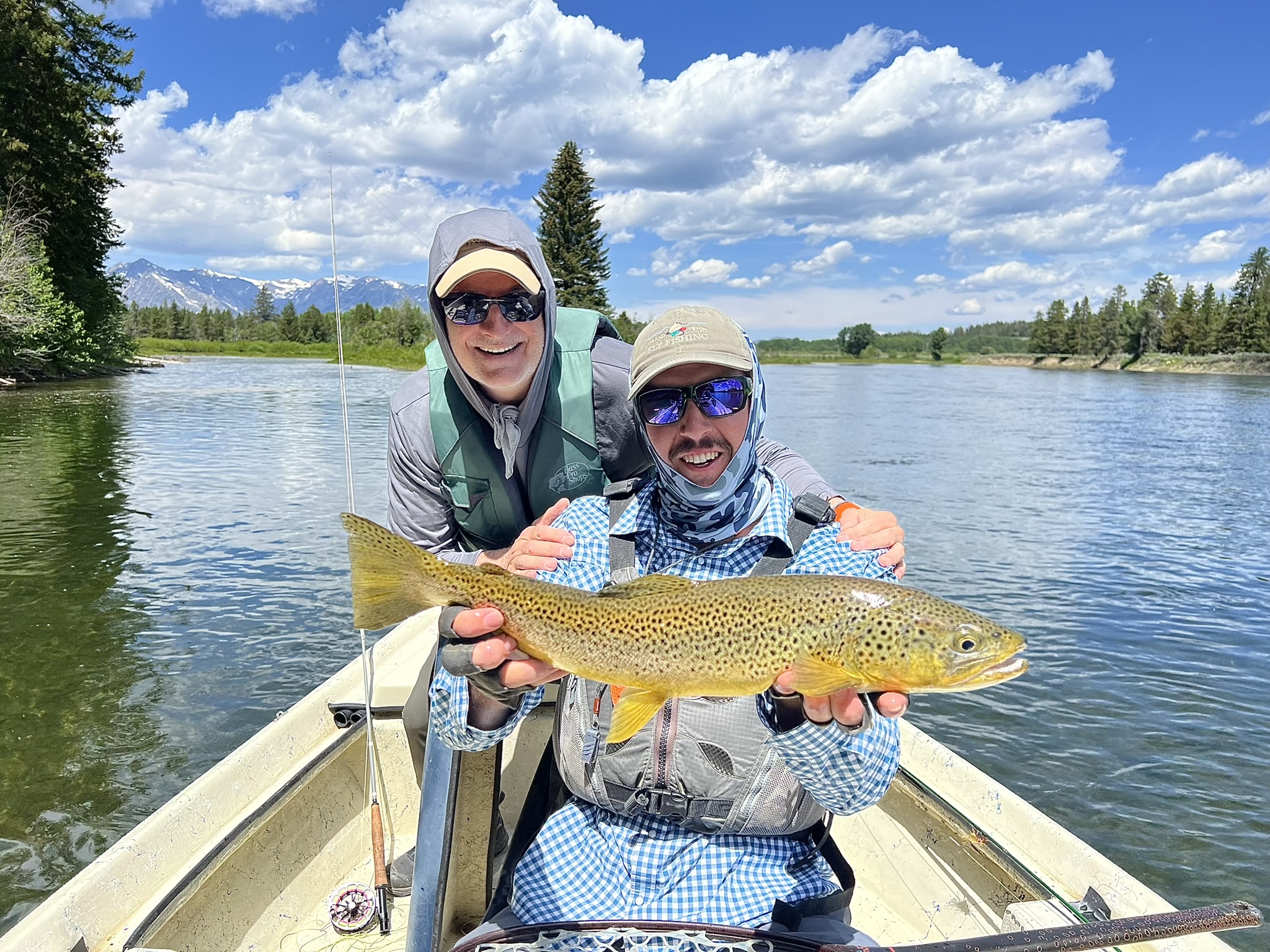
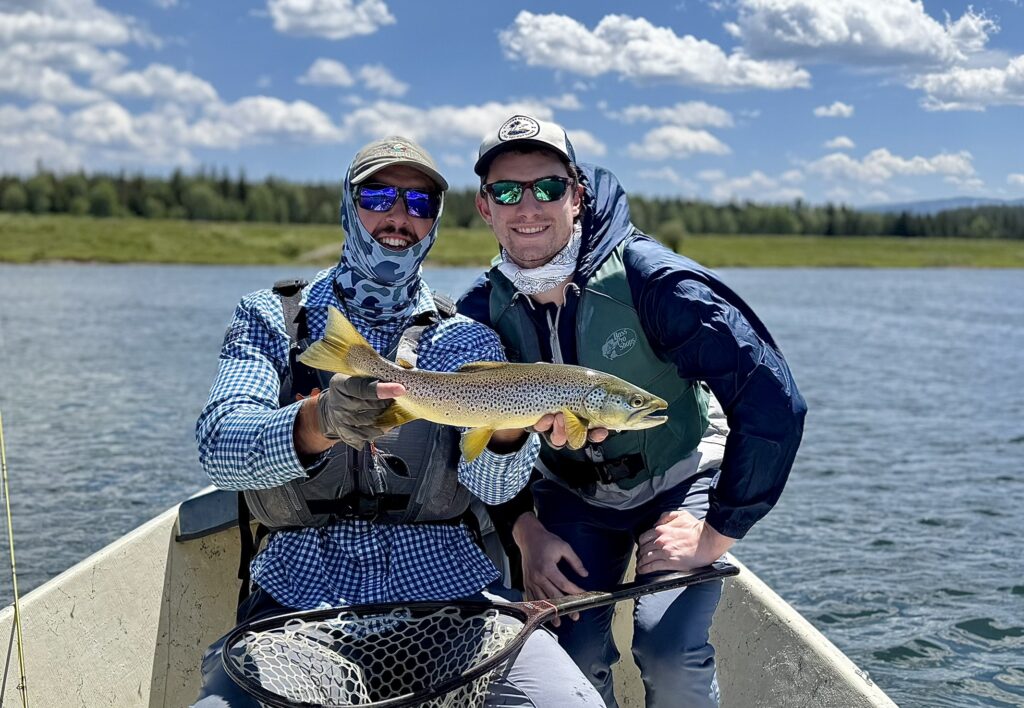
This episode breaks entomology down into something you can actually use. Sawyer Finley, guide at Grand Teton Fly Fishing, explains how insects live, move, and emerge—and how trout respond to that reality, not just to textbook hatches. The focus is on observation, timing, and availability, not memorization.
Today’s episode sits right at the crossroads of science and trout water. It starts with a freshwater ecologist flipping rocks and ends with practical ways you can read bugs, read rivers, and make better decisions on the water… without needing a biology degree.
Sawyer Finley, a guide with Grand Teton Fly Fishing, didn’t get into bugs because of fly fishing. He got into fly fishing because he understood bugs. Sawyer earned a master’s degree in freshwater ecology from Idaho State University, studying aquatic macroinvertebrates long before he ever guided a drift boat on the Snake River.
Sawyer comes to fly fishing from a completely different direction than most guides. He didn’t grow up tying flies or chasing hatches. He learned rivers by turning over rocks, mapping insect communities, and studying how landscapes shape life underwater.
He spends about 90% of his time on the upper Snake River, from below Jackson Lake Dam down toward Palisades Reservoir, including sections that transition into whitewater upstream. This is water he studied long before he guided it.
Sawyer talks about starting every guide day with what he calls “data collection”. That means observing bugs, water types, seams, and structure before ever worrying about fly choice.
(03:23) Entomology is simply the study of insects—both aquatic and terrestrial. For fly anglers, the focus is mostly on aquatic insects, but Sawyer points out that terrestrials play a major role too, especially in places like Jackson Hole.
He emphasizes that entomology can be studied at many levels. You can keep it broad—think life cycles, timing, and availability—or you can go extremely deep into families, genera, and species. Both approaches are valid. What matters most is how insect ecology overlaps with trout ecology.
Sawyer frames this as a Venn diagram: one circle is bugs, the other is trout. The overlap is where fishing decisions actually happen. Knowing insects without understanding trout behavior doesn’t help. And fishing without understanding what trout are eating leaves a lot on the table.
(05:59) Sawyer says most anglers can cover the majority of trout fishing situations by understanding just three orders:
This level of knowledge is enough for most anglers. Going deeper into families can elevate your fishing, but it’s optional unless you truly want to nerd out.
(11:30)A major misconception Sawyer addresses is the idea that winter rivers are biologically quiet. From an entomological standpoint, winter is incredibly active.
Every insect anglers fish during summer is already present in the river during winter, just in its nymphal stage. Long-lived insects like stoneflies can spend two to four years underwater which means they are available to trout year-round.
While anglers often focus only on midges in winter, Sawyer explains that mayflies, caddisflies, and stoneflies are all still part of the system. The difference is visibility, not availability.
Winter fishing success often comes from understanding where trout position themselves to conserve energy while still feeding, not from chasing surface activity.
Midges (chironomids) dominate winter trout diets because of how their life cycle works. Unlike caddisflies, midges have an incomplete metamorphosis, moving directly from larva to adult without a pupal stage.
Cutthroat trout in the Snake River move out of tributaries and collect in areas that offer:
On warmer winter days, midges may crawl on snow along river margins or bring fish to the surface briefly. Water temperature—not calendar date—drives this behavior.
Sawyer is a strong advocate for sampling bugs before fishing. He calls this the data collection period, and it often defines the entire day. His simple methods are:
Sawyer emphasizes that perfect identification is not required. Even recognizing order-level patterns helps build a mental picture of what trout are seeing.
Most importantly, he encourages anglers to discover how much entomology matters to them personally. Some stop at order-level knowledge. Others go deep. Both paths are valid.
Sawyer Finley is a freshwater ecologist and fly fishing guide with a master’s degree in freshwater ecology. He guides on the upper Snake River with Grand Teton Fly Fishing, bringing a science-based, observation-driven approach to trout fishing.
To learn more about guided trips, local waters, or fishing the Snake River around Jackson Hole, check out Grand Teton Fly Fishing.
Episode Transcript
WFS 873 Transcript
00:00:00 Dave: Today’s episode lives at the crossroads of science and trout water, where a freshwater ecologist with a master’s degree from Idaho State steps out of the research world and into a drift boat on the upper snake River. Sawyer Findlay didn’t grow up studying bugs because of fly fishing. He became a fly fishing guide because he understood bugs. He learned rivers by turning over rocks, mapping insect communities, and tracking how landscapes shape life under water. And now he brings that whole lens to the Grand Teton fly fishing team, where he guides in the same waters he studied or observed first, and where he’s casting now. This is the Wet Fly Swing podcast, where I show you the best places to travel to for fly fishing, how to find the best resources and tools to prepare for that big trip, and what you can do to give back to the fish species we all love. Sawyer Findlay is going to walk us through what really matters when we talk about streamside entomology. We’re going to start from the beginning and get into some good stuff. Today we’re going to find out why understanding just three big orders is the key to most trout fishing out there. How? Reading lifecycles, timing instars and winter midges to make sense of what fish are actually doing out there and why. Every day starts with data collection. Like we said, turning over some rocks, checking out some shucks. That’s where he’s starting here. We’re going to get into a bunch of it today, including some interesting studies on the Yellowstone area around wolves and elk and all that. It’s going to be a good episode. I hope you enjoy it. You can find Sawyer at Grand Teton Fly fishing. Com. All right. Here he is. Sawyer. Finley. How you doing, Sawyer?
00:01:38 Sawyer : How’s it going, Dave? Good. Thanks for having me on.
00:01:41 Dave: Yeah, totally. I’ve been excited about this conversation because we’re going to talk entomology. I think I’ve been talking a lot over the years about the fact that it’s hard to find an entomologist in, you know, that also fly fishes. Do you find that out there? I guess starting off the top, do you find entomology, like finding somebody that has your skills as hard in the fly fishing world?
00:01:59 Sawyer : You know, it’s funny. I think I have come to guiding fly fishing from a very different angle than a lot of people. So I would say that I, I don’t really find a lot of people with a similar background in terms of like how they found themselves to be both an entomologist and a and an angler. Um, but I definitely find a lot of people that have such a deep understanding of, of entomology in the way that it drives angling, especially in the Jackson Hole area. But there’s a couple out here that, you know, have a true like entomology trained from the scientific angle, background. Um, yeah. For sure.
00:02:39 Dave: Yeah, there’s a few. Okay. Well, today we’re going to talk about, you know, where you guide out there. You’re working with Grand Teton fly fishing. Um, Scott’s been on the podcast. We’ve had some episodes. That’s a that’s a hot area. You know, definitely that part of the West is just, you know, Jack Dennis, of course, you know, your Grand Teton. We talked about that with Scott, how the history there of and Jack’s been on the podcast. We just there’s all these connections. You know, the more I do these podcasts, the more connections I make, which is great. But I think today we’re going to focus on, you know, what you do there guiding and talk about maybe bringing in entomology so somebody listening today can get a feel for, you know, maybe, first off, what it is and how we can get better at using, you know, what, you know, as an entomologist to maybe have more success on the water. Does that sound like a good start?
00:03:22 Sawyer : Yeah, that sounds great.
00:03:23 Dave: Okay. All right. Well, we’ll start there. For those people that are brand new, maybe haven’t heard of entomology or maybe the past episodes we’ve had. What is? Give us the summary. What is the quick definition of entomology?
00:03:35 Sawyer : Yeah. You know, entomology is the study of insects and both terrestrial and aquatic. And I think, you know, for the most part, as anglers, we really kind of can focus heavily on the aquatic, but especially in Jackson, that the terrestrial entomology is incredibly interesting as well as, like really pretty impactful for the fishing around here. Um, but you know, that study, just like the study of anything else, can be really broad, or it can be really specific. And, you know, thinking about life cycles and life history and timing, uh, all those things are really, really important and kind of fall under that umbrella of, like, the study of entomology.
00:04:16 Dave: Right? And I want to break it down, kind of like we’re getting ready to fish your area, because I think that it’ll be easy to apply this to other areas. But talk about that. What is the the main rivers. What do you think are your home waters? Where are you guiding mostly?
00:04:30 Sawyer : Yeah, I mean, I spend probably ninety percent of my time on the the upper snake River outside of Jackson. So the snake below Jackson Lake Dam all the way to kind of the upper extent of where some of the whitewater section starts on the Bridger-teton National Forest upstream of Palisades Reservoir. So that kind of extent Of water. There is really where I’m focused and spending most of my time thinking about and fishing and guiding.
00:05:02 Dave: Okay. And is this there’s always, we hear, you know, the snake called the South Fork of the snake. And I know I think in Idaho they call it the South Fork. Do you guys call it or is it the South Fork still up there, or do you call it just the upper snake?
00:05:13 Sawyer : Yeah, the nomenclature has changed. Um, and, you know, everyone kind of has a different name for it. Most people think of it as the upper snake or the snake River, and then everything below palisades till where the Henrys Fork comes in is typically thought of as the South Fork.
00:05:29 Dave: Gotcha. That’s the South Fork. Yeah. Okay, so you’re a little bit in the upper. That upper water. So we’ll talk more about that as we get into this. But let’s talk about on the bugs themselves. You know there’s this whole thing in entomology. You know I think if you’ve been in it, you’ve got, you know, the classification just of animals, right? You got orders and families and species and, and genus and subspecies. Where should people if they’re getting into this? I know we could take it as far as we want, but how far do people should they be taking this down? Should we know the. Is it important to know the orders of bugs, the families?
00:05:59 Sawyer : I think it’s important to at least have an understanding of the order at which you’re operating. Um, and that is kind of where we break out and talk about the three main orders. Right? We’ve got the stoneflies, we’ve got the mayflies, we’ve got the caddisflies. I think if anglers are operating at that level, you know, unless you’re more interested, you’re going to get by just fine with an order level understanding of both, a little bit of biology, a little bit of phonology, which is timing, and then just a little bit of understanding, you know, trout feeding habits, because I think that’s a big kind of part of this entomology puzzle as well, is like, how does the understanding of bugs and their ecology intersect with the understanding of fish and their ecology. Right. Yeah. There’s kind of an overlapping Venn diagram there of, like, where our understanding needs to be focused. Unless you’re, like, truly a bug nerd, like, yeah, me and a couple other a couple others. Um, you know, I think there’s something to be said about an understanding that’s a just a touch deeper than order, I think. You know, when we start to get into families and, you know, even deeper than that, I think that is kind of the next level and oftentimes can take your angling at least to the next level, in my opinion, and being able to really see what’s out on the water and recognize, you know, who’s present, what insects are present, where our fish feeding based on what insects are present. Right. Is there a mayfly emerging out of, you know, more slow water environments that have pushed trout up into kind of these like slower, shallower zones that they’re looking for, either emerging nymphs or like freshly emerged subadults. Um, subimago. So, you know, it’s one of those things where I try to focus on having some of that background knowledge of bugs kind of not immediately direct how I fish, but certainly feed into what I’m focused on. And what I’m noticing in that observation is really key, right?
00:08:20 Dave: Because I think that probably a lot of people that have been fly fishing for a while, they know, you know, stoneflies, mayflies, caddisflies and terrestrials, they know that, but they don’t maybe know within a mayfly, you know, you’ve got some family of whatever the mayfly is. But breaking that down into, you know, family and then genus species so you can know exactly. But then there’s the question. We hear that sometimes, like how important is it to break it down, you know, to that far. You know, I think it’s not always totally critical, but what would be.
00:08:48 Sawyer : Definitely.
00:08:48 Dave: What would be the if somebody wanted to get become a big bug nerd, where would you send somebody if they’re listening now and they’re like, okay, we’re going to cover this today as good as we can, but is there a, you know, where would somebody short of getting an education like you have a degree in ecology? Are there books, tools, resources out there? Where would you send somebody to take it deeper?
00:09:07 Sawyer : There’s incredible resources, both from kind of a more user friendly approach to just a straight up dichotomous key where you’re, you know, looking at these insects under magnification or even just in the field, you know, there’s plenty of other, you know, in-person opportunities as well. Like, I know some Orvis stores will do Ecology night or Entomology night, especially in this area. Trout unlimited does a lot of interactive things for kids and adults as well for that sort of thing. Um, I’ve got a a little handbook in my car that’s, uh, aquatic insects of the greater Yellowstone region. So there’s there’s all sorts of both print and media, right? Um, you know, there’s YouTubers that are talking about entomology. There are entomology podcasts, I’m sure, um, you know, people can find what they’re looking for.
00:10:03 Dave: It’s out.
00:10:03 Sawyer : There. It’s definitely out there and especially in the fly fishing world. I think if you’re new to fly fishing and find yourself getting hung up by your understanding of entomology and what’s going on with the bugs when you’re out there fishing, there are certainly some really good resources for you. If that’s the step that you want to take in your angling. And I think that most people do find themselves getting to that point, especially in fly fishing.
00:10:30 Dave: Yeah. You’re right. It’s interesting because I just looked at my podcast app and I typed in entomology, which is usually where I start on things. And as I look at it, it’s interesting because the podcasting space is pretty interesting because you’ll get a podcast like Angler’s Entomology Podcast. I don’t know who Eric Fromberg is, but, you know, he had some good ratings and but it doesn’t look like he’s published a podcast in, like, three years. Yeah, but he’s got fifty eight episodes, so he pod faded. You know, he literally started a podcast and it looks like it had great success. But he’s he’s out of the space now, so we’ll have to track him down and see what’s going on there.
00:11:02 Sawyer : Yeah, definitely.
00:11:03 Dave: Um, but yeah. So I think so. Where would you I think there’s a lot of ways we could take this digging into specific bugs and, you know, like you said, getting really deep. But what if somebody is listening now? They likely have at least a few years of experience fly fishing. They kind of know about all the insects. You know, they probably know about some hatches. What would be the next level for them to take them to the next level? Where would you say, what would we want to cover here today to kind of and let’s think of that like they’re coming to that Jackson Hole area.
00:11:30 Sawyer : Yeah, I mean, I think one of the things that I, I think a lot about kind of in that intersect between like entomological understanding and how that translates to fishing is really has to do with timing, right? It has to do with the cycle that we go through in our river systems each year, especially out west. We have this incredible cyclic nature to our seasons and especially in our rivers. Um, with, you know, a relatively long winter that refills our, our snowpack and kind of sets us up for the year ahead. And oftentimes, like that warming up process in the spring is a great time to get out to fish because a, the the pressure has been relatively low for the past couple of months unless you’re, you know, pretty masochistic and also, um, a die hard in Jackson, you’re not really fishing that much. Um, but you probably.
00:12:31 Dave: You see guys out there, though occasionally in the middle of winter and you get a, you get a sunny.
00:12:34 Sawyer : Day. I’ve got some friends that definitely are getting after it, you know, on days over thirty four degrees, but most people shift their focus.
00:12:45 Dave: Um, skiing and stuff like that or whatever.
00:12:47 Sawyer : Yeah, yeah. And so those, you know, April, May, before we get that, you know, high water runoff can be a really incredible time of the year. And and it’s funny, I think a lot of people think about winter as a, as a period where there’s not a ton going on in the river, but from an entomological standpoint, like there is so much going on in our rivers in the winter. You know, people are always like trout are only eating, you know, chironomids or midges and that’s it. And that can be true for sure. I’ve had days where like, that’s the only thing fish are eating. Um, but every other insect in the river, especially the ones that have a really strong hatch and a short mating season in the in the summer, they’re all in there. Every single insect that you can expect to see for the next summer is in their nymphal form.
00:13:44 Dave: Yeah. Like the, uh, a good example. I was just thinking about giant salmon flies or stoneflies. They’re like, they have a long life cycle right there a couple years or whatever it is in.
00:13:52 Sawyer : two to three to four years. Yeah.
00:13:54 Dave: Right. So they’re living they’re these giant things. So these fish are year round able to eat these not just during the hatch.
00:14:00 Sawyer : You know there’s this is great. This is bringing up a whole nother like point of entomological understanding. And I think a lot of people focus on hatches when it comes to entomology. I’m a dry fly angler. I love fish and dry flies. But the nymphal phase of an insect’s life is one where they’re really, really available to fish. Yeah. So if if I don’t have the nymph, I won’t. But just speaking from like a true entomology view, if you want to catch a lot of fish, like just nymph.
00:14:32 Dave: Yeah. Just nymph. That’s it.
00:14:33 Sawyer : I don’t want that to come back on me as like, you know, I don’t want people to be like, oh, Sawyer’s the only got he only nymphs, right.
00:14:41 Dave: Well, we talked a lot about that. I mean, especially like your own effing, you know, people, that’s a hot topic. It’s been a hot topic. It’s like and you know, and you hear the whole stat, right? Like you said, ninety percent of the fish are feeding under the surface. Most of their life. Yeah, ninety percent of the time. So it’s interesting. So nymphing is great. But I think when you get those hatches, that’s where people, you know, if you’re into it, that’s where the magic can happen because you’re like, oh man, you’re getting them. You’re seeing the heads and they’re on the surface and, and all that. So and that’s part of the cycle, right?
00:15:07 Sawyer : Yeah. We just that’s the that’s what we live for, right? It’s just, you know, that’s why people come and trout fishing. Jackson. It’s because the trout are looking up.
00:15:14 Dave: Right, right. That’s it. Yeah. Because of the species and all that. So what is let’s talk about that cycle a little bit. And right now as this episode goes live, it’s probably going to be kind of, you know, January in that range early January. Talk about that. That’s right. In the middle of winter. I mean, as we’re talking now, it’s getting closer to Christmas. It’s winter time, right. What is is there anything like if somebody sitting out there, do you get a break in the weather. And then you can kind of go talk about just if you were going to fish in January, what that would look like.
00:15:40 Sawyer : Yeah. There’s so what I would look for in January is kind of informed by two things, right? The cutthroat trout in this watershed are, um, they move quite a bit, and there’s a couple different life histories in there that we could go into if we want to. But for the most part, most fish are going to move into the big river. So out of the tributaries and into the main river, and they’re going to kind of collect in these deep, slow moving habitats that a offer them a little thermal barrier from the cold and allow them to feed while also minimizing the energy they’re using to find food. Um, so those are the areas I’m going to go. I’m going to go find, you know, where there’s a slow seam line or a backwater, or even the soft little inside of kind of a riffle to run or pool transition. And on a warm day, it’s definitely not unlikely to see, you know, some midges out either crawling around on the snow. Kind of on the margins of the river, or every once in a while you can see. Definitely see fish rise. That just typically has to do with water temperature. Right. We’re kind of on the front end of our deep winter cycle. We haven’t quite hit it yet. It’s probably in the forties out there today. Good day to go fishing. Right. So our water temps haven’t really gotten down to the point where fish are truly like kind of baseline feeding for the winter. So that’s the sort of thing I’m looking for, because there are definitely life cycles and generations of chironomid midges that are actively going right now. So they’re one of those types of insects that can have multiple life cycles, multiple generations within a year. Whereas we think about, like most mayflies and caddis flies, They get one generation, which is why we see like one hatch of them every year. And then we’ve got some of those longer lived stoneflies that have, you know, one generation for multiple years. So those sorts of differences really kind of become important this time of year.
00:17:54 Dave: Right. Okay. So let’s take it to midges because midges in the wintertime they’re known for that. You got midges and then eventually you got blue winged olives and that but with the midges what is the life cycle? I think that is important. Right. Knowing the life cycle, these bugs, because some have a complete metamorphosis. Right. And some have what is the midge life cycle and how is that different than say, that you mentioned the caddis stoneflies and mayflies?
00:18:14 Sawyer : Yeah. So they they have an incomplete, um, life cycle. They don’t go through a full, you know, nymph to pupa to adult, which is a complete which is, you know, we always think about butterflies. Okay. Um, but in the aquatic world, our caddis flies have a complete, complete.
00:18:33 Dave: Oh, right. So the midges have a incomplete, which means they have the four. force. So they just go from a nymph right into a. What does the state talk about that? What is the incomplete stages for the incomplete lifecycle?
00:18:43 Sawyer : They’ve got a couple different stages to their nymphal form. You know, as invertebrates. Aquatic insects have exoskeletons. So they grow kind of incrementally. They have what we call instars. And an instar is just the period of time between shedding that exoskeleton as growth is occurring. And so, you know, if you see a really tiny bug, it’s maybe in its first instar, whereas typically like a fifth, some have more than five. But most mayflies and I think stoneflies as well have five instars. Um, so that’s where growth is occurring. Gotcha. But for a insect like a chironomid, which is a type of midge, that generation can happen multiple, multiple times over the year. And that’s just driven by the fact that they they’re turning over really quickly. They don’t have to wait for a certain time frame, certain temperature, certain condition window like a mayfly does in order to hatch. They can continue to hatch and reproduce and grow and live.
00:19:52 Dave: In colder water and more various kind of environmental conditions.
00:19:56 Sawyer : Yeah. And, you know, in the summer you’re not seeing midges because, you know, to some extent there is that environmental window for them.
00:20:05 Dave: Oh, okay. So that says so midges are yeah. They’re known as the winners. So you don’t see them although you see them in in lakes. But that’s probably different.
00:20:14 Sawyer : Yeah. You know some are emerging and there are definitely emergences of Chironomid and other midges in the summer. It’s just not one that we think about because.
00:20:25 Dave: The other ones are so, so abundant.
00:20:27 Sawyer : Yeah. You know, there’s other bugs out there that are kind of more interesting. But they also, I would argue, don’t make up the majority of the biomass of emergence in the summer, whereas in the winter they are, you know, by far and away the largest biomass and food and available food for our trout in the winter.
00:20:45 Dave: They’re the ones. And midges are great. Yeah. So okay, so and then going back to the the life cycle. So describe that again for the midges. It’s incomplete. So they have they don’t have a pupae. Is that the stage they don’t have.
00:20:57 Sawyer : Yes. Yeah. They don’t have a pupal stage. They go straight from larva to. And maybe you’ve seen these and other people have seen the videos of the midges. I think a lot of them come from Stillwater environments, as they kind of shed that final larval shuck to become an adult. And they actually like wiggle.
00:21:18 Dave: Yeah.
00:21:18 Sawyer : And they, they really start to wiggle up towards the surface. So that’s a really super cool visual and ecologically really a neat thing that they do.
00:21:28 Dave: Of a larva. That’s a larva emerging, basically an emerging insect.
00:21:32 Sawyer : Yeah. That’s a lava emerging as a winged adult. Um, it’s super cool. You can see if you go out into either the lakes or the rivers and are sampling for invertebrates. Right. Trying to look for who’s there, which is, I think, a great thing that everyone should do at least once in their life. You can see those, especially midges and other insects as well. You can see the ones that are really close to emerging because right behind their head on their main body segment, they start growing these really dark black wing buds. So you can see the wings developing while they’re still in their larval stage.
00:22:11 Dave: Right, right. That’s cool. And then what are just to talk about what are the three. The what’s the other stage. You got the larvae. You got the winged adult. What’s the third one of the midge.
00:22:19 Sawyer : So those are the two that the midge get right. They get the larva and they get the adult. And that’s kind of the hallmark of, um, incomplete metamorphosis.
00:22:27 Dave: Oh it is. Okay, so that’s all it is. Yeah. They got the larva and you got the adult. And then with the complete you have, you add a pupa stage in between there.
00:22:35 Sawyer : Yeah. And so mayflies are also incomplete. They don’t have a pupil phase as well as stone and stoneflies. Yeah. Stoneflies are incomplete as well. Right, right.
00:22:47 Dave: Um, yeah.
00:22:48 Sawyer : But, you know, the complete is while it’s only caddisflies, that is a really cool thing to being able to use three different life stages as an angler to be able to target fish eating caddisflies, like, that’s a in my brain. That’s a really cool thing.
00:23:05 Dave: That’s awesome. I think the caddis I every time we bring up caddis, I always get fired up because I think there’s a a cool for me. I’ve always been interested in it. But you also have, like Gary Lafontaine and some of these really famous anglers who really study. I mean, his book on a lot of people say his book on caddis flies was one of the greatest, you know, out there. But so we have all this I don’t want to miss. Um, one thing you said here on sampling, because I feel like that’s a big part of this, you know, how do you how do you figure out what’s out there? Talk about that. If somebody was thinking about, you know, next time they’re on the water, they want to learn how to sample bugs. I’m sure there’s a few different ways to do it, but what would you recommend? Do they need some tools? How do they get started?
00:23:41 Sawyer : I think that it’s probably one of the most approachable things to do on the river. As an angler. Like I am such an outspoken advocate for. Just like taking a little. I call it my data collection period. And I think a lot of the clients that I take out are don’t really know what to think of me at the beginning of the day because I’m like, we’re just we’re collecting data, you know, this is this is what we do for the first hour. We like, think and we observe, and then we do a casting lesson, and then we go fishing, and we use everything that we just learned to to help us with that. The best way to do it is just go turn over some rocks. I mean, I catch flak for this all the time, you know, from my partner, from my friends, from people I fished with. They always give me flak when I go pick up a rock in the river. but it really is. You can learn so much just from picking up a couple of rocks in a couple of different spots. And even if you don’t have the skills to identify down even past order, it’s still so helpful to be able to just start building a picture of who’s there. And you know, I also, I like to call it thinking like a fish. If I’m a fish in this river, you know, what are the sort of things I’m looking for, not only from entomological standpoint and thinking about the community of bugs that’s actually there, but like, what do they look like? What size are they? What color are they in? This kind of leads into the application a little bit, but I’m not picking a fly because I think it is the exact best replicate of of the bugs that I think are going to be there. I’m picking something that I think the fish are going to eat, because it’s around the same size and color and depth that they’re looking for, so, so that sort of even that sort of kind of low level investigation can be really fruitful. And then obviously there’s more layers to it. They sell those fine mesh nets that you can slip over, um, the head of your fishing net and you stick those down kind of with the top of the rim of the fishing net on the bottom, and just kick a couple rocks around. That’s going to knock up all sorts of bugs and other things. That’s a really great way to sample as well. I know guides that, um, carry like a little tray to fill with water and even a little Tupperware, and you can kind of put what you catch in there, talk through it a little bit.
00:26:06 Dave: Yeah. And then you can look through it.
00:26:08 Sawyer : That’s a great way to do it. And then of course, you know, on the if you want to get more scientific and draw more in depth things from the sampling you’re doing, you have to, you know, kind of take a step up into like what, more research grade. Yeah.
00:26:24 Dave: Um, take it up.
00:26:25 Sawyer : Yeah. You know, for most people. Right. It’s the next level. Yeah, totally.
00:26:30 Dave: So basically what you’re saying is you take at a simple level, you get to the river, turn over a few rocks. When you turn over those rocks, let’s say you look at it and you see, you know, some big stone flies crawling a bunch of mayfly clingers. You got some case caddis and all this stuff. So you see that there’s a bunch going on there. If you’re in a stream that has a lot of bug life, you know, where do you start on that? Because you probably see multiple species, multiple, you know, families and orders. Like how do you decide what from that to use or tell us to the next step. So you turn over the rock then what do you do?
00:26:59 Sawyer : That’s a great question. I think, you know, most of the time if I’m seeing a stone fly, I’m stoked. Those are, you know, they’re big and they’re moving quick and they’re super fun and interesting. Uh, I’m going to look to see, you know, what kind it is. Uh, there’s a couple different varieties out here that are relatively easy to spot. You know, we’ve got big golden stones. We’ve got some other kind of more common species. We don’t have a ton of stoneflies, so if I’m seeing a stonefly, I’m really excited. Okay, so we don’t have the big salmon flies.
00:27:32 Dave: Right. You don’t have the big giant salmon fly, Pteronarcys californica.
00:27:36 Sawyer : Yeah. There’s a couple, you know, and we get some cool, like, cassinia species. And so mostly I’m looking for a are they crawling around on the rock near the bank. Right. That’s a really key thing with the stoneflies because that’s going to inform my fishing for sure. So the way that most of these larger bodied stoneflies are emerging is instead of like kind of we think about the classic emergence of a mayfly where it floats up to the surface of the water, dries its wings and flies away. These stoneflies are going to crawl towards the banks of the river. And whether that’s cobble for most of the, like, golden glycinea species. Or, you know, there’s a classic images of people fishing on the South Fork and the Henry’s Fork and all the the salmon flies are just in the grasses and bushes and just covering that sort of thing. Right. So they’re going to move to whatever is available on the bank of the river and to kind of dry off, get themselves ready for mating, and then kind of fly around to bump into each other.
00:28:49 Dave: And that’s what they’re doing. They’re getting ready to I mean, basically all these insects are that’s what it’s about. They’re getting ready for that next stage to mate. So you have the midges, which now how do midges because you have the stoneflies that crawl to the bank. You got mayflies that hatch in the water. How do midges hatch. Do they they catch out of the water.
00:29:07 Sawyer : Yeah, they do hatch out of the water. They similar to a mayfly. They’re you know, they’re living around in their larval form. They’re living in and around the rocks and on the rocks. And, you know, they’re kind of making a living down there. And then as they kind of are in that final stage of kind of shedding their exoskeleton, they before emerging as an adult, they use gas exchange. So oftentimes on those kind of close up pictures, they’ll have a little like air bubble. And they’re using they’re riding that air bubble to the surface.
00:29:43 Dave: Oh wow.
00:29:44 Sawyer : Um, to then shed that exoskeleton. And they do kind of spend a little bit of time up there drying their wings. You know, there’s there’s so much that isn’t known about all this stuff. So, you know, this is a lot. Some do it, others don’t. Um, yeah. But they can kind of run along the top of the surface of the water, too, which is why typically you see them like big mass, like you can find the big floating mats. So they spend time on the surface of the water similar to a mayfly. But oftentimes they’ll also aggregate on the banks. And there’s just so many of them that if you hit a good midge hatch in the winter. It’s crazy.
00:30:22 Dave: It’s crazy. What is that like for you? If somebody, you know, say they hit that midge hatch. Are you using, um, dry flies? Nymphs? What? What’s your what? Do you have a couple patterns you like for midges?
00:30:32 Sawyer : Yeah. I mean, I’m using. I like the Griffith gnat. Yeah. I think it’s a great pattern that imitates multiple midges. Kind of stuck to each other because they kind of get stuck in the surface film, and that can be a really great one. I’ll also typically throw a really tiny, either like little midge merger or just a tiny midge dry fly that I’m thinking will probably sink behind that. It’s really it can be truly a test for your eyesight, but also a really great way to get better at dry fly fishing. If that’s something you want to do is like go, go throw some really tiny dry flies for in the winter for midges.
00:31:13 Dave: How tiny are those? What’s that? What size would that be?
00:31:16 Sawyer : I mean, I don’t go too small on that one because you have the benefit of fish, maybe thinking that it’s more than one insect. But, you know, I think eighteen is probably.
00:31:27 Dave: Yeah, eighteen.
00:31:27 Sawyer : Big big enough.
00:31:29 Dave: So that’s good. And I love the Griffins now that’s awesome. Kind of old traditional pattern. Great to hear about that one. Um so let’s on the sampling back to that a little bit. So you’ve got we talked about turning over the rocks. Or if you have a net you can put that down kicks and rocks. So once you get your sample and if you had a little white tray and some tweezers, that’d be good because you could throw them in some water and actually look at the bugs swimming. You ID some stuff. So let’s just say again you’re in there, your ID and some mayflies, some different things you mentioned, like with the stoneflies, you see some next to the bank. Well that keys you off that you might be able to use stoneflies. What about mayflies, which seems like they’re all over the place. How do you start with mayflies? What would you be looking for? You kind of find that right size, you know, size fourteen, the right color. Talk about that next step to what you’d be put on on based on your sample.
00:32:10 Sawyer : Yeah. I think, you know, I typically a lot of this is informed by timing, right. For folks that are guides or, you know, spend a lot of time on a certain river, you start to grow this image of, you know, what you should be seeing at a given time of the year. And I think that that’s an important thing to build into an angler’s portfolio. But so already going into this, I have some ideas in my head of of what what I’m expecting to see. Am I going to be seeing really small, small drakes? Like, are they going to be tiny or are they going to be really big? Are they going to be like ready to go any day now? So that’s the sort of thing I’m looking for. Another thing that kind of on the same vein with the the mayflies, I really like to look. You can often find what we call an exuvia so that that shuck right. A lot of modern mayfly patterns have like a shuck built on them, like the last chance cripple has, like that little Antron.
00:33:16 Dave: Oh, right. Yeah.
00:33:17 Sawyer : The shock that’s supposed to imitate a shock that hasn’t fully been shed by that, by that insect. You can find those shucks kind of in slow water if you’re really looking carefully. This is you know, this is not something that, that everyone’s going to want to do, but that can that oftentimes can be a really great indicator. I had a day this last summer while fishing the one fly. So of course this wasn’t helpful at all because we couldn’t change flies.
00:33:49 Dave: Okay. That’s right.
00:33:51 Sawyer : But I was finding a lot of, um, these shucks of a siphlonurus mayfly. So they’re mayflies that that live in rivers, but really love kind of the margins. They love flow water, they love backwaters. They love anywhere. There’s going to be some fine sediment, some wood.
00:34:10 Dave: Um, is that siphlonurus? Siphlonurus.
00:34:13 Sawyer : Yeah. Yeah, I was finding a bunch of their, their exuvia, which was, you know, we were fishing big foam and, um, whatever, it’s the one fly. Yeah. Um, but that sort of thing. Right. Observing all the signs that are out there. Right. There’s a ton of information for us. And so that’s that’s a good one to kind of keep in mind. But but if I’m looking through the tray, right, I’m kind of breaking out my big mayflies from my small mayflies. Right. I’ve got my baited, um, you know, a couple different species of them. Um, I’ve got my, my larger like ephemerals essentially is what I’ll call them, the bodybuilders of the mayfly, um, family. You know, they’re the ones that kind of turn into drakes. They’re the dornellas. They’re kind of the classic, like, Western big River, you know, large bodied, um, mayfly. And then I’m looking for, like, my kind of other weird ones, like, like Siphlonurus is one of them.
00:35:10 Dave: What’s the siphlonurus? Is there a common name for the siphlonurus?
00:35:13 Sawyer : Yeah. And that’s this is where my entomology overshadows my angling.
00:35:18 Dave: Right. Because because, yeah, sometimes, I mean, a lot of people probably know the common name a lot more, but you, I’m guessing because you’re a you’re a bug nerd, you might not even have the common name because you’ve gone so deep on some of this.
00:35:29 Sawyer : Exactly. The issue that I run into all the time, and it’s one that I could readily fix, right?
00:35:38 Dave: Because there is a common name, probably for most bugs you find out there.
00:35:41 Sawyer : Absolutely. Yeah. I mean, either the common name or just the normal, like a fly pattern.
00:35:46 Dave: Or a fly pattern. Right, right, right. But it could be like on the Siphlonurus you could just call it, like you said, color, size. You don’t really have to know the name. If you knew the color of the siphlonurus and the size and you match that to some, you know, fly even like a Euro nymph, right? I mean, that would be good enough.
00:36:02 Sawyer : Definitely. Yeah. So again, that’s, you know, one of those things that I should definitely be in the know on.
00:36:08 Dave: Right, right. Well, we’ll do a little research. The great thing is, is how do you spell Siphlonurus here?
00:36:13 Sawyer : I’m looking right now. S I t h l. Yeah.
00:36:18 Dave: Oh, there it is. Siphlonurus lactiferous.
00:36:20 Sawyer : There. So there a drake as well.
00:36:23 Dave: Oh, yeah. Yeah. There the long. Yeah. Right there. The longer body there the cool. That’s that mayfly with the shorter tails and the long body. Yeah. Yeah. Gotcha. So they’re the clingers. They’re not the Clingers. They’re the, um. Because in mayflies, again, we’re not going deep on all this, but with mayflies you have clingers that are clinging to the rock. They have the really flat body. Then you’ve got like siphlonurus, which are more what do you call those more swimmers.
00:36:43 Sawyer : Yeah, they’re kind of in the similar kind of category as, as Bates. Right. Minnow mayflies is typically what, what they’re called. But a lot of those common names are like long tailed mayflies or, you know, so they definitely are more of a minnow, like, um, swimmer, swimmer, for sure. They’re swimming around. They’re moving fast. Um, so clingers which are kind of like for the people who want the Latin name are more like Heptageniidae or those drunella have some clinging properties and then swimmers are more like Baetodes. The Nereids ephemerides are really cool. They’re a tusked mayfly, so they actually similar to like a hexagenia on those big Midwestern um, rivers and hexagenia.
00:37:36 Dave: Hexagenia now, is that the. Describe that because you’ve got Hepta. You’re talking about Baetodes, which is kind of the family Hexagenia is that the order?
00:37:43 Sawyer : So Hexagenia is also a family. So this is kind of family level.
00:37:49 Dave: O Hexagenia day, right? Yeah. Yeah. Right.
00:37:52 Sawyer : Mhm.
00:37:52 Dave: That’s one of the other thing. Again, we’re getting it down into this rabbit hole a little bit. But that is important because the way we talk if you get into it Baetodes Heptageniidae, I mean it’s you’re talking about the family because families all end in Ida right.
00:38:05 Sawyer : Yeah. So the way that I was taught was like, it’s day to day Heptageniidae. Siphlonuridae. Ephemeridae. Ephemerellidae. But if you want to, like, kind of in passing, you can go like. Oh, that’s a baited.
00:38:21 Dave: Which is easier, right? That is a common kind of baited instead of the whatever the blue involve. Right. Or is that the. Yeah. Right.
00:38:27 Sawyer : Yeah yeah yeah. Blue wings. And the reason I think for that is especially for baited is it’s so infrequent that anyone talks about them at the species level.
00:38:37 Dave: Oh that’s what it is. Right. Where some of these bugs, the like I mentioned one californica or Pteronarcys California is the genus and species. So that’s a common one because that’s such a big one. Different than say, the giant stone. I don’t even know what the genus species of the, of the golden stone is, but it’s different.
00:38:54 Sawyer : Yes. Yeah. There’s I mean there’s like Hesperapis, Pacifica and Sabulosa. So it’s kind of funny. It’s entomology follows a lot of similar patterns to, uh, the other studies of organisms. Right. Like, everyone loves their big megafauna, right? So those species are kind of like the charismatic megafauna of aquatic entomology.
00:39:18 Dave: Oh, right. Yeah. What’s the megafauna? What is megafauna versus what we’re talking about?
00:39:23 Sawyer : Like big, larger animals, right? Like, everyone here loves their bison, their bear, their elk.
00:39:29 Dave: Oh, right. Right. Yeah. And they and they all have a family and genus species. And just like we do Homo sapiens. Right? Everything’s on the same family. Yeah. The same, uh, whatever it’s called, the the natural, uh, tree. Essentially. Right. Yeah, yeah. No. It’s cool. I think it’s cool because, like, fly fishing. I think that’s why fly fishing is so amazing. Because you can just take it at a super easy level. You’re brand new. Just throw on a fly and go fishing, or you can go down the rabbit hole of wherever that is. And etymology is one that’s kind of cool because you’re in that you’re down that. What is that like for you? Because you’re a maybe talk about your background, you talk. You have a background that sounds like ecology. Did you have talk about your degree and was it ecology? And then you had like a minor in entomology or describe that a little bit.
00:40:09 Sawyer : Yeah. So I’ve got a, um, a master’s degree in freshwater ecology. So, you know, kind of a very broad topic there. But my, my real focus of my master’s thesis was on understanding how landscapes drive the diversity of aquatic macroinvertebrates. Um, so really thinking about how communities of these organisms kind of arrange spatially and how that’s driven by the template that a river provides for them. Right. Um, thinking about like how diversity is driven by the habitat that they exist in. Yeah.
00:40:55 Dave: And did you study, uh, where was your thesis? What part of the world.
00:41:00 Sawyer : Um, so I went to Idaho State University and did all of the research for that in the central Idaho wilderness. Oh, Frank. Church River. No return. Wilderness.
00:41:09 Dave: Oh. You did? Yeah, yeah. So in the, um, in the amazing, uh, Middle fork of the salmon. Right? Yeah.
00:41:14 Sawyer : That section just incredible, incredible country up there.
00:41:18 Dave: That’s so cool. Okay. And Idaho State. And what town is Idaho State in?
00:41:21 Sawyer : That’s in Pocatello.
00:41:22 Dave: Okay. So you went to Idaho State, got your your master’s there. And then did you have a and then the homology was along with that. Or how did that come in.
00:41:30 Sawyer : Yeah. So that focus of diversity was all like centered around the diversity of entomology of bugs. So, you know, I was basically given a crash course in both identifying but also like understanding spatial patterns of diversity.
00:41:48 Dave: Because you had to basically because you’re in this ecology, which essentially the high level ecology is the study of the uh, what is it the, the biotic and abiotic worlds. Is that kind of the definition of ecology?
00:41:58 Sawyer : Yeah, absolutely.
00:41:58 Dave: Yeah. So you’re taking these two, you’re taking the, the living creatures and your and the non-living. And so I have a really good interesting I have one question that’s come up a lot, and I know there’s been different thoughts on this. You’re near this area. I know there was a study done on the elk, right. I think they, uh, they took elk out of Yellowstone National Park or they they fenced or something, right. It changed the whole landscape. Do you know the study I’m talking about or that. Yeah. Yeah.
00:42:20 Sawyer : Yes I do.
00:42:20 Dave: Describe that a little bit, because I think there was a thing where they said something happened, and then somebody came back and said there was no study and said, well, no, that was wrong. Describe that study a little bit. And does that apply to kind of the same stuff that you were doing or a similar.
00:42:32 Sawyer : Yeah. So there was actually a PhD student in the lab that I was working in at Idaho State who was doing a gigantic PhD project on understanding how the reintroductions of wolves and kind of the landscape up in Yellowstone, um, has changed based on, you know, what, predators are there. Um, really great paper. If anyone is interested in reading a very well put together paper.
00:43:01 Dave: What’s that one? What would they look if we wanted to find that paper?
00:43:04 Sawyer : It’s written by Jeremy Brooks, who was the PhD student, and cold, and Baxter, who was the professor at Idaho State. So I think if people looked up those two, they would find the paper that I’m talking about. Um, but Yellowstone is a really kind of incredible system in and of itself. But, you know, a landscape that has been observed, heavily observed.
00:43:28 Dave: Yeah. Right. From all the way back to Teddy Roosevelt and even beyond. Right.
00:43:31 Sawyer : Yeah. And observed and managed. And it’s kind of been, in many ways, a place where these types of management decisions, like reintroducing a wolf or, you know, is it’s almost like the canary in the coal mine in some ways, because it is a national park and it can be managed like that, for instance. So the wolf and elk story in Yellowstone is, is really complicated. Um, and there’s a lot of people out there that can explain kind of all of it better than I can. But one piece of the story that I really was got a little bit of perspective on while helping Jeremy in Yellowstone was the implications of both like abiotic and biotic interactions. They’re so widespread throughout an ecosystem, especially throughout an ecosystem like Yellowstone, where on the whole, there isn’t a ton of, you know, there is quite a bit of human kind of interference. But for most of that landscape, there is kind of more natural order, whatever your philosophy of that is. Um, you know, that work was really focused around understanding how predation and the pressure that predators put on undulate herds. So deer, elk, moose, how that shape rivers, you know, through increased or decreased pressure on riparian corridors. So like, are the elk and Eating bison. Eating all of the willows and alders. And then how does that affect river ecosystems? Fish what they eat and in return, the macroinvertebrate community. Because we kind of have this body of evidence that the terrestrial and the aquatic ecosystems, and especially food webs, are intimately linked. There’s really no line between the two. And they’re constantly, you know, subsidizing each other and receiving energy flow and, and all sorts of things between the two.
00:45:36 Dave: So it’s hard to separate. And that’s the thing I’m guessing about this is that there is different takes on it because it’s hard to separate what’s going on. But essentially you have, you know, you have these wolves, you know, which were extirpated, right? They weren’t there. They were out of the area. But then they reintroduce wolves back to Yellowstone. And there’s a whole politics there of the wolf reduction. Right? But we won’t get to that. But I mean, it’s just you reintroduce wolves, they come in. Okay. Now, those elk which had no predators. Really. Now they’ve got these wolves that are taking them out. So because the elk are gone now you have these areas that used to be grazed by elk, and now the riparian grows up. And because of that you’ve got beavers probably chopping down trees. And all these animals are using that riparian area that wasn’t there. And now down the line, the bugs. Now there’s probably some stoneflies that weren’t there that are there now. That sort of is that kind of the the summary high level from the, you know, my level.
00:46:25 Sawyer : Yeah. You basically got everything there. Right. There’s the change to how much pressure there is on the riparian corridor, which is changing not only like how much sun is making it into the. Oh, right.
00:46:38 Dave: Yeah.
00:46:39 Sawyer : And what does that that basal resource look like. Right. Is there parasite in there now. So algae is on the rocks that new species of insects that require that to eat and make their living like is. So there are all sorts of these.
00:46:54 Dave: That’s crazy.
00:46:54 Sawyer : Just so much interactions that. Yeah, it’s so hard to think about them all.
00:46:58 Dave: What was the other. So you had that. So it’s pretty interesting. I think it’s amazing that you actually worked with the person who was involved in this study, which is a pretty huge study. Um, but then what was the other take? It feels like there was some maybe some politics, or maybe there was just another take that people said, oh, that study wasn’t true. What was the thought there?
00:47:14 Sawyer : So there have been multiple kind of large research papers that have come out of kind of this line of thinking, and I’m not in the know on all of them, but but I do I know what you’re talking about. There was I think what happens, especially in a place like Yellowstone where you know, everyone is there or everyone has gone, everyone iconic landscape, we expect these relations to be one or another, right? Especially like in the scientific community.
00:47:46 Dave: Right? Like you expect it to be just like it’s this way or it’s this way, but that’s not what you’re saying. It’s not that way. There could be many hundreds of different ways.
00:47:53 Sawyer : Well, you know, and this is science. Science is conducted in the way that it is because, you know, we use it because we’re looking for answers and, you know, so if you don’t see one thing, it leads you to think another thing, right? Or if you do see that thing, it leads you to another outcome. Um, and when we’re studying these ecosystems that have evolved over millions of years, you know, a majority of that spent without humans, there are outcomes and interactions and, you know, particles of minutia that we we can’t see, um, for one reason or another. Right? And so it’s so easy for science to kind of beat itself between the rock and a hard place, which may seem like too independent or an opposing views, whereas in reality, like that’s just the process of science.
00:48:49 Dave: That’s the process. It’s messy. Yeah. Scientific processes. Yeah. No. That’s cool. I think it’s an interesting study. And that’s pretty amazing that you’re, you know, and like I said, involved in that. Well, let’s take it back here to where we were chatting. So we were talking, you know, again, bugs and high level, um, you know, what else should somebody be thinking about if they’re, you know, want to learn about entomology? We talked about sampling. Any other steps along the way. Once you look at the bugs and identify it, it sounds like at a high level that’s probably a good enough start. Just turn over some rocks, learn about what’s there.
00:49:18 Sawyer : I think that’s a really great place for people to start, and I think you can let entomology really drive your fly fishing especially. You can really dive down that hole and kind of make it a focus of your fly fishing. But I know some of the best anglers I know, like they know what’s a mayfly and stonefly and caddisfly, but that’s where they they draw the line.
00:49:44 Dave: That’s it.
00:49:44 Sawyer : And I don’t think, you know, I want people to be able to start thinking about this, but fly fishing is such a wonderful thing because it doesn’t take a master’s degree or any fancy degree to get out there and like, start to fish and learn how to fish. But to me, it’s a lifelong pursuit because it does have this sort of like wealth and depth to it. Um, if you want to learn more, you can always learn more. And that that to me is what kind of sets it apart from other pursuits.
00:50:18 Dave: Right. Other pursuits. Yeah. And I’ve heard that before. We talked about that. The fact that in fly fishing, I’m not even sure if it’s true, but there’s been more books written about fly fishing than any other, whatever hobby or sport or something like that. Right? It’s like there’s a lot of and we’re not etymology has its own like because we’re just talking aquatic, but etymology covers terrestrial as well. So all the terrestrial bugs in the world. Is that true now? Is that all under etymology?
00:50:42 Sawyer : Yeah. So most entomologists are terrestrial entomologists? Um, because there’s a ton of diversity. Yeah.
00:50:49 Dave: Like beetles, there’s like beetles. There’s whatever a million different, uh, species of beetles or something like that.
00:50:55 Sawyer : Yeah, there’s like, you know, millions of butterflies out there. It’s. Yeah. So there’s all sorts of really interesting stuff that happens in the terrestrial world as well. That’s another can of worms, especially when it comes to fly fishing.
00:51:08 Dave: I think like a lot of these, what we’ll have to do is maybe bring you back on and we’ll dig in deeper to some of these topics. But I did want to hear, you know, we mentioned Grand Teton fly fishing. I think Scott, obviously, who’s kind of running the show there. We mentioned at the start took over from Jack Dennis. He’s he’s obviously a wealth of knowledge and I’m sure he’s learned some stuff from you. But what is that like working with Scott. Have you learned some things. What do you think is one thing you’ve he’s taught you? Because I’m sure you know, you’ve have you been there a while? Talk about that first, what you’ve learned from him and then how long have you been there at the Grand Teton?
00:51:37 Sawyer : Yeah. So this I just finished my second full summer, so. Oh, cool. I haven’t not a long tenure. Um, I was actually working as a restoration project manager in Jackson before I started guiding, um, so, you know, transitioning to guiding has been great. I think Scott is probably one of the best people I’ve worked for, not only because he is just a great guy all around, but he’s really dedicated to not only, like, shaping the next generation of stewards in this area, but also just providing a service to visitors and anglers alike in the valley that is kind of focused on the context and focused on how special this place is and and making sure that that’s something that we can continue to share, um, for years to come. And, you know, not only is it just a hoot to fish with Scott, and I feel like I learn a ton every time. And the best part is he, like, he can’t not guide you, right? Like, I don’t get guided very frequently, but every time I fish with Scott, like I’m getting got.
00:52:44 Dave: You’re getting guy. That’s sweet. Yeah. Because he’s had I mean all of us right. We’ve all had these mentors and you know I’m sure I go back to his, you know Jack Dennis and yeah all these guys. And then Jack had mentors. Who was your mentor? In enzymology. Did you have somebody that was like a major influence person out there for you?
00:53:00 Sawyer : I mean, I’ve had many kind of in the vein of like my interest in freshwater ecology and entomology. Both of my parents are geoscientists. My mom is a fluvial geomorphologist at Colorado State University.
00:53:14 Dave: No kidding.
00:53:14 Sawyer : Um, so I spent my whole childhood in, like, running in and around rivers.
00:53:20 Dave: Wow. Your mom is a fluvial, which is a person who studies the change evolution of river channels and stuff. Right?
00:53:26 Sawyer : Yes. Yep. So, I mean, that kind of obviously sparked my love for rivers and and especially, like, rivers in the West. And then when I was eleven years old, I, um, got a scholarship to go to a Trout Unlimited camp where you, like, learned to fly fish and learned there was some entry level entomology. And that was really kind of a.
00:53:51 Dave: That was your first.
00:53:52 Sawyer : Stop. Formative. Um, yeah. Time for me where I was like, oh, this is really cool. And I like fishing, but I’m terrible at it. Um, I need to get better at it. And then my, you know, my master’s advisor, Colton Baxter at Idaho State was just a real, not only professional, but, like, personal mentor and really kind of shaped the way that I think about the world. And I think about rivers especially, you know, kind of thinking holistically and being able to kind of think broadly about things instead of it’s so easy to get, especially with entomology, easy to get kind of buried in the muck is how we would call it. And especially when it comes to like entomological understanding for fly fishing. Like, don’t bog yourself down because you will bog yourself.
00:54:40 Dave: Don’t do it right away like we did today. Well we didn’t. I think we did great. But I think that any of those species, you know, we went into midges a little bit. We didn’t really talk about capsules, but you could go deep into any caddisfly all the way down to. That species and then probably spend your whole career. There’s probably people that spend careers on just one species of bug. Right. You’ve probably met some of those people.
00:54:59 Sawyer : Yeah. There. Yeah, there. I mean that that level of like yeah there’s just level there’s levels to all of it. And so I think that, you know, all those levels are needed. You know, we need the, the like that the angler that just is like all right I’m just going to put on a purple haze because that’s what cutthroat trout eat. We need that person as just as much as we need the person that like named the caddisfly and spent their whole life looking at it.
00:55:25 Dave: Yeah. That person too. Cool. Um, well, would you give us. We talked a little bit, um, on all of this, but what would be a couple tips you’d be giving somebody? Now they’re listening. They’re getting ready to go out on the water. We talked about turning rocks. Any other tips on, you know, kind of the etymology of what you know, that they might apply on their next river trip that we didn’t talk about?
00:55:44 Sawyer : Yeah, I would say, you know, get a good field guide. Like there are good field guides out there. There are field guides that have not only the bug but also the fly to use.
00:55:53 Dave: Oh, right. Right. For. And do you think there’s field guides for regionally, locally, all sorts of everything in between?
00:56:00 Sawyer : Definitely. Yeah. I think that’s a great thing to do. If you find yourself interested in bugs, like find a night that your local, you know, two chapters is talking about bugs and flies and fishing. Yeah, I think, you know, go to a fly shop. That’s a great one.
00:56:23 Dave: Yeah. Fly shop. Right.
00:56:24 Sawyer : You know, if you know a friend of a friend who’s a guide, like, pick their brain a little bit, um, guides are often, you know, they spend more days on the river than most. And they, they have they’re usually they’re great observers. Yeah. And so and then just, you know, spend some time yourself on the water and, and start to build kind of that picture and mental process of like how what I’m seeing is going to affect how I fish. Um, I think people kind of building that for themselves because it looks different for everyone. Um, I think is kind of the key in my eyes. And what I would recommend is like, go figure out how entomology and kind of a more in depth like study of insects like informs your fishing because it may not. And that’s completely fine. Like, don’t feel bad if you are get to one point and you’re like, I’m done.
00:57:17 Dave: Yeah, yeah, it’s too much.
00:57:18 Sawyer : But if you want to like, keep going, it’s cool.
00:57:20 Dave: Yeah. This is great. Okay. Well, I think that’s probably a good place to leave it. Um, you know, and like I said, we’ll hopefully follow up with you. We’ll send everybody out to, uh, Grand Teton fly fishing comm if they want to connect with you on trips or anything you have going. And, uh. Yeah, man, this has been a lot of fun. I appreciate all your, uh, knowledge and background and looking forward to keeping in touch.
00:57:37 Sawyer : Yeah, absolutely. Thanks for having me on. Um, really, really neat to kind of dig up some of that entomology that’s in there in my brain.
00:57:57 Dave: All right, here’s the outro. All right. Hope you enjoyed that one. If you want to check in with Sawyer and the team at Grand Teton, go to Grand Teton Flyfishing Comm and let them know you heard them through this podcast. If you want to check in with us and check out on Trips Wet Fly Swing Pro, that’s where we’re building the community. If you want to take this to the next level, Wet Fly Swing Pro, go to Wet Fly and you can get started today. And we’ll follow up with you on some details. All right. Um, hope you’re enjoying everything out there. Hope you get a chance to connect with us on the water. And, uh, hope you have a great day. Hope you have a great afternoon, evening or morning wherever you are in the world. And we’ll look forward to seeing you on the next episode. Talk to you then.
This episode is a reminder that fly fishing rewards curiosity. You don’t need to memorize bug names or chase every hatch—but paying attention changes everything. Flip rocks. Watch water. Let insects guide your thinking.