Home Blog Page 9

860 | Scandinavian Fly Fishing with Marcus Bohlin of Nam Products

Today, I sat down with Marcus Bohlin of Nam Products to talk through the things Scandinavian anglers think about differently. Rod length. True line weight. Leader diameter. Presentation. We get into why a 14-foot 7-weight can actually feel easier to fish on rivers like the Deschutes, how Baltic salmon behave compared to Atlantic salmon and steelhead, and why Sweden keeps coming up as a place more anglers should be paying attention to.

We also dig into Nám’s leaders, why six-piece two-hand rods make more sense than most people expect, and how line choice matters less in some situations and more in others. This one reshaped how I think about modern spey gear and where it really comes from.

Hit play to start listening! 👇🏻🎧


apple podcasts

Find the show:  Follow the Show | Overcast | Spotify

Subscribe on Apple Podcasts

Subscribe on Android

Subscribe via RSS

(The full episode transcript is at the bottom of this blogpost) 👇🏻

Sponsors and Podcast Updates

Nam Products

Show Notes with Marcus Bohlin on Scandinavian Fly Fishing

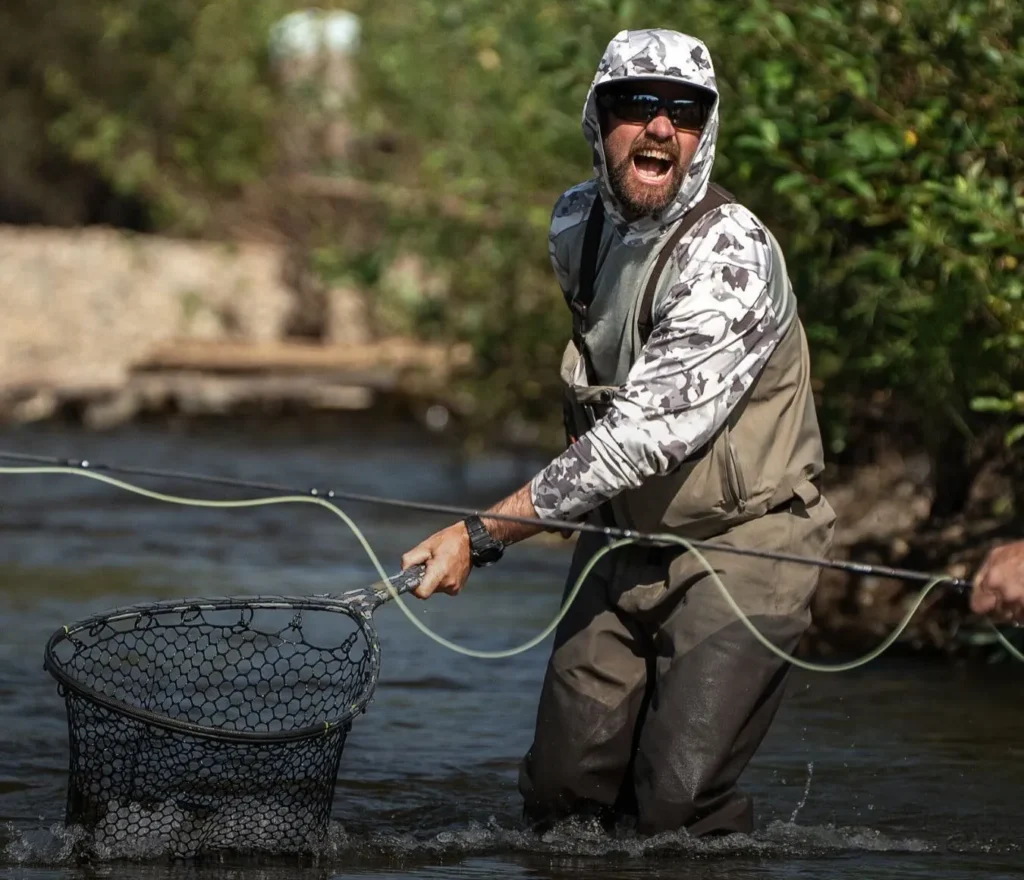
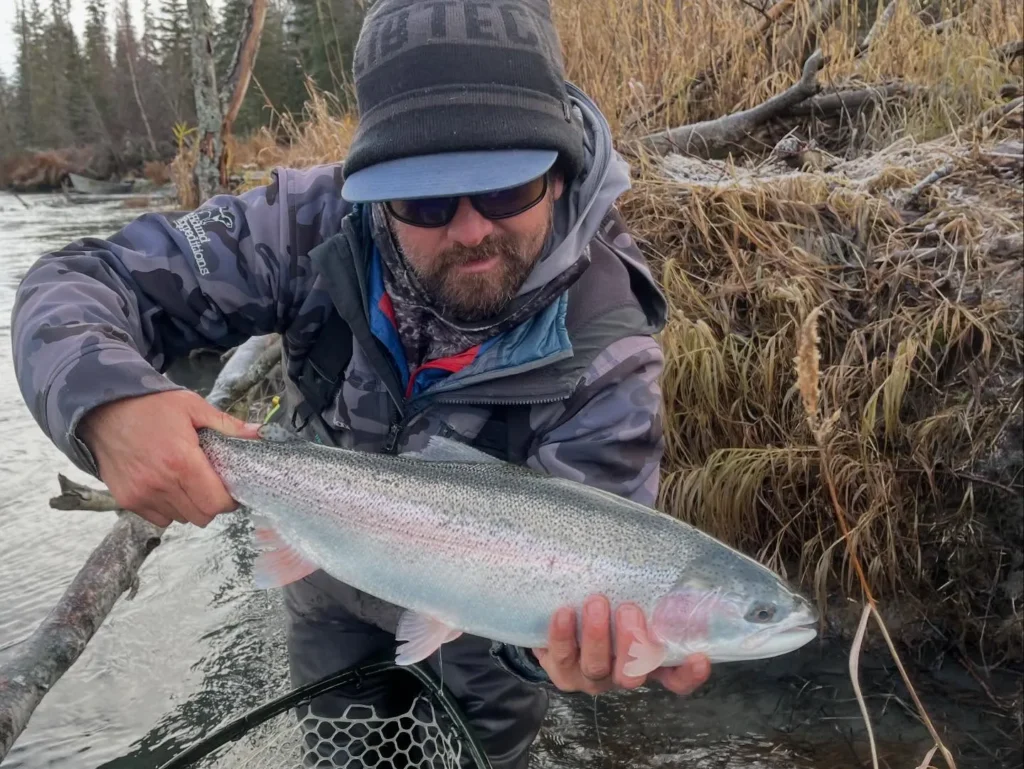
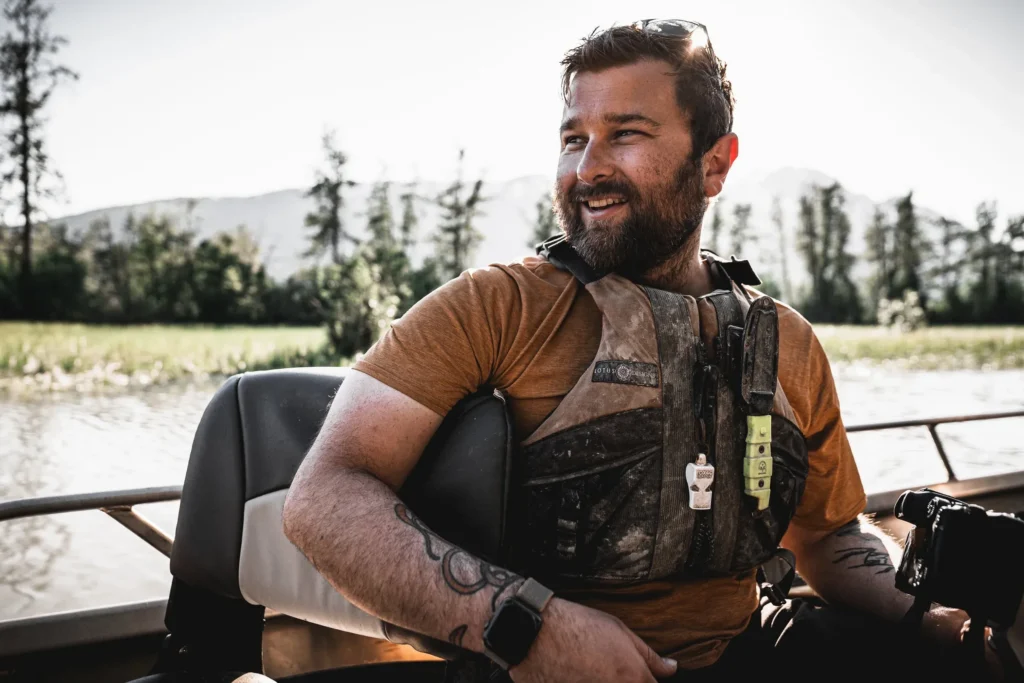
From the Deschutes Canyon to the Baltic salmon rivers of Sweden, this one felt like sitting down with someone who has truly lived the two-handed life. Marcus Bohlin grew up fishing before he could talk, came up through the Scandinavian salmon scene, and now helps lead the U.S. side of Nám.

Growing Up With a Rod in Hand

(02:10) Marcus grew up fishing before he could talk, with photos of him wearing a life vest and holding rods as a toddler. Fishing stuck with him while his brother went another direction, and Marcus believes some people are simply wired for it.

In 2004, he started working in the fly fishing industry with Guideline, which opened the door to fishing all over Europe and beyond. His approach has changed over time. He’s not racing from pool to pool anymore. Now it’s more about slowing down and enjoying the whole experience.

Marcus says the Deschutes is his favorite river. He even jokes that when he’s gone, that’s where his ashes should end up.

Falling in Love with the Deschutes

(05:58) Marcus’s first Deschutes trip came through Chris O’Donnell from Bend Fly Shop, who took him jet-boating through the canyon. Even without seeing fish that day, the desert landscape, cold tailwater, long casts, and floating-line steelhead left a lasting impression.

A couple of years later, he came back for a trip with Curtis that meant sleeping under the stars and spending days in the canyon. He talks about the Deschutes as a full package. A big, cold river cutting through the desert, summer steelhead moving in from the Columbia, and nights spent outside with nothing overhead but stars.

He says not many anglers from Sweden come to Oregon for steelhead; most head to Canada instead. To him, that’s a miss, because the Deschutes is a special place that stays with you.

Nám Products

Nam’s leader material has gained attention for being extremely strong for its diameter. Marcus explains the Scandinavian mindset: anglers focus on diameter, not pounhttps://youtu.be/Fd9e6HjkO98?si=lblm70l8YxLVLHoHd-test. Their leader uses a fluorocarbon core with a mono coating, blending low memory, suppleness, and strength.

Compared to Maxima, Nam leaders are significantly thinner at the same breaking strength. Because of that, Marcus recommends anglers size up in strength compared to what they’re used to.

Key points:

  • Thinner leaders move flies better
  • Strength matters when fighting fish near rocks
  • Leaders must still break before fly lines or heads

For steelhead on the Deschutes, Marcus recommends 26 lb (0.33 mm) as a sweet spot.

Nam Products

Sweden vs Norway vs Iceland

Marcus breaks down how these countries fish very differently. Sweden feels closest to steelhead fishing. You buy a public license and explore miles of river on your own. It’s open, flexible, and built for anglers who like to move and figure things out.

Norway is more structured. Most rivers are leased by beats, often short stretches you fish all week. It can be productive, especially for first-time visitors, but it’s more expensive and less free-roaming.

Iceland sits on the far end of the spectrum. Access is usually tightly controlled, often guided or lodge-based. The fishing can be incredible, but it’s the hardest place to do on your own.

For anglers who want room to roam and the freedom to explore, Marcus makes a strong case that Sweden deserves a serious look.

Scandi, Skagit, and Why Longer Rods Make Sense

(23:37) Marcus explains that the gap between Scandinavian and North American spey styles is smaller than people think. Once you get past labels, anglers tend to like the same things. What changed was how rods and lines were named and matched, not how they actually fish.

Summer Steelhead Setup

  • A Ren Double-hand 14 ft 7 wt rod is a great fit for rivers like the Deschutes
  • Around 450 grains hits the sweet spot, with room to go heavier if you prefer
  • Longer rods help when backcasts are tight and you’re wading deep
  • A longer rod puts the D-loop more in front of you, which actually makes casting easier
Nam Products

Why Nám Builds Many 6-Piece Rods

Nám builds six-piece rods for travel and performance. Marcus sees no downside in action, and sometimes even better performance compared to four-piece rods.

Benefits:

  • Easier airline travel
  • Fits into standard luggage
  • Fewer lost-rod disasters
  • Ideal for Spey lengths

Marcus believes more ferrules can actually improve rod feel when designed correctly.

Top Spey Tips and Tricks

What’s Coming Next

Nam started with extreme rods (17-foot salmon tools) because long rods are hardest to balance. From there, they worked downward. They even built an 18-foot rod for competition casting, which anglers began using on a famous Swedish pool below a waterfall. The furthest caster ruled the day.

Now, Nam is expanding Trout Spey and what Marcus calls “Light Spey”.

  • Nam is building 5- and 6-wt spey rods
  • They sit above trout spey but stay light and fun

Resources Noted in the Show

Want to explore the gear Marcus talks about? Check out Nam Products.

Sponsors and Podcast Updates

Related Podcast Episodes

Full Podcast Transcript

Episode Transcript
WFS 860 Transcript 00:00:00 Speaker 1: From the Deschutes Canyon to the big Baltic rivers of Sweden. Today’s guest has spent a lifetime chasing migratory fish with two hands on the cork. He grew up fishing before he could talk, cut his teeth in the Scandinavian salmon world, and now helps the US expansion of a brand that’s been quietly influencing the modern space scene for years. If you’ve wondered why Scandinavian anglers obsess over rod length, liter diameter and the true line weight, or why fourteen foot seven weight might actually make more sense on the Deschutes River than some of the shorter rods, this episode is your window into that world. This is the podcast where I show you the best places to travel to for fly fishing, how to find the best resources and tools to prepare for that big trip, and what you can do to give back to the fish species we all love. Marcus Bolin from Nom products is here to break down how Sweden’s public water salmon system compares to Norway, Iceland and even steelhead rivers, and why you might want to think about Sweden this year. Why Nom builds so many six piece two handers and why more ferals might actually cast better. We’re going to get into the truth about skinny versus Skagit, and why those differences matter less now than most anglers think, and how to choose leaders based on water speed and not just depth. This is an amazing one. We’ve heard about non products and their leaders, how they’re breaking the mold and producing a product that is comparable to maxima. We’re going to get into that conversation as well. Here we go Marcus. You can find him at products. How are you doing Marcus. 00:01:31 Speaker 2: Yeah. Thank you I’m really good. Um, excited. 00:01:34 Speaker 1: Yeah, I’m excited too. I think what I’ve been hearing out there is I’m really excited because, you know, nom products, you guys have a number of great products out there. You know, Spey and, you know, single hand, double hand everything is really a big thing for us because we got a lot of people swinging flies. And so we’re going to get into all that. We’re going to talk about your product line. And I think we’re going to focus on some micro Spey too as well, because I know trout fishing and some smaller species is definitely popular as well, but maybe take us back real quick. Talk about where are you located physically now and take us all the way back to to fly fishing. How did you first get into all this? 00:02:10 Speaker 2: Yeah, well, I’m located in Sweden and, uh, well, I’ve been fishing all my life since I could talk. There’s some pictures at my parents house where I have a life vest on and, uh, rods and, uh. Yeah, at least. Yeah. I just had started to walk, I guess maybe. Yeah. Was that two years? 00:02:32 Speaker 1: Yeah. 00:02:32 Speaker 2: Uh, or you walk in first year and then you talk in second year. 00:02:37 Speaker 1: Yeah. I always forget. 00:02:38 Speaker 2: That, but I forgot. 00:02:39 Speaker 1: Yeah, yeah. You walk well. Yeah. You, I remember myself. It’s interesting where I’m at because I’m doing this podcast and talking to, you know, literally hundreds of people. But I didn’t start talking. I started walking probably at one or something like that, but I didn’t start talking until I was about four or five. It was way late. I was kind of a shy kid, but yeah, I think that’s right. So go ahead. 00:02:58 Speaker 2: Yeah, yeah. So been fishing all my life and, uh, I guess I’m just born. I have a brother, and he had the same upbringing, and he didn’t get into fishing. I got crazy in with too much, I would say. And I guess you’re born with it. I thought a lot about that. Uh, if you can learn to like it or if you just like it from the start and it seems like, uh, with my kids, I have three kids. And. Yeah, I don’t know if I have actually convinced any of those three. 00:03:32 Speaker 1: Uh oh. Right. 00:03:33 Speaker 2: That it’s fun. 00:03:34 Speaker 1: I have. Now tell me this because I have two kids. I have two girls, and they’re they’re nine and eleven or. Sorry, I always say that they’re eleven and thirteen and I haven’t been pushing them hard for it. You know, we’ve just been there. But we actually had this trip. We did a road trip and they both got into really nice rainbows and stuff, but they I feel like maybe they’re getting into it now, but I didn’t push them. How did you do it? Did you? Sounds like you didn’t push them either. 00:03:58 Speaker 2: No, I haven’t pushed them either. And, um, I can’t really explain why they haven’t gotten us in touch with it as as I was as a kid. But in February, we’re actually going to Bahamas. And my daughter, she likes clear water and and warm weather and all that. So. And she’s fifteen. So. And I think I’m gonna stick a fly rod in her hand and see what maybe in that environment, maybe she will get more. We’ll see. Um, but yeah. So I’ve been fishing all my life, and I did track and field in as a youngster. And then to relax, I went fishing, um, kind of clear the brain. And then I started to work. In two thousand and four, I started at a company called guideline, uh, which is a European brand. Yeah. I was really fortunate to get into the business and, um, start working with it. And I still enjoy, even if I’m not. Before it was kind of crazy fishing in Norway, uh, going from pool to pool and, and then almost running in between the pools and no sleep, um, little food and everything. Uh, now I enjoy the full package, so I’m more relaxed. Uh, fishing. Um, I don’t know if it’s the age or if it’s just that this is also, uh, my profession. Um, or a combination. Maybe so, but, yeah, I’m really fortunate to be able to travel the world and fish in different, uh, places. Actually, we’ve been going we had a round last year with a few Americans, actually, uh, around the table, which, uh, was the favorite river of everyone. And, uh, actually, my favorite river is the Deschutes. Oh, really? Yeah. So I tell my wife when I die, she should spread my ashes in the Deschutes. 00:05:58 Speaker 1: So this is pretty cool. I bet the more you talk, the more it sounds like I’m hearing somebody that sounds like myself. And now that you say the Deschutes, that’s actually my home river, so. Oh, yeah. 00:06:08 Speaker 2: Wow. 00:06:08 Speaker 1: Yeah. Yeah. So I’m about four. Well, I’m four hours from it, but the Deschutes, that’s pretty cool to hear. So what’s your let’s take that tangent a little bit on the Deschutes. What was your first trip out there on the Deschutes? What got you hooked on the Deschutes? 00:06:21 Speaker 2: Uh, it was first, I think there was actually a test from a guy called Chris O’Donnell. He runs Bend Fly shop. Sure. Um, and he was kind enough to take us out with his jetboat the first day. I think this is maybe now four years ago. Uh huh. And we didn’t actually see a steel or nothing, but just a pure environment of. Yeah, um, desert cold water, uh, Floating line, still quite longer casts and just a type of fishery, and just the surrounding of being in that canyon. And, uh, yeah, just a full package. And then we did the two years after that, we did a trip with, uh, Barrett and Curtis, uh, and, uh, yeah, that was just sleeping under the sky. Yeah. It’s it’s just. Yeah. So it’s just a perfect combination of being there in September. It’s warm outside. The river is cold. So you’re always comfortable. Um, yeah. It’s just everything, uh, around it, uh, is just lovely. How how the fish, uh. 00:07:33 Speaker 1: The fish are active, right? Yeah. Yeah, yeah. The summer steelhead. Yeah, there’s. We’ve done, you know, probably like you, you know, we’ve traveled around and done a lot of different steelhead episodes or, you know, steelhead trips. But yeah, the Deschutes, for those that haven’t been there, what makes it special is it’s on the the east side of the mountain range in Oregon, which makes it it’s the desert. Everything. People don’t realize. I think a lot of people think of Oregon as a big, super rainy, and it is the West side. But when you get to the east, it’s it’s less than ten inches of rain and it’s the desert. But within that you’ve got this giant four thousand five hundred cfs river flowing right through the middle of the desert. And it’s cold and it’s a tail water. And you have steelhead migrating up from, you know, through the Columbia River, the biggest river in the western United States. And they’re turning into the Deschutes for that cold water. And then. Right. And you’re out. You’re out there under the stars and enjoying it and swinging up a fish. 00:08:24 Speaker 2: Yeah, yeah, yeah, it’s just lovely. And so that’s the big upside of, uh, of this job to travel and get to see places like that. It’s very most, I would say Swedish people that go for steel and they have, uh, it’s more common. They go to Canada and to BC. uh, very few Swedish people actually go to Oregon for for Steeler fishing. Right. Um, and that’s a shame a little bit, because they miss, uh, such a beautiful place. Uh, I think. Yeah. And, um. Yeah, I obviously also love to fish. Uh, um, back home as well. Sweden. Uh, Norway. Uh. 00:09:10 Speaker 1: Sure. Yeah. You guys have some good. Have some amazing rivers back in your neck of the woods, too. Well, I think I was thinking today to to talk microspin. We’ll probably mix up a little bit, but the fact that you mentioned the Deschutes, I think we should get into a conversation as well about steelhead. You know, choosing the right gear, uh, for something there. But let’s take it back high level on, you know, Nam and I’ve heard a number of great things. One thing is, you know, the leaders that you guys have, some leaders that are really, you know, amazing. You know, I think maxima is the leader a lot of people hear about for steelhead for a number of reasons. But, um, let’s go down that just because I know Brian Niska on or in the Bucket podcast has talked about this. What is it about those leaders? Why is there so much buzz? You know, what did you guys create there? 00:09:52 Speaker 2: Yeah, well, it’s kind of a also we’re trying to adapt to the American market there a little bit because we over here we don’t talk about how strong the material is. We talk about how thick it is and also in millimeters, which confuse, uh, you guys even more. 00:10:10 Speaker 3: Yeah, right. We’re not that smart. No. 00:10:13 Speaker 2: No. So what we were looking for was actually, um, material which is thin and strong, um, and we think, and it has very little memory. Also the material, it’s, uh, it’s a coated, uh, it has a fluorocarbon core, and then it has a mono coating on it. So it kind of have the benefits of both fluorocarbon and mono. 00:10:40 Speaker 1: Is it mono though? It’s not fluoro. 00:10:42 Speaker 2: No. Nah. It’s both. 00:10:43 Speaker 3: Oh it’s both, it is. So you got. 00:10:44 Speaker 2: Both. Yeah. So it’s both. And that makes it so it has very little memory. Uh, it’s supple enough and it’s very strong for its diameter. Um. 00:10:57 Speaker 3: Yeah. Right. 00:10:58 Speaker 2: Uh, or for how thick it is, uh, as we see it. Because, uh, back here, we fish with as strong material as we can find, but still, we don’t want it to be too stiff or too fat, because then, yeah, the fly doesn’t move, right? Um, yeah. At least when you fish with a smaller, maybe hook salmon fly. Um, than it’s than the material if you can have an open nut. But it’s not the same really. So then you have lots of benefits of being able to use really strong material, which is not too thick. Um, and I guess that’s the difference. Um, maxima is really nice and soft and but if you compare how strong our material is to maxima, uh, it’s way thinner. So we actually recommend, if you, uh, buy our material, take much, much stronger than you used to. Also, if it’s too thin, uh, if you have the same strength as maxima, you could get problems. Uh, if the leader, uh, goes on rock, fight the fish or something like that. If the material is thinner, it’s not as strong as it is with a thicker material. So it has some ups and and. Yeah, but yeah, you just have to find the. 00:12:23 Speaker 3: Perfect. 00:12:24 Speaker 2: Size for you and also that. So you don’t want your tipping material to be too strong because then if you get stuck or snag somewhere. 00:12:33 Speaker 3: Right. 00:12:33 Speaker 2: Then you might break your line instead of the tip. You always want to tip it to break. Uh. So. 00:12:39 Speaker 1: Yeah, I got you. Is this the, um. The density, the. How do you pronounce? Is it zentai? Zentai. High density. 00:12:44 Speaker 2: Yeah. Well, it’s just something. It’s in Japanese. It’s, uh. The meaning of it is, uh, whole. As I understand, it’s a Japanese material, and we just wanted some, uh. 00:12:56 Speaker 1: Some connection to. 00:12:57 Speaker 2: Name on it. 00:12:57 Speaker 1: Yeah, yeah. No, I like it. Zentai. Well, what is the, um, you know, in maxima? I just think, you know, we use everything from, you know, typically eight pound. I even use some. I’ve used some of that for trout, but it’s mostly like steelhead. So it’s, you know, eight pound, ten pound I think on the Skeena Brian uses twenty pound. What would be the if you were going to be using, let’s just say for normal steelhead fishing, let’s say the Deschutes. Let’s just go to Deschutes. What would you be using on the Deschutes? What millimeter for that. For liter for tippet? 00:13:23 Speaker 2: Uh, yeah. Well, I would use our, uh. What’s most common, I think, is our twenty six pound, actually. 00:13:29 Speaker 1: Yeah. Twenty six. 00:13:30 Speaker 2: And that’s in millimeters. 00:13:32 Speaker 1: Zero point three, three point three three. Yeah. So twenty six. So you have I’m looking now. You got twenty six pounds. Thirty five. So when you look at that, yeah, you would think that it’s a little well it’s twenty six pounds versus like I said, you know, so with twenty six pounds how would that compare to a maxima. Do you know much on the comparison. Like if I was using, you know, twelve pound maxima, would that be similar or. Yeah, I would. 00:13:55 Speaker 2: Imagine that that’s quite in how thick the material is. Probably about the same. 00:14:00 Speaker 1: Yeah I guess just look at the thickness. Yeah, yeah, yeah. That’s the key. 00:14:03 Speaker 2: Uh, yeah. So it’s just, I mean, we, we made it first for Atlantic salmon fishing and then we used way, uh, thicker and stronger actually for Atlantic salmon fishing. And then it was just a coincidence that it’s also really nice material to use for steelhead fishing. Yeah, but the main thing from the start was to find a material which was really suitable for salmon fishing. And then we use really strong stuff. Um, uh, there’s, uh, I don’t know if you do it in steelhead, but in some places in Sweden, um, fish above rapids and things like that. So you there’s a word for it. You call it to walk the dog. 00:14:47 Speaker 1: Oh, yeah. 00:14:47 Speaker 2: So you pretty much. Yeah. You pretty much just lock the reel and then you walk with the fish instead. 00:14:52 Speaker 1: Um. 00:14:53 Speaker 2: So those, those guys they really like with everything is strong. 00:14:57 Speaker 1: Oh, right. So they’ll get a fish and they’ll have a fish that they got to really lock up and not let it run. 00:15:02 Speaker 2: Yeah. Otherwise it goes out the rapids and then you lose all your line. You lose everything. Everything is gone. 00:15:09 Speaker 1: Located in Boulder, Colorado, Intrepid Camp Gear is dedicated to designing and manufacturing the best and most highly engineered automotive camp gear on the market. Intrepid Camp Gear specializes in rooftop tents and aluminum cargo cases designed for skis, rods, hunting gear, and any other gear you may be hauling. Elevate your adventure with Intrepid Camp gear right now. Head over to Wet Fly. Right now that’s intrepid I and. Intrepid camp gear experienced the waters of Bristol Bay at Togiak River Lodge, where fly fishing meets Alaska’s rugged beauty. This is the place to complete the Alaska Grand Slam with all five salmon species, rainbow trout, Arctic char and more. Where each day offers a new Alaskan adventure, you can visit Togiak Lodge right now to start planning your Bristol Bay experience with Togiak River Lodge. Well, this is great to hear because I’m kind of in mine too. I’m getting ready for an Atlantic salmon trip. Um, you know, we’re heading to Newfoundland to Mountain Waters Resort, and and so I’ve never fished for Atlantic. I’ve fished for summer steelhead and winters and all the steelhead. But this will be my first time. And I’ve heard these fish can be pretty crazy, right? They can just go and you can’t stop. It sounds like that’s what you guys have. You have a leader that really is meant to. If you need to stop those fish from running. Is that is that the idea? 00:16:29 Speaker 2: Yeah, a little bit. Uh, I actually like to steelhead because it burns out way faster. So it’s more spectacular in the beginning compared to the Atlantic salmon. But, uh, I think that salmon, it seems like they can go longer and for longer time, and they can. I’m not that experienced in steelhead fishing, but in some big rivers with Atlantic salmon, they use the current a lot. And if the current is really strong then it’s really difficult to be able to hold the fish. 00:17:02 Speaker 1: Difficult? 00:17:03 Speaker 2: Yeah. Yeah yeah. 00:17:04 Speaker 1: How does that work on your you know. So you fish the Deschutes. You know what that river is like. How does that compare to, say, let’s take us over to Norway or Sweden. You know, we hear a lot more about Norway, but does Sweden also have some rivers there we haven’t heard about? 00:17:16 Speaker 2: Yeah. Sweden has uh, I actually enjoy them because it’s more similarity to, uh, steelhead fishery to go to Sweden for salmon fishing, because then you just buy a public license and then you go fishing. It’s miles and miles and miles to go fish. Uh, when you go to Norway, you most often, uh, rent or lease a beat, and then you maybe have a normal is maybe half a mile or one mile. And then during that week you have that stretch that you fish all week, just one stretch going up and down. And that’s a comparison to steelhead, where you kind of are more used to see more of the river. Uh, Sweden is more comparable way and it’s the areas is vast. And you can spend a lifetime up there and just explore. 00:18:10 Speaker 1: Uh, you can. 00:18:11 Speaker 2: Yeah. And it’s instead of Atlantic salmon, it’s Baltic salmon. We have the Baltic Sea. 00:18:16 Speaker 1: Uh, Baltic. 00:18:17 Speaker 2: Yeah. On the east side of Sweden, where the Baltic Sea, uh, which we share with Finland and a little bit of Russia. 00:18:26 Speaker 1: Oh, really? Russia’s in there somewhere. Yeah. 00:18:29 Speaker 2: Russia. 00:18:29 Speaker 1: They have. Oh, by Saint Petersburg, right? 00:18:31 Speaker 2: Yeah. Yeah, exactly. Yeah. Um, and Poland. So. And those fish are a little bit, uh, different in temper. Uh, they’re a little bit more aggressive. Uh oh. Wow. So if you want to be spoiled or and then, then it’s actually a better place to go to Sweden and try to hook a fish there than to Norway in general. The fish is a little bit calmer. Uh, the temper. It’s quite unusual to get spoiled in the same way. Norway, uh, for the Atlantic salmon. 00:19:03 Speaker 1: When you compare Norway to Sweden, uh, fishing wise, just let’s just say numbers, you know, you go there, are you going to have a better chance to, um, you know, get a fish, more fish in Sweden versus Norway. Are they about equal? 00:19:17 Speaker 2: Um, yeah, just like with steel. And it depends on, uh, the river. I would say if you just have one week, uh, and you have no experience, You have way better chances in Norway compared to Sweden. Gotcha. But if you have a really good guide and that knows where to go in Sweden, uh, then you have a better chance. So it depends a little bit on who you know and what contacts you have. And it’s the fish can be bigger in Sweden also and bigger. 00:19:49 Speaker 1: Yeah. I feel like that’s what I some people would be doing. I might do it if it was just me. You know, where you have a, you know, maybe I don’t know if you can DIY it, but you go in there and you get a guide maybe for a day or two or something like that. You learn the area and then you go on your own and spend a few weeks there, maybe a month or something like that. Fishing. Could you do that in Sweden? 00:20:05 Speaker 2: Yeah, absolutely. That you could do in Sweden. It would be way more difficult to do that in Norway because it’s. 00:20:12 Speaker 1: Expensive and it’s. 00:20:14 Speaker 2: Expensive. And Iceland would be even tougher to do that. Uh, even if Iceland, you can get what you can. Yeah. It’s normally really good and safe fishing. 00:20:24 Speaker 1: I think that’s what’s cool about this, You know, in talking to you. Because, you know, we’ve heard a lot about Norway. We’ve done some episodes, but we really haven’t had anybody talk about this. The fact that it feels like Norway is really pay to play. You got to have a lot of money, you know, you got to get on these beats and all this stuff. But but it sounds like, yeah, Sweden. There’s some areas over there where you can kind of maybe, you know, get your ticket and go explore, right and go check some stuff out. 00:20:48 Speaker 2: There’s, uh, more and more actually going to Sweden exploring more and more British people. Uh, yeah. It’s, um, it’s an easy country to travel around in and, um, really easy access or to, to buy a license. It’s very easy, just like BC it’s very easy as well. And in general, with this deal, it seems quite easy. 00:21:12 Speaker 1: That’s great. That’s awesome. 00:21:14 Speaker 2: Well, yeah. 00:21:15 Speaker 1: So I think I think we will well, I think, you know, the challenge here is Marcus’s, um, you know, I love when I have these podcasts because, I mean, I could just tell you, we could talk for hours and hours and we wouldn’t run out of stuff because you got so many. So I think I’m already realizing we’re going to have to bring you back on for another one. But but let’s jump into today. I want to talk about, like we said, we’ve got the steelhead, we got the leaders. I really want to talk about them and what they’re doing differently because I feel like in the US, you know, we’ve talked about this, the revolution right from early in the days to now where we’re doing these really, it’s all Skagit. It’s all heavy, it’s all short, and Nam is doing something different. Talk about your Spey line. Maybe, maybe focus on that a little bit and talk about, you know, what you guys are doing there. You know Scandi versus Skagit and all that. 00:21:58 Speaker 2: Yeah. Actually when we started in the, in the, uh, North America, we or I thought that it was a huge difference in culture when it came to what rods do people like, what lines do people like to put on their rods? And we had to adapt a lot to that. What, uh, line weight. We should put on rods. Uh, what is the seven weight? What is six weight? What is nitrate? And then the more and more, uh, I fished in the US and the more and more people we brought over here to us, I realized that it’s actually not a huge difference, actually. And also there’s been a between Norway and Swedes. Uh, in the past, people had talked that the Swedes like way lighter line than the Norwegian, but then it’s just, um, I think misunderstanding in just how long lighter do you use? And if so, if you have to fish with people. People seem to have quite similar taste. Um, so we started out with having a different stock actually in the US, our program, uh, road program was different from in the US compared to the European warehouse we had and the stock we had here. So we labeled the rod a little bit differently. And then we realized, ah, it seems like people actually want to have same lines as we want to have on. So when it comes to Scandi casting, Skagit casting, uh, long lines, uh, all that different. It’s quite people, uh, in my opinion, actually like the same stuff. 00:23:37 Speaker 1: Mm. What would be the like? Let’s take it to the Deschutes, because I think we both have fished that. What would be? We’re getting ready to go summer steelhead fishing. And again, for those that don’t know summer steelheads a little bit different than winter steelhead. You know the weights and stuff. Summer is more lighter. You know you’re and again I’ve talked about this before. I learned when I was a kid about steelhead fishing, reading books on Atlantic salmon. You know, we had some great books from eastern Canada and stuff like that. But but talk about on the Deschutes. What would be the perfect line to use for summer steelhead on the Deschutes? 00:24:06 Speaker 2: Yeah, we actually made a rod last year, a fourteen foot seven weight. And on that rod I think most common is had around four hundred and fifty, uh, grains. Maybe if you like it heavy, you could go up to five hundred. And that’s about a normal, um, seven weight is. Yeah, between four hundred five hundred range somewhere around there. Yeah. And, um, when it comes to length, um, I can’t really say because in my mind, I have everything in meters and I have to translate it into. 00:24:45 Speaker 1: Feet, but. That’s right. Yeah, but the fourteen foot seven weight is something. Yeah. Or a thirteen and a half or sometimes people go a little bit shorter, but, um. Yeah. You know, somewhere in there. 00:24:55 Speaker 2: Yeah. It’s long. Um, well, maybe unusual, long to have a fourteen foot. But we think in the Deschutes, uh, and I would imagine also in the Clearwater, it’s practical to be able to and actually that’s in many places in, in, in the Deschutes, you have no space to do a back cast and you’re deep waiting. You have no room. And actually, in my mind. 00:25:19 Speaker 1: fourteen is. 00:25:20 Speaker 2: Better. Um, yeah. I’ve learned that it’s actually easier with a longer rod than with a short one, because you make the you have the d-loop more in front of you, or are able to have a d-loop more in front of you with a longer one than you have with a shorter. 00:25:33 Speaker 1: Awesome. That’s awesome. 00:25:34 Speaker 2: So there’s a lot of benefits with, uh, to use longer rods. Um, and that’s maybe a little bit of our niche is, uh, also over here is to in general, our rods is a little bit longer, uh, than people maybe are used to. We have, uh, switch rods and all that, and that’s super fun to use. Um, if there’s a really small river and if you don’t have to do long casts and all that, but, uh, yeah, there’s. If you have a rod that’s light enough, uh, in the tip not to tip heavy. There’s just so many benefits of using a longer rod. 00:26:14 Speaker 1: I love this I love where this is going to. because, you know, we we were fishing up at Togiak River Lodge this year for Chinook salmon up there in Alaska. And and all the rods there we used were the bigger, you know, they’re heavier too, because we were fishing for bigger fish, but they were longer rods and you didn’t know the difference. And the nice thing is, is what’s happened is the technology, right in rods, has gotten to the point where they’re not super heavy anymore. So you can get a fourteen foot rod that’s light in the hand now. 00:26:39 Speaker 2: Yeah. Yeah. Absolutely agree. So that that would be my goal today. Now that we have that rod we’re also working on. Um, we were supposed to talk about Micro Spey or Trout Spey and, and then our American colleague said yeah, well uh, Trout Spey only goes up to four. 00:27:02 Speaker 1: Oh, right. 00:27:02 Speaker 2: But we wanted to make a five weight and a six weight. So, uh, we thought about it, and maybe. So maybe we had to invent a new term. Um, so I don’t know if it’s right that trout spey isn’t available. It may be in five and six, but we wanted to make a rod in five and six. That is kind of in the same series or the same style as our trout spirals. So that’s what we’re doing and we’re calling it light Spey. 00:27:29 Speaker 1: O light Spey. 00:27:30 Speaker 2: Yeah. I don’t know if that’s right or wrong, but um, yeah. Just to kind. 00:27:34 Speaker 1: Of get your own series. I’m looking at one now, the Trout Spey I’m looking at. So you have six piece rods, two you’re doing there. 00:27:40 Speaker 2: Yeah. We we don’t see any downside when it comes to rod action on the six piece. We actually think they perform as good or sometimes even better than the four piece. So to make them in six piece, uh, it’s really practical. Um, there’s lots of customers maybe fishing, uh, both steelhead, or they go down to Argentina and the flights also up to BC. I understand lots of people lose their luggage. And so it’s really practical to have a six piece. 00:28:12 Speaker 1: It Is it especially for Sp-a? And we’ve been talking a lot about this because we’ve had another company, um, Pescador, on the fly, who does a trout rod. They’re mostly focused on trout and it’s a six piece. And the man I’ve been using that traveling around the country and it just disappears. I mean, you could throw it in any bag, pretty much. And it’s gone. You don’t have to check it. It’s just. No, you know, it’s just there. So then that’s a cool thing because the Spey rod, if you’re talking a fourteen foot rod, thirteen whatever a four piece rod is gigantic. So you’re talking six pieces makes a difference when you’re traveling. 00:28:42 Speaker 2: Yes. Yeah. So yeah, we lean a lot on the six piece in general. Uh, we make a lot of six piece and more and more is coming. Uh, maybe not a nine footer with we have in generally, uh, we have five piece in nine foot as well. But most of our, uh, our four piece, uh. 00:29:07 Speaker 1: four piece. 00:29:08 Speaker 2: We try to make a two piece for, uh, Tarpon fishing, but it seems like most people wanted for peace down there as well. Um, for peace. So yeah, we’re in one piece, but that’s so. 00:29:22 Speaker 1: Yeah. You guys. So what is your focus? So take let’s go back high level on non product. So what do you think is the thing. It sounds like you guys are doing a lot out there. What’s your what did you get started with. What was your first kind of rod line. And what do you think is your sweet spot now that you guys are really focusing on is it spay or is it trout or single hand? What do you think? Are you do it all? 00:29:41 Speaker 4: Yeah. 00:29:41 Speaker 2: We became a little bit of a spay brand. And maybe that’s because how we started with, uh, we had the idea that if we start from the top. So we actually started with a seventeen foot rod, uh, long, because it’s the longer rod in what I believe, uh, is harder to make or to make it good and balanced. 00:30:04 Speaker 1: Right. 00:30:05 Speaker 2: Um, and so we started from the top and then went, uh, shorter and shorter and shorter. So over here, first year, twenty eighteen was probably our first year. Um, then our most sold rods was our sixteen foot rod. So, yeah, we’re kind of known for, uh, bigger rod than for especially Atlantic salmon. 00:30:31 Speaker 1: And Atlantic salmon. Yeah. So you started there as, like, salmon with the long rods. And these are traditional, like long belly. You’re not talking about Skagit or really Scandi or talk about that a little bit. Were these what lines were you casting. 00:30:42 Speaker 2: No we’re using quite short shooting heads. Okay. On the long rods. Um, again, if it’s no room for a back cast, uh, and you have a really heavy sinking line on, sometimes you need to find fish. Really? So it’s a full sinking line. The full head is sinking. 00:31:02 Speaker 1: So you got a bigger. 00:31:03 Speaker 2: Yeah. 00:31:03 Speaker 1: Yeah. And you got a bigger lever. 00:31:05 Speaker 2: Yeah. And then it’s way easier to do that with a long To just lift the line out of the water is way easier. Actually, with a longer rod and everything just becomes way easier. Uh, fishing with that program. So yeah. 00:31:19 Speaker 1: Is there a, you know, we talk about seventeen foot, which sounds like a super long rod, but could there be a, you know, like take it to the extreme, you know, an eighteen, nineteen, twenty foot rod, right. Could you build something? Would there be an advantage of even going bigger? 00:31:31 Speaker 2: Yeah. We have we had an eighteen foot, which we actually made for, uh, competition casting for, for the people that compete in casting. But we sold a few for competitor casters, but most we actually sold for people that were fishing. And there’s, uh, one pool up in the northern part of Sweden where the people, it’s kind of famous and it’s below a big waterfall. And, uh, people believe that a guy that cast the furthest is the one that catch the fish. So if you come there with a sixteen foot, the next guy come with a seventeen and then the next guy with eighteen. The cast brother. 00:32:11 Speaker 1: Yeah. 00:32:11 Speaker 2: So we sold most of those roads actually up there, uh, to that specific pool actually, because it’s. Yeah, it’s so famous. And the guy that is throwing the first first, as I said, is the king for the day and and that’s it. 00:32:25 Speaker 1: Yeah. That’s pretty good. 00:32:27 Speaker 2: Yeah. It’s fishing, but it’s still a little bit of, uh, I shouldn’t say competing. It’s still fun, but it’s still. Yeah, it’s extreme. 00:32:38 Speaker 1: As you say, up there when you look at northern Sweden. So you mentioned the Baltic Sea on the kind of the, on that side there as you look north, is there a connection in northern Sweden out to the Norwegian Sea? Is there a direct or tributaries flowing in from Sweden, through Norway, out into the Norwegian Sea? 00:32:55 Speaker 2: Uh. 00:32:57 Speaker 1: Or is it is there a mountain range? It looks like there might be mountains. 00:33:00 Speaker 2: Yeah, it could be a few rivers. Might start in Sweden and then go into Norway and then out to the Atlantic sea. Yeah, there are probably a few of those. And obviously there’s lots of people because the Swedish river gets warm way faster than the Norwegian because it’s more, um, meltwater, more snow, uh, in the going into the Norwegian rivers. Yeah. And, uh, so people start their season in Sweden, and then when it gets too warm, then they drive over to Norway instead and fish. Norway. Oh, right. So they can lengthen their season that way. So I would say Sweden is good in May or late May and June is safe to go. And then after that people tend to go to Norway after that. Uh that’s most common. 00:33:48 Speaker 1: Okay. That makes sense. I’m looking at your lines here on uh, non products. Uh, well, I guess you’ve got the dash, you’ve got the USA both different depending on where you’re at. But I see a rod here, the original DHL six pieces. What would be the rod again for the Deschutes. Let’s say you want to pick up that. You said the fourteen foot seven weight. What would be the line if we want to look at it here? Because I see the Wren double hand I see the the OS double hand. Which one is that? One you’re thinking for the Deschutes. 00:34:13 Speaker 2: Yeah, that was the Wren. Fourteen foot seven weight. 00:34:17 Speaker 1: Yeah. 00:34:17 Speaker 2: Fourteen Brown rod. 00:34:18 Speaker 1: Yeah. And five pieces or six. You have a five piece there too. 00:34:21 Speaker 2: That one there is five piece. 00:34:23 Speaker 1: Oh five. Yeah. The Wren double hand. 00:34:25 Speaker 2: Uh, a little bit weird because when some people, as I understand over here we use rod racks. So we put the rods on the car and then we drive from pool to pool in some areas. That’s not so smart to do. Then you want to pick your, uh, maybe in two pieces or three pieces and then put it in your car instead. Yeah. And then when it’s three piece or five piece, then it’s a little bit trickier because okay, you can’t split it in, in the middle. 00:34:53 Speaker 1: Oh right. Yeah. You can’t break it down in half. Yeah. 00:34:55 Speaker 2: Yeah. Exactly. So a few people are kind of confused on that, but uh, we just see the the five P’s as new, uh, as a new three piece, a kind of a little bit more old school in a way. 00:35:08 Speaker 1: Yeah. The three piece. Yeah, I remember the three piece as well. Yeah. It’s funny because the way this rod has gone, right. We started out with, you know, I’m old enough to remember when the two piece rod was all you had. It was the two piece rod and that was what you had. And then you got to a four piece and you’re like, wow, this is great. But I do remember Eko specifically, you know, Eko had a three piece rod back in the whenever that was. And it and I still have it, you know, I still have it, but I always wondered, like, why the three piece rod versus the four? And it was probably, maybe the tech wasn’t there to keep it as light or why do you guys why did you go for the five just to switch it up a little bit? 00:35:39 Speaker 2: Yeah. Just. Yeah. Exactly. 00:35:41 Speaker 1: Yeah. 00:35:42 Speaker 2: And um, five is a little bit easier to travel with than a four, but a six is even better when it comes to traveling. Yeah. Um, and when it comes to rod action, we have noticed that actually almost the more pieces, the better. Almost. 00:36:00 Speaker 1: Oh, really? Like like you might even be, like, thinking an eight piece. 00:36:04 Speaker 2: Maybe if we make a really longer. Otherwise, if we make a short rod in a piece, it will be very, very short. 00:36:10 Speaker 1: Very short. Maybe in your back pocket. 00:36:12 Speaker 2: It’s just a hassle to put the rod together. 00:36:15 Speaker 1: Yeah. Too much. 00:36:15 Speaker 2: Work. Yeah, yeah, yeah, exactly. But, uh, yeah. Six might be just the perfect number. 00:36:23 Speaker 1: Let’s take a break and check in with Jackson Hole Flight Company right now. The right gear can turn a good day on the water into an unforgettable one. Jackson Hole Flight Company’s combo kits are built to match the rhythm of the river, giving you everything you need in one simple package. Each kit pairs a perfectly matched rod and reel with essential accessories, ready to fish right out of the box. From the beginner friendly Crystal Creek to the high performance Flat Creek, there’s a setup for every angler, and don’t forget about their packs and slings. I’ve been loving my Jackson Hole Sling pack for a number of years now. The perfect size to fit all your gear, but not too heavy and not too big to drag you down. Check out their slings and rods and much more at Jackson Hole. Fly Company.com and you can support this podcast by checking in with Jackson Hole Fly Company today. Well, this is awesome. So I’m looking at it now and we’ll put a link in the show notes to the Wren five piece. That’s the five piece we’re talking about here. And obviously you have the six but I see yeah the ninety one forty. You got the everything we talked about. So that’s the rod. And then you guys and talk about. So you got the rods and I guess uh line wise now are you guys doing. Do you have the lines or are you guys focused more on rods and and tippet. 00:37:39 Speaker 2: Yeah. Well, we really enjoy to, uh, design lines and to make lines as much as, uh, designing rods. Rods. Uh, we’re really fortunate to have a really good manufacturer or a factory. Um, lines has been more difficult to actually find somebody to work with, or even we have even looked into, um, building our own line factory. So we really, really want to make lines. But it’s been tricky to to find the right, uh. 00:38:10 Speaker 1: Manufacturer because there’s only a few. Right. I think we’ve talked about that in the US. We’ve had a number of the big, all the big brands on and we’ve heard that story. In fact, we had, uh, you know, interesting episode recently. Well, airflow is a good example. Airflow was over on your side and it’s come across and now I think it’s owned over here. But yeah, I feel like lines or there’s only a few, uh, companies that actually build the lines right for everybody else. So you’ve got, you know. Yeah. And so it sounds like it’s the same way over in Europe. 00:38:37 Speaker 2: Yes. Yeah. Yeah. Exactly. It’s very few, uh, on the planet that make it’s complicated where when we looked into it, it’s quite easy to make, uh, a coated line, just, uh, like a running line or a t material t tip. Just a straight. just have a core and then have a coating around it. It’s not too difficult, but as soon as you start to the taper, that’s the tricky part. The taper. 00:39:04 Speaker 1: Right. 00:39:04 Speaker 2: Yeah. How to have a machine to make the taper. And so we have some smaller factories that we make, uh, some lines that we sell over here, but we want to scale up and also have, uh, available, uh, lines in the States eventually. 00:39:23 Speaker 1: Yeah. 00:39:23 Speaker 2: So that’s something that we, we’re working on. And it’s so much fun actually to design lines also. That’s cool. Um, yeah. So that’s on the to do list that’s coming. 00:39:34 Speaker 1: That’s our to do list. Well I like what you I like what you guys have done because you have I feel like the, um, you know, there’s this saying that I’ve said a lot, but it’s the the riches are in the niches. You know, you start in niches in Canada, I think. And, you know, they say niches. But essentially the idea being like business, you start very niched down in one thing and then you become the best at that thing. And then eventually you grow out of that. So like, you guys obviously. Well, you know, we said two things, but the leader thing that you guys have you know that. And then the rods. Right. Those are your two things. And then eventually it sounds like you’ve nailed that. You maybe get into lines later on. 00:40:08 Speaker 2: Yes, exactly. And we’re we we make products for the fishing that we like. And it’s hard to design something that you have no experience in. Really. Right. Uh. We’re curious. We could learn, but it’s. Yeah. Uh, it’s. 00:40:25 Speaker 1: It takes some time. It takes. 00:40:26 Speaker 2: Some time. Yeah. It’s it’s trickier. And, um, um, it’s more fun to. 00:40:33 Speaker 1: To get to. 00:40:34 Speaker 2: Go. Yeah. To go out and actually design the products that we actually use in the company, uh, the people that are involved in the company. 00:40:42 Speaker 1: And so the rod lines you guys have, you have the Spey rods, the I mean, it sounds like, you know, really any whether you have a heavy Skagit or a light Scandi or anything else, you guys, your rods kind of cover that is that you guys kind of cover it all with your rod lines as far as putting a line on it. 00:40:56 Speaker 2: Yeah, yeah, I would say so. Uh, we have British people that use long lines on some different models, and we have, uh, yeah. From all the different lines from short to long, I would say, um, and we, um, when we started here in Sweden, there was always this, as I mentioned earlier, um, kind of an argument between Swedish people and Norwegian people about line weight to put on the rod. So then, uh, we started out just for line recommendation. We started here. Uh, it would be too complicated to have that in the States, but over here we started in grams, and then we had, uh, from weight, and then we added a plus. So let’s say an eight weight had, uh, thirty two grams plus. So for all the Norwegians that want to have thirty eight grams or maybe forty grams on the rod that Swedes normally use. Thirty two um. Then we added a plus and then we didn’t say that they were wrong to use that ahead. Everything is right. It’s just a matter of culture and and and taste. And also in my opinion, actually in general, the Swedes used way longer leaders. And you don’t really take the leader in to the account when you kind of pick your line and pick your what way to use, uh, on your rod. 00:42:27 Speaker 1: Yeah. 00:42:28 Speaker 2: So if you have a longer leader, you can have a lighter line. And if you have a short leader, you need a heavier line. Um, and that’s something that I believe that people forget a little bit. 00:42:38 Speaker 1: Oh, right. Right. Short leader, heavy line, longer leader. Uh, well, what was that again? So you have the. Yeah. 00:42:43 Speaker 2: If you have a really long leader, you can have a lighter line. And if you have a short leader, you will need to load the rod equally. Uh, you will have to have a heavier line with your short leader. Yeah, sure. Right. So the leader can vary a lot. I mean, all in between seven foot to twenty feet. And that’s quite a big difference. 00:43:09 Speaker 1: What’s your leader? I know a lot of people sometimes, you know, either build out a leader or they just buy something from the store. What do you do for Atlantic salmon if you’re. Let’s just take it to Sweden. If you’re fishing Sweden, what is your leader look like? 00:43:21 Speaker 2: Yeah. Then then we use uh, in general we use, uh, approximately. A normal leader is between ten feet and fifteen feet. And most common now is to use, uh, then a thicker material as a bot and then a thinner. So you have two tickets, uh, on one leader. Uh, so you just taper it in one step down. Uh, and that’s enough. I think you can step into three three steps as well. If you want to spend more time and make the perfect leader, but you don’t have to to. You can go up to fifteen foot with just two steps and the fly will turn over. Good. 00:44:00 Speaker 1: And yeah. 00:44:01 Speaker 2: It will work really well. 00:44:02 Speaker 1: Is that what you do? And would you use the zentai is for your whole thing. Just use a thicker one. What would be your one tied to the line. What thickness would you use or what weight? 00:44:11 Speaker 2: Yeah, well then I would. The most common maybe is to use the zero point five three in the back, and then maybe go down to the forty three in the front. Uh, that would be a typical Salomon leader I would say that we’re using now. Yeah. And about twelve feet is, uh, yeah, you can use that in most cases, uh, uh, depending some. Yeah. There’s some theories that say that if you have a fast thinking line, you need a short leader. And if you if you have a slow sinking line or a floating line, then you have a longer leader. But there’s. Yeah, there’s different theories in that as well. There’s if you have a bigger river, uh, it can sometimes be very effective to actually have a long leader, even on a fast thinking line. So that’s also something you can nerd into. 00:45:03 Speaker 1: Yeah. Right. Yeah. You can get that whole thing about where you want your fly when you’re fishing Atlantic salmon. I’ve heard differences there too. Like we’re heading to Newfoundland, you know, to the place where Lee Wolfe, you know, his cabins. He used to have his lodge, the same lodge, same area. But, you know, we hear these fish are very active over there. They’re coming to the surface. It’s all dry flies, but I’ve heard I mean, Atlantic salmon isn’t always like that right there. What’s Sweden like? Is there a lot of surface activity. Would you describe that a little bit? 00:45:29 Speaker 2: No. In Sweden, very little surface activity. Even if the water is warm. Um, and it sometimes can get too warm to actually get the fish to bite. 00:45:38 Speaker 1: Oh, right. 00:45:38 Speaker 2: But there’s in general, if you use a full floating line, you’re kind of a weird guy. Uh, that that’s unusual. Uh, yeah, I like to use it if if it’s not stupid to use it, if it’s a chance to actually catch a fish up on a floating line. I prefer to use a floating line. But, uh, if it’s way more effective use of sinking line, I, I obviously go to sinking line. Um, but in many cases and in Sweden in general, it’s I would say you need a lot of different lines and you need to adapt the line to the conditions, uh, that’s in front of you when it comes to water temperature, how much how, how much water is. And so you need to really adapt and you need to have maybe actually more lines than different patterns in place. Right. So you can go a session and you can change maybe lines three times in one day, uh, just to have it perfect. Some people actually have, uh, maybe two of the same rods, and then they have two different line setups on those rods, so they don’t have to actually switch lines on the rods they have. So that’s also effective. 00:46:56 Speaker 1: Within the same session. You might come through. 00:46:58 Speaker 2: Within the same session. Uh, I know a Norwegian guy. He, he’s the most effective, uh, fisherman in Norwegian River. And he has three of the rods. So he puts the two of the rods that he doesn’t use, he puts on on the part of the stretch where specifically that line is the perfect line. So then he starts from the top of the pool, and then he, uh, used the first rod, and then he went in and then take the second rod because that line is perfect there. And then he wants that in and take the third rod. And so the lines are, yeah, we change a lot, uh, when it comes to line when it comes to salmon fishing. 00:47:39 Speaker 1: And you’re trying to get to that right level for Sam, and you’re trying to figure out like, yes, you know, where like and where are in Sweden? Where are those fish? Do they they change their location depending on whether they’re on, are they ever on the bottom or are they ever on the top? Talk about where they’re at. 00:47:54 Speaker 2: And that’s a good question. I think it has a little bit more to do with, uh, the speed of the water. Just when it’s really high speed, then you just need a faster sinking line to get to the perfect depth, uh, on the fish to actually get interested into your fly. Right. Um, so it has more to do, I would almost say, with the speed of the water than on of the depth of the water. 00:48:25 Speaker 1: The speed. Yeah. 00:48:26 Speaker 2: Yeah. Uh, to adapt the perfect line for the actual speed. 00:48:31 Speaker 1: Yeah. To get the right presentation. To get that fly. So it’s not you know, we’ve talked about that a lot. Right. Mending getting it so the flies presented, right? So it’s not just zipping by the fish, it’s actually getting the fish to take it. Right. So you got to figure that in the the right sinking line is going to make the fly perform correctly. 00:48:48 Speaker 2: Yes, yes. Uh, so yeah, speed is really crucial in general. And and I would probably when you go up there and you will I would say ninety nine percent use a full floating line, uh, going up to Newfoundland. Um, but also when it comes to, uh, up there, I would imagine that speed, uh, what speed? I would imagine that stripping the fly do things that I did when I started, uh, steelhead fishing. And the guy told me, don’t do that. Don’t touch the line. 00:49:20 Speaker 1: Right, right. You’re stripping and making it. Yeah. Right. 00:49:23 Speaker 2: Yeah. So I want to trigger the fish to bite in that Atlantic salmon. But when it comes to steel. And I’m quite amazed how slow you can present the fly and still the the steel that takes it. 00:49:35 Speaker 1: They still take it, I know. Yeah. It is pretty amazing. Well, summer still had especially. It’s different when you get to winters because the water is colder and you’re down deeper and, you know, things are changing. Um, but no, it’s pretty awesome. I’m really excited about seeing it finally, you know, and hopefully eventually I can get up in your neck of the woods to get up to Sweden. I would love to swing some flies and check that out up there too. So. Well, tell us before, you know, we’re going to start to take it out here in a bit. But talk about, um, you know, anything else we’re missing with Nam as far as the products because we talked about the rods, um, you know, we haven’t dug in deep on trout. Do you want to touch base on some of the other lineup? Yeah. Talk talk about that. Are you are you fishing for trout in Sweden as well? 00:50:14 Speaker 2: Yes. Uh, definitely. Sweden is a good destination for, uh, kind of a classical nine foot five weight, uh, fishery. Uh, so we have lots of that in general. In, in the more southern part of Europe, uh, urine.if is more popular, but we still have the chances of actually getting child to go up and take it dry. In Sweden, we don’t have that. Uh, there’s still rivers. That is not to, uh, to populated or too many people actually going there. So, uh, you can still get some interest on a dry fly. Uh, in the southern part of Europe, there’s lots of, uh, good trout fishing as well. But it’s so much more effective with the urine.if, uh, techniques. 00:51:06 Speaker 1: Yeah. 00:51:07 Speaker 2: Um, so far we don’t have any urinary setups. Uh, but we have lots of different options when it comes to classic, uh, trout fishery, when you use a floating line and dry fly or for, uh, more traditional ways. Uh, we went to. What’s that now? Three years ago, um, to, uh, Montana, to Yellowstone. Nice. Uh, try the fishery there. And actually, first time for me that I did Trout Spey. 00:51:39 Speaker 1: Oh, yeah. 00:51:40 Speaker 2: And it was amazing because it was so practical to actually go. We just got recommended, uh, area, which was really big. So we actually didn’t know have a clue where the fish were. So instead of using a nine to five weight, uh, doing all those false casts that you usually do, and it’s not time effective. We used, uh, trout, spey rods. We did. Just like fishing for steelhead and covered so much more water, so much faster. And we could still fish very delicate with long leaders and, um. Yeah. So we didn’t spook the fish and, uh. Yeah, it was really, really effective. 00:52:23 Speaker 1: Wow. What flies were you using there when you’re fishing the trout Spey? 00:52:27 Speaker 2: Uh, soft tackles. Uh, soft tackles. Yeah. 00:52:30 Speaker 1: Swinging flies. 00:52:31 Speaker 2: Yeah, and long, maybe fifteen foot litres, uh, with a trout spey. Uh, quite short, uh, head. And yeah, it was really, really effective to do that and a lot of fun. Uh, we caught a lot of fish, and, uh, it was as fun or even maybe more fun than on a traditional nine foot, uh, five. Right? I would say so. So there are benefits if the. And but still some rivers are smaller and and um, or if you’re in a lake I know in Japan I’ve heard that they use two hundred rods, uh, going around in a lake because it’s not allowed to use a boat. So they have to cast really far. But from the bank in the lakes, that’s quite common in Japan. But, uh, other than otherwise, if you fish Stillwater, I prefer to use a rod. Of course. 00:53:24 Speaker 1: Yeah. And the rods I’m looking at here. Back to those Trout Spey series you’ve got. Yeah, I see the, um, the eleven foot six three way and then the four way. Right. The forty one. Yeah. 00:53:36 Speaker 2: And that’s something that we’re working on now in growing that program. So we’re going to make a lot of more options in trout Spey and right. And even do a five and six uh up there. And we have a thirteen foot six weight that I, I’m dreaming about using in the Deschutes. 00:53:56 Speaker 1: Oh, right. Thirty one. So right now you guys don’t have a thirty. Uh, yeah. The not a six. 00:54:01 Speaker 2: Weight in thirteen foot. 00:54:03 Speaker 1: We have thirteen foot. 00:54:03 Speaker 2: Yeah, yeah, we have a twelve. 00:54:05 Speaker 1: So that’s the rod. Yeah. You’re right. So that when you said fourteen foot I definitely am thinking like okay. Yeah, but you’re right on. So when you get that rod, you let me know. And, uh. Yeah. 00:54:14 Speaker 2: Thirteen point six weight in the Deschutes. Yeah. 00:54:16 Speaker 1: Yeah. That would be the perfect like. Yeah. Because it’s super light. And the steelhead, you know there’s definitely occasionally you’ll get into a big B run fish. You know the fish that’s migrating up the Columbia and turns in. But a lot of steelhead on the Deschutes. You know, some of them aren’t huge. You know, so you might definitely get a five pound steelhead. You could get a six pound. And that’s where that six weight and even up to ten pound. Right. You can land. I mean, I’ve landed Deschutes fish. I’ve hooked fish on trout, like you said, wet flies, fishing for trout landed them on five weights. You know you can do it. 00:54:45 Speaker 2: Yeah, yeah, yeah. I don’t think that’s, um. No, I. And if that would be the case that the too big of a fish takes your fly. Yeah, well, that’s a luxury. Probably takes it a little bit. 00:54:58 Speaker 1: Yeah, yeah, he takes it. Okay. So you got the trout or the trout. Spey is amazing because I think again a lot of people are getting into that. The trout Spey. So you can do that in Sweden. Is that something that you’re able. And what are the trout species that are there in Sweden you’re fishing for. 00:55:13 Speaker 2: Yeah. Well it’s mostly I would say brown trout and sea trout. That’s the two in Sweden. 00:55:20 Speaker 1: And sea trout are the migratory, the anadromous brown trout right. 00:55:24 Speaker 2: Yeah. So they, they, they, they are brown trout that go out to the, uh, into the sea, uh, both in the Baltic Sea and in the Atlantic. Yeah, in Norway they have some Arctic char, but not so much more in Iceland. And a lot of people are going, uh, for destination fishing in Greenland, for Arctic char. Uh, that’s also a beautiful fish. 00:55:49 Speaker 1: That’s really cool. Well, this has been good. Let’s take it out of here. We have a segment we call our Conservation Corner. And we love doing this one because we love focusing on, uh, conservation groups and some of the good work going out there today. This is presented by Patagonia. There’s swift current waders. They’re amazing. They’re doing great stuff obviously around the conservation as well. Um, we’ve been using their waders. It’s been awesome to have kind of Patagonia on board here for you. So first shout out to Patagonia. Talk about that. First let’s start on gear and then we’ll move into some of the other stuff. First on gear. What’s your because you mentioned guideline I think that company I think kind of does everything right. What are your what are you using for waders out there? First off. 00:56:29 Speaker 2: Uh, at the moment I’m using Patagonia, actually. 00:56:32 Speaker 5: Oh, there you go. Patagonia. 00:56:34 Speaker 2: Yeah, yeah, I really like them. The pouches you have underneath is just so comfortable. And I’ve been using my pair now, I think, for four years, and. 00:56:44 Speaker 5: Oh, wow. 00:56:44 Speaker 2: No. No issues. Yeah. 00:56:47 Speaker 5: And are these the, are these. 00:56:48 Speaker 1: The swift current. Do you know what model is that. Are these. 00:56:51 Speaker 5: Yeah. 00:56:51 Speaker 2: It’s the equator. The first uh. 00:56:54 Speaker 5: The first series. 00:56:55 Speaker 2: Yeah yeah. 00:56:55 Speaker 5: Yeah yeah. 00:56:56 Speaker 2: Dark green model. Uh, yeah. And they’re, they’re really, really, really good. Uh, but there’s, uh, there’s also, there’s new brands coming into waders and, and that’s exciting I think because I think there’s been too few in the past. Yeah. They make waders. Uh, and I understand because it’s tricky. 00:57:17 Speaker 5: Yeah, yeah. 00:57:18 Speaker 1: Well, it’s we did an episode recently with Patagonia and we talked about how they developed the waiters. And, you know, the challenge is, is the waiters is your ultimate thing. You know, I mean, first off, if it leaks on you, you know, it almost ruins your trip, right? So it’s that product. But then it’s not going to last forever either. But I think that’s where Patagonia has got it, right, because they’ve really put an effort into service. So if you do have problems, you know they’re going to fix it or replace it. You know what I mean? Usually at no charge. 00:57:44 Speaker 2: Yeah. And also I realized that most of the time that you actually use your waiters, you’re on land and actually not in the water. So you should be comfortable on land and you should be dry when you’re in the water. And that’s quite tricky. Yeah. I don’t know if waiters are actually breathing or if they’re semi breathing or, but it’s uh, yeah. Just not to get too. And I realized that some waiters actually if you go into the water and then out of the water on some waiters, which is really good with the Patagonia ones, is that, uh, it’s a good repellent or the water actually goes off, uh, the waiter. So you dry out really fast. 00:58:24 Speaker 5: Oh, right. Right, right. 00:58:25 Speaker 2: And some waiters, they kind of go into the water and out of the water, and the water is still on the waiter. 00:58:31 Speaker 5: Still, there’s no repellant. 00:58:33 Speaker 2: And so you still kind of. And then you sit down on a log or something like that, and then you. 00:58:38 Speaker 5: Kind of. 00:58:39 Speaker 2: Get that moisture pushed into. Yeah. So, uh, that’s something that I really enjoy with waiters that dry really fast. When you go out of the water, then you just feel like you’re more dry or more comfortable. 00:58:52 Speaker 1: I can’t explain, we talked about it on the podcast, but they’re doing a number of things. Obviously, conservation is always big. They’re getting rid of forever chemicals. You know, that’s the one thing they’ve got out of their line is they’ve created these waiters that don’t have any of those terrible chemicals that never go away. And the environment. Right. So they’re they’re doing their part. So that’s awesome. So that’s a nice big shout out to Patagonia. Talk about the conservation. Are there groups um local groups up in Sweden? I’m sure you guys have seen ups and downs with Atlantic salmon numbers just like other places. Is that something you guys are thinking about, or are there groups up there doing work or what are your thoughts? 00:59:24 Speaker 5: Yeah, there’s. 00:59:25 Speaker 2: People doing great, great things and they’re trying to buy out old, uh, netting. Uh. 00:59:35 Speaker 5: Right. 00:59:36 Speaker 2: You can see and and that because just yeah, the Baltic salmon is a really great fish when it comes to sport fishing or because they’re so aggressive. But when the sea is, there’s, um, it is a sea and it’s connected to the Atlantic salmon, but the water isn’t really, uh, changed a lot. So, uh, then when it comes to heavy metals in the fish. So it’s a little bit it’s not. So if you’re pregnant, you’re not allowed to eat Baltic fish more than once a month or something like that, or even not eat it. So it’s not really healthy for you. So it would be better just to let the fish be because it’s not healthy food anyhow. Yeah, and then eat healthy fish. 01:00:25 Speaker 5: Right. 01:00:26 Speaker 2: From another sea. Or, um, as I understand, uh, if you should buy salmon, the ones in Alaska is good for you. Or because there’s no fish farming in Alaska, as I understand it. 01:00:42 Speaker 5: Yeah. 01:00:42 Speaker 1: There’s no fish farming. Yeah. Yeah, that’s the big thing you guys have to deal with is the. Yeah, we’ve heard about that a lot. The fish farming, the net pins, there’s diseases that start there and that affects the the wild population because you guys still have we’re talking these are wild fish that are coming back. You’re fishing for right. Or do you have hatcheries that are coming back as well into the stream. 01:01:00 Speaker 2: Yeah. In the Baltic Sea there’s wild fish that’s wild. Yeah. And most of it in Norway. There are some rivers in Iceland that’s too cold for the fish to spawn. So that’s the actually the most famous ones are hatchery fish, but in general it’s wild fish that you fish for. 01:01:21 Speaker 1: It’s wild fish. 01:01:22 Speaker 5: Okay. Yeah. 01:01:23 Speaker 1: This is perfect. Well, I’ve got a couple more for you. Then we’ll get out here really quick. One thing I just want to give a heads up. We mentioned again on the The Leader. We talked about the diameter, which is the big thing. We talked about the leader you like was I think you said I’m going to look at the zentai. You mentioned. You build your twelve foot leader. It’s got starts with sixty pounds at the butt and then down to forty five, but that’s zero point five three and zero point four three millimeters, which is really interesting because you’re talking sixty pound and forty five. I just looked at it in maxima at eight pounds. So eight pound, which is, you know, a lot less zero point two five millimeters. Right. So we’re literally looking at it’s closer to oh point two. I’m just looking at your other. Yeah. So your zero point two five millimeters is sixteen pounds. So it’s like twice the poundage right of the equivalent millimeters. Yeah. 01:02:11 Speaker 2: It’s really really strong. Uh but you should be careful going to. 01:02:17 Speaker 1: Uh, too heavy or too thin. 01:02:21 Speaker 2: Also, uh, because of the abrasion, uh. 01:02:24 Speaker 1: The abrasion. Right? 01:02:25 Speaker 2: Yeah. Yeah, yeah, it’s, uh, it makes a big difference if the material is thicker when it comes to abrasion. 01:02:32 Speaker 1: Yeah. It’s thicker. Okay. Yeah. So if I was going to use it on the Deschutes, I might go with maybe you think that zero point three three or do you think the oh point four four three. 01:02:41 Speaker 2: Yeah. Yeah. No the three three is the twenty six pound is is perfect for the Deschutes I would say okay. 01:02:48 Speaker 1: There you go. So I’m going to pick some of that up. So good. So we got that. And let’s talk one more and then we’ll get out of here. So cold weather. How do you we talked about waders. How are you staying. You’re in an area that gets some cold weather. How do you stay warm in the winter. What’s your tip. You know so you don’t freeze out there. 01:03:01 Speaker 2: There’s so many brands out there now that make good on the layer. And it’s, uh, uh, I have those Patagonia ones which has, uh, there’s like small pillows in the parent. apparent. And I think that’s. 01:03:15 Speaker 1: Oh really? 01:03:15 Speaker 2: Quite. Yeah. The green one I don’t know. I don’t remember what it’s called, but it’s. 01:03:19 Speaker 1: Okay. 01:03:20 Speaker 2: I think because you don’t want your waiter to be too close to your. You want some? 01:03:25 Speaker 1: No. 01:03:26 Speaker 2: Um. 01:03:27 Speaker 1: Yeah. 01:03:27 Speaker 2: Yeah. There’s this. Cool. I don’t know if you’ve heard about it. There’s a cool brand called Loch Waiters. No I haven’t. Yeah, they have a cool invention. So they have a 3D mesh inside of their waiter, which make a little bit of cushion between you and the outer fabric. So even if you sweat, you never feel the sweat on your body. And. Wow, I realized this because working at guideline, they had lots of warranty that actually weren’t warranties. It was just people that thought that the waiters were leaking. 01:04:01 Speaker 1: Right? They were sweating. 01:04:03 Speaker 2: Yeah, they were sweating. And then you go into cold water and then, uh, the fabric just goes straight onto your leg. Kind of. Yeah. The pressure of the work. Uh, so then it feels like, oh, wow, it gets cold, but the waiters aren’t leaking. Actually, it’s just that all that sweat just suddenly goes up to your skin, and then you feel, uh, wetter and colder. So just to get to. Yeah. When it comes to waiters and when it comes to, uh, how to layer is just to try to have something that, uh, that doesn’t touch your skin too much, something that kind of, uh, pushes the fabric, uh, the inner fabric of your waiters away as much as possible. Yeah. Amazing. And, uh. But, yeah. Waiters, it’s quite cool. Yeah. Locke. 01:04:54 Speaker 1: Locke. Yeah. Locke. Waiters. Yeah. They’re in Sweden too, right? Are they. Are they near your I see. Yeah. Yeah, yeah. How do you pronounce that? Ling ling sauce. How do you pronounce the city? 01:05:02 Speaker 2: Yeah, it’s. Yeah, it’s where the companies, uh, but, yeah, it’s really close to me. And it’s it’s friend of mine, and it seems like quite a lot of steel had people like it because it’s very, very strong. Uh, waiters, that’s. And if you’re up in BC or wherever you are, uh, in general, it’s quite cold. They’re super durable waiters. I think they have some Kevlar in the fabric and really strong Kevlar. 01:05:30 Speaker 1: Right, right, right. Yeah. I’m looking at now they got a they got a whole thing on here on how to dress too and stuff like that. As far as your feet. That’s the big thing for me. I find that I do well. My feet are the one thing that occasionally I’ve been in New York fishing for steelhead and frozen my feet off because I didn’t have, you know, the right, uh, the gear. But, um, same thing. It’s just layering, having good wool and all that stuff. 01:05:50 Speaker 6: Yes, yes. 01:05:51 Speaker 1: Yeah. 01:05:52 Speaker 6: Perfect. So, yeah. 01:05:53 Speaker 2: That’s, uh. Yeah. You have to be comfortable when you’re out fishing and sometimes it’s cold. 01:05:58 Speaker 1: Yeah, it is cold. It is cold. Good. Well, well, Marcus, this has been great. I think we can I know you got to get going here. So I think we can leave it there for today and we’ll send everybody out to non products. That’s Nam as in mom, if they want to check in with all your lineup. And yeah, I just want to thank you for all the all the great work out there. And it’s been good. We’ve been doing some events a little bit here with you guys, and I’m excited to see the new line. We get that thirteen footer six weight. That’ll be fun. Yeah yeah. So thanks again for all your time. 01:06:25 Speaker 2: Yeah. Thank you. Thank you. It’s been a pleasure. 01:06:29 Speaker 1: Hope you enjoyed that one. If you get a chance haven’t already you can follow us on Spotify and Apple. Just click that follow button. You’ll get the next episode delivered to your inbox. If you’re interested in going on a trip with us getting first access, Wet Fly Swing Pro is the best place. If you’re already a member, you know you have first access to all trips and also everything. All the other goodness in the group connecting with the community. Go to Wet Fly Swing Pro Pro. Uh, we mentioned the trip. We’re heading for Pike. We’re heading up to Saskatchewan for pike fishing. If you want to go and have an amazing northern pike fishing opportunity, this is your chance. Uh, again, check in with me and we’ll put together. I got to get out of here. Got a big day today on the water. Hope you’re enjoying your day and hope you have a great morning, a great afternoon, and if it’s evening, hope you have a wonderful evening. Get some rest tonight and get ready for that big day on the water fishing tomorrow. Check in with me. If I haven’t heard from you before, send me a message. I’d love to hear where you’re going, what you’re doing. Uh, Dave at com. I always love to hear from people, uh, that haven’t checked in yet. So if you haven’t emailed me, you can do that right now. And I read every single email. Uh, I would love to hear where you’re coming from in the in the country and the world. And that’s all I got for you. Thanks again. And we will see you and talk to you on the next episode. Have a good one.
Nam Products

Conclusion with Marcus Bohlin

This episode bridges two worlds—Scandinavian salmon tradition and modern steelhead culture. Marcus Bohlin shows how rod length, leader diameter, and presentation philosophy translate across continents. If you’ve ever questioned your setup or dreamed of fishing Sweden, this one opens the door.


859 | World Championship Fly Casting, Sweden Atlantic Salmon, and Scandi Line System with Tellis Katsogiannos from Guideline

Episode Show Notes

Tellis Katsogiannos has spent decades at the highest level of fly casting, earning world champion titles while helping shape how modern anglers think about efficiency, control, and simplicity. In this episode, Tellis shares how competitive casting sharpened his understanding of techniques, and how those lessons translate directly to real fishing situations.

We also head to Sweden and Atlantic salmon water, where Scandi systems and Spey-style thinking demand precision over power. From line design at Guideline to teaching anglers how to improve without overthinking, this conversation connects elite casting, salmon culture, and innovation into one clear framework for better fly fishing.

Hit play to start listening! 👇🏻🎧

apple podcasts

Find the show:  Follow the Show | Overcast | Spotify

Subscribe on Apple Podcasts

Subscribe on Android

Subscribe via RSS

(The full episode transcript is at the bottom of this blogpost) 👇🏻

Sponsors and Podcast Updates

Episode Recap

00:00 – 05:58 — Dave introduces Tellis Katsogiannos, his background as a world champion caster, and how competitive casting shaped his understanding of efficiency, timing, and control rather than raw power.

05:58 – 11:52 — Tellis explains how competition casting differs from fishing, and why the lessons from tournaments—especially consistency and repeatability—translate directly to better results on the water.

11:52 – 18:14 — A look at Atlantic salmon fishing in Sweden, including how large rivers, long swings, and variable flows force anglers to prioritize clean anchors, line control, and energy-efficient casts.

18:14 – 24:47 — Breaking down Scandi systems: what defines a Scandi setup, how it differs from other Spey styles, and why smooth acceleration and timing matter more than force.

24:47 – 31:08 — Tellis talks about Scandi line innovation at Guideline—how taper design, balance, and head length influence presentation, fatigue, and consistency during long fishing days.

31:08 – 37:36 — Common casting mistakes Tellis sees in anglers of all levels, including overpowering, rushing the cast, and failing to adjust technique to rod and line design.

37:36 – 44:02 — Teaching casting effectively: how Tellis approaches instruction by simplifying movements, limiting information overload, and helping anglers self-diagnose issues.

44:02 – 50:21 — Purposeful practice—what anglers should actually work on between trips, how to structure short sessions, and why feedback matters more than repetition alone.

50:21 – 56:04 — The mental side of improvement: managing frustration, staying patient through plateaus, and avoiding the trap of constantly chasing new gear instead of refining technique.

56:04 – End — Final reflections on lifelong learning, the influence of Scandinavian casting culture, and why simplicity is often the fastest path to becoming a better angler.


Sponsors and Podcast Updates

Resources Noted in the Show


Videos Noted in the Show

Related Episodes

Full Podcast Transcript

Episode Transcript
00;00;01;29 – 00;00;23;27 Dave Before he ever helped design some of the most progressive roars and lions in Scandinavia. He was a kid on the Swedish coast, tying his first flies and chasing sea run browns with whatever gear he could get in his hands. He didn’t know then, but that curiosity, those early cast in salty wind and tight little streams, would eventually pull him into the center of modern Scandinavian space innovation. 00;00;24;13 – 00;00;45;27 Dave Today that kid is Tellis from guideline, a world champion caster and guidelines rod and line developer and one of the leading voices behind the short haired revolution that’s reshaped how anglers fish across Europe and beyond. This is the Wi-Fi Swim podcast, where I show you the best places to travel to for fly fishing, how to find the best resources and tools to prepare for that big trip, and what you can do to give back to the fish species we all love. 00;00;46;25 – 00;01;07;14 Dave And this episode you’re going to hear how Scandinavian public waters pushed anglers to innovate faster than anywhere else. Why shooting heads kept getting shorter. And what actually separates gadget and scandi lines? Today? We’re also going to find out how Tellus approaches Atlantic salmon versus steelhead and what decades of ride design have taught him about power, timing and feel. 00;01;08;02 – 00;01;22;24 Dave Plus, we’re going to find out how they are making their products more environmentally sound and creating less impacts around the world and on the fish species we love. Okay, let’s get into it. You can find tell us at guideline fly fish dot com. How’s it going? 00;01;22;25 – 00;01;35;09 Tellis Tell us. And it’s good. Winter is just coming around the corner and the roads are slowly collecting a little bit of dust seen between casting practices and in the long wait for spring. 00;01;35;22 – 00;01;41;10 Dave Right, right, right, right. Yeah. Well, this is going to be fun because I’m not even sure exactly where are you at right now. Physically. 00;01;41;20 – 00;01;45;28 Tellis I got from Burg, Sweden. So are in the west coast of Sweden. Scandinavia. 00;01;46;05 – 00;02;04;06 Dave Oh, cool. Sweden. Yeah, this is great. We we’ve had a few episodes in that part of the world. It’s been. I mean, it’s a pretty. It’s a hotspot, right? You get Sweden, Norway. We’re going to talk today about guideline. We’ve been using your stuff we’ve been talking a lot about. Yeah I know we’ve been heading up to specifically Togiak River Lodge. 00;02;04;06 – 00;02;22;03 Dave We’ve been. I got my first chance to swing for Chinook up there and was using your stuff, so we’re going to talk about that. But you aren’t only, you know, into that, you kind of cover everything over there and you’re kind of basically a powerhouse as far as kind of on the Europe side of the pond. So we’re going to talk about everything that guideline does. 00;02;22;03 – 00;02;38;02 Dave We’ll get into all that, maybe focus a little bit on speed, because to hand casting is a big struggle. We had a a meeting last night with our fly swing pro community and Tim was mentioning like, Man, I really want to get into Spey casting. He hasn’t done it yet, right? So we have a lot of people I think, that are sitting there. 00;02;38;02 – 00;02;45;17 Dave They want to get into it, but they’re not sure where to start. So we’re going to talk about that today. But take us back real quick on fly fishing. What’s your first memory? How did you get into it? 00;02;46;00 – 00;03;17;13 Tellis Oh, it’s actually this thought. Well, right, right about now, it’s actually exactly 30 years ago, I started to write a few fliers and then I got my first fly fishing kit single landed at Christmas of 95. So I started out trout fishing in both the coast. We fish a lot of sea run browns along the coast. So that was my main thing in the beginning, as well as stocked rainbow trout, some wild brown trout streams that we have here around Gulf Hoberg. 00;03;17;26 – 00;03;34;08 Tellis So that’s how I started. And then I came into swinging fliers and salmon in 2002. That’s when I started swinging fliers. And it’s actually due to the fact that I, I try to double and write inspired casting and just fell in love with it. So. 00;03;34;15 – 00;03;40;07 Dave Yeah, right. So that’s your thing. So you’re into the so pretty much from the start you’ve been into the spay game and all that. 00;03;40;19 – 00;04;08;20 Tellis Yeah, it’s something I mean, today if I can swing a fly for any species, I would do. So it doesn’t need to be salmon, even though it’s still high in the hierarchy. For me, it’s the whole flowing water, the river fishing. It’s something with that that just resonates with my soul and everything. It just I if I can swing a line in a fly through a stream, that’s my, my top game for sure. 00;04;09;02 – 00;04;25;14 Dave Yeah. Yeah. That is amazing. Yeah. We, we talked to a lot of people, you know, steelhead, you know, over here obviously is popular. You know, where you’re at, you’ve got Atlantic salmon, you’ve got sea run brown trout. And you know, here you have ups and downs. Some areas where maybe the runs aren’t that great in the year and it can be tough. 00;04;25;14 – 00;04;40;15 Dave Right. And we I know I was talking to Steve there last night as well and he was saying, man, I got skunked last time I went steelhead fishing, but, you know, he keeps going for it, right? He’s still going for it. What’s your take on that? Do you guys have in your area I know you’re kind of in a hot spot. 00;04;40;15 – 00;04;46;26 Dave Do you find yourself fishing more for Atlantic salmon or brown trout? And how are the numbers there? Are you able to find some fish out there? 00;04;47;07 – 00;05;24;11 Tellis Yeah. I mean, it’s been ups and downs then. I mean, Atlantic salmon across the globe is, of course it is a worrying state and declining numbers. But here in between you see rivers that picking up solid numbers. This summer was, of course, a very positive trend, even though it was solid run of grills, both in Norway. Well, all over Scandinavia, even in Scotland, even though they were struggling a lot with the extreme low water, the numbers of fish entering the rivers this year was definitely better than last year because last year was cast as rapid. 00;05;24;11 – 00;05;29;02 Tellis I mean, they closed 33 of the major rivers in Norway. 00;05;29;13 – 00;05;29;26 Dave Wow. 00;05;30;10 – 00;05;43;03 Tellis Just like three weeks into the season. They just closed it. So it’s been worrying. But this year was definitely with START, it seems like in the tunnel and it was for me was a good season. Definitely. 00;05;43;03 – 00;05;58;08 Dave Yeah. Good here. Well, I want to talk you know, we’re going to go deep in the guideline, maybe take us back there a little bit on guideline. Do you know a little bit of the history on guideline? Can you talk about that? I’m not sure how long before you use got into fly fishing. The guideline was out there, but they’ve been going a while, right? 00;05;58;26 – 00;06;24;20 Tellis Yeah. The first products that came out of guideline was actually in the beginning of the nineties 91. Then that the brand name guideline was funded in, I think it was 93, it was in Norway. So it was a new region company with a lot of work in collaboration with Swedish Office. And then in 2001, the Swedish guideline started and so we have it’s two parts. 00;06;24;20 – 00;07;01;29 Tellis You have the Norwegian and the Swedish where the Swedish is the the biggest one. And there where we also have the, the main warehouse for all our global distribution. And uh, and in the beginning guideline was definitely are salmon, sea trout, brand double and stuff. Pioneers within Morden type shooting heads with multiple densities. But slowly guidance started growing more and more and became not just salmon and trout, but today, as you mentioned, we are very, very a global covering brands and we have everything more or less from European thing to this, all seen in space stuff. 00;07;03;01 – 00;07;26;07 Tellis I joined guidelines in 2022. I used to run my own business and then they brought an offer I couldn’t refuse. So I joined the product development team and closed my company down while I still have some hosted trips and courses and stuff. But but my main focus today is the product developing rods and lines is on my table, so to speak. 00;07;26;17 – 00;07;35;22 Dave Yeah. Horizon Lines. Okay. Yeah. Well, tell me about that. So 1222 it’s amazing. I mean, they must give you a pretty amazing offer. What, what were you doing before? What was your company? 00;07;35;22 – 00;07;46;02 Tellis Before I had my own small Well, it started out with the courses and trips and stuff like that and a lot of fly tying materials. Yeah, on fly fishing. 00;07;46;02 – 00;07;47;13 Dave This was focused on fly fishing. 00;07;47;16 – 00;08;12;07 Tellis Yeah, I have. I’ve never really had a normal job, so to speak. Right. So I started my own company in 2006 and I had a web shop fly tying materials, and then slowly, slowly grew within that. And I had my own small brand of rods and lines for a few years, about ten years. And I knew a lot of people within guide because I’m also based in golf. 00;08;12;07 – 00;08;31;18 Tellis Hamburg and the company has been based in Durham Burg since 2001. So we knew about each other as well, very well. And then they contacted me and we had a few meetings and then what they offered was just so it felt perfectly right. So a new chapter in my life started. 00;08;31;29 – 00;08;53;13 Dave There you go. What do you think? Guideline? Because I remember guideline at the early days to when they first got started. I think you guys, I think you were doing some stuff already coming across over, you know, across the pond to North America, I believe in those early days. But what do you think it is that guideline, you know kind of did best early and maybe does best now because you kind of cover it all now, like you said, right? 00;08;53;27 – 00;09;20;26 Tellis Yeah. Today we are definitely, especially when it comes to the rods and lines, we are definitely stepped up the game across the board and as well as the what we call software or the soft goods, waiters, jackets and apparel, all those kinds of things. This slowly but steadily became of a much higher quality. So today, where we have a really good offer of, well, the whole range of equipment flying your needs. 00;09;21;15 – 00;09;43;21 Tellis And I think in the beginning when we prior to my time, when guidelines came over to their to the continent, they they came with mainly the double handed stuff as that was relatively new compared to here in north of Europe, where the tradition of space fishing and double and rods as of course it’s back to the 18 1900s. 00;09;44;06 – 00;10;02;16 Tellis So I think that was that was guidelines or Scandinavian brands. Overall that’s been our strength. But to to be able to cover more and more and offer better equipment throughout the whole scene of fly fishing is of course I think that’s been the key why we are succeeding much, much better this time. 00;10;02;29 – 00;10;18;26 Dave Right? Right. That’s it. So, well, we’re going to probably talk and bounce around a little bit. Talk about your gear. Looking at it now. Yeah, it looks amazing. You got a ton of stuff here. I did want to focus on Spain a little bit like we talked because I think that we have a a nice chunk of people that are really interested. 00;10;18;26 – 00;10;36;00 Dave They’re either doing it or they’re getting ready to do it. You know, maybe. Do you know a little bit? Can you talk about the history of Spain? I know over here we went to this little revolution of people doing it in the eighties and then the early nineties. There’s a small group of people that started kind of going crazy and figuring things out. 00;10;36;00 – 00;10;44;25 Dave And then it was guideline is this go way back before then on the speed with guideline or the people you know and the space out there and then that say say in Scandinavia. 00;10;45;10 – 00;11;30;07 Tellis Well in Scandinavia and double and tradition or space fishing is it’s been around since the sixties a little bit later into Norway. Well of course Norway has had a tradition of a lot of double hand fishing for salmon since well, well, 1800s due to the to the due to the British. But then when it came to average jokes kind of because that in the beginning of I mean the beginning of salmon fishing in Scandinavia, in Norway in particular, that was mainly there, the very rich British coming over renting or taking over the full rivers with more or less luxurious lodges stuff. 00;11;30;07 – 00;11;52;10 Tellis While here in Sweden it’s always been more public. We still have way more public waters. And that’s why I think in general why it’s so much innovation in the modern double hand fishing or space fishing has come from Sweden and it’s due to the fact that we are fishing public water. So you need to be better than the next guy because otherwise it won’t catch anything. 00;11;52;12 – 00;11;53;28 Dave Right? Right. 00;11;53;28 – 00;12;25;06 Tellis Well, so I think I mean, back in the sixties, even before they were commercialized, people cutting double tapered lines, putting monofilament behind it, creating types of shooting heads and stuff like that. But then in the beginning of the eighties, we started seeing these custom shooting heads coming out. And I think the big boom was in the late eighties, beginning of nineties, where also then guidelines came into the picture with the first line, which was the powder taper. 00;12;25;22 – 00;12;53;03 Tellis Prior to that loop was of course very big with the their custom as this as it would call guideline pushed it a little bit further by a little bit, changing the taper and making it more not just a cut the kind of taper, but it was it made a big difference with that line. I was what I mentioned before in many ways kind of a pioneer started doing multi density versions of these as well. 00;12;53;25 – 00;13;16;01 Tellis So there’s been a lot of modern tradition that comes out of both, of course, Norway and Sweden and even Denmark has a lot of great set. Now. They also have some great salmon anglers, Finland as well. But I mean a lot comes out of Sweden and Norway when it comes to what we today refer as to the modern spey casting waters spey fishing. 00;13;16;12 – 00;13;34;20 Dave Right, right, right. That makes sense. And it was really interesting. We’ve heard about that recently. The fact that you have Norway and we have has all these amazing historic waters, but a lot of them are private and you got to have a lot of money. And then Sweden has this public quarter. What about Finland and Denmark? Are those is there a lot of public land there as well? 00;13;34;20 – 00;13;35;08 Dave Public water? 00;13;35;16 – 00;14;01;08 Tellis Yeah, I would say that. I mean, every country has a little bit different systems, but in general, Denmark and Sweden, even though Denmark is has way less rivers and this is such a much smaller country, they have a little bit about the same daily licenses or weekly license, even though it might be you have quotas or you have limitations within how many license you have. 00;14;02;01 – 00;14;11;00 Tellis Finland and Sweden are quite the same, but Finland’s rivers are more destroyed through hydro dams. 00;14;11;05 – 00;14;12;16 Dave All right. 00;14;12;16 – 00;14;33;14 Tellis Overfishing and stuff like that. So we do have a lot of Finnish guys coming over to Baltic to fish the northern Baltic rivers and Sweden, because we do, even though Sweden has also been very bad at destroying our rivers, I mean majority or more or less all the big rivers in Sweden are has at least a handful of big hydro dams. 00;14;33;23 – 00;14;37;17 Dave Hydro dams, right. With fish passage, do they usually put a fish ladder in those? 00;14;37;26 – 00;14;49;22 Tellis Some of them, yes. But the problem is there might be a fish ladder, but it’s just not good. You have someone who. Yeah, exactly. Someone who shouldn’t have built it. Got the job. 00;14;50;19 – 00;14;59;14 Dave We deal with that here, too. I mean, we have we have thousands and thousands of dams, small and big and some. And we’re taken out, you know, a lot of big ones. You’ve probably heard, you know, the Klamath River. 00;14;59;14 – 00;15;00;26 Tellis Yeah. Yeah. 00;15;00;26 – 00;15;18;10 Dave So there’s some good stuff going, but there’s a lot of dams out there still that are complete. You know, the Columbia River is a great example. You know, all the all the famous, you know, rivers on the on the Deschutes and all those I mean, if you go up the Columbia, there is a giant dam that’s a complete barrier, you know, for thousands of miles that goes up into Canada that fish have no access to, you know. 00;15;18;10 – 00;15;24;11 Dave So I feel like it’s going to be something we’ve got to work on for, you know, not only our lifetimes, but used to come. Right. 00;15;24;27 – 00;15;46;29 Tellis And that’s the thing. I mean, what we see here is Sweden, just like you guys as well. I mean, those huge dams in those big rivers that actually they are producing electricity, they’re of a valid amount. But we have so many like, for example here, the main office guideline here and we have a small local Salmon River is just literally outside my window. 00;15;47;12 – 00;15;53;15 Tellis That dam, it produces so little electricity so it doesn’t serve a purpose. 00;15;53;22 – 00;15;54;20 Dave Not doing anything. 00;15;55;00 – 00;16;09;04 Tellis That’s the main thing is we know if we have about 2000 dams where if we would demolish like 1800 something about them, we will lose like 2% of the capacity right? 00;16;09;04 – 00;16;12;08 Dave So it’s a no brainer. But it costs money. Right. Of course to remove. 00;16;12;08 – 00;16;17;15 Tellis Dam so much in what they call the culture or things to this dam has been here since blah, blah blah. 00;16;17;28 – 00;16;34;28 Dave Historic. Yeah we deal with that. It’s all the same. You know, I think there’s always going to be people that, you know, want to keep their dams for historic purposes. But I feel like, you know, in this country and I’m guessing in years to the, you know, the fish, the Atlantic salmon and I’m guessing that most people love that they have that, you know, that those fish are there. 00;16;34;28 – 00;16;42;23 Dave Right. They probably don’t want to lose them. And I feel like that maybe you know, maybe that’s why we do do a better job of educating them. Right. Letting them know the benefits. Yeah. 00;16;43;05 – 00;17;03;04 Tellis I think so. I mean, and that’s where Norway, for example, in many ways that they’re of course, they have a lot of hydro dams as well, but they have in many rivers at least built the dams in a way, or they made the hydro plant in a way that it didn’t destroy the migration or the river, for example, close to Trondheim, where I fish a lot. 00;17;03;23 – 00;17;23;05 Tellis They are like in the middle of the river where you have the biggest fall hit. They steal water by lake leading out to a tunnel, so they steal water. That then comes into the river further down again, like 20 kilometers further down. So the actual power plant is in the tunnels within the mountain. 00;17;23;10 – 00;17;26;27 Dave Oh, wow. And the is like starved of water in that section. 00;17;26;29 – 00;17;49;02 Tellis Yeah. Not story. I got this deal like 50%, but it’s still fishable all the time and the fish can still migrate. So there are, of course, options that works for all of us. So we have the they’re good in that sense, even though they are they’re bad in destroying their ocean habitat for Atlantic salmon with all the farming. 00;17;49;02 – 00;17;49;18 Tellis So yeah. 00;17;50;04 – 00;18;11;27 Dave Costs if you’re looking for a world class fly fishing experience, it’s time to check out Mountain Waters Resort, nestled along Newfoundland’s legendary Portland Creek. This spot has a history that runs as deep as the Atlantic salmon. They call it home once they fly fishing. Retreat for the great leave. Wolf, today, it’s your turn to step into these historic waters and swing up your salmon. 00;18;11;27 – 00;18;36;15 Dave This year, you can head over to wet fly, swing dot com slash mountain waters right now and make it happen. That’s what fly, swing, dot com slash mountain waters. Let’s get out there today San Juan rod work started with a simple belief great fly rods and gear shouldn’t cost a fortune. As a family run company, they focus on building high quality fly fishing products that perform on the water without the premium price tag. 00;18;36;26 – 00;18;51;01 Dave You can try San Juan. Rod works for 30 days risk free right now. And if you’re not satisfied, send it back for a full refund. You can go to San Juan roadworks dot com that’s Sanjay you and Rod works dot com. 00;18;53;22 – 00;19;08;03 Dave Well there’s a lot going on obviously that’s part of the reason there’s some challenges with Atlantic salmon I you know I think there’s some great groups out there we’ve talked to him recently conservation groups doing good stuff you know internationally and you know across. But but I want to talk you mentioned it going back to the lions. You know, I think so. 00;19;08;03 – 00;19;27;14 Dave We got a little bit of that history, you know, spay or the two handed rods have been out there for a long time, you know, united, Europe, England and kind of that area. They came over and probably fish your waters. But really 1960s, you know, it sounds like you started getting going in 1980. Things go and then early nineties, which is when the spay revolution started, really started here. 00;19;27;14 – 00;19;33;17 Dave It sounds like the same thing. What was the the power taper? Describe that. What was that line? Was it a a scandal. 00;19;34;06 – 00;20;00;02 Tellis Like a scam? The shooting had still within the time frame where it was still custom. So you you bought a pad where you cut and trimmed in to perfectly fit your style and personality and your rod. So very few. Well the first pre looped lines, they they weren’t around until like after the millennium so still people kept it customized. 00;20;00;02 – 00;20;06;28 Dave Right. So there was ten years there were guideline had lines but it was more like grab your line and cut it to your certain length. 00;20;07;02 – 00;20;14;21 Tellis Yeah, yeah. Well, more or less everyone were a very few that started making some, but there was still like little bit of the limitations within. 00;20;14;21 – 00;20;18;22 Dave Well, what were they using? Lines. They were just what were they used The Longbow. Yes I guess. 00;20;18;27 – 00;20;27;07 Tellis Yeah. Well like in back in the way back it’s just those steel lines or double tapered silk line. 00;20;27;11 – 00;20;27;24 Dave Yeah. 00;20;28;13 – 00;20;54;08 Tellis And then the one is not efficient. No. Extra then. Then we started coming into the PCC, of course they were still then using double tapered PVC lines or which was we used here in Sweden, Scandinavia for a long time as well. There was a lot of guys back in the eighties and even in the nineties, still using long lightweight forward spray lines, full floating, maybe a party leader. 00;20;55;01 – 00;21;17;29 Tellis But then the I think it was in the nineties where the the whole shooting hand thing really took off because they were then slowly getting more and more brands doing the shooting head thing and people started no noticing that this is definitely beneficial in every way. Well everything has its pros and cons. I still love full spray lines as well. 00;21;18;00 – 00;21;18;18 Tellis Now and then. 00;21;19;00 – 00;21;19;19 Dave Yeah, you do? 00;21;20;00 – 00;21;53;29 Tellis Yeah, I love it. But if I’m going to be as efficient as possible, I have a bunch of different shooting ads with me because it’s way easier to fast to adapt to the situation I’m facing. You’re a little bit more limited with a real with a false baseline on it. Of course, it’s like trout fishing. If you have a real with a weight forward, then you need spare spools or it’s so fastest used that change to had or now even now we are using so much multi tip shooting heads. 00;21;55;02 – 00;22;01;12 Tellis So that’s even on another level too, making it vastly adaptable when fishing. 00;22;01;20 – 00;22;16;21 Dave Right? Right. Yeah. Hey, there’s still a lot of innovation going on at guideline. Are you always because you’re kind of in the middle of all of that? Are you always trying to tweak like for the next year, like change the line a little bit? Or do you guys have a set of lines that are pretty much good to go and there’s not much tweaking needed. 00;22;17;04 – 00;22;39;11 Tellis While we tweak what we can and we try to experiment in that. Like, for example, a glance on my table, what’s what I see, for example, when I’m out fishing, meeting people at my oyster trips, that’s a very good way for me to notice if there are new things out there or people’s perspective towards things and my personal taste as well. 00;22;39;11 – 00;23;11;13 Tellis And then we try to tweak what we can. But I mean, the last decade is so much things has happened. So right now we’re finding ourselves in a situation where there are very minor tweaks, which we can do because the lines today are so good. But I mean, we still, for example, when it comes to multi densities, we we experiment by changing the density split or the weight distribution of the line, experimenting with different softness of coating to try and get a better energy flow. 00;23;11;13 – 00;23;30;23 Tellis And so there are always some small things and of course then it also goes sometimes in circles is like what’s trending right now when it comes to length overhead. Then after a while it gets more popular with shorter heads and then then all of a sudden you get a few years later, Yeah. 00;23;31;03 – 00;23;31;20 Dave Yeah, it goes back. 00;23;32;17 – 00;23;55;23 Tellis But we, we, we try, of course, to innovate what we can. And we’re still finding things here and there like our latest multi tape body that we released last year, the classic Scandi that is of course up to date. The definitely the best multi tip we have made when it comes to easy to cast weight distribution suppleness. 00;23;56;08 – 00;23;57;08 Dave That’s the classic Scandi. 00;23;57;14 – 00;24;03;07 Tellis Yeah, the classic Scandi body which took over after what we had before, which was the four D body concept. 00;24;03;16 – 00;24;19;17 Dave Okay, classic skinny and how would you explain it? You know, again, somebody is listening now let’s say they’re, they’re trying to understand they haven’t done it yet like they here, you know, sketch it versus scandi. How do you describe that? Do you guys you know, if you have somebody looking at your lines, you know, maybe describe that a little bit. 00;24;19;17 – 00;24;23;05 Dave What’s the difference between sketch it and Scandi for you? And do you have both styles? 00;24;23;22 – 00;24;53;13 Tellis Yes and no in a way, because I mean, today, the whole categorizing scandi gadget space, that space is still it’s in its own call home. I mean, because they they tend to be longer or noticeably longer in length of total line length or habit length. But today we have gadget heads crossing over to what used to be or is still is referred to as typical scandi. 00;24;53;13 – 00;25;04;10 Dave That’s right. Yeah, there’s overlap. Now you guys have these lines coming out and they’re, they’re calling them. Yeah, I don’t know what the names of it. There’s certain everybody has somewhere. They’re like a mix. It’s kind of like a Scandinavian gadget mix. 00;25;04;10 – 00;25;25;23 Tellis Yeah, exactly. In my opinion, this is my personal opinion. Everything that we’re casting is a shooting at that. Some are short and heavy, some are long in light summer long. And have you? Some are short and light them but it’s still a shooting it. And then you have this gadget style of casting which is the sustained actor casting, but you can still do that with a full line. 00;25;26;07 – 00;25;27;05 Dave So you can, right? 00;25;27;12 – 00;25;41;22 Tellis But it’s more difficult due to a longer line. Everything needs to be more correct within the cast. But we for example, within guideline, we have some line that we’re calling the compact Scandi or four D Compact. Yep. 00;25;41;22 – 00;25;42;16 Dave Compact. Right. 00;25;43;11 – 00;26;09;14 Tellis Which is in lengthwise terms, that is more of a gadget. But for us we are using that as a short scandi line and the difference in general is when we’re differentiating these two categories is if it’s used as a scandi line, it’s normally you do a single spray or a snake roll or something, but if you’re doing the snap t or pair of poke, then you’re into what often is referred as gadgets casting. 00;26;09;14 – 00;26;25;21 Tellis But it’s or sustain the anchor. But I mean, as I said, I use a lot of these scandi lines and if I, if I miss the set up in a sweep or directions change, I just dump it into a pair of but it’s still my scandi line. 00;26;25;28 – 00;26;43;13 Dave Yeah, I gotcha. So, so there’s tons of overlap. And that’s the thing. The more the more we go into this, probably the more overlap there will be. Right. Or just keep in. New things will come out of it and there might be, you know, a scandi. I guess we try to make it easy, right? How would you describe that for again, back to a new person who’s listening right now, they’re thinking about getting into it. 00;26;43;20 – 00;26;53;11 Dave Do they start with the, you know, the species first, the rod first, the length? Like where does somebody, if they want to choose it, where would you tell them, you know, where do you start? How do you know what to give them? 00;26;53;24 – 00;27;21;08 Tellis Well, I mean, when it comes to their different perspectives, when it comes to how to choose, I would tackle it within fly fishing itself. I mean, but when it comes to salmon or spey fishing, it’s often okay. What length overall do I need? And then of course, they’re estimated line width follows. But if it’s a semi wide river, I’m going for Atlantic salmon or big steelhead in a larger steelhead river. 00;27;21;08 – 00;27;44;13 Dave Well, let’s take this one. Tell us and I like to use and I’m not sure if you’ve been over to Newfoundland, but we’re heading over there to Mountain Waters Resort. We’re going to be fishing for Atlantic salmon and probably some brook trout, too. But Link Sam is the focus. It’s a pretty and what from what I hear a pretty decent sized river and it’s windy right and so it sounds like they use single hand rods out there quite a bit, you know, because it’s just the that’s what they’ve always done. 00;27;44;13 – 00;27;53;24 Dave But I know we’ve had some listeners go over there and use double handed rods. What would you think on that? A big river with lots of wind. Is that in Atlantic salmon? Where would you start for somebody maybe new to it? 00;27;53;24 – 00;28;36;07 Tellis That’s going well today, for example. I mean, either I mean, the shorter rod, the easier it is to get high line speed, which is very needed when it’s very windy. So if you take that reference to Patagonia, Big Easy run, really good at getting the right relatively big river, a lot of wind. So down there we’re using short double handers or even because today we have the switch rod, which is today we have like two categories within the switch, have a single and rated and double and rated switch rods and the double hand rated switch rod is literally a short double and rod due to the double and rating those rods because the benefit of 00;28;36;07 – 00;28;48;15 Tellis a short rod but still has a high line rating means that you have a lot of weight in the line and a short rod that will give you a lot of speed punch. Yeah, a lot of polish. A lot of speed, Yeah. 00;28;48;19 – 00;28;51;06 Dave What’s the length on those. What would be a length of. 00;28;51;06 – 00;28;57;17 Tellis That between short. Yeah. Between 11 and 12. 12. Yeah. Up to 12 and a half foot maybe. 00;28;57;26 – 00;29;12;28 Dave Yeah. So more of that. More of that. So we call it a Yeah. Switch or. Yeah. That’s so in the middle kind of range two handed. Right. Okay. And then you have the next level which I think a lot of people also get into, which is maybe 12, six up to 13 and a half. Right. You have that next range. 00;29;12;28 – 00;29;19;04 Dave Is is that kind of your range? Do you kind of have the three ranges like that short and then the middle? Yeah, maybe 14, 15 foot. 00;29;19;09 – 00;29;34;03 Tellis Yeah, I would say so. And what we for example, normal say over here in Sweden and Norway, if you were only having one spare rod for Atlantic salmon overall a 13 foot eight nine weight is like yeah. 00;29;34;03 – 00;29;34;13 Dave That’s the. 00;29;34;13 – 00;29;37;12 Tellis One. It’s like the nine foot five or nine foot six way for trout. 00;29;37;12 – 00;29;46;16 Dave Yeah, that’s the rod. So the 13 foot and just BS you say 13 doesn’t have to be 13, three or 13 six. But the 13 foot eight or nine. Yeah. Is, is the one. 00;29;46;16 – 00;29;48;23 Tellis Yeah. 13 plus minus that if you or something. 00;29;49;01 – 00;30;02;06 Dave That might make it easier for this. So if somebody you know is going on the trip needs new rod and they want to do this it could be that 13 foot 894. And then let’s just take that. So if we have that rod, what is that rod, first of all, in your what would that be called in your quiver there? 00;30;02;26 – 00;30;13;19 Tellis Well, we have that. That’s the thing. We as we offer, great equipment from a lower price point all the way up to, I mean, the premium stuff. 00;30;13;28 – 00;30;19;20 Dave Yeah. What would be the that’s go top of the line like if somebody wanted the best, you know, Rod you guys have, what would that be. 00;30;20;17 – 00;30;28;02 Tellis We have the ante 11 range which has actually been been very well noticed. 00;30;28;02 – 00;30;37;04 Dave Yeah. Yeah. Then too we’ve heard about it. I think that’s a some of the stuff that we’ve been using our folks have been using over here, I believe at Togiak. I can’t remember exactly, but they’re using some of the bigger stuff out there. 00;30;37;10 – 00;31;00;27 Tellis Yeah. And it’s been, I mean the whole range within the trout and this salty stuff as well as the Spey has become very popular and very well received within that range. We have two different categories of spare rods. We have the full range of with which is the regular Mt 11 salmon, those rods, for example. Then you have a 12 foot nine, eight, nine, that’s the 13 foot eight mine in a way. 00;31;01;14 – 00;31;23;27 Tellis But then they also have one range that’s called the fast full flex, which is what they’re a little bit stiffer tipped sectional and softer. But second, it is more of a full, deeper loading rod, which is more maybe a little bit more similar to traditional space rods or a little bit more Skagit rod action type. But all of them casts all types of lines. 00;31;23;27 – 00;31;28;00 Tellis It’s the more of a personal style, what kind of temper you have in your casting. 00;31;28;12 – 00;31;42;11 Dave Yeah, they can cast anything. Yeah. Okay. So if we had that, that 13 or whatever, 12, nine, you know, somewhere in that range, what would be the line that would pair with that. That would be good for say you know, heading out there for Atlantic salmon to maybe a place with some wind. 00;31;42;25 – 00;31;53;07 Tellis Either to the compact head for example, the 25 gram, which is the greens. I’m not so good at grains. 00;31;53;12 – 00;31;56;11 Dave All right. 25 gram grains. Yeah. 00;31;56;11 – 00;32;05;26 Tellis With then that matching tip within like for example, the 15 foot tip nine gram or 11 gram tip, for example. 00;32;05;26 – 00;32;16;28 Dave Okay. The, but that’s the compact head. So that’d be more of the, the shorter. And when would you go with the shorter compact head versus say a longer, you know, a longer not, not as compact head. 00;32;17;13 – 00;32;36;13 Tellis Well it comes down to for example a short head, It’s easy to move around when it is windy. It’s also a little bit more user friendly due to the fact it’s a shorter line will more easily fall into alignment with your on, even if your sweep is a little bit off or so, it’s easier to move around. 00;32;36;13 – 00;32;39;28 Dave For the beginner. The beginner would want to get this compact line probably. Yeah, I. 00;32;39;28 – 00;32;50;10 Tellis Would say so and all. But also that vast angler that wants a short head that’s easy to just flip out when it’s tight or when it’s windy or when you’re going to chuck big flies. 00;32;50;16 – 00;32;51;28 Dave Oh, right. Okay. Yeah. 00;32;52;04 – 00;33;09;05 Tellis Otherwise you have the classic scandi body of course, with classic scandi. Yeah. Yeah. The 26 gram for those was, for example with the same type of tips add up. So it’s the body will then be about five feet, six feet longer or shorter depending which one you choose. 00;33;09;16 – 00;33;17;22 Dave Okay, a little bit shortened and so that one would be good for. And again, like you said, you could do all your sustained anchor cast with that classic scandi if you wanted to. 00;33;17;22 – 00;33;18;19 Tellis Yeah, yeah, absolutely. 00;33;18;19 – 00;33;22;24 Dave If you just knew the snap tee, that’s all you could do. The kind of those cast you could still use that classic. 00;33;22;24 – 00;33;38;06 Tellis Scandi Yeah, because I mean, if you look at the Scandi line, it’s still in relation to the rod length. It’s still a relatively short line. If you, if you compare it to what we normally use on a way forward for, for trout fishing. 00;33;38;12 – 00;33;40;18 Dave Oh it is right, It is still pretty slow. 00;33;40;24 – 00;34;14;14 Tellis So if will look at it from that perspective, for example, a 13 foot rod with hand that’s 11 meters in total. That’s a typical scandi setup. But I mean many nine foot five with rods using weight forward lines that has the same head length, which you still do roll casting or switch casting with. And so but it’s just it’s a little bit matter of getting used to the rod lengthen and of course the environment if it’s windy and you’re chucking big flies, it’s always nice. 00;34;14;20 – 00;34;17;11 Tellis Yeah, it’s always nice to get to a shorter, more aggressive head. 00;34;17;17 – 00;34;32;25 Dave Yeah, the compact would probably be smart to have a couple of heads maybe or a couple of, you know, lines here. Right. You’d have your compact maybe, and the scandi. So depending on the conditions and what you felt like. And if you’re I mean, I think here we’re fish and stuff, on the surface it’s all dry. Fish are coming up too, you know. 00;34;32;25 – 00;34;41;28 Dave So I think the classic scandi will be good. But if it gets windy, you know, maybe the compact would be the thing to have in your in your satchel there. Right. In case things get crazy. 00;34;41;28 – 00;34;54;25 Tellis It’s never a bad idea because, I mean, as you said, that would mean turning over a big bomber in had wind with a long tapered an island later it’s nice to have a little bit more of a truck of a fly line to push. 00;34;55;01 – 00;35;04;02 Dave Yeah, exactly. What about the fishing performance? You know, if you think about that dry line, you’re on the surface, is there a major difference between the performance of the swing on those two? 00;35;04;17 – 00;35;31;29 Tellis Well, I mean, there is the benefit if we move even further to spare line or the or a scandi or gadget, the longer the actual weighted part of the line the had this, the easier it is to control the whole swing by mending downstream or mending upstream. The shorter the had or the more amount of monofilament shooting line you have, the more difficult it’s going to be to actually affect how that line is moving. 00;35;32;10 – 00;36;05;16 Tellis But of course it’s possible we do a lot of high sticking, even do a lot of aerial menace before it lands too. So we can like manipulate how it lands before the first impact on water. I think that’s key. So if we wanted to be swinging with a more 90 degree kind of a cross, then I tried to do that mend already in the air by if I shooting across, I pushed a rod towards downstream myself or towards my bank, which will be the line will land in a 90 degree angle. 00;36;05;27 – 00;36;13;17 Tellis But if I hold the rod or even lift it upstream, it will be more or less the opposite than Yeah. 00;36;13;17 – 00;36;20;29 Dave Yeah, yeah. You’re holding that. You’re, you’re, yeah, the opposite of that which is you’re trying to stop the fly line in position so it feels better. 00;36;21;08 – 00;36;53;22 Tellis Yeah, exactly. You get more of that. I mean the typical difference. What, Because I’ve been Steelhead twice on the Deschutes and the Maine. Yeah, a beautiful place there. But the main difference what I’ve learned there, little thing I’ve done with Atlantic salmon or steelhead compared to Atlantic is that steelhead we try to more or less present the fly several times, more visible, more slowly, like mending upstream to have that more of a dangle while Atlantic is more getting it across with a higher speed. 00;36;53;22 – 00;37;06;03 Dave Across and speeding it landing because Atlantic’s want you faster, right? You kind of want to kick that. Yeah. So you’re throwing it out 90 and they might hit it at 90. They might land and they might hit it out there in the right when your line hits, right? 00;37;06;03 – 00;37;40;03 Tellis Yeah, absolutely. And sometimes I do upstream and because it depends on the current so there there is always the environment or the pool and the structure of the water. Everything that also affects so much how I want that to so sometimes 90 degrees if the main current is pushing in the middle of the river, my line will then be presented for the fish before they fly, which I don’t want, which means I will maybe high stick upstream to force the line into that swinging curve that I want and then start to follow. 00;37;40;21 – 00;37;56;04 Dave Yeah, that’s it. That’s it. That’s so good. So like I said, we’re heading to this, you know, to Newfoundland. And they have a lot of people, the guys up there, I think they’re all using single for the most part, single handed rods. What would be the if we were doing that, What would be the single hand rod that we’d want to be using? 00;37;56;04 – 00;38;01;29 Dave And do you have that in your lineup? Like, dude, are people doing that at all or are there people fished for Atlantic salmon with single hand log lines? 00;38;02;03 – 00;38;25;08 Tellis Absolutely. And I mean, yeah, both in in Norway, for example, the single under all too often comes up in the back end season unless you’re fishing the small rivers used for high summer low water conditions, ten foot seven weights, ten foot eight weights, or nine, nine and a half footers. But around here, for example, around the West Coast. 00;38;25;08 – 00;38;53;00 Tellis So we now river some rather small. So we use what we in Scandinavia call the true switch rod, which is basically longer, longer single rods like 11 foot seven weights, which you can use as a small double hand, but it’s still line rated as a single ladder. We have that, for example, in our range called a US ultralight scandi, which are single and rated and switch rods. 00;38;53;01 – 00;39;02;12 Tellis Those are my personal favorites for Atlantic and sea run trout here along Sweden and then the smaller Norwegian rivers as well. 00;39;02;21 – 00;39;16;29 Dave Yeah, ultralight, skinny. So that’s the line and then like you said, you could do a nine half or ten or even 11 foot that switch, get into that for the length. And what is the, what is the longer length of rod, what are the benefits and maybe disadvantages of the longer rod for that. 00;39;17;16 – 00;39;38;06 Tellis Well, there for example, if you look at a fishing as the Salmon River with a nine and a half foot compared to them, you will see 11 foot, but still with the same line weight, the benefit of that extra rod length, it’s the same with the big double headers. It’s easier to control the and it’s easier to control the fly and the swing. 00;39;38;23 – 00;40;03;19 Tellis It’s of course, easier to create that distance that you want even though you might reach it with nine foot, it’s easier to do it with an 11 footer. It’s the same with the 13 versus 15 foot. When I’m fishing in Norway example, many times the 30 foot will definitely be enough. But some of the pools I will be more efficient with the 15 foot because it’s easier. 00;40;03;25 – 00;40;07;06 Tellis It’s easier for me to reach the points I need to reach. 00;40;07;18 – 00;40;25;17 Dave Right, right, right. Do you think the you know, the 15, I think we see a lot more 13 and a half in the 13 range. And there’s some, you know, like 14 we were using 14 for four Chinook up there in Alaska. Do you think there’s going to be more and more towards the higher 15, maybe 16, 17 foot rods back to that range? 00;40;25;17 – 00;40;29;25 Dave If they as we go because of the tech and the lightness of the rods or what are your thoughts there? 00;40;30;06 – 00;40;58;02 Tellis Well, I think it goes in it goes ups and downs and trends. Yeah. Yeah, it does. But I mean, in general here in Scandinavia we see, especially in the north of Sweden, in the big northern rivers, the Baltic rivers in the spring fishing or earlier like the the, the chrome season, you barely see anyone with anything shorter than a 15 footer, often 16, where you will still be able to reach with 13 and a half or 39. 00;40;58;02 – 00;41;12;06 Tellis But just that the chair casting of big heavy sinking lines, the the the deep waiting often would spring foot flood. You’re like you’re waiting to your nipples and I mean yeah if you’re. 00;41;12;17 – 00;41;15;02 Dave Yeah you need that extra length to help with your cast right. 00;41;15;04 – 00;41;21;25 Tellis Especially if you’re like me or below the six foot I need right. And any second get on throttle. 00;41;22;10 – 00;41;30;09 Dave That’s right. Yeah, that’s right. Is there to like, where’s the end? I mean, what’s your length, How long do you go and how long what’s the longest rod you’ve casted. 00;41;31;18 – 00;41;49;00 Tellis The longest one we have in our range now for a few years, which we still have in both the Chrome and, and 11 is 5910. Wait, that’s the longest rod I’ve ever casted or I regularly cast is 18, but that’s only in spey casting competitions. 00;41;49;00 – 00;42;00;21 Dave Space camps. Yeah, right. Yeah. And that’s because. Because at a certain point you just don’t get the advantage of of more feet on a rod. It’s just what why is the 18 not as good as, say, the 16 or the 17. 00;42;00;22 – 00;42;17;11 Tellis It gets 18. When it comes to practical fishing. I mean 17. So do you still see out there. But it gets it’s like the tipping point. It gets exponentially more heavy because of the the I mean, it’s a very long lever that you need to. 00;42;17;18 – 00;42;28;15 Dave Yeah, right. You’re still a person. You’re a human down. They’re trying to move this giant. So yeah, it’s like the extreme obviously at a 25 foot rod out, there’s a certain point where you can’t you’re not strong enough or. 00;42;28;15 – 00;42;47;02 Tellis Exactly. Or you don’t get the benefit of it is Same with where within this Baikal, for example, I mean we we experimented using extremely long heads for a while, but then after a while we started shortening down because we realized that we were losing speed. 00;42;47;11 – 00;42;48;05 Dave The Oh. 00;42;48;05 – 00;43;09;04 Tellis Right. So in theory, yes, you will cast the longer line further because it’s a longer line. But if the velocity of the line goes down, you’re you’re not gaining in it, then it becomes more difficult for no reason. So it’s the same there with a rod. It’s that there’s a fine line and everyone needs to find their sweet spot. 00;43;09;04 – 00;43;17;29 Tellis The little bit the same with the line length for when practical fishing as well. What’s what might be perfect for me might not be perfect for you. 00;43;17;29 – 00;43;54;26 Dave Discover the Montana fly fishing lodge nestled along the federally designated wild and scenic East Rosebud River with 1.5 miles of exclusive private frontage, their all inclusive luxury experiences combine world class fly fishing on legendary waters like the Yellowstone, the Bighorn and Stillwater Rivers with rustic elegance and their spacious lodge and luxurious canvas cabins. Beyond fishing explore the stunning abs of Roca Beartooth wilderness through guided adventures, or simply relax on their outdoor Firepits surrounded by quaking aspen and cottonwoods with capacity for up to 18 guests, private Spring Creek stocked trout ponds and a fully equipped fly shop. 00;43;55;09 – 00;44;22;09 Dave Every detail is designed for the perfect Montana escape you can book now and experience that ultimate combination of responsible fishing practices, breathtaking scenery and unmatched hospitality at Montana is premier fly fishing destination. You can head over to Montana, fly fishing, lodge ecom right now and check in with them and see what they have available. That’s Montana fly fishing lodge, dot.com. 00;44;22;09 – 00;44;39;18 Dave Yeah, it’s pretty cool because it’s like an evolution, you know, we’re all going through it whether you’re starting, you know, today or whether you’re like a master and you’ve been doing it for 20 years, there’s always some room. Is that how it’s look for you? I mean, what is your space kind of evolution look like? Do you are you still, you know, getting better at things? 00;44;39;18 – 00;44;43;26 Dave You still have things to work on. And you mentioned competition. Is that something you’ve done in the past? 00;44;44;20 – 00;44;56;12 Tellis Yeah, I competed. I still compete, even though I’m not as I am not as hungry anymore. But I’ve competed since 2010. I won the world championship a couple of times in. 00;44;56;13 – 00;45;01;26 Dave Sports, right? Yeah. Yeah, that’s right. Yeah. Okay. So and this was the world championship at which one is this in. 00;45;02;22 – 00;45;33;02 Tellis The first one was the 2016 In Estonia, it’s the ICC. After international casting federations, which is the 15 foot space. And then you have the single and of course the trout events as well. But I normally well, I tend to jump into a lot of events, even though Spey is the one I actually practice a little bit. But when it comes to my personal fishing or I’ve become more adjustable, I was it was a period of time where I was like, No, no, no. 00;45;33;02 – 00;45;39;15 Tellis I don’t care if it’s high flooding, I’m going to fish my full spey floating lions lalala because I was just being. 00;45;39;25 – 00;45;43;28 Dave You’re stuck, you know it stuck. But you just had a way you wanted to fish, which is, which is great. 00;45;44;09 – 00;45;59;18 Tellis Which I still do. But today, I mean if I’m coming to a river and I see this pool, this, that and that narrow and I need to get down this, okay, I’m going to rig something similar to a scattered line or if I’m going to if it’s a long swinging pool and it’s shallow and I’m going to bring this Bay line. 00;45;59;18 – 00;46;09;13 Tellis So it’s today, I rather I’m enjoying the fact that I have the knowledge and a possibility to adapt and be optimized in what I’m doing. 00;46;09;13 – 00;46;20;12 Dave Right. Right. That’s awesome. Well, take us back to that. The Estonia is that that was your first time winning the world championship. Describe what that was like in you know that take us there. 00;46;20;27 – 00;46;52;21 Tellis Yeah, it was I was of course very cool because I’ve been into sports in different kinds of ways my whole life. And then, of course, fly casting as a fly, angering fly casting nerd. It’s always been very fun in many ways. And of course, well, everything aligned perfectly at that time because I when I first I won their qualification round and I, I felt that I actually have a possibility here now to to do something. 00;46;53;02 – 00;47;20;20 Tellis And I mean that sometimes you need to get lucky as well because I remember when that final or the finals started, it’s a reversed order. So if you it’s six people goes to the finals. If you win the final, you’re the last one out. So the guys before me, well, the first few guys went out there was like dead calm, no wind, no tailwind, no headwind, no nothing, just dead calm and then a small breeze picked up as a headwind. 00;47;21;09 – 00;47;43;19 Tellis So this three guys prior to me was also struggling with having this small headwind. But then it died off a little bit the night. And then I came out and the wind picked up again and I did probably one of my best casting rounds I’ve ever done. I was I’ve never used as much power without without. 00;47;43;29 – 00;47;45;03 Dave Without failing. Yeah. 00;47;45;16 – 00;48;06;14 Tellis But I mean, it was impossible because the breeze just pushed the line all the time. But then I had like a window of, I don’t know, a minute, 50 seconds where it died off. And I managed to get 101 proper cast in and ask that cast land. So you can actually see it on the video that the wind stars the wind is actually starting to pick up again. 00;48;06;14 – 00;48;08;11 Tellis So I had that small window of opportunity. 00;48;08;11 – 00;48;10;22 Dave There is that video out there. Could we see that? Yeah. 00;48;11;02 – 00;48;17;05 Tellis Yeah, yeah. It’s on both my YouTube channel and I think there are some other people that put that there. 00;48;17;05 – 00;48;18;06 Dave What’s your YouTube channel? 00;48;18;19 – 00;48;25;17 Tellis Uh, if you search, tell us Katsuya and also tell his casting. You will find it on YouTube. 00;48;25;26 – 00;48;45;14 Dave Okay, good. We’ll put that in the show notes so we can take a look at that here after this one. So that’s cool. So basically, and like a lot of professions, like athletes and professional sports, I mean, that’s what’s amazing about sports, you know, is that it’s the highest level and people can get in the zone. And so they’re at this place and you’re seeing stuff that like maybe has never been done before. 00;48;45;14 – 00;48;53;24 Dave And it feels like you had that little moment of a zone and then Mother Nature cooperating for a minute and then you and then you wanted that. Cas, Was that the one that actually won it for you? 00;48;54;02 – 00;49;18;29 Tellis Yeah. Yeah. So I, I had, I think I managed to do three cast within those 50 seconds or a minute with no wind. The first one was the OC, and I think that put me on a bronze or something. Then I made a bad cast which I quickly retrieved. Then I threw the third cast away and then that was the winning one. 00;49;19;10 – 00;49;32;06 Dave Wow. And you win. And this you take home basically you’re And how does that work with because we hear a lot about the space drama, you know, over here. Is there an international or is there just multiple events around the world on this? 00;49;32;07 – 00;49;48;08 Tellis Well, I mean, the space drama, for example, I have a lot of good friends both in Sweden and what we do in the whole tournament casting scene. That’s been over several times. I have unfortunately not had the time because it’s always colliding with my high seasonal work. 00;49;48;16 – 00;49;51;13 Dave But it’s a similar event. The spare room is similar to the one you want. 00;49;51;27 – 00;50;12;03 Tellis The difference is the space drama also the snake role on left and right shoulder. So you’re performing as a right and left angles bay and right and left snake role in the This World Championship, which is my sport Federation is the official one at official World Championship where we only do left and right singles player. 00;50;12;09 – 00;50;20;25 Dave Okay, gotcha. So so this one is in the basically the one you want is kind of more of the official. It’s accredited by who? Who’s the accrediting board. 00;50;21;13 – 00;50;51;06 Tellis International casting a sport federation. So when for example the Swedish casting federation we’re on a national sport federation in Sweden, which also includes like football and hockey and all that kind of thing. So in Sweden it is actually referred to as a real sport and we get funded by the Swedish government. So it’s but this pay panorama is what everyone calls it is it is in many ways the world championship. 00;50;51;23 – 00;51;07;19 Tellis I’m not I’m not going to say anything less than that. Right. Right. The highest level of casters is always there as well. And many of them and many of those guys and women, they they tend to attend the ICC ones as well. 00;51;07;28 – 00;51;24;25 Dave Yeah, that’s right. Yeah. It kind of goes both ways. Yeah, I’ve heard we’ve heard some stories from the history of they’ve had pretty interesting I think The Clash, one of them you know, goes back to I’m trying to think of the name one of the famous line designers. I think it was Don GREENE or Jim Green. One of them was was a big space caster. 00;51;24;25 – 00;51;41;01 Dave And they he went over and competed over in one of the international events in Europe. And basically because of the line design and what he was doing with the rods, he was just like dominating. And this is probably back in the sixties or seventies for a single hand rod. But it turned you know, it turned out it was this interesting thing. 00;51;41;01 – 00;51;56;21 Dave But I think that a lot of the the tech rake and prove right, the rods, the lines, how much when you’re doing these casting competitions, does that affect you have some new technology that comes in and all the sudden one person is dominating or there’s a company. Have you seen that throughout the years? 00;51;57;00 – 00;52;16;21 Tellis Well, I mean, the biggest thing that happened about ten years ago or so that the one player competition line, that there are a handful of space lines out there for competition. But the one that like puts the level up quite significantly was a line called Gale Force from James Chalmers. 00;52;17;06 – 00;52;17;18 Dave That’s right. 00;52;17;29 – 00;52;42;02 Tellis The Equalizer had when everyone got a hold of that, it brought the spray casting to another level for all of us. And we’re still I’m still using the same line. I’ve tried some really cool ideas from Celestials as well. That’s really good. But then when it comes to Rods, of course, today’s I mean, we have one, for example, in the anti 11 guideline range, the anti 11 tournament, a 60 foot rod. 00;52;42;02 – 00;53;03;07 Tellis I mean the weight of that competition. Right, is it’s so ridiculously light so it is easier to cast these distances today. But I mean, so what used to be I mean 50 meters is still a hell of a cast, but it’s it’s been done. So frequently due to the tackle. 00;53;03;25 – 00;53;04;14 Dave All right. 00;53;04;24 – 00;53;08;16 Tellis So it’s pushed the limit further and further up again. 00;53;08;16 – 00;53;27;15 Dave I love the sports analogies. I go back to, you know, like sports again. You know, the you could look at basketball, you could look at the Olympics, you know, and I’m not sure if you’re a basketball fan, but basketball is, you know, like Stefan Curry, you know, I mean, the guy went from nobody was shooting like from halfcourt and stuff like that. 00;53;27;15 – 00;53;42;26 Dave But this guy comes in, he starts shooting these three pointers which are way far. I’m not even sure how many feet or meters, but and nobody thought it could be done before, so nobody did it. But once he started doing it and now you look at the NBA and everybody’s shooting from the same distance, their way out, they’re shooting because they saw this guy that made, you know, broke the mold. 00;53;43;05 – 00;53;55;23 Dave I feel like that’s kind of what you’re talking about, maybe with with these rods is that you get something that breaks the mold and they realize, oh, I can actually cast ten feet further with my line. Do you think people will keep casting further or is there some limit to how far you can actually cast? 00;53;56;06 – 00;54;18;03 Tellis Wow. I mean, we used to say, oh, this is the limit. The same with the trout, The distance, for example, which used to be a competition as well, held in the US called The Best of the West. For example, if I went trout distance casting when I started, 40 meters was like, Now that’s an impossible reach. That which is still used the same line today. 00;54;18;03 – 00;54;43;13 Tellis It’s an extra distance line. For instance, if the guy English were still using the same line, but today there are hundreds of people throwing over for you because it is a what is to say. I mean, when someone shows that it’s possible, then the barriers broken. So I think we haven’t seen the longest cast yet but I think we because long as we don’t change the rules of what we are allowed to use. 00;54;43;13 – 00;55;09;19 Tellis And I said when it comes to line length or head length, weight diameters, if we would remove the regulations, then we would see further casting. But within the rules that we have, I’m starting to think that we’re now I don’t really see how we are going to push it further. It’s it is if Roots people would start training like Olympic athletes right? 00;55;09;19 – 00;55;09;28 Tellis Yeah. 00;55;10;10 – 00;55;30;07 Dave Right, right. Which there is some we’ve heard. I’ve never met Steve Rae Jeff in person, but I’ve heard that he’s like the perfect specimen of, you know, strength and like all that. Right. So there’s probably some advantages, although I have heard also, I mean, people women have won the world, you know, the championship drama, you know, and they’re some, you know, not very people. 00;55;30;07 – 00;55;34;02 Dave Right. So there’s people that you got to be shorter and still still do well and dominate. 00;55;34;06 – 00;55;54;12 Tellis Absolutely. Because when it comes to I mean, there are many sports out there and fly fishing is one of them where, yes, if you apply more force on a perfect timed technique, it will go further and the problem is that the fly casts itself. It’s so technical and it has so much. 00;55;55;11 – 00;56;00;11 Dave Rights like timing, minor little minor things can make a big difference. Yeah. 00;56;00;16 – 00;56;19;09 Tellis And the fact that the object that we’re throwing away the line, it’s still stuck to the rod. So just the thing that you can throw a perfect cast and then you might lower the rod tip a little bit too fast or you’re not lowering it fast enough. The shooting resistant might be taking a feet or so off the car. 00;56;19;16 – 00;56;43;05 Tellis I mean, there are so many small details where the human error always occurs. That’s which makes it so beautiful because there is the perfect fly cast is not has never been made. If you look at it from a theoretical perspective, there are always room for some small improvement, even in the most long, beautiful cast we ever seen. And there’s always something we can find in it. 00;56;43;16 – 00;57;03;10 Dave Yeah, it’s amazing. Well, this has been great. Tell us. I think. I’ve got a few more. We’re going to do a little segment here. Kind of our. We are actually did a wet fly swing pro shot out segment. So we have our community where, you know, we’re meeting up and chatting and building trips and stuff like that. And, you know, I want to shout out to Tim, Tim Carpenter in there. 00;57;03;10 – 00;57;23;00 Dave He’s one of the guys that’s really wanting to get into this. And and so I want to do that. I’m looking at your Web site as we kind of transition in this guideline. It says Silver Week. It says Wild fish stocks are struggling in many parts of the world. And you’re doing your part. You dedicating a percentage, 30% of all B2C sales during a period of November 21st through the 30th. 00;57;23;04 – 00;57;33;16 Dave This episode will probably go out after that. But tell us about that. I think that’s pretty amazing. Where did that come from? Have you guys done looking to do more of that in the future? 00;57;34;10 – 00;57;56;27 Tellis Well, we try to support, of course, conservation work and everything we can do. I mean, every if everyone does a little bit in the end, it becomes quite a lot. And what we are doing here with the Silver Week is kind of our way within this whole Black Friday Black Week. Everyone is just discounting everything we’re doing opposite where it’s just full retail price. 00;57;56;27 – 00;58;11;14 Tellis But that margin, when people are buying, we are giving that away. So instead of just follows and doing Black Friday and trying to empty our stocks, we would rather see that that money goes to something good. 00;58;11;25 – 00;58;30;01 Dave Yeah, that’s really cool. Yeah, we’re we’re big supporters of all the cons. I mean, I think most fly anglers are, you know, I’m sure because it’s our you know, what we love depends on it, right. Protecting these fish And there is some amazing we’ve been working with Patagonia out there, you know this year and you know they’ve been doing some we just heard about their silver. 00;58;30;12 – 00;58;47;22 Dave There are swift current waders and so how they’re trying to remove a pea face, which is one of those forever chemicals. And they’re trying to they’ve removed it from all their their lineup. And so it’s not there anymore. And they’re continuing to again, I think it’s like that thing when people see like, hey, you know, this company can do this Well, now other companies will follow. 00;58;47;22 – 00;58;50;11 Dave I feel like you’re doing the same thing here where you’re. Yeah. You know. 00;58;50;28 – 00;58;59;11 Tellis We actually when it comes to waders and beavers guideline actually is in more or less all our waders. We stopped using BFS already in 2018. 00;58;59;17 – 00;59;00;09 Dave Oh, wow. 00;59;00;14 – 00;59;21;23 Tellis So, yeah. So I mean, everything that we do ripples on water and hopefully more follows the same with Patagonia. I mean they’re they’re big powerhouse and they what they do are they do some great work. Of course. And I mean, what we all have to do, I mean, we have this motto within guy and I would call to, you know, all the way where we try to minimize our footprint. 00;59;22;11 – 00;59;46;12 Tellis We have Rod series, for example. There are elevation where we have a lot of eco features. Yes. The simple thing as not polishing the blank leaves less carbon dust, recycled materials within the tube. We have made many our way to just have recycled materials. So we we trying to do what we can. I think all of us are in many ways. 00;59;46;13 – 01;00;01;29 Dave And yeah. Do you find again, I’m just comparing because I haven’t spent any time over in Sweden. I’m hoping to get over there sometime soon. But you know, when you look at the countries, you know, we see like you got companies like Patagonia, but then you have companies that are the exact opposite, that are probably really hammering the environment. 01;00;01;29 – 01;00;10;15 Dave You think in Sweden, is it pretty much a similar thing where you’ve got companies or is there more ethos over there of of kind of conservation, all that in general? 01;00;10;15 – 01;00;29;18 Tellis I think in Europe, especially in Northern Europe, we we are very aware of all these. Yeah. And but then of course there’s a fine line between greenwashing and doing something properly done and there are will always be. 01;00;30;03 – 01;00;31;06 Dave Cut in corners people that are. 01;00;31;17 – 01;00;55;29 Tellis Of course and I mean we, we at some some points we can I mean for example carbon fiber, I mean we if we would have an eco friendlier replacement for the same performance of our fly rod, we would use it, but there isn’t. But we can minimize what we put on the rod. We can use recycled components, we can minimize the way we ship and pack it. 01;00;56;10 – 01;01;17;19 Tellis So there are ways around and some, some way things we just need to accept as well. But there is there is always things we can do and we and that’s what we are trying a lot with old product development. That’s one of my jobs. While trying to find ways to make a flier on more sustainable or a fly line as well. 01;01;17;19 – 01;01;30;20 Tellis For example, we don’t have any fast in any or fly lines today. So there are it’s moving forward. It takes time. You kind of need to have muscle to make things change. Unless everyone is changing together. 01;01;31;02 – 01;01;50;00 Dave Yeah, that’s right. Yeah. It’s you know, I think some companies have more money, so it’s probably easier for them to do things versus say something that’s just starting out or, you know, whatever, not at the same level. But well, before we get out here, I want to hear if we missed anything on other, you know, gear as far as we talked a lot about space, is there anything else you want to highlight about guideline? 01;01;50;00 – 01;01;54;02 Dave You know, we didn’t touch on or you want to make sure people are aware of with as far as from the gear end? 01;01;54;17 – 01;02;12;00 Tellis Well, I mean, we’re we’re having the portfolio that we have. We do have more or less tackle for for all types of fly fishing today. We’re even we’re even coming out later this or in the beginning of next year with our first range of tropical lines as well. 01;02;12;09 – 01;02;17;00 Dave Nice. Yeah, because salt is big. You guys have a saltwater collection, right of Rod’s right now? 01;02;17;00 – 01;02;57;03 Tellis Yes. Rod said We have reels that’s very suitable and it’s also going to become a more specialized reel for it. We have last year we launched both the E.ON and fly reels with our best reels to date. Very, very beautiful, crafted reels and with the in our waiting as we talked about clothing and sustainability, we have a couple of waders or the second version is coming out this in in 2026 degree of our WADER which is made of 100% recycled materials extra durable polyester coating. 01;02;57;21 – 01;03;12;19 Tellis So it’s that is our definitely most sustainable way to to date and also the when it comes to feeding and durability and everything that’s it’s become a really, really good product and was very well received in 2025. 01;03;12;28 – 01;03;30;20 Dave Yeah. Gotcha. So yeah, you got the waiters and, and the reels are I’m looking at them now, they’re, they’re pretty. You got a nice mix of reels too. It looks like some that are ultra light and a mix. What would be the we mentioned that Rod Dante 1113 or the 12 nine. I think eight nine. What would be a good reel that would match with that one. 01;03;31;24 – 01;03;34;28 Tellis Depends on your like if you like a little bit more. 01;03;35;18 – 01;03;38;22 Dave Weights like let’s think a little more like classic style. 01;03;38;25 – 01;03;44;09 Tellis Yeah. Then the E.ON seven nine would suit perfectly on the air. 01;03;44;10 – 01;03;57;26 Dave Yeah I love the the Earl is it’s it’s spelt a0n right and it’s, it looks like a classic something from the sixties or something like that. But yeah, it looks different in that real is a little heavier. Yeah. 01;03;58;04 – 01;04;19;28 Tellis That’s the cool thing I it, it’s, Yeah. And it’s cool that you say that because the whole project idea was for guidelines to create what we call a timeless reel which many ways it is because it’s a real that doesn’t look like any real that we have never done before. And it it plays a little bit, which you said with the whole old school, but it still has a very modern touch to it. 01;04;20;17 – 01;04;25;13 Tellis So that one and the sound, of course, the sound of that when I still had a sound. 01;04;25;21 – 01;04;26;14 Dave That a ball. 01;04;26;14 – 01;04;27;23 Tellis Oh yes it is. 01;04;28;05 – 01;04;29;08 Dave It has. There you go. 01;04;29;16 – 01;04;32;22 Tellis That’s going to scream from the river Valley light. 01;04;32;23 – 01;05;03;18 Dave So that’s got the sound. Yeah. It’s got the click. It’s, it’s cool. We just did an episode with some it was Jim Adams who has he basically has collected gear for 70 years classic in vintage and and he in the reels I mean he was show me the lot you know like Hardie right Hardie has some of these old reels from the you know, whatever year back in the day and they’re just classic and I think a lot of company you see some of these newer classic style reels, but I think there’s something about the classic that just I don’t know what it is, it’s like it kind of feels good, you know, Although the 01;05;03;18 – 01;05;06;20 Dave other stuff is probably right, the newer stuff is probably a lighter reel. 01;05;07;04 – 01;05;16;04 Tellis I think it comes down to us humans how we are. I just look at cars. I mean, that’s true. An old, well-polished, vintage car. Everyone, like, loves it. 01;05;16;16 – 01;05;31;01 Dave That’s right. That’s right. Yeah. And some people like to drive a pickup truck and some people like to drive, you know, a Volkswagen van, right? Yeah, Everybody’s different, so. Okay, cool. Well, we’re going to get out of here in a sec, but I wanted to get a a couple of tips before we get out of here on on the space. 01;05;31;01 – 01;05;52;15 Dave So we we kind of have the set up. You know, we’re getting ready for maybe somebody kind of getting ready for that next trip. What would you be telling them? You’re a casting expert. I mean, we couldn’t ask a better person. They’re out there. They’re they’ve got the set up and they’re getting ready to go. What are a couple of things you tell that person to have more success if they’re maybe either starting out or they’ve been doing a while, but they’ve been struggling to get, you know, the length and all that. 01;05;53;02 – 01;06;25;19 Tellis What I’ve seen as a casting instructor over the years is one of our biggest enemies in all of fly casting and spec casting include is when we have slack in our system. So for example, one of the big one of the things I still focus when I’m casting is I always start with my rod tip low. So I’m always very focused in slowly starting to lift that line and rod as the one, I slowly lift the rod and rotate by, see how the line slowly gets out of the water. 01;06;25;29 – 01;06;52;21 Tellis And I have this saying in the back of my head, Don’t stop moving the line until you’re done What you’re supposed to be doing, which is finishing the sweep. So I’m just slowly lifting that line and then gradually moving into that backward sweep, because if you stop and pass, you can still make a cast. But the problem is then as soon as the tension goes away, you need to read Stretch to line. 01;06;53;09 – 01;07;13;17 Tellis So line tension. If you can feel the weight of the line, if you can feel the tension of the line when you’re moving the rod tip, you can easily move it. So if you constantly feel that what many people refer to as the load or that, but it’s the tension, when I as soon as I start moving to Rod, I will either bend. 01;07;13;17 – 01;07;42;18 Tellis If I move the rod aggressively, I will just bend the rod towards the weight of the line. But if I slowly move or are starting to think that I’m going to move the line and not bend the rod, the Rod band is an effect of me moving the heavy object. So I want to simplify it. If you start low with Rod tip and then slowly lift and look at the ballet, look at the line and how that is actually moving and what you visually will see. 01;07;42;18 – 01;07;44;01 Tellis You can also feel. 01;07;44;10 – 01;07;48;25 Dave Yeah, you can feel it. So that’s a good start. So start with what you’re saying is rod tip close. 01;07;48;25 – 01;07;50;21 Tellis To the surface. Yeah, close to the surface. 01;07;50;21 – 01;08;01;07 Dave So it’s a surface. So and when you start that, do you start slow and you do you kind of start slowly speeding up as you go to getting to the load position or is it the same speed throughout the whole sweep? 01;08;01;20 – 01;08;12;15 Tellis There is a small acceleration, but the lift the lift itself does not really contain any acceleration because if I if I lift with a little bit too much aggression or a little bit too much. 01;08;12;15 – 01;08;14;06 Dave Speed, I could blow your anchor. 01;08;14;17 – 01;08;19;01 Tellis Out. Or the initial thing is that I will direct energy up. 01;08;19;12 – 01;08;23;26 Dave Oh, up. You don’t want you want the energy kind of going back be in the loop. 01;08;23;28 – 01;08;48;00 Tellis Exactly. So when you just start to lift that rod, the line doesn’t have a direction yet. It will just slowly come out of the water. And then when you start to accelerate in a straight path, horizontally backwards, then the line is getting the direction. But if I’m lifting with speed, I’m getting a direction straight up. And from that point when I’m moving backwards, I will create that wave, the dip that will crash. 01;08;48;00 – 01;09;11;09 Tellis My anchor so slowly is getting that line to. It’s like a dynamic movement. And when you see that, that starts to move. Then you just gradually do a horizontal kind of sweep. As the line comes out and you’re lifting your arms and waiting for your anchor and then you cast it. So my my key thing is start low and slow and look and feel that line. 01;09;11;09 – 01;09;41;00 Tellis And when you’re the direction change itself, the sweep backwards. I use that the reference if you think of if you think of driving a car the forward cast is the easy part That’s the straight out on the highway. You can just put the pedal to the metal cruise control. Yeah, yeah. But if you think about the direction change the whole creating of the loop, the changing of angle and everything, if you’re driving on a gravel road and you’re going to take like a steep curve in the middle of the forest on a loose gravel road. 01;09;41;19 – 01;09;42;07 Dave Right? 01;09;42;13 – 01;09;44;07 Tellis Do you want to go fast or do you want to go slow? 01;09;44;15 – 01;09;46;16 Dave Right. Yeah. You want to go is slow. Yeah. Yeah. 01;09;46;17 – 01;10;08;10 Tellis Otherwise you will just you will end up in the forest with your car. It’s the same with a straight cast. If you lift and the first thing you do is add a lot of speed into that sweep, you will not stay on the road. So lifting the line out and keeping a little bit high movement will actually how it will be the help for you to slow down and then you turn your body. 01;10;08;10 – 01;10;10;16 Tellis I’m I’m using a lot of body when I’m casting. 01;10;10;22 – 01;10;12;28 Dave Okay Yeah. Bodies bodies big right. 01;10;13;11 – 01;10;23;13 Tellis But I can also I can send you some because we did some good the videos with guideline me explaining and showing. Oh nice. So let’s make casting so I can send you those links. 01;10;23;13 – 01;10;41;10 Dave Yeah, that’d be great. Yeah. If you can send those links, we’ll get those in the show notes and people can look at those right now. Absolutely. That’d be awesome. So, so cool. Let’s give you one random one before we get out of here. I love we talked sports. I love this sports analogies, it sounds like. Do you have some other sports you’ve either played in in your life or that you follow? 01;10;41;29 – 01;10;44;22 Tellis Yeah, I used to compete in powerlifting for many years. 01;10;44;29 – 01;10;46;21 Dave Oh, wow. Power like so weightlifting. 01;10;47;00 – 01;11;04;13 Tellis And I all the different weightlifting. The newest Olympic events, which you have the clean and jerk and snacks. Yeah, I used to do powerlifting, which is squat bench press and deadlifting. Okay, I did that for many, many years, which I don’t anymore. Now I’m more into dancing. I do sell sour golf. 01;11;04;16 – 01;11;04;29 Dave Oh, cool. 01;11;05;05 – 01;11;07;00 Tellis Dance my ass off. There you. 01;11;07;00 – 01;11;15;06 Dave Go. There you go. That’s amazing. Yeah. Dancing is not an easy, not easy thing to learn, right? Is that something that you’ve just picked up recently? 01;11;15;19 – 01;11;24;29 Tellis Yeah. Yeah, I just. I fell in love with it. It’s. I enjoy it. And otherwise I still do it. All the strength training or not a lot. I do a little more strength training, more yoga, mobility. 01;11;25;05 – 01;11;25;17 Dave Right. 01;11;25;28 – 01;11;29;28 Tellis Functional every day. Functional, everyday kind of sports. 01;11;30;09 – 01;11;38;22 Dave Yeah, that’s right. Do you follow any professional sports? Is there a, you know, I guess in dancing, I’m guessing there’s probably some professional like level stuff out there. 01;11;38;22 – 01;11;46;29 Tellis Or whatever, but I don’t follow that much sport. I used to enjoy a little bit of like heavyweight boxing. 01;11;46;29 – 01;11;47;16 Dave Oh yeah. 01;11;48;15 – 01;11;53;17 Tellis Not so much into like football and those kind of things. I’ve been more into individual sports. 01;11;53;17 – 01;11;58;00 Dave INDIVIDUAL What was your boxing? What era were? The fighters you’re following in the head? Yeah. 01;11;58;00 – 01;12;00;23 Tellis I mean, even though I was young, I mean, the whole Mike Tyson. 01;12;00;23 – 01;12;01;23 Dave Mike Tyson. Yeah. 01;12;01;26 – 01;12;03;19 Tellis We will never get we will never get that back. 01;12;03;19 – 01;12;08;02 Dave No, no. Mike Tyson was such a it was one of those freaks of nature, you know? It was. Yeah. 01;12;08;03 – 01;12;13;27 Tellis And the whole and the whole I mean, the whole not the not just him, but the whole boxing at that time. 01;12;14;01 – 01;12;24;15 Dave Oh, just that. That boxing thing. Right. It’s all changed. It’s not like that anymore. When you have one undisputed heavyweight champion that that’s not. There’s all these other. Right. What is the biggest change between that and now or say. 01;12;24;27 – 01;12;45;24 Tellis Well I mean, back in the day, if you look at the amount of times Tyson, for example, defended his title within a year and you have the heavyweight guys today, they’re doing one fight a year maybe or even one and a half year. So it was more fun to watch it was war or was war. 01;12;45;24 – 01;13;03;07 Dave So on that one, I go back to even further before my time, but in years probably is Muhammad Ali right back in the the Thrilla in Manila. And those times were that I mean, talk about some grueling battles, you know, I mean, that that was like crazy. That guy, you know, obviously paid for it. I mean, that’s the thing about boxing. 01;13;03;07 – 01;13;21;08 Dave That’s a tough sport. You know, you’re you’re probably going to take some mental abuse and it’s kind of a crazy, crazy sport. But but no, I grew up in a to it my dad was a big boxing fan and and so I watched all the boxing when I was a kid. That’s what we did. We’d watch all the fights and, you know, it was it was pretty amazing. 01;13;21;08 – 01;13;24;29 Dave I but yeah, I ran out of time. Now I don’t have as much time to watch the sports. 01;13;24;29 – 01;13;38;22 Tellis So that was the same here. I’m I used to be in watching a lot of movies. I loved cinema and everything, but today I barely watch TV cause I’m in a stage in life. I’d rather do things than watch things That’s right. 01;13;38;25 – 01;13;51;04 Dave At me too. Cool, Right? Tell us. Well, I think that we’ll leave it there for today. We’ll send everybody out to guideline flatfish dot com if they have questions for you or want to check in with anything else you have going. But yeah, I just want to thank you for all your time. This has been amazing. Appreciate it. 01;13;51;18 – 01;13;52;28 Tellis Thank you. It’s been my pleasure. 01;13;54;26 – 01;14;20;00 Dave If conversations like this hit the spot like casting talk, the gear design and the behind the scenes stories, come hang out with us. Inside wet flight Swing Pro. It’s where anglers are swap and reel setups. We’re getting honest truth about line recommendations and planning trips to places that people actually want to fish. We’ve also got a full slate of events and hosted sessions, including some flight tying events, casting sessions. 01;14;20;10 – 01;14;42;05 Dave It’s all inside What by Swing Pro Guru. Apply swing dot com slash pro and you’ll get reminded when we open our next cohort of fly swing pro. All right, stay tuned and subscribe to this podcast if you want to hear our next episode. Oh, we got some good stuff coming, including Lateral zone. I know everybody loves. If you love Stillwater, you love a little Phil Roy Little Zone, check in now and we’ve got that coming next week. 01;14;42;05 – 01;14;56;28 Dave All right. I want to thank you for stopping in, hanging out this evening. And I hope you enjoy have a good evening of this evening. Hope you have a good morning. It’s afternoon and you’re somewhere around the world. Please check in with me if I haven’t talked to you already. Sent me an email. Dave at Workplace swing dot com would love to hear if you heard this podcast. 01;14;57;11 – 01;15;04;03 Dave Always appreciate making a connection. All right. Until next one, we will talk you then. Thanks for listening to the wet fly. 01;15;04;03 – 01;15;04;24 Tellis Swing fly. 01;15;04;24 – 01;15;05;18 Dave Fishing show. 01;15;05;24 – 01;15;06;15 Tellis For notes and. 01;15;06;15 – 01;15;10;26 Dave Links from this episode. Visit Wet fly, swing, Dotcom.

Conclusion

This episode shows how elite casting principles can simplify everyday fishing. Tellis Katsogiannos connects world championship fundamentals with Atlantic salmon traditions and Scandinavian design to create systems that reward efficiency over effort. His approach reminds us that better casting isn’t about chasing distance — it’s about control, timing, and repeatability. Whether you’re swinging flies in Sweden or fishing your local river, the lessons translate. Improvement comes from clarity, not complexity.


Trout Fishing the Provo River in Utah with Mike O’Brien

trout fishing the provo river in utah2025-12-20 182223

Fly fishing has a way of pulling you back when you need it most. And for Mike O’Brien, those quiet hours on the water turned into a full-on career shift, from financial services to guiding full-time in Utah.

In this episode, we dig into what makes Utah such a sleeper fly fishing destination, why the Provo River is a legit year-round option, and the small tweaks that can turn a slow day into a “how is this even legal” kind of day. We also break down Mike’s go-to winter and shoulder-season setup: the bounce rig.

If you’ve ever felt like you’re “doing everything right” but the trout still aren’t eating, Mike lays out exactly where to look, what to adjust, and how to slow things down enough to get the takes.

Hit play to start listening! 👇🏻🎧

apple podcasts

Find the show:  Follow the Show | Overcast | Spotify

Subscribe on Apple Podcasts

Subscribe on Android

Subscribe via RSS

(The full episode transcript is at the bottom of this blogpost) 👇🏻

Sponsors and Podcast Updates


Trout Fishing the Provo River in Utah with Mike O'Brien
Trout Fishing the Provo River in Utah with Mike O’Brien

Show Notes with Mike O’Brien on Trout Fishing the Provo River in Utah

Utah Is a Fly Fishing Hot Spot

01:29 – Utah doesn’t always show up in the first wave of “Rocky Mountain fly fishing” destinations, but Mike says it’s one of the most overlooked states out there. Colorado, Montana, Idaho, Wyoming. Those are the usual suspects, but Utah has serious water and an easy travel setup.

One of the biggest perks is access. Mike says you can land at Salt Lake City and be fishing within about 40 minutes, which is tough to beat if you’re trying to squeeze in a day around work or family.

And there’s more to do off the water, too, which matters if you’re traveling with a spouse or crew who isn’t fishing all day.

From JP Morgan to Full-Time Guide

03:39 – Mike’s first fishing memories go back to being a kid with his uncle, then fly fishing came into focus in Oregon on the John Day River. He started out hammering smallmouth and later expanded into coastal sea-run cutthroat, steelhead, and trout.

Later, he moved to Utah for a promotion with JP Morgan, but that offer dissolved. After bouncing through a few transitions and big life changes, he met the woman who’d eventually become his wife and she asked the question that changed everything:

What do you actually want to do?

Mike’s answer was simple: fish and hunt full-time. And that’s exactly what he built.

Trout Fishing the Provo River in Utah photo provided by: https://www.instagram.com/p/DJjfJAgJVEb/

Provo River Breakdown: Upper, Middle, Lower

09:05 – Mike’s guiding is centered in “central Utah,” with most trips happening on the Provo River. If you book a half-day or full-day, chances are you’re fishing the Provo, with the Weber River in the mix depending on conditions.

Central Utah Photo Provided By: https://www.utah.com/destinations/regions/atv-country/central-utah-utahs-trail-country/

Here’s the quick Provo layout:

  • Upper Provo: freestone section
  • Middle Provo: tailwater, most heavily fished stretch
  • Lower Provo: tailwater, where Mike spends most of his time

Mike says the Lower Provo has an estimated 6,000+ trout per mile, with fish commonly in the upper teens. This is also where most float trips happen from about April through September.

Float Trips: Rafts, Not Drift Boats

13:00 – The Provo is smaller than a lot of classic Western float rivers, so Mike runs a raft setup (Flycraft) instead of a traditional hard-sided drift boat. The big advantage is that you’re not just floating and casting all day.

You hop in and out, fish the best runs, and use the boat like a mobile platform. It’s kind of a “best of both worlds” situation: walk-and-wade feel without grinding miles on foot.

If someone wants a break, they can sit back and enjoy the view while still staying in the game.

Trout Fishing the Provo River - Flycraft Photo Provided by: https://www.instagram.com/p/C_O6HJ_hn_v/
Trout Fishing the Provo River – Flycraft Photo Provided by: https://www.instagram.com/p/C_O6HJ_hn_v/

13:45 – Mike also offers remote streams and river trips where you get away from the crowds, especially in summer and early fall. These are higher elevation waters where you can run into cutthroat, brook trout, and even tiger trout.

He mentioned recent days where clients landed browns in the 22–23 inch range, which is a pretty good reminder that Utah isn’t just a “numbers and midges” state.

Trout Fishing the Provo River in Utah

14:03 – In mid-October through November, Mike says they’re in that pre-spawn window, and the fish start getting aggressive. That means:

  • Streamer bite can be strong
  • Afternoon Blue Wing Olive (BWO) hatches can bring dry fly eats
  • Midges still show up as water temps drop
  • Even some October caddis and PMDs can appear

This is also where we got into something important: Utah biologists have encouraged anglers to harvest some brown trout on the Provo because numbers are high.

Trout Fishing – Blue-wing olives Photo Provided by – https://www.johnkreft.com/blue-wing-olives/

16:15 – On the Provo, Mike says the regulation is two fish under 15 inches. That’s the slot, and it’s intentional.

The goal isn’t to wipe out brown trout. It’s to thin the smaller size class so fish aren’t stunted, and the river holds more quality fish in that 17–20 inch range.

Mike says anything 18+ inches is a trophy on the Provo, and he’s seen plenty of 20–22 inch fish during sampling.

22:32 – Winter fishing can be excellent, but the feeding window shrinks. Mike typically starts winter trips later in the day to avoid the deep freeze and line up with the midge activity.

A good window is usually somewhere between 11 AM and 3 PM, with a focused 30–90 minute period when fish are really feeding.

He also mentioned one thing that matters if you’re traveling and don’t have gear: he provides solid equipment, including waders and boots.

Trout Fishing – Orvis Men’s Pro Wader – Photo Provided: https://share.google/h1DafyDDfJQm5aGmc

Indicators and Micro Swivels

36:56 – Mike’s favorite indicator is the Air-Lock, mainly because it’s easy to slide and adjust depth quickly without rebuilding the rig.

He also adds a micro swivel at the knot where his leader meets the fluoro to reduce twisting and binding.

Trout Fishing Micro Swivel – Photo Provided by – https://share.google/PgOM8tPqm94fQKBwn

45:12 – When is the best time to Fly Fish in Utah?

Mike says April and May are some of his favorite dry fly months on the Provo. He sees more trout noses up during the BWO hatch than nearly any other hatch.

He told a story of a newer angler who wasn’t getting eats subsurface, so they switched to dries, and she landed 10 trout over 16–17 inches on a half-day.

That’s a good reminder that sometimes the “nymph always works” mindset doesn’t hold up when fish are locked into surface feeding.

Favortie BWO and CDC Fly Notes

47:10 – Mike likes CDC dries because they sit low in the film and look more natural than a high-riding hackled pattern.

He mentioned a favorite BWO dry and the importance of visibility too, adding small hot spots so anglers can track flies in real hatch conditions.

He also shouted out Lance Egan’s patterns from Fly Fish Food, including the Corn Fed Caddis.

Bird Hunting and the Dogs That Won’t Sit Still

54:51 – To wrap things up, we shifted gears into hunting.

Mike spends 270–300 days a year outside and runs two German Longhaired Pointers (Deutsche Longhaars). They’re driven, versatile, and love the water, sometimes a little too much.

Mike said his dogs will even jump in during fishing and try to retrieve trout like they’re birds, and one of them will dive underwater trying to get fish back after release.

They point, flush, retrieve, and even work rabbits, making them a big part of Mike’s outdoor life when he’s not guiding on the river.

Trout Fly Fishing in Provo River with Mike O'Brien and his girl German Longhaired Pointers
Trout Fly Fishing in Provo River with Mike O’Brien and his girl German Longhaired Pointers


You can find the guest on flyfishwithmeutah and his website flyfishwithmeutah.com

Top 10 tips of Trout Fishing the Provo River in Utah

  1.  Fly into Salt Lake and fish fast (Mike’s “boots in the water” proximity angle).
  2. Use the right Provo section for your goal Upper (freestone) vs Middle/Lower (tailwaters), and why Lower is the float-trip workhorse.
  3. Mid-Oct into November: fish get “randy,” streamer season can be prime.
  4. Start later (roughly 11–3), target the short “real feeding” window.
  5. Indicator as “sail,” split shot as “ballast” to slow the drift near bottom current.
  6. Look for the indicator “ticking” (bottom contact). No tick usually means too fast/high.
  7. If the indicator stops, drops, or gets hit, it’s time to react.
  8. Move the indicator a few inches downriver to keep fish pinned on light tippet.
  9. Nymph (bottom), pupa (middle), emerger (top), plus the end-of-drift lift trigger.
  10. Mono up top for handling, fluoro subsurface for sink and less stretch; plus Air-Lock indicator + micro swivel for easy depth adjustment.

Sponsors and Podcast Updates

Trout Fishing the Provo River in Utah Videos Noted in the Show

Full Podcast Transcript

Episode Transcript
00:02:01 Dave: Fly fishing is where patience meets purpose. Every cast a quiet conversation with the river. Today’s guest has turned those quiet conversations into a full time calling. We’re going to talk about how he left the corporate grind at JP Morgan to build a full time gig in Utah, an outfitting service where he focuses not just on catching fish, but learning the details to make a difference from the tail waters of the Provo to the hidden high country creeks. Our guest is going to walk us through small, minor adjustments that can make big differences on the stream. This is the Wet Fly Swing podcast, where I show you the best places to travel to for fly fishing, how to find the best resources and tools to prepare for that big trip, and what you can do to give back to the fish species we all love. Mike O’Brien is here and he is here to take us into Utah fishing the Provo River. We’re going to talk about streamer bites during Pre-spawn. We’re going to get into bluing, olive hatches, how to lighten up your rig in the spring, and why most guides in the Rockies still keep one rod rigged with the technique we’re going to talk about today. It’s a good one and it’s called the bounce rig. We’re gonna find out why winter trout needs slower drifts and lighter shots, and how a subtle check, instead of a hard set can keep things buttoned up during your fishing. All right, let’s get into it. Here he is. Lots of good stuff today, Michael. Brian, you can find him at Fly Fish with me utah.com or on Instagram. Here we go. How’s it going, Mike? 00:01:25 Mike: I’m doing great. Thanks, Dave. Yeah, really, really excited to be here. 00:01:29 Dave: Yeah, this is going to be great. I think, you know, you’re in a place Utah, which is, you know, kind of. I feel like it’s right in that hot spot area. Right? We’ve done a ton of stuff up north in Idaho. There’s Wyoming, there’s all these western states. And of course you got some big players out in Utah fly, fish, food and all the gang and all that stuff. So I feel like to me it’s a hot spot, but maybe is a little bit off the radar, you know, for some people. And I want to I want to talk about that. 00:01:54 Mike: I think it’s a little overlooked. 00:01:56 Dave: Yeah. It’s overlooked. 00:01:57 Mike: Yeah, it’s it’s funny when people think about fly fishing in the Rockies. Colorado, Montana, Idaho, Wyoming often pop up. But Utah hasn’t been on the radar for a little while, and it’s I don’t know why. It’s we’re really one of the big benefits to Utah is the proximity to the airport and fishing. So whereas and and not to knock any other state, but I know within forty minutes of touching down at Salt Lake Airport, you can have boots in the water and get in lines wet. Which, which is tough to say about some of my neighboring states. Right. 00:02:40 Dave: Yeah. 00:02:41 Mike: And up until I was just told earlier this year, up until about five years ago, more people came to Utah to fly fish than to ski. 00:02:49 Dave: Oh, wow. No kidding. So skiing. So fly fishing is actually bigger than skiing. 00:02:54 Mike: It used to be. 00:02:55 Dave: It used to be. 00:02:56 Mike: Yeah. Now there are so many. The billions of dollars getting put into the ski industry have eclipsed that. However, the opportunities here, we we really do have world class trout, rivers and streams and and it often gets overlooked for the quality of experience, the accessibility and then all the other nice things that you’re able to do, fun things that you can do. You know, if you bring your spouse or family, um, which a lot to do and they can be really entertained versus, you know, if you go out to other spots, it can be pretty remote and your your options can be quite limited. 00:03:39 Dave: I think that today we’re going to talk about that. We’re going to talk about the opportunities in Utah. We’re going to get into some fishing. We’re going to talk about your home because you’re a you’re a guide out there and you’ve got some good stuff going. I haven’t spent as much time in Utah as some of the other Western states, so I think it’s going to be cool to get that update today. But before we get into all that, I want to talk about your guiding your program. Take us back because we like to hear the story of the founder. What’s your first memory of fly fishing? Like? How did you get into it? 00:04:06 Mike: So my my uncle got me fishing when I was seven or eight years old. And when I was in my late teens, like eighteen, seventeen, eighteen, I got into fly fishing on the John Day in Oregon. 00:04:23 Dave: Oh, really? John Day? 00:04:24 Mike: Yeah. Yeah, I grew up in Oregon. Um, and would spend my summers out here in Utah and Wyoming as a kid and, um, doing, you know, the family road trip thing. And, um. Yeah, catching just heaps of bass on the John Day is how I started. And then that converted to, um, you know, all the coastal rivers for sea run cutthroat and steelhead and, and trout and, and all that stuff and then some Stillwater. But mainly I prefer moving water over Stillwater. And then life got busy and I found. I fell back in love with fly fishing in my thirties, and so I’ve been a full time guide now for eight years. Um, I’ve had my outfitter now for six, and the reason I started my own outfitter instead of working for others is I really try and focus on the experience versus, you know, just getting people a fish or into fish. And, um, and so the level of experience I think that I offer is, uh, is a little different out here. 00:05:34 Dave: So basically so started in Oregon. John Day fishing for and what was the species there was that you got some of that bass. 00:05:42 Mike: Hundreds a day. You know, it’s just on little float tubes back then and just hanging out and having fun. 00:05:49 Dave: Yeah. Just going for it. And what got you out again to Utah. 00:05:52 Mike: So, um, I used to be in financial services, and I took, uh, a promotion transfer out here with JP Morgan. And then I came out here and that, uh, that job actually dissolved. Um, the offer went away, and so I transferred over to ETrade, and then, um, after a series of events, big life changes, I got out of financial services entirely, and, um, met a gal, and she said, uh, what do you want to do? You know, being in my forties, I was like, what do you mean? What do I want to do? I want to fish and hunt full time. What do I want to do? What what does anyone want to do? And she said, well, maybe you should be a guide if you love fishing so much. And so I started guiding. And it’s funny, I, I talk with a lot of friends who are guides and, you know, they think, oh, guiding so hard and it’s so stressful. And, but for me, like every day is just. It’s so fun. 00:06:53 Dave: You did? I’m just gonna say. I was just gonna say that. That’s a good gal. Yeah, you should stick with her. 00:06:57 Mike: Yeah. Especially like it doesn’t matter if the. If the weather’s absolute garbage. Like, I still get to fish, right? And teach, teach people about my passion. And, um, I mean, I in my free time, I fish and fish. Not just here in Utah, but all over. And in fact, my wife said, oh, so I married that gal who said, what do you want to do? You should be you should be a guide. I married her because. And she’s so supportive. She’s wonderful and absolutely amazing. So every trip we take typically includes fishing. Always includes fishing, actually. And, uh, she said, you know, every trip we take doesn’t have to include fishing. I said, you’re right. Well, sometimes we hunt too, like, it’s okay, but honestly, it’s there’s nothing I would rather do. 00:07:49 Dave: Yeah. You’re talking bird hunting. Is that what you’re. 00:07:51 Mike: Yeah, especially fly fish. You know, hunting season is not nearly as long in Utah. I can fish every day of the year. I do a lot of bird hunting, some big game. And last year, I had a big trip down to Africa where I hunted. But I also caught trout in Dalström, South Africa, which was unbelievable. 00:08:11 Dave: South Africa. 00:08:12 Mike: Yeah. 00:08:13 Dave: You’re catching what were the species in South Africa? 00:08:15 Mike: So those were rainbow and brown trout that they plant up there. But it’s in these highlands that are just beautiful. You know they’re not they’re not obviously not native. They’re not naturally reproducing. But it was still you know I still caught trout in South Africa. 00:08:32 Dave: That’s the thing about the fly fishing has gotten so cool is that it’s become this world. You know, you name the spot anywhere in the world, any country, any little stream, any. It doesn’t matter how big or small the fish is, you can catch something. You know what I mean? That’s what it’s kind of grown to. 00:08:45 Mike: Almost anywhere. 00:08:46 Dave: Right? Where it used to be. Just this trout fishing. You know, that’s it. That’s all you had. And now it’s just it’s like everything. Cichlids. We did an episode on in Texas. 00:08:54 Mike: Yeah, yeah. And if you’re a straight up purist, that’s not for you. But I was already there, and I was like, can we go to Dahlstrom? And my, my guide was like, absolutely, let’s go fish. So took a day up there. It was magical. 00:09:11 Dave: So that’s it. So you’ve got the good gal there. She gave you good advice to stick with it. So. And you could just tell, you know, that’s the thing about the guiding. I remember because I did some guiding and I really it was always a struggle for me. I didn’t enjoy it that much because it was the pressure. But there’s always these people you meet that are just meant for it, you know? And you seem like one of those guys that you just love it. 00:09:30 Mike: I do, and I tell people to, you know, you can’t beat the views of my office. You know, the the Wasatch Mountains are ninety five percent of the time what we see, what we’re looking at when we’re fishing and they’re spectacular. The view never gets old. 00:09:45 Dave: So with your program, maybe let’s take us back a little bit there. So what are you covering? What’s your main river when people are fishing, are you covering, you know, just part of Utah. Talk about that a little bit. 00:09:55 Mike: Yeah. So that’s a great question. So I’m in kind of the in central Utah we mainly fish the Provo River. If you book a half day or a full day walking weight or a float, vast majority of the time going to be on the Provo River could also be the Weber River. But that’s that’s what we do most of the time is the Provo. Um. And if the Webers fishing really well, then we might go up to the Weber River, which is closer to Salt Lake. If you’re staying in like Park City, though, it’s. Excuse me, it’s about sixes. The Provo River is a blue ribbon fishery. It’s spectacular. It’s world class, and the fish are aggressive and fight hard. And and we get to fish year round. It’s really fun. 00:10:40 Dave: So the Provo is the river when people call if they’re if they want to go to Utah. That’s probably the place that you’re going to take them. So is the promo. Now describe that a little bit. Is that a is that a tailwater. Is that a freestone. What is that. 00:10:51 Mike: So there’s three sections of the Provo the upper the middle and the lower. The upper is a freestone. Both the middle and the lower are tail waters. Um the middle Provo is probably the most fished stretch of water in the state. And it is, um, it has a lot of fish. They’re a little smaller, but they have it has a great green drake hatch. They’re very open to, um, hit and dries. I fish the middle a fair amount, but where I really like to fish is the lower Provo. The fish count is over six thousand per mile. They are in the upper and high teens for length and they are aggressive and fun. That’s where we do our floats, which is, you know, from April through September, that’s probably eighty, Eighty eighty five percent of what we do, our float trips. And, um, as a normal float trip where you’re just casting from, you know, a hard side, uh, drift boat for, you know, all day, these are the Provo River’s a little smaller, so we are in rafts. Um, I run a fly craft, and so we hop in and out and use the use that platform to move from run to run and then fish in between. So you kind of get, I tell people, you get the best of both worlds. You get the walk and wait experience without all the effort. And then if you know, if you’ve got a kid with you or a wife who’s like, I want to take a little break, great, sit back and, you know, crack open a beverage and and enjoy the view. Right. It’s spectacular. And, um, and so that’s, that’s where I spend the majority of my time is on the Provo. We’re really opening up to a remote streams and rivers trips, which is a full day. and, um, and that includes a little bit more driving, but you’re the odds of you seeing other people when you’re fly fishing are really low and getting into different species to the Provo holds rainbows and brown trout. But in the last week and a half or two, I fished with clients and we’ve caught cutthroat and brook trout and couple tigers. So there’s a lot of different opportunities if you want if you’re in, if we’re in the summer or late spring, early fall, we can go up in really high elevation creeks and the headwaters of several rivers and, um, and chase a lot of different aggressive, you know, smaller fish, but super fun. Or we can go out to places where last week, as an example, we landed a few twenty two, twenty three inch browns. And so it’s just there’s a lot of opportunity and a lot of different things that we can we can do depending on on the client’s ability and timeline. 00:13:45 Dave: Right. Gotcha. And and those are so you’ve got the Provo, you said the lower Provo the middle. And so you have some other streams you’re going to other than the Provo that are in. Yeah another basin. 00:13:54 Mike: Yeah. So hotspot those obviously. Right. 00:13:57 Dave: But yeah let’s not we don’t want to spot burn anything but but I just want to verify that you have some other secret spots where you can go other than the Provo. 00:14:04 Mike: Yeah, absolutely. As well as like there there are a couple small Stillwater places, little reservoirs and and lakes where we can get into just crazy fishing. So depending on the timeline, right, depending on the month, we can really have a lot of fun going remote and chasing some fun fish. And it really makes it, you know, a little bit of variety for a guide is is fun. But for the client to, you know. 00:14:34 Dave: Definitely get some new add some species to the to the list. So you mentioned the month. Let’s just take it now as we’re talking. We’re kind of in the October. November is right around the corner period. Maybe. Let’s start there. So are you guys. When is your program. So you mentioned through September. Are you kind of do you cut things off and start hunting at some point or are you still are you still guiding. 00:14:52 Mike: So I yeah, I’ve got clients this weekend and next week I fish year round and and then I bird hunt when I’m not on the water and when I’m not, you know, obligated with, you know, family things. But it goes fishing first and then I’ll fill in with hunting and some some days I get to do a little cast and blast. So, so that’s, you know, just just depends. But yeah, right now, um, mid-October into November, we’re in Pre-spawn. So these fish are starting to starting to get a little randy and thinking about building redds. So it’s great streamer season. We have a great blue wing hatch right now that’s going off in the afternoons. A lot of dry eats. I even saw some October Caddis and some PMDs. Even a lot of midges still popping off now that things are cooling down and the and the water temp is dropping, insect life is really picking back up again. And uh, and so it makes it really fun. And the recruitment on the lower Provo especially is so high that we’ll, we’ll even fish when they’re spawning. And we are we have been encouraged by our DNR, by our Department of Wildlife to take fish, because there are so many in our river system on the Provo. 00:16:15 Dave: To kill brown trout. 00:16:16 Mike: Yeah, browns, especially browns, outnumber rainbows on the lower Provo, probably eight or nine to one. And on the middle it’s probably like eighteen nineteen to one. Yeah. So especially on the middle Provo, that needs to occur more than it is, because the size of the trout is being a little stunted because there’s just so many of them. 00:16:41 Dave: So you could kill a couple and take them home to eat? 00:16:42 Mike: Yeah. In fact, I, I encourage it with clients. The rule the law in Utah for the Provo is two under fifteen inches, which is a great, great size for eating. Right. 00:16:56 Dave: So two under fifteen, but nothing over fifteen. Yes. And that’s because I guess that would be another whole conversation. But you would think if you’re trying to reduce the numbers that you would probably want to take some of those. What is the reasoning? Do you know why? 00:17:09 Mike: Yeah. So the reasoning is catching something in the seventeen to twenty inch range. One at seventeen to twenty is way more fun than five at ten. And so and those are the ones that are spawning and and being, you know, offering a better experience for the angler and providing a more like a, you know, a more of an experience. So it’s the size class also in volume for population is so much higher in that smaller range way higher. And so they’re trying to to cull that smaller range. 00:17:48 Dave: They’re trying to balance. 00:17:49 Mike: Yeah trying to balance it out. 00:17:50 Dave: Because this isn’t something where they’re like trying to wipe out all brown trout. They want to keep some browns because browns are good but they’re but they want to try to balance a little bit to make it. 00:17:59 Mike: Exactly. There ought to be there ought to be. You know, obviously you can’t have all trophy sized fish. There have to be smaller fish that are coming up to replace. But right now that small the the small size population is over out of control, especially on the middle. Provo. 00:18:18 Dave: Well, that’d be an interesting conversation right there to bring somebody on to hear more of the background on that. 00:18:23 Mike: Yeah. And and I’m not I’m not a biologist. Right. I don’t but I go out there when they’re doing the, uh, the sampling of the fish, you know. And typically that happens. You know normally end of October when they’re doing it. It happens every couple of years. 00:18:38 Dave: What’s the big fish you’re seeing. 00:18:40 Mike: So on on on the, on the lower Provo I’ve, you know, when they’re zapping fish and sampling them, we’ve seen twenty, twenty one, twenty two inch rainbows and browns. And on the middle we’ve also seen fish that’s that size and a little bigger even. 00:19:00 Dave: So there’s fish over twenty in the whole system. 00:19:04 Mike: Oh yeah. Yeah. It’s and those are true trophies right. If you’re finding a twenty three inch brown in on the Provo River, that’s, that’s a, that’s an exceptional fish. I consider anything eighteen plus as a trophy. 00:19:21 Dave: Exactly. Well and that’s the cool thing about it. I mean, size is all relative to the basin. You know, if you’re on a a blue line stream, you know, you might have a six inch trout is a trophy fish, right? 00:19:31 Mike: Yeah, yeah, in the appalachias. Man, you’re stoked if you hit eight. And that’s. It’s all a matter of scale, right? But it’s, you know, you’re not getting c run size fish. 00:19:42 Dave: No. These fish are growing and this is a and again back to that. So is the Provo. Does it have a lake. Is it or is it a tail water. 00:19:48 Mike: So it is fed from what we call the Uinta mountains. Uinta. And it’s one of the few mountain ranges in the US that actually runs east to west instead of north to south. And so from that basin it feeds the upper Provo, which then, you know, several other streams join it and feed into the Jordanelle Reservoir. And from Jordanelle to Deer Creek Reservoir is the middle Provo, and that’s in the Heber Valley. And it’s beautiful. Uh, couple weeks ago saw a few moose as we’re fishing. 00:20:21 Dave: No kidding. 00:20:22 Mike: Oh, yeah. Yeah, yeah. Um, and as a heads up, you know, so nobody gets, like, scared when they book with me, I always carry a sidearm. Um, like on my chest. Because moose. 00:20:35 Dave: Moose are dangerous. 00:20:36 Mike: Yeah. 00:20:37 Dave: Or can be not. I mean, the likely the chance of you getting mauled by a moose are, like, almost zero. Probably, but. But it could happen. 00:20:44 Mike: Yes, but you can never underestimate, you know, people’s lack of awareness. And then to a large degree, their stupidity. Right. People just kind of think, oh, wow, look at that moose. And then they start moving towards it. You know, hackles up, ears back, like, hey, man, you know, read the room. Right. So it’s they’re most dangerous when it’s a cow with calves or a cow with a calf. 00:21:08 Dave: Yeah. Same with bears, right? Yeah. 00:21:10 Mike: Yeah. Same with bears. So with her cubs and I haven’t had interactions where I’ve had to pull, but we’ve come close a more than a few times, you know, because calves are curious and they’re like hey what’s going on? And they’ll, they’ll walk right up to you. And that’s when, you know, that’s when you want to have a guide. Who knows what’s going on. 00:21:30 Dave: I mean, always being prepared is better than not not being ready for it. So that’s and that’s interesting too, because, yeah, I didn’t realize that moose are going down, you know, further south than you guys. I mean, you’re not way south. Obviously, you’re up in the northern part of I mean, that’s the thing about Utah, right? It’s it’s a big state. If you go down, like you can get down into more of the I mean, I guess are you do you consider where you’re at that kind of the high desert or mountain or what. What is the area. It’s not the desert, right? 00:21:54 Mike: Yeah. So I live in a valley, that is I would consider it high desert. And Utah is the second driest state in the US for precip. Like, only Nevada has less rain than we do. 00:22:08 Dave: Oh, yes. You are a dry state, right? 00:22:09 Mike: Yeah. So we’re really dry. But the mountains, you know, depending on elevation can get a lot of snow, quite a bit of rain. Their own. 00:22:18 Dave: Their own weather pattern in the. 00:22:20 Speaker 3: Yeah, yeah yeah yeah. 00:22:22 Mike: I’ve been in the mountains at ten thousand feet in August fishing. And all of a sudden we get three inches of snow. You know, it’s it can get crazy. You just have to be prepared. 00:22:32 Dave: So that kind of sets the scene a little bit on Utah. And we will kind of bump around here a little bit. But let’s take it to I think, you know we’re talking October November. This episode I think is going to go out December Jan somewhere in the winter. So let’s talk about that. How are your tactics if you just take it to let’s say January. So you do book trips in the winter. 00:22:50 Mike: Yeah. So so it’s funny the I am more busy when the snow is bad because people book trips to ski. And then if the skiing is great, a lot of my return, like a lot of my return clients, don’t give me a call and I’ll hear like a couple weeks later, hey, we were just in Utah, had a blast, and the snow was too good. So we didn’t call you, right? Um, but if the snow is bad, I get a lot of calls and and fishing in the winter here on these tailwaters can be really good. Great. Midge hatches, um, most every day. And, you know, if you’re if you’re bundling up for skiing, you can easily fish. Um, now might be a good time to let you know. Like, one of the things that sets me apart as an outfitter is I use, like, Orvis pro waders, um, nice Simms waders. Like, I’m not using, like, inexpensive or less lower quality cheaper gear. So as long as you can bundle for weather, like, my gear isn’t going to fail on you. 00:23:56 Dave: Yeah. Oh, so you’re saying you have gear for if somebody’s coming in? They don’t have their own gear. You could hook that up. 00:24:02 Mike: Oh, absolutely. Yeah. And that’s that’s included with with the trip. 00:24:07 Dave: Yeah. So somebody coming in for sale, whatever. It is a business in the Utah, because that happens a lot. We were talking to Rafael, one of our members in the community, and he was, um, I think traveling over to, you know, Cleveland and he, you know, and he heard Jeff Lisk on the podcast. He’s like, all right, I’ll check it in. And he went up and just got a day with Jeff and it was on a business trip, but you probably get some of that too. 00:24:26 Mike: I get a lot of it. I get a lot of it. It’s good. Really high end. I kind of cap my corporate trips or larger group trips and try to keep it to ten to twelve max, but, um, yeah, I, we include waders and boots. Right? Everyone should know you bring your own hat and sunglasses and dress for the weather. But, you know, I do hand warmers in the winter, always have water, etc., but it’s. Yeah, we we provide all of that. And then the guides have their own rods and everything. So you can literally show up in a polo and, and khakis and, and go for it and then head right back into meetings if you want. I have clients doing that all the time. 00:25:13 Dave: Well, let’s start on that. Let’s think of it as a winner. So if we were coming in there, somebody coming in, you know, they got a business meeting, they’re going to hop out for you on a on a trip. What is the talk about that winter fishing. Typical. What’s your rig setup look like? What do you fish in there like flies and stuff. 00:25:28 Mike: So typically that’s going to be for winter. I will it’ll be midgie. It’ll be really midgie. And we’re using bounce rigs typically as well. And so I would throw on any number like a miracle Midge or a bling Midge or something like that, and maybe, maybe also a little glow bug on the bottom, just depending. A lot of times those those hit great in the Winter caddis, like a caddis booger or caddis pupa. Something like that too does really well. The feeding window obviously in the winter time is much shorter. And so typically those trips start around eleven o’clock, eleven to noon. And and obviously we have much less sun, right? So we’re not going to start at eight a m and absolutely freeze, but eleven sometime between that eleven and three o’clock window is a good thirty to ninety minutes where those trout are going to feed, where the insect activity is moving, sufficient for them to for the juice to be worth the squeeze, right where they’re going to be able to add calories instead of diminished calories, um, by chasing food. So it’s much lighter, slower presentation. Typically we’re on, you know, five or six x tippet. And but it’s the thing I love about fall and winter fishing is there’s so few people out. It’s quiet. It’s beautiful. 00:26:57 Dave: Yeah. There’s snow on the bank a lot of times. Are you. 00:27:00 Mike: Uh, yeah, a lot of times there’s snow on the bank. Not well, not this winter so much. But the last two winters before, I mean, there was significant snow. We had two record setting years, so we were, like, post holing three four feet to get to the river to fish, and because their tail waters, they never freeze over. Right. But yeah, depending on the snow, it can be an adventure just getting to the river sometimes. 00:27:30 Dave: So yeah. So in the wintertime you’re going to narrow that window. It’s going to be, you know, a few hours in the middle of the day. And then you talk about and what is the bounce rig. 00:27:39 Mike: So a bounce rig is indicator fishing with uh, two or three flies, uh, with some split shot on the bottom. 00:27:48 Dave: Oh, yeah. On the bottom. Right. 00:27:49 Mike: Yeah. So it’s if you’re a bass guy, it’s kind of like a drop shot rig, except you’re moving it through the river. And so what ends up happening is the indicator acts as the sail, and it’s pulling the rig through the water, and the weights act as the drag and the ballast to slow it down. And what I, what I tell people is, you know, you can always see the current on the top of the water. And as we know, that’s the fastest of the moving water in the river, and you want it to be like twenty, twenty five percent slower than that surface current, to be more consistent with the current that’s on the bottom of the river. And when you can match that, that’s more the speed of what the food is looking like moving down river, that’s when you get strikes. You could have everything perfect if you don’t have the right speed, you those fish are going to steer clear, right? They’re not going to eat it for love nor money. And so yeah, it’s that’s where it becomes very technical and using I mean, the smallest change in weight or even length of line can make all the difference between lights out catching, you know, twelve to twenty fish in a day versus getting one or two. Right. So it’s it’s really understanding kind of the, the intricacies of that setup to really produce. 00:29:19 Dave: Yeah. And and you balance that on depth and all that. What is the typical are you fishing more kind of riffle type water. Is it pools. Are you mixing. What would be the perfect for that bounce rig. 00:29:31 Mike: Yeah that’s a that’s a great question. So in the wintertime typically it will be on a tail out right leading into a deep pool and through the deeper pools. Because those fish with the water being so cold, their metabolism is slower, their movement is slower, and they’re pretty lethargic. And so they’re not going to be in the fast riffles that are shallow and highly oxygenated, because that’s too much effort and energy to expend when there’s not enough insect life to to feed them. 00:30:07 Dave: They’re hanging in the deep stuff where it doesn’t take any energy or very little, and they’re just sitting down there and you’re dropping them off the tail out right in their feeding lane. and it’s like right in front of them. And they got. Three and as the flies. So you got this weight on the bottom. What would be a typical weight? I guess it depends on how deep the pool is. But what’s the typical. 00:30:25 Mike: So, um, yeah, it depends on the it depends on the depth of the pool. So if let me think most of the time I’m using either double like BB shot or B shot. So so point four grams or point two grams. Right now I’m on point two, I’m using B shot and sometimes I even go smaller and two to four on the point twos is typically typically what I’m doing in this. You know, when we have more water flow, we switch to BB and sometimes even much like AB shot plus just depending on how deep we need it to get and how slow we need it to go. 00:31:07 Dave: Because you want to get that. So you get it down. And when it’s down, how do you know when it’s down? Is it just kind of bouncing along the bottom or. 00:31:13 Mike: Yeah. So we call it a bounce rate because that indicator I. Instead of bouncing I call it it’s ticking. Right. And so what you’re seeing. Off the bottom on the top of the water with your indicator is how those. Weights are moving over the rocks and debris on the bottom of the river. So if. You have it ticking, then you know you’re the the likelihood of you getting a strike is higher, right? If it’s just if the if the indicator is just moving along with, with the flow of the water and the and the bubbles, you’re not going to get anything because it’s moving too fast. It’s moving at the surface current rather than the subsurface current. 00:31:52 Dave: So that’s how you know, when you’re well, you feel it ticking. So you know you’re down on the bottom. 00:31:56 Mike: Well it’s so you need slack. From the tip of the rod to the indicator. You need a couple inches of slack. So it’s not like you’re a nymphing where it’s tight line. Right. So what you’re doing is you’re allowing for a little bit of slack because you want that indicator to just drift dead, like with zero input from you. And then I tell clients, you know, the three indicators typically that you’re going to see before a strike. That indicator is either going to stop, it’s going to drop under the surface or it’s going to hit right. So if it stops, drops or hits, we give it a bump. We give it a check. 00:32:32 Dave: What’s the check? Just a rod tip. 00:32:34 Mike: Yeah. So I call it a check versus a set because I have too many clients from the East Coast, you know, striper fishermen and the like, uh, bass guys, if you yell set, they’re ripping that rod and they’re sending that. Yeah, they’re sending that fish airborne or snapping it off when we’re on light line. So a a check is just moving that indicator a few inches. 00:32:57 Dave: Just a little bit. You’re just kind of popping it up. 00:32:59 Mike: Yeah. But it’s always down downriver. 00:33:01 Dave: So you’re setting or not setting but you’re. 00:33:03 Mike: Into their mouth. Yeah. You’re setting the hook into their mouth. If you pull it up, a lot of times you’re pulling it right out of their beak. And we never set up river, Dave. Never. 00:33:13 Dave: Yeah, always down to the fish. So you’re sitting in the corner of the mouth of the fish. 00:33:16 Mike: You’re welcome to set up river with other guides, but you’re going to hear about it from me. 00:33:21 Dave: Yeah. No, no. Good, good. Yeah. That’s what we wanted. We want to hear, you know, that’s the cool thing about this is that, you know, we’re learning, right? We want to learn on this, on this trip and take it home. 00:33:31 Mike: Yeah. And it’s it’s the I’ve been told the bouncer was like, innovated and started pioneered on the Provo River. That could be you know, I’ve heard from old timers that’s that that that is the case. But I will tell you in the Rocky Mountains, if you hit moving water and you tie up a good bounce rig, it’s it, man. It’s it’s almost unfair. 00:33:58 Dave: Yeah. Because you’re down. Because you’re out there and you got multiple flies. Talk about that. How many flies would you typically have on it. 00:34:05 Mike: So depending on the time of year and what the bugs are doing. I’ll do two to three. Um, three is the legal limit in Utah. Some surrounding states only allow for two, but because they allow for treble hooks, that’s got three. So fly fishermen got the green light for for running three flies. And so what I typically do like if, if there were a blue wing olive hatch going right, I might run three flies on like four x, maybe even three x depending on the flows of the river, because early spring those fish are fired up and hungry. But I’ll do like a pupa on the bottom, like, uh, an a merger or like a good, uh, no, I’m sorry, a nymph on the bottom, a pupa in the middle, and then a merger on top. So you’re hitting three different heights in the water column at three different stages. And a lot of times what happens is you’ll get the the nymph and the pupa hit on the top eighty percent of that drift. And then as it swings right at the end of your drift, as that emerger lifts up and the weights go from being behind upriver from the indicator to downriver, right, it gives that little bit of a lift and pause, and that’s where that emerger will absolutely just get annihilated. And it’s yeah, it’s it’s exhilarating. 00:35:34 Dave: What is your, um, how are you tying what’s your dropper look like when you’re tying these on? 00:35:38 Mike: Um, so I tie, uh, triple surgeon’s loop and use the tags I will tie. I will always do a triple surgeon’s unless I’m on three x, and then I’ll just do a double loop instead. The triple because it binds too much. 00:35:54 Dave: And then how far above that? That weight are you putting your fly. 00:35:57 Mike: So again that depends on time of year. That could be like four or five inches. Or it could be like a good foot. and then I will typically run between flies six to twelve inches normally, maybe with eight about eight inches being the happy medium as kind of the standard. And it’s always fluorocarbon for the bounce rig. 00:36:21 Dave: Floral for everything. 00:36:23 Mike: No, just for the bounce rig, for anything subsurface. So if we’re running a hopper dropper in the summer on a float trip, right, that hopper is going to be all mono because it floats and stretches, but the floral because it’s neutrally, it neutrally sinks right and doesn’t stretch. That’s always going to be floral to that sunken line. 00:36:45 Dave: And well, your three x and all that. Your main line be leader, be floral to. 00:36:49 Mike: Above the indicator is mono and everything below the indicator that gets that gets in the water is floral. 00:36:56 Dave: And what is the typical indicator you’re using? 00:36:59 Mike: Um, so I really like the arrow. Is it the airlocks? 00:37:04 Dave: Oh, airlocks. Yeah. 00:37:06 Mike: I have, I don’t know, probably three hundred thingamabobs that I, I just go through those too quick. The Oreos, they’re okay. They’re not my favorite. I really like the airlocks, especially because I’m able to adjust up and down my leader the depth. So from my indicator, the knot that connects my leader to my floral line, I have a micro swivel. Because that line always kind of is moving and twisting and, and then I don’t get binding up and twisting in my fly line. But I’m able to adjust the depth, especially if if we go from one hole that’s rather shallow to one that’s a little deeper. Instead of changing out the whole rig or splicing in a couple feet, I can just slide my indicator up and get that to swing down and give me some extra depth there. So it’s it’s really versatile. It’s it’s fun. 00:38:01 Dave: So that’s definitely one killer technique. Now that is good. We’re talking wintertime, but does that work throughout the year? Are you using that for nymphing? 00:38:07 Mike: Yeah, man I will tell you. Like if you look at ninety percent of ninety five percent of guides year round, at least one rod is going to be set up for a bounce rig. I always, um, I’ll say in September we might do a little bit of or August. Sometimes an in-line rig works really well. Um, but clients have to understand what what the flies are doing underwater to be able to understand how that strike looks different. A bounce rig, hook set and strike. I mean, most of the time that indicator is rippin and bouncing hard. The hits are pretty noticeable. Wintertime more subtle, but most of the time they’re aggressive takes. So you’ve got to be asleep not to notice. 00:38:58 Dave: No kidding. And then what’s the in line. 00:39:00 Mike: So an inline is where you go from indicator down to a fly again with fluoro. And then I like to go eye to eye with a second fly. And normally my first fly is weighted and my second fly is unweighted. So I’ll use like a euro fly like a jig fly typically to the first fly. And then my second one will be like, no wait, that just is able to really kind of feather in the water column and move more naturally. And that can be also really effective, especially on the swing on that bottom third of that drift where that second fly kind of lifts. You know, it triggers that Trout’s FOMO, which is way I mean, trout have FOMO more than any person I’ve ever met. You know, they can’t they can’t stand something get in the way. 00:39:54 Dave: Yeah, definitely. And what and you mentioned the emerger. So what would be that good fly at towards the tail out of the that you’d be using. I guess it depends on the hatch. 00:40:02 Mike: It depends on the hatch. You know, a lot of times I’ll use like a, a CDC dry fly as my emerger because it it’ll trap bubbles and air and want to float. But because of that, that first fly being weighted, it can’t until it starts to lift up for my, let’s say, bluing olives like April and May. Um, I use a lot of, like, the Slim Shady and a lot of, a lot of flies from Hopper one. Rodriguez. His his bluing patterns are just sick, and I prefer them unweighted so that they can they can rise and that that really triggers those trout in that mid mid to higher column. Right. As things are lifting up man. And you’ll you see fish flashing all the time when they’re actively feeding. Sometimes they’re on the bottom of the river, and sometimes they’re like ten inches under the surface. And and that’s where you’re really able to target them, like with an in-line rig and kind of get that to. Once you stop the drift, that bottom fly starts to lift up because the current’s pulling it. And so against that tension you get you get some fun. Fun takes. 00:41:23 Dave: Yeah. Awesome. It’s basically I come out of your, you know, uh, you know, indicator down to a fly. You’re typical. And then and off of the the hook or not? Off the hook. Off of the the eye. And why do you do that? Why the eye versus off of the shank? 00:41:38 Mike: Because I, I, uh, I’ve converted over to, like, in freshwater. I don’t have any barbed hooks anymore. So if I, if I tie a hook, if I tie a line onto a barbless hook, man, it’s a lot of times I’ll lose the. I’ll lose that section. Right. And I’ve learned as long as people keep tension with trout, are typically not going to lose the trout because unless he just straight up beats us, right, breaks us off or or beats us. But if you’re doing your job, we’re not losing the fish because we don’t have a barb. And then when the fish gets landed, if if they pop the hook, I don’t want to catch it in my hands. Right. I don’t want clients and pop the line. I don’t want him to catch a barbed hook in the face or in the hand. It’s just it’s so much easier for me. And and it doesn’t mess up the faces of these fish. 00:42:35 Dave: Those are the two biggest things, right? It’s the fact that it’s better for the fish and it’s better for us if we get hooked. I was doing that with my kids because I had them out in the stream here this last month, and, and I kept, you know, there’s some times that, you know, I might have some flies in the bar, maybe I forget about, but I was really on. I was like, all right, I’m going to make sure this barb is totally pinched down because I want to make sure if my kid catches it in the face. I’m not going to be out there with a pair of pliers having to rip it out of her, you know what I mean? 00:43:01 Mike: Yeah, I’ve had guys like, I’ve heard it hit their sunglasses and then anchor into their cheek. Right. I’ve had gals, you know, who have, like, nice hair, like, it’s all tied up and everything, and that. And that hook gets hit right in the part of their scalp, and it’s barb deep. 00:43:20 Dave: Oh, have you done that with a barb? And you’ve done it. Yeah. And what’s the what’s the bar? I’ve seen that before. How in those situations how did you get that thing out or what would you do. 00:43:29 Mike: So the so the best way to do it is, um, putting pressure down on the hook eye and looping around the hook bend with other line. And as you push down, you pop that and it pops right out. And that works for like big hooks. Like if you’re off like offshore like it, it works for everything. You just have to have someone not moving, right? That whatever it’s stuck in has to be, like, stable. And you have to get a good pop in order the to pop it loose. 00:44:07 Dave: Yeah. And you do it on the numbers, right? You go right. Do it on three. Ready? One, two. And you pop it before you get to three so they’re not ready for it. 00:44:16 Mike: Oh I never yeah you never go to three. Right. Because they tense up and I a lot of times I’ll just do it on one one pop and they’re like oh because that’s when they’re most relaxed. 00:44:28 Dave: Yeah. Right. That’s so I mean for me that is so cringe. That’s one of those things that just gets me like, man, I do. I’ve never actually that trick. I just learned more recently and I think in the past, you know what I mean? So I think in the past. But yeah, that’s a good one. So for anybody that’s listening one hundred percent, you should learn that trick just or actually just use Barbless hooks and you’ll be fine. You’ll be. 00:44:48 Mike: Yeah. Barbless hooks. The other place that’s horrible is the webbing in between the fingers. That happens a ton because a lot of times these hooks are small. You know, it’s not uncommon for us to be eighteen to twenty two. A good chunk of my flies are in that that smaller range, sometimes twenty fours, though. I don’t like tying those. But those small hooks, man, I mean sticky, sharp and close. It’s no big deal, right? But in fingers and faces that that’s where it really. 00:45:19 Dave: Yeah, definitely. 00:45:20 Mike: Yeah, that’s where it really hurts. 00:45:23 Dave: Well, there’s our little segment on our safety segment today. So uh, but yeah, so we’re talking you know, we’re going to take it out of here in a little bit. But we’re talking you know, we’re kind of focusing on winter which is good. As you get into the summer. Are you going to be depends on the situation. Are you doing more nymphing less nymphing are you if the hatch is going, are you really switching to dries? 00:45:42 Speaker 3: That’s a great question. 00:45:43 Mike: So I will say April and May is some of my favorite time to dry fly on the Provo because those fish. It’s. The water’s coming up a little bit in temp. We’re getting some runoff, so the water’s moving heavier. We can walk and wade and second half of April. We’re always able to float, but I see more noses in on that blowing hatch on the lower Provo than for any other hatch. Really? It’s it’s incredible. And so I had a gal this spring who had. She told me she’d hooked a fish once with a fly rod, but so really no experience. And the and subsurface nymphs weren’t working at all. At all. 00:46:32 Dave: So that’s the thing. So nymphs don’t always work. It’s not like you can just say, hey, I’m going to always catch something on nymph. They might not be working for whatever reason. 00:46:38 Mike: They may not be looking at it. And I was throwing everything I could. And finally, after seeing so many noses, I said, okay, we’re switching, we’re going dry flies. And she caught, She landed ten big trout over sixteen seventeen inches all on dries on a half day walking weight. Which for someone who has never like pretty new. Yeah. To hit. I mean, it was it was absolute magic. 00:47:07 Dave: Yeah. Like a blowing of dry size, what, sixteen eighteen. 00:47:10 Speaker 3: sixteen. 00:47:11 Mike: eighteen and and I’ll tell you, my favorite new bluing olive dry fly is the Antonio’s, uh, bluing olive that CDC with loon laksa as the floating is, is a one two punch. That was absolutely irresistible. And the beautiful thing is, it’s got a high viz tag right in between the wings. So even if there’s a bunch of blue wings out there, you can spot that fluoro orange or pink. Um, I time typically in orange. They’re super easy to spot. And the trout just hammer them because they sit so low. 00:47:51 Dave: I feel like the more we do this talk, you know, the expert guides like yourself, you know, I always go back to the Catskills dries, right? Because you got this big traditional dry fly sitting on the surface. It’s perfect. It’s beautiful. But I feel like trout sometimes. What dries especially like it a little more down for whatever reason. Right in the surface in that CDC really does a good job, right? Because it floats, but it captures bubbles. 00:48:12 Mike: Yeah. I’ll tell you. Lance Egan at, you know, fly fish food. A friend of mine, uh, who’s been on your podcast a bunch, right? 00:48:20 Dave: Yeah. Lance has been awesome. Yeah. 00:48:21 Mike: His caddis that he has that corn fed caddis is. Dude, it’s so lethal. 00:48:29 Dave: It’s such a great name, too. 00:48:30 Mike: Yeah. And it’s. And it’s a great buoyant fly with a little bit of lox in there. Man, that thing will go all day long. And it. And the thing is too, because it sits on the water, not above it. Right. With a bunch of hackle spun It puts, I think, a better footprint on the water and it gets more bugginess in the film, which is where those bugs get trapped. Right. And and that movement and everything. And it just is so irresistible that man, they just they can’t help themselves. So I’m, I’m a big fan of CDC dry flies because they do sit low. And most of the the dry flies that I spin with with hackle. Right. I’m cutting off the bottom of there. I want that hook point to be subsurface and sitting on top. 00:49:25 Dave: Yeah. You want to end. 00:49:27 Mike: In and on. Yeah. Yeah. 00:49:29 Dave: Right. And then you can still see, like you said, the tag or whatever. It’s still obviously there. There’s no question. 00:49:33 Mike: Yeah. We’re none of us are getting younger. Right. So now I’m tying more like little hot spots on on dries. And it’s making a huge difference for visibility with clients, right. That floral orange with like EP fibers or whatever it is are just and it doesn’t take a lot but so good. 00:49:55 Dave: Well, this is this is awesome, Mike. I think what we’re gonna have to do is bring you back on and dig deeper into some of these, because I have some other questions about, you know, your top tens and all this stuff. But let’s take it out of here with our Wet Fly Swing Pro segment. This is our members community. We just had a call here last night, and I want to give a shout out to John Jacks, who’s been we’ve been talking for a while and finally had a chance to chat on zoom with him. He was asking and so Mike was on there too, Mike Willis as well. And they were asking about they love a couple segments we do. One of them is like resources, you know, and I’m not sure if you have some good resources over the years like when you first got into it. But are there any books or, you know, videos. How did you, you know, did you teach yourself, like how did you get in when you kind of got going on this for tying? 00:50:39 Mike: Is that what you’re talking about. 00:50:40 Dave: Or really anything could be anything around fly fishing. Yeah. 00:50:44 Mike: So when I started, obviously prior to YouTube or anything like that, it was books and friends. And so the first first flies I tied were wooly buggers, right? Bead head, wooly buggers. And then the first book I bought was from, um, Charles Jardine, who I’ve actually gotten to fish with, and he’s such a gentleman and so cool. 00:51:08 Dave: Yeah, he’s a big in the UK, right? 00:51:10 Mike: Yeah, man. He’s he’s like the lefty cray of. 00:51:13 Dave: Yeah, he’s the lefty cray. In fact that’s what they call him right. The lefty cray of the UK. 00:51:17 Mike: And he’s so fun and so great. And yeah Lance actually hooked me up with him because I got to go to London a few years ago with my wife. And uh, so I got to fish with Charlie for a couple days, and it was so fun. But I bought his book years ago for tying. And what you need is just a few simple techniques. And once you understand a few basic techniques, you can begin to piece that together. I’ll tell you now, if it’s not your number one search for, for tying and for strategies, it probably ought to be. And that’s fly fish food. The content that cheats the and Lance and all those guys put out is so outstanding for trout that you know, I it is right down the street from me and I am in there a lot. And so I clearly have a little bit of bias. But I’ve been to fly shops all over and you can’t find a better fly tying inventory in the world. 00:52:20 Dave: That’s what you hear about fly fish. Those guys are so awesome. And I’ve heard because we’ve been doing some stuff up north at the shop. They took over Jimmy’s. They took Jimmy’s shop, which was already known as a fly tying shop. Right? It had tons of materials and they, like, doubled it or did even more. So they, they these guys are the fly. Yeah. They’re like the fly timing. I feel like for me too, because I grew up around a fly shop and I feel like we always were. The fly tying was what made us, you know, like that was a big part of what we are because there’s some shops that don’t have a lot of fly tying out there. Right? They don’t have a lot of materials and stuff and that’s fine. It’s just a different shop. 00:52:52 Mike: And and and everything they do, they like, they buy those preset flies which can work. But in fisheries with a lot of pressure, sometimes a touch of a variation, a little bit of a darker or a lighter or less dressing can make all the difference between a good day and an absolutely just epic, like unforgettable day. And, and that’s, that’s the thing that, that they bring really to the table is that expertise of, you know, combined decades upon decades of experience. And um, and yeah, they’re just they’re awesome. So I, I send people there all the time. They’re they’re great. Never had clients say, oh, I had a bad experience there. They’re awesome. So YouTube is is has got to be a number one resource. There’s so many videos and strategies and tips and tricks and casting and the whole shebang like you can get if you want to go down rabbit holes, man. 00:53:56 Dave: Yeah, you. Oh man. YouTube is like I’ve been talking a little bit about that because I haven’t been I’m more in the the audio only, you know, most of the podcasts we’ve done have been it’s audio only. But yeah, you get on that YouTube and YouTube’s so good at knowing what you want and you’ll be watching. All of a sudden this thing will pop up on the right, some video about whatever, some random topic, and you’ll be like, man, that’s exactly. And then you’re on this rabbit hole for an hour. 00:54:17 Speaker 4: How did they know? Yeah, yeah. And then four hours. 00:54:20 Mike: Later you’re like, oh, I forgot to eat. 00:54:22 Dave: Exactly. But I guess if you do that with fly fishing and fly tying, it’s fine. You know, it’s okay to go down rabbit holes, right? That’s not a waste of time. Cool. Well, I think, Mike, you know, again, I think we got a good episode for number two coming because I want to dig deeper into this. I want to talk dry flies. I want to go in, but I think we’ll leave it here for today before we get out of here, my one random question for you. Um, you’ve got some dogs around there, and I. I haven’t done a lot of bird hunting in recent years, but talk about that. Is that your other big passion for other than fly fishing? 00:54:51 Mike: So I yeah, I, I spend between two hundred and seventy to three hundred days a year outside. And if I don’t have a rod in my hand I’m typically with my dogs. I have two they’re they’re called Deutsche Longhairs. They’re a German longhaired pointer. So they have they have the same drive and energy in the field that a shorthair does, but they have a much better off switch and a double coat. And so they handle the cold much better. They love the water. I can take them fishing with me sometimes, but a lot of times they they can’t get the birds out of them. And so as I’m bringing the fish in, they’ll jump in and they’ll bring it to hand for me. And they’re like, here you go. And I’m like, ah, thanks. And then when I let him go, my girl especially has dived down into the like bottom of a pool to try and get the fish back because she’s like, what are you doing? We take these. Yeah. So it’s. Yeah. So they’re super birdy. They love the water. 00:55:58 Dave: She literally will go underwater and she’ll dive down into a pool. 00:56:02 Mike: Yeah, she’ll dive down and I’ll see all the fish scatter. And I’m like, okay, it’s time to go to another hole. Right. 00:56:08 Dave: So they’re not on all your guide trips. 00:56:10 Mike: They’re on very few guide trips because they they’re too they’re highly intelligent, highly driven. And they they don’t like being on the sidelines. They’re they need to be in the action. 00:56:23 Dave: And is that the cool thing about the bird hunting is that your dogs, you’re so tied to your dogs and their. And what is that like when you get that dog and you’re and it’s on I guess point are they pointing. Is that kind of what they’re doing. 00:56:33 Mike: Yeah. So they’ll point flush and retrieve. They don’t just do birds. They do. They’re one of the versatile hunting breeds of Europe. So they also do rabbits. And that’s super fun. They can track scent for big game retrieval. Um, but when they’re working a field, having them kind of criss crossing and picking up scent and then going on point is just it’s magical to watch, man. It’s so it’s so fun. And for them it’s it’s like fulfilling their entire life’s purpose. And so they just like when, when I put them in and and they see me grab shotguns, they like, they start shaking and their teeth chatter and they can’t they can barely contain themselves because they, they get so amped up and they’re just it’s it’s a joy to watch them work. Right? Even if I don’t shoot a bird. Like, for them to, like, cover fields and cover brush and work is is incredible. One quick story about my girl Adele, who’s now five and a half. When she was eight months old, I took her out for, um, for grouse, thinking, okay, you know, we might find one or two. No big deal. She actually pointed on a bunch of birds. I shot two, and she retrieved four. Like she’d get so close to them and just couldn’t handle it, and then just pop and grab them and bring them back, and I’m like, great job. But when I saw the DNR guy, he was like, hey, uh, what’s going on? How did you do today? I was like, hey, man, I got a problem. Limit’s three, I have four, but I’ll take a ticket. Um, and I’ll especially take a ticket if you can find shot two of these birds. And so he’s, you know, lifting up, kind of running his thumbs through the feathers. And he’s like, well, this one has one, this one has one. And then he’s like, these two don’t have shot. I’m like, I, I know dude, she she took him like before I could get her on lead and before I knew what was going on. So they’re super birdie and fun. And that’s I think that’s her like just super. Just can’t can’t stop won’t stop. 00:58:44 Dave: Oh yeah. They’re at the top. These these dogs are like top of the game. 00:58:48 Mike: Like yeah. But also it it it’s probably a lack in my ability of training. Right. 00:58:54 Dave: Right training. Right training too. 00:58:56 Mike: So I it’s the first time I’ve trained them myself. Um, I haven’t had pro trained birds, bird dogs before. Um, but it’s. Yeah, the connection there is so great. And when they’re listening and moving and, you know, if I drop a bird and I point, like, with my hand out, they’ll look and they’ll hit that direction for me. Um, and it’s. Yeah, it’s just it’s magic, man. It’s so fun. 00:59:24 Dave: That’s awesome. I know there’s a number of people that are into that, so I’m sure you know, they’re going to be listening and maybe, maybe we’ll have some pointers and I definitely. But that’s something you know the casting blast, right. Yeah. You’re not really you’re not guiding for uh, for hunting right now. But that’s that’s something you do on your personal time. You can kind of get a cast blast in. 00:59:42 Mike: Yeah, I’m a licensed outfitter, so I can, uh, in the state, I can take people out and set them up. I’m not a licensed hunting guide, is what I should say. 00:59:52 Dave: Gotcha. Okay, cool. Uh, well, this is awesome, Mike. I think we’ll just leave it there and send everybody out to fly fish with me, utah.com. And if they want to connect with you, that’s same on social media. And yeah, thanks today for all the time. This has been great. I love getting these intro episodes in, and we’ll be digging into something else on the next one. And yeah, looking forward to staying in touch. 01:00:10 Mike: That was great fun Dave. Thanks. I’m excited. Have a great day. 01:00:16 Dave: There we go. Like we said, you can connect with Mike right now. Go to Fly Fish with me Utah.com. If you’re heading to Utah or have any interest in checking out the area, definitely a great resource. We’re excited to check in with Mike again on that next episode if you’re interested. The best way to get in on trips as well with us is go to swing, and we are likely heading down to this part of the world. So if you want to check in on trips, send me an email Dave at com as well. Either of those places will get you access to our entire community, and you can connect with more anglers and get more good stuff going this year. That’s all I have for you today. I appreciate everything you’re doing for us and all the listeners. If you get a chance, please share this out. Uh, to someone you know and love who needs some extra tips on fishing the Provo, and especially fishing with nymphs. We got into that very, uh, highly today and hope you have a great afternoon, great morning or great evening, or wherever you are in the world. And I look forward to talking you with you on that next episode. We’ll see you then. 01:01:14 Speaker 5: Thanks for listening to the Wet Fly Swing Fly Fishing show. For notes and links from this episode, visit Wet Fly com.
Mike O'Brien on Trout Fishing the Provo River in Utah
Mike O’Brien on Trout Fishing the Provo River in Utah

Conclusion with Mike O’Brien on Trout Fishing the Provo River in Utah

If you’re looking for a Rocky Mountain trip that’s easy to reach, packed with year-round fishing, and loaded with technical opportunities, Utah should be on your list. The Provo has the access, the fish numbers, and the kind of variety that keeps things interesting from winter midges to spring dry fly days.

And if you take one thing from this episode, it’s this: slow the drift down, get the tick, and check downriver.


858 | Fly Fishing Molokai with Josiah Ching of Bucks and Bones – Hawaiian Bonefish, Axis Deer

Fly Fishing Molokai

Episode Show Notes

The first time you hear someone describe bonefish moving through Hawaiian water like ghosts, you get curious. When that someone is a Molokai-born fisherman who grew up reading tides the way most of us read a map, the story gets even better. This episode’s all about the soul of the islands, the hunt, and a cast-and-blast program unlike anything else in fly fishing.

If you’ve ever wondered what fly fishing Hawaii really looks like beyond the resorts and crowded beaches, Josiah brings you straight into the heart of Molokai — the largest bonefish fishery in the state and a place shaped by culture, conservation, and community. This is a deep dive into Hawaiian bonefish, axis deer, and the lifestyle that ties it all together.


Hit play to start listening! 👇🏻🎧

apple podcasts

Find the show:  Follow the Show | Overcast | Spotify

Subscribe on Apple Podcasts

Subscribe on Android

Subscribe via RSS

(The full episode transcript is at the bottom of this blogpost) 👇🏻

Sponsors and Podcast Updates


Fly Fishing Molokai

Show Notes with Josiah Ching on Fly Fishing Molokai, Hawaii

Growing Up in Molokai — Fishing, Family, and Finding Fly Fishing

Josiah grew up in a subsistence fishing family on Molokai. Fly fishing didn’t enter the picture until a visiting angler asked his dad about bonefish on the fly. That question set off a twenty-year journey, eventually becoming therapy for Josiah after returning from Iraq.

Fly fishing soon turned into a calling — a way to heal, reconnect with home, and share Molokai’s rhythms with other anglers.

Molokai — The Most Traditional Island in Hawai‘i

Molokai sits between Maui and Oahu, but it’s a world apart. No big resorts, no rapid development — just community-driven decisions and strong cultural continuity. Native Hawaiian practices shape the island’s relationship with land and water, including how visitors should interact with these resources.

Josiah notes that visitors are welcome when they go with local guides who understand cultural protocols and reef stewardship. DIY on Molokai is “not illegal, but heavily frowned upon” because unmanaged pressure damages fragile flats ecosystems.

Planning a Molokai Trip — Access, Lodging & Logistics

Most anglers hop over from Maui or Oahu on Mokulele Airlines — a short 20–30 minute flight. Josiah now partners with Puʻu O Hoku Ranch, offering lodging, meals, cottages, and activities for families. This opens the door for anglers who want to mix fishing, hunting, or island time in one stay.

Photo via: https://puuohoku.com

Hawaiian Bonefish — Big Water, Big Fish, Big Challenge

Molokai is the largest bonefish fishery in Hawai‘i, with miles of flats and deeply influenced fish behavior. The ocean is huge, the tides are powerful, and the average bonefish runs 5–7 pounds.

Fall and winter bring fewer fish but bigger individuals. A typical day might include eyes on a dozen fish, shots at 5–6, and landing one or two — but every one of those fish is a heavyweight.

fly fishing molokai
Photo via: https://www.instagram.com/bucks_and_bones/

How Josiah Guides the Flats — Reading Tides, Wind & Fish Behavior

Everything is tidal. Bonefish leave the reef entirely, schooling up in deep water before sliding onto the flats to feed. Josiah fishes dropping tides, rising tides, and visibility windows — always trying to position clients so the wind becomes an advantage, not a barrier.

He prioritizes getting clients to see fish, but sometimes it comes down to direction-and-distance shots.

  • Typical shots: 40–50 feet
  • Winds: 15–20 knots most days
  • Fish lose a “third dimension” on flats, making them skittish
  • Sharks actively corral bonefish in shallow coral troughs

Casting Skills — Fast, Accurate, and Ready in Five Seconds

The biggest challenge for many visiting anglers isn’t distance — it’s speed. Molokai flats often go quiet for long periods, then deliver a fish with seconds to respond.

Josiah’s keys:

  • Tight loops + high line speed
  • Strong haul (“Haul, haul, haul — it’s everything”)
  • Use wind wisely — reposition to make it a tailwind
  • Practice eliminating false casts

His own progression came from hundreds of hours casting into the wind, asking good anglers for tips, and learning to double-haul with both hands.

fly fishing molokai
Photo via: https://www.instagram.com/bucks_and_bones/

Bucks and Bones — Axis Deer Hunting on the Same Trip

Josiah also guides hunts for axis deer — an introduced species from the 1860s that’s now fully naturalized. The Bucks and Bones package lets visitors hunt at dawn, fish for bonefish mid-day, and hunt again in the evening.

The herd is huge, and management is essential for reducing ecological pressure on native vegetation.

  • Largest offering: meat hunts (doe-only) for landscape management
  • Bucks reach ~200 lbs (similar to a big blacktail)
  • Full processing, taxidermy, and shipping available
  • Ranch acreage: ~16,000 acres of free-range habitat

Many guests harvest their first-ever animal with Josiah. The program can be tailored to beginners, youth hunters, older hunters, or highly seasoned guests who want to chase trophy-class axis bucks. Access varies from physically demanding ridges to easy-to-reach areas near the cottages.

April 20, 2025 “Eyes on the prize. 🍖 The longer I use this @montanaknifecompany Whitetail knife, the more impressed I am. I’ve been using it for everything over the last couple of years while hunting and guiding. Skinning, gutting, deboning, final processing you name it… it’s done it, and done it well. Hands down one of the best tools I’ve used in my life. #hawaii #hunting #outdoors #axisdeer #supportlocal #conservation #education #veteranowned #smallbusiness #deerhunting” (Photo via: https://www.instagram.com/bucks_and_bones/)
February 12, 2025 “Hard to find a better feeling than helping your best friends feed their families.” (Photo via: https://www.instagram.com/bucks_and_bones/)

Conservation Corner — Hawaiian Bonefish, Land Stewardship & Traditional Knowledge

Josiah spent years as a project coordinator with the Molokai Land Trust, working on native habitat restoration and erosion control. His guiding today is deeply tied to the knowledge gained in that work: everything mauka to makai — from mountain to ocean — is connected.

He believes subsistence fishing should remain central, even as he advocates for better gillnet regulation and habitat protection.

  • Gillnets still take bonefish for food
  • Deepwater spawning remains poorly understood
  • Hawaiian place names encode ecological knowledge
  • Tagging shows fish traveling between islands
October 24, 2020 “MLT Project Coordinator, Josiah Ching, and MLT Executive Director, Butch Haase band the second of two wedge tail shearwater chicks at the Anapuka Dune Restoration Project on the Mokio Preserve. We are looking forward to doing this on an annual basis in conjunction with the banding activities at the adjacent TNC Mo’omomi Preserve. A good sign that the management and restoration activities are positively impacting our native wildlife.” (Photo via: https://www.facebook.com/molokailandtrust)

Sponsors and Podcast Updates

Resources Noted in the Show

You can find Bucks and Bones on Instagram @bucks_and_bones.

Facebook at Bucks and Bones Outfitters

Visit their website at BucksandBones.com.

fly fishing molokai

Full Podcast Transcript

Episode Transcript
WFS 858 Transcript 00:00:00 Dave: What does it look like when someone grows up on a remote Hawaiian island, learns to read the ocean the way most of us read a map, and then turns that lifetime of knowledge into one of the most unique cast and blast experiences anywhere in the world. Today’s guest has done just that. Born and raised on Molokai, Josiah Ching grew up in a subsistence fishing family, learning tides, reefs, and the rhythms of the ocean long before he ever picked up a fly rod. After serving in the US Army in Iraq and returning home, fly fishing didn’t just become a passion, it became therapy, connection and eventually his calling. This is the Wet Fly Swing podcast, where I show you the best places to travel to for fly fishing, how to find the best resources and tools to prepare for that big trip, and what you can do to give back to fish species we all love. Josiah Ching runs Buck and bones, offering something few places on earth can match sight fishing for trophy Hawaiian bonefish in the morning and spot and stock axis deer hunting in the evening, all while sharing the cultural protocols, ecological history and traditional knowledge that make Molokai more than just another island. In this episode, you’re going to hear how bonefish move through the islands like ghosts. Why? Local knowledge is everything. How conservation and Hawaiian culture shape every day on the water, and what it takes to build a high quality, low impact guiding program that the local community actually supports. All right, let’s get into it. Here he is. Josiah Ching. You can find him at bucksandbones.com How’s it going, Josiah? 00:01:29 Josiah: Good, good. Thanks for having me. 00:01:31 Dave: Yeah, this is going to be a fun one today. I’m excited because we hear a lot about. I mean, I’ve been to Hawaii, you know, a few times, and we hear a lot about a lot of people in our audience who are going to Hawaii, and they want to go fish for bonefish or, you know, whatever. And some people don’t even realize that, you know, there’s actually opportunities. So I think today we’re going to talk about that where you are because you’re on a Pacific island as well, not Maui, you know, not Oahu, but a kind of unique area. And then also you have hunting, you actually have deer hunting. So you’ve got this cast and blast, which I think is unique. So we’re going to get into that today, help people get going on this, but maybe take us back first on fly fishing. Let’s hear how you got into it. Have you? When did Bucks and Bones start for you? 00:02:07 Speaker 3: Kind of a culmination of life and life experiences, I guess. You know, in a nutshell. Um, I was born into a part native Hawaiian, born and raised out here, um, born into a fishing family. You know, not uncommon out here. It’s a part of our lifestyle, you know, subsistence fishing, not necessarily fly fishing, you know, so always was on or or in the ocean and in some capacity. And I grew up here, left high school right after graduation, joined the Army. So I served six years. I was a scout. So did did Iraq, uh, two thousand and five, two thousand and six, came home, uh, lived in Texas for a few years. I met my wife in San Antonio. And so we’ve been back out here now raising our family for about twelve years. And kind of during that process, the time when, when I was away, my dad retired from his full time job on telecommunications and started his charter service and was originally doing like nearshore bottom fishing, like tackle type of stuff, whale watching, that sort of thing. And then, um, kind of out of the blue. After a couple of years, he had a guy call and ask about bonefish on on fly and we, we knew really nothing about fly fishing but knew the fish, you know, and my dad just being a guy who he is has, you know, just a wealth of traditional fishing knowledge and that sort of thing. So it was kind of that situation where it was, I don’t know specifically about fly fishing, but I know the fish. 00:03:42 Dave: Yeah. Which is a big part of it. 00:03:44 Josiah: Yeah, kind of a big part of it. 00:03:46 Speaker 3: When when you’re a guy, you know. Yeah. And so he, he had that, that first guy and this is like twenty years ago. So started from that and then like a week later, had another guy call and asked the same thing. And so he had kind of this light bulb moment. And so he just went on a deep dive, you know, down the rabbit hole, trying to learn fly fishing himself and then learn that and became known for that. Um, and so after I came home, after, you know, going to Iraq all like kind of not uncommon for a lot of guys of kind of that generation, you know, um, uh, you know, just dealing with some, some little struggles, that sort of thing, you know, and my dad knew and, and saw all of this sort of thing. And, um, whether he, he knew it or not, you know, he always makes that joke. He’s like, I taught Josiah how to fly fish. And I saved his life, you know, because it became a really, really massive form of therapy for me initially. You know, just that Zen state that you can achieve out there, which is not uncommon. So, so, so many people say the same thing, right? Um, it’s not always just about the fish and the fishing. So that really was what grabbed me really, really deeply. And then, yeah, I started working with my dad beforehand as the deckhand guide, that sort of thing, and kept doing it and kind of fell passionately in love with fly fishing. The therapeutic aspects. And then obviously the fish, you know, the bones and, um, oh, here we call them eel is the Hawaiian word for bonefish. And, you know, for, for all the reasons person, it was just the hunt, the challenge. It’s it’s not easy out here. It’s big water. It’s a big ocean. It’s a big fishery. It’s windy. They’re big fish, you know, and, uh, yeah, I was just all of those things that that kind of got me by the heart and soul. And, um. Now I just love sharing that. The hunt, the challenge. You know, before I started my business, I. I also worked full time in conservation on the island for years. Um, which is a huge aspect of it too, because even in Hawaiian culture, you know, we have the concept of mauka to makai in our traditional land management systems because they knew and understood, you know, what happens on the land affects what’s going on in the ocean. And, um, so then working in conservation, I did a lot of, uh, native ecosystem restoration stuff, erosion control projects, all these sorts of things. You know, you talk about the hunting also dealing with these non-native ungulates, you know, these introduced mammals who have um, in various forms, um, drastically altered the native ecosystems, you know, and the trickle down effects from that with erosion and runoff and that sort of thing, you know, nitrate runoff from old agricultural fields causing like, coral bleaching, you know, turtles getting tumors and cancers and all these sorts of things. And so being born and raised in this place and then having the opportunity to live and spend so much time on the land and out there and then working on the front lines and conservation, you know, seeing all these things and being able to connect all of these dots in, like this, this big picture. And then so when I finally felt like it was time for me to start my business full time, I knew that I had to do everything that I could, you know, as a Hawaiian, as a community member, as a, as a human to kind of keep all of those things at the forefront of my business. So I really do try and do everything that I can to educate all of my clients about the hows and whys, you know, both, um, culturally, you know, protocols, different sorts of things, but also the importance of being mindful of our impact and then the resource management. And even when you look at the visitor industry and that sort of thing, there are some people who are opposed to, to visitors and, and that sort of thing and understanding it. You know, it’s a slippery slope, but, um, I kind of look at that as a resource like any other, you know, need needs to be managed. Too much of a good thing for sure. You know, there’s potential to to kill the thing that you love. Sorry. I know it’s a lot. And sorry if I’m rambling. No. That’s great. At any time, if you want. 00:08:01 Dave: That’s great. I think that I think there’s a lot. You have a lot going, you know, you’ve got the connection to, you know, the local land, the kind of the local community. Then you’ve got the species and conservation and then you’ve got the connection to, you know, your travels and, you know, Iraq. I mean, we just had a thing this morning. We did a met with Project Healing Waters. We’re putting together an event on the white River in Arkansas. And I’ve never really worked with Project Healing Waters too much. They’ve been on the podcast, but we’re going to be doing an event where we’re bringing out veterans to help kind of get them on the water. And just like you said, like it changed, you know, it changes lives, you know, fly fishing and just outdoors, right? So that feels like you’re you’re in tune with all that. 00:08:41 Speaker 3: Oh, totally. Totally. Um, and I’ve always wanted to be able to, at some point, get my business to the capacity to be able to get involved with some organizations like that because like, not just changing my life person, you know, I have several very dear friends who I’ve also seen first hand impacts, you know, guys who are combat veterans to, you know, who are wounded or medically retired because of being injured overseas and stuff. And it really is magical. 00:09:09 Dave: Yeah. It’s amazing. And and where you’re at is, you know, Hawaii is one of those places that, you know, is amazing and maybe talk about that. Like, what island, where are you at? And how does that compare to the other Hawaiian islands for somebody new. 00:09:20 Speaker 3: I based on on the island of Molokai, which is one of the smaller, lesser known, less developed islands, which is not at all a bad thing, the community here has put in a generations of of some serious work, in the sense of being very active in participating and having a say in what happens here on the island in regards specifically to development, whether that’s, you know, hotels, condos, resorts, all of that sort of thing because they’ve just seen it. You were literally like in the middle of the island chain, and you can look across the channel and you can see new buildings on Maui, you know, throughout your life, all these kinds of things. And it’s it’s tough, you know, it’s a slippery slope. And you hear the same story from small communities. I mean, around the states, you know, really. But oh, man, it was great. This was what it was like. And, and boom, twenty years later, it’s this thing that nobody recognizes anymore, you know? So, um, has been very mindful of that for a long, long, long, long time. The culture is still very strong here, the highest percentage of native Hawaiians as well. So a lot of people still are able to enjoy a very traditional lifestyle, you know, subsistence fishermen, farming, hunting, that sort of thing. And that’s real wealth as sort of freedom, that ability to to feed yourself with your own hands. And so this understandably protective of that, you know, and that also is an aspect of Hawaiian culture, you know, and in any small community, I’m sure that you go to especially rural communities when it’s immediately apparent, like, who’s a visitor? Just like, oh, who are these people? What are their intentions here? What are they doing? Um, so the community really, especially the native Hawaiians, are not so much opposed to the fishing industry, that sort of thing. It’s just that, as it should be, right? They would want to see people go with people from the community, especially Hawaiians from the place, who can educate them about place and space. You know, what to do, what not to do. Instead of just having a bunch of people coming over and just trampling all over the reef, right? 00:11:35 Dave: Like everybody going in having like, okay, Molokai is open and you’ve got one hundred new lodges and outfitters and a million percent. 00:11:44 Speaker 3: That is like the worst case. 00:11:46 Dave: That’s what you don’t want. You want the natural. What it sounds like you guys provide is the natural connection to the natural land. Totally. 00:11:54 Speaker 3: And like, I think I have it on my website and my social media. You know, the vision is is high quality, low impact, just doing everything you can to provide a legit experience. And I really take a lot of pride in not just being successful with the results of catching fish or getting shots at fish or harvesting an animal, but a legitimate cultural, historical and ecological education that guests get when they come out and hunt or fish with me because that’s everything to us, right? That’s why I am who I am. And so that’s very, very it’s critical. You have to you have to have that. 00:12:30 Dave: And that’s how Molokai is set up. It sounds like you’ve got Oahu. Like you said, you’re almost a stone’s throw away from Oahu. Maui is right there. You’re kind of in between. Wean and you’ve got those which are way built up, right? There’s all sorts of stuff you got. I mean, think of the history of Oahu, right, with, you know, talk about the military Pearl Harbor, right. All that history. But you’ve got this really unique natural island in the middle where you’re providing that experience. What does it look like for somebody coming in? Let’s just say they were doing a trip with the family to Maui, and they’re listening now and they’re like, well, how do I get this together? Is that an easy thing, putting this together if they’re doing a trip? 00:13:03 Speaker 3: Yeah. Relatively simple. Well, we can elaborate on on that a little bit to that. I’ve been working with a local ranch on the island, um, really amazing family. And so we’re building the whole model now with, um, hunting or fishing with lodging, meals, all of that sort of thing. Um, just building the whole all inclusive models because I saw that opportunity. I have some friends of Brian and Serena Kraft who own Alaska Sportsmen’s Lodge. Um, and so I was fortunate to be able to go up with my dad a few years ago, a couple of times. And, and that really kind of got me starting to scratch my head with looking at like, a place for everybody, right? Because I would have so many clients come over and do exactly like you said, where family might fly in, and they’ll stay at like the Four Seasons or something like that on Oahu or Maui, wherever it is. And then he might fly over or a couple guys will fly over for a couple of days just because they’re not sure, like what’s available. But it’s quick. You fly into either Maui or Oahu and it’s like a twenty thirty minute little puddle jumper. Um, right now there’s only one airline flying into Molokai. Um, and that’s Mokulele Airlines. So definitely plan ahead. Plan ahead. Um, there can be some little logistical challenges and stuff. 00:14:18 Dave: Okay. What does it look like for, you know, bonefish has come up a number of times, you know, all around the world where we’ve had episodes, but specifically, Hawaii is known for sometimes people don’t even know there’s bonefish there, but there’s some big bonefish, right. In Hawaii, if, you know, like, especially off Oahu. What does that opportunity look like for bonefish? Is it pretty good fishing? What do you focus on? Big fish. Uh, you know, just catching a fish. What are your thoughts compared to other areas? 00:14:42 Speaker 3: It’s really interesting here. It’s the largest fishery in the state, hands down, for sure. 00:14:49 Dave: For all around. Not just fly fishing, but everything. Because there’s subsistence fishing. Right, too, that people are doing on bones. 00:14:54 Speaker 3: Yep, yep. But I mean, for fly fishing specifically is the largest fishery in the state. So therein lies challenges in itself. I feel like it’s a giant haystack. And you’re looking for moving needles. I have fish other islands caught fish on on other islands and just comparing things. It’s really interesting, unique to see behavior between different islands, even though it’s the same species. I would say, and I think a lot of the the Hawaii guys would kind of agree that there’s kind of a seasonal shift as you start to get into, like the fall and winter months, where overall the numbers are going to decrease, but you will get higher than average sized fish coming in. You know it’s that trade off. I mean it’s already a quality versus quantity fishery. And I would say becomes even more so that way during the fall and winter. Average day though, if you were to ask me, you know, I think this talking to, you know, a lot of guys that have guided I haven’t unfortunately been able to fish bones anywhere else, you know. But I’d say average day here is probably getting eyes on about a dozen fish shots, at maybe a half dozen, and cooking or landing one or two of those fish. But our average fish is going to be five to seven pounds. So lots of big singles, pairs of big school of bones crushes, anything over three. You know, so I’ve had more than a few guys tell me that it’s a lot more like permit fishing than Bonefishing. 00:16:28 Dave: Patagonia just launched the next evolution in waders, and they’re built for anglers just like you. The Swift Current line includes ultra light, packable options for the hiking crew and expedition ready waders. If you’re hard on your gear like me. They’re designed for comfort, built from recycled materials and backed by Patagonia’s Ironclad warranty. You can check them out right now at Wet Fly. That’s what. You are Swift current waders. Check them out now. Since nineteen seventy two, Four Wheel Campers has been building rugged, lightweight campers designed to fit almost any truck and every kind of adventure. Whether you’re keeping it simple like me with the project M or gearing up for full time off the grid travel, there’s a four wheel camper built to match your lifestyle. You can head over to four Wheel Campers right now to use the builder tool to find your perfect topper, slide in or flat bed camper for your next journey. So what does that look like in the fishing? Are you take us there to you find you know that fish talk about where you’re fishing and then what’s it like when you’re when you’re seeing the fish? 00:17:40 Speaker 3: It’s for sure. I mean, like, this is the nature of the game, right? All tidal based. So I really like being out there for the full action. If you can get a high the drop throughout that and then fishing that at rise again because the fish do move around on different parts of the tide on different days has been kind of my experience. Um, but we do a mix of both, and it’s all dependent on what the conditions throw at us, whether we’re fishing off the skiff or getting on the foot and wading them up, which is always great. Typical shots aren’t always crazy long, you know, but that also depends on on conditions. I would say average shots are probably about forty fifty foot range. You know, even closer if you’re sneaky, which is kind of my approach. You know, it’s always so windy here. I really, really, really like to close the gap as much as possible and get in tight. It’s just been my experience that there’s less room for error. You know what I mean? I mean, you can see the fish a lot better. You can read the fish a lot better. You can cast a lot more accurately. And then, especially when you’re guiding, I really, really, really try as much as possible to get the client to physically see the fish over just direction and distance, you know? But it does get to that point throughout the day where you can determine whether this guy just has a really tough time seeing the fish or, you know, or if we just need to find the fish, right, right, right bottom, whatever it might be. But still, you know, I can’t count how many guys you get fish to hand. And it’s it’s all just direction and distance. You know, the guy never even saw the fish the whole time. A lot of variables, you know. 00:19:16 Dave: Yeah, yeah, there’s a lot. That’s why obviously getting somebody local and on Molokai. Could you even go there on your own, fly in and try to DIY it? Is that even an option? 00:19:24 Speaker 3: Technically, nothing is illegal, you know. But I would say frowned upon for sure by the community for sure. I mean, best to know someone for sure, whether that’s a friend, family, someone you know, even if it’s not. I always say this to tell everybody this is not just to protect my business. You know, there are other guide services and stuff on the island. This is just strictly desires of the community, and I just try to be as mindful and respectful of that as possible. 00:19:50 Dave: Yeah, I find that is a you know, and we just did an episode with, um, a native, uh, Warm Springs reservation in our area. There’s a big, you know, Native American fishing. It’s cool. On the Deschutes River. Half of the upper river is all warm springs. You have to have a native permit, and you have to get a native guide. And it’s this kind of a similar thing. And I was talking to him about it. And it’s again, you know, he sees things differently. A lot of people, you know, he’s talking about the same things land and connecting to, you know, all that. And I feel like, you know, that’s kind of what you’re talking about here. And to have somebody just roam in and be, you know, disrespectful or, and you find that in other islands, too, I think just because of the history, right? You find a way to be respectful. And not just that vacationer that’s coming in with a bunch of money saying like, hey, you know, I’m number one, right? I feel like that’s a big struggle with what’s your take on that overall, have you traveled? Do you stick pretty close to Molokai or do you get out? Have you seen some of the other islands? 00:20:44 Speaker 3: I travel a pretty good bit. Well, my wife, like I said, is from Texas, you know, so lots of family and friends back there. You know, I have some good guide buddies I fish with. I hire guys every time we go back and I’m able to, you know, um, but back and forth between the islands as much as possible. But I’m happy I did Australia last year with some, some really good buddies. It was a GT trip. We did a week with East Coast angling, a bit of fly, mostly spin, but still that that was mental. 00:21:15 Dave: Yeah, GT that’s sweet. So and the other islands, when you look around like for example Maui, you know, I’ve heard things that maybe the fishing isn’t, I don’t know. Is it as good as it different. What’s that like when you look around all the Hawaiian because they’re not all, like, equal, right? 00:21:29 Speaker 3: No. You know, different. Well, way, way back at one point in history, Molokai, Maui and Lanai used to all be one island. Um, and then kind of, you know, plate tectonics or whatnot over time is split them apart. Maui, I’m for sure is more well known. Right. All the other islands, I think with more of the visitor industry, more of the resorts, all that sort of thing are are more well known. I have some really dear friends who live there, fish and all it is, is just the the size of the fishery here. We just have a much, much, much larger area of flats versus some of the other islands where they’re, they’re limited in size, which is not necessarily a bad thing. Like, I’ve seen it work in the sense of like the times I’ve fished Oahu. I’ve been very impressed by the numbers of fish you see during the day, because they’re forced to congregate in, like, only certain areas, you know what I mean? Where there’s the type of habitat that they want when they’re coming in on the tides or whatnot to feed. So that can work for you, you know, versus like what I was explaining earlier, some days it can be pretty tough to find them when you’ve got miles and miles of flats to find fish on, you know. And and I haven’t done it. I’ve heard Maui is I mean, there’s fish on all the islands. It’s just a matter of accessibility and the right conditions. You know, I know a lot of the guys on Maui will do like the kind of Pyramid Lake thing where they get up on stepladder. 00:22:51 Dave: Oh, really? Oh, wow. 00:22:52 Speaker 3: And just do a lot of blind casting and that sort of thing, you know, not my cup of tea. Personally, I don’t do any blind casting. 00:23:00 Dave: No. So this is all site fishing. You’re sight fishing for everything. 00:23:03 Speaker 3: All site fishing for me one hundred percent. 00:23:05 Dave: Site fishing is yours for somebody who you know, let’s say they really haven’t done the saltwater thing. You know, they’ve been fishing a while, but they’re, you know, they’re kind of not the best maybe. Caster. What’s that going to look like? Are they going to have success if they book a trip with you out there, is that going to be a little challenging? 00:23:22 Speaker 3: Obviously I would say like I’m sure anywhere else, the higher your skill set is, the higher your odds of success. But I’ve had some very, very beginning. Anglers be successful too, but a lot of that also just depends on on the day and the conditions and the numbers of fish that are out on the flats, and the amount of opportunities that that you’re able to get. Right. I mean, if you get enough shots, you’re going to get the one fish that it can get pretty technical, honestly. And I say this having cut my teeth out here, I’d never fly fish before. I learned how to how to chase these guys. So I really had no idea what I was doing in the sense that, like, the learning curve was just like like this. Yeah. You know, um, but thankfully I had my dad to kind of teach me a little bit. And then the big basis, I think for me, that really helped me learn really quickly was that that cultural basis and understanding of fish and fish behavior. But, um, yeah, for sure, being able to double haul it, punching it, um, as far as you can and do a good win seeing fish, reading fish. I really, really, really increasingly over the years and really coming to see that the area where a lot of guys struggle, especially when you’re not able to do it a lot, is not so much casting ability or that sort of thing. It’s trimming the fat. It’s like making the shot quick, you know, because we all know how flats fishing can be. It’s like long periods of inactivity sometimes. And then boom, here’s a fish sixty feet coming towards you. You got five seconds to make your shot, you know. And so when I say trimming the fat, it’s that it’s not being lulled into that sense of complacency. 00:25:02 Dave: Yeah. So practicing. So if somebody’s coming with you, lots of practice casting, getting just be ready to go for sure. 00:25:09 Speaker 3: Being quick and being accurate. You know, the more so the better. 00:25:13 Dave: Yeah. Perfect. Well, I want to hear this other part of it because you have you know we’re going to get more on bonefish, but you also have this hunting piece which I think is really interesting. You interesting. You know, cast and blast is something that we’ve talked about for years because we have our own cast and blast people. I think around the country we have about half of our audience are hunters and they’re fly anglers. Right. So you have a lot of hunting. I have never seen a deer in Hawaii. But tell me about this deer hunting operation you have. And is that something you mix in? Like if somebody wanted to book a trip, are you putting that that package together where you do both. 00:25:41 Speaker 3: I do, yeah, I’ve had guys do it same day. 00:25:44 Dave: Yeah. Same day. Wow. 00:25:45 Speaker 3: Get out really, really early morning, harvest a deer and then get out there and go catch bones or vice versa. You know, go catch a couple bones and then go out afternoon and evening hunt. And that all kind of started. It’s pretty funny actually. Going back is, you know, it’s like talking about starting a business for a few years. Right. And it was actually a good buddy of mine. And he’s like, man, when you get this going and you start doing the the access to your because their access gear, which are introduced, I think in the mid eighteen hundreds. 00:26:13 Dave: Oh what now what are access tiers. So are these these. 00:26:16 Speaker 3: Native to India. So they’re those spotted deer. 00:26:18 Dave: Gotcha. So are they similar size to say, like a blacktail or mule deer you’d find on the West Coast? 00:26:24 Speaker 3: Yeah, I would say more like a blacktail, smaller than whitetail, like a big buck is maybe two hundred, you know. So yeah, they were introduced to Hawaii I think eighteen sixties or something like that. And now there’s bunches and bunches of them, but have have always been a huge part of our, our lifestyle growing up, you know, hunted them. And we’ve been hunting with my dad since I was a kid, you know, um, and then eating these deer throughout our lives, tons and tons of people in the community still feed their families on these things, too. 00:26:54 Dave: Wow. 00:26:54 Speaker 3: So, yeah, it just kind of started from that, you know, and it was kind of funny. I had a couple buddies talking about it and they were like, man, you start doing this, uh, you gotta call it the big Buck and Bonar package. 00:27:06 Dave: Right? There you go. 00:27:08 Speaker 3: And I was kind of from that when I decided I was going to start my business full time. I called it a really good buddy of mine, and he was like, dude, it’s bucks and bones time, and that’s it. 00:27:16 Dave: Bucks and bones? Yeah. Bucks and bones is a better rings a little better than the other one. 00:27:20 Speaker 3: Yeah. That’s how it started. 00:27:22 Dave: Yeah. Bucks and bones. That’s good. So and are these animals you kind of know it sounds like you have that conservation background. Are they self-sustaining or are they just out there doing their thing? 00:27:31 Speaker 3: They are just running wild completely, completely free range. And there’s lots of them, you know. So actually we always joke around that on our ranch, the only high fences are to keep the deer out, you know, from eating the vegetables and stuff in the farms and gardens and that sort of thing. 00:27:46 Dave: That’s amazing. So you have these animals that are eighteen sixty. I mean, you’re going on two hundred years of these animals being so they’re pretty much a kind of a wild species. Now, they’ve been out there so long, they’re doing their thing. 00:27:57 Speaker 3: Oh, totally, totally naturalized, one hundred percent naturalized. Yeah. And so it’s kind of been one of the the big motivators for us here and the the ranch that I’m working with when we started the hunting program was, was really just as management. So like our our biggest hunt that we offer and when we try to kind of push The Moses is just our meat hunt and this is a dough only hunt we run that year round. And really just trying to push that, just to bring the numbers down a little bit, to restore a little bit of the balance to the landscape. 00:28:28 Dave: So you can get a dough any time, any month of the year out there. 00:28:32 Speaker 3: Yeah. Yeah. They’re not native animals, you know. So there’s no real seasons or anything. And we’re hunting private property. So the, the ranch here that my business, uh, is partnered with has sixteen thousand acres total. Um, and then they’ve got, like I said, lodging. I’ll get you information on their website, but it’s pool. Hoku ranch. Oh, so they’ve got a lodge. They’ve got a couple of cottages that we use. Uh, so typical stay kind of for our guests is going to be them doing either day or two. We do one day hunts, we do half day hunts. Even pretty high odds of success it is. 00:29:06 Dave: So you get out there. And is this rifle hunting mostly or bow? 00:29:09 Speaker 3: We do both. We do both. Most of our our visitors just coming in kind of a lot of guys who do rifles because it’s quick, easy. I do rifle rentals, we offer full processing services. We ship everything. We have a taxidermist that we work with, so trying to get all the bases covered so guys could literally just show up with the family and not need anything, you know, bring your gear. 00:29:32 Dave: And go home and they can get an even amount even shipped to them. The whole thing. 00:29:36 Speaker 3: Yeah, yeah. Everything will be, you know, meat shipped straight to the house. Crazy. So, so and then the ranch also has different activities for the family. We’ve got horseback rides and you can schedule yoga, lay making workshops. 00:29:49 Dave: So yeah, I’m trying to get a perspective on, you know, for me, hunting. I mean, we just went deer hunting. We’d go every year. I went this year. It’s funny because we’ve been on a roll a number of years, and we got skunked this year. And it was one of those things where it’s just, you know, hunting where we go is hard. I mean, it’s like we’re hiking up tops of mountains. Once you get one, it’s it’s just a ton of work. Is this something where, you know, what if they weren’t hunters? What if they wanted to learn about hunting? Is this something where somebody could do that, too? 00:30:13 Speaker 3: Oh, know. Totally. Um, we’ve had a bunch of people come out and harvest their first animals with us. Um, and so really open to being able to cater packages and the program to whatever people might need. We could do the full hunting one hundred one if people want or need to do that. And that’s kind of one of the really cool things in unique opportunities we have with the program here, being able to offer a little bit of something for everybody, you know, from your really experienced guys who can get out and really get after it, while also trying to have some areas that are more accessible, you know, a little less physically demanding and stuff. So you can kind of cover all the bases. Uh, we’ve had some elderly clientele come out, you know, lots of youth hunters, kids coming out with their parents and stuff, harvesting their first animals. 00:30:58 Dave: Amazing. 00:30:59 Speaker 3: So really, um, there’s potential for everybody. 00:31:02 Dave: Okay. Well, that’s that’s great to hear. So. So you have that part of it, the hunting, which is. And then really you got the whole thing because you’re building this lodge out. Is the lodge set up now where if somebody wanted to maybe even bring out the family, right? Bring out the kids. The family. Is that an option right now or is that down the line a little bit? 00:31:17 Speaker 3: Totally. No, no. That’s all fully going up and running in operation right now. 00:31:22 Dave: Oh, cool. And do you do typically is it kind of you pick a day or two or is it mostly a week or how does that look on booking? 00:31:29 Speaker 3: It really just depends on on what the guest is interested in. I would say for hunts, probably most of our our guys are doing a one or two day hunt, maybe like a three or four day stay less if they’re bringing their families or they’re not bringing their families. Right. It’s just a couple buddies coming over. They’ll just do in and out kind of thing. And then the fishing also, I mean, always obviously best to be able to give yourself a couple of days if possible, just because, I mean, it can vary so drastically day to day. You know, you can get out one day and not see a single fish and then get out next day and they’re everywhere. So lots, lots of variables there. But I would say kind of typically a lot of my my anglers are probably doing. I mean, if they’re if they’re serious, more of my repeat guys are probably doing like two or three days. So not not uncommon to have single day trips. A lot of guys will hop over for the day. You know, they’re already on Maui or Oahu, didn’t know about anything, found out about me or whatnot. And they’re there for like a week and then they can swing it. They’ll fly in first flight that morning, we’ll fish, and then they can get back to the airport that afternoon and get back to whatever island they’re staying on. 00:32:38 Dave: And it really sounds cool because I think that, like you said, you’ve got this. Maybe describe that when you fly into Molokai. How is it different than, you know, are there uh, the towns talk about that. Where are they staying? Is this it sounds like there’s a sixteen acre property. Is that pretty much what the whole island? Is it mostly natural or. There is some actual towns in there? 00:32:56 Speaker 3: For the most part, yeah. The majority of the island is is undeveloped. Um, so you fly in the airport, it’s kind of the central area of the island. Um, and then you can pick up your car or rental, whatever you might want to go with. Um, with. We can also arrange pickup and transportation if needed. And then just depending on on where they stay, there’s a couple other hotels and stuff in the island that you guys stay with, or if they want to come and stay up on the ranch, they can do that. The ranch is about forty five minutes from the main town, which is where we fish from. But if guys are hunting as well, you know, it’s not a big thing because we pick them up in the Polaris, like at the back door of the cottage, you know, and then we go get after it. 00:33:36 Dave: Wow. This is great. Okay. Well, so you have the hunting piece. Let’s take it back into the bonefish because I know again, there’s people going to be wanting to maybe get their first bonefish or get their first, you know, their largest bonefish. Take us to I mean, I’m guessing that seems like always a struggle. Like how many days I feel like, you know, we’ve done these trips where we’ve gone out for something and always thought, okay, we’re going to hit this other species up. In Alaska, for example, we’re chasing Chinook, we’re going to get our Chinook, and then we’re going to go chase these big rainbows. And what happens is you end up just sticking with that one species because it’s like, oh man, you know, you just want to get more of them. I feel like I would feel like that a little bit with the hunting versus bones. Like I’d want to just keep going for the bones. But what would be you think three days would be a good, you know, minimum. And do you think some maybe even stay in five sort of full week sort of thing? 00:34:20 Speaker 3: I think three to five days is probably pretty perfect, honestly. And depending on what on what the the guest is looking at. For guys who are obviously looking for more like trophy caliber animals in the sense of, you know, access bucks and stuff, you’re definitely going to want to allow yourself a couple of days to to shop around and look for them on the big, big bucks get pretty, pretty elusive. Uh, so lots and lots and lots of time spent glassing trying to find those guys. Um, and then same for the bones, you know? Um, nice to give yourself a couple of days. Just in the worst case scenario, you run into a bit of weather or a, you know, bad day of fishing. 00:34:59 Dave: Let’s talk a little. I mean, you’ve been doing this. You mentioned your dad was the one that kind of got you into this. What has been your, you’re, you know, in fly fishing. Have you kind of been teaching yourself, how have you got to this point where you know what I mean? Like with, you know, at this level of guiding, obviously I’m trying to get like that learning curve of bonefish. How challenging has that been for you? 00:35:18 Speaker 3: What’s challenging, you know, but like I said, because of my my background growing up fishing and stuff in the ways that that we fish a lot like other ways that were like sight fishing based. I say for sure, one big advantage was that I never had a challenge seeing the fish, which is a big thing. So then from there on out, for me, it was really a matter of learning how to cast. 00:35:43 Dave: What did you do with your casting? Did you just practice? 00:35:45 Speaker 3: Yeah, just being a psychopath basically. You know, just hundreds of hours of getting out there because most days here by like noonish, it’s it’s blowing pretty good. I’d say like fifteen to to twenty. And so every time I would go out and fish for a long while, I knew I was like, okay, I got this window before the wind comes up where I’m going to have the highest odds of being the most successful. And then when it comes up, it’s kind of gonna call it for me. But when that did happen, a lot of times what I would do is I would just start trying to cast, like, straight into the wind and then like adapting my approach to fishing, where I started to use the wind as an advantage instead of a disadvantage. You know, so like, I see a fish here, I’m not just going to go straight after that fish. And I guess also my hunting background too, right. Was thinking that like, let me just reposition myself, get upwind where I can be above this fish and now have the wind on my back and work with me. So lots of that sort of thing, you know. And then I yeah, just lots and lots of time casting, casting, casting, you know, a little bit of the YouTube University. Every time I’d have a client come out who was a really solid caster, you know, asked them for a couple of tips and tricks and. Yeah, just doing it. I just I just love it. I’m actually, like, pretty blessed because I can rip a pretty solid double haul with either hand. 00:37:06 Dave: Yeah. Oh. You can. Both hands. 00:37:08 Speaker 3: Yeah, yeah, yeah. Which is a huge blessing. 00:37:10 Dave: Yep. Is that something you’ve always kind of had both hands. 00:37:13 Speaker 3: Always been, like, somewhat ambidextrous. And actually, initially when I first started fly-fishing, I started out casting left handed because I throw lefty. And so that that motion felt more comfortable. But then I have like, better fine motor skills, I guess, with my right hand. And so I started doing that for a bit. And then once I kind of got proficient with the double haul and everything with my right hand, I tried the left one day and I was like, wow, oh, this works too. 00:37:40 Dave: And so depending on what you need, what is your what is your wind? Because I have heard that sometimes that you can actually if you know how to do it, you can cast into the wind almost as effectively out there. What you know, what are your tips there on the wind? What are you doing? 00:37:53 Speaker 3: Line speed, tight loops, you know, letting that log rod load really well. I’m keeping that rod tip high stopping and then more and more and more. So the hall. Hall. Hall is everything, you know. You can wave that rod around as much as you want to, and it’s not going to do anything if you’re not doing something with that, that hauling hand, you know. So it’s really become those things for me. Just that the timing, the technique and then the hall, you know, stopping that pause, let the line load that rod before you come back forward, you know, and then on that final presentation, if you need it, just punch it. Punch. You cannot over accentuate that hall in that punch. 00:38:37 Dave: We’ve heard many of the stories on this podcast. Togiak River Lodge is one of the great destinations for swinging flies, for Chinook, stripping for coho all day, and unwinding in a lodge right on the riverbank of the Togiak River, with access to all five salmon species plus rainbows, Dolly Varden and more, Togiak offers a true Alaskan experience. Picture over thirty miles of river season guides, high quality boats and low fishing pressure. Its fly fishing Alaska at its best. I’ll be heading up this summer, so reach out to Jordan and the crew to see what dates they have available this year. You can learn more right now at Wet Fly. That’s togiak. Alaskan fly fishing like you’ve always dreamed about. When it comes to premium flies that deliver results, drift is the name to trust this season. Whether you’re chasing trout with dry flies, swinging streamers, or dialing in those Euro nymphs, they’ve got everything you need. Here’s a quick story I was fishing a tricky Spring Creek earlier this year and nothing was working. Then I pulled out a royal wolf from the drift hook box. I cast upstream, letting it drift effortlessly toward a holding fish. It was textbook. One of the biggest fish in the run. Rose slipped the fly and the fight was on. That’s definitely a moment I’ll never forget. Their fly kit shipped free, straight to your door, fully stocked and ready for action. You can support a great small business right now in this podcast by heading over to drift Book.com today. That’s Drift hook. Use the code at checkout to get fifteen percent off your first order. What is your rod weight and length? What do you like to use? 00:40:19 Speaker 3: I typically fish eights and nines. 00:40:21 Dave: Oh you do. Eight and nine. So not a seven. So seven weights. A little too late. 00:40:24 Speaker 4: A little too late. You can get away with it. 00:40:25 Speaker 3: I mean, if you’re a stick, you know, or we fish some lighter winds and and nicer days, I personally will do it. But it also gets to a point where, like, our average fish are so big, too, that you’re kind of doing them a disservice by toying around with them that long, you know? So I, I like to fish personally a tight drag, you know, eight or nine weight and just kind of break their spirits as quick as you can and get them to hand. 00:40:50 Dave: And when would you go with a nine versus an eight? 00:40:52 Speaker 3: Probably on windier days, you know. But I mean eights are great too. You can also overline throw a nine weight line on an eight weight rod, which is a nice kind of happy medium, but you’re really not going to be under-gunned with with either. Even in wind conditions eight or nine, you can still make them both work. 00:41:08 Dave: eight or nine and line wise, do you have a specific line you like or. 00:41:12 Speaker 3: Uh, I use a lot of real stuff. A real elite series. You know, the Flats Pro? Uh, I use the permit line more than the bonefish line. I think it’s just that shooting head out here with the wind and all that kind of stuff helps a little bit more. And, uh, leader wise, same. Pretty basic leader setup. I fish like a twelve foot leader. I’ll do just a twenty foot, ten foot tapered nose, real ones. And then I again real usually about two, two and a half feet of sixteen pound for a tippet section. So your total leader length is about twelve feet. And I like that sixteen is just a little happy medium between, you know, just a little bit of stealth but also a little bit more strength because we do have some reef and coral and there are big fish. 00:41:58 Dave: That’s right. So do you use the floral? Is that kind of versus mono or what are you using? 00:42:02 Speaker 3: They’re all floral. All floral. 00:42:04 Dave: Yeah. Mainly because what’s the biggest feature of the flora out there. 00:42:07 Speaker 3: Abrasion resistance. You know for me yeah. Strength and and transparency too. You know it’s a lot less visible okay. 00:42:15 Dave: And you guys go typically are you getting out on there on a boat. 00:42:18 Speaker 3: Typically typically not always fishing off of one. But um, more often than not using them to access the flats. Yeah. 00:42:25 Dave: Yeah. When you get out there on the flats, what do you, what are you looking for if you’re to a new flat, are you looking at you know, if you think about depth structure kind of all that, you know, currents, is there a lot to it when you’re thinking about I mean, you got the tides. Obviously you want to hit to a dropping tide. It sounds like in that range. How do you work that for if somebody was out there, maybe out there on their own in some other area, let’s say just fishing. Do you have any recommendations there or, you know, how do you find the new water, the best water? 00:42:52 Speaker 3: Well, it’s interesting with bonefish because they’re a transitory species. You know, so, like, you could literally go out there at the wrong time and think that they don’t exist at all. 00:43:02 Dave: Right. So they might just not even be anywhere out there at that time of day. 00:43:06 Speaker 3: Yeah. No. And they aren’t here. That’s the way it is. You know, they leave the reef entirely and they go out into the deep water and school up. 00:43:14 Dave: So what are they doing when they go out in the deep water? 00:43:16 Speaker 3: Strength in numbers. You know, schooling up and staying. 00:43:19 Dave: Away from sharks. 00:43:20 Speaker 3: And stuff for safety. Yeah, sharks eat them too. You know, it’s another big piece of the fishery that we have here that you don’t have in a lot of other like classic bonefish destinations too, that I feel has like really altered their behavior out here to the. 00:43:37 Dave: What has what’s been the biggest. Oh, wow. Yeah. 00:43:40 Speaker 3: And getting eaten by by geese. 00:43:43 Dave: Yeah. Yeah we heard that and I didn’t I didn’t attend it, but, um, one of our members in the community said that he was at Bonefish Tarpon Trust event, which I think was this last weekend, and they said that I think it was on. I can’t remember if it was permit. One of the species are just getting hammered by sharks. It’s like it’s the biggest problem in some of these areas around the world. So it sounds like predation, right? I mean, right, changing environment and conditions and all that stuff. So it sounds like that’s a problem here. Maybe not a problem, but a factor. 00:44:09 Speaker 3: Yeah for sure. For sure I would say like I feel like it’s probably the easiest time of their lives, but probably also the most dangerous, which is why they’re so skittish, you know, when they’re up on the flats feeding because they’re in warmer water, bunch more food, you know. But then what also happens when they’re in that flat ecosystem is that they have that third dimension removed in the sense of, you know, when they’re being chased by predators now, they can’t go up and down. They can only go this way. And I’ve seen it where like sharks and stuff will hunt them in areas where they know it’s really, really shallow reef and so they can corral these fish and reefs that they can’t get through. And luncheon. I’ve lost fish like I’ve had clients tighten on bones and that. 00:44:52 Dave: Oh no. 00:44:52 Speaker 3: Kidding. And had six foot black tips. Come up and just wreck them. Bam! Yeah. 00:44:58 Dave: Wow. Damn, that is nuts. So? So. Yeah. So that’s part of it. So you have predation. You got these fish that for the bonefish. They’re traveling out in the school, so they’re coming in to feed because that’s where they can get the most food at a certain time. Right. And then they go out. So that’s kind of what you’re saying. You’re hitting them when they’re in the flats because you’re doing the site fishing. That’s your focus. So you’re finding these really amazing flat areas, and then you’re taking your clients out there and you guys are spending what, like a during that tidal cycle on that one area and then moving to a new area. 00:45:25 Speaker 3: Or you’re moving around bumping around the flats. I always say for the sake of transparency too, just because of conditions and everything here, like our day, there’s opportunities and chances when conditions will allow it for you. When you say a day to get like a full eight hour day, but our average fishing window here is like four to six hours on average. And then that’s just because a combination of things are going to eventually force you to have to call the day. That’s going to be like rising tides, which are going to start to agitate the water. Winds which are going to start to do the same thing. So a lot of days by like early afternoon with that tide rising and those like fifteen, twenty knot winds building, it turns the whole flat into like a washing machine. And then tide gets high. You can’t see fish leave anyway. 00:46:12 Dave: So but that sounds amazing to me because, you know, you’re in Hawaii. So it’s like, all right, got my fishing in. Now it’s time to kick back and relax. Or maybe do some hunting. 00:46:20 Speaker 3: Yeah, one hundred percent. Um, and trying to do it exactly like that, you know, and it really for guys who are coming out and visiting it, it maximizes efficiency when you think about it in that sense, too, you know, because you could literally you could come out and do two days, but you could do both in the same day, each day. You know, instead of doing a one full day hunt, one full day fish, you could, in theory do like a morning hunt, fish and afternoon hunt again, or vice versa, you know. 00:46:50 Dave: Yeah. Would there be another species that you could catch or hunt out there that you would add you got bonefish? What would be a third one on on the day. 00:46:58 Speaker 3: Bones, we’ve got uh we’ve got bluefin trevally. We got milkies. Still trying to dial that program a little bit more. Crack that. But I would say honestly, in the state of Hawai’i for, uh, shots at and for guys to have opportunities to land, when I say, like legit, I’m talking like forty, fifty pound plus fish on the flats, on a fly rod. 00:47:23 Dave: On the flats. So a GT on the flats. 00:47:25 Speaker 3: Yeah, it would be here for sure. 00:47:27 Dave: You could do that. And that’s a put your time in. You would have a chance at that. 00:47:30 Speaker 3: Oh you’re going to be investing your time. It’s going to be hard not to touch that bonefish rod. You know every time one comes along because that that will happen you know. But I don’t know if you’re going to need that kind of guy who’s a little bit familiar with it, has maybe done it in another place or something. But the opportunity for for sure is there? 00:47:49 Dave: Yeah. You’d have to almost break it, like you said. Day like day one is bonefish day. Day two is GTT day and just focused. You have that one shot or whatever it is. Okay. Well let’s let’s kind of take it out here. I love to always have a segment to take us out. You know the conservation you mentioned. So I always say our Conservation Corner segment, it sounds like you have a lot of another life where you did a ton of conservation before all this. What does that look like for Hawaii? We’ve talked about that a little bit of the bonefish, because you’ve got people that are killing bonefish, right? Because it’s part of their you know, they’ve done it for thousands of years. What are you seeing there for bonefish? Are you worried about any things. Do you feel like populations are pretty steady there or do you have some? Is there some work that you’re doing or you’ve heard about that’s going on? Or how do you balance that? Maybe might be the better question since you’re kind of in the middle of it. 00:48:33 Speaker 3: Yeah, for sure. I feel like populations are are pretty sustainable or, you know, self-sustaining. There is a bit of gillnetting still going on. You know, it would be really curious to see what what might happen in five or ten years if we were to to stop some of that, you know, or at least tighten up a bit on enforcement and regulations. And that’s always been one of the interesting things, the management perspective. I do think there’s a bit that could be done. A lot of people still do eat them, you know, especially I love it, dude. The raw preparation, traditional prep is probably my my favorite raw fish, you know. But obviously I’m like extremely selective if and when I do harvest one. But understanding right. There’s I mean people have different relationships with the fish for different reasons. You know, there there are people who feed their families and earn a bit of money and provide their, their families through that means. So that’s what they, they feel is, is right. You know, so but I also always said even for myself is, you know, I was a Hawaiian and running a business and doing the guide service that I feel like subsistence fishing should always come at the forefront in the conversation, you know? Um, and take precedence over recreational stuff for sure. You know, when you look at worst case scenarios like Covid and that whole shutdown, you know, guys all over the world and stuff were out of business, you know, but you still have the resource there as a means of, of subsisting on and living, you know. And that was my dad’s mission. He always told us that growing up, my younger sister and I got a lot of the education when it came to the outdoor world hunting, fishing, diving, gathering, all that sort of stuff. And it was always that in at the forefront as I’m teaching you guys all of these things so that nobody in our family is, is ever going to be hungry. You know, you guys just can’t be lazy. You know, it’s out there. You just have to go get it. 00:50:35 Dave: Yeah, right. You gotta work for it. That’s really cool. Yeah, I feel like that. That’s the you know, that’s a perfect world, you know? Like, that would be great for everybody to be, because most people, you know, in the country are probably getting their food from wherever, you know, from the store. Have no idea where the chicken’s coming from. The, you know, anything, the fish, you know, Atlantic salmon. You got all these fish in the store. Where is that? So I feel like, yeah, you want to get to this place. And how do we slowly maybe get back there to a closer to that, you know, and I feel like, yeah, Covid opened our eyes to be like, yeah, this is like stuff can happen. 00:51:08 Speaker 3: Oh, totally. And it’s been very interesting too. And you see a lot of very affluent people making that conscious decision to return back to that type of lifestyle, which for us here has always been the norm. You know, grow your own food, catch your own fish, kill your own animals. So it’s really interesting to see a lot of these kinds of things that didn’t always hold much weight or value in the modern sense, now being brought back to like the forefront, you know? And so it’s a very, very interesting conversation, but I do agree with that. You know, I’ve always said that everyone who consumes meat, whether you decide you want to be a hunter for life or not, you should have a hand in dispatching or at least processing an animal so that you can make that mental connection, that that Big Mac isn’t just a Big Mac. It was at one point a living, breathing creature. You know. 00:52:04 Dave: I know, I feel like for me, hunting, if it wasn’t for my dad, I probably wouldn’t be a hunter now. And he got me in when I was a little kid. And I’ve always done it, you know, for my whole life. And. And now I’m trying to get my kids into it, you know? And it’s the same thing. I mean, they see that bloody carcass and your elbows down, gutting it out, you know? I mean, it’s a visceral moment where it’s like, okay, that’s how it how it happens. You know, the hamburger for McDonald’s, right? The other interesting thing is with species, you know, when you look at the Endangered Species Act, for example, a federal government, you know, mandate or a, you know, regulation that protects fish if they get to a certain level. So I think that that might factor into this right where you have these bonefish that if they do get low enough, maybe there have to be some other things that go into place. Do you feel that that’s a valid part of this process where because I understand you’re saying subsistence fishing takes number one, and that totally makes sense. Do you think that what happens if you get to a point where the numbers are actually getting so low that it’s impacting the actual subsidence? 00:53:04 Speaker 3: Or, um, it would be really interesting, but also really challenging, I think. And I think the biggest hurdle would be enforcement, you know, which is also really interesting when you look at like the Hawaiian culture, because at one point our ancestors had all of this stuff under wraps in the sense of having systems of management. 00:53:24 Dave: Yeah, they were okay before it was everything was working fine. 00:53:27 Speaker 3: Yeah, they knew and understood the system spawning cycles, life cycles, all these types of things. And it’s just kind of been in an unfortunate that throughout the system, you know, and decades that a lot of people have kind of lost that traditional knowledge, you know, or at least the application of it, you know, which is which is kind of tragic in a nutshell, when you look at, like, everything else that the Hawaiian community has lost. Right. And then you can’t knock people too. Right. I mean, you got to survive in the Western economic sense, and you need money to do that. So there’s a slippery slope sometimes to when people will apply traditional knowledge in the sense of gathering and harvesting, but ignore the seasonality and the spawning cycles of some things. You know what I mean? And overlook that in order to be able to subsist in the economic sense. And I feel like that is where you really start to inadvertently do damage, right? Like you’re shooting yourself in the foot when it starts to get to that point. But what you do from there on out is, is also really challenging to write. Who does the enforcement? Who does the regulation? And then people have differing opinions too, right. Who says how much is too much? 00:54:45 Dave: Yeah, it’s a tough. We’ve been doing some episodes. In fact, I just had Nick from The Conservation Angler on and he talked about steelhead populations, which again, it’s interesting because they go around the Pacific Rim. I don’t think steelhead River historically, maybe they’ve been in the waters of Hawaii because it’s in the Pacific. But you know, steelhead have had some ups and downs for sure. You know, we’re kind of in this really interesting. But he talked about how they’re trying to document specific areas where fish are spawning. You know, it’s very important because there’s certain within each basin. So he’s trying to get the word out to have people mark these locations. Because knowing where they are, because fish, all the habitat isn’t created equal. There’s some places that are bettering and knowing that and protecting that is important. Do you think in Hawaii, is the habitat a big part of this too? Not just the harvesting. Is there a chunk of habitat? 00:55:29 Speaker 3: Yeah, a million percent, I would say so. You know, little, uh, environmental trickle downs and disconnects, you know, and that’s one thing that’s really interesting in the Hawaiian culture and in the the language. I mean, everything is in the language itself. You know, you look at like place names and stuff that can tell you what a place was for or whatever. So if there’s place names that like Oyo, which literally translates to like the Oyo sands or the sands of the Oyo, you know, like Bonefish Sands, because they knew back then, like that’s where the bonefish are, you know, for whatever reason, that might be a spawning area, it might be a feeding area, whatever it might be. But I really, really would love at some point to see some more serious work in that capacity, whether that’s like tagging, telemetry studies, um, that sort of thing, because I would not be surprised if it were something like that where like populations from the individual islands all intermingled and congregated in some other areas, you know, for some like larger or mass like spawning events. Um, because we’ve caught fish here on Molokai that were tagged on Oahu and. 00:56:42 Dave: That’s really. 00:56:43 Speaker 3: seventy miles away, that channels a couple thousand feet deep. And I bet you that fish crossed that channel on the bottom. Oh, you know, deep, deep water. 00:56:53 Dave: Yeah. Where are these fish spawning? Do they spawn in deep waters? Do they know where they’re spawning? 00:56:58 Speaker 3: It’s kind of a mystery. You know, some people know. I mean, there’s lots of traditional knowledge. You know, you talk to some old timers and stuff who can tell you stuff that they’ve seen. You know, the only time I’ve ever seen big congregations of bones has been in deeper water, either out like side the reef, you know, ten, twelve feet of water or deeper, you know. But, um, you’re talking like dozens and dozens of fish, obviously doing something because they’re just milling around. 00:57:25 Dave: But that’s how they kind of they’re known they’re they’re not on shallow water spawning. 00:57:29 Speaker 3: No, they’re they’re not doing that sort of stuff like up in on the flats. 00:57:32 Dave: Yeah, it’s like broadcast spawning. 00:57:34 Speaker 3: Yeah. In deeper water. Probably like a couple hundred feet deep. 00:57:38 Dave: Wow. Amazing. It’s interesting. You know, I think that’s what’s cool where you’re at, because you’re in this place that probably isn’t as studied as maybe Belize and some of these other places. Right? For bonefish. But it feels like probably a good part of their life history that you know, that area to understand might shed some light on them. 00:57:55 Speaker 3: Totally, totally. And I also feel like that’s kind of a big part of the nature of the beast with the Hawaiian bones and why they are what they are is because they’re not sheltered and safe and staying in the reef on the flats all day. They’re coming in, they’re feeding for a few hours and they’re leaving, you know, and then that deep water, man, it’s cold. It’s strong currents. 00:58:14 Dave: It’s got to be big. 00:58:15 Speaker 3: Big hungry fish, you know. So the way I tell my clients and look at it, it’s like every single one of these fish that’s out there is like an Olympic caliber athlete. All the weak ones die. You know what I mean? They’re all just prime physical specimens. 00:58:30 Dave: Yep. What’s the biggest bonefish you’ve heard of out there? 00:58:33 Speaker 3: Twenty seven pounds. Twenty seven pounds in a gill net. Like back in the day. 00:58:37 Dave: No kidding. Twenty seven. And an average bonefish. And fishing around the world. What would be a good bone? 00:58:43 Speaker 3: Typical around the world, I think. I mean, for a guy to catch a ten pound plus bonefish is like world class for sure. Something to write home about. 00:58:51 Dave: You’ve seen some ten pounders? 00:58:53 Speaker 3: Oh, yeah. Yeah. I’ve take fish at like thirty one and a half inches, you know, like nose to fork. I think bonefish Tarpon trust their charts is a twenty six inch fork. Length is a ten pound fish. So twenty six is ten. What’s like thirty one thirty two. 00:59:08 Dave: Yeah. That’s a massive fish. 00:59:10 Speaker 3: Thirteen. Fourteen. Bigger fish. I know some older dudes that have caught like nineteen pound fish. You know, different things. The state record fish I think is sixteen pounds, which is wild because the dude caught it in like one hundred and twenty feet of water on a whole baitfish. He was fishing for like snappers and GT’s. 00:59:28 Dave: And right. 00:59:28 Speaker 3: Caught a of sixteen pound bonefish. So I personally feel once they get to a certain size like fifteen plus, like they don’t even mess around on the flats anymore because I think they completely changed their behavior because they have a hard time finding enough to eat. 00:59:44 Dave: They’re like a trout. 00:59:46 Speaker 3: Yeah, it’s kind of like a theory that I have because you’ll you’ll see them around once in a while, you know. But I mean, they’re out there. 00:59:54 Dave: That would make sense. Yeah. As they get to that bigger size, kind of like a a brown trout or a trout, they start small eating bugs and stuff. And as soon as they hit that twenty inch range, they’re like, okay, we’re eating fish now, we’re going for it. Yeah. 01:00:04 Speaker 3: It would be really, really interesting to to see and be able to document that, those types of behavioral changes. Because that’s also why I feel like, like I was saying earlier, a big school of bonefish for us is anything over three. And that’s just because like our average fish is five to seven pounds, I feel like they have to split off or they’re not going to be able to find enough to eat during the tides. 01:00:25 Dave: Right? They gotta go for it. What does it feel like for you? You know, being where you are, it seems like you’re in this place where, you know, I mean, who wouldn’t want to do what you’re doing and live? Do you think about, like and you’ve traveled to Texas and stuff? Do you ever think about maybe down the line, Hawaii or moving to some other areas? Are you in Hawaii for for the long term? 01:00:43 Speaker 3: Oh man. I like to say this is where my bones are going to go into the ground. Been around, been traveling a bit and um, but love it. You know, it’s here. Like I said, Texas is honestly probably second home. It’s the only other place I’ve really lived for an extended period of time, but for right now and for the foreseeable future, it’s taken me, like I said, a few years to figure this all out, get to this point in my life, but I’m happy here. I’m really excited to just continue to invest my energy and commit myself to hopefully building something people will think is special, you know, and really trying to do it with financial gain and all of that stuff, not being at the forefront, you know, really just trying to do it for all of the right reasons. Like because I’m passionate about it, you know, and understand the the value of the conservational side of things. And then being able to, like I said, provide that educational experience. 01:01:41 Dave: Yeah, it’s interesting because you have also on the conservation piece and remind us again, what was your background, the work you did before? 01:01:46 Speaker 3: I was a project coordinator for, um, the Molokai Land Trust for a little over four years. And so they’re a like a eighteen hundred acre conservation preserve on the northwest end of the island. So lots and lots of, like, kind of forestry related stuff, um, removing some non-native tree species, weeding, fencing, um, all that sort of stuff. Seabird monitoring out, planting tons of stuff. 01:02:12 Dave: You hear about a lot about climate change, not just for temperatures of streams, brook trout, you know, whatever species, but also raising changes, sea levels. Is that something that ever is a thinking like way? I guess we’re thinking way ahead, but right. Temperatures are changing. Is that something that you’re thinking about? People are thinking about? You’re on the Hawaiian Islands where you’re at. 01:02:30 Speaker 3: For sure, for sure. Sea level rise, all that sort of stuff. It’s it’s real and it’s happening, you know, whatever you want to refer to it as. I know that can be a touchy subject for different people, but we’re seeing higher tides than we’ve ever seen in our lives. You know, those king tides that they’re calling them now. And like there’s days you come in or go out, leave and the entire catwalk is underwater. You know, you’re, like, liable to have your boat float up onto the catwalk. But, um, that sort of stuff never used to happen growing up. I swear it’s hotter every summer than it ever was when we were kids, you know? And even the seasons, they seem to just be shifting further and further into each other, almost to the point where it seems they’re going to do that complete flip flop at some point, you know? 01:03:18 Dave: Right. It seems like, yeah, obviously you can’t deny it because stuff around the world, not just in certain areas. You know, we have some of our editors, you know, are in the Philippines, you know, that are working and they man, they’re having right now, man, they are having like, warnings. It seems like every week on all the, um, you know, not just monsoons, but the events, the I mean, this is the time, right? Do you have much of that down in your area where. Yeah we. 01:03:40 Speaker 3: Do. We’ll get our storm seasons and hurricane seasons. 01:03:43 Dave: Yeah. I feel like it’s hard. That’s one of those things that it’s such a big thing. You’re sitting there thinking, okay, what do we do? That’s always the question. How do you how do you do something? And I don’t even know if we don’t really have the answer exactly. Other than maybe connect with some local groups, maybe doing good work. Right. 01:03:58 Speaker 3: Yeah. Be prepared. You know, as possible. That’s always what happens in every community. Just goes into full buckle down mode. You know, every time we get that, which is a challenge here too, you know, because we got everything’s barged in, you know. So. 01:04:12 Dave: Oh, right. 01:04:13 Speaker 3: One big event. 01:04:14 Dave: That cuts. 01:04:14 Speaker 3: Off that man. Yeah. So stores will get cleaned out and then you’re like, yeah. Also, that becomes even even more crucial, you know, know, because we we experience it. And it’s real out here. 01:04:25 Dave: Yeah, totally. Wow. It’s amazing. Well, I think, uh, Josiah, this is. I could sit here and chat forever because we haven’t even got into your your military background, which I think is, you know, probably lots of stories there, but I think maybe we’ll leave it there for today and maybe bring you back another. Hopefully we can get some people out to your neck of the woods, and I can maybe get out there eventually and visit you. 01:04:44 Speaker 3: Oh, it would be awesome. We’d love to have you. 01:04:47 Dave: Yeah. And I think, I think hopefully this is inspiring people to realize. Yeah. It’s not you don’t just have to go into Maui or, you know, any of the other islands. We’ve got this other opportunity here. So, um. Yeah, man. Well, I want to appreciate it. Just say thanks again for all your time, and we’ll be keeping in touch with you as we move ahead here. 01:05:01 Speaker 3: Perfect, perfect. Well, thank you, man. I really appreciate you guys having me on. 01:05:07 Dave: There we go. If you want to check in with Josiah’s trips, uh, you want to get into this, uh, sounds amazing, right? Uh, big bonefish, maybe some deer hunting bucks and bones. Com. That’s the best place right now. You can also find them on Instagram at, uh, at Bucks and Bones. I want to let you know if you’re interested in this trip. Check in with me. You can go to. This is our pro community where we’re leveling up our trips, making that great trip of the year, connecting with the community that’s going to support you and and get a bunch of great master classes and events along the way. We fly Swing Pro, check it out. Right now. I want to give you a big update what we have coming up this year, some big trips. We’ve got, uh, we’re heading back to Togiak River Lodge. We’re also working on a Pike trip. If you’re interested in heading up to northern Canada. In Saskatchewan, we got that one going too. So check in with me if you have any questions. Dave, I want to let you also know this is on YouTube. This is actually on YouTube. Right now. We have select podcast episodes that are going live on YouTube. If you want to check that out, you can do that right now. Subscribe to the podcast there. Uh, we’re growing that channel, so would love if you would get your support there. And we also will be heading out on Spotify as well. So right now, if you want to watch the full episode, subscribe to us on YouTube. You’ll support this podcast there as well. And tomorrow, right around the corner in, uh, not very long in just a few hours. Michael, Brian from Utah is going to be here. He’s going to talk everything about Utah fly fishing. He’s a guide out there near the Great Salt Lake. Uh, don’t miss this one. Tomorrow Mike’s going to bring his A game, and it’s going to be fun. All right, that’s all I have for you. Uh, we are in the evening now. Here. So if it’s evening, if it’s morning or if it’s afternoon. Uh, hope you’re enjoying your day. Hope you enjoy this podcast, and I hope to see you soon on the water or see you on the next podcast. Talk to you then. 01:06:56 Speaker 5: Thanks for listening to the Wet Fly Swing Fly Fishing show. For notes and links from this episode, visit Wet Fly Comm.

fly fishing molokai

Conclusion with Josiah Ching on Fly Fishing Molokai, Hawaii

This one felt like stepping into a different rhythm — a place shaped by tide, culture, and lived experience. Josiah brings all of that into every hunt and every bonefish day on Molokai. If you’re looking for an authentic Hawaiian fishing adventure with deep roots, this is where you find it.


857 | The Montana Fly Fishing Lodge with Lincoln Powers

Most anglers think they know Montana trout fishing until they stumble into the rivers nobody’s talking about. No shuttle lines. No shoulder-to-shoulder boats. No mid-summer hoot owl closures shutting things down. Just cold water spilling off nearly 13,000-foot peaks and trout that still behave like trout.

That’s exactly what we’re digging into on this episode of the Wet Fly Swing Podcast. I sat down with Lincoln Powers of Montana Fly Fishing Lodge to talk about a pocket of Montana that still fishes like the old days. Freestones, spring creeks, migrating browns and rainbows, and a lodge experience that goes way beyond the water.

If you’ve ever wondered what Montana looked like before the crowds, this one’s for you.

Hit play to start listening! 👇🏻🎧

apple podcasts

Find the show:  Follow the Show | Overcast | Spotify

Subscribe on Apple Podcasts

Subscribe on Android

Subscribe via RSS

(The full episode transcript is at the bottom of this blogpost) 👇🏻

Sponsors and Podcast Updates


Show Notes with Lincoln Powers on The Montana Fly Fishing Lodge with Lincoln Powers

08:40 – Cold Water, No Hoot Owl Closures, and Happy Trout.

The Absaroka-Beartooth range rises just south of the lodge, with peaks nearly 13,000 feet high. That elevation matters.

Cold runoff keeps water temperatures in check even during hot summers. While much of southwest Montana deals with hoot owl restrictions, these rivers rarely hit the danger zone. Clear spring creeks continue to pour into the Yellowstone even when the main river turns muddy.

This cold-water stability is a huge part of why the fishing stays consistent from spring through fall.

11:20 – Freestones, Spring Creeks, and Private Water Access

Variety is the name of the game here. Guests can float midsize freestones, wade intimate mountain streams, or fish private spring creeks with exclusive access.

Lincoln described their spring creeks as approachable and fun, not the ultra-technical fisheries some anglers associate with Montana. These streams are narrow, clear, and forgiving, with fish willing to eat dries, nymphs, or even oversized hoppers early and late in the season.

13:10 – Species Breakdown and Big Fish Potential

Most anglers here are chasing browns and rainbows, but the mix is broader than that.

Typical species mix:

  • Brown trout
  • Rainbow trout
  • Yellowstone cutthroat
  • Brook trout
  • Mountain whitefish

These freestone systems also serve as spawning tributaries for larger fish migrating in and out of the Yellowstone. That’s how you end up with surprises like a 28-inch rainbow caught in two feet of water on the Stillwater.

Yes, that actually happened.

15:10 – How the Fishing Changes Through the Season

Spring through fall, there’s always something working.

Dry flies, dry-dropper rigs, Euro-style nymphing, and streamers all have their place. Streamer fishing, in particular, can be excellent all season long, especially on deeper water like the Yellowstone and Stillwater.

Spring creeks stay productive even during runoff. Freestones shine in late summer and fall. Streamers come into their own as water cools and fish get aggressive.

17:00 – Walk-and-Wade vs Raft Fishing Options

Lincoln is a walk-and-wade specialist and loves getting people onto smaller water. For guests who are mobile and up for it, a full day on a small stream can be a highlight of the trip.

For those who prefer a lighter physical day, raft fishing on the Stillwater, Boulder, Shoshone, or Yellowstone offers flexibility. Guides frequently pull over to wade productive runs before hopping back in the boat.
Gear note:

  • Small-stream setups often include 3-weight or 4-weight rods
  • Raft fishing typically uses 5- to 7-weight rods depending on the river and technique

26:40 – What a Full Lodge Day Looks Like

The lodge experience is fully dialed.

Guests arrive, settle into private accommodations, and often jump into a casting clinic the first evening. These clinics cover everything from roll casting and mending to moving-water practice on nearby streams.

After fishing days, guests return to:

  • Four-course chef-prepared dinners
  • Fireside hangouts
  • Billiards, shuffleboard, and ping pong
  • Two on-site trout ponds
  • Live music on the lawn when groups hit eight or more guests

Yes, live bluegrass during dinner is a real thing here.

35:40 – Guide Matchmaking and Trip Planning

Before guests ever arrive, Lincoln’s team gathers information through a detailed questionnaire. Fishing style, experience level, mobility, and personal goals all factor into guide assignments.

Some guests keep the same guide all trip. Others mix it up. The goal is always the same: match personalities, skills, and expectations so everyone has the best possible experience on the water.

38:00 – Streamer Fishing, Big Trout, and Learning Curves

If someone wants to focus on streamers, the guides can build a day around that. Smaller rivers like the East Rosebud are perfect for learning the mechanics, while the Yellowstone brings out heavier lines, sink tips, and bigger flies.

Streamer fishing here isn’t just about numbers. It’s about learning how trout move, where they hold, and when to commit.

42:55 – Orvis Endorsed Lodge and National Recognition

Montana Fly Fishing Lodge is Orvis-endorsed and was named a Top 3 Orvis Lodge in the U.S. for 2024.

That recognition comes from rigorous evaluations, on-site visits, and verified guest reviews. It reflects consistent service, strong guiding, and a lodge experience that delivers from start to finish.

Montana Fly Fishing Lodge: A Top Finalist for the 2024 Orvis Fly Fishing Lodge of the Year.

47:00 – Montana, A River Runs Through It, and the Old Days

We wrapped up talking about Montana’s legacy. While A River Runs Through It brought global attention to fly fishing, this part of the state still feels untouched.

On many of these streams, you might fish all day without seeing another angler. Just you, the river, and the mountains. That’s the experience Lincoln and his team are protecting and sharing.

52:25 – A Simple Tip for Fishing These Waters

Lincoln’s advice was refreshingly simple.

Relax.

Slow down. Watch the water. Dial in your roll cast. Let the place work on you a little. The fishing will come, but the experience matters just as much as the number of fish landed.


You can find guest at montanaflyfishinglodge.

Top 10 tips Montana Fly Fishing Lodge with Lincoln Powers…

  1.  Fishing Montana Without the Crowds – Why the east side of the Absaroka-Beartooth range still offers quiet rivers with minimal boat traffic compared to more famous Montana waters.
  2. Cold Freestone Rivers That Avoid Hoot Owl Closures – How high-elevation runoff keeps water temperatures cool all season, protecting trout and extending prime fishing windows.
  3. Spring Creeks That Stay Clear During Runoff – Private-access spring creeks that remain fishable even when the Yellowstone turns muddy.
  4. Walk-and-Wade vs Raft Fishing Strategy – When to choose small-stream walk fishing versus floating midsize rivers like the Stillwater and Boulder.
  5. Migratory Trout Behavior – Browns and rainbows moving in and out of tributaries from the Yellowstone, creating opportunities for bigger-than-expected fish.
  6. Streamer Fishing All Season – Why streamer fishing can be effective from spring through fall, especially in deeper water and during warmer periods.
  7. Dry Fly and Dry-Dropper Flexibility – Using dries on spring creeks and freestones, with dry-dropper setups as a reliable all-around option.
  8. Gear Choices for Small Water – Using lighter rods like 3-weights and 10-foot setups to improve roll casting and sensitivity on narrow streams.
  9. Casting Clinics and On-Site Instruction – How structured casting clinics help anglers dial in roll casts, mending, and moving-water presentations before hitting the river.
  10. Relaxing to Fish Better – A simple but important tip: slow down, observe the water, and focus on the overall experience, not just the number of fish landed.


Sponsors and Podcast Updates

Related Podcast Episodes

Full Podcast Transcript

Episode Transcript
00:00:00 Dave: Many people think they know Montana s trout game until they fish the rivers that no one talks about. The ones without crowds, without shuttle lines, without the mid-summer hoot owl closures that hammer the rest of the state. Just cold water sliding off thirteen thousand foot peaks, unpressured fish slipping in and out of Freestones and Spring creeks that stay clear even when Yellowstone turns to chocolate. This is the Wet Fly Swing podcast, where I show you the best places to travel to for fly fishing, how to find the best resources and tools to prepare for that big trip, and what you can do to give back to the fish species we all love. Lincoln Powers from Montana Fly Fishing Lodge is here to break down what makes their operations so unique out there. We’re going to find out why this pocket of Montana still fishes like the old days. During the river runs through it, we get into a little bit of that story how browns, rainbows, and Yellowstone cutties move through these tributaries all season. The wild productivity of their spring creeks from esoph through the fall, and what a full lodge day looks like. From casting clinics to four course dinners, to music on the lawn, live music as well. It’s all here today, so let’s get into it. Here he is, Lincoln Powers. You can find him at Montana Fly Fishing Lodge dot com. How you doing, Lincoln? 00:01:11 Lincoln: Great. Glad to be here. Yeah. 00:01:13 Dave: It’s great to have you on here. I’ve been really excited about this one because you fished some waters that I’ve been thinking about for many years. Um, I’ve fished Montana a lot, but I’ve never been out to what we’re going to talk about today. So we’re gonna get into your program. You guys have this amazing lodge, which is. I know it’s, uh, we’ll talk about the Orvis endorsed. I know you’re part of the Orvis. We love Orvis and that whole network thing. So we’re gonna we’re really going to do a whole full scoop on the lodge program because we’re going to prepare, hopefully. I think the plan is I’ll be out there hopefully fishing with you guys. So but let’s take it back first to your fishing. How did you get into fly fishing? The lodge. Maybe take us back to square one, or you’ve been doing this a while, or are you kind of new to it? 00:01:51 Lincoln: Well, relatively. We’re I’m new to it. I’m not new to fly fishing. I’ve been fly fishing since I was a high schooler. Anyway, um, but, uh, the property is. This has been in our family since nineteen forties and really no, uh, livable structure on it. You know, uh, there was an old building my first birthday. We, uh, I had my get pictures of my birthday in, um, kitchen at that old place, but it didn’t have any power or running water. And so I think it was that summer of, you know, sixty four or whatever that we were sixty five would have been we moved into the little community of Absarokee. But my dad chased cows for a living. And, um, so we he took me out there all the time. He would go out every day and, you know, take care of business that way. But. And I’d always go with him as a little, little kid, you know, uh, but, uh, there was no livable structure. And, um, you know, as I got older, I, uh, in ninety six, I had moved away. I went to the military. I worked at Microsoft for a little while and moved back and to start my own business in Montana and raised my kids in Montana is what, uh, my original impetus of moving. I was out on the West Coast then, but, um, moved back to started my own, uh, software development business and built the lodge as our main family residence back then. And as you know, you know, between my wife and I, we launched seven kids and each have a thirty year career, uh, mining software development and her in, uh, healthcare leadership. And, um, so here along come twenty eighteen, and Judy challenged me to consider myself partly retired. And little did I know the level of effort it would be to manage and run a lodge to feed my passion here a little bit. But, uh, it’s been a beautiful experience. So Judy and I, we both did, um, we launched started using the lodge in the, you know, early teens of two thousand as a, um, destination wedding venue and cut our teeth on hospitality and, uh, cooking for, uh, larger groups and that type of thing then. And, you know, Judy and I are both foodies. And so it was something that really came natural to us and something that we loved a lot. And, uh, you know, it’s starting. You know, Judy’s challenge was consider yourself partly retired in twenty eighteen. And so I did that and, uh, you know, started toying with the idea of marketing to fly fishing guests, you know, and you kind of just took on a life of its own. 00:04:45 Dave: Just go with it, you know? 00:04:46 Lincoln: Yeah. And, you know, our max client capacity is eighteen, and that’s if we have two, you know, clients in each Need to come in. And so a small group like that, if you can imagine seven kids, it’s it’s not linear. Uh, the amount of people cooking for eighteen is no different. It was, you know, cooking for kids and and stuff. And so we just amp up the level of quality of service and the quality of food. And we carry that through to our, uh, very experienced and affable guides on the water and stuff. So it’s been a great, a great experience. I just, I, you know, I can’t say enough about it how it’s fulfilling for us. And uh, based on our feedback from clients, uh, fulfilling for them too. So. 00:05:35 Dave: Right. That sounds great. And you’re maybe describe kind of where this is located. The rivers you fish describe that a little bit. 00:05:42 Lincoln: I often think of that, um, how when I was a kid, when we wanted to go fishing, it was, you know, you always just went fishing. I’d never really occurred to me to hire a guide and stuff to take you fishing. And, you know, thinking back on it, I mean, people that are traveling to go fishing into unfamiliar waters and stuff, you know, that’s the only way to do it, to have a really good time and to get to and know where the good fishing is in the area. Now, in our area of Montana, having, you know, been in software development for decades, I recognized that our area of Montana is a bunch of blue ribbon trout streams, all within a, you know, really a few minutes, for whatever reason, kind of stayed out of the fray. That is, you know, fly fishing in Montana nowadays, like you see in southwest Montana. And, uh, you know, the Madison big hole, those, all those. And then over and further east of us, another hour and a half or so. Um, the Big Horn and all of our rivers are quiet. I mean, just to get to have more than a couple of boats on the water during the same day as you’re on the water, uh, it more than likely will be end up having to be a weekend day. And those are likely to be locals out fishing for the weekend or whatever. Not necessarily commercial guides, but they’re, you know, at points during the summer, you know, you get you might see three or four other people, you know, fishing, you know, boats fishing near you, but nothing like the pandemonium that you see as well elsewhere in Montana. 00:07:38 Dave: So how do you what do you attribute that to? Because, yeah, I mean, all over Montana. It’s amazing to hear that. 00:07:44 Lincoln: It is it really is amazing. I mean, the Madison really is really. It’s a tale of water twice over. So the horn is a is a tale water. And so people, I think, uh, you know, are drawn to the tale waters more so than fishing freestones or maybe some of the spring creeks. Um, and I think that might be it now, but that kind of flies in the face. I don’t know, eight to ten years or whatever, where you get warmer water in the summertime on the southwest Montana. So, I mean, the mountains that rise up above us here is the Beartooth apps, Rocha, Beartooth Wilderness, and it’s the highest mountains in Montana state. So they’re just under thirteen thousand feet. And in south, in the southwest corner, there’s, you know, um, the highest peaks in there are eight thousand five hundred or nine thousand. So get colder water that runs off the east slopes of the Absaroka-beartooth so we don’t get a hoot owl hours and stuff. I mean, I think in twenty one or thereabouts they kind of held all of the Yellowstone just because. But all the streams, the boulder, the Stillwater, all the walkway stream, east and west, Rosebud, Rock Creek and all the various, uh, you know, private ranch spring creeks that we have access to. They all run cold, you know, run. You know, a warm day might approach upper sixty degrees, um, you know, on occasion, but it’s not enough to provoke, uh, fish, wildlife and parks and, um. 00:09:21 Dave: That’s amazing. And what is the closest town to where you’re at, where you’re located? 00:09:25 Lincoln: We are located right along a little, uh, two lane State Highway seventy eight, um, just south about five miles of Zorky. Yeah. So. And you get off the interstate at Columbus. Um, Columbus is right on I-90, and it’s about twenty, twenty minutes up country to where the lodge is. 00:09:42 Dave: Yeah. I see you’re working your way down towards those those high peaks, the mountains down south of you. 00:09:48 Lincoln: Exactly. Yeah. So. And we do, you know, airport shuttle and stuff from Billings is the closest. It’s about sixty minutes door to door airport shuttles. But yeah. 00:09:58 Dave: So people be flying into Billings, taking the shuttle and then heading down through Columbus, then south. 00:10:03 Lincoln: Yeah. And we often see people that are going to dovetail in, you know, something else. In Montana, we’re just on the northeast corner of Yellowstone Park, the entrance there, and you get traveling, uh, you know, either before your fly fishing out, you know, trip or after people off. You know, a lot of people go through the park if they haven’t been there. And it. And from where we’re at the entrance to the park, you go over an area called Beartooth Pass. And I might be revealing my age here a little bit, but the old, uh, national newscaster Charles Kuralt, dubbed the Beartooth Pass the most scenic drive in the lower forty eight states. So it’s it’s something to see if you’ve never seen it before, particularly if you haven’t been in high mountain passes and that type of stuff. 00:10:50 Dave: So yeah, so you guys obviously are in this, uh, wonderland. I mean, you’re in this place. That’s amazing. 00:10:57 Speaker 3: Oh, it’s all straight out of the fray. 00:10:59 Lincoln: I just don’t have any idea. You know? It’s it’s it’s hard to understand why, you know? I mean, we really are the only fly fishing lodge in quotes, um, between Livingston and Fort Smith where Bighorn is. So. Yeah. 00:11:13 Dave: And you guys also have these spring creeks. So when people are coming there, what do you talk about? What it would be like if somebody was going to be there for a few days? Is there a mix of streams that you’re fishing? Describe that a little bit. 00:11:24 Lincoln: Yeah, I highly I recommend the variety. So I mean if you like I mean the Stillwater is a midsize river. We take uh fly fishing room frame outfitter raft on the boulder is the same way. Um, it’s a sister river of of Stillwater. It gets pretty skinny as you get into August, so you gotta, you know, floated earlier in the season and then, you know, really changes over to more of a walkway stream the boulders. Um, we take people uh, to our, our close tailwater, if you will, um, on the Shoshone down at Cody, which is about an hour and fifteen. That’s about as you know, that’s we that’s a that’s about. 00:12:03 Speaker 3: The farthest. 00:12:03 Lincoln: Drive that we do any type of regularity to. It’s about an hour and a half into Paradise Valley south of Livingston. Um, if you want to float the upper still or upper Yellowstone, um, but in between, you know, it’s it’s tough to drive that far because you’re passing sections of this Yellowstone that are fish. Great. And you’re passing in the Deer Creek Mountains. Uh, we’ve got, uh, exclusive private access to six miles and a two mile stretch of, uh, you know, kind of private ranch spring creeks. So. So it’s not technical like the the Spring Creek south of Livingston. 00:12:41 Dave: Oh. So it’s so you’re saying these spring creeks are easier to catch fish in than other areas. 00:12:47 Speaker 3: The water baby, you. 00:12:48 Lincoln: Are in there in April and October and year. 00:12:52 Speaker 3: So it’s. 00:12:54 Lincoln: Super fun. Um, those things, those little streams run crystal clear into the Yellowstone, even in, you know, June, when the Yellowstone is a mud torrent. Uh, you get those clear streams running in there. You can stand down by those confluences and watch them coming into the little into the clear water. 00:13:10 Dave: Amazing. And what are the species that you guys are fishing for here? 00:13:13 Lincoln: Um, you know, by far and away the bulk is browns and rainbows. Um, and we get, uh, you know, I’m gonna I’m just gonna off the cuff, say forty percent browns and thirty five percent rainbows. And then, you know, you get a small percentage of Yellowstone cutthroat, a small percentage of brook trout. And then, uh, you know, at times you can catch a bunch of mountain whitefish is another trout species that’s in, uh, in those waters. So they’re one of the only. Well, they’re the only trout, uh, native to that besides Yellowstone cuts. 00:13:54 Dave: That is. Okay. So you have all these species and then. 00:13:56 Speaker 3: Part. 00:13:57 Lincoln: Which biologists. 00:13:58 Speaker 3: Go. 00:13:58 Dave: Right. And are you on on the spring creeks. Are you guys fishing those a lot different than you’re fishing say or maybe describe that. Which ones are the spring creeks? Are these trips to the Stillwater? To the boulder? 00:14:08 Lincoln: No, no, they’re they are a specific kind of destination. We have a actually another kind of, uh, lodge, um, that’s located on the banks of it’s Upper Deer Creek is the name of the stream, but, um, it’s, you know, a you takes you about forty five minutes to drive over there and into where we have the lodge on that, that stretch of water. But and there’s, you know, six miles and really about a mile and a half is a full day walkway trip. But it’s really I mean, that thing is, you know, eight to twenty feet wide. The tail outs are six to ten inches deep. The holes are four feet. I mean, it’s it’s just a beautiful, clear, running little stream in the mountains. And, you know, it just it fishes great. I mean, you’re if you got your roll cast dialed, you’re going to be on them all day long. 00:15:07 Dave: You are. And and what are you guys doing as far as techniques out here? Is this a mix of dry and nymphing? A little of everything. 00:15:13 Lincoln: Uh, in the Spring Creek, you can try whatever you want. Um, a few of them. I mean, if you want dries and you’re fishing top water, you’re going to get action. But I, you know, and even on the smaller freestone streams East Rosebud, West Rosebud and Rock Creek, if you have your, you know, any flavor of a nymphing action going, if you’re good at dragging her downstream like the Euro style. You’ll catch lots and lots of fish. So that’s that can be fun. But you have some people that only want to dry fly fish. 00:15:49 Dave: Yeah, only want to dry fly? Yeah, I can imagine that. Because you go to a place you’re in Montana, you know? I mean, who doesn’t want to catch a fish on the surface seeing it come up, right? 00:15:58 Lincoln: And, you know, on some of the bigger waters. Stillwater, Boulder, Yellowstone, if you go come across, you know, come on to a pod of nodding, head bobbing heads, you’re definitely, uh, go top water. Um, try whatever you want that ways versus maybe you might be doing a dry dropper or something like that, but you know, yeah, there’s. And if you’re a game to, uh, do some streamer fishing, it’s um. 00:16:25 Dave: That’s the other thing. So you got streamer fishing too? 00:16:28 Lincoln: Oh, boy. Yeah. Streamer fishing can be just fantastic. And it’s that’s the season for that is basically the whole season. 00:16:36 Dave: Is it really so. So you can start right in the spring, all the way through the fall, into the summer or summer to fall. 00:16:42 Lincoln: Yeah, even when the water is hot in or it gets warmer in the, you know, we consider upper sixties pretty hot, but still it’s the trout. Or you know, if you if you treat them right, they don’t do badly. But in some of the deeper water, like in the Yellowstone, you put a screamer down in the bottom when the water’s a little warmer, that’s where they’re holding out. Is, uh, in the boulders in the bottom. 00:17:05 Dave: Gotcha. Wow. And and now are you, uh, do you have a past or have you guided, or are you just mostly run the lodge? 00:17:11 Lincoln: And I am a guide, and I have guided, but I’m mainly walkway strings. I mean, I feel like I can add value to people best, um, having, you know, not really, uh, guided people in a raft or drift boat before I’m, you know, my whole life is it’s been, you know, beating the water walkway streams. And so I feel like that’s that’s where my sweet spot is. And it’s kind of what I really like to do so is fish. The small waters walk waiting. But yeah. 00:17:42 Dave: Okay. But you have, you have guides that are going to take, you’re going to take you out in boats and everything. 00:17:47 Lincoln: Oh yeah. And that’s you know, when we got into this little stint here, we were talking about variety. And that’s where I, you know, if you’re mobile and you’re fit, I highly recommend at least one day walkway in these little streams because I mean your own anything we in if you don’t, you know, if you’re if you’re you’re not familiar with it. We’ll give you a three weight rod ten footer. And so your touch can be, you know, the can be a little more sensitive. And you may have never fished that. You may have never fished something smaller than a five weight or something. 00:18:21 Dave: No, I mean, I, I’ve casted some stuff, but I really haven’t gone like full trip on the little stuff, which is cool. 00:18:28 Lincoln: Yeah, yeah. So you can, you know, it’s, you know, it takes some feel for sure. It’s like being able to eat fish online. It does take some practice, but we can get you on fish in Euro style. Definitely. You know what though? Small streams and stuff. So. But you gotta, you gotta you know, you your, your mobility has to be there for it to be an enjoyable day. 00:18:51 Dave: Yeah. You gotta work a little bit. 00:18:52 Lincoln: And, and for people that aren’t really, you know, uh, feeling like they’re fit enough to do a walkway a mile and a half or whatever, I highly recommend, you know, the Stillwater Boulder and just have the guide pull over. You know, you get a few casts as you go through a hole and then pull over at the tail outs and walk back up that hole and get it, you know, worked over good. And then get back in the raft and go down, you know, further. So you get a little bit of walk waiting. But it’s not your only mode of of mobility. 00:19:20 Dave: Yeah. I feel like what you’re saying is a mix would be cool. I think it would be cool to get some drift mode action, but then have a maybe a full day walking and checking stuff out and hiking around and raft walking. 00:19:30 Lincoln: That’s the perfect three days of fishing. And then and each of these streams. The Stillwater has a number of stretches day full day stretches. You know, most of the season we can get will have probably four. And then in the earlier in the spring, we’ll have five full day stretches on the Stillwater. The boulder really has two good day day floats. Um, and that’s both of those are, uh, in rafts, the fly fishing rafts. And then we’ll do the and same thing on the, on the Shoshone down in Cody. You know, you, uh, it’s it’s a raft on that stream, but it is tailwater. And so it gets you, you know, you’re a little better action. It’s not as deep as, like, the Bighorn is the reservoir that feeds it. Um, so it has, you know, like, the horn runs pretty clear. The Shoshone has kind of almost a glacial tint to it, but it you just got to kind of ignore that and fish because it’s, it fishes. 00:20:29 Dave: Well, how do those differ? You mentioned Stillwater, the the Boulder, the Shoshone, the Yellowstone. Are those all four of those quite a bit different? Are there similarities between the. 00:20:38 Lincoln: Oh, there, well, the Yellowstone or the Stillwater and the Boulder? Excuse me? Um, are Sister Rivers and they’re real similar now. And the Shoshone is is not so much. It’s, um, it’s actually, you know, um, the geology that it that river kind of cut through cuts through is, is sandstone. Think of like a microminiature. Um. Oh. I’m losing. I’m trying to remember a place in Arizona that’s like it. But you’re going through the sandstone canyons. It’s it’s cut into. 00:21:12 Dave: Oh, yeah. Like a, like a Arches or Zion National Park or something like that, where it’s cutting through all the rock. 00:21:17 Lincoln: Oh, yeah. It is a really fun river to be on. And then the Yellowstone is bigger water where our, you know, within an hour or so of us, it’s it’s a big river. 00:21:27 Dave: Yeah. The Yellowstone is a massive river. I mean, I’ve been on the Yellowstone. I mean, it’s it’s gigantic, right? This is a this is a big river. Yeah. Bigger than the similar to the Bighorn. I haven’t fished the Bighorn. Is it? 00:21:37 Lincoln: No, the horn is actually. It feeds into Yellowstone and downstream of Billings ways. Um, but, uh, it’s, you know, spouting a CFS right now isn’t going to really describe it, but it’s where we fish it, uh, from Columbus up to big timber, mainly, and then even closer to Livingston. It is probably three times as big as the Bighorn. It does a lot. 00:22:04 Dave: Yeah, that’s a lot of water. So that is cool. But that again, it’s a diversity. You’ve got that. And then talk about these spring creeks now. And you have these spring creeks too that are out there. What is a what is a day like that look like on the Spring Creek. Is this where we’re doing the walk in and wading and stuff? 00:22:17 Speaker 4: Yeah. 00:22:17 Lincoln: Walk, wait on the Spring Creek. Yeah. It’s kind of an all it’s a, um, you know, that’s what you’re doing for the day, you know? And what’s nice about those spring creeks, uh, contrary to or not contrary, but different than the east. Rosebud, West Rosebud and Rock Creek is the. Walking along the bank and in the stream is much easier. The banks are, you know, uh, kind of limestone. Sandstone. And the base of the stream is that way. And so you’re not having to, you know, step on and bounce across cobble rock on river. Um, so it’s walking. It is much easier than, uh, some of the freestone, small streams. 00:22:58 Dave: If we were going to be going out with you, let’s just say we’re going on a walk trip. Where would be what would that day look like? What would be like dry fly fishing and talk about time. I’m thinking I think we might be out there in early September. Maybe we could take it to that a little bit. Does it does it vary a lot depending on spring, summer, fall out there? 00:23:15 Lincoln: Um, at on the spring creeks, you can make it very if you want. But like I said. 00:23:22 Dave: They’re the same. 00:23:23 Lincoln: Well, much the same. It’s food in the water type of deal, like in the Yellowstone and the Stillwater fish will get super picky, particularly when the water is covered with caddis or something. You know those spring creeks there? You can fish basically whatever you want within reason, and you’re going to get action. I don’t want to get, you know, too cavalier there. I’m serious. When I said you could go in there right after ice off and throw a twelve hopper pattern in there and boom. Yeah, just like right now. I could go over there right now, and the same thing would happen. 00:24:02 Dave: You could. And these are going to be brown trout, rainbows and mixed, like you said, of species. 00:24:05 Lincoln: And in there it’s either going to it’s the Spring Creek is probably a little higher concentration of browns. It’s it’s probably at least, you know, sixty or seventy percent browns. But you’ll get rainbows and Yellowstone cuts in there. You never I’ve yet to catch any whitefish going up that yet, but, um, they have free reign access just coming up the Yellowstone, So I imagine at least in some of the lower stretches of it, there might be some whitefish holed up, but who knows? 00:24:33 Dave: Yeah. What is the, um. What is your program look like? Are people coming there for a few days, a day, a week? What do you guys do? A mix of things. 00:24:41 Lincoln: So in twenty twenty four, our most popular package was five night, four day, and in twenty five this past season, it was four night, three day. Um, and largely that difference is, um, some of our bigger corporate groups, they’re always almost always four night, three day. So we had several six or eight of those big groups. And I think that kind of bumped up the average or it gave the, the, um, the edge on the four night three day to the sheer number of clients, you know. 00:25:13 Dave: Oh, sure. Number. Yeah, I got you. Yeah. We’ve been doing a mix of things that it feels like they’re, um. Yeah, it feels like the three days. Just enough to give you a pretty decent, you know, three days. Four nights. You’re always feeling like you want more. I mean, I feel like I go out there. I could be out there for two weeks a month. And you still feel like, man, I could stay another week, right? It’s it’s. There’s never enough time. 00:25:32 Lincoln: Yeah. Meaning where we’re at there. There’s so much variety close by that I mean, you could fish. I mean, even the the Stillwater, you could fish it in three different sections for a three day trip. And it feel pretty different in all three of them, because you’re going through a little canyon and then you’re kind of going through the transition area, and then you go into the lower end where you confluence with the Yellowstone. And, you know, I mean, it’s it’s it’s can be significantly different in the three different areas, even on the one river. But I when I’m thinking variety, I’m thinking walkway, raft, drift boat, like literally the physical means of getting to the creek is. 00:26:17 Dave: And different rivers to potentially. 00:26:19 Speaker 4: Yeah. Yeah. 00:26:19 Lincoln: And combining that with different rivers. 00:26:21 Dave: Could that be like if you know, if we’re going out there, if we’re talking right now, maybe talking about this late August September trip, what would you be telling me as far as like, let’s just say it’s a three days, you know, talk about when we might arrive. You arrive the first night. What do people arrive and have dinner? Talk about like that first night when people when do they get their. 00:26:40 Speaker 4: first night. 00:26:40 Lincoln: On? On the day of arrival? We have we try and do a casting clinic for everybody, even for experienced people. And you never know what. 00:26:51 Dave: You never know. Everybody can use casting. We all need help with our casting. 00:26:54 Speaker 4: Yeah. 00:26:55 Lincoln: If you’re if you haven’t had a chance to really dial your double haul in or something like that, we have people, our casting clinic guys that are gonna can you may pick something up, even if you’ve been fishing a long time and a lot, but for new people or people that only get out a few times a year or something like that, highly recommend. Um, taking or participating in the casting clinic, which happens most nights. You know, we probably have one nearly every night, May through September. 00:27:25 Dave: Oh, really? And what does that clinic. What does that look like? What are you doing? 00:27:28 Lincoln: Well, we we go about an hour and a half. Um, we just we start out in the South Lawn there at, at the lodge, and then we have one of our smaller trout ponds right there. And so we transition from, uh, you know, casting out on the grass. Even if we’re leaving, we have special leaders set up where you leave tag ins in several different sections just so you get some kind of, you know, you can get some, uh, get some bend out of your rod, you know, you get the, um, so and then we take them on the, on the casting, casting pond and then, um, the East Rosebud, a little walkway stream and a little, uh, a little branch of it runs right up there against the lodge. And so then it’s nice once you to be able to go over on to moving water and understand better. You know, what mending is about. I mean, you can talk about mending, but actually practicing it and flicking the tip of your rod and try and actually get it to work in the grass or on flat water is actually pretty tough. I mean, roll casting on flat water is fine. You can get the you can load your rod coming back. Um, but um, mending is it’s a it’s nice to be able to practice on some moving water. 00:28:40 Dave: Wow. So you kind of go through the basic depending on what they, you know, what folks need for help when you get them ready to go. And then and then you kind of have dinner there. We talk about the dinner. What’s that look like? You guys, this is a all inclusive sort of package, right? 00:28:52 Speaker 4: Oh, yeah. 00:28:52 Lincoln: Yeah, it’s all food, beverage, lodging, um, golf carts to peruse around. 00:28:57 Dave: Oh, golf carts to golf carts. 00:28:58 Lincoln: Rec barn, you know, two big, two trout ponds. We have, uh, several different fire pits. There’s one up on top of the hill. If you want to go up, maybe take a beverage and watch something nice. 00:29:08 Dave: So there’s going to be a there’s going to be some fireside chats. And this is good. And and the rec building. What do you have some, uh, pool ping pong. 00:29:15 Lincoln: We got billiards and shuffleboard. Uh, foosball, table tennis got the old, old style electronic Pac-Man game. 00:29:25 Dave: Wow, this is awesome. Okay, all the good ones. 00:29:27 Lincoln: Got a lounge over there on the front deck of the, uh, rec barn. So if you want to smoke, we kind of have you go over to the barn in the little lounge area there for that. Uh, yeah. 00:29:38 Dave: So that’s it. And then, uh, so that’s the first night, get ready and then the and then the first day. What would that look like? Is that where the, the guides meet you at the lodge or how does that work. 00:29:46 Lincoln: Yeah, yeah. Let me just I’ll finish up on that on the meeting stuff. I mean, we finished or we serve up, uh, four course, uh, chef prepared meals that are, uh, very well received by the guests. Um, you know, we get very high marks for, uh, the quality of the food and the level of our service in the lodge. Yeah. And and to kind of finish out what the package looks like in on the fly fishing program side, it’s all gear and equipment, rods, reels and tackle. And, you know, obviously the Daily Guide, but, um, yeah. So the, the next, you know, the first day on the water. We try to encourage our guides to come over and say hello, uh, after dinner at night. And so we have the assignments all made to the clients, to the guide and to the stretch of water. And, uh, if they don’t make it over, um, after dinner the night before, they come over in the morning before breakfast and say hello and greet the guests. And, um, they have we have a little area there. Uh, we got a old cabin, actually used to be a art studio for a friend of mine’s mother. Um, but we have that as the guide shack now, and it’s a couple hundred yards from the lodge, and the guides go over there. They. We’ve got a wash rack for their truck and boat. We’ve got an ice machine to, uh, prep their lunch or their coolers. And over there, inside the guide shack is a TV that has a spreadsheet on it that shows, you know, the guide and the client, uh, association and where they’re going that day. And, you know, they’re some of the detail is, you know, once they’re ready over there, um, they wait. So the clients get ready on the front, front deck and under the portico of the main lodge. So once they’re ready over there, we walkie talkie their guide over, and they come over and loop up through the portico to pick the guests up. And one of the things on that spreadsheet is their cooler number. So the guide can see on the front deck, make sure it grabs the right cooler and stuff because he it’s all, um, client guide specific. So yeah. So we have it on the front deck. Everybody all each accommodation we get too carried away here. But each accommodation has a locker and a couple of boot slash waiter dryers uh, for each. And so it’s kind of where you start your fly fishing day and you end it. Um, so yeah. 00:32:11 Dave: Wow. And then you go on, get with your guide and go out to some different one of the streams and you’re out for the day. 00:32:17 Speaker 5: Yeah, yeah. 00:32:18 Lincoln: Yeah. Guy, jump in there. The the guides vehicle and go. Go to the water. And they, they put in have lunch riverside during the day whenever is convenient. And then, uh, you know, that’s roughly early season. It’s probably more like nine a m. We launched from the lodge, um, middle of the summer. Seven, seven thirty probably. And then it ends the same way. So some of our, our groups in October this year, you know, we launched at nine a m again, but then you come back at four o’clock, four o’clock to five thirty, depending on where you went and how your day went. And so yeah, yeah. 00:32:54 Dave: And get back and tell some stories and. 00:32:56 Lincoln: And if we have uh, at least right now we over time we’ve kind of fine tuned this. If we have at least eight guests at the lodge, we have live music. So during dinner, we’ll have live music most of the nights. 00:33:10 Dave: No kidding. 00:33:11 Lincoln: Yeah. 00:33:12 Dave: And who’s playing the live music? 00:33:13 Lincoln: Oh, we now one of our our, uh, our regulars, if you will, is a couple of guys at a bluegrass duo at, uh. Uh, there’s probably about five different small, either single person or duos that come. 00:33:29 Dave: That’s really cool. Yeah, that’s that’s pretty unique. Having live music at the at the venue. 00:33:34 Lincoln: I think it’s well received for sure. 00:33:35 Dave: And then that’s kind of. And then. Yeah, you’re gonna. Basically rinse and repeat and do that for depending on how many days you’re there. Who are the the guides you have on board. Talk about the the guides. Do they have different specialties? Do they have different rivers? Are they covering everything? 00:33:49 Lincoln: Well, I try and uh, the the goal is for everybody to be versatile. So we, we have some people that specialize on the Yellowstone. Some people specialize on the midsize rivers, like the Stillwater, if you will. But I encourage them all to have a raft and a drift boat both, and also be, uh, walkway capable. So it’s, you know, uh, we, we go the extra mile to, uh, give guides the, uh, time that they need to become familiar because our waters are so varied. It’s, you know, it it takes guides a while to, you know, a couple of years to have experienced all each of the different, uh, stretches of water and where all the takeouts are and the put ins, obviously, that type of stuff. Um, and so, you know, we we have several guides that are actually born and raised in the area. And so they it’s easy for them. They know them all. Um, but some of the other guys, we’ve have people, uh, we have guides from Argentina, we’ve got guides from New York, North Carolina. We’ve had, uh, you know, we kind of searched far and wide the last few years to, uh, get a good set of guides that are very experienced and got a good balance of fishiness and, uh, interpersonal skills with the clients and be able to carry a conversation with whoever they have in their boat and, you know, make everybody comfortable because of that. And, yeah. 00:35:26 Dave: Guides over the years here. And I think one of the things with a good guide is they, uh, figure out what expectations you have for the day of fishing. Is that going to be something that we would be talking to you like, let’s just take this trip again. If I was going out there, you know me in a group, what would you be asking me? What I when I’m expecting or how would that look? Or am I talking to the guides one hundred percent? 00:35:45 Lincoln: That’s that starts, uh, when we send you our online questionnaire. There’s a just a free form, uh, control in there that lets you enter what you’re expected, what you prefer, the type of fishing you prefer. And we also ask you questions about your, uh, fitness and your mobility, that type of stuff. And then what you want to experience. And a lot of times people say variety. You know, I want a little walkway, a little floating, you know, that type of stuff. But so that’s where that kind of dialogue starts. That’s why we try our best to get, uh, you know, a good conversation going with the guide or as early as possible. Um, you know, and it’s based most of the time it doesn’t that, uh, conversation with the guy doesn’t start until after you’re at the lodge. But, you know, it’s sometimes we make those, uh, we make decisions on what guides, um, go with which clients. Um, you know, we have a set of guides that are all, you know, uh, signed by an outfitter and are qualified that way. But between us, the people at the lodge and the guides, we like to make a good kind of personality match. And your desires and stuff are a huge piece of that. And your experience is a huge piece of that. Um, on what we feel is going to be the best fit for you and we change that up. We have some people that want to have a different guide each day just to have that on another level of variety. So our operandi is to try and have a guide stay with the clients. Uh, you know, their, their whole time there. But, um. 00:37:25 Dave: Yeah, I think it depends a little bit on, you know, what everybody wants to do. We found that we’ve been doing these trips and we’ll have, you know, listeners that come from sometimes they don’t know each other at all. And we come there as a group and then we find, you know, we’ll find that it might be a guy and his friend or something. But by the end of the trip, everybody wants to fish with everybody else and mix up the guides. And you know what I mean? It’s just kind of it becomes this family kind of trip. It’s kind of cool. You guys probably see some of that too. 00:37:49 Speaker 5: Yeah, that sounds awesome. 00:37:50 Lincoln: That sounds like what we’re all about for sure. 00:37:53 Dave: Yeah, definitely. What if, uh, I came to you, you’re asking me and I. And I was like, I would really love to dig into streamers. I’d really love to learn about streamers more. Is there a guide or a river you would have in mind for that? 00:38:05 Lincoln: I would definitely, you know, if you want to, if you’re unfamiliar with streamer fishing, I would take and have a guide take you out on the East Rosebud there, and just try some streamer fish and be a little smaller stuff, you know, maybe some twelves or something like that and just see what it’s all about, see how comfortable you are and, you know, varying your. 00:38:26 Dave: See, see how bad I am. See how much I struggle. 00:38:30 Speaker 5: Well, you. 00:38:31 Lincoln: Know, streamer fishing it can be changed things up. You get in the Yellowstone, you’re going to want sinking tip line and bigger streamers and stuff. So you know it’s. Yeah. 00:38:40 Dave: Is that is that the river is there one is the Yellowstone the one where you’d say, where would you have your best chance of getting a the biggest fish say out in that area. 00:38:49 Speaker 5: Biggest. Oh. 00:38:50 Dave: Or maybe, maybe not the biggest, but the most maybe. Actually, I figure the Yellowstone is big. It must have some big fish out there, right? 00:38:58 Lincoln: Well, yeah. Yes, but all the streams that I spoke of, other than that are spawning streams for the fish in the. 00:39:07 Dave: Oh, right. 00:39:08 Lincoln: So they’re moving in and out of those streams all the time. 00:39:11 Dave: Oh they are. So the browns and rainbows are coming in and out. 00:39:14 Lincoln: Yeah. I mean, our biggest fish on the Stillwater this year was a twenty eight inch rainbow. 00:39:19 Dave: Really? 00:39:20 Lincoln: In Stillwater, two feet of water. 00:39:22 Dave: No kidding. No kidding. What did that fish. What did you catch that fish on? 00:39:26 Lincoln: I believe he was. I believe he was using a streamer. 00:39:29 Dave: Streamer? There you go. 00:39:30 Lincoln: It may have been. It may have been a nymph too, but it wasn’t dry. 00:39:34 Dave: Wow. So twenty eight. So you have fish up to rainbows up. Twenty eight. So the browns must get in that size range too. 00:39:39 Lincoln: Well, you know, the biggest brown I think we caught this past year that I can remember was was about a twenty four inch. But they’re I mean they’re nice fish. I mean I think the biggest one we’ve caught. 00:39:50 Dave: Anything over twenty. I feel like anything over twenty is a giant fish. 00:39:54 Lincoln: Oh, yeah. Yeah. I mean, these are all freestone streams too. Besides the. You catch that twenty eight inch rainbow? That’s a huge fish for a freestone stream. 00:40:04 Dave: And is the. Is the Yellowstone a freestone too? 00:40:06 Lincoln: Oh yeah, one hundred percent. The whole stretch all the way from the park, all the way to North Dakota, where it runs into the Missouri. 00:40:13 Dave: Amazing. Oh, it goes to Missouri, right. It goes all the way across into Missouri, into the Dakotas. 00:40:18 Lincoln: Yep. It’s the longest freestone stream in the nation. 00:40:21 Dave: Is it really? Yeah. And that’s the unique thing because yeah, most of these big rivers have dams on them. Right. Almost all all of them. 00:40:27 Lincoln: Yeah. Big or not I mean, Madison, it’s got two dams on it. 00:40:32 Dave: Why do you think is that just because you guys are in this remote area where, I mean, I wonder why the. It’s a good thing, right? Lack of dams. That’s a healthier system. 00:40:40 Lincoln: Well, I guess, you know, I don’t know. I mean, uh. 00:40:43 Dave: Well, I look on the map when I look at the map, I’m like, you got Billings, you know, to the east of you. You got Livingston to the west. I’m not sure what’s up north. And then you guys are kind of right in the middle. You know, it feels like. Yeah, when you look at the map, you’re like, yeah, you guys are definitely off the off the map. I mean, there’s not a lot of big towns or kind of bozeman’s out there a little further. Right. Somewhere out there too, isn’t it? 00:41:04 Speaker 6: Yeah. It’s over the pass and stuff. 00:41:06 Lincoln: Yeah. 00:41:06 Dave: But you’re kind of tucked in, right? Like you said, at the base of the mountains, you’re, you know, just the national park isn’t too far away either. You’re kind of right there. 00:41:13 Lincoln: And, yeah, it’s about twenty miles as the crow flies. But you go over that area. I spoke of the Beartooth Pass, which ends up stretching her out about a mile or an hour and a half or two hours, actually, because it’s really the Beartooth Pass. If you look at it, it’s just hairpin switchbacks for a bunch of it. So most people drive super, super slow, you know, twenty miles an hour or less. 00:41:34 Dave: I feel like that would be the cool thing to do is, like you said, kind of get a little Yellowstone experience, maybe drive through the national park, do the scenic thing, see some buffalo. Do you guys have are there wildlife? You must get some. Maybe not buffalo out in your neck of the woods, but are you getting. 00:41:48 Speaker 6: We don’t. 00:41:49 Lincoln: We’re not you know, we don’t have any real I mean, the park animals don’t come out. Really. There’s the grid back and forth. Yeah. The grizzlies would go back and forth in the mountains, but they don’t generally come down into the river valleys. We get moose come out of the mountains in our river bottom. That’s by far the most dangerous thing is stumbling in a moose. 00:42:10 Dave: Yeah. The moose, they can be dangerous. 00:42:12 Lincoln: Oh, yeah. So. But, you know, we have some black bears and stuff you’ll see on occasion. Uh, I consider myself super lucky if I see one, because they are much more wary than, like, all the whitetails and mules and all the kinds of deer all over. I mean, the the yard at the lodge right now probably has twenty whitetail in it feeding. So. 00:42:35 Dave: Well, I’m excited about this. I think, uh, we’re, you know, it’s a it’s a part of the I’ve driven by that, you know, quite a few times, but I’ve never really spent any time fishing. So this is going to be, I think, exciting. And and what you guys have there is pretty unique too with the spring creeks and talk about the the Orvis endorsed because I think you guys were close to like a finalist for the Orvis and George Lodge of the year, something like that. Describe that a little bit. 00:42:57 Lincoln: How an Orvis endorsed finalist is. There’s three of them. And so that’s all for the non-international lodges. So I’d be guessing. A wild guess is like there’s one hundred and twenty or so. 00:43:12 Dave: There in the Orvis network. 00:43:14 Speaker 6: Yeah. 00:43:14 Lincoln: Non-International lodges. And we were the top three in the nation for twenty twenty four. You didn’t win it. Um, I believe, uh, another it was actually in Arkansas, white River Inn or Nice. 00:43:29 Dave: We’re heading there this year too. That’s that’s awesome. 00:43:31 Speaker 6: Are you. Yeah that the. 00:43:33 Lincoln: That they won it in twenty four I’m pretty sure. Yeah. 00:43:37 Dave: Nice. So so basically that’s a they choose a lodge that I mean it’s probably a mix of things right. Like you said the great food a great kind of like describe that. What do you what do you think got you up into the finalists for that? 00:43:48 Lincoln: Uh, I think it was our service level. Yeah, the service level for both the lodge and, um, you know, the inn that carrying the service level at the lodge all the way out onto the water, it’s, you know, a lot of, you know, happy clients. 00:44:03 Dave: Yeah, exactly. And I think I think part of that is, is good reviews, lots of positive reviews. I think that’s a that’s a big part of it too. 00:44:09 Speaker 6: I mean, getting all. 00:44:10 Lincoln: This endorsement was quite a deal. It took us a couple of years. I mean, it was back in twenty one. We started in, uh, the process. And, you know, Orbis has went through a process in twenty eighteen when, uh, Simon Perkins, the grandson of the founder of it. 00:44:26 Speaker 6: Took. 00:44:26 Lincoln: Over the helm and they kind of went through a process of revamping the endorsement program. Um, re, you know, making the rigor for being in it, you know, a lot more scrutiny and evaluation on sites. Orbis staff experiencing, you know, your employees, your guides, your offering in total top to bottom. And, um, it’s been great. It definitely, uh, provides a level of, uh, you know, it’s like when you. 00:45:00 Speaker 6: See. 00:45:00 Lincoln: Reviews out on the internet. You go to Google, and Google reviews are out there or whatever for different places, but it’s a Google review. Is not third party reviewed by some an organization that kind of validates all the data and stuff in it and the the person making the review and all that. Whereas like the reviews are reviewed by that process is managed by a company called Bazaarvoice. And so the reviews you see on on Orbis are third party evaluated and kind of. 00:45:35 Speaker 6: Uh. 00:45:36 Dave: They’re legit. 00:45:36 Lincoln: Approved. Yeah. And that’s you you tapped on a key word there. That’s what the Orbis endorsement provides, is it’s a legitimacy that says that your lodge has been reviewed by the Orbis organization, both in person and, uh, they’re they’re, uh, talking with our clients, you know, on their own. 00:46:01 Dave: Yeah, yeah, it’s been essentially you’ve been vetted. People can actually when they see this, they know, you know, you’ve got a certain standard that’s going to be met and that’s going to include the fishing and the whole experience. Right. That’s that’s what. Yeah. 00:46:13 Speaker 6: Yeah. And I think. 00:46:13 Lincoln: Orbis is a focus on getting that to the quality. The perceived quality of that endorsement has been, uh, revamped in twenty eighteen after talk. 00:46:25 Dave: We’ve had a number of Orbis episodes. I can’t remember how many, but we’ve probably done five or six with, uh, we’ve had perc on, you know, we’ve had multiple generations in the family. And it’s been it’s been great because my story, you know, I have a Orvis connection since I was a kid, you know, and all that stuff. So I feel like it’s just a great they’re great for conservation. They’re a great company. And I feel like anything, anything they can support, I think probably anybody should be, you know what I mean? Be able to back that up. But so I’m glad we touched on that. That’s part of, you know, a big part of what you do. Obviously, we talked about this today. Before we get out of here, we’re going to get out of here a little bit. I want to get a couple of tips from you on this, but I did want to ask you one thing we have, um, John McClane, is I think let’s see, was just on the podcast. He’s the son of Norman MacLean. A River Runs Through it, right? The famous book. And you probably do you remember that was in nineteen ninety three when that movie came out. I love I’ve been chatting with him. And so ninety three, it kind of blew the roof off of fly fishing. Right? Everybody had all these people coming in. Brad Pitt, do you remember that period? Were you out there in Montana when that hit? 00:47:25 Lincoln: I actually at ninety three, I was at my stint at I was in six years at Microsoft. And so my goal then, because I lived, uh, north of there and kind of called Mount Vernon, Washington, and, uh, I, I would go to the Skagit River and go all the way upstream to a little area called Cascade, and then up there, the Skagit River is about the size of the Stillwater. And so that was where I went to have be in my zone as a fisherman, fishing for salmon in the huge water as it gets out to the coast was definitely not something. 00:48:00 Dave: Different world. 00:48:00 Speaker 6: Yeah. 00:48:01 Lincoln: But that’s where I was at at the time. But but the fish in those little streams like that, you know, the Blackfoot that’s in that movie couldn’t tell the difference between the boulder and the Stillwater and the Blackfoot. 00:48:12 Dave: Oh, really? So that’s what the. You’re in a big canyon. 00:48:15 Lincoln: The Blackfoot runs through kind of the Black Forest, so to speak. So it’s wooded, it’s conifer forests on both sides, whereas the Stillwater in the boulder, they’ll be breaks in that. They’ll be, you know, hills that don’t have much, uh, many trees on it. And it’s a little bit, you know, higher elevation, that type of stuff, you know. 00:48:40 Dave: But, you know, in the movie, I think what it did was and we just watched it recently because my kids hadn’t seen it before. And so we watched it. And, you know, it’s just it’s a great movie. You know, it’s a great movie because it’s a story. And Norman says this, you know, he said this, we’ve had a few episodes, but, you know, it’s not about fly fishing, right? The movie’s about his brother and the fact that he, you know, it’s a sad ending because his brother got murdered. And it was a really sad ending. But but really, the Montana thing is what blew people away, right? Because you’re in this place which you know very well, Montana, I’ve spent when I, when I first went to Montana, I was thirteen years old. We drove out across from Oregon. My brothers were older than me, and I was able to tag along on this trip. It was me and my brothers and a couple of friends. We went to Montana to Rock Creek, you know, out of Missoula, and I never forgot that trip. It was like the greatest thing ever. I hooked myself almost in the eye three times, but. But it’s just Montana, you know? How do you explain that to people? Because it’s it’s this special place. How is how do you describe that? 00:49:36 Lincoln: You know what what I like to fishing at in the streams around us is not unlike that movie. Because if you’re walk waiting on any of those streams I spoke of and I said, Rock Creek, but it’s the Rock Creek on our side of the state there that runs out of Red Lodge. 00:49:55 Dave: Oh, there’s another Rock Creek, of course. Yeah. 00:49:57 Lincoln: Yeah. So Rock Creek, east and west. Rosebud. You won’t see another fisherman. You won’t see another because there likely hasn’t been another fisherman’s unless they were with a group of hours, you know, probably been at least a couple of weeks. You’ll go on these rivers and they’re just not pressured. You don’t see people often. So I mean, you can go all day. You can go a whole your whole stay and only see a handful of other people fishing. 00:50:26 Dave: That’s crazy. It’s kind of like that experience that we’re talking about. This is like Montana back in the day of Norman McLean. 00:50:33 Lincoln: Out on the water, and you’re there fishing and it’s just you in the river. 00:50:39 Dave: That’s cool. And you get that experience, which is just big sky country and, um, you know, trout and mountains and all that stuff. This is good. Well, I’ve got a couple of random ones for you. Then we’ll let you get out of here. Um, today. So I do want to I want to hear we’ll probably get into more on your guides, because I think that sitting in the talking to them more and all that. But, um, you know, one thing we really love to talk about is, um, you know, conservation, you know, that’s a big part. You mentioned you hear about these hoot hoot owl things that are going on is that, you know, what’s do you have any issues out? Are there any groups in your area? Do you have any problems with it sounds like water quality stuff like that’s pretty good. Do you are things looking pretty good in your area or are there groups out there doing any work in nearby? 00:51:21 Lincoln: Well, you know, Trout and Limit is always doing stuff, you know, to try and revitalize, uh, streams. They do, I think, quite a bit of work in western Montana, um, northwest Montana mine old deputy in leakage and one of the overt kind of tailings in the National or the, the, uh, tail waters and that type of stuff. But, um, you know, there’s there’s a few organizations around, um, that, uh, you know, Greater Yellowstone Coalition is one, you know, I, I’m struggling to come up with another one. 00:51:57 Dave: Yeah, but the coalition is there’s there are groups. Yeah, there’s probably some watershed councils, groups that are connecting the community and basically doing whatever that is, river cleanups and, you know, getting the word out. Education. 00:52:09 Lincoln: Sure, sure. Yeah. You bet. 00:52:11 Dave: So that’s good. So. Well, give me I’m going to give you a couple of tips. I want to, you know, we’re fishing with you. Let’s just imagine this. We’re on one of these spring creeks. We’re out with you for the day. You’re fishing. Um, I haven’t been out there. You know, they’re new to the water. What do you tell? What’s a tip or two? You’re going to give somebody to have more success on your river for that day. It sounds like it’s pretty easy, but what would you what would be your tip? 00:52:29 Lincoln: My tip for them would be to just relax. Relax. And, you know, uh, if it’s if you gotta spend a few minutes feeling like you can get your roll cast dialed, I mean, stand right in the middle of the stream and just Go right parallel with the water. It’s I don’t know that there’s I, I, I just part of me or not part of me. The biggest part of me wants people to have an overall good experience. The fishing might wax and wane during a day or during a trip, but it’s it’s gotta be more than that. 00:53:13 Dave: It’s got more than the fishing. 00:53:16 Lincoln: Yeah, it’s got to be more than the fishing. The lodge experience, you know, just the relaxation, the, um, camaraderie, that type of thing. 00:53:26 Dave: That’s right. No, I think the relax is a good tip because, yeah, it makes you realize I think a lot of us get out there and you’re sometimes fired up and you’re like, man, I want to get out there and fish. But taking a break and stepping back and actually checking out the stream, seeing what’s going on is a good reminder, because there’s you can learn a lot from just watching the stream, right? Seeing what’s going on. 00:53:44 Lincoln: Well, and you’ll see like in our casting clinics, a lot of our guys are really into entomology and stuff and so. 00:53:52 Dave: Oh, nice. Oh, cool. Really. So you have guys that are into etymology? 00:53:55 Lincoln: Oh, one hundred percent stuff, you know. Yeah. No, they’ll they’re be all about, uh, you know, sifting, you know, turning over a few, showing you exactly how to determine what is in the water going into East Rosebud and turning a rock over and bringing it up and saying, this is, uh, stonefly. Yeah. Stonefly or a caddis. Um, or, you know, whatever dragonfly larva or whatever, you know. 00:54:21 Dave: No. That’s cool, I think I think it is pretty exciting, uh, you know, to think about this. So I think for today, we can leave it here and send everybody out to Montana fly fishing lodge dot com if they have questions for you or want to get some more information on trips and everything you have going, but, um, but yeah, Lincoln, this has been, uh, definitely a lot of fun. We’re going to be following up with you again and following up with some of your guides and talking more, but thanks for all the time today and we’ll be in touch. 00:54:44 Lincoln: Sounds good. I know. We got a couple of them teed up to talk to you, so that’s good. 00:54:49 Dave: All right. Awesome. Well, we’ll see you on that next one. And, uh, have a good have a good rest of the week. 00:54:53 Lincoln: Sounds good. Thanks very much. 00:54:56 Dave: If that conversation opened your eyes to a quieter side of Montana, the cold free stones and everything we talked about today, twenty eight inch rainbows. Check in with them. Check in with me. If you’re interested, you can just send an email. Dave. Com if you want to get access to this trip, which we have going right now, you can go to Wet Fly Swing, get access there and you will get first access to to this trip when we put it together and and we’re going to be heading out there this year. So if you’re interested, check in with me and I’ll let you know what we have going on. Availability. I want to give a big shout out again before we get out of here. We got a big week coming next week. We’ve got Josiah is here to talk Hawaii, and we’re going to a place that I’m sure many people have not thought about on Hawaii. This is not Maui. This is not the Big Island. This is a unique little cast and blast opportunity in Hawaii. I’m excited for this one. So subscribe if you haven’t already. And, uh, and if you’re loving this one, Subscribe to us on YouTube. We’re doing a few select episodes throughout the year that are going live on YouTube, and if you go over to wet YouTube, you’ll get access to that. And you can see us, me and me and Lincoln see what we look like chatting away our talking heads. Hope you enjoyed this one. Really appreciate you for sticking in to the end here. And uh, hope you have a great afternoon. I hope you have a wonderful evening. If it’s morning and you’re just getting going, maybe you’re on the road cruising across the state of Wyoming, heading out to, uh, maybe you’re heading over to Miami, uh, to Montana right now. Heading to this neck of the woods. Maybe you’re going down the highway, I think. What is that highway? Highway ninety across Montana. Maybe you’re in the area. Livingston, if you are. I hope you’re enjoying this podcast episode and I look forward to talking to you soon. If that’s you, definitely send me an email anytime. Dave, I have a good one. 00:56:31 Speaker 7: Thanks for listening to the Wet Fly Swing Fly Fishing show. For notes and links from this episode, visit Wet Fly Comm.
 

Conclusion with Lincoln Powers on Montana Fly Fishing Lodge

This conversation with Lincoln Powers was a deep look into a part of Montana that still feels untouched, where cold freestones and spring creeks flow out of the Beartooths and trout move freely without the pressure found on more famous rivers. We talked about why this area avoids hoot owl closures, how migratory browns and rainbows use these tributaries, and what makes Montana Fly Fishing Lodge more than just a place to sleep between fishing days. From walk-and-wade spring creeks to floating the Stillwater and Yellowstone, the focus here is variety, solitude, and a complete lodge experience that brings fishing, food, and community together.

If you could design your ideal Montana trip on the fly, would you spend more time wading small spring creeks or floating big water in search of migratory trout?


Six Piece Fly Rods and Fly Fishing Austria with Jeff Ditsworth of Pescador on the Fly

Six Piece Fly Rods

Episode Show Notes

A fly rod that disappears in your pack but still fishes like your everyday rod sounds like a stretch. In this episode, we dig into why that idea actually works and why more anglers are turning to six-piece rods for travel, backup, and even daily use.

Jeff Ditsworth, founder of Pescador on the Fly, joins the show to break down how he rebuilt his rod lineup from the ground up. We talk about better blanks, tighter tolerances, and a new factory producing six-piece rods that feel just as smooth as a four-piece.

Jeff also shares stories from a recent trip to Austria, chasing wild brown trout in alpine creeks with a local guide who also happens to be the fish police.

If you travel with a carry-on, hike into water, or want a backup rod that doesn’t feel like a compromise, this episode shows how six-piece fly rods fit into real fishing—from home waters to fly fishing in Austria.

Hit play to start listening! 👇🏻🎧


apple podcasts

Find the show:  Follow the Show | Overcast | Spotify

Subscribe on Apple Podcasts

Subscribe on Android

Subscribe via RSS

(The full episode transcript is at the bottom of this blogpost) 👇🏻

Sponsors and Podcast Updates


Six Piece Fly Rods

Jeff Ditsworth on the Top Reasons You Should Have a Six-Piece Fly Rod

This episode covers the evolution of six-piece fly rods, why they no longer feel like a travel-only compromise, and how real-world fishing trips—from Montana to Austria—prove their value.

We also dig into backup gear, rod weights for different destinations, streamer fishing, and why planning the next trip matters more than people think.

What’s New with Pescador on the Fly

(03:02) Jeff talks about how the last year was a full reset for Pescador on the Fly. They moved rod production to a new factory in South Korea and rebuilt the lineup from the ground up. The El Jefe 4-piece rods were updated, but the main focus stayed on packable rods.

The six-piece rod is still the core of what they do. It’s why the company started in the first place. Jeff wanted a rod that disappears in a pack, travels easily, and still casts and fishes well. With better blanks and components, the G6 six-piece rods now run from three to nine weights, with more sizes coming soon.

The idea hasn’t changed. Build a rod that packs small, feels light, and doesn’t feel like a compromise on the water.

Why the Six Piece Rod Finally Feels Right

Jeff talks openly about why six-piece rods struggled early on. For a long time, companies didn’t believe anglers would fish them seriously, so they used cheaper blanks and cut corners.

He compares this to the early days of four-piece rods, which were once considered floppy and underpowered. Over time, materials and manufacturing improved, and four-piece rods became the standard.

Jeff sees six-piece rods following the same path. With better blanks and tighter tolerances, the ferrules disappear, the rod loads smoothly, and once you’re fishing, you stop thinking about how many pieces the rod has.

Six Piece Fly Rods

Fly Fishing Austria with the “Fish Police”

Jeff says the Austria trip came together pretty last-minute. It wasn’t even planned as a fly fishing trip. The real reason for going was family. His wife wanted to visit the town where her grandmother grew up, and Jeff hoped he could squeeze in a day on the water.

A couple of days before fishing, he did some quick research and connected with a local guide through WhatsApp. It worked out. The guide picked them up in Innsbruck and introduced himself as the local “fish police.” He’s the guy who issues every fishing license in that district and knows the water better than anyone.

>> Check out Jeff’s full Austria story and see the photos here

Six Piece Fly Rods
Meeting the “Fish Police

The El Rey G6 Travel Rod

Jeff says every rod comes down to choices. How much you spend on the blank, the components, and the little details all affect the final price. With the El Rey G6, he says most of the money went into the blank, the guides, and the parts that matter on the water.

The G6 comes with a carbon tube that is very light and built for travel. Jeff says it is not bulky, but it is strong enough to handle getting banged around. He explains why the G6 stands out:

  • high-end blank and components
  • lightweight carbon travel tube
  • built to fish hard and travel often

Jeff says the G6 sells around $600, but he gets a lot of feedback that it feels like much more expensive rods. Because they sell direct, there is no retail markup. That lets them offer higher-level gear at a better price.

Six Piece Fly Rods

If you want an outside take on this rod, check out our episode with Kirk Deeter:
773 | Kirk Deeter – Behind the Scenes with Trout Unlimited

What’s Coming Next for Pescador

Jeff says next year will be about adding a few new rods, not rebuilding the whole lineup again. This year was a full reset, and so now he gets to have some fun with it.

He plans to bring back the zero through two-weight rods. He has made them before and says they got great feedback. They will be four-piece rods and built in the new factory.

Jeff says those small rods are simple and fun to fish. He used a one-weight in the Driftless on dry dropper rigs and loved it. But his absolute favorite use for it is bluegill fishing.

Six Piece Fly Rods

About Jeff Ditsworth

Jeff Ditsworth is the founder of Pescador on the Fly, a direct-to-angler fly fishing brand focused on high-performance, packable gear.

Based in Iowa, Jeff fishes everywhere from the Driftless Area to Montana, Alaska, and international destinations. His background in travel fishing shaped Pescador’s mission: build rods that fish like premium tools but pack small enough to go anywhere.


Check in with Jeff:

Website: PescadorontheFly.com

Facebook: Pescador on the Fly

Instagram: @pescadoronthefly

Sponsors and Podcast Updates

Related Podcast Episodes

Full Podcast Transcript

Episode Transcript
00:00:00 Dave: Our guest is the founder of Pescador on the Fly, a company built on one big idea that a rod light enough to disappear in your pack shouldn’t mean giving up performance on the water. Today we’re going to hear how he took a six piece fly rod from a travel backup to everyday workhorse, using better blanks, tighter tolerances, and a new factory that’s turning out rods as smooth as any four piece on the market. We’re also going to hear about this trip to Austria, how he’s chasing browns in the alpine creeks of Austria, and how the Fish Police was his guide on this adventure. This is a good story today. This is the Wet Fly Swing podcast, where we show you the best places to travel to for fly fishing, how to find the best resources and tools to prepare for that big trip, and what you can do to give back to the fish species we all love. Jeff Ditsworth is here from Pescador on the fly, and we’re going to dig into the six piece rod design and how you can get this ready for your next travel trip, and why people are having this in their packs, in their luggage. Whether you’re keeping this as your main rod or your backup, we’re going to talk about it and how carry on to always have your fly rod always on you. The only way to do it is a six piece rod. Okay, let’s jump into it. Here he is, Jeff Ditsworth. You can find him at Pescador on the fly dot com. How’s it going, Jeff? 00:01:15 Jeff: Doing great. Doing great. How about you? 00:01:17 Dave: I yeah, doing good man. Just trying to, uh, look at the winner. Now that things are, you know, coming here on us, it’s upon us. Right. And I’m thinking, you know, what is the next trip? You know, winter times here. And I’m always. And also thinking about Denver, right. And everything and travel and give us an update because we’re going to talk about you’ve been on the podcast a couple of times. We’ll have episodes in the show notes here this time of year for you. Is it all Black Friday? What are you thinking about this time of year? 00:01:39 Jeff: Oh, it’s so funny. I’ve never been a huge, like, proponent of going nuts on Black Friday. Yep. You know, I don’t know. I’ve always I’ve always felt that it’s one of those things where I love just, you know, having a good value all the time. And I try to have spikes, but the industry almost demands it. So we have some stuff coming up for it. But I think we’ve done most of our strategic planning already, so we’ll have a good offering as normal and a few different surprises out there. But yeah, it’s part of it. I think I’m like you in the back of my mind. I’m always kind of like jonesing for that next trip. And right now I don’t have anything inked, so it’s kind of making me get extra antsy. I don’t know if you can relate to that or not. 00:02:15 Dave: Oh, yeah. Yeah, definitely. That’s the challenge is the, you know, with kids and stuff. It’s just hard. It’s hard to get out, right? You want to do something, you know. And so I’m trying to figure out a way to take the kids along. That’s my biggest thing. How do I get the family and all that stuff? But, um, but yeah, I think today we’re going to talk about, you know, focus on really obviously you have this amazing packable rod. We’ve talked a lot about it. The six piece rod, it’s super lightweight. Um, just a great rod. And and I think a lot of people don’t understand that. Right. The why you would need a six piece rod over a four piece. So we’re going to talk about that a little bit. Maybe get an update on if there’s any updates with your product line. But we also want to get into this trip. You traveled across the world, um, to Austria to fish the Alps. So I want to hear about that a little bit too. So maybe start with the update on on the, um, you know, on the rods. What’s new with you? Anything coming out? You want to give it a shout out for people that missed that last episode? 00:03:02 Jeff: Yeah. I mean, I think I think we’ve spent most of this year kind of like rounding out the product lines, right? So we had a really big strategic shift, and we changed where we were manufacturing our rods. And we have a new state of the art factory in South Korea. And we’ve rebuilt our entire LFA line, which is primarily our traditional four piece rods. Um, so we’ve rebuilt that entire product line. We have a couple different succession rods, but LFA is kind of our mid-tier line, um, of rods. And I would say the real value proposition here is we did this product line secondary after we focused on our packable niche, because packable rods is really our niche. This is the focus. This is why we started the company. Um, I kept getting requests for for suction rods and given our direct to the angler value proposition, we can put out a much higher level rod at the price point that we can offer it for. So we’ve made it and we’ve had a ton of success with it. And that, you know, that V2 line. And I think we’ve got, uh, as of next month, I’ll have three through ten weight built in the four section rods. And then, you know, the rod is really our flagship, you know, packable rod sections and we call it the G6. And I’ll have three through nine weight all done. We have everything but eight and six right now. And those will come out in December. So incredible reception for those packable rods. 00:04:29 Dave: Um, the six piece. Is this the six segment? 00:04:31 Jeff: Yeah. So, you know, our big niche in the market happens to be the six section rod. Right? We focused on it. We built these rods with better blanks, better components and all that and really double down on that market because I know there’s a need for it. Um, given how I started the company from my own, you know, need and desire to have something more packable that actually cast well and performs well. So being able to build a truly, you know, epic performing fly rod that’s that packs down into a six section is kind of a game changer in the market because other companies just weren’t focusing on it. They put their money behind the four piece rods and they built beautiful rods. Right. But, um, I wanted something that disappears in my pack and doesn’t feel like it’s with me, you know, and I’m carrying around this giant tube in, in airports or on my backpack when I’m out packing. 00:05:16 Dave: So, yep. 00:05:18 Jeff: That’s twenty twenty five has been been all about kind of like just redoing the entire product line basically from the ground up with a new factory that’s, you know, stronger rods, more sensitive rods, lighter rods, and just all around we just level these things up. The entire value prop. 00:05:34 Dave: Yep. And the one I have sitting here that’s with me, I don’t know if you remember what rod this is, this is the is it the. This is the El Rey, right? 00:05:41 Jeff: Yeah. You got the El Rey G6. We put you with a five weight, right? Nine foot five weight. 00:05:46 Dave: Yeah, I think so. It might, it might be a six. Um, might be a six. But yeah this rod is the. No it is actually it’s six. It’s a six. Yeah I’m looking at it here. So six six eight six oh six section. No no no no no you’re right. It’s nine foot five weight. Yeah you’re right. Sorry. 00:05:59 Jeff: Yeah I know you don’t have a six weight because I don’t have them yet so I know. 00:06:02 Dave: Oh there you go okay. Right. So there you go. I’ll tell you what the thing about it is, is that it’s, um, you know, I mean, the cool thing, it’s like. Yeah, the components, everything. It’s just a nice. And the action on it is really sweet. Talk about that first before we jump into the trip stuff. How did you get this thing with the action? Because I know we’ve had a couple other episodes we did with people you’ve been on the boat with in Montana, and they’ve talked about how responsive the rod is. Describe that that process for us. 00:06:27 Jeff: Yeah, I mean, I think it comes down to it is using a better blank. And I think that the industry back in the day, they used a cheap blank because they didn’t believe in the product line. And I wholeheartedly believe in the product line and know that if you build these rods and yeah, you have more ferrules. But at the end of the day, think about the evolution of fly rods, right? You go back in time thirty, forty years ago in a four piece rod was virtually unheard of. And it was, you know, everybody said, oh my God, you can’t use a four piece rod. These are terrible, right? Yeah. Um, turns out technology eliminated that, and it’s not a thing anymore. Right. 00:06:59 Dave: No. 00:06:59 Jeff: So fast forward a little bit and get to twenty fifteen, twenty sixteen. There wasn’t a six section rod in the market that was really, you know, epic field that felt great and responsive because people just weren’t putting in the money to put the right components on the blanks and build them in a legitimate factory. And, you know, so we’ve we’ve invested time and money into it and we’ve made it a product category. 00:07:22 Dave: Yeah. That’s it. 00:07:23 Jeff: And it’s like I just feel back to it. It’s like, you know, thirty years ago, a four section rod was a travel rod. I don’t think a four section rod today is a travel rod. No, I think that’s a fly rod. And it’s a ridiculously important segment of the market. And that’s why we play there with the LFA v2 line. But a travel rod is something that is much more compact, much easier to travel with. I mean, I think there’s ten different reasons to really focus on why a travel route is important, and it comes down to ease of transportation, comes down to backup capability, right? I think I’ve heard stories from dozens of our customers that have bought the fly rods. If they got back from a trip from the Bahamas where, say, their island hopping and the people wouldn’t let them put the rods on board. And I’ve had many times where you fly to a destination, it’s no big deal, but you go through the security on the way back out. They’re not letting you bring that rod on a plane. It just happens all the time because it’s so inconsistent in other countries. So yeah, if you want to bring a rod with you, make sure it gets into your carry on. And just in case, I mean, I just got off the phone with somebody last week that bought a couple of our saltwater rods, the six section rods. So he got the nine way and he got the seven weight because when he, his, the airline actually lost his fly rods on the way to the Bahamas and he had to use guide rods and they were terrible. Not all guide rods are terrible. Some have rods, I mean, obviously, but he was disappointed. And, you know, I think he actually found us through you guys, which is pretty cool. 00:08:48 Dave: Oh, there you go. That’s the cool thing about it is that I think the backup piece is a big part of this. Like, you know, the worst thing is you get on your trip, this amazing trip you’ve been planning for years, and then something happens and you don’t have your rod that you love. Yeah. You know, and so you’ve taken care of that here. You’ve always got it. And then also, if you’re on the water and you break a rod, you’ve got, you know, you’ve got another rod and it’s just easy. It makes things easier. And I think we can talk about that today. How you travel. 00:09:11 Jeff: Yeah I mean I also think it’s like I would never walk out or hike out to a stream to go fishing with only one rod, right? I mean, I got a backup rod when I’m leaving my car and I’m walking two hundred feet to go somewhere because a lot of times I might want to have a streamer rod and nymphing rod with me, or I might want to have a rod in a nymphing rig or whatever. And with these rods, you just you stick your streamer rod right on your pack and it’s not even there. Then all of a sudden you get into a situation, you’re like, oh my gosh, I have to fish a streamer and I want to throw a big streamer with my eight weight or seven weight or whatever. You got it ready to go. So I think about it almost like a risk management situation. You said. Yeah, I mean, there’s plenty of guys every year fall and break their rods, and you’d hate to have that happen three miles out in the middle of nowhere and then you’re done. 00:09:54 Dave: Yep. That’s true. And that goes back to another part of it, which we’ve talked a little bit about. I think on passes the packing of your backpacking trip, you know, there’s definitely a chunk of people. And I haven’t been doing a lot of that lately, but I want to get going on it again and again. That’s the whole thing. I remember back in the day I’d have the giant rod sticking out, you know? It was just crazy, right? You’re ducking under branches and stuff. And so I think for the backpacking, it’s huge, right? Having this shorter six piece rod because what what are we talking. We’re talking probably ten inches short. How much shorter is that. 00:10:20 Jeff: Yeah, yeah a normal a normal four piece rod tube is somewhere between thirty and thirty one inches, and ours are somewhere between nineteen and twenty one inches for the six section rod. So it’s about ten inches less and it’ll just disappear in there. Like you said earlier, you can just attach it to the outside of your pack and you don’t have to duck under the branches, which is always fun. 00:10:40 Dave: Yeah. cool. Well, I think we’ll touch on this as we go, but what I want to talk about was you did this trip, and you’ve got a blog post out there. This trip to Austria, to the Alps. So what I want to talk about is, you know, for some people who haven’t been over to Europe, talk about, you know, maybe just the whole travel thing when you were getting ready for that trip, you know, what was that like? First off, was that a good trip? Looks like you caught a few fish. 00:11:00 Jeff: Yeah, we got into it. Was probably one of the prettiest places I’ve ever been in my life. And it legitimately kind of, like, came together at the last minute. I wasn’t certain I was going to be able to fish until probably about two days before we actually fished. And it was a weird scenario. I can kind of run through it a little bit, but. 00:11:17 Dave: Yeah, let’s hear. 00:11:18 Jeff: It. So my wife had a really big birthday this summer, and her family came over, like legitimately on the boat to Ellis Island from Austria. Okay. So it’s always been a place on her list that she’s always wanted to go. And so we decided this was the year we were going to go over there and check it out and see, like we’re like like she says, where my people came from. Right. So. 00:11:37 Dave: Right. Right. Exactly. 00:11:38 Jeff: We went to the the town her grandmother grew up in and all this kind of cool stuff. So it was just a really cool trip. And again, you think about it, think about probably most of our vacations that we go on in this world. They’re not all fly fishing and exclusive trips, right? No, this was not a fly fishing exclusive trip. My wife’s grown to know and understand that the fly fishing world is so cool, because you’re going to see places that tourists never see everywhere. You’re going to meet people that tourists don’t necessarily meet. And, you know, trout don’t live in ugly places. And this was a great example of that, right? So I told her I was like, okay, I’d love to find a day to go over there. And so I started with some online research. Right. And I found a guy who was a guide. He had a website and all that, and we started communicating via WhatsApp and all that and pieced it together. I had no idea what it was going to cost. It was just one of those things where we’re going to see if this works out right. And I would just say, yeah, in general, I’ve had so many experiences where you find a person and then you end up booking a trip with them just through some communication and common love of fly fishing. I almost think he wanted to meet me almost as much as I wanted to meet him. So it was kind of a pretty cool thing. He ended up being like the I don’t know, for lack of a better term. Like he was like what he called himself to us was, I’m the fish police of this area. 00:13:00 Dave: Oh, the fish police. Wow. 00:13:02 Jeff: He was the fish police. And he actually issues personally every single fishing license for that district. And he’s also. 00:13:08 Dave: A guy, so he actually got you any guide. Okay. 00:13:11 Jeff: Yeah. So it was a really cool scenario. So he ended up picking us up in our hotel in Innsbruck. And then he told me that this is really far out of my way. So I gotta charge you extra. I’m like, that’s fine. It’s like, whatever, let’s just make it reasonable. He told me I was gonna charge and I was like, it was totally reasonable. But basically we had a a private one day tour with a local guy who knew more about fish in that certain area of Austria than any human being on the planet. It was amazing. 00:13:36 Dave: Yeah. There you go. So he knew species wise. And so what were the species you guys were catching? 00:13:41 Jeff: So we really only got brown trout. 00:13:43 Dave: Right? Yeah. These are browns. 00:13:44 Jeff: Out in that, out in those waterways. It’s flat out interesting that I don’t know. We had so many good conversations. One of them that shocked me was we’re driving by this really, really big river. It’s beautiful. Right. And I’m like, don’t you guys ever float this? He goes, float. Yeah. What do you mean, like in a boat? I’m like, yeah, this is like a thing over. 00:14:03 Dave: A. 00:14:03 Jeff: River. Oh yeah. It’s huge. And I’m asking him what’s in there. And he’s like, oh, tons of grayling, brown trout. And there’s. 00:14:09 Dave: Oh. 00:14:10 Jeff: Wow, there’s taimen. I’m like. 00:14:12 Dave: What? 00:14:13 Jeff: So I know. So apparently out there you know even Slovenia right. There’s taimen. We never got into those at all. But we fished this. No just mountain stream area. That was just ridiculously cool. 00:14:25 Dave: Yeah, I saw that high grade. I saw some of the photos. We’ll get a link to the blog post you wrote. 00:14:28 Jeff: Oh my gosh. Yeah. Absolutely stunning. It was like some of the most amazing canyons I’ve ever been around. The trout weren’t huge, but they were all, you know. They’re very spooky. They’re very native, but light colored because they match the grass. I mean, just absolutely beautiful. But this place was just like a place I’ll never forget. 00:14:45 Dave: Just. And you’re in the Alps, right? So you got mountain, giant mountains everywhere. 00:14:48 Jeff: Mountains all around you. I think we started out in this little tiny village that was like, right next to a ski resort, basically. 00:14:55 Dave: Yeah. 00:14:55 Jeff: And it was like, if you Google, like, I don’t know, picturesque Alps town, it’s like. 00:15:00 Dave: Yeah, that’s it. 00:15:00 Jeff: There it was. Right? It was it was just like my wife was taking pictures of all the flower boxes on the houses. It was super cool. But she loved the day because it was like so far off the beaten track. You didn’t see any tourists. It was all just being out with locals. I mean, we went to a grocery store on the way up and, you know, our guide was like, he’s like, okay, we gotta go get some of this cheese because I know the guy over there, he he has the nine cows and he makes this cheese and it’s so good. 00:15:27 Dave: I’m so local, so cool. 00:15:29 Jeff: So we had this. 00:15:30 Dave: Like, awesome. 00:15:30 Jeff: You know, if you think about the shore lunches we get in various places where we go. This was kind of like that, but off the charts it was super cool. 00:15:37 Dave: Were you fishing? Was this a mostly dry fly? What was the. What were you guys doing there? 00:15:41 Jeff: It wasn’t mostly dry fly. It was all dry fly. 00:15:44 Dave: All dry fly. 00:15:45 Jeff: Like, that’s legitimately just how he fished. He was like, yeah, I mean, we could if he’s like, if you want. But he’s like, I’d rather just dry fly. I’m like, hey, this is amazing. Let’s do it. So single dry fly the entire day I’m just fishing. 00:15:56 Dave: What were you fishing? 00:15:57 Jeff: Mostly, I think it was. So the first one was an elk, Arcadis elk hair. So nothing different than anything we would throw for dry flies anywhere else, right? There wasn’t anything crazy. He just. We opened the fly box up and he’s like, yeah, just grab that one. That one’s perfect. And if that one doesn’t go, we might go to this one. So I fished with the same dry fly probably three quarters of the day which is. 00:16:18 Dave: Just a little like what like a size sixteen Elk caddis or something like that. 00:16:21 Jeff: It was probably about a it was probably about an eighteen, I would guess. It wasn’t big. It wasn’t small. It wasn’t super tiny. But you know, again, these fish don’t get a lot of fishing pressure, which is huge. So you could use, you know, something you could see really good towards the end of the day. It started in different spots. The lights started getting pretty bad, so we had to change it up a little bit. But again, I mean to fish with one fly for almost an entire day. I don’t know if I’ve ever done that anywhere because usually. 00:16:46 Dave: You know. 00:16:47 Jeff: Snagging a tree or something, right? But it was it was one of those days. 00:16:51 Dave: I’m guessing you didn’t see many anglers, other anglers out there? 00:16:53 Jeff: I didn’t see one the entire day. 00:16:55 Dave: Yeah, the whole day. There you go. Yeah. No reason to change it up. 00:16:58 Jeff: That’s sweet. I ended up seeing one guy with a fly rod downtown Innsbruck casting, and I assume he’s trying to find a grayling or something like that. And I can’t remember the name of the river, but big river that goes right through town. Super easy to look up, but I can’t remember it offhand, but, um, I didn’t see him catch anything, but. 00:17:14 Dave: Yeah, so there’s some big rivers going through town that looks like you could probably go chase Taimen with if you had a boat or or swing for Taimen, maybe. I mean, you could do. 00:17:21 Jeff: I think you probably could, but it’s kind of like, you know, I know that each state has a different licensing requirement. 00:17:29 Dave: Oh yeah. 00:17:29 Jeff: And then each I almost think even different locales you have to check with like a fishing club, because every single town I was in, I could tell, okay, I could fly fish there, but I just didn’t research it because we were doing other stuff. But it was nice to be able to sneak two fly rods in that exact time. 00:17:45 Dave: And what rod did you take? What were your rods? 00:17:47 Jeff: I took a four weight and a five weight. 00:17:49 Dave: Yeah. So two six pieces? 00:17:50 Jeff: Yeah. Oh, yeah. Absolutely. So I put them both in the same tube. So the same tube you have the four weight and the five weight in. 00:17:56 Dave: That’s right. 00:17:57 Jeff: I probably if I were to go back and know exactly what I was going to be fishing, I had no idea what I was going to fish. I would have brought a three weight, but four weight was great. 00:18:04 Dave: And did you have to? I know you go light a lot of times where you. Is it just the rods, the reels and the line, or did you have other stuff? Other fishing stuff? 00:18:11 Jeff: No. I brought that little tiny versa pack and I just finished with that. And then, uh, a couple reels and a couple rods just in case, and just stuck them in the carry on and. 00:18:21 Dave: Yep. Yeah. And the versa pack is that describe the versa pack a little bit the size and how. Yeah. 00:18:25 Jeff: It’s like it’s like this big. It’s super small. It’s like a perfect little day pot. 00:18:29 Dave: Yeah, it’s like a little day pack. It’s like a box. You get a box of flies and some leader tippet. 00:18:33 Jeff: Box of flies and your leader tippet. All that good stuff. You know, you’re not going to be putting like, water bottles or anything like that in there. It’s it’s legitimately like I actually fish with that even when I have a bigger pack on because this thing just like sits right here. Right. 00:18:45 Dave: Oh, right. Right. So you have your big pack on and then you have the smaller one just easy. Yeah. 00:18:49 Jeff: Yeah. Just depends what’s going on. But yeah, yeah it’s a perfect little situation because it’s got a little external fly box for hooking some stuff in there. But it’s, it’s just really well designed. 00:18:58 Dave: Yeah. That’s the pack I use for steelhead fishing like summer steelhead. I love the tiny little pack goes on the chest. Yeah, exactly. I mean, that same sort of idea. Yeah. Okay. Yeah. For sure. Cool. Well, so on this trip, what else? I mean, let’s think about like, backup and more just in general fly fishing. So we’re going to talk a little about backup gear. Right. So we’ve got your rod. You should have some type of backup rod. What other items on that trip. Well maybe not this trip because this is kind of a little bit extreme. But on your typical trip, would you be bringing as backups for gear? Do you bring anything else? 00:19:25 Jeff: It depends on. Yeah. I mean, if you say anything else, it’s like. That’s a loaded question, right? 00:19:30 Dave: That’s pretty big. 00:19:31 Jeff: We love our gear and the fly fishing world on general trips. I mean, I’d say I used to bring a backup pair of polarized glasses, but I really don’t anymore. 00:19:39 Dave: Me, too. 00:19:40 Jeff: All my glasses are polarized, so I probably have something else anyway. 00:19:43 Dave: Yeah. That’s right. Yeah. I used to bring glasses, man. 00:19:46 Jeff: Like, you know, people that lose sunglasses, like, every Tuesday. I really lose sunglasses. Knock on wood. So not really something that that affects. 00:19:54 Dave: No, I haven’t, I haven’t lost. Well, probably the only time I lost Perez when I dumped a boat in the river. That. That’ll do. That’s. Yeah. 00:20:00 Jeff: That’ll do. 00:20:01 Dave: Yeah. But. So you got glasses? Yeah. There’s really not much. I mean, the rod seems to be the biggest back. I mean, I guess you got. Wait. I used to do the water thing too, because waders. I don’t do that now because I think waders are maybe at a level where they’re, you know. But I used to do that. Um, what else could happen? I’ve had boot, I’ve had belts fall off of boots. I’ve had to duct tape. 00:20:18 Jeff: I mean. 00:20:19 Dave: Yeah, anything could happen right on the trip. And then you got everything else, I guess. I guess the rod maybe is your most important backup item, would you say? 00:20:25 Jeff: I mean, I think it is, like I said, you never know what’s going to happen. And I, you know, I don’t generally back up the same size of rod unless I’m going to the Bahamas Bonefishing or something like that. I might have an extra eight weight with me, because that’s just what I want to fish the whole time, but I’m just making sure I have multiple rods that can do multiple things. 00:20:41 Dave: Yep. Right, right. And so your rod you mentioned it. The four piece, the six. And that’s pretty much. And then you get them in all weights and you say what would you say most of your current customers are buying. Like what are they fishing for. Is it still kind of mostly trout. Then you got a little mix of other things. 00:20:56 Jeff: We do a good amount of saltwater, uh, business these days. Just because we have such a good value in saltwater. Fly fishing can get pretty pricey, as you know. So, I mean, you know, in the V2 lineup, just traditional four piece rods. I mean, we can outfit an entire combo for like five fifty. 00:21:13 Dave: And they’re powerful rods too, right? That’s a great thing. They’re pretty. Would you call them a fat, a medium? What kind of action would you call them? 00:21:18 Jeff: Medium fast is what I consider them. Yeah. So it’s a nice stiff. It’ll take it’ll it’ll cut the wind. You know, it’s a really good feeling, rod. 00:21:26 Dave: Is that something for you? Is salt water still like a big trip? You love doing the saltwater trips? 00:21:31 Jeff: It’s in my mind, but I haven’t done it for a while, so it’s like it’s one of those things where I keep. Oh, my God, I love saltwater fly fishing. I mean, I think I went at one point in time probably like, you know, call it seventeen or eighteen years ago. I had gone like seven or eight years in a row down to Ascension Bay, Mexico. And just like every April, I was down there. 00:21:51 Dave: You were there. 00:21:52 Jeff: Fishing permit, tarpon, bonefish, whatever we could find. I just I love it. It’s just sitting at the end of the boat for the entire day, just staring into nothing. Waiting to look for a tail or some sort of movement is. It’s awesome. 00:22:03 Dave: Yeah, yeah. You guys have. I mean, you’re. Where are you at? Remind us again in Colorado. 00:22:08 Jeff: So I’m actually in Des Moines, Iowa. 00:22:09 Dave: Oh. Oh, yeah. Yeah, I was thinking Colorado, I was talking yeah. You’re in Iowa. That’s right. 00:22:13 Jeff: I’m in Iowa. So it’s not necessarily like the Mecca of fly fishing, but I fly fish for carp here in Iowa a lot. And I’ve gone up to the Driftless Area. I go up there several times. 00:22:23 Dave: You have the Driftless up north, for sure. 00:22:25 Jeff: So I was I actually made it up, uh, to fish the Wisconsin Drift this this year for the first time. I’ve done Iowa several times. I’ve been in Minnesota. So Wisconsin is a pretty cool little slice too. 00:22:36 Dave: Yeah it is. That’s what we fished last time. Yeah, a couple of years ago. We fished that and then we had a guy, one of our group, when we left, I think they stayed another day and they went down and or. No, it was during the trip they went down to Iowa because there had been some pressure and they fished across the border and they had some. Right. It’s kind of funny, but. 00:22:52 Jeff: Yeah, well, one of the cool things about the Iowa Driftless is they don’t close. Right. So Wisconsin. 00:22:57 Dave: Yeah, that’s what they have. 00:22:58 Jeff: They have a season that closes. 00:22:59 Dave: Yeah. 00:23:00 Jeff: So Iowa’s open year round. And I love going up there in the winter and the heart of the winter because there’s less anglers. There’s no bugs. 00:23:06 Dave: Mhm. 00:23:07 Jeff: The weeds are beat down. So you find the right spots. I mean you can fly fish right in January and break the ice off your guides and do that whole whole good stuff. So hardcore. It’s pretty cool. Yeah. 00:23:16 Dave: Yeah I forgot about that. Yeah, you’re Iowa, so that makes sense with the travel too, because you’ve done a lot of travel. Obviously Iowa has some fishing, but if you want to get out and do some of these other things, you kind of got to spread out. 00:23:26 Jeff: Yeah for sure. 00:23:26 Dave: Yeah yeah yeah. Okay. Cool. Well that makes sense on that. So on your travel you know with what you have going again somebody is coming in. They’re looking for a new rod. They don’t know. You know what to get. Talk about this rod I’m holding here because I use this a lot. In fact my kid I had one of my daughters was using this on this amazing trip, and they caught a beautiful rainbow on this rod. Nice. But talk about, like, when you look at this thing, like the components, the real seat, the handle with the little, um, you know, it seems like you put a lot of effort into. And the guides talk about the difference between that and maybe another rod that doesn’t have quite what you did on this one. Describe that a little bit. 00:24:01 Speaker 3: You know, I think at the end of the day, every company. 00:24:03 Jeff: Has to choose whether, how much money they’re going to put into a rod. Right. And that affects the price at the end of the day. So I really tried on the El Rey G6 line to really spend where it made the most sense. We spend a lot of money on the blank. All the components and I don’t know, I even kind of like double down on the tube a little bit. And I probably spent way more on the tube than I ever have before. 00:24:28 Dave: But the metal tube, you know, what the metal tube does? It’s kind of like, um, it’s like, uh, what’s it like? Well is it. Now tell me this is it one hundred percent waterproof. 00:24:36 Jeff: Yours is carbon. So yeah, that that lg G6 is carbon. So it’s ridiculously light. 00:24:40 Dave: Is it one hundred percent waterproof? The tube itself. 00:24:43 Jeff: Defined one hundred percent waterproof. That’s kind of a hard one for me, right? 00:24:46 Dave: Right. Well, so this happened to me on a recent trip. I had some yeah, some spey rods in the boat. They got wet and I forgot to take them out of the case for a few days. 00:24:55 Jeff: I got you. 00:24:56 Dave: Yeah, right. And because of that. But this thing, I’ll bet you would have kept a lot of the water out of the. 00:25:01 Jeff: I don’t I don’t know if water would get in there or not. Dave. I haven’t like submersed it and tested it. 00:25:05 Dave: You should check that because I know it’s not. It’s probably a hundred percent, but it probably would have saved me a little bit because when I took those rods out, it wasn’t good. 00:25:12 Jeff: No kidding. Did they get moldy or. 00:25:14 Dave: Yeah, they got moldy. They got they got mold. I mean, it wasn’t again, your rod because it was small enough was actually in the boat seat, so it didn’t it never even got wet, you know what I mean? But the other ones were in the back. 00:25:25 Jeff: Okay. Yeah, that’s a bummer. Yeah, I that’s it’s one of these things you never think about. Right. But I don’t know, I haven’t tested that one to see what it’d be like. 00:25:32 Dave: Okay. But I do think that when you look at mine, I’ve traveled with it now a little bit. It’s got some, you know, little scratches and stuff. But the nice thing is, is it’s like I go back to the iPhone when I first got an iPhone, man, the box that came in, you were just, like, impressed by the box. 00:25:46 Jeff: The packaging was amazing, wasn’t it? 00:25:47 Dave: And so you kind of have the same. Right. That packaging of the case makes a difference. 00:25:52 Jeff: Yeah. And I also think it’s just it’s a well-made case and it’s as small as it needs to be. Right. So it’s not overly bulky. Again, I was hesitant to invest the kind of money I did in the tube in this one, just because I like to keep most of the performance in the rod. But I think it was worth it for for a rod that, like you said, is going to get nicked up a little bit because you’re traveling with it, you’re using it, and I think it was worth it. It was money well spent. 00:26:14 Dave: I do, I agree because I look at all my rods I have and again I, I’ve got a mixture of rods, but I think it’s the only one that’s aluminum or it’s, is it carbon or aluminum. 00:26:22 Jeff: Yeah. It’s it’s carbon. Yeah. 00:26:24 Dave: Right. Again. So it’s carbon I mean that’s the only so I feel like again, I haven’t even talked about that yet, but that’s pretty awesome. So you’ve got that going. But again back to the like your point is on the rods and the everything you put together, you just made a very nice looking rod. And what is the price point on the talk about your price points on the. 00:26:42 Jeff: The G6 rods, they sell for like six hundred bucks normally. 00:26:46 Dave: Yeah. 00:26:47 Jeff: So I mean again, the feedback we get from all the independent news out there, whether that be a magazine or just independent guides or customers of ours, they tell us that, you know, they fish like one thousand dollars for piece rods. Yeah. And that was the goal when we set out to make these things. And since we go direct to the consumer, we don’t have that retail markup. So we have a better price point for higher level gear. And that’s a big chunk of our value prop. And then you put on on top of it, you know, the packability of this rod. It’s just a nice little niche that we’ve carved out. We’re not a huge company, so we don’t have to sell millions of rods a year to make things happen so we can. We’re growing at a great pace, for the most part organically. Which is the best way to grow? Yeah. Um, through word of mouth and that kind of thing. So it’s been pretty fun. Little ride. But the G6 is kind of like, that’s the flagship, really niche that we have in the travel sector. Um, I was talking to a guy this morning from Texas that bought a couple of our LFA combos for a trip. He’s getting ready to go on in the Bahamas, and he’s got a few of our other combos. He just he he said it and I’ll quote him. He’s like, he’s like the full combo that you guys have in the discounts that you get for buying a rod and reel together. He’s like, it’s just unmatched, especially in the saltwater space, right? Trout for sure. There’s a lot more options than trout. But yeah, there are saltwater complete combos. We package up a perfect combo. And again, if you want to fish a four piece ride, that’s what my El Jefe V2 lineup is all about, right? It’s all about four suction rods. I built two six section El Jefe V2 rods just because I had a lot of demand for it. But the flagship that that product is going to be mainly four section. So we’ll have three through ten weight here in a month. 00:28:27 Dave: And the real and you can get an actual saltwater reel that’s going to be great for the salt. 00:28:32 Jeff: Yeah. So you got to have a fully sealed drag if you’re going to fish fish salt water. And generally the price points on reels like that are pretty high right. So direct to the consumer. No retail markup on a fully sealed drag. Stainless steel reel is a great little value prop that we have. 00:28:47 Dave: So and then line wise do you guys do some lines or talk about that a little bit. 00:28:51 Jeff: Yeah. So we just have private label line from a factory that we work with and they freespool the reels for us. So everything’s ready to go for the anglers, which is great. So, um, you know, am I going to compare this to a one hundred and fifty dollars fly line from the big brands? know, but it’s ridiculously functional. I mean, I fished this fly line all over the world and it castrate if you like to upgrade your fly line like a lot of guys do. We also have a scientific angler deals. We can do that for you too. So it’s just whatever you like, you know? 00:29:20 Dave: Yep. That’s it. Make it easy. I think that’s the thing. Make it easy for somebody to get going on this stuff. 00:29:25 Jeff: Yeah, yeah. And that’s been fun to be able to do for people to help kind of demystify some of the, you know, everybody’s been to the certain fly shop and they’re not all like this, but sometimes you walk into one and you walk out and you’re like, I don’t know if I just bought a car or what did I just get? But I got a lot of stuff. I know that, so I know. 00:29:42 Dave: Well, that’s the thing. I mean, yeah, if you have the money and you got money coming out of your ears and plenty of money, it’s not as big of a deal. But if you know, if you don’t, then it is important, right? 00:29:51 Jeff: Well, you want to get the best value for your money, right? I think we have a pretty good value prop when it comes to that. And obviously we have a lot of great competitors out there that make great stuff. But yeah, we carve out our little niche in the market and this is where we’re going to play. 00:30:03 Dave: Yeah, well we did talk to. And I just remember now, um, who’s the, um, to we had the episode we did remind me I’m drawing a blank on, um, the guest we had on. 00:30:12 Jeff: Yeah. You got, uh, I think I sent over to connect with Kurt Dieter, right? 00:30:16 Dave: Yeah. Kurt. 00:30:17 Jeff: Yeah, yeah. 00:30:18 Dave: Yeah, yeah, yeah. He. And so he talked about his whole program and what they have going. They got a lot going there. 00:30:23 Jeff: Oh yeah. 00:30:24 Dave: But he, he did a review on on your which rod was it that he reviewed. 00:30:28 Jeff: I think the same one you got in your hand. Yeah. The same. 00:30:30 Dave: one. Same one. That’s right. Yeah. So we talked about that. We’ll get a link out to that. But he had some really positive kind of uh, you know, take on it and all that. So yeah, again I think, I think there’s yeah. 00:30:39 Jeff: I was just going to say I really appreciate his perspective. Right. Because he talks to every single brand out there. He talks to anglers all over the country and he talks to everybody. Right. And to hear his conclusion was kind of yeah I agree. The technology has caught up. And this this is a ridiculously good casting rod. It’s great validation for us. 00:30:58 Dave: Yep. Perfect. Well, let’s go back to a little bit on the travel because we talked about that European vacation. So was that a day? So you had this trip, you did everything else, and it was kind of a day on the water with the trip. Or was it. Yeah. 00:31:10 Jeff: So yeah, that was it. So we had one day that I kind of like carved off that. We had some we went through like, I don’t know if you ever hear much about going to Austria, like the most touristy possible thing you could ever do is a bus trip that is like the Sound of Music tour, right? One of the most iconic things about Austria is the sound movie The Sound of Music. Right? Okay. It’s like there’s like hundreds of thousands of people every single year that go to this place to go on that tour, right? So we did that. And then like a couple days before we do this, like excursion off in the back country, dinner at a nice restaurant where people weren’t even wearing shoes in the place, and it was like a fine dining restaurant. It was it was amazing. Oh, wow. So like, we went off the beaten path and then we did the tourist to the tourist stuff. So we just had a couple of days planned just to go explore by ourselves. And fortunately the timing worked out with my new friend from Austria. 00:32:00 Dave: Yeah. And what was his name? Do you? Your new friend, the the? Well, he was a guide. But also the sheriff. 00:32:05 Jeff: Yeah, yeah, yeah. The fish police man. Yeah, yeah. Marvin. Yeah. Marvin. 00:32:09 Dave: Marvin. Yeah. Okay. And we could check out his find him. And you’re probably you talked about in the blog post. 00:32:14 Jeff: Yeah. For sure. I can get you his contact information too, in case anybody’s going over there. A really good guy. 00:32:18 Dave: Exactly. Yeah. Yeah. That’s great. Okay. And and anything else on that trip, was that a pretty standard? Did you guys, uh, you know, as far as what it is, just get your ticket over there and go for it. Or was there a lot of planning on all the logistics and all that stuff staying? 00:32:30 Jeff: We did a decent amount of planning. My my wife actually knew somebody that owned a travel business, and they kind of set us up and did all the bought, all the train tickets and all that kind of stuff and all the hotels for us. And it was it was worth it. My wife and I have actually never been to Europe. So I think what we realized and what I realized is that there’s actually a good amount of fly fishing over there. Yeah. And it’s kind of an amazing spot. I mean, we all know that German browns aren’t native to, you know, the white River. 00:32:58 Dave: So totally. 00:32:59 Jeff: It’s is where they all came from, all the Browns anyway, so it’s pretty cool that you can go over there and it’s like, I don’t know, I, I still get excited about fishing for native fish anywhere, right? So it’s that’s kind of a cool thing to know that that’s the native local fish. And they’ve been around forever. 00:33:13 Dave: Yeah. Yeah. Because that was it’s their German browns. But yeah those are native to Europe. Right. All those German brown trout are in that spread out. Yeah probably probably subspecies and different subspecies and stuff like that. But that’s where they’re from. 00:33:25 Jeff: Yeah. He was telling me that there’s actually a few rivers over there in Austria that have rainbow trout in them too. And he’s like, it’s basically an exchange program where they put a giant tank and a boat and shipped it over to America with brown trout, and they brought back rainbow trout, right? 00:33:39 Dave: It’s like, that’s right. 00:33:41 Jeff: That’s what they did. That’s pretty cool. 00:33:42 Dave: There you go. Yeah. No, I think Europe is definitely one of those places that there’s just a lot. I’ve heard a lot about it because we’ve done some episodes but also like team USA. Yeah, all the comp fishing because those Europeans man those anglers are, are like high level, you know, I mean it’s their whole life but yeah. Okay. Cool. And and so you do this trip, and now you’re back. I mean, what’s it like now when you’re thinking about now we’re going into the holidays, you’re going to get through this period. As you look out to next year. What should we be thinking about from our perspective? Are you going to be doing more of the same here with your rod line and everything you have going? 00:34:12 Jeff: Yeah, I mean, I see us like expanding a few new rods next year. This year was a huge rebuilding year. The entire portfolio, right. So I think we’ll probably add a few here and there. Like I’ve still got a little bit of a passion for those tiny fly rods. So I’ll probably redo my zero through two weight line. 00:34:29 Dave: Oh, the zero. 00:34:29 Jeff: That we had before. We’ve made those in the past and had some great feedback on them, so I’ll rebuild those in this new factory probably next year. 00:34:36 Dave: Zero two way. Okay. 00:34:38 Jeff: Yep. So those will be four section rods because they’re small. Anyway. 00:34:41 Dave: Talk about that a little bit because I’m not as familiar on the on the other end I have casting some small stuff between a zero one two eight. What when were you using one of those or the other? 00:34:50 Jeff: It’s plug and play, right? Use whatever you want. Okay. So you want to have a zero weight. Get a zero weight. You want to fish a one way? Like I fished the one way in the Driftless Area. Just fishing like a dry dropper. And it’s a ball, right? It’s just. It’s super fun. 00:35:02 Dave: How long is it? How long was the one you fished? 00:35:04 Jeff: The one weight that we made was seven and a half feet or seven. Maybe it was seven. I think it’s seven. Seven? Yeah. My two weight was seven and a half, but, uh, yeah, I mean, not super long. I think the zero weight was six and a half foot. Um, I’d say like, honestly, where I use those rods more than anything else is fishing for bluegills in a lake. 00:35:22 Dave: Oh, wow. Bluegill. 00:35:24 Jeff: Oh, my gosh. I mean, that is just all day, all day fun. 00:35:28 Dave: Yeah. And what reel do you put on a little rod like that? 00:35:30 Jeff: Just a tiny little reel that we built. Yeah, just super small. Yeah. We got a super tiny one. Yeah. 00:35:35 Dave: Yep. That does sound pretty cool. We hear a lot about that. You know, we’ve been talking about like, the native trout challenges and stuff. People are around. They’re traveling. It’s not just giant fish anymore. Right. People don’t. Everybody doesn’t have to catch. I mean, I’m the same way. It’s like if I was to catch a unique species in some headwater stream, and that’s the only rod you’re going to use. There is one of these tiny ones, right? 00:35:54 Jeff: Yeah, that’s probably that. The LG G6 are three weight. That’s seven and a half foot. The tube in that thing is like, you know, eighteen, nineteen inches long. That’s probably like our absolute most popular backpacking rod. 00:36:06 Dave: Oh, it is the three weight. 00:36:08 Jeff: So if you’re if you’re just going up to like the headwaters and fishing a little tiny mountain stream, like, honestly, that’s way more than you need ninety nine percent of the time. And it’s the smallest rod pack ability that we have. 00:36:19 Dave: It is. 00:36:20 Jeff: So it’s a sweet little rod. We actually sell a ton of those. 00:36:23 Dave: Oh, you do know I mean, that’s the thing. And that’s one rod. I do have some small rods. I got some weird custom rods and stuff. But yeah. What would be your I always go I think of the, the weights. If you had to get a quiver, you’re, it sounds like you’re getting your whole thing from zero up to whatever. But if you had to pick a few of those I always think of, even in odds. What are your ranges? Do you like more of the five, seven, nine? Are you more the two, four? Six? Eight? Ten? 00:36:46 Jeff: It depends where I’m going. I know that’s a horrible, horrible answer, but if I’m going to Montana, I’m a four, six, eight guy. 00:36:53 Dave: You’re a four, six, eight. And why is that? 00:36:55 Jeff: I want a four way about an eight and a half foot four way for dry fly. 00:36:58 Dave: Yep. 00:36:59 Jeff: And that might not be what pops out all the time, but that’s what I just like to fish, right? 00:37:04 Dave: Yeah. 00:37:04 Jeff: Um, you can obviously fish bigger rods if you got bigger fish and you’re fishing bigger bugs, like a squall, a hatch or something like that. Yeah. The six weight. If I’m fishing big water, a six weight is probably my go to rod for fishing. Montana. 00:37:17 Dave: That’s just me too. 00:37:17 Jeff: Does everything. And then I’m an eight weight streamer guy, so I just I like a bigger rod with a little bit more backbone, just in case. You know, there are situations where you have a heck of a lot more confidence when you’re pulling in a streamer, and all of a sudden something ginormous comes out and it’s just, I know I can get this fish in quicker, right? Yeah. So, right, I don’t know, everybody’s a little bit different. I love hate weights I always have. 00:37:42 Dave: Yeah that’s it. Yeah. And eight weights or and I’ve used a ton of eight weights because of steelhead fishing back in the day. 00:37:47 Jeff: All day. So yeah. Yeah I mean I go out like in Iowa. I’ll go out and I’ll carp fish a little bit. And yeah, I’ve done that with the five, with the six weight and everything. But, you know, I’m probably nine out of ten times taking an eight weight with me because I have caught thirty five to forty pound carp in that river system that I fished most of the time. And I mean that one that I landed that was probably somewhere between thirty five and forty pounds. That took an hour to get in, and I had to chase the thing downstream, like forever. So I don’t think I would have caught that fish on a five weight. 00:38:18 Dave: No. Yeah, that’s a difference. And the win the six weight is better than the win. Yeah for sure. More backbone. Yeah. Yeah I think I’m the same. I’m kind of more if I had to pick more evens. 00:38:27 Jeff: Yeah I mean I think if we look at it statistically in the fly fishing world, I think they say that like seventy percent of all fly rods sold are five weights. 00:38:35 Dave: Or five weights. Seventy percent. 00:38:37 Jeff: Yeah, something like that. Somewhere between sixty and seventy percent. And that’s a lot of percentage. But again, a five weights a beautiful rod right. It does. Yeah. It’s everything you need to do ninety percent. 00:38:45 Dave: Of the time. Yeah. It’s light enough. It’s just heavy enough. You could still do. Yeah. That’s why the. Yeah. 00:38:50 Jeff: Yeah. And it’s just it’s like everything else, man. It’s like, uh, six weight, five weight. It’s like, I don’t know, you tell me, as long as you’re fishing, who cares, right? But yeah. Yeah, that’s just that’s what I fish. 00:39:01 Dave: It’s always fun to go down that road, that trip in Montana. You guys, we’ve been talking about that a little bit. That trip was pretty. I mean, I’ve been looking now. I mean, you guys have some pretty big brown trout you caught. Oh my gosh. Yeah yeah. Was that a pretty good trip? 00:39:12 Jeff: I’ve been lucky enough to fish Montana a lot. I mean, our daughter moved out there in twenty twenty to go to school. So now we have built in reasons to go to Montana more often, which is kind of awesome. So I love going out there and I’ve met Jake. You interviewed Jake, and Jake become a really, really good friend of mine. He’s an incredible guy. Fishy as hell. 00:39:31 Dave: Super cool. 00:39:31 Jeff: Um, that dude will work harder for you than anybody to make sure that you get into fish, right? And like, we’ve never even had a day that was even, like, I would say, mediocre. It was just like, out of all the days we fished, we’ve just never had one. 00:39:44 Dave: Uh, Missoula Fly guy. Is that is that guy? 00:39:47 Jeff: Yep. That’s Jake. Yeah, he’s a stud. And, um, I don’t know how many people I’ve. I’ve recommended fish with him, and he’s great, but, um, I think, like, when you think about all the different places that you can fish from Missoula to get to. I mean, we go to the Missouri, you fish the Blackfoot, you have the Clark Fork, you have the Bitterroot. It’s all, you know, within an area. So no matter what’s going on in each river system, you got options. And then he got to make a call. It’s like, all right, what are we going to hit today? 00:40:14 Dave: Right, right. That’s amazing. 00:40:16 Jeff: So it’s super cool. It depends on the hatch. It depends on what you want to do and depends on, you know, skill level and risk level. Because some of the plays you’re going to go to out in Montana, you might be fishing for two or three hours with the hope of one big strike. Right? Yeah. And other places you might say, listen, we’re going to go hit uh, twelve to sixteen inch fish and we’re going to be in them all day. And both days are great, right? Just depends on what you want. 00:40:37 Dave: Yeah. What you want. Well, tell me this. So we’re talking you’re in Iowa. You’ve been going to Montana a lot. What’s your one rod for Montana right now. You’re one. If you’re picking what is your weight length. 00:40:47 Jeff: So generally speaking, when I go out there, um, I think the last couple times I’ve gone out there, I’ve only fished with the LG, G6. So I’ve brought six section rods and I’ve fished them exclusively out there with those. 00:40:58 Dave: It’s like a six weight. 00:40:58 Jeff: Yeah, well six weight. So I’ve had one prototype of the six weight L ray rod. 00:41:04 Dave: Okay. 00:41:04 Jeff: Which the line will come out in December. But I’ve been fishing that one out there as my primary rod. Um, we went we went to Alaska this summer too, and we fished that same rod. My son fished the six weight the entire time. 00:41:17 Dave: The six weight, the same rod I have. Just the newer version. 00:41:19 Jeff: Yeah, exactly. 00:41:20 Dave: How is the newer version different? What? Did you tweak your rod? 00:41:23 Jeff: The same rod. It’s not different at all. Yeah. The the G6 is. That’s our that’s the flagship on that one okay. The rods. Yeah. My son fished the LFA eight weight and seven weight quite a bit up there too. And that they were they were great. 00:41:35 Dave: Gotcha. So he fished seven eight and then. But your one rod for Montana would be. What would it be if you had to pick one, one weight. 00:41:41 Jeff: It’d be a nine foot six weight. 00:41:42 Dave: Yeah. Six weight. Okay. And then what about Alaska? What would be your one rod for Alaska? Only one. 00:41:47 Jeff: Uh, if I could only bring one rod with me. 00:41:49 Dave: Just one. 00:41:50 Jeff: Which you already know. My mantra on having more than one rod. So you’re hurting me a little bit. 00:41:54 Dave: That’s true. I am making this hard. I’m making this hard. 00:41:56 Jeff: I’m taking eight. Wait. 00:41:57 Dave: Yeah, eight. Wait. Yep. That’s a good call. And then. And then what about Iowa? Only one rod. 00:42:01 Jeff: Only one rod. In Iowa, I’m probably fishing. Nine foot four weight. 00:42:05 Dave: A four weight. Yeah. Good call. 00:42:06 Jeff: Yeah, I might go three weight. Just. 00:42:09 Dave: Oh, really? Okay. 00:42:09 Jeff: Well, I mean. 00:42:10 Dave: You wouldn’t be able to get the carp. Or could you get carp on a three weight. 00:42:12 Jeff: Oh. So sorry I had driftless on my mind. So yeah, if I only had one rod to fish the entire state six weight. 00:42:20 Dave: Okay. So there you go. Back to six. Okay. Yeah. And then what about saltwater? One rod for say where were you at in Mexico? 00:42:26 Jeff: Ascension Bay. 00:42:26 Dave: Yeah. Ascension. 00:42:27 Jeff: I’d take an eight weight. I could fish from it. I could fish bonefish. 00:42:30 Dave: So it’s the battle of the six versus the eight weight. It sounds like as we pick these. Yeah. Okay. And then I won’t even ask you to pick between the eight and six, because that would be too hard. But yeah. 00:42:39 Jeff: Okay, I don’t know. Well I mean, again, if I had to pick between one of those two, I’d probably pick the six and just, uh, realize that to be more careful. Right. 00:42:47 Dave: Yeah, exactly. Cool. Nice. Well, let’s give a quick shout out to our wet fly swing pro community. I want to do, um, talking to Bill this week. Uh, Bill Stone, um, we’re going to be chatting. He is. I was talking to him about what he’s into, and he really loves streamers. He wants to learn more about streamers. It’s a big struggle for me to man. Streamers are like, who doesn’t want to catch a big fish on a big streamer? Um, so first I want to give a big shout out to Bill Wet Fly Swing Pro, our community there. But for you, you’ve done a little streamers. What would be your tip? Would you have something to tell Bill to be like, hey Bill, this could help you with streamers. Are you at that level or are you still learning on the streamers? 00:43:19 Jeff: No, I love streamer fishing. I think every guy that knows me is like, they’ll be a rod with me in the boat. And he’s like, no, we’re only nymph fishing today. I’m like, yeah, but I’m bringing Streamer Rod and they’re like, yeah, I told you, you don’t need it. I was like, no, I’m bringing a streamer, rod. We’re gonna do it. And they’re like, fine. They usually they give up. So I love it. I just I love hunting, right. Yeah. And it’s all about hunting and being persistent and you know, just keep keep. 00:43:40 Dave: Keep going. 00:43:41 Jeff: Keep keep going. 00:43:42 Dave: So even if you don’t, it’s kind of like you’re not catching anything. You’re just like nothing, nothing, nothing. And all of a sudden, like, boom. 00:43:48 Jeff: Well it depends. Right? There’ll be signs. So you’ll see fish start to follow you. So if you see no fish following the streamer for forty five minutes, an hour. Something’s wrong. Maybe you should be fishing, but if you’re seeing follows and they’re coming, then you got to tweak your retrieve a little bit. It’s just a fun way to go. And I mean, half those giant fish, that’s what they eat, right? They’re gonna eat two meals a day and they’re gonna eat a ten inch rainbow and that’s it, right? Or maybe once a day or once every three days, I don’t know. Yeah, but if you can get lucky and get the fly in the right spot. Yeah. And that’s, you know, every bit of fishing takes a little bit of luck, right? Yeah. We’re all immortal, but it’s. No. Yeah, it’s. But I love the hunt. 00:44:29 Dave: What’s your best if you think of the most fish you think about that was this amazing fish. What fly took that fish do you remember? Or what’s a fly that sticks out to you? 00:44:38 Jeff: Probably like a like an olive sex dungeon. Like a size two? 00:44:41 Dave: Yeah. Okay. 00:44:42 Jeff: And that’s probably like, my favorite. Like bigger one size six if you’re fishing a little bit smaller area. Huge, huge water. I love the bigger ones. I’ve still been trying to find some really good kind of like rainbow trout and like looking flies. There’s a ton out there, but. 00:44:56 Dave: Oh yeah. 00:44:56 Jeff: Yeah. I mean, I just, I think about fish in the white River and I think about all the stalker rainbows down there that those big giant browns are eating every day. And it’s like, it’s just to watch those things come and strike a rainbow that you’re pulling in on. Your nymph rod is pretty. Yeah. Pretty exciting. And I’ve had that happen multiple times. 00:45:14 Dave: Yeah. Down on the white, right down south of where you’re at. 00:45:16 Jeff: I bet it happened on the white multiple times. And I actually had a bull trout eat about a fourteen inch brook trout and or not brook trout, but a cutthroat trout in Montana it was a monster. Bull trout, bull trout. And it was holding on to the fish like it was a dog with a giant bone in its mouth. 00:45:31 Dave: No kidding. And you had the fish hooked. 00:45:33 Jeff: Well, I didn’t have the bull trout hooked. No. 00:45:35 Dave: The brook. 00:45:36 Jeff: Oh, yeah. Yeah, yeah. The cut. And it was hooked. He was coming in. This thing just came out like a freight train and rolled it. 00:45:41 Dave: Like a what, like a five pounder or something. 00:45:44 Jeff: I’ll bet the fish was probably. It was three feet long. Easily. It was way bigger than giant. Way bigger than. Yeah. I mean, I don’t know what that weight is. If that’s ten twenty. I have no idea. But it was massive. It looked like a giant pike underwater. It was crazy. 00:45:57 Dave: That’s crazy. 00:45:58 Jeff: Pretty neat experience. We didn’t get that one on the boat, but it was. 00:46:01 Dave: Yeah. So you’ve done the white. That’s something that’s on my bucket list for sure. 00:46:05 Jeff: The white’s amazing. It’s just a it’s a fishery. That’s I mean it’s only like six or seven hours from me. So pretty easy to get to, pretty easy for a lot of people to get to in the Midwest. Right. 00:46:14 Dave: Right. Yeah. It is. 00:46:15 Jeff: There’s some good guides out there. They do a lot of spin fishing. So, um, you know, it just depends on on what you’re looking for. But I fished down there a ton. I grew up going down there. My dad used to be a pilot, and he used to fly us down because the little. 00:46:28 Dave: No kidding. 00:46:28 Jeff: Called Gaston’s actually has an airstrip, and you can actually land there. So when you go there and stay, it’s super nostalgic for me because I remember being, you know, four or five years old, trout fishing down there and staying there with my dad. And and it was a cool memories. 00:46:45 Dave: So your dad, so you guys would fly in, you would fly in with your dad on the plane. What type of plane was it? 00:46:49 Jeff: It was a little four seat Beechcraft Bonanza. He was a pilot. He was a CPA by trade, and that was like one of his things. He used to travel all over the Midwest doing audits on co-ops. That was kind of his little niche. He could he could go visit all these people. And it was pretty cool. 00:47:04 Dave: Wow. I heard something. So where I’m at, we’re kind of on the coast, really close to the coast, but there’s an airplane. Same thing. A strip, it’s just out in the middle of the woods, but it’s cool. And some guy was telling me that they have these clubs, these airplane clubs all around the country where people fly and they do these things, and they’re camping out. Right? So you know all about that. 00:47:20 Jeff: The cool thing about Gaston’s is like, they have this airship, right? So people will fly in from, like, Tennessee to have dinner because they have actually a really good restaurant at this place. So people fly, fly their plane in and go have dinner and then fly home. And it’s it’s just super neat place. It turns out there’s a ridiculous fly fishing right there too. 00:47:35 Dave: So that right there, if I had to say, sailing is still on my list too. But flying, I mean, that would be something I would love to have on that. How now? How hard is that? You have a dad who was a pilot. You must have thought about that before. Like trying the flying? 00:47:49 Speaker 4: I don’t know. I never really. 00:47:51 Jeff: Wanted. I never had the desire to become a pilot. I don’t know why. I had no idea. 00:47:56 Dave: Where did it come from? For him? From your dad. Where did that come from? 00:47:58 Jeff: I don’t know, I never asked him. 00:48:00 Dave: So you’re born and your dad was flying? 00:48:02 Jeff: Yeah. So I was born and he got into it, got his pilot’s license, and then he started, uh, you know, back then you could get a plane for a hell of a lot less than you can get one now. 00:48:10 Dave: Right. That’s true. 00:48:11 Jeff: And he was he was a CPA, so I’m sure it was a business expense. So he had he did well in that world. 00:48:16 Dave: Yeah, he worked it out. 00:48:17 Jeff: He told me I think before he passed away last year, he told me that he was like, I don’t think I could have pulled it off now versus, you know, like when I was doing it. 00:48:24 Dave: Yeah. Well, think of it. If a pickup truck costs one hundred thousand dollars. Yeah, yeah. 00:48:28 Jeff: His, his plane, he was like he said, yeah, this thing would cost a million five today. 00:48:33 Dave: Oh, yeah. 00:48:33 Jeff: It’s a different world. 00:48:34 Dave: But. Right. But you gotta experience. 00:48:37 Jeff: Yeah. It was pretty cool. Little experience. Yeah. A lot of good stories. My sister and I have of, uh, of some of the trips we took in that, but pretty cool. 00:48:43 Dave: That’s cool. That’s really cool. Awesome. Well, I think that kind of covers everything I want to talk about today. I just wanted to get that update from what you had going. Anything else you want to give a shout out to before we head out of here on? You know, I am noticing. Well, let me give you one question before you jump out of here. Your logo, your logo. We’re talking streamers. Talk about that. The airplane with the tail. What is that fly. What is the fly tail? Does that come from somewhere? What’s the material do you have? Is that a just come up with that? 00:49:07 Jeff: Yeah. So back in the day when I was making the logo’s, probably before AI was like a thing, right. But basically I wanted to combine a airplane with a fly, and we ended up taking a chunk of like a deceiver flying. Right. So deceiver could be like, Lefty’s deceiver, you know? Whatever. There you go. And we just, like, put them together. So that one question I had to put something on my frequently asked questions. What is that thing? Is it on fire or what is it? It’s like, no, no, no, it’s a it’s a fly. 00:49:33 Dave: Definitely material. 00:49:34 Jeff: Obviously. 00:49:35 Dave: It’s definitely. 00:49:36 Jeff: Making making. 00:49:36 Dave: Traps. 00:49:37 Jeff: Right. We got our start making travel gear. So it’s like that’s where it started and that’s what we did. So yeah. 00:49:43 Dave: That makes total. 00:49:43 Jeff: Sense. I’ve had a lot of people ask me like, what the hell is that thing? And I’m like, well, no. 00:49:48 Dave: Yeah, no, I like it. I my biggest question, I never had that question. Mine was is it a streamer or is it one of those or is it but it’s more of a deceiver. Yeah. At least that was your thing. 00:49:56 Jeff: Yeah. It’s a saltwater fly that we used in the prototype to make that. Yeah, yeah, I’ve actually had. Funny, I’ve actually sold a ton of hats to just airline pilots. 00:50:04 Dave: Yeah, your hats are great. You got the same one. 00:50:06 Jeff: So. Yeah, I’m wearing one right now. But yeah, it’s I just crack up because like, I’ll get this guy. He’s like, listen, I don’t even fly fish, man. Where do I get that hat? And I’m like, yeah, all right. You get you. 00:50:14 Dave: one. That’s right, that’s right. Is that the camo? The the not the what is that thing called. It’s not it’s yeah. It’s kind of camel right. 00:50:19 Jeff: Yeah I don’t know. It’s this is a sick whatever. We made these with Sims. So they’re super nice hats. I got stocking caps too, which are little beanies which okay, that thing never leaves my head in the winter, so I love that thing. 00:50:30 Dave: I know you gotta have a beanie. Cool. All right. Jeff. Well, I think we’ll leave it there. Well, do you want any other. Anything we missed today? I feel like we did a good job covering everything. Any other items out there? 00:50:39 Jeff: I don’t know, man. This this advice is self-serving, but, uh, get your next trip planned. I got I gotta get my next trip planned because it seems like, you know, if I don’t have something on the calendar, like I start getting moody. 00:50:50 Dave: So, yeah. 00:50:51 Jeff: Do yourself and your loved ones a favor and make sure that you have a fishing trip planned. 00:50:55 Dave: And you know what? The best thing I love doing when you’re on the trip and you’re on the trip, you’re already being like the next one. Yeah, here’s when the next one’s going to be before the trip’s over. 00:51:02 Jeff: Yeah, I gotta do something Caribbean this winter, man, I haven’t, I haven’t, I haven’t saltwater fly fish for a while. So it might Belize maybe something like that I got I gotta get out there again. So that’s on the list. We’ll make it happen again. Yeah. Let me know if you want to get in on one. We’ll do one together. 00:51:16 Dave: Yeah. Yeah, definitely. No, we’re trying to work some a couple of saltwater trips. We’ve been really freshwater focused, but we are trying to get some redfish, I think. And yeah, maybe something back to Mexico or something like that. So yeah, we’ll keep in touch. 00:51:28 Jeff: A lot of nine waits for guys getting heading down to the Baja to go after Roosterfish. So I think that. Oh and Roosters, that’s another one on the list. So I’ve never done that one. It looks amazing. 00:51:36 Dave: That’s right I know, I know, there’s so many. Well I guess that’s what keeps us, keeps us busy and dreaming. So we’ll, uh, we’ll set everybody out to, uh, Pescadero on the fly if they want to check in with anything and see more of the information we talked about today. But yeah, Jeff, thanks for all your time, and we’ll look forward to the next one. 00:51:52 Jeff: Sounds good man. Great to see you. Take care. 00:51:55 Dave: There we go. Another good one with Jeff. Uh, pesca on the fly dot com. You can check in with him right now on social media. If you’re interested in one of these rods and want to connect with us. Uh, send me an email. Dave. Com if you get involved in Wet Fly Swing Pro, we’ve got a special deal for you. If you get inside there and want to check out one of these rods, um, and, and we’ll get you hooked up with one of these sweet six rods. I had this rod in my hand during the episode today. It was pretty cool to be looking at it, talking about it with the experiences we’ve had now and then. Like we said, it’s it’s like that thousand dollar rod in your satchel for almost half the price. So it’s worth it’s worth checking into. All right. I just want to give a shout out. We got a big trip coming. Uh, the Pike school, uh, Northern Pike, uh, a species that we’re launching here, uh, this year, if you’re interested in heading up with, uh, with us to the Pike School, uh, you can check in with me on details, send me an email, and I’ll follow up with you. Hope you’re having a good day. Hope you have a good afternoon. If it’s evening, I hope it’s a great evening. And if it’s morning, just getting started in your day. I’m glad you stuck in today and listened to this episode to the very end. We’ll see you on the next one. Talk to you soon.

 

Six Piece Fly Rods


Conclusion with Jeff Ditsworth

I’ve traveled enough with fly rods to know how unpredictable it can get. I’ve had rods denied at security, tubes sticking out of packs, and that nagging feeling that something might not make it. After fishing Jeff’s six-piece rod and traveling with it a bit, I get why he built it this way. It’s easy to bring, easy to forget about, and once you’re on the water, it just fishes.


856 | Mary Orvis Marbury, Fly Fishing Treasures, and Preserving Angling History with Steve Woit

Episode Show Notes

Steve Woit has spent years hunting down the stories behind fly-fishing’s most influential figures — including Mary Orvis Marbury, whose Victorian-era writing documented flies and tiers before the modern industry existed. In this episode, Steve walks us through the research discipline behind Fly Fishing Treasures, his deep dive into letters, catalogs, photographs, and tackle provenance that reveal how anglers built a culture long before we arrived.

This conversation isn’t about nostalgia — it’s about protecting memory. Steve shows how writing, archiving, and conservation fundraising through donated tackle help safeguard fisheries and preserve the names and innovations that shaped our sport.

Hit play to start listening! 👇🏻🎧

apple podcasts

Find the show:  Follow the Show | Overcast | Spotify

Subscribe on Apple Podcasts

Subscribe on Android

Subscribe via RSS

(The full episode transcript is at the bottom of this blogpost) 👇🏻

Sponsors and Podcast Updates

Episode Recap

00:00 – 06:12 — Dave introduces Steve Woit, how writing led him into historical research, and why Mary Orvis Marbury became a central figure.

06:12 – 12:44 — The origins of Fly Fishing Treasures — tracking down letters, catalog pages, photographs, and the collectors who preserve early tackle.

12:44 – 18:57 — Understanding Mary Orvis Marbury’s impact — documenting patterns, recognizing tiers, and shaping the first organized record of flies.

18:57 – 25:31 — The archival problem — why angling history disappears, how museums and private collectors help, and what gets lost without attribution.

25:31 – 32:49 — Conservation fundraising through tackle — how rods and reels become financial fuel for habitat projects and fisheries protection.

32:49 – 39:08 — Assigning value — restoration, grading, originality, and how responsible collectors think beyond resale.

39:08 – 45:52 — Why provenance matters — builder lineage, letters of origin, interviews, and the detective work behind telling accurate stories.

45:52 – 51:36 — Publishing history — sourcing originals, documenting contradictions, photo permissions, and honoring craftspeople with proper credit.

51:36 – 57:04 — Writing discipline — field notes, cross-checking dates, building reliable records, and protecting oral storytelling from disappearing.

57:04 – End — Closing thoughts on preserving angling memory, valuing makers, and writing history so the next generation knows where it came from.


Sponsors and Podcast Updates

Resources Noted in the Show

Related Videos

Related Episodes

Full Podcast Transcript

Episode Transcript
Dave (00:02) What drives someone to spend 40 years chasing down antique fly reels, bamboo rods, and forgotten patterns, and then to bring them all back to life in print? Today’s guest has done exactly that, from finding the first David Slater reel at the London market to writing fly fishing treasures and his latest biography, Mary Orvis Marbury, A Life in Flies, our guest has spent decades preserving the stories behind the gear that built our sport. In this episode, you’re going to hear how he tracked down the collectors who kept that history alive, what makes a real truly antique and how Mary Orvis Marbury helped shape the way we name and tie flies even today. This is the Wet Fly Swing podcast where I show you the best places to travel to for fly fishing, how to find the best resources and tools to prepare for that big trip and what you can do to give back to the fish species we all love. Steve Boyd is here to share his story of finding master reel makers, master rod makers and uncovering forgotten archives. and even tracking down the original framed flies that Mary Orvis Marbury tied for the 1893 World’s Fair. This is a great one. We’re going to get into it all today from reels to flies and everything in between. Let’s get into it. Here he is. Steve White. can find him at fly fishing treasures dot com. How you doing, Steve? Great. Yeah, thanks for coming on here today and talking about one of my favorite, actually, I love talking about classic gear. You’ve written a couple of big books out, one about Mary Orvis Marbury, who’s obviously a big famous person in fly fishing history. Also, fly fishing treasures, which is about kind of collecting gear. We’re going to talk about that a little bit and just, I think, high level. everybody out here probably has some old gear. You know, I got a bunch of gear that hasn’t seen the light of day for a while. That’s, you know, some of my dad’s old stuff. And I think maybe just shedding light on why people collect, maybe how to do it. Does that sound good? Yeah, sure. Okay. Well, before we jump into it, maybe take us back on, you know, all of this, where you got into the collecting of gear. Was this like a slow, ⁓ lifelong thing or did you, how did it all happen? ⁓ Steve (02:04) 40 years ago, ⁓ I was at an antique market actually in London and I saw this incredible old reel. It was a center pin reel made by David Slater and I just thought it was a cool looking thing and I bought it. And then I started looking at all the other stuff that this guy had and I just got really intrigued with all the old reels and rods and flies and all the equipment. And so that’s where really when I started was sort of 40 years ago. then I started collecting a little bit of everything. I collected lures, for a while, I started collecting flies sort of from the beginning, because they were beautiful and interesting. And I collected a whole bunch of different reels, mainly fly reels. Everything I kind of collected was mainly around fly fishing, because I had been fly fishing for a long time since the 70s and really enjoyed it and had some nice sort of memories attached to those experiences. And so I kind of found things initially that I just thought were interesting and and valuable and sort of rare looking and old. And then gradually I became part of a community of people who were collecting. And that was at the time when there were a lot of face-to-face shows. So the Langs auction that would happen for the fly fishing gear, antique fly fishing gear, would have like a companion show in New England, in Marlboro, Massachusetts, and Boxborough and places like that. So everybody could kind of get together and you’d have like a hundred tables of just antique tableau. And so there’d be guys who are collecting reels and guys who collecting flies, accessories and rods and gamble rods. And so I just thought it was fascinating. I went from table to table and I got to know all these people and really well. So I did that for about 10 years. And then, you know, with the advent of eBay, a lot of the gear went to eBay to be sold and the shows shut down. and there really weren’t any shows left that were just specific to collecting. There are a few still left, but many of them have gone away. And then people kind of lost track of each other. And many people, I think, also didn’t kind of knew people, but they didn’t really know them particularly well. They knew they were, know, Pogie Carmichael was a bamboo rod maker and he was an expert in hardy reels. But they didn’t know much about him. So that’s where in 2019 I decided to… Right? Fly Fishing Treasures, which is my first book. And that was really 30 different interviews, both here in the US and in the UK with all the sort of meeting collectors and experts on all the different gear and auctioneers and a few museum curators and club curators. And so I kind of went along and asked them about their experiences in collecting and to tell me more about the history of all this stuff. And so It became a way for me to kind of just, very curious about intellectually about a lot of things and love history. And so it was my way to also kind of learn about these things and learn about all the history of how this stuff was made. And it turns out that fishing has the most equipment associated with it of any sport. And so there’s a lot to choose from. And I think people get very attached to things that they collect and very often they’re attached to very specific memories, you whether it’s fishing with their dad or grandfather. other members of their family or others that they knew over the years. And so people get very fond of this stuff. so, you know, if they grow up, they sort of get to the point where they could buy a rod or a reel that their father, you know, the kind that their father owned or their grandfather owned and they get very attached to it. So that’s kind of how I got into it. Dave (05:45) That’s a good story. mean, I think that you mentioned, you know, why people, I think that’s a question I had, why do people get into the collecting? And you said kind of it’s more gear than any sport. I think that’s interesting too, because fly fishing, I guess it is a sport, right? But it’s also kind of a hobby. It’s a little bit, it’s a little bit of both. I, know, but it is unique because you have all this gear, whether it’s fly tying, reels and all that. So the book, talk about the book a little bit. Like you interviewed these 30 people. You you focused on each category of gear and just heard their story. Steve (06:19) Yeah, I tried to have a good selection. So, so Hogy Carmichael, I interviewed him about making bamboo fly rods and his experience with his mentor who is Everett Garrison. And then there’s a gentleman by the name of Jerry Gerard. I interviewed him because he collects both early American rods, has probably the finest collection of early American fly rods. But he’s also an expert in all the catalogs and trade cards and all the written material that he’s collected over the years. The really rare ephemera. you know, that kind of explains a lot about these these things. And then I had a number of real collectors. So Jim Brown, who’s got the best collection of American fly reels and reviewed him. And he actually took his collection and we went through it in detail and he actually used examples from his collection to explain to me the evolution of the American fly reel, sort of all the features and why they were developed and when they were by different makers. was fascinating. So that was Jim. And then we and then I had ⁓ representatives from the big tackle companies. So I interviewed Tom Rosenbauer from Orvis and the guy was running a Farlow’s in the UK and guy was running Hardy in the UK. Also the world’s expert on Hardy reels, John Druitt, was wrote a book. He has about a, it’s about a, it’s a huge book. I mean, it’s the sort of the definitive volume on Hardy reels and he got fascinated with the real makers. So he told all the stories of these. incredibly talented master real makers at Hardy, who he’d gotten to know personally. And he then used that to outline and show every model of the Hardy reel and how it evolved over time. And then I did a few auctioneers, the Ganungs at Langs. I interviewed them and sort of showed some photographs from their archive. And then Neil Freeman, who’s the top auctioneer in England, Angling Auctions. He gave me access to his entire archive of photographs and I interviewed him about how he got into being an auctioneer. And then I went to the museums. I went to the American Museum of Fly Fishing and interviewed the curator there and the director there. And then I went to ⁓ the big museum, the Outdoor Heritage Museum up in Aquasic, which is in the Rangeley Lake region in Maine. That’s a beautiful little museum. interviewed Jim Gilpiers when he was there as the director. And then I also had access to the Fly Fishes Club in London and got access to their entire archive and got some beautiful photographs and a great interview with both their librarian and their curator. Dave (08:59) Right, where do people, know, these days, seems like the shows have changed a little bit. Like, you hear these stories sometimes, the old stories about, you know, finding something in a garage sale, say versus that versus say going to some of these shows. Where are the best places to find gear now if you’re, you know, looking for gear? Maybe if you’re not an expert, don’t have a ton of money, but you’re interested. Steve (09:20) Well, you can find things all over the place. mean, you can find them on eBay. can try, has the biggest selection. ⁓ And you can find them in his extensive collection always on eBay from around the world, both here, the UK, around the world, New Zealand, Australia. They were good selection, usually there. And that’s probably the largest, but then estate sales were great. Sometimes you’ll just find some things there, flea markets, old antique shops, of junk shops. ⁓ I’ve found things all over the place. And after a while you learn of where to find things and you learn, you know, who has what and who can find things. And I kind of have a mental map now of like who’s looking for what. So if I see something that somebody, you know, like from my book or other friends of mine would be looking for, I’ll contact them and say, hey, I just saw this. You want me to buy it for you? Or, you know, here it is on eBay or whatever. And that’s been great fun. And then I’ve learned more about the flies basically from Posh Mukhler and Ingrid Sills. They did this incredible series of books. In the 90s, 1997, they did this two volume set of un-rare and unusual materials for Atlantic salmon flies. So when I see materials and I see flies, I’ll very often talk to Paul about those. And he’s an amazing fly tire himself. He’s a master fly. Dave (10:37) tire. And who is that Steve (10:39) Posh Mokler, yeah, he’s probably the best fly tire in the world. And I really, and wrote these great books about all the materials and all the flies. So I’ve kind of gotten to know a lot of people and they tell me about things and I tell them about stuff. But as we get to know people, they also fill in some of the history for you. People are great about, it’s a great community of people collecting. They share information pretty easily. They’re really proud of like, Dave (10:41) okay. Steve (11:07) what they know and want to pass it along. And they preserve a lot of things that actually some of the stuff ends up in museums. Some of the things are really used by, you know, people who make rods and reels and flies just to learn about the old stuff. To see original versions of antique salmon flies for inches is very valuable to fly tires to see how they were originally done, you know. Dave (11:30) And we’ve heard some of that too, because we had an episode, episode 762 on the feather thief, Kirk Johnson. was really interesting because he went in and told the story. And the story was the person who broke in and stole millions of dollars worth of rare birds. But do you see that out there? Are you seeing some of the, I guess you’re finding rare materials. What’s that look like? Cause I know they talked about eBay. know he talked about the issues with eBay, the fact that they’re not protecting some of these birds, right? And all that. Steve (11:58) Yeah, it’s very controversial. You usually you really shouldn’t be buying materials that you don’t know the provenance for. If they’re antique materials that have been, you know, sold many, many years ago, like in the hundreds of years ago or a hundred years ago, and you know that they come from an old collection, that’s really kind of fine. But if you’re buying something sight unseen, sort of, off of Yban, you don’t know where it came from. It’s very dangerous because there are regulations, the CITES regulations on on birds are pretty intense and people have found many substitutes to use for the older materials as well, original materials. So, you really have to be careful in sort of how you handle those materials and you know… Dave (12:42) What is the antique? Like what makes it antique? Or talk about that at the different areas. And maybe we can go down the roll, the track of reels, like the fly reel, the history of the fly reel. I’m not sure if you want to talk about a certain time, but, and then what makes it an antique, different levels of age. Steve (12:59) Well, basically, you know, there have been fly reels since the 1800s. certainly some of the, they’ve had some great innovation over the years. One of the big innovations from Orvis actually in 1874 with Charles Orvis’s patent reel was that he made a much, you know, narrower spool that was intended to sit underneath the rod. then it He perforated it so you could ventilate it so that the line, which were silk lines at the time, could dry more easily. And then because it was narrower, you could take up more line at a time than the wider spools that had been used. so kind of, fly reels kind of evolved from reels that were used for bait fishing as well. They were, which were wider sort of winches. know, if you’ve ever seen brass winches or, you know, sort of bait casting reels, they’re kind of wider. And they’ve gotten so the fly rod, fly reels kind of got narrower. Some of the original fly reels were side mounted, which means they were mounted on their side, you know, on top of the rod. You’ve probably seen some of those. The Dillinghurst was a very famous one, a beautiful reel. They used to call them, some of them birdcage reels because they had this kind of birdcage like structure made out of brass very often. Dave (14:17) Roy, why were they mounted on the side? Was that after they were mounted on the bottom or before? Steve (14:22) No, they were in the side before they were mounted on the bottom. They were basically down on top on the side. So they were, they were on top of the rod and the, so over time they also, you all kinds of things like new drags and checks and other, you know, devices to help stop the fish and control the movement of a line got introduced by different people. And then there are different materials, you know, some of them initially were made of brass and they started plating the brass with like nickel and somewhere made out of nickel silver and quite beautiful. I mean, it’s a beautiful craft. then on the big salmon reels, they started using hard rubber. You’ve probably seen some of those black side plates on those reels. are typically hard rubber and they had like nickel silver fittings on those and they’re beautiful reels. so they developed those. These larger salmon reels had just much more function. and stopping power because salmon are very powerful fish. they needed a new design. That’s Bomhoff. Dave (15:26) Okay, and then when did the Hardy reels, the Hardy reels start coming into it? Steve (15:30) The party started in 1872 and they started, they’re making the reels in the 1880s and they really started with brass reels and they were sort of more classically large and son of conch, got a little more refined over time. They got very sophisticated in terms of how they did their checks and ten drags in the internals of the reels. put ball bearings in there. So they moved. they work really smoothly, have a beautiful action. So a classic RD, a perfect reel, it’s really highly, you know, most of them are pretty highly collectible. And then the ones that the oldest ones have brass on both sides. So they’re called brass face perfects. And those are quite beautiful. And they have this beautiful kind of patina in them. And some of those reels go for, know, tens and 20s of thousands of dollars. They’re extremely rare. Dave (16:24) they do. Some of the oldest heart. And now what is Hardy the history? Cause they, they, there’s these old, definitely the older reels, but are there newer Hardy reels now that are out there that look similar to the old ones? Steve (16:36) Yeah, so they make reels and it’s interesting. I visited their factory a number of times and they’ve actually brought back at one point they outsourced the production of reels to the Far East and to Korea. Dave (16:48) is that what happened? Because I remember Hardy, mean, Hardy obviously started out as this, you know, amazing, right? These amazing reels and they feel like they went through a period where they had a down, a drop, I don’t know if it was in the 80s, but do know that whole history of Hardy? Steve (17:01) Yeah, they had a hard period, also they brought a lot of some of the production offshore. And then they actually did a very interesting thing. They brought the production back and basically went back to more, more heritage ways of, you know, designing the reels and they have a whole series of, of reels now, which I think they call heritage reels, but I’m not, I can’t remember the exact name of the, but those are pretty close in function and the way they look to some of the older reels. They’re beautiful reels. They’re all handmade and they’re factory, but they’ve kind of married just kind of robotic and very, very efficient production with a hand assembled kind of aspect to it, where they still have master real makers who look at this stuff and make sure everything’s designed beautifully. so you can buy beautiful Hardy reels that have this very classic, know, Hardy perfect design. They’re not inexpensive, but they last forever. And, you know, they have, could buy some even with the agate ⁓ line guides on them still and those are beautiful and so they have a whole range of really fine gear. Dave (18:05) Yeah, I see it. And on their website, they have reels. got reels by series 1912, 1921, 1939. They got it looks like they got the whole classic series in here. Steve (18:15) Yeah, they do lots of different reels and you know, there are still beautiful reels. I I still, I have, I fished with a number of hardy reels that I’ve collected over the years. They had something called the featherweight, which is a beautiful sort of light, you know, trout reel. And those are highly collectible. know, I have bought and sold many featherweights over the years, but they still make a new, they need to make a new version of the featherweight as well. And there’s the princess and the marquee and all the kinds of other. Dave (18:39) Yeah, they Fishhound Expeditions offers world-class fly fishing right off Alaska’s incredible road system. From monster rainbow trout to feisty Arctic grayling, you’ll chase big species in the stunning landscape. Whether you’re a seasoned angler or just starting out, their expert guides ensure an unforgettable adventure. Book your trip today before spots fill up and experience Alaska’s diversity like never before. Check them out right now. That’s fishhoundexpeditions.com. Experience the waters of Bristol Bay at Togak River Lodge, where fly fishing meets Alaska’s rugged beauty. This is the place to complete the Alaska Grand Slam with all five salmon species, rainbow trout, arctic char, and more, where each day offers a new Alaskan adventure. You can visit togyaklodge.com right now to start planning your Bristol Bay experience with Togak River Lodge. And then reels, does it really matter how old, like as far as what makes it a classic or an antique? you think about that much on the age? Steve (19:43) Yeah, typically in terms of rarity, the oldest reels are the rarest and most sought after, but they have to be in decent condition. So condition is quite important. And many reel collectors are very sensitive to condition. And so if it’s missing a screw or has a chip in it or, you know, the best collectors, I think, really kind of know not only how to find old reels, but also how to repair them, you know, back to the original condition and see very often or how to clean them up. that they look kind of like their original. And so, but to answer your question, the some of the rarest reels are the ones that were made in the smallest quantities. So one thing so the know, Hardy Cascopedia original one, that’s a salmon reel. That’s about a $10,000 reel, if you can find one, the original ones, there was some beautiful Philbrook and Payne reels that were made that were kind of made from a kind of a mud ceramic, the side plates are this beautiful kind of beautiful brown and black and of ceramic and those are very collectible as well. That was Filbert campaign. were made up in Maine. So there’s a lot to collect, a lot of different kinds to collect. And it’s fun to learn about these few of the different companies and even the history of different reelmakers. So with the Hardy reels, when you open them up, sometimes you’ll see the initials of the reelmaker. for instance, JS, they’ll see JS. Jimmy Smith was a very prolific. Dave (21:09) no, can I hear there being ingrained a name or initials in there? Steve (21:12) Right in the, yeah, right in there. So I interviewed a master real maker from my first book, Raymond Humble. And he was in his 90s at the time. And he described to me how they did all their reels. And he started as an apprentice when he was 17, the company, and retired in his 80s. mean, so he was really just incredible at what he had done. He had built a lot of the equipment on the floor in the factory. And he’s a self-taught guy. during the war, they were making parts for Rolls Royce. And he said, well, yeah, they used to send us engineering drawings and then make the part for them. Dave (21:51) But in the world war one or two. Steve (21:54) World War II. so they were, and so they, he said, well, it occurred to me that we would need, you know, we really, we really should have proper engineering guards for all of our reels. And so I did all of those. And I said, well, how did you learn drafting? said, well, I taught myself drafting and, know, but this, these people, they’re, I just have tremendous respect for people who that kind of knowledge of craft and all self-taught. Dave (22:18) Wow, that’s amazing. And so you mentioned the interviews. Did you record those like with audio or how’d you do those interviews? Steve (22:26) Yeah, so what I did is I typically would bring my recorder and I would have the interview and then record it and then I would transcribe it and edit it after the fact and ask them more questions. But I really I was very interested in capturing kind of the tone of some of these people and sort of their background. And so very often the chapters read slightly differently because they’re all sort of in largely in people’s words, although they’re not verbatim. I use a lot of their expressions and And I think that gives it a nice kind of personal touch to really understand these people as people and things that are important to them and the way they express themselves because they’re the stories that they told were unbelievable. I just all the collectors have incredible stories about how they found something, how they got involved in it, things that were particularly rare or how they figured out a particular aspect of the history of something and before anybody else. And so they’re fun stories and it’s a fun way to kind of learn about this. Dave (23:26) Yes, like just reels like we’re talking. It’s interesting. I didn’t know that about the 1974 or this and then. Or sorry, yeah, 1874 and then there are other big changes. What do think was the next big thing after that orvis came out with the breathable the narrower fly real? What was the next thing in history that maybe was as big as that? Steve (23:46) I mean, probably the development of the more sophisticated sort of gearing and, you know, drag systems. so when one thinks of vom hoff or some of the other real, you know, real makers who were doing much more sophisticated tooling and making these things so that you could fish for salmon and other, you know, could fish in saltwater as well, where things needed to be a little, you know, little more durable. So that’s probably the next big thing. Dave (24:16) Right on, yeah. We had an episode, this is a while back, episode 146, actually this was, yeah, in 2020, Jen Ripple was on. Oh, she’s great. Yeah, and she was on a little history kick and she kinda did a little history of women in fly fishing, which was great, and she talked about Mary Orvis Marbury. Talk about that, because you wrote an entire book about her. Maybe remind us again the importance of Mary, who she was, and then what got you into writing this book. Steve (24:43) Well, yeah, Mary was a very important person in the history of fly timing and really underappreciated. There wasn’t a lot known about her, but she was the one who really wrote the definitive book on fly patterns. And that was called Favorite Flies, and that was written in 1893. And that was for the first time an attempt to of chronicle all the different patterns. They actually did a survey of their customers with her father. She sent out letter letters to their customers from all over the country. asking them about their favorite fly. So what’s your favorite fly? You know, how is it made? Which flies do you have that are most effective? And they had this incredible number of people sort of respond on the order of three or 400 people. So they call them their correspondence and they kind of, you know, gave them a tremendous amount of information. But before that, the vendors very often had instead of naming the flies by pattern, they actually had numbers. So there was no sort of similarity or way to classify things across vendor. Everybody had different numbers and they kind of liked it that way because it was proprietary to them. But they opened up with the Orvis naming of the patterns with Mary’s book really opened up a whole incredible world. Dave (25:59) ⁓ so what was the numbering thing again? Steve (26:01) Well, they were so very often the vendors initially would just put a number on a fly. Well, that’s a number three or number four. Dave (26:06) And a vendor would be like a, like somebody who, who would the vendor be back then. Steve (26:10) Well, vendors, know, even, you know, some of the earlier vendors where they were having flies sourced in America, would source flies from the UK sometimes. vendors like, you know, Conroy and there was one called John P. Moore’s Sons and Sons, know, some of the earlier, or Shipley in Philadelphia. so they were, but they started, some of the times they, sometimes they, you know, they kind of were tying their own flies or had them tied here and they just had some pull. numbers on them. And then once things got to the point where they were selling them on catalogs, then they went to more naming the patterns. Because people kind of knew they wanted a, you know, a royal coachman or they wanted a quill. Dave (26:47) ⁓ I see. Right. No, anything, any fly a stimulator, something like it. So basically in 1893, there were no Mary’s the one that put the naming system kind of in started that kind of. Steve (27:04) You started that, then they started, people have started naming flies before that, but he’s the one who kind of classified them all in one. Over 500 patterns in that book. Dave (27:10) classified it. Right. Wow. 500 patterns. Steve (27:16) The beautiful thing about that book is she also tied flies with her fly tires in frames and then those frames were used to make beautiful prints. probably, people have probably seen those prints from the book. They’re very famous and those prints were done by Milton Bradley and they were one of the first examples of very high quality color lithography in this country. And so they’re just spectacularly beautiful. People cut them out and put them in frames. I mean, they’re quite collectible themselves. But she had been tight. started the, what’s, what’s exceptional about her is that, you know, she was born the year that her father founded her company. And by the time she got out, she got out of high school in 1872, graduated from Byrne Burton, which was a very fine school, private school and in Manchester, Vermont. And then she started the entire fly tying operation for Orvis and so in her twenties. And so her father hired a gentleman by the name of John Haley. It was a Stouts man from New York city to come up and teach them, meaning the whole family had a tie flocks. So her father learned with her, she learned, and then she ultimately got other women to tie. And between, and for about 30 years, she had about 68 women who tied with her and her tie in their fly time shop. And they tied hundreds and hundreds of patterns. I mean, tied thousands and thousands of flies. Dave (28:38) wow. That’s amazing. Steve (28:44) was one of the most profitable operations that Orvis ever had. Oh, it Because people, well, people would buy, you know, 30, 40 flies at a time and they were all sold on mail order because her father Charles Orvis was actually a very interesting man. He was extremely entrepreneurial, had been making rods since the 1860s and introduced his reel in 1874. And he was very adept at getting things done. And so he became the postmaster in Manchester and was the postmaster for eight years, the two different administrations, Grover Cleveland administration. So it was a political appointee. He was a Democrat and everyone else in town was a Republican. And he was a very much against the grain kind of go your own way kind of person, very forceful and entrepreneurial. And so he figured out a way to sell these flies through catalogs in the mail. And he scaled business all over the country. So it went from being sort of a cottage industry where Marion retires to being really a national business. ⁓ there were a number of women who at that time started these cottage industries and those became the first significant fly tying operations in the country. Dave (30:02) That’s really cool. that’s so that’s the big impact of Mary as she started. Really, this is a big part of the book. Well, tell me this on the fly. So I’m sure you know some of these. What do you think are when you look at her 500 flies are there, say, could you narrow those down to the top 10, something like that most sent in fly or something, you know, from that book? Steve (30:22) Well, it’s hard to say exactly, but there’s, mean, the book itself has, we have photographs of many different kind of frames of flies that were used both in her book and her father also did a book called Fishing with a Fly in 1883. And we also have 40 panels of flies that she did for a fly display for the first World’s Fair in 1893. And that was the World’s Fair in Chicago is called the World’s Columbian Exposition. And that was, ⁓ it was a huge event. And so these 40 panels are in the American Museum of Fly Fishing. And Jim Schottenham, the curator up there gave me access to these panels to photograph them. there, so she put together these huge panels and they have flies in them and they have photographs in them. And the flies were tied by her fly tires and the photographs were taken by famous outdoor photographers at the time. And they’re beautiful. So And then in the process of doing the book, I had seen one frame of flies where all the patterns started with the letter B and somebody had posted it on Instagram. Actually, Jim Hardman has posted years ago on Instagram and he said, well, this is from an exhibit that was done at the museum on Mary. And I just was puzzled by this frame of flies because it didn’t look like anything that came out of any of the books that they had done or anything out of the panels from the expo. And what I found was In the end, we found that it was one of 29 frames, alphabetical frames, where I was an entire collection of all the flies that Mary and her tires tied and that they used in the shop. So this was actually samples for every fly that they tied. And they had little notes on each one, where did it come from. They very often had taken patterns from other vendors, like Thomas Chubb was a big vendor at the time, Conroy, John P. Moore’s sons. They were always collecting and looking at patterns from other vendors. But to answer your question, probably the most, I mean, the most well-known pattern is probably the royal coachman. And I would say that’s, and there’s a very interesting story attached to that pattern is that John Haley had actually sent some flies up to her family for them to look at. And there was a very famous ⁓ fly called the coachman in England that had been around for a long time. And Dave (32:28) is the Royal Coachman. Steve (32:48) they were sitting around and looking at this new fly that Haley had sent them and her uncle sort of remarked, that looks sort of like a coachman, but it had this red silk in the middle of it. And Haley had been asked by his customers up in the Catskills to create a fly that was more indestructible with the brook trout. And because that the classic coachman had been done with peacock pearl on the body and that would get, you know, just mangled by these eager brook trout. So he said, well, what I’ll do is I’ll put some silk, I’ll put some floss in the middle. And he chose red. And that’s how the coachman was. Dave (33:26) The Royal Couchmen, that’s how started. Steve (33:28) And so here her uncle remarked, well, this is a coachman, but you know, when we’re naming flies, this looks to me more like a royal coachman. And so that’s how actually was that’s how actually was named. Dave (33:41) That’s amazing. And then there’s of course the Royal Wolf, which is a similar pattern. Could you give us maybe your thoughts on what you think are some of the other top patterns from Mary’s book that you think would be up there with the Royal Coachman? Steve (33:52) Yeah, I guess in terms of how you would rate them, I mean, I have in the book, I have a list of the ones that were deemed most popular at the time. like that, they were a combination of actually American patterns that were developed in the US and those from the UK. you know, the coachman would definitely always be there. But there were other patterns that are, whether it’s a March Brown or earlier, they had they had many slides that were kind of attractor patterns, you know, that really were just flashy and, you know, kind of attractive and they would use, you know, very, you know, bright feathers and whether it was a scarlet ibis, which is very I put one of those on the front of my cover of my book because that’s a beautiful red fly made out of scarlet ibis feathers. they had, but they had just many different, it’s hard to even narrow down to a small list, you know, there were, but they all had their own patterns that were favorites. And then many of them were named after famous people. So there’s a Cheney fly because of Albert Nelson Cheney, was a fishery commissioner who was very close to their family. There were Cleveland flies. There were Henshaw flies. He had a number of patterns, whether it was the Oriole or other patterns. And there’s one called the Henshaw because James Alexander Henshaw was actually in charge of the angling exhibit at the World’s Fair. So he’s the one who got them involved in doing the display. The Orvises were very, very good at networking. at a high level with very important fishermen and wealthy people who fished. And so they, all the main writers, all of the main well-known fishermen from either New York or New York state or Pennsylvania or all through New England and out into the West, they all knew them. And so they used a lot of their connections to kind of promote their business and they were very clever at that. So naming a fly out of someone after someone kind of ensured that you’d sell a certain number because they were selling them to their friends. the Allerton, this was named after me. Dave (36:03) You know, gotcha. Yeah. It’s interesting. Cause I, and this is the good test. You probably see some of this, but the, AI tests, right? You put chat, GPT and what it would say for the top 10 flies, you know, for Mary’s book. And I’ll just run through this just to see how close it is. So it’s got one through 10. It’s got the parmichi bell, which we’ve heard John Shewy talk about. John Shewy has talked about, he said that’s one actually John Shewy did a whole year just fishing that fly. We’ve got the silver doctor. We got the Montreal, the professor. Steve (36:34) that’s in English. The silver doctor is in English. Dave (36:36) Yeah, the professor the royal coachman the queen of waters the grizzly king the scarred ibis the yellow sally and the Abbey are all those pretty Do know all those flies? ⁓ Steve (36:45) Yeah, those were popular at the time. Some of those are no longer popular. I think some of the real attractor patterns people don’t use as much anymore. Like today, yes, strangely, the royal coachman has actually stood the test of time. You know, it doesn’t really imitate a specific insect, but it’s very effective. And I think it’s because my own opinion is I think it’s because of the red on it. The red on the body just kind of cracks them. Dave (36:54) You mean anymore like today? Yeah, it’s the red, yeah. Yeah, I feel like the old flies, you know, like all those I just mentioned, I mean, really, none of them are really used, maybe the silver doctor, but there’s almost none of the old flies. And we kind of get in that, we’ve heard that a lot on the podcast where you got all these old flies, whether it’s a Griffith’s gnat from the whatever, or like, we just have new flies now, you know, the Euro nymphs. It feels like we’ve kind that’s why I love doing these episodes, because we kind of make a connection for those people that don’t know about, and they probably, all those flies would still work fine, I’m sure. Steve (37:38) Yeah, I think they’re particularly the attractive patterns, you they they work, but they’re I think the whole evolution to more imitative patterns really became, you know, got a lot of traction in the 1890s and into the 1900s. And she started writing about this actually very early in her book. That was an early mention of a lot of this more imitative patterns from England for Halford and from others. And she was quite interested in how, you know, imitating flies, you know, and specific insects. was evolving and she had done some reading about mayflies and the life cycle of the mayfly. And she also benefited from some writing then clearly benefit from some writing that a woman by the name of Sarah McBride had done. And Sarah McBride was probably the most unheralded early woman fly tire in the country. She tied flies with her father up in upstate New York near Mumford in Caledonia in that area. and they had their own fly shop. were selling lots of flies. Sarah had her own fly tying business. She did a display for the Centennial Exposition in 1876 in Philadelphia that was beautiful evidently, trout, salmon flies, bass flies, lake flies. So she was a very early one and she started writing. She wrote actually two articles about entomology and matching the hatch on the rivers in upstate New York. in the 1870s and 80s. mean, 1880s, I think they came out. So that was very early. So, but there was a conflict always between those who thought, well, the attractor patterns are fine. And those who really want to match the hatch. And that was very, you know, big debate. Dave (39:23) You know, it’s interesting about it. We, think we always go in cycles, but you know, you had that where, okay, attractor patterns. And then there was this match the hatch with Sarah McBride and others who, know, and then actually now, you know, you get to, like, if you take your own NIMPS, I mean, that’s the opposite really. That’s the tractor again. It’s not really matching the hatch necessarily. So we’re kind of going back to that a little bit. Steve (39:43) Yeah, and she has a lot in her book in favorite flies about color, right? And so color theory and so there’s a whole long thing about the golden pheasant crest on salmon flies. And someone actually did all these studies in these tanks, these large tanks to see how the golden pheasant crest material looked in the water. So I think people have always been fascinated, I think, with how to see color, what makes them react, particularly salmon or Atlantic salmon. classically are not feeding when they’re hitting these flies. So everyone’s been trying to figure out, why do they actually, you know, hit these flies and, but they’re beautiful and they’re highly collectible. mean, I find the Atlantic salmon flies are one of my favorite things to collect and both from the UK and from Ireland and from Scotland. But I got very interested in the early American flies, which in some ways are even rarer. And so Orvis, for instance, they would tie these flies and they would, they were tied to gut and then they were put on little cards, beautiful cards with their logo on them. And I started collecting these and they were very hard to find. And I ended up with a very large collection of these early flies. I just thought they were amazing looking. Dave (40:50) Right. And I think my dad, I think he has some of these in his collection is, yeah, you have these cars with one fly with some, that’s like ready to go. You could just fish it. Steve (41:01) Yeah, well, they usually put eight or eight flies, four or eight or six, four, six or eight flies on a card. that’s how they retail them. Sometimes they would put the retailer’s name on the card because they had some distribution with retailers. But the other thing that happened when I was doing the book is I got interested in how they were marketing and selling their flies. I’d always been, I’d seen a couple ads from the 1880s that mentioned in early 1890s that mentioned, one of them mentioned a color catalog and I had never seen a color catalog from Orvis. so long story short, I think what happened was that he had actually done some work trying to figure out how to do a color catalog and it just was too expensive. And he decided to do his book instead called Fishing with a Fly and that became a big catalog for his flies. And then the ultimate catalog for all flies that they were selling was Favorite Flies. because everyone could see every fly they sold and then they were paying them for the book. Really clever. Yeah. He really clever. He was really clever marketer, just an amazing marketer. And then along the way I found in a really obscure library in New Hampshire, University of New Hampshire mill collection, special election. They saw a listing on Google for it said Orvis manuscript. I looked at the date and I said, you know, that’s really early. I wonder what that is. So I drove up there. Dave (42:02) That’s amazing. ⁓ Steve (42:26) And it turns out it’s a beautiful little manuscript of watercolors, 24 watercolors of flies that are very accurately depicted. it’s watercolors with pen and ink and they’re spectacular. And I think my theory, there’s also an Orvis trade card in there that’s four color, it’s very rare. And my theory is that he was actually going to use these in a catalog and reproduce them at a catalog. That’s why he had them made by an artist, but they never used them. It’s sort of the lost, the long lost kind of watercolors, but they’re quite beautiful. Dave (43:02) Pescador on the fly offers a full spectrum of fly fishing gear for any angler at any budget. By bringing high performance rods directly to the angler, they eliminate the middleman markup, saving you time and money. The top tiered L-Ray series is designed for serious anglers with the L-Ray G6 being the most packable high performance rod on the market. And most anglers who try the G6 can’t believe it is a six piece rod. It performs just like a four piece. There’s no difference in performance. Whether you’re fishing local streams or embarking on your next adventure across the world, the G6 delivers precision and power wherever you go. You can get 10 % off your next order right now if you use the code WETFLYSWING at checkout. That’s pescadornetfly.com. Use the code WETFLYSWING for 10 % off. Never fly without your G6. Discover the L-Race series and more at pescadornetfly.com. What’s the history, do you know the history of fly shops in the country or in really the world? Because you had Orvis, which really wasn’t a fly shop or was it? And then when did the specialty shops come to be? Steve (44:06) Well, in the UK, there had been a lot of specialty shops. In fact, there’s a great passage in one of the things that Charles Dickens wrote about walking around a tackle shop in London at the time. And that was in the 1800s and early, I mean, really kind of mid 1800s. so I think to answer your question, they started in the US. I mean, certainly the end of the century, turn of the century, the first flights places started, they started selling rods and guns. So many you’ll find that in the history of fly rod making, many of your initial fly rod makers also made guns and sort of make sense is that, you, you’re a gun maker and you knew how to work wood and metal and to find, you know, manufacturing and you, then people were asking you for other kinds of outdoor gear and you start getting into fly rods, whether it’s wood rods of various kinds and then bamboo fly rods. And so I think clearly, you know, the, the shops sort of started selling gear and in fact, Orvis sold some gear through almost like a hardware store, pharmacy, drugstore that he ran very early in the 1860s in Manchester. And before he even made rods, he was selling some other stuff, clearly in his store. And so it started kind of in the 1870s, 1880s, as early as that. And then in the big cities, you know, the Conroy’s and their other big brands, you know, had some shops and I even found a catalog from a outfit called Charles Plath from the 1880s. And he was even selling fly tying materials, which is what I thought was really interesting. But the fly shops, I think grew as the popularity of the sport grew and people wanted more and more of the local flies. So I think the whole phenomenon of local tires tying local flies that were then using local rivers was a big big push. And so now to this day, I mean, I when I go, you know, just somewhere, I usually go into fly shop and buy a bunch of flies and buy too many flies. But I just get fascinated with all these little local patterns. this guy only ties these and you know, he just developed it like last week. And you know, it’s kind of amazing. 1000s and 1000s of patterns, everybody’s got a theory about how they work and why they’re using unusual local materials sometimes. It’s really pretty fascinating. It’s like, because America, I think fly tying has become really one of the great American crafts and it has not been recognized the way it really should be historically. The English kind of started at all and they had hundreds of women tying flies in England for many, many years before the US did. I think the innovation that went into it, just like with bamboo fly rods, I think the bamboo fly rod is one of the really truly American innovations. mean, it started in England really, but then to make a fully bamboo strip, bamboo fly rod in this country, became this craft industry where then you had hundreds of makers. And eventually with, know, Ogey Carmichael made this more popular with his book about Everett Garrison and thousands of people started making rots. Dave (47:15) Is that when it happened? Was that the big change? Yeah. Steve (47:17) I think Hogy’s book, you know, and really got a lot of people turned on about making their own fly rod, their own baby fly rod. And he sold, you know, tens of thousands of books. know, he, think his initial print run was 11,000 books. I think it was in the seventies. I’d have to check seventies or eighties, think probably the seventies. Dave (47:32) Wow, what year was that? in the 1870s or the 1970s. Steve (47:41) 1970s. So Hogan Carmichael made about 100 rods himself using the of Everett Garrison kind of tapers and his own adaptation of that. And then he wrote this incredible book with Everett Garrison about how to all the steps in making a bamboo fly rod. Dave (48:00) and that was in the 70s and then after that you had a big boom. So what was going on before if you take back to Orvis 1870, talk about what were the big rod breakthroughs over history there? Steve (48:11) Well, they started out in England, they were making wood rods. So they were making and also Wurvis initially made many wood rods and they would make them out of green art or out of ash, lots of other types of wood materials. And they were typically, you know, very long, you know, rods, some of those rods were 11, 12 feet long, very heavy. And then over time they became finer and finer and they used more and more adaptable dynamic materials. And so The big breakthrough was that somebody started making rods. Like in England, there were actually some early rods with bamboo tips on them. So then they realized, the action kind of the bamboo tip is kind of nice. And they started splitting bamboo and then joining these, you know, split bamboo sections into rod pieces. And then in the U.S., the U.S. gets the credit for doing the first really kind of complete end-to-end split bamboo rod. And initially, know, there’s sometimes they were done in four sections, segments of bamboo, sometimes in six, sometimes in eight. but Philippe was sort of given the credit as Dunhead being one of the first rod makers out of Easton, Pennsylvania. And that was the 1870s, I believe. And he was very early, maybe 1860s. I think maybe even 1860s. I can’t remember now the exact dates. Dave (49:34) So right when Orvis was getting his pharmacy shop going, he was getting into split bamboo probably eventually. Steve (49:39) And he just he started making his rods. There’s a little bit of controversy about the exact thing by which he started making rods, but he certainly made a small number of rods in the 1860s in the mid 1860s, right after the Civil War. And then he got into more, you know, wider manufacturing in the 1870s. And he there was a gentleman by the name of George Swift. then and and Hiram Megleston, they joined him. and they added huge amounts of value in terms of how to make things. They had started making their own rods before he did, because we know that because they were listing the rods for sale in the local newspaper, in the Manchester Journal, a few years before Orvis started advertising his own rods. ⁓ they were, ⁓ George Swift had actually been the town dentist, just as ⁓ Charles Orvis was briefly. He was sort of a jack of all trades. Yeah, and then Egleston, had been a builder and he’d been made a lot of things and he knew how to, you know, use steam to make machines. And so he added that knowledge to the operation. He also designed the Egleston reel seat, which was a patented reel seat. So it’s kind of like had like a little spring mechanism only that you could put the reel in and then Orvis bought that patent from Egleston. So they were, but they were, he was definitely making rods in the 1870s, which is very early. Dave (51:03) Yeah, that was, and then what was, you go into the 1900s, when is the next breakthrough on raw? What is the next big breakthrough? ⁓ Steve (51:11) Well, lots of different tapers, different sort of size rods, some of the smaller rods, some of the rods with much better action for dry fly or other finer fishing. Also the revolution in guides. So guides were initially like these little rings that were kind of just tied onto the rod. And then you got more guides that were tied on more securely and bigger where the line would suit through the guides more easily. And that was a big innovation. And then ferrules, know, the joining parts of the rod where you join them together. was a whole evolution of ferrules and how, you you produced a ferrule that would help the energy that went through the rod to go through the ferrule as it got cast, right, more smoothly. So it wasn’t as, you know, as chunky in terms of the actions. got a much smoother action. And then tips, you know, They were designed different kinds of tips, different kinds of reel seats. But generally, think making lighter rods became more the focus. How can I make a really beautifully strong rod with a great action, but that’s not too heavy? Dave (52:24) Right. And it’s still durable and all that, which there’s bamboo. That’s amazing about bamboo, right? Is that it’s super durable, probably more durable than any other rod still to this day. Steve (52:34) Yeah, they can be. I mean, the smaller ones can be very quite fragile. You have to be careful because they taper down to these, you know, tiny tolerances, you know, at the tip. But but they have a beautiful action. I mean, I still I still fish with my original, you know, Orvis Madison rod that I got in the 1870s. wow. And it’s a beautiful bamboo fly rod. I’ve had it since then. And I’ve had it repaired once by Orvis at the factory. Dave (53:00) And what year was this rod made? Steve (53:02) That one I in 1870s, so 1875. Still works great. Dave (53:07) Yeah, so it’s an 1875 rod they built. Steve (53:09) the Dave (53:11) that all. Gotcha. I was gonna say yeah 1970. Steve (53:14) That’s when I first started fly fishing. Dave (53:17) Sister, Orvis has been, yeah, I mean, they’ve been making bamboo rods, you know, since 1870, essentially. They haven’t, they still make them. Steve (53:23) the 1870s, you know, and it’s possible they were making them in 1860s. Dave (53:27) Orvis is the brand, mean, Hardy’s another one of those brands, right, that’s been out there a while. Are there any other brands that are still going that are, you can go back to that same era in the 1870s, like Hardy and Orvis? Steve (53:37) Orvis is the oldest American brand that’s still continuous. In England, there’s a ⁓ brand called Farlow. Yeah, and Farlow is actually older than all three of them and the other two. So, Farlow started before Orvis, normally before Orvis and before Hardy. So, they’re pretty old. And that’s also they’ve done some beautiful stuff. They’ve done some beautiful things. They’ve had beautiful reels and rods and Dave (53:44) Yeah, far low. Yeah, far low. Okay. Steve (54:04) flies over the years. There’s a whole collection of pharoah flies that were discovered by ⁓ Martin Lenigan O’Keeffe. And he wrote a beautiful book about them with all the patterns, incredible work. So that’s that was sort of, think, the in the Mary Arvis Marbury book. The big thing for me was I teamed up with Lee Schechter, who was a master fly tire of these patterns. And he uses all, Lee uses all the traditional materials and techniques. And he created a step by step sort of instruction guide for tying one of the patterns. We have about 40 pages in our book about that. And he added to, and I actually met him at a show. I swapped some old hooks on gut that I’d found in an old wallet, the original to that period, the 1880s, and for some flies. He tied me a few flies and that’s how I originally met him. And that was probably 20 years ago. And so. When I went to do the book, said, well, Lee, have to have somebody who kind of knows how to these things and show people how to tie these things. Because I think it gives you a better appreciation of the craft involved. This is sourcing the materials, really getting the right proportions in the fly. It’s a real art, and there’s a lot to be learned. And there are a number of great tires who tie these flies. Since the book came out, the tires in that space are very excited. because they’ve seen flies in the book that they didn’t even know existed. And because of those sample frames that we found and the panels from the expo. so great tires that John Barthesara and Matt Bagshaw and others. they really got excited. Tony Smith invited Bagshaw over to our house to tie flies. Matt ties them in the hand as in use of ice. Dave (55:52) Yeah, we’ve talked about that. Yeah, there’s definitely the in the hand tires, is a whole nother level of, yeah, something I haven’t done yet, but. ⁓ Steve (56:00) Well that’s how they were tied, that’s how Mary tied, you know, and her, by and large, her tires were tying in the hand. Dave (56:05) she did. She tied mostly in hand. Steve (56:08) and then later I think they were using visons but initially all in the end. Dave (56:11) Why was that in hand? Because they didn’t have vices? Steve (56:14) I think they just didn’t use vices at their vices certainly available at the time later. It’s just a style. Dave (56:20) ⁓ Who would you look at right now out there who might have a video online who’s tying in hand that could tie it in hand just like Mary did with the same flies? Steve (56:28) You know, I don’t know. I know Matt Dagsha has got a number of videos on Instagram. Not sure that he did them in hand. maybe using a vice. I don’t know. That’s a good question. Dave (56:39) Yeah, I know there’s some, we have some people that tie steelhead flies that we’ve talked to. Steve (56:45) Yeah, I’m sure there is somebody who’s done a video. It’s a little complicated to do one. I love tying in the hand, but I think it’s easier with a vice, but I’m sure someone has done one. It’s kind of amazing to see. Dave (56:55) Yeah, definitely, definitely it is. Nice, well, and we mentioned a few, you’ve mentioned a lot of famous people. One person that I’ve been reading a book about the Woolridge’s, Glenn Woolridge, who was a guy, Woolridge boats out in on ⁓ the Rogue River. And so in the early 1900s, right, you had some people that came out there, it got famous and Zane Gray was one of those guys. Did you do a little research on Zane and kind of some of the people down in that Rogue area and that part of the? Steve (57:23) I have not. have not. No, that’s been in fact, there are orifice had a little bit of an, a pretty good following in the West. But finding early, you know, Western flies is actually quite challenging. There was a ⁓ fly shop, big fly and tackle shop in San Francisco called Goucher early. And I have a couple Goucher, I have some Goucher flies. And from that, I found a whole collection from Colorado, actually, there were flies that done in the 1920s. Wet Flies and they had some great Western names like the Dead Chicken and the California Coachman and the Colorado Coachman. Yeah, and so they had a lot of local patterns that they had done. That was from the Otis McIntyre shop in Colorado Springs. And he was the was the fish commissioner, fishing game commissioner for Colorado. That was from the 1920s. But I didn’t. Yeah, I haven’t included anything on Zane Gray. Dave (58:02) Right, right, the coach. Yeah, there’s some interesting classics. seems like, you definitely you’re off, you’re in the East coast, right? you’re still- More New England. Yeah, I mean, when you look at it, you know, 19, same time period, really, 1800s, 1910s, had, you know, Zane Gray, had Roderick Haig Brown, and really steelhead fishing. That was one of the big things that got going in California in that era, right? Like there were no steelhead fishermen, and these people came out from the East coast, probably for the gold rush and other reasons, out to San Francisco and- Steve (58:27) more in England. Dave (58:50) And they’re like, wow, what are these giant rainbow trout? And so they started writing. So I think Zane Gray definitely wrote more about the rogue because he took a lot of famous people to the rogue. then Hague Brown, up north, ⁓ he did a number of great books too. So yeah, I think that’s interesting. think it’s amazing because it’s a big, you’ve got a big country and being able to document everything is probably pretty hard to do. But what’s next on you? So you’ve got this big book that you did on Mary Orvis that went out here this year. Do you have another book you’re already working on looking ahead? Steve (59:21) I do, and I’m being a little secretive about it just because it’s early stages, but I have another idea and I like the idea of doing sort of focused titles, not only. I did this big book on, know, the hat, was all about every kind of thing, Rod’s Reels wise, whatever, and flash treasures. And then now this one was focused on, you know, Mary. And then I have another sort of more focused idea, but it’s a little broader than Mary. It’s broader than just, you know, one person and the history of one person or one company or. So it’s a, and it involves, I guess the clue would be it involves the UK as well and, ⁓ Scotland. And ⁓ so I’ve, I know that, you know, the one of the things that I’ve always been fascinated with was the spay flies, you know, in the relationship between the spay flies and the steelhead, you know, fly tires in the U S and I know John Shuey just had this, just wrote this incredible book on spay flies. And he included actually about half a dozen patterns from my, or examples from my collection. you didn’t there. Yeah. I have a large collection of antique sandwich flies. It’s probably my largest collection. Dave (1:00:27) of the Atlantic Samovles. Steve (1:00:28) Yeah, I’ve been collecting them for almost 40 years. Dave (1:00:31) Like the really beautiful, highly, with all the materials and the amazing. Steve (1:00:35) The big, you know, full dress classic feather wing flies with gut eyes, with the, you know, the gut eyes, silk gut eyes. I, and just, I find them really beautiful and rare on and Paul Schmuckler, you know, got me really interested in those as well, because he’s got a large collection as well of those, those things. Dave (1:00:56) Do you think most of those flies, it’s interesting because I’ve been a big steelhead angler for most of my life and I’m going to fish for Atlantic salmon in Newfoundland for the first time and it’ll be my first chance to, and I’m thinking out there, I’m thinking all the cool things that, know, but one of them is like those Atlantic salmon flies, those fully dressed. What’s the history on that? Were those ever really meant for fishing or has it always been more a style thing? Steve (1:01:17) They were meant for fishing. absolutely. They were definitely fished and the spade flies were fished. And yeah, I mean, the larger examples were some of the ones that I’ve collected are quite large, like eight O’s, nine O’s, ten O’s. Dave (1:01:28) And where were those first because you have some of the flies. Steve (1:01:31) Well, they were fish in high water. They were were fish. Those the bigger ones were fish in high water, but also some of them were harled, know, Arling, which is now basically a method of trolling. And some of them were used for that. really not. Dave (1:01:44) And this is a trolling in like Atlantic salmon, but all over the world, right? Wherever Eastern Canada, because now when we’re going up there, we’re fishing little tiny wet flies like you’d fish for summer steelhead, you know. Steve (1:01:55) Yeah, different flies are used now. Not as many of the classic patterns. But some people still use some of the classic flies. But very often they’re newer flies that are a little sparser. If you’ve seen Topher Brown’s books on Levitic Sanifishing, he is really wonderfully talented. He’s both a researcher but writer. gave me lot of great advice for my first book. I’ve talked him a lot about Atlantic salmon flies and Atlantic salmon fly fishing. He could probably give you the best advice of anyone to where to fish at any given time for Atlantic salmon. He’s been everywhere. And then he teaches, he teaches spay casting as well. Dave (1:02:36) Yeah, he’s been awesome. We’ve had him on I think a couple times on the podcast he was on last in Actually 24 May. I think we’re probably gonna be talking to him. Yeah, he’s he’s a wonderful guy He’s a wealth of knowledge episode 608 with Topher Brown. So we’ll put a link in the show notes to that Steve (1:02:52) Yeah, and the advice he gave me on the first book, was really incredibly valuable, was, you know, Steve, the most important thing in your book is the structure. You know, think about how you want to structure. And that’s how I came up with the structure of rods and reels and flies. right. Museums and clubs. then I matched the people with those particular categories. And that made all the difference. Dave (1:03:13) So you thought about the structure first. Steve (1:03:15) Yeah, that made all the difference. He’s a really, you know, deep thinker on a lot of things. Dave (1:03:20) I love that the structure I think is a great point. I think with the podcast, it’s different. I always compare things to the podcast because we’ve done over 900 interviews now. it’s like, I always come into it and I think, okay, I’m going to have a kind of arc or structure of the podcast. And, sometimes it goes out the door. Like today, it’s pretty amazing. Cause this is what I love is that the, podcast is great because it’s a conversation, the casual conversation and it can take tangents and you’re such a wealth of knowledge that I’ve got all these questions. And originally I was coming into it thinking I was going to be like, all right, for the collector, how to become a collector, right? That was my initial thought. Like how do you, some tips on that? We really haven’t got into that too much today, which has been great because I think there’s so much here. So yeah, I wanted to ask, you know, we’ve talked about a ton here. First off, anything we’re missing, you know, with what you have going, you mentioned your book that just came out, which is pretty amazing. Where can people, first off, where can they pick that book up? Where’s the best place? Steve (1:04:12) We sell the book online on our website, is flyfishingtreasures.com. And the book is called Mary Orvis Marbury, A Life in Flies. It’s about a 250 page book and has just 7 800 illustrations and photos in it. And it’s just about every Orvis fly I could find. For all the museums and everything. Dave (1:04:32) Okay. Good. And we’ll have a link in the show notes to that so people can check it out. Steve (1:04:37) It also comes with a companion volume that describes each of the panels from the world’s Colombian Exposition. So I felt it was important if you’re looking at the panels in the book, that there’d be a companion volume that you can kind of flip through and learn about every fly and every photograph on the panel, because nobody had done any research on those before. And it really gives you a whole overview of like all the main patterns and all the history and some beautiful photographs, outdoor photographs from some of the best photographers at the time. Dave (1:05:07) Yeah, sounds amazing. Let’s go back to that question on the the collector. So if somebody is listening here and they’re thinking this would be pretty fun to get more into this, what do you think? You know, getting started, what do you think there’s some tips you would give them to maybe get into this whole thing that you’ve been doing for many years now? Steve (1:05:23) I would say the main thing is just collect something that you really like and certainly because you’re going to end up holding on to it for quite some time usually and just find things that you’re interested in and that you really like. Dave (1:05:36) Yeah, what if you like everything? Because for me, I feel like like creels, rods, reels, you you name it, I feel like I would love it. It’s kind of hard for me. Steve (1:05:45) Yeah, think you can start out, most collectors start out collecting a little bit of everything and then they then decide over time, well, I really am most passionate about flies or about reels or about rods. Then they learn the thing that they’re most interested in. I think a lot of it, and I can encourage people to talk to lot of people, go to shows, some of the fly fishing shows, you’ll see some antique guys selling stuff. Dave (1:06:08) Are there still shows, so the fly fishing shows like Frimskis and around the country? Steve (1:06:12) Five Fishing shows, yeah, a few of the antique guys show up and I actually sell antique tackle as well now. ⁓ you do? Sort of a side business. Yeah, sort of a side business. I kind of figured out what some of the people like and I find this stuff all the time. And so I sort of kind of, and then I’ve started selling some of my collection. I haven’t sold many of my flies, but I think a lot of the other stuff I’ve sold, I’ve sold most of my reels over the years. Yeah, I’m focusing now really on flies for my own collection. But also my other piece of advice would be buy the best things you can. So it doesn’t need to be the most expensive. But in terms of condition, try to buy things that are in the best condition you can find them. Because that’s always going to keep their value. Yeah, and they don’t have to be expensive again. But get things that are really in top condition. If things have scratches or dented up or missing screws or that kind of stuff, you don’t really want to. be buying that stuff. you end up buying fewer things, but you end up buying things that are really nice. And then just wait for things that really get you excited. There’s plenty of time to learn and to look. And so do a lot of looking before you buy anything. And you don’t have to rush into it. You can just review things, look at things online on eBay, look at things that shows at estate sales. But if you see something at an estate sale and it’s in good condition and it’s something you’re interested in, just grab it. because you probably never see it again. That’s the one thing that every collector has is a short list of things they should have bought. Dave (1:07:40) Right. Right. What’s one for you? What’s one for you that even. Is there one that comes to mind for you that you’re like, man, you’re kicking yourself because you didn’t get it. Steve (1:07:49) Never seeing again. Well, are lot of things that I like initially that I saw in London in the, you know, in the eighties that I should have just grabbed and bought because they’re so valuable now. lot of the salmon flies, were certainly there were collections of salmon flies that had the opportunity to buy that I should have. And, but some of it is, you know, also, you know, some of the cost of these things, they get pretty high and it’s a big investment to make. And so it does kind of get out of hand eventually kind of our You you have to kind of, end up with too many things and you have to call down, sell some things because it’s a, it does, you can get to be kind of a mania, you know, just ask my wife and she’ll tell you like, she’s very supportive of my hobby, but it’s a, it’s a definitely, it’s got our entire, ⁓ entire basement is full of, ⁓ antique tackles. Dave (1:08:46) Yeah, right, right. That’s awesome. What is, you do you think would be a couple, you’ve got a couple of good books as resources, any other resources or books or, know, that people can learn more about, you know, collecting antiques and stuff like this and fly fishing. Steve (1:09:00) Yeah, there are number of great books on rods, on fly rods. ⁓ Marty Keene’s book is very, very good. And then there was a book that was written sort of in general on, I think it was called Antique Tackle Collecting or something like that by Campbell. And that was done, I was done in the 80s, I believe. That’s still one of the best. Campbell, yeah, he was a fantastic writer and really it’s a great basic. introduction to everything. it’s not expensive. You can find it online. And ⁓ that’s a really good one. So those are two pretty good ones. then on the reels, Jim Brown’s book that he did with the American Museum of Fly Fishing is kind of the definitive book on American reels. That’s quite well done. And that, again, you can find online. And he did a book on reel patents, but that’s more technical. Dave (1:09:52) Yeah. Okay. Perfect. Those are some great resources that go along with your book on, with Mary Orvis on the flies, right? And then all that. Steve (1:10:00) Unfortunately, mean, fly fishing treasures, we’ve we basically sold out, there are copies out there that people sell occasionally. Dave (1:10:07) Yeah, well, that’s going to be its own antique, right? Collectible. Steve (1:10:10) I did a thousand copies and we’ve sold out. I’ve only have a dozen left now. So it’s Dave (1:10:14) That’s it. You’ve got to collect your own copy of your book before it goes. Steve (1:10:18) I got to keep a few anyway. ⁓ no, it’s been really well received and just been an incredible experience. All the people that I’ve met and I’ve talked to both here in the UK, around the world. I hear from people all over the world. It’s just Dave (1:10:29) fun. That’s cool. What about ⁓ the communities? Are there any online communities that are one you’d recommend for some of this? Steve (1:10:36) There are a number of them on Facebook. The Classic Rod Forum is more of a, that’s a general sort of flight fishing and rods and reels and flies. That’s very, very good. But that’s like a message board. But it’s very, very good. And the guys there are very knowledgeable. You can get on there and post something and they’ll tell you more than you ever want to know about it. But yeah, lot of the Facebook groups are quite valuable. And then Instagram. Dave (1:10:49) Yeah, message. Steve (1:11:02) I would recommend anybody who is interested in this stuff, you know, just follow people on Instagram or, know, I get a lot of traffic on Instagram and hear from a lot of people on Instagram who are posting photographs because it’s great for, for posting photographs of the antique stuff and then sharing them with everybody. was, that’s a great resource in itself. Dave (1:11:22) And what’s your Instagram? Remind us again on that. Yeah, FlyFish and Treasures. Okay. Yeah. Perfect. Well, before we take it out of here, I just want to ask, get your, question of if you can only have one of each item and the ones I want to check on are kind of, let’s start with the rod. So it sounds like you have some cool rods. If you can pick any rod, price doesn’t matter. You can only have one. What would you go with? Steve (1:11:24) It’s fly fishing treasures. That’s an interesting question. There’s some that exist somewhere but haven’t really been found. Dave (1:11:49) Okay, what would those be? Steve (1:11:51) So the Felipe rod, which is the original rod in the US, that’s out of Eastern Pennsylvania. So that’s one of the treasures that’s still out there. There used to be one, I think it was lost in the fire at the Anglos Club in New York. ⁓ wow. But there is probably one out there. On reels, I just love the old salmon febric and pane reel. Very large, beautiful reel with the ceramic. Dave (1:12:09) Okay. Steve (1:12:20) plates on the side plates. That’s a phenomenal thing. And then on the flies, I’m actually quite interested in early Irish salmon flies. They were actually tying and using the exotic materials way before the English in many ways. And they were never given any credit by the English, So certainly early flies by Blacker and others that were Irish, they were. center of the Millenary Creek was like in Ireland initially and they were getting all these feathers from all over the world for latest hats and other things they were making and so they had you know all these you know parrot feathers jungle cock and all these things from all over the world so there the initial flies are quite beautiful so those are probably some things I’m looking for Dave (1:13:02) That’s cool. Okay. And, ⁓ and what about people? We’ve talked about a number of kind of famous people from the past. Who is one person you would most love to interview if you could bring them back from the dead and talk to them. Steve (1:13:15) I’d love to talk to Mary. I just think she’s a remarkable person. you know, many of many people, there was a guy by the name of West Hill, who was kind of the unofficial historian at Orvis for many years. He filled in a lot of things for me in terms of the local research he had done going to the town hall and Manchester and research on the Orvis family. And he kind of brought her and her family to life for me. And I would love to have talked to her. Just I think she would be just a remarkable. fascinating person to talk to. I knew a lot of people. But also was one of these people who could deal with everyone. She could deal with the famous and the wealthy guys, but she also just was well liked in town. She could talk to regular people and enjoy being with regular people and working with them. And the fly tires she worked with and how she trained them is really quite remarkable. Yeah, I’d love to do it. Thanks for the opportunity Dave.

Conclusion

Steve Woit reminds us that fly fishing isn’t just rivers and gear — it’s a lineage built by craftspeople, writers, donors, and quiet innovators. His research shows how easily names can vanish when no one records them, and how a single letter, rod tube, or donated reel can preserve history or even fund conservation work. Through Fly Fishing Treasures and his writing on Mary Orvis Marbury, Steve pushes the sport toward memory instead of amnesia. The more we document, credit, and archive, the stronger the culture becomes. And if we care about the future of our fisheries, we should care equally about the stories that brought us here.


Duane Hada on Growing Trophy Trout, Conservation, and Life as an Artist (CJ’s Reel Southern Podcast #9)

Episode Show Notes

Duane Hada joins Chad Johnson for a thoughtful conversation on what actually creates trophy trout fisheries—and why stocking alone isn’t the answer. Duane breaks down the importance of catch-and-release regulations, managing pressure, and letting fish live long enough to reach their full potential. Drawing from rivers like the White River and the San Juan, he explains how conservation-first thinking shapes not only fish size, but the long-term health of entire fisheries.

Beyond fishing, Duane opens up about his life as an artist and how creativity, patience, and observation carry over from the studio to the river. He talks about seeing fisheries as living “gardens,” the influence of Dave Whitlock on both his conservation mindset and artistic outlook, and why mentorship—on the water and off—matters just as much as catching fish. This episode is about legacy, restraint, and approaching both art and angling with intention.

Hit play to start listening! 👇🏻🎧

apple podcasts

Find the show:  Follow the Show | Overcast | Spotify

Subscribe on Apple Podcasts

Subscribe on Android

Subscribe via RSS

(The full episode transcript is at the bottom of this blogpost) 👇🏻

Sponsors and Podcast Updates

Episode Recap

00:00 – 05:20 — Chad introduces Duane Hada and sets the tone around conservation, legacy, and thoughtful fishing.
They frame the episode around growing trophy trout by playing the long game and respecting the resource.

05:20 – 12:05 — What actually grows big trout: catch-and-release, pressure control, and letting fish live long lives.
Duane explains why age—not stocking—is the missing ingredient in trophy fisheries.

12:05 – 18:40 — “The money in the bank is the fishery”: conservation as an economic and ecological investment.
How protecting trout fuels guiding, tourism, and sustainable river communities.

18:40 – 25:10 — Stocking myths and harvesting realities: why numbers don’t equal quality.
Duane breaks down survival rates, angler behavior, and why regulations matter more than truckloads of fish.

25:10 – 31:55 — The guide’s responsibility: shaping angler ethics and setting the tone on the river.
Why guides influence conservation outcomes as much as fisheries managers.

31:55 – 38:35 — Life as an artist: patience, observation, and how creativity informs Duane’s fishing philosophy.
Seeing rivers as living systems, not resources to be consumed.

Photo by Mountain Home Observer

38:35 – 45:05 — Mentorship through fishing and faith-based outdoor leadership.
How teaching young anglers responsibility mirrors both art and conservation.

45:05 – 51:45 — Dave Whitlock’s influence and the “garden” analogy for trout fisheries.
Why great rivers must be tended carefully instead of constantly harvested.

51:45 – 58:10 — Comparing rivers like the White River and San Juan: regulation-driven success stories.
What these fisheries get right—and why restraint leads to bigger trout.

58:10 – End — Final reflections on legacy, art, and leaving fisheries better than you found them.
Why conservation, creativity, and patience are inseparable on and off the water.


Sponsors and Podcast Updates

Resources Noted in the Show

Related Videos

 Related Episodes

Full Podcast Transcript

Episode Transcript
Chad (00:02) Welcome to CJ’s Real Southern Podcast. I’m your host, Chad Johnson, fly fishing guide, storyteller, and southern soul through and through. From the front porch to the river banks, this podcast is gonna be about connection, friends, and maybe learning a trick or two about trophy fishing. So grab a sweet tea, tie on your favorite fly, and let’s go fishing. Hey, this is Chad Johnson with CJ’s Real Southern Podcast. I’m here today with our guest, Mr. Dewayne Hada. He is an artist, a guide. He’s been a shop owner. I believe he’s coached the U.S. fly fishing team. I hope I’m getting all this right. He’s kind of been around the block and he’s a, we consider him our small mouth guru around these parts. But, Duane (01:03) Hey Chad, this is awesome. Thank you for having me. Chad (01:06) Yep. So, first off, I mean, I kind of said what you do, but tell us, ⁓ a little bit about kind of how you got in the area. know you, I know you grew up here, like, tell us how, you know, kind of how you got started. How’d you end up here? Duane (01:21) I’m a native of Boone and Newton County and Crooked Creek. mean, my earliest fishing memories were definitely on Crooked Creek. It was a long bike ride. I tell people it was a bike ride and I take them over and like, man, you rode a long ways, but back then you did, know. You had wheels, you’d go. ⁓ Crooked Creek and then the Buffalo River definitely were my home waters. So I feel very blessed to have lived not only in Boone County, but when I was a teenager, we moved over very near the Buffalo River over near a little community called Hastie. which is kind of towards Jasper and so Chad (01:54) Okay. So I’m going to set gas for you guys that don’t know we’re talking 45 minutes to an hour away. Duane (01:59) here. So winding up in Mountain Home, ⁓ actually it’s Yellville that was the draw. ⁓ Chad (02:07) Don’t skip over though, isn’t it via Greer’s Ferry first? Yeah. Duane (02:11) Okay, right. I started guiding right out of college, okay? And down the little Missouri River, of all things. met up with, you have to keep in mind back then, ⁓ you guys, you know, there’s fly fishing guides, it seems like, about every third resort. ⁓ Chad (02:28) Yeah. When I got here, there were eight. Yeah. years ago. Yeah. Duane (02:33) Yeah. Right. But there was probably not that many fly fishermen, it seemed like in the whole state. It’s apparently new phenomenon really in a lot of ways in Arkansas, but what an amazing place for it. But anyway, so I started guiding down on the ⁓ little Missouri river, both in the tailwaters below Grease and Dam, but mostly in the Albert Pike waters up there through the winter months, they would stop crowd in there. And I don’t know if you’ve ever been there, but you think you’re on a little Colorado stream. It’s got waterfalls and boulders and- Chad (02:39) Right Duane (03:02) And you know, it’s, kind of hokey at best, but when that’s the closest thing you have, you make the best. Chad (03:08) People coming and they won’t guess and now you’re working. Duane (03:11) You bet. So, ⁓ but also did a lot of small mouth on, the Washington river, the Caddo river, the cost and mountain fork and all down there. Chad (03:19) Now, when you first got started, those people were coming there paying you for guide trips for trout. ⁓ And you were, you were killing. yeah. Were there anybody that got small mouth trips back then? Duane (03:26) $25 I’d get for a trip 85. I’m rolling in it Wendell Heiss was a guy on the Caddo River that was doing some. And other than that, for fly fishing for smallmouth, that was a desert. Dave Whitlock, you know, I both are great. He’s our man, you know, as far as a mentor and father figure and a lot of things about him. But, you know, he was amazed that somebody could make a living guiding smallmouth in the Ozarks and Ouachita. ⁓ Not that the resource wasn’t there, it was just so untapped. Chad (04:06) And people didn’t look for smallmouth trips in the Ozarks. Duane (04:11) So he did a lot of great things to help promote because of course he was, you know, he’d rather fish for a smallmouth just like us. ⁓ It was a growing business. I remember when I did move, my wife got a teaching job is how we wound up in this area in Yellville. And so we moved to Yellville and from Heber Springs, I was guiding for trout real heavily. Left the teaching profession. just got a carrot dangled in front of me to move to Heber Springs and started guiding business. Chad (04:17) yeah. on the little red. Duane (04:40) And I remember going into the bank because I had two or three guys that were willing to help back me and get a place going and really get it going well. Out of Oklahoma city area and went out of Fort Smith. And I remember going in the bank and sitting down with a guy and he kind of looked at me he said, now where are you from? And I said, well, born and here in Arkansas. And he pulled out a drawer and he got this big envelope and he says, these are resorts here that are having a tough time paying their mortgages that I’ve got the note on. And he said, and they corn fish and they’re having a tough time making it. He said, what makes you think you can promote fly fishing and make it go here? He said, we’re not Colorado, we’re not Wyoming. I mean, he just was very negative to me, you know? And just like I had a dream that was This is a hard- Yeah, like you need to go have a reality check, young man. And I appreciate your enthusiasm and all that, but this is never going to fly here in this part of the country. ⁓ anyway, but anyway, I persevered. Chad (05:23) Yeah That was… Yeah, yeah. Duane (05:38) They stayed with it and loved it and, you know, it’s paid my dues for sure. But when I got up here to Yellville, you know, Crooked Creek, I really established a guide service on that, but that’s really kind of seasonal, you know? So the trout game, I was on the Norfolk and I was on the White River and we were in kind of a, there was about an eight year period that we were in a very low water cycle during that time. So I wade fished a lot and guided out of a canoe a lot. And love that I didn’t use power boats a lot and nobody was really using them to the ⁓ extent that they are. The minimum flow thing has just changed the whole guide business around here. I would just marvel at how you guys and like my son-in-law and guys like that have adapted to techniques that are so effective and it’s increased the season and allowed you to make good livings, know, out of where we used to like, well, they’re blowing eight generators, we should stay home or drive. Chad (06:10) No, but no. ⁓ Duane (06:35) I just bring river a lot, you know, because I just, and I, and I still do this day. I just, nothing against boat fishing. love going with my son-in-law and doing that, but there’s something to me about stalking and I’m a big site fisherman. love it. love being in the water, my feet on the ground. That’s just kind of who I am, but, but still, mean, each his own. just, again, I love the adaptability of the guides today and how they’ve made it work. Chad (06:38) because it was always waitable. It’s just different. I mean, it’s even different than when I came. When I came before, you know, 20 years ago, before minimum flow and before all of this, I mean, we would have cycles. Yes. It seemed like we would have a couple of years of higher water and then we’d have four or five years of nice, low, wavable water. mean, you know, ⁓ for the bulk of the year anyway. Right. And that just seems, that’s kind of the thing of the… Duane (07:25) But anyway, I guided heavily, then as, ⁓ I don’t know, my art business, you know, I’ve always, it’s kind of neat how in my life, I’ve always had, I do have a degree in art education and love art and I’ve always done it, but that’s a difficult field to make a living in. And so it was always like I guided as my primary income with a few of my guide clients being my art clients. Well, now it has switched to where it’s, the art business for me has been very good. I don’t know, don’t want to… sound like anything and all that, but other than you finally get enough of a foothold and hopefully your work is connecting with enough people that you develop a following. I’ve been able to make a very good living out of that over the last few years. And it’s not that I don’t want to guide. It’s just, it’s hard to do both. So, Chad (08:13) And again, love your art and you got it for all those years. Duane (08:17) I guess I added up the other day, my wife said it’s 32 years of, you know, that’s a career in most anybody’s book. And I still take people on occasion. I just don’t advertise heavily for a couple of reasons. My son-in-law has just stepped in. I could not be more proud of this young man the way he’s, you know, and it’s just to what for me. Yeah. Well, if you, yeah. I didn’t know if I’d allowed to promote him on here, but. Chad (08:37) about Tad for. Duane (08:44) He’s amazing and to see him succeed at that, and that’s a whole story in its own of how he, it’s amazing how that all those doors opened up. That’s the story in itself. Chad (08:54) Yes, I work I was just telling my customers today that he’s, as far as one of the young guys that’s come in, he just kind of walked in and found a spot very quickly. Duane (09:08) Well, he’s the real deal. That’s kind of ⁓ cool. Chad (09:11) and he’s a nice guy so you like spending the day with him. That’s enough about that. Duane (09:19) We’re gonna have him so bucked. But anyway, that’s been my guide experience, my art experience. Chad (09:30) Okay. was I right? Did you do some work with the US Fly Fishing? Duane (09:36) I was in 1998 and 1999. They had not ever had a junior Olympic fly fishing team from the USA. Okay. And John Wilson, think you might know him. He was working with some of the guys on the U S adult team, which back then, no one embarrassed them, but they were not very good. I think they had never finished higher than 13th ever in a competition at that time. Chad (09:50) Yep. Duane (10:06) So we’re not big tournament fishermen in America, but you go overseas and it’s like the Bassmasters for fly fishing. And when you have six team members on their national team, they are literally these six that qualified to that level to become that. Here in the States, they were like, well, you donate $40,000, we’ll put you on the team and you’re- Chad (10:28) You buy your way onto the team. Duane (10:30) You know what that will give you and that’s mediocre at best fishermen. People go to a lot of parks and they are not talking them down, they weren’t the true keen guys. So John Wilson asked me if I would be interested in coaching it. And I’m like, wow. And we had to do our own fundraising, everything. He said, leave me in charge of the fundraising and all that. You go find a team. And I said, I will do it under the condition that you… hands off, allow me to find the boys based on their merit as fishermen. I said, not because grandpa owns this or donated that or whatever. said, I want to put some, and so I got with Davey Watten. Dave Whitlock said, you need to call Davey Watten because the tournament was being held in the country of Wales and he’s a Welsh native and I’d never met Davey Watten. So I called him up on the phone. He was living in Chicago area, I think at that time. And we talked and he was amazing. And I was like, got to meet this cat. know, if you’ve never been around Davey Watt, there’s no, yeah, it’s awesome. So, and Dave Whitlock said, you you said this guy, ⁓ for the European, he said, you can’t just go over and sling all of Woollybuggers and catch a hunter trout like you can here in Arkansas. It’s a totally different. And I thought, really? You know, and I got quite an education. I learned Euro nymphing back then with 11 foot rods. learned the, frayed, ⁓ Chad (11:27) I’ll have him on here. Duane (11:52) It’s almost like a balloon drift that you do out of a boat where you take yarn and you fray it out like it’s like a wind sock. And then you put three caddis flies on about a 12 foot leader and skitter them on the surface out of a row boat. ⁓ pretty cool. So those, those guys, we keep thinking here in America, we invented fly fishing. Now we brought it over from the. So these guys have been at it far longer than we have and it’s unique and they’ve got different types of flies and. Chad (12:12) Thank you. Duane (12:18) You know, they would never use a nine foot rod. That’s too short. You know, they’re, they’re 11 to 12 foot, rods because never understood that until I started fishing over in those waters and understanding there’s a reason it’s not just to have a long rod. You know, our rods are bigger than yours here in America. No, it’s not bad. It’s for a specific purpose. And these guys are very keen fishermen. So anyway, cut the short, short here. They never expected us team to do much. Okay. In fact, the Canadians were a little bit rough on us, just really making fun of us. Like, we’re glad you guys came. You know, we never had a U S team, but you you guys were in a league that way over your heads and everything. But I had, know, Ben Levin was one of my team members and the young man, all of my, I’m so proud because that whole team is now in the guide business. Norman McTimer. Okay. He is out in, New Mexico and, several of the other guys, you know, run fly shops, guide services and all. Chad (13:09) successful. They made it in the end. Duane (13:11) ⁓ and, so anyway, they, great, great, great, great. So I went over with the attitude of we’re going to win this thing and everybody’s like, yeah. And I’m like, no, no, I mean, put your game face on. We practiced hard and all that. We got over there. We showed them how, how it’s done. We put it on them. The first day the U S team was in points leading and my number one angler, Norman McTimer, a little, ⁓ Native American out of New Mexico was the gold. medal finalist. His individual score was, I still laugh about this. I want it on a billboard. So his individual score alone was higher than both Canadian teams combined. Okay. That’s how, okay. It’s like they do these, these standings on the rankings. You go in and check and they put your name up. His name is like way up there. And then it’s like several spaces before anybody else even ranked. And Ben Levin was ranked number nine out of like 78 world-class anglers. So he wasn’t. Chad (14:11) I always tell people Ben is hands down one of the three vicious dudes I know. Duane (14:17) Well, Ben went, I’m jumping all over here, but Ben, he’s 14 years old, okay? He couldn’t get a driver’s license, but his dad pulled enough strings to get him a hardship license so he could drive to guide with me when he was 14 years old. So that’s my relationship with Ben Levin. And I knew within a year, I said, this kid, you know, he’s he’s half Osprey and half something, but because he is one fishy dude. Chad (14:21) That’s what this is, is that my- It’s just fishy and it doesn’t matter where we go. it matter what we’re fishing for. It don’t matter if it’s saltwater. He pays so much attention to detail, which if you know Ben is kind of amazing. Duane (14:46) Perfect. Yeah, yeah, yeah, yeah. yeah. You got stories. Chad (15:01) Because he doesn’t always pay the best attention to us, but ma’am, when it comes to the fishing, he is on every little minute detail and he knows how to put it, he knows how to put it to paper, pen to paper. does it. Yeah. Duane (15:18) He’s one of a kind. He definitely is. So anyway, we brought home the silver medal. We got beaten the last round by the Czech Republic. And they’re like, what? But those dudes, okay, they’re the rednecks of ⁓ the Czech Republic. So these guys, and they’re a very poor country. And ⁓ it was amazing though, but one of the most beautiful things, I remember Ben Levin taking a Chad (15:35) Like yellow, yeah. Duane (15:46) That time is about a $600 Sage 11 and a half foot RPL plus fly rod and giving it to the top angler on the team from Czech Republic. And I mean, because this guy beat us with two broken rods put together to make one rod. One half of his rod was blue. The other half was yellow. I have no idea what, probably could have bought the thing at a pawn shop for 10 bucks and he beat us on that. And his waiters had no names on them, but had a lot of duct tape on them. And here we are in our beautiful Orvis and Sims and. Chad (16:17) these new rods, the best of the best. Duane (16:19) We were boys together and I said, look, I said, here’s an amazing thing. I said, you have been blessed beyond. I said, you keep what you want for souvenirs and mementos. But I said, look who beat us and what they beat us with. And I said, a great thing, a gesture would be just go and watch my boys just go and pick out one of the team members. brought tear to my eye. and I went to the coach, I traded a lot of stuff with him, you know. And I remember when we were sitting at the big banquet dinner, you know, and I was talking, I said, you guys have always been one of the top teams, you know, and he just kind of smiled. said, yeah, you know, and he’s speaking broken. I said, what makes you guys so consistently good? Without hesitation, he took his big finger and he shook it in the air and he goes, in our country, we fish for food. I thought that would make a difference. Chad (16:58) Ha ha! That’s great. Duane (17:03) But that’s also why they can’t host the tournament in their country. They don’t have a river, uh, healthy enough with a population. So every year they win, they have to defer the, because they don’t have the conservation yet, but they’re getting, the, the U S team now has, they have done very, very well. And I’m so proud. keep up with Norman. He coached, uh, the adult team. He’s fished for the adult team. He’s doing amazing. And I keep up with those guys. Chad (17:13) post country Yeah. But because they’re efficient. Duane (17:31) Nick Stright, who’s big famous in the New Mexico area. His dad has guided for years and so many guys on that team that are out there making a living, whether one of them is with Umpqua. I think still to this day, a lot of them, you know, they made Chad (17:50) just in the industry. yeah. They’re in some. Duane (17:52) Either guiding or working resorts or something with a rod company or whatever. So we never got really the due publicity that we, because tournament fishing wasn’t real big back then, you know. Chad (17:57) that may No, so once y’all got done with that and come back here, there wasn’t nothing really. Duane (18:08) There was no, you know, it was just a handshake and job well done. But those who were there, Davey Watten knows what we did. Chad (18:12) Good job. Well, I’m just the experience of it. Duane (18:21) He’s like a celebrity over there. mean, just everybody, you know, from, uh, mayors to public officials to game and fish people to lords. Okay. They still have lords and such, and you know, that are kind of the uppitys of, know, the own four and 500 year old mansions with, uh, game farms on them that have private trout streams and like, you know, Davey come catch them. come catch some of our trucks sometime, know, and David, I’ll take care of that, you know? So it’s pretty cool. That was an amazing journey and eye-opener for me. And what an experience for a 16 year old kid, you know. Chad (18:57) ⁓ man. You’ll never forget it. Well, I was just thinking that means that in, even in the beginning, you had a pretty good eye, you know, just saying that those boys are all making it in the industry. That man at a young age, at a young teenager, you were able to pick out the boys that wanted to go and needed to go and weren’t just a fly by night. Duane (19:14) and they were so re- I wish I could. The hardest thing for me was whittling the team down to my top six. I could take, well, we had about 15, but that’s hard. Anyway, you have alternates that can fish on the team. Sean Taylor, his son fished for me one year. Aaron, yeah. No, he was one of our strikers and did well. On the next year, we did it in Ireland. Chad (19:26) How many did you start with? as an alternate. Duane (19:49) We did not bring a medal home. It was a little tougher environment in Ireland than it was in Wales anyway. But that inaugural team was nothing. We set the tone for. And I’d love to see them today. mean, when they had their blue blazers on and red ties and looking, know, presidential and strutting down, they had a huge parade for it. And they kept emphasizing the Native American with Norman. know, there’s the Native American. And he was wearing some of his regalia that his tribal members had given to him. He had a neat little hand carved bear, spirit bear on a necklace that had given to him by his grandfather. I said, you got some hoya hoya going on there. That’s unfair, buddy. No, he’s a great dude. And I love keeping up with him and all that. So anyway, that’s that experience. Chad (20:31) You got ⁓ Well, no, I ask for a reason. That’s very cool. I mean, there aren’t very many people in the world that have had that experience, you know? And probably not a lot of our fly fishermen that even know we have a US fly fishing team. I think that’s a big deal. You know, I don’t, don’t talk about it. We don’t see much from it. Duane (20:49) It was awesome. We’re not in the, but over there, and Davey Watton, could tell you, know, ⁓ public trout fishing, it’s like playing golf here. If you want to play good golf here, you got to go to a private course and pay a fee, you know, to get a tee time and all that. Over there, if you want to fish the prime trout rivers, you must go to the Riverkeeper to a gate house, ⁓ a pub type place and see what beats are open. And you just don’t get free rain of the river. You’re like, okay, you can fish between posts 10 and 11, which may be only a hundred yards. And that’s yours for the day for a fee of certain amount of money. And you don’t go beyond those two posts. That’s yours. And then they tell you, you’re allowed to keep like two grayling and one brown trout out of that or something, you know. They’re just now starting to embrace catch and release over there. But they don’t have a lot of wild fish. The grayling, which I thought were the coolest thing, they look like grayling in Ketchil, Alaska, but much bigger and much more golden red, gorgeous fish, man. And they get up to four, five, six pounds where, you know, most grayling two pounds of the Chad (22:13) mean, how big are these streams? Duane (22:15) Most of them are cricket creek or smaller. A lot of them in, and again, Davey will, a lot of spring fed, weedy spring creeks over there that are really cool. Okay. So ⁓ the brown trout is the big thing over there. And then they have sea run brown trout, which are like our steelhead that live out in the ⁓ ocean. And they migrate back up into the rivers. And then Davey. I forget, they were the coolest brown trout. He and I one day, when the team was ⁓ fishing, he took me some peat bogs, okay, which are like black water ponds. It looked like we were fishing in oil. The water was black, like coffee. And I thought, trout in here? And he said, yeah. And so we’re throwing little caddyslides and we’re catching these little eight inch brown trout that look like Rapala lures. You know how you’ve seen the old Rapala brown trout, jet black on the back because the bottom is peat black. peat moss, ponds, and the sides are brilliant gold and then every spot is bright red on them. I think Davio have to tell you the name. There’s about 10 different subspecies of brown, but he said these are some of the oldest pure generation brown trout. It’d be like bluegills here in the States. They’re common in these peat bog, heather bogs and stuff that were all over the countryside. And you can just go fit, they don’t have a lot of trespassing unless you’re on estate property. But you just pull over the side of the road and you see something, you go fish it. It was pretty cool. Yeah. It was a neat experience to share that with Davey. Chad (23:48) Yeah. Yeah. All right. Well, hey, let’s bring it back home. Yeah. ⁓ Like you say, you you fished so many of these creeks around here. I think at one time, God, this was years ago. You told me how many creeks you thought there were in Arkansas and how many of them you had fished and that you only had X number left or something. Am I thinking right? Duane (23:54) We’ve been I was invited to be part of what was the small mouth bass task force back in the nineties, okay, early nineties, I think 94, a five year term with the game and fish commission. Volunteer didn’t get paid for anything, but I was crazy enough like, yeah, I’ll do that. Sound like great. And what we were to do was to basically fish all moving waters in the state of Arkansas. And we were given a notebook with different criteria and information. were doing our angular surveys, but we also to check for. was called sediment embeddedness of rocks. In other words, pull and document whether the stream was impaired by gravel mining or not, whether siltation was a big factor, what the water quality, we had ⁓ ways of doing that. Also sampling the fish, they appeared, most of the fish you caught were in a certain size range and they give the stream kind of a rating. ⁓ four or five times a year, we would come together because we’re, wasn’t just me, there was other biologists and other anglers. And that was a neat thing the Game of Fish was doing. They involved the public as anglers because they knew we were pretty serious about it and pretty passionate about it and we would do it. And so we would come together and meet at different lodges and such. And it was a cool time. And they bring in these wonderful biologists and we would present our findings and they would talk about what we’re finding and what they had found and put the biology science to what our footwork. And then a lot of times we’d go out with backpack electric shockers and travel all over the state from the Washtenaw’s all the way. I fished 88 different small mouth streams in that period and documented all of those. And there’s, think four that I know of that I have not fished and now I will. Chad (26:05) You will. Yeah. There’s only four left. You gotta do it just to say you’ve done it. Duane (26:10) Right. But, and it was amazing because that information then led to the new regs that we needed desperately back then. And we went to the blue ribbon. We designated 15 streams in Arkansas that are blue ribbon, small mouth streams and put special regs on them of a two fish, 14 inch limit, uh, which it desperately needed. And we also put a one 18 inch, uh, trophy status on like the lower Buffalo and, they did it on the Washington. They did it on, um, the Kings river, I believe. few of the others that had trophy growing. Chad (26:41) Everywhere that had potential yeah, I’m not Cal Duane (26:43) It would amaze me though, the amount of resistance we had to that even back then, you know, it was a hard fight. ⁓ But I think people are, the smallmouth angler today is realizing, first of all, there’s more of us out there. Used to I’d fish Crooked Creek on a Saturday and if I saw one or two other guys, was people I knew, you know, and now it’s like, whoa, you know, sometimes the flotilla of kayaks in the middle stretch is just unbelievable. And so, you know, you know, we… We’re using the resource and that’s, guess, okay. I kind of pine for the old days when it wasn’t that way, but selfishly I wish it wasn’t, but it is. But what we’ve got to do now is how are you going to keep it so my grandkids, when they float Crooked Creek, can at least experience what wild smallmouth are like in both size and numbers. Hopefully like I experienced as a kid, knowing that if we don’t protect them, it’ll never happen. They’re just too slow growing and there’s, we don’t stock them. We don’t need to stock them as long as we protect them and keep the water quality. Chad (27:41) Those fish don’t need messing with their stocking and all that stuff. No, and what we’re doing them and they’re already, they’re doing their thing. Right. Wow, there’s plenty of fish. There’s like… Duane (27:51) But they have a hard time of it. mean, ⁓ you know, there’s not always successful spawning due to flooding, due to all kinds of things. But the bottom line is, think is educating the angler. When the angler is out there and he realizes that catching that wild smallmouth bass out of the creek is more than just making a fish stick out of it. You know, he can, he can choose some other fish that’s far got the upper advantage than a ⁓ smallmouth bass. It’s tough on a smallmouth bass. I learned so much from these biologists. I’m not a biologist. not trying to, I love these guys. I love sitting down with them and letting them explain to me through their scientific knowledge, what I observe as a lifelong passionate angler. And sometimes we’re on different pages, but you know, we, they need to hear from me. need to hear from them and we need to work together or we’re going to lose our greatest native fish that we have. Chad (28:45) That’s right, that is our night at big. Duane (28:47) Well, especially now we have this Neosho, which I’ve known, I didn’t know what they were called necessarily so much. And that’s kind of become a big buzzword in the angling world with our native smallmouth up in the Northwest part of the state for the most part down through the Ozarks. And that’s the Neosho bass, which is a strain of smallmouth that was native here. And then we now have this Little River bass, which is over in the Oklahoma, Washtataws. And then they have genetically determined that the Washtataws strain is its own. But what they’re also finding is that… I’ve talked to some biologists in Oklahoma that said that back in the 1940s through the 60s, they went to Missouri and caught brood stock from Missouri streams that they brought down into the Washtenaw and turned loose. They didn’t know any different. wasn’t that they were trying to… Right. What they did is they genetically have… See, we got that happening over on the Illinois River now with those Tennessee strain. Chad (29:34) It was different back then. Duane (29:43) My goodness, they’ve grown to seven pounds in the river. That’s Canadian size or bigger, that Tennessee river string. And who’s going to complain about them other than the fact that we are now encroaching on the Neosho native waters and you’re getting hybridization or who knows what will happen. So I definitely respect the fact of keeping native fish in their native waters and all that. But there’s also a side of me like hooking a 24 inch small mouth out of them. The river is kind of a cool thing. Chad (30:11) Yeah ⁓ Duane (30:13) really doesn’t belong there. yeah, it’s, and we’ve always thought, well, a small mouth is a small mouth is a small mouth. And that’s actually not. Chad (30:22) Not the case. no. Yeah. Just like with a large mile. Right, right. You know. Duane (30:27) You have different subspecies and all. love, I’ve got friends in Alabama, Georgia, and love keeping up with them and all those cool, different genetically pure bass that they catch in all these little mountain creeks that look like little ⁓ trout, look like brook trout creeks flowing through the mountains of Northern Georgia and North Carolina, South Carolina places. they catch these red-eye bass, Cusa bass, Barton’s bass, and they got about seven or eight cool little bass that are all. distinctly different genetically and color wise and all that thing. So it’s neat. It’s neat. Chad (31:01) It is. So, what do you think these days about like kind of, things have changed a lot. ⁓ you know, on the river, in the area, that type thing. And you’ve got every since the minimum flow, we’ve got, like you say, river boats, no wading, that type thing. There’s been a, a certain group of people that it’s ruined the river for, so to speak, because they, can’t wait like that kind of thing. Like they thought that maybe they would still be able to. Duane (31:38) feel bad for the guy who retired, worked his whole life up in wherever, you know, at a job like I can’t wait to retire down and buy my place in the white river. And he does, and he comes down and now he’s got eight generators flowing out of his backyard every day and he can’t ever wait. You know I’m like, ⁓ man. You know, and he thought he would get to Wadefish his dream years of fly fishing. And that’s, that’s a sad reality, you know, that that has. with minimum flow. And I was very reluctant in a lot of ways to sign off a minimum flow. And I was part of the committee when they were doing that. And I was digging my heels in. thought, I kept thinking, you know, and then I finally, ⁓ and talking to biologists, I know Christy was ⁓ big on this at that time. And ⁓ when the transition was taking over, but it had been long before her, it took a long time to that. So it had been brewing for a long time and all that. Forest Wood was really the guy that pushed it through and everything. And when I finally came on board was this, is one of the limiting factors with trout ⁓ production and growth and populations. When I guided a lot, man, I’d love to go all the way down to Boswell Shoals, okay? All the way to Round Mountain, all the way, I’ve caught big, beautiful rainbows below Batesville, okay? So they will live and they will exist. Chad (32:51) Yeah. Duane (33:01) Now, if you get low water for a long, time, it can heat up and it can be lethal. don’t think there’s been, the die-offs have been from hauling hatchery trout, which are weak and putting them in warm water from hatchery water and they get shocked and they don’t live long. I think a lot of the trout that were down there would kind of sort of, you know, adapt anyway to that and find there’s lots of springs all. That whole stretch down there around Boswell is full of springs flowing in off the banks and all up around Mount Olive anyway, all the way to Calico Rock through there. And I would fish all day and guide people and we would never see another person. know, then I come up here and I guide from the dam to Cotter and it’s bumper cars, you know, it’s pretty fierce competition. And I’m like, why are we not establishing good trout numbers, say from Norfolk all the way to Batesville? Okay. Or at least the guy, and that’s what we advertise as trout water. And with minimum flow, I was told and sold and several of us that that would now become a, that we can do trout management on those stretches. Chad (34:09) Yes, because now we have water, now we can do truck managements. Duane (34:12) And what a beautiful thing. We’re really, yeah, it gets fished on, but it doesn’t. ⁓ Chad (34:18) It does. In the grand scheme of things, it does. Duane (34:22) So we can spread this pressure out all the way down. There are great guides down in the Mountain View area that I look at their post of what they catch and there’s cookie cutter stockers every photo they have. I’ve never seen a fish over 14 inches on any of their stringers. And I go down and talk to these guys and it’s just like, well, that’s what we have. And I’m like, but you could have so much more. These rainbows will grow. They’ve grown big. Well, shoot, our state records almost 20 pounds, guess where it was caught? Almost down the Mountain View. Okay, below Calico Rock. ⁓ I have a friend that grew up down there at Guyana Farm and he shows me old photos from back in the 60s and 70s of eight to ten pound rainbows that they caught not every day but at least regular enough to know that those fish were in there. Chad (35:05) Yeah, and that it could support them and that they could grow to that. Duane (35:09) And I caught a monster ⁓ one time down in below. Have you ever been to ⁓ the old dam? There’s two more dams coming up from Batesville. They’re just big concrete walls all the way across the White River. Up, you gotta say Guyon, we’re southern, but Guyon. That quick, no, not too silly, Guyon. ⁓ We’ll get made fun of here. But anyway, the younger access. Chad (35:22) Like, my Galleon? Yeah Why? I’m sorry. Duane (35:36) Go down there sometime. You got to drive way back through the middle of nowhere. And it’s just a big concrete slab with huge boulders and all down in below it. And I’ve caught nice big smallmouth. I’ve caught Kentucky’s. I’ve caught walleye. There’s a lot of walleye down in there. You’re probably gonna get in trouble for telling everybody that. But there’s also some really nice trout. And I’ve talked to some of the locals down there and seen some of the pictures. Just gets no publicity because nobody’s down there. Nobody’s guiding down there. No resorts down there. Beautiful. You think we got pretty bluffs along the river here? Chad (36:00) No. Duane (36:05) You go down between Guyon and Batesville, some of the bluffs along the river there are Buffalo river size. ⁓ beautiful. And you’ll fish all day long and never see another person, you know? ⁓ So anyway, I guess what I’m saying is let’s look at what we can do to increase the trout holding. Not just stocking. And I really have a problem with this. You everybody’s upset with how the hatchery and that’s a bad thing. Chad (36:11) beautiful On the Duane (36:30) Okay. Sure. And nobody’s to blame on it. It’s, it’s, it’s just the way this aging lake and this toxic water is coming through is deadly to the trout. Okay. And that’s fixable in time. I think there’s, there’s people on that and the solutions and it’s a huge economic boom, but I think we got to get away from this mentality that when we stock X number thousand millions really of trout in, we stock tons of fish and they produce a number like 94 to 96%. Those are game and fish commission documented. numbers that they say of those rainbow trout that they stock are harvested within a maximum of 45 days. that’s, Mark Huddy used to call it the trout sucking monster. We come up, we dump the truck, within 45 days everything out of that truck. How are rainbows ever going to get to grow to be those big 20s? The only place that happens is where do you catch your, if I’m paying you tomorrow and you can do it, I’ve seen you do it, I’ve seen you. Chad (37:20) 2530 I am. ⁓ Duane (37:27) Okay, I say you have got to get me a trophy rainbow. Where are you going to go? How long was the stretch is that? Chad (37:31) going to the damn freaking half a mile. ⁓ Duane (37:37) Okay. But there are more big rainbows in that half mile than the whole rest of the river is what Mark Huddye used to say. He said your chances of carrying a 20, no, he even needs to say a 16 inch and over rainbow. Your chances are 200 to one times greater in that one half mile than the whole 90 miles of the rest of the river. To me, Chad (37:56) That’s right. That’s right. That’s I would say that. Yes. Yeah, absolutely. Duane (38:01) Basically they do not exist. ⁓ they used to. I’ve got Dave Whitlock, I fished with him one time we were, and I caught, he was like, just couldn’t get giddy enough. It looked like a steelhead. One of the biggest rainbows I’ve ever caught in the Norfolk river. And he was just, I mean, perfect fins. That thing jumped head high three times. I mean, you know, he was woohooing, I was woohooing, you know, and I need to dig through my files and find that photo. Cause that fish had every color in the rainbow on it. Chad (38:29) Yeah. Duane (38:31) and not a scar on it, long, perfect white tip fins. I’ve never, I’ve never, I’ve fished Alaska. I fished out West. I fished famous rainbow waters. I’ve never caught a rainbow that trembled me and stuck in my memory more than that right out of our Norfolk river. And we can, you you look at that one that Dale Fulton called it years ago. He had it mounted, you know, which it’s like 17 pounds. Chad (38:57) Yeah. Well, if you go on the wall and look at the pictures that caught her boat round and those rainbows, they were catching back then with thompers. I would. The average was like three, four pounds. And the good ones were six. Duane (39:07) They look like pieces of- Well, and the biologist, well, we ran through a string of good biologists and we’d have these meetings. Now I love the fact of how the bait guides and you know, it’s, we don’t have the war like we used to. ⁓ my goodness. We used to go in and it was like, you know, just, know, and we’ve learned that the money in the bank is the fishery. Chad (39:29) It’s me real bad. Yeah. Duane (39:35) You know and just don’t kill them. Okay, if you want to throw a sculpin just don’t let him swallow it and bleed out You know if you want to throw a jig or a crankbait or a fly or whatever Okay, but the thing is that fish put back in the river is what is money in the bank? That’s you know, we’re a famous fishery for not the number of stalkers we have but for those 25 to 35 inch Browns rainbows cutthroats and all that. Yes. That’s why people will come here and yes, there is a place for catching some stalkers and all but The whole river? remember Mark Huddy did that study and he… Exactly. And he said, look, I can have, he stood up and I’m, you ask anybody that’s still around here and remembers that was at that meeting. There’s plenty of them. know ⁓ the smucker boys were there and he stood up and he said, he said, I will have you a three to five pound average on rainbows within three years, all up and down this river. And everybody’s like, whoa. Chad (40:06) Right. Why not the other way around? ⁓ Duane (40:33) And he said, here’s the plan to do it. But he said, I need at least six miles of unbroken catch release water. And I mean, everybody turned on him. But I remember back then the old McClelland, they looked at each other and I remember Ruby and John like, would you please do that on our stretch? And everybody looked at him like, you’ll go broke. And I thought, geniuses right there. They get it. I saw Gary Flippen say, man, please do that in my backyard. And he did. ⁓ And they did it down a mountain view and never caught on down there because it’s such short stretches. None of our catch and release areas. Chad (41:05) Right. They aren’t big enough to do anything. What they done was they us a place. Duane (41:09) They do- no. I did phenomenal for how short they were, which is just a small example. If you stretched it out, how good it could be. Once you experience up to the dam, if you can imagine that being 10 miles long. my goodness. Chad (41:25) Right. You don’t go into rim and do that though. And rim’s longer than it. You did for a little while. Now you could go into the catch and release at the North Fork and catch. Duane (41:38) Well, there were some problems. was some real serious poaching going on. ⁓ People just ignoring the law. Grim shoals never got a good chance, but it did respond for a while. ⁓ Chad (41:47) Okay. That’s fair. Yeah. as slow as further down on the creek is closer to the banjos. Duane (41:57) And that’s no slam to game and fish. mean, they can’t be everywhere, but there again, that’s where the angler and the resort owner and the guides have to set the tone. If you want quality, you’re the direct educator to your client in your boat. I love this guy. Okay. I’ve got to know him. I’ve known him all my life, but I really have. ⁓ And that’s up at Lily’s Trout Dock there in Branson. Okay. Now they’ve got, that’s the same river. Chad (42:12) Yes. Duane (42:26) Yeah, Tanecombo is the white river. And they do have some very large trout up there. And he says, here’s what we do. I get somebody that books us in here for three days. Day one, they come and say they’re from, I’ll pick on your home state, Mississippi. How many trout did you catch in Mississippi growing up? Okay. But you always wanted to, right? Did you know how to trout fish? No. You knew how to do what? Catfish? Yep. Chad (42:42) None. Duane (42:49) a slip sinker and a chunk of worm or whatever. Okay. Throw it out there and tighten the old rod down on the fork stick, wait till it bends over and reel them in. Okay. So you come up here to the white river and you fish trout that way and you’re going to catch some stalkers. Okay. And he said, that’s what we get. Okay. We generally, our population of people come from Southern States like Texas, Louisiana, Mississippi, Tennessee, even Southern Arkansas or whatever. Chad (43:14) It’s just the first trout fish. Duane (43:15) And trout aren’t exotic to them, you know, and so they go out and he says, on day one, we bait them up with, you know, whatever from your corn to your ⁓ wax worms to your bait, whatever. And we go out and we catch, everybody gets them, if it’s a good day, a limit of 11 inch, nine, 11 inch stockers. Okay. And we come in, we cook them up for them that night and let them see how terrible they taste and everything. And they think that. Chad (43:27) Bye. Duane (43:41) you know, like, wow, this don’t taste like good old Southern catfish or crappie or whatever, but you know, they, can make a good meal out of them. I’m not, know, but, their flesh quality is not. Chad (43:49) ⁓ they’re not a great fish thing. No, no, no, no. Duane (43:53) Now I love to eat trout. When I go to the mountains out west, I will catch non-native brook trout. And as much as I hate to kill one, because they’re so beautiful, I will take some because they’re like bluegills out there. They populate and they encroach on the native cutthroats. So I’ll stick one like a hot dog over a fire and man, is he good. And his flesh, get what color it is. It’s like a hunter vest. It’s fluorescent orange and like salmon. It is delicious. Okay. So. What he says on day two, he tells his clients, okay, yay, we had fun and all that. Tomorrow you’re going to get to do something even better. We’re going to go out and we’re going to learn how to lure fish. I’ve got these ultra lights here. They got little Missouri minnows on them. They got little Cleo’s and rooster tails and jigs. And we’re going to out and you’re going to cast and we’re going to teach you how to read water. And you’re going to catch some bigger fish and all that. And we’re going to turn them loose. They’re like, oh, okay. And you’re to have a ball doing it. And they do it because the guide set the tone for the day. And they come in, man, it was a great day. And we’re going to go to. Jojo’s catfish and he catfished a night instead of eating trout and really enjoyed it, okay? And so on the third day he says, okay, you guys did great at that. We’re gonna learn something even more. I’m taking you up in the catch release area and you got a chance to make our Lunker Board and it’s gotta be so big, but that’s where these big boys are and we’re gonna learn how to fly fish. Well, we’ve never done that before, you know? And he said, well, I’m gonna teach you, okay? and they go up there and they put a strike indicator on, a little scud or whatever. in 30 minutes, you’re a guide. can take a chimpanzee out there and catch a trout, fly fish and everything. it’s so difficult. If you have a good guide and a good instructor, you can have a client just banging fish. I guarantee you, I’ve seen you do it. I can do it. Tag can do it. All these guides that are instructor guides. And they’re going to like, wow, I’ve always wanted to do this and experience it. And all of sudden they hook this. 25 inch Lunker and they are just beside themselves and you’re like, Hey, we have to turn this loose. Now you can choose to get a replica of it. We’ll take good photos of that one, but let’s teach this fish, treat this fish with respect and it’s getting back in because he’s going to be twice as big in three years. And we might even grow a world record here. We’re getting awful close and you caught this fish, but somebody else is going to catch it. And again, you only eat supper tonight. We’ll go, we get whatever, you know, so we haven’t harmed the fishery. what he. Chad (46:06) He’s growing his fish. Duane (46:07) Growing his clientele and Clint Gaston is now doing the same thing. loved ⁓ when Jim was living and I was on a committee with him at the college there on different things for such. And he said, here’s why it’s getting better, Dwayne. said, one of my jobs as I get older, they find things for me to do around the boat dock and the place there. And one of them is to keep the inventory of the ice chest for our clients. He said, there was a time when we were putting out 300 ice chests to go home with people a month. And he says, then it went down to about 30. And he said, I bet you it’s not any more than three. He said, people aren’t coming here to fill up ice chests full of every stalker they caught to take home, to stuff them in the freezer and watch them freezer burn. And then like, what are we going to do with these things? Okay. If they want to eat trout while they’re at Gasson’s, take them in, let them, and everybody should do that. You should experience that. Okay. And my solution that I’m pushing on this horrible trout kill, you know, it takes 18 months to grow them to be 11 inches. Chad (47:06) Sure. Duane (47:06) That’s expensive. Posts are vulnerable the longer they stay in that hatchery to these little water hiccups that we’ve had and various things. My thing is if you’re going to eat a trout, why not eat a 16 inch rainbow? Think about this for a minute. You get one that’s been in the river for several months, his flesh is going to be salmon quality. Okay. He’s going to be a good eating fish instead of this white mushy gray finless stalker. It’s going to look like a trout. He’s going to be beautiful. And if you choose. Chad (47:30) Right. Duane (47:35) When you catch him to make your dinner at him, you get to keep two 16 inches. If we had that regulation, keep the Browns in their trophy status, keep their cutthroats at their trophy status and all that. But you know, if you want to eat a rainbow, but you don’t have to see, we’ve got to get past this idea too. So many people, I bought a trout stamp, I paid for a license. Therefore I must have X number of trout to take home where my trip was. We have got to get away from that. Chad (47:58) It’s unfortunate, but I think time is getting us away from that. Well, no, meant time is getting us away from that as in ⁓ the men that are, it’s really your older men that do that. For me it is anyway. Duane (48:06) Happy talk forever. Chad (48:20) So like, like my dad, yeah. My dad would be like, do you mean we’re going to throw it back? Duane (48:28) I grew up in a different era and I remember taking my dad and trying to get him hooked on fly fishing. He’s just an old flatland Oklahoma cat fisherman and bass fisherman, you know, and he enjoyed it, you know, and when he landed his first rainbow, I mean, he put a claw hold on that thing so it wouldn’t get away and all that. And I’m trying to get him to gently, you know, and like, we’re going to release it, you know? And I said, yeah. And he’s like, well, I guess if it’s good for your business. He’d rather burn the $20 bill. I had no big problem if we wanted to eat it, but I wanted to, you know, we were going to catch several that day, you know, and it was, but anyway, It’s more of us. Okay. We’re all enjoying the resource and why not make the resource? Okay. The white river is and let it live up. know, Dave Whitlock said it best. The white river is the most perfect acre of garden spot in the world. Chad (49:01) just a different It’s just different time. Duane (49:24) I think about this for a minute. The best soil, the best rainfall, the best fertilizer, it will grow world record tomatoes and corn and whatever. But we mow it every week. We mow it and we mow it and we mow it. But he said, over there in that corner is that place where the mower can’t hit. And that’s that huge stock of corn or whatever. Those are those world record 40 pound Browns that suddenly pop up. Like how did that happen? Well, he lived under a pipe under a dock or under a culvert where nobody, a hollow log where nobody could get to him. The truth is you could have several of those up instead of the odd fish. It could be… Chad (49:58) know, that’s such a great illustration way to put it. I’ve never heard it put like that. Duane (50:03) We basically mow our crops everywhere. 96%. Chad (50:05) crap every week. God, dude, that… I don’t like that. No. ⁓ I don’t like that analogy at all. Duane (50:13) You and so, you know, and I don’t know, there’s people that are like, but you think of any, you’ve traveled quite a bit and I have too and all, and name one famous rainbow trout fishery in North America where you can go and just slaughter the way we do here. Okay. You can’t do it on the San Juan river. Okay. It’s a one fish, 21 inch limit in the upper part. And then they’ve got a slot in the, I think the middle stretch there. They do have an area where you can go and catch and keep, but guess what? When I go out there, you’d never see anybody fishing there. Why? Cause who wants to fish for stalkers? And look, the San Juan river, you might as well go to the moon. That’s what it looks like. It’s that old white, cliche, it’s not pretty country. And yet you’ll see a license plate from every state out there. Okay. People go there like Mecca. Okay. And it’s because they’re catching 20 to 25 inch rainbows in great numbers. Okay. They’re not going there to see how many they can stuff in a bag to put on an airplane or in their cooler to take home. Okay. You go to the bow river, Calgary, Montana. Okay. Very restrictive on what you can keep. You go to the, the, uh, bighorn river, very restrictive. And those are some of our top, the green river has that two fish. Chad (51:29) The ones that are protected are our best ones. Duane (51:32) Well, you can’t, you got to let them grow by letting them go. Okay. In order, if you want to get a 20 inch trout, he has to be 10 inches first and then 14, 15. That’s how it works. I’m sorry. It’s simple math. Yeah. Yeah. And, and everybody’s like, well, you guys are all just about trophy and blah, blah, blah. And you guides and all that. Well, what’s good for a healthy river is good for everybody. I’m not saying you can’t have spots for mom and pop and the kids go out and. Chad (51:45) I saw it, but they gotta grow. Duane (52:00) throw their marshmallow in a soupy pole or whatever and catch a… Chad (52:04) But there’s room for that as well. why make the whole? Duane (52:09) I didn’t share it. Right. When we’ve got this whole huge, since we did this minimum flow and there’s quality oxygen and you go down that stretch of the river, there are more sculpins and big crawdads per mile. seems like then the whole rest of the entire, some of these other areas. So, anyway. Chad (52:30) Well, I hope some of that begins to get worked out. Yeah. Yeah. ⁓ but, ⁓ you know, I feel like the river’s changed, but I mean, and those, lot of those things have changed, but at the same time, like I still choose it over anywhere else. know, Duane (52:48) Marks are just a unique, very special place, you know, and, but I think we need to start emphasizing the quality over the idea that we just quantity, you know. Chad (53:00) If we ever could, like you say, with the piece of ground that we have, if we could ever get it done, it would be… You’d be able to see it pretty quick, I think. Duane (53:09) And I think, you know, I love some of these new ideas, some of these bait fishing guides, quality men. I’ve got to meet them, the Donald Craners, the Craig Yowls, and, you know, there’s lots of them. Even, you know, ⁓ like ⁓ Hot Dog, I’ve got to know him very well and love and respect, you know, and they, you know, they’re not, you know, they’ll never stand and say a guy doesn’t have the right to take a trout if he wants to eat one. And I’ll defend that too. Okay. You should be able to do that. But. He’s never going to make it as a big time guide if he kills everything. You know, you’re just Chad (53:46) Yeah. If you kill everything you catch, that’s not gonna, it’s not gonna work. We’re, we’re, I mean, as there’s more people, people are getting better at catching fish. Da da da da da da da. I mean, there’s gotta be some protection that comes in there as well. Yep. That’s right. So, um, what are you doing these days? Like, uh, I mean, as far as like, um, if you wanted to plug something or you had something going on or anything. Duane (54:13) The ⁓ big thing in my life right now is I’ve been consumed by this thing called cross trail outfitters. It’s a calling. I woke up one day, honestly, and it’s a story in itself, but I just realized how many, it came from my wife being a school teacher and she’d come home and say, man, I got this kid and no dad in his life, no men whatsoever. And he’s making some poor decisions, but he’s a good kid. ⁓ could you take him hunting or fishing or whatever? and I would do that and see the difference it would make in their life. I think every boy has a wild side in them that needs to be nurtured. And they also need mentors. A man has to show a boy how to become a man. It’s just the way it should be. And not that a woman can’t do that, but it’s just the way it’s designed to be. So Cross Trail Outfitters does that. And you know very much with my organization, and we take these boys, we use the outdoors. We’re faith-based. We don’t shy away from that whatsoever. Because I feel like the full spiritual development is along with the physical, mental and everything is what makes you a whole person. And you’re searching your whole life until you complete those answers. Okay. So I find that with our boys, the sooner they can do that in life, the better life goes for them. And they gain purpose instead of having a 25 year old that has no clue what he wants to do or can do. And he’s never worked a day of his life and he’s, he’s, he’s soft and you know, we want to make men out of these boys. ⁓ So they become good husbands. become good business people. They’re actually working and they become good conservationists. We love to teach them fly fishing. I do a great fly fishing camp. Our fly fishing camp is probably one of the top notch. mean, our boys come away and they can, you’ve seen them, they can double haul a full fly line after taking lessons. They know how to tie great flies. They catch amazing fish and they develop a brotherhood. And it’s, and again, it’s all a God honoring faith-based and they’re fun camps. really are. And we do hunting and all too. We just, the outdoors is a great place to grow. Chad (56:14) Well, you do hunting, y’all do sporting clays. You do, y’all are shooting bows. You’re like, my God. Like you are pretty much every weekend. You’re somewhere with these boys. seems like anyway. Duane (56:19) normally We just finished up. had nine boys take nine deer at a deer camp two weeks ago. Chad (56:35) Nine boys took nine days. Duane (56:37) None of them had ⁓ ever hunted, ever. That’s pretty amazing. Two weeks before we did the camp, we were out at the gun club with some of the locals here, teaching them gun safety, marksmanship, and we do it with like 22s. We don’t let them fire a high-powered rifle till they’re in the deer stand and we’re not trying to trick them, but we don’t want them to develop bad flinching habits. Okay. And when that gun goes off, you know, it’s like they didn’t even phase them one bit, you know. Chad (56:42) And everyone of them took one. Yeah, yeah, yeah, because they’ve been shooting it 20 times. Duane (57:09) And they’re so focused on that deer, they, it doesn’t even, you know, and that’s how you make good marksman out of them and good ethical shots and all that. So it’s cool. It’s, it’s, and my boys now, a lot of them are up in their twenties now that we’ve had over a five or six years or seven year period. And to see them, you know, marry well and get jobs and become good people in the community. ⁓ that’s rewarding, That’s good stuff. You know, some of them. Chad (57:30) Yeah. Yeah. I feel like you’re giving back so much. Yeah. Yep. Yep. Yep. And that’s you and your wife and y’all. could not do it without. Duane (57:41) My wife is amazing. And, and so our whole thing right now, we got our grandbabies close by here and, and I’m painting more than I’ve, you know, I’m just, I just hope I can stay healthy. And my wife said, look, you’ve got about two years worth of commissions piled up. If you, you go down, she said, I can’t do that. So she’s like on me about staying healthy and stay away from that fried catfish buffet. Chad (57:59) Yeah, I can’t do these paintings. Stay out of the deer stains. ⁓ Duane (58:11) I’m in them quite a bit. love it. I love traditional bow hunting. There’s something about that, Ted Nugent calls it the mystical flight of the arrow. There is something to be said about that. Just the pure and simple of a stick and string, the old Indian way. And I’ve taken four deer this year with all, I don’t hunt with anything but a traditional bow now. And I love it. There is no reward greater than watching that arrow fly and hit its mark and do the dance. Chad (58:39) Dwayne still got a, he still got his camo on. just got, he just got one right before the podcast and he still got to go home and do work. ⁓ Duane (58:49) I’ve got one laying out there. I shot tonight, so it was a great experience. It was awesome. It was awesome. Chad (58:55) That’s cool. You bet. So on that note, and I don’t even know, you kind of mentioned that your boys are getting older and that kind of thing. do you have some? I got it. Duane (59:05) a whole new recruit. got a bunch of nine, 10, 11 year olds, whole new recruit class. group that hunted that shot the nine deer, most of those were 10, 11, 12 year old boys. That’s the new recruit. Chad (59:17) Okay. that’s the. And do you have any of your old boys kind of hanging out, helping you now? Duane (59:26) Bailey, now are apprentice guides. They come back and help us. So ⁓ that’s the cool thing about it. If you want to, like when you turn 18, 19, 20 years old and we know you and we know your heart for the ministry that we do and everything, you come back and you give. there’s nothing greater than that big brother type bond of, they love it. So it’s good for them, good for the boys, good for me, because I don’t have to drag deer with my old… shoulders and knees get like, here you shot it, you drag it out of mountain. Chad (59:56) Yeah I used to do. And that just need a good Christian mentor. Duane (1:00:03) Yeah, it’s a, you know, I don’t, you know, we’re not in your face or anything, but it’s such a successful ministry. Cause I think if you take Johnny and unplug him from the internet and all that stuff and get him out in the woods, like here’s Johnny and here’s what God made this world. You two need to get to know each other. And so we, and then having mentors who are good men who, know, I always sit down and just tell them my life story. And, And it’s not me. I get a lot of credit for all this. Well, God’s allowed me to do that. I would be nothing. It can all go away like that too. So I know that. And I’m very, very, very loving what God has allowed me to do. And I appreciate that. And I’ll share that with anybody. I’m not ashamed of it whatsoever. You’re not even living. You think you may be, but you’re not even living until you get that right, number one. It’s amazing. It’s amazing. You bet. Chad (1:01:02) brings it all together. Well guys, I don’t really know what else I got to talk about here. I mean, I’m sure we could sit and talk for a few more hours, but so is there anything that you have coming up or anything that’s like. Duane (1:01:20) I’ve not been to my gallery, Rivertown Gallery. I’d love to put ⁓ a, selfish plug in there for that. Christmas season’s coming up. We also have a space in the vintage home market ⁓ there. So we try to keep everything in every price range, whether it’s from originals down to prints to t-shirts. I design a lot of wearable art t-shirts. We’ve got ⁓ beautiful pottery, wood carvings, everything. So definitely stop in at Rivertown Gallery right there. ⁓ As you’re coming into Mountain Home, that’s my business and everything. I’m there some days, not every day, but. Chad (1:01:53) And you guys don’t just think there’s a bunch of paintings in there either. The last time I went in there, he’s got a little bit of hair. Duane (1:01:59) Yeah, we got, and I’ve gotten on this mural thing here lately and you’re going to shed a tear because I know your connection to Dave Whitlock. I did a memorial honor to Dave Whitlock. Miss that man every day. And every one of you that’s carrying a fly rod or tying a fly owes so much to this man’s genius and artistic creativity and conservation. Our brown trout today really would not exist in paradise without his Vibrate Box program. I painted this mural and I’m keeping it under wraps cause we’re going to unveil it at the SILBUG. I wanted to get it up right away and everybody’s like, ⁓ So they’re wanting to do, there’s some podcast groups that are wanting to come. There’s going to be some big media. I think Trout Magazine is going to be there and some guys from different, the guys, the main guys promoting is with the Mad River Outfitters that Dave used to do a lot of his stuff with up there in Ohio and everything. So it’s going to be. ⁓ I’ve showed a couple sneak, I don’t want to, I showed it to Emily and she was just quiet for a little bit and like, then she’s like very solemnly like, Dwayne, that is amazing. Hear that out of Emily. it’s, it’s, I wanted to put his heart, soul and everything into it where even if you didn’t know him, you knew you’re looking at something here that a great man, his life inspired you. You know, Chad (1:03:21) So yeah, that’s okay Duane (1:03:24) You know, of course I made some money off of it and everything, but I would have done it for free. I don’t want to tell people that. Chad (1:03:29) No, no, but I mean know it was my Duane (1:03:32) Every brushstroke there was part of me just remembering every fishing. I got to share some pretty neat stuff with him and I know you did too on Inner Circle. He called us sons. ⁓ I know there’s a few of us out there, that’s humbling. And the stories of fun times, great times, know, everything. he is. ⁓ Chad (1:03:43) Yeah. And it’s a lot. Duane (1:03:58) everyday missed by me but what I want to tell the younger generation, this man did more in his lifetime to have fly fishing really to where it is today and we’re going to honor him and so that’s what this is all Chad (1:04:11) Very cool. All right, guys. Well, we’re going to wrap it up and get out of here. Let Dwayne go get his trophy out of the woods here and we will catch up with you guys next episode. Thanks, guys.
Conclusion

Duane Hada shares why conservation—not stocking—is the foundation of great trophy trout fisheries. He explains how catch-and-release, angler education, and thoughtful guiding practices directly impact fish size and river health. Drawing from his experience as an artist, Duane emphasizes patience and observation as essential skills on and off the water. This episode delivers a clear message: protecting fisheries today creates better fishing tomorrow.


855 | Trout Spey Tips for Dry Flies & Streamers with Howard Cole of JD High Country Outfitters

Episode Show Notes

If you’ve ever stood knee-deep in a Western river wondering whether a trout spey rod might change your whole approach, this conversation with Howard Cole will get your wheels turning. Howard’s spent a lifetime shaping flies, shaping cast loops, and shaping anglers at JD High Country Outfitters — and he brings a river-smart perspective on everything from trout spey dry flies to yellow sally emergers. Trout spey tips show up often in this episode, and they sneak into almost every story he tells from the Snake to the South Fork.

By the end of this episode, you’ll probably be digging through your fly box looking for your own emerger patterns — or maybe even picking up a short spey rod for the next drift.


Hit play to start listening! 👇🏻🎧

apple podcasts

Find the show:  Follow the Show | Overcast | Spotify

Subscribe on Apple Podcasts

Subscribe on Android

Subscribe via RSS

(The full episode transcript is at the bottom of this blogpost) 👇🏻

Sponsors and Podcast Updates


Show Notes with Howard Cole on Trout Spey Tips for Dry Flies & Streamers

Early Days in Wisconsin & Finding Fly Fishing

Howard grew up around serious muskie anglers, but it wasn’t until an older coworker took him to what is now known as the Driftless that he fell in love with trout. A 22-inch brown rose to a dry fly in front of him — a moment that flipped the switch.

From there he went all-in: tying flies in metal shop class, buying secondhand bamboo rods, and even breaking a few on northern pike and muskies.

Landing in Jackson & the Jack Dennis Days

When Howard moved West, he walked straight into a powerhouse crew at the original Jack Dennis shop. He later partnered at High Country Flies, and in 2012 the shop merged with the Jack Dennis Outdoor Shop to become JD High Country Outfitters.

Photo via: https://www.instagram.com/jdhighcountry/

Shop history notes:

  • The shop is moving to a new location at 160 Broadway.
  • Fly tying selection will be more focused.
  • Saltwater materials remain essential because “everybody in Jackson needs to escape winter.”

Dry Fly Steelhead & Discovering Two-Handed Casting

Howard’s steelheading began in California with classic dredging, until some friends invited him to the Clearwater and introduced him to waking flies for steelhead. Twenty minutes in, he landed a 32-inch wild hen on a dry. That changed everything. Years of BC trips followed, eventually moving from single-hand rods to long spey rods after a 1995 clinic with Mike Maxwell.

The Rise of Trout Spey & Why Short Heads Matter

When switch rods first appeared, Howard wasn’t convinced. Forty-foot heads didn’t match how he fished streamers — too much line to manage, too slow between casts. But when OPST and others developed compact bodies in the 12–15 ft range, the lights turned on.

Shorter heads meant easier stripping, quicker re-casts, and real versatility from dries to streamers.

Howard’s trout spey setup:

  • Rod: 11–12 ft, mostly 3wt (Beulah 12′ is a favorite)
  • Grain windows: ~270 grains, sometimes 300 (like on his bamboo trout spey)
  • Lines: Scandi Light preferred — powerful but still light enough for delicate work
Photo via: https://www.beulahflyrods.com/product/g2-platinum-graphene-trout-spey-120-3wt/

Fishing Dries with Trout Spey

This is where Howard really lights up. Trout Spey, for him, isn’t a niche tool — it’s a dry fly machine. The ability to cast upstream, across, or downstream without a backcast completely changes how he covers banks, riffles, and canyon water. He fishes big attractors, Tarantulas, Power Ants, Madame X, Stimulators, and treats the rod like a drift extender.

Why Trout Spey shines for dries:

  • No backcast needed
  • Mending is easier with a longer lever
  • Drift length dramatically increases
  • Fish size doesn’t matter — a 12-inch trout feels alive on a trout spey

Patterns noted:

  • Tarantula
  • Power Ant
  • Stimulators

Emergers, Yellow Sallies & Stoneflies that Hatch Underwater

Howard ties a range of emergers, including his well-known Yellow Sally Emerger. Many anglers assume stoneflies crawl out to hatch — but Yellow Sallies and winter black stones actually emerge in the water. On some days, a winged pattern won’t get touched, but the emerger crushes.

Yellow Sally Emerger recipe (per Howard):

  • Amber Zelon tail
  • Mallard over-tail
  • Bright yellow dubbed abdomen
  • Thin sheet of electronics packing foam for the wingcase
  • CDC twisted thorax
  • Optional orange/red butt

When he uses emergers:

  • Technical water on the Green
  • Winter/early spring black stonefly hatches
  • Anywhere fish key on subsurface takes

Seasons, Winter Fishing & When Browns Get Active Again

As browns stage for the spawn, they enter aggressive windows where they’ll crush streamers — but once they move into spawning mode, activity drops. After winter, warmed water brings midges, tiny stones, blue wings, and eventually Mother’s Day caddis.

Howard fishes winter selectively now, choosing warmer parts of the day and leaning into the excellent midge and early stonefly opportunities on rivers like the Madison, South Fork, and local Wyoming spring creeks.

Season cues:

  • January: South Fork starts to fish
  • February: Jackson side improves
  • March: BWOs begin
  • June–July: peak Yellow Sally windows

Flat Creek, Silver Creek & Technical Water Wisdom

Flat Creek on the National Elk Refuge fishes like a spring creek, but it’s sneaky tough. Fish have nowhere to go, currents cross weirdly, and your first cast must be your best. Silver Creek offers similar technical challenges, but with more fly selectivity.

Howard tells a story of a midstream cutthroat that seemed “too easy,” until two perfect drifts were dragged off course by microcurrents hidden in the seam.

Technical water principles:

  • Read rise forms
  • Read fish size from the rise
  • Watch before casting
  • Choose the angle before stepping in
  • Make the first one count
August 2020 Flat Creek River (Photo via: https://www.instagram.com/jdhighcountry/)

Inside JD High Country Outfitters

The new shop will be more focused: tighter fly-tying selection, expanded hunting (they’re Jackson’s only gun shop), and a curated mix of rods including Winston, Beulah, Echo, Redington, T&T, and CF Burkheimer.

Howard spends May–September in the shop, then returns at Christmas for winter tying classes and a weekly free two-handed clinic through the summer.

Oct. 23, 2025 “October 31st will be our last day of business at 50 E Broadway. These walls have heard countless stories, tons of laughter, and have a been a center of the community over the past 35 years. As bittersweet as this is, we are excited for the next chapter where we can continue to grow with the same staff and same excitement for the outdoor community here in Jackson Hole. We will be back open at 160 W Broadway Ave this December with a new focus and a new view. Come by and see us before the big move!” (Photo via: https://www.instagram.com/jdhighcountry/)

Products mentioned:

Photo via: https://www.cfbflyrods.com/two-hand

Sponsors and Podcast Updates

Resources Noted in the Show

You can find JD High Country Outfitters on Instagram @jdhighcountry.

Facebook at JD High Country Outfitters

Visit their website at jdhcoutfitters.com.

trout spey tips


Full Podcast Transcript

Episode Transcript
WFS 855 Transcript 00:00:00 Dave: Today, you’re going to get the kind of tips that only come from fly fishing for a lifetime. Today we’re going to talk about trout, spey, dry fly streamers, reading water, and the small adjustments that make the difference on the water. And our guests grew up fishing muskie in Wisconsin. His first real spark came in the Driftless, after watching a brown trout rise to a dry fly. By the end of this episode, you’re going to want to dig into your fly time bench and tie some emergers. You’re going to start rethinking your streamer setup, and maybe even grab a short spey rod the next time you’re on the river. This is the Wet Fly Swing podcast, where I show you the best places to travel to for fly fishing, how to find the best resources and tools to prepare for that big trip, and what you can do to give back to the fish species we all love. Howard Cole is here to share his magic with the focus on trout and steelhead, we’re going to talk spey rods. Some of the highlights from today include. We’re going to find out how to use a trout Spey rod when you’re fishing dries. Not just for streamers. Why shorter heads and simple leaders make casting and mending easier. We’re going to find out how to approach emergers like fishing, the yellow sallies, and how to fish these stoneflies that actually emerge from the water. And when swinging streamers makes more sense than stripping. All right, we got a bunch of great stories, including a Jack Dennis sighting. Here we go. You can find Howard at jdoutfitters.com How you doing, Howard? 00:01:20 Howard: Pretty good, pretty good. It’s trying to snow here a little bit, which is good for water. So we’re liking that. 00:01:28 Dave: Yeah it’s kind of in the time. Right now we’re talking it’s November. It’s this episode probably goes live in December. It’s it’s time for winter. Are you ready for the winter and all that? 00:01:37 Howard: Uh, well, you know, I still had a lot of fall. Anyway, I’m kind of done with that. Since now I’ve been bird hunting a bunch, so just for roads and stuff like that, because I travel a lot for bird hunting. Um, I got one more steelhead trip coming up here first week of December in Hells Canyon. But then after that, I’ll be ready for winter for sure. 00:01:57 Dave: Cool. Well, that sounds awesome. I mean, Hells Canyon steelhead fishing sounds like a topic that we should definitely touch on today. We’re. I also want to talk about, uh, where you work, which is a pretty amazing place in Jackson. JD. This is, uh, Jack Dennis’s old fly shop. Right? We’re going to talk about that, uh, what you have going there. And you’ve been in the, you know, fly fishing for a long time. So we’re going to get your backstory there and and probably touch on, uh, Trout Spey. I think that’s a topic definitely we hear a lot about. I want to talk to you about that a little bit, but maybe take us back first on fly fishing. Let’s go back to the start real quick. How did you get into this? I know you’ve been doing this a while. 00:02:30 Howard: Well, I’ll tell you truth. I kind of started late. My dad hunted and fished. You know? That’s what he did. I was pretty lucky. He dragged me everywhere. I can’t even remember when I first started fishing. I remember catching a two and a half pound crappie when I was three. I remember that, whatever. But anyway, I didn’t. I really didn’t start. So I fished a lot, but I didn’t fly fish. My dad was a big time muskie fisherman and from northern Wisconsin. But we lived down in Madison, southern part of the state. And so I didn’t really enjoy fishing down there, just didn’t have the woodsy, you know, white pine and everything like that, that gorgeous stuff up, up northern Wisconsin. So I had a guy that I kind of worked with, whatever older gentleman, and he said, yeah, you should go trout fishing with me. Uh, which is now, you know, the Driftless Area in Wisconsin back in those days, we just called it the southwest corner, you know. And I said, oh, good Lord, I’m I’m used to muskies, you know, I’m a little trout. I’m fishing for that. Anyway, so I ended up going with him. Whatever. And, you know, we were only there for about twenty minutes or whatever. And he had like a twenty two inch Browning. So I said, well, you know what? This might be pretty cool. So anyway, that’s when I really started fly fishing. And so I was like sixteen, whatever. And then I kind of went nuts with it. I started fishing for money. I was getting bamboo rods at garage sales and stuff. I made a fly tying vise and metal shop and tying flies and stuff. And there was nobody doing anything. I mean, I didn’t know what I was doing, whatever. But anyway, I, I think I hooked two muskies, whatever. But I was catching a bunch of northerns and stuff like, oh, I shouldn’t say catch them. I would get them on and then they’d break the rods and stuff, because I was getting these second hand bamboo rods at garage sales and stuff. 00:04:20 Dave: Yeah. 00:04:22 Howard: And my dad’s buddies, they were big time Muskie guys. I mean, they worked for Pflueger and Shakespeare and whatever. They’d go like, what’s the matter with your kid? You know, you know, what’s he doing with his fly rod for muskies and stuff? 00:04:35 Dave: Nice. 00:04:36 Howard: Anyway, so that’s kind of how I started. And then I, like I said, I kind of went nuts with it. You know, Wisconsin has a Wisconsin had over ten thousand miles of rivers and streams. So there was a ton of stuff to do there. So and then I started coming out west, you know, on vacation and stuff and backpacking and fishing and that type of stuff. And, uh, so one way or another, you know, I ended up here in Jackson, you know, Wyoming. 00:05:00 Dave: You made it out west and and to Jack Denis’s old shop, uh, where you are now. And that’s that’s your shop, Jack, we’ve had on the podcast a couple times, so we’ll probably get a few Jack stories, but. Yeah, tell me that. How did the. 00:05:11 Howard: When I moved out here, I went to work at the Jack Dennis shop and we had, you know, quite a crew there. We had, you know, Scott Sanchez really well known flight tire, Jeff Currier, Gary Wilmot, Carter Andrews. Uh, I mean, we had a pretty solid. We were fishing nuts, you know? I mean, we were going going all over. Whatever. So, uh, anyway, I worked there for a little bit, and, uh, another kind of long story. This guy that, uh, him and I kind of guided together and did a bunch of fly fishing schools and stuff like that. He became our sage sage rep, whatever. And he kind of knew I was looking for something a little different and than just working at the shop. Uh, anyway, he clued me in to, uh, Jimmy Jones, who owned High Country Flies one way or another. We became partners at High Country Flies. Uh, so him and I hooked up in nineteen ninety or eighty nine. I can’t remember one or the other or something like that. So. So then we had high country flies for all those years, whatever. And then in twenty twelve, uh, Jack Dennis and uh, High Country Flies merged. That’s how it became JD High Country Outfitters. 00:06:21 Dave: Yeah. What was it before? What was Jack Dennis place called before that? 00:06:24 Howard: Uh, Jack Dennis outdoor shop? 00:06:25 Dave: Yeah, we just, um, we just had, uh, John McClain on the son of Norman McClain here, and, uh, he told the story of Jack talking to Norman McClain and about the book. River runs through it and stuff like that. And Jack, Jack’s got a bunch of great stories. I’m sure you’ve heard some of them. Oh, yeah. Over the years. But. So that’s interesting. So you, you now and you’ve been there fishing that part of the, you know, kind of Idaho or it’s Wyoming. Idaho. For how many years now have you been fishing that country? 00:06:52 Howard: Uh, I think uh, since seventy six. 00:06:54 Dave: So in seventy six back then, there probably wasn’t I know there wasn’t a ton of Spey. Right. When did for you when did the when did the Spey I love the transition. The Spey I call it what do I call it. The you know your story right. Like how did you first come into the Spey realm? 00:07:09 Howard: I started steelhead fishing whenever I was out here. I lived in California for a little bit and I steelhead fish there. But, you know, it was all winter stuff and you know, you’re dredging and dragging stuff on the bottom and stuff, which was okay, but it wasn’t my cup of tea, whatever. So when I moved to Jackson, I had already had a pretty I’d been out here a lot basically since the early eighties through the eighties. You know, I’d come out all summer and do fly fishing schools and stuff like that. And so I knew a bunch of people and, and then, you know, I’d come in the wintertime to ski and whatever. So anyway, there was these two guys, John Collins and, uh, he started Montana Fly Company with Adam. Anyway, those guys said, like, you should come over steelhead fishing with me. I’m going like, yeah, you know, I don’t know about that. Whatever. And they said, so they talked to me a little bit more and they said, no, you really dig it. Go, come on over to the Clearwater steelhead fish with me. I’m going like, yeah, dredging and whatever. And I and at that time I was a, a Henry Ford, you know, ranch junky. I mean I fished it a lot and whatever I got on it a lot and whatever and I was I that’s what I call them the ranch junkies. Oh, right. That’s the only place they go, you know? Anyway, somehow the dry fly stuff kind of came up and, uh, John said, uh, well, no, we’re we’re fishing dry flies for steel. I said, what? I’ve never heard of that. What? All the steelhead stuff I’ve ever heard of. You’re dredging on the bottom and stuff. So. No, no, we said, well, it’s not true. I mean, you’re waking a fly, you know, you’re bringing it across whatever and stuff. I said, wow. I said, boy, I’m into that. So anyway, I ended up going over there and I was there like twenty minutes. By this time, I’d read all kinds of stuff about the dry fly stuff and grease lining and da da da. And I do it this way, do it that way, whatever. 00:08:57 Dave: And this was in the eighties. 00:08:59 Speaker 3: That would have been eighty nine. 00:09:02 Howard: So yeah. So I’m doing this. I’m doing this. You know, we’re doing all single hand rod stuff there. And, you know, I bomb out this cast and I’m concentrating. I’m going like, now that’s the way because I was trying to do it this way, trying to do it that way, skating and whatever. And I said okay, that’s the way to do it. Whatever. That’s it. And all of a sudden then like two bowling balls, you know, hit this water and, and I was so concentrated on the swing and waking that I go, oh my God, that’s me. Otherwise, you know, I would have lifted the rod, right? But anyway. So yeah, I was there twenty minutes and got a thirty two inch wild hen. 00:09:36 Dave: Wow. 00:09:37 Howard: A dry fly. Holy cow! Everybody. All the people are like, you lucky. 00:09:43 Dave: Wow, that’s pretty awesome. On a nine foot eight. Wait. 00:09:46 Howard: Yeah, that was a eight. Wait. Yeah, that might have been a rod. I built nine and a half pl maybe. Yeah. So there was another guy here that had been going over to the salmon a lot, steelhead and whatever. And him and I kind of became buddies. So in nineteen ninety him and I went up to British Columbia together and so pretty much gone to British Columbia almost every year except for the Covid years and. 00:10:08 Dave: Skeena. 00:10:09 Howard: The Skeena system. Yeah, I mean, all over that, whatever. And that very first year we were at the Big Mac Bridge on, uh, on Morris and these three young guys came up and they had these fourteen, fifteen foot rods, you know, and going, wow, that’s what is that? So we dilly dallied around with, uh, single hands still for a while, a couple more years. And anyway, Mike Maxwell, they had, uh, I don’t know if that was an international thing about over at Idaho Falls. Anyway, they had a big expo type of a thing. Anyway, Mike Maxwell came there, so we ended up taking, uh, you know, a seminar from him. And I think that was nineteen ninety five, I think. And anyway, so that was it. That was the last time I ever fished with a single handed rod for. 00:10:56 Dave: Right. That was it. So ninety five and and what about you know, fast forward a little bit into the Trout Spey. When did that start getting going out in your neck of the woods. 00:11:05 Howard: Well it started with the switch rods. And um Jackson we don’t do a lot of nymph fishing really here. Uh, it’s either, you know, bigger tractor drives or streamer fishing. I mean, streamer fishing has been a big thing in the Jackson area for, I mean, for a long, long, long way before I was here. I mean, Jack Dennis, definitely. I mean, you would know all about that and tell you about it. And, uh, Jay Buckner, another big, uh, flight time. You know, Jay Buckner actually started, uh, high country floods him and I. Still we do a lot of, uh, fly tying classes still together. So the switch rod thing come out, you know, and at that time, you know, the lines were the bodies were like forty feet or something like that. And, uh, I said, you know, talking to different people in the industry and the rod industry, whatever. I said, you know, I don’t get this switch rod stuff. You know what’s so great? He said, well, it’s great for streamer fishing. I go, it’s great for streamer fishing. I don’t understand that. I’m like from me. When I streamer fishing, I’m casting out and then I’m stripping back in to me, whatever. So now I got a forty foot head. I got to shake that out before I cast again. And they go, no no no no no no no swinging swinging. You’re just swinging. I’m going like, well, that’s pretty one dimensional. I mean, if, if you guys really want these streamer guys to, you know, buy these rods, which they would if they find out how easy they are to cast those big streamers and stuff like, especially like a dungeon or something like that. They got the stuff that they’re fishing now, you know, I say, you know, you got to come up with something different than that. So I, I kind of Pooh poohed it, you know, I was like, I don’t get it. And then, you know, now switch rods probably, I would say more for, uh, steelheading than I would say for trout fishing now. Yeah, pretty much everything’s microspray or trout Spey or something like that. 00:12:56 Dave: Is there still a switch rod? Is that still out there? It seems like that’s kind of faded, or at least the name. 00:13:01 Howard: Well, I think more now on smaller rivers they’re using switch rods more for steelhead, like seven to eight weights but eleven foot. That’s where the niche is now I think for or what I would say is the niche now for, you know, switch rods. But anyway the microspray. So when that started really coming around and then, you know, Opst and these guys, they started making the lines, you know, like some of those lines. Now the bodies are twelve, fifteen feet. So that’s when it started really sinking in for me, because now I can strip in. I have to strip in anyway to there. So I’m going like, now you really got a very diverse, you know, tool. And then the other thing, like I said, you know the Jackson area, you know we’re in a tractor dry fly fishery. So I mean, we don’t really match hatches and we’re not really looking for individual. We’re fishing. I’m saying this for like ten years. What you guys are missing is, you know, the dry fly thing that you can do with these things because you can get a drift forever. So, you know, it’s a great tool for that. Most of the stuff I do with trout spray is dry fly stuff. 00:14:07 Dave: It’s dry fly. And so the trout space stuff describe that a little bit like what would that look like as far as dry. And why does a trout spray work better than say, a regular nine foot eight weight for dries? 00:14:18 Howard: Well again, it just depends on where you’re at. I mean, I was with a buddy and we fished one of the local waters here, the river kind of down in the canyon type of thing. And, uh, you know, because I don’t need a back cast. You know, I could fish upstream. I could fish straight across from me. I could fish downstream where he was using a single hand rod. You know, the only thing he could do is a little wedge downstream because of his back cast. Whatever. So, I mean, like I said, they’re a great tool. And the other thing is, you don’t have to have a very big fish to feel like you got a monster on either. 00:14:51 Dave: Yeah. That’s right. 00:14:52 Howard: Yeah. There a lot of fun that way. 00:14:54 Dave: Yeah. What is your typical, uh, kind of setup, like, uh, weight, length and weight of the trout spey rod for this? 00:15:00 Howard: You know, I still tend to probably, like, a little bit longer rod than than most, uh, but, you know, somewhere between eleven and eleven and a half feet, I fish a twelve foot three weight bula quite a bit. And then, you know, when you’re talking trout spey like three weight, whatever, typically you’re going to go up to correlated into a single rod. You’re going to go up two line sizes sometimes sometimes three. But most of the time two. So like a three weight would be a five weight. Two weight would be a, you know, for weight whatever. So twos and threes. I fished quite a bit. 00:15:31 Dave: And this is a two handed rod. Oh yeah. Yeah. These are two hands. These are just like a basically just like a steelhead rod. Just lighter essentially. Right. 00:15:39 Howard: Right. And again like, uh, depending on the lines I mean, you know, they got Scandi lines, they got Skagit lines, they have, uh, integrated lines. But a lot of, you know, a lot of the bodies are, like I said, in between fifteen and twenty some feet, you know, twenty two feet or something like that. So again, you’re not really necessarily covering distance in your cast, which you can, but, uh, you’ve got so much control and your drift and mending and like I said, and places that you can’t, you can fish that you couldn’t fish very effectively with a single rod. 00:16:13 Dave: Yeah. That’s right. Yeah. So you use the, the two handed rod and then what would be um what’s your line? I know there’s a bunch out there. 00:16:19 Howard: I kind of really like the Scandi lights. They’re powerful enough to be able to throw Streamers, smaller streamers. And again, if you want to use like a Polish thinking leader or a verse, you know, a real verse leader thinking you can do that. Um, and you can still fish, you know, pretty good sized streamers too. But like I said, most of the stuff I do is, is dry fly stuff. 00:16:41 Dave: So let’s just take it to that. Let’s say you have the the sa Scandi light, you have the twelve foot, uh, rod. And then would you have on that is that is the Scandi light. So that’s kind of a yeah I mean obviously it’s a lighter line. Would you put on that like a ten foot like poly tip or something like that. How would you what would you match it up with. 00:16:59 Howard: Yeah I’m pretty old school. I still tie my own leaders or whatever. So, uh, most of the time I kind of match, uh, leader with the length of the rod. I’m fishing something like a twelve foot leader on a on on that. Beulah. You know, I’ve got a Winston that I’m fishing like eleven foot leaders on that. And again, then if you’re fishing like a sinking, you know, like, like a poly sinking leader or, you know, the real verse leaders, then you know, most of the time those are six to ten feet. And then, you know, you’re going to put three feet of tippet on. And most of them, you know, I use maxima. So I’m using eight and ten pound maxima for my streamer stuff. 00:17:43 Dave: San Juan rod works started with a simple belief great fly rods and gear shouldn’t cost a fortune. As a family run company, they focus on building high quality fly fishing products that perform on the water without the premium price tag. You can try San Juan Rod works for thirty days risk free right now, and if you’re not satisfied, send it back for a full refund. You can go to San Juan. Com that’s s j a n roadworks. Com let on DeMarco Lodge give you the Montana fly fishing experience. You deserve the gin. Clear waters of the Missouri River offer a world class experience with one of the finest rainbow trout and brown trout fisheries in the world. Whether you’re a seasoned angler or new to the sport, their family of guides will tailor a trip just for you. You can head over to Onda to Fish, one of the great trout streams in the country. So this is perfect. I think we’re getting this lined in. So you’re talking kind of dry fly fishing, but there’s a lot of different things you can do. So we have the the line, the head you mentioned plus the leader and you just go straight, it sounds like from the Scandi light and tie a leader right onto the end of the Scandi light. Like a long leader. Yeah, yeah. Perfect. And you’ve also had you’ve tied a bunch of flies too, right? You’ve got some of your own. I know I was looking at some of them, some flies that I’ve definitely know of, like, you know, the yellow, yellow, Sally Emerger and some other stuff. Talk about that. What would be first, maybe describe the water. What areas do you guys cover from the shop? Are you covering like what’s the extent of rivers you fish? 00:19:09 Howard: Well the snake, you know, right here in the valley. And then the Pinedale area, uh, we’re permitted down there for the new fork in the green, and then we do a little bit up in Yellowstone at the, you know, first part of the season when, you know, because Jackson has one of the longest runoffs in North America. You know, we don’t really start fishing the valley much before the end of June or first part of July. So we we have to travel whatever, you know. So that first part of the season, we’ll do a little bit of stuff up in Yellowstone, whatever. But then, you know, when things really start kicking off, there’s no sense of going that far. Whatever. 00:19:44 Dave: Yeah. So the trout Spey stuff we’re talking about here dries, you could use that pretty much anywhere. Any of these waterways. 00:19:50 Howard: Yeah. You know, I started doing it out of a boat, you know, drift fishing. And when I first started, I said, oh, I’m just doing it to be because I can do it, you know, because it’s kind of stupid. But, you know, like I said, with these lines now, because I thought, like, you’re going to lose a lot of accuracy because I do a lot of streamer fishing out of a boat with one, two and they’re like a baitcaster because you can just cast. And then when you get to the distance, you know, like if you’re hitting a bank or whatever getting to your spot, you just pinch it off. And so it’s just like a it’s like throwing a bait caster. You know what I grew up with, right? 00:20:24 Dave: Yeah. Because it’s like a shooting head. Right? 00:20:26 Howard: Yeah. You’re a lot more accurate than what you think. 00:20:28 Dave: Yeah. Is it easier, easier or harder to cast the three weight versus the steelhead stuff? 00:20:34 Howard: Starting out I think is probably no different than single hand. Right. You know, the heavier, heavier stuff because you can feel it a lot more. Go a steelhead, you know, salmon rod or whatever. You, you know, two hander, you know, in that seven eight weight and again now you know and we’re starting to see that. And you know I’ve been saying it for years that it’s going to be coming to a single hand rod too. But you know we don’t really talk so much. You know the guys that are kind of really into it don’t really talk seven wait eight weight whatever they talk grain weight. You know, seven weight is like somewhere between depending on length of line, but like a Scandi line, probably for twenty five to four fifty ish. Right in there, Four hundred and twenty five grains to four hundred and fifty grains, whatever. You know, if you do have more of a longer belly line, you know, then maybe five hundred, something like that. 00:21:24 Dave: What are the grain weights on that twelve foot three weight? 00:21:27 Howard: I think I throw a two hundred and seventy grain one on that. Then I’ve got a bamboo trout spey from Poppy at the red shed. That surprises me. I actually throw three hundred grains on that. 00:21:38 Dave: Right on. And and so talk about that on the flies a little bit. So you’re out there on one of these rivers. What’s the I guess it depends on the hatches. Describe some of the patterns that you’ve tied up and are kind of. 00:21:47 Howard: Well, again, I do a lot of emerger stuff. I mean, they’re pretty stupid. Really. 00:21:51 Dave: Well, what about the yellow Sally merger? 00:21:53 Howard: Well, a lot of what people don’t realize is stoneflies. Most people think, you know, they crawl out and, you know, hatch on land. But the yellow Sally’s and our little Blackstone, in the wintertime, they capture, um, they actually hatch in the water. 00:22:08 Dave: Oh, wow. 00:22:08 Howard: Maybe not all of them, but the majority of them actually hatch in the water and they can get pretty dang selective on, uh. Yeah, I was fishing the green River down south of us here last year, and they were eating Sally’s, for sure, but if it had a wing on it, they would not touch it. So like that little emerger that I tie, it doesn’t work all the time either. Don’t get me wrong. But when it does work, it’s pretty dang effective. And the little black stoneflies we have, you know, in the wintertime or early spring or late winter, they actually hatch in the water too, and they can get pretty selective on those where, you know, kind of a midge merger can cross over for that. Pretty good. I’d tie a little kind of like that Sally pattern. I’d do a little riff off of that for that little black stonefly, too. 00:22:55 Dave: Okay, yeah. And the yellow Sally merger is. Describe that fly a little bit. 00:22:59 Howard: Uh, put a little bit of Amber zielen and then an over tail of that of Mallard, and then just pretty bright yellow dubbing for the abdomen. And then I’ll put in a little sheet of packing foam like electronic packing foam, quite thin. And then tie that in, you know, so it’s just standing up, and then I’ll, uh, dub the thorax and then I twist a little thing of CDC through there, and then pull over that packing foam over the top to the front, and then just tie it off in the front. Then most of the time I put a little, uh, orange red butt on it, too. 00:23:37 Dave: And that’s essentially a merger. It’s imitating kind of a stonefly emerging. 00:23:41 Howard: Yeah. It sits right in the film. 00:23:43 Dave: Oh that’s cool. Yeah, it looks unique. The fly I’m looking at now, it definitely looks unique. 00:23:47 Howard: Yeah. Most of the stuff that you’ll see in books, you know, like Leeson’s book and then a lot of Bruce Staples stuff, most of my stuff is mergers. Yeah. 00:23:57 Dave: So are you fishing throughout the year? Fishing. More mergers than dries on the surface. 00:24:02 Howard: Um, it just depends on where I’m fishing. Technical water probably. Yes. Again, when I’m doing, like, the dry fly stuff with the trout spray, I mean, that’s their big attractors that I’m using there. But, uh, you know, if you fish that, you know, your phone stuff. I don’t fish foam. I don’t I don’t want to be uppity up. I just don’t fish foam. But like, perch, tarantula power ants, you know, Madame X’s stimulators, stuff like that. And I’m just covering water. 00:24:30 Dave: Gotcha. So for the trout space stuff you’re doing for dries, you’re fishing kind of bigger stuff. Stimulators, all this big stuff in your covering water. Are you fishing your way upstream or downstream when you’re doing that? 00:24:40 Howard: Doesn’t matter, because I can cast up. I can cast straight across, I can cast down. I can do whatever because I don’t need a I don’t need a back cast. 00:24:47 Dave: Yeah. That’s awesome. And so you cover the big stuff and why what if you had a hatch and they were keyed in on some smaller stuff? That’s not something the Trout Spey would really perform as well with. 00:24:57 Speaker 4: Uh, it’d be a little it’d be a little. 00:24:58 Howard: Trickier, I think, if, you know, for finesse type stuff like that, you know, I think still, you know, single hand rods, it’s a better, better tool. I mean, like over on the ranch rancher like that. I mean, I would personally myself. I wouldn’t fish a two hander over there unless I was just now. Again, maybe for those ones that just seem to be just that far away, I’ve been tempted just and maybe do a more overhead cast with a two hander because, you know, I can cast eighty feet and a heartbeat. 00:25:27 Dave: Oh, yeah. 00:25:27 Howard: And then that would be more like green Drake stuff. 00:25:30 Dave: That’s right. Okay, perfect. So you got so that’s covered there. And then if you were to switch over from, you know fishing the bigger those dries with the two handed rod. What’s the streamer game look like. Are you using different lines or what does that look like. 00:25:42 Howard: No I’m using the same line. Just I’ll probably use some kind of a poly versa leader sinking, but not real. Not real heavy either. You know something? You know type three. Type four would probably be as heavy as I’d ever use. And there I will. Wait my streamers a little bit there either with just lead underneath. Occasionally I’ll, uh, do a bead, But most of the time, just like lead underneath and pretty traditional. 00:26:10 Dave: Yeah. And what are some of the flies that you have a good selection of streamers you’re using or is it a mix. 00:26:15 Howard: Again a pretty old school. You know, JJ special jonesy’s. My partner’s, uh, that’s his fly. I mean, that’s still a great fly. McCune Muddler. That’s really, really great for, like, plain old Kiwi Muddler. You know, the kind of thing that Jack Dennis kind of made, you know, even though it did come from New Zealand, stuff like that. Uh, Gartside soft hackle streamer, you know, big, lots of marabou. You know, that’s really, really go to fly to, uh, some of the new stuff that a little Kim that’s a good, good fly for me. 00:26:48 Dave: This is awesome. Then how do you fish now with the streamer? If you have one of those streamers on, how are you fishing that with the Spey? 00:26:54 Howard: I’ll do both. I’ll swing, but I’ll also fish it real traditional cast and have it go through an area. You know, the good holding water. And then I’m stripping into. So I’ll do both. You know, this time of year, I’ve found, uh, certain waters where, you know, the browns are starting to stage and they’ll get into, like, over on the South Fork over here in Idaho. They’ll get into those tail outs and, you know, not very deep, you know, maybe two feet, something like that. But they seem to when they’re just starting to stage those, sit at the top of those tail outs or the bottom however you want to look at it. And I’ll swing that. But then, you know, then otherwise, because again, you got to strip in anyway, like I said, because those bodies, those bodies are only, you know, twenty feet. 00:27:40 Dave: Gotcha. Yeah. Okay. So so on the South Fork, so the same scandy you’re using the same line type, you know, and you’ve just you’ve maybe got a little bit of weight when you’re swinging. Are you swinging just like you would be for steelhead casting down and across and working. How are you reading? How are you figuring out the water? Are you fishing mostly tail outs, or are there other places where you’re finding fish? 00:27:59 Howard: Um, I think, you know, if you’re a streamer fishermen. I don’t know, you just got that gut feel. You know that? That’s good water. I mean, that’s good holding water. I want that to go through. I mean, so that doesn’t mean you’re stripping all the way in, but through certain area, and you might be doing a slow draw type of what I’d call more of a draw than a real strip. Just being erratic, you know? 00:28:22 Dave: Yeah. On the swing, is it a similar type of, you know, a steelhead? You think of that, you know, walking speed where it’s like, you know, a few feet deep or whatever. The depth is right up to need a waist or something. Is that kind of the same type of water with trout on. And we’re talking brown trout mostly for on the South Fork. 00:28:38 Howard: Well, I mean, you got everything. I mean, you got rainbows cut browns. Um, I was just saying, this time of year, I find that those browns will move into that, uh, classic tail out, steelhead type stuff. And swinging is quite effective. And not just South Fork. I mean. 00:28:54 Dave: Everywhere. 00:28:55 Howard: Yeah. 00:28:55 Dave: Okay. Right now the Browns, are they getting ready? They’re states. They’re getting ready to spawn. When is that going to happen? 00:29:01 Howard: Yeah, it depends on depends on the river. But you know, typically I mean like the grays down south of us here tributary that comes in at Palisades Reservoir right before where? The snake, the snake makes Palisades Reservoir. So it comes in down there. They’ll start to go up the Grays in August. So it just depends. I you know, I think the Madison I think back in the day when I fished that a lot in the wintertime that became more December, early January and then, you know, then they really start spawning in January and February into March up there. So just just depends. I find over in the middle part of Wyoming right now is a good time for them staging another couple of weeks they’ll be more into the spawning situation. 00:29:52 Dave: So they’re staging. So that’s when the key they’re staging. You can find them in tail outs and you can swing with streamers before they get into spawning. 00:29:59 Howard: Yeah, well, I mean, when they’re staging like that, they get pretty aggressive. That’s what you’re looking for. 00:30:04 Dave: That’s what you’re looking for. Wow. That’s cool. And then are you fishing out there throughout like in December or is that when do you guys stop fishing? Just depends on the weather. 00:30:13 Howard: Well, the guys that are really they don’t. 00:30:15 Dave: They don’t they fish even. Yeah ten degrees. It’s they’re still out there going. 00:30:18 Howard: Yeah. Like I said I bird hunt a lot. So I’ve been bird hunting you know, the last well since I’ve been done. Steelheading. And then like I said, I’ve got one more steelhead trip coming up, that first part, but then I’ll bird hunt until February. Then I’ll start concentrating on the late winter. Early spring fishing. You know the area here for sure. 00:30:40 Dave: Late, late winter. So maybe like January, February, March or somewhere in there or later. 00:30:45 Howard: For us on this side of the Tetons, you know, our stuff. Consistency starts picking up in February. You know, over on the other side, on the South Fork, you know, South Forks, the snake. It’s just when it crosses over into Idaho. I don’t know why they have to call it South Fork, but that’s what they do. No, but that can start fishing quite well in January. And then I still think the Madison outside of the park up there is probably the best consistent dry fly fishery that definitely can start in January up there. 00:31:15 Dave: Fishing like for like blowing dollars and stuff like that. 00:31:18 Howard: Now Midge is mainly. Yeah, blue wings won’t come till March. 00:31:21 Dave: Oh, this is awesome. So? So yeah, I guess it sounds like. Yeah, if you wanted to go hardcore. There is some fishing throughout the winter out there, but in the trout Spey is. That’s something you can pretty much do throughout the year, like whether it’s Emergers or it sounds like you can do everything with this two handed trout space stuff. So for the maybe the real small stuff. 00:31:40 Howard: Well, technical, I wouldn’t use it for that. But I mean streamer fish all year. Definitely. 00:31:45 Dave: If somebody was getting, you know, they were listening. They’re like, okay, I want to try streamer. Finally I’ve got, you know, some information on it. What would be a couple of tips you would give somebody as their before they head out in the water here. Let’s just say it’s December, November, December. You know, they’re fishing. They could be the South Fork. Like any big general tips, you’d tell them to help them find a fish. 00:32:03 Howard: If we’re looking at brown trout type situation, once they kind of get done with the staging thing, and the closer they get into spawning, whatever, the less active they get. The thing that used to be real, real popular still is for a bunch of people up in Yellowstone between, uh, Lewis Lake and Shoshone, um, the Lewis Channel, you know, they’ll move into there and stage and I mean, that becomes then more of a nymphing type situation. The closer they get into the spawning situation, you know, more drab flies, something smaller and less drab. And sooner or later, probably everybody’s fished over spawning fish a little bit. I mean. 00:32:42 Dave: You can’t help. 00:32:43 Howard: It. Yeah. But then after so long, I, you get like, I don’t think I want to do that anymore. Yeah. That’s not. 00:32:49 Dave: And then do they have a spot once they’re done spawning where they’re back. You get them then to when they get more active or they’re hungry. 00:32:56 Howard: Well, I think what happens there is. Yeah. When when waters start to warm up. Come depending again on the river and stuff. You know, when that water starts to warm up, they start. I mean they got to put on some pounds again, you know, you know, for us here in the Yellowstone area, I mean your main thing is going to be midges and then the little black stoneflies. But then as things warm up then you’re going to get the blue winged olives, you know, so there’s more diversity, you know, in the insect life and that and then, then, then that moves into the Mother’s Day caddis deal. 00:33:27 Dave: We wrapped up a five thousand mile road trip to Wisconsin last year, and our project Em from Four Wheel Campers made the entire journey better than we imagined. From remote campsites to spontaneous detours, we had the freedom to go where we wanted in total comfort. For over fifty years, four wheel campers have been building ultra durable, lightweight pop up campers that fit almost any truck bed the pop up design sets up in under a minute, and with the project M like we have, I can set up and still use my tailgate and truck bed whenever I need it. Whether you want a minimalist setup like mine or something fully built out like the premium Orvis Edition four wheel campers as a camper to match your adventure goals. Do you have a truck? Head over to four Wheel Campers. Com right now. Customize your camper, find a local dealer, see upcoming events, and more. Trust me, you’re gonna love checking out four wheel campers. When are the Yellow Sally’s? When is is that kind of a when’s that little fly? That’s a stone fly, right? Yeah, kind of a summer, right. More summer type pattern. 00:34:28 Howard: Or again, depends on where. But I think that you will find that starting in June, like over on the South Fork becomes pretty big at the end of June and through July up in the park, um, you know, on the fire hole. That can be definitely mid June up there, you know, down south of us, down the green, whatever. That definitely probably about mid-June down there too. But can go for quite a while. You know. 00:34:56 Dave: Yep. That’s it. Okay. And you, it sounds like the Henry’s Fork is you fish. That sounds like a decent amount. What are the. You mentioned the the Henry’s fork junkies. Those guys doing that out there. What’s the story there? They’re just it’s the technical the most. It’s kind of the most challenging place to fish. So that’s what guys are going for. 00:35:13 Howard: Well there’s a lot of places that are challenging. 00:35:15 Dave: Yeah. That’s not the only challenging technical river out in your area right. 00:35:19 Howard: Yeah. But you know they’re the guys that do it. I mean they’re dry fly fishing. That’s what they’re doing. And they’re finding the face and they’re trying to feed it, you know, and and trying to, you know, you read the rise, read the rise form to see what what they’re eating. You’re reading the rise form, how big the fish is. But I’ve spent many hours just sitting on a bank, watching, waiting, watching, waiting, watching, waiting, you know, walk and walk and. 00:35:45 Dave: And you’re waiting for what? Just the right fish. 00:35:47 Howard: Yep. Yep. 00:35:48 Dave: Because you don’t want to get. Because there’s still a mix in there, right? You’ve got some smaller fish and some bigger fish. 00:35:52 Howard: Oh, yeah. Oh, definitely. Sure. 00:35:54 Dave: But there are some other places around there that you can that are just just as technical, would you say, as the Henry’s Fork? 00:35:58 Howard: Oh, yeah. Well, like, for example, like the Henry Ford. Uh, probably one of the harder things there is once you find a fish is just getting onto the fish to fish to it because it’s big and the fish can move. Now you go over to Sun Valley. You know, the Ketchum area for Silver Creek. You know, those fish become really tough because there’s no place to go. It’s small water. So there you have to be very. I guess what I’m saying is the Henry Ford. I don’t think they’re as picky on the on the fly as much as just being able to fish to them. Silver Creek, they’re very picky about the fly. Flat Creek out in the Elk refuge here, I like that. You know, it’s a cutthroat fishery, and everybody’s always saying how dumb the cutthroat are. Well, you go out there, you’ll find out how dumb they are. It’ll fish a lot like Silver Creek. You better make the first cast count. If you drag over them, then it’s a war. 00:36:49 Dave: Yeah, cutthroat are kind of known. It seems like you know those. Well, at least I don’t know if it’s the West Slope, but a lot of those are known as dry fly. Maybe they’re not as smart because they just eat anything. But that’s not you’re saying that’s not the case everywhere. 00:37:00 Howard: Not like I said, Flat Creek on the Elk Refuge. That is basically everybody thinks it’s a spring creek. It’s not really a spring creek. It starts kind of up the Grove area way, and then it comes on down. It comes down into the National Elk Refuge. And what it does, it goes subterranean, goes underneath the ground. Then it pops back on up. So when it pops back on up, then it acts like a spring creek. And, uh, it’s a windy, twisty I mean, again, for most of us locals and stuff, it’s, you know, we just consider it’s a dry fly fishery, you know, again, you’re just trying to find a fish. But like I said, it’s small water. They have no place to go. So I tell this story quite a bit to guys at the shop going, you hear that one more time, I’ll kill you. Uh, but this one time there was this fish, uh, good sized fish, and it was pretty much kind of out in the middle, and he’s feeding and whatever. And I’m going like, because most of the time they’re hugging the bank. I mean, you gotta be really, really precise with your cast and your drifts and everything like that. This fish is out, and I’m going, like, you know, this fish needs to be taken out of the gene pool. You know, it shouldn’t be in here. So I just go and out and stomp out there, make my cast and fly, comes down, gets about a foot in front of the fish and just rips off to the right. I go, huh, make another cast. Same thing. So that’s why that fish was there. Because you really had to pay attention on how to get the fly to it, because it was just in the right kind of current whatever. So that’s when I tell people, you go out there, take your time, you find a fish, take and look at it. And how do you want to approach it? You want to cast upstream, downstream cross. How do you want to do that. So because you got to make you like I said, your best deal is to make that first one count. 00:38:44 Dave: Yeah. One shot on the shop there. If we were coming into the shop, talk about that. If somebody was wanting to pick up a two handed rod, what would you recommend? What do you guys have there for like the Spey or the three weight? 00:38:54 Howard: Uh, well, that kind of kind of goes through the season and stuff, you know, uh, we are starting to sell, like I said, you know, the trout space stuff pretty good. The steelhead stuff that I think has dropped off one is because the guys that do it, they have it already, you know. So, uh, but we still sell some of that stuff. Um, but, you know, the typical stuff, I mean, you know, we carry all the probably a little bit different is, you know, we carry the berkheimer cf berkheimer, you know, but, uh, in the two handed stuff, Winston, you know, in the micro spray, Winston’s and then, you know, the more price point stuff with, uh, Echo and Redington and let’s see, I think we’ve got, uh, Thomas and Thomas in there, too. I think we’ve. 00:39:42 Dave: Got a good, good mix, so that’d be easy to do to put that together. Get the line. Get going out there. What does it walk us in the shop. What does it look like for somebody who hasn’t been there? I mean, I know you’re a big fly tire. Do you guys. You got people in there tying flies because it’s also like, not just it’s outdoors, right? You cover hunting, hiking, other stuff. 00:39:59 Howard: Well, we’re in the process of moving over to the Jack Dennis store. Has been in that. Well, the Jack Dennis thing has been all over, over the years. 00:40:08 Dave: Oh it has. 00:40:08 Howard: It’s been in that current location, uh, since, I want to say the mid eighties, early eighties, whatever. They did have a fire in ninety one. I think it was. Uh, so that remodeled. But we’re currently actually we closed, uh, Halloween. And so we’re moving two blocks down a little bit smaller. It’s going to be about two thirds the size the store we had upstairs. Downstairs. It was a big, big store, but much more focused. It’s going to be fishing department. It’s going to be just about the same area. The hunting department’s going to be a little bit bigger, so it’s going to be a much more specialized shop. So we’re not going to have, as you know, as you said before, you know, we had a big, uh, you know, apparel, you know, all different kind of clothing that way, whatever. And then and camping. So all those will shrink a little bit. But yeah, we’re just going to be two blocks down at one, uh, one sixty Broadway. When I’m done here with this, I’ll be going in. We’re getting we’re pretty much packed up. We’re getting ready to move everything down to the new store. We’re hoping to be, uh, having that going by the first part of December here. 00:41:18 Dave: Okay. First of December. Yeah. Ready for the holidays and all that stuff. So, yeah, I think that sounds great. And the shop is going to be what is the new shop. Is it going to be a similar uh like when you walk in there. They’re going to be. Do you guys have a lot of fly tying. Is that something that’s big in the shop or what do you guys have there. 00:41:32 Howard: The fly tying will have to shrink. I mean, we had two pretty big walls. It’ll have to shrink a little bit. Uh, that way. So we’ll be getting more specialized and, you know, kind of the local stuff. A lot of, uh, salt water stuff. 00:41:48 Dave: Oh, saltwater. 00:41:49 Howard: Yeah, because just about everybody in Jackson saltwater fishes. Because by the time March comes, you want to get the hell out of here and go see some green grass. You know, someplace, whatever. You’re sick of winter. So, yeah, a lot. A lot of saltwater fly tying stuff in the area. And then, uh, and then your regular stuff. So we’ll be shrinking a little bit. Probably not so much. What I’m saying is, instead of having four different kinds of dummy, we’ll probably only have two different kinds of dummy, stuff like that. So we’ll still have same stuff. It’s just going to shrink down, you know, instead of having good lord, I don’t know how much foam we’ve got. 00:42:25 Dave: Yeah, but you’re not a big foam fan. Sounds like you’re not a big foam fan on your flies. Are you not using foam? 00:42:30 Howard: Well, that’s as I said, if it doesn’t have rubber legs, it doesn’t have foam, it doesn’t have a bead on it. You can’t catch fish anymore. I don’t know why, you know. You know, the number one fly that used to be that I had at the shop in the early nineties. Whatever was the size twelve, uh, yellow humpy. I couldn’t have enough of those. 00:42:49 Dave: Oh, Humpies were great. Yeah. What is the story on that? Because we’ve heard that come up a number of times on the podcast where you got all these old, great traditional flies, whether it’s like a Griffiths Gnat or some a classic pattern, but, you know, you don’t see them fish anymore. So what happened there? So those flies you think still work as well as they used to. It’s just that we’ve gone to newer foamy stuff. 00:43:07 Howard: Yeah, well, I mean, it’s Chernobyl and who’s kidding who? I mean, it’s very effective. Really catches fish, but it’s not really much to tie as far as skill. And what’s it imitate? 00:43:20 Dave: Right. And the chubby Chernobyl and all those. 00:43:22 Howard: Yeah. I mean, it doesn’t, but who’s kidding? Who? They really, really work. And they’re I mean, they’re much easier to to fish. Um, you know, I fish with a bunch of guys over on the Bighorn here in, uh, Wyoming. Those guys, when we’d be fishing from the boat. Because I’m fishing. More natural stuff. They’re fishing foam. They go. You set the slowest out of anybody I’ve ever. And they’re. When they’re setting up, they’re ripping, you know, because they’ve got all kinds of slack and whatever. Because they can do that with foam. Because it’s not going to sink. You know, if you’re fishing more traditional stuff, you got to be in tune with it. You know, you can’t. Otherwise you’re going to waterlog it and it’s going to sink on you, you know, much sooner than than it would normally do it, let’s put it that way. So again, when you’re much more in touch with it like that, yeah, you can take your time and just set up. Yeah, I trust me. I have nothing against foam or whatever. Yeah, but it’s just me, my personal like. Yeah, pretty much now my fall steelheading. You know, again, I’m not holier than thou or whatever, but most of the stuff that I do is dry fly stuff. 00:44:28 Dave: It is dry fly. Yeah. When you get out there, when you have your time. I think that’s what’s great, right? You know what you like to do and you know you do that. Yeah. 00:44:34 Howard: Well the old adage, you know, fly fishing, you know, first you just want to catch fish, then you want to catch a lot of fish, then you want to catch big fish, then you just want to catch fish the way you want to catch fish. I mean, that’s, you know, it’s been around forever, but forever. People have said it forever. But it’s really true. It’s really true. I mean, after so long, you know, definitely. Like I said, uh, this summer when I was fishing with my buddy on the grove on, you know, we weren’t concerned about the size of the fish or whatever. We were just more the way we were fishing, you know? 00:45:06 Dave: That’s it. Nice. Let’s take it out of here with. Ah, you mentioned hunting a couple of times. I got a couple of random questions for you here. I wanted to I wanted to hear about the hunting. It sounds like you guys. Yeah. Is hunting in the shop. Is that a big, like, kind of everything big game? You name it, you guys cover it all? 00:45:18 Howard: Yeah. Well, in Jackson, we’re the only gun shop. 00:45:21 Dave: Oh. You are. So if you need a rifle, you guys are the only spot, right? 00:45:25 Howard: Exactly. So. Yeah. So, no, the hunting department is, is a big, big part of the store for sure. 00:45:31 Dave: Right. Gotcha. What do you think is the best selling hunting rifle you guys have? 00:45:36 Howard: Well, again, I don’t do too much big game. 00:45:38 Dave: Yeah. Oh, you’re more you’re more in the birds. 00:45:40 Howard: Yeah. I just do bird. Bird stuff. So, you know, I think they do quite a bit with Sako and Tikka, but they, they carry all the stuff up there. 00:45:48 Dave: They got everything. Yeah. What about on your bird. So what birds are you hunting and when does that start for you? 00:45:53 Howard: If I had, my druthers would be Hungarian partridge all the time, but all upland stuff. But a lot of Huns, a lot of Chuckers, a little bit of ditch chicken pheasants. Last several years. I started doing more quail over in Idaho too, but I was doing a bunch of bobwhite down in on the Nebraska Kansas border. 00:46:13 Dave: Oh wow. 00:46:13 Howard: I’ve been starting to go to Canada, Saskatchewan and Alberta. 00:46:16 Dave: Oh, no kidding. 00:46:17 Howard: There for that. That’s. But there’s some very good Huns in Wyoming and Montana and Idaho, too. 00:46:24 Dave: Yeah. Perfect. Let’s take it out of here. I think I got one more question for you here. And then. Then we’ll wrap it up. So. So you mentioned the bird hunting. We’ve talked a little bit about. Let’s go back to that. You’ve got, you know one day to go for birds to go for steelhead to go for trout. What’s your choice. You know you could do anything. This is obviously if you had to only pick one. 00:46:43 Howard: You know, I asked that question to my dad when I was about sixteen, seventeen. 00:46:48 Dave: Right, in Wisconsin. 00:46:50 Howard: Yeah. I said, if you had your choice, would you, you know, fish or would you hunt, which one would you choose? And he gave the best answer ever. Why would I have to choose? I’m going to do them all. 00:47:02 Dave: That’s a good answer. Yeah. Yeah, that’s a good answer. You can. So you still can. You don’t worry. And do you. You know, I know some of us, as you get older you know you start to get a little more fair weather. You know, you mentioned it, but are you still out there steelhead fishing because it gets cold, right? Like it’s pretty. Are you still are you still embracing the cold or you look for fair days. 00:47:21 Howard: Back in the day? You know, when I, you know, I have a lot of time off now. I have pretty much all fall off. The only reason I’m back here now is helping them move here. Otherwise, I’d be hunting right now. But back in the day when I only had X amount of time to do stuff. Yeah, it didn’t matter. It didn’t matter if the wind was blowing and snowing and cold. Didn’t matter if it was hunting or whatever. I’m going now. You know, there was a time several years ago, there was one morning I was getting towards the end of the my deal up in British Columbia, and it was just it was miserable, pissing rain type of thing, whatever. And I started putting my waders on and wherever I’m going and I said, like, why am I doing this? I don’t have to go out and I don’t have to be back. I’m just going to wait till this afternoon when it turns nine, whatever. So yeah, I do more of that now. 00:48:11 Dave: Yeah. How do you stay warm out there? What’s your trick on you out there? Winter steelhead fishing or do you have a gear? 00:48:17 Howard: I’m pretty lucky I. I can take the cold pretty good. I don’t really have too much of a problem, you know, especially now. I mean, the clothing that we have now, I mean, it’s not clothing. I mean, it’s actually gear if you’re out there in being cold or whatever. I mean, you’re not you’re not dressed. Right. Whatever. Um, no, I’m pretty lucky, I’d say, you know, with my hands and my feet. And again, you know, I just put on more layers. Probably the thing that bugs me the most is wind. 00:48:43 Dave: Exactly. Well, we’re going to send everybody out. It’s high country outfitters. We haven’t mentioned that. Jack Dennis maybe give us as we take it out here, a little Jack Dennis story. Do you have, um, did you work with him for quite a bit, maybe talk about that. Do you remember your first time you connected with Jack out there? 00:48:57 Howard: When I worked there. Whatever. Jack. Where? He wasn’t in the store that much. That’s when he was really starting to travel and stuff like that. He was a little bit, but really not so much in the store. 00:49:10 Dave: Whatever kind of a similar place like where you are, it sounds like where you’re out taking time. I mean, is that your role at the at the shop now? It sounds like, um, what do you do in there throughout the year? 00:49:19 Howard: Well, I get to travel quite a bit. Yeah, I’m there from May to September, mainly in the shop. And then I’m from Christmas till March on. In that time, you know, we do a lot of fly tying classes and that type of stuff. And then in the summertime I do a fair amount of, uh, casting instruction along with being in the shop. And then I do a, I pick a night depending on what. And throughout the summer, from about July fourth till when I leave for Steelheading, I pick a night and I have kind of a free clinic. Two handed clinic. Last year it was Wednesday night. So from like six o’clock till dark, you know, and people can come and because I bring all different lines and stuff so people that are into it, they can try different lines and different weights and people are just getting started. We can get them going that way. And then just like you said, a lot of the Trout Spey stuff is starting to come around quite a bit. So we’re getting, you know, a fair amount of that too. So. 00:50:17 Dave: And on Jack Dennis, it sounds like. Yeah, you’ve, uh, he’s kind of obviously moved out of the state. He’s gone now. You don’t probably see him too much these days or over the years. 00:50:25 Howard: Yeah. About the only time we see him here in the Jackson area is the one fly when one fly contest is. But he spends a fair amount of the summer down in the Pinedale area and guiding down there. 00:50:36 Dave: Perfect. Well, this has been great, Howard. I think we could leave it there. We’ll send everybody out to, uh, High Country Outfitters if they want to connect with you. And, uh, if they have any questions for folks or if they’re heading out in the neck of the woods. But, yeah, I want to thank you for all your time today. This has been a lot of fun. 00:50:49 Howard: Yeah, well, back at you. 00:50:52 Dave: There you go. If you want to connect with Howard, you can do that right now at JD Outfitters, that’s Jack Dennis, JD, High Country Outfitters in Jackson. Uh, do that right now. Check in with Howard, let him know you heard this podcast. And, uh, if you’re interested in taking this conversation to the next step, we’re going to be doing some other great stuff through Wet Fly Swing Pro. And if you want to get access to that, you can send me an email or go to web facing. Enter your name and will follow up with you on details of how to get involved in our next cohort launch. Uh, also want to give a shout out to Togiak River Lodge? Uh, we just launched this, uh, last month. If you’re interested in going to Togiak, check in with me. I’ll get some details for you. Uh, we should still have a few slots for the trip this year, and, uh. And would love to have you out for swinging for Chinook. Swinging for kings. All right. That’s all I have for you. Glad you stepped in all the way to the very end here. And look forward to seeing you on the next episode. Uh, have a good morning. Good afternoon or good evening wherever you are in the country. We’ll talk to you on that next one. 00:51:51 Outro: Thanks for listening to the wet fly swing fly fishing show. For notes and links from this episode, visit Wet Fly. Com.

Conclusion with Howard Cole on Trout Spey Tips for Dry Flies & Streamers

Howard brings that rare mix of longevity, curiosity, and fun that makes a river day memorable. Whether you’re thinking about adding trout spey to your toolkit or tying your next set of emergers, his stories and tips make you want to get back on the water and experiment. Thanks for following along with this one and enjoy chasing those drifts.


Find Better Water, Avoid the Crowds: TroutRoutes Step-by-Step Guide with Erik Johnsen

I recently sat down with Erik Johnsen from TroutRoutes and did something we’ve honestly never done before on the show. Instead of just talking through features, Erik pulled up TroutRoutes on his screen and walked me through exactly how he uses it to plan real fishing trips.

This one lives as a Spotify video, and if you can watch it, I highly recommend it. Seeing the map move, the layers turn on and off, and the markers drop in real time makes everything click. But I also wanted to put together this companion post because there’s a lot here — and it’s the kind of stuff that can completely change how you approach new water.

Hit play to start listening! 👇🏻🎧

TroutRoutes Walkthrough with Erik Johnsen

TroutRoutes works both on the web and as an app on your phone. Erik likes the web version for E-scouting because it gives you a wider view, but the cool thing is that anything you do on the web carries right over to the mobile app. There are over 50,000 trout streams across the country, and TroutRoutes has mapped all of them.

Stream Classification System

TroutRoutes takes all the different regional and state-based stream classification systems and rolls them into a single format. That same system is then applied consistently across the entire country. When you look at rivers in TroutRoutes, you’ll see clear classifications:

  • Gold Medal / Blue Ribbon
    – These are well-known waters with healthy trout populations and lots of access.
  • Class 1–2
    – Good trout water, but with more limited access and generally fewer fish than top-tier streams.
  • Class 3
    – More restricted access and lighter trout populations, but often overlooked.

As you move down the classifications, access becomes more limited, and trout numbers can change. Erik says this setup helps anglers understand, at a glance, what kind of water they’re looking at and narrow down where they want to fish.

If you want to explore more, you can pair those classifications with public land data to see exactly where access exists and how to fish it.

Personalizing Your Map: Custom Markers and Offline Access

TroutRoutes Step-by-Step Guide

You can use custom markers to plan a trip before you ever hit the water. Drop pins to mark meeting spots, access points, or notes you want to remember later. Using the same color for one trip makes everything easy to recognize when you’re out there with a group.

You can also read a lot just from the map itself. Line colors match the stream classification system, and thicker lines show stretches that run through public land or have public access on both sides. If you tap on a stream, you’ll see local details, access info, and any special regulations tied to that water.

Anything you save on the web version shows up on your phone automatically. When you need maps offline, you can download specific areas you plan to fish instead of whole states. You can remove them later, which makes it easy to manage space and keep the details you actually need.

Meetup Points and Restoration Zones

You can start planning a trip by looking for easy, recognizable meetup spots. Parks, lunch stops, gas stations, or cafes become natural meeting points, especially when fishing with a group. Marking those spots first helps narrow down which water makes sense to access nearby.

From there, the map helps narrow things down fast. Restoration sites show up with shovel icons, and you can see how long that work has been in the water.

Erik says when several of those projects sit within walking distance of one access point, that’s usually a good sign. A lot of time and effort went into improving that stretch, which makes it a smart place to start when you’re fishing somewhere new.

Navigating Access Points and Key Water Features

Spots marked with blue icons are official access points. Those usually mean a gravel pull-off, space for a few cars, maybe a trail, and sometimes even signs with local info or regulations.

Other access comes from bridge crossings. They’re not always marked as official access, but they still matter. Dropping a marker at those spots makes it easy to remember where you can park or slide into the water.

Satellite and 3D Views

TroutRoutes lets you see what’s going on before you ever get there. You can turn on roads and guide layers to quickly see access points and public land, which helps take the guesswork out of where you can actually fish.

Turn on satellite view, and the picture gets clearer. You can see where a creek runs through open pasture versus dropping into trees, ravines, and valleys. That gives you quick clues about shade, water temps, and what kind of walk you’re about to take.

And if you want to take it one step further, the 3D view really helps. You start to see bluffs, slopes, and valleys instead of just lines on a map. It makes it easier to picture steep banks, tight sections, or spots where fish might stack up below a natural barrier.

Using Custom Markers

Custom markers aren’t just pins on a map. You can add notes to remember where to meet, what fly worked, or what conditions looked like. Those notes sync to your phone, so anything you save at home is there when you’re on the water.

They also help once you arrive. A spot might look perfect online, but it’s still worth checking nearby access points before jumping in. Water levels, pressure, or another car parked there can change the plan fast.

Erik says dropping a few extra markers ahead of time makes it easier to slow down, explore a little farther, and not default to the first obvious spot.

Check out this video on how to create and customize markers:

River Miles Calculator

One tool that stands out is the river miles calculator. It was built with boats in mind, but it turns out wade anglers use it just as much. You can measure the distance between two points and see how far it actually is along the river, not as the crow flies.

That makes it easier to know what you’re getting into. A stretch that looks short on the map might be close to half a mile. Or it might be an easy 10 to 15-minute walk. Knowing that ahead of time helps with pacing, daylight, and deciding how far to push.

TroutRoutes Step-by-Step Guide

Is Your Fishing Data Safe in TroutRoutes?

Any notes you add stay private. Custom markers, pin notes, and stream notes all live inside your own account. That info is not seen, shared, or used in any way.

Everything you see on the map comes from public sources or licensed data that has been stitched together. That includes hundreds of datasets across the country.

Public land data now comes from OnX, which means you get the same trusted info for ownership and management. You can tap a parcel and see who manages it, with updates handled by the OnX team. Your fishing spots stay yours. The map data does the rest.

📌We did a full episode on the TroutRoutes and OnX acquisition and what it means for public land access, mapping, and anglers. If you want more context on how this all fits together, this episode is worth a listen:
823 | Erik Johnson on TroutRoutes – OnX Integration, Stream Gauges, Offline Maps, and E-Scouting for Anglers

How Do You Balance Fishing Pressure and Ethics on the Water?

We’ve heard this question a lot. The concern is loving rivers to death. Erik’s take is simple: even a small area holds a lifetime of water. The goal isn’t to send everyone to the same famous spots, but to show where all the public access is.

When anglers have more options, they spread out. If one pullout is packed, it’s easier to look nearby, cross a ridge, or try a less obvious stretch. Those quieter sections often fish just as well, sometimes better. The challenge is taking what you know and using it somewhere new, which helps both the fish and your fishing.

Does TroutRoutes Show What Species Live in Each River?

Right now, the focus is on trout water. If a river is mapped, you can expect trout habitat. There are no guarantees on numbers or size, but you’re being pointed to the right kind of water.

Erik says species-specific layers are being worked on, with some interesting data sets in the pipeline. Stay tuned for that!

What Else Do You Look At When You’re E-Scouting a New Spot?

Beyond gradient, land ownership, and remoteness, stream gauges are a big piece of the puzzle. Especially on bigger water, flow, and height matter. TroutRoutes pulls in USGS gauge data so you can see how a river behaves over time, not just on one day.

You can check seasonal flows, spot big rain events, and compare current levels to the historical median. Flow tells part of the story, but river height is just as important, especially if you’re wade fishing. Gauges upstream and downstream can look very different, even on the same river.

The idea is to zoom out, look at the whole system, and use that info to decide where to go, or where to skip, before you ever hit the road.

TroutRoutes Step-by-Step Guide

Can You See Things Like Boat Ramps, Parking, and Fly Shops on the Map?

Yes. All of that is already built into TroutRoutes. You can see access points, parking spots, stream gauges, and even fly shops right on the map. There’s nothing extra to download. It’s just there when you open the app.

Connect With TroutRoutes

This was honestly just fun to dig through. Seeing TroutRoutes on screen made it a lot easier to understand how people actually use it, not just what it can do.

If you want to dig into it more:

Website: TroutRoutes.com

App: Available on iOS and Android

Follow them on Socials:

You can try the pro features before committing, which makes it easy to explore and start mapping out your next trip.


Support Our Podcast Sponsors         
Support Our Podcast Sponsors       
Support Our Podcast Sponsors         

Support Our Podcast Sponsors

         
Support Our Podcast Sponsors         

POPULAR ARTICLES