Home Blog Page 21

In the Bucket #15 | Steelhead on the Dry with Adrian Cortes & Richard Harrington – Classic Flies, Painting

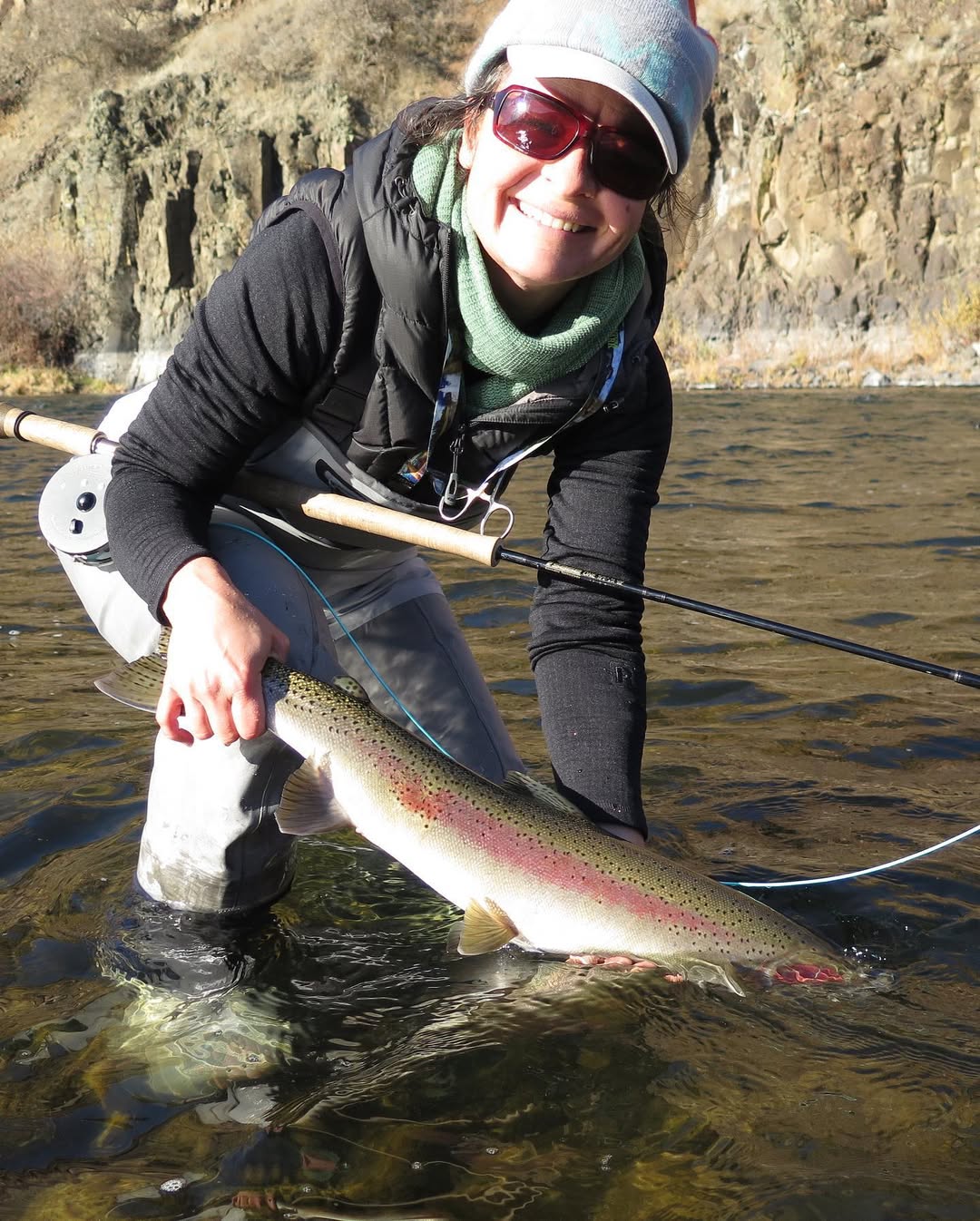
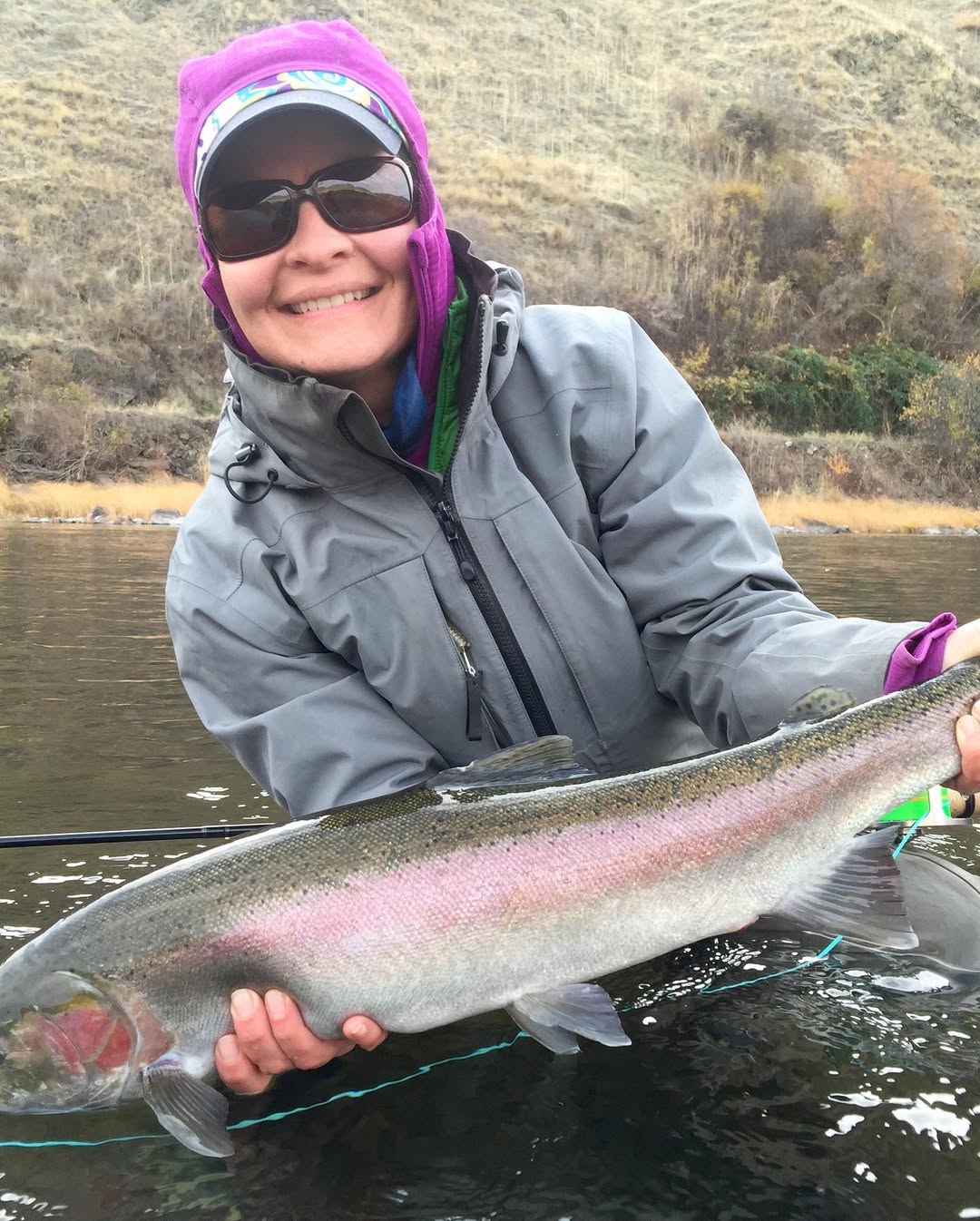
What is it about steelhead that makes them so addictive to chase? Is it the perfect swing, the surface take, or the mystery of where they’ll show up next? For those who pursue them, it’s more than fishing—it’s a way of life.


Show Notes with Adrian and Richard. Hit play below! 👇🏻


apple podcasts

Find the show:  iTunes | Stitcher | Overcast

Subscribe on Android

Subscribe on Apple Podcasts

Subscribe on Google Podcasts

Subscribe via RSS

(The full episode transcript is at the bottom of this blogpost) 👇🏻

Sponsors and Podcast Updates

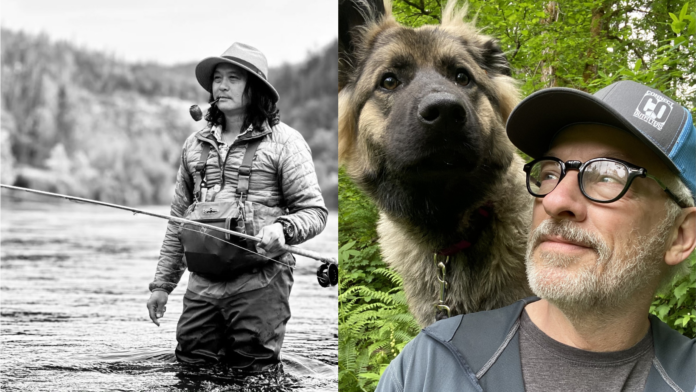
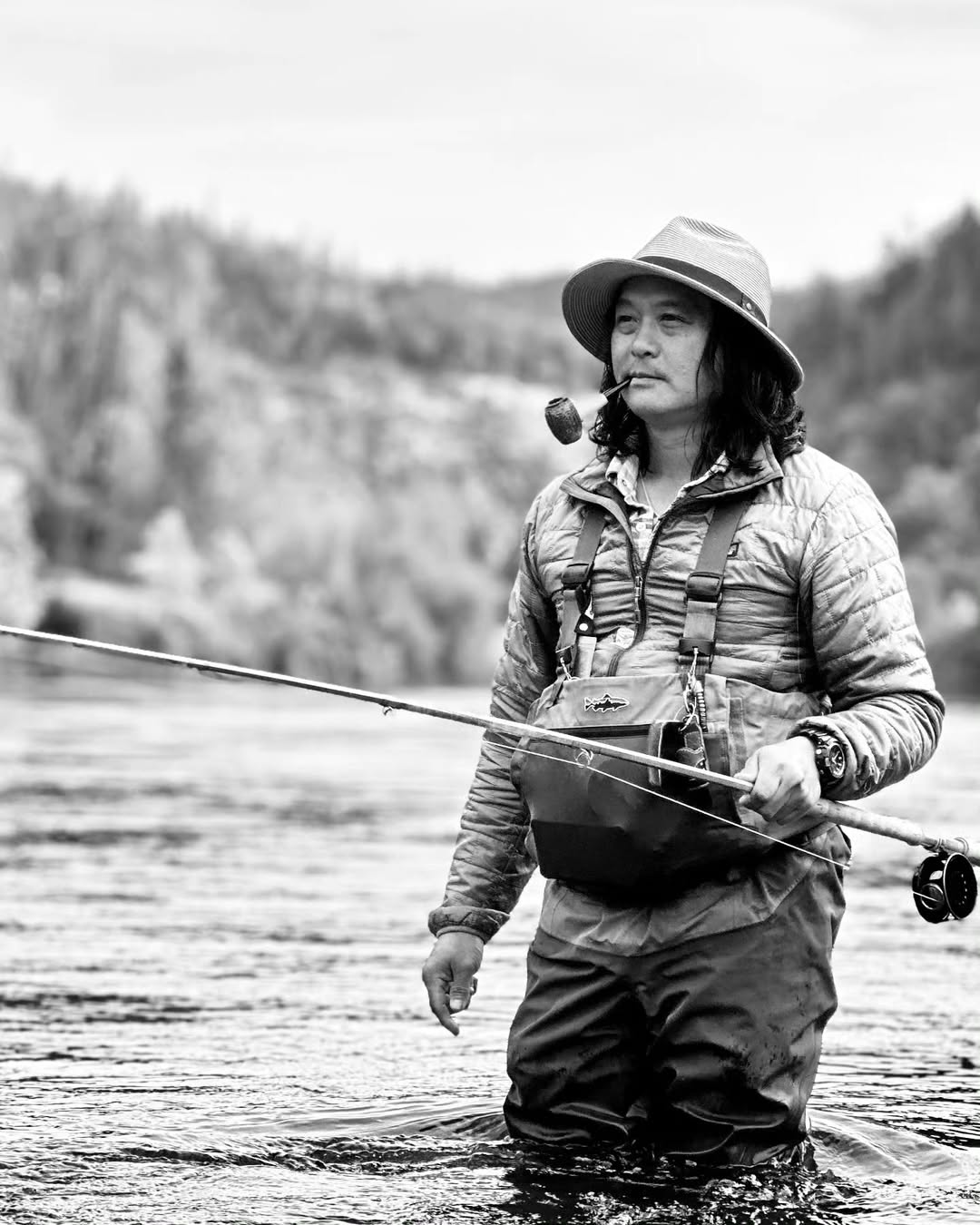
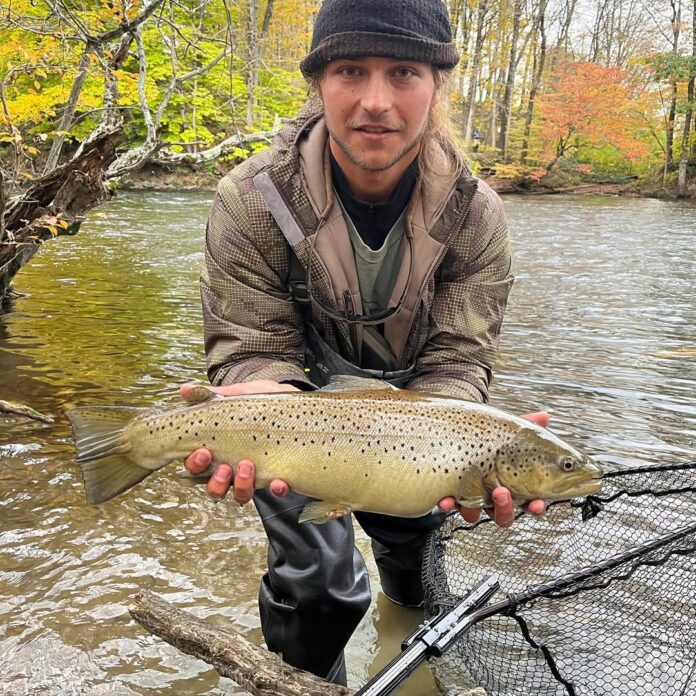
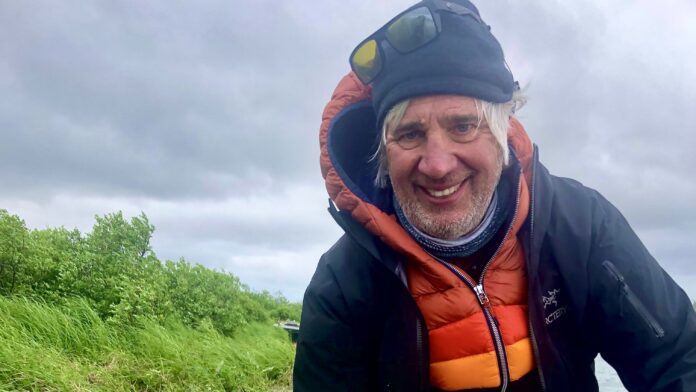
Adrian Cortes

Today, we’re joined by Adrian Cortes & Richard Harrington, two passionate steelhead anglers, to dive into the art of dry fly steelheading, the traditions of fly tying, and the deeper meaning behind chasing these fish. We talk about bamboo rods, classic patterns, and why swinging flies for steelhead is as much about mindset as it is about technique. Plus, we talk about mentorship in fly fishing, river etiquette, and how the culture of steelheading continues to evolve. If you love the history, artistry, and thrill of chasing steelhead, this one’s for you. Time to get in the bucket…

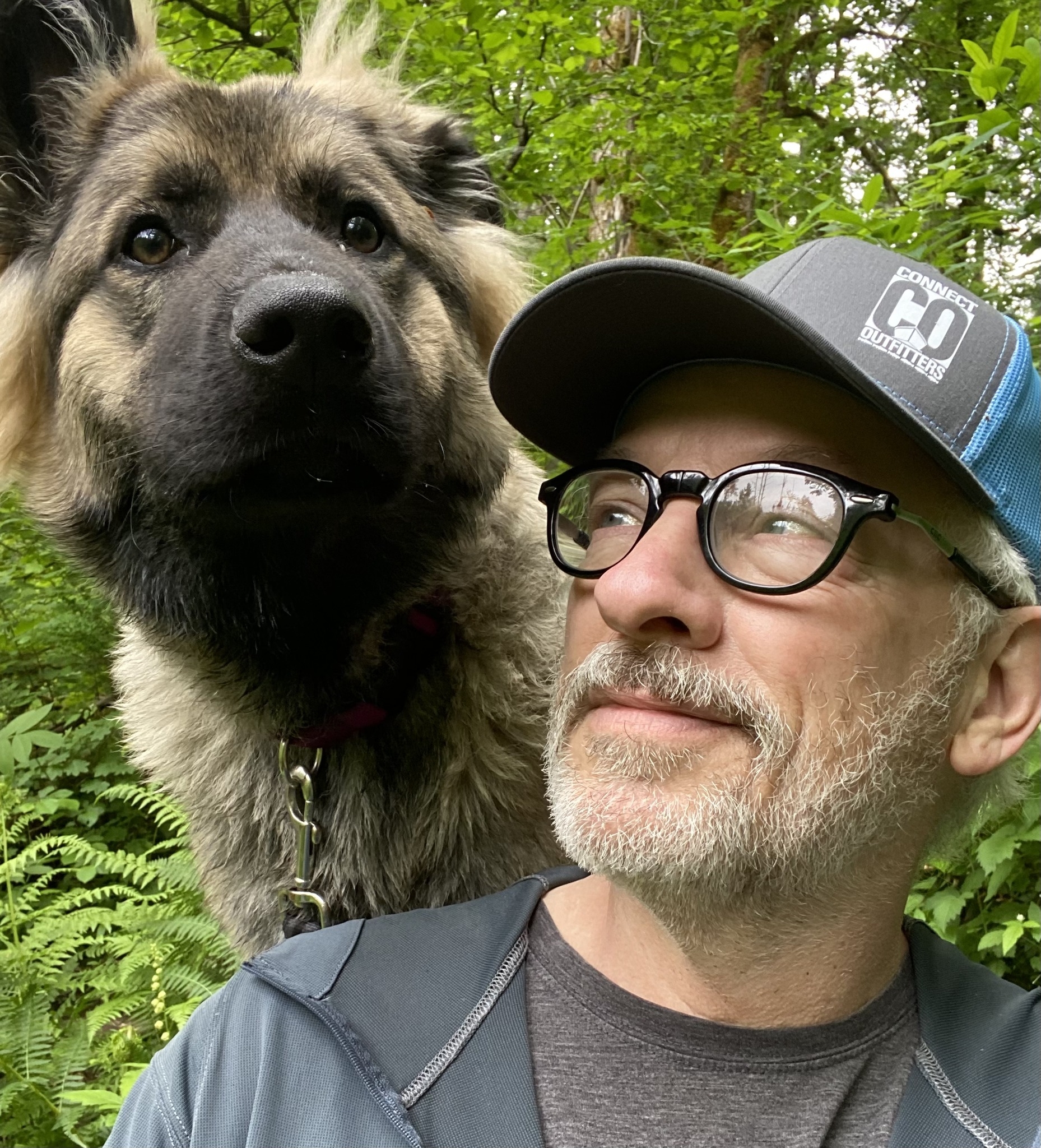
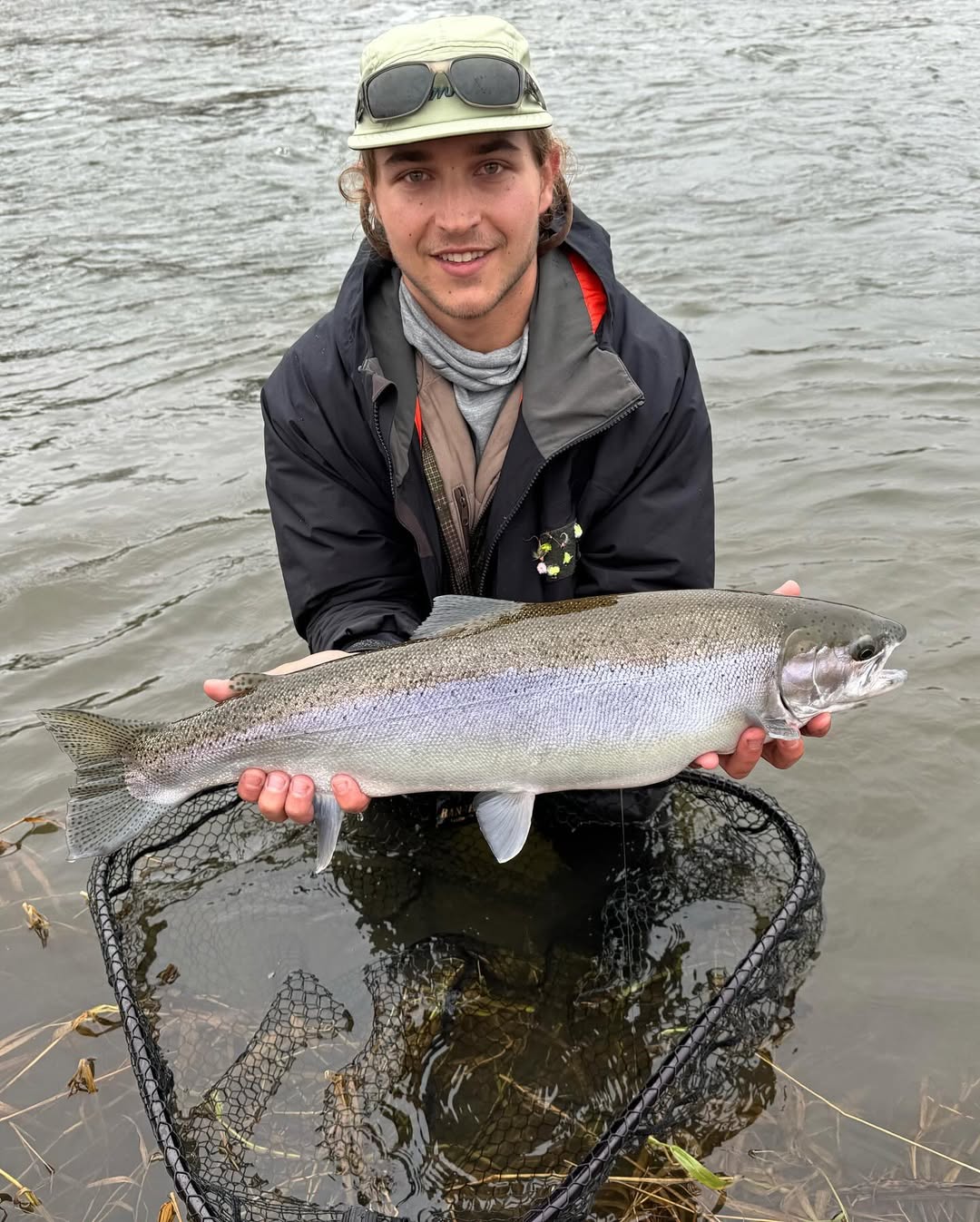
Richard C. Harrington

Follow them on Instagram

Richard 👉🏻 @rcharrington

The River Rambler Podcast 👉🏻 @theriverrambler

Adrian 👉🏻 @adriancortessteelhead


Resources Noted in the Show

Guest & Business Links:

Fly Fishing Communities & Forums:

Fly Fishing Organizations & Conservation Efforts:

Gear & Fly Fishing Equipment Mentioned:


Related Episodes

In the Bucket #14 | Wilderness Steelhead Fishing Adventures with Tim Arsenault and Matt Bentley

Episode Transcript


Episode Transcript
Adrian (2s): One day I might not be able to remember these stories, but I can look up at that fly on the wall with a tag and think, oh yeah, I caught that, that fly right there. The rambler muddler. We were on that Eastern River in the evening and I, I couldn’t see it, you know, I couldn’t see the fly anymore ’cause it was so dark. So I gave a, a location twitch where I stripped the line in and the fly burped up to the surface and the steelhead was on. And so I wanna remember those moments. So yeah, I have a, a whole pile of flies on the wall. Well, whole pile of flies not even on the wall yet, that I need to, you know, tag before I forget the stories. And yeah, that’s, it Makes Steelheading special for me. You know, 2 (51s): Welcome to In the Bucket, the podcast that explores the culture of spay fishing in the Pacific Northwest. A spectacular land of mountains and wild rivers where every cast has a story to tell. I’m your host, Brian Ska. In today’s show, I’m gonna be speaking with two of the nicest gentlemen in all of spay fishing. Of course, I’m talking about Dryly magician Adrian Cortez, and his very good buddy, Richard Harrington, host of the River Rambler Podcast. I’m really looking forward to chatting steelhead, bamboo rods and dry flies with these two legends. Let’s get into it. Right on folks, thanks for joining us today. I’m super excited to have Richard Harrington and Adrian Cortez on the show with me today. 2 (1m 35s): Richard, why don’t you tell our listeners a little bit about yourself? Richard (1m 38s): See, I’ll talk all day and as soon as this is about me, I’m like, yeah, I really wanna talk. I live just outside of Portland, Oregon, Oregon City for a little while yet I grew up out all around the northwest and then in high school my family moved to New York and it took me 40 years to get back here. So my steelheading started out here completely ineffectively. And then I started fishing in New York when the Great Lakes were really just kind of taken off. I graduated from high school in 1977, so I think Adrian was still in diapers if even born yet. But fishing is like the kind of constant in my life. I did have one stretch where I, I quit for a while. Richard (2m 20s): Life was just kind of too hard. And fishing gives you a lot of contemplation time. I paint and do printmaking for a living, which is not something I ever planned to do, just the way it turned out. And we started the podcast about five years ago, I think, urging, prompting, insistence of my eldest daughter who produces podcast or did she since, has people produce podcasts for her in New York. And decided because the curse of her father is that I’ve always enjoyed visiting. And she said, dad, you’d be a perfect podcast host. And I said, I don’t really know what they are. Richard (3m 2s): And my son is our producer. And none of it would happen if it weren’t for him. And in fact, it definitely wouldn’t have happened because before I got done telling my daughter I wasn’t gonna have one, he said, dad, I already bought the, the name. So I was kind of drafted in. I love to fish. I’ve always, I’ve loved to fish since I got my first fish when I was like three at one point I thought I was going to have a fly shop and do that for a living. And life has been a series of 180 returns. So now I paint, do print making and fish pled my dogs. 2 (3m 37s): Awesome. Adrian (3m 38s): My turn, I guess, huh? I think I’m gonna use that like, Rick’s blueprint of his introduction. First of all, I, I, I don’t like talking about myself ’cause I’m an only child. So whenever like a mic was thrust upon me or anything, I, I was always kind of shy. But my name’s Adrian. I, I was born in the Philippines. I live in the Highlands above Rick Harrington there and literally the highlands they call it up here. But I’m about 15 minutes from a couple of steelhead rivers, love fishing all my life, fish, salt water, fresh water. And for some reason, you know, I was a trout fisherman and steelhead were close by. Adrian (4m 21s): And since I couldn’t drive too far away and spend a whole day away from the family trout fishing, I decided to try my hand at Steelheading and kind of got lucky the first few times and fell in love with it. I just, I love the, the ideas, the traditions of steelheading. I love the stories, I love the lore, the mystique. I spent, oh, I don’t know, over a decade now, trying to demystify steelhead. I still haven’t figured it out, but it’s just, you know, they’re fish and they move up the river, they spawn and they head back out to the ocean. So I try to simplify things in that way. And every once in a while I think I have it figured out. Adrian (5m 2s): And then, I don’t know, weather system comes in and I can’t figure things out. I don’t even know how to put my socks on these days left or right, so, so how can I figure a steelhead out? But anyway, that’s my story. 2 (5m 15s): That’s awesome. You know, talking about the weather, one of the things that’s come up with the in the bucket show is there seems to be a lot of folks that love to steelhead fish that are also into skiing it, snowboarding. So what are these two activities have in common? Well, at the core of it, if you wanna ski or snowboard in powder snow, you gotta watch the weather. You wanna be a successful steel header, you’d be well advised to pay attention to to the weather. ’cause that’s obviously gonna affect river flow, which plus temperature is everything. Richard, I wanna talk about the podcast. That’s a great starting point for us. You know, that’s actually how you and I met, I was lucky enough to be a guest on your show and I, I really enjoyed speaking with you and you know, both you guys obviously are passionate steelheaders and it’s not just about catching fish, it seems like you’re, you know, purveyors of the culture, so to speak, and all of the, the stuff that surrounds steelheading, the characters, the terrain that we’re fishing in, the apre, the apre fishing, you know, the social aspect of it. 2 (6m 10s): I think that there’s a really solid ar mental health argument for steelhead fishing. And we’ll probably talk about this a little bit more, but I personally know a lot of people whose lives have benefited from the ability to get out on the river. And, you know, we, we could get all romantic about it and talk about, you know, the zen of it. But it’s, you know, at, at the end of the day, it’s definitely something that people really like to do. And, and a lot of folks try and change their life in a way that they can, they can do it as much as possible. So Richard podcasting, what was, you know, it sounds like it’s a family business more or less. I don’t know if business is the right term, but Richard (6m 46s): We’re trying to figure that out. Nice. S we’re five years in and, and at this point we’re trying to lose money more slowly. Yeah, it’s, it’s funny, as I mentioned, my, my daughter Emily is the one responsible for this going. She is, I don’t want to give too much specific, she’s the, I don’t wanna say who she works for, she’s the global communications director and more things for one of the largest law firms in the world. And she is super successful. You know, when you watch your kids grow up, you see parts of yourself and then you see, oh my god, I if I could do that too, I’d be so much more able. Richard (7m 33s): And she all, all three of my kids just amaze me all the time. But her podcast hosts are attorneys and she said to me at Thanksgiving a few years ago, dad, do you know when attorneys like to be in a conversation? And I, I said, no, honey, what? She goes when they’re talking. And, and I said, well, I guess. And she goes, but dad, you just like to visit with people. You like to hear them. I’m like, well that’s to me is just the basis of conversation is that you gotta let the other person talk. I, I mentioned that when we decided to do this, Adrian was my first guest because he’s a good friend. Richard (8m 13s): We’ve had some great visits, but I also, I like to visit and I was afraid I would talk too much. So I mostly sat on my hands and I didn’t talk hardly at all and just left him hanging there. So when I was done I thought, well damn, I was a really shitty host. 2 (8m 30s): Well, we’ll definitely talk about this at the end, but rather than make people listen to the whole show to find out if they wanna leave this show and jump over to yours right now, how do they, how do they find your podcast online right now Richard (8m 40s): On pretty much every podcast venue where the River Rambler. And so episode one from about five years ago is Adrian. And the night you’re back on episode three Adrian (8m 50s): I believe so with Todd Herano, right? Yeah, yeah, Richard (8m 53s): Yeah, yeah. I’m scheming to have you do another thing soon. So, Adrian (8m 57s): Well I didn’t think you were a bad host at all. You, you provided beers and laughs, you know, and that was an enjoyable time. Richard (9m 4s): Well it was funny ’cause we used to do it in person over the dining room table, which was a pain in the ass. ’cause I had to clean the whole house to get rid to have a podcaster. Now you can’t even tell I have crap everywhere, but all you can see is out the window behind me. And the other thing, it’s funny because of my wrecked voice, we actually get better recording through Zoom. So with Zoom I thought the podcast was over and my, my daughter just said, dead, just use Zoom. And again, I was like, I don’t know what Zoom is. And so we had to, you know, that’s not a big thing but we had to figure that out and we do get better recording quality. I just, now I’m, I’ve just met a young guy who was a, who’s a recording engineer and he’s helping me figure out some remote equipment. Richard (9m 47s): ’cause I have some ideas of things I would like to do with it, which is gonna drive my engineer son crazy. ’cause he wants pristine recording quality. And I’m more like, I want a good conversation. But I also think it’s like, I know people when they’re listening, like peripheral noise drives them crazy. And I grew up in a big, loud, abrasive family and I can sit in the middle of chaos and not pay attention to it. So it, I realize every different people are, have different reactions to things like that. So I guess five years in, we, you were saying you were still trying to figure it out. I’m still trying to figure it out. Richard (10m 29s): A friend of mine who’s since stepped away but helped start Shenango Valley shenanigans. It was a podcast back in Pennsylvania, A bunch of warm water guys, hardcore muskie guys, they love their small mouth fishing. Really good bunch of guys. But Chad said to me, don’t you get it? And I said, no. He said, people just like to hear a conversation. They just like to eavesdrop. And I guess maybe that’s true. Hmm. 2 (10m 54s): I gotta ask clearly. You guys are good buddies. How did you meet? Adrian (10m 58s): It’s gotta be through the bulletin boards online, right? Spade pages, Richard (11m 2s): Right? There’s through spa pages. Yeah, it’s, I suck at acronyms. Adrian (11m 8s): I knew this was coming, Richard (11m 9s): You know, one, one reason I I could not function very well in the corporate world is be in a meeting and people having a conversation with in acronyms. And I’d be like, what the hell is anybody talking about? And one day on spa pages, I was looking at Adrian’s post and I realized his handle, it says Fish and Asian. And I thought, damn, it can’t be Cortez, that’s Hispanic, I that can’t be. And I just couldn’t leave it alone. And like a normal person would just say, oh, I don’t get it. But I’m like, and so eventually I sent him a note and say, look, I don’t mean to be a jerk, or I don’t remember exactly what I said, but I essentially said, am I correct on this? Richard (11m 55s): And he said, yeah. And just, we just laughed about it. And then it was probably two years later moved to Oregon City and I stop in my local fly shop Royal treatment and get a notice that Avian Cortez is doing an in-hand fly time demonstration and like three weeks. So just based on that interaction we had online, I thought he seems like a good guy. And so I went to the, to the demo and if you ever get a chance to see Adrian Ty end do it because there’s dark arts involved, there’s some kind of magic dust involved feathers. Just, it’s, Adrian (12m 31s): It’s painful to watch them to go. It’s painful to watch, Richard (12m 35s): It’s phenomenal to watch. I, if you’re tired, it’s amazing to watch. But I waited till it was over and I just introduced myself and he looked at me kind of funny and said, I thought you lived in New York. And I said, I didn’t until three weeks ago. And he said, you don’t know where to fish. I said, I don’t. And he says, I’ll show you. And we started fishing together and we all fish together all the time. In fact, the last couple years it’s been not as much, but I always have a blast fishing with him. Yeah. And we’re both bamboo junkies. 2 (13m 3s): So rich, are you time flies in hand now? Richard (13m 5s): No, I keep wanting to, and quite frankly my voice as a result of, of cancer 12 years ago and outside of that is it tanked my, I didn’t tank. It flatlined my career. And so just as that was coming back, covid hit. So the career side is, I work a lot for somebody my age and it keeps me from having as much time as I would like to, to put into tie. And I really want to tie, Adrian gifted me some of his peer saws and I’ve got every, I’ve got more material. I probably have way more materials than Adrian. It’s embarrassing to admit piles of materials and I just haven’t got around to trying it yet. Richard (13m 49s): Also hand cramps. 2 (13m 50s): So Adrian, do you, do you remember the first fly you tied in hand? You know, where you just kind of said, I’m gonna go for this. Adrian (13m 56s): I do. You know, Rick mentioned that we met on spa pages and, and I was on spa pages ’cause I got bit by the steelhead bug, so to speak. You know, I was out at this local river, caught a few steelhead, but then I thought, you know, the flies I’m tying, they just, you know, they don’t live up to par for the kind of fish I’m angling for. And I thought, I gotta learn how to tie something pretty. And at that time, spay pages was a means to see other people’s steelhead or atlantic salmon patterns. And there was a, a tire, well a few tires, Mike Pepe from Ontario and he was time beautiful D patterns and I, I believe he had a elbow injury. Adrian (14m 43s): And so he started a tie in hand and he started tying D patterns in hand. And I was just, you know, in awe Richard (14m 51s): Makes a phenomenal tire. Adrian (14m 53s): Yeah. And shortly after he started doing that, Jen Wu Lee joined on the spa pages program for a bit. And then at that time I think Jen was also starting to tie in hand. I, I believe he started tying with a vice and then while he was on spay pages, did his first few ties in hand. And by that point I was just enamored by what they did and why they would do such a thing. And for me it was kinda like steelhead. I, like I mentioned, I was a trout guy and I was not someone that wanted a steelhead, but I ended up loving it. I was a reluctant steel header initially. Adrian (15m 33s): And that’s the same thing with tying in hand. I was a reluctant tire in hand. I was just drawn to the challenge and I thought, holy cow, if these guys can tie beautiful flies in hand, maybe I should try tying in ugly fly because I already knew that steelhead eat grotesque, you know, offerings that I toss to ’em, they don’t really care, you know? So I thought, well, you know, I, I’d like to, I’d like to make something pretty. And so yeah, the tying in hand thing, I tied a few flies in hand and I thought, well, they’ll eat that. And I thought I’d quit. But you know, something keeps challenging you as an angler, as a person. And that’s, yeah, that’s where it started. The, the tying in hand part, I think that was a question. Adrian (16m 15s): Did I answer the question? I’m not sure. 2 (16m 17s): Yeah, well I guess, I guess I’m trying to understand, were you a, were you a prolific fly tire with a vice beforehand? Adrian (16m 23s): I was. Okay. Rick was probably better than I was. You know, like I was, you know, it’s, it was decent, but nothing fantastic. So Richard (16m 33s): Yeah, my, my tying has been all over the place. ’cause when I was a kid and was first getting obsessed with steelhead, I just wanted to catch on classics and I couldn’t buy a fish. I hooked a few, I couldn’t land a fish to save my life. And then kinda life got in the way and I quit fishing altogether. And when I got back to it, one of the first fish I got was on a green highlander. I got one of a skunk. And then with a few years I was fishing string leaches. So it’s, Adrian (17m 5s): Why do you think that was Rick? What made you go from, you know, Highlanders and Scots to, to Richard (17m 10s): Be honest with you, I think painting, I started tying flies when I was probably nine or 10. I actually was walking home from school and not atypical of me, kind of was busy thinking about something. And I walked into my neighbor’s house by mistake thinking it was my house. And we, two big families were in each other’s houses all the time. All ’cause all the kids were about the same ages and stuff. And I walked in and I was probably 10 steps in before I realized it was the wrong voice as I was hearing. And the last thing I did before I left was I looked over and I saw an Orvis catalog and I was already fishing obsessed. I was already trying to teach myself how, how to fly fish, but I’d never seen an orifice catalog before. Richard (17m 52s): I’d never seen anything like it. And there was a fly on the cover and I went home and worked up my nerve to go back like next day and ask about the orifice catalog. And that’s where I saw fly time for the first time. And so once I started, I probably kept myself outta so much trouble because I was in my room tying flies obsessively. If I wasn’t doing chores or playing baseball, I was probably tying flies or drawing. And I spent a ton of time, time flies. So by the time I was 17, 18, I was really into salmon flies and all kinds of stuff. And I didn’t start really get into art until about my third year of college. Richard (18m 37s): And I think that desire to make something, I’ve always, I still loved Thai flies, but I, I use up so much of that energy painting and, and doing printmaking that I just don’t have as much brain space left for it. But I st I still really enjoy it. In fact, the whole, we did the year of the muddler last year with the podcast and that got me kind of juiced up on it again. Adrian (19m 1s): No, that makes sense. ’cause you know, that’s, that’s what I find myself these days is the energy. Like you have to, I have to focus my energy on something. And if I’m like tying a, a, a classic pattern versus a dryly or you know, or tying it to donate it to, you know, some.org, the energy changes, you know, or, or the, the, the passion changes whether I’m tying a fly for like winter dry lining, you know, I have to really concentrate. Whereas if I’m tying a grease liner, it’s just like, I could tie it on the river, but it depends on, you know, how much energy I have in me. Other times I’ll pick a fly outta my box tattered just because I don’t want to tie anything. Adrian (19m 44s): So I don’t know. Richard (19m 45s): Well there’s also the, the whole goofy phenomenon. I’m positive I’m not the only one that suffers from this. You feel like you’re only gonna catch a fish on the fly. You just tied. So you have boxes of flies and you’re like, I gotta get too tied before I go tomorrow. And you gotta tie at least, I actually think three because that way you can lose two and still be in the game. If you only have one, you’re gonna lose it. That to me, for years I felt like put jungle cock on that fly’s gone. That’s some rock magnet 4 (20m 17s): Stonefly nets nestled in the heart of the Ozarks Ethan, a master craftsman dedicates his skill to creating the finest wood landing nets. Stonefly nets are more than just nets. They’re part of our story. Each cast and every cast ready to make your fly fishing trips unforgettable. Visit stonefly nets.com and discover the difference of a handcrafted wood landing net. Don’t let the chill keep you from your next big fish. Heated cores next to skin heated base layer is your secret weapon for staying warm and comfortable during those early morning fishing trips or late seasoned adventures engineered with advanced heating technology. This base layer keeps you toasty all day long, ensuring you can focus on what really matters. 4 (20m 58s): Gear up with the heated core base layer and make every cast count this season. 2 (21m 7s): Now are you guys, are you tires who have particular patterns and you just tie the same fly over and over? Are you the type of tires that no two flies are the same? Adrian (21m 16s): You know, I, no two flies are the same for me, Brian. You know, I actually, the only flies I tie over and over are Hague, brown steelhead bees and grease liners. I am different than most. I try to tie as strict to the recipe as possible. ’cause it, it challenges me. It’s like, it’s like the game with rules, you know? And so I have to stay between the lines to, to win the game. So I, I try to get it as close as I can because it challenges me to like, to focus on how many slips or how many fibers or, you know, and just to be judicious in, in what I choose for the fly. Adrian (21m 57s): But I do like to change up ’cause I get bored. But the grease liner and the steelhead bee, you know, they’re just stand, I mean they’re just classic dry flies. You can’t, you can’t beat a, a Lumiere fly or a Hague brown fly. And so those have to be tied as they are. So I’ll keep tying those. But yeah, for classic patterns, Atlantic salmon patterns or steelhead patterns, I have to change. I have to go, you know, if I tie for example Jock Scott, then I don’t want to tie like another jock Scott, it takes too much out of me. I’ll tie something else like a mar lodge or something, you know, next time around. Or if, you know, I have a lot of friends including Rick, he’ll gift me hooks and I’ll see a hook and more so these days it’s a hook. Adrian (22m 41s): If I get a hook, I’ll stare at that hook and I’ll think, hmm, what does that hook need on it? How does it need to be dressed? Richard (22m 48s): I’ve got, so I’m sitting here for you right Adrian (22m 49s): Now Richard (22m 51s): For your winter season. 2 (22m 53s): So while all your tyings on irons, you’re not, you’re not tying on tubes or shanks ever then? Adrian (22m 57s): No, I haven’t tied on a tube or shank in, in over a decade. I think after my, I believe after my last sink tip, steelhead. I think that was the last tube pattern I tied effective. I think tubes are the most effective. You know, things at the end of a fly rod, whether dry or whether, you know, tied in the round. They’re, they’re deadly, they’re efficient, you know, you don’t bend them out. I mean you just, you know, switch the hooks out. But yeah, I, I just like the challenge. I like the hooks as well. I like the way the hooks are shaped. You know, I think it’s just more traditional guys. Adrian (23m 37s): Like, you know, those guys, those old icons, Lumiere Hague, brown, you know, McMillan, they all use hooks ’cause that’s what they had and you know, all the way back to Kelson, Taverner, all those dudes. So I like hooks. 2 (23m 53s): So tradition’s really important for you with your fishing then? Adrian (23m 55s): It is, it is. It really is. Again, it’s like the rules within the rules and some traditions are, they’re hokey, they’re not, you know, they’re kind of dumb, you know, some of the rules that came across from the pond, you know, and I get it. But I, I’ll still try to play that game at times just to see if I can do it. But yeah, I don’t impose the traditions on anyone else, just myself, you know, like if Rick’s out there and if he wants to fish, you know, t 14 ahead of me, I’m just gonna laugh if he snags up. Richard (24m 28s): Yeah. The, the, the problem is I always think, well Adrian goes through first ’cause he’s fishing a dry line and then he’s catching the fish and he’s catching the fish. So it doesn’t matter what I’m fishing. So I’m kind of done with that crap, 2 (24m 44s): Richard. It’s, it’s a win-win for you because if he catch the fish, you’re the, the gentleman who let him fish first. And that’s great. You get to watch your buddy get one and God forbid if you get one behind him, that’s a pretty good story too. Richard (24m 55s): Oh, it’s, that’s always good. It’s funny, I, you know, there’s such an emphasis on getting out early and, and just, well first off, I hate getting up early, but when I first met Lee PE I asked him Winter Steel had most active and he looked at me kind of funny and, and he said, from nine to three. And I said, so this whole getting up early is just to beat everybody to the water. And he said, yep. And I said, I don’t care. I’m, especially in winter, especially in winter, I don’t, you know, I think there’s fish moving all day long if the water’s up. So it’s like if you’re in a, on a, a summer river, I think the fish tend to become more resident for at least a a period of time. And so they’re not so inclined to, I actually, but based on what you said before, your summer fish are moving, they’re hauling. 2 (25m 41s): Well sure. Let’s, let’s talk about that a little bit. So, you know, we’re up on the cheena, we fish the, the lower Cheena from Tidewater up to just, just a little bit west of Kit Wonga. So we have a very long season. We, we fish march and April for winter steelhead and then we fish mid-July through the end of October for summer steelhead. Now we’d like to put steelhead in these two boxes. They’re either summer fish, they’re winter fish, and we, the further you’re from the ocean, the more that makes sense. But when you’re on the lower Chena, those lines get pretty blurry. So a quick example of that would be someone catches a bright fish on the Calum in November. Sure, we’ll call that a summer fish. If someone catches a very similar bright fish at the end of December, maybe we’re gonna call that a winter fish. 2 (26m 21s): It’s not a situation where those, those fish are coming in and spawning right away, like a true winter. They’re gonna come in and hang out for a bit. So at the end of the day, the, the nice thing about the cheena is we have these lower tributaries like the copper and the Calum. And if some other ones I’m not gonna get into right now that have this crazy runtime, I mean that’s literally spread out where you can get fresh fish 10 months of the year. But the behaviors change. And I’m gonna talk about two things real quick. So I wanna solidify my agreement with your point. Our program at the lodge is seven o’clock breakfast, seven o’clock dinner. The only time we would deviate ever so slightly from that is a crazy heat wave. And that’s more for angr comfort. And if I’ve got seven guides on the water spread out over 40 miles a river, it blows my mind how no one will catch a fish right away. 2 (27m 5s): None of them. But come about nine, 10:00 AM all of a sudden fish get caught. And you know, the steelhead liked that middle part of the day and anybody who wants to get up in the dark and get there first, their motivation is about beating someone there. Or the, maybe they just really like watching the sunrise on the river and I can respect that too. But you know, it’s from a fish activity standpoint, I love the hours. They’re they’re business hours, aren’t they? Richard (27m 28s): Yeah, exactly. Well, and the other part of it for me is that whole thing of beating people to the run. And I think, like I said, I got to fish up in your neighborhood once and, and some of the rivers are massive so you, so it’s not like you’re not gonna get a good run. And some of the rivers down here are, are not as big and are popular and on the weekends it’s gonna be hard to find a, a run that you want or they’re run that you’re favorite. But you can always find something and you can always go through second. And I don’t care about either one. I’m perfectly happy fishing behind somebody. I don’t wanna bring the motivations of the rest of life to be first to win to all that stuff to my fishing. Richard (28m 14s): I want to fish. I like the act of phishing. 2 (28m 18s): It’s crazy, you know how some guides really ruin things. And what I mean by that is they become stressed, they’re worried about what someone else is doing. They want to get there first and then that energy transfers to the client. And then we’re gonna get into this ’cause we had a good conversation on my last podcast that I recorded yesterday with Tim Arsenal and Matt Bentley about this idea of negative energy. And my point was in, you know, 30 odd years of guiding, 30 years of guiding, I have yet to see an angry person catch a fish. I’ve yet to see that I need a fish guy get one his happy go lucky buddy will catch fish behind him in places. I’ve never seen a fish with a fly that’s, you know, halfway tattered. 2 (28m 58s): So I don’t know if this, you know, we tried to rationalize it a little bit last night and say, okay, well he is, you know, he is fishing the fly better, he is more confident. But I can’t help but think there’s some way that negative energy transfers down the line because you know, a happy angler is productive. Richard (29m 13s): Oh, I totally agree. I totally agree. I dunno about Adrian, how do you, Adrian’s got a whole nother thing. No, I’ll, I’ll, I’ll, I’ll I’ll lead back to Adrian. I’m gonna, I’ll tell you something. I’ve had a really rough year coming to terms with having to move back east. I adore my daughters and my grandchildren when we moved out here, I thought I was gonna be able to get back five, six times a year to see everybody. And it just hasn’t worked out, out, out that way between divorce and covid. I just can’t do it. And the one thing in my life that I knew I wanted to do is be a dad and I’m gonna go back east to be a dad and so I’m gonna be a tourist in the west again. Richard (29m 54s): And to come to terms with that, I had had a brutally hard year. And in fact, this, this march we’re getting ready to go to Hawaii for my daughter’s birthday. And right before I left, I, I went to the doctor and then said, what’s going? He said, what’s going on? I said, I’m feeling my pulse in my cheek and in my neck. I’m afraid I’m gonna have a heart attack and die in front of my kids in Hawaii. And I’ll, the last thing I’ll think is what an idiot, you should have gone to the doctor, you know, right as I die. So I got a stress test and he says, no, you’re, you’re fine. You need to figure out your stress. And so I did. But all through the winter I couldn’t buy fish. Richard (30m 35s): I didn’t get to fish very much anyway, but I couldn’t buy fish. And one day this spring in March, fishing on the op with Adrian and Mark Shamberg, ah, by the time we got down to the last run, the last run of the trip of the week, long trip of, of the day, everything else, I was a little better, but still in kind of a mood. Adrian went down with his dry line into the tail out and I was standing right next to the boat and I hung my, my D loop on the ore. And Mark had a really frustrating day with us. So we hadn’t touched, we hadn’t seen, touched, felt a fish were the day before. Richard (31m 16s): A couple of friends of ours had had landed three. And he says, just gimme that rod. He takes the rod from me, clears the D loop and gets the line all up and makes, goes to make a cast and he hangs it on the or, which just, just sent me if, if I could laugh louder, if my knees were more functional, I’d have been laying in the river laughing. And so just as I’m getting over my laughing foot, I stand up just in time for Mark to make another cast and bring my rod down right on top of my head, which made me laugh even harder. Adrian looks back upstream and I’m just crying. I’m laughing so hard. And Mark has just disgusted and says, you know, damnit, it’s, it’s seven o’clock I’m gonna fish. Richard (31m 59s): I’m like, good. I wish he would. So he takes his Rodney Coza stream and next thing you know, I look down, Adrian throws a beautiful cast, the sun’s streaming down. It’s just this glorious day. I’m on a river that I love. I’m casting better than I’ve cast all winter and 12 casts in i I nail a fish. And that felt really good. And then I go back into the rest of my year. You know, you have a glorious moment like that on the river. It doesn’t change your life. You still go back home and your life is still a disaster. It was before. And so I put my head down, I got a lot of work to do for the summer. I had a big show in August at the art center in Colorado and I just burned myself out and it comes around to fall and I’m kind of back in a funk and I hadn’t hardly fished for the year and I finally just decided, I’m fishing, I’m gonna fish. Richard (32m 52s): I got all kinds of stuff I gotta do. I don’t care, I’m gonna fish. So I fished a couple weeks in September, almost all of October and couldn’t buy a fish. We had one of the better returns we’ve had in years down here, and I couldn’t buy a fish and I’m positive it was because of my energy. And I was having a conversation with Tom Larimer and, and we were talking about this same thing. And I said, you know, the funny thing is I feel like I’m in a better place. I think I’m coming to terms with some things and getting my head around it. I think I’m in a better place. I think I’m ready to catch fish. I caught a fish two hours into my next day on the water. Awesome. And I’m positive it’s that it’s 2 (33m 32s): All about those moments. A fill your gas tank up for you. Richard (33m 34s): Yeah. But Adrian whole different place. I think he lives in that place. Adrian (33m 39s): Well, I don’t know. I’m, I’m in an anomaly, you know, ’cause I, I really do believe, you know, just, just going back to, you know, what you mentioned Brian and Rick about, you know, bank hours, steelheading, you know, when, when you don’t know much, when you start off steelheading, you know, you, you, I guess you grab a few tidbits from people that have steelhead fished and busy rivers and they talk about, oh, dark 30, hitting the water. And I was that guy, you know, when I was a new steel header, I, you know, fishing the north thumb quad, you know, and there’s certain rivers you have to be up early because of the sun. You know, that was, that was me back then. And that was because I didn’t have a lot of steelhead under my belt. Adrian (34m 21s): So I was like, I gotta figure these fish out. And you know, like, it just, I guess over time. And, and then I met Richard on the North Umpqua, well, he told me like his, his strategy was to wake up when he wakes up, make a cup of coffee, enjoy the morning sounds, and then head out to the water and then he’ll catch a fish. You know, and, and you know, oh, I’ve Richard (34m 45s): Been saying about catching fish. Adrian (34m 47s): Well, so, so that appealed to me, right? Because we fished all our lives. I mean, I was a kid, I, I, you know, as seven, eight years old, I’d say, dad, take me to whatever the lake, the river, the pond, you know, or the ocean. And I knew my dad wasn’t like really keen on waking up that early, but I, I always saw, you know, the early bird gets the worm. But anyway, that appealed to me, like waking up a little later, enjoy as, as as I got older and I was reading these books from like, Hague Brown, Harry Lumiere’s, you know, some quotes that he had tavern or you know, all these Atlantic salmon fishermen and stuff like that. Adrian (35m 28s): And, and a lot of ’em, like even Hank Brown said, and you mentioned it, Brian, like, you know, the people like getting up early to beat the other people to the river. That’s the game. That’s what they won. You know, and there’s some sort of macho satisfaction in, hey, I beat Rick to the run, you know, I get to, I get to swing through first, you know. But I’ve realized too that the steelhead, you know, they’re there at nine o’clock, at 10 o’clock, you know, at noon. And I’ve had the opportunity because I live real close to like test these things out on the river and see if, you know, do they take a dry fly with the sun, right in their eyeballs? I guess they do. You know, or do they take it, you know, if you’re, if a wet fly guy goes through the run first and then you follow with a dry fly, yeah, they come up and eat that as well. Adrian (36m 17s): So I’ve had that opportunity as far as having peace on the water. I think, you know, one can be upset, angry, and it’s not enjoyable. Even, I mean, you catch a fish, you have fun and then you know, you’re back to that, that whatever is welling up inside of you. So I I truly believe, like if you’re at peace on the river, it’s enjoyable. You catch a fish and you fish better. If you’re casting good, if you’re at, you know, you fish better, you fish more effectively and therefore you get the fish. But I mentioned the anomaly. There was one time on the local, there was a, a gear angler, conventional gear angler, and he was a jig and bobber guy. Adrian (36m 60s): And on the run that we were fishing, that I was fishing is typically a a, a fly fisherman portion of the river. It’s shallower. But for some reason this guy had waded out to the middle of the river and with his jig and bobber was casting to both sides of the river. And I don’t think he knew any better. And I thought, okay, so, you know, I went out there and I was just fishing my side and not saying much. I kind of waved to the fella and then he kind of wanted my attention. So I, I kind of said, Hey, All right man, you’re casting to both sides of the river. And then he, for some reason I diplomatically said that he was encroaching on my side of the river, you know, and I was fishing dry flies, but inside I was really upset, you know, because he basically limited what I could do, whereas he could fish the whole river now. Adrian (37m 55s): And so I don’t like confrontation, but at one point, you know, he, he kept, you know, it’s jigging bobber guys, every time they snag the bottom, they, they have this heavy hook set and just stirs up the water. And I’m like, man, you, you’re spooking all the fish now around where I’m fishing at. So I said, Hey buddy, you know, typically don’t stand in the middle of the river to fish the whole river. ’cause now I don’t have any spot to really fish. He kind of got the hint and he said he apologized. So he started casting to the other side of the river where I couldn’t, you know, hook a steelhead. And I don’t know why, but I made a point to cast all the way out to where he was. It was 80 feet out and he was standing on a rock. Adrian (38m 37s): And I knew steelhead held behind that rock. And it was a, a dry fly. I can’t remember what it was off the top of my head. But anyway, a steelhead rolls on it right behind the guy’s rear end, you know, and it misses, it totally misses the flight. It just rolls on it, it was dead drifting out there too. And I thought, okay, but I’m still angry on the inside. The next cast didn’t land in the right spot. The third cast, I threw it out there, perfect drift. And, but I saw like my tip, it had like a curly cue on there that I did not like. And again, this is dead drifting. So I was like, oh, that stupid fish is going to eat this fly right now. And it’s got a curly cue on my tipt. Adrian (39m 18s): Sure enough, steelhead comes up, it was an eight, nine pound head, bright fish rolls on the fly, takes it down and you know, tip it is all screwed up right behind this guy’s butt. The fish thrashes, the guy turns around and he goes, whoa, did you see that? And then he sees me fighting the fish and he goes, that’s your fish. And anyway, I don’t say anything. I reel it in, fight the fish, land the fish, remove the fly, release the fish. And then he says, congratulations. I put my fly back on the line guide and I just storm off the river kind of upset. You know, I, I wasn’t really upset. I think I was just trying to make a point to the guy, you know? Adrian (39m 58s): So, you know, sometimes you can catch a steelhead when you’re angry and upset. But it didn’t make me feel any better. That was just a good example of my mentality at that time or for that moment. It’s like, you know, I hooked that fish but I didn’t have a good time doing it. So, but yeah, I I much prefer peaceful, you know, steelheading a hundred percent. 2 (40m 20s): Let’s talk about that for a second. ’cause I, I did have this conversation with, with Tim Arsenal and, and Matt Bentley and when you do get down hold, and I’m of the belief that at least half the time when it happens, it’s just a educational thing. The person has no idea that what they’re doing. And I think that goes back to the, especially if it’s a gear guy, your typical gear guy’s fishing in front of them, we take up a lot of space. We fish below ourselves that doesn’t necessarily make sense to them, right? And so then you’re in this position of, okay, is this a teachable moment? And obviously if you’re smart, it’s not worth getting in a confrontation on the river for a variety of reasons. Not the least of which there, there’s not really a, a good positive outcome that’s gonna be likely. 2 (41m 2s): But, you know, is there a way to kill them with kindness, as my mom would say, I suppose, you know, and you know, I liked your, I liked your situation there, Adrian, though obviously your, your motivation wasn’t necessarily to be kind, but you taught that guy something and it maybe, maybe you just a right place at the right time or it was a knowledge bomb that you had. But yeah, I mean I, that guy probably still tells that story I bet. And hey, maybe he’s a dry fly fisherman too, but Richard, do you ever do, when someone walks in below you, do you just, do you let it wreck your day or do you just carry on? Or what, what do you do if that happens? Richard (41m 36s): Well, it, it’s funny because on the water, now, if you’re 20 feet from me, you can’t hear me. I used to be really loud. I, I had to use indoor voice outside. I was so loud and that was just my natural voice. And since we haven’t met in person, you don’t realize how quiet I am. But that alone, I was fishing with a couple friends of mine, we were floating and we’d done a three day float and we’re almost out and a guy walks in off the road and he walks in like maybe 60 feet in front of me was on that river up in Washington, Adrian. Oh yes. And Matt and Randall say, yell at the guy and I look at him and they’re like, oh, you can’t. Richard (42m 17s): And I said, yell all you want, I can’t yell. And it’s, it’s actually had, that might be the only positive impact I would say to my vocal situation in that if you take getting angry out of the equation, what’s your reaction? That’s what you can control is your reaction to things. And a lot of times, you know, on, on most steelhead rivers, really easy wayed runs are few and far between. So do I want to get out and walk all the way down and quit fishing for 10 or 15 minutes to have a conversation with the guy or do I want to just let it roll off and just keep fishing and I just keep fishing. Richard (42m 58s): I find the vast majority of people, lo homie are other fly anglers, which surprises me because I realize if you’re a bobber guy, you might not realize how’s pay guys fish. But when others pay guy does it, I I find that more irritating. But at the same time I still yelling, getting into a confrontation, getting my, i in my youth, I had a embarrassingly bad temper. I know where it lives. I don’t want it out. Once you got that in you, you’re jacked up for the day. I’m out there to enjoy my day, to let myself get really riled up doesn’t solve any problem for me. Adrian (43m 38s): Yeah, you, you really end up any confrontation I think you end up ruining your day. ’cause that’s all that’s present in your mind. And I think your question, Brian’s really, it bodes well, especially on the rivers that we fish down here south of the Canadian border, there’s a lot of, you know, like the Deschutes River, you know, it’s easily accessible within a couple hours from Portland. And I’ve had a few, you know, discussions with anglers and I think, I think I’ve had more than, you know, five discussions with ’em and all good discussions like, Hey, I’m gonna fish down the run, you know, which way are you going? Are you moving upstream? Or if they’re new to the two hand casting, you know, covering steelhead water, I sometimes will point them out where to start at the top of the run and move all the way down and then give them some tips as well as to, you know, the, the fish will hold here or there, but you want to cover each spot. Adrian (44m 33s): So I, you know, I think, you know, just kind instruction, you know, helps. Kindness always helps in any situation, almost any situation. But yeah, there are situations too that I realize, you know what, there’s, it’s just, you know, not enough time for this. You know, like Rick’s mentioning, if it’s a big hike or something, I’ll just go find another spot or I’ll let them fish through and enjoy the session I have left. So there’s always a reason for something. That’s my, my focus is like, if, if I got get cut off, well that’s okay. ’cause you know, I’ve had good times on the river before and I’ll have good times again. So, Richard (45m 12s): Well it’s, it’s funny, I, this makes me feel like an old curmudgeon to go down this track, but in the days of Instagram and holding your fish and all this stuff, I, I feel like I wanna see you’re doing it wrong. It’s not about, I mean it’s great I love catch fish or I wouldn’t be fishing, but the piece you can find out there is not from catching the fish, it’s from the act of fishing. And there’s a great quote in an old John Hazel video of fish, good water. Well, you know, just, I fished for, I think I was 55 before I fished with a guide 54 before I fished with a guide. Richard (45m 52s): I’d fished alone, I fished in the east where it was really crowded. The ideas of etiquette I had came from old steelhead books. And so I got, you get in the east, you get low hold just constantly. And when you’re fishing with guys that are center piners, you know, if you can fish a whole run from one rock at the top, you don’t have a concept of low holding or high holding, they just go ahead and fish. And some of the rivers I had most fun on in New York, it was just constant. And if you’re gonna let that ruin your day, you’re gonna have every day fishing ruined. And I just find it easier to move on and, and find peace someplace else. 2 (46m 31s): Growing up in Vancouver, so I I I grew up in Port Coquitlam, I said Vancouver, but I grew up in Port Coquitlam and you know, guided in South America for a year, spent some years in the interior teaching skiing and then moved to Whistler for 12 or 14 years and then Squamish so moved around, but more or less living in the same, same general area. So the two rivers that people fish the most, there would be the vetter and the Squamish. Now the Squamish has all wild fish, doesn’t have nearly as many fish. Broad, shallow river lends itself really well to fly fishing. There’s some fantastic gear anglers there. Some guys throw spoons, some short floaters, but you know, high percentage of fly anglers, but lots of space, not that many fish. Honestly a fantastic experience. 2 (47m 12s): The vetter has a lot more fish. It’s a hatchery there and a lot more anglers, a lot more gear anglers. And one of the things I always found really interesting, and I don’t know if you guys get this south of the border, is when the gear anglers are, are, are lumped up in a high concentration. A lot of them in a small area, they just kind of come up with a system where they kind of take turns casting so they can all fish the same water, but they, the one guy throws it up and the other guy throws it up. So their floats are all going along one after another, but they don’t tangle. And, and so they, they kind of figure it out and then along comes, along comes, you know, one of us with our, our goofy fly rods and we, we think we need 200 feet of river to operate. We just kind of kinda screw up the whole system. So we end up seeking out different water and you know, thinking about dry fly fishing Adrian, ’cause we haven’t talked enough about it yet. 2 (47m 56s): We, we gotta do that before the show’s over. Never Is, you know, a good dryly angler recognizes the part of the river that that works well for them. And oh by the way, it doesn’t work that great for us. Sink tip people. It doesn’t work that great for people. You know, fishing heavy spoons or float fishing, you know, your zone is is the shallow stuff that you know works really well for dry fly fishing. And by the way, the fish steelhead. That’s where they love to be. We, we see this on the skeena by the way. You know, I pick people up from the airport. I’ve got a, a little shtick I usually do to set them up for success. One of the, the pearls of wisdom, I’ll call it, I give them is wade shallow cash Short. There’s a bunch of other stuff in there, but wade shallow cash short, it’s a huge river. 2 (48m 39s): But you’d be surprised we catch fish in two and a half feet of water routinely. Richard (48m 44s): Is that because your travel lanes are closer in 2 (48m 48s): Okay, sure. That they’re moving fish. And I think there’s a variety of reasons. They, they like the shallow stuff. Avoiding the seals is probably one. I think the short answer, Richard, is because they’re not that affected by people yet. I think anglers push the fish out. I think without, without people standing in the river, they’re, they like to run the bank and they like to hang out in that shallow water. And if the water’s cold, I kind of think they’re like Alaskan rainbows where they like to sun themselves a little bit. Richard (49m 11s): It’s funny, up winter fishing we found fish in really shallow areas and then my buddy Terry Rogers and I used to do before we got closed out by a fire. ’cause there’s so much dangerous timber now. We used to do a red survey up on the headwaters of a local stream and I think we were, it was our third survey, our third pass through the stretch in May before we actually saw Sawfish. And it was in probably, it was probably close to a 10 pound buck and it was in 12 to 14 inches of the water with its dorsal fin out in a little patch of sunlight. Richard (49m 53s): And I, I’m, because it it is icy cold water. It was, I’m sure it was sun in itself. 2 (49m 59s): I love the way you guys, when you’re talking about your rivers, you, you’re not name dropping, you’re calling ’em the local river. Richard (50m 4s): Well Adrian and I have a local favorite that we would like to have remained anonymous forever. 2 (50m 11s): Nice. Richard (50m 13s): You know, it’s, it’s funny. I suspect that’s why my daughter named ours The Rambler. ’cause my daughter’s the one that came up with it and I said, I’m not being called the Stinking River Rambler. 2 (50m 22s): It’s a great name. Richard (50m 23s): Do you know, have you read the river 2 (50m 24s): YI don’t know if I have, I Adrian (50m 27s): Don’t believe I have Richard (50m 28s): The main character’s Father is like a fishing celebrity in the sixties, I think maybe seventies. And he’s just a blowhard. And to me that would be the river rambler and the la that’s the last thing I want to be is some guy who thinks he’s an expert on everything. Adrian (50m 45s): I got a, I got a good nickname for you now the blow. Thanks. Richard (50m 50s): Don’t start going to nicknames or I’ll come up some. Good for you. Adrian (50m 54s): I deserve it. Richard (50m 54s): See now, now I’m off topic. What was I gonna tell you about? I forgot. See, Adrian (50m 60s): It was about shallow steelhead. I don’t know. Maybe that, that wasn’t it. That was a segue. Richard (51m 8s): I don’t know. I I will jump backwards to another topic. We were talking about fly tying and, and I’ve kind of run the gamut all over the place. And I hated the muddler middle to like, like nobody’s business for years. I just hated that fly when I was a kid. I got really into him and I couldn’t buy a fish on one. I fished him every way he could think. I fished him as dry as I fished him with split shot. This is before I even heard of sink tips. I could not buy a fly. And again, when I met Lee Spencer, he told me that down on, and I, Adrian already brought it up, so I’ll say North Umpqua, but also because that river is special. Lee Spencer told me that those fish will come up through 30 feet of Blackwater to hit a hit a skater. Richard (51m 52s): And I said, what are you skate? And he said, A muddler. And I was like, I don’t have any muddler. And I dug through my box. I had one muddler left over from my muddler binge, and he, he hitched behind the head. And so I hitched behind the head and about three hours later I got my first north qua fish in water. So deep if I had have fallen and I’d drowned. It was dark, dark, dark, deep. And I watched this big nose come up and sit my skate and muddler down through a bunch of cutthroat. And that, that’s only fish I’ve caught on that river has been on skating muddler, I’ve since changed the way I tie muddler to skate. But then getting a look inside, well actually at Al Peron’s Instagram account and then getting a look at his fly boxes, Al doesn’t tie patterns. Richard (52m 39s): He just ties flies that he feels like tying. And it has in common with what I like is kind of a teardrop shape. If it’s a skater, all I care about is a wake. And if it’s a wet fly, all I care is about, is some movement. And I want a teardrop shape. And it’s, that’s I heart, I tie three of everything because I think my third one is usually my best one. And then I change. ’cause I can’t stand to sit and tie the same thing over and over again. I cannot do production work. My mind will go away from me. But it’s Adrian you that, that was it two years ago on the Eastern River that you changed flies every fish. Adrian (53m 21s): Oh, and you Richard (53m 21s): Caught a lot of Adrian (53m 22s): Fish. Yeah, yeah. No, yeah, it was, I just wanted to, I just wanted to see what fish would come up to, you know. And I usually, I have one rod that Rick knows, well, her name is Becky. It’s a James Reed, 11 foot, five inch, six weight. And she’s, she’s the sweetheart. So she only fishes a steelhead bee. And so I’ll usually start with her on, on the, you know, summer steelhead rivers. But you know, like, like Rick mentioned, you can’t, you know, keep tying the same fly. Well, I mean, I can only fish a steelhead bee for so long before I want to fish something else. Adrian (54m 2s): So I have to put, I ask Becky, Hey, can I go fish the other rod? So I’ll go grab the other rod. And that rod doesn’t care what I put on that rod. It’s, it’s a, you know, it, the rod has no name. It’s another James Reed Summer run Rod. So I put whatever I want to. So that’s kind of like, you know, so there’s, you know, Rick’s muddler that he ties, I call it the, the Rambler muddler. And I’ll fish that on there. I’ll fish other patterns. And so when, when we were on this river, you know, I caught a few on the steelhead bee and I thought, man, let’s change it up. So then I started, every time I caught a fish, I’d retire fly, which I typically do, just to remember the moment. Adrian (54m 42s): And plus sometimes the, you know, the hook gets bent outta shape. So yeah, I just put more, more patterns on there or different patterns. So that’s, that’s always fun. But yeah, it’s, I think it’s effective too to kinda switch out flies. So especially if you’re fishing the same pool, you know, so whatever, if the fish are, if there’s a pot of steelhead, at least they see a different offering next time coming through. So Richard (55m 6s): I think Adrian mentioned that, but I think it’s actually a really interesting tradition that as effective a fisherman as Adrian is, he has all pile of flies that he is retired and with a tag on them that notes the fish and the date, don’t you? Adrian (55m 22s): Oh yeah, I, I do because I’m forgetful. I’m like very forgetful because, and I wanna, I wanna, Richard (55m 29s): There’s more to it than that. There Adrian (55m 31s): Is, I think too is, I wanna remember the moment. I think each steelhead is special. You know, it’s funny, I want to elevate the steelhead more than it is, you know, I mean a steelhead what a, a sculpin is just as important as a steelhead is just as important as a mayfly is just as important as a river structure. I mean, it’s all, you know, one big connected system. But I really do love steelhead. And so if I do catch a steelhead, I wanna memorialize it to remember that moment. And that’s why I kind of, you know, tag those flies and retire ’em. ’cause then, you know, one day I might not be able to remember these stories, but I can look up at that fly on the wall with a tag and think, oh yeah, I, I caught that, that fly right there. Adrian (56m 19s): The rambler muddler. We were on that Eastern river in the evening and I, I couldn’t see it, you know, I couldn’t see the fly anymore ’cause it was so dark. So I gave a, a location twitch where I stripped the line in and the fly burped up to the surface and the steelhead was on. And so I wanted to remember those moments. So yeah, I have a, a whole pile of flies on the wall. Well, whole pile of flies not even on the wall yet that I need to, you know, tag before I forget the stories. And yeah, that’s, it makes steelhead special for me, you know. 2 (56m 50s): So Adrian, how did you connect with James? James is obviously a legend in the, the bamboo rod building. James is someone I’ve known for a while when I used to put on my cast and blast events. And Squamish James was a big supporter of that. So James, if you’re listening, thanks buddy. One day maybe we’ll manage to get James on the show, but there’s no question. He’s definitely one of the best and most innovative bamboo rod builders around. How did you guys connect? He’s up here in Campbell River. Adrian (57m 14s): I know, it’s kind of funny. I was, again, on spay page is tying in hand and you know, I had, you know, some, some decent rods, you know, graphite rods. But I thought to myself, you know, one day if I ever, ever could afford a bamboo rod, I’d get a Bob Clay, you know, or something like that. And around that time I was actually on the, the phone a few times with Bob Miser. ’cause I thought I’m gonna get a miser rod. And I had talked on the phone with Bob a few times about what I wanted, but in the back of my head I thought someday I’m gonna get a bamboo rod. And, you know, spa pages has the classified ad section and fella posted on there that he had a James Reed rod that was a 12 foot seven weight summer run. Adrian (57m 60s): And it was a used price, but it was amazingly affordable. This was before James, well, like everyone knew before everyone knew about James, you know. And so I thought, oh, I gotta get this rod. So anyway, I asked my wife permission like a good husband should. And, and you know, my, my thing to her was like, Hey, this is the last rod I’m ever gonna get. I want a bamboo rod. This is the last rod I’m ever gonna get. She holds that phrase over my head, I think, until the day that I die because I have four James Reed Rods now. And so I don’t know, but that’s how I, you know, and James was on spa pages pretty active at that time as well. Adrian (58m 41s): And yeah, I think we met for the first time. I believe he came down and had a grassroots bamboo clave on the Sandy. Yeah, that’s where I met, that’s where I met Albert Choki. And yeah, Rick was there. Shamberg was there. Met Shammy there. Yeah. And so I believe that’s the first time I met James in person. But you know, as a great builder, is he, he connects with the people, his clients and you know, we just became buddies. We fished, you know, a few times together. I wish I could fish with him more often. And maybe, hopefully someday we walk around near the Campbell River just to look at old Roderick, Higgs, Higg brown stomping grounds and, and chat with James a bit. Adrian (59m 26s): And yeah, so that’s how we met. And I, I really, I really do love his rods. I not only are they beautiful, but they, they cast wonderful and they’re fish fighting machines as well. So yeah, it’s, it makes time on the water more enjoyable for me. And Rick’s got a few of his rods as well. Richard (59m 44s): Yeah, it’s funny, I, I ran a fly shop when I was 19 and my first Rod, I, I just redid my first rod. My uncle gave me a hors sson governor when I was probably five that he bought for my mom in probably 19, I guess 38 or 39. And my mom, you know, was a little tiny kid and he was so excited to have a little person to fish with and my mom didn’t take to it. So he fished it for a while and then just put it away. And when I came along I got my first fish with him and all I could think about was fishing with him. ’cause nobody else in my family fishes or is interested in the outdoors really. Richard (1h 0m 27s): And so every time we’d go visit I’d fish and he just ended up giving me the rod. So that was the only fly rod I had until I started working on, well actually no, just before I started working in the arvis shop, I bought, I bought a blank from a guy, but I was working in Arva shop just as graphite came along. And so the original Orvis graphite with the spiral wrap still on it, that was that hot rod, which is really funny ’cause I thought those things were just so blisteringly fast. And I still have one that just feels like a wet noodle now. But when I was at this fly shop and there was no internet, so people would come in, they had these rods they wanted to sell. Richard (1h 1m 7s): And I’d say, well, you know, you can put an ad in the paper, but if you don’t get any luck, you know, I, the shop doesn’t buy rods, but if there’s something I like, I’ll buy it. And so for like $50 a piece, I had a pretty nice collection of rods. But I got around to my last year of college and I was outta money as I sold the rods actually as a brilliant investment guy. I sold ’em for what I paid for ’em to my friends. And I still remembered having a few that I really liked. And so I’d just gotten back to a point where I was thinking about getting into to collecting bamboo rods when I got a chance to try spa casting finally. And I was completely obsessed with bay casting and real good fortunate of meeting Bob Meiser and getting my first, my very first spay ride was a miser 61 26 that I still love to this day. Richard (1h 1m 56s): And then when I was sick, about the same time I was sick, James posted on spa pages, his build process, and he had a couple of videos and I’m sitting home feel like there’s a good chance I’m not gonna survive this. And for some reason I got obsessed on getting one of his r and through kind of a comedy of communication, convinced him to let me pay for the rod up front, which is not something you do, you, you make a deposit and then you pay when you come up in the build schedule. And in the meantime, my ex-wife got a job out west and we moved back just in time for James to have the little cla gathering down in Sandy and Adrian and I went, met Chris Obuchowski, he was a good friend of ours who’s also a builder, not, not on the scale that James is, ’cause Chris is a, is a doctor and so is a, is a part-time builder, but met Shamberg there who built glorious rodham machines, amazing reels. Richard (1h 2m 55s): And I actually got to pick out a rod in person. And then there was the sandy clave was still going on. And so then James came down for that one year. And so I was obsessing over this rod and I finally said, okay, this is the one I want. This is the one I want. And he said, yeah, but I’m gonna make yours two inches longer and 5% softer in the butt and you’re gonna like it even more. And I was like, awesome. And he was right. I do, he, it came, I think it arrived about a year later and it is amazing. And then the mistake I made at that first get together, he said, is there anything else you wanna cast? And I was like, wow, I can’t afford this one. What am I gonna do? Richard (1h 3m 35s): Buying the second one? But I cashed a second one, of course I wanted a second one. So I have two, the, the first one I said to my ex, look, I, I don’t even know why I’m thanking this, but I’d really like to order one of these rods. Do you care? And she goes, where are you gonna get the money for? And I said, well, all my first illustration jobs were for Phish magazines and Phish books and I still have portfolios, all these. So I went onto the Drake message board and I sold through the classifieds about 40 old illustrations, really cheap, just so I’d have enough money to buy a rod. So there’s a bunch of guys off the Drake message board that are, are friends of mine now that have a bunch of old pencil drawings that financed my first James Reed Rod. Adrian (1h 4m 21s): That’s funny. That’s great. 2 (1h 4m 24s): So it sounds like, you know, you guys are both, at times been pretty active on message boards, the Drake Spa pages. Is that still a big part of your life? Richard (1h 4m 33s): I haven’t been on the Drake at ages. I still, Adrian is is the main entertainment on spa pages. Adrian (1h 4m 41s): I was just about to say, I’m hardly on spa pages as much as I used to be. Richard (1h 4m 45s): Yeah, but you took, you do really good, you do really thoughtful posts. Adrian (1h 4m 49s): Well, I think for me, spay pages, you know, it’s, it it really kind of changed my life, learning how to tie flies. It’s surprising the trajectory of my life. Again, I was a trout guy, I was into like, you know, like tying a perfect pheasant tail nph in all that stuff. And now I really enjoy steelheading. So I like to reconnect with the guys that are still on spa pages. And, and part of it too is I work night shift Brian in the hospital. I’m an rn I work in, in a, in a cardiac unit. And a lot of the, you know, downtime like two, one o’clock, three o’clock in the morning, I have to stay awake somewhat, you know, without drinking too much caffeine. Adrian (1h 5m 31s): So I’ll pop in on a spay pages and use that that time to stay awake, you know? And, and I hope my boss isn’t listening to this podcast about no, she, she’d be okay with it. But yeah, it, you know, and a lot of that is, you know, and then just sharing information about tying flies because, you know, to be honest, I think tying it’s like geek dumb, you know? I mean there it is just a bunch of tying geeks you can’t really share with the normal population. Like if I go to the grocery store and talk about fly tying, you’re on a park bench, it’s, you know, if you meet someone they’re like, oh, you like fishing and they’re gonna talk to you about their uncle who, you know, fished for, you know, I don’t know, whatever trout in a pond, you know, and no one can talk about fly tying. Adrian (1h 6m 20s): So I think like the message boards, it, it, it allows people, like-minded people to share some ideas or, or give some tips or get, get inspired. And that’s what I, I like inspiration ’cause people inspired me. So I like to share, you know, what, what might inspire others hopefully. So yeah, it’s, it’s part of my life. I think Richard (1h 6m 40s): It’s funny, again, not knowing what a podcast was, I didn’t know what a message board was. I went on the Drake website, I started buying the Drake magazine when I first came out. I had a, you know, a magazine stand and I went to renew ’cause I hadn’t seen it for a while. I went online and I saw a message board and I clicked and it was obscene, completely ungoverned outta control, rude, hysterically funny. There were some just outrageously funny people on there. And there was a guy that was a guy in Montana who went by outcast, who he was the most aggressive gatekeeper of a message board you can ever imagine. Richard (1h 7m 26s): And if you were gonna come on there and talk about that was the classic joke on, on the Drake was what’s your favorite five weight. Everybody was gonna come on and just destroy you. ’cause nobody wanted to talk about that. They wanted to talk about the better parts of fishing, not being a gear hound. And I just, I just read it. I was too intimidated even to post, ’cause you had to do this whole entry thing. And one day I, at two o’clock in the morning, I’m up clicking away trying to figure out how to post this movie as my intro. And I can’t figure out how, I can’t figure out how to load it up. And I get a message from this guy who’s a guide in Montana who’s this aggressive gatekeeper and he talks me through how to do it. Richard (1h 8m 9s): So I keep thinking, this guy’s a jerk. And he turns out he’s super helpful, really nice guy. We gotta the point where we were messaging fairly frequently and I’ve been self-employed for 35 years. I don’t get to see that many people. It’s actually kind of fun to go online and, and check out. And when you get to meet people that you’ve known online, sometimes it works out to be really good friendships. For my 50th birthday, my kids for Father’s Day gave me a rape whistle because I was fishing with people I met on the internet and it was driving them crazy. They still, they still mock me for it. Richard (1h 8m 49s): And I have some dear close friends that I met. I met Adrian on the internet. I mean, I met Mike Poppas and Dan Lfor that are mainstays on spa pages at Poppy’s clave this fall. Just great guys. My ex used to kind of mock me that she’d say, I could, I could drop you any place in the world. You’d have friends in 15 minutes. And I, I never thought that was a thing. I, I’m good at meeting people and I used to tease her. I’d say I really suck at foreign language. You know, it would take me 45 minutes, you know, but soon the most fun I’ve had in my life was in a pub in Scotland where I could hardly understand anyone just ’cause I enjoy people. Richard (1h 9m 32s): I don’t want to fish with all of them because I like to fish with like one or two people. But 2 (1h 9m 38s): Is is that your motivation with the podcast Richard? Richard (1h 9m 43s): The thing to me, I, I mentioned to you before we started, there’s a, there’s a great quote in James Lee Burke book that I will, I will trash, but I won’t, I won’t get it right. But it’s essentially, everybody has a story. Not everybody is comfortable telling their story, but when the basis of your conversation is your mutual love for swinging flies, for steelhead, he can usually kind of find out at least the fishing part of their story. And I, I think I find that fascinating. I mean, I think this is arguably the hardest way to catch fish, catch steelhead. I think to get to the point where you cast well enough to where you learn where fish live well enough, especially with populations thin and out. Richard (1h 10m 28s): It’s, why is that the appeal? And I think that that leads to a group of people that are fun to visit with. So it’s, it’s people’s stories. That’s why I, I’ve had people on one of the early, the first year we had Cali Prader Freeman and Shandy Danford came on with, with Nick Wheeler and Josh Lynn talking about both Cali and Shandy’s first steelhead. They were just beginning Josh and Nick both guide and they got them on their first fish. They coached them through their first beginning to cast. And I find that as interesting as people who are like big names in the fishing industry. Richard (1h 11m 9s): It’s, for me it’s the love of rivers. My love of steelhead probably has to do with my love of the northwest and the impact my uncle had on me that got me started fishing. But for other people, they have different reasons and I, I like finding ’em all out. And then there’s the whole conservation thing. 2 (1h 11m 27s): Yeah. And I think, you know, for myself with, with the podcast, what I hope happens is exactly I think what we’ve done today is we’ve given people some knowledge and we’ve told some stories and hopefully inspired people to, to try some new stuff. Whether it’s tying a fly in hand, which is pretty extreme, we can all agree, you know, you wanna talk about making something hard that’s pretty, but as far as you can take it. But at the end of the day, fishing isn’t about reeling a fish in fishing is about anticipation. Fishing is about a shared human experience. I’m quoting my good buddy Feet Banks in the bucket, episode number two feet Banks is yet to catch a steelhead feet. If you’re listening buddy, it’s, this could be the year, but the guy loves to fish. 2 (1h 12m 9s): And that’s what it’s all about is just, I think, you know, everything that goes around it. And to me, what’s missing a little bit in my life, and I’ve said this before, is I haven’t tried a fly in a decade. I feel like I’m confessing something here. It’s probably, maybe, wow, two decades. I don’t have a good excuse fly time used to be a big part of my life. Richard (1h 12m 29s): Wait, you do have a good excuse. How many kids do you have and what are their ages? 2 (1h 12m 34s): I’ve got four kids, two through eight. Adrian (1h 12m 38s): Wow. Yeah. That’s busy. Richard (1h 12m 39s): You don’t have any free time. 2 (1h 12m 41s): Yeah. Adrian (1h 12m 41s): And a new Wolfhound and 2 (1h 12m 42s): A and a new Wolfhound. But you know, it’s, it’s not an excuse. ’cause we got fly tying desks at the lodge. But here’s what I’m missing is when you sit down and you tie flies, you know, you kind of fall in love with what you’re tying and then you picture yourself using that fly and, and you brought it up earlier, I think Richard, about the best fly you have is the one you just tied. And that’s what I’m missing right now. I get, I’ve got lots of friends who are great tires. I I’m not wanting for flies. People give me flies all the time and, and I love those flies. They’re better than what I could tie, but I’m missing the part where I sit down for an hour and and build it myself. I think that’s gonna come as my kids get a little older. But right now, the my cop out excuse is the mess. I’m a messy fly tire. If I sit down and tie one fly, I’m gonna destroy the whole room. 2 (1h 13m 24s): There’s gonna be marus spreading throughout the house. Adrian (1h 13m 26s): Yeah, I’m, I’m literally right now where I’m sitting at. ’cause I had to move into this room. I’m sitting on a bunch of fly tying crap right now. Like literally if I turn around I’ve got, you know, like packages I’m sitting on. Richard (1h 13m 42s): It’s, it’s, it’s funny because I still do one art festival here, one street festival up in Colorado that’s just an, one of my closest friends lives there. And the show’s been really good to me. The town’s been really good to me and I love being there. And so I still go. But I used to do, for years, I did like 18 all over the country. And it’s funny, if you’re sitting at an art festival, I, I’ve never actually been, I am assuming you probably at some point went to promote the lodge to fly fishing festivals. Yeah. 2 (1h 14m 16s): But I’ve done my fair share of fishing shows before we had the lodge. But Richard (1h 14m 19s): So I’ve, I’ve never been, I’ve never actually never been to one of those. And part of the reason is I hated doing art festivals at the very first one I did. And I’ve done them for decades. I would be much happier painting if I never showed my work to anybody and I just painted. But at art festivals, probably half the conversations I have, which I hear other artists complain about all the time, and I’m sitting there bored in an art festival. So I’m happy to talk about painting, but I, I end up visiting with people who are wanting to learn how to paint everything from, from young people to, of my favorite people I’ve ever visited with in my life, our twin brother and sister on in Denver. And that they would never hear this. Richard (1h 15m 0s): So, and I don’t wanna get that personal, but we’ve had epic conversations about color, about abstract expressionism, about all kinds of stuff. But the thing, and they’re both really frustrated ’cause in their mid twenties now, he has a couple of kids, they’re both working really hard. And I said, but the thing is, making your living about it is not what it’s about. The act of painting is what it’s about. And if you get focused on, you gotta get a painting finished. And I have to, I gotta focus on that in order to make a living. But when my painting fell apart, when I was sick, my mind kind of left me and I painted like crap. Richard (1h 15m 41s): But I’m so stressed out about being sick about making a living and the else I still painted all day. And I’d go into my oncologist and and he’d say, I don’t get it. You, I know you’re concerned about living and you’re concerned about your career and you’re concerned about all of this. How do you have the pulse rate of a Galapagos tortoise And, and your blood pressure is like in the sink. And I said, doc, I paint like shit, but I still paint all day. It’s the act of painting is the value to the painter. Yes, I make a living doing it, but it’s the act of painting that is a is is what makes me peaceful. And that fishing casting, waiting and tying, to me, they’re all the same. Richard (1h 16m 26s): You’re, you’re mentally absorbed in something that is taking your full concentration. And to me, one of, because of the way I’m wired, one of my hardest things is settling on focus and fishing especially does it for me because I have so much the wind, my buddies that I striper fish with, they, the weather with the weather would be going in the toilet. They’d say, let’s go get a beer. I’m like, no, it’s just getting fun. And I finally realized that’s when I can really focus when I’m getting blown all over the place. Adrian. And I just had amazing day. I know it was probably, that was maybe the first year of Covid I got that fish on the hill on our local. Richard (1h 17m 7s): Oh yeah, yeah. That was hilarious. That was one of my favorite fish ever. Yeah. That I, at the last minute, Adrian settled into his perfect rock chair with a beer. And at the last minute I thought maybe I should put my raincoat on. And within about 10 minutes I hooked a fish just as this started hailing so hard. It was unbelievable. And Adrian tailed it for me and he was just a cluster and he was so, I mean, I’ll remember that moment forever ’cause there was so much going on and you’re in that moment that’s so absorbing. Adrian (1h 17m 38s): And you know, it was funny, it was like one of those moments that I also will remember ’cause we showed up at the river like, you know, 9 30, 10 o’clock and the pool that I wanted to take him, you had to wait across another pool above that section and it was raining and I was a little concerned ’cause this is before he had his knee surgery that could we cross that tail out and then come back, you know, with water rising Richard (1h 18m 4s): And it was kind of dicey Adrian (1h 18m 5s): Crossing too. Yeah. And I thought, and then once we got there, you know, the, there were two guys that were already fishing that hole and I thought, well what are we gonna do pout, go find another pool or just, you know, try to wade the river. And and we did, we crossed the river and you know, we took our time and we did just fine rested, walked down to that pool and there was no one there and and you hooked that fish. So it was a great moment. Richard (1h 18m 29s): And I’m, and I’m pretty sure we waited out those two guys ’cause we didn’t want them to know you can cross. Adrian (1h 18m 35s): Right. Yeah. We had to wait a bit. Yeah, because Richard (1h 18m 38s): It’s, it’s depending on the water level, it’s a little bit of a dicey weight and it’s above not good stuff to go into. Yeah. Adrian (1h 18m 47s): Yeah. 2 (1h 18m 48s): So Richard, I wanted to ask you about the art. Does fly fishing influence your art, your painting? Richard (1h 18m 54s): Yes, but not in the way you’d think. My buddy James Samsel is a phenomenal painter. He’s a plain air painter. Plain air is painting on location and he’s finally quit harassing me about going and doing it with him. ’cause I did that for several years and I hate it with a red hot passion. I thought that’s what you did to be an artist and you had to go on location and paint your landscape. And like I said, I’d never intended to do what I’m doing for a living. It, I was a freelance illustrator and the internet launched and I was out of business so fast. I didn’t know what was happening. I made it a decent living. Richard (1h 19m 36s): I wasn’t getting rich. But this is like 30, 35 years ago I was making 65, $70,000 a year and I was taking 12 or 14 weeks a year off. And I just loved my life. And the internet launched and put me outta business. And I have three kids and I had bills to pay and college to help with and had no idea how to do it. ’cause I, you know, at the time I was 36 or seven and I’ve always, the reason I was a freelance illustrator is I just wanted to be either home or in wilderness. Richard (1h 20m 16s): And I painted on the side because from being in wilderness, that’s what I love doing is paint, landscape and painting has gone all over the place trying to make a living and just what my own interest in painting is and then getting sick messed up my approach to painting and I’m still trying to figure that out again. But when it comes to landscape, I find landscape when I’m out. So I find landscape when I’m walking. My dogs used to be a lot when I was paddling, running rivers and when I’m fishing and the year I got sick, I referred to it as the year of too much good luck because I won the trip to Wally’s Lodge, to Spay Lodge. Richard (1h 20m 57s): And of all things, my friend Bob White sent me an email out of the blue and he says, do you know how I was artist in residence at Bristol Bay Lodge last year? I said, yeah. And I’d actually said to my ex that when I, he did a report about being artist in residence, I said, I just don’t know how that happens. I don’t know how you make that happen. And she goes, we gotta figure it out. I’m like, I don’t even know how to ask about it. And I get an email from Bob, he says, you wanna be artists in residence at Bristol Bay Lodge? And I’m like, what? And he says, do you wanna be artist in residence at Bristol Bay Lodge? And I’m like, yeah. And I said, but there’s a problem. I said, what? He goes, I’m not a sporting artist. I don’t paint. Richard (1h 21m 37s): I mean there’s, there’s a whole tradition of sporting art. Bob is probably at this point, maybe the most well known. He’s done the covers of John Arch’s books for years and illustrated his column for years. And he’s guided in Alaska for decades and, and just has a great following. He’s a wonderful painter. CD Clark is another contemporary that kind of follows in the footsteps of Chet Renison and Ogden Kleisner. Frank Benson was earlier. But that’s, I thought at one point that’s what I was gonna do. And my love of painting took me much more contemporary. And at this point I’m still trying to figure out what I want to do with it. Richard (1h 22m 20s): I’m, I had been painting, if you go to my website, richard c harrington.com, there’s an initial C in the middle there under landscape. You’ll see where my real passion is. It’s large format landscape work. It’s like 10 or 12 feet wide. And I just did a show that this summer out in Colorado, ’cause I’m trying to get back to it, but for the longest time I couldn’t paint that anymore. And I’ve been trying to get back to it. I’ve been painting some smaller landscape and somebody said, how come there’s never fishermen in your paintings? And I always say, when was the last time you got to a run? And you said, oh good, there’s somebody in it. So what I told Bob is I’m a landscape painter, not a sporting artist. Richard (1h 23m 2s): And Bob said to my benefit, Bob said, I don’t care. We don’t care. We just want you to come and see what you do. And so I got up there and I, I said, you know, the problem is I love to fish. I might just come and fish the whole week. He goes, that’s fine. So I got to go to Bristol Bay Lodge, a place I can’t begin to afford to go to. And I had a wonderful week with some great guys. I got to be there with, with Bob, with CD Clark and with Jeff Kennedy. We had a blast together, Jeff and and CD and Bob all du plain air painting. And I’m fishing and all of a sudden I turned to a guy and I said, can I take, can you take me over there? And Chris and Jeff were just hammering Char. And I caught about three char and I was kind of bored with it and said, can you take me over there? Richard (1h 23m 48s): And he goes, well we don’t go over there. There’s no official event. I said, no, I wanna go over there and look back at this angle. I think I wanna do a drawing. And so at that, what I do, what my work has evolved to is I do sketches when I’m out and then I paint from those. And what I’m looking for is more abstract shapes in the land where plain air painters tend to go to a place and figure out how to make a painting out of it. When I’m at a place long enough, eventually I see something that makes me subconsciously find shapes in the landscapes that I feel like make an interesting painting. And so it has more to do with, to be honest with you, I think it’s how we navigated before there’s map on Compass and GPS, you remembered landform. Richard (1h 24m 37s): And so I go from that to my more contemporary thoughts on art about how you design an interesting painting. And if you combine those two things together, I find paintings when I’m outside, I don’t go outside and set up and do a painting. So it influence influences my work a lot. But not necessarily the way people would think. I just shipped a painting yesterday, it’s 15 feet wide, four feet tall and 15 feet wide. 2 (1h 25m 8s): I gotta jump in and ask, how do you ship something like that? Well Richard (1h 25m 11s): That’s, that painting’s on three panels. I spent a day boxing it up and then I use an art shipper. I use I transport, which all they do is ship art. And they’re way more expensive than shipping FedEx. But two years ago I got a call from Summit Gallery in Park City where I show, and they said, can you repair a painting? And I said, yeah, I can repair depending on what’s happened. And he said, well we, we sold one of your pieces to a couple down in Texas and he was Dan damaged in shipment. And I said, well, how, how is it damaged? And they said, well, we’ll have to send you a picture. Richard (1h 25m 51s): They paid to have it crate. And the only thing I can think of is someplace along the way, a semi rig ran over it because the crate was impressed into the painting. And they said, no, that that painting needs to be burned. That painting is not fixable. There’s conservators at the museum, the National Museum of Art cannot face save that painting, that painting is destroyed. So I ended up something I would say I can’t do. They asked me if I could do it over again. It was kind of funny. In the middle of Covid I couldn’t even get stretcher bars the same size. So I had to do a slightly larger painting. I cannot repeat paintings. Richard (1h 26m 32s): I think the second one I did was actually better than the original. But I have, since I only use eye transport because all they transport is art. And I’ve had great luck with them and it took me years to find them. I used to box stuff up, I used to create stuff myself and ship it and with more traditional transport. But once paintings get big, you need to use an art shipper. Adrian (1h 26m 55s): You know, you mentioned that painting the second go at it, you thought it was better than the original because my only perspective is from fly tying. So, you know, the, the flies that I tie from before, they’re not as good as the flies I tie now just because I’ve learned technique from the art, you know, perspective in art from your, your end. Is it just because you, you didn’t have the same emotion, passion, you know, as far as reproductive work, or Richard (1h 27m 25s): The same reason I can’t tie more than three of a fly. I don’t wanna repeat a painting because I, when I paint, I do a small study and then I’ll do a medium sized piece, like 30 by 40. And if I feel that works, then I’ll do a big version of it. And each step along that path of 1, 2, 3, there’s two parts to it. One, I don’t want to make the larger one have more detail in it. I wanna make all the marks bigger. And to me that’s just my interest in painting. I think the painting itself, the surface of the paint, the way the color and texture and values work is more interesting. If you don’t add detail, you add yeah, bigger mark making, which I hate even talking like that ’cause it sounds like I’m a professor and I have no, I have a very limited art education background. Richard (1h 28m 17s): I mostly learned to paint by looking at work that I loved in museums and a few books and painting my ass off. When I first started doing art festivals, I was desperately broke. I didn’t have, I drove to Florida with a van load of the family van with the seats pulled out full of paintings and my booth without enough money to get home without enough money to pay my rent that month. And I couldn’t believe I could sell a painting. I thought the only people that were gonna be interested in buying paintings was like old people. And if I didn’t sell a bunch of paintings in the next five years, all the people that were interested in painting were gonna be dead and gone. Richard (1h 28m 58s): And I was never gonna make a living. And at this show in Naples, Florida, this young family pushing a stroller walked in and, and bought three paintings. And I was just floored. And as they left, this woman said, oh, I’m so upset. They bought the painting I wanted. And I said, well that’s one of a series of can you watch my booth for me? And she said, what? And I said, well, I have the last one of that series in my van, I’ll go get it. So she watched my booth for me, I ran over to the van. As I opened the back of the van, I hear a honk and I look up and it’s the family that bought three innings waving at me as they drive by. I go back and I sell this woman the fourth in the series that they bought. Richard (1h 29m 40s): As she leaves the husband from the family comes back and says, we liked him so much, we want that one too. And I called my then wife and said, we’re okay, we’re okay this month. And then I had several more shows in Florida and, and I made money. And I, I, at that point, I think I had sold, I think I had sold maybe five paintings in my whole life. And I sold on that trip to Florida, I sold like, I don’t know, 26 paintings or something. And at this, at this point, I’ve sold somewhere in the neighborhood of 1200 paintings. I still don’t know why anybody buys paintings. Richard (1h 30m 20s): I don’t know why anybody listens to podcasts. I, my my father got real upset with me a few years ago and said, you don’t even have a plan. And I said, dad, I had like 14 plans and they all tanked the internet, put me outta business. And I pointed out to him, he got transferred all over the country. He went where his job took him. And I was a divorced father, I wasn’t gonna leave my kids. So I lived in western New York and I had to stay there and I didn’t have any skills that I could make a living with. And so that’s what led me to painting. And I was shocked that it worked. And it wasn’t until I was 50 and I was on the verge of being done paying college tuition that I felt like I had the freedom to really start pushing what I was doing with my work and try to make it something more about what I wanted it to be. Richard (1h 31m 20s): And just as I felt like I was really getting dialed in is when I got sick and it all kind of fell apart. So now I’m back at my age trying to figure it out again and hoping to have like another 30 year run. We’ll see. 2 (1h 31m 34s): Pretty amazing to be able to make a living creating something, right? And to find out that there’s an audience is it’s gotta be very satisfying. Richard (1h 31m 43s): You know, you know how I mentioned that the value of art to the artist is the act of making, I think painting is, is can be close to athletics. It can be where your mind and your body are, are completely focused. And that’s when I paint best. When I paint best, I’m completely focused and I’m moving and you’re making interesting marks. And as soon as I’m worried about whether somebody’s gonna like it, I start being really careful. And that to me leads to boring painting in a, James Reed and I were chatting the other day on text and he doesn’t use the Morgan hand mill very often, which most of the guys I know the build are using a Morgan hand mill. Richard (1h 32m 27s): And I sent him a notice, said, oh, I, I thought you’d used that. And he said, no, it’d be like you painted with a broom. And I actually, I said, oh, I’ve painted with brooms before, but mostly right now I paint with either wadded up rags or pieces of broken insulation foam. And he said, what? I said, yeah, I like using ink sprayers too, like a roller. And he goes, you don’t use brushes. And I said, not very much because I don’t want, I don’t want perfect paint. I want when I’m outside, the thing I love about being outside is realizing that you’re in the middle of chaos. That like all of life is going on around you. And I want the surface of my painting to reflect that. Richard (1h 33m 8s): And so if I’m busy trying to make a perfect painting, there’s no chaos in it. So I want the surface of my paint to be as chaotic as the natural world is. And I want those layers of chaos to build up and bring you the representational image. So I guess at some point that started with you asking me about how it applies to fly time. My fly tying is a little bit the same way. Is what I’m looking for is that teardrop shape and whatever kind of materials I want to combine is where the creativity part comes in for me. So I go back and forth with, this year I was kind of obsessed with what I know a lot of people refer to as guide flies that are really simple flies. Richard (1h 33m 50s): But for me it was almost a challenge of how spare can a fly be and still be an effective fishing tool. Adrian (1h 33m 57s): No, I, you know, I think, I think that, you know, that bodes well for each and every person. There’s a challenge, you know, like in your art, I you said the value of the art is in the, the, the Richard (1h 34m 9s): Act of the act of making it. Adrian (1h 34m 11s): Yeah. And I, I kind of feel that way with steelheading it, with fly tying, you know, there is value in steelhead, they’re wonderful fish, but how we hook them or how we catch them, you know, there’s this process, you know, and it’s just sitting down tying and thinking about the fish and then getting that fly, whatever material you wanna put on it, whether you wanna limit it to three items, you know, or you wanna put a full dress on and then, you know, translating that into the river for a specific run, for a specific time of day, you know. And then when you hook that fish, the, the value is in the act. You know, that anticipation that you’re projecting something you know, onto that hook or you’re projecting something onto your canvas, you know, from what’s going on in your head. Adrian (1h 34m 59s): And I think that’s what makes it special. Richard (1h 35m 1s): And I, I would argue it’s that level of concentration throughout that, through the tying, through learning where steelhead hold in a run in a river, learning to cast, learning to space cast learning where you have your anchor based on the wind learning how you adjust your, your rod angle depending how deep you’re weight, all of that. It’s a level of concentration that’s people all the time will say, you know, I don’t remember, you know, where my day went. It’s because you were concentrating so much in that moment. I mean, it sounds corny now at this, in this day and HSA, but it’s a level of meditation that I think brings you peace. Richard (1h 35m 42s): And that’s what I wish people would understand, like a piece of the ecosystem. I value steel that as much as I value, actually probably more than I value almost anything else. I love steelhead, like I love bears and dogs and a few other things. But all the things in my life that I have loved doing from being a father to painting, to tying flies, to fishing, to running rivers, all require a level of concentration that you are so caught up in the moment that it brings you peace. Yeah, Adrian (1h 36m 16s): Yeah, I agree. Richard (1h 36m 17s): And I wish I, I wish people would quit concentrating on, I gotta catch a fish. Adrian (1h 36m 21s): Yeah, I, you know, it, it’s funny, I went fishing for the first time this year, yesterday I thought I gotta get out on the water and you know, we’ve all fished thousands of hours, but you know, I usually take a break during, you know, December just for the holidays for family. And then I start up again, you know, January. But during that month of just, you know, family, all the hubbub, traffic, travel, all that stuff, and not having been in the river, I had to find that moment of, I don’t know, just calm within those moments. And then finally when I was on the river yesterday, there was that calm that I missed, you know? Adrian (1h 37m 2s): And when I got home, my daughter asked me, did you catch any fish? I said, no, because you stuck a banana sticker on me the night before on my jacket and bananas are bad luck. And she laughed. That was just a joke. And then, and I said, well, what did you think about? And I told her, I thought about absolutely nothing. Not that I didn’t think about anything, but my mind was empty. Which, you know, at least for me for that moment in time, it was precious because I emptied my brain of a lot of things. Although I do say I, I did something which I hadn’t done for a while, and I fished a, a technique yesterday that I struggled with and I had to focus on that challenge because I couldn’t get it done right. Adrian (1h 37m 45s): But after I did, I figured it out, I was in peace again. So you get these little moments of tension because there’s a lot of chaos, you know, and then you gotta adjust, gotta adjust. And then just finding that, that moment of, oh, I’m in the groove again. And, and then you feel, you know, as much as we can say, like you said, hokey, but at one, you know, with where you’re at. And it’s, it’s something really that I don’t, I don’t know. I don’t know if many people can find that, you know, I hope they could. Richard (1h 38m 14s): There’s a, a woman, I think her name is Karen Armstrong, and she was a nun and was assigned to study prayer. And at some point her study of prayer led her to want to study things beyond prayer. And the church told her no, that was not the pur her purpose. And she felt so strongly about it, she left the church. And I heard her interviewed one day and she said, through all of her study of different forms of all kinds of things, she’d come to the conclusion that anything done to the point of total concentration is a form of prayer. Richard (1h 38m 54s): So that you could concentrate on your rosary beads and say on your rosary and get yourself into a cadence that becomes prayer. But you’ll also find hiking as you’re walking along, that cadence can become very peaceful. And next thing you know, you’re noticing things you didn’t notice before. And talk about when you’re faced with like a 150 yard or 300 yard run and you’re gonna start making casts and swinging it. I would personally argue that you want to pay attention to special points in there and cover them with a slightly different cast. But there’s still a cadence to that that brings you peace. Richard (1h 39m 36s): And if you add to that, oh my god, this moment I step in water, I’m just, the pressure I used to harass my ex that if I can get a little jacked up once in a while and I’d say all I get do is touch me, I’m just a dog, just put a finger on me, I have contact. And that contact can be wind, that can be water, that can be all kinds of, could be by dog brushing up against me. And I’m happy as a climb and I’m peaceful. 2 (1h 39m 59s): I like that you used the term cadence there. I think that that’s really suits it well. Kind of on a weird tangent here, but something that drives me crazy is the fan above our oven. And you know, you’re cooking, you gotta run that thing the second that thing gets turned off, I get this like very quick wash of, that overwhelms me of just calm. And that is exactly the same feeling I get when I step into a river that’s moving the right speed where steelhead like to hang out. And I’ve been blessed at certain times in my life, not, probably not recently, to be able to link up a bunch of fishing days in a row. You know, someone goes on a week long fishing vacation, eight, 10 hours a day, 5, 6, 7 days in a row, boom, they’re fishing. 2 (1h 40m 39s): You can get into this rhythm that it just becomes so natural and you just feel so connected to what’s going on. And to hear you talk about Adrian, you know, you, you had some time off, you took some time off with the family, but then you just had to step back into the river and you were fairly quickly able to, to get back into that zone. Athletes talk about being into zone, this is perhaps similar, but it’s, it’s just this, this, this feeling of, I think the retention and the release of tension and then the cadence of, of just the rhythm of the whole thing and, and the way time travels or the way time passes when you’re, when you’re in the river, casting is crazy, isn’t it? You know, that 10 hour day goes by like that. Adrian (1h 41m 18s): Yeah. It’s, it’s the, you know, it’s the weirdest thing about rivers, you know, ’cause I fish and salt, I, I fish and we’ve all have fish, but for some reason that water moving, you know, and, and just the hope of steelhead, it’s given me that sense of peace that nothing else has. You know, like, or, or that, that rhythm, however, I was gonna ask you two, have you ever been, you know, in that groove, in that rhythm, but sometimes you step into a run and you just know that the steelhead or there, and it gives a different feeling within that groove. You know, it’s like an excitement level that you’re like, oh, they’re here, but you’re still in the groove. You’re not like spazzing out, but it’s like, ah, I, you know, it’s gonna grab right now. Adrian (1h 42m 3s): I, I’m sure that’s happened to you guys. Richard (1h 42m 6s): Some of my favorite memories are those moments. You’re certain there’s a fish in front of you and then you catch it. There’s nothing about the moment, the river at that moment that you would say, you know, you wouldn’t lay money on it, but you just know there’s a fish in front of you and you’re fishing well and you’re gonna catch that fish Adrian (1h 42m 24s): And nothing’s changed at all. But you just have that feeling. 2 (1h 42m 28s): Yeah, I mean it’s, how many times do you hear it where people say, oh, I knew I was gonna get one. And you could rationalize it and say, oh it was, you know, it was the speed of the water was familiar, whatever it was, but we’ve all been there and that, that that confidence that you have and maybe it’s triggered by a smell, maybe, you know, just the fact that you recognize the river’s conditions are perfect. There’s something there that you know is familiar and it gives you that, like you say that that knowledge that something good’s about to happen and maybe it’s energy. I don’t know. Well Richard (1h 42m 57s): It’s, I think it in some way it relates to that same thing about, you know, too pissed off. People catch fish. I think if you’re quiet enough, I didn’t grow up with dogs. I got one, my kid’s mom and I went through a divorce. The first thing we told my kids, my younger daughter was the first of the kids to speak. And I was just destroyed. And my daughter looked at me and says, dad, does this mean we’re finally getting a dog? And I said, as soon as I can find a place to live, we’re going to, we’re getting a dog. And we did. And I’ve had two dogs for, I dunno, 30 something years now. And one of the things, especially, I had a dog Finn, who the whole family laughed about was my dog. Richard (1h 43m 39s): And I, I don’t know why, but she and I were just joined at the hip and there’d be times I never had to ever run a leash. We’d be out snowshoeing at 11 o’clock at night in the wintertime. Snow showing in the winter. Yes. And I’d just feel a pole and I’d look and she’d be 80 yards away in the moonlight staring at me. And I would just hold a hand up to her and she’d happily go off. But I could feel the pole, I could feel her looking at me. And I think there’s things going on that civilization have tamped down on us that we don’t begin to understand. And I think the more peaceful you are, the longer you’re outside for extended periods, the more you can, I, I don’t wanna say tap into that, but experience that a little bit. 2 (1h 44m 28s): So here’s a, here’s an interesting one. And I’m, I’m definitely getting off off topic a little bit, but, but it feels, it feels like it’s worth mention. I, Richard (1h 44m 36s): I didn’t get the topic list. Did you send that? 2 (1h 44m 38s): We didn’t, I, I never, ever, I never ever make one. Richard (1h 44m 41s): Me neither. 2 (1h 44m 42s): I got a guy I’m doing a show with tomorrow with, with some other folks. Travis Bader is his name. And, and I really like Travis. He’s got a podcast himself. Everyone’s a podcaster now, right? But Travis has been doing it, doing it a long time, silver Core. And my oldest son has autism. And Travis said, Hey, you gotta check out this, this podcast called the Telepathy Tapes. And you know, there’s different styles of podcasts. There’s like, we’re doing, we’re just hanging out and talking. And, and this one is more of, you know, it’s, it’s kind of like a show. But anyways, the, the short version is it’s about how certain kids who are on the spectrum can communicate with a parent without talking. 2 (1h 45m 22s): And the podcast is crazy. I mean, it’s, it can’t be fake and it’s certainly not something that affects a lot of people. But to think that this might be possible, and then you bring that back to this idea, and I’m not suggesting the crazy notion that we’re communicating with the fish, but, but why the heck is it that people who are pissed off don’t catch fish? It makes no sense. We can’t rationalize it. We just know what happens. And yeah, so once again, anyone listening, if you wanna check it out, it’s an interesting, listen, it’s called the Telepathy Tapes. And obviously you can find it anywhere. There’s podcasts and I’ve been listening to a few of them. Richard (1h 45m 53s): My oldest granddaughter is on the spectrum someplace, and when she was probably three, my daughter called now her ex and said, what’s, what’s going on? Why did you, why did you buy her 12 movies? And he said, I didn’t buy any movies. He goes, well, there’s 12 movies on the Disney account, she can’t do that. And he said, well, I didn’t do it. And so, come to find out, at three years old, she had watched them log in to their iPads, go onto Disney and sort through movies and go through the purchase process. And at three years old, she figured out how to do it for herself, looking over their shoulder. Richard (1h 46m 35s): And she’s, she’s just a wonderful kid. But now she loves watching, say movies over again. If she’s watching on her iPad, she’ll watch like a sentence that’s her favorite sentence. And then she’ll just hit it with her finger and the movie just screams past. And she’ll go and watch another two or three sentences and then scan past this movie just like so fast. It makes you crazy to even look at it and touch it and stop it at just the right place and watch crazy. She watches the highlight reel, just like scanning. She’ll watch like 15 movies. I don’t know fifteen’s probably too many, but she’ll watch a couple of movies in like 10 minutes just watching her favorite parts. ’cause she knows ’em so well. Richard (1h 47m 15s): But she can function with that equipment so easily. So there, there’s, I don’t begin to understand any of it. Adrian (1h 47m 23s): That’s fascinating. 2 (1h 47m 24s): So let’s, let’s get political for a second. That’s always fun. I wanna talk about No, no, no. Just stick with me. Stick with me. Hard hitting Question for you. Is fly fishing only a management tool? Should we have rivers that are fly fishing only? Richard (1h 47m 43s): I’m so glad this is where we’re going with that question. Adrian (1h 47m 46s): I was thinking like maybe, you know, ’cause ’cause I just heard on the news that a certain president wanted to buy Greenland and I was like, no, let’s buy British Columbia. No, I’m kidding. 2 (1h 47m 56s): Whoa, whoa. Richard (1h 48m 0s): It’s actually funny. Several years ago I was, I was listening to NPR back in the east in, in Rochester, and they had a guy on talking about the difference between Canadians and Americans. And I listened to this for about 20 minutes. I thought, oh my God, I think I’m Canadian. But it’s funny, I wish it was that easy ’cause I would, but, but it’s not. Can it be an effective management tool? I think it can be, and I think to an extent, like especially with steelheading of spay fishing, I do think it’s less effective. It can get nearly as effective. If you fished behind Adrian, you can see how devastatingly effective it can be. Richard (1h 48m 44s): But it takes, I guess I’d say probably more effort per fish. And so you’re gonna slow the catch rate down. I don’t think you can get through public approval enough people to go for it to have substantive effect. 2 (1h 49m 4s): Okay, so here’s, here’s where I’m going with this whole thing and I’m talking BC I don’t know anything about what happened south through the border. I’m not gonna pretend to have strong opinions for what you guys should be doing up here. Our managers don’t have a lot of tools in the toolbox. And when we have periods of low abundance, people get concerned, say, oh, we gotta do something. There’s not as many fish as there should be. What are we gonna do? Well, the one lever they have to pull is, is a closure. So then they, they close. And I have a fairly strong opinion that there’s not a lot of examples of of rivers that a closure has had a positive influence on fish numbers. I’m of the opinion that anglers generally are pretty low impact. 2 (1h 49m 43s): And I’m of the opinion that anglers who tie their flies in hand and fish bamboo rods and dry lines have a really, really low impact. But is it fair to say that, God forbid, let me use the Thompson as an example. So the Thompson got closed due to a, you know, low returns. And those low returns are based on an estimate off of a test fishery, which is essentially a gill net that catches and kills a certain number of fish. There’s a multiplier. So those dead fish get extrapolated out into a, you know, a run size estimate. Okay, so we can’t have a fishery. Now when the Thompson’s open, you can fish with floats, you can fish with spoons, you can bottom bounce. It wasn’t even that long ago. You could do this all with eggs as well. 2 (1h 50m 26s): What if they turned around and said, Hey, the Thompson can be open, but you can only fish a dry line. You can’t fish, NSCA can’t fish a sink tip, you can’t fish a weighted fly, just dry line only. And that’s it. I believe what we would be doing first off is we’d be giving a lot of fish sanctuary. The second thing that we’d be doing is limiting participation because there’s not a lot of people that, you know, have the confidence to fish that way. And then the third thing is, of course, even the ones that are good at it aren’t gonna catch that many fish. We get all the social and economic benefits of hang having anglers on the water. Not the least of which is the fact that it dissuades poaching. But also there’s a scientific side to this too because hey, this is gonna give you a better idea of what’s there. 2 (1h 51m 7s): It creates an opening for scale sampling and all sorts of other good things. But is it fair, I’m gonna piss off some people by saying this. I’ve got another idea we’re gonna go to after this, but, but I wanted to get you guys to jump in real quick. As guys who like to fish a dry line, this to me is a logical tool that the manager should have in their toolbox. Or is it just too unfair? Adrian (1h 51m 28s): You know, like from my heart, you know, I think it’s a good tool as an example, as a North Umpqua, you know, a river, ’cause there’s a fly only section, the upper part of the north thumb car river. And people are limited in what, what they can do on that section. And it, you know, it protects the fish. You can’t use weights on that river like they did in the past. So I think it’s an effective management tool. Is it fair now the, the lower regions of the North Umpqua, they can fish gear. Unfortunately, there’s certain pinch points that they fish it too effectively. Adrian (1h 52m 9s): There’s a dam there on the lower portion, but it’s tough because you will piss people off. But it does give a chance for us to see how well the fish are doing And also limits our interaction with a fish. Boy, that’s a, that’s a good one. I don’t know. What do you think Rick? Richard (1h 52m 28s): It’s funny, down on the north Umpqua, the campground a couple years ago, my neighbor and his family, he was a firefighter from, or he is a firefighter in San Francisco. Super nice guy with this adorable family, this wonderful wife and these two little kids that I ended up trading flies with the kids. But it was funny, after we’d visited a couple of days, he outta the blue, he said, here’s a whole bunch of people in this campground pissed off at you. And I’m like, I don’t think I know anybody else in this campground. Why are they pissed off at me? He says, oh, ’cause the most recent podcast. I’m like, oh shit, I didn’t even think of that. And the most recent podcast had been people from Native Fish and Conservation Angler talking about closing the fish hatchery down there after the fire. Richard (1h 53m 18s): ’cause the hatchery got destroyed. And there’s a whole bunch of people down there that are, that want that hatchery because their idea was that if there’s no hatchery, there’s no fish. And I’m pretty firmly that with occasional rare exceptions, I’m anti hatchery. I think if hatcheries were effective, we’d have, we wouldn’t have any return problems right now. ’cause they’ve been around for like 150 years. I think there are, there are times in, in reestablishing populations that have been wiped out that they can be effective. But for the most part, I think they’ve proven to not be effective. And but to get people engaged, to learn enough to want more information and to make an informed policy choice is, I don’t know how you do that. Richard (1h 54m 8s): I don’t know how you get people to, like right down here, you, you said, when we first went down this path, you said we’re gonna talk politics. And right now in our country, you can’t. Both sides are so furious of each other. And the funny thing is, I just, I just saw a thing, there’s a guy, oh, I wish I could think of his name. He’s recording conversations between people who identify right and left to help them find common ground. And I can still remember years ago there was an earthquake, I can’t remember where, in a foreign country where people were, you know, look very different than you and I. And they’re trying to interview this guy and he’s coming unglued and they finally, he just turns to ’em and says, I just want to find my children. Richard (1h 54m 57s): And they wouldn’t leave. They, that’s all he cared about. That’s all he could think about. And they’re trying to stick a microphone in his face, getting a, get an opinion from him. And I think that, you know, people just love their kids. Leave him alone. Help him put your camera down and go help him find his kids. Go out and dig outta the rubble. We wouldn’t fish for steelhead if we didn’t love steelhead. How do you get people to realize just because you paid for a a license doesn’t mean you’re owed a fish? Doesn’t mean you get to kill two fish, five fish, 10 fish, 15 fish. Doesn’t mean you need to limit out every time you go. How do you get people to understand there’s so many more people fishing now, so much more effectively than there were in the past that we can’t treat the resource the way we have in the past. Richard (1h 55m 44s): So yes, I think it could be an effective tool, it can be an effective tool. But how do we get the information out there to get people to come along and understand why, to understand that you gotta bring more to the game. 2 (1h 55m 59s): So here’s another, another strategy is, okay, well what if you didn’t get into the tackle box? What if instead you made it illegal to catch more than two steelhead in a day, but you could fish whatever the way you wanted. We’re still gonna minimize the number of fish being caught. We’re still gonna to lower participation, which will in turn lower the number of fish being caught. The best way to reduce catch and release mortality is to catch less fish. You can make a pretty good argument that also limiting the number of times a fish gets caught over and over again. So the whole re repeat capture scenario. But I, I guess my, my big thing right now that, that bugs me is the NGO landscape, which perpetuates this idea that we’re in a state of crisis and because we have a crisis, the government needs to do something. 2 (1h 56m 49s): And the danger of that is often that leads to the hatchery discussion. But the science shows there’s not really any examples of wild runs that have been recovered through hatchery intervention. The science shows that if the habitat’s there, the fish will use it. The science shows that you can build a hatchery run if you have the funds to pay for it. You don’t need a ton of habitat to do that if you have the dough. But you can’t have both at the same time. It just doesn’t work. And I guess that gives us two products, if you will. You’ve got, and I’ll go back to my examples earlier where I, where I grew up, we got the Squamish for the wild fish offic in autos, low catch rates, lots of space. We got the vetter, there’s more fish, you’re gonna have a lot of company, you might get down hold. 2 (1h 57m 31s): And I guess, you know, when it comes down to it, some people would make the argument. And I think it’s fair that fly fishing only is discriminatory because someone has to be able to cast a fly rod and we’ve gotta leg up because we’re all fairly decent at it. So maybe the, the fairest way to manage a dwindling resource is to spread it as wide as possible through catch and release limits. But they’re hard to enforce, aren’t they? Richard (1h 57m 55s): That’s I think that I like the idea of, of having a one or two fish limit, but how many people do you know that would self-police that 2 (1h 58m 3s): It’s gotta be an educational thing, right? Or a cultural thing. It’s, it, it’s tough to make it a regulation. Richard (1h 58m 7s): Well, and when I was fortunate enough to meet Lee Spencer down there on the North Qua, I don’t, I don’t Are you aware of him? 2 (1h 58m 15s): I’m not, the name sounds familiar, but I I’m not aware. So please ask. Richard (1h 58m 17s): He was the keeper of the dynamite hole. Oh, 2 (1h 58m 21s): I gotta stay, I gotta tell you. Do you guys know Darcy Bacca? Yeah, Richard (1h 58m 25s): I know who he is. I don’t know. 2 (1h 58m 26s): Okay, great. Darcy’s been on our show a couple times. Darcy’s a good buddy of mine, episode four, which might be my favorite podcast I’ve ever done. I had Darcy Bacca and Daniel Pendergrass, two snowboard photographers that never met each other, but they ran in the same circle. It was just slightly different ages. And I asked them, what was your favorite photo you ever took? And Darcy’s favorite photo was a photo he took with Lee and he told the whole story of Lee. So I’m sorry I jumped in there, but I wanted to pitch that out there. Richard (1h 58m 54s): It’s, it’s actually funny what I, my first visit with, with Lee, I stayed like three and a half hours up underneath his tarp looking at his pool of fish and just talking about steelhead. But, and it actually one of my favorite fishing photos have ever taken. I fished with him the next day and his dog sis and I got a picture of sis in the foreground with Lee making a cast in the background and, and gave it to him as a thank you for, for taking me fishing because that was my first intro to the North Umpqua was second day I was, or third day I was there. Lee Spencer showed me like six runs. But he fished without a point on his hook. He would leave the bend on the hook, but he’d cut the point off and file it round so he could use it as a hook keeper or as a, as a keeper. Richard (1h 59m 37s): So keep his rod strong up, but he fished without. And I keep, you know, talking about the whole meditative part of fishing. I keep hoping I can evolve to that, but I’m not sure I’ll ever be able to, ’cause I still like to catch fish. 2 (1h 59m 50s): Well, well Richard, if you’ve listened to some of our previous episodes, I had this discussion with Tim and April, I had this discussion with Kenny Morris, Bunky Dax, a bunch of people. I think what we should have done on the Thompson when numbers got low is taken away the hook points. We should have still let the anglers go fishing just for bites. Wouldn’t Richard (2h 0m 8s): It be interesting to me how many people would still fish? 2 (2h 0m 10s): I think we’d be surprised. I think a lot of people, because of, remember we started this conversation, you got the social aspect, the camaraderie. You’re still out there, you’re in the river. Those fish are still gonna come up and eat your dry flies. You just don’t have to reel them in and you don’t get a photo. Who cares? But you’re still there and you’re still contributing and you still have that, that history, that tradition. And that’s, I’m getting a little passionate about it because I, I’m concerned about this is a middle aged guy. The Thompson’s been closed long enough that we’ve lost that tradition. The the younger anglers, there’s guys who’ve been space casting 10 years who’ve never fished it. They didn’t get that experience. Oh, Richard (2h 0m 41s): I’ve never seen it. Yeah. 2 (2h 0m 43s): So what happens now? So what happens next year, the year after or whenever that test net suddenly runs into 30 or 40 steelhead and all of a sudden they say, okay guys, the fish are back. We’re gonna drop the rope. Everybody can go fishing. Do we have a, an sorry guys, an American style opening where the river suddenly opens on November 1st and the fishermen sit and they’re marinating and all of a sudden they get over the head with everything. Is that a better situation than to have anglers? Just a constant pressure. Richard (2h 1m 8s): They’re all, they’re all gonna be caught then. 2 (2h 1m 10s): Yeah. To have a constant presence of anglers, I think is better. And to have that tradition and there’s the waterbed effect. When we have these fisheries that get closed, it pushes pressure to other areas. So I think that as anglers, we really need to help guide managers to find alternatives to closures when we have periods of low abundance. But at the same time, we need to work hard as anglers to minimize our impacts, even if that means fishing without hooks. Adrian (2h 1m 34s): I totally agree. You know, the Thompson is one of those rivers that sit in my, I’ve never fished it, I’ve driven past it, but just the lore, you know, the, the people that have fished that river, the, the majestic strain of steelhead in that river that come up all the way to the surface, that gnaws on me. And I’ve thought before, you know, if I was able to fish that river, even with a, a hook list tube fly, I’d love to do that. But you know, now that you bring that up, you know, the passion comes out of, out of me because it’s like, of course, you know, fly fish limit, limit the options that we can, you know, cause harm to these fish. Adrian (2h 2m 15s): And, and like you said, you know, not like have a, an opening where then all of a sudden all the people, all the, the steelhead anglers, all the community wants to go over there all at the same time and fish that river. I mean, yeah, I mean to me what you propose makes sense at this point. Richard (2h 2m 32s): To me it goes back to, I do think fly fishing has reputation of being elitist, which I think is really too bad because it’s more affordable to get into it now than it’s ever been. I mean, there’s, there’s more expensive stuff than there’s ever been, but there’s also cheaper stuff than there’s ever been. So it, it doesn’t need to be a a dollar barrier keeping people out of it. I think the learning curve is harder for the most part. And I center pin guys will say it’s harder to learn to cast a center pin rod than it is a spray rod. I don’t care. That doesn’t make any difference to me. It’s less effective than the center pin. It’s 2 (2h 3m 8s): All about catch rates. Yeah. Richard (2h 3m 10s): And I get the impression that you guys up there have the same problem. I’m afraid we have down here that our resource managers are not managing with the same goals in mind that we would wish they had. I’m not convinced that Fish and Wildlife services are that invested in wild fish. They have a model of fish hatcheries and they’ve been, and the the people manage and management positions now have come up through the whole fish hatchery model. Is that just managing that model or is it looking to manage the resource effectively? And when does it get to the point where, where fishing is in any different than any other extractive resources? Richard (2h 3m 55s): And that’s what’s being managed for is the, the hatch rate. How much of our hatchery system is taken up by commercial fishing out in the ocean? How much of the, of the salmon and steelhead are swept up, you know, in ocean nets? And we have no idea what, you know, our license fees have paid for hatcheries where we do better off putting those in and realizing that each stream has a carrying capacity, putting more fish in there doesn’t do anything effective, doesn’t do anything positive. 2 (2h 4m 28s): So guys, I had a couple great conversations with John McMillan now on the show. And John is a really unique individual because, you know, he’s, he’s got credibility in the science world and he’s got that network, but he’s also a, a legit steelhead angler. And a lot of times, you know, people kind of live in one world or the other, but he’s got experience on both sides. And he made the exact same point you just did there, Richard, that it’s so expensive to produce these fish that essentially we’re talking about taxpayer dollars, they go out to the ocean, we don’t know where they end up. You know, maybe that same, you know, resource taxpayer dollars could be better applied to the healthcare system or, or elsewhere. 2 (2h 5m 9s): But we don’t really have a good understanding, or at least your average Joe bag of donuts doesn’t have a great understanding of what it costs to produce these fish where they end up. And I don’t think from a management side, they take into account the amount of dollars per fish generated. And where I’m going with this is if I go out and I catch a fish every 10 days, hopefully I do a little better than that versus someone who goes out and catches 10 fish in a day. I’m generating a lot more economic impact than that person is on a per fish basis. And when we’re talking catch from release, we, we could also have a, another conversation about, you know, how do we minimize our own impact when it comes to catch from release mortality. So I think, I think we’ve moved the needle quite a bit on this in the last couple decades that the fish photography now is primarily in the water. 2 (2h 5m 54s): We’re using barbless hooks. People are, are cognizant of how they’re playing fish, how they handle fish. I think we’ve done good things to, to release mortality to a pretty, pretty good kind of 5%. But could we do better? Sure. But if, if you’re telling me that there’s a river south of the border where, you know, it’s fly fishing only above a certain point, but below there it’s anything goes and these very same fish are being subjected to crazy high catch rates with gear that’s got a higher catch and release mortality. But then a little further upstream, they’re managing them in a really sustainable way. There’s something totally disjointed and broken there. Yeah, Richard (2h 6m 30s): Yeah. Oh, I I think that’s very true. Well, and, and talking about the keeping fish wet, there’s a, there’s a whole Instagram account of this, of steelhead and probably one in 20 pictures on that are fish in the water there, people setting up their iPhone, holding their picture up their camp and they’ll say it was only outta the water for 15 seconds. It doesn’t need to come out of the water. Especially now your iPhone’s waterproof, stick your phone under water and take a picture. Yeah. But there was, I saw several pictures of over in a clear water this year of people landing fish netting them into the boat, keeping them in the bottom of the boat while they got all set up taking, they probably had the, the fish out of water for several minutes and then released the fish and they’ll say it swam away. Richard (2h 7m 20s): Fine. It’s swam away. That doesn’t mean it’s swim away. Fine. Well, I guess the point I’m trying to make is I think we’re kind of in a silo of people who have the interest that we do. And so our idea of cape fresh wet and maybe maybe run sections for fly fishing only to control. But we are the vast minority of anglers that, that we are a tiny percentage of steelhead fishermen. Most the vast majority of steelheaders are, are gear and float fishermen and stuff like that. And I don’t wanna say they all don’t have the same concerns, but a lot of ’em don’t have the same concerns. When I first moved here, I went to a meeting, I live in Oregon City, the, the falls and the Willamette are right here in town. Richard (2h 8m 5s): And there are a big barrier to fish passage. Before there were dams upstream fish used to migrate when the river was so flooded they could swim right over the falls. And it’s the second biggest waterfall in, in the United States. It’s a big water. It’s not a huge drop. It’s, it’s not like Niagara Falls, which is so tall and wide, but it’s a wide drop and it’s, it’s a fish barrier except when the spring floods are coming through. And that’s why they only had winter run of fish in the summer. The the water was, the falls were too steep. So they’re trying to get resources to manage the fish passage better and trying to hold odf w’s feet to the fire on getting more feeder streams available. Richard (2h 8m 47s): So I went to this meeting with Native Fish Society and I just sat down in an open seat and I didn’t realize, I sat down in the middle of people who don’t just despise the Native Fish Society. They hate the Native Fish Society, red hot passion. And it was the vast majority of the room. I don’t agree with everything Native Fish Society does, but I like what I like what they’re trying to do overall. I like their mission. How we make the tent bigger is I think the struggle. How you get even people would think, ’cause when they, when I had so much pushback at Susan Creek down in North Qua, it wasn’t gear guys, it was all fly guys up in the fly zone. Richard (2h 9m 27s): They were mad at me. Nobody would come talk to me about it. Nobody would have sit and have a conversation about why I felt the way I did. ’cause I’ll a sudden talk about it all day long. But they wanna say, so-and-so says this. I’m like, okay, let’s talk about it. Let’s talk about how hatcheries have proven ineffective. You know, but nobody wants to do that. They wanna say, I want to, I want to catch as many fish as I did when I was 14. It’s a long time since I was 14 and could catch a limited fish and feel good about it. Adrian (2h 9m 57s): Brian, is there, is there a harvest mentality of steelhead up in, in your neck of the woods or is it, you know, because that seems to be an underlying theme here in the lower 48. It’s, you know, they, they wanna catch steelhead, they wanna harvest it, you know, and, and make a meal out of it or stock their freezer. Richard (2h 10m 16s): Yeah. What’s the point of fishing if I can’t eat it? Adrian (2h 10m 18s): Yeah, so, 2 (2h 10m 20s): All right, so here on the cheena, you know, steelhead are all wild. It’s now illegal NBC to, to retain a wild steelhead. It’s surprisingly not that long ago that there were certain rivers where you were able to kill a wild steelhead. But that’s not the case anymore. So now you’re confined on a harvest side to hatchery rivers. The vet’s, the granddaddy of them. It’s not the only one. There’s a couple others throughout the province of BC but hey, I, I think the, the reality is, is hatcheries are expensive to run and we just don’t have the, we don’t have the dollars to do it. And we’re also blessed to have a really small population at lots of open space. And the secret sauce of the chena is the fact that there’s so much water spread out. The system’s so diverse, the fish are so diverse. 2 (2h 11m 1s): Different age classes, we don’t have huge numbers of fish per mile. People down south are really surprised to hear how few fish we have. And I’ll tell you right now, over the last 70 years, the average run size for the entire chena system is just ever so slightly larger than 30,000 fish. Okay? Twice in that same time period, we’ve had estimated returns over 60,000 escapement, over 60,000. It’s not that many fish when you take into the size of the area. So what we learned from this is that, you know, there’s natural fluctuations in, in run size. Fairly recently, 2021, we had the lowest previous to that. The next lowest I think was 57. 2 (2h 11m 42s): So it goes back ways in the early nineties we had a, a very similar period of low abundance. And okay, here’s the most interesting thing about it. The average age of a returning cheena steelhead is six years old. Okay? Four years fresh, two years salt, that’s your average fish. There’s a lot of variation there that could be all over the map. But that’s, that’s the most common one. 91, 92, 93, 3 of the lowest cheena returns on record. 98 and 99, 2 of the highest cheena returns on record. How’s your math? So what we learned from this is that the prodigy could fair exceptionally well. And I think part of that on the skeena is the situation that when you have a low return number of adults and you have all this habitat, you know, there’s a lot of groceries there. 2 (2h 12m 24s): There’s not as much competition. And the challenge when we start talking about hatchery programs is we’re trying to increase survival from egg to smolt or god forbid, a fry program. And what do you end up with that? Well, you end up with this, the slug of oat migration of fish that create a boom and predators. And I think it even speaks to just behavior on a fish by fish basis. And what I’m, where I’m going with that is if a fish is raised in a raceway, it’s used to, you know, not chasing food sideways a wild fish, which is going through the whole natural selection thing that that sucker needs to bust a move to get fed. So I think there’s a reason that guys who swing flies catch more wild fish than than hatchery fish on rivers where there is that mixed system. 2 (2h 13m 6s): And I think its simple explanation is, is the fact that you have, you have a situation where these fish have to compete and that’s important. Yeah. Richard (2h 13m 13s): Well and if you have the natural cycle of SMT in the river and par in the river and it’s what essentially the population of the river has been for several centuries or more, and then you dump more in, all of a sudden all those fish are competing at even higher level. Even if, if their competition is not as able as them, they’re outdone by numbers and it’s gonna make it harder for those wild fish to survive. The other part of it is, you know, if a fish, if a river could produce more fish, I think it would, yeah, if there has enough food to support par and smt, I think there’d be more there. Richard (2h 13m 59s): So putting more in is just stressing all the ones that are already there more. And I think part of that is getting to the point where we recognize that everybody can’t catch all the fish they want to catch. You have to recognize that if you kept six fish this year, maybe that’s your share. 2 (2h 14m 17s): So gosh, well I could talk to you guys for hours, but we should, we should probably find a, a nice way to finish this and get outta the political thing because my blood is boiling right now thinking about all the lost opportunity. But it is, it is frustrating because you think, okay, well we’ve got this tremendous resource. It’s vastly misunderstood, it’s vastly just devalued. And you know, to me the answer’s so simple. And that’s, that’s basically just, you need, you need to find ways to minimize the catch rate. And fly fishing only is a tool for that. It’s maybe not the only one. On previous shows we’ve talked about limited entry, you know, kind of like the Z system in Quebec. But I kind of have a problem with that ’cause I’ve enjoyed this free access in BC and I don’t know if I wanna make reservations to go fishing. Richard (2h 14m 59s): Well, and there’s, there’s in New York, when I first started on the Salmon River, you could fish any place you wanted. Now the lower stretch is all private and they’ll say, yeah, you can get on there for $50 a day. I’m like, why do I wanna pay $50 a day to fish next to people? I don’t want private entry 2 (2h 15m 16s): Cheaper than a round of golf. Richard (2h 15m 18s): Well, yeah, I don’t have to worry about that. You know what I like about, you know what I like about golf, it keeps people off rivers. Yeah. 2 (2h 15m 24s): That’s pretty good. Alright, so I’d like to wrap up the show with, with two things. I I wanna give you guys a, another opportunity to let people know how to, how to find you and promote anything that you wanna promote, whatever that is. And, but I do have a couple of questions and what I’m gonna do is I’m gonna start with Adrian with a couple, and then I’ll move to you, Richard. Richard (2h 15m 43s): I might have opinions on Adrian’s answers. 2 (2h 15m 46s): Well, well that’s why we’re starting with him. So Adrian, you’re, you’re approaching legend status. I mean, I don’t even, I didn’t even know you before today, but I certainly knew of you. Richard (2h 15m 55s): He’s like traveling with a celebrity on the fly fishing circuit. 2 (2h 15m 58s): Well, here’s why, because he’s, he’s established some rules and he’s sticking to ’em. He’s, he’s made fly fishing, which is pretty hard to begin with even harder. And he’s not, you know, he is not interested in making it any easier, but he’s, he’s getting the most enjoyment as he can on a per fish basis by, by doing it on his terms. And I absolutely love that. But Adrian, if there’s anyone listening who wants to get into dry fly fishing for steelhead or, or wants to try and tie a fly in their hand, can you give them a couple of knowledge bombs here on how to get started so they don’t get super frustrated and they can set themselves up for success. Could be anything. That’s what I’d love for you to share. And then Richard, my question for you is actually a little more broader and it’s, you know, I admire the heck outta you because you’re, you’re a guy who’s, who’s managed to make a living doing things. 2 (2h 16m 43s): You love you, you’re a painter, you’re a podcaster, you, you’ve greatly influenced me with, with this podcast. So what can you share with people about following their dreams? And then also maybe trying to find a way to tie in, you know, time on the water to help achieve those goals. So we’ll start with you Adrian, and then we’ll finish up with Richard. And don’t forget to plug yourself, I wanna hear that art website before we’re done. Again. Adrian (2h 17m 7s): First I wanna say I I’m no legend. I, you know, I just, I really just enjoy the, the culture of fly fishing. And I mentioned before the traditions, you know, I think I just actually read Hank Brown this morning and he said something to the effect that you wanna respect the fish by the way that you angle for ’em. And that’s, that’s what I really want to do with a steelhead, is I wanna respect their journey. The, the, you know, what they have to go through from, you know, being smolt back out to the ocean and then to come back in again and spawn and then go back out. Adrian (2h 17m 47s): That’s an amazing journey that they have to go through. And so as far as dry fly fishing, dry line fishing, I think it, it, for me, and, and I hope to share it with some people is, is that they, they find that challenge, that enjoyment out of it. It’s not an easy road, especially if you don’t have a mentor. And I’ve been fortunate that I was intrigued by dry line fishing that I met with a good buddy of mine, Todd Herano, and you know, and through him I got to meet Bill McMillan getting Bill McMillan’s book Dry Line Steelhead and other subjects. And just going through that, you don’t have to read through the whole thing, but just a few of the excerpts just could provide some passion, some inspiration on some data, and then finding another fellow that enjoys a dry line or drive fly fishing because you need to have some sort of encouragement, you know, ’cause you don’t have, if you don’t, if you’ve never done it before, you don’t have something to draw from and you can get easily discouraged and put on your, your sink tip. Adrian (2h 18m 54s): Again, there’s nothing wrong with sink tip fishing, you know, under the right conditions. So yeah, just dry line steelhead, you know, put your dry line on and then fish, fish all summer with it. Steelhead will come up to the surface. You don’t have to go deep, you know, those are active fish. As far as dry flies, you know, I just, I personally enjoy natural style dry flies. I still say the grease liner is the greatest steelhead fly of all time just because of the conception of it. It from Harry Lumiere, one of the great tying legends icons of steelheading. And it’s effective and it’s simple tie on a grease liner, but if you want to tie a foam, fly a foam tube, do it, it, it’ll work and just stick to it. Adrian (2h 19m 44s): That’s how I started. And then I hook a fish and I was surprised. But pretty soon you’ll be successful, you’ll start knowing the holding lies. And like you mentioned earlier, Brian, steelhead don’t hold deep. You know, they, they’re, they’re pretty shallow. I’ve had ’em in ankle deep water. You just have to be observant. You have to be cautious. Like Harry Lair, you know, he said you have to stalk him like a heron. You gotta, you can’t go clunking around, you know, right into the pool. You have to stop at the top of the pool and start, you know, fishing from the bank, you know, not in the water and, and just observe what you’re doing every day. And as far as tying in hand, you know, it’s a different challenge. Adrian (2h 20m 26s): It, it’s, well one of the reasons was other people inspired me and I realized, wow, there’s more connection to this tying. And then to the steelhead, once I tie something in hand and it gives me a sense of excitement, but just start with a simple spade pattern, you know, just dub some small hook and then put, you know, wrap some hackle around it and use that. Start with that. You’re gonna hook a fish on it and then you can say, wow, I did that. Hook the fish and next time add a wing. Simple stuff, strip wings. It doesn’t need to be fantastic. And then, you know, you’ll find out soon enough if you wanna, you know, challenge your way in that part of fly fishing. Adrian (2h 21m 11s): Others, it, it may be too much of a distraction for me. You know, it gives me that sense of focus, like Rick was mentioning earlier, it allows me time when I’m off the water to think about steelhead And also gives me a, a, a, you know, something that I’m satisfied about once I take it to the water. There are a few good tying videos I believe on online. You know, you just Google, you know, tying in hand on YouTube. There’s a few fellas that’ll show you how to tie in hand. Off the top of my head, it’s Jin Lee. But it, it, it really is something that you have to get used to. It’s hard to watch a video and tie in hand. Adrian (2h 21m 53s): You just gotta do it. But, you know, that’s, that’s really me in a nutshell. I just try to, you know, hopefully promote steelheading to the funnest. It can be, you know, we can dredge for ’em, we can, you know, use bobbers for ’em. But for me it’s a dead drifting. A dryly swinging a dry fly, seeing that surface attack or maybe tying, you know, a, a hook, a dry line, dry lining, a hook in the winter with minimal materials and then getting a fish to come up in the upper part of the water column column and, and just, you know, yank that hook. It just sends a shot of energy through you. Adrian (2h 22m 35s): But yeah, that’s, hopefully that’ll help some people on their angling. And I do, I do donate some of my flies to Native Fish Society And also to fly fishing collaborative. But they, they also, you know what, what they do is they, through the fly fishing community, they, they try to raise funds to help those in need in underprivileged children. They fight human trafficking in our country as well as other countries. So it’s a, it’s a great organization, good people behind it. And yeah, And also one more thing is, you know, I, I wanna learn how to paint. And so, ’cause I get inspired by Richard and other painters, he mentioned James Samsel. Adrian (2h 23m 18s): So when I can’t fish, I’ll sit down and I have one brush. That’s all I have. And I thought, you know what, I, I think I could try this out with one brush, with watercolor. So I tried something once and my wife took one look at it and she said, that looks like a sandwich. And it was supposed to be like, you know, you know, it was supposed to be a river with, with a desert in background, the desert hills. And anyway, I hope next time to paint more than a sandwich. So 2 (2h 23m 43s): That’s awesome. And if, if someone wanted to get ahold of you, do you talk to people, Adrian (2h 23m 48s): You know, mostly they send me like messages on Instagram, Adrian Cortez, steelhead, what else do I have? I, I think that’s mainly the most part. I, I’ll be on spay pages as as Fish and Asian, which is FSHA, what is it? I can’t even spell. F-S-H-N-A-Z-N Richard (2h 24m 10s): No vowels. 2 (2h 24m 11s): That’s awesome. And I love, I love the tip about setting yourself up for success by not trying to tie a complicated fly at the beginning, but just, just trying to get a few materials on there and then take it fishing and then build upon that. I think that’s a wonderful tip. So thank you for sharing that. Adrian (2h 24m 25s): Thank you Brian. 2 (2h 24m 26s): Okay, Richard, you’re up. Richard (2h 24m 28s): I already forgot my question. Like I said, I never intended to do this. It was a lifeboat for me. I love to paint, I absolutely love to paint when I’m coming unglued, I need to make something and painting is what does it for me most it, it just grounds me. It’s, I don’t even know if it’s satisfying as much as absorbing to do, but what it really takes to make a living at it is this full-time hustle. So the problem is there’s no path to follow. You’ve gotta be willing to dive in. If I could find a could, I found a mentor. One of the things that’s been fascinating to me on the podcast is almost everybody I’ve run into that’s in the industry had a mentor that had them kinda led them down the path. Richard (2h 25m 14s): I never in my life ran into that. It’s just, I don’t wanna say bad luck, it’s just the chaos of the world. I never had that good fortune. I’ve had a lot of other good fortune. My kids are my anchors. I’ve had times in my life where I didn’t know what I was gonna do and I thought, but I have kids, I gotta move. You gotta move forward. You have responsibilities, the people you love. The other great blessing in my life is my friends, my two fishing buddies back East Coop and magic. We’ve been friends for 30 years from paddling. Some of my best friends. So when I wasn’t fishing, I was, I was running whitewater. And there’s not too many do or die situations in fishing, but there are in paddling. Richard (2h 25m 56s): And the guys I paddled with, we’re gonna, I don’t paddle much anymore, but I’m gonna be friends with those guys till I die. My buddy Driscoll walked into the fly shop I ran 47 years ago and said, how’s it going? And I said, good, how you doing? He said, good. We’ve been friends ever since. I used, I used to fish almost always alone. And when I moved out here and met Adrian, he introduced me to a group of guys and I met some guys through the Drake. I met some guys on my own that it’s just, it’s a really tight close community. And art is the same way. I have kind of two, three bodies of friends. I have all paddling buddies, my fishing buddies and my painter friends, and not all painters, sculptors, jewelers, all kinds of stuff. Richard (2h 26m 38s): And it’s that common interest, that common thought process about life that is the basis of friendships that just kinda sustain us. And I think it’s way more important than what you do with your time. It’s really an inappropriate, I guess, socially to ask people what they do. I guess when people say, oh, you’re an artist, and they always think that’s loaded. I’m like, I’m a small business guy. What I’m is a small business guy who makes and sells something that is completely unnecessary for almost everyone. It’s really funny, it’s Dan Ritz is involved in Swing the Fly and, and I can’t remember exactly what he said to me, but how do you sell your work? Richard (2h 27m 23s): Or something like that. And I said, the funny thing is, I have people all the time that like my work, and they won’t say it that way, but, but they don’t value my work. And I recognize part of my work has gotten to a point where, I don’t even like to say out loud how much it costs, but one of the reasons I do printmaking is it’s pretty affordable. But there’s still people that, that four or five or $600 is too much money for them to spend. They buy things that cost them much all the time, but they don’t, they won’t spend that money on art because they don’t value it that way. And that’s fine. It’s not my place to tell you what you should value. I would say you should value your friends, your family, your kids, and your spouse and your friends. Richard (2h 28m 4s): But beyond that, it’s up to you. I drive a 20-year-old truck with 320,000 miles on it. And I have fly rods that will make wealthy men faint because they’re so nice. Because I value that. I value things that people make by hand. I have two shamberg reels. He made everything down to the springs and the screws that hold the reels together. I have several bamboo rods from James Reed, from Chris Obuchowski, from Patrick Leba, Jay Moon. I can’t wait to get my hands on a, on a shamberg. They make every part of it. I love that. I value their labor and so I’m willing to save my pennies and, and pay for it. Richard (2h 28m 48s): And that’s what I want my life to be about. And that to me is more about, it takes a lot of hustle. You won’t talk to anybody who does that and makes a living doing that, that doesn’t have to hustle their ass off. I know running a lodge’s gotta be a lot of work. 2 (2h 29m 2s): Wow, let’s not worry about that right now. But what I’m picking up from you is, and I’ll bring this back to fishing, is it’s, it’s all about making another cast and keep it moving through the pool and eventually, eventually you’re gonna find a taker. Richard (2h 29m 13s): Yeah, you gotta, you just gotta keep moving. It is kind of funny. I know several artists in the same situation that, you know, as the economy goes up and down, right? As that got to a point where I thought, I finally figured this out 14 years ago, we had a huge housing collapse down here, financial collapse down here. And I don’t know if it hit Canada the same way, but it tanked. It tanked the economy down here. And I used to sell, I sold, I painted much smaller and I sold to a different group of people. And those people have almost not ever returned to buy an art again because I think it hit them so hard financially. And at the same time, the painting that I love for the most part is enormous. Richard (2h 29m 54s): And I’ve always wanted to paint bigger and I started painting bigger ’cause I wasn’t doing anything. And all of a sudden I started selling paintings as a candidate. It occurred to me, oh really? Wealthy people, they’re always really wealthy. And so finding your market, identifying your market, having faith in your ability to reach that market, all of that plays in. But most of the thing is don’t quit. 2 (2h 30m 18s): I love it. So Richard, speaking of, of buying art, how do people find your art and buy your art? Richard (2h 30m 24s): The most direct way is my website. There’s just two websites. There is Richard C. Harrington, there are a lot of Richard Harrington’s who paint. If you don’t use my initial C in the middle, you’ll find somebody else. But richard c harrington.com and then the river rambler.com has some, a little bit of painting on it too. But most of it’s on richard c harrington.com and some of it is available through me, but there’s a page of representation on my website that shows the calories that I show at. 2 (2h 30m 56s): Perfect. Well guys, I really appreciate your time today. It’s been wonderful speaking with you and I, I hope I can encourage you to come up and see us on the Skiena sometime and we can continue our, our talks on the water. Richard (2h 31m 8s): Oh, I can guarantee we we both left too. 2 (2h 31m 12s): Well that was a fun discussion. I want to thank Richard and Adrian for sharing their knowledge and passion with us today. I’m not sure I’m gonna be tying any flies in hand, but I’m definitely inspired to get on the water with a James Reed Bamboo rod this season. Thank you to everyone for tuning into the show. I hope you’ve enjoyed this conversation as much as I did. You can find in the Bucket podcast online@www.in the bucket podcast.com. If you’re on Instagram, you can follow us at in Theb Bucket podcast. You can reach me directly on email at info@skeenaspay.com. Look for the next episode of In Theb Bucket Coming Your Way in the first week of April. Until then, I’m host Brian Ska and you’ve been listening to I In The Bucket Podcast, brought to you by the wet Fly swing.


726 | Guideline Fly Fishing Max Kantor – Choosing a Spey Line, Kola Peninsula, Steelhead

max kantor fly fishing

Do you know where the most remote and unattainable Fly Fishing Destination is for Spey.  Today’s guest Max Kantor, from Guideline Fly Fishing, will share the tips on fishing these storied waters so you have more skills for your home water.

Max Kantor from Guideline USA is here to take us into one of the largest fly fishing brands in Europe.  We find out how he fishes for Atlantic Salmon, Steelhead and some of the differences between the two.  And we travel around the world to the other best places to catch pacific salmon and steelhead. Click play below if you want to listen to the podcast with Max!


Show Notes with Max Kantor on Guideline Fly Fishing. Click play below to listen to the Podcast! 👇🏻


apple podcasts

Find the show:  iTunes | Stitcher | Overcast

Subscribe on Android

Subscribe on Apple Podcasts

Subscribe via RSS

(The full episode transcript is at the bottom of this blogpost) 👇🏻

Sponsor Updates


Max Kantor Fly Fishing
Photo via: https://flylordsmag.com/angler-story-of-the-week-a-true-sea-run-monster/

Episode Chapters with Max Kantor on Guideline Fly Fishiing

03:18 – Max talks about his first connection to Guideline and the story of how it all came to be.

guideline fly rod
The Guideline Elevation Fly Rod Series.


05:20 – The Ponoi River in Russia is a famous hard to reach river know for the greatest Atlantic Salmon fishing in the world.  Max describes how he guided there and what makes it so unique.

05:52 – The Ponoi is an amazing natural reserve and you can find out more information on booking a trip at the Fly Shop here.

ponoi river lodge trip
This photo provide by: https://www.theflyshop.com/travel/kola/ponoi-river-company.html

07:26 – We discuss the location of the Kola Peninsula in Russia in relation to other countries in the region.

09:26 – Our guest describes some on the life history of Atlantic Salmon.  Here’s some information on A. Salmon life histories. 


16:00 – Max describes the perfect line for salmon and notes the Airflo FIST line as a good early season fly line.


kola peninsula
Photo courtesy of: https://www.alamy.com/murmansk-oblast-and-kola-peninsula-political-map-federal-subject-of-russia-part-of-lapland-region-bordering-norway-and-finland


17:37 – We talk about the Guideline Classic Scandi Body fly line.  This is a good all around scandi for atlantic salmon.


Guideline Classic scandi body
Photo via: https://www.guidelineflyfish.com/en/classic-scandi-body-s3-s5-32g-495gr


21:49 – For Norway, a longer 14′ rod is common but guys also use shorter and longer spey rods from 13 to 15 feet.

24:26 – We discuss the longer rods and how spey casting is different with the big stick.  Take a look at the video below that gives a few tips on casting the longer rods.

26:20 – Max describes the ULS Scandi line that works great for single handed spey.  This is a great option for smaller rivers or where a two handed rod is not needed.

the best spey rod length
provided by: https://www.salmonfishingforum.com/threads/rod-lengths.184384/


31:15 – Dave asks about Togiak River Lodge and what would be the best rod for chinook salmon.  The Classic Scandi Body line with the appropriate T tip is the right combination.

31:43 – The Four Density line by Guideline is also good for big king salmon.  This line is simiilar to the Airflo FIST line.

32:34 – The biggest tip on mending for atlantic salmon is to use a downstream mend, which speeds up the fly.  A. Salmon love a fast swung fly.


Sponsor Updates


32:44 – Max loves tube flies vs shanks.  Jonathan Farmer was on the Wet Fly Swing Pro Webinar series and showed us how to tie a tube and a shank in this video.  

37:38 – The Fast Full Flex is the best rod for Togiak King Salmon.  As the name notes, it bends all the way down into the cork and works great for casting heavy intruder fly patterns for big salmon.

42:40 – We discuss the history of Guideline and the founder Leif stavmo.

Guideline fly fishing
photo via: https://www.flyfisherman.com/editorial/tube-flies/151674#:~:text=1)%20A%20long%2Dshank%20hook,hooked%2Dto%2Dlanded%20ratio.


46:00 – We discuss the difference between scandi and skagit lines and how to choose one.  Skagitmaster describes the differences in this video here.

47:32 – The Guideline NT 11 trout series is a premium fly rod but comes in at a $600 price point which is a big savings over other premium rods.  The NT 11 won the Yellowstone Shootout this year.

49:11 – We highlight the Guideline Sonic NGx wader which is super durable and has the front zipper which Max loves.

yellowstone shootout
photo via: https://www.yellowstoneangler.com/gear-review/2024-5-weight-shootout/?srsltid=AfmBOoqFh38cZ_0ZfXwMLl8XkI7FZkS6OOLuj-AsL45b5P3MVSbJwxpN

55:00 – We talk striper fishing and how dedicated people are in the Northeast part of the USA.  Max says the take of a striper is very similar to a take of an atlantic salmon!

57:02 – We talk about Togiak River Lodge who is our travel spotlight for this episode!

1:03:47 – Big tips for Atlantic Salmon:  Don’t set the hook to soon.  Just use the rolly polly retreive where you can speed up your swing.  And also avoid the upstream mend if working down a run.  #3 – Try to be consistent with your fishing and the swing.
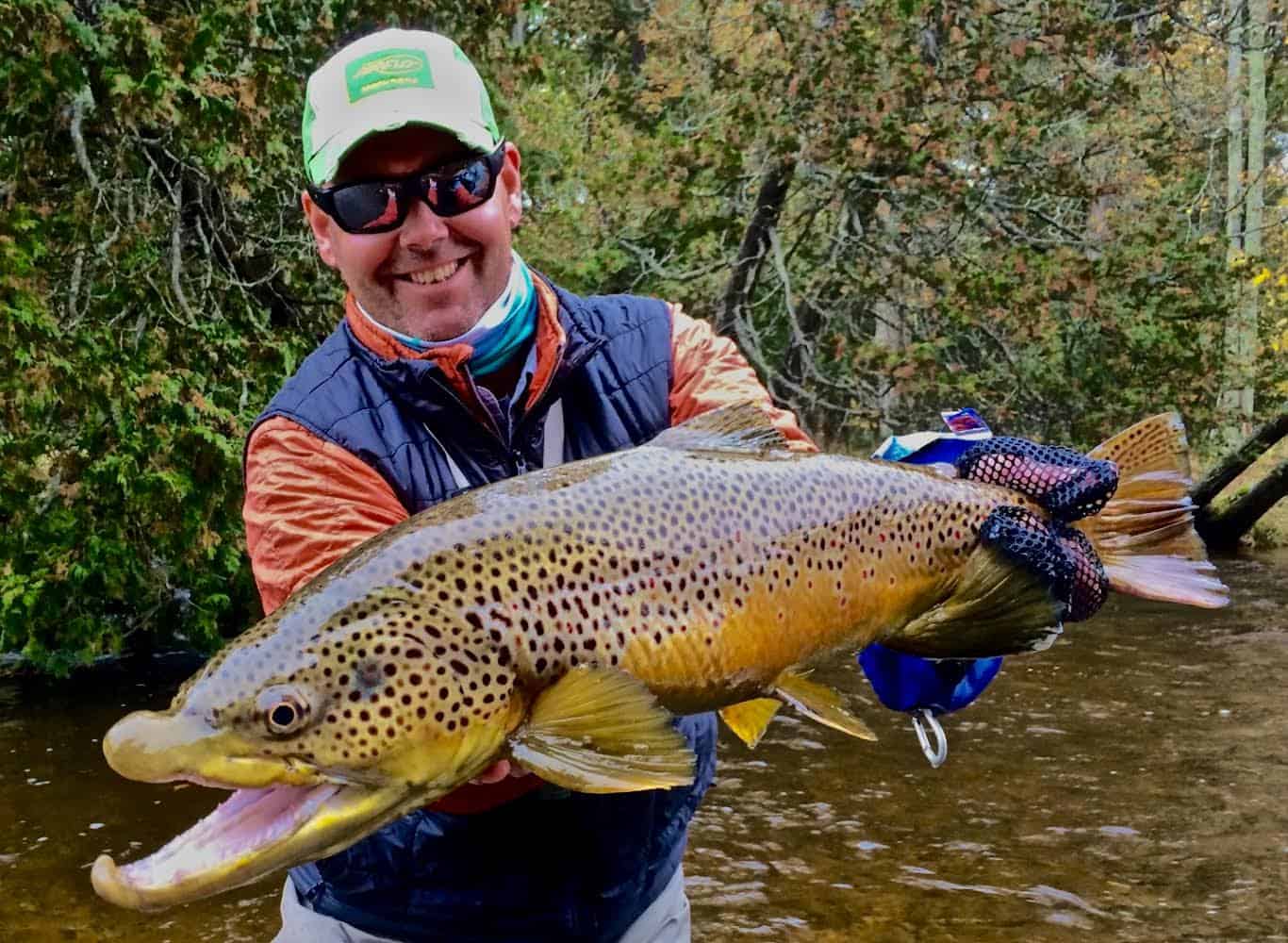
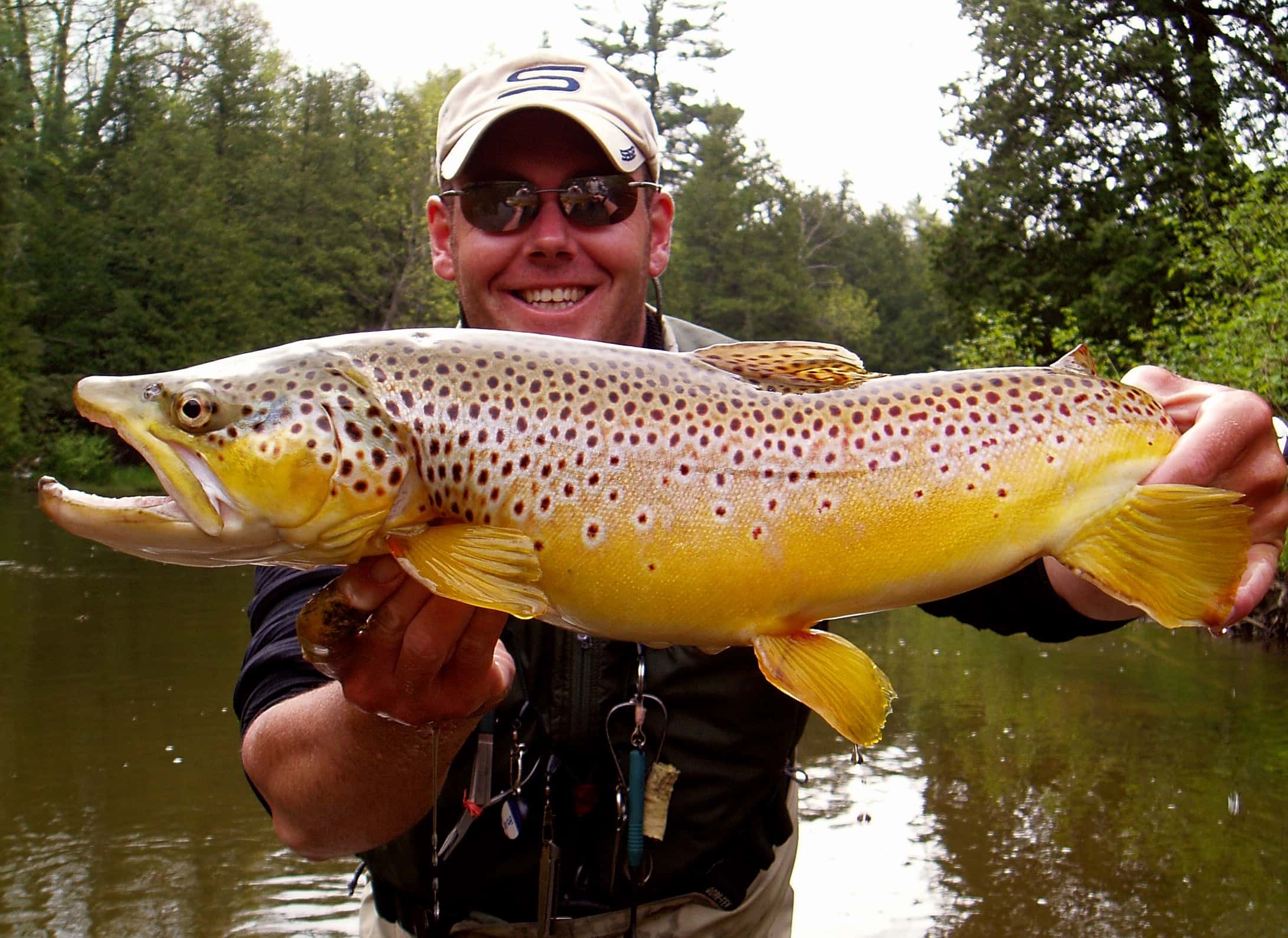
 

How to Cast a Spey Rod:


You can find Max Kantor at Guidelineflyfish.com.

guideline fly fish logo


Guideline Fly Fishing Resources Noted in the Show


Guideline Fly Fishing Videos Noted in the Show

The Secret to a Long Spey Cast:


The Guideline NT 11 Salines Salt Water Rod 


max kantor fly fishing
photo credit: https://midcurrent.com/videos/streamer-fishing-with-max-kantor/

Conclusion with Max Kantor on Guideline Fly Fishing

We take a deep dive on choosing a scandi fly line with Max Kantor.  We discuss the options for steelhead, atlantic salmon and other salmon species.  We find out which lines are best and some of the best places to catch salmon and steelhead around the world.

Guideline is not only a spey brand and they have all lines of rods, lines and fly fishing gear.  Max discusses his love for striper fishing, his vast travel to some of the greatest destinations for atlantic salmon and steelhead.


Traveled #25 | The Golden Triangle of Fly Fishing with Lindsay Szofran – Team USA, Yellowstone Teton Territory

What do you think of when you hear the word, Golden Triangle of Fly Fishing? With legendary rivers like the Henry’s Fork, the Yellowstone, and the Snake, this region spans Montana, Idaho, and Wyoming—offering some of the best trout fishing on the planet…


Show Notes with Lindsay Szofran. Hit play below! 👇🏻


apple podcasts

Find the show:  iTunes | Stitcher | Overcast

Subscribe on Android

Subscribe on Apple Podcasts

Subscribe via RSS

(The full episode transcript is at the bottom of this blogpost) 👇🏻

Sponsors and Podcast Updates


Today, we’re heading out West with Lindsay Szofran—Team USA Womens angler, guide, and world championship competitor—to dig into fishing the Yellowstone region, nymphing tactics, and how to prepare for a world-class fly fishing competition. Lindsay shares her go-to strategies for fishing the longest undammed river in the US, the best times to hit these waters, and how she approaches trout spey for both competition and fun. Plus, we get an inside look at Team USA’s preparation for the upcoming Fly Fishing World Championships happening right here in the US this year. If you’ve ever wanted to fish the heart of the West, this is your chance to learn from one of the best!


Follow Lindsay on Instagram 👉🏻 @lszofran

Visit their website at FlyFishingOnlyAdventures.com


Resources Noted in the Show

Guest & Business Links:

Fishing Locations Mentioned:

Fly Fishing Events & Competitions:

Gear & Brands Mentioned:


Related Episodes

Full Podcast Transcript

Episode Transcript
Dave (1s): The Golden Triangle of Fly Fishing sits at the crossroads of Montana, Eastern Idaho, and Wyoming, a region known for some of the most legendary waters on the planet, like the Henry’s Fork, the Madison, the Snake, and much more. Today we’re joined by a guide who knows these waters inside and out, and is representing Team USA at the World Championships this year in the Golden Triangle. She is here today to share some of her wisdom for this region and to let you know what makes it so special and help you plan that unforgettable trip out West. Hey, how’s it going? This is Dave. I’m hosting the Travel podcast today. I’ve been fly fishing since I was a little kid, grew up around a little fly shop and created one of the largest fly fishing podcasts in this country. Dave (42s): Today, Lindsay Zofran Trout and Steelhead Guide is here to share some of her best tips on fishing these technical waters out west. This includes multiple states, Montana. We’re gonna talk Idaho, Oregon. You’re gonna find out how she is preparing for her next World championship event in eastern Idaho. You’re gonna find out and discover how she fishes the longest Undammed River in the USA when you can start fishing that the best time of year. And also, we’re gonna get into a little spay, steelhead and Trout spay. She’s got some big influencers names that you’ve likely heard of before. We’re gonna to get into all that today. Plus we’re gonna hear about the legendary battle of the of team USA fly fishing ladies versus men versus youth. Dave (1m 25s): We’re gonna find out who would be the winner if we had a championship on that level. This episode of Travel Today is presented by Yellowstone Teton territory, where you can explore great fishing, hunting, hot springs, winter sports, and so much more. We’ve been covering this and we’re gonna dig in today to some of these, these actions. All right, so here we go. Let’s do it. Lindsay Zofran from Fly fishing adventures.com. How you doing, Lindsay? Good Lindsay (1m 54s): Morning. Dave (1m 55s): Yeah, yeah. This is gonna be, this is gonna be a fun one today. I think you have a lot going on out there. We’re gonna talk a little bit today about kinda the Yellowstone area, the greater Yellowstone area. You’ve got some Grand Ron, some spay, steelhead, trout, like all that. These are gonna be huge today, plus, and the big thing is, is that the World Championships are coming, so as we speak, it’s, it’s February, you know, this episode prize is gonna go live in March or April, and right around the corner is the World Championship. So first off, let’s just kick it off there. What’s the, how does that feel? It feels like that’s right around the corner. Are you, are you stressed right now? Or is that something that’s just like, you’re, you’re ready to roll? Lindsay (2m 30s): You know, it’s coming up very quickly and I’m very excited. This is the fourth women’s only Fly Fishing World Championships, and we get to host here in the United States, which, you know, it’s just such a great opportunity to, you know, invite our friends that we’ve made from around the globe to come experience the greater Yellowstone ecosystem. You know, we’re going to be holding the competition in the Golden Triangle. So, you know, parts of Idaho, Montana, and Wyoming. There’s just some really fantastic trout waters in that area, Dave (3m 12s): In that area. So that, and I’ve heard that before, the Golden Triangle. So what is the, the triangle is what Montana. Talk about that, what are, what are the spots that make up that, and do you know where you’re fishing right now? Lindsay (3m 23s): We do know where we’re fishing. And so the most southern river is going to be the Grays River, which is a tributary of the snake. And Then we will also be fishing the Henry’s Fork as well as the Warm River. And then in all of these competitions, we also have a lake component. So two lakes that we’re fishing. One is a private lake in the Island Park region called Sheridan Lake. And then one of my favorite lakes is Hep Lake in Montana, just on the edge of Yellowstone Park. Dave (3m 59s): Wow, that’s awesome. Yeah, so, and this is great because we’ve talked about a lot of these on the podcast. You know, we’ve talked about Sheridan. We had a, a Stillwater school with, with Phil Roy. We’ve, you know, Hebgen is one, we haven’t gone deep, but I’ve heard a lot about it. And of course the Henry’s Fork, so, so this is cool. So that’s the rivers. Maybe before we jump in, ’cause we’re gonna talk about your, your guiding program, you know, what you do out in the Yellowstone area, and like we said, some of the steelhead stuff. But for the world championships, what does your preparation look like? Like let’s just say from right now, like now until then, are you pretty much ready to go or do you do a lot of practicing training? You know, how, how do you, you know, maybe talk about that a little bit? Lindsay (4m 39s): You know, it’s always lots of preparation, always training. And right now we’re in Sub-Zero temperatures here in Montana. This morning I woke up and it was 17 below, so I can’t say I’ve been doing a ton of fishing in the last few weeks, but of course, you know, there’s lots of other preparations and plenty of flies to be tied and always just research on the rivers and, you know, getting boxes organized and just mentally preparing. You know, sometimes these competitions are as much of a, you know, physical endeavor as they are a mind game. Lindsay (5m 20s): And so, Dave (5m 21s): Right. It’s, I mean, it, it’s really, I find it really interesting because I haven’t ever been to one, so hopefully, hopefully this year I’ll learn a lot more about, you know, the process. But we’ve had a lot of people on that have talked about it, you know, just the competition itself, you know, for you, have you been involved with the kind of the world championships, the team USA for a while? Maybe talk about that. What is your background? How’d you come into being on the team? Lindsay (5m 45s): You know, my first involvement with Team USA goes back, I think about 2014. And my husband had entered a competition and I had volunteered to be a controller, and I rode a drift boat around a lake and measured fish for the competitors. And so that was my first introduction into competitive fishing. So, but for the women’s team specifically, it was back in 2020 that they announced they were going to have the first ever competition for, they actually call it ladies. Lindsay (6m 26s): And that was supposed to be held in 2021. So the normal way to choose a team is through competitive events and based on, you know, how you do in those competitions. Well, of course, during the pandemic, that was very hard. There was no competitions, no getting together. So there was a team, an inaugural team chosen based off of interviews and recommendations and things like that. And I was part of that inaugural team that then tried to, you know, build the organization and get us prepared. Lindsay (7m 6s): Of course, with the pandemic, that got postponed an additional year. So, because the world event then got postponed to 2022, we had the opportunity to actually have competitions and the first ever Ladies national championship, which helped determine who would represent the United States at the world level in Norway for that first ever women’s event. Dave (7m 35s): Was that 2022 or 23? Lindsay (7m 37s): That was 2022. In 2023. We went to Canada in 2024. This past May, we were over in the Czech Republic. And then for the fourth worlds, of course, this coming July, we’ll be hosting here in the United States. Dave (7m 58s): There you go. So Norway, Canada, Czech Republic, United States now. And it’s been interesting ’cause I’ve been tracking this a little bit. I know the, the youth team has been doing well recently. I know the, I guess the ma well, there’s a couple of the guys, right? The masters, there’s a couple levels there. How have the women’s been doing, how do you feel like, you know, things are going? How do you feel like your chances, how has it looked this year? Lindsay (8m 20s): You know, it’s very exciting to be, you know, on home waters, of course. And what’s really great about our team, you know, just going back to Norway, some of us had only known each other for three months before we were competing together as a team. And now that we’ve known each other for, you know, four years now, we just have learned to, you know, understand each other’s phishing techniques, learned how to better communicate what’s going on, and to support each other to, you know, do the best we can out on the water. And so, you know, I think going back to Norway, I remember a conversation I had with the gold medalist, a gal from the Czech Republic, a fantastic angler. Lindsay (9m 11s): And at that time, I told her that we’d been fishing together as a team for three months. And she said, oh, we’ve been fishing together as a team for 15 years. Dave (9m 23s): Oh, wow. Lindsay (9m 24s): And so, you know, you think about fishing with your best buddy and you just communicate. You learn to communicate with each other, you understand your style. You, you can go out and really be more effective when you can work well together. Dave (9m 40s): Yeah, that’s a big thing. So basically you’re building, building this team. I mean, that, that’s part of, this is gonna take some time to get up there. What, what do you feel like, you know, when you look at this year, what would you be telling somebody’s listening right now, maybe they haven’t been to a world championships, what would you tell them? Why would they find this interesting to go and watch this event? Or maybe even volunteer? Talk about that a little bit. Lindsay (10m 2s): Yeah, we’re certainly looking for volunteers. And the most fantastic thing about volunteering is some of these volunteers will have the opportunity to be streamside and watching some of the best anglers fish. And it’s an incredible opportunity to learn, especially some of those controllers will be on the same waters and they’ll see how people from different countries fish the water, use different techniques, and if they wanna take that back into their own angling, I think there’s a lot to learn. And it’s a really incredible opportunity. Dave (10m 44s): Yeah, it is. It’s, it’s interesting because in this year, I think the way it’s gonna work is there’ll be the women’s and the youth are, right, I think you’re fishing different times, but this year in, in eastern Idaho, right? Lindsay (10m 56s): Yeah. The events will be happening, you know, at the same time. Oh, okay. You know, we’ll have an opening ceremony where we will all, all parade down the street together. And that’s always just a really fantastic event for spectators to see, you know, the flags waving from different countries, you know, represented countries from all around the globe, you know, with both youth teams and women’s teams. And it’s really just this really fantastic bringing people together for a common interest. What I love about it, every year it just becomes more enjoyable because I’ve actually made friends with people from some of these other countries. Lindsay (11m 37s): So it becomes this reunion of friends and, you know, this great comradery to go out and enjoy the sport and, you know, respect the waters, be conservationist. Dave (11m 52s): Exactly. What is the parade? I mean, that sounds really, really interesting. Is this what, what town is this in? Lindsay (11m 58s): The event will be based out of Idaho Falls. And Idaho Falls has that great river walk, and we will be marching along that. Dave (12m 10s): Gotcha. Wow. So this is gonna be Idaho Falls. Yeah. Which is really a cool place. And, and so there’ll be this whole thing, this international parade. And then also, like we said, the volunteers. So I think, and we’ll probably have a link out, I think Glad is kind of helping set things up at we, we, we’ll get people connected if they wanna volunteer or they can just reach out to me as well, and I can connect them because this sounds good. So, and when is the, when is the Idaho Falls? Like when does the parade and when does the comp start? Lindsay (12m 37s): So the opening ceremonies will be July 12th, and then the next day will be for athletes to prepare and get ready to start fishing. And fishing will happen on Monday through Friday. So each angler actually fishes five different venues throughout the week. So each country has five representatives and one angler from each country is on one of those waters. And then you rotate through, and that’s where you know it being a team event, it’s really crucial to be able to share intel with your fellow teammates because the waters that I’m fishing one day, my teammates fishing the next day, and I wanna be able to give them as much information as I can to help them be as successful as possible. Dave (13m 34s): Right, right, right. Gotcha. And when you’re out there, so basically you’re gonna prepare for this, you know, and, and you know, as the home country, it seems like we would have the advantage, right? Because you’re out there, you’re, you know, the waters, you can prepare a little bit, but, but how does that look once you get out there? I mean, I guess conditions in July. Do you feel like you all like team USA has a chance at this? Is it like any year? Does anybody have a chance or, or do you feel like there’s still a lot of work to do before you can get up on, on the podium? Lindsay (14m 3s): You know, there’s always a chance, but there’s always, you can’t ever just expect anything and you have to put the work in and, you know, you have to make smart decisions and have a good strategy and, you know, but there’s a lot of, you know, curve balls that could always be thrown in. We have had events where waters have flooded, you know, you just never know. And there is this, you know, a little bit of a luck of the draw. I do feel that these waters that will be fishing, the beets are going to be very fair. And you know, sometimes you’ll get a beat where there’s just no, you know, very few fish and one beat’s just, you know, full of them right on these waters. Lindsay (14m 49s): I really feel like the beets are going to be fair and it’s gonna be based on, you know, the anglers skills and deficiencies in those waters. Dave (14m 60s): Okay. And the waters you talked about, you mentioned a few of them, but the, some of the rivers, the Grays River, the Warm River, those are a couple we haven’t talked about. And then, and then you also mentioned some of the guiding you do on the Yellowstone, but are now, have you fished the Grays River or the, is it the Warm River or was that the other one? Lindsay (15m 14s): Yeah, the Grays River. The Warm River and the Henry’s Fork. And you know, for me, fortunately, I have fished all of those rivers before I, I grew up in this area and Oh, right. Have spent many days fishing in the region. So I am excited about that. And, you know, hopefully, you know, can share some of my knowledge of the area with teammates and the teammates, all the teammates of fished those rivers as well, which is great. You know, there’s just something about knowing a river and understanding it’s, what do you call it? Dave (15m 56s): How it changes, how well you got so much. I mean, when I, when I look at a stream, it’s overwhelming for a lot of people, right? The trout streams, because you’re, you’re thinking, okay, there’s all these bugs, there’s hatches, there’s different temperatures, and water temperatures, and, and you kinda sit there and that’s where you get lost, right? I think that’s where fly fishing, and that’s the great thing about it. ’cause it can be challenging. So, and when you add competition onto it, I can imagine that, right? If you’re not ready for the game, you could, you know, you could maybe not do well, but yeah, those are the challenges, right? So when, so when somebody come, let’s just take it to the Warm River or the, let’s just take it to the Warm river. I, I’ve never fished the Warm River, but as you look at that, one does that in July, do you know what to expect for hatches? Dave (16m 36s): Do you know what you already thinking, like what you might be fishing there? You Lindsay (16m 40s): Know, certainly we have a pretty good idea of what to be expecting, but as we know with water temperatures and weather, you know, oftentimes things might be a week earlier or two weeks late or whatever it might be. So we’ll go in prepared for, for it and, you know, always trying to make the best decisions along the way. Dave (17m 5s): Gotcha. And so we got these rivers. Let’s talk a little bit, let, let’s swing this a little bit and we’ll come back around probably to some of the, the comp as we go, but, and let’s just stay in the air, the Yellowstone. So you guiding, maybe start off with your guiding operation. Where do you spend most of your time? I know right now you’re probably not out doing much guiding, but once the season kicks off for you, what’s the stream that you spend most of your time on? Lindsay (17m 28s): You know, primarily I spend most of my time on the Yellowstone River and one of the tributaries of the Yellowstone called the Still Water, which is actually a very deceptive name. It is nothing. But still, it actually has quite a few, you know, not huge, but quite a few rapids on it. And yeah, you know, great riffles for fishing and Dave (17m 51s): So, gotcha. Yeah, so it’s, yeah, I mean, everything out there has got some gradient. That’s the cool thing about that country. You know, it’s, it’s, well you do have steel waters of course, but you’ve got a lot of mix. And so when you’re fishing the Yellowstone, so paint the picture there, this is a pretty decent sized river, right? Are you mostly floating it in drift boats or rafts? Lindsay (18m 8s): You know, on the Yellowstone, I have a drift boat and fish out of that, you know, obviously a lot of listeners are probably familiar with the Yellowstone, you know, bigger River definitely has some calmer sections, but you know, there’s definitely some places where you can hit some waves as well. But the drift boat’s a great tool for that river, whether we’re fishing out of the boat or using the boat as a tool to get from place to place and getting out and waiting, Dave (18m 39s): Getting out and going for it. And does the Yellowstone, do you fish maybe talk about that on the sections, because you’ve got this, I mean, it is an amazing area. We’ve, we’ve talked about it, right? The Yellowstone area and the National Parks. What area are you typically fishing? Or maybe we will keep it on the floating. Lindsay (18m 55s): You know, where we’ve guide primarily is actually downstream of Livingston where, you know, it’s, you know, some old books that you might read, say there’s no trout down there. And I encourage people to keep believing that. Right, right. Because it then, you know, it’s not as heavily used. Okay. And, but you know, it was Yellowstone’s a great, great river, you know, it’s the longest Undammed River in the United States. Dave (19m 28s): Oh it is? Oh, the Yellowstone is the longest Undammed River in the United States. That is amazing. I didn’t know that. Lindsay (19m 34s): You know, I just love free stones and, you know, the energy of a, you know, free flowing river. Dave (19m 41s): That’s super cool. And do you know the length, or I’m guessing, let me guess it ’cause I don’t know, I’m just gonna throw it out. Is it’s, it’s what, like 500 miles long? Lindsay (19m 50s): It is. I wish I remembered the exact number, but it’s just a little over 500 miles. Dave (19m 55s): Nice. I’m, I’m doing good. Okay. Yeah, 500 miles. So good. Guess so. An und damn river for 500 miles, which is in this day and age is pretty amazing, right? Because you think of all the dams, I mean, there’s literally truly, I mean, probably tens of thousands of dam, who knows, but, and then Livingston, maybe just describe your pro, let’s, let’s just take it to, you know, I guess I’m guessing summer is peak time, but when is the time where, like if we were sitting here talking to you thinking, oh man, you know, we want to get out on a trip with you this year. Where would we be thinking, would you say there’s a certain month, a time, or a hatch we should shoot for? Lindsay (20m 27s): Yeah, you know, certainly summer is the height of the season, and we do have runoff that occurs. I always, you know, say late May to mid-June, and usually that’s a time of year that’s always out. Sometimes there’s places to go, but it’s, you know, day to day. But by, you know, mid to late June, usually the rivers are clear enough that we can get out there. And most of the season in that time, I usually start on the Stillwater River. It clears before the Yellowstone River. And so we can get out and we fish that out of a raft. Lindsay (21m 12s): And at the beginning of the season, sometimes we are, you know, we’re in the boat all day because the river’s still really high. Dave (21m 21s): So yeah, we’re, we’re kind of narrowing in on, you know, we’re narrowing in on the Yellowstone, like putting together a trip. I always love doing this because we have a group or you know, we call it the shop Wetly Swing Pro, where we’ve got some people in there that are building trips together. Right. We’re talking about where we’re going next. So I’m plan, I’m thinking of this like, we’re planning a trip to the Yellowstone, maybe we’re gonna be driving by there. In fact, I, we just drove by this last summer on our way to Wisconsin. Didn’t actually fish, although we stopped along the way. But let’s just say that, so you got Livingston, we’re going down river. So now you’re saying it’s high water on the Yellowstone, but probably, when does that come in? Is that more of a fall fishery or is it sometime in August? Does that kind of get good? Lindsay (21m 58s): You know, of course it’s dependent year to year, but usually by mid-July the Yellowstone will shape up. So prior to its clearing, I am usually on the Stillwater River, which clears much quicker. And it’s a tributary that dumps into the Yellowstone near the town of Columbus. You know, it’s a great freestone. We use the raft on the Stillwater River and you know, at high water it’s clear, but we probably mostly spend the day fishing out of the raft as the water drops, Then we can get out and do some wade fishing as well. Lindsay (22m 41s): And you know, the fun thing about the steel water is, you know, it does have some, you know, fun rapids on it. So on those hot days, you know, sometimes we just hang on to the rods for, you know, little bits and hit some waves and get wet and have a good time with some white water as well as the fishing. Dave (22m 59s): Are these kind of like class two three sort of thing? Or is there some bigger stuff? Lindsay (23m 3s): Yeah, like class two, you know? Yeah, there’s some bigger things at, you know, certain water levels, Dave (23m 9s): But Oh, certain water. Yeah, yeah, yeah. Have you ever been in a, in the white water of any type where you’ve been a little bit, kind of in a tricky situation or maybe almost, you know, dumping or something like that? Lindsay (23m 19s): You know, my first experience with real Whitewater was actually down in the Royal Gorge and my husband used to guide there and he took me there when we were still dating. And actually I think we were married anyhow, he said, whatever you do, don’t fall outta the boat and whatever you do, don’t fall outta the boat. Yeah. This is the biggest rapid on the river. Whatever you do, don’t fall outta the boat. Hold on. Well guess what, you know, I fell out of the boat really, and went for a pretty good swim. And of course, you know, it’s the place where the photographer is set up to take all these pictures and then sell them. Well, I had, you know, a whole reel of me completely drenched and, you know, oh, that’s cool. Dave (24m 4s): That’s cool. So you still have those photos to this day that we can, you could, you got the action shots of you falling in? Lindsay (24m 9s): Yeah, and that was my first Oh, that’s funny. Real whitewater experience. And we had done that as a preparation because we were getting ready to go on a Grand Canyon trip. Oh, nice. And I’ve been lucky to have been to have gone on several of those, you know, just fun white water down there and just in Right. And the Grand Canyon’s just a special place and there’s so many oasis and amongst the big white water and Dave (24m 37s): God. That’s great. So you’ve been on, you’ve been on one of the rivers. We’ve talked a little about that over the years when we did our, we did our Drift boat series on this podcast here, where we were kind of covering boats and those Doris, those wooden Doris was, I was really fascinated with because of those things. Right. Taking a drift boat down the, you know, through the Grand Canyon, through the Colorado. Did you see those when you were on the, in the canyon? Did you see those wooden? Lindsay (24m 60s): Oh, absolutely. I’d love to have one. Dave (25m 3s): What was that like? Did you saw ’em on the river? Was it, I guess you probably didn’t see ’em go through Whitewater, but are they just Lindsay (25m 7s): Pretty Oh, absolutely. You know, and they have this great rocker on ’em. I mean, it just looks like a fantastic ride. Dave (25m 13s): Yeah, yeah. They have a, because we study that, we actually had the guy who wrote the book on building drift boats, and he talked about the difference, right? There’s the two styles. You got the Rogue drift boat and the McKenzie one has a longer flat section, but what they did on those Grand Canyon boats is they made ’em just the right amount of flat on the bottom that they, they surf the, you know, they work in the waves. Right. They’re, they’re not, because if you were to take a normal drift boat down through that, you know, obviously you wouldn’t have a chance. Lindsay (25m 40s): No. But, and you know, the Doris are all sealed, Dave (25m 43s): So, and they’re sealed. Yeah. And they’re decked over and all that stuff. But no, I, I, every time I get on that conversation, I’m always like excited because it’s, I haven’t been there and my goal would be to run that river in a drift boat. Right. And a wooden drift boat. I could be, I’ve done a few technical things. I’ve been on the road with the drift boat, you know, and I’ve been down some stuff, but I feel like that’s the ultimate. Right. But anyway, so we’re, that’s our side note, our side tangent for the day. Let’s take it back. So Yellowstone, now we’re looking at a trip now. And, and so again, you’re thinking August, if we had to pick, like right now, let’s just say we got a few people coming in that wanna fish it this summer. Where would you point us if we had to plan right now for the Yellowstone? Lindsay (26m 19s): Gosh, you know, starting in late July through the fall and you know, and fall, you know, again, depending on the year, you know, September can be really fantastic. September might have, you might get snow though too, right? October certainly. But it’s just a really great river and Dave (26m 41s): Yeah. Is it a dry, is it a dry action thing or is it a nipping? Or do you kind of do everything, Lindsay (26m 47s): You know, it’s a little bit of everything and each day it might even be a little bit of everything. And you know, you’ve got to, it’s the fish that tell us what it is for the day. You know, sometimes we all like to go out there and fish on our own terms of, I’m only gonna throw dries today. And, but then there’s days where you decide, nope, we’re gonna fish on the fish’s terms. And it might be a little bit of every different type of technique in a day. So Dave (27m 19s): Yeah, it could be everything. And that’s why, and that’s same thing with the, the competition stuff, right? You’re, you don’t know exactly you’re ready for, it could be anything. It could be dries or it could be Euro NPHs. Do you tend to, on the comps, tend to fish, is it more like 70% euro nipping? Do you find that’s the case? Lindsay (27m 34s): You know, it’s really interesting because most people think that comp fishing is just your own. And to me, you know, sure you could go out there and just do that, but the successful anglers do it all and it’s using, you know, a diverse, diverse techniques to fish your beat and make the best decisions to find the fish. And, you know, heck, and I’ve used everything from, you know, euro emptying. Of course I had a session in the Czech Republic this past May. I used dry flies almost the entire session. And then I’ve used my trout spay in competitions as well. Lindsay (28m 19s): And so it’s just having a lot of tools in the toolbox and knowing when to use the right tool, Dave (28m 28s): When to use it. Okay. And so, and going back to the river, so the Warm River, the Gray River. Now talk about that. Which one is the trip to the Snake River? Lindsay (28m 35s): The Grays River? Well, technically all of them eventually end up in this snake, but the grays is down by Alpine, Wyoming, and, Dave (28m 44s): Okay. Alpine, Wyoming. And what about Warren? Where does the Warm River come in Lindsay (28m 47s): It? The Warm River kind of near the town of Ashton is probably the best way to describe it. Dave (28m 55s): Ashton? Yeah. Ashton, Idaho, right? Lindsay (28m 56s): Yes. Yep. So, Dave (28m 58s): Okay. Yeah, I’m trying to get my bearings on kind of where some of these, and is that river, when you think of the, the Warm River, is that one that’s kinda off the radar or do people, you know, know about that river? Is that pretty known? Lindsay (29m 10s): You know, it’s probably not as well known as the Henry’s Fork of course. But the place that we’re fishing at is just this really cool area where basically you have this ridge and on one side is the Henry’s Fork and one side is the Warm River. Oh wow. And they just, you know, go down the two different sides of the ridge and then meet up. Dave (29m 36s): I see it. Yeah, I’m looking at it now. You got the Warm River Campground. That would be the spot we would be heading to. They got the campground right there and then, and it’s Right. Yeah. I see you got the Confluence. So the Warm River comes into the Henry’s Fork down just above, like you said, just above Ashton. Yes. Okay. Well what is the, is the Warm River and do you guide the Warm River at all? Or is that one you’ve just fished? Lindsay (29m 57s): I’ve just fished it. It’s over in Idaho, so Dave (29m 60s): Yeah. Oh, right. You’re not, yeah, you’re a Montana guide, so you wouldn’t be Correct. Yeah. Gotcha. Okay. Well give us a little couple on that, on the Warm River. So if somebody was preparing, let’s just say they wanna, they’re gonna be in that area, you know, what would you tell them to prepare for that trip? Is that something easy to do? Would you, would you direct them to, you know, certain fly shop or what would be a couple tips you’d give them? Lindsay (30m 20s): You know, definitely that whole Island Park region is just fantastic. There are so many different rivers in that area. And if you find somebody at one spot, just drive or walk a little ways and you’ll have waters to yourself, which is really a fantastic thing. Yeah. There’s plenty of water and you know, with all of these rivers, especially, you know, if you’re willing to walk, you’ll definitely have water to yourself. Dave (30m 52s): Yep. Which is a big part of it, right. Because you’re just getting away from the pressure, so it won’t be quite as tough to hook up into some fish. Lindsay (30m 58s): Yeah, absolutely. And you know, I think it’s also special to, you know, be out there and not have to see other anglers. Dave (31m 4s): Yeah. Yeah. Gotcha. Okay. And, and so when you’re thinking of July, you’re gonna be there in this mid-July, what do you think is gonna happen? Just if you had to guess what, what would you, are you preparing before thinking, well, there’s gonna be this hatch potentially. Are you waiting till later in the year to see what that looks like? Lindsay (31m 19s): You know, I have a pretty good idea of what to expect. And some hatches water in July is going to be high as well. So waiting in itself is going to, you know, be a challenge and you’re not gonna probably weigh it out to the middle of the river very easily. And so, you know, going to be trying to navigate the river and fish the edges and, you know, try to get out as far as you can Safely. Dave (31m 54s): Yeah. Safely. Right. We don’t want anybody swimming. Right. Lindsay (31m 57s): Exactly. Dave (31m 58s): Yeah. I, I just did an episode, I’m not sure if you’ve heard of Jim Tini, but he’s kind of a, a famous old guy from the West. Right. Who was Yeah. Who phished everywhere. And we just have him on the podcast and he told the story about his dad back in 1979, died in the river crossing. He was in a float tube fishing. Oh no. He was fishing in a float tube. Right. And, and I think it was on one of the rivers out in Oregon and, and he just flipped over and drowned. Oh Lindsay (32m 24s): Gosh. Dave (32m 24s): Right. And so it’s all these things I think people don’t, you know, You don’t always think about, I don’t especially, ’cause I’ve been on so many rivers, I don’t think about the safety, but it is legit. I mean, like, stuff could happen. You can get caught up on a piece of wood. Right. I mean it’s, it happened, it happens every year. Right. In all these dreams, I think. I feel like, what, what do you think is, when you’re waiting maybe that, maybe as far as safety, what do you think about, how do you say, what would be a couple of tips you might give somebody to stay safe while waiting or things you’re thinking about? Lindsay (32m 51s): You know, one of the things that I’ve done many times, I’d probably do it still head fishing more, especially when I was learning, is to take your weight jacket, have your waiting belt, put your weight jacket on, and then put a weight belt. Or quite honestly, a lot of times I use an NRS strap, a boat strap. Oh yeah. Yeah. And then just cinch that down really tight and then you’ll be able to wade out there a little bit deeper and you know, you’ve got a good tight, secure belt around your waist. Dave (33m 24s): Oh. So are you saying you put your waders on and then your waiting jacket and then you cinch the belt around your waiting jacket and over the waiters? Lindsay (33m 31s): Yes. Dave (33m 31s): Oh, that’s a good idea. Right. So now you’ve got almost like a dry suit kind of set up. Lindsay (33m 36s): Yeah, a little bit. You know, it helps Dave (33m 38s): To a certain point if you’re swimming, you’re gonna get water in. Right. But, but I feel like that’s one of the things, the waiting belt is a big safety thing. ’cause even if it’s just on your normal, just the waiters, like if you were to swim and it’s on tight enough, you know, you, you, you’ll be fine. In fact, the waiters have air in there, so they kind of tend to float a little bit. Right. At least for a while. Lindsay (33m 56s): And the other thing you know, I see with beginners especially, is a lot of times when they’re waiting they will have their feet pointed straight downstream and then the current can push you a little bit more. I always encourage people to get sideways with the current and then you can actually kind of brace yourself a little bit more. Oh yeah. And kind of dig that downstream foot in. Dave (34m 22s): There you go. That’s a good tip. Okay, so sideways. And then also you can in certain situations, right? Even a waiting staff can help. Do you ever use that? Is that something that you find useful? Lindsay (34m 32s): You know, there are a few and just a few runs on Steelhead Rivers where I use a waiting staff usually. Usually I don’t like to carry one and I feel like I’m a pretty confident waiter, but there’s a few where those rocks are just another level. Dave (34m 51s): They’re another level. Yeah. And it can be, now it can be helpful for other things too. I always, I always think of rattlesnakes in, in Idaho. Are there, are there rattlesnakes out there where you’re fishing or in Montana where Lindsay (35m 2s): The competition waters are? There won’t be, you know, it’s higher elevations, although there’s rattlesnakes around, I don’t see them very often in the, you know, lower elevations. But yeah, they, they do Dave (35m 16s): Exist. It’s possible. Yeah. Yeah. I find that out where we are, you know, definitely there’s snakes, so it’s nice to have that to kick the brush a little bit and you know, sort of thing. But, so, okay. So that, those are good. I think the tips on that. What about the, you know, the comps? So you got, you know, you got ladies, you got the youth, you got the, and the men is separated in masters and and seniors or no, what, what are the two Lindsay (35m 37s): Masters which are over 50 and then seniors, which is technically just adults. Dave (35m 43s): Yeah, adults. See and I always get that confused because I think in golf it’s the opposite, right? Masters is the younger and seniors. So that’s something maybe Glade could work on, move it ahead to get that on track, but no, we got it. So it’s seniors. So when you look at the four, is it, as far as if there was a head-to-head about like USA, right, the four, you know, ladies against the youth, against the, the two men, is it a fair competition or do you think that stuff like waiting and things like that are, are a big differentiator as far as being bigger or stronger? Stuff like that? Lindsay (36m 14s): You know, in here, in the US we actually all compete against each other in smaller regional competitions or even at, you know, the national level. And so, you know, I think I compete against the men, the women, you know, my teammates compete against the men and you know, oftentimes are very successful and do very well. And so, you know, I think the special thing about having a women’s only competition is it helps with participation and it gives, you know, more women the opportunity to be ambassadors of our country and ambassadors of the sport. Lindsay (37m 2s): And we hope that that encourages other women to get out and, you know, be involved in fly fishing or even hopefully it encourages them to be involved in other activities that they’re interested in. And I think not only here in the US but on, you know, a global level. Dave (37m 22s): Yeah, that’s well said. I think that that’s what’s, what’s awesome about, I think that, yeah, I mean we’re all fishermen, right? Where everybody’s anglers, whether you’re a youth or a, a man or a woman, right? We’re all in the same, but it does, I think gives it something, you know, I think it, I don’t know what it is. It feels, well again, if you look at all sports, you know, there’s not, you look at the NBA, it’s not men and women playing together, right? It’s not like there’s separation there for a reason. Lindsay (37m 46s): I think sometimes if it was always competing against the men, I don’t think as many women would participate. I think a few of us would. But I think this encourages a lot more to be involved. I really do Dave (38m 0s): Be involved. Okay. And at the event, what would be your shout out to people, you know, and to get people out? Do you feel like there will be, you’ve obviously got volunteers, we’re gonna try to round up some volunteers for it, but is there, on the event, is there an opportunity for people to come there? You mentioned the opening ceremony, but actually be around the event. Like how could people support this if they’re listening now? Lindsay (38m 21s): You know, certainly we always appreciate all the cheers and support. We are looking for volunteers. We, there’s still some sponsorships available for the event and then people can certainly come out and watch and the lakes, I would bring some binoculars, but you can watch anglers fish on both of the lakes and on the streams. You know, frankly, anybody who wants to come out and watch could walk up and down the stream and watch anglers fish. Dave (38m 59s): Oh, you can, yeah. So, so the way this is gonna work, so you’re gonna be out there, let’s say you’re on that warm river that day, you could come to the events and you could literally, as people are fishing, you could sit there and and just be there like nearby and what, and watch what they’re doing. Lindsay (39m 12s): Yeah, you certainly could. And you know, beautiful rivers, they’re just beautiful rivers to be on and Dave (39m 20s): It’s a beautiful area. So I think for me, I think what it is is, like you said, it’s the area, you know, we call it the start the golden triangle. It’s this famous area with the Henry’s Fork and all these famous waters, Montana, Wyoming, Idaho. And then it’s, you know, so it’s getting out there. So you could be doing, you know, just a trip in the area. But the cool thing is it has this event, right, where you could support, you could support, you know, you guys and the USA and the, and that whole thing, which is kind of another level, which is great. So, so cool. Well that’s that. I wanna, you know, before we get outta here in a bit, I don’t wanna miss some of the other stuff you do. So, and, and of course as always, we’re not gonna get to everything, but let’s touch base a little bit because we do have some steelhead anglers and you know, and all that here. Dave (40m 2s): What’s your other, it seems like your other life, right? You got this Montana trout thing going and then do you switch? When do you switch and when are you heading out more towards like think and steelhead? Lindsay (40m 12s): Boy, by late September, actually mid-September I’m packing up my camper trailer and I’m heading west and I spend most of my fall guiding. And you know, I frankly I love trout. I live in Trout world, but my passion really is, you know, steelhead and holding that two-handed spay rod in my hand is like the comfort of holding a hot cup of tea. I just, I just love it and it’s where I wanna be in the fall for sure. Dave (40m 51s): Yeah, in the fall. So, so come, is that like, so you wrap up your season, the trout in say what, September and then by October? Is that when you’re heading there? Lindsay (41m 0s): Yeah, you know, I’m wrapping up my guide season, you know, my husband’s an outsider and we have other guides that still continue guiding for us in Montana. But my husband and I both head out to Steelhead World in late September and then we’re there for the remainder of the fall, whether it be for guiding or you know, some personal fishing as well. Dave (41m 25s): Yeah, I see. So, and the grand rod, is that the river you’re fishing All fall Lindsay (41m 29s): But the Grand rod is the river that I guide on. Dave (41m 32s): Oh, okay. Yeah. So you’re guide guy and what’s the operation? What, what are you staying at a lodge or what, what’s the, or is it your own program out there? Lindsay (41m 39s): I’m actually, Scott O’Donnell has a lodge Oh yeah. Out there. Spay Water Lodge. And I been out there with Scott for many years as well as my husband. And Dave (41m 51s): And who is your husband? We, we’ve talked about this a little or you’ve mentioned this. Who, who is your husband here? Lindsay (41m 56s): Andy’s offering? Dave (41m 57s): Yeah, Andy. Okay, good. Lindsay (41m 58s): And so he’s the one who really took me under his wing, taught me how to fish. He’s my coach for competitive fishing and Oh yeah. You know, obviously my biggest supporter. Dave (42m 9s): There you go. There you go. Yeah. So, and we didn’t get into your whole backstory, but that’s, that’s kind of how it, it came, right? You ran into, so Andy was, got you into it and then you’ve taken it to the next level it sounds like, Lindsay (42m 20s): You know? Yeah, he helped me take it to the next level for sure. So Dave (42m 24s): Yeah. Yeah. Okay. So talk about just a little bit on the Grand Ron, you know, again, so somebody hasn’t maybe fished it. What does that look like? And, and is October the peak or is it more like November? When is the time when steelhead where it’s really on, Lindsay (42m 37s): You know, it starts in late September and then, you know, with steel heading, you know, the later in the season the more fish that have, you know, potentially come into the system. But great fishing, you know, September through November and we run two different programs out there with Spay Water Lodge. One is where guests would come to the lodge and they get to fish for three days and come back every day, take a hot shower, stay in a, you know, cabin, get a great meal in the evening. The other program is where they actually come out and they float down the river and for four days and each night they camp out on the river and move down and you know, just a great overnight trip. Lindsay (43m 34s): Just one of, one of the best. Dave (43m 36s): One of the best. Right. So you’ve got the two. So you have the spay water lodge, which is actually a lodge. So you actually have a place at the, a normal typical lodge, all inclusive, like food, everything covers, is that how that looks? Lindsay (43m 46s): Yes, absolutely. And then for those overnight guests that are gonna be down on the downstream, on the river, camping out, they come into the lodge the first night, get a meal at the lodge, get organized, and then head out the next morning. And then they’re glamping. So you know, they’ve got great tents with, you know, oh yeah, cots and heaters and you, it’s com Dave (44m 9s): It’s comfortable. Yeah. The Lindsay (44m 10s): Comforts, it’s comfortable and you know, just the crew just does, you know, fantastic meals out on the river and it’s, you know, sitting out eating dinner underneath the stars. It is just fantastic. Dave (44m 22s): It’s perfect. So, so that’s it. So you got the, you got the lodge and the river. I mean both of these are, it sounds like just epic trips, you know, and you’re getting both in, what is it? You know, I always have to check in on just ’cause the steelhead, we fish, you know, all over kind of around the Pacific Rim, a lot of that. Plus we’ve done some great lake stuff, but obviously that’s different. How have the runs been as far as numbers are you find, have you seen some big ups and downs in the grand Run since you’ve been out there? Lindsay (44m 49s): Oh, absolutely. You know, it’s one of those where when I was first learning to do this, you know, the numbers of Dave (44m 56s): Which was when, when, when was that? I’m just curious ’cause we’ve talked a lot about the Steelhead Run stuff. When, when did you first kind of, when was your first steelhead or spay, you know, action? Lindsay (45m 5s): Mid two thousands. Dave (45m 7s): Okay. Yeah. So you’re right. Yeah. So you’re right in the middle of pretty much mid two thousands was right. We were starting to get into like some of the best runs. 2008 was like huge right. Big runs. Lindsay (45m 17s): Right. You know, huge numbers. And my ability to go out there and, you know, cast well and fish it well, you know, I was just learning and, but I was catching fish and now I feel like, you know, I’ve gone through this transition where, you know, now I can cast far, I can fish it well and effectively and there’s fewer fish. Dave (45m 40s): There’s fewer fish, right. It’s hard. So you’re catching, right. And so what, back in, I guess it’s hard to say, but now on the Grand Ron, there’s a typical session, you know, like, and I think this is just steelhead in general. If you go out and you have a shot at a fish, right? Maybe one interaction, you know, maybe one fish landed something like that in a session. Is that pretty typical for the Ron? You Lindsay (45m 60s): Know, I say, you know, if one fish a day is a great day, you know, and, and sometimes we’re lucky and you know, we, we find more than that. But you know, a fish a day is a successful day. And you know, for me, I love this balance for myself, you know, of loving to fish for steelhead and one fish or no fish is just fine. But then when I go to competition, I want enough fish, it, you know, it’s one fish or enough fish to win. And so there’s days where I love doing both and it’s this really great balance of, you know, respecting the rivers and the fish and the situation. Dave (46m 46s): Right on. Well let’s take it out here really quick and we’ll hop out. I have a few more random questions for you, but this is our, this is our casting challenge segment that we have here. And we’ve got a really cool thing doing. We’re doing a basically a casting challenge where we’re gonna have everybody go through a series. We’re gonna have some of our biggest casting instructors come on and talk about some tips, right. Some exercises they can do to get their cast. And we’ve got Bruce Richards. Bruce Richards is coming up and, and the cool thing is, is that they’re gonna win, potentially win a Rod Togiak River Lodge has given away this really cool custom rod. So whoever completes the challenge has a chance to win the rod. But for this casting challenge for you, maybe talk about that, the spay. What would be your tip for somebody thinking spay? Dave (47m 27s): Maybe they’re thinking they’re a single hand caster, they’ve been trying a little bit, they’ve been struggling. Do you have a tip or what was your, what was your transition into spay like? Did it take a long time to get up to the, the next level? Lindsay (47m 39s): You know, fortunately for me, I was able to be surrounded by some of the best, right? Dave (47m 46s): Like Scott O’Donnell. Scott O’Donnell is a famous, right. Famous angler. Lindsay (47m 50s): Yeah. You know, I learned from Scott O’Donnell, Mike McCune, Whitney Gould. Oh wow. And my husband Andy’s offering. So I learned from some really great casters and that really helped me, you know, with my learning curve. But my number one piece of advice for anybody with their cast, especially a spay cast, single hand cast, my number one tip is watch, watch your line. You must see and witness what is going on. If you do not watch, you will not be able to take it to the next level. Dave (48m 30s): Right. That’s awesome. Yep. So watch, so basically the whole thing you can look at where your, your D loop is, where your anchor point, like just watch the whole thing and you can do it pretty easy, right? All you have to do is turn around as you’re setting your D loop up to see it. Lindsay (48m 44s): Well it’s watching the initial setup, watching, you know, the anchor watch, you know, watch the lift, watch the line, come off the water, watch, watch, watch, watch your line, pivot in the water, watch the dute form. Watch, watch, watch. And that will also help build consistency. Dave (49m 7s): And why does that, why, how does watching it help build consistency? Lindsay (49m 11s): A lot of times, you know, with your space cast, with that initial setup, if you just lift, sometimes you got way too much line upstream. Sometimes you got way too much lying downstream. But if you watch and you can always get it in the same spot, then there’s this, you know, what’s happening and there’s this thing that happens with the hand eye coordination. It’s a lot harder to tell your arm to be at a particular angle in this degree versus hey, just watch it and your body and hand eye coordination will naturally make things happen. Dave (49m 48s): Oh right. Lindsay (49m 49s): Almost kind of like, you know, shooting a basket ball. Dave (49m 53s): Oh right. Lindsay (49m 54s): You know? Dave (49m 54s): Yeah. Is that how it works? I think ’cause basketball was definitely, I’ve shot, you know, lots of basketball hoops. But yeah, I guess that’s how it works. Yeah. You shoot and you can actually see your form like the follow through and that that helps to see it, see it going in the hoop. Lindsay (50m 8s): Yeah. You know, it’s just, you know, really watching and knowing what’s going on and you know, you can’t make a good forward stroke if everything is not aligned properly. And many times with the spay cast, people are trying to make that forward stroke while they still have, you know, a bloody L in the line for instance. Dave (50m 34s): Right. Yeah. That’s it. That’s why it’s so important. Yeah. Because you can’t, the forward stroke isn’t gonna be good if you got some crazy stuff going before that. Awesome. So what and what about spay? So we talk steelhead, but what about trout spay? Is that something, because a lot of people listening here probably, you know, maybe aren’t going steelhead fishing, but is trout spay, like say out in the Yellowstone, it seems like that with those bigger rivers that might be good. Are you doing some of that? Oh, Lindsay (50m 59s): Absolutely. You know, Yellowstone’s a fantastic river for that. And you know, part of the fun about spay is you can cast far. It’s not necessary most times, but it’s fun. And the Yellowstone does allow us to do that. It’s got some great riffles and you know, if we can be out there and, you know, say there’s a great CADs hatch going on and we can be swinging soft tackles. Oh my gosh, that’s just so much fun. Dave (51m 29s): Yeah. Soft tackles. Lindsay (51m 30s): That’s it. That’s just a dream. That’s Dave (51m 31s): It. Awesome. Yeah, there’s lots of overlap here, so, cool. Well let’s, let’s take it outta here. We’ve got a, a little roundup segment, like I said to check in here and a couple things you mentioned today. So first on the, the drift boats. Going back to that, I’m curious on the drift boat, what’s your, what’s your boat of choice? Maybe talk your drift boat in your raft. What, what brands are you using out there? Lindsay (51m 50s): You know, my favorite drift boat is an adipose Dave (51m 54s): Outta Helena. Right, Lindsay (51m 56s): Absolutely. You know, another Mon Montana company, which is great. And we have the runoff and then I also have an old CL that’s just got the huge bow up front. Just you can hit some big waves with it. Dave (52m 12s): Like old school, you got like a cl a big, just a normal pointy high Lindsay (52m 16s): Side bone. Yeah. The wave forward. Yeah. You know, I just love that boat. You know, it’s been in the family for many years and we’ve thought about selling it at times and we just keep hanging onto it. That’s Dave (52m 28s): It. Lindsay (52m 29s): And then my fleet of rafts are all heirs out ofs Yeah, sure. Out of Idaho. Yeah. Dave (52m 36s): Heirs are great. Lindsay (52m 38s): Yeah, they really are. I’ve only had one incident where we popped a tube and that was actually on a Grand Canyon trip and came through a rapid thought. We came through clean and all of a sudden one tube was deflating very rapidly. Oh wow. But Dave (52m 55s): While you’re in the rapid Lindsay (52m 58s): And so we’re trying to get to shore as quickly as we could. Yeah. And, but you know, with that inner bladder system repair was just so easy. Dave (53m 8s): Oh, that’s right. Yeah. Inner, that’s a cool thing about air is they have the unique thing. They’ve got the outer layer, which is a normal outer layer, but then they got that thin, the actual tube is inside. Right. It’s inside it. Lindsay (53m 19s): It is. Yeah. We were, gosh, we were able to just do a quick repair with some duct tape and Oh wow. Get us back on the water and then, you know, then when we had good camp, we were able to re repair it. There you Dave (53m 32s): Go. You know, there you go. Yeah. Duct tape is my tip of the day Is, is Gorilla Tape. Right? I, I’m a huge duct tape. I I love the duck duct tape, but I’ll tell you, that fixes Lindsay (53m 42s): A lot of things. Dave (53m 43s): It does. The gorilla tape if you haven’t used that yet, it’s like even stickier, like that stuff. Duct tape will eventually wear out and fall off. Gorilla Tape never wears out. Lindsay (53m 51s): It’s good stuff. Dave (53m 52s): Yeah, yeah. It’s crazy. So, okay, so that’s your, so you got the Drift put, you got the adipose, you got the old Clack, and we’re actually gonna have a, another Clack of Craft episode, I think coming up soon. So we got that. And then what about on the random segment? So YouTube, are you doing any YouTube videos for your phishing or are you like watching, like if you were to, you know, turn on YouTube, what do you get sucked into? What, what’s your videos out there? Lindsay (54m 13s): You know, I will be honest, I am horrible at social media. I’ve always felt like for me, I either spend my time on the water or I spend my time at the computer and I’ve really have always preferred to spend that time on the water. You know, I do love using YouTube and you know, I love listening to the podcast. And frankly, my husband and I are both readers. We have a, you know, massive library of fishing books, new as well as the classics and, you know, that’s it. I just, I love a good book. Dave (54m 51s): Do you have a good book you’re reading now or do you have a good, you know, maybe a fly fishing book classic or something like that, that you really love? Lindsay (54m 58s): You know, I kind of giggle big, this is my husband’s influence, but, and still head, but Greased Line Fishing is, oh Dave (55m 6s): Yeah, by by, is that Jock Jock Scott, or, correct, Lindsay (55m 9s): Yeah, yeah, Dave (55m 9s): Yeah. Right. Yeah. Grease Line. That’s old school, right? The little old school book from whenever it was back. Yes. I think he wrote that for Atlantic Salmon fishing, right? Correct. Is that back in the day? Yeah. Yep. That is really cool. I love that. Because especially now, because we’ve got, I, I’ve always been a summer steelhead fisherman, right. And got in winter, but the summer, but I’ve never fished for Atlantic salmon. So this year we’re doing that for the first time. Right. Heading out to to sea. Oh, cool. So it’d be cool to tell the difference, you know, feel like, okay, this Atlantic salmon versus the summer steelhead, you know what, and then, and then to actually have the right, because I remember that I have that book on my shelf too. I remember when I was a kid reading that. And it’s pretty awesome because it’s, it’s a different game, isn’t it? Summer steelhead versus winter steelhead, Lindsay (55m 50s): You know, it is. And you know, just, but you know, it’s always just trying to use the best techniques for the situation and Dave (55m 58s): Yeah. Awesome. Okay. Well, and you mentioned podcasts, so I don’t wanna miss that one. Before we get outta here, what is your, do you have a certain podcast types genre, or do you have a favorite podcast you listen to? Lindsay (56m 8s): You know, I listen to all the phishing ones. Oh, you do? Of course. So what, Dave (56m 12s): What’s your favorite, which other than ours of course, what’s your Lindsay (56m 15s): Favorite, well, yours of course, right? Dave (56m 16s): What’s your favorite other fly fishing or fishing podcast you listen to? Lindsay (56m 21s): You know, I think April does a good job. Oh Dave (56m 24s): Yeah, yeah. April does. Yeah. Yeah, that’s right. The anchored. And I think she’s still, I think she’s still going strong with her stuff as well, so, so good. All right, well that’s, I think what we have for today. Like we said, the, the competitions are coming. So that will be the big shout out today is to check out what would you leave people with today as they’re thinking, you know, we talked about the upcoming, you know, in July it’s right around the corner or even the next year. ’cause the men I think are gonna be in the same area the following year. What would you like to leave people listening now with that to understand about, you know, maybe with the competitions, with the, you know, team USA, just everything you have going there, Lindsay (57m 0s): You know, it’s gonna be a fantastic event and you know, to see people from around the globe who are all coming together for a common purpose, you know, we kind of sometimes think about the Olympic values and it’s excellence in sports, creating friendship and you know, just respect for the event the other countries respect for, you know, the fish, the river. And it’s gonna be a really fantastic opportunity to see this level of angling happening here in the United States. Lindsay (57m 40s): Certainly we welcome spectators volunteers. We are looking for, and we can definitely, we’ll have a link, but you can also go to us angling.org. And under the women’s team there’s a form where you can sign up to volunteer. Dave (58m 0s): Oh, nice. Lindsay (58m 1s): And so, you know, we’re gonna have that opening ceremony parade. We’ll also have a closing ceremony with awards. There’s a conservation symposium that’s also going to be part of the event. And so just truly exciting to be able to represent the United States. And, you know, the sport of fly fishing is really, truly an honor. That’s Dave (58m 29s): Perfect. I love, I love how you said that, the excellence, friendship, respect. Right. That’s the, a good way to leave it. I think we could leave this one today. So like we said, we will, we’ll also send everybody out to fly fishing only adventures.com if they wanna check with you and see about any trips coming up here. But yeah, Lindsay, this has been awesome. Really appreciate your time today and shed some light on all this, including, you know, the upcoming events and everything. And we’ll hopefully be in touch with you and, and maybe see out there moving ahead. Lindsay (58m 58s): Great. Thanks so much Dave. Dave (59m 0s): Alright, quick call to action for you today. Before we get outta here, if you can check in with Glade at Team usa, we’ll have links in the show notes. You can find out how to get involved if you want to be a volunteer, they’re always looking for volunteers. And if you just want to go hang out and watch some of the best in the world this year and next, we’re gonna have the men next year as well following up. So check in. You could also check with me dave@wew.com anytime, and I can get you information. But, but head over there and support team USA. If you haven’t heard, we are kicking off the YouTube channel fully. We’ve got it out there. It’s been out there a while, but now we’ve got great content coming every day. And the, the most recent YouTube video is Jonathan Farmer. Dave (59m 41s): He did a fly tying demonstration on Steelhead. This was almost a two hour session we did with him and, and actually next week we’ve got Bruce Richards coming on live, our live webinar series. You can go to web fly swing.com/webinar anytime and sign up to join one of those webinars. These are awesome. It’s a way to see some of, take this further, take some of the best guests we’ve had on this podcast and see them on video and take everything a bit further. If you’re interested in some of our trips, we are heading to the lodge at Palisades Creek. This is also out in this neck of the woods on this snake. If you wanna fish the south for the steak, which we’ve heard about, check in with the lodge at Palisades Creek. And check in with me again. Dave (1h 0m 21s): We’re gonna be putting together a crew of people who want to fish one of the iconic rivers out here. We’re gonna be floating it, staying in an amazing lodge at the lodge at Palisades Creek. Thanks for checking out Travel today. I hope you can live that dream trip this year and experience that road less travel.


Littoral Zone #15 | Seasons of a Lake with Brian Chan and Phil Rowley

Seasons of Lake

In part one of How Lakes Work, Brian and Phil explained lake classification and the key zones we should focus on. In part two, we’ll explore the seasons of a lake and how lakes change throughout the seasons. Brian will break down what happens each season, how it impacts fish behavior, and where you should be fishing. Understanding these will help you know where to fish and when.

Show Notes with Brian Chan and Phil Rowley on Seasons of a Lake. Hit play below! 👇🏻


apple podcasts

Find the show:  iTunes | Stitcher | Overcast

Subscribe on Android

Subscribe on Apple Podcasts

Subscribe via RSS

(The full episode transcript is at the bottom of this blogpost) 👇🏻

Sponsors and Podcast Updates

d

Seasons of a lake

The Seasons of a Lake: How They Impact Fishing

Fall

06:15 – As temperatures drop, lakes go through fall turnover. This happens when surface water cools to match the temperature of deeper water. Wind aids in mixing the lake from top to bottom, spreading oxygen. The mixing stirs up debris and gases like methane. This makes conditions less ideal for fish.

Fall happens in three stages: early, mid, and late. As the water gets colder, fish move into shallower areas to feed.

  • In early fall, they stay in deeper water (15 -18 feet).
  • By mid-fall, they move up to 10-12 feet.
  • In late fall, they’re in the shallows (5 -7 feet).

How Often Do Lakes Turn Over?

Lake turnover only occurs in the fall and spring, when water temperatures even out from top to bottom. But not all lakes turn over. Sometimes, lakes look murky for other reasons, like the wind stirring up sediment or the rain washing in dirty water. Brian says shallow lakes mix all year and never fully stratify.

Winter

14:04 – In winter, oxygen levels drop upward from the bottom of the lake due to anaerobic decomposition occurring at the bottom. All the plants that grew during the open water season start dying since they can’t photosynthesize. As they decay, they use up oxygen from the water.

What causes winter kill?

17:08 – Winter kill could happen early, mid-winter, or even days before the ice comes off. As winter goes on, the oxygen-poor zone in the lake keeps growing until it reaches just below the ice. When there’s not enough oxygen left, fish suffocate and die.

Some lakes lose 100% of their fish, while others have partial kills where bigger fish die first. In some cases, fish survive by finding oxygen-rich spots, like areas with underground springs.

Lake Aeration

19:52 – Aeration is a tool to try to prevent a winter kill, but it is not a hundred percent guarantee of bringing a lake through. To aerate a lake, it needs to be at least 25 to 30 feet in depth. There are different types of aeration:

  1. Surface-mounted aerators are the simplest type of aerator with a submersible pump hanging under a float. The pump is two to three feet below the surface, and the propeller is pulling water up to the surface and then spraying it up, so there’s an exchange of oxygen that’s being brought up.

    Surface aerators are relatively inexpensive but don’t always guarantee the lake will be saved.
  2. Another typical aeration technology is to pump air from a compressor on land through some rubber hose to a diffuser anchored below a big float. The air from the hose is pushed through a micro-pored ceramic diffuser. As the tiny bubbles rise, they create a current and add oxygen to the water.

Aeration is more of a last-resort effort to slow down lakes’ natural aging process, known as eutrophication.

Spring

26:26 – When the ice melts off a lake, the water doesn’t mix right away. The top layer is colder, while the deeper water is warmer because of plant decay over winter. Fish stay near the surface, just like they did under the ice.

The surface warms over the next few weeks until it matches the bottom temperature. Then, a strong wind can mix everything up in a process called spring turnover.

Seasons of a lake

Summer

34:55 – In summer, lakes form a barrier called the thermocline. This is where warm water meets cold water, usually around 5 to 8 meters deep. Wind can’t mix the water below it, so oxygen levels drop in deeper areas. Trouts stay just above the thermocline, where the water is cool and has enough oxygen.

Seasons of a lake


Follow Brian on Instagram @brianchanflyfishing

Connect with him on Facebook  Brian Chan 

Visit their website: Phil Rowley & Brian Chan’s Stillwater Fly Fishing Store.

Seasons of a Lake Resources Noted in the Show

Check out Phil’s book:

 Check out Morris & Chan on Fly Fishing Trout Lakes

Seasons of a Lake Videos Noted in the Show

Related Podcast Episodes

Read the Full Podcast Transcript Below


724 | Streamer Fishing for Trout with Tommy Lynch – Fish Whisperer, Pere Marquette River, Small Creek

Streamer fishing for trout is all about movement, and few people understand it better than Tommy Lynch. In this episode, Tommy breaks down his four-step framework for fishing streamers, explains the difference between suicide fish and would-be predators, and shares why most anglers aren’t getting the full potential out of their sink tips. If you’re looking to up your game on big browns in small creeks, this episode is packed with tips you won’t want to miss.


Show Notes with Tommy Lynch on Streamer Fishing for Trout. Hit play below! 👇🏻

apple podcasts

Find the show:  iTunes | Stitcher | Overcast

Subscribe on Android

Subscribe on Apple Podcasts

Subscribe via RSS

(The full episode transcript is at the bottom of this blogpost) 👇🏻

Sponsors and Podcast Updates


Streamer Fishing for Trout

Episode Chapters with Tommy Lynch on Streamer Fishing for Trout

How to Fish Streamers Like a Jerkbait for Big Browns

Streamer fishing isn’t just about casting and stripping. It’s about making your fly move like a wounded baitfish—something trout can’t resist. Tommy explains that the best way to do this is by mimicking the action of a jerkbait, specifically the black and gold No. 13 Rapala, which has been deadly on brown trout for years.

Four Key Techniques for Streamer Action:

  1. Down Swat – A true jerkbait-style movement where you “swat” the fly through the water to make it dart and dig before swimming out.
  2. Straight Strip – A steady retrieve with small breaks in rhythm, mimicking an injured baitfish.
  3. Proper Placement – You want the fly close enough for the trout to see and react but not so close that it spooks them.
  4. Reading the Fish – Watch for slight movements—if a trout shifts left or right, it’s game on.
Streamer Fishing for Trout
Photo via: https://thefishwhisperer.com/newSite/

The Two Types of Trout: Suicide Fish vs. Would-be Predators

When streamer fishing, Tommy breaks down trout into two categories: suicide fish and would-be predators. Understanding these can help you dial in your approach.

Suicide Fish
These trout sit tight against structure, waiting to ambush anything that moves. They don’t need much convincing—just proof of life. A quick down swat and pause can be enough to trigger a strike. Key to this is using slack to let your sink tip actually sink. Just casting and waiting won’t cut it. You need to shake out line or reach toward the fly to help it drop.

Would-Be Predators
These fish aren’t actively hunting but can be triggered into striking. They often hang in slower water, watching for an easy meal. A straight strip in the middle of the retrieve keeps their interest, but the real trick is slowing down near the end. That pause can be enough to flip a passive trout into attack mode.

Whether you’re targeting an aggressive fish or coaxing a hesitant one, understanding their behavior is key. And remember—just because you bought a sink tip doesn’t mean it’s sinking. Use it right, or you’re just dragging it through the water.

streamer fishing for trout
Photo via: https://thefishwhisperer.com/newSite/

Essential Streamers for Trout Fishing

When it comes to streamers, Tommy keeps a variety on hand. From classic muddler minnows to modern swim flies, each has a purpose.

Go-To Patterns

  • Muddler Minnow – A timeless fly, perfect for imitating minnows, especially during fry season.
  • Sex Dungeon – A bigger, articulated fly that moves aggressively in the water.
  • Blane’s Game Changer – A segmented fly with a lifelike swimming action, great in slow water.
  • Great Lakes Deceiver – A swim fly with a broad, gliding motion, ideal for provoking strikes.

Matching the hatch is key. Some days, trout want small minnows on a five-weight. Other days, they’ll chase down a big meal. Adjusting your presentation—whether it’s a slow jerk or a fast retrieve—can make all the difference.

streamer fishing for trout
Photo via: https://thefishwhisperer.com/newSite/

Small Stream Brown Trout: Stealth and Strategy

Fishing small creeks for brown trout is a whole different game. Tight water, overhanging trees, and spooky fish make for a serious challenge. But the reward? Lots of fish and zero crowds.

Key Tactics for Small Creeks

  • Stealth is everything – Move slowly and blend in. Stand still, and trout may swim right up to you.
  • Cast upstream – This keeps your fly in the trout’s line of sight while reducing drag.
  • Short leaders work – A 6- to 7-foot leader helps control the fly without excess slack.
  • Walk far, fish hard – Many of these waters require hiking in. The more effort, the fewer people you’ll see.

Michigan’s small streams are packed with wild brown trout, and many are rarely fished. If you’re willing to put in the miles, you’ll find fish that are aggressive, unpressured, and ready to eat.

Finding Big Browns in Tiny Creeks

Small creeks may be tight, but they hold more fish than you’d think—including some big browns. The trick is knowing where to look.

What to Look For

  • Heavy structure – Undercut banks, log jams, and tag alder thickets create safe zones for trout.
  • Hidden water – Spots that seem impossible to fish often hold the best fish.
  • Naive trout – Less pressure means more aggressive fish willing to hit a well-placed fly.

Fishing these small creeks is an adventure. You’ll crawl through brush, jump logs, and make tight casts. But the reward? Wild trout in untouched water. And sometimes, a true giant where you least expect it.

streamer fishing for trout
Photo via: https://thefishwhisperer.com/newSite/

Winter Streamer Fishing: When to Go and What to Expect

Streamer fishing in winter isn’t always easy, but it’s worth it. The fish are bigger, more aggressive, and fewer people are on the water. Tommy follows weather windows, layering up to chase those cold-water eats.

Key Seasonal Patterns

  • Fall (October–November) – Browns are aggressive but defensive. They hit flies to chase off intruders, not necessarily to eat.
  • Post-Spawn (December–January) – Big fish get hungry. They need calories after spawning, so the strikes are all about feeding.
  • Late Winter (February–March) – Fewer bites, but larger fish. Some exhausted browns even take swung flies, which is rare.

When streamer fishing slows down, steelhead take center stage. By late November, Tommy swaps the strip flies for two-handed swing flies. If you’re tough enough to fish in freezing temps, you might just hook into a monster.

The Salmon Invasion: How It’s Changing Michigan’s Trout Fishing

Salmon runs bring big fish and big crowds. But the rise in anglers chasing Chinook has made traditional trout fishing tougher. Once, anglers could target big browns feeding on salmon eggs. Now, with more people pushing upriver, those spots are packed early in the season.

The solution? Hike farther, fish hidden creeks, and find spots that others overlook. The browns are still there—you just have to work harder to reach them.


You can find Tommy on Instagram @thefishwhisperer.com_tommy.

Visit their website at TheFishWhisperer.com.

Streamer Fishing for Trout


Related Podcast Episodes


Read the Full Podcast Transcript Below

Episode Transcript
Dave (2s): Fly fishing and streamer Evolution owe a lot to the conventional fishing community from Larry Dalberg to the Black and Gold RuPaul. There’s no question that the more you make your fly mimic these lures and the actual wounded fish, the more success you’re gonna have. And today, you’re going to hear from one of the biggest streamer guests in the game, and you’re gonna find out his four step framework to fishing streamers for success. This is the Wet Fly Swing podcast where I show you the best places to travel to for fly fishing, how to find the best resources and tools to prepare for that big trip, And what you can do to give back to the fish species we all love. Hey, how’s it going? I’m Dave host of the We Fly Swing podcast. I’ve been fly fishing since I was a little kid. I grew up around a little fly shop and have created one of the largest fly fishing podcasts in this country. Dave (44s): I’ve also interviewed more of the greatest fly anglers and streamer fishermen than just about anyone out there. Tommy Lynch, pier Marquette Guide, and Small Creek Fishing Master is gonna share his best tips on fishing your fly. Today you’re gonna find out what the difference is between a would-be predator fish and a suicide fish. You’re gonna find out how to fish each of these differently today. You’re gonna understand why a sink tip doesn’t sink correctly and how you actually make it sink. And we’re also gonna find out what a just dead fish looks like and an almost dead fish looks like to these predatory fish and how you fish it. All right, let’s find out how to catch big fish and small creeks with the swim fly. Dave (1m 26s): Here he is, Tommy Lynch from the fish whisper.com. How you doing, Tommy? I’m Tommy (1m 33s): Doing well, thanks Dave. Yeah, Dave (1m 34s): It’s good to, it’s good to have you back on here. We’ve, I look back at the archives and episode 3 47 was over two and a half years ago. We’ve done a lot of content since then. I think we’re over 700 episodes now, so it’s pretty cool to have you back on. We talked about streamers, we focused on that. We’re gonna talk, you know, a little bit about that today as well. But maybe give us an update. What’s been going on in the last couple years with you? Tommy (1m 54s): You know, it, it’s kind of the same bat time, same bat channel kind of stuff. It’s, you know, I do a lot of that summer trout stuff. You know, we lean into some of the fall winter steel heading. I tie a lot of flies when it gets cold, and then I repeat the same event around the, the end of March there. So Dave (2m 13s): That’s it. So you, and is is the Pier Marquette talk about the rivers, is that still your focus throughout the year? Tommy (2m 19s): Yeah, I, I’ve never been much of a a, a pond jumper as much as a kind of a crick crusader there. They’re, I do like the rivers, I like the cricks smaller streams. I do fish tail waters, and I did a lot in my twenties and thirties when I was always hunting for, you know, the big one. And, you know, you take that bell enough and then you just start kinda, I think you get off by the time the smoke clears as much or more about the eat the individual, eat from the, the fish as you do anything else. So I have seen that, you know, even when I take clients to a tail water versus taking them into a small water, they’re, their visual seasoning on each fish is, is far stronger than that of say, getting a, a tug at distance. Tommy (3m 7s): And then, you know, just remember too, you know, a lot of times when I used to fish leaded stuff too, I mean there was always that one two second interval of maybe is this a snag? Maybe is it a fish? You know, when you’re fishing that visual swim stuff, it’s, it’s all kind of right in your face, you know, they’re picking a fight with you, Dave (3m 24s): There’s no question. Yeah, yeah. Is that pretty much what you’re doing when you go out on a guide trip? Is it all about that swim stuff, the drunken disorderly and, and just, is that mostly what you’re fishing? Tommy (3m 35s): Well, yeah, I mean the, the fall obviously we, you know, we definitely get to mix up the steelhead, the brown trout with the, the strip configurations as we get colder and the ice and the guides becomes a little bit more prevalent. We definitely like to lean on that two-handed swing. This the same time about, you know, the brown start to slip in that bite as you get that 38, 37 degree water temperature, it’s harder to beg from them. The steelhead obviously could care less about that water temperature. But, but yeah, I mean through, I would say, you know, most of summer is, is mice and dry flies, which is great. You know, obviously if there’s a thunderstorm of good proportions, we’ll jump on the streamer grenade. But yeah, it’s, it’s kind of a, we fish a lot of swim flies over the course of the year. Tommy (4m 19s): You’re not wrong Dave. So. Dave (4m 20s): Yeah. Yeah. Okay. And, and what’s, and so the pier Marquette, so you’re, it sounds like you’re fishing the pier Marquette and tributaries to that, or are there other waters out there in that area? There Tommy (4m 29s): Are tributaries to the pm I fish all of those. We have a bunch of surrounding and I’m gonna say unmentionables Dave. Dave (4m 37s): Yeah, sure. Tommy (4m 38s): Just because we, you know, the, the kind of the unsung rule on, you know, promoting I suppose in Michigan has always been, you know, the pure Marquette, Sabel, Manistee and Muskegon have always been on the chopping block for using, you know, in, in the promotional needs and whatnot. And then everything else, there’s a special place in trout hell, if you mention it. So. Dave (4m 58s): That’s right, that’s right. Good. So we won’t talk about that. We’ll talk about some of the, the techniques. But when you’re fishing the, if it’s the pure Marquette versus say some of those smaller streams, are you fishing the, the streamer flies differently? Tommy (5m 10s): I love this Que Dave. That’s a great question. So it’s huge. You know, it’s, it’s like all these sink tips are like golf clubs, you know, everybody wants this, you know, this tried and true one sync tip that plays all fields. And the closest we’ve ever come to that was an airflow surf 2 65 at 26 and a half feet. It was a type five, it was tapered in a triangle fashion so that the handler met the runner. But you could carry 30, 35 on the let go. It was the one line. I could fish in a lot of my cricks and then turn around and go fishing on the biggest tail water I know of, which is rare for a sink tip. I will say most sink tips, especially in those 30 foot ranges, you know what I mean, that kind of limits you to a certain size of river that you’re, you’re gonna gonna tickle that with in order to use the entire head or at least get it out of the rod tip. Tommy (6m 2s): You need some river to do that. A lot of the rivers that we’re fishing are not just a little bit narrower than the average, you know, tail water. But on the same token, they’re pocketed, they’re not runs, they’re not, you know what I mean? There’s, there’s a ditch in a pocket about the size of the hood of a car, and you have to sell that. Dave (6m 20s): Oh, okay. And is this on the larger, is this on the pier or is this on more of the smaller stuff? Tommy (6m 24s): This is on the pier. I mean, the pier Marquette will fish a little differently as you get downstream And it widens and you can get into, you know, some of the two handed applications and stuff. But, you know, I’ve got really four go-to strategies that I like to use with this. ’cause the idea here, Dave, is to get this as close to a jerk bait as humanly possible. That being probably the, the most deadly kryptonite I’ve ever seen work on brown trout, which is the black and gold number 13 rappel, what that lure in its own right has done to the general, you know, trout. It is, it, it is their nemesis. And I believe that the closer we can get flies to move in that fashion, the more likely, not only will we catch more fish, but we’ll get a lot of the visuals that we’ve often lost when we’re kind of jigging the bottom. Tommy (7m 6s): You know, when I got back from Alaska, Dave, I did a bunch of that strip leach stuff, you know, that was that string leach in the early nineties when I came back from, you know, Alaska, we would tie variations of it. We would put the barbells on it And we would jig it. We would put like a little zoo cougar on the trailer hook. Probably half the reason I had to get a new or had a rotator surgery was because of pulling those big bunny leches from the water. And it’s not that we, we didn’t always just get the, the hit deep, but when you’re using barbell eyes, you’re definitely begging from, you know, below the halfway point of the column versus, you know, most of these swim flies we’re using, none of these fish are really tickling under that halfway point of the column, unless maybe it’s sunny or the hole is ludicrous depth or, or something like that. Tommy (7m 53s): We’re very much front seat when that fly’s being considered and then, you know, ended. Dave (7m 59s): So. Right. Right. So you’re trying to get that fly. So let’s just say in general, but you’re trying, if that trout’s down there, you’ve got a brown trout, where are you trying to put that fly to entice him to take it? Tommy (8m 10s): I that, and there’s another good one too. You know, that proximity thing, you know, if I were fishing a grasshopper or a big golden stone fly when I’m coming upstream or, or even the long ball downstream from a boat, you’re trying to kind of present in such an area that you give the fish enough time to notice the pattern and then react to it. This without smashing on the head and scaring the shit outta him, which Dave will still work in super muddy water, but because he didn’t get scared because the water’s pure mud. So, you know, a lot of these, you know, like the four techniques I go with is a down swat, which is a true jerk bait style action where you’re kind of following the train of the line to the water and then you’re swatting through that to intensify that wedge to kinda not only dig in but dart through that dig and then swim out in that, in that kind of jab. Tommy (9m 1s): The straight strip is a pure walk, it’s a sales pitch for the middle of the, the presentation. When you’re walking through the middle, you kind of break that rhythm. So to indicate that the fish is not only moving, but moving erratically, which kind of triggers that. Oh, that fish may or may not be injured, you know, reflex in a truck. Really. That’s the, that’s the bottom line. I mean, if you can get those two pec fins to just make the left or the right in that consideration for you, it’s your fish to lose at that point. You know what I mean? Right. Once he breaks his hold, you know, it’s your job to finish that sales pitch. You know, it’s, and I like to, I really do like to kind of go back, you know, when I was a kid for one summer, I had this job selling Kirby vacuums. Tommy (9m 45s): Yes. And I think I was 16 or 17, I was trying to figure out how to pay for a truck that I probably shouldn’t have bought. Right. And I do remember there was a huge difference between getting in the door to do the shampoo demonstration with the Kirby and actually getting that client to sign the check, you know what I mean? Dave (10m 3s): Right. Like, you could get in the door, but to actually get them to sign what took a whole nother level, you Tommy (10m 7s): Gotta get the sale. Right. So, yeah. You know, and, and I, I go back to the zombie anglers that I see fishing streamers these days. Dave (10m 15s): They’re, they’re at the door, but they’re not making the sale. Tommy (10m 17s): Yeah, right. It’s not like they’re really, so, and I tell this to all my clients ’cause you can kind of see when we’re having a slower day or the bite’s off, sun’s out, water’s clear, whatever, you know, you can kind of see that that faith fade a bit, you know, that that want or that need to see something. And if they start looking at birds, you know, you might as well just start, you know, looking for your tip at the same time. Right. And I have found that when a client is fishing the bug as if it’s being followed by a fish, they essentially fish the bug better. It’s that belief or faith that I can’t give you out of my fly box. I can’t give you Dave (10m 54s): That. No, no. But they have it a little bit. They have it a little bit because they have like the, you know, the drunken disorderly your flies. They have the confidence of you too. You know, I mean that’s why the guide guide trip is so cool, but, and now are you seeing the fish, like how do you get to that point where you know no where it’s at, how far it is away? Yeah, Tommy (11m 9s): In most case in point, I would say, you know, with the boat, whenever you’re coming downstream, your need to throw distance is there, just because that fish is proximity awareness is, is upstream of them. They’re kind of looking up and out away from them. When I’m in my small water though, Dave, I will tell you, you can sneak right up, and I don’t wanna say you can pet ’em, but you can get pretty close in that, you know, that side view mirror without them on a streamer, I mean, we do it all the time with the dry flies, the golden stones, the hoppers, et cetera, et cetera. But to see a fish that’s in that state of relax or consideration for whatever might be coming down next, and then you tune him up with a, with a high action, the beauty of this, this whole crick or small water event when you’re on foot, is that when these fish are coming for you, that that tunnel vision, which is also developed from boat fishing or fishing downstream, but their proximity awareness to your legs because they’re looking that way, is far farther away. Tommy (12m 13s): So like those fish will often spook at 30, 40 feet if the water’s clear versus when you’re coming in that that blind spot on the rear that we’re talking, you know, 10 feet, 20 feet tops, I mean, you can, they don’t know you’re coming. So you get a front row seat to not just him taking the fly, but like from the word angst, like you hit the water, you add those two kind of suicide actions just to get that, that look or that consideration. Then you kill it and that sets off all kinds of alarms in that predator and then it starts moving again. And then at that point you can kind of see those fish break off. So yeah, there’s a lot of visual in there. There really is. Tommy (12m 54s): Yeah. Dave (12m 54s): So the small stuff and, and what is a small, like what would you designate a small stream versus a large stream? Tommy (12m 60s): Well, you know, when I get a day off, Dave, I really like to, I love going up into the cricks and really my prerequisite for choosing each body of water that I might go hike up in is what is the least likely area I expect somebody can cast in. Oh, right. And if you can get into those areas where, you know, basically as soon as it’s a bad cast, it’s in a tree. Those are areas that are not being heavily fished. I mean, let’s face it, the pure Marquette, the skirt is up. Yeah, yeah. I mean, it’s, it’s not, and I’m not saying the pure Marquette still doesn’t fish. Well, I, I, we had a four fish over 20 day there less than two weeks ago with two steelhead bonus mixed in there too. Tommy (13m 40s): But on the same, I will tell you that the level of critique needed to get that done from the average Joe, just because I’ve seen how those fish consider and, and don’t kind of suicide take versus, you know, it’s like when you go down to Argentina or, or Alaska rainbows or basically those shortened growing seasons and the lack of fishing pressure over as many months allows that fish to get less savvy. Whereas on the pure Marquette, you know, there’s, there isn’t a week that isn’t fished five days of by the general population of people. So the year round element of pressure resides in these areas that I’m not complaining too. We have 12 months of fishing here in Michigan. I mean, we can catch crop that’s pretty good 12 months of the year. Tommy (14m 21s): And that’s, that comes with a tax though. And that tax is that fish awareness. Dave (15m 15s): A few of the things you said, I think four things I was calling ’em the suicide actions you put on the fly, but talk about those. So the down swat, you mentioned the string strip or talk about the rest of those. Tommy (15m 28s): So, you know, the straight strip, like I do have somewhat of a system that kind of plugs in just about everywhere. Dave (15m 35s): Okay. Tommy (15m 36s): So like if, if you come down any body of water, you can say that there’s, there’s two types of fish that are in your realm of, of potential on each cast. One is the suicide fish and the other is the would be predator. The suicide fish is that fish that’s sitting right off of a structure right next to the bank, lying and waiting. Like you could throw a shoe at that fish and he might hit that too. The suicide fish, basically all he needs is proof of life. And so when that bug hits the water, I’ll give it a double down swat, which doesn’t gain a ton of traction so much as just puts a very quick walk action plus a little recovery in the Eddie, you know, adjacent to whatever it is I’m throwing at. Tommy (16m 16s): And I let it pause. In that pause, Dave, what I’ll do is I’ll allow that sync tip to achieve. So not only do I give it time, Dave, I will give it slack. Slack is the only way to actually, you know, use a sink tip versus buy one. You know, everybody wants to throw the sink tip and then they wait a second and then the sink tip swings through the current, but it doesn’t really sink as much as it swings. In order to make that sink tip swing, you’ve gotta sink it by basically slackening the line in one of two ways. Either you just outright land, shake out some lines, so not just the front of the sink tip sinks, but also the back end of the sink tip. And I can tell you, you can count on one hand how many people I’ve, I haven’t had to tell that to over 30 years of doing sink tip guiding versus everybody that buys a lot of sync tips. Tommy (17m 4s): But they throw it over there and they just assume, well, it’s a sync tip, so it’s going down. Right? That’s not, there’s a difference between buying one and using one. So in that pause, what I’ll do is I’ll let that sync a little bit in either two ways. Either I’ll shake out that line or I’ll reach directly at the fly to create that amount of slack for a quicker, maybe not as potent of a sink in that death. The suicide fish that’s lying and wading off of the wall has its proof of life. It has a just dead fish mind you, a just dead fish is a better bite trigger than an injured fish. And this is why, right? The injured fish has to be still chased. The just dead fish is fresh and it’s free. Tommy (17m 45s): They just have to go up. It’s like drive through McDonald’s. It’s easy. Yeah. So after that pause and re-sync of the line. So first there’s that initial traction, a little action, a strong pause, and then through the middle I’ll break it up into a couple of variations depending on the topography of the water that’s, you know, between me and that flock. A straight strip is pretty universal. It’ll cover that middle, middle depth and that extra depth as long as the finger is open during the strip, per strip slack allowed, allows the fly not only to regrab sink tip depth, but it also allows that fly to recover four ways to your one versus keeping your finger taunt to the strip line, in which case you have a constant tension on a wedge head that is supposed to be able to move around. Tommy (18m 34s): If that tension is not relaxed to a swim fly. A swim fly is not allowed to swim, it is allowed to only pull color and pulling color is what zombies do, right? You can bird watch while you do the same thing. But after that midpoint of that presentation where I’m kind of burning that center, I always slow down. So the middle part of it is the fastest part of the present. And that’s the tip over what I call the would be predator. The would be predator is that fish that is, you know, usually likely on the draw going down into the deep, sitting out on some bland, shallow wading and surfing through whatever materials coming down. And that fish maybe not in a state of predation given the opportunity will tip into that predation. Tommy (19m 18s): No different than that, that suicide fish right on the wall or structure. I do believe that that sales pitch slowing down and continuing its depth until the last area where you would bring it up through the depth to, you know, start considering a new cast is one of the most under recognized potentials in the streamer ca and I, you know, it’s like you go over to Mayo Dam here below, below Mayo Dam here on the ble, and you’ll see these guys are throwing all these great lakes deceivers or variations of it or you know, whatever, and they’re going down the river. And the guy in the middle is, you almost wonder if they think those oars are cosmetic, Dave. I mean, those things are supposed to be used in such a way to give you always fish your front, you know, the guy in the back is cleanup, he’s the new angle, he is maybe the, the second chance at a fish we did not see that was moving on the guy in the whatever. Tommy (20m 12s): But the guy in the front who’s always being fished by the guy in the middle. And if he’s really good, the guy in the middle, he can start getting that second guy time so that both of the guys are getting prime cast per attempt on tail water. Some of these casts are 70 to 90 feet typically. Mm. Wow. And you’re, you’re doing about the same process where you’re doing a heavy action right out of the gate. A huge kill to allow that sink tip to achieve and then you’re burning that middle. The third technique that I like to use, especially when I’m, you know, if you’re on a tail water and you’re fishing that kind of shallow to deep as they’re known for, which is the bank depth is not that of what’s out in the middle. Tommy (20m 54s): This lift, wiggle, shaking of the fly line on a lifting momentum with the rod in a slower way is just, I mean, you gotta do it to kind of see what the bug’s doing, but it gets very crank baby. Essentially what happens when you have a wedge and you’ve allowed the sink tube to achieve just enough depth as you lift the line. I mean, anybody that’s fish drunk and disorderly knows that, you know, as soon as you go to pull that fly from the water, it’s always smart to make sure that the bug is already out of the water. Because if you don’t, the wedge wants to grab that water as you lift it. And if you realize that, that that wedge is grabbing so much water and not utilize it on a shallow, which is to say this, if I’m trying to fish a shallow or medium bar and I go into that whole sinking of the fly line dictation where, where I want to get a big U in my sink tip to have my floating or neutrally buoyant bug be pulled down to those depths, that doesn’t really play in an area where I don’t need the depth so much as I need a strong action. Tommy (21m 58s): So in that fleeting response, the flatter a piece of water becomes the more we get into the burn. And there’s two ways to do it. There’s the two-handed salt water burn, which I am a huge fan of on big tail waters, especially with a triple, A triple and a jolted two-handed retrieve with a couple of injury breakups in the middle is just ruthless. I mean, it’ll get the biggest fish to, if nothing else, at least consider. And some of the fish that we moved when we were doing these practices with 40 plus air flows, these are lines that we let go, we’re using leaders for sink tips, which is absurd to say 12 feet, but it was necessary to take the bow tension off of that fly head when you’re throwing 110 feet and 80 of that sink tip in the water. Tommy (22m 47s): If you don’t take off some of that bow tension by lessening that diameter of line to the head of the fly, your swim fly is kind of muted by the constant draw of that water tension on the fly line. Does this make sense? Yeah. So that lift wiggle became a great way to keep the sink tip from ditching so to speak. If you, if you were to let it go down, it would go into the shallow and your fly would either be running into the rocks or having no action at all. ’cause you’re just hung up in something. So as soon as you throw this thing 90 feet and allow for just a second of sync with that, you would lift the rod and shake the line abruptly left to right in such a way that that shocking of line would grab the wedge and fast darted ruthless crank beatty looking action. Tommy (23m 32s): And I’ve always struggled to kind of get the fish to take in that, but I could always switch after I noticed the fish came to that, that apparatus of, of presentation. And then you could go back into one of your standard straight, straight strip a down swat, you know, a slow down and then you could finish off that fish. And that was, that was always key. Now, when we got into the two-handed approaches, it seemed like the only way to kind of seal the deal was either pick up the speed or the fish just reacted to one of the jolts versus the rhythmatic way that we would bring like a salt water fly. We are still trying to break this up into a, a jerk bait slash crank bait, like look to it as it moves through that top third of the column. Tommy (24m 15s): And no, I don’t think you need the bottom of the river for, you know, I, I, I fished enough lead when I was a kid to know that these fish are moving upwards of a couple yards for these flies. The idea that I need to rub my nose off the rocks to get him to give me audience, I think is a, a little bit of a re and god willing, my shoulder just loves me for throwing little flies I can throw for three, four days straight, eight, nine hours a day and never screw up my shoulder. But as soon as I start throwing lead, not only am I gonna up my shoulder a little bit, but I’m also gonna probably up my rod the first, pardon my french there, Dave. I’m kind of right. You know, if that lead hits that rod doing any type of that’s, you know, you’re 150 bucks, Dave (24m 54s): You’re done. So what you’re saying is, and we’ll talk more about the, the d and d and some of the fly design stuff, but these four things you talked about in there, which is amazing, the down swat, the straight strip, the lift, wiggle, and then like the burn and what do you call those? Do you call what the four, do you have a, what do you call those four things? Tommy (25m 10s): I don’t know. That’s kind of the procedure. And you know, I would say that it is always up to the angler to identify that the water that he’s about to come through does need a prescribed, you know, the, the PM is not a tailwater. So we have these holes that go from 10 feet to ankle deep in two or three steps. Right? And it’s not to say you don’t have that in ledges and whatnot and the tail waters, but typically a tailwater run graduates, its over a period of time versus having some sandbar boil lifting out down to the, to the river bottom where the next two steps are a sand deposit from 10 years. You know what I mean? So yeah, it’s, you have to be able to use all the arrows in your quiver or you’re, you know, like I said, if you’re fishing these flies correctly, it becomes harder and harder for the fish to say no. Tommy (25m 59s): I’m not saying they’re all gonna say yes, but if you move the fly a certain way, you know, that guy that fishes the rappel every day has, for 20 years, 20 years he’s been fishing that number 13 black and gold rappel. You ask him tomorrow what he is gonna use, guess what? Using a black and gold number 13 propell, it’s not so much what you’re using so much as how you’re using it. Anytime you can enhance those actions, you’re definitely getting that favor to you. But yeah, yeah, I think people don’t fish with enough agenda. They, they try and pull color through the water and they beg and they, they plead for some kind of audience. And instead of changing that presentation or, or consideration for the, the fish in this water temperature or that to fi they changed their fly. Tommy (26m 41s): And I’ll tell you something right now, you’re never, never gonna get any confidence in anything. If you’re changing your fricking fly all the time, how can you believe it’s gonna be hit if you wanna change it, if it doesn’t work in 15 cast, you can’t, you can’t Dave (26m 55s): Do it. That is the worst. Tommy (26m 56s): I don’t like changing flies. Do I have a few colors that I’ll rotate over the course of the day? Yes. But I still, I, I don’t believe that the color of starburst in the bag for those fish matters as much as that it looks like a Starburst square and that it moved like a Starburst square. Dave (27m 14s): Right. And it feels like a starburst, Tommy (27m 16s): You’re trying to get that to where you’re hitting his instinctual responses as much as you’re trying to match some fricking, you know, these guys that are, you know, they’re all about, oh, I want to get this particular color or this kind of effect. And mind you, I, I tie a lot of flies, so I’m all into it. I’m, you know, this is all coffee and donuts for us. I love it. But I would also say that the idea of engineering movement is far better than any consideration of this new material. Does this make sense? You know what I mean? Dave (27m 48s): Yeah, yeah. So what you’re saying is the, the action that you’re putting on the fly with the rod and everything is as important as how you’re making the fly. Tommy (27m 56s): I agree 100%. Dave (27m 58s): But your flies are like the, the drunken dis Let’s just go into that fly a little bit. Maybe we could start back there and talk about what are you fish in, maybe describe that fly, how you tie it, and then how you tie some of your other flies you’d have in your box for what we’re talking about here. Tommy (28m 11s): I have three or four gigantic boxes of all the stuff that I fish from strip leaches. There’s always a fan of a sex dungeon. I think the muddler minnow, by the way, in all variations and sizes is leaps and bounds one of the coolest flies ever created. Dave (28m 27s): Yeah. Is it still good? Do you still fish the muddler minnow? Tommy (28m 29s): Oh gosh, yes. Oh gosh, yes. No, I’ll, I’ll fish. I, I’m, so, I’m, as you know, I’m a crick fiend and there are special weeks of the year where I’ll dive into that brook trout rabbit hole. And if you’re not fishing a Turks and a muddler twice a day all day, you’re just, yeah. I mean, yeah, muddler are killer. I love a muddler for fry season here. You know, when our salmon fry come off, all those little minnows are just in the billions across our watershed. And I’ll sometimes run that tandem on of five weight for folks. And they, they really get off on being able to fish streamers on a nine foot five weight with a couple little minnow patterns. And you look 19 inches of spring fatness and that fish will walk you around on that five weight, like a, a big Newfoundland, you know, take, you know, it’s, it’s absurd to consider that we shouldn’t match the hatch. Tommy (29m 21s): In that case in point, that would be the salmon fly hatch. But during that same window, I have most of my clients that still want to throw, you know, versus the, you know, french fry. We, we have these Big Mac streamers and these fish that are already keyed up for any type of chase are looking to kind of really fill the void as they come out of that winter cold, you know, that post spawn need for calories, that excitement for the water temperatures rising, the incoming bug movement across the, I mean, there’s all kinds of things that are turning that brown trout on in the spring. And I just think that having that, that idea of what you wanna get out of everyday strain, I mean, everybody’s a little different. Tommy (30m 6s): You know, not everybody wants to throw a seven weight with a sink tip and, you know, walk the dog. Some of these folks just wanna show up and flick a couple of minnows around and get the rod bent and, you know, and that’s good enough. They don’t need the full, you know, the full fatman on him, you know? Dave (30m 22s): Right. Yeah. The full thing, which is the, is that the d and d, is that kind of the full fatman, the full Monte Montana? Tommy (30m 27s): Well, yeah, once you get into the, once you get into that, those finer, you know, when you’re fishing a couple of fry, it’s, it’s more of a gallop style presentation where you’re kind of lifting and pop lift and pop. It’s a short dart. You’re just trying to get that inch or two dart here and there just to indicate that, yes, I’m a minnow two, I might be in trouble three, come and get it, you know? Yeah. So, and, and that lift and jerk, which we used on the dungeons and the string leeches from Alaska and, and any variety of, of stuff that we used to fish that was leaded, we, that lift and pop is just naughty. But yeah, I mean that as soon as you start getting into swim, swim, that’s just a whole different religion. I’ll just, I mean, those are, those are definitely two chapters in the streamer book. Tommy (31m 9s): They’re not the same chapter. Dave (31m 10s): Right. Can you describe the more of those flies, like the d and d, how they’re, they’re tied in general, Tommy (31m 16s): You know, like Blaine’s game changer, you know? Yeah, he does. I mean, there are leaded variations of, of Blaine’s and there’s some, you know, keel waiting and whatnot. But if you look at his tail on those little game changers, the way that that do the little flicker, you know, that little tail, I mean, you can’t really, you can’t really do anything. I mean, that’s, fish sees that, and mind you, you should know, I struggle with the game changers a lot in Michigan only ’cause we have a little bit more flow. But in those areas where there are brown trout and the, the flow is low, that fly plays because you can get the wiggle and the wa a lot of the water I fish is kind of moving. So those game changers tend to straighten out a little bit, you know what I mean? Yep. Yeah. They don’t, but that feather game changer, they do with that grizzly, those guys up at Schultz tied ’em a whole bunch. Tommy (32m 2s): The, I think it’s actually called the Feather Game Changer. Oh yeah, yeah. Think you’re right. But the way that those little grizzly saddles kind of undulate in that uniform to, you know, head to tail. Oh, that’s just, that’s, you could just, that’s it. Yeah. That’s, that’s popcorn there. Yeah. That’s just fun to watch. But no, I kind of go the a different, when we get into these swim flies, even those great lakes deceivers, the swim flies kind of walk a, a little different path because of the either neutrality or float recovery in that, that design. So essentially you’re provoking an action that sets off four others on the, on the bug’s own steam, you know, where like if you were to hold the bug in the water, it’s moving for sure that wedge doesn’t let it cavitate. Tommy (32m 49s): But those flanks, the way they’re positioned is to kind of create that paper airplane movement under water. And yeah, I mean, that swim fly definitely has more of a wide glide jerk bait dig style present than say kind of a leechy looking up and down or even, you know, some of those basic fry patterns and stuff like that where there’s, there’s just not a lot of, you don’t need to do as much to make that dog walk, I guess, you know? Right, Dave (33m 18s): Right. Yeah, they’re simpler. So that’s it. So these are, so like the, the d and d is an example of a pretty detailed fly. I mean the, what you’re, what you’ve tied in that is a pretty like high level, is that what you say? Compared to everything else? It’s doing a lot more, Tommy (33m 31s): I would say that you can make a drunk do a couple more things than the average, you know, melted chicken there. Dave (33m 37s): Yeah. Right, right. Well, could you see where would be a good place to see that fly? Is there, are there any videos out there or, I know you’re, you know, Dan, Tommy (33m 44s): Dan White over at 1884 was just asking about that. He says, you know, this summer when the water clears up, we should go down somewhere slow where I can, he is getting kind of, I think he’s gonna get into some of this camera stuff too. I’m fascinated with all the fricking buttons on those cameras. I don’t even want to go into that rabbit hole. I know. So I’m not gonna, I’m just gonna keep my head underwater and let Dan Daniel’s pretty techno like that. I am not, So yeah, Dave (34m 6s): It’s a lot. It’s a lot. Okay. So, but the point is, is that, yeah, we’re describing a little bit here on, on this and maybe let’s, I like the small stream stuff. Thinking about that, if we take it back to the small stream, are you fishing? Maybe talk about that again, what that looks like when you’re preparing to come up to that fish. Tommy (34m 22s): As much as I love fishing a streamer in that small water, and I do, I really do. Just ’cause you can have some, I mean, silly, I mean, I’m talking Dave 40 Browns to hand. Oh wow. No boat, no people, no nothing. I mean, there’s not so many places around that we still can say that, you know, I mean, I’m walking around, I, I live an hour to an hour and a half from, so Century Circle is a, a, a name of a buddy’s guide service and a nickname for the area in which I live in. If you’re standing in Baldwin proper, you are within 100 miles of 100 different trout streams. Oh, wow. Tommy (35m 2s): That’s absurd. You know what I mean? Now, given, I would say one third of those have some type of boat slash raft access. Right. And the other two thirds are hike water. And that water has been utilized tremendously by our spin Ella worm fishermen for millennials. Dave (35m 22s): So there’s lots of, there’s lots of gear fishermen out there. Yeah, Tommy (35m 25s): Yeah. I mean, all I’m trying to do is kind of bridge that gap just a little. ’cause what they had was a naive fish. Now remember when I came up on the pier, Marquette trout fishing was about as popular as, you know, know, like, you know, water skating on, I mean, everybody came here for the salmon and the steelhead and the occasional hex hatch right outside of that trout fishing on the west side of Michigan was a, a very limited, there was definitely a crew of people on it, but it was nothing like the armies that would show up for the migratory. You know what I mean? Yeah, yeah. So those fish back then, were semi naive too, these days. If you want naive fish, you have to go to that place where, you know, all the folks that got sent a pin or were mentioned something on this website or that all of that is a prerequisite to a person still being able to cast in a certain corridor. Tommy (36m 15s): If your cast isn’t, I mean, this is higher learning when you take a fly rod into tight water and then you’re trying to beg 40 foot cast in such a, an arena. I mean, and mind you, that 40 foot cast is not across the river. That’s straight up that river. Yeah. That’s got, you know, these, these rivers are, you know, 10 feet across in a lot of spots. You’re jumping over stumps to get the right angle. I mean it’s, it’s very four by four fishing, but the payoff, the candy day, oh, I mean the, you know, you can see the whites of his eyes when he is eating it. I mean, I’ve had three, like if the water gets dirty enough, I do not. I’ve had five or six fish in just a year bounce off my legs. Tommy (36m 56s): Oh wow. So they can’t find you because they, number one, they get, everybody knows what tunnel vision is from a drift boat. You’re on a drift boat, the fish sees it. They can’t see you. If there’s dirt in the water, he may come up to the side of the boat. But most browns, you know, looking upstream will usually spook at 25 to 40 feet, depending on clarity. When you’re fish in that crick, you’re picking that fight upstream, in which case the fish has to turn downstream. As long as you don’t move your legs, you’re just a fricking log in the water. And they don’t know that. So they’ll come right up to you. I mean, my leaders and, and my leader’s like seven feet for those little small waters, six maybe, which is absurd. People would say, why are you using such a long leader? Tommy (37m 36s): Get gets back to the same thing I was talking about before. If I’m fishing upstream, I have less bow tension on that fly line immediately. ’cause I’m throwing it up current and bringing it down to me. I can fish a five footer if I need to in such an arena. But anytime that I go for the longer cast, and I again, have that bow tension when I’m fishing the pier Marquette, I might be fishing like an eight foot liter with clients and I might go to nine personally if I’m in the lower middle. But usually you wanna have that lower diameter around that swim head so that when you give it that shock, that wedge engaging shock that that bug is allowed to first dive, but then recover with slack. Tommy (38m 17s): Without that slack. All you do have, it’s kind of just swinging at you at that point. It’s not really walking anymore, you know? Right. Dave (38m 25s): So, yeah. But let’s, and I wanna frame that because I love this. I’m getting the picture of fish in these small creeks, you’ve got, you know, tight 10 foot, there’s hanging vegetation, and so are you, are you mostly casting upstream towards the fish? Is that, is that what you’re describing there? Correct. Tommy (38m 40s): So the, basically the way this works out is as I’ve gotten older and, and maybe gotten rubbed the wrong way from a couple of the, you know, the new kids that don’t know what the word etiquette means, we’ve really learned to love sticking headphones in listening to cellos and violins and walking upstream until something starts to hurt. And it’s, it’s really limited by the, the amount of daylight that you have. But you’ll walk for, let’s say anywhere, depending on how quality the wa I mean, sometimes you get into a section that’s just got so much good water, so it, it takes you longer to cover it as you’re working up. Versus other areas where like you gotta walk two or 300 yards down some dumb ass sand or up some sandbar to get to the next good bend where there’s some dark water and structure. Tommy (39m 27s): So, you know, it’s anywhere from, I’d say two miles upstream to, you know, we’ve probably pulled off a couple of five mile upstream walks and then you basically walk back to your truck. Or if you’re lucky enough to have a buddy or something that day, you’d put a car up at the other one. I personally just, I just love hiking as I get older. And, and the beauty of it is, I can say that I fished personally last year no less than let’s say 50 days in the cricks. And I can’t count on one hand how many fishermen I saw. Right. Dave (39m 59s): That Tommy (39m 59s): Is awesome. So, and, and usually when you bump into somebody, it’s some, you know, old timer with a MEP zero, you know what I mean? That’s looking for his two fish to put in the, you know what I mean? And that’s just fine. I mean, I, I’d rather that than, you know, the idea of God, there’s only five boats in here and this is the least of all the launch, let’s go in there today. You know, and I’m not catching like 25 or, you know, I can’t say that anymore, but you’re not catching 26, 27, 29 inch fish with any frequency. This is not like when I was in my twenties, we would go to these tailwaters where we would sometimes fish a day or two before we saw the one we were looking for. Whether or not he got it or not was irrelevant, but you would see those huge fish in those areas that are being, you know, competed by predators with pike and walleye. Tommy (40m 46s): And yes, there was also brown trout in those same bodies of water. And when you’re in there with pike and walleye that that brown trout’s gotta be of some kind of wonderful to kind of keep above that, I’m gonna get eaten size. Right, right. Which really encourages some of those brown trout and said watersheds to start being a predator earlier in life. And it’s encouraged here by our Michigan DNR, our Michigan department of natural restocking, or where you wanna look at that. Yep. You know, these wild browns, they’ll come up and they’ll dump these rainbows out of these things and you can ask ’em directly, what are you doing? They say, we’re feeding the browns. Oh Dave (41m 21s): Wow. Tommy (41m 21s): And it’s true. I mean, these, these, I I don’t know if anybody’s ever seen a trout come out of a banner truck before, but they’re black as knight. I don’t know. Does anybody ever know that the they’re black, black as knight? You guys know what the photos strobe, you know, in their eye thing. You ever read up on that? Dave (41m 38s): No. Uhuh. Tommy (41m 39s): So the, a lot of trout have this involuntary response to the environment that they’re hunting or feeding in, and there’s a photo strobe that lines the eyeball and it’s, it’s goes directly to the brain to allow that fish’s, you know, narrative to kind of keep going. And that that photos strobe. If you’ve ever seen a, a brown trout kind of really light and color disappear across black rocks, they stick out like a golden trout. In the same respect, a wood dwelling trout, one under the bank comes out and he comes out onto a sandbar and he sticks out like a sore thumb too, right? Yep. This photo strobe lightens their hue, their entire fish color kind of lightens or darkens relative to this photo strobe. Dave (44m 34s): The smallest creeks is really interesting. Like you said, you’re, you’re making the argument for it, you know, the fact that Yeah, and I, I agree. No matter when you hike, you know, whether you’re in Colorado or wherever you are in the country, the world, the more you hike, the better chance you’re gonna get away from the crowds because things are busy nowadays. Right? And so indeed, so that’s what you’re saying it is. Like, do a little bit hiking, get on these small creeks. So once you get there, how do you know what the water? Is it just looking for some structure? How do you find the best places to find those fish? Tommy (45m 10s): Well, and, and I suppose that is the one bonus to crawling up into some of these, you know, hole in the wall type of fisheries, is that, with that lack of fishing pressure and then the overall quality of the river, we all understand that structure relative to the width of river, dictates how many trout can use that body. Correct. So if you’re in a tailwater that has two big log jams on either side of the river, there’s still a whole lot of in the middle that’s just rocky and bland, right? Yep. When you go up into these cricks, especially in the Midwest here, I mean, it just gets like Dr. Seuss’s bad dream ugly wood, like the undercuts go up under there and you know, you just, you don’t wanna stick your hand under, you don’t know what’s under there. Tommy (45m 52s): And the, the trees and the tag elders and the way the tag elder bushes promote for like almost zero cast, like, I don’t know anybody that’s walked, you know, if you’re ever walking up with tag elders, you know, in both of your ear lobes, geez, trying to figure out how to come up with a cast. But the payoff is, is absurd. ’cause I, I can fully tell you that there is a difference between making a cast in the spot that looks like everybody made a cast in. Even if you’re in Arick versus a spot, nobody’d want that cast, right? You make that cast guess where the fish is? I mean it’s just, ’cause nobody’s done that. I haven’t seen that before. I’m gonna eat that. That goes back to these fish that are naive on top of which, when you have that much structure per inch of the river, now you’re just gonna bump up your counts. Tommy (46m 40s): And for a long time, Dave, I I just in the back of my head, I thought that those really extra large fish, you know, we’ll call it 25 and up, could not reside in such a small C creek like body. But I, I have been wrong about that. Dave (46m 58s): Okay, so these small creeks, 10 foot wide, you’re finding 25 inch fish or you can Tommy (47m 3s): I it that’s a rare bird and, and you know, half the time you find one you’re just trying to walk up through some mess and your foot’s kicking around under this or that and boom, he comes out in the sandbar just to flip you off and Right, he’s gone and just, you know, but sometimes you get lucky, like last year I personally broke as far as stream non lake enhanced. We have a couple of situations here in Michigan where they’re not lake run per se, but they’re not exactly stream resident. Oh right. They’re kind of in that middle ground and those are all asterisk fish. But as far as four stream residents that I caught at or over the two, four mark, two of those, or rather three of those better than 25 this year, which is good. Tommy (47m 46s): Two of those fish we’re in water where you never made a cast without looking at all four corners of you. You know what I mean? It is tight. The sales pitch is short, it has to be devastatingly potent. Dave (48m 1s): What was the sales pitch on those? On, on one of those big ones? So Tommy (48m 4s): When you’re throwing upstream, number one, you have to remember that the wedge of that drunk is based upon some type of water current grabbing it from a boat’s downstream. And you don’t really get away from that when you get into the crick ’cause you still need that grab of current to get the walk of the dog even in the downstream fashion. The way to use that is that that bow tension, so if I’m fishing directly upstream, I would fish directly upstream to the right or just to the left to create a u in the sink tip. Essentially I make the cast, you drop the sink tip in the water and allow the current to grab it so that you foul that entry of sink tip from the rod tip to the water and do whatever sales pitch you can on that angle as the bug comes down and beside and then below and then up to you. Tommy (48m 52s): Oh, right. But I mean, again, the visual, I mean, at the long spot, the bug is, is passing you 10 feet away. So if somebody’s on it, you get to see it from there. If you’re lucky enough, you’re walking up the crick and there’s just enough color that you can make the shadows out on the bars and whatnot, and you can set that prescribed cast, like you said, like where you get the from the go kind of thing, versus being surprised by his, his trailing. Right. If you’re not surprised by his trailing, well, I will tell you, as much as I like casting at the one that you can see on the barn, you can tip him into all that predation and watch him from the word go. I still get off on that surprise. Tommy (49m 33s): Oh, damn there. You know what I mean? Oh, right. You know, I love weren’t even expecting that Jack in the Box event of having that fish come from nowhere, then he is all over you. He wants to, you know, it, it is just, there’s so much, whether he gets it or not at that point, I mean the eye candy from that, that encounter, those are the stuff we put in the wallet. Dave, Dave (49m 52s): This is perfect. So, I mean, I think that what you’re painting the picture here of is that, you know, yeah, you can site fishing, you might have some of that, but just being in a small creek, finding what you think is good structure in the stream, and some of these places are gonna be so small. You might just, you have one place to cast. You do what you said there, and then that fly is coming back down to you and you do the things we’ve talked about today to make it, give us some action. And that’s kind of what it takes to start to get a little bit of action with these things. Tommy (50m 15s): Yeah. And they’re, I will, it’s again, higher learning. I mean, if you get good at crick fishing with a streamer, I mean, and this coming from the guy that teaches moving boat, you know, etiquettes for all of this. You get good at Cricking while trying to add action to a fly that’s coming at you in the current. And then first off, even making the cast in such a corridor, I mean, there you are definitely getting, you know, the forces with you. Dave (50m 39s): Yeah. You’re high level. Is it harder to catch fish on a creek versus the, the, the bigger stuff? Tommy (50m 45s): There’s two ways to answer that question. One, it is terribly hard to learn how to fly fish and catch fish in a C creek. Okay. There is a, I mean, that learning curve basically says anytime you do it wrong, you have to either retie or get it out of the tree. So I would say if you’re a good caster, is it easier to catch big fish or in a tail water? Geez, I’m gonna have to go with the crick. It’s the fish per mile. It’s their unawareness. I mean, I know a lot of people have been fishing for five or 10 years, but I don’t know a great deal of people that have been deep into this for, you know, three or four decades. So if they knew what the fish used to feed like when I was a kid, they would reconfigure what their good day of fishing was in the same body of water in today’s terms. Tommy (51m 34s): So if you know those two differences and, and where we are as as a whole in fisheries and where we’re going, I don’t think, yeah. I mean, with a straight face, I can tell you those fish are more naive in the crick, but it comes with the toll of you got a cast in there, you know what I mean? Dave (51m 52s): Yeah, exactly. What about on the timing? We talked about it when this episode goes out. It’s probably gonna be late February, early March. What, when are you getting started on some of this, this trout stuff? Tommy (52m 1s): Well, I kind of go on the weather windows this time of year. I mean, I have four or five year-round trout only cricks that are kind of close to me. And I can always kind of engage those whenever, whenever the wind, I mean, I’m not saying that streamer fishing is better in the winter fish. I’m not saying that, but as a streamer fisherman, you always want that eat. You’ll do, you’ll put on the extra two layers just to go see it. You’ll get a little sweatier walking back to the truck and, and your fingers might get a wee bit cooler than they did say on a late may day. But, but you can still get it. So I’m not saying, you know, water temperature and streamer fishing really do, I mean, on the pier Marquette, because we switch from our brown trout right into our steelhead season, there’s always that overlap, right. Tommy (52m 47s): But that magical temperature where browns really start to kind of slow down. I will tell you that the post spun, you know, everybody wonders what the pros and cons to this window and that window are. You know, obviously, you know, the spring shark attack bite is probably the most prolific eat of streamer versus just, you know, eats per how many f like in the fall, you might move 40 or 50 fish with 30 of those being, you know, 10 to 14 inches and you know, a handful of ’em being worth talking about. Right? Yeah. And you only get four or five fish even out of the little ones to hand over the course of the day, because in the fall it’s a fending bite. It’s not a feeding bite. They’re trying to kind of weasel you out of their water. Tommy (53m 29s): They’re trying to, you know, covet that area, in which case they give it. And you can tell in the bite too, Dave, you’ve seen the, that bite on the fall. They just, they come up And we call it the fall ger, which is a friend of mine, Brad Turner, who’s working on the Missouri out there, and Craig now, or he’s outta Wolf Creek actually. But, but he, he called it the fall gerr because if you’ve ever seen a dog grab a chew toy, you know, when they grab that chew toy, oh, they’ll grab it, they’ll shake their head, right? Kind of g and and, and they don’t actually, you know, in the spring you see something totally d it’s like a full shark attack. You don’t actually see the fish come up and grab the tail so much as you’ll just see a flash and that fish turn around and t-bone the, the fla, that’s a feeding bite. Tommy (54m 10s): And the post spawn is a feeding bite. We refer to it as post spawn because it’s in the realm of them finishing spawning. But it’s far different than the pre spawn bite where you see that g and that that chew toy type fending bite. You know, in, in the late season when that water starts to cool off, all those little ones that we rolled in the fall are gone. It’s like you’d, where they’re just not in the river. It’s hard to move smaller fish as the water cools off. However, the brood stock fish, the fish that were the most active, the two primary spawning pears on the bed, these fish will pardon my French themselves to almost death. Wow. You know? Yeah. And that’s why they kind of get on this, this post spawn. Tommy (54m 52s): If I don’t eat something now, it’s gonna be 32 degrees and I won’t be able to chase anything. Right. And, and so you see fewer fish, but the quality, or I shouldn’t say quality, I should say the size of the overall fish coming to that fly in the post bond is bigger. The quality of the fish is somewhat this year, for some reason on the pm they’re all fat. I don’t fully understand why this year, however, most fish you catch in the post spawn in years past are either, you know, we call the, the hens, they’re kind of methed out. They’re all, you know, skinny and flat tired, and they kind of fight like wet towels and the bulls, they don’t look much better, but at least they’ve got the big head and the shoulder. Tommy (55m 34s): And, and, but you can tell they’ve, they’ve been going at it with their, their other male counterparts. But again, that commitment, you know, in that post bond through the, the winter, you don’t roll the numbers. You certainly don’t, you might roll a dozen a day, but of that dozen now in the post bond, seven or eight of those might’ve been in the 20 or better inch class. Gotcha. Dave (55m 54s): Okay. So each, each time has it. What about when you guys are tran, when does that brown, what trout vert to steelhead transition take place for you? Tommy (56m 1s): You know, year to year, it’s gonna vary based upon when winter shows up on West Michigan here. But typically our stream trout will start to, you know, that heavy spawn is usually right around Halloween. There’s a two, two and a half week period from about Halloween through about, I’d say the gun opener, which is the 15th of November, where like that fall ger that we talk about, it’s still somewhat there, but you can tell that the population of fish is in the act of spawning because your commitment just goes to s it’s just weak. Right. You know what I mean? Yep. And it’s usually coincides about the same time you see a couple of those browns on beds around the river is about the same time. Tommy (56m 43s): You’ll really lose that fall ger. And there’s a two and a half week period where you’re out there, you’re begging for whatever brown trout would give you an audience or possibly a steelhead that just came outta Lake Michigan. And we do a lot of that. I mean, that steelhead on Dave (56m 58s): Oh, you do? So you’re doing both. So like on the same trip you could catch a brown or a steelhead? Tommy (57m 1s): Oh, very. No, I’m setting up for that. And I can do that right up until about the end of November, about the end of November, the daytime he temps will let me or not let me engage that strip fly just because the ice in the guides, the, the fingers, you know, it starts getting a little too much for the, you know, the weekend warrior to come up and, you know, let their fingers go to without feeling before they turn around and say, do you got a hand warmer or so, you know, something like that. And Right. So we go to that swing fly, which is all two-handed and perfect too. ’cause about the same time that brown trout bite is really hard to key up on is about the same time the steelhead bite really starts to tip in. So we’ll get the two handers out, we’ll start swinging glitter, you know, a lot of enos intruder variations and, and really anything with, I mean, I’m not even sure how much it matters what you swing in front of ’em, as long as it’s got some disco and fight into it. Tommy (57m 53s): And, but yeah, they that, and the weird part is too, Dave, is over the course of the winter while you’re swinging for steelhead, sometimes deep in the winter, like February, you will pick up one of these post spawn fish that are taking a swung fly, which is against just about every grain in the book for brown trout. Oh wow. Save the fish that’s bordering on starvation, knowing it’s gotta get through the winter, you know? And, and you’ll see those fish die. I mean, you know, around the middle, later part of November, you’ll see those fish that didn’t stock up enough calories to go into their spawn. And again, they, they kill themselves in the act of getting it. What you No kidding. Not a bad way to go, Dave. Dave (58m 33s): Right? That’s true. They’re probably, yeah. They’re, they’re going for it. That’s the one thing the fish have on the some on it is they’re, they’re, they go hard. They go hard, they don’t mess around. They Tommy (58m 40s): Go hard. Dave (58m 41s): They don’t mess around. So, and then the steelhead, obviously we’ve talked tons of steelhead from all around. I don’t think we’ve talked as much. I mean, well we have talked pier Marquette, but talk about that. What is the, the steelhead run there? Is that, is that the wild one of those wild runs? Talk about a little bit. Tommy (58m 55s): Yeah. We, you know, there was this big study done by Great Lakes survey and you know, you wanna check probably my exact numbers, but I’ve memorized ’em enough to regurgitate a little bit. And they have found that basically if you catch a wild steelhead, which there are plenty of in anywhere attached to the Lake Michigan basin, that’s Illinois, Wisconsin, you know, up the entire west side of Michigan, 94%, are you ready for this? Blew my mind. 94% of every wild steel had caught out of the lake Michigan basin comes from the little manistee or the pier Marquette river. Oh wow. Blew my mind. Now, don’t get me wrong, there’s, there’s a half a dozen other rivers on the west side that are promoting some type of wild natural reproduction, which really gives me a, i I don’t want to turn into the corner of the tragedy of what we do to our fish or, or debt. Tommy (59m 46s): I mean, I haven’t taken money doing that tragedy, but as you know, here in Michigan, the big black eye on our fisheries is that we allow an army of would be poser fly fishermen to show up to our rivers for three months of the year to snag wild fish off their beds. And the guides and lodges around here encourage it. Save one, huh? Dave (1h 0m 5s): No kidding. Tommy (1h 0m 6s): Yeah. It’s really a bad, and I don’t want you to think I’m clean of it, Dave. I took money when I was a kid doing it, you know, nobody was telling me the wrongs and the rights and everything, but I Dave (1h 0m 14s): So this was in the, this is the springtime what you’re saying is the, the fish are spawning and there’s actually people catching spawners on the reds. Yeah. Tommy (1h 0m 21s): Oh wow. Like with this chunk of duck, you know, everybody thinks I’ve got such a, a heart on for the Euro guys. I really just don’t, I have this level line discussion with our, you know, possible lawmakers or chapter entities and all this. And the level line band would help get rid of the snagging and, and all that. And really what it would do is just help cope with the traffic of it. I mean, the tragedy in Michigan is, is I don’t know how serious the DNR would be about actually making snagging truly illegal in Michigan. ’cause right now we’ve got this like, where it’s, it’s illegal to snag in Michigan, yet we allow thousands of people to dress up like fishermen and fly fishermen, you know, rig up some variation of either yarn bear on a hook or, or just some fancy nymph that some lodge sold ’em for $2 just so that they can play either glorified mouth hockey with these fish off their beds or Oh, or outright snag ’em. Tommy (1h 1m 17s): Dave, I won’t lie to you. Yeah. What they do to the salmon here all wild again. Dave (1h 1m 21s): Oh, the salmon. Like what salmon are you talking about? The, the chinook or Tommy (1h 1m 24s): The Chinook salmon. Yeah. The coho actually here tend to eat really well. Like our cohost salmon are terribly ready to apply. I’ve caught ’em on the surface no less. Dave (1h 1m 33s): Oh, what And are the cohost salmon actually is doing this? Are they spawning in the wild too? Is Tommy (1h 1m 37s): It wild? Correct, yes. And for some reason that Pacific salmon is much like a silver or, or rather like a chum in that they don’t really, that fending bite for them is, is an actual closer to a feed than anything like sockeye. When I got in Alaska, sockeye don’t eat anything either. You snagged all them. They tasted really good ’cause they ate nothing but plankton. They had no teeth and Oh yeah, they tasted incredible. Which I guess in some ways made it okay to snag them when they were coming up the river. And, you know, they’re kicking on the bank and their filets are on the grill. I guess I can get there, I don’t know. But what we do here in Michigan is, is basically we sell a farce. These folks are promoting, you know, Michigan fly fishing for salmon and steelhead in the spring and fall, in which case they never learned fly fishing because they’re giving four monkey nuts in a mono running line to and say, chuck it out in front of those four black stripes in a foot of water. Tommy (1h 2m 32s): Right. And I’ve, I’ve heard of a lot of people that have written letters to, you know, Orvis and, and all these other different entities saying, you know, I’m not exactly sure what you’re endorsing out there, but it’s, it’s some shady and nobody really wants to talk about it, David. Dave (1h 2m 46s): No. Well, why couldn’t you, couldn’t you just close down when they’re spawning? Like close those areas off. So you say, Tommy (1h 2m 52s): So, and that’s one of the options that I would also be up for. And I’ve said, you know, what if, if we can’t, you know, clean up the regulations to kind of cope with this tragedy, maybe we should just close it like regular trout streams and, and I’m, I, I would be for anything that gets that black eye out of our rivers and, and, but the tragedy of that would be to say that we have to close down a blue ribbon section of trout stream because we cannot regulate Dave (1h 3m 20s): Our Oh, so that’s it. Yeah. So you’d have to close down. There’d be other implications. So the brown, so people wouldn’t be able Yeah, that would be tough to do because the browns are actually fishing. Yeah. They’re probably eating the eggs with those spawners. Right? Oh Tommy (1h 3m 30s): Gosh. The egg trip I used to be able, I can’t do it anymore just because of the amount of salmon fishermen that are in our rivers. You know, when I was a kid used to be able to stay in the upper river and egg brown trout behind those kings. And I mean, Dave, it was, you know, like 10 dozen fish in the 20 inch class in a day. I mean, just dumb good. I mean, they were drunk on caviar. Right. And it was disgust. But now you can’t, because now because the army is so big, instead of having that lower river concentration of fishermen all the way till the end of September, like years past, if somebody even says they saw salmon in the flies only section, now you’ve got some amount of Johnny Colemans, you know, spending the night in these big holes. Tommy (1h 4m 15s): And then as soon as two or three of ’em get up on gravel, which is really the best time, the the beginning is the Browns will eventually get over fattened on the caviar, you know, come second week of October, you’ll see a couple of ’em out there. But they’re like, when you catch ’em, Dave, they’re burping eggs all over the world. Right. I mean, they’re just, it’s disgusting. And the way we used to really just, I mean, very visual too. I mean, you could see like five or six browns behind each one of these salmon beds, and you’d have a nine foot five weight rigged up with basically the very lightest amount of shot that you like, like one bb you know, type of thing. And then you’d run like two very small eggs. Tommy (1h 4m 55s): And the trick was that, that I found as I got deeper into that game before I was basically shoved out by this goen army, was you would make the glow bugs basically on the smallest hook you could. So that when you went to go fish through or just behind the kings, that the hooks wouldn’t trip the kings and they would still get behind them. Yeah. You know, it’s, it was very, very similar to what we did in Alaska. Yeah. And, you know, for the rainbows behind the, the salmon. But it was, it was just really, I mean, you could do some bad, you could really get some dumb numbers of fish and now we can’t even fish it. Dave (1h 5m 31s): Oh, you can’t fish it. Yeah. Tommy (1h 5m 32s): Because that army of fishermen now is up in the top of the river by the second week of September. You know what I mean? So yeah, you’re, you’re limited to maybe a week in that first week if you’re lucky. You know, I mean, I, I usually stop my mouthing in there now before Labor Day because there’s already people in the top of the river system, not the bottom, in the top of the river system looking. Remember that army of salmon fishermen was X big. Right now it’s like four times X Dave (1h 6m 1s): Big. Oh, it’s way bigger. Tommy (1h 6m 2s): So you know that that kind of spill off as it moves up. River has basically washed me out of a lot of those that said the rivers for trout in Michigan don’t actually close until the last last day in September. Right. So now I’m able to get up into these sections of river the cricks as it were, and get away from the, the guys that are trying to land 20 and 25 pounds salmon, which can’t really be done if you get cricky enough. So if you crawl up into those cricks, not only will you get a fantastic late hopper bite, but anytime you come across one of these beds, there’s 20 browns like it used to be back in the day. You know what I mean? Yeah. Tommy (1h 6m 42s): And you can, you can ting ’em all off and it’s creepy how bad they want it, Dave. I mean it’s, yeah. It’s like patch fishing without the blinders on, you know? Dave (1h 6m 51s): Yeah, yeah. Gosh. So, so things are definitely changed. So things have changed over the last 20 years. There’s, there’s more pressure, there’s more people. And so you just, you’ve changed your tactics it sounds like a little bit. You still fish the pier Marquette though? Oh Tommy (1h 7m 2s): Yeah. No, that’s, it’s across the street here. Yeah, Dave (1h 7m 4s): Yeah, that’s right there. You’re still doing that. So that’s, that’s, and then what we’re talking about here is these guys that you know and who doesn’t want to catch a, a salmon for the food Right. For the table. Sure. You know, but that’s, that’s what’s going on. Guys are out there wanting to catch a steelhead Tommy (1h 7m 15s): Or a salmon table. Oh no, no. I wish it was. Yeah. I, I really wish it was Dave. These guys are living in some kind of, you know, little fantasy land. They, they buy all their, their gear, they’re sims this, and they’re winced in that and they’re, you know, they dress up to the nines and all their fly fishing attire and then they go out there and they snag fish and Oh Dave (1h 7m 34s): Really? Oh, so this is a different thing. This isn’t the guy just trying to like, put food on the table Tommy (1h 7m 38s): For the kids. I’ve more coose for the guy that’s down there in the bottom of the river snagging with a spider so he can put three on a stringer and take it home and eat it. Then the guy that dresses up in all this Halloween costume dressed like a fly fishermen to go out there and impale fish with flies. It’s not fish. Dave (1h 7m 54s): Yeah. So that fisherman, that’s interesting. ’cause that’s the fisherman that’s got plenty of money. So it’s really not about putting food on the table, it’s more about catching maybe a first fish, maybe their new to. They Tommy (1h 8m 2s): Just want that hero shot to go shoulder all their buddies at the office is Dave (1h 8m 6s): All the hero shot. Right. Wow. It, it is interesting because I think we all go in phases in fly fishing. You know, you start out wherever you are, you know, you Right. You haven’t caught a steelhead and you want to catch a steelhead. I mean, think of that, right? The person who’s never caught one, that’s a challenge. We’ve, I talked to ’em, you know, occasionally through the podcast that that’s like, and then, but once they get their fish, they start evolving. Right. And then they maybe start to get into swinging from, you Tommy (1h 8m 28s): Know, whatever. Right. But it’s also up to the stewards to kind of set that tone as a guide. If I take you out there and show you how to snag fish off their bed, you know, without them eating a fly, I have shown you nothing. Dave (1h 8m 40s): Why? So that’s the other thing. So now we factor in, you got that, but then you actually have guides and lodges that are showing that are like promoting this, Tommy (1h 8m 46s): Oh, this, this is their main Dave, I I can tell you there’s two entities in town here that would not be in business. I mean, bar none. Like this isn’t even up for debate. Right. If they shut down snagging fish with fly rods in the flies, only of the pier Marquette, there would be two lodges and probably 15 guides. That would be Dave (1h 9m 6s): No kidding doing Tommy (1h 9m 7s): Vinyl siding or, or plumbing or Right. You know, it, it certainly wouldn’t be fishing. I’ll give you a for instance. The one of our local lodges endorsed up the wazoo, yada, yada, yada. I haven’t seen a fly rod in their boats this fall. They have spinning and pin rods with beads. Oh yeah. So, and this is supposedly a fly shot. This isn’t like an all gear thing. This isn’t kind of like a mix. This is a fly shop endorsed by a fly outfitter. Huh. And these folks will get in the boat on a fly fishing trip and you will not find a fly rod or reel in that boat. Dave (1h 9m 46s): No kidding. Tommy (1h 9m 46s): You will not fish an egg fly, you will fish a pegged bead. You know why? Because none of these guides should be guides. They don’t have the ability to teach anybody because their only claim to fame is taking hero shots with fish kinked off the gravel with, again, mono runners. If you don’t know how to fly fish and you’re a fly fishing guide that runs it, you kind of hit a wall on, on what you’re, you’re able to accomplish. And it shows, it really shows. So. Dave (1h 10m 16s): Right. It’s interesting. Yeah. These, I mean the, I think this is the extreme conversation because we’ve had the talk about euro nymphing versus just regular fly fishing and you know, is it fly fishing because you’re not, are you casting, you know, and that always comes back to it like you have to be casting, Tommy (1h 10m 29s): Well, you know, Euro nymphing is the, well, it’s a terribly effective way to catch a fish on a fly. And it’s a terrible way to learn how to fly fish. I’m not saying that the guys in pa are, are not doing some, you know, very needed presentation for their descrip pocket water and making it work for the masses and whatnot. Here in Michigan though, we’ve kind of diluted our euro nipping and it’s giving our chuck and duckers a base for religion. Oh. Because now because there is euro nipping, now they’ve almost self justified what they’re doing on the beds. And it shows also here in Michigan, ’cause in pa I noticed most of those guys are actually looking for a bite. Tommy (1h 11m 9s): And most of the guys here in Michigan are too. However, I will tell you that at the end of a Michigan Euro nfer drift, there’s this weird twitch, this lifting, probing, I don’t know what you wanna call that. But at the end of their drift, they’re plucking and ripping. And I asked them, did you get a bite? And they said no. And I go, well why did you set the hook? Well, just in case. Just in case. What? Do you know what I mean? Yeah. And what that is is in Michigan is them snagging at the end of their drift. Oh Dave (1h 11m 41s): Wow. Tommy (1h 11m 41s): It’s this probing lift where they never got a bite, but they wanna make sure they couldn’t come up with something on the end anyways. You know, fly fishing is supposed to be hard. Yeah, it is. You know, this isn’t supposed to be easy. And anytime we’re trying to gray that line, dumb it down, oversimplify it for the sake of numbers, you oughta just get a night crawler and a spinning rod and get it. Dave (1h 12m 4s): That’s right. You Tommy (1h 12m 5s): Know, once you’re there, why, why go anywhere else? Dave (1h 12m 8s): Which is fine, right. If you wanna do the night curl and spin rod, like in some situations, that’s great. Tommy (1h 12m 12s): That’ll lot fish my nims every day of the week, you know. Dave (1h 12m 15s): Exactly. But, but that’s not fly fishing, that’s Tommy (1h 12m 17s): Not word. That’s not fly. And no, nobody gets into fly fishing because they, they want the easy, they want the sport and you’re not gonna, you know what the thing about spin fishing is, it’s terribly effective also if it’s not working, it’s like watching paint dry. Do you know what I mean? Right. Yeah. You know, with fly fishing, I’ve always said fly fishing is the improvement of in between those windows of potential. Where a fly guy can show up to the river with the best bite in the world. But if he doesn’t have the skills, he’ll do nothing with it. You know, it’s probably half the reason I don’t like fish and leaded streamers anymore. You know, I, I do, I believe that fishing right off the bottom was something big, hairy, ugly, couldn’t work maybe Sure, sure could. Tommy (1h 12m 58s): But, but then I couldn’t see it. And if I set the hook on something that I wasn’t sure was a fish before I did, you know, I just, I think there’s parts of that sport I lose by going there. And the, there’s a, a gray, maybe even thinner line between that and fishing and pat’s rubber legs off the bottom than there is on what I’m doing. I mean, I, I think the line between me and a jerk bait as far closer than me and a nymph when I’m fishing the swim fly. Dave (1h 13m 24s): Yeah. The jerk bait. Who is the, you mentioned dahlberg, I think just briefly, the Dahlberg and Dahlberg Dalberg Tommy (1h 13m 30s): Is the, the fishies man on the Planet Dave (1h 13m 32s): Barn. Yeah. Do the Dahlberg diver, is that, who are some of those, who are some of those more, I know Larry kind of does a lot of different stuff, but who are some of those gear type more, not the fly guys, but the guys that you’ve learned from that have been big influences? Tommy (1h 13m 44s): Oh, I, I wish I, I could come up with like some bass master or, you know, I, I mean I was, you know, when I was a kid I had a hat signed by Babe Winkleman shook his hand, watched all the bill dance and rolling Martin videos I could muster. That was when it was like the only fishing shows to speak of. Dave (1h 13m 59s): Oh yeah. Roll. Right. Tommy (1h 14m 0s): And I would say my biggest influences John Kessner, there’s a, a fellow here in Michigan, he doesn’t even fish that much anymore. And I had a pretty good cast when I met the man, but he really oversimplified it down to some core values. I’m not even sure if he knew how to tell people how so much as if you watch somebody do something enough, you can see pros and cons in, in all of the maneuvers that and the old timer with the rappels man, jeez. Beats, you know, I mean these guys, I mean they tell you so much about, you know, everything in fly fishing we’re doing is some direct knock of something in conventional, you know, Ming under a indicator is float fishing with a night crawler or a spawn bag and you know, streamer fishing is to, you know, rappels and spinners, even swinging flies for steal it. Tommy (1h 14m 49s): Is that a back trolling hot and tots and wiggle warts and wiggle Dave (1h 14m 52s): Warts and spoons and stuff like that? Tommy (1h 14m 54s): Yeah, I mean, you know, save dry fly, everything we’re doing is trying to knock. So, you know, I gotta tell you, there’s only a couple of guys that I fish with these days if I do fish with somebody and both of those guys happen to be spin guys. And the reason is, is I believe I’ve hit my head on the Western Michigan ceiling of what I’m gonna be able to, you know, draw from this. It is just, there’s not a lot of people that are in my situation, they have to spend three months of the year snagging fish off beds, which gives a man like me a lot of time to figure out some other shit in some other places. Yeah. But those spin guys, man, you watch those guys work plastic through the water. Dave (1h 15m 33s): Oh, they’re good. Tommy (1h 15m 33s): I mean, it’s not that they’re good. It’s, those baits are good. And if you watch those baits enough, those baits kind of give up some, some tells that those brown trout have, you know, the, the way it moved, the way it turned, he fished that piece of water. I mean, certain things like there’s a scenario where we fish in these really shallow sandy, some of our rivers have sandy bottoms and there’d be these trees that are laying half in and half out of the water. And the depression of water in front and behind that was only a foot up and a foot down. There was no hole per se. And the way these fish would use these things made known to me by these crank base. Tommy (1h 16m 14s): I mean there’s only so much I can do with a fly by comparison to what they can flip into and get quick actions. Oh yeah. But to see some of the places that they were getting their origin of, of chase from started turning some lights on in my head. You know what mean? It just makes you look at the, the fly game differently, even though again, we’re trying to mimic that conventional approach in some way as it is a more potent one as a general rule. Dave (1h 16m 39s): Yeah, definitely. And I was thinking, and I can’t remember the connection ’cause we’re, we’re, you know, Schultz is just across the state, right? Like down there out of Yep. Kind of Detroit. What’s your, there’s obviously Kelly Gallup and stuff. What’s your connection to the other guys out there? Tommy (1h 16m 53s): I always like the, the Schultz crew just because, you know, you get these trout guys that all want to go fishing with Tommy and they think that, oh, ’cause they’re in the boat with Tommy, they’re just gonna catch a two footer within the next 20 minutes. Right. I wish people knew how many freaking hours we spend in between those, you know, and, and so with Schulze’s crew, it was always nice because whenever parts of their, their client base would make it up here, they were always small mouth broken, you know what I mean? These guys were already in tune with throwing something that wasn’t a Adams, you know? Yeah, right, right. Dave (1h 17m 24s): They’re Tommy (1h 17m 25s): So, you know, you get this guy who’s been fishing 20 years with hatch flies for trout and in, in his own right as a master of that entity. But you ask him to throw big chicken and, and it’s just like hunting with Ray Charles. It’s, It’s tricky. So if, if you get guys that are kind of cut with a similar cloth, that being a big fly, you know, higher grainage lines, even bigger rods for that matter for the query, it’s easier to kind of build that bridge between the two warm and, and cold water, you know, targets. But you know, Kelly, when Kelly was back in Michigan, I did a few salmon and steelhead trips when he was still back in town. And I do remember I bought a really nice sage rod from him when he had the troutman up there and I think Oh right. Tommy (1h 18m 10s): Probably the last time I was ever up there. I, I think, Dave (1h 18m 12s): Oh, that’s right. So Kelly had a, was he, did he have a shop or that’s where he started, right? Was Michigan. Tommy (1h 18m 16s): Yeah, Kelly was here in Michigan guiding at first, then he bought the troutman shop up there in, in Traverse City, did a really good thing for those trout fisheries up there and, and that he brought that brown trout out a little bit more than it I, I suppose had been up there. I mean, he really got into the trout fishing. He started doing some of the, you know, the non-migratory tail waters and, and you know, he, he kind of dove into the rabbit hole. Obviously Mark ti was a big influence on us all back here when Mark ti I talked to him just the other night. Oh really? Yeah, he’s, I he’s gonna write a book here too. You should be looking out for that. Oh, awesome. Dave (1h 18m 54s): I haven’t talked to him yet. That might be a good guy to follow up with. Yeah, Tommy (1h 18m 56s): You should talk with Mark. He is pretty much a striper East coast guy, but he’s got his that’s great foot and plenty of that, you know, that trout stuff. He, he gets around, he was probably the first person I’m aware of or really anybody’s gonna be aware of that was throwing the really big down there in Arkansas. And I’m talking like, you know, late eighties, early nineties. This is, this is back before it was a thing And it was, it was a thing for those guys. He was, he was as much or more into the night fishing then, and even probably even more so now, just because the streamer bite is kind of, I don’t wanna say it’s dwindling on the white, but the fish are certainly savvy now that there’s, you know, 25 boats a day throwing chicken at ’em. Dave (1h 19m 39s): Right. We’re actually heading down to the white down there, I think later this fall. And I think we’re not going to really be focused on streamers, we’re gonna be focused on whatever, you know, just to have a good time. Tommy (1h 19m 48s): Yeah. We’ll take a spay rod and a beetlejuice with you that’ll, that’ll turn all the lights on for you, even though it’s dark out. Okay. Dave (1h 19m 55s): All right. Good, good. Let’s take it outta here real quick with our random segment here. And I want, I want to go back to the, at the start, I love you were talking about vacuums the sales of vacuum And we were talking about getting in the door, making an analogy between that and fishing. But what was that like? So do you remember that pretty well? So you get in the door, what was your sales pitch? How the ones that made the sale, how were you, how were you doing that? Do you remember that pretty well? Tommy (1h 20m 18s): You know, you could say there’s presentation points in both. I think the excitement, you know, if you got excitement in your presentation is Yeah. Dave (1h 20m 26s): Like they know, they know you have a good product. Yeah. Tommy (1h 20m 28s): There’s life there, you know, and that’s the same thing with a good streamer. If you sell that, if you sell that excitement, that life that it just, it pulls ’em out of whatever dead sit that they may or na may not be in or the fence. And you know, sometimes people just tell you to get the hell out. And there’s plenty of that in the brown trout world too. You know, they just turn, look at just say nice chicken and you know, swim away. Dave (1h 20m 49s): Exactly. Well isn’t that what I mean, that’s the funny thing is that fishing at sail, that’s what it is. It’s like outta 10, you know, you’re gonna probably get nine that say no. Oh, Tommy (1h 20m 59s): That flies always just the hook around the boulevard. You gotta get in the car man. You gotta get in the car. Yeah. You can’t just talk at ’em through the window. You gotta get in the car. You know that I, I really do believe with more and more people fishing these days, you know, I, I know that I’ve had to modify even with the drunk a more, I don’t wanna call it strict, but definitely abiding by certain rules based upon, you know, this cast depth, that flow this time of year, et cetera. It’s, you’re trying to make educated guesses in almost like a, a match the hatch, you know, discipline, but you’re trying to do it in this creative mess of movement, not some exact dubbing and size of hook. Tommy (1h 21m 42s): Alright. So that discipline comes in, in your ability to sell that, that life, that excitement and, and make that fish just unable to ignore you. I mean, you know, at a certain point, brown trout, there’s only a small percentage and on those days where the bite’s good, there’s a higher percentage of would be predators. Before you put the boat in the water, they were set up to kill something. And then the rest of the time it’s all those fish that are on the, either the brink of being a predator, that is to say that they’re semi hungry and they take what they, they were offered if it looked right, et cetera. It’s your job to kind of dictate what, going back to Dalberg, there was this Pat Seaville guy he used to fish salt water with the two of them together were the, like a meeting of the mines. Tommy (1h 22m 29s): Anyways, this Pat Seaville guy was in the boat and I think they were thrown for either big GTS or, or little tuna, I can’t remember. They’re be using these big pop bugs, you know, those big loud, obnoxious rippers on Oh yeah. Anyways, they’re out there and this pat sea belt turns around and he says, you know, in those days when you know the bite is just that good and you’re using something and you have that confidence in something and your ability to stay with that, something kind of is, is the live and die of whether or not you’re gonna have any more action. And what he said was, was against that. He said, when you notice that you’re fishery, wherever that might be, you’re local too. When you notice that not only that they’re biting, but they’re, the bite is on, like it’s happening is to change around either some patterns or some presentation or colors or whatever. Tommy (1h 23m 18s): But that’s your, that’s your your your kind of test tube on those days. And what you’re trying to do is not just find out what’s working. ’cause on those days to some level, everything’s working, you know? Yeah. It’s to find out what stands out, what not only works, but what works better, what works exceptionally better. What what stood out on that day when I switched, you know, five or six different variations. Variations. So when I change flies, I typically change flies when the bite is just stupid good. And I’m not changing flies to really better my situation so much as to find out which one stands out. And then on those days where the bite is not on, I can take that knowledge that I got from that day and apply it to a day. Tommy (1h 24m 4s): And typically that bug that stood out that day when they were just snapping at barrel hooks is also the one that still works when they’re not, and I’m not saying it’s gonna work as good as it did the day the bite was creepy. When that barrel drops and flattens like that, you know, we, we never know what those fish are gonna do, especially if it drops twice and flattens those fish. Just go a and you’d swear bear hook works and then you’d show up the very next day when the barometric has gone straight up and leveled out over 30 points and you’d swear they need to plant the damn river. The same one that you slayed ’em in the day before. Yeah. So I think it’s, it’s that constant trial and error that make us all better fit. And I, I gotta say something as a whole to just everybody that’s getting their feet wet in this stuff is don’t deprive yourself from the meat on the bone. Tommy (1h 24m 51s): And the meat on the bone isn’t always knowing what works or reading what works or listening to what works or taking that knowledge somebody gives you so that you can apply that knowledge so that you might be productive in that event. I would tell you the meat on the bone in fly fishing is not knowing. Is not knowing and going out there and going through your own trial and error and when those lights come on because you did something right. Man, I gotta tell you, I think a lot of folks these days just they need to put down the, the OnX, which right, I’m guilty, I use it. I mean, myrick endeavors have gotten very frisky enough ever since I’ve known right. Tommy (1h 25m 33s): Where I can and cannot walk. But for the average guy that’s trying to get his, his real money’s worth out of fly fishing, it’s not the destination, it is the journey. And if you guys wanna know it all before you show up, you’re missing the meat on the bone. You really are. You wanna go out there and say, man, this looks kind of fishy. Or I don’t know anybody that’s fished here. It kind of looks trouty. And when you catch a trout out of a piece of water that nobody told you to go to that nobody said, ah, probably, probably nothing even in there, it’s a little, it’s a little small or I haven’t heard too many people fish in that this time of year, all that go there, be that guy that, you know, gets his lights turned on. Tommy (1h 26m 14s): ’cause that’s the, that’s the full cup of coffee here. That’s not that, you know that bland folger. Dave (1h 26m 20s): That’s right, that’s right. I’d love it. What are you a coffee drinker in the morning? Tommy (1h 26m 25s): You know, I, I’ve been known to slam some coffee, some of those monster iced teas. I, I’m a caffeine nicotine, you know, I abide, I try and bow to my addictions. Is is, Dave (1h 26m 34s): That’s right. Yeah. You got, you got it. I could. Yeah. That’s awesome. Nice. Well Tommy, this has been great. I think we will maybe leave it there until the next one. I think this has been awesome today. We’ve had another great conversation and you know, there’s always so much left on the table, you know, I think steelhead might be a, a thing and talk more. Pier Marquette. You Tommy (1h 26m 52s): Let me know, Dave. We’ll do Dave (1h 26m 53s): It. Awesome man. Well thanks for your time. We’ll send everybody out to the fish whisperer.com if they have questions or want to connect with you on trips and things like that. And yeah, thanks again for all your time. Tommy (1h 27m 2s): Well of you, Dave, Dave (1h 27m 4s): Your first call to action today is check in with Tommy, let him know you heard this podcast and, and let him know if you have questions. If you’re interested in one of his trips, check in with Tommy right now. If you get a chance, follow this show, apple Podcast, Spotify, click that plus button. Or if you’re on something else, check in with me. Let me know what you’re listening on today. I would love to hear that. All right, quick shout out the Togiak River Lodge. We just ended the giveaway and we’re gonna be announcing that winner actually tonight as we speak. You can go to check in with me if you wanna hear that. We’re gonna be live on Facebook, on YouTube, and maybe even on Instagram tonight. So if you’re interested in that and you’re catching this on the date this episode comes live, we’ll be live there for that. If it’s after that fact, we are gonna be selling a few spots to Togiak River Lodge, and this is gonna be focused on a number of species, but we’re gonna be heading up there for Chinook Spay fishing for Chinook on the fly. Dave (1h 27m 54s): Send me an email, dave@wetlyswing.com, put Chinook fishing in the subject line and I’ll follow up with you and let you know what we have for availability on this trip. It’s gonna be epic, Togiak River Lodge. And one shout out before we get outta here. The Laur zone is up next. Phil is back. He’s back baby. He’s back for another big episode. We all love the Littoral zone. Phil brings it every week and he is gonna have, I believe it’s Brian Chan, episode two two of the Best on One podcast, and it is gonna be Epic Littoral Zone podcast. All right, off to the next one. Hope you have a great morning, great afternoon, or great evening wherever you are in the world. And even if that is, if even that is up in Canada, maybe you’re up in Alberta and, and you’re up there in Alberta right now. Dave (1h 28m 40s): If you are, I’d love to hear from you. Check in with me, send me an email. If you’re hearing this right now, you’re from Alberta, dave@westlifeswing.com and just let me know Alberta in the subject line. I would love to hear that, that you heard this episode. Thanks again and I hope you have a great evening. We’ll talk to you soon. Outro (1h 28m 54s): Thanks for listening to the Wet Fly Swing Fly fishing show. For notes and links from this episode, visit wet fly Swing.com.
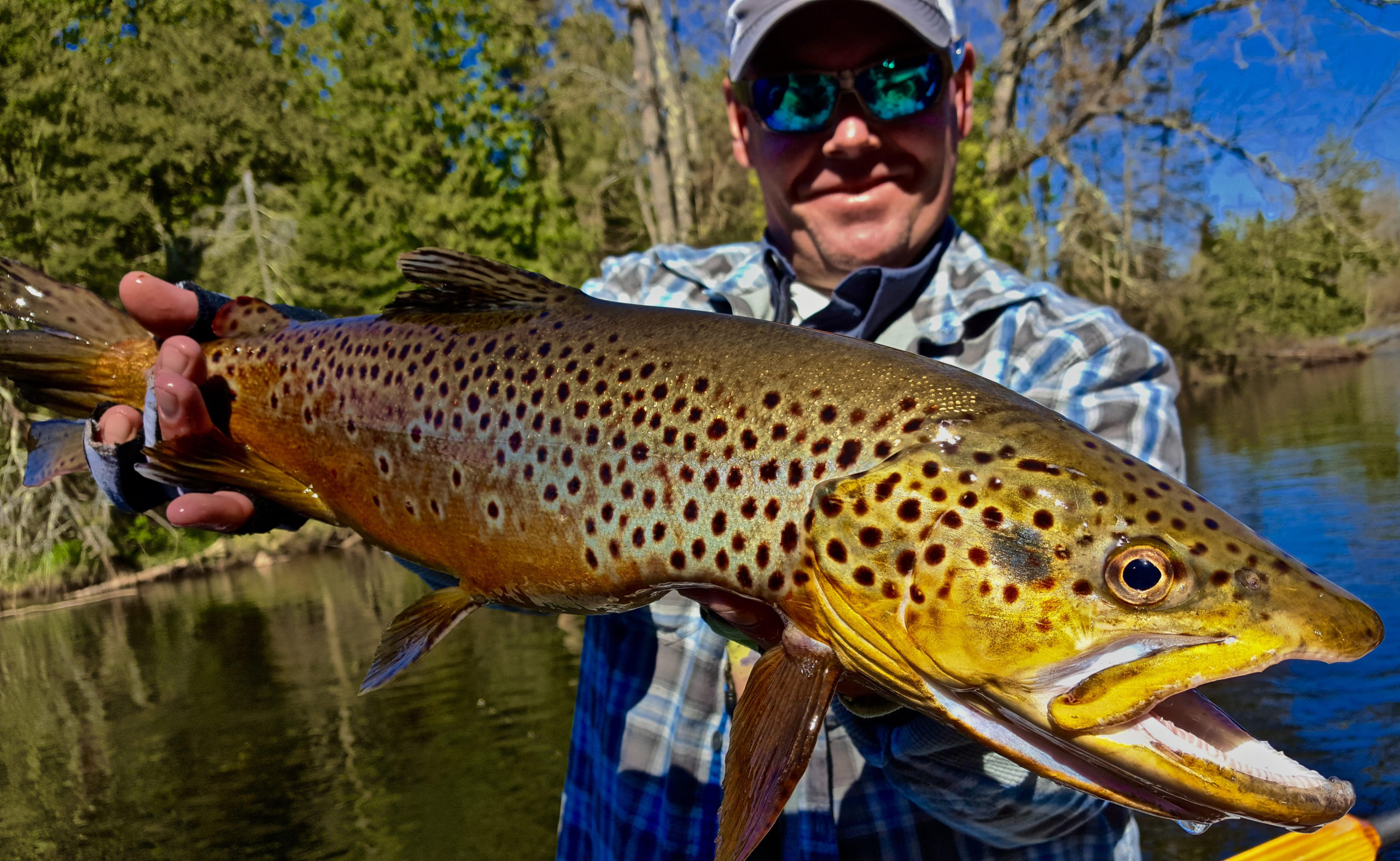
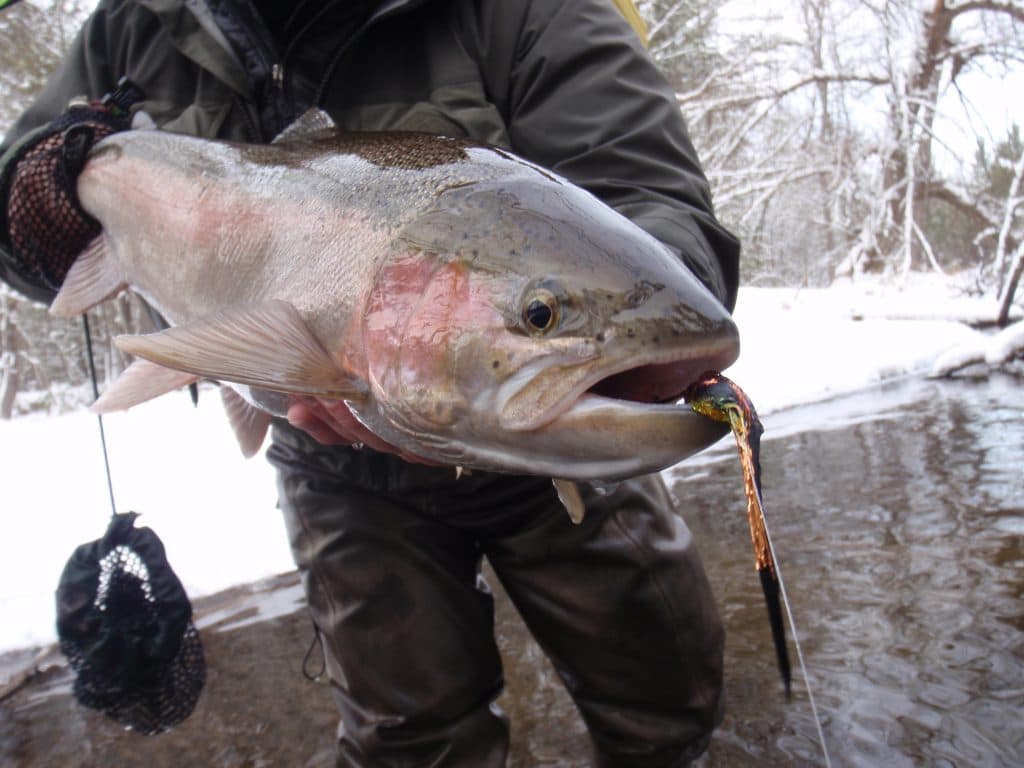
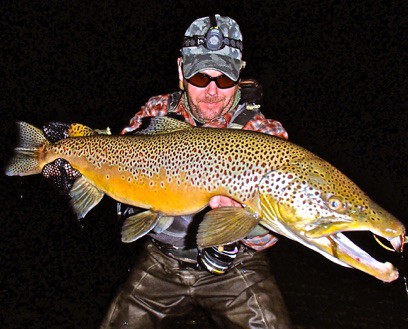


Streamer Fishing for Trout

Conclusion with Tommy Lynch on Streamer Fishing for Trout

Tommy Lynch shared a deep dive into streamer fishing, from reading trout behavior to making your flies move like real baitfish. Whether you’re targeting suicide fish or would-be predators, his four-step approach will help you fish smarter. If you want more insight from one of the best in the game, be sure to check out TheFishWhisperer.com. Now, grab your gear, hit the water, and put these tips to work!


723 | Guiding in the Catskills with John Francis – Trout Town Flies, New York Fly Fishing, Dry Fly Fishing

What makes the Catskills one of the most legendary fly fishing destinations in the US? With historic rivers like the East and West Branch of the Delaware, the Beaver Kill, and the Willowemoc, this region is the birthplace of American dry fly fishing—and it still offers some of the best trout waters in the country today.


Show Notes with John Francis. Hit play below! 👇🏻

apple podcasts


Find the show:  iTunes | Stitcher | Overcast

Subscribe on Android

Subscribe on Apple Podcasts

Subscribe via RSS

(The full episode transcript is at the bottom of this blogpost) 👇🏻

Sponsors and Podcast Updates


In this episode, John Francis of Trout Town Flies—local guide and new drift boat owner—takes us through the seasons of the Catskills, sharing his best strategies for winter nymphing, midge fishing, and adjusting your setup for cold-water trout. Plus, we’re diving into Bug Week, one of the most exciting times of the year for dry fly fishing, and how to time your trip for the best action. If you’ve ever wanted to fish the birthplace of American fly fishing, this is your chance to learn from a local. Let’s get into it!


Follow John on Instagram @johnscatskillguideservice

Visit their website at TroutTownFlies.com


Resources Noted in the Show

Guest & Other Links:

Fishing Locations Mentioned:

  • Delaware River System
  • Beaver Kill & Willowemoc Rivers

Gear & Brands Mentioned:

Events Shows:

Fishing Apps & Mapping Tools:


Related Episodes

666 | Fly Fishing the Catskills with Joe Rist – New York, Brown Trout, Dry Fly Fishing

WFS 379 – StealthCraft Boats with Mike Batcke – Driftboats, PowerDrifters, Rafts


Full Podcast Transcript

Episode Transcript
Dave (2s): What is the most famous place you know of with more fly fishing history than any other in the country? The east and west branch of the Delaware the Beaver Kill. And many more of these streams in this area have some of the earliest days of dry fly fishing in the US We have a Catskills guide who is going to share some of his best tips on fishing the winter and beyond on some of these famous waters of New York. So you might have a little more knowledge to apply to your home waters this year. This is the Wet Fly Swing podcast where I show you the best places to travel to for fly fishing, how to find the best resources and tools to prepare for that trip, And what you can do to give back to the fish species we all love. How’s it going today? I’m Dave host of the We Fly Swing podcast. I’ve been fly fishing since I was a little kid, grew up around a fly shop and have created one of the largest fly fishing podcasts in this country. Dave (48s): I’ve also interviewed more of the greatest fly anglers and guides than just about anyone out there. John Francis Trout Town Guide and new drift boat owner is gonna take us through the Catskills and the seasons throughout the year. You’re gonna get his best tips on fishing during the winter with Midges. We’re gonna get into some Midge activity today. You’re gonna find out how to fish your rig even during the colder months and how to change your style a little bit. And then we’re gonna build the perfect trip and the perfect time to hit the Catskills this year. Plus, you’re gonna find out what Bug Week is all about and when you should be thinking of taking advantage of this massive hatch in this area of the Catskills. Alright, here we go. The birthplace of modern fly fishing. Dave (1m 29s): John Francis from trout town flies.com. How you doing, John? John (1m 36s): I’m good. Dave (1m 37s): Good, good, good. Great to have you on here. We’re gonna be heading back into the Catskills, which is, you know, obviously a famous part of the country. Every time I have a episode on this area, it always gets me excited, you know, about it because I think just the history right of it is pretty amazing. And we’re gonna talk Trout Town flies. We had Joe Wrist on a podcast. We’ll have a link to that one as well. But how are things going? It’s cold out there, right? You guys hanging in there? John (2m 1s): Oh yeah, it’s freezing. You know, we’re not doing much fishing Right now, we’re just waiting for spring at this point. Dave (2m 6s): Yeah, yeah, yeah. So it’s, so it’s been a cold year, but, and Right now we’re kind of in the, you know, February, we’re getting into February. It’s gonna be March pretty soon. When does typical year for you guys in the Catskills, when are you typically getting going on, say some of your trips? John (2m 22s): Usually April, like right at the beginning of April, we, we start, that’s when the season starts as well. April 1st through October 15th. And that’s really when people start trickling into the shop and stuff like that. And they want to learn how to fly fish and stuff like that. But we do get some people that if the weather permits, they want to go out in February or March. Dave (2m 44s): Right. So you do, so if, if like somebody comes in and they’re, maybe there’s a, a little bit warmer weather, you would get out there and and do a trip in in like February, March? John (2m 53s): Absolutely. Dave (2m 54s): Okay, nice. And, but this year it’s been a little cold. What is the typical, if you take it to, you know, let’s just say it’s February, March, what are you guys typically fishing? What does that look like? And like talk a little bit about, first maybe talk about the areas that you’re at and then what you’d be fishing there John (3m 10s): During that time of year. I’m usually looking at the tail waters just because they’re, they’re more like regulated by the dam and you know, there’s probably less ice, especially up more near the dams. So I like to fish like right up as close to the dam as I can get on either the east or the west branch. And you know, it depends on how high the water is and stuff, but just a single nim for two Nims with a yarn indicator has, has done me well over the years. Dave (3m 40s): Okay. And and what are the typical nymphs you might be using under the indicator? John (3m 45s): Like a little pheasant tail or hairs, ear, even a zebra midge. I’ve had luck with red midges with gold wire. You know, I just, I try, sometimes I just get behind the vice and I throw some things together and I go try it as well and it, it does me good. Dave (4m 1s): Good. And is it the typical size range, kind of 18 to 24, is that typical for images out there? John (4m 7s): Yeah, sometimes you can get away like with a 16 on a curved hook, like a scud hook. But yeah, usually the smaller the better. I usually stick to 22 will be the smallest I go. Dave (4m 20s): Yeah, 22. John (4m 21s): Yeah. Okay. Just because those big fish, you know, it’s tough to get that little tiny hook stuck in their lip the right way. Right, Dave (4m 27s): Right, right. Yeah. So maybe 20 twos and that’s, I’ve heard some on that like maybe half of the feeding that trout are doing is on Midges throughout the winter. Do you find that that’s pretty common on Midges? Are there other insects, other hatches things you’re fishing John (4m 42s): Like the pheasant tail? You know, I feel like the nim, the NIMS live for a year or more under the water, so they’re readily available. You know, all it takes is for them to get dislodged so you can really fish whatever you want. But I’ve had luck in the winter, the smaller the better, you know, I use mostly jig hooks for my stuff and I found that a, I don’t get hung up on the bottom as much and I get way better hookup ratios. Dave (5m 8s): Okay. And is it jig hook? Would you fish so you could fish, like you said the zebra midge on a size 20 with a jig hook? John (5m 14s): Yeah, I usually do the 22 on the zebra midges for the jig hooks and then anything else like a 20 or 18 during the winter, Dave (5m 22s): 20 or 18. Nice. Well this is, this is a great start. We’re gonna get into this, I think talking more Midges talking about, you know, fishing on the Catskills. And we’ll probably get into a little more specific. So maybe before we get there, take us back real quick on your fly fishing. I wanna talk Trout town, but how did you first get into fly fishing, you know, and kind of what’s your first memory? John (5m 40s): So I’m 26 now, but I started tying when I was about six. My dad got me into it and everything. And then I think when I was about eight or nine, we were, we were camping up at Little Pond State Campground and I had, for years I’d just been practicing casting in the yard. Like my dad would put out a five gallon bucket and I’d go out there and we, I live right on the, I lived right on the Ramapo River. I could have went down there and practiced, but for some reason I just stayed in the yard and I wanted to get that, that little yarn piece in that bucket. And so we were at the state campground. I tell him that I’m gonna go practice my cast on the beach and he gives me, I tied a few wooly buggers and I gave ’em to him and he gave me one of ’em back and he said, just go cast this into the water. John (6m 25s): So I’m practicing my cast, practicing my cast. I ended up catching like an 18 inch brown trout, the first trout I ever caught on a fly rod in Oh wow. Pretty much right there. It was. I was pretty much hooked, you know, I was, I’ve been into it ever since. So my tying, I have all the tying stuff and everything, you know. Dave (6m 42s): Right. When did you connect with Trout Town? Because I think they’ve been there a while, right? Maybe talk about that. When did that come to be with Joe and all that stuff? John (6m 51s): So before Joe owned Trout Town, me and my dad used to go into Trout Town ’cause he used to take me to the Willow Wock as well when I was a kid. And we used to go in and see Dennis when it was Catskill flies and then some stuff happened. We didn’t get up to the Catskills very much over the next few years. And, and then my dad unfortunately got cancer and passed away and I moved back to New York to take care of my grandma and I was gung-ho like get to get back into fly fishing and all that stuff. And over six months, you know, I’m exploring the rivers on my own and I still had my, my own setup and everything. John (7m 31s): And I ended up just going back to Roscoe and, ’cause that’s where my dad always took me and I remember it as Catskill flies, but then I noticed Trout Town fly. So I started going in there talking to Joe and he was always the greatest guy in town to go get information or talk to or just, you know, walk in and have a great conversation about fishing. And over the time I was, I was a chef and I just hated being inside all day. Even during the summer in the hot kitchen, I just wanted to be outside. So I started talking to Joe about getting my guide license and you know, he encouraged me to do it and told me he’d give me a shot. John (8m 11s): So I went and got my guide license and we’re going on four years now. Wow. And I work, I work in the shop and we’re great friends. And I just did the New Jersey fly fishing show for Child Town Flies along with Butternut Grove, a campground that me and Joe both stay at as seasonals. So we had a great little community up in Roscoe. Dave (8m 31s): Wow. That’s cool. So how was the, so this was the, was this the Edison show? John (8m 36s): Yes sir. Dave (8m 37s): Yeah. How was that for you? Was that your first show or had you been to those shows before? John (8m 40s): That was my second time being to the Edison Show. It was my second show ever. So last year I did it for the first time. It was, it was cool. I booked a few trips, you know, it was kind of like a, my first time doing the thing, so I was kind of like getting a feeling for it this year. I lost, lost my Voice on Saturday. Yeah. You know, it was a, it was a busy weekend Right. And I helped clean up on Sunday. I actually brought home my new Drift boat as well. Dave (9m 6s): Oh no kidding. Yeah. John (9m 7s): From the show. So that was pretty cool. Dave (9m 9s): Oh wow. So was this something you were, you had already purchased? Yeah, John (9m 13s): This was something that I was planning to go get in March or February and then the owner of the company hit me up and he was like, I’ll bring it to the New Jersey show. And it saved me 12 hours of driving, so. Dave (9m 24s): Oh wow. And what was the boat you picked up? John (9m 27s): I got a stealth craft, big Horn skiff, stealth Dave (9m 29s): Craft, big Horn. Yeah. And Steal Craft is the pretty much the big company out on the east coast. Right. As far as drift boats. John (9m 36s): Yeah. We saw another drift boat there, it was like East Cape Boats and it was a carbon fiber boat, but Oh, okay. South Craft really has the, like they really customize your boat exactly how you want it. It’s pretty cool. Yeah, Dave (9m 49s): They do. And what was it, what was your, it was the self craft. What was the name of it? John (9m 53s): The Big Horn skiff. Dave (9m 54s): Oh yeah, the Big Horn. Yeah. Okay. Big Horn skiff. I’m just gonna plug this in. Take a look at it. So, so what did you, on that big horn skiff, did you do a lot of customizing or is it pretty standard on what you got? John (10m 5s): I actually did quite a bit of customizing. You know, a lot of ’em, there’s only ever the guy that built my boat was telling me there’s only ever been eight skiffs with the floor Anchor one. Mine was one of them. Dave (10m 17s): Okay. So you got the floor anchor? John (10m 18s): Yeah, I got a full pickles tray on one side and then a half tackle tray on the other side for easy access in and out, you know, and then I got a tie down cooler in the front seat. Dave (10m 29s): Oh sure. Yeah. Like a, like a Yeti type one of those cooler or whatever. Yep. With like seats. Is this, you got the padded seats or what does that look like? Is this all, John (10m 35s): Oh, I got the temper seats. They’re very, they’re nice. And then I also got the upgraded casting braces. ’cause stealth crafts, regular casting braces are nice, but they’re a little short. I got the ones that kind of buck out a little bit more and Okay. Are a little bit more stable. But one thing I did too was I’m gonna build a little platform to put right behind the false floor and ’cause we, the tr town flies and I know a guy, good friend named Nico, he does a lot of work with project healing waters and stuff like that. And so with the cooler I can take it out and I can actually put a platform behind the false floor and strap in a wheelchair. Oh nice. If, you know, if someone wanted to get out there and was having a hard time and stuff like that. Dave (11m 16s): Sure. That’s great. Nice stealth craft. I’ve never wrote a stealth craft, but I’ve heard lots about ’em and obviously they’re doing some great stuff. I know we had the, the founder on, in a episode a while back and he talked about, you know, the customization, you know what I mean? Like he was in trying to always do different things. He thought that that was a really important part of, you know, just the evolution of boats. So, so that’s cool. Yeah, it’s a sweet looking boat. We’ll put some links out in the show notes to that one. And now the drift boat, are you guys doing a mix of drift and foot or is that kind of like 50 50? Or how does that look throughout the year? John (11m 48s): Yeah, I mean we, through the shop and myself, we both do waiting trips and float trips. You know, it’s just whatever the client wants. Typically I like to do take beginners waiting first ’cause it’s just easier to work with them and teach ’em the cast and teach ’em how to mend and everything. ’cause they don’t have to row a boat at the same time. And you know, it’s just easier to learn standing in one spot than going down the river, I think. But you know, for some people they just want to get out in the boat and have a good ride and cast the rod a few of times. So that’s, that’s cool too. Dave (12m 19s): Yeah, that is cool. What are the, for the drift boats, what, what are the rivers you’re fishing typically with the boat? John (12m 25s): Yeah, typically we’re just on the Delaware, the east branch, the west branch and the, the main stem. Dave (12m 30s): Okay. Yeah. And these are, and remind me again on the, on the Delaware, are they both tailwaters or what do they have going there? John (12m 36s): Yeah, they’re both tail waters. They come out of the Pakan Reservoir and the Cannon Fill reservoir. Dave (12m 41s): Okay. So they’re both tailwaters and these are fairly, I guess obviously big enough to run a drift boat. What does it look like when you’re drifting down the river? What does your day look like? Is this something where you’re fishing outta the boat most day? Or are you getting out in and out? John (12m 53s): Some people are just like, you know, there’s, we tell people that sometimes they don’t even have to wear their waders, you know, that we just float down the river. Like on the West branch you can really do that, just float down the river and you can park the boat. The God will get out and walk it through a riffle and you can stay in the boat. But if you’re floating the east branch, it’s a little bit of a smaller river, a little tighter. And those spots you might have to get out and get around some spots. Or it might be smarter to get out and walk down a little bit and fish a hole before you row into it. But a typical day on the river is, you know, if it’s a full day you put in around 8 30, 9 o’clock, you know, depending on the time of year, we’re usually getting into fish pretty early, you know, and if it’s prime time, it can be an all day thing. John (13m 36s): Right. Dave (13m 37s): It can be. Okay. And we can talk more about some of the drifts and things like that, but, but let’s take it back on. So Joe, so basically yeah, you have this connection through your dad and through the family of that area, you come back and you’re kind of, it sounds like you’re, you’re all in on the fly fishing. Is that kinda, is that how it feels to you? How does it feel now that you’ve got four years in and, and looking back on the, the stuff you’re doing with the cooking and things like that? John (13m 60s): Oh, it feels like I don’t ever want to be back in a kitchen, you know? Yeah. Like having the river as an office is, is like the greatest feeling. One thing my dad always told me was, he said, if you do what you love, you’ll never work a day in your life. Mm. Yeah. And like Joe gives me a check for guiding or whatever and I’m surprised still, you know, I’m like, I can’t believe I get paid to do this. It’s awesome Dave (14m 21s): That, that’s John (14m 22s): Cool. So I see myself doing this for as long as possible. Dave (14m 25s): Nice. And is the Catskills, I mean, it is obviously probably maybe the most famous, definitely one of the most famous areas in the country. What is it to you? Why, why do you feel that out there? Like, do the history and stuff, do you know a little about the history? Is that something you’re, you’re kind of up on or does it just feel like a, you know, just any other river? John (14m 43s): No, I definitely feel the history because, you know, I’ve met Joan Wolf and you know, Tom Mason and a lot of Ed van put, you know, a lot of these people that are, some of ’em passed and you know, some of ’em still around and you know, the history is definitely there. You know, there’s, people talk about it all the time in the cats coast, you know, that’s, if you come fly fishing there, your guide is definitely gonna tell you a story or two about the old days, you know? Dave (15m 8s): Right. Yeah, exactly. And, and do you know some of those stories? How, how do you, when you have somebody on your trip, are you, are you talking about some of this since you’re a little bit younger or are you kind of creating your own stories? What, what does that look like? John (15m 21s): Oh, I, you know, I have some of my own stories about, you know, funny things that happened on the river and stuff. But you know, you know, I think Joe mentioned in the podcast about the train that Oh yeah. Broke down on the river and they had to put the trout in the river. Yeah. You know, I always tell that story ’cause I think that’s a great story. Yeah. It’s about the rainbow trout and everything like that. Dave (15m 40s): Yep. Right. That, that was the, the train crashing back in the, whatever it was, a hundred, 200 years ago or, or whatever a hundred years ago had had. Yeah. Rainbow were just dumped into what, what the The Delaware. John (15m 51s): Yeah. Right into the Delaware. Dave (15m 53s): Right. And now to this day, you still find, and that’s the reason why there are rainbows in the Delaware. John (15m 58s): Yeah. I mean, as far as we know, some places put rainbows in ponds and stuff and you know, during some floods, some of them may have gone into the system. But when you hook a rainbow in the Catskills, it’s not like hooking a rainbow out in Pennsylvania or New Jersey or something like that. Like it’s an affluent battle. Right. It’s really different. Like I go to Pulaski and I fish for steelhead every once in a while. And it really does feel like just a small steelhead. It’s a lot different than any other rainbow I’ve caught anywhere else. Dave (16m 32s): Trout Routes is the most comprehensive mapping app for trout anglers. With over 50,000 trout streams, 350,000 access points, public land maps and more Trout routes is the number one resource for navigating, researching and exploring trout streams. You can download trout routes for free in the app store today. Just search for trout routes on your phone and take your exploration to the next level. That’s Trout routes. T-R-O-U-T-R-O-U-T-E-S. Grand Teton Fly Fishing is a premier guide service and fly shop that has access to some of the most coveted rivers and lakes in western Wyoming. Their simple goal is to share their valued resource and have you experience a native cutthroat trout rising to a single dry fly in the shadows of the Tetons. Dave (17m 18s): You can check out Grand Teton Right now at Grand teton fly fishing.com. Let them know you heard of them through this podcast. Yeah, it’s interesting, the, the story I just heard another one from, we were doing a episode on the White River in Arkansas, and I didn’t realize this, but they stalked that the brown trout were stalked, you know, way back in the day as well, you know, and, and now it’s, you know, it’s taken time, but now it’s this amazing fishery, you know, that’s grown up and you know, and so there’s lots of these examples, case studies of, of great, you know, things that have happened over the years For you, let’s take it back into again that wintertime. Let’s just say it’s February kind of in late February into March and you’re out there in the river. Dave (17m 59s): Talk about that. Let, let’s just say it’s, it’s not too cold, you’re able to fish. What does that look like? Are you getting started early in the morning later? You know, first of all, where do you get started and what might you be fishing that time of year? John (18m 10s): So during that time, I’m gonna probably get to the river. As soon as that temperature starts to rise, you know, the air temperature starts to rise, that’s when I wanna be getting in the water and stuff like that. You know, I’m gonna start off fishing like the slow, the real slow, like right as from like, I wanna say like the middle of the pool up to the head of the pool, right in that slow water. And then work my way into the fast water. ’cause fish will still sit in the fast water even in the winter. But typically I’ll fish, you know, like 18 pheasant Taylor hares ear prince or something, something to get it down. And then a small zebra mini or even a smaller pheasant tail behind that. John (18m 52s): And then, you know, just, just depending on the depth of the water, you know, I get it within a foot or within six inches of the bottom if I can, if I know the river pretty well on the pool, I’m fishing and then, you know, throughout the day I don’t spend a whole day in one spot. You know, I’ll spend two, three hours really fish over an area and then I’ll move and then go to another spot. And if I’m lucky, I’ll get the three spots in one day. You know, I feel like winter fishing is really about moving around and stuff like that. You know, you wanna find where the fish are. If you find one fish there, it’s liable that there’s a few more there. Dave (19m 26s): Right, right, right. So if you get some action, that’s some positive reinforcement. So stay there, don’t leave necessarily right away. John (19m 32s): Yeah, I, I wanna, I mean I’ve caught like four or five fish right outta the same spot in the winter sometimes after all day of moving around, walking up, walking down, you know, and then you just find out where they’re holding for that moment. Dave (19m 46s): Right. When you come up to that pool, if you’re starting in the middle of the pool working up, where are you fishing? How do you know where the fish are holding in that pool? Are you looking for certain structure? What are you looking for? John (19m 57s): So I fish close to me and if the river’s clear, I look for weed beds on the bottom. I fish next to ’em, not over top of ’em, just ’cause the fish will sit right next to those weed beds. You know, large rocks. Put the nims right next to ’em around them both sides if you can. Sometimes if you see a current break behind the rock, you know, this fish will sit right behind the rocks during the winter ’cause it’s just an easy spot to sit. They don’t have to expend a lot of energy and as soon as something floats by they just swoop over and grab it. Found a lot of luck doing that. And then another big thing in the winter too is streamers, if you’re not having luck on nims, don’t be scared that the three or four inch streamer out there just on the, to the other bank, if it’s a small river and just twitch it back across, you know, like let it swing and just small little strips. John (20m 44s): I’ve caught some pretty nice winter fish doing that as well. Dave (20m 47s): Okay. Yeah, so, so, and you would be throwing on, what would be an example of a streamer you might fish in the winter? John (20m 54s): So I try a lot on my own, I guess you could call it like a, a ver a version of like a sex dungeon or something. But I use like laser dove for the head and I use a lot of arctic fox, but I kind of wrap the body like a wooly bugger with like Palmer, Sunil and stuff like that. But it’s got gray movement and they’re usually articulated, but I’ll cut the, the back hook off. Dave (21m 16s): Oh you do? Yeah, John (21m 17s): Just ’cause usually, you know, I’m not, I don’t want to kill any fish, so. Right. If they, if if I get a short strike, you know, I just, I let it sit and then I give it a few more twitches. If he comes back and, and eats it, I’m glad it’s not, you know, then no big deal. No big deal. Dave (21m 32s): Yeah. Right. And yeah, so that is on the articulates. You’ve got this hook at the very back. Do you find, I guess guys are fishing those, how are they avoiding hooking those fish deep with those flies? John (21m 42s): Well sometimes, usually when a trout, I’ve noticed when a trout eats a streamer, they hit it from the side, you know, so they won’t, like, sometimes, don’t get me wrong, they’ll come up from the back and just engulf the whole thing. And that’s usually when you have your tea hook problems. But most of the tryout, I feel like they, they like hit it from the side and if there is two hooks on it, you’ll get both hooks in the outside of the mouth. And then the problem I have is they’ll start spinning in the net and doing all this stuff and get all wrapped up and you know, their eyes start bulging outta their heads and I don’t like that. So it’s not good. I’ve noticed with the one hook, it keeps that back end like free. So you can kind of just like keep some tension on the line and if he starts to spin, you can just keep some tension and let the line spin and he won’t get all wrapped up and stuff like that. Dave (22m 31s): That’s great. Yeah, that’s good advice. I, I agree. I think, yeah, you got two hooks in there, it’s, it’s bad enough with one hook in a net, but yeah, you get two and it’s, it can be messy. Okay. So that’s a good tip on the streamers. And then, so when you’re ing talk about the, talk about the leader setup real quick. How does that look? You mentioned the strike indicator, talk about your terminal tackle end and all that stuff. John (22m 51s): So I like to use an airflow poly liter plus on my rods. It’s a, it’s like an, I call it an extension of your fly line down to a tbit ring. And then for my MPH rig I will, I’ll put like, let’s say depending on the river level, like anywhere from two to four feet, maybe even five feet to four x tie, a triple surgeons not probably down to five or five and a half x to my largest fly. And then I’ll put that little fly off the back of that. Gotcha. Right to the hook bend with about, with usually five and a half or six x fluorocarbon Dave (23m 29s): And like 18 inches, something like that. John (23m 31s): Yeah, usually like 12 to 18 inches, 12 Dave (23m 33s): To 18. Gotcha. So, and you might use a, maybe a bigger hook on your lead fly and then trailing off of that just a smaller, a merger or something like that, or another nip? John (23m 41s): Yeah, usually two nymphs. Dave (23m 43s): Two nymphs. Okay. You John (23m 44s): Know, because I like to fish the pools and stuff, but I feel like the deeper pools, slower moving pools is better for the streamer stuff. ’cause the fish don’t have, if you’re floating in nim through a pool that’s just super slow, they got forever to look at it and they might be hungry enough to where they eat it. But I like to fish like the heads with the nose because it’s kind of just moving a little bit faster and you know, they’re more inclined to just look up, see it and, and eat it in my eyes. Dave (24m 10s): Gotcha. Okay. And, and how would you maybe describe when you’re in that pool, talk about how you’re fishing? Are you casting for the most part upstream or talk about, you know, how you’re fishing the indicator? John (24m 20s): Well it really all depends on how the river is, you know, flowing in front of me if there’s current breaks or if there’s different seams and stuff like that. But typically I’ll be like at the head of a pool and there’ll be a back at you that I’m standing in or some of the sorts, something like that. And I wanna get those nms down. So I do cast almost on like a up, if the, all the water’s uniform and flowing the same, I’ll cast like on a upstream just a little bit, if across the river’s 12 o’clock I’ll probably cast at 11 or 10 30. And then I’ll just try to give a, a big man, get all that line behind my indicator and then I’m letting my nymph sink and I’m, I’m feeding my line out as it goes down. I’d probably let it get to about one o’clock, two o’clock and I let it swing just a little bit, kind of have gotten fish on the swing in the winter. John (25m 7s): And then after that I just put it back up and I start short obviously. And I work my way out. I’m not gonna cast across the river on my first jet. Right. Dave (25m 16s): How many feet, if you had a good water in front of you, how far away from you would you be casting? John (25m 21s): I would start right in front of me, like yeah, 10 feet, like yeah, 10 feet right in front of me and then work to 15 and then 20 and then work my way out. You know, I have caught fish right at my feet before. Dave (25m 34s): Right, okay. And you, and that’s why the indicator is pretty nice, right? Because it, it suspends the flies so you have weight, you know, if they’re getting down then you can just watch that indicator and it, it allows you to, like you said, make that big mend. Then they sink down. What is the weight, how are you getting ’em down? Are these like tungsten flies? Yeah, John (25m 54s): I use, I use beads on my, on my jake foot. Yeah. Dave (25m 57s): Yeah. So no split shot or anything? Just stunk beads. Yeah. Okay, gotcha. Okay. Yeah. And you’re, and you’re getting it down there and then as you’re drifting it, you were mentioned kinda 10 to, you know, 1:00 PM something like that or you know, in that range. Yeah, but I John (26m 10s): Mean, if you can get farther down, if you’re getting a good drift, you know, sometimes I’ll let it go down even farther. But you know, when you’re fishing straight down from you, it can be hard to set the hook ’cause the fish is facing you. I always tell people you wanna, especially like all my clients, you know, you got, if we’re in the boat, if we’re wade fishing anything you wanna set the hook except for a dry fly, then you wanna go straight up. But if you’re nipping, you wanna set the hook the way the water’s flowing, you want to go with the water. ’cause the fish is always, 90% of the time gonna be facing upstream when it eats your flies. You know, so you wanna pull that hook back into his face. You don’t want to pull upstream and pull it out of his mouth. Dave (26m 48s): Yep. Love that. Yeah. Set the hook the way the water’s flowing. So, and you typically set the hook. Where would your rod tip? Would it be lower or higher? Does that matter? John (26m 56s): I, you know, at an angle, you know, not straight up but not to the side, you know, just like at that perfect angle, like right in between there. Dave (27m 4s): Yeah, right in between. Okay. That’s awesome. So, so that’s another good tip. So setting the, the hook is big and then, and on the indicator you pretty much are just watching the indicator and as soon as that you see something that changes you, you’re setting the hook. Yeah. John (27m 17s): You know, if you’re, if you’re taking the bottom too much, that’s why I like the indicator too ’cause it’s very adjustable and if you’re taking the bottom too much, you know, you want your flies to drift just above the bottom. You don’t want ’em to be tick, tick, tick ’cause it does make noise and stuff. And when metal hits rocks, you know, I feel like that does scare away fish. So I always, you know, I don’t like to take bottom ever. I like to be just above. Dave (27m 39s): Yep. And how do you find that? Is that just a trial and error? Yeah, like if you didn’t know it. Yeah, John (27m 44s): If You don’t know the river, it’s just gonna be a trial and error. But if you know your pools and the flows and stuff like that, it can be, it can be pretty easy to just slap your leader and your rig together and you know, get out there and adjust it once or twice and be good to go. Dave (27m 59s): Okay, nice. So that is a little bit on your setup for fishing, you know, winter midges, you know, what are, as you get in, you said April things start getting what’s going on in April. Is that just the weather is changing typically and getting nicer out there, but talk about the transition from the winter into more of that spring kind of range? John (28m 16s): Yeah, so we’ll start, we’ll sometimes April can be pretty cold and we can still have snow. But typically like anytime, like toward the end of the month, even if it’s a cold winter, it can be, it will start getting those 50 degree days and then you know, the Quill Gordons and you get Hendricks ends and even some cat, even the midges will start hatching too. You’ll see them on the water. But typically your fishing for dry flies would be during the warmest part of the day. And, but then it opens up the morning and the evening more in the morning for the nim thing because those nims get active during the morning. They start moving to where they will, they want to hatch, you know, if they’re in the riffles they’re gonna move to the pools and stuff like that. John (28m 58s): And you know, that’s where the fish will start moving around as well. They won’t be so holed up in their winter lives. Dave (29m 4s): Right, right, right. Okay. And what are people, is there a hatch or a time of year that people are really, you’re hearing more people wanting to come, you know, to the Catskills for or a river, what would be the kind of the top river do you think you hear most requests for? John (29m 19s): That’s tough ’cause it’s like, it’s very based on the time of year, but it really starts with the Hendrickson hatch. Yeah. You know, Hendrickson. Yeah. There’s been times where I’ve been on the Willowy mock and it’s a literally a blanket hatch. Like you can cast your fly out there and you would not know which, which one is yours, you know, and the fish won’t. And it’s crazy ’cause the fish aren’t even eating them. You know, there could be a hundred thousand floating down the river and Right. You know, the fish will eat a Ann over the a hundred thousand hendricksons floating past them. Right. You know? Yeah. Dave (29m 51s): And the Hendrick, so that, that is, and what is that hedge typically? When does that usually start? John (29m 55s): So that’s usually in like April, depending, like last year we had a warm spring and stuff. We were seeing Quill Gordon’s in February, which was crazy. So like, and most of the hatches happened two weeks early last year. But with it being so cold this winter, if it stays like this and we get a cooler spring, I’d expect stuff to be more on time this year. Sometime in April. I can’t give you an exact week or date just based on the variables. But sometime in April, this is when the Hendrick sense will start. Dave (30m 24s): Okay. Well let’s, let’s take it to, let’s say somebody was calling Right now. They hadn’t ever been to the Catskills, they want to fish it. What are you, you know, if they don’t know anything about it, what, what are you telling them? Let’s just say I’m looking at, at doing a trip. What, what would you tell me? Or what questions would you ask? John (30m 39s): So, well, I’m gonna say, you know, like, are you looking for a half day or a full day? Yeah, Dave (30m 44s): Yeah. Let’s say we’re working for, let’s just say we’re looking for more of a, a few days. We’re gonna be out there for over like two or three days over the week. John (30m 53s): Okay. Over the week. Yeah. So I’m gonna tell you, I’m gonna tell you to come in late May. Dave (30m 58s): Okay. John (30m 59s): Because like late May, early June, there’s this week I call, I like to call it bug week. Yeah. And there’s just, there’s just like, everything’s hatching. You have all your big bugs, you have your blue Seds, your March Browns green, Drakes ISOs are starting. And it could just be a ton of fun, you know, just on big dries at, at big heads. You know, most of the fish are looking up and they’re eager to eat. It’s, it can be a blast all day long. Dave (31m 29s): Wow. That’s awesome. Yeah. Bug week. That’s perfect right there. So if John (31m 32s): You’re into dry fly fishing that Yeah. Dave (31m 34s): Dry fly, John (31m 34s): That would be the best time. Dave (31m 35s): Yeah, that’s right. We are, yeah, let’s, let’s say dry. So, so late May, early June. And hey, so let’s take it there. A typical, I know there’s lots of variation, but in your typical year, what might that look like? Are you getting started early then? Is it, is the heat is starting to hit then or is that a little bit later? John (31m 51s): It could be, it could be pretty warm around them. But like last year it was, it was pretty perfect. You know, it was like late last week of May, first week of June and you know, we had our cool mornings still and we had the warmer, the warmer afternoons to bring the hashes out and it, it was some great fishing I caught, I caught a lot of very nice fish in that last time last year. And my clients also put some great fish in the boat on the maid stem. I had a first time client out in the boat and they were two veterans and he put a 22 inch brown trout in the boat on a march ground Dave (32m 28s): On the surface? John (32m 29s): Yep. On the surface. On a march ground. Dave (32m 32s): And was this while you were drifting down the river? John (32m 34s): Yeah, we were on the main stem. Dave (32m 35s): The main stem, Delaware. And where does the main stem, Delaware. Where, where would you be without giving any secrets? I’m not sure if there’s any secrets out out there, but where would somebody be floating? You know, like what, what’s the range? Is there a town nearby? What would be the closest town? John (32m 48s): The mainstem really it starts in Hancock, New York. Yeah. So that’s where the East branch and the West branch meet. Okay. And then that right there, it kind of marks the start of the national park. Oh, okay. The upper, the upper Delaware Scenic and Recreational River. So it’s like a national park for like 60 miles down the river goes through Cal Coon, goes through Damascus all the way down to Port Durvis and stuff like that. But we typically, we typically fish the upper part, you know, down to Damascus for trout and stuff like that Dave (33m 20s): Down to Damascus. John (33m 21s): Yeah. And then, you know, once it gets hotter in the summer and stuff, there’s a lot of small mouth in the river that you can even get stripers walleye. You know, I’ve caught, I caught a pick roll on the main stem in in December. One year. Huh? Dave (33m 33s): A pick roll? John (33m 34s): Yeah, a pick roll. Dave (33m 36s): Wow. Fishing for trout. John (33m 37s): Fishing for trout. There Dave (33m 39s): You go. That’s pretty funny. Ice and, well John (33m 41s): I had just gotten a new boat. I was more floating down the river just to float down the river. But you know, we were throwing streamers for fun. Dave (33m 47s): Gotcha. And so the Delaware kind of from, yeah, from Hancock to Damascus, it kind of splits Pennsylvania and New York. Is that what it’s doing for the most part? John (33m 56s): Yeah, so it almost starts like right past hail et bridge where it becomes the pa New York border. So the west branch will be the pa New York border for a while and then till it gets down to the Delaware mainstem where the east branch comes in then, then the main stem is the border pretty much all the way down. Dave (34m 16s): Oh, okay. I see. Gotcha. And that’s the big water, so, so for the most part you’re floating from Hancock down with that. That’s, is that the main area you’re using your drift boat in? John (34m 25s): Yeah, I mean, well if the flows are good on the west branch, we’ll float the west branch. You know, if the east branch is tougher to float with drift boats just because of its size and the typical flows we have on it during the summer it can be pretty low in the riffles and stuff like that. Hard to, hard to get through. But in the spring, the east branch is very floatable. The west branch is usually floatable year round, except for Right now obviously. ’cause probably most of it’s frozen. But yeah, usually, usually the west branch and the mainstem are pretty floatable year round for bass trout. Dave (34m 58s): Oh right. John (34m 58s): Stuff like that. I know people on the lower Delaware do walleye in the early summer too. We get a lot of shad in the mainstem. Dave (35m 6s): Oh, shad, right? John (35m 7s): Yeah. A lot of shad. And it’s funny too ’cause it’ll come up and eat a dry fly. Dave (35m 11s): No kidding. Yeah. John (35m 13s): Wow. Dave (35m 14s): Yeah. So you got, yeah, you have a mixture. It’s a Delaware right? It’s, it, it’s a huge river that flows through all the way. I mean, I’m not sure how many, how many miles, but Right. All the way out to the, to the ocean. Yeah. John (35m 25s): I mean, I don’t want to be wrong, but I’d guess like 150 or more miles. You know, it’s a long river. Dave (35m 32s): Yeah. And is it a big river up near Hancock where it comes together, the confluence? Is that, how big is that? Or like width wise, would you say? John (35m 41s): I could, I’d say like right where it comes together, probably like 50, 60, maybe 70 yards, you Dave (35m 48s): Knows. Oh, 70 yards. Yeah. Yeah. So John (35m 49s): Yeah, it’s pretty wide. Like the first, the first hole, we call it Bard Parker or Junction Pool. And it’s a deep pool. It’s, it could be 15, 20 feet deep and you know, it’s probably 200, 300 yards long. It’s pretty, it’s a pretty long pool. Most of the pools and on the main stem are like that. It’ll be a very long deep pool. And then you’ll get to a riffle section or a little braid section and then it’ll just be ahead to a long deep pool again. And you have that pretty much the whole way down. Dave (36m 23s): Oh, it is. So not, not a lot of riffles, just all lots of pools. Good pool habitat. John (36m 27s): Yeah. Yeah. But the, the riffles can be, some of the riffles are fairly long and you have a good run right before the pool and those are very, very good spots to fish during the summer. Dave (36m 37s): Okay. Yeah. And, and are you seeing more drift boats out there? Or is that always, have there always been boats out there floating? John (36m 44s): There’s always been boats out there. I’d, I’d say last year though, the main sim got pretty warm and it was, it was tough to fish for trout. So the main sim got pretty con, or not the main sim. The west branch got pretty congested for a little while. But you know, everyone out there is pretty nice. You know, we all for for the most part know each other and we’re all respectful. We give each other space and you know, we all have a good time out there, you know. Right, Dave (37m 9s): Right. Yeah. No reason to to battle it out right. With the other anglers. Yeah. John (37m 14s): Yeah. No, I have no problems with anyone out there. We all want everyone to have a great day fishing Dave (37m 20s): Step into the world where the river whispers and the fishing is nothing short of legendary. This year I ventured into the heart of Eastern Idaho’s Yellowstone Teton territory where the fish were larger than life and the waters held the secrets of the best fly fishing out West Yellowstone Teton territory is not just a location, it’s a gateway to adventures that will etch themselves into your memory with crystal clear rivers like the Henry’s Fork and the South Fork of the Snake and enough lakes to keep you going all year long. Make your way to Yellowstone Teton territory and embark on a journey to one of North America’s finest fly fishing destinations. Whether you’re planning your trip now or just dreaming it up, the YTT is where those dreams turn into reality. Dave (38m 2s): Remember Yellowstone Teton territory, that’s Teton, T-E-T-O-N. It’s time to experience eastern Idaho for yourself and support this podcast at the same time. So that’s kinda some of the Delaware. And then if you’re doing a walk and Wade, where are some of those rivers you guys are hitting more? More of? John (38m 21s): So more of the walk And Wades will, so like the Beaver Kill and the Will of Ock, we’ll do a ton of that in the spring. Mm. But once the water gets warmer, we’ll walk and wait on the East Branch a lot. The West Branch even not so much the main stem because it’s just such a big river. I have done it a few times just for clients that wanted to go weed fish in the main stem. But you know, it’s a, it’s a big river. It’s tough to wade it, you know? Right. Dave (38m 48s): Not easy. What is the, the Beaver Kill versus the Willowy mock? Are they similar at all or a lot different? John (38m 54s): So they’re similar to each other in the fact that they’re free stones, meaning that they flow outta the mountains based on rainfall and stuff like that. The Willowy Muck is a bit smaller in size and has less, I’d say less water. But they’re both great rivers. They’re both like similar structured rivers, you know, as in riffs and pools and stuff like that. The Upper beaver coal can be a ton of fun to fish. Like behind the Roscoe motel and up to the bridge and stuff like that. You have some chances to get some pretty decent sized fish too, out of some pretty small water, you know, ’cause all of it connects to the Delaware and some of the stuff I’ve read about how the trout in the Delaware migrate is pretty fascinating. John (39m 38s): You know, how far they travel to spawn and you know, sometimes they’ll find a fish in the beaver kill and then they’ll find it in the east branch later on. It’s pretty cool how far they go and stuff like that. So Dave (39m 50s): These are the brown tr and rainbows. John (39m 52s): Yeah, the rainbows travel really far. You know, like during the spring and summer you’ll catch big rainbows in the main stem in the East Branch and then up on the upper Beaver hill, like for example at the Beaver Hill State Campground or Covered Bridge, you know, during the fall and stuff you might not see one rainbow, but then you, you go fishing there in the spring and you’re catching these 1820 inch rainbows ’cause they ran all the way up there to Spawn. Dave (40m 18s): Yep. Right. Wow. And you mentioned, you mentioned the the Bug week. So would the Willowy Mock be a river that you could hit in late May, early June into June that, would that be Bug week there as well? John (40m 28s): Yeah, so with the Tailwaters it’s a little different too because of the temperature of the water. Like it’s not like the Free Stones, the Free Stones will be a lot more fluctuation in temperature. So there’s, it is still bug week. You know, you might not get, it might be more localized to like areas like you might get good March Browns on like the lower half of the Willow E Ock and stuff like that. And in different parts of the Beaver Kill, but it might not be like as prolific as the lower half of the West Branch might see a crazy hatch for like a few days in a row. And then on the Wellow e mock you might get one or two good days of a hatch and then it might peter out pretty quickly. Dave (41m 9s): Right. Pretty quick. Okay. And so, so if we were coming there in late May, early June, let’s just say the last week in May, what would be the first, if we had a few days to fish, would we mix it up on a, a little bit or start on the Tailwater? What would be a good program to do there? John (41m 25s): So first off, I would go to Trout Town and ask Joe what’s been happening in the area and stuff like that. Because you know, know it’s different every year, but if I’m just basing it on, last year the West Branch was pretty insane for the hatches and the upper Mainstone was, was on fire. I had just started doing my float trips last year. So I was on the boat a ton in the beginning of the year. But the times I did Fish, the Beaver Kill and the Willowy Mock, it was pretty good fishing. But the Tailwaters is always my favorite spot. Dave (41m 59s): Okay. So the tail water’s just more, more kind of reliable, like you said, that you know, they’re more consistent for the most part. Yeah. Okay. So it’d be good to start off in, I could see a maybe day one you’re starting off in the West branch, maybe float and you, and you would be floating it. You could float the West branch. John (42m 16s): Yeah, you can float the West branch. Personally, if I’m fishing by myself, I like waiting, you know? Yeah. Just ’cause you know, you really get to pick apart the pool. You know, you float through a pool in 30 minutes and then You don’t see it again. But if you’re standing at a pool for an hour and a half, two hours, you might see that big fish pop his head up or, or something happening. You’re like, that’s where I want to be. So personally, I like waiting more, but it is fun to hop in the boat and go down the river with friends and you know, catch a few fish here and there and you know, just have a good time. But if I’m by myself, Dave (42m 47s): You’re waiting. You’re waiting. Yeah. How do you choose between, you know, whether you’re gonna be on the boat that day or foot? Does it just depend on who the client is? John (42m 55s): Yeah, it depends on what the clients wanna do. Sometimes if the water’s really high and stuff like that and they have a wade trip booked, you know, I’ll just compensate and be like, Hey listen, same price you want to go out on the boat today, I think it’d be a bit better and we’ll do that, you know? Dave (43m 11s): Yep. Right. So mix it up depending on the, on the conditions there. Okay. And then the be, so the Willow Ock is a, is that now, is that a trip to the East branch? John (43m 19s): That’s a tributary to the Beaver Hill. So there’s actually another junction pool and it’s in Roscoe and that’s a famous pool they call it. It’s famous for the two-headed trout. ’cause they say, they say a trout traveled all the way up to beaver kill and couldn’t decide whether to go up the beaver kill or up the willow eima. So it grew two heads. Dave (43m 39s): Right. And so that’s the beaver kill. So the beaver kill and then that flows into what? What does the beaver kill flow into? John (43m 45s): The beaver kill flows into the east branch down at what we call jaws. And it, it has a beautiful eagle viewing site there with a nice gazebo and there’s always eagles up in the trees there. Dave (43m 55s): Oh, okay. Yeah. Gotcha. So Willowy mock into, and then at Roscoe, that’s is at the beaver kill flowing through there. John (44m 2s): Yeah, that’s the beaver kill and the willowy mock meeting. Dave (44m 4s): Oh, meeting, okay, gotcha. John (44m 5s): Yeah, right in Roscoe. And then that forms the lower beaver kill, which what we call it. And then that flows to the east branch and that forms the Lower East branch. And that goes to the Mainstone. Dave (44m 15s): Oh yeah, that’s right. And then it’s okay. Right. So there’s a lot. So you mentioned, so we talked the east branch, the west branch, the Willowy mock, the Beaver Kill. Any other streams we’re missing that you’re hitting throughout the year here? John (44m 26s): So, kind of a secret of mine, but I do love, do love the never sink in Dave (44m 30s): The winter. Oh, the never sink. Yeah. You John (44m 32s): Know, it is a tailwater, it is, you know, regulated like the east branch and the West branch. And I just love it in the winter. It’s just so pretty. You know, the big rivers are pretty, but you know, you have some of those trees that come over the river and you get the snow and most of the time you’re the only guy on the river. And it’s just so peaceful. You know, I like fishing in the small streams in the winter. The free stones can be really tough in the winter, don’t get me wrong. You can catch fish on them and stuff like that. But never, ING’s always been a special river to me. My dad always used to take me there. We used to go to the gorge and and stuff like that. So I just love being down in there. Dave (45m 8s): Okay. Never sink. And the never sink. Where is that, how is that one connected to these other ones we’ve been talking about? John (45m 13s): So it’s connected because it’s part of the, the aqueduct system for all the reservoirs. So all the water goes through these long tubes that go down to New York City for the drinking water and everything. So it’s classified as a tail water and it does flow. The never sink flows in, flows into the Delaware River down by Port Jervis. So there are wild trout running up into the, the never sink. And it’s always been labeled as a great trout stream. That’s actually, if I am correct, I think that’s where the first dryly was ever had. Oh really? Was ever used. Was on the Never Sink. Yeah, Dave (45m 50s): Right. There you go. John (45m 51s): It’s a famous Dryly River. In recent years it’s been labeled as tough to catch fish on dryly in that river, just for the reason everyone goes there and uses them and stuff like that. I will say I’ve had more luck using Nisson than Evers sink, than dry flies, but I have caught some pretty decent fish on Dries as well. Dave (46m 9s): Okay. All right. So yeah, the Never Sink definitely would be good. Another big one to add to the list. And is that far, are all these within striking distance of like if, let’s just say, you know, we were coming there to stay, where would be a good place that you would like location to stay as far as Town, city, stuff like that. John (46m 26s): So, you know, Roscoe is pretty much right in the middle, you know? Yeah. Rosco, butternut Grove is the campground. Me and Joe stay at as seasonals during the year and it, it’s about six miles more toward the Delaware. So I love that campground because it’s literally right in the middle of everything. You can get up to the Delaware and to the West Branch in 30 minutes. You can get to the Never Sink in 30 minutes. And then every, the East branch, the Willowy Lock and the Beaver Hill are all within 15 minutes. You know, it’s, it’s really a great spot to camp. You know, they have cabins, RVs, and all that good stuff. Bring your, yeah, bring your camper tent camp, whatever you need. Yep. So I love staying there, just ’cause it’s so easy to get everywhere from there. Dave (47m 9s): Yeah. Butternut. Okay. That’s awesome. Butternut Grove. Yeah, right off the highway, so that’s easy. Yeah. John (47m 13s): Right off the highway, store your boat there, all that good stuff. Dave (47m 17s): And it’s on the Beaverkill. John (47m 18s): Yeah, right on The Beaver Kill. And I will say that’s a great pool right behind the campground in the spring. Dave (47m 24s): That’s another bonus. John (47m 25s): Yeah. Get some great rainbows there in the spring. Dave (47m 27s): Okay. So yeah, another bonus. So you’re right there. That would would be amazing to camp right on The Beaver Kill is access pretty good out there as far as like, where would people find out how to, where they could go walk and wait and stuff like that? John (47m 38s): So, you know, old 17 is a, the old highway that used to go along all the rivers and stuff like that. And if you just drive along that, you’ll see the big brown state fishing signs Okay. That you can park at. And you’ll see the parking lot. You, you really can’t miss it. There are a few spots like on the Upper East Branch where it’s just a pull off. You’re not gonna see a sign, but it’s an obvious pull off. Pull off there, you’ll find the, the state sign that where for the footpath, for the anglers. And then usually as long as you’re in the river, you’re good. As long as you’re within that high water mark, you can pretty much walk wherever you want. There are a few spots where there is private water, like the Upper Beaver kill above the 2 0 6 bridge. John (48m 21s): Most of it’s private for clubs and stuff like that. But like on the Delaware system and like that, most of it is accessible if you’re willing to walk. Dave (48m 29s): It is. Okay. Well that’s great. That’s great to hear. Okay. So lots of opportunities there. Well, let’s, let’s start to take it outta here. We have a little segment, this is kind of our brand shout out segment. And I’m sure you probably had some good brands being at the show recently that you connected with. But today this is presented by Pesca on the fly. They have this unique fly rod, which is a six piece, one of their rods, the six piece fly rod. It was interesting because when we talked to them, it sounds amazing because it’s a little bit shorter than the four piece. So it’s, you can throw it in your backpack like a normal small backpack. It’ll fit in there. And I just heard that Canada, I guess is restricting travel. So now when you go there, you can’t carry on a rod. It’s, you know what I mean, it’s gotta be small enough. Dave (49m 10s): So those old four pieces now have to be check bag, check baggage. So that’s a good tip on. So we’re gonna give a shout out to PEs on the fly today. But for you, what is your, maybe talk about that. What are some of the brands you’re using? Do you have kind of rod reel, other gear brands that you kinda really love, you wanna give a shout out to? John (49m 28s): So I will say this last year I’ve picked up some Douglas rods. Oh yeah. They’re a New York company. Sure. And I’m very happy with them. Great. Action. Their warranty is second to none. You know, I had a client pretty much just accidentally step on a rod, break it right in half. I had a new piece on my doorstep in three days. Oh wow. And I will say, no offense to any other companies, but that’s, I’ve never had that before. It’s always taken way longer than that. So Douglas is, you know, I’ll definitely be getting more rods from them and recommending and using them in the future. Another one, you know, the hero sunglasses, love them. I used, I’ve been using Walmart shades for the last few years and then yeah. John (50m 10s): Finally stepped it up. Got them. And as some, the difference in impeccable, you know? Yeah. Like as a guide, you know, you’re telling your clients there’s a fish right there. And they got their Walmart shas on, they have no idea where the fish is. Right. And I’m like, it’s swimming right there, you know? Yeah. So, yeah. Yeah. But was a great brand and I love their sunglasses. Dave (50m 30s): That’s perfect. Perfect. Yeah. But, and are you more of a glasses or plastic lens? John (50m 35s): So I got the first pair, I was being kind of cheap, got the plastic lenses, and then I was at this West branch like show for next year gonna all the companies come together and they show you what they’re presenting for next year. And I tried some glass lenses out and, you know, it was kind of, it looked better, you know, the colors were better and everything. So I got a pair of glass lenses and I hate to say I haven’t put the plastic ones back on since Dave (51m 1s): No. Yeah. So you like the Yeah, they’re a little, so I John (51m 3s): Would, yeah, I’d say the, I’d say the glass is worth the extra money. Dave (51m 7s): Yeah. And it’s, and it’s not that much heavier, right? No, John (51m 10s): It’s not at all heavier. Yeah. And they, and the great part is that they don’t scratch my plastic ones. You know, even though I have the lanyard thing on ’em, I drop ’em, you know, stick ’em in my fly bag, you know, after I get off the boat and stuff like that. And they get all scratched up. The glass ones have done the same thing and they’re still perfect. I, I’ve had no problems. Dave (51m 27s): Yeah. That’s perfect. Good. Okay. So we got our, our couple of gear shouts out there. And did you see at the show when you were in Edison, did you see a ton of, I guess everybody was there. Was that, was that a pretty good show? John (51m 37s): Oh yeah, it was great. You know, we saw, we saw Kevin from Douglas. That was awesome talking to him. Billy from Behe, he is a great guy. I love fishing with him. Joe came down to the show on Friday and said hi to everyone. It’s always cool seeing him there. You know, it’s always fun talking to everyone at the shows. I like connecting with people, you know, trying to get people up to the Catskills. You know, I wouldn’t, I can’t believe, you know, it’s two hours away from Edison. Wow. A lot of people come to the show from Edison. It’s like two and a half hours. And not many people have been up to the Catskills or even Roscoe or Wow, that’s amazing. Amazing. Or even heard about it. And you know, it’s the birthplace of American fly fishing. Dave (52m 13s): Right. So John (52m 14s): I really, you know, I’ve, I love pushing. I’ve, and I’m thinking about doing another show in March in Lancaster, pa so, you know, I really want to get people up to the cascos or at least inform ’em about the history. You know, just come up and check it out. It’s, it’s a great place. It’s awesome fishing, you know, it’s so beautiful. Dave (52m 31s): Yeah. That is amazing. But John (52m 33s): Yeah, it’s this, and I will say I’m a, I love birds, you know, especially birds are prey. And it’s in New York and the Catskills, I’m pretty sure it’s like, it has the second most bald eagles in the US Dave (52m 43s): Oh, it does. John (52m 43s): I’m pretty sure. Yeah. Yeah. Other than Alaska. Dave (52m 46s): Sure. Birds of prey. So you see lots of, and lots of eagles and other birds of prey. Yeah. John (52m 51s): Eagles, hawks. You know, we’ve even seen some golden eagles this last year. Yeah. Which is surprising. ’cause they’re starting to make a comeback, which is great to see. And you know, right. You’re out at night. If we’re out mousing, you know, you’ll hear the owls hooting in the woods and stuff. And that’s just a surreal experience. It’s a lot of fun. Dave (53m 7s): Do you consider yourself a, like a birder? I John (53m 10s): Don’t know. I like ’em. I don’t, yeah. You know, Dave (53m 13s): You don’t have all the birding books and like going get nerding out on it, like fully? No, John (53m 17s): Not really. Nerding out. I got, I got the, the bug books. I kind of, I nerded out on the bugs when I was learning about all the hatches and stuff like that. Oh yeah. You know, the birds, I have the bird books. I just like seeing them, seeing them in the wild. And, you know, it’s, it’s, it’s great. Dave (53m 30s): Yeah. Are you able to, I, I was listening to somebody recently as like a friend of a friend that they were saying they were looking for a specific owl. And I can’t remember the species, but he hadn’t found one in years, like six years. And then he just happened to find this owl in a neighborhood. It was like literally in like a cul-de-sac. And, and the guy was out there with his binoculars being like, oh my God. That’s the first time he’s ever seen the owl. Are you, is that something where you see, you’re seeing new species you don’t know of and you know, out there? Or is it typical you John (53m 56s): Seen? Yeah, sometimes. We saw a Green Heron last year, and I’ve never seen, oh yeah. Green. I never seen any of those on the Delaware. Might have just missed ’em. But last year I started to notice ’em and then the Golden Eagles. That was something that I have not seen in the Catskills until like these last two years. Well, the two years ago I saw one, and then this last year I, I had three or four or five sightings and it was pretty cool. Dave (54m 19s): That is cool. Yeah. It’s the more you hear about New York and it is surprising that more of those people down in New Jersey aren’t making it up there because it seems like the more you hear about it, you know, the bigger it gets. Right. Because there’s, it’s such a big state and there’s so much to do and, and you know, New York City, of course is the, is totally the opposite it feels like than the most of the state. You know what I mean? Yeah. Most of the state is this other, is what you’re talking about. Right. These amazing national parks and all that. John (54m 47s): I used to live in Cincinnati, Ohio. My parents were divorced and that’s where I went to high school and stuff like that. Before I moved back out to New York. I still tied and fished out there and everything. But you know, I was telling everyone, I was like, I gotta move back to New York and Oh, New York City, New York City. I’m like, no, not New York City. I’m right. New York City. And you know, it’s crazy how many people think New York is just New York City. Not many people know about New York state and upstate and all the great fishing steelhead salmon. Right. You can do whatever you want here. Yeah. And it’s amazing, you know, there’s so many great hiking trails, camping spots. It’s upstate New York is like Yep. It’s awesome. Dave (55m 26s): It’s got it all. And the weather is not too bad either. Right. You get some, some hot summers and depending on the, or maybe some cold years, but overall Right. But like you’re saying, springtime through the fall is probably pretty spectacular. Right. Perfect. John (55m 39s): Oh, it’s beautiful. Yeah. ’cause you’re up in the mountains too. So the summers, you know, we might get like one week where it’s hot and humid, but other than that you get the nice cool nights. You get the, the nice mornings and typically it’s just really comfortable. You know, it’s a great, it’s a great place. Dave (55m 55s): Yeah. And you’re not too far. The other cool thing is, is you’re not too far from the Great Lakes. I mean, we’ve talked a lot about Lake Ontario, of course. Lake Erie, south Shore of, of Lake Erie. I mean, you could, if you wanted to drive out there and hit some, some of that. Oh, all steelhead. Yeah. John (56m 8s): You’re like two and a half, three hours from the Salmon River. And then you have all the Western trips to like Ontario. You got the Finger Lakes for Landlock Atlantics and all that good stuff. Right. You know, and that’s just the east or western side in New York, you know. Oh yeah. Haven’t even gotten into the Adirondacks. You know, like that’s just another beast on its own with all the hiking and fishing and, and everything up there. Dave (56m 32s): And where are the Adirondacks from? Roscoe. John (56m 34s): So it would be Northeast. Dave (56m 36s): Okay. Yeah. Northeast. So yeah. And the Adirondacks are in New York as well. Yep. John (56m 41s): It like great sacking dog, a lake and the Os River. Dave (56m 44s): Oh, in the Sable. Sure, John (56m 45s): Sure. Yeah. And you know all, all those That’s right. The like 46 high peaks and stuff like that. Yep. I haven’t even, I’ve explored the Adirondacks a little bit, but I’d like to get up there more and do stuff, you know, ’cause it’s, that’s Dave (56m 60s): Really cool. John (57m 1s): I’ve only done the west western part of New York so far. Yeah. Now. Yeah. That’s where my dad always took me. That’s where I’ve kind of stuck. Yeah. The Western. Yeah. I’d like to branch out and get out some, see some new places. Dave (57m 11s): Sure. Have you looked at thought about heading up into Canada at all? With, to the, you know, I mean, you could drive up to, I mean, it’s pretty far, but you’ve got some stuff up there, right? Atlantic salmon and some other brook trout stuff like that. John (57m 23s): Oh yeah. Labrador. Yeah. Labrador Brook trout. That’s a dream of mine. Yeah. My big dream is to get out to Iceland. Some, some though. Oh, I, yeah. I would love to go to Iceland for those sea rum, brown trout. The arctic char. Dave (57m 35s): Yeah. And the arctic char. Yeah. John (57m 36s): And that’s a big dream of mine. But yeah, I do. I’d love to go to Canada, British Columbia. Yeah. Is a bucket list. You know, south America, right. I like to travel, you know, I like to see new places. Dave (57m 47s): There you go. Yeah, there’s a ton. It’s, it’s cool to have a cool home, a home state because like you said, you got lots of stuff just where you are. But yeah, there’s lots out there to do as well. Well, let’s, let’s take it out here just with a quick little, a little three tips segment. So we talked a lot about, you know, that area. Let’s just go back to the winter. Let’s say somebody is there, it’s late February, maybe it’s early March, you know, it’s not, it’s warmed up a little bit and there’s phish. What would be three tips you would give somebody, maybe who’s, who’s new or who’s been struggling to catch fish out there in the winter? What, what would you be telling them? John (58m 18s): You know, play with your in depth. You know, if you, if you’re not taking bottom, make it a little deeper. Three inches, three inches, three inches. You know, get it right near the bottom. If you don’t get a fish on that first cast through the, the perfect first cast, give it 10 more, you know, like, fish that area, you know, give it the time of day. You know, don’t just keep walking. One cast, keep walking. Really, really fish it because that fish, you know, he could be swimming around real slow, coming up to a spot for some reason. He might not see it or might not want it on the first two or three passes. You know, I can’t tell you how many times I’ve casted. 10, 13 times in the same spot in 14 calf. Bam. John (58m 58s): I get a nice fish. There you go. You know? And then just keep playing with your fly. Don’t be scared to try an attractor fly, you know, all way. And I’d say go small and go small. You small flies there. Dave (59m 10s): So small being, like you said, don’t mess with. So we’re talking 18, 16 or nine 16. Small enough. John (59m 16s): Yeah, I’ll use a 16 on J Cook. 16 would probably be the smallest. I’ll go once we start getting into April and stuff, I’ll start using larger nymphs. ’cause then the larger bugs are getting ready to start making their migrations and getting ready to start hatching. So I’ll start upping my nymph size, and then once we get into the heat of the summer, I’ll start going back down again. Dave (59m 35s): Then back down. Okay. Yeah, those are all awesome tips. Perfect. So, so good. Well, I’ve got a, just a couple random ones and then we’ll, we’ll, we’ll take it outta here. So always love to get a little random mix of music from this, but what is your, do, are you on the, when you’re on the road traveling around with your new boat, are you listening to more podcasts or music when you’re on the road? John (59m 56s): If it’s a long road trip, I like podcasts. If I’m just like running up to Oscar or something, people might not know the radio station, but 1 0 1 0.5. Okay. WPDH, it’s like a classic rock. You know, they have a funny talk show in the morning. Dave (1h 0m 10s): Is it W-W-P-D-H? John (1h 0m 12s): Yeah. Dave (1h 0m 13s): Okay, perfect. John (1h 0m 14s): That’s just what I listen to on the way up the road. That’s what me and my dad always listen to. Dave (1h 0m 18s): So you got some morning, this is great. So you got some morning talk radio going and, and I, I love that. What, what is the, what are the DJ or what is the, what are they doing there? Who are these guys? Oh, John (1h 0m 27s): Girls man. They’re, they’re funny. I don’t know how to explain it, you know? Yeah. It’s the stuff they talk about’s good. They give you the information for like, the area, like Lo la Hudson Valley and stuff like that, where I’m from. And then, you know, they have people call in and it’s just funny the people that call in, you know, it’s just, just keeps me engaged while I’m on the road. Dave (1h 0m 46s): That’s awesome. Have you ever called in on any of that stuff? John (1h 0m 48s): No. No, no. No. That’s not that Dave (1h 0m 51s): Kind of guy. Not your style. Yeah. Yeah. This John (1h 0m 52s): Is the first podcast I’ve ever done, you know? Yeah. Well you’re of branching out Right now. Dave (1h 0m 56s): Totally. Yeah. You’re you’re doing it now. This is, this is bigger than calling in. You know, I, I think this is like, I’m not sure how many people W pH gets out to, but I’m guessing it’s probably a lot because it’s, this is out New York and New York Station. Yeah, John (1h 1m 9s): It’s been, and it’s been around forever. You know, I’ve been listening to it with my dad since I was a, since I can remember, you know, maybe not the same host, but they’ve been there forever and love Dave (1h 1m 19s): It. Love. Well, in this day and age, the nice thing is, I think you can pretty much get any station from anywhere now. So we will, we’ll look up some 1 0, 1 0.5 and classic rock. What, what is your, if you had to pick one group person, you know, band song from classic rock, what would that be? John (1h 1m 35s): Oh man, that’s, that’s tough. Dave (1h 1m 37s): Yeah. John (1h 1m 37s): You know, that is tough. Dave (1h 1m 40s): Is are you more like seventies, eighties, I guess eighties now is classic rock, right? John (1h 1m 44s): Yeah, I guess now, but I’m pretty much, IM like all over the board, you know, I like Tom Petty, ac b, C? Yeah. Okay. You know Leonard Skynyrd. Oh, Dave (1h 1m 53s): Skynyrd, yeah. John (1h 1m 53s): Stuff like that. But then I also listen to the, my girlfriend likes the new stuff. So when she’s in the car, if she plays her Dave (1h 1m 60s): Playlist, what would be a new, what would be something new? John (1h 2m 3s): She likes Mexican music. Oh, Dave (1h 2m 5s): Really? Okay. So John (1h 2m 6s): I don’t know any, like specific artists per se. Sure. But I do go to concerts with her, take her Oh, cool. And stuff. There Dave (1h 2m 14s): You go. John (1h 2m 15s): So Dave (1h 2m 15s): Yeah. Yeah, Mexican. I, I definitely love that. I just don’t know of any band. The cool thing is we can go to Spotify Right now and probably put in Mexican music or whatever and get some tunes, so. Oh yeah. So good. So we’ll do, and what about a podcast? What do you listen to? What would be one podcast you might listen to? Oh, John (1h 2m 30s): I like your guys’ podcast. Oh, nice swing. I’ve listened, I listened to that quite a bit. You know, I listen just on the road, you know, throwing a murder podcast or some Okay. True crime stuff or Sure, true crime. Just a random, you know, podcast about cars or something like that. You know, just something to listen to random. Dave (1h 2m 49s): Oh, right. Yeah. Cars, like, like building or working on cars, stuff like that. John (1h 2m 53s): Yeah. You know, just, or like, you know, just a random like deep sea fishing podcast, you know? Sure. Just like, you know, anything to keep the mind moving, learn some stuff. Yeah, Dave (1h 3m 3s): Yeah. Yeah. Good. Nice. Well, this has been good, John. I think this has been a lot of fun. I think we could probably leave it there today and we will be in touch for sure, because the, the plan is to get out in that part of the world. I’ve been close in New York, but haven’t ever actually trout fished out there, so I’m, I’m hoping to, to put that together in the next year or so. But yeah, thanks for all your time today. This has been a lot of fun. And we’ll send everybody out to, I guess, like you said, John’s Catskill Guide service on Instagram. Is that the best place to send people? Yeah. John (1h 3m 32s): Or Facebook. Dave (1h 3m 34s): Or Facebook. Okay. John (1h 3m 35s): Yep, that’d be perfect. Dave (1h 3m 36s): Okay. And then we’ll also put a link out to trout town flies.com with Joe’s shop and the place you’re working for there. But, but yeah, thanks again. This has been amazing and really appreciate you shedding all your kind of wisdom and insight on, on the Catskills, and we’ll be in touch soon. Yeah, John (1h 3m 50s): No problem. Thank you. We hope to see you out there. Dave (1h 3m 53s): All right. Your call to action today is check in with John. You can do that Right now on Instagram, John’s Catskills Guide Service, Catskills Guide Service, or@trouttownflies.com. Check in with John and let him know you heard this podcast. And if you wanna get a truck check in with him Right now. That is, sounds like an amazing place to start. Alright, quick thing, two things before we get outta here. Just wanna remind you, Togiak is going strong, Togiak Week, Togiak Fishing Alaska. If you’re interested in this trip, check in with me dave@wetlyswing.com and put Togiak in the subject line. I’ll let you know if we have any availability. We have a few spots we should still have left as of this episode. And let me know, this is gonna be chasing Chinook and Salmon up in Alaska at this amazing lodge, TOK River Lodge. Dave (1h 4m 37s): Okay. And the next episode you also don’t wanna miss this week is round two with Tommy Lynch. This is on Wednesday this week we’re gonna be digging back into streamer days Streamer episode number two with Tommy Lynch. Don’t miss that one. Click subscribe so you get updated when that episode goes live in two days from Right now if you’re listening to this one live. Alright, I gotta get on, we got a Stillwater episode coming up soon, so I’m gonna go work on that one. But appreciate you for stopping in today and checking out the show. Hope you have a great morning, great afternoon, or great evening, wherever you are in the world, and we’ll talk to you soon. 3 (1h 5m 9s): Thanks for listening to the Wet Fly, swing Fly fishing show. For notes and links from this episode, visit wet fly swing.com.
         

722 | Fishing for the Snake River Cutthroat with Josh Gallivan – Grand Teton Fly Fishing

Snake River Cutthroat

Josh Gallivan, head guide at Grand Teton Fly Fishing, is here to share his expertise on the streams and lakes around the Grand Teton area. He’ll talk about how he started at the Jack Dennis Fly Shop, share some great stories, and dive into his techniques for sight fishing snake river cutthroat and fishing stillwater lakes. Plus, he’ll tell us about an incredible mothership trip that’s not to be missed.

Show Notes with Josh Gallivan on Fishing Snake River Cutthroat. Hit play below! 👇🏻


apple podcasts

Find the show:  iTunes | Stitcher | Overcast

Subscribe on Android

Subscribe on Apple Podcasts

Subscribe via RSS

(The full episode transcript is at the bottom of this blogpost) 👇🏻

Sponsors and Podcast Updates

Snake River Cutthroat

About Josh Gallivan

Josh’s fly fishing journey started in high school when he got a job at the Jack Dennis Outdoor Shop in Jackson. While working there, he met fantastic people like Jeff Currier and Scott Sanchez.

He remembers watching the guides come in after their long days on the river, sunburned but happy. That’s when he realized he wanted to be a guide, not just work in the shop. After three years, he switched to guiding, and it’s become his true passion.

Check out our podcast episode with Jack Dennis!

Episode Chapters with Josh Gallivan on Fishing Snake River Cutthroat

Spring fishing kicks off when temperatures hit around 40–45°F. That might not seem warm, but after a long winter, the fish get active. The best action happens from noon to 4 p.m. when the sun warms things up. The challenge is that boat ramps can still be buried under snow.

  • How Do You Know When the River “Pops”?
    • Look for Blue Winged Olive mayflies starting to hatch.
    • If you see trout rising to sip bugs off the surface, it’s game on.
    • If a spot looks fishy but you don’t see any heads, move on—it’s all about sight fishing.
  • What Fly Should You Use?
    • A size 16 Comparadun with a sparse tie works excellently. Pair it with a 10-foot, 5X leader. The Snake River Cutthroats aren’t too picky, but a soft landing fly helps.
Snake River Cutthroat

While some tributaries don’t open until April, the Snake River stays open year-round. Fish move out of the smaller streams and into the river in winter. You can still fish here without a boat and catch Snake River Cutthroat. A 20-inch Snake River Cutthroat is considered big because these fish grow slowly due to the long winters and short summers.

In the summer, Jackson Hole gets packed with tourists. It’s exciting but can be a bit crazy with traffic. For guides like Josh, it’s a chance to teach people about the environment and the fragile river ecosystem.

What Makes Snake River Cutthroat Unique?

The Snake River cutthroat is one of several native cutthroat species in the West, with others like the Yellowstone and Colorado River cutthroats nearby. What’s unique about this fishery is that you won’t find native trout in many places. Jackson Hole is a lucky area with thriving native cutthroat populations.

For those interested, there’s even a Wyoming Cutt-Slam challenge where you can try to catch all four cutthroat species in the state.

Hosted Trips

26:28—Josh has traveled the world on fishing trips with his clients. Some places he’s been to include Greenland, Cuba, Belize, and Mexico. One of his favorite trips was to Cuba, where the tarpon fishing was incredible.

Josh talks about his time on a mothership during his Cuba trip. The boat was huge, with 10 rooms and three stories. It was super comfortable, and the crew took great care of everyone.

After fishing, they’d get ice-cold towels, rum punch, and delicious appetizers. The best part? The boat was only 5 minutes away from the fishing grounds. They’d relax on the top deck at night, watching tarpon roll in the sunset.

31:09 – Josh has also been to the remote Anaa Atoll near Tahiti, one of his favorite places. The fishing is incredible, with bonefish, giant trevally, snapper, and sharks. But what truly stands out is the culture. The locals treat visitors like family.


Follow Josh on Instagram 👉🏻 @joshgallivan

Connect with him on Facebook 👉🏻 Josh Gallivan Fly Fishing

Visit their website at GrandTetonFlyFishing.com

Fishing Snake River Cutthroat Related Podcast Episodes

Read the Full Podcast Transcript Below

Episode Transcript
Dave (2s): There’s something about catching a native fish in its home range. There are a ton of species spread around the world and around this country. But there’s something great when you can connect with one fish on your terms. It’s a special moment. Today’s guest makes his living connecting anglers with native cutthroat trout, And today you’re going to experience how he brings it all together. So you have a few more tips for your next trout trip. This is the Wet Fly Swing podcast where I show you the best places to travel to for fly fishing, how to find the best resources and tools to prepare for that big trip, And what you can do to give back to the fish species we all love. Hey, how’s it going? I’m Dave host of the Wetly Swing podcast. I’ve been fly fishing since I was a little kid. I grew up around a little fly shop and have created one of the largest fly fishing podcasts in this country. Dave (44s): I’ve also interviewed more of the greatest fly anglers and guides than just about anyone out there. Josh Galvin, head guide at Grand Teton Fly Fishing is gonna walk us through his program on the streams and lakes around the Grand Teton area. You’re gonna hear how he got his start working at the Jack Dennis Fly Shop back in the day. This is a great story. He gets into another Jack Dennis sighting, and you’re also gonna find out how Josh sight fishes for trout and some big tips on fishing lakes. We’re gonna get into it still water as well today. Plus you’re gonna hear about his program around the world and this mothership trip that it’s amazing. You can’t miss this one, the mothership trip. It’s gonna be a good one. All right, let’s get into it. Here he is, Josh Gallivan from Grand Teton fly fishing.com. Dave (1m 28s): How you doing, Josh? Josh (1m 29s): I’m good, Dave. Thanks for having me, man. Yeah, Dave (1m 31s): Yeah, I’m really excited about this one. I, you know, I’m, I’m excited because I haven’t been out. I mean, I’ve been in the, your neck of the woods where you’re the head guide with Grand Teton Fly Fishing, but I haven’t been out with you specifically. So I’m hoping, you know, maybe in the next year we’ll be changing that. But we’re gonna talk the Grand Tetons Jackson Hole, you know, kind of the Snake River system, everything that’s going on out there, which we all know is a lot. We’ve been covering a lot of content out there. But before we jump into that, first off, how are things going? What it’s like, it’s kind of mid, when this goes live, it’s gonna be like mid to late February. What’s, what’s happening now? What’s gonna be happening in the next month or so? Josh (2m 5s): Oh man, it’s, you know, I’m sitting here in Jackson Right now. It’s supposed to be negative 18. Oh, wow. This weekend. So it’s kind of comical that we’re talking about a fly fishing podcast. Dave (2m 17s): Has it been negative 18? I’ve been hearing that around the country. Has it been a while since it’s been that cold? Josh (2m 23s): Well, this is the first time this winter. Dave (2m 24s): Yeah. But, but is that typical every winter you guys are getting a cold snap? Josh (2m 28s): Yeah, January is kind of the, you know, the coldest month of the year, shortest days of the year. But yeah, man, it’s, I drive over the Snake River every day and I just, I’m dreaming about, you know, summer months and spring coming. Yeah. Typically in March, kind of second half of March, early April, the temperatures start to stabilize And we have just some, some of the best dry fly fishing of the year, and it’s still ski season, so there’s really not a lot of people that know about it. But yeah, it can be very special. Dave (3m 1s): And is that for, is that the kind of bluing dolls and stuff like that? Or is that more midges? What, what’s going on that time of year? Josh (3m 7s): Yeah. Yeah. Betas and midges, the snake’s definitely a low water fishery, so it’s gonna fish best kind of a lower the water. And in March and April, you know, before runoff has happened, the fish are just potted up, you know, and they’re, they’re in the mid river riffles and there’ll be hundreds of fish in one riffle. You could just have so much fun just standing in one spot. Wow. Yeah, it’s epic. Dave (3m 34s): That’s really cool. So this is good. I, this is already starting off pretty good because, you know, I’m kind of thinking, always thinking about when we get into these things because, and you’ve done a lot of travel too around the, the country, the world and things like that. But when we take it in there, there’s a lot of times you could fish the snake. Right. And we’ve been out there later in the fall and things like that, but, but it’s great to hear winter. Yeah. Those are the times Josh (3m 53s): Everybody knows about. Dave (3m 54s): Yeah. That’s what everybody knows, but people don’t think about this winter. And I guess, could you still in March and April get a cold snap out there, get some crazy weather? Josh (4m 2s): Yeah, you could. I mean, it’s definitely more weather dependent that time of year. But then again, I mean in, I’ve fished in snowstorms in June before, you know? Dave (4m 11s): Yeah. Yeah. Well, let’s, we’re gonna tee that up here in a second. Before we get into that, I want to take it back real quick on your story, because I don’t wanna miss that. I wanna hear about how you got into fly fishing, you know, what’s your first memory? How did you come into connecting with Grand Teton and Scott out there? Josh (4m 26s): Yeah, so growing up here in Jackson, you know, I fished a little bit as a kid, but I really didn’t dive into fly fishing until I was in high school. And I got a job at the Jack Dennis Outdoor shop. And, you know, I worked with, I worked with some pretty amazing people. I worked with Jeff er, you know, Scott Sanchez, who’s the most creative, innovative fly tire I’ve ever seen. I shared days off with Jeff, and pretty quickly I, you know, I kind of remember the fishing guides coming into the shop, like after guiding, and they were just kind of sunburnt and tired, and they were picking up flies for the following day. Josh (5m 11s): And something just kind of in me, I was like, I want that, you know, I need to be a fishing guide. I can’t be in the shop just selling flies to people and talking fishing every day. I, I wanna live it, you know? Yeah. So after three years in the fly shop, I think I was just outta high school, I started guiding, and it’s just become, it’s become, you know, my, my passion and the people you meet along the way, and, you know, it’s given me a, it’s given me a livelihood. It’s given me a life. I really wouldn’t have it any other way. I mean, it’s really just an awesome thing. Dave (5m 48s): Yes. It sounds pretty awesome. And I love that. I always love when I get a Jack Dennis story or two, and we’ve had him on the podcast and Oh, really? Yeah. It was one of the best episodes because he is just got so many stories. But talk about that. And it was the Jack Dennis Outdoor store, not the Jack Dennis fly shop. Is that a different thing or? Well, the, Josh (6m 3s): The fly shop was in the, the outdoor store. Dave (6m 6s): Okay. So describe for those, ’cause we’ve talked, you know, we’ve had Jeff Curry, we had a lot of people on, but I’ve never heard about what it looked like. Can you describe the Jack Dennis Outdoor store back Josh (6m 15s): In the day? Yeah. Yeah. So the shop itself is a huge outdoor store. It’s right on the town square, you know, in the summer we get 6 million visitors a summer Wow. In our little town of 15,000 people. So it’s a really popular place. And Jack did so much for the sport. I mean, it was, it was just awesome getting to work with him. And, you know, it was a really interesting kind of client base, because I think you get a lot of just tourists that come through that are interested in fly fishing. And there we do have a good amount of fly fishermen, hardcore fly fishermen that, that come through too. But, you know, just random people walking into the fly shop and you just have five minutes with them to chat and try to turn ’em into a fly fisherman right then and there. Josh (7m 3s): But, you know, a lot of our, our bread and butter in the fly shop was honestly like two hour casting lessons. And I taught a lot of people, I think I set the record, I actually beat Jeff Courier. I, I did five, two hour lessons in a day. Wow. Yeah. So 10 hours of just talking, fishing and casting in a stocked pond, you know, and I mean, it was good money, it was good exposure. It was just great. Dave (7m 28s): That’s crazy. So you had a actual, a pond near the fly shop? Josh (7m 32s): No, we, we had a pond, you know, offsite that we Dave (7m 35s): Oh, okay. Stocked. Gotcha. So people would come through and, and they would be new to fly fishing, or maybe they fly fish, but they need some help, and you’d say, Hey, let’s set up a casting and we’ll head out to the pond. Yeah, Josh (7m 46s): Yeah, exactly. You know, a lot of kids, little, you know, families. Dave (7m 51s): God, that’s so good. What’s that like when you, ’cause I’ve done some casting instruction and I think, you know, you have your own way. I, I was never trained, you know, I don’t have a certification, anything like that. So I think it, it was not always the easiest thing. How do, how would those two hours look in the casting instruction? Josh (8m 8s): Yeah. So, you know, right off the bat you’re just trying to get to know people and you’re trying to, you’re just trying to let your passion sort of shine through with what you’re talking about. I would do, you know, with two hours, I would do a little bit of knots cast and just try to give ’em a rundown of what fly fishing is, you know? Right. It’s actually quite hard to do. There’s really an art to it. Dave (8m 30s): Right. So you’d have somebody come out there, you’d get on the pond, and you would just basically take the rod and say, okay, here’s what you gotta do. You gotta rig up your leader, tie on a, did you tie some yarn on the end of the, on the, of the leader? That sort of thing? Yeah. Josh (8m 42s): Or just cut the hook off, Dave (8m 43s): Or just cut the hook off and then, and then basically just kinda show them what a cast looks like. And then do you just give ’em the rod and say, you know, now try it. Or how do you, like if it’s somebody really new, how do you do that? Josh (8m 54s): You know, honestly, the first thing I would say is, so what is your fly fishing experience and what do you think fly fishing is? And I think 90% of people honestly thought that you were doing this back and forth motion to, you know, to create a flying insect Oh, right above the water. And then the, the fish would come up and jump and grab it. Dave (9m 14s): A river runs through it. Right. That, that famous Josh (9m 16s): Cast, a river runs through it, that famous cast. Yeah. Yeah. So, and I quickly, you know, started telling people, well, the reason that we false cast is number one, dry the fly off, number two, you know, reposition your, your cast and aim. And so people started to pick it up pretty quickly. Dave (9m 34s): Yeah, exactly. Cool. So, yeah. So that’s Jack Dennis, obviously he’s the man, he’s got tons of history there. We’ll put a link out to that episode we have with Jack as well. But let’s get into a little bit back to what I was saying on that wintertime piece. What was, you know, if you take it right to the water, let’s just say it’s, you know, what would you say, mid-March to kind of April or kind of in that period, what does a good day on the water look like as far as weather? Is this is clear, sunny, is that okay? Or what are you looking for for conditions? Josh (10m 5s): So in the spring, we’re, we’re definitely looking for, you know, like even a 40 degree day is the bugs are gonna pop, the fish are gonna be active. And coming from a long winter, it feels like a 60 degree day. And, you know, if the sun’s out great tends to be a little bit warmer if it’s like, just lightly snowing. But the challenge that we see in the spring is all the boat ramps are still under like six feet of snow. Oh, Dave (10m 32s): Right. Josh (10m 33s): So we have a raft and we’re able to push the raft over the snow and, you know, find access to the river that way. But the best activity is gonna be, you know, in the heat of the day from like noon to four. And a lot of people are not aware of this. And so you take ’em out there. And it honestly, a, a, a good day in the spring, rivals any day in the summer, you know, with tons of snow on the ground, people cannot believe it. That is awesome. Dave (10m 60s): So are you doing the same program then? Are you getting in at a boat ramp and just basically floating the river as you would do and in the summer or fall? Josh (11m 7s): Yeah. Yeah, exactly. But there’s no pressure. There’s nobody out there. Yeah. It’s just really a special time of year. Dave (11m 14s): Sounds great. So, like you said that the best time that that could start happening is, is there a, is it usually around that mid-March, late March, when you start thinking about, you know, that getting back into it? Josh (11m 23s): Yeah. You know, you’re watching the weather and you’re, I I’m looking for like a 45 degree day, and you just know the river’s gonna pop. Yeah. Dave (11m 32s): What does it look like when it pops if you’re out there And it starts popping at noon or something like that? Josh (11m 36s): Well, I mean, if I don’t know where a trout lives by now, I’m screwed. Yeah. But you can pull into a riffle or in a slew, like a really just calm backwater, and you sit and you look at it for 10 seconds, and if you don’t see heads, you move on because it’s all sight fishing, it’s all, you know, you know, there should be fish right here. And you start to see the little blue wings, you start to see their, their wings coming up off the water. You know, midges are hard to see from a distance, but you can see a blueing from a distance and, you know, it’s, it’s like clockwork. You see that nose come up and sip it, and it’s really, really exciting. Dave (12m 15s): Wow. What is a typical fly you’re using there as far as bluing oil? What size, what pattern? And then maybe talk a little about your lean setup. Josh (12m 24s): Yeah. So, you know, I, I mean, you, these fish are not, they’re not picky, they’re cutthroat, but you do have to have the right size fly. So like a size 16, you know, compare, done kind of sparsely tied little L care post. And then with that fly, I would fish, you know, probably a, at least a 10 foot, five x liter. Yeah. Not too technical. And it’s quite forgiving. The fish will give you multiple chances as long as the fly lands, you know, relatively soft. Yeah. It’s, it’s just epic, man. Dave (13m 1s): Okay. And are you typically fishing out of the raft when you’re doing, using the raft? Josh (13m 5s): Either way, you can, I mean, you can pull over, you can walk up to the top of the run and kind of get more stealthy and, yeah. Dave (13m 12s): Right. Gosh. And then these are the, the Yellowstone Cutthroat for the most part? Josh (13m 16s): No, these are all, these would be Snake River Dave (13m 18s): Cutthroat. Oh, snake River. Right. Yes. These are different. So, so talk about that a little bit. So you have a couple things going on here. These are the Snake River. And aren’t there other species too, in, in this part of the snake? Josh (13m 29s): Yeah, we have, you know, we have white fish, we have a couple brown trout, couple brook trout, but really the only the fish that we’re after is the Snake River Cutthroat. Yeah. Dave (13m 38s): Snake River. Cutthroat. That’s it. Because that’s the native, that’s the one fish out of all of ’em that’s native. Josh (13m 43s): Yeah. Well, the white fish, you know, every Oh yeah. Most, you know, the white fish and the suckers, those are all native. Dave (13m 49s): Right, right. God, that’s great. Nice. Okay. And so that’s it. It sounds like it’s pretty straightforward in the wintertime, you’re not gonna have as much pressure. What about, what about if you don’t have a boat, are there places to go to? Can you fish the snake? Or maybe there’s other, other tributaries that you could fish and maybe get some action this, that time of year? Josh (14m 5s): I would say the snake is definitely, it’s the best access. And a lot of the tributaries don’t even open until April 1st. But, you know, the snake is sort of the femoral artery of, of town and the be, Dave (14m 17s): Because it’s the tail water. That’s the big thing, right? Yeah. Josh (14m 20s): Yeah. So during the winter months at, at low flows, all the most of the fish, I would say, move out of the tributaries, and they, they move into the snake. Oh, Dave (14m 30s): Right. Josh (14m 31s): So you’re not gonna have this sort of action that I’m talking about up a tributary, the tributary fish, if they’re in there, they’re gonna be more sort of, I don’t know, more opportunistic and they’re not gonna be feeding as much. So, Dave (14m 45s): Yeah. Okay. So the Snake River cutthroat. And what’s a typical size of a Snake river? Cutthroat? What, what’s a typical, and then what do you, what’s a bigger Snake River Cudi? Josh (14m 54s): You know, I, I would say like a 20 inch snake river cutthroat is a very large fish. Yeah. But you have to take into account the, you know, the, we have really long winters. We have a short growing season. You know, the river’s really steep, it’s prone to flooding. So when you do catch that 19, 20 inch fish, I mean, that’s an old fish. And it’s really special to have a native trout fishery where we can, you know, I live two minutes from the river, I could go fishing as soon as we hang up this call. Dave (15m 21s): No kidding. Josh (15m 22s): You know, and yeah, it’s just special in that way. I think you have to appreciate the, you have to appreciate a true fisherman has to appreciate every river you step into. Yeah. For what it is. You know, we, I don’t really fish big articulated streamers on this river. You know, these cutthroat are more, they eat bugs, you know, they do eat streamers, but, you know, it’s not a brown trout fishery. No, Dave (15m 45s): No. This is a, to experience this as a, a snake river cutthroat on the surface, on a dry fly, that’s kind of what this is about. Josh (15m 54s): Yeah. And you know, I think Jack Dennis is the first person that he sort of made this place famous, because he said years ago, he said you could catch a trout on a dry fly every month of the year in Jackson. And it’s true, you know, your window in January might be short, but if the sun comes out and the, the water temperature just bumps up a degree or two, there will be bugs and there will be fish eating them. So it’s pretty unique in that way. Dave (16m 19s): Right. What’s it like when the, in Jackson Hole in, so you said the town has 15,000 people. Josh (16m 25s): Yeah. Give or take Dave (16m 26s): 15,000. And then what’s it like? So now it’s probably got 15,000 people, but come July when it’s, there’s millions coming through, what is that like? Is it exciting? Is it fun? Or do you get, you know, for you, what is it like? Josh (16m 39s): You mean when, when tourist season hits in the summer? Dave (16m 41s): Yeah, exactly. Josh (16m 42s): Yeah. I think there’s a lot of people in a small area, and I mean, we could talk all day about the issues with that, with the traffic and, and everything. But at the end of the day, people are here to enjoy the outdoors. And it’s as stewards of the environment and as stewards of the river, it’s kind of our chance to, you know, sort of educate our clients and educate these people about how fragile the resource is and the ecosystem. And yeah. It’s just, I connect a lot with my clients, you know, kind of introducing them to this sport and this area. And I think one of our jobs is guides, is to also educate people about the native trout and how rare it really is to have a native trout. Josh (17m 28s): You know, I mean, right. So many people have heard about the fishing in Patagonia or New Zealand, you know, but one thing they don’t take into account or realize is that they’re not native trout. You know, they’re wild, but they were stocked there. So to have such a thriving trout fishery here, you know, in this small city that we live in, is a really cool thing. Dave (17m 52s): That is, talk about that a little bit just on the, the trout itself. How, you know, it sounds like you know a little about the, the life history or how it differs from other cutthroat in there, because you do have a few other species and how unique that is. ’cause Yeah, you, you can go to a lot of places and catch rainbow, catch brown trout, but you’re not gonna find a, a native species. Right. That’s a native cutthroat, especially. Josh (18m 13s): Yeah. Yeah. Right. I believe there’s 26 different cutthroat species in the west, you know, and we’re lucky to have the Snake River cutthroat. And then up in Yellowstone we have the Yellowstone Cutthroat. Okay. And I think, don’t quote me on this. Yeah, Dave, but I’m, I’m pretty sure it’s the same, it’s the same genus. Dave (18m 31s): Yeah. Yeah. Well, the question was gonna be, you got Snake River Cutthroat, you know, you got that, you got Yellowstone Cutthroat. Are there any other cutthroat that are out around your area nearby? Josh (18m 40s): Well, yeah, we have, we have Colorado River Cutthroat in Wyoming. Dave (18m 45s): Yep. And the other one you don’t have, I don’t think, is, is West Slope cutthroat, which I think are a little bit further west. Josh (18m 52s): Yeah. I don’t think, no, we don’t have West Slope. Yeah. I mean, there’s a cut slam out here. Oh yeah. And I can’t even remember the fourth. I can’t even remember the fourth species. Yeah, Dave (18m 59s): The cut slam. Where, where is is that cut slam from? Is that like a, a Wyoming cut slam or what? What’s the cut slam? Josh (19m 6s): Yeah, it’s like a, it’s a Wyoming thing put on by the game and fish. Oh, Dave (19m 10s): Really? Okay. Josh (19m 11s): Yeah. And if you catch all four species, they send you a plaque And it doesn’t have to be four species in a day. I think it’s four species in a year. Dave (19m 20s): Yeah. Yeah. They got a whole, I’m looking at it now, the Josh (19m 22s): Bonneville Dave (19m 23s): Bonneville. That’s right. Yep. Josh (19m 24s): Bonnie’s. That’s Dave (19m 25s): Right. Wow. Those fish are amazing. Yeah, those cutthroat are beautiful. They’re, they’re almost, they’re golden, right? I mean, I guess the colors can vary, but they’re, wow, that’s really cool. Yeah, I’m on the, the Wyoming Fish and Game site now. There’s online application, interactive cut, slam guide. There’s definitely some resources there. Josh (19m 42s): Yeah. We’re really, we’re really lucky, man. Right on. It’s an amazing place. Dave (19m 46s): Well, how did we, we mentioned Scott the star who kind of runs Grand Teton fly fishing. How did you come to connect with him after? Well, we, we had Jack Dennis. Right. So after that, where did, where did Scott fit into the pitcher? Josh (19m 58s): Yeah. So Scott was Jack’s head guide. Dave (20m 1s): Oh, that’s right. Josh (20m 2s): Yeah. And then, so when Jack sold the, the guiding business, he sold it to Scott Smith and Mark Fuller, who were two of the head guides. Dave (20m 11s): Oh, gotcha. So he sold, so Jack Dennis sold, so this is from Jack Dennis’s shop, basically. This, Josh (20m 16s): This program still. Yeah. We’re all the, you know, the old Jack Dennis crew. So falling in with Scott and Mark was just awesome for me. I mean, I, I started, I was very young and green. I did, I grew up here and I did have a drift boat. Dave (20m 30s): Hmm. What was your drift boat? What was that drift boat you have? Oh, Josh (20m 33s): It was a, a clock or craft? Just a, it was actually a high side. My first boat was a high side. Dave (20m 38s): Oh, no kidding. Yeah. Was that before your first boat? Did they have the low sides back then? Or why, why’d you get a high side? Was it just there? Josh (20m 45s): Well, I think the reason I got a high side was, ’cause my uncle helped me buy this boat in high school, and he, he, you know, he thought it was safer. Oh, right. Safer to row. Safer to learn to row. But if you’re guiding and you’re rowing every day, it’s, you quickly realize it’s definitely not the friendliest boat on your back. Dave (21m 5s): No, no. Especially with the wind. Right. And some of that Josh (21m 7s): Stuff. Yeah. So then I got a, a low side. Dave (21m 9s): Yeah. What do you have now? Josh (21m 11s): I’ve got a, a 16 Eddie Clark Craft. Dave (21m 14s): Yeah. Clark, 16 foot Eddie, like low side. Is this a, so kind of the, they’re all a little similar, right. That’d be similar to like hides low side boat or whatever. I’m not sure what they’re called. Yeah. Yeah. Okay. So it’s not a, is it a pram? Would you call it a pram? Does it have the pointed bow? Yep, it does. Yeah. So it’s Josh (21m 31s): Got the point. Yeah. So it’s not a skiff. Dave (21m 32s): Not a skiff. Josh (21m 33s): Gotcha. Yeah. ’cause I like, I like to put a motor on the back, and I really like to fish Dave (21m 36s): Lakes. Oh, wow. That’s really cool. Yeah. Josh (21m 39s): So headed, but backtrack a little bit. So when I was a, a first year fishing guide, I did have mentors because I, I worked in the Jack Dennis fly shop, and I remember a couple of the senior guides saying, you know, make sure you, here, here’s some things you need to do to make sure this is a successful career for you. So one of the things was at the end of the guide season, well make sure you keep a calendar and write notes, you know, write notes about every day and write notes about your, your clients and, you know, keep in touch with your people, you know, and make sure you send them Christmas cards after the first year. Sure. Which I did. Josh (22m 19s): And it, it was awesome. Like, all of those people I sent Christmas cards through, booked me No kidding. The Dave (22m 24s): Following Josh (22m 24s): Year. And That’s amazing. Still some of those clients are like my clients from my very first year. Do Dave (22m 30s): You still send Christmas cards to this day? Josh (22m 33s): Less so I, but I do send emails and instead of Christmas cards I just call people, you know? Yeah. But that sort of, you know, that sort of attitude of what you lack in experience, you kind of make up for and hustle and just a positive attitude. I mean, I kept people out late first year. I kept people out till dark, like all the time because I just wanted people to have the best day ever. You know? And yeah, I, I had a clean truck. I I served amazing lunches, you know, and I think those things kind of paid off. Dave (23m 7s): Right. Yeah. Those are, those are big. It’s the, it seems like with the guide that, you know, the fishing is fishing. Right. It could be up and down, but it’s all those little things. Right. I think if you nail those, you make the experience. You could even have, can you, you can have a bad day right. On the water, maybe as far as catching the fish, but still have a good day with the Josh (23m 23s): Client. Totally. Exactly. And if you teach people something and, and people can see that you’re putting effort in, and honestly, sometimes the, the fishless days are the, are the hardest days on the guide, you know? Dave (23m 35s): Yeah. The fishless are the hardest. Yeah. Josh (23m 37s): Yeah. Yeah. Because I mean, I had to work twice as hard to try to find fish. Although fishless days here are really rare, And we can put a fly rod in a, in a kid’s hand, and with 20 minutes of, of casting practice and just coaching, I mean, we can get that kid to throw 30 feet. And then if you’re in a drift boat, you know, we use the drift boat as a tool because the, with the boat, you can position the cast and position the fly exactly where you want it. That’s why I think this is such a great area for beginners, is because cutthroat are, are pretty friendly fish. They’re not super picky. And we fish outta drift boats. Yeah. Dave (24m 16s): You have a lot of, a lot of access. And some of it is, you know, you’re almost kind of fish like Right. You get in the boat in the position. So you’re, you’re working their fly almost. Is it? Does that, are you doing that a lot out there during the summer? Oh, yeah, Josh (24m 27s): Yeah. Yeah. Definitely. I mean, that’s 90% of guiding out here is, is rowing the boat accordingly, so that the, the, the flies in the proper water and drifting as it should, you can honestly almost set the hook with a drift boat. Dave (24m 43s): Oh, really? Right. Josh (24m 44s): Oh, yeah. Like you let their line drift out in front of the boat a little bit, teaching ’em how to mend. And then when you see that fish eat, if their line’s already tight, you just pull back on the oars really hard, their line goes tight, boom, fish on. Dave (24m 58s): Wow. Yeah. That’s cool. Setting it with the drift phone. Okay. Josh (25m 2s): Oh yeah. There’s all sorts of tricks, man. Dave (25m 4s): Yeah, that’s great. But Josh (25m 5s): At the end of the day, the, I think the idea is to make them believe they did it all Yeah. By themselves. Exactly. Dave (25m 12s): Do you get a mix of, you know, you mentioned you got your returning clients that, like in any given year, is it kind of like a half and half new people coming through? Or, or what’s that look like for you? Josh (25m 21s): For me, it’s actually now a hundred percent people I know. Dave (25m 24s): Oh, it is, yeah. Right. Josh (25m 26s): You built the clientele. Yeah. And that’s, that’s a great place to be. I mean, I, I get to pick and choose who I fish with, and unfortunately there’s just one of me and I have to have a family life, and so I take weekends off. But I could book, I mean, if I wanted to, I could book every single day of the summer just with people that I know. Dave (25m 45s): Today’s episode is brought to you by Grand Teton Fly Fishing. They’re a top guide, service and fly shop with access to some of the most prized waters in western Wyoming. And their guide team brings together over 200 years of local experience. Their goal is simple to share these amazing resources and help you experience the thrill of a native cutthroat rising to a single dryly all in the shadows of the Tetons. It’s the kind of experience that stays with you and fosters a deep appreciation for the waters we love. You can check ’em out Right now at Grand teton fly fishing.com, and if you book a trip, let them know you heard about them through this podcast today. What’s your, you also have an operation, some travel, it sounds like maybe, maybe not as much as you used to do. Dave (26m 28s): You got three kids now. I think you’ve got a young one there, but, but what does that look like? Where are some of those places around the, the country, the world that you’re really loving? You know, either been there in the past or looking forward to getting back to, Josh (26m 40s): Oh, man, you know, I really love, I love sight fishing whenever possible, so I’m kind of drawn to like the saltwater flats environments. But yeah, I’ve, you know, over the last probably eight years I’ve been hosting fishing trips and these are just clients of mine that I’ve taken on trips. You know, we’ve been to Greenland, been to Cuba, been to The Bahamas, Bolivia, wow. Mexico, Belize, just kind of all over. Dave (27m 9s): What was the, what was Cuba? What was that like? Josh (27m 11s): Oh, man, Cuba was last April. Cuba was really cool. You know, we were on a mother ship And we gotta spend a couple days in Havana before the trip, and that was a very unique, very unique place. And the fishery was really remarkable. I mean, I’ve never seen a place like that where, you know, it’s not finding the fish is the hardest part, but then every tarpon that we cast at, if it, if it was a decent cast, the fish ate the fly, which is not my experience in places like the Florida Keys where there’s so much pressure, or I don’t know what it is, but, you know, you perfect cast, you’re, you’re stripping and you see the fly right in front of their nose and, and they don’t even look at it, you know? Josh (27m 55s): But in Cuba, every single tarpon ate the fly. Wow. And I don’t know why, but I, the only thing I can think of is less fishing pressure. Dave (28m 4s): Right. And was Tarpon, was that the main species you were going for? Josh (28m 8s): Yeah, there’s really good tarpon fishing. There’s big berra snapper permit, bonefish, barracuda, you know, all the normal flat species. But yeah, it was very, very sweet, very cool place. Dave (28m 20s): What was the, doing the mothership experience? Maybe describe that a little bit. Josh (28m 25s): Okay, so the, the mothership, it’s, we were on that Avalon one, which is one of the original, original boats in Cuba. But there’s 10 rooms, you know, all the staff and the guides are on the boat with you. It’s three stories. Wow. So there’s plenty of room for people to spread out, very comfortable, you know, really, really well thought out operation. You know, you come back from fishing and you’re, you’re sunburnt and sweaty and, and they have a platter of ice cold towels for your face, and then they, they hand you a rum punch Dave (28m 59s): A, a rum punch. Josh (29m 0s): Yeah. It’s just really epic. And then about 30 minutes later, the platter of appetizers comes out and you’re just really well taken care of, you know, and then the benefit of the mothership is that the, you’re anchored right there, five minutes from the fishing grounds. Dave (29m 17s): Oh, you’re right there. Yeah. Gotcha. So you got your boat. Josh (29m 20s): Yeah. So at night we would literally, we’d sit on the top deck of the boat and there’s a big hot tub up there. Oh man. And so we’re just like enjoying each other’s company and talking about the fishing and all the stories that come from it. Yeah. And we’re watching Tarpon just roll in the sunset. Dave (29m 35s): Oh, no kidding. Josh (29m 36s): From the top of the boat. Wow. Yeah, it was, it was unbelievable. Oh Dave (29m 39s): My gosh. That, that’s what’s cool about it, is you’re, you are in their environment. You’re not only not just on land, you’re like just sitting there floating in the in. Yeah. That is really cool. Josh (29m 49s): Yeah. Awesome. Dave (29m 50s): So that would be, I would guess that that would be something you’d wanna do again, is that a trip that like, is tough to put together annually? Josh (29m 58s): It is. Because, you know, a lot of people that have done Cuba are probably gonna, probably gonna go somewhere else just to see a new place. But yeah, between me and Scott, you know, at Grand Teton fly fishing, we’re, we’re building kind of a hosting program where we take our, our guests all over the world. So it’s a win-win. I mean, because we do the research for these places, we put the whole trip together, and a lot of times we bring the gear too, so people that come on these trips, you know, being a part of a group experience and you get all the photos that come with it, and just the comradery of a, of a good group of people. It’s a lot of fun. Dave (30m 38s): That is really cool. Good. So you got that and I’m looking at the, the Avalon one. Yeah. It’s a huge boat. It looks, it’s really cool. God, look at the thing. Yeah. It’s, it’s giant three stories. Okay. What’s it like for the, the sleeping? Is that something, is it pretty just like normal sleeping in your house? Josh (30m 52s): Oh, yeah. Very comfortable. I mean, fully air conditioned, hot water showers, full bathroom. I mean, it’s luxury, total luxury. Dave (31m 1s): Nice. So you got Cuba down. What, what else do you have? Do you have other trips out there you want to get back to around the, around the country of the world? Josh (31m 9s): You know, I’ve done a lot of fishing in Tahiti, actually. Hmm. And there’s a place near Tahiti in the Tu Emoto’s. So Tahiti itself is in the society islands. About a two hour flight away from Tahiti is a little ATO called Anna. And this place has really captured my heart. Hmm. I’ve been there three times. And it’s just a really, really incredible, it’s an incredible fishery. There’s bonefish there, there’s all the traval species. We’ve got giant traval, bluefin traval, there’s Napoleon RAs there, there’s tons of snapper species, there’s sharks. But on top of all that, the cultural experience there is unbelievable. Josh (31m 54s): The locals just treat you like family, you know? And when we visit there we’re, because this, this alto is so remote that our group of fishermen we’re really the only tourist there. And so, you know, you’re, they bring you in and they just make you feel so welcome. And there’s beer throwing competition, there’s a pig roast on the beach, there’s tons of music. Literally everybody in that, on that island can pick up an instrument and just start playing. So when you leave that place, like you feel like you’re changed, you know? And a lot of places, I’ve been to a lot of these fishing destinations all over the world. There’s not a whole lot of cultural exchange happening. Yeah. Josh (32m 34s): And for me, fly fishing travel is definitely about the fish, don’t get me wrong. But there’s so much more you can appreciate, you know, the, the culture and, and the food and, and just being in this different environment, you know, it kind of, it changes your, like, your paradigm a little bit. And I think there’s like so much value in that as a human being at, you know, just seeing the world. Right. Yeah. So that’s what I love about Fly Fisher Travel is just being in a remote place in a completely different culture, different language, and waving a fly rod around. I mean, how can that suck? You Dave (33m 10s): Know? Yeah. No, I’m with you, man. I totally agree. I think that, you know, that’s come up a number of times on the podcast. And it was funny, I, I think I’d asked somebody, I can’t remember who it was on another podcast about Yeah. That I, I basically said the same thing. I was like, yeah, I mean this, the travel, the everything, it feels like that, that’s kind of what, what it’s all about. And then, but, but he was kinda like, no, it’s actually, the fly fishing is the most important thing, you know? But I think, yeah, yeah, I think it is, obviously it’s kind of what’s bringing us together, but I think you’re totally right on, like, if you’re not loving the cultures and being in a place like that in Tahiti, French Polynesia anywhere, really, you know, to be honest with you, you, you know, you could even be in North America or a a a, a city or town in, you know, in the United States that’s just kind of has its own unique culture. Dave (33m 53s): Like, you know, I mean, you know, so I think that you’re, that’s the extreme, what you’re talking about there. I think that’s extreme. If you can do that, that’s huge. Yep. But I always go back to that. We had this episode way back, gosh, I’m trying to think now, probably in the hundreds. But our guest was talking about how, you know, the destination is about where, you know, anything could be a destination. You know what I mean? She was saying like, you know, you can go to New York and that could be your destination. So I think there is a lot of awesome stuff. It sounds like you’ve traveled all over the place. I mean, what’s left for you now? You’ve hit all these places, like you’ve just named two that are probably high on anybody’s bucket list, you know, what else do you thinking about doing? Yeah. Josh (34m 31s): Oh man. There’s still so much. I mean, the world’s 85% water. Right? Right. So, I don’t know. There’s a lot, there’s a lot out there. I mean, there’s a lot in the US that I haven’t seen. Right. I’d love to go striper fishing, you know, I’d love to do more steelhead, salmon fishing up in your area. That’s kind of one of the cool parts about this journey that I’m on, is that knowing that there’s so much out there to see and experience and knowing that I’ll never get to do it all, you know? Dave (35m 2s): Yeah. What does that feel like for you? It’s Josh (35m 4s): Kind of a sobering Yeah. Dave (35m 5s): Does that, we all, we all in that situation, no matter, no matter how much money or time you have, you can’t do it all. What, what’s that feel like to you? How do you, how do you look at the future and prioritize? Josh (35m 16s): Oh man. You know, I just try to be present as, as often as I can. Yeah. And as as many cool places I’ve seen in the world, people come to Jackson Hole to trout fish. And so I often try to pinch myself when I’m sitting in the drift boat. Sometimes it feels like a day of work. And I’m like, man, people have come all over the, from all over the world to come see my little slice of heaven. And so I guess I just try to be present and put my phone down and just enjoy who I’m with and enjoy what I’m doing, you know, and teach it to my kids. And, you know, I’ve got a five-year-old and a both girls, and then we have a, we have a 15 day old baby boy and a lot of people, when my little boy was born, a lot of people were like, oh, what does that feel like having a boy? Josh (36m 9s): You know? And I’m like, well, it feels really no different than having girls. I mean, I’ve taught my girls how to fish and, you know, it really doesn’t matter to me. It doesn’t, I just want, I wanna spend time outdoors with my family, just teaching ’em, teaching ’em all the things that make my life so special, you know? And introduce ’em to outdoor experiences, camping, hunting, fishing. ’cause I think that’s where true happiness is, you know, is just spending time outside with loved ones. Yeah. It Dave (36m 39s): Is. No, I, I a hundred percent agree. I think the outdoors, there’s, how long have we been on the planet, you know? And it’s been mostly outdoors, you know, hunting, gathering. Right. That until, except for the last few hundred years or whatever it’s been, you know, I mean, we’ve been, that’s our place. So I feel that’s why it’s so good for people, you know? And that’s why people love it so much once they try fly fishing or they realize Right. The outdoors. And then, and then the girls the same thing, man. I have two girls as well. And I remember thinking that before my kids were born, I, I was always thinking, God, man, you know, having a boy, that’d be kinda be cool. You know, all that stuff. And then, yeah. And then as soon as I remember when my first daughter was born, I was like, that went, didn’t even think about that. Like, there was, that was never even a thought, to be honest with you. Josh (37m 19s): Right. Dave (37m 19s): Nice. Well, this is cool. I think we’ve covered a few things here. One thing I don’t wanna miss today, because you mentioned it, and I love, I love lakes. I think that lake fishing, we have a whole podcast series. We deal with Phil Rolly in the Littoral Zone. And I just, nice, I think it’s an awesome thing that, you know, not as many take advantage, not as many people take advantage of. But talk about that. What does your Stillwater fishing look like? I know there’s some sweet places out there. Are you doing that just on your off time or is that something where you can kind of like take clients? Josh (37m 48s): Yeah, so I’m not going to like specifically say where I fish lakes, but I guide a lot of lakes. Oh, Dave (37m 54s): You do? Okay. Josh (37m 55s): Oh yeah. Like, more than half of my season is now lake fishing. And I think I’m, I’m in that position to be able to fish lakes because I’ve, I’ve put in my time on the rivers and kind of building my guest list of friends and clients. And it was sort of my job to introduce them to lakes and grow their fly fishing experience. I just wanted to introduce people to like, okay, if you think this is cool, you’re not gonna believe what we can do on a lake, you know? Yeah. And I think the reason I love lakes so much is because most of the time you can sight fish. And I think there’s less people fishing lakes, and because the fish don’t have to fight current, I think they just get much fatter, you know, so you, it is a trophy fishery. Josh (38m 42s): I mean, you know, there’s just something fishing a lake forces you to slow down and really just kind of focus instead of just pounding the banks from a moving drift boat all day. Dave (38m 53s): Right. How do you do that with, oh, you said site fishing. I love that you, I mean, I, I don’t always think of lake fishing as, as site fishing. How is that, is that something you’re always looking for the opportunity to talk about what that looks like? Josh (39m 6s): Yeah, so I have a really proper Boston Whaler 22 foot lake boat. And using that boat, I can get up into the shallows and, you know, I, I can take people to these sand flats. That would just blow your mind, Dave. Really? It, it is Dave (39m 23s): Unbelievable. Yeah. So it feels like, it sounds like you’re creating that, you know, that the permit bonefish Definitely, Josh (39m 27s): Yes. A hundred percent. So I could sneak up on these sand flats and I have a center console. So what I do is I stand up on the center console and I look and I can spot fish a hundred feet away and the client has no idea they’re there, you know, and you kind of build it up and you are like, okay, we have a fish. He’s moving left to right. He’s at 11 o’clock, and I need you to start casting at 12 o’clock. I need you to lay out 50 feet of line, land it softly, you know, and perfect execution, perfect cast. Okay, let the fly drop. Okay, gimme a bump, bump, bump, bump. Okay. Long strip. And then you see the fish picked it up, the fish is now trailing behind the fly. And then I’m like, strip, strip strip. Josh (40m 9s): And the client still doesn’t see it happening. And then all of a sudden they come tight and it’s like, it’s just this magical experience. Wow. You know? Dave (40m 18s): Yeah. Josh (40m 18s): And I just love that so much. Maybe it’s because part of me wants to be a saltwater guide. Well, Dave (40m 23s): I was just gonna say, what, what it sounds like you’re doing is preparing yourself for later in life. You’ve got, and you’re preparing your clients, which is smart. We’ve heard this before on some other areas around the country where, you know, whether that’s, you know, heading up to Alaska or Canada for spay fishing, and then you take ’em out in the local trout waters and you know, wherever your home water is and teach ’em how to spay cast with the Trout bay. But you’re doing a, a similar thing, right? You’re Oh yeah. Getting ’em on lakes, getting them a feel for what that feels like in salt. And then, then you’re like, Hey, we’re heading to fish for know Josh (40m 53s): Bonefish. Exactly. Hey, by the way, we’re headed to The Bahamas. Dave (40m 56s): Yeah. And how could, you can pass that up. I mean, this makes total sense. So what’s keeping you from, I mean, obviously the cool thing is, Scott is amazing. I, I don’t know Scott as well as you obviously, but we had that one podcast episode. We’ll put a link in the show notes to that. I mean, it was great. You can just hear the same with you. You know, the knowledge, the history, the love, the passion, you know what I mean? Like it really comes out in Scott and you too. Yep. You know, what is it about that, what, what keeps you staying going strong in Jackson? Not pulling up and saying, Hey family, let’s move to Cuba or wherever. Josh (41m 28s): Yeah, I mean, I just love this area. I just love this place. And, and also I’ve built a, a good business here, you know, so I’m not, I’m not leaving to go start somewhere new. But that’s kinda why I got into hosting trips is because I, I wanna fly fish year round. I’m not in the ski industry. I’m not one of those guides that guides a little bit and then does something else. And the off season, I mean, I, my heart, my soul is in fly fishing year round. So the best way for me to, to do that was to try to put these trips together, put these group trips together, which has been awesome. I mean, you know, you could consider it a full-time living now. Just putting groups together, putting trips together all over the place. Josh (42m 8s): So that was how I was able to stay in fly fishing year round. Yeah. That’s it. You know, and kind of nurturing my, my clientele base where I was selling these people on while I’m out guiding them, I’m selling them on a fishing trip elsewhere because we have such a good time together, you know? Yep. Dave (42m 25s): And when you’re on the lakes, you were mentioning, is that, you know, the lakes that you’re fish or do you think every lake, most lakes out there have these types of sand flat sort of thing where you can fish sight fish for trout. Josh (42m 39s): Yeah. Dave (42m 39s): And this is trout that are basically coming in like they do, right? They come from the deep, depending on the water temperatures and all that. And then they, they come to the shadow, the littoral zone, and they, they feed more. Is that kind of what, what you’re doing? And you’re just definitely, you’re elevated. You got your, and I’m looking at a boss, 22 foot boss of whaler, which looks like a, a boat you could take out on the ocean. I mean, is that boat also? Oh, definitely. Yeah. So it’s a full on, but your client is on the deck just above. So they could see things and you could see things and you can cite fish and like for, is this dryly stream? What are you using with the sight fishing? Josh (43m 10s): So there is a dryly window. And that’s exciting. That’s really fun. ’cause these are cutthroat. Dave (43m 17s): Oh, they’re cutthroat still. So these are still cutthroat in lakes. Josh (43m 20s): Yep. Amazing. And so cutthroat love dry flies. So if you hit it right, I mean, it’s like bone fishing, but with dry flies, you know, it may flies Cass, but that’s kind of a short window. A lot of times the fish are suspended above the weed beds and we’re fishing a small leach to ’em, or you know, a dry dropper nim thing. You know, there’s, there’s a lot of different tactics and there’s so much more that goes into it. I mean, I play the sun, I play the wind, you know, and it’s really rewarding for me when it all lines up and, alright, the fish should be here and they are here and, you know, it’s just awesome. Dave (43m 56s): Yeah. What’s your window for lake fish? I know all lakes are different size and stuff, but typically, when do you think think’s a good time to be hitting the lakes? Josh (44m 4s): I would say June, July. Dave (44m 5s): Okay, so you wanna hit the summer? Josh (44m 6s): Yeah. Yeah, June july it gets the surface temps get a little warm in August, and so the fish are gonna go a little deeper, but then again in September, October, so it can be a year round thing, or not a year round thing, but all summer at least. Dave (44m 22s): Yeah, all summer. Wow. Yeah. Sounds like you’ve built a pretty amazing operation from the, like we said, taking it back to Jack Dennis and, you know, and, and then up to present day. What, what else are we, you know, leaving that we haven’t chatted about here? Any, any other big things you wanna hit on before we get outta here? Any trips or anything else? Josh (44m 42s): Man, not so much. Let me think about that. Yeah. Dave (44m 45s): Well, I’ve got a few more questions for you. I just wanna make sure we don’t miss anything specific, you know, for people listening. But I wanted to hear, you know, as you’re thinking about that, just on Jackson Hole, for somebody who hasn’t been there, what, what is it, what’s the thing? What, what do you think brings 6 million people to Jackson Hole? Is there, is that one thing? Is that a bunch of things? Josh (45m 4s): I think it’s a bunch of things. I think the fact that we have two national parks right here, you know, I think a lot of people are craving the outdoor life and the outdoor experiences that I get to live every day. You know, if you live in a city family vacations are gonna look like, you know, driving to a place like this where you can horseback ride, you know, you can fish, you can sightsee, hike. I mean, the outdoor industry is growing a lot. It is. And I think it’s cool because in order to protect a place you have to fall in love with it first. And I think for people to see, you know, Jackson and see that there’s an entire industry, like, we don’t have, we don’t really have an industry out here besides tourism and the outdoor industry. Josh (45m 48s): And so for people to see, you know, guys like me raising a family in a place like this, guiding fishermen, I think it’s just cool to introduce people to that other lifestyle, you know? And it’s not all about chasing money. No. It’s more about quality of life and, you know, just living a healthy, positive life and living in a great place like this. I mean, that’s worth millions of dollars right there. Yeah. Dave (46m 15s): It’s it’s pretty spectacular. It’s, and it’s not just one thing I think, you know, the Tetons obviously are, are crazy, right? How you can just Josh (46m 23s): Look at Oh yeah. At these Dave (46m 24s): Jag I remember the first time I saw the Tetons, it was just like, whoa. And then, and then you got Buffalo, right? You got all these things that, and then you could fish the, these rivers fly fish and what, what with literally animals, you know? I mean, and then it’s Yellowstone, right? You got Yellowstone that I think, which is, is it the top national park in the country as far as visitation? It’s either one or two, right? Josh (46m 44s): It’s gotta be up there. Yeah. I mean, and it’s the first national park. Dave (46m 47s): Yeah. And it’s the first, right. And you got that whole history Josh (46m 49s): There, right? So yeah, so much history and we’re like the gateway of, of these beautiful places. I mean, Jackson is front and center. We’re, if you drive a hundred miles in any direction, you’re gonna have like unlimited wilderness, you know? Yeah. But then on top of all that, we have an airport, we have amazing nightlife, we have music, we have restaurants, you know, so it really is like one of those incredible places in the west. Yeah. Dave (47m 17s): That is incredible. What is the closest big city to you guys? Bigger city. Josh (47m 23s): So Salt Lake. Dave (47m 24s): Oh, salt Josh (47m 24s): Lake. Yeah. Salt Lake’s about four hours away. Dave (47m 27s): Yeah. Salt Lake. Okay. Nice. Nice. Well, no, I think this is a good way. I just wanted to set the stage today just for, you know, I was thinking Jackson Hole, you know, I think we’ve done a good job of picturing people coming into that area and just, you know, if they don’t know about this spot, you know, obviously it’s already on the map, but, but I’ve got a couple random ones. You’ve kind of got me thinking here. You mentioned music, you know, kind of drink food, stuff like that. Let’s start with a restaurant. Let’s say somebody’s coming through Jackson Hole. What is, is there a place you’d recommend what is, there must be a number of great places, but they’re going out to eat. Where should they head? Josh (48m 2s): Wow. Yeah. There’s this, there’s so many great restaurants here. So I would say, how about we do top three? Dave (48m 8s): Oh, nice. I love it. And Josh (48m 10s): I come from kind of a fine dining background ’cause my dad was a chef. Oh wow. And so I’m gonna do fine dining. Perfect. So if you’re looking for like a beautiful date night or a celebration, number one would be, now let’s start with the third. Dave (48m 25s): Okay. Yeah, let’s do top three down. Josh (48m 27s): Okay. Top three. So I would say trio. Dave (48m 30s): Trio? Josh (48m 31s): Yep. Trio. And then after that I would do the kitchen and then probably the top restaurant out here would be the Snake River Grill. Dave (48m 40s): Okay. Snake River Grill. Josh (48m 42s): Yep. Dave (48m 43s): Okay. And what’s the, what type of food is that? Josh (48m 45s): You know, it’s like an American sort of pub. It’s, it’s, but it’s like elevated, it’s really quality local food, local farms. And then the kitchen, I guess would be maybe a little bit more like sushi. And then Snake River Grill would be like steaks. Dave (48m 60s): Yeah, steaks, you Josh (49m 1s): Know. Perfect. Dave (49m 2s): That’s it. Yeah. You gotta have some stakes out in that country. Josh (49m 5s): Oh Dave (49m 5s): Yeah. Yeah. Good. Okay. So we got some, we got a few restaurants. What about the, you mentioned the music. What, what’s that look like? Do you, do you have some, are there some events that you are, that are out there? There’s, are there other, or will you listen to for music? Yeah, Josh (49m 19s): I mean we have like tons of music here. There’s there any given night at the Cowboy Bar, there’s a live band, Teton Village on Sunday nights, all summer long, has free concerts. And then at the top of Snow King is a relatively new venue, but there’s all sorts of music up there. So it’s cool because you have to take the gondola up there. Dave (49m 41s): Oh, nice. Josh (49m 41s): Yeah. And the food trucks actually drive along the, the cat tracks the switchbacks all the way up to the top of Snow King, huh? Yeah, so I mean, I saw Old Crow Medicine show up there. Oh, nice. Yeah, Dave (49m 55s): There you go. Josh (49m 56s): Yeah, it’s an amazing place. I mean, we definitely have plenty of visitors here and there’s loads to do. I mean, whitewater rafting, horseback riding, hiking, wildlife tours, photography tours, fishing tours, hunting, you know, kayaking, hunting, you name it, there’s tons to do out here. Yeah. Dave (50m 13s): And lots of camp. Yeah. It’s pretty much everything. Camping, you know, with the national parks and you kinda, you name it. That’s cool. Well I think this has been a, a good, a good summary of kind of what you have going, what, what if, if somebody wanted to get a trip, it sounds like you’re pretty booked up. I and Scott has some other guides. When do you think is a good time to be looking at, you know, hitting the river up there? Josh (50m 35s): So kind of what I mentioned at the beginning of this podcast was my favorite time is probably, you know, if you can get here before the crowds, like late March into April. The other thing about that time of year is the guides aren’t burnt out yet, you know? Yeah. After a long summer it, it gets pretty tiring. But like early season before runoff, runoff usually starts when the snow melts like mid May, early May, and then the rivers are high and off color for a good month. Dave (51m 7s): For a month. So are you guys taking a break? What’s going on in that month? Josh (51m 11s): Well, luckily all, all the lakes start to thaw. Dave (51m 13s): Oh, okay. So, Josh (51m 15s): And there are some tailwater like right, right below the dam we still fish the snake, but a lot of the snow and upper elevation ice is definitely starting to melt. So that’s kind of when we start hitting lakes. So there’s always an experience out here. Yeah. I mean you could even, you could even come out here in February And we could, we could get a pair of snowshoes for you And we hike into the river. I mean there’s experiences all year, you know, so Dave (51m 41s): Yeah. So it’s pretty open I guess depending on your time, you know, if, I guess if you’re coming up with the family whenever you’re coming up for your vacation, you know, that might be a time you can check in and see what you guys have open. Exactly. Josh (51m 52s): Yeah. The best time to fish is whenever you’re able. Dave (51m 55s): Yeah, when you have time. Exactly. That’s the thing about fly fishing is that, yeah, sometimes you can’t choose exactly the date, but, but this has been awesome Josh. I think, like you said, we’ll we’ll send everybody out to Grand Teton fly fishing if they wanna check in with you or with Scott or anybody else and get some information there. Just wanna thank you for your time today. This has been great. Love the stories we’ve talked about getting into Cuba and some of the other Tahiti and some of that stuff has been great. So yeah, I’m looking forward to staying in touch with you this year and yeah, we’ll, we’ll definitely keep in touch. Josh (52m 25s): Awesome. Thanks a lot Dave. Thanks for having me on man. Dave (52m 30s): Call to action today if you’re interested in checking in, if you’re gonna be out in that neck of the woods, grand Teton, national Parks, Yellowstone, anywhere out there, check in with Josh, check in with Grand Teton, fly fishing and find out if they have availability. I think not only streams but some of that Lake Steelwater stuff would be pretty cool. All right, before we get outta here, a couple for more things. Apple podcast, Spotify, or whatever app you’re on listening Right now. If you click that plus button and follow the show, you’re gonna get that next one delivered to your inbox and, and you don’t wanna miss out on the next week’s episode as we’ve got Tommy Lynch back on the podcast. This is one of our biggest streamer episodes of all time. A couple, almost three years back. We’re bringing him back on for round two and Tommy’s gonna get back into it with three as we go deep on a bunch of amazing topics. Dave (53m 16s): He’s Tommy’s out in the Michigan area, one of the big streamer guys around the country. You don’t wanna miss that one. So follow the show and you’ll get updated when that comes out. Alright, I’m outta here. It’s late. No it’s not. Not late in the evening. It’s actually early in the evening, but I think it might be a late night tonight. So if you are having a late night tonight, or maybe it’s morning or maybe it’s afternoon, wherever it is, whatever time it is, wherever you are in the world, I appreciate you for sticking in all the way to the very end here and I hope to talk to you and connect with you online somewhere as we go. Thanks again. Talk to you soon.

Conclusion with Josh Gallivan on Fishing Snake River Cutthroat

If you plan to visit Grand Teton National Park, Yellowstone, or the surrounding areas, don’t forget to check in with Josh and Grand Teton Fly Fishing. Whether you’re looking to explore streams or experience some incredible lake fishing, there’s something for every angler. Get in touch and see if they have availability for your next adventure!


720 | Chinook on the Spey with Floyd Carter – Togiak River Lodge 

We’re heading to Alaska to chase King Salmon in one of the last great strongholds for Chinook. Today, we’re joined by Floyd Carter, a passionate guide at Togiak River Lodge and beyond, who’s sharing expert tips on swinging for Chinook on a spey. He’ll take us back to his first season at Togiak, the unique spey camp they set up, and the lessons learned along the way.

Here’s what we’ll cover today:

  • The only two lines and flies you need for Togiak
  • How to get your cast out even with zero room for a D-loop
  • Why you don’t have to be a mega hucker to land big Kings

Quick Reminder

We just launched a giveaway for a trip to Togiak River Lodge! Enter now at wetflyswing.com/giveaway for a chance to win. We’ll announce the winner next week!

Show Notes with Floyd Carter on Chinook on the Spey. Hit play below! 👇🏻


apple podcasts

Find the show:  iTunes | Stitcher | Overcast

Subscribe on Android

Subscribe on Apple Podcasts

Subscribe via RSS

(The full episode transcript is at the bottom of this blogpost) 👇🏻

Sponsors and Podcast Updates


chinook

About Floyd Carter

Floyd grew up fishing in Colorado but got hooked on swinging flies after a trip to Seattle. A chance encounter with Dave Mccoy of Emerald Water Anglers led to his first spey casting experience—in leaky waders! That moment sparked a three-year plan to move to the Pacific Northwest and chase anadromous fish.

He trained with Tom Mahan, learning the ins and outs of spey casting while exploring the Oregon and California coasts. After leaving Oklahoma, he saved up, went all-in on guiding, and took a chance on a new life.

His first big break came when he helped build a remote spey camp on the Togiak River with a “wacky bush carpenter.” That led to his first guiding gig for King Salmon on the Togiak, where he also met Zack and Jordan Larsen.

Check out our episode with Zack and Jordan of Togiak River Lodge.

chinook

Episode Chapters with Floyd Carter on Chinook on the Spey

07:05 – Floyd had some great mentors who helped him transition from bass fishing in Oklahoma to being a spey guide in the Pacific Northwest. He met Tom Mahan through Emerald Waters, and while Tom got a good laugh out of Floyd’s goal, he still gave him the guidance he needed.

When Floyd landed in Oregon, he walked into Portland Fly Shop and told Jason Osborne his plan. Jason was skeptical at first but ended up being a huge supporter. Eventually, Floyd connected with Jack Mitchell at The Evening Hatch, who started sending him steady work.

Jack was actually one of the first guests on the podcast! If you want to hear his story, check out The Evening Hatch Fly Fishing Shop with Jack Mitchell – Steelhead Fishing, Klickitat.

chinook

Chinook vs. Steelhead – What’s the Difference in the Take?

10:49 – Floyd sums it up: “Rockets versus semi-truck.” Steelheads are explosive and unpredictable, while Chinook feels like an unstoppable force. He says the sheer weight of a Chinook makes every fight feel like you’re getting towed behind a boat.

How Do You Cast from a High Bank?

18:34 – Casting from a high bank with no room for a D-loop is tricky, but it’s possible. Floyd explains that you need to adjust your casting angle, starting higher and sooner. The Perry Poke is a great option, but the best technique depends on the angler’s skill.

The goal isn’t a long, fancy cast; it’s getting the fly in the right zone. On the Togiak, floating heads work well, but sinking setups like a creeper or game-changer in high water can help get the fly down fast.

Spey Camp

23:43 – Floyd shares what it was like during the first year at Spey Camp. They had to deal with the harsh Alaska tundra. Floyd and the team worked hard to set up tents on a gravel bar and move camp when the camp was flooded.

Fishing for Steelhead

33:19 – Floyd talks about where he usually fishes for steelhead. He focuses on areas around Portland and the Columbia River. Some of his go-to spots include:

  • Klickitat River
  • Clackamas and Sandy Rivers
  • The lower Columbia and its tributaries
  • The Olympic Peninsula

Why is the O.P. the “Super Bowl” for Steelhead Fishing?

Floyd calls the Olympic Peninsula the “Super Bowl” for steelhead because it’s the place to catch a giant fish. The opportunity to hook a huge steelhead, maybe even a 20-pounder, makes it stand out.

Tips for Preparing for Togiak

37:33 – If you’re heading to Togiak, Floyd has some great advice to help you make the most of your trip.

  1. Practice casting with heavier setups (9 or 10-weight rods).
  2. Get comfortable with heavier lines (650 grains or more).
  3. Work on muscle memory and rhythm by getting plenty of practice at your local casting pond.
  4. Consider taking a casting lesson to speed up your learning curve.

Follow Floyd on Instagram 👉🏻 @thefloydc

Visit his website at CarterSpey.com

Related Podcast Episodes

Read the Full Podcast Transcript Below

Episode Transcript
Dave (2s): We are heading to Alaska this year to chase King Salmon in one of the remaining Alaskan strongholds for Kings. We’re focused on swinging up Chinook on a spay rod. We’ve heard some people on this podcast tell us that it doesn’t get any better than swinging for Kings. And today you’re gonna hear from one of our guides and some tips on optimizing for success. Whether you’re fishing for Kings, steelhead, or any MOUs fish, This is the Wet Fly Swing podcast where I show you the best places to travel to for fly fishing, how to find the best resources and tools to prepare for that big trip, And what you can do to give back to the fish species we all love. Hey, how’s it going? I’m Dave host of the Wet Fly Swing podcast. I’ve been fly fishing since I was a little kid. I grew up around a little fly shop and have created one of the largest fly fishing podcasts in this country. Dave (45s): Floyd Carter passionate guide at Togiak River Lodge and beyond is gonna share some of his experience and expertise on what it was like his first time up at Togiak. We’re gonna actually get into here about this space camp that they started out with the first year, and some really interesting stories behind that. And then we’re gonna find out what two lines and two flies you’re gonna only need for Togiac and how you can get your line out there. Even if you have no room for a dlo. You’re also gonna find out why you don’t have to be a mega hucker to have success on the Togiak this year. Quick reminder, before we get into it, we’ve just launched the giveaway, and if you want a chance to win a trip to Togiak River Lodge Right now, you can go to wet fiw.com/giveaway, enter your name and email, And we will follow up with you with our big announcement. Dave (1m 30s): Next week. We’ll be choosing the winner. Also, if you’re interested in finding out more, we’ve got a little information at the end of this episode. Oklahoma bred, turned into a spay junkie. Here we go. Floyd Carter, you can find him@carterspay.com. How you doing Floyd? Doing Floyd (1m 47s): Well, doing well, Dave. Good to be here. Dave (1m 49s): Yeah. Yeah. Thanks for coming on here. This is, you know, I, I talk to people all the time. I was just at a recent show chatting with some people and randomly ran into somebody who, you know, we were talking and he didn’t know who, you know, that I had the show. And then he realized, he is like, oh man, I listen to all the show all the time. And he said specifically, you know, the space stuff. Like he’s kind of getting into it and, you know, I think he’s got a few struggles, but I think we’re gonna talk about that today. And then also maybe how people can take it to the next level and get in and think about Chinook fishing, which is something we’ve chatted on here before. But before we get into all that today and talk about Togiak and, you know, some of the other areas you’re fishing throughout the year, bring us right back to fishing, fly fishing, you know, had to get into, have you been doing this a while? Floyd (2m 32s): Well, you know, back to your original statement, I sure do understand the struggle. Yeah. I, I’ve fished my entire life. You know, I bought a bass boat before I ever bought a, a vehicle. Oh, wow. And I did some fly fishing in Colorado. That’s where I, I grew up in the high school and college years. But as I moved around about 10 years ago, let’s see, yeah, it was probably about 10 years ago, I took a trip to Seattle with my sweetheart and she had a conference And we were piggybacking that into a vacation. And so I had a few days to wander and I ended up in Emerald Water anglers talking with Dave McCoy. Floyd (3m 18s): And the essence of that conversation was, you know, there’s not a man in your family unless you’re swinging flies for a natural miss fish. Right. And I said, well, open up your books ’cause I’ve just got time on my hands. And so Jason picked me up from our swanky hotel, took me to the sky, comish put me in some leaky waiters. I came out at the end of the day looking like a baby giraffe. And on the flight home, my sweetheart and I were making our three year plan to move to the Pacific Northwest. ’cause I told her I was gonna be a spay guide. Wow. Floyd (3m 59s): So during that three year period in Oklahoma, I kept flying back out. I realized the skillset that was required and the investment, and I ended up getting paired up with Tom Mayhan from, from Swing Water. And he and I hit it off and Tom graciously put me under his wing and just went up and down the northern California, Oregon, southern Oregon coast, and some of those trips and, and just did a full deep dive into spay and, you know, the casting and reading water and rowing and all of the things I had a severe deficit in. Floyd (4m 45s): And we got out here and I had saved up and went full tilt and, you know, did a lot of poor diet, poor sleeping. Yeah. Heavy doses of caffeine, and just kind of tried to make my way into the game. And fortunate was lucky enough to get referred to Derek Boxford from Tom Mayhan for a program on the Togiac that they were starting and talked with Derek, signed up for it, and met Stevie on the Togiac. And he and I, and this wacky bush carpenter built a spa camp just down river from Togiak Lodge. Floyd (5m 35s): And it was a challenge And it was, you know, beautiful. It was, it was all the things that you would expect in building a spa camp in the middle of nowhere. And that’s where I also met Zach and Jordan. And they are, they’re wonderful human beings. Yeah. They’re, and you know, that was, that was my first official paid gig was the Togiak Summer. Dave (6m 5s): Wow. No kidding. And yeah. So that was it. So you jumped right into the, I mean, it’s pretty amazing. Right, right. And was this right into King Chinook fishing? Floyd (6m 14s): Yes. Yeah. That was the first guided fish that I ever got to hand. Wow. Dave (6m 19s): That was So what was, what was that like, Floyd (6m 22s): I have that photo. I have that photo in my mom’s house. That’s how sentimental it was. Dave (6m 27s): This was the first fish that you caught with the first fish your client got into first Floyd (6m 30s): Client fish. Oh, Dave (6m 32s): Wow. What was that like? That first client getting the fish? Floyd (6m 35s): It was, you know, you’re suspended, you know, anybody in the game knows what you put into it and the travel, the expenses, the time and effort and practice. And so the reward was, was everything you can imagine. Dave (6m 54s): Wow, that’s pretty amazing. So you had a, you sound like you had some pretty amazing mentors, or at least one big one along the way. What, what and what was Tom’s, what’s his bag? I’m not totally familiar with Tom. Floyd (7m 5s): Tom. So Tom’s a NorCal guy that’s been just about everywhere. Oh, okay. And he cut his teeth on the Trinity, but at the time that we hooked up, he was doing work for Emerald Waters, and that’s how we got connected. And we just hit it off. I told him what the goal was. He kind laughed at this dude from Oklahoma, who’s a bass fisherman, was now wanting to be a spay guide. You know, and I’ve kind of run into that in the best possible way. So when we landed here, you know, I walked into Portland Fly shop with Jason Osborne and told him, you know, my spiel. Floyd (7m 48s): And in his, you know, skeptical way, he kinda sized me up and has been, you know, nothing but generous and supportive along the way. And eventually was referred to Jack Mitchell with the Evening Hatch. And Oh yeah, Jack and I have, have got a great, great thing going with regards to, he sends me a lot of work and anytime I can get on the water with any of those individuals, it’s always education. Yeah, Dave (8m 21s): Yeah. It is. No, you, you’ve mentioned a few great people and, and I know, I know most of ’em, Dave McCoy, I mean, and Jason, Jack Mitchell, they’re all people that we’ve connected with, actually had on the podcast. And Jack Mitchell was, I wanna say episode number two. I mean, we’re up to, I think you’re gonna be episode 700 and something, but Jack was, you know, when I first got going on this, you know, he kind of stepped up and actually helped me. You know what I mean? So I, I know how cool he is and, and everybody else, but, but that’s awesome. So now you’re, you’re in it, you know, what was it about the spay for you coming from Oklahoma? Because obviously there’s fishing all around the country. What was the, the hook for you? Why did you just, it feels like you all, you went all in on this. Dave (9m 3s): Was there one thing? Floyd (9m 5s): It’s the thing, right? Yeah. It’s, the thing is the practice, the reading, the water, the cast, the tempo, you know, you get totally, I feel like with a brain like mine, there is the ability to find a little bit of peace on the water when you’re, because it does require a certain amount of focus. And there was something appealing about that. It just clicked. And, you know, I’m 12 years sober, I have an addict. Wow. And I have an addict wiring, you know, that is my circuitry. And it just appeals to that because, you know, you get in the zone, you’re covering water, you’re blasting some decent casts. Floyd (9m 53s): Yeah. You’re in it. Right. You’re lulled into that hypnosis and then all hell breaks loose and you’re a kite in a hurricane, and whatever chemical surge is, is occurring. Once that happened, I was done for Dave, I was done for Yeah, you’re in the swung fly take was the chasing the dragon from here on out. Dave (10m 18s): Yeah. That, that’s what I, it’s hard to pinpoint exactly what it is, but it feels like the take is the one, you know, one of the big things, and it’s part of that you never know, you know, the fact that you could be there for some places for, you know, days, weeks, years, maybe without getting a take. And then other places, you know, you might get more, more feedback. But it, but it is that question. Right. You don’t, it’s so challenge. I think you got the challenging part. It’s hard. Do you think when you look at Chinook versus Steelhead, and you do you do steelhead, you do some guiding with steelhead too? Floyd (10m 49s): Absolutely. Yeah. Yep. I’m looking forward to going to the op here in two weeks. Oh, nice. For about 40 days. Yep. Right, Dave (10m 55s): Right, right. So, we’ll, we’ll talk a little about that too, but, but the Chinook versus the steelhead thing, right? There’s a lot of similarities, but the take is different. Right. Maybe talk about that. What’s your take on, on the take, the Chinook take versus the steelhead? Floyd (11m 8s): The take of the take. Yeah. You know, the only thing, you know, rockets versus semi-truck. Yeah, right. You know, that’s kind of the distinction for me. The steelhead, there’s a element or lack of control in that explosiveness. The chinook for me, the weight, the heft of those fish. Right. Just, it feels unstoppable, right. Yeah. And it is just, you know, like if you’re getting towed behind a boat, it’s just, I gotta hang on for dear life. Dave (11m 48s): Right? Yeah. That’s it. They’re just more power Floyd (11m 50s): There. It is. It is a power distinction. The steelhead is obviously, you know, has its acrobatics and you know, its nuances, but, you know, they’re both radical. I mean, you know, catching the right brown trout on a, you know, four or five weight set up is just a sick, you know? Yep. But there is something special about those, you know, lyd up, Chinook up there that, you know, as long as they’ll have me put it this way, as long as they’ll have me, I’ll be Dave (12m 23s): There. You’re going back. Yeah, that’s right. You got, and what do you guys have there? Do you go up there, you said, for a couple months there at Togiak? Floyd (12m 29s): No, it’s a pretty short window. I mean, we go for, I believe it’s about four or five weeks, I think we have four or five rotations come through, and then the boys start to fill up and, you know, but initially it’s the beginning of the season into the middle and, you know, it’s everything that it’s chalked up to me. Yeah. Dave (12m 52s): So if you take it to that, you know, if you go to that first fish, I mean, that was early when you were up there, but describe that a little bit. Do you remember that pretty well? Like the conditions, like the Oh yeah. Take everything. Yeah. What take us there, what, what was that like, what were you, were you, you know, what, what was the Yeah, set the stage. Floyd (13m 8s): Okay. So, you know, we’re there, Stevie and, and Jack and I are, are building this place, and we get it ready and the other guides come in and, you know, on the, the flight in with the, the client, the first round of clients, we have beautiful weather, water conditions, things are dropping. You’re starting to see the shape of the river and some of these runs. And then it decides to rain for about 15 days straight. Oh, wow. And these are, this is this big water, you know, 40, 50,000 cfs. Dave (13m 49s): Oh, wow. So it came way up Floyd (13m 51s): And, you know, you’re, you’re put into varsity casting positions, you know, where you really, you need to be able to get it done and get it out there and, and some can and some can’t. And you do what you can. And then about the, let’s see, I think it was the second rotation thing started to shape up, And we had picked up the crew in the morning, dropped off the other crew, got ’em oriented, And we got out on the water. And Kenny Morris was actually hosting that week. And so Kenny was on the boat with me. Floyd (14m 31s): We went and fished a, a lower run. We’re about 30 minutes into the day we saw some movement. And my guy hooks in and Kenny was there to memorialize it with some great photographs. And it was, you know, the first, it was the first one of the crew. It was the second fish of the season. Oh, wow. You know, this was, these were a little more seasoned anglers. So, you know, that always helps. But yeah, it was just sunny. We had finally dropping into shape finally in positions where it could get done. Dave (15m 11s): God, that must have been a good day, a good night on, on Togiak after that. Floyd (15m 15s): Oh man. I mean, we were, we were ecstatic And it, it slowly but surely ramped up from that point on. Dave (15m 23s): Oh, it did. So it got better. It Floyd (15m 25s): Did. It genuinely, it improved each day. And, you know, we had our board and the guides, we’d meet up every meeting or every night and see who needs what. And, you know, if there were certain runs that were kind of our heavy hitters, then the people who needed one were put in a position to get one first. It didn’t matter who their guide was. And I really, I really liked that format of spreading the, the wealth out. Right. Dave (15m 55s): Spreading the love. That’s good. Yeah. Gotcha. Okay, so that was, and what, that guy that hooked up there, what was, do you remember the fly, the, the line he was using there? Or the Floyd (16m 5s): Tip? We were, let’s see, we had a T 14 and I think a reverse Maroo. Dave (16m 15s): Yeah. What? Black, Floyd (16m 16s): Purple pink. It was, Dave (16m 20s): I’ve heard pink is the only color you need in Alaska. You Floyd (16m 22s): Know, pink can get it done. Let’s just put it that way. But I think I was so wrapped up in getting that fish in the net because I, I missed the first stab. Oh, yeah. And oh, I was in a, I had a pucker moment. Dave (16m 40s): Oh, bet. What, what was the, what was the poundage? What size fish? Floyd (16m 45s): Oh, it was over 20. Dave (16m 47s): Oh it was, wow. So yeah, big fish. Yeah. Is that, is that the size? Is that when you get over 20? Is that pretty much your You got a serious fish? Floyd (16m 54s): Yeah. Over twenties. Real fun. And then when, you know, when you find that those thirties, which there’s plenty of those, that’s something to behold as well. They’re all, they’re all cool, right? There’s no, yeah. Oh yeah. There’s no bad fish. But, you know, I’m still a knuckle dragger. I still want that. I want that big one, you know? Oh, yeah. I mean, I’m not gonna sugar coat. I, I want that. I will fish for less fish, but the fish, you know what I mean? Oh yeah, Dave (17m 24s): Yeah, yeah. Is there a mix? Do you occasionally find small or a lot smaller fish and maybe even jacks? Are you catching some of those Sometimes? Floyd (17m 31s): Yeah. So there’s, there’s plenty of what the boys have coined as super jacks up there, Dave (17m 37s): Which are like 20 inches or something like that. Floyd (17m 39s): They’re like, you know, in that 12 to 15 pound category. Right. That’s, that’s what they call super jacks. And anything upwards of that is considered it an adult. And yeah, it’s a river designed for swinging. Dave (17m 56s): It is. Why, why is that? Why, why is the togiak compared to ’cause you fish and the cool thing is you fish California kinda all around, it sounds like, how is the togiak perfect for swinging? Like, talk about that a little bit. Floyd (18m 8s): It’s just that, you know, tundra effect. Oh. You know, it’s the, you know, the elevation. Not a lot of, I mean, just the easiest waiting you can imagine. Not long swingy runs. Yeah, Dave (18m 21s): Right. Like gravel. Gravel. There’s not a bunch of like wood and big burgers and Floyd (18m 25s): Stuff like that. No, no. If you get hung up on the togiak, you’re not paying attention. Dave (18m 29s): Oh, right. That’s cool. So that’s good. That’s a big thing. ’cause you’re getting down, right? You are touching the bottom occasionally with your Floyd (18m 34s): Tips. Yeah, yeah. And obviously, you know, there are scenarios where you want to be in a high bank situation and you, I mean, you might have zero casting room from behind, but if that’s where the fish are, there are ways to get that done. And, and most are willing to go past their comfort zone to do that. Then not comfort zone as far as safety, but comfort zone is casting ability. And that’s where, you know, that’s where if you’re doing your job as a guide, you give them the confidence and the, you know, ability to execute those casts. And there, there are a couple spots on the togiac that, you know, you’ll be standing on the bank, you’ll have no room for that D loop, but it’s possible, you know, it is possible you could turn that fly over. Dave (19m 23s): Yeah. How do you do that when you’re on the bank? How do you do a spa cast when you’re standing on the bank? Floyd (19m 27s): You just put your platform or your canvas out in front of you, you know, and the arc of that D loop is essentially what you’re designing. So you just start things higher and sooner, you know, and further out, Dave (19m 42s): Further out. Is this where you would use the, like the Perry Poke sort of thing? That Floyd (19m 46s): Exactly, yeah. Or, you know, yeah, there’s a couple different ways to get the same thing accomplished. But you know, it’s usually, I would say angler specific, you know, to what they’re proficient at. And usually, you know, a couple demos that cater to their strength. And, you know, if, especially on the high bank, you don’t have to make a, a hero cast of 80, 90 feet, you know, you’re just trying to get it down into the zone. And with these integrated systems now, it’s not that difficult to bury that fly and get it in the column that you’re trying, that you believe that they’re at. Dave (20m 29s): Right. Are you using, for the line, are you using a similar line that you would use for steelhead? Or what is that line you’re using on Toia? Floyd (20m 36s): Yeah, on toga, pretty much I was, you know, I was doing mostly floating heads. Every now and then I would throw, just depending on the water height, you know, high water situations, I, I’ll throw a, a creeper or a game changer just to, you know, just to sink it down as fast as possible. Dave (20m 57s): Yeah. And so the folding line to describe the creeper, the game changer, what are those, how are those connected? Those are Floyd (21m 2s): Just, you know, integrated heads that are, you know, float, intermediate sync, sync three, sync five, and you know, with a chunk of T 11 or T 14 and a weighted bug, you know? Yeah. Dave (21m 14s): And the advantage of the, the advantage of the, the, well, the dry line is that you got more of your lines easier to cast. Right. It little bit Floyd (21m 21s): Much easier. Yeah, much easier. I, I was just gonna add that that setup I just described isn’t the most pleasant, you know, to swing. But if you get the dynamics of it, you know, moving in the right direction, it’s, it can be effective in the right scenario. So, you know, but yeah, we all wanna be casting, you know, and looking great and throwing our, our floating heads and long leaders and light flies. But that’s not always on the menu. Dave (21m 51s): No, no. Sometimes you gotta get, get down a little bit. Do you talk about the fly? Is that typically what, what’s the range that you’re using up there to stay on Chinook for a little bit on Togiak, Floyd (22m 1s): You know, usually those roughly three inch flies, a lot of maribo weighted unweighted, depending on the circumstance in the run. But, you know, black and sharp truths, pink and purple, pink and orange. As you said, pink, pink, pink is pretty, pretty hard to beat in Alaska when it comes to salmon. But yeah, there’s, there’s not too many. It’s, you know, in, I’m on my fifth year of guiding now, and you know, I, I know our brains have had enough of these late night conversations or early coffee conversations, and it’s best for a knucklehead like me to not complicate it too much. Floyd (22m 51s): And after some time on the water and getting the feedback that you get, it essentially comes down to two line systems and two flies like that. I mean, after all the churching up we like to do, and, you know, all of the, the little tweaks we like to make, it just comes down to two lines and two flies for Dave (23m 16s): Me. Two lines. And what, and what are those, just to clarify? Floyd (23m 19s): No, I mean, it just, it’s just site specific, right? Once you’ve done your homework and you’ve, you’ve gone to the lab and you’ve, you know, put it in use in the field, essentially you’re getting feedback from, you know, two systems, a floating system, an integrated system, a a, a non weighted bug, and, you know, a lightly weighted bug or, or whatever, you know? Yeah. Dave (23m 43s): Yeah. That’s it. Okay. And I’m interested, the space camp is, I think it’s interesting because I think Stevie, you guys kinda started out in the program where you had this camp, and now I think you’ve moved more into Togiac, but talk about that camp. I’m interested to hear like what is, I’m picturing something, but describe the space camp. What, what was it like? You did it for like a couple years or a few years? Floyd (24m 1s): We did it for one year. Oh, Dave (24m 3s): Just one. Okay. So what, so what, so it wasn’t the easy, it wasn’t as easy as going to Togiac then? Floyd (24m 9s): No, no. Now that we do it through the lodge, that is what I call a crush velvet. Right? It is, is Honey Boo Booo lifestyle compared to what we did that first year. Dave (24m 22s): Yeah. Did you guys have to like, because you, what you do is you go from Anchorage, then you take a plane over to the town of Togiak, right? The, the Correct. And then from there, you hop on a jet. Did you guys do the same thing where you hopped on a sled with a bunch of gear and tents and all this stuff and just went up there? Floyd (24m 36s): Exactly. Yeah, we had a shipping container that had all of the stuff, you know, the site that they had originally planned, I believe fell through. So they had to pivot pretty fast. And this is all during Covid, so you have those, those complications as well. And you know, Stevie and Jack and I would get up every day, grab the saw and the scalp blade and, you know, try and inform some sort of platform of the frozen, gnarly Alaska tundra. Dave (25m 12s): Oh, wow. So you were out there in the tundra Yes. Trying to build, like, the platform to put your tents on. Floyd (25m 18s): Yeah. And by platform, we’re not talking about like wood decks or anything, we’re just talking about flat space to throw these canvas tents on and, you know, had a gravel bar that I think I ended up doing. I think I counted because it was a badge of honor, like, I think 36 different loads of 10 buckets of gravel to kind of fill in some of the holes, you know, and walking up those banks and Oh man. And, you know, it’s just, Dave (25m 51s): You made your pay, you made your pay. That, that, that year Floyd (25m 54s): I feel like I made, I made a contribution to the, to the cause and, you know, it was beautiful. We kind of lined the guest tents out on a ridge. And to call it a ridge is, I mean, we’re talking about two, three feet of difference in elevation Dave (26m 13s): Right. From the river. And, and do you had, did you have any issues with, you mentioned the 50,000 CFS what if that flow would’ve come up? Floyd (26m 20s): Well, it did come up And it flooded camp. Dave (26m 24s): Oh, it did. So you, so you had flood camp was flooded? Floyd (26m 27s): Yes. And I, I have pictures of where the guide tent was, and that we were shin deep in water. Oh yeah. And so we had to just make it happen on the fly, and the guests were ready to tap out. And it just so happened that it worked out that the next round of guests were already in Anchorage and they wanted to come. And so we were waiting for the, the fog ceiling to lift so that the pilot could get our guys out and bring us a whole new crew. And in that two and a half hour window, we moved the entire camp to the driest space that we could in that area that we had cleared. Floyd (27m 16s): It was a pit crew moment, it was all hands on deck. Oh, wow. And, you know, it worked out. We made it work, you know. Dave (27m 25s): You did. So you got a full season in there. You guys didn’t have to, you didn’t have to pack up halfway through it and then no. Kind of hang your head and go, Floyd (27m 31s): No, we dug in, we dug in, we were, we were there, we were in it. Dave (27m 35s): Yeah. In retrospect, it seems like those are always the times where when you’re in it, it’s like, oh my God, this is like the end of the world. But then you get out and you have like, the great story. Do you look back on it now as like, more fond memories? Or is it still painful? Floyd (27m 47s): Oh, no, it’s quite painful. Dave (27m 49s): Yeah, it is. Floyd (27m 50s): Yeah. It’s painful in, in a, in a good way. Like you’re describing, you know, like I said, this was my first gig, Dave (27m 58s): Right? Yeah. And this was your first Alaska gig. Like, Floyd (28m 0s): This was my first gig period, Dave. Dave (28m 2s): Oh wow. This is, right. You’re, you’re just in it. So you’re, you’re learning everything. And, Floyd (28m 6s): You know, every morning I would take a moment before I stepped out of the guide tent, and I would just have a little conversation with the universe. And essentially it was a one-way conversation that said, you know, this is what you wanted. So you want to be a spay guide. Okay, here you go. That’s Dave (28m 29s): So good. That’s so good. Because it’s like the ultimate, right? You just described the start, like you wanted to be a spay guide and now you’re in this place where it’s the most extreme, you know, like, it, I can’t imagine anything more extreme than literally you’re camping in Alaska, which can change right quickly, and you guys are just battling, and then you’re in the middle of it, and then you’re deciding, like, and then after the season two, so you get back Now at any point after that season is over, are you sitting there thinking, man, I don’t know if I wanna be a spay guide? Floyd (28m 57s): Nope, you’re Dave (28m 58s): Not. So you’re, you’re all in. Floyd (28m 60s): Nope. That just sealed the deal. Oh wow. For me, I thought to myself, this was what it was with the challenges that it presented and the hours and the, the sweat equity and the stoke was still there. And, and that was my measure, that this is a, a path for me. Dave (29m 21s): Wow. Okay. So that’s the spay camp. And then the next year, do you guys roll into, into Togiak Lodge? Well, Floyd (29m 27s): They did. Stevie had brought in with Chris Childs had brought in some people for the next two years and had kinda worked out what, you know, the program details and logistics would look like. And then last year we did, you know, a full program at the lodge, which was such a different experience, you know, just being dry and having amenities and rolling up and being able to gas your, you know, not having to make fuel runs and trash runs. I mean, everything, all the conveniences of Lodge life. Dave (30m 9s): Who was cooking on the spay camp? Floyd (30m 12s): We had a camp hand who, you know, for all intensive purposes was probably a little green. Didn’t quite understand. I don’t think any of us really had. Dave (30m 25s): Yeah, you didn’t know. Like, you probably even Stevie probably didn’t know what the, what you were getting into Roy probably. Floyd (30m 29s): But no, we, we all pitched in and cooked when we could and when it was required, you know, Alex, and I’m not gonna say Alex’s last name because I will butcher it, but Alex would help him with breakfast, I would help with dinner. We were doing a split shift, so we wanted to stay out of the lodge’s way. This is the first year because they had a full season going full lodge going. So we would fish from 4:00 AM to 11:00 AM have our essentially our big meal at lunch, which was the dinner that they would be serving at the lodge. Floyd (31m 10s): And then we would go back out at 4:00 PM and fish till about nine or 10:00 PM Oh, Dave (31m 16s): Wow. Yeah. So you broke it up. Floyd (31m 18s): Yeah. And that, that split shift was interesting, you know, because there’s always things to be done to prepare for the next round and whether it’s a meal or gear and boat and whatever the camp requires. So yeah, that w that put another factor into it that was part of the beauty of the challenge. Right, right. Dave (31m 43s): We’ve heard many of the stories on this podcast. Togiak River Lodge is one of the great destinations for Swain flies, for Chinook stripping for coho all day, and unwinding in a lodge right on the riverbank of the Togiak River with access to all five salmon species plus rainbows, Dali Vardon and more. Togiak offers a true Alaskan experience picture over 30 miles of river season guides, high quality boats and low fishing pressure. It’s fly fishing Alaska at its best. I’ll be heading up the summer. So reach out to Jordan and the crew to see what dates they have available this year. You can learn more Right now at wet fly swing.com/togiak. That’s togiak. Dave (32m 23s): T-O-G-I-A-K Alaskan fly fishing like you’ve always dreamed about. So you guys, so you guys survived that and then, and then at Togiak, so you’re there now. You were there this last year. It’s 25. So in 24 you were there like a, a full season, Floyd (32m 40s): Correct? Dave (32m 40s): Yeah. Or for the, the Chinook. And then, and then was that pretty? Yeah, like we’re saying just pretty nice. That’s pretty much rollout. You got food ready to go, you kinda get, you’re going, you guys, Floyd (32m 49s): I mean we, we order off a breakfast menu, you know, the gals come out and take our order, you know, the gas tank is right there, the boats are right there, you know, you just round up your folks for the day and you know, we’ve already discussed who’s hitting what beats and, And we are off and running and come back clean up, you know, get outta your waiters, hang them up. It was just luxury. Luxury, right. Dave (33m 18s): Yeah, Floyd (33m 19s): Luxury. Dave (33m 19s): So you, so you get the toga. What, what is the, And we might, we will probably swing back to Togiak, but I’m kinda curious, you mentioned, you know, at the start, some of the different areas, you know, have you fished like steelhead wise, I guess we could take it there, I’m guessing. Or have you fished Chinook, you know, salmon species? Any other areas other than, you know, up there? Floyd (33m 37s): Just only as, as incidental really. Dave (33m 41s): Yeah. Right. So you’ve been more steelhead has been what you’ve done? Floyd (33m 44s): Yeah, when I’m in the lower 48, I’m, I’m usually pursuing steelhead or trout. Dave (33m 49s): Okay. Steelhead or trout. And what are the steelhead, what are some of the areas or, you know, you’re fishing for steelhead kind of on a regular basis? Or are you fished the last few years? Floyd (33m 58s): I’d say probably a couple of the, the lower Columbia basins are tributaries. You know, I, I love the Clta. I fish the Clets backyard here. I’m in Portland, so I fish the clack mess in the Sandy. I’ve been, I do guiding on the Neal when she’s in shape and then I head up to the op for, you know, the Super Bowl of Steelheading as far as what we have. And so that’s pretty much what I would consider my home base waters. Dave (34m 37s): That’s it. So you’re focused mostly on winter steelhead is your focus. Floyd (34m 41s): Yeah. And then, you know, obviously the summer and fall fish on the Clta and the cowls are definitely players. Dave (34m 50s): Yeah. Gotcha. What’s the, and the op, why is that the Super Bowl? What, what is it about, you know, for those that haven’t been up there, what, what, how is it different than the other ones you mentioned? The lower Columbia, the Cowlitz, stuff like that. Floyd (35m 1s): Well, I think it’s the potential for that encounter with the dinosaur, right? I mean, that’s always, it just feels like it’s there. Dave (35m 13s): You mean a better chance to get a big steelhead, a 20 pound or something like that? Floyd (35m 17s): Yeah, the math, the math feels like for once it might be in your favor to get that fish of a lifetime. And I know that’s not everybody’s jam, but you know, I’m, hey, I’m, I’m still green and I still want to go find that fish that makes me question my manhood and just wrecks me. That, that to me is where my pursuit is at. And you know, places like the hoe when you’re standing on the banks of the Hoe river and the conditions are what they are. It just, there’s really no, it is one of my favorite places on this planet that I’ve visited so far. Dave (35m 58s): Hmm. Yeah, the ho and the hose iss a big river. Pretty big, right? Yeah. Decent size. Yeah, like the size. It would be similar to like a, I don’t know, what, what would be the comparison river like, is is that different? A lot different? Floyd (36m 10s): Yeah. Yeah, that’s probably a good comparison. You know, anything probably under 4,000 is optimal. You know, they, they rage up and the Neals the same way. It’s just a, you know, it’s just a kind of a different substrate. There’s something about that gravelly, what Jack Mitchell would call that glacial water. You know, it’s glacier runoff in clay banks that has this unique tint. You know, you got elk crossing the stream, you’ve got the Olympic range behind you, snow caps, and you’ve got every shade of green you could imagine with the ferns and the mosses. Floyd (36m 52s): And it’s just, it’s just land before time stuff. And yeah, it’s a special place to me. But, you know, each trip, anything from the, the Klamath and the Trinity to the Rogue, I mean they all, the Smith is another epic. I mean, they all have their unique characteristics that are appealing. I just, particularly when it comes to winter, I like to go to two places. I like to be on the Alem. I like to be on the, the Hope. And those are, yeah. Dave (37m 22s): Yep, those are, that’s it. Okay, cool. And, and so that’s a little on the steelhead. We, you know, we’re hopefully gonna be at Togiac this year, so are you gonna be there this year? Floyd (37m 32s): Absolutely. Dave (37m 33s): Yeah. Good. So that would be awesome to, you know, you know, kind of get, meet you in person and, and see some of this action on the water. What, what do you tell somebody, you know, and actually as we, as we’re talking, we’re kind of talking in the future here, but we’re, we have a giveaway going and, and somebody’s gonna win a chance to go up on, on this trip, that’s part of the deal here. But what would be for that person, whoever’s gonna win this trip to Togiak, what would you be telling that person? Like Right now, if that person’s listening to get ready for this? Like what would, if they’ve never saved fish for Chinook or maybe even spay, Floyd (38m 6s): I would say prepare. Yeah, I would say practice and, and, and get familiar with those, those heavier setups. Dave (38m 15s): Right. Which is what, what is that? Is that a nine? Floyd (38m 18s): Yeah, it’s a nine, you know, nine and 10 weights, 650 grains plus or minus thereof. And just get used to turning over something that’s got some dumbbell eyes and yeah. Prepare yourself to maximize the opportunity is what I would say, you know, because going up there and getting into a rhythm and then doing a day or two versus having some preparation and, you know, getting the lay of the land and being in your rhythm within two hours is quite a difference. Floyd (38m 59s): So I would say maximize your opportunity by preparing and going to your casting pond or your local water, putting those heavier systems in your hand and get a feel for it and get comfortable and get those reps, get that muscle memory so that you can just soak it in. Right. Dave (39m 17s): Maybe even get a lesson. Right. Floyd (39m 18s): Oh, 100% David. Yeah. Dave (39m 21s): Who would be, where would you go for that on the lesson? Like a spay lesson? I know, do you, where would you point somebody if they’re thinking like, man, I need a lesson, but I don’t know where to start. Floyd (39m 30s): You know, just depending on where you’re located, any of your fly shops, Dave (39m 34s): They’ll probably have something. So like Dave McCoy, Emerald, Jason, Floyd (39m 38s): Yeah. Abs Jason. They will point you in the right direction. And that is an investment that I encourage anybody. And, and look, I have been back almost a year from the to g from the, my first guide gig. And I went back out and paid for another lesson. I mean, I actually, I paid for two scratch that I paid for two. Like the evolution and the instruction and the perspective and the, the verbiage that others use and the technical ability that it all goes hand in hand with your recipe of success and that investment that time is well worth it. So instead of me out there beating my head, making the same mistakes, pushing with my top hand, rushing my forecast, my anchor placement, you know, having an objective lens behind you either videoing or watching like that will increase the learning curve significantly. Floyd (40m 39s): Yeah. And is well worth it and will relate to happy times on the water. It’s just, it’s a no-brainer getting instruction. Dave (40m 48s): Yeah, definitely. Yeah. I think that’s, that’s probably the biggest take home we we have on here is that, you know, that’s, you know, and you obviously you’re spending lots of money on all this other stuff, so you might as well put a little bit of that investment into yourself. Right. Well, Floyd (41m 0s): Yeah. And most instructors, they’re not gonna bend you over a barrel for, for their time because there’s only so much you can absorb. Right. And so it’s gonna be an hour and a half session and you know, they’re gonna give you stuff to work on and you now go work on it and then you, and you come back to it. Dave (41m 21s): Is, is that how it kinda works with the, so that you, you know, you’re typical, maybe take it to your lesson. You, you go out there, you’ve got some experience, but it’s an hour and a half and you get there and it’s a little bit of watching the instructor maybe talk about how that lesson looks. Floyd (41m 34s): Yeah. You know, it’s some demos and you know, the instructor’s gonna feel you out as well, but they’re gonna more than likely have it in their hand and they’re gonna talk you through what they’re doing as they’re doing it. And so then it’s just a cut and paste situation where you’re trying to emulate them along with your specific biomechanics that they watch and, and they, they break it down simply and, you know, it’s, they break it down into bite-sized pieces because there’s so many things happening at once that, that self-diagnosis can make a man or woman dizzy. Floyd (42m 18s): Right, right. Dave (42m 19s): Yeah. That’s where it’s kind of crazy ’cause you don’t know what you’re doing kind of wrong or Right, right. Floyd (42m 24s): Or what you did. Right. Like, you know, how did I just do that? That was the tightest furthest I’ve thrown all day. What did I just do? And so, you know, having that feedback is invaluable. And then, you know, give it some time on your own, work on it, see, you know, what the next hurdle is and then go back to the drawing board, break it down again, and, you know, evolve and you know, if that’s the goal, awesome. That’s how you do it. You, I mean, I am doing nothing but standing on the shoulders of people who have already cut their teeth. Like that is, that is just what I’m trying to do. Dave (43m 4s): That’s the amazing thing about it. Right? Yeah. The cool thing is, is that, you know, we’ve heard some of those stories about some of the people that were there at the start or you know, earlier on and they’ve been on here, but the cool thing about where you’re at is that you kind of got started when you had a lot of that was already, you know, the new lines, right. The stuff. Yeah. And, And we, and, and, and me too. I mean, I benefited from that too. Like I didn’t develop any of that stuff And it was like, okay, the Skagit stuff works. Like it’s, you know what I mean? Like, it’s a different world. Do you think, looking ahead, it feels like, I mean, you know, what else do you have to work on? Do you feel like your spay game, you still got a long ways to go to kinda get up to that upper level? Or how’s that look for you? Floyd (43m 41s): Yeah, I follow some people in the field who are worlds more talented than I am, you know, so, you know, around these parts, you know, Travis Johnson is, you know, a technician and so he mentioned something the other, I don’t know, it was a couple months ago And it, it kind of was a conviction for me to switch my hands, right. To start practicing, you know, with, with a different grip, with, you know, my left hand on top and just being able to do it and get it done from any position. Floyd (44m 26s): And that’s kind of the goal Right now in the short term is to be able to get it done no matter what the, you know, impediment or, or whatever the roadblock is. You know, if my view is, you know, to hike down into a place that maybe only has 12 decent swings or to make a cast from under these trees and get it turned over, if it’s holding that 10 or 12 pound steelhead, would it be worth it? And the answer is always, without a doubt, 100%. Yes. Yep. So get it figured out, right? Yeah, definitely. And challenge yourself and get uncomfortable and look silly and I do plenty of that, so Yeah. Dave (45m 9s): Yeah. Yeah. So that’s it. So the, the left hand or right hand on top, getting proficient where you’re just as good with the left hand as the right hand on top. Yeah, that’s, and I’m, and I’m not there either. That’s the thing. It’s like, I think that’s one of my biggest struggles, right? Is getting to that point where it’s you’re equal. Yeah. Floyd (45m 24s): Right. And that will translate into you providing a better service for the client because whether it’s a, a, you have a left-handed client or you know, somebody who’s wanting to evolve their spay cast, you know, as you improve you can pass that along just as it was passed along to you. So yeah, having those people is sort of my guardrails. You know, Tom’s always trying to push himself. Jason is constantly innovating with line systems and materials and fly colors. And so it’s just a cool evolution to sort of, you know, to full send and, and, and try and challenge yourself and not find that complacency, Dave (46m 13s): Right? Yeah. You have, Floyd (46m 14s): You know, Jack Mitchell? Yeah, Jack, Jack Mitchell is a great example. I, I’d like to see anybody keep up with him first off on the water, Dave (46m 23s): Right? Yeah. He, he, I remember that when we had, so the cooling about Jack is we our first steelhead, you know, kind of group trip. We did host a trip when I first, I can’t remember what year, but it was early when we started the podcast. We fished with Jack and then we took a little hiatus and didn’t do trips for a while, but we did that and I not, I recognized that in Jack right away, like out there he was like, he had all the, everybody set up, but then he was also still guiding and still going strong, like efficient, you know, doing things all day long. Like he’s, he’s always going, right. Floyd (46m 51s): You know, I hate to put this, you know, on recording. Yeah. But he is, Jack Mitchell is an inspiration. If I can have that level of ability and stoke at his age and for the, the time that he’s been doing it, then I will feel like I’m doing my part. But, you know, he’ll, he’ll tell you Right now, you know, that there are things in, whether it’s water or line system or color scheme or just all the variants, right? He will tell you from his own mouth that there are things that to this day that he’s still learning. Floyd (47m 31s): And that’s one of the appeals of this game to me is that you just, you don’t, it just keeps you right sized Dave. Dave (47m 40s): That’s right. Yeah. You’re never gonna master the, the spay or really even just the fly, you know, any evening. Yeah. That’s what keeps it going. Yeah. We had that conversation. It was interesting because yeah, I think that’s the harder it is to get some of these species, the more passionate people probably get about it, you know, like the muskie or the steelhead or it feels like the Chinook fishing can be challenging, but in different ways, right? Because if you’re there in the right time, the fish are there, right? They’re there, but if they’re not there and the conditions change or the river’s 50,000 CCFs, that can be a whole different set of, of challenges, you know what I mean is Absolutely. Is that the biggest thing when you look at Steelhead versus Chinook? Is that the biggest thing where like how do you I feel like Steelheads always like, you know, well, you never know. Dave (48m 22s): Is this the year? Like, are we gonna have an up year down or down year? Are the fish there is, is Chinook the same way? Floyd (48m 29s): Yeah. I would say there’s probably more uncertainty on the steelhead Dave (48m 32s): Side. On the steelhead, yeah. Right. Floyd (48m 33s): Just we’re just with my limited, you know, experience. That’s what I would say, Dave (48m 39s): At least for these areas, probably like the Togiac, some of these areas who, who still have strong runs of Chinook. Right. There’s definitely, we’ve heard the stories about the Kenai places where there, you know, there’s closures and things, but I think that, yeah, it’s a salmon run. They come in, steelhead is definitely, yeah, it’s a little bit different, but, but you’re hitting the op n we’ve had Trevor Kovich on and stuff like that, and he’s really talked about how he feels like there’s a really a negative too negative of a message out there. He feels like there’s still really good runs, you know, coming in there, Floyd (49m 8s): You know, my experience, my, my first full season was last Dave (49m 12s): Year. Okay. Yeah. Yeah. Gotcha. Did you guys have some success? Floyd (49m 15s): We had a great time. Yeah, we had a great time. And there were fish to be had on all three systems. We hit the sa duck, the Boca, she and the, the hoe. And you know, given the options, I’ll be on the hoe every day, but that’s not always an option. But no, I feel like the success was there and, you know, all, all indicators from what we think we know says it should be another successful year, you know, that counts and, and whatnot. And those variables are, are pointing in the right direction and I certainly hope so. Yeah. Yeah. I I really do, you know, for selfish reasons entirely. Floyd (49m 59s): Yeah. Dave (49m 59s): Right. Yeah. That’s it. Nice. Well, let’s, we mentioned it before, but let’s take it out here with our kind of our trip giveaway. Shout out. So everybody right now can go to wetly swing.com/giveaway and folks can enter right now to win that. We’re also gonna be looking to sell some spots for people who want to come up here. So if anybody listening now wants to get in on this, they can just send me an email, dave@wetlyswing.com and I’ll let you know what we have on availability. So I’m pretty excited about this because I think it’s this one of those destination, you know, know, I mean there’s these places around, you know, different species, right? That you think about red fish or whatever it is, muskie. And, but I feel like this is one of those destination species and spots, you know, that you, you kinda have to go to, right? Dave (50m 40s): You have to do Alaska before you die. Is, is that, what is it about the Alaska thing versus anything else you’ve done that, that like, what is Alaska, how is it, why is it separated from the rest? Floyd (50m 50s): Well, because Alaska has so got ’em, right? Right. That, I mean that, and with Alaska, you just, you, you are reminded of your place in the pecking order of the natural world and the fishery, the amenities are all that they’re built up to be. So the hype is real. And to say, I don’t wanna put anglers into classes, I don’t really like doing that. But I have seen firsthand people who are taking the plastic off the cork Oh wow. And are willing to, you know, just get uncomfortable and learn something new. Floyd (51m 35s): And those people find fish in Alaska. And so you don’t have to be a mega hucker, you don’t have to be all of those things that we build up in our mind that usually don’t come to fruition. You can get it done, you can get it done in Alaska. Dave (51m 56s): So somebody listening Right now, even if they have never picked up a spay rod, have never maybe even, you know, whatever, you know, they could go up to Alaska and have a chance or maybe go on this trip for Chinook and have a chance at Chinook. That’s what you’re saying. Floyd (52m 10s): You know, you got your line in the water, you got a chance, Dave, Dave (52m 13s): You got a chance. Right. Floyd (52m 15s): And you know, I think that with the staff in the program, the Epic and the boys have built up there, you are gonna get the type of instruction that will give you the best chance of success. That’s my biased view of it. Dave (52m 31s): Right. Well Stevie, I mean he’s obviously a big name. I think Stevie, he’s been on the podcast a couple times and he’s been on in the bucket with Brian and then, and I’ve had him on here, but yeah, it feels like he’s got a really cool program. Do you know much about that? Have you talked to Stevie about that thing he has going around with with Epic? Floyd (52m 48s): You know, we, we stay kind of focused mostly on what we’re doing on the AK at the time, you know? Yeah, you Dave (52m 56s): Do. So that’s your Yeah, you’re like there for that period. And it’s like we have one focus and that’s to get people into Chinook and have a good time. Floyd (53m 3s): And I should probably be having those conversations with Stevie about his other programs, but I’m too busy making fun of him. Right. So, you know, he quite possibly could be the funniest man I’ve ever Oh, is Dave (53m 15s): He ever Floyd (53m 16s): Met in Per, oh my gosh. He, his delivery is, is gold. Dave (53m 21s): What’s his delivery like? How, how would you describe it? Like what is the comic? Floyd (53m 25s): He’s just a dry Canadian that is just gonna cut you to ribbons and you’re not even gonna realize it till you see your arm on the ground. That’s Dave (53m 34s): It. Love that. That’s Floyd (53m 36s): It. But he is one fishy dude and technically he is, you know, as sound as they come and you know, just spending time dissecting water and brainstorming with Stevie, you know, that’s good stuff. You know, that’s, it’s good stuff. Dave (53m 55s): So yeah, that’s it. Okay, cool. So, so, well that’s pretty much it. I’ve got a couple random ones here and then we will, we’ll take it outta here. First, let’s just start with this. I always like to get a couple tips. So, so you’re on the water, we’re sitting there, we’ve got all of our gear, we’ve got the, and and what length is the, the right length for the, the, you know, eight or nine or nine or 10 weight? Floyd (54m 15s): I like the 14 ish. Yeah, Dave (54m 18s): 14 ish. Yeah. Yeah, so that’s right. So a little bit longer in that way. It gives you a little more control. Is that the idea there on Floyd (54m 23s): Yeah. And, and pick up those heavier, make it easier to have the leverage to pick up those heavier systems. Dave (54m 29s): Yeah. Okay. So you got that. And then, and then do you have a rod manufacturer or do you kind of use a little bit of everything? Floyd (54m 35s): I’ve got my nine weight. Scott. Dave (54m 36s): Yeah, Scott, again, that’s where you forget about this. There’s so many rods out there and they’re all good, right? They’re all great, but, you know, but Scott’s in the game. Everybody’s in the game. Floyd (54m 44s): Yeah. And, you know, go to your local fly shop and put ’em in your hand and play around. I mean, they want these things off the shelves and, and go find something that kind of, you know, slots the peg for you, right? Dave (54m 59s): Is that what the Portland fly shop, if you were to walk into Jason’s shop, which is on the, the west side of Portland, just off of, you know, 4 0 5, it’s right, right downtown, you know? Yeah, yeah. Is it, what’s it like when you go in there? Does Jason have just a bunch of spay? Is it a mix? What’s his shop like? Floyd (55m 14s): Yeah, he’s, I mean, he’s a flash up and, and I’ve seen this firsthand. I’ve seen people walk in off the streets who are just spin fishermen and you know, have some questions and Jason and his guys there do not hold back. There’s not any of that sort of elitist us versus them gear versus fly and whatever your pursuit is, they are going to do everything they can in their extensive bag of experience to put you in a successful position. That’s kind of what I love about those guys over at Portland Fly Shop. Floyd (55m 56s): They do not discriminate. They are going to help you out with what you have. And if you’re looking to up your game, they are going to, they’re gonna facilitate that in every which way they can. That’s Dave (56m 9s): Awesome. Yeah, I know Jason’s doing a cool thing over there and that is an interesting conversation about the conventional and spay right? Or flies that you have, especially when you’re at, at a lodge or something like that, you know? Do you feel like, and you know, you haven’t been there a long time, but do you feel like there, is there a mix of guys there at the lodge? Do you get some conventional guys? I, I know there’s some transition going, but like in the evenings when you’re there, is that kind of, or do you guys have the program where it’s all spay? Floyd (56m 35s): No, there’s a little bit of overlap. Yeah. And, you know, at the end of the day, we all love the same resource and what appeals to you and what appeals to me as far as tactics isn’t a distinction I’m gonna get hung up on. No. The pursuit and appreciation of the resource that is common ground. Yeah. It’s, and that’s what should be focused on. Dave (57m 0s): So you don’t see the old white, you know, again, I always go back to the old elitist yuppie white, old, white guy. Right. Do you not see that as much in, you know, because of the, the Jason and the shot and the people you’re around? Or do you still see some of that out there? Floyd (57m 15s): I mean, there’s some of that around, but the, the tone that is set in the places and the people that I work for to say it’s shut down. It’s not shut down aggressively, it’s just not really acknowledged to give it that much energy. Right. You know what I mean? Yeah, totally. Because the bottom line is we all know where this resource is at this time, so we all have our part there. We do not need to go the way of the buffalo with these species. And so, yeah. Yeah. It’s our responsibility. Right. I hear you. To, to adjust and to accept shutdowns and regulations and travel an extra 45 minutes through an hour to go to some open waters, you know, and let things recover and do our part. Dave (58m 3s): Yeah. Would you, this has come up a couple times on the show, would you, if it got in some of these areas where, you know, you couldn’t just, the runs were down, you know, on maybe your favorite water, but instead of closing it, they were like, well, you know, you can only use flies that don’t have a hook. Right? No barb or no hook at all. So you just basically feather, would you still fish that, would that be interesting? Floyd (58m 25s): Ooh, boy, that’s a deep question. Dave (58m 28s): Like just getting the, I guess winter steel has different probably because you’re down, but if you’re doing like summer steelhead, right, you’d have more feedback maybe if you’re doing some stuff on the surface, Floyd (58m 37s): You know, as opposed to that I would just travel further. I would make the investment to go somewhere where they’re not in jeopardy, is what I would do. And I fish with people who would do that. I am just a brush monkey who’s not that evolved yet. Dave (58m 52s): Yeah, yeah, that’s right. Yeah. You’re early in the game. That’s the amazing thing about it. ’cause you know, it’s all an evolution, you know, we’re all, I mean, I’ve evolved and, and stuff like that, so it’s, it’s pretty, that’s part of the fun. Yeah. Floyd (59m 2s): We are where we are at, right? Dave (59m 4s): Yep. At this moment. Right. And, and be in the moment. That’s also the take home is that, you know, this is the moment Right now whether you’re out in the river swinging for that, that one cast. Right. Be in that moment. Don’t, don’t be thinking about, you know, whatever you else you could be thinking about. Floyd (59m 18s): Yeah. Dave (59m 18s): Good. Well, let’s get a couple of random ones here and then we’ll take it outta here. You mentioned a few things. I thought that were pretty powerful. One of ’em, let’s just start, you know, go deep just for a second here on, you mentioned staying sober 12 years. I feel like a lot of people that’s a, a, a big thing, a big struggle for a lot of people I dealt with. You know, I’ve had alcoholism in my family, you know, for my whole life. Right. So it’s always a challenge. What would you be the tip, somebody’s listening now and they’re wanting to, you know, to get get to where you are. What would you tell that person? Floyd (59m 50s): Well, if, if that’s a struggle that they’re going through then, Dave (59m 55s): Or maybe what’s helped you do it. Floyd (59m 57s): Yeah. I was fortunate to have people in my life through their charity that I was able to go get help in a treatment facility. There you go. And the, the most common, and this might be a little over people’s head, but don’t believe your thoughts. That is the one, you know, my brain even to this day is not always my friend, you know? Gotcha. Right. My reaction versus my response is, is a universe of distinction. So, you know, because it feels impossible, because it feels hopeless, because there is no solution that your brain can come up with. Floyd (1h 0m 41s): Doesn’t mean it doesn’t exist. You know, asking for help, putting one foot in front of the other, doing what is recommended or suggested and rinse and repeat until you can rewire that brain and make it trustworthy is kind of the path that I took. Dave (1h 0m 58s): Yep. And, and it’s worked and that’s amazing. Yeah. I think that that’s, yeah, it’s, it’s, you know what I mean? We all have these struggles and there’s different things. I kicked tobacco, you know, actually about the same time as you actually, I think it was, it has been something about 12 years, 13 years now. That’s Floyd (1h 1m 13s): Huge. I feel like that’s my next one. I, yeah. There’s just not been enough heat yet, I guess. Dave (1h 1m 19s): Yeah. Well I’ll give you my tips on that. I’ll actually send you to a, I do have a blog post out there. I wrote, gosh, way back in the day. I, it’s, I think it’s still out there, but it was like the 12 things that helped me quit. And, And it was, you know what I mean, like you said, some of them accountability, like tell everybody you’re quitting. Yeah. Tell be like, Hey, hey everyone. No more secrets. Yeah. No more secrets. No more secrets because you can quit. ’cause I did that. I quit like a hundred times, you know, that year before I quit for good. And, and, but once I told people, you know, that was big. And then, you know what I mean, like set a plan and, and have something else to fill the gap. For me it was like working out, you know, running, exercising, you know what I mean? You gotta have something to fill the gap. So those are my two little, little tips on it. It’s worked, but also have a meaning, you know, you have a, have a reason to do it. Dave (1h 2m 2s): For me, I, it was right when my first daughter was born and I was like, All right. You know what I mean? Like, this is a good time to do it. There you go. They’ve never seen me, they’ve never seen tobacco Right. With me. That’s never been even a thing. So that’s a, and the reason I chewed, if you think about it, why did I start chewing? Because my dad chewed Copenhagen because my three older brothers chewed. And so I chew, right? It’s a family. It’s like you got all this family stuff, pressure, genetics, the environment. So anyways, does, does that make sense? Does that resonate with you at all? Floyd (1h 2m 28s): 100%. Yeah. 100%. You can just go down the family tree with mine as well and the, the, the verdict was already in. Yeah. Right. Dave (1h 2m 37s): Yeah. Totally. Cool. Well, you mentioned a boat. Are you a more a foot or do you have a boat out there that you’re, you’re fishing out of? Floyd (1h 2m 44s): Yeah, no, we do everything with boots on the ground. So I’ve got a, a liquid soar and Oh, you, Dave (1h 2m 50s): Yeah, you have a, yeah, you have a raft. Floyd (1h 2m 52s): Yeah. And so I, I get us from point A to point B And we dissect water And we, we swing, if it could be swung, we swing it, you know? Dave (1h 3m 2s): Yeah. The rafts the big Right. The raft gets you to places that a drift boat can’t get to, Floyd (1h 3m 7s): You know, that tends to be the case. I do like it, it’s just much more forgiving, you know? Yeah, right. Dave (1h 3m 13s): It’s a good, yeah, it’s forgiving too, right. And you can go, you can get a little more whitewater. We, we actually talked to the, I think it was, was it Jack Clack of craft, the guy who’s kind of running the show at Clack of when we were asking about that, you know, like the boats, you know, they’re still kicking butt. But that’s the same thing. Like there’s some places where you wouldn’t take a clack of craft, right. That you can’t, even though you could take those a lot of places, there’s some places where I, I wouldn’t take that, you know, drift boat. I’d rather take a raft. Floyd (1h 3m 37s): Yeah. And my, my rack and roll days are over, you know, I, I will do things in accordance to my skillset And it portage is required. We will, and, but the ultimate goal is to enjoyably start and finish the day. And so, you know, that might have not have been my point of view 25 years ago, but fortunately now I’ve come to the game with the right mentality, with a healthy respect. Love Dave (1h 4m 8s): It. This is great. This has been awesome, Floyd. I think, yeah, we can leave it there. I’ll send everybody out to carter spay.com and also, or is that the best way? Maybe just tell us where is the best place to send people if they wanna connect with you and pick your brain on stuff? Well, Floyd (1h 4m 22s): Carter spay or just, you know, reach out directly to the phone number, the (405) 402-5253. Awesome. Yeah, and I’m usually around, and if I’m not, then I get back pretty quickly. Dave (1h 4m 34s): Yeah, perfect. So yeah, so if people are interested and, and it’s still time right? As this episode comes out, obviously it’s gonna be out there a long time, but Right now I think it’s gonna go live in probably February. Yeah, a couple weeks. So is that, is this Right now primetime? Are you out there like full winter steelhead Right now? Floyd (1h 4m 50s): Oh yeah. I, I’ve been waiting for what we have today, right. Which we, we had some rain show up and I mean, we had next to nothing for January. And I feel like this is the pulse, this is what we’re looking for. Yeah, Dave (1h 5m 5s): The pulse. So where are, where are you going? So you get that pulse and you, like you said it, you’re hitting the op, so you’re heading to the op to the, and then you’re gonna do that for a, a month or so, and just like, do you, are you like go hard, like just kind of dirt bag it, trout bu sort of thing? You’re going for it? Floyd (1h 5m 20s): Yeah, I’ll be guiding for about, I’ll have a couple days off in between, but I’ll be guiding for, you know, 30 to 40 days up there. And then when I’m not guiding, I’m gonna be out there with, you know, friends or myself and I mean, if I’m not out there getting paid to do it, then I’m out there getting the payment myself. Dave (1h 5m 41s): That’s amazing. Yeah. You, you, you’ve got it, dude, this is great. All right. Yeah, Floyd, we’ll, like we said, we’ll send everybody out. We’ll have links in the show notes and thanks again for all your time today. Looking forward to Yeah. Hopefully getting on the water with you as well and, and staying in touch. Floyd (1h 5m 53s): Yeah, it sounds like we’re gonna share some time out there. Yeah, man. On Togiak. Yeah. So I look forward to it. Dave (1h 5m 59s): All right. Before we get outta here, just wanna remind you, if you’re interested in this trip, we have limited spots for Togiak River Lodge. This is, it doesn’t get any better than this. We’ve got the lodge on the river, we’ve got Chinook salmon, king salmon. If you’re interested in this trip Right now is your chance. Check in with me, Dave, at wetly swing.com and, and follow up with me and I’ll let you know, we’re gonna be sending some stuff out to see who wants to jump in on this. And, and it’s gonna be July. So if you wanna get out into Alaska sky under the, the, the land of the Midnight Sun, if you want that experience and to just go all in on this spa trip, check in with me. All right. Just wanna remind you, if you’re on Spotify Right now, definitely make sure to follow the show so you get the next episode delivered. Dave (1h 6m 45s): It’s your inbox and I’m gonna get onto the next one. Hope you have a great morning, hope you have a great afternoon or great evening wherever you are in the world, and hope to see you up on Togiac and talk to you soon.


Conclusion with Floyd Carter on Chinook on the Spey

Before we wrap up, I want to remind you about our limited spots for the Togiak River Lodge trip. This is an opportunity you don’t want to miss. If you’re interested, now’s the time to reach out. Just email me, and I’ll give you all the details.


719 | Flying with Ariel Tweto – Alaska, Bush Planes, Suicide Prevention

ariel tweto

In this episode, we take a unique journey into the world of bush flying in Alaska with Ariel Tweto—pilot, adventurer, and star of Flying Wild Alaska. Ariel shares what it was like growing up in a family of pilots, the thrill of her first appearance on The Late Show with David Letterman, and even a memorable drink with Harrison Ford.

Beyond the adventures, we dive into a more serious topic—suicide prevention in Native Alaskan communities, a cause close to Ariel’s heart. From broken bones to big dreams, this episode is packed with stories of resilience, passion, and making the most of every moment.


Show Notes with Ariel Tweto. Hit play below! 👇🏻

apple podcasts

Find the show:  iTunes | Stitcher | Overcast

Subscribe on Android

Subscribe on Apple Podcasts

Subscribe via RSS

(The full episode transcript is at the bottom of this blogpost) 👇🏻

Sponsors and Podcast Updates

ariel tweto

Episode Chapters with Ariel Tweto

4:43 – Ariel shares that flying has been an integral part of her life since birth, as her entire family is deeply involved in aviation. Her grandfather was one of the first Native American pilots to start an airline, founding Ryan Air in Alaska. Both her parents and extended family are pilots, and she grew up flying regularly, even before she could walk or talk.

8:33 – Ariel shares the unexpected journey of how Flying Wild Alaska became a TV show.

15:23 – Ariel recalls her first solo flight as a terrifying experience. Reflecting on the experience, she acknowledges that being a pilot isn’t her true passion. Though she respects the family legacy, she realizes she doesn’t have the mindset needed for full-time flying.

17:35 – She shares some of the projects she worked on after Flying Wild Alaska including being a recurring guest on The Late Late Show with Craig Ferguson and doing an episode on The Late Show with David Letterman. Currently, she co-hosts Native Shorts where she discusses short films created by Indigenous filmmakers from around the world.

19:41 – Ariel remains passionate about adventure and action sports, participating in extreme activities like mountain biking and surfing. She has suffered multiple injuries, including a broken collarbone from mountain biking, broken ribs, and a recent severe facial injury while surfing in Mexico.

ariel tweto
“I was out surfing in waves that were probably too big for me and my ability…then took a nose dive off a big wave and got caught in the barrel then got hit under my eye with the board.” (Photo via: https://www.instagram.com/arieltweto/)

21:41 – She tells how her parents inspired and encouraged her to explore which has been instrumental in shaping who she is today.

Photo via: https://www.instagram.com/arieltweto/

26:47 – Ariel has had a love for travel since childhood. One of her earliest experiences was a trip to Texas with her cheerleading coach, where she was fascinated by the cultural differences—frying an egg on the sidewalk and learning line dancing. Her curiosity grew when she joined Alaska’s travel basketball team in middle school, leading her to the UK.

30:35 – Ariel started a nonprofit called Popping Bubbles in 2014, inspired by her personal loss of a number of friends to suicide. The organization focuses on breaking people out of their comfort zones, encouraging them to explore new experiences, meet different people, and see the possibilities beyond their immediate environment.

35:39 – She reflects on her father’s deep passion for flying, emphasizing that no matter how many close calls he had—including a crash where he broke his neck—he never considered stopping. His happiest moments were in the sky, exploring new landing spots, and he had no plans to retire from flying as long as his body and vision allowed. Although he once said he would stop off-airport flying at 70, Ariel and her family believe he would have continued beyond that.

43:00 – She tells us about her running routine. Sometimes she runs for as little as 30 minutes, but on days like she had in Utah, she ran for three hours simply because of the beautiful surroundings

44:40 – Ariel is currently working on the animated TV show The Great North, which is now in its fifth season.

ariel tweto
November 15, 2019 “Aaaaaaaa!!!!!! Dreams are coming true! I get to be a voice in an actual cartoon!!! It’s called The Great North and will be on Fox!” (Photo via: https://www.instagram.com/arieltweto/)

47:09 – Going back to suicide prevention, Ariel emphasizes the power of human connection in addressing depression. She believes that feeling seen and valued is essential, as isolation often leads to hopelessness.

53:18 – Ariel played point guard in basketball. Growing up in Alaska, her high school team often flew to different villages for games. She later played college basketball in Boston but quickly realized she preferred a warmer climate with mountains, leading her to move to California.

57:00 – Ariel is an avid podcast listener. Some of her favorites include SmartLess, Conan O’Brien Needs a Friend, and Oprah’s Super Soul Sundays. She particularly enjoys Mel Robbins for her practical, life-changing advice.

1:01:23 – She also enjoys music, with her current obsession being Xavier Rudd, an artist from New Zealand known for his nature-inspired music and didgeridoo playing.


Follow Ariel on Instagram  @arieltweto.

ariel tweto


Ariel tweto

Conclusion with Ariel Tweto

Ariel Tweto’s journey is one of adventure, resilience, and passion. From growing up in Alaska’s wild landscapes to starring in Flying Wild Alaska and advocating for suicide prevention in Native communities, her story is both inspiring and eye-opening. Whether she’s flying bush planes, sharing laughs with Hollywood legends, or helping others find hope, Ariel embodies a spirit of exploration and connection.

If you enjoyed this conversation, be sure to follow along for more stories that celebrate adventure, community, and the power of pursuing what you love.


718 | Fly Fishing Minnesota with Carl Haensel – Driftless Region, Lake Trout, Great Waters Fly Fishing Expo

What makes Minnesota one of the most diverse fly fishing destinations in the country? From chasing wild steelhead on the North Shore and brook trout in the spring creeks of the Driftless, this state offers an incredible range of opportunities for anglers.

Today, Carl Haensel—author of Fly Fishing Minnesota, fly fishing guide, and manager at Great Waters Fly Fishing Expo—breaks down everything you need to know about fly fishing in Minnesota. We’ll cover the best times to fish, top rivers and lakes, and the species you can target, from lake trout and smallmouth bass to muskies and migratory browns. Carl also shares insights on conservation efforts, the history of Lake Superior’s fisheries, and what makes Minnesota’s public access some of the best in the country. Plus, we get a look inside the Great Waters Fly Fishing Expo and why it’s a must-attend event. Let’s dive in!


Show Notes with Carl Haensel. Hit play below! 👇🏻

apple podcasts

Find the show:  iTunes | Stitcher | Overcast

Subscribe on Android

Subscribe on Apple Podcasts

Subscribe via RSS

(The full episode transcript is at the bottom of this blogpost) 👇🏻

Sponsors and Podcast Updates


Follow Carl on Instagram 👉🏻 @namebini

Visit his website at 👉🏻 NameBini.com


Resources Noted in the Show

Minnesota Fly Fishing Maps

Fly Fishing Minnesota

Great Waters Fly Fishing Expo 👇🏻


Related Episodes

WFS 266 – The Boundary Waters in Minnesota with Riverhorse Nakadate

Read the Full Podcast Transcript Below

Episode Transcript
Dave (2s): We traveled to Minnesota this last year and explored part of the North Star state, but we didn’t come close to fishing all the great species or covering the state in detail. From Muskie to brook trout to Lake Trout, steelhead and beyond. Minnesota is for sure a destination that should be on your list this year. And we are in luck because Today we have the person who wrote the book Fly Fishing Minnesota, And today you’re gonna get a roadmap to fish some of these storied waters. This is the wifi swing podcast where I show you the best places to travel to for fly fishing, how to find the best resources and tools to prepare for that big trip, And what you can do to give back to the fish species we all love. How’s it going? I’m Dave host of the We Fly Swing podcast. Dave (42s): I’ve been fly fishing since I was a kid. I grew up around a little fly shop and have created one of the largest fly fishing podcasts in this country. I’ve also interviewed more of the greatest fly anglers and guides than just about anyone out there. Carl Hensel, the person in charge of the largest fly fishing expo in Minnesota, and the author of Fly Fishing Minnesota is here to walk us around the state. We’re gonna find out why you should find some time this year to Fish Lake Trout when they get started with their program. Right now as we spoke, it was negative two degrees, so we’re gonna talk about when they start fishing there, we’re gonna find out about the drift list again, taking it back to the drift list. And they’re also going to obviously get into steelhead salmon, talk about the fishery, and hear about a little bit of the history of sea lamb prey. Dave (1m 26s): That was very interesting. I think we’ve heard about that. They collapsed back in the fifties and now they’ve responded and rebounded And we got that story today. Here we go. You can check him out. Check out the book. Fly Fishing Minnesota. Let’s get into it. Here he is. Carl Hensel. How you doing Carl? Carl (1m 43s): Ah, doing great. Glad to be here today. Dave (1m 45s): Yeah, you have a bunch of things going on we’re gonna dig into today with the focus on Minnesota. You’re a guide out there. You wrote a great book that covers kind of fly fishing Minnesota. You have an expo and I’m sure there’s some other things we’re gonna pull out here and, and some great rivers. And we were actually up in Minnesota this last year and kind of traveled around. It was really awesome to be there. We have a lot of family there, so, So yeah, I’m really excited about this one. But maybe take us into what you have going this time of year. It’s kind of like, as this goes live, we’ll probably be in February, mid-February. How’s things looking for you doing any fishing now? Carl (2m 18s): Yeah, it’s, yeah, Minnesota does deserve its reputation of being cold. So we’re based up along Minnesota’s North Shore and right now, you know, lake Superior is open, but none of the streams in the areas are. So our fly fishing limit opportunities are limited in northern Minnesota, but in southeast Minnesota in the Driftless region, which we’ll certainly talk plenty about. All of those streams down there are limestone spring creeks, and that’s where we head for fishing in the winter because all those streams, even on the coldest days, are generally open year round. And we’re really fortunate in Minnesota to have a winter trout season that opens January 1st. Carl (2m 59s): That gives us the opportunity to fish hundreds and hundreds of miles of trout streams all through the winter. It’s really fun. Dave (3m 6s): Wow. It’s amazing. Yeah, it’s, it’s really cool. It sounds, this is gonna get into some diversity, I think, which is great, but let’s start kick it off with the book because, you know, fly Fishing Minnesota, you’ve got this guide and a, and a and a mapping book that goes along with it. How did that project come to be and, and you know, how’d you get into all that? Carl (3m 24s): That’s a great question. You know, I always really enjoyed using guidebooks whenever I travel around the country. And it was something I’ve always been interested in putting together. People had talked to me about it for a while and this really became a, to some extent, a pandemic project for us to, to get this done and across the finish line and make sure it was all published and entirely done. But we, we’ve been working on it for years. My wife, Jade and I, she’s really a huge part of putting this together. She shot more than half the photos in the book and she did all of the editing and layout, so she deserves a huge, huge credit in this as well. Carl (4m 6s): But it was a lot of fun, you know, in my entire life of fishing in Minnesota and throughout the Midwest, I’ve always been a photographer. So we’ve always recorded a lot of the details with these streams and I just really wanted to find a way to share it. Dave (4m 22s): Gotcha. Wow, this is really awesome. And I, I think today, like always, we won’t be able to get on touch on everything. So we’ll be sending people out to your website and all that and maybe let’s just do that high level where people can find the book. Where’s the best place to go right now? Carl (4m 35s): Yeah, you can get the book off of our website@namabinny.com and head there. That’s easy. You can also buy it and you know, local and regional fly shops, you can get it on the, you know, internet on Amazon. But, you know, we love to have people go to our website and pick up the book And we, we ship it on out and folks who buy it through us get a free introductory TRO limited membership. Oh, nice. We’re big tro limited folks. And you can get a free TU membership, even if you’re already a member, you can give it away to someone. So there you go. Dave (5m 6s): It’s cool. Carl (5m 7s): We’re big into conservation. We play a lot of conservation roles here in the state and you know, that’s part of, you know, why we wanted to do this book as a more than 350 page book. We wanted to be able to tell the stories of these streams so people could go out and visit them. That’s really, for us, the key is that at the core of what we do is conservation. And to have effective conservation for our waters here, we believe people need to go out and interact with them. If you don’t go out and fish water, you’re not as likely to be able to care about it well and advocate for it if it’s having issues. Carl (5m 49s): So that’s really one of the big reasons why we did what we did to put out this, this large guide. Dave (5m 55s): Perfect. So, great. Well that’s a a that’s a good intro. So I guess the challenge I would think on this is, you know, how do you cover it all? What do you choose, you know, what is left out? Like how do you maybe start there, how do you break up Minnesota? Because we, when we drove there, we actually went to, and you’ll know I’m sure all these places to the headwaters of the, the Mississippi right up at that state park. Yep. And then we, we drove down through there and then we headed south basically to the, to the Twin cities and all that stuff. But how has Minnesota broken up? Because you’ve got Lake Superior and you’ve got the Driftless, you mentioned you’ve got all this stuff. How has the book broken out? Carl (6m 29s): That’s a good question. So we’ve separated it out into some key aspects. So we talk about our Northern Minnesota trout streams, which both includes the trout streams that are around the headwaters in Mississippi on Lake Itasca. Yeah. Where you visited there. That’s right. There’s some cool streams there. We, so we talk about all those northern streams and the Lake Superior tributaries. We talk about the Driftless and Southern Minnesota trout streams as a group. We talk about Minnesota’s trout lakes. We have an incredible trout lake resource here. And so we have a full separate chapter of the book that highlights fishing in Trout lakes, which are primarily in northeastern Minnesota, but there are some spread throughout components of the state. Carl (7m 13s): Then we talk about our warm water fishing opportunities, both warm water rivers and warm water lakes. So it certainly is hard to cover everything. And while we have covered the trout waters very robustly and comprehensively and our warm water rivers that are good to float and good to explore for our warm water species, because Minnesota’s known as the 10 land of 10,000 Lakes, we utilized key lakes that could serve as examples of different lakes that you might be able to fish, because we certainly couldn’t cover all the lakes. Carl (7m 55s): That’s, Dave (7m 56s): Yeah, you don’t have 10,000 lakes in, in the book, right? Carl (7m 59s): We do not, yeah. But we have great examples of whether it’s lakes in the Twin Cities metro or Muskie Lakes or, you know, all sorts of different things that you might be able to go out Gotcha. And fish and explore. Dave (8m 12s): Yeah, that’s perfect. Okay. So yeah, I think that’s part of the thing. You know, if somebody was to get the book or if they’re heading into Minnesota, they could get the book and then really just get a, a taste for the area maybe where they’re gonna be. So, and maybe let’s talk about the species. What are the most common popular species in Minnesota? Carl (8m 29s): So for fly anglers, it really is divided in that cold water, warm water world. You know, we have robust Spring Creek fishing for both really hundreds and hundreds of miles of wild brown trout water, as well as wild brookies down in the Driftless in northern Minnesota. It’s more concentrated for stream trout on brook trout. We do have some brown trout waters as well in Northern Minnesota. And we have really incredible runs of steelhead. We have wild steelhead coming outta Lake Superior that show up on the Minnesota North Shore. That’s a lot of fun to target. We have some other incidental salmon like pink salmon, the occasional and rare coho or schnook type of thing that’s, that’s around. Carl (9m 17s): But really for migratory sail mods, we really talk about our steelhead here. And then we go into warm water fish and warm water fish. And our fishing opportunities are diverse and varied. So we have classic fishing for small mouth bass, large mouth bass, northern pike, muskies walleye of course being the state fish in Minnesota. Not as much a fly rod quarry, but we pick up a lot of incidental walleye. Anyone who is targeting warm water fish, it’s really a mixed bag. And so you, that’s part of the fun of the warm water fishing in the state. You never know what you’re really gonna get into. Some people are really excited about sort of those B-list species as well, whether that’s carp or fin or gar and different stuff like that. Carl (10m 4s): So there’s a lot of diversity up here for people to get into. Perfect. Dave (10m 8s): Perfect. No, that’s great. And Wal, and so your book, and just to clarify it, it is fly fishing Minnesota and not just fishing Minnesota, right? Carl (10m 16s): That is correct. So everything is, you know, we pursue with a fly rod and so the book really focuses on fly fishing. You know, like a great example that I didn’t touch on in the sail mon world is Lake Trout up here. Oh yeah. We have a, we have an amazing lake trout fishery in northern and northeastern Minnesota. And a lot of people don’t realize that those can be absolutely pursued with a fly rod. They’re a ton of fun to catch another big trout species here that people don’t think of as much. Dave (10m 48s): Yeah, I’m glad you mentioned Lake Draw. That’s perfect. ’cause I was thinking a little bit going into this, I was, you know, of course we talk a lot about steelhead and, and the Brule River right, is a, is a pretty famous river up there. Carl (10m 57s): Yep. The Brule is right across the border in Wisconsin. You know, like I, where I sit on the, on the North Shore, I’m looking across right now at the mouth of the Brule River, 20 miles across the lake. And you know, it’s a very cool migratory fish and resident fish river for a wide variety of Al Mons has a, you know, both an incredible steelhead population, but just an amazing migratory brown and coho and chinook run as well. So really neat river that we guide up here with myself and the other guides that work for us across the border on the, in the Wisconsin side. So we hit that as well. That’s sort of part and parcel out of being based out of the Duluth Superior area, is that we robustly guide both Minnesota and Wisconsin. Dave (11m 44s): Yeah. Both of them. Okay, great. Yeah, this is awesome. And, and so I guess maybe let, let’s go into a little bit on, you know, your guide service and talk about that a little. That might be a good way to frame this. ’cause I think the book, there’s so much, it’s hard to right dive into it all here, but we’ll, we’ll have links out where people can check out the book. But what does that look like for you? When do you start your guiding operation in the year? Carl (12m 6s): Good question. We start off here with a Brule River opener, which opens on the last Saturday in March, and that’s when that’s opened. The Brule River is an immense and massive Spring Creek, so it’s a huge volume of spring water emerging from the ground at the headwaters of that river. So that river, the moment that it’s legally open to fish, we’re ready to fish it And we start pursuing those steelhead. The brule has a genetically distinct steelhead run. Those steelhead were originally introduced to this component of Western Lake Superior in the 1890s. And the steelhead in the brule are genetically unique from the steelhead on the Minnesota North Shore. Carl (12m 51s): And one of the big aspects that is a key component of the kickoff of our season in the spring is the fact that about 80% of those Brule River steelhead run up in the fall, and then they winter in the river, and then they spawn in the spring. So 20% of that run comes up in the spring, but 80% of that run is already in the river and waiting for us when that river opens. So it makes for a, a very unique fishery that has really different run timing than any other steelhead river in the area. Dave (13m 27s): And it reminds us again on that. So the fish in the brule, so you’re starting in March? Yeah, end of March, that’s when it opened. So that’s kind of a more like a winter spring type steelhead. And then do you have a fish that, and then do you have fishing later in to the fall as well? Carl (13m 41s): Yes, yes we do. So we fish those steelhead in the spring And we really start off our season on the Brule. And then once winter loses its grip, finally on the Minnesota North Shore, we transition to fishing, spring run steelhead on the North shore as well. And eventually by mid to late may, generally those steelhead are back out to Lake Superior and they’re, they’re gone and they’re spending the summer in the, in the big lake. And our migratory fish runs then from a migratory perspective, start again right at the end of July, beginning of August. They start with brown trout migrating in, followed eventually by Sam and then followed by steelhead. Carl (14m 26s): So we have a, a very robust fall migratory run that takes place on the Brule River there in Wisconsin. And our season there closes on November 15th. So sort of our bookend and migratory fish picture. And in betwixt all of that, we have all of our incredible resident and warm water fishing that we do. Dave (14m 47s): Gotcha. Yeah. And are you, are you in physically, are you in Duluth? Carl (14m 50s): Yeah, I sit up above Lake Superior between Duluth and two Harbors on the Minnesota North Shore. Dave (14m 57s): Oh, and two Harbors. Yeah. Gotcha. Okay. And cool. So this is a big part. So, so if you had to say throughout the year, what, which species are you spending most of your time kinda chasing or guiding for? Carl (15m 7s): You know, it’s a, it’s a great question. There is a really good balance to everything, but steelhead are very popular. They’re iconic, they’re huge. Our wild steelhead here are just really an incredible fish. And we have a really strong, robust run. So we have a lot of people that come in from all over because they want a shot at a, a wild, naturally producing fish. And unfortunately, as I’m sure you’re aware, some of our West Coast steelhead stocks have fallen on hard times. So we get anglers who are like, wow, I want to come out, I want to see what a great lake steelhead is and, and what’s going on with that. Carl (15m 49s): We have people who come from around the country all over the region to do that and are really excited about that. But you know, we also have people that are as equally enthused about many of our resident trout and warm water species opportunities as well. Dave (16m 2s): Yeah, definitely. Yeah. And one of those is, I think lake trout I think is one that we haven’t talked quite as much about. What’s that look like with the fly? I mean, lake trout are known as the, the deep, you know, they’re down deep, they’re hard to find. Are lake trout, is that something that you, you can get into a number of with the fly? Carl (16m 19s): You can, but the window and seasonal opportunity for that is shorter. And that’s just the, the reality because lake Trout really do like cold, even, you know, much colder water than our other sail mons prefer. So that’s why they don’t have as much accessibility. I have friends of mine that are really diehard lake trout on a fly anglers, and they’ll, so they’ll fish ’em a little bit later into the season. But realistically from when they open in May into into early June, is the best window to chase Lake Trout. You know, it’s essentially all a streamer fishery because lake trout are a big predator. A lot of people might know, you know, both the story of lake trout here, where they’re native and the stories of lake trout where they’ve been introduced and are invasive. Carl (17m 7s): And in all cases, lake trout are just swimming around and eating as many fish as possible. So when the water is cold in early spring here, those lake trout are shallow and they’re accessible. So you’re gonna have times where some of the lakes in northern Minnesota, like in our boundary waters canoe area wilderness, where those fish are very accessible On the other hand, by the time you get into midsummer, yes, those lake trout are gonna be in a hundred feet of water and they’re not the type of fish that you want to try to pursue with a fly rod. Dave (17m 40s): No. So you gotta catch ’em that, that win. And what is that window, if you had to say the best, you know, kind of period that have a shot at a Lake trout, when would that be? Carl (17m 48s): It really is from when they open, you know, around the second week of, of May from that opener in the North year through early June Dave (17m 56s): To early June. Yeah. So a short window. Okay. Carl (17m 58s): It’s a, yeah, it’s a, it’s a short window and it’s, if the water stays cold, they’ll be up. You know, I’ve had people, you know, report some great lake trout catches, you know, into mid-June, but you can’t count on it Dave (18m 11s): When it comes to high quality flies that truly elevate your fly fishing game, drift hook.com is the trusted source you need. I’ve been using drift hook’s expertly selected flies for a while now and they never disappoint. Plus they stand behind their products with a money back guarantee. Are you ready to upgrade your fly box? Head over to drift hook.com today and use the code swing at checkout to get 15% off your first order. That’s drift hook D-R-I-F-T-H-O-O k.com. Don’t miss out. Pescado on the Fly offers a full range of fly fishing gear for any angler and any budget with premium rods delivered directly to you. This saves you money by eliminating the middleman markup. The L ray G six is the most packable high performance fly rod on the market, performing like a four section rod, but with unmatched portability, never fly without your G six. Dave (18m 59s): Discover the L Ray series and more at pescador on the fly.com. You mentioned a little bit on the life history of Lake Trout. What do you know a little bit about that? Like where are, where is the native range for Lake Trout? Do you kind of know that a little bit? Yeah, Carl (19m 14s): You know, certainly, and you know, lake Trout are native to the Eastern United States and Canada, and that’s at the end of our last ice age. They had a greater range that had been pushed south and as the last glaciation retreated, they really occupied a lot of those glacially carved lakes. And Minnesota has by far the best native lake trout populations in the lower 48. And there’s obviously vast lake trout fishing available in Canada. But I think for a lot of fly anglers, what they realize is that lake trout are not native to the Innermountain West or to any of the Pacific drainages. Carl (19m 60s): And that’s really that differentiation. So where we’ve seen Lake Trout, you know, introduced to such a wide variety of major western lakes, whether that be Flathead Lake in Montana, Yellowstone Lake, and Yellowstone National Park, lake Tahoe, all have lake trout that are, have radically influenced quite a few of the native cutthroat populations and have dramatically impacted them. So Lake trout are a fun, super aggressive predator that, you know, I love to catch one of the, you know, they’re gonna hit a fly and if they don’t get it, they’re gonna hit it again and they’re gonna hit it again and they’re gonna hit it again. Carl (20m 40s): Wow. Yeah, it is so fun. And so we have a, we have a lot of fun fishing on Dave (20m 45s): Yeah, sounds amazing. So if you’re, yeah, if you’re out there, that might be a good way. Yeah. You start out with some steelhead, but then by, you know, May 2nd week of May into June, you’re hitting some lake trout, something like that. That sounds like a pretty good plan. Carl (20m 56s): Yeah, it’s an adventure. You gotta get, you gotta get into wilderness. Oftentimes folks really enjoy getting into the boundary Waters, canoe area wilderness. We profile some specific aspects and routes in the Boundary Waters, canoe area wilderness within the book to give people a sense of exactly where they could go, what they might find, those types of things, you know, because it’s, it’s a wilderness experience, you know, experience. And these are truly wilderness fish. They are accessible at times in Lake Superior as well, but Lake Superior is a fickle lake. Dave (21m 32s): Oh it is. Carl (21m 33s): It’s, you know, it’s today it’s beautifully calm, it’s laid down and it’s, it’s a stunning day at negative two degrees. Dave (21m 41s): Oh wow. That’s the temperature today. Carl (21m 44s): That’s the temperature today. Not a day for fly fishing. Wow. But Lake Superior is a lake that can, if you plan a day on it, you can’t count on going fishing that day. No. You could have 6, 8, 10 foot waves come up and you won’t be out on that outta the lake that day. Yeah. But it really is also an amazing resource And it has an incredible lake trout population. And as well as all of these other salmon monets, everything from migratory coaster brook trout that we haven’t mentioned, you know, to all of the migratory brown trout, co-host Chinooks, all these different cell monets in the Dave (22m 20s): Lake. It’s got everything. Do they have a pretty good feel on the lake? It’s so big, you know, do they, do you have a feel for impacts from the, the fish and salmon are, are there still a lot of hatchery as far as the salmon stuff going on out there? Is, is that something of concerned or, I’m just thinking like you got these lake trout, which are the native fish, are there competitions, stuff like that with the other species? Carl (22m 42s): That’s a great question. And we are really fortunate that we have nationally award-winning biologists out here that have really been focused on management and restoration and have done an incredible job. The fisheries in Lake Superior collapsed around the middle of the last century due to over harvest and sea lamp ray predation, sea lamp rays as a non-native, invasive parasitic fish that really collapsed the native lake trout and other fish populations. And we have worked diligently since that point to get to a time now where our lake trout populations are fully recovered at this point in time. Carl (23m 25s): There’s no lake trout stocking in the Western Lake Superior Basin, and it’s a really sustainably harvestable fishery, which is something that we just can’t say about a lot of cell mounted fisheries, many places as a wild, naturally producing fishery that although it’s not fly fishing, there’s many charter boats that go out of Duluth every day during the summer. And for the most part, those anglers are bringing back limits of lake trout in a very sustainable manner. You know, the pie is carved up of the forage fish. There’s a finite amount of forage fish that can be consumed in the, in the Western Lake Superior Basin. And that is split between our native lake trout and our wild steelhead, our wild brown trout, our wild cohos and our wild chinooks. Carl (24m 10s): You know, along with the few coaster brook trout that we have that are hanging on as really our original native migratory fish, which is a great story in its own right for the migratory giant coaster brookies. But there with only a few exceptions, there is virtually no stocking that’s going into the lake at this point in time. Dave (24m 32s): No stocking of any of any of the salmon species. Carl (24m 35s): Yeah, there’s just a, there’s a small, small amount of direct progeny of wild steelhead in two near Duluth rivers that contribute very, very little into the, the fishery. And over on the south shore in Wisconsin near Ashland and Bayfield, there’s some stocking that goes on in a bay over there called Schwa Magan Bay. And Schwa Magan Bay has received some, some hatchery fish, but really in the main lake there’s nothing. And you know, when we’re out fishing and when we talk to charter captains out there, it is, you know, really the vast, vast majority of fish that we’re seeing in the lake are wild naturally producing fish, which we feel really fortunate about. Dave (25m 18s): Yeah, right. Wow, that’s amazing. So the, so basically the Lake Trout, everything’s doing, it’s really interesting ’cause like you mentioned the steelhead, you know, it’s this interesting thing, we’ve talked a lot about it. We’ve got a whole podcast series in the bucket where Brian’s been talking a lot about the ups and downs of the steelhead and things like that. But you know, there’s some challenges. And then also even go up to Alaska, you see Chinook, it seems like there’s some crazy stuff going there with closures and things. How is Lake Superior, do you think it’s different, a lot different than what’s going on in the Pacific Ocean or even the Atlantic Ocean? Like how have they got the lake trout dialed, figured out? Right? It seems like if, if these other places aren’t getting it figured out, how, how have you guys been able to do it? Carl (25m 55s): Well, it was a, a long and difficult process because Lake Superior, when it was in its original state before the accidental introduction of sea lamp rays that went along, you know, around Niagara Falls and up through the well and Canal and into the Upper Great Lakes, when that occurred, there were dozens of different genetically unique populations of lake trout that spawned in specific areas, had different life histories. And we lost a lot of that. Unfortunately, there really was a, a great genetic loss during the collapse of Someon Fisheries in the, in the Great Lakes that, you know, from a fisheries management standpoint, we still mourn to this day and to recover it. Carl (26m 45s): They initially tried, you know, stocking lake trout, but some of the Lake trout strains that they tried just weren’t ones that worked because they weren’t well situated to spawn in the areas that we had here. So they had to retool and retool and eventually came to some lake tr strains that did well here. And it took decades of continued monitoring adjustment and stocking to get it back to a point where all these lake trout are doing very well in the lake here and are really sustainable. And we just don’t have near the amount of variables, even though Lake Superior is the world’s largest freshwater lake by surface area, it does not compare to the Pacific Ocean. Carl (27m 34s): And we don’t have the variables of predation. Yeah. We don’t have some of the variables, the different climactic changes that we’re seeing. Yep. And we have really, really dedicated managers here that are really focused on, you know, on our populations here. Dave (27m 52s): Yeah. That’s what it is. And so, and then on the, maybe describe just quickly on the Sea Lamp Parade, describe that collab. How did that happen? Can you describe that, that process? How, how it sounds like it got accidentally introduced, but what happened there? Carl (28m 7s): So, so Sea Lamp prairies are native to, there’s a native sea lamp rate native to Atlantic Ocean drainages and had been able to historically migrate as far inland as Lake Ontario. And from a perspective of accessibility, it was not until we started creating a bypass around Niagara Falls. Oh. That eventually created the accessibility, not only for sea lamp rays, but all of the different invasive fish species that now occupy components of the Upper Great Lakes to be able to get around. Carl (28m 47s): And some of those moved on their own. Some were moved to ballast water, fish, some we, you know, baus water of ships and some, we just don’t know exactly how they got in. But Sea Lamp race specifically made it around Niagara Falls and then absolutely collapsed the, collapsed the fisheries in not only Lake Superior, but in Lake Michigan, lake Huron. Dave (29m 7s): Oh, really? So everything got hit, Carl (29m 9s): Everything got hit. There is an amazing book called The Life and Death of the Great Lakes. Oh wow. That details a lot of, a lot of the science and a lot of the history. And if people are interested, they can dig into that. And that talks a lot about some of this fisheries history and provides a perspective of, you know, what it was before and what it is now. Yeah, Dave (29m 29s): Right. That’s, yeah. Well that’s great. We’ll put a link out to that book as well so people can take a look at that. And that is interesting. And we’ve been, we’ve been jumping around, we’ve had a number of episodes on, you know, all the lakes and all the states and Ontario, and it’s really cool. Yeah. ’cause like you said, it’s all connected. You know, you’ve got these lakes that essentially, well I guess historically they weren’t connected like NamUs, right. Fish couldn’t get up there. Like Niagara Falls was the one, the place, right. That was the first place that stopped. But after they, what they created there, so they created some sort of a, just a fish ladder bypass whatever it was there that fish could get through. Carl (30m 1s): So it’s a, it is a massive system of locks and dams to get shipping and passage for, for goods and commerce around Niagara Falls. And that, you know, has been a, you know, a huge economic driver for the center of the North American continent and the, you know, invasive species aspects, you know, are just one of the results of that. Dave (30m 22s): Yeah. That’s it. Okay. Well let, let’s take it back into Minnesota and, and again, like we said, it’s gonna be hard to cover, you know, everything today, but back to your operation. So we talked steelhead, you know, we talked about lake trout. What, what happens in, what, what are you doing in say, you know, June, July, August when you start to get to the, the warmer months of the year? Carl (30m 40s): Yeah, we have just an amazing time here. After the steelhead season, we segue into some of our resident trout fishing. We have great resident trout fishing. We’ve got over a thousand miles of trout streams in northeast Minnesota in the top three counties of the Arrowhead region of Minnesota up along Lake Superior. And primarily those are native and wild brook trout waters. And so we do resident trout fishing there, the Boise Brule River in Wisconsin across the lake. We as a Spring Creek, we have just wonderful wild trout fishing there. And we focus on some of the really premier hatches. Carl (31m 21s): We’ve got an incredible brown Drake hatch. We’ve got a great hex hatch there. Just really, really good hatch fishing, which is a lot of fun, you know, because that river and our rivers on the Minnesota North Shore are really ensconced in forest and don’t have agriculture surrounding them. Our mayfly, cataly stonefly hatches have remained really robust where we’ve lost hatches and other places due to pesticide use like neonicotinoids and other issues that are affecting hatches elsewhere, both in Minnesota and around the country. Carl (32m 0s): We’re fortunate that our hatches up here are awesome and are doing really well. So that’s cool. And we get to fish those, you know, we focus on that a lot in June. You know, our warm water calendar starts really at the end of May and in June and for our guide business, we’re really pretty small mouth bass focused. Okay. From a warm water perspective, it’s a ton of fun. There’s a lot of top water action. You know, we get to, you know, we’re throwing out dalberg divers and poppers and just getting ba to come up and crush ’em. And it’s a really visual fishery, you know, whether we’re running it by a drift boat or by raft, you know, that’s, you know, it’s a lot of fun. Carl (32m 41s): And that, that warm water fishery is just a, an enjoyable, you know, component in the middle of the season. Dave (32m 48s): Perfect. And I wanna get into, I wanna give us, before we get outta here in a while, that, you know, some top places that might be hard to do, but some top destinations, which we’re always loving talking about, but, but let’s talk about the expo because this is another big thing. You, you sounds like, you know, you’re one of those guys that’s got a million things going on, but, but talk about that real quick. What, what is, describe the fly fishing expo for those that aren’t aware of it. Carl (33m 10s): Yeah, it’s the largest fly fishing event in the Midwest. It’s two and a half days. We run it as a Friday, Saturday, Sunday. The Great Waters Fly Fishing Expo is unique in fly fishing events in the United States because it really serves to benefit Minnesota Trout Unlimited. It helps drive some of our conservation funding. So my wife Jade and I operated on behalf of Minnesota Tu And it brings in anglers, presenters, exhibitors from around the world. So everything from Alaska to Argentina, we’ve got presenters and exhibitors that come in and are able to share information in addition to, you know, top brands, fly shops, all sorts of interesting components. Carl (33m 54s): That is everything that people are gonna be super excited to explore right at the end of winter. So we always run it in March this year is March 21, 22, and 23 Friday, Saturday, and Sunday. And it’s just what folks need to be able to get ready to get pumped for the season and get all the latest gear and learn a lot about destinations, both regionally. So we have a lot of guides and a lot of shops and a lot of people that are gonna just be able to provide direct instruction, be like, Hey, how do I fish the Driftless? How do I fish bass in Minnesota? How do I fish the North Shore? How do I fish the Boys Pool River? Carl (34m 35s): And we do programming on that. That is super cool. In addition to a lot of the destination stuff of like, you know, what am I gonna experience if I go to Alaska? Dave (34m 44s): Yeah. Right. So you cover it all and it’s probably kind similar to the, like the RIMSKY shows which are, or I’m not sure we’re the closest, but is it similar to that, like that program where you guys can have a little bit of it? Carl (34m 56s): Yeah, it’s thematically similar. You know, certainly we really like to highlight the fact that we don’t repeat any programming. So it’s similar to a conference track. We have usually nearly four dozen different program opportunities that are gonna occur. And so people can line that up through all three days. So if they’re excited about destination travel or they’re excited about, you know, technical trout fishing skills, you know, or if they’re excited about warm water fishing opportunities, they can segue through and be able to really have a unique experience to learn a lot from experts in the field. Dave (35m 32s): Wow. Out of the, the two things, I’m not sure how much you’re involved, but you got Fly Fishing Expo in your guiding business, which, which one is taking up more time throughout the year of your time? Carl (35m 42s): That’s a, that is a a great question of all the different things that, that we do. ’cause you know, we, we guide, we do the show, we write articles for different fly fishing magazines and that type of stuff. Do a lot of photography. But we’re really fortunate that we are able to segment this off. So, you know, during the spring, summer and fall, we are really focused on guiding, once the, the guiding season ends from mid-November until March, we’re focused on putting together the best expo that we can And we work on a bunch of our writing working toward additional, whether it’s magazine pieces or books that we’re, you know, working toward at this point. Carl (36m 25s): Some really neat stuff we’ll have coming in, you know, down the pipeline. So that’s sort of how we split things up so that we don’t drive ourselves crazy Dave (36m 35s): Step into the world where the river whispers and the fishing is nothing short of legendary. This year I ventured into the heart of Eastern Idaho’s Yellowstone Teton territory where the fish were larger than life and the waters held the secrets of the best fly fishing out West Yellowstone Teton territory is not just a location, it’s a gateway to adventures that will etch themselves into your memory with crystal clear rivers like the Henry’s Fork and the South Fork of the Snake and enough lakes to keep you going all year long. Make your way to Yellowstone Teton territory and embark on a journey to one of North America’s finest fly fishing destinations. Whether you’re planning your trip now or just dreaming it up, the YTT is where those dreams turn into reality. Dave (37m 17s): Remember Yellowstone Teton territory, that’s Teton, T-E-T-O-N. It’s time to experience eastern Idaho for yourself and support this podcast at the same time. Let’s get into, and this might be hard to do, but I want to talk, you know, because we talk top places, you know, I mean, you mentioned the boundary waters, which we haven’t dug into. We’ve had some episodes on that we’ve, you know, lake Superior, the Drift list, I mean the Land of 10,000 Lakes. But how would you, if you had to say like, you know, top 10 just a, a top list of destinations, somebody’s wants to go to Minnesota, maybe they’re in North Dakota or South Dakota, somewhere around, they want, they’re driving across the country or something like that and they wanna fish. Can you give us a list of maybe the places that you think are the most popular for fly fishing out there? Carl (38m 1s): Sure, we can talk through some of those And it really is because there’s so much water, it is very hard to pick, you know, here in the Driftless in Southeast Minnesota, you know, we’ve got over 1200 miles of different spring creeks down there. But really there’s some marquee options that stand out for anglers. And so we’ll start there in southern Minnesota and the Root River Watershed and the south branch of the Root River in particular, along with its tributaries is really at the top of the, of the list that we’ve got, you know, that we’ve got there. We’ve got a couple different fly shops in two small towns that are both on the south branch, the Root River, both offer guiding down there. Carl (38m 46s): So really great opportunity to get get out there. Which ones Dave (38m 50s): Are those? Which ones are those shops? Carl (38m 51s): You’ve got the Root River Rod Company in Lanesborough, Minnesota. And so the Root River Rod Company, super great shop, amazing fly selection guides that can get you out on the water there. And we, you have the Driftless fly fishing company in Preston, Minnesota, and that is a, an Orvis shop really got, you know, that water right around there nailed down and they have different strong points. So they do some kayak based fishing and kayak rental out of the Driftless fly fishing company in Preston. And the Root River Rod company has the only really good setup in the entire Driftless for float trips. Carl (39m 34s): If you want to do a drift boat and have that shot, that’s one river. And they’ve actually got a couple, there’s a direct tributary, the north branch, the route also that they float down there. Really cool. And you can get into some really great fishing and some big trout and there are literally dozens and dozens of tributaries that flow into those watersheds that are designated trout water and some of which are, you know, nationally recognized like Trout Run, which is a tributary to the North branch, the root in its own right. So a lot of neat water there elsewhere in the Driftless. The Whitewater River watershed is iconic. Carl (40m 14s): It’s got a namesake state park, whitewater State park that offers camping and a good opportunity to explore the river. There’s three rain branches, the white water, if you are going to the list, whether you explore the south branch route or the whitewater, you’re not gonna go wrong. And those are deeply profiled along with the shops in our book in fly fishing Minnesota. So we’ve got comprehensive mapping that shows all the rivers down there. And one of the key things that’s just amazing about fishing there in the Driftless, which makes this so good for visiting anglers is we have huge quantities of easements. Carl (40m 58s): These are perpetual easements, they never go away. Anglers can look at the book, they can pick out a spot, they know that they don’t have to ask for access and they can walk right into the water and fish on hundreds and hundreds of miles of water. And that’s what really makes the Drift list so unique is that Minnesota from our department of natural resources in our advocacy with Trout Unlimited has really prioritized access and specifically in the drift list that shines so brightly because you can just get out there, pull up to a pasture and you don’t have to worry about it. You have incredible open fishing. Carl (41m 38s): There’s been miles and miles and miles of habitat work that’s been done there and you can just walk in and fishing it. Dave (41m 45s): Wow, okay. So that’s the Root river, so that that area for sure as well. What would be another spot, And we, and I don’t know if we wanna break this up by regions or specific rivers, but what, what else would you be putting in that top list? Carl (41m 56s): Right, so that, so the drift list, I was, you know, going Root River and the Whitewater River as sort of two key and I mentioned trout run there, you know, like, so if we want to move, you know, move up, there’s certainly are other many excellent trout rivers and streams in between there and the Twin Cities metro area. But there’s a lot of incredible warm water fishing in the central part of the state. And I think that’s something that visiting anglers just shouldn’t miss because the fishing on the upper Mississippi, both just right in and outside to the north of the Twin Cities metro area has special regulations that protect the smallmouth bass there. Carl (42m 38s): The smallmouth bass fishing is just amazing. And there is, there’s great guides that work that there’s some amazing shop space in the Twin Cities metro area, a whole host of them. And they do an amazing job getting people on the water to fish that upper Mississippi River small mount fishery. And that fishery goes all the way from, as a quality excellent fishery all the way from the Twin cities all the way north to Grand Rapids, Minnesota as just a stunning fishery. And it’s somewhere where you can realistically have shots at getting out on the river and hooking an 18 to 19 to 20 inch small mouth. And whether that’s something that you’re gonna do on your own or whether that’s something that you’re gonna do with a guide, whether you’re gonna walk weight it, whether you’re gonna float it, it’s just a incredible fishery. Carl (43m 28s): It also has really good pike and musky fishing in segments of it, you know, in the river. Really neat shots at those big fish. So that’s a great, great resource there. A lot of fun. I was just on it, it’s actually even open in the winter. There’s a nuclear power plant. Wow. Dave (43m 48s): Is it still powering, getting power out of it? Oh Carl (43m 50s): Yeah, it’s power in the twin, the twin cities as we speak. There you go. And some, there’s a warm water discharge there that has some of that fishery is functionally viable all through the winter as well. So we were just out catching 18, 19 inch small up bass the other week, which is kind of crazy, but it is fun. So in a parallel world over to the east, in the central part of the state on the Minnesota, Wisconsin border is the Saint Croix River. And the St. Croix River as one of the first wild and scenic rivers in the nation has been amazingly protected. Carl (44m 31s): So a huge amount of the land along the St. Croix River is in federal hands as well as in state parks, state forests, county lands. And that watershed is as a large central United States watershed, one of the most pristine and well protected that we have. It has amazing facilities and mapping that the National Park Service has created for the river to be able to camp along it, canoe it, explore it, and fish it. It is well is an amazing small smallmouth bass muskie and pike fishery and has many distinct segments. Carl (45m 13s): You know, both the Mississippi and the Saint Croix are fully profiled and mapped in detail in our book. So it provides all the information that people need to be able to, to get on that. The Saint Croix has its headwaters in Wisconsin, it eventually goes east of the Minnesota, Wisconsin border. And fishing continues to be excellent in that up toward its headwaters. Dave (45m 36s): Wow. Okay. So, so we’re starting off. So drift list, Mississippi small mouth, St. Croix. What else would you add if we add a few more onto this list as far as top places in Minnesota, Carl (45m 48s): So the lake country world is worth considering as a flying angler. Dave (45m 53s): Is this the boundary lakes or is this is different from the boundary waters? Carl (45m 57s): This is, this is sort of the central Minnesota, you know, big water pieces and there’s both, you know, what we, you know, refer to as like resort area lakes and there’s like the big Musky lakes, the giant pieces like Lacs or Leach Lake and those waters are really cool if you’re going to try to find the biggest fish that you’ve ever caught. There’s some awesome guides that can get you on those. It’s big conventional tackle destination as well. And you know, you have both conventional fishing and fly fishing opportunities there in all of those lakes, but really diverse warm water opportunities. Carl (46m 38s): And what really highlights that is that there are innumerable lakes and places to stay and options to get on the water. So it’s just really great family fishing and a lot of these are resort communities, so they’re really focused on creating good experiences for everybody. So if you’re one of fly fish and you want to have a great time and you want to get in something, they’re super fun and just really enjoyable. And that really contrasts with the boundary waters canoe area wilderness and the boundary waters canoe area wilderness up along the Canadian border in northern northeastern Minnesota. That area is really, truly wilderness. Carl (47m 21s): Yeah, you know, we’re talking about a million acres that is visited by canoe And it is paddle only. There’s essentially, other than some of the entry area lakes that have a few motorboat options, once you get off of that, you are only by a hand propelled craft, whether that’s your canoe or kayak or what have you. And then you portage, so you portage from lake to lake to lake, carrying your canoe, carrying your gear, getting deeper and deeper in the wilderness. On the Canadian border where this sits on the Canadian side, there’s also another million acre wilderness there called quetico. Carl (48m 2s): And together they just make this vast canoe country where all of the lakes and all the land are just this interconnected area of water and woods and wilderness. And you are out there and it’s an incredible experience to get away from absolutely everything and get to some incredible fishing that is up there. The fishing really has, it’s very small mouth bass focused for fly anglers. There’s also really good spring, northern pike fishing that occurs up there at the same time when you have access to some of the lake trout. Carl (48m 42s): So very few muskies within that, that area specifically. But you have small mouth, you have northern pike, you have lake trout and there are also lakes that are managed specifically for brook trout. And you have shots at some trophy brook trout in the wilderness as well within the boundary waters canoe area wilderness. There you go. So wow. Just a, a super neat area and you know, it might take a day or a day and a half or more to portage into some of these locations, but if folks are, you know, they’re dreaming of hooking that 18 or 20 inch brook trout, that’s, that’s an opportunity that’s up there, which is, you know, hard to provide a lot of places. Dave (49m 27s): Right, right. That’s it. Cool. And then, you know, just looking, I guess we also mentioned kinda like superior, which would, you’d probably add that right steelhead onto this list of maybe the, the brewer. What would be the, or let’s say, what have we left out? What else would you add to this list from what we’ve talked about here? Carl (49m 42s): So one of the big things on the list are the North Shore tributaries. These North Shore tributaries two Lake Superior in Minnesota. They’re incredibly beautiful in the last 10 miles of all of these streams. They all drop about a thousand vertical feet coming down toward the lake. So every stream and river has multiple waterfalls that are just stunningly beautiful. And they offer both incredible brook trout fishing and then below the last waterfall, wherever that happens to be. Every stream is different. They’re going to have access to those migratory fish, whether it’s gonna be steelhead spring or pink salmon in the fall. Carl (50m 24s): And that’s one of the neat things. It’s really hard to call out any specific rivers because there’s so much diversity on the North Shore. There are iconic large ones like the Baptism River in Tet State Park has great trail access, three quarters of a mile of migratory fish water, and then resident trout water above that you, so it’s got camping, it’s got, you know, lodging opportunities nearby. It’s got hiking trails, it’s got all of those different things that you, that you want to explore on a large river on the Minnesota North Shore. Dave (50m 58s): Wow, amazing. Cool. Well let’s just take it out here really quickly with our, kind of our gear segment shout out. And I wanted to, we haven’t touched in detail on any of this, but maybe talk about that a little bit. What is, as far as, and maybe you probably have this at the show coming up, but let, let’s just focus on your companies. You had to spotlight a few that you’re using every day. You’re out there fishing. What are some of those brands that are kind of your go-to? We Carl (51m 21s): Use a lot of different stuff within our guiding business and you know, we work, we’ve got a fly shop in Wisconsin in the superior side that we’ll work closely with the superior fly angler and they, you know, they have a robust amount of gear. So, you know, whether that’s Orvis, whether that’s Sage, whether, you know, that’s St. Croix, you know, lot of really good brands here. You know, we use a lot of Orvis gear and they’ve been really wonderful. I, you know, it’s, I got my first Orvis guide Rod 29 years ago. Oh wow. Dave (51m 54s): No kidding. Carl (51m 55s): And you know, they have backed it up every single time that Rod has broken and it’s been absolutely incredible. So I’ve, you know, they’ve been, been great. Yeah, so I’m, I’m starting off my, my 30th year this spring of guiding people fishing and Wow. You know, it’s, it’s been a lot of fun on the, on the gear end of things, getting to see everything go through. But we’re really fortunate that we have a lot of great manufacturers out there that, you know, what I tell folks, and I really strongly believe this, is that you need to go out and cast a rod and have it work for you. Carl (52m 36s): Just because I like any particular brand or model doesn’t necessarily mean it’s the, the best out there and you know, we try to give everything a really good shot and if someone falls in love with a piece of equipment and they love that rod and they like how it cast well that’s right for them. And you know, so we’re really fortunate that we work with a lot of brands, you know, whether that’s, you know, some of the big names like, you know, Orvis and Sage or whether that’s, you know, you know, some things, you know, we also have Amazing Rods from Echo and from Temple Fork. Yeah. All those different groups. Love it. You groups out there. Dave (53m 11s): Love it. Yeah. And I’m glad you mentioned Echo. And this segment is presented by Togiak River Lodge And we have to give a shout out to our, one of the places we’re going to this year, we’re gonna be chasing up in Alaska. We’re gonna be chasing Chinook is gonna be the focus and, and actually Echo is one of the partners on that event. So they’re gonna be, we’re gonna be giving away a big echo spay rod, which is gonna be great. Yeah. I, I think this day and age, you know, there’s so many great brands out there that they’re kind of, they’re kind of all good. But, but for you on that end, we talked about Minnesota today, you’ve obviously got a ton of resources. Where are you looking out, where would you like to go? I’m not sure if you do much travel, but outside of Minnesota are, are there anything on your bucket list places you’re looking at? Carl (53m 48s): You know, even though I love and get a huge chance to fish all around Minnesota all the time, you know, we just love covering ground and exploring both all around the inner mountain west. I’m a cutthroat addict, so I love getting out and fish fishing cutthroat, you know, we’re gonna be doing some both, some in the lower 48 and we’ll be poking around Ferny and British Columbia this summer as well. So just a lot of off grid, amazing cutthroat options. And you know, at the end of this week we’re gonna be spending some time fishing Puerto Rico for Tarpon for a while, so. Oh wow. You know, just, I’m a big saltwater fan. Carl (54m 30s): You know, it’s as a warm water and cold water guide up here in Minnesota. We have a huge amount of people during the winter that want to go and fish saltwater. So we, we do a lot of training people how to double haul, how to present. And what I tell people is that if you can learn to be a great small mount bass angr, you’re gonna do really well for bonefish. And, you know, a lot of, a lot of similarities. Gotta double haul in the drift boat for small melts sometimes And putting a double haul into the wind for bonefish is, is a good option too. Is key. Is key. So yeah, so we we travel a lot and love to tell stories about those locations so we, you know, you can keep an eye out and stuff for like American Fly Fishing Magazine we work with closely and I always have some good content with them about some of our adventures. Dave (55m 22s): Perfect. Well we bet We’ve talked about a ton of great, it sounds like Minnesota is, is amazing. And obviously we mentioned we, we were out there this year. Give us some downside. What is the downside of Minnesota? I guess you have the cold, other than that, it sounds like a pretty amazing place for, for fly fishing with all the species. But what, what would you say are, what keeps you, what keeps you there and what are some of the struggles there? Carl (55m 43s): You know, certainly on the, on the struggle end of things. Yeah. The cold, I’m, I’m not, that’s today at negative, at negative two, but that, that drives our fly tying in the middle of the winter and you know, and as I mentioned, one of those great locations down in the Driftless South branch, the Root River that’s open and fishable right now. Like yeah, that fishing, it’s Dave (56m 6s): Not negative too there right now probably Carl (56m 7s): It is not. And with the Spring Creeks they fish so well during the winter. It’s just amazing. The nymphing is top notch. What I really love about Minnesota is the vast diversity that you can go from fishing, migratory sail mons in Lake Superior tributaries to resident trout, to spring creeks, to warm water, to, you know, big toothy predators and have just these best, you know, like best shots at, you know, like you want a 50 inch muskie. You have that shot here. Dave (56m 39s): Yeah, you do. Carl (56m 40s): And so, you know that diversity is what I think people really, really love about Minnesota as a, as a destination and the ability to get into so much cool fishing. Dave (56m 52s): Love it. Carl (56m 53s): Love it. And you know, like, and I think really what I mentioned before, the other thing is the public access. Yeah. Which is some of the best in the entire country, Dave (57m 2s): Right? Yeah. In the public access. And we, we noticed that too as well. So, so this is great Carl. I think we’re gonna have to bring you back on maybe for a follow up and dig into a little bit more detail on some of this. This has been a great overview. You’ve got obviously a bunch of resources. We’ll put in the show notes. You know, anything else before we head outta here? We missed on Minnesota? You wanna make sure people are aware of, Carl (57m 21s): It’s hard to cover everything in Minnesota and you know, but we tried in fly fishing Minnesota as a book. There is so much that you can dig into with over a three 50 page book there that we didn’t even touch here. Yeah. And although I’d like to keep talking about it, I just tell people, you know, dig into the book, get the book and you know, and then go from there and you can explore throughout the state, the companion piece, Minnesota Fly Fishing maps, you know, we couldn’t include all the maps for Rivers and Streams that we wanted to in the big book ’cause it just got too large. And so we created a spiral bound travel companion piece with all of the river and stream maps plus all those rivers that we wanted to map but couldn’t find space for. Carl (58m 8s): And so that’s why we created that as a standalone separate travel piece so that people can find their way and, you know, get all that access information for rivers and streams around Minnesota. Dave (58m 20s): Love it. Love it. This is perfect. So, so we’ll leave it there and then remind us again the best place to your website where people can go check out all this information. Carl (58m 27s): Yep. People can find us online@namabinny.com. N nam me BIN i.com. You can always follow us on Instagram or Facebook and find us on social media as well. Dave (58m 39s): And what is the name of Binny? What somebody who doesn’t know that name? What, what is that? Where does that come from? Carl (58m 45s): That is the original Ojibwe or Anishinaabe name for the Sucker River here on the Minnesota North Shore that we have done a ton of conservation work that, you know, we’re sitting in the watershed of right here. So it’s our home water here, that’s Brook Trout River on the Minnesota North Shore. Dave (59m 3s): Gotcha. Perfect. All right Carl. Well thanks again for everything today and we’re excited to keep in touch with you. Hopefully we’ll see you up at the show, you know, eventually here and maybe get on the water with you as well. Thanks again. Carl (59m 14s): Sounds great. Thanks so much. It’s been a lot of fun. I’ll look forward to being in contact. Have a good one. Dave (59m 21s): All right, if you haven’t already, check in with Carl. Check in with the show coming up here and, and see what they have for availability. If you’re looking for a guide trip, they’ve got a lot going on. If you want a resource, probably the best resource out there, check in with Carl and ask him what they could do for you right now. All right, we don’t have a lot of time here because we got a big day, but I just want to say if you get a chance, check out youtube@wetlyswing.com slash YouTube. We’re gonna be posting more videos there as we go. There’s gonna be lots of interesting sneak peeks and behind the scenes stuff as well. So subscribe to us and follow us there if you wanna keep this conversation going further. And big shout out to Togiak River Lodge. We’re kicking off the big event next week. Dave (1h 0m 3s): We’re gonna be giving away a spot to Togiak, but also we’re gonna be planning this trip. If you’re interested in going to Togiak River Lodge and fishing for King Salmon with me this year, send me an email, dave@welifeswing.com and I’ll let you know about availability. Got a small group of people going there, so this one’s gonna go fast. But if you’re interested, check in with me and we’ll get you the details. All right. That’s all I have for you. I hope you have a great morning. I hope you have a wonderful afternoon or if it’s evening, wherever you’re in the world, even if that’s on the other side of the ocean. I’m glad you stuck around to the very end and check in with me if you haven’t already, but have a great one, we’ll talk to you soon. 2 (1h 0m 39s): Thanks for listening to the Wet Fly Swing Fly fishing show. For notes and links from this episode, visit wet fly swing.com.


Support Our Podcast Sponsors         
Support Our Podcast Sponsors       
Support Our Podcast Sponsors         

Support Our Podcast Sponsors

         
Support Our Podcast Sponsors         

POPULAR ARTICLES