Have you ever packed a pile of gear for a trip and ended up using only a small part of it?
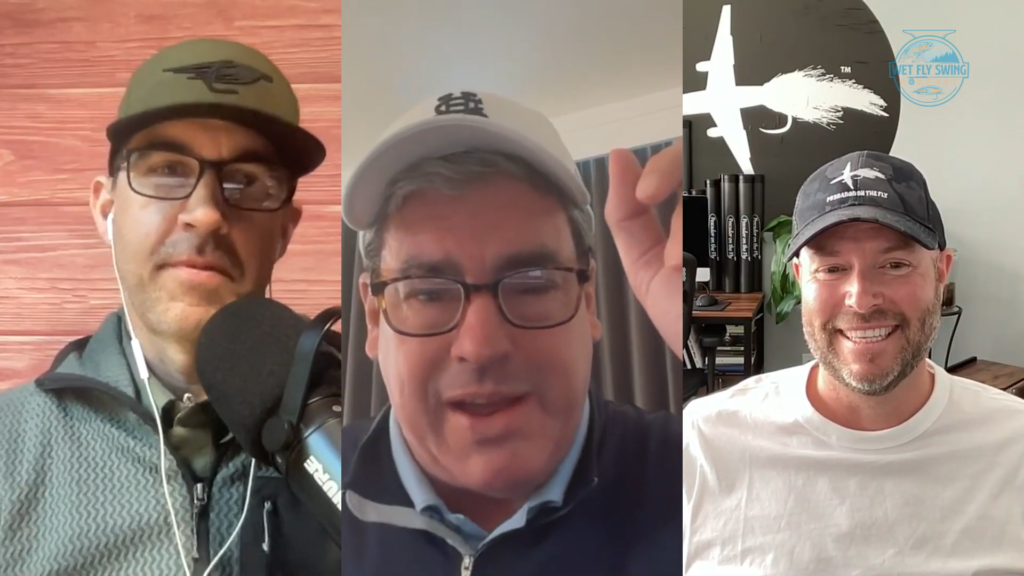
Today I’m joined by Chris Teas and Jeff Ditsworth from Pescador on the Fly. Chris has been fly fishing for more than 50 years and has traveled all over chasing fish. From lost rods and stolen gear to fishing golf course ponds between holes, he’s picked up a few lessons about keeping things simple.
We talk about travel fishing, packable rods, Euro nymphing, the handful of flies Chris always comes back to, and why he believes fly fishing is one of the best ways to slow down and connect with people.
The conversation covers fly fishing travel mistakes, stolen gear, packable rods, Euro nymphing, guide tactics, and why Chris believes most anglers only need a handful of flies to catch fish almost anywhere. Along the way, he shares stories from Argentina, golf-course peacock bass adventures, and lessons on why fly fishing remains one of the best ways to connect with people and the outdoors.
(03:20) Chris Teas has been fly fishing for more than 50 years, growing up between Wisconsin and Colorado and spending time on rivers like the Roaring Fork, Fryingpan, Arkansas, and South Platte.
His connection to Pescador on the Fly started because of a problem many traveling anglers know all too well. Over the years, he’d had fly rods lost, stolen, or damaged while traveling. And so he wasn’t looking for a new brand; he was looking for a solution.
What caught his attention was the idea of a rod that could fit in a carry-on or disappear into a backpack without giving up the performance he was used to. For Chris, it was all about being able to show up, put a reel on, and go fishing.
(06:11) One of Chris’s favorite uses for a packable rod has nothing to do with a fishing trip.
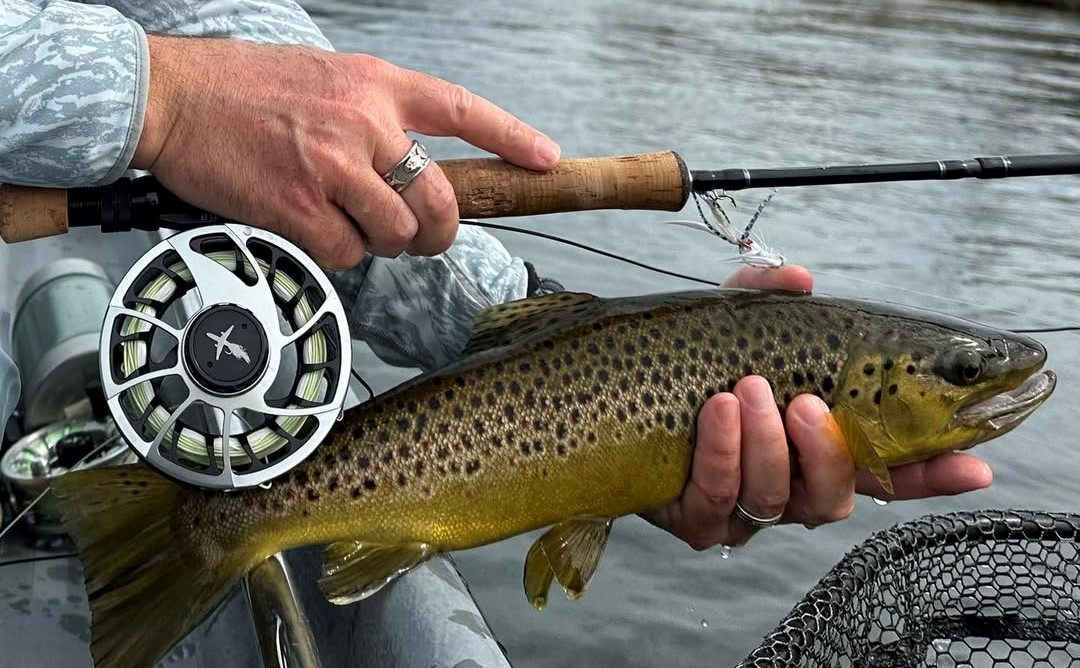
While playing charity golf tournaments, he started keeping a fly rod in his golf bag. The setup included a seven-weight rod, a reel, a few flies, forceps, and nippers. During breaks between holes, he slipped away and found opportunities to fish nearby canals.
Peacock bass. Snakeheads. Unexpected fishing opportunities that never would have happened if the rod had been left at home.
(08:18) Chris says one of the biggest changes he’s seen in fly fishing is how much less gear people carry.
Years ago, anglers loaded up heavy vests stuffed with flies, tools, and backup gear. Today, many guides and experienced anglers are moving toward smaller packs and simpler setups.
He also points to Euro nymphing as one of the biggest innovations in modern fly fishing. The technique opened the door to new rods, new rigs, and a completely different approach to fishing.
For Chris, it all comes back to keeping things simple. Carry what you need, fish hard, and leave the rest behind.
One of Chris’s favorite ways to learn is by watching guides fish.
On several trips, he spent part of the day sitting back and studying how a guide approached the water. Where they cast, how they moved, and how they read a run.
He says if someone is better than you, pay attention. Sometimes you’ll learn more watching for ten minutes than fishing for an hour.
For Chris, fly fishing has never been just about catching fish.
It doesn’t matter what you do for a living, where you’re from, or how much money you have. Once two people discover they both fly fish, the conversation changes.
Part of that is because fly fishing teaches lessons everyone understands. Most days involve missed fish, changing conditions, and figuring out what to do next. Success usually comes from adapting, staying patient, and trying something different.
Chris shared a story from Colorado in which he caught fish after fish on a simple dry-dropper setup while other anglers nearby struggled. The secret wasn’t a magic fly. It was a basic scud suspended below a dry fly.
That experience reinforced something he believes strongly: most anglers carry far more flies than they actually need.
He said if you can’t catch fish with seven or eight patterns, another hundred probably isn’t going to help.
He mentioned flies like the Walt’s Worm, Frenchie, Griffith’s Gnat, Pheasant Tail, scuds, and Adams patterns. For him, it comes down more to depth, size, and presentation than having every new fly in the shop.
Chris broke down three things he likes about Pescador on the Fly. None of them had anything to do with flashy marketing. Instead, they came down to practical details that make life easier on the water and while traveling.
Christopher Teas is Managing Partner and Co-Founder of Park South Capital, a single-family office established in 2013, focused on majority-control investments across multiple sectors, including banking, Biotech, FinTech, TMT, and U.S. Security & Defense.
With more than 38 years in finance, Chris has held senior roles at Morgan Stanley, Belstar Group, Ticonderoga, and Southport Lane, building businesses and structuring complex transactions. In 2010, Chris co-created the RepuSPX Algorithm, outperforming the S&P 500 benchmark by 380 percent
Chris also serves as CEO of CAD Therapeutics, a Phase III FDA Candidate treating PTSD. He is a frequent speaker on AI, alternative assets, national security initiatives, quantum computing, and biotech innovation.
Episode Transcript
WFS 938B Transcript
00:00:00 Dave: Chris Teas has fished all over the world, and he stripped today’s episode down into a handful of things that actually matter. Today, we get into those things from fly behavior to simplifying your setup and why something like a fully packable rod is a game changer and how people are using it to fish. I’ve got Jeff Ditsworth and Chris T’s on the podcast today. Chris has spent decades fishing everywhere from Wisconsin, the Rockies, South America, everywhere around the world, and Jeff Ditsworth is from Pescadora on the fly. Of course, one of the best packable rods out there. And we’re going to get into it all today, including a bunch of amazing stories. This is the Wet Fly Swing podcast where I show you the best places to travel to for fly fishing, how to find the best resources and tools to prepare for that big trip, and what you can do to give back to the fish species we all love. Today we’re going to talk about what travel mistakes Chris has made over the years, how he’s lost gear, dealt with tough conditions, had gear stolen and why this packable rod has been great. We’re going to get into that today. We’re going to find out about some tips on Chris’s travel, and we’re going to find out how not only has the rod been great, but how he is tweaking things with his fishing. We’re going to find out how Euro nymphing is fit in Chris’s life, and actually how Pescador on the fly has a rod that’s coming out right around the corner. We’re excited about that. In fact, it should be live as we speak here today. And then we’re going to talk about how you can strip it all down and really get to the things that matter, including a few flies, and then why you should be thinking about this on your next trip, and also why on your next trip. If you’re on a guide trip, you should let your guide fish on the water. All right, this one is a fun one. You gotta stay with us to keep up. Chris Tease and Jeff Ditsworth. Here they are. Let’s get into it. How are you guys doing?
00:01:45 Chris: Doing great today. Thanks for having us, Dave.
00:01:47 Jeff: Excellent. Thanks, man. Good to see you again.
00:01:49 Dave: Yeah, yeah. This is gonna be fun. Today we are going to talk fly fishing, which we always do. We’re going to get into a little bit. You know, Jeff, we’ve had you on the podcast a few times. We know your background, Chris. You’re kind of new. You’re the new guest to the show. So we’re going to find out about your story, kind of how you got into it all. And we’ll dig into a little bit of that and talk gear, rods and everything. But maybe let’s start there, Chris, with you, since you’re the the new one here, have you been fly fishing all your life or did you just get started more recently?
00:02:14 Chris: Yeah, you know, that’s a good question. Thanks, Dave. I started fly fishing, I believe, when I was five years old. Oh, wow. And, uh, maybe four years old. It’s been in my blood since I’ve been just a wee one. I could hold a flight. There’s pictures of me holding a very, very old Fenwick fly rod. And I was maybe three years old with a five pound bass with a, you know, a mouth from here to here. So yeah, a long time. So I won’t give up my age completely. But let’s just say it’s north of forty five, fifty years. So there we go.
00:02:43 Dave: Yeah. That’s cool. And where did you grow up?
00:02:45 Chris: Yeah, I grew up in central Wisconsin, uh, where there’s not a whole lot of trout fishing other than the Kickapoo River. And then kind of split my time between Colorado. Uh, so my home streams were the Roaring fork frying pan. Arkansas. Colorado. You know, Miracle Mile, eleven mile, South Platte, etc. so really, I had the fortunate ability with my parents to be able to fly fish in some phenomenal places as a young kid.
00:03:09 Dave: Nice. That’s amazing. You know, of course we have Jeff on here, Pescador on the fly. We’ve been working with him for a while using his stuff. His packable rods are amazing. How did you first connect with Pescador and Jeff and his program?
00:03:20 Chris: Well, that’s a really that’s an interesting question. And just make sure your public viewing audience and listeners know I’m not a paid endorser. I pay right, right. I pay one hundred percent for everything I own. And Jeff will attest to that. Nor do I get paid by any lodges that I talk about or related. So I’m on my own. And, and the reality is the story of why I picked to work with Jeff and Pescador on the fly is not because of something I wanted to wake up and find some dude in Iowa that made fly rods. Okay, I’ve had a history of, of traveling and the benefit of traveling around the world on more than one occasion. My fly rods have been stolen. I haven’t been able to check them in. And voila! At the other end, six brand new sages are gone and have had real stolen, I mean. So the thesis of a packable solution that actually had really the quality and dynamic of what I’ll call and I hate to use the word premium, but premium solutions was really selfish. I just wanted to be able to show up, pick out my rod, reel it up, and let’s go. And up until now, you know my ninety L bags. You know the big bags will carry a four piece. The euro rods sometimes fit, sometimes don’t. But really I was searching for a solution. And truth be told, I’m not a huge internet guy. But somehow I got on a fly fishing page with, uh, Pescador on the fly. And I looked at it for a while and I said, you know what? Let’s try this stuff out because I really need it for this next trip. And, and Jeff knows that I just came back from Argentina. So it was a functional rationale of why two is I had no idea whether they perform or not, just be truth be told, I had no idea whether the reels would work or the this or this look cool or whatever. And three is, is it something that I would recommend to my friends? So the journey of finding something online, the benefit is I didn’t see it on a commercial. He doesn’t advertise at the trade shows. You know, it’s just it’s a natural guy. And very frankly, the allure to me is that, you know, he’s built a business in the United States that caters to my favorite pastime. Golf might be second in line, but my favorite pastimes fly fishing. So we’re always people who are in the know are always looking. And, you know, we have I shouldn’t say we because I’ve been blessed enough to own more than I could have my own fly shop. So I have Thompson.
00:05:29 Dave: And.
00:05:29 Chris: Thomas and Thomas and Loomis and Sage and Winston’s and you know, about a dozen offices and so forth. So over a period of fifty years, you end up collecting a lot of equipment. Probably most of it’s not usable, but we become sensitized to the brands and the big brands, and it’s kind of like skiing. There’s only so many ways you can make a fly rod. This particular differentiating factor for me was it wasn’t that the brand is better, or that it’s faster or slower tip, or somehow it was that I could pack this damn thing into a carry on in my backpack. I have one here in Nashville with me on my trip, and if I want to, I can get on on that stream and not lose performance of what I would call the premium rides. That’s the bottom line.
00:06:11 Dave: Yeah. That’s amazing. That’s well said. Actually, you just said a lot right there. And I think that for me too, it’s the same thing. The packable rod I know when I first took it on, you know, you’ve got a four piece rod and putting that in your little backpack, it’s sticking out. It’s all over the place. It’s hitting trees when you’re hiking. But Jeff, when I grabbed that rod the first time, it like disappeared in my pack, my little pack, you know, and that’s like a cool thing to just be like, all right, it’s there. Tell me this. You guys have a or I think Chris, you have a story about, you know, about a golf course. I think maybe one of you guys were telling me about this. You had the rod in your golf.
00:06:41 Jeff: Bag this the day that you had sent me a picture of some fish you guys got, and you said, well, I never would have got it if we didn’t have a rod in our golf bag. Yeah, not the easiest thing to do, but I thought that was pretty cool for.
00:06:52 Chris: All the golf course superintendents out there and all those who want to do, I am not liable for anything that comes your trespass warnings.
00:06:58 Jeff: I apologize in advance.
00:07:00 Chris: Directly to Pescador on the fly, but. But I play in a number of charity golf tournaments where you have a lot more time in between holes than normal. And I said, what the heck, let’s just throw this little. I guess I had a seven weight in there and, uh, you know, magically, somehow the reel ended up in the same golf bag and a couple of flies and, you know, nailed a bunch of peacock bass and, uh, even two.
00:07:23 Dave: Peacock.
00:07:24 Chris: Bass and a snakehead, uh, along the way. And I won’t give up. I’m not going to burn any spots, guys. So.
00:07:29 Dave: No. What state were you? Where are you at with the peacock bass?
00:07:32 Chris: Yeah. So this this was in South Florida. So, you know, we had a pretty cold winter this year. In fact, you know, the iguanas were falling out of the trees and and a lot of the peas didn’t make it. So this was in, in the Miami area. And, uh, the ability just to like, put it in there, break it down, throw it away, you know, and not think about it and not have the course superintendent come at me. Was pretty cool. So I again, I don’t advocate, uh, going on to private property and doing this or for golfers always ask the superintendent, most of them, as long as they know your catch and release, they don’t have a problem with it if you’re not holding up golf holes. But it brought the pack ability and the ability just to, whether I used it or not, didn’t take up a lot of space, really became something fun for me. And so now I keep one in my golf bag with a couple flies and a few reels and and so forth. So some forceps and clippers.
00:08:18 Dave: There you go. That’s amazing. Well, Jeff, this must sound pretty cool to you when you hear this story. What are you thinking now as you hear Chris tell the story about using your rod there?
00:08:26 Jeff: It’s funny because Chris, it reminds me of of why I started the company in the first place. Because again, you know, I’ve got a basement full of fly fishing gear from all the brands that you mentioned too. And I used to travel a lot for business. And, you know, it was one of those things where bringing a four piece rod with me was what I had to do, till I found the packable rods that were on the market, and I hated them because they felt like broomsticks. And, you know, I get it all the time where people come back to me and say, I found those rods. There’s another company that’s been making them for years. And I was like, no, I, I’m so happy that I found that company too, because the rod was so bad that it forced me to start this company. So I love that brand.
00:09:04 Chris: The inflection point of technology today and your ability, you had an auspicious nature to find a niche in the market. Listen, guys, there’s nothing really new happening in the fly rod industry. It’s just marketing. Okay, so we can say that it’s got better wraps or better grip. It’s a gosh darn fly rod. Okay.
00:09:23 Dave: Because we’ve had a lot of pros, like the highest level on this podcast that are still using rods from the eighties.
00:09:28 Chris: Well, mine are I truth be told, every reel I got, I had the benefit of Lefty Cray saying, buy this reel. It’s called an eighth out of Sweden. I bought a half dozen of them when I had no money. They were five hundred bucks a pop. I think they’re going for two thousand five hundred to three thousand a pop now. So that was from Eighty five eighty six. And Joan Wolfe, you know, gave me one of her rods, which is still I’m still using the Wolf special, you know, the Joan Wolf special. You know, it’s forty five years old. It’s almost fifty years old. So, you know, reels may have had some mechanical changes to them, but ultimately a reel to reel rods are. What I will tell you is that I raised some eyebrows in this last camp of people saying, you know, for, you know, you’re a serious fisherman. You really brought a six piece rod with you and it works. And the guys are all like, let me hold this. Let me see how it works. And for real. I mean, the guides are kind of, you know, I was a guide when I was in high school and early college. So we all have our own little thing. And it was a broomstick in the past. These things performed, you know, am I going to say it’s perfect for me? It’s what’s perfect. Might not be for you and Jeff, but for me for sure. And I’ve caught.
00:10:32 Speaker 4: Yeah, for sure.
00:10:33 Chris: ten million trout that have disability payments due to me on them. So trust me, trout don’t like me. But those rods did what I wanted them to do. I over lined them. Just truth be told, I over lined them because of the wind in Tierra de Fuego and so forth. And they worked really, really well. So well that the guides asked me to leave them behind as not back up rods. But can I leave this in my boat? I’ll give you whatever you paid for it. And here’s the key. And they said, you know, grand or eight hundred dollars. I said, you know, I’m not going to embarrass myself or my my sponsor on this, but let’s say you can get the whole thing for five hundred bucks. Five fifty and it’s not a, it’s not some kit that you got from Walmart. Okay. This is like a serious rod. I think it’s going to change a the secondary rods for a lot of guides out there as a who are not sponsored on the guide deal. Okay, this is the guide deal and it’s going to work for you. And so I don’t know how many rod tips you’ve snapped off. Lord knows I’ve got a whole bunch in ceiling fans in South Florida floating around somewhere in Bimini, the Bahamas. I’ve snapped off rods in back doors. I mean, I am the king of snapping rods in half.
00:11:35 Jeff: Doors and ceiling fans. That’s the number two.
00:11:38 Chris: And so that was one thing too, is, you know, other than a handful of US manufacturers who still in existence the Made in China or Made in Asia moniker. Up until early two thousand was made of maybe not such good materials. Or maybe the workmanship was wrong. That’s gone today. That stigma is over. So at the end of the day, the composites that are used, the wrappings are all the same wrappings and composites, real seats and so forth, premium or not, that are being sold by a number of the top rod companies, including Orvis. So the differential between foreign made or marketed to me is a is a non-issue. At the end of the day, it’s performance, performance, performance. And I think that whether Pescador has any other competitors in the market or not, there just weren’t any that came across my attention. So to go to your first question, Dave, I grew up using the same five rods, no matter how many I owned for forty years. And it was the same. Now with the Euro, it’s a little different, right? A little different animal here.
00:12:34 Dave: Yeah. So you’re you’re doing the euro a little bit.
00:12:36 Chris: Well, let’s not expose that to everyone. So you know euro a little bit could have some different connotations.
00:12:41 Dave: But Right.
00:12:43 Chris: I got into it about six years ago and it should be illegal. It truly is that devastating of a system that, you know, we used to use these metal wraps and then it became micro split shot. And then we all learned how to do the bounce rig and, you know, kind of we progressed and then Euro came along with this, you know, hey, screw all that. Let’s just do what effectively is tight line to the bottom, which you’ve been using. Chuck, your father girl taught me how to do that in nineteen seventy five. So the Euro situation is really cool. The better situation is that you could take a Euro rod and still cast a dry fly, so that convertibility between the two. Absolutely. And so, you know, I go out with two reels and a couple of different lines on them, but I’m still using in certain cases, just the rod. But now I can throw in one of the pescadora on the fly, probably a five weight or a four weight, just as a backup if I want, and I’ll have it ready for dry fly, you know, with that, Adam’s ready to go, so I’ll euro in the morning. In the evening, and in between. If there’s a hatch, I’m going to pull out this little rod and within five minutes I’m up and going. But that that big until Jeff figures this out, that big rod, you know, is still sticking out of my head. You know, the back of my backpack by about this much.
00:13:52 Jeff: So we’re looking into that one. Chris. I got a four section euro in the L. Jeff. A line coming out probably in two weeks. It’s in the oven. It’s almost done. And then we’ll we’ll see what we can do on the six side on that one for you.
00:14:03 Chris: That would I need a two way eleven foot you know super soft to carry the seven x Tippets and eight x Tippets that we use on some of these tail waters. But I think that you brought up something, Dave and Jeff, that that’s interesting. It’s probably the first real innovation in fly fishing, other than the auto reels that you see the Euro guys using to pick up line, there really hasn’t been innovation in fly fishing. You know, we’ve got Fish Pond to their benefit has really redefined a certain consumer in terms of the nets in particular and some of the baggage that came along with it. I think I bought one of Jeff’s um, bags that is a, it’s got a, it’s, I put it in the rain. I can dunk it. I did, I dunked this bag. I put it in the water because that’s always been the things, you know, at the end of the year, having all my flies rusted out, I dumped it. It worked. So the two innovations that have really changed is to move away from the vest, right? That was the sixties, seventies, eighties, nineties thing, the vest into a pack. And then it was the flippable pack here, here, here, here, wherever you wanted to go. And then we kind of advanced to micro pack. Right now, the guides, my friends are all using this. We want the smallest, lightest that we can walk around. I carry one, I think I have one around here somewhere. I carry, you know, a puck with my dry flies, a puck with my wet and a baggie with my my streamers in. It all fits in a couple spools and I’m out. So we’ve that what I’ll call the translation business of carrying baggage on the stream used to be I’d pick everything. And I wanted to have two of everything. Five forceps. God knows I’ve dropped enough on the ground. So that was one innovation. But Euro really changed the market and brought a whole new. I think the numbers are probably two billion a year of of in the United States, a market that didn’t exist. So up until a few years ago, you couldn’t find. Euro was you were thrown out of you know, you’re in Silver Creek. You say Euro, you’re out of there. Right. But get out. You’re one of those guys from California. But Euro now means we all got to go out and buy new rides. And you can’t just get one. You got to get a two way. You got to get a Douglas three way. You got to get this one. And it created kind of like Jeff. It created a niche market for like echo and some other players that didn’t even have shelf space before. So that’s one huge inflection point in the fly rod market of innovation coming. And most people don’t know the euro didn’t come because some guy said, oh, it’d be a French guy. Like it’d be good to have an eleven way. Well, that does us no. Right. It was because they couldn’t use split shot. Okay? Because lead is illegal in ninety percent of the European stream. So they learned how to reverse tie upside down flies. And with tungsten, if to the extent it’s legal. And then the other big thing, innovation wise that’s changed is it’s legal in certain streams, not others. More than one fly. Okay. And I’m not talking hopper dropper. I’m talking a rig of three, four, five in a row. That was a never. Tags were never. I never heard of tags until early two thousand. Like what’s a tag other than hopper dropper? What’s a tag? So now we’ve been conditioned to buy new flies and if one is good, ten must be better. A thousand must be great. So you have three things packability and storage on the equipment side, including Packability storage reels, which haven’t really changed. And then ultimate in flies. And then a whole new definition of fly fishing to say, hey, what’s this Euro thing? And guys my age over sixty, either they are like, hey, that’s, you know, a ton of BS or I saw you like clean up in that hole. What are you guys doing up there? Right?
00:17:22 Dave: Yeah. That’s awesome. Well, this is again, that’s well said. And we just got off an episode. We’re doing a series A team USA is in Idaho this year going for the gold. Right. The World Championships. And we’re doing a series. We’re doing a five episode series of interviewing these top the five starters. And last night I just talked to Mike and Mike, right? Mike Kimura, Mike Bradley and they were going off on some stuff that I didn’t know about in the Euro. Like one of them was I didn’t know as much about. We were talking about Microliters, you know, so they moved to Microliters, which are basically the whole liter super long. They don’t really use a cider as much anymore. It’s a little bit different, but I feel like again, innovation, like you said, Chris, there’s always innovation in all these things. But Jeff, as you hear this again, what do you think? I mean, you’re, you’re innovating, right? I mean, you’re, do you, are you always in your mind thinking like, okay, what’s the next thing I’m going to be tweaking? How do I make the next thing that you’ve already made, right? How do you make it better?
00:18:12 Jeff: You know, I don’t know. I go back two different directions. One, I’m always thinking about something that could be interesting that could, you know, be nichey kind of like that. But I also don’t want to be all things to all people. So I don’t want to get I don’t want to get too broad. I’m getting a little broad when it comes down to the fact that we got the four section rods in the El Jefe series, and we got the El Rey series where it’s, you know, we’re rocking that one. I’m gonna have two to two to nine. Wait, maybe a ten. Wait, coming here in the fall.
00:18:38 Dave: So you’re not breaking out a Spey rod anytime soon?
00:18:40 Jeff: I mean, I get asked probably weekly for that kind of thing or I mean, we get like legitimately asked to, hey, why aren’t you building two piece rods? And it’s like, I mean, I could I don’t really think I need to. You know what I mean? I’m just kind of trying to stay in my lane. I’m a small family business. I don’t need to be all things to all people. I’m just trying to make something really, really good in this area that’s kind of been neglected in the market.
00:19:03 Chris: But you know, Jeff, first of all, congratulations for innovation and taking a risk in something you’re passionate about because passion projects are always going to be the best. But two is thank you. You also hit a second inflection point, and I’m not going to throw anyone under the bus, but there’s a number of really, really well-known pro guides. You can all guess who they are, who were tied to brands, who their contracts ended and they spun out and they have their own series of rods. So, you know, Temple Fork. And I’m not, I’m a I own ten of them was probably the first to get rid of the brand and say, hey, by the rod, by the person, not by the brand on the top. And again, kudos to temple for they were, I think, the first that that jumped out in that market.
00:19:43 Speaker 4: That it built a really good brand. Agreed.
00:19:45 Chris: And it used to be kind of a joke. You know, we’d show up at Los Locos and guys would have Temple Fork. I’m like, yeah, but you know what? I break three rods a year anyway. And why spend twelve hundred bucks on a new rod? We’re going to do this. So you got the benefit of some guys ahead of you that got off the brand, the guide market, brand market, you know, and we all know who they are and said, hey, maybe you should look at this. And that only became possible because labor costs and innovation offshore became a more efficient way to deliver your product.
00:20:12 Jeff: Yeah, I mean, it’s a true story. And I think I go back to it where we have people probably monthly, at least that reach out and say, I can’t buy this rod. And unless I can walk into a store and touch it.
00:20:23 Chris: That same guy walked into my store and said, where do I go? What do I use? What do I do? You want me to tie the fly on for you and catch it for you too? I mean that guy maybe wants to that person that goes and does that will sit in that fly shop for two hours just touching all the things. Okay.
00:20:39 Jeff: No, I know exactly what you mean, but it’s, you know, I, I just go back to the, to the line and I say to a lot of people, you know, if ten years ago you would have told me that I’d be buying one hundred percent of my shoes online, I would have told you, you’re nuts.
00:20:50 Chris: Yeah. Well, I also I also had a phone book which is now called Google. So you hit on something earlier that that’s important in terms of innovation. Dave. Is that what I see now? And I think once you click, once you click forever, now that I’ve clicked into Jeff’s world, I get hit by every fly fishing deal in the world, right? So everything comes up because I’ve been, you know, the algorithms got me as a fly fisherman, I see lines as the next thing. So sun Ray has been really active in lines in the performance of shooting heads. You’re seeing a lot of the micro sinking tip, you know, the micro liter that have sink tip, six inch per second type tips that you can just flip on at the end and get a sink tip immediately to. Saline lines are a new area of, hey, I need to have this. Maybe I need to have more than one. Maybe I need to have five or six in my bag, I don’t know, what do you think, Jeff?
00:21:39 Jeff: Yeah, I don’t know. It depends on what you’re trying to do in the fly fishing world. Right? I mean, some guys are gear people and they want to have every new shiny thing that’s out there and get every little advantage. Some people just want a little piece of quiet on the water, right? So for those people that are interested in it, I love the fact that people are bringing out new innovation. Love it. Right? I love the sink tip lines. I love fishing streamers, but I’ve never really gotten super advanced into, you know, all the different options that are out there. So like I said, I fish the way I fish, maybe I innovate a little bit, maybe a little, a little bit less than some guys do on that side of it. But like, at the end of the day, I’m fishing probably ninety five percent of the time with a weight forward floating fly line and I catch a few fish.
00:22:23 Chris: That’s ninety, ninety percent. Truth be told, other than this last trip, the two trips before, I probably spent sixty percent of my time on the water watching the guide who I had, watching him catch learning from him. He’s like, sir, why do you want to see? You paid me six hundred bucks. Why are you sitting there? I was like, because I like to see how you attack the water.
00:22:41 Dave: Oh that’s cool. So you had the guide fishing?
00:22:43 Chris: I do it all the time. I mean, I was as a kid, I was a guide on the Deschutes and the frying pan and so forth. And you learn from people who were better from you in all sports, but in fly fishing.
00:22:52 Jeff: Everything.
00:22:53 Chris: In particular. Fly fishing is one where not having the cell phone on, not having competition. I’m a catch and release guy forever. For me, it’s cathartic to be on the water and fly fishing becomes a mechanism for me to talk. Not just business, but relationships with other executives and people. You might be, you know, the cattleman’s daughter for all I care. You know, it’s the great equalizer on the fly, on the on the water. I don’t care what you have. I don’t what car you have, how big your wallet is. I’m going to get you into fish or you’re not going to get fish or I’m not going to get fish. One of us can be jealous. Okay, so fly fishing in itself is the great equalizer. The tools and techniques we use Just get us there, right?
00:23:28 Jeff: Yeah. I don’t disagree at all. I mean, I just love my time on the water. Last weekend I was out in Montana and that’s, that’s the time where I can be on the water and truly like decompress. And I love it because we had one day where we had a photographer out with us. And Dave, you met drew before.
00:23:43 Dave: Oh, yeah.
00:23:43 Jeff: So we had Jake, who’s also been on this podcast as well. Yep. And then drew and we were on the water. And Chris, to your point, I never even thought about it until you just mentioned it. Probably one of my favorite parts of one day, which was the Tuesday last week, was when I was sitting in the boat screwing around to something, and I was watching those two guys cast and actually catch fish in a hole. It was actually super fun. So I didn’t realize that until you just mentioned how cool that was.
00:24:07 Chris: Coming right behind you. And then the other thing that’s happening, Dave, in the market is you got the upswing from, you know, I think it was nineteen ninety two was a River Runs Through it, if I remember correctly.
00:24:17 Dave: That’s right, that’s right.
00:24:18 Chris: You know, the Madison now is out is Madison.
00:24:21 Dave: Is that happening? Is that show going to be the next?
00:24:23 Jeff: I heard about it last week.
00:24:25 Chris: six episodes and it’s phenomenal, guys, you gotta you gotta get on on the show. It was, uh, you go in with a predisposition, like they’re going to mess this up. So it’s fly fishing, the underpinning of the story. It’s the journey. And I recommend anyone listening. I’m not an advocate for the studio.
00:24:41 Dave: So it’s worth it. So it’s funny because I’ve been on a little bit, I’d be like, okay, do I want to jump into this? But you’re saying we should jump in and watch it.
00:24:47 Chris: I power watched it all six episodes. Oh, this is great.
00:24:50 Dave: This is great.
00:24:50 Chris: But what they messed up even with today, okay, he had all the gear. I’m not going to say who it is today. Did you see it, Jeff?
00:24:57 Jeff: I haven’t seen me. I just heard about it last week. My only joke was that all the spin offs from Yellowstone, the very first one that I tried to watch was with my wife, and it was Marshalls. And I’m like, I can’t watch. This is horrible. But I heard this was really good.
00:25:12 Chris: For all those listening at home. It is worth it. Hopefully I do a second episode. It hits. It meets my world of Wall Street. The main character, who’s a private equity guy kind of says, you’re missing it there. My time is in in Montana and you kind of go to my point though, being is even with everything he’s got, all the gear, he’s got all the anyone who knows, you know, we all kind of look at the stuff. He’s got it all. But man, you can’t land a fish. You couldn’t get a director to get a real fisherman to show him how to take a fish off a hook and land it and not hold it up. I mean, so they got ninety percent of it, right? And if you go back to Brad Pitt throwing, you know, back then no one really knew. But what I’m saying in a nutshell, it’s reinvigorated fly fishing. And I I’m in in Nashville at a, at a, at a private equity family office event and three conversations around fly fishing. They don’t start that way, but as soon as it comes up, it’s, wow, where did you go? What do you do? You stop. It stops everything as soon as one hundred. It is the game changer among executives. As good as golf. If someone’s a fly fisherman, it doesn’t matter who you are, what they do. They can be a lawyer, banker, crook. Doesn’t matter. You know, delivery boy fly fisherman changes the dynamic of the conversation immediately across the board.
00:26:22 Dave: Yeah.
00:26:23 Chris: So this movie, this movie is going to generate a lot of interest among young people who and other people to rediscover. What do they do? Where do they go? What do they need? Does that make sense?
00:26:33 Dave: Yeah.
00:26:34 Jeff: Here’s me that you should be speaking on college campuses, that if you want to be successful, you got to get into fly fishing.
00:26:39 Chris: I do do that and I do speak about it. I tell everyone, here’s my plug. I’ve hired thousands of people and I tell every girl, every woman and don’t call me. Don’t blame me for being gender this way or that way. Learn how to golf a respectable bogey round. The first thing you do. Take golf lessons and learn how to golf one hundred percent. You can golf as a woman from the whites no matter what you do, as long as you don’t embarrass yourself, you’re going to have a whole different class of people. Okay? Number two is learn how to fly fish. And so to all my single girlfriends out there and someone over my shoulder is going to beat me here in a second. If you want to find a nice guy, go to Sun Valley, go to peekaboo, park yourself in the parking lot, pull on your waders and say, I need some help and you’ll find your next husband. Okay, so the guys who fly fish typically are pretty good guys out there.
00:27:28 Dave: That’s right.
00:27:28 Jeff: But you know, I agree with that.
00:27:30 Chris: You got a belly button, a fly rod. I think it’s a little bit of a one of those dating apps because the reality is, is that it’s mostly dominated by men. That being said, there’s a number of young women out there that you’ve seen online. There’s one at Colorado Springs who’s tying. Amy’s tying aggressively on her flies. There’s some women out there who’ve broken through and they’ve been around for a while, but really now it’s something that you can take your girlfriend, you can take your wife, you can take a date fly fishing. And the thing is, oh, it’s really expensive. I can’t afford that. There’s a certain element to that. But if you can afford a thousand bucks, you can be in the business with waders and a decent pescador rod or two and some flies. And I think Jeff actually sends out everything you need. If you if you order through him in a package and it’s not some crap package, but it’s a date. And once you own it, then it’s really, you know, finding you. You can go bass fishing in your backyard or you can go to a trout stream. So I think it’s a great equalizer for for getting to know someone. And I mean that very seriously. And I say this, Dave, you asked me the two things I teach. I tell everyone, learn how to play a decent round of golf, learn how to fly fish, those two. Okay, but if I watch you on either vehicle, whether you’re golfing or fly fishing, I know everything about you in about ten minutes, right?
00:28:40 Dave: Yeah. If you see my swing right now, if you see my golf swing, you’re going to know that I haven’t played golf in about ten years.
00:28:46 Chris: I don’t care if you hit it in the tree fifty times. Okay? I want to see how you deal with adversity or a bad shot, or how you treat the caddy, right? Or how you treat the clubhouse person. Yeah. The minute you put on your shoes, I’m watching everything. Same thing in fly fishing. I don’t care where you’ve been, what you’ve done. It’s how you deal with rejection. Because fly fishing is about rejection. Okay, true.
00:29:09 Jeff: Yeah.
00:29:09 Chris: It’s fishing, not catching. Ninety percent of what we do is rejection. And those who are the best fly fishermen are the best at getting rejection and figuring out how to do something different. And those are the guys I wanted working for me because they figured it out. I’m going to tell you a funny story, Dave, and I’m going to keep it anonymous for a very specific reason. Yeah. Uh, we’re in the in the flats below the toilet bowl on the frying pan and between the big L curve and the big toilet bowl at the top, there’s these flats and no one ever fishes them. But there’s fish that sit in the middle and down at the curve. Two gentlemen were watching me, and I was absolutely killing them. And I was using a scud, not a Mrs. A Scud. Okay. And I had it dropped below. A really ugly floating flight. Didn’t matter. It was I don’t remember, it probably was a wolf or something, but the point was I just wanted it suspended about seven inches below. Yeah. Dry dropper. And I was just killing him. And I saw this guy and he was with a guy, and I saw the guy going, let’s go downstream. Let’s go downstream. These guys after. No, no, get him out of here. Because I hit like fifteen fish in a row.
00:30:08 Dave: Yeah.
00:30:08 Chris: And you know, those fish are tanks up there. So, you know, I’m sorry. I’m running through your hole three times. Doesn’t work well. So the guys at the end, the guy packed up, He drove around, came up. He goes, sir, would you take us tomorrow? I said, I’m not a guy, guys. He goes, what are you? I said, I’m a garbage man. I’m a garbage man. Because you’re a garbage man, I said. Absolutely. He goes, me too. I’m a garbage man. I said, perfect, we’re two garbage men. Meet me tomorrow at another spot on the Roaring Fork. I’ll take you. And him and his partner ended up catching eight, ten, fifteen fish. Wasn’t hard. Yeah. No, they they they got into it. He goes, you know, sir, what do you do for a living? I said, I’m a garbage man. He goes, Not in Aspen. You’re not. So what do you do? I said, well, I pick up other people’s garbage and fix it. Okay, so I do turnarounds of companies and he goes, me too. So I ended up being a CEO of a major bank and, and having a discussion with him and his wife and his partner saying, you know what? It’s a game of humbleness on this trout stream, not arrogance, humbleness. It’s a place where it’s the great neutralizer. You want to find out about people, take them fishing, hopefully with a pescadora on the fly. It’s the part where whatever they use, I want right, a little bit of that and go off to Dave, right? Yeah. Everyone has pH. I. It’ll make me better with a pH. It used to be Callaway or. Then it was whatever. Fly fishing is the same. Everyone’s like, wow, he caught them with that. It must be better, right? And I said, guys, I’m going to tell you something. God’s honest truth. You only need seven flies. Okay. You can’t do it with these seven flies. Eight flies. You ain’t doing anything. So size is going to be the most important. Color is going to be second. All the rest of it is, you know, is for you to buy more. But you really only need in most specific situations, seven flies or eight flies.
00:31:47 Dave: The two starters I talked to last night from team USA, we were talking about flies and they literally just use basically that amount. Just a few flies. Yeah.
00:31:55 Chris: Waltz worm, Frenchy Griffiths I mean, you all know the same things.
00:31:59 Dave: The the pheasant tail, literally that pheasant tail pattern is like that’s it.
00:32:03 Chris: So Umpqua went into the the feather business, but and then the Vietnamese started tying them for fifty cents a fly. So it became a very competitive. So what do you do? You just create more stuff and more flash and more this and more that. But the reality is, outside of streamers, you only need seven, maybe ten flies, and you can put them all in a puck somewhere in a box and that’s it. But that doesn’t that’s not good for sales in a, in a, in a shop. So I think that Jeff’s and waiters are even worse. Right. But Jeff’s business is one where try it, like it, use it, rediscover and spread the word. So in that parking lot, trust me, at the end of the day, when we’re at Silver Creek or we’re at the Deschutes or at Warm Springs or wherever, we’re all looking, okay. And, and we all kind of drooling over some guy’s new reel. You got an able, you know, whatever it is, you’re we’re all kind of drooling a little bit. But what I would say is that minimalism came back in terms of gear. Less is more. And if I can carry two extra rods in my pack versus just one, I’m going to do it. Okay? Because I am still competitive, I’m going to do it. And at the end of the day, I think that that message is going to really spread. And I don’t want to minimize what we talked about earlier, this movie or this show is going to get a whole new generation of people playing golf, just like Happy Gilmore got kids saying, wow, Adam Sandler played golf. I should learn how to play golf, right? So fly fishing now, you know, God bless his soul and rest his soul. You know, we’ve had a number of people who are very serious, either politicians or celebrities, uh, from Kurt Russell down.
00:33:36 Dave: Kurt Russell.
00:33:38 Chris: Paul Newman was a huge fly fisherman, you know? Yeah. Jimmy Carter in Georgia was a great fly fisherman.
00:33:44 Dave: Uh, I got one for you. There’s there’s been a number of presidents and vice presidents who have been Dick Cheney. Dick Cheney was one that I’ve heard some stories where he was fishing. You know, definitely Obama, I think maybe got out a little. I don’t know if he was a diehard fly angler, but there’s a lot.
00:33:56 Chris: I don’t know how hardcore he is. I do know that, uh, Tucker Carlson, Tucker good, bad or indifferent, whether you like him or hate him, he’s. Once I’m on the stream, nothing matters. I’m saying this glibly, but the celebrities kind of learned how to pick this up, and it was a thing, and they all kind of moved from California to Montana about twenty years ago, bought ranches. I even think I think Kanye was fishing one day out there. Oh, wow. And it’s a and then they all the California move now. Sorry for you Californians from Hat Creek in particular. My friends up there, Jason Jock they’re moving to Nevada. Tennessee.
00:34:28 Dave: Oh wow.
00:34:29 Chris: Texas. Austin where there’s some bass. They’re moving out of California and they’re going to places Idaho, Sun Valley in particular. And now they’re all kind of learning, saying, what do I do here? What should I do? I saw these guys fly fishing. What’s this thing? So either, you know, put up or get out of the bar type thing is learn how to do it. So you’ve got a backdrop of celebrities and so forth saying, hey, this is cool and you don’t have to be rich to do it. Okay? You can be a gas station attendant and catch the same fish that I catch unless it’s, you know, some posted area.
00:34:58 Dave: Oh yeah. That’s amazing. Well, this is cool. I mean, I think that you’re definitely speaking to the choir because everything you’re talking about is resonating with me. Is this, uh, you know, Jeff, when you hear this, does this kind of all resonate with you? You must be because you’re you’re on that. You need to, you know, selling rods obviously is your business. Do you see this, Madison, all these other things as a good chance for you to really kind of up your, your sales or how do you look at all that?
00:35:20 Jeff: You know, it’s interesting just because Chris and I, we talked about it a little bit just earlier. And I don’t I don’t have to sell a million rods in order to do a good living for our family. Right. So I’m growing organically for the most part with not ridiculous margins and not ridiculous ad campaigns. We’re direct to the consumer, so that adds a lot of value to the brand. But you know, at the end of the day, every time people want to get into fly fishing, that gives me a bigger opportunity. So I love the fact that there’s something new that’s popular. Chris. I laugh a little bit because I haven’t watched it, but I’m going to have to I’m gonna have to watch it because you’re the second guy in a week to, to mention that this, this one’s legit. So I’ll definitely check it out.
00:36:01 Chris: It’s still Hollywood. Okay, so the fact that this woman.
00:36:04 Jeff: Of course.
00:36:05 Chris: This woman reads through her husband’s book, and I won’t say how, how he dies, but he dies and she reads and learns how to fly fish in two hours and catches fish. That didn’t happen, okay? That’s never going to happen to anyone. But I think the big picture is that women are going to watch this show and say, hey, honey, is that what you’re doing out there? Because I always thought you said golf was six hours, and I’ve heard it’s three. Does fly fishing take really all day, or can you just go out for an hour or two and just bust out your rod and a hopper dropper? Dave’s hopper, whatever, and go out and catch some fish, right?
00:36:37 Jeff: Yeah. I don’t know. I love the fact that, you know, more women are curious about fly fishing, I think, than ever, because, I mean, I have a lot of women that will reach out to me direct and I’ll actually answer their calls and their emails and try to help them get started.
00:36:51 Chris: Be careful. They may be asking for something different on swipe left or swipe right.
00:36:55 Jeff: If they’ve ever met me before. They fly. Fishing is probably the best thing they’re going to find. So it’s, you know, that’s the way we’re going to go. But again, I think they’re curious about it. And I think a lot of them get intimidated when they walk into a fly shop and they see everything in there and then everybody telling them that they need one thousand dollars rod and it’s one thousand dollars reel and eight hundred dollars waders. And to you, you nailed it. It doesn’t take that. You don’t need that to get into fly fishing.
00:37:19 Chris: So no, you know, gear becomes something for fly fishermen. I mean, I’m sorry. We’re all no doubt about women. Some women collect shoes and handbags. I collect fly fishing gear, but I’ve pared down. Okay. It used to be more. Must be better. I’ve pared down. So once you have your stuff that’s there. The other big thing, Dave, in terms of you and I’m a market guy, so I’m always looking at cycle issues. The big issue that happened from the seventies to the eighties was bass fishermen, which, you know, took on a whole different league. Both my my boys were on, on tour, bass fishing, bass fishing became a big thing, I mean, televised. And whether it was and I’m not going to give him credit for it, but certain people in the industry, Johnny Morris in particular, put bass fishing as a thing that isn’t just a southern thing for bass. Okay. It became in Iowa or Wisconsin or Minnesota. Bass fishing became kind of the next level. And then trout fisherman. I hate to say this, guys, and don’t blow up my emails. We kind of look down on bass fishermen. It was kind of a hick thing, you know, through your skull and bass fish. And now bass fishing with a fly rod takes on a whole new dimension. So you got another market there that’s saying, hey, you know, I’m not a boat guy. I don’t need a Skeeter nine thousand to get across. All I need is some access and a fly in a five way and, you know, some tippet and I’m off to the races. Bass are the some of the big and carp. And again, guys, don’t yell at me. You float certain areas of Montana and you know where it is. The dam up above that you catch a twenty five pound carp on a seven weight. You’re in for a hell of a ride. And everyone’s like, oh.
00:38:49 Jeff: I love fly fishing for carp, Chris, I love it. It is absolutely a blast.
00:38:54 Chris: It is. And the Asians have done this for the fly fishing guys from Japan have been doing it for a long time. We kind of went down. And I think part of that’s because the magazines I don’t know the last time you bought a magazine, again, to my friends, fly fishermen used to be on my, you know, quarterly. I haven’t bought a magazine in twenty years. So content wise, I think it’s smart of you to promote your brands, regardless of whether it’s pescador on the fly. Otherwise, social media will be the medium that guys like me, you know, I still have to read something called a newspaper that used to be something with ink on it, and now everything is videos. What I’ve seen, though, unfortunately, and there’s a little bit of Debbie Downer in me, there’s a lot of these, um, sponsorship guys, influencers that are going to lodges and I know it’s paid, you know, it’s paid, they’re throwing down stuff. And I, it’s just like, come on. And this year was a real disappointment. Dave. Big disappointment. I, I went to Argentina probably my fourteenth time to Chile and Argentina. I never tell them that I fished before. Okay. I just, I just walk in and do my thing. They needed to tell me there was no water. Okay? They had an obligation to tell me you dropped twenty grand on this trip. There was no water, okay? They had no snowpack in the Andes this year. And they should have said, hey, you know what? We’re down two and a half, three feet on our water flows. It’s going to be tight. And it was and I’m I’m going to say out of a one to a ten, I’ll call myself an eight and a half nine, uh, black belt in terms of fishing. Those fish have my social security number coming in. It was six or seven a day, but it was you had to spot them, catch them, Shad. You couldn’t boat them. You had to be like, it wasn’t Chuck and duck. It was micro fishing because the fish were so scared. Any movement at all. So they needed to tell me that it’s going to translate to this summer in the Rockies. Um, there is no water. They’re draining eleven mile reservoir this weekend. You can keep as many fish as you want. There’s no water in Denver. There’s just no water out there. So the combined pressure on smaller stream with no water. This is the one year it’s going to be tough. That’s a political issue for a lot of reasons on water rights and water is. But you can’t stop Mother Nature. So I think that what my thesis is, is that if trout fishing is bad, there’s always a golf course or a lake around you. Maybe catch a pea or you catch a snook or you catch a bass. But it’s going to be a tough year in the West.
00:41:02 Dave: Well, there’s like you said, there’s warm water fish too. That’s the great thing is that carp, bass, all these warm water fish are probably going to be doing pretty good this year, I’m guessing. Right. Even when the trout aren’t.
00:41:12 Speaker 5: They are.
00:41:13 Chris: And at the end of the day, again, there’s a whole new genre here as well. I’m headed up to Toronto at the end of next week, and they do this thing that we just don’t have down here called center pin fishing.
00:41:23 Dave: Oh yeah. Center pin. It’s kind of like a mix between like, almost like a gear fishing and fly fishing, right?
00:41:29 Chris: It’s kind of eleven foot rod with center pinwheel, which looks like the Spey reel that spins free. And they use, they call it a bobber because it is a bobber with a float or whatever you want to call it. Yeah, it’s an indicator. It’s a gosh darn bobber guys. Yeah. It’s a bobber. These weights down and they drag and they are deadly. These guys get two hundred two hundred yard thing. That’s a world. Jeff. In terms of gear, especially up in Canada, these guys have two thousand dollars center pin rods and reels. They go all out on that because that’s kind of what they know, right? There is a gentleman who was one of my my son’s bass fishing coaches who created something called the fee stick. Uh, and I’m not promoting. It’s another Jeff fee stick is a four foot long fish that almost was reminiscent of the. You remember the pocket Ron Popeil pocket fisherman. Were you guys born when that came out?
00:42:19 Jeff: Yeah, of course. My grandfather had one of those Ron Popeil pocket fish. He’s the same guy with the rotisserie chicken guy. Oh, okay. Yeah, yeah.
00:42:27 Dave: Gotcha.
00:42:28 Jeff: Yeah.
00:42:28 Chris: But Peale’s pocket fisherman made that guy one hundred million. One hundred million was one hundred, bill.
00:42:32 Jeff: Oh, like a big deal. Yeah, yeah.
00:42:33 Chris: Keep it in your truck. Keep it in your dash. You drive by some dude’s pond. Ron Popeil, pocket fish.
00:42:38 Jeff: No, I think my grandfather was the first one to buy that thing. He thought that was the coolest thing in the world.
00:42:43 Chris: I still have one of those, and I think I have a I. Evel Knievel stunt cycle somewhere. We’re floating around.
00:42:49 Dave: And.
00:42:49 Chris: And bikes with cards in them somewhere, going through the wheels Schwinn bike. But Ron Popeil was on to something. So Jeff is kind of the non Ron appeal is if you want something that you can carry and travel at an affordable price. Pescador on the fly for now, is probably your only choice in the market. There will be more, but never duplicated.
00:43:07 Dave: Yeah, there’ll be more. That’s a cool, right, Jeff? There will be more. That will be coming, but you’re probably not too worried about that because you’ve built this cool little brand that is, you know, like you said, doing your thing.
00:43:17 Jeff: I think I’ve got a good niche, and I know that some of the major brands are coming out with, with some things that are a little bit, you know, a little bit more packable, but they still don’t put a lot of attention on it. So I’m happy for now.
00:43:29 Chris: Let’s get into some detail here. Okay, let’s just cut to the nitty gritty for five minutes.
00:43:33 Dave: Let’s hear it. Let’s do it.
00:43:35 Chris: My partner said, why are some rod cases round and why are these rod cases square? And I said, because the guy who invented the square case is a boat guy and didn’t want these rolling around the back of his truck or in the back of his boat. Okay, why does the rod have two tips? Why is Pescador on the rod? Because we break them. Um. Okay. We break them like crazy, and I’m not sure what the replacement policy is, but it’s the gift that keeps on giving. We break stuff as guys. Okay. Number three is what differentiates. And I’m not going to pick one real or another. But the real game right now is very competitive. Getting that six hundred to twelve hundred dollars reel into someone’s hand. It was, you know, for me, I started at Ross the Gunnison. I still have, you know, a dozen guide models of Ross and the Cimarron and Gunnison. They were great in the eighties, seventies and eighties. Then it was as many as Steve Abel. Reels were the best. I still have twenty five of them, most of them one in raffles, overpaid for, and then a couple of eighties. That was my Bugatti at the top. And then some reels, you know. Then it was Marriott had a little run for a minute. But what we’re talking is the real game. It’s like the shoe game, okay. The real game is real. Jeff’s real is simple, easy one color, one flavor. Chocolate. chocolate, chocolate. You want vanilla? Sorry. We’ll sell you chocolate. And it works.
00:45:01 Jeff: Yeah. Any color you want. As long as it’s black.
00:45:04 Dave: Yeah.
00:45:04 Chris: There’s only one thing you care about guys is drag. Drag? Yeah. As good as it looks. As good as it looks. So I micro dragged you, Jeff. I’m not going to say it was perfect. I had some things that are going to go through. I micro dragged you. I had it down to stop a Subaru and it did okay. I could stop a small truck with it. That’s all that matters. Colors looks real. Capacity is is what it is. Drag is everything.
00:45:28 Jeff: Yeah. Good. I mean, I think you nailed a number of things there. I don’t know if Dave’s going to let me, like, go on to kind of have a conversation about all three of them, but like one, the El Jefe rod tubes are square. You nailed it. They don’t roll. That’s it. The El Rey rod tubes, those carbon ones, those sweet tubes, those are round, obviously. So those, you know, is what it is. But almost every rod tube out there is round. So we made a square one and there’s a couple companies out there that made them. But I think it’s, a lot more functional than we thought about. Right. So we did it. Good tip from one of my customers. So we it’s nice to be nimble enough and small to be able to adjust like that. So it was cool based on a really good tip. The second thing you talked about, Rod to Chris, what was number two tips?
00:46:11 Chris: Multiple tips, tip solutions, multiple tips.
00:46:13 Jeff: Okay, so for the El Rey G6 rods, we have two tips and something you don’t know about me, Chris. I’m also in the risk management business. It’s my little insurance policy. I’m going out on a trip. I want to have a little bit of insurance when I go out there because like you said, ninety percent of the time a rod breaks. It’s the tip. It’s a ceiling fan. It’s the car door. It’s the whatever. It’s the tip. So having that in there is just a little, you know, little insurance policy. Not all of our rods come with a spare tip. A lot of them do. Right? So just kind of part part of the deal on that one. The real game. You nailed it. The pricing and the real takes this example. It’s exactly the same as the rods. Right. So direct to consumer for us is a huge portion of our value proposition, right? This is the foundation of everything, because half the cost of a rod or a reel is in the distribution and the marketing, whether we like it or not, it’s half, could be forty, could be sixty. It just depends. Right. But a huge portion of it. So I just cut that out and pass on the difference. So when you talk about the six hundred to one thousand reels, yeah, I can sell those for three hundred bucks and I can still make a reasonable margin. And like you said, I, they don’t have to be the shiniest thing that we can market, right? With nano this and whatever, it’s got a good drag and it works.
00:47:33 Chris: No one cares the name of it. When you got a tank on and he’s headed downstream at thirty miles an hour. So you know you’re not in the net business. I get that you’re not in do what you do, Jeff, and stick to your knitting. As we say, the rest will take care of itself. What I do think, though, is that your pre-Christmas push this year should be on a backstop of this show. and it should be to the women saying, what have I got my husband that he hasn’t had, or my boyfriend or my my brother? What is something new and different? If you can get them into a setup for five hundred bucks or five fifty. I’m not sure which one. It was a full setup, including literally including real wine. And it’s not like I said, it’s not this crap out of something. I’m not picking on Walmart, but it’s not something out of some dime store. This is a pro equipment that gives you date night, man. He’s going to be, or she’s going to be super happy to get something that they can do something new to or something they haven’t seen. Trust me.
00:48:25 Dave: Yeah. That’s great. I love it.
00:48:27 Chris: And I get my standard ten percent on anything after October first on that.
00:48:31 Dave: That’s right, that’s right. We’re gonna track this.
00:48:33 Speaker 5: Yeah, I.
00:48:33 Jeff: Know it seems reasonable and I think you’re worth it. Chris. Yeah.
00:48:36 Dave: We’re gonna track this for sure. So tell me this, Chris, I want to ask you before we get out of here. You mentioned A River runs through it back in ninety two. Where were you at ninety two? What were you doing in nineteen ninety two? Do you remember that pretty well? Were you fishing wise, work wise?
00:48:49 Chris: Yeah, I was a young. I was a young kid on Wall Street and. Okay. And this is for those on the East Coast are going to laugh. I grew up in mostly Colorado in my life. I didn’t bring my fly fishing gear to New York. I didn’t know there was fly fishing in New York for ten years. I had no idea that you could fly fish in New York other than stripers. And stripers were completely an oddity to me because I was not. I didn’t grow up as a striper fisherman, so I had to learn a whole new thing about striper fishing, which I quickly became addicted to, uh, especially in the East River of Manhattan and down in new Jersey. But I’m totally serious as a heart attack. I had no idea that in new Jersey, if you said new Jersey fly fishing, all I knew was Newark, Newark, and Trenton and fly fishing. If I dropped you in Ken Lockwood Gorge, I can say it now because everyone knows the spot seventeen miles west of Manhattan and told you, open your eyes and said, we’re in Montana, you’re in Montana. And I kicked myself saying, I waited twelve years from nineteen ninety two to two thousand and four to bring out a fly rod other than my striper stuff to say, there’s quality fly fishing in Pennsylvania, obviously upstate New York, but new Jersey. Okay, so we’ve opened up a market now that when you ask where was I and what was I doing? I had my nose down trying to make rent at the time. Okay. But fly fishing wasn’t something in my lexicon other than stripers. Does that make sense?
00:50:08 Jeff: It makes total sense. I mean, I’ve I’ve got a guy that lives in midtown Manhattan and he’s owned a bunch of our our ag six rods. And he sent me pictures of him catching carp in Central Park.
00:50:18 Chris: Well, that I may or may not have an apartment next to Central Park, so let’s just leave it at that. Don’t anyone call me to go fishing. But I fished all those lakes and reservoirs back when people thought I was crazy. So people thought I was like, what are you doing? The park rangers like, there’s no fish in there. I’d be catching bass like crazy. You’re right. And, you know, maybe hook a couple dead corpses along the way and some beer cans. I mean.
00:50:36 Jeff: Yeah, pros and cons, pros and cons. It’s okay.
00:50:39 Chris: Yeah, well, they call it square grouper down in Florida. So anyway.
00:50:42 Jeff: Yeah, a little. Yeah.
00:50:43 Chris: Square grouper. But ultimately there was a fly shop in Manhattan run by Jonathan Fisher. I think it’s still there. Urban angler. Props to Jonathan. You sold me. Your mom sold me a dozen reels. And I was like, why would there be a fly shop down? And it was down the, uh, in Flatiron District going gangbusters. And I had no idea that, you know, but most of that was destination fishing. So he was booking trips to at the time, Argentina, Alaska, Chile, you know, and it went out to Belize, Iceland and so forth. So a lot of fly shops lost revenue channels because once you buy your stuff, what are you going to go in for? Just to see what’s new? Booking guide trips became kind of the big time, let’s say the Lodge concept. Does that make sense?
00:51:27 Jeff: Yeah for sure.
00:51:28 Dave: Yeah, that’s exactly it. No, and we’ve done podcasts. I mean we’re well over a thousand interviews now. And I’ve had people in every state and every nook and cranny. I mean, you could pick any place and there’s people fishing, you know, that’s the great thing about fly fishing now. So, so good. Well, give us a couple. We get one tip from you, Chris. And then one tip from you, Jeff, as we take it out of here, Chris, you’re obviously in the business. Give us a. People are listening. Some people have businesses and maybe they’re. What’s your biggest tip for somebody to have more success? It doesn’t even have to be a business. Maybe it’s an investment tip. What would you tell somebody to be to get more money in their pocket so they can do more fishing? What would you tell somebody?
00:52:01 Chris: That’s that’s a loaded question, but let’s just turn it around a little bit. My, my number one fishing tip is if you’re not losing flies, you’re not deep enough. So that is the numero uno. I don’t care if you’re on a bounce rig or other euro, you’re not on the bottom. Those fish, if they’re not on top, they’re four inches from the bottom. So you’re not losing flies. You’re not winning. Two is we’re in a post Covid. We’re in a different dynamic where you don’t have to go to Wall Street. You don’t have to go to law school. You don’t have to med school, pick a business, be like Jeff, follow your passion, learn how to execute. And number one, pick good people because it’s people, people, people. Although Mr. Wonderful says people, product process, it’s people. Surround yourself with good people. And ultimately you have the ability today without having to go through lots of hurdles to build a business, have direct to consumer or whatever you’re doing and do it, but follow the people and bring on only the best or else you’re in. You’re in deep trouble.
00:52:53 Dave: Love it, love it. How about you, Jeff? What are you going to leave us with today? Any tips on, uh, you wanna give us a fishing tip or a business tip? What are you going to take us away with?
00:53:01 Jeff: You know, I’ve got I’ve got a handful of each. But I think at the end of the day, one of the things that that I always try to rely on when it comes down to fishing and business is that I have a very, very hard time not focusing on business, no matter what I’m doing. But the only place that I can actually not think about business is while I’m fly fishing.
00:53:22 Dave: So you turn it off. So when you’re fly fishing, you’re not thinking about.
00:53:25 Jeff: I can turn it off, but I, I can’t, I can’t turn it off when I’m playing golf. I can’t turn it off when I’m bass fishing, I can’t turn it off almost any other time. But fly fishing requires a handful of things to be thought about at the same time. Could be depth, could be fly, could be presentation. Could be drift, could be. So you have to concentrate on so many things. It’s the only way I can decompress. Does that make sense? So, like, I love fly fishing and I think everybody should get into it for that simple way to shut off the mind a little bit.
00:53:53 Chris: So, Jeff, you must have read my playbook when I go to bed at night. I’ve got a fifty two degree wedge from ninety or I’ve got a fly rod to my favorite holes, and I fly fish at night to go to sleep and put my weight behind me. Yeah. And I pick different rivers, different experiences, etc. to do it. But not to be glib, Dave, I think that, you know, business environment is something that you’re going to fail if you don’t, if you’re not passionate about whatever you’re doing. I don’t care if it’s accounting or garbage making, I don’t care. You’re going to fail. Two is surround yourself by good people. Three is pick an industry that AI is not going to replace you in. No one’s going to replace you.
00:54:28 Dave: Yeah, it’s going to be hard to replace this with AI, isn’t it? Like what we’re doing here, it’s going to be hard to get AI to kind of have this conversation, right?
00:54:34 Chris: Well, I may not be real. I could be an avatar. You don’t know.
00:54:37 Dave: Right? Yeah. You could be an AI actually, the way you’re the way you’re nailing this podcast. I kind of feel like you might be AI a little bit.
00:54:43 Speaker 5: Well, we’re very.
00:54:43 Chris: Active in the space, but nothing’s going to replace that. And as we look at not again, just to leave you because it’s twelve, if you got kids, boys and girls, I did it with my own. I’ve got them on the stream in my backpack when they were babies. Okay. All the way through. It is the most important time that you can spend without a cell phone in the hand, or a computer or social media. Just talking life. And when you talk about success on a family basis with kids in particular, it’s great. I also don’t want to underestimate the concept of meeting new people who are generally like minded. Generally, there’s always a, you know, Yeehaw with a twelve gauge in the back, which is okay too if you have a bear around. But most fly fishermen are pretty level headed about different things. The better they are, the more level headed they are because they’ve seen it all. Does that make sense?
00:55:30 Dave: Oh, that makes total sense. So. And I will just leave it with I’m heading out this week for a five or six day remote trip out of cell phone range. I’m telling everybody my team like I’m out. Don’t even try to call me because. And so I feel like that’s not easy to do, but I’m going to do it because I know like you guys are talking about, it’s kind of the most important thing, right?
00:55:47 Jeff: It’s huge. It’s everything man.
00:55:49 Chris: Listen, man. Protect our streams. Protect our people. Protect our rights. Catch and release when you can. And at the end of the day, I think that we’re going to have a great opportunity for Pescador on the fly as we go into this next two quarters. That I think that this renovation of people, the orientation around knowledge of fly fishing because of this new show that’s come out, is going to have a lot of discussions around the table. And again, it’s not just fly fishing. It’s about some Wall Street guy that’s, you know, lost his his way and found it through fly fishing. But they nailed it. So high recommendations. Thank you for having me on the show, Dave. Great to see you, Jeff. Congratulations on all the success you’ve done. And look forward to buying more rods from you.
00:56:26 Jeff: I appreciate everything, Chris. Thanks, man.
00:56:28 Dave: Awesome. Thanks guys. This has been awesome.
00:56:30 Jeff: See you guys.
00:56:31 Chris: Take care. Cheers. Tight lines guys.
00:56:34 Dave: There you go. Your takeaway today, if you get a chance, uh, call to action, obviously, is check in with Pescador on the fly. If you are interested in getting one of those rods to tuck in your pack and disappear into your golf bag, you know wherever you need it to go, it’ll go. So check in with Pescador on the fly dot com right now and check in with them. Uh, we got a lot of good stuff going this year, including trips. If you want to connect with me, go to Dave at web dot com and I’ll give you some details on that wet Fly Swing Pro. As always, if you’re interested, check in with me, wet fly swing dot com slash pro, and you can get access to some special deals and trips we have going there. I want to thank you again for staying in here till the very end. Appreciate everything you’re doing. And, uh, and to support this podcast and we’ll look forward to seeing you on that next episode. Hope you have a good one. And I hope you’re having a good.
Chris and Jeff reminded us that fly fishing doesn’t have to be complicated. Sometimes the best thing you can do is carry less gear, focus on a few proven flies, and spend more time learning the water in front of you.
If you’re looking for a rod that can disappear into a backpack, a carry-on, or even a golf bag, check out Pescador on the Fly and see what they’ve got going.