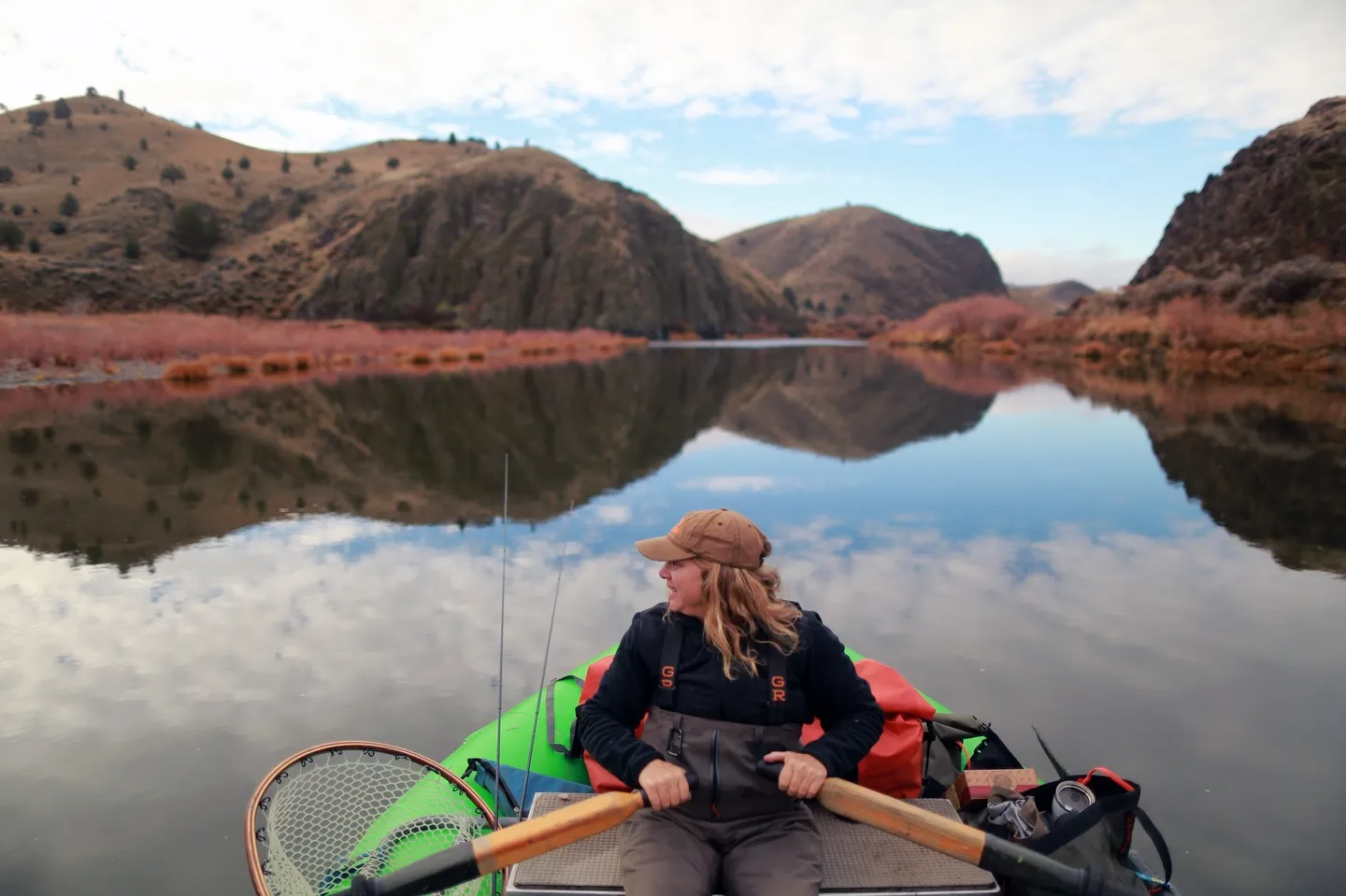
Mia Sheppard has spent decades guiding and outfitting across the Pacific Northwest through Little Creek Outfitters. From steelhead rivers like the Deschutes and Grande Ronde to multi-day rafting adventures, she’s built a career around rivers, community, and outdoor culture.
This episode covers the return of the Sandy River Spey Clave, Dutch oven camp cooking, the changing landscape on the John Day River, and a few classic stories from the river that longtime steelheaders will appreciate.
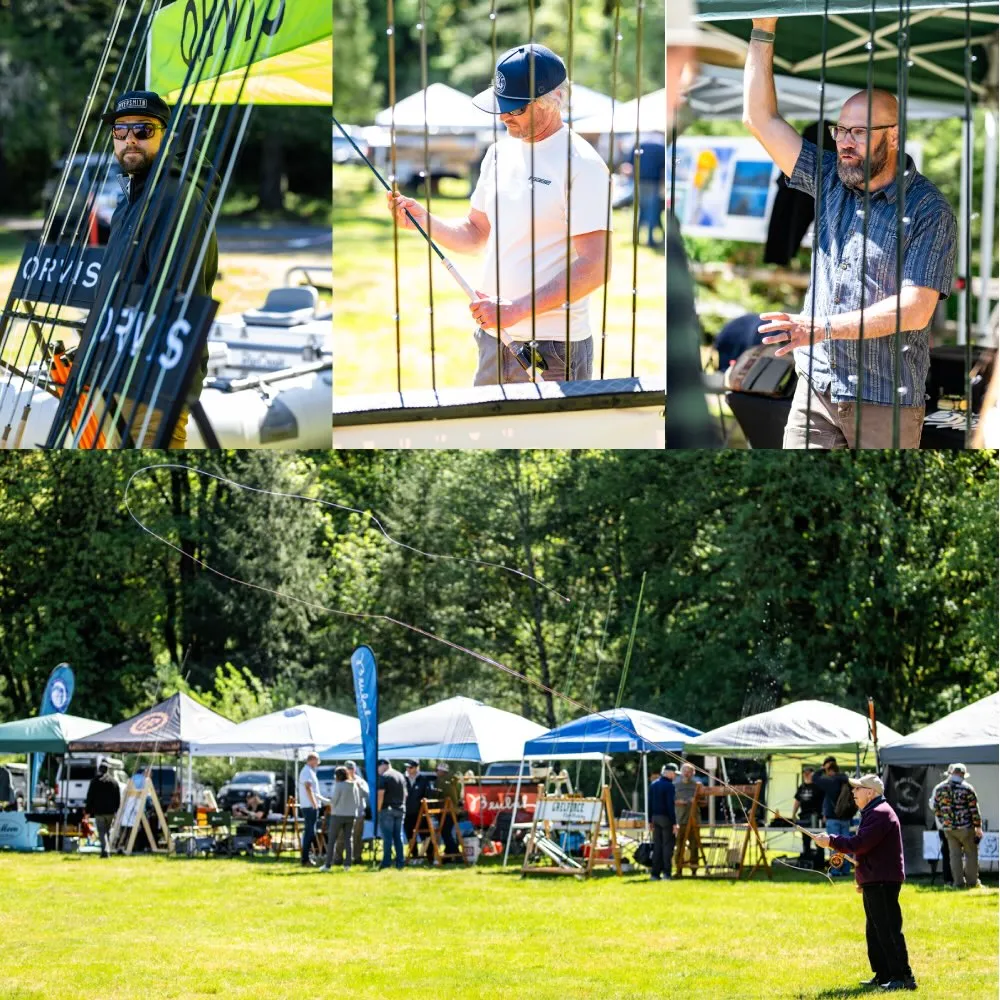
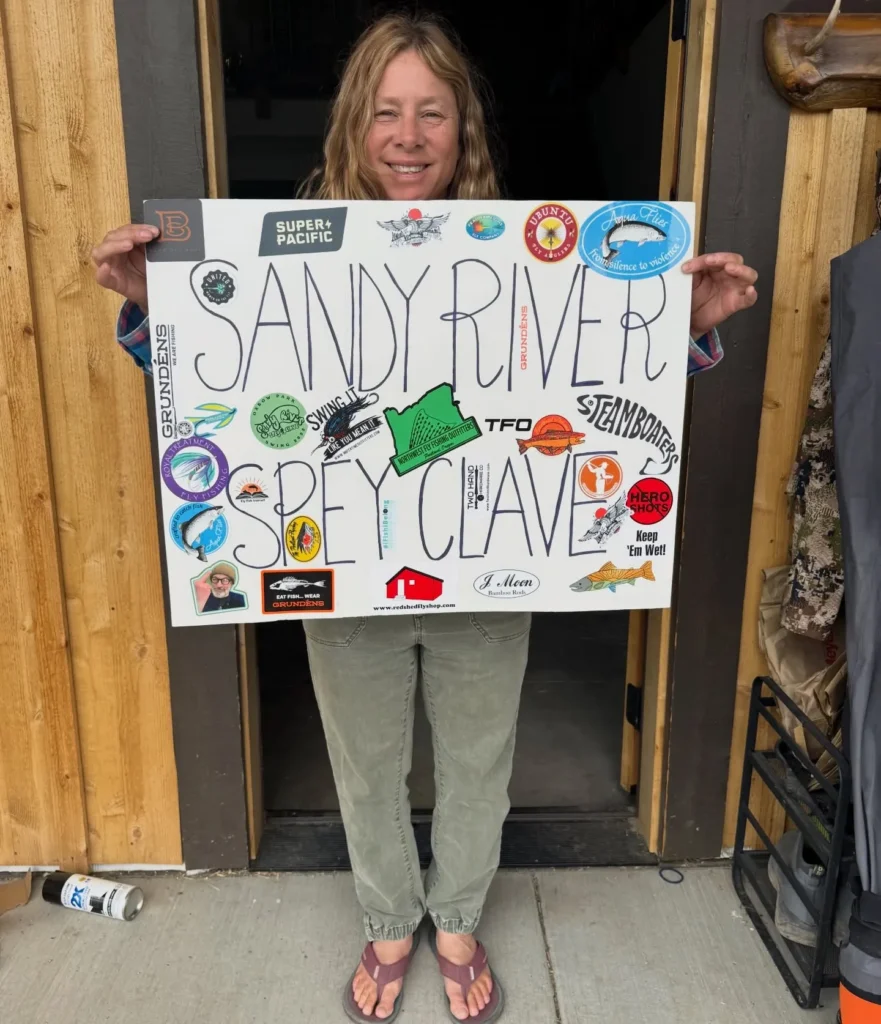
The original Sandy River Spey Clave ran from 2001 through 2019 before COVID and retirement brought it to a stop. Mia decided to revive the event because of how important it had been for guides, outfitters, brands, and anglers to gather in one place.
Unlike large fly fishing expos, the clave is built around hands-on learning. Anglers can test rods and lines directly on the water, attend casting demonstrations, and connect with industry reps and guides in a much more relaxed environment.
Mia explained that one of the biggest advantages of a spey clave is the ability to try gear before buying it. Instead of guessing online, anglers can cast different rods, test lines, and talk directly with company reps and experienced instructors.
That hands-on environment helps shorten the learning curve significantly. For newer spey anglers especially, seeing techniques demonstrated live on the water makes a huge difference.
Mia also emphasized keeping the presenter lineup fresh each year by bringing in guides and instructors who may not have presented before.
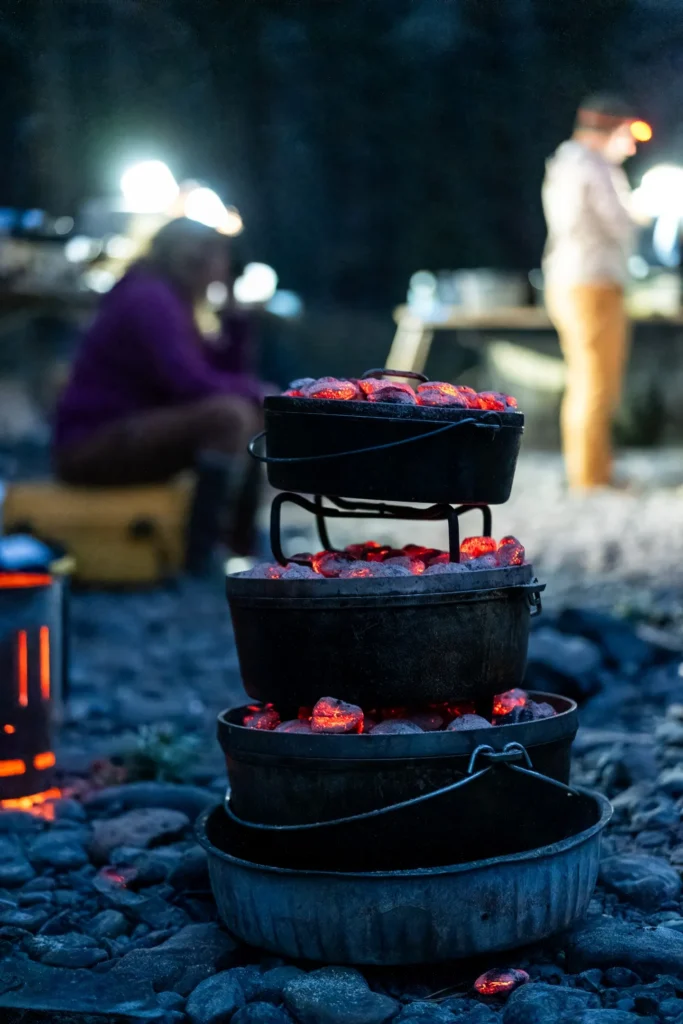
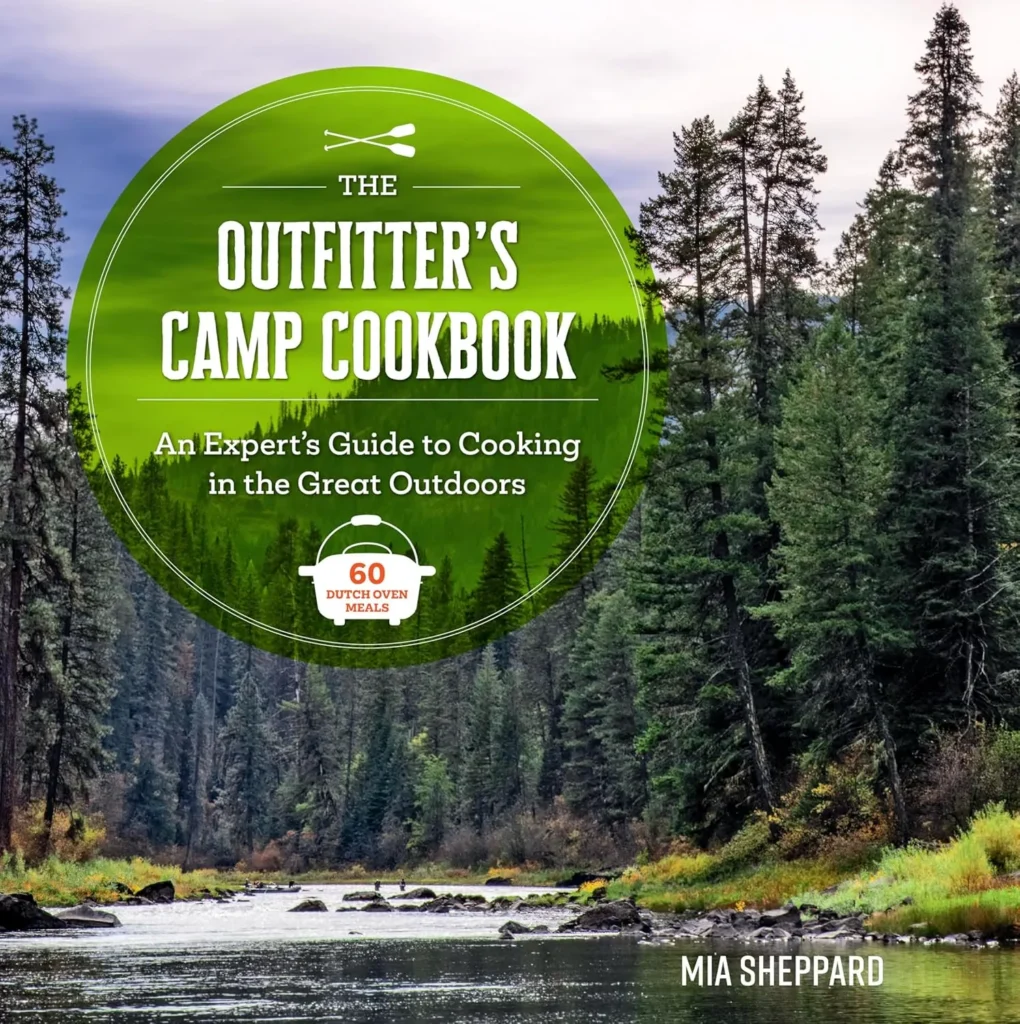
Instead of writing a traditional fishing memoir, Mia realized camp cooking was the subject she genuinely felt passionate about. The cookbook combines recipes with outdoor cooking techniques, river camp logistics, and the history of Dutch oven cooking.
Mia also talks about using aluminum Dutch ovens instead of cast iron during river trips because they’re lighter and heat faster.
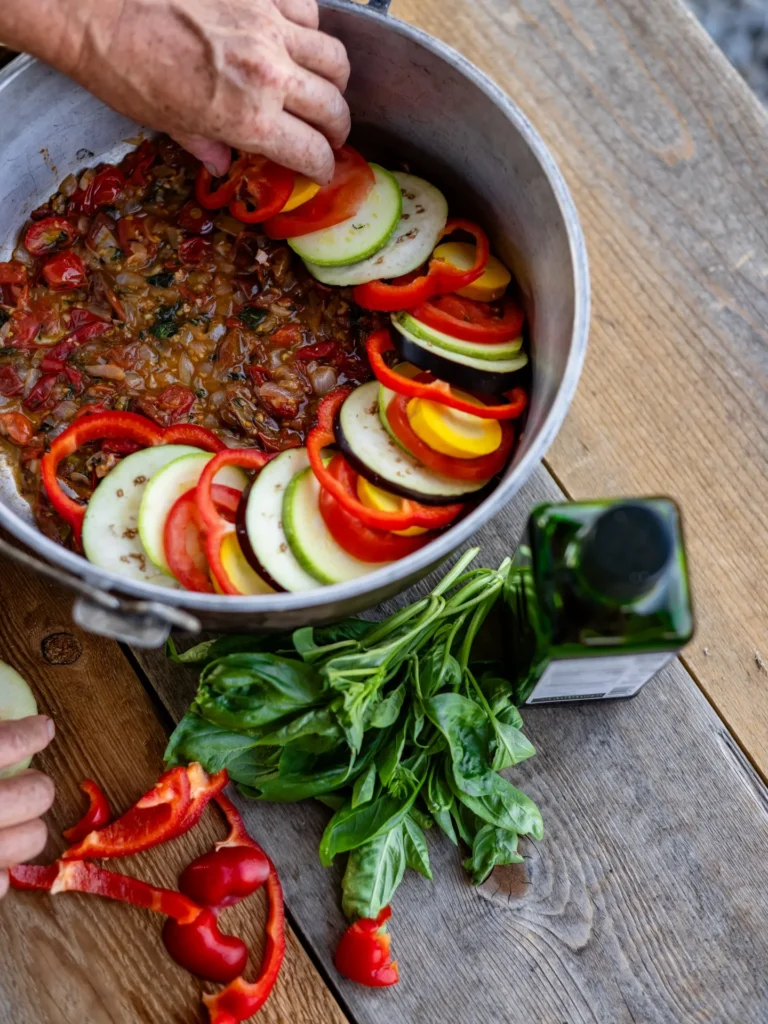
Mia shared a few standout recipes from the book, including an upside-down caramelized apple cinnamon pancake and one of their go-to river lasagnas. The focus is simple ingredients cooked well after long days outside.
One consistent theme throughout the conversation was how much river culture revolves around food and campfire conversations at the end of the day.
Mia also talked about major changes happening on the John Day River due to permit restrictions and changing river conditions. The BLM’s limited permit system has made it harder for outfitters to secure launch dates during peak season.
At the same time, lower summer flows have shortened the season for bass fishing trips. As a result, Little Creek Outfitters has shifted toward raft rentals and logistics support for private floaters looking to explore the river on their own.
Mia shared stories from a 21-day Grand Canyon trip she took with Marty and their daughter Teagan. The trip included dramatic flow changes from 4,500 CFS up to 21,000 CFS, creating completely different experiences through major rapids like Lava Falls.
The conversation also turned toward rowing whitewater, learning difficult lines on the Deschutes, and the gradual process of becoming comfortable handling boats in bigger water.
One memorable story involved Mia accidentally taking the right-side line through Rattlesnake Rapid on the Deschutes in a drift boat and narrowly avoiding disaster.
The discussion highlighted how influential Trey’s work has been for generations of steelheaders, while also touching on the broader storytelling tradition within fly fishing culture.
Episode Transcript
WFS 931 Transcript
00:00:00 Dave: What happens when a legendary river event disappears and then someone decides to bring it back? Today we’re talking about the return of the Sandy River Spey clave, what it takes to rebuild something like this from the ground up, and how it’s creating a space where anglers can actually learn, connect and improve fast. Mia Sheppard from Little Creek Outfitters is back on the podcast to walk us through the clave, her guiding life, and a new project that might surprise you. A Dutch Oven camp cooking cookbook built around years on the river. Today, we’re going to discover what makes a clave different from any other fishing event out there, how beginners can show up and start improving right away. We’re going to find out how Mia balances guiding events and everything else that’s on her plate. And we’re going to get a few killer Dutch oven cooking recipes that are going to upgrade your next camping trip. All right. If you want to find Mia. You can check them out at Little Creek Outfitters dot com. Connect on Instagram as well. All right. Let’s get into it. Here she is, Mia Sheppard. How you doing, Mia?
00:01:02 Mia: I’m doing great, Dave. Thanks for having me.
00:01:04 Dave: Yeah, yeah, this is this is going to be a fun one to catch up. We were just kind of chatting off air a little bit about how time flies. And, you know, six years goes by like that. We’ve done some episodes with you. It was a while ago you and Marty were on back in the day, and you did one recently with In the Bucket with Brian. So we’ll have links to those in the show notes, but I want to get caught up on you. Got a couple things going. This new cookbook I’m really excited about because there’s nothing better than, you know, cooking the way you talk, it looks like it’s going to be all Dutch oven, right? That’s kind of the focus. So we’ll talk about that today. And then the spei clave you got going. Of course you’re guiding. You got how do you keep track of all this? How do you stay without freaking out with all the stuff you got going?
00:01:40 Mia: Oh my gosh. Uh, that’s a really good question because I do freak out. Marty could attest to that. But the last four months, I spent a lot of time in the gym and, um, the last two weeks I’ve been out hunting turkey and morals and just staying really active. And I have a very organized Google calendar. Google calendar is definitely my friend and it’s something that, you know, Marty. Marty has his own own little account and we can all share what we’re doing. And it works really well.
00:02:13 Dave: Yeah it does. Google is good for that. Nice. Well, we mentioned a couple of things. Let’s just start off before we jump into the space clave. I want to hear about this cookbook. It’s coming out launch. People can get it for preorder. Talk about because I think you might even did you mention it six years ago? Or is this a newer thing that’s been coming out?
00:02:29 Mia: Wait, I don’t know if I mentioned it six years ago, but it was probably six years ago when I started thinking about this. And a good friend of mine, Sandra Bishop, I met her through the Stonefly maidens. Uh, that’s a women’s club in Portland, and Sandra is a writer’s agent, and I didn’t even know what that was until she told me what it was. And basically, she works for writers and helps them, you know, connect with publishers. And she knows all the publishing lingo and ins and outs of getting a book published. And so it was probably six or seven years, probably longer than that seven years ago when she said, Mia, you should write a book. You know, you have such an interesting life. And I’m and, you know, like write about fishing. And, and I thought about it. I wrote down some stories and, and it just wasn’t really clicking with me. And I’m like, nah, I don’t really I don’t know why. I mean, I do it for a living, but I wasn’t feeling the passion and, and then I just kept thinking about it and I went, well, you know what, I love cooking, I always have. I grew up in a kitchen cooking. And you know, I just, I love campfires, I love being outdoors. And as outfitters, this is what we do. You know, we cook for people, we make meals, we sit around campfires, and it’s something that everyone can come together and enjoy. At the end of the day and tell stories and, you know, eating delicious food. And it’s also there’s a culture there. So, you know, outfitters and explorers have been using Dutch ovens and cooking on rivers for, you know, for a long time, long time, hundreds of years. And so I’ll get into that too, because I definitely went down a rabbit hole of like the history of Dutch oven cooking and trying to figure out like explorers and, you know, did they use Dutch ovens? And is there, you know, any reference to that? And so that’s been really fun. But anyway, I kind of went down a little rabbit hole there, but I really enjoy cooking.
00:04:42 Dave: So this book is coming out in it sounds like September. People can preorder. Where would they go to preorder this book?
00:04:48 Mia: It’s published by Quarto Publishing and you can get it through the normal channels like Barnes and Nobles, um, Amazon, but it’s really important to shop local. And so I’ve been working on getting some fly shops to carry it. And so emerald water anglers up in Seattle is carrying it. Royal treatment in Portland, northwest fly fishing outfitters in Portland Bend fly shop in bend. And so if you call them or, you know, hopefully they will be getting it up on their shop site too. I know northwest fly fishing has it up on their site, but you can order it through those fly shops.
00:05:26 Dave: Okay. And it’s the title is the Outfitters Camp Cookbook and Expert Guide to Cooking in the Great Outdoors sixty Dutch Oven meals. Yeah. So that sounds awesome. Good. So I can’t wait for this. This is this is exciting. I feel like the Dutch oven, you know, obviously the Deschutes is one place in the summertime. You’re probably not doing the Dutch oven right. Or I guess you could could you do or do you have to have a campfire?
00:05:46 Mia: Well, I mean, you can always use a Dutch oven and over a propane stove. You can definitely make meals that way, but it’s hard to bake on a propane stove. And so that’s where a fire comes in. And being able to put the coals on top of the lid, then you can make your lasagnas and, and baked breads and cakes and things like that.
00:06:08 Dave: And so I guess people could get the book, but also they can go on a trip with you, right. And get some of this. Where would be, what trips are you guys pulling out the Dutch oven on?
00:06:16 Mia: So our spring Grand Ronde trips, and we also do trips on the Oahe in the spring. So April and well and spring Deschutes trout. So in April we’re on the Oahe and then the Grand Ronde in May and even into June. So the Grand Ronde in June for trout, which is epic, and trout on the Deschutes in May. So a lot of our rivers have fire bands starting June first. And that’s, you know, the Deschutes, the John Day, unfortunately. But, you know, for good reasons because these are desert rivers and one spark is going to start the whole canyon up in a flame. And this is also something I mentioned in the cookbook because it’s a really important thing to me. But the Grand Ronde, I’ve never seen how fire bands and there’s rivers like the Middle Fork of the Middle Fork of the salmon apparently never has fire bands, which is crazy. I floated that river with an outfitter almost five years ago, and the whole canyons up in smoke. And there’s fires everywhere where, you know, dry. When we were flying in and the outfitter was this is in July and the outfitters, you know, using Dutch ovens and making fires. And that’s a standard. They’re like, they don’t, there’s no fire bands.
00:07:37 Dave: No. That’s just the way it is. Got it. Yeah. Okay. Cool. We will follow up. Definitely. And, uh, hit up this book, follow you on this. Let’s jump into the sparkly. I think this is going to go live probably after the. The twenty six clave is probably over, but I think we could still highlight a little bit because I’m sure you know what’s coming up right now, and maybe we can look out to the next year or two. But, but talk about that. This is going to be year two of the clave. It was the first year you had. Was it everything you expected and more? How do you describe that?
00:08:08 Mia: Oh my gosh. The first year was a whirlwind. I never came up in for air the whole two days, but it was a lot of fun. It was so rewarding. I’m glad to bring it back. And just a little background. So the Sandy River Spey clave was Spey clave that Mark Bachman and Paddy Barnes, uh, used to put on. And, uh, I think they started it in two thousand and one and it ended in two thousand and nineteen was the last one. Basically, Covid put a kibosh in on the clave. And then also Mark and Patty retired. And so it just sat idle there and I just I really missed the event. It was a really important event, especially back in the day when there was no social media. And, you know, like companies, small outfitters like us, we’re looking for those opportunities to market. You know, we’re not a fly shop. And so, so the clave was an opportunity to see people meet people and see all, you know, your friends that are in the industry. And, you know, there’s people coming from probably twelve different states and from Canada and all over. And so it really was an important event for us and just so much fun. I mean, Teagan, our daughter, she her first clave, she was probably, you know, well, she went there when she was born. And then, you know, a couple years later, she’s like standing in the parking lot casting a, an echo gecko rod and just having a really good time. So last year it was real. I mean, it was there was a lot going on and a lot to keep up with. Metro parks, uh, has been pretty good to work with. But, you know, there they are bureaucracy and, and so there’s, there’s also a lot of rules and regulations, not just that they impose on, you know, the people coming in to the event, but, you know, things, uh, rules that I have to, you know, adhere to as a permit holder. But this year, yeah, I’m really excited to bring it back a second year. There’s a lot of great presenters. Uh, we got, let’s see, Travis Johnson, Whitney Gold, Brian Silvey Colby from Northwest Fly Fishing Outfitters. Uh, I just a whole slew of people. And something that’s been really important to me is getting, um, almost everyone doing presentations this year. They’re all people that didn’t do presentations last year. And I think that that’s really important. Just to keep it new and fresh is to kind of just circulate and have new people that are in the industry. I really want to support guides and outfitters as well, and have people come in to do presentations that haven’t done one before. And there’s, you know, so many more knowledgeable people than there was, you know, fifteen years ago. Yeah. So anyway, I, it’s going to be great. Let’s see what else. There’s also an authors tent this year. So Mark Bachman is spearheading that. So he yeah, he and Scott Seydel. Gary Lewis from Gary Lewis outdoors. Steve Holley maybe Trey Combs will be there really trying to get Trey there.
00:11:27 Dave: Wow. That’s great to hear. Mark’s going to be Bachman is going to be at the event.
00:11:30 Mia: And apparently Pat you know Mark’s going to have some of Patty’s famous chocolate chip cookies that that she used to make like hundreds of cookies for for the spei clave. And unfortunately, I cannot live up to that, uh, right there. I don’t know how she came up with the time to do it, but I definitely can’t fit in baking, you know, three hundred, four hundred cookies.
00:11:53 Dave: No, that seems like a lot. Seems like a lot. Cool. So and it’s going to be Friday and Saturday. Is it typically, do you try to set it for kind of the end of April? How do you do you set a date like next year? Can people kind of plan in their calendar?
00:12:06 Mia: So last year I did it on Mother’s Day weekend. And I just really feel like that kept a lot of people from coming because it was Mother’s Day. And also there were already guides that had trips booked because May has become the best time to fish for salmon or to fish for trout. And the salmon fly hatch on the on the Deschutes. And so I would have liked to have done it the first weekend in May. But there is the Skagit, uh, clave happening that weekend. And so, so my only other weekend I don’t. It was was the week before. So that’s the last weekend in in April. I don’t want to do it in um, you know June it’s too hot in July. It’s just too. Yeah. There’s just too much going on. And then you get into steelhead season and. Yeah. And then the year’s over.
00:12:59 Dave: That’s right. Yeah. April seems like a good time. The spring seems like a good time to put together just before people are really getting going with everything. So okay, we got that coming. And then yeah, you got a great cast of speakers and I’m just looking at the website and you’ve got yeah, you’ve got some fly tires here. It looks like, uh, Jerry French, Bruce Berry. You’ve got nonprofits, uh, shops and outfitters.
00:13:19 Speaker 3: Oh yeah. I just want to just give a shout out.
00:13:22 Mia: I mean, this event is a lot, a lot of investment in it and, uh, and financially as well, um, with permits and insurance and food because there’s a free lunch to the public on Saturday. And there is there’s a class on beginner’s class on Friday. And so I’m providing a deli lunch on Friday for the class participants, instructors and volunteers. And so I wouldn’t be able to do this without trout unlimited has been very supportive. Well, it’s the Oregon Council of Trout Unlimited and then Wild Steelhead Coalition and the Fly Fishers Club and Slash Foundation. And so it’s great that they’re all going to be there as well and as well as yeah, a few other nonprofits. So.
00:14:12 Dave: Nice. What is it for somebody that hasn’t been to a Spey clave. You know, maybe let’s just think they’re just just starting to think about Spey casting and getting into it. What can they expect? How is a Spey clave different than, say, a fly fishing show? You know, something like that?
00:14:25 Speaker 3: Yeah, it’s very.
00:14:27 Mia: Different, a lot more intimate. There’s forty seven exhibitors there this year And that’s rod companies, reels, waiters, you know, fly wallets, artists, uh, just anyway, a lot of, um, different brands in the industry. And so as a consumer or a person attending, you can come and you can go talk to the rep and get information on rods. You can try the rods, you can try the lines. You can, you can bring in your own rod. And if you’re looking for a line and go, hey, you know, you know, scientific anglers going to be there, Rio is going to be there. You know, you can ask like, can I try line? Or do you, you know, what do you recommend? And so yeah, and there’s on water presentations. Uh, so definitely bring notepad. And that’s the big difference is, you know, the, the on water presentations, it’s a free event. Um, so there’s no entry fee, there is a five dollars park fee and it’s, yeah, it’s just really Personal. It feels so much more personal and intimate than going to, you know, a big convention center with bright lights.
00:15:40 Dave: Yeah. You’re outdoors, right? This is the thing you’re at. You’re outdoors the whole time.
00:15:44 Speaker 3: Yeah.
00:15:44 Mia: You’re outdoors and nature people are just hanging out casting rods and yeah, just having a good time.
00:15:54 Dave: Fishing expeditions offers world class fly fishing right off Alaska’s incredible road system. From monster rainbow trout to feisty Arctic grayling, you’ll chase big species in the stunning landscape. Whether you’re a seasoned angler or just starting out there, expert guides ensure an unforgettable adventure. Book your trip today before spots fill up and experience Alaska’s diversity like never before. Check them out right now. That’s Fishing expeditions dot com. Pescador on the Fly offers a full range of fly fishing gear for any angler at any budget, with premium raws delivered directly to you. The El Rey G6 is the most packable, high performance fly rod on the market, performing like a four piece rod but with unmatched portability in six pieces, and you can get ten percent off your next order. Right now, if you use the code Wet Fly, swing at Pescador on the fly dot com. Never fly without your G6. Discover the El Rey series and more at Pescador on the fly dot com. Have you ever had. I think about this because. And I’ll knock on wood because my daughter’s just had a soccer or a track event and it was like the weather was like hailing sideways. And the kids were I mean, kids were crying. They were hunkered down under. I mean, it was it was crazy. And so we’re like, wow, okay, they almost should have called it off. But have you in twenty years of when Bachmann was running, did you have any of those events?
00:17:14 Speaker 3: Oh, yeah.
00:17:14 Mia: I definitely went to events like that. There was one or two I, I very much remember where it was just cold and rainy and you’re wearing jackets and you’re underneath a pavilion. So yeah, I crossed my fingers and. And I really threw out some good juju. I guess I’m like, okay, just please let it be good weather. And yeah, we’re looking like we’re going to have seventy degree days. So so that’s perfect. There was also one year the river was really high and it was hard. There was like this tiny side channel and, and it was hard to cross that and get to the actual river. But the river has changed a lot. It, it does every year because it’s not dammed. The Sandy. And the biggest change in the last fifteen years is the number of willows on the bank. Like I was looking at a photo from probably fifteen years ago and it’s all sandy the whole way down. And there’s now the whole bank is almost covered with willows. And that’s, that’s been been the biggest concern is like, oh my gosh, are we going to, you know, be able to do presentations, you know, or people going to be able to cast. And, uh, you know, I’m glad there’s all there’s all the willows. It means that, um, this is what I know. I used to work for the Forest Service up in zigzag. I worked in the fisheries department. I was a seasonal employee in their fisheries department. And this is, you know, twenty five years ago or longer. And we would do these willow planting projects with volunteers. And so we would have buckets of willow sticks, and we would go out into, you know, the upper basin. So the salmon and the little zig zag, those are both tributaries of the sandy. We would stick those willow branches all over the place, right in the river banks. And, um, I’ll tell you what, I don’t know if I mean, I’m just speculating, but there are a ton of willows now in the lower Sandy.
00:19:24 Dave: That’s awesome. Well, I guess the great thing about the spay is, is that one of the great things is that, you know, that’s the idea, right? If you had to cast with a single handed rod, it’d be really hard to cast. But that’s the great thing about the spay, right? With the. Yeah. So maybe you’ll get to utilize that a little bit there. So, um, so good. And there’s going to be um, yeah, a bunch of obviously you’ve got a full schedule. This is loaded. I mean, this is, did you look around? I mean, I’m guessing you’ve been to some other spay events, some claves, but are there a lot of spay claves around the country? Did you look at a few that you’ve been to and kind of, I guess you had, you had twenty years from Mark kind of heading things up to understand it.
00:19:59 Mia: I honestly haven’t been to a spay clave since probably two thousand and eighteen. And it was Mark Bachman’s. I went to the Clearwater Clay Poppy’s clave only once and I, I mean, I really, really like Poppy’s clave. Um, it just was always the, I think the last weekend in September and and that’s opening deer season. Oh, yeah. And so it would. There was always a conflict there. And it was just always so, so hard. And I mean, not just the deer season, but it’s like, oh, steelhead trips. And you know.
00:20:37 Dave: It’s the busiest time of the year. Yeah.
00:20:38 Mia: Yeah. And so it was just really hard to get out to. And then, um, Spey Nations, I made it out there once and had a really great time. Um that was, yeah, that was a long time ago, like over ten years ago. So really, I, I just was kind of going off the previous Sandy River Spey claves and just really just going off what I know what I like and how I wanted it to be. So I’ve looked at other places to have it, other parks, other venues. But what makes it so different on the Sandy is that we can have a two day event, because the park locks the gate at a certain hour at at dusk, and so you can’t get into the park, and so it’s a safer environment. You can camp there, which is really nice, and then walk to the event. And so I think it being a two day event and being able to camp right there, you know, it brings in a lot more people.
00:21:37 Dave: Yeah, no, I think it’s awesome. I think it’s a perfect setup. And I’m just continuing to look through your your lineup and it is loaded. This is really cool to see. This is what’s exciting because I think there’s some people we haven’t had on the podcast yet, but a lot of them, and including I’m looking at Ron Walp, the tug and how to handle it. I mean, talk about a classic old timer. Ron Walp is a guy I’ve known most of my life, right?
00:21:58 Mia: Ron is Ron has been a mentor to us. I mean, he really is a really special person for us, you know, in my heart. And I mean, we’ve known him a really long time and he’s so kind and he’s one of the nicest guys on the river. Like, you know, he taught Marty how to run a jet boat.
00:22:19 Dave: Oh he did?
00:22:20 Mia: Yeah, yeah, he taught me how to run a jet boat. I my first time deer hunting on the Deschutes was with Ron Wolf.
00:22:27 Dave: No kidding.
00:22:28 Mia: Mhm. And him and I hiked up all the way to the top of, um, so the bull run bull run camp. So we went up the draw across from there and hiked all the way to the top of the mountain and over the ridge and sat up there just, you know, talking about life and, um, you know, and it just really cool. And so he wanted to do a presentation and I went, sure. Yeah. Of course. Yes.
00:23:01 Dave: Well, I can tell you he, he definitely, yeah. That’s one that I would love to see. He yeah, obviously he had a connection. My dad, it’s funny because my dad has this story. They always used to talk about this. They played baseball together in like Little League as kids. And they used to talk about they used to joke about that, Like, who was better at baseball? You know, but but Ron. Yeah, he he did the same thing for us. I remember one time he dropped us off, took us down river, and dropped us off where he saw this big buck. And we hiked up the hill and but, but awesome. Let’s jump back in. Um, you know, obviously we, we kind of highlight a little bit on the last episode. We did, we, I think we talked, gosh, we’ve talked about a little bit of the John day, the operation you have going. How has it been going? Has anything changed in the last few years on your program, or are you still doing a lot of steelhead mixing it up? What’s that look like?
00:23:45 Mia: Oh my. Do you ever do trips on the John Day?
00:23:48 Dave: I’ve done them, but not every year. I mean, I would love to. It’s such a cool place.
00:23:52 Mia: Yeah. Do you know any anything about like the permit system or what’s going on there.
00:23:57 Dave: Oh no I don’t. I know that last time we went you had to. Yeah. Is there a whole new system there?
00:24:02 Mia: Well, it’s probably the same system. So I was just trying to figure out where I should start with this and and how long I should talk about this.
00:24:11 Dave: Right.
00:24:12 Mia: Um, so just in a nutshell, the Bureau of Land Management made the John day or, um, during the peak season, summertime, it is limited. There’s limited permits.
00:24:25 Dave: Like the Deschutes.
00:24:26 Mia: Yeah. To float that river. And they modeled it after the Deschutes. However, it is nothing like the Deschutes, and it took them a really long time with us pounding it into their brain that the John Day is not like the Deschutes.
00:24:42 Dave: No. Well, first of all, if you can’t float it. Yeah, it’s not dam. So you can’t fish it all year or you can’t float it.
00:24:48 Mia: Yeah, it doesn’t have a consistent water flow. It fluctuates from, you know, it can go from five thousand to twenty thousand overnight or five thousand to one thousand, you know, in just a couple of days. So it’s a river that’s really dependent on snowpack. And so anyway, you know, they, they made it very limited. During May first, I think it is, or May fifteenth to July fifteenth. And that’s when, you know, a lot of people want to go rafting. And there’s a great bass fishery. And but what happens when you limit something? It’s, you know, like toilet paper, everybody wants to do it or everybody needs to stack up on, on toilet paper. And so they manage it as a common pool system like the Deschutes. And so guides and outfitters, the outfitters have to compete with the public to get a permit. And those permits are very limited. And so, you know, you’ll have a group, let’s say there’s a group of sixteen. They get all their buddies to put in for a permit. They’re like, okay, we’re going to put in for this day. So then they have sixteen people that are pressing the, the little send button and we’re, you know, an outfitter of one two. And so we’ve had a very difficult time getting permits, and just more people are wanting to float the river that time of year because it’s also it’s a very friendly river. It’s very easy to float. It’s very kid friendly. And so it’s become a very popular river in the summertime. And so one of the things that’s changed over the last few years is, you know, we’ve been booking less bass trips, which is really, you know, we’re like, what is going on? You know, just, you know, no one wants to go bass fishing. I mean, I don’t blame them because I, it’s not my favorite either. But but it’s fun. I mean, it’s so much fun to go out, you know, for the day. And it’s a great summertime fishery when the water is warm because bass can handle temperatures up to eighty degrees when you don’t want to target trout and steelhead. But yeah, so our bass, you know, trips were declining, but also it seems like the water has, um, like we used to do trips into like the third week of July, and we can’t do trips until it seems like July fifth is our cut off date because there’s just not enough water anymore. And but people, what’s become really popular is people renting rafts. And so we last year contacted the BLM and said, you know, because of your limiting permits and, you know, changing the whole system and how hard it’s been for us to do business out there. You know, we want to start renting rafts and delivering. And they went done because, you know, we went from doing eight bass trips to three bass trips a year or a season. And so we started our, uh, you know, invested in some DNR’s rafts. And this year, phones started ringing off the hook and our May and June is slammed.
00:28:07 Dave: No kidding. So you’re basically getting people set up to do the trip now?
00:28:11 Mia: Yeah. We are just getting people set up to do the trip and the people that are calling to, um, you know, I mean, we have twenty five years of experience floating that river and understand it like no other, you know, company out there. And so, you know, people are calling and, you know, that are wanting to do it for the first time. And, um, they have a lot of questions. And, you know, this is a year when there’s no water and we have people calling now like, oh, we want to go do a five day trip and launch at Clarno and take out at Cottonwood mid June. And we’re like, uh, there’s not going to be any water. You’re wanting to do basically a, a seventy five mile float in four days with two hundred cfs. It’s not going to work.
00:29:00 Dave: No, you’re going to need a need a like a kayak probably for that.
00:29:04 Mia: Yeah. You, you’re not even going to do it in a kayak.
00:29:07 Dave: Oh, not even in a kayak, right?
00:29:08 Mia: Yeah. At two hundred cfs in five days. I mean, maybe if you’re doing, I mean.
00:29:14 Dave: Working your butt off.
00:29:15 Mia: Yeah. If you’re if you don’t mind upstream winds and no current.
00:29:20 Dave: Yeah. Wow. Okay. So that’s the big change. So the John day is changed. And so, but it sounds like you’re still on the grand Ron and you’re still doing the Deschutes. And yeah, I know Marty, I know that was the interesting change. When some stuff steelhead things change a little bit. And then Marty started getting more into like hunting, right? Like doing some stuff out there. Is he still focusing on that a little bit?
00:29:39 Mia: Yeah, we are. We do, uh, we work with an outfitter called Sheep Mountain Outfitters. We’re running people up and down the Deschutes River, uh, to go sheep hunting. And so that’s been really fun. It also coincides with steelhead season. So, so we’ve been, you know, just, yeah, yeah, working with other people to accommodate hunters that are in need of transportation and guidance.
00:30:07 Dave: Exactly. Yeah. On the sheep hunting because it’s it’s still kind of like they only give out a couple of tags, right? A year or something like that. So it’s pretty limited. But I guess guys are just trying to find the best, the biggest animal they can find is kind of the, the deal.
00:30:21 Mia: Yeah. And I’ve learned a lot now about sheep being around sheep experts and just learning how to tell, you know, the age based on the rings, on their, on their horns. And yeah, it’s, it’s really interesting. Um, it’s really easy from a distance to look at a ram and go, ooh, you know, they, you’re, you know, oh, they all look so nice. But you know, when you really start looking longer and longer, you try, you know, you’re like, okay, well that looks like a better one. Or, you know, it has more of a flare or, you know, the tips go out to the end of, you know, anyway, it’s really fun.
00:31:01 Dave: Yeah. That’s cool. Well, take it back to the, the, uh, the book I want to know. I want to get the full scoop on the book because I feel like this is something everybody should probably have on their, you know, at least getting ready for their next trip. What is it? When I think of a Dutch oven, I’m such a rookie at all this, you know, I’ve cooked in it, but it’s been a while. What is that book? You know, what is it going to highlight that maybe most people wouldn’t know about cooking with a Dutch oven?
00:31:23 Mia: Yeah, well, this book is more than just a cookbook. Uh, it really is. You know, a guide related to camp cooking with a Dutch oven. There’s chapters in outfitting and outdoor kitchen, you know, and under that chapter, it gets into waste management, packing coolers, you know, setting up camp. There’s a brief history on Dutch oven cooking. There’s every chapter has the beginning of the chapter has a little inspirational quote by a person or a, or a guide, um, river runner angler. Some of my friends, such as, um, Kate Sampsell, Jeff Helfrich, even, um, Don Roberts. So do you know Don? Did you know Don?
00:32:09 Dave: No, I don’t, I don’t know Don.
00:32:11 Mia: Yeah. Don Roberts was a writer, you know, many, many years, um, old timer and Don used to go on trips with us and anyway, he, I’m gonna say his quote, his quote is, uh, chasing runs of steelhead from tributary to tributary along the Columbia Snake River. Snake River system could jeopardize one’s career, marriage, and mental health. So who cares?
00:32:39 Dave: Yeah.
00:32:40 Mia: That’s kind of how the book ends is with with that quote. Um, yeah. So this, this book gets into, you know, managing like temperatures, um, you know, how to buy a Dutch oven, uh, or the difference between aluminum and Dutch ovens and cast iron a little bit, because as an outfitter, we have used aluminum with Dutch ovens for twenty three years, and because they’re lighter and food cooks quicker in a day.
00:33:17 Dave: That’s the main reason I probably haven’t ever cooked because I’m usually the boat is out there a lot. It feels like that’s. One of the limitations is that it’s so heavy, but I didn’t even know there was aluminum. I didn’t even know you had aluminum. Cast iron.
00:33:29 Mia: Yeah. So there there’s aluminum Dutch ovens out there and it’s, um, one brand. Well, they’re actually discontinuing these, but they’re hard anodized Dutch ovens and they made a ten, a twelve and a fourteen. And so uh yeah. So they’re say, you know, they’re safe to cook in and, you know, they, they last a long time. I mean, we’ve had some of these, like I said, a Dutch oven for, you know, over twenty five years. Um, yeah. And let’s see wood versus coal or wood versus briquettes. You know, I talk talk about that. There’s just a lot, you know, starting maintaining the fires. Um, and let’s see, I have tips for success cooking with a Dutch oven. Let’s see. Let me let me look at this. I could, you know, cook on a level surface. Preheat the Dutch oven. Uh, create a base under the Dutch. Um have extra coals and briquettes ready. I one big thing is avoid lifting the lid during the cooking process, you know, because that lets heat out um heat escapes and um and so you need to keep that in to cook your meal.
00:34:45 Dave: Let’s take a break and check in with Jackson Hole fly company right now. The right gear can turn a good day on the water into an unforgettable one. Jackson Hole Fly companies combo kits are built to match the rhythm of the river, giving you everything you need in one simple package. Each kit pairs a perfectly matched rod and reel with essential accessories, ready to fish right out of the box. From the beginner friendly Crystal Creek to the high performance flat Creek, there’s a setup for every angler, and don’t forget about their packs and slings. I’ve been loving my Jackson Hole Sling Pack for a number of years now. The perfect size to fit all your gear, but not too heavy and not too big to drag you down. Check out their slings and rods and much more at Jackson Hole Fly company dot com, and you can support this podcast by checking in with Jackson Hole Fly Company today. The Gallatin River Lodge is the kind of place that makes a Montana fly fishing trip work the way it’s supposed to. You’re staying just minutes from private access on the Gallatin River with the Madison Yellowstone. Close enough that you’re choosing water based on conditions, not spending half the day driving. If you belong on the water, you belong at Gallatin River Lodge. Thoughtfully designed rooms, local guides who know these rivers inside and out, and a private casting pond right on the property. And when the day is done, you’re sitting down to some of the best food in the Bozeman area right at the lodge. You can call Gallatin River Lodge or head over to GR lodge dot com and start planning your next Montana adventure today. Do you have recipes in there? If somebody wanted to make a lasagna or any of these good big, you have the step by step in there.
00:36:24 Mia: Yeah, yeah, yeah. So sixty recipes. And I’m not a trained chef, but I started cooking probably when I was seven years old. I have three sisters. And so four of us. And my mom was single a lot or most of half of my life. And so we grew up cooking, cooking meals, um, because my mom would be at work. And so that’s really where I, I got my start and I’ve always just found, found it therapeutic to chop vegetables and I’ve actually never been one to like. I love looking at recipes for inspiration, but I’ve also never really followed recipes and then I’ve never written them down. And so writing recipes is a process. And there were, um, you know, like a lot of these, it’s like, okay, well, I’ve cooked this, you know, cinnamon, French toast pudding. I’ve cooked that for, you know, a number of years. But I have, you know, I never followed a recipe. I just kind of put the stuff together until it, it tasted good. So I’ve had to really, you know, like these recipes. I’m like, okay, I have to write a recipe now. And so I was very intentional. Like, I’m going to measure this and how much is right? How much baking soda am I using how much? You know, how much milk? How how many eggs? And then writing it down so that it was readable. I probably went through at least five or six edits, and then working with quarto has been unbelievable. My publisher, Jennifer. She is amazing. She used to work in America’s Test kitchen and so she has just been a godsend to. And just she’s so excited about this book. Um, and I think, you know, one of the connections there when, when we met and talked, she’s like, oh, my husband just ran the Grand Canyon and oh, my dad loves to fly fish. So yeah, so she just was really jazzed on the book.
00:38:37 Dave: So you got a good person there. And, and like you said, the book is coming out this fall. So what would be if you pull out a couple of your favorite Dutch oven kind of recipes that you have in there? What do you think your top handful.
00:38:48 Mia: So okay, I’ll pick a breakfast right now because I’m looking at this. Um, I have an upside down caramelized apple cinnamon pancake.
00:38:56 Dave: Oh, wow.
00:38:58 Mia: And so it literally is just lots of butter. And, and you take apples and, you know, and slice them up and put them in the Dutch. And then you saute those with the butter and, um, and the cinnamon and you make your, your batter mix. And once that’s made you pour that on top of the cinnamon apples and then it bakes and it’s delicious. So I love that I, I love lasagna and we do lasagna all the time on the river. And the way I make it, um, is partly inspired by my friend Rocco is just, it’s very simple, simple ingredients and delicious ingredients. So it’s literally like anchovies, Italian sausage. Um, you know, of course you know garlic. And I love using really good tomato puree. Um that’s important is using the best like spend eight dollars on tomato puree and not get just the Kroger brand and then fresh basil, you know, really good olive oil, ricotta cheese. And, uh, anyway, it’s, it’s really delicious.
00:40:11 Dave: There you go. Lasagna. We got the apple. And how else could you cook other than is that mostly at dinner and breakfast? I guess lunch is a little bit different. You’re using.
00:40:18 Speaker 4: Yeah, yeah. Lunch.
00:40:19 Mia: Lunch is always just, you know, deli sandwiches or whatever. But yeah. So so breakfast. There’s, uh, appetizers, hors d’oeuvres, desserts.
00:40:29 Dave: That’s good. Okay, cool. And, and how was the process of writing this book? It sounds like I’ve heard lots of people that have written books. It’s a lot of work, obviously, but are you after you finish this, are you thinking, man, a number two book would be cool?
00:40:41 Mia: Maybe.
00:40:43 Speaker 4: So.
00:40:43 Mia: Um, something I want to share with you is, um. I’ve never considered myself a writer. I enjoy the process of writing, I love writing, I didn’t graduate college, um, and I actually didn’t graduate high school. And so I think, you know, I might have been really insecure for a number of years, just like, oh, well, I, I can’t do that. I don’t have, you know, I don’t have the degree, even though I did go back to school and I took some writing classes and, um, again, I love the process of it and, uh, and, you know, but you have to just have to start doing it. And, and I don’t know where I was going with that except that, um, it took a long time to write like twenty. I feel like it took, you know, twenty four years to get the experience as an outfitter, um, to actually be confident to write Dutch oven recipes. And then then the actual writing of the book and the, the photography took another four and a half, almost five years. There’s two hundred photographs in here that are just gorgeous. My friend Aaron Stevens, who you just had on the podcast, he, uh, I worked with him, um, to get some phenomenal photos. And then I have a lot of photos that I’ve taken and Marty and Dave McCoy has a few photos in there. Um, my friend Zento. Um, and am I missing somebody? But. Oh, gosh. Yeah. Dylan. Dylan Rose, um, has taken some photos. In fact, the cover of the book is Dylan’s, so.
00:42:20 Dave: Oh, this is great. Now, this is even more exciting now to think. I can’t wait to see what this looks like. And yeah, I mean, going back to your, you know, I think the education, I feel like, you know, part of it is I think for a lot of people, yeah, education helps. But I think there’s tons of people that have been like super successful without a degree, you know, like multiple, you know, millionaires, billionaires write lots of stories about that. I think because part of it’s just life getting out there and doing it and learning right and just doing it. But I hear you, man, if you got to have that confidence, right?
00:42:48 Speaker 4: Yeah. And I just feel.
00:42:51 Mia: I just want this to be, you know, I wanted to inspire people to, to get outdoors. I also, once I started writing this, I felt committed because as a parent, I do not want Teagan to see me fail like I more than anything, like I want her to see that I can do this. And, you know, even at the end, like I’m like, Teagan, look at this. It’s going to be in Barnes and Nobles. And she’s like, what? Because she loves to read. And just as a mother, I’m like, yes, I did it. You know, I did it for her.
00:43:29 Dave: Yeah, that’s really awesome. Yeah, I’m just looking through it. It’s, it’s, there’s a bunch of great photos I’m checking out right now. Appetizers. You got plenty of fly casting photos in there. This is good. Okay, so we’ll have a link. And you said the first place to go to is go to local fly shop. So can people, will they have to wait till September to get pick it up at the local fly shops?
00:43:46 Mia: They could pre-order it now. So if you if you call it Emerald water anglers northwest fly fishing outfitters. Yeah. Royal treatment bend fly shop. I know that they’re going to carry it. And if anybody else have any other flagships want to carry it they you know they can.
00:44:02 Dave: Yeah that’ll be it. If you don’t find it at your local fly shop, go out and check in with your shop and let them know they should check it out.
00:44:07 Mia: Yeah, yeah. Again rather yeah. Support local than, than go shop on Amazon.
00:44:13 Dave: So exactly. Cool. Well you, I know a while back and maybe it’s been a few years, but you were doing a Grand Canyon trip maybe talk about that because I haven’t talked to you. Grand Canyon is still on my bucket list. I mean, I’ve hiked down it, but I haven’t floated it yet. What was that trip like?
00:44:27 Mia: Yeah. So we must have. Did we talked to you before or after?
00:44:31 Dave: I think it was before you were going, I believe.
00:44:34 Mia: Yeah. So we were still living in our our house on Elrod Place in Maupin. And in twenty twenty, we sold that place, bought property, and then went to the Grand Canyon. Uh, we got an invite from a friend and, uh, we packed up and went and floated the Grand Canyon for twenty one days. And it was the most epic, unbelievable trip I’ve ever in my life been on. And so fortunate that Teagan came with us, too. So, um, she was yeah. So that was, you know, twenty so I guess I guess it was twenty twenty one. So yeah, so for four years ago.
00:45:16 Dave: Did you do it in rafts? You know, we did a few series um where we went on this drift boat thing and we had some of the guys that did the dories down there. Did you see any of the dories? I’m assuming you floated rafts. Did you see the drift boats too?
00:45:27 Speaker 5: I think there was.
00:45:28 Mia: Maybe a couple, but, but we, we floated it in March. And so it was really it was before the outfitters floated. And, uh, yeah, we oh my gosh, it’d be amazing to do it in a dory. Like I just got finished reading the the Emerald Mile.
00:45:46 Dave: I know that book is awesome.
00:45:49 Mia: That book is amazing.
00:45:51 Dave: Unbelievable book. I know.
00:45:53 Mia: Unbelievable. But that yeah, that canyon is so special. Just everything about it. Just the water, the canyon, just the reflection of the light on the walls and the hiking and the, you know, all the history and the geology and the campfires and, you know, just getting naked and jumping in the water, right.
00:46:13 Speaker 6: Take a bath.
00:46:15 Dave: What was the in fishing? That’s the one thing with the Grand Canyon, the fishing, it’s not quite there as much. Right?
00:46:20 Mia: No. But Marty. So Marty and I did bring a rod and we caught a couple really beautiful trouts.
00:46:28 Dave: Oh you did?
00:46:29 Speaker 6: Yeah.
00:46:29 Mia: So? So March. Uh, the water was clear. What was really spectacular is that when we launched, it was at, I think, nine thousand cfs. And then about halfway through our trip, they lowered the river down to like four thousand five hundred. And they were doing this so that they could they had some maintenance on the dam, and apparently the river had never been it hadn’t been that low in like fifty years. So it was really interesting. So we went through, you know, some rapids that, you know, like crystal is a huge rapid. And it felt like nothing. Um, but then there were class, you know, fours that had huge boulders in them and dropped. And we’re like, whoa, that didn’t feel like a four then let’s see. It was down at four thousand five hundred for about four or five days. And then they raised it up to twenty one thousand. And so that was really cool to, you know, see the river and go through like lava at twenty thousand.
00:47:35 Dave: Oh, wow. What was lava like?
00:47:37 Mia: It was really scary. Was it? It was scary. Yeah. And of course, Marty wrote it. We were in eighteen foot rafts and. And I just remember going, like, holding on to Tegan going, oh, my God, we’re gonna flip.
00:47:50 Dave: I just just a giant. So you’re just pounding into a giant wave. That’s.
00:47:54 Mia: But the fishing before, uh, when the river was at nine thousand and down to four. Um, yeah, there were a couple places we caught a actually a bunch of bunch of trout and, you know, not not big ones, just just native little trout. And they were really. Yeah, they were really fun.
00:48:12 Dave: Wow. So a good trip in twenty one days. That’s three weeks on the river. That’s a pretty, uh, pretty epic trip. So you get out of that. That must be hard. What’s it feel like when you get done with three weeks on on the river? Is it does it feel any more similar to a week when you’re doing, you know, the other trips, the middle fork of the salmon or whatever?
00:48:28 Mia: It’s a little different. I mean, and I actually remember going, I’m ready to get back on the river. Like you just, you know, it’s just so liberating to not be connected to any social media or crap or, you know, not to hear anything going on in the world and just be able to really focus on the here and the now and be present. And you know, what you’re doing at that moment. And, and then to be with, you know, friends and family and just, um, it’s a really beautiful experience and I can’t wait to get back there someday or go. There’s, there’s actually a number of rivers that, that I haven’t ran yet. And they’re just on my bucket list that I’m like, okay, I really want to go do the gates of Lodore.
00:49:20 Dave: Where’s that one?
00:49:21 Mia: The the green river.
00:49:22 Dave: Oh, the green.
00:49:23 Mia: Yeah. So that’s on my bucket list. That’s um, so something I talk about in the cookbook is John Wesley Powell when I was kind of going down the rabbit hole of, you know, just the history of Dutch oven cooking and just like trying to find some explorers who used Dutch oven, you know, Dutch ovens or some sort of reference to it. I came across the exploration of the Colorado rivers of the West and its tributaries. And this is a really fascinating journal. So John Wesley Powell was hired by the Smithsonian to basically run these rivers, the green and the Yampa and the Colorado, and document them. And the writing is so vivid and so beautiful. And, um, anyway, you can look this up. It’s available electronically online. So definitely worth looking at, but I did find reference in here that he used a they called it a bake oven. Yeah. Anyway, um, I love rivers. I love running rivers.
00:50:36 Dave: Yeah. That’s it. And how was the Colorado. I mean, did you run it. Did you go through a number of the rapids. What was that like? Was it kind of at the highest stuff you’ve been through?
00:50:44 Mia: Yeah. Yeah, definitely the biggest stuff I’d been through and and I’ve, I’ve been um, next time I go back, I want Marty and I to have our own boats so that I can run everything. And that’s the hardest thing is being in a boat together because I want to run it and he wants to run it.
00:51:01 Dave: Yeah. You. Yeah. You both want to go for it.
00:51:04 Mia: Yeah. And you know, I me as a as an oarsman, I’ve been a very gradual oarsman. Like not um, just it’s taken me a long time to build up my skill level. And I just remember running the Deschutes the first time I ran a drift boat on the, on the lower Deschutes.
00:51:23 Dave: Oh, yeah. What was the rapid on the lower Deschutes that got you on, or was the one that got you fired up on the first time?
00:51:28 Mia: Well, I went down the right side of rattlesnake.
00:51:32 Dave: Oh, wow. You went down the right side.
00:51:33 Mia: Right.
00:51:34 Dave: Through that bony. Well, there is a slot, I’ve heard. I’ve never been there. There’s a little slot, if you can find it.
00:51:38 Mia: No. Well, it’s a slot. And I was following a friend.
00:51:42 Dave: In a drift boat. Did you do that in a drift boat?
00:51:44 Mia: Yes. And so, you know, this is this is like fifteen years ago. And I’m like in my in the drift boat for the first time. And, and then I’m like, oh, all I, you know, I got this. So I actually was like, I’ll, you know, I’ll be the first one going through rattlesnake and I forgot about the little, you know, tough grass to the left and to stay to the left. And somehow and then I, by the time I realized that where I was, I went, oh. And I then had to go right. And I just started pushing with all my might, just pushing, pushing, pushing hard and boom went down.
00:52:24 Dave: Did you hit some rocks?
00:52:25 Mia: No, I didn’t hit any rocks. It was. It was just like a big drop and then a a massive hydraulic like Eddy off to the side and I was shaking. I had my dog with me.
00:52:40 Dave: Eddie, did it kind of hold you? Did the hydraulic hold you a little bit?
00:52:43 Mia: Yeah, yeah. The hydraulics held me and I probably had over a foot of water in the boat.
00:52:49 Dave: Oh, so you took on water?
00:52:51 Mia: Oh, yeah.
00:52:53 Dave: Wow. A foot of water is a lot. A foot of water is almost. It doesn’t, you know, just swamp you, right? You’re not too far away from swamping.
00:52:59 Mia: Anyway, I, I know this I went well, I’ll never take that line again.
00:53:04 Dave: No, no. God. What boat were you running on that day?
00:53:09 Mia: A clacker craft.
00:53:10 Dave: Oh, a clacker craft.
00:53:12 Mia: Yeah. And, uh, I think it was the eighteen foot Clackamas. And. And I think if I would have been in a different low side. Yeah. They have such low sides. I now have a nineteen eighty four Alumaweld and that’s epic. I love that boat. And if I would have went down the right side of rattlesnake in that, I probably would have not taken off as much. But but anyway, I’ll never do that again. No, I, I now always go left. Dang. But um, but I’ve knock on wood. I’ve, I’ve never flipped a boat. So you know, okay, I’m knocking on wood.
00:53:46 Dave: Yeah. Me too. Yeah. Never flipped. I flipped a raft. I flipped a raft in, uh, actually in Gordon Ridge.
00:53:52 Mia: Oh, okay.
00:53:53 Dave: Yeah, it was a crazy day. It was one of those. Oh, you know, back in the day when we had. I didn’t balance the raft. It was an old raft. It was a long time ago. And I had my buddy in there. So we had way too much back weight and the wind was howling. It was one of those days where it was like forty, fifty mile an hour, and the gusts just came. We hit that first wave on Gallorette, and Gordon Ridge isn’t very big, you know that, Gordon and hit the first top end and a wind just hit us and it just was like, man, split second. Wow. We’re upside down. And the crazy thing was, after we. It was yard sale. I remember getting up swimming and looking up and I just saw our cooler and stuff floating and everything and. And luckily stuff was tied in. But the funny thing was we lost a bunch of stuff, oars and everything, but the only guy in the river that day that we saw was coming up in his wooden jet boat was, uh, Frank Amato.
00:54:34 Mia: Oh. No kidding.
00:54:36 Dave: Yeah. And Frank Amato was, hey, I’ll give you a hand. And he we hopped in his jet sled. We were down at the bottom and he gave us a ride back up to the raft.
00:54:42 Mia: And that’s so nice.
00:54:43 Dave: You remember that he used to have this old, old, I don’t know, it was a smaller jet sled. And I remember we took out a bunch of water and that thing. But, um, anyway, it was a classic moment.
00:54:51 Mia: Oh, that sounds classic. And, and, you know, I was just reading about Frank Amato again and, um, trichomes, steelhead fly fishing and, uh, just reading that chapter on the Deschutes and because I just interviewed Trey and got together with him and just, I, I’m writing an essay for the fly on Trey and, and just, uh, just, it’s been really fun just Reminiscing and he’s huge.
00:55:17 Dave: He was the first guy that one of the first books I read. You know what I mean? Like way back in the day. Trey Combs It was it was always there. I still have it right here on my shelf.
00:55:25 Mia: Yeah. That’s so cool.
00:55:27 Dave: He’s such a cool guy and he’s so passionate. You know, I think the last time we had him on the podcast, he just, you know, he was talking about all the conservation and how important it was, right? To take a stand and all that stuff.
00:55:38 Mia: Yeah, yeah. That’s I didn’t know. No. Frank Amato and I, I’ve stayed at that, that camp Amato’s a couple times, but I think it used to be called something else. Trey calls it a different.
00:55:50 Dave: Oh he does that, that camp on River right down there.
00:55:52 Mia: Yeah. I think that’s interesting. You probably know some of those older names that I think maybe have changed over the years.
00:56:01 Dave: Yeah. Names like camps and stuff.
00:56:03 Mia: Yeah.
00:56:04 Dave: Yeah, probably. We called everything a little bit different, like the um, I don’t know. I mean, I, it’s the same spots, but um, I’m not even sure a lot of the stuff I knew came from my dad. My funniest joke is I love telling it as the spay, you know, because my dad was like pretty much anti-sp-a, you know, he was anti spay. And for the funny thing is, is that it took a toll on me because I was anti spay and I didn’t get into casting the two handed rod for much later than everybody else got started. And so I’m still catching up.
00:56:31 Mia: When was that. When.
00:56:33 Dave: Well I mean we were you know, I mean, gosh, I was I mean, gosh, born in seventy five. I mean, I was, I was on those trips and my dad was floating and, you know, when I was five, you know, and, but I didn’t really get into steelhead fishing until later. Like I remember my dad giving me my first steelhead when I was probably ten on one of those runs in the lower river. And he’s like, all right, land this fish. But I didn’t get like extreme into steelhead probably until, you know, like maybe like eighteen or twenty. And by that time the Spey thing was already going and I was like, and then another ten years I ran into Amy on the river and she’s like, well, you’re probably going to start Spey casting. And, you know, I was like, no, I don’t think so. I’m probably good. But she was totally right.
00:57:09 Mia: Yeah. No. Trey’s book they write about, you know, fishing single hand rods. Um, but then eventually, yeah, it was the he says it was the nineties when they started fishing two handed. But then there’s also some reference of the eighties when he was fishing.
00:57:26 Dave: Yeah, I think it was a little bit in the eighties.
00:57:28 Mia: Yeah. The eighties with Bill Bocci, that’s who I I’d like to write an interview with next.
00:57:34 Dave: Yeah. How do you do these writing? How does that work? You. So you’re doing an interview. Describe that process, how you do an interview for a paper or essay. Is it as random as. Is it as free flowing like this?
00:57:45 Mia: Yeah, I mean, yeah, exactly. I, you know, I just went, I, I want to continue writing because I enjoy it and I’m like, okay, what’s the next assignment? And so swing the fly. We know Zach really well. And, uh, they, you know, they, he’s, you know, kind of sends out a call to like, hey, for, for the next book, like we’re, you know, looking for ideas. And so I, you know, I, I texted him and said, hey, I’d like to do an interview with this person or and then I said, tray. And he went, that, that that sounds great. Why don’t you get his perspective on how things have changed since he wrote Steelhead Fly Fishing? And so that’s what, um, you know, I had some questions for tray and, and the interview is going to be a narrative kind of format. And so it’s been very challenging, probably more challenging than writing recipes, but just incorporating because talking to tray, he has so, so many stories.
00:58:46 Dave: Oh God, he’s loaded.
00:58:47 Mia: Loaded with stories and information and just trying to get bits and pieces of that and put it all together, you know, it turned into, I think I, you know, ended with like two thousand four hundred words or something.
00:59:03 Dave: I remember the first time we did a podcast with him and he was telling his story, and I was just thinking steelhead. And all of a sudden he went off on part of his story. He’s like, yeah, and I built this giant boat and sailed across the ocean. I was like, what?
00:59:14 Mia: Right. Isn’t that crazy? That. Uh, sure sure sure, sure.
00:59:19 Dave: Yeah. That’s why I can’t remember exactly. But yeah, I mean, he, he has a diverse diversity of, of. Yeah. Not just steelhead.
00:59:25 Mia: I know every time I talk to him, like I, I mean, I just talked to him a couple of days ago and he started rambling off about. Oh yeah. And by the way, Kamchatka. And you know.
00:59:36 Dave: He’s done it all. Love it.
00:59:37 Mia: Yeah. He has done it all. And so I really hope that he can make it to the clave. He’s his health isn’t that great. But um but his friend Jeff is supposed to bring him on hopefully on Saturday, so. Yeah.
00:59:52 Dave: Well, Mia, I think this is probably a good place, you know, want to chat with you all day here, but I think we could probably leave it there for until the next one. We mentioned the book. Anything else you want to highlight before we get out of here? Any good to the of the order here?
01:00:03 Mia: No, I don’t think so. This has been really fun. I just a lot to cover. A great, um, just really fun to talk to you.
01:00:10 Dave: Yeah, definitely. We’ll do this again. And definitely we’ll be checking in with Marty and hopefully we’ll see you on the river. And yeah, hopefully we’ll see you at the Spey clave too if all works out. And, and then of course, hopefully next year as well. We’ll, we’ll see you out there. So thanks again for all the time and we’ll keep in touch.
01:00:25 Mia: Yeah. You’re welcome. Thank you. Take care.
01:00:29 Dave: All right. Hope you get a chance to check in with me and let her know you, uh, checked in on this podcast today if you’re interested. Uh, obviously, the Spey clave is behind us now, but, uh, twenty, twenty seven and years to come get ready for it sounds like it’s going to be a regular occurrence. So check in there. And also if you’re interested in Dutch oven cooking, definitely get your pre order in for the book, stop by your local fly shop and check that out. Now. Um, it would be awesome to support me and this great book. I want to let you know, we got some big episodes coming this week tomorrow hunting with the fly. Rick Huestis is back. Uh, we’ve got Jim Tierney and Dick Segura on as well. This week we got an action packed full week of interviews all week long. Uh, we’re going strong this year. I want to let you know we’ve got a landing spot open. Uh, this is the Colorado trout fishing expedition we’re doing with Landon. So if you’re interested in claiming that last spot, send me an email, Dave at web dot com. I’ll let you know what we have going. Uh, we had a last minute opening, so I just want to get you in on that. And that’s all I have for you today. Hope you’re enjoying this one. Hope to see you on the next episode. Have a good morning or good afternoon or evening, wherever you are, and we’ll talk to you on that next episode. See you then.
01:01:42 Speaker 7: Thanks for listening to the Wet Fly Swing Fly Fishing Show. For notes and links from this episode, visit Wet Fly swing dot com.
The return of the Sandy River Spey Clave feels like more than just another fly fishing event. It’s a reminder that some of the best parts of fly fishing still happen outside, standing beside a river with good people, good stories, and a rod in your hand.
Mia continues to balance guiding, teaching, writing, and now publishing a cookbook rooted in decades of river life. Between the clave and the new book, it’s clear she’s helping preserve a big piece of Northwest fly fishing culture for the next generation.