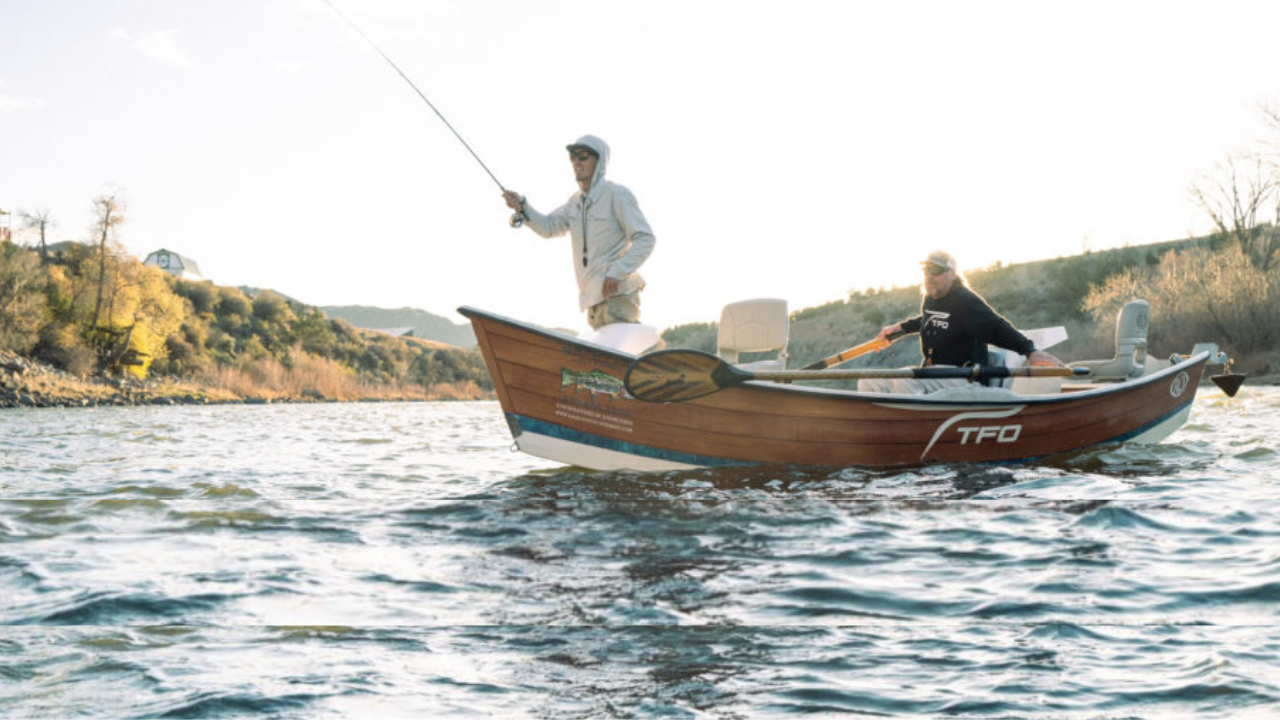
Last month on the Madison, I watched a perfect example of why Trout Spey exists. Wind ripping. Skinny water. A high bank behind us. Indicator rigs are getting ripped out of the drift the second they touch down.
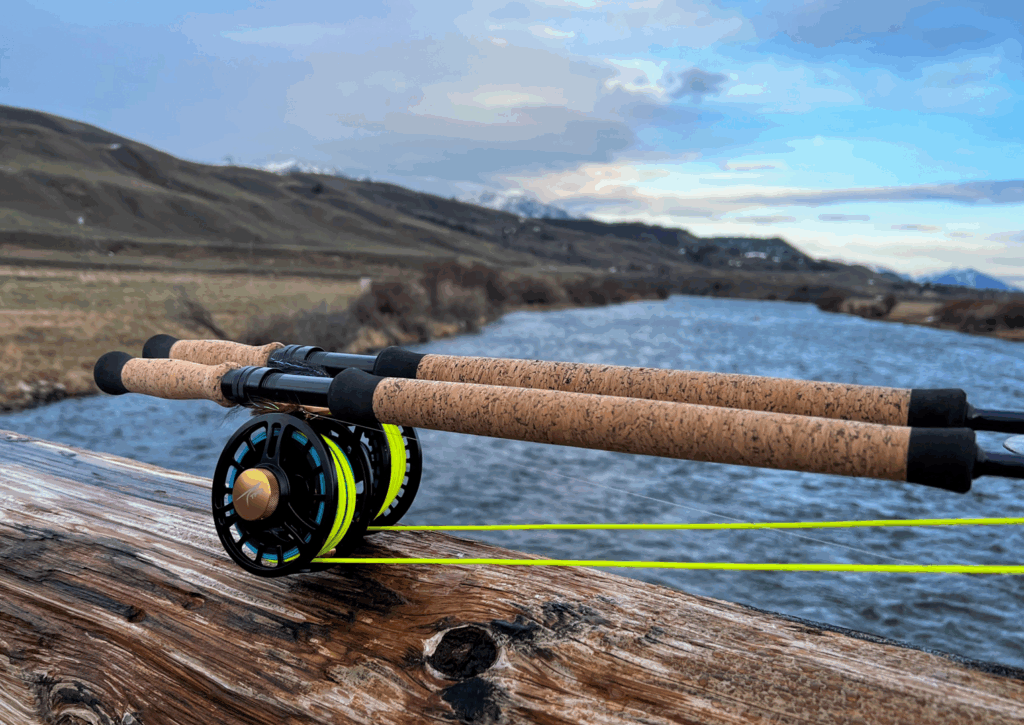
One angler finally stepped out of the rut, grabbed an 11-foot two-hander, and swung flies through water that had shut everyone else down. He wasn’t being heroic. He was listening to what the river was asking for.
05:00 – No matter the technique, Nick comes back to casting fundamentals. When your cast clicks, fishing feels effortless. When it doesn’t, frustration piles up fast.
Nick hates the word “versus” when it comes to techniques. Indicator fishing, high sticking, and swinging all belong in the same toolbox.
We also hit on how much rod design has changed. Nick remembers the days of heavier Spey setups, even adding weight to reels just to get the balance right. Modern graphite and component improvements have made today’s two-handers lighter, more responsive, and easier to fish for long stretches without fatigue.
That shift matters, especially for Trout Spey. If you’re swinging all day, a lighter rod and better balance can be the difference between staying sharp and falling apart by mid-afternoon.
Nick’s big on quality combo kits because they remove a massive barrier for anglers who are just getting started or upgrading. Instead of trying to match rods, reels, and lines from scratch, you get something fishable right away, then you can fine-tune later once you know what you like.
The book focuses less on ultra-technical fly lists and more on what helps people actually have a better day: practicing before trips, understanding technique options, and getting gear dialed so you’re not fighting it on the water.
Nick’s mostly a hip-pack guy these days. His big test is simple: if your hands are cold and you’re tired, can you still access what you need without fumbling? He likes setups that are straightforward, easy to operate, and not overloaded with pockets that turn into black holes.
We also talked about waterproof versus water-resistant packs, and how fewer pockets sometimes means less junk, less duplicate gear, and fewer “I forgot I even had that” moments.
The fundamentals don’t change just because you picked up a two-hander. The rod rewards smooth timing, clean stops, and letting the line do the work.
Episode Transcript
00:00:00 Dave: Last month on the Madison, a buddy of Nick Conklin’s tried everything he could to force an indicator into a skinny, windblown run thirty mile an hour gusts, a five foot high bank behind him and flies that kept getting yanked through the surface as it touched the water. He finally picked up an eleven foot two hander, took a couple of steps in the same water that shut down everyone else. He swung up to healthy Madison Browns not because he’s a hero, but because he was willing to change the technique when the river clearly demanded it. This is the Wet Fly Swing podcast, where I show you the best places to travel to for fly fishing, how to find the best resources and tools to prepare for that big trip, and what you can do to give back to the fish species we all love. That little moment says everything about today’s episode. Nick Conklin has spent years traveling from Montana to North Carolina to the Texas coast. He’s been involved in the designing of TFO rods, testing new materials and breaking down casting from some of the greats like Jason Randall and Ed Jovanovski. Today we’re going to get into high sticking versus indicator versus swinging and why none are better, but why you might choose either of those and how on windy days this exposes your casting fundamentals. We’re also going to get into the Skagit heads and lighter two handed, and where this is going to fit well as far as Trout Spey. If you’re interested in learning more about Trout Spey and getting into that, we’re going to get into some rods and lines that you need to get started. We’re going to hopefully take the guesswork out of it today. And we’re also going to get some background on what he’s into most and how that’s been successful through TFO. All right. Let’s get into it. You can check in with Nick at TFO rods. Com here he is Nick Conklin. How you doing, Nick?
00:01:40 Nick: Doing very well. How are you this morning I’m great.
00:01:43 Dave: Great to have you back on here. On the podcast we had we were just looking back at it. It’s going to be turning around to twenty six. It’s going to be a couple of years. Episode five ninety nine. When we had you on and we were talking about, um, kind of fishing pressured waters, you had a new book, I think, that was coming out at the time. And then we talked about some outfits with TFO. Today we’re going to get a little bit of an update on some other stories. I think we’re going to focus a little bit on indicator versus high sticking and some other techniques out there, but I also want to get an update on TFO. What’s new there? Give me an update. What have you been the last year and a half or so? What’s been anything new out there with you or TFO?
00:02:17 Nick: Yeah, I’ve been fishing a lot. Been working on a bunch of new rides. Um, you know, on the TFO side things, doing a lot of the consumer shows still and getting out, talking to folks and getting them to cast rides, talk about rides, talk about reels. Some new, exciting projects. This year we’ve got two new combo kits that we just introduced this past summer at Icast, and then a kind of more of a high end, premium, faster, stiffer type of saltwater ride. So, you know, just trying to keep refreshing things and provide some high quality tools for people and encourage them to keep fishing and enjoying the sport.
00:02:46 Dave: Nice. Remind us again, what is your role with TFO there?
00:02:49 Nick: Yeah, so I am the category manager, which is just a corporate fancy term for the guy that handles all the product design, development, sales, and I work with our sales reps and our advisors, you know, folks like Jason Randall, people like that you’ve had on your show before, um, and walk all the consumer shows and events. I run that component of the business as well.
00:03:08 Dave: That’s right. Yeah, we’ve talked about that. We’ve had some, uh, a number of different TFO, um, you know, ambassadors and folks on this on the show and part of the TFO, the history, just so that if those don’t know what their new is that TFO really. I mean, I guess you can go back to the original founder. He made a connection with Lefty Craig, and really some of the biggest names in fly fishing was able to bring them into the TFO world, and that really seems like that helped to launch them. Is that do you think that’s a big part of the success early on with TFO?
00:03:35 Nick: Oh, absolutely. And he was able to bring in some pretty diverse personalities. You know, you had someone like a lefty who had really no formal education or physics science background, but was able to describe how to load a rod, how to unroll a fly line in a very interesting way that connected with a lot of people. Then on the opposite side, he had someone like Ed Jovanovski, who’s been an absolute student and still is, which, you know, there’s a lot of mornings we’ll have an email exchange or be on the phone, and I’m just blown away by his energy. He’s in his eighties now, but he comes. He came from it and comes from it from much more of a physics science background. And, you know, he’ll spend time working with golfers and he does a golf, but he just likes to understand how they proceed through a swing and hit the ball. And he was able to bring in Rick Pope was able to bring in a lot of interesting personalities that approach the sport from a lot of different point of views, and that’s definitely helped, you know, helped start the business, helped start the company. And then since then, a lot of just good personalities that are entrenched in the sport, that are really good with working with people and really understand different techniques and different areas of the country, different areas of the world, and just how to help improve people’s time on the water and get them to get them to a place where they can cast so they can fish and have fun and really start to, you know, build the skills to become a proficient angler.
00:04:45 Dave: Right. And and casting is kind of the the number one. I keep going with our group. You know, we have a wet fly swing pro our community. It’s I’m trying to build some, you know, some information there around. What’s the first thing people need to work on, you know, when they come in, if they’re, you know, whether they’re experienced or new and it feels like casting is the one, it’s always the thing, you know, you got fly time, you know, you name the thing reading water. But it feels like casting is the biggest thing. Do you focus on like, how do you guys think about the casting? Do you? Because I know you do a lot. You got the two handed stuff, you got everything. How do you focus to help? Just providing value for anglers out there short of like obviously the rods you deliver.
00:05:19 Nick: Yeah. Outside of the rod component I mean a cast right? When you hit it, you hit it and you feel like an all star. But when you’re not hitting it, you get frustrated, right? And everything else starts to fall pretty quickly, and then you’re pissed off and heading back to the truck and just frustrated where I think most anglers can understand, well, this fish didn’t really care for this fly. Let me try something different, right? There’s just a different level of frustration, but also to me, a different level of success and happiness when it comes to really nailing your cast and understanding what’s working. Right. Yep. So yeah, the tackle, the equipment definitely helps. But to me it’s always just time spent doing it. You know, I see a lot of folks that maybe don’t eat fish once or twice a year, and then they put the right away and they never really take the time to go out and practice. Right. Go practice in a park. Go practice somewhere that’s just not on the water like the first day of your trip, right?
00:06:05 Dave: Right.
00:06:06 Nick: So there’s that element of that preparation that I think a lot of people, either under luck or just forget that’s critical to being good at any sport. Right. You know.
00:06:14 Dave: That’s right.
00:06:15 Nick: Any professional athlete doesn’t just step on the field and all of a sudden they’re they’re an all star, right? It takes a lot of time and practice and at times can be tricky. Right. Because this is a leisure time sport for folks. You know, I know you want to have fun doing it, but with a little bit of work, a little bit of practice, finding the good instructors out there or just simply watching people, you know, that’s what I think a lot of people forget, right? Yep. Fly fishing. Fishing in general. We spend all our time staring at what other people are wearing, what rods they’re buying, what they’re buying, everything else about them. Right? We’re freakishly visual and obsessed with people, but we never really take the next step to understand. Well, this is how this person’s being successful, right?
00:06:51 Dave: This is how they’re doing it.
00:06:53 Nick: Right. And retain some of that information.
00:06:55 Dave: Yeah. And you mentioned Ed I think that he would be a good guy to probably follow and study. Right. Does he have I know we talked about fly casting. I know the episode. We’ll put a link to the show notes that we did with him, and it was really awesome. And he broke things down. If somebody’s struggling with the cast, you know, does Ed have information out there? Where would you send somebody if they’re kind of wanting to get their next step on, you know, kind of helping?
00:07:16 Nick: You know, some of his most recent book is a great opportunity to learn, but there’s a lot of good videos if you just learn in a different, different space. Um, then the other thing is, you know, come to a consumer show, Ed works a lot of them for TFO. He’s there. He’s always willing and happy to talk to people. You know, at some point you may need to stop him because he could be three hours into a conversation and your brain may be exploding with different information. But if you’re not a learner that can pick things up, reading a book or watching a video, you know there’s a lot of good in-person resources still, and that’s definitely a great place to just can ask some questions or let somebody watch you to, you know, that’s one of the things I carry cell phones around all the time, but people forget. Why don’t you videotape yourself casting? And if you’re not comfortable doing it in front of other people, or taking a lesson at a shop, or with a guide, casting instructor or whomever, it’s just video yourself and you can sit and watch my rod tips kind of dip in here. It’s not staying on a steady path, or my hand is not following that line back up to the strip of guide well enough, or whatever the scenario is. There’s there’s some ways you could do it. If you just aren’t comfortable in a public setting or working with new people.
00:08:19 Dave: Yeah, the video is a great and that’s something we’re doing in pro community is we’ve got some amazing instructors who will take a video. If you video yourself, they’ll analyze it and they’ll they’ll give you some feedback. And I’m just looking back at Ed Jovanovski. He’s got two seminal books on flycasting. The cast was two thousand and five and perfecting the cast in twenty twenty one. Those are a couple of big ones, and I know he has more out there, right?
00:08:41 Nick: Yeah, some some really great resources. And he’s still pretty active on the club circuit too. So a lot of local events and doing presentations for folks, and there’s a lot of good instructors out there and a lot of them that aren’t in that lefty stratosphere, but they can be very helpful, right? You just kind of have to search them out and find the find the instructor that works and you can understand and relate to.
00:09:03 Dave: That’s right. Who are some of the other? I know you mentioned, um, a few of your ambassadors, I guess, who are some of the other people working with TFO that you’re spending time talking to about rods and all that stuff?
00:09:13 Nick: Yep. So one of one of the guys I work with, probably most, and if I don’t talk to him once a week, it’s probably two or three times a week. Is, uh, Jason Randall, who I know you had on his show. And, you know, he brings a very interesting and different angle, different technique approach to the TFO family, which has been great. So been able to work with him closely the last few years. And you’ve got to blame chocolate, right? Yeah. Oh, another flip side of flies and lines and what he requires out of a rod to make his, you know, his specific techniques and his objectives attainable. Um, then we’ve got again number of folks. Rob Fordyce down in the keys who has helped us a lot in the big game side of things. Jake Jordan too. Again, another totally different personality and aspect of fishing, right? Where he’s chasing Marlin big, you know, big game stuff on a fly rod. And what he requires out of a tool is going to be totally different than the Jason and vice versa. So it’s been it’s been a unique environment and a unique group of people. And we’ve had a number of really great folks before have come and really imparted some great wisdom and been great supporters and great advisors and, you know, always looking for people that have a little different point of view on something and can contribute in different areas. As you know, more and more techniques evolve and people get really hyper focused, right? That’s been another interesting component because early on, you know, like a lefty was very heavily trout focused and smallmouth bass focused and things like that. Yes, he did a lot on the saltwater side, but it was a really diverse kind of international type following as the sport. As the industry has evolved, you find a lot more people that are really hyper focused in a certain area with a certain technique. Certain species. And they have a lot of cool things to share. And we’ve been trying to again, build a team of friends and family that are good at sharing that type of information and can provide the the greater fishing community with something.
00:10:55 Dave: That’s where you answered my original question of like, how do you help people take it to the next step? And the great thing is you have the rods, but then you have all these people, the, the Jason’s and Ed’s, who are out there and you could say, hey, you know, this person can help, you know, whatever coach or read their book, right? So you have these people that are using your stuff and they can help people through their information, right?
00:11:15 Nick: Absolutely. And it’s yeah, it’s about sharing information, not showing. Right. And those folks are are great at sharing that information and just helping people improve their time on the water. And it’s not all about making a big cast or catch a big fish, right. It’s just kind of figuring out what it is to get that, get them to the next step or they’re incompetent, happy, productive angler, right?
00:11:33 Dave: Yeah, totally. This is great. Okay. And what about I know Rick Pope I haven’t heard recently. I know he was struggling with some stuff. He’s still with us or.
00:11:42 Nick: Yep. He is. Um, you know, he’s down down at his ranch and kind of the Hill country, Texas, enjoying his time. And, you know, he’s not, uh, not as involved really anymore. Frank Paul King’s been running the company for the last couple of years, but, uh, he’s doing well. He’s still around, and he was just, uh.
00:11:56 Dave: Oh, that’s great to hear.
00:11:57 Nick: Yeah. Just awarded, uh, we support the, uh, false albacore fest in North Carolina, and he was just given a kind of a lifetime achievement award up there. And they did a little video on on him. And that was cool to see. And, you know, he’s he’s hanging out. He’s got a good tan and wearing a Hawaiian shirt.
00:12:12 Dave: So yeah, that’s good to hear because I think last time maybe I was he was struggling. But like all of us right. We all struggle with stuff. There’s health stuff that comes up, but you gotta work through it, right? Sounds like he’s doing better. That’s great to hear. And the false albacore. So that is, um, is because that’s something in your wheelhouse, right? Not just the that those species, but like, you’re into salt quite a bit too. Or do you kind of do a little bit of everything out there?
00:12:33 Nick: Yes. I’ve definitely, uh, have the advantage, the opportunity lucky enough to do a little bit of everything. And, you know, I still get teased by my partner or even by my parents. Like, what are you doing? Well, I’m in Montana now. I’m out in North Carolina now. I was just out on the Texas coast. And it’s work. It’s product development. It’s understanding how people are fishing. But, uh, that was my first time in North Carolina doing the Albie thing, and I can definitely see how that’s an awesome opportunity and just a ton of fun. And if you want to test a rod and a reel and lions and flies, that’s a great proving ground. If you haven’t done it, definitely consider it right.
00:13:08 Dave: What comparison? I know we’ve had a couple episodes on, uh, false albacore, but how does that one compare to any of the other species out there? As far as what would be the closest comparison species wise to them?
00:13:18 Nick: You know, I kept thinking about it when I was running around on the boat with these guys, and we were doing a lot of filming and, you know, content, photos and stuff. But we fished quite a bit and I was like, man, this is just a obtainable tuna. I have a big thing for yellowfin tuna fish in the summer down in the Gulf, but it can be a challenging prospect, right? You know, on the on the Gulf side of things, you typically have to have a larger boat. You have to run. I mean, I think we ran one hundred miles so it could be expensive. It can be time consuming. You have the higher end expensive tackle component with these albies for the most part, right? I mean, we’re in ten, fifteen minutes from the dock and you know, you still have to chase them. It’s still a challenge. But to me it’s like this is just a more obtainable tuna for anglers. And if anglers really want to get sharp and understand how to quickly load a rod and unload it. Line management how to fight a fish I mean, this is the place to do it. That’s reasonable, right? Not difficult to get to. Don’t have to have a ton of money or a big sport fishing boat, anything like that. Like you can get it done and they will kick your butt and you will learn a lot about what you’re not doing. Right?
00:14:17 Dave: Yeah, that’s that’s it. That’s a big benefit. So yeah, you can get them in in closer than going hundreds of miles out.
00:14:22 Nick: Mhm. You can get them in close. And again it’s just to me it’s just a obtainable baby tuna that fights just as hard and just a really beautiful look to it. I’m not a fisheries biologist at all. But the coloring on them and just how their body is shaped is something that’s incredibly fascinating to me.
00:14:38 Dave: That’s sweet. This is good. I love getting the update and we’ll have a few more update questions for you. I want to talk. You have a story I think we’re going to talk share about kind of indicator versus uh, versus like timeline versus indicator. And I think that’s something we just had a kind of a live webinar. And Bob Lindquist was talking about watching, um, you know, kind of the under hatch, you know, basically the emerger stage. And he was talking about like how the indicator was a very key technique for that. But talk about your story and tell me how how these two things differ and how you would know which one to fish because they feel like they both work well. But, you know, when do you use which ones? So what do you have going in Montana there.
00:15:12 Nick: So I mean absolutely. And both are important tools to have in the toolbox. I hate when people say versus right because there is a there is that, uh, back and forth of, well.
00:15:21 Dave: Like one is the better one.
00:15:22 Nick: Yeah. One better than the other. And you know, they shouldn’t be. No one technique is better than the other, but to me is to be able to have that in your back pocket, be able to fish those effectively. Right. Because conditions are going to change. And the anecdote I was thinking about last night when I was sitting up awake was I was in Montana a couple of weeks ago with some friends. Good anglers, some work in the industry, some work outside of it. But they’re serious anglers. And you know, it was tough, right? The winds were gusting twenty, thirty knots. It was November. Southwest Montana right. So it’s not going to be beautiful. Granted we had a few fifty sixty degree sunny days, which as you know, bright sun presents its own.
00:15:57 Dave: Not as good either, right? Not always good. Right.
00:15:59 Nick: Exactly. Challenges. But, you know, we were in this, um, in this stretch rowing the Madison as IT guys. The water’s pretty skinny. We’re going to be dragging bottom and playing bumper cars here. I’ll try to get you guys in some good streamer sections, but it’s going to be fast and furious and tough. And one of my very good friends, who I’ve fished a lot with and have some industry work with in the past, he’s a very skilled, very serious indicator angler, and that’s what he wanted to do. And as a man, I get it. That’s what you want to do and that’s where you find success, right? Which is another component to the story because he has a fish Montana a ton, but he’s like, I find success in a lot of different waters around this country, in the world. I mean, he’s an internationally traveled angler, and that’s kind of that confidence approach, right? This is the technique. I know I can catch fish just about anywhere, and it’s all right, I get that. But the water’s not really presenting well for that. The shots aren’t going to be great. Then add in a upstream or downstream wind. Right. And it’s just going to be really tough to keep. Keep that indicator down and keep those flies from pulling out. So like, man, let’s pull over to this spot. There’s probably one hundred one hundred and fifty yard run. It’s like let’s swing some flies to this. This isn’t going to be a good indicator water, but to me throwing a streamer swinging a streamer is probably the best shot we’re going to get. We had a bank above us that was probably just over shoulder height, so call it five five and a half feet. So a traditional single hand rod I was going I don’t know if this is going to work either guys. So one of the so I was floating two guys. My buddy wanted to indicator fish and I was like, all right, well I’ve got two little white two handed rods rigged up ready to go. He said, I’m going to try an indicator fishing. All right. We’ve got a downstream breeze that’s just, you know, making life challenging. He wandered up to try to fish the indicator other angler on the boat again. Scale. The fish and angler wanted a single hand. Cast it. I was all right, guys, I’m just going to sit here for ten fifteen minutes. But you all fish it through, let you struggle, right? The guy throwing.
00:17:44 Dave: one, guy swinging, swinging flies and one guy’s indicator fishing.
00:17:47 Nick: Yeah, but he was swinging on a single hand right at the start. Okay, so he had to really adjust his cast, throw that back, cast high up over the bank, and then you’d be on with line management. Right. You know, I know don’t ever like to tell anybody. Well, this is what you should do, right? Okay. Everyone can kind of fish their own way and figure it out. But here’s what I might suggest. And I only brought a little light, two handed rods in the boat. I wasn’t going to even mess with anything else, because I kind of knew what was going to how it was going to play out. So they fish it through. Yeah. The one guy’s kind of struggling with line management. I mean, again, it’s gusting winds. We got to make a high back cast and try to kick a line out.
00:18:23 Dave: Yeah. And thirty knots. Is is that equal. Is that less or more than thirty miles per hour.
00:18:27 Nick: So I mean it’s it’s a weird mathematical equation. It’s a little bit more. but I try to keep it in the nuts for the the technical folks out there, for the for the Coast Guard captains out there.
00:18:37 Dave: Yeah. The Coast Guard. Yeah. To me that’s like a foreign language, but yeah, it’s close.
00:18:40 Nick: Yeah. I mean it’s one point something miles more.
00:18:43 Dave: It’s a okay.
00:18:44 Nick: Again I don’t know why they use that measurement difference but call it gusting. You know twenty miles to about low thirties ballpark. So they both fish just through and they’re kind of struggling and nothing’s happening. You know I’m rolling them down the river in the drift boat. And I’m like, you never want to be the angler. That’s right guys. Well, I’m rowing you, but I’m going to step up here and catch all these fish.
00:19:03 Dave: You’re like the guide. Almost.
00:19:05 Nick: Yeah, you’re kind of guiding and you’re the host. And, like, you don’t want to show people up. But, yeah, this isn’t the conditions for these techniques. So grab the little two handed rod slung probably seventy five yards through this really nice, almost steelhead esque run on the Madison. And, you know, picked up two nice brown trout. And I was going, well I’m happy with this. This is probably be the extent of what we’re going to accomplish today. And finally they picked it up, which was great because they were all enthusiastic once they were doing it, but it’s one of those things. Well, if you’re not practicing this type of technique or you don’t spend some time doing it, whatever the technique is, you’re going to struggle, right? People tend to wait until they get on the water and are forced into. And you’re fishing this way, right? Till they go, oh, I have to figure this out. Okay, well, now’s not the time to be, uh, really working on your technique and working on your cast, right? Try to show up prepared for all three techniques or four techniques, whatever it is, and you’ll be a little bit more effective. But. And then the same thing happened a day later. We were fishing much smaller water, kind of more pocket water behind a dam and buddies. Same thing. I just want to indicator fish it. The wind was gusting downriver, gusting through this canyon like you could not believe. And I mean, I could tell, right? Second, the indicator hits the water. The flies are pulling up and, well, maybe this is the time to high stick it right. Real thin leader, real small flies. And even then, it was a challenge, right? My slider. Everything was blowing way downriver and it was a struggle. But the point of that anecdote is I get there’s confidence techniques everyone has, but like try to spend some time working on other techniques and just having that in your back pocket. When those conditions don’t allow for the type of fishing you’re most confident in.
00:20:34 Dave: Be ready to change.
00:20:35 Nick: Yeah, be ready to change and be, you know, be able to adapt. But don’t let this change. This is the first time I picked up this type of rod in a year or two years. Right?
00:20:43 Dave: Like, yeah. Be ready.
00:20:44 Nick: Try to spend a little time being flexible.
00:20:47 Dave: That’s something that I struggle with because I think you mentioned, you know, the indicator fishing. It’s almost like I think you’ve done some steelhead fishing, right? I mean, it’s almost like the, the, you know, any of these species, there’s overlap. But yeah, indicator fishing, single hand casting, two handed casting. There’s going to be times when yeah, indicator is going to work better. Um, although some people feel like, you know, like the swinging flies, some people are just swinging flies, you know, and that’s all they do. And I think that’s like the thing they, you know, it sounds like that’s your indicator. Your indicator. Guest. Like that’s what he loved. He wanted to make that happen. But you know, in some cases it’s not going to work as effectively as as changing it up.
00:21:19 Nick: Yeah. Not going to work as effectively. And to be honest, I’m just as stubborn just from the other side. Right. Yep. It’s fall in the work. I’m going to throw streamers or I’m going to swing streamers because I have a lot of confidence in that. I know I could do it well, and yeah, you probably won’t hit the numbers, the higher numbers that most people want or expect, but it’s a confidence technique. And some of those two handed techniques, right. You could fish and nest your weather or when the wind’s not favorable or you don’t have the room to cast where other techniques just just won’t work, right? Yeah. You just can’t make it happen despite trying your hardest as hard as you want.
00:21:51 Dave: So you guys had a little success or what was the final, you know, on that day when you had the all the different techniques?
00:21:57 Nick: Oh, after probably about a three or four hour float. And like I said, a lot of dragging bottom and pulling over and trying to make stuff happen. Swung up three or four fish. And one of the other anglers, my buddy, who eventually switched over to a handed rod, hooked into a few fish and I could all but guarantee anybody else that floated the river that day, regardless of their technique, probably just struggled. So to me, three or four fish on the swing, a couple nice browns was, you know, something to be very happy about, right? Yeah. All right.
00:22:24 Dave: I would be happy with one fish on a swing, you know, like, you know, especially like the trout Spey because that’s something, you know, I think a lot of us out there haven’t done a lot of. I think there’s definitely people that are either single hand only and they’re thinking about the Trout Spey or, you know, two handed stuff, or there’s maybe steelhead angler that’s maybe like, well, maybe I’ll drop down the steelhead numbers aren’t great this year. Maybe I’ll go down and try some trout. Spey. What does that look like for you guys? Maybe talk about your lineup and your two handed game and do you cover kind of everything there. Trout Spey from low all the way up to the higher bigger stuff.
00:22:53 Nick: Yeah we do still um, you know, as a recovering steelhead angler, as I like to joke, gotten really into and I found the effectiveness and the enjoyment and and the lighter two handed rods, um, you know, we make rods two eight, four, eight, six weight. So cover a lot of the lighter swinging applications outside of trout too, right? I mean, they’re great two handed overhead rods if you’re going out to Pyramid Lake or fishing some Stillwater, if you’re in an area with striped bass, right, you have some river striped bass or hybrids, whatever. Great opportunity. Great tool to swing some of those streamers for those fish, and all the way up to the kind of or more traditional larger salmon steelhead rods. Thirteen footers, thirteen and a half footers. I know our steelhead and salmon populations here domestically are not in great shape really outside of the Great Lakes. So folks, you know, heading to Iceland or doing some Atlantic salmon fishing, other places, we’ve got some of those heavier, longer rods, but seeing a lot of growth and a lot of interest in some of the lighter, two handed, lighter swinging type of rods.
00:23:53 Dave: Would you like to level up your fly fishing game this year? Head over to Smitty’s Fly Box.com, your one stop shop for top quality flies, tying materials, gear and accessories online. Whether you’re hunting trout in riffles, stock and steelhead in a slick or tie in in your garage late at night, Smitty’s has the hooks, beads, dubbing and everything you need to get the job done. Check out Smitty’s right now at Wet Fly. That’s s I t While Smitty’s get what you need at Smitty’s Box.com. Experience the waters of Bristol Bay at Togiak River Lodge, where fly fishing meets Alaska’s rugged beauty. This is the place to complete the Alaska Grand Slam with all five salmon species, rainbow trout, Arctic char and more. Where each day offers a new Alaskan adventure, you can visit Togiak Lodge right now to start planning your Bristol Bay experience with Togiak River Lodge. Yeah. That’s great. We’ve been mixed around, you know, kind of, uh, just got up to, uh, Alaska Togiak River Lodge. We were swinging for Chinook my first time swinging, you know, nine and ten weights, you know, and it was similar to steelhead, you know, just heavier gear, right. What about on the lighter end? So what were you using that day when you were swinging on the Madison? What was your length and weight there?
00:25:15 Nick: A little eleven foot four weight. So grain window wise I had about a three hundred grain, uh, real short scientific anglers there. One of their Spey light Skagit Heads, which is about fifteen to seventeen feet. But typically on that type of four weight. Right. I’ll fish a two fifty to two seventy five. Again, a little bit more wind sufficient, a little heavier fly just to get down. So bumping up the drainage definitely helped. But you know, kind of that two hundred to three hundred grain range seems to be pretty ideal for most trout fishing scenarios. Again, it depends on the rod, depends on on the tip and the fly and a number of factors. But that lighter drainage. And you know, if you think about it right, it’s really not too much different than your, your seven or eight weight single hand rod just to me, more efficient, easier to pick up and reposition the line, which you, uh, you enjoyed fishing those heavier rods for salmon, right?
00:26:01 Dave: Yeah. Because we were casting. I mean, that was my first time, I think casting the like the t17 t I can’t remember. T18 we were using heavy stuff and big and heavy, you know, it was just it was heavy. And then also when you get a big fish on, you know, I mean, those Chinook are definitely different than a steelhead.
00:26:16 Nick: Definitely behave differently. But yeah, that’s that’s a lot of weight to move. And if you can have a little bit longer lever to pick it up and reposition it, to me that makes life easy, right?
00:26:25 Dave: Yep. The lever was the other big thing because they were fourteen footers for the most part. And that was a big part of just yeah, you realize you know, you know when you’re spay, you know, you’re out in the water, shallow water and your ankles up to your, you know, your waist that changes the whole cast. You know, that makes it harder in a lot of ways. You know, unless you have a good lever.
00:26:41 Nick: Yeah. And it it may not seem like a huge change, but when you’re trying to pick up that head and pick up a big long sink tip or even a shorter sink tip, right? I mean, it definitely has an impact on your on your casting stroke and your positioning for sure.
00:26:53 Dave: Yep. Exactly. Well, this is cool. I love that we’ve transitioned into the two handed because I think that definitely like I said, lots of people are wanting to get into this. So if they were if somebody listening here and they’re thinking the trout spay, you think that eleven foot like is the four way, what do you think is all around the nine foot five weight for two handed trout spey rods? What would that be?
00:27:11 Nick: You know drainage wise there’ll be some variance between rod manufacturers and and companies, but I kind of think that three four way can cover a lot. Um, right. That mass and that had gives you a little bit more flexibility for throwing streamers doesn’t mean you can’t dial it down. Right. And put a Scandi style head and little intermediate tip right. Throw some soft hackles or something lighter. But I think in most scenarios that seems to be a good kind of all around. Like you said, kind of your nine foot five weight, you could do a couple things with it. You could fish it a lot of different places, different styles apply.
00:27:42 Dave: What’s your rod? What’s the name of your rod? Do you do do you have a few different styles or what’s the rod if they’re going to pick that up.
00:27:48 Nick: Yeah. So in our in our lighter rod lineup it’s called the professional three series. And for the lighter rods in that in that family we do a eleven foot two, eleven foot four and then eleven foot six weight and feel that covers a lot of your trout fishing, freshwater stuff, even some warm, warm water applications.
00:28:06 Dave: And you think the eleven foot, is that a good all round? Not not eleven, five or eleven is kind of what you think is the best length or for what you guys do.
00:28:14 Nick: That seems to kind of hit middle of the fairway, and some of that will have to do with the length of the head, right length of your tip. Right, just to be able to pick that up efficiently. But for the most part, and not just TFO wise, that seems to be the more common length. Just because line and head development has mean a million miles away from what it used to be, right?
00:28:34 Dave: Yeah.
00:28:35 Nick: Back in the day. Right. I know last time we spoke, we were talking about when I was in Michigan trying to figure out how to cut down old woodcutter, fifty five foot lines and fish smaller rivers with the heads and the tips that were available.
00:28:45 Dave: That’s right. Yeah. You were there early in the early days. You remember the wind cutter?
00:28:49 Nick: Yes. Um, I’d say fortunately, because that’s what we had. But we had fourteen foot eight, nine weight rods, wind cutter lines. And we were cutting up, you know, old Cortland sink tip trolling lines for the Great Lakes to try to make tips and try to make try to make it work and figure out how to fish these smaller rivers more effectively. So now, I mean, granted, it still is complicated when you’re getting into drainages and grams and different things like that, but the lines available now have are so much farther ahead, so much more advanced. That seems like an eleven foot or eleven and a half foot seems to be a little bit more common length rod, because it pairs well with these, with these shorter heads and lines.
00:29:27 Dave: Yeah, the shorter heads. And then that’s the other cool thing is that with the trout Spey is that you have a couple of things you can go into the the bigger heavier, you know, meaty flies. But then you can also cut back down to say just soft tackles right. Swinging light soft tackle. And if the difference is what would be the line for if you had an all around line, it sounds like you have some scientific anglers. What would be that line for if you had to pick one? Is it that one you mentioned?
00:29:51 Nick: Yeah, I would probably pick something like a shorter Skagit head again, kind of hit that two hundred three hundred grain window. But something in that fifteen to maybe seventeen, fifteen to eighteen foot range still allows you to fish in close or if you’re in tight quarters, but you can still carry carry some line. A lot of great Scandi or more tapered fly lines out there that definitely work when I’m Swinging a light two hander and punching out a big streamer, right? I want something big and nasty to kick that, fly out and unroll that fly line and oftentimes nasty wind, and sometimes something a little bit more tapered doesn’t always work or might take a little bit more time to dial in.
00:30:26 Dave: Right. And like anything, you get your quiver, you get going. And then eventually you’ll add some, right? You’ll have your setup and then then you’ll have, you know, your twelve rods or whatever, everything covered, you know, as we go.
00:30:36 Nick: Yeah. The spiral comes on pretty quick and then you’ll be you’ll have too many rods and too many lines and like everything, you fly fishing, right? Then you’ll go down the wormhole. And.
00:30:46 Dave: That’s right. So getting started. But this is good. I like to simplify it. So getting started. The eleven or eleven and a half foot in that range. And then you you you it’s called your um professional three series. Is that. That’s the series. Yeah.
00:30:57 Nick: Professional three series is a good lighter two handed rod to start. And we have some some heavier lengths too, if you’re steelhead or salmon fishing or if you just wanted to do more two handed overhead casting. Right. And that’s one of the great advantages of of a lighter two handed rod now these days. Right. You could two hand overhead cast it a lot easier. So if you’re just struggling. Setting your anchor, getting the line out there. Right. You could just do a little simple two hand overhead cast. Dump that, fly out and get flies in the water and you’re fishing.
00:31:23 Dave: So how are those rods? And you’ll be the perfect person to answer this because I have a TFO rod. It’s I think I want to say it’s an eight weight, maybe a thirteen foot something. And it’s it’s a great rod. It still is a great rod. And it’s I think I’m not sure if it says lefty Kreh on it, but it’s it’s one of the series. I probably bought it in the twenty tens, so it’s probably fifteen years old. How does that rod compare to, say, the new eight weight thirteen foot? Is that rod still a good rod out there?
00:31:47 Nick: Well, absolutely. I mean, there’s no real bad rods out there if they work for your for your casting stroke and you enjoy fishing them. But one of the key things to consider, even if you’re not really into the techy side of things or materials, is what we’ve been able to do, and the materials that we have. The advantage of now is there’s so much lighter, so much more responsive. And again, at the end of the day, if you’re just carrying casting less weight. Going to be more efficient. Going to enjoy it more. And but the material advancements.
00:32:12 Dave: So the rods are lighter. That’s the biggest thing. The rods are quite a bit lighter now than fifteen years ago.
00:32:16 Nick: Yeah, quite a bit lighter. You know cork handle materials have improved, guides have improved. There’s been a lot of really cool material advancements that definitely have helped just improve the tool. Right. It’s about improving a tool and making someone’s job a little bit easier.
00:32:30 Dave: Yeah. Do you think those are the what do you think are the biggest improvements? Say like keep on that last fifteen years or so, you know, without giving away any secrets obviously. But what do you think with what your, your lineup or maybe just fly rods in general? What do you think are the top few things that have changed in that time?
00:32:45 Nick: Yeah, just the graphite carbon fiber we’re able to use in the the access to we the access we have to it now is so much different than even three years ago, five years ago. Right. The material advancements and a lot of that’s credit to the aerospace engineer industry and a lot of other industries that are fun focused. Right? They’re about a business and they’re about some serious things. but after that’s filtered down to fly around manufacturing the materials and the rod, the blank have improved greatly and guide materials to just thinner, lighter, stronger guides have definitely made the whole process much, much easier.
00:33:20 Dave: Oh, it has so even a guide like a little lighter guide that makes a difference on the rod action and everything.
00:33:26 Nick: Oh yeah, it affects action. But again, if you’re handling it and I always have this debate with the with the Euro nymph high sticking folks because, you know, you hold up something and you might not really notice a tenth of an ounce or whatever, really lightweight. But at the end of the day, if you’re holding that rod in the air, it’s going to show up and it’s going to affect you.
00:33:43 Dave: And yeah, it adds up. That is the big thing.
00:33:45 Nick: Well, it all adds up. You know, at the end of the day, it definitely all adds up.
00:33:48 Dave: Yeah, that is a big thing I think with the Spain again look back at the history of you know the heavy rods is like yeah, if it’s a super heavy rod, you’re holding that thing, you’re casting it. At the end of the day you’re tired versus say a light, nice, light, efficient rod. You can I mean, you can sit there all day long. And that’s what happened with the two handed game. right, is that they got to a point where it was just as easy to hold and cast a two handed rod as it was a nine foot, you know what I mean? Like, I don’t know when that change happened, but somewhere it happened. Was there a time where you can kind of look back and say, you know, that year or that period, things really just got lighter or the tech got.
00:34:21 Nick: I don’t know if I have a specific, specific time, excuse me, but I do remember fishing those longer fourteen foot thirteen and a half foot rods and putting, like I said, lead core line on the reel before putting backing in a fly line on there, just trying to help balance it out and make.
00:34:36 Dave: Oh, right.
00:34:37 Nick: Right. A little less cumbersome. And, you know, probably the last ten, fifteen years maybe as advancements across the board have have come about. Well, I’m not going to wait the way this reel down to try to help balance this rod and.
00:34:47 Dave: No kidding.
00:34:48 Nick: Right. The rod’s getting lighter, the reels are getting lighter, and everything’s just becoming more efficient. Now it’s. I mean, I could sit and fish a little eleven footer all day and.
00:34:56 Dave: What’s your take on? We had recently had an episode with, uh, with Mark Bale who talked about some of the real Reddington, the history there. And it was really, really interesting because you go back to the the guys behind that and stuff. But we talked a little bit about two on the line. Um, what do you call it? The I’ve heard it called the nuclear arms race or the fly. You know, like you got these rods that start like we’re saying, they started slower and then the rods got faster and the lines had to keep up with them. Right? Yeah. Because they’re getting faster and faster. And then all of a sudden you turn around, you’re like, wow, we got these super fast rods. Now people are kind of saying, well, maybe that slower action rod is is still good. What’s your take on that? Do you feel like you’ve seen that happen since you’ve been here? And how have you guys played into that with your lineup?
00:35:37 Nick: Yep. I find that, uh, one that phrase is hilarious, but I find just the premise of the whole thing confusing. But also one of those, I just kind of turned my head to chuckle at, right?
00:35:47 Dave: Yeah, totally.
00:35:48 Nick: Rod’s got faster and stiffer, and people either they couldn’t load it, couldn’t figure out how to load it, or it just wasn’t the right rod for them, but they were told or conditioned to believe. Well, this is going to make you a better caster in saltwater or highway or wherever, right?
00:36:01 Dave: And then line up and then just do a one heavier line or two two weights heavier to make it work.
00:36:05 Nick: Yep. So then I felt like line manufacturers got pushed into a weird position. Well, now we have to make all these lines so much heavier. It totally changes the foundation of the rod. And I still get that question all the time. Well, I just put a line or two heavier on it. Well, maybe that’s not the right rod for you because we make a lot of moderate, softer, slower rods that probably will work better for your casting stroke and your style that you don’t have to overload. You don’t have to fight or try to learn how to change your casting stroke to adapt to the rod. And it’s funny now, and there are some companies that are like, well, we’re going back to more moderate, moderate fast type rods because, you know, we’re the first ones to do it. And I was kind of chuckled. Well, a lot of companies have done it for a while, but it kind of got out of, you know, out of trend and became ghost, a fish, a moderate action or a slower rod. I don’t understand that. To me, that’s why companies make a bunch of different rods. Right.
00:36:51 Dave: Exactly.
00:36:52 Nick: So we can make a bunch of money. Let’s have different tools for different style styles of anglers and different scenarios. Right. So it’s it’s kind of a funny thing and I’m I’m happy in some respects to see it start to go back the other direction, where it’s not just this is the latest, greatest, fastest stiff rod that you need, but you got to put, you know, another fifty hundred or more grains on the rod to actually load it and make it feel good for you.
00:37:14 Dave: So that’s it. It’s cool to hear. Yeah. Because you’re in the middle of it and you see it and stuff, and I feel like, you know, where the challenge comes is people especially that are that are new, you know, you come into it and you’re like, okay, what do I need? But but again, that’s where it goes back to these packages. Boy, that’s such a solid, um, option. And maybe let’s hear that because we talked about that a little bit on the last one. But I think the the rod combos are great for beginners, man, because, you know, you don’t have to worry about all this stuff. You literally can just go grab a thing and you’re and you’re fishing. Talk about your rod combos. Have has that changed in the last year or so or do you guys still I think I can’t remember the last one was the next.
00:37:50 Nick: Yep. So the NXT Black Label is one of our more recent combo kits, and we’ve had the NXT combo kit in our lineup for a number of years for a lot of important reasons. I mean, it just eases that burden into getting into the sport, cuts out a lot of the BS, right? Trying to understand how to match a real how to match a line. And there’s a there’s the cost component too, right? I mean, as great as fly lines are now, I mean, they’re expensive and they have to be expensive, right? But that could be challenging for people just getting into it. Or if you’re trying to upgrade, improve your your tool set a little bit like that’s that’s a big bite, right. If you don’t really know if it’s going to work for where you’re fishing, how you’re fishing, or if you’re going to fish multiple places, right. That could be a serious barrier to entry. So we’ve always tried to focus hard and heavy on high quality combo kits, which has been kind of a cool shift in the industry lately. Yes, there are some really low priced entry level combo kits, and not to be disparaging, but you know, they have their place. But I think more and more companies are doing a really good job lately, the last couple of years and putting out some really high quality kits, really nice reels on quality rods, improving the fly line right? Every time they do a reintroduction, it seems like the lions are getting better and better, higher quality. I think that helps a lot of people and it just makes it, again, a little bit easier to get into. Or if you’re trying to upgrade or if you’re getting into a going on a trip, right. New technique, new fish that you don’t know if you’re going to become obsessed with or you’re only efficient once a year. Or maybe this is a one time deal, so it just makes that whole process a little bit easier. Um, you know, we’ve been challenged with tariffs and price increases. So we’ve fought hard to try to introduce kits. We have two new kits out, one that’s kind of more entry level limited models right a five and eight weight which still middle of the fairway everywhere. Right. You could fish a five and an eight pretty much everywhere. Then we introduced another kind of higher end combo kit, a little nicer reel, a little nicer line on it, and some of those things for those anglers that want to get started, want to get started seriously right? They don’t maybe want to buy a combo kit off the internet that’s got flies and leaders and waiters and all kinds of other stuff with it, but they’re really serious about it. We’re good. They’re serious about improving the equipment they have now and want to step up to something that is serious. It’s going to last them a long time and and hold up to the rigors of their fishing.
00:40:11 Dave: Yeah. What is that? Uh, the next level of that combo kit. What’s that one called?
00:40:15 Nick: Yeah. So that’s called the dispatch combo kit. So that one is a is a four model offering four way through an eight weight, all four piece rods. But we were able to, uh, get a cast aluminum and a machine reel made. So it’s going to be a fully sealed drag system, which isn’t isn’t often offered in the combo kit space. So real that will handle some salt water. Or if you’re just fishing sandy, muddy creeks, things like that. Again, moderate fast action. So a great learning tool, but also a tool. Most anglers I feel like they could continue to work through their angling career and be successful with and enjoy casting the thing. And then again, it’s just improving the fly lines, right? Fly lines are tricky and you know you don’t want to force people into a real expensive fly line right out of the gate. But you also want to have something they can fish with and be confident fishing.
00:40:59 Dave: Be good to go. And the fly lines is an interesting piece to are your fly lines. How do you guys do that?
00:41:04 Nick: That’s a that’s an OEM, a special project line. We get made for us from one of our, one of our suppliers, but we try to keep them as we as we continue to evolve. I’m trying to keep kind of more general, call it a trout style taper, right. Kind of a multi-purpose, do it all type of line. Um, I’ve always been hesitant to get too specific and, you know, fish or technique specific kits because then it gets gets tricky, right? Everyone has their own preference and style.
00:41:28 Dave: Yeah, but the combo kit, it’s good to be general, right? I think that this is the place where being the generalist is probably the best for a combo kit, right?
00:41:35 Nick: Absolutely. Be a generalist. And if you decide you want to upgrade your line or find a different taper line, different style line, definitely an option, but you’re not starting off dropping over one hundred dollars on a line that you just don’t know if it’s going to work, or you’ll just be scared to cast it into law and cast it in the driveway. That’s why I always tell people, like when you’re not fishing. Go cast this line somewhere else and just get comfortable with the whole setup and.
00:41:56 Dave: And check it out.
00:41:57 Nick: Right then. If you if you thrash it, tear it up and you’re not out a hundred bucks or more.
00:42:02 Dave: Yeah. No. It’s cool. And again, going back to Jason and some of your other, uh, the great folks, you know, in your network, you know, you could basically. Yeah. Have them there casting right there. Well, they’re not only casting, but they’re telling you, you know, giving you feedback, but they’re the ones that could say, you know, nay, you know, yay or nay, right on these things. Like, is this one good to go and and it’s cool. So you got the five weight, the eight weight, the dispatch combo. So that kind of covers your combos. So if somebody’s coming in you got kind of one for whoever whoever you need there.
00:42:29 Nick: Yep. So we’ve got two options. The pilot combo kit which is just the five and the eight weight. Um, then the dispatch which is four or five, six and eight. So a little everything and the freshwater side and even up to a light saltwater application combo.
00:42:42 Dave: Perfect. Well, let’s go back. I want to I don’t want to leave. Uh, trout Spey we were talking about. So we talked about the rods. I think we have that set up. We talked about the line. What else when you’re. Have you done a lot of trout Spey. Now do you feel like you’re doing as much as the steelhead now or or how does that look. Because it feels like trout. Spey is still I hear a lot about it. Feels like it’s growing. Do you see that in out there in folks with you know anglers.
00:43:05 Nick: See some growth. Again it tends to be more experienced anglers that have probably swung for steelhead or for salmon. But I have trout, rivers, trout, fisheries close to them or trout fisheries that they just spend more time. You know, I it’s been a while since I’ve touched a steelhead. Nothing against them. Just.
00:43:22 Dave: No, I know I’m the same way. I mean, I’m my home River. I mean, I know the numbers are a little bit better, but, I mean, I took a break. I don’t think I didn’t fish for a couple years, you know, like. And that’s not saying that’s the right thing. I’m just saying that that was me. I was busy and stuff. But it’s tough, right? When the numbers are down, you’re like, well, okay, I don’t know, am I impacting things or what. Right. But I feel like there are some positives. We have done some episodes where we’ve talked about steal, so steel, so I don’t think it’s all negative. I think there are some positives, but I hear what you’re saying basically, you know, expand out and try new species whether it’s more abundant.
00:43:56 Nick: Yeah I agree. Not all negative unfortunately. It’s kind of taken that connotation lately. And I’ll still, in between the show season, go out and try to swing around Washington state or go fishing Clearwater. And it’s kind of one of those challenging things with any river, right? It’s well, the news is all bad. People stop traveling there, stop fishing it. It’s like, well, to me, it’s like if people aren’t invested and care about a river or a resource, exactly. Then it’s you’re less likely to be able to rebuild it and have enough momentum to to fire it up again. And the people in power to care.
00:44:24 Dave: Yeah, I think the media there is a little bit too on that is that you hear all this and it’s almost like how, you know, you hear things that aren’t necessarily fully true. You know, I mean, it’s like you hear the negative, negative, negative. But you know, there are some positives in there that maybe you’re not hearing as much about.
00:44:39 Nick: Yeah, there’s positives. And again, it’s about people that care about it. And if you’re not traveling there to fish it or if you’re not talking to your elected leaders or whomever are making policies, right? Less people talking about it, less people being obnoxious about it. It’s never a good thing. And I hate to see that on the salmon and steelhead rivers. Seems like there’s some better, more positive energy coming. But I kind of see that happening in some trout rivers too. Right.
00:45:03 Dave: Oh you do?
00:45:03 Nick: Um, just the amount of people that are traveling there and fishing it and, you know, you fish the same techniques, fish the same flies, same style. And I think there’s a higher opportunity for people to get frustrated with it. Right? Instead of looking right, maybe I can swing this river, or maybe I could adjust my technique and do something a little bit different and and be successful.
00:45:21 Dave: Let’s take a break and check in with Jackson Hole Fly Company right now. The right gear can turn a good day on the water into an unforgettable one. Jackson Hole Fly Company’s combo kits are built to match the rhythm of the river, giving you everything you need in one simple package. Each kit pairs a perfectly matched rod and reel with essential accessories, ready to fish right out of the box from the beginner friendly Crystal Creek to the high performance Flat Creek. There’s a setup for every angler. And don’t forget about their packs and slings. I’ve been loving my Jackson Hole Sling pack for a number of years now. The perfect size to fit all your gear, but not too heavy and not too big to drag you down. Check out their slings and rods and much more at Jackson Hole. Fly Company.com and you can support this podcast by checking in with Jackson Hole Fly Company today. That’s perfect. That’s a perfect segue into the you know, I think your book, which I wanted to touch on, I think we touched on it last time, but, you know, pressured waters, right? Some of these areas around the country, we just did that episode on the, um, you know, with Bob and we were talking about, uh, back in New York, you know, and some of the pressure waters, the Delaware. Right. I mean, there’s super technical, but can be pretty heavily pressured. Uh, talk about your book. Give us a heads up before we start to take it out of here. Um, you know, first off, what’s the name? How is that going? And are you thinking about writing another one?
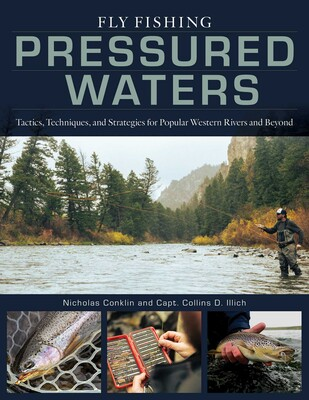
00:46:44 Nick: Yeah. So the book that’s going to be out, it’s available for presale right now, but it’ll be officially shipped and released, uh, the sixteenth of December. It’s called Fly Fishing pressured waters. Um, wrote it with a longtime friend, great industry colleague of mine. And, you know, we were sitting on a bridge in the Madison River and watching forty, fifty drift boats go by one day and just kind of watching how people fished it and started talking about their levels of success and really happiness with it. Right? Because again, fishing is leisure time for most people. And we were just kind of struggling to see if people were really enjoying it and having the success they wanted. And, you know, it’s one of those funny lines to tell as you want these rivers to be busy and want people traveling. They’re spending money in town doing all those things. But on the flip side is, well, it’s the resource being protected. Are people being thoughtful of what they’re doing? And if they’re only doing one or two trips a year, like, are they preparing themselves to be successful enough to have a good time to come back? Right. Because you hate to see, Just like anything. Someone go on a trip one time. Get frustrated. Most of the time it’s not because of the guide, it’s not because of the flies. It’s because their lack of preparation. So we talk a lot about preparing in the off season, preparing for a trip. You know, if you’re going to go out with a guide, have some clear expectations, clear line of communication, kind of understand what you’re getting into and trying to have people leave with a more positive experience, not just blame the environment, the situation, the pressure drivers, whatever it is. Kind of look inward a little bit more, right?
00:48:13 Dave: Yeah. That’s great. And we’ll put a link to that. The great thing is when this goes live here, that’ll be out there, people can take a look. Where’s the best place to pick that book up or is it is it going to be everywhere.
00:48:23 Nick: Well hopefully everywhere. Knock on wood. You know, right now it’s available barnesandnoble.com Amazon. Um, Simon and Schuster, the big publishing house, picked up the distribution, so we’re hoping it’ll be a lot of places and we’ll start doing the consumer shows and doing a lot of dealer visits and events like that to to get the word out. But we like to think it takes a little bit different approach than most fly fishing books that are maybe heavy on the technical side, heavy on flies and casting. We don’t really talk about fly design, development, things like that, but it’s kind of more of that preparation and getting comfortable casting different, different ways, different fishing techniques and, you know, understanding your gear to something I think a lot of people forget about is selecting a net, selecting a hip pack, and making some conscious notes during the season of what works, what doesn’t work because that’s, you know, another big barrier to entry.
00:49:11 Dave: Yeah. The gear.
00:49:13 Nick: Okay. You’re about the rod. You’re about the reel, the line. But what about all the other gear? Yeah. How do you take care of it? Does it actually work for where you’re fishing for your body type? All those little nuance things that unfortunately, probably for us. Right. A lot of it’s trial and error and we I’m sure we both could admit to spending a lot of time and money investing in a different gear that, yeah, maybe it works really well. Or no, this doesn’t fit for what I like.
00:49:37 Dave: The gear is great. Yeah, I love the gear talk because there’s so much. And you’re right, you have one thing, and then you maybe try something else and you’re like, well, that’s not quite right. And you got a net. And then maybe you need a large handled net. Do you need a small handled net? How does it fit on your vest, your sling, um, all that stuff. So it’s a good talk. Well, maybe we’ll hold some of the gear talk for the next one, and that’ll be great. But let’s take it out of here. Um, we’d love to do a little segment. You mentioned it. Um, our wet Fly Swing Pro segment today. I’m going to give a shout out to, uh, Percy, who I talked to on the phone, and we were chatting about what he’s interested in. He’s one of those guys that’s, you know, basically kind of a new member in the community, but he’s kind of new and wants to get into this trout Spey, you know, and really just two handed rods in general. And he’s sucking up the information and and all that stuff. So let’s give a give a shout out to Wet Fly Swing Pro I wanted to mention um Patagonia. They’re a big partner of ours this year. Um, and we’re going to give a shout out to the Swift Current waders, I think, on the gear talk. That’s again, something that, uh, we love chatting about. But Patagonia also talked about when we did a podcast with them, they talked about this new, um, I guess it’s kind of a hip sling cross pack. It’s like a it’s not waterproof. Totally, but it’s kind of a convertible pack. So let’s start there. We’re going to give a shout out to Patagonia Wet Play Swing Pro. But for you, what is your pack right now. Are you using a pack or using a vest. What’s your thing? Do you have a bunch of different things out there?
00:50:55 Nick: Mostly hip packs.
00:50:56 Dave: Um, okay. Hip packs? Yeah.
00:50:59 Nick: You know, I used to use the vest back in the day, but.
00:51:01 Dave: Me too.
00:51:02 Nick: Right? They could be cumbersome and kind of get in the way, um, you know, different slings and different packs, and, you know, I still go through it as. I’ll go try it out in the shop, right. Play around with it and see, you know, and I’ll go in the nastiest, coldest, grossest conditions. And. All right, if I’m standing in the river, my fingers are freezing. Can I operate it? You know, behind my back. Can I get to the zippers? Easy.
00:51:23 Dave: Oh, right.
00:51:24 Nick: Right. So there’s a lot of those little nuance things that I think people forget about, right? I see this cool pack. I think, oh, this is great. Is this going to work for what you’re doing? And can you manipulate it when you’re not in the best of shape or. It’s been a long day, right? You’ve been swinging a fly all day. No tugs. It’s cold. It’s rainy. Right? Do you still have the dexterity to work it? Can you get to your net easily? Can you get to some other things?
00:51:46 Dave: That’s true. Are you a full waterproof bag type of guy or do you go to hybrid or have both?
00:51:52 Nick: I use both, kind of depending on the scenario. Um, and that’s that’s an important thing to kind of figure out when you’re first buying one, right? Is where are you going to be most times, and are you going to have a camera or a phone in there and you need the waterproof? Or can you get away with something that’s water resistant to some, some degree? Um, then after that, are you a conscientious person? That’s going to be great. This isn’t a fully waterproof bag. Maybe. I took a tumble. It got wet. Am I going to spend the time after fishing to dry it out, make sure everything’s cleaned out?
00:52:23 Dave: I feel like I’m more of the waterproof, mainly because the fishing, right? Steelhead and water, but also the environment if it’s raining a lot and then and then I’m also that type of person that, you know, if I take a dunk, I like to have stuff where I don’t have to fiddle with it, you know? But the disadvantage. Is there a disadvantage of a waterproof pack? What do you think? Is there one? I mean, it’s more expensive, but any other disadvantages?
00:52:44 Nick: I think some, yeah. Sometimes the cost can be a hurdle. The amount of pockets which I will kind of split down the middle is sometimes it’s a disadvantage. A lot of times it’s an advantage. Um, and I’m trying to speak generally not specifically all waterproof packs, but they tend to have less pockets. And to me, less pockets is are less places you could hide stuff or forget about something important. Right. Um, you know, I use a lot of different water resistant or even not water resistant packs, and they’re great because they have a lot of pockets. But then halfway through a trip or at the end of the season, I’ll find out I have three or four of something in there because I kind of forgot where I put it.
00:53:19 Dave: That’s right.
00:53:21 Nick: Or, you know, you have a tendency to accumulate more stuff which not utilize. Typically you’re not going to utilize that stuff if you don’t remember where it is or if you have it stuck somewhere. Yeah. You know, you’re just spending more time and money on something. And again, then you have to carry it all day. Right. Even though it’s a minuscule amount of weight, it’s still something that’s going to be strapped to your hips or strapped to your back. And it’s easy to lose things in packs that have a lot more pockets, unless you’re really focused. And I’m unfortunately not.
00:53:45 Dave: No. Me neither. That’s a good point. So. So there’s simplicity, right? That’s a part of it. Like, actually it can be a good thing.
00:53:52 Nick: Yeah. I think simplicity is an important factor to keep in mind. And sometimes less pockets are helpful. But if you’re doing a big, uh, big day hike or if you’re fishing with a couple other anglers and you need to carry more, you know, maybe yield to a larger pack with some more pockets and different things. So advantages, disadvantages of everything. You just kind of have to spend some time.
00:54:11 Dave: Checking it out.
00:54:12 Nick: Yeah. Checking it out. And then just, you know, I say make, uh, you know, make good notes at the end of the year, during the season or what’s working, what’s not working, and spend some time digging through it and make sure you’re not just leaving a bunch of junk in there. Right.
00:54:24 Dave: I love it, I love it. I think that’s the fun thing about fly fishing. Another part of the aspect, right? The fact that the gear, it is kind of fun to like right now, right. We’re getting the winter. It’s winter time. We’re getting ready to think. Okay. Next year, what am I going to look like right now? I’m already thinking. You know, I’ve got this new sling, you know, that I’m going to think about, you know. Getting out there and testing, you know, over the winter, but, um. But cool. Well, this is this has been good. Nick, I want to give you a couple random ones, and then we’ll get out of here. But give me a couple of tips to take that spray stuff away. So if somebody is. We talked about Percy. He’s wanting to do a trout spray. Let’s say he picks up one of your TFO sets setups. He’s got his trout spray. It’s a four way. He’s going to be going out there on a Montana stream. What is your couple of tips? You’re telling him to have more success out there.
00:55:04 Nick: You know outside of this the connecting your gear. When I say connecting a gear, meaning finding a rod action, you like pairing an appropriate line for it. Finding a couple flies no different than the steelhead game, right? Most trout anglers will have to dial back the amount of flies they bring. But you know I’ll fish two or three flies. Usually tends to. No offense to my fly tying friends out there, but you don’t need to bring as much. No? Then spend some time practicing. Find a good instructor that can kind of help you, because one of the things I see, regardless of the angular skill level or experiences, because it’s a little bit longer, heavier rod, they try to power, put so much power into it. And to me it’s it’s a little bit lazier, a little bit easier type of fishing because you’re not carrying a bunch of line in the air, right? You’re setting your anchor, making your loop, kicking the fly out there. So getting people to kind of dial back the the energy and the enthusiasm sometimes is a good thing to focus on. And then keeping just your standard casting principles in mind, right. It’s not all that much different principle wise, right? You need to set your anchor. You need to have a consistent rod tip path. You need to keep an eye on your tempo right, your speed, your cast, and still make your starting and stopping points and focus on where that rod tip’s going. So a lot of those transition over, and I, I fear that sometimes that gets lost in the mix. Right. Switching from to a to a two handed rod.
00:56:22 Dave: Yeah it’s the same the same principles that, you know, a single hand instructor will tell you apply exactly to the two handed game, right? It’s a little bit different, but the principles are all the same.
00:56:33 Nick: Yeah, principles are all the same. Then with the two handed rod to me, you have a much greater ability to to learn to cast off of different shoulders. Right. Switch hands, make some casts that you probably wouldn’t be able to unless you’re an incredible athlete. Very ambidextrous as a single handed angler. Like you could learn some casts that could really improve your odds. And again, it gets the fly back in the water much more efficiently than if you were going to try to struggle and make it work with a single hand type of setup.
00:57:01 Dave: That’s right. When you’re out there swinging, when you make that cast, let’s just take it to the soft tackles. I’m not sure how much of that you do, but some of the smaller, smaller stuff say you’re swinging a little soft tackle. Do you tend to just cast at a forty five degree down sixty. What’s your is it just your typical swing and then step just like you would steelhead fishing?
00:57:18 Nick: You know I’ll mix it up. Um, some things I like to do. I like to at least try to remind myself when I’m swinging for trout or striped bass or whatever it is that our steelhead salmon is be a little bit more of an active swinger. Like I won’t just make the same, you know, downstream forty five degree angle cast every time, right? Sometimes I’ll power out a cast and strip it in real fast, right. Like a standard streamer retrieve or I’ll jig the rod, kind of pump it a little bit, and until I kind of figure out what’s working, just mix it up a lot more than you would with your traditional, traditional, quote unquote two handed cast. Um, or, you know, sometimes I’ll just pick it up and do a two handed over cast just to cover some water. So I think the ability to mix it up, change your retrieves a little bit and just animate the fly a little bit more. Right. Active swinging. Um, then varying your, your steps and your pace too. Right. I won’t just commit myself to, you know, a two foot or a meter long step. I’ll take a couple steps or I’ll go back up. If I swing through a run, sometimes I’ll make a cast straight upstream and strip it down real quick. So yeah, to me you have a little bit more flexibility and you can have a little bit more of an active swing sometimes.
00:58:26 Dave: Yeah. And is that. I guess that’s because the difference with steelhead fishing is that they’re just anatomist fish. You know, they’re not really feeding. They’re coming in and you’re doing this thing which is just getting, you know, they’re not eating. But with trout swinging, these are fish that are feeding. Is that the biggest difference why you want to mix up all these different techniques?
00:58:43 Nick: I think that’s a part of it they’ll hold in different areas. Well, I still take the mantra of I’m gonna swing this fly and try to push a fish down and really just try to piss it off, anger it into a strike. Right.
00:58:53 Dave: You’re still trying to piss it off. You’re still trying to do that.
00:58:55 Nick: I’m still trying to piss it off. But to me, they’ll hold in different areas. And with the two handed rod, I think you can manipulate the cast a little bit more, dump a fly in front of a boulder and then right behind it. Or fish, you know, especially with some soft tackles and things, fish, some of that real riffle kind of bouldery water that you walk by. It doesn’t look like anyone’s sitting there. But to me, if there’s a little depression or a little holding area, a trout will tend to hold there more frequently than, say, a steelhead or any type of anadromous fish. So you can have a little bit more flexibility with it. I think you find probably more success doing that instead of your traditional I’m gonna swing it down and try to push this fish to the back of the pool until they have no choice but to be angry.
00:59:34 Dave: Yeah. That’s awesome. Cool. Well, a couple of, uh, just kind of more random ones here, and then we’ll let you get out of here. Um, so you mentioned the shows at the start. You it sounds like you do a lot of the different shows. Do you have one that you, um, you feel like is is a big one for you guys or one you really enjoy out there? I know there’s a number of them. What would be a good one for consumers to go to? What do you think are the best out there?
00:59:56 Nick: Oh, I enjoy any consumer show where people show up and want to cast rods and talk. You know, it’s one of those things where fly rods are meant to be picked up and played with and, you know, you still get some shows where people just walk by and yeah, they may say something nice, but they won’t come into the booth and cast a rod and ask some questions. Um, you know, we’re big supporters of the fly fishing show group shows, um, because that’s how we market and advertise, um, last number of years. The Denver show. I know that’s a big population area. That’s been a really positive one. A lot of excitement there. You know, new Jersey still has a good crowd. Um, unfortunately, the Atlanta show is not happening this year, but that’s been a strong one.
01:00:32 Dave: Oh it’s not. Oh that’s right. They changed their venue. They had some some stuff right. Some change ups there.
01:00:37 Nick: Yeah. They had some issues with scheduling and venue, which is too bad because that was a really exciting, enthusiastic crowd. Both fresh water, salt water. Some younger folks, um, working on some events in the state of Georgia just because the, the crowds and the energy there have been so strong. But.
01:00:53 Dave: Okay. And what is the dealer? What would a dealer event be? What would that look like?
01:00:58 Nick: Oh, so some of the stronger dealers that we work with in the state of Georgia are Fishhawk and Atlanta, Alpharetta Outfitters, which is just kind of north of there. So I’ll probably spend a little bit of time here. And I guess it would be January, February out there doing some some dealer events. And that seems to be a thing post-Covid. That’s that’s picked up and been a little bit more obtainable for people that may not be local to one of the larger consumer shows is dealers, and not just tfio dealers. Dealers around the country have really picked up on doing a lot of in-store events and casting day.
01:01:30 Dave: Oh, these could be like a big like a fly shop could run some sort of event.
01:01:33 Nick: Yeah, retail shops are doing some really cool events and they seem to have good crowd and energy. Again, a little bit more attainable to people, you know, they don’t have to pay a big ticket price to get in. They’re not forced to walk around the convention center. If that’s just not the environment they’re comfortable with. Right. They can go to a local dealer or hang out with their friends, talk to some of the shop folks, and I think, you know, kind of a positive shift post-Covid, more, more fly shops and retailers seem enthusiastic about doing those things and getting people out, you know, more casual environment, all crude and music and things like that.
01:02:04 Dave: Totally. And that seems like a great thing to do. I feel like, you know, there’s some work there, obviously getting prepared, but I feel like bringing TFO down and maybe, you know, you or any ambassadors to be there and then have an event around it where maybe you’re drinking some beverages and hanging out right and talking. It seems like that would be pretty cool.
01:02:21 Nick: Oh, yeah, it’s a lot of fun. And some of the more casual environments too. Right. I could I could have a few beers and engage with people and tell stories and jokes and jokes and.
01:02:29 Dave: Exactly.
01:02:30 Nick: You just get a little bit different crowd and some younger folks and people that are in really interested in it, but may not have a big show close to them. Right. Or it may not be able to spend that, you know, ticket price to go into a convention center and walk around. Or maybe that’s just not the environment for them. So a lot more dealer events and come up and a lot of schools to have been popping up and.
01:02:49 Dave: Oh schools right.
01:02:50 Nick: Yep, yep. Schools have been doing we do I do three now a year with Jason Randall all around the country. And a lot of those learning environments and opportunities have definitely picked up. And there seems to be some high interest and kind of more of that one on one type of learning and getting people ready to go before the season starts.
01:03:05 Dave: Is that the school? I know, you know, there’s different names for things out there and all that stuff. But when you think of a school, is that what does that look like to you? Bring Jason out. How is that different from, say, anything else out there.
01:03:18 Nick: Because we could do both kind of more classroom education, right? So we could do some presentations. I mean, I do a lot of stuff on fish fighting and product design and kind of more of the streamer angler angle where Jason does more of the Euro nymph, high sticking, reading water, understanding trout behavior. But then we have the component to take people on the river, right? So it’s almost like a couple day guided adventure, if you will, where you could work with different people and kind of really help them refine things and help them understand their technique or the river they’re fishing a little bit differently than if you were just sitting, you know, sitting in a convention center watching a slide show go by.
01:03:52 Dave: So, yeah, it’s a little hybrid. Yeah. And that’s kind of how we look at it too. I think that the you get a little bit of classroom, but you know, there’s a big chunk of on the water too because I feel like, you know.
01:04:02 Nick: Yeah. On the water. And it’s not a high pressure situation. Right. Then usually afterwards we have happy hours. So we’re hanging out drinking and people are talking and you’re I think you’re just engaging with, with anglers regardless of your position. Right. It’s not a Jason and I talking to people. It’s we’re talking with them and having conversations. And I get to learn a lot about what works for these anglers or what they’re struggling with. And they can share a lot with me, which has been been pretty interesting the last few years.
01:04:27 Dave: That’s great. Well, I think, Nick, this is probably a good place to leave it. I think I was just thinking about, you know, on the first episode we did, you had, I think, a pre list checklist where I think what we’re going to do is put a little link to that so people can take a look at that checklist that you had there, because I think that’s a good one on, you know, getting ready for the trip and all that. But um, but if anybody wants to connect with you or all your rods TFO rods com is the best place. And, um. Yeah, man, thanks for the time again today. This has been great, and I’m glad we were able to dig into some new topics and we’ll be in touch.
01:04:56 Nick: Thank you very much, I appreciate it. Have a good rest of your, uh, winter and spring here and look forward to seeing you again on the road.
01:05:04 Dave: Hope you enjoyed that one with Nick. If you get a chance, check in with him. Let him know you heard this podcast. You can also, we mentioned it Wet Fly Pro if you’re interested in getting access to our members group. We gave a shout out to Percy today. If you’re interested in taking this conversation deeper and learning and getting your casting to the next level, Wet Fly Swing Pro is the best place. We’re also building trips together as we go. We got some good ones this year, if you’re interested. I know Atlantic salmon. I’ve heard about pike, a number of species out there. If you’re interested in connecting with anglers who are learning, who are heading out on trips together, this is your best place. And that’s how we do it here in Wet Fly Swing Pro. All right. Thanks for joining today. Hope you enjoyed this one and I’m excited to hear about your next adventure. If you haven’t checked in with me send me an email anytime Dave at com. Hope you’re having a good morning, good afternoon or evening wherever in the world and the country you are, and hope to hear from you and talk to you soon.
01:06:00 Speaker 3: Thanks for listening to the Wet Fly Swing Fly Fishing show. For notes and links from this episode, visit Wet Fly com.
Nick Conklin is a fly fishing industry veteran and Category Manager at Temple Fork Outfitters. He’s fished across North America, worked with top casting instructors, and helped design rods for trout, steelhead, and saltwater anglers.
Nick brings a rare mix of practical fishing experience and deep product knowledge, always focused on making fly fishing more approachable and effective.