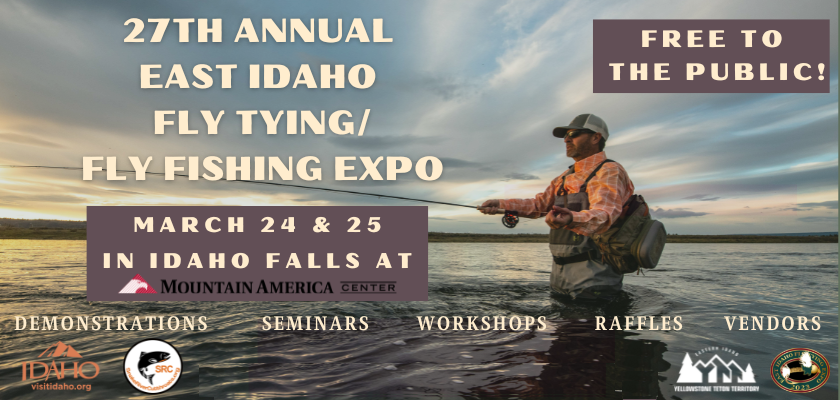
Bruce Staples takes us on a journey inside the Fly Tying and Fly Fishing Expo. We find and hear about some of the histories of the people who made this event unique. Bruce breaks down the list of the fly fishing icons that will be there, what you can expect, and why you should be there this year.
We also hear about the great Teton Dam story, how it came to be, and why it got destroyed. Bruce was on the podcast for the first time at WFS 269 so it’s great to check back with him. Here we go…
07:00 – The first Fly Fishing Expo they did was in 1994 at a local hotel.
20:10 – Bruce mentioned Doug Gibson from Three River Ranch and a bunch of other names who will be at the Fly Fishing Expo this year.
24:30 – Steven Fernandez is one of the top fly tyers in the country.
30:40 – Dan Bailey promoted Montana so much that it became a well-known fly-fishing destination.
38:30 – Bruce tells the story of how the Teton Dam came to be in the 60s and how it got destroyed in the 70s.
43:15 – We talk about the Banquet at the Fly Fishing Expo.
58:20 – Bruce’s rod of choice is a 9-foot 6 wt. His top fly is a Dry Muddler.
1:00:00 – Tip: Watch the water. Observe and stay undercover.
Episode Transcript
Dave (2s):
Coming up next on the Wet Fly Swing podcast,
Bruce (5s):
We have a very significant fly tieing culture in this area. It’s almost like it’s been part of, you know, it, it’s an outdoor thing. You know, like I say, we’ve had several families locally be famous Fly tieing, Stan Yama and his family supplied flies. You know, this is before the days of, of House of Har, even
Dave (29s):
Bruce Staples on the culture of fly tying. We were traveling to the East Idaho Flyting and Fly Fishing Expo today on travel. Today’s episode is sponsored by Eastern Idaho’s Yellowstone Teton territory. Idaho’s most renowned zone for fly fishing. From the Henry’s Fork to the South Fork of the Snake, and all the high Alpine lakes and streams in between Yellowstone Teton territory provides anglers and other outdoor enthusiasts with all the information they need to plan their next big trip. You can visit wetly swing.com/teton right now to get the full list of Outfitters Lodges, fly shops, and all kinds of inspiration to get you started on your next trip to Eastern Idaho.
Dave (1m 11s):
That’s Teton, T e t o n, wet fly swing.com/teton. Welcome to Travel, where it’s all about the journey we are all on in fly fishing and in life. This is our chance to take a deep dive into a specific area around the country so you have a better feel for the people, the resources, and the community that make this part of the country so unique. The Flight Tiny Expo is just around the corner. You can head over to the Snake river cutthroats.org g website, or you can head directly to wet fly swing.com/expo to get more information on the fly Ang and Fly Fishing Expo right now. So, at the end, we’re gonna give you a little reminder of how to connect here, but if you want to check it out right now, wetly swinging.com/x P o.
Dave (2m 1s):
And this week, Bruce Staples takes us on the journey inside the Fly Tang and Fly Fishing Expo. We find out and hear about some of the history of the people who made this event so unique over the years. We find out who’s gonna be there this year, what you can expect if you’re planning on heading there. And if you don’t know about it yet, we’re gonna take a deep dive so you understand what it’s all about and hear it from the Mansel. Bruce was one of the lead guys. He’s been there since the beginning. It’s gonna be good to dig back into this with Bruce today on the show. Time to experience the Road Less Traveled, Jimmy’s all season anglers, Doug Gibson, Mike Lawson, and the great Teton Canyon Dam story.
Dave (2m 43s):
This is a very interesting one. The Teton Dam. Here we go, Bruce Staples right now. Let’s do it. How you doing, Bruce?
Bruce (2m 53s):
Well, pretty good for cold weather.
Dave (2m 56s):
Yeah, you guys, you guys getting hit pretty good up there?
Bruce (2m 58s):
Yeah, we’ve had some terrifically cold weather. Kind of reminds us of back in the 1980s and all, but a lot of snow. Of course, we’ll be fishing in it come springtime.
Dave (3m 10s):
So you’re getting quite a bit of snow. What, what’s cold up there for you right now?
Bruce (3m 13s):
Well, the coldest we’ve had was about a week or two ago, was 30 below in town. Oh, wow. You know, wow is right. You don’t wanna go outside and, you know, it puts a kai bus on fishing. And so what you do is you, you build a nice fire and sit there in tie flies, or you do some writing, you know, that kind of stuff.
Dave (3m 32s):
Yeah, that’s right. And, and remind us again, what, what town are you in?
Bruce (3m 36s):
We’re in Idaho Falls. Idaho.
Dave (3m 38s):
Yeah. You’re in Idaho Falls. Awesome. So you are in, I didn’t realize it got that cold, or it was that cold, but this is awesome. We did an episode recently with, with John from the Trout Hunter, and, and he was talking about, I’m trying to think now, he was digging into that whole, the Henry’s Fork, right. And that whole area and describing how unique the town is, right. How it’s, it’s very narrowly defined, right?
Bruce (4m 2s):
Yeah. Island Park must’ve been,
Dave (4m 5s):
Yeah, that’s Island Park, right?
Bruce (4m 6s):
Yeah,
Dave (4m 7s):
Yeah, yeah, exactly. Yeah, I guess that’s the thing. So you’re in Idaho Falls,
Bruce (4m 11s):
Which is kinda, this is south of Island Park by about 75 80 miles.
Dave (4m 16s):
Oh, okay. Yeah, yeah. Got it. I gotta get my geography right on here. So, so good. So you’re, yeah. And you’re down south,
Bruce (4m 23s):
Well, relatively,
Dave (4m 26s):
Yeah. So basically we, and we had you on, like I said, back in episode 2 69. It was over, over a year ago. We talked about the Yellowstone, you broke that down. We’ll have a link in the show notes to that. But today we’re gonna dig into the Eastern Idaho flight tying and fly fishing expo that you’re kind of in charge of helping get rolling here again. So, so give us an update. I guess let’s start there. So end of 2021, kind of this last year or so, what’s been, what’s been new? Give us an update.
Bruce (4m 56s):
Well, the, the big thing that’s new is we’ve moved from a local hotel in town to New Mountain America Event Center, south of town, this brand new facility in all, all ways, electronic, you know, construction and everything. We’ve moved down there to do the show, and mainly what’s what’s happening is, is yeah, it’s costing us a little bit more, but there, there’s staff down there do a lot of the things that have been rather stressful for us, moving things around and everything. They have a, they have a well trained staff down there, and they have, you know, the facilities and equipment and everything to put on the show.
Bruce (5m 40s):
And so we decided, heck, let’s move down there. It’s just a better newer facility. And there’s a few hotels around. The one disadvantage, of course, is, is not a connected hotel. So guests can’t walk from their hotel room, you know, over to the show or to a restaurant, something they’re, you know, half a mile away are the closest ones. But that shouldn’t matter all that much. But we’re seeing terrific, terrific interest in the area in this show.
Dave (6m 11s):
And remind us again, what, where was the, so the previous show, so it’s been a couple years, right? Since Covid kind of knocked you guys off. This is the first time you’re back.
Bruce (6m 18s):
Yeah, the last exo was 2019. And just because of, you know, local, I’ll say politics and things, you know, hey, no get togethers greater than a hundred people, things like that. We said we better cancel. And that went on for three years. Well, as you well know, you know, COVID wasn’t a one year thing that we still have, I’ll call it a dirty burning tail end, but it’s still around, but not with the intensity that used to be. And so we just decided, hey, let’s go ahead and put it on, and we get support from the community to do it. So here we are.
Dave (6m 52s):
Yeah. So we’re going, and this is not a new event. I mean, this is something that, this is the 27th year now.
Bruce (6m 58s):
Yeah, the first one we did was in 1990 fours in a local hotel. It was a one day show with a evening banquet and maybe a couple dozen fly tires and a few local commercial vendors and a workshop or two. And just over the years, the interest in the show increased so much into what it is today. And you can see details, like I say, on our website, www src expo.com, which we are still developing, by the way. You know, you’re not done until you right to the event. So it’s a developing website and everything.
Bruce (7m 38s):
But we have enough particulars on, on the, on the website that you can see that, hey, this is quite the show with respect to what it offers the public.
Dave (7m 48s):
Yeah. Let’s dig into that because I mean, I know these flight tieing and shows, I mean, there’s a number of ’em around the year, around the country from, you know, like Fisk’s, big fly fishing show. You’ve got the Texas show and some of these things, and you got a lot of these different, like Flight tieing expos as well. And so let’s talk about that. So somebody who’s listening who isn’t familiar with this, what could they expect out of, out of this event?
Bruce (8m 11s):
Well, yeah. For the public, and of course we have free public admission. We don’t charge admission. Oh,
Dave (8m 17s):
Cool. Yep.
Bruce (8m 18s):
And you know, it’s important because here we are, we have right out there, the event center calls itself a hero arena, which is the main floor, which by the way, when they wrap up what we’re doing, they’ll refix everything on there. And we have a minor league hockey team that plays in there. Yeah. But that, that’s right. They, you know, they just,
Dave (8m 40s):
Who’s that? What’s the team? What’s the name of the minor league team?
Bruce (8m 43s):
It’s called the Spud Kings.
Dave (8m 44s):
Oh, the Spud Kings. There you go.
Bruce (8m 46s):
Yeah. What it would be coming from Idaho, you know?
Dave (8m 49s):
Yeah. Spud Kings Hockey. I love that. I love
Bruce (8m 51s):
That. But anyways, yeah, what we offer the public is, okay, you, you got the free entrance, you know, the free admission. And both days, the Friday and the Saturday, March 24th and 25th, the show opens at eight 30 in the morning. And the flatting demos are central, you know, to the public on the hero arena and around the edges. We have commercial vendors, as a matter of fact, we have close to 50 vendors, right as it stands right now. And this is all, you know, essentially the, the show that’s open to the public free of charge. They can go around and talk to the vendors, talk to the tires. We have places where they can, they can do daytime raffles.
Bruce (9m 35s):
And you know, we have merchandise for sale and everything. And rather than to charge ’em for coming in, you know, hey, spend your money when, when you get inside.
Dave (9m 43s):
Right. That’s great. So basically this, it’s free and you can jump in and there’s gonna be ti is this the situation where there will be just a bunch of great flight tires and people can go around and just watch these.
Bruce (9m 53s):
There’ll be as many as 45 fly tires, you know, in operation. Time flies out there on the floor at a time. What’s going on is on Friday there will be three, three hour tying demo sessions starting at eight 30 in the morning, and at six 30 at night. And on Saturday there will be two sessions starting at eight 30 and ending at five, at five in the evening. And you know, there’s, there’s icon tires coming in there. Local people, people from, actually, we have people from around the country, you know, places like Florida and Minnesota, you know, and then the West coast and everything. But you know, you gotta figure the reason for the interest in local fly tieing and fly fishing opportunities.
Bruce (10m 42s):
Idaho Falls is the southwest hub of the greater Yellowstone area Southwest hub. That means, you know, waters like the Henry’s Fork, you know, he talked to, you said, think it was John Steel was who you, you knows. Yeah. And you’ve got the South Fork, each of the Snake River, you’ve got the Teton River Silver Creeks, 120 miles away, Henry’s Lake, Madison River, you know, you’ve got, and then you’ve got the waters and Yellowstone Park, You know, and, and the southwest corner of the park is probably, if you’re interested in not just playing fishing and fly fishing, but if you’re interested in solitude and scenery and everything, the southwest corner of Yellowstone Park is phenomenal for all that.
Bruce (11m 27s):
So I, Idaho Falls is a hub, you know, the, the Idaho Falls Municipal Airport. You walk into the airport, say, and watch people coming in, you know, people deep planting, say from May into maybe 1st of October, see how many people are carrying gear bags in rod cases, right?
Dave (11m 45s):
Yeah.
Bruce (11m 46s):
Right. Yeah. They’re coming here to enjoy, you know, the fishing, but then they patronize, you know, the restaurants, the hotels in specialty shops, et cetera, et cetera. It goes on and on.
Dave (11m 56s):
Yeah, yeah. That’s right. Idaho Falls is definitely one of the hotspots, right? I mean,
Bruce (12m 1s):
Yeah. It’s like, you know, on the north side you’ve got Bozeman, you know, and then, you know, so on, you know, so on like that, you know, when we’re the Southwest corner, whereas they’re in the north side of the very,
Dave (12m 12s):
That’s right. How is, this is just kind of an interesting question. I don’t know Idaho falls quite as well, but you look at, you know, Boise is the other big, it seems like, you know, Boise, Idaho Falls, and Idaho. How are those two cities different?
Bruce (12m 26s):
Well, Boise, Boise is becoming a metropolitan area. That’s about three quarters of million people living over there. And of course you’ve got, you know, there’s fishing over there, but you better be willing to, you know, share the waters with so many other people. Yeah. And they don’t have the quality that we have here. I mean, look, here’s Yellowstone Park sitting right. 75 miles away, you know, terrific fishing. Then you’ve got the Silver Creeks and the places in Montana and, and southeast Iowa, south and Boise. It’s a little different over there. You have, you have more reservoirs. Of course, you have, you know, you have some rivers and everything, but they’re not the same quality as what we have here.
Bruce (13m 10s):
You know, you can actually Henrys fork up against any water around, you know?
Dave (13m 15s):
Yeah, that’s right. That’s right. We’ll, we’ll put a link out to that episode with John and the trout hunter. He, Roy went deep into the hatches and gave us the perspective on why the Henry’s Fork is such, you know, is such a destination. And it probably is, you know, this is well as anyway, is is the hatches, right? It’s hard to find a Spring Creek
Bruce (13m 31s):
Spring. It’s the hatches and it’s just, it’s just the quality of the area, you know, island Park is, it’s a beautiful place. You know, Truett’s being loved to death now with a number of people up there and everything. But the natural beauty of fishing, say a place like Herman Yeah. You know, the, her state park reach, you know, is, it’s almost distracting. You know, it’s like you wanna stop and enjoy, you know, often the distance of the southeast here’s, here’s the Grand Teton range sticking up, you know? Right. You go north and here’s the centennial range, continental divide, that sort of thing. And of course, John at there, at Trout Howard, he’s sitting almost within a stones stro of, you know, some of the most beautiful country in the West.
Dave (14m 16s):
Yeah. They’re right there. So, so what is the trout hunter describe that, that lodge, that area. I mean, it’s kind of right there along
Bruce (14m 23s):
Well, that’s, yeah, that’s in what they call last chance. It’s just that long skinny town you’re talking about along highway
Dave (14m 31s):
Because of bars. He, he described it. He, he said it’s because of the bars. That’s why it’s a long skinny town. They built the town around the bars,
Bruce (14m 39s):
By the way, tr Hunters in, there’s a, there’s a great bar restaurant in there besides the Fly shop. Yeah. John and, oh, what’s his name there? His
Dave (14m 50s):
Part, yeah, John. Right, right. And his counterpart.
Bruce (14m 52s):
But anyways, then of course, one of the things that they really promote and have is House of Har. Yeah. House of Work Wise and artwork, and, you know, that kinda thing. But this, of course, there’s other places up there too. And you’ve gotta realize that just around this, the southwest corner of the park, you have other wonderful places like Three Rivers Ranch, you know, its down there at where Warm River and Robeson Creek and, and the Henry Schwart come together, you know, it’s just to say on, just on the edge of Island Park down near services, same area as, as Harriman, maybe more so in the Lower Henry’s fork than Harriman, but more than Trout Hunter.
Bruce (15m 40s):
But yeah, Idaho Falls is, you know, often the distance from that 70 miles away. But we’ve got a good highway, highway 20 that goes up there from Idaho Falls. And during fishing seasons and during the hatches that John was talking about, you’re gonna find a significant part of the traffic heading up to Island Park, coming from Idaho Falls is meaningful to people up there, you know. Yeah. And of course, trot Hunter’s not the only shop up there across the street. You got Henry Anglers, you know, Mike Lawson’s, Henry for Anglers, and, you know, essentially the Lawson family, you know, started that shop back in the, I think it was the mid seventies.
Dave (16m 21s):
Yeah. And you mentioned the House of Har, so that’s, John mentioned Renee Har up, and he actually, in that episode, he got pretty emotional about, you know, just talking about him. I think the impact of, of Har, do you know a little bit about Renee Har and that is he, I mean, it sounds like he was a pretty foundational person out there.
Bruce (16m 40s):
He’s a foundational person with respect to the house of Har, you know,
Dave (16m 45s):
And what is the house of Har up
Bruce (16m 46s):
House of Har is Rene and Bonnie Har, they’re family with Shane, their son, and Leslie, their daughter. The four of them were all fly tires. And of course they’ve had a, they now have an international reputation, but they started out tying commercially, tying their flies. And of course, Renee grew up down in the valley and town called St. Anthony and got to know the Henry’s fork. He lived not too far from the river itself, you know, almost, oh, not casting distance, but quite close. And I guess he’d always been interested in fly fishing. He started a lot of the business, essentially, as I understand it, back in the late sixties.
Bruce (17m 29s):
And the quality of his flies is just unsurpassable. And they became something that people associated so much with the Herman State Park reach of the Henry’s Fork, that the two were almost synonymous with each other. You know, you wanted to fish, you fished har flies and all in that area. And of course, you know, his, his reputation has grown over the years, or I should say their reputations have grown over the years. And that, you know, they became, they, they become essentially figureheads and, and the same thing for Mike Lawson.
Dave (18m 7s):
Yeah, Mike Lawson too. Yeah. There’s two. Yeah. And we’ll put a link out to Mike Lawson’s episode we had where he talked about one of the big hatches out there. And so here’s the big question that, that I have on with harps. So is Renee going to be at the expo?
Bruce (18m 21s):
I don’t know. The last expo we had, 2019. He wasn’t there, but his wife, Bonnie and his daughter Leslie, were there, you know, walking around talking to people. In fact, Leslie’s participated before doing workshops and, you know, tying in the demo. She’s done that in the past. I don’t know if they’re gonna be down there. We’ve asked them, come on down. Especially because this is gonna be in a new facility Right. Then, you know, it just depends on their schedules and everything. But yeah, I think, you know, just the interest in seeing this new facilities, I hope it brings them down. I wanna see Renee, I consider him a friend, you know, friend from a distance, you know, he’s in St.
Bruce (19m 4s):
Anthony. And of course then during the fishing season, he’s up there in, you know, at last chance. And of course being associated with Trout Hunter. And he has a, he has a summer home up there. He and Bonnie have a summer home, you know, so they spend essentially the summers up there, and they’ve done that for decades, you know? Yeah,
Dave (19m 21s):
That’s right. Nice. Well, I’m glad we, we dug into that a little bit because I think shedding some light on some of the people that are gonna be at the event is, is, yeah. A big part of it. Who else, you know, talk about some of the other people that are gonna be there. Is there any, any other names that we would know of or local people that are of interest?
Bruce (19m 39s):
Yeah. With respect to local people. You heard me say a few words about Three Rivers Ranch that sits down at the confluence of Warm River and Robinson Creek with the Henry Schwar. And it’s been there for, you know, decades and decades. It’s owned by the Allen family. Lo Lonnie Allen’s the owner now, you know, through, through the years it’s passed on down to her. But her chief guide, and probably not just guide, but knowledgeable person about the Henry Schork drainage is a fellow by the name of Doug Gibson. And Doug has guided in the area, Andre not talking, just, you know, just say the Henry’s Fork, but he guides on the Teton River.
Bruce (20m 23s):
He’s guided in Yellowstone Park and everything. And the head of Knowledge this fellow has is unbelievable what comes to the Henry’s Fork drainage, you know, I’m not talking just the river itself, I’m talking about the drainage, but he’ll be part of the show too, representing Three Rivers Ranch. And I, I don’t know if I’ll have a, a commercial booth down there. That’s, you know, that’s kind of, of outside my, my scope of work right now. But if you’re talking about local people, Doug is probably, you know, he’s kind of a low-key Auks guy, very gentlemanly patient, just a heck of a nice guy. Everybody who knows Doug loves him, but he is one local person, of
Dave (21m 7s):
Course. What’s he gonna be tying, do you think? He, does he have a specialty?
Bruce (21m 11s):
He specializes like the HARs, you know, he is a, mostly a specialist in trout flies. And of course he has his own twist to him, just like the HARs do, just like Mike Lawson does. But, you know, he is, he’ll, he’ll be down there tying flies and, and all, and there’s just a wonderful person. But another, I’m trying to think of some other local people. Of course, Jimmy’s All Seasons Angler, you know? Oh yeah. Principal Fly Shop in Idaho Falls, they’ll be represented down there. Okay. Jimmy Gauss. And he’ll bring in a few people a tie in his booth, you know, a few people from, you know, some of his commercial suppliers.
Bruce (21m 54s):
But Jimmy will be there, of course. And you know, he is, he is a wonderful shop in Idaho Falls. It’s probably one of the best shops in the, in the country. You know, it’s right up there with, you know, the shops you’ve heard about.
Dave (22m 9s):
Oh, yeah, no, that’s one definitely. Jimmy’s we’ve heard about. Yeah, Jimmy’s is out there for sure.
Bruce (22m 13s):
Yeah, you’ve heard that. So Jimmy will be there. And then Clra has a distribution center Oh, really? Here in I falls.
Dave (22m 22s):
Okay.
Bruce (22m 23s):
And the manager, of course is John Stenerson. And then he’s a multi-talented guy. Sure. You know, he pushes clack of craft boats, but he has one heck of a creative fly tire. You know, he has, he has contracts with JD Flies and a few other people, you know, contracts are flies to him, but John will be there. He’s part of, he’s part of the expo too, as a matter of fact. He’s doing the, the destination programs, you know, Hey, where do I go? You know, this kind of thing. Another fellow that’s well known in the industry is, is a fellow by the name of Todd Lanning. He, man, he manages shops, you know, anywheres from the South Fork Lodge, Henry’s Fork Anglers for a while, but Todd will be there, time flies.
Bruce (23m 6s):
He’ll also be doing, as I understand, he’ll be doing a program on fishing in, you know, say the Henry Fork drainage. I’m not sure the details yet, but details will be on the, on our website, www src expo.com.
Dave (23m 23s):
Perfect.
Bruce (23m 24s):
But you know, just to name a few of these people.
Dave (23m 26s):
Yeah, no, that’s amazing. I think all those people and names or, that’s exciting. I mean, I would love to sit, that’s the cool thing about the expos. I’m not quite sure. I haven’t been to this one. That’s why we have you here chatting about it. But I think in the past, the expos I’ve been to, it’s fun because you just, you just walk around and you’ll find somebody and you’ll sit down and just watch ’em, tie flies. And it could be, you know, from Renee Har up to Jimmy’s. All right. It could be some of these people. And everybody has their own style. Is that kind of how it is? People just walk around and you get a look at all these great tires.
Bruce (23m 53s):
Yeah. You can walk around and watch these guys. Now I’ve just targeted the local guys. Any, you know, people from, I don’t know, I think maybe John Steele may be there, or maybe his partner Rich Pay. I’m, I’m not sure. We’ll just have to see. But I’m talking local guys. If you wanna talk about people coming in, we can talk about some
Dave (24m 11s):
Yeah. Give us a rundown to outside, because we are focusing kind of on Eastern Idaho here, and that’s where the event is. But yeah, talk about some of the, maybe other names we’d know of that are coming from outside of east of Idaho.
Bruce (24m 21s):
Sure. There’s, you know, when you talk fly Time icon people, for example, Steven Fernandez, have you heard you’ve heard that name before?
Dave (24m 32s):
Actually, I haven’t. Steven Fernandez? No, I don’t, I mean, I mean, I probably heard it, but I’m not sure who he, yeah, tell me about
Bruce (24m 37s):
Him. He’s out of, he’s out of the Los Angeles area, and he is probably, in a technical sense, one of the top fly tires in this country, if not the entire world.
Dave (24m 48s):
Oh,
Bruce (24m 49s):
Wow. Okay. Everything he produces is absolutely perfect, you know, and, you know, and, but he, he comes to the X where he does a workshop on his techniques, which vary any, anywhere from trout flies to streamers, to patterns for, you know, say all sorts of insects and all.
Dave (25m 7s):
Oh yeah, I know Steve. I’m just thinking about Yeah, you know Steven. Yeah. I’ve seen him at some of the other expos. Yeah. He’s been at some of the other ones. Yeah. He makes beautiful flies.
Bruce (25m 14s):
Oh yeah. He goes to the other expos. Right. Another person that you’ve probably heard of is Marvin Nty.
Dave (25m 21s):
Nty. Yeah, I
Bruce (25m 22s):
Have, he’s out of Baron, Wyoming. You know, it sounds like a cowboy town or something like that, but Yep. His Atlantic salmon flies are superb. Gotcha.
Dave (25m 30s):
And so are these people gonna be, are you, do you have a segment here where it’s like a special segment for some of these tires where they’re doing sessions?
Bruce (25m 38s):
We have, we have fly tieing theaters, you know, you know, if these people want to get involved in them. Of course. Another one’s Bob Jacqueline. I know we’ve heard that before.
Dave (25m 48s):
Oh, talked Bob will be, yeah, Bob will be there. Yeah. We talked to Bob on last week, so that’s awesome.
Bruce (25m 53s):
Yeah. You know, he, he’s essentially a local being West Yellowstone, but you’re talking about, you know, the other people, another person that has a wonderful reputation for conservation of all this Ang is Jay Buckner out of Jackson Hole. We’ve heard that name, yeah. Before. Oh, yeah. Our auctioneer is gonna be Will Godfrey and everybody in the fly tieing field that wants to have an auction knows who Will Godfrey is. That’s for sure. You know? Yeah. He’s probably the best oral auctioneer in the,
Dave (26m 26s):
Oh, this is the guy. So he is doing the, how do you do it? You’re talking about doing the Auctioneer? What’s that called? When they do the Fast, the Fast Talk.
Bruce (26m 33s):
Okay. We, like I said, what I mentioned during the days, you know, our fly time demos and the vendors show and the workshops or anything go on, but Rewind to show up Saturday evening with our auction and banquet. And of course Will is featured there when at pretty much the end of the banquet we have our live auction. And he’s the one that essentially runs it. And he, he does it all over the country and everybody calls him Will Godfrey to be the auctioneer, just because he knows the industry so well, you
Dave (27m 5s):
Know. Oh, right. So he goes around to every, and he’s the, I’m, I’m not sure. I, I wish I could find a clip of him. That’d be pretty funny to watch.
Bruce (27m 12s):
Oh, yeah. Doing him, doing his work, you know, being an auctioneer. That’d be terrific.
Dave (27m 17s):
Yeah. Yeah. Yeah. That’s awesome. We
Bruce (27m 19s):
Have, coming from Colorado, we have Al Rit, he’s the latest music award winner.
Dave (27m 24s):
Oh, music award winner. Now what’s the, what’s going on there?
Bruce (27m 26s):
Yeah, the music award is given out by the Federation or Fly Fishers International. And what they feel is a fly tire that is contributed, created, and contributed significantly to the fly time, art, whatever you want to call it. You know, I’m gonna, I have, I was the recipient of this back in 20, 20, 21, but yeah, I I’ve got that, you know, that award, but
Dave (27m 59s):
What is the mu you mentioned the music, what did you say? Music? Music,
Bruce (28m 2s):
Yeah. It’s named after what used to be a shop owner down in the, in California, I guess it would’ve been Visalia, California, that back in the right up to the sixties was, was famous as a, as a National Fly Tire and supplier Fly Tire materials.
Dave (28m 21s):
Oh, so music is at the, that’s actually his last name.
Bruce (28m 24s):
Yeah. B U S Z E K, Wayne Buzz Music.
Dave (28m 29s):
Oh, music, okay. I thought you said music. Gotcha. Music,
Bruce (28m 31s):
Yeah. So we have about six music with us here. And that’s, that’s exceptional for these shows.
Dave (28m 37s):
Yeah. And I’m looking at it now. I’m looking at the whole list from 22. You got, yeah, Gary Boger, you got, you, you in 2015.
Bruce (28m 45s):
That was in 20 2001. Steven Fernandez. Got it. In 2012. Marvin, Ty got it in 1995.
Dave (28m 53s):
Bob Jacqueline. Yep. All the way back to 1970. So how does it go? Oh, that’s right, because FFI has been going on for long time.
Bruce (28m 60s):
Well, used to be fff, now it’s ffi, you know,
Dave (29m 3s):
Ffi. Yeah. So 1970 was the first one. Do you remember Ed Strickland?
Bruce (29m 7s):
I remember the name. I never met him. He was very active jazz before I got into the, what was the fff then? Yeah,
Dave (29m 13s):
That’s right. Yeah, it’s a whole list. Okay, cool. So we’ll, we’ll put a link out to that Fly Fishers International as well. The other, yeah,
Bruce (29m 21s):
The other music winners we have are the husband and wife music recipients, Alan Gretchen Beatty.
Dave (29m 26s):
Hmm, okay. They’ll be there as well.
Bruce (29m 28s):
We also have John. Yeah, from Bo, they’re over in Boise. Then we have John Vanderhoof coming from Long Beach, California. He’s another music winner. Yeah. And you know, this is pretty unusual for a, I’ll say it’s not well compared to some of the shows where they are in metropolitan areas. Our backcountry show. I say backcountry show because we have, you know, in this part of the greater Yellowstone area, maybe a couple hundred thousand people at the most. Whereas, you know, you go up to the Northwest Fly Tires show and there’s about 2 million people. You know, you go back to Jersey and you got half the people in the world, you know, et cetera, et cetera. Yeah. But the thing is, the thing that draws people here is we’ve got the water.
Dave (30m 7s):
Yeah. You got the water,
Bruce (30m 8s):
We’ve got the places to fish.
Dave (30m 10s):
It’s interesting. Do you feel like, it seems like when I, and this I think is changing, but when you look at the West in the States, you know, Montana always, you know, always sticks out Colorado sticks out Wyoming, you know, to a lesser extent. But you got all these states surrounding Idaho, and it just seems like Idaho all has been under the radar, like as far as, but well, it seems like that’s changing because you’ve got, I mean, obviously the Henry’s fork is right there, but what, what’s your take on that? Does it feel like you’ve been under the radar?
Bruce (30m 35s):
Well, the reason, you know, when you think of fly fishing in the West right away, Montana is a place that comes to mind personal. And that goes back to the days of Dan Bailey. He did some, Dan Bailey did so much to promote, you know, back in late 1930s, he did so much to promote the area back east. You know, he originated in, I think it was Brooklyn, New York or somewhere in New York City, came out and fell in love with the country and was there you go, established in Livingston. But he had a whole network of people back. I
Dave (31m 6s):
Think the story was, I think the story was his, he was driving out his car broke down. Did you ever hear that story?
Bruce (31m 14s):
I hadn’t heard that, but I wouldn’t be surprised. But anyways, yeah. You know, on top of it, he was a fly fisher. And of course, comparing the fly fishing back there, which is not all that bad in places, but compared to what we have in the greater Yellowstone area, there’s really no, no comparison. Yeah. And he, he established in Livingston, and right away he started promoting the area is any good businessman would do. Yep. You know, then on top of him, you had the people like Bud Lilly. Yeah. And it goes on to, to the Craig Matthews and the Bob Jacqueline’s of this world, you know, people like that. And Idaho kinda lagged a little bit behind. We didn’t have a Dan Bailey personality, but now just because people have become aware of the water that we have down here in the southwest portion of the greater Yellowstone area, we’re playing catch up.
Dave (32m 6s):
Yeah.
Bruce (32m 7s):
And the same thing is happening to a certain extent in Jackson Hole, where, you know, their fishing goes way back to the days of Bob Carmichael back about the same time as, as Bailey came out. You know, Carmichael’s been here that long. But, you know, you didn’t have the infrastructure back in, in, in Idaho in those days, and even in Wyoming. Whereas in Montana you had, you know, the railroad was promoting things.
Dave (32m 35s):
Oh,
Bruce (32m 35s):
Right, yeah. You didn’t just didn’t have the infrastructure and Yeah. And, and, you know, going into the quality areas and all Idaho, you know, it’s like people sure they knew about the Henry s Fork and Island Park, you know, for a long time. But some of these other places like the Teton River and the South Fork reaching the Snake River, there weren’t good roads going to the more railroads. No.
Dave (33m 0s):
Yeah. Yeah. That’s it. So it’s definitely on the map now, obviously. I mean, it’s, oh
Bruce (33m 4s):
Yeah. Oh
Dave (33m 5s):
Yeah. And, and if people don’t know about it, then we’re putting it more on the map now because, and you guys are as well with the expo. So let, let’s, so you mentioned a, a number of people on the expo and what’s going on there? Let’s, let’s talk a little more. Anything else we wanna shed light on as far as what people can expect on the expo? The event itself?
Bruce (33m 22s):
Yeah. We have fee-based workshops we do on, and again, these are described on our website. We have fee-based workshops by people like Steven Fernandez and Jay Buckner, you know, people like that are doing these, these workshops. And, you know, especially fly tying workshops or entomology. We have some casting workshops where people like Bob Jacqueline will be doing casting, of course Bob will be out there tying flies too, you know, he’s got a heck of reputation for creativity. But the, the feed, the fee-based workshops are something that’s, you know, specialty oriented.
Bruce (34m 4s):
We also have destination programs that John Stenerson is, you know, organizing for us too. And they’ll be, they’ll be there during the daytime in, you know, the event center. They won’t be on the main floor. They’ll be in one of the extension areas. So the destination programs are like, Hey, where do I go fish? Or if I’m up here at a certain time of year, where do I fish? You know, what can I expect for services? How do I get away from the crowds? You know, these, this kind of thing. Which fortunately, we have a lot of waters around here that are off the beaten path of equality. I did a book back in 2017 called Fly Fishing the Greater Yellowstone Back Country.
Bruce (34m 48s):
You know, it’s, it’s, it was put out by Stackpole books. And we have programs that are kinda like, what’s in the contents of that book, you know, place, Hey, you wanna get away from the crowd? Try this place, try that place this time of year. Yeah. Use you this, do that and everything. So some of the destination programs will be oriented in that manner.
Dave (35m 10s):
Gotcha.
Bruce (35m 12s):
And of course, we have a youth program and a ladies program at the expo. And again, these are being described on our website, so, you know, it’s, it’s a gala event from the standpoint that there’s something there for everybody in the fly fishing world.
Dave (35m 27s):
Right. Right. So you cover, so if somebody’s maybe a beginner or a super expert, you, you, there’s gonna be something there that people can enjoy
Bruce (35m 36s):
To out. Yeah. You know, the super expert is the guy that wants say, you know, there’s a specific hatch going on at a certain time, or when, when should I be up at Harriman State Park? You know? Yep. When should I be in Teton Valley, et cetera, like that. These are the kind of things, the information that we’ll be dispensing in our show.
Dave (35m 53s):
And like Bob Jacqueline, you know, it’d be fun to sit down and just kind of watch Bob Tie. Right. Somebody, a famous person like that,
Bruce (35m 59s):
We’ll watch him tie and watch that guy cast. I’ve fished with Bob a number of times and I just envy the guy. Gosh, how do you do that? Right. You know, he’s, he’s not a big guy or anything, and he just exemplifies, you don’t have to be a big powerful guy at a cast fire. You gotta have a, you know, it’s like a golf swing. You gotta have your timing down. You know, he’s just an example of that.
Dave (36m 20s):
Right, right. So his cast is just, it’s like, it’s a, it’s nice to watch. It’s
Bruce (36m 24s):
A good, well, it’s, yeah. What you’re watching is something, you know, that has an international reputation. You might say.
Dave (36m 33s):
Today’s episode is sponsored by Eastern Idaho’s Yellowstone Teton territory. Idaho’s most renowned zone for fly fishing. From the Henry’s Fork to the South Fork of the Snake, and all the high Alpine lakes and streams in between Yellowstone Teton territory provides anglers and other outdoor enthusiasts with all the information they need to plan their next big trip. You can visit wetly swing.com/teton right now to get the full list of Outfitters Lodges, fly shops, and all kinds of inspiration to get you started on your next trip to Eastern Idaho. That’s Teton, T e t o n, wetly swing.com/teton.
Dave (37m 14s):
Well, let’s take it back. We, we’ve kind of dug in a little bit on, you know, what people can expect. What is the history, take us back to 94, I think, when it started. How did you know, how did it start? Were you there when this thing got going? What, how did the idea come to be?
Bruce (37m 26s):
Yeah, I was there. Okay. What I did was, I called a meeting in the local club about,
Dave (37m 33s):
Is that the TU club? The same Tu club?
Bruce (37m 35s):
Yeah, that’s the Snake River Cutthroats, you know, that Snake River Cutthroats has been around since 1972. Oh, wow. And yeah, it was started an afro, excuse me, go
Dave (37m 46s):
Ahead. Oh no, I was gonna say that’s pretty, yeah. It goes back to almost like, I don’t know when the Federation of Fly Fishers, but you’re That’s quite a while ago.
Bruce (37m 52s):
Yeah. You’re talking 50 years. The Federation goes back to 65 and Tu goes back to 59, you know, dates like that. Yep. But the reason for its formation was to fight the Teton Dam. Mm. You know, everybody knows, I think, you know, Teton Dam is
Dave (38m 7s):
No, no. Give us, give us the Teton real quick. Let’s hear that Teton Dam story, because we talked to, we actually had the Henry’s Fork, a foundation Brandon was on and talked about some of the, the, you know, issues there. And I mentioned in the episode, I asked him, I said, well, what are the major issues? Are dams something you’re thinking about? And it seems like dams are not a focus right now for them that because water quality and quantity is the bigger thing. But it sounds like dams, dams are important out there, or there is a big story.
Bruce (38m 33s):
They’re important to the agriculture around here, but I think we’re pretty much saturated. Putting in a large dam like, you know, would be extremely difficult. But, you know, what happened was a bunch of farmers up in Madison and Fremont counties claim that they needed more water, you know, and everything. And so they talked to the politicians and they got the dam in, and they, you know, they did some pre-study on it, you know.
Dave (39m 0s):
Well, what year was this? What year was this, Bruce?
Bruce (39m 2s):
This would’ve been starting in the sixties.
Dave (39m 5s):
Oh, wow. Yeah, a long time
Bruce (39m 6s):
Ago. Sixties, way back then. Yeah. But when the geologists got to work, looking at the feasibility of, say the country rock and everything, said, this isn’t gonna work, that rock, rock is too fractured. Well, the sponsor of the farmers was make it work.
Dave (39m 24s):
Hmm.
Bruce (39m 25s):
And the farm, the geo us Gs told ’em, this is enough, not enough grout in face of the earth to fill all the cracks there. Well, we’re gonna build that dam. We need it. So they did, they started building the dam on the Teton Canyon. Oh, wow. Remember? Yeah. I remember floating that canyon a couple times while the dam was in construction. It was just beautiful, beautiful place. Smaller version of the South fork reach of the Snake Rivers Canyon. But they put the dam together, they got, it essentially continued. But while they were doing that downstream, here’s all these water shooting out of the walls of the canyon below the dam. You know, it’s like the droughts just tell ’em, Hey, this isn’t gonna work.
Bruce (40m 6s):
Well, the problem was the water got in into the starters seeping underneath the dam and into it. And then Wow.
Dave (40m 12s):
So they built the dam. So they literally built the dam.
Bruce (40m 15s):
Yeah. They built a dam was complete, you know, I’m talking about a big structure, 300 feet tall, you know, the reservoir is gonna be 17, 18 miles long and deep enough that they, they were considering making an lake trout fishery. Anyways, one morning in early July 19 or June, 1976, that dam went out. You know, it just, the water just versed through it. And, you know, it’s a historic
Dave (40m 40s):
Blew the dam.
Bruce (40m 41s):
Yeah. Just, just destroyed the dam, you know, just breached the dam. And of course, all the water that was stored, the reservoir was close to being full, just went out into the valley. Well, you know, it was almost like an, I told you so thing, you know, the geologist stolen, it’s not gonna work. And it didn’t.
Dave (40m 59s):
No, it didn’t.
Bruce (40m 60s):
But, you know, for a while it kind of ruined the fishing on the Teton River, but it’s come back significantly in the Canyon, of course, up in the valley, Teton River is a beautiful meadow stream up in Teton Valley, up above around towns of Victor and Drs. You know, course the fishing industry up there wasn’t damaged, but now the canyon waters come off, they’d be pretty darn good. Not quite what it used to be, but good enough where there’s a clientele of people that, you know, like the Henry Fork Anglers and some of the other local guiding operations, they, they run trips on, on the Lower Teton and of course of Teton up in the basin. But that was a kind of a local disaster.
Dave (41m 42s):
Wow. Where was that, Dan? What was the closest town to where that was built?
Bruce (41m 46s):
The closest town to would be a little place called New
Dave (41m 49s):
Dale. Oh yeah, new Dale. I see that. Yeah. New Dale right there at the,
Bruce (41m 51s):
Yeah, it’s Highway 30 State Highway 33 goes up there. Yeah. New Dale was kind of, I kind of, I guess because it was a little bit higher up in elevation, it was spared from the flood. But the towns in the valley down below, sugar City, Rexburg, you know, Teton City, all those places, they, they got hammered by the flood. Right. That happened there, but it was, it’s kind of a historic thing in this part of the state.
Dave (42m 15s):
Yeah, that is crazy. So, so basically they had to take out, so the dam is, there is no dam at Yeah,
Bruce (42m 21s):
There’s, there’s, there’s a remnant. You’re up there and you see this big
Dave (42m 24s):
Oh, right, still there.
Bruce (42m 26s):
Yeah. On one side of one side of the canyon, there’s a remnant there.
Dave (42m 29s):
Oh, yeah. Is that by, that’s over where like fourth Street crosses, it looks like. I see it,
Bruce (42m 34s):
Yeah. Yeah. But wow, it’s, it’s kind of all in the past now, of course, floating through the canyon, one of the experts on floating that, or on fishing, that river of course is Doug Gibson, the fellow I mentioned, you know, at Three Rivers Ranch.
Dave (42m 48s):
Oh, right.
Bruce (42m 49s):
But anyways, so much for the Teton Dam, but there’s been, you know, there’s been attempts to revive it, but, you know, no way. Yeah. That’s not gonna happen. You know,
Dave (43m 2s):
That’s it. Wow. And I forgot where we were going. I’m glad we took that tangent down on Teton. I can’t remember my, our train of thought. We
Bruce (43m 9s):
Were wrapping up pretty much with the expo, what was going on in the daytime activities. And of course, the big nighttime event will be the, the banquet.
Dave (43m 20s):
Oh, the banquet. Is that on Saturday night?
Bruce (43m 22s):
Yeah, Saturday night. And of course, it’ll feature our live auction. We have also a silent auction quality items, you know, the live auction figures, you know, it features things like trips, artwork, hold, I’m trying to think of other thing, you know? Yeah. High quality fishing, you know, fly fishing equipment.
Dave (43m 42s):
Yeah. So basically everybody, anybody that goes to Is this something where if you attend, you can attend the banquet to as well?
Bruce (43m 49s):
Yeah. You have to buy banquet tickets, of course, you know, to get in and something, we’re pretty much limited to a little over 300, whereas in the past, at the Shiloh, when we were down at the Shiloh, and we had as many as just under 400, but we’re pretty limited now, so there’s gonna be a rush on getting tickets. You know, a lot of people come just to watch Will Godfrey in action.
Dave (44m 10s):
Right, right, right. Well, this episode is gonna go live probably right before the event. When, when, where would somebody go if they want to get a banquet ticket?
Bruce (44m 19s):
Right now they are for sale down at Jimmy’s All Seasons Angler.
Dave (44m 24s):
And how long do you think they’re gonna be right now? We’re, we’re just so folks know, it’s, it’s mid-February, but the, the, this is gonna happen in March 24th.
Bruce (44m 32s):
Well, I will, I’m willing to bet that we sell out and it’ll happen maybe, maybe a week or so before
Dave (44m 39s):
Oh, before
Bruce (44m 40s):
The event itself. Yeah, because already we’ve, we’ve sold maybe a third of what’s available, and they’ve only been available since last Saturday.
Dave (44m 48s):
Okay, good. I’m just thinking, I think what we’ll do then, I’m just thinking, talking to my future self, because we’re gonna schedule this out. So we’ll try to get this out here mid-March, so people will still have time when they’re listening now to actually get a banquet.
Bruce (44m 60s):
That’d be good. You know, about mid-March or something like that. But by then, I suspect that we will probably have, I’m guessing, but maybe two-thirds of the banquet tickets sold something.
Dave (45m 12s):
Yeah. Good, good. So there’ll still be some time. All right. So that’s, so the banquet, and we talked about everything else going on here. Well, I guess we were on the history a little bit on when you talked about the dam. So, so take us back. So 94,
Bruce (45m 24s):
That was the first one.
Dave (45m 25s):
Yeah. Where did that idea come, like, so you’re sitting there in 92 or 90 or whatever it who, where did the idea pop out?
Bruce (45m 33s):
Well, the idea popped out just because of the quality of the water we have around here. And then we have a very significant fly tie culture in this area. It’s almost like it’s been part of, you know, it, it’s an outdoor thing, you know, like I say, you know, hey, being part of the greater Yellowstone area, you’ve got an outdoor culture here, and part of it’s fly fishing, and part of fly fishing is fly tank. And we’ve had several families locally be famous for fly tank. Stan Maura and his family supplied flies. You know, this is before the days of, of Haah Har even, you know, Marcella Oswald in, in Idaho Falls, her trout fly is extremely famous.
Bruce (46m 19s):
But, you know, we had local families, the Ros family, so many families that, that were into fly fishing around here. And bing lemke, of course, he’s kind of our patron scene of fly tires. He passed away in 91, but he had an international reputation for creativity and quality of fly fishing. Of course, a lot of what he targeted was the, the last chance area up at Herriman State Park, you know, all the water in the park and the water around the park. And he became very famous for that, where we’ve had, you know, people like, like these folks that, you know, have been famous and passed on their skills and everything to other people.
Bruce (47m 2s):
And I could see this growing from the standpoint of, Hey, you know, it’s not a lot of people around here, but look at the quality of what, what we have,
Dave (47m 12s):
You
Bruce (47m 13s):
Know, let’s capture. Yeah. There were a bunch of people in the club and decided let’s try, give it a try, try the expo. And it’s grown ever since
Dave (47m 21s):
Then. How was that first, do you remember the first event? Pretty well,
Bruce (47m 25s):
Vaguely. It was in a hotel called the West Bank here in Idaho.
Dave (47m 28s):
Falls. Falls, yeah.
Bruce (47m 30s):
And we had a few dozen fly tires, and we had a banquet that night. And I can remember the hotel told us that if you have a hundred people in here, we won’t charge you for the banquet. What they did is, you know, if, if the banquet brought enough people in and the event brought enough people in, they’d wanna host it because it made money from, and as I remember the banquet, we had something like 110 people that we just barely made there go. Yep. But it grew, you know, the show just grew from there to what it is today over the years, just because of essentially the, the homegrown culture, you know, fly fishing culture that we have here. Yeah. And then the interest from outside the area, of course, a lot of that interest was because of the waters we got around here, because of the presence of the Henry’s Fork, the presence of the te
Dave (48m 18s):
And the South Fork, the snake, right. South Fork, the snake
Bruce (48m 20s):
Is, yeah, it’s really, it’s really the Snake River, but locally, it’s South Fork.
Dave (48m 24s):
South Fork,
Bruce (48m 24s):
Yeah. Forked the North Fork, you
Dave (48m 26s):
Know? Yeah. And the Henry’s Fork is the North Fork, right?
Bruce (48m 28s):
Yeah, exactly.
Dave (48m 29s):
Yeah. The North Fork. Exactly. Perfect. And, and so this is, this is cool, and you know, we dug into a lot on who, you know, what’s gonna be there. We didn’t talk a lot on the vendors. Can you describe just a few of those?
Bruce (48m 41s):
Yeah, the vendors, they, they’ll vary anywheres from, you know, essentially things like apparel, you know, shirts, waiters, et cetera, you name it, artwork, there’s gonna be some people that are offering artwork. Okay. Of course, with respect to, you know, fly fishing equipment, there’ll be vendors of that. But one of the big ones is gonna be fly tying equipment. We have several vendors like Poppy coming out of Orino area, and some of the local vendors, well of course say Moonlet Industries down here in Pocot Moon
Dave (49m 18s):
Places.
Bruce (49m 18s):
Yeah. People like that will be there touting their wares. So to that’s say
Dave (49m 23s):
That’s right, that’s right.
Bruce (49m 24s):
You know, with respect to flight time and a lot of the fly time materials, you know, it’s, it’s home spun stuff. As a matter of fact, another vendor called out of Cholo, Arizona, what’s his name? John Rome will be, he’s, he’s the Arizona Semial and Diamond Braid guy. He’ll be here and, you know, just like I say, local, you know, a lot of the local people besides the vendors itself, I think they’ll be conservation oriented organizations will be to get, be represented. I don’t wanna say any names cuz they could be wrong, but that will be, they’ll be specified on our website.
Bruce (50m 7s):
You know, the, like I say, I keep on reporting.
Dave (50m 9s):
Yeah. So the website, yeah.
Bruce (50m 11s):
Sr cxo.com.
Dave (50m 12s):
Yeah. So by the time this goes live, you probably will have an updated vendor list people can take a look
Bruce (50m 17s):
At. Exactly. Yeah. But right now we have, I think it’s just under 50 vendors, I think we’re pretty much, pretty much full considering what we have available at the center, you
Dave (50m 28s):
Know? That’s right, that’s right. And who’s behind the scenes of you? Obviously you’re behind the scenes. Who else is there helping to, you know, what’s this like setting up an event like this? Has it taken
Bruce (50m 36s):
The whole team? It’s, it’s time consuming and I’m lucky with a Sora. I’ve got, I can sit down on my computer and I can organize a fly time demos. I have a fellow helping me by the name of Hal Gordon, which is very much
Dave (50m 48s):
Experienced. Oh yeah, Hal, he, he does the, he was doing the, the, the one out in Oregon,
Bruce (50m 53s):
The Albany Show. Yeah, yeah. He’s moved to St. Anthony, Idaho. He’s come back to his roots.
Dave (50m 59s):
Oh, no kidding. Oh, he’s back
Bruce (50m 60s):
There. Yeah, he’s no longer in the Oregon area. He’s in St. Anthony, Idaho right now. He’s out there shoveling snow, I’m sure. But he’s working with me on the flight demos. John Stenson, like I say, is doing the, the destination programs. The workshop chairs a fellow by the name of Jeff Armstrong, and our boss is fellow by the name of Scott Long, and Rory, Rory Cullen works with him. These are all local guys that are, you know, putting their time into making this expo work. And they have been involved for, you know, for decades.
Bruce (51m 40s):
Dave Pace, who apparently didn’t make it with us today. Yeah. He’s essentially our, our engineer, he works with AutoCAD, you know, to design the floor layout and make sure that it agrees with what the event center has available and Oh yeah. You know, it just goes on and
Dave (51m 56s):
On. We gotcha. Well, give us a shout out to Dave since he didn’t make this one here. Now is Dave, what’s his fly? Is he into the fly fishing and Tang?
Bruce (52m 4s):
Oh yeah. Everybody is a fly fisher that I’ve talked about. Dave just retired from the Idaho National Lab. He, I’m not sure exactly what his engineering specialty was, but he’s an expert with AutoCAD and he’s designed, you know, the, he’s put together the floor design and okayed it with the event center and all, of course, Scott and Roy, these, the oversee things, the financial stuff. And we have people like Ross Carroll that’s doing the, the, oh the auctions, you know, the silent auctions and the raffles and you know, there’s people doing various things. We have a lovely person doing, say a lot of the artwork and things of pins.
Bruce (52m 48s):
Her name is Gail Dial, she’s a professor of, of art. I’m not sure exactly what field and state university, you know, so just goes on and on. People like that, that are donating their time to, you know, a subject they love.
Dave (53m 3s):
Yeah. Yeah. That’s awesome. Okay, good. Well I feel like we’ve, we’ve kind of dug in here a bit. Anything else we’re missing as far as the event? It sounds like we, we’ve given people a good perspective of what it looks like.
Bruce (53m 15s):
Well, I’d say just watch the website. I know there’s interest in this show around the country. There’s, people would love to be here, but you know, Idaho falls in the relatives sense, you know, compared to the municipal areas is a little bit isolated and out of the way. And of course it’s still winter. Yeah. We have road closures around and thing. Right. As you well know, you know, nationally we have some airline problems too. Hopefully they’ll be solved and things will be better. You know, the flow the show is taking place right after the, I guess it’s the vernal equinox, something around the 20th of March, you know, and we’re just hoping that things improve here cuz it’s been a cold winter, right?
Dave (53m 53s):
So it’s been, yeah, it’s been a cold one so far and lots of snow.
Bruce (53m 56s):
Yeah. But the big thing is, is if anybody’s out there is interested, watch our website, you know, it’s still a work in progress. It has to be for any event like this, you know, people are deciding, yeah, I’m gonna come, I’m gonna, I’m want to be a vendor, I want to do this, you know, you know, I have flight tires, I’ve decided, yeah, I can fit it into my schedule. And of course I’ll be cancellations too. But unfortunately Wayne New Wallen, one of our better flight tires in the face of the earth is making it. He’s got a few medical issues that have involved in, they’re solvable, but he’s, he’s to the point where he’s got a tender, you know, things like that. But yeah, just watch that website and like I say, it’ll develop as we go on, you know, as we approach the show.
Dave (54m 38s):
How are you getting people, you know, out there finding people to attend the event? What’s your, I mean, other than doing this, you gotta getting this out on the podcast. What else are you guys doing?
Bruce (54m 48s):
Well, we’re also putting not only on our website, src expo.com, we’re also putting the activities on Instagram and Facebook and, you know, things, electronics have pretty much taken over from the hard copy. Anything. We do put posters around the country, but so many people are watching what’s going on, you know, on, on the worldwide web. So to say that, you know, things have changed and so we’ve gotta promote this thing electronically as well as by hard copy. And it’s like electronically, it’s taken over. You go, man, here we are. What are we doing right now? Yeah,
Dave (55m 26s):
He’s, yeah. Yeah. This
Bruce (55m 27s):
Exactly what talking, this is an example. Yep. And so we’re concentrating as much as we can on our website, on Instagram and on Facebook.
Dave (55m 36s):
Yep. Exactly. Yeah. We’ll give a shout out to Christie who’s behind the scenes and helping to set a lot of this
Bruce (55m 42s):
Stuff up.
Dave (55m 42s):
Christie. Yeah, yeah. Yeah. And she’s, she’s got a, a good mind for this stuff and I think this is part of it, right? I think a big part of it is like, any of this stuff is like cross promotional things, right? The more Sure. Kind of cool brands and groups. And you guys obviously are affiliated with TR and Limit, so I’m sure they’re probably doing some stuff as well to get the word out.
Bruce (56m 0s):
Tr and Limit is, is, is doing quite a bit. And of course they, they reap some of the benefits of what we do. You know, the money make we make from a show goes into conservation and education.
Dave (56m 11s):
Yeah, that’s right. So everything, if somebody attends this and spends money on this event, it’s all going into Trout Unlimited or is that pretty much?
Bruce (56m 20s):
Well, T Trout Unlimited, Henry’s Work Foundation, Teton Land Trust, and we have a, the club has a grant system, you know, if you want money, you, you, you know, you describe what you’re gonna do and then we’ll sit down and decide how much you’re gonna get, you know, this kind of thing. It’s a grant. Yeah. Like I said, grant system, but the money comes mainly from what we do at the expo. And over the years, the club has donated hundreds of thousands of dollars to conservation and education. There you go. And all this, most of this comes from the expo.
Dave (56m 49s):
That’s awesome. So there’s a huge bonus for attending. So anybody that goes there is gonna be going to help.
Bruce (56m 54s):
Hey, if you like fly fishing, here’s a way to help out, keep the quality that we have out here now.
Dave (56m 59s):
Yeah, I love that. Yeah. And we kind of do the same thing with the podcast whenever we do our events, you know, not quite the, the scale there, but we always try to find a conservation group. That’s why the Henry’s Fork Foundation for the trip we’re doing this fall was kind of our focus, so,
Bruce (57m 14s):
Yeah. Right. Philly. So,
Dave (57m 16s):
Yeah. Good. Okay. Well I think we’re good there, Bruce. Maybe I just have a, like a quick little two minute drill to take us outta here. Is that, that sound good to you? Okay. Okay. So the first one is, we mentioned a lot of places in you in Idaho Falls. What, is there one restaurant you would recommend that people, if they’re crossing through Idaho, they should stop and, and have a, have some food?
Bruce (57m 36s):
Well, I guess my response would be to, that would be what’s your specialty? What’s your prefer?
Dave (57m 41s):
Yeah, let’s say, let’s say, yeah, that’s a, that’s a tough one. Let’s just say, let’s say Mexican food.
Bruce (57m 46s):
We’ve got wonderful Mexican restaurants here in this town. There’s several of ’em. Chenga down in, you know, in, down in Old Town Idaho Falls. So Chenga pga. Yeah.
Dave (57m 58s):
Oh, Chenga. Gotcha.
Bruce (57m 59s):
Yeah. And then downtown on the south side there, we have a place called, well, let’s see, I’m trying to think of what the name of that actually is.
Dave (58m 8s):
We’ll throw up PGA in there. That’ll be good. We got one of those, so that’s
Bruce (58m 11s):
Great. Yeah. That’s, that’s okay if that answers that questions.
Dave (58m 14s):
Yeah, it does. That’s fine. It does. And then you, you wrote the book on kinda hitting the back country in Yellowstone. What is your, what’s your rod of choice for the back country? What wait and length?
Bruce (58m 22s):
Well, ask me where I’m gonna fish. Yeah.
Dave (58m 26s):
Let’s
Bruce (58m 26s):
See. In a general sense, a a six weight, and frankly I’d prefer dry flies, you know, so a weight forward, dry line, you know, something
Dave (58m 35s):
Six weight nine, six weight, nine foot six weight.
Bruce (58m 37s):
Yeah. Something like, you know, something like that that, of course when I fish smaller streams, which I really enjoy, I scale down to even as low as a two weight. As soon as I find this larger fish in that small stream, I’ll go back up to a four or five weight.
Dave (58m 52s):
Okay. That’s it. If you had to, if you only could have one rod for the rest of your life, one weight, what would it be?
Bruce (58m 58s):
It would probably be a six,
Dave (58m 60s):
Yeah, six weight. Okay. Perfect. What is, so you’re in the backcountry, what’s one fly you? If you can only have one, you’d be fishing.
Bruce (59m 8s):
If you told me, Dave, you can only use one fly the rest of your life. Just this one pattern. I would call it a dry muddler.
Dave (59m 16s):
There you go. Dry muddler. Wow. And I’m not even sure what that one looks like. I’m gonna have to put a link in the show notes.
Bruce (59m 22s):
It’s a muddler minnow that can be fished either dry or wet. Dry. It imitates like a stone fly or a grasshopper wet. It can imitate a lot of different things.
Dave (59m 31s):
Oh, perfect. So essentially it’s just a muddler with gre grease up or something like that, or,
Bruce (59m 35s):
Yeah, if you want it on the surface, you know, just, you know, just go ahead and dress it so it floats and it’ll float real well because of the deer hair, you know, in the construction of the fly.
Dave (59m 46s):
Okay, perfect. And we’ll take it out here with one tip. So if somebody is in the backcountry fishing and they’re, they’re, they wanna find some of those fish, what do you tell somebody if it’s their first time out in the backcountry Yellowstone?
Bruce (59m 57s):
Watch what’s going on in the water. Hmm. Observe, observe, you know, go ahead and, you know, walk the stream and observe, look where the fish are gonna be. You know, it’s almost, it’s almost like living in a house. They, the living room is this, you know, the dining room is that, you know, these kind of things. They stay undercover until it’s time to feed. Then they go out into the areas where the food is available. You know, watch what happens first if you, it just increases your chances of success. But watch the water. And I betcha John Steele will tell you the same thing
Dave (1h 0m 32s):
He did. Yeah, exactly. The trout hunter. I love the trout hunter because you, you, you know, a lot of people have heard of them, but that’s the whole idea is like, right, we’re hunting trout, we’re looking for heads, we’re looking for fish. Yeah. We’re, it’s not just, it’s not just jump up to that hole that you caught a fish on yesterday and throw your cast. It’s more like actually not the fish you want. Good. Yeah. All right Bruce, well we’ll send everybody out to src expo.com to find out more on this event. And this will be going live, you know, a couple weeks before. So hopefully we’ll send a few more people your way and Yeah, if, if it works out for me, I’d love to get up there as well. So we’ll hope to see you there in, in Idaho.
Bruce (1h 1m 7s):
Oh, I’ll be there. I won’t be tying flies. I’ll be putting out brush fires and Yeah. You know, rekindling friendships and giving advice, that sort of thing, you know? That’s right. You’ll have to, to make the show a success, you know?
Dave (1h 1m 19s):
Yeah. What, tell us that. What would you be tying if you were tying at the event, what would be the fly? What would be the first one?
Bruce (1h 1m 24s):
I would probably be tying just because of what’s, you know, in the area. I’d be tying trout flies, you know, we mentioned that dry muddler and some of the specialty may flies. I do some of the specialty streamers. I wouldn’t do Atlantic salmon flies because I’d probably put a lot of people to sleek. Right.
Dave (1h 1m 41s):
Yeah. Yeah. That’s right. Awesome, Bruce. Well thanks for the time and appreciate you shedding light on everything you have going at the event.
Bruce (1h 1m 48s):
Okay, Dave, I hope I’ve done a good job for you,
Dave (1h 1m 52s):
Bruce Staples on travel, part of the Wetly Swing podcast and Swing Outdoors. This podcast was supported by Eastern Idaho’s Yellowstone Teton territory. You can support this podcast and eastern Idaho by heading over to wetly swing.com/teton. That’s T e t o n. And if you get a chance to support any of the companies at that website, you’ll be supporting this podcast at the same time. Don’t forget to check out the expo right now, wetly swinging.com/expo to find out more information on everything we talked about today. And you can connect with me anytime, dave@wetlyswing.com. If you got a show topic ID or just want to connect or we haven’t said hi in a while, let’s do it.
Dave (1h 2m 38s):
I am gonna roll on outta here. The road less traveled for me. I gotta, I gotta figure out that journey. I’ve got, I’ve got a road ahead of me. I’m gonna be traveling right now, but I think I’m gonna be getting on it with the family. We are definitely gonna be making a swing multiple times throughout this part of the country. We were just there, it’s been a couple years, so it’s gonna be exciting to get back through here and, and travel our way into Idaho, into eastern Idaho and connect with some of the people that we’ve been, we’ve been connecting with over, over the last couple months here. So I’m excited to keep sharing this journey with you. Hope you have a chance to connect and if I don’t talk to you before then, have a great trip on your next adventure.
Dave (1h 3m 24s):
The road less traveled.