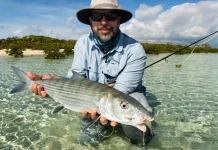
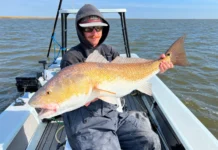
Protecting bonefish, tarpon, and permit takes more than good fishing regulations. It requires understanding where these fish live, where they travel to spawn, and how their habitats connect across entire regions. Aaron Adams, Chief Science Officer at Bonefish Tarpon Trust, joins us to explain what researchers are learning through tagging, tracking, and conservation work in Belize and beyond.
We’ll look at how bonefish can travel up to 70 miles to reach spawning locations, why some of those migrations cross international borders, and what that means for fisheries in Belize and Florida. We’ll also get into permit spawning areas, juvenile tarpon habitat, climate change, and the practical steps anglers can take to help the fisheries they enjoy.
Aaron began researching for the organization in 2003 and eventually became its Chief Science Officer. He explains that research helps identify the biggest threats, set priorities, and guide policy decisions. Those threats vary by location and include fishing pressure, boating activity, coastal development, and harvest.
[00:05:49] Bonefish Tarpon Trust works in areas with established flats fisheries, including Florida, the Bahamas, Belize, and Mexico’s Yucatan Peninsula. Belize is especially important because it has a long history of flats fishing and plays a role in the movement of bonefish across the region.
Aaron explains that bonefish populations are connected. Some fish that spawn in Belize contribute to fisheries elsewhere, including the Florida Keys. Understanding those connections helps researchers see why protecting one location can affect areas far beyond its coastline.
[00:07:54] Researchers use dart tags and acoustic transmitters to follow bonefish movements. Dart tags let anglers report where they caught a fish, while acoustic tags send signals that underwater receivers can detect.
Most adult bonefish have relatively small home ranges, often around a square mile. During spawning season, however, they can travel up to 70 miles one way to reach pre-spawning aggregation sites. These migrations usually happen between October and March or April, around full and new moons.
At some locations, thousands of bonefish gather before spawning. At dusk, they move offshore, descend to depths of about 400 to 450 feet, then return toward the surface to release their eggs and sperm into the water.
[00:12:23] After fertilization, bonefish larvae spend approximately 40 to 70 days drifting in the open ocean. Oceanographic and genetic research has shown that some larvae spawned in Belize and Mexico can reach the Florida Keys.
This connection makes protecting bonefish a regional effort. Aaron explains that fish from areas near Xcalak, Mexico, have been documented migrating into Belize to spawn. Belize protects bonefish, tarpon, and permit through catch-and-release rules, while Mexico does not have the same protections everywhere.
Working with local fishing communities and scientists in both countries is important for understanding these movements and improving conservation across borders.
[00:16:58] Research in the Florida Keys found that about 70 percent of the lower Keys permit on the flats traveled to Western Dry Rocks to spawn. That made the location especially important to the fishery.
Researchers also found that more than 30 percent of the permits that were hooked at the spawning site were eaten by sharks before anglers could land them. This is called depredation. The problem was much more serious at the spawning location than on the flats, so Bonefish Tarpon Trust worked with anglers and state agencies to establish a seasonal no-fishing area at Western Dry Rocks.
[00:19:18] Permit generally spawns from April through July in the Florida Keys. In Belize, their spawning season is longer, running from approximately March through October or November.
Research in the Florida Keys also found that permits tend to spawn within their own region. Lower Keys spawning locations tend to be within their own region, while fish from the middle and upper Keys tend to remain closer to their respective areas.
Researchers are now studying permit movement in Belize and Mexico to see whether similar patterns exist there. The goal is to identify important home ranges and spawning locations and understand the threats in those areas, and use the information to guide future protection.
[00:24:22] Aaron explains that tarpon in Central America appear to have smaller home ranges than some of the fish tracked in the United States and the Gulf of Mexico. Research has documented tarpon moving through rivers such as the Belize and Sibun, but not necessarily making the long-distance migrations seen farther north.
Another major priority is identifying habitat for juvenile tarpon. Young tarpon depend on shallow, muddy wetlands and marsh areas. These places may not look attractive to anglers, but they provide important habitat for juvenile fish.
Researchers use satellite imagery and GIS mapping to identify potential habitats. They then work with local fishing communities and send teams into the field to confirm the presence of juvenile tarpon. Aaron points out that when wetlands are filled in and developed, the habitat is often lost.
[00:30:18] Climate change is already affecting where and when some saltwater species live. Tarpon are being reported farther north, including around Cape Cod, and they are arriving along the East Coast earlier than they used to. Snook are also appearing farther north, and Aaron expects that bonefish and permit may experience some of these changes as well.
Warmer water is creating additional challenges for research and fish handling. Aaron explains that Bonefish Tarpon Trust avoids tagging bonefish in the Bahamas during July, August, and September because high water temperatures can make the process too stressful for the fish. He notes that this was not a concern in the same way 20 years ago.
[00:32:15] Aaron explains that the Belize research is still developing and that the current data are preliminary. One important priority is protecting the pre-spawning location already identified in Belize and documenting the movements of fish that cross into Mexico.
Belize has about 30 percent of its marine areas protected in some form. Researchers are working to understand whether those protected areas line up with the movements and needs of bonefish and permit. They are also developing habitat maps to help identify other important locations that may need protection.
[00:35:33 The research area stretches from Punta Gorda in southern Belize to San Pedro in the north, across the border into Mexico, and up through the Yucatán Peninsula. Bonefish and permit are important research priorities in some areas, while tarpon become a larger focus farther around the peninsula.
[00:38:09] Tarpon movements can extend from the Mid-Atlantic down the Atlantic Coast, through the Gulf of Mexico, and into the Caribbean. Research has identified different regional groups, including fish that move up the East Coast, fish that travel along the Gulf Coast, and another group that moves along the western Gulf.
These regional patterns matter for conservation. if a population declines because of fishing pressure or habitat loss, fish from another region may not simply move in and replace it. Understanding where tarpon travel and where they return to spawn helps researchers identify which habitats and fisheries need attention.
[00:42:28] Aaron grew up around the Chesapeake Bay and started fishing when he was about four or five years old, seeing the bay decline and wanting to understand why, which shaped his interest in science and conservation. He started fly fishing while working on his master’s degree and later spent time fishing the flats in the Virgin Islands.
For Aaron, fishing and science inform each other. Learning about fish biology changes how he thinks about the fish he pursues, while time on the water gives him a better perspective on his research. He especially enjoys seeing tailing bonefish in calm water at dawn.
[00:47:43] Aaron’s advice for anglers preparing for their first bonefish trip is simple: practice casting before worrying too much about gear. He recommends putting a fly rod in the car and spending 20 minutes a day casting in a field during the two months before a trip.
The conversation turns to the history of the Homosassa tarpon fishery and the famous anglers who traveled there in the 1970s to pursue large tarpon. Dave brings up Lords of the Fly by Monte Burke while discussing that period and the decline of the fishery. He also mentions that Monte Burke was a guest on the podcast.
Aaron then discusses a possible connection between the decline in blue crab abundance and reduced freshwater flow into rivers. Development and aquifer water withdrawals may have contributed to those changes.
Tarpon take time to replace. Aaron explains that they generally mature at around seven to ten years old and can live up to 80 years. Although some anglers are reporting better numbers, overall tarpon abundance is still lower than it was 30 years ago. Current adult populations also reflect what happened to juvenile habitat and fish populations many years earlier.
[00:54:55] Aaron’s message to anglers is to get involved and make their voices heard. Research can identify problems and provide information, but conservation also depends on managers and policymakers using that information to protect fish and habitat.
He encourages anglers to advocate for healthy fisheries, ask questions about local conservation issues, and help younger generations understand what fisheries were like in the past. Protecting bonefish is not only about leaving better fisheries and habitats for the people who come after us.
Episode Transcript
00:00:00 Dave: Bonefish can travel seventy miles to spawn. Breathe air from the surface, dive more than four hundred feet into the ocean to release eggs, and then return to the exact same flat where they started. Today, we’re heading into Belize to find out what scientists are learning about these remarkable migrations. Why protecting one stretch of coastline can affect fisheries hundreds of miles away, and what this means for the future of saltwater fly fishing. This is the Wet Fly Swing podcast, where I show you the best places to travel to for fly fishing, how to find the best resources and tools to prepare for that big trip, and what you can do to give back to the fish species we all love. Our guest today is Aaron Adams, chief science officer at Bonefish Tarpon Trust. Aaron has spent more than two decades helping turn research on bonefish, tarpon, and permit into real conservation work. Today, we’re going to hear how scientists track bonefish across the flats using acoustic transmitters and a tagging program. We’re also going to hear how scientists have discovered that more than thirty percent of hooked permit at one Florida key spawning location were being eaten by sharks. We’re also going to hear about why muddy, mosquito-filled wetlands that juvenile tarpon depend on are disappearing, and what Erin learned from a casting lesson with Lefty Kreh, and why he recommends practicing twenty minutes a day before a saltwater trip. You can learn more and find out all the great projects and work they’re doing at Bonefish Tarpon Trust dot org. All right, here he is, Aaron Adams. How you doing, Aaron? 00:01:28 Aaron: I’m doing great. How about yourself? 00:01:30 Dave: I’m doing good. I’m doing good. I’m excited to have this conversation today because we’re gonna talk about some important topics. Uh, you’re with Bonefish Tarpon Trust. We’ve heard a lot about the good stuff you guys do out there. Um, with the focus on some of the saltwater species, we’re gonna dive into a specific area, probably focusing on Belize a lot today because we are, hopefully, I’m sure you’ve done some fishing down there, but we’re hopefully heading down there as well this next year. And we’ve heard some, you know, there’s some challenges all over the world, obviously, for fish, but you guys have some specific things you’re doing down there to help things out. But, um, maybe take us back before we get into that. How your connection to Bonefish Tarpon Trust started and a little background there. 00:02:10 Aaron: Sure. Um, so Bonefish Tarpon Trust started in nineteen ninety seven. It was started by a group of anglers and fishing guides in the Florida Keys who were concerned about declines in the bonefish and tarpon fisheries. So they put some money together and started, uh, at that point, bonefish Tarpon Unlimited, uh, with the idea of improving knowledge about bonefish and tarpon and then brought in permit as well to improve management, uh, understand what was going on with the fish when they started. Uh, they pretty quickly realized that there hadn’t been much research done on those three species. And so we very quickly became a science based conservation organization. I started doing some research for BHT in two thousand and three and then became director in or part time director in oh six. It’s full time in oh nine in I think twenty fifteen. We brought in our current CEO and president. Um, and so I switched to full time chief Science officer at that point. So I’ve been with Bonefish Tarpon Trust for about twenty years. It’s been an interesting and fantastic journey kind of building up. As I said, when we first started, there really wasn’t any information or scientific information on the biology and management of of these species. And now we’ve got a lot of a lot of information that we didn’t have before. Um, and that’s affected management throughout the entire region. So it’s been rewarding. But at the same time, it’s, uh, I guess you could call it. Well, there’s no shortage of challenges. 00:03:55 Dave: Right? Yeah. It’s not getting. The more you probably learn, the more you realize that there’s probably more challenges out there that pop up. 00:04:01 Aaron: Yeah, we have a pretty strong or a very strong, uh, prioritization structure. Um, so on a regular basis, we’ll assess the status of knowledge on our species, the status of management, and then the, the conservation threats. And we’ll use those three to criteria to prioritize the science that we should be focusing on, on conducting. And then the policy, uh, activities that we need to be doing as well. And so we do the science to essentially tell us what our policy objectives should be, and then move forward with those policy objectives to address what we think are the biggest threats. And so to some extent, those threats differ depending on location. Um, some places it might be what we call over capacity. As far as, say, the number of, uh, fishing, the amount of fishing activity or boating pressure. In other places it might be coastal development. In other places it might be overfishing. You know, in areas where a harvest is allowed. So yeah, we have to be pretty nimble depending on where and when we’re working. Um, another super important component kind of central to our approach is we take a very collaborative approach with the fishing communities. So we don’t, for example, go into a particular location and dictate what we think should happen. We work with the local fishing communities to identify what their concerns are, what the top threats are, those types of things. And then we use that to help prioritize and formulate moving forward. So yeah, it’s pretty it’s a pretty diverse portfolio of what we’re working on for sure. 00:05:49 Dave: Right, Right. Yeah, it’s a lot. I mean, even with, uh, you know, the three species, these are the three species we hear a lot about. People love fly fishing. There’s other species out there, though, too. But I love the, you know, the science to the policy, to the threats, and then probably tweaking things depending on how that goes. Where how do you decide you know, where you’re going next is, I think Belize is a place where I know, um, you’ve done some research down there that’s maybe you’ve done in other areas, but you’ve applied it to Belize. Talk about that a little bit. How does Belize fit into the broader picture of BHT? 00:06:22 Aaron: Well, we work in areas that primarily work in areas that have significant flats, fisheries. So Florida, for example, Florida Keys, where we started Bahamas has a strong flats fishery, Belize, Mexico, the Yucatan Peninsula area. We’ve done some work in Cuba in the past, you know, with tarpon, their range goes from the keys up to the Mid-Atlantic and then throughout the Gulf of Mexico. So we work in places where we have flats, fisheries, and then also have the capacity to do sufficient work. So there are some places that we just don’t have the capacity, but that have some flat fisheries or lower quays, flats, fisheries, your lower level flats, fisheries, I should say. So. Belize has long had a significant flats fishery going back many decades back to the fifties, if I remember correctly. And so that was a natural place to go. Um, and work on the flats fishery. Uh, also some challenges to the fishery as far as conservation threats. And then also what we might call regional connectivity. Yes. Belize has its own, say, bonefish populations, but because of bonefish biology, some of the bonefish that respawn down in Belize end up in the Florida Keys. Um, So there’s multiple levels of or multiple factors I should say, that dictate where we work and when. 00:07:54 Dave: Amazing. And maybe you could speak to a little bit on the just high level on the bonefish life history and how that applies to some of the work that you’re doing now down there in Belize. Maybe you could describe that a little bit. 00:08:06 Aaron: Yeah for sure. So this is a perfect example of we had no idea when we started that this is how bonefish work. But what we found using what we call dart tagging. Dart tags, or people call them spaghetti tags that are inserted into the mussels under the dorsal fin. It’s got a like a barb on the end, and then the tag or what looks like a piece of spaghetti has an identification number on it. So if somebody catches the fish, they they can give us a call. We have our phone number on the tags as well and tell us when and where they caught it. We use those tags. We use what we call acoustic tags, which we surgically implant in the fish. They send out a supersonic ping every 30s or so, which is detected by underwater receiving devices that we plant at strategic locations. So if a fish, a tag fish, swims and swims near one of those acoustic receivers, that receiver picks up that ping, which has a unique identifier code so we can track the fish that way. And using those methods, and then also working with the fishing guides, we’ve figured out that adult bonefish have a pretty small home range. So let’s say a square mile or so on average. So if you go to a particular flat and fish for for bonefish, you go back to that flat in a couple of weeks. Overall, it’s probably the same bonefish that you’re fishing to. But then for spawning season, which runs from October to March or April, um, around full or new moons. For the most part, they’ll migrate to what we call pre spawning, aggregation or PSA location. And we’ve tracked those migrations of, you know, seventy miles one way. And so it’s pretty amazing. They can go from their home flat, migrate to this, this PSA location, which is generally in a protected area. It’s not on a flat, it tends to be deeper. And then, um, there can be five, ten thousand bonefish in these schools and then they’ll hang out for usually a day, maybe a few. And then at dusk they’ll start porpoising at the surface. And uh, that’s the Gulf air. And then they’ll head offshore at dusk and they’ll descend down to four hundred, four hundred and fifty feet and then rapidly ascend towards the surface. And the idea is that when they’re gulping air as they descend, that gets compressed as they’re descending. The eggs become what we call hydrated. They take on water and so they get larger and more slippery. And then as they ascend, they they eject the eggs and sperm out into the open water column. Um, that’s where fertilization occurs. Uh, and that expanding air, we think, helps with that, expelling those eggs. Then they come back up. Some of them will spawn a couple nights in a row. Some of them just once. And then after all that, they swim back, however long eighty miles. Go back to that exact same spot. 00:11:16 Dave: Oh they do. 00:11:17 Aaron: Yeah. And so it’s I mean, it’s amazing, right? People go into a shopping center and they come out and they can’t find their car. 00:11:23 Dave: Right. How do they is it is this the same thing? A similar thing, you know, with salmon, how they go all the way out to the ocean and come back? Is it a similar type of homing physiology or however they do it? 00:11:32 Aaron: Uh, we don’t know. We haven’t really looked into that. Which brings up and I’ll get back to the bonefish story in a second, but brings up an important aside is, as a conservation organization, our first goal is to get what we call actionable knowledge, and that essentially is information that is applicable to management. And there’s going to be more research that might be needed in the future. But for the present, priority management and conservation threat concerns. Once we get enough information to address those, we move on to other priorities. So I can see at some point in the in the future, going back and figuring out what is the homing mechanism, but it doesn’t have a management application for us. So yeah, that’s kind of to be determined. Uh good question. 00:12:23 Dave: Not critical right now. The more critical thing is, well, maybe you could describe that. What is going on in Belize. So we kind of know that life history. How does this play into some of the work you’re doing? Is this part of the dart tagging and acoustic tagging where you’re just determining where where they are. That’s the first big part where they’re going. 00:12:40 Aaron: Yeah. So let me finish the life history. So when the when the because that’s the part of the connectivity. Okay. So we know that there’s connectivity. Um, and I’ll talk about beliefs specifically, but let’s say we take the Bahamas. Abaco Island. We’ve tracked fish going from the extreme north end of Abaco to the extreme south end to spawn in the back and the Florida Keys, uh, similar types of movements, you know, from, say, the middle keys to the lower keys for spawning. So they’ll travel a long ways within their region. Once those eggs are fertilized out in the ocean and the larvae that hatch out of them in about twenty four hours, those larvae are floating around in the open ocean for between forty and seventy days. And so the research we’ve done with oceanography and genetics shows that some of the larvae that are spawned, say, in Belize, in Mexico, end up in the Florida Keys. And so that gives us that regional connectivity. and there’s a lot of other similar connectivities between different locations. So then that makes working in Belize not only important for the fishery in Belize, but also for the fishery in the Florida Keys as well as, you know, Western Cuba. So within Belize, our director of science there, Adele Perez, has been doing some work on on bonefish, especially for a number of years. And with tagging, dart tagging and acoustic tracking, he documented home ranges and also documented a PSA or pre spawning location. But the really interesting thing is that a large number of fish from Mexico up near Xcalak migrate down to Belize to spawn. And so that’s a management concern because in Belize, bonefish, tarpon and permit are protected as catch and release only in Mexico there’s no such protections. So in some areas where there’s recreational bonefish, fisheries, flats, fisheries, but also some net fishing for harvest. And a lot of those areas, there’s become kind of a local gentlemen’s agreement to reduce the netting of bonefish, for example. Um other areas not so much. So yeah, working on that international management collaboration, that’s a big priority for us for sure. 00:14:58 Dave: Is that something that you’re doing in your current position or how do you, I’d imagine, between countries and all sorts of politics that would be a challenge. What does that look like for you guys? 00:15:09 Aaron: Um, yeah. So the great thing is that we have an awesome science team. Um, so in for in Mexico, doctor Ariel Perez is our director of science in that area. You know, born and raised in Belize, resident Belize, um, family, um, in northern Belize. And so it’s essential to us that, as I said earlier, we don’t go in and tell people what to do. We work with local communities, but then also our scientists are also local to those areas. Because of that, you know, the local knowledge and connections are super important. So audio has been yeah, working with the fishing community who help us in a lot of ways, you know, figure out some of the areas to focus on for the tagging, for example, to maximize how many fish we can tag areas to put those acoustic receivers where they think fish might be passing through, or channels where they might be hanging out, um, to kind of maximize our efficiency on the movements. So at present, for about the last year and a half, we have been tagging permit and bonefish in a northern Belize in Mexico, ambergris key all the way up through Xcalak to kind of track their movements, home ranges where they might be going to spawn. Um, and it’s been really interesting to see how things are starting to kind of pan out. And again, it’s only been a year and a half. We intend to run this project for five years or more. The methods we’re using in Belize, in Mexico follow the methods of that that were used in the Florida Keys for permit especially, and then for bonefish. The work follows what we did in the Bahamas. So yeah, see where to begin on that, right. 00:16:58 Dave: It’s a lot. 00:17:00 Aaron: Yeah, it’s a lot. So in the Florida Keys, um, the initial work found that, um, about seventy percent of the lower keys permit on the flats went to a place called Western dry rocks to spawn. Um, which means that it’s a really important spawning location. Then subsequent research found that only back up. So our flats fishery is primarily a catch and release. And in Florida, there’s also an offshore fishery on reefs and wrecks that is somewhat catch and release, but also a lot of harvest. And so we worked with the Florida Fish and Wildlife Conservation Commission to change some regulations for permit. So the Florida Keys is called a special permit zone. During spawning season. It’s catch and release only. So that’s summer essentially. And so when we found the Western dry rock was important spawning location. Um, then we also worked with colleagues to go out there and look at, okay, what’s going on out there. And we found that it varied a lot, but well over thirty percent of permit that were fished for during spawning season were eaten by sharks before they could be landed. Yeah. And that’s not sustainable now. 00:18:23 Dave: Thirty percent were eaten by sharks just in general or while being fished on. 00:18:27 Aaron: While being fished on. 00:18:28 Dave: Oh, right. So you got a permit on and a shark come. Thirty percent of those are getting eaten. 00:18:32 Aaron: Yeah. And the scientific term for that is called depredation. And that’s different than, you know, catch and release. You know, post release after release depredation. So if you catch a fish and let it go and then it gets eaten, um, that’s catch and release mortality. If you have a fish on and it’s eaten while still on the hook, that’s called depredation. And on the flats, the depredation on the flats and post-release mortality on the flats was, was pretty much zero. But at that spawning location, um it was super high. And so then we worked with the fishing community and the flats community and the state to make that western dry rocks a no no fishing area for the spawning season. Um, since so many fish were getting eaten. 00:19:13 Dave: And that’s for permit, which is the spawning season. Is the life history similar to bonefish with permit. 00:19:18 Aaron: Uh, for permit, it’s typically April through July in the Florida keys for spawning in, in, um, Belize, it’s longer. It’s like, uh, March through October, November, um, a longer spawning season. Um, but we also found in the Florida Keys is that in general, but for the most part, I should say lower keys permit went to lower keys barring locations, middle keys permit, middle keys, boring locations, upper keys, permit upper keys, spawning location. There wasn’t a lot of um, movement from, say, the upper keys to the lower keys to spawn, which is different than bonefish. Um, and so we’re examining the Belize and Mexico populations to see if, if those patterns persist there as well for permit or if there’s more regional movement, you know, say from Belize to Mexico and Mexico to Belize. Uh, so we’ve been acoustically tagging permit now, as I said, for a year and a half. And so far we’re not seeing Large regional movements in the south end or in Amagasaki, I should say. We’re seeing some movements, but in a kind of regional home range type of thing. During spawning season, um, they do move away from the home range area that we were tracking them. Um, so our next step is then to identify some potential spawning locations and do some tagging there and putting some of the receiver stations there as well, and see if we can make the connections between the home ranges and the spawning sites and see if it’s the same pattern as the Florida Keys, where they kind of have a region that they stick in, um, whether it’s for home range or spawning. And so then the next step, you know, obviously the science is the first part, figure out their movement patterns. The next step then is to identify the critically important areas to make sure that there are not any conservation threats to those spots. So, for example, are there any planned developments in any of these home range areas for the permit that we’ve been documenting? If we identify or when we identify spawning locations permit go and spawn out on the reef. Are there any threats to those spawning locations, whatever they may be? Is there fishing pressure or other types of, of, of threats out there? And then once we get that information, we can prioritize our policy agenda down there. So yeah, it’s a lot of work. 00:21:56 Dave: Yeah it is, it is. It’s great though because you, you’re, you’re getting what the data you need up front to know kind of where they’re going, where the critical areas are for spawning. And then you’re taking that to the next step to protect those areas if you can or start doing the work on the policy side. And then if you can get that done in a nutshell, I mean, obviously there’s a lot to it, but that’s pretty much what it is. And then you, you protect the areas and then move on to your next, um, you know, priority is that kind of how it’s looking? 00:22:23 Aaron: Correct? It’s a, it’s an ongoing process, you know, as you, as you check off one, then you have other priorities for sure. If we had ten times as much money, we could do it ten times faster. But yeah, you take the capacity you have and you work with it. The nice thing is that we have a good working relationship with Coastal Zone Management Authority in Belize, who are just finishing up now a reevaluation and a slight expansion of their marine protected areas. And they used, um, a lot of our data, um, to help reprioritize and expand some of those protected areas, which is great. And they kind of redo that process every five years. And so the information we’re getting now, um, you know, we have a, you know, a few year window before they start that process again, which sounds like a lot of time, but it’s not, um, to get that type of detailed data. So yeah, it all goes from, you know, level one, working with the fishing community to figure out the priorities and then all the way up to getting those those policies applied. 00:23:30 Dave: If Belize is on your bucket list for a trip, take a look at Blue Bonefish Lodge. You’ll be fishing more than four hundred square miles of flats right along the Belize Barrier Reef. Clear water and endless opportunity. They offer all inclusive packages, whether you’re focused on fishing every day or planning a trip with the family. You can learn more right now and start planning your trip at Blue Bonefish, Belize dot com. That’s Blue Bonefish, Belize dot com. Check them out right now. So Belize, it sounds like it’s still fairly, fairly early a year and a half. You’ve got some data coming, but you got some work still to do. And you talked about the, you know, permit, you know, bonefish are the is the tarpon and or other species also benefiting from this work, or is that something you’re thinking about that you know, another priority that you just haven’t got to yet? 00:24:22 Aaron: Yeah, it’s and again, the priorities move around, you know, depending on the various threats. We have done some work on Tarpon in the past. Uh, we did some, uh, satellite tagging with colleagues down there. Wow. Fifteen, twenty years ago at this point. And the satellite tagging showed for the most part that the tarpon didn’t leave the region where they were tagged. They went, say, up and down some of the rivers, um, like the Belize River, Sibun River, but didn’t undertake any long distance migrations in the time that they were tagged, which was a few months, typically for the satellite tags. So it looks like and that’s similar to some research in Costa Rica, similar to some research in Nicaragua. Um, it does not look like the Central American fish undergo long distance migrations like they do in the US and Gulf of Mexico. So, for example, we’ve tagged tarpon in in Key West, and they’ve migrated up to Chesapeake Bay or from Key West up to, um, you know, Louisiana, Mississippi, Delta area. It looks like based on the available information that they’re much smaller kind of home range or migratory areas in Central America. So we’ll, we’ll be circling back to that in the next handful of years. I imagine working with some other collaborators, the bigger threats, biggest threats for for Tarpon as well as Snook, which use similar habitats to, to smaller tarpon is um, is harvest. There’s some netting that still occurs. People stretch nets across river mouths. Um, and they’ll get a lot of tarpon and snook that way. So that’s a big concern for sure. Another one that we’re working on with Tarpon starting to ramp up now as identification of juvenile tarpon habitats, juvenile tarpon only back up tarpon, they go offshore to spawn similar to bonefish. Same kind of dive thing uh or behavior. Their larvae are in the ocean for about a month. And when they come in shore, um, they go up into, uh, stinky, marshy wetland areas. Um, so if it’s a, if it’s a place where you stand on the bottom, you sink up to your waist in mud and there’s a lot of mosquitoes and it smells like sulfur. That’s perfect for juvenile tarpon. Yeah. 00:26:47 Dave: Yeah. 00:26:47 Aaron: But those are also areas that you tend to get filled in and developed. And so yeah, that’s a big priority for us is identifying those locations, mapping them, and then making sure that, you know, we get as many of those areas as we can protected. Yeah. 00:27:04 Dave: How do you do that when you have those areas that are tarpon habitats? How would a, how would you go and just develop that? Is there a whole process there where you can utilize, I don’t know, mitigation? Or how does that work in a process if the habitat was going to be destroyed? 00:27:19 Aaron: Well, the whole process, let me start from the science end, is we’ll use mapping satellite imagery with GIS to identify likely juvenile tarpon habitats based on the characteristics we know that they require. Then we’ll work with the fishing community to see if anybody’s you’ve been in those areas or other areas we didn’t identify that have juvenile tarpon in it. Then the third level is sending teams back into those areas with nets and etc. to see if there really are juvenile tarpon there. And then we look at all those areas and figure out, again, prioritize which ones are under current threat or most likely to be threatened with land use. Planning on what looks like for development. I mean, if the if the area gets like wetland gets filled in, there’s really no mitigation per se. It’s just the habitats gone. 00:28:13 Dave: All right. So somebody could come in and just literally buy a a wetland juvenile tarpon rearing area and just build a hotel on top of it. 00:28:21 Aaron: Yeah. So got to give you an example. Florida. You’re from pre-development. Estimates of pre-development, mangrove cover. You know, Florida’s lost like fifty percent of mangroves, forty seven percent of their wetlands to previous development. It’s much more difficult to do that now, but it still happens to some extent. So if you look at the importance of juvenile habitats for tarpon and snook, use the same habitats, and the fact that the number and quality juvenile habitats is a big factor on determining the overall fish population size. You could argue that because we’ve lost fifty percent of those juvenile habitats in Florida, we’re never going to have the adult populations that we did one hundred years ago because there’s not as many juvenile habitats. So yeah, there’s a there’s kind of a critical portion of juvenile habitats that you can lose, you know, before you start to have population impacts. Um, and we don’t know what that number is, unfortunately, but we also don’t want to find out. 00:29:27 Dave: No. Right. 00:29:28 Aaron: So we, you know, we prioritize and try and protect as much as we can for people in the, in the salmon fisheries world, you know, they’re very familiar with, with this, the loss of spawning habitats, salmon use a different life life history strategy. Uh, but they lose the spawning, which are also juvenile habitats. Um, they can, they can pretty well see the impacts on the overall adult population size, especially once they cross that kind of critical threshold. 00:29:57 Dave: Yeah. That’s it. Yeah. Dams, the freshwater. Yeah. Dams are placed and then that just blocks them from their habitat. Right. I mean it’s it’s that simple. 00:30:05 Aaron: Yeah. That and also, um, you know, deforestation causing large sediment plumes to come in and wipe out the spawning areas, the reds and stuff. Yeah. So yeah, it’s very similar, different location, but yeah, similar. 00:30:18 Dave: Similar deal is, you know, something we hear a lot about and it’s a, it’s a big, you know, big issue. But the climate change, you know, with the, the cold water habitats, you hear that a lot about changes in temperatures and affecting brook trout and other is, is that also are you seeing that as another factor in the ocean? 00:30:34 Aaron: Yes. Um, in a number of different ways. One is with geographic distribution. So we’re already seeing with tarpon, for example, that every summer we get reports of people catching tarpon on the south side of south side of Cape Cod, Massachusetts. And we know that there’s been reports of tarpon, you know, going farther north than you might expect for quite some time. And but it’s becoming much more common. The timing of people been fishing for tarpon, say off North Carolina, Virginia in the summers, late summers for quite some time. But their arrival time is much sooner than it used to be. You know, this year, for example, there are some tarpon up there in May, late May. So yeah, we’re seeing those kind of changes. I anticipate that. Or with Snook we’re seeing their population farther and farther and farther north. Um I anticipate we might be seeing some of that with bonefish in the not too distant future. Um perhaps with permit as well. And then on the other side of things um there are some in the summers, late summers, especially the flats can get um just dangerously hot. Um so for example, if we’re out, let’s say we’re in the Bahamas tagging, uh, doing, want to do some tagging of bonefish. Um, we don’t work in July, August and September because it’s so hot. Water is so hot. The process is too stressful for the fish. Um, you know, twenty years ago, that wasn’t a concern, but it has become a concern now. Um, so yeah, I anticipate we’ll be seeing more and more of that, um, those types of changes for sure. 00:32:15 Dave: Yeah, that makes sense. We talked a little bit about, you know, going back to Belize on the kind of the life history that where they’re going. What is the biggest impact there? What’s the biggest thing that you’re thinking? Or maybe it’s a little bit early, but is it the both the spawning? Is it the spawning habitat? Is that the biggest challenge or what do you guys think you’re going to be focusing on? 00:32:34 Aaron: Yeah. Well, it’s important to say that the data that we’re talking about are preliminary. You know, we still have a few years more to go. But if the data say for permit follow what we found in the Florida Keys, that kind of, um, I guess we’ll call them little sub groups. You know, little sub regional groups of permit. Then that’s important for management. Belize has about thirty percent of their marine areas in some type of protected status. And so if your permit are using kind of little subregions, making sure those protected areas are, are appropriate to those subregions and permit movements would be important. And so as we as we get more data, hopefully we can inform some of the spatial dimensions of those protected areas. Spawning protections, of course, are a big one as well. Coming down the road, we would hope on the bonefish side, getting the spawning areas protected is a top priority. For example, in the Bahamas we’ve identified eleven pre spawning areas and we have let’s see one, two, three or four of those protected. But we want to get the other seven or eight protected as well in the Florida Keys similar type of thing as we identify them. If there’s no threats to them, then we just keep an eye on them. But if there are threats to them, then we’ll work on protections. And so in Belize, we’ve got the one free spawning area identified and documented, the movements, you know, across national boundaries. So getting that fully protected is a high priority. And then moving on to identifying other pre spawning areas will be a big one as well. We need to do some more work on that Belize-mexico border for sure. If people aren’t familiar with the region, they should pull up Google Earth and take a look. We’re we’re right now working mostly from the south end of Ambergris Key up to Lac. Um, but also have some in the past where we had this past work up in Ascension Bay and Espiritu Santo Bay and plan some more work up there. Um, because our guess is that there’s some population connectivity at that scale. Yeah. So again, we’re kind of building the foundation to what we intend to make more regional in that area with some pretty specific needs on management. And another aspect building on all of that is we’re working on creating your maps, habitat maps of that region. So we can kind of plug in if we can see how the fish movements are connected to habitat arrangements, then that’ll help us prioritize a locations to protect as well. So yeah, it gets pretty complex. 00:35:33 Dave: Yeah. It’s complex. And as you zoom out on the map, you see the area. I mean, maybe describe that for Bonefish Tarpon Trust. What is the area for the whole geographic area that you’re working in mainly? 00:35:43 Aaron: Okay. So while we work throughout Belize, from Punta Gorda in the south, all the way up to San Pedro in the north, um, and up into Chesapeake Bay as well. And then Throughout the Yucatan Peninsula of Mexico. Um, the area of focus for this. What we’re talking about currently with permit and bonefish tagging is from San Pedro, which is south end of Ambergris Caye in Belize through Xcalak, which is just across the border in Mexico, but all the way up into Ascension Bay and Espiritu Santo Bay, um, which is a bit south of Cancun and is in a protected area. Um, which is great because if the fish are in that area, they’re in good, good shape. Um, we’ve also done, and we’ll be doing more work all the way around the peninsula from a whole bunch to celestun all the way around to Campeche with the target species, uh, changing or shifting from bonefish and permit, uh, more towards tarpon as we go, you know, around the northern tip and around the west side, um, important juvenile tarpon areas in Holbox, Celestun and Campeche. Yeah. Super important for juvenile tarpon for the region. So we’ll be doing some mapping throughout that area to kind of figure, again, prioritize locations for protection. But it’s interesting just kind of taking a step back, talking about protected areas and using Ascension Bay and Espirito Santo Bay as examples there within the Sian Ka’an Biosphere Reserve. So harvest of bonefish, tarpon and permit is not allowed in there as a catch and release. Being a protected area. So one of our concerns there is that when the fish leave that those bays to spawn, where do they go? Do they go to areas where there are fisheries where they’re going to get harvested, you know? And if so, you know, how would that impact the fishery within those bays? Um, so that’ll be kind of a next version or expansion of the current work we’re doing farther south in the peninsula. 00:37:48 Dave: Gotcha. Wow. So this goes all the way around then. does it go from, you know, you’ve got the, I guess the, the Gulf of America, right. You got you got that in there is it is all the work, all that area then out to Cuba all the way to like, where’s the extent like when you look at the full extent. 00:38:05 Aaron: The extent is where the fish go. So for tarpon. 00:38:08 Dave: Yeah. Right. You track the fish, right? 00:38:09 Aaron: You know, it’s from, let’s say the Mid-Atlantic all the way down along the Atlantic coast and then throughout the Gulf Coast all the way into Mexico, and then the entire Caribbean, of course, for all three species. And again, you know, just by financial and personnel capacity, we can’t be in all those places. So we try and prioritize areas that have established fisheries. So yeah, there’s a lot of connectivity. But then there’s also a lot of kind of, um, regionalization, let’s call it. Um, so I already mentioned about the, it looks like in Central America, the tarpon are kind of a little sub regional populations, but that’s, you know, based on pretty small data sets. Um, in contrast, it’s kind of moving away from Belize for a second. We’ve done a lot of tracking of tarpon along the, in the Gulf and also on the, on the Atlantic coast of North America. And there are essentially three subgroups of tarpon. So you get a lot of tarpon that are in the Florida Keys in, in spring. Uh, they’re, they’re getting together and they’ll do some spawning, uh, runs off of that area. And then you’ll have one sub population subgroup kind of migrate up the east coast, perhaps as far as Mid-Atlantic. Uh, you have another subgroup migrate up the Gulf Coast as far as the Mississippi Delta, and then they’ll come back, you know, in the next spring. Um, they’ll kind of have that mixing zone in the keys again. But for the most part, there’s some vagrants, but for the most part, they’ll go off those two coastlines. And then there’s a third subgroup or subpopulation on the western Gulf that migrates north and south. They’ll mix with the eastern Gulf subpopulation around the Mississippi Delta, but then they go back. When they migrate south, they go back on the west side of the Gulf. So there’s some of that as well that we’re trying to figure out. And so the interesting thing there is, let’s say that Belize, um, Mexico, Belize and the Yucatan Peninsula of Mexico, maybe Honduras, they share a subpopulation of tarpon. If that population subpopulation is, you know, declines due to fishing or habitat loss, it’s not like they’re going to have, you know, fish swim over from a different area to repopulate. They’ve basically got to, you know, keep spawning and repopulate their own population just like you have with salmon, right? You have some salmon who are born in one river and they’ll go up another, but most don’t. So if you lose that sub, that population of tarpon with a particular river or salmon with particular river. You’ve got a big struggle on getting them back and it’s going to take a long time. 00:40:54 Dave: It’ll take a long time. Yeah, they’ll come back, but just from natural string. But it’ll take it could take, you know, tens, hundreds of years. 00:41:00 Aaron: Yes, yes. Yeah. You’re looking at the decadal time scale for sure. Yeah. So those are some of the complexities that we have to kind of figure out. And that’s that’s just a adult movements. And then we’ve already talked about when they spawn off shore, the larvae get transported by the currents, which isn’t something you have to worry about with salmon because that’s another level of complexity. Yeah, it’s enough to make your head explode. If you think about it, it’s too hard, right? 00:41:25 Dave: Yeah, it’s definitely the more you get into it. Is that how you feel you’ve been doing this. You’ve been with it for twenty years. Do you feel like the more you get into this, the more your your head’s starting to explode on all the information and knowledge and. 00:41:37 Aaron: Yeah, I mean, that’s why we kind of use our. 00:41:38 Aaron: You know, we prioritize, we go through every year, you know, we reprioritize what are the needs because things are always changing and you have a foundation you’re building on, and some gaps might not show themselves right away. Those types of things. But yeah, I mean, I’ve been asked, okay, what’s surprised you the most? You know, about about the work. You know, finding what? What have you found that surprised you the most? And there isn’t one thing because in part because when you if if you know, if you think you know the answer, then it’s not really called research, right? So you kind of have to go in with somewhat of an objective open mind to it. And then you think, wow, that was amazing. And then a year later, you’re like, wow, that was amazing. So it’s kind of constant. Yeah, it’s kind of it’s hard to describe. It’s, uh, there’s no shortage of, of discovery, that’s for sure. 00:42:28 Dave: Yeah, definitely. Wow. This is great. And, and who now as far as the staff you mentioned down in Belize, do you guys have a similar staff members all in these critical areas around kind of some of these local. Yeah. 00:42:41 Aaron: Yeah, yeah. So yeah, the science, much of the science team, they all work, you know, remotely, so to speak, because we have to be in the areas where we work. You know, I’m just to the nature of my position, I’m the one who travels around all the different places, you know, more than anybody else. So but yeah, being there makes a huge difference, right? 00:43:04 Dave: Definitely. Yeah. Well, this is awesome. Well, I think what we’re going to do is have another follow up episode, uh, you know, to talk more about some of these other concerns and maybe take a deeper dive. But let’s take it out of here with our let’s talk a little fishing. I think that, um, you know, obviously we got a lot of people here that are focused on fishing. I think a lot of people, you know, start trout fishing and then they slowly get up to the point where they’re fishing for bonefish and maybe tarpon permit, right? You got this whole thing. What is what has that journey been like for you and fly fishing? Have you did you have you been doing this a while? Did you start in one place or did all this fly fishing for a permit come with your research? 00:43:40 Aaron: Yeah. Great question. So I have been fishing, not fly fishing, but I started fishing when I was, I don’t know, four or five years old. So that’s been in my blood for a long time. I grew up in the Chesapeake Bay region, and as I was growing up, the Chesapeake Bay was collapsing. 00:43:57 Dave: Oh, wow. 00:43:58 Aaron: Yeah. And so I had an interest in science. And so the fishing and then trying to figure out what was going on with the fishing and the, the bay collapse and striped bass and everything like that. Yeah. That kind of put me on the career path that I’m on. I started fly fishing when I was working on my master’s degree. A roommate had a fly rod. So I started stealing that. And, um, I was kind of ultralight spin fishing at that point anyway. Uh, then after my master’s, yeah, I moved to. Lived in the Virgin Islands for a bit. Yeah. And that was all fly rod. Um, waiting the flats there. Yeah, yeah. And that’s just kind of kept on going before working with PTT. I did a lot of work on coral reef fish ecology and conservation. And so we would do research trips to wherever and then tag on a few days or a week afterwards, you know, to go, go fly fishing. Nice. 00:44:56 Dave: That’s perfect. 00:44:57 Aaron: Yeah. So it’s kind of been a pretty good, pretty good mix. But yeah, I mean, it’s, it’s, it’s wild to, to, you know, you, you’re fishing for these fish and then you start to learn some of their, their biology. And it’s pretty amazing to think that, you know, you’re fishing for the, let’s say you’re fishing for tarpon in Key West and you know, that tarpon within the past couple of months was, you know, up in, up in Louisiana. Pretty crazy to think about those kind of things. 00:45:28 Dave: It is. Yeah. The life history is interesting because it’s, you know, tarpon and I mean, there’s a lot of unknowns too, right? You guys are that’s what you’re figuring out Some of this stuff you probably. There’s probably a lot you still don’t know about what they’re doing, where they’re where they’re going, and some of that. Yeah. That’s true. 00:45:44 Aaron: Oh yeah. Yeah. There’s, there’s always going to be more stuff you want to know. It’s so it’s kind of a race about learning that and getting it involved in the policy side of things. But no, on the, on the fishing side, it’s, you know, I’ve been asked, well, geez, you study them all the time, you know, don’t you get tired of them? I said, no, you go fishing for them. And it’s yeah, I mean, it’s a different, you know, the science informs my fishing, but my fishing informs my science. 00:46:09 Dave: Yeah. 00:46:10 Aaron: Yeah. So it’s, it’s there’s you never have the same day on the water twice. 00:46:15 Dave: No. 00:46:16 Aaron: Whether you’re doing, whether you’re fishing or doing the science. 00:46:18 Dave: So yeah. And we’ve been told, you know, I’ve interviewed, you know, gosh, we’re over a thousand interviews now. And, you know, and we’ve kind of touched base on a little bit of everything. And it feels like when I asked the question, like, what is the one species I could ask it to you and guess what? You might say, but I feel like a lot of the people who have been doing it, Tarpon is the one. You know, if they had to pick one species out there, you know, do you find that’s the case? And why is that? Why is tarpon because you got bonefish, you got permit. You’ve got all these other species out there. Why is tarpon seem to come to the top. 00:46:51 Aaron: Oh good question. I mean yeah so like waiting for tailing bonefish and calm water at dawn. I mean that’s tough to beat you know. Yeah. I mean just all kinds of images in my brain right now on that. Yeah. Tarpon. I mean their size is one thing. 00:47:08 Dave: Yeah. The size. 00:47:09 Aaron: Yeah. The fact they’ve been around for many tens of millions of years. 00:47:13 Dave: Right. Are they more of a I’m not even sure if you know, the, the, you know, are they more of a older geologically? Are they, are they more of an ancient fish than these other ones? 00:47:22 Aaron: Yes. Permit are what you would call a kind of a modern evolutionary terms, more modern fish like tarpon of the ones we work on, Tarpon have been around the longest in the fossil record Bonefish. Yeah, I’m probably going to get this wrong because I don’t have the numbers in front of me. But tarpon are towards one hundred million years. Bonefish thirty million. 00:47:42 Dave: Oh, gotcha. Yep. 00:47:43 Aaron: Um, so yeah. Dinosaur. 00:47:45 Dave: Dinosaur. Yeah. 00:47:47 Aaron: So yeah, that’s part of it. Yeah. The jumping acrobatics are big. The different ways you can sight fish form, you know, cruising fish versus rolling fish. Um, yeah, diversity is, is pretty insane as well. But that kind of also reminds me going back to you said, yeah, a lot of people, they start for trout or bass or whatever, and they transition to saltwater. For those who are listening, who are in that transition. Practice your casting. 00:48:14 Dave: Right. That’s the biggest tip. 00:48:16 Aaron: I can’t tell you how many times I have people say they’re going their first bonefish trip, and they ask me about gear and I say, ignore the gear. Just get yourself a put it right in the back of your car. If you commute to work and every day on the way home, stop at a field for twenty minutes and practice your casting for two months before you go on your trip. 00:48:33 Dave: That’s great advice. 00:48:34 Aaron: If you can’t make the cast, then nothing else matters. 00:48:37 Dave: No, no, that’s great advice. Yeah, we’ve been hitting pretty hard on the casting instructors and trying to. Yeah. The more if people have the, you know, the chance to do that too. Right. Because man, just a couple of sessions with a casting instructor can change the game too. I know, I know. 00:48:52 Aaron: Huge. 00:48:53 Dave: Yeah. 00:48:53 Aaron: Huge. Um, yeah. I mean, I’ve been fly fishing for, for decades and was chatting with lefty one time. 00:49:01 Dave: Oh yeah. 00:49:02 Aaron: And yeah, he’s like, yeah, I’ve seen you cast because I bet you I could add ten feet. And he did. 00:49:06 Dave: He did really? So yeah, casting the casting from lefty. 00:49:10 Aaron: Yeah. We went to, we went to the famous pond where, you know, yeah. Teaches people. 00:49:15 Dave: Um oh man, that’s great. 00:49:16 Aaron: Yeah, I grew up, I grew up in that, in that area. 00:49:19 Dave: Oh right. Yeah, yeah. From that same area. Right. 00:49:21 Aaron: Yeah. So yeah, I think casting is huge. You talk to depending. It’s why it’s a range, but you talk to a lot of fishing guides on the flats and, you know, seventy percent of their anglers aren’t good casters. Um, and so that just kind of tells you that people aren’t putting enough emphasis on the, on the casting side of things. 00:49:42 Dave: We just, you’ll probably, I’m sure you’re old enough to realize, you know, Huey Lewis in the news, right? We just, I just interviewed Huey Lewis and he’s a big fish. You know, he’s not just a once a year type angler. He’s got a drift boat, he’s got a raft. He’s got all this stuff. But we were talking about that and he’s, you know, he was saying the same thing just like me. I fall prey to that too. You know, it’s like Spey casting. I don’t do enough practicing. Right. And he was saying the same thing. It’s like, well, you go out there and don’t do the practicing and I get out there and you just do it. But what you’re saying is right. I mean, it does help it for the saltwater game to be to practice. 00:50:13 Aaron: Oh big time because the boat’s moving. It’s assume it’s going to be windy. Yeah. The fish aren’t always going to show up at eleven o’clock. 00:50:20 Dave: Right. 00:50:21 Aaron: Yeah. I mean if fish shows up at twenty feet, that’s great. But if you can cast sixty or eighty, that’s a hell of a lot better. 00:50:28 Dave: That’ll help you. 00:50:29 Aaron: Yeah. Because if you can go to a field and you put down a cone or something that you want to, you know, try and cast to, and that’s, say, seventy feet away. Under those conditions, then you get on a boat and all kinds of stuff’s going on. That seventy feet goes down to forty. 00:50:45 Dave: Right. It does. Um. That’s right. And the wind. Right. And the wind factor is the other big, big thing. 00:50:50 Aaron: Huge. 00:50:51 Dave: Yeah. 00:50:52 Aaron: Yeah. So casting instruction is good. Just practice is good. Yeah. Distance is good. But also accuracy is important. And the better you can cast, just like with a spey rod, the more fish you’re going to catch. 00:51:04 Dave: Yep. The more, the more water you’re going to cover. I want to hear, you know, one thing we’ve talked a lot about we mentioned tarpon. We’ve we’re going to circle back probably on another episode and talk more about Permit and Belize and things like that. But we’ve talked heard about the story of Tarpon. You know, this I guess goes back to, uh, you know, kind of I think there was a book, Lords of the fly. You know, we had, um, you know, we’ve done some episodes on, you know, we had on Tom McGuane was on the podcast. But that whole era of the seventies, remember when Tarpon. It got this thing where they everybody was chasing the biggest tarpon. Do you know that story a little bit and are you familiar with it? 00:51:37 Aaron: Not familiar enough to talk much about it. 00:51:41 Dave: Yeah. Yeah. Well, the interesting thing for me is that you had all these people that were down there, famous people, and it sounded like there was a collapse of tarpon. And it sounds like it’s rebounded. The question I was going to have for you is, you know, how are Tarpon doing down there now? Is it has it come back? Is it do we know do we have a good feel of how tarpon are doing in that part of the world. 00:52:01 Aaron: Yeah. You’re referencing Homosassa. 00:52:03 Dave: Yeah, exactly. 00:52:04 Aaron: Yeah. There’s certainly a decline which Monte Burke outlines well in the in the in the book, if you haven’t had them on, you should. 00:52:11 Dave: Yeah. You know, we did we did. I was just he’s yeah. It’s an awesome. Yeah. He’s definitely a great guest. 00:52:17 Aaron: Yeah. Um you know, the and I think the, the theory he put out in the book that, you know, the decline in blue crab abundance may have caused some of that decline is valid. Um, because there’s been a decline in the amount of freshwater coming out of the rivers there, um, due to development, taking a lot of water out of the aquifer. Um, so I think that’s valid for sure. Um, it seems that in talking to some of the guys up there, they’re seeing better numbers, but you know, tarpon, you know, they don’t get sexy, mature till seven to ten years old and they can live up to eighty. So it’s tough to. 00:52:58 Dave: Replace that fish. 00:53:00 Aaron: Yeah. Well it’s tough to look at year to year variation and something that lives that long and come to any big conclusion. 00:53:08 Dave: So you got to look at more like tens or even maybe one hundred and fifty years or something like that. 00:53:12 Aaron: Yeah. I mean, if you look overall at Tarpon abundance, it’s definitely lower now than it was, you know, say thirty years ago. And there’s some geographic shift, which we’ve already talked about with some climate change. So yeah, that’s one of the things. That’s it. So here’s another way to look at it is the fish that let’s say you’re fishing for tarpon. Now adult tarpon, those fish are going to be at least ten years old, twenty years old, whatever the case may be. They’re the reflection of what happened ten and twenty years prior. Right? With juvenile habitats or harvest or whatever the case may be. Um, and so that kind of delayed effect. It also kind of makes it tough to figure some of that stuff out. 00:53:58 Dave: Right? That is a challenge. Yeah, I know, I remember my dad when we were talking about the, the steelhead numbers back, you know, back a while ago. And he was saying, you know, I was telling him like, hey, we might have to stop fishing for some of these things because, you know, we got to give them a chance to recover. And he’s like, man, I don’t have enough time. I don’t have that time. I’m gonna be gone. You know, I’m gonna be, I’m gonna be gone. Right? And, and so, I mean, that’s, that’s reality, right? People want to, you know, we’re like, our lives are short compared to really some of these, some of what’s going on in the natural world. 00:54:28 Aaron: Yeah. Yeah. And even with like, you know, getting, say, populations to recover, you know, or habitats to recover or whatnot. Um, yeah, it’s, it’s, it’s not about the time frame of my life. It’s about the generations that come after. Yeah. And then we’re in some areas we’re benefiting from, you know, those that came before us and did a good job at conservation. And then we’re also suffering those that came before us and didn’t. 00:54:55 Dave: Right. Yeah. Take it away on you know, we were talking again. We do a lot of stuff in the fresh water. But what was, you know, if you look back, let’s just say, on the work that you’ve done or you’re going to be doing, what would you like to have written on that plaque? You know, that says, you know, this is what I kind of left my mark on the world. 00:55:12 Aaron: I don’t know. It’s so much. I don’t know how to put it in the moment. I haven’t really thought about that. 00:55:19 Dave: Maybe do this for the next one. Think about that a little bit. That we we get you back on for a follow up episode. We’ll have your, uh, we’ll have an answer to that because, you know, it is a pretty big one, I think, for all of us. I’m always trying to think to with people listening, you know, what can they do? You know, like somebody listening right now. They’re listening to this episode to the very end and they’re thinking, man, how do I, how do I help all this? What would you tell them on that question? 00:55:41 Aaron: Um, they have to get involved. Um, I here’s a way to look at it. So forty years ago, if you got diagnosed with cancer, it was a death sentence, right? There’s been a lot of work done, uh, cancer research done that has changed that. And so the cancer researchers have gotten that information to the hands of the doctors who then apply, you know, all of the different things to, to get to cure people of cancer and to, to some extent, we’re doing all the research to make sure that we can have sustainable fisheries, habitats, all those types of things. And then our job is to, in part, give that information to what we’ll call the doctors, the policy people, the managers, and the extent to which they’re applying that information to the patient varies. So as as part of the fishing community or even outdoor community, our role is basically to be the family advocate, right? So if you have a family member who’s in the hospital with cancer, you don’t just sit there and watch what happens. You advocate for that patient. Um, our patient is the fishery and the habitats. And if we don’t advocate for the most appropriate medical care or policy care for our fisheries and habitats, then they’re not going to get it right. To some extent. The way our system is set up, it’s not incentivized to necessarily do the right thing for the long term. 00:57:10 Dave: No, no. It’s like health care. It’s we’re behind this. There’s never a correct. Yeah, right. 00:57:16 Aaron: So what I would say to people listening is get involved. Um, make your voice heard. Be the squeaky wheel. I don’t remember the national numbers, but just in Florida, as an example, the recreational saltwater fishery has an annual economic impact of eleven billion dollars a year. Right. That’s larger than a lot of other sectors of the economy. Um, but we’re not nearly as powerful a voice as the others because we’re not as organized. Um, and also, you know, a lot of people, it’s understandable. They just want to, they work all week. They want to go fishing on the weekend and go home and then forget about it. But, you know, Chico Fernandez said years ago, he used to think like that. But then he realized if he didn’t do something about it, there’d be come a time when he wouldn’t be able to do that on the weekends. And some of the younger people in your audience might also think, oh, you know, when I fish. Oh, the fishing’s great. And I have this experience all the time in Florida. And for them, the fishing is great because they don’t know what it was like in a lot of places. 00:58:15 Dave: Right? Yeah. That’s right. 00:58:17 Aaron: And so for the older anglers, it’s also part of teaching the younger generations that, yeah, you think it’s good, but not even close. And if you’re settling for what you have now, then you’re settling for a fraction of what it could be. So I would say to the people listening, and this sounds like a bit of a soapbox thing, but basically, if you can look at yourself in the mirror in the morning before you go fishing and say, you know, yeah, I’m going to go fishing, but I’m also going to do something to protect the fishery, restore the fishery. And you can honestly say to yourself that you’re doing that. That’s where you want to be. 00:58:50 Dave: That’s it. That’s amazing. Yeah, I love that. That’s actually a great advice because it gives everybody something to do. You know, you don’t have to necessarily spend, you know, thousands right now to donate. You could, but you could literally just start thinking about it and what can you do? You know, what’s one thing? I always love that too. Like, what’s one thing you could do today to help? And, you know, it might be starting to recycle. Right. Who knows? Right. There’s all these things you could do. 00:59:15 Aaron: And it’s asking, asking. You know, we got midterms coming up. Ask ask somebody running for office. You know why they’re not doing anything to fix the polluted river where you used to like to fish? 00:59:25 Dave: Exactly. Yeah. 00:59:27 Aaron: Those kind of pointed questions. And I would guess that ninety nine percent of politicians wouldn’t have an answer. And our job is to make sure that they start having an answer. 00:59:36 Dave: That’s right. And they’re aware of it and. Yeah. Awesome. Well, this has been great. I think, um, I think we can probably leave it there until the next one. Uh, definitely appreciate all the, uh, you know, the updates and the knowledge here. This has been a great episode. We’ll send everybody out to bonefish Tarpon trust dot org if they want to check in more. And, uh, yeah, until the next one. Erin, thanks again for all your time. 00:59:56 Aaron: Oh, thanks for having me on. 00:59:59 Dave: All right. One of my biggest takeaways today is how connected these fisheries really are. Uh, bonefish spawning in Belize can affect what happens in Florida. We heard a lot of it today. We’re gonna have another follow up episode on this because we love going deep on some of these topics. If you’re interested in learning more about our trip to Belize, you can go to Wet Fly Swing Pro that’s wet, fly dot com slash pro, and you can join a group in there who are building trips together and, and creating some cool memories. Wet fly swing pro, check it out. Right now it’s open. Uh, we have the cohort. The next cohort is open right now, so join in and learn more. Right now, I just want to give you a quick heads up before we get out of here and, and let you know, I appreciate you for stopping in till the end here. Uh, this is a great episode. And like I said, we’ll be doing more of these, but, uh, hope you’re having a good day and hope you have a good evening, uh, morning or afternoon, wherever you are in the world. And we’ll see you on that next episode. 01:00:51 Speaker 4: Thanks for listening to the Wet Fly Swing Fly Fishing Show. For notes and links from this episode, visit Wet Fly swing dot com.
Aaron Adams shows how connected bonefish, tarpon, and permit fisheries really are. A bonefish spawning in Belize can contribute to a fishery hundreds of miles away, while the loss of one important habitat can affect fish populations for generations. Protecting bonefish and other saltwater species takes research, local knowledge, responsible management, and anglers willing to speak up. What is one thing you can do to help protect the fisheries you enjoy?