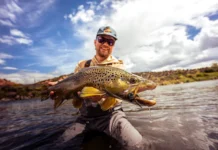
Musky have earned a reputation as the fish of 10,000 casts. Patrick Pendergast of The Fly Shop joins us to explain what makes these freshwater predators so difficult to catch and why anglers keep coming back for another shot.
We get into a trip to Lake of the Woods in Ontario, where Pat has fished with the guides at Epic Narrows Musky Camp. He shares what it takes to stay focused through days of casting, why the figure eight matters, and what anglers can learn from musky expert Rick Kustich.
Then we step back and look at the bigger picture of fly fishing travel. Pat shares lessons from decades of guiding in Alaska, exploring remote fisheries, and helping anglers choose destinations that match their goals.
Patrick Pendergast is the director of international travel at The Fly Shop in Redding, California.
Before joining the company, Pat worked as a fishing guide and lodge operator in Alaska. His experience includes freshwater and saltwater destinations around the world, from remote salmon rivers to tropical flats.
At The Fly Shop, he helps anglers match their interests, budgets, and expectations with fishing destinations and outfitters. His approach emphasizes finding a quality fishery, preparing for the experience, and appreciating everything that comes with time spent on the water.
Pat uses a simple approach when helping someone choose a fishing destination. He calls it the three R’s: the right location, the right time, and the right outfitter.
The first step is understanding what the angler wants. Someone visiting Alaska for silver salmon may need a completely different lodge and season than someone hoping to catch large rainbow trout.
Pat also looks at the experience beyond fishing. Some anglers want a remote wilderness camp, while others prefer comfortable lodging, daily fly-outs, and access to several fisheries.
Budget matters, too. Pat discusses the wide range of prices for Alaska fishing trips, from more affordable operations to luxury fly-out lodges costing upward of $17,000 per week.
His first priority when evaluating a destination is the quality of the fishery. Accommodations and logistics matter, but the fishing has to justify the trip.
Musky fishing presents a different challenge from many of the fisheries Pat has visited. These fish can be extremely selective, and their behavior changes with weather, water conditions, and other environmental factors.
Pat describes the concentration required to fish for musky. Anglers may spend days casting large streamers without seeing a fish, only to have one appear at the boat during the final moments of a retrieve.
That makes the figure eight especially important. Pat emphasizes that an angler needs to stay engaged on every cast, including the moments when the fly is almost out of the water.
He also talks about the mental side of musky fishing. A guide may spend as much time encouraging an angler to keep casting as helping with fly selection or presentation.
For Pat, catching a musky on a fly represents one of freshwater fly fishing’s greatest challenges.
The guides understand difficult fishing from their steelhead background, and Pat sees a connection between the patience required for steelhead and musky.
The camp also offers opportunities to target northern pike and smallmouth bass. Pat recalls taking breaks from musky fishing to catch smallmouth on poppers, giving anglers a chance to enjoy more consistent action before returning to the larger predators.
The property includes a historic main lodge accessible by boat and a separate island camp. Pat describes spending nights at the outcamp to access different fishing water.
He also notes that the destination can work for families interested in a combination of fishing and other activities on the lake.
Rather than simply booking a fishing vacation, anglers will have the chance to ask questions, work on their techniques, and better understand how experienced musky anglers approach changing conditions.
Near the end of the interview, Pat discusses a July 8–13, 2028 trip window selected by Rick. He explains that Rick considered moon phases and major and minor feeding periods when choosing the dates.
The trip combines the challenge of musky fishing with instruction from someone who has spent years studying the species.
The Fly Shop has spent years evaluating new fishing destinations. Pat explains that exploring an unfamiliar fishery doesn’t always lead to a successful travel program.
One example comes from Penrhyn Island, also known as Tongareva, in the Cook Islands. Pat traveled there to investigate opportunities for bonefish and giant trevally. The remote location offered a memorable cultural experience, but the fishing conditions were inconsistent. Pat explains that limited exchange with cooler ocean water could leave the lagoon’s flats extremely warm.
Even after additional exploration, the team decided the fishery wasn’t reliable enough to develop into a regular program.
Pat also points out that discovering new fishing opportunities doesn’t always require international travel. Sometimes anglers can rediscover fisheries closer to home, from steelhead rivers in the Pacific Northwest to redfish waters along the Gulf Coast.
Most trips arranged through The Fly Shop are not hosted, but Pat explains why a hosted trip can offer something different.
A host can help guests navigate travel logistics, prepare equipment, work on casting, and become familiar with the destination. That extra support can be valuable when visiting an unfamiliar country or trying a new type of fishing.
Hosted trips can also help anglers who don’t have a regular fishing partner. Pat explains that pairing guests can sometimes eliminate the additional cost of booking private accommodations or guiding as a solo traveler.
He also discusses upcoming bonefish trips to Los Roques, Venezuela, including plans to host a group in March 2027.
Pat recommends researching a destination before leaving home. Google Earth and OnX can help anglers become familiar with the landscape, access points, and surrounding water.
He also encourages people to keep their expectations realistic. Even a well-planned fishing trip can be affected by weather, water conditions, or fish that simply refuse to cooperate.
Pat shares a story from his early guiding days in Alaska when dangerous weather prevented a planned trip to a silver salmon river. Instead, he took his guests exploring by boat.
They encountered beluga whales, brown bears, moose, and other wildlife. Although the group missed its intended fishing destination, Pat remembers it as one of those days that became special for completely different reasons.
His advice is to appreciate the people, landscape, wildlife, and culture that come with a fishing adventure.
Pat recommends choosing a destination with plenty of fishing opportunities when making the transition from freshwater to saltwater fly fishing.
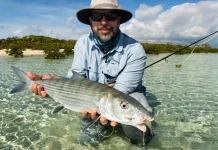
Bonefish are a good starting point because anglers can practice spotting fish, making presentations in the wind, and learning how to strip-set without the pressure of having only a handful of chances.
He suggests considering destinations in Mexico’s Yucatán Peninsula, Belize, and the Bahamas.
The goal is to find a fishery where an angler can make repeated casts to fish throughout the day. Missed opportunities become part of the learning process rather than the end of the experience.
Pat recommends building those skills before tackling more demanding fisheries, such as large tarpon in the Florida Keys.
Pat enjoys fishing two-handed rods for steelhead and Atlantic salmon. His main reason is efficiency.
He explains that a Spey rod can keep a fly fishing effectively through the water for longer periods, improving the opportunity to encounter a fish.
Pat also finds two-handed casting easier on his shoulders, arms, and back once the mechanics become familiar.
He believes learning to Spey cast has improved his single-handed casting, too. The same principles of loading the rod, controlling loops, and positioning the line can help when fishing other techniques.
He describes using modified Spey casts with single-handed rods to present nymph rigs without repeatedly lifting indicators, weights, and multiple flies into the air.
For Pat, understanding how the fly moves through the water matters more than simply making another cast.
Pat remembers saving money from mowing lawns and doing yard work so he could buy his first fly rod.
He visited a fly shop in Los Gatos, California, and came home with an early Sage fiberglass seven-weight rod and a Shakespeare multiplier reel. He still owns that rod.
His first fly fishing experiences were on local ponds targeting bluegill, pumpkinseed, and crappie. Those early days eventually led to trout, steelhead, salmon, and a career built around fishing.
Pat also offers a useful perspective for people coming from conventional fishing. Anglers who already understand where fish hold have a foundation for learning to fly fish. The main adjustment is learning a different way to present something to those fish.
Episode Transcript
WFS 1020 Transcript 00:00:00 Dave: Planning a great fly fishing trip comes down to three important decisions, and today’s guest has spent the last thirty years helping anglers get them right. Today we’re talking about how to choose the right destination, what separates a great fly fishing lodge from an average one, and what it takes to chase one of the toughest freshwater fish on the planet. Pat Pendergast is the international director of travel at the Fly Shop in Redding, California. He spent decades exploring fisheries around the world, from remote salmon camps in Russia to the saltwater flats of the South Pacific. We’re gonna be talking about the Lake of the woods Muskie trip we’re doing with Rick Kustich. This is an exciting trip. We’re gonna be fishing with Rick up there at Epic Narrows Muskie Camp in Ontario, Canada. We’re gonna talk about that a little bit today. We’re also going to talk about some of Pat’s Alaska years and the lodge that he owned and operated before he moved down to Redding, California. We’re gonna hear about how exploring goes wrong and some of the expeditions that they’ve put together over the years with the fly shop that haven’t panned out. You hear about some of those stories and also what makes a trip memorable. From the unexpected wildlife encounters to everything in between, Pat shares some of those great stories. This is going to be a good one. Pat has been doing it for a while. You can find Pat at theflyshop.com. Here he is. Pat Pendergast. How are you doing, Pat? 00:01:15 Pat: I’m fine thanks. How are you, Dave? 00:01:17 Dave: I’m good, I’m good. I’m looking forward to this conversation. And you, uh, you have a good role with one of the big fly shops in the country. You’re kind of involved in travel, and we’re going to talk today about that maybe a little bit on the international travel side. And, and talk about some trips. We’ve got a big trip coming. We’re planning with Rick Stitch, we’re heading up north and we’re going to be fishing for some big predator species here in the coming years. So we’re going to be talking about that too. But take us back real quick on the fly shop. 00:01:42 Pat: Yeah, that’s an interesting story. Actually. My thirtieth anniversary for the Fly Shop will be next week, November eleventh. Um, my wife and I moved from Alaska to Redding, California to specifically work at the fly shop. We own the sport fishing lodge in Alaska, and I’ve been living and working in Alaska, and I had met Mike Michalak, the owner of the Fly shop, on a familiarity trip down in Mexico, and we had stayed in touch and he was getting ready for a big expansion. That was, um, two thousand and six. And he made me an offer I couldn’t refuse. So we moved to Northern California, started working in the travel department. At that time it was just Mike, his wife Bertha, and myself. Wow. And yeah, small team. But it has grown exponentially over the last thirty years. Absolutely. We now employ in our in our travel department alone at nine people. And we, you know, facilitate and consult and help people with trips all over the world. Fresh and salt. 00:02:48 Dave: Right. That’s amazing. 00:02:49 Pat: Yeah, it’s been a good run. It’s, uh, Northern California. Shasta County is a great place to raise a family. It’s a beautiful country. The fly shops here because there’s so much water, trout and steelhead water within a five minute drive to an hour. And we’re very lucky to have such so much open space, water, lakes, rivers, creeks, spring creeks. Great for hiking, skiing, mountain biking, boating, and of course, fly fishing. So it’s a pretty ideal spot. And you know, living here is still affordable. 00:03:24 Dave: Where were we at in Alaska? What was the name of the lodge you’re at? 00:03:27 Pat: The last lodge that I was partners in was on the Gulf Coast of Alaska, actually called the Lost Coast of Alaska. And we had a lodge at a location called Cape Suckling, which is between Cordova and Yakutat, Alaska. And it’s Cape Suckling is. This is the location that Vitus Bering, who was the Dutch explorer that the Russians hired first landed in Alaska, it was extremely remote, only accessible by plane, and we had a silver salmon camp there that we ran eight to ten weeks in the fall. And, um, we lived in a, in a yurt close to the beach. It was beautiful country. If you want to read about that country and Vitus Bering, there’s a great book called Where the Sea Breaks Its Back. 00:04:15 Dave: Oh, nice. 00:04:16 Pat: It’s an awesome book about Bering’s discovery of Alaska, but also all his hardships and shipwrecks. 00:04:22 Dave: That’s amazing. We’ll get a link to that in the show notes so people can take a look. And who was Bering again? Remind us again what was his story? 00:04:27 Pat: He was a Dutch explorer hired by the Russians to travel over the Bering Sea from the Kamchatka peninsula of Russia. And he discovered Alaska. 00:04:39 Dave: That’s amazing. So he was one of the first. Yeah. Well, the first person in that area. 00:04:43 Pat: Yeah. And it was extremely remote country. We actually did some quite a bit of exploring on our own. And we actually found an old iron anchor and wooden cask like water cask in the cave that probably were of that expedition. 00:04:59 Dave: Did you look into that more? Did you get that? Anybody out there to, uh, validate that or anything? 00:05:04 Pat: Not really. We never had any archaeologists come out, and we just we kind of brought them up to the camp and put them in the in the yard for decoration. I don’t know exactly if they were from the expedition, but they they seem pretty authentic to me. 00:05:18 Dave: Was that kind of a, uh, fly or gear or both? 00:05:21 Pat: Predominantly fly fishing. Some gear fishing. It is a phenomenal fishery. I think we broke five igfa world records on coho salmon in two years. Fish in and up to the, you know, twenty three, twenty four, twenty five pound range. Massive co-hosts. It was interesting. Yeah. It was a one dimensional fishery. Didn’t have a lot of other species. We had some cutthroat. Occasionally we’d get a steelhead. We had a sockeye run, but we never. We never really fished it. It was predominantly a coho salmon fishery. 00:05:53 Dave: Yeah. Did it have steelhead too? 00:05:55 Pat: Yeah, a few. I mean, they probably came in so late in the season, probably in November. We never really targeted them. 00:06:03 Dave: Yeah. Wow. So you go. So you go from a lodge, you’re running this lodge in Alaska, and then you move down to the lower forty eight, back to the, you know, the rest of the population. What was that like? Was that a pretty big change? 00:06:14 Pat: It was interesting, I tell you. My first summer here in Redding, if you know Redding in the summer, it gets hot here. We’re in the end of the Central Valley, surrounded by mountains by three sides. So the heat kind of stacks up and Redding, and it’s not uncommon to have temperatures of one twelve, one fifteen during July and August. And I remember my first summer here, um, walking outside and I was like, oh my gosh, this is like opening an oven. I’m melting. I mean, I sweat at fifty degrees and was used to Alaska weather. It took a while to adjust, but other than a couple of months during the year, we have really nice weather. And as far as like outdoor recreation, it’s an amazing destination. We’re one hundred and fifty miles north of Sacramento. We’re one hundred miles south of the Oregon border. We’re three hours to the coast to the Pacific Ocean, and then we’re about three and a half hours to Reno. So we’re kind of right in the middle of the state, but we’re surrounded by mountains, wilderness areas. Lassen Volcanic National Park is about a forty five minute drive from Redding. It’s one of the least visited national parks in the country, and it’s absolutely gorgeous. I mean, you just don’t see a lot of people. It’s nothing like Yosemite as far as visitors. 00:07:29 Dave: Yeah, you guys are picked or I guess that was who was the mike, right? Was the original. Yeah, yeah. 00:07:35 Pat: Mike started the shop. Um, opened the shop April fifteenth, nineteen seventy eight. So in twenty twenty eight, it’ll be our fiftieth anniversary. And he was in the pharmaceutical business and moving up the corporate ladder, but his heart wasn’t into it. He would have had to move from Northern California to Michigan. And he says, you know what? I’m out. And he says, I’m going to start a fly fishing business. And he and his daughter Lisa, at the time, driving around the car and Redding was going to be the location, but he didn’t have a name. And he asked his daughter, well, what do you think about a name? And she goes, well, you always tell me you’re going to the fly shop. 00:08:13 Dave: So that’s it. The fly shop. It stuck. 00:08:16 Pat: The fly shop stuck. And now it’s obviously one of the most recognizable names in the fly fishing world. 00:08:23 Dave: Why do you think that is? Why do you think the fly shop. What do you think is the big thing? Is it the travel that’s really put it on what’s made it? I mean, obviously nineteen seventy eight, it’s been a long time to be as a fly shop. 00:08:32 Pat: Yeah. I mean, fiftieth anniversary twenty eight um, I think vision and leadership by Mike. I mean, I would say that Mike Michalak is the grandfather of the modern fly shop business model, incorporating all facets of fly fishing from guide service private waters, which is a division of our company where we lease or own ranches where you could go and have private water for yourself. Our guide service. We employ eighteen full time guides here locally. The travel department obviously is a big portion of it, but we’re also, uh, having a walk in brick and mortar retail store here and our internet presence. 00:09:19 Dave: Very cool. So you’re right there. And so the travel. Yeah, obviously that’s a big we’re going to talk about that a little bit today. We’ve got a trip that we’re going to be putting together. Maybe talk about that a little bit. You know, some of the areas you cover, it sounds like, you know, you’re focused on international. But how does that look for your your day to day? 00:09:33 Pat: My day to day is talking and email corresponding with people looking for fly fishing trip, be it international or domestic. We book trips from all over the world, fresh and salt, so that would be from Alaska to Tierra del Fuego in Argentina, from the Indian Ocean and the Seychelles and Mauritius to Christmas Island and and beyond. We currently do not have an active program in Kamchatka, Russia, or the Kola Peninsula of Russia for various reasons, but we were the main agent for those destinations as well. 00:10:12 Dave: Well, weren’t those destinations when they were going. And I’ve heard some things out there, like maybe their people can still do a trip, but it’s a little sketchy maybe, but. 00:10:21 Speaker 3: It’s a little sketchy. 00:10:22 Pat: Dave. I mean, it’s extremely hard to get to. You can’t use a credit card in Russia. 00:10:28 Dave: Oh, wow. 00:10:29 Pat: We haven’t had a full season in Kamchatka since twenty nineteen. And with the outbreak of the war in Ukraine, it’s just not safe. It’s just not worth it. Be it in Kamchatka or the Kola Peninsula of Russia. For Atlantic salmon, Kamchatka was steelhead and rainbow trout. It’s just not worth the risk. I mean, Kamchatka, Russia is the greatest rainbow trout fishing in the world, hands down. It absolutely will blow your mind. And the Atlantic salmon fishing on the Kola Peninsula of Russia, which is in western Russia, is the greatest Atlantic salmon fishing in the world. But right now, it’s just not feasible or safe to go to, unfortunately. 00:11:11 Dave: Yeah, I know that is true. Well, we’ll keep in touch with you guys as things hopefully change. And maybe, you know, I’m guessing. 00:11:16 Pat: Absolutely. I mean, we will be first on the plane when it opens up, I guarantee you. We’re jonesin for sure. 00:11:23 Dave: Right. You’re ready to go. What’s your this is probably a hard one, but steelhead versus Atlantic salmon. I think you fished for both. If you had to choose one, which one would you choose? 00:11:31 Pat: I couldn’t be honest with you. I love steelhead because I’m from the Pacific Northwest. They have a special place in my heart. Atlantic. Salmon. Salmo. Salar. The King of fish is an amazing sport. Fish. I probably fish for them maybe half a dozen times over my career and never been disappointed. They’re both, you know, anadromous fish. They’re different, but they have some similarities. Some people say steelhead fight like they’re scared, and Atlantic salmon fight like they’re angry. 00:12:01 Dave: Are nice. 00:12:03 Pat: Both great fish really susceptible, you know, to environmental concerns. And and so we’re very involved with different organizations and protecting both wild steelhead as well as Atlantic salmon. And we have one of the most prolific steelhead fisheries with forty five minute drive from the shop on the Trinity River. 00:12:24 Dave: Oh, the Trinity. Yeah. That’s the amazing thing about this, is you talk about Russia and all these places around the Pacific Rim that have steelhead. I mean, you guys are actually in a pretty amazing place. And really we’re steelhead fishing started in the lower forty eight, right. It was right there in Northern California. 00:12:38 Pat: Yeah. A lot of the Northern California coastal fisheries that are south of us from the eel and the Russian and the Gualala, and are not that far from us, where a lot of us cut our, you know, cut our teeth on steelhead fishing that I mean, the shop is here for location. I mean, it’s just an ideal spot to access at least nine different moving water fisheries from freestones to tail waters to spring creeks. And then you throw in steelhead on the Trinity River and steelhead on the Klamath River, which has got so much press of late and duly, you know, with the removal of the dams. And, um, we’re really in an ideal spot. And it’s surprising that people would think that our fisheries are crowded. It’s just not. I mean, I could go up on the upper sac right now and literally walk ten minutes and fish all day in a beautiful freestone river and not see a soul all day. And you tell people that are from Montana, Idaho, Wyoming, Colorado, they don’t believe it. And I said, well, come out. I’ll show you. 00:13:41 Dave: Exactly. Yeah. That’s great. And is it, you know, when people call you up, do you get calls or most of the people do they kind of know where they’re thinking about going? Or is that part of the do you get calls with people are like, hey, I’m not quite sure where to go. And you walk them through it. 00:13:53 Pat: Most people have an idea of where they want to go or what species of fish they want to pursue. And it’s a pretty simple equation. I mean, we first of all, we listen to the person and try to discern what their goals and objectives are or expectations. And really you’re looking for the, you know, the right place during the right time with the right outfitter, I call it the three R’s. I break it down pretty simple, and then we match them up. So if a person wanted to go to Alaska and he wants to salmon fish, that’s a different trip than a person wanting to go to Alaska and rainbow fish. And then you have to look at seasons, and then you have to look at the level of lodging and the level of the experience, be it a, you know, a full fly out week or a river camp or a float trip or a wilderness tent camp. So there’s, there’s lots that go into kind of deciphering what the person’s expectations are and then what you can deliver. 00:14:49 Dave: Exactly. Make sure the expectations is big. And what is the mind set on three R’s. What are the three R’s? 00:14:54 Pat: The right location during the right time or season with the right outfitter? 00:15:00 Dave: So somebody wants to go to Alaska. You’ve got that. They want to fish, you know, for you figure out what they want to fish for. 00:15:06 Pat: And exactly. You ask questions and then listen. And so you call me up and say, I’ve never caught a salmon. I want to go to a high volume coho fishery. I don’t want to see people, you know, I don’t want it to be a combat fishing trip. So I’m going to say, well, Lava Creek Lodge in the Alaska Peninsula is the perfect choice. It’s super remote. They take eight people a week. The only other living things you’re going to see walk on four feet and you’re going to catch twenty to thirty plus cohos a day. Fresh out of the Bering Sea. 00:15:37 Dave: What about when they say, you know, when you talked about price? You know, because some people. Right. There’s a difference between a few thousand dollars or ten thousand dollars. Yeah. 00:15:46 Pat: I mean, some of these lodges in Alaska these days are going for seventeen thousand dollars a week for deluxe fly out lodge, where you’re flying to a different fishery every day. There are budget conscious trips that offer a great experience, for sure, and we represent those outfitters as well. Not everybody is, you know, can afford a twenty thousand dollars trip, but there are options out there that still offer. I mean, first and foremost, you got to have a great fishery. One hundred percent. Before I look at any new destination or we go on an exploratory trip, it has to have great fishing. Everything else is what I call is manageable, as controllable as far as the experience, the food, the transportation, the guides, you know. But if it doesn’t have a great fishery, there’s no foundation for the destination. That’s first and foremost. 00:16:38 Dave: Pescador on the fly offers a full range of fly fishing gear for any angler at any budget, with premium raws delivered directly to you. The LA G6 is the most packable, high performance fly rod on the market, performing like a four piece rod but with unmatched portability in six pieces. And you can get ten percent off your next order right now if you use the code Wet Fly swing at Pescador on the fly dot com. Never fly without your G6. Discover the El Rey series and more at pescador on dot com. So. Well, one of the trips we’re talking about, and I think this is kind of a cool little approach, which is a good transition. A little bit of a hybrid trip is this trip with the muskie that we’ve been talking about. Describe that a little bit, you know, because we’ve got and I know the outfitter that’s setting this up has lots of good history behind him. Right. But describe this a little bit because this is pretty fun. We got Rick Huestis to, you know, literally as written, you know, kind of a book on this subject and stuff. So he’s going to be kind of hosting the trip, but describe it a little bit. 00:17:36 Pat: Yeah. Ricks will be hosting a trip in twenty twenty eight to Epic Narrows, Muskie Camp and the camp. It’s a lodge, what we call it camp, because we’re in Canada, is located on Lake of the Woods in Ontario, Canada, and Lake of the woods. I was there a couple years ago. I mean, I’ve been read about Lake of the woods for years, you know, and outdoor life and field and stream as a kid and boys life as a Boy Scout. You know, Lake of the woods is famous. It’s massive. I mean, it’s seventeen hundred square miles. I think it has like over fourteen thousand islands and over sixty five thousand miles of shoreline. And its lake is split between the United States and Canada. And it is absolutely gorgeous, spectacular. And it also happens to be one of the best muskie muskellunge fisheries in the world. In addition to smallmouth bass and northern pike. But really, it’s a specialized trip, extremely specialized, targeting the largest freshwater predator fish in North America. It’s an exciting fishery. It’s exciting just to be out in the water. Targeting Muskie. 00:18:51 Dave: Right. One of the hardest. Right. You talked about Atlantic salmon. Steelhead. But muskie are probably they’re up there, right. With one of the hardest to catch. 00:18:58 Pat: It’s the fish of ten thousand casts. It’s a moody fish. It’s very susceptible to weather conditions and pressures. And water is, as Rick has written about. I mean, I had never fished for muscle in my life. I had fished for, you know, Northern Pike in Alaska, of course, as a fishing guide. When we had rivers that were blown out, we’d go pike fishing. But Muskie was never really on my radar other than reading about them in magazines about, you know, eating ducks and muskrats and attacking beavers and, you know, or swimmers, you know, in Canada. So really, I didn’t have an idea of the fraternity of anglers and the mystic aura of muskie. We don’t have them on the West Coast. And I thought permit fishermen were nuts and monomaniacs. They have nothing on muskie fishermen. 00:19:50 Dave: Oh, really? So muskies even more. More of a. 00:19:53 Pat: If you’re a muskie guy, you are focused. And that is all that’s in your head. And it makes I mean, I said it, you know, it’s like permit guys are fanatics. Muskie guys are like double fanatics. It’s amazing. 00:20:07 Dave: So there you go. So it’s the one. So those are a couple of the species that are kind of the top. 00:20:11 Pat: And they’re not easy. They’re not easy fish. And what I found that it’s difficult fishing in that you have to be focused every single second that your flies in the water, because that one time you don’t do your figure eight at the boat after retrieving your streamer or you’re not paying attention, that’s when the muskie shows up. And it might be your nine thousand nine hundred and ninety five cast, and you got to start over from scratch. 00:20:39 Speaker 4: That’s right. Which is brutal. 00:20:41 Pat: Brutal. So every single cast needs to have one hundred percent focus. I mean, there may be some sight fishing opportunities, but a lot of it’s blind casting and you just have to stay focused. It’s not easy, but the reward is, I mean, if you catch a muskie on the fly for freshwater fishing, it’s probably the pinnacle of fly fishing. And then you add that you’re in this beautiful environment in Lake of the woods. The guides are as much psychologists as they are fishing guides. 00:21:10 Dave: Yeah. 00:21:11 Pat: You know, you’re you’re in your fourth day and you haven’t even had a follow or seen a fish and, and your mind’s just playing tricks on you, you know, and you’re, and you’re kind of down And the guys there is the cheerleader. It’s all right. You know, he’s patting you on the back. We’re going to get it won. We’re going to see one. You’re going to get your chance. So everything that is controllable. Epic camp is controlled. The outfitter Derek Botchford and his crew are amazing. They’re from British Columbia. 00:21:40 Dave: Yeah. This is part of the Epic Waters crew, which they’re doing some good stuff. 00:21:44 Pat: Epic waters crew. Yeah, they’re amazing outfitters. They run steelhead camps and lodges in British Columbia, so they know difficult fishing. And they were bored during the summer. And so they, they went out and started searching for a great muskie fishery because it was parallel to steelhead fishing. 00:22:04 Dave: Right. Well what’s next? That’s the funny thing because we talk about this with steelhead, Yo-Yo, or even fishing in general, right? You start out as angler and you slowly evolve and you kind of go to things that are harder. So I feel like Derek, the guys were like, you know what? Let’s find the next harder fish to catch. Muskie is the one. 00:22:18 Pat: So yeah, they’re they’re not afraid of, you know, being stood up by fish and not afraid of not catching fish. It’s the process in Canada that’s the process. And, um, they’re just amazing at it. And it’s fun to that. Even though you’re focused on muskie, there could be times when conditions aren’t right for fishing for muskie. So during the summer, like the smallmouth bass, fishing on poppers is absolutely phenomenal. So you we did take some, uh, afternoons and fish for smallmouth just to kind of get our heads straight to go back to muskie fishing. 00:22:50 Dave: Oh, cool. So you did so on the, on the epic Narrows camp that you were able to fish for some other species. 00:22:55 Pat: Absolutely. Yeah. Smallmouth and then northern pike as well. 00:22:59 Dave: Oh, and pike. Yeah. So you had pike. So that that helps a lot. I feel like because you know, the muskie, you’re gonna put your time in and there’s probably going to be some guys that are be like, you know what? That’s all I’m doing this entire time. I want a musky. But there’s going to be some people that maybe haven’t caught a pike. And you know what I mean? Getting a pike or a bass would be cool. 00:23:15 Pat: Or a bass. I mean, like two to three four pound smallmouth on a popper are awesome. 00:23:20 Dave: Big bass right? 00:23:21 Speaker 4: Wow. 00:23:22 Pat: And it it’s surprisingly that over the last few years, we’ve had a number of families that go to epic Muskie camp, like two or three generations in a family, and they’ll go there for their holiday and they’ll fish for muskie, they’ll fish for pike, they’ll fish for smallmouth bass, but they’ll also do all kinds of water sports and just have an enjoyable holiday on a beautiful lake. What’s interesting about the Epic Narrows is that they have a main lodge or a cottage, as they call them in Canada that’s accessible only by boat, but they also have a private fifty acre island south of the lodge towards the American border. They call it like an out camp. And so you’ll spend a couple nights there and fish different water. And so it keeps the trip really interesting. The lodge was built in the early nineteen hundreds, and it’s really spectacular. I told old, you know, Canada fishing, hunting lodge. 00:24:20 Dave: It’s got the history. This is exciting. Yeah. And I think the cool thing about this trip is we always think of them as kind of a little bit of a school to, you know, and Rick, he hosts our hunting with a fly podcast series, you know, and so he, he’s in it, you know, so the fact that he’s going to be there, you get a chance to hang out with, with him. 00:24:38 Pat: Oh my gosh. 00:24:38 Dave: Right. And pick his brain about muskies. So those days where, you know, I think it’s the kind of the next level thing I think. 00:24:43 Pat: Oh it is I mean, you’re, you’re going to be fishing and working, we’ll say with someone that has decades of experience chasing a difficult to catch fish. I know the guides and Derek and the guides at Epic Angling are really excited about the trip because, you know, you know what? You know, I mean, I can’t tell you that every time I go fishing, I was fishing up in southern Alberta and British Columbia about a month ago. Every time I go out, I learn something new and the opportunity to have Rick there lending his, you know, decades of experience is a unique opportunity, I feel. And you pair that with the guides and their total commitment to muskie fishing. It’s going to be a great trip. There’s no doubt about it. 00:25:28 Dave: So that’s. And like we said, there’ll be some more. I think Rick is probably gonna do a podcast on it too, and talk more about what that looks like. But we got a little bit of time here, but it always comes quick, right? A year, a year out, how do you find with you? Do you find these years are flying by pretty quick? The last thirty years you’ve been doing this or has it gone pretty quick? 00:25:44 Pat: Oh my gosh. Yeah, absolutely. I think our role here in the travel department, we serve an important role. And we’re not physicians or emergency doctors or. But I think what we do is when people that work hard and they have time to recreate, we’re here to help them in that process and let them recreate themselves in fly fishing. And that really the word recreation comes from recreate. It’s important for people, especially professionals and physicians and people that are in high stress jobs to get outside and just kind of reset and get ready for the next push that they’re on. 00:26:27 Dave: Yeah. I feel like in some ways you yeah, we’ve talked about that before. We’re not saving babies necessarily here, but in some ways you are keeping people healthier, right? Because, because doing that trip and getting a break from the daily grind, you know, that’s reducing stress. And, you know, so I feel like in some ways you are helping people save people. 00:26:45 Pat: Oh, absolutely. I mean, we have, you know, we work with obviously a lot of physicians because they’re in the position to book trips all over the world. And you see, you know, as a guide in Alaska, I would see it. It would take these guys that are, you know, neurosurgeons or E.R. physicians two or three days to come down and just start to relax. Like just unwind. I remember guiding one of my first years guiding in Alaska. We had a stockbroker with us. He was in a high stress position. I’m not sure all the details of it, but he slept as much as he fished for a week. 00:27:21 Dave: Oh wow. 00:27:21 Pat: It was interesting because he says, I’m just going to take a nap on this grass bank. And I said, okay, cool, man. I’m here. You know, I’m not going to let a bear wander up on you and eat you. I go do what you want to do. He goes, yeah, I got a couple hours of fishing and I’m just going to take a nap. I’m just exhausted. I said, you know what? Go for it. I got you covered. And I thought that was interesting, but I also thought it was important for this guy just to, like, let himself down and just, you know, rebuild, recreate. 00:27:47 Dave: God, there’s nothing better than sleeping. Laying on the bank, in the gravel, in the grass, on the river. It’s like the best place to take a nap. 00:27:54 Pat: It’s the best nap place ever. 00:27:57 Dave: Yeah. It is. That’s good. No, I love that. Yeah. You, like you said, it’s all you know. You guide these trips to the what people need and what they want. And that’s kind of your specialty. Do you guys, when you’re getting into this, do you have your list? I mean, you’ve now done this thirty years. You’ve got all these places. Are you still scouting new places? What does that look like? 00:28:14 Pat: Looking ahead absolutely all the time. The Fly Shop has been on the cutting edge of discovering new fisheries for most of its existence. And it’s funny. I mean, we say you walk the cutting edge long enough and you’re going to get cut. And we have drilled some dry wells. 00:28:33 Dave: Oh, you have right. You’ve got into places that have been dead ends. 00:28:35 Pat: Oh my gosh. Yeah. I mean, it’s not for lack of effort or lack of funds to put into a new fishery that we’re trying to develop. It just didn’t work out. I mean, like French Polynesia, the Cook Islands are some examples. They just as much as we wanted them to work and as much time and money we put into it, they just they never worked out. And it’s like, well, you know, it was interesting. One of the most probably the most fascinating trip I ever went on was to the Cook Islands. Penrhyn Island or Tongareva, and we flew to Rarotonga, the capital of the Cook Islands, spent a couple of days there and then caught a twin engine, eight passenger plane that flew three hours over the open ocean and arrived on this island, Penrhyn Island, which was discovered by Captain Cook and named after Lady Penrhyn. And I think we were the fifth and sixth person ever to fish there. And there was a community there. We landed on a paved strip that had been built during the World War Two campaign on its way in the Pacific Theater, and there was an old B-17 Liberator, like on the side of the runway. 00:29:54 Dave: Wow. 00:29:55 Pat: Just sitting there and like, just like scrap. It had been stripped. And I’m thinking, Holy moly. And the entire village came out and welcomed us and saying these amazing songs. It was absolutely beautiful. Some of the most wild saltwater wilderness I’d ever been in my life. But the fishery didn’t pan out. 00:30:14 Dave: No it didn’t. What were you what were you trying to go for there? 00:30:17 Pat: It was primarily bonefish and giant trevally. It just didn’t pan out. I mean, simply, the atoll did not have enough entries or openings to the deep blue water to. And it would superheat inside. So if you didn’t have strong tides or or strong winds that replenished the water inside the atoll on the flats, the flats would get really warm. Like we’re talking ninety degree water and nothing was there. 00:30:47 Dave: So you knew right away when you did that trip, after a few days, it was clear. 00:30:51 Pat: Well, we did have some success, but it just wasn’t feasible as far as running an operation there. And we actually had one of our guides here from Northern California spend a month there, and he found the same thing. 00:31:03 Dave: That’s cool. 00:31:04 Pat: Yeah, but, I mean, that was a dry well. You know, we walked the cutting edge and we got cut. But we all had a good time trying to make it work. 00:31:11 Dave: Right. So you’ve had a few of those over the years. 00:31:13 Pat: Oh my gosh. Yeah. Yeah. That’s part of the business. I mean the world obviously the world’s getting smaller. And I think, you know, people say, well where’s the next best great thing? 00:31:23 Dave: Right. What’s what’s left? 00:31:24 Pat: I honestly, I don’t know. I think we’re running out. 00:31:28 Dave: Yeah. Well, the great thing about it is, and I’ve talked to some people on this before about the fact that. And you said at the start of the podcast, I mean, there’s all these international places to travel to, but I mean, right in the lower forty eight, there’s some pretty amazing fishing, like right in our backyard that I feel like absolutely, you don’t have to travel to the Cook Islands to find these amazing places. 00:31:47 Pat: No. Absolutely not. And when we say discover new fisheries, I think we should also say as far as domestically is to rediscover new fisheries, be it it being in the Rockies or, you know, some of the redfish fishing in Louisiana and Texas, or striper fishing on the East Coast, steelhead fishing on the Pacific Northwest, the rediscovery of fisheries and some of these fisheries are right in your backyard. 00:32:12 Dave: Where are you? Uh, what do you have on Chad? Are you. It sounds like you’re setting up in the office a lot. Do you have some trips that you’re excited about? 00:32:20 Pat: Um, my next trip is in March to back to Los Roques in Venezuela. 00:32:24 Dave: Oh, wow. 00:32:25 Pat: Which I’m really excited about. I fished Los Roques in the past twice. It’s one of the most prolific bone fisheries in the world. It’s great. Wade fishing for bonefish. Sight fishing for bonefish. We actually have three trips planned there for twenty twenty seven. I’m going to lead a group of guys and friends in March, back to Venezuela, back to Los Roques. I’m really excited about it. So that’s kind of on my horizon. Until then, I’m here in the office helping people, you know, with fishing trips. Of course I’ll do, you know, local fishing here at steelhead season. 00:32:59 Dave: Oh you will, so you’ll get out and do some swinging out there. 00:33:02 Pat: Oh absolutely. Absolutely. So yeah it’s all good. 00:33:05 Dave: Yeah it is all good. That’s sweet. Yeah. So Los Roques Venezuela, is that a trip that you’re going to be kind of. 00:33:10 Pat: I’m going to be hosting. 00:33:11 Dave: Yeah. 00:33:12 Pat: And then we have um three other weeks that we’ve we’re going to be hosting there. 00:33:17 Dave: Do you guys do a mix of hosted trips and also just straight trips to sell spots? 00:33:23 Pat: Yeah. I mean, the majority of the trips that we help arrange for people are not hosted trips or we’d never be in the office. 00:33:30 Dave: Right? Yeah, everybody would be gone. 00:33:32 Pat: So I mean, hosted trips are special trips. They’re hosted trips are pretty cool because first of all, you get someone running point for you all, you know, from start to finish. And that’s one of, you know, our travel professionals here helping you through airports and doing a casting lesson, having gear to try and use. They’re also a great way for anglers that do not have a fishing partner to go on a trip and not pay the single supplement for a private room and private guy, which a lot of fillers. You know, maybe they lost their fishing partner or they just don’t have one, but they want to go on these trips, but they don’t necessarily want to afford or pay for the single privilege of being a single angler. So a host, a trip eliminates that will just pair you up with someone and they get to go on their trip. 00:34:21 Dave: This episode is brought to you by AVC Rig Adventure Vehicle Concepts out of Colorado. These guys build next level adventure vans designed to help you explore farther and stay out longer. Are you dreaming of a full van build? Or maybe you just need the best aluminum cabinets and storage for your DIY rig? AVC rig makes it easy to turn your vehicle into the ultimate mobile base camp. You can check them out right now at ABC dot com, that’s a v c rig dot com. Let on to Mark Lodge. Give you the Montana fly fishing experience you deserve. The gin clear waters of the Missouri River offer a world class experience with one of the finest rainbow trout and brown trout fisheries in the world. Whether you’re a seasoned angler or new to the sport, there are. Family of guides will tailor a trip just for you. You can head over to Oneida marklogic dot com to fish one of the great trout streams in the country. As you look out to, you know, just to travel in general, you must have you’ve done a lot of traveling. What are a few kind of tips you’re telling people to get prepared, like some travel tips. What are the most important things? If somebody’s planning, whether it’s with you guys or just a DIY trip, what are the big things that can ruin a trip, do you think? 00:35:34 Pat: Yeah, I would say for us, and I think any anglers do your research, you know, study Google Earth, use on X. If you have that app, study the destination, get as much information as you can. Keep your expectations realistic. We like to underpromise and overdeliver. And I think as anglers, it’s easy to overpromise and under-deliver. It’s fishing, right? It’s not catching. So I would even say for a person planning their own trip is keep your expectations reasonable. 00:36:06 Dave: How do you do that? When you have a trip that’s a you get a blowout. How do you deal with that? 00:36:10 Pat: You know, it’s part of the experience. A lot of times I’ve been fishing with people on trips. They’re so concentrated on the fishing, they don’t realize where they are. And I’ve told people I’ve walked up to people and said, how’s it going? Oh it’s great. I’m, you know, and you’re so focused on the fishing. I said, my gosh, look around you. Exactly. I go, look at that volcano. I go, do you see those? That herd of caribou just crossed the river? You know, fish don’t usually live in ugly places. And a fishing trip is more than just about the fishing. It’s about where you are. It’s about the environment. It’s about the people that you’re with. If you’re in a foreign country, it’s about those people and their culture. It’s more than just fishing, I tell people. You know, enjoy the experience and appreciate where you are. 00:36:57 Dave: That’s it. It’s fishing is just part of just part of it. I know we had an episode we did with Topher Brown a while back, and he was talking about this trip that he was on and he was it was Atlantic Salmon, I think he was in Canada, Labrador, and the fish just weren’t there. And it was like two weeks, I think the trip was. And they literally nobody. It was two weeks without a fish. Everybody in camp, you know, I mean, that’s that’s the extreme level. But you know, you’re like that, you know, that’s a possibility. Like, you know what I mean? Like that sort of stuff could happen. And you just. 00:37:25 Pat: It. 00:37:25 Dave: Happens. Yeah. 00:37:26 Pat: It’s not uncommon. And I remember my first year guide in Alaska back in the mid eighties, and we were to go to the Silver Salmon Creek down the coast, and it was absolutely blowing out and blowing like forty miles an hour. It was way too dangerous to get to. And the plane had left for the day. And I had four guests with me and was like, oh my gosh, what am I going to do? So we just started, we had a boat, we had plenty of fuel. We had lunch. We had good gear. So we just started exploring. And I remember running up this little bay on the north end of Cook Inlet, and we found a pod of beluga whales feeding on salmon. And we spent a couple hours just watching these beluga whales. I mean, we could literally reach out and touch them if we wanted to. And it was interesting. Everybody was disappointed that we didn’t get to the fishing, to the river, that we wanted to fish. But everybody said that was one of the coolest days I’ve ever had. I mean, we played with beluga whales. We saw brown bear, we saw moose birds. It was a cool day and we just made the best of it. 00:38:28 Dave: That’s it again. It’s not just the fishing, right? It’s all the other stuff. So this is good. Well, let’s take it out here. We’ve got a little quick little rapid fire round. Then we’ll get out of here. Maybe we can start this off with a little bit of the trips we’ve been talking all around. But what are, you know, somebody calls you up and they’re thinking the international. Let’s think of that. And what are some of the easier. If somebody hasn’t done the salt thing before. They’ve done a ton of fresh water stuff. What are those few trips that you say this is a good first saltwater trip to go for. 00:38:54 Pat: Transferring from a predominantly a freshwater fisherman to a saltwater fisherman. The number one criteria for a suitable destination would be numerous shots. And what I mean by that is you don’t go permit fishing on your first saltwater trip. You want bonefish and you want lots of bonefish. And when you blow a dozen shots in the morning, you want a dozen more in the afternoon. So you really have to pick a destination that maybe is not so specialized, like permit or tarpon or snook, but a saltwater destination has lots of fish, and you’re going to connect with those fish sooner or later in your learning curve is going to expand exponentially. For every fish that you catch is learning how to strip set, learning how to raise the rod and let the drag and your expensive new saltwater reel do the work and not trout set and start to see fish better and lead fish and deal with the wind. So someone new to someone going on their first saltwater trip, I’d like to send them to a destination that has lots and lots of opportunities, because you’re going to mess something up. And that’s all right. That’s part of the learning experience. Someplace like in the Yucatan Peninsula of Mexico or in the Bahamas or possibly Belize, you just want multiple, multiple opportunities. 00:40:14 Dave: That’s it. That’s the key. So any of those places. Yeah, Mexico. There’s plenty. Belize, Bahamas, those are all you’re going to get a lot of bonefish shots. 00:40:20 Pat: Absolutely. 00:40:21 Dave: Yeah. Versus say Florida which well I mean it’s a little bit different. Right. But there’s some of these places that have, you know, if you want to go for tarpon, there’s only well, there’s probably more than a handful of places, but where you can get a giant tarpon, right? That’s a whole nother level. 00:40:34 Pat: Yeah. But like going on your first saltwater trip to the keys in May or June to fish sight fish for tarpon, that’s some of the most difficult fishing you could possibly think of doing. It’s like go to a fishery like in Mexico or Belize and start out with juvenile tarpon and, you know, learn how to bow the fish when you hook them, learn how to strip set, you know, you’re going to blow a bunch of fish and then work your way up to, you know, the keys. 00:40:59 Dave: Yeah. Work your way up to the keys. Exactly. Well, tell me this, I love we talked a little bit about steelhead and salmon. It sounds like you’ve been to some amazing places around. And you’re right there. You’ve got them in your backyard. What’s your setup looking like out there? Have you been doing the Spey? Have you been doing that for a while or are you kind of more newer? 00:41:13 Pat: Yeah, yeah. That’s interesting. I enjoy fishing a double handed rod for swing fishing. And people ask me, well, why? And I go, it’s a better tool. And I go think of it as a screwdriver or a cordless drill. That’s the analogy. 00:41:29 Dave: They both work. They both work, right? 00:41:31 Pat: They both work. But one’s a better tool. And spey rods for swinging a fly are a better tool. And what it boils down to is I have my fly longer in the water than you, And the more times my flies in the water swinging in the water column, I want the more opportunity to have the hook and the salmon or steelhead. 00:41:50 Dave: The more your flies in the water, the more it’s in front of fish, the better chance. 00:41:53 Pat: I think, for a lot of anglers that are maybe considering or switching to a single handed rod, for older anglers, it’s relatively easier on your body. It’s easier on your arms, it’s easier on your shoulder and back. I mean, once you learn to spey cast and you learn the fundamentals and the mechanics, it’s a relatively easy physically on your body. And that just extends an older anglers, you know, livelihood and fishing. 00:42:19 Dave: Yeah, it’s just easier, you know, and it’s more fun, right? Once you get into it, it’s this new thing and you start learning and you’re getting better. We just it was pretty funny because we just had you’re probably a little too young to remember, but Huey Lewis. Right. Huey Lewis the news. He’s he’s a big fly. We just interviewed him on the podcast and I didn’t know it, but he’s a huge steelhead. He caught nineteen steelhead on a dry fly this year. And I was like, man, Huey is the man, you know, and but he was talking about his journey of sp-a and same thing where he only, you know, he doesn’t practice the cast. But that’s the big tip, I think, for probably any of us is that whether it’s single or double practicing is probably going to get you in a better position for these big trips. 00:42:52 Pat: And what’s interesting with I feel a casting with a double handed rod makes me a better single handed rod angler, because a lot of the mechanics are the same. Creating a loop, stopping a rod, loading the rod. And what I find since I started fishing a double hander consistently, is that I use a lot of those double handed casts on my single handed run, like I was just up in southern Alberta fishing with Cam Jensen, that East Slope Adventures, and we were nymph fishing. And most people, if they’re fishing a double nymph rig with an indicator or a dry dropper, they’re going to analyze the line. And that’s when you can have a terrible train wreck. A lot of times when you’re talking split shot indicator, two flies the majority of the time when I’m fishing in them like that, I’m using a single handed rod with a modified Spey cast. I’ll never aerial eyes a line. I’ll use the line and the flies and the indicator to load the rod and then do a Spey cast and I have to. When I’m fishing a double handed rod, I have to think more about the current, how far I’ve waited out where I want to position the fly to start my Spey cast, and it makes me think more about what’s happening under the water. 00:44:07 Dave: Which is important. Yeah, I understand what the fly is doing, not just cast and let it go. 00:44:11 Pat: Yeah, we’re throwing shooting hands or sink tips off a single rod. We’re just doing the same cast over and over, not even thinking about what we’re really doing. We’re just trying to get the line out there. 00:44:20 Dave: Do you know a little? It sounds like. You mean we talked about thirty years there, but you’ve been in this a while. Where is your first where was that first moment when you kind of picked up the fly rod? 00:44:28 Pat: I picked up a fly rod probably when I was eleven, twelve, thirteen years old, and I had worked all summer mowing lawns and doing yard work for people and saved enough money to have my mom drive me down to the mill pond. Actually a fly shop in Los Gatos, California. 00:44:44 Dave: Oh, wow. 00:44:45 Pat: And I walked in there with my cash and said I wanted to buy a fly rod. 00:44:48 Dave: Amazing. 00:44:49 Pat: Yeah. And the guy said, well, you know, everybody’s fishing fenwicks. But there’s this new company that just came out and we think their rods are really cool. And I go, okay, what is it? He goes, oh, it’s it’s a company called sage. 00:45:00 Dave: Oh, wow. 00:45:01 Pat: Right. So he showed me the rod. And to be honest with you, it was it was cooler looking than the fenwicks. So I bought this eight foot, nine inch, two piece fiberglass, seven weight sage rod. 00:45:12 Dave: Oh, man, that is so good. 00:45:14 Pat: I still have. 00:45:14 Dave: It. You still have it. Wow. 00:45:16 Pat: Absolutely. It’s a cool rod. And I bought this like, funky Shakespeare multiplier reel. They put a fly line on it. I bought some flies and I started pan fishing. I started fishing for bluegill and pumpkin seeds and crappie and local ponds. We kind of lived out in the country and that’s what really got me started. 00:45:34 Dave: Where did that come? Where did the. Save your money up? You must have had somebody. Where did. Before that. Where were you thinking about fly fishing. How did that start? 00:45:42 Pat: Well, I had conventional fish with my dad, and we’d go camping in Kings Canyon National Park and we’d fish all the time. But my dad had a a fly rod, but he honestly, he didn’t use it. And one time I took it out on the Kings River. I had no idea what a fly rod was all about, but I remember standing in the water. We didn’t have waders then and um, just stripping all the line off the reel until it was at the very end and letting it go downstream. And it was an automatic reel. So then I just started, I pushed the button and it stuck. The line started coming back on the reel. And that’s what I figured fly fishing was that that was a way to like retrieve the fly lure in the water. I had no clue. 00:46:26 Dave: Oh, man. 00:46:27 Pat: But then, you know, as you progress, I guess in your your fly fishing growth, I learned more and more about it. I ended up taking that automatic reel apart. I could never get the spring back in it. Yeah, my dad wasn’t real happy about. 00:46:41 Dave: Yeah, the automatic reels were interesting. That was I, you know, I don’t remember that time exactly, but it was it’s interesting, right? There was this period where I’m not sure how long those auto reels were out there, but it was a short time, wasn’t it? 00:46:52 Pat: Yeah. And they had to wind up like piano spring. You don’t want to take those out of their case, believe me. 00:46:57 Dave: Right. Yeah. Those are not good. 00:47:00 Pat: And then I just progressed, you know, as as we got more involved in fishing and, you know, they had the fly rods. So I was using it more and more and we’d go trout fishing. I’d, I’d give it a try and I’d maybe catch a trout or two on it. And I just, I just like the mechanics of fly fishing. And I think a lot of people don’t realize is some of the best fisherman I’ve ever fished with or have been friends with were conventional fishermen, be it spin fishing or bait cast fishing or whatever you did. And people say, well, you know, using a spinner is more effective. And I go, look, I go. You’re a good spin fisherman. And I go, the fish that you’re pursuing say trout, they don’t change their location. All fly fishing is is an alternative way of presenting the fly bait or spinner I go. The fish live in the same spot. I think that kind of opens up people’s minds that maybe we’re hesitant about getting into fly fishing because it looked too difficult. I said, you know where the fish are and fly fishing, get the fly where the fish are. 00:48:00 Dave: Yeah. That’s it. It’s cool. There’s so many. You mentioned the fifty, right? Its fifty year anniversary is coming up pretty soon. 00:48:05 Pat: Yeah. Twenty twenty eight, April fifteenth, our fiftieth anniversary. 00:48:08 Dave: And it’s pretty close to the, I think the fiftieth anniversary. Maybe it was this year of the the River Runs Through It book being published. Right? There’s a few of these. I feel like the longer we’re in this, more of these will come, right? Because you’ve been around. So it sounds like, you know, a little bit of history. Here’s a quick random question. History for you. You could sit down with three people from history. Who would they be? 00:48:27 Pat: Um, first on my mind would probably be Theodore Roosevelt, just as a general sportsman, and did so much for the country in national parks and wilderness areas. Maybe some of the great writers, you know, some of the great writers that I enjoy reading. 00:48:40 Dave: Hemingway, Hemingway, maybe. 00:48:41 Pat: Hemingway. Robert Rorke. And then if someone that is not with me anymore probably be my dad, right? 00:48:49 Dave: Your dad? Yeah, totally. 00:48:50 Pat: Yeah. Because he got me into the sporting world and he passed a few years ago. And so, like, if we could go fishing again together, it’d be like, all over it. Let’s go. 00:48:59 Dave: That would be it. That’s amazing. Yeah. My dad just passed away as well recently. And yeah, you realize when that happens, you’re like, oh man, there’s a lot of stuff you wish. In fact, that’s part of this podcast I’m doing. You know, I actually interviewed him on the podcast and I have this, this episode where I can listen to his voice, right? It’s pretty amazing. That’s awesome. Yeah. 00:49:18 Pat: And I’m sorry that you lost your dad here recently. I lost my dad a couple years ago, and as much as you think you’re prepared for it, my dad lived the grandest of lives. Oh my gosh. I mean, he lived ten lives to some people. 00:49:29 Dave: Was he a big. He was a big outdoorsman. 00:49:31 Pat: He was a big outdoorsman. He was just a big personality and loved what he did. I mean, he was working when he was ninety years old. He loved it. He didn’t want to stop. And as much as you think you prepare for it, when you love someone and they’re lost, you’re not ready for it. 00:49:46 Dave: What do you think was the biggest influence when you look at it of you now from him? Is there a lot of things that pop out? You’re like, oh, that was yeah, that’s what my dad would do. 00:49:53 Pat: Yeah. I mean, not so much in the sporting world, but just perseverance and hard work. I’m kind of of that, that Mamba theory, you know? Give me someone who wants to work hard over someone who has all the talent and doesn’t want to work hard. And I think work ethic. I mean, if you put your mind to it and your body and soul, you can make it happen. And I mean, my dad was from small town eastern Canadian town, moved to Southern California with his sister in the mid fifties. And I mean, it was either that or work in the mill paper mill, or on the on the dock. And so he says, I’m out of here. And Southern California in the mid fifties. Must have. 00:50:35 Dave: Been amazing. 00:50:36 Pat: He said. He said it was absolutely spectacular. 00:50:38 Dave: Oh, so you got some eastern Canada. Where did you come from in Canada. 00:50:42 Pat: Cornwall. Ontario. 00:50:43 Dave: Oh, in Ontario. Yeah. So he moves down, heads to California and he’s loving it. 00:50:48 Pat: Yeah. I mean, eighteen years old, nineteen fifty. Yeah, it was cool. 00:50:52 Dave: Cool. Pat. Well, this has been great catching up with you. Obviously, we talked about the Muskie trip. That’s the one that’s going to be on our radar. We’re going to be working with you guys on. 00:51:00 Pat: Absolutely. I think you’re going to talk with Rick here in the not too distant future. Um yeah. He’s got an absolutely dead center week. The moon phase is perfect. Rick picked this week July eighth through the thirteenth. I mean he he had pick of the litter. And he says this is the week I went for the minors and the majors and the moon da da da da da da da. And I was like, you’re the pro. You’re the guy who’s literally writing the books on muskie fish. And it’s like, okay, that’s your week. Let’s go. And so a great opportunity for muskie fishing, but also learning and just hanging out with a guy that probably forgets more about muskie fishing than most people say they know. 00:51:39 Dave: Yeah. And we’re excited. We’ve done some stuff with Rick. We first time I met him was up on the up in Lake well, the Erie south shore of Lake Erie in New York. We fished the Cattaraugus for steelhead back to steelhead and it was so cool, man. I was sitting on one of those freezing days with Rick and we had another client there and he’s just, yeah, he’s just a good guy. So, um. 00:51:57 Pat: Yeah, it’s going to be a great opportunity. 00:51:59 Dave: Yeah, it’ll be fun. It’ll be a lot of fun. But yeah, the fly shop, the fly shop dot com, obviously we’ll send everybody out there. 00:52:05 Pat: Yeah, that fly shop dot com. If you’re in Northern California or driving to Oregon or driving from Washington to Disneyland. Stop on by. We’re right off the highway on Sherman Creek Road. And, um, if anybody has any questions, they could give us a call on our toll free number, Nine three four seven four or shoot me an email. My email is super easy, it’s pat at thefly dot com. 00:52:29 Dave: Awesome, Pat. Well, thanks again for all your time and looking forward to working with you guys in the future. 00:52:32 Pat: Thanks, Steve. I appreciate the opportunity and have a great weekend. Hopefully you’re getting out in the water and doing something fun. 00:52:39 Dave: All right, quick takeaway. If you get a chance, you can check in with me anytime. Wet fly swing pro. Send me an email Dave at web dot com and I’ll let you know. This is the best chance. If you want to get access to this Muskie trip with Rick Stitch. If you get into pro or if you are a pro member, you get first access there. I want to give a shout out to our pro members also. We got a lot of stuff coming up here, including our boot camp, which is right around the corner. If you’re interested in anything on the fly fishing boot camp, you can go right now to wet fly dot com slash boot camp, add your name there, and we’ll let you know when we open up that next boot camp, which is right around the corner. We are going to have lots of speakers on this next one. If you’re excited about seeing some presentations taken, all the travel trips and everything to the next level and actually seeing some on the water. We had Mike from Fly Fish with me, Utah. Mike did an on water session live on the Provo River. That was amazing. We had everything in between on the last one. We’re going to be up in that here on our fly fishing boot camp. Excited to see that one. And again, if you have any questions or if you’re new to the podcast, please check in with me, Dave at webplace dot com. If I haven’t heard from you or if it’s been a while. Always love hearing what you’re enjoying. If you like this episode or want to connect, please do that now. Uh. That’s all I have for you. Thanks again for stopping in today. Hope you’re having a great morning, great afternoon or evening and, uh, looking forward to hearing your story on the next podcast. 00:53:57 Outro: Thanks for listening to the Wet Fly Swing Fly Fishing show. For notes and links from this episode, visit wet fly dot com.
Patrick Pendergast has spent much of his career helping anglers reach places they might never have considered fishing. His experience shows how much goes into choosing the right destination, from seasonal conditions and outfitters to the kind of experience an angler hopes to have.
Musky fishing at Lake of the Woods brings those lessons together. It requires preparation, patience, and the willingness to keep casting even when nothing seems to be happening.
And as Pat’s stories from Alaska and the Cook Islands remind us, some of the experiences we remember longest happen when the fishing doesn’t go according to plan.