Every destination has a season when the fishing feels just right, and along the Louisiana Coast, clear water, moving tides, and sight fishing are what make Louisiana redfish fly fishing so special.
David Phelps from Southbound Fly Expeditions talks about seasonal redfish movements, changing weather, sight-fishing tactics, casting, flies, and tackle. We also dig into the three-day Louisiana trip we’re putting together with Moccasin Fly Club.
You’ll hear how David sets up the fly for different redfish behaviors, why the 20- to 40-foot cast matters more than the 70-foot cast, and the biggest mistake he sees from trout anglers.
David Phelps takes us through the Louisiana marsh and the fall-winter redfish fishery, from seasonal movements and cold fronts to fly placement, strip sets, boat positioning, and casting. We also cover rods, lines, flies, black drum, sheepshead, alligator gar, jack crevalle, sharks, New Orleans, and what to expect on a Moccasin Fly Club three-day trip.
(01:45) David is originally from Louisiana and later moved to Texas, while his dad lives in Louisiana. He got his start fly fishing on the San Juan River in New Mexico at about 19, where he also landed his first guide job.
David also worked seasonally in Louisiana before making the move full time. He has now been guiding there full time for the past two years and spends most of his time in the salt.
David considers three fishing days the minimum because fall and winter cold fronts can make the first day tough. On the backside of a front, redfish move from deeper water back onto the flats and can feed aggressively.
Louisiana redfish fishing is year-round, but Moccasin trips focus on fall and winter, when fish are on the flats and the water usually clears. The coming season is expected to run from October through February, with about nine trips planned.
(06:36) Late April through June can be slower for redfish, though fish are still around and jack crevalle offer another powerful target. From July into late September, big bull redfish begin schooling in an almost pre-spawn mode.
As fall cold fronts arrive, the schools begin breaking into singles and doubles on shallow flats. Fish may tail, belly crawl, feed on crabs, or chase shrimp along shorelines.
Larger redfish move offshore to spawn and can return to the exterior marsh. In fall, they follow shrimp moving from the marsh toward the Gulf.
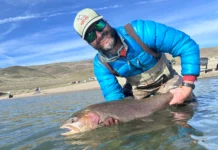
David considers anything over 30 inches a bull redfish. His average fish is around 34 inches or larger, with some pushing 45 inches and the bigger fish often being females.
Big reds fight differently depending on the water. On shallow flats, they may run for deeper water before settling into a bulldog-style fight. In deeper canals they tend to dive, while very shallow fish may rub their faces in the mud trying to dislodge the fly.
For reds chasing shrimp along shorelines, he casts well ahead and uses long strips as the fish approaches. Belly crawlers are harder to feed because they are extremely shallow and wary, so he lets them find the fly naturally.
When the fly isn’t visible, David watches the fish’s reaction as it approaches. A strip or pop can trigger a tail kick and help confirm the fish is on the fly. Once it eats, he uses a long strip set, not a trout set.
(20:15) David wants anglers to make a long, hard strip set and keep the rod down until the line clears and the fish is on the reel. With around 30-pound leader, there’s plenty of room to put pressure on a big redfish.
David likes redfish lines with a heavier front taper because many shots happen at just 30 feet, not 60 or 70. The goal is to load the rod quickly and turn over a larger fly at short range.
He says the exact pattern usually matters less than the presentation. Get the fly close to the fish, move it like something it wants to eat, and be ready for the strip set.
(23:31) David positions the boat to make casting easier, keeping the sun behind anglers and using tall marsh grass for wind protection when possible.
Before a Louisiana trip, he recommends practicing quick 20- to 40-foot casts instead of focusing on 70-foot distance. A few false casts should be enough, and practicing the backhand cast can create more opportunities when wind or boat position changes.
(31:04) Jack crevalle are one of David’s favorite fish to chase. They’re usually found in deeper water around birds and bait, barrier islands, and nearshore oil rigs.
Jacks can show up in March, though fishing is hit or miss early. They come into full swing around August and can usually be found through mid-October before disappearing for the winter.
(34:09) Returning anglers sometimes switch things up after catching plenty of redfish, with jack crevalle and sharks among the other species David targets on fly.
(36:19) David’s first advice when a redfish appears is to stay calm and avoid leading the fish too far. Nervous anglers sometimes place the fly 10 feet ahead, where the fish may never see or react to it.
For a cruising redfish, he likes the fly about two feet in front of the fish and a foot long, allowing the first strip to bring it across the fish’s face.
(38:19) Many first-time anglers still trout set, though David says they sometimes get away with it when a redfish eats aggressively. His main advice is to listen to the guide on the poling platform throughout the shot.
Guides tell anglers when to strip, stop, or move the fly and explain their terminology before fishing. If a guide says “bump the fly” or “long strip,” anglers will already know what movement they want.
For fall and winter trips, David recommends preparing for quickly changing Gulf weather, even when the forecast calls for sunshine and 70 degrees. Key gear includes:
(42:33) David handles the shrimp boil and oysters on the first night, when guests can also meet some of the guides. After that, guests generally handle their own meals, with options at the Cocodrie marina and in Houma. A Moccasin Fly Club host helps organize the trip, rig rods, and keep things running smoothly.
Trips are usually six anglers with three guides, with anglers often rotating between guides. David describes his style as calm and mellow, but says guides need to adjust to each angler because guiding is as much about customer service as fishing.
Weather can occasionally make fishing impossible. David recalls a day when it was 30°F with 30-mph winds out of the north. Instead of fishing, the group headed to New Orleans, visited the National WWII Museum, and still made a great day out of it.
When that redfish shows up, don’t be afraid to take the shot. David’s advice is to get the fly close, commit to the cast, and give yourself a chance to hook the fish.
David Phelps is a Louisiana fly fishing guide specializing in sight fishing for redfish. His background includes the San Juan River in New Mexico and Alaska’s Lake Iliamna and Naknek River. He now guides the Louisiana saltwater marsh and works with Moccasin Fly Club on redfish trips.
Episode Transcript
WFS 991 Transcript 00:00:00 Dave: Every destination has a season when it feels just right along the Louisiana Coast. That season brings clear marshes, moving tides and some of the best redfish sight fishing of the year. Today, we’re heading into one of the largest marsh systems in North America to talk about what makes this fishery so special, how changing conditions shape the fishing, and the simple adjustments that can turn a missed opportunity into a fish to the net. This is the Wet Fly Swing podcast, where I show you the best places to travel to for fly fishing, how to find the best resources and tools to prepare for that big trip, and what you can do to give back to the fish species we all love. Our guest today is David Phelps from Southbound Fly Expeditions. David’s path has taken him from guiding the trout waters of New Mexico to chasing fish and giant rainbows in Alaska. And today, we’re going to be spending an hour here talking about the seasons and where he helps anglers experience Louisiana’s incredible redfish fishery. You’re gonna find out David’s simple system for placing the fly where redfish actually want to eat it. The casting mistake he sees more than any other and how you can avoid it. We’re also going to find out about tackle Flies, the setup he recommends. If this is your first trip for redfish, plus the surprising variety of species you might encounter, including black drum, sheepshead, jack crevalle and alligator gar, just to name a few. On the flats here, we’re going to be talking about some of these other opportunities, not just redfish today. And if you’re interested in putting this trip together, we’re going to be doing this with Moxon Fly Club. We’ve got a big one coming here and we’re going to be focusing on this. So this gives you a little little taste of the upcoming trip. All right here he is David Phelps. You can find him at southbound Fly expeditions dot com. Here he is. How you doing David? 00:01:44 David: Doing good. How are you doing? 00:01:45 Dave: I’m doing great. I’m doing great. Always good to talk fly fishing. Uh, and get started. Especially when we talk about some areas that we, uh, we’ve been thinking a lot about. And I think redfish is one of those places that for sure is on most people’s lists if they haven’t done it yet. And then and you’re in this part of the area, I think we’re going to talk about maybe doing, you know, more sight fishing and some of the other species out there. But before we jump into that, maybe just give us a heads up on, you know, how you came into fishing for redfish. Is this something you’ve been doing a while or you get started a little bit later? 00:02:15 David: I it’s been something I’ve been doing for a while. I’m originally from Louisiana area and kind of moved to Texas. And then my dad lives in Louisiana. So. But I got my start fly fishing on the San Juan River in New Mexico. Um, I moved up there when I was about nineteen and got my first guide job up there. And then I’ve been kind of seasonally working down in Louisiana, but I’m full time for the past two years now. Oh, cool down here. 00:02:40 Dave: Right on. So you’ve done a lot of trout fishing then over the years. 00:02:44 David: Yes, sir. There. And then spent a couple summers up in Alaska. 00:02:47 Dave: Oh. In Alaska. Okay. And what part of Alaska? All over the place or just one place? 00:02:51 David: I was on the river for a little bit off of Lake Iliamna. Oh, yeah. And then I was on the Naknek River in King Salmon for a while. 00:02:58 Dave: Yeah, two of the big ones for rainbows, right? You guys get that’s the both of those are kind of a swing game, right? Is that what the focus is? 00:03:05 David: Yeah. Later in the season. Definitely a swing game after kind of all the eggs have kind of dropped out and the salmon are dying and the rainbow starts getting on the flush patterns and etc.. 00:03:15 Dave: Wow, that’s pretty awesome. So you’ve got really three spots, Alaska, that area. You’ve got New Mexico, which we’ve been talking a lot about. We’ve been, you know, we’re actually talking about putting a trip down there as well. And then redfish really three kind of top locations, destinations is this, it sounds like now in the salt, is this kind of where you spend most of your time? Are you still getting out and doing some trout? 00:03:38 David: Uh, I spend most of my time in the salt now. 00:03:40 Dave: Yeah, yeah. Good. Okay, nice. Well, maybe start there on, you know, getting into this trip. And we first connected, uh, through Mox and Fly club. John through some of the stuff he’s doing. Maybe just start us there. What’s your, um, maybe talk about the trip with moccasin? Because I think we’ve been talking about planning something there. Describe what that trip typically looks like and you know, and what people might expect heading down there. 00:04:02 David: Yeah. Of course. So started with John’s an amazing guy. He puts together great trips and stuff like that. Um, so his trip is he approached me. I think we’ve been working together for going on. This will be the third year and, uh, it’s just been getting bigger and bigger every year with more trips. Um, he’s put together a great program where gets you down to do saltwater fly fishing for a cheaper rate than normal, which is great. Uh, he focuses more on the fishing rather than all the other stuff that some of these bigger name lodges, you know, charge you all that extra money for. Yeah, which is good. So the first night they come in, it’s a three night trip. So you fish three days and you’ll stay for three nights. And the first night we kind of worked out a deal where I actually come down and I will meet all the guests that are coming down and cook a shrimp boil for everybody. 00:04:51 Dave: Oh, wow. 00:04:52 David: So that’s a little. Yeah, bring fresh oysters. Teach everybody how to crack the oysters and all that good stuff, and then we’ll fish for three days. And I mean, it’s a great trip. The marsh is a special place. 00:05:04 Dave: So yeah, yeah, it feels like we do a lot of these. And I think John’s on to something here because it feels like, you know, obviously if you add more days, it costs more money, but it feels like three days is a decent amount of time to kind of, you know, get down there three days on the water. How do you feel, you know, on that? Does it feel like that’s a good shot to get some redfish, some, some action there? Uh, you know, sight fishing? 00:05:26 David: Yes, sir. It is, uh, you know, three days is what I would tell the minimum, you know, people do two days and stuff like that. But with that fall winter time fishery, we will get cold fronts that blow in and those cold fronts can really kind of mess with the fishing for the the first day of the cold front. If you’re lucky, you know, you’ll hit a backside of the cold front. And those are the days we dream of in the winter is the backside of the cold front. The fish move out of the deep water back on the flats, and they want to eat everything in their way. 00:05:55 Dave: Right? And is that the timing on the trip? Is the the fall winter the best time? The only time. What do you recommend there? Or is that the one Moxon’s doing? 00:06:04 David: Uh, that’s kind of what moxon’s doing. This is a year round fishery down here for sure. Um, everybody knows it. It’s kind of this fall and winter fishery and that’s a great time to be here. You know, the fish are on the flats, the water usually clears up a little bit and stuff for the summertime. And spring can come with a lot of great fishing as well. But the moccasin club trips are usually, I think the first one we’re doing this year is in October, and the last one we’re doing is in February. So we got, I think, nine total trips this coming fall and winter season with moccasin. 00:06:36 Dave: Amazing. Yeah, yeah. So that’ll be so fall winter. So let’s just take that to that fall. So is it typically are people on you know the first trip they’re coming in on like a weekday weekend. What does that look like? Or is it kind of vary? 00:06:50 David: It kind of varies. You know, I get everything, you know, once, uh, October rolls around, it’s full swing till about end of February, where we’re working almost every day. 00:06:59 Dave: Okay. And what is going on? And talk about the fish species a little bit on summer into the fall. What are they doing? When’s the kind of the spawn. Like what? You know, what, how are the fish changing as you go summer to fall? 00:07:13 David: You know, so kind of that early summer, that late April, May, June, it’s a little slow around here. It’s not great. Um, there’s still fish to be had. You know, there’s Jack Gravel’s around. If anybody knows a lot about Jack’s, they’re they’re big. They’re mean. They’re very powerful. Really, really fun fish to chase. Um, and then when we move into like about this time of the year, this is when it really, really kind of starts kicking off, in my opinion, we start getting these fish that are kind of getting almost pre-spawn mode and stuff like that. And these big bulls are starting to school up together and get on the ocean front and a little deeper water. And we have nice weather this time of year where it’s pretty flat calm for most days. So we’re chasing schools mostly. So that will go from about beginning of July all the way into late September. We will be kind of focusing on big schools of redfish. So in my opinion, easier fishing. If you get on a school, it’s pretty much just throw it in. There could be a school of one hundred redfish that are all thirty five plus inches, and you just got to get it in there and move it and something’s going to eat it. 00:08:22 Dave: Yeah. 00:08:23 David: Um, great. Topwater action, stuff like that. Once we move into more of the fall, then we start getting those first cold fronts and stuff like that. They kind of break off out of those schools. We still do find schools that time of the year, but it starts getting into more like singles and doubles moving in across flats, you know, up in the foot of water tailing, belly crawling, do that kind of stuff, you know, focusing on crabs or coming down a shoreline busting shrimp up and stuff. 00:08:49 Dave: Gotcha. 00:08:50 David: So it’s a little bit of both. So you’re following winters, more of your shallow water flats, fishing, and then your, you know, late summer time is more of your, uh, school fish in running and gunning and running the boat, looking for birds, diving on shrimp and, you know, chasing schools. 00:09:08 Dave: Wow. Yeah. So there’s so really, it all comes down to, yeah, a big part of it is the, is the food, right? What’s going on? And temperatures, I guess that’s a big part of it. Like you’re saying, if a front comes through, it might change the fish for a little bit. And then what do they do when that happens? When the cold front comes, they just go deeper. Or what happens when that cool water or the cold weather comes. 00:09:27 David: You know, they’ll just go deep. They’ll go hide in a deep trench of the march, sit down there, kind of go lockjaw for a while. Once that water warms up again, then they’ll start feeding. And those cold fronts we get down here, everybody thinks we’re, you know, southern Louisiana. It’s going to be warm and stuff like that during the winter. It is not. It is by far. You know, if we get a cold front blowing in with one hundred percent humidity and it’s forty degrees outside and you’re running that boat in there. It’s bone chilling and that water temperature drops, right? 00:09:55 Dave: Yeah. Forty degrees is not warm. Yeah. When it gets down there and wind and everything, it’s it feels like winter. 00:10:01 David: Yes. Yes sir. 00:10:02 Dave: Right, right. But at the same time, you could have, uh, like summertime weather, right. I mean, in October, could you have what’s the high, what could the high be like mid nineties. 00:10:12 David: Yeah. You know, last Christmas I got on Christmas Day, but in between Christmas and New Year’s I had a charter and we were out there in shorts and flip flops. Wow. I mean. 00:10:20 Dave: Yeah, yeah. That’s why it’s awesome. You never know what you’ll get. Do you find with kind of changes in climate or weather patterns and stuff that things are changing, or is it still pretty consistent? You kind of. Is it predictable? 00:10:31 David: It’s still pretty consistent. Yeah. You know, um, especially with the winter, I mean, it’s pretty standard. You know, we’ll go, we’ll get some nice days. Cold front will blow in. Yeah. Hit the back side of the cold front. It’s a little windier sometimes during like January and stuff like that. But the fish are happy and you just got to push through it. 00:10:50 Dave: Yeah, just get through it. And where are you located? Exactly? Where would the people be coming in and where are you located? And then where would we be flying into? 00:11:00 David: So you fly into New Orleans and we’re about an hour west of New Orleans, an hour and a half west, so kind of south of Houma, Louisiana, which is just west of New Orleans. 00:11:10 Dave: Okay, just west of New Orleans. And then and what is the, um, like where people will be staying kind of the accommodations. What does that look like? 00:11:18 David: Uh, there’s plenty of different options, you know, with the Fly Club group, uh, he rents this really nice Airbnb on the water. It’s right next to the boat ramp. Um, so a lot of my people will stay Airbnb. There’s a Marina that you can, uh, excuse me, rent rooms at, and then there is hotels up in Houma, Louisiana, but it is about a thirty minute drive down to the Marina from those hotels. So a lot of people end up doing Airbnbs. 00:11:44 Dave: Yeah. Airbnbs. Okay. And then people will be there and then you just pick them up on on day one. Is that how it looks like? What is the first day look like on the water? 00:11:54 David: Well, day one we meet at the Marina and jump on the boat and we get rolling right there. Um, you know, time in the morning kind of depends on what the fishing are doing, what the water temps are. All that stuff and what the plan is for the day. So usually in the fall and winter we do start eight. You know, in the summer times we’re usually on the water by six thirty to get out of the heat earlier. 00:12:14 Dave: Gotcha. And where are you guys going? Maybe without giving any full secrets, what’s the general area where we’re going to be fishing. 00:12:22 David: So the marsh. So pretty much, uh, if you look at a map of Louisiana, um, the southern part of the state, I mean, it is just marshland for miles and miles and miles, which makes it so incredible of a fishery. You will know one person will ever learn this total marsh. I mean, there’s so much water to fish. It is amazing. There’s there’s always the next pond over the next creek. Over. 00:12:46 Dave: Oh, wow. 00:12:47 David: And that. So it’s pretty crazy. You know, it just runs for miles. 00:12:50 Dave: And are they all connected out there? Is it all connected? 00:12:54 David: Pretty much. Yes, sir. 00:12:55 Dave: It is. So you can pretty much hit one marsh and then go through a canal or something and get to the next one just all the way to the ocean. 00:13:02 David: All the way to the ocean. 00:13:02 Dave: Yep, yep. That’s right. Yeah. Because that’s exactly what these fish maybe is that kind of what they’re doing? Maybe you can describe that a little bit on the life kind of history of the fish they’re coming in from as juveniles describe that. When do they start coming into that area or are they going out and then coming back? 00:13:18 David: They’re going out and coming back. So the juvenile redfish, which I believe is spawning size is about twenty five inches on these fish. So okay, the juvenile redfish will live way back up in the interior marsh where there’s a lot of kind of brackish water, okay. 00:13:34 Dave: Like where places you guys aren’t fishing, you’re not fishing like way up high. 00:13:38 David: So we will fish up there if we’re looking for those smaller fish. Mhm. Um, and we’ll do that at like late spring and stuff like that. in summertime sometimes. Uh, but yeah, so the juveniles lived there. Once they get to spawning size, they spawn offshore. And a bull redfish is a fish that, you know, everybody has kind of a definition for them. I think a bull redfish is a small sized redfish. So those redfish will move offshore to spawn. And a lot of places that have redfish like Texas, South Carolina, all those places, those bull redfish, usually once they go off their spawn in the Gulf or the ocean, they’ll just kind of stay out there. Our bull redfish will come back into the marsh very freely. So a lot of times we’re fishing that exterior marsh for those bigger fish so they can go from deep water to shallow water very easily. 00:14:29 Dave: Oh, I see so and down where you’re fishing, they’re coming in, they’re kind of going in and out to chase, uh, to, to what are they doing? Just kind of get food and then heading back out. 00:14:38 David: Yes, sir. Yeah. Gotcha. Chasing shrimp. Um, when that fall, when the shrimp start moving out of the marsh into the Gulf. Uh, those redfish are chasing them. 00:14:48 Dave: I see. Okay. And you said so. Twenty five inches is your kind of what you use as the cut off to the bull red, which is basically a big male redfish. Is that what we’re talking about here? 00:14:58 David: Yeah. So they’re females too. 00:15:01 Dave: Oh they are. 00:15:01 David: Bigger ones are going to be the females. And you know twenty five inches is kind of spawning size. I consider a bull redfish. Anything over thirty inches. Okay. Um some people consider bull redfish. Anything over twenty pounds. Um it’s a preference in my opinion. It’s a big redfish. 00:15:17 Dave: Yeah. Right. Doesn’t really matter. It’s big. 00:15:20 David: It’s big you know. 00:15:21 Dave: Yeah. Exactly. Yeah. If it’s twenty five inches or thirty or twenty pounds, I mean I think especially for somebody maybe new or that hasn’t caught a big one probably isn’t critical. Right. I’m guessing a fifteen pounder probably is a pretty good fight too. 00:15:34 David: It’s a great fight. I mean, you know, and our average fish size is usually around thirty four inches and bigger. And we’ll see a couple that are pushing forty five inches every year. And I mean, these days they just pull they don’t give up really. 00:15:50 Dave: What is that like when you get you hook into a redfish, one of these big ones, let’s just say it’s in that twenty pound range. What’s that first minute or so feel like with redfish. 00:15:59 David: So it varies by what fish you hook and what type of water you hook them in. Um, you hook them in a really shallow flat. A lot of times he’s gonna take off running for deep water. 00:16:09 Dave: Oh, right. 00:16:10 David: You know, very, very, not very often do I see us get into backing. A lot of times they’ll make that big burst and they’ll stop. And then the fight is more. You gain some and he’s going to take it right back out. It’s more of a bull dog fight like a big brown trout in a deep hole. You know he’s not going to make a scream and run. It’s the first run. Might be a scream and run, but after that, it’s gonna be a very bull doggy fight. 00:16:32 Dave: Oh, nice. 00:16:33 David: You hook him in deep water and a deep canal or something. You’re chasing schools or something. A lot of times they’re going to dive deep on you, and you’re just pulling straight up on them and they’re running. And it’s a pretty hard fight in deep water. And shallow water is cool because they’re just flipping their tail up and, you know, trying to rub their face in the mud to take the fly out. 00:16:50 Dave: Oh, wow. That’s cool. Right on. Yeah. So they’re pretty much just Bulldog. You said at bull Red right there dogging you. They’re kind of just boom like a bulldog going for it. Um, and then maybe talk about a little bit on, you know, so that’s after you hook them. But what is the typical, I think the sight fishing is one thing that’s pretty cool. I always feel like when we get into these conversations, no matter the species, whenever you’re talking about seeing the fish or on the surface, it’s always like a next level. Is that kind of what the game plan is in the fall with a good opportunity? 00:17:18 David: Yes, sir. So all we do is sight fishing. Um, when we’re searching for them in the flats and stuff like that, we have a couple different type of well they’re all redfish obviously, but a couple different types of way. They’re moving way, they’re feeding and stuff. And that depends on how we throw the fly at the fish. 00:17:35 Dave: Okay. 00:17:35 David: So, you know, if we’re moving along the flats and we got a fish and he’s kind of just, you know, kind of moving around slowly every once in a while, tipping his tail and stuff like that. He’s really looking for crabs and stuff like that. So then we’re gonna, we’re gonna get that fly about two feet in front of that fish and then a little long on our casts. Usually you make that first strip, try to get it right across his nose and kind of let it sit for a second. Let him find that because he’s looking for crabs. And a lot of times the crabs don’t necessarily run right away when the fish sees them. So he’s gonna kind of eyeball that thing, and then you kind of give it a little strip, pop it a little bit, get his attention, and that’s usually when he’s going to attack it on the bottom. He’s going to tail on it, grab it, and then a good long strip set, no trout set and we’re good. Um, wow. And then we have fish that are like bust and shrimp on the bank. They’re moving down the bank, going a million miles an hour, blowing shrimp up to the surface. And that fish, we need to throw that out way in front of them and just wait. And then as soon as they get within like three feet, we need to start moving long strips, making that fly look like a shrimp with a long moves, and then usually they attack it pretty fast. The fish. These fish aren’t they’re not permit. They’re not tarpon. They’re hungry. They want to eat a fly. 00:18:51 Dave: Yeah. 00:18:52 David: So you know, just depending on how we’re what the fish is doing, we get a lot of belly crawlers. Those are the hardest ones to feed in my opinion, because they, you know, you got this fifteen, twenty pound fish with half his back out of the water. He’s so shallow. He’s going to be a little wary of everything. So we like to throw those flies way out in front of those fish and kind of let them find it on their own. 00:19:11 Dave: Cool. So you got the you mentioned the start of the how do you know when the fish sees that fly? When you’re ready to start moving on the when it’s the first part, eyeballing it, when it’s sitting down there. 00:19:22 David: Um, just the way he’s working, you know, our water is not extremely clear. So a lot of times we’re not seeing that fly on the bottom. There’s occasionally times during the winter where our water is crystal clear or we’re out way out on the barrier islands and we’re fishing that in the waters, you know, nice green, clear water. Uh, but for the most part, you kind of have an idea where your fly is. And once he approaches to about two feet, then you give it that strip and give it that pop, and then he’ll react to it. And that’s when you know that he’s kind of on that thing. And the way he reacts to it is whether or not we make another strip, or we just wait to tail him to tail on and eat it, a lot of times we’ll pop it again, and then he’ll make one tail kick and stick his face right in the mud on it. 00:20:02 Dave: Oh, right. So even if you can’t see the fly because it’s on the bottom, you make your little move and then he’ll tail and he’ll pound on it and you’ll see his tail. 00:20:11 David: Exactly. So we kind of watch the fish for his reaction to see what’s gonna happen. 00:20:15 Dave: Gotcha. And is the strip set on that. Do you want to do it more of a you know, if you’re not sure, more of a subtle strip set or because then you have another chance or you still want to just do a strip set. 00:20:27 David: I like a kind of a long, hard strip, not like a big like pull and a jab, but a nice long strip and slide into him and you can feel him. And a lot of times when you hit them there, they’ll either run and turn, or you’ll have them for a second and you can reach back down and get another good strip on them. And then I tell my anglers usually don’t ever lift that rod till that fly line is cleared and you’re on the reel, and then you can lift that rod. And that way we can kind of just stay tight to them all the way and make sure we’re jabbing that hook in really good. We’re not. We’re a lot of times fishing thirty pound test here. You have to make a really big mistake to break thirty pound. Right. 00:21:08 Dave: So yeah thirty pound. Okay. So basically yeah, make that nice long strip set. You feel it, you make sure it’s set and then you want to get your line on the reel before you start lifting your rod up, that sort of thing. 00:21:20 David: Yes. Yeah. A lot of times he’s going to clear it himself. He’s going to take off running. That line is going to go shooting through. We’re going to be on the reel within fifteen 20s and then we’re good to go. 00:21:30 Dave: Okay, cool. And what is the on the reel and the gear, the fly rod and stuff like that. What’s your typical what’s your recommendation? Is there one rod that’s good, one length and weight. 00:21:40 David: Uh, I like a nine weight personally. Nine or ten weight. Uh, sometimes an eight weight will do the job. An eight weight for these big fish are just a little under-gunned. We want to have that nice backbone to really pull on them. Um, like a good redfish line. I usually use Cortland, their winter redfish line or summer redfish line. Okay. Depending on the time of year. It’s nice with a big front taper on it because a lot of our shots, it’s not like we’re throwing out sixty, seventy foot shots. A lot of these shots are there’s a fish right there at thirty feet. Let’s make one false cast and get it there. So a good fly line that will load that rod well is what I like. 00:22:18 Dave: So you want something with a front taper that’s not too long. Kind of a shorter tapered on the front. 00:22:23 David: Yes sir. Yes. 00:22:24 Dave: And so you can turn over turn over some of the flies and it sounds like the, the crab flies or what’s your common in the fall. What will be the if we put together a selection of flies, what should be in our box? 00:22:35 David: Those are a couple good flies. Um, I like, uh, tied on one or two odd hooks, um, a couple ones to look at. Redfish, crack, um, Hopedale, crab, stuff like that. Just a lot of like craft for tail with like a EP fiber brush for the head, little flash in there, throw a little rubber legs in there about anywhere from like three to five inches long, three to five. 00:23:01 Dave: Okay. 00:23:02 David: And dark colors a lot of times black and purple. Um, if the water is dirty and then your neutral kind of tan olive colors. 00:23:09 Dave: Gotcha. Okay, so pretty standard there. Like a lot of trips, right? Fly. Seems like sometimes the fly isn’t critical on this. It’s more critical getting that fly with the presentation and the strip and all that stuff. 00:23:21 David: Yes, definitely get it in front of their face, move it the right way. Like I said, they’re not too picky. They want to eat. It just needs to move in front of their nose in the right way. 00:23:31 Dave: Gotcha. When you’re setting up kind of, you know, trying to find the fish. How do you set up for redfish? So, you know, you’ve got the sun and the wind and things like that. Are you are you do you have time to get that all perfect or do you just kind of you see the fish and take your shot when you get it? 00:23:47 David: Um, it depends on the day. You know, it goes every way. We always, uh, I always pull the sun to my back or try to at least. So, you know, in the morning I’m always pulling west or pulling north with the sun coming over on my on the east side with wind wise, we try to fish leeward side banks, you know, we fish a lot of ponds and creeks and stuff like that. So there’s always going to be kind of like a leeward side. So that that winds coming from the north, you know, I’m fishing a north bank of a pond and trying to get a little bit of a, you know, a break from the wind. The marsh grass is an extremely tall out here, but it’s enough to get a little break from the wind. I see for, uh, shots, you know, if I can see this fish coming. Most of my anglers are right handed. Um, but if vice versa goes for left handed too. Um, I try to turn that boat so they can have a forward hand cast. Not always. Will there be an opportunity to make a forward hand cast. Sometimes you’re going to have to make a backwards hand backhand cast. But most of the time I’m trying to turn that boat to get you that forward hand cast to make it easy as possible. 00:24:52 Dave: That’s something that I guess you could work on, right? If somebody’s getting ready for this big trip, practicing that not only the forward hand cast, but the backhand cast being, do you feel like you can get as accurate with the backhand as you can the forward hand cast? 00:25:06 David: Yeah. So if you practice it enough, the backhand cast is honestly just as easy as the forward hand cast. You just gotta imagine yourself forward hand casting to the like. If you want to cast to the right and you’re throwing a backhand cast, just imagine you’re throwing a forward hand cast to the left and then on your back cast. You just let go of the line and it’s going to shoot out at backhand it. You know, everybody makes it a little more complicated than it really is. Yeah. But for practicing casting for this trip, I. I always tell people, um, don’t go out there and try to shoot as far as you can. Don’t go out there throwing seventy, eighty foot shots. You’re not going to need it. You need your practice, your twenty to forty foot cast and making it happen as quick as possible with minimal false casts. 00:25:50 Dave: Yep, twenty to forty feet. So basically you’re sitting there on the boat and it’s just come back once and shoot it out and you’re on where you need to be. 00:25:58 David: Yep. A lot of our casts will be like that. There’s some times where we can’t set up on them. You know, if I see that fish from sixty feet, we can set up and get proper and wait for them to approach to forty feet. And then we can make that cast. But a lot of times it’s like, oh, there he is right there. And drop a cast in there. 00:26:15 Dave: Yeah. Gotcha. Okay. And when you were out there, it sounds like so day one, you know, and you’re obviously out there all year round. So you’re kind of going to already know what’s going on. And so, you know, I’m guessing we’re going out to a place that we think we’re going to see some redfish. Maybe we get a lot of action. Maybe we get into a few redfish on the first day. Um, do you tend to sometimes if people only had three days, would they maybe use one of those days to find some other fish out there? Is that something that there’s interest in, or do most people just want to stick on redfish? 00:26:44 David: Oh, definitely interested into it. Um, the cool thing about the marsh here is where we’re chasing redfish is where a lot of our other species are going to be anyways. So on a given day, I mean, you’re gonna have shots at usually the big three species here for flats fishing is your redfish, your black drum and your sheepshead. And you can find all three of them on the same flat. 00:27:05 Dave: Oh you can. 00:27:06 David: Yes. So where we fish for those redfish, there’ll be black drum mixed in. There’ll be sheepshead and also occasionally big alligator gar moving around. Nice. All these fish are they’re a blast to catch. You know the main target is the redfish. 00:27:19 Dave: Yeah that’s right. How is the redfish different than say you know those other two say sheepshead and black drum because they’re kind of similar body morphology. Right. Or kind of more similar. What’s the biggest difference? How is a redfish different? Why is that the one that people tend to are going for? 00:27:36 David: You know the big difference between the redfish and black drum. We’ll get into sheepshead in a second because they’re kind of a different style. Um, one, the redfish are so much more prettier. The black drum are the ugly stepsister. 00:27:50 Dave: They are right. 00:27:51 David: They’re not the prettiest thing. The redfish fights a lot harder than the black drum, but the black drum are still don’t pass up on them. They pull hard. I mean they get huge. I mean massive. 00:28:05 Dave: Bigger, bigger than redfish or about the same. 00:28:07 David: They get taller, taller. 00:28:09 Dave: Okay. You know. Right. Like bigger, thicker. 00:28:11 David: Yeah. Thicker. And, uh, and they still pull extremely hard, you know, they’re just kind of some people just kind of pass up on them. I, I don’t, I mean, they all pull, they’re all fish. Um, but yeah, the redfish just prettier and they fight better. 00:28:26 Dave: Okay. 00:28:26 David: So that’s kind of why everybody likes them better. Um, the sheepshead, the sheepshead, one of my favorite, honestly, we call them Cajun permit around here. 00:28:33 Dave: Oh, nice. 00:28:34 David: Um, they’re very tricky to feed. They’re not nearly as big as the redfish and black drum. They’re kind of smaller fish. Kind of like an oval looking fish. They’re black and white striped. They got these crazy human teeth on them. 00:28:47 Dave: Yeah. The human teeth. Right. They got the crazy human teeth. 00:28:50 David: So that’s what kind of makes them hard to feed, to catch. Because a lot of times they’ll eat your fly and you’ll set the hook and you’ll just bounce right off that tooth. 00:28:57 Dave: Oh, right. 00:28:59 David: But they’re very tricky. They like to follow your fly a lot. All the way to the boat. They’ll kind of like tip on and look like they’re eating it, but they’re just staring at it. So they’re really tricky. We have a whole tournament down here, uh, called the Sheepy. 00:29:12 Dave: Oh. No kidding. 00:29:12 David: Trying to catch sheepshead? Yeah. 00:29:14 Dave: It’s called the sheepy. 00:29:16 David: Yes, sir. Yeah. 00:29:17 Dave: Cool. So that’s the sheepshead in there. And they have the crazy teeth. And what are the teeth? The differences. What are they just eating something that’s harder. Why do they have those human teeth? 00:29:26 David: They’re cracking crabs with um, they’re, uh, chewing on like post and stuff for pulling off barnacles and stuff like that. 00:29:35 Dave: So yeah, I gotcha. Gotcha. Wow. This is going. And what’s on the sheepy tournament. When do you when do you do that? What time of year is that? 00:29:42 David: That’s in March. I’ve never done it personally. I’ve thought about doing it, but I’ve always been kind of guiding and just never got around to doing it. Maybe one of these years. 00:29:49 Dave: Yeah. Gotcha. So you got the sheepshead and then. And then the other one, the alligator gar, which is a totally different fish, right? That’s doesn’t look anything like these other three. 00:29:57 David: Yeah, a totally different game. Um, get massive. They’re long, they’re prehistoric looking. They’re wild fish and they have teeth on them like alligators. I mean they’re nuts up there during the fall and winter, early fall. They’re they’re pretty easy to fish for. You find them. You cast it in front of them, you kind of strip it in front of them. Just kind of like a snapping motion. Oh, they are down on the floor. 00:30:20 Dave: So during this time of year, when we’re there in the fall, we might have a good shot at one of these. 00:30:24 David: Yes, sir. Yeah. Uh, towards the winter. You don’t see him, you see him, but they’re kind of lethargic move and they don’t really like that cold water as much. Into the summertime, though, the summertime, they get moving pretty good and they’ll actually chase a fly down. 00:30:37 Dave: Wow. And they have the big teeth as this one where you have to do some sort of, um, you know, tangled in their teeth to hook them. Or do you just hook them like a normal fish? 00:30:47 David: I just hook them like a normal fish. I know there’s people that do do the tangle and the teeth with these fish. Um, I’m usually not like straight target. Yeah. I’m not targeting them. I’m usually targeting redfish and then one, you know, floats up or there’s one on the bank and then we just throw the redfish fly at them. 00:31:04 Dave: Gotcha. Yeah yeah, yeah. So you’re still looking for. Yeah. You got the redfish out there. Okay. So that’s a few other. And I feel like that would be pretty cool to be able to come there and, and get a shot at some of these other fish. So you go away, you know, with, with not just the redfish, but you got a bunch of these other ones. And, and I feel, and it sounds like maybe if you had three days, of course, conditions could always change, but it sounds like you’ll probably have a pretty good shot at, you know, some redfish, if you know, unless some crazy storm rolls in. Right. And and that’s just fishing. Is that kind of the case? Do you kind of feel like there’s usually a pretty good shot at finding some redfish out there? 00:31:36 David: There’s a pretty good shot of finding some redfish on any given day. Unless, like you said, crazy weather happens. Um, it’s the ocean. It’s a big ocean out there. They can move any which direction. 00:31:46 Dave: Yep. That’s it. 00:31:48 David: Yeah. The one other species that I’ll talk about a little bit is, uh, the jack Jack Crevalle. I mentioned them earlier, um, by far one of my favorite fish to chase. Um, they’re not in as shallow water a lot of times they’re usually finding them underneath birds blowing up bait. Um, but they’re big. They don’t get a great rap for being a sport fish for some reason. 00:32:12 Dave: Yeah. Why is that? Because they look like an amazing fish. They look like something, you know, like any of these other amazing permit or these fish, right? They look like a sport fish, but they’re just like, just they don’t get the love as the other ones. 00:32:24 David: Yeah. I’m not sure why they don’t. There’s some programs trying to change that. They’re doing a lot of research on them now. Um Saltwater Guide Association I think is doing it, um, where they’re tagging Jax and stuff. Um, but for pound for pound fighters, I mean, and a lot of times we’re throwing top water at them, which just makes it cooler. Um, they will crush a popper if you throw it into a school of one of those. They will be hitting each other sideways trying to eat this popper. And then you hook up into them. And a lot of times I’m throwing eleven wait for these fish. And when they hit that fly and you set that hook, you are in your back and in no time. Yeah. And it is just and a lot of times, you know, if you’re not used to pulling on big fish and know how to really use the backbone of those big rods, I mean, I’ve had guys hooked up to them for about forty five minutes before we land them. I mean, they pull and pull and pull. 00:33:15 Dave: Wow. And are you in the same areas as you’re fishing for redfish, or is this out in the deeper water? 00:33:20 David: This is usually out in the deeper water or out towards the barrier islands, or even oil rigs will run out to near shore oil rigs. And that’s mostly your kind of they start showing up the first in March and then kind of hit or miss. And they really kind of last one we caught, I had a guy from, uh, Colorado, actually no New Mexico, but he was here in June and we caught some in June. And then they go full swing right about this time of the year into August. And then you usually see them all the way till about middle of October, and then they’ll kind of disappear for the winter. 00:33:58 Dave: Mhm. Gotcha. So then you will get a shot maybe earlier in the in the Or. Well, I guess a little bit later in the fall. But that October, early October, you might have a shot at them there. 00:34:08 David: Yes, sir. Yeah. 00:34:09 Dave: Gotcha. Well, I think the cool thing is, is as you as we talk about this, I think you start to feel like, man, doing a trip would be great. But this is something I could see just making an annual. Right. Making this an annual thing. So you could kind of hit, you know, hit all these species as much as you need to. Is that something you find when people come back? They’re always going for redfish, or do they? They think, well, let’s go for some jacks this time, a little harder. 00:34:30 David: Yeah, I got people that definitely want to come down and do jacks. Uh, I’ve caught a lot redfish. They want to change it up a little bit. Uh, there’s lots of sharks to be caught too. So I have guys that want to be like, let’s go catch a shark on the fly. I’m like, all right, let’s. 00:34:42 Dave: Go do it. 00:34:42 David: Yeah. So I still have people coming down that need to catch a sheepshead. John actually needs to catch a sheepshead. 00:34:49 Dave: Oh he does. Oh, there we go. 00:34:50 David: Yeah. They’re tricky. And then you get people. I had a guy, uh, with a moccasin fly club group actually, and he caught a lot of redfish. We had a great three day trip. Um, and he last day he was like, let’s just try and catch a sheepshead. And I was like, okay, well, you know, we’ll try. They’re pretty tough. And then I go to the spot where I know there’s probably going to be one. We show up there he is right there. One cast hooks up, lands it, and he’s like, well, that was kind of easy. And I was like, yeah, well, yeah. 00:35:18 Dave: That’s how. 00:35:19 David: It. 00:35:19 Dave: Goes. That’s exactly that’s how it should work. Yeah. It shouldn’t always be super hard, right? You you get the right the right conditions, right. For any of these species. And it’s probably not super hard. It sounds like even with redfish, right? If the conditions are right and you make a cast that’s within a pie plate and the right, you probably have a good shot at hooking it. 00:35:37 David: Yes, sir. Yeah. 00:35:37 Dave: Yeah. Not like permit. Like that’s a whole different thing. Right. Some of these other species permit, and I’m not sure what other ones are out there that are the really hard ones. Well, maybe. What do you think out of the species you mentioned are the hardest to hook up into? Once you see them. 00:35:49 David: Uh, here in Louisiana? 00:35:50 Dave: Yeah, yeah. In Louisiana. 00:35:53 David: Um, it’s probably the sheepshead, the sheepshead and sometimes the alligator gar. 00:35:58 Dave: Yeah. Yeah. That’s it. Wow. So that gives us a good background on kind of everything. Any maybe let’s go into the redfish again. Let’s take it back to we’re there. We’re getting ready for our shot. What are a couple of tips you’re telling us to make sure we you know, maybe hook into that fish? If we’re sitting there, we see it. We’re getting ready. What’s the coaching beforehand? You tell us. 00:36:19 David: Uh, so before the shot, we just try to stay calm. Don’t shoot too. Don’t lead him by too much. I get a lot of people that get nervous and they don’t want to mess it up, so they put it ten feet in front of this fish and, um, he’s not going to see it, nor is he going to care about it. 00:36:35 Dave: Yeah. And you can’t strip that thing into him slowly to the right spot. If you go too far. 00:36:40 David: You can on certain given conditions. Um, but a lot of times we got so little distance to work with unless it’s a flat calm day on a crystal clear flat, the sun’s right in the right level. And we see this fish from one hundred feet away, which doesn’t happen very often. A lot of times, you know, we see the fish at forty feet, fifty feet, and we can’t really lead them by that much. Um, yeah. So if you do lead them by too much instead of waiting, I always suggest you strip it and go again. Okay. But I always tell my anglers I’d rather you spook that fish than lead them too long, spook em or hook em. 00:37:13 Dave: Right. Yeah. Don’t be afraid to make the. That’s kind of the cool thing about fly fishing, too, right? Like, or any sport, really. It’s like you take the shot and you just go for it. You know, you might mess it up, but you know, you might not. You might hit it right on the spot and like a grand slam, right? 00:37:28 David: Exactly, exactly. 00:37:30 Dave: Yeah. That’s cool. Okay. So hit the spot so you know where you need to go. You need to lead it by what? Like you’re saying a foot or something like that. You get it right there and then it drops in. 00:37:39 David: Exactly. Yeah. I like about two feet in front of the fish and about a foot long. So that way our first strip comes and if he’s cruising, that fly is going to get stripped in front of his nose at about a foot. 00:37:49 Dave: Okay, so two feet. Yeah, two feet past him and then a foot in front of him sort of thing. 00:37:54 David: Yeah. Like two feet in front of his nose, but like a foot long that way you’re stripping the fly across his face. 00:37:59 Dave: The opposite. Yeah. So two feet in front of the fish and then a foot long. That way when you strip it, he’s maybe moving right into it. Yes. Yeah. Okay. Good. So that’s a that’s a great tip to remember. So hit your spot. What else would you throw out there as another coaching tip to give us there. 00:38:13 David: Do not try out set. Yeah. 00:38:15 Dave: Don’t try set. That’s the biggest one. 00:38:17 David: That’s always a good one. 00:38:19 Dave: And what percentage of people when you’re out here, you got some new people on the boat. You’ve already told them don’t trout set. You know they’ve heard it before. How many people? What percentage of people still trout set on their first time? 00:38:29 David: Quite a bit, to be honest. 00:38:30 Dave: It’s still a lot. Quite a bit. Yeah. 00:38:32 David: Yeah. But, you know, sometimes you get away with it with these fish are in their mood and they just clobber it. I mean, you can do anything and you’re still going to hook them and they eat it so hard sometimes. Um, but yeah, other than that, uh, just really kind of listen to whoever’s on the poling platform, whoever your guide is that day, you know, if you’re talking about the moccasin trips, you know, it’ll be either me or several other different guides that I work with down here. Um, and, uh, they’re going to tell you how to strip that fly, when to leave it and all that stuff. So if you just listen to them, you hit your spot. They’re going to tell you to strip. They’re going to tell you to stop that fly. Everybody’s kind of have their own lingo for what they want you to do, and they’ll talk to you about it in the morning like, hey, if I say bump the fly, I want you to move the line like this. If I say long strip, I want it to look like this. And that way we’re all kind of on the same page. 00:39:25 Dave: That’s it. So listen to your guide. So they’re going to be coaching you just the full thing right into the fish until you hopefully hook up. 00:39:32 David: Exactly. Yep. 00:39:33 Dave: Okay, cool. Well, what else should we be like? We’re getting ready for this thing. What’s the other gear? We got a rod. What else should we be having on the boat for? You know, um, it’s pretty straightforward, right? Because the weather is not going to be too bad. Although it sounds like you want to be prepared with your have some extra stuff in case the weather comes in. Describe that. What’s some important gear that we should be having that you, you know, we don’t want to forget. 00:39:54 David: You know, if you’re coming during the fall and winter, definitely bring the cold weather gear. Um, yeah, you know, it might say sunny and seventy, but that can all change. I mean, we’re down here on the Gulf. All that weather can change really quick. So pack the cold weather stuff. Um, pack good shoes. Uh, you’re gonna be standing on the bow. 00:40:14 Dave: Yeah. What shoes should we be packing for this trip. 00:40:17 David: You know, if it’s nice and hot, you know, flip flops are fine. Um, but a lot of times I suggest wearing a good shoe you’re comfortable in. Um, a lot of guys wear in me particularly where, um, the, uh, extra tough boots during the winter. 00:40:32 Dave: Oh, really? Okay. 00:40:33 David: Yeah. So they’re nice waterproof. Uh, keep your feet warm, uh, comfortable to stand in all day. 00:40:39 Dave: Like the full extra tough that go up your calf all the way. The full boots or like the half. 00:40:44 David: No, the deck boots, those ones that come a little over your ankle. 00:40:47 Dave: Okay, so maybe a pair of sandals and the deck boots. Or maybe just bring a pair of sounds like you don’t need like, necessarily you don’t need wading boots or you don’t really need those water boots either. Right. It sounds like just a regular pair of shoes would be fine because you’re not really getting out in the water. 00:41:01 David: Yeah. Regular pair of sneakers. Uh, good comfort on your feet. All that. That is perfectly fine. Um, definitely bring, uh, rain gear, whether it’s raining or not. You want rain gear? Especially if we have a windy day. Some of these bays that we have to cross and we’re in Poland. Gifts. You know, my boat’s a seventeen footer. Um, it’s got a good feel to it, so it cuts through waves. Nice. 00:41:21 Dave: But you’re out there. 00:41:23 David: You’re out there. And I mean, it’s gonna you’re gonna take some chop. And if it’s really windy and we have to cross an open bay to get home or get to the spot, I mean, you’re going to get some spray. So bring rain gear just to keep yourself dry. 00:41:35 Dave: Yeah. Bring rain. So I’m picturing then you don’t need waders. You just wear bibs. Is that your lower part of the rain gear. 00:41:41 David: Yeah. Bibs, rain pants, anything to keep you dry. You know, even those cheap frog tog suits from, you know, your local sporting store? 00:41:50 Dave: Yeah, even the free, uh, the frog togs, the lighter stuff, even that stuff. Whatever. Just to keep the wet off you. 00:41:55 David: Yeah, just keep that water off you. Those morning runs sometimes can get a little wet. You don’t want to be sitting there wet all day. Um, it’s humid down here. Want to, you know, keep yourself dry. Have a good day. 00:42:07 Dave: Yeah. And what about glasses? What is that a critical part here. Being able to have the right lens there. 00:42:13 David: Yes of course polarized. Just like any fly fishing, you need a good polarized lens. Um, a standard copper amber lens will be good. Uh, I kind of vary through a couple different lenses depending on light conditions, but a good, you know, standard copper, amber polarized lens will be fine. 00:42:33 Dave: Okay. Yeah. And that’s pretty standard. Okay. It sounds like, yeah, actually a lot of stuff you would be using if you were out on a, you know, really a winter steelhead trip even, right. Or something like that. Just having, bringing that gear just to stay, you know, your wet gear and your glasses and kind of all that stuff. Um, what does it look like? So we talked about getting, let’s just say we’re coming in on a Sunday flying in. So people, it sounds like flying into New Orleans and then grabbing a ride out to the, you know, to the lodge or the Airbnb, whatever. And then you’re going to have this bake kind of a boil shrimp boil out there. What is the, you know, the next I think the nights with the way John does is I think you kind of grab your own food, right? Go out and eat is that sort of thing. Are you kind of seeing the the just the first night? Is that the main part of the trip? 00:43:17 David: Yeah. The first night is kind of the only night that I do. Um, you know, I’ll do the shrimp boil and the oysters for everybody kind of meet everybody. Sometimes the other guides will come as well to meet everybody. Um, and then from there, I think he just kind of has some kind of working on their own. Um. 00:43:33 Dave: Oh, okay. 00:43:33 David: You know, whether it’s, you know, getting their own food and cooking it there, um, usually there’s a host with them. So there’s a kind of a host from Moccasin Fly Club that will go with these groups to kind of line everything up and all that good stuff, which is great to have because he’ll, you know, help you rig up your rod for the trip. You just make sure everything goes smoothly. You know, it’s a good point of contact for me to talk to him and. Yeah. But, uh, if you know, you’re staying in Cocodrie the Marina down there, um, it’s got a restaurant and a bar, so that’s always an option. Like if you guys, you know, that second night you don’t want to cook, you know, there’s a restaurant and bar you can go to. There’s great places to eat up in Houma, so there’s options if you for that kind of stuff. 00:44:18 Dave: Yeah, I think that’s what’s cool. And that’s part of the way to keep the price down a little bit, right? Obviously getting your own food, you’re cutting that out, but you still get the guides and on the guides, is it something where you typically are mixing it up, you know, switching guides each of the three days, or do you tend to stay with the same guide for the whole, the whole three day? 00:44:36 David: Usually everybody’s kind of switching it up. Just kind of depends on what your group wants to do. But a lot of times, you know, those trips are always, uh, usually six people, right? So we have three guides. Um, so it’ll be me and then two other guides. You know, there’s mostly guys I work with down there are great. You know, I find whoever’s open and available and then we’ll go from there. But yeah, a lot of times we’re just kind of switching through everybody. So everybody kind of gets a different, you know, personality. Every guy’s got a different personality, right? You know, not the same. You know. 00:45:06 Dave: Exactly. 00:45:07 David: Me personally, I’m very kind of calm on the platform. I don’t get very excited. I try to keep everything kind of mellow where other guys like that a little more energetic style. Yeah. So it just kind of based on your preference. 00:45:19 Dave: Yeah. Right right right. Yeah. I feel like that’s the, you know, the guide is what makes a great guide. I feel like, you know, this is I’ve heard this quite a bit. I’ve seen it where the good guides know when to, you know, adjust to their client. Right? Some clients like more talking, some clients don’t need any talking, right. You know, and I feel like that’s something you kind of do, you get a feel when you have your clients out there, you kind of get a feel for who they are and what they want. 00:45:43 David: Exactly. Yeah. You kind of just you morph to what you need to be that day. Yeah. You know, to make sure they have a good time. You know, as much as it’s about the fishing, it’s also about customer service. And that’s what we do. 00:45:55 Dave: So nice. Well, a big part of this too, I think is flying into New Orleans, right? All the cultural and all that stuff does it. I’m guessing some people would stay maybe a couple extra days or on the front end or back end just to experience that. Is that have you spent some time in New Orleans? Is that a. Obviously, there’s a lot going on there. Is that worthwhile to spend a couple of days to get some nightlife there? 00:46:17 David: It definitely is. I was actually born in New Orleans and, uh. 00:46:20 Dave: Oh no kidding. 00:46:21 David: My dad moved back to New Orleans. Yeah, my dad moved back to New Orleans kind of when I was, uh, in my teenage years. So I spent a lot of times down there. Um, I used to love to go in my early twenties. I don’t go as much anymore. Right. 00:46:34 Dave: Right. 00:46:34 David: For the cultural food, nightlife and just seeing it, it it’s definitely worth spending an extra day or two. Uh, there’s a lot to do. Really cool. If you’ve never been there, definitely check it out. 00:46:48 Dave: Yeah, yeah. And we could, and that’s a cool thing about you. We could hit you up. If we do. We put this together. We could kind of figure out what to do. Maybe what would be fun to get out? I mean, what would be do you think is something in New Orleans? It seems like, you know, there’s just the culture, the food, the stuff like that. I’m sure there’s lots of music and things. What do you think is the one thing? If you were to go there, you’d want to definitely hit up if you went a night or two there. 00:47:09 David: You know, I kind of start, you know, if you were there like in the morning, you can go to the French Quarter and go to the famous cafe du Monde where they do the beignets and coffee and all that stuff. And then walking around the French Quarter is cool. A bunch of shops, kind of a little touristy, but there’s a lot of local artists on the sidewalks and stuff selling art. And then if you’re into it, Bourbon Street’s always an option in the evenings. Um, it’s interesting to see. It’s definitely worth walking down Bourbon Street at like nine, ten o’clock to see what’s going on. Right? Yeah. But if you’re into more of like the jazzy kind of live music, there’s a street called Frenchmen Street, which is kind of down there in that downtown area, and it’s kind of like the more local version of Bourbon Street, so it’s a little smaller, not as much like rowdy bars and more kind of like jazz bars. Yeah, yeah, the live music, checking that out. Um, there’s a lot of good tours and stuff. Um, but that just kind of that downtown area where a lot of artists, a lot of good music, good food. 00:48:08 Dave: So yeah, it’s got it all it’s got and it’s got the Mississippi River, which is pretty amazing, right? You got this massive river that’s actually flowing out, right? It flows down through into the ocean down south of there, right? 00:48:21 David: Yep. Down south in Venice. So it goes right through New Orleans and then jumps out right there at Venice to make the Mississippi Delta. But yeah, it’s cool. There’s a, I had a buddy that just did like a, like a paddle boat, one of those old school paddle boats, uh, tours. And they, he went, there’s music and they did dinner and it was like a three hour tour. And he was like, it was really, really cool. So that’s something to check out if you’re there. 00:48:44 Dave: Yep. There you go. I think see, we’re starting to get the tourist stuff. That’s what’s always fun about the trips, right? Is that if you can get some extra time, doing the touristy stuff is pretty cool on top of the trip already that you’re getting there. So cool. Well, I think this has been a good start. Um, you know, kicking this off on what we talked about today, maybe anything else we missed on just kind of the trip, the experience you want to shed light on before we head out here today. 00:49:08 David: Yeah. You know, we always talk about the fishing and stuff like that in the marsh, but you just gotta remember when you’re out there on the boat to kind of just look around a little bit, the wildlife, the birds, all that stuff. I mean, this is yeah, this is one of the biggest marsh systems there is. I mean, the ecosystem down here is crazy. So I mean, we got these beautiful roseate spoonbills, all different types of birds flying around. I mean, just not always about the fish and just kind of, you know, remember to look around and enjoy it a little bit and enjoy the boat ride, enjoy all that good stuff. And, and we’ll have a good time no matter what. 00:49:41 Dave: So exactly. Yeah, that is it. It’s, it’s the, the fishing. I kind of think of it as like the, um, you know, kind of the bonus, right? Almost to the thing because you’re experiencing everything we’ve talked about today and the wildlife. But yeah, and then when you get a shot at the redfish and maybe you catch one and land it, you know, it’s like, wow, okay, now it’s all come together. I mean, and again, it’s, you know, the fish and fishing, you know, if a weather pattern comes in and you’re blown out for a few days, right? I mean, again, one of the cool things that would be terrible to happen, but you’re in a pretty cool spot. If that was to happen, you’d still probably make a trip of it, right? 00:50:15 David: Yeah. If you’re in a great spot, you can always jump to New Orleans. Not that far away. You know, we’ve had that happen where a group of guys, they’re like, all right, well, we can’t fish today because it’s thirty degrees and blowing thirty miles out of the north. You know it’s not happening. So they go check out the World War Two museum or something like that in New Orleans, and they go do that and they still can make a great day out of it. 00:50:34 Dave: Exactly. Yeah. Cool. Nice. David. Well, I think we could, uh, leave it there for today, and we’ll definitely be keeping in touch with you here with John at Moccasin and talking more about what this looks like as we kind of get closer to putting something together here. But we’ll send everybody out to southbound fly expeditions dot com, or they can check with you at southbound underscore fly. And yeah, thanks again for all the time and the wisdom here. Looking forward to staying in touch. We’ll talk to you soon. 00:51:01 David: Yes, sir. Thank you for having me on. 00:51:04 Dave: All right. Uh, I hope you enjoyed that one. And, uh, maybe grab a few tips. Got a few, uh, excitement and ready to go for this one. If you’re interested in this trip or want to learn more, you can check in with us. Wet fly swing Pro, go to wet fly swing dot com slash pro. Uh, if you’re already in pro, you will get first shot at this trip that we’re putting together here with moccasin to fish for redfish. Uh, that’s the easiest way you can. Also, if you have any questions, send me an email, Dave at webflow dot com and just put redfish in the subject line. Let me know. We’re going to be, uh, building this one out as we go here. So I’m excited to get down and experience this a little nightlife in, in town and get it all going here. So as always, check in with me anytime. We’ve got lots of events, lots of trips coming this year. Here’s one quote we want to leave you with today from David. He said, I’d rather you spook the fish than lead it too long. Spook or hook it. Get it close. All right, so we’re gonna remember that. Don’t be afraid to take the shot. That’s what it’s all about out here. When we’re fly fishing. You want to make that, uh, go for the glory shot here when you’re fishing. And don’t be afraid to go for perfection or going for perfection today. Not always progress on the cast. So I want to thank you again for checking in. I hope you can check in with me if you’re interested in this trip and learning more and want to hope and wish you. Have a great morning, afternoon, or evening. Uh. Maybe you are out flying across the country right now. Maybe you’re doing your own redfish trip. Uh, if that’s you listening to this, I hope you’re excited to hear more from David and the crew down there in New Orleans. And until then, we’ll talk to you and see you on the next episode. Have a good one. 00:52:39 Dave: Thanks for listening to the Wet Fly Swing Fly Fishing Show. For notes and links from this episode, visit Wet Fly swing dot com.
David Phelps gives us a look at Louisiana redfish fly fishing, from seasonal movements and shallow-water sight fishing to the wildlife and other species that make the marsh unique.
Success comes down to making quick, accurate casts, getting the fly close, and using a proper strip set. David’s advice keeps it simple: Spook it or hook it.